
#binancepaylater
binancepaylater
147 views
8 Discussing
Hot
Latest

Verified
Article
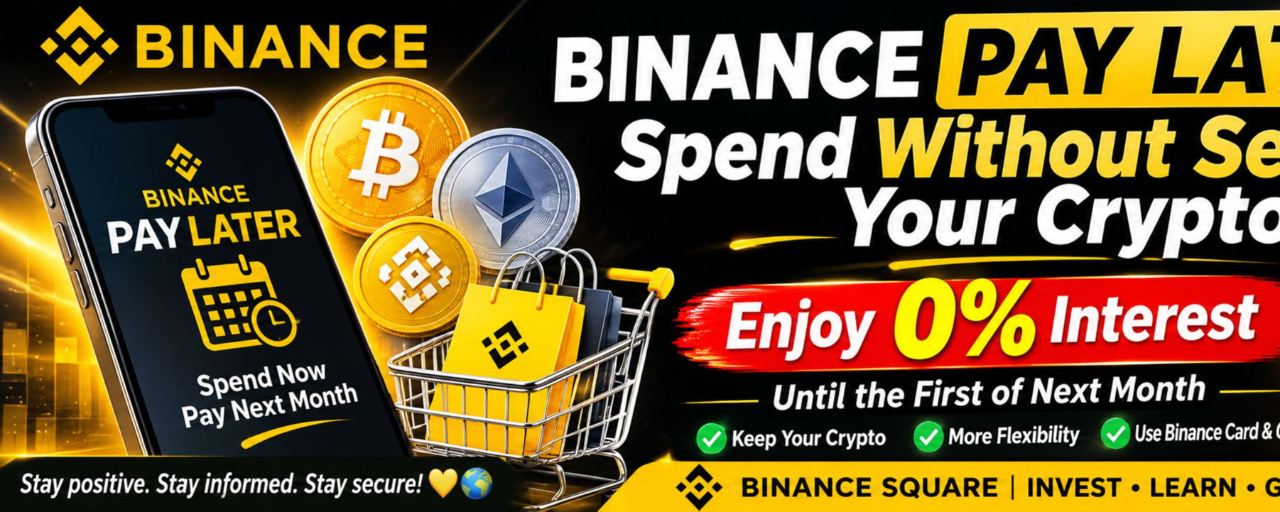
BINANCE PAY LATER: SPEND YOUR CRYPTO WITHOUT SELLING — BUT UNDERSTAND THE PRICE OF BORROWING#Binance 🌍 #PositiveMindsGlobalResults
BINANCE SQUARE | INVEST • LEARN • GROW • TOGETHER
Stay positive. Stay informed. Stay secure! 💛🌍
November 18, 2026 | CRYPTO PAYMENTS • DIGITAL FINANCE • BINANCE ECOSYSTEM
BINANCE SQUARE | SPECIAL FEATURE
What if you could buy something today, keep your Bitcoin for tomorrow, and settle the bill next month?
That is the idea behind Binance Pay Later, a new feature that introduces another dimension to how cryptocurrency can be used in everyday life.
For years, one of the biggest questions surrounding cryptocurrency adoption has been simple: How can people use their digital assets for everyday purchases without having to sell their long-term holdings?
Binance is now offering a different answer: use your cryptocurrency as collateral, access spending power, and repay later.
Announced on November 16, 2026, Binance Pay Later allows eligible users to make supported purchases through Binance Card or QR Pay without directly selling their BTC, ETH or BNB holdings.
1. How does Binance Pay Later actually work?
Unlike a conventional crypto sale, Pay Later uses a collateral-backed credit arrangement.
Here is the important distinction:
Your crypto remains yours: You do not have to sell your eligible Bitcoin, Ethereum or BNB to make a purchase.Your crypto becomes collateral: Binance locks the required amount of eligible assets to secure the credit.You borrow in USDC: The purchase amount is borrowed in USDC rather than deducted through a direct crypto sale.You borrow only what you spend: You do not need to withdraw your entire available credit limit.You repay later: You can repay early or settle your balance by the monthly deadline.
A practical example
Illustrative example using Binance's published initial 50% loan-to-value ratio.
$2,000 $1,000
Eligible crypto collateral Maximum initial spending power
Suppose you purchase something worth 200 USDC.
You borrow 200 USDC.The required crypto collateral is locked.You retain ownership of your underlying crypto.You repay the outstanding amount by the deadline to qualify for 0% interest.
2. The biggest attraction: 0% interest until next month
This is arguably the most attention-grabbing part of the announcement.
Eligible users can enjoy an interest-free period from the transaction date until the first day of the following calendar month.
For example:
Purchase date Repayment deadline
November 18 December 1
November 25 December 1
November 30 December 1
The repayment deadline is 08:00 UTC on the first day of the following month.
That means the available interest-free period depends on when you make your purchase. Someone spending at the beginning of the month generally gets more time than someone spending at the end.
There is another attraction: Eligible Binance Card purchases can receive up to 3% cashback, subject to applicable reward conditions. This adds another incentive, although cashback should never be the reason to borrow money unnecessarily.
3. The hidden risk: Your crypto market exposure does not disappear
Here is where investors need to pay close attention.
Keeping your Bitcoin, Ethereum or BNB instead of selling it might sound attractive, particularly when you believe the market could recover.
But borrowing against cryptocurrency introduces a different kind of financial risk.
What happens if Bitcoin suddenly falls 15%, 20% or more?
Your outstanding debt does not automatically decrease when the market falls. However, the value of your collateral can decline, increasing your loan-to-value ratio (LTV).
Binance's published terms specify full liquidation when the liquidation LTV reaches 90%. Importantly, liquidation can happen before the repayment deadline if collateral value falls sufficiently.
Consider the consequences:
Your collateral could be sold to repay the outstanding borrowing.You could lose some of your crypto exposure during a market downturn.You may receive little or none of the remaining collateral after liquidation, depending on applicable adjustments and fees.You could lose the opportunity to benefit from a subsequent market recovery.
This is why Pay Later should not be confused with free money or risk-free spending.
4. What happens if you miss the deadline?
The 0% interest offer has a clear condition: repayment on time.
According to Binance's published repayment information:
There is currently a one-day grace period.After the grace period, the stated interest rate is 0.1% per day, compounding daily.Outstanding balances can become more expensive if left unpaid.Collateral can remain exposed to liquidation risk.
Binance currently lists a 0% late-payment fee, but this does not mean overdue borrowing is free. The interest and liquidation provisions still matter.
My recommendation: Never use the maximum available credit simply because the platform offers it. Borrow only when you have a realistic repayment plan and sufficient funds to settle the balance.
5. Who can use Binance Pay Later?
This is an important detail that readers should not overlook.
Limited initial rollout
Binance announced that the service would initially be available to eligible users in:
ArgentinaMexico
More markets are expected to follow, but Binance has not announced a confirmed worldwide rollout schedule.
Users must complete identity verification and meet the applicable regional and account eligibility requirements. The maximum spending limit is 1,000 USDC, with borrowing power generally limited to 50% of eligible collateral value.
Therefore, this is not yet a feature that every Binance customer can automatically access.
6. Why this development matters for the future of cryptocurrency
The bigger story goes beyond another Binance product launch.
For years, the cryptocurrency industry has concentrated on trading, investing, staking, lending and holding digital assets.
Now, the industry is increasingly exploring another important direction: making cryptocurrency useful in everyday financial activities.
Binance Pay Later represents a development in that transition.
Three developments deserve attention:
1. Crypto is becoming more connected to everyday payments.
The ability to use digital assets as collateral for purchases could make cryptocurrency-based financial services more accessible to eligible consumers.
2. Long-term investors have another financial option.
Rather than immediately selling their holdings to access spending money, eligible users can consider borrowing against their assets. However, retaining ownership does not eliminate market risk.
3. Competition in digital payments could intensify.
As cryptocurrency platforms develop payment, credit and financial services, traditional payment providers and fintech companies may face growing competition to deliver faster and more flexible financial experiences.
The real test will be whether these services can combine convenience, transparency, affordability and responsible lending.
7. What should investors and crypto users watch next?
The announcement raises several important questions:
How quickly will Binance expand Pay Later into additional countries?Will spending limits increase beyond 1,000 USDC?Can crypto-backed payments become a mainstream alternative to conventional credit?How will market volatility affect collateral requirements and liquidation risks?Will other cryptocurrency platforms introduce similar payment products?
These developments could help determine whether crypto-backed spending becomes a meaningful part of the next generation of digital finance.
My final perspective: Convenience is valuable, financial discipline is essential.
Binance Pay Later introduces an interesting concept: spend without selling, maintain your crypto exposure and repay on a defined schedule.
But the most important lesson is not simply that cryptocurrency can now help pay for everyday purchases.
It is that cryptocurrency ownership is increasingly being connected to borrowing and financial obligations.
A 0% interest period can be attractive, but it does not remove collateral risk, market volatility or repayment responsibilities.
For long-term investors, protecting capital should remain more important than increasing spending power.
The future of cryptocurrency will not be measured only by Bitcoin prices, trading volumes or market capitalization. It will also depend on whether digital assets can deliver practical financial value while protecting users from unnecessary risks.
The real innovation is not just spending crypto without selling it. It is learning how to use digital assets responsibly without allowing financial convenience to become financial pressure.
What do you think?
Would you use crypto-backed spending to preserve your long-term Bitcoin, Ethereum or BNB holdings, or would you prefer selling a small portion of your crypto and avoiding borrowing altogether?
I believe this is an important discussion for the future of digital finance.
Important Risk Disclaimer: This article is for educational and informational purposes only, not financial advice. Crypto-backed borrowing involves market volatility, collateral restrictions, interest charges and potential liquidation. Always read Binance's latest product terms and assess your repayment capacity before using the service.
Official information: [Binance Pay Later announcement](https://www.binance.com/en/support/announcement/detail/5f041987d1ca4252a3c59ad27eff3e28?utm_source=chatgpt.com) | [Product FAQ](https://www.binance.com/en/support/faq/detail/d8145130fc3a423f9ecbff75868306de?utm_source=chatgpt.com) | [Repayment, interest and liquidation rules](https://www.binance.com/en/support/faq/detail/2c9cddf8e54e4d9fb9417f601f9d5e95?utm_source=chatgpt.com)
#BinancePayLater #CryptoPayments #Bitcoin #Ethereum #bnb #USDC #BinancePay #DigitalFinance #CryptoAdoption #FinancialEducation #CryptoRisk #PositiveMindsGlobalResults
BINANCE PAY LATER: SPEND YOUR CRYPTO WITHOUT SELLING — BUT UNDERSTAND THE PRICE OF BORROWING
#Binance 🌍 #PositiveMindsGlobalResults
BINANCE SQUARE | INVEST • LEARN • GROW • TOGETHER
Stay positive. Stay informed. Stay secure! 💛🌍
November 18, 2026 | CRYPTO PAYMENTS • DIGITAL FINANCE • BINANCE ECOSYSTEM
BINANCE SQUARE | SPECIAL FEATURE
What if you could buy something today, keep your Bitcoin for tomorrow, and settle the bill next month?
That is the idea behind Binance Pay Later, a new feature that introduces another dimension to how cryptocurrency can be used in everyday life.
For years, one of the biggest questions surrounding cryptocurrency adoption has been simple: How can people use their digital assets for everyday purchases without having to sell their long-term holdings?
Binance is now offering a different answer: use your cryptocurrency as collateral, access spending power, and repay later.
Announced on November 16, 2026, Binance Pay Later allows eligible users to make supported purchases through Binance Card or QR Pay without directly selling their BTC, ETH or BNB holdings.
1. How does Binance Pay Later actually work?
Unlike a conventional crypto sale, Pay Later uses a collateral-backed credit arrangement.
Here is the important distinction:
Your crypto remains yours: You do not have to sell your eligible Bitcoin, Ethereum or BNB to make a purchase.Your crypto becomes collateral: Binance locks the required amount of eligible assets to secure the credit.You borrow in USDC: The purchase amount is borrowed in USDC rather than deducted through a direct crypto sale.You borrow only what you spend: You do not need to withdraw your entire available credit limit.You repay later: You can repay early or settle your balance by the monthly deadline.
A practical example
Illustrative example using Binance's published initial 50% loan-to-value ratio.
$2,000 $1,000
Eligible crypto collateral Maximum initial spending power
Suppose you purchase something worth 200 USDC.
You borrow 200 USDC.The required crypto collateral is locked.You retain ownership of your underlying crypto.You repay the outstanding amount by the deadline to qualify for 0% interest.
2. The biggest attraction: 0% interest until next month
This is arguably the most attention-grabbing part of the announcement.
Eligible users can enjoy an interest-free period from the transaction date until the first day of the following calendar month.
For example:
Purchase date Repayment deadline
November 18 December 1
November 25 December 1
November 30 December 1
The repayment deadline is 08:00 UTC on the first day of the following month.
That means the available interest-free period depends on when you make your purchase. Someone spending at the beginning of the month generally gets more time than someone spending at the end.
There is another attraction: Eligible Binance Card purchases can receive up to 3% cashback, subject to applicable reward conditions. This adds another incentive, although cashback should never be the reason to borrow money unnecessarily.
3. The hidden risk: Your crypto market exposure does not disappear
Here is where investors need to pay close attention.
Keeping your Bitcoin, Ethereum or BNB instead of selling it might sound attractive, particularly when you believe the market could recover.
But borrowing against cryptocurrency introduces a different kind of financial risk.
What happens if Bitcoin suddenly falls 15%, 20% or more?
Your outstanding debt does not automatically decrease when the market falls. However, the value of your collateral can decline, increasing your loan-to-value ratio (LTV).
Binance's published terms specify full liquidation when the liquidation LTV reaches 90%. Importantly, liquidation can happen before the repayment deadline if collateral value falls sufficiently.
Consider the consequences:
Your collateral could be sold to repay the outstanding borrowing.You could lose some of your crypto exposure during a market downturn.You may receive little or none of the remaining collateral after liquidation, depending on applicable adjustments and fees.You could lose the opportunity to benefit from a subsequent market recovery.
This is why Pay Later should not be confused with free money or risk-free spending.
4. What happens if you miss the deadline?
The 0% interest offer has a clear condition: repayment on time.
According to Binance's published repayment information:
There is currently a one-day grace period.After the grace period, the stated interest rate is 0.1% per day, compounding daily.Outstanding balances can become more expensive if left unpaid.Collateral can remain exposed to liquidation risk.
Binance currently lists a 0% late-payment fee, but this does not mean overdue borrowing is free. The interest and liquidation provisions still matter.
My recommendation: Never use the maximum available credit simply because the platform offers it. Borrow only when you have a realistic repayment plan and sufficient funds to settle the balance.
5. Who can use Binance Pay Later?
This is an important detail that readers should not overlook.
Limited initial rollout
Binance announced that the service would initially be available to eligible users in:
ArgentinaMexico
More markets are expected to follow, but Binance has not announced a confirmed worldwide rollout schedule.
Users must complete identity verification and meet the applicable regional and account eligibility requirements. The maximum spending limit is 1,000 USDC, with borrowing power generally limited to 50% of eligible collateral value.
Therefore, this is not yet a feature that every Binance customer can automatically access.
6. Why this development matters for the future of cryptocurrency
The bigger story goes beyond another Binance product launch.
For years, the cryptocurrency industry has concentrated on trading, investing, staking, lending and holding digital assets.
Now, the industry is increasingly exploring another important direction: making cryptocurrency useful in everyday financial activities.
Binance Pay Later represents a development in that transition.
Three developments deserve attention:
1. Crypto is becoming more connected to everyday payments.
The ability to use digital assets as collateral for purchases could make cryptocurrency-based financial services more accessible to eligible consumers.
2. Long-term investors have another financial option.
Rather than immediately selling their holdings to access spending money, eligible users can consider borrowing against their assets. However, retaining ownership does not eliminate market risk.
3. Competition in digital payments could intensify.
As cryptocurrency platforms develop payment, credit and financial services, traditional payment providers and fintech companies may face growing competition to deliver faster and more flexible financial experiences.
The real test will be whether these services can combine convenience, transparency, affordability and responsible lending.
7. What should investors and crypto users watch next?
The announcement raises several important questions:
How quickly will Binance expand Pay Later into additional countries?Will spending limits increase beyond 1,000 USDC?Can crypto-backed payments become a mainstream alternative to conventional credit?How will market volatility affect collateral requirements and liquidation risks?Will other cryptocurrency platforms introduce similar payment products?
These developments could help determine whether crypto-backed spending becomes a meaningful part of the next generation of digital finance.
My final perspective: Convenience is valuable, financial discipline is essential.
Binance Pay Later introduces an interesting concept: spend without selling, maintain your crypto exposure and repay on a defined schedule.
But the most important lesson is not simply that cryptocurrency can now help pay for everyday purchases.
It is that cryptocurrency ownership is increasingly being connected to borrowing and financial obligations.
A 0% interest period can be attractive, but it does not remove collateral risk, market volatility or repayment responsibilities.
For long-term investors, protecting capital should remain more important than increasing spending power.
The future of cryptocurrency will not be measured only by Bitcoin prices, trading volumes or market capitalization. It will also depend on whether digital assets can deliver practical financial value while protecting users from unnecessary risks.
The real innovation is not just spending crypto without selling it. It is learning how to use digital assets responsibly without allowing financial convenience to become financial pressure.
What do you think?
Would you use crypto-backed spending to preserve your long-term Bitcoin, Ethereum or BNB holdings, or would you prefer selling a small portion of your crypto and avoiding borrowing altogether?
I believe this is an important discussion for the future of digital finance.
Important Risk Disclaimer: This article is for educational and informational purposes only, not financial advice. Crypto-backed borrowing involves market volatility, collateral restrictions, interest charges and potential liquidation. Always read Binance's latest product terms and assess your repayment capacity before using the service.
Official information: Binance Pay Later announcement | Product FAQ | Repayment, interest and liquidation rules
#BinancePayLater #CryptoPayments #Bitcoin #Ethereum #bnb #USDC #BinancePay #DigitalFinance #CryptoAdoption #FinancialEducation #CryptoRisk #PositiveMindsGlobalResults
42
·
--
Article
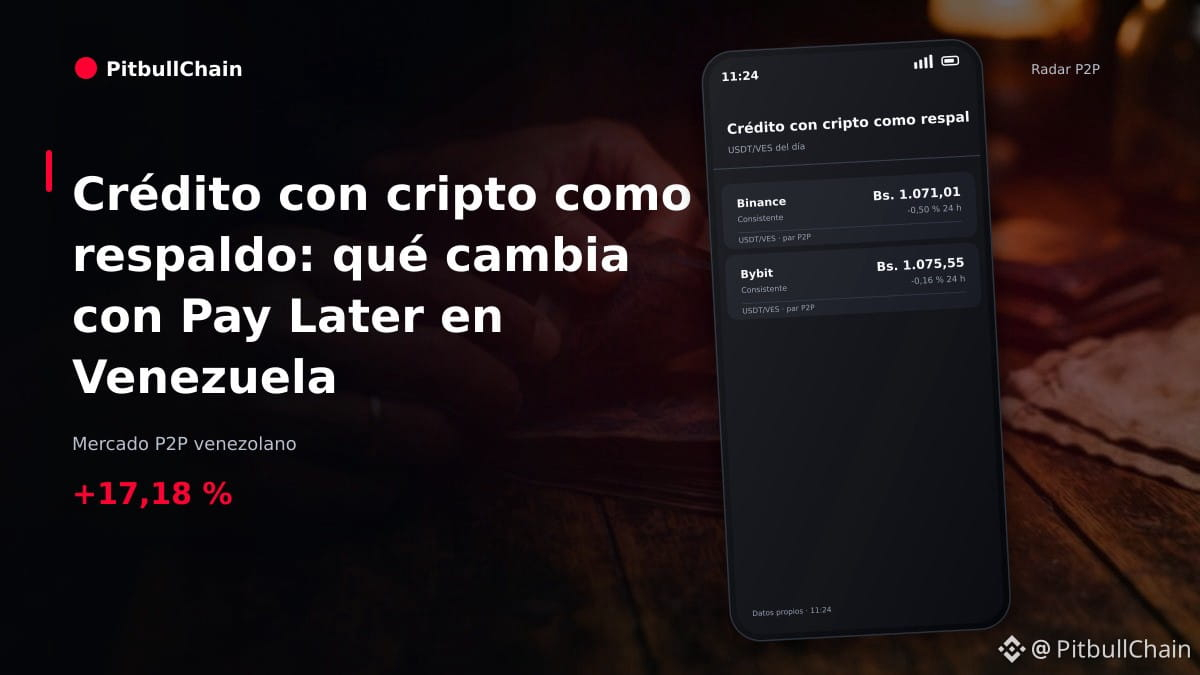
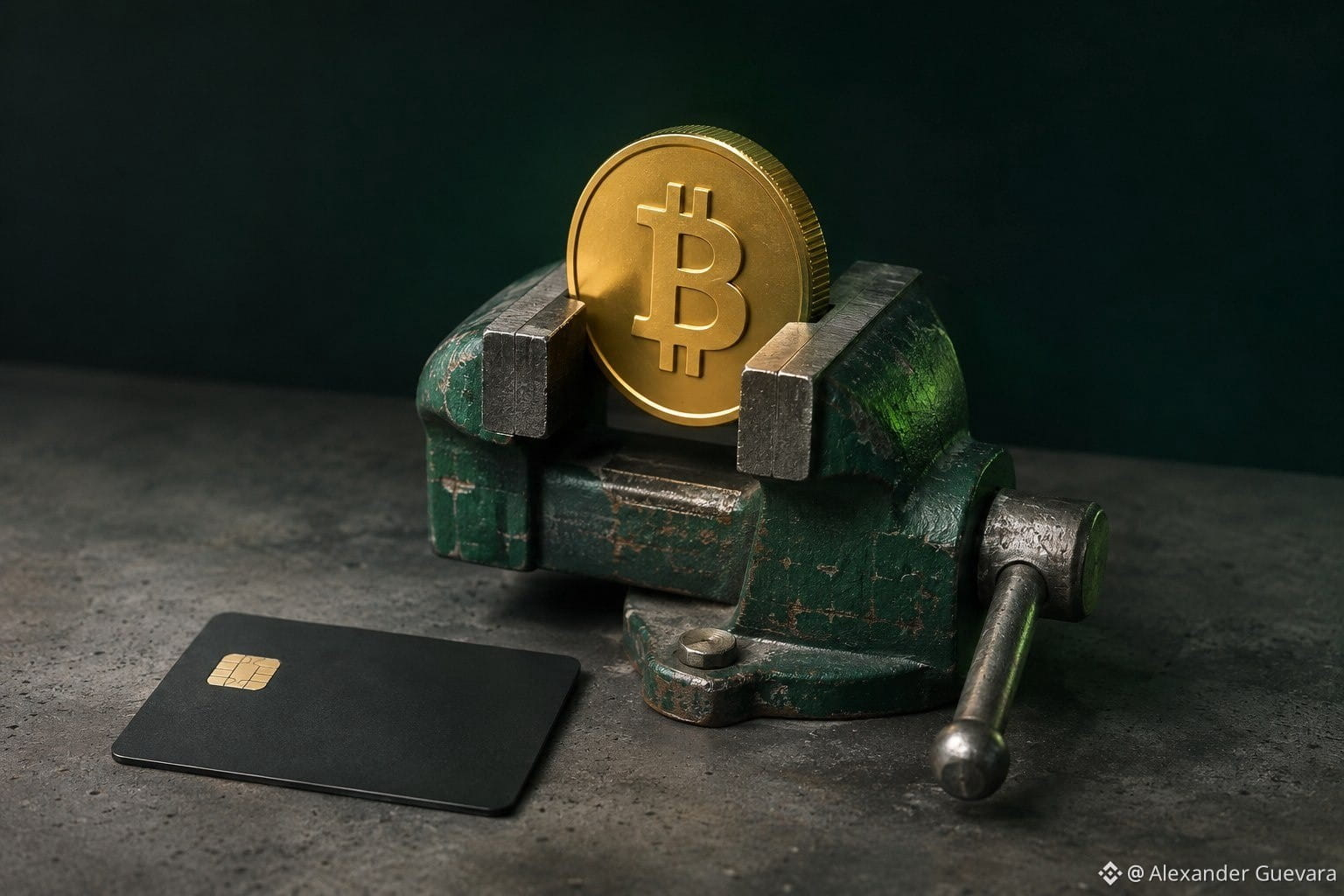
Crypto-Backed Credit: What Pay Later Changes in VenezuelaPaying in installments using crypto as collateral may sound convenient, but it’s a credit transaction secured by collateral. Binance Pay Later lets users cover a purchase without selling the BTC, ETH, or BNB they hold in their account: those balances are pledged as collateral, and the debt is paid later. The difference between selling and spending may seem minor, but it completely changes the nature of the risk: it’s no longer about a price going up or down, but about an obligation with a due date. For anyone who trades USDT in Venezuela, the useful question isn’t how much credit they offer, but what you stand to lose if the market moves against you.
Crypto-Backed Credit: What Pay Later Changes in Venezuela
Paying in installments using crypto as collateral may sound convenient, but it’s a credit transaction secured by collateral. Binance Pay Later lets users cover a purchase without selling the BTC, ETH, or BNB they hold in their account: those balances are pledged as collateral, and the debt is paid later. The difference between selling and spending may seem minor, but it completely changes the nature of the risk: it’s no longer about a price going up or down, but about an obligation with a due date. For anyone who trades USDT in Venezuela, the useful question isn’t how much credit they offer, but what you stand to lose if the market moves against you.
95

News:
🇧🇷 Brazil and stablecoins: what the Central Bank allows and prohibits
ABToken requested a public clarification on November 14, and Instituto Livre Mercado will request the meeting minutes, according to Livecoins and CoinDesk; the BCB has not responded.
⚖️ November 29 elections: crypto taxes by political party
Profits from selling crypto are taxed as savings income, at rates ranging from 19% to 30% depending on the tax bracket, according to the Tax Agency and the 2025–2026 personal income tax scale.
⚠️ Fake bank manager: a €170,000 crypto scam
The National Police identified “five people responsible,” according to Ical, citing sources at the Government Subdelegation; the 3 sources do not report any arrests or charges.
🔥 Most read today on Criptoinforme
1️⃣ Bitcoin rebounds after touching US$62,000; CZ denies selling
2️⃣ Dollar #BCV Tuesday, November 17: Bs. 915.75 (+0.19%)
3️⃣ #Kraken sells Ibex shares as a token: what you’re buying
4️⃣ Binance Pay Later: how it works and what risks it carries
5️⃣ Anthropic goes public: debut on the 19th and ANTUSDT perpetual
#Anthropic #BinancePayLater #brasil $BTC $ANTHROPIC

43
Article
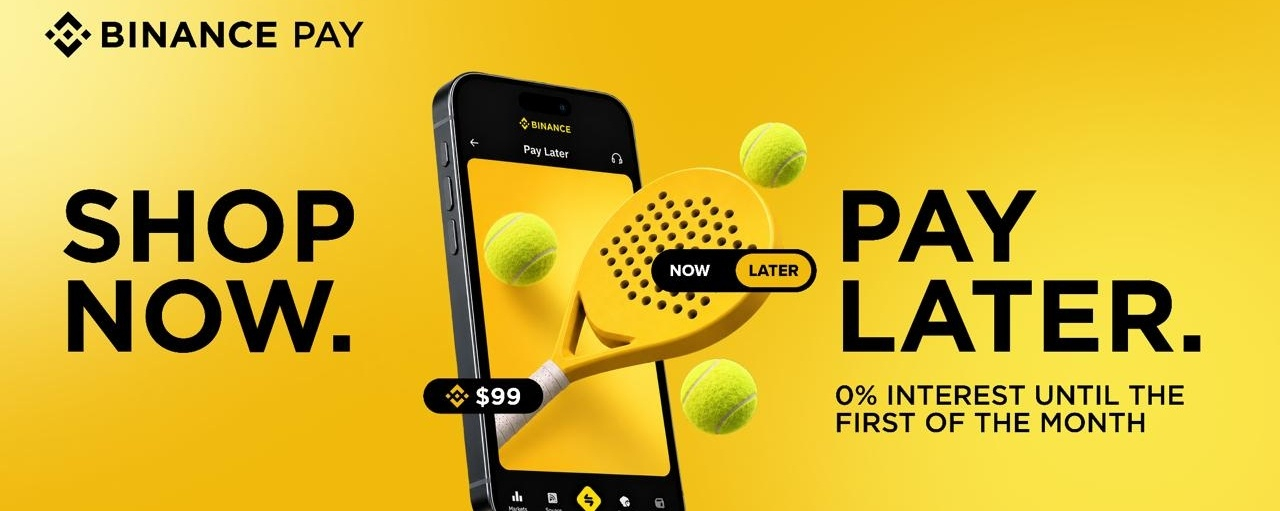
Binance Pay is pleased to introduce Pay Later, a new crypto-backed payment featureBinance Pay is pleased to introduce Pay Later, a new cryptocurrency-backed payment feature that allows eligible users to make purchases through Binance Card or QR Pay without selling their cryptocurrencies.
With Binance Pay Later, eligible users can access a spending limit of up to 1000 USDC, backed by their BTC, ETH, or BNB holdings. Instead of borrowing the full amount upfront, users only borrow what they spend, when they spend it.
Users can also enjoy 0% interest until the first day of the following month, allowing them to make purchases and pay them off before the due date without incurring interest.
Binance Pay is pleased to introduce Pay Later, a new crypto-backed payment feature
Binance Pay is pleased to introduce Pay Later, a new cryptocurrency-backed payment feature that allows eligible users to make purchases through Binance Card or QR Pay without selling their cryptocurrencies.
With Binance Pay Later, eligible users can access a spending limit of up to 1000 USDC, backed by their BTC, ETH, or BNB holdings. Instead of borrowing the full amount upfront, users only borrow what they spend, when they spend it.
Users can also enjoy 0% interest until the first day of the following month, allowing them to make purchases and pay them off before the due date without incurring interest.
108
News:
🔁 Binance Pay Later: how it works and what risks it carries
The collateral is locked BTC, ETH, or BNB, and the limit is 50% of its value: 1,000 USDC requires around US$2,000, according to Cointelegraph and CoinMarketCap.
🧩 #lighter : US$10.4 million theft using a leaked API key
10,393,057 USDC left Lighter’s contract on Ethereum at 10:11 UTC on November 16, according to Bitquery data cited by Cointelegraph.
🔷 MXNB, Bitso’s peso stablecoin, is coming to Solana
MXNB launched in March 2025 on Arbitrum, backed one-to-one by Mexican pesos, according to Cointelegraph.
🔷 #Trezor : Skladon exposed data on around 27,000 orders
Trezor is reducing the time it keeps order data from 90 to 45 days and offers anonymous pickup in 18 European countries; if you bought during that period, beware of any…
#crypto #BinancePayLater #Binance $BTC $ETH $BNB
{web3_wallet_create}(10x232ce3bd40fcd6f80f3d55a522d03f25df784ee2)
{web3_wallet_create}(421610xf197ffc28c23e0309b5559e7a166f2c6164c80aa)
{spot}(SOLUSDT)
News:
🔁 Binance Pay Later: how it works and what risks it carries
The collateral is locked BTC, ETH, or BNB, and the limit is 50% of its value: 1,000 USDC requires around US$2,000, according to Cointelegraph and CoinMarketCap.
🧩 #lighter : US$10.4 million theft using a leaked API key
10,393,057 USDC left Lighter’s contract on Ethereum at 10:11 UTC on November 16, according to Bitquery data cited by Cointelegraph.
🔷 MXNB, Bitso’s peso stablecoin, is coming to Solana
MXNB launched in March 2025 on Arbitrum, backed one-to-one by Mexican pesos, according to Cointelegraph.
🔷 #Trezor : Skladon exposed data on around 27,000 orders
Trezor is reducing the time it keeps order data from 90 to 45 days and offers anonymous pickup in 18 European countries; if you bought during that period, beware of any…
#crypto #BinancePayLater #Binance $BTC $ETH $BNB
27
Article
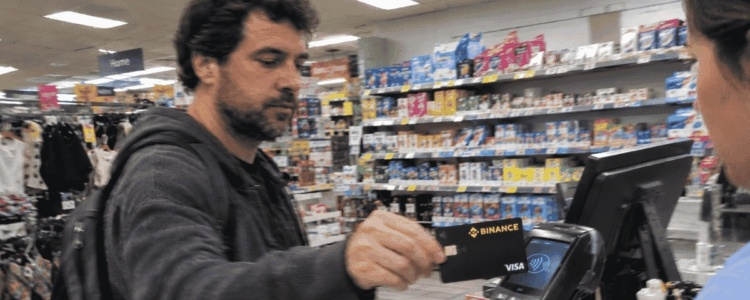
Binance enables “Pay Later” in VenezuelaThe credit shopping feature appears to be available outside the two countries officially announced for the service launch.
The new feature is available for payments with Binance Pay and QR Pay.
Binance introduced Pay Later on November 16 for users in Argentina and Mexico.
Credit is available for up to 1,000 USDC and requires bitcoin, ETH, or BNB as collateral.
The launch of a new Binance financial service came as a surprise to Venezuelan users. Although the platform had announced that its new credit shopping tool would initially be available in Argentina and Mexico, its reach appears to be broader.
Binance enables “Pay Later” in Venezuela
The credit shopping feature appears to be available outside the two countries officially announced for the service launch.
The new feature is available for payments with Binance Pay and QR Pay.
Binance introduced Pay Later on November 16 for users in Argentina and Mexico.
Credit is available for up to 1,000 USDC and requires bitcoin, ETH, or BNB as collateral.
The launch of a new Binance financial service came as a surprise to Venezuelan users. Although the platform had announced that its new credit shopping tool would initially be available in Argentina and Mexico, its reach appears to be broader.
45
Article
What is Binance Pay Later?1. What is Binance Pay Later?
Binance Pay Later is a secured credit feature that allows eligible users to pay with Binance Card and Binance Pay using their crypto as collateral, without having to sell it. When you use Pay Later, Binance lends you the payment amount in USDC and locks eligible crypto assets in your account as collateral at the time of the transaction.
2. What are the main benefits of Pay Later?
With Pay Later, you can:
Spend without selling your crypto;
What is Binance Pay Later?
1. What is Binance Pay Later?
Binance Pay Later is a secured credit feature that allows eligible users to pay with Binance Card and Binance Pay using their crypto as collateral, without having to sell it. When you use Pay Later, Binance lends you the payment amount in USDC and locks eligible crypto assets in your account as collateral at the time of the transaction.
2. What are the main benefits of Pay Later?
With Pay Later, you can:
Spend without selling your crypto;
6
Log in to explore more content
Join global crypto users on Binance Square
⚡️ Get latest and useful information about crypto.
💬 Trusted by the world’s largest crypto exchange.
👍 Discover real insights from verified creators.
Email / Phone number
Trending Topics
1
#NvidiaBeatsEstimatesWith$130BQ4Outlook
10,741 views
154 Discussing
2
#AnthropicIPOPriceCouldExceed$80
16,772 views
142 Discussing
3
#CanNvidia’sDataCenterGrowthContinue?
50,523 views
693 Discussing
4
#CanadaAndUSLaunchOperationNiagaraAgainstApprovalPhishing
1,852 views
27 Discussing
5
#BankOfEnglandUnveilsClearingHousePathwayCoveringDLTFirms
1,833 views
43 Discussing
6
#DBSAndCirclePartnerToExpandAsianInstitutionsUSDCAccess
3,231 views
54 Discussing
7
#LedgerHardwareImplantReportsExtendToDubai
19,101 views
275 Discussing
8
#NvidiaBoardNotConsideringHuang’sReturnasCEO
213,553 views
1,535 Discussing
9
#KOSPIFalls2.59%ToLowestCloseSinceFebruary
63,236 views
724 Discussing
10
#AnthropicClearedToListOnNasdaqAsANT
55,984 views
591 Discussing