
#nvidia
nvidia
4.5M views
9,314 Discussing
Hot
Latest

·
--
Verified
🚨NVIDIA DRAMA: IS JENSEN HUANG SET FOR A COMEBACK? 👀
Wall Street is watching closely as Nvidia's leadership uncertainty adds another twist to the AI market story!
U.S. Treasury Secretary Scott Bessent has softened his earlier stance on Nvidia's leadership, no longer ruling out Jensen Huang's possible return. However, the company's board has maintained that it does not intend to reinstate him.
📌 Here's what you need to know:
• Nvidia shares were trading around 48% below their 52-week high.
• The stock fell approximately 14% on Friday, November 20, closing at $125.53.
• President Donald Trump has expressed support for Huang's return, while Bessent says the administration still needs answers about export-control compliance.
• Nvidia Chairman Harvey Jones has said the board does not intend to rehire Huang.
• Nvidia also faces a reported SEC accounting inquiry, while questions surrounding chip sales to China and Megaspeed remain under scrutiny.
📈 WHAT IS THE OPTIONS MARKET SIGNALING?
Options pricing implied a potential move of around 11.5% in either direction by the November 27 expiry, suggesting an estimated range of approximately $115–$145.
This is an implied market estimate, not a guaranteed price target or prediction.⚠️
🔍 WHAT HAPPENS NEXT?
Nvidia faces two major questions: who will lead the company next, and how will it address concerns over export compliance?
🔥 Could Jensen Huang return to Nvidia, and how might this leadership uncertainty affect the AI market?
$BTC - $NVDAB - $BLESS
{future}(BTCUSDT)
{spot}(NVDABUSDT)
{future}(BLESSUSDT)
#Nvidia #JensenHuang #AI #BessentSoftensStanceOnHuang’sNvidiaReturn
"Do you think Jensen Huang will return as Nvidia CEO"!?👀
🚨NVIDIA DRAMA: IS JENSEN HUANG SET FOR A COMEBACK? 👀
Wall Street is watching closely as Nvidia's leadership uncertainty adds another twist to the AI market story!
U.S. Treasury Secretary Scott Bessent has softened his earlier stance on Nvidia's leadership, no longer ruling out Jensen Huang's possible return. However, the company's board has maintained that it does not intend to reinstate him.
📌 Here's what you need to know:
• Nvidia shares were trading around 48% below their 52-week high.
• The stock fell approximately 14% on Friday, November 20, closing at $125.53.
• President Donald Trump has expressed support for Huang's return, while Bessent says the administration still needs answers about export-control compliance.
• Nvidia Chairman Harvey Jones has said the board does not intend to rehire Huang.
• Nvidia also faces a reported SEC accounting inquiry, while questions surrounding chip sales to China and Megaspeed remain under scrutiny.
📈 WHAT IS THE OPTIONS MARKET SIGNALING?
Options pricing implied a potential move of around 11.5% in either direction by the November 27 expiry, suggesting an estimated range of approximately $115–$145.
This is an implied market estimate, not a guaranteed price target or prediction.⚠️
🔍 WHAT HAPPENS NEXT?
Nvidia faces two major questions: who will lead the company next, and how will it address concerns over export compliance?
🔥 Could Jensen Huang return to Nvidia, and how might this leadership uncertainty affect the AI market?
$BTC - $NVDAB - $BLESS
#Nvidia #JensenHuang #AI #BessentSoftensStanceOnHuang’sNvidiaReturn
"Do you think Jensen Huang will return as Nvidia CEO"!?👀
🟢 YES — Bring Jensen back!⚡
🔴 NO — New leadership!
🚀
20 hr(s) left
1
1.2k

Verified
Article
NVIDIA Just Lost $2.7 Trillion in 45 Days. What Happened?Imagine a company losing the entire market value of #Amazon in just six weeks. 😮
That's exactly the scale of what happened to #NVIDIA . 😒
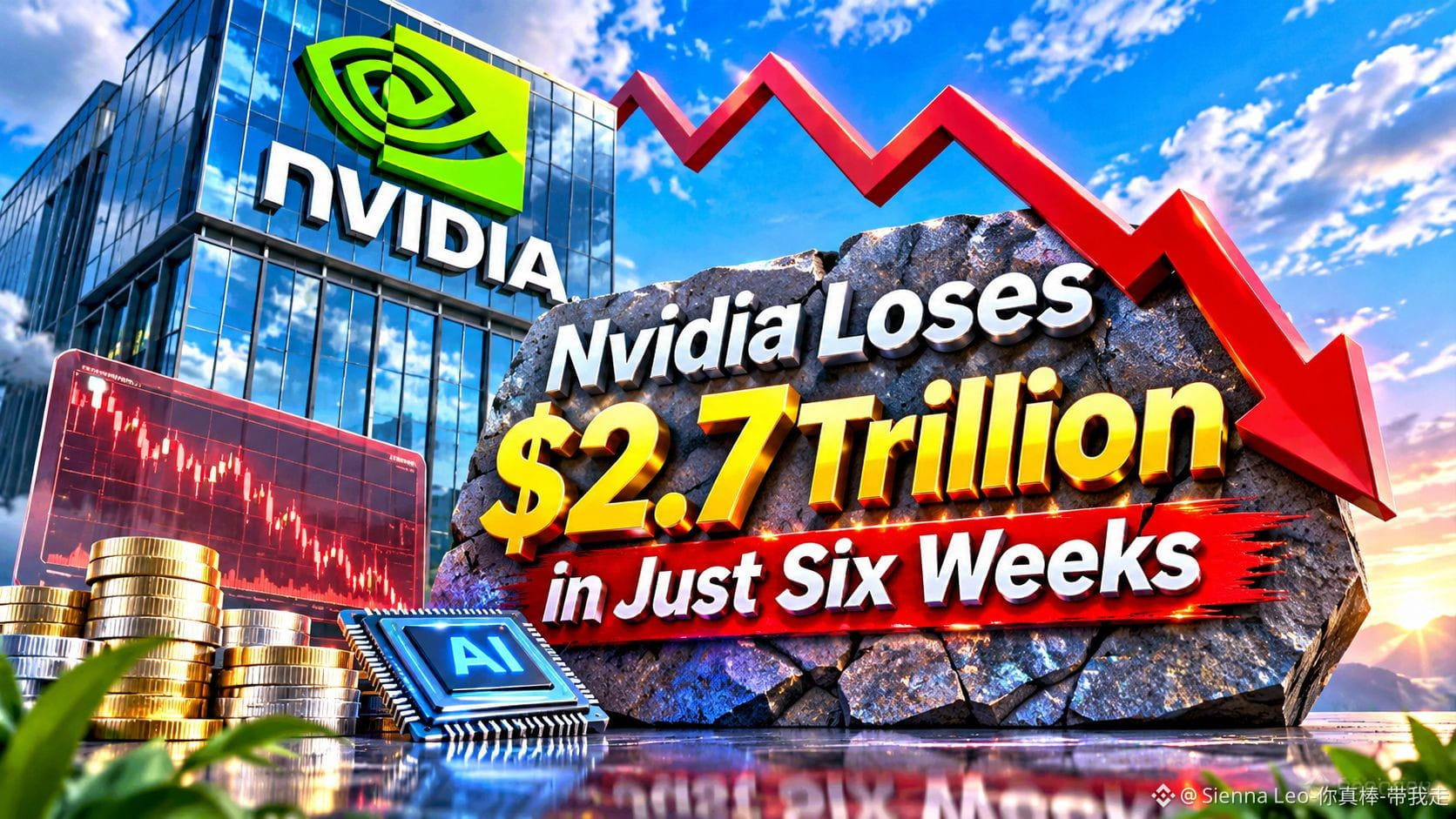
Since reaching its peak on October 6, NVIDIA ($NVDA ) has lost approximately $2.7 trillion in market capitalization, with its stock falling nearly 47%. On November 20 alone, the stock plunged around 14%, reaching approximately $125.53.
From the world's most valuable companies to a brutal sell-off in just 45 days.
What is driving this massive decline?
This isn't simply about one bad earnings report.
Investors are increasingly questioning #AI valuations, the sustainability of massive AI infrastructure spending, regulatory uncertainty, and the broader technology sector's risk exposure.
The market is becoming less willing to pay premium valuations for the AI narrative without questioning how much future growth is already priced in.
And when sentiment changes, even the strongest companies can experience brutal corrections.
The irony: NVIDIA's business is still massive 😮
The most interesting part of this sell-off is that NVIDIA's business hasn't suddenly collapsed.
The company has continued reporting enormous revenues and strong demand.
But the stock market doesn't price companies based only on what they are earning today. It prices expectations for tomorrow.
When expectations become extremely high, even good results may not be enough to support the stock price.
Strong fundamentals don't guarantee a rising stock price.
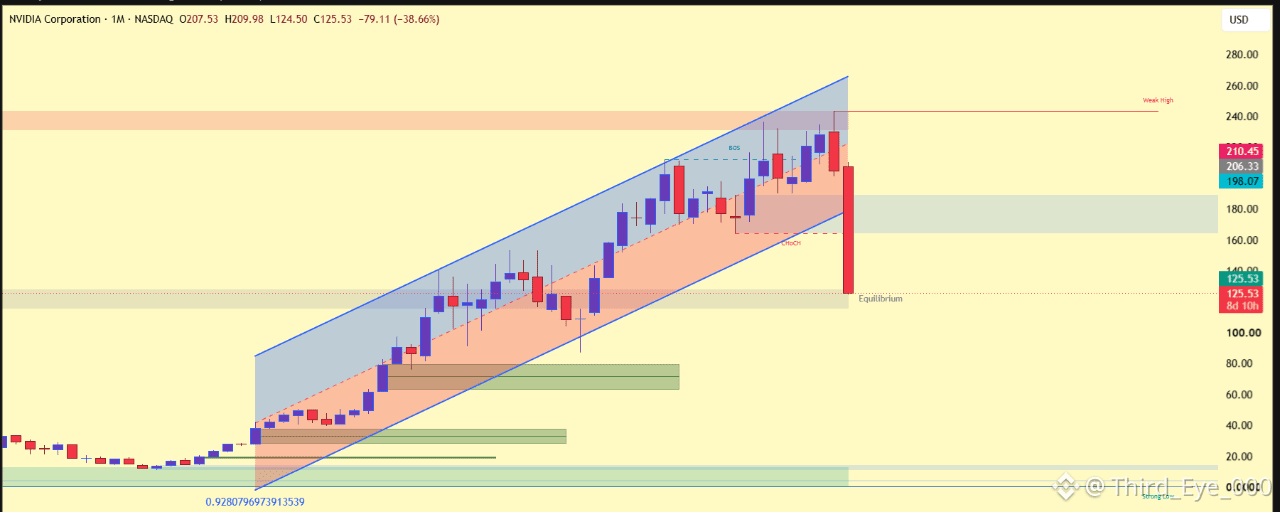
Looking at the monthly chart, the picture has changed significantly.
NVIDIA has broken out of its long-term ascending structure and is now approaching a major equilibrium area around $125.
This is an important zone to watch.
If buyers manage to defend this area, we could see stabilization and potentially a relief rally. However, if monthly price action continues weakening and this level fails, the market could start looking toward lower demand zones.
The previous trend was clearly bullish. Now, the market needs to prove that the bullish structure can survive this correction.
Is this the end of the AI boom?
Not necessarily.
A correction in NVIDIA doesn't mean AI is dead. But it could mean the market is reassessing how much it is willing to pay for the AI revolution.
The next phase may separate companies with real sustainable revenue from companies simply riding the AI hype.
For traders, this is a reminder that no asset is invincible. Even the strongest companies can lose trillions in market value when sentiment, liquidity, and expectations change.
The real question now is: Is this a massive buying opportunity, or is the market just beginning to unwind the AI bubble? 👀
What do you think? Is $NVDAB near its bottom, or could we see another major leg down?
#NvidiaLoses$2.7TrillionInMonthAndAHalf
NVIDIA Just Lost $2.7 Trillion in 45 Days. What Happened?
Imagine a company losing the entire market value of #Amazon in just six weeks. 😮
That's exactly the scale of what happened to #NVIDIA . 😒
Since reaching its peak on October 6, NVIDIA ($NVDA ) has lost approximately $2.7 trillion in market capitalization, with its stock falling nearly 47%. On November 20 alone, the stock plunged around 14%, reaching approximately $125.53.
From the world's most valuable companies to a brutal sell-off in just 45 days.
What is driving this massive decline?
This isn't simply about one bad earnings report.
Investors are increasingly questioning #AI valuations, the sustainability of massive AI infrastructure spending, regulatory uncertainty, and the broader technology sector's risk exposure.
The market is becoming less willing to pay premium valuations for the AI narrative without questioning how much future growth is already priced in.
And when sentiment changes, even the strongest companies can experience brutal corrections.
The irony: NVIDIA's business is still massive 😮
The most interesting part of this sell-off is that NVIDIA's business hasn't suddenly collapsed.
The company has continued reporting enormous revenues and strong demand.
But the stock market doesn't price companies based only on what they are earning today. It prices expectations for tomorrow.
When expectations become extremely high, even good results may not be enough to support the stock price.
Strong fundamentals don't guarantee a rising stock price.
Looking at the monthly chart, the picture has changed significantly.
NVIDIA has broken out of its long-term ascending structure and is now approaching a major equilibrium area around $125.
This is an important zone to watch.
If buyers manage to defend this area, we could see stabilization and potentially a relief rally. However, if monthly price action continues weakening and this level fails, the market could start looking toward lower demand zones.
The previous trend was clearly bullish. Now, the market needs to prove that the bullish structure can survive this correction.
Is this the end of the AI boom?
Not necessarily.
A correction in NVIDIA doesn't mean AI is dead. But it could mean the market is reassessing how much it is willing to pay for the AI revolution.
The next phase may separate companies with real sustainable revenue from companies simply riding the AI hype.
For traders, this is a reminder that no asset is invincible. Even the strongest companies can lose trillions in market value when sentiment, liquidity, and expectations change.
The real question now is: Is this a massive buying opportunity, or is the market just beginning to unwind the AI bubble? 👀
What do you think? Is $NVDAB near its bottom, or could we see another major leg down?
#NvidiaLoses$2.7TrillionInMonthAndAHalf
1
1.7k


Verified
#NvidiaLoses$2.7TrillionInMonthAndAHalf
🚨📉 Nvidia Loses $2.7 Trillion in Just Six Weeks: What Went Wrong? 📉🚨
Imagine watching the world's most powerful AI company lose nearly half its market value while its technology remains central to the AI revolution. That is the uncomfortable reality investors are facing with Nvidia.
Since its October 6 record high, Nvidia has lost approximately $2.7 trillion in market capitalization. Its shares plunged sharply on November 20, extending an extraordinary losing streak.
What triggered the collapse? Several pressures collided: CEO Jensen Huang's departure, growing uncertainty surrounding AI valuations, a broader technology sell-off, and reports that the SEC is examining potential accounting issues.
Importantly, an investigation is not proof of wrongdoing. The precise scope of the reported SEC inquiry remains unclear.
Here is the bigger picture: Nvidia's business and its stock valuation are two different things. Strong AI demand does not automatically justify every market price.
Even after reporting $115.84 billion in quarterly revenue, Nvidia struggled to reassure investors. This highlights a critical shift: markets increasingly want evidence that enormous AI investments can generate sustainable returns.
My takeaway? Nvidia's decline is a reminder that even exceptional companies are not immune to valuation risk, leadership uncertainty, or changing investor confidence.
Great technology does not guarantee an unstoppable stock.
Is this a temporary correction in the AI trade, or the beginning of a deeper reassessment of AI valuations?
Disclaimer: This article is for educational purposes only, not financial advice.
#NVIDIA #AI #GrowWithSAC $NVDA $EDU $XTZ
Ben Cút tồ:
Doanh thu 115,84 tỷ đô vẫn chưa xoa dịu nhà đầu tư—có vẻ giờ họ muốn thấy bằng chứng rõ hơn rằng khoản đầu tư AI tạo ra lợi nhuận bền vững.
1
5
8.4k

Verified
🚨 Major shift in the Nvidia saga—and AI markets are on high alert.
Eight days after calling for an outside CEO, U.S. Treasury Secretary Scott Bessent softened his stance on CBS, declining to rule out Jensen Huang’s return. His new focus: "where the buck stops" on export-control compliance.
Key levels and catalysts for traders 📊:
• Nov. 25 Deadline: Nvidia’s board must answer Treasury inquiries on whether shell firms routed restricted AI chips to China.
• Board vs. White House: President Trump backs Huang’s return, while Nvidia’s board—led by interim CEO Colette Kress—still opposes reinstating him.
• Volatility Ahead: With NVDA ~48% off its 52-week high and options pricing an ~11.5% move by Nov. 27, compliance clarity is a binary trigger for AI stocks and AI crypto tokens.
Would a Huang comeback ignite an AI relief rally, or stay capped by probes? Share your view 👇
$NVDA $BLESS $BULLA
{future}(BULLAUSDT)
{future}(BLESSUSDT)
{future}(NVDAUSDT)
#bessentsoftensstanceonhuang’snvidiareturn
#NVIDIA #AICrypto #MarketUpdate
🚨 Major shift in the Nvidia saga—and AI markets are on high alert.
Eight days after calling for an outside CEO, U.S. Treasury Secretary Scott Bessent softened his stance on CBS, declining to rule out Jensen Huang’s return. His new focus: "where the buck stops" on export-control compliance.
Key levels and catalysts for traders 📊:
• Nov. 25 Deadline: Nvidia’s board must answer Treasury inquiries on whether shell firms routed restricted AI chips to China.
• Board vs. White House: President Trump backs Huang’s return, while Nvidia’s board—led by interim CEO Colette Kress—still opposes reinstating him.
• Volatility Ahead: With NVDA ~48% off its 52-week high and options pricing an ~11.5% move by Nov. 27, compliance clarity is a binary trigger for AI stocks and AI crypto tokens.
Would a Huang comeback ignite an AI relief rally, or stay capped by probes? Share your view 👇
$NVDA $BLESS $BULLA
#bessentsoftensstanceonhuang’snvidiareturn
#NVIDIA #AICrypto #MarketUpdate

2
3.4k

Verified
News: Nvidia Just Had Its Worst Week Since 2008
Nvidia lost more value in five trading days than any company has in a single week. A CEO exit, a reported SEC probe and AI spending doubts all hit at once.
According to 24/7 Wall St., $NVDA closed Friday at $125.53, down 14% on the day and 23% on the week. The week erased roughly $901 billion in market value, the largest one-week loss for any company on record.
What drove it:
CEO Jensen Huang resigned on November 12, effective immediately.
Reuters reported an SEC probe of the company's accounting. The SEC declined to comment.
The stock is now down about $2.7 trillion in value since its October peak.
My read: this looks like company-specific governance risk layered on top of a wider AI-spending debate, which is why the move was so violent. Oversold readings can precede bounces, but they don't guarantee one. I'm watching the permanent CEO decision, any SEC developments, and the Dell and HPE results for signs of real AI server demand.
Do you see this as a governance shock or a sector reset?
#Nvidia #NVDA #AI $NVDA.US $NVDA
{future}(NVDAUSDT)
News: Nvidia Just Had Its Worst Week Since 2008
Nvidia lost more value in five trading days than any company has in a single week. A CEO exit, a reported SEC probe and AI spending doubts all hit at once.
According to 24/7 Wall St., $NVDA closed Friday at $125.53, down 14% on the day and 23% on the week. The week erased roughly $901 billion in market value, the largest one-week loss for any company on record.
What drove it:
CEO Jensen Huang resigned on November 12, effective immediately.
Reuters reported an SEC probe of the company's accounting. The SEC declined to comment.
The stock is now down about $2.7 trillion in value since its October peak.
My read: this looks like company-specific governance risk layered on top of a wider AI-spending debate, which is why the move was so violent. Oversold readings can precede bounces, but they don't guarantee one. I'm watching the permanent CEO decision, any SEC developments, and the Dell and HPE results for signs of real AI server demand.
Do you see this as a governance shock or a sector reset?
#Nvidia #NVDA #AI $NVDA.US $NVDA
NVDAUS+6.43%
2
1.4k

Verified
#bessentsoftensstanceonhuang’snvidiareturn
Bessent Softens Stance on Huang’s Potential Nvidia Return
A surprising shift in Washington is putting Jensen Huang’s potential return to NVIDIA back in the spotlight!
US Treasury Secretary Scott Bessent has softened his earlier position, leaving the door open to Huang’s possible comeback. Previously, Bessent called for a leadership shake-up and suggested NVIDIA consider an outside candidate.
Now, the discussion is moving toward accountability and the ongoing questions surrounding AI chip export controls.
What Happened?
Bessent has taken a more cautious position on Huang’s potential return.
President Donald Trump has reportedly supported giving Huang another chance.
NVIDIA’s board has not confirmed any plan to reinstate him.
The company continues to face scrutiny over AI chip sales and compliance.
Why It Matters
NVIDIA remains one of the biggest players in the global AI boom. Any leadership uncertainty could affect investor confidence, technology stocks, and the broader AI market.
A possible Huang comeback could improve sentiment, but the board’s decision and regulatory developments remain key obstacles.
Market Outlook: Traders should watch for official NVIDIA announcements and compliance updates. Any confirmed leadership decision could create volatility in NVDA and AI-related stocks.
The door may be opening—but the final decision is still uncertain.
#NVIDIA #JensenHuang #AIStocks
712


Article
🚨 **A $4.6 BILLION Nvidia Chip Supply Chain Under Scrutiny — And the Allegations Are Serious.A Financial Times investigation has uncovered an alleged network involving shell companies, gaming businesses, and links to a sanctioned Cambodian crime syndicate, reportedly used to move restricted Nvidia chips into China.
At the center of the FT report is Alice Huang, who was reportedly known in Chinese data center circles as **“Jensen's personal assistant.”**
According to the FT, the alleged operation relied on three key pieces:
- **The supplier:** After Chinese server giant Inspur was blacklisted by the US in 2023, its US arm reportedly changed its name and continued purchasing Nvidia chips.
- **The customer:** A Chinese gaming group allegedly established Megaspeed, a shell company with a clean record, using Huang as its trusted public face. Megaspeed became one of Nvidia's biggest customers in Southeast Asia.
- **The route:** A man identified by US authorities as a leader of a sanctioned Cambodian scam syndicate allegedly helped transport the chips into China.
The report also highlights connections involving Huang's family. Her husband was an early investor in the gaming group, while a company she controlled with her sister was linked to a key chip distributor in China.
**The reported scale is difficult to ignore:**
- Megaspeed's Malaysian unit imported approximately **$4.6 billion worth of goods in a single year.**
- Indonesian police reportedly found empty server racks without GPUs when they raided its local unit.
- Restricted Nvidia chips were reportedly discovered in Shanghai data centers linked to the network.
- Many chips allegedly reached China's black market, where they sold for multiples of their original price.
Why gaming companies? Industry insiders told the FT that online gaming businesses are commonly used for money laundering, and several names connected to the alleged chip-smuggling operation came from that industry.
Nvidia says it has since blocked Megaspeed and restricted sales to Inspur's renamed US arm.
**My takeaway:** This story highlights a major challenge for the global semiconductor industry: controlling where advanced chips ultimately end up, not just who initially purchases them.
That matters beyond Nvidia. AI infrastructure, data centers, technology supply chains, and even crypto-related computing markets depend on access to powerful hardware.
As chip restrictions tighten, supply-chain transparency and customer verification become increasingly important.
*Important: This post is based on a reported Financial Times investigation. The allegations involving the named individuals and companies remain unproven and should not be treated as established facts.*
#Nvidia #ChipSupplyChain
$ENSO
{future}(ENSOUSDT)
$BARD
{future}(BARDUSDT)
$YB
{future}(YBUSDT)
🚨 **A $4.6 BILLION Nvidia Chip Supply Chain Under Scrutiny — And the Allegations Are Serious.
A Financial Times investigation has uncovered an alleged network involving shell companies, gaming businesses, and links to a sanctioned Cambodian crime syndicate, reportedly used to move restricted Nvidia chips into China.
At the center of the FT report is Alice Huang, who was reportedly known in Chinese data center circles as **“Jensen's personal assistant.”**
According to the FT, the alleged operation relied on three key pieces:
- **The supplier:** After Chinese server giant Inspur was blacklisted by the US in 2023, its US arm reportedly changed its name and continued purchasing Nvidia chips.
- **The customer:** A Chinese gaming group allegedly established Megaspeed, a shell company with a clean record, using Huang as its trusted public face. Megaspeed became one of Nvidia's biggest customers in Southeast Asia.
- **The route:** A man identified by US authorities as a leader of a sanctioned Cambodian scam syndicate allegedly helped transport the chips into China.
The report also highlights connections involving Huang's family. Her husband was an early investor in the gaming group, while a company she controlled with her sister was linked to a key chip distributor in China.
**The reported scale is difficult to ignore:**
- Megaspeed's Malaysian unit imported approximately **$4.6 billion worth of goods in a single year.**
- Indonesian police reportedly found empty server racks without GPUs when they raided its local unit.
- Restricted Nvidia chips were reportedly discovered in Shanghai data centers linked to the network.
- Many chips allegedly reached China's black market, where they sold for multiples of their original price.
Why gaming companies? Industry insiders told the FT that online gaming businesses are commonly used for money laundering, and several names connected to the alleged chip-smuggling operation came from that industry.
Nvidia says it has since blocked Megaspeed and restricted sales to Inspur's renamed US arm.
**My takeaway:** This story highlights a major challenge for the global semiconductor industry: controlling where advanced chips ultimately end up, not just who initially purchases them.
That matters beyond Nvidia. AI infrastructure, data centers, technology supply chains, and even crypto-related computing markets depend on access to powerful hardware.
As chip restrictions tighten, supply-chain transparency and customer verification become increasingly important.
*Important: This post is based on a reported Financial Times investigation. The allegations involving the named individuals and companies remain unproven and should not be treated as established facts.*
#Nvidia #ChipSupplyChain
$ENSO
$BARD
$YB
Number__One:
Essa Chinesa fez o homem virar os olhos
Daquele jeito !!!! 🤣
3
1
5
5k

Verified
Article
Nvidia: Record Quarter, SEC Probe, and a $2.6 Trillion FallNvidia: Record Quarter, SEC Probe, and a $2.6 Trillion Fall
Nvidia has just lived through the strangest month in its history. On 17 November it reported the biggest quarter ever posted by a chipmaker. Three days later its stock crashed 14% in a single session to a 52-week low. In seven weeks it has lost about $2.6 trillion of market value — more than the entire value of most companies on earth.
This is what happened, in order, and what is still to come.
1. The numbers that didn't save it
Nvidia's fiscal third quarter (August to October 2026) was, on paper, extraordinary. Revenue reached $115.8 billion, up 103% year over year, beating Wall Street's $109.33 billion estimate by about $6.5 billion. Adjusted earnings per share were $2.68 against $2.47 expected. Data centre revenue — the heart of the AI business — hit $107.6 billion, up 110% and about 93% of all sales. The company guided fourth-quarter revenue to about $130 billion, above the $125.2 billion consensus, and approved another $150 billion in share buybacks. Its next-generation Vera Rubin platform generated about $20 billion in its first quarter of production shipments, against $11 billion for Blackwell's first quarter.
The market's answer: shares rose about 2% after hours, fell 3.3% the next day, then plunged 14.01% on Friday 20 November to close at $125.53. The numbers were never the problem. Trust was.
2. The probe
The Wall Street Journal first reported on 17 November that the SEC was investigating Nvidia. On 20 November, Reuters reported — citing two people briefed on the matter — that enforcement staff are examining potential accounting issues, the first time the probe has been reported to focus on accounting. The New York Times reported on Saturday that the inquiry is in its early stages. The SEC has declined to comment, and Nvidia has not commented on the Reuters report.
What is actually being examined is not yet public. One possibility raised in reporting is how Nvidia reports revenue by geography — in fiscal 2026 it recorded $19.7 billion in revenue from customers headquartered in China. That is a possibility, not an established fact. What is established: an investigation is not a finding. No charges have been announced, and many such inquiries close without penalties.
3. The leadership crisis
The probe landed on a company already in crisis. Founder and CEO Jensen Huang resigned on 12 November, ending a 33-year run, after the board investigated his personal conduct. CFO Colette Kress is interim CEO, and the board has ruled out Huang's return, hiring executive search firm Heidrick & Struggles to find a permanent successor. The board has also retained law firm Wachtell as counsel.
Huang has now agreed to testify in public before the US Senate on 3 December, at the request of Banking Committee chair Tim Scott, with Commerce Secretary Howard Lutnick testifying too. He has also agreed to a closed-door interview with three House committees on 1 December — his first testimony since resigning.
The legal pressure does not stop there. California's attorney general served Nvidia with an investigative subpoena on 19 November, examining whether advanced chips reached China and whether investors were misled. The Justice Department is reviewing Nvidia's $12.9 billion acquisition of Hugging Face. Treasury Secretary Scott Bessent has given the board ten days to answer whether questionable sales inflated earnings. A proposed shareholder class action was filed on 9 November in federal court in San Jose.
4. The market
Friday 20 November was Nvidia's seventh straight day of declines and its seventh consecutive weekly loss — a streak not seen since 2008, and its worst week since 2008. Its worst single day since January 2025. Over the seven weeks the stock has fallen 46%, and about $2.6 trillion of market value has gone. At the close on 11 November, the day before Huang's resignation was announced, Nvidia was worth $4.19 trillion; by Friday it had lost $1.04 trillion of that. It is now worth about $3 trillion, the fourth most valuable company in America after Apple, Microsoft and Alphabet.
The sell-off spread. AMD fell 13% and Micron 14% on Friday. The Nasdaq fell 5.3%, the S&P 500 fell 3.7% into a correction, and the PHLX semiconductor index fell 10.7%.
5. What happens next
Three dates now matter. Nvidia's GTC Washington conference runs 30 November to 3 December. Huang's House interview is 1 December and his public Senate testimony is 3 December. And the delayed quarterly 10-Q filing is due around 4 December — interim CEO Kress said it will be filed in the coming weeks, and UBS says management linked the delay to the investigation.
Record revenue, record buybacks, and a 52-week low in the same week. The market is no longer pricing Nvidia's numbers. It is pricing whether those numbers can be trusted — and the next three weeks will decide that question ❓
$NVDA
#NVIDIA #BinanceSquare
Nvidia: Record Quarter, SEC Probe, and a $2.6 Trillion Fall
Nvidia: Record Quarter, SEC Probe, and a $2.6 Trillion Fall
Nvidia has just lived through the strangest month in its history. On 17 November it reported the biggest quarter ever posted by a chipmaker. Three days later its stock crashed 14% in a single session to a 52-week low. In seven weeks it has lost about $2.6 trillion of market value — more than the entire value of most companies on earth.
This is what happened, in order, and what is still to come.
1. The numbers that didn't save it
Nvidia's fiscal third quarter (August to October 2026) was, on paper, extraordinary. Revenue reached $115.8 billion, up 103% year over year, beating Wall Street's $109.33 billion estimate by about $6.5 billion. Adjusted earnings per share were $2.68 against $2.47 expected. Data centre revenue — the heart of the AI business — hit $107.6 billion, up 110% and about 93% of all sales. The company guided fourth-quarter revenue to about $130 billion, above the $125.2 billion consensus, and approved another $150 billion in share buybacks. Its next-generation Vera Rubin platform generated about $20 billion in its first quarter of production shipments, against $11 billion for Blackwell's first quarter.
The market's answer: shares rose about 2% after hours, fell 3.3% the next day, then plunged 14.01% on Friday 20 November to close at $125.53. The numbers were never the problem. Trust was.
2. The probe
The Wall Street Journal first reported on 17 November that the SEC was investigating Nvidia. On 20 November, Reuters reported — citing two people briefed on the matter — that enforcement staff are examining potential accounting issues, the first time the probe has been reported to focus on accounting. The New York Times reported on Saturday that the inquiry is in its early stages. The SEC has declined to comment, and Nvidia has not commented on the Reuters report.
What is actually being examined is not yet public. One possibility raised in reporting is how Nvidia reports revenue by geography — in fiscal 2026 it recorded $19.7 billion in revenue from customers headquartered in China. That is a possibility, not an established fact. What is established: an investigation is not a finding. No charges have been announced, and many such inquiries close without penalties.
3. The leadership crisis
The probe landed on a company already in crisis. Founder and CEO Jensen Huang resigned on 12 November, ending a 33-year run, after the board investigated his personal conduct. CFO Colette Kress is interim CEO, and the board has ruled out Huang's return, hiring executive search firm Heidrick & Struggles to find a permanent successor. The board has also retained law firm Wachtell as counsel.
Huang has now agreed to testify in public before the US Senate on 3 December, at the request of Banking Committee chair Tim Scott, with Commerce Secretary Howard Lutnick testifying too. He has also agreed to a closed-door interview with three House committees on 1 December — his first testimony since resigning.
The legal pressure does not stop there. California's attorney general served Nvidia with an investigative subpoena on 19 November, examining whether advanced chips reached China and whether investors were misled. The Justice Department is reviewing Nvidia's $12.9 billion acquisition of Hugging Face. Treasury Secretary Scott Bessent has given the board ten days to answer whether questionable sales inflated earnings. A proposed shareholder class action was filed on 9 November in federal court in San Jose.
4. The market
Friday 20 November was Nvidia's seventh straight day of declines and its seventh consecutive weekly loss — a streak not seen since 2008, and its worst week since 2008. Its worst single day since January 2025. Over the seven weeks the stock has fallen 46%, and about $2.6 trillion of market value has gone. At the close on 11 November, the day before Huang's resignation was announced, Nvidia was worth $4.19 trillion; by Friday it had lost $1.04 trillion of that. It is now worth about $3 trillion, the fourth most valuable company in America after Apple, Microsoft and Alphabet.
The sell-off spread. AMD fell 13% and Micron 14% on Friday. The Nasdaq fell 5.3%, the S&P 500 fell 3.7% into a correction, and the PHLX semiconductor index fell 10.7%.
5. What happens next
Three dates now matter. Nvidia's GTC Washington conference runs 30 November to 3 December. Huang's House interview is 1 December and his public Senate testimony is 3 December. And the delayed quarterly 10-Q filing is due around 4 December — interim CEO Kress said it will be filed in the coming weeks, and UBS says management linked the delay to the investigation.
Record revenue, record buybacks, and a 52-week low in the same week. The market is no longer pricing Nvidia's numbers. It is pricing whether those numbers can be trusted — and the next three weeks will decide that question ❓
$NVDA
#NVIDIA #BinanceSquare
1
729

·
--
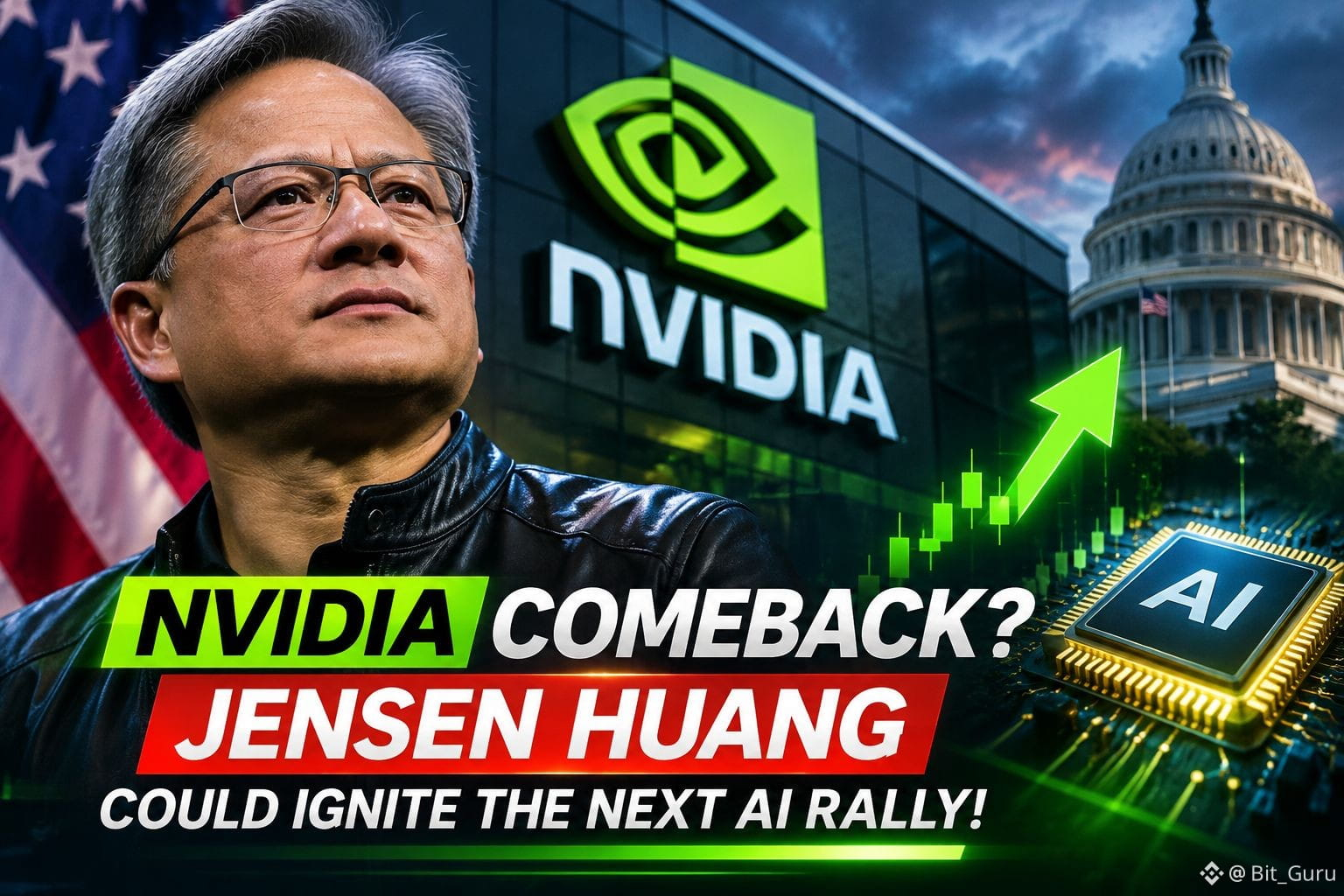
🚨 NVIDIA COMEBACK? JENSEN HUANG COULD IGNITE THE NEXT AI RALLY!
U.S. Treasury Secretary Scott Bessent has softened his stance on Jensen Huang's potential return to NVIDIA, raising hopes of a major leadership shift. All eyes are now on November 25, when NVIDIA's board faces a critical deadline regarding export-control investigations.
📊 AI Market Watch:
$NVDA : $135.14 (+4.17%)
$BLESS : $0.018073 (+35.39%)
$BULLA : $0.0206 (+44.66%)
A positive outcome could boost AI stocks and AI crypto tokens, but regulatory uncertainty remains a major risk.
🔥 Will Jensen Huang's comeback trigger the next AI rally?
#NVIDIA #AICrypto #MarketUpdate
{future}(BULLAUSDT)
🚨 NVIDIA COMEBACK? JENSEN HUANG COULD IGNITE THE NEXT AI RALLY!
U.S. Treasury Secretary Scott Bessent has softened his stance on Jensen Huang's potential return to NVIDIA, raising hopes of a major leadership shift. All eyes are now on November 25, when NVIDIA's board faces a critical deadline regarding export-control investigations.
📊 AI Market Watch:
$NVDA : $135.14 (+4.17%)
$BLESS : $0.018073 (+35.39%)
$BULLA : $0.0206 (+44.66%)
A positive outcome could boost AI stocks and AI crypto tokens, but regulatory uncertainty remains a major risk.
🔥 Will Jensen Huang's comeback trigger the next AI rally?
#NVIDIA #AICrypto #MarketUpdate
1
251

·
--
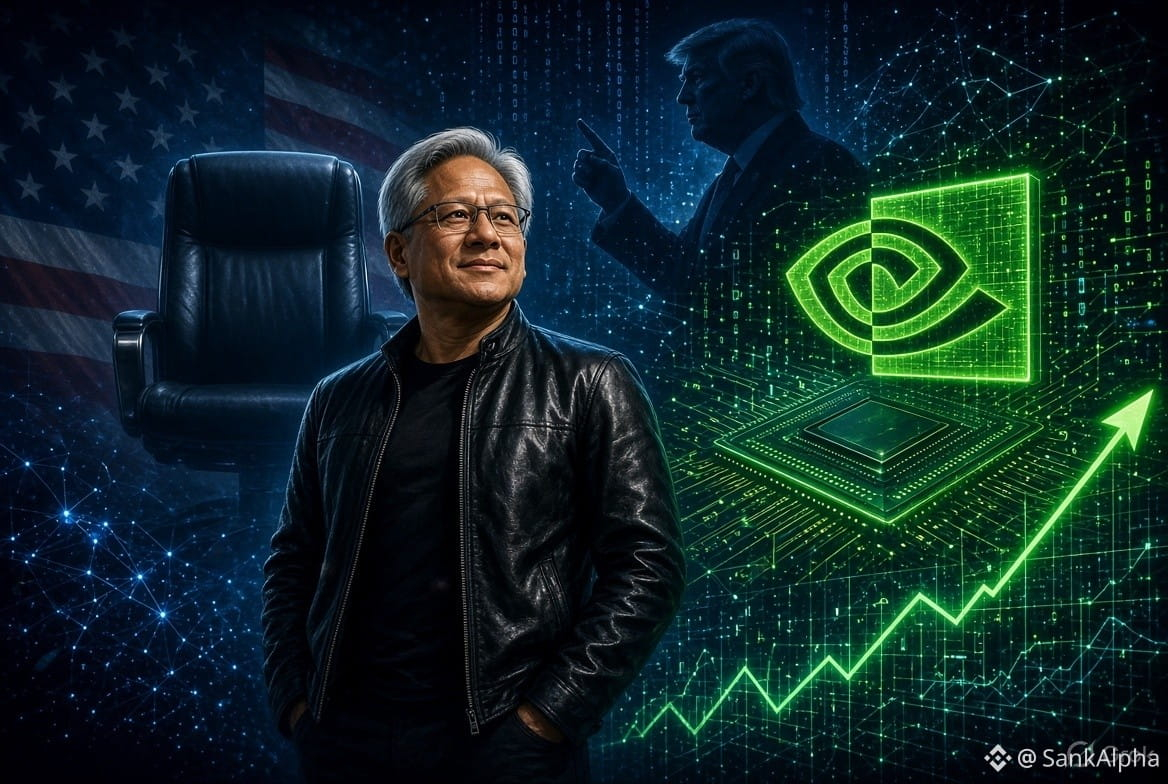
🚨The Chip King, the President & the Second Chance🤔
Once upon a time in Silicon Valley, a man named Jensen Huang built an empire on green chips that powered the entire AI revolution. For three decades he was untouchable — until one stormy November week in 2026.
Personal scandals and whispers of forbidden chip routes to the East forced the founder of Nvidia to walk away from the throne he created. The stock trembled. Traders held their breath.
Then the most unexpected voice spoke.
From the White House, President Trump posted:
“I hope the Board of Nvidia rehires Jensen Huang. It would be the best thing for the Company, and also, for the U.S.A.”
Hours later, Treasury Secretary Scott Bessent refused to close the door, saying only:
“I think we have to see where the buck stops.”
Suddenly the market had a new narrative. Would the Board bend? Would the Chip King return? Or was this the end of an era?
In the crypto and AI trading pits of Binance Square, one question now echoes louder than any candlestick:
If Jensen walks back through those doors… what happens to $NVDA and the entire AI trade?#NVIDIA
$NVDAB
{spot}(NVDABUSDT)
🚨The Chip King, the President & the Second Chance🤔
Once upon a time in Silicon Valley, a man named Jensen Huang built an empire on green chips that powered the entire AI revolution. For three decades he was untouchable — until one stormy November week in 2026.
Personal scandals and whispers of forbidden chip routes to the East forced the founder of Nvidia to walk away from the throne he created. The stock trembled. Traders held their breath.
Then the most unexpected voice spoke.
From the White House, President Trump posted:
“I hope the Board of Nvidia rehires Jensen Huang. It would be the best thing for the Company, and also, for the U.S.A.”
Hours later, Treasury Secretary Scott Bessent refused to close the door, saying only:
“I think we have to see where the buck stops.”
Suddenly the market had a new narrative. Would the Board bend? Would the Chip King return? Or was this the end of an era?
In the crypto and AI trading pits of Binance Square, one question now echoes louder than any candlestick:
If Jensen walks back through those doors… what happens to $NVDA and the entire AI trade?#NVIDIA
$NVDAB
421

·
--
Article
🚨
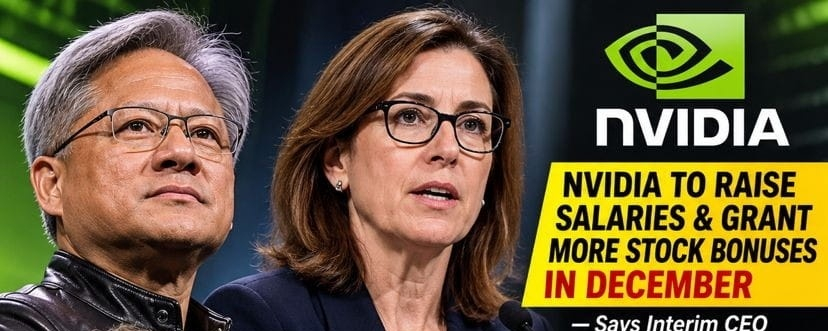
NVIDIA LEADERSHIP DRAMA: SALARY HIKES & STOCK BONUSES COMING IN DECEMBER!NVIDIA is facing a major leadership transition after Jensen Huang's departure.
According to the Financial Times, interim CEO Colette Kress has told employees that the company plans to bring forward salary increases and provide additional stock awards in December to boost employee morale.
📊 Why Does This Matter?
Leadership transition at NVIDIA
Employee confidence and retention
Additional stock-based compensation
Investor concerns about future leadership
🔥 The Big Question: Can NVIDIA Maintain Its AI Dominance Without Jensen Huang?
Will Colette Kress successfully lead the company through this transition?
💬 What is your opinion? Share your thoughts below!
#NVIDIA #NVDA #AI #stockmarket #technews
🚨 NVIDIA LEADERSHIP DRAMA: SALARY HIKES & STOCK BONUSES COMING IN DECEMBER!
NVIDIA is facing a major leadership transition after Jensen Huang's departure.
According to the Financial Times, interim CEO Colette Kress has told employees that the company plans to bring forward salary increases and provide additional stock awards in December to boost employee morale.
📊 Why Does This Matter?
Leadership transition at NVIDIA
Employee confidence and retention
Additional stock-based compensation
Investor concerns about future leadership
🔥 The Big Question: Can NVIDIA Maintain Its AI Dominance Without Jensen Huang?
Will Colette Kress successfully lead the company through this transition?
💬 What is your opinion? Share your thoughts below!
#NVIDIA #NVDA #AI #stockmarket #technews
115
·
--
Article
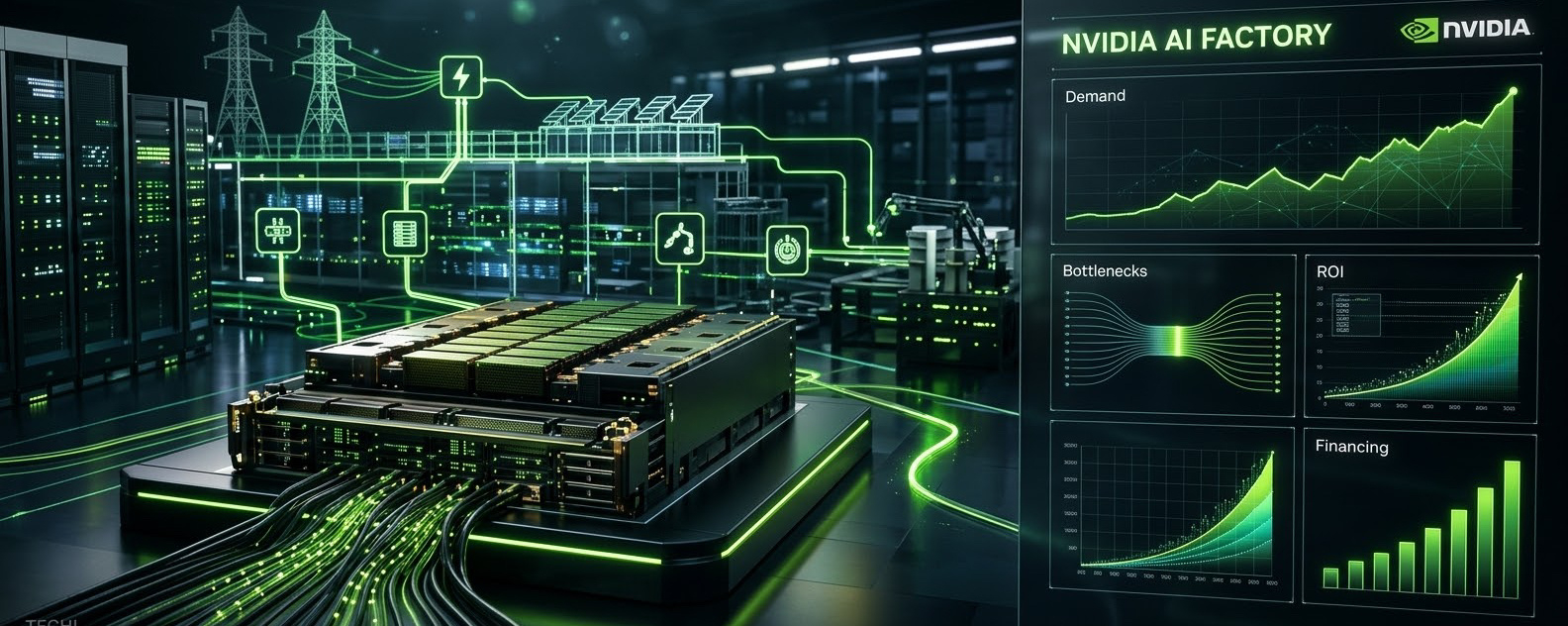
NVIDIA: The $518 Billion AI Infrastructure Question$NVDAB
NVIDIA just reported $115.8 billion in quarterly revenue, up 103% year over year. Its Data Center business generated $107.6 billion, confirming that AI infrastructure demand remains extraordinary.
But the most important story may be hidden beyond the revenue figures.
NVIDIA disclosed $518 billion in future commitments across supply, cloud services, data-center leases, equity investments and capital expenditure. Separately, it disclosed $32 billion in neocloud agreements and up to $118 billion in maximum gross guarantee exposure.
These figures are not immediate debt. They involve different contractual obligations, timelines and conditions. NVIDIA says its guarantees become effective in phases and that no guarantee payments had been made as of October 25.
Still, the scale reveals something important: the AI revolution is becoming a massive financing and infrastructure cycle, not simply a technology race.
There are additional questions investors cannot ignore.
Receivables reached $81 billion, with collection days increasing to 64. Three direct customers represented 36% of quarterly revenue. Jensen Huang’s departure introduced leadership uncertainty, while Reuters reported a potential SEC accounting inquiry. California’s attorney general also issued an investigative subpoena.
None of these investigations establishes wrongdoing.
The counterargument is equally important: NVIDIA generated $43.8 billion in quarterly free cash flow, maintains substantial liquidity, and forecasts $130 billion in next-quarter revenue.
Our conclusion: NVIDIA’s underlying business remains exceptionally profitable, but investors must now evaluate the quality, sustainability and financing structure of AI demand — not just the growth rate.
The next phase of the AI cycle will be decided by one question:
Can the enormous capital being invested in AI infrastructure generate sustainable returns?
— NEXUS ATLAS
Global Markets. Digital Assets. Future Technologies.
Research references: NVIDIA Q3 FY2027 SEC disclosures, November 17; Reuters, November 18–20; California DOJ, November 19, 2026.
#Write2Earn #NVIDIA #Binance $NVDAB
{spot}(NVDABUSDT)
NVIDIA: The $518 Billion AI Infrastructure Question
$NVDAB
NVIDIA just reported $115.8 billion in quarterly revenue, up 103% year over year. Its Data Center business generated $107.6 billion, confirming that AI infrastructure demand remains extraordinary.
But the most important story may be hidden beyond the revenue figures.
NVIDIA disclosed $518 billion in future commitments across supply, cloud services, data-center leases, equity investments and capital expenditure. Separately, it disclosed $32 billion in neocloud agreements and up to $118 billion in maximum gross guarantee exposure.
These figures are not immediate debt. They involve different contractual obligations, timelines and conditions. NVIDIA says its guarantees become effective in phases and that no guarantee payments had been made as of October 25.
Still, the scale reveals something important: the AI revolution is becoming a massive financing and infrastructure cycle, not simply a technology race.
There are additional questions investors cannot ignore.
Receivables reached $81 billion, with collection days increasing to 64. Three direct customers represented 36% of quarterly revenue. Jensen Huang’s departure introduced leadership uncertainty, while Reuters reported a potential SEC accounting inquiry. California’s attorney general also issued an investigative subpoena.
None of these investigations establishes wrongdoing.
The counterargument is equally important: NVIDIA generated $43.8 billion in quarterly free cash flow, maintains substantial liquidity, and forecasts $130 billion in next-quarter revenue.
Our conclusion: NVIDIA’s underlying business remains exceptionally profitable, but investors must now evaluate the quality, sustainability and financing structure of AI demand — not just the growth rate.
The next phase of the AI cycle will be decided by one question:
Can the enormous capital being invested in AI infrastructure generate sustainable returns?
— NEXUS ATLAS
Global Markets. Digital Assets. Future Technologies.
Research references: NVIDIA Q3 FY2027 SEC disclosures, November 17; Reuters, November 18–20; California DOJ, November 19, 2026.
#Write2Earn #NVIDIA #Binance $NVDAB
390
·
--
Bullish
Nvidia: Three New Facts Landed Over the Weekend
The Nvidia story moved again this weekend — and none of it is about earnings.
What is new (22 Nov):
• The New York Times reports the SEC inquiry into Nvidia's accounting is in its early stages, citing people briefed on the confidential investigation. The SEC declined to comment, and Nvidia has not commented. A probe is not a finding — no charges have been announced.
• Jensen Huang has agreed to testify in public before the US Senate on 3 Dec, and to a closed-door interview with three House committees on 1 Dec — his first testimony since resigning on 12 Nov.
• Nvidia has delayed its quarterly 10-Q filing. Interim CEO Colette Kress said on the earnings call it will be filed in the coming weeks; the deadline is around 4 Dec, and UBS says management linked the delay to the investigation.
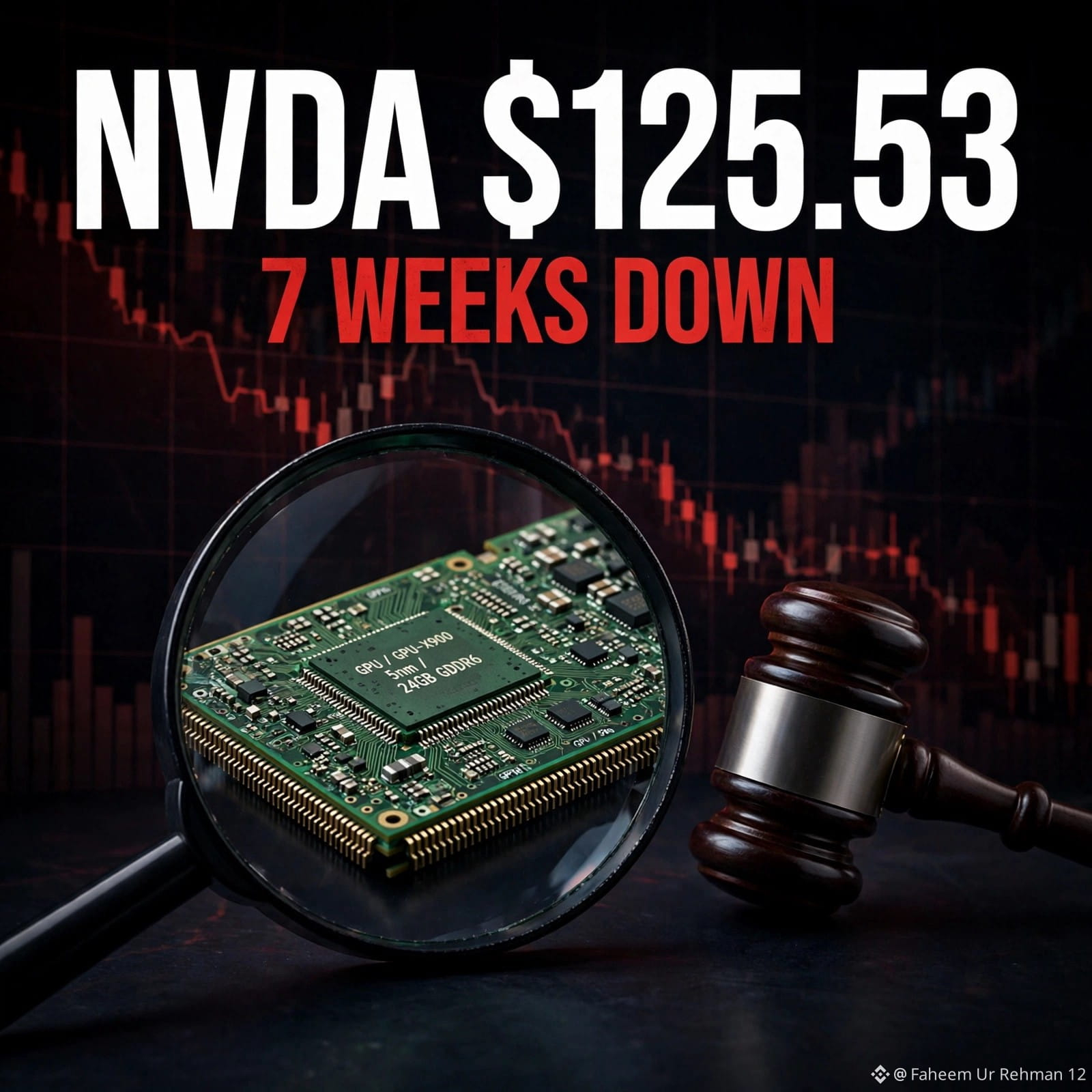
• The stock: $125.53 at Friday's close (20 Nov) — down 46% in seven weeks, about $2.6T of market value gone. At the close on 11 Nov, the day before Huang's resignation was announced, Nvidia was worth $4.19T.
Seven weeks down, and the next hard dates are 1 Dec, 3 Dec and 4 Dec. What are YOU watching first — the testimony or the filing? 👇
$NVDA
{future}(NVDAUSDT)
#NVIDIA #BinanceSquare
Nvidia: Three New Facts Landed Over the Weekend
The Nvidia story moved again this weekend — and none of it is about earnings.
What is new (22 Nov):
• The New York Times reports the SEC inquiry into Nvidia's accounting is in its early stages, citing people briefed on the confidential investigation. The SEC declined to comment, and Nvidia has not commented. A probe is not a finding — no charges have been announced.
• Jensen Huang has agreed to testify in public before the US Senate on 3 Dec, and to a closed-door interview with three House committees on 1 Dec — his first testimony since resigning on 12 Nov.
• Nvidia has delayed its quarterly 10-Q filing. Interim CEO Colette Kress said on the earnings call it will be filed in the coming weeks; the deadline is around 4 Dec, and UBS says management linked the delay to the investigation.
• The stock: $125.53 at Friday's close (20 Nov) — down 46% in seven weeks, about $2.6T of market value gone. At the close on 11 Nov, the day before Huang's resignation was announced, Nvidia was worth $4.19T.
Seven weeks down, and the next hard dates are 1 Dec, 3 Dec and 4 Dec. What are YOU watching first — the testimony or the filing? 👇
$NVDA
#NVIDIA #BinanceSquare
254

·
--
Bearish
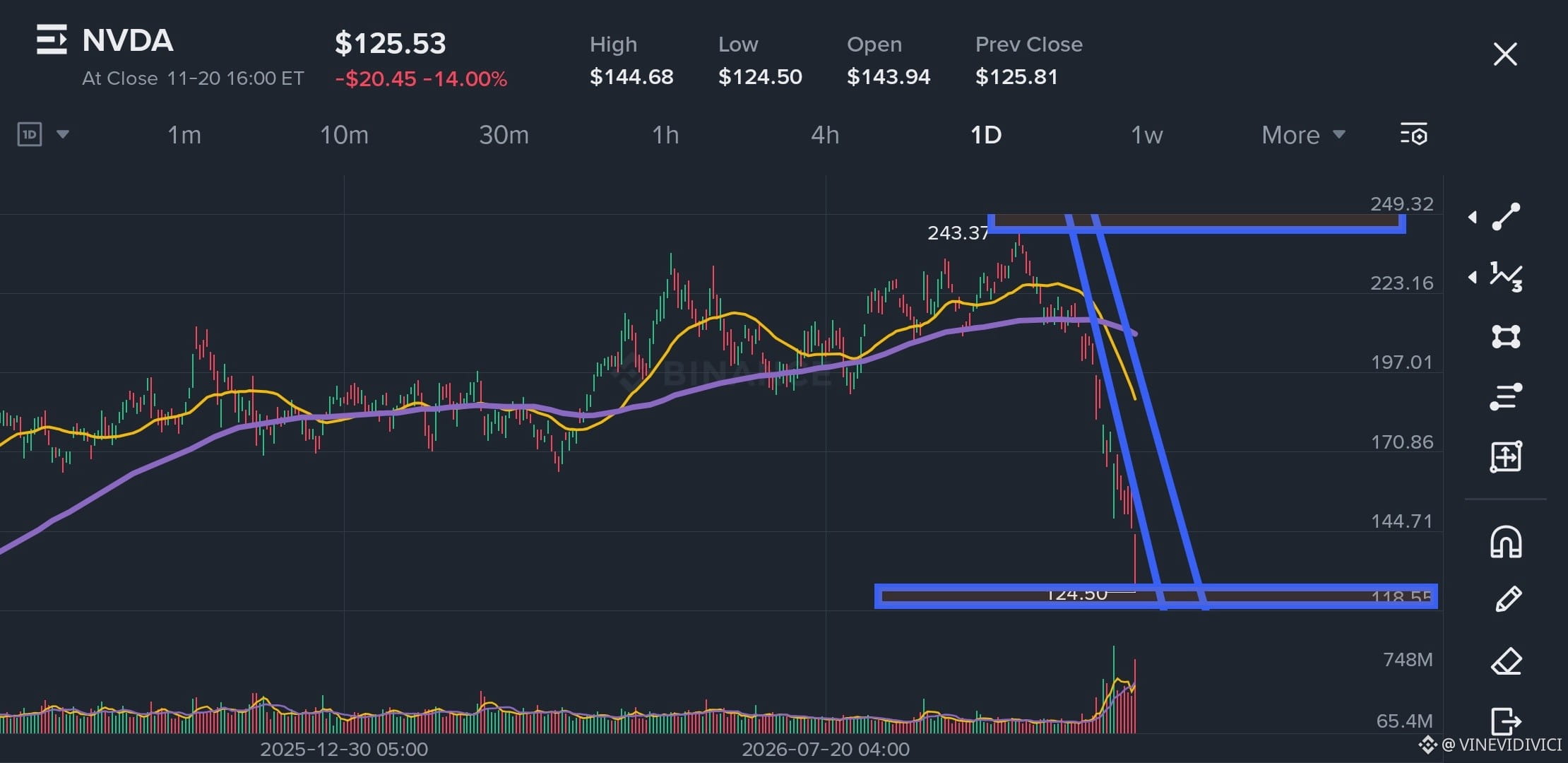
due to the resignation of Jensen Huang the former ceo of NVDIA price has been fallen and I set a support level for it market and I have seen a strong breakthrough because of a strong momentum is testing the support level which is making the level weaker . $NVDA #nvidia
due to the resignation of Jensen Huang the former ceo of NVDIA price has been fallen and I set a support level for it market and I have seen a strong breakthrough because of a strong momentum is testing the support level which is making the level weaker . $NVDA #nvidia
16

·
--
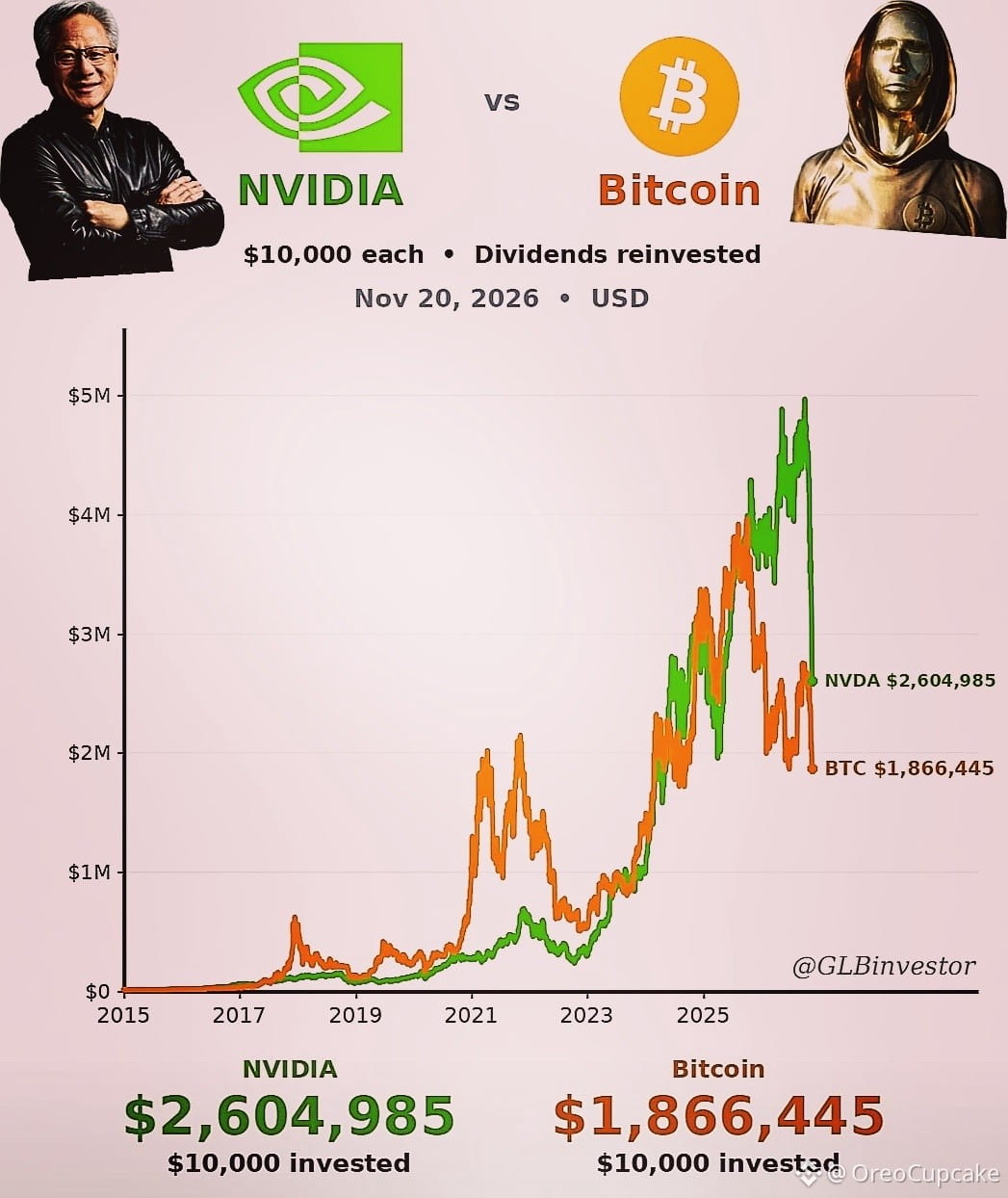
What if you invested $10,000 in 2015 on $BTC and $NVDA How much would you have today, 11 years later?
#bitcoin From: $10,000 -> $1,866,443
#NVIDIA From: $10,000 -> $2,604,985
Note that there were moments when BTC was higher then nvdia at certain points, like when BTC was $120K.
So which one is a better investment today?
#CryptoVsStocks
{future}(NVDAUSDT)
{future}(BTCUSDT)
What if you invested $10,000 in 2015 on $BTC and $NVDA How much would you have today, 11 years later?
#bitcoin From: $10,000 -> $1,866,443
#NVIDIA From: $10,000 -> $2,604,985
Note that there were moments when BTC was higher then nvdia at certain points, like when BTC was $120K.
So which one is a better investment today?
#CryptoVsStocks
#bitcoin From: $10,000 -> $1,866,443
#NVIDIA From: $10,000 -> $2,604,985
Note that there were moments when BTC was higher then nvdia at certain points, like when BTC was $120K.
So which one is a better investment today?
#CryptoVsStocks
74

Donald Trump's recent social media push to bring Jensen Huang back to lead Nvidia highlights how deeply intertwined modern tech giants are with national economic policy. While leadership continuity is crucial for AI dominance, such political commentary shows how macro forces increasingly try to steer micro corporate strategy. Investors should watch how this unique intersection of Washington politics and Silicon Valley innovation impacts market sentiment moving forward. #Nvidia #JensenHuang #CryptoNews
Donald Trump's recent social media push to bring Jensen Huang back to lead Nvidia highlights how deeply intertwined modern tech giants are with national economic policy. While leadership continuity is crucial for AI dominance, such political commentary shows how macro forces increasingly try to steer micro corporate strategy. Investors should watch how this unique intersection of Washington politics and Silicon Valley innovation impacts market sentiment moving forward. #Nvidia #JensenHuang #CryptoNews
23

Article
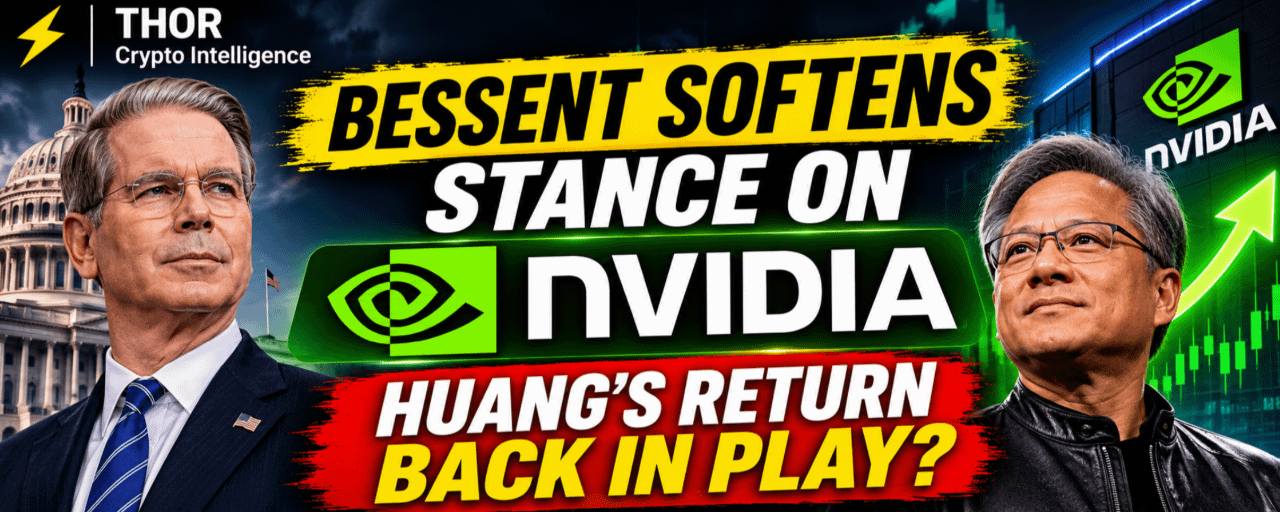
BESSENT SOFTENS — HUANG'S NVIDIA RETURN BACK IN PLAY?Treasury Secretary Scott Bessent is no longer ruling out Jensen Huang's return as NVIDIA CEO, reversing his earlier call for outside leadership.
⚡ THOR Update
🔄 Bessent softens his position.👤 Huang has expressed willingness to return.🏛️ NVIDIA's board previously opposed reinstatement.🔍 Export-control compliance questions remain unresolved.👩 Colette Kress remains interim CEO.
🧠 THOR Edge: Washington's softer tone reduces one obstacle, but the board's position and ongoing investigation remain key hurdles.
⚡ THOR Signal: Watch the board's next decision.
👇 Should Jensen return?
🟢 Bring Huang back
🟡 New leadership
🔴 Wait for investigation
#NVIDIA #JensenHuang #BessentSoftensStanceOnHuang’sNvidiaReturn #EvolveAtBinanceBlockchainWeek
$EVAA
{future}(EVAAUSDT)
$PIEVERSE
{future}(PIEVERSEUSDT)
$BLESS
{future}(BLESSUSDT)
BESSENT SOFTENS — HUANG'S NVIDIA RETURN BACK IN PLAY?
Treasury Secretary Scott Bessent is no longer ruling out Jensen Huang's return as NVIDIA CEO, reversing his earlier call for outside leadership.
⚡ THOR Update
🔄 Bessent softens his position.👤 Huang has expressed willingness to return.🏛️ NVIDIA's board previously opposed reinstatement.🔍 Export-control compliance questions remain unresolved.👩 Colette Kress remains interim CEO.
🧠 THOR Edge: Washington's softer tone reduces one obstacle, but the board's position and ongoing investigation remain key hurdles.
⚡ THOR Signal: Watch the board's next decision.
👇 Should Jensen return?
🟢 Bring Huang back
🟡 New leadership
🔴 Wait for investigation
#NVIDIA #JensenHuang #BessentSoftensStanceOnHuang’sNvidiaReturn #EvolveAtBinanceBlockchainWeek
$EVAA
$PIEVERSE
$BLESS
457

·
--
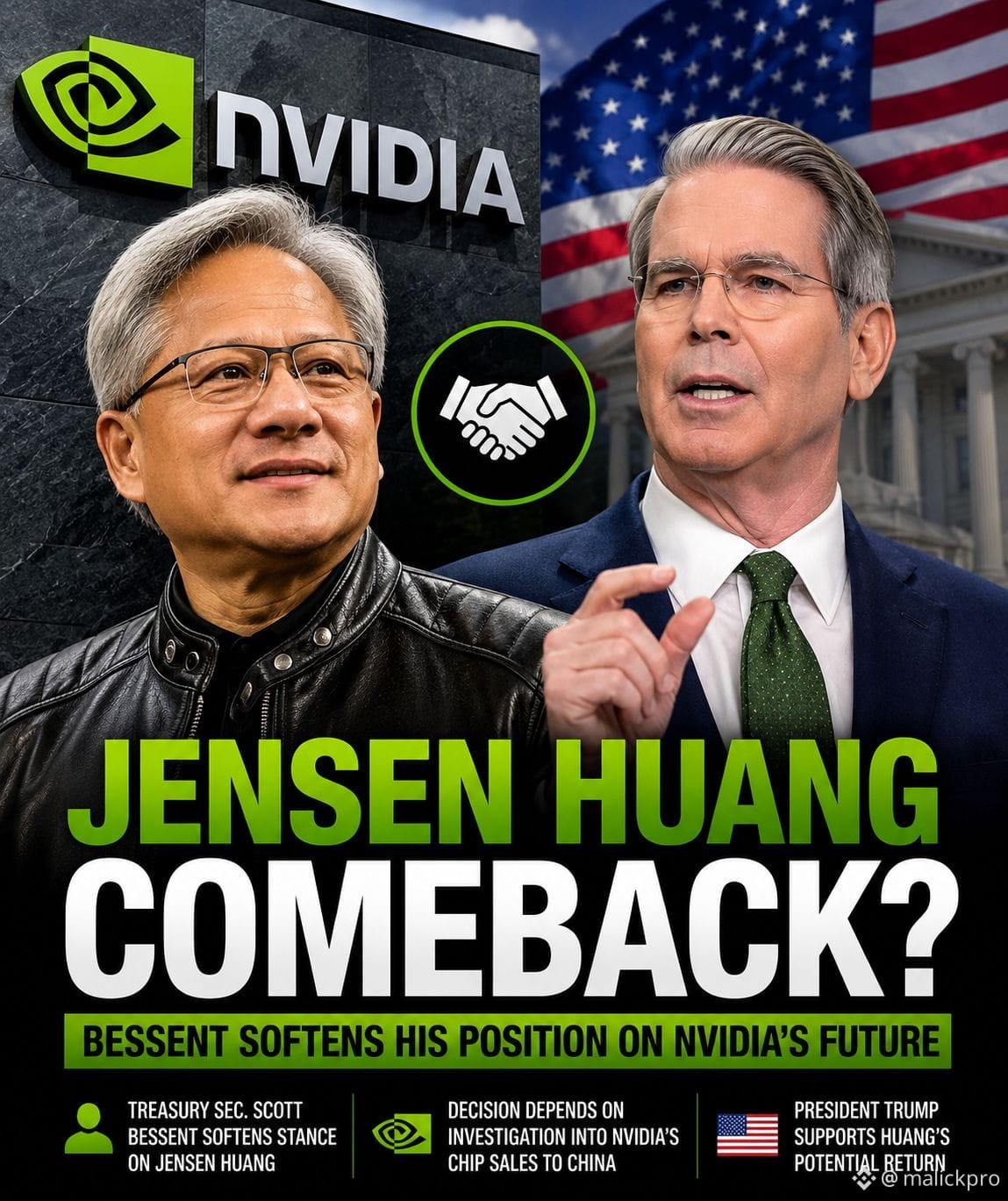
US Treasury Secretary Scott Bessent has softened his stance on former Nvidia CEO Jensen Huang, leaving the door open for his possible return.
Bessent says the decision will depend on the findings of an ongoing investigation into Nvidia’s chip sales to China. Meanwhile, President Donald Trump has also backed the possibility of Huang returning.
Could Jensen Huang make a comeback at Nvidia?
comment.
$NVDAB
#NVIDIA #JensenHuang #ScottBessent #AI #TechNews #USChina #StockMarket #BreakingNews"
#BessentSoftensStanceOnHuang’sNvidiaReturn
49

NVIDIA FACES SEC INVESTIGATION AS STOCK MARKET PRESSURE MOUNTS
$NVDA is facing growing regulatory scrutiny as U.S. authorities investigate potential accounting issues and examine the company's chip sales to China.
Here's why investors are watching closely:
{future}(NVDAUSDT)
SEC Investigation: SEC enforcement staff are examining potential accounting issues at NVIDIA.
China Controversy: U.S. officials are demanding answers about how advanced NVIDIA AI chips reached Chinese customers.
Stock Pressure: $NVDA shares have faced selling pressure amid regulatory uncertainty and concerns about the broader AI investment boom.
Record Business: NVIDIA reported $115.8 billion in quarterly revenue, up 103% year over year.
The Big Question: Can NVIDIA maintain its AI dominance while facing increasing regulatory pressure and uncertainty about its future leadership?
Is this a temporary setback for $NVDA, or could it signal a bigger shift in the AI stock market?
#NVIDIA #StockMarket #AI #WallStreet
NVIDIA FACES SEC INVESTIGATION AS STOCK MARKET PRESSURE MOUNTS
$NVDA is facing growing regulatory scrutiny as U.S. authorities investigate potential accounting issues and examine the company's chip sales to China.
Here's why investors are watching closely:
SEC Investigation: SEC enforcement staff are examining potential accounting issues at NVIDIA.
China Controversy: U.S. officials are demanding answers about how advanced NVIDIA AI chips reached Chinese customers.
Stock Pressure: $NVDA shares have faced selling pressure amid regulatory uncertainty and concerns about the broader AI investment boom.
Record Business: NVIDIA reported $115.8 billion in quarterly revenue, up 103% year over year.
The Big Question: Can NVIDIA maintain its AI dominance while facing increasing regulatory pressure and uncertainty about its future leadership?
Is this a temporary setback for $NVDA , or could it signal a bigger shift in the AI stock market?
#NVIDIA #StockMarket #AI #WallStreet

120

·
--
🚨 Something appears to be shifting behind the scenes at $NVDA .
Trump has publicly called for Nvidia's board to bring Jensen Huang back, calling it "the best thing for the USA."
Just days ago, the administration was discussing alternative leadership. Now, Treasury Secretary Bessent and other officials appear to be taking a different public position.
Key developments:
➡️ Trump openly supports Jensen's return. ➡️ Bessent acknowledges the possibility. ➡️ Attorney General Todd Blanche questions the allegations. ➡️ Pressure on Nvidia's board is growing.
The big question: Is Nvidia heading toward a leadership reversal, or is this simply a shift in political messaging?
One thing is clear: $NVDAB is at the center of an important political and corporate story.
#NVDA #Nvidia #AI
{spot}(NVDABUSDT)
🚨 Something appears to be shifting behind the scenes at $NVDA .
Trump has publicly called for Nvidia's board to bring Jensen Huang back, calling it "the best thing for the USA."
Just days ago, the administration was discussing alternative leadership. Now, Treasury Secretary Bessent and other officials appear to be taking a different public position.
Key developments:
➡️ Trump openly supports Jensen's return. ➡️ Bessent acknowledges the possibility. ➡️ Attorney General Todd Blanche questions the allegations. ➡️ Pressure on Nvidia's board is growing.
The big question: Is Nvidia heading toward a leadership reversal, or is this simply a shift in political messaging?
One thing is clear: $NVDAB is at the center of an important political and corporate story.
#NVDA #Nvidia #AI
85
Log in to explore more content
Join global crypto users on Binance Square
⚡️ Get latest and useful information about crypto.
💬 Trusted by the world’s largest crypto exchange.
👍 Discover real insights from verified creators.
Email / Phone number
Trending Topics
1
#WillMarketsStageAThanksgivingReliefRally?
23,589 views
485 Discussing
2
#BessentSoftensStanceOnHuang’sNvidiaReturn
16,441 views
337 Discussing
3
#EvolveAtBinanceBlockchainWeek
8,140 views
166 Discussing
4
#MuskWarnsOfAICashCrunch
15,520 views
255 Discussing
5
#SouthKoreaToTightenOversightOfCryptoTransfersAbroad
1,140 views
23 Discussing
6
#RussiaAllowsExchangesToOfferCryptoTrading
7,073 views
131 Discussing
7
#俄罗斯允许交易所开展加密交易
7,758 views
33 Discussing
8
#UKToBarCryptoExchangesFromMakingMarketsOnTheirOwnPlatforms
446 views
15 Discussing
9
#UKTreasurySignsCryptoMarketMakingExemptionRules
2,970 views
109 Discussing
10
#BTCReboundsAbove$60KAmidWhaleDipBuying
132,831 views
442 Discussing