
#dvt
dvt
3,163 views
37 Discussing
Hot
Latest

Partly True
Article
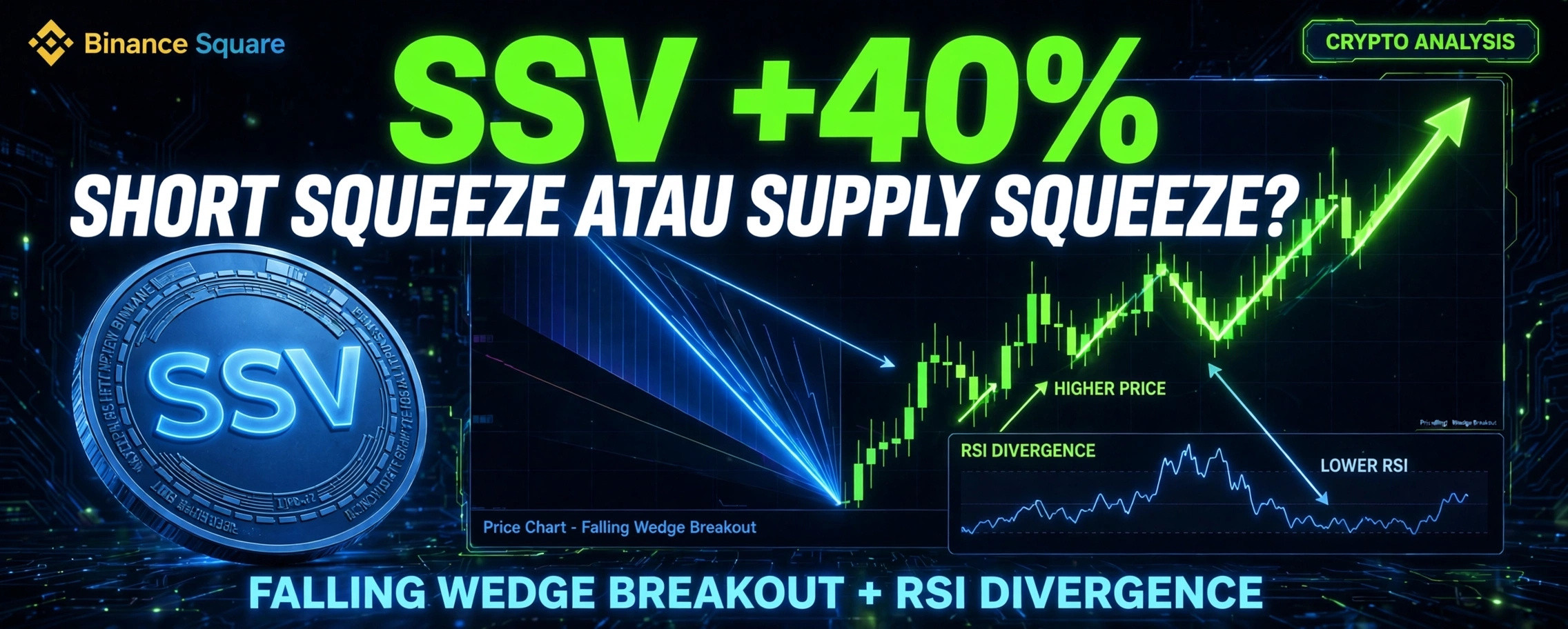
SSV Up 40% in One Day: Short Squeeze or Supply Squeeze? Here’s the Full BreakdownSSV Network (SSV) suddenly became one of today’s biggest gainers.
In spot trading, the price was recorded at $2.49–$2.64, up +39% to +42% over 24 hours, with a daily range of $1.75–$2.68.
Over the past 7 days, it’s already up +44.28%. But looking at a longer timeframe, the story is different: over 30 days, it’s up just +2.96%, and it’s still down 34% to 45% since the start of the year.
And the most important thing to remember: its ATH was $65.82 (March 24, 2024). The price is still 96% below its ATH. So this isn’t a coin at its peak—it’s a coin recovering from a very deep bottom.
SSV Up 40% in One Day: Short Squeeze or Supply Squeeze? Here’s the Full Breakdown
SSV Network (SSV) suddenly became one of today’s biggest gainers.
In spot trading, the price was recorded at $2.49–$2.64, up +39% to +42% over 24 hours, with a daily range of $1.75–$2.68.
Over the past 7 days, it’s already up +44.28%. But looking at a longer timeframe, the story is different: over 30 days, it’s up just +2.96%, and it’s still down 34% to 45% since the start of the year.
And the most important thing to remember: its ATH was $65.82 (March 24, 2024). The price is still 96% below its ATH. So this isn’t a coin at its peak—it’s a coin recovering from a very deep bottom.
558

·
--
Verified
Glamsterdam explained: EIP-7732, EIP-7928 and the role of Obol’s DVT# ⚙️ GLAMSTERDAM : Ethereum rewrites its block production, and DVT becomes a critical infrastructure
Fusaka (Dec. 2025) scaled data availability with PeerDAS. Glamsterdam (target: Q3 2026, internal window end of August) goes after the heart of the reactor: block building and block execution. Two headline EIPs, and a direct consequence for validator architecture. Technical thread. 🧵
---
## 1️⃣ EIP-7732 : ePBS (Enshrined Proposer-Builder Separation)
Today, 80–90% of Ethereum blocks go through external relays like MEV-Boost. This is a trust point outside the protocol, and therefore a vector for centralization.
Glamsterdam explained: EIP-7732, EIP-7928 and the role of Obol’s DVT
# ⚙️ GLAMSTERDAM : Ethereum rewrites its block production, and DVT becomes a critical infrastructure
Fusaka (Dec. 2025) scaled data availability with PeerDAS. Glamsterdam (target: Q3 2026, internal window end of August) goes after the heart of the reactor: block building and block execution. Two headline EIPs, and a direct consequence for validator architecture. Technical thread. 🧵
---
## 1️⃣ EIP-7732 : ePBS (Enshrined Proposer-Builder Separation)
Today, 80–90% of Ethereum blocks go through external relays like MEV-Boost. This is a trust point outside the protocol, and therefore a vector for centralization.
3
270

$SSV
{spot}(SSVUSDT)
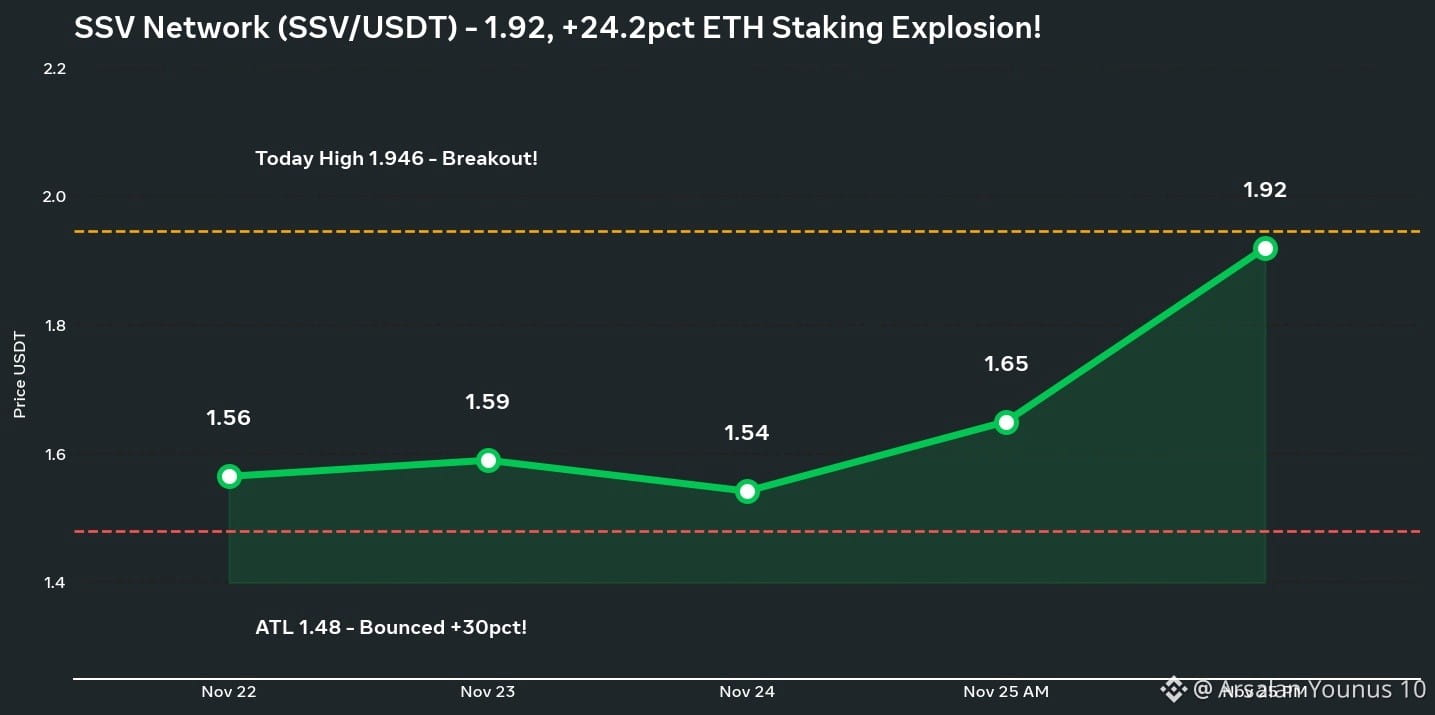
$1.92 — +24.19% Today! SSV Network Just Exploded +30% From ATL — Why?*
> SSV Network (SSV/USDT) is trading at *∼$1.92*, up *+24.19% today* — Open: *$1.544* | High: *$1.946* | Low: *$1.523* | Previous Close: *$1.546*
> *What is SSV?
SSV = *SSV Network, Distributed Validator Technology (DVT) for Ethereum Staking*.
> SSV = *The infrastructure that makes Ethereum staking safe*. Normal ETH staking: 1 validator = 1 machine. If that machine goes down, you lose rewards, you get slashed
> *Why Exploding +24%?*
> 1. ATL Bounce: Hit *ATL $1.48*, bounced *+30% to $1.92*, hit *$1.946 high* — *5 Sessions: +15.58%*, *7 Days: +1.08% to +18.93%*. This is a *range breakout* — SSV was stuck $1.52-$1.69 for 3 days, then broke out +24% in 1 day
> 2. Volume Explosion: Spot Volume *$9.61M-$25.49M*, Futures Turnover *$20.49M-$37.04M*, OI *$8.15M-$15.82M* — Binance 47.2% of OI, Bitget 10.7%, Bybit 10.1%. Spot volume is *91%-92% of its $27.64M market cap* traded in ONE day! The entire market cap traded 1x spot + 1.3x futures in 24h. Traders are NOT leaving SSV
> 3. ETH Staking Narrative Returning: ETH is bouncing, ETH staking is growing, *SSV 2.0 + Based Apps (bApps)* launching — SSV is no longer just DVT, it's *bApps: Decentralized apps that use SSV validators for security*. If bApps get adopted, SSV demand explodes
> *Key Levels:*
> Support: $1.75 -> *$1.523* (Today Low) -> $1.48 (ATL)
> Resistance: *$1.946* (Today High) -> $2.00 (Psychological) -> $2.50
> *Stats:*
> Price: *$1.92* | 24h Change: *+24.19%*
> Market Cap: *$27.64M-$30.97M* | Rank #420-664
> FDV: *$27.64M* (1x market cap, fully circulating!)
> Spot Volume: *$9.61M-$25.49M* (91%-92% of market cap!)
> Futures Turnover: *$20.49M-$37.04M* | OI: *$8.15M-$15.82M*
>$ Circulating: 14.70M-16.47M SSV
> ATH: *$65.93* — Now *-97.69% down*
> ATL: *$1.48* — Now *+30% up*
> 5 Sessions: *+15.58%* | 1 Month: *-22.48%* | 6 Months: *-26.95%* | YTD: *-59.09%* | 1 Year: *-51.42%*
> #SSV #BinanceSquare #Ethereum #DVT #defi
$SSV
$1.92 — +24.19% Today! SSV Network Just Exploded +30% From ATL — Why?*
> SSV Network (SSV/USDT) is trading at *∼$1.92*, up *+24.19% today* — Open: *$1.544* | High: *$1.946* | Low: *$1.523* | Previous Close: *$1.546*
> *What is SSV?
SSV = *SSV Network, Distributed Validator Technology (DVT) for Ethereum Staking*.
> SSV = *The infrastructure that makes Ethereum staking safe*. Normal ETH staking: 1 validator = 1 machine. If that machine goes down, you lose rewards, you get slashed
> *Why Exploding +24%?*
> 1. ATL Bounce: Hit *ATL $1.48*, bounced *+30% to $1.92*, hit *$1.946 high* — *5 Sessions: +15.58%*, *7 Days: +1.08% to +18.93%*. This is a *range breakout* — SSV was stuck $1.52-$1.69 for 3 days, then broke out +24% in 1 day
> 2. Volume Explosion: Spot Volume *$9.61M-$25.49M*, Futures Turnover *$20.49M-$37.04M*, OI *$8.15M-$15.82M* — Binance 47.2% of OI, Bitget 10.7%, Bybit 10.1%. Spot volume is *91%-92% of its $27.64M market cap* traded in ONE day! The entire market cap traded 1x spot + 1.3x futures in 24h. Traders are NOT leaving SSV
> 3. ETH Staking Narrative Returning: ETH is bouncing, ETH staking is growing, *SSV 2.0 + Based Apps (bApps)* launching — SSV is no longer just DVT, it's *bApps: Decentralized apps that use SSV validators for security*. If bApps get adopted, SSV demand explodes
> *Key Levels:*
> Support: $1.75 -> *$1.523* (Today Low) -> $1.48 (ATL)
> Resistance: *$1.946* (Today High) -> $2.00 (Psychological) -> $2.50
> *Stats:*
> Price: *$1.92* | 24h Change: *+24.19%*
> Market Cap: *$27.64M-$30.97M* | Rank #420-664
> FDV: *$27.64M* (1x market cap, fully circulating!)
> Spot Volume: *$9.61M-$25.49M* (91%-92% of market cap!)
> Futures Turnover: *$20.49M-$37.04M* | OI: *$8.15M-$15.82M*
>$ Circulating: 14.70M-16.47M SSV
> ATH: *$65.93* — Now *-97.69% down*
> ATL: *$1.48* — Now *+30% up*
> 5 Sessions: *+15.58%* | 1 Month: *-22.48%* | 6 Months: *-26.95%* | YTD: *-59.09%* | 1 Year: *-51.42%*
> #SSV #BinanceSquare #Ethereum #DVT #defi
316

📌 SSV: rebound from lows
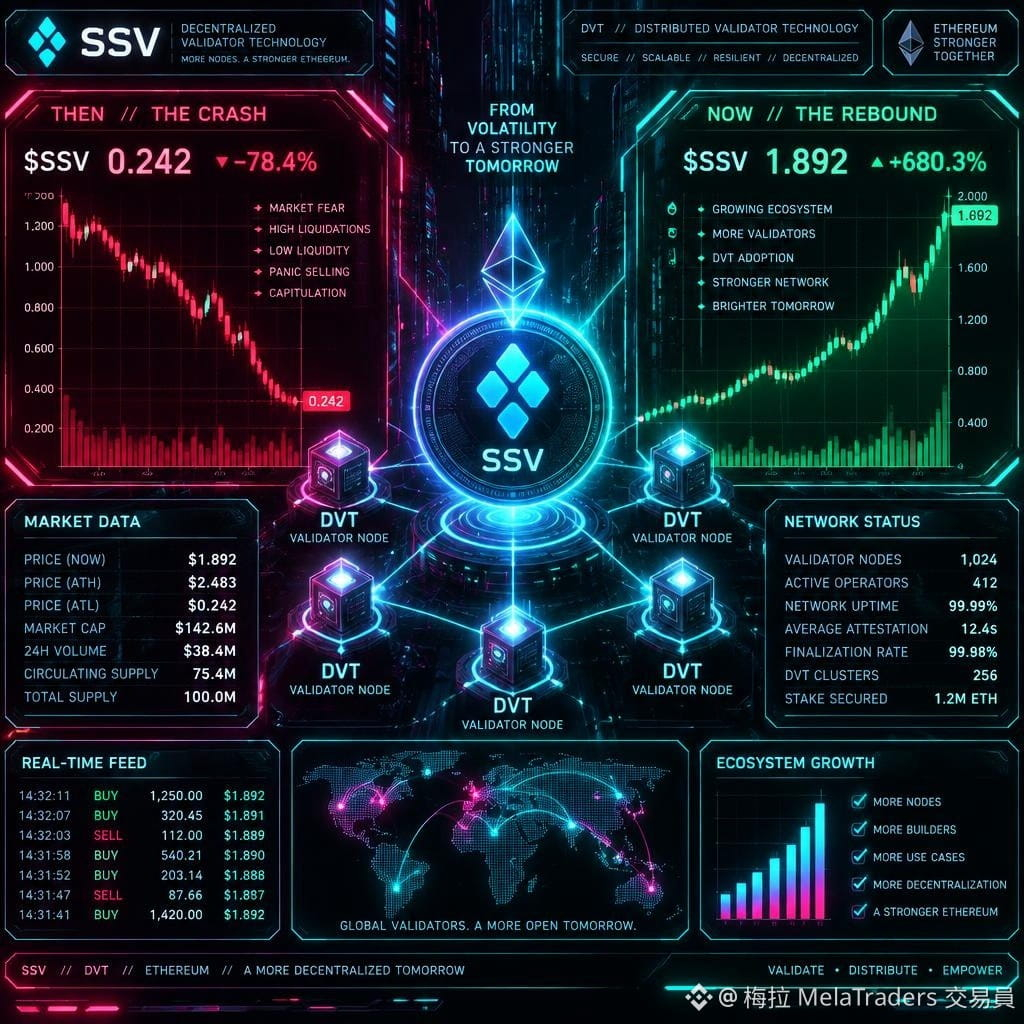
📊 SSV Network uses DVT to distribute Ethereum validators across multiple operators. In a matter of days, it went from ~$1.48 to ~$2.65 (+~50% in 48h). Real strength or just a technical rebound?
| Metric | Ref. data |
|---|---|
| Price | ~$2.65 (24h +38%) |
| 24h range | $1.91–$2.93 |
| MCap / TVL | ~$39M / ~$9B |
| 24h volume | ~$43M |
✅ Real-world use in ETH staking. ⚠️ Uncapped supply (∞). ❌ No new fundamental announcement today: the jump looks technical.
Follow the $SSV/USDT pair with Binance's live price component.
➡️ Coming in the next post: SAR/Supertrend levels and risk management.
#Melabot #Melabotontour #AnalisisTecnico #DVT #RiskManagement
$BTC $ETH $SSV
📌 SSV: rebound from lows
📊 SSV Network uses DVT to distribute Ethereum validators across multiple operators. In a matter of days, it went from ~$1.48 to ~$2.65 (+~50% in 48h). Real strength or just a technical rebound?
| Metric | Ref. data |
|---|---|
| Price | ~$2.65 (24h +38%) |
| 24h range | $1.91–$2.93 |
| MCap / TVL | ~$39M / ~$9B |
| 24h volume | ~$43M |
✅ Real-world use in ETH staking. ⚠️ Uncapped supply (∞). ❌ No new fundamental announcement today: the jump looks technical.
Follow the $SSV /USDT pair with Binance's live price component.
➡️ Coming in the next post: SAR/Supertrend levels and risk management.
#Melabot #Melabotontour #AnalisisTecnico #DVT #RiskManagement
$BTC $ETH $SSV
2
208
📈 SSV: analysis and wrap-up
🧠 Fundamentals: DVT for ETH staking, TVL ~$9B, and real-world adoption. ⚠️ Risks: infinite supply, governance, and ecosystem dependence.
📊 Technical (approx.): short-term uptrend, but stretched after +50%.
| Zone | Level | Interpretation |
|---|---|---|
| Resistance | $2.6–$3.0 | Recent ceiling |
| Support 1 | $2.2–$2.4 | Watch volume |
| Support 2 | $2.0 | If it falls, caution |
| Risk | $1.8–$1.5 | Origin zone |
SAR/Supertrend tend to favor rapid rallies, but reverse if there is a sharp correction. Risk management: 1–5% per trade + SL. No direct orders: the system evaluates probabilities.
Trading, code, and good music. 🎵
#Melabot #Melabotontour #AnalisisTecnico #DVT #RiskManagement
$BTC $ETH $SSV

3
187

·
--
The single greatest existential threat to Proof of Stake architecture is not regulatory oversight; it is the silent centralization of validator node operations. When billions of dollars in staked capital are routed through a handful of massive, centralized operators, the entire network becomes vulnerable to catastrophic single point slashing events and localized server outages.
Smart money is no longer blindly deploying capital into monolithic staking providers. The definitive structural upgrade happening right now is the aggressive integration of Distributed Validator Technology (DVT). This architecture mathematically splits a single validator cryptographic key across multiple independent, geographically isolated operators, creating an unbreakable, fault-tolerant security mesh.
If one node goes offline or gets compromised, the decentralized cluster continues to validate seamlessly. This is not just a technical optimization; it is the absolute prerequisite for sovereign wealth and tier-one institutional capital to stake natively without absorbing catastrophic tail risk.
The infrastructure protocols actively decentralizing the validation layer and providing this cryptographic slashing protection are quietly securing the ultimate monopoly on base layer trust.
$SSV $LDO $RPL
#Write2Earn #DVT #LiquidStaking #NetworkSecurity

252


📊 Binance Square Market Pulse: OBOL Analysis
📉 Spot OBOL Insights (2026-05-24 11:00 UTC)
TL;DR
OBOL, a token focused on decentralized operator ecosystems on Ethereum, has seen a -1.39% price decline in the last 24 hours ($0.006287). Combined with minimal trading volume and notable Key Opinion Leader (KOL) selling activity, the token is entering a period of reduced market engagement.
🔍 Key Metrics & Risks
Low Liquidity & Activity: Recent 5-minute and 1-hour charts show prolonged periods of zero trading activity, making large orders highly susceptible to slippage.
KOL Exit: KOLs have logged $2,997.97 in sell volume against $0 in buy volume, flashing a short-term reduction in insider exposure.
Concentrated Holdings: The top 10 holders control nearly 60% of the total supply, presenting a notable risk of volatility if whales move funds.
💡 The Silver Lining
Project Utility: OBOL continues to focus on building a decentralized operator ecosystem on Ethereum using Distributed Validator Technology (DVT), maintaining a foundational role in scaling secure infrastructure networks.
📊 Community sentiment remains mixed, balancing bullish long-term ecosystem believers against near-term bearish technicals.
$OBOL
{alpha}(10x0b010000b7624eb9b3dfbc279673c76e9d29d5f7)
$ETH
{spot}(ETHUSDT)
$ALPHA
#OBOL #Ethereum #DVT #CryptoInsights #CryptoTrading
Disclaimer: Digital asset prices are subject to high market risk and price volatility. This information is for educational purposes only and should not be considered financial advice. Always do your own research (DYOR) before investing.
📊 Binance Square Market Pulse: OBOL Analysis
📉 Spot OBOL Insights (2026-05-24 11:00 UTC)
TL;DR
OBOL, a token focused on decentralized operator ecosystems on Ethereum, has seen a -1.39% price decline in the last 24 hours ($0.006287). Combined with minimal trading volume and notable Key Opinion Leader (KOL) selling activity, the token is entering a period of reduced market engagement.
🔍 Key Metrics & Risks
Low Liquidity & Activity: Recent 5-minute and 1-hour charts show prolonged periods of zero trading activity, making large orders highly susceptible to slippage.
KOL Exit: KOLs have logged $2,997.97 in sell volume against $0 in buy volume, flashing a short-term reduction in insider exposure.
Concentrated Holdings: The top 10 holders control nearly 60% of the total supply, presenting a notable risk of volatility if whales move funds.
💡 The Silver Lining
Project Utility: OBOL continues to focus on building a decentralized operator ecosystem on Ethereum using Distributed Validator Technology (DVT), maintaining a foundational role in scaling secure infrastructure networks.
📊 Community sentiment remains mixed, balancing bullish long-term ecosystem believers against near-term bearish technicals.
$OBOL
$ETH
$ALPHA
#OBOL #Ethereum #DVT #CryptoInsights #CryptoTrading
Disclaimer: Digital asset prices are subject to high market risk and price volatility. This information is for educational purposes only and should not be considered financial advice. Always do your own research (DYOR) before investing.

445

·
--
Ethereum validator economics are more nuanced than most stakers realize — and understanding them matters now more than ever.
When $ETH transitioned to Proof-of-Stake, the validator yield was straightforward: issuance reward + priority fees. But as validator count crossed 1 million, issuance yields compressed toward 3-4% APY. The real edge shifted to fee revenue — validators capturing high-value blocks during DeFi surges or NFT mints.
Then comes Distributed Validator Technology (DVT). Projects like Obol and SSV Network allow a single validator key to be split across multiple machines and operators. This eliminates the single-point-of-failure risk that pushes solo stakers toward liquid staking pools. DVT could fundamentally democratize the $ETH validator set — reducing institutional concentration and improving censorship resistance.
Entry and exit queues also matter. When staking demand spikes, the activation queue backs up — locking capital for weeks. This acts as a natural interest rate signal: high queue length means the market believes current yield justifies the wait.
For $BNB stakers, similar dynamics apply — validator set size, delegation concentration, and slashing mechanics all shape real yield vs nominal APY.
Bottom line: staking yield headlines are marketing. The real question is how decentralized, resilient, and fee-exposed your validator economics actually are. DVT adoption will be one of the defining staking narratives heading into 2027.
$ETH $BNB $SOL
#Ethereum #Staking #DVT #ValidatorEconomics #DeFi
32

·
--
Verified
Core developers cut new products first: $SSV proposal shifts to “maintenance only”A core developer in Ethereum’s DVT sector has taken new products out of its own budget.
SSV Labs (the core developer of ssv.network) submitted DIP-59 to the governance forum on October 21. Amid market conditions and financial pressure on the DAO, it narrows future work from “expanding the roadmap” to network maintenance, security, and adapting to Ethereum upgrades. It explicitly states that the proposal includes no new product or protocol development, and no marketing budget. The service period is proposed to run through June 30, 2027. In the first half of that period, the team will still handle the Boole network fork, adaptation to Ethereum’s Glamsterdam (ePBS) upgrade, and checkpoint sync; the first half of 2027 will enter a maintenance phase.
Core developers cut new products first: $SSV proposal shifts to “maintenance only”
A core developer in Ethereum’s DVT sector has taken new products out of its own budget.
SSV Labs (the core developer of ssv.network) submitted DIP-59 to the governance forum on October 21. Amid market conditions and financial pressure on the DAO, it narrows future work from “expanding the roadmap” to network maintenance, security, and adapting to Ethereum upgrades. It explicitly states that the proposal includes no new product or protocol development, and no marketing budget. The service period is proposed to run through June 30, 2027. In the first half of that period, the team will still handle the Boole network fork, adaptation to Ethereum’s Glamsterdam (ePBS) upgrade, and checkpoint sync; the first half of 2027 will enter a maintenance phase.
SSV Labs (the core developer of ssv.network) submitted DIP-59 to the governance forum on October 21. Amid market conditions and financial pressure on the DAO, it narrows future work from “expanding the roadmap” to network maintenance, security, and adapting to Ethereum upgrades. It explicitly states that the proposal includes no new product or protocol development, and no marketing budget. The service period is proposed to run through June 30, 2027. In the first half of that period, the team will still handle the Boole network fork, adaptation to Ethereum’s Glamsterdam (ePBS) upgrade, and checkpoint sync; the first half of 2027 will enter a maintenance phase.
942
Log in to explore more content
Join global crypto users on Binance Square
⚡️ Get latest and useful information about crypto.
💬 Trusted by the world’s largest crypto exchange.
👍 Discover real insights from verified creators.
Email / Phone number
Trending Topics
1
#CanMarketsReboundAfterThanksgiving?
200,796 views
1,986 Discussing
2
#CouldSpaceX’sOrbitalDataCentersBoostAIChipDemand?
98,080 views
1,192 Discussing
3
#SouthKoreaProposesMandatoryDigitalAssetTransactionDisclosure
5,293 views
111 Discussing
4
#EvolveAtBinanceBlockchainWeek
846,936 views
10,548 Discussing
5
#KoreaFSCSeeksPowerToSuspendCryptoListings
22,505 views
330 Discussing
6
#SouthKoreaPlansToRequireTetherCircleLocalReserves
20,681 views
236 Discussing
7
#UKFCAReportedlyPlansDeFiAuthorizationRules
15,736 views
138 Discussing
8
#ZcashDevelopersUrgeZECMoveToIronwood
34,235 views
168 Discussing
9
#TetherGoldFaces$2.55BUnrealizedLoss
3,473 views
17 Discussing
10
#CorePCEBeatLiftsFedHikeOdds
310,573 views
1,841 Discussing