
BigBreakingWire
536 Posts

BigBreakingWire
Follow @BigBreakingWire-Your fast lane to finance, stocks, crypto & bonds! Get sharp insights, stay ahead, invest smarter.
0 Following
46 Followers
165 Liked
Posts
All
Quotes
Videos
🚨 US tech giants face a potential shift from cash-funded to debt-funded AI investment.
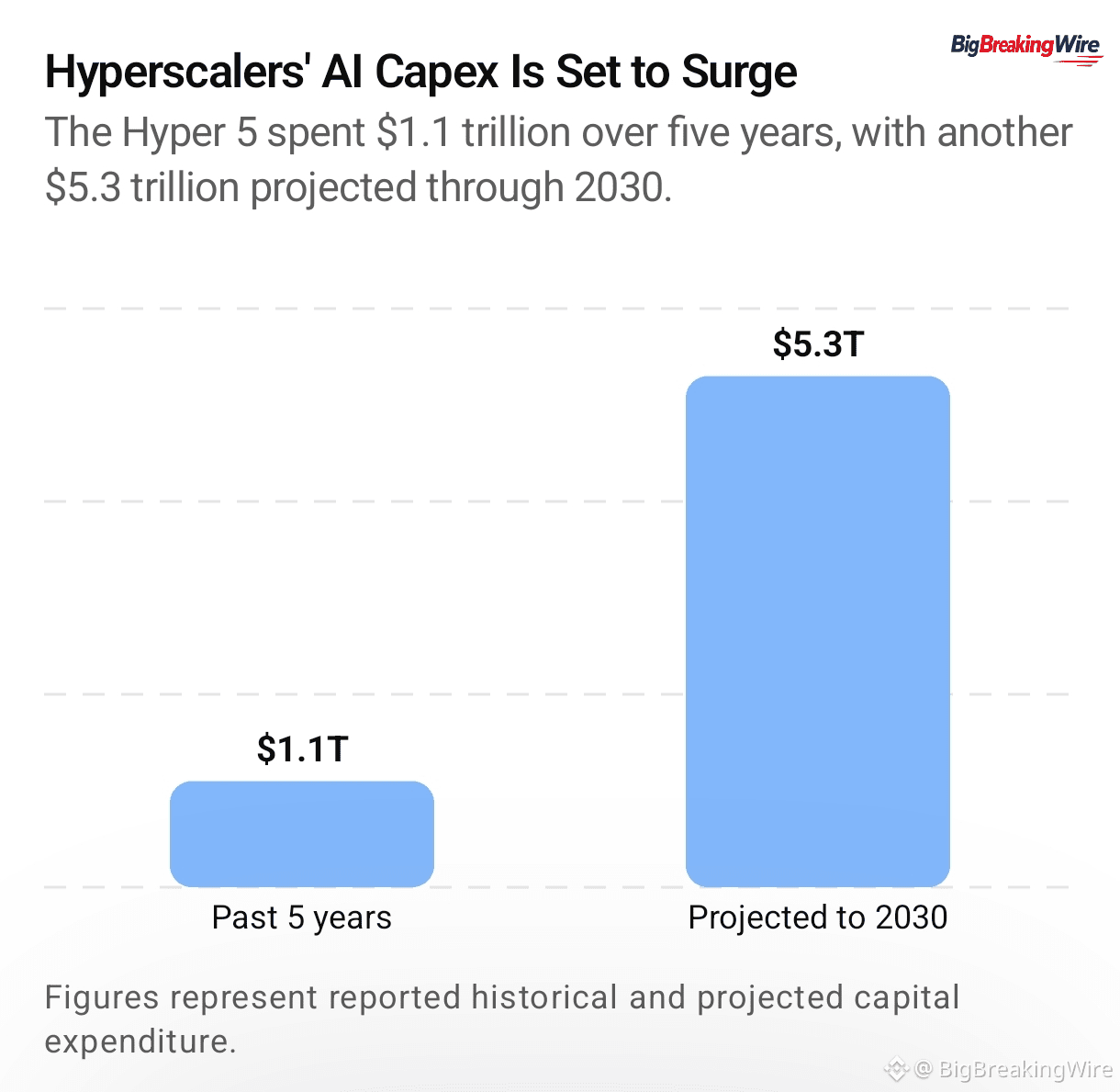
The “Hyper 5” — Amazon, Alphabet, Microsoft, Meta and Oracle — spent $1.1 trillion on capital expenditure over the past five years.
Their AI and data-centre spending is projected to surge by another $5.3 trillion through 2030, raising concerns about whether returns can justify the massive outlay.
S&P Global Ratings expects all six major US hyperscalers to generate negative free operating cash flow in 2026 and 2027, with no recovery expected before 2029.
Alphabet posted its first negative free cash flow quarter since its 2004 IPO, while Amazon’s trailing cash flow also swung sharply negative amid accelerating AI investment.
S&P Global warns the companies could increasingly shift from cash-funded to debt-funded AI spending before investment returns materialise.
The “Hyper 5” — Amazon, Alphabet, Microsoft, Meta and Oracle — spent $1.1 trillion on capital expenditure over the past five years.
Their AI and data-centre spending is projected to surge by another $5.3 trillion through 2030, raising concerns about whether returns can justify the massive outlay.
S&P Global Ratings expects all six major US hyperscalers to generate negative free operating cash flow in 2026 and 2027, with no recovery expected before 2029.
Alphabet posted its first negative free cash flow quarter since its 2004 IPO, while Amazon’s trailing cash flow also swung sharply negative amid accelerating AI investment.
S&P Global warns the companies could increasingly shift from cash-funded to debt-funded AI spending before investment returns materialise.
🚨 BREAKING: Japanese Retail Investors Build ¥3.61 Trillion Yen Short Position
Japanese retail investors increased their net short positions against the yen to around ¥3.61 trillion ($23.5 billion) last week, rising from August levels.
Short bets previously peaked at ¥4.41 trillion in July, the highest level since 2015, according to data from the Japan Financial Futures Association and Tokyo Financial Exchange.
Retail traders have continued to sell the yen during strength and buy on weakness, even as overseas investors unwind yen carry trades and hedge funds increasingly bet on further yen gains.
Some investors expect USD/JPY to fall below 150 by year-end.
Mizuho Bank strategist Masayuki Nakajima warned that sustained yen appreciation could force retail traders to close USD-long positions, with stop-loss selling potentially accelerating a yen rally.
#usdjpy
Japanese retail investors increased their net short positions against the yen to around ¥3.61 trillion ($23.5 billion) last week, rising from August levels.
Short bets previously peaked at ¥4.41 trillion in July, the highest level since 2015, according to data from the Japan Financial Futures Association and Tokyo Financial Exchange.
Retail traders have continued to sell the yen during strength and buy on weakness, even as overseas investors unwind yen carry trades and hedge funds increasingly bet on further yen gains.
Some investors expect USD/JPY to fall below 150 by year-end.
Mizuho Bank strategist Masayuki Nakajima warned that sustained yen appreciation could force retail traders to close USD-long positions, with stop-loss selling potentially accelerating a yen rally.
#usdjpy
🚨 Foreign investors have sold $173.5 billion of Emerging Asian equities since 2025.
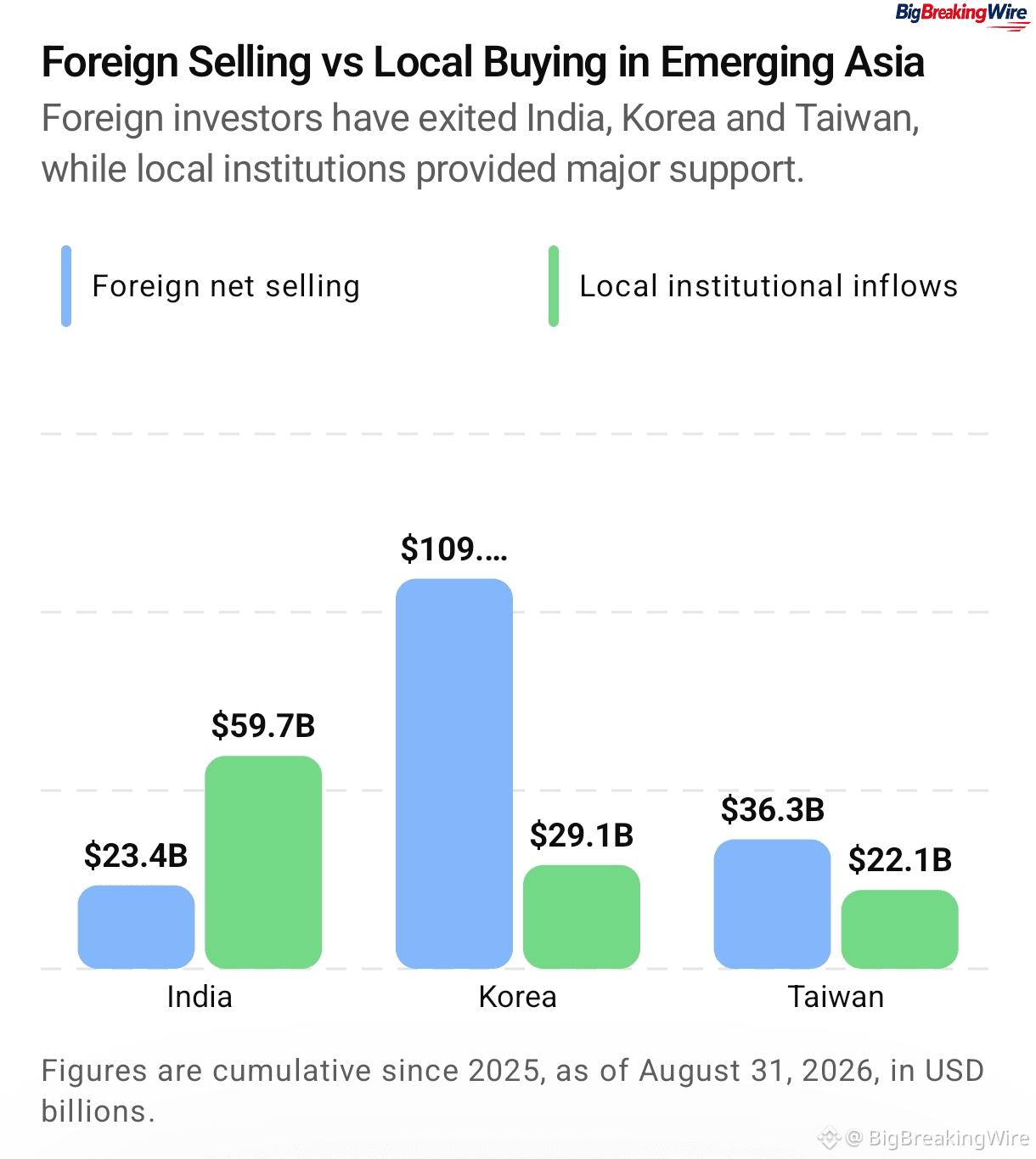
Korea saw the biggest foreign outflows at $109.4 billion, followed by Taiwan at $36.3 billion and India at $23.4 billion, according to Goldman Sachs data as of August 31, 2026.
Local institutional investors absorbed much of the selling, recording around $114 billion in net inflows across India, Korea and Taiwan.
India led domestic buying with $59.7 billion of inflows, followed by Korea at $29.1 billion and Taiwan at $22.1 billion.
Despite continued foreign exits, Korea and Taiwan equities have surged 90.6% and 62.0% YTD in dollar terms, supported by domestic buying and strong AI and semiconductor earnings expectations.
Korea saw the biggest foreign outflows at $109.4 billion, followed by Taiwan at $36.3 billion and India at $23.4 billion, according to Goldman Sachs data as of August 31, 2026.
Local institutional investors absorbed much of the selling, recording around $114 billion in net inflows across India, Korea and Taiwan.
India led domestic buying with $59.7 billion of inflows, followed by Korea at $29.1 billion and Taiwan at $22.1 billion.
Despite continued foreign exits, Korea and Taiwan equities have surged 90.6% and 62.0% YTD in dollar terms, supported by domestic buying and strong AI and semiconductor earnings expectations.
🚨 The Netherlands has moved 86 tonnes of gold to London as European central banks rethink where their reserves are stored.
De Nederlandsche Bank transferred the gold from the US and Canada to London between March and August, citing crisis preparedness amid rising geopolitical risks.
The operation used a mix of market swaps and physical transport.
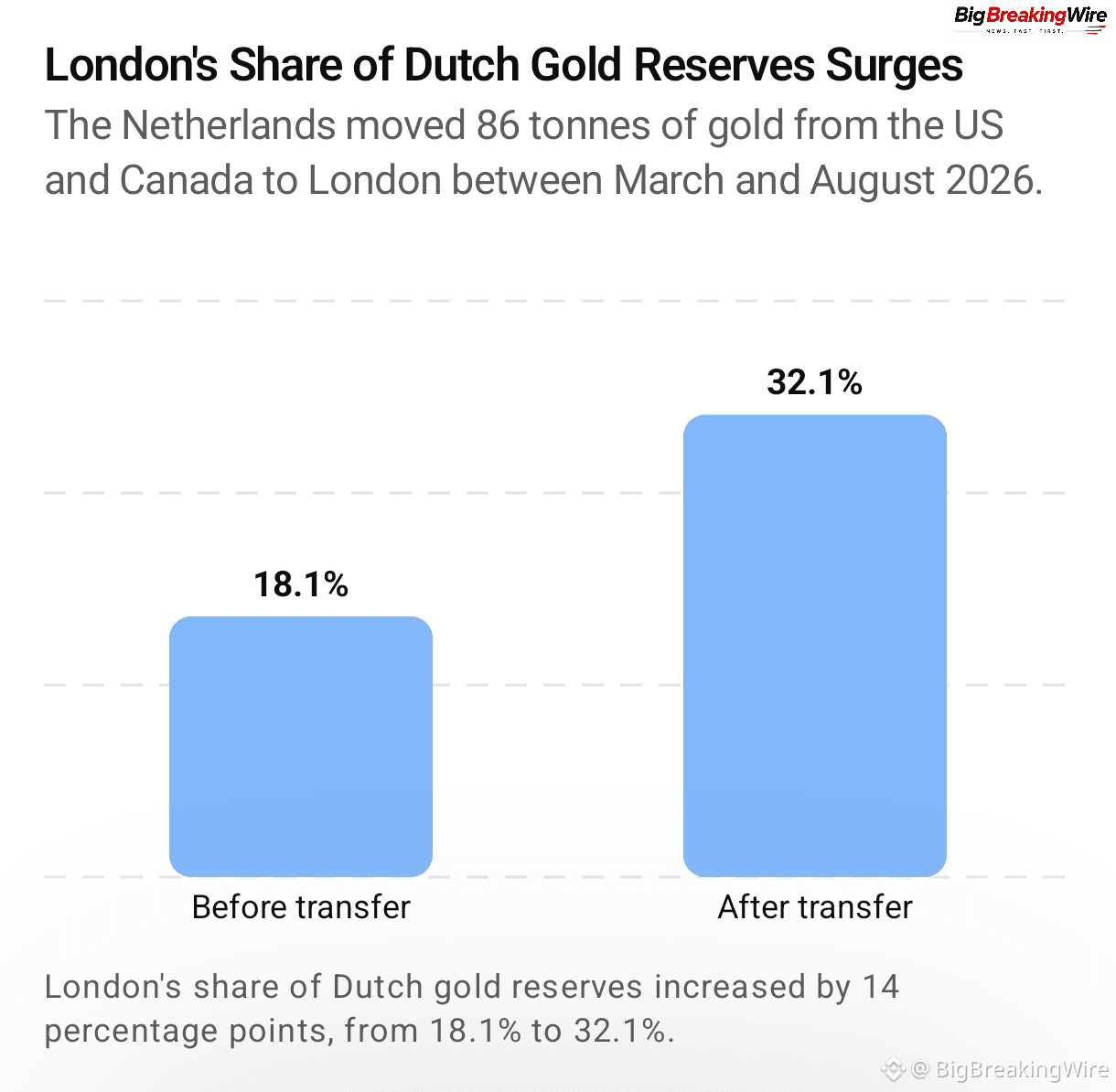
London's share of Dutch gold reserves jumped from 18.1% to 32.1% after the six month operation.
Germany's Bundesbank has so far refused to follow a similar path, but the broader trend is clear.
A World Gold Council survey found 89% of central banks expect global gold holdings to increase, as geopolitical uncertainty pushes countries to strengthen and reposition their reserves.
Big picture: Central banks are not just buying more gold. They are also increasingly reconsidering where their gold is physically held.
De Nederlandsche Bank transferred the gold from the US and Canada to London between March and August, citing crisis preparedness amid rising geopolitical risks.
The operation used a mix of market swaps and physical transport.
London's share of Dutch gold reserves jumped from 18.1% to 32.1% after the six month operation.
Germany's Bundesbank has so far refused to follow a similar path, but the broader trend is clear.
A World Gold Council survey found 89% of central banks expect global gold holdings to increase, as geopolitical uncertainty pushes countries to strengthen and reposition their reserves.
Big picture: Central banks are not just buying more gold. They are also increasingly reconsidering where their gold is physically held.
🚨 BREAKING: 4,000 Bitcoin Worth $320M Withdrawn in Liquid Network Hack
Liquid Network said around 4,000 of the 4,200 Bitcoin held in its Liquid Federation wallet were withdrawn in an apparent hack, worth approximately $320 million.
The network said the withdrawals were carried out by purported “white-hat hackers” through SideSwap, a settlement platform authorised to handle withdrawals.
Liquid Network said the key used in the process was not compromised and has halted new transactions, warning that Liquid wallets will be impacted.
The hacker is reportedly communicating with network maintainers through on-chain Bitcoin transactions and intends to return the BTC after the vulnerability is fixed.
Liquid Network said around 4,000 of the 4,200 Bitcoin held in its Liquid Federation wallet were withdrawn in an apparent hack, worth approximately $320 million.
The network said the withdrawals were carried out by purported “white-hat hackers” through SideSwap, a settlement platform authorised to handle withdrawals.
Liquid Network said the key used in the process was not compromised and has halted new transactions, warning that Liquid wallets will be impacted.
The hacker is reportedly communicating with network maintainers through on-chain Bitcoin transactions and intends to return the BTC after the vulnerability is fixed.
🚨 Perpetual futures tied to stocks, indices and commodities are exploding on crypto platforms.
Contracts linked to traditional assets generated $778 billion in trading volume, according to Bloomberg citing Fasanara Digital data.
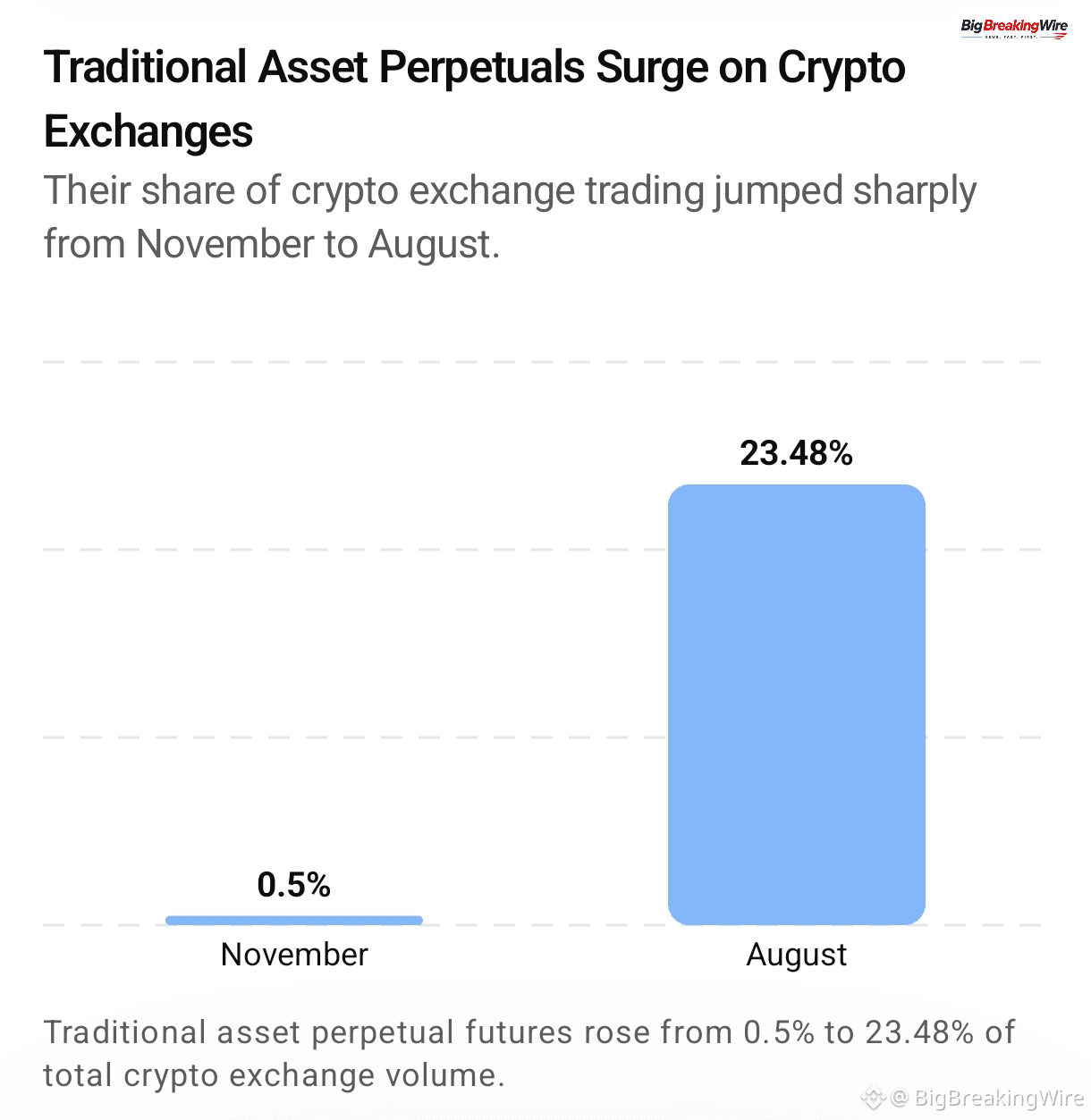
Their share of total crypto exchange trading surged from just 0.5% in November to 23.48% in August.
The trend is also gaining regulatory acceptance. The CFTC approved the listing of a true perpetual contract on a US designated contract market for the first time in May.
South Korean investors alone have traded roughly $220 billion in Korean stock based perpetual futures on overseas crypto exchanges in 2026.
The rapid growth shows crypto exchanges are increasingly becoming platforms for trading traditional financial assets through perpetual futures.
Contracts linked to traditional assets generated $778 billion in trading volume, according to Bloomberg citing Fasanara Digital data.
Their share of total crypto exchange trading surged from just 0.5% in November to 23.48% in August.
The trend is also gaining regulatory acceptance. The CFTC approved the listing of a true perpetual contract on a US designated contract market for the first time in May.
South Korean investors alone have traded roughly $220 billion in Korean stock based perpetual futures on overseas crypto exchanges in 2026.
The rapid growth shows crypto exchanges are increasingly becoming platforms for trading traditional financial assets through perpetual futures.
🚨 JPMorgan warns of a potential yen short squeeze.
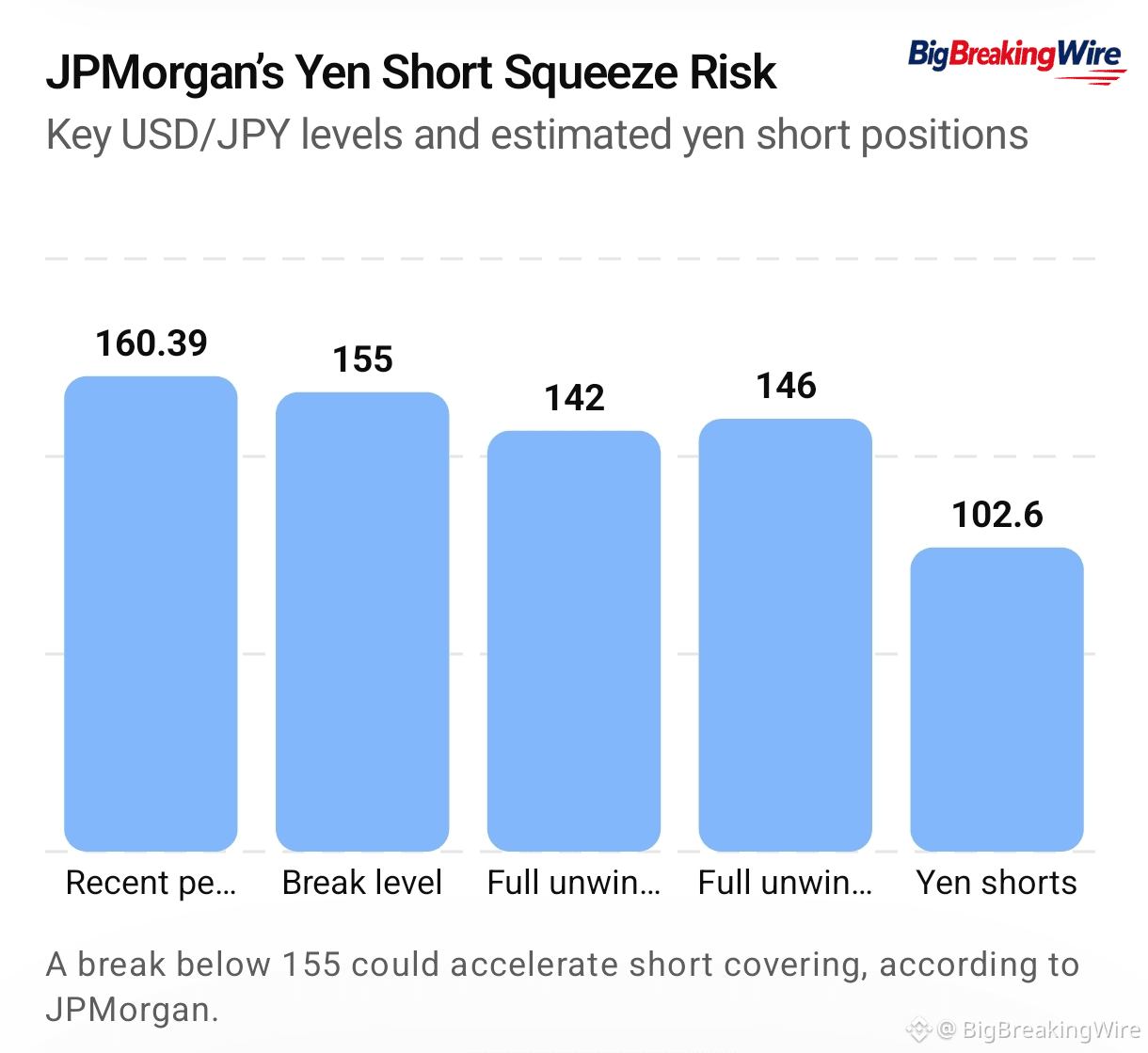
JPMorgan estimates ¥16 trillion to ¥17 trillion ($102.6 billion) of bearish yen positions remain open.
If USD/JPY breaks below 155, concentrated short covering could accelerate yen gains, with selling potentially triggering more selling.
In theory, a full unwind of these positions could push USD/JPY to 142 to 146, implying significantly stronger yen levels.
The warning comes after USD/JPY surged to 160.39 earlier this week before reversing to around 155.30. JPMorgan says recent price action suggests a large yen short position is still outstanding.
However, JPMorgan does not currently see a high probability of USD/JPY moving materially below its 155 to 165 range.
JPMorgan estimates ¥16 trillion to ¥17 trillion ($102.6 billion) of bearish yen positions remain open.
If USD/JPY breaks below 155, concentrated short covering could accelerate yen gains, with selling potentially triggering more selling.
In theory, a full unwind of these positions could push USD/JPY to 142 to 146, implying significantly stronger yen levels.
The warning comes after USD/JPY surged to 160.39 earlier this week before reversing to around 155.30. JPMorgan says recent price action suggests a large yen short position is still outstanding.
However, JPMorgan does not currently see a high probability of USD/JPY moving materially below its 155 to 165 range.
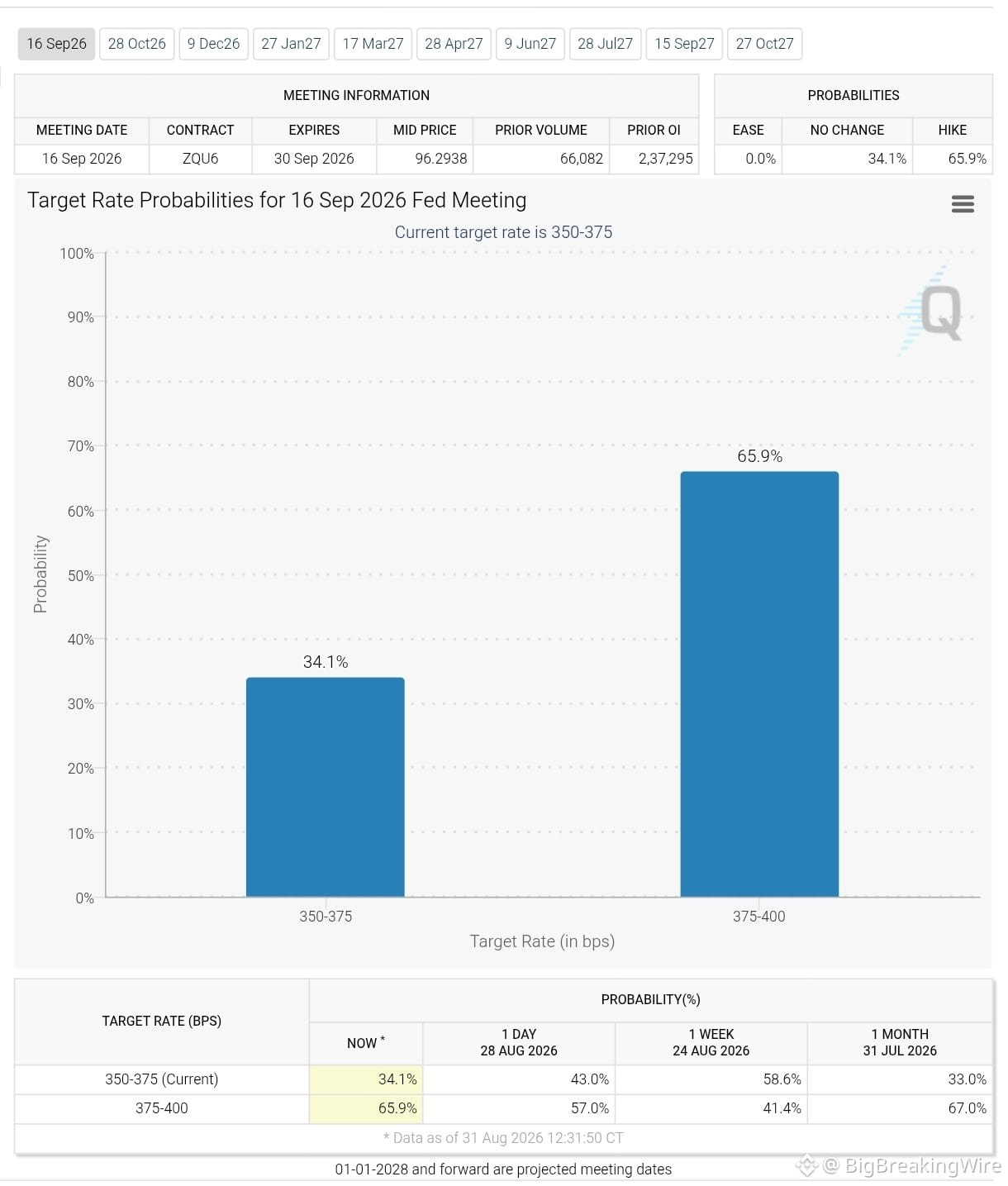
According to FedWatch, markets are now pricing in a 25 bps Federal Reserve rate hike in September.
🚨 BREAKING: Gold Jumps 10% And Bitcoin 12% In August As Treasury Buybacks Fuel “Debasement Trade”
Gold rose roughly 10% and Bitcoin surged 12% in August as the U.S. Treasury’s expansion of long-dated bond buybacks weakened the dollar and revived the “debasement trade.”
Treasury Secretary Scott Bessent said the per-operation buyback cap will rise from $2 billion to $4 billion from September 9, triggering a short squeeze that briefly pushed Bitcoin above $80,000.
However, Fed Chair Kevin Warsh’s hawkish Jackson Hole speech triggered a late-month reversal, sending gold down 3.2% for the week and pushing the probability of a September rate hike above 55%, according to CME FedWatch.
Overall: Treasury buybacks boosted scarce assets, while renewed Fed hawkishness capped the rally toward month-end.
Gold rose roughly 10% and Bitcoin surged 12% in August as the U.S. Treasury’s expansion of long-dated bond buybacks weakened the dollar and revived the “debasement trade.”
Treasury Secretary Scott Bessent said the per-operation buyback cap will rise from $2 billion to $4 billion from September 9, triggering a short squeeze that briefly pushed Bitcoin above $80,000.
However, Fed Chair Kevin Warsh’s hawkish Jackson Hole speech triggered a late-month reversal, sending gold down 3.2% for the week and pushing the probability of a September rate hike above 55%, according to CME FedWatch.
Overall: Treasury buybacks boosted scarce assets, while renewed Fed hawkishness capped the rally toward month-end.
🚨 Bitcoin falls after Fed Chair Kevin Warsh warns inflation remains elevated.
Warsh gave no clear signal of near term rate relief in his first Jackson Hole keynote, putting pressure on risk assets.
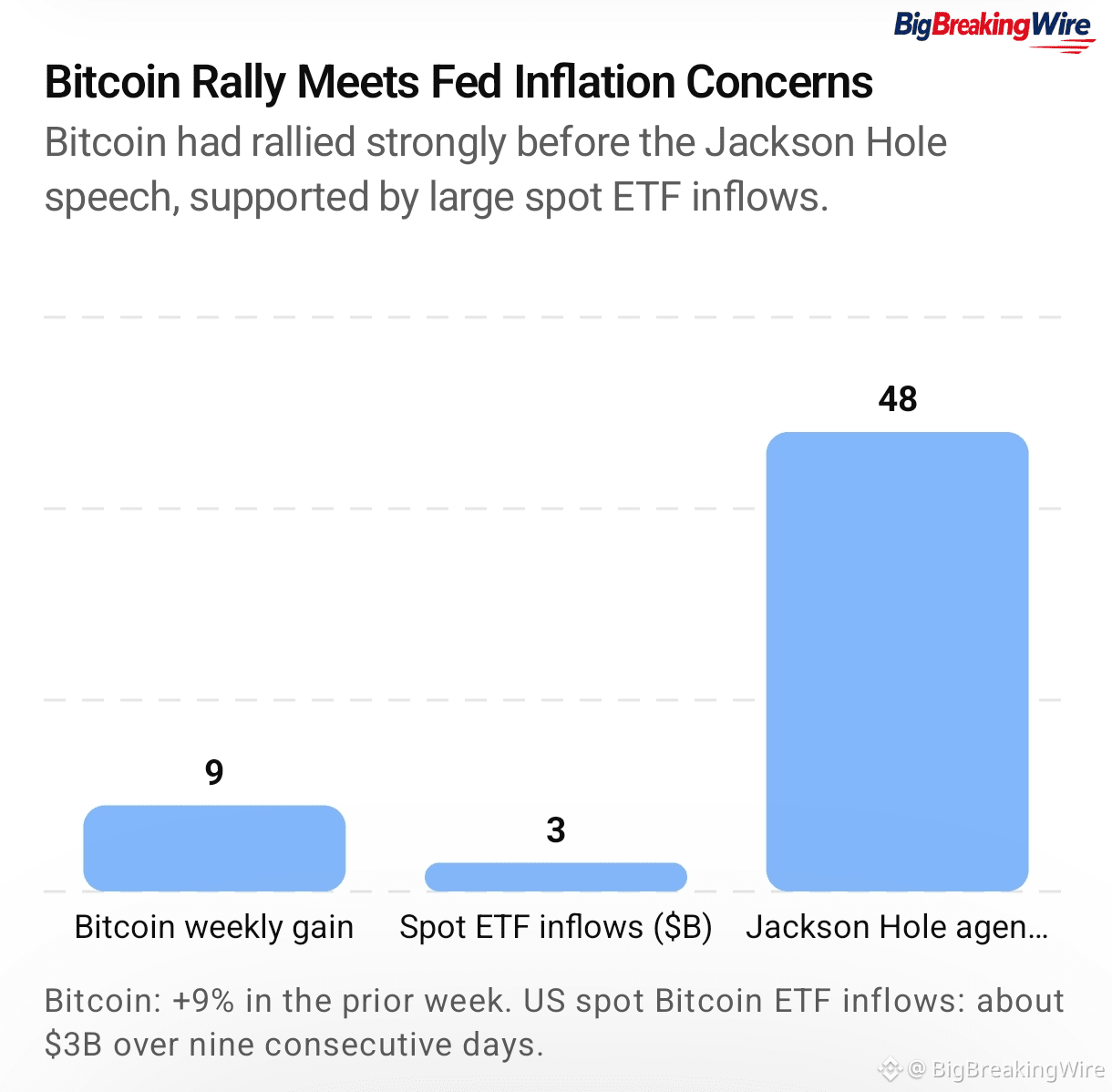
Bitcoin had rallied about 9% in the previous week, helped by roughly $3 billion of inflows into US spot Bitcoin ETFs over nine straight days.
The Jackson Hole symposium also featured crypto and digital payments on its agenda for the first time in its 48 year history, highlighting the growing role of digital assets in global finance.
Warsh gave no clear signal of near term rate relief in his first Jackson Hole keynote, putting pressure on risk assets.
Bitcoin had rallied about 9% in the previous week, helped by roughly $3 billion of inflows into US spot Bitcoin ETFs over nine straight days.
The Jackson Hole symposium also featured crypto and digital payments on its agenda for the first time in its 48 year history, highlighting the growing role of digital assets in global finance.
🚨 SK Hynix CEO Sees Global Memory Chip Shortage Lasting Through 2030
SK Hynix CEO Guo Luzheng said the global memory chip shortage could persist through the end of 2030, with strong AI demand keeping oversupply risks low.
He said there are no signs of oversupply or an imminent memory downcycle, as AI customers continue to drive demand and memory chips become less standardized as a commodity.
If AI demand eventually peaks or a downturn emerges, Guo expects the next cycle to be gradual rather than a sharp collapse, marked by slower demand growth or stabilization.
SK Hynix CEO Guo Luzheng said the global memory chip shortage could persist through the end of 2030, with strong AI demand keeping oversupply risks low.
He said there are no signs of oversupply or an imminent memory downcycle, as AI customers continue to drive demand and memory chips become less standardized as a commodity.
If AI demand eventually peaks or a downturn emerges, Guo expects the next cycle to be gradual rather than a sharp collapse, marked by slower demand growth or stabilization.
🚨 Bitcoin Treasury Stocks Lose $83 Billion in 13 Months
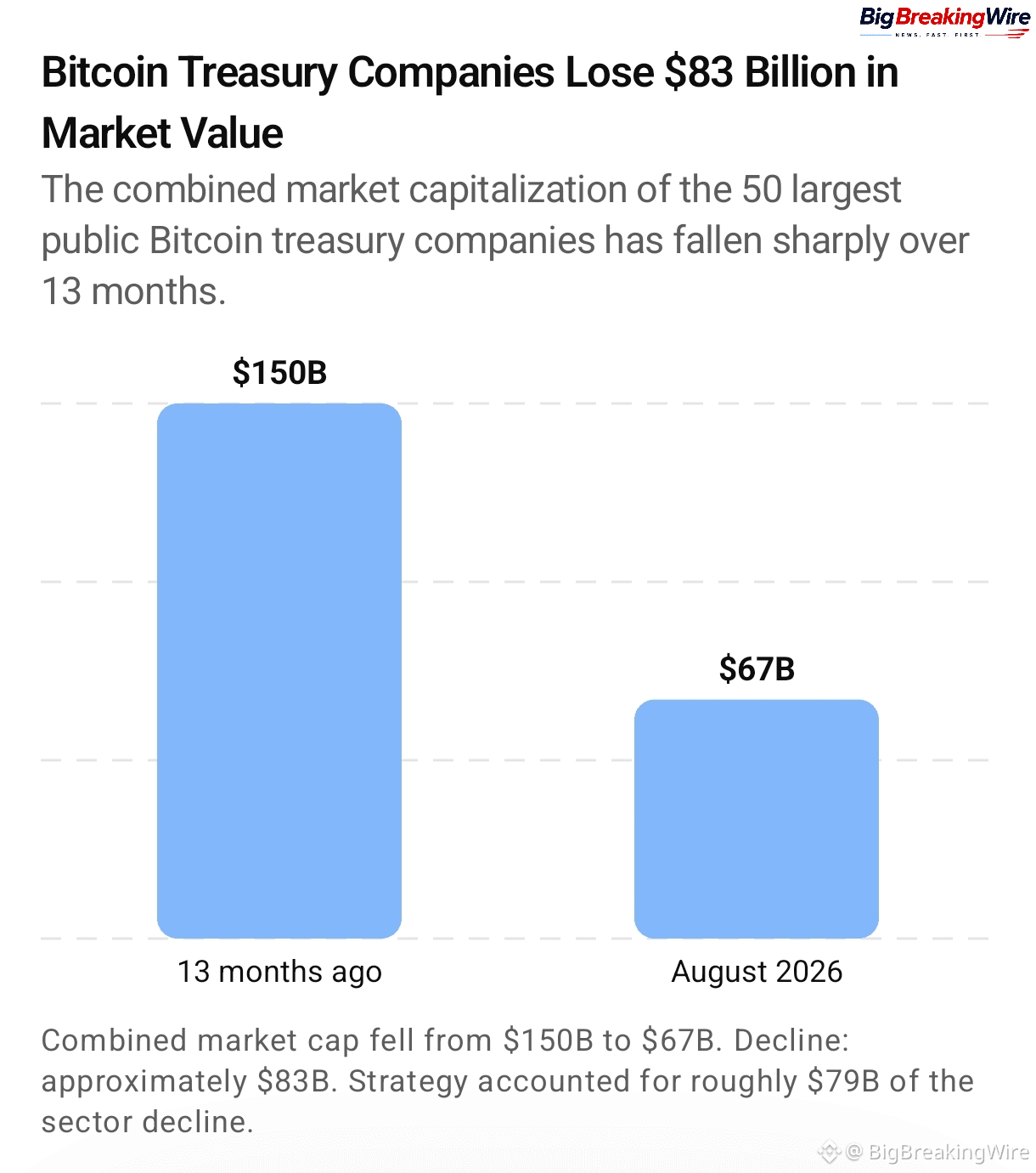
The combined market cap of the 50 largest public companies holding Bitcoin has plunged from $150 billion to $67 billion over the past 13 months, a decline of about $83 billion.
Strategy alone accounted for roughly $79 billion of the sector’s total market cap decline and has sold Bitcoin four times since late June, after previously maintaining a “never sell” stance.
The pressure is spreading across the sector. 43 of the top 50 Bitcoin treasury companies now trade below their pre pivot share prices, while the group became net Bitcoin sellers for the first time in July 2026.
Adding to the pressure, MSCI is consulting on index methodology changes that could remove Strategy and similar companies from global equity benchmarks by mid October, potentially creating further passive fund selling.
The combined market cap of the 50 largest public companies holding Bitcoin has plunged from $150 billion to $67 billion over the past 13 months, a decline of about $83 billion.
Strategy alone accounted for roughly $79 billion of the sector’s total market cap decline and has sold Bitcoin four times since late June, after previously maintaining a “never sell” stance.
The pressure is spreading across the sector. 43 of the top 50 Bitcoin treasury companies now trade below their pre pivot share prices, while the group became net Bitcoin sellers for the first time in July 2026.
Adding to the pressure, MSCI is consulting on index methodology changes that could remove Strategy and similar companies from global equity benchmarks by mid October, potentially creating further passive fund selling.
🚨 Trump’s 1,051 Trades Include Meta, Motorola, Visa, Mastercard, Berkshire
President Donald Trump’s June disclosure showed 1,051 securities transactions involving stocks, bonds and ETFs, with total transaction values ranging from $78.1 million to $263.1 million.
His purchases exceeded $49 million, while sales totalled at least $28.5 million.
Key moves included selling $5 million–$25 million of Vanguard Dividend Appreciation ETF and buying Fidelity National Information Services and Home Depot on June 22.
On June 18, Trump sold Meta and Motorola while buying Berkshire Hathaway, Cintas, Visa and Mastercard, with each transaction in the $1 million–$5 million range.
President Donald Trump’s June disclosure showed 1,051 securities transactions involving stocks, bonds and ETFs, with total transaction values ranging from $78.1 million to $263.1 million.
His purchases exceeded $49 million, while sales totalled at least $28.5 million.
Key moves included selling $5 million–$25 million of Vanguard Dividend Appreciation ETF and buying Fidelity National Information Services and Home Depot on June 22.
On June 18, Trump sold Meta and Motorola while buying Berkshire Hathaway, Cintas, Visa and Mastercard, with each transaction in the $1 million–$5 million range.
🚨 BREAKING: Nomura Warns “Bessent Put” On Yen Could Backfire
Nomura warned the market’s assumption that U.S. intervention will backstop the yen could fail, triggering destabilising capital outflows.
Citi called the recent coordinated intervention an informal “currency alliance” linking FX policy with the broader U.S.-Japan economic and security relationship, including Japan’s $550 billion U.S. investment programme.
Senator Elizabeth Warren questioned Treasury Secretary Bessent over taxpayer exposure, while Bank of America expects the yen to strengthen roughly 6% by year-end.
#BOJIntervention
Nomura warned the market’s assumption that U.S. intervention will backstop the yen could fail, triggering destabilising capital outflows.
Citi called the recent coordinated intervention an informal “currency alliance” linking FX policy with the broader U.S.-Japan economic and security relationship, including Japan’s $550 billion U.S. investment programme.
Senator Elizabeth Warren questioned Treasury Secretary Bessent over taxpayer exposure, while Bank of America expects the yen to strengthen roughly 6% by year-end.
#BOJIntervention
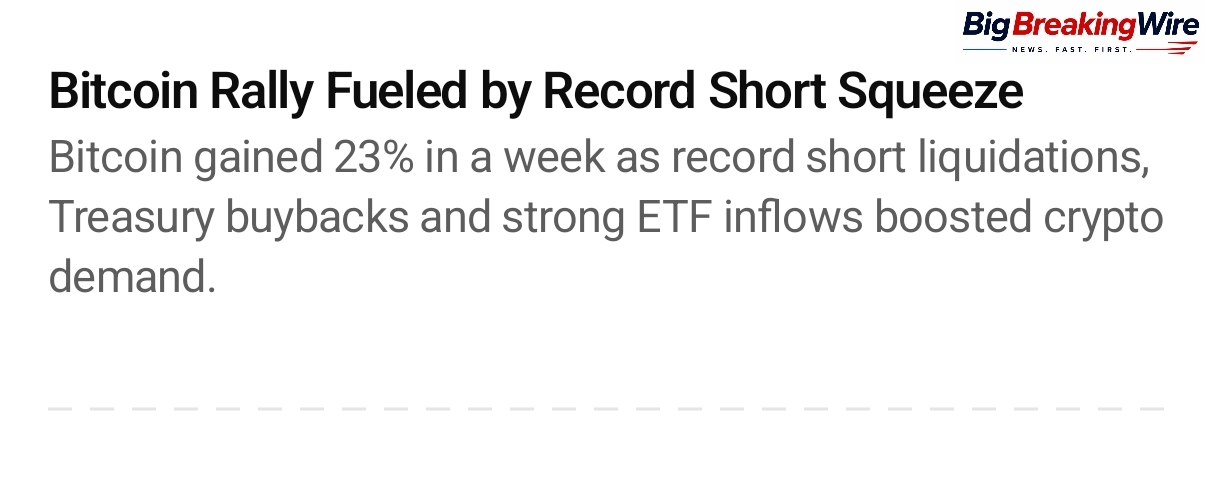
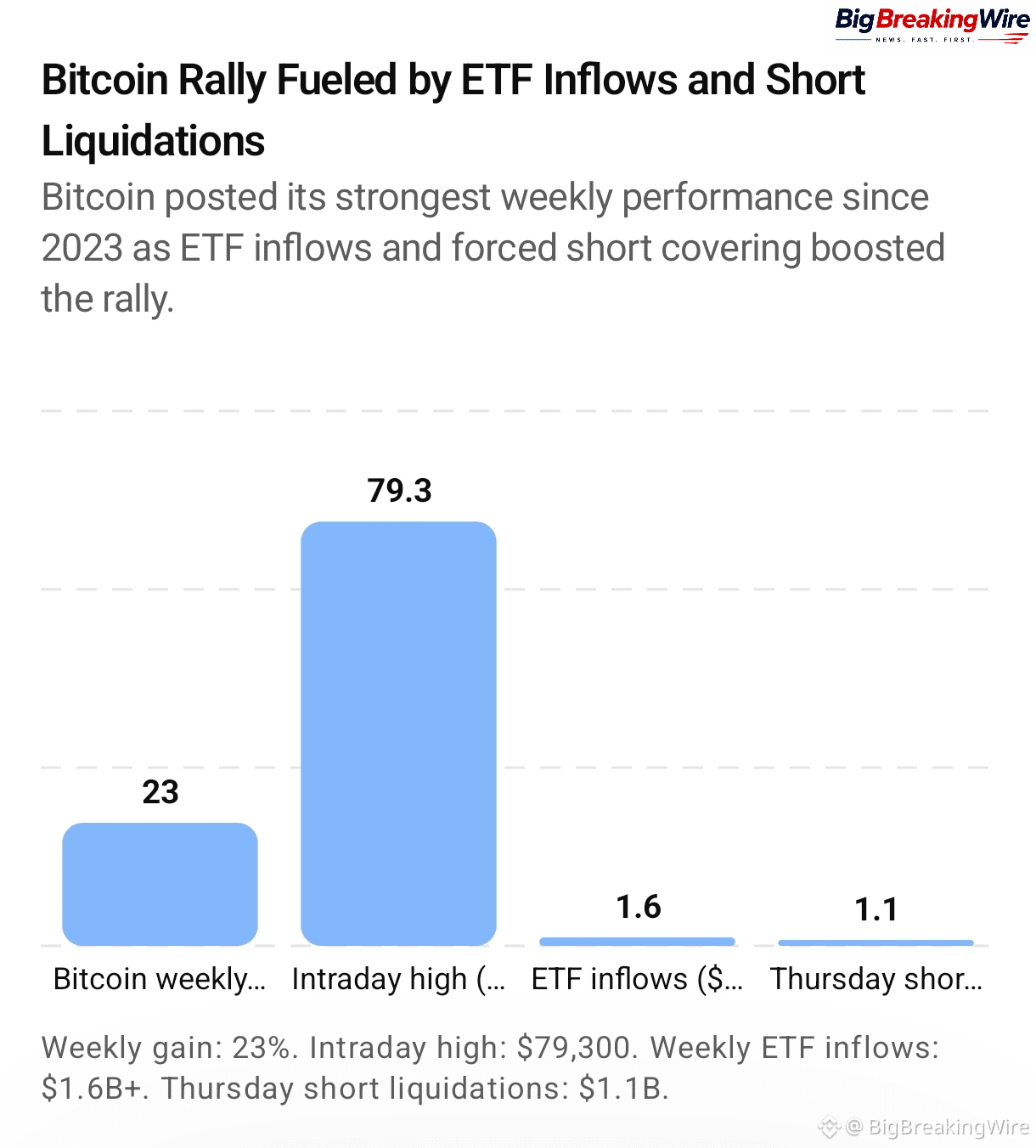
🚨 Bitcoin jumps 23% in a week as $1.1 billion in shorts are liquidated
Bitcoin surged past $77,500, hitting $79,300 intraday, and gained 23% in seven days, its strongest weekly performance since 2023.
Spot Bitcoin ETFs attracted $1.6 billion+ this week, including $606.3 million on Thursday, one of their biggest inflow days of 2026.
More than $1 billion in Bitcoin shorts were liquidated, including $1.1 billion on Thursday alone, according to Standard Chartered.
The rally followed the US Treasury’s decision to at least double long term bond buybacks, pushing yields lower. Gold and Bitcoin rose while the dollar fell to a three month low.
Bitcoin surged past $77,500, hitting $79,300 intraday, and gained 23% in seven days, its strongest weekly performance since 2023.
Spot Bitcoin ETFs attracted $1.6 billion+ this week, including $606.3 million on Thursday, one of their biggest inflow days of 2026.
More than $1 billion in Bitcoin shorts were liquidated, including $1.1 billion on Thursday alone, according to Standard Chartered.
The rally followed the US Treasury’s decision to at least double long term bond buybacks, pushing yields lower. Gold and Bitcoin rose while the dollar fell to a three month low.
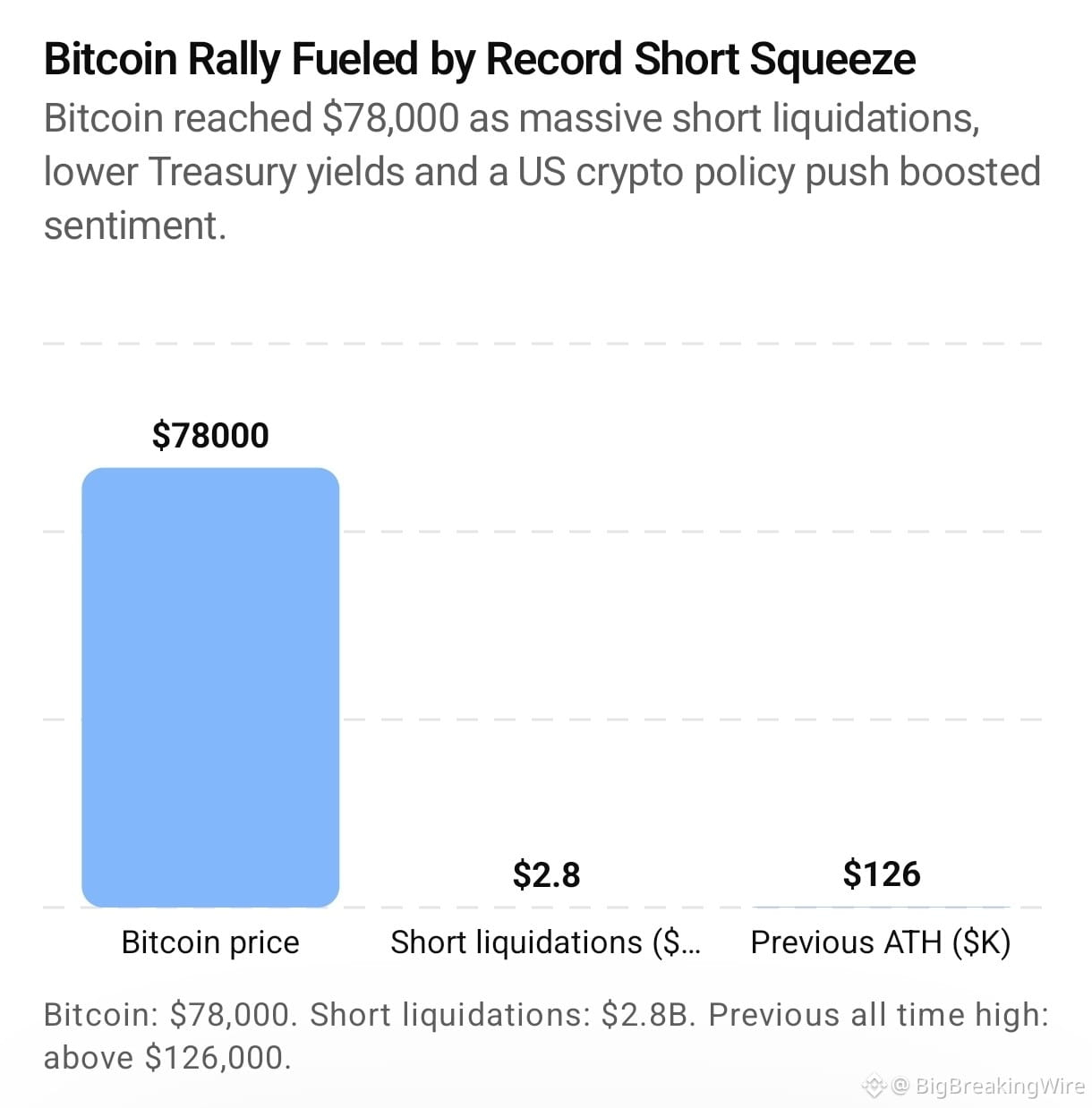
🚨 Bitcoin jumps to $78,000 as the biggest short squeeze on record fuels the rally.
Bitcoin hit $78,000 for the first time since May after $2.8 billion in short positions were liquidated, the largest liquidation wave since records began in 2021.
The rally was also supported by the US Treasury’s decision to double long dated bond buybacks, easing bond yields.
President Trump also urged Congress to pass the CLARITY Act at a White House crypto summit, adding to the positive policy backdrop.
Crypto stocks including Coinbase and Strategy rallied, but Bitcoin remains well below its October 2025 record high above $126,000.
$BTC
Bitcoin hit $78,000 for the first time since May after $2.8 billion in short positions were liquidated, the largest liquidation wave since records began in 2021.
The rally was also supported by the US Treasury’s decision to double long dated bond buybacks, easing bond yields.
President Trump also urged Congress to pass the CLARITY Act at a White House crypto summit, adding to the positive policy backdrop.
Crypto stocks including Coinbase and Strategy rallied, but Bitcoin remains well below its October 2025 record high above $126,000.
$BTC
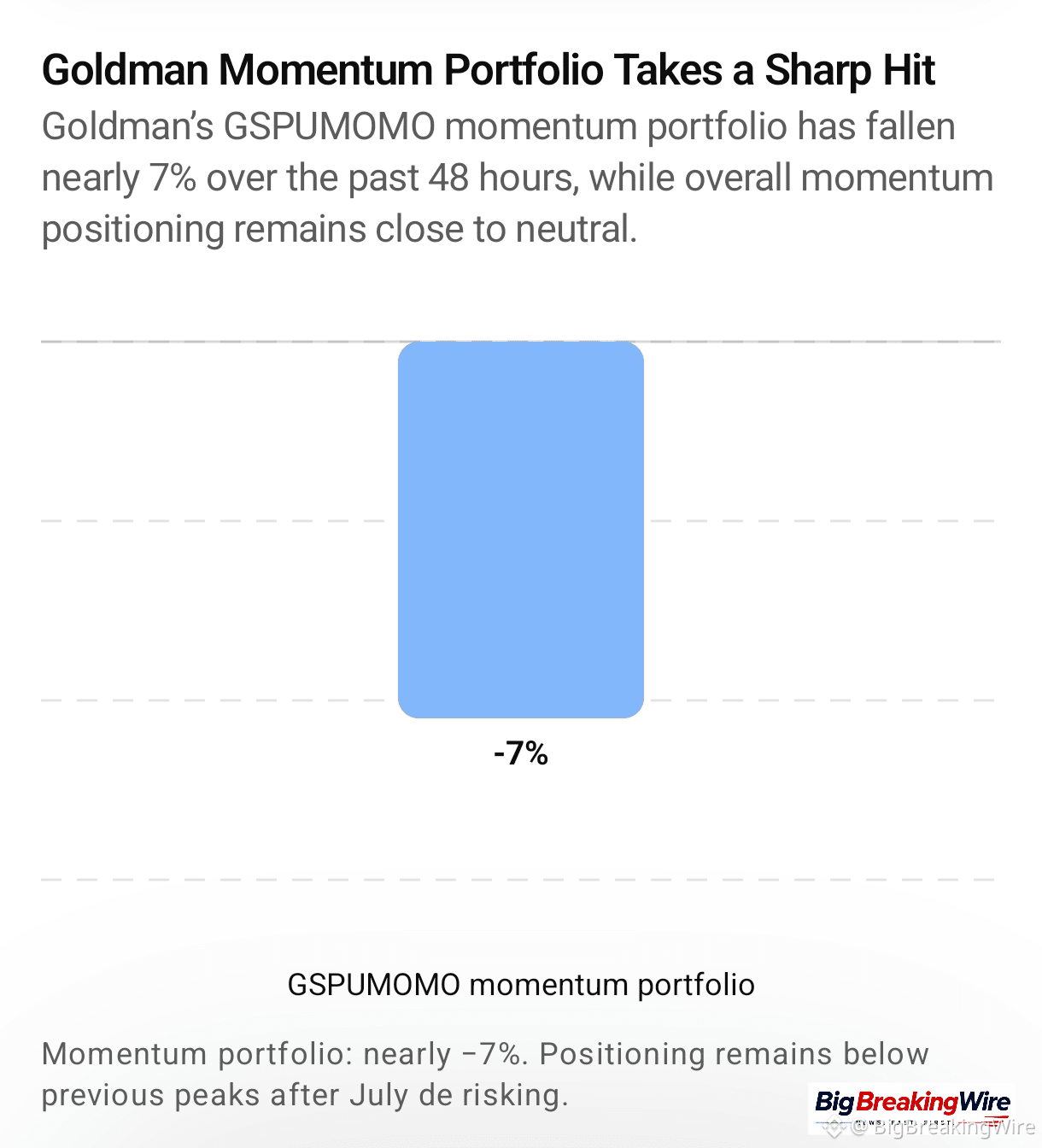
🚨 Goldman Sachs says AI and momentum trades have swung sharply in the past 48 hours.
Goldman’s GSPUMOMO momentum portfolio has fallen nearly 7%, but Prime data show investor positioning has moved much less, with momentum exposure now close to neutral.
Investors still hold meaningful AI and semiconductor exposure, but positions remain well below their previous peaks following a major July de risking.
Semiconductor leverage has already fallen, but residual system leverage could trigger forced selling if prices drop sharply.
Lower August liquidity could amplify AI related moves, meaning recent intraday volatility may look more fundamental than the underlying positioning suggests.
Goldman’s GSPUMOMO momentum portfolio has fallen nearly 7%, but Prime data show investor positioning has moved much less, with momentum exposure now close to neutral.
Investors still hold meaningful AI and semiconductor exposure, but positions remain well below their previous peaks following a major July de risking.
Semiconductor leverage has already fallen, but residual system leverage could trigger forced selling if prices drop sharply.
Lower August liquidity could amplify AI related moves, meaning recent intraday volatility may look more fundamental than the underlying positioning suggests.
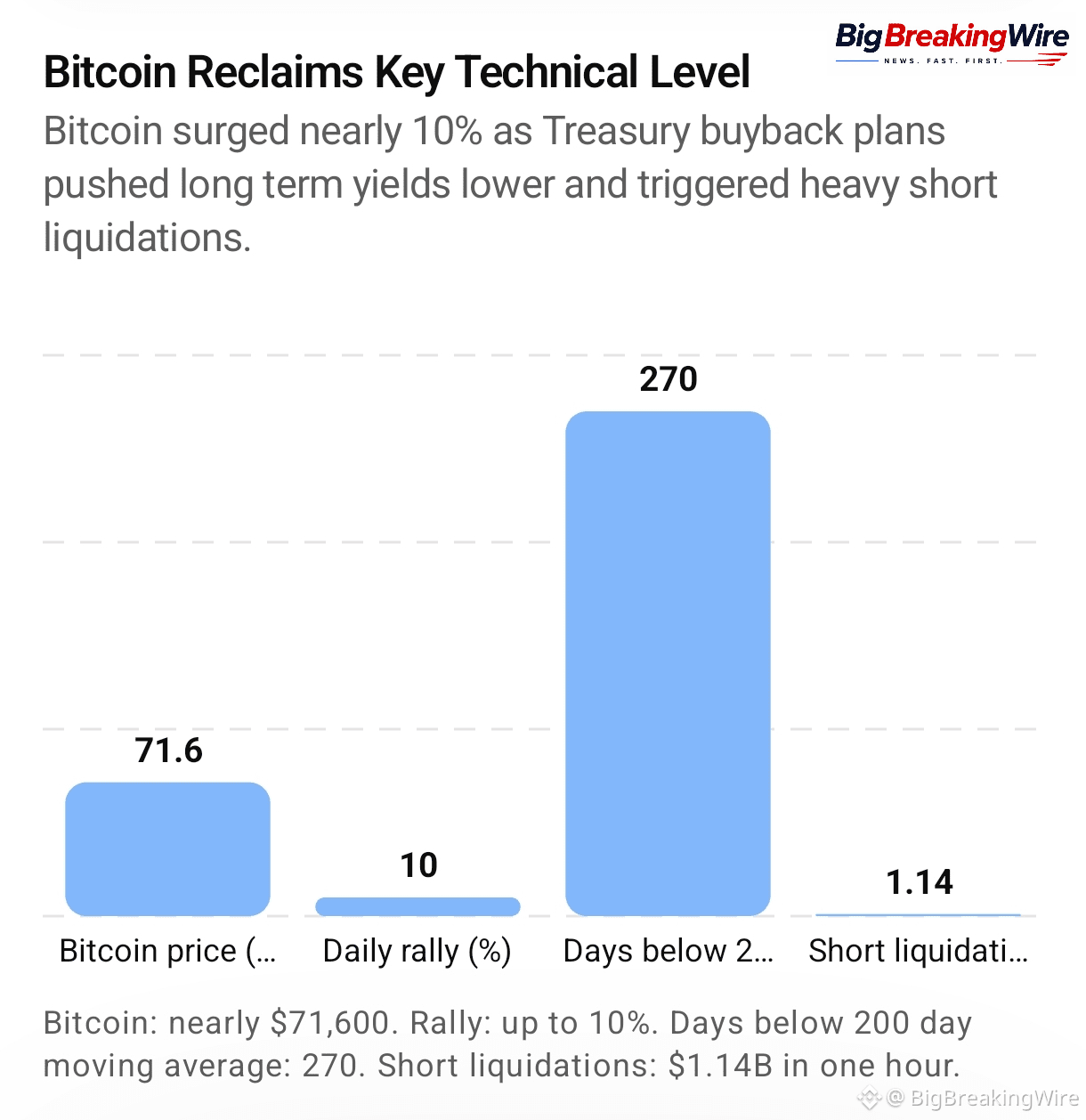
🚨 Bitcoin jumps 10% to nearly $71,600, reclaiming its 200 day moving average after 270 consecutive days below it.
The rally came after the US Treasury said it will at least double long bond buybacks from September 9, pushing 30 year Treasury yields lower and weakening the dollar.
Short liquidations topped $1.14 billion in just one hour, adding fuel to the rally.
The move marked Bitcoin’s sharpest single day gain in five months, although Glassnode warned that key on chain signals remain unconfirmed.
$BTC $ETH
The rally came after the US Treasury said it will at least double long bond buybacks from September 9, pushing 30 year Treasury yields lower and weakening the dollar.
Short liquidations topped $1.14 billion in just one hour, adding fuel to the rally.
The move marked Bitcoin’s sharpest single day gain in five months, although Glassnode warned that key on chain signals remain unconfirmed.
$BTC $ETH
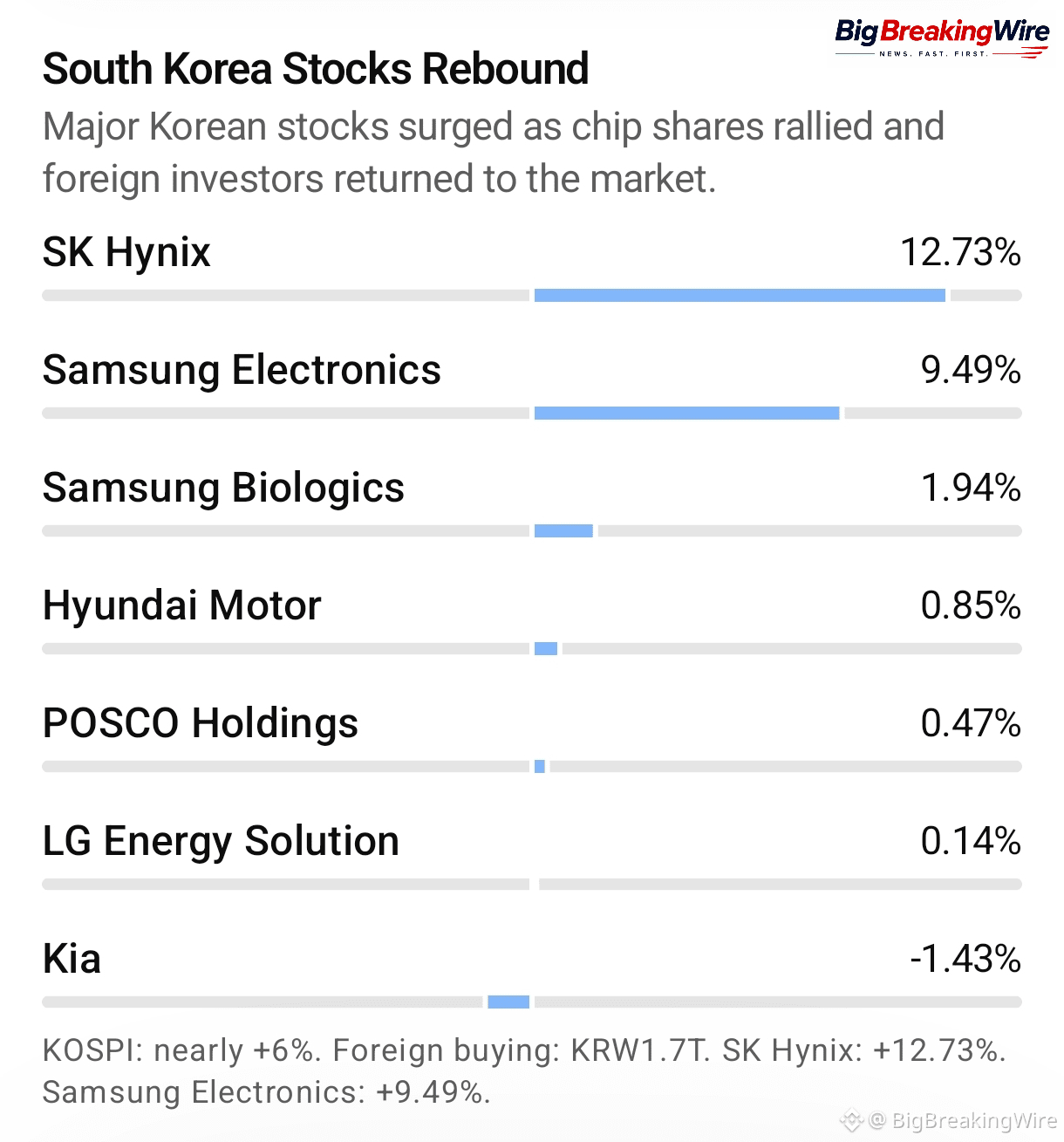
🚨 South Korean stocks rebound nearly 6% as chip stocks surge.
The KOSPI jumped nearly 6%, reversing the previous sharp selloff as falling US Treasury yields and shareholder return measures lifted sentiment.
SK Hynix surged 12.73% after announcing a share buyback and treasury stock cancellation, while Samsung Electronics jumped 9.49% on reports of a new shareholder return policy.
Foreign investors turned buyers, purchasing KRW1.7 trillion or about $1.22 billion of Korean equities.
Other major stocks: LG Energy Solution +0.14%, Hyundai Motor +0.85%, Kia −1.43%, POSCO Holdings +0.47% and Samsung Biologics +1.94%.
Market breadth was positive with 521 stocks advancing versus 338 declining.
$KORU $SKHY
The KOSPI jumped nearly 6%, reversing the previous sharp selloff as falling US Treasury yields and shareholder return measures lifted sentiment.
SK Hynix surged 12.73% after announcing a share buyback and treasury stock cancellation, while Samsung Electronics jumped 9.49% on reports of a new shareholder return policy.
Foreign investors turned buyers, purchasing KRW1.7 trillion or about $1.22 billion of Korean equities.
Other major stocks: LG Energy Solution +0.14%, Hyundai Motor +0.85%, Kia −1.43%, POSCO Holdings +0.47% and Samsung Biologics +1.94%.
Market breadth was positive with 521 stocks advancing versus 338 declining.
$KORU $SKHY
Log in to explore more content