

Z Y R A
9.3k Beiträge

Z Y R A
 Square Verified+
Melden
Nutzer blockieren
I need more Green 🚀
Trade eröffnen

ASTER Halter
Regelmäßiger Trader
1.2 Jahre
1.1K+ Following
31.5K+ Follower
24.0K+ Like gegeben
Beiträge
Portfolio
Alle
Zitierungen
Videos
Live
PINNED
·
--
Bärisch
Verifiziert
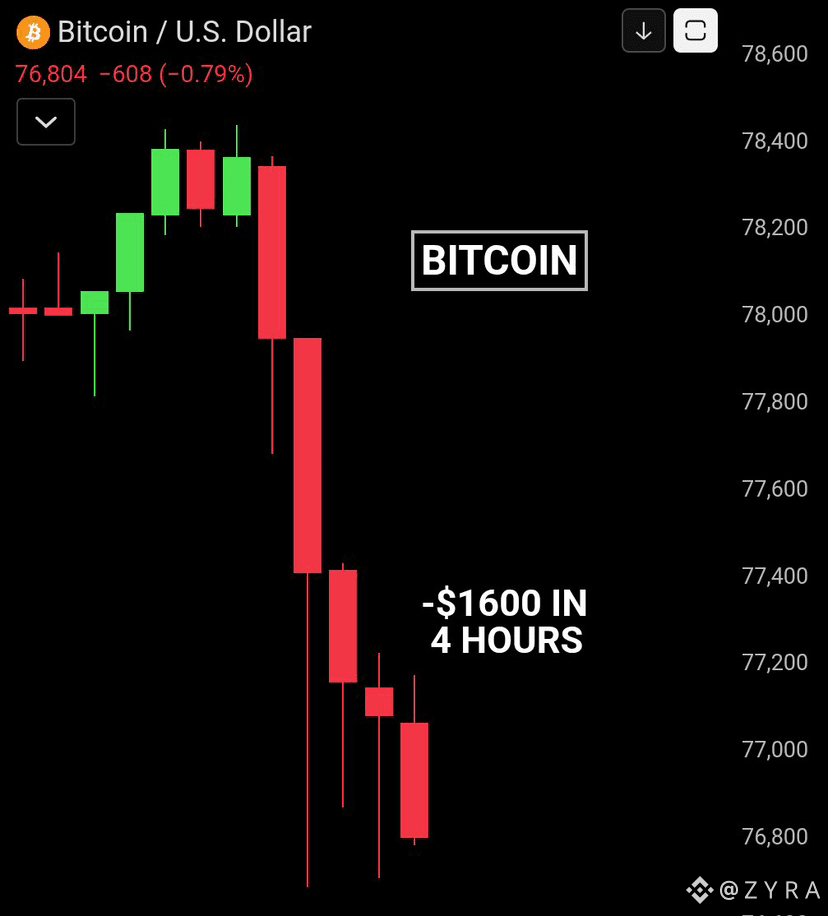
Dieser Rückgang unter 77.000 $ fühlt sich weniger nach Panikverkäufen an und mehr wie der Markt, der endlich die Hebelwirkung aus dem System zwingt.
Über eine halbe Milliarde in Long-Liquidationen in nur wenigen Stunden sagt dir genau, was passiert ist:
Zu viele Trader haben sich zu wohl gefühlt und gedacht, BTC hätte bereits den Boden erreicht.
Und ehrlich gesagt, das ist normalerweise der Zeitpunkt, an dem der Markt gefährlich wird.
Was mir auffällt, ist, dass der Spotverkauf immer noch nicht annähernd so aggressiv aussieht wie die Derivate-Räumung selbst. Die Bewegung wurde durch Hebelwirkung, die in Hebelwirkung kaskadierte, verstärkt.
Diese Unterscheidung ist wichtig.
Denn es gibt einen Unterschied zwischen:
• Investoren, die Positionen aufgeben
und
• überhebelten Tradern, die zwangsliquidiert werden.
Im Moment sieht das immer noch eher nach letzterem aus.
Die 77.000 $-Zone war psychologisch wichtig, weil sie nach der ETF-Optimismus, KLARHEIT-Schlagzeilen und „neue Bullenmarkt“-Narrativen mit späten Breakout-Longs überfüllt wurde.
Sobald dieses Niveau brach, übernahmen die Liquidationsmaschinen.
Aber hier ist der Teil, den die meisten Leute übersehen:
Große Flushes wie diese schaffen oft die Bedingungen für stärkere Umkehrungen später, wenn die Spotnachfrage weiterhin aktiv bleibt.
Das, was ich jetzt wirklich beobachte, ist nicht die Kerze.
Es ist, ob Wale und ETF-Käufer wieder einsteigen, während die Angst steigt.
Denn jeder Zyklus hat diese Momente, in denen die Hebelwirkung bestraft wird, bevor der größere Trend wieder an Fahrt gewinnt.
Und wenn Käufer es nicht schaffen, dieses Gebiet zu verteidigen?
Dann hat der Markt wahrscheinlich das Risiko noch nicht vollständig neu bepreist.
$BTC
#bitcoin
#NCUAProposesStablecoinIssuerRule
#VerusBridgeHack11.58M #IranHormuzSafeCryptoInsurance
{future}(BTCUSDT)
Dieser Rückgang unter 77.000 $ fühlt sich weniger nach Panikverkäufen an und mehr wie der Markt, der endlich die Hebelwirkung aus dem System zwingt.
Über eine halbe Milliarde in Long-Liquidationen in nur wenigen Stunden sagt dir genau, was passiert ist:
Zu viele Trader haben sich zu wohl gefühlt und gedacht, BTC hätte bereits den Boden erreicht.
Und ehrlich gesagt, das ist normalerweise der Zeitpunkt, an dem der Markt gefährlich wird.
Was mir auffällt, ist, dass der Spotverkauf immer noch nicht annähernd so aggressiv aussieht wie die Derivate-Räumung selbst. Die Bewegung wurde durch Hebelwirkung, die in Hebelwirkung kaskadierte, verstärkt.
Diese Unterscheidung ist wichtig.
Denn es gibt einen Unterschied zwischen:
• Investoren, die Positionen aufgeben
und
• überhebelten Tradern, die zwangsliquidiert werden.
Im Moment sieht das immer noch eher nach letzterem aus.
Die 77.000 $-Zone war psychologisch wichtig, weil sie nach der ETF-Optimismus, KLARHEIT-Schlagzeilen und „neue Bullenmarkt“-Narrativen mit späten Breakout-Longs überfüllt wurde.
Sobald dieses Niveau brach, übernahmen die Liquidationsmaschinen.
Aber hier ist der Teil, den die meisten Leute übersehen:
Große Flushes wie diese schaffen oft die Bedingungen für stärkere Umkehrungen später, wenn die Spotnachfrage weiterhin aktiv bleibt.
Das, was ich jetzt wirklich beobachte, ist nicht die Kerze.
Es ist, ob Wale und ETF-Käufer wieder einsteigen, während die Angst steigt.
Denn jeder Zyklus hat diese Momente, in denen die Hebelwirkung bestraft wird, bevor der größere Trend wieder an Fahrt gewinnt.
Und wenn Käufer es nicht schaffen, dieses Gebiet zu verteidigen?
Dann hat der Markt wahrscheinlich das Risiko noch nicht vollständig neu bepreist.
$BTC
#bitcoin
#NCUAProposesStablecoinIssuerRule
#VerusBridgeHack11.58M #IranHormuzSafeCryptoInsurance
Über eine halbe Milliarde in Long-Liquidationen in nur wenigen Stunden sagt dir genau, was passiert ist:
Zu viele Trader haben sich zu wohl gefühlt und gedacht, BTC hätte bereits den Boden erreicht.
Und ehrlich gesagt, das ist normalerweise der Zeitpunkt, an dem der Markt gefährlich wird.
Was mir auffällt, ist, dass der Spotverkauf immer noch nicht annähernd so aggressiv aussieht wie die Derivate-Räumung selbst. Die Bewegung wurde durch Hebelwirkung, die in Hebelwirkung kaskadierte, verstärkt.
Diese Unterscheidung ist wichtig.
Denn es gibt einen Unterschied zwischen:
• Investoren, die Positionen aufgeben
und
• überhebelten Tradern, die zwangsliquidiert werden.
Im Moment sieht das immer noch eher nach letzterem aus.
Die 77.000 $-Zone war psychologisch wichtig, weil sie nach der ETF-Optimismus, KLARHEIT-Schlagzeilen und „neue Bullenmarkt“-Narrativen mit späten Breakout-Longs überfüllt wurde.
Sobald dieses Niveau brach, übernahmen die Liquidationsmaschinen.
Aber hier ist der Teil, den die meisten Leute übersehen:
Große Flushes wie diese schaffen oft die Bedingungen für stärkere Umkehrungen später, wenn die Spotnachfrage weiterhin aktiv bleibt.
Das, was ich jetzt wirklich beobachte, ist nicht die Kerze.
Es ist, ob Wale und ETF-Käufer wieder einsteigen, während die Angst steigt.
Denn jeder Zyklus hat diese Momente, in denen die Hebelwirkung bestraft wird, bevor der größere Trend wieder an Fahrt gewinnt.
Und wenn Käufer es nicht schaffen, dieses Gebiet zu verteidigen?
Dann hat der Markt wahrscheinlich das Risiko noch nicht vollständig neu bepreist.
$BTC
#bitcoin
#NCUAProposesStablecoinIssuerRule
#VerusBridgeHack11.58M #IranHormuzSafeCryptoInsurance
134
20
224
231.6k
PINNED
·
--
Bärisch
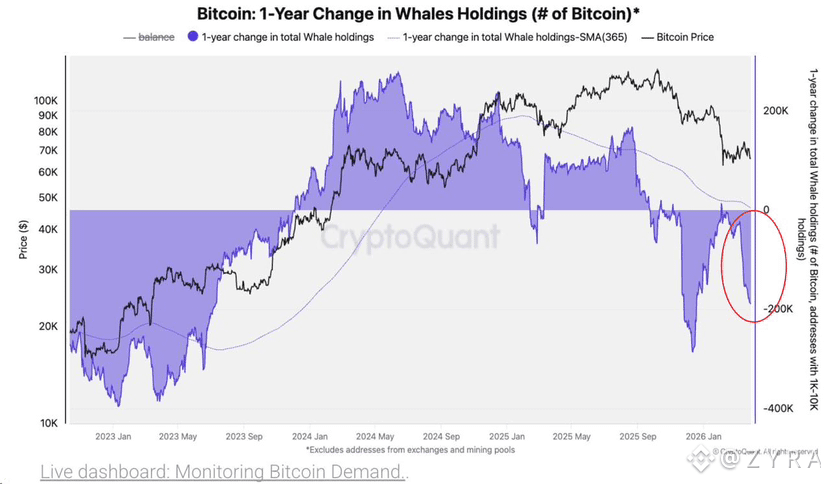
Das sieht nicht nach Panikverkäufen aus.
Es sieht so aus, als würden Wale die Spanne nutzen, um leise auszusteigen.
Der Preis fällt nicht stark, was bedeutet, dass jemand immer noch kauft. Aber gleichzeitig entladen 1K–10K BTC Brieftaschen. Das sagt dir, dass der Markt etwas darunter tut, was das Diagramm noch nicht zeigt.
Der Besitz verschiebt sich.
Das ist normalerweise die Phase, in der sich die Dinge stabil anfühlen, aber sie sind nicht wirklich stabil, sie werden umverteilt.
Was hier zählt, ist nicht, dass die Wale bärisch wurden.
Es ist, dass sie sich beim Verkauf wohl fühlen, ohne niedrigere Preise zu benötigen.
Das verändert das Verhalten des Marktes.
Wenn große Halter aufhören, Levels zu verteidigen und anfangen, in Stärke zu verkaufen, wird jeder Rücksetzer zur Liquidität für den Ausstieg. Du wirst immer noch Aufwärtsbewegungen sehen, aber sie werden nicht dasselbe Vertrauen haben. Sie verblassen schneller.
So stirbt Momentum leise.
Nicht mit einem Crash, sondern mit wiederholten Versuchen, die nicht durchgesetzt werden.
Das Signal hier ist also nicht „Dump incoming.”
Es ist auf eine Weise schlimmer.
Es bedeutet, dass der Markt stecken bleiben könnte, während das Angebot weiterhin freigegeben wird, und bis der Preis tatsächlich reagiert, ist der Großteil der Verteilung bereits abgeschlossen.
#bitcoin
#DriftProtocolExploited
#GoogleStudyOnCryptoSecurityChallenges
#BTCETFFeeRace
#BitcoinPrices
$BTC
{spot}(BTCUSDT)
Das sieht nicht nach Panikverkäufen aus.
Es sieht so aus, als würden Wale die Spanne nutzen, um leise auszusteigen.
Der Preis fällt nicht stark, was bedeutet, dass jemand immer noch kauft. Aber gleichzeitig entladen 1K–10K BTC Brieftaschen. Das sagt dir, dass der Markt etwas darunter tut, was das Diagramm noch nicht zeigt.
Der Besitz verschiebt sich.
Das ist normalerweise die Phase, in der sich die Dinge stabil anfühlen, aber sie sind nicht wirklich stabil, sie werden umverteilt.
Was hier zählt, ist nicht, dass die Wale bärisch wurden.
Es ist, dass sie sich beim Verkauf wohl fühlen, ohne niedrigere Preise zu benötigen.
Das verändert das Verhalten des Marktes.
Wenn große Halter aufhören, Levels zu verteidigen und anfangen, in Stärke zu verkaufen, wird jeder Rücksetzer zur Liquidität für den Ausstieg. Du wirst immer noch Aufwärtsbewegungen sehen, aber sie werden nicht dasselbe Vertrauen haben. Sie verblassen schneller.
So stirbt Momentum leise.
Nicht mit einem Crash, sondern mit wiederholten Versuchen, die nicht durchgesetzt werden.
Das Signal hier ist also nicht „Dump incoming.”
Es ist auf eine Weise schlimmer.
Es bedeutet, dass der Markt stecken bleiben könnte, während das Angebot weiterhin freigegeben wird, und bis der Preis tatsächlich reagiert, ist der Großteil der Verteilung bereits abgeschlossen.
#bitcoin
#DriftProtocolExploited
#GoogleStudyOnCryptoSecurityChallenges
#BTCETFFeeRace
#BitcoinPrices
$BTC
Es sieht so aus, als würden Wale die Spanne nutzen, um leise auszusteigen.
Der Preis fällt nicht stark, was bedeutet, dass jemand immer noch kauft. Aber gleichzeitig entladen 1K–10K BTC Brieftaschen. Das sagt dir, dass der Markt etwas darunter tut, was das Diagramm noch nicht zeigt.
Der Besitz verschiebt sich.
Das ist normalerweise die Phase, in der sich die Dinge stabil anfühlen, aber sie sind nicht wirklich stabil, sie werden umverteilt.
Was hier zählt, ist nicht, dass die Wale bärisch wurden.
Es ist, dass sie sich beim Verkauf wohl fühlen, ohne niedrigere Preise zu benötigen.
Das verändert das Verhalten des Marktes.
Wenn große Halter aufhören, Levels zu verteidigen und anfangen, in Stärke zu verkaufen, wird jeder Rücksetzer zur Liquidität für den Ausstieg. Du wirst immer noch Aufwärtsbewegungen sehen, aber sie werden nicht dasselbe Vertrauen haben. Sie verblassen schneller.
So stirbt Momentum leise.
Nicht mit einem Crash, sondern mit wiederholten Versuchen, die nicht durchgesetzt werden.
Das Signal hier ist also nicht „Dump incoming.”
Es ist auf eine Weise schlimmer.
Es bedeutet, dass der Markt stecken bleiben könnte, während das Angebot weiterhin freigegeben wird, und bis der Preis tatsächlich reagiert, ist der Großteil der Verteilung bereits abgeschlossen.
#bitcoin
#DriftProtocolExploited
#GoogleStudyOnCryptoSecurityChallenges
#BTCETFFeeRace
#BitcoinPrices
$BTC
51
7
290
390.2k
·
--
Bullisch
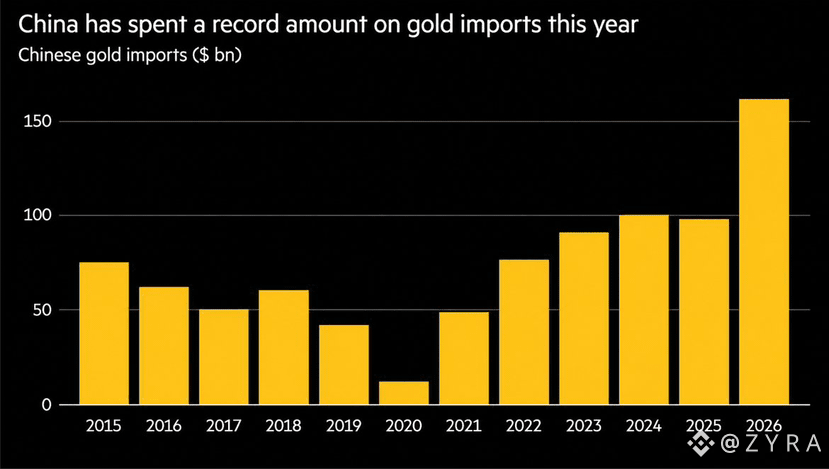
Der Goldkauf Chinas sieht zunehmend weniger nach einem Reserven-Update aus und mehr nach einer Verschiebung in der Bilanz.
In nur 8 Monaten soll China bereits über 1.000 Tonnen Gold im Wert von 158,8 Mrd. US-Dollar importiert haben – deutlich mehr als die 96,5 Mrd. US-Dollar, die im gesamten Jahr 2025 ausgegeben wurden.
Das größere Signal ist nicht nur das Gold.
Gleichzeitig sind Chinas Bestände an US-Staatsanleihen auf rund 618 Mrd. US-Dollar gefallen – das niedrigste Niveau seit 2008.
Die Marktauslegung ist daher simpel:
China reduziert seine Exponierung gegenüber Dollar-Schulden und erhöht gleichzeitig die gegenüber Sachwerten.
Das bedeutet nicht, dass Gold geradlinig steigt, aber es zeigt, warum die Nachfrage der Zentralbanken zu einem der stärksten makroökonomischen Unterstützer für Gold geworden ist.
Wenn Regierungen beginnen, Gold als strategischen Schutz zu behandeln, sollten Trader das nicht ignorieren.
Gold ist hier längst nicht mehr nur eine Absicherung gegen Inflation.
Es wird Teil des globalen Reserven-Neustarts.
$XAUT $BTC $HYPE
#USWeighsPromotingDollarStablecoinsAbroad #US10YTreasuryYieldHits19YearHigh #SpotBitcoinETFsInflow$2.31BInFourDays #BitcoinRejectedAt$87,300Twice #BCHJumps28%OnCMEFuturesListing
{future}(HYPEUSDT)
{future}(BTCUSDT)
{future}(XAUTUSDT)
Der Goldkauf Chinas sieht zunehmend weniger nach einem Reserven-Update aus und mehr nach einer Verschiebung in der Bilanz.
In nur 8 Monaten soll China bereits über 1.000 Tonnen Gold im Wert von 158,8 Mrd. US-Dollar importiert haben – deutlich mehr als die 96,5 Mrd. US-Dollar, die im gesamten Jahr 2025 ausgegeben wurden.
Das größere Signal ist nicht nur das Gold.
Gleichzeitig sind Chinas Bestände an US-Staatsanleihen auf rund 618 Mrd. US-Dollar gefallen – das niedrigste Niveau seit 2008.
Die Marktauslegung ist daher simpel:
China reduziert seine Exponierung gegenüber Dollar-Schulden und erhöht gleichzeitig die gegenüber Sachwerten.
Das bedeutet nicht, dass Gold geradlinig steigt, aber es zeigt, warum die Nachfrage der Zentralbanken zu einem der stärksten makroökonomischen Unterstützer für Gold geworden ist.
Wenn Regierungen beginnen, Gold als strategischen Schutz zu behandeln, sollten Trader das nicht ignorieren.
Gold ist hier längst nicht mehr nur eine Absicherung gegen Inflation.
Es wird Teil des globalen Reserven-Neustarts.
$XAUT $BTC $HYPE
#USWeighsPromotingDollarStablecoinsAbroad #US10YTreasuryYieldHits19YearHigh #SpotBitcoinETFsInflow$2.31BInFourDays #BitcoinRejectedAt$87,300Twice #BCHJumps28%OnCMEFuturesListing
In nur 8 Monaten soll China bereits über 1.000 Tonnen Gold im Wert von 158,8 Mrd. US-Dollar importiert haben – deutlich mehr als die 96,5 Mrd. US-Dollar, die im gesamten Jahr 2025 ausgegeben wurden.
Das größere Signal ist nicht nur das Gold.
Gleichzeitig sind Chinas Bestände an US-Staatsanleihen auf rund 618 Mrd. US-Dollar gefallen – das niedrigste Niveau seit 2008.
Die Marktauslegung ist daher simpel:
China reduziert seine Exponierung gegenüber Dollar-Schulden und erhöht gleichzeitig die gegenüber Sachwerten.
Das bedeutet nicht, dass Gold geradlinig steigt, aber es zeigt, warum die Nachfrage der Zentralbanken zu einem der stärksten makroökonomischen Unterstützer für Gold geworden ist.
Wenn Regierungen beginnen, Gold als strategischen Schutz zu behandeln, sollten Trader das nicht ignorieren.
Gold ist hier längst nicht mehr nur eine Absicherung gegen Inflation.
Es wird Teil des globalen Reserven-Neustarts.
$XAUT $BTC $HYPE
#USWeighsPromotingDollarStablecoinsAbroad #US10YTreasuryYieldHits19YearHigh #SpotBitcoinETFsInflow$2.31BInFourDays #BitcoinRejectedAt$87,300Twice #BCHJumps28%OnCMEFuturesListing
1
229
·
--
Bullisch
ZAMA, AR und ONE bewegen sich nicht wie stille Spot-Bids; das sieht nach einer Rotation in alte Infrastruktur-Storage-Namen nach einer langen Kompressionsphase aus.
$ONE ist die aggressivste: +87% mit Volumen-Ausweitung, aber der RSI ist bereits heiß, also ist das Verfolgen des Tops riskant.
$AR ist strukturell sauberer, mit einem stetigen Anstieg bei weniger Panikkerzen.
$ZAMA ist immer noch volatil nahe dem Widerstand, eher ein Breakout-Test-Chart.
Welches Chart hat den saubersten Follow-through?
#Zama #ar #one #BOJRaisesRatesTo31YearHigh #BuffettStepsDownAsBerkshireChairman
{future}(ZAMAUSDT)
{future}(ARUSDT)
{future}(ONEUSDT)
ZAMA, AR und ONE bewegen sich nicht wie stille Spot-Bids; das sieht nach einer Rotation in alte Infrastruktur-Storage-Namen nach einer langen Kompressionsphase aus.
$ONE ist die aggressivste: +87% mit Volumen-Ausweitung, aber der RSI ist bereits heiß, also ist das Verfolgen des Tops riskant.
$AR ist strukturell sauberer, mit einem stetigen Anstieg bei weniger Panikkerzen.
$ZAMA ist immer noch volatil nahe dem Widerstand, eher ein Breakout-Test-Chart.
Welches Chart hat den saubersten Follow-through?
#Zama #ar #one #BOJRaisesRatesTo31YearHigh #BuffettStepsDownAsBerkshireChairman
$ONE ist die aggressivste: +87% mit Volumen-Ausweitung, aber der RSI ist bereits heiß, also ist das Verfolgen des Tops riskant.
$AR ist strukturell sauberer, mit einem stetigen Anstieg bei weniger Panikkerzen.
$ZAMA ist immer noch volatil nahe dem Widerstand, eher ein Breakout-Test-Chart.
Welches Chart hat den saubersten Follow-through?
#Zama #ar #one #BOJRaisesRatesTo31YearHigh #BuffettStepsDownAsBerkshireChairman
ONE momentum
56%
AR structure
19%
ZAMA breakout
6%
Wait for pullback
19%
16 Stimmen • Abstimmung beendet
3
1.8k
·
--
Bärisch
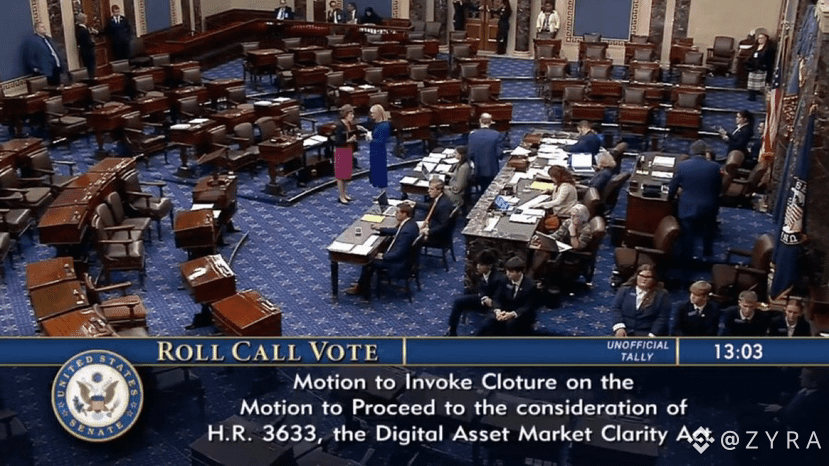
Das CLARITY-Gesetz scheitert am 60-Stimmen-Test – das ist nicht nur eine politische Verzögerung für Krypto.
Das sagt mir: Der Markt muss weiterhin unter Unsicherheit handeln.
Das ist der eigentliche Schaden.
Erbauer bekommen keine klaren Regeln. Börsen bekommen keine eindeutige Spur. Institutionen bekommen nicht das Maß an Sicherheit, das sie brauchen, um aggressiv zu skalieren. Und Trader bleiben damit zurück, Schlagzeilen einzupreisen statt Struktur.
Für mich ist deshalb die Reaktion wichtiger als die Abstimmung selbst.
Wenn BTC nach diesem Schritt seine Spanne hält, sagt der Markt: „Nervige Verzögerung, aber nicht tödlich.“
Wenn BTC mit Volumen die Unterstützung verliert, dann wird die gescheiterte Abstimmung zur Ausrede für eine größere Entsicherungs- bzw. De-Risking-Bewegung.
Krypto hat die gesamte Regulierungsgeschichte heute nicht verloren.
Es hat nur Zeit verloren.
Und wenn die Liquidität ohnehin schon dünn ist, wird Zeit teuer.
#ClarityActOddsHalveOnPolymarket #bitcoin #FedRateWatch #BitcoinSlidesTo$76000 #StrategyMarketCapPassesFord
$BTC
{future}(BTCUSDT)
$SAGA
{future}(SAGAUSDT)
$ASTR
{future}(ASTRUSDT)
Das CLARITY-Gesetz scheitert am 60-Stimmen-Test – das ist nicht nur eine politische Verzögerung für Krypto.
Das sagt mir: Der Markt muss weiterhin unter Unsicherheit handeln.
Das ist der eigentliche Schaden.
Erbauer bekommen keine klaren Regeln. Börsen bekommen keine eindeutige Spur. Institutionen bekommen nicht das Maß an Sicherheit, das sie brauchen, um aggressiv zu skalieren. Und Trader bleiben damit zurück, Schlagzeilen einzupreisen statt Struktur.
Für mich ist deshalb die Reaktion wichtiger als die Abstimmung selbst.
Wenn BTC nach diesem Schritt seine Spanne hält, sagt der Markt: „Nervige Verzögerung, aber nicht tödlich.“
Wenn BTC mit Volumen die Unterstützung verliert, dann wird die gescheiterte Abstimmung zur Ausrede für eine größere Entsicherungs- bzw. De-Risking-Bewegung.
Krypto hat die gesamte Regulierungsgeschichte heute nicht verloren.
Es hat nur Zeit verloren.
Und wenn die Liquidität ohnehin schon dünn ist, wird Zeit teuer.
#ClarityActOddsHalveOnPolymarket #bitcoin #FedRateWatch #BitcoinSlidesTo$76000 #StrategyMarketCapPassesFord
$BTC
$SAGA
$ASTR
Das sagt mir: Der Markt muss weiterhin unter Unsicherheit handeln.
Das ist der eigentliche Schaden.
Erbauer bekommen keine klaren Regeln. Börsen bekommen keine eindeutige Spur. Institutionen bekommen nicht das Maß an Sicherheit, das sie brauchen, um aggressiv zu skalieren. Und Trader bleiben damit zurück, Schlagzeilen einzupreisen statt Struktur.
Für mich ist deshalb die Reaktion wichtiger als die Abstimmung selbst.
Wenn BTC nach diesem Schritt seine Spanne hält, sagt der Markt: „Nervige Verzögerung, aber nicht tödlich.“
Wenn BTC mit Volumen die Unterstützung verliert, dann wird die gescheiterte Abstimmung zur Ausrede für eine größere Entsicherungs- bzw. De-Risking-Bewegung.
Krypto hat die gesamte Regulierungsgeschichte heute nicht verloren.
Es hat nur Zeit verloren.
Und wenn die Liquidität ohnehin schon dünn ist, wird Zeit teuer.
#ClarityActOddsHalveOnPolymarket #bitcoin #FedRateWatch #BitcoinSlidesTo$76000 #StrategyMarketCapPassesFord
$BTC
$SAGA
$ASTR
1
3
2.1k
·
--
Bullisch
Die CPI-Zahl ist da, und ich denke, die Fed hat jetzt einen schwierigeren Fall dafür, einfach weiter unverändert abzuwarten.
Der August-CPI lag bei +0,4% im Monatsvergleich und 3,4% im Jahresvergleich. Der Kern-CPI war bei +0,3% MoM und 2,4% YoY.
Gleichzeitig ist der Arbeitsmarkt keineswegs völlig zusammengebrochen. Die Zahl der Beschäftigten außerhalb der Landwirtschaft stieg um 162.000 Stellen, während die Arbeitslosenquote bei 4,1% blieb.
Für mich ist der entscheidende Punkt die Kombination.
Die Inflation liegt immer noch über dem 2%-Ziel der Fed, Energie bleibt ein Risiko, und die Wirtschaft zeigt genug Widerstandskraft, sodass die Fed restriktiv bleiben kann.
Mein Basisszenario ist daher jetzt ein Zinsschritt um 25 Basispunkte statt eines weiteren einfachen Abwartens.
Aber ich sehe das nicht als den Beginn eines automatischen Zinserhöhungszyklus.
Wenn die Fed erhöht, wird das entscheidende Marktsignal sein, was als Nächstes kommt: ob sie es als einmalige Reaktion auf anhaltend hohe Inflation einordnet oder als Beginn einer wieder strafferen Geldpolitik.
Diese Unterscheidung könnte für Aktien, Gold und Krypto wichtiger sein als der Zinsschritt um 25 Basispunkte selbst.
#CPIWatch
{future}(BTCUSDT)
Die CPI-Zahl ist da, und ich denke, die Fed hat jetzt einen schwierigeren Fall dafür, einfach weiter unverändert abzuwarten.
Der August-CPI lag bei +0,4% im Monatsvergleich und 3,4% im Jahresvergleich. Der Kern-CPI war bei +0,3% MoM und 2,4% YoY.
Gleichzeitig ist der Arbeitsmarkt keineswegs völlig zusammengebrochen. Die Zahl der Beschäftigten außerhalb der Landwirtschaft stieg um 162.000 Stellen, während die Arbeitslosenquote bei 4,1% blieb.
Für mich ist der entscheidende Punkt die Kombination.
Die Inflation liegt immer noch über dem 2%-Ziel der Fed, Energie bleibt ein Risiko, und die Wirtschaft zeigt genug Widerstandskraft, sodass die Fed restriktiv bleiben kann.
Mein Basisszenario ist daher jetzt ein Zinsschritt um 25 Basispunkte statt eines weiteren einfachen Abwartens.
Aber ich sehe das nicht als den Beginn eines automatischen Zinserhöhungszyklus.
Wenn die Fed erhöht, wird das entscheidende Marktsignal sein, was als Nächstes kommt: ob sie es als einmalige Reaktion auf anhaltend hohe Inflation einordnet oder als Beginn einer wieder strafferen Geldpolitik.
Diese Unterscheidung könnte für Aktien, Gold und Krypto wichtiger sein als der Zinsschritt um 25 Basispunkte selbst.
#CPIWatch
Der August-CPI lag bei +0,4% im Monatsvergleich und 3,4% im Jahresvergleich. Der Kern-CPI war bei +0,3% MoM und 2,4% YoY.
Gleichzeitig ist der Arbeitsmarkt keineswegs völlig zusammengebrochen. Die Zahl der Beschäftigten außerhalb der Landwirtschaft stieg um 162.000 Stellen, während die Arbeitslosenquote bei 4,1% blieb.
Für mich ist der entscheidende Punkt die Kombination.
Die Inflation liegt immer noch über dem 2%-Ziel der Fed, Energie bleibt ein Risiko, und die Wirtschaft zeigt genug Widerstandskraft, sodass die Fed restriktiv bleiben kann.
Mein Basisszenario ist daher jetzt ein Zinsschritt um 25 Basispunkte statt eines weiteren einfachen Abwartens.
Aber ich sehe das nicht als den Beginn eines automatischen Zinserhöhungszyklus.
Wenn die Fed erhöht, wird das entscheidende Marktsignal sein, was als Nächstes kommt: ob sie es als einmalige Reaktion auf anhaltend hohe Inflation einordnet oder als Beginn einer wieder strafferen Geldpolitik.
Diese Unterscheidung könnte für Aktien, Gold und Krypto wichtiger sein als der Zinsschritt um 25 Basispunkte selbst.
#CPIWatch
2
679
·
--
Bullisch
Drei Gewinner, aber nicht derselbe Qualitätsanstieg.
$ARB führt beim reinen Momentum, aber nach einem fast senkrechten Lauf ist er am stärksten überdehnt.
$RAY wirkt strukturell sauberer, mit einem Ausbruch, der noch Spielraum hat, wenn die Käufer den Rücksetzer verteidigen.
$IOST reagiert gut, aber es fühlt sich immer noch eher wie ein spekulativer Schub als wie eine starke Führungsrolle an.
Welcher davon hat hier den besten Anschlusslauf?
{future}(IOSTUSDT)
{spot}(RAYUSDT)
{future}(ARBUSDT)
#ARB #Ray #IOST #BTCReaches$80000 #ZECHitsANewAllTimeHigh
Drei Gewinner, aber nicht derselbe Qualitätsanstieg.
$ARB führt beim reinen Momentum, aber nach einem fast senkrechten Lauf ist er am stärksten überdehnt.
$RAY wirkt strukturell sauberer, mit einem Ausbruch, der noch Spielraum hat, wenn die Käufer den Rücksetzer verteidigen.
$IOST reagiert gut, aber es fühlt sich immer noch eher wie ein spekulativer Schub als wie eine starke Führungsrolle an.
Welcher davon hat hier den besten Anschlusslauf?
#ARB #Ray #IOST #BTCReaches$80000 #ZECHitsANewAllTimeHigh
$ARB führt beim reinen Momentum, aber nach einem fast senkrechten Lauf ist er am stärksten überdehnt.
$RAY wirkt strukturell sauberer, mit einem Ausbruch, der noch Spielraum hat, wenn die Käufer den Rücksetzer verteidigen.
$IOST reagiert gut, aber es fühlt sich immer noch eher wie ein spekulativer Schub als wie eine starke Führungsrolle an.
Welcher davon hat hier den besten Anschlusslauf?
#ARB #Ray #IOST #BTCReaches$80000 #ZECHitsANewAllTimeHigh
ARB
58%
RAY
23%
IOST
11%
None, wait for reset
8%
935 Stimmen • Abstimmung beendet
5
68
110.1k
·
--
Bullisch
Das Halving von Bitcoin verändert die Ausgabe. Es erzeugt keine Nachfrage.
Dieser Unterschied ist in der Nähe wichtiger psychologischer Marken entscheidend.
Die Block-Subvention beträgt jetzt 3,125 BTC, sodass neues Angebot langsamer auf den Markt kommt. Ob diese geringere Ausgabe den Preis tatsächlich beeinflusst, hängt jedoch davon ab, wer die verfügbaren BTC aufnimmt.
ETF-Zuflüsse, institutionelle Nachfrage, makroökonomische Liquidität und Verkäufe bestehender Halter konkurrieren auf der anderen Seite dieser Gleichung.
Deshalb sehe ich die Stärke von BTC nicht einfach als einen „Halving-Trade“.
Die interessantere Struktur ist:
vorhersehbares neues Angebot + unvorhersehbare Nachfrage + sich verändernde Liquidität.
Wenn die Nachfrage sowohl die neue Ausgabe als auch Verkäufe am Sekundärmarkt kontinuierlich absorbiert, wird Knappheit relevant.
Wenn die Nachfrage nachlässt, kann Knappheit allein den Preis nicht nach oben zwingen.
Das Angebot von Bitcoin ist programmiert. Die Preisfindung nicht.
Das ist der Teil von BTC in der Nähe wichtiger Marken, den ich beobachte.
$BTC
#BTCReaches$80000 #bitcoin #BitcoinETFsBiggestDailyInflowSinceJanuary
{future}(BTCUSDT)
Das Halving von Bitcoin verändert die Ausgabe. Es erzeugt keine Nachfrage.
Dieser Unterschied ist in der Nähe wichtiger psychologischer Marken entscheidend.
Die Block-Subvention beträgt jetzt 3,125 BTC, sodass neues Angebot langsamer auf den Markt kommt. Ob diese geringere Ausgabe den Preis tatsächlich beeinflusst, hängt jedoch davon ab, wer die verfügbaren BTC aufnimmt.
ETF-Zuflüsse, institutionelle Nachfrage, makroökonomische Liquidität und Verkäufe bestehender Halter konkurrieren auf der anderen Seite dieser Gleichung.
Deshalb sehe ich die Stärke von BTC nicht einfach als einen „Halving-Trade“.
Die interessantere Struktur ist:
vorhersehbares neues Angebot + unvorhersehbare Nachfrage + sich verändernde Liquidität.
Wenn die Nachfrage sowohl die neue Ausgabe als auch Verkäufe am Sekundärmarkt kontinuierlich absorbiert, wird Knappheit relevant.
Wenn die Nachfrage nachlässt, kann Knappheit allein den Preis nicht nach oben zwingen.
Das Angebot von Bitcoin ist programmiert. Die Preisfindung nicht.
Das ist der Teil von BTC in der Nähe wichtiger Marken, den ich beobachte.
$BTC
#BTCReaches$80000 #bitcoin #BitcoinETFsBiggestDailyInflowSinceJanuary
Dieser Unterschied ist in der Nähe wichtiger psychologischer Marken entscheidend.
Die Block-Subvention beträgt jetzt 3,125 BTC, sodass neues Angebot langsamer auf den Markt kommt. Ob diese geringere Ausgabe den Preis tatsächlich beeinflusst, hängt jedoch davon ab, wer die verfügbaren BTC aufnimmt.
ETF-Zuflüsse, institutionelle Nachfrage, makroökonomische Liquidität und Verkäufe bestehender Halter konkurrieren auf der anderen Seite dieser Gleichung.
Deshalb sehe ich die Stärke von BTC nicht einfach als einen „Halving-Trade“.
Die interessantere Struktur ist:
vorhersehbares neues Angebot + unvorhersehbare Nachfrage + sich verändernde Liquidität.
Wenn die Nachfrage sowohl die neue Ausgabe als auch Verkäufe am Sekundärmarkt kontinuierlich absorbiert, wird Knappheit relevant.
Wenn die Nachfrage nachlässt, kann Knappheit allein den Preis nicht nach oben zwingen.
Das Angebot von Bitcoin ist programmiert. Die Preisfindung nicht.
Das ist der Teil von BTC in der Nähe wichtiger Marken, den ich beobachte.
$BTC
#BTCReaches$80000 #bitcoin #BitcoinETFsBiggestDailyInflowSinceJanuary
1
1.2k
·
--
Bullisch
$ARB , $SC und $ONG sind keine gleichen Pump.
ARB sieht aus wie eine Rotation aus einem lange toten Bereich.
SC sieht wie eine verzögerte Storage-Squeeze mit überfülltem RSI aus.
ONG wirkt eher wie ein Rebound nach alter Volatilität, noch keine saubere Kursführung.
Der echte Gewinner ist nicht die größte Kerze von heute.
Es ist die, die die Breakout-Basis hält, wenn die ersten Verkäufer eintreffen.
bester Hold?
{future}(ONGUSDT)
{spot}(SCUSDT)
{future}(ARBUSDT)
#ong #ARB #ARBRises30%OnRobinhoodChainRevenue #StrategySpends$635MOnSTRCPreferredBuybacks
$ARB , $SC und $ONG sind keine gleichen Pump.
ARB sieht aus wie eine Rotation aus einem lange toten Bereich.
SC sieht wie eine verzögerte Storage-Squeeze mit überfülltem RSI aus.
ONG wirkt eher wie ein Rebound nach alter Volatilität, noch keine saubere Kursführung.
Der echte Gewinner ist nicht die größte Kerze von heute.
Es ist die, die die Breakout-Basis hält, wenn die ersten Verkäufer eintreffen.
bester Hold?
#ong #ARB #ARBRises30%OnRobinhoodChainRevenue #StrategySpends$635MOnSTRCPreferredBuybacks
ARB sieht aus wie eine Rotation aus einem lange toten Bereich.
SC sieht wie eine verzögerte Storage-Squeeze mit überfülltem RSI aus.
ONG wirkt eher wie ein Rebound nach alter Volatilität, noch keine saubere Kursführung.
Der echte Gewinner ist nicht die größte Kerze von heute.
Es ist die, die die Breakout-Basis hält, wenn die ersten Verkäufer eintreffen.
bester Hold?
#ong #ARB #ARBRises30%OnRobinhoodChainRevenue #StrategySpends$635MOnSTRCPreferredBuybacks
ARB
49%
SC
16%
ONG
30%
Wait
5%
185 Stimmen • Abstimmung beendet
5
23
27.7k
·
--
Bärisch
#dusk $DUSK @Dusk_Foundation Ich habe aufgehört, die OpenDusk-Abstimmung als bloßes Governance-Update zu betrachten, als ich ihre zeitliche Einordnung mit DuskEVM verglich.
DuskEVM-Testnet ist diesen Monat erst live gegangen. Die Entwickler-Tools sind zwar verfügbar, aber das größere Anwendungs-Ökosystem muss erst noch aufgebaut werden.
Nun wird die Community gefragt, ob die verbrannten Blockbelohnungen in einen OpenDusk-Tresor fließen sollen.
Dieser Zeitpunkt wirkt beabsichtigt.
Dusk braucht mehr als nur Protokoll-Updates. Es braucht Wallets, Entwickler-Tools, Audits, Anwendungen und Teams, die weiter aufbauen, bis diese Produkte echte Nutzer erreichen. Ein wiederkehrender Tresor könnte diese Ebene finanzieren, ohne dass jedes Projekt direkt von der Foundation abhängig ist.
Aber das schafft auch ein Problem.
Der Tresor könnte DUSK erhalten, bevor das Ökosystem einen nachweisbaren Weg hat, zu messen, welche Finanzierungsentscheidungen nachhaltige Nachfrage erzeugen.
Ein Projekt kann seine Fördermeilensteine erfüllen und trotzdem keine Nutzer gewinnen.
Ein Liquiditätsprogramm kann den TVL erhöhen, bis die Anreize auslaufen.
Eine neue dApp kann starten, ohne bedeutende Transaktionen oder Gebühren zu generieren.
Alle drei können in einem Tresorbericht wie Fortschritt aussehen.
Darum würde ich OpenDusk nicht anhand der Wahlbeteiligung oder der Anzahl der von ihm genehmigten Vorschläge beurteilen.
Ich würde verfolgen, wie viele finanzierte Projekte Mainnet erreichen, wie viel Nutzung nach dem Ende der Anreize verbleibt und ob diese Anwendungen Transaktionen erzeugen, die DUSK verwenden.
Andernfalls werden verbrannte Belohnungen nicht in einen Mehrwert für das Ökosystem umgewandelt. Sie kehren lediglich über eine kompliziertere Route in den Umlauf zurück.
Die erste Abstimmung entscheidet darüber, ob die Finanzierungsm*aschine überhaupt existieren soll.
Die wichtigere Abstimmung wird stillschweigend nach jedem Grant stattfinden: Nutzen die User weiterhin das, was der Tresor gebaut hat?
$DUSK
{future}(DUSKUSDT)
#dusk $DUSK @Dusk Ich habe aufgehört, die OpenDusk-Abstimmung als bloßes Governance-Update zu betrachten, als ich ihre zeitliche Einordnung mit DuskEVM verglich.
DuskEVM-Testnet ist diesen Monat erst live gegangen. Die Entwickler-Tools sind zwar verfügbar, aber das größere Anwendungs-Ökosystem muss erst noch aufgebaut werden.
Nun wird die Community gefragt, ob die verbrannten Blockbelohnungen in einen OpenDusk-Tresor fließen sollen.
Dieser Zeitpunkt wirkt beabsichtigt.
Dusk braucht mehr als nur Protokoll-Updates. Es braucht Wallets, Entwickler-Tools, Audits, Anwendungen und Teams, die weiter aufbauen, bis diese Produkte echte Nutzer erreichen. Ein wiederkehrender Tresor könnte diese Ebene finanzieren, ohne dass jedes Projekt direkt von der Foundation abhängig ist.
Aber das schafft auch ein Problem.
Der Tresor könnte DUSK erhalten, bevor das Ökosystem einen nachweisbaren Weg hat, zu messen, welche Finanzierungsentscheidungen nachhaltige Nachfrage erzeugen.
Ein Projekt kann seine Fördermeilensteine erfüllen und trotzdem keine Nutzer gewinnen.
Ein Liquiditätsprogramm kann den TVL erhöhen, bis die Anreize auslaufen.
Eine neue dApp kann starten, ohne bedeutende Transaktionen oder Gebühren zu generieren.
Alle drei können in einem Tresorbericht wie Fortschritt aussehen.
Darum würde ich OpenDusk nicht anhand der Wahlbeteiligung oder der Anzahl der von ihm genehmigten Vorschläge beurteilen.
Ich würde verfolgen, wie viele finanzierte Projekte Mainnet erreichen, wie viel Nutzung nach dem Ende der Anreize verbleibt und ob diese Anwendungen Transaktionen erzeugen, die DUSK verwenden.
Andernfalls werden verbrannte Belohnungen nicht in einen Mehrwert für das Ökosystem umgewandelt. Sie kehren lediglich über eine kompliziertere Route in den Umlauf zurück.
Die erste Abstimmung entscheidet darüber, ob die Finanzierungsm*aschine überhaupt existieren soll.
Die wichtigere Abstimmung wird stillschweigend nach jedem Grant stattfinden: Nutzen die User weiterhin das, was der Tresor gebaut hat?
$DUSK
DuskEVM-Testnet ist diesen Monat erst live gegangen. Die Entwickler-Tools sind zwar verfügbar, aber das größere Anwendungs-Ökosystem muss erst noch aufgebaut werden.
Nun wird die Community gefragt, ob die verbrannten Blockbelohnungen in einen OpenDusk-Tresor fließen sollen.
Dieser Zeitpunkt wirkt beabsichtigt.
Dusk braucht mehr als nur Protokoll-Updates. Es braucht Wallets, Entwickler-Tools, Audits, Anwendungen und Teams, die weiter aufbauen, bis diese Produkte echte Nutzer erreichen. Ein wiederkehrender Tresor könnte diese Ebene finanzieren, ohne dass jedes Projekt direkt von der Foundation abhängig ist.
Aber das schafft auch ein Problem.
Der Tresor könnte DUSK erhalten, bevor das Ökosystem einen nachweisbaren Weg hat, zu messen, welche Finanzierungsentscheidungen nachhaltige Nachfrage erzeugen.
Ein Projekt kann seine Fördermeilensteine erfüllen und trotzdem keine Nutzer gewinnen.
Ein Liquiditätsprogramm kann den TVL erhöhen, bis die Anreize auslaufen.
Eine neue dApp kann starten, ohne bedeutende Transaktionen oder Gebühren zu generieren.
Alle drei können in einem Tresorbericht wie Fortschritt aussehen.
Darum würde ich OpenDusk nicht anhand der Wahlbeteiligung oder der Anzahl der von ihm genehmigten Vorschläge beurteilen.
Ich würde verfolgen, wie viele finanzierte Projekte Mainnet erreichen, wie viel Nutzung nach dem Ende der Anreize verbleibt und ob diese Anwendungen Transaktionen erzeugen, die DUSK verwenden.
Andernfalls werden verbrannte Belohnungen nicht in einen Mehrwert für das Ökosystem umgewandelt. Sie kehren lediglich über eine kompliziertere Route in den Umlauf zurück.
Die erste Abstimmung entscheidet darüber, ob die Finanzierungsm*aschine überhaupt existieren soll.
Die wichtigere Abstimmung wird stillschweigend nach jedem Grant stattfinden: Nutzen die User weiterhin das, was der Tresor gebaut hat?
$DUSK
3
1
8
582
·
--
Bärisch
Verifiziert
#dusk $DUSK @Dusk_Foundation Die SURGECAST-Ankündigung stellte eine gute Frage: Was wäre, wenn jede Transaktion sofort mit angehängtem Namen öffentlich würde, sobald man sie ausführt?
Das hat mich gepackt, aber ich glaube, das schwierigere Problem beginnt erst danach.
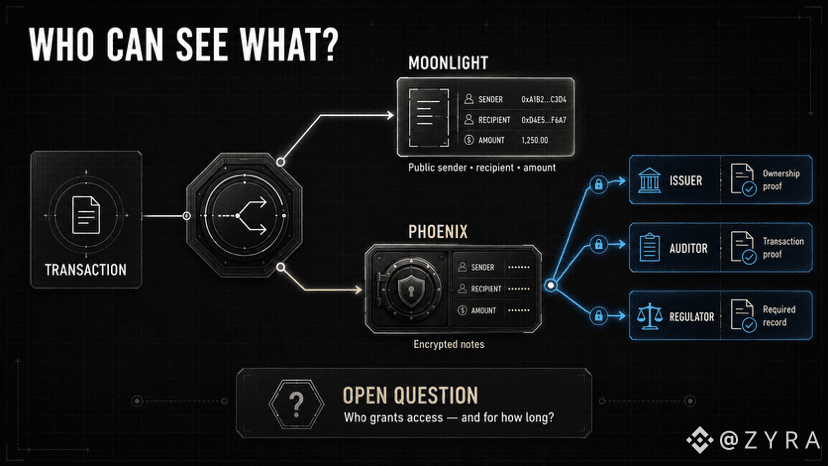
Ich ging noch einmal durch die Transaktionsmodelle von Dusk. Moonlight funktioniert wie ein öffentliches Konto: Kontostände und Übertragungsdetails sind sichtbar. Phoenix speichert Wert als verschlüsselte Notizen und weist nach, dass eine Transaktion gültig ist, ohne den Betrag oder die Beteiligten für alle offenzulegen.
Also @Dusk_Foundation versucht nicht, das gesamte Finanzsystem in eine einzige Datenschutzeinstellung zu zwingen.
Eine Zahlungen aus dem Treasury kann einen öffentlichen Nachweis erfordern.
Eine Fondsposition kann Vertraulichkeit benötigen.
Ein Emittent kann Eigentumsnachweise brauchen.
Ein Regulator kann Zugriff auf eine bestimmte Transaktion verlangen.
Das sind vier unterschiedliche Sichtbarkeitsanforderungen innerhalb desselben Marktes.
Der Teil, bei dem ich innegehalten habe, war der Betrachtungsschlüssel.
Phoenix ermöglicht, dass Transaktionsinformationen einer autorisierten Partei bei Bedarf offengelegt werden. Technisch löst das das private, aber dennoch nachprüfbare Problem. Operativ wirft es aber eine weitere Frage auf: Wer erhält diese Sichtbarkeit, wie eng wird sie gewährt, und was passiert, wenn mehrere Institutionen unterschiedliche Teile desselben Datensatzes benötigen?
Das fühlt sich wie der eigentliche institutionelle Test für Dusk an.
Zero-Knowledge-Beweise können zeigen, dass eine vertrauliche Übertragung die Regeln befolgt hat. Aber regulierte Finanzmärkte brauchen außerdem eine klare Offenlegungsrichtlinie rund um den Beweis: Welche Partei darf was einsehen, zu welchem Zweck und für wie lange.
Datenschutz ist die kryptografische Schicht.
Berechtigungen für die Offenlegung ist die Markt-Infrastruktur-Schicht.
Mich interessiert, was Hein Dauven zu dieser Unterscheidung sagt, denn ein Handel zu verbergen ist nur die halbe Arbeit. Die andere Hälfte besteht darin, sicherzustellen, dass die richtigen Nachweise die richtige Institution erreichen, ohne still und leise die geschlossenen Datenbanken neu aufzubauen, die Dusk eigentlich ersetzen soll.
{future}(DUSKUSDT)
#dusk $DUSK @Dusk Die SURGECAST-Ankündigung stellte eine gute Frage: Was wäre, wenn jede Transaktion sofort mit angehängtem Namen öffentlich würde, sobald man sie ausführt?
Das hat mich gepackt, aber ich glaube, das schwierigere Problem beginnt erst danach.
Ich ging noch einmal durch die Transaktionsmodelle von Dusk. Moonlight funktioniert wie ein öffentliches Konto: Kontostände und Übertragungsdetails sind sichtbar. Phoenix speichert Wert als verschlüsselte Notizen und weist nach, dass eine Transaktion gültig ist, ohne den Betrag oder die Beteiligten für alle offenzulegen.
Also @Dusk versucht nicht, das gesamte Finanzsystem in eine einzige Datenschutzeinstellung zu zwingen.
Eine Zahlungen aus dem Treasury kann einen öffentlichen Nachweis erfordern.
Eine Fondsposition kann Vertraulichkeit benötigen.
Ein Emittent kann Eigentumsnachweise brauchen.
Ein Regulator kann Zugriff auf eine bestimmte Transaktion verlangen.
Das sind vier unterschiedliche Sichtbarkeitsanforderungen innerhalb desselben Marktes.
Der Teil, bei dem ich innegehalten habe, war der Betrachtungsschlüssel.
Phoenix ermöglicht, dass Transaktionsinformationen einer autorisierten Partei bei Bedarf offengelegt werden. Technisch löst das das private, aber dennoch nachprüfbare Problem. Operativ wirft es aber eine weitere Frage auf: Wer erhält diese Sichtbarkeit, wie eng wird sie gewährt, und was passiert, wenn mehrere Institutionen unterschiedliche Teile desselben Datensatzes benötigen?
Das fühlt sich wie der eigentliche institutionelle Test für Dusk an.
Zero-Knowledge-Beweise können zeigen, dass eine vertrauliche Übertragung die Regeln befolgt hat. Aber regulierte Finanzmärkte brauchen außerdem eine klare Offenlegungsrichtlinie rund um den Beweis: Welche Partei darf was einsehen, zu welchem Zweck und für wie lange.
Datenschutz ist die kryptografische Schicht.
Berechtigungen für die Offenlegung ist die Markt-Infrastruktur-Schicht.
Mich interessiert, was Hein Dauven zu dieser Unterscheidung sagt, denn ein Handel zu verbergen ist nur die halbe Arbeit. Die andere Hälfte besteht darin, sicherzustellen, dass die richtigen Nachweise die richtige Institution erreichen, ohne still und leise die geschlossenen Datenbanken neu aufzubauen, die Dusk eigentlich ersetzen soll.
Das hat mich gepackt, aber ich glaube, das schwierigere Problem beginnt erst danach.
Ich ging noch einmal durch die Transaktionsmodelle von Dusk. Moonlight funktioniert wie ein öffentliches Konto: Kontostände und Übertragungsdetails sind sichtbar. Phoenix speichert Wert als verschlüsselte Notizen und weist nach, dass eine Transaktion gültig ist, ohne den Betrag oder die Beteiligten für alle offenzulegen.
Also @Dusk versucht nicht, das gesamte Finanzsystem in eine einzige Datenschutzeinstellung zu zwingen.
Eine Zahlungen aus dem Treasury kann einen öffentlichen Nachweis erfordern.
Eine Fondsposition kann Vertraulichkeit benötigen.
Ein Emittent kann Eigentumsnachweise brauchen.
Ein Regulator kann Zugriff auf eine bestimmte Transaktion verlangen.
Das sind vier unterschiedliche Sichtbarkeitsanforderungen innerhalb desselben Marktes.
Der Teil, bei dem ich innegehalten habe, war der Betrachtungsschlüssel.
Phoenix ermöglicht, dass Transaktionsinformationen einer autorisierten Partei bei Bedarf offengelegt werden. Technisch löst das das private, aber dennoch nachprüfbare Problem. Operativ wirft es aber eine weitere Frage auf: Wer erhält diese Sichtbarkeit, wie eng wird sie gewährt, und was passiert, wenn mehrere Institutionen unterschiedliche Teile desselben Datensatzes benötigen?
Das fühlt sich wie der eigentliche institutionelle Test für Dusk an.
Zero-Knowledge-Beweise können zeigen, dass eine vertrauliche Übertragung die Regeln befolgt hat. Aber regulierte Finanzmärkte brauchen außerdem eine klare Offenlegungsrichtlinie rund um den Beweis: Welche Partei darf was einsehen, zu welchem Zweck und für wie lange.
Datenschutz ist die kryptografische Schicht.
Berechtigungen für die Offenlegung ist die Markt-Infrastruktur-Schicht.
Mich interessiert, was Hein Dauven zu dieser Unterscheidung sagt, denn ein Handel zu verbergen ist nur die halbe Arbeit. Die andere Hälfte besteht darin, sicherzustellen, dass die richtigen Nachweise die richtige Institution erreichen, ohne still und leise die geschlossenen Datenbanken neu aufzubauen, die Dusk eigentlich ersetzen soll.
2
8
730
·
--
Bärisch
#dusk $DUSK @Dusk_Foundation
Ich dachte früher, Privatsphäre auf einer Blockchain ginge es hauptsächlich darum, Kontostände und Übertragungsbeträge zu verbergen.
Dann habe ich mir angesehen, was passiert, nachdem ein Finanz-Asset ausgegeben wurde.
Eine tokenisierte Anleihe bewegt sich nicht einfach von einer Wallet zur anderen. Anleger zeichnen, das Eigentum wechselt, Zinsen werden gezahlt, Einschränkungen werden geprüft und Aufzeichnungen müssen möglicherweise von einem Verwahrer, einer Handelsplattform oder einem Regulator überprüft werden.
Wenn jeder Schritt öffentlich ist, können Wettbewerber Positionen und den Transaktionsfluss analysieren.
Wenn jeder Schritt vollständig verborgen ist, können die Parteien, die für Compliance zuständig sind, nicht verifizieren, was passiert ist.
Das ist das Problem, das Dusk tatsächlich lösen will.
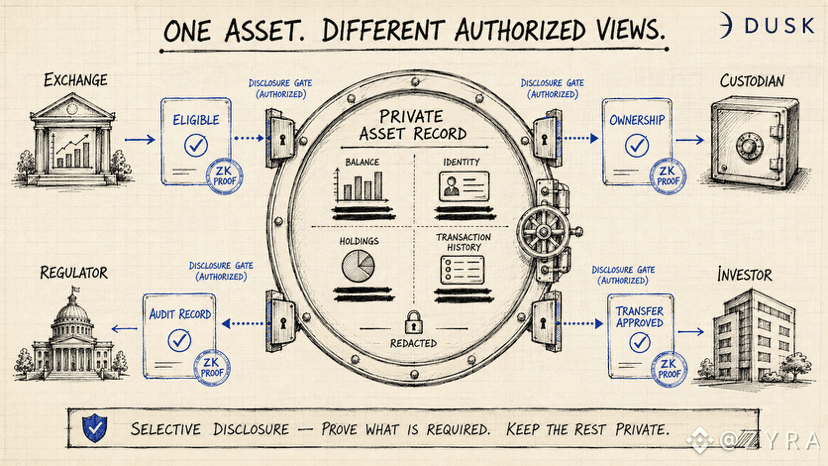
Das Privacy-Modell ist kein einziger Schalter für das gesamte Netzwerk. Öffentliche Aktivitäten können öffentlich bleiben, während sensible Bestände und Übertragungen vertrauliche Abläufe nutzen können. Wenn eine Prüfung erforderlich ist, ist eine selektive Offenlegung vorgesehen, um die notwendigen Belege offenzulegen, ohne die komplette finanzielle Historie des Kunden zu öffnen.
DuskEVM macht das noch interessanter, weil Entwickler mit vertrauten Solidity-Tools bauen können. Hedger bringt dann verschlüsselte Werte und Zero-Knowledge-Beweise in diese EVM-Umgebung, sodass eine Anwendung prüfen kann, ob eine Transaktion ihren Regeln gefolgt ist, ohne jede zugrunde liegende Zahl offenzulegen.
Aber ein Problem sticht für mich noch immer heraus.
Die Kryptografie kann begrenzen, was offengelegt wird, aber jemand muss trotzdem entscheiden, wer autorisiert ist, was zu sehen.
Wer genehmigt eine Offenlegungsanfrage?
Kann der Zugriff ablaufen?
Was passiert, wenn eine Institution den Verwahrer wechselt oder ein Gerichtsbeschluss durchgesetzt werden muss?
Das sind keine kleinen operativen Details. Sie werden entscheiden, ob selektive Offenlegung sich wie kontrollierte Privatsphäre anfühlt oder einfach nur wie ein weiteres Berechtigungssystem, das hinter ZK-Sprache versteckt ist.
Dusk hat eine starke technische Antwort auf Finance-by-default-Öffentlichkeit.
Jetzt möchte ich sehen, wie klar die Offenlegungsbefugnis geregelt ist, wenn echte Institutionen, Investoren und Assets beginnen, sie zu nutzen.
{future}(DUSKUSDT)
#dusk $DUSK @Dusk
Ich dachte früher, Privatsphäre auf einer Blockchain ginge es hauptsächlich darum, Kontostände und Übertragungsbeträge zu verbergen.
Dann habe ich mir angesehen, was passiert, nachdem ein Finanz-Asset ausgegeben wurde.
Eine tokenisierte Anleihe bewegt sich nicht einfach von einer Wallet zur anderen. Anleger zeichnen, das Eigentum wechselt, Zinsen werden gezahlt, Einschränkungen werden geprüft und Aufzeichnungen müssen möglicherweise von einem Verwahrer, einer Handelsplattform oder einem Regulator überprüft werden.
Wenn jeder Schritt öffentlich ist, können Wettbewerber Positionen und den Transaktionsfluss analysieren.
Wenn jeder Schritt vollständig verborgen ist, können die Parteien, die für Compliance zuständig sind, nicht verifizieren, was passiert ist.
Das ist das Problem, das Dusk tatsächlich lösen will.
Das Privacy-Modell ist kein einziger Schalter für das gesamte Netzwerk. Öffentliche Aktivitäten können öffentlich bleiben, während sensible Bestände und Übertragungen vertrauliche Abläufe nutzen können. Wenn eine Prüfung erforderlich ist, ist eine selektive Offenlegung vorgesehen, um die notwendigen Belege offenzulegen, ohne die komplette finanzielle Historie des Kunden zu öffnen.
DuskEVM macht das noch interessanter, weil Entwickler mit vertrauten Solidity-Tools bauen können. Hedger bringt dann verschlüsselte Werte und Zero-Knowledge-Beweise in diese EVM-Umgebung, sodass eine Anwendung prüfen kann, ob eine Transaktion ihren Regeln gefolgt ist, ohne jede zugrunde liegende Zahl offenzulegen.
Aber ein Problem sticht für mich noch immer heraus.
Die Kryptografie kann begrenzen, was offengelegt wird, aber jemand muss trotzdem entscheiden, wer autorisiert ist, was zu sehen.
Wer genehmigt eine Offenlegungsanfrage?
Kann der Zugriff ablaufen?
Was passiert, wenn eine Institution den Verwahrer wechselt oder ein Gerichtsbeschluss durchgesetzt werden muss?
Das sind keine kleinen operativen Details. Sie werden entscheiden, ob selektive Offenlegung sich wie kontrollierte Privatsphäre anfühlt oder einfach nur wie ein weiteres Berechtigungssystem, das hinter ZK-Sprache versteckt ist.
Dusk hat eine starke technische Antwort auf Finance-by-default-Öffentlichkeit.
Jetzt möchte ich sehen, wie klar die Offenlegungsbefugnis geregelt ist, wenn echte Institutionen, Investoren und Assets beginnen, sie zu nutzen.
Ich dachte früher, Privatsphäre auf einer Blockchain ginge es hauptsächlich darum, Kontostände und Übertragungsbeträge zu verbergen.
Dann habe ich mir angesehen, was passiert, nachdem ein Finanz-Asset ausgegeben wurde.
Eine tokenisierte Anleihe bewegt sich nicht einfach von einer Wallet zur anderen. Anleger zeichnen, das Eigentum wechselt, Zinsen werden gezahlt, Einschränkungen werden geprüft und Aufzeichnungen müssen möglicherweise von einem Verwahrer, einer Handelsplattform oder einem Regulator überprüft werden.
Wenn jeder Schritt öffentlich ist, können Wettbewerber Positionen und den Transaktionsfluss analysieren.
Wenn jeder Schritt vollständig verborgen ist, können die Parteien, die für Compliance zuständig sind, nicht verifizieren, was passiert ist.
Das ist das Problem, das Dusk tatsächlich lösen will.
Das Privacy-Modell ist kein einziger Schalter für das gesamte Netzwerk. Öffentliche Aktivitäten können öffentlich bleiben, während sensible Bestände und Übertragungen vertrauliche Abläufe nutzen können. Wenn eine Prüfung erforderlich ist, ist eine selektive Offenlegung vorgesehen, um die notwendigen Belege offenzulegen, ohne die komplette finanzielle Historie des Kunden zu öffnen.
DuskEVM macht das noch interessanter, weil Entwickler mit vertrauten Solidity-Tools bauen können. Hedger bringt dann verschlüsselte Werte und Zero-Knowledge-Beweise in diese EVM-Umgebung, sodass eine Anwendung prüfen kann, ob eine Transaktion ihren Regeln gefolgt ist, ohne jede zugrunde liegende Zahl offenzulegen.
Aber ein Problem sticht für mich noch immer heraus.
Die Kryptografie kann begrenzen, was offengelegt wird, aber jemand muss trotzdem entscheiden, wer autorisiert ist, was zu sehen.
Wer genehmigt eine Offenlegungsanfrage?
Kann der Zugriff ablaufen?
Was passiert, wenn eine Institution den Verwahrer wechselt oder ein Gerichtsbeschluss durchgesetzt werden muss?
Das sind keine kleinen operativen Details. Sie werden entscheiden, ob selektive Offenlegung sich wie kontrollierte Privatsphäre anfühlt oder einfach nur wie ein weiteres Berechtigungssystem, das hinter ZK-Sprache versteckt ist.
Dusk hat eine starke technische Antwort auf Finance-by-default-Öffentlichkeit.
Jetzt möchte ich sehen, wie klar die Offenlegungsbefugnis geregelt ist, wenn echte Institutionen, Investoren und Assets beginnen, sie zu nutzen.
6
8
627
·
--
Bullisch
#dusk $DUSK @Dusk_Foundation Ich bin Dusk’s Behauptung noch einmal durchgegangen, dass DuskEVM das Wachstum des Ökosystems in mehr Nutzen für $DUSK umwandeln kann.
Die Logik wirkt simpel.
Ethereum-Entwickler können mit Werkzeugen bauen, die sie bereits kennen. Mehr Anwendungen kommen dazu. Diese Anwendungen erzeugen Transaktionen, und jede DuskEVM-Transaktion verbraucht $DUSK für Gas.
Aber ich habe an der Lücke innegehalten, zwischen dem Zeitpunkt, an dem eine Anwendung bereitgestellt wird, und dem Moment, in dem sie tatsächlich genutzt wird.
Ein DEX kann selbst mit sehr wenig Handel existieren. Ein Lending-Markt kann Liquidität halten, während das Ausleihen ruhig bleibt. Sogar eine tokenisierte Anleihe kann dem Netzwerk einen großen Mehrwert hinzufügen und dann nur wenige Transaktionen erzeugen, wenn Anleger sie einfach bis zur Fälligkeit halten.
Mehr Contracts und ein höheres TVL bedeuten also nicht automatisch, dass auch deutlich mehr Gas-Nachfrage entsteht.
Entscheidend ist, was passiert, nachdem die Assets und Anwendungen eingetroffen sind.
Werden regelmäßig Trades gemacht?
Werden Kredite eröffnet und zurückgezahlt?
Zahlen tokenisierte Assets Zinsen, ändern sie onchain den Eigentümer oder werden sie dort eingelöst?
Hier könnte Dusk Trade wichtig werden. Es ist nicht nur eine weitere dApp. Es könnte Finanzprodukte und Investoren in dasselbe Ökosystem bringen, in dem diese Assets ausgegeben, abgewickelt und betreut werden.
Wenn diese Aktivität onchain bleibt, kann ein Asset DUSK in mehreren Phasen seines Lebenszyklus mehrfach nutzen – statt nur einmal, wenn es erstellt wird.
Das ist der Teil, den ich jetzt beobachten würde.
Nicht wie viele Anwendungen starten, sondern wie viele Menschen zurückkommen, um sie zu nutzen. Nicht nur wie viel TVL hereinkommt, sondern wie oft dieses Kapital sich tatsächlich bewegt.
DuskEVM macht das Bauen einfacher.
Der offene Punkt ist, ob Dusk Trade und die Anwendungen rundherum genug wiederkehrende Aktivität erzeugen können, um diesen leichteren Zugang in eine nachhaltige Dusk-Nachfrage zu verwandeln.
$DUSK
{future}(DUSKUSDT)
#dusk $DUSK @Dusk Ich bin Dusk’s Behauptung noch einmal durchgegangen, dass DuskEVM das Wachstum des Ökosystems in mehr Nutzen für $DUSK umwandeln kann.
Die Logik wirkt simpel.
Ethereum-Entwickler können mit Werkzeugen bauen, die sie bereits kennen. Mehr Anwendungen kommen dazu. Diese Anwendungen erzeugen Transaktionen, und jede DuskEVM-Transaktion verbraucht $DUSK für Gas.
Aber ich habe an der Lücke innegehalten, zwischen dem Zeitpunkt, an dem eine Anwendung bereitgestellt wird, und dem Moment, in dem sie tatsächlich genutzt wird.
Ein DEX kann selbst mit sehr wenig Handel existieren. Ein Lending-Markt kann Liquidität halten, während das Ausleihen ruhig bleibt. Sogar eine tokenisierte Anleihe kann dem Netzwerk einen großen Mehrwert hinzufügen und dann nur wenige Transaktionen erzeugen, wenn Anleger sie einfach bis zur Fälligkeit halten.
Mehr Contracts und ein höheres TVL bedeuten also nicht automatisch, dass auch deutlich mehr Gas-Nachfrage entsteht.
Entscheidend ist, was passiert, nachdem die Assets und Anwendungen eingetroffen sind.
Werden regelmäßig Trades gemacht?
Werden Kredite eröffnet und zurückgezahlt?
Zahlen tokenisierte Assets Zinsen, ändern sie onchain den Eigentümer oder werden sie dort eingelöst?
Hier könnte Dusk Trade wichtig werden. Es ist nicht nur eine weitere dApp. Es könnte Finanzprodukte und Investoren in dasselbe Ökosystem bringen, in dem diese Assets ausgegeben, abgewickelt und betreut werden.
Wenn diese Aktivität onchain bleibt, kann ein Asset DUSK in mehreren Phasen seines Lebenszyklus mehrfach nutzen – statt nur einmal, wenn es erstellt wird.
Das ist der Teil, den ich jetzt beobachten würde.
Nicht wie viele Anwendungen starten, sondern wie viele Menschen zurückkommen, um sie zu nutzen. Nicht nur wie viel TVL hereinkommt, sondern wie oft dieses Kapital sich tatsächlich bewegt.
DuskEVM macht das Bauen einfacher.
Der offene Punkt ist, ob Dusk Trade und die Anwendungen rundherum genug wiederkehrende Aktivität erzeugen können, um diesen leichteren Zugang in eine nachhaltige Dusk-Nachfrage zu verwandeln.
$DUSK
Die Logik wirkt simpel.
Ethereum-Entwickler können mit Werkzeugen bauen, die sie bereits kennen. Mehr Anwendungen kommen dazu. Diese Anwendungen erzeugen Transaktionen, und jede DuskEVM-Transaktion verbraucht $DUSK für Gas.
Aber ich habe an der Lücke innegehalten, zwischen dem Zeitpunkt, an dem eine Anwendung bereitgestellt wird, und dem Moment, in dem sie tatsächlich genutzt wird.
Ein DEX kann selbst mit sehr wenig Handel existieren. Ein Lending-Markt kann Liquidität halten, während das Ausleihen ruhig bleibt. Sogar eine tokenisierte Anleihe kann dem Netzwerk einen großen Mehrwert hinzufügen und dann nur wenige Transaktionen erzeugen, wenn Anleger sie einfach bis zur Fälligkeit halten.
Mehr Contracts und ein höheres TVL bedeuten also nicht automatisch, dass auch deutlich mehr Gas-Nachfrage entsteht.
Entscheidend ist, was passiert, nachdem die Assets und Anwendungen eingetroffen sind.
Werden regelmäßig Trades gemacht?
Werden Kredite eröffnet und zurückgezahlt?
Zahlen tokenisierte Assets Zinsen, ändern sie onchain den Eigentümer oder werden sie dort eingelöst?
Hier könnte Dusk Trade wichtig werden. Es ist nicht nur eine weitere dApp. Es könnte Finanzprodukte und Investoren in dasselbe Ökosystem bringen, in dem diese Assets ausgegeben, abgewickelt und betreut werden.
Wenn diese Aktivität onchain bleibt, kann ein Asset DUSK in mehreren Phasen seines Lebenszyklus mehrfach nutzen – statt nur einmal, wenn es erstellt wird.
Das ist der Teil, den ich jetzt beobachten würde.
Nicht wie viele Anwendungen starten, sondern wie viele Menschen zurückkommen, um sie zu nutzen. Nicht nur wie viel TVL hereinkommt, sondern wie oft dieses Kapital sich tatsächlich bewegt.
DuskEVM macht das Bauen einfacher.
Der offene Punkt ist, ob Dusk Trade und die Anwendungen rundherum genug wiederkehrende Aktivität erzeugen können, um diesen leichteren Zugang in eine nachhaltige Dusk-Nachfrage zu verwandeln.
$DUSK
4
7
589
·
--
Bullisch
Verifiziert
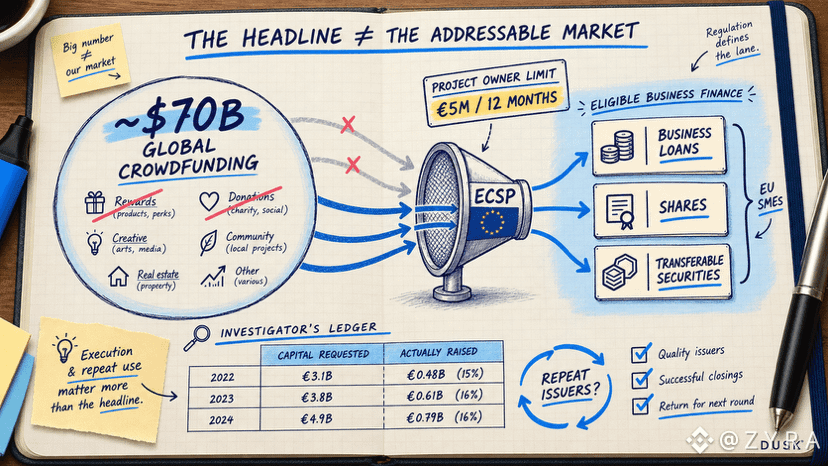
#dusk $DUSK @Dusk_Foundation Setzen Sie eine nahezu 70 Milliarden US-Dollar schwere Crowdfunding-Zahl in sein ECSP-Update.
Große Zahl. Sah großartig aus.
Dann habe ich geprüft, was das europäische ECSP-Framework tatsächlich abdeckt.
Das ist nicht der gesamte Crowdfunding-Markt.
Spendenkampagnen und belohnungsbasiertes Crowdfunding liegen außerhalb davon. ECSP deckt hauptsächlich Unternehmensdarlehen und investitionsbasierte Angebote ab, mit einer EU-Schwelle von 5 Millionen Euro, die von einem Projektinhaber innerhalb von 12 Monaten eingeworben wird.
Dusk beantragt also keinen Zugang zu einem einzigen riesigen 70-Milliarden-US-Dollar-Pool.
Stattdessen zielt das Unternehmen auf einen engeren Markt, in dem europäische KMU kleinere Beträge über Darlehen, Anteile oder andere zulässige Instrumente aufbringen können.
Ehrlich gesagt machte das den Plan für mich glaubwürdiger, nicht weniger.
Europa hat rund 34 Millionen KMU. Dusk müsste keine Emissionen in Milliardenhöhe auflegen, um Aktivität zu schaffen. Eine kontinuierliche Pipeline von Angeboten im Bereich von 1 bis 5 Millionen Euro könnte bereits Unternehmen, Investoren und Finanzanlagen in Dusk Trade bringen.
Aber es gibt eine Lücke zwischen dem Erlaubtsein, ein Angebot zu listen, und der tatsächlichen Finanzierung.
Die Lizenz kann kein gutes Unternehmen, angemessene Konditionen oder Investorennachfrage schaffen.
Daher könnte „Anzahl der Angebote“ eine weitere schwache Kennzahl werden, wenn die meisten davon offen bleiben oder unterfinanziert sind.
Was ich nach der Genehmigung sehen möchte, ist viel einfacher:
Wie viel Kapital wurde angefordert?
Wie viel wurde tatsächlich aufgebracht?
Und wie vielen Unternehmen ist für ein zweites Angebot wiedergekommen?
Das würde mir mehr sagen als die globale Crowdfunding-Überschrift.
{future}(DUSKUSDT)
#dusk $DUSK @Dusk Setzen Sie eine nahezu 70 Milliarden US-Dollar schwere Crowdfunding-Zahl in sein ECSP-Update.
Große Zahl. Sah großartig aus.
Dann habe ich geprüft, was das europäische ECSP-Framework tatsächlich abdeckt.
Das ist nicht der gesamte Crowdfunding-Markt.
Spendenkampagnen und belohnungsbasiertes Crowdfunding liegen außerhalb davon. ECSP deckt hauptsächlich Unternehmensdarlehen und investitionsbasierte Angebote ab, mit einer EU-Schwelle von 5 Millionen Euro, die von einem Projektinhaber innerhalb von 12 Monaten eingeworben wird.
Dusk beantragt also keinen Zugang zu einem einzigen riesigen 70-Milliarden-US-Dollar-Pool.
Stattdessen zielt das Unternehmen auf einen engeren Markt, in dem europäische KMU kleinere Beträge über Darlehen, Anteile oder andere zulässige Instrumente aufbringen können.
Ehrlich gesagt machte das den Plan für mich glaubwürdiger, nicht weniger.
Europa hat rund 34 Millionen KMU. Dusk müsste keine Emissionen in Milliardenhöhe auflegen, um Aktivität zu schaffen. Eine kontinuierliche Pipeline von Angeboten im Bereich von 1 bis 5 Millionen Euro könnte bereits Unternehmen, Investoren und Finanzanlagen in Dusk Trade bringen.
Aber es gibt eine Lücke zwischen dem Erlaubtsein, ein Angebot zu listen, und der tatsächlichen Finanzierung.
Die Lizenz kann kein gutes Unternehmen, angemessene Konditionen oder Investorennachfrage schaffen.
Daher könnte „Anzahl der Angebote“ eine weitere schwache Kennzahl werden, wenn die meisten davon offen bleiben oder unterfinanziert sind.
Was ich nach der Genehmigung sehen möchte, ist viel einfacher:
Wie viel Kapital wurde angefordert?
Wie viel wurde tatsächlich aufgebracht?
Und wie vielen Unternehmen ist für ein zweites Angebot wiedergekommen?
Das würde mir mehr sagen als die globale Crowdfunding-Überschrift.
Große Zahl. Sah großartig aus.
Dann habe ich geprüft, was das europäische ECSP-Framework tatsächlich abdeckt.
Das ist nicht der gesamte Crowdfunding-Markt.
Spendenkampagnen und belohnungsbasiertes Crowdfunding liegen außerhalb davon. ECSP deckt hauptsächlich Unternehmensdarlehen und investitionsbasierte Angebote ab, mit einer EU-Schwelle von 5 Millionen Euro, die von einem Projektinhaber innerhalb von 12 Monaten eingeworben wird.
Dusk beantragt also keinen Zugang zu einem einzigen riesigen 70-Milliarden-US-Dollar-Pool.
Stattdessen zielt das Unternehmen auf einen engeren Markt, in dem europäische KMU kleinere Beträge über Darlehen, Anteile oder andere zulässige Instrumente aufbringen können.
Ehrlich gesagt machte das den Plan für mich glaubwürdiger, nicht weniger.
Europa hat rund 34 Millionen KMU. Dusk müsste keine Emissionen in Milliardenhöhe auflegen, um Aktivität zu schaffen. Eine kontinuierliche Pipeline von Angeboten im Bereich von 1 bis 5 Millionen Euro könnte bereits Unternehmen, Investoren und Finanzanlagen in Dusk Trade bringen.
Aber es gibt eine Lücke zwischen dem Erlaubtsein, ein Angebot zu listen, und der tatsächlichen Finanzierung.
Die Lizenz kann kein gutes Unternehmen, angemessene Konditionen oder Investorennachfrage schaffen.
Daher könnte „Anzahl der Angebote“ eine weitere schwache Kennzahl werden, wenn die meisten davon offen bleiben oder unterfinanziert sind.
Was ich nach der Genehmigung sehen möchte, ist viel einfacher:
Wie viel Kapital wurde angefordert?
Wie viel wurde tatsächlich aufgebracht?
Und wie vielen Unternehmen ist für ein zweites Angebot wiedergekommen?
Das würde mir mehr sagen als die globale Crowdfunding-Überschrift.
12
12
904
·
--
Bullisch
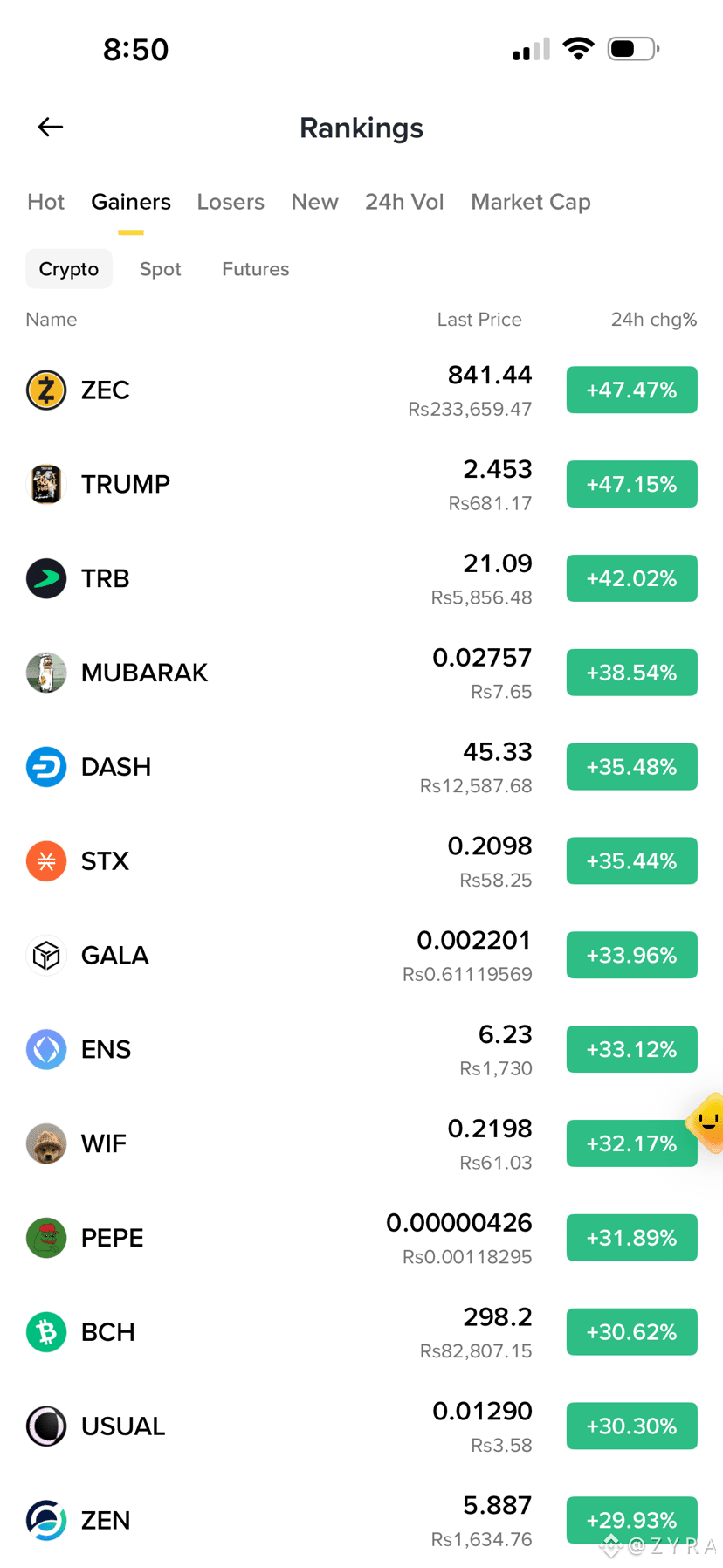
Die heutige Gainer-Board ist nicht zufällig.
Der Markt rotiert gleichzeitig in zwei sehr unterschiedliche Arten von Risiko: alte Überzeugung und schnelle Aufmerksamkeit.
$ZEC , $DASH and $ZEN leading sagt mir, dass die Privatsphäre und Coins aus dem alten Zyklus plötzlich neu bewertet werden. Das passiert normalerweise, wenn Trader anfangen, nach Narrativen zu suchen, die viel zu lange ignoriert wurden – nicht nur nach neuem Hype.
Aber zusätzlich dazu zeigen $TRUMP, $WIF $PEPE und $MUBARAK, dass auch die Meme-Liquidität wieder wach ist. Das ist gefährlicher, weil Meme-Pumps schnell gehen können, aber der Bid kann sogar noch schneller verschwinden, sobald die Aufmerksamkeit rotiert.
Das wichtigste Signal für mich ist ZEC ganz oben. Wenn Privacy-Coins weiterhin Gewinne halten, während Memes abkühlen, hat diese Rally eine stärkere narrative Basis. Wenn alles nach einem grünen Tag zusammen abverkauft wird, dann war das nur kurzfristige Liquidität, die der Rangliste hinterherjagt.
Grüne Boards sehen spannend aus, aber der eigentliche Test ist einfach:
Welche Coins bleiben noch übrig, nachdem die Menge aufhört, hinterherzulaufen?
{future}(ZENUSDT)
{future}(DASHUSDT)
{future}(ZECUSDT)
#zen #DASH #zec #USDollarFallsToThreeMonthLow #USThreeMajorIndexesPostWeeklyLosses
Die heutige Gainer-Board ist nicht zufällig.
Der Markt rotiert gleichzeitig in zwei sehr unterschiedliche Arten von Risiko: alte Überzeugung und schnelle Aufmerksamkeit.
$ZEC , $DASH and $ZEN leading sagt mir, dass die Privatsphäre und Coins aus dem alten Zyklus plötzlich neu bewertet werden. Das passiert normalerweise, wenn Trader anfangen, nach Narrativen zu suchen, die viel zu lange ignoriert wurden – nicht nur nach neuem Hype.
Aber zusätzlich dazu zeigen $TRUMP, $WIF $PEPE und $MUBARAK, dass auch die Meme-Liquidität wieder wach ist. Das ist gefährlicher, weil Meme-Pumps schnell gehen können, aber der Bid kann sogar noch schneller verschwinden, sobald die Aufmerksamkeit rotiert.
Das wichtigste Signal für mich ist ZEC ganz oben. Wenn Privacy-Coins weiterhin Gewinne halten, während Memes abkühlen, hat diese Rally eine stärkere narrative Basis. Wenn alles nach einem grünen Tag zusammen abverkauft wird, dann war das nur kurzfristige Liquidität, die der Rangliste hinterherjagt.
Grüne Boards sehen spannend aus, aber der eigentliche Test ist einfach:
Welche Coins bleiben noch übrig, nachdem die Menge aufhört, hinterherzulaufen?
#zen #DASH #zec #USDollarFallsToThreeMonthLow #USThreeMajorIndexesPostWeeklyLosses
Der Markt rotiert gleichzeitig in zwei sehr unterschiedliche Arten von Risiko: alte Überzeugung und schnelle Aufmerksamkeit.
$ZEC , $DASH and $ZEN leading sagt mir, dass die Privatsphäre und Coins aus dem alten Zyklus plötzlich neu bewertet werden. Das passiert normalerweise, wenn Trader anfangen, nach Narrativen zu suchen, die viel zu lange ignoriert wurden – nicht nur nach neuem Hype.
Aber zusätzlich dazu zeigen $TRUMP, $WIF $PEPE und $MUBARAK, dass auch die Meme-Liquidität wieder wach ist. Das ist gefährlicher, weil Meme-Pumps schnell gehen können, aber der Bid kann sogar noch schneller verschwinden, sobald die Aufmerksamkeit rotiert.
Das wichtigste Signal für mich ist ZEC ganz oben. Wenn Privacy-Coins weiterhin Gewinne halten, während Memes abkühlen, hat diese Rally eine stärkere narrative Basis. Wenn alles nach einem grünen Tag zusammen abverkauft wird, dann war das nur kurzfristige Liquidität, die der Rangliste hinterherjagt.
Grüne Boards sehen spannend aus, aber der eigentliche Test ist einfach:
Welche Coins bleiben noch übrig, nachdem die Menge aufhört, hinterherzulaufen?
#zen #DASH #zec #USDollarFallsToThreeMonthLow #USThreeMajorIndexesPostWeeklyLosses
2
7
7k
·
--
Bullisch
Dieser Move geht nicht darum, „welche Coin mehr gepumpt hat.“
ZEC, TRB und TRUMP zeigen drei verschiedene Arten von Markthunger.
$ZEC ist eine Neubewertung der Erzählung. Die Privatsphäre wurde lange ignoriert, dann zwang eine starke Kerze den Markt, wieder hinzuschauen. Aber wenn der RSI fast am Maximum ist, lautet die Frage nicht mehr „Ist die Story stark?“ Die Frage ist „Wer bleibt noch übrig zu kaufen, nachdem diese Kerze da ist?“
$TRB sieht eher nach einem Liquiditäts-Short-Squeeze aus. Der Anstieg wurde zunächst kontrolliert, dann weitete sich die letzte Bewegung schnell aus. Das bedeutet meist, dass das Angebot dünn wurde und späte Käufer gezwungen waren hinterherzulaufen.
$TRUMP ist anders. Das ist reine Aufmerksamkeit-Liquidität. Wenn Meme-Flow eintrifft, kann er technische Faktoren eine Weile ignorieren, aber derselbe Flow kann schnell verschwinden, wenn das Publikum rotiert.
Für mich ist der echte Gewinner nicht die höchste grüne Kerze.
Es ist der Chart, der seine Breakout-Basis nach dem ersten Pullback hält.
#zec #TRB #TRUMP #USDollarFallsToThreeMonthLow #USThreeMajorIndexesPostWeeklyLosses
{future}(TRUMPUSDT)
{future}(ZECUSDT)
{future}(TRBUSDT)
Welcher hält am besten?
Dieser Move geht nicht darum, „welche Coin mehr gepumpt hat.“
ZEC, TRB und TRUMP zeigen drei verschiedene Arten von Markthunger.
$ZEC ist eine Neubewertung der Erzählung. Die Privatsphäre wurde lange ignoriert, dann zwang eine starke Kerze den Markt, wieder hinzuschauen. Aber wenn der RSI fast am Maximum ist, lautet die Frage nicht mehr „Ist die Story stark?“ Die Frage ist „Wer bleibt noch übrig zu kaufen, nachdem diese Kerze da ist?“
$TRB sieht eher nach einem Liquiditäts-Short-Squeeze aus. Der Anstieg wurde zunächst kontrolliert, dann weitete sich die letzte Bewegung schnell aus. Das bedeutet meist, dass das Angebot dünn wurde und späte Käufer gezwungen waren hinterherzulaufen.
$TRUMP ist anders. Das ist reine Aufmerksamkeit-Liquidität. Wenn Meme-Flow eintrifft, kann er technische Faktoren eine Weile ignorieren, aber derselbe Flow kann schnell verschwinden, wenn das Publikum rotiert.
Für mich ist der echte Gewinner nicht die höchste grüne Kerze.
Es ist der Chart, der seine Breakout-Basis nach dem ersten Pullback hält.
#zec #TRB #TRUMP #USDollarFallsToThreeMonthLow #USThreeMajorIndexesPostWeeklyLosses
Welcher hält am besten?
ZEC, TRB und TRUMP zeigen drei verschiedene Arten von Markthunger.
$ZEC ist eine Neubewertung der Erzählung. Die Privatsphäre wurde lange ignoriert, dann zwang eine starke Kerze den Markt, wieder hinzuschauen. Aber wenn der RSI fast am Maximum ist, lautet die Frage nicht mehr „Ist die Story stark?“ Die Frage ist „Wer bleibt noch übrig zu kaufen, nachdem diese Kerze da ist?“
$TRB sieht eher nach einem Liquiditäts-Short-Squeeze aus. Der Anstieg wurde zunächst kontrolliert, dann weitete sich die letzte Bewegung schnell aus. Das bedeutet meist, dass das Angebot dünn wurde und späte Käufer gezwungen waren hinterherzulaufen.
$TRUMP ist anders. Das ist reine Aufmerksamkeit-Liquidität. Wenn Meme-Flow eintrifft, kann er technische Faktoren eine Weile ignorieren, aber derselbe Flow kann schnell verschwinden, wenn das Publikum rotiert.
Für mich ist der echte Gewinner nicht die höchste grüne Kerze.
Es ist der Chart, der seine Breakout-Basis nach dem ersten Pullback hält.
#zec #TRB #TRUMP #USDollarFallsToThreeMonthLow #USThreeMajorIndexesPostWeeklyLosses
Welcher hält am besten?
ZEC
42%
TRB
21%
TRUMP
27%
Wait
10%
967 Stimmen • Abstimmung beendet
27
59
77.9k
·
--
Bullisch
#termmax @termmax Ich habe die Benutzerrollen von TermMax zunächst als eine einfache Aufteilung in Kreditnehmer versus Kreditgeber verstanden.
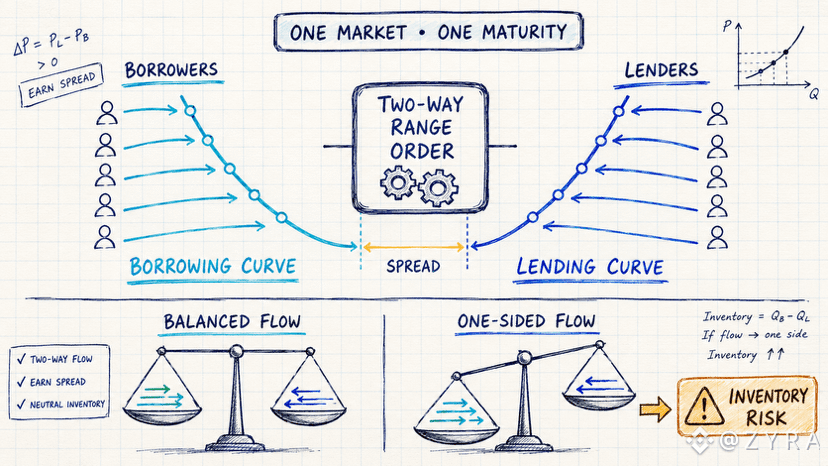
Dann bin ich zum Two-Way Range Order Setter gelangt.
Eine Order kann beide Seiten desselben Fixed-Rate-Markts quotieren, indem separate Borrowing- und Lending-Kurven verwendet werden. In den V2-Verträgen kann der Market Maker diese Kurven und Preise konfigurieren, statt eine vom Protokoll gewählte Rate zu akzeptieren.
Das ändert meine Sicht auf @termmax .
Die Fixed Rate ist keine einzige universelle Zahl, die von einem Lending Pool angezeigt wird. Sie entsteht durch mittelfristenspezifische Liquidität, die zu unterschiedlichen Raten und Handelsgrößen bereitgestellt wird.
Ein Two-Way Maker kann potenziell die Spanne zwischen beiden Kurven erfassen. Aber diese Spanne ist keine kostenlose Rendite.
Wenn die Nachfrage nach Krediten dominiert, kann die Order zunehmend einer Seite stärker ausgesetzt sein. Wenn die Nachfrage nach Krediten dominiert, verschiebt sich sein Bestand in die andere Richtung. Der Gewinn hängt daher davon ab, wo die Kurven platziert sind, wie der Flow ankommt und ob der Maker neu bepreisen kann, bevor sich der Markt bewegt.
MLTV schützt das Darlehen mit Sicherheiten. Es schützt keine schlecht positionierte Kurve vor asymmetrischem Order-Flow.
Darum ist die Zahl, die ich im Blick hätte, nicht nur die angegebene APY.
Ich würde beobachten, wie viel nutzbare Tiefe auf beiden Seiten jeder Laufzeit vorhanden ist und wie schnell Maker sich anpassen, wenn sich dieses Gleichgewicht ändert.
TermMax wirkt hier weniger wie ein Fixed-Rate-Lending-Pool und mehr wie ein Onchain-Zinsratenmarkt. $TMX
#termmax @TermMax Ich habe die Benutzerrollen von TermMax zunächst als eine einfache Aufteilung in Kreditnehmer versus Kreditgeber verstanden.
Dann bin ich zum Two-Way Range Order Setter gelangt.
Eine Order kann beide Seiten desselben Fixed-Rate-Markts quotieren, indem separate Borrowing- und Lending-Kurven verwendet werden. In den V2-Verträgen kann der Market Maker diese Kurven und Preise konfigurieren, statt eine vom Protokoll gewählte Rate zu akzeptieren.
Das ändert meine Sicht auf @TermMax .
Die Fixed Rate ist keine einzige universelle Zahl, die von einem Lending Pool angezeigt wird. Sie entsteht durch mittelfristenspezifische Liquidität, die zu unterschiedlichen Raten und Handelsgrößen bereitgestellt wird.
Ein Two-Way Maker kann potenziell die Spanne zwischen beiden Kurven erfassen. Aber diese Spanne ist keine kostenlose Rendite.
Wenn die Nachfrage nach Krediten dominiert, kann die Order zunehmend einer Seite stärker ausgesetzt sein. Wenn die Nachfrage nach Krediten dominiert, verschiebt sich sein Bestand in die andere Richtung. Der Gewinn hängt daher davon ab, wo die Kurven platziert sind, wie der Flow ankommt und ob der Maker neu bepreisen kann, bevor sich der Markt bewegt.
MLTV schützt das Darlehen mit Sicherheiten. Es schützt keine schlecht positionierte Kurve vor asymmetrischem Order-Flow.
Darum ist die Zahl, die ich im Blick hätte, nicht nur die angegebene APY.
Ich würde beobachten, wie viel nutzbare Tiefe auf beiden Seiten jeder Laufzeit vorhanden ist und wie schnell Maker sich anpassen, wenn sich dieses Gleichgewicht ändert.
TermMax wirkt hier weniger wie ein Fixed-Rate-Lending-Pool und mehr wie ein Onchain-Zinsratenmarkt. $TMX
Dann bin ich zum Two-Way Range Order Setter gelangt.
Eine Order kann beide Seiten desselben Fixed-Rate-Markts quotieren, indem separate Borrowing- und Lending-Kurven verwendet werden. In den V2-Verträgen kann der Market Maker diese Kurven und Preise konfigurieren, statt eine vom Protokoll gewählte Rate zu akzeptieren.
Das ändert meine Sicht auf @TermMax .
Die Fixed Rate ist keine einzige universelle Zahl, die von einem Lending Pool angezeigt wird. Sie entsteht durch mittelfristenspezifische Liquidität, die zu unterschiedlichen Raten und Handelsgrößen bereitgestellt wird.
Ein Two-Way Maker kann potenziell die Spanne zwischen beiden Kurven erfassen. Aber diese Spanne ist keine kostenlose Rendite.
Wenn die Nachfrage nach Krediten dominiert, kann die Order zunehmend einer Seite stärker ausgesetzt sein. Wenn die Nachfrage nach Krediten dominiert, verschiebt sich sein Bestand in die andere Richtung. Der Gewinn hängt daher davon ab, wo die Kurven platziert sind, wie der Flow ankommt und ob der Maker neu bepreisen kann, bevor sich der Markt bewegt.
MLTV schützt das Darlehen mit Sicherheiten. Es schützt keine schlecht positionierte Kurve vor asymmetrischem Order-Flow.
Darum ist die Zahl, die ich im Blick hätte, nicht nur die angegebene APY.
Ich würde beobachten, wie viel nutzbare Tiefe auf beiden Seiten jeder Laufzeit vorhanden ist und wie schnell Maker sich anpassen, wenn sich dieses Gleichgewicht ändert.
TermMax wirkt hier weniger wie ein Fixed-Rate-Lending-Pool und mehr wie ein Onchain-Zinsratenmarkt. $TMX
4
796
·
--
Bullisch
#dusk $DUSK @Dusk_Foundation Ich habe die Seite zu Dusk’s Core Components geöffnet, in der Erwartung, dass Zedger und Hedger ältere und neuere Versionen desselben Privacy-Systems sind.
Das sind sie nicht.
Die Seite platziert Zedger direkt auf Dusk’s nativer L1 über DuskVM-Verträge. Sein hybrides UTXO/Account-Design wurde für regulierte Assets entwickelt, die private Eigentümerschaft, konforme Übertragungen, Abstimmungen, Dividenden und Eigentumsgrenzen benötigen.
Hedger geht einen anderen Weg.
Es lebt auf DuskEVM und kombiniert homomorphe Verschlüsselung mit Zero-Knowledge-Beweisen. Werte können verschlüsselt bleiben, während Verträge nachweisen, dass eine Transaktion gültig ist — ohne Solidity oder standardisierte Ethereum-Tools aufzugeben.
Dann fand ich den Kompromiss, den Dusk offen ausspricht: Das EVM-Account-Modell verhindert, dass Hedger die volle Anonymität bereitstellen kann, die über Zedger verfügbar ist.
Das verändert, wie ich die Architektur lese.
Hedger ist nicht einfach nur besser als Zedger. Es gibt einen Teil der nativen-layer-Anonymität auf, um vertrauliche Finanzen in einer EVM-Umgebung nutzbar zu machen.
Für eine tokenisierte Bond-Plattform, die bereits um Solidity herum gebaut ist, könnte diese Kompatibilität den Integrationsaufwand reduzieren. Für eine Anwendung, die tiefere Privatsphäre und direkten Zugriff auf Dusk’s natives Transaktionsmodell benötigt, bleibt Zedger ein anderer Pfad.
Hedger ist immer noch im Testnet, daher müssen die behauptete Browser-Beweisgeschwindigkeit und die verschlüsselten Workflows sich erst unter echter Marktaktivität bewähren.
Dusk hat nicht ein einziges Privacy-Modell für alles gewählt.
Dusk hält die native-L1-Privatsphäre und die EVM-Privatsphäre getrennt, weil Entwicklervertrautheit und maximale Anonymität nicht sauber in dieselbe Architektur passen.
{future}(DUSKUSDT)
#dusk $DUSK @Dusk Ich habe die Seite zu Dusk’s Core Components geöffnet, in der Erwartung, dass Zedger und Hedger ältere und neuere Versionen desselben Privacy-Systems sind.
Das sind sie nicht.
Die Seite platziert Zedger direkt auf Dusk’s nativer L1 über DuskVM-Verträge. Sein hybrides UTXO/Account-Design wurde für regulierte Assets entwickelt, die private Eigentümerschaft, konforme Übertragungen, Abstimmungen, Dividenden und Eigentumsgrenzen benötigen.
Hedger geht einen anderen Weg.
Es lebt auf DuskEVM und kombiniert homomorphe Verschlüsselung mit Zero-Knowledge-Beweisen. Werte können verschlüsselt bleiben, während Verträge nachweisen, dass eine Transaktion gültig ist — ohne Solidity oder standardisierte Ethereum-Tools aufzugeben.
Dann fand ich den Kompromiss, den Dusk offen ausspricht: Das EVM-Account-Modell verhindert, dass Hedger die volle Anonymität bereitstellen kann, die über Zedger verfügbar ist.
Das verändert, wie ich die Architektur lese.
Hedger ist nicht einfach nur besser als Zedger. Es gibt einen Teil der nativen-layer-Anonymität auf, um vertrauliche Finanzen in einer EVM-Umgebung nutzbar zu machen.
Für eine tokenisierte Bond-Plattform, die bereits um Solidity herum gebaut ist, könnte diese Kompatibilität den Integrationsaufwand reduzieren. Für eine Anwendung, die tiefere Privatsphäre und direkten Zugriff auf Dusk’s natives Transaktionsmodell benötigt, bleibt Zedger ein anderer Pfad.
Hedger ist immer noch im Testnet, daher müssen die behauptete Browser-Beweisgeschwindigkeit und die verschlüsselten Workflows sich erst unter echter Marktaktivität bewähren.
Dusk hat nicht ein einziges Privacy-Modell für alles gewählt.
Dusk hält die native-L1-Privatsphäre und die EVM-Privatsphäre getrennt, weil Entwicklervertrautheit und maximale Anonymität nicht sauber in dieselbe Architektur passen.
Das sind sie nicht.
Die Seite platziert Zedger direkt auf Dusk’s nativer L1 über DuskVM-Verträge. Sein hybrides UTXO/Account-Design wurde für regulierte Assets entwickelt, die private Eigentümerschaft, konforme Übertragungen, Abstimmungen, Dividenden und Eigentumsgrenzen benötigen.
Hedger geht einen anderen Weg.
Es lebt auf DuskEVM und kombiniert homomorphe Verschlüsselung mit Zero-Knowledge-Beweisen. Werte können verschlüsselt bleiben, während Verträge nachweisen, dass eine Transaktion gültig ist — ohne Solidity oder standardisierte Ethereum-Tools aufzugeben.
Dann fand ich den Kompromiss, den Dusk offen ausspricht: Das EVM-Account-Modell verhindert, dass Hedger die volle Anonymität bereitstellen kann, die über Zedger verfügbar ist.
Das verändert, wie ich die Architektur lese.
Hedger ist nicht einfach nur besser als Zedger. Es gibt einen Teil der nativen-layer-Anonymität auf, um vertrauliche Finanzen in einer EVM-Umgebung nutzbar zu machen.
Für eine tokenisierte Bond-Plattform, die bereits um Solidity herum gebaut ist, könnte diese Kompatibilität den Integrationsaufwand reduzieren. Für eine Anwendung, die tiefere Privatsphäre und direkten Zugriff auf Dusk’s natives Transaktionsmodell benötigt, bleibt Zedger ein anderer Pfad.
Hedger ist immer noch im Testnet, daher müssen die behauptete Browser-Beweisgeschwindigkeit und die verschlüsselten Workflows sich erst unter echter Marktaktivität bewähren.
Dusk hat nicht ein einziges Privacy-Modell für alles gewählt.
Dusk hält die native-L1-Privatsphäre und die EVM-Privatsphäre getrennt, weil Entwicklervertrautheit und maximale Anonymität nicht sauber in dieselbe Architektur passen.
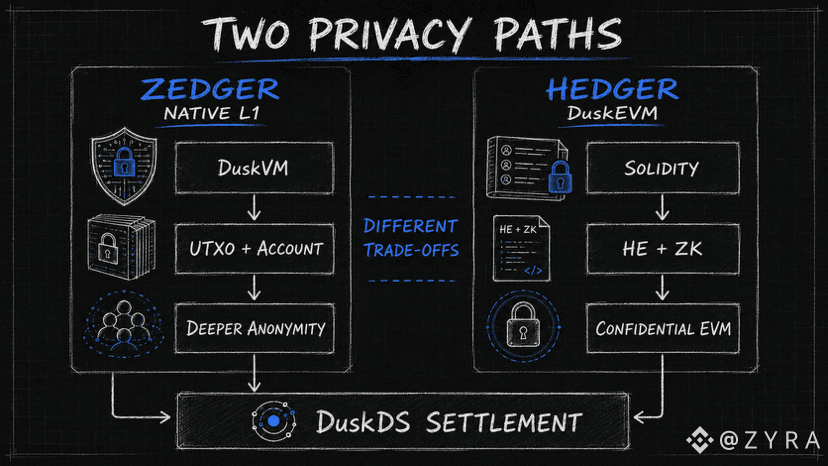
4
9
579
·
--
Bullisch
30D-Trade $DUSK 197.5 USDT
#dusk $DUSK @Dusk_Foundation Banken, Börsen und Verwahrer können dieselbe Transaktion prüfen, müssen aber nicht dieselben Daten sehen.
Diese Unterscheidung macht Dusk’s Modell für selektive Offenlegung für mich so interessant.
Eine Börse muss möglicherweise einen Nachweis dafür haben, dass ein Händler berechtigt ist.
Ein Verwahrer muss möglicherweise eine Bestätigung des Eigentums benötigen.
Ein Regulierer kann den Zugriff auf bestimmte Transaktionsaufzeichnungen verlangen.
Keine dieser Prüfungen rechtfertigt automatisch, dass das vollständige Guthaben, die Identität oder die Handelshistorie des Kunden allen anderen offengelegt wird.
Dusk behandelt Offenlegung als zugangsberechtigte Bereitstellung der erforderlichen Beweise – nicht als eine Entscheidung zwischen vollständiger Geheimhaltung und vollständiger Transparenz.
Das fühlt sich viel näher an die Art an, wie regulierte Finanzwelt tatsächlich mit Informationen umgeht.
#dusk $DUSK @Dusk Banken, Börsen und Verwahrer können dieselbe Transaktion prüfen, müssen aber nicht dieselben Daten sehen.
Diese Unterscheidung macht Dusk’s Modell für selektive Offenlegung für mich so interessant.
Eine Börse muss möglicherweise einen Nachweis dafür haben, dass ein Händler berechtigt ist.
Ein Verwahrer muss möglicherweise eine Bestätigung des Eigentums benötigen.
Ein Regulierer kann den Zugriff auf bestimmte Transaktionsaufzeichnungen verlangen.
Keine dieser Prüfungen rechtfertigt automatisch, dass das vollständige Guthaben, die Identität oder die Handelshistorie des Kunden allen anderen offengelegt wird.
Dusk behandelt Offenlegung als zugangsberechtigte Bereitstellung der erforderlichen Beweise – nicht als eine Entscheidung zwischen vollständiger Geheimhaltung und vollständiger Transparenz.
Das fühlt sich viel näher an die Art an, wie regulierte Finanzwelt tatsächlich mit Informationen umgeht.
Diese Unterscheidung macht Dusk’s Modell für selektive Offenlegung für mich so interessant.
Eine Börse muss möglicherweise einen Nachweis dafür haben, dass ein Händler berechtigt ist.
Ein Verwahrer muss möglicherweise eine Bestätigung des Eigentums benötigen.
Ein Regulierer kann den Zugriff auf bestimmte Transaktionsaufzeichnungen verlangen.
Keine dieser Prüfungen rechtfertigt automatisch, dass das vollständige Guthaben, die Identität oder die Handelshistorie des Kunden allen anderen offengelegt wird.
Dusk behandelt Offenlegung als zugangsberechtigte Bereitstellung der erforderlichen Beweise – nicht als eine Entscheidung zwischen vollständiger Geheimhaltung und vollständiger Transparenz.
Das fühlt sich viel näher an die Art an, wie regulierte Finanzwelt tatsächlich mit Informationen umgeht.
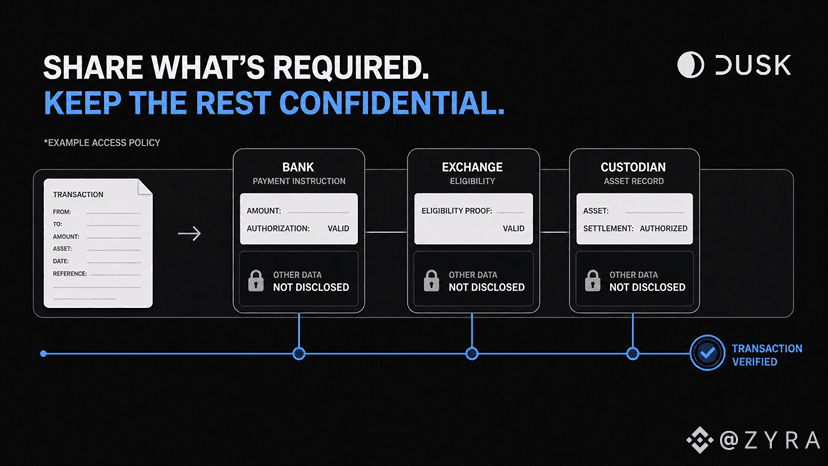
3
7
227
·
--
Bullisch
#termmax @termmax Ich habe TermMax’s V2-Verträge geöffnet in der Erwartung, dass sich der Gearing Token wie ein weiteres fungibles Debt-Token verhält.
Das tut er nicht.
GT ist eine ERC-721-Position. Der Vertrag stellt loanInfo, addCollateral, removeCollaterl, augmentDebt, repay und liquidate bereit.
Das erklärt, warum TermMax hier eine NFT verwendet.
FTs können fungibel sein, weil jedes FT aus demselben Markt den gleichen Anspruch bei Fälligkeit repräsentiert. Ein GT hält jedoch etwas Spezifischeres: das Sicherheiten-, Schulden- und Positionsstatus-Setup eines einzelnen Kreditnehmers.
Zwei GTs aus demselben Markt tragen möglicherweise nicht das gleiche Risiko. Das eine könnte über einen komfortablen Sicherheitenpuffer verfügen, während das andere nahe an der Liquidation liegt.
Der Vertrag enthält außerdem Funktionen für Besitz und Übertragung. Das bedeutet, dass das Übertragen eines GT nicht mit dem Versenden eines gewöhnlichen Tokens vergleichbar ist. Der Besitz einer aktiven Darlehensposition geht mit ihr über.
Der Vertrag unterstützt diese Handlung, aber die Bewertung einer solchen Position ist eine andere Sache.
Bevor ich einen GT erhalte, müsste ich seine Sicherheiten, die ausstehenden Schulden, die Fälligkeit und den Abstand zur Liquidation prüfen. Die NFT-Bezeichnung allein sagt nichts darüber aus, ob die Position gesund ist.
Ich sehe GT nun weniger als Token und mehr als ein Onchain-Darlehenskonto.
Es ist keine Deko um den Kreditprozess herum.
Es ist die Position selbst.
Was ist am wichtigsten, wenn man einen GT untersucht?
#termmax @TermMax Ich habe TermMax’s V2-Verträge geöffnet in der Erwartung, dass sich der Gearing Token wie ein weiteres fungibles Debt-Token verhält.
Das tut er nicht.
GT ist eine ERC-721-Position. Der Vertrag stellt loanInfo, addCollateral, removeCollaterl, augmentDebt, repay und liquidate bereit.
Das erklärt, warum TermMax hier eine NFT verwendet.
FTs können fungibel sein, weil jedes FT aus demselben Markt den gleichen Anspruch bei Fälligkeit repräsentiert. Ein GT hält jedoch etwas Spezifischeres: das Sicherheiten-, Schulden- und Positionsstatus-Setup eines einzelnen Kreditnehmers.
Zwei GTs aus demselben Markt tragen möglicherweise nicht das gleiche Risiko. Das eine könnte über einen komfortablen Sicherheitenpuffer verfügen, während das andere nahe an der Liquidation liegt.
Der Vertrag enthält außerdem Funktionen für Besitz und Übertragung. Das bedeutet, dass das Übertragen eines GT nicht mit dem Versenden eines gewöhnlichen Tokens vergleichbar ist. Der Besitz einer aktiven Darlehensposition geht mit ihr über.
Der Vertrag unterstützt diese Handlung, aber die Bewertung einer solchen Position ist eine andere Sache.
Bevor ich einen GT erhalte, müsste ich seine Sicherheiten, die ausstehenden Schulden, die Fälligkeit und den Abstand zur Liquidation prüfen. Die NFT-Bezeichnung allein sagt nichts darüber aus, ob die Position gesund ist.
Ich sehe GT nun weniger als Token und mehr als ein Onchain-Darlehenskonto.
Es ist keine Deko um den Kreditprozess herum.
Es ist die Position selbst.
Was ist am wichtigsten, wenn man einen GT untersucht?
Das tut er nicht.
GT ist eine ERC-721-Position. Der Vertrag stellt loanInfo, addCollateral, removeCollaterl, augmentDebt, repay und liquidate bereit.
Das erklärt, warum TermMax hier eine NFT verwendet.
FTs können fungibel sein, weil jedes FT aus demselben Markt den gleichen Anspruch bei Fälligkeit repräsentiert. Ein GT hält jedoch etwas Spezifischeres: das Sicherheiten-, Schulden- und Positionsstatus-Setup eines einzelnen Kreditnehmers.
Zwei GTs aus demselben Markt tragen möglicherweise nicht das gleiche Risiko. Das eine könnte über einen komfortablen Sicherheitenpuffer verfügen, während das andere nahe an der Liquidation liegt.
Der Vertrag enthält außerdem Funktionen für Besitz und Übertragung. Das bedeutet, dass das Übertragen eines GT nicht mit dem Versenden eines gewöhnlichen Tokens vergleichbar ist. Der Besitz einer aktiven Darlehensposition geht mit ihr über.
Der Vertrag unterstützt diese Handlung, aber die Bewertung einer solchen Position ist eine andere Sache.
Bevor ich einen GT erhalte, müsste ich seine Sicherheiten, die ausstehenden Schulden, die Fälligkeit und den Abstand zur Liquidation prüfen. Die NFT-Bezeichnung allein sagt nichts darüber aus, ob die Position gesund ist.
Ich sehe GT nun weniger als Token und mehr als ein Onchain-Darlehenskonto.
Es ist keine Deko um den Kreditprozess herum.
Es ist die Position selbst.
Was ist am wichtigsten, wenn man einen GT untersucht?
Collateral
67%
Debt size
33%
MLTV buffer
0%
Maturity
0%
6 Stimmen • Abstimmung beendet
1
4
454
Anmelden und weiter Inhalte entdecken
Krypto-Nutzer weltweit auf Binance Square kennenlernen
⚡️ Bleib in Sachen Krypto stets am Puls.
💬 Die weltgrößte Kryptobörse vertraut darauf.
👍 Erhalte verlässliche Einblicke von verifizierten Creators.
E-Mail-Adresse/Telefonnummer
Trendthemen
FedMinutesFocusOnOctoberPause
58,789 Aufrufe
800 Kommentare
Das jüngste Sitzungsprotokoll der US-Notenbank Federal Reserve steht unter intensiver Beobachtung. Die Märkte suchen verzweifelt nach Hinweisen auf eine mögliche Pause bei den Zinserhöhungen im Oktober. Dies verdeutlicht den erheblichen Einfluss der Fed-Politik auf die Kryptowährungsmärkte, da höhere Zinsen häufig zu einer geringeren Liquidität und einer sinkenden Risikobereitschaft der Anleger führen, etwa bei digitalen Währungen. Händler und Analysten nehmen jedes Wort genau unter die Lupe, um Signale zu finden, die die Marktstimmung und mögliche Kursbewegungen bei den großen Kryptowährungen beeinflussen könnten. Schon die Erwartung sorgt für Volatilität, während sich die Marktteilnehmer für eine endgültige Ankündigung positionieren.
Haftungsausschluss: Dies ist keine Anlageberatung. Informieren Sie sich immer selbst.
#FedMinutesFocusOnOctoberPause $BTC $ETH
Luong Nguyen Ba
·1 Likes
·3.9k Aufrufe
BinanceLaunchesBinanceIntelligence
1M Aufrufe
6,051 Kommentare
EvernorthDelaysNasdaqDebutToOct12
2,509 Aufrufe
122 Kommentare