
William Henry
19.4k Beiträge

William Henry
 Square Verified+
Melden
Nutzer blockieren
Trader, Crypto Lover • LFG • 2025 Last Marketing. Forex X. @Wi_lliam_12 . X
Trade eröffnen
Hochfrequenz-Trader
1.9 Jahre
79 Following
44.8K+ Follower
64.8K+ Like gegeben
Beiträge
Portfolio
Alle
Zitierungen
Live
·
--
Bullisch
Übersetzung ansehen
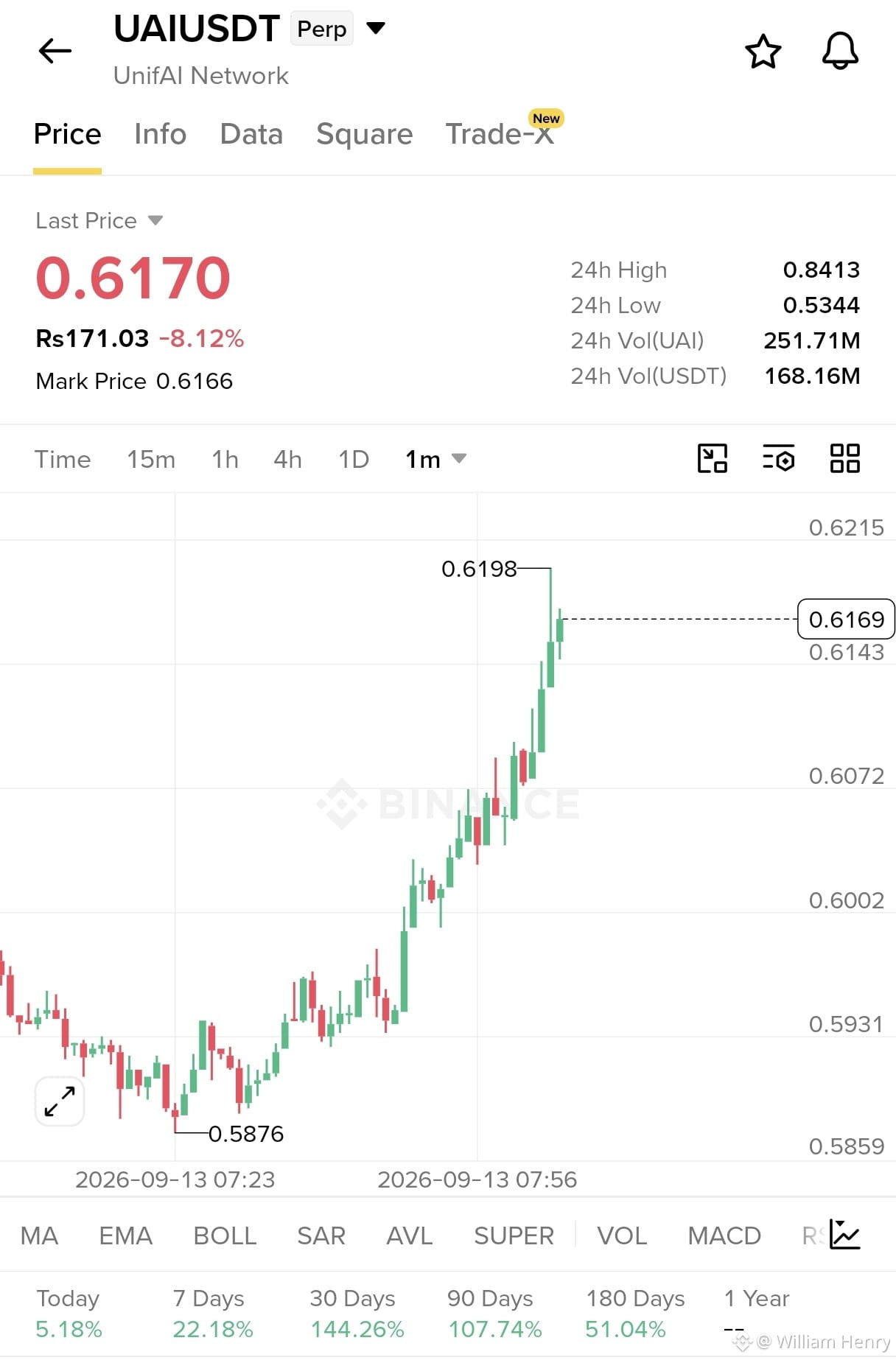
$UAI Looking Bullish — Strong Momentum Building
$UAI is showing impressive buying pressure on the 1-minute chart, pushing from the recent low near 0.5876 to a high of 0.6198. Price is holding around 0.6170, with a clear series of higher highs and higher lows.
The breakout above 0.6072 shows strong short-term momentum, while 0.6143 is the key level to watch for continuation. A clean hold above this zone could open the way toward the next resistance levels.
Trade Setup
- Entry: 0.6140–0.6170
- Stop Loss: 0.6070
- TP1: 0.6220
- TP2: 0.6300
- TP3: 0.6400
Why it’s possible: Buyers are clearly in control on the short timeframe, but chasing a sharp candle is risky. Watch for a pullback and confirmation above support before entering.
24H High: 0.8413 | 24H Low: 0.5344
24H Volume: 251.71M UAI
Let’s trade smart and catch the next move, $UAI
$UAI Looking Bullish — Strong Momentum Building
$UAI is showing impressive buying pressure on the 1-minute chart, pushing from the recent low near 0.5876 to a high of 0.6198. Price is holding around 0.6170, with a clear series of higher highs and higher lows.
The breakout above 0.6072 shows strong short-term momentum, while 0.6143 is the key level to watch for continuation. A clean hold above this zone could open the way toward the next resistance levels.
Trade Setup
- Entry: 0.6140–0.6170
- Stop Loss: 0.6070
- TP1: 0.6220
- TP2: 0.6300
- TP3: 0.6400
Why it’s possible: Buyers are clearly in control on the short timeframe, but chasing a sharp candle is risky. Watch for a pullback and confirmation above support before entering.
24H High: 0.8413 | 24H Low: 0.5344
24H Volume: 251.71M UAI
Let’s trade smart and catch the next move, $UAI
$UAI is showing impressive buying pressure on the 1-minute chart, pushing from the recent low near 0.5876 to a high of 0.6198. Price is holding around 0.6170, with a clear series of higher highs and higher lows.
The breakout above 0.6072 shows strong short-term momentum, while 0.6143 is the key level to watch for continuation. A clean hold above this zone could open the way toward the next resistance levels.
Trade Setup
- Entry: 0.6140–0.6170
- Stop Loss: 0.6070
- TP1: 0.6220
- TP2: 0.6300
- TP3: 0.6400
Why it’s possible: Buyers are clearly in control on the short timeframe, but chasing a sharp candle is risky. Watch for a pullback and confirmation above support before entering.
24H High: 0.8413 | 24H Low: 0.5344
24H Volume: 251.71M UAI
Let’s trade smart and catch the next move, $UAI
3
358
$BTC hält sich stark bei rund $77.328 nach einem scharfen Volatilitäts-Sweep, und der 15M-Chart beginnt interessant auszusehen.
Bitcoin stieg auf $79.890, bevor es auf starke Zurückweisung traf, und wurde dann nach unten auf $76.046,58 swept. Seit diesem Move hat sich der Kurs stabilisiert und baut eine enge Konsolidierungsrange nahe $77,3K auf.
Entscheidend ist nun, ob Käufer $77.545 zurückerobern und in Richtung $78.391 drücken können. Ein sauberer Breakout könnte $79.236 und $79.890 wieder in den Fokus bringen. Wenn der Support versagt, werden $76.700 und $76.046 die relevanten Levels sein.
Trade-Setup
Einstieg: $77.250–$77.400
Stop Loss: $76.850
TP1: $77.545
TP2: $78.391
TP3: $79.236
TP4: $79.890
Volumen und Momentum brauchen Bestätigung, daher ist Geduld wichtig. Die Range ist eng, aber der nächste Breakout könnte explosiv werden.
Los geht’s mit $BTC — wir beobachten den Breakout genau.
{future}(BTCUSDT)
#CPIWatch #USBankCompletesCrossBorderPaymentPilotOnStellar
$BTC hält sich stark bei rund $77.328 nach einem scharfen Volatilitäts-Sweep, und der 15M-Chart beginnt interessant auszusehen.
Bitcoin stieg auf $79.890, bevor es auf starke Zurückweisung traf, und wurde dann nach unten auf $76.046,58 swept. Seit diesem Move hat sich der Kurs stabilisiert und baut eine enge Konsolidierungsrange nahe $77,3K auf.
Entscheidend ist nun, ob Käufer $77.545 zurückerobern und in Richtung $78.391 drücken können. Ein sauberer Breakout könnte $79.236 und $79.890 wieder in den Fokus bringen. Wenn der Support versagt, werden $76.700 und $76.046 die relevanten Levels sein.
Trade-Setup
Einstieg: $77.250–$77.400
Stop Loss: $76.850
TP1: $77.545
TP2: $78.391
TP3: $79.236
TP4: $79.890
Volumen und Momentum brauchen Bestätigung, daher ist Geduld wichtig. Die Range ist eng, aber der nächste Breakout könnte explosiv werden.
Los geht’s mit $BTC — wir beobachten den Breakout genau.
#CPIWatch #USBankCompletesCrossBorderPaymentPilotOnStellar
Bitcoin stieg auf $79.890, bevor es auf starke Zurückweisung traf, und wurde dann nach unten auf $76.046,58 swept. Seit diesem Move hat sich der Kurs stabilisiert und baut eine enge Konsolidierungsrange nahe $77,3K auf.
Entscheidend ist nun, ob Käufer $77.545 zurückerobern und in Richtung $78.391 drücken können. Ein sauberer Breakout könnte $79.236 und $79.890 wieder in den Fokus bringen. Wenn der Support versagt, werden $76.700 und $76.046 die relevanten Levels sein.
Trade-Setup
Einstieg: $77.250–$77.400
Stop Loss: $76.850
TP1: $77.545
TP2: $78.391
TP3: $79.236
TP4: $79.890
Volumen und Momentum brauchen Bestätigung, daher ist Geduld wichtig. Die Range ist eng, aber der nächste Breakout könnte explosiv werden.
Los geht’s mit $BTC — wir beobachten den Breakout genau.
#CPIWatch #USBankCompletesCrossBorderPaymentPilotOnStellar

2
952
·
--
Bullisch
$BNB zeigt auf dem 15M-Chart eine starke Erholungsdynamik und handelt nahe 731.39 nach einem täglichen Anstieg von 2.74%.
Der Kurs ist vom Tief bei 706.50 abgeprallt und bildet nun höhere Tiefs, während Käufer den Kurs wieder in Richtung des Widerstands bei 741.61 drücken. Die jüngste Konsolidierung oberhalb von 727.92 deutet darauf hin, dass die Dynamik weiterhin den Bullen zugutekommt.
Kaufzone: 727.50–730.50
Einstieg: 729.00
Stop Loss: 723.50
TP1: 735.50
TP2: 741.60
TP3: 748.00
Warum das möglich ist: Die 15M-Struktur verbessert sich, und ein sauberer Ausbruch über 741.61 könnte den Weg für eine weitere Aufwärtsbewegung öffnen. Wenn der Kurs oberhalb von 727.92 hält, könnten Käufer weiterhin die Struktur mit den höheren Tiefs verteidigen.
Achte auf das Volumen beim Ausbruch. Eine Abweisung nahe 741.61 könnte zu einem Rücksetzer führen, daher ist das Risikomanagement entscheidend.
Los geht’s $BNB — die Stärke baut sich auf, aber die Bestätigung ist der Schlüssel.
{future}(BNBUSDT)
#BNB
#CPIWatch
$BNB zeigt auf dem 15M-Chart eine starke Erholungsdynamik und handelt nahe 731.39 nach einem täglichen Anstieg von 2.74%.
Der Kurs ist vom Tief bei 706.50 abgeprallt und bildet nun höhere Tiefs, während Käufer den Kurs wieder in Richtung des Widerstands bei 741.61 drücken. Die jüngste Konsolidierung oberhalb von 727.92 deutet darauf hin, dass die Dynamik weiterhin den Bullen zugutekommt.
Kaufzone: 727.50–730.50
Einstieg: 729.00
Stop Loss: 723.50
TP1: 735.50
TP2: 741.60
TP3: 748.00
Warum das möglich ist: Die 15M-Struktur verbessert sich, und ein sauberer Ausbruch über 741.61 könnte den Weg für eine weitere Aufwärtsbewegung öffnen. Wenn der Kurs oberhalb von 727.92 hält, könnten Käufer weiterhin die Struktur mit den höheren Tiefs verteidigen.
Achte auf das Volumen beim Ausbruch. Eine Abweisung nahe 741.61 könnte zu einem Rücksetzer führen, daher ist das Risikomanagement entscheidend.
Los geht’s $BNB — die Stärke baut sich auf, aber die Bestätigung ist der Schlüssel.
#BNB
#CPIWatch
Der Kurs ist vom Tief bei 706.50 abgeprallt und bildet nun höhere Tiefs, während Käufer den Kurs wieder in Richtung des Widerstands bei 741.61 drücken. Die jüngste Konsolidierung oberhalb von 727.92 deutet darauf hin, dass die Dynamik weiterhin den Bullen zugutekommt.
Kaufzone: 727.50–730.50
Einstieg: 729.00
Stop Loss: 723.50
TP1: 735.50
TP2: 741.60
TP3: 748.00
Warum das möglich ist: Die 15M-Struktur verbessert sich, und ein sauberer Ausbruch über 741.61 könnte den Weg für eine weitere Aufwärtsbewegung öffnen. Wenn der Kurs oberhalb von 727.92 hält, könnten Käufer weiterhin die Struktur mit den höheren Tiefs verteidigen.
Achte auf das Volumen beim Ausbruch. Eine Abweisung nahe 741.61 könnte zu einem Rücksetzer führen, daher ist das Risikomanagement entscheidend.
Los geht’s $BNB — die Stärke baut sich auf, aber die Bestätigung ist der Schlüssel.
#BNB
#CPIWatch

2
309
·
--
Bullisch
Verifiziert
Der CPI-Tag ist da, und dieser könnte dem Markt erheblich mehr Volatilität bringen.
Der US-August-CPI-Bericht ist für den 11. September um 8:30 Uhr ET angesetzt. Ökonomen erwarten, dass die Schlagzeileninflation um 0,4% gegenüber dem Vormonat und um 3,4% gegenüber dem Vorjahr steigt. Der Kern-CPI, der Lebensmittel und Energie ausschließt, wird voraussichtlich um 0,2% im Monatsvergleich und um 2,4% im Jahresvergleich zulegen.
Doch der Markt schaut nicht nur auf die Schlagzeilenzahl. Gestern zeigte der PPI eine jährliche Inflation von 5,4%, während die Ölpreise weiterhin über 100 US-Dollar liegen. Das übt Druck auf die Federal Reserve aus – vor ihrem Treffen am 15.–16. September, bei dem eine Zinserhöhung inzwischen eine ernsthafte Möglichkeit ist.
Heißerer CPI: Dollar und Renditen könnten steigen und damit Druck auf Bitcoin und andere risikoreiche Assets ausüben.
Kühlerer CPI: Die Zinserhöhungs-Sorgen könnten nachlassen und den Weg für eine Entlastungsrally öffnen.
Eine einzige Zahl kann die Stimmung in Minuten verändern. Beobachte die Reaktion – nicht nur die erste Kerze. Der CPI-Tag könnte wild werden.
#CPIWatch
$XAU
{future}(XAUUSDT)
$DL
{alpha}(560xcd806d0eb9465020994c9e977cbe34fe430172ae)
$哈基米
{future}(哈基米USDT)
Der CPI-Tag ist da, und dieser könnte dem Markt erheblich mehr Volatilität bringen.
Der US-August-CPI-Bericht ist für den 11. September um 8:30 Uhr ET angesetzt. Ökonomen erwarten, dass die Schlagzeileninflation um 0,4% gegenüber dem Vormonat und um 3,4% gegenüber dem Vorjahr steigt. Der Kern-CPI, der Lebensmittel und Energie ausschließt, wird voraussichtlich um 0,2% im Monatsvergleich und um 2,4% im Jahresvergleich zulegen.
Doch der Markt schaut nicht nur auf die Schlagzeilenzahl. Gestern zeigte der PPI eine jährliche Inflation von 5,4%, während die Ölpreise weiterhin über 100 US-Dollar liegen. Das übt Druck auf die Federal Reserve aus – vor ihrem Treffen am 15.–16. September, bei dem eine Zinserhöhung inzwischen eine ernsthafte Möglichkeit ist.
Heißerer CPI: Dollar und Renditen könnten steigen und damit Druck auf Bitcoin und andere risikoreiche Assets ausüben.
Kühlerer CPI: Die Zinserhöhungs-Sorgen könnten nachlassen und den Weg für eine Entlastungsrally öffnen.
Eine einzige Zahl kann die Stimmung in Minuten verändern. Beobachte die Reaktion – nicht nur die erste Kerze. Der CPI-Tag könnte wild werden.
#CPIWatch
$XAU
$DL
$哈基米
Der US-August-CPI-Bericht ist für den 11. September um 8:30 Uhr ET angesetzt. Ökonomen erwarten, dass die Schlagzeileninflation um 0,4% gegenüber dem Vormonat und um 3,4% gegenüber dem Vorjahr steigt. Der Kern-CPI, der Lebensmittel und Energie ausschließt, wird voraussichtlich um 0,2% im Monatsvergleich und um 2,4% im Jahresvergleich zulegen.
Doch der Markt schaut nicht nur auf die Schlagzeilenzahl. Gestern zeigte der PPI eine jährliche Inflation von 5,4%, während die Ölpreise weiterhin über 100 US-Dollar liegen. Das übt Druck auf die Federal Reserve aus – vor ihrem Treffen am 15.–16. September, bei dem eine Zinserhöhung inzwischen eine ernsthafte Möglichkeit ist.
Heißerer CPI: Dollar und Renditen könnten steigen und damit Druck auf Bitcoin und andere risikoreiche Assets ausüben.
Kühlerer CPI: Die Zinserhöhungs-Sorgen könnten nachlassen und den Weg für eine Entlastungsrally öffnen.
Eine einzige Zahl kann die Stimmung in Minuten verändern. Beobachte die Reaktion – nicht nur die erste Kerze. Der CPI-Tag könnte wild werden.
#CPIWatch
$XAU
$DL
$哈基米

30
79
66.7k
·
--
Bullisch
CRYPTO-KLARHEITSGESETZ: DER 15. SEPTEMBER IST DER GROSSE TAG.
Der Kryptowährungsberater des Weißen Hauses, Patrick Witt, übt maximalen Druck auf den Kongress aus: Der CLARITY Act muss bis zum 15. September vorankommen, sonst könnte sich das Zeitfenster faktisch schon vor den Zwischenwahlen schließen.
Die Abstimmung des Senats am 15. September ist eine verfahrensrechtliche Cloture-Abstimmung, für die 60 Stimmen erforderlich sind, um den Gesetzentwurf weiterzubringen – nicht für die endgültige Verabschiedung. Ein Scheitern könnte jedoch dazu führen, dass die Krypto-Regulierung für den Rest des Jahres 2026 feststeckt.
Für Krypto könnte das ein großer Wendepunkt sein.
15. September = Entscheidungspunkt.
Wenn der Kongress liefert, könnte regulatorische Klarheit ein neues großes Kapitel für den US-Krypto-Markt eröffnen.
Die Uhr tickt.
$MARS.ETF $牛来 $PONS
CRYPTO-KLARHEITSGESETZ: DER 15. SEPTEMBER IST DER GROSSE TAG.
Der Kryptowährungsberater des Weißen Hauses, Patrick Witt, übt maximalen Druck auf den Kongress aus: Der CLARITY Act muss bis zum 15. September vorankommen, sonst könnte sich das Zeitfenster faktisch schon vor den Zwischenwahlen schließen.
Die Abstimmung des Senats am 15. September ist eine verfahrensrechtliche Cloture-Abstimmung, für die 60 Stimmen erforderlich sind, um den Gesetzentwurf weiterzubringen – nicht für die endgültige Verabschiedung. Ein Scheitern könnte jedoch dazu führen, dass die Krypto-Regulierung für den Rest des Jahres 2026 feststeckt.
Für Krypto könnte das ein großer Wendepunkt sein.
15. September = Entscheidungspunkt.
Wenn der Kongress liefert, könnte regulatorische Klarheit ein neues großes Kapitel für den US-Krypto-Markt eröffnen.
Die Uhr tickt.
$MARS.ETF $牛来 $PONS
Der Kryptowährungsberater des Weißen Hauses, Patrick Witt, übt maximalen Druck auf den Kongress aus: Der CLARITY Act muss bis zum 15. September vorankommen, sonst könnte sich das Zeitfenster faktisch schon vor den Zwischenwahlen schließen.
Die Abstimmung des Senats am 15. September ist eine verfahrensrechtliche Cloture-Abstimmung, für die 60 Stimmen erforderlich sind, um den Gesetzentwurf weiterzubringen – nicht für die endgültige Verabschiedung. Ein Scheitern könnte jedoch dazu führen, dass die Krypto-Regulierung für den Rest des Jahres 2026 feststeckt.
Für Krypto könnte das ein großer Wendepunkt sein.
15. September = Entscheidungspunkt.
Wenn der Kongress liefert, könnte regulatorische Klarheit ein neues großes Kapitel für den US-Krypto-Markt eröffnen.
Die Uhr tickt.
$MARS.ETF $牛来 $PONS

1
1.8k
·
--
Bärisch
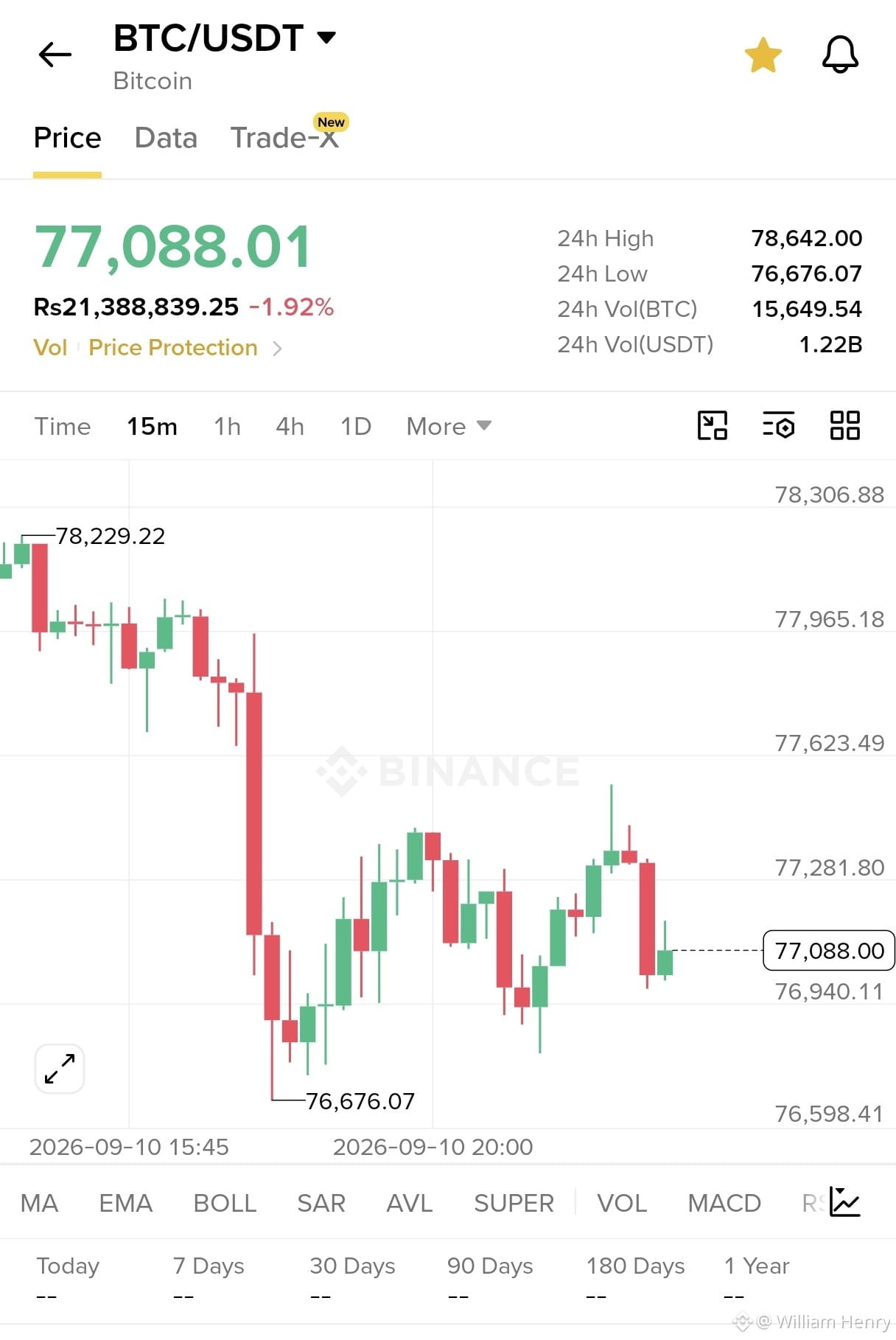
$BTC versucht auf dem 15M-Chart einen scharfen Rebound, nachdem das Tief bei $76.676 abgefischt wurde. Derzeit liegt der Kurs um $77.088, wobei Käufer den Bereich $76.940 verteidigen.
Ein sauberer Ausbruch über $77.280 könnte den Weg in Richtung $77.620 und anschließend $77.960 öffnen. Der Momentum muss über dem nahegelegenen Support bleiben, damit das bullische Setup gültig bleibt.
Kaufzone: $77.000–$77.100
Einstieg: $77.080
Stop Loss: $76.850
TP1: $77.280
TP2: $77.620
TP3: $77.960
Wenn $76.940 mit starkem Verkauf bricht, schwächt sich das bullische Setup ab und $76.676 wird zur entscheidenden Tiefs-Absicherung.
Risiko klein halten, auf Bestätigung warten und das Setup zu dir kommen lassen.
Los geht’s $BTC
{future}(BTCUSDT)
$BTC versucht auf dem 15M-Chart einen scharfen Rebound, nachdem das Tief bei $76.676 abgefischt wurde. Derzeit liegt der Kurs um $77.088, wobei Käufer den Bereich $76.940 verteidigen.
Ein sauberer Ausbruch über $77.280 könnte den Weg in Richtung $77.620 und anschließend $77.960 öffnen. Der Momentum muss über dem nahegelegenen Support bleiben, damit das bullische Setup gültig bleibt.
Kaufzone: $77.000–$77.100
Einstieg: $77.080
Stop Loss: $76.850
TP1: $77.280
TP2: $77.620
TP3: $77.960
Wenn $76.940 mit starkem Verkauf bricht, schwächt sich das bullische Setup ab und $76.676 wird zur entscheidenden Tiefs-Absicherung.
Risiko klein halten, auf Bestätigung warten und das Setup zu dir kommen lassen.
Los geht’s $BTC
Ein sauberer Ausbruch über $77.280 könnte den Weg in Richtung $77.620 und anschließend $77.960 öffnen. Der Momentum muss über dem nahegelegenen Support bleiben, damit das bullische Setup gültig bleibt.
Kaufzone: $77.000–$77.100
Einstieg: $77.080
Stop Loss: $76.850
TP1: $77.280
TP2: $77.620
TP3: $77.960
Wenn $76.940 mit starkem Verkauf bricht, schwächt sich das bullische Setup ab und $76.676 wird zur entscheidenden Tiefs-Absicherung.
Risiko klein halten, auf Bestätigung warten und das Setup zu dir kommen lassen.
Los geht’s $BTC
234
·
--
Bullisch
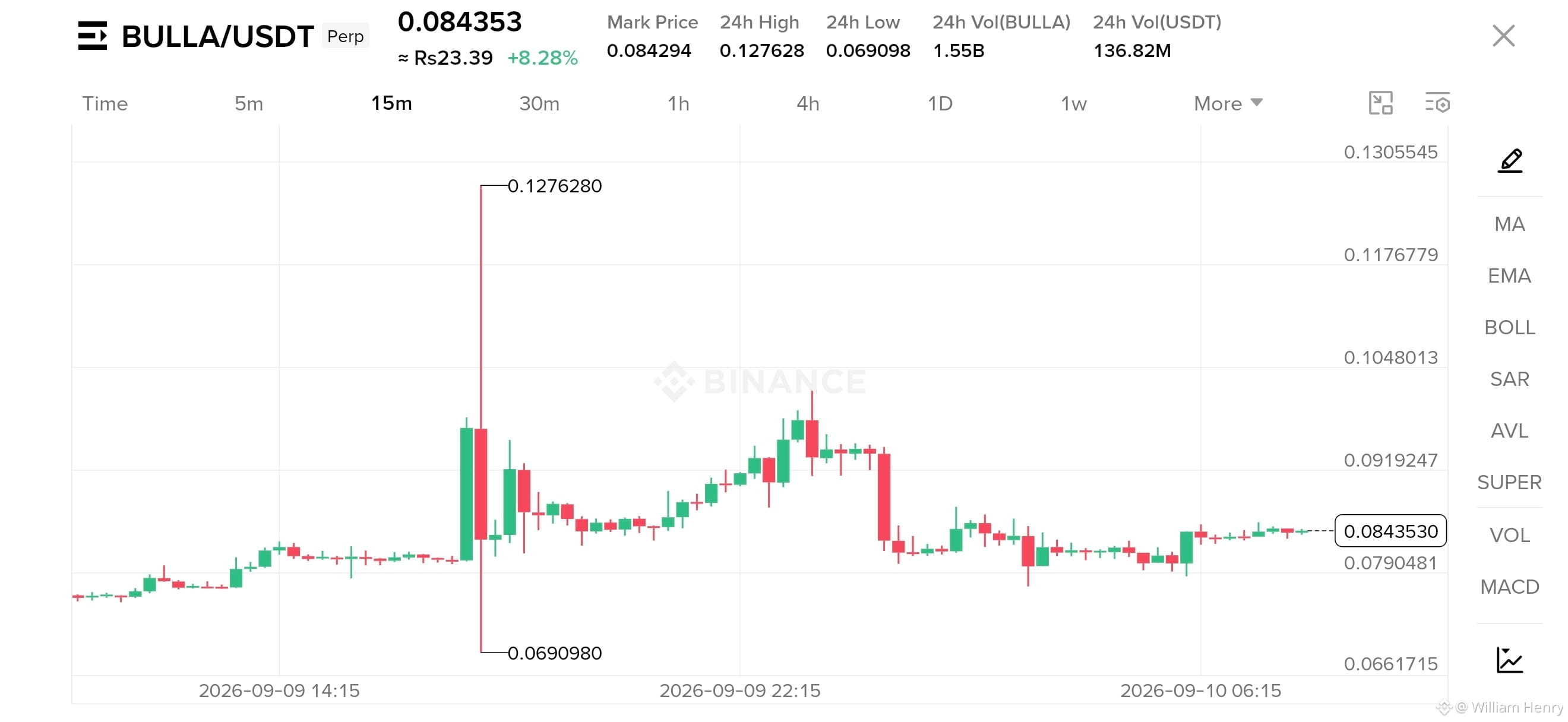
$BULLA beginnt auf dem 15M-Chart interessant auszusehen. Der Preis hält sich um 0,08435 $ herum, nachdem der Bereich von 0,079 $ verteidigt wurde, während die Käufer langsam an Dynamik aufbauen.
Kaufzone: 0,0825–0,0850 $
Einstieg (Ep): 0,0840 $
Stop Loss (SL): 0,0780 $
TP1: 0,0919 $
TP2: 0,1000 $
TP3: 0,1048 $
Die entscheidende Ausbruchslinie ist 0,0919 $. Ein starker 15M-Schlusskurs darüber könnte den Weg in Richtung 0,10+ öffnen.
Das Risiko ist klar unterhalb des Supports definiert, also verwalte die Position sorgfältig. Los geht’s $BULLA — behalte diesen Ausbruch im Blick.
{future}(BULLAUSDT)
#US10YTreasuryYieldHitsHighestSinceNov2023
#AppleDebutsFoldablePhone
$BULLA beginnt auf dem 15M-Chart interessant auszusehen. Der Preis hält sich um 0,08435 $ herum, nachdem der Bereich von 0,079 $ verteidigt wurde, während die Käufer langsam an Dynamik aufbauen.
Kaufzone: 0,0825–0,0850 $
Einstieg (Ep): 0,0840 $
Stop Loss (SL): 0,0780 $
TP1: 0,0919 $
TP2: 0,1000 $
TP3: 0,1048 $
Die entscheidende Ausbruchslinie ist 0,0919 $. Ein starker 15M-Schlusskurs darüber könnte den Weg in Richtung 0,10+ öffnen.
Das Risiko ist klar unterhalb des Supports definiert, also verwalte die Position sorgfältig. Los geht’s $BULLA — behalte diesen Ausbruch im Blick.
#US10YTreasuryYieldHitsHighestSinceNov2023
#AppleDebutsFoldablePhone
Kaufzone: 0,0825–0,0850 $
Einstieg (Ep): 0,0840 $
Stop Loss (SL): 0,0780 $
TP1: 0,0919 $
TP2: 0,1000 $
TP3: 0,1048 $
Die entscheidende Ausbruchslinie ist 0,0919 $. Ein starker 15M-Schlusskurs darüber könnte den Weg in Richtung 0,10+ öffnen.
Das Risiko ist klar unterhalb des Supports definiert, also verwalte die Position sorgfältig. Los geht’s $BULLA — behalte diesen Ausbruch im Blick.
#US10YTreasuryYieldHitsHighestSinceNov2023
#AppleDebutsFoldablePhone
624
·
--
Bullisch
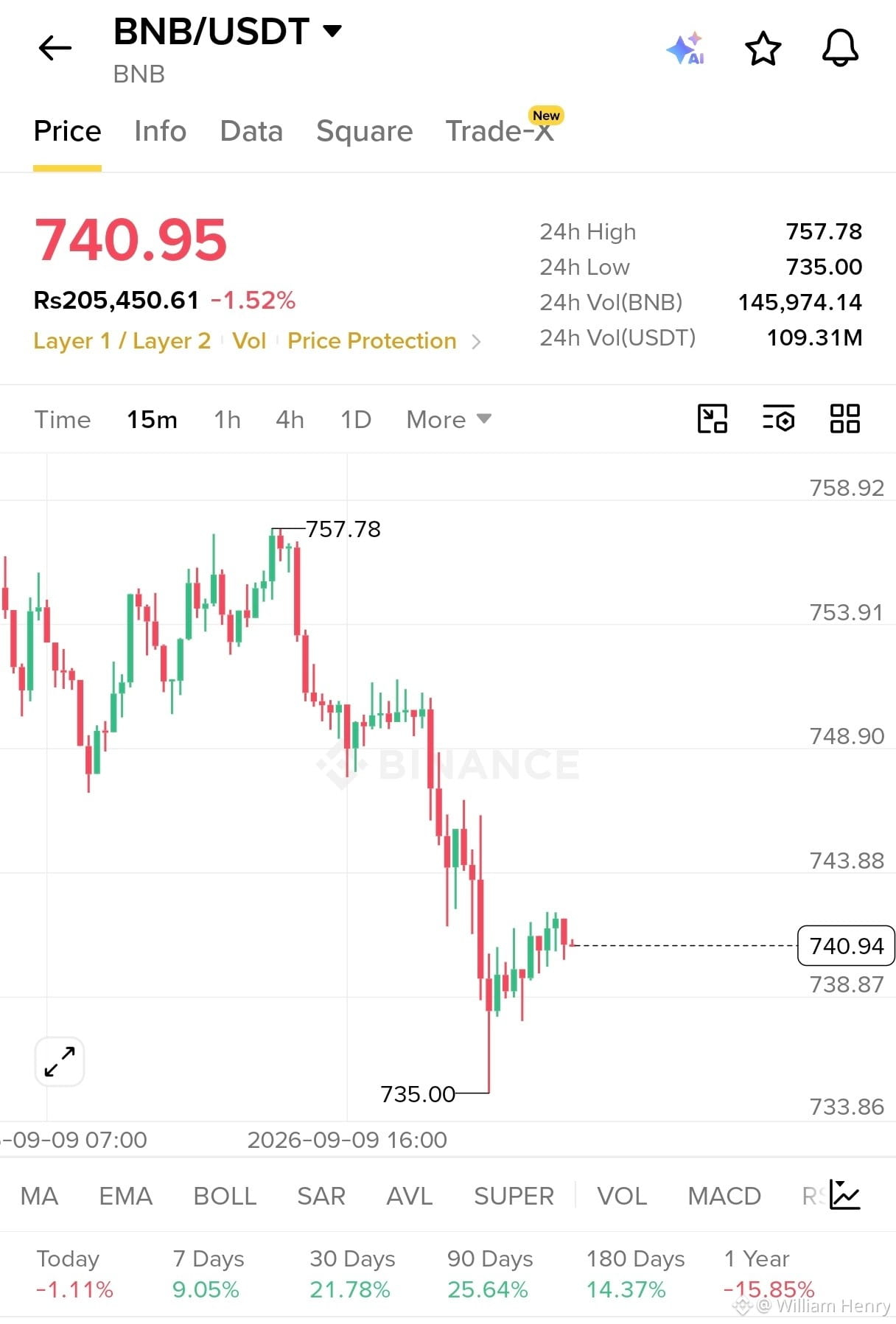
$BNB zeigt eine deutliche Erholung vom $735-Support, aber die 15M-Struktur steht nach der Abweisung von $757.78 weiterhin unter Druck.
Kaufzone: $738–$741
Einstieg: $740
Stop Loss: $734
TP1: $744
TP2: $749
TP3: $754
TP4: $758
Ein sauberer Bruch über $744 kann Käufer zurück in Richtung des jüngsten Hochs bringen. Wenn $735 scheitert, ist das bullische Setup ungültig.
Risikokontrolliert. Auf geht’s $BNB
{future}(BNBUSDT)
$BNB zeigt eine deutliche Erholung vom $735-Support, aber die 15M-Struktur steht nach der Abweisung von $757.78 weiterhin unter Druck.
Kaufzone: $738–$741
Einstieg: $740
Stop Loss: $734
TP1: $744
TP2: $749
TP3: $754
TP4: $758
Ein sauberer Bruch über $744 kann Käufer zurück in Richtung des jüngsten Hochs bringen. Wenn $735 scheitert, ist das bullische Setup ungültig.
Risikokontrolliert. Auf geht’s $BNB
Kaufzone: $738–$741
Einstieg: $740
Stop Loss: $734
TP1: $744
TP2: $749
TP3: $754
TP4: $758
Ein sauberer Bruch über $744 kann Käufer zurück in Richtung des jüngsten Hochs bringen. Wenn $735 scheitert, ist das bullische Setup ungültig.
Risikokontrolliert. Auf geht’s $BNB
176
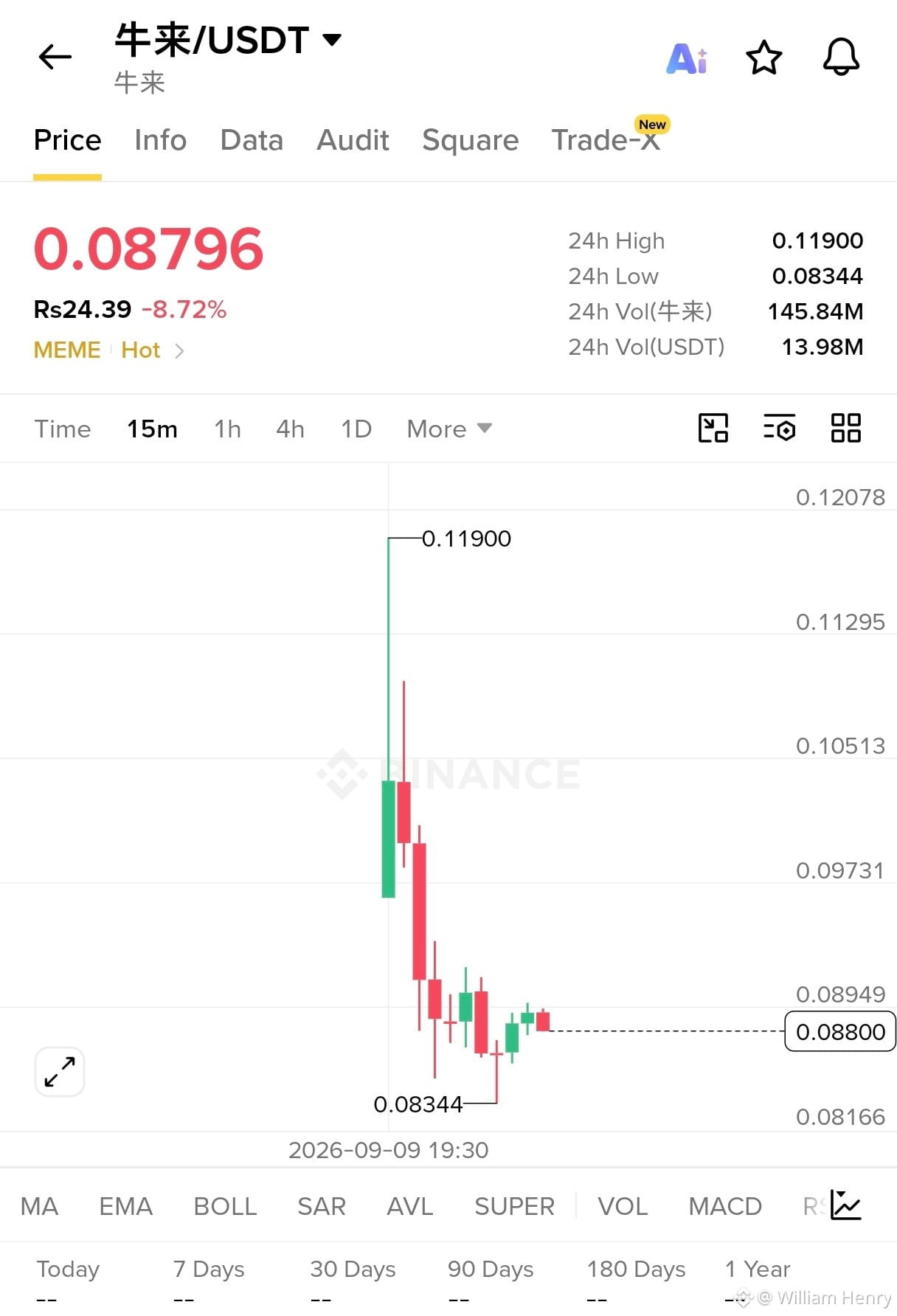
$牛来 zeigt nach einem Rückgang von 0.11900 auf 0.08344 ein klares Rebound-Setup. Auf dem 15M-Chart hält sich der Kurs bei etwa 0.08800 und bildet eine kleine Basis, wodurch Käufer die Chance haben, wieder Momentum aufzubauen.
Kaufzone: 0.08650–0.08820
Einstieg: 0.08750
Stop Loss: 0.08320
TP1: 0.08950
TP2: 0.09730
TP3: 0.10500
TP4: 0.11290
Die entscheidende Zone ist 0.08950. Ein sauberer Ausbruch mit Volumen könnte den Weg in Richtung 0.09730 und höher öffnen. Wenn 0.08344 bricht, wird das bullische Setup schwächer.
Risikomanagement zuerst. Los geht’s $牛来
{future}(牛来USDT)
$牛来 zeigt nach einem Rückgang von 0.11900 auf 0.08344 ein klares Rebound-Setup. Auf dem 15M-Chart hält sich der Kurs bei etwa 0.08800 und bildet eine kleine Basis, wodurch Käufer die Chance haben, wieder Momentum aufzubauen.
Kaufzone: 0.08650–0.08820
Einstieg: 0.08750
Stop Loss: 0.08320
TP1: 0.08950
TP2: 0.09730
TP3: 0.10500
TP4: 0.11290
Die entscheidende Zone ist 0.08950. Ein sauberer Ausbruch mit Volumen könnte den Weg in Richtung 0.09730 und höher öffnen. Wenn 0.08344 bricht, wird das bullische Setup schwächer.
Risikomanagement zuerst. Los geht’s $牛来
Kaufzone: 0.08650–0.08820
Einstieg: 0.08750
Stop Loss: 0.08320
TP1: 0.08950
TP2: 0.09730
TP3: 0.10500
TP4: 0.11290
Die entscheidende Zone ist 0.08950. Ein sauberer Ausbruch mit Volumen könnte den Weg in Richtung 0.09730 und höher öffnen. Wenn 0.08344 bricht, wird das bullische Setup schwächer.
Risikomanagement zuerst. Los geht’s $牛来
492
·
--
Bullisch
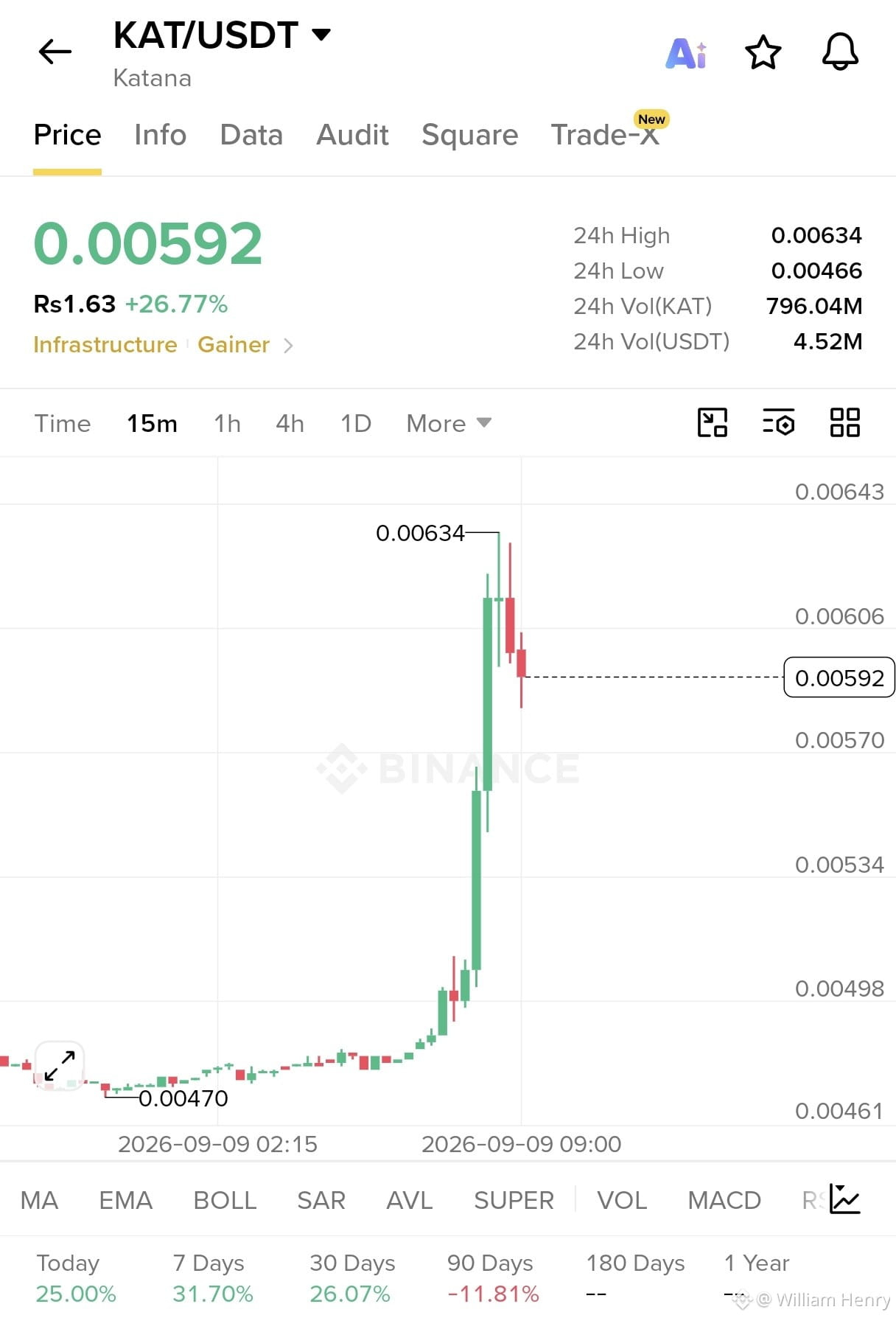
$KAT zeigt starke Dynamik: +26,77% heute und handelt derzeit bei etwa 0,00592 $, nachdem ein Hoch bei 0,00634 $ erreicht wurde.
Die Bewegung ist beeindruckend, aber die Zurückweisung bei 0,00634 $ ist entscheidend. Käufer müssen diese Marke zurückgewinnen und halten, um die Fortsetzung zu bestätigen.
Wichtige Levels:
Support: 0,00570 $ / 0,00534 $
Widerstand: 0,00606 $ / 0,00634 $
Invalidierung: Unter 0,00534 $
Zeitrahmen: 15M–1H.
Für jetzt würde ich eher abwarten statt hinterherzulaufen. Ein klarer Ausbruch über 0,00634 $ würde das bullische Szenario stärken; der Verlust von 0,00570 $ könnte einen tieferen Rücksetzer auslösen.
{future}(KATUSDT)
$KAT zeigt starke Dynamik: +26,77% heute und handelt derzeit bei etwa 0,00592 $, nachdem ein Hoch bei 0,00634 $ erreicht wurde.
Die Bewegung ist beeindruckend, aber die Zurückweisung bei 0,00634 $ ist entscheidend. Käufer müssen diese Marke zurückgewinnen und halten, um die Fortsetzung zu bestätigen.
Wichtige Levels:
Support: 0,00570 $ / 0,00534 $
Widerstand: 0,00606 $ / 0,00634 $
Invalidierung: Unter 0,00534 $
Zeitrahmen: 15M–1H.
Für jetzt würde ich eher abwarten statt hinterherzulaufen. Ein klarer Ausbruch über 0,00634 $ würde das bullische Szenario stärken; der Verlust von 0,00570 $ könnte einen tieferen Rücksetzer auslösen.
Die Bewegung ist beeindruckend, aber die Zurückweisung bei 0,00634 $ ist entscheidend. Käufer müssen diese Marke zurückgewinnen und halten, um die Fortsetzung zu bestätigen.
Wichtige Levels:
Support: 0,00570 $ / 0,00534 $
Widerstand: 0,00606 $ / 0,00634 $
Invalidierung: Unter 0,00534 $
Zeitrahmen: 15M–1H.
Für jetzt würde ich eher abwarten statt hinterherzulaufen. Ein klarer Ausbruch über 0,00634 $ würde das bullische Szenario stärken; der Verlust von 0,00570 $ könnte einen tieferen Rücksetzer auslösen.
1
301
·
--
Bärisch
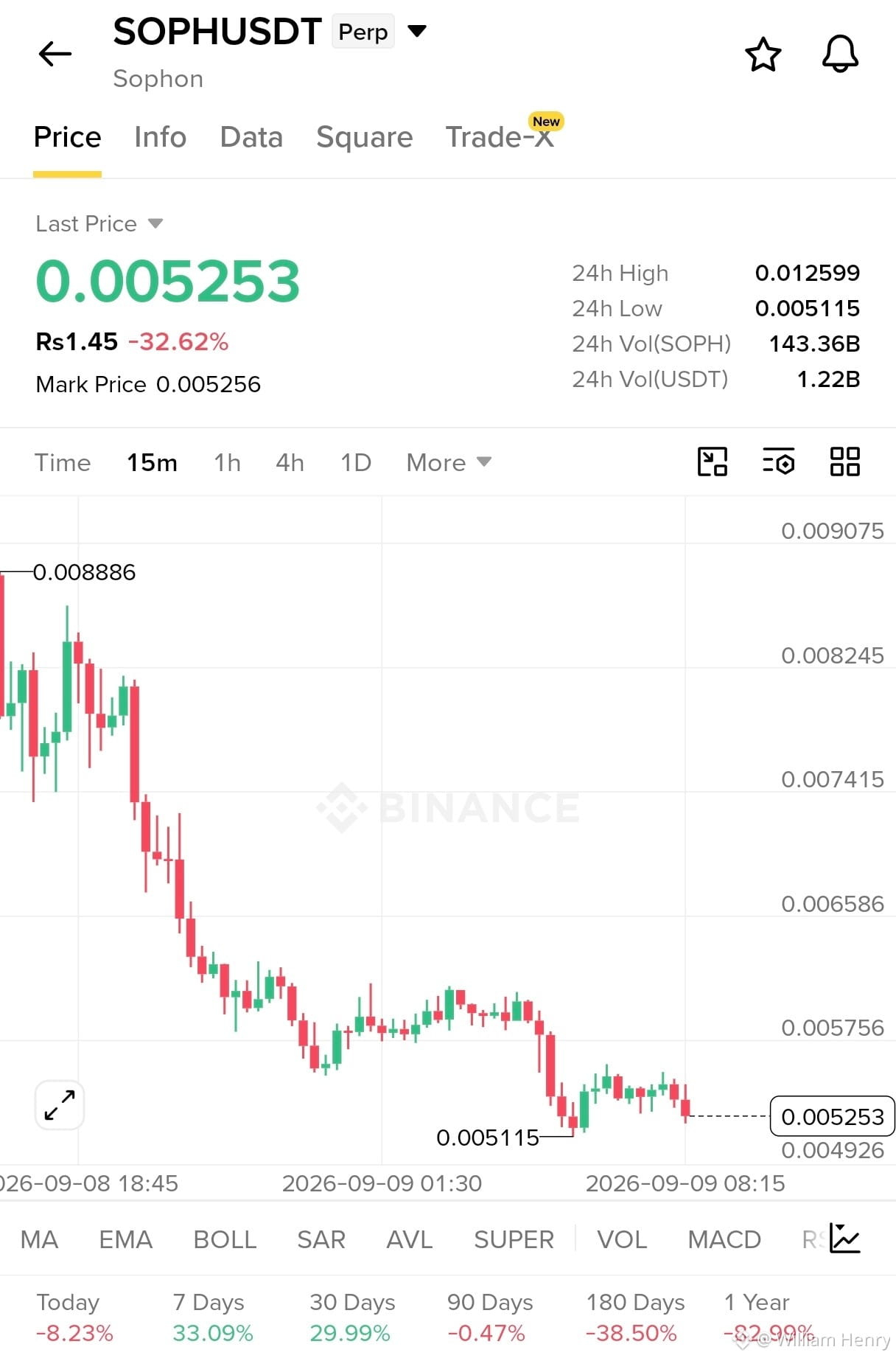
$SOPH steht unter starkem Druck, ist um 32,62% gefallen und liegt mit einem Preis um 0.005253 im 15M-Chart. Die Verkäufer bleiben weiterhin in Kontrolle nach einem scharfen Bruch aus dem Bereich 0.0088, während der jüngste Bounce unter dem Widerstand von 0.00575 nur schwer Fuß fasst. Das Volumen ist massiv bei 1.22B, sodass die Volatilität hoch bleiben kann.
Trading-Setup — Bärischer Einstieg: 0.00525–0.00545
Stop Loss: 0.00580
TP1: 0.00510
TP2: 0.00493
TP3: 0.00470
Eine klare Ablehnung unter 0.00575 hält das Downside-Setup gültig. Wenn 0.00511 entschlossen bricht, könnte eine weitere Abwärtswelle folgen. Gehe vorsichtig mit dem Risiko um, da SOPH extrem volatil ist.
Lasst uns den Breakdown genau beobachten — $SOPH
{future}(SOPHUSDT)
#SaudiHaltsSouthernEnergySitesAfterAttacks
$SOPH steht unter starkem Druck, ist um 32,62% gefallen und liegt mit einem Preis um 0.005253 im 15M-Chart. Die Verkäufer bleiben weiterhin in Kontrolle nach einem scharfen Bruch aus dem Bereich 0.0088, während der jüngste Bounce unter dem Widerstand von 0.00575 nur schwer Fuß fasst. Das Volumen ist massiv bei 1.22B, sodass die Volatilität hoch bleiben kann.
Trading-Setup — Bärischer Einstieg: 0.00525–0.00545
Stop Loss: 0.00580
TP1: 0.00510
TP2: 0.00493
TP3: 0.00470
Eine klare Ablehnung unter 0.00575 hält das Downside-Setup gültig. Wenn 0.00511 entschlossen bricht, könnte eine weitere Abwärtswelle folgen. Gehe vorsichtig mit dem Risiko um, da SOPH extrem volatil ist.
Lasst uns den Breakdown genau beobachten — $SOPH
#SaudiHaltsSouthernEnergySitesAfterAttacks
Trading-Setup — Bärischer Einstieg: 0.00525–0.00545
Stop Loss: 0.00580
TP1: 0.00510
TP2: 0.00493
TP3: 0.00470
Eine klare Ablehnung unter 0.00575 hält das Downside-Setup gültig. Wenn 0.00511 entschlossen bricht, könnte eine weitere Abwärtswelle folgen. Gehe vorsichtig mit dem Risiko um, da SOPH extrem volatil ist.
Lasst uns den Breakdown genau beobachten — $SOPH
#SaudiHaltsSouthernEnergySitesAfterAttacks
1
217
·
--
Bärisch
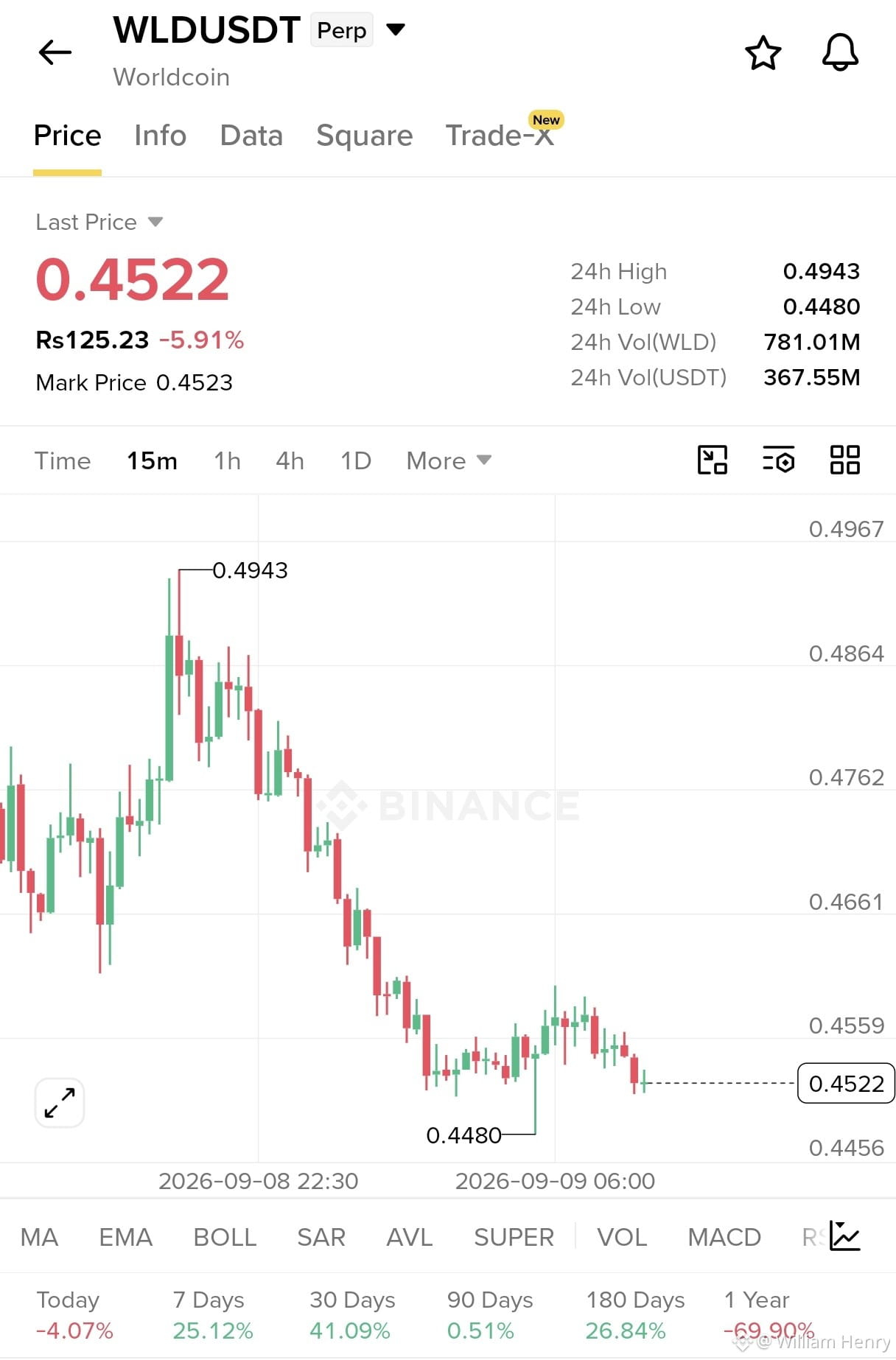
$WLD zeigt auf dem 15M-Chart eine klare bärische Struktur, nachdem es eine Zurückweisung von 0.4943 gab. Der Preis liegt jetzt bei etwa 0.4522, wobei die Verkäufer weiterhin den kurzfristigen Trend kontrollieren und die Dynamik schwach aussieht.
Die wichtigste Unterstützung liegt bei 0.4480. Wenn diese Marke mit starkem Verkaufsdruck bricht, könnte ein weiterer Abwärtsimpuls starten.
Trade-Setup — SHORT
Einstieg: 0.4520–0.4540
Stop Loss: 0.4590
TP1: 0.4480
TP2: 0.4440
TP3: 0.4400
Beobachte den Bereich um 0.4480 genau. Ein sauberes Breakdown könnte die Bewegung beschleunigen, während ein starker Rückprall von der Unterstützung das Short-Setup ungültig machen kann. Behalte die Positionsgröße im Rahmen und schütze dein Risiko.
Lass uns sehen, wie $WLD am entscheidenden Support reagiert.
{future}(WLDUSDT)
#OilRisesToHighestSinceJuly
$WLD zeigt auf dem 15M-Chart eine klare bärische Struktur, nachdem es eine Zurückweisung von 0.4943 gab. Der Preis liegt jetzt bei etwa 0.4522, wobei die Verkäufer weiterhin den kurzfristigen Trend kontrollieren und die Dynamik schwach aussieht.
Die wichtigste Unterstützung liegt bei 0.4480. Wenn diese Marke mit starkem Verkaufsdruck bricht, könnte ein weiterer Abwärtsimpuls starten.
Trade-Setup — SHORT
Einstieg: 0.4520–0.4540
Stop Loss: 0.4590
TP1: 0.4480
TP2: 0.4440
TP3: 0.4400
Beobachte den Bereich um 0.4480 genau. Ein sauberes Breakdown könnte die Bewegung beschleunigen, während ein starker Rückprall von der Unterstützung das Short-Setup ungültig machen kann. Behalte die Positionsgröße im Rahmen und schütze dein Risiko.
Lass uns sehen, wie $WLD am entscheidenden Support reagiert.
#OilRisesToHighestSinceJuly
Die wichtigste Unterstützung liegt bei 0.4480. Wenn diese Marke mit starkem Verkaufsdruck bricht, könnte ein weiterer Abwärtsimpuls starten.
Trade-Setup — SHORT
Einstieg: 0.4520–0.4540
Stop Loss: 0.4590
TP1: 0.4480
TP2: 0.4440
TP3: 0.4400
Beobachte den Bereich um 0.4480 genau. Ein sauberes Breakdown könnte die Bewegung beschleunigen, während ein starker Rückprall von der Unterstützung das Short-Setup ungültig machen kann. Behalte die Positionsgröße im Rahmen und schütze dein Risiko.
Lass uns sehen, wie $WLD am entscheidenden Support reagiert.
#OilRisesToHighestSinceJuly
1
407
·
--
Bullisch
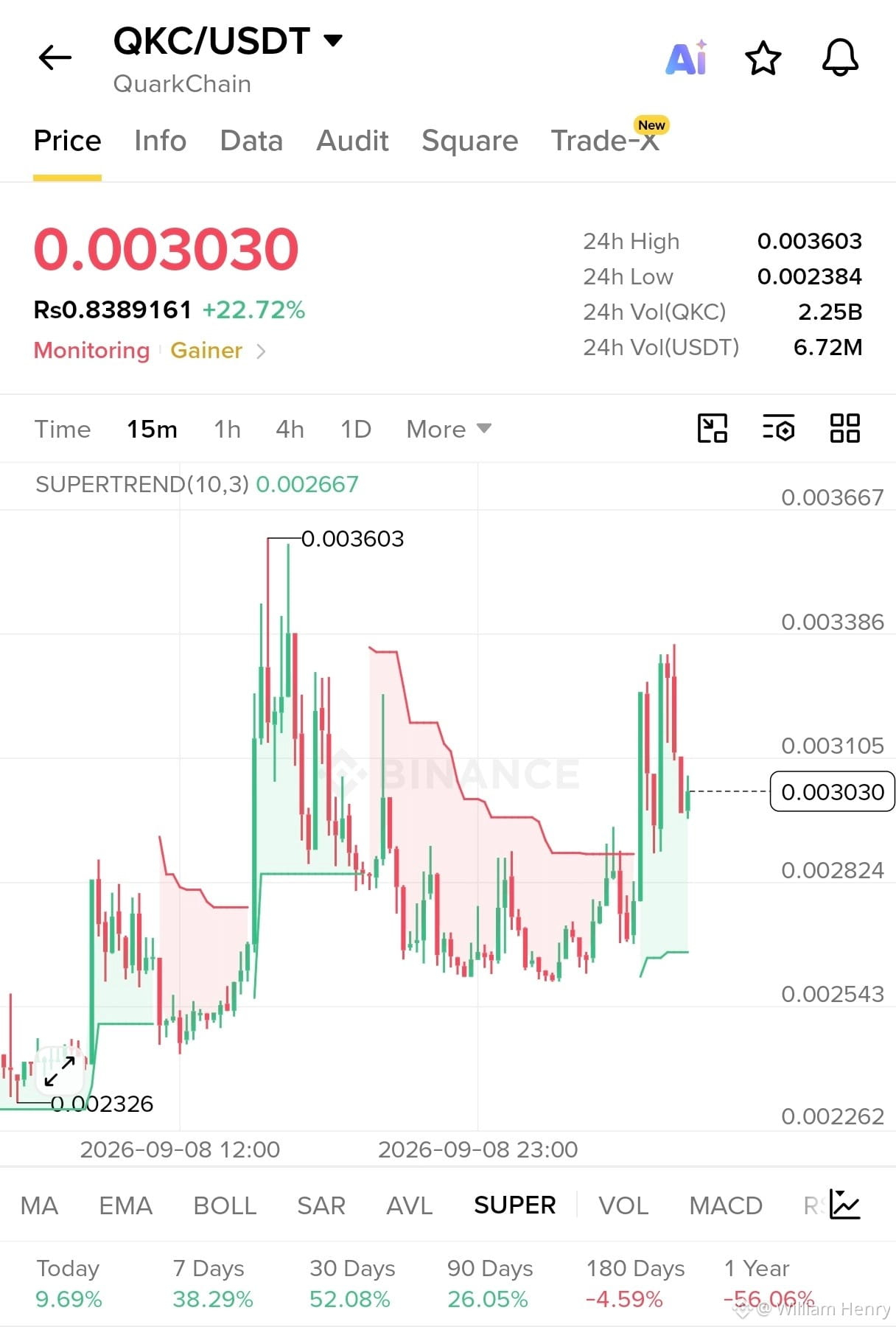
$QKC JUST MADE A MASSIVE MOVE!
QuarkChain ist in 24 Stunden um 22,72% gestiegen, mit einem Handelsvolumen von rund 6,72 Mio. $, während der Kaufdruck plötzlich stark anzieht.
Der Preis stieß auf ein 24H-Hoch von 0,003603 $ vor und zog sich dann zurück in Richtung 0,003030 $. Der 15M-Chart hält sich weiterhin über der Supertrend-Linie bei etwa 0,002667 $ und bewahrt damit die kurzfristige bullische Struktur.
Die Volatilität heizt sich schnell auf – Trader beobachten, ob $QKC $0,00310 zurückerobern und das jüngste Hoch erneut herausfordern kann.
Der nächste Move könnte explosiv werden, wenn das Volumen weiter ansteigt.
{spot}(QKCUSDT)
$QKC JUST MADE A MASSIVE MOVE!
QuarkChain ist in 24 Stunden um 22,72% gestiegen, mit einem Handelsvolumen von rund 6,72 Mio. $, während der Kaufdruck plötzlich stark anzieht.
Der Preis stieß auf ein 24H-Hoch von 0,003603 $ vor und zog sich dann zurück in Richtung 0,003030 $. Der 15M-Chart hält sich weiterhin über der Supertrend-Linie bei etwa 0,002667 $ und bewahrt damit die kurzfristige bullische Struktur.
Die Volatilität heizt sich schnell auf – Trader beobachten, ob $QKC $0,00310 zurückerobern und das jüngste Hoch erneut herausfordern kann.
Der nächste Move könnte explosiv werden, wenn das Volumen weiter ansteigt.
QuarkChain ist in 24 Stunden um 22,72% gestiegen, mit einem Handelsvolumen von rund 6,72 Mio. $, während der Kaufdruck plötzlich stark anzieht.
Der Preis stieß auf ein 24H-Hoch von 0,003603 $ vor und zog sich dann zurück in Richtung 0,003030 $. Der 15M-Chart hält sich weiterhin über der Supertrend-Linie bei etwa 0,002667 $ und bewahrt damit die kurzfristige bullische Struktur.
Die Volatilität heizt sich schnell auf – Trader beobachten, ob $QKC $0,00310 zurückerobern und das jüngste Hoch erneut herausfordern kann.
Der nächste Move könnte explosiv werden, wenn das Volumen weiter ansteigt.
189
·
--
Bullisch
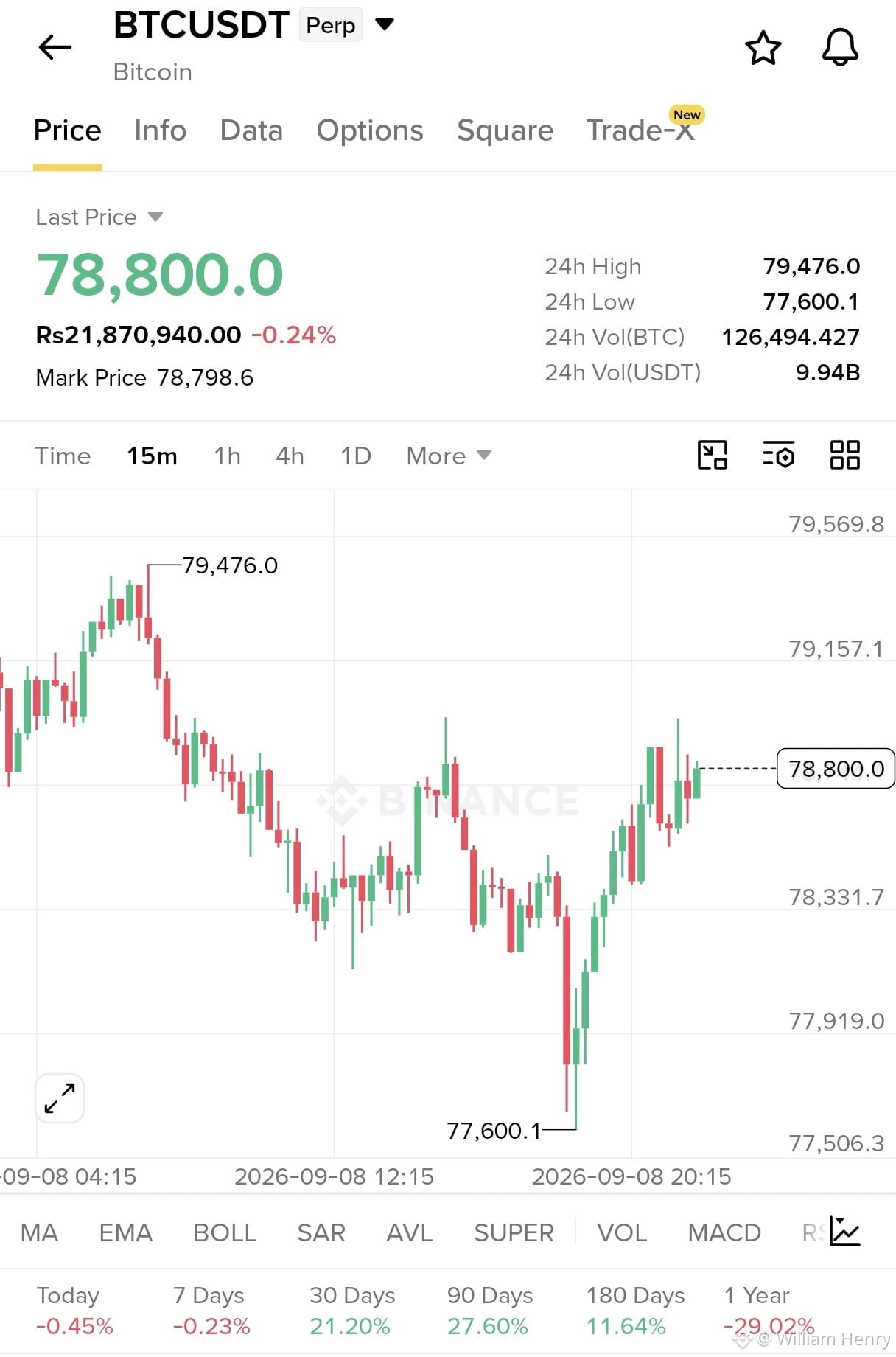
$BTC zeigt einen starken Rebound vom $77,600-Tief, wobei Käufer den Preis auf dem 15M-Chart wieder in Richtung $78,800 drücken.
Einstieg: $78,650–$78,850
TP1: $79,150
TP2: $79,475
TP3: $79,570
Stop Loss: $78,250
Der Momentum erholt sich, aber $79,150–$79,475 ist die entscheidende Widerstandszone. Ein sauberer Ausbruch über $79,475 könnte die Bewegung nach oben beschleunigen.
Beobachte die Reaktion genau — $BTC heizt sich auf.
{future}(BTCUSDT)
$BTC zeigt einen starken Rebound vom $77,600-Tief, wobei Käufer den Preis auf dem 15M-Chart wieder in Richtung $78,800 drücken.
Einstieg: $78,650–$78,850
TP1: $79,150
TP2: $79,475
TP3: $79,570
Stop Loss: $78,250
Der Momentum erholt sich, aber $79,150–$79,475 ist die entscheidende Widerstandszone. Ein sauberer Ausbruch über $79,475 könnte die Bewegung nach oben beschleunigen.
Beobachte die Reaktion genau — $BTC heizt sich auf.
Einstieg: $78,650–$78,850
TP1: $79,150
TP2: $79,475
TP3: $79,570
Stop Loss: $78,250
Der Momentum erholt sich, aber $79,150–$79,475 ist die entscheidende Widerstandszone. Ein sauberer Ausbruch über $79,475 könnte die Bewegung nach oben beschleunigen.
Beobachte die Reaktion genau — $BTC heizt sich auf.
173
·
--
Bullisch
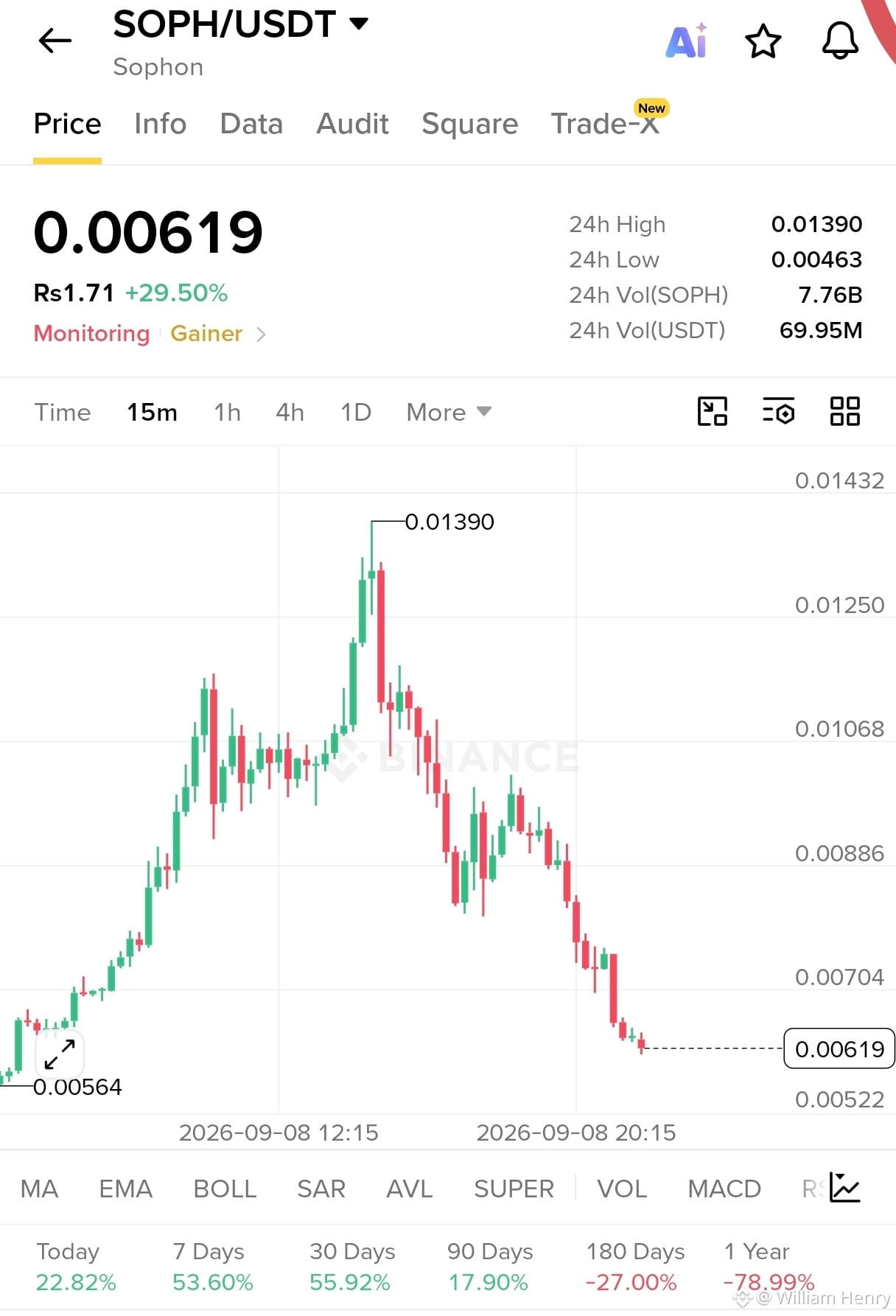
$SOPH zeigt nach der Ablehnung des $0.01390-Hochs einen deutlichen Rücksetzer, aber der Kurs liegt nun nahe einer wichtigen Unterstützungszone bei etwa $0.0060–$0.0062.
Ein Bounce von diesem Bereich könnte Käufer zurück in den Markt bringen.
Kaufzone: $0.00600–$0.00625
TP1: $0.00704
TP2: $0.00886
TP3: $0.01068
Stop Loss: $0.00560
Die 15M-Struktur ist weiterhin schwach, daher ist eine Bestätigung wichtig. Eine saubere Rückeroberung von $0.00704 würde das Erholungs-Setup deutlich stärken.
Lasst uns $SOPH genau beobachten — die Volatilität ist hoch und die nächste Bewegung könnte schnell erfolgen.
{future}(SOPHUSDT)
$SOPH zeigt nach der Ablehnung des $0.01390-Hochs einen deutlichen Rücksetzer, aber der Kurs liegt nun nahe einer wichtigen Unterstützungszone bei etwa $0.0060–$0.0062.
Ein Bounce von diesem Bereich könnte Käufer zurück in den Markt bringen.
Kaufzone: $0.00600–$0.00625
TP1: $0.00704
TP2: $0.00886
TP3: $0.01068
Stop Loss: $0.00560
Die 15M-Struktur ist weiterhin schwach, daher ist eine Bestätigung wichtig. Eine saubere Rückeroberung von $0.00704 würde das Erholungs-Setup deutlich stärken.
Lasst uns $SOPH genau beobachten — die Volatilität ist hoch und die nächste Bewegung könnte schnell erfolgen.
Ein Bounce von diesem Bereich könnte Käufer zurück in den Markt bringen.
Kaufzone: $0.00600–$0.00625
TP1: $0.00704
TP2: $0.00886
TP3: $0.01068
Stop Loss: $0.00560
Die 15M-Struktur ist weiterhin schwach, daher ist eine Bestätigung wichtig. Eine saubere Rückeroberung von $0.00704 würde das Erholungs-Setup deutlich stärken.
Lasst uns $SOPH genau beobachten — die Volatilität ist hoch und die nächste Bewegung könnte schnell erfolgen.
415
·
--
Bullisch
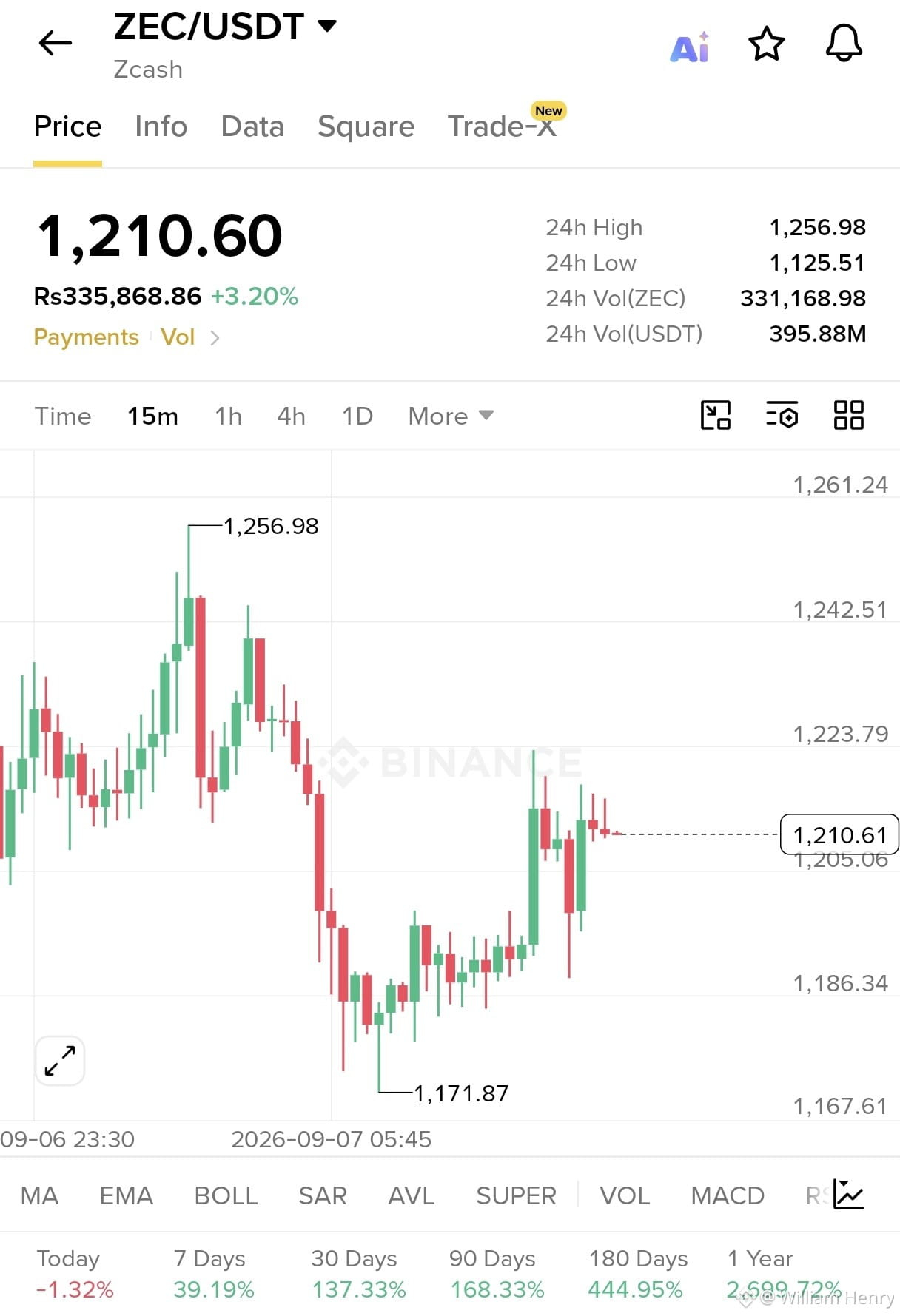
$ZEC zeigt auf dem 15M-Chart eine bullische Erholung. Der Kurs liegt bei etwa 1.210 $, nachdem er stark von 1.171,87 $ abgeprallt ist, und Käufer verteidigen den Bereich um 1.205 $.
Aktuell sieht das Setup eher danach aus, dass es NACH OBEN geht, aber 1.224 $ ist der entscheidende Widerstand. Ein sauberer Ausbruch und ein Halten über diesem Niveau könnte $ZEC in Richtung 1.242 $ und 1.257 $ treiben.
Trade Setup
Einstieg: 1.208–1.214 $
Stop Loss: 1.195 $
TP1: 1.224 $
TP2: 1.242 $
TP3: 1.257 $
Bullisches Szenario: Ausbruch über 1.224 $ → der Aufwärtsimpuls kann sich beschleunigen.
Bärisches Szenario: Verlust von 1.205 $ → der Kurs könnte in Richtung 1.186 $ fallen, also Position absichern.
Vorerst UP-Bias, aber auf Bestätigung um 1.224 $ warten. Risiko sorgfältig managen.
Los geht’s $ZEC
{future}(ZECUSDT)
$ZEC zeigt auf dem 15M-Chart eine bullische Erholung. Der Kurs liegt bei etwa 1.210 $, nachdem er stark von 1.171,87 $ abgeprallt ist, und Käufer verteidigen den Bereich um 1.205 $.
Aktuell sieht das Setup eher danach aus, dass es NACH OBEN geht, aber 1.224 $ ist der entscheidende Widerstand. Ein sauberer Ausbruch und ein Halten über diesem Niveau könnte $ZEC in Richtung 1.242 $ und 1.257 $ treiben.
Trade Setup
Einstieg: 1.208–1.214 $
Stop Loss: 1.195 $
TP1: 1.224 $
TP2: 1.242 $
TP3: 1.257 $
Bullisches Szenario: Ausbruch über 1.224 $ → der Aufwärtsimpuls kann sich beschleunigen.
Bärisches Szenario: Verlust von 1.205 $ → der Kurs könnte in Richtung 1.186 $ fallen, also Position absichern.
Vorerst UP-Bias, aber auf Bestätigung um 1.224 $ warten. Risiko sorgfältig managen.
Los geht’s $ZEC
Aktuell sieht das Setup eher danach aus, dass es NACH OBEN geht, aber 1.224 $ ist der entscheidende Widerstand. Ein sauberer Ausbruch und ein Halten über diesem Niveau könnte $ZEC in Richtung 1.242 $ und 1.257 $ treiben.
Trade Setup
Einstieg: 1.208–1.214 $
Stop Loss: 1.195 $
TP1: 1.224 $
TP2: 1.242 $
TP3: 1.257 $
Bullisches Szenario: Ausbruch über 1.224 $ → der Aufwärtsimpuls kann sich beschleunigen.
Bärisches Szenario: Verlust von 1.205 $ → der Kurs könnte in Richtung 1.186 $ fallen, also Position absichern.
Vorerst UP-Bias, aber auf Bestätigung um 1.224 $ warten. Risiko sorgfältig managen.
Los geht’s $ZEC
2
202
·
--
Bärisch
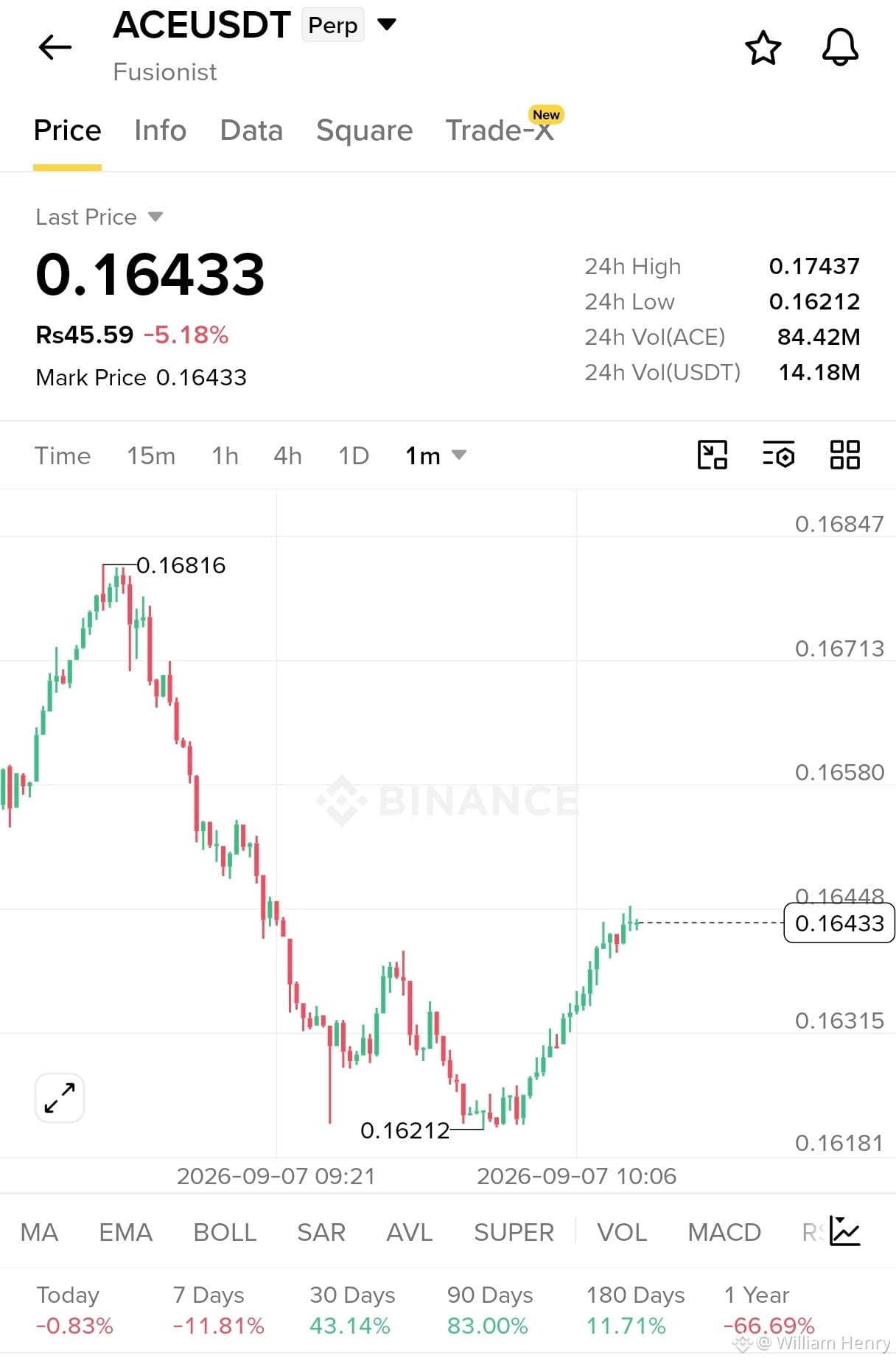
$ACE zeigt nach einem starken 1-Minuten-Rebound von 0.16212 eine mögliche bärische Zurückweisung. Derzeit testet der Kurs den Bereich um 0.16448 als Widerstand, in dem die Verkäufer wieder einsteigen könnten.
Trade-Setup — SHORT
Einstieg: 0.16430 – 0.16450
Stop Loss: 0.16510
TP1: 0.16350
TP2: 0.16315
TP3: 0.16220
Das Setup wird stärker, wenn $ACE es nicht schafft, 0.16448 zu durchbrechen, und eine klare bärische Kerze/Zurückweisung ausdruckt. Halte das Risiko kontrolliert, da der 1-Minuten-Chart sehr volatil ist.
Bärisch unter 0.16448.
Lass uns die Zurückweisung beobachten und die Bewegung diszipliniert mitnehmen. $ACE
$ACE zeigt nach einem starken 1-Minuten-Rebound von 0.16212 eine mögliche bärische Zurückweisung. Derzeit testet der Kurs den Bereich um 0.16448 als Widerstand, in dem die Verkäufer wieder einsteigen könnten.
Trade-Setup — SHORT
Einstieg: 0.16430 – 0.16450
Stop Loss: 0.16510
TP1: 0.16350
TP2: 0.16315
TP3: 0.16220
Das Setup wird stärker, wenn $ACE es nicht schafft, 0.16448 zu durchbrechen, und eine klare bärische Kerze/Zurückweisung ausdruckt. Halte das Risiko kontrolliert, da der 1-Minuten-Chart sehr volatil ist.
Bärisch unter 0.16448.
Lass uns die Zurückweisung beobachten und die Bewegung diszipliniert mitnehmen. $ACE
Trade-Setup — SHORT
Einstieg: 0.16430 – 0.16450
Stop Loss: 0.16510
TP1: 0.16350
TP2: 0.16315
TP3: 0.16220
Das Setup wird stärker, wenn $ACE es nicht schafft, 0.16448 zu durchbrechen, und eine klare bärische Kerze/Zurückweisung ausdruckt. Halte das Risiko kontrolliert, da der 1-Minuten-Chart sehr volatil ist.
Bärisch unter 0.16448.
Lass uns die Zurückweisung beobachten und die Bewegung diszipliniert mitnehmen. $ACE
321
·
--
Bullisch
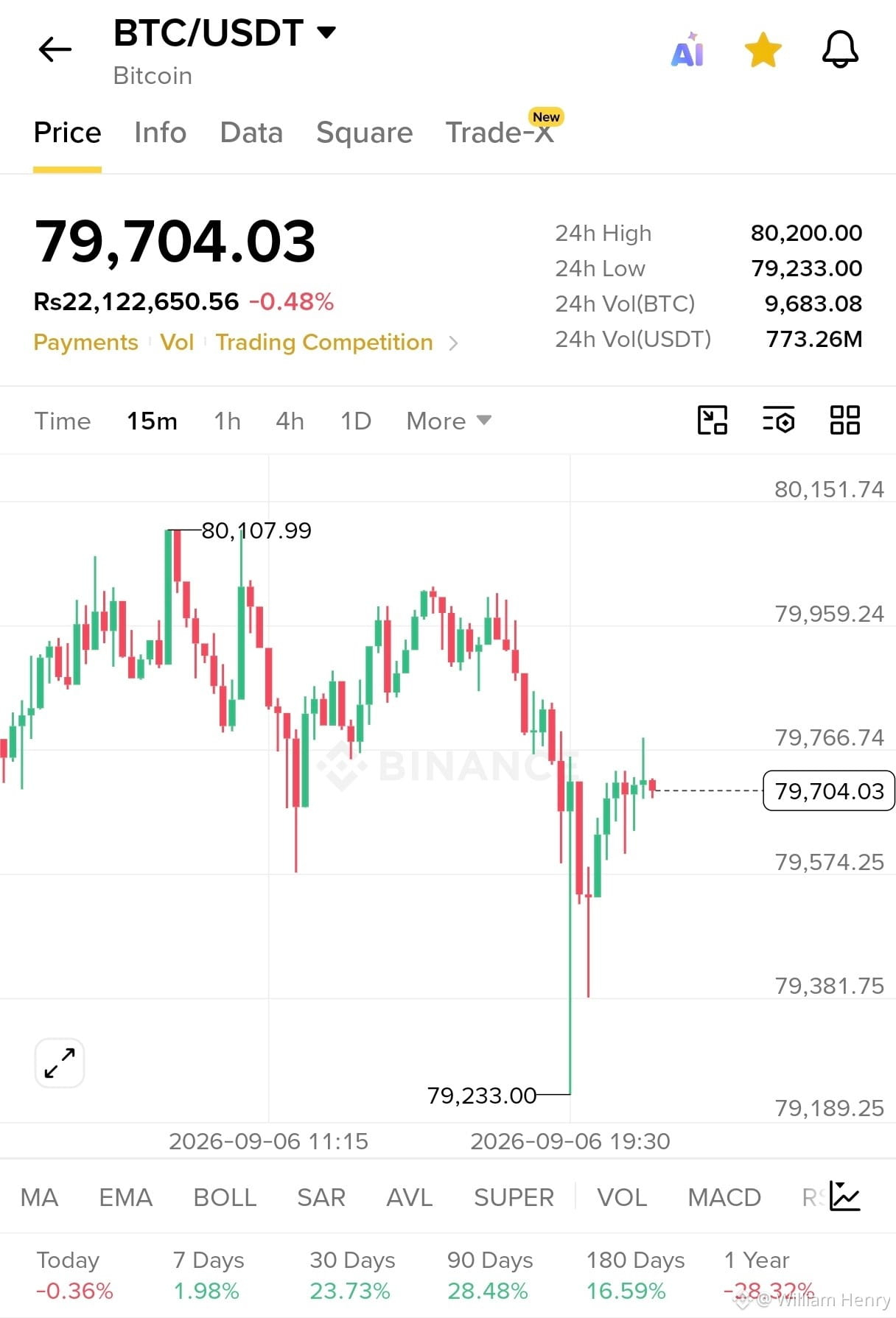
$BTC zeigt eine deutliche Erholung, nachdem das Tief von $79.233 im 15-Minuten-Chart abgefegt wurde. Der Preis liegt jetzt bei etwa $79.704, aber die Erholung trifft nahe $79.766–$79.960 auf Widerstand.
Kaufzone: $79.600–$79.720
Einstieg: $79.680
Stop-Loss: $79.350
TP1: $79.900
TP2: $80.100
TP3: $80.200
TP4: $80.500
Das bullische Szenario verstärkt sich, wenn BTC über $79.600 bleibt und $79.960 mit Momentum durchbricht. Ein sauberer Anstieg über $80.200 könnte den Weg zu höheren Niveaus öffnen.
Beobachte die Unterstützung bei $79.574 genau. Wenn sie bricht, schwächt sich das Setup ab und ein weiterer erneuter Test der Liquiditätszone bei $79.233 wird möglich.
Handle mit striktem Risikomanagement. Los geht’s $BTC
{future}(BTCUSDT)
#USAugustAvgHourlyEarningsRise3.1%
#BTC
$BTC zeigt eine deutliche Erholung, nachdem das Tief von $79.233 im 15-Minuten-Chart abgefegt wurde. Der Preis liegt jetzt bei etwa $79.704, aber die Erholung trifft nahe $79.766–$79.960 auf Widerstand.
Kaufzone: $79.600–$79.720
Einstieg: $79.680
Stop-Loss: $79.350
TP1: $79.900
TP2: $80.100
TP3: $80.200
TP4: $80.500
Das bullische Szenario verstärkt sich, wenn BTC über $79.600 bleibt und $79.960 mit Momentum durchbricht. Ein sauberer Anstieg über $80.200 könnte den Weg zu höheren Niveaus öffnen.
Beobachte die Unterstützung bei $79.574 genau. Wenn sie bricht, schwächt sich das Setup ab und ein weiterer erneuter Test der Liquiditätszone bei $79.233 wird möglich.
Handle mit striktem Risikomanagement. Los geht’s $BTC
#USAugustAvgHourlyEarningsRise3.1%
#BTC
Kaufzone: $79.600–$79.720
Einstieg: $79.680
Stop-Loss: $79.350
TP1: $79.900
TP2: $80.100
TP3: $80.200
TP4: $80.500
Das bullische Szenario verstärkt sich, wenn BTC über $79.600 bleibt und $79.960 mit Momentum durchbricht. Ein sauberer Anstieg über $80.200 könnte den Weg zu höheren Niveaus öffnen.
Beobachte die Unterstützung bei $79.574 genau. Wenn sie bricht, schwächt sich das Setup ab und ein weiterer erneuter Test der Liquiditätszone bei $79.233 wird möglich.
Handle mit striktem Risikomanagement. Los geht’s $BTC
#USAugustAvgHourlyEarningsRise3.1%
#BTC
169
·
--
Bärisch
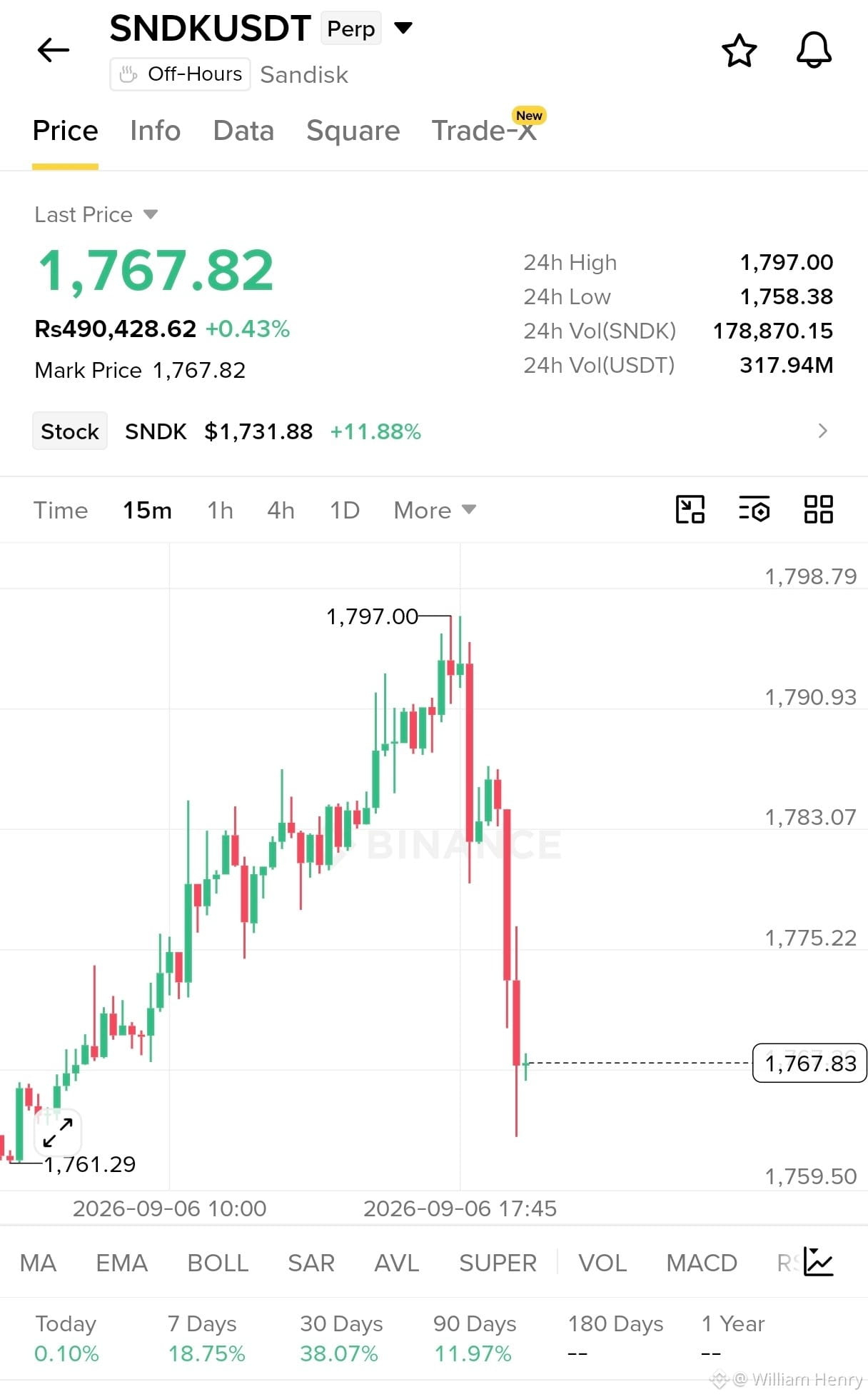
$SNDK zeigt eine scharfe bärische Ablehnung, nachdem ein Rücklauf nahe 1.797,00 scheiterte. Die Verkäufer haben soeben auf dem 15M-Chart die Kontrolle übernommen, mit starkem Abwärtsmomentum.
Short-Setup-Einstieg: 1.765–1.770
Stop Loss: 1.784
TP1: 1.758
TP2: 1.750
TP3: 1.740
Unterhalb von 1.765 kann sich der Abwärtstrend beschleunigen Richtung der Unterstützungszone bei 1.758. Wenn der Kurs 1.783 zurückerobert, wird das Short-Setup schwächer.
Risiko klein — das Momentum ist bärisch.
Welche Stilrichtung als Nächstes: kürzer, spannender oder mehr technisch?
{future}(SNDKUSDT)
#ZEC'sMarketCapSurpassedDOGE
$SNDK zeigt eine scharfe bärische Ablehnung, nachdem ein Rücklauf nahe 1.797,00 scheiterte. Die Verkäufer haben soeben auf dem 15M-Chart die Kontrolle übernommen, mit starkem Abwärtsmomentum.
Short-Setup-Einstieg: 1.765–1.770
Stop Loss: 1.784
TP1: 1.758
TP2: 1.750
TP3: 1.740
Unterhalb von 1.765 kann sich der Abwärtstrend beschleunigen Richtung der Unterstützungszone bei 1.758. Wenn der Kurs 1.783 zurückerobert, wird das Short-Setup schwächer.
Risiko klein — das Momentum ist bärisch.
Welche Stilrichtung als Nächstes: kürzer, spannender oder mehr technisch?
#ZEC'sMarketCapSurpassedDOGE
Short-Setup-Einstieg: 1.765–1.770
Stop Loss: 1.784
TP1: 1.758
TP2: 1.750
TP3: 1.740
Unterhalb von 1.765 kann sich der Abwärtstrend beschleunigen Richtung der Unterstützungszone bei 1.758. Wenn der Kurs 1.783 zurückerobert, wird das Short-Setup schwächer.
Risiko klein — das Momentum ist bärisch.
Welche Stilrichtung als Nächstes: kürzer, spannender oder mehr technisch?
#ZEC'sMarketCapSurpassedDOGE
1
515
·
--
Bärisch
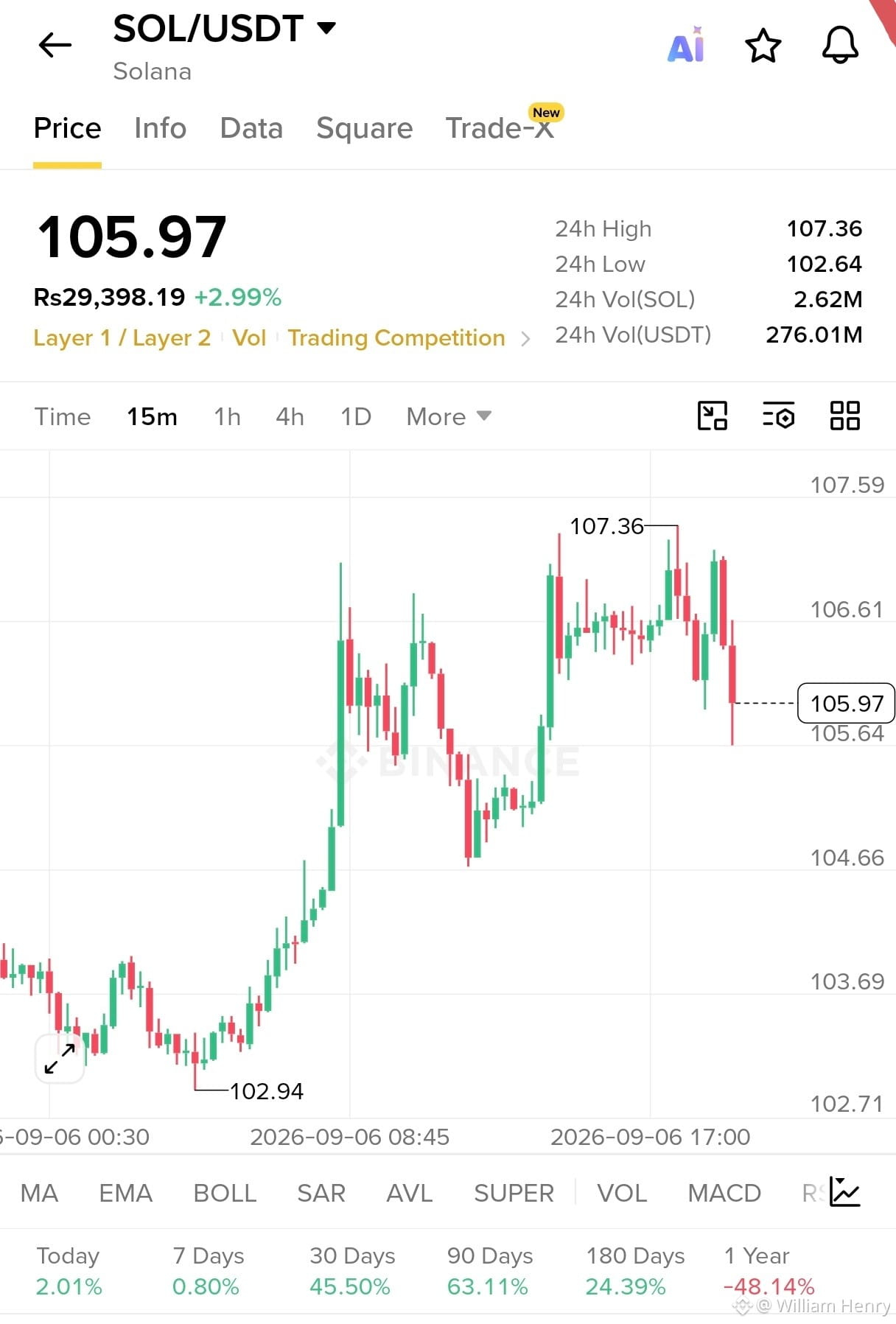
$SOL zeigt eine deutliche Ablehnung vom Hoch bei 107.36, während Verkäufer den Kurs auf dem 15M-Chart wieder in Richtung des Supports bei 105.64 drücken.
DOWN-SETUP
Einstieg: 105.90–106.20
TP1: 105.40
TP2: 104.90
TP3: 104.66
Stop Loss: 106.75
Ein sauberer Bruch unter 105.64 könnte den Abwärtsimpuls beschleunigen. Halte das Risiko unter Kontrolle.
Lass uns die Abwärtsbewegung abfangen, $SOL
{future}(SOLUSDT)
#RussiaUkraine72-hourCeasefire
$SOL zeigt eine deutliche Ablehnung vom Hoch bei 107.36, während Verkäufer den Kurs auf dem 15M-Chart wieder in Richtung des Supports bei 105.64 drücken.
DOWN-SETUP
Einstieg: 105.90–106.20
TP1: 105.40
TP2: 104.90
TP3: 104.66
Stop Loss: 106.75
Ein sauberer Bruch unter 105.64 könnte den Abwärtsimpuls beschleunigen. Halte das Risiko unter Kontrolle.
Lass uns die Abwärtsbewegung abfangen, $SOL
#RussiaUkraine72-hourCeasefire
DOWN-SETUP
Einstieg: 105.90–106.20
TP1: 105.40
TP2: 104.90
TP3: 104.66
Stop Loss: 106.75
Ein sauberer Bruch unter 105.64 könnte den Abwärtsimpuls beschleunigen. Halte das Risiko unter Kontrolle.
Lass uns die Abwärtsbewegung abfangen, $SOL
#RussiaUkraine72-hourCeasefire
2
245
Anmelden und weiter Inhalte entdecken
Krypto-Nutzer weltweit auf Binance Square kennenlernen
⚡️ Bleib in Sachen Krypto stets am Puls.
💬 Die weltgrößte Kryptobörse vertraut darauf.
👍 Erhalte verlässliche Einblicke von verifizierten Creators.
E-Mail-Adresse/Telefonnummer
Trendthemen
AnthropicCEOCallsForAISlowdown
6,807 Aufrufe
175 Kommentare
#AnthropicCEOCallsForAISlowdown Anthropic-CEO fordert eine KI-Bremse
Das Wettrennen der KI bewegt sich mit unglaublicher Geschwindigkeit, aber der CEO von Anthropic fordert einen vorsichtigeren Ansatz. 🤖⚠️
Die Botschaft ist einfach: Innovation sollte nicht auf Kosten der Sicherheit gehen. Wenn KI-Modelle immer leistungsfähiger werden, müssen Unternehmen möglicherweise stärkeres Testen, Schutzmaßnahmen und einen verantwortungsvollen Einsatz sicherstellen, bevor sie die Grenzen noch weiter ausreizen.
KI kann Branchen, Märkte und den Alltag verändern — aber je schneller sie sich entwickelt, desto wichtiger wird eine verantwortungsvolle Entwicklung. 🌍🧠$LSK
$VOD.US
Crypto_With_Kinza
·0 Likes
·3 Aufrufe
AnthropicChoosesNasdaqForPotentialIPO
0 Aufrufe
12 Kommentare
SECReceivesGrayscaleLitecoinTrustETFFiling
119,130 Aufrufe
1,719 Kommentare