
0xWilliam888
30 Beiträge

0xWilliam888
小姐Will🔶BNB
11 Following
2.1K+ Follower
86 Like gegeben
Beiträge
Übersetzung ansehen
Buy $TON
Übersetzung ansehen
When $TON back !
$TON ist massiv unterbewertet.
Morgen könnte Pavel Durov über den Übergang zu GRAM posten.
Long $TON jetzt.
Morgen könnte Pavel Durov über den Übergang zu GRAM posten.
Long $TON jetzt.
Hold $TON
Ziel 2,28$
Ziel 2,28$
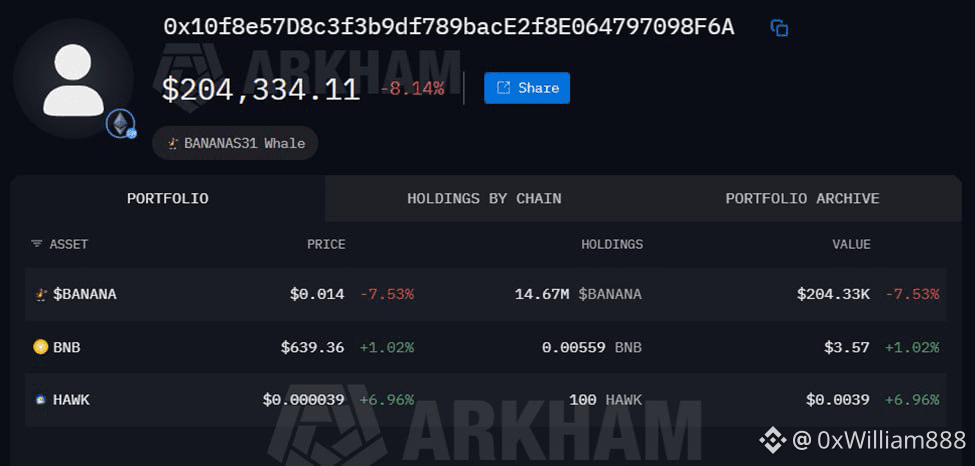
$BANANAS31 BANANAS31 zeigt einige interessante On-Chain-Aktivitäten.
Ein Cluster von Wallets hat stark akkumuliert, mit einem Gesamtvolumen von mehreren Millionen USD.
Der durchschnittliche Einstieg liegt bei etwa 0,012 $.
Wallets:
Schreib mir
Richtet sich das darauf ein, der nächste $SIREN zu werden? 👀
Ein Cluster von Wallets hat stark akkumuliert, mit einem Gesamtvolumen von mehreren Millionen USD.
Der durchschnittliche Einstieg liegt bei etwa 0,012 $.
Wallets:
Schreib mir
Richtet sich das darauf ein, der nächste $SIREN zu werden? 👀
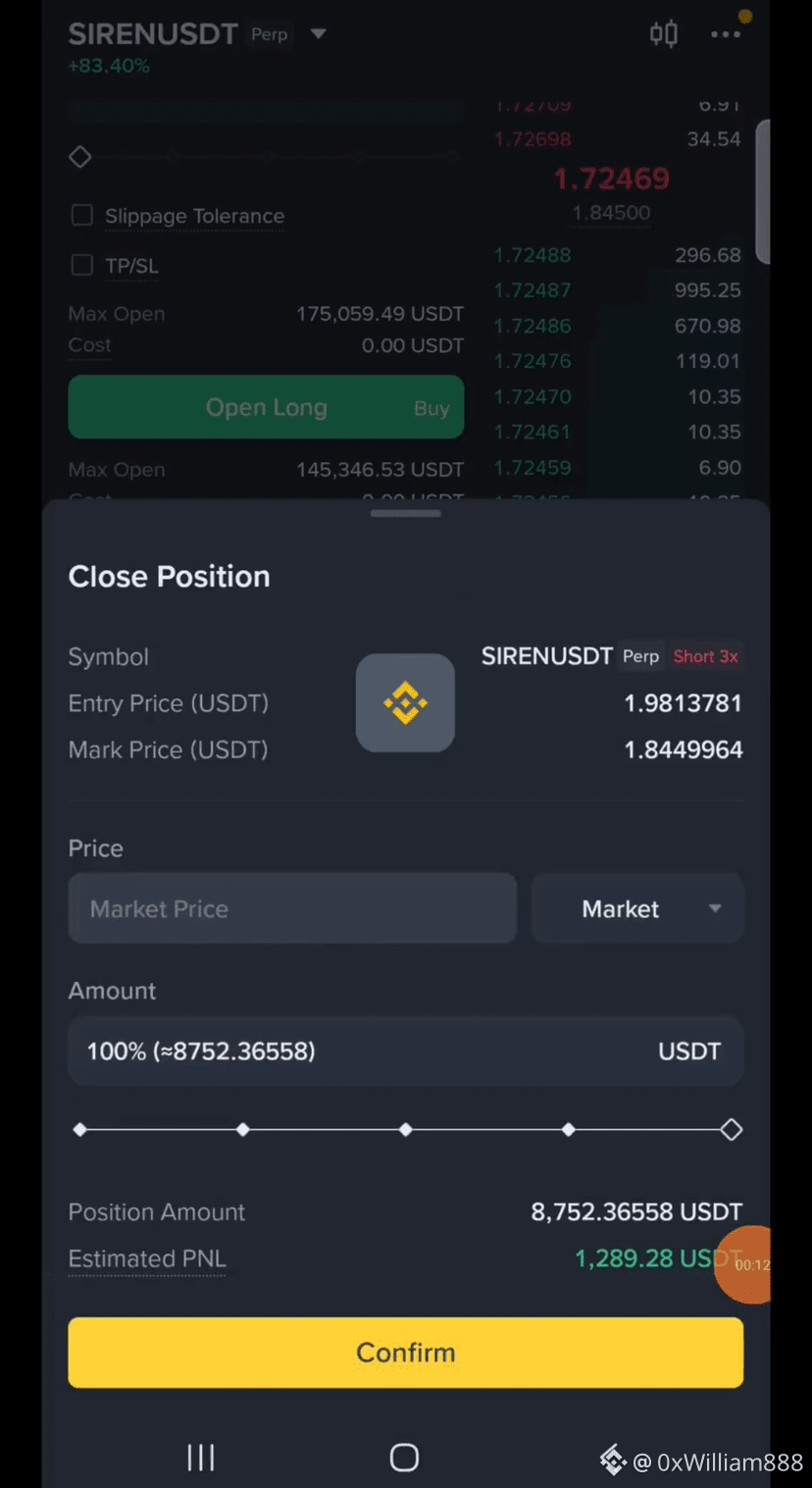
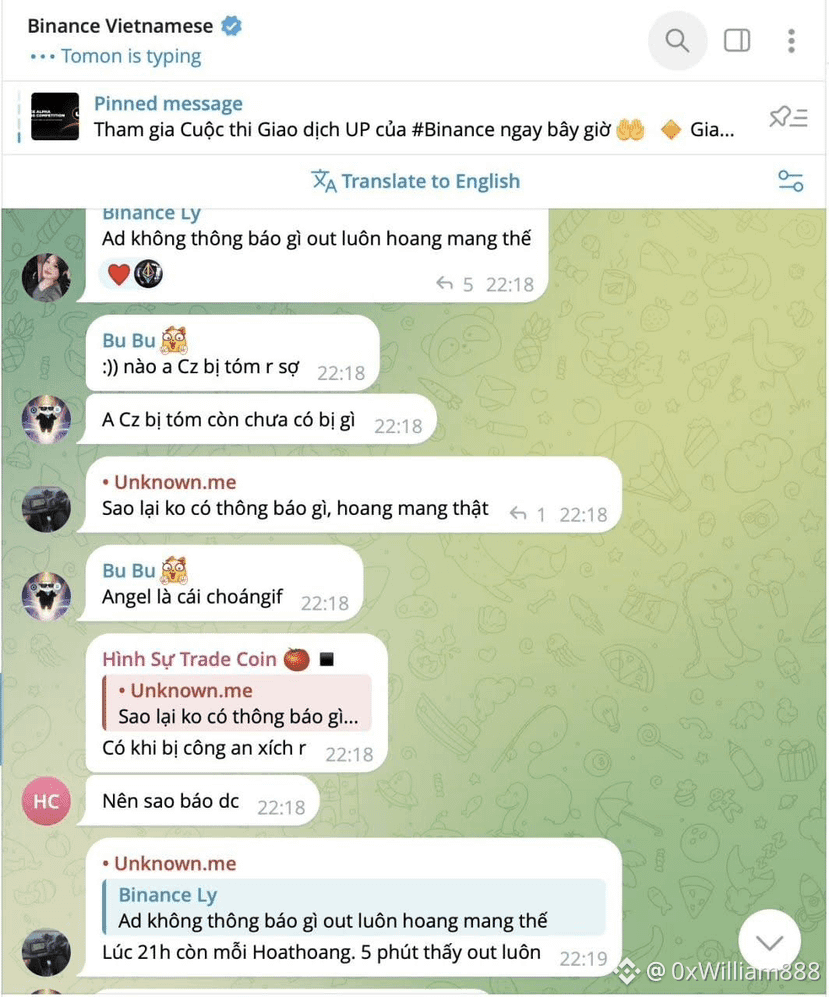
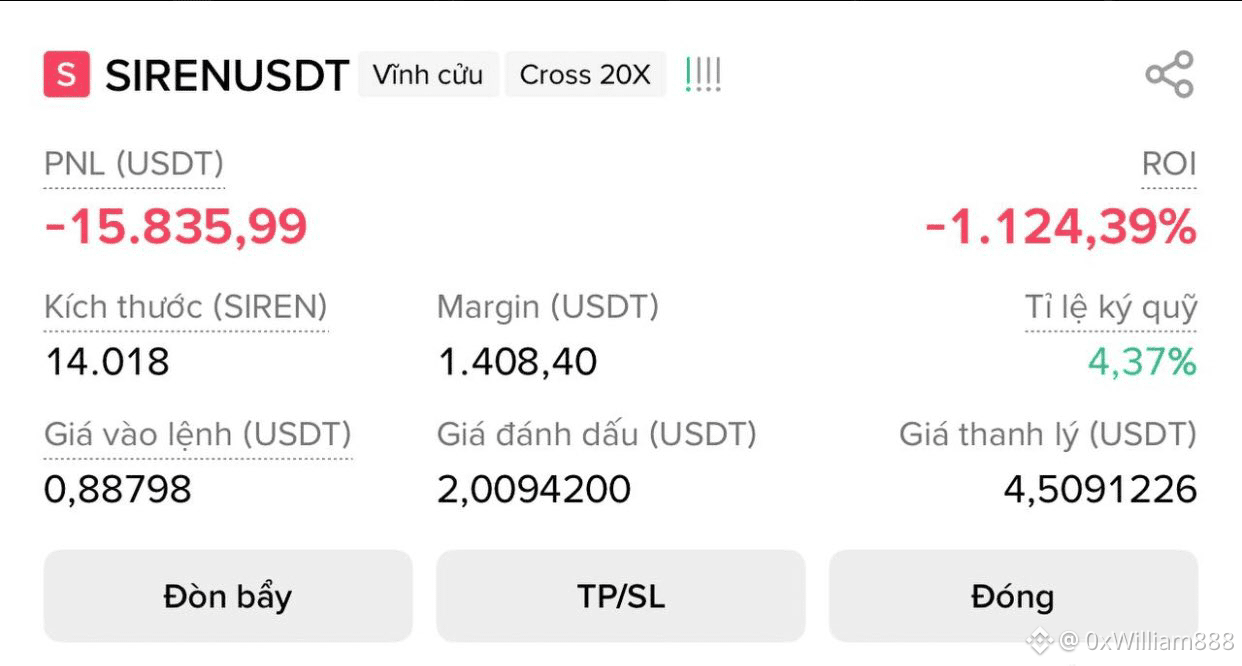
Habe dieses Spiel von einem Freund bekommen… der es von einem anderen Freund bekommen hat 😂
Kein Stop-Loss + große Größe in diesem Markt ist gefährlich.
Mit stündlicher Finanzierung ist es überhaupt nicht billig, diese Position zu halten.
Geld zu verdienen ist nicht einfach, aber die Leute lieben es immer noch, starke Trends an der Spitze zu shorten.
$SIREN
#Siren #CreatorpadVN
Kein Stop-Loss + große Größe in diesem Markt ist gefährlich.
Mit stündlicher Finanzierung ist es überhaupt nicht billig, diese Position zu halten.
Geld zu verdienen ist nicht einfach, aber die Leute lieben es immer noch, starke Trends an der Spitze zu shorten.
$SIREN
#Siren #CreatorpadVN
Rote Alarm für $SKY 🚨
Ein Wal hat gerade 20M $SKY auf Binance eingezahlt.
Da $SKY in letzter Zeit ziemlich stark gestiegen ist, könnte dies eine frühe Warnung vor einem möglichen Rückgang sein.
Bleiben Sie wachsam und handeln Sie sicher! ⚠️
#CreatorpadVN #onchain #sky
Ein Wal hat gerade 20M $SKY auf Binance eingezahlt.
Da $SKY in letzter Zeit ziemlich stark gestiegen ist, könnte dies eine frühe Warnung vor einem möglichen Rückgang sein.
Bleiben Sie wachsam und handeln Sie sicher! ⚠️
#CreatorpadVN #onchain #sky
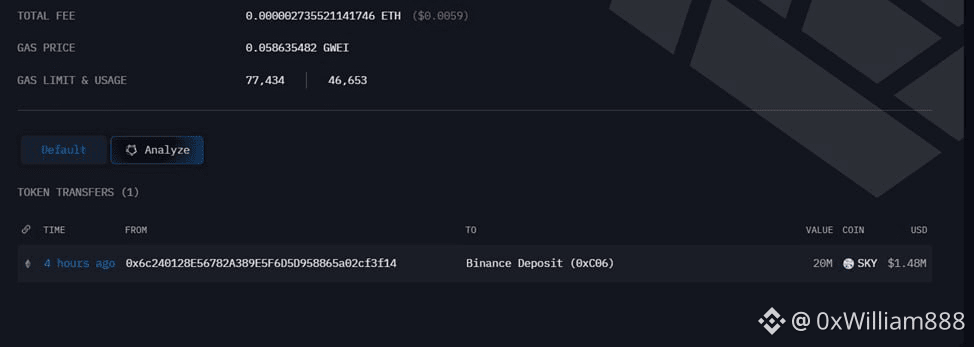
Vor ein paar Stunden hat das Team-Wallet von $LISTA
50M $LISTA bei Binance eingezahlt.
Mit der aktuellen niedrigen Liquidität gibt es eine hohe Wahrscheinlichkeit, dass $LISTA eine signifikante Korrektur sehen wird.
Wenn jemand die Wallet-Adresse benötigt, kann er mir gerne eine DM senden.
#CreatorpadVN #Onchain #Lista
50M $LISTA bei Binance eingezahlt.
Mit der aktuellen niedrigen Liquidität gibt es eine hohe Wahrscheinlichkeit, dass $LISTA eine signifikante Korrektur sehen wird.
Wenn jemand die Wallet-Adresse benötigt, kann er mir gerne eine DM senden.
#CreatorpadVN #Onchain #Lista
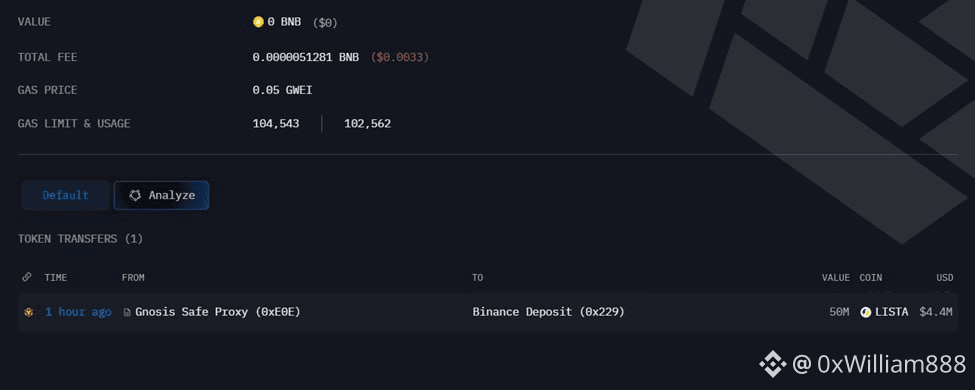
Walfang von $ARC wurde erneut gesichtet.
Der folgende Wal hat zwei separate Geldbörsen genutzt, um $ARC
Die erste Geldbörse wird verwendet, um Stablecoins für den Kauf von $ARC zu speichern, und sie hält immer noch über $500K.
Die zweite Geldbörse ist für langfristiges Halten, derzeit werden 72M $ARC gehalten. Lange Zeit
Der folgende Wal hat zwei separate Geldbörsen genutzt, um $ARC
Die erste Geldbörse wird verwendet, um Stablecoins für den Kauf von $ARC zu speichern, und sie hält immer noch über $500K.
Die zweite Geldbörse ist für langfristiges Halten, derzeit werden 72M $ARC gehalten. Lange Zeit
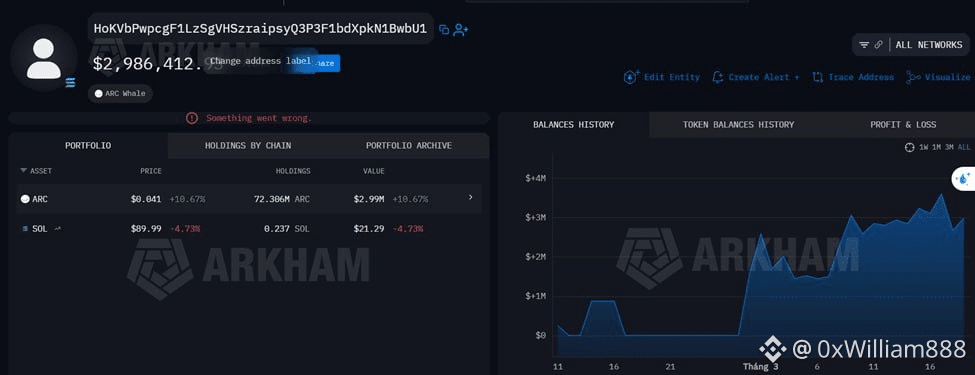
Kurz jetzt.
$JCT zeigt sehr besorgniserregende On-Chain-Aktivitäten.
Es gibt mehrere Token-Transfers, die schnell zwischen verschiedenen Wallets stattfinden.
Dies ist oft ein frühes Warnsignal für eine starke Verteilung.
$JCT
Wallet-Cluster:
0x24699e902260A4fB738d4A326C48FDD560fC0335
0x0453d4Bbf8258CEBb0C55b0508EaB8BE500cee4b
0x1E3B4856c16dDE2216407C73a6138A3C2f7c4e74
0x9034F40e901F4210Cc50506c6ba37cFD997b94Cf
0xd8A8c3Bf8E0C78269F56557dcD0a0cF36A5EbD53
0x89EE28B4CdaB049d7802e962dEBCC423282e3926
$JCT zeigt sehr besorgniserregende On-Chain-Aktivitäten.
Es gibt mehrere Token-Transfers, die schnell zwischen verschiedenen Wallets stattfinden.
Dies ist oft ein frühes Warnsignal für eine starke Verteilung.
$JCT
Wallet-Cluster:
0x24699e902260A4fB738d4A326C48FDD560fC0335
0x0453d4Bbf8258CEBb0C55b0508EaB8BE500cee4b
0x1E3B4856c16dDE2216407C73a6138A3C2f7c4e74
0x9034F40e901F4210Cc50506c6ba37cFD997b94Cf
0xd8A8c3Bf8E0C78269F56557dcD0a0cF36A5EbD53
0x89EE28B4CdaB049d7802e962dEBCC423282e3926
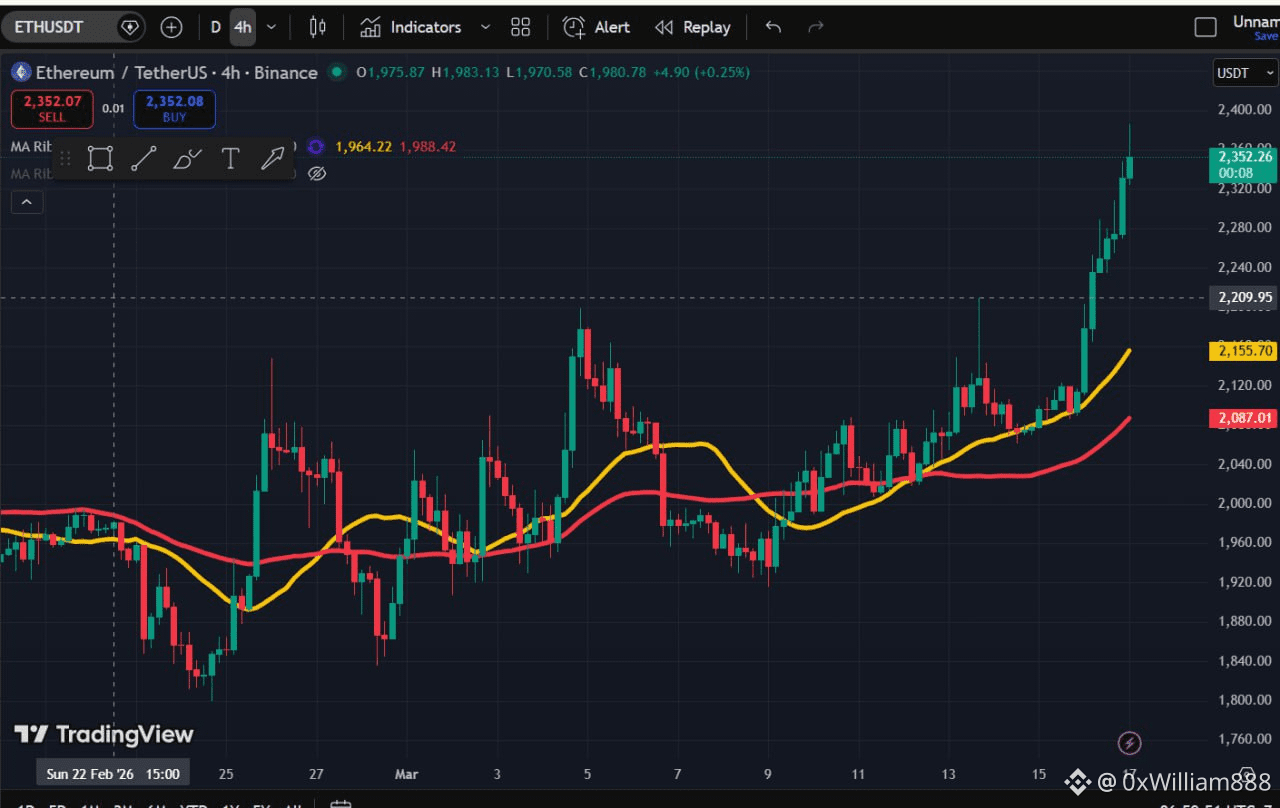
Nach einer Welle von optimistischen Beiträgen über $ETH hat unsere Königin heute ein starkes Comeback hingelegt.
Schau dir nicht nur an, was die Preisbewegung zeigt, das ist nur die Spitze des Eisbergs.
Tiefe Daten sind der Ort, an dem du den echten Vorteil gewinnst, der Menge voraus bleibst und tatsächlich Geld in diesem Markt verdienst.
Schau dir nicht nur an, was die Preisbewegung zeigt, das ist nur die Spitze des Eisbergs.
Tiefe Daten sind der Ort, an dem du den echten Vorteil gewinnst, der Menge voraus bleibst und tatsächlich Geld in diesem Markt verdienst.

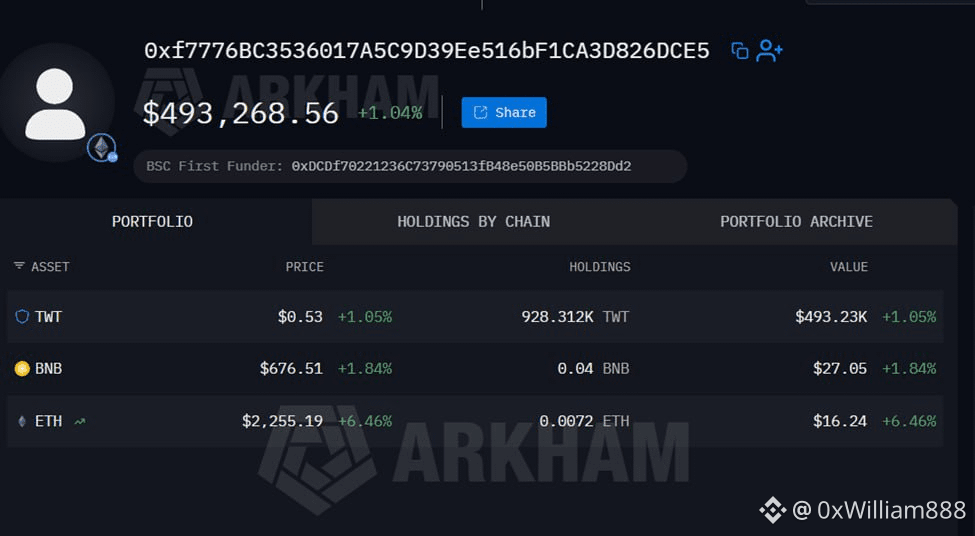
Ein Insider-Wallet wurde entdeckt.
Das folgende Wallet hat 928,31K $TWT
(~468,9K $) von Binance gesammelt, kurz bevor Changpeng Zhao einen Beitrag erneut postete, der Trust Wallet und Trust Wallet Token erwähnte.
Kurz nach dem Repost von Changpeng Zhao stieg der Preis um über 5%, und bis jetzt hält das Wallet immer noch die gesamte $TWT -Position.
Wallet-Adresse:
0xf7776BC3536017A5C9D39Ee516bF1CA3D826DCE5
Das folgende Wallet hat 928,31K $TWT
(~468,9K $) von Binance gesammelt, kurz bevor Changpeng Zhao einen Beitrag erneut postete, der Trust Wallet und Trust Wallet Token erwähnte.
Kurz nach dem Repost von Changpeng Zhao stieg der Preis um über 5%, und bis jetzt hält das Wallet immer noch die gesamte $TWT -Position.
Wallet-Adresse:
0xf7776BC3536017A5C9D39Ee516bF1CA3D826DCE5
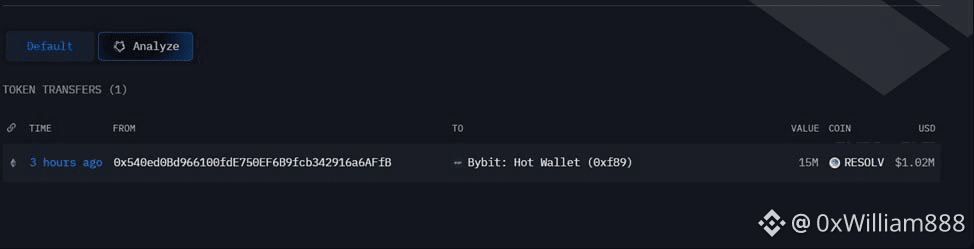
On-Chain-Warnung erkannt !
Ein Wal-Wallet hat gerade 15M $RESOLV in den letzten Stunden bei Bybit eingezahlt.
Historisch gesehen neigt $RESOLV dazu, nach ähnlichen großen Einzahlungen an Börsen eine Preiskorrektur zu erfahren, was auf möglichen Verkaufsdruck hinweisen könnte.
Wallet-Adresse:
0x540ed0Bd966100fdE750EFÈ6B9fcb342916a6AfB
Händler sollten diese Aktivität im Auge behalten und das Risiko entsprechend managen.
Ein Wal-Wallet hat gerade 15M $RESOLV in den letzten Stunden bei Bybit eingezahlt.
Historisch gesehen neigt $RESOLV dazu, nach ähnlichen großen Einzahlungen an Börsen eine Preiskorrektur zu erfahren, was auf möglichen Verkaufsdruck hinweisen könnte.
Wallet-Adresse:
0x540ed0Bd966100fdE750EFÈ6B9fcb342916a6AfB
Händler sollten diese Aktivität im Auge behalten und das Risiko entsprechend managen.
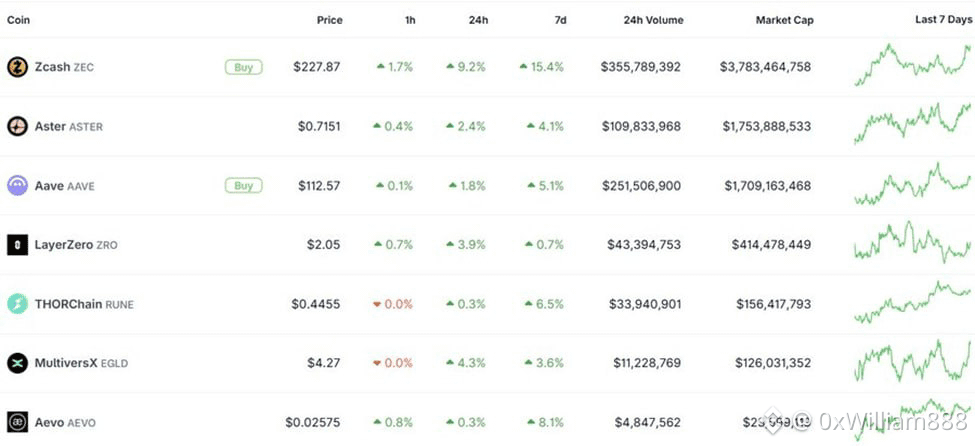
Wichtige Krypto-Ereignisse in dieser Woche, die den Preis beeinflussen könnten:
• $AAVE – Ein Vorschlag zur Einführung von Aave V4 auf Ethereum wurde offiziell eingereicht.
• $ASTER – Das Hauptnetz der Aster Chain wird voraussichtlich diesen Monat starten.
• $ZEC $RUNE – THORChain wird bald native Swap-Unterstützung für Zcash hinzufügen.
• $KAT – Die Katana TGE ist für den 18. März geplant.
• $EGLD – MultiversX wird
SuperNova, sein größtes Upgrade seit dem Start des Hauptnetzes, am Testnetz am 16. März einführen.
• $ZRO – Rund 52 Millionen Dollar in ZRO (etwa 5,64 % des im Umlauf befindlichen Angebots) werden am 20. März freigeschaltet.
• AI-Münzen – NVIDIA GTC, die größte KI-Konferenz des Jahres, veranstaltet von NVIDIA, beginnt am 16. März.
• $MNT – Mantle State of Mind, ein Livestream, der aktuelle Meilensteine und den Fahrplan von Mantle behandelt, findet am 17. März statt.
• $AEVO – Aevo wird am 16. März bevorstehende Produktveröffentlichungen ankündigen.
• $AAVE – Ein Vorschlag zur Einführung von Aave V4 auf Ethereum wurde offiziell eingereicht.
• $ASTER – Das Hauptnetz der Aster Chain wird voraussichtlich diesen Monat starten.
• $ZEC $RUNE – THORChain wird bald native Swap-Unterstützung für Zcash hinzufügen.
• $KAT – Die Katana TGE ist für den 18. März geplant.
• $EGLD – MultiversX wird
SuperNova, sein größtes Upgrade seit dem Start des Hauptnetzes, am Testnetz am 16. März einführen.
• $ZRO – Rund 52 Millionen Dollar in ZRO (etwa 5,64 % des im Umlauf befindlichen Angebots) werden am 20. März freigeschaltet.
• AI-Münzen – NVIDIA GTC, die größte KI-Konferenz des Jahres, veranstaltet von NVIDIA, beginnt am 16. März.
• $MNT – Mantle State of Mind, ein Livestream, der aktuelle Meilensteine und den Fahrplan von Mantle behandelt, findet am 17. März statt.
• $AEVO – Aevo wird am 16. März bevorstehende Produktveröffentlichungen ankündigen.
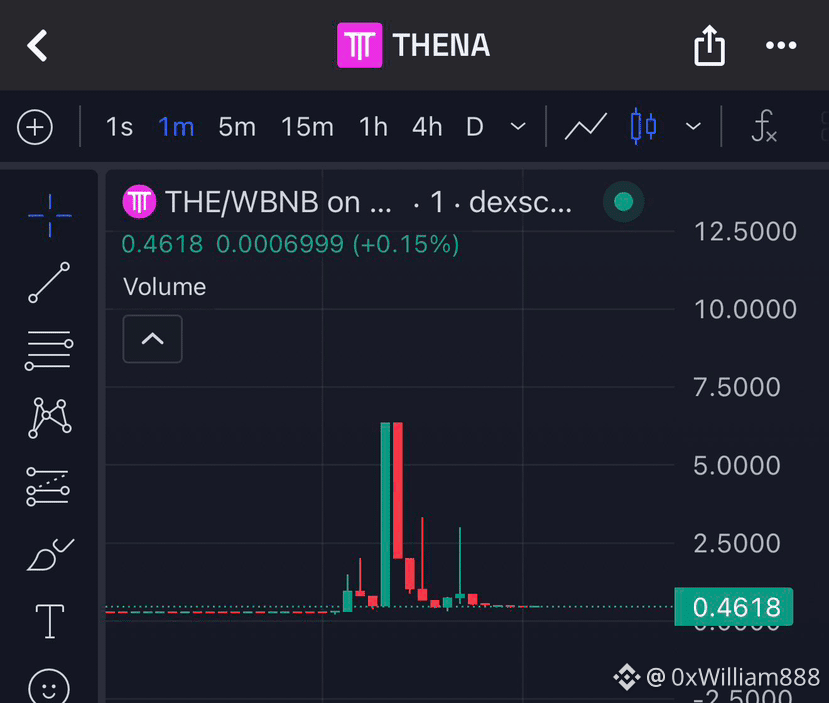
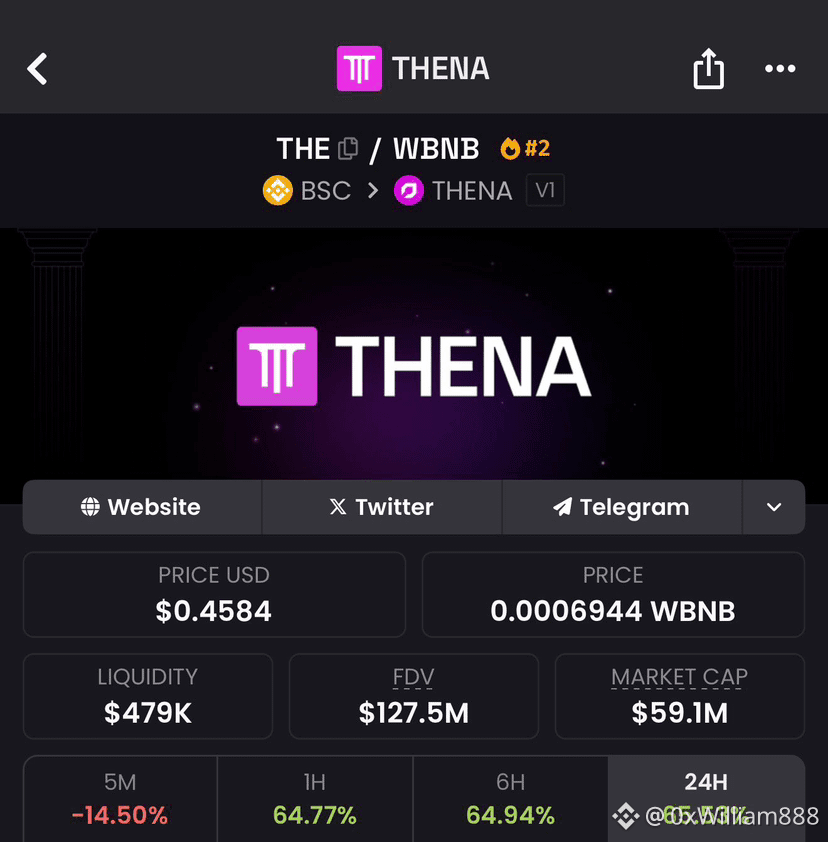
das PancakeSwap-Team verkaufte $200.000 ihres $CAKE-Tokens
und verwendete all das Geld, um $THE , den Token ihres Hauptpartners, zu kaufen
und innerhalb von zwei Minuten verkauften sie alle ihre Tokens.
Welche Art von Betrug findet hier an einem Sonntag statt?
und verwendete all das Geld, um $THE , den Token ihres Hauptpartners, zu kaufen
und innerhalb von zwei Minuten verkauften sie alle ihre Tokens.
Welche Art von Betrug findet hier an einem Sonntag statt?
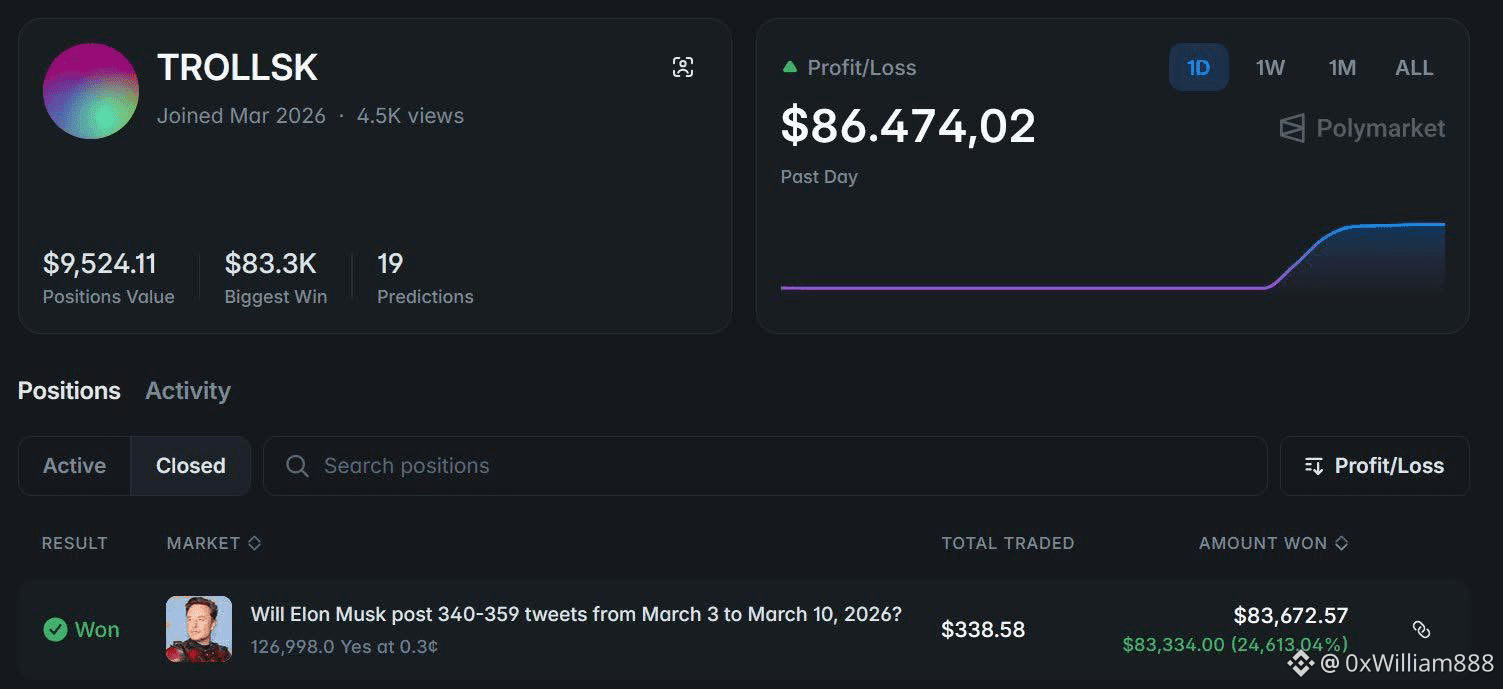
Der verrückteste Handel auf Polymarket im Jahr 2026.
Ein neu erstelltes Konto namens TROLLSK verwandelte $338,58 in $83.672,57 — ein PnL von 24.613% — indem er darauf wettete, wie oft Elon Musk in einer einzigen Woche posten würde.
Der Markt teilte die Anzahl der Tweets von Musk in etwa 25 Bereiche auf.
Die Wette "340–359 Beiträge zwischen dem 3. März und dem 10. März" lag irgendwo in der Mitte, mit einer anfänglichen Wahrscheinlichkeit von ~10%.
Und um fair zu sein, Musk twitterte in dieser Woche wie ein Wahnsinniger. Durchschnittlich mehr als 51 Beiträge pro Tag.
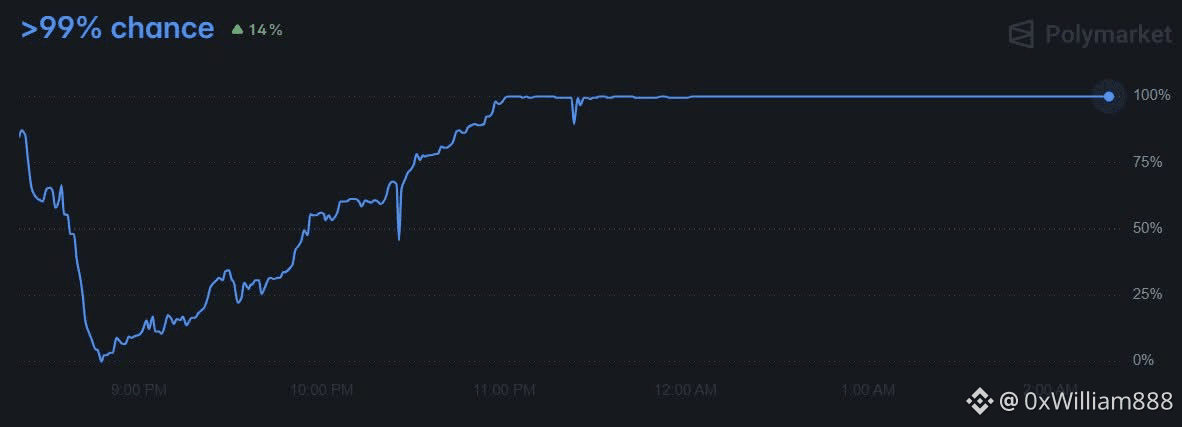
Um 20:00 Uhr am letzten Tag hatte Musk noch nicht 359 Beiträge erreicht, und die Wahrscheinlichkeit für JA stieg auf fast 90%.
Aber dann geschah das Chaos.
Um 20:30 Uhr postete Musk plötzlich genug, um genau 359 Tweets zu erreichen, wobei fast vier Stunden verbleiben, bevor der Markt schloss.
Alle, die JA hielten, gerieten sofort in Panik.
Denken Sie darüber nach:
Wenn Musk nur noch einmal tweetete, würde die Anzahl 360 erreichen, und die Wette würde sofort verlieren.
Der Markt brach innerhalb von Minuten zusammen.
Die JA-Wahrscheinlichkeiten stürzten von ~90% auf fast 0,1%, als die Händler hastig versuchten, Positionen zu verlassen, um einen totalen Verlust zu vermeiden.
Und genau dann trat TROLLSK ein.
Er kaufte 126.998 JA-Anteile während der Panik.
Dann… geschah etwas noch Seltsameres.
Musk hörte auf zu twittern. Komplett.
Für die nächsten vier Stunden bis Mitternacht — der Typ, der mehr als 50 Mal am Tag twitterte, wurde plötzlich still.
Endergebnis: 359 Beiträge.
TROLLSK gewinnt.
Meine persönliche Vorhersage:
An diesem Punkt könnte der nächste Markt auf Polymarket etwas sein wie:
"Wie oft wird Elon Musk morgen atmen?"
Und irgendwo da draußen wird ein brandneues Konto, das vor 10 Minuten erstellt wurde, wahrscheinlich $200 in $2 Millionen verwandeln, indem es darauf wettet.
🙏👀😅😅😅
Ein neu erstelltes Konto namens TROLLSK verwandelte $338,58 in $83.672,57 — ein PnL von 24.613% — indem er darauf wettete, wie oft Elon Musk in einer einzigen Woche posten würde.
Der Markt teilte die Anzahl der Tweets von Musk in etwa 25 Bereiche auf.
Die Wette "340–359 Beiträge zwischen dem 3. März und dem 10. März" lag irgendwo in der Mitte, mit einer anfänglichen Wahrscheinlichkeit von ~10%.
Und um fair zu sein, Musk twitterte in dieser Woche wie ein Wahnsinniger. Durchschnittlich mehr als 51 Beiträge pro Tag.
Um 20:00 Uhr am letzten Tag hatte Musk noch nicht 359 Beiträge erreicht, und die Wahrscheinlichkeit für JA stieg auf fast 90%.
Aber dann geschah das Chaos.
Um 20:30 Uhr postete Musk plötzlich genug, um genau 359 Tweets zu erreichen, wobei fast vier Stunden verbleiben, bevor der Markt schloss.
Alle, die JA hielten, gerieten sofort in Panik.
Denken Sie darüber nach:
Wenn Musk nur noch einmal tweetete, würde die Anzahl 360 erreichen, und die Wette würde sofort verlieren.
Der Markt brach innerhalb von Minuten zusammen.
Die JA-Wahrscheinlichkeiten stürzten von ~90% auf fast 0,1%, als die Händler hastig versuchten, Positionen zu verlassen, um einen totalen Verlust zu vermeiden.
Und genau dann trat TROLLSK ein.
Er kaufte 126.998 JA-Anteile während der Panik.
Dann… geschah etwas noch Seltsameres.
Musk hörte auf zu twittern. Komplett.
Für die nächsten vier Stunden bis Mitternacht — der Typ, der mehr als 50 Mal am Tag twitterte, wurde plötzlich still.
Endergebnis: 359 Beiträge.
TROLLSK gewinnt.
Meine persönliche Vorhersage:
An diesem Punkt könnte der nächste Markt auf Polymarket etwas sein wie:
"Wie oft wird Elon Musk morgen atmen?"
Und irgendwo da draußen wird ein brandneues Konto, das vor 10 Minuten erstellt wurde, wahrscheinlich $200 in $2 Millionen verwandeln, indem es darauf wettet.
🙏👀😅😅😅
Anmelden und weiter Inhalte entdecken