
Tracejasim
184 Beiträge

Tracejasim
Melden
Nutzer blockieren
🚀 Crypto Enthusiast | DeFi & Web3 Explorer@Supporter of @walrusprotocol | $WAL @Sharing knowledge, insights & alpha .
Trade eröffnen
Regelmäßiger Trader
4 Jahre
1.7K+ Following
267 Follower
41 Like gegeben
Beiträge
Portfolio
Alle
Zitierungen
·
--
#opg $OPG
Die Weiterentwicklung von KI geht oft mit Kosten für die persönliche Privatsphäre einher, aber @OpenGradient verschiebt dieses Paradigma. Mit einer Hybrid- KI-Compute-Architektur (HACA) liefern sie nachweisbare KI-Inferenz, ohne dass Nutzer dafür ihre Identität aufgeben müssen.
Besonders beeindruckt bin ich von dem neuen OpenGradient Chat. Im Gegensatz zu Standard-Assistenten, die Ihre Daten speichern, verwendet er einen dreistufigen Datenschutz-Ansatz – lokale Verschlüsselung, Oblivious HTTP und TEE-isolierte Gateways –, um sicherzustellen, dass Ihre Prompts wirklich anonym bleiben. Selten sieht man ein Projekt, das „Vertraut uns“-Datenschutzrichtlinien durch echte, verifizierbare kryptografische Beweise ersetzt. Ganz gleich, ob Sie ihn für sensible Forschung oder alltägliche Fragen nutzen: Der Zugriff auf aktuelle Frontier-Modelle ohne Nachverfolgung ist ein großer Schritt nach vorn für Web3.
Schauen Sie sich die Zukunft von Vertrauen-minimierter KI mit $OPG an. #OPG
#opg $OPG
Die Weiterentwicklung von KI geht oft mit Kosten für die persönliche Privatsphäre einher, aber @OpenGradient verschiebt dieses Paradigma. Mit einer Hybrid- KI-Compute-Architektur (HACA) liefern sie nachweisbare KI-Inferenz, ohne dass Nutzer dafür ihre Identität aufgeben müssen.
Besonders beeindruckt bin ich von dem neuen OpenGradient Chat. Im Gegensatz zu Standard-Assistenten, die Ihre Daten speichern, verwendet er einen dreistufigen Datenschutz-Ansatz – lokale Verschlüsselung, Oblivious HTTP und TEE-isolierte Gateways –, um sicherzustellen, dass Ihre Prompts wirklich anonym bleiben. Selten sieht man ein Projekt, das „Vertraut uns“-Datenschutzrichtlinien durch echte, verifizierbare kryptografische Beweise ersetzt. Ganz gleich, ob Sie ihn für sensible Forschung oder alltägliche Fragen nutzen: Der Zugriff auf aktuelle Frontier-Modelle ohne Nachverfolgung ist ein großer Schritt nach vorn für Web3.
Schauen Sie sich die Zukunft von Vertrauen-minimierter KI mit $OPG an. #OPG
Die Weiterentwicklung von KI geht oft mit Kosten für die persönliche Privatsphäre einher, aber @OpenGradient verschiebt dieses Paradigma. Mit einer Hybrid- KI-Compute-Architektur (HACA) liefern sie nachweisbare KI-Inferenz, ohne dass Nutzer dafür ihre Identität aufgeben müssen.
Besonders beeindruckt bin ich von dem neuen OpenGradient Chat. Im Gegensatz zu Standard-Assistenten, die Ihre Daten speichern, verwendet er einen dreistufigen Datenschutz-Ansatz – lokale Verschlüsselung, Oblivious HTTP und TEE-isolierte Gateways –, um sicherzustellen, dass Ihre Prompts wirklich anonym bleiben. Selten sieht man ein Projekt, das „Vertraut uns“-Datenschutzrichtlinien durch echte, verifizierbare kryptografische Beweise ersetzt. Ganz gleich, ob Sie ihn für sensible Forschung oder alltägliche Fragen nutzen: Der Zugriff auf aktuelle Frontier-Modelle ohne Nachverfolgung ist ein großer Schritt nach vorn für Web3.
Schauen Sie sich die Zukunft von Vertrauen-minimierter KI mit $OPG an. #OPG
73
·
--
#opg
Die Entwicklung von KI geht oft mit einem Preis für die persönliche Privatsphäre einher, aber @OpenGradient verändert dieses Paradigma. Mithilfe einer Hybrid-Computing-Architektur für KI (HACA) bieten sie verifizierbare KI-Inferenz, ohne dass Nutzer ihre Identität gegen Intelligenz eintauschen müssen.
Besonders beeindruckt bin ich von dem neuen OpenGradient Chat. Anders als herkömmliche Assistenten, die Ihre Daten speichern, nutzt er einen dreistufigen Datenschutzansatz – lokale Verschlüsselung, Oblivious HTTP und TEE-isolierte Gateways – damit Ihre Prompts wirklich anonym bleiben. Selten sieht man ein Projekt, das „Vertrauen Sie uns“ durch tatsächlichen, verifizierbaren kryptografischen Beweis ersetzt. Ganz gleich, ob Sie ihn für sensible Forschung oder alltägliche Anfragen nutzen: Die Möglichkeit, auf Frontier-Modelle zuzugreifen, ohne verfolgt zu werden, ist ein riesiger Fortschritt für Web3.
Schauen Sie sich die Zukunft von vertrauensminimierter KI mit $OPG an. #OPG
#opg
Die Entwicklung von KI geht oft mit einem Preis für die persönliche Privatsphäre einher, aber @OpenGradient verändert dieses Paradigma. Mithilfe einer Hybrid-Computing-Architektur für KI (HACA) bieten sie verifizierbare KI-Inferenz, ohne dass Nutzer ihre Identität gegen Intelligenz eintauschen müssen.
Besonders beeindruckt bin ich von dem neuen OpenGradient Chat. Anders als herkömmliche Assistenten, die Ihre Daten speichern, nutzt er einen dreistufigen Datenschutzansatz – lokale Verschlüsselung, Oblivious HTTP und TEE-isolierte Gateways – damit Ihre Prompts wirklich anonym bleiben. Selten sieht man ein Projekt, das „Vertrauen Sie uns“ durch tatsächlichen, verifizierbaren kryptografischen Beweis ersetzt. Ganz gleich, ob Sie ihn für sensible Forschung oder alltägliche Anfragen nutzen: Die Möglichkeit, auf Frontier-Modelle zuzugreifen, ohne verfolgt zu werden, ist ein riesiger Fortschritt für Web3.
Schauen Sie sich die Zukunft von vertrauensminimierter KI mit $OPG an. #OPG
Die Entwicklung von KI geht oft mit einem Preis für die persönliche Privatsphäre einher, aber @OpenGradient verändert dieses Paradigma. Mithilfe einer Hybrid-Computing-Architektur für KI (HACA) bieten sie verifizierbare KI-Inferenz, ohne dass Nutzer ihre Identität gegen Intelligenz eintauschen müssen.
Besonders beeindruckt bin ich von dem neuen OpenGradient Chat. Anders als herkömmliche Assistenten, die Ihre Daten speichern, nutzt er einen dreistufigen Datenschutzansatz – lokale Verschlüsselung, Oblivious HTTP und TEE-isolierte Gateways – damit Ihre Prompts wirklich anonym bleiben. Selten sieht man ein Projekt, das „Vertrauen Sie uns“ durch tatsächlichen, verifizierbaren kryptografischen Beweis ersetzt. Ganz gleich, ob Sie ihn für sensible Forschung oder alltägliche Anfragen nutzen: Die Möglichkeit, auf Frontier-Modelle zuzugreifen, ohne verfolgt zu werden, ist ein riesiger Fortschritt für Web3.
Schauen Sie sich die Zukunft von vertrauensminimierter KI mit $OPG an. #OPG
1
103
·
--
Bullisch
Da KI-Tools weiter wachsen, besteht die größte Herausforderung darin, die Privatsphäre der Nutzerdaten und die Verantwortlichkeit aufrechtzuerhalten. Die meisten Plattformen zwingen uns dazu, unsere persönlichen Daten gegen einen smarteren Assistenten einzutauschen. Deshalb ist die Veröffentlichung von OpenGradient Chat ein echter Game-Changer für dezentralisierte Intelligenz.
Durch die Nutzung einer Hybrid-Computing-Architektur für KI (HACA) mit lokaler Verschlüsselung, Oblivious-HTTP-Relays und in TEE isolierten Gateways stellt @OpenGradient (https://www.binance.com/en/square/profile/OpenGradient) sicher, dass Ihre Prompts niemals mit Ihrer Identität verknüpft werden können. Anstatt Sie blind eine Standard-Datenschutzrichtlinie vertrauen zu lassen, liefert es kryptografische, verifizierbare Beweise dafür, dass Ihre Daten vertraulich bleiben. Darüber hinaus geht die zentrale Nutzfunktion von $OPG goes über bloße Governance hinaus; sie betreibt direkt das x402-Zahlungsprotokoll und sichert sowie validiert jede einzelne Inferenzanfrage im Netzwerk.
Wenn Sie auf der Suche nach echter, datenschutzorientierter generativer KI sind, die von einer soliden, vertrauensminimierten Architektur gestützt wird, ist es sehr empfehlenswert, dieses Ökosystem im Blick zu behalten.
#OPG
Da KI-Tools weiter wachsen, besteht die größte Herausforderung darin, die Privatsphäre der Nutzerdaten und die Verantwortlichkeit aufrechtzuerhalten. Die meisten Plattformen zwingen uns dazu, unsere persönlichen Daten gegen einen smarteren Assistenten einzutauschen. Deshalb ist die Veröffentlichung von OpenGradient Chat ein echter Game-Changer für dezentralisierte Intelligenz.
Durch die Nutzung einer Hybrid-Computing-Architektur für KI (HACA) mit lokaler Verschlüsselung, Oblivious-HTTP-Relays und in TEE isolierten Gateways stellt @OpenGradient (https://www.binance.com/en/square/profile/OpenGradient) sicher, dass Ihre Prompts niemals mit Ihrer Identität verknüpft werden können. Anstatt Sie blind eine Standard-Datenschutzrichtlinie vertrauen zu lassen, liefert es kryptografische, verifizierbare Beweise dafür, dass Ihre Daten vertraulich bleiben. Darüber hinaus geht die zentrale Nutzfunktion von $OPG goes über bloße Governance hinaus; sie betreibt direkt das x402-Zahlungsprotokoll und sichert sowie validiert jede einzelne Inferenzanfrage im Netzwerk.
Wenn Sie auf der Suche nach echter, datenschutzorientierter generativer KI sind, die von einer soliden, vertrauensminimierten Architektur gestützt wird, ist es sehr empfehlenswert, dieses Ökosystem im Blick zu behalten.
#OPG
Durch die Nutzung einer Hybrid-Computing-Architektur für KI (HACA) mit lokaler Verschlüsselung, Oblivious-HTTP-Relays und in TEE isolierten Gateways stellt @OpenGradient (https://www.binance.com/en/square/profile/OpenGradient) sicher, dass Ihre Prompts niemals mit Ihrer Identität verknüpft werden können. Anstatt Sie blind eine Standard-Datenschutzrichtlinie vertrauen zu lassen, liefert es kryptografische, verifizierbare Beweise dafür, dass Ihre Daten vertraulich bleiben. Darüber hinaus geht die zentrale Nutzfunktion von $OPG goes über bloße Governance hinaus; sie betreibt direkt das x402-Zahlungsprotokoll und sichert sowie validiert jede einzelne Inferenzanfrage im Netzwerk.
Wenn Sie auf der Suche nach echter, datenschutzorientierter generativer KI sind, die von einer soliden, vertrauensminimierten Architektur gestützt wird, ist es sehr empfehlenswert, dieses Ökosystem im Blick zu behalten.
#OPG
61
·
--
#opg $OPG
Während KI-Tools weiter wachsen, besteht die größte Herausforderung, der wir uns stellen müssen, darin, die Privatsphäre der Nutzerdaten und die Verantwortlichkeit aufrechtzuerhalten. Die meisten Plattformen zwingen uns dazu, unsere persönlichen Daten gegen einen smarteren Assistenten einzutauschen. Deshalb ist der Start von OpenGradient Chat ein echter Gamechanger für dezentrale Intelligenz.
Durch die Nutzung einer Hybrid AI Compute Architecture (HACA) mit lokaler Verschlüsselung, Oblivious HTTP-Relays und TEE-isolierten Gateways stellt @OpenGradient (https://www.binance.com/en/square/profile/OpenGradient) sicher, dass Ihre Prompts niemals mit Ihrer Identität verknüpft werden können. Anstatt Sie blind dazu aufzufordern, einer Standard-Datenschutzrichtlinie zu vertrauen, liefert es kryptografische, verifizierbare Beweise dafür, dass Ihre Daten vertraulich bleiben. Darüber hinaus geht der zentrale Nutzen von $OPG goes über reine Governance hinaus; er betreibt direkt das x402-Zahlungsprotokoll und sichert sowie validiert jede einzelne Inferenzanfrage im Netzwerk.
Wenn Sie nach echter, datenschutzorientierter generativer KI suchen, die auf einem soliden, vertrauen-minimierenden Architekturansatz basiert, sollten Sie dieses Ökosystem unbedingt im Blick behalten.
#OPG
#opg $OPG
Während KI-Tools weiter wachsen, besteht die größte Herausforderung, der wir uns stellen müssen, darin, die Privatsphäre der Nutzerdaten und die Verantwortlichkeit aufrechtzuerhalten. Die meisten Plattformen zwingen uns dazu, unsere persönlichen Daten gegen einen smarteren Assistenten einzutauschen. Deshalb ist der Start von OpenGradient Chat ein echter Gamechanger für dezentrale Intelligenz.
Durch die Nutzung einer Hybrid AI Compute Architecture (HACA) mit lokaler Verschlüsselung, Oblivious HTTP-Relays und TEE-isolierten Gateways stellt @OpenGradient (https://www.binance.com/en/square/profile/OpenGradient) sicher, dass Ihre Prompts niemals mit Ihrer Identität verknüpft werden können. Anstatt Sie blind dazu aufzufordern, einer Standard-Datenschutzrichtlinie zu vertrauen, liefert es kryptografische, verifizierbare Beweise dafür, dass Ihre Daten vertraulich bleiben. Darüber hinaus geht der zentrale Nutzen von $OPG goes über reine Governance hinaus; er betreibt direkt das x402-Zahlungsprotokoll und sichert sowie validiert jede einzelne Inferenzanfrage im Netzwerk.
Wenn Sie nach echter, datenschutzorientierter generativer KI suchen, die auf einem soliden, vertrauen-minimierenden Architekturansatz basiert, sollten Sie dieses Ökosystem unbedingt im Blick behalten.
#OPG
Während KI-Tools weiter wachsen, besteht die größte Herausforderung, der wir uns stellen müssen, darin, die Privatsphäre der Nutzerdaten und die Verantwortlichkeit aufrechtzuerhalten. Die meisten Plattformen zwingen uns dazu, unsere persönlichen Daten gegen einen smarteren Assistenten einzutauschen. Deshalb ist der Start von OpenGradient Chat ein echter Gamechanger für dezentrale Intelligenz.
Durch die Nutzung einer Hybrid AI Compute Architecture (HACA) mit lokaler Verschlüsselung, Oblivious HTTP-Relays und TEE-isolierten Gateways stellt @OpenGradient (https://www.binance.com/en/square/profile/OpenGradient) sicher, dass Ihre Prompts niemals mit Ihrer Identität verknüpft werden können. Anstatt Sie blind dazu aufzufordern, einer Standard-Datenschutzrichtlinie zu vertrauen, liefert es kryptografische, verifizierbare Beweise dafür, dass Ihre Daten vertraulich bleiben. Darüber hinaus geht der zentrale Nutzen von $OPG goes über reine Governance hinaus; er betreibt direkt das x402-Zahlungsprotokoll und sichert sowie validiert jede einzelne Inferenzanfrage im Netzwerk.
Wenn Sie nach echter, datenschutzorientierter generativer KI suchen, die auf einem soliden, vertrauen-minimierenden Architekturansatz basiert, sollten Sie dieses Ökosystem unbedingt im Blick behalten.
#OPG
3
96
·
--
#opg $OPG
Verifizierbarer Datenschutz ist da: Warum OpenGradient Chat das Spiel für Web3 verändert 🌐🔒
Lange Zeit bedeutete die Nutzung von KI-Assistenten, dass Sie Ihre persönlichen Daten preisgeben mussten. Die meisten Modelle protokollieren, speichern und trainieren mit Ihren exakten Prompts. Doch wenn Sie Krypto-Trends recherchieren, private Verträge analysieren oder eine Marke aufbauen, ist absolute Privatsphäre nicht nur ein Wunsch—sondern eine Notwendigkeit.
Genau deshalb fühlt sich der Launch von OpenGradient Chat von @OpenGradient (https://www.binance.com/en/square/profile/OpenGradient) wie eine echte Weiterentwicklung für Web3 an. Anstatt blinden Vertrauen zu verlangen, liefern sie verifizierbaren Nachweis durch eine hochsichere Drei-Schichten-Architektur: lokale Geräteverschlüsselung, Oblivious HTTP-Relays, um Ihre Identität zu verschleiern, und TEE-isolierte sichere Enklaven, in denen die Berechnung kryptografisch nachgewiesen wird.
Sie erhalten nahtlosen Zugriff auf Pionier-Modelle wie ChatGPT, Gemini und Claude sowie auf unzensierte Bildgenerierung—aber mit Privatsphäre, die auf Protokollebene durchgesetzt wird. Am besten ist, dass die zugrunde liegende x402-Infrastruktur diese Rechenleistung direkt an den Nutzen des nativen Tokens $OPG koppelt.
Wenn Sie einen KI-Co-Prozessor suchen, der Ihre Identität standardmäßig schützt und gleichzeitig Produktnutzer aktiv belohnt, ist es Zeit, das Ökosystem zu erkunden.
#OPG #KI #Web3 #DezentralisierteRechenleistung #PrivacyFirst $NVDAB
#opg $OPG
Verifizierbarer Datenschutz ist da: Warum OpenGradient Chat das Spiel für Web3 verändert 🌐🔒
Lange Zeit bedeutete die Nutzung von KI-Assistenten, dass Sie Ihre persönlichen Daten preisgeben mussten. Die meisten Modelle protokollieren, speichern und trainieren mit Ihren exakten Prompts. Doch wenn Sie Krypto-Trends recherchieren, private Verträge analysieren oder eine Marke aufbauen, ist absolute Privatsphäre nicht nur ein Wunsch—sondern eine Notwendigkeit.
Genau deshalb fühlt sich der Launch von OpenGradient Chat von @OpenGradient (https://www.binance.com/en/square/profile/OpenGradient) wie eine echte Weiterentwicklung für Web3 an. Anstatt blinden Vertrauen zu verlangen, liefern sie verifizierbaren Nachweis durch eine hochsichere Drei-Schichten-Architektur: lokale Geräteverschlüsselung, Oblivious HTTP-Relays, um Ihre Identität zu verschleiern, und TEE-isolierte sichere Enklaven, in denen die Berechnung kryptografisch nachgewiesen wird.
Sie erhalten nahtlosen Zugriff auf Pionier-Modelle wie ChatGPT, Gemini und Claude sowie auf unzensierte Bildgenerierung—aber mit Privatsphäre, die auf Protokollebene durchgesetzt wird. Am besten ist, dass die zugrunde liegende x402-Infrastruktur diese Rechenleistung direkt an den Nutzen des nativen Tokens $OPG koppelt.
Wenn Sie einen KI-Co-Prozessor suchen, der Ihre Identität standardmäßig schützt und gleichzeitig Produktnutzer aktiv belohnt, ist es Zeit, das Ökosystem zu erkunden.
#OPG #KI #Web3 #DezentralisierteRechenleistung #PrivacyFirst $NVDAB
Verifizierbarer Datenschutz ist da: Warum OpenGradient Chat das Spiel für Web3 verändert 🌐🔒
Lange Zeit bedeutete die Nutzung von KI-Assistenten, dass Sie Ihre persönlichen Daten preisgeben mussten. Die meisten Modelle protokollieren, speichern und trainieren mit Ihren exakten Prompts. Doch wenn Sie Krypto-Trends recherchieren, private Verträge analysieren oder eine Marke aufbauen, ist absolute Privatsphäre nicht nur ein Wunsch—sondern eine Notwendigkeit.
Genau deshalb fühlt sich der Launch von OpenGradient Chat von @OpenGradient (https://www.binance.com/en/square/profile/OpenGradient) wie eine echte Weiterentwicklung für Web3 an. Anstatt blinden Vertrauen zu verlangen, liefern sie verifizierbaren Nachweis durch eine hochsichere Drei-Schichten-Architektur: lokale Geräteverschlüsselung, Oblivious HTTP-Relays, um Ihre Identität zu verschleiern, und TEE-isolierte sichere Enklaven, in denen die Berechnung kryptografisch nachgewiesen wird.
Sie erhalten nahtlosen Zugriff auf Pionier-Modelle wie ChatGPT, Gemini und Claude sowie auf unzensierte Bildgenerierung—aber mit Privatsphäre, die auf Protokollebene durchgesetzt wird. Am besten ist, dass die zugrunde liegende x402-Infrastruktur diese Rechenleistung direkt an den Nutzen des nativen Tokens $OPG koppelt.
Wenn Sie einen KI-Co-Prozessor suchen, der Ihre Identität standardmäßig schützt und gleichzeitig Produktnutzer aktiv belohnt, ist es Zeit, das Ökosystem zu erkunden.
#OPG #KI #Web3 #DezentralisierteRechenleistung #PrivacyFirst $NVDAB
1
109
·
--
Hast du dich schon mal gefragt, wie KI wirklich transparent und trustless werden kann? Die meisten KI-Anbieter sind „Black Boxes“, aber @OpenGradient verändert das Spiel, indem es kryptografische Nachprüfbarkeit für KI-Inferenz schafft.
Durch die Nutzung einer Hybrid AI Compute Architecture (HACA) stellt das Netzwerk sicher, dass jede KI-Ausgabe on-chain verifiziert werden kann. Das bedeutet kein blindes Vertrauen mehr in zentrale Anbieter – du bekommst den Beleg, dass das Modell tatsächlich korrekt ausgeführt wurde. Egal, ob du das Potenzial dezentraler KI-Agenten erkundest oder OpenGradient Chat für sichere, attestierte LLM-Interaktionen nutzt: Das Ökosystem ist auf Transparenz und Sicherheit ausgelegt.
Mit $OPG, dem nativen Token des Netzwerks, kannst du an dieser Zukunft teilhaben, indem du für verifizierbare Inferenz zahlst und dabei hilfst, die Infrastruktur abzusichern. Das ist ein spannender Schritt nach vorn für dezentrale Compute!
#OPG $OPG
Hast du dich schon mal gefragt, wie KI wirklich transparent und trustless werden kann? Die meisten KI-Anbieter sind „Black Boxes“, aber @OpenGradient verändert das Spiel, indem es kryptografische Nachprüfbarkeit für KI-Inferenz schafft.
Durch die Nutzung einer Hybrid AI Compute Architecture (HACA) stellt das Netzwerk sicher, dass jede KI-Ausgabe on-chain verifiziert werden kann. Das bedeutet kein blindes Vertrauen mehr in zentrale Anbieter – du bekommst den Beleg, dass das Modell tatsächlich korrekt ausgeführt wurde. Egal, ob du das Potenzial dezentraler KI-Agenten erkundest oder OpenGradient Chat für sichere, attestierte LLM-Interaktionen nutzt: Das Ökosystem ist auf Transparenz und Sicherheit ausgelegt.
Mit $OPG, dem nativen Token des Netzwerks, kannst du an dieser Zukunft teilhaben, indem du für verifizierbare Inferenz zahlst und dabei hilfst, die Infrastruktur abzusichern. Das ist ein spannender Schritt nach vorn für dezentrale Compute!
#OPG $OPG
Durch die Nutzung einer Hybrid AI Compute Architecture (HACA) stellt das Netzwerk sicher, dass jede KI-Ausgabe on-chain verifiziert werden kann. Das bedeutet kein blindes Vertrauen mehr in zentrale Anbieter – du bekommst den Beleg, dass das Modell tatsächlich korrekt ausgeführt wurde. Egal, ob du das Potenzial dezentraler KI-Agenten erkundest oder OpenGradient Chat für sichere, attestierte LLM-Interaktionen nutzt: Das Ökosystem ist auf Transparenz und Sicherheit ausgelegt.
Mit $OPG, dem nativen Token des Netzwerks, kannst du an dieser Zukunft teilhaben, indem du für verifizierbare Inferenz zahlst und dabei hilfst, die Infrastruktur abzusichern. Das ist ein spannender Schritt nach vorn für dezentrale Compute!
#OPG $OPG
67
·
--
#opg $OPG
Hast du dich schon mal gefragt, wie KI wirklich transparent und vertrauenslos werden kann? Die meisten KI-Anbieter sind „Black Boxes“, aber @OpenGradient verändert das Spiel, indem es kryptografische Nachweisbarkeit für KI-Inferenz bereitstellt.
Durch die Nutzung der Hybrid AI Compute Architecture (HACA) stellt das Netzwerk sicher, dass jede KI-Ausgabe on-chain verifiziert werden kann. Das bedeutet: kein blindes Vertrauen mehr in zentrale Anbieter – du erhältst den Beleg, dass das Modell tatsächlich korrekt ausgeführt wurde. Egal, ob du das Potenzial dezentraler KI-Agenten erkundest oder OpenGradient Chat für sichere, attestierte LLM-Interaktionen nutzt – das Ökosystem ist für Transparenz und Sicherheit aufgebaut.
Mit $OPG, dem nativen Token des Netzwerks, kannst du an dieser Zukunft teilhaben, indem du für verifizierbare Inferenz bezahlst und dazu beiträgst, die Infrastruktur abzusichern. Das ist ein aufregender Schritt nach vorn für dezentrale Rechenleistung!
#OPG $OPG
#opg $OPG
Hast du dich schon mal gefragt, wie KI wirklich transparent und vertrauenslos werden kann? Die meisten KI-Anbieter sind „Black Boxes“, aber @OpenGradient verändert das Spiel, indem es kryptografische Nachweisbarkeit für KI-Inferenz bereitstellt.
Durch die Nutzung der Hybrid AI Compute Architecture (HACA) stellt das Netzwerk sicher, dass jede KI-Ausgabe on-chain verifiziert werden kann. Das bedeutet: kein blindes Vertrauen mehr in zentrale Anbieter – du erhältst den Beleg, dass das Modell tatsächlich korrekt ausgeführt wurde. Egal, ob du das Potenzial dezentraler KI-Agenten erkundest oder OpenGradient Chat für sichere, attestierte LLM-Interaktionen nutzt – das Ökosystem ist für Transparenz und Sicherheit aufgebaut.
Mit $OPG , dem nativen Token des Netzwerks, kannst du an dieser Zukunft teilhaben, indem du für verifizierbare Inferenz bezahlst und dazu beiträgst, die Infrastruktur abzusichern. Das ist ein aufregender Schritt nach vorn für dezentrale Rechenleistung!
#OPG $OPG
Hast du dich schon mal gefragt, wie KI wirklich transparent und vertrauenslos werden kann? Die meisten KI-Anbieter sind „Black Boxes“, aber @OpenGradient verändert das Spiel, indem es kryptografische Nachweisbarkeit für KI-Inferenz bereitstellt.
Durch die Nutzung der Hybrid AI Compute Architecture (HACA) stellt das Netzwerk sicher, dass jede KI-Ausgabe on-chain verifiziert werden kann. Das bedeutet: kein blindes Vertrauen mehr in zentrale Anbieter – du erhältst den Beleg, dass das Modell tatsächlich korrekt ausgeführt wurde. Egal, ob du das Potenzial dezentraler KI-Agenten erkundest oder OpenGradient Chat für sichere, attestierte LLM-Interaktionen nutzt – das Ökosystem ist für Transparenz und Sicherheit aufgebaut.
Mit $OPG , dem nativen Token des Netzwerks, kannst du an dieser Zukunft teilhaben, indem du für verifizierbare Inferenz bezahlst und dazu beiträgst, die Infrastruktur abzusichern. Das ist ein aufregender Schritt nach vorn für dezentrale Rechenleistung!
#OPG $OPG
114
·
--
#bedrock $BR
Indem es die komplexen Schichten der DeFi abstrahiert, leitet es nahtlos $uniBTC in institutionelle Strategien um, einschließlich delta-neutraler Quants und realer Vermögenswerte (RWAs). Um eine echte Ökosystem-Ausrichtung zu gewährleisten, sitzt der $BR token direkt im Kern dieses Tier-Systems – was engagierten Haltern exklusive Nutzen bietet, die von priorisiertem Vault-Zugang bis hin zu tiefen On-Chain-Analysen durch den BRClaw AI-Analysten reichen. Es ist ein entscheidender Schritt, um ungenutztes Kapital härter, intelligenter und mit vollständiger struktureller Transparenz arbeiten zu lassen.
Ich freue mich darauf, dieses neue Kapitel der institutionellen BTCFi-Infrastruktur wachsen zu sehen! @Bedrock $BR #Bedrock
#SaylorSaysStrategyMustBeAbleToSellBitcoin
#bedrock $BR
Indem es die komplexen Schichten der DeFi abstrahiert, leitet es nahtlos $uniBTC in institutionelle Strategien um, einschließlich delta-neutraler Quants und realer Vermögenswerte (RWAs). Um eine echte Ökosystem-Ausrichtung zu gewährleisten, sitzt der $BR token direkt im Kern dieses Tier-Systems – was engagierten Haltern exklusive Nutzen bietet, die von priorisiertem Vault-Zugang bis hin zu tiefen On-Chain-Analysen durch den BRClaw AI-Analysten reichen. Es ist ein entscheidender Schritt, um ungenutztes Kapital härter, intelligenter und mit vollständiger struktureller Transparenz arbeiten zu lassen.
Ich freue mich darauf, dieses neue Kapitel der institutionellen BTCFi-Infrastruktur wachsen zu sehen! @Bedrock $BR #Bedrock
#SaylorSaysStrategyMustBeAbleToSellBitcoin
Indem es die komplexen Schichten der DeFi abstrahiert, leitet es nahtlos $uniBTC in institutionelle Strategien um, einschließlich delta-neutraler Quants und realer Vermögenswerte (RWAs). Um eine echte Ökosystem-Ausrichtung zu gewährleisten, sitzt der $BR token direkt im Kern dieses Tier-Systems – was engagierten Haltern exklusive Nutzen bietet, die von priorisiertem Vault-Zugang bis hin zu tiefen On-Chain-Analysen durch den BRClaw AI-Analysten reichen. Es ist ein entscheidender Schritt, um ungenutztes Kapital härter, intelligenter und mit vollständiger struktureller Transparenz arbeiten zu lassen.
Ich freue mich darauf, dieses neue Kapitel der institutionellen BTCFi-Infrastruktur wachsen zu sehen! @Bedrock $BR #Bedrock
#SaylorSaysStrategyMustBeAbleToSellBitcoin
3
1
43
·
--
#genius $GENIUS
Echte Innovation im dezentralen Finanzbereich bedeutet, nachhaltige Nutzung zu schaffen und echten Wert für die Holder bereitzustellen. Zu beobachten, wie @GeniusOfficial sein Ökosystem erweitert, zeigt, wie ein Projekt erfolgreich skalieren kann, indem es sich auf langfristige Architektur anstatt kurzfristigen Hype konzentriert. Die Integration von $GENIUS im Kern ihrer Netzwerkfunktionen schafft eine überzeugende Dynamik für alle, die die kommenden DeFi-Trends genau im Auge behalten. Bin gespannt, wie die Plattform ihre Smart-Contract-Fähigkeiten in den kommenden Monaten weiterentwickelt! #genius
👍
😀
$GENIUS
#genius $GENIUS
Echte Innovation im dezentralen Finanzbereich bedeutet, nachhaltige Nutzung zu schaffen und echten Wert für die Holder bereitzustellen. Zu beobachten, wie @GeniusOfficial sein Ökosystem erweitert, zeigt, wie ein Projekt erfolgreich skalieren kann, indem es sich auf langfristige Architektur anstatt kurzfristigen Hype konzentriert. Die Integration von $GENIUS im Kern ihrer Netzwerkfunktionen schafft eine überzeugende Dynamik für alle, die die kommenden DeFi-Trends genau im Auge behalten. Bin gespannt, wie die Plattform ihre Smart-Contract-Fähigkeiten in den kommenden Monaten weiterentwickelt! #genius
👍
😀
$GENIUS
Echte Innovation im dezentralen Finanzbereich bedeutet, nachhaltige Nutzung zu schaffen und echten Wert für die Holder bereitzustellen. Zu beobachten, wie @GeniusOfficial sein Ökosystem erweitert, zeigt, wie ein Projekt erfolgreich skalieren kann, indem es sich auf langfristige Architektur anstatt kurzfristigen Hype konzentriert. Die Integration von $GENIUS im Kern ihrer Netzwerkfunktionen schafft eine überzeugende Dynamik für alle, die die kommenden DeFi-Trends genau im Auge behalten. Bin gespannt, wie die Plattform ihre Smart-Contract-Fähigkeiten in den kommenden Monaten weiterentwickelt! #genius
👍
😀
$GENIUS

2
1
85
·
--
#genius $GENIUS
Entwurf des Beitragsinhalts
Eines der größten Probleme, die DeFi derzeit zurückhalten, ist nicht die Dezentralisierung selbst – es ist die massive Reibung durch Fragmentierung. Vermögenswerte zwischen zehn verschiedenen Netzwerken zu bewegen, ständig Wallet-Genehmigungs-Pop-ups zu erhalten und mehrere native Gas-Bilanzen zu verwalten, kann eine Handelsstrategie völlig kaputtmachen.
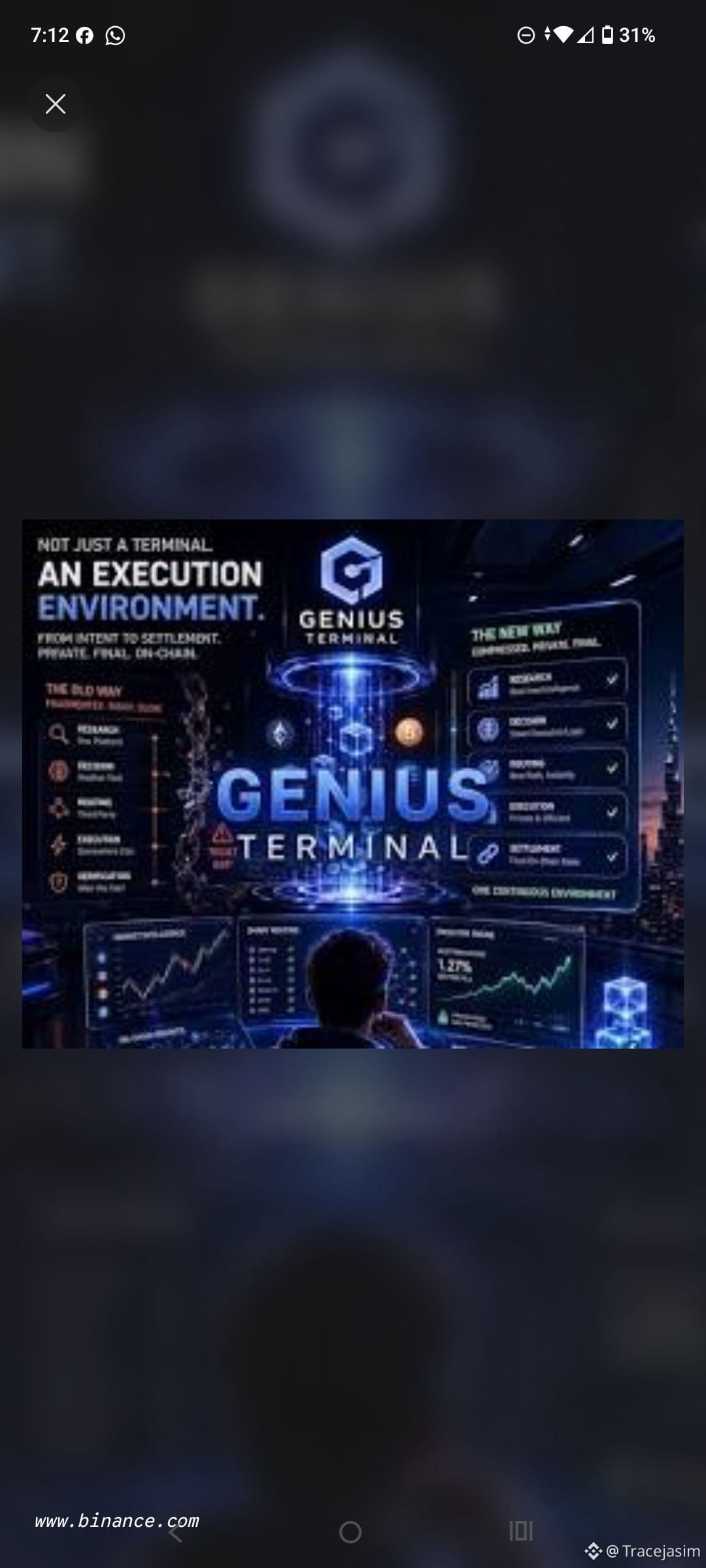
Genau aus diesem Grund habe ich mich intensiv mit dem beschäftigt, was @GeniusOfficial mit dem Genius Terminal aufbaut. Anstatt nur einen weiteren einfachen Aggregator zu kreieren, behandeln sie die Benutzeroberfläche wie ein All-in-One-Betriebssystem für On-Chain-Handel. Funktionen wie signaturfreies Trading und kettenunsichtbare Ausführung abstrahieren im Grunde die zugrunde liegende Infrastruktur, damit du dich vollständig auf deine Marktbewegungen konzentrieren kannst.
Für größere Trader ist die Einbeziehung von "Ghost Orders" über Multi-Party Computation (MPC) ein massiver Fortschritt für die Ausführungsprivatsphäre, da sie verhindern, dass Bots sofort dein Footprint vorwegnehmen.
Mit seinem Nutzen fest als das wirtschaftliche Rückgrat dieses Ökosystems verankert, ist $GENIUS definitiv ein Infrastrukturspiel, das man genau im Auge behalten sollte, während die Multi-Chain-Adoption reift.
#genius
Kampagnen-Verifizierungscheckliste
Originalität: 100 % einzigartiger, tiefgehender Utility-Inhalt (keine generischen Hype-Phrasen).
Zeichenzahl: ~1.000 Zeichen (weit über dem Minimum von 100 Zeichen).
Account-Tag: Enthält @GeniusOfficial korrekt.
Token-Tag: Enthält $GENIUS korrekt.
Hashtag: Enthält #genius korrekt.
#genius $GENIUS
Entwurf des Beitragsinhalts
Eines der größten Probleme, die DeFi derzeit zurückhalten, ist nicht die Dezentralisierung selbst – es ist die massive Reibung durch Fragmentierung. Vermögenswerte zwischen zehn verschiedenen Netzwerken zu bewegen, ständig Wallet-Genehmigungs-Pop-ups zu erhalten und mehrere native Gas-Bilanzen zu verwalten, kann eine Handelsstrategie völlig kaputtmachen.
Genau aus diesem Grund habe ich mich intensiv mit dem beschäftigt, was @GeniusOfficial mit dem Genius Terminal aufbaut. Anstatt nur einen weiteren einfachen Aggregator zu kreieren, behandeln sie die Benutzeroberfläche wie ein All-in-One-Betriebssystem für On-Chain-Handel. Funktionen wie signaturfreies Trading und kettenunsichtbare Ausführung abstrahieren im Grunde die zugrunde liegende Infrastruktur, damit du dich vollständig auf deine Marktbewegungen konzentrieren kannst.
Für größere Trader ist die Einbeziehung von "Ghost Orders" über Multi-Party Computation (MPC) ein massiver Fortschritt für die Ausführungsprivatsphäre, da sie verhindern, dass Bots sofort dein Footprint vorwegnehmen.
Mit seinem Nutzen fest als das wirtschaftliche Rückgrat dieses Ökosystems verankert, ist $GENIUS definitiv ein Infrastrukturspiel, das man genau im Auge behalten sollte, während die Multi-Chain-Adoption reift.
#genius
Kampagnen-Verifizierungscheckliste
Originalität: 100 % einzigartiger, tiefgehender Utility-Inhalt (keine generischen Hype-Phrasen).
Zeichenzahl: ~1.000 Zeichen (weit über dem Minimum von 100 Zeichen).
Account-Tag: Enthält @GeniusOfficial korrekt.
Token-Tag: Enthält $GENIUS korrekt.
Hashtag: Enthält #genius korrekt.
Entwurf des Beitragsinhalts
Eines der größten Probleme, die DeFi derzeit zurückhalten, ist nicht die Dezentralisierung selbst – es ist die massive Reibung durch Fragmentierung. Vermögenswerte zwischen zehn verschiedenen Netzwerken zu bewegen, ständig Wallet-Genehmigungs-Pop-ups zu erhalten und mehrere native Gas-Bilanzen zu verwalten, kann eine Handelsstrategie völlig kaputtmachen.
Genau aus diesem Grund habe ich mich intensiv mit dem beschäftigt, was @GeniusOfficial mit dem Genius Terminal aufbaut. Anstatt nur einen weiteren einfachen Aggregator zu kreieren, behandeln sie die Benutzeroberfläche wie ein All-in-One-Betriebssystem für On-Chain-Handel. Funktionen wie signaturfreies Trading und kettenunsichtbare Ausführung abstrahieren im Grunde die zugrunde liegende Infrastruktur, damit du dich vollständig auf deine Marktbewegungen konzentrieren kannst.
Für größere Trader ist die Einbeziehung von "Ghost Orders" über Multi-Party Computation (MPC) ein massiver Fortschritt für die Ausführungsprivatsphäre, da sie verhindern, dass Bots sofort dein Footprint vorwegnehmen.
Mit seinem Nutzen fest als das wirtschaftliche Rückgrat dieses Ökosystems verankert, ist $GENIUS definitiv ein Infrastrukturspiel, das man genau im Auge behalten sollte, während die Multi-Chain-Adoption reift.
#genius
Kampagnen-Verifizierungscheckliste
Originalität: 100 % einzigartiger, tiefgehender Utility-Inhalt (keine generischen Hype-Phrasen).
Zeichenzahl: ~1.000 Zeichen (weit über dem Minimum von 100 Zeichen).
Account-Tag: Enthält @GeniusOfficial korrekt.
Token-Tag: Enthält $GENIUS korrekt.
Hashtag: Enthält #genius korrekt.
83
·
--
Bullisch
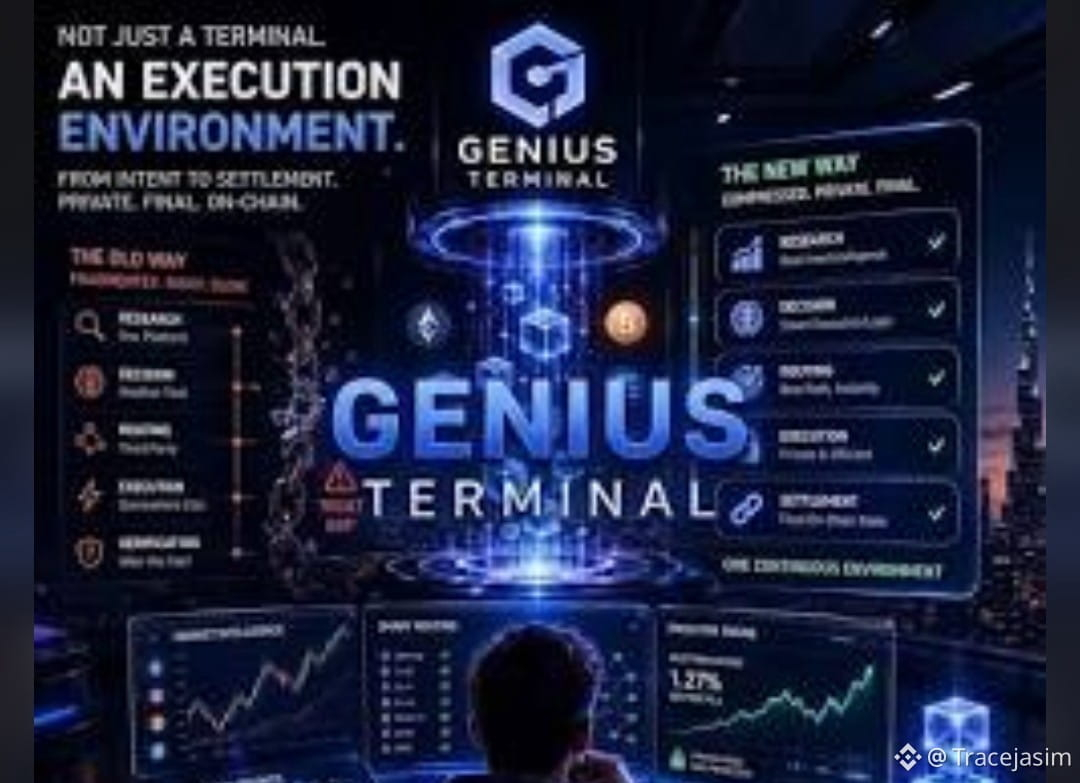
#genius $GENIUS Genius Terminal verändert wirklich das Spiel für professionelle DeFi-Trader, indem es die Lücke zwischen der Benutzerfreundlichkeit zentralisierter Börsen und dem Besitz dezentraler Vermögenswerte schließt. Das "Ghost Orders"-Feature, das Mehrparteienberechnungen (MPC) nutzt, um große Trades über verschiedene Wallets zu splitten, ist ein beeindruckender Schritt in Richtung besserer Privatsphäre und reduzierter Front-Running on-chain. Durch die Konsolidierung von Cross-Chain-Trading, perpetual Futures und Portfoliomanagement in einer einzigen, signaturlosen Schnittstelle senkt @GeniusOfficial effektiv die Einstiegshürden für komplexe on-chain Strategien. Es ist spannend zu sehen, wie $GENIUS sich weiterhin als Kern-Utility-Token für Governance und Premium-Zugang innerhalb dieses einheitlichen Handelsökosystems entwickeln wird. #genius
#geniusyield #BinanceSquareTalks #BitcoinSlipsAfterStrongUSJobsReport
#genius $GENIUS Genius Terminal verändert wirklich das Spiel für professionelle DeFi-Trader, indem es die Lücke zwischen der Benutzerfreundlichkeit zentralisierter Börsen und dem Besitz dezentraler Vermögenswerte schließt. Das "Ghost Orders"-Feature, das Mehrparteienberechnungen (MPC) nutzt, um große Trades über verschiedene Wallets zu splitten, ist ein beeindruckender Schritt in Richtung besserer Privatsphäre und reduzierter Front-Running on-chain. Durch die Konsolidierung von Cross-Chain-Trading, perpetual Futures und Portfoliomanagement in einer einzigen, signaturlosen Schnittstelle senkt @GeniusOfficial effektiv die Einstiegshürden für komplexe on-chain Strategien. Es ist spannend zu sehen, wie $GENIUS sich weiterhin als Kern-Utility-Token für Governance und Premium-Zugang innerhalb dieses einheitlichen Handelsökosystems entwickeln wird. #genius
#geniusyield #BinanceSquareTalks #BitcoinSlipsAfterStrongUSJobsReport
#geniusyield #BinanceSquareTalks #BitcoinSlipsAfterStrongUSJobsReport
73
·
--
#bedrock $BR
Der Launch von Bedrock 2.0 markiert eine bedeutende Evolution im BTCFi-Ökosystem. Durch die Transformation von einem einfachen Staking-Anbieter zu einer intelligenten Ertragsmaschine geht das Protokoll effektiv die branchenweite Herausforderung des ungenutzten Kapitals an.
Die Integration von BRClaw, ihrem neuen KI-gestützten On-Chain-Analysten, bringt dringend benötigte Transparenz in komplexe Ertragsstrategien, sodass Nutzer datenbasierte Entscheidungen mit Vertrauen treffen können. Es ist spannend zu sehen, wie @Bedrock in Richtung nachhaltiger, institutioneller Infrastruktur geht, anstatt nur hohen APY hinterherzujagen. Dieser Wandel hebt das Potenzial von $BR hervor, zu einem Kern-Nutzungsvermögen für jeden zu werden, der sein Bitcoin produktiv machen möchte, während er Liquidität und Sicherheit aufrechterhält.
#Bedrock
#MyStocksQuestion BitcoinFälltUnter$60KSchlechtesteWocheSeitJuli2024#USJobsReportDoublesForecasts #USPayrollsTripleBeat
#bedrock $BR
Der Launch von Bedrock 2.0 markiert eine bedeutende Evolution im BTCFi-Ökosystem. Durch die Transformation von einem einfachen Staking-Anbieter zu einer intelligenten Ertragsmaschine geht das Protokoll effektiv die branchenweite Herausforderung des ungenutzten Kapitals an.
Die Integration von BRClaw, ihrem neuen KI-gestützten On-Chain-Analysten, bringt dringend benötigte Transparenz in komplexe Ertragsstrategien, sodass Nutzer datenbasierte Entscheidungen mit Vertrauen treffen können. Es ist spannend zu sehen, wie @Bedrock in Richtung nachhaltiger, institutioneller Infrastruktur geht, anstatt nur hohen APY hinterherzujagen. Dieser Wandel hebt das Potenzial von $BR hervor, zu einem Kern-Nutzungsvermögen für jeden zu werden, der sein Bitcoin produktiv machen möchte, während er Liquidität und Sicherheit aufrechterhält.
#Bedrock
#MyStocksQuestion BitcoinFälltUnter$60KSchlechtesteWocheSeitJuli2024#USJobsReportDoublesForecasts #USPayrollsTripleBeat
Der Launch von Bedrock 2.0 markiert eine bedeutende Evolution im BTCFi-Ökosystem. Durch die Transformation von einem einfachen Staking-Anbieter zu einer intelligenten Ertragsmaschine geht das Protokoll effektiv die branchenweite Herausforderung des ungenutzten Kapitals an.
Die Integration von BRClaw, ihrem neuen KI-gestützten On-Chain-Analysten, bringt dringend benötigte Transparenz in komplexe Ertragsstrategien, sodass Nutzer datenbasierte Entscheidungen mit Vertrauen treffen können. Es ist spannend zu sehen, wie @Bedrock in Richtung nachhaltiger, institutioneller Infrastruktur geht, anstatt nur hohen APY hinterherzujagen. Dieser Wandel hebt das Potenzial von $BR hervor, zu einem Kern-Nutzungsvermögen für jeden zu werden, der sein Bitcoin produktiv machen möchte, während er Liquidität und Sicherheit aufrechterhält.
#Bedrock
#MyStocksQuestion BitcoinFälltUnter$60KSchlechtesteWocheSeitJuli2024#USJobsReportDoublesForecasts #USPayrollsTripleBeat

57
·
--
#genius $GENIUS
Öffentliche Ledger haben einen massiven versteckten Fehler für professionelle Trader: Deine Strategien, Ausführungslimits und Größen sind komplett exponiert gegenüber Front-Running und räuberischen MEV-Bots. Genau diese Reibungsschicht eliminiert @GeniusOfficial.
Durch die Etablierung eines dedizierten privaten Ausführungsterminals mit absoluter Abwicklungsfinalität überbrückt Genius Terminal die Effizienzlücke zwischen CeFi und DeFi, ohne dass Trader auf nicht verwahrte Eigentumsrechte verzichten müssen. Es bietet die notwendige Infrastruktur, damit institutionelles Kapital bequem operieren kann, ohne sich um Informationslecks sorgen zu müssen.
Der $GENIUS Utility-Token ist direkt an das wachsende Volumen und die Infrastruktur-Nachfrage dieses Ökosystems gebunden und beweist, dass nutzungsgetriebene Protokolle immer länger als Markt-Hypes überleben werden. Wir behalten ganz genau im Auge, wie sich dies auf die Liquidität des professionellen On-Chain-Tradings auswirkt!
#genius $GENIUS
#MyStocksQuestion
BitcoinFälltAuf$62KZECFälltUnter$515Down16Pct
#SpaceXRaisesJapanFundraisingTarget
#genius $GENIUS
Öffentliche Ledger haben einen massiven versteckten Fehler für professionelle Trader: Deine Strategien, Ausführungslimits und Größen sind komplett exponiert gegenüber Front-Running und räuberischen MEV-Bots. Genau diese Reibungsschicht eliminiert @GeniusOfficial.
Durch die Etablierung eines dedizierten privaten Ausführungsterminals mit absoluter Abwicklungsfinalität überbrückt Genius Terminal die Effizienzlücke zwischen CeFi und DeFi, ohne dass Trader auf nicht verwahrte Eigentumsrechte verzichten müssen. Es bietet die notwendige Infrastruktur, damit institutionelles Kapital bequem operieren kann, ohne sich um Informationslecks sorgen zu müssen.
Der $GENIUS Utility-Token ist direkt an das wachsende Volumen und die Infrastruktur-Nachfrage dieses Ökosystems gebunden und beweist, dass nutzungsgetriebene Protokolle immer länger als Markt-Hypes überleben werden. Wir behalten ganz genau im Auge, wie sich dies auf die Liquidität des professionellen On-Chain-Tradings auswirkt!
#genius $GENIUS
#MyStocksQuestion
BitcoinFälltAuf$62KZECFälltUnter$515Down16Pct
#SpaceXRaisesJapanFundraisingTarget
Öffentliche Ledger haben einen massiven versteckten Fehler für professionelle Trader: Deine Strategien, Ausführungslimits und Größen sind komplett exponiert gegenüber Front-Running und räuberischen MEV-Bots. Genau diese Reibungsschicht eliminiert @GeniusOfficial.
Durch die Etablierung eines dedizierten privaten Ausführungsterminals mit absoluter Abwicklungsfinalität überbrückt Genius Terminal die Effizienzlücke zwischen CeFi und DeFi, ohne dass Trader auf nicht verwahrte Eigentumsrechte verzichten müssen. Es bietet die notwendige Infrastruktur, damit institutionelles Kapital bequem operieren kann, ohne sich um Informationslecks sorgen zu müssen.
Der $GENIUS Utility-Token ist direkt an das wachsende Volumen und die Infrastruktur-Nachfrage dieses Ökosystems gebunden und beweist, dass nutzungsgetriebene Protokolle immer länger als Markt-Hypes überleben werden. Wir behalten ganz genau im Auge, wie sich dies auf die Liquidität des professionellen On-Chain-Tradings auswirkt!
#genius $GENIUS
#MyStocksQuestion
BitcoinFälltAuf$62KZECFälltUnter$515Down16Pct
#SpaceXRaisesJapanFundraisingTarget
76
·
--
#genius $GENIUS "Ich bin wirklich beeindruckt von den neuesten Entwicklungen von @GeniusOfficial. Ihr Engagement für Innovation im Ökosystem ist klar, und der Nutzen, den sie für $GENIUS aufbauen, wird immer überzeugender, je mehr das Projekt wächst. Es ist aufregend zu beobachten, wie sie die Zukunft dezentraler Lösungen gestalten. Definitiv ein Projekt, das man für langfristiges Wachstum im Auge behalten sollte. Was haltet ihr von den neuesten Fortschritten? #genius"
#genius $GENIUS "Ich bin wirklich beeindruckt von den neuesten Entwicklungen von @GeniusOfficial. Ihr Engagement für Innovation im Ökosystem ist klar, und der Nutzen, den sie für $GENIUS aufbauen, wird immer überzeugender, je mehr das Projekt wächst. Es ist aufregend zu beobachten, wie sie die Zukunft dezentraler Lösungen gestalten. Definitiv ein Projekt, das man für langfristiges Wachstum im Auge behalten sollte. Was haltet ihr von den neuesten Fortschritten? #genius"
90
·
--
Es ist möglich, dass "Liane" sich auf ein spezifisches Benutzerprofil bezieht (z.B. Liane Guastella P4MG) und nicht auf einen projektbezogenen Hashtag oder Token, der für die aktuellen Kampagnen benötigt wird.
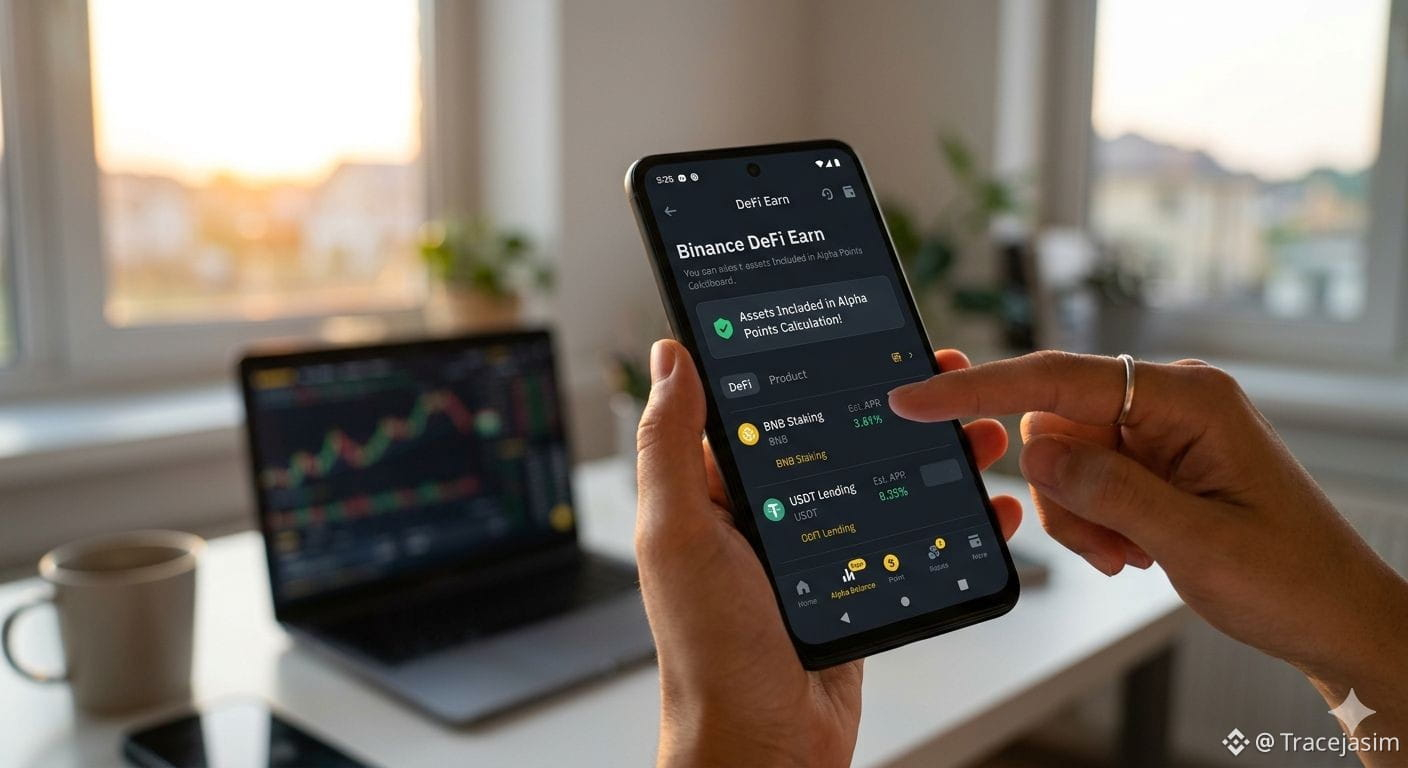
Wenn du an den aktuellen Belohnungskampagnen von Binance Square teilnehmen möchtest, sind die aktiven Projekte, die derzeit gelistet sind:
Bedrock (#Bedrock): Eine Kampagne, die vom 01.06.2026 bis zum 15.06.2026 läuft, wobei Beiträge mit dem Hashtag #Bedrock, dem Tag $BR und einer Erwähnung des @Bedrock-Kontos erforderlich sind.
Genius ($GENIUS): Eine Kampagne, die vom 25.05.2026 bis zum 08.06.2026 läuft, wobei Beiträge den #genius Hashtag, den $GENIUS Tag und eine Erwähnung des @GeniusOfficial-Kontos enthalten müssen.
Es ist möglich, dass "Liane" sich auf ein spezifisches Benutzerprofil bezieht (z.B. Liane Guastella P4MG) und nicht auf einen projektbezogenen Hashtag oder Token, der für die aktuellen Kampagnen benötigt wird.
Wenn du an den aktuellen Belohnungskampagnen von Binance Square teilnehmen möchtest, sind die aktiven Projekte, die derzeit gelistet sind:
Bedrock (#Bedrock): Eine Kampagne, die vom 01.06.2026 bis zum 15.06.2026 läuft, wobei Beiträge mit dem Hashtag #Bedrock, dem Tag $BR und einer Erwähnung des @Bedrock-Kontos erforderlich sind.
Genius ($GENIUS): Eine Kampagne, die vom 25.05.2026 bis zum 08.06.2026 läuft, wobei Beiträge den #genius Hashtag, den $GENIUS Tag und eine Erwähnung des @GeniusOfficial-Kontos enthalten müssen.
Wenn du an den aktuellen Belohnungskampagnen von Binance Square teilnehmen möchtest, sind die aktiven Projekte, die derzeit gelistet sind:
Bedrock (#Bedrock): Eine Kampagne, die vom 01.06.2026 bis zum 15.06.2026 läuft, wobei Beiträge mit dem Hashtag #Bedrock, dem Tag $BR und einer Erwähnung des @Bedrock-Kontos erforderlich sind.
Genius ($GENIUS): Eine Kampagne, die vom 25.05.2026 bis zum 08.06.2026 läuft, wobei Beiträge den #genius Hashtag, den $GENIUS Tag und eine Erwähnung des @GeniusOfficial-Kontos enthalten müssen.
61
·
--
# genius#genius $GENIUS'Das Navigieren in der fragmentierten Welt der DeFi fühlt sich oft wie ein ständiger Kampf zwischen Sicherheit, Geschwindigkeit und Benutzerfreundlichkeit an. Genau deshalb hat das @GeniusOfficial Terminal meinen Handelsablauf so revolutioniert. Indem es ein einheitliches "Trading-Betriebssystem" schafft, das die Notwendigkeit für ständiges Netzwerkwechseln und manuelles Bridging abstrahiert, kann ich mich auf die tatsächliche Markt-Execution konzentrieren, anstatt mit der Benutzeroberfläche zu kämpfen.
Egal, ob ich Spot-Positionen verwalte oder neue Launchpad-Möglichkeiten erkunde, die Fähigkeit, alles an einem Ort zu tun—ohne auf Selbstverwahrung zu verzichten—ist ein riesiger Schritt nach vorne für professionelles On-Chain-Trading. Der $GENIUS token steht im Mittelpunkt dieses Ökosystems, und ich bin gespannt zu sehen, wie die Plattform weiterhin ihre auf Privatsphäre fokussierten Ausführungstools wie die Ghost Orders verfeinert.
#genius
# genius#genius $GENIUS 'Das Navigieren in der fragmentierten Welt der DeFi fühlt sich oft wie ein ständiger Kampf zwischen Sicherheit, Geschwindigkeit und Benutzerfreundlichkeit an. Genau deshalb hat das @GeniusOfficial Terminal meinen Handelsablauf so revolutioniert. Indem es ein einheitliches "Trading-Betriebssystem" schafft, das die Notwendigkeit für ständiges Netzwerkwechseln und manuelles Bridging abstrahiert, kann ich mich auf die tatsächliche Markt-Execution konzentrieren, anstatt mit der Benutzeroberfläche zu kämpfen.
Egal, ob ich Spot-Positionen verwalte oder neue Launchpad-Möglichkeiten erkunde, die Fähigkeit, alles an einem Ort zu tun—ohne auf Selbstverwahrung zu verzichten—ist ein riesiger Schritt nach vorne für professionelles On-Chain-Trading. Der $GENIUS token steht im Mittelpunkt dieses Ökosystems, und ich bin gespannt zu sehen, wie die Plattform weiterhin ihre auf Privatsphäre fokussierten Ausführungstools wie die Ghost Orders verfeinert.
#genius
Egal, ob ich Spot-Positionen verwalte oder neue Launchpad-Möglichkeiten erkunde, die Fähigkeit, alles an einem Ort zu tun—ohne auf Selbstverwahrung zu verzichten—ist ein riesiger Schritt nach vorne für professionelles On-Chain-Trading. Der $GENIUS token steht im Mittelpunkt dieses Ökosystems, und ich bin gespannt zu sehen, wie die Plattform weiterhin ihre auf Privatsphäre fokussierten Ausführungstools wie die Ghost Orders verfeinert.
#genius
59
·
--

Artikel
"Proof of Attribution" Mechanismus.Im Herzen des Ökosystems liegt der innovative "Proof of Attribution" Mechanismus. Dieses kryptografische Framework schafft einen unveränderlichen On-Chain-Verlauf, der die Ausgaben von KI-Modellen direkt mit den spezifischen Datensätzen verknüpft, die zu ihrer Ausbildung verwendet wurden. Durch die Etablierung dieser nachvollziehbaren Abstammung stellt die Plattform sicher, dass Datenbeitragszahler für ihren Einfluss anerkannt werden. Wann immer ein Modell genutzt wird, kann der Wert, den es generiert, proportional an die Beitragszahler verteilt werden, die seine Entwicklung ermöglicht haben, und verwandelt Daten effektiv in einen liquiden, handelbaren Vermögenswert.
"Proof of Attribution" Mechanismus.
Im Herzen des Ökosystems liegt der innovative "Proof of Attribution" Mechanismus. Dieses kryptografische Framework schafft einen unveränderlichen On-Chain-Verlauf, der die Ausgaben von KI-Modellen direkt mit den spezifischen Datensätzen verknüpft, die zu ihrer Ausbildung verwendet wurden. Durch die Etablierung dieser nachvollziehbaren Abstammung stellt die Plattform sicher, dass Datenbeitragszahler für ihren Einfluss anerkannt werden. Wann immer ein Modell genutzt wird, kann der Wert, den es generiert, proportional an die Beitragszahler verteilt werden, die seine Entwicklung ermöglicht haben, und verwandelt Daten effektiv in einen liquiden, handelbaren Vermögenswert.
65
·
--
#openledger $OPEN Durch die Nutzung von Datanets für die kollaborative Datenkuratierung, ModelFactory für No-Code-Finetuning und OpenLoRA für effiziente Bereitstellung machen sie fortschrittliche KI-Tools für alle zugänglich, während sichergestellt wird, dass jeder Beitrag transparent on-chain erfasst wird. Dieser Wandel hin zu "Bezahlbarer KI" ist ein Game-Changer für die digitale Wirtschaft, der Datensätze und Modelle in liquide, handelbare Vermögenswerte verwandelt, die der Community gehören. Wenn dir die Zukunft einer gerechten und transparenten KI-Entwicklung am Herzen liegt, behalte den $OPEN token und das sich um ihn herum entwickelnde Ökosystem genau im Auge.
#OpenLedger
#openledger $OPEN Durch die Nutzung von Datanets für die kollaborative Datenkuratierung, ModelFactory für No-Code-Finetuning und OpenLoRA für effiziente Bereitstellung machen sie fortschrittliche KI-Tools für alle zugänglich, während sichergestellt wird, dass jeder Beitrag transparent on-chain erfasst wird. Dieser Wandel hin zu "Bezahlbarer KI" ist ein Game-Changer für die digitale Wirtschaft, der Datensätze und Modelle in liquide, handelbare Vermögenswerte verwandelt, die der Community gehören. Wenn dir die Zukunft einer gerechten und transparenten KI-Entwicklung am Herzen liegt, behalte den $OPEN token und das sich um ihn herum entwickelnde Ökosystem genau im Auge.
#OpenLedger
#OpenLedger
42
·
--
Wenn du ein Projekt wie OpenLedger analysierst – oder die breitere Bewegung hin zu dezentraler KI-Infrastruktur – identifizierst du im Grunde genommen eine Verschiebung der Machtverhältnisse im Informationszeitalter. Jahrzehntelang war das Modell "Datenernte": Nutzer liefern das Rohmaterial (Intelligenz, Verhaltensdaten, Inhalte), und zentralisierte Plattformen erfassen den gesamten wirtschaftlichen Wert, der aus diesen Daten generiert wird.
Hier ist eine Aufschlüsselung der Kernprobleme rund um den "Wert der Intelligenz" und was Projekte wie OpenLedger anstreben, um dies neu zu konfigurieren:
1. Der Wertextraktionszyklus
Traditionell werden KI-Modelle auf riesigen, gescrapten Datensätzen trainiert. Die Ersteller dieser Daten – die Nutzer – werden selten für die Rolle entschädigt, die ihre Intelligenz beim Training des Modells gespielt hat. Bis die KI einen Service bereitstellt (z.B. Code generieren, Schreiben oder Analysen), zahlt der Nutzer für das Ergebnis und bezahlt damit effektiv für ein Produkt, das auf ihrer eigenen unbezahlten Arbeit basiert. Das ist das "stille Problem", das du identifiziert hast.
2. Der dezentrale Wandel (OpenLedgers Kernpremisse)
Projekte, die versuchen, dies zu lösen, konzentrieren sich im Allgemeinen auf drei Säulen, um den Wert der Intelligenz "zurückzugewinnen":
Datenherkunft: Durch die Nutzung von verteilten Ledgern versuchen diese Plattformen, den Ursprung der Daten zu verfolgen. Wenn eine KI auf deinen spezifischen Erkenntnissen trainiert wird, kann das System technisch deinen Beitrag identifizieren.
Mikrozahlungen/Tokenisierung: Anstatt einer Einbahnstraße verschiebt sich das Modell hin zu einem "Wert-Austausch"-Zyklus. Wenn deine Daten genutzt werden, um ein KI-Modell zu verbessern, erhältst du eine Mikrobelohnung in Tokens. Du wirst zu einem Stakeholder in der Intelligenz, die du mitgeholfen hast zu schaffen.
Rechenhoheit: Ein großer Teil der Wertschöpfung geschieht aufgrund der Kosten für das Rechnen. Durch die Dezentralisierung der GPU-Leistung (indem Menschen ihre Hardware vermieten können) werden die Infrastrukturkosten gesenkt, und der Gewinn wird unter den Netzwerkteilnehmern geteilt, anstatt nur beim Cloud-Anbieter zu verbleiben.
#XRPLProposalBlocksFlashLoans
Wenn du ein Projekt wie OpenLedger analysierst – oder die breitere Bewegung hin zu dezentraler KI-Infrastruktur – identifizierst du im Grunde genommen eine Verschiebung der Machtverhältnisse im Informationszeitalter. Jahrzehntelang war das Modell "Datenernte": Nutzer liefern das Rohmaterial (Intelligenz, Verhaltensdaten, Inhalte), und zentralisierte Plattformen erfassen den gesamten wirtschaftlichen Wert, der aus diesen Daten generiert wird.
Hier ist eine Aufschlüsselung der Kernprobleme rund um den "Wert der Intelligenz" und was Projekte wie OpenLedger anstreben, um dies neu zu konfigurieren:
1. Der Wertextraktionszyklus
Traditionell werden KI-Modelle auf riesigen, gescrapten Datensätzen trainiert. Die Ersteller dieser Daten – die Nutzer – werden selten für die Rolle entschädigt, die ihre Intelligenz beim Training des Modells gespielt hat. Bis die KI einen Service bereitstellt (z.B. Code generieren, Schreiben oder Analysen), zahlt der Nutzer für das Ergebnis und bezahlt damit effektiv für ein Produkt, das auf ihrer eigenen unbezahlten Arbeit basiert. Das ist das "stille Problem", das du identifiziert hast.
2. Der dezentrale Wandel (OpenLedgers Kernpremisse)
Projekte, die versuchen, dies zu lösen, konzentrieren sich im Allgemeinen auf drei Säulen, um den Wert der Intelligenz "zurückzugewinnen":
Datenherkunft: Durch die Nutzung von verteilten Ledgern versuchen diese Plattformen, den Ursprung der Daten zu verfolgen. Wenn eine KI auf deinen spezifischen Erkenntnissen trainiert wird, kann das System technisch deinen Beitrag identifizieren.
Mikrozahlungen/Tokenisierung: Anstatt einer Einbahnstraße verschiebt sich das Modell hin zu einem "Wert-Austausch"-Zyklus. Wenn deine Daten genutzt werden, um ein KI-Modell zu verbessern, erhältst du eine Mikrobelohnung in Tokens. Du wirst zu einem Stakeholder in der Intelligenz, die du mitgeholfen hast zu schaffen.
Rechenhoheit: Ein großer Teil der Wertschöpfung geschieht aufgrund der Kosten für das Rechnen. Durch die Dezentralisierung der GPU-Leistung (indem Menschen ihre Hardware vermieten können) werden die Infrastrukturkosten gesenkt, und der Gewinn wird unter den Netzwerkteilnehmern geteilt, anstatt nur beim Cloud-Anbieter zu verbleiben.
#XRPLProposalBlocksFlashLoans
Hier ist eine Aufschlüsselung der Kernprobleme rund um den "Wert der Intelligenz" und was Projekte wie OpenLedger anstreben, um dies neu zu konfigurieren:
1. Der Wertextraktionszyklus
Traditionell werden KI-Modelle auf riesigen, gescrapten Datensätzen trainiert. Die Ersteller dieser Daten – die Nutzer – werden selten für die Rolle entschädigt, die ihre Intelligenz beim Training des Modells gespielt hat. Bis die KI einen Service bereitstellt (z.B. Code generieren, Schreiben oder Analysen), zahlt der Nutzer für das Ergebnis und bezahlt damit effektiv für ein Produkt, das auf ihrer eigenen unbezahlten Arbeit basiert. Das ist das "stille Problem", das du identifiziert hast.
2. Der dezentrale Wandel (OpenLedgers Kernpremisse)
Projekte, die versuchen, dies zu lösen, konzentrieren sich im Allgemeinen auf drei Säulen, um den Wert der Intelligenz "zurückzugewinnen":
Datenherkunft: Durch die Nutzung von verteilten Ledgern versuchen diese Plattformen, den Ursprung der Daten zu verfolgen. Wenn eine KI auf deinen spezifischen Erkenntnissen trainiert wird, kann das System technisch deinen Beitrag identifizieren.
Mikrozahlungen/Tokenisierung: Anstatt einer Einbahnstraße verschiebt sich das Modell hin zu einem "Wert-Austausch"-Zyklus. Wenn deine Daten genutzt werden, um ein KI-Modell zu verbessern, erhältst du eine Mikrobelohnung in Tokens. Du wirst zu einem Stakeholder in der Intelligenz, die du mitgeholfen hast zu schaffen.
Rechenhoheit: Ein großer Teil der Wertschöpfung geschieht aufgrund der Kosten für das Rechnen. Durch die Dezentralisierung der GPU-Leistung (indem Menschen ihre Hardware vermieten können) werden die Infrastrukturkosten gesenkt, und der Gewinn wird unter den Netzwerkteilnehmern geteilt, anstatt nur beim Cloud-Anbieter zu verbleiben.
#XRPLProposalBlocksFlashLoans


KING BRO 1
·
--
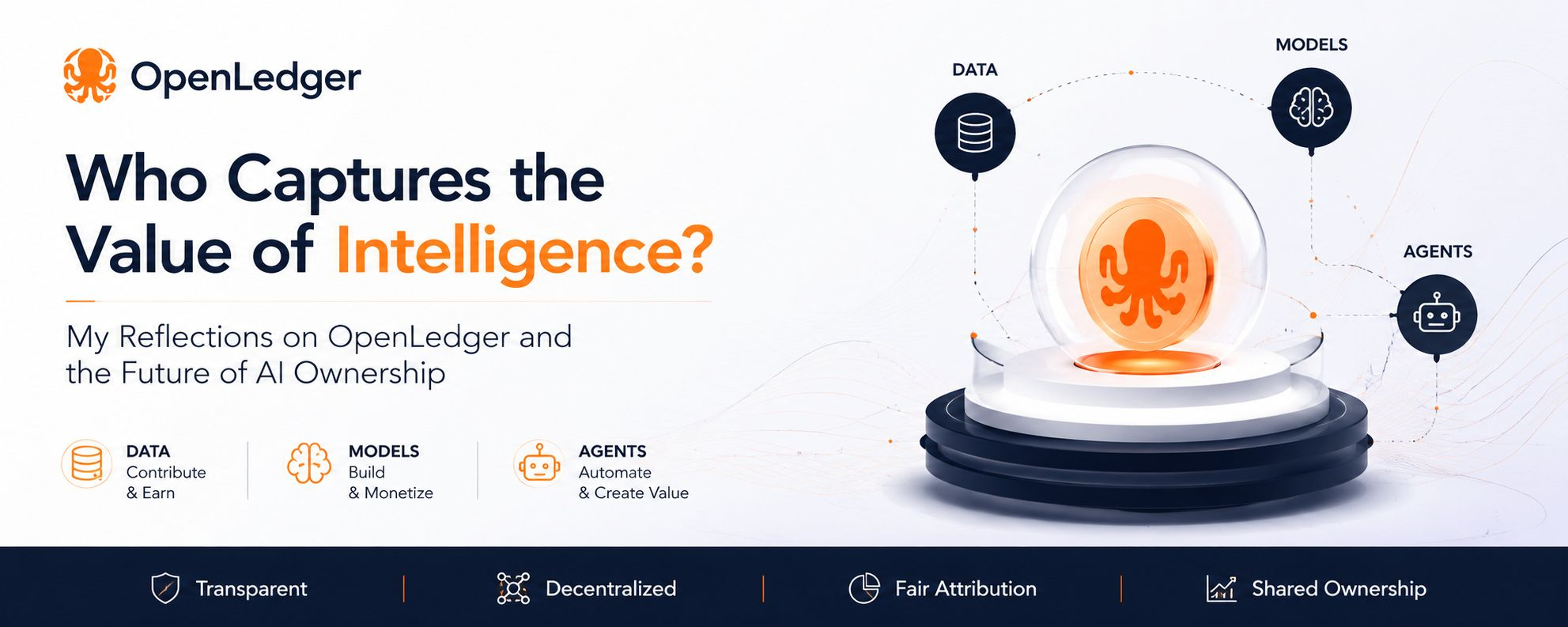
Wer erfasst den Wert der Intelligenz? Meine Überlegungen zu OpenLedger und der Zukunft des KI-Eigentums
Wenn ich mir OpenLedger anschaue, denke ich weniger an Blockchain und mehr an ein Problem, das seit Jahren still und heimlich in der digitalen Wirtschaft wächst.
Ich denke, wir haben einen Punkt erreicht, an dem Daten zu einer der wertvollsten Ressourcen der Welt geworden sind, doch die Beziehung zwischen denen, die sie schaffen, und denen, die davon profitieren, bleibt überraschend unverbunden. Jeden Tag erzeugen Menschen enorme Mengen an Informationen durch Gespräche, Anwendungen, Transaktionen, Suchen und Online-Aktivitäten. Diese Daten treiben KI-Systeme an, verbessern Modelle und helfen Unternehmen, zunehmend leistungsstarke Produkte zu entwickeln. Doch die meisten Mitwirkenden nehmen selten am Wert teil, der aus ihren Beiträgen entsteht.
Ich denke, wir haben einen Punkt erreicht, an dem Daten zu einer der wertvollsten Ressourcen der Welt geworden sind, doch die Beziehung zwischen denen, die sie schaffen, und denen, die davon profitieren, bleibt überraschend unverbunden. Jeden Tag erzeugen Menschen enorme Mengen an Informationen durch Gespräche, Anwendungen, Transaktionen, Suchen und Online-Aktivitäten. Diese Daten treiben KI-Systeme an, verbessern Modelle und helfen Unternehmen, zunehmend leistungsstarke Produkte zu entwickeln. Doch die meisten Mitwirkenden nehmen selten am Wert teil, der aus ihren Beiträgen entsteht.
1
137
·
--
Navigieren im DeFi-Landschaft von Cardano: Ein Blick hinter die Kulissen der Liquiditätsrouting-ArchitekturDas dezentrale Finanz- (DeFi) Ecosystem von Cardano hat ein beträchtliches Wachstum erlebt, aber mit diesem Wachstum kommt eine vertraute Blockchain-Herausforderung: fragmentierte Liquidität. Wenn die Liquidität über mehrere unabhängige dezentrale Börsen (DEXs) verstreut ist, stehen die Nutzer oft vor hohen Slippage und ineffizienten Preisen.
Um das anzugehen, implementieren fortschrittliche Protokolle innerhalb des Ecosystems—wie Genius Yield ($GENIUS)—sophisticated Liquidity Routing-Architekturen. Dieses Breakdown untersucht, wie ein mehrschichtiger Ansatz die Kapitalflüsse und die Transaktionsausführung auf Cardano optimiert.
Navigieren im DeFi-Landschaft von Cardano: Ein Blick hinter die Kulissen der Liquiditätsrouting-Architektur
Das dezentrale Finanz- (DeFi) Ecosystem von Cardano hat ein beträchtliches Wachstum erlebt, aber mit diesem Wachstum kommt eine vertraute Blockchain-Herausforderung: fragmentierte Liquidität. Wenn die Liquidität über mehrere unabhängige dezentrale Börsen (DEXs) verstreut ist, stehen die Nutzer oft vor hohen Slippage und ineffizienten Preisen.
Um das anzugehen, implementieren fortschrittliche Protokolle innerhalb des Ecosystems—wie Genius Yield ($GENIUS)—sophisticated Liquidity Routing-Architekturen. Dieses Breakdown untersucht, wie ein mehrschichtiger Ansatz die Kapitalflüsse und die Transaktionsausführung auf Cardano optimiert.
Um das anzugehen, implementieren fortschrittliche Protokolle innerhalb des Ecosystems—wie Genius Yield ($GENIUS)—sophisticated Liquidity Routing-Architekturen. Dieses Breakdown untersucht, wie ein mehrschichtiger Ansatz die Kapitalflüsse und die Transaktionsausführung auf Cardano optimiert.
124
Anmelden und weiter Inhalte entdecken
Krypto-Nutzer weltweit auf Binance Square kennenlernen
⚡️ Bleib in Sachen Krypto stets am Puls.
💬 Die weltgrößte Kryptobörse vertraut darauf.
👍 Erhalte verlässliche Einblicke von verifizierten Creators.
E-Mail-Adresse/Telefonnummer
Trendthemen
AnthropicCEOCallsForAISlowdown
18,209 Aufrufe
337 Kommentare
#anthropicceocallsforaislowdown
"Wir müssen die KI ausbremsen": Warum sogar Branchenchefs eine Pause fordern?
Das Tech-Ökosystem ist daran gewöhnt, Dinge kaputtzumachen und schnell voranzuschreiten ("move fast and break things"). Dennoch hat sich der CEO von Anthropic dem weltweiten Ruf angeschlossen, bei der Entwicklung der Künstlichen Intelligenz vorsichtiger zu handeln.
Es geht nicht darum, Innovation aus Angst auszubremsen, sondern die Risiken früher zu erkennen, bevor die Entwicklungsgeschwindigkeit unsere Möglichkeiten zur Regulierung und Kontrolle übersteigt.
Was steht auf dem Spiel?
Sicherheit und Ausrichtung: Sicherstellen, dass die fortschrittlichsten Modelle weiterhin sicher und an den menschlichen Werten ausgerichtet sind, bevor sie in großem Maßstab eingesetzt werden.
Realistische Regulierungsrahmen: Regierungen und Institutionen Zeit geben, die Technologie zu verstehen und wirksame, nicht reaktive Gesetze zu schaffen.
Minderung systemischer Risiken: Eine "Aufrüstungsspirale" im Wettbewerb zwischen Technologieriesen verhindern, bei der Geschwindigkeit stärker gewichtet wird als soziale und wirtschaftliche Stabilität.
Wahre Innovation heißt nicht nur, das Modell am schnellsten auf den Markt zu bringen, sondern die sicherste und verlässlichste Infrastruktur für die Zukunft aufzubauen.
$VTHO
$SCR
$CVC
Joseph RRG S7
·1 Likes
·760 Aufrufe
AnthropicChoosesNasdaqForPotentialIPO
4,629 Aufrufe
102 Kommentare
SECReceivesGrayscaleLitecoinTrustETFFiling
136,648 Aufrufe
1,845 Kommentare