

BROKEN 1
12.6k Beiträge

BROKEN 1
 Square Verified+
Melden
Nutzer blockieren
Pro crypto Trader BROKEN 💔
Trade eröffnen
Regelmäßiger Trader
1.1 Jahre
4 Following
29.9K+ Follower
12.8K+ Like gegeben
Beiträge
Portfolio
Alle
Zitierungen
Live
·
--
Bullisch
$XRP zeigt gerade ernsthaftes Momentum, und ich bin gespannt, wie sich dieses Setup entwickelt. Das Projekt hinter XRP wurde entwickelt, um globale Zahlungen schneller, günstiger und reibungsloser für alle zu gestalten. Anstatt Tage auf internationale Überweisungen zu warten, konzentriert sich das System darauf, Geld innerhalb von Sekunden durch Blockchain-Technologie zu bewegen. Das ist die Kernaussage, die dieses Projekt im Krypto-Raum hervorhebt.
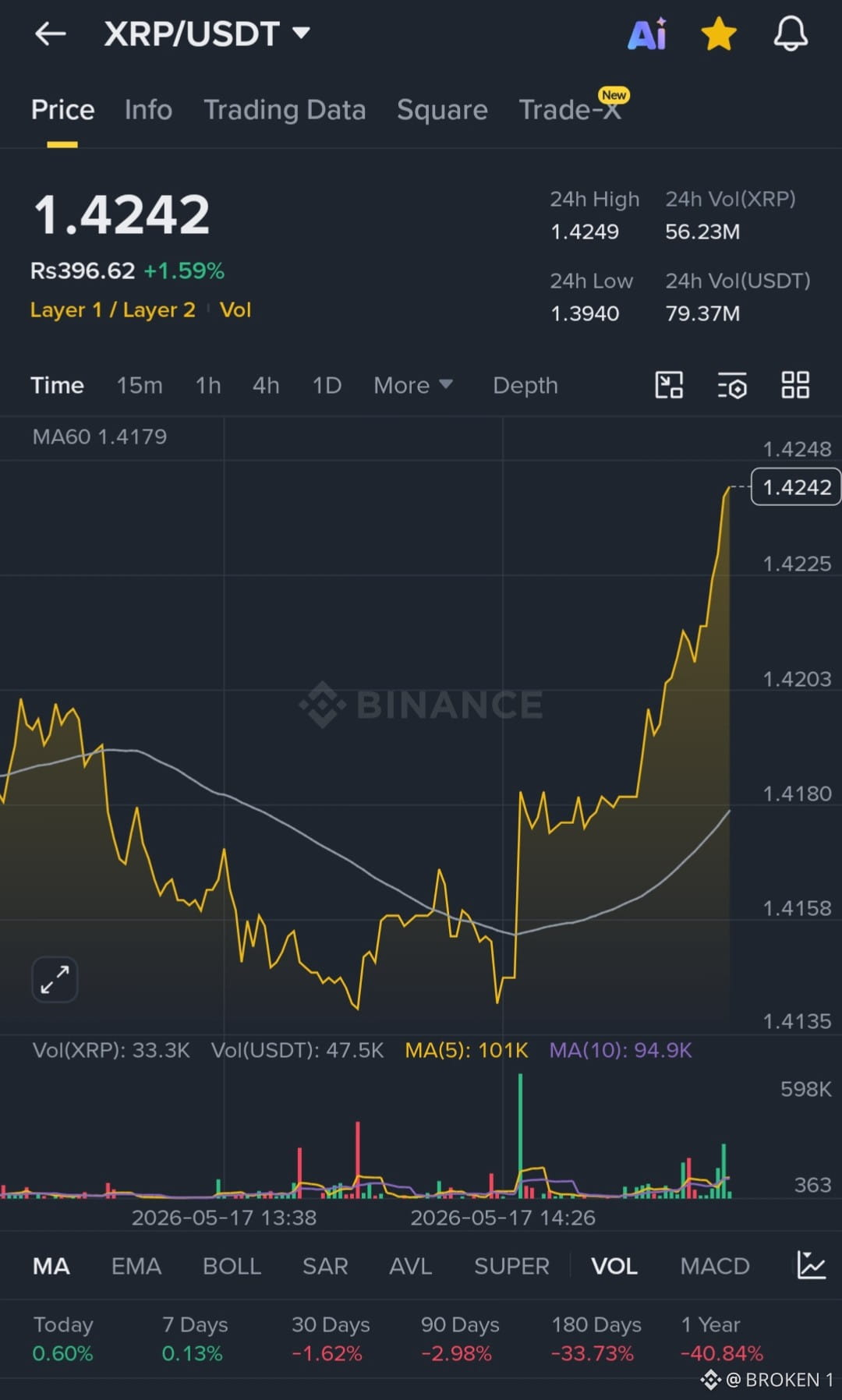
In diesem letzten Marktmove hat XRP/USDT stark in Richtung der 1.424er-Marke gedrückt, mit steigendem Kaufdruck und zunehmendem Volumen. Die Velas zeigen, dass das Vertrauen zurückkehrt, während Trader nach der Konsolidierung eingestiegen sind. Sie beobachten den Ausbruch genau, denn Momentum und Volumen zusammen signalisieren oft ein stärkeres Marktinteresse. Die gleitenden Durchschnitte drehen sich ebenfalls nach oben, was der aktuellen Trendrichtung zusätzliche Energie verleiht.
Was XRP spannend macht, ist sein realer Zweck. Das Netzwerk zielt darauf ab, Banken, Unternehmen und Nutzer durch schnelle digitale Transaktionen ohne traditionelle Verzögerungen zu verbinden. Ich beobachte dieses Projekt, weil es Nutzen, Geschwindigkeit und wachsende Marktaufmerksamkeit zu einem kraftvollen Ökosystem vereint.
{spot}(XRPUSDT)
$XRP zeigt gerade ernsthaftes Momentum, und ich bin gespannt, wie sich dieses Setup entwickelt. Das Projekt hinter XRP wurde entwickelt, um globale Zahlungen schneller, günstiger und reibungsloser für alle zu gestalten. Anstatt Tage auf internationale Überweisungen zu warten, konzentriert sich das System darauf, Geld innerhalb von Sekunden durch Blockchain-Technologie zu bewegen. Das ist die Kernaussage, die dieses Projekt im Krypto-Raum hervorhebt.
In diesem letzten Marktmove hat XRP/USDT stark in Richtung der 1.424er-Marke gedrückt, mit steigendem Kaufdruck und zunehmendem Volumen. Die Velas zeigen, dass das Vertrauen zurückkehrt, während Trader nach der Konsolidierung eingestiegen sind. Sie beobachten den Ausbruch genau, denn Momentum und Volumen zusammen signalisieren oft ein stärkeres Marktinteresse. Die gleitenden Durchschnitte drehen sich ebenfalls nach oben, was der aktuellen Trendrichtung zusätzliche Energie verleiht.
Was XRP spannend macht, ist sein realer Zweck. Das Netzwerk zielt darauf ab, Banken, Unternehmen und Nutzer durch schnelle digitale Transaktionen ohne traditionelle Verzögerungen zu verbinden. Ich beobachte dieses Projekt, weil es Nutzen, Geschwindigkeit und wachsende Marktaufmerksamkeit zu einem kraftvollen Ökosystem vereint.
In diesem letzten Marktmove hat XRP/USDT stark in Richtung der 1.424er-Marke gedrückt, mit steigendem Kaufdruck und zunehmendem Volumen. Die Velas zeigen, dass das Vertrauen zurückkehrt, während Trader nach der Konsolidierung eingestiegen sind. Sie beobachten den Ausbruch genau, denn Momentum und Volumen zusammen signalisieren oft ein stärkeres Marktinteresse. Die gleitenden Durchschnitte drehen sich ebenfalls nach oben, was der aktuellen Trendrichtung zusätzliche Energie verleiht.
Was XRP spannend macht, ist sein realer Zweck. Das Netzwerk zielt darauf ab, Banken, Unternehmen und Nutzer durch schnelle digitale Transaktionen ohne traditionelle Verzögerungen zu verbinden. Ich beobachte dieses Projekt, weil es Nutzen, Geschwindigkeit und wachsende Marktaufmerksamkeit zu einem kraftvollen Ökosystem vereint.
2
214
·
--
Bullisch
$POLYX gewinnt frisches Momentum im Blockchain-Sektor, während Trader weiterhin die starken Breakout-Aktivitäten und die wachsende Layer 1 und Layer 2 Ökosystempräsenz beobachten. Ich bemerke zunehmendes Interesse an dem Projekt, da sie sich darauf konzentrieren, regulierte digitale Assets und echte finanzielle Infrastruktur auf eine skalierbare und konforme Weise auf die Blockchain-Technologie zu bringen.
Das System hinter POLYX ist darauf ausgelegt, Sicherheitstoken, Asset-Tokenisierung und institutionelle Blockchain-Operationen zu unterstützen, während Effizienz und Transparenz gewahrt bleiben. Sie bauen ein Ökosystem auf, in dem Unternehmen und Investoren sicherer mit tokenisierten Assets interagieren können, ohne vollständig auf traditionelle Finanzsysteme angewiesen zu sein.
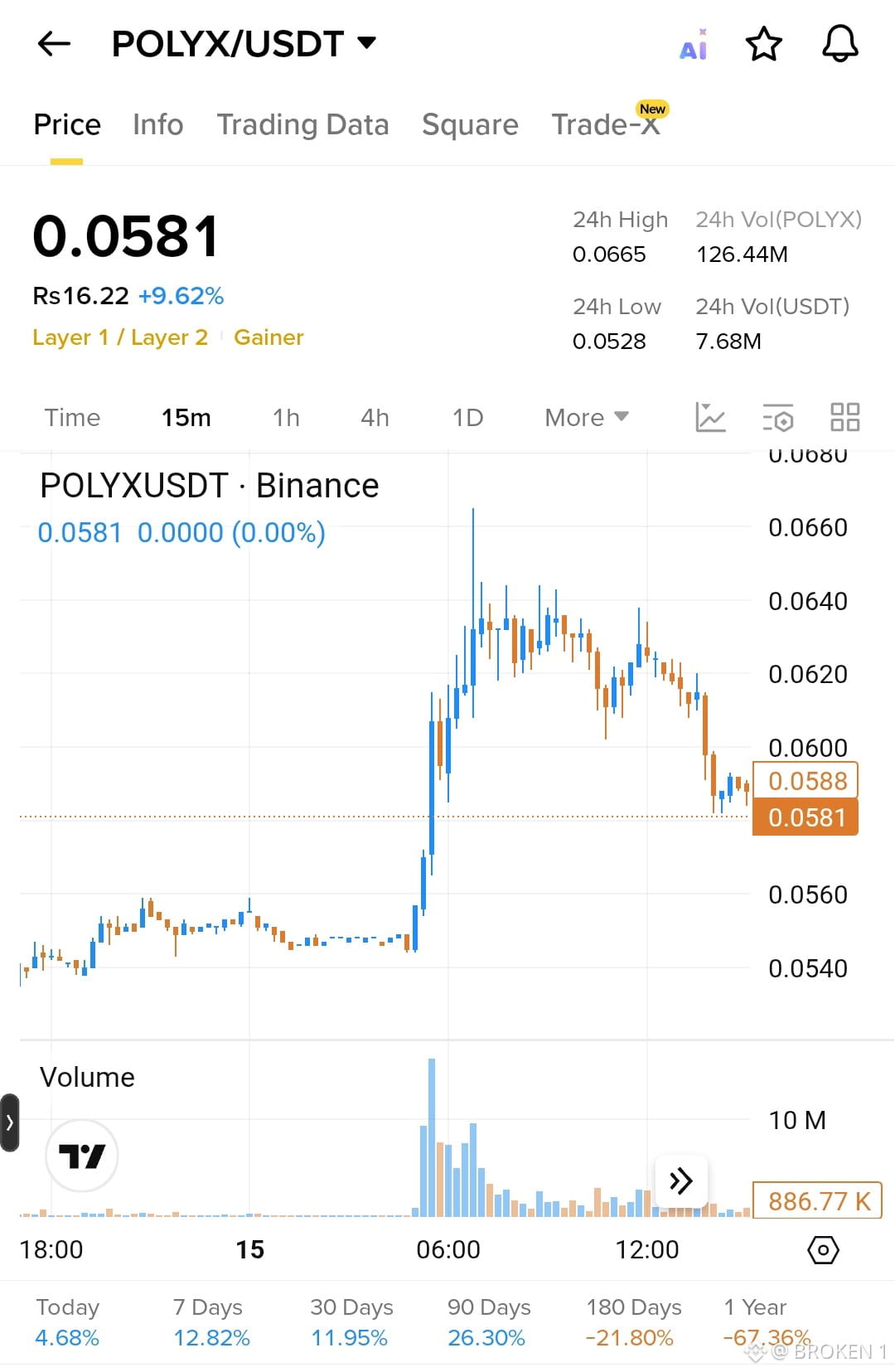
Aktuelle Marktaktivitäten zeigen, dass POLYX nahe dem $0.058 Niveau gehandelt wird, nachdem ein starker Anstieg den Preis zuvor in den Bereich von $0.066 gedrückt hat. Das Handelsvolumen hat während des Breakouts schnell zugenommen, was auf eine aggressive Käuferbeteiligung und starken kurzfristigen Momentum im gesamten Markt hinweist.
Was POLYX hervorhebt, ist der Fokus des Projekts auf die Kombination von Blockchain-Innovation mit echtem finanziellen Nutzen. Sie ziehen weiterhin die Aufmerksamkeit von Tradern und langfristigen Beobachtern an, die nach Projekten suchen, die mit der Zukunft der tokenisierten Finanzen und regulierten digitalen Assets verbunden sind.
{spot}(POLYXUSDT)
$POLYX gewinnt frisches Momentum im Blockchain-Sektor, während Trader weiterhin die starken Breakout-Aktivitäten und die wachsende Layer 1 und Layer 2 Ökosystempräsenz beobachten. Ich bemerke zunehmendes Interesse an dem Projekt, da sie sich darauf konzentrieren, regulierte digitale Assets und echte finanzielle Infrastruktur auf eine skalierbare und konforme Weise auf die Blockchain-Technologie zu bringen.
Das System hinter POLYX ist darauf ausgelegt, Sicherheitstoken, Asset-Tokenisierung und institutionelle Blockchain-Operationen zu unterstützen, während Effizienz und Transparenz gewahrt bleiben. Sie bauen ein Ökosystem auf, in dem Unternehmen und Investoren sicherer mit tokenisierten Assets interagieren können, ohne vollständig auf traditionelle Finanzsysteme angewiesen zu sein.
Aktuelle Marktaktivitäten zeigen, dass POLYX nahe dem $0.058 Niveau gehandelt wird, nachdem ein starker Anstieg den Preis zuvor in den Bereich von $0.066 gedrückt hat. Das Handelsvolumen hat während des Breakouts schnell zugenommen, was auf eine aggressive Käuferbeteiligung und starken kurzfristigen Momentum im gesamten Markt hinweist.
Was POLYX hervorhebt, ist der Fokus des Projekts auf die Kombination von Blockchain-Innovation mit echtem finanziellen Nutzen. Sie ziehen weiterhin die Aufmerksamkeit von Tradern und langfristigen Beobachtern an, die nach Projekten suchen, die mit der Zukunft der tokenisierten Finanzen und regulierten digitalen Assets verbunden sind.
Das System hinter POLYX ist darauf ausgelegt, Sicherheitstoken, Asset-Tokenisierung und institutionelle Blockchain-Operationen zu unterstützen, während Effizienz und Transparenz gewahrt bleiben. Sie bauen ein Ökosystem auf, in dem Unternehmen und Investoren sicherer mit tokenisierten Assets interagieren können, ohne vollständig auf traditionelle Finanzsysteme angewiesen zu sein.
Aktuelle Marktaktivitäten zeigen, dass POLYX nahe dem $0.058 Niveau gehandelt wird, nachdem ein starker Anstieg den Preis zuvor in den Bereich von $0.066 gedrückt hat. Das Handelsvolumen hat während des Breakouts schnell zugenommen, was auf eine aggressive Käuferbeteiligung und starken kurzfristigen Momentum im gesamten Markt hinweist.
Was POLYX hervorhebt, ist der Fokus des Projekts auf die Kombination von Blockchain-Innovation mit echtem finanziellen Nutzen. Sie ziehen weiterhin die Aufmerksamkeit von Tradern und langfristigen Beobachtern an, die nach Projekten suchen, die mit der Zukunft der tokenisierten Finanzen und regulierten digitalen Assets verbunden sind.
3
122
·
--
Bullisch
$SPK zieht im DeFi-Markt Aufmerksamkeit auf sich, während Trader weiterhin die starke Aktivität und den wachsenden Momentum des Ökosystems beobachten. Ich bemerke ein steigendes Interesse, weil das Projekt darauf abzielt, eine dezentrale Finanzumgebung zu schaffen, die Zugänglichkeit, Community-Teilnahme und skalierbare Blockchain-Nutzbarkeit kombiniert.
Das System ist darauf ausgelegt, effiziente Interaktionen mit digitalen Vermögenswerten zu unterstützen und gleichzeitig das Nutzerengagement durch Kampagnen und Initiativen zum Wachstum des Ökosystems zu fördern. Sie streben an, ein reibungsloses DeFi-Erlebnis zu schaffen, in dem Nutzer am Trading, an Liquiditätsaktivitäten und an der Netzwerkerweiterung teilnehmen können, ohne auf zentrale Systeme angewiesen zu sein.
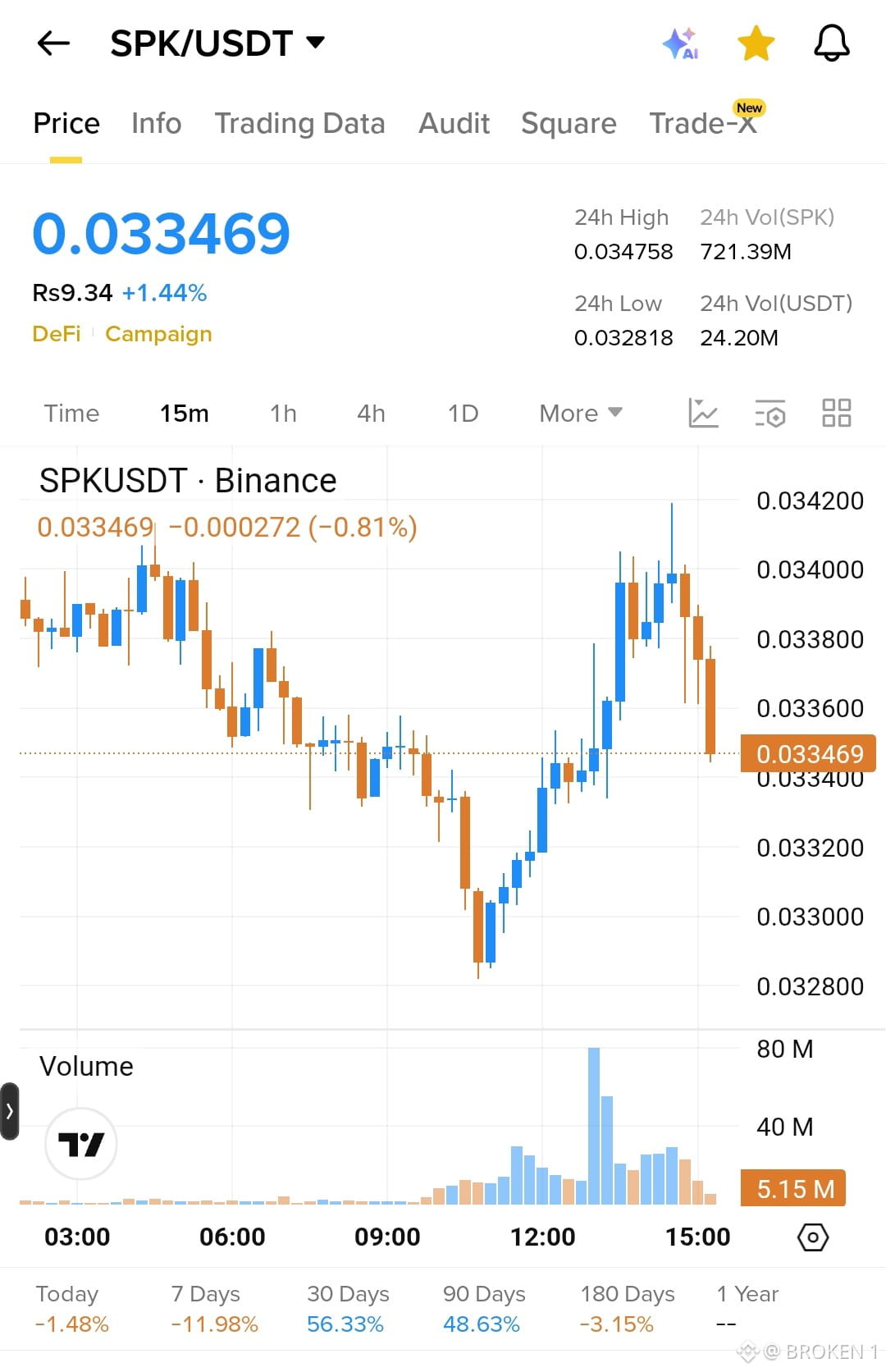
Aktuelle Marktdaten zeigen, dass SPK um die $0,033-Marke gehandelt wird, mit einem massiven täglichen Volumen von über 721 Millionen SPK, die gehandelt wurden. Das Candlestick-Diagramm spiegelt auch eine starke Erholung von den Intraday-Tiefs wider, was zeigt, dass Käufer aktiv wieder in den Markt einsteigen, nachdem zuvor Verkaufsdruck herrschte.
Was SPK momentan herausstechen lässt, ist die Kombination aus starkem Volumen, aktivem Community-Interesse und schneller Marktteilnahme. Sie bauen weiterhin Sichtbarkeit im DeFi-Sektor auf und ziehen Trader an, die nach aufkommenden Wachstumschancen im Ökosystem suchen.
{spot}(SPKUSDT)
$SPK zieht im DeFi-Markt Aufmerksamkeit auf sich, während Trader weiterhin die starke Aktivität und den wachsenden Momentum des Ökosystems beobachten. Ich bemerke ein steigendes Interesse, weil das Projekt darauf abzielt, eine dezentrale Finanzumgebung zu schaffen, die Zugänglichkeit, Community-Teilnahme und skalierbare Blockchain-Nutzbarkeit kombiniert.
Das System ist darauf ausgelegt, effiziente Interaktionen mit digitalen Vermögenswerten zu unterstützen und gleichzeitig das Nutzerengagement durch Kampagnen und Initiativen zum Wachstum des Ökosystems zu fördern. Sie streben an, ein reibungsloses DeFi-Erlebnis zu schaffen, in dem Nutzer am Trading, an Liquiditätsaktivitäten und an der Netzwerkerweiterung teilnehmen können, ohne auf zentrale Systeme angewiesen zu sein.
Aktuelle Marktdaten zeigen, dass SPK um die $0,033-Marke gehandelt wird, mit einem massiven täglichen Volumen von über 721 Millionen SPK, die gehandelt wurden. Das Candlestick-Diagramm spiegelt auch eine starke Erholung von den Intraday-Tiefs wider, was zeigt, dass Käufer aktiv wieder in den Markt einsteigen, nachdem zuvor Verkaufsdruck herrschte.
Was SPK momentan herausstechen lässt, ist die Kombination aus starkem Volumen, aktivem Community-Interesse und schneller Marktteilnahme. Sie bauen weiterhin Sichtbarkeit im DeFi-Sektor auf und ziehen Trader an, die nach aufkommenden Wachstumschancen im Ökosystem suchen.
Das System ist darauf ausgelegt, effiziente Interaktionen mit digitalen Vermögenswerten zu unterstützen und gleichzeitig das Nutzerengagement durch Kampagnen und Initiativen zum Wachstum des Ökosystems zu fördern. Sie streben an, ein reibungsloses DeFi-Erlebnis zu schaffen, in dem Nutzer am Trading, an Liquiditätsaktivitäten und an der Netzwerkerweiterung teilnehmen können, ohne auf zentrale Systeme angewiesen zu sein.
Aktuelle Marktdaten zeigen, dass SPK um die $0,033-Marke gehandelt wird, mit einem massiven täglichen Volumen von über 721 Millionen SPK, die gehandelt wurden. Das Candlestick-Diagramm spiegelt auch eine starke Erholung von den Intraday-Tiefs wider, was zeigt, dass Käufer aktiv wieder in den Markt einsteigen, nachdem zuvor Verkaufsdruck herrschte.
Was SPK momentan herausstechen lässt, ist die Kombination aus starkem Volumen, aktivem Community-Interesse und schneller Marktteilnahme. Sie bauen weiterhin Sichtbarkeit im DeFi-Sektor auf und ziehen Trader an, die nach aufkommenden Wachstumschancen im Ökosystem suchen.
3
139
·
--
Bullisch
$UNI bleibt einer der größten Namen im dezentralen Finanzwesen, weil sie die Art und Weise, wie Krypto-Trading funktioniert, ohne auf traditionelle zentrale Börsen angewiesen zu sein, revolutioniert haben. Ich beobachte UNI genau, da die Plattform ihren Einfluss im DeFi-Ökosystem weiterhin ausbaut und schnelle sowie genehmigungsfreie Token-Swaps unterstützt.
Das System funktioniert über automatisierte Liquiditätspools anstelle von standardmäßigen Orderbüchern, was es den Nutzern ermöglicht, direkt von ihren Wallets zu traden. Sie konzentrieren sich darauf, der Community mehr Kontrolle, Transparenz und Zugänglichkeit zu geben, während sie das dezentrale Trading sowohl für erfahrene als auch für neue Nutzer einfach halten.
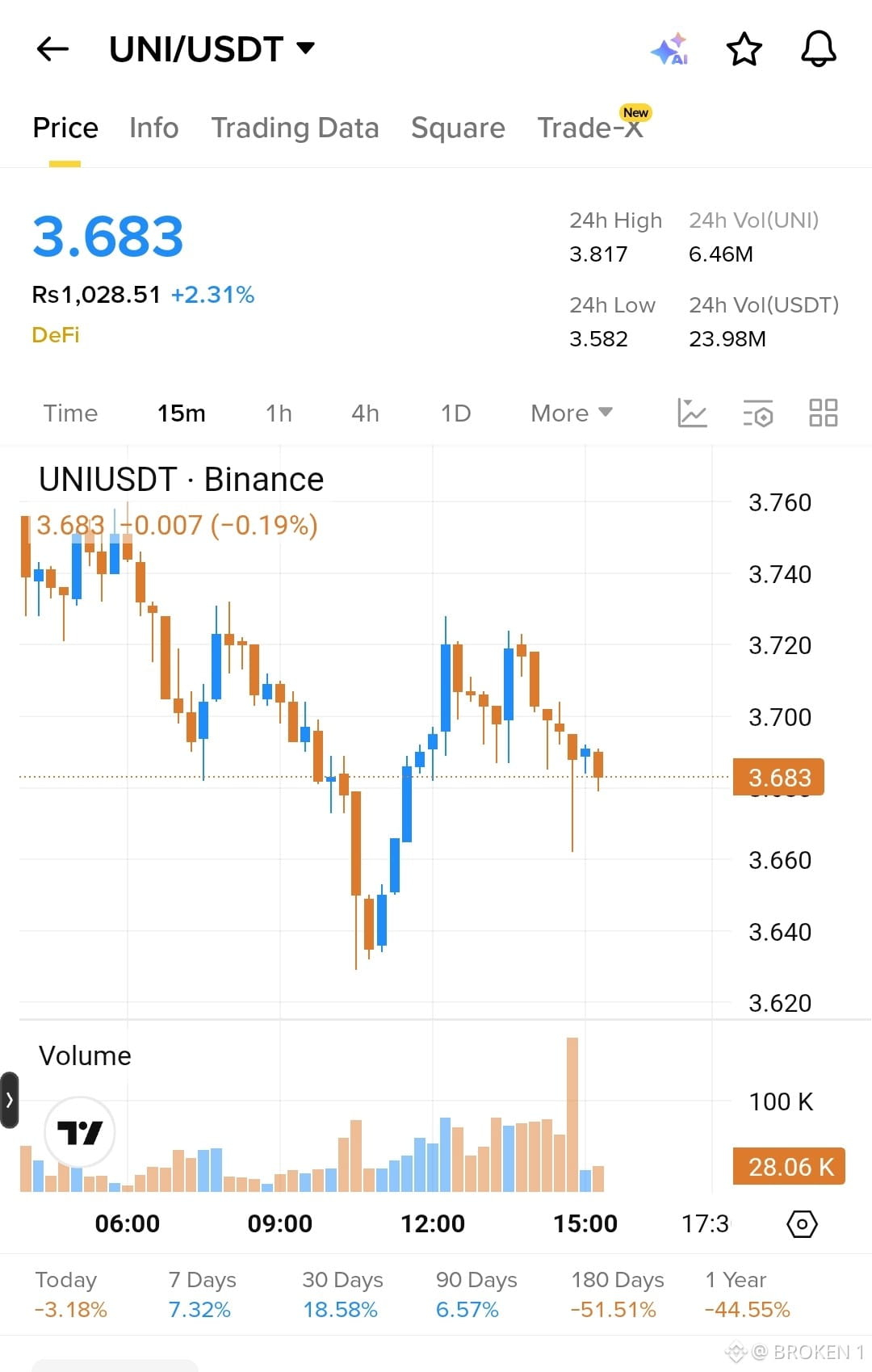
Aktuelle Marktaktivitäten zeigen, dass UNI in der Nähe der $3,68-Marke mit stetigem Volumen und aktiven Intraday-Bewegungen tradet. Selbst unter dem jüngsten Marktdruck verteidigen die Käufer weiterhin wichtige Unterstützungsbereiche, während die Trader auf stärkeren Erholungsimpuls achten. Der Rückgang von der unteren Spanne hebt auch die fortgesetzte Marktteilnahme rund um das Projekt hervor.
Was Uniswap wichtig macht, ist, wie sie die moderne DeFi-Infrastruktur geprägt haben. Ich bemerke weiterhin Interesse, weil sie rund um Dezentralisierung, Liquiditätsinnovation und offenen finanziellen Zugang aufbauen, was ständig Nutzer im Krypto-Markt anzieht.
{spot}(UNIUSDT)
$UNI bleibt einer der größten Namen im dezentralen Finanzwesen, weil sie die Art und Weise, wie Krypto-Trading funktioniert, ohne auf traditionelle zentrale Börsen angewiesen zu sein, revolutioniert haben. Ich beobachte UNI genau, da die Plattform ihren Einfluss im DeFi-Ökosystem weiterhin ausbaut und schnelle sowie genehmigungsfreie Token-Swaps unterstützt.
Das System funktioniert über automatisierte Liquiditätspools anstelle von standardmäßigen Orderbüchern, was es den Nutzern ermöglicht, direkt von ihren Wallets zu traden. Sie konzentrieren sich darauf, der Community mehr Kontrolle, Transparenz und Zugänglichkeit zu geben, während sie das dezentrale Trading sowohl für erfahrene als auch für neue Nutzer einfach halten.
Aktuelle Marktaktivitäten zeigen, dass UNI in der Nähe der $3,68-Marke mit stetigem Volumen und aktiven Intraday-Bewegungen tradet. Selbst unter dem jüngsten Marktdruck verteidigen die Käufer weiterhin wichtige Unterstützungsbereiche, während die Trader auf stärkeren Erholungsimpuls achten. Der Rückgang von der unteren Spanne hebt auch die fortgesetzte Marktteilnahme rund um das Projekt hervor.
Was Uniswap wichtig macht, ist, wie sie die moderne DeFi-Infrastruktur geprägt haben. Ich bemerke weiterhin Interesse, weil sie rund um Dezentralisierung, Liquiditätsinnovation und offenen finanziellen Zugang aufbauen, was ständig Nutzer im Krypto-Markt anzieht.
Das System funktioniert über automatisierte Liquiditätspools anstelle von standardmäßigen Orderbüchern, was es den Nutzern ermöglicht, direkt von ihren Wallets zu traden. Sie konzentrieren sich darauf, der Community mehr Kontrolle, Transparenz und Zugänglichkeit zu geben, während sie das dezentrale Trading sowohl für erfahrene als auch für neue Nutzer einfach halten.
Aktuelle Marktaktivitäten zeigen, dass UNI in der Nähe der $3,68-Marke mit stetigem Volumen und aktiven Intraday-Bewegungen tradet. Selbst unter dem jüngsten Marktdruck verteidigen die Käufer weiterhin wichtige Unterstützungsbereiche, während die Trader auf stärkeren Erholungsimpuls achten. Der Rückgang von der unteren Spanne hebt auch die fortgesetzte Marktteilnahme rund um das Projekt hervor.
Was Uniswap wichtig macht, ist, wie sie die moderne DeFi-Infrastruktur geprägt haben. Ich bemerke weiterhin Interesse, weil sie rund um Dezentralisierung, Liquiditätsinnovation und offenen finanziellen Zugang aufbauen, was ständig Nutzer im Krypto-Markt anzieht.
1
2
115
·
--
Bullisch
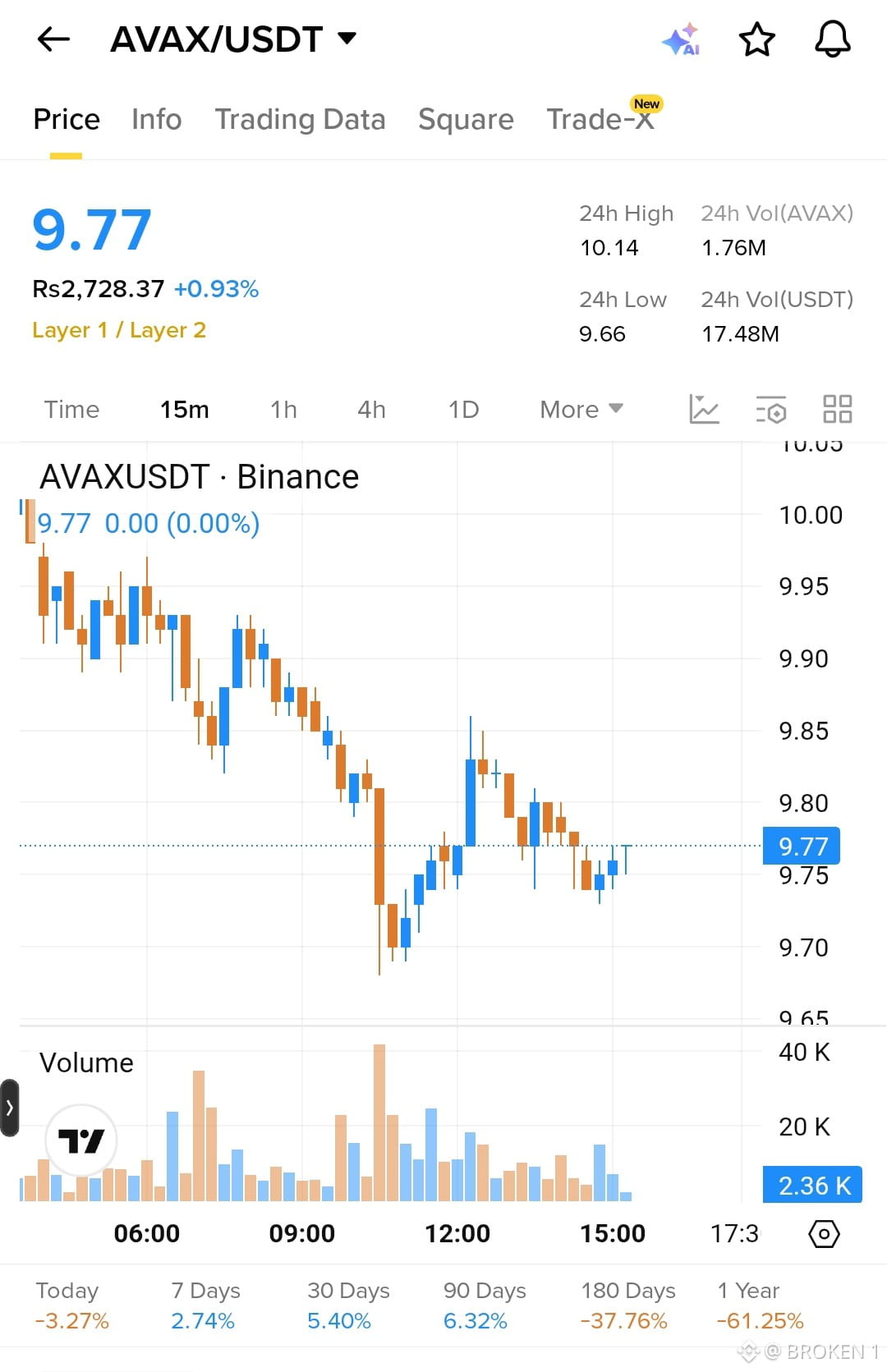
$AVAX bleibt weiterhin eines der bekanntesten Blockchain-Ökosysteme im Crypto-Bereich, da sie sich auf Geschwindigkeit, Skalierbarkeit und das echte Wachstum dezentraler Anwendungen konzentrieren. Ich beobachte AVAX genau, da das Netzwerk sowohl die Layer-1- als auch die Layer-2-Infrastruktur weiter ausbaut und dabei DeFi, Gaming, NFTs und Unternehmens-Blockchain-Lösungen unterstützt.
Das System ist darauf ausgelegt, Transaktionen extrem schnell zu verarbeiten, mit niedrigeren Gebühren im Vergleich zu vielen älteren Blockchains. Sie sind auch bekannt für die Subnetztechnologie, die es Entwicklern ermöglicht, anpassbare Blockchain-Netzwerke zu erstellen, die effizient arbeiten können, ohne das Hauptökosystem zu verlangsamen. Diese Flexibilität ist ein Grund, warum Avalanche weiterhin Entwickler und langfristige Unterstützung aus der Community anzieht.
Aktuelle Marktaktivitäten zeigen, dass AVAX um die 9,77 $ gehandelt wird, mit stabilen Volumina und aktiven kurzfristigen Bewegungen. Obwohl das Candlestick-Diagramm jüngsten Druck widerspiegelt, verteidigen die Käufer weiterhin wichtige Unterstützungszonen, während die Trader auf eine stärkere Erholung der Dynamik achten.
Ich stelle fest, dass Avalanche weiterhin auf eine breitere Akzeptanz hinarbeitet, da sie Skalierbarkeit, Entwicklerfreiheit und Multi-Chain-Funktionalität in einem sich ausdehnenden Ökosystem mit langfristigem Potenzial kombinieren.
{spot}(AVAXUSDT)
$AVAX bleibt weiterhin eines der bekanntesten Blockchain-Ökosysteme im Crypto-Bereich, da sie sich auf Geschwindigkeit, Skalierbarkeit und das echte Wachstum dezentraler Anwendungen konzentrieren. Ich beobachte AVAX genau, da das Netzwerk sowohl die Layer-1- als auch die Layer-2-Infrastruktur weiter ausbaut und dabei DeFi, Gaming, NFTs und Unternehmens-Blockchain-Lösungen unterstützt.
Das System ist darauf ausgelegt, Transaktionen extrem schnell zu verarbeiten, mit niedrigeren Gebühren im Vergleich zu vielen älteren Blockchains. Sie sind auch bekannt für die Subnetztechnologie, die es Entwicklern ermöglicht, anpassbare Blockchain-Netzwerke zu erstellen, die effizient arbeiten können, ohne das Hauptökosystem zu verlangsamen. Diese Flexibilität ist ein Grund, warum Avalanche weiterhin Entwickler und langfristige Unterstützung aus der Community anzieht.
Aktuelle Marktaktivitäten zeigen, dass AVAX um die 9,77 $ gehandelt wird, mit stabilen Volumina und aktiven kurzfristigen Bewegungen. Obwohl das Candlestick-Diagramm jüngsten Druck widerspiegelt, verteidigen die Käufer weiterhin wichtige Unterstützungszonen, während die Trader auf eine stärkere Erholung der Dynamik achten.
Ich stelle fest, dass Avalanche weiterhin auf eine breitere Akzeptanz hinarbeitet, da sie Skalierbarkeit, Entwicklerfreiheit und Multi-Chain-Funktionalität in einem sich ausdehnenden Ökosystem mit langfristigem Potenzial kombinieren.
Das System ist darauf ausgelegt, Transaktionen extrem schnell zu verarbeiten, mit niedrigeren Gebühren im Vergleich zu vielen älteren Blockchains. Sie sind auch bekannt für die Subnetztechnologie, die es Entwicklern ermöglicht, anpassbare Blockchain-Netzwerke zu erstellen, die effizient arbeiten können, ohne das Hauptökosystem zu verlangsamen. Diese Flexibilität ist ein Grund, warum Avalanche weiterhin Entwickler und langfristige Unterstützung aus der Community anzieht.
Aktuelle Marktaktivitäten zeigen, dass AVAX um die 9,77 $ gehandelt wird, mit stabilen Volumina und aktiven kurzfristigen Bewegungen. Obwohl das Candlestick-Diagramm jüngsten Druck widerspiegelt, verteidigen die Käufer weiterhin wichtige Unterstützungszonen, während die Trader auf eine stärkere Erholung der Dynamik achten.
Ich stelle fest, dass Avalanche weiterhin auf eine breitere Akzeptanz hinarbeitet, da sie Skalierbarkeit, Entwicklerfreiheit und Multi-Chain-Funktionalität in einem sich ausdehnenden Ökosystem mit langfristigem Potenzial kombinieren.
1
3
187
·
--
Bullisch
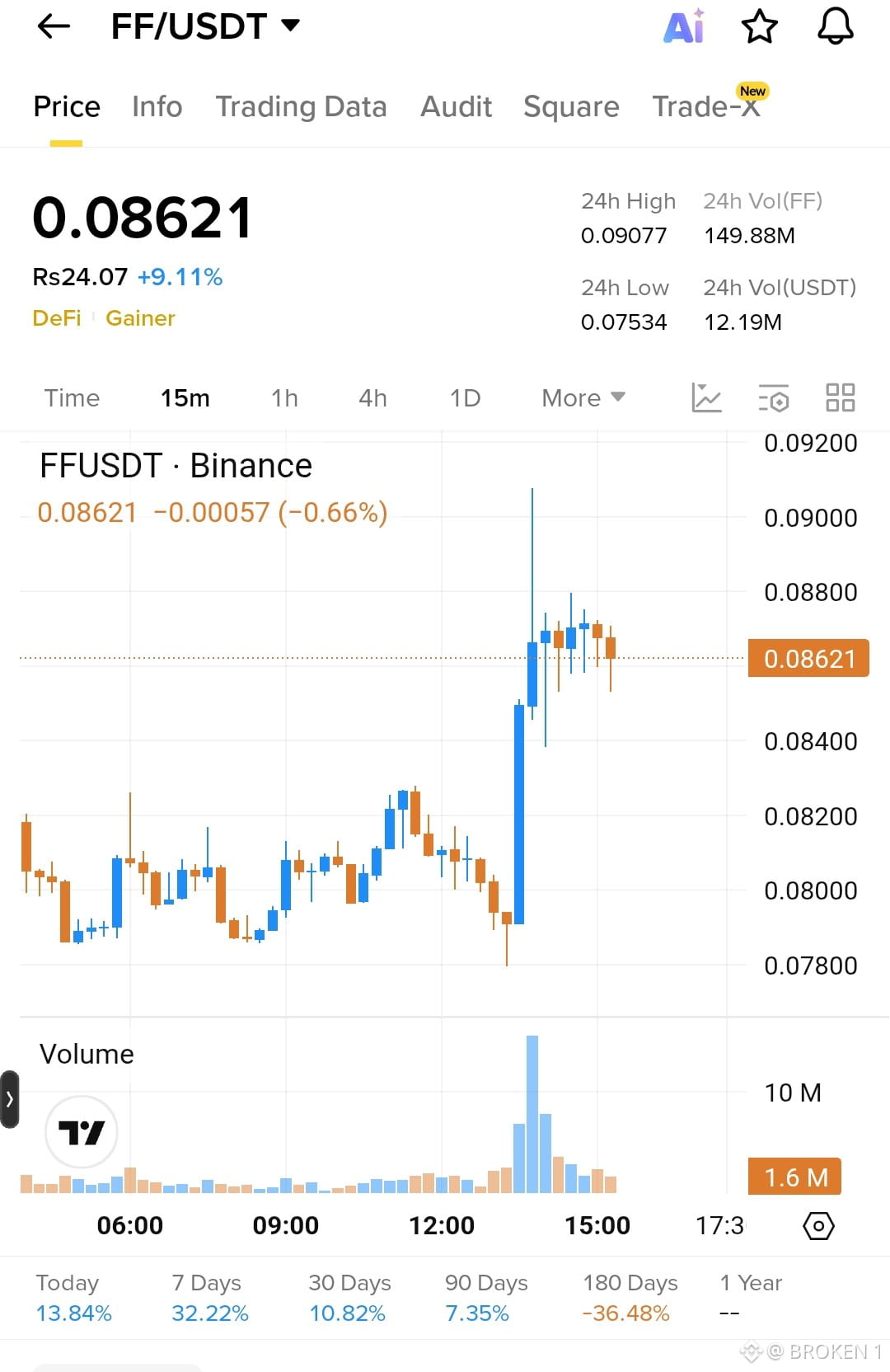
$FF Das Protokoll beginnt, ernsthafte Aufmerksamkeit im DeFi-Bereich zu erregen, nachdem eine kraftvolle Marktbewegung den FF/USDT über die $0,086-Marke mit hohem Handelsvolumen und starkem Momentum gedrückt hat. Ich sehe ein wachsendes Interesse, weil das Projekt darauf abzielt, ein schnelleres und flexibleres dezentrales Finanzökosystem aufzubauen, das echte Nützlichkeit unterstützen kann, anstatt nur kurzfristigen Hype.
Das System ist darauf ausgelegt, Trading, Liquidität und community-gesteuerte Belohnungen in einem nahtlosen Erlebnis zu verbinden. Sie schaffen eine Umgebung, in der Nutzer Vermögenswerte effizient bewegen können, während sie weiterhin die Kontrolle durch dezentrale Mechanismen behalten. Der jüngste Anstieg des Volumens zeigt, dass Trader das Projekt aktiv beobachten und auf das gestiegene Marktvertrauen reagieren.
Was FF interessant macht, ist die Kombination aus DeFi-Positionierung und schneller Marktaktivität. Die Candlestick-Chart zeigt starkes Erholungsmomentum aus dem Bereich von $0,078 in Richtung des Tageshochs nahe $0,090, während das Volumen während der Ausbruchphase explodierte. Das signalisiert normalerweise eine starke Teilnahme am Markt.
Ich bemerke auch, dass das Projekt beginnt, sich unter den aktuellen DeFi-Gewinnern abzuheben, weil sie um Zugänglichkeit, Geschwindigkeit und aktives Ökosystemwachstum herum aufbauen. Wenn das Momentum anhält, könnte FF eines der am genauesten beobachteten aufstrebenden DeFi-Projekte sein, die es gerade gibt.
{spot}(FFUSDT)
$FF Das Protokoll beginnt, ernsthafte Aufmerksamkeit im DeFi-Bereich zu erregen, nachdem eine kraftvolle Marktbewegung den FF/USDT über die $0,086-Marke mit hohem Handelsvolumen und starkem Momentum gedrückt hat. Ich sehe ein wachsendes Interesse, weil das Projekt darauf abzielt, ein schnelleres und flexibleres dezentrales Finanzökosystem aufzubauen, das echte Nützlichkeit unterstützen kann, anstatt nur kurzfristigen Hype.
Das System ist darauf ausgelegt, Trading, Liquidität und community-gesteuerte Belohnungen in einem nahtlosen Erlebnis zu verbinden. Sie schaffen eine Umgebung, in der Nutzer Vermögenswerte effizient bewegen können, während sie weiterhin die Kontrolle durch dezentrale Mechanismen behalten. Der jüngste Anstieg des Volumens zeigt, dass Trader das Projekt aktiv beobachten und auf das gestiegene Marktvertrauen reagieren.
Was FF interessant macht, ist die Kombination aus DeFi-Positionierung und schneller Marktaktivität. Die Candlestick-Chart zeigt starkes Erholungsmomentum aus dem Bereich von $0,078 in Richtung des Tageshochs nahe $0,090, während das Volumen während der Ausbruchphase explodierte. Das signalisiert normalerweise eine starke Teilnahme am Markt.
Ich bemerke auch, dass das Projekt beginnt, sich unter den aktuellen DeFi-Gewinnern abzuheben, weil sie um Zugänglichkeit, Geschwindigkeit und aktives Ökosystemwachstum herum aufbauen. Wenn das Momentum anhält, könnte FF eines der am genauesten beobachteten aufstrebenden DeFi-Projekte sein, die es gerade gibt.
Das System ist darauf ausgelegt, Trading, Liquidität und community-gesteuerte Belohnungen in einem nahtlosen Erlebnis zu verbinden. Sie schaffen eine Umgebung, in der Nutzer Vermögenswerte effizient bewegen können, während sie weiterhin die Kontrolle durch dezentrale Mechanismen behalten. Der jüngste Anstieg des Volumens zeigt, dass Trader das Projekt aktiv beobachten und auf das gestiegene Marktvertrauen reagieren.
Was FF interessant macht, ist die Kombination aus DeFi-Positionierung und schneller Marktaktivität. Die Candlestick-Chart zeigt starkes Erholungsmomentum aus dem Bereich von $0,078 in Richtung des Tageshochs nahe $0,090, während das Volumen während der Ausbruchphase explodierte. Das signalisiert normalerweise eine starke Teilnahme am Markt.
Ich bemerke auch, dass das Projekt beginnt, sich unter den aktuellen DeFi-Gewinnern abzuheben, weil sie um Zugänglichkeit, Geschwindigkeit und aktives Ökosystemwachstum herum aufbauen. Wenn das Momentum anhält, könnte FF eines der am genauesten beobachteten aufstrebenden DeFi-Projekte sein, die es gerade gibt.
3
134
·
--
Bullisch
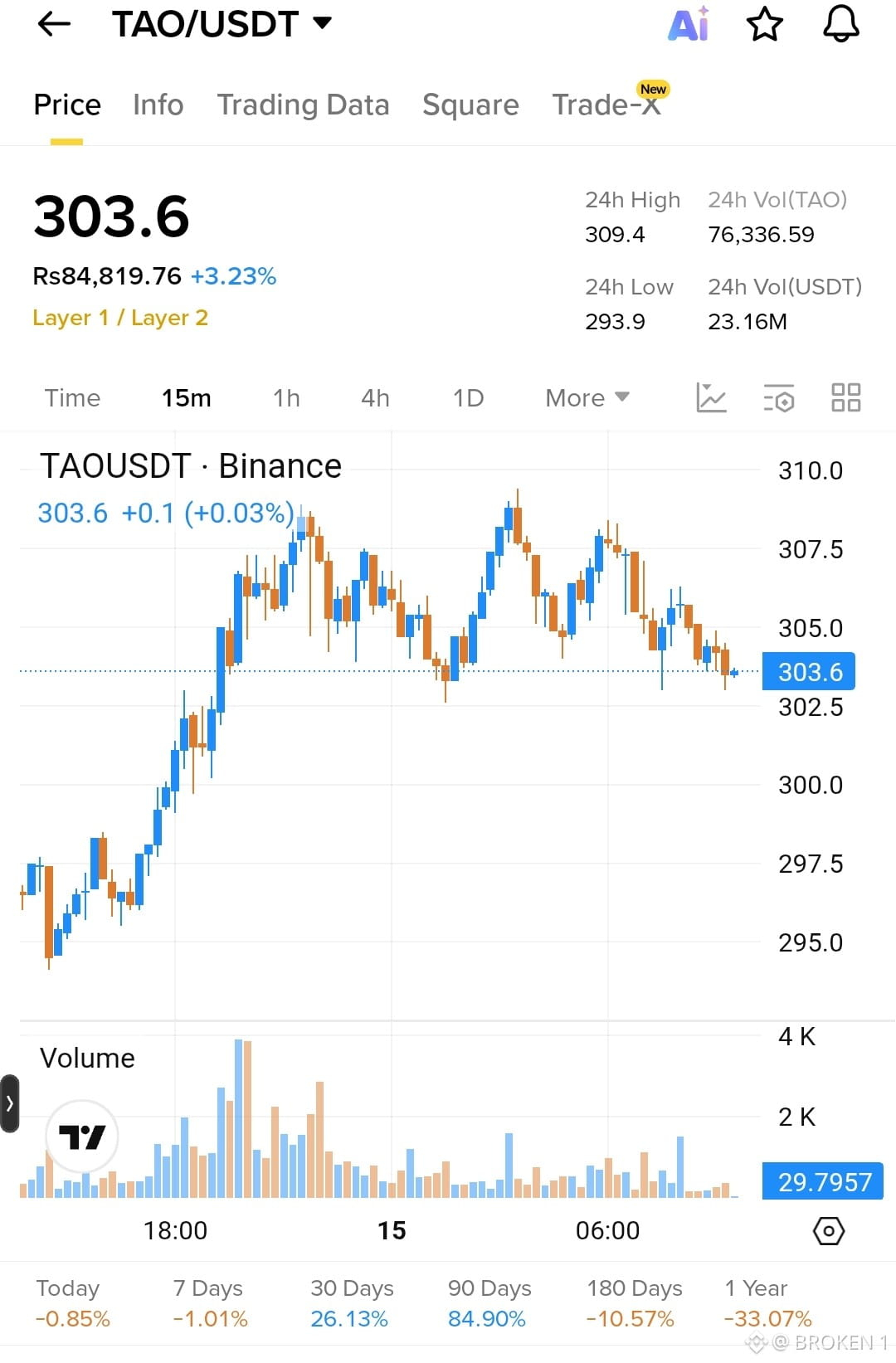
$TAO baut eines der ehrgeizigsten, KI-gesteuerten Blockchain-Ökosysteme im Krypto-Bereich auf, indem es künstliche Intelligenz mit dezentralen Netzwerken kombiniert. Das Projekt ermöglicht Entwicklern und KI-Modellen, in einem offenen Marktplatz zusammenzuarbeiten, wo Intelligenz zu einer handelbaren digitalen Ressource wird. Ich sehe ein wachsendes Interesse an TAO, weil sie ein System schaffen, in dem Mitwirkende für die Bereitstellung wertvoller Machine-Learning-Ergebnisse für das Netzwerk belohnt werden.
Ihre Infrastruktur funktioniert über dezentrale Subnetzwerke, die das Training, die Validierung und den Datenaustausch von KI unterstützen, ohne sich auf ein einzelnes zentrales Unternehmen zu verlassen. Dies schafft ein Ökosystem, in dem Innovationen offen skalieren können, während die Teilnehmer Anreize für ihren Beitrag an Rechenleistung und Intelligenz erhalten. Diese Kombination aus Blockchain und KI macht Bittensor zu einem der einzigartigsten Projekte auf dem Markt zurzeit.
TAO hat weiterhin starke Aufmerksamkeit von Investoren auf sich gezogen, während das KI-Narrativ sich über Krypto- und Technologiesektoren ausbreitet. Mit der zunehmenden Akzeptanz, aktiven Entwicklung und wachsenden Diskussionen über dezentrale künstliche Intelligenz beobachten viele Trader Bittensor genau als potenziellen Führer an der zukünftigen Schnittstelle von KI und Blockchain-Technologie.
{spot}(TAOUSDT)
$TAO baut eines der ehrgeizigsten, KI-gesteuerten Blockchain-Ökosysteme im Krypto-Bereich auf, indem es künstliche Intelligenz mit dezentralen Netzwerken kombiniert. Das Projekt ermöglicht Entwicklern und KI-Modellen, in einem offenen Marktplatz zusammenzuarbeiten, wo Intelligenz zu einer handelbaren digitalen Ressource wird. Ich sehe ein wachsendes Interesse an TAO, weil sie ein System schaffen, in dem Mitwirkende für die Bereitstellung wertvoller Machine-Learning-Ergebnisse für das Netzwerk belohnt werden.
Ihre Infrastruktur funktioniert über dezentrale Subnetzwerke, die das Training, die Validierung und den Datenaustausch von KI unterstützen, ohne sich auf ein einzelnes zentrales Unternehmen zu verlassen. Dies schafft ein Ökosystem, in dem Innovationen offen skalieren können, während die Teilnehmer Anreize für ihren Beitrag an Rechenleistung und Intelligenz erhalten. Diese Kombination aus Blockchain und KI macht Bittensor zu einem der einzigartigsten Projekte auf dem Markt zurzeit.
TAO hat weiterhin starke Aufmerksamkeit von Investoren auf sich gezogen, während das KI-Narrativ sich über Krypto- und Technologiesektoren ausbreitet. Mit der zunehmenden Akzeptanz, aktiven Entwicklung und wachsenden Diskussionen über dezentrale künstliche Intelligenz beobachten viele Trader Bittensor genau als potenziellen Führer an der zukünftigen Schnittstelle von KI und Blockchain-Technologie.
Ihre Infrastruktur funktioniert über dezentrale Subnetzwerke, die das Training, die Validierung und den Datenaustausch von KI unterstützen, ohne sich auf ein einzelnes zentrales Unternehmen zu verlassen. Dies schafft ein Ökosystem, in dem Innovationen offen skalieren können, während die Teilnehmer Anreize für ihren Beitrag an Rechenleistung und Intelligenz erhalten. Diese Kombination aus Blockchain und KI macht Bittensor zu einem der einzigartigsten Projekte auf dem Markt zurzeit.
TAO hat weiterhin starke Aufmerksamkeit von Investoren auf sich gezogen, während das KI-Narrativ sich über Krypto- und Technologiesektoren ausbreitet. Mit der zunehmenden Akzeptanz, aktiven Entwicklung und wachsenden Diskussionen über dezentrale künstliche Intelligenz beobachten viele Trader Bittensor genau als potenziellen Führer an der zukünftigen Schnittstelle von KI und Blockchain-Technologie.
161
·
--
Bullisch
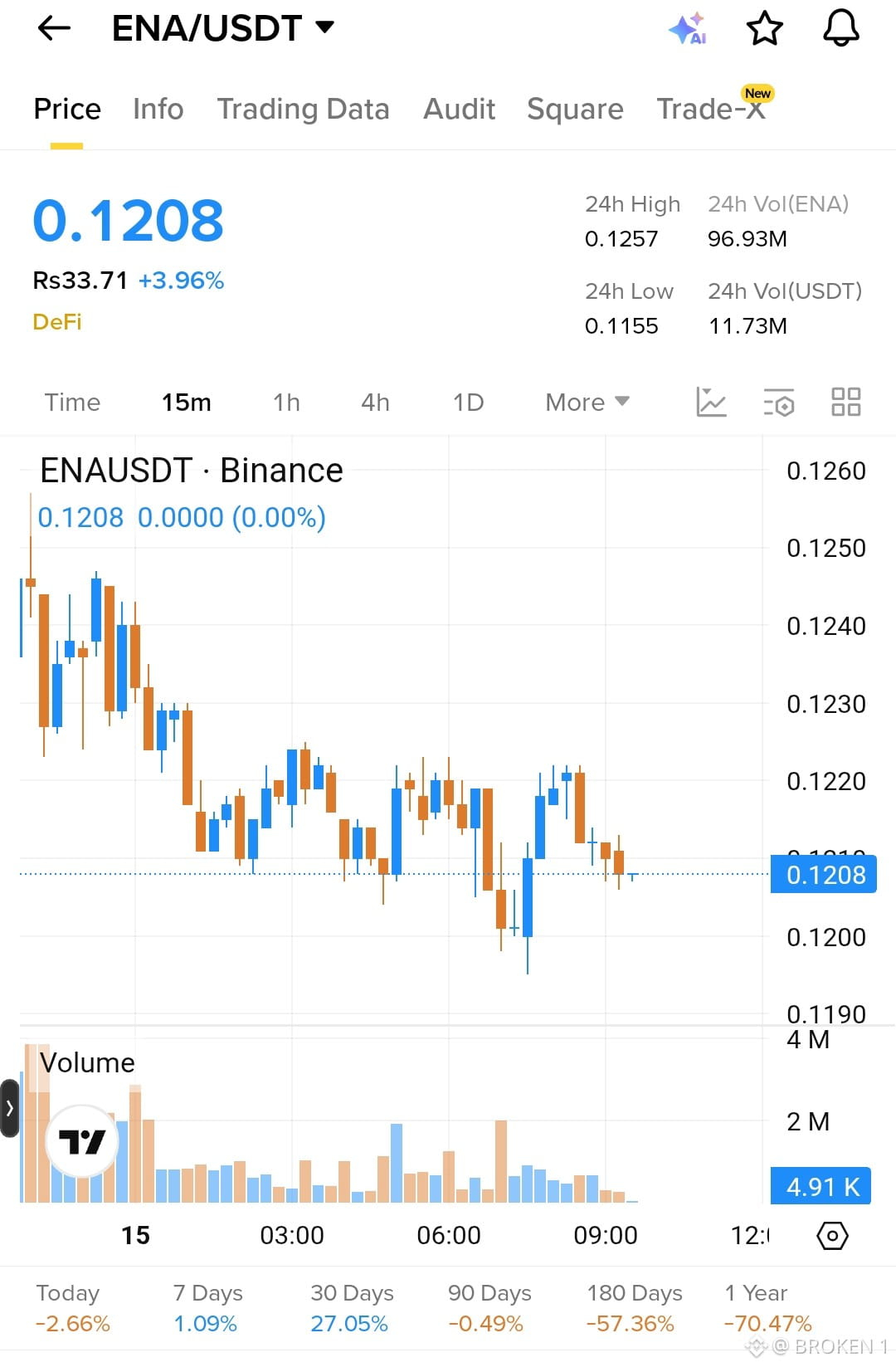
$ENA wird zu einem der am meisten diskutierten DeFi-Projekte, weil es einen neuen Ansatz für digitale Finanzen durch sein synthetisches Dollar-Ökosystem einführt. Das Projekt konzentriert sich darauf, skalierbares, crypto-natives Geld zu schaffen, das unabhängig von traditionellen Bankensystemen funktioniert. Ich sehe großes Interesse an ENA, weil sie versuchen, stabile digitale Vermögenswerte, Ertragsgenerierung und dezentrale Finanzen in ein verbundenes System zu integrieren.
Ihre Infrastruktur ist um USDe herum aufgebaut, einen synthetischen Dollar, der durch Hedging-Strategien und On-Chain-Collateral-Management abgesichert ist. Sie bauen ein System auf, in dem Nutzer Belohnungen verdienen können, während sie dennoch Exposure gegenüber dezentralen Finanzprodukten aufrechterhalten. Dieses Modell hilft Ethena, sich im wachsenden DeFi-Sektor abzuheben.
Trotz der Marktschwankungen zieht ENA weiterhin Trader und Investoren an, weil die dezentrale stabile Vermögenswerte-Infrastruktur ein wichtiger Fokus im gesamten Krypto-Bereich bleibt. Mit der zunehmenden Akzeptanz und dem Wachstum der Ecosystem-Aktivitäten positioniert sich Ethena als wichtiger Akteur in der Zukunft der dezentralen Finanzen.
{spot}(ENAUSDT)
$ENA wird zu einem der am meisten diskutierten DeFi-Projekte, weil es einen neuen Ansatz für digitale Finanzen durch sein synthetisches Dollar-Ökosystem einführt. Das Projekt konzentriert sich darauf, skalierbares, crypto-natives Geld zu schaffen, das unabhängig von traditionellen Bankensystemen funktioniert. Ich sehe großes Interesse an ENA, weil sie versuchen, stabile digitale Vermögenswerte, Ertragsgenerierung und dezentrale Finanzen in ein verbundenes System zu integrieren.
Ihre Infrastruktur ist um USDe herum aufgebaut, einen synthetischen Dollar, der durch Hedging-Strategien und On-Chain-Collateral-Management abgesichert ist. Sie bauen ein System auf, in dem Nutzer Belohnungen verdienen können, während sie dennoch Exposure gegenüber dezentralen Finanzprodukten aufrechterhalten. Dieses Modell hilft Ethena, sich im wachsenden DeFi-Sektor abzuheben.
Trotz der Marktschwankungen zieht ENA weiterhin Trader und Investoren an, weil die dezentrale stabile Vermögenswerte-Infrastruktur ein wichtiger Fokus im gesamten Krypto-Bereich bleibt. Mit der zunehmenden Akzeptanz und dem Wachstum der Ecosystem-Aktivitäten positioniert sich Ethena als wichtiger Akteur in der Zukunft der dezentralen Finanzen.
Ihre Infrastruktur ist um USDe herum aufgebaut, einen synthetischen Dollar, der durch Hedging-Strategien und On-Chain-Collateral-Management abgesichert ist. Sie bauen ein System auf, in dem Nutzer Belohnungen verdienen können, während sie dennoch Exposure gegenüber dezentralen Finanzprodukten aufrechterhalten. Dieses Modell hilft Ethena, sich im wachsenden DeFi-Sektor abzuheben.
Trotz der Marktschwankungen zieht ENA weiterhin Trader und Investoren an, weil die dezentrale stabile Vermögenswerte-Infrastruktur ein wichtiger Fokus im gesamten Krypto-Bereich bleibt. Mit der zunehmenden Akzeptanz und dem Wachstum der Ecosystem-Aktivitäten positioniert sich Ethena als wichtiger Akteur in der Zukunft der dezentralen Finanzen.
1
154
·
--
Bullisch
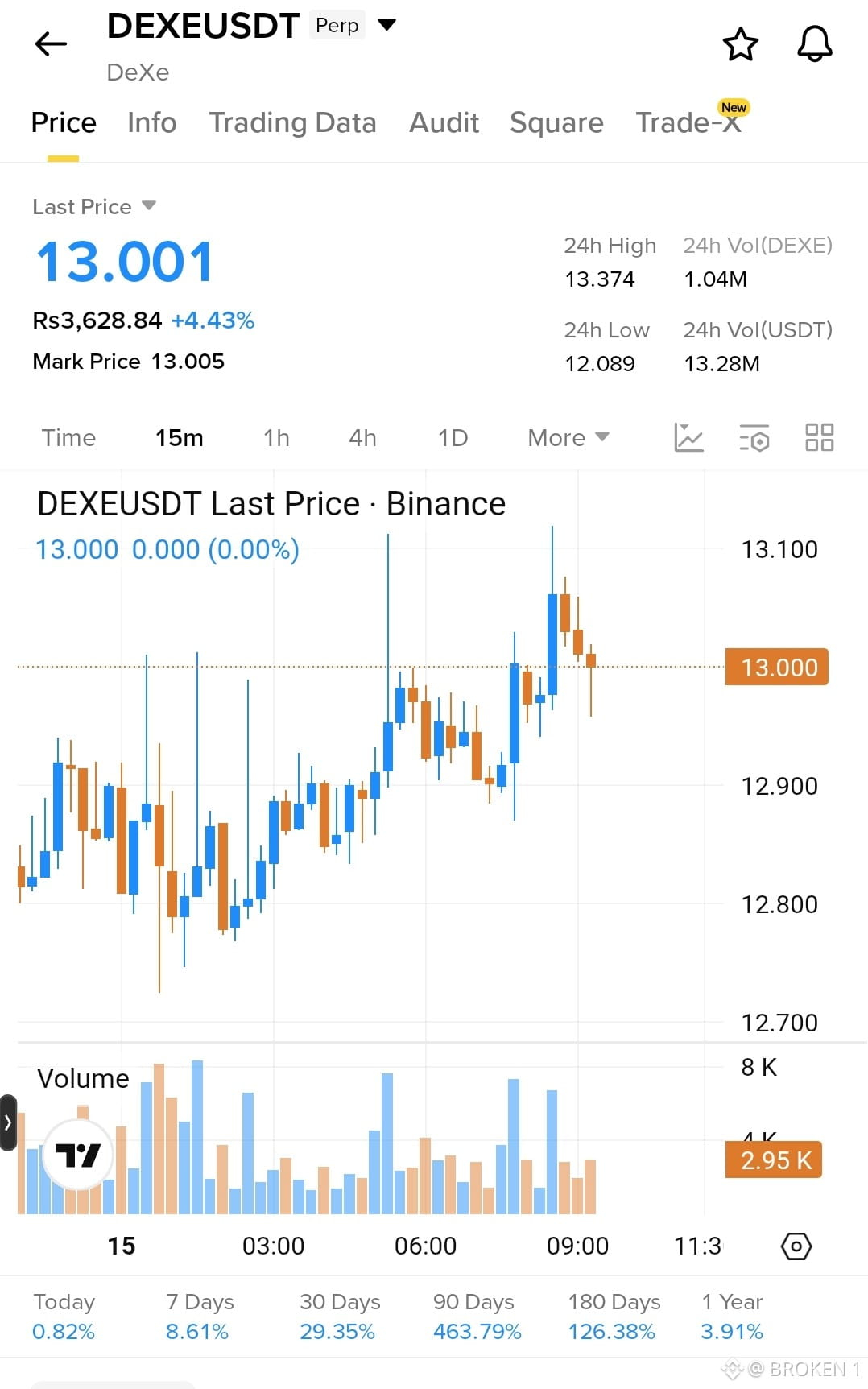
$DEXE baut ein dezentrales Social Trading- und Governance-Ökosystem auf, das darauf abzielt, das Krypto-Investieren intelligenter und zugänglicher zu gestalten. Das Projekt konzentriert sich darauf, Nutzern zu helfen, professionellen Tradern zu folgen, dezentrale Portfolios zu verwalten und an gemeinschaftlich gesteuerten Entscheidungen durch eine fortschrittliche DAO-Infrastruktur teilzunehmen. Ich sehe, dass DEXE zunehmend Aufmerksamkeit erhält, weil sie DeFi-Tools mit skalierbaren Governance-Systemen kombinieren, die die nächste Generation dezentraler Organisationen unterstützen können.
Ihr System ermöglicht es Nutzern, mit transparenten Investitionsstrategien zu interagieren, während sie die Kontrolle über ihre Vermögenswerte behalten. Sie entwickeln auch Governance-Technologie, die DAOs hilft, effizienter zu arbeiten, mit besseren Abstimmungsstrukturen und Tools zur Treasury-Verwaltung.
DEXE zeigt weiterhin starkes langfristiges Wachstum, mit beeindruckenden Gewinnen in den letzten Monaten und steigender Marktaktivität. Trader beobachten genau, wie DeXe sein Ökosystem erweitert und seine Position in der dezentralen Governance, im Social Trading und im sich entwickelnden DeFi-Infrastruktur-Sektor stärkt.
{spot}(DEXEUSDT)
$DEXE baut ein dezentrales Social Trading- und Governance-Ökosystem auf, das darauf abzielt, das Krypto-Investieren intelligenter und zugänglicher zu gestalten. Das Projekt konzentriert sich darauf, Nutzern zu helfen, professionellen Tradern zu folgen, dezentrale Portfolios zu verwalten und an gemeinschaftlich gesteuerten Entscheidungen durch eine fortschrittliche DAO-Infrastruktur teilzunehmen. Ich sehe, dass DEXE zunehmend Aufmerksamkeit erhält, weil sie DeFi-Tools mit skalierbaren Governance-Systemen kombinieren, die die nächste Generation dezentraler Organisationen unterstützen können.
Ihr System ermöglicht es Nutzern, mit transparenten Investitionsstrategien zu interagieren, während sie die Kontrolle über ihre Vermögenswerte behalten. Sie entwickeln auch Governance-Technologie, die DAOs hilft, effizienter zu arbeiten, mit besseren Abstimmungsstrukturen und Tools zur Treasury-Verwaltung.
DEXE zeigt weiterhin starkes langfristiges Wachstum, mit beeindruckenden Gewinnen in den letzten Monaten und steigender Marktaktivität. Trader beobachten genau, wie DeXe sein Ökosystem erweitert und seine Position in der dezentralen Governance, im Social Trading und im sich entwickelnden DeFi-Infrastruktur-Sektor stärkt.
Ihr System ermöglicht es Nutzern, mit transparenten Investitionsstrategien zu interagieren, während sie die Kontrolle über ihre Vermögenswerte behalten. Sie entwickeln auch Governance-Technologie, die DAOs hilft, effizienter zu arbeiten, mit besseren Abstimmungsstrukturen und Tools zur Treasury-Verwaltung.
DEXE zeigt weiterhin starkes langfristiges Wachstum, mit beeindruckenden Gewinnen in den letzten Monaten und steigender Marktaktivität. Trader beobachten genau, wie DeXe sein Ökosystem erweitert und seine Position in der dezentralen Governance, im Social Trading und im sich entwickelnden DeFi-Infrastruktur-Sektor stärkt.
173
·
--
Bullisch
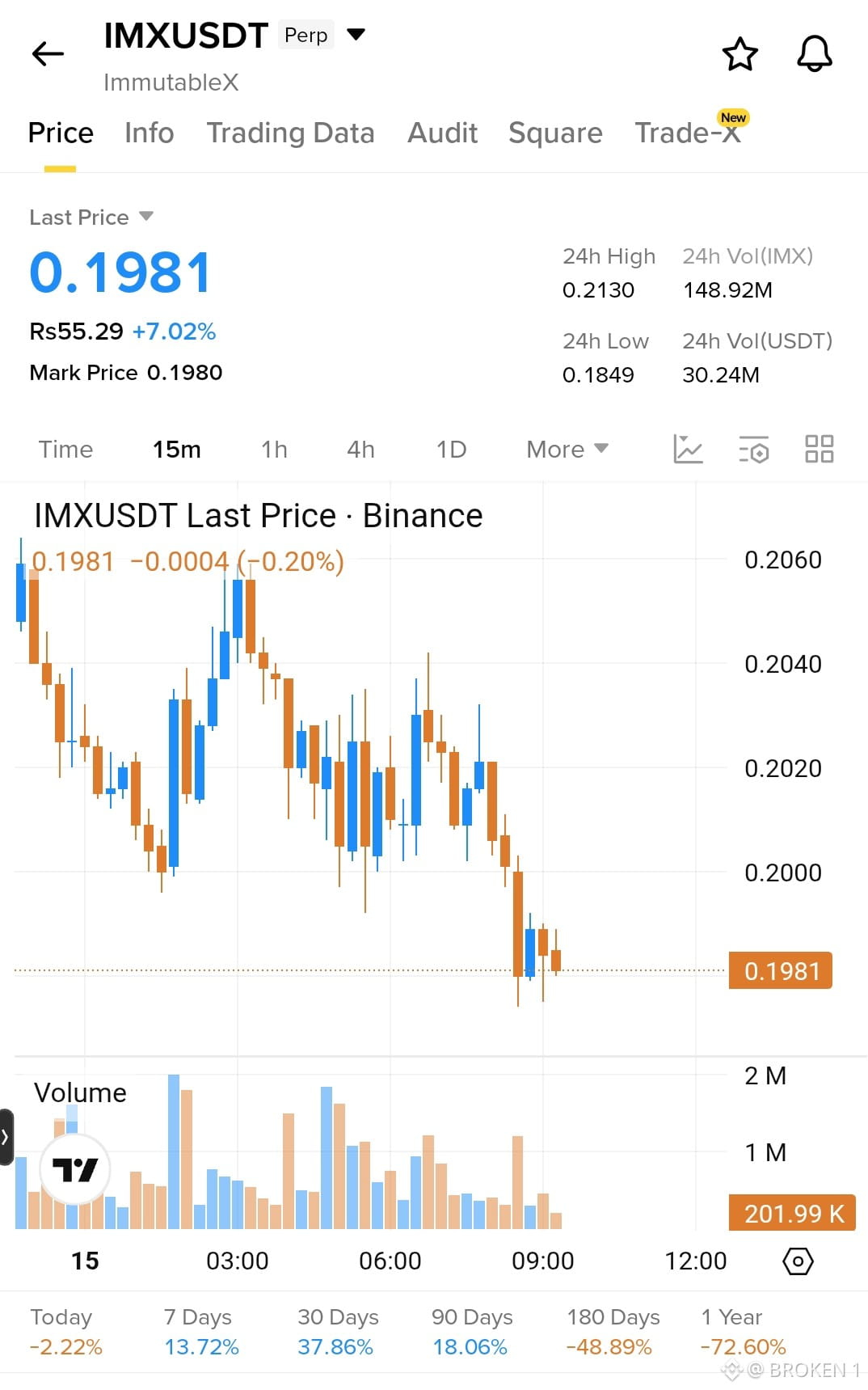
$IMX ImmutableX baut eines der stärksten blockchain-basierten Ökosysteme für Gaming im Web3 auf. Das Projekt wurde ins Leben gerufen, um die größten Probleme von Ethereum im NFT-Gaming zu lösen, indem es schnelle Transaktionen, null Gasgebühren für das Minting und den Handel sowie massive Skalierbarkeit bietet, ohne die Sicherheit auf Ethereum-Niveau zu opfern. Ich sehe ein anhaltendes Interesse an IMX, weil sie sich darauf konzentrieren, Spieleentwickler zu unterstützen, die Blockchain-Spiele entwickeln, die für normale Nutzer flüssig und zugänglich sind.
Ihr System nutzt Layer-2-Technologie, die von zk-Rollups unterstützt wird, wodurch Tausende von Transaktionen effizient verarbeitet werden können, während die Kosten niedrig gehalten werden. Sie gehen auch Partnerschaften mit Gaming-Studios und NFT-Plattformen ein, um die Akzeptanz im digitalen Gaming-Bereich zu erweitern.
Selbst bei kurzfristigen Marktfluktuationen bleibt IMX im Fokus, da das Blockchain-Gaming einer der größten Wachstumssektoren im Krypto-Bereich bleibt. Trader beobachten ImmutableX genau, während sich Entwicklung, Partnerschaften und Aktivitäten im Ökosystem im Web3-Gaming und der NFT-Infrastruktur weiter ausbreiten.
$IMX
{spot}(IMXUSDT)
$IMX ImmutableX baut eines der stärksten blockchain-basierten Ökosysteme für Gaming im Web3 auf. Das Projekt wurde ins Leben gerufen, um die größten Probleme von Ethereum im NFT-Gaming zu lösen, indem es schnelle Transaktionen, null Gasgebühren für das Minting und den Handel sowie massive Skalierbarkeit bietet, ohne die Sicherheit auf Ethereum-Niveau zu opfern. Ich sehe ein anhaltendes Interesse an IMX, weil sie sich darauf konzentrieren, Spieleentwickler zu unterstützen, die Blockchain-Spiele entwickeln, die für normale Nutzer flüssig und zugänglich sind.
Ihr System nutzt Layer-2-Technologie, die von zk-Rollups unterstützt wird, wodurch Tausende von Transaktionen effizient verarbeitet werden können, während die Kosten niedrig gehalten werden. Sie gehen auch Partnerschaften mit Gaming-Studios und NFT-Plattformen ein, um die Akzeptanz im digitalen Gaming-Bereich zu erweitern.
Selbst bei kurzfristigen Marktfluktuationen bleibt IMX im Fokus, da das Blockchain-Gaming einer der größten Wachstumssektoren im Krypto-Bereich bleibt. Trader beobachten ImmutableX genau, während sich Entwicklung, Partnerschaften und Aktivitäten im Ökosystem im Web3-Gaming und der NFT-Infrastruktur weiter ausbreiten.
$IMX
Ihr System nutzt Layer-2-Technologie, die von zk-Rollups unterstützt wird, wodurch Tausende von Transaktionen effizient verarbeitet werden können, während die Kosten niedrig gehalten werden. Sie gehen auch Partnerschaften mit Gaming-Studios und NFT-Plattformen ein, um die Akzeptanz im digitalen Gaming-Bereich zu erweitern.
Selbst bei kurzfristigen Marktfluktuationen bleibt IMX im Fokus, da das Blockchain-Gaming einer der größten Wachstumssektoren im Krypto-Bereich bleibt. Trader beobachten ImmutableX genau, während sich Entwicklung, Partnerschaften und Aktivitäten im Ökosystem im Web3-Gaming und der NFT-Infrastruktur weiter ausbreiten.
$IMX
136
·
--
Bullisch
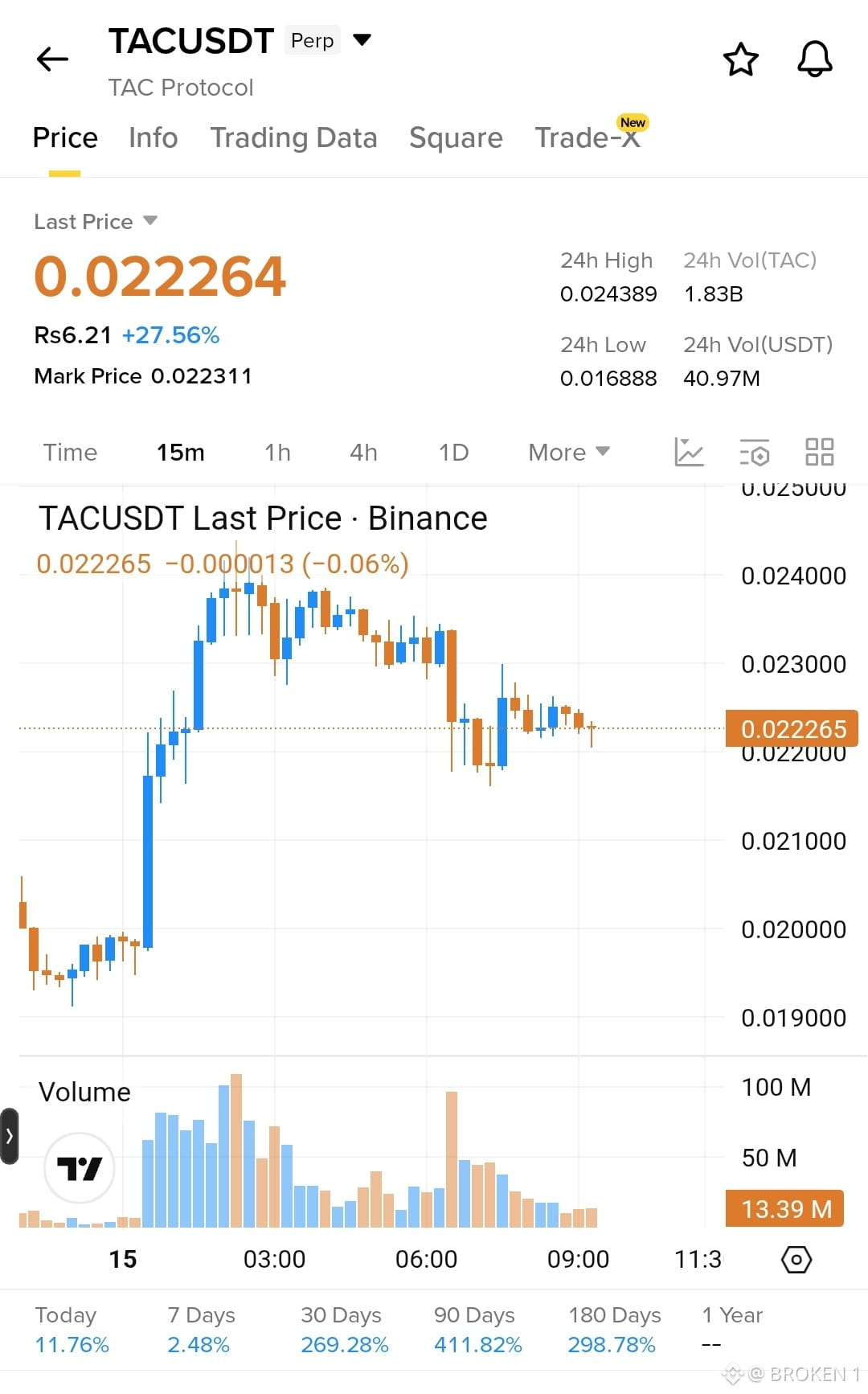
$TAC Das Protokoll beginnt ernsthafte Aufmerksamkeit zu erregen, während Trader beobachten, wie TACUSDT mit starkem Momentum und hohem Volumen nach oben drückt. Das Projekt konzentriert sich darauf, ein schnelleres und besser vernetztes Blockchain-Ökosystem aufzubauen, in dem Nutzer, Entwickler und dezentrale Anwendungen reibungslos ohne hohe Kosten oder langsame Ausführung interagieren können. Ich sehe ein wachsendes Interesse, weil sie darauf abzielen, die Funktionsweise der Blockchain-Infrastruktur zu vereinfachen und gleichzeitig das Netzwerk skalierbar und effizient für die langfristige Akzeptanz zu halten.
Das System hinter dem TAC-Protokoll scheint darauf ausgelegt zu sein, Hochgeschwindigkeitstransaktionen, Smart Contract-Funktionalität und ein flexibles Umfeld für die Web3-Entwicklung zu unterstützen. Sie schaffen eine Struktur, in der Projekte dezentrale Dienste mit besserer Leistung und verbesserter Zugänglichkeit für normale Nutzer im Kryptobereich launchen können. Diese Kombination aus Nutzen und Geschwindigkeit hilft dem Projekt, im Markt an Fahrt zu gewinnen.
Gerade jetzt zeigt TACUSDT beeindruckende Marktbewegungen mit starkem Kaufdruck, steigendem Handelsvolumen und wachsender Sichtbarkeit über die Börsen. Trader beobachten genau, weil das Momentum nach einem großen Ausbruch weiterhin zunimmt. Wenn sich die Entwicklung weiter ausbreitet und die Aktivität der Community stark bleibt, könnte das TAC-Protokoll eines der aufregenderen aufstrebenden Blockchain-Projekte werden, die man in diesem Zyklus beobachten sollte.
{future}(TACUSDT)
$TAC Das Protokoll beginnt ernsthafte Aufmerksamkeit zu erregen, während Trader beobachten, wie TACUSDT mit starkem Momentum und hohem Volumen nach oben drückt. Das Projekt konzentriert sich darauf, ein schnelleres und besser vernetztes Blockchain-Ökosystem aufzubauen, in dem Nutzer, Entwickler und dezentrale Anwendungen reibungslos ohne hohe Kosten oder langsame Ausführung interagieren können. Ich sehe ein wachsendes Interesse, weil sie darauf abzielen, die Funktionsweise der Blockchain-Infrastruktur zu vereinfachen und gleichzeitig das Netzwerk skalierbar und effizient für die langfristige Akzeptanz zu halten.
Das System hinter dem TAC-Protokoll scheint darauf ausgelegt zu sein, Hochgeschwindigkeitstransaktionen, Smart Contract-Funktionalität und ein flexibles Umfeld für die Web3-Entwicklung zu unterstützen. Sie schaffen eine Struktur, in der Projekte dezentrale Dienste mit besserer Leistung und verbesserter Zugänglichkeit für normale Nutzer im Kryptobereich launchen können. Diese Kombination aus Nutzen und Geschwindigkeit hilft dem Projekt, im Markt an Fahrt zu gewinnen.
Gerade jetzt zeigt TACUSDT beeindruckende Marktbewegungen mit starkem Kaufdruck, steigendem Handelsvolumen und wachsender Sichtbarkeit über die Börsen. Trader beobachten genau, weil das Momentum nach einem großen Ausbruch weiterhin zunimmt. Wenn sich die Entwicklung weiter ausbreitet und die Aktivität der Community stark bleibt, könnte das TAC-Protokoll eines der aufregenderen aufstrebenden Blockchain-Projekte werden, die man in diesem Zyklus beobachten sollte.
Das System hinter dem TAC-Protokoll scheint darauf ausgelegt zu sein, Hochgeschwindigkeitstransaktionen, Smart Contract-Funktionalität und ein flexibles Umfeld für die Web3-Entwicklung zu unterstützen. Sie schaffen eine Struktur, in der Projekte dezentrale Dienste mit besserer Leistung und verbesserter Zugänglichkeit für normale Nutzer im Kryptobereich launchen können. Diese Kombination aus Nutzen und Geschwindigkeit hilft dem Projekt, im Markt an Fahrt zu gewinnen.
Gerade jetzt zeigt TACUSDT beeindruckende Marktbewegungen mit starkem Kaufdruck, steigendem Handelsvolumen und wachsender Sichtbarkeit über die Börsen. Trader beobachten genau, weil das Momentum nach einem großen Ausbruch weiterhin zunimmt. Wenn sich die Entwicklung weiter ausbreitet und die Aktivität der Community stark bleibt, könnte das TAC-Protokoll eines der aufregenderen aufstrebenden Blockchain-Projekte werden, die man in diesem Zyklus beobachten sollte.
140
·
--
Bullisch
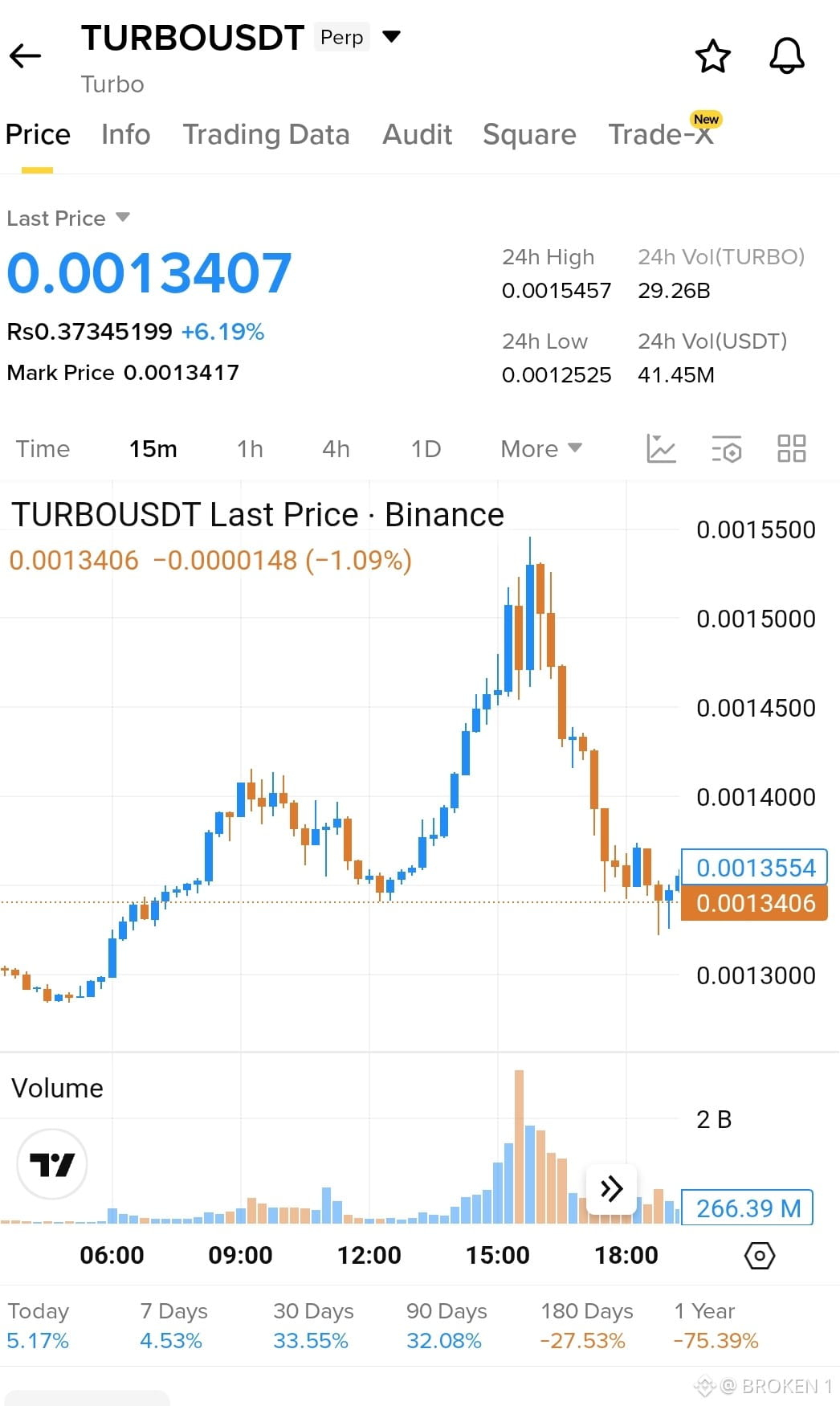
$TURBO USDT zeigt, warum meme-gesteuertes Trading nach wie vor massive Aufmerksamkeit auf dem Kryptomarkt erregt. Das Chart hat sich in Richtung 0.00155 mit aggressivem Kaufdruck explodiert, bevor es sich nahe 0.00134 beruhigte, während das Handelsvolumen in nur 24 Stunden über 29B TURBO gestiegen ist. So eine Bewegung zeigt, wie schnell Momentum aufgebaut werden kann, wenn Trader in schnelllebige Community-Token strömen.
Das System hinter Turbo kombiniert hochgeschwindigkeits-perpetuelles Trading mit nonstop Marktteilnahme. Trader können Positionen sofort betreten und verlassen, während sie auf Hype-Zyklen, soziale Stimmung, Wal-Aktivität und schnelle Trendwenden reagieren. Sie nutzen Leverage, kurzfristige Scalping-Setups und Breakout-Strategien, um die Volatilität während starker Volumensessions zu verfolgen.
Was TURBO aufregend macht, ist die Geschwindigkeit seiner Reaktionen. Eine Kaufwelle kann massive Preisbewegungen innerhalb von Minuten auslösen. Ich sehe, dass das Engagement der Trader zurückkehrt, während das Volumen auch nach dem Rückzug aktiv bleibt. Der Zweck hinter diesem Ökosystem ist einfach: eine schnelle, energiegeladene Handelsumgebung zu schaffen, in der Momentum-Trader rund um die Uhr von der Volatilität profitieren können.
{spot}(TURBOUSDT)
$TURBO USDT zeigt, warum meme-gesteuertes Trading nach wie vor massive Aufmerksamkeit auf dem Kryptomarkt erregt. Das Chart hat sich in Richtung 0.00155 mit aggressivem Kaufdruck explodiert, bevor es sich nahe 0.00134 beruhigte, während das Handelsvolumen in nur 24 Stunden über 29B TURBO gestiegen ist. So eine Bewegung zeigt, wie schnell Momentum aufgebaut werden kann, wenn Trader in schnelllebige Community-Token strömen.
Das System hinter Turbo kombiniert hochgeschwindigkeits-perpetuelles Trading mit nonstop Marktteilnahme. Trader können Positionen sofort betreten und verlassen, während sie auf Hype-Zyklen, soziale Stimmung, Wal-Aktivität und schnelle Trendwenden reagieren. Sie nutzen Leverage, kurzfristige Scalping-Setups und Breakout-Strategien, um die Volatilität während starker Volumensessions zu verfolgen.
Was TURBO aufregend macht, ist die Geschwindigkeit seiner Reaktionen. Eine Kaufwelle kann massive Preisbewegungen innerhalb von Minuten auslösen. Ich sehe, dass das Engagement der Trader zurückkehrt, während das Volumen auch nach dem Rückzug aktiv bleibt. Der Zweck hinter diesem Ökosystem ist einfach: eine schnelle, energiegeladene Handelsumgebung zu schaffen, in der Momentum-Trader rund um die Uhr von der Volatilität profitieren können.
Das System hinter Turbo kombiniert hochgeschwindigkeits-perpetuelles Trading mit nonstop Marktteilnahme. Trader können Positionen sofort betreten und verlassen, während sie auf Hype-Zyklen, soziale Stimmung, Wal-Aktivität und schnelle Trendwenden reagieren. Sie nutzen Leverage, kurzfristige Scalping-Setups und Breakout-Strategien, um die Volatilität während starker Volumensessions zu verfolgen.
Was TURBO aufregend macht, ist die Geschwindigkeit seiner Reaktionen. Eine Kaufwelle kann massive Preisbewegungen innerhalb von Minuten auslösen. Ich sehe, dass das Engagement der Trader zurückkehrt, während das Volumen auch nach dem Rückzug aktiv bleibt. Der Zweck hinter diesem Ökosystem ist einfach: eine schnelle, energiegeladene Handelsumgebung zu schaffen, in der Momentum-Trader rund um die Uhr von der Volatilität profitieren können.
102
·
--
Bullisch
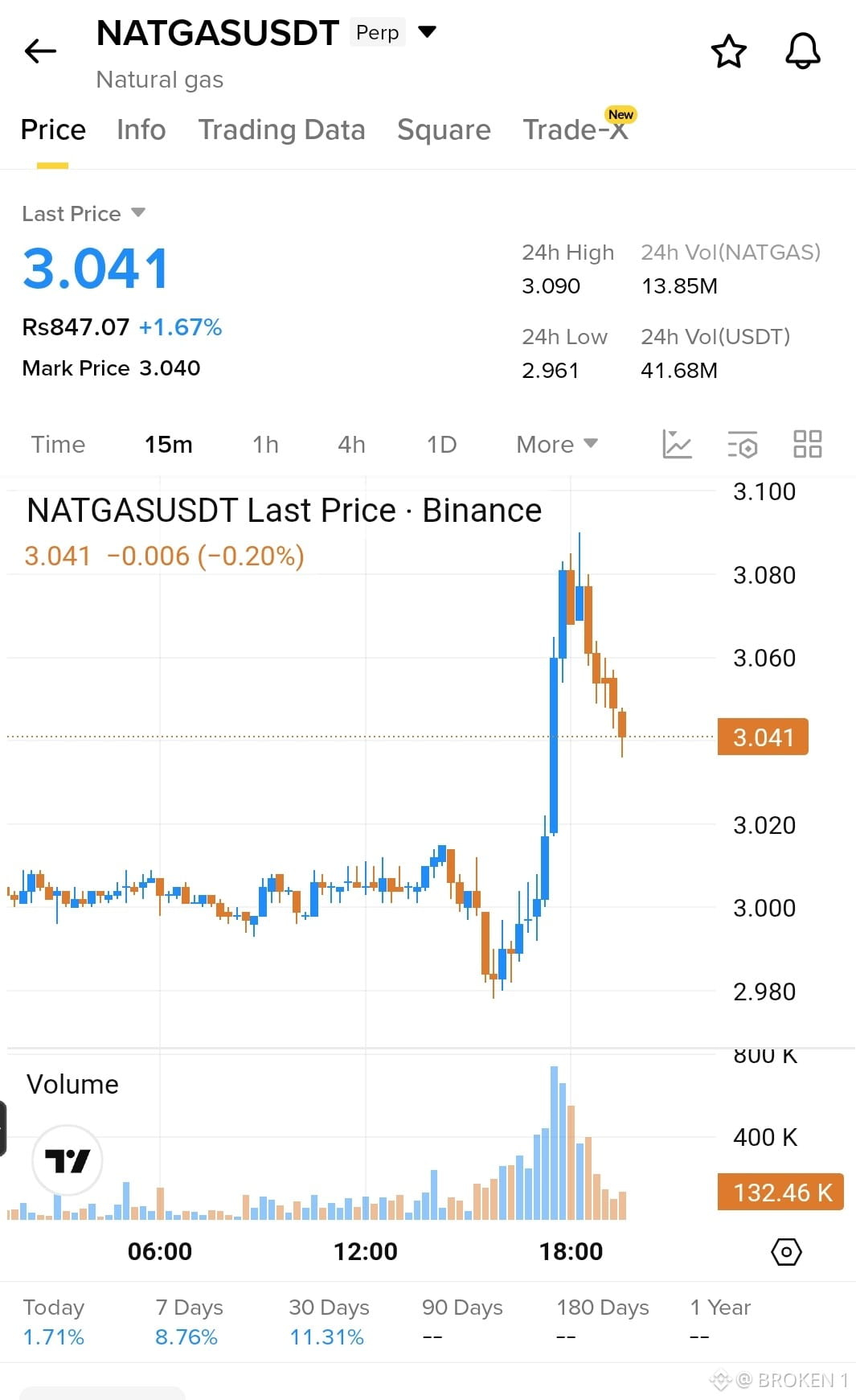
$NATGAS SUSDT heizt sich auf, während Trader in eine der reaktivsten Energieanlagen des Marktes strömen. Erdgas ist bekannt für explosive Preisbewegungen, und dieser letzte Ausbruch zeigt, warum so viele Trader es genau im Auge behalten. Das Chart hat sich von der 2,98-Zone bis über 3,08 nach oben geschoben, bevor es leicht bei 3,04 abgekühlt ist, während das Handelsvolumen gleichzeitig explodierte. Diese plötzliche Dynamik erzählt eine größere Geschichte über Marktnachfrage, Liquidität und das wachsende Vertrauen der Trader.
Das System hinter dem NATGAS-Perpetual-Trading ist dafür ausgelegt, eine kontinuierliche Exposition gegenüber den Preisbewegungen von Erdgas zu bieten, ohne den physischen Rohstoff halten zu müssen. Trader können sofort auf Nachrichten aus dem Energiemarkt, Wetteränderungen, Angebotsupdates und globale Nachfrageschwankungen reagieren. Sie nutzen Leverage, Volumenverfolgung und kurzfristige Momentum-Strategien, um schnelle Gelegenheiten in beide Richtungen zu erfassen.
Was diesen Markt aufregend macht, ist, wie schnell sich das Sentiment ändert. Eine starke Ausbruchskerze kann die Dynamik innerhalb von Minuten völlig verändern. Ich sehe steigende Beteiligung, intensivere Volumenaktivität und stärkeren Kaufdruck, der nach einer Konsolidierung zurückkehrt. Der Zweck hinter diesem Setup ist einfach: Tradern schnellen, flexiblen Zugang zu einem der volatilsten Energiemärkte der Welt zu geben, solange das Momentum am Leben bleibt.
{future}(NATGASUSDT)
$NATGAS SUSDT heizt sich auf, während Trader in eine der reaktivsten Energieanlagen des Marktes strömen. Erdgas ist bekannt für explosive Preisbewegungen, und dieser letzte Ausbruch zeigt, warum so viele Trader es genau im Auge behalten. Das Chart hat sich von der 2,98-Zone bis über 3,08 nach oben geschoben, bevor es leicht bei 3,04 abgekühlt ist, während das Handelsvolumen gleichzeitig explodierte. Diese plötzliche Dynamik erzählt eine größere Geschichte über Marktnachfrage, Liquidität und das wachsende Vertrauen der Trader.
Das System hinter dem NATGAS-Perpetual-Trading ist dafür ausgelegt, eine kontinuierliche Exposition gegenüber den Preisbewegungen von Erdgas zu bieten, ohne den physischen Rohstoff halten zu müssen. Trader können sofort auf Nachrichten aus dem Energiemarkt, Wetteränderungen, Angebotsupdates und globale Nachfrageschwankungen reagieren. Sie nutzen Leverage, Volumenverfolgung und kurzfristige Momentum-Strategien, um schnelle Gelegenheiten in beide Richtungen zu erfassen.
Was diesen Markt aufregend macht, ist, wie schnell sich das Sentiment ändert. Eine starke Ausbruchskerze kann die Dynamik innerhalb von Minuten völlig verändern. Ich sehe steigende Beteiligung, intensivere Volumenaktivität und stärkeren Kaufdruck, der nach einer Konsolidierung zurückkehrt. Der Zweck hinter diesem Setup ist einfach: Tradern schnellen, flexiblen Zugang zu einem der volatilsten Energiemärkte der Welt zu geben, solange das Momentum am Leben bleibt.
Das System hinter dem NATGAS-Perpetual-Trading ist dafür ausgelegt, eine kontinuierliche Exposition gegenüber den Preisbewegungen von Erdgas zu bieten, ohne den physischen Rohstoff halten zu müssen. Trader können sofort auf Nachrichten aus dem Energiemarkt, Wetteränderungen, Angebotsupdates und globale Nachfrageschwankungen reagieren. Sie nutzen Leverage, Volumenverfolgung und kurzfristige Momentum-Strategien, um schnelle Gelegenheiten in beide Richtungen zu erfassen.
Was diesen Markt aufregend macht, ist, wie schnell sich das Sentiment ändert. Eine starke Ausbruchskerze kann die Dynamik innerhalb von Minuten völlig verändern. Ich sehe steigende Beteiligung, intensivere Volumenaktivität und stärkeren Kaufdruck, der nach einer Konsolidierung zurückkehrt. Der Zweck hinter diesem Setup ist einfach: Tradern schnellen, flexiblen Zugang zu einem der volatilsten Energiemärkte der Welt zu geben, solange das Momentum am Leben bleibt.
148
·
--
Bullisch
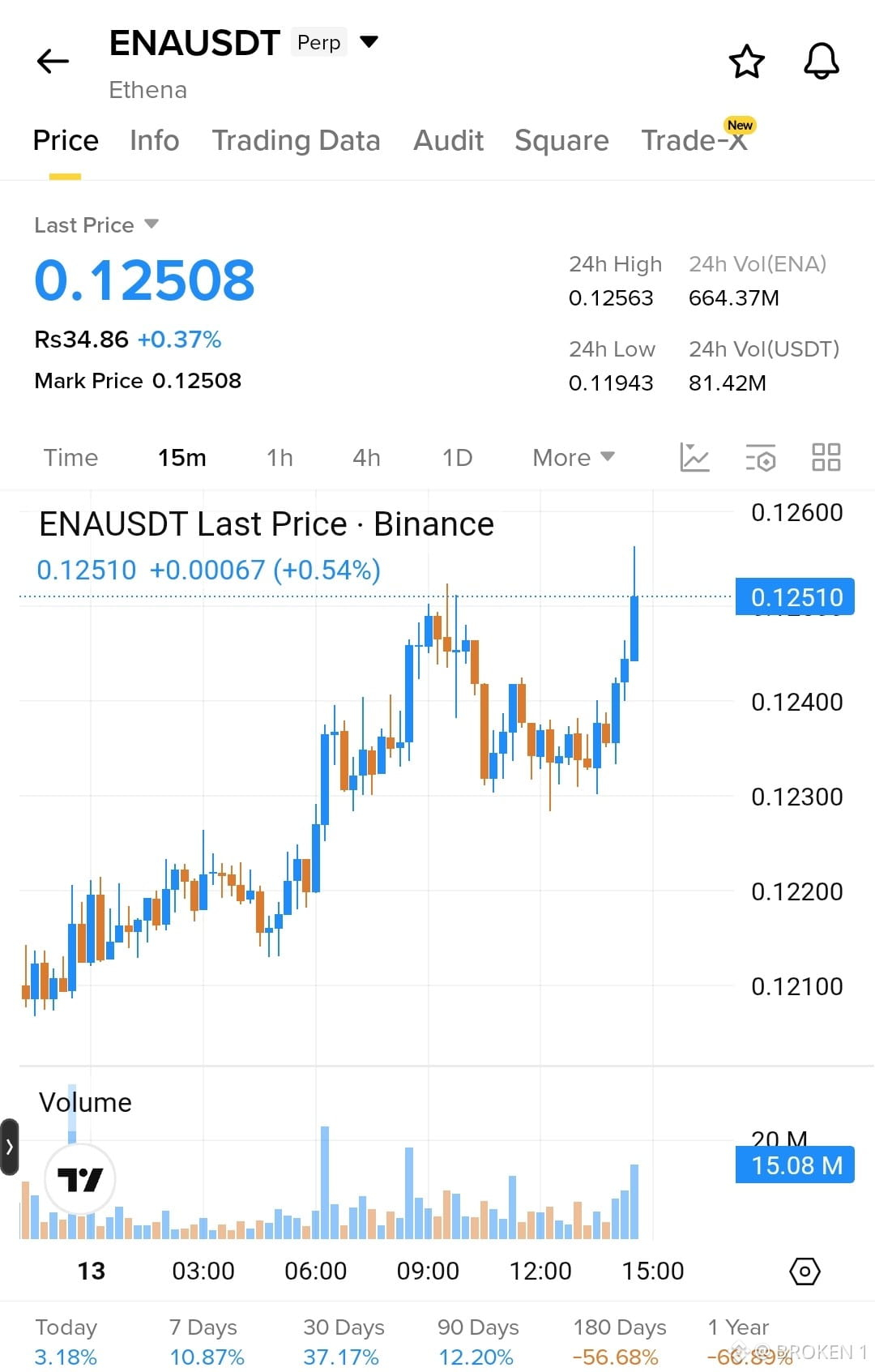
$ENA USDT gewinnt frischen Schwung, während Ethena bei 0.125 handelt und der stetige bullische Druck zurück auf den Markt kommt. Die jüngste Aufwärtsbewegung zeigt, dass die Trader genau hinschauen, während das Volumen um wichtige Widerstandszone weiter zunimmt. Ich sehe wachsende Aufmerksamkeit, weil Ethena ein neues dezentrales Finanzsystem aufbaut, das sich auf synthetische Dollar und krypto-native Stabilität konzentriert.
Das Projekt zielt darauf ab, skalierbares digitales Geld zu schaffen, das außerhalb traditioneller Bankensysteme funktioniert. Sie nutzen Hedging-Strategien und krypto-unterstützte Vermögenswerte, um Stabilität zu gewährleisten, während sie den Nutzern dennoch ermöglichen, Renditen innerhalb dezentraler Finanzökosysteme zu erzielen.
Die aktuelle Marktaktivität zeigt, dass Käufer höhere Niveaus verteidigen, nachdem sie einen starken intraday Anstieg aus dem Bereich von 0.121 erlebt haben. Das Handelsvolumen bleibt ebenfalls aktiv, was auf anhaltendes kurzfristiges Interesse seitens des Marktes hinweist.
Ethenas größeres Ziel ist die Schaffung einer alternativen Finanzinfrastruktur, in der dezentrale Ersparnisse, stabile Vermögenswerte und On-Chain-Finanzierung global funktionieren können, ohne vollständig von traditionellen Finanzinstituten abhängig zu sein.
{spot}(ENAUSDT)
$ENA USDT gewinnt frischen Schwung, während Ethena bei 0.125 handelt und der stetige bullische Druck zurück auf den Markt kommt. Die jüngste Aufwärtsbewegung zeigt, dass die Trader genau hinschauen, während das Volumen um wichtige Widerstandszone weiter zunimmt. Ich sehe wachsende Aufmerksamkeit, weil Ethena ein neues dezentrales Finanzsystem aufbaut, das sich auf synthetische Dollar und krypto-native Stabilität konzentriert.
Das Projekt zielt darauf ab, skalierbares digitales Geld zu schaffen, das außerhalb traditioneller Bankensysteme funktioniert. Sie nutzen Hedging-Strategien und krypto-unterstützte Vermögenswerte, um Stabilität zu gewährleisten, während sie den Nutzern dennoch ermöglichen, Renditen innerhalb dezentraler Finanzökosysteme zu erzielen.
Die aktuelle Marktaktivität zeigt, dass Käufer höhere Niveaus verteidigen, nachdem sie einen starken intraday Anstieg aus dem Bereich von 0.121 erlebt haben. Das Handelsvolumen bleibt ebenfalls aktiv, was auf anhaltendes kurzfristiges Interesse seitens des Marktes hinweist.
Ethenas größeres Ziel ist die Schaffung einer alternativen Finanzinfrastruktur, in der dezentrale Ersparnisse, stabile Vermögenswerte und On-Chain-Finanzierung global funktionieren können, ohne vollständig von traditionellen Finanzinstituten abhängig zu sein.
Das Projekt zielt darauf ab, skalierbares digitales Geld zu schaffen, das außerhalb traditioneller Bankensysteme funktioniert. Sie nutzen Hedging-Strategien und krypto-unterstützte Vermögenswerte, um Stabilität zu gewährleisten, während sie den Nutzern dennoch ermöglichen, Renditen innerhalb dezentraler Finanzökosysteme zu erzielen.
Die aktuelle Marktaktivität zeigt, dass Käufer höhere Niveaus verteidigen, nachdem sie einen starken intraday Anstieg aus dem Bereich von 0.121 erlebt haben. Das Handelsvolumen bleibt ebenfalls aktiv, was auf anhaltendes kurzfristiges Interesse seitens des Marktes hinweist.
Ethenas größeres Ziel ist die Schaffung einer alternativen Finanzinfrastruktur, in der dezentrale Ersparnisse, stabile Vermögenswerte und On-Chain-Finanzierung global funktionieren können, ohne vollständig von traditionellen Finanzinstituten abhängig zu sein.
2
252
·
--
Bullisch
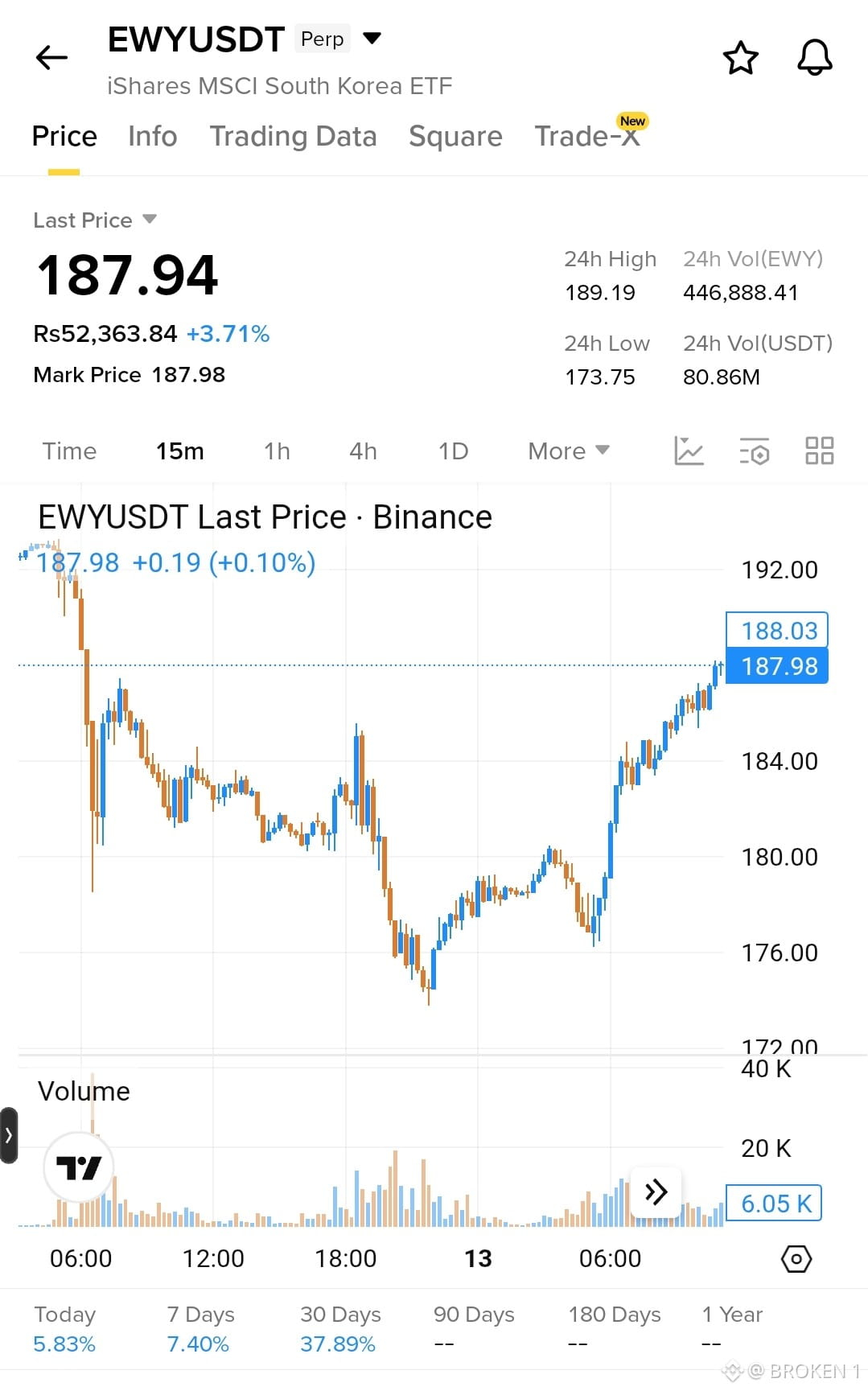
$EWY USDT zeigt beeindruckende Stärke, während der iShares MSCI Südkorea ETF nahe 187,94 mit bullischem Momentum steigt, das im gesamten Markt zunimmt. Die scharfe Erholung von tieferen Niveaus hebt das wachsende Vertrauen in Südkoreas Technologie- und Industriesektoren hervor. Ich sehe, dass Trader sich auf EWY konzentrieren, weil es Zugang zu großen koreanischen Unternehmen bietet, die in der Halbleiter-, Elektronik-, KI-Infrastruktur und globalen Fertigung tätig sind.
Der ETF verfolgt führende südkoreanische Unternehmen, einschließlich solcher, die mit der Chipproduktion, Verbrauchertechnologie und fortschrittlichen Exporten verbunden sind. Sie profitieren von der steigenden globalen Nachfrage nach KI-Hardware, Speicherchips und Elektronik der nächsten Generation.
Aktuelle Handelsaktivitäten zeigen starken Kaufdruck, wobei der Preis nahe der 189 Widerstandszone drückt, während das Volumen aktiv bleibt. Das Momentum hält weiter nach dem Ausbruch von den jüngsten Unterstützungsniveaus.
EWYs größeres Ziel ist es, Investoren Zugang zu einer der wichtigsten innovationsgetriebenen Volkswirtschaften Asiens zu bieten, während Technologie und globale digitale Nachfrage weiterhin schnell wachsen.
{future}(EWYUSDT)
$EWY USDT zeigt beeindruckende Stärke, während der iShares MSCI Südkorea ETF nahe 187,94 mit bullischem Momentum steigt, das im gesamten Markt zunimmt. Die scharfe Erholung von tieferen Niveaus hebt das wachsende Vertrauen in Südkoreas Technologie- und Industriesektoren hervor. Ich sehe, dass Trader sich auf EWY konzentrieren, weil es Zugang zu großen koreanischen Unternehmen bietet, die in der Halbleiter-, Elektronik-, KI-Infrastruktur und globalen Fertigung tätig sind.
Der ETF verfolgt führende südkoreanische Unternehmen, einschließlich solcher, die mit der Chipproduktion, Verbrauchertechnologie und fortschrittlichen Exporten verbunden sind. Sie profitieren von der steigenden globalen Nachfrage nach KI-Hardware, Speicherchips und Elektronik der nächsten Generation.
Aktuelle Handelsaktivitäten zeigen starken Kaufdruck, wobei der Preis nahe der 189 Widerstandszone drückt, während das Volumen aktiv bleibt. Das Momentum hält weiter nach dem Ausbruch von den jüngsten Unterstützungsniveaus.
EWYs größeres Ziel ist es, Investoren Zugang zu einer der wichtigsten innovationsgetriebenen Volkswirtschaften Asiens zu bieten, während Technologie und globale digitale Nachfrage weiterhin schnell wachsen.
Der ETF verfolgt führende südkoreanische Unternehmen, einschließlich solcher, die mit der Chipproduktion, Verbrauchertechnologie und fortschrittlichen Exporten verbunden sind. Sie profitieren von der steigenden globalen Nachfrage nach KI-Hardware, Speicherchips und Elektronik der nächsten Generation.
Aktuelle Handelsaktivitäten zeigen starken Kaufdruck, wobei der Preis nahe der 189 Widerstandszone drückt, während das Volumen aktiv bleibt. Das Momentum hält weiter nach dem Ausbruch von den jüngsten Unterstützungsniveaus.
EWYs größeres Ziel ist es, Investoren Zugang zu einer der wichtigsten innovationsgetriebenen Volkswirtschaften Asiens zu bieten, während Technologie und globale digitale Nachfrage weiterhin schnell wachsen.
1
167
·
--
Bullisch
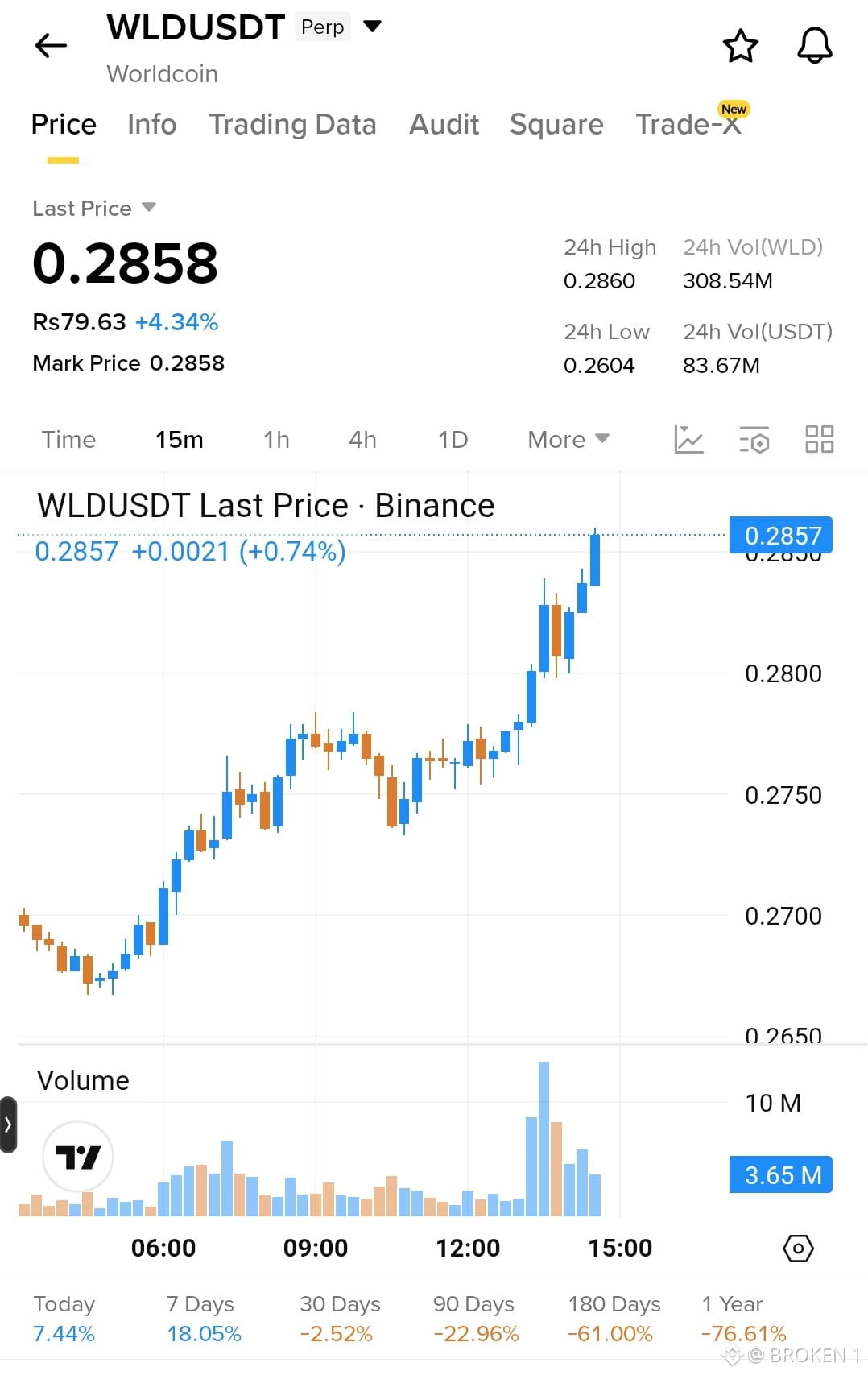
$WLD USDT gewinnt frischen Schwung, während Worldcoin sich der 0.2858 nähert, mit starkem Kaufinteresse, das zurück auf den Markt kommt. Der jüngste Ausbruch zeigt, dass Trader wieder aufpassen, nachdem es Wochen des Drucks im breiteren Kryptoraum gab. Ich sehe wachsendes Interesse, weil Worldcoin versucht, ein digitales Identitätssystem für die KI-Ära aufzubauen.
Das Projekt konzentriert sich darauf, zu beweisen, dass ein echter Mensch hinter jedem Konto steht, durch sein biometrisches Verifizierungssystem namens Orb. Sie zielen darauf ab, Probleme im Zusammenhang mit gefälschten Identitäten, Bots und KI-generierten Konten zu lösen und gleichzeitig ein globales Finanz- und Identitätsnetzwerk zu schaffen, das online funktioniert.
Das Handelsvolumen ist stark angestiegen, was starken kurzfristigen Schwung zeigt, während Käufer auf die Widerstandszone bei 0.286 zusteuern. Diese Bewegung spiegelt auch den erneuten Optimismus rund um KI-fokussierte Krypto-Projekte wider.
Der größere Zweck von Worldcoin geht über die Preisbewegung hinaus. Sie arbeiten auf eine Zukunft hin, in der digitale Identität, KI-Systeme und dezentralisierte Finanzen sicher auf globaler Ebene zusammenarbeiten können.
{spot}(WLDUSDT)
$WLD USDT gewinnt frischen Schwung, während Worldcoin sich der 0.2858 nähert, mit starkem Kaufinteresse, das zurück auf den Markt kommt. Der jüngste Ausbruch zeigt, dass Trader wieder aufpassen, nachdem es Wochen des Drucks im breiteren Kryptoraum gab. Ich sehe wachsendes Interesse, weil Worldcoin versucht, ein digitales Identitätssystem für die KI-Ära aufzubauen.
Das Projekt konzentriert sich darauf, zu beweisen, dass ein echter Mensch hinter jedem Konto steht, durch sein biometrisches Verifizierungssystem namens Orb. Sie zielen darauf ab, Probleme im Zusammenhang mit gefälschten Identitäten, Bots und KI-generierten Konten zu lösen und gleichzeitig ein globales Finanz- und Identitätsnetzwerk zu schaffen, das online funktioniert.
Das Handelsvolumen ist stark angestiegen, was starken kurzfristigen Schwung zeigt, während Käufer auf die Widerstandszone bei 0.286 zusteuern. Diese Bewegung spiegelt auch den erneuten Optimismus rund um KI-fokussierte Krypto-Projekte wider.
Der größere Zweck von Worldcoin geht über die Preisbewegung hinaus. Sie arbeiten auf eine Zukunft hin, in der digitale Identität, KI-Systeme und dezentralisierte Finanzen sicher auf globaler Ebene zusammenarbeiten können.
Das Projekt konzentriert sich darauf, zu beweisen, dass ein echter Mensch hinter jedem Konto steht, durch sein biometrisches Verifizierungssystem namens Orb. Sie zielen darauf ab, Probleme im Zusammenhang mit gefälschten Identitäten, Bots und KI-generierten Konten zu lösen und gleichzeitig ein globales Finanz- und Identitätsnetzwerk zu schaffen, das online funktioniert.
Das Handelsvolumen ist stark angestiegen, was starken kurzfristigen Schwung zeigt, während Käufer auf die Widerstandszone bei 0.286 zusteuern. Diese Bewegung spiegelt auch den erneuten Optimismus rund um KI-fokussierte Krypto-Projekte wider.
Der größere Zweck von Worldcoin geht über die Preisbewegung hinaus. Sie arbeiten auf eine Zukunft hin, in der digitale Identität, KI-Systeme und dezentralisierte Finanzen sicher auf globaler Ebene zusammenarbeiten können.
3
435
·
--
Bullisch
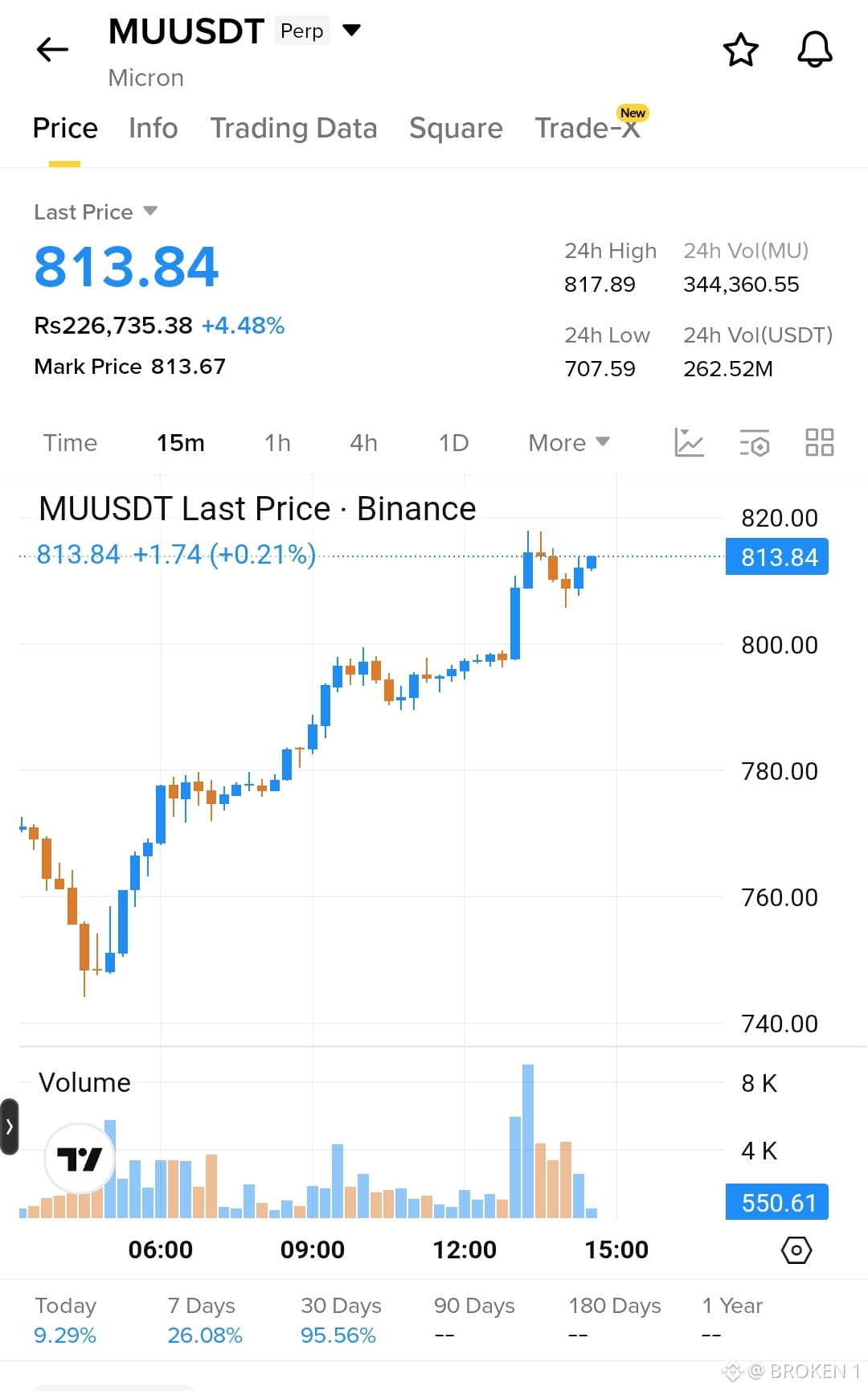
$MU USDT zeigt starken Momentum, während Micron über 813 mit starkem bullischen Druck, der sich im gesamten Markt aufbaut, ansteigt. Die scharfe Erholung von niedrigeren Niveaus nahe 750 hebt das wachsende Vertrauen der Trader hervor, die den Halbleitersektor genau beobachten. Ich sehe zunehmende Aufmerksamkeit, weil Micron eine wichtige Rolle bei Speicherchips, KI-Infrastruktur und Hochleistungs-Computersystemen spielt.
Was Micron wichtig macht, ist seine Verbindung zur Zukunft der Technologie. Sie liefern Speicher- und Speicherlösungen, die in KI-Servern, Gaming-Systemen, Cloud-Computing, Smartphones und modernen Rechenzentren verwendet werden. Mit dem weltweiten Anstieg der KI-Annahme steigt die Nachfrage nach Hochgeschwindigkeits-Speicher weiterhin rasant.
Das aktuelle Handelsvolumen zeigt, dass Käufer nach dem starken Ausbruch in Richtung der 817 Hochzone aktiv bleiben. Die Preisbewegung hält sich weiterhin nahe dem Widerstand, was signalisiert, dass das Momentum noch nicht nachgelassen hat.
Microns größeres Ziel ist es, die nächste Generation digitaler Technologie zu unterstützen, bei der Geschwindigkeit, Speicher und KI-Leistung wichtiger denn je werden.
{future}(MUUSDT)
$MU USDT zeigt starken Momentum, während Micron über 813 mit starkem bullischen Druck, der sich im gesamten Markt aufbaut, ansteigt. Die scharfe Erholung von niedrigeren Niveaus nahe 750 hebt das wachsende Vertrauen der Trader hervor, die den Halbleitersektor genau beobachten. Ich sehe zunehmende Aufmerksamkeit, weil Micron eine wichtige Rolle bei Speicherchips, KI-Infrastruktur und Hochleistungs-Computersystemen spielt.
Was Micron wichtig macht, ist seine Verbindung zur Zukunft der Technologie. Sie liefern Speicher- und Speicherlösungen, die in KI-Servern, Gaming-Systemen, Cloud-Computing, Smartphones und modernen Rechenzentren verwendet werden. Mit dem weltweiten Anstieg der KI-Annahme steigt die Nachfrage nach Hochgeschwindigkeits-Speicher weiterhin rasant.
Das aktuelle Handelsvolumen zeigt, dass Käufer nach dem starken Ausbruch in Richtung der 817 Hochzone aktiv bleiben. Die Preisbewegung hält sich weiterhin nahe dem Widerstand, was signalisiert, dass das Momentum noch nicht nachgelassen hat.
Microns größeres Ziel ist es, die nächste Generation digitaler Technologie zu unterstützen, bei der Geschwindigkeit, Speicher und KI-Leistung wichtiger denn je werden.
Was Micron wichtig macht, ist seine Verbindung zur Zukunft der Technologie. Sie liefern Speicher- und Speicherlösungen, die in KI-Servern, Gaming-Systemen, Cloud-Computing, Smartphones und modernen Rechenzentren verwendet werden. Mit dem weltweiten Anstieg der KI-Annahme steigt die Nachfrage nach Hochgeschwindigkeits-Speicher weiterhin rasant.
Das aktuelle Handelsvolumen zeigt, dass Käufer nach dem starken Ausbruch in Richtung der 817 Hochzone aktiv bleiben. Die Preisbewegung hält sich weiterhin nahe dem Widerstand, was signalisiert, dass das Momentum noch nicht nachgelassen hat.
Microns größeres Ziel ist es, die nächste Generation digitaler Technologie zu unterstützen, bei der Geschwindigkeit, Speicher und KI-Leistung wichtiger denn je werden.
1
408
·
--
Bullisch
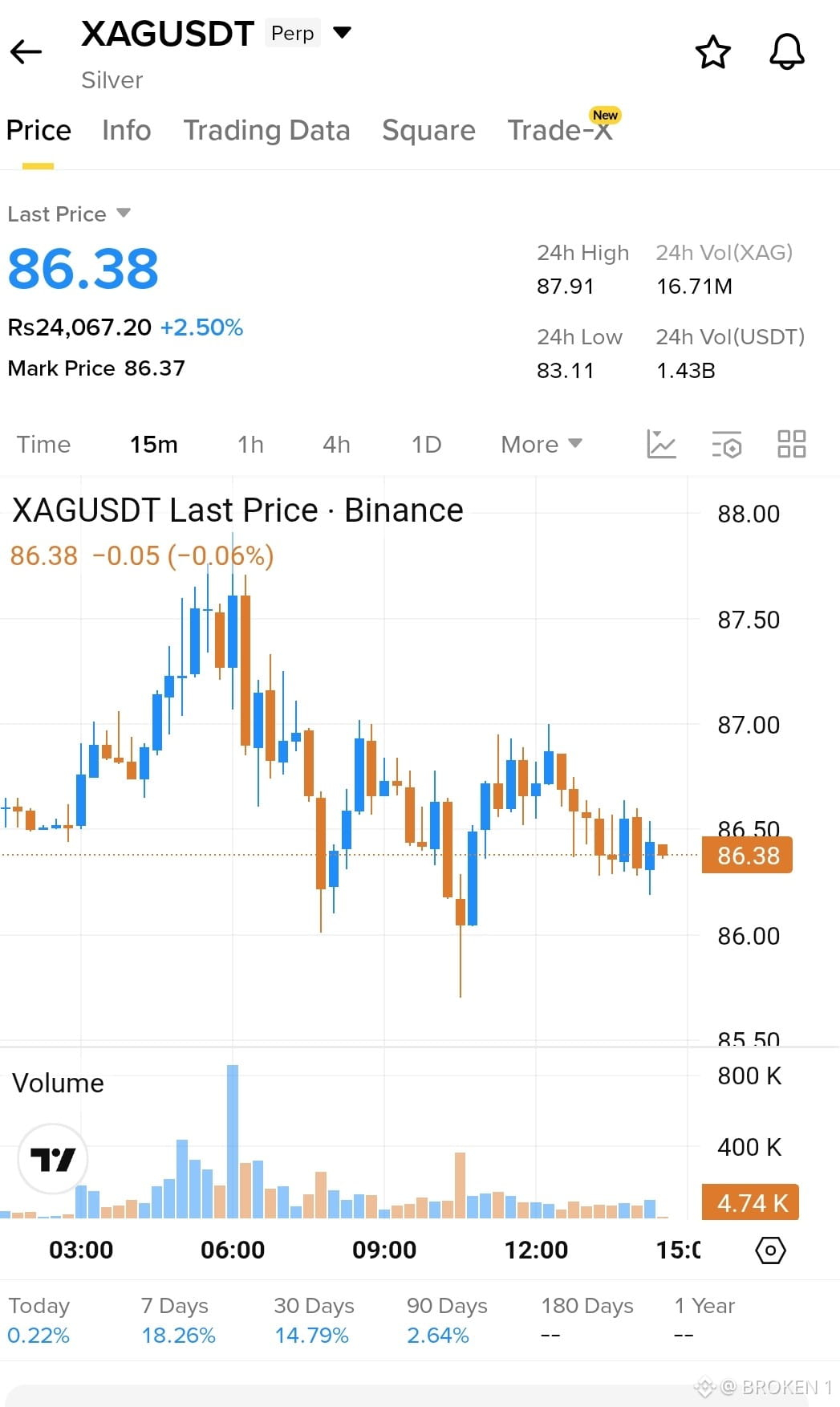
$XAG USDT handelt nahe 86,38 mit starker Marktaktivität und wachsendem Händlerinteresse. Die jüngste Preisbewegung zeigt, wie schnell Momentum aufgebaut werden kann, wenn die globale Nachfrage nach sicheren Hafenanlagen wieder steigt. Ich sehe, dass Händler Silber genau im Auge behalten, da es sowohl in der traditionellen Finanzwelt als auch in modernen Industriefeldern an Wert hält.
Was Silber wichtig macht, ist sein doppelter Zweck. Es wird nicht nur als Wertspeicher wie Gold angesehen, sondern wird auch stark in der Elektronik, bei Solarzellen, Elektrofahrzeugen und in der Produktion fortschrittlicher Technologien verwendet. Dieses Gleichgewicht zwischen Anlagennachfrage und industrieller Nutzung gibt Silber eine einzigartige Position in der Finanzwelt.
Aktuelle Handelsdaten zeigen, dass die Volatilität aktiv bleibt und starkes Volumen durch den Markt fließt. Käufer haben die Preise in Richtung des Hochs von 87,91 gedrückt, während die Unterstützung weiterhin um tiefere Niveaus nahe 86 gebildet wird. Dies schafft eine enge Kampfzone, in der Händler auf die nächste Ausbruchrichtung warten.
Der größere Zweck hinter Silbers wachsender Popularität ist Stabilität und langfristige Nützlichkeit. Es wird eine steigende globale Nachfrage gesehen, da sich Industrien erweitern und Investoren weiterhin nach zuverlässigen Anlagen in unsicheren Marktbedingungen suchen.
{future}(XAGUSDT)
$XAG USDT handelt nahe 86,38 mit starker Marktaktivität und wachsendem Händlerinteresse. Die jüngste Preisbewegung zeigt, wie schnell Momentum aufgebaut werden kann, wenn die globale Nachfrage nach sicheren Hafenanlagen wieder steigt. Ich sehe, dass Händler Silber genau im Auge behalten, da es sowohl in der traditionellen Finanzwelt als auch in modernen Industriefeldern an Wert hält.
Was Silber wichtig macht, ist sein doppelter Zweck. Es wird nicht nur als Wertspeicher wie Gold angesehen, sondern wird auch stark in der Elektronik, bei Solarzellen, Elektrofahrzeugen und in der Produktion fortschrittlicher Technologien verwendet. Dieses Gleichgewicht zwischen Anlagennachfrage und industrieller Nutzung gibt Silber eine einzigartige Position in der Finanzwelt.
Aktuelle Handelsdaten zeigen, dass die Volatilität aktiv bleibt und starkes Volumen durch den Markt fließt. Käufer haben die Preise in Richtung des Hochs von 87,91 gedrückt, während die Unterstützung weiterhin um tiefere Niveaus nahe 86 gebildet wird. Dies schafft eine enge Kampfzone, in der Händler auf die nächste Ausbruchrichtung warten.
Der größere Zweck hinter Silbers wachsender Popularität ist Stabilität und langfristige Nützlichkeit. Es wird eine steigende globale Nachfrage gesehen, da sich Industrien erweitern und Investoren weiterhin nach zuverlässigen Anlagen in unsicheren Marktbedingungen suchen.
Was Silber wichtig macht, ist sein doppelter Zweck. Es wird nicht nur als Wertspeicher wie Gold angesehen, sondern wird auch stark in der Elektronik, bei Solarzellen, Elektrofahrzeugen und in der Produktion fortschrittlicher Technologien verwendet. Dieses Gleichgewicht zwischen Anlagennachfrage und industrieller Nutzung gibt Silber eine einzigartige Position in der Finanzwelt.
Aktuelle Handelsdaten zeigen, dass die Volatilität aktiv bleibt und starkes Volumen durch den Markt fließt. Käufer haben die Preise in Richtung des Hochs von 87,91 gedrückt, während die Unterstützung weiterhin um tiefere Niveaus nahe 86 gebildet wird. Dies schafft eine enge Kampfzone, in der Händler auf die nächste Ausbruchrichtung warten.
Der größere Zweck hinter Silbers wachsender Popularität ist Stabilität und langfristige Nützlichkeit. Es wird eine steigende globale Nachfrage gesehen, da sich Industrien erweitern und Investoren weiterhin nach zuverlässigen Anlagen in unsicheren Marktbedingungen suchen.
190
·
--
Bullisch
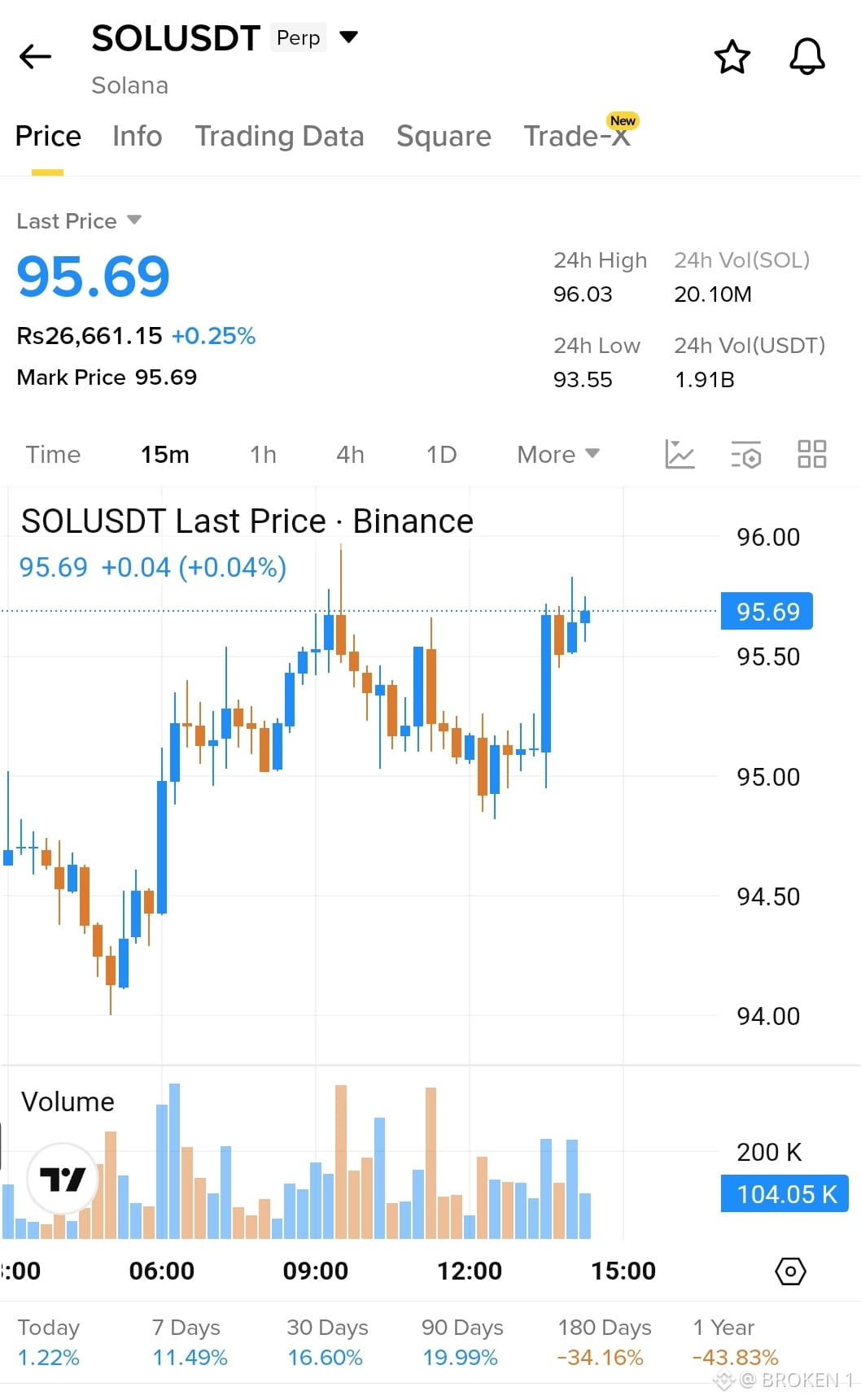
$SOL heizt wieder auf, und die neueste Bewegung um $95,69 zieht ernsthafte Aufmerksamkeit im Krypto-Markt auf sich. Was Solana aufregend macht, ist nicht nur die Preisbewegung — es ist das leistungsstarke System, das dahinter läuft. Solana wurde entwickelt, um eines der größten Probleme der Blockchain zu lösen: Geschwindigkeit und hohe Transaktionskosten. Während viele Netzwerke bei starker Aktivität langsam werden, konzentrieren sie sich darauf, Transaktionen schnell, reibungslos und erschwinglich für alle zu halten.
Das Netzwerk nutzt eine einzigartige Kombination aus Proof of Stake und Proof of History, die es ermöglicht, tausende von Transaktionen pro Sekunde zu verarbeiten. Deshalb bauen Entwickler weiterhin Spiele, DeFi-Plattformen, NFT-Projekte und Zahlungssysteme auf Solana. Ich sehe, dass immer mehr Nutzer zurückkehren, weil das Erlebnis im Vergleich zu älteren Chains einfach und effizient ist.
Die aktuelle Marktaktivität zeigt ebenfalls eine starke Dynamik. Das Handelsvolumen bleibt massiv, die Volatilität ist aktiv, und Käufer verteidigen höhere Preisniveaus nahe der $95-Zone. Sie beobachten eindeutig einen möglichen Ausbruch in Richtung neuer Widerstandsniveaus.
Solanas Ziel ist größer als Hype — es schafft ein Blockchain-Ökosystem, das bereit ist für die globale Adoption in der realen Welt.
{spot}(SOLUSDT)
$SOL heizt wieder auf, und die neueste Bewegung um $95,69 zieht ernsthafte Aufmerksamkeit im Krypto-Markt auf sich. Was Solana aufregend macht, ist nicht nur die Preisbewegung — es ist das leistungsstarke System, das dahinter läuft. Solana wurde entwickelt, um eines der größten Probleme der Blockchain zu lösen: Geschwindigkeit und hohe Transaktionskosten. Während viele Netzwerke bei starker Aktivität langsam werden, konzentrieren sie sich darauf, Transaktionen schnell, reibungslos und erschwinglich für alle zu halten.
Das Netzwerk nutzt eine einzigartige Kombination aus Proof of Stake und Proof of History, die es ermöglicht, tausende von Transaktionen pro Sekunde zu verarbeiten. Deshalb bauen Entwickler weiterhin Spiele, DeFi-Plattformen, NFT-Projekte und Zahlungssysteme auf Solana. Ich sehe, dass immer mehr Nutzer zurückkehren, weil das Erlebnis im Vergleich zu älteren Chains einfach und effizient ist.
Die aktuelle Marktaktivität zeigt ebenfalls eine starke Dynamik. Das Handelsvolumen bleibt massiv, die Volatilität ist aktiv, und Käufer verteidigen höhere Preisniveaus nahe der $95-Zone. Sie beobachten eindeutig einen möglichen Ausbruch in Richtung neuer Widerstandsniveaus.
Solanas Ziel ist größer als Hype — es schafft ein Blockchain-Ökosystem, das bereit ist für die globale Adoption in der realen Welt.
Das Netzwerk nutzt eine einzigartige Kombination aus Proof of Stake und Proof of History, die es ermöglicht, tausende von Transaktionen pro Sekunde zu verarbeiten. Deshalb bauen Entwickler weiterhin Spiele, DeFi-Plattformen, NFT-Projekte und Zahlungssysteme auf Solana. Ich sehe, dass immer mehr Nutzer zurückkehren, weil das Erlebnis im Vergleich zu älteren Chains einfach und effizient ist.
Die aktuelle Marktaktivität zeigt ebenfalls eine starke Dynamik. Das Handelsvolumen bleibt massiv, die Volatilität ist aktiv, und Käufer verteidigen höhere Preisniveaus nahe der $95-Zone. Sie beobachten eindeutig einen möglichen Ausbruch in Richtung neuer Widerstandsniveaus.
Solanas Ziel ist größer als Hype — es schafft ein Blockchain-Ökosystem, das bereit ist für die globale Adoption in der realen Welt.
1
2
141
·
--
Bullisch
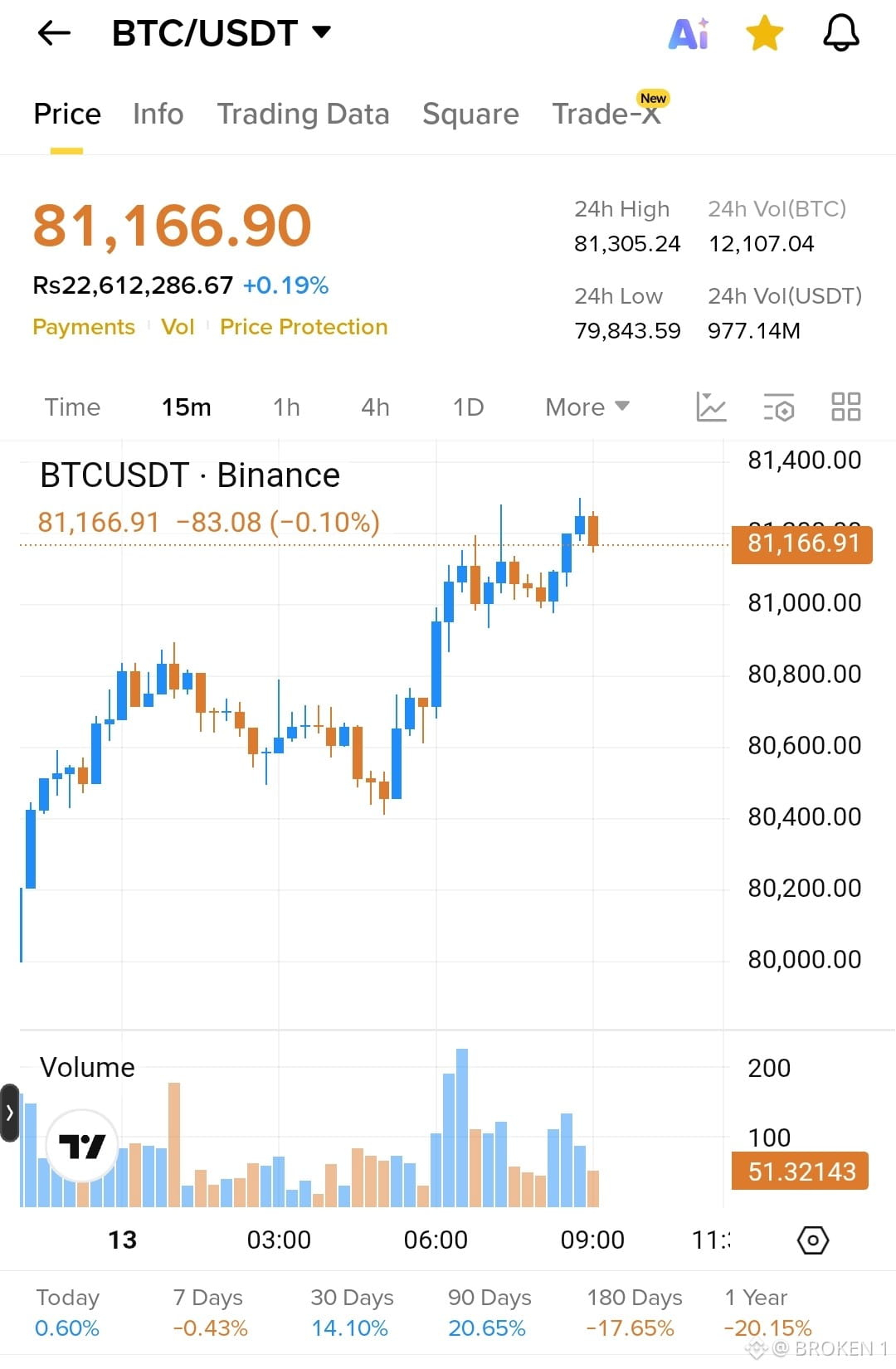
$BITCOIN heizt wieder auf, während BTC/USDT über $81.166 auf Binance steigt und frische Stärke zeigt, nachdem es von dem täglichen Tief bei $79.843 abgeprallt ist. Das Chart zeigt einen stetigen Kaufmomentum im 15-Minuten-Zeitrahmen, während das Volumen zunimmt, da Trader wieder in den Markt einsteigen. Ich sehe ein starkes Erholungsschema, das sich bildet, während Bitcoin durch wichtige Widerstandsbereiche klettert und dabei ein positives Momentum während der gesamten Sitzung aufrechterhält.
Das System hinter Bitcoin zieht weiterhin global Aufmerksamkeit auf sich. Es läuft auf einer dezentralisierten Blockchain, wo Transaktionen von Minern verifiziert und durch Kryptographie gesichert werden, anstatt durch Banken oder zentralisierte Unternehmen. Sie schaffen ein Finanznetzwerk, in dem Nutzer schnell, transparent und ohne auf traditionelle Institutionen angewiesen zu sein, Werte weltweit bewegen können. Jede Transaktion wird dauerhaft aufgezeichnet, was das Ökosystem sicher und öffentlich verifizierbar macht.
Der Zweck von Bitcoin war schon immer größer als nur die Preisbewegung. Es wurde entworfen, um den Menschen finanzielle Freiheit, Schutz gegen Inflation und Eigentum an ihren Vermögenswerten zu geben. Während das Vertrauen in den Markt zurückkehrt und das Handelsvolumen wieder steigt, beweist Bitcoin weiterhin, warum es die treibende Kraft für die Zukunft der digitalen Finanzen bleibt.
{alpha}(10x72e4f9f808c49a2a61de9c5896298920dc4eeea9)
$BITCOIN heizt wieder auf, während BTC/USDT über $81.166 auf Binance steigt und frische Stärke zeigt, nachdem es von dem täglichen Tief bei $79.843 abgeprallt ist. Das Chart zeigt einen stetigen Kaufmomentum im 15-Minuten-Zeitrahmen, während das Volumen zunimmt, da Trader wieder in den Markt einsteigen. Ich sehe ein starkes Erholungsschema, das sich bildet, während Bitcoin durch wichtige Widerstandsbereiche klettert und dabei ein positives Momentum während der gesamten Sitzung aufrechterhält.
Das System hinter Bitcoin zieht weiterhin global Aufmerksamkeit auf sich. Es läuft auf einer dezentralisierten Blockchain, wo Transaktionen von Minern verifiziert und durch Kryptographie gesichert werden, anstatt durch Banken oder zentralisierte Unternehmen. Sie schaffen ein Finanznetzwerk, in dem Nutzer schnell, transparent und ohne auf traditionelle Institutionen angewiesen zu sein, Werte weltweit bewegen können. Jede Transaktion wird dauerhaft aufgezeichnet, was das Ökosystem sicher und öffentlich verifizierbar macht.
Der Zweck von Bitcoin war schon immer größer als nur die Preisbewegung. Es wurde entworfen, um den Menschen finanzielle Freiheit, Schutz gegen Inflation und Eigentum an ihren Vermögenswerten zu geben. Während das Vertrauen in den Markt zurückkehrt und das Handelsvolumen wieder steigt, beweist Bitcoin weiterhin, warum es die treibende Kraft für die Zukunft der digitalen Finanzen bleibt.
Das System hinter Bitcoin zieht weiterhin global Aufmerksamkeit auf sich. Es läuft auf einer dezentralisierten Blockchain, wo Transaktionen von Minern verifiziert und durch Kryptographie gesichert werden, anstatt durch Banken oder zentralisierte Unternehmen. Sie schaffen ein Finanznetzwerk, in dem Nutzer schnell, transparent und ohne auf traditionelle Institutionen angewiesen zu sein, Werte weltweit bewegen können. Jede Transaktion wird dauerhaft aufgezeichnet, was das Ökosystem sicher und öffentlich verifizierbar macht.
Der Zweck von Bitcoin war schon immer größer als nur die Preisbewegung. Es wurde entworfen, um den Menschen finanzielle Freiheit, Schutz gegen Inflation und Eigentum an ihren Vermögenswerten zu geben. Während das Vertrauen in den Markt zurückkehrt und das Handelsvolumen wieder steigt, beweist Bitcoin weiterhin, warum es die treibende Kraft für die Zukunft der digitalen Finanzen bleibt.
81
Anmelden und weiter Inhalte entdecken
Krypto-Nutzer weltweit auf Binance Square kennenlernen
⚡️ Bleib in Sachen Krypto stets am Puls.
💬 Die weltgrößte Kryptobörse vertraut darauf.
👍 Erhalte verlässliche Einblicke von verifizierten Creators.
E-Mail-Adresse/Telefonnummer