Walrus: Bringing Privacy and Resilience to Decentralized Finance
@Walrus 🦭/acc #walrus $WAL In today’s DeFi landscape, transparency is often treated as a feature. But for many users, it creates an uncomfortable tradeoff. Every transaction, wallet balance, and interaction can be tracked on-chain, leaving little room for true financial privacy. As Web3 grows, the need for confidentiality and control has become just as important as speed and scalability.
Walrus offers a different path. Built on the high-performance Sui blockchain, Walrus focuses on secure, decentralized infrastructure that protects both value and data. Instead of exposing activity to the public by default, it enables users to transact, stake, and store information with greater privacy and resilience. The goal isn’t secrecy for its own sake — it’s ownership and control.
At its core, Walrus uses a distributed storage design that fragments, encodes, and spreads data across multiple nodes. This approach removes single points of failure and makes loss or censorship extremely difficult. Whether it’s NFT metadata, application data, or sensitive files, users can rely on durability without depending on centralized servers.
What sets Walrus apart is its balance of performance and protection. Transactions remain fast and cost-efficient thanks to Sui, while storage stays decentralized and secure. The result is infrastructure that feels practical for everyday use, not just experimental tech.
As DeFi evolves, privacy and reliability will matter more than ever. Walrus positions itself as the foundation for that future — where your activity stays yours, your data remains safe, and your financial freedom doesn’t come at the cost of exposure.
Dusk Network’s Architectural Advantage: Why Separating Privacy from Execution Matters
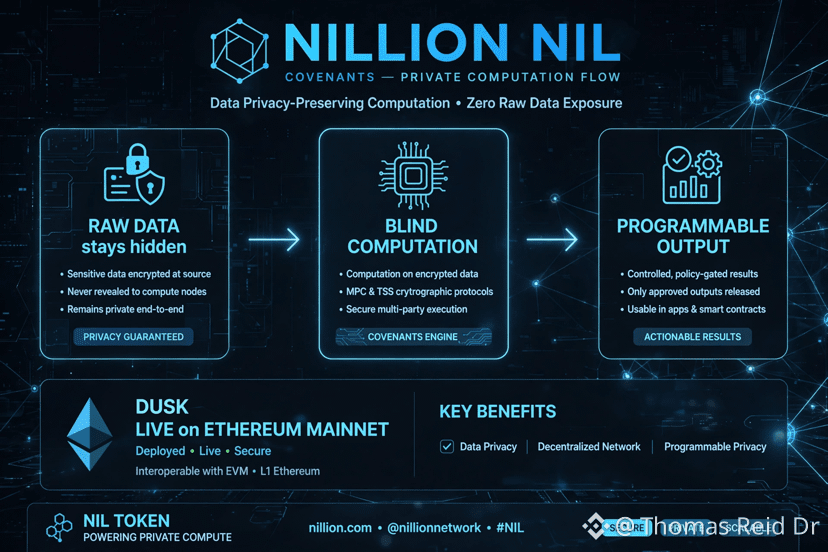
@Dusk #dusk $DUSK The Modern blockchains often attempt to solve privacy by embedding cryptographic techniques directly into their execution environments. While this approach may work for narrow or experimental use cases, it introduces complexity, inefficiency, and operational risk when applied to regulated financial systems. Dusk Network takes a fundamentally different path. Instead of blending privacy logic with smart contract execution, it separates the two at the architectural level. This design choice is not cosmetic — it directly addresses the structural weaknesses found in both fully transparent blockchains and privacy-first systems that entangle cryptography with computation. The result is a cleaner, more predictable foundation built specifically for institutional-grade finance. The Limits of Monolithic Privacy Models In most smart contract platforms, execution logic and state transitions are tightly coupled. When privacy features are layered into this environment, encryption, zero-knowledge proofs, and verification mechanisms become embedded directly inside contract execution. This monolithic design creates several challenges. Performance becomes inconsistent, as privacy-preserving computations are inherently heavier and more variable than standard logic. Gas costs rise, execution time becomes unpredictable, and guaranteeing termination grows more difficult. Auditing also suffers. When financial logic is inseparable from cryptographic obfuscation, regulators and institutions struggle to verify system behavior. Transparency into correctness becomes harder precisely when it is needed most. Finally, upgrades carry systemic risk. Changes to privacy code can unintentionally alter execution semantics, increasing the likelihood of bugs or vulnerabilities. For financial infrastructure, these trade-offs are unacceptable. Dusk avoids them by decoupling the concerns entirely. Privacy as a Protocol-Level Primitive
In Dusk, privacy is not treated as a feature of individual smart contracts. Instead, it is enforced at the protocol level. Confidentiality mechanisms operate before and after execution rather than during arbitrary computation. Transaction privacy, balance shielding, and identity protection are handled through dedicated cryptographic layers that sit outside application logic. This ensures that privacy guarantees remain consistent across the entire network. Developers do not need to implement custom privacy patterns, and users are not exposed to uneven protection depending on contract quality. Privacy becomes a baseline property of the system — not an optional add-on. Deterministic and Bounded Execution By isolating cryptographic complexity, Dusk preserves a deterministic and bounded execution environment. The Rusk Virtual Machine operates under strict gas limits and a quasi-Turing complete model, meaning every state transition has a predictable computational cost and guaranteed termination. Execution remains stable, measurable, and auditable. This predictability is critical for regulated finance. Institutions cannot rely on systems where heavy privacy operations may stall, behave inconsistently, or leak metadata through unintended side effects. Separating proof verification from general computation ensures the execution layer remains clean and reliable. Clear Security Boundaries Dusk’s layered architecture also improves security posture. Privacy logic is responsible for encryption, commitments, nullifiers, and zero-knowledge proofs. Execution logic handles business rules, contract calls, and state transitions. Each layer has a defined responsibility and limited blast radius. If a vulnerability emerges in one component, its impact can be contained rather than cascading through the entire system. This mirrors best practices in traditional software and financial infrastructure, where cryptography, computation, and application logic are isolated to reduce systemic risk.
Compliance Without Surveillance
Perhaps most importantly, this separation enables a practical middle ground between transparency and confidentiality.
Regulated markets require selective disclosure. Institutions must prove compliance, solvency, and correctness without exposing sensitive transaction details or user identities.
By handling privacy at the protocol level, Dusk allows verifiable proofs to be shared with auditors while keeping everyday activity confidential. Oversight becomes possible without turning the network into a surveillance system.
This balance is essential for real-world adoption.
A Simpler Developer Experience
The architectural benefits extend to developers as well.
Because privacy is enforced automatically by the protocol, builders can focus on business logic rather than complex cryptography. Applications can be developed using familiar execution patterns without specialized knowledge of zero-knowledge systems.
This reduces implementation risk, lowers barriers to entry, and accelerates innovation — all while maintaining strong privacy guarantees by default.
Infrastructure for Institutional-Grade Blockchain
Dusk’s separation of privacy and execution reflects a mature understanding of what financial systems require: predictability, auditability, security, and compliance alongside confidentiality.
By cleanly dividing responsibilities, the network avoids the hidden complexity and fragility that plague monolithic privacy chains. What emerges is infrastructure that is scalable, regulation-ready, and private by design.
In essence, this architectural decision is what allows Dusk to move beyond the label of a “privacy blockchain.” It positions the network as a foundational layer for confidential, compliant digital finance — built not for experimentation, but for real-world markets.
#Most blockchains chase speed. @Plasma Plasma designs for failure.
And that difference is huge.
Plasma isn’t trying to be the fastest for hype trades. It’s built for real-world crypto use: stablecoin transfers that start in fiat and end as spendable value. No gas tokens, no complicated onboarding just predictable, reliable payments.
The real advantage isn’t smooth UX. It’s guarantees. Plasma assumes operators can fail and embeds enforceable exits directly into the protocol. Even under stress, assets stay anchored, recoverable, and permissionless.
When the system is tested, ownership is proven. That’s the moment Plasma was built for.
$XPL is quietly accumulating near its long-term support after a prolonged decline. Price action shows a strong rejection wick forming, with potential entry zones around 0.083, as traders anticipate upcoming project updates that could spark a new expansion phase.i
On the tech side: • Sub-second finality • Full EVM compatibility • Stablecoin-prioritized gas mechanics
All of this positions $XPL at the center of value transfer and settlement across the Plasma ecosystem.
Plasma is now deeply cross-chain, interoperating with 125+ assets across 25+ blockchains via NEAR Intents. It’s no longer just a rail it’s a chain-agnostic liquidity hub, increasing market depth, reducing fragmentation, and enabling real-life payment flows.
This is how stablecoins go mainstream: reliability, interoperability, and enforceable guarantees, all baked into the architecture. #Plasma
Every time $ETH dips to this long-term ascending support, buyers step in decisively. History shows these touches often lead to strong upward expansions 📈
$GHST printed a sharp delisting-driven spike, but the move lacked follow-through and quickly lost strength. Price failed to hold above resistance, signaling exhaustion from buyers and a shift back to seller control.
Market structure is now forming lower highs with fading momentum, which typically favors continuation to the downside rather than a sustained recovery.
The current bounce looks more like a relief rally than a true reversal — often a prime zone for shorts to step in.
Trader’s Insight
Watch for rejection near 0.095. Strong selling pressure or wick rejections from this area would confirm weakness and open the path toward the lower targets.
Bias remains bearish unless price reclaims 0.101 with strength.
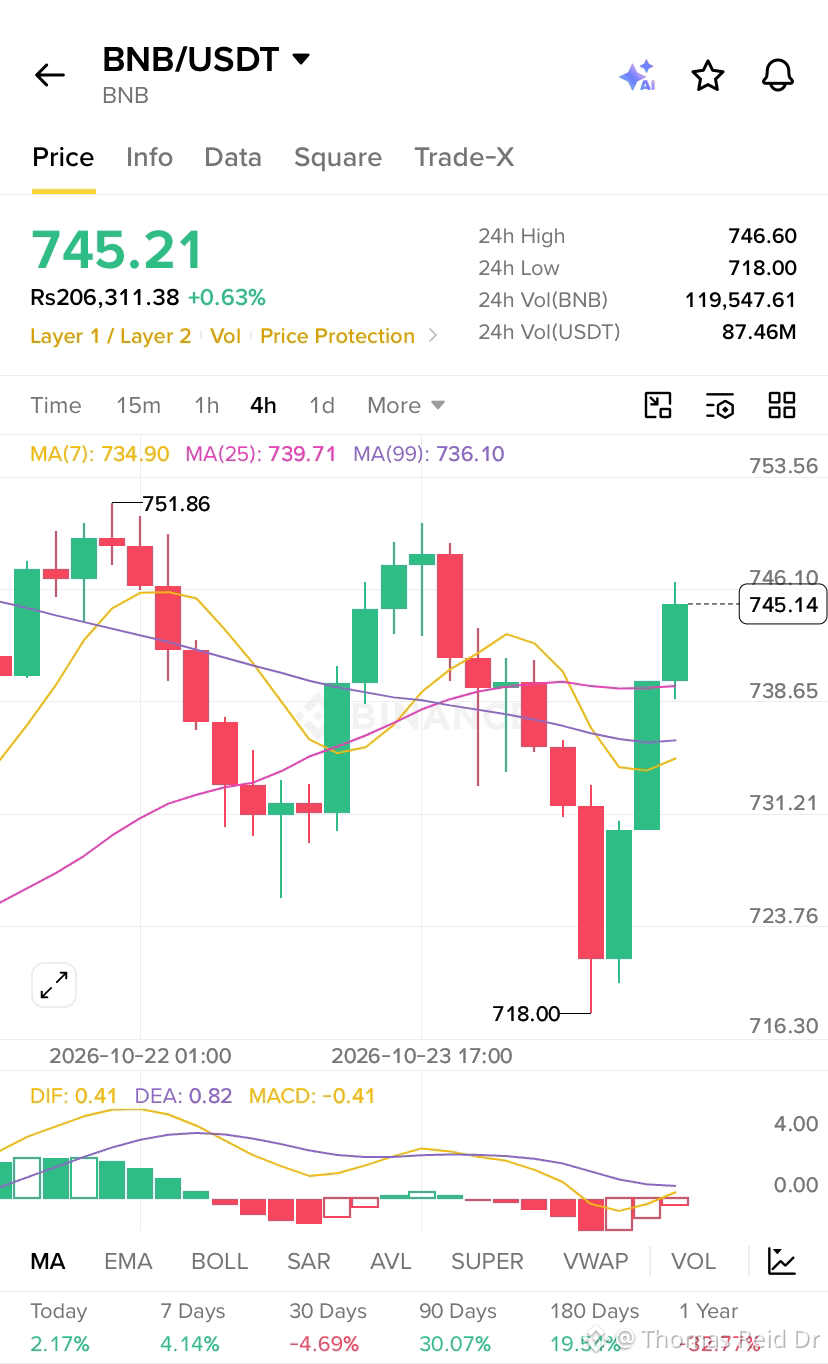
There left nothing but only hope when everything is going down. Stay calm go and take a shower watch some movies hangout with friends. Life is just not whole crypto. Its time to hold on and wait for bullrun. Stay tuned $DUSK $ROSE $BNB
$BNB handelt derzeit innerhalb einer wichtigen Nachfragerzone nach einer starken Korrektur und einem klaren Bruch des vorherigen Aufwärtstrends. Während die breitere Struktur weiterhin bearish tendiert, beginnt der Verkaufsdruck nachzulassen.
Die jüngsten Preisbewegungen zeigen mehrere Kaufspitzen im Bereich von 575–605, was darauf hindeutet, dass Käufer eintreten und versuchen, eine Basis zu bilden, anstatt eine weitere Abwärtsausdehnung zuzulassen.
Ein Halten über 605 hält ein Rebound-Szenario am Leben, mit potenziellen Aufwärtszielen in Richtung 684–722, wenn sich der Momentum aufbaut. Ein klarer Bruch unter 575 würde jedoch den Stabilisationsversuch ungültig machen und wahrscheinlich neuen Verkaufsdruck bringen.
Für jetzt ist dies eine sensible, Übergangsphase, kein klarer Trend.
Geduld, Bestätigung und striktes Risikomanagement sind entscheidend, bevor man sich für eine größere Umkehr positioniert. #BNB
Einige Blockchains versprechen Privatsphäre. Andere versprechen Compliance.
#Dusk hat sich entschieden, beides gleichzeitig zu entwickeln.
Jetzt, da das Mainnet live ist, ist es nicht mehr nur ein Konzept oder eine Theorie aus einem Whitepaper. Es läuft in der realen Welt und beweist, dass ein Netzwerk sensible Daten schützen kann, während es gleichzeitig die Regeln respektiert, die Institutionen befolgen müssen.
Und das verändert alles.
Jahrelang fühlten sich Privatsphäre und Regulierung wie Gegensätze an. Wenn etwas privat war, konnten die Regulierungsbehörden ihm nicht trauen. Wenn es transparent war, konnten Unternehmen es nicht nutzen.
Dusk stellt diesen Kompromiss in Frage.
Privatsphäre wird nicht als nachträglicher Gedanke hinzugefügt, sondern ist direkt im Protokoll verankert. Mit Null-Wissen-Nachweisen und selektiver Offenlegung bleiben Transaktionen standardmäßig vertraulich, können jedoch bei Bedarf verifiziert oder geprüft werden.
So setzt man nicht alles offen. Aber man kann alles beweisen.
Dieses Gleichgewicht ist wichtig.
Institutionen erhalten Schutz für sensible Finanzdaten. Regulierungsbehörden erhalten Verantwortlichkeit. Benutzer erhalten Sicherheit, ohne Vertrauen zu opfern.
Seit das Mainnet live ist, ist das nicht mehr hypothetisch. Reale Anwendungen können gestartet werden. Reale Vermögenswerte können bewegt werden. Reale Compliance kann on-chain stattfinden.
Kein Lärm. Kein Hype. Nur Infrastruktur, die still und leise das tut, wozu sie entworfen wurde.
Während die meisten Chains Geschwindigkeit oder Spekulation verfolgen, baut @Dusk etwas anderes auf - ein System, in dem Privatsphäre und Regeln nicht gegeneinander kämpfen.
Sie arbeiten zusammen.
Und das ist es, was $DUSK sehenswert macht, während regulierte Finanzen langsam on-chain treten.
Das ist eine interessante Geschichte, die ich mit der VANRY-Familie teilen möchte, da es nicht nur ein unvergesslicher, sondern auch erstaunlicher Moment für mich war. Letzte Nacht habe ich etwas anderes ausprobiert, anstatt Diagramme zu lesen oder durch Zeitlinien zu scrollen, habe ich ein Spiel geöffnet, das im VGN-Netzwerk läuft, das von @Vanarchain betrieben wird, nur um zu sehen, wie es sich anfühlt.
Um ehrlich zu sein……… ich habe vergessen, dass ich überhaupt auf der Blockchain war.
Keine Wallet-Kopfschmerzen. Kein Lag. Keine seltsamen Gebühren, die auftauchen. Einfach klicken → spielen → genießen.
Alles funktionierte so, wie es normale Spiele tun sollten.
Da wurde mir klar, so sieht also die Massenadoption tatsächlich aus.
Keine komplizierten DeFi-Dashboards oder technischen Fachbegriffe. Einfach reibungslose, unsichtbare Infrastruktur, die im Hintergrund ihre Arbeit macht, während die Nutzer einfach Spaß haben.
Der Rückgang wurde sofort gekauft, Transaktionen wurden leise abgewickelt, Vermögenswerte wurden ohne Reibung bewegt. Es fühlte sich nicht an wie „Krypto nutzen.“ Es fühlte sich einfach an wie das Internet nutzen.
Und das ist der Punkt.
#vanar baut nicht für Degens erfrischende Diagramme. Sie bauen für Gamer, Kreatoren, Marken – echte Menschen, denen Gas oder Ketten egal sind. Sie interessieren sich für das Erlebnis.
Gaming mit VGN. Metaverse mit Virtua. KI- und Unterhaltungs-Apps, die Menschen tatsächlich nutzen werden.
Sie jagen keinen Hype-Zyklen hinterher, sie legen Gleise für die alltägliche Adoption.
Nützlichkeit zuerst. Nutzer zuerst. Alles andere folgt.
Je mehr ich es beobachte, desto klarer wird es: Wenn Web3 Mainstream wird, wird es sich nicht wie Krypto anfühlen.
Es wird sich anfühlen wie Vanar.
Und $VANRY sitzt genau im Zentrum dieses Ökosystems.
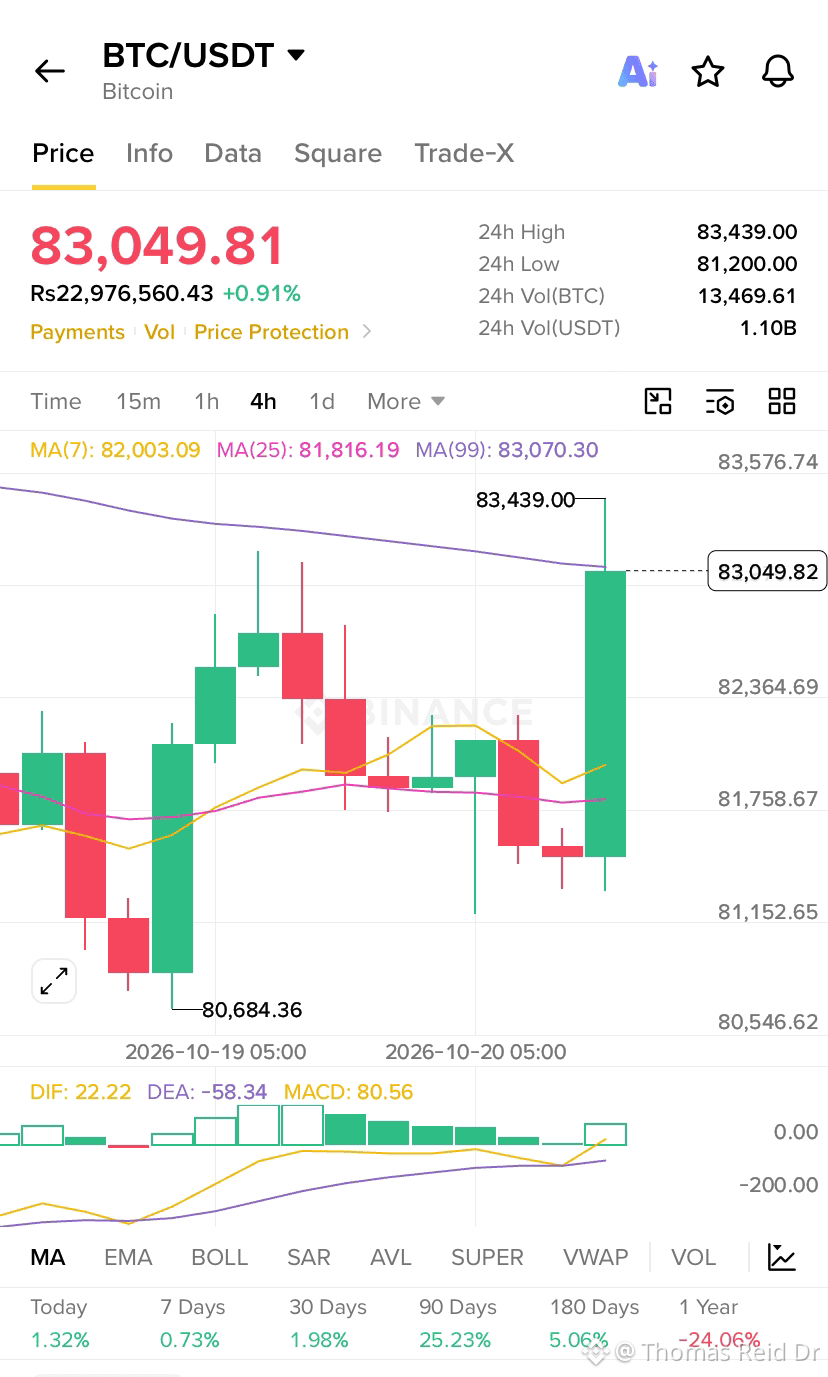
The recent dip failed to generate follow-through selling, and bids stepped in quickly — a sign of absorption rather than distribution. Buyers continue to defend structure, while downside momentum struggles to expand.
As long as this support zone holds, the path of least resistance remains to the upside, with continuation toward higher targets looking more likely.
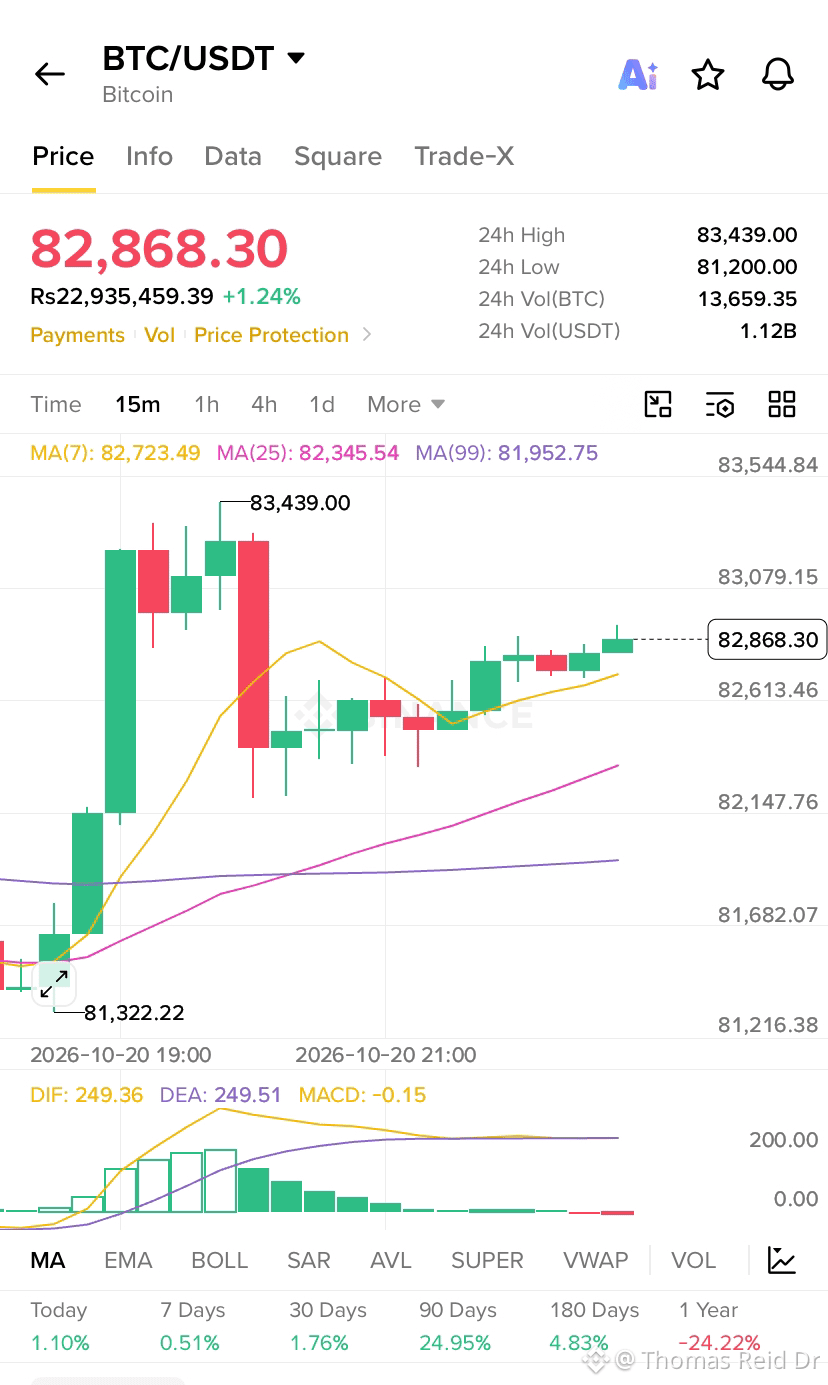
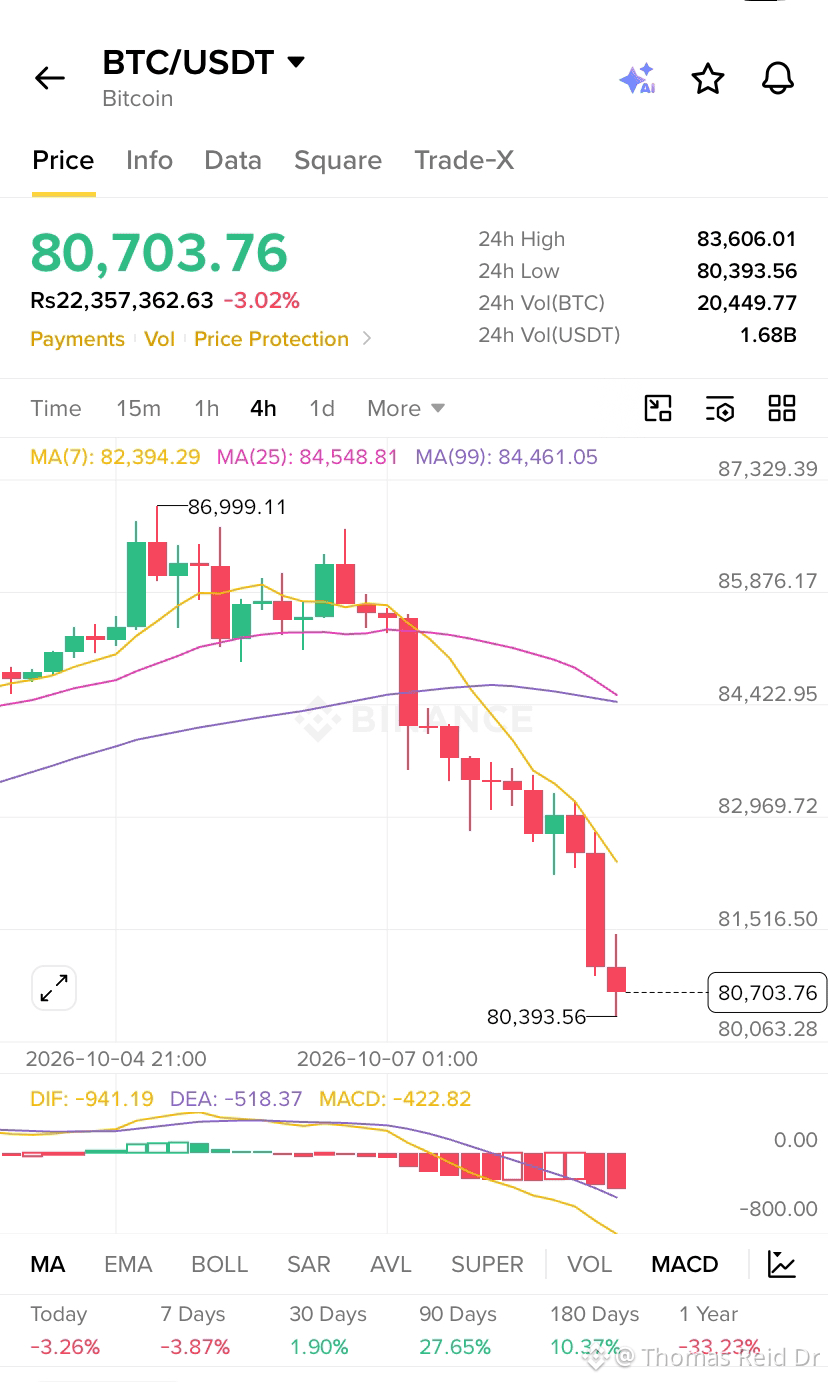
The @Dusk just printed a strong impulsive red candle, slicing cleanly through both the MA-7 and MA-25 a clear sign that buyer momentum is exhausted and sellers are stepping in with control.
The Price action looks heavy with weak bounces and steady bleed, suggesting distribution rather than accumulation. If pressure continues, a quick move toward the MA-99 support zone looks likely.
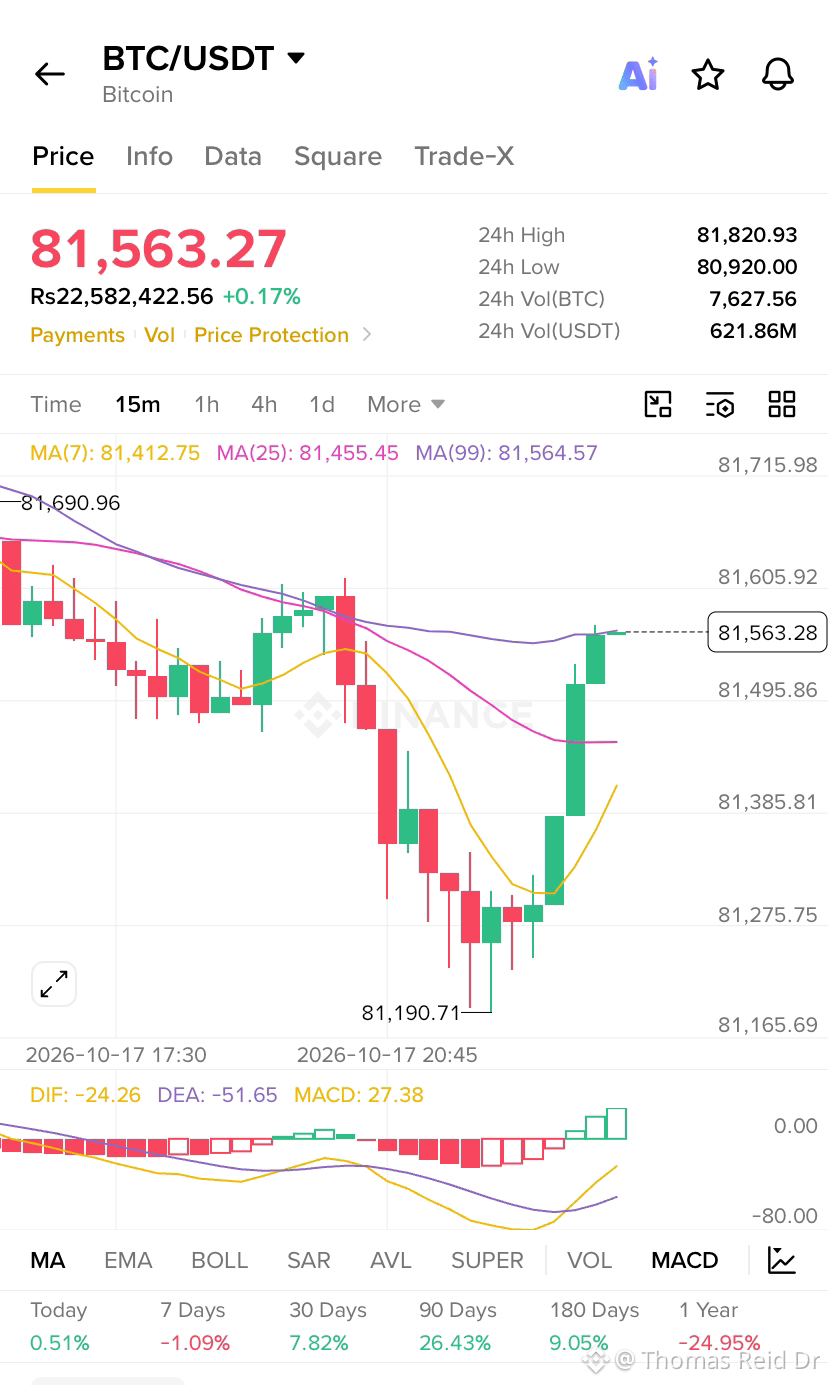
Der jüngste Aufwärtsversuch hat schnell an Schwung verloren, da Verkaufsdruck beim ersten Test des Widerstands auftrat. Dies deutet darauf hin, dass der Rücksprung korrektiv ist, anstatt eine Umkehr zu signalisieren. Der Momentum lässt nach, und die Käufer haben Schwierigkeiten, den Preis über dieser Zone zu halten, was das Potenzial für eine Fortsetzung nach unten intakt hält.
Beyond the Hype: Dissecting AI Public Chains and Vanar Chain's Pragmatic Revolution
@Vanarchain #vanar $VANRY In the ever evolving landscape of blockchain technology, the intersection with artificial intelligence (AI) has sparked a wave of innovation and no small amount of hype. As of early 2026, the market is flooded with so called "AI public chains," projects promising to embed AI directly into decentralized networks to revolutionize everything from data processing to smart contracts. Yet, a closer inspection reveals that many of these ventures are little more than superficial tweaks to existing frameworks, failing to address the core challenges of on chain AI computation. This article delves into the shortcomings of these emergent chains, contrasts them with more thoughtful approaches, and spotlights Vanar Chain as a standout example of practical engineering. Drawing from hands-on experiences and broader industry trends, we'll explore why Vanar represents a step forward in Web3 infrastructure, while also candidly addressing its current limitations that could hinder widespread adoption. The Rise of 'AI Public Chains Promise vs. Reality The fusion of AI and blockchain has been touted as the next frontier for Web3, enabling decentralized applications (dApps) that can learn, adapt, and make intelligent decisions without relying on centralized servers. By February 2026, the AI crypto sector boasts a market capitalization exceeding $26 billion, with projects like Bittensor, Render Network, and NEAR Protocol leading the charge. These initiatives aim to democratize AI by leveraging blockchain for secure data sharing, model training, and inference. Bittensor, for instance, creates a marketplace for decentralized AI models, rewarding contributors with its native token, TAO. Render focuses on distributed GPU computing for AI and 3D rendering, addressing the hardware bottlenecks in machine learning. NEAR positions itself as "the blockchain for AI," emphasizing agentic applications where AI agents can own assets and transact autonomously. However, beneath the glossy marketing, a significant portion of these "AI public chains" fall short. Many are essentially forked versions of the Ethereum Virtual Machine (EVM) codebase, with bolted-on features like AI oracle interfaces. Oracles, such as those provided by Chainlink (which integrates AI with real-world data and holds a market cap of over $8 billion as of February 2026), allow blockchains to fetch external data for AI models. But simply adding these interfaces doesn't resolve the fundamental issue: the computational bottleneck of running resource-intensive AI models on-chain. Blockchain networks are designed for consensus and security, not the parallel processing demands of neural networks. Forking EVM and slapping on oracles is akin to "changing the broth but not the medicine" it masks symptoms without curing the underlying inefficiency. This approach leads to predictable pitfalls. On chain AI inference requires massive compute power, yet most public chains struggle with scalability under load. Transactions bog down, gas fees spike, and developers are left wrestling with limitations that centralized clouds like AWS handle effortlessly. Industry predictions for 2026 highlight this tension: while AI integration into blockchain is expected to grow for verification, provenance, and agentic systems, many projects risk becoming overhyped without delivering tangible utility. As one analysis notes, AI will redefine blockchain, but only if builders move beyond retrofits to purpose built architectures. Vanar Chain: A Smarter Separation of Concerns Enter Vanar Chain, a Layer 1 blockchain that eschews the "full-chain AI" fantasy in favor of a modular, pragmatic design. Launched with a focus on AI-native infrastructure, Vanar isn't just another EVM clone it's engineered from the ground up for AI workloads, PayFi (payment finance), and tokenized real-world assets (RWAs). Its five-layer architecture comprising the base Vanar Chain L1, Neutron for semantic memory and data compression, Kayon for contextual AI reasoning, Axon for intelligent automations (launching soon), and Flows for industry-specific applications cleverly decouples the computing layer from the consensus layer. This separation is key. The L1 handles consensus, security, and scalability, boasting sub second finality, deterministic transaction costs at a mere $0.0005 per transaction, and EVM compatibility for seamless developer onboarding. Meanwhile, upper layers like Kayon manage AI-specific tasks, such as on-chain reasoning for predictions and compliance, without burdening the core network. Neutron compresses real-world data into "Seeds" provable, AI-readable formats enabling efficient storage and processing.<grok:render This modular stack allows for distributed compute, semantic transactions, and fast AI inference, making Vanar feel more like a serverless platform than a traditional blockchain. Compare this to subnet solutions from networks like Fantom or Avalanche. While those isolate workloads through customizable subnets, the setup is notoriously complex, requiring deep full-stack expertise to configure validators, manage cross-subnet communication, and optimize performance. Developers often spend months tweaking parameters, diverting focus from core business logic. Vanar, by contrast, mirrors AWS Lambda's serverless model: resources are dynamically allocated, and developers interact via intuitive SDKs in JavaScript, Python. Intelligent APIs let builders embed AI capabilities with minimal code, automating logic from documents or triggering models without oracles or middleware. A practical test underscores this difference. Deploying a simple semantic analysis script on Vanar's testnet yields response times that rival centralized servers sub second execution that belies its decentralized nature. No more fretting over gas limits or overflows; the system handles scaling invisibly. This "unfeeling" efficiency where infrastructure fades into the background is the holy grail for Web3. As Vanar's whitepaper emphasizes, it's built for onboarding billions with fixed low costs and robust security, initially targeting gaming and entertainment before pivoting to AI. The Glaring Gaps: Ecosystem Desolation and User Friction For all its technical prowess, Vanar Chain grapples with significant hurdles that could relegate it to obscurity. The ecosystem remains strikingly underdeveloped. Despite partnerships like the one with Worldpay for payments infrastructure and hires such as Saiprasad Raut as Head of Payments, native DeFi applications are scarce. There's no robust suite of "DeFi Legos" modular protocols for lending, swapping, or yield farming to attract liquidity. Tokenized RWAs and PayFi hold promise, but without vibrant on-chain activity, Vanar risks becoming a "best runway" with nothing but outdated carts rumbling along. Daily transactions hover around 150,000, a fraction of Ethereum's volume, and the global transaction count of 26 million pales against more established chains. User experience compounds the issue. The official bridge for asset transfers is clunky and anti-intuitive, with slow processing and state updates lagging by minutes. In an era where seamless cross-chain interactions are table stakes, these friction points deter adoption. Upcoming features like Axon and Flows could inject vitality, and events such as TOKEN2049 Dubai in April 2026 signal community building efforts.But without rapid iteration on basics, Vanar's solid foundation might support only a "ghost chain" technically sound but eerily empty. Looking Ahead Lessons for Web3 Infrastructure Vanar Chain exemplifies how AI public chains can transcend gimmicks by prioritizing modularity and developer ergonomics. It challenges the industry to rethink infrastructure, moving from monolithic designs to layered stacks that handle AI's demands without compromising decentralization. Yet, its story is a cautionary tale: technology alone isn't enough. Ecosystems thrive on network effects, user-friendly tools, and liquidity magnets like DeFi. As 2026 unfolds, expect more projects to adopt similar separations, with AI agents and verifiable computations becoming standard. For Vanar to succeed, the team must aggressively bootstrap its ecosystem perhaps through grants, hackathons, or integrations with blue chip DeFi protocols. If they do, Vanar could redefine Web3 as truly intelligent. If not, it joins the ranks of innovative but forgotten chains. The broader lesson? In the AI blockchain nexus, substance over spectacle will separate the revolutionaries from the relics.
The Vanar Chain @Vanarchain is taking a smart, underthe radar approach to building something that actually matters in the real world. Rather than getting caught up in the usual blockchain hype like boasting about sky high transaction speeds or trying to outdo every other Layer 1 Vanar keeps its focus on what truly drives adoption: making the technology feel seamless and user friendly.
The core idea is straightforward: design the blockchain so well that it fades into the background, letting applications run smoothly without users even noticing the underlying complexity.
A standout feature in this strategy is their Neutron layer, which acts as a semantic memory system for AI agents. It provides persistent, tamper proof memory that doesn't vanish when a session ends or a system restarts. This means AI can hold onto context, build on past interactions, and genuinely get better over time turning them from basic, forgetful assistants into evolving, reliable systems.
Their recent appearance at AIBC Eurasia in Dubai seems deliberate and strategic. The event draws in serious players: developers, regulators, investors focused on compliance, and people actually deploying solutions at scale not just chasing trends or viral moments. Being in those conversations helps clear regulatory hurdles and build the kind of partnerships needed for meaningful, long term integration.
For $VANRY this isn't about loud announcements or short term pumps it's steady groundwork. True, durable projects grow exactly like this: quietly, consistently, and with a clear eye on sustainable progress rather than fleeting attention. #vanar
Its good to talk about positivity of a projct. While everyone else is chasing AI tokens and the latest meme coin hype, @Plasma is doing something far less flashy and maybe far more meaningful. It’s still focused on staking rewards and gas-burn mechanics. At first glance, that might look outdated. But sometimes when a project ignores the noise, it’s because it’s quietly building real foundations. Right now, XPL feels like a spring compressed tight, just waiting for release.
There are a few solid fundamentals people are overlooking. Plasma recently rolled out staking delegation, which makes earning yield much easier. No complicated node setup just delegate your $XPL and earn roughly 5% annually. But the bigger story isn’t the yield, it’s the supply pressure. With a burn model similar to Ethereum’s EIP-1559, more network activity means more tokens destroyed. The more it’s used, the scarcer XPL becomes.
At the same time, the team keeps teasing “zero-fee USDT” transfers. That’s not just marketing it directly targets real-world demand, especially in regions like Southeast Asia and South America where cheap, fast cross-border payments actually matter. In those markets, people care less about narratives and more about cost and convenience.
Even the token unlock concerns are fading. The nearly 5% supply release scheduled for late February 2026 has largely been absorbed. Seasoned investors know that when bad news is fully priced in, it often stops being a threat and starts becoming an opportunity.
Can XPL revisit its old highs? No one can promise that. But from a risk-to-reward perspective, it looks surprisingly attractive. Unlike mega-cap projects already priced for perfection, XPL still feels undervalued within the payments space. If stablecoins truly become the backbone of everyday cross-border transfers, then Plasma could serve as the infrastructure that makes it all flow. And when the pipeline is live and volume starts moving through it, the value tends to follow naturally. #Plasma