

Suvat_eth
2.3k Beiträge

Suvat_eth
Melden
Nutzer blockieren
Sharing research-driven insights on crypto | DeFi | and Web3 innovation.
Trade eröffnen
Gelegenheitstrader
1.2 Jahre
154 Following
19.3K+ Follower
6.6K+ Like gegeben
Beiträge
Portfolio
Alle
Zitierungen
Live
·
--
Bärisch
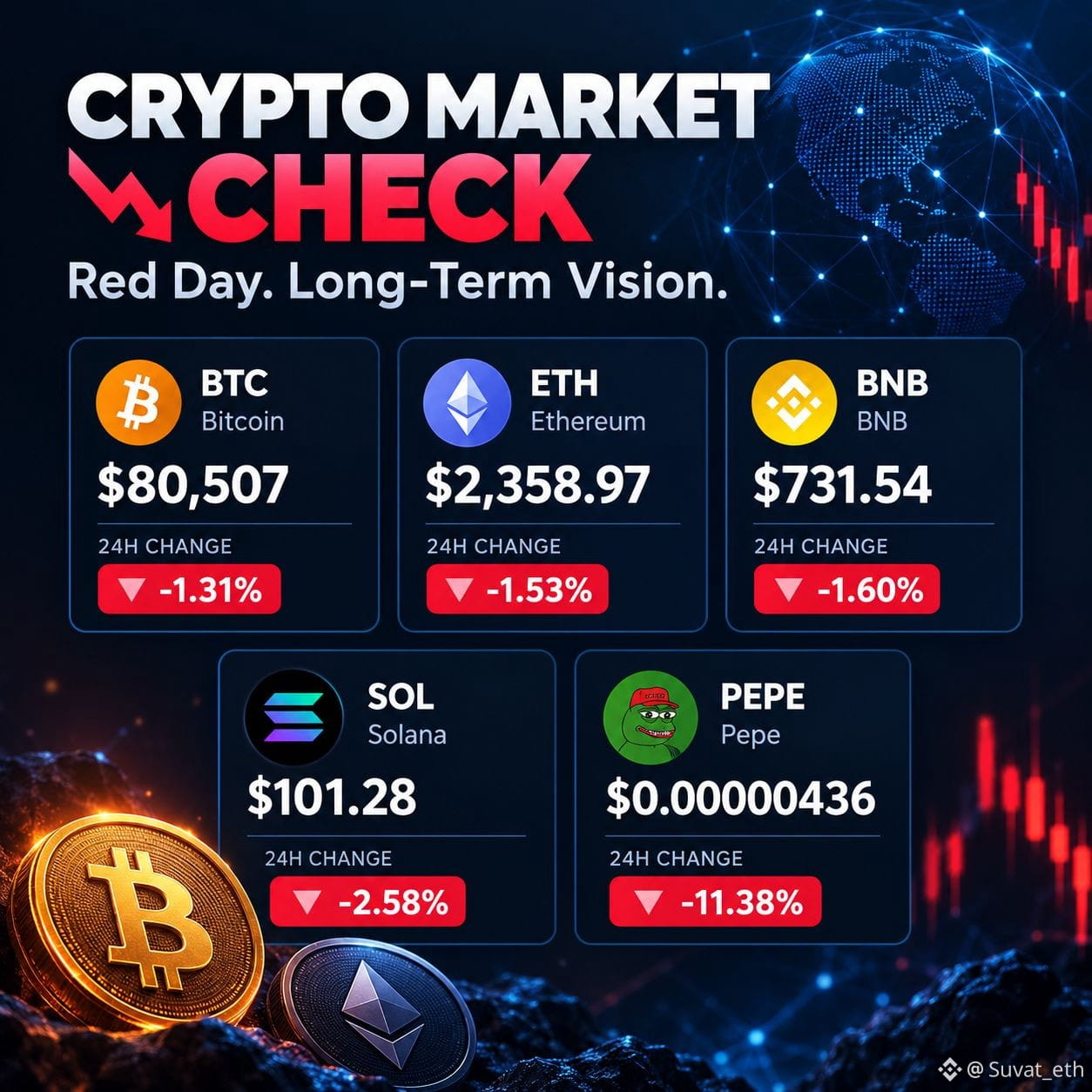
🚨 KRYPTO-MARKT-UPDATE 🔥📉 | EIN ROTHER TAG AM MARKT!
Der Kryptomarkt steht unter Verkaufsdruck, aber kluge Anleger wissen, dass Volatilität dazugehört. 🧠💎
📊 MARKTÜBERBLICK
₿ BTC: $80,507.31 | 🔻 1.31%
💎 ETH: $2,358.97 | 🔻 1.53%
🟡 BNB: $731.54 | 🔻 1.60%
⚡ SOL: $101.28 | 🔻 2.58%
🐸 PEPE: $0.00000436 | 🔻 11.38%
🔥 WAS IST JETZT WICHTIG?
🔹 Handelt es sich um eine vorübergehende Korrektur oder den Beginn eines stärkeren Rücksetzers?
🔹 Wird Bitcoin eine starke Unterstützung finden?
🔹 Können Ethereum und die Altcoins wieder an Dynamik gewinnen?
💡 MEINE EINSCHÄTZUNG: Rote Kerzen stellen die Geduld auf die Probe. Eine klare Strategie, ein angemessenes Risikomanagement und der Verzicht auf emotionale Entscheidungen sind wichtiger, als jeder Marktbewegung hinterherzujagen.
⚠️ Kauft nicht blind den Dip und verkauft nicht in Panik. Beobachtet die Kursentwicklung, managt euer Risiko und recherchiert selbst.
👇 IHR SEID DRAN!
Welche Kryptowährung beobachtet ihr gerade am genauesten – BTC, ETH, BNB, SOL oder PEPE? 🚀
$BNB $SOL $PEPE
🚨 KRYPTO-MARKT-UPDATE 🔥📉 | EIN ROTHER TAG AM MARKT!
Der Kryptomarkt steht unter Verkaufsdruck, aber kluge Anleger wissen, dass Volatilität dazugehört. 🧠💎
📊 MARKTÜBERBLICK
₿ BTC: $80,507.31 | 🔻 1.31%
💎 ETH: $2,358.97 | 🔻 1.53%
🟡 BNB: $731.54 | 🔻 1.60%
⚡ SOL: $101.28 | 🔻 2.58%
🐸 PEPE: $0.00000436 | 🔻 11.38%
🔥 WAS IST JETZT WICHTIG?
🔹 Handelt es sich um eine vorübergehende Korrektur oder den Beginn eines stärkeren Rücksetzers?
🔹 Wird Bitcoin eine starke Unterstützung finden?
🔹 Können Ethereum und die Altcoins wieder an Dynamik gewinnen?
💡 MEINE EINSCHÄTZUNG: Rote Kerzen stellen die Geduld auf die Probe. Eine klare Strategie, ein angemessenes Risikomanagement und der Verzicht auf emotionale Entscheidungen sind wichtiger, als jeder Marktbewegung hinterherzujagen.
⚠️ Kauft nicht blind den Dip und verkauft nicht in Panik. Beobachtet die Kursentwicklung, managt euer Risiko und recherchiert selbst.
👇 IHR SEID DRAN!
Welche Kryptowährung beobachtet ihr gerade am genauesten – BTC, ETH, BNB, SOL oder PEPE? 🚀
$BNB $SOL $PEPE
Der Kryptomarkt steht unter Verkaufsdruck, aber kluge Anleger wissen, dass Volatilität dazugehört. 🧠💎
📊 MARKTÜBERBLICK
₿ BTC: $80,507.31 | 🔻 1.31%
💎 ETH: $2,358.97 | 🔻 1.53%
🟡 BNB: $731.54 | 🔻 1.60%
⚡ SOL: $101.28 | 🔻 2.58%
🐸 PEPE: $0.00000436 | 🔻 11.38%
🔥 WAS IST JETZT WICHTIG?
🔹 Handelt es sich um eine vorübergehende Korrektur oder den Beginn eines stärkeren Rücksetzers?
🔹 Wird Bitcoin eine starke Unterstützung finden?
🔹 Können Ethereum und die Altcoins wieder an Dynamik gewinnen?
💡 MEINE EINSCHÄTZUNG: Rote Kerzen stellen die Geduld auf die Probe. Eine klare Strategie, ein angemessenes Risikomanagement und der Verzicht auf emotionale Entscheidungen sind wichtiger, als jeder Marktbewegung hinterherzujagen.
⚠️ Kauft nicht blind den Dip und verkauft nicht in Panik. Beobachtet die Kursentwicklung, managt euer Risiko und recherchiert selbst.
👇 IHR SEID DRAN!
Welche Kryptowährung beobachtet ihr gerade am genauesten – BTC, ETH, BNB, SOL oder PEPE? 🚀
$BNB $SOL $PEPE
174
·
--
🚀 $BOTB STEIGT UM +7,44 % — GEHT ES NOCH WEITER NACH OBEN? 📈
🔥 BOTB/USDT-Marktsituation
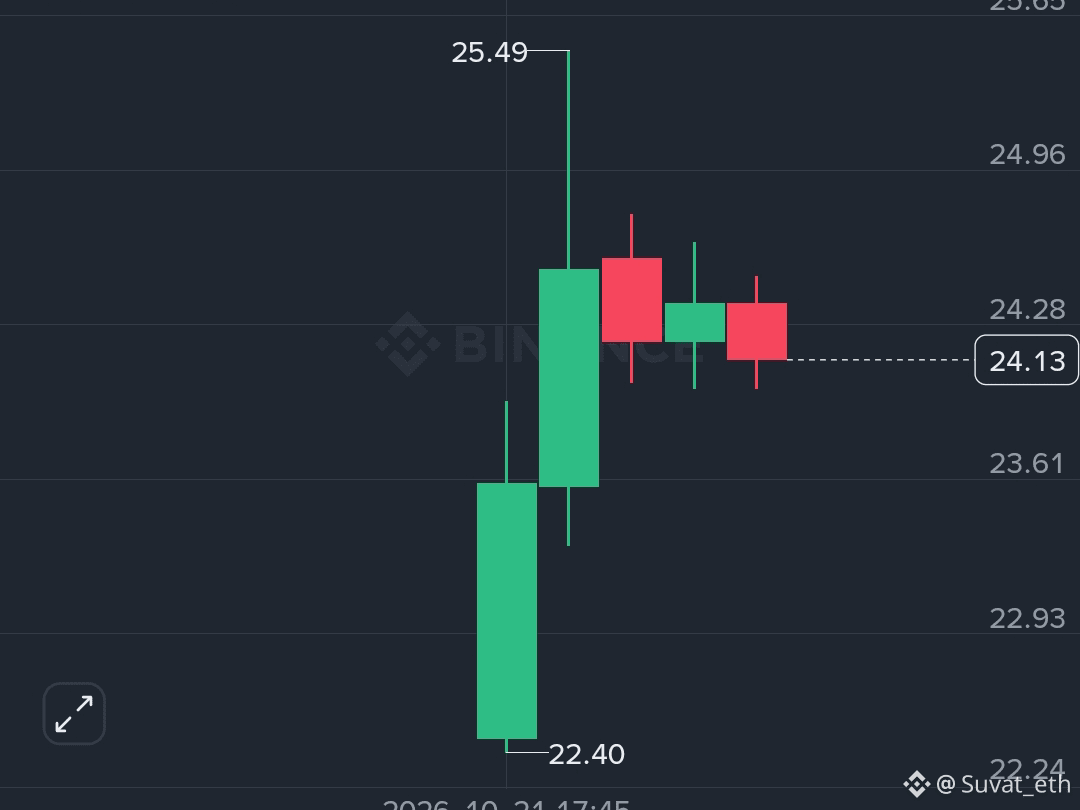
BOTB (RoboStrategy Inc. bStocks) zeigt eine starke Aufwärtsdynamik und wird laut Screenshot bei 24,13 $ gehandelt – ein Plus von 7,44 %.
📊 Wichtige Kursmarken
🟢 Aktueller Kurs: 24,13 $
📈 24-Stunden-Hoch: 25,49 $
🔻 24-Stunden-Tief: 22,40 $
💰 Handelsvolumen in 24 Stunden: 216.371,56 USDT
⚖️ Orderbuch: 63,64 % Kauf- gegenüber 36,36 % Verkaufsaufträgen
👀 Darauf achte ich:
- Widerstand: 24,28–25,49 $
- Unterstützung: etwa 23,60 $, danach 22,40 $
- Aufwärtsszenario: Ein anhaltender Anstieg über den Widerstand könnte auf weiteres Aufwärtspotenzial hindeuten.
- Risiko: Wird die Unterstützung nicht gehalten, könnte es zu einem Rücksetzer kommen.
💬 Meine Frage: Kann BOTB die Marke von 25,49 $ überwinden, oder greifen die Verkäufer vorher ein?
🚀 $BOTB STEIGT UM +7,44 % — GEHT ES NOCH WEITER NACH OBEN? 📈
🔥 BOTB/USDT-Marktsituation
BOTB (RoboStrategy Inc. bStocks) zeigt eine starke Aufwärtsdynamik und wird laut Screenshot bei 24,13 $ gehandelt – ein Plus von 7,44 %.
📊 Wichtige Kursmarken
🟢 Aktueller Kurs: 24,13 $
📈 24-Stunden-Hoch: 25,49 $
🔻 24-Stunden-Tief: 22,40 $
💰 Handelsvolumen in 24 Stunden: 216.371,56 USDT
⚖️ Orderbuch: 63,64 % Kauf- gegenüber 36,36 % Verkaufsaufträgen
👀 Darauf achte ich:
- Widerstand: 24,28–25,49 $
- Unterstützung: etwa 23,60 $, danach 22,40 $
- Aufwärtsszenario: Ein anhaltender Anstieg über den Widerstand könnte auf weiteres Aufwärtspotenzial hindeuten.
- Risiko: Wird die Unterstützung nicht gehalten, könnte es zu einem Rücksetzer kommen.
💬 Meine Frage: Kann BOTB die Marke von 25,49 $ überwinden, oder greifen die Verkäufer vorher ein?
🔥 BOTB/USDT-Marktsituation
BOTB (RoboStrategy Inc. bStocks) zeigt eine starke Aufwärtsdynamik und wird laut Screenshot bei 24,13 $ gehandelt – ein Plus von 7,44 %.
📊 Wichtige Kursmarken
🟢 Aktueller Kurs: 24,13 $
📈 24-Stunden-Hoch: 25,49 $
🔻 24-Stunden-Tief: 22,40 $
💰 Handelsvolumen in 24 Stunden: 216.371,56 USDT
⚖️ Orderbuch: 63,64 % Kauf- gegenüber 36,36 % Verkaufsaufträgen
👀 Darauf achte ich:
- Widerstand: 24,28–25,49 $
- Unterstützung: etwa 23,60 $, danach 22,40 $
- Aufwärtsszenario: Ein anhaltender Anstieg über den Widerstand könnte auf weiteres Aufwärtspotenzial hindeuten.
- Risiko: Wird die Unterstützung nicht gehalten, könnte es zu einem Rücksetzer kommen.
💬 Meine Frage: Kann BOTB die Marke von 25,49 $ überwinden, oder greifen die Verkäufer vorher ein?
93
·
--
📊 KRYPTOMARKT-ÜBERBLICK 🚀
Der Kryptomarkt ist in Bewegung! 👀
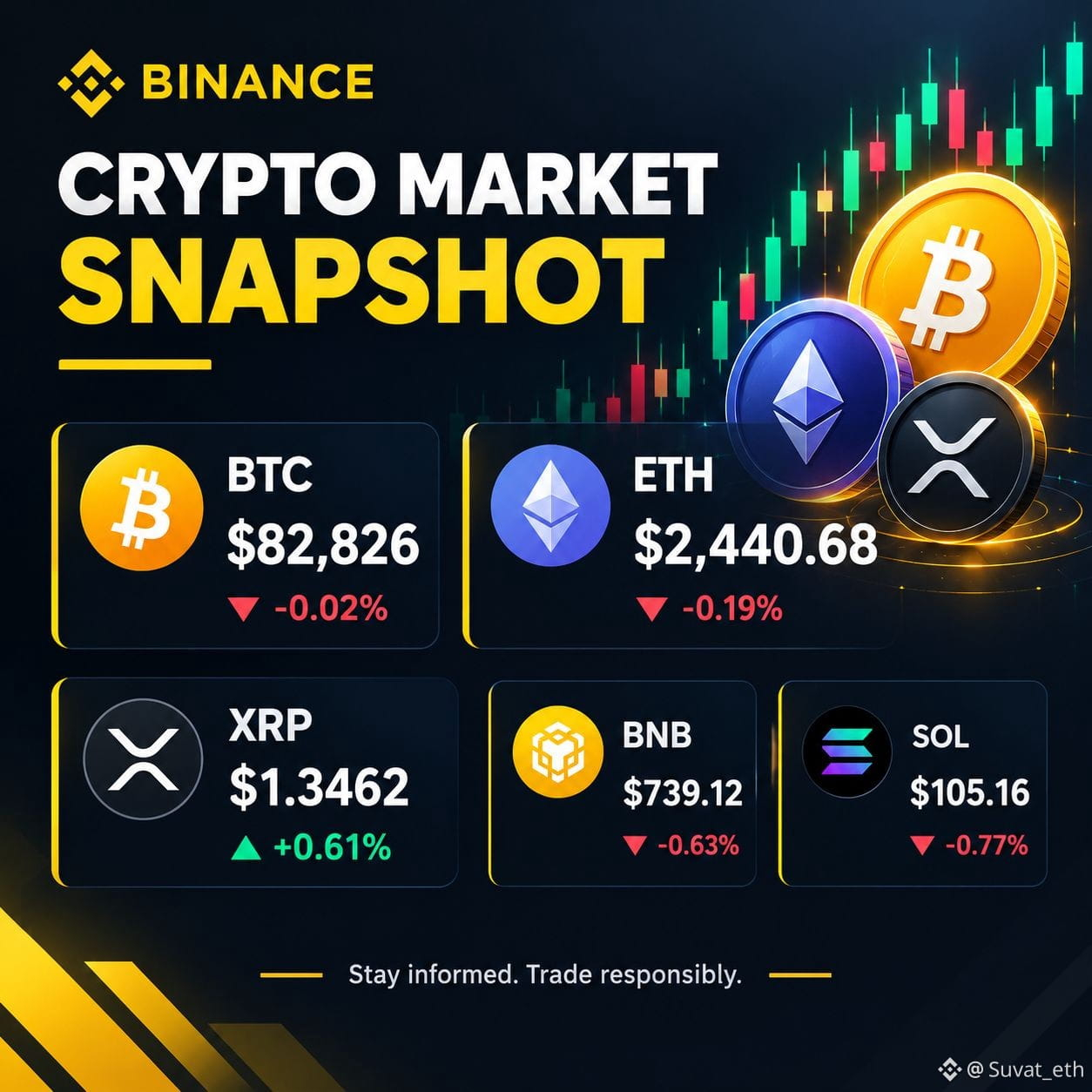
🟠 BTC: $82,826.01 (-0.02%)
🔵 ETH: $2,440.68 (-0.19%)
🟡 BNB: $739.12 (-0.63%)
🟣 SOL: $105.16 (-0.77%)
⚫ XRP: $1.3462 (+0.61%)
📈 XRP zeigt sich im Plus, während andere große Coins leicht im Minus liegen. Ist das nur eine kurzfristige Pause, oder bereitet sich der Markt auf seinen nächsten Schritt vor?
💬 Auf welchen Coin setzt du heute — $BTC , $ETH oder $XRP ?
📊 KRYPTOMARKT-ÜBERBLICK 🚀
Der Kryptomarkt ist in Bewegung! 👀
🟠 BTC: $82,826.01 (-0.02%)
🔵 ETH: $2,440.68 (-0.19%)
🟡 BNB: $739.12 (-0.63%)
🟣 SOL: $105.16 (-0.77%)
⚫ XRP: $1.3462 (+0.61%)
📈 XRP zeigt sich im Plus, während andere große Coins leicht im Minus liegen. Ist das nur eine kurzfristige Pause, oder bereitet sich der Markt auf seinen nächsten Schritt vor?
💬 Auf welchen Coin setzt du heute — $BTC , $ETH oder $XRP ?
Der Kryptomarkt ist in Bewegung! 👀
🟠 BTC: $82,826.01 (-0.02%)
🔵 ETH: $2,440.68 (-0.19%)
🟡 BNB: $739.12 (-0.63%)
🟣 SOL: $105.16 (-0.77%)
⚫ XRP: $1.3462 (+0.61%)
📈 XRP zeigt sich im Plus, während andere große Coins leicht im Minus liegen. Ist das nur eine kurzfristige Pause, oder bereitet sich der Markt auf seinen nächsten Schritt vor?
💬 Auf welchen Coin setzt du heute — $BTC , $ETH oder $XRP ?
159
·
--
🚨 #EarningsSeason Der Markt beobachtet jede Zahl 📊
🔥 META vs. TSLA: Welches Unternehmen kann die Wall Street überraschen?
In dieser Berichtssaison geht es nicht nur darum, die Erwartungen zu übertreffen. Es geht darum, zu beweisen, dass das künftige Wachstum die aktuellen Erwartungen rechtfertigen kann.
🔵 META: Der KI-Profitabilitätstest
Anleger wollen wissen, ob KI die Werbeleistung verbessert und neue Umsatzmöglichkeiten schafft. Die wichtigsten Faktoren sind Umsatzwachstum, operative Margen, Investitionen und die Prognosen des Managements.
⚡TSLA: Der Zukunftswachstumstest
Tesla-Anleger beobachten die Automobilmargen, die Fahrzeugnachfrage, den Cashflow und die Fortschritte bei KI und Robotaxi-Technologie. Die Auslieferungen sind wichtig, doch Profitabilität und Umsetzung könnten die Marktreaktion bestimmen.
📈 Mein Trading-Plan
Vor der Veröffentlichung der Ergebnisse würde ich die Positionsgrößen unter Kontrolle halten, übermäßigen Hebeleinsatz vermeiden und mich auf unerwartete Volatilität einstellen.
Nach der Veröffentlichung würde ich die tatsächlichen Ergebnisse mit den Markterwartungen vergleichen und beobachten, wie die Kurse reagieren, bevor ich eine Entscheidung treffe.
Auch ein starker Bericht kann einen Ausverkauf auslösen, wenn die Erwartungen noch höher sind. Eine enttäuschende Schlagzeile kann ebenfalls zu einer Erholung führen, wenn sich die Zukunftsprognose verbessert.
🎯 Meine wichtigste Erkenntnis für diese Berichtssaison
Handle nicht aufgrund des Hypes. Handle aufgrund der Fakten.
💬 Welche Aktie würdest du nach der Veröffentlichung der Ergebnisse genauer beobachten: $META oder $TSLA ?
{future}(TSLAUSDT)
🚨 #EarningsSeason Der Markt beobachtet jede Zahl 📊
🔥 META vs. TSLA: Welches Unternehmen kann die Wall Street überraschen?
In dieser Berichtssaison geht es nicht nur darum, die Erwartungen zu übertreffen. Es geht darum, zu beweisen, dass das künftige Wachstum die aktuellen Erwartungen rechtfertigen kann.
🔵 META: Der KI-Profitabilitätstest
Anleger wollen wissen, ob KI die Werbeleistung verbessert und neue Umsatzmöglichkeiten schafft. Die wichtigsten Faktoren sind Umsatzwachstum, operative Margen, Investitionen und die Prognosen des Managements.
⚡TSLA: Der Zukunftswachstumstest
Tesla-Anleger beobachten die Automobilmargen, die Fahrzeugnachfrage, den Cashflow und die Fortschritte bei KI und Robotaxi-Technologie. Die Auslieferungen sind wichtig, doch Profitabilität und Umsetzung könnten die Marktreaktion bestimmen.
📈 Mein Trading-Plan
Vor der Veröffentlichung der Ergebnisse würde ich die Positionsgrößen unter Kontrolle halten, übermäßigen Hebeleinsatz vermeiden und mich auf unerwartete Volatilität einstellen.
Nach der Veröffentlichung würde ich die tatsächlichen Ergebnisse mit den Markterwartungen vergleichen und beobachten, wie die Kurse reagieren, bevor ich eine Entscheidung treffe.
Auch ein starker Bericht kann einen Ausverkauf auslösen, wenn die Erwartungen noch höher sind. Eine enttäuschende Schlagzeile kann ebenfalls zu einer Erholung führen, wenn sich die Zukunftsprognose verbessert.
🎯 Meine wichtigste Erkenntnis für diese Berichtssaison
Handle nicht aufgrund des Hypes. Handle aufgrund der Fakten.
💬 Welche Aktie würdest du nach der Veröffentlichung der Ergebnisse genauer beobachten: $META oder $TSLA ?
🔥 META vs. TSLA: Welches Unternehmen kann die Wall Street überraschen?
In dieser Berichtssaison geht es nicht nur darum, die Erwartungen zu übertreffen. Es geht darum, zu beweisen, dass das künftige Wachstum die aktuellen Erwartungen rechtfertigen kann.
🔵 META: Der KI-Profitabilitätstest
Anleger wollen wissen, ob KI die Werbeleistung verbessert und neue Umsatzmöglichkeiten schafft. Die wichtigsten Faktoren sind Umsatzwachstum, operative Margen, Investitionen und die Prognosen des Managements.
⚡TSLA: Der Zukunftswachstumstest
Tesla-Anleger beobachten die Automobilmargen, die Fahrzeugnachfrage, den Cashflow und die Fortschritte bei KI und Robotaxi-Technologie. Die Auslieferungen sind wichtig, doch Profitabilität und Umsetzung könnten die Marktreaktion bestimmen.
📈 Mein Trading-Plan
Vor der Veröffentlichung der Ergebnisse würde ich die Positionsgrößen unter Kontrolle halten, übermäßigen Hebeleinsatz vermeiden und mich auf unerwartete Volatilität einstellen.
Nach der Veröffentlichung würde ich die tatsächlichen Ergebnisse mit den Markterwartungen vergleichen und beobachten, wie die Kurse reagieren, bevor ich eine Entscheidung treffe.
Auch ein starker Bericht kann einen Ausverkauf auslösen, wenn die Erwartungen noch höher sind. Eine enttäuschende Schlagzeile kann ebenfalls zu einer Erholung führen, wenn sich die Zukunftsprognose verbessert.
🎯 Meine wichtigste Erkenntnis für diese Berichtssaison
Handle nicht aufgrund des Hypes. Handle aufgrund der Fakten.
💬 Welche Aktie würdest du nach der Veröffentlichung der Ergebnisse genauer beobachten: $META oder $TSLA ?

369
·
--
Bullisch
META vs. TSLA: Zwei Quartalsberichte, zwei unterschiedliche Geschichten 🚀
Heute Abend könnte sich zeigen, wie tragfähig der KI- und E-Auto-Boom ist.
🔵 $META Kann KI-Investitionen Ergebnisse liefern?
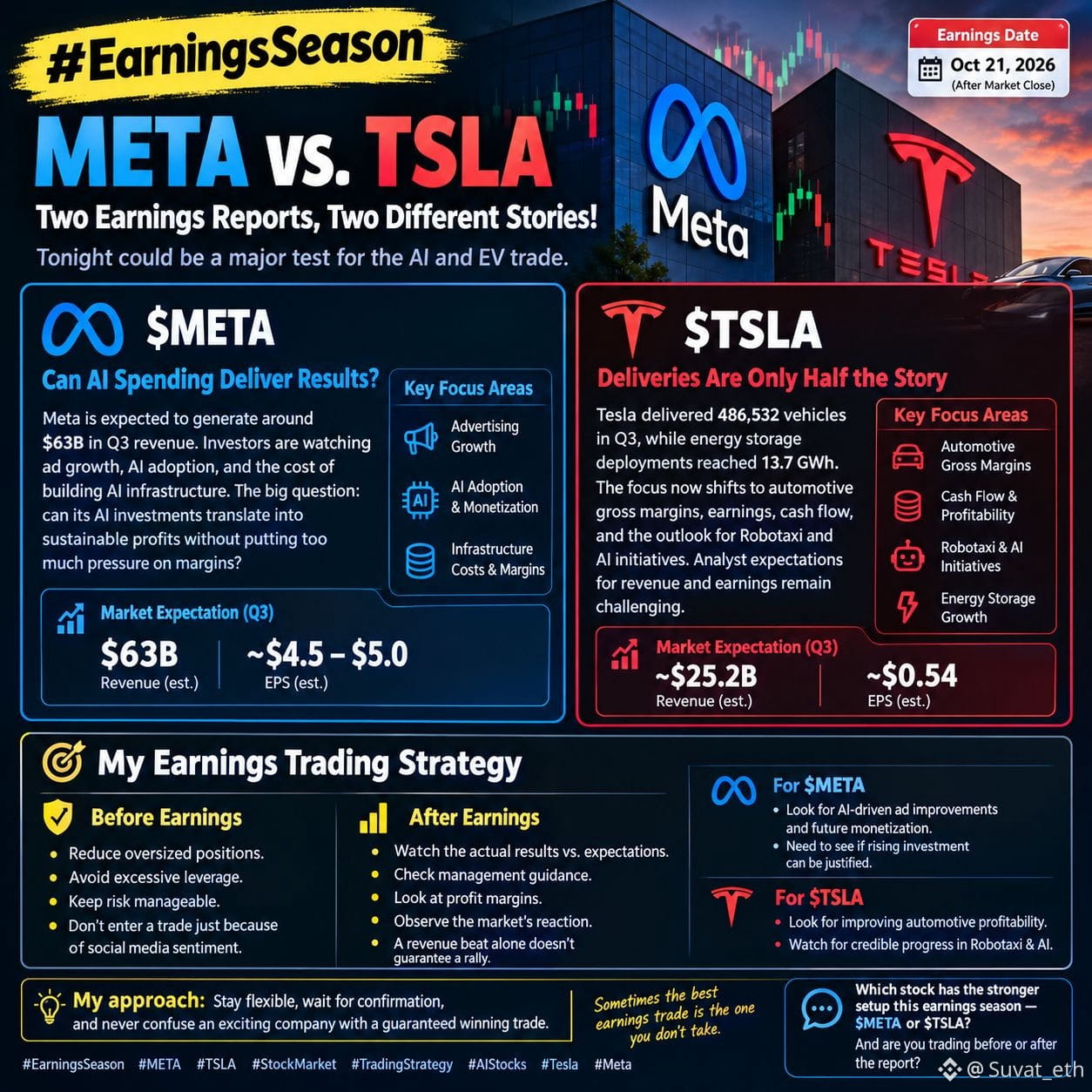
Meta dürfte im dritten Quartal rund 63 Milliarden Dollar Umsatz erzielen. Die Anleger beobachten das Wachstum des Werbegeschäfts, die Einführung von KI und die Kosten für den Aufbau der KI-Infrastruktur. Die große Frage: Können sich die KI-Investitionen in nachhaltige Gewinne verwandeln, ohne die Margen zu stark unter Druck zu setzen?
⚡ $TSLA Auslieferungen sind nur die halbe Geschichte
Tesla hat im dritten Quartal 486532 Fahrzeuge ausgeliefert, während die installierte Energiespeicherkapazität 137 GWh erreichte. Nun richtet sich der Blick auf die Bruttomargen im Automobilgeschäft, den Gewinn, den Cashflow und die Aussichten für Robotaxi- und KI-Initiativen. Die Erwartungen der Analysten an Umsatz und Gewinn bleiben anspruchsvoll.
📈 Meine Strategie für den Handel rund um die Quartalszahlen
🔹 Vor der Veröffentlichung: Übermäßig große Positionen reduzieren, übermäßigen Hebel vermeiden und das Risiko im Griff behalten. Ich würde keinen Trade eingehen, nur weil die Stimmung in den sozialen Medien optimistisch ist.
🔹 Nach der Veröffentlichung: Die tatsächlichen Ergebnisse mit den Erwartungen vergleichen, auf die Prognosen des Managements, die Gewinnmargen und die Marktreaktion achten. Ein Umsatz über den Erwartungen allein garantiert keine Kursrallye.
🔹 Bei META würde ich nach Belegen dafür suchen, dass KI-gestützte Verbesserungen im Werbegeschäft und künftige Monetarisierung die steigenden Investitionen rechtfertigen können.
🔹 Bei TSLA würde ich auf eine steigende Rentabilität im Automobilgeschäft und glaubwürdige Fortschritte bei künftigen Wachstumschancen achten.
🎯 Mein Ansatz: flexibel bleiben, auf Bestätigung warten und ein spannendes Unternehmen niemals mit einem garantiert erfolgreichen Trade verwechseln.
Manchmal ist der beste Trade rund um die Quartalszahlen der, den man nicht eingeht.
#EarningsSeason #Meta
META vs. TSLA: Zwei Quartalsberichte, zwei unterschiedliche Geschichten 🚀
Heute Abend könnte sich zeigen, wie tragfähig der KI- und E-Auto-Boom ist.
🔵 $META Kann KI-Investitionen Ergebnisse liefern?
Meta dürfte im dritten Quartal rund 63 Milliarden Dollar Umsatz erzielen. Die Anleger beobachten das Wachstum des Werbegeschäfts, die Einführung von KI und die Kosten für den Aufbau der KI-Infrastruktur. Die große Frage: Können sich die KI-Investitionen in nachhaltige Gewinne verwandeln, ohne die Margen zu stark unter Druck zu setzen?
⚡ $TSLA Auslieferungen sind nur die halbe Geschichte
Tesla hat im dritten Quartal 486532 Fahrzeuge ausgeliefert, während die installierte Energiespeicherkapazität 137 GWh erreichte. Nun richtet sich der Blick auf die Bruttomargen im Automobilgeschäft, den Gewinn, den Cashflow und die Aussichten für Robotaxi- und KI-Initiativen. Die Erwartungen der Analysten an Umsatz und Gewinn bleiben anspruchsvoll.
📈 Meine Strategie für den Handel rund um die Quartalszahlen
🔹 Vor der Veröffentlichung: Übermäßig große Positionen reduzieren, übermäßigen Hebel vermeiden und das Risiko im Griff behalten. Ich würde keinen Trade eingehen, nur weil die Stimmung in den sozialen Medien optimistisch ist.
🔹 Nach der Veröffentlichung: Die tatsächlichen Ergebnisse mit den Erwartungen vergleichen, auf die Prognosen des Managements, die Gewinnmargen und die Marktreaktion achten. Ein Umsatz über den Erwartungen allein garantiert keine Kursrallye.
🔹 Bei META würde ich nach Belegen dafür suchen, dass KI-gestützte Verbesserungen im Werbegeschäft und künftige Monetarisierung die steigenden Investitionen rechtfertigen können.
🔹 Bei TSLA würde ich auf eine steigende Rentabilität im Automobilgeschäft und glaubwürdige Fortschritte bei künftigen Wachstumschancen achten.
🎯 Mein Ansatz: flexibel bleiben, auf Bestätigung warten und ein spannendes Unternehmen niemals mit einem garantiert erfolgreichen Trade verwechseln.
Manchmal ist der beste Trade rund um die Quartalszahlen der, den man nicht eingeht.
#EarningsSeason #Meta
Heute Abend könnte sich zeigen, wie tragfähig der KI- und E-Auto-Boom ist.
🔵 $META Kann KI-Investitionen Ergebnisse liefern?
Meta dürfte im dritten Quartal rund 63 Milliarden Dollar Umsatz erzielen. Die Anleger beobachten das Wachstum des Werbegeschäfts, die Einführung von KI und die Kosten für den Aufbau der KI-Infrastruktur. Die große Frage: Können sich die KI-Investitionen in nachhaltige Gewinne verwandeln, ohne die Margen zu stark unter Druck zu setzen?
⚡ $TSLA Auslieferungen sind nur die halbe Geschichte
Tesla hat im dritten Quartal 486532 Fahrzeuge ausgeliefert, während die installierte Energiespeicherkapazität 137 GWh erreichte. Nun richtet sich der Blick auf die Bruttomargen im Automobilgeschäft, den Gewinn, den Cashflow und die Aussichten für Robotaxi- und KI-Initiativen. Die Erwartungen der Analysten an Umsatz und Gewinn bleiben anspruchsvoll.
📈 Meine Strategie für den Handel rund um die Quartalszahlen
🔹 Vor der Veröffentlichung: Übermäßig große Positionen reduzieren, übermäßigen Hebel vermeiden und das Risiko im Griff behalten. Ich würde keinen Trade eingehen, nur weil die Stimmung in den sozialen Medien optimistisch ist.
🔹 Nach der Veröffentlichung: Die tatsächlichen Ergebnisse mit den Erwartungen vergleichen, auf die Prognosen des Managements, die Gewinnmargen und die Marktreaktion achten. Ein Umsatz über den Erwartungen allein garantiert keine Kursrallye.
🔹 Bei META würde ich nach Belegen dafür suchen, dass KI-gestützte Verbesserungen im Werbegeschäft und künftige Monetarisierung die steigenden Investitionen rechtfertigen können.
🔹 Bei TSLA würde ich auf eine steigende Rentabilität im Automobilgeschäft und glaubwürdige Fortschritte bei künftigen Wachstumschancen achten.
🎯 Mein Ansatz: flexibel bleiben, auf Bestätigung warten und ein spannendes Unternehmen niemals mit einem garantiert erfolgreichen Trade verwechseln.
Manchmal ist der beste Trade rund um die Quartalszahlen der, den man nicht eingeht.
#EarningsSeason #Meta
294
·
--
🚀 KRYPTOS SIND MEHR ALS EIN MARKT — SIE SIND EINE BEWEGUNG. ₿Der Kryptomarkt belohnt Geduld, Wissen und Disziplin — nicht nur Glück. 🔥
Während manche jeder grünen Kerze hinterherjagen, konzentrieren sich kluge Investoren darauf, die Technologie zu verstehen, Risiken zu managen und über kurzfristige Kursbewegungen hinauszudenken.
💡 5 goldene Regeln für jeden Krypto-Investor:
🔹 DYOR — Investiere niemals blind; informiere dich darüber, was du kaufst.
🔹 Risikomanagement — Investiere niemals mehr, als du dir leisten kannst zu verlieren.
🔹 Denke langfristig — Lass kurzfristige Schwankungen nicht deine Entscheidungen bestimmen.
🔹 Vermeide FOMO — Eine Gelegenheit zu verpassen ist besser, als eine leichtsinnige Entscheidung zu treffen.
🚀 KRYPTOS SIND MEHR ALS EIN MARKT — SIE SIND EINE BEWEGUNG. ₿
Der Kryptomarkt belohnt Geduld, Wissen und Disziplin — nicht nur Glück. 🔥
Während manche jeder grünen Kerze hinterherjagen, konzentrieren sich kluge Investoren darauf, die Technologie zu verstehen, Risiken zu managen und über kurzfristige Kursbewegungen hinauszudenken.
💡 5 goldene Regeln für jeden Krypto-Investor:
🔹 DYOR — Investiere niemals blind; informiere dich darüber, was du kaufst.
🔹 Risikomanagement — Investiere niemals mehr, als du dir leisten kannst zu verlieren.
🔹 Denke langfristig — Lass kurzfristige Schwankungen nicht deine Entscheidungen bestimmen.
🔹 Vermeide FOMO — Eine Gelegenheit zu verpassen ist besser, als eine leichtsinnige Entscheidung zu treffen.
Während manche jeder grünen Kerze hinterherjagen, konzentrieren sich kluge Investoren darauf, die Technologie zu verstehen, Risiken zu managen und über kurzfristige Kursbewegungen hinauszudenken.
💡 5 goldene Regeln für jeden Krypto-Investor:
🔹 DYOR — Investiere niemals blind; informiere dich darüber, was du kaufst.
🔹 Risikomanagement — Investiere niemals mehr, als du dir leisten kannst zu verlieren.
🔹 Denke langfristig — Lass kurzfristige Schwankungen nicht deine Entscheidungen bestimmen.
🔹 Vermeide FOMO — Eine Gelegenheit zu verpassen ist besser, als eine leichtsinnige Entscheidung zu treffen.
93
·
--
🚀 Ethereum (ETH): Die Zukunft der dezentralen Finanzwelt? 💎Ethereum ist mehr als nur eine Kryptowährung – es ist ein leistungsstarkes Blockchain-Ökosystem, das DeFi, Smart Contracts, NFTs und Web3-Innovationen vorantreibt. 🌐
🔥 Warum ETH wichtig ist:
✅ Ermöglicht Tausende dezentraler Anwendungen
✅ Unterstützt Smart Contracts und DeFi-Protokolle
✅ Spielt eine wichtige Rolle im Web3-Ökosystem
✅ Entwickelt sich zusammen mit der Blockchain-Technologie stetig weiter
📈 Bist du langfristig optimistisch, was das Potenzial von Ethereum angeht? Oder glaubst du, dass eine andere Blockchain die Führung übernehmen wird?
💬 Teile deine Gedanken in den Kommentaren!
🚀 Ethereum (ETH): Die Zukunft der dezentralen Finanzwelt? 💎
Ethereum ist mehr als nur eine Kryptowährung – es ist ein leistungsstarkes Blockchain-Ökosystem, das DeFi, Smart Contracts, NFTs und Web3-Innovationen vorantreibt. 🌐
🔥 Warum ETH wichtig ist:
✅ Ermöglicht Tausende dezentraler Anwendungen
✅ Unterstützt Smart Contracts und DeFi-Protokolle
✅ Spielt eine wichtige Rolle im Web3-Ökosystem
✅ Entwickelt sich zusammen mit der Blockchain-Technologie stetig weiter
📈 Bist du langfristig optimistisch, was das Potenzial von Ethereum angeht? Oder glaubst du, dass eine andere Blockchain die Führung übernehmen wird?
💬 Teile deine Gedanken in den Kommentaren!
🔥 Warum ETH wichtig ist:
✅ Ermöglicht Tausende dezentraler Anwendungen
✅ Unterstützt Smart Contracts und DeFi-Protokolle
✅ Spielt eine wichtige Rolle im Web3-Ökosystem
✅ Entwickelt sich zusammen mit der Blockchain-Technologie stetig weiter
📈 Bist du langfristig optimistisch, was das Potenzial von Ethereum angeht? Oder glaubst du, dass eine andere Blockchain die Führung übernehmen wird?
💬 Teile deine Gedanken in den Kommentaren!
314
·
--

Artikel
🚀 Kryptomarkt 2026: Zeichnet sich die nächste große Chance ab?Der Kryptowährungsmarkt zieht weiterhin die Aufmerksamkeit von Anlegern, Tradern und Blockchain-Begeisterten auf der ganzen Welt auf sich. Während sich digitale Vermögenswerte weiterentwickeln, bleibt die entscheidende Frage: Bereiten wir uns auf die nächste große Krypto-Chance vor, oder ist Vorsicht die klügste Strategie?
📈 Warum Krypto-Anleger den Markt im Blick behalten
Kryptowährungen sind mehr als nur Bitcoin und Ethereum. Die Branche umfasst dezentrale Finanzdienstleistungen (DeFi), Stablecoins, tokenisierte Vermögenswerte, Blockchain-Infrastruktur und aufkommende Web3-Anwendungen.
🚀 Kryptomarkt 2026: Zeichnet sich die nächste große Chance ab?
Der Kryptowährungsmarkt zieht weiterhin die Aufmerksamkeit von Anlegern, Tradern und Blockchain-Begeisterten auf der ganzen Welt auf sich. Während sich digitale Vermögenswerte weiterentwickeln, bleibt die entscheidende Frage: Bereiten wir uns auf die nächste große Krypto-Chance vor, oder ist Vorsicht die klügste Strategie?
📈 Warum Krypto-Anleger den Markt im Blick behalten
Kryptowährungen sind mehr als nur Bitcoin und Ethereum. Die Branche umfasst dezentrale Finanzdienstleistungen (DeFi), Stablecoins, tokenisierte Vermögenswerte, Blockchain-Infrastruktur und aufkommende Web3-Anwendungen.
📈 Warum Krypto-Anleger den Markt im Blick behalten
Kryptowährungen sind mehr als nur Bitcoin und Ethereum. Die Branche umfasst dezentrale Finanzdienstleistungen (DeFi), Stablecoins, tokenisierte Vermögenswerte, Blockchain-Infrastruktur und aufkommende Web3-Anwendungen.
121
·
--
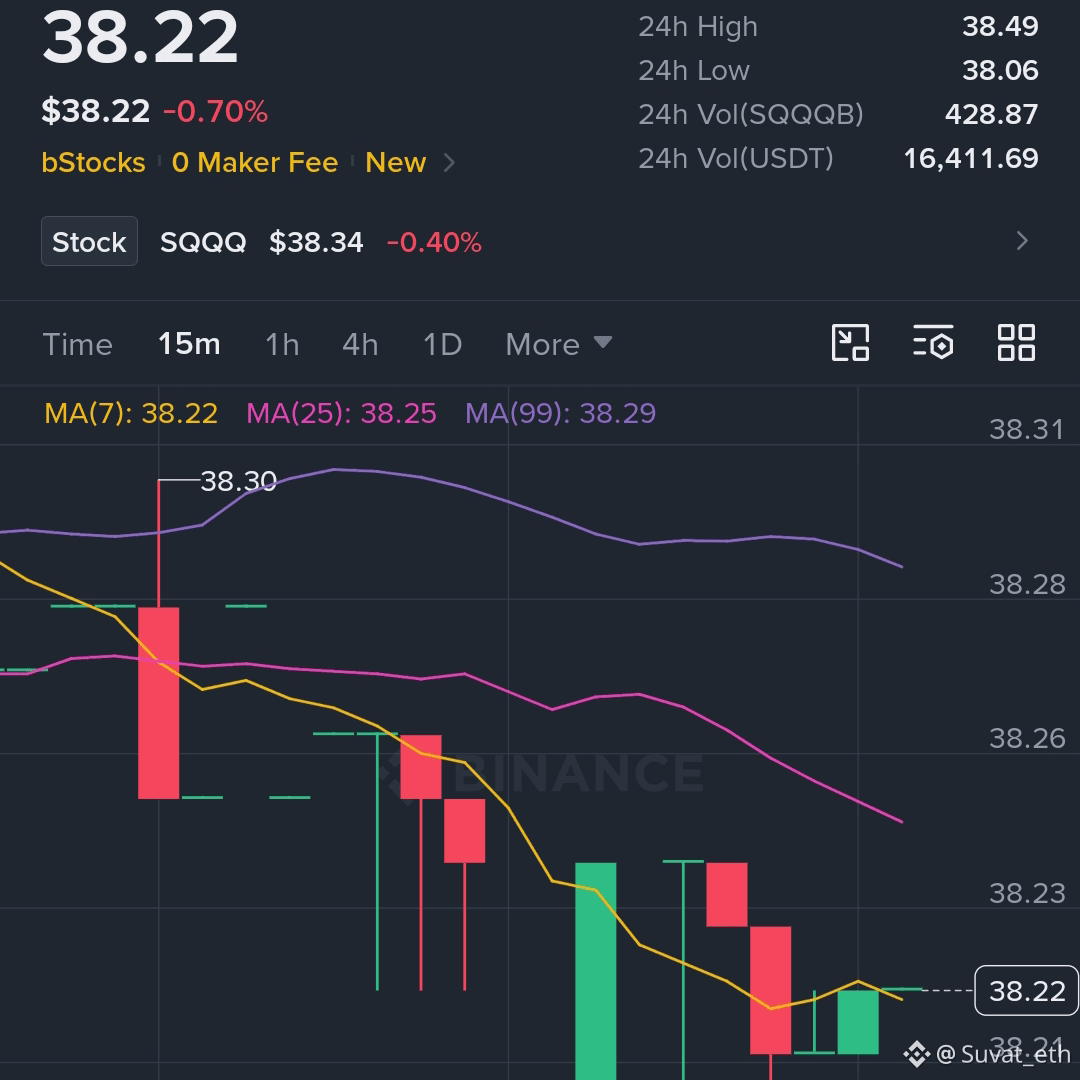
Ich beobachte $SQQQB um 38,22 $. Ich sehe eine schwache kurzfristige Struktur: Der Kurs liegt unter dem MA(25) bei 38,25 $ und dem MA(99) bei 38,29 $. Käufer verteidigen den Bereich 38,19–38,21 $, aber das Orderbuch zeigt schwerere Verkaufsangebote. Ich würde 38,30 $ als wichtigen Widerstand und 38,19 $ als Unterstützung im Blick behalten; ein Ausbruch darunter könnte zusätzlichen Abwärtsdruck erzeugen.$SQQQB
Ich beobachte $SQQQB um 38,22 $. Ich sehe eine schwache kurzfristige Struktur: Der Kurs liegt unter dem MA(25) bei 38,25 $ und dem MA(99) bei 38,29 $. Käufer verteidigen den Bereich 38,19–38,21 $, aber das Orderbuch zeigt schwerere Verkaufsangebote. Ich würde 38,30 $ als wichtigen Widerstand und 38,19 $ als Unterstützung im Blick behalten; ein Ausbruch darunter könnte zusätzlichen Abwärtsdruck erzeugen.$SQQQB
1
193
·
--
$SOL
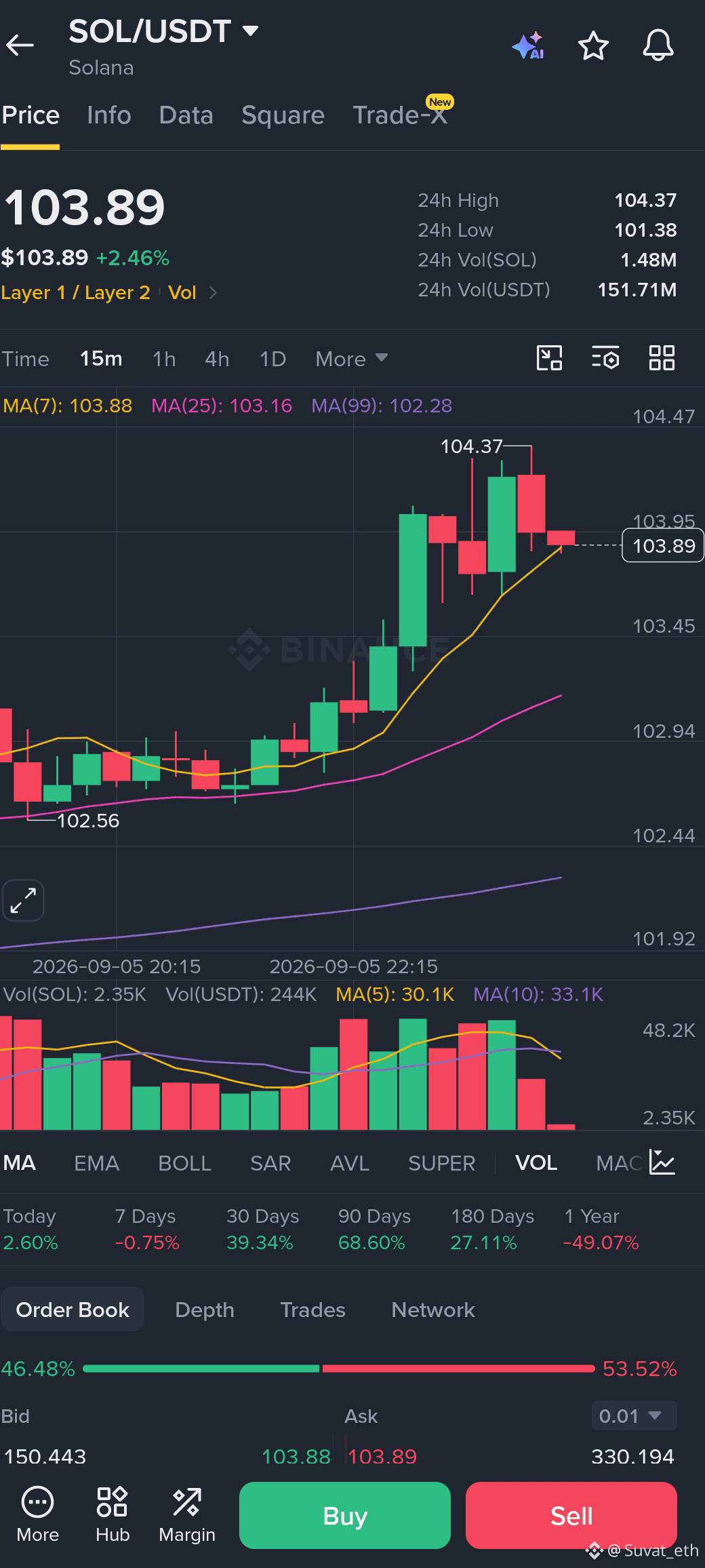
Ich beobachte SOL/USDT bei etwa 103,89 USDT auf dem 15-Minuten-Chart. Ich sehe eine starke kurzfristige Erholung von ca. 102,56 USDT, wobei der Kurs über MA(25) und MA(99) gehalten wird, was meine Tendenz leicht bullisch macht. Aber die Ablehnung bei 104,37 USDT und der zunehmende Verkaufsdruck machen mich vorsichtig. Ich würde 104,37 USDT als Widerstand beobachten und 103,15–103,45 USDT als die wichtigste Unterstützungszone.
$SOL
{future}(SOLUSDT)
$SOL
Ich beobachte SOL/USDT bei etwa 103,89 USDT auf dem 15-Minuten-Chart. Ich sehe eine starke kurzfristige Erholung von ca. 102,56 USDT, wobei der Kurs über MA(25) und MA(99) gehalten wird, was meine Tendenz leicht bullisch macht. Aber die Ablehnung bei 104,37 USDT und der zunehmende Verkaufsdruck machen mich vorsichtig. Ich würde 104,37 USDT als Widerstand beobachten und 103,15–103,45 USDT als die wichtigste Unterstützungszone.
$SOL
Ich beobachte SOL/USDT bei etwa 103,89 USDT auf dem 15-Minuten-Chart. Ich sehe eine starke kurzfristige Erholung von ca. 102,56 USDT, wobei der Kurs über MA(25) und MA(99) gehalten wird, was meine Tendenz leicht bullisch macht. Aber die Ablehnung bei 104,37 USDT und der zunehmende Verkaufsdruck machen mich vorsichtig. Ich würde 104,37 USDT als Widerstand beobachten und 103,15–103,45 USDT als die wichtigste Unterstützungszone.
$SOL
1
171
·
--
$UNI/USDT Markt-Update
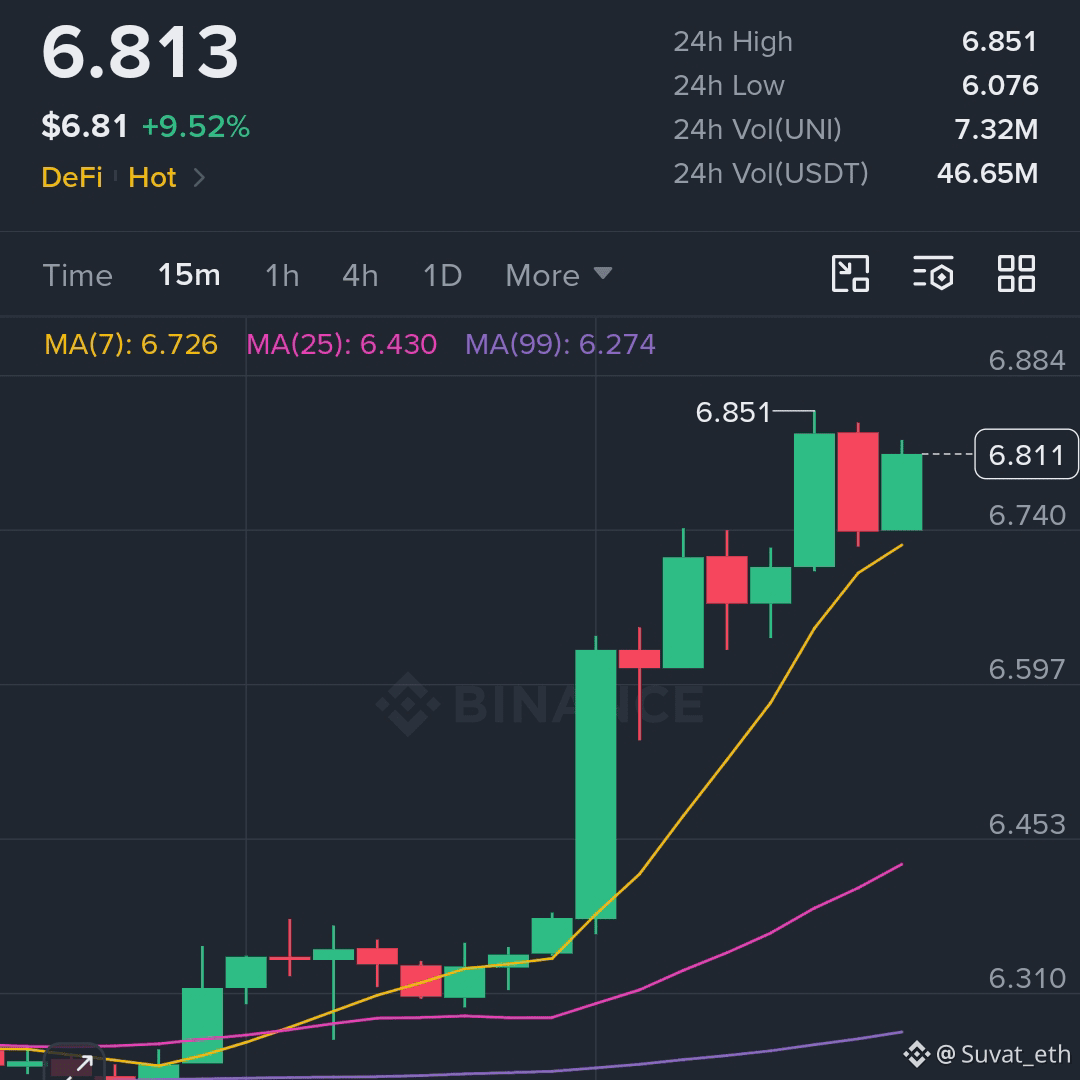
UNI handelt nahe $6.813 im 15-Minuten-Zeitrahmen und konsolidiert sich nach einem starken, impulsiven Anstieg bis auf $6.851 in der Nähe lokaler Hochs. Die Kursbewegung bleibt deutlich oberhalb aller wichtigen gleitenden Durchschnitte (MA7: 6.726, MA25: 6.430, MA99: 6.274) und spiegelt eine starke bullische Dynamik im Kurzfristbereich wider.
Aktueller Preis: $6.813
24H Hoch / Tief: $6.851 / $6.076
Sofortiger Support: $6.726, dann $6.430
Wichtiger Widerstand: $6.851 → $6.884
Das Asset zeigt anhaltenden Kaufdruck nach dem Ausbruch vom $6.199-Tief. Solange Käufer den dynamischen MA7-Support bei $6.726 während kleiner Rücksetzer verteidigen, spricht die Struktur für einen weiteren Vorstoß, um $6.851 zu überwinden und die $6.884-Zone zu testen. Umgekehrt: Wenn $6.726 verloren geht, würde dies auf nachlassenden Momentum hinweisen und eine Korrektur Richtung $6.430 (MA25) eröffnen.
#crypto
$UNI
{future}(UNIUSDT)
$UNI /USDT Markt-Update
UNI handelt nahe $6.813 im 15-Minuten-Zeitrahmen und konsolidiert sich nach einem starken, impulsiven Anstieg bis auf $6.851 in der Nähe lokaler Hochs. Die Kursbewegung bleibt deutlich oberhalb aller wichtigen gleitenden Durchschnitte (MA7: 6.726, MA25: 6.430, MA99: 6.274) und spiegelt eine starke bullische Dynamik im Kurzfristbereich wider.
Aktueller Preis: $6.813
24H Hoch / Tief: $6.851 / $6.076
Sofortiger Support: $6.726, dann $6.430
Wichtiger Widerstand: $6.851 → $6.884
Das Asset zeigt anhaltenden Kaufdruck nach dem Ausbruch vom $6.199-Tief. Solange Käufer den dynamischen MA7-Support bei $6.726 während kleiner Rücksetzer verteidigen, spricht die Struktur für einen weiteren Vorstoß, um $6.851 zu überwinden und die $6.884-Zone zu testen. Umgekehrt: Wenn $6.726 verloren geht, würde dies auf nachlassenden Momentum hinweisen und eine Korrektur Richtung $6.430 (MA25) eröffnen.
#crypto
$UNI
UNI handelt nahe $6.813 im 15-Minuten-Zeitrahmen und konsolidiert sich nach einem starken, impulsiven Anstieg bis auf $6.851 in der Nähe lokaler Hochs. Die Kursbewegung bleibt deutlich oberhalb aller wichtigen gleitenden Durchschnitte (MA7: 6.726, MA25: 6.430, MA99: 6.274) und spiegelt eine starke bullische Dynamik im Kurzfristbereich wider.
Aktueller Preis: $6.813
24H Hoch / Tief: $6.851 / $6.076
Sofortiger Support: $6.726, dann $6.430
Wichtiger Widerstand: $6.851 → $6.884
Das Asset zeigt anhaltenden Kaufdruck nach dem Ausbruch vom $6.199-Tief. Solange Käufer den dynamischen MA7-Support bei $6.726 während kleiner Rücksetzer verteidigen, spricht die Struktur für einen weiteren Vorstoß, um $6.851 zu überwinden und die $6.884-Zone zu testen. Umgekehrt: Wenn $6.726 verloren geht, würde dies auf nachlassenden Momentum hinweisen und eine Korrektur Richtung $6.430 (MA25) eröffnen.
#crypto
$UNI
178
·
--
Bullisch
MARSCOIN/USDT Marktübersicht
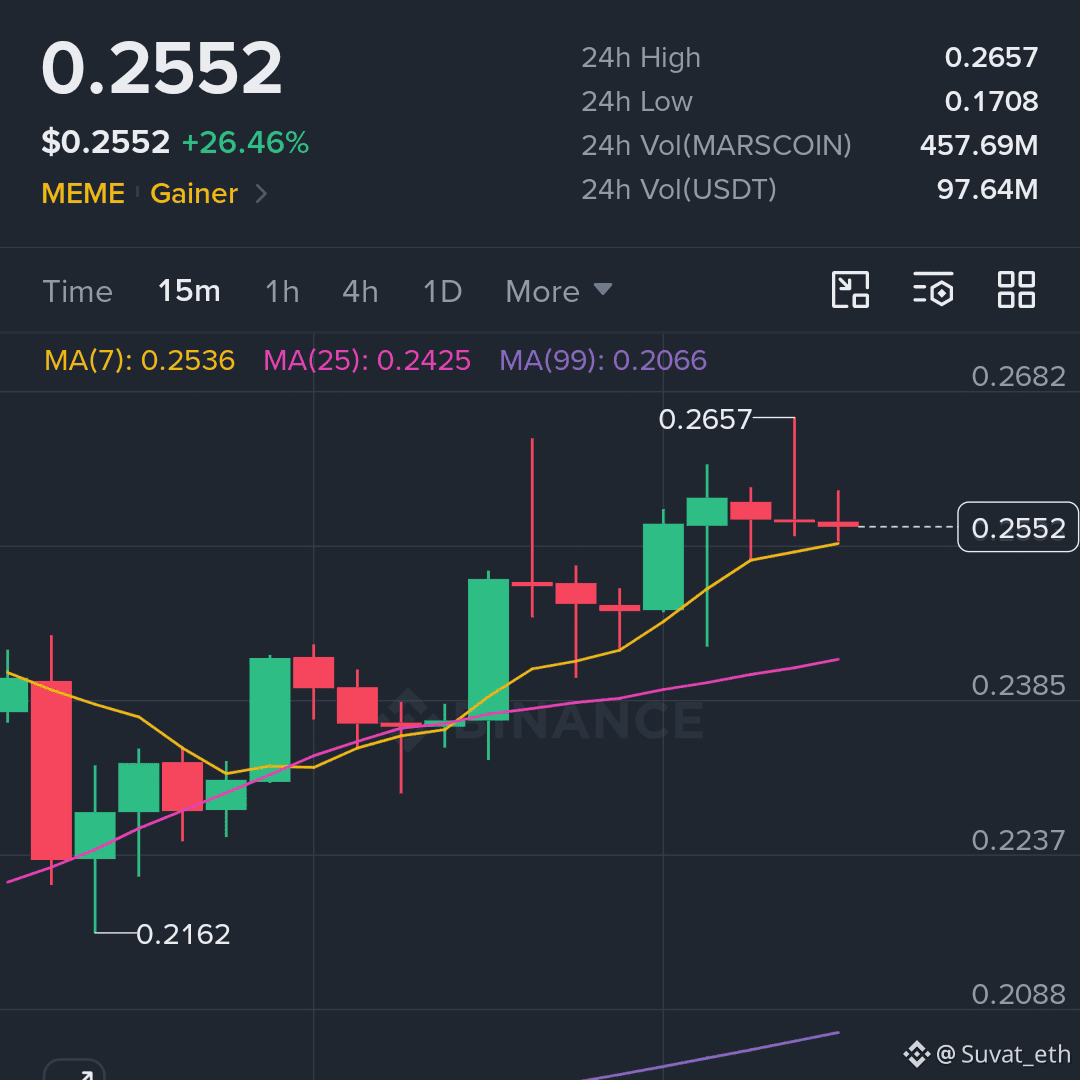
MARSCOIN wird nahe $0.2552 auf dem 15-Minuten-Chart gehandelt und konsolidiert sich nahe lokalen Hochs, nachdem es sich in Richtung $0.2657 bewegt hat. Die Kursbewegung wird weiterhin durch alle drei gleitenden Durchschnitte gestützt (MA7: 0.2536, MA25: 0.2425, MA99: 0.2066), wodurch das breitere kurzfristige Momentum mit den Käufern übereinstimmt.
Aktueller Preis: $0.2552
24H Hoch / Tief: $0.2657 / $0.1708
Aktueller Support: $0.2536, dann $0.2425
Wichtiger Widerstand: $0.2657 → $0.2682
Die Struktur spiegelt eine stufenförmige Aufwärtsbewegung vom Swing-Tief bei $0.2162 wider. Solange Käufer die Kursbewegung über dem unmittelbaren dynamischen Support bei $0.2536 (MA7) halten, bleibt der Vermögenswert in einer Position, um $0.2657 erneut zu testen und in Richtung $0.2682 vorzustoßen. Umgekehrt könnte ein Bruch unter $0.2536 eine tiefere Korrektur in Richtung des MA25-Niveaus um $0.2425 auslösen.
$MARSCOIN
{spot}(MARSCOINUSDT)
#TradeSignal #CryptocurrencyWealth
MARSCOIN/USDT Marktübersicht
MARSCOIN wird nahe $0.2552 auf dem 15-Minuten-Chart gehandelt und konsolidiert sich nahe lokalen Hochs, nachdem es sich in Richtung $0.2657 bewegt hat. Die Kursbewegung wird weiterhin durch alle drei gleitenden Durchschnitte gestützt (MA7: 0.2536, MA25: 0.2425, MA99: 0.2066), wodurch das breitere kurzfristige Momentum mit den Käufern übereinstimmt.
Aktueller Preis: $0.2552
24H Hoch / Tief: $0.2657 / $0.1708
Aktueller Support: $0.2536, dann $0.2425
Wichtiger Widerstand: $0.2657 → $0.2682
Die Struktur spiegelt eine stufenförmige Aufwärtsbewegung vom Swing-Tief bei $0.2162 wider. Solange Käufer die Kursbewegung über dem unmittelbaren dynamischen Support bei $0.2536 (MA7) halten, bleibt der Vermögenswert in einer Position, um $0.2657 erneut zu testen und in Richtung $0.2682 vorzustoßen. Umgekehrt könnte ein Bruch unter $0.2536 eine tiefere Korrektur in Richtung des MA25-Niveaus um $0.2425 auslösen.
$MARSCOIN
#TradeSignal #CryptocurrencyWealth
MARSCOIN wird nahe $0.2552 auf dem 15-Minuten-Chart gehandelt und konsolidiert sich nahe lokalen Hochs, nachdem es sich in Richtung $0.2657 bewegt hat. Die Kursbewegung wird weiterhin durch alle drei gleitenden Durchschnitte gestützt (MA7: 0.2536, MA25: 0.2425, MA99: 0.2066), wodurch das breitere kurzfristige Momentum mit den Käufern übereinstimmt.
Aktueller Preis: $0.2552
24H Hoch / Tief: $0.2657 / $0.1708
Aktueller Support: $0.2536, dann $0.2425
Wichtiger Widerstand: $0.2657 → $0.2682
Die Struktur spiegelt eine stufenförmige Aufwärtsbewegung vom Swing-Tief bei $0.2162 wider. Solange Käufer die Kursbewegung über dem unmittelbaren dynamischen Support bei $0.2536 (MA7) halten, bleibt der Vermögenswert in einer Position, um $0.2657 erneut zu testen und in Richtung $0.2682 vorzustoßen. Umgekehrt könnte ein Bruch unter $0.2536 eine tiefere Korrektur in Richtung des MA25-Niveaus um $0.2425 auslösen.
$MARSCOIN
#TradeSignal #CryptocurrencyWealth
275
·
--
Bullisch
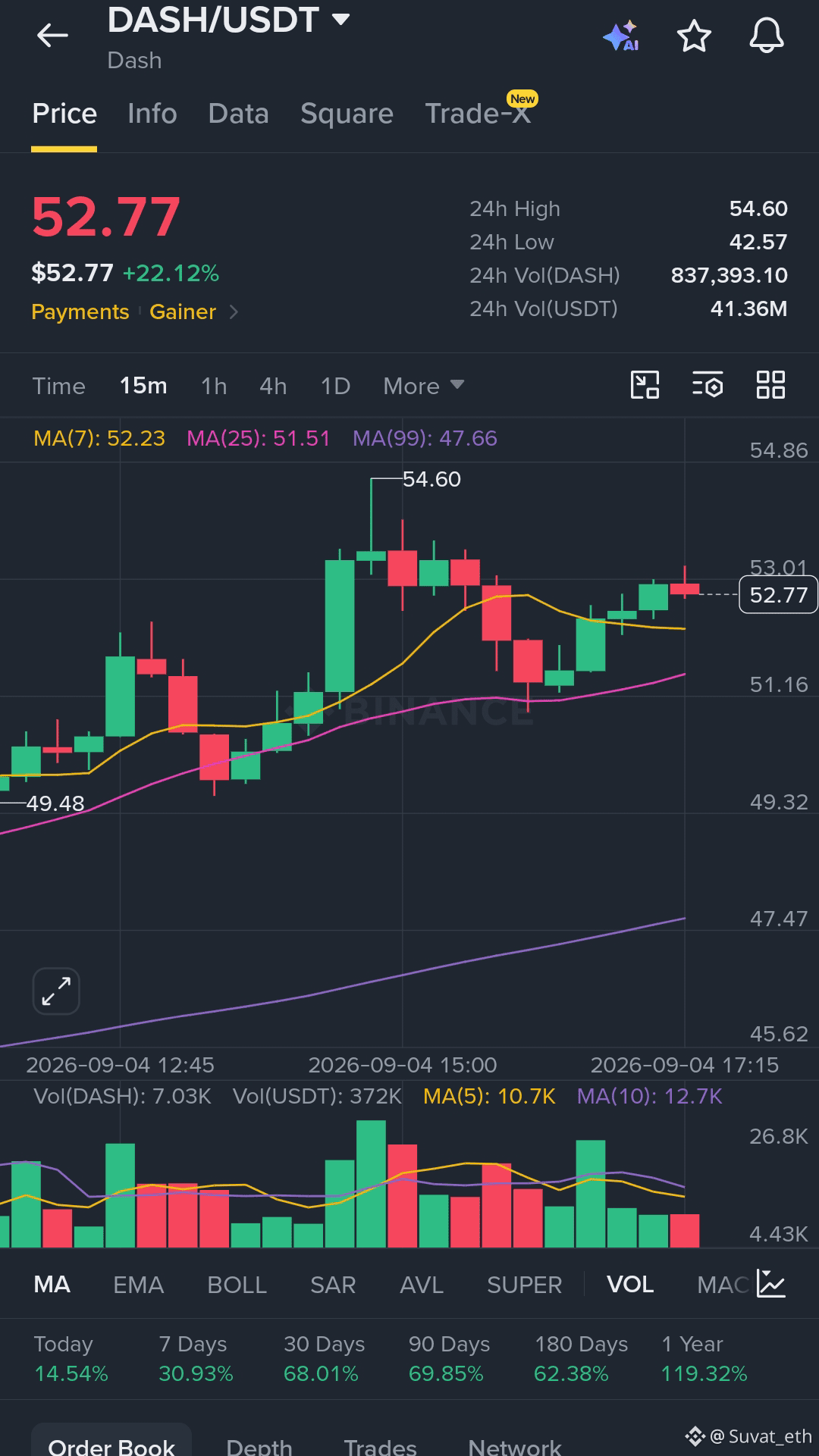
DASH/USDT-Marktsnapshot
DASH wird in einem 15-Minuten-Zeitrahmen nahe $52.77 gehandelt und konsolidiert sich nach einer starken bullischen Serie bis $54.60 in der Nähe lokaler Hochs. Die Kursentwicklung wird eindeutig durch alle wichtigen gleitenden Durchschnitte gestützt (MA7: 52.23, MA25: 51.51, MA99: 47.66), die in einer klaren bullischen Reihenfolge ausgerichtet sind.
Aktueller Preis: $52.77
24H-Hoch / Tief: $54.60 / $42.57
Unmittelbarer Support: $52.23, danach $51.51
Wichtiger Widerstand: $53.01 → $54.60
Die Struktur zeigt anhaltendes Kaufinteresse nach einer starken Impulsbewegung aus der Basis bei $49.48. Das Halten über dynamischem Support bei $52.23 (MA7) hält den Aufwärtstrend so positioniert, dass Käufer $53.01 herausfordern und einen erneuten Test des Hochs bei $54.60 anpeilen können. Umgekehrt könnte ein Rutsch unter $52.23 einen kurzfristigen Pullback hin zur MA25-Supportzone bei etwa $51.51 auslösen.
$DASH
{future}(DASHUSDT)
#crypto #TradeSignal
DASH/USDT-Marktsnapshot
DASH wird in einem 15-Minuten-Zeitrahmen nahe $52.77 gehandelt und konsolidiert sich nach einer starken bullischen Serie bis $54.60 in der Nähe lokaler Hochs. Die Kursentwicklung wird eindeutig durch alle wichtigen gleitenden Durchschnitte gestützt (MA7: 52.23, MA25: 51.51, MA99: 47.66), die in einer klaren bullischen Reihenfolge ausgerichtet sind.
Aktueller Preis: $52.77
24H-Hoch / Tief: $54.60 / $42.57
Unmittelbarer Support: $52.23, danach $51.51
Wichtiger Widerstand: $53.01 → $54.60
Die Struktur zeigt anhaltendes Kaufinteresse nach einer starken Impulsbewegung aus der Basis bei $49.48. Das Halten über dynamischem Support bei $52.23 (MA7) hält den Aufwärtstrend so positioniert, dass Käufer $53.01 herausfordern und einen erneuten Test des Hochs bei $54.60 anpeilen können. Umgekehrt könnte ein Rutsch unter $52.23 einen kurzfristigen Pullback hin zur MA25-Supportzone bei etwa $51.51 auslösen.
$DASH
#crypto #TradeSignal
DASH wird in einem 15-Minuten-Zeitrahmen nahe $52.77 gehandelt und konsolidiert sich nach einer starken bullischen Serie bis $54.60 in der Nähe lokaler Hochs. Die Kursentwicklung wird eindeutig durch alle wichtigen gleitenden Durchschnitte gestützt (MA7: 52.23, MA25: 51.51, MA99: 47.66), die in einer klaren bullischen Reihenfolge ausgerichtet sind.
Aktueller Preis: $52.77
24H-Hoch / Tief: $54.60 / $42.57
Unmittelbarer Support: $52.23, danach $51.51
Wichtiger Widerstand: $53.01 → $54.60
Die Struktur zeigt anhaltendes Kaufinteresse nach einer starken Impulsbewegung aus der Basis bei $49.48. Das Halten über dynamischem Support bei $52.23 (MA7) hält den Aufwärtstrend so positioniert, dass Käufer $53.01 herausfordern und einen erneuten Test des Hochs bei $54.60 anpeilen können. Umgekehrt könnte ein Rutsch unter $52.23 einen kurzfristigen Pullback hin zur MA25-Supportzone bei etwa $51.51 auslösen.
$DASH
#crypto #TradeSignal
252
·
--
Bullisch
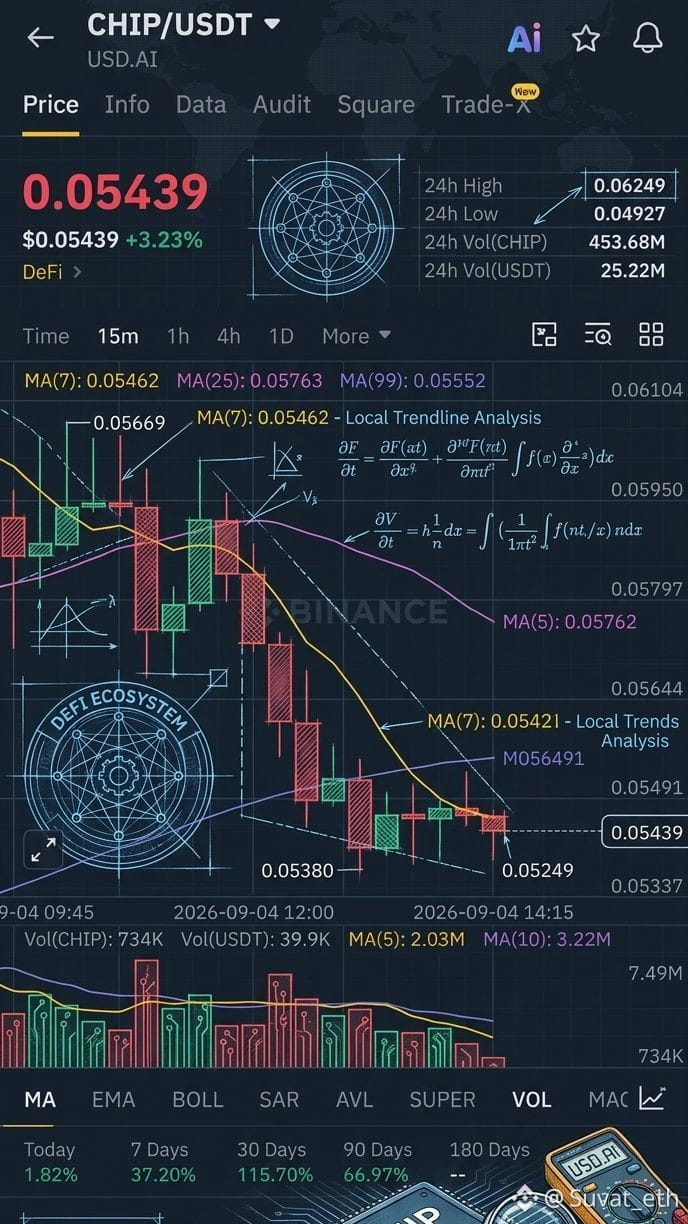
CHIP/USDT Marktübersicht
CHIP wird auf dem 15-Minuten-Chart nahe $0.05439 gehandelt und konsolidiert nach einem starken Abwärtstrend aus dem Bereich von $0.06069 nahe den lokalen Tiefs. Die Kursentwicklung bleibt unter den kurz- und langfristigen gleitenden Durchschnitten gedämpft (MA7: 0.05462, MA25: 0.05763, MA99: 0.05552), was auf anhaltenden kurzfristigen bärischen Bias und komprimierte Volatilität hindeutet.
Aktueller Preis: $0.05439
24H Hoch / Tief: $0.06249 / $0.04927
Unmittelbare Unterstützung: $0.05380, dann $0.04927
Wichtiger Widerstand: $0.05462 → $0.05552 → $0.05763
Der Chart zeigt einen steilen Rückgang, der vorübergehend Unterstützung um $0.05380 fand, gefolgt von einer engen Seitwärtsrange mit rückläufigem Volumen. Damit die Bullen eine kurzfristige Trendwende versuchen können, muss der Kurs über $0.05462 (MA7) ausbrechen und das Niveau von $0.05552 (MA99) zurückerobern. Wenn $0.05380 nicht hält, riskiert der Vermögenswert eine Ausweitung des Abwärtsmomentums in Richtung des 24-Stunden-Tiefs bei $0.04927.
$CHIP
{spot}(CHIPUSDT)
#CryptoAnalysis" #TradeSignal
CHIP/USDT Marktübersicht
CHIP wird auf dem 15-Minuten-Chart nahe $0.05439 gehandelt und konsolidiert nach einem starken Abwärtstrend aus dem Bereich von $0.06069 nahe den lokalen Tiefs. Die Kursentwicklung bleibt unter den kurz- und langfristigen gleitenden Durchschnitten gedämpft (MA7: 0.05462, MA25: 0.05763, MA99: 0.05552), was auf anhaltenden kurzfristigen bärischen Bias und komprimierte Volatilität hindeutet.
Aktueller Preis: $0.05439
24H Hoch / Tief: $0.06249 / $0.04927
Unmittelbare Unterstützung: $0.05380, dann $0.04927
Wichtiger Widerstand: $0.05462 → $0.05552 → $0.05763
Der Chart zeigt einen steilen Rückgang, der vorübergehend Unterstützung um $0.05380 fand, gefolgt von einer engen Seitwärtsrange mit rückläufigem Volumen. Damit die Bullen eine kurzfristige Trendwende versuchen können, muss der Kurs über $0.05462 (MA7) ausbrechen und das Niveau von $0.05552 (MA99) zurückerobern. Wenn $0.05380 nicht hält, riskiert der Vermögenswert eine Ausweitung des Abwärtsmomentums in Richtung des 24-Stunden-Tiefs bei $0.04927.
$CHIP
#CryptoAnalysis" #TradeSignal
CHIP wird auf dem 15-Minuten-Chart nahe $0.05439 gehandelt und konsolidiert nach einem starken Abwärtstrend aus dem Bereich von $0.06069 nahe den lokalen Tiefs. Die Kursentwicklung bleibt unter den kurz- und langfristigen gleitenden Durchschnitten gedämpft (MA7: 0.05462, MA25: 0.05763, MA99: 0.05552), was auf anhaltenden kurzfristigen bärischen Bias und komprimierte Volatilität hindeutet.
Aktueller Preis: $0.05439
24H Hoch / Tief: $0.06249 / $0.04927
Unmittelbare Unterstützung: $0.05380, dann $0.04927
Wichtiger Widerstand: $0.05462 → $0.05552 → $0.05763
Der Chart zeigt einen steilen Rückgang, der vorübergehend Unterstützung um $0.05380 fand, gefolgt von einer engen Seitwärtsrange mit rückläufigem Volumen. Damit die Bullen eine kurzfristige Trendwende versuchen können, muss der Kurs über $0.05462 (MA7) ausbrechen und das Niveau von $0.05552 (MA99) zurückerobern. Wenn $0.05380 nicht hält, riskiert der Vermögenswert eine Ausweitung des Abwärtsmomentums in Richtung des 24-Stunden-Tiefs bei $0.04927.
$CHIP
#CryptoAnalysis" #TradeSignal
1
262
·
--
Bullisch
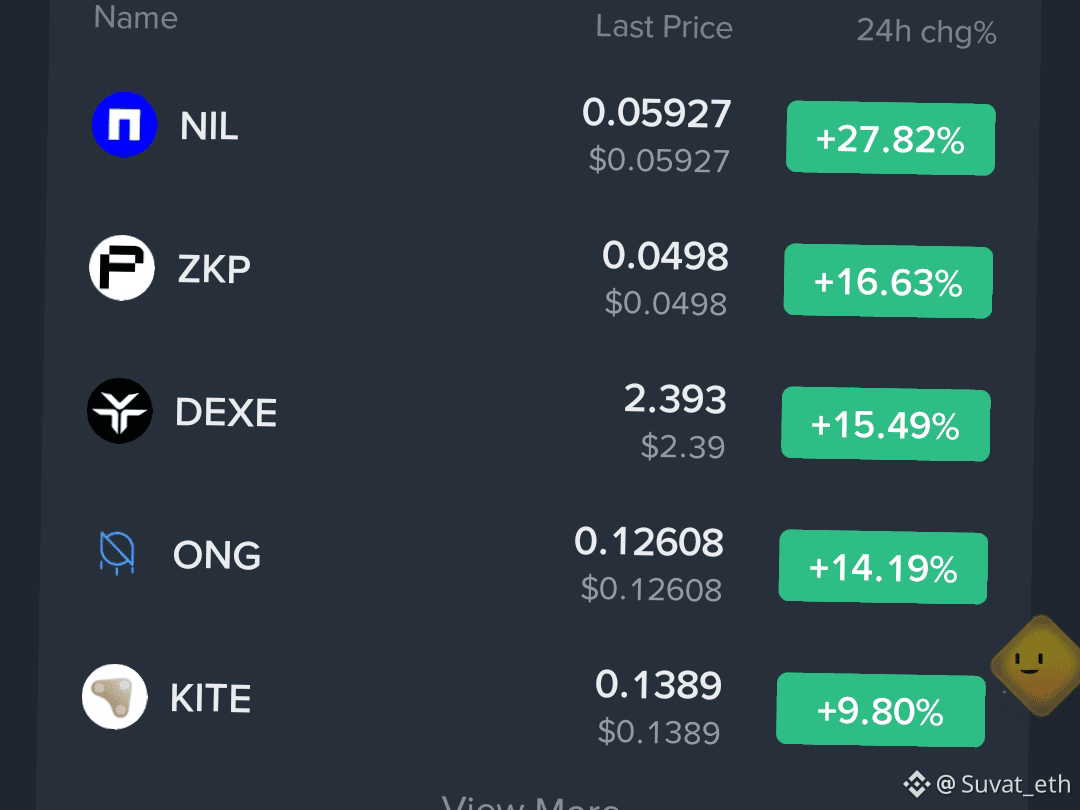
🔥 Market Scanner Signal — Momentum-Beobachtungsliste
Aus dem Screenshot sind die aktuellen Gewinner:
Coin Preis 24h-Veränderung Signal
NIL $0.05927 +27.82% 🚀 Starkes Momentum
ZKP $0.0498 +16.63% 🟢 Bullish
DEXE $2.393 +15.49% 🟢 Bullish
ONG $0.12608 +14.19% 🟢 Bullish
KITE $0.1389 +9.80% 🟡 Beobachten
🎯 Meine Wahl: NIL
NIL hat auf diesem Bildschirm mit +27.82% das stärkste Momentum. Allerdings ist es nach einer so starken Bewegung riskant, der grünen Kerze hinterherzujagen.
Beste Vorgehensweise: Warten, bis NIL entweder:
🔥 mit starkem Volumen das jüngste Hoch bricht, oder
🟢 zurücksetzt und ein vorheriges Unterstützungsniveau hält.
Momentum-Rangfolge:
NIL ⭐⭐⭐⭐⭐ → ZKP ⭐⭐⭐⭐ → DEXE ⭐⭐⭐⭐ → ONG ⭐⭐⭐ → KITE ⭐⭐⭐
$NIL
{spot}(NILUSDT)
$ZKP
{spot}(ZKPUSDT)
$KITE
{future}(KITEUSDT)
🔥 Market Scanner Signal — Momentum-Beobachtungsliste
Aus dem Screenshot sind die aktuellen Gewinner:
Coin Preis 24h-Veränderung Signal
NIL $0.05927 +27.82% 🚀 Starkes Momentum
ZKP $0.0498 +16.63% 🟢 Bullish
DEXE $2.393 +15.49% 🟢 Bullish
ONG $0.12608 +14.19% 🟢 Bullish
KITE $0.1389 +9.80% 🟡 Beobachten
🎯 Meine Wahl: NIL
NIL hat auf diesem Bildschirm mit +27.82% das stärkste Momentum. Allerdings ist es nach einer so starken Bewegung riskant, der grünen Kerze hinterherzujagen.
Beste Vorgehensweise: Warten, bis NIL entweder:
🔥 mit starkem Volumen das jüngste Hoch bricht, oder
🟢 zurücksetzt und ein vorheriges Unterstützungsniveau hält.
Momentum-Rangfolge:
NIL ⭐⭐⭐⭐⭐ → ZKP ⭐⭐⭐⭐ → DEXE ⭐⭐⭐⭐ → ONG ⭐⭐⭐ → KITE ⭐⭐⭐
$NIL
$ZKP
$KITE
Aus dem Screenshot sind die aktuellen Gewinner:
Coin Preis 24h-Veränderung Signal
NIL $0.05927 +27.82% 🚀 Starkes Momentum
ZKP $0.0498 +16.63% 🟢 Bullish
DEXE $2.393 +15.49% 🟢 Bullish
ONG $0.12608 +14.19% 🟢 Bullish
KITE $0.1389 +9.80% 🟡 Beobachten
🎯 Meine Wahl: NIL
NIL hat auf diesem Bildschirm mit +27.82% das stärkste Momentum. Allerdings ist es nach einer so starken Bewegung riskant, der grünen Kerze hinterherzujagen.
Beste Vorgehensweise: Warten, bis NIL entweder:
🔥 mit starkem Volumen das jüngste Hoch bricht, oder
🟢 zurücksetzt und ein vorheriges Unterstützungsniveau hält.
Momentum-Rangfolge:
NIL ⭐⭐⭐⭐⭐ → ZKP ⭐⭐⭐⭐ → DEXE ⭐⭐⭐⭐ → ONG ⭐⭐⭐ → KITE ⭐⭐⭐
$NIL
$ZKP
$KITE
298
·
--
Bärisch
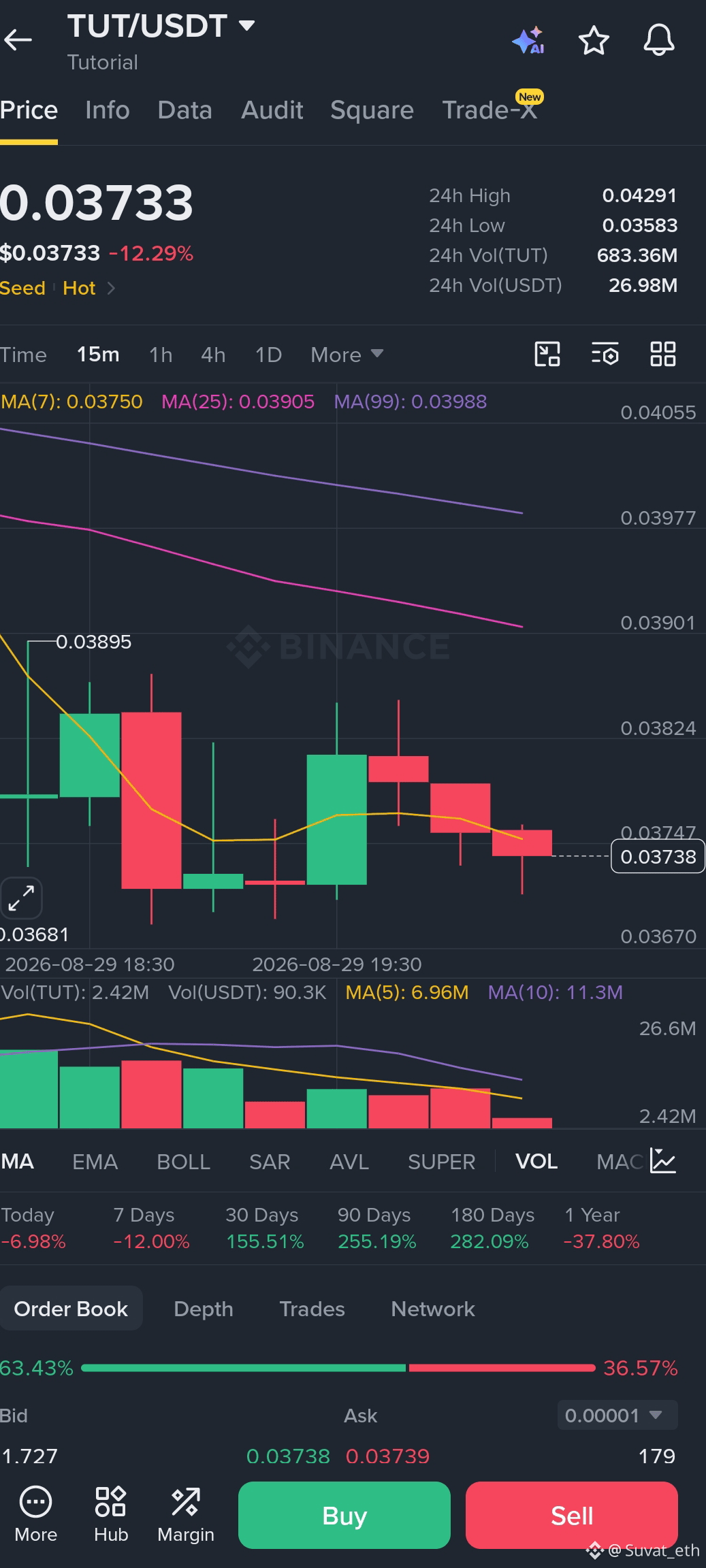
⚡ TUT/USDT — 15M Markt-Signal
Bias: 🔴 Bearish — Verkäufer haben kurzfristig die Kontrolle
TUT liegt bei ca. 0,03733 $, ein Minus von 12,29 %. Der Preis liegt unter allen drei gleitenden Durchschnitten: MA(7) 0,03750 $, MA(25) 0,03905 $ und MA(99) 0,03988 $. Die jüngsten Kerzen zeigen zudem niedrigere Hochs und nachlassenden Momentum.
🎯 Signal: „Unter den Durchschnitten haben die Bären die Straße.“
🔴 Short-Trigger: Bruch unter 0,03670 $
🎯 Abwärtsziele: 0,0360 → 0,0350 → 0,0338
🟢 Erholungs-Trigger: 15M-Schlusskurs über 0,03825 $
🎯 Aufwärtsziele: 0,03905 → 0,03990
🛡️ Bärisches Invalidierungssignal: Über 0,03910 $
⚠️ Wichtiges Support-Level: 0,03670 $
⚠️ Wichtiges Widerstands-Level: 0,03825–0,03905 $
Markt-Einschätzung: Der Chart ist bärisch, obwohl die angezeigte 63,43 %-Bid- vs. 36,57 %-Ask-Unausgeglichenheit vorliegt. Dieses Orderbuch-Verhältnis kann sich schnell ändern, daher zählt die Preisstruktur mehr. Ein klarer Bruch von 0,03670 $ mit steigender Volumenentwicklung würde das Short-Setup deutlich stärken.
$TUT
{spot}(TUTUSDT)
⚡ TUT/USDT — 15M Markt-Signal
Bias: 🔴 Bearish — Verkäufer haben kurzfristig die Kontrolle
TUT liegt bei ca. 0,03733 $, ein Minus von 12,29 %. Der Preis liegt unter allen drei gleitenden Durchschnitten: MA(7) 0,03750 $, MA(25) 0,03905 $ und MA(99) 0,03988 $. Die jüngsten Kerzen zeigen zudem niedrigere Hochs und nachlassenden Momentum.
🎯 Signal: „Unter den Durchschnitten haben die Bären die Straße.“
🔴 Short-Trigger: Bruch unter 0,03670 $
🎯 Abwärtsziele: 0,0360 → 0,0350 → 0,0338
🟢 Erholungs-Trigger: 15M-Schlusskurs über 0,03825 $
🎯 Aufwärtsziele: 0,03905 → 0,03990
🛡️ Bärisches Invalidierungssignal: Über 0,03910 $
⚠️ Wichtiges Support-Level: 0,03670 $
⚠️ Wichtiges Widerstands-Level: 0,03825–0,03905 $
Markt-Einschätzung: Der Chart ist bärisch, obwohl die angezeigte 63,43 %-Bid- vs. 36,57 %-Ask-Unausgeglichenheit vorliegt. Dieses Orderbuch-Verhältnis kann sich schnell ändern, daher zählt die Preisstruktur mehr. Ein klarer Bruch von 0,03670 $ mit steigender Volumenentwicklung würde das Short-Setup deutlich stärken.
$TUT
Bias: 🔴 Bearish — Verkäufer haben kurzfristig die Kontrolle
TUT liegt bei ca. 0,03733 $, ein Minus von 12,29 %. Der Preis liegt unter allen drei gleitenden Durchschnitten: MA(7) 0,03750 $, MA(25) 0,03905 $ und MA(99) 0,03988 $. Die jüngsten Kerzen zeigen zudem niedrigere Hochs und nachlassenden Momentum.
🎯 Signal: „Unter den Durchschnitten haben die Bären die Straße.“
🔴 Short-Trigger: Bruch unter 0,03670 $
🎯 Abwärtsziele: 0,0360 → 0,0350 → 0,0338
🟢 Erholungs-Trigger: 15M-Schlusskurs über 0,03825 $
🎯 Aufwärtsziele: 0,03905 → 0,03990
🛡️ Bärisches Invalidierungssignal: Über 0,03910 $
⚠️ Wichtiges Support-Level: 0,03670 $
⚠️ Wichtiges Widerstands-Level: 0,03825–0,03905 $
Markt-Einschätzung: Der Chart ist bärisch, obwohl die angezeigte 63,43 %-Bid- vs. 36,57 %-Ask-Unausgeglichenheit vorliegt. Dieses Orderbuch-Verhältnis kann sich schnell ändern, daher zählt die Preisstruktur mehr. Ein klarer Bruch von 0,03670 $ mit steigender Volumenentwicklung würde das Short-Setup deutlich stärken.
$TUT
1
249
·
--
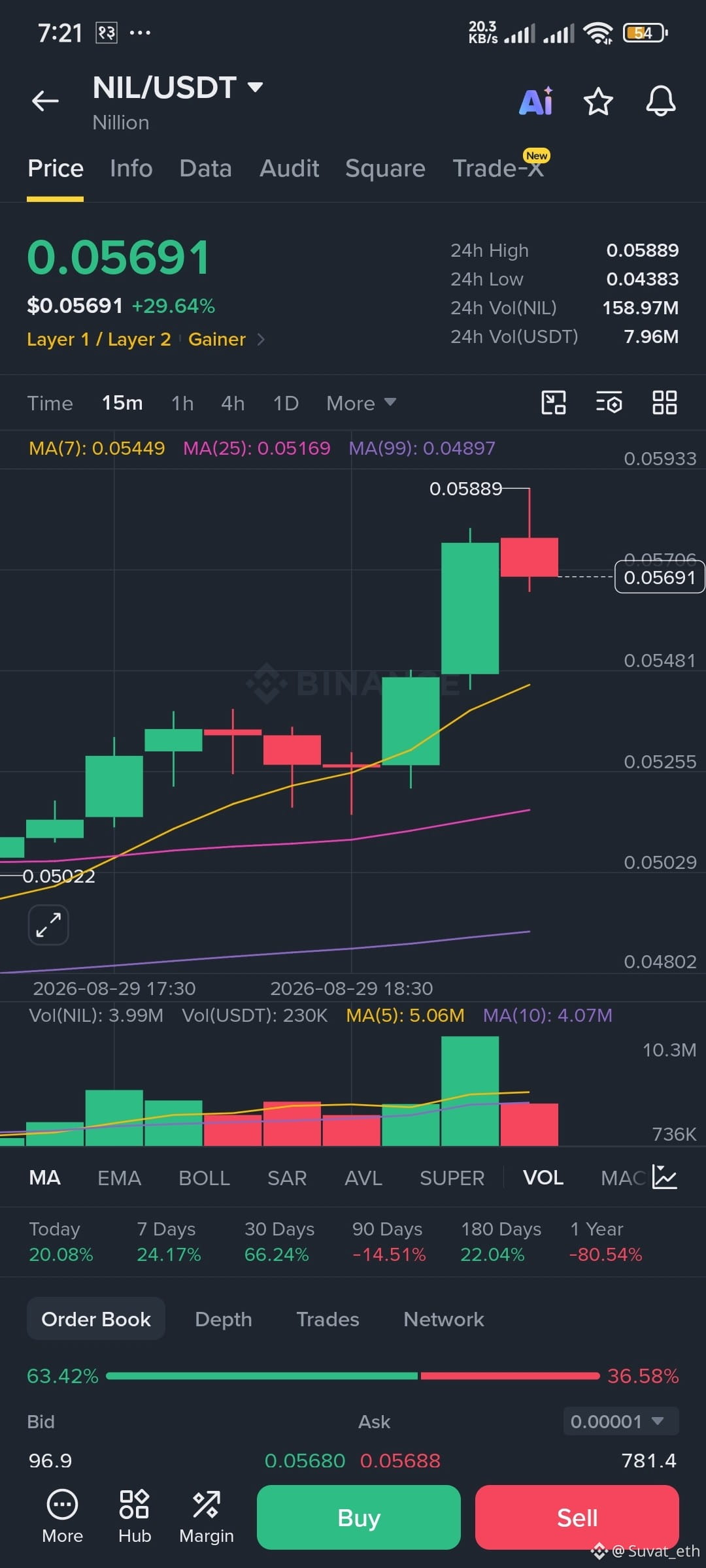
⚡ NIL/USDT — Marktsignal
Tendenz: 🟢 Bullischer Momentum — hohe Volatilität
NIL liegt bei ca. $0.05691, ist um 29,64% gestiegen und zeigt eine starke Ausbruchskerze sowie einen deutlichen Volumensprung. Der Kurs liegt über MA(7) $0.05449, MA(25) $0.05169 und MA(99) $0.04897.
🎯 Signal: „Momentum ist heiß — Bestätigung zählt mehr als hinterherzurennen.“
🟢 Ausbruch-Auslöser: $0.05889–$0.05933 mit Volumen
🎯 Ziele: $0.0615 → $0.0640 → $0.0680
🟡 Einstieg bei Rücksetzer-Zone: $0.0545–$0.0550
🛡️ Wichtiges Unterstützungsniveau: $0.0525
🔴 Bärischer Umschwung: Schlusskurs im 15M unter $0.0525
⚠️ Die aktuelle Kerze zeigt eine Abweisung von $0.05889, daher ist ein Pullback möglich.
Markteinschätzung: Käufer kontrollieren eindeutig die kurzfristige Struktur, und das dargestellte Orderbuch hat eine 63,42% Bid- vs. 36,58% Ask-Ungleichgewicht. Aber nach einem ~30%-Move ist das Risiko durch Volatilität und Gewinnmitnahmen erhöht. Bester Setup: Entweder ein volumenbestätigter Ausbruch über $0.05889 oder ein kontrollierter Pullback, der $0.0545 hält.
$NIL
{spot}(NILUSDT)
⚡ NIL/USDT — Marktsignal
Tendenz: 🟢 Bullischer Momentum — hohe Volatilität
NIL liegt bei ca. $0.05691, ist um 29,64% gestiegen und zeigt eine starke Ausbruchskerze sowie einen deutlichen Volumensprung. Der Kurs liegt über MA(7) $0.05449, MA(25) $0.05169 und MA(99) $0.04897.
🎯 Signal: „Momentum ist heiß — Bestätigung zählt mehr als hinterherzurennen.“
🟢 Ausbruch-Auslöser: $0.05889–$0.05933 mit Volumen
🎯 Ziele: $0.0615 → $0.0640 → $0.0680
🟡 Einstieg bei Rücksetzer-Zone: $0.0545–$0.0550
🛡️ Wichtiges Unterstützungsniveau: $0.0525
🔴 Bärischer Umschwung: Schlusskurs im 15M unter $0.0525
⚠️ Die aktuelle Kerze zeigt eine Abweisung von $0.05889, daher ist ein Pullback möglich.
Markteinschätzung: Käufer kontrollieren eindeutig die kurzfristige Struktur, und das dargestellte Orderbuch hat eine 63,42% Bid- vs. 36,58% Ask-Ungleichgewicht. Aber nach einem ~30%-Move ist das Risiko durch Volatilität und Gewinnmitnahmen erhöht. Bester Setup: Entweder ein volumenbestätigter Ausbruch über $0.05889 oder ein kontrollierter Pullback, der $0.0545 hält.
$NIL
Tendenz: 🟢 Bullischer Momentum — hohe Volatilität
NIL liegt bei ca. $0.05691, ist um 29,64% gestiegen und zeigt eine starke Ausbruchskerze sowie einen deutlichen Volumensprung. Der Kurs liegt über MA(7) $0.05449, MA(25) $0.05169 und MA(99) $0.04897.
🎯 Signal: „Momentum ist heiß — Bestätigung zählt mehr als hinterherzurennen.“
🟢 Ausbruch-Auslöser: $0.05889–$0.05933 mit Volumen
🎯 Ziele: $0.0615 → $0.0640 → $0.0680
🟡 Einstieg bei Rücksetzer-Zone: $0.0545–$0.0550
🛡️ Wichtiges Unterstützungsniveau: $0.0525
🔴 Bärischer Umschwung: Schlusskurs im 15M unter $0.0525
⚠️ Die aktuelle Kerze zeigt eine Abweisung von $0.05889, daher ist ein Pullback möglich.
Markteinschätzung: Käufer kontrollieren eindeutig die kurzfristige Struktur, und das dargestellte Orderbuch hat eine 63,42% Bid- vs. 36,58% Ask-Ungleichgewicht. Aber nach einem ~30%-Move ist das Risiko durch Volatilität und Gewinnmitnahmen erhöht. Bester Setup: Entweder ein volumenbestätigter Ausbruch über $0.05889 oder ein kontrollierter Pullback, der $0.0545 hält.
$NIL
219
·
--
Bullisch
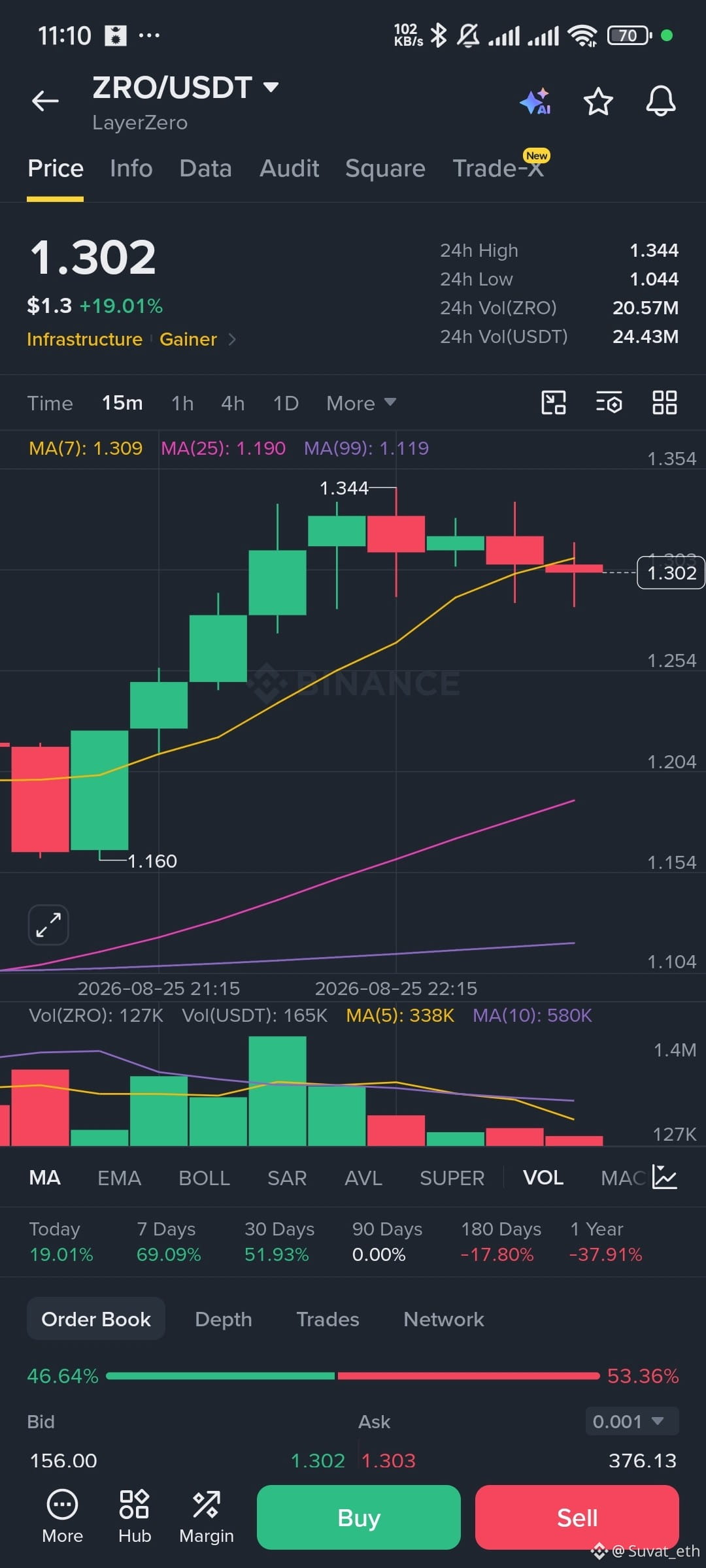
⚡ ZRO/USDT
Bias: 🟢 Bullisch, aber am Abkühlen
ZRO liegt bei 1.302 $, etwa 19 % im Plus heute. Der Preis bleibt oberhalb von MA(25) 1.190 $ und MA(99) 1.119 $, was auf einen starken zugrunde liegenden Trend hinweist. Allerdings ist der Preis leicht unter MA(7) 1.309 $ gefallen, während das Volumen nach dem starken Pump nachlässt.
🎯 Signal: „Die Rakete macht eine Pause — beobachte den nächsten Ausbruch.“
🟢 Long-Trigger: 15M-Schlusskurs über 1.325–1.344 $ mit starkem Volumen
🎯 Aufwärtige Ziele: 1.38 → 1.42 → 1.50
🟡 Rücksetzer-Unterstützung: 1.28–1.30
🛡️ Trend-Unterstützung: 1.25
🔴 Bärisches Warnsignal: Ein Bruch unter 1.25 $ könnte den Kurs Richtung 1.20 $ schicken
⚠️ Bedeutender Widerstand: 1.344 $
Markt-Einschätzung: Der Trend ist klar bullisch, aber das rückläufige Volumen und die aufeinanderfolgenden kleinen Kerzen nahe den Hochs deuten auf Gewinnmitnahmen/Konsolidierung hin. Ich würde $1.30 nicht hinterherjagen. Ein volumenbestätigter Ausbruch über 1.344 $ ist der sauberere Momentum-Einstieg; das Halten von 1.28–1.30 hält die bullische Struktur am Leben.
$ZRO
{future}(ZROUSDT)
⚡ ZRO/USDT
Bias: 🟢 Bullisch, aber am Abkühlen
ZRO liegt bei 1.302 $, etwa 19 % im Plus heute. Der Preis bleibt oberhalb von MA(25) 1.190 $ und MA(99) 1.119 $, was auf einen starken zugrunde liegenden Trend hinweist. Allerdings ist der Preis leicht unter MA(7) 1.309 $ gefallen, während das Volumen nach dem starken Pump nachlässt.
🎯 Signal: „Die Rakete macht eine Pause — beobachte den nächsten Ausbruch.“
🟢 Long-Trigger: 15M-Schlusskurs über 1.325–1.344 $ mit starkem Volumen
🎯 Aufwärtige Ziele: 1.38 → 1.42 → 1.50
🟡 Rücksetzer-Unterstützung: 1.28–1.30
🛡️ Trend-Unterstützung: 1.25
🔴 Bärisches Warnsignal: Ein Bruch unter 1.25 $ könnte den Kurs Richtung 1.20 $ schicken
⚠️ Bedeutender Widerstand: 1.344 $
Markt-Einschätzung: Der Trend ist klar bullisch, aber das rückläufige Volumen und die aufeinanderfolgenden kleinen Kerzen nahe den Hochs deuten auf Gewinnmitnahmen/Konsolidierung hin. Ich würde $1.30 nicht hinterherjagen. Ein volumenbestätigter Ausbruch über 1.344 $ ist der sauberere Momentum-Einstieg; das Halten von 1.28–1.30 hält die bullische Struktur am Leben.
$ZRO
Bias: 🟢 Bullisch, aber am Abkühlen
ZRO liegt bei 1.302 $, etwa 19 % im Plus heute. Der Preis bleibt oberhalb von MA(25) 1.190 $ und MA(99) 1.119 $, was auf einen starken zugrunde liegenden Trend hinweist. Allerdings ist der Preis leicht unter MA(7) 1.309 $ gefallen, während das Volumen nach dem starken Pump nachlässt.
🎯 Signal: „Die Rakete macht eine Pause — beobachte den nächsten Ausbruch.“
🟢 Long-Trigger: 15M-Schlusskurs über 1.325–1.344 $ mit starkem Volumen
🎯 Aufwärtige Ziele: 1.38 → 1.42 → 1.50
🟡 Rücksetzer-Unterstützung: 1.28–1.30
🛡️ Trend-Unterstützung: 1.25
🔴 Bärisches Warnsignal: Ein Bruch unter 1.25 $ könnte den Kurs Richtung 1.20 $ schicken
⚠️ Bedeutender Widerstand: 1.344 $
Markt-Einschätzung: Der Trend ist klar bullisch, aber das rückläufige Volumen und die aufeinanderfolgenden kleinen Kerzen nahe den Hochs deuten auf Gewinnmitnahmen/Konsolidierung hin. Ich würde $1.30 nicht hinterherjagen. Ein volumenbestätigter Ausbruch über 1.344 $ ist der sauberere Momentum-Einstieg; das Halten von 1.28–1.30 hält die bullische Struktur am Leben.
$ZRO
138
·
--
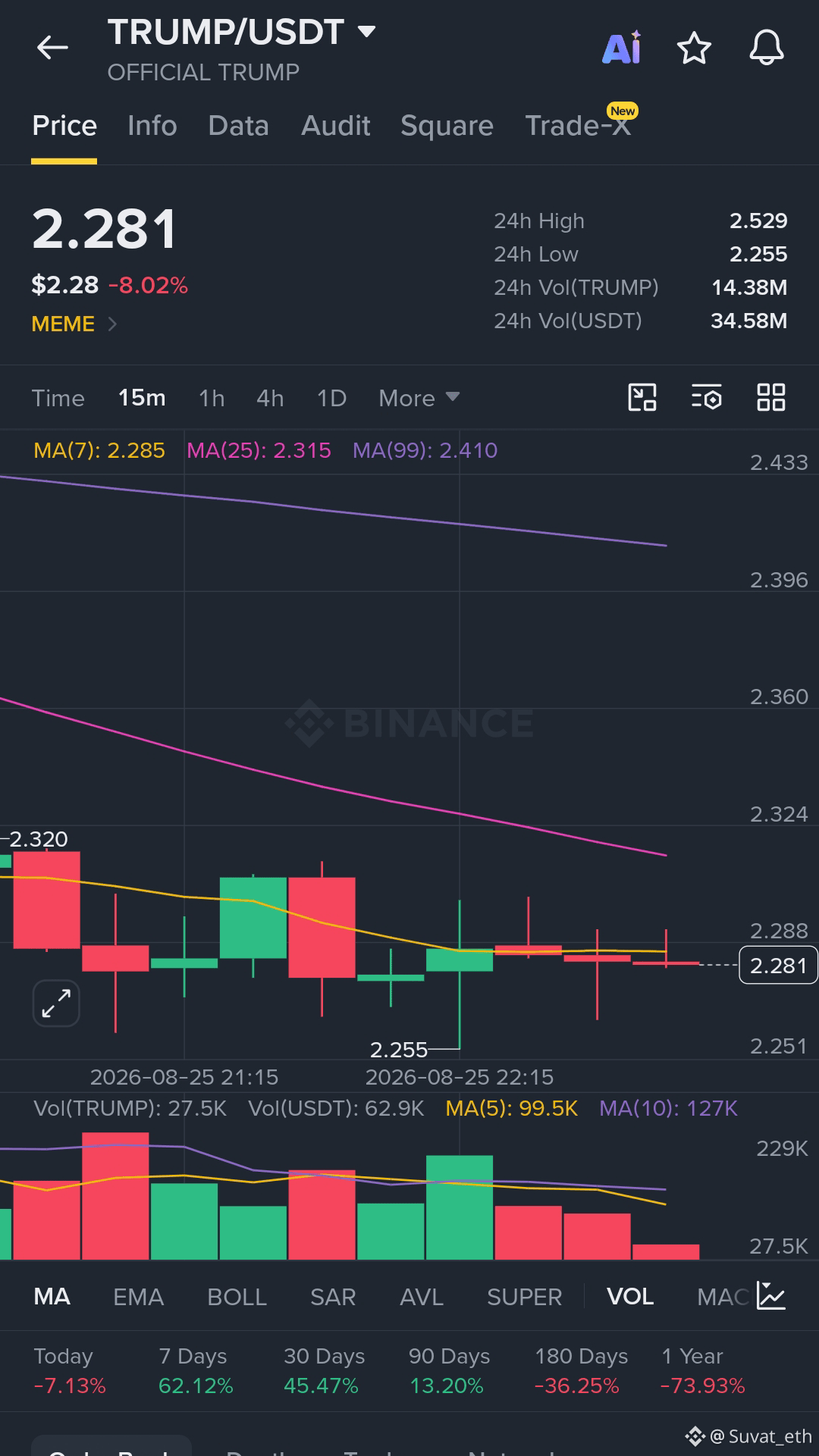
🔥 TRUMP/USDT
Bias: 🔴 bärisch / Seitwärtsrange
TRUMP befindet sich bei $2.281, knapp unter dem MA(7) $2.285 und deutlich unter dem MA(25) $2.315 / MA(99) $2.410. Der kurzfristige Trend bleibt schwach.
🎯 Signal: „Kompression an der Unterstützung — auf den Auslöser warten.“
🔴 Kurzer Trigger: Bruch unter $2.255 mit Volumen
🎯 Abwärtsziele: $2.22 → $2.18 → $2.15
🟢 Bullische Trendwende: 15M-Schlusskurs über $2.315
🎯 Aufwärtsziele: $2.36 → $2.40
🛡️ Short-Invalidierung: Oberhalb von $2.325
⚠️ Wichtige Unterstützung: $2.255
⚠️ Wichtiger Widerstand: $2.315–$2.32
Markt-Einschätzung: Verkäufer haben weiterhin den Vorteil, aber das Volumen nimmt stark ab. Das macht es riskant, dem aktuellen Preis hinterherzulaufen. Ein Break von $2.255 mit hohem Volumen ist die klarere bärische Bestätigung; das Rückerobern von $2.315 würde das bärische Setup invalidieren.
$TRUMP
{future}(TRUMPUSDT)
🔥 TRUMP/USDT
Bias: 🔴 bärisch / Seitwärtsrange
TRUMP befindet sich bei $2.281, knapp unter dem MA(7) $2.285 und deutlich unter dem MA(25) $2.315 / MA(99) $2.410. Der kurzfristige Trend bleibt schwach.
🎯 Signal: „Kompression an der Unterstützung — auf den Auslöser warten.“
🔴 Kurzer Trigger: Bruch unter $2.255 mit Volumen
🎯 Abwärtsziele: $2.22 → $2.18 → $2.15
🟢 Bullische Trendwende: 15M-Schlusskurs über $2.315
🎯 Aufwärtsziele: $2.36 → $2.40
🛡️ Short-Invalidierung: Oberhalb von $2.325
⚠️ Wichtige Unterstützung: $2.255
⚠️ Wichtiger Widerstand: $2.315–$2.32
Markt-Einschätzung: Verkäufer haben weiterhin den Vorteil, aber das Volumen nimmt stark ab. Das macht es riskant, dem aktuellen Preis hinterherzulaufen. Ein Break von $2.255 mit hohem Volumen ist die klarere bärische Bestätigung; das Rückerobern von $2.315 würde das bärische Setup invalidieren.
$TRUMP
Bias: 🔴 bärisch / Seitwärtsrange
TRUMP befindet sich bei $2.281, knapp unter dem MA(7) $2.285 und deutlich unter dem MA(25) $2.315 / MA(99) $2.410. Der kurzfristige Trend bleibt schwach.
🎯 Signal: „Kompression an der Unterstützung — auf den Auslöser warten.“
🔴 Kurzer Trigger: Bruch unter $2.255 mit Volumen
🎯 Abwärtsziele: $2.22 → $2.18 → $2.15
🟢 Bullische Trendwende: 15M-Schlusskurs über $2.315
🎯 Aufwärtsziele: $2.36 → $2.40
🛡️ Short-Invalidierung: Oberhalb von $2.325
⚠️ Wichtige Unterstützung: $2.255
⚠️ Wichtiger Widerstand: $2.315–$2.32
Markt-Einschätzung: Verkäufer haben weiterhin den Vorteil, aber das Volumen nimmt stark ab. Das macht es riskant, dem aktuellen Preis hinterherzulaufen. Ein Break von $2.255 mit hohem Volumen ist die klarere bärische Bestätigung; das Rückerobern von $2.315 würde das bärische Setup invalidieren.
$TRUMP
178
·
--
Bullisch
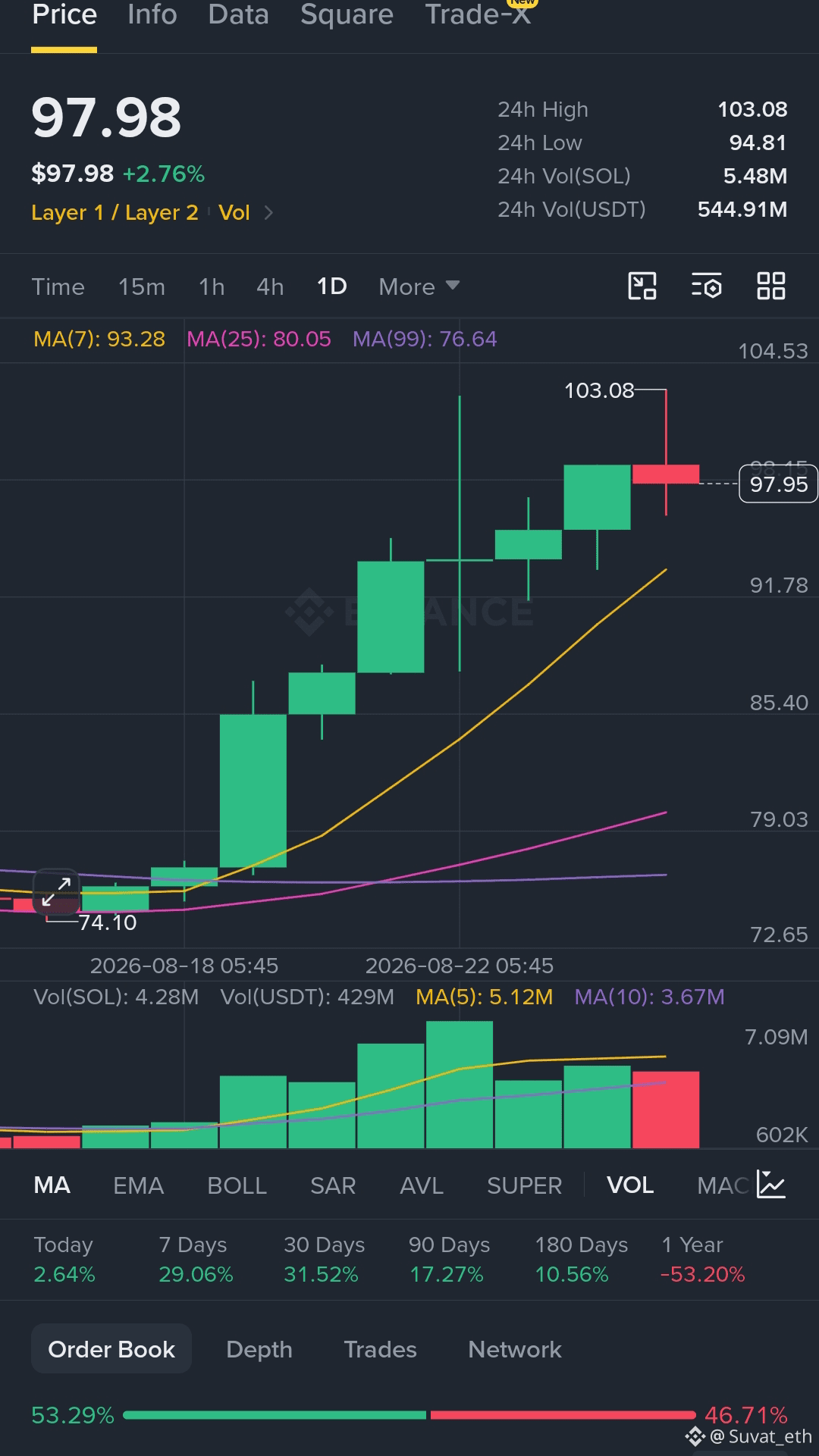
⚡ SOL/USDT Kreatives Marktsignal — 1T
Bias: 🟢 Bullish, aber der Widerstand ist nahe
SOL handelt um $97.98, mit einer starken täglichen Struktur: Der Preis liegt über MA(7) $93.28, MA(25) $80.05 und MA(99) $76.64. Der Hauptkampf findet am Widerstand bei $103.08 statt.
🎯 Signal: „Durchbrechen der Decke oder auf den Boden warten.“
🚀 Bullisher Einstieg: Tagesabschluss über $103.10
🎯 Ziele: $108 → $113 → $120
🛡️ Ungültigmachung: Unter $93.20
🟡 Pullback-Zone: $93–95
🔴 Bärische Warnung: Ein Tagesabschluss unter $91.80 könnte $85.40 eröffnen
Mein Eindruck: Derzeit begünstigt der Impuls die Käufer, aber die letzte Kerze zeigt eine Zurückweisung nahe $103. Nicht direkt unter dem Widerstand hinterherjagen. Ein sauberer Ausbruch + Volumenexpansion wäre die stärkere Bestätigung.
$SOL
{future}(SOLUSDT)
⚡ SOL/USDT Kreatives Marktsignal — 1T
Bias: 🟢 Bullish, aber der Widerstand ist nahe
SOL handelt um $97.98, mit einer starken täglichen Struktur: Der Preis liegt über MA(7) $93.28, MA(25) $80.05 und MA(99) $76.64. Der Hauptkampf findet am Widerstand bei $103.08 statt.
🎯 Signal: „Durchbrechen der Decke oder auf den Boden warten.“
🚀 Bullisher Einstieg: Tagesabschluss über $103.10
🎯 Ziele: $108 → $113 → $120
🛡️ Ungültigmachung: Unter $93.20
🟡 Pullback-Zone: $93–95
🔴 Bärische Warnung: Ein Tagesabschluss unter $91.80 könnte $85.40 eröffnen
Mein Eindruck: Derzeit begünstigt der Impuls die Käufer, aber die letzte Kerze zeigt eine Zurückweisung nahe $103. Nicht direkt unter dem Widerstand hinterherjagen. Ein sauberer Ausbruch + Volumenexpansion wäre die stärkere Bestätigung.
$SOL
Bias: 🟢 Bullish, aber der Widerstand ist nahe
SOL handelt um $97.98, mit einer starken täglichen Struktur: Der Preis liegt über MA(7) $93.28, MA(25) $80.05 und MA(99) $76.64. Der Hauptkampf findet am Widerstand bei $103.08 statt.
🎯 Signal: „Durchbrechen der Decke oder auf den Boden warten.“
🚀 Bullisher Einstieg: Tagesabschluss über $103.10
🎯 Ziele: $108 → $113 → $120
🛡️ Ungültigmachung: Unter $93.20
🟡 Pullback-Zone: $93–95
🔴 Bärische Warnung: Ein Tagesabschluss unter $91.80 könnte $85.40 eröffnen
Mein Eindruck: Derzeit begünstigt der Impuls die Käufer, aber die letzte Kerze zeigt eine Zurückweisung nahe $103. Nicht direkt unter dem Widerstand hinterherjagen. Ein sauberer Ausbruch + Volumenexpansion wäre die stärkere Bestätigung.
$SOL
154
Anmelden und weiter Inhalte entdecken
Krypto-Nutzer weltweit auf Binance Square kennenlernen
⚡️ Bleib in Sachen Krypto stets am Puls.
💬 Die weltgrößte Kryptobörse vertraut darauf.
👍 Erhalte verlässliche Einblicke von verifizierten Creators.
E-Mail-Adresse/Telefonnummer
Trendthemen
FOMCWatch
8.9M Aufrufe
26,683 Kommentare
TradFi News | Warsh Muss Erklären, Warum Die Fed Diese Woche Stillhält, Während Eine Zinserhöhung Im Dezember Im Spiel Bleibt
Binance News
·0 Likes
·223 Aufrufe
EthereumDropsBelow$2300
2,544 Aufrufe
92 Kommentare
BitcoinSlipsBelow$80KAgain
8,090 Aufrufe
59 Kommentare