

LiquidityPoacher
178 Beiträge
LiquidityPoacher
Melden
Nutzer blockieren
i give correct liquidity sweeps not fake ones. and make alot of profits. ill teach you guys how to detect fake and real liquidty sweeps so follow me for tips.
Regelmäßiger Trader
1.1 Jahre
10 Following
48 Follower
148 Like gegeben
Beiträge
Alle
Zitierungen
So steigerst du deine erfolgreichen Trades mit Bestätigungskerzen.
Eines der größten Fehler, die Trader machen, ist, zu kaufen, sobald der Kurs den Support erreicht.
Nur der Support reicht nicht aus. Du willst sehen, dass Käufer tatsächlich eingreifen.
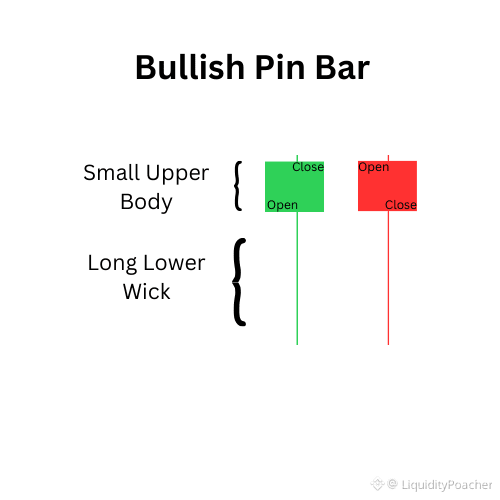
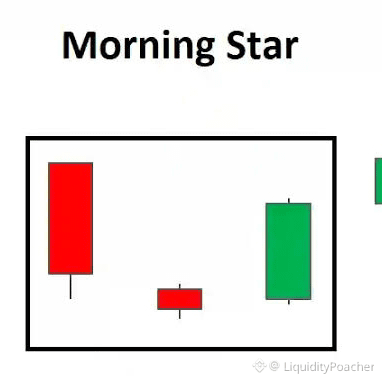
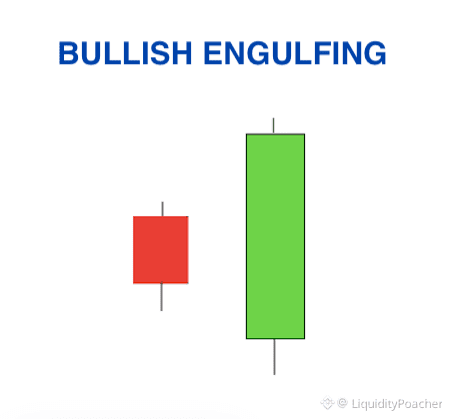
Achte auf Bestätigungskerzen wie:
🟢 Bullisches Engulfing: starker Wechsel von Verkäufern zu Käufern
🟢 Hammer / Pin-Bar: starke Zurückweisung niedrigerer Kurse
🟢 Morning Star: mögliche Trendwende nach Verkaufsdruck
🟢 Starke bullische Kerze: klare Dynamik von Käufern
Das ideale Setup wäre, eine gut beachtete Support-Linie zu finden (oder für Short den Widerstand) und dann mit deinen anderen Setups eine Umkehr sowie eine dieser Bestätigungskerzen. Dann hast du einen erfolgreichen Trade mit etwa 90%.
(Trades können trotzdem fehlschlagen, aber mach dir keine Sorgen – das bedeutet nur, dass der Markt dich nicht bestätigt hat.)
#TradingTips #Crypto #Trading
$BTC $ETH $SOL
So steigerst du deine erfolgreichen Trades mit Bestätigungskerzen.
Eines der größten Fehler, die Trader machen, ist, zu kaufen, sobald der Kurs den Support erreicht.
Nur der Support reicht nicht aus. Du willst sehen, dass Käufer tatsächlich eingreifen.
Achte auf Bestätigungskerzen wie:
🟢 Bullisches Engulfing: starker Wechsel von Verkäufern zu Käufern
🟢 Hammer / Pin-Bar: starke Zurückweisung niedrigerer Kurse
🟢 Morning Star: mögliche Trendwende nach Verkaufsdruck
🟢 Starke bullische Kerze: klare Dynamik von Käufern
Das ideale Setup wäre, eine gut beachtete Support-Linie zu finden (oder für Short den Widerstand) und dann mit deinen anderen Setups eine Umkehr sowie eine dieser Bestätigungskerzen. Dann hast du einen erfolgreichen Trade mit etwa 90%.
(Trades können trotzdem fehlschlagen, aber mach dir keine Sorgen – das bedeutet nur, dass der Markt dich nicht bestätigt hat.)
#TradingTips #Crypto #Trading
$BTC $ETH $SOL
Eines der größten Fehler, die Trader machen, ist, zu kaufen, sobald der Kurs den Support erreicht.
Nur der Support reicht nicht aus. Du willst sehen, dass Käufer tatsächlich eingreifen.
Achte auf Bestätigungskerzen wie:
🟢 Bullisches Engulfing: starker Wechsel von Verkäufern zu Käufern
🟢 Hammer / Pin-Bar: starke Zurückweisung niedrigerer Kurse
🟢 Morning Star: mögliche Trendwende nach Verkaufsdruck
🟢 Starke bullische Kerze: klare Dynamik von Käufern
Das ideale Setup wäre, eine gut beachtete Support-Linie zu finden (oder für Short den Widerstand) und dann mit deinen anderen Setups eine Umkehr sowie eine dieser Bestätigungskerzen. Dann hast du einen erfolgreichen Trade mit etwa 90%.
(Trades können trotzdem fehlschlagen, aber mach dir keine Sorgen – das bedeutet nur, dass der Markt dich nicht bestätigt hat.)
#TradingTips #Crypto #Trading
$BTC $ETH $SOL
1
233
🚨 ALLO/USDT BEREIT ZUM PUMP?
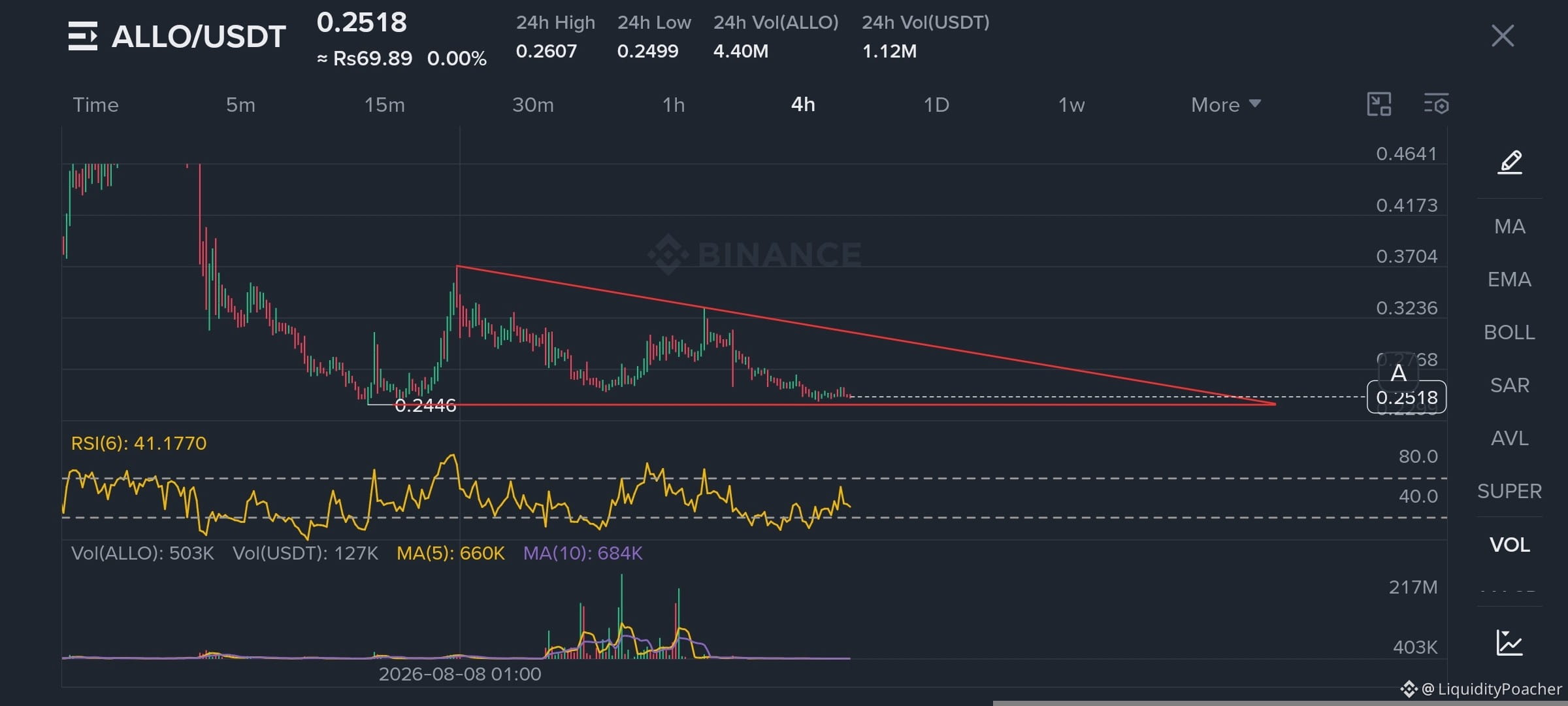
$ALLO hat sich in einem klaren absteigenden Trendkanal zusammengezogen + eine starke Unterstützungsstruktur im 4H-Chart.
Der Preis hält sich bei etwa 0,2518 $, mit Unterstützung nahe 0,2446 $. Wenn ALLO die absteigende Trendlinie mit starkem Volumen bricht, könnten wir einen ernsten Aufwärtsbewegung sehen.
Es gibt Potenzial für einen Pump – was sind eure Gedanken?
#pumpingsoon #ALLO
🚨 ALLO/USDT BEREIT ZUM PUMP?
$ALLO hat sich in einem klaren absteigenden Trendkanal zusammengezogen + eine starke Unterstützungsstruktur im 4H-Chart.
Der Preis hält sich bei etwa 0,2518 $, mit Unterstützung nahe 0,2446 $. Wenn ALLO die absteigende Trendlinie mit starkem Volumen bricht, könnten wir einen ernsten Aufwärtsbewegung sehen.
Es gibt Potenzial für einen Pump – was sind eure Gedanken?
#pumpingsoon #ALLO
$ALLO hat sich in einem klaren absteigenden Trendkanal zusammengezogen + eine starke Unterstützungsstruktur im 4H-Chart.
Der Preis hält sich bei etwa 0,2518 $, mit Unterstützung nahe 0,2446 $. Wenn ALLO die absteigende Trendlinie mit starkem Volumen bricht, könnten wir einen ernsten Aufwärtsbewegung sehen.
Es gibt Potenzial für einen Pump – was sind eure Gedanken?
#pumpingsoon #ALLO
360
$LDO BREAKOUT WATCH
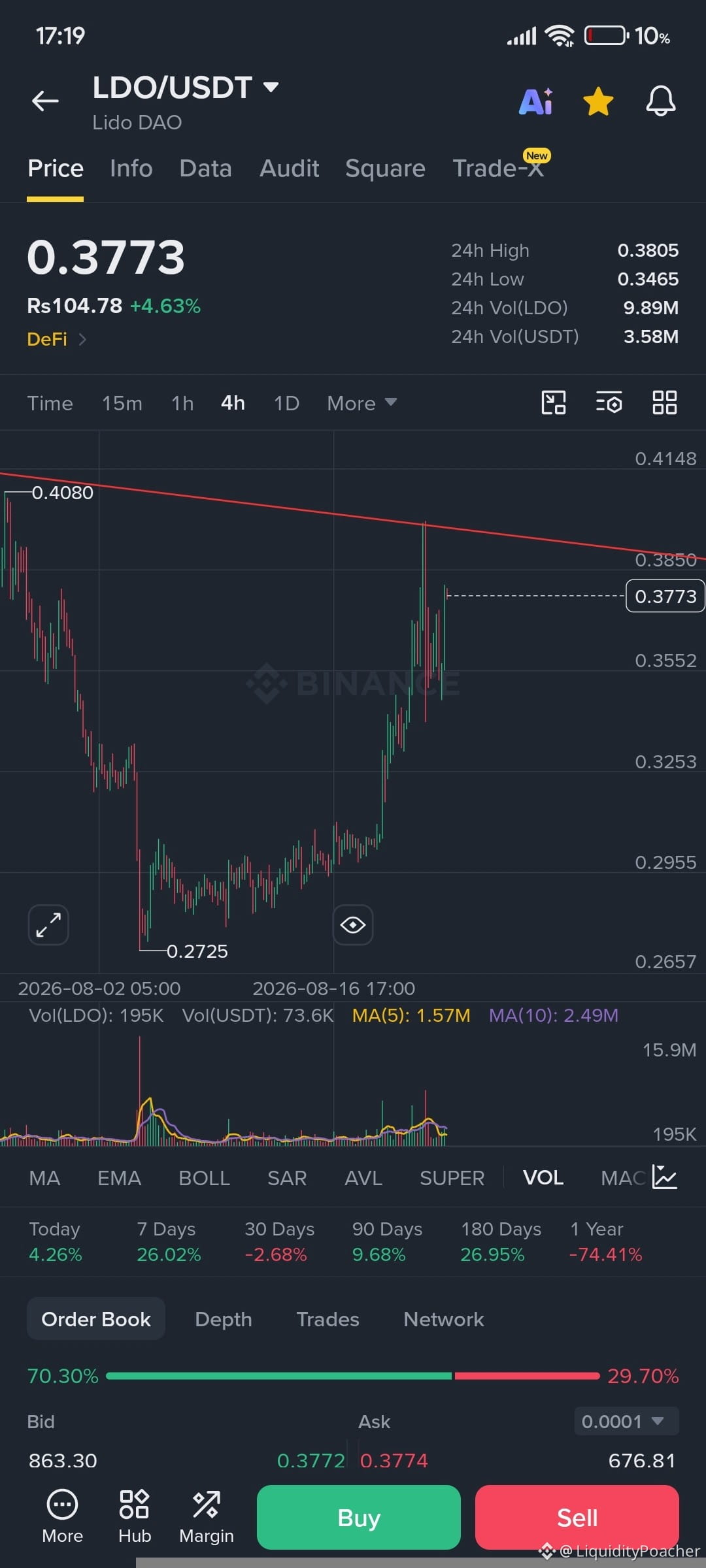
$LDO drängt durch die entscheidende Widerstandszone und der Momentum-Build-up nimmt zu.
Wenn wir einen bestätigten Candle-Close oberhalb des Levels bekommen und anschließend einen bullischen Retest, könnte dies ein starkes Einstiegsszenario sein.
lasst uns auf die Bestätigung warten und dann signalisiere ich dir auch zum Kauf
$LDO BREAKOUT WATCH
$LDO drängt durch die entscheidende Widerstandszone und der Momentum-Build-up nimmt zu.
Wenn wir einen bestätigten Candle-Close oberhalb des Levels bekommen und anschließend einen bullischen Retest, könnte dies ein starkes Einstiegsszenario sein.
lasst uns auf die Bestätigung warten und dann signalisiere ich dir auch zum Kauf
$LDO drängt durch die entscheidende Widerstandszone und der Momentum-Build-up nimmt zu.
Wenn wir einen bestätigten Candle-Close oberhalb des Levels bekommen und anschließend einen bullischen Retest, könnte dies ein starkes Einstiegsszenario sein.
lasst uns auf die Bestätigung warten und dann signalisiere ich dir auch zum Kauf
101
Ich würde $ROSE hier noch nicht kaufen. Hier ist der Grund.
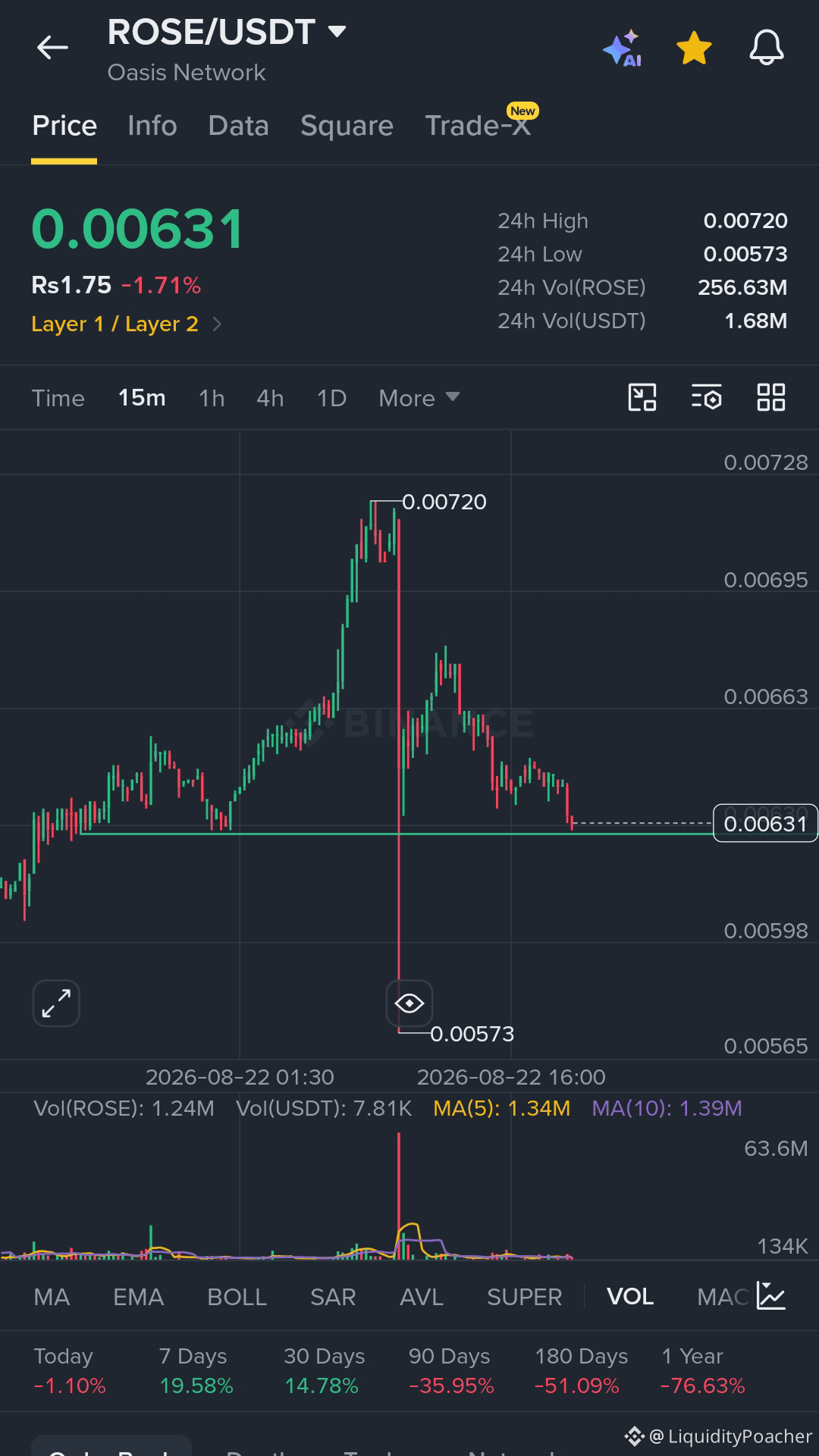
$ROSE hat die Unterstützungslinie erneut erreicht, und zusammen mit dem bullischen Markt wird dies eine großartige Gelegenheit sein.
Lass uns auf eine Bestätigung warten und dann kaufen, weil das auch ein Fake sein kann.
Ich halte euch über mein Signal auf dem Laufenden.
#ROSE/USDT #trade #Signal.
Ich würde $ROSE hier noch nicht kaufen. Hier ist der Grund.
$ROSE hat die Unterstützungslinie erneut erreicht, und zusammen mit dem bullischen Markt wird dies eine großartige Gelegenheit sein.
Lass uns auf eine Bestätigung warten und dann kaufen, weil das auch ein Fake sein kann.
Ich halte euch über mein Signal auf dem Laufenden.
#ROSE/USDT #trade #Signal.
$ROSE hat die Unterstützungslinie erneut erreicht, und zusammen mit dem bullischen Markt wird dies eine großartige Gelegenheit sein.
Lass uns auf eine Bestätigung warten und dann kaufen, weil das auch ein Fake sein kann.
Ich halte euch über mein Signal auf dem Laufenden.
#ROSE/USDT #trade #Signal.
163
·
--
Bullisch
Bullenmarkt-Chance
Der Markt sieht bullisch aus, und das sind die Bedingungen, auf die wir warten
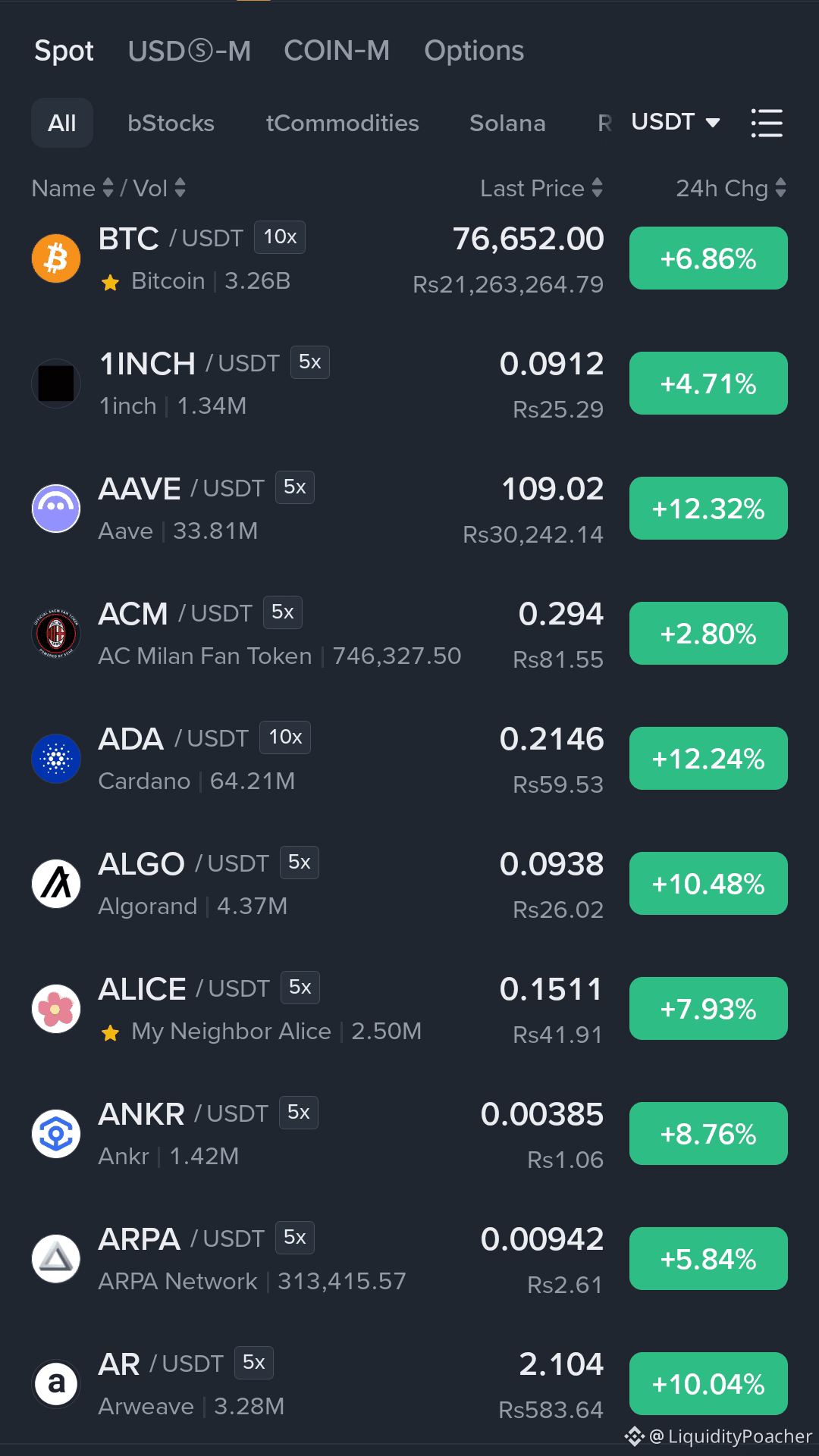
Wenn der übergeordnete Trend stark ist, können sich Chancen über mehrere Coins hinweg zeigen. Entscheidend ist nicht, jeder Pump hinterherzulaufen – warte auf saubere Setups, Bestätigung und passende Einstiege.
Bullenmarkt + starke Setups + Geduld = Chancen.
Bleib diszipliniert und lass den Markt zu dir kommen.
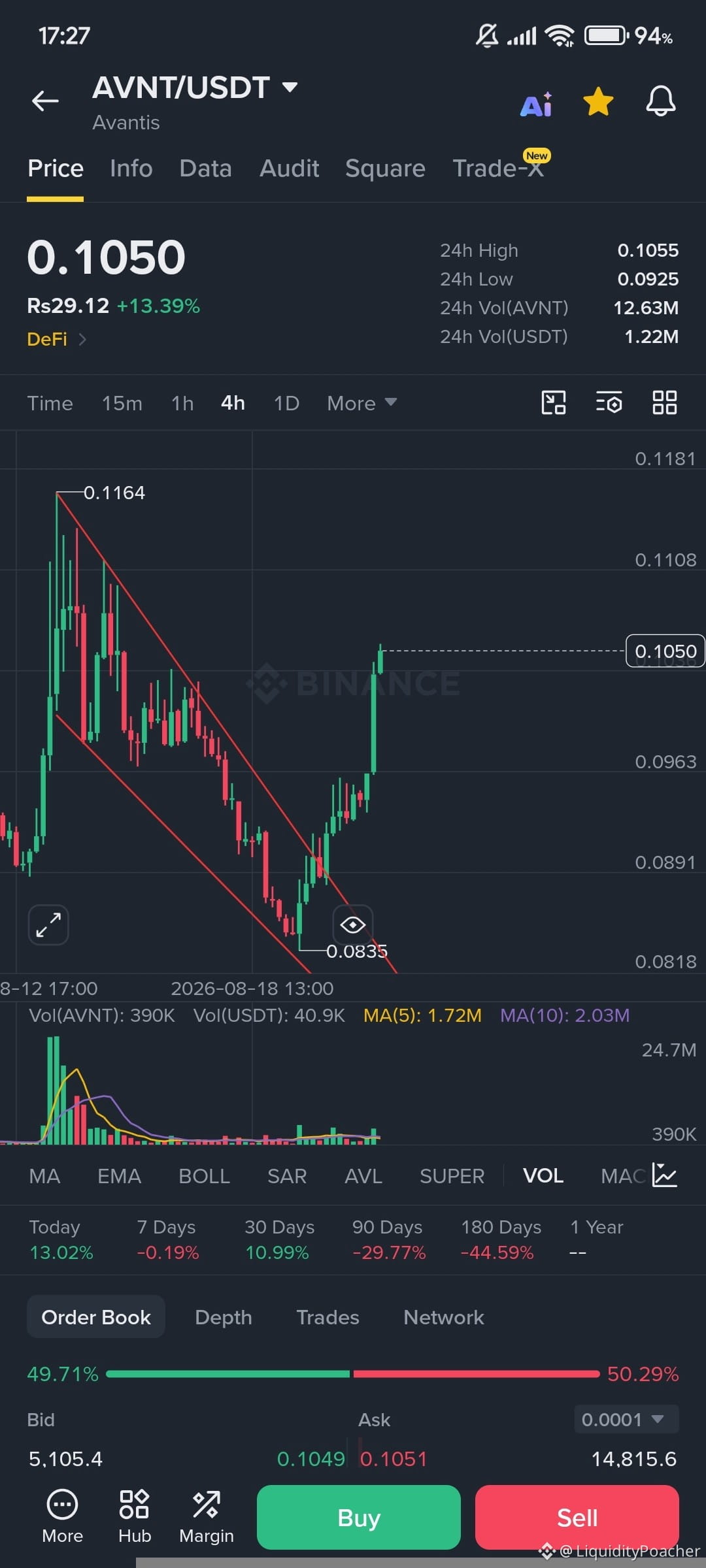
$AVNT $BTC $RED
{spot}(REDUSDT)
#Crypto #Bullish #Binance
Bullenmarkt-Chance
Der Markt sieht bullisch aus, und das sind die Bedingungen, auf die wir warten
Wenn der übergeordnete Trend stark ist, können sich Chancen über mehrere Coins hinweg zeigen. Entscheidend ist nicht, jeder Pump hinterherzulaufen – warte auf saubere Setups, Bestätigung und passende Einstiege.
Bullenmarkt + starke Setups + Geduld = Chancen.
Bleib diszipliniert und lass den Markt zu dir kommen.
$AVNT $BTC $RED
#Crypto #Bullish #Binance
Der Markt sieht bullisch aus, und das sind die Bedingungen, auf die wir warten
Wenn der übergeordnete Trend stark ist, können sich Chancen über mehrere Coins hinweg zeigen. Entscheidend ist nicht, jeder Pump hinterherzulaufen – warte auf saubere Setups, Bestätigung und passende Einstiege.
Bullenmarkt + starke Setups + Geduld = Chancen.
Bleib diszipliniert und lass den Markt zu dir kommen.
$AVNT $BTC $RED
#Crypto #Bullish #Binance
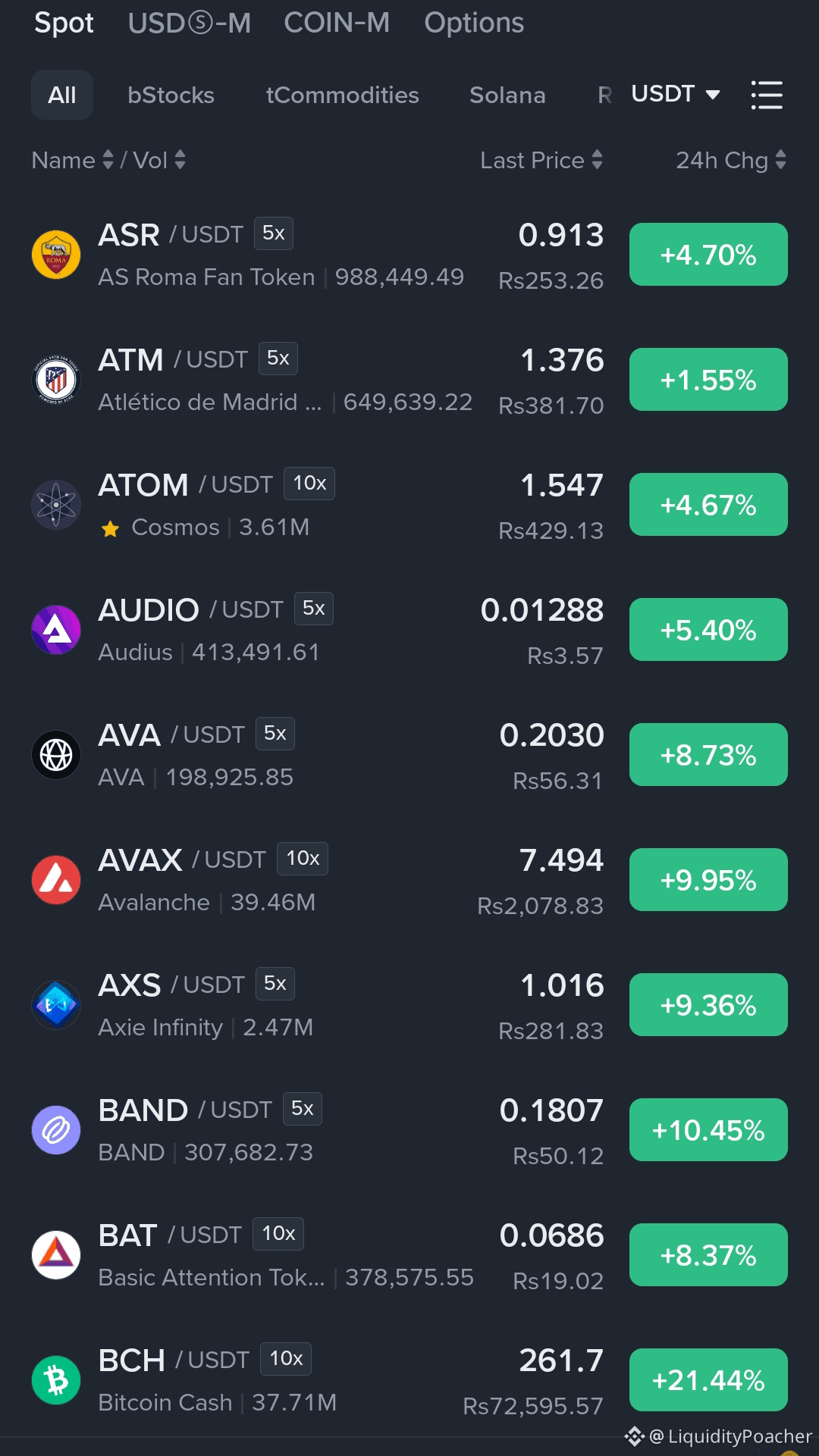
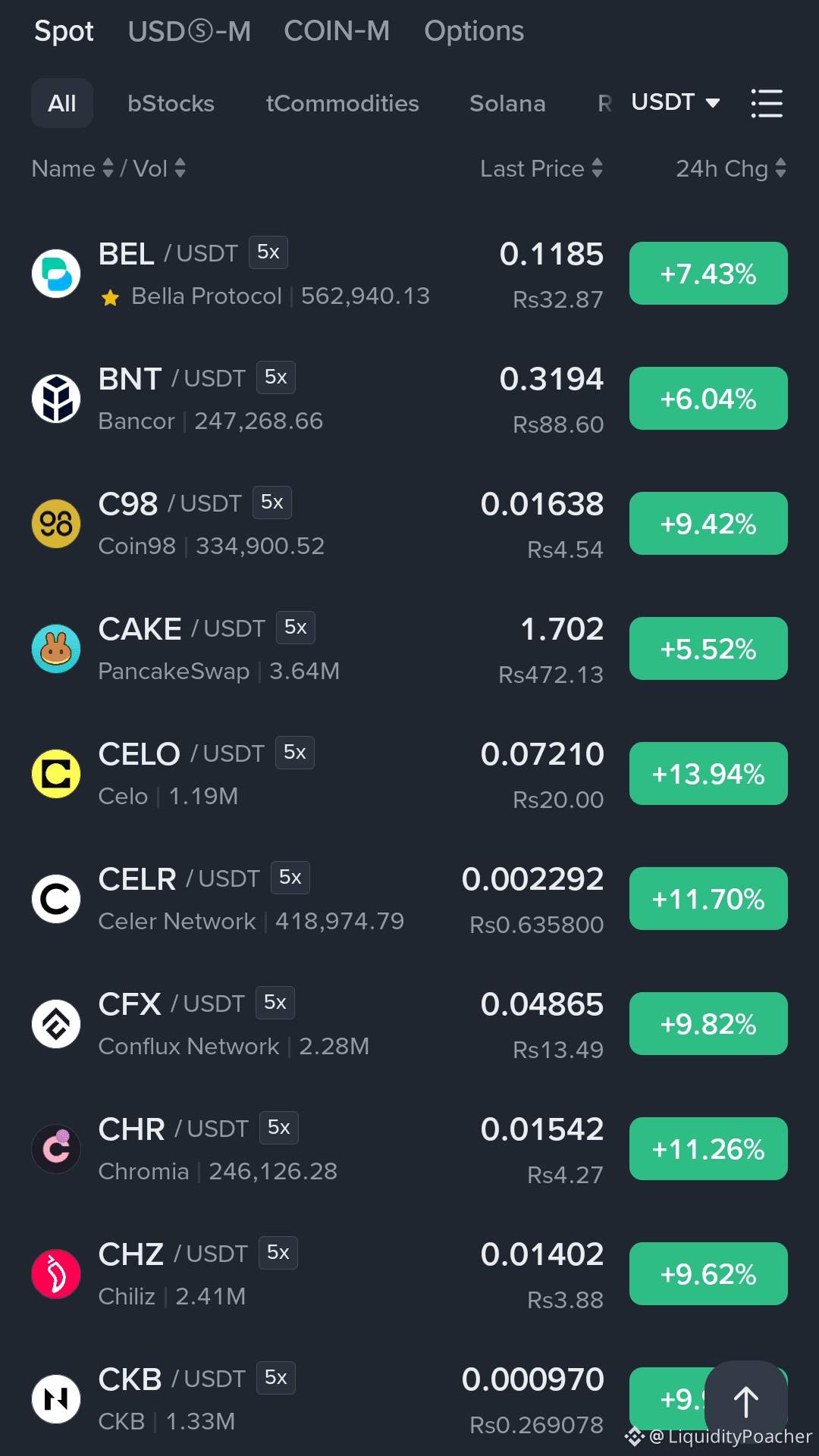
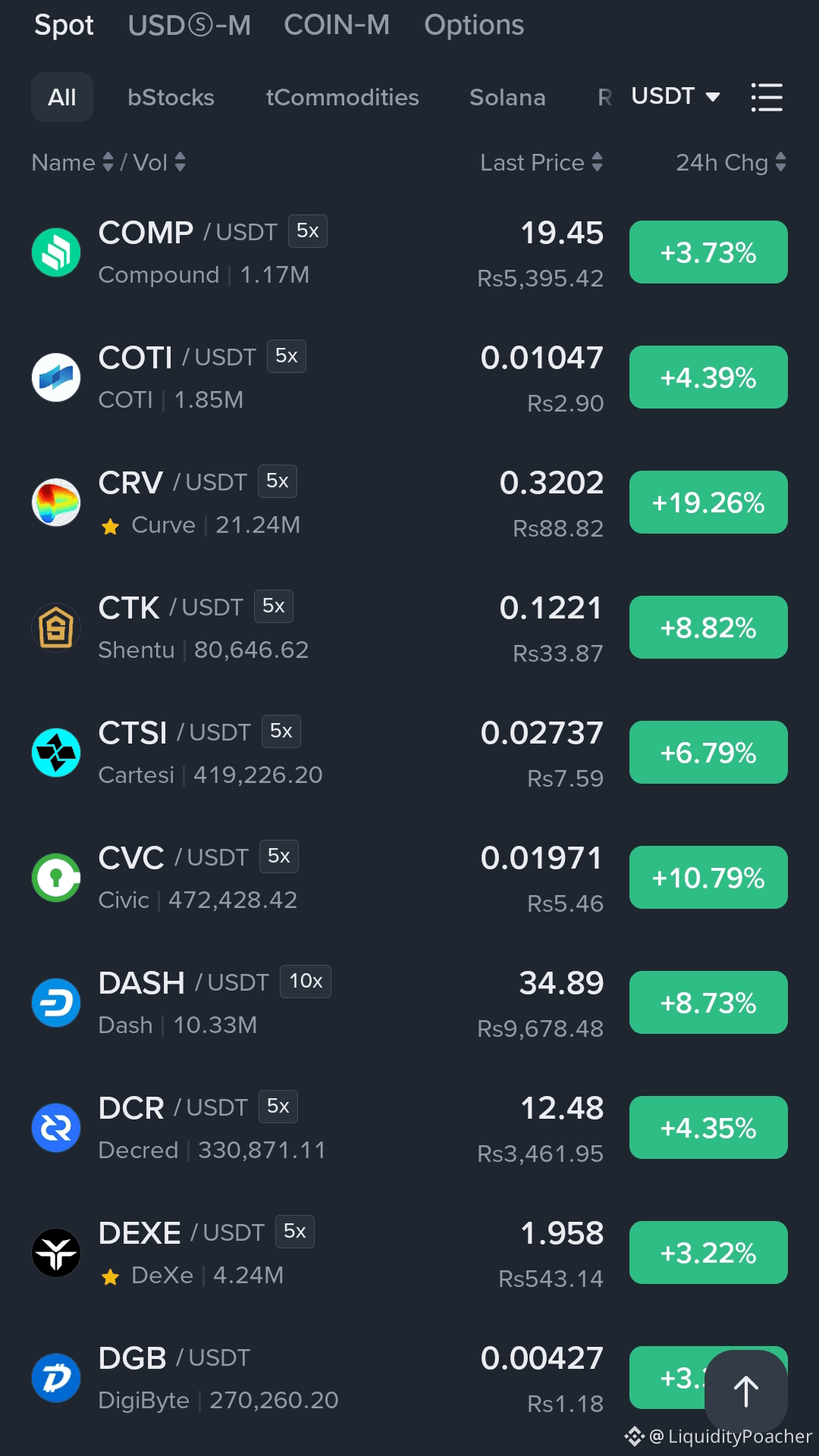
269
161
·
--
Bullisch
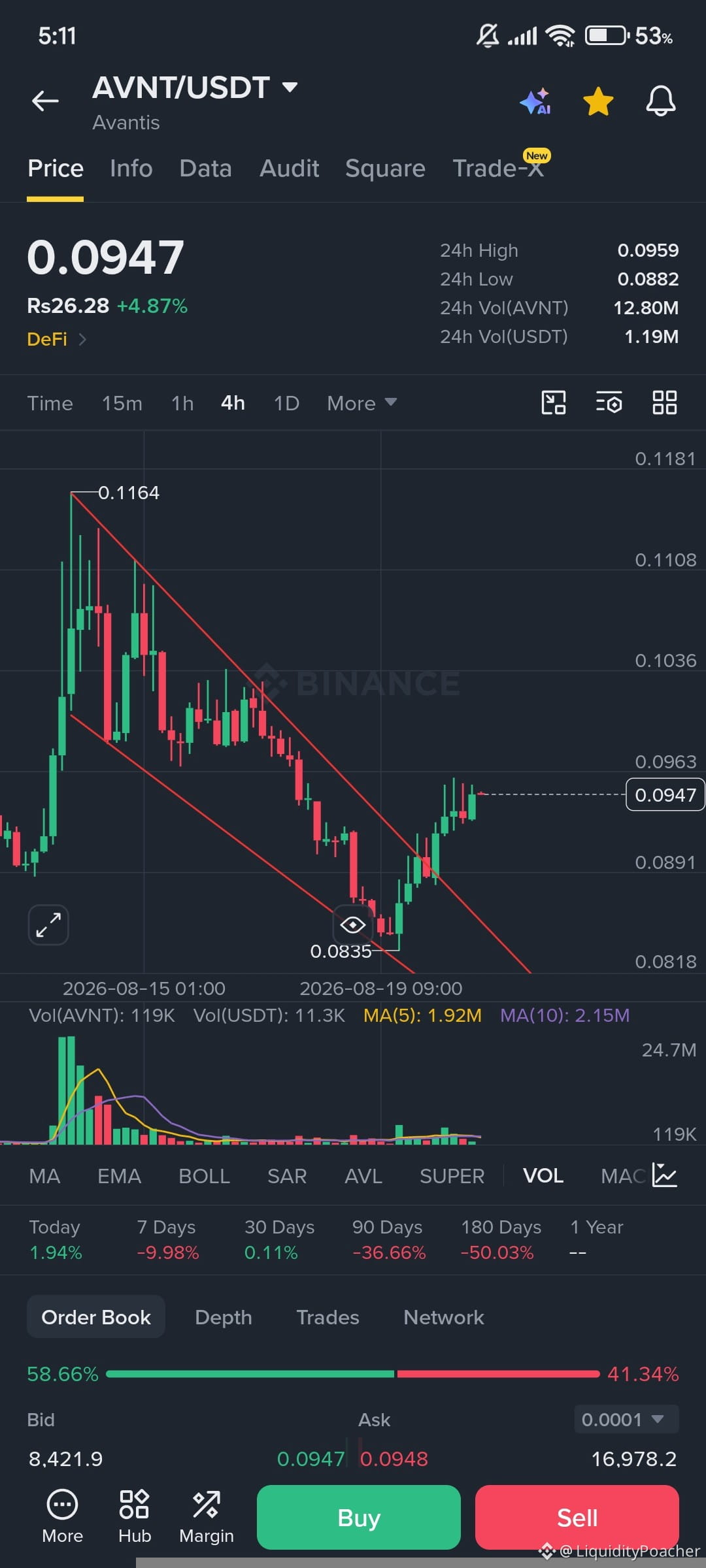
$AVNT hat ausgebrochen! Wir warten auf einen Rücksetzer zur Bestätigung, bevor wir kaufen
$AVNT hat ausgebrochen! Wir warten auf einen Rücksetzer zur Bestätigung, bevor wir kaufen
220
·
--
Bullisch
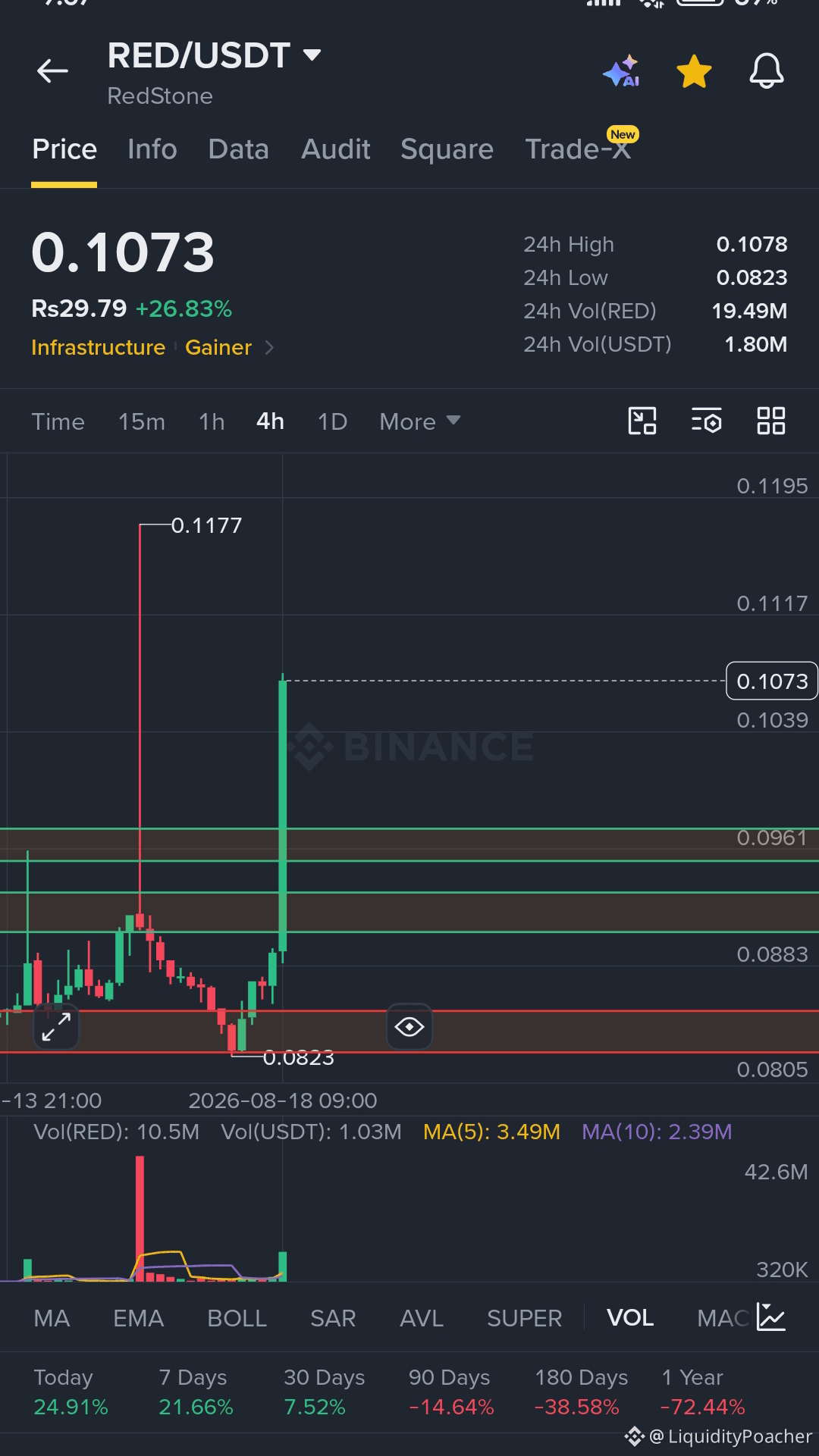
Menschen, die $RED gefolgt sind, sind jetzt im Gewinn.
Folge mir für mehr Signale
{spot}(REDUSDT)
Menschen, die $RED gefolgt sind, sind jetzt im Gewinn.
Folge mir für mehr Signale
Folge mir für mehr Signale
57
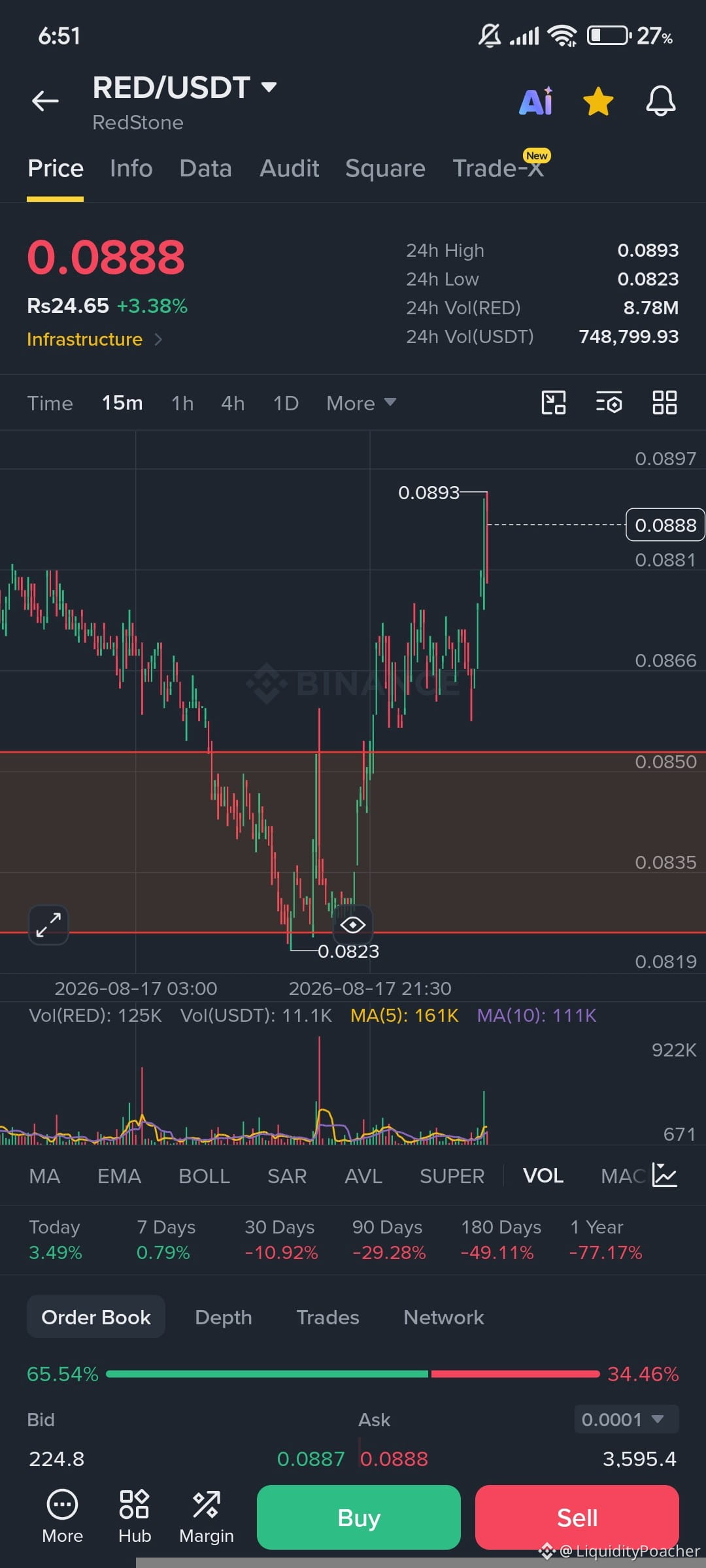
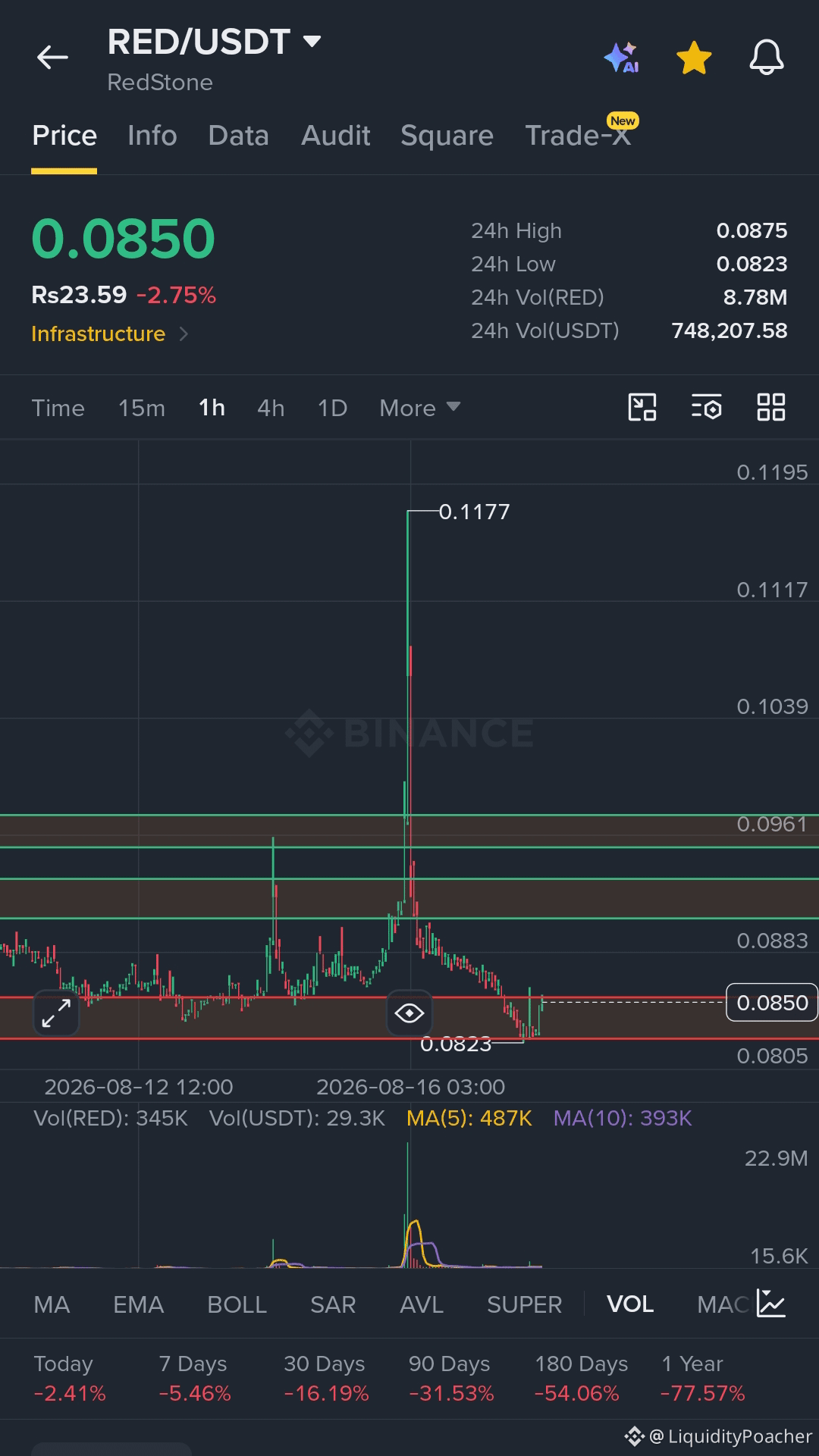
$RED HOLST DU DIE UNTERSTÜTZUNG? 👀🔥
RED ist gerade stark zurückgekommen und testet jetzt die Support-Zone 0.0823–0.0850.
Das ist der Bereich, den ich genau beobachte
Support hält + bullische Bestätigung → KAUF
Erster Widerstand (auch erstes tp): 0.0883 🚀
Wenn die höheren Widerstandsbereiche zurückerobert werden, könnte das einen weiteren Aufwärtsimpuls auslösen.
Kauf die Coin hier ----------> $RED
$RED HOLST DU DIE UNTERSTÜTZUNG? 👀🔥
RED ist gerade stark zurückgekommen und testet jetzt die Support-Zone 0.0823–0.0850.
Das ist der Bereich, den ich genau beobachte
Support hält + bullische Bestätigung → KAUF
Erster Widerstand (auch erstes tp): 0.0883 🚀
Wenn die höheren Widerstandsbereiche zurückerobert werden, könnte das einen weiteren Aufwärtsimpuls auslösen.
Kauf die Coin hier ----------> $RED
RED ist gerade stark zurückgekommen und testet jetzt die Support-Zone 0.0823–0.0850.
Das ist der Bereich, den ich genau beobachte
Support hält + bullische Bestätigung → KAUF
Erster Widerstand (auch erstes tp): 0.0883 🚀
Wenn die höheren Widerstandsbereiche zurückerobert werden, könnte das einen weiteren Aufwärtsimpuls auslösen.
Kauf die Coin hier ----------> $RED
269
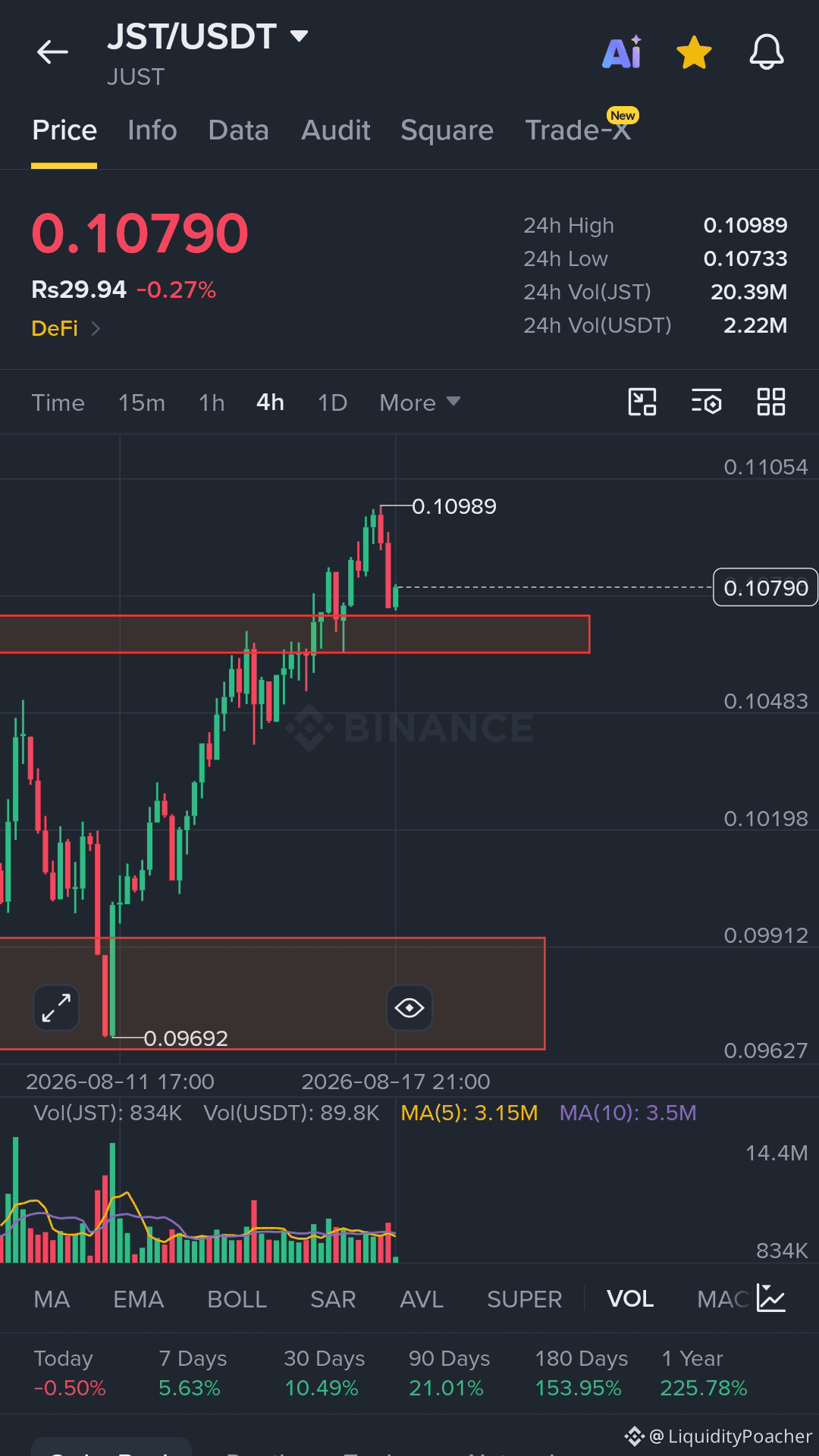
$JST hat den Widerstand durchbrochen.
JST ist stark nach oben gelaufen und zieht sich jetzt zurück in die bestehende Unterstützungszone bei etwa 0.106–0.107.
Das Setup, das ich beobachte: 📍 Unterstützung hält → bullische Bestätigung → KAUF
📈 Erster Kurszielbereich: 0.1099
🚀 Ein Ausbruch über das jüngste Hoch könnte den Weg für einen weiteren Anstieg öffnen.
kaufe die Coin hier ---------> $JST
{spot}(JSTUSDT)
#Trading #Altcoins #TechnischeAnalyse
$JST hat den Widerstand durchbrochen.
JST ist stark nach oben gelaufen und zieht sich jetzt zurück in die bestehende Unterstützungszone bei etwa 0.106–0.107.
Das Setup, das ich beobachte: 📍 Unterstützung hält → bullische Bestätigung → KAUF
📈 Erster Kurszielbereich: 0.1099
🚀 Ein Ausbruch über das jüngste Hoch könnte den Weg für einen weiteren Anstieg öffnen.
kaufe die Coin hier ---------> $JST
#Trading #Altcoins #TechnischeAnalyse
JST ist stark nach oben gelaufen und zieht sich jetzt zurück in die bestehende Unterstützungszone bei etwa 0.106–0.107.
Das Setup, das ich beobachte: 📍 Unterstützung hält → bullische Bestätigung → KAUF
📈 Erster Kurszielbereich: 0.1099
🚀 Ein Ausbruch über das jüngste Hoch könnte den Weg für einen weiteren Anstieg öffnen.
kaufe die Coin hier ---------> $JST
#Trading #Altcoins #TechnischeAnalyse
155
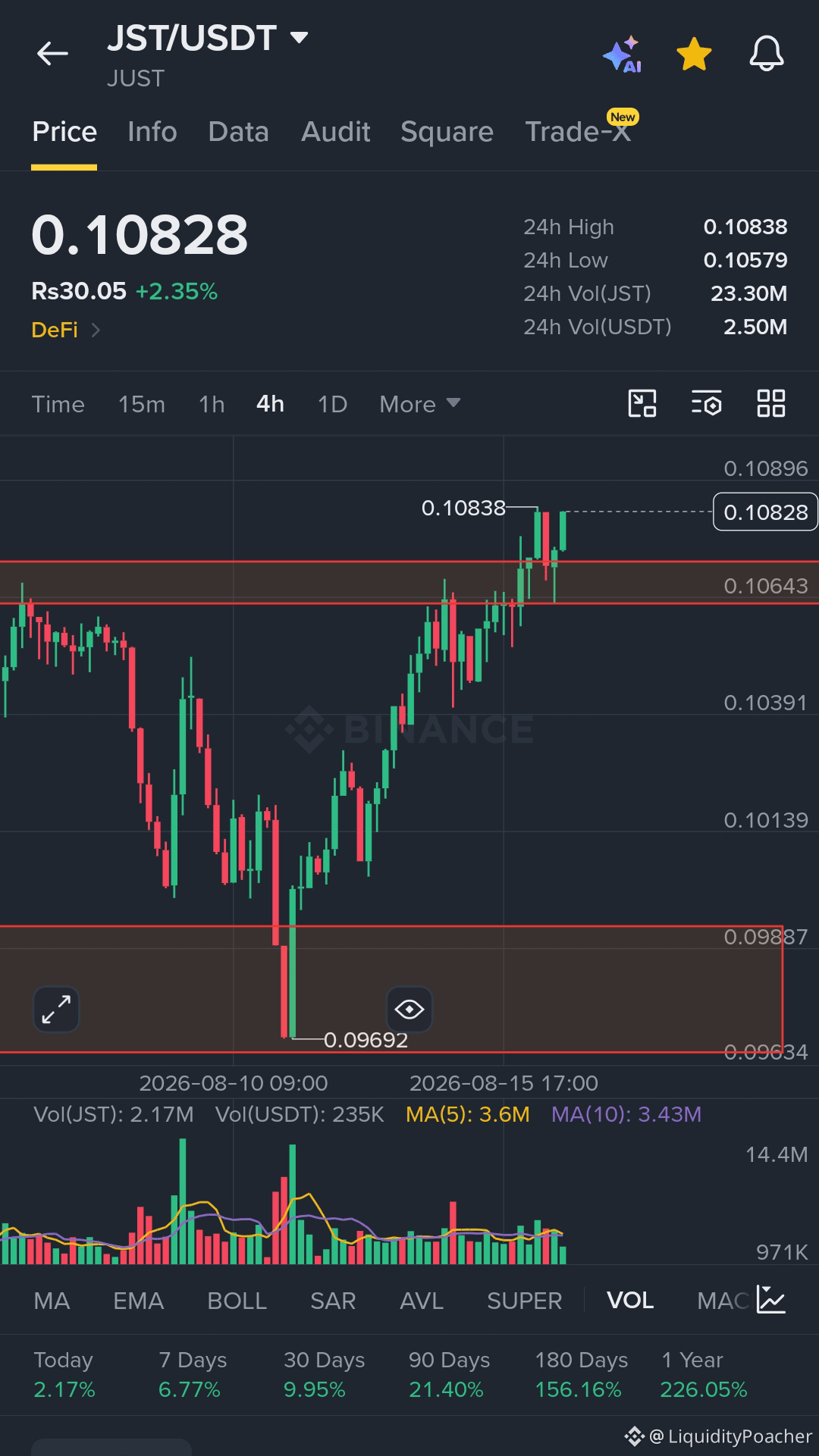
$JST IS AN EINEM KRITISCHEN ENTSCHEIDUNGSPUNKT!
JST hat gerade über den wichtigen Widerstand von 0.10643 gebrochen und drängt Richtung 0.10838
Aber jetzt sehen wir in der Nähe der Hochs etwas Unentschlossenheit 👀
Der Kampf ist im Gange zwischen Käufern und Verkäufern.
📈 Bullisches Szenario: 4H-Schlusskurs über 0.10838 + starkes Volumen → mögliche Fortsetzung.
🔄 Rücksetzer-Szenario: Retest um 0.10643 und halten → könnte den Widerstand in Unterstützung verwandeln.
Die nächsten Kerzen könnten entscheiden, ob JST eine weitere Aufwärtsbewegung bekommt oder abgelehnt wird.
schau dir die Coin hier an -------> $JST
{spot}(JSTUSDT)
#TechnicalAnalysis #breakouts #Altcoins
$JST IS AN EINEM KRITISCHEN ENTSCHEIDUNGSPUNKT!
JST hat gerade über den wichtigen Widerstand von 0.10643 gebrochen und drängt Richtung 0.10838
Aber jetzt sehen wir in der Nähe der Hochs etwas Unentschlossenheit 👀
Der Kampf ist im Gange zwischen Käufern und Verkäufern.
📈 Bullisches Szenario: 4H-Schlusskurs über 0.10838 + starkes Volumen → mögliche Fortsetzung.
🔄 Rücksetzer-Szenario: Retest um 0.10643 und halten → könnte den Widerstand in Unterstützung verwandeln.
Die nächsten Kerzen könnten entscheiden, ob JST eine weitere Aufwärtsbewegung bekommt oder abgelehnt wird.
schau dir die Coin hier an -------> $JST
#TechnicalAnalysis #breakouts #Altcoins
JST hat gerade über den wichtigen Widerstand von 0.10643 gebrochen und drängt Richtung 0.10838
Aber jetzt sehen wir in der Nähe der Hochs etwas Unentschlossenheit 👀
Der Kampf ist im Gange zwischen Käufern und Verkäufern.
📈 Bullisches Szenario: 4H-Schlusskurs über 0.10838 + starkes Volumen → mögliche Fortsetzung.
🔄 Rücksetzer-Szenario: Retest um 0.10643 und halten → könnte den Widerstand in Unterstützung verwandeln.
Die nächsten Kerzen könnten entscheiden, ob JST eine weitere Aufwärtsbewegung bekommt oder abgelehnt wird.
schau dir die Coin hier an -------> $JST
#TechnicalAnalysis #breakouts #Altcoins
74
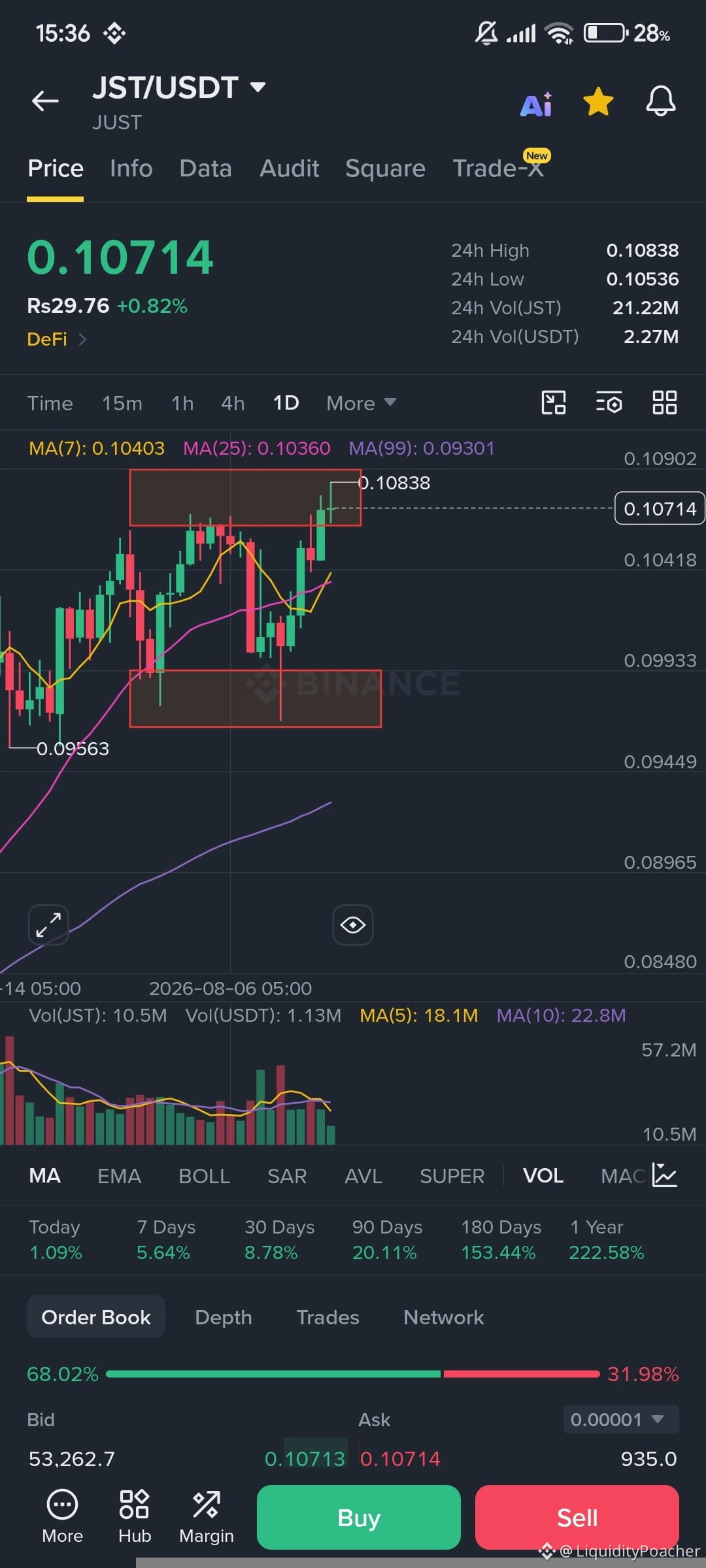
$JST drückt derzeit gegen eine starke Widerstandszone um 0.10838, und die letzte Kerze wirkt unentschlossen – es zeigt sich, dass Bullen und Bären um die Kontrolle kämpfen
Eine starke Kerze, die über 0.10838 schließt, zusammen mit Volumen, könnte einen bullischen Ausbruch bestätigen.
Wenn der Widerstand den Kurs erneut abweist, könnte es vor einem weiteren Versuch zu einem Rücksetzer kommen.
Das Setup wird immer spannender… ein Ausbruch könnte bevorstehen 🔥🔥🔥
schau dir die Coin hier an -----------> $JST
{spot}(JSTUSDT)
#BinanceSquare #Breakout #Trading
$JST drückt derzeit gegen eine starke Widerstandszone um 0.10838, und die letzte Kerze wirkt unentschlossen – es zeigt sich, dass Bullen und Bären um die Kontrolle kämpfen
Eine starke Kerze, die über 0.10838 schließt, zusammen mit Volumen, könnte einen bullischen Ausbruch bestätigen.
Wenn der Widerstand den Kurs erneut abweist, könnte es vor einem weiteren Versuch zu einem Rücksetzer kommen.
Das Setup wird immer spannender… ein Ausbruch könnte bevorstehen 🔥🔥🔥
schau dir die Coin hier an -----------> $JST
#BinanceSquare #Breakout #Trading
Eine starke Kerze, die über 0.10838 schließt, zusammen mit Volumen, könnte einen bullischen Ausbruch bestätigen.
Wenn der Widerstand den Kurs erneut abweist, könnte es vor einem weiteren Versuch zu einem Rücksetzer kommen.
Das Setup wird immer spannender… ein Ausbruch könnte bevorstehen 🔥🔥🔥
schau dir die Coin hier an -----------> $JST
#BinanceSquare #Breakout #Trading
106
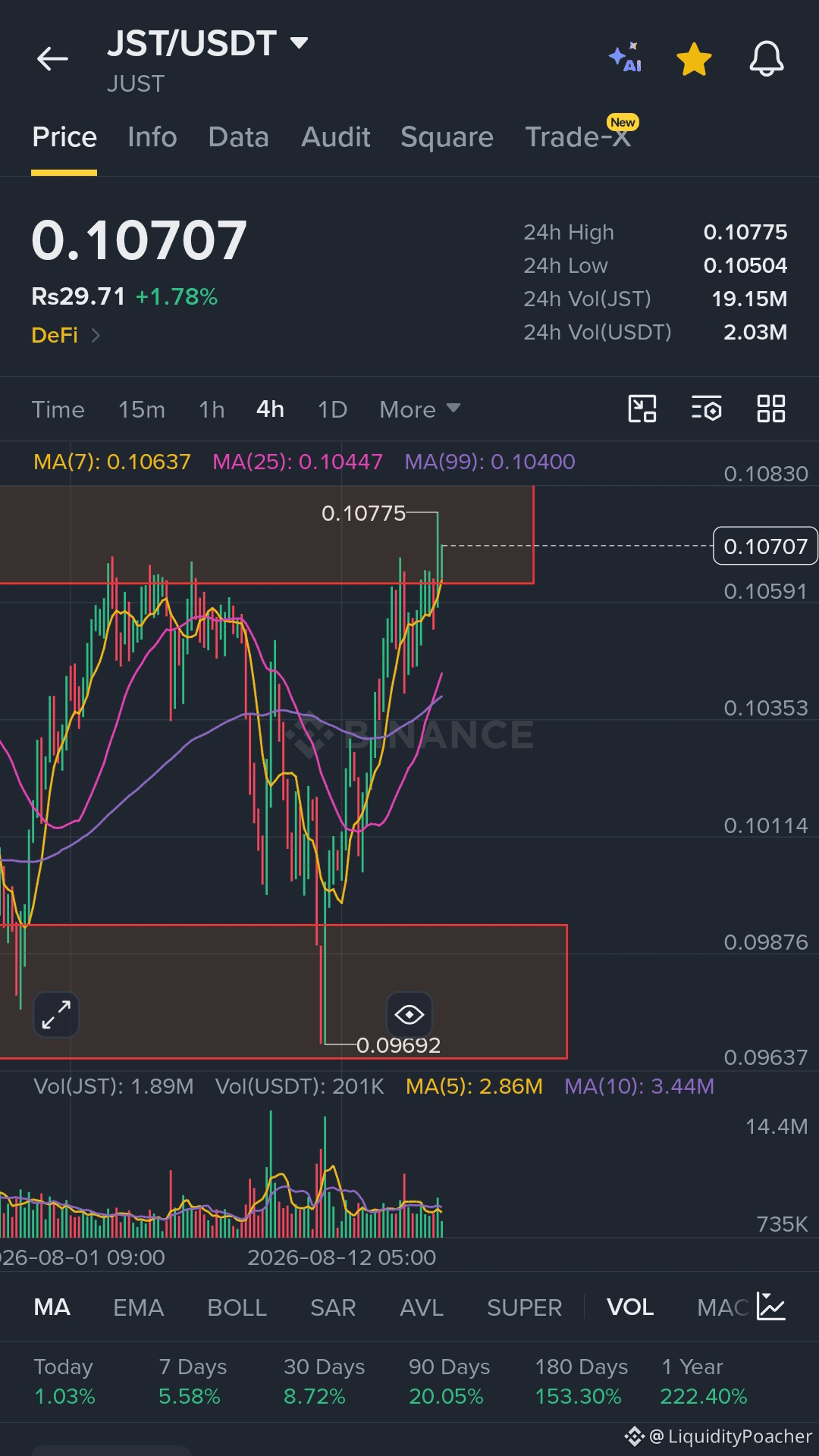
$JST hat die Widerstandsmarke bei ~0,1059 durchbrochen und handelt nun um $0,1070 herum, während es dem vorherigen Hoch bei $0,10775 entgegengeht 👀
Ein sauberer 4H-Close über $0,10775 + starkes Volumen könnte den Weg zur nächsten Widerstandszone bei ca. $0,1083 öffnen.
Doch wenn der Breakout fehlschlägt, werde ich den Bereich um $0,1059 im Blick behalten – für einen möglichen Retest.
Lass uns erstmal abwarten.
#Krypto #Binance #Altcoins
$JST hat die Widerstandsmarke bei ~0,1059 durchbrochen und handelt nun um $0,1070 herum, während es dem vorherigen Hoch bei $0,10775 entgegengeht 👀
Ein sauberer 4H-Close über $0,10775 + starkes Volumen könnte den Weg zur nächsten Widerstandszone bei ca. $0,1083 öffnen.
Doch wenn der Breakout fehlschlägt, werde ich den Bereich um $0,1059 im Blick behalten – für einen möglichen Retest.
Lass uns erstmal abwarten.
#Krypto #Binance #Altcoins
Ein sauberer 4H-Close über $0,10775 + starkes Volumen könnte den Weg zur nächsten Widerstandszone bei ca. $0,1083 öffnen.
Doch wenn der Breakout fehlschlägt, werde ich den Bereich um $0,1059 im Blick behalten – für einen möglichen Retest.
Lass uns erstmal abwarten.
#Krypto #Binance #Altcoins
121
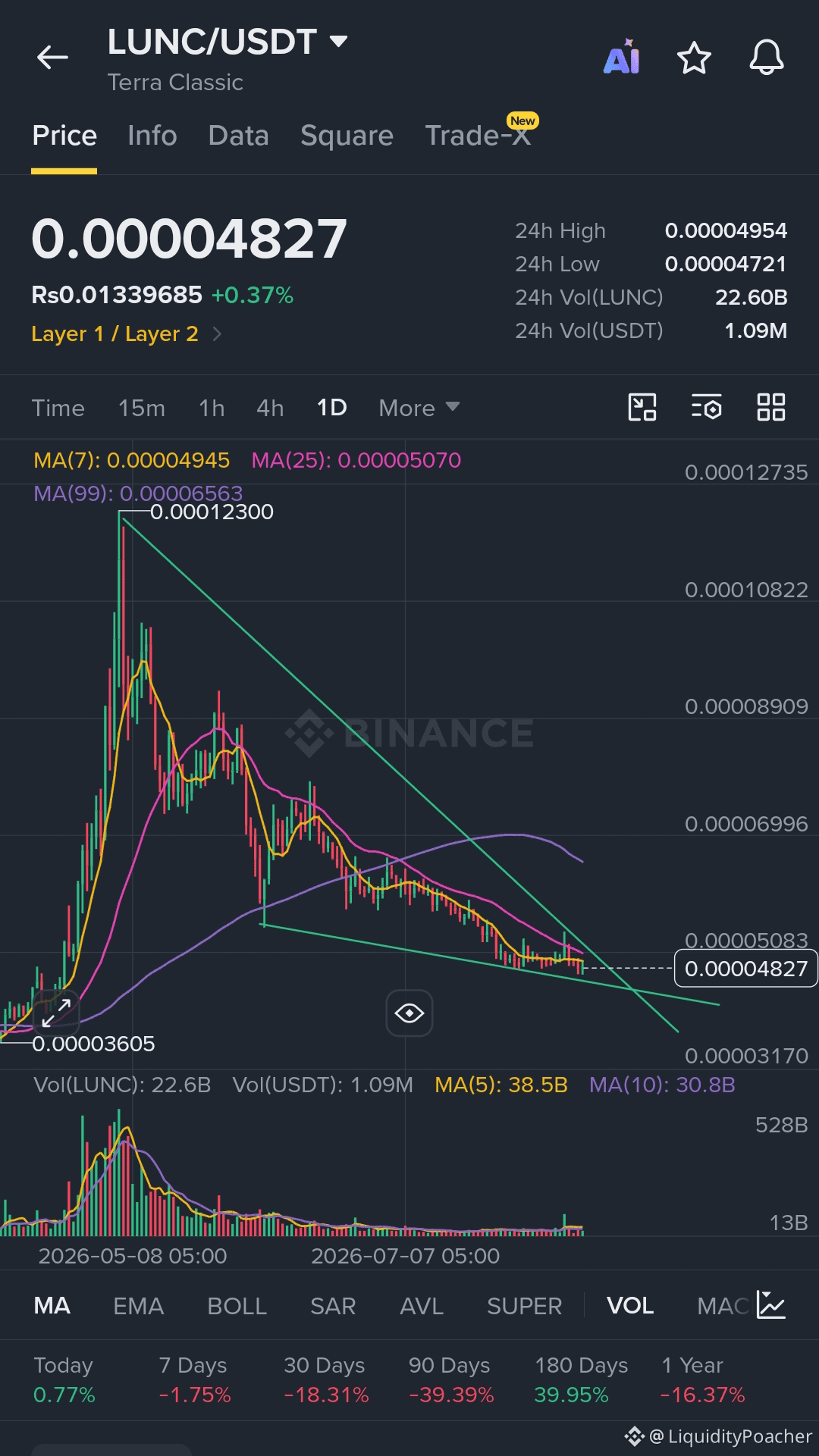
$LUNC wird immer enger an die Unterstützungszone gedrückt.
Die absteigende Trendlinie kommt näher an den Kurs heran, während $LUNC sich im Bereich von 0,000047–0,000050 befindet.
Wenn der Docht die absteigende Linie mit hohem Volumen durchbricht, hat es Potenzial für einen Ausbruch.
Ich werde diese Münze auf meiner Watchlist behalten.
$LUNC wird immer enger an die Unterstützungszone gedrückt.
Die absteigende Trendlinie kommt näher an den Kurs heran, während $LUNC sich im Bereich von 0,000047–0,000050 befindet.
Wenn der Docht die absteigende Linie mit hohem Volumen durchbricht, hat es Potenzial für einen Ausbruch.
Ich werde diese Münze auf meiner Watchlist behalten.
Die absteigende Trendlinie kommt näher an den Kurs heran, während $LUNC sich im Bereich von 0,000047–0,000050 befindet.
Wenn der Docht die absteigende Linie mit hohem Volumen durchbricht, hat es Potenzial für einen Ausbruch.
Ich werde diese Münze auf meiner Watchlist behalten.
4
528
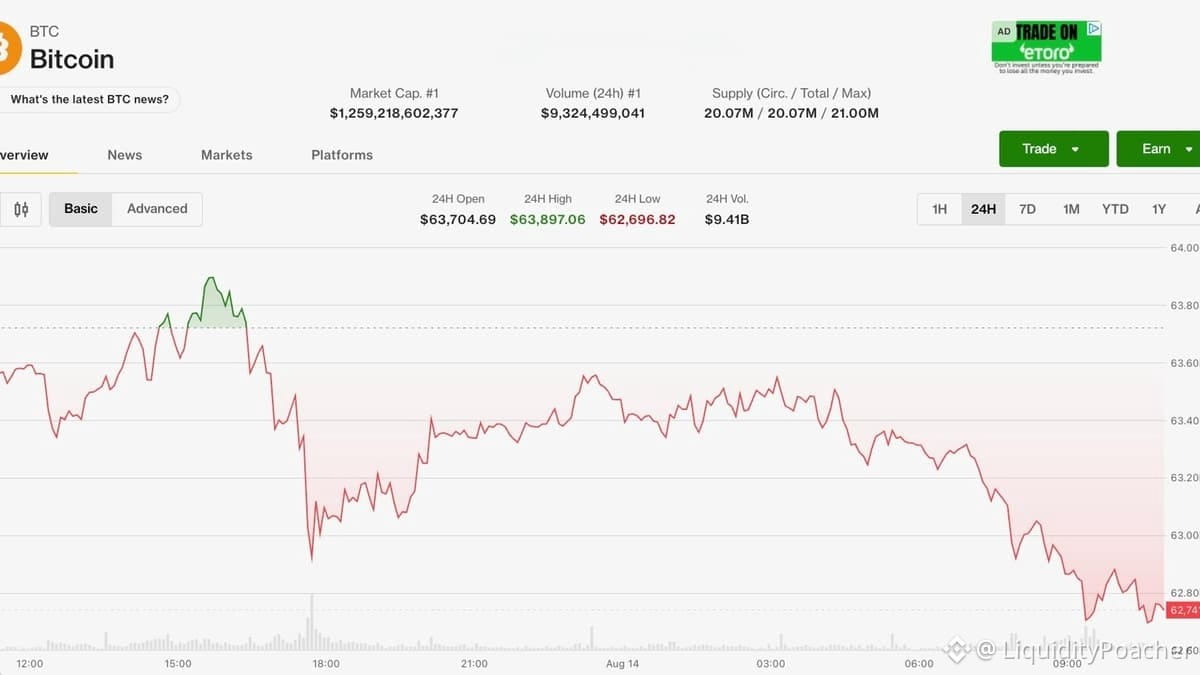
$BTC ist unter $63.000 gefallen und verzeichnet seit Mitternacht UTC einen Rückgang von 1,14%, da am zweiten Tag in Folge Abflüsse aus börsengehandelten Spot-Investmentfonds zu verzeichnen waren und es an bullischen Impulsen für den Kryptomarkt fehlte.
Die größte Kryptowährung wird nun zum niedrigsten Stand seit dem 3. August gehandelt und hat damit die gesamte Rallye der vergangenen Woche zunichte gemacht.
$BTC ist unter $63.000 gefallen und verzeichnet seit Mitternacht UTC einen Rückgang von 1,14%, da am zweiten Tag in Folge Abflüsse aus börsengehandelten Spot-Investmentfonds zu verzeichnen waren und es an bullischen Impulsen für den Kryptomarkt fehlte.
Die größte Kryptowährung wird nun zum niedrigsten Stand seit dem 3. August gehandelt und hat damit die gesamte Rallye der vergangenen Woche zunichte gemacht.
Die größte Kryptowährung wird nun zum niedrigsten Stand seit dem 3. August gehandelt und hat damit die gesamte Rallye der vergangenen Woche zunichte gemacht.
1
92
·
--
Bullisch
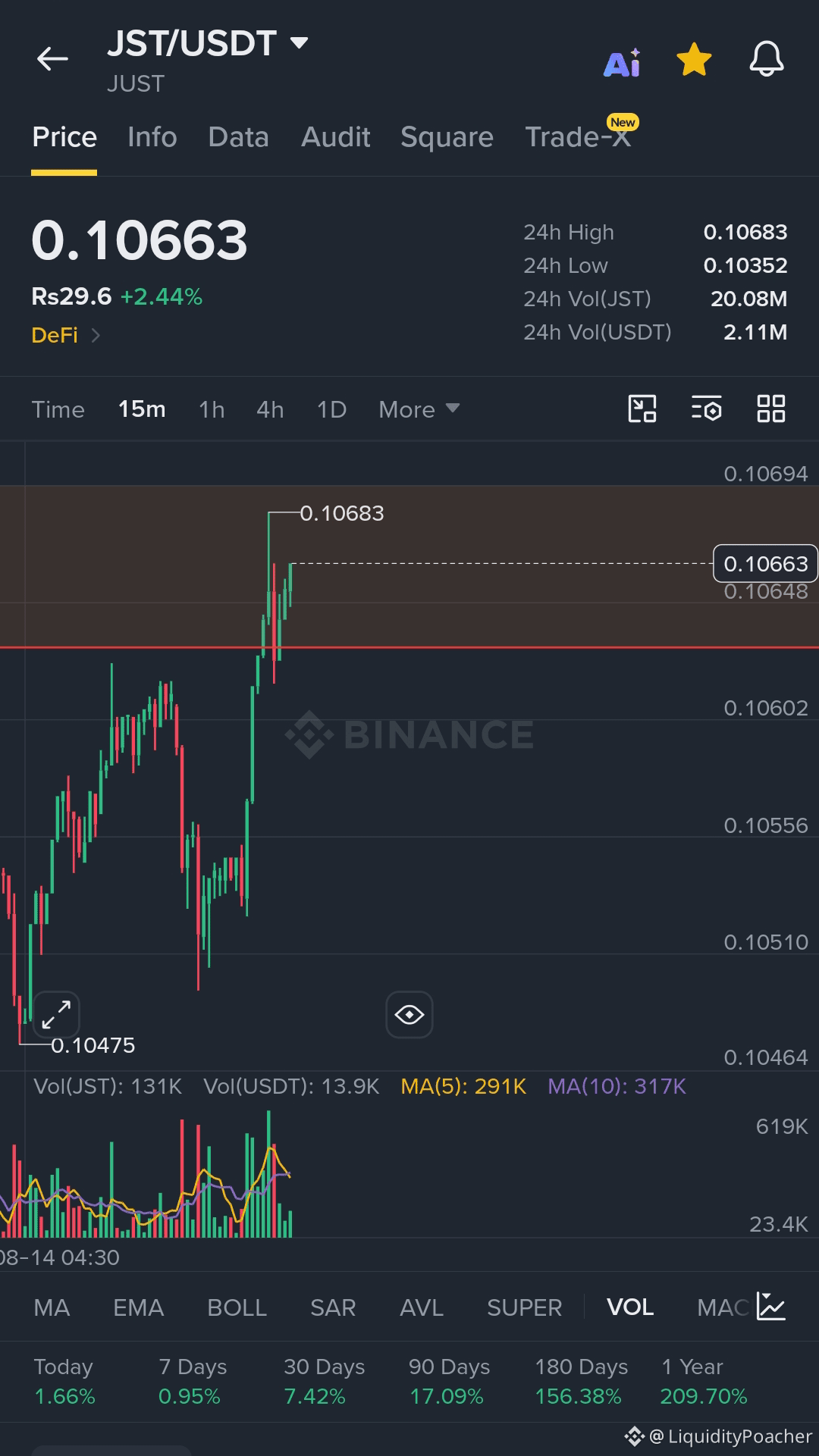
$JST JUST ENTERED RESISTANCE!
Wenn es sich in diesem Bereich konsolidiert, dann ist ein möglicher Ausbruch zu erwarten
Wenn es abgelehnt wird, warte ich stattdessen auf den Rücksetzer.
Schau dir die Coin hier an ----------> $JST
{spot}(JSTUSDT)
#Bull
$JST JUST ENTERED RESISTANCE!
Wenn es sich in diesem Bereich konsolidiert, dann ist ein möglicher Ausbruch zu erwarten
Wenn es abgelehnt wird, warte ich stattdessen auf den Rücksetzer.
Schau dir die Coin hier an ----------> $JST
#Bull
Wenn es sich in diesem Bereich konsolidiert, dann ist ein möglicher Ausbruch zu erwarten
Wenn es abgelehnt wird, warte ich stattdessen auf den Rücksetzer.
Schau dir die Coin hier an ----------> $JST
#Bull
1
98
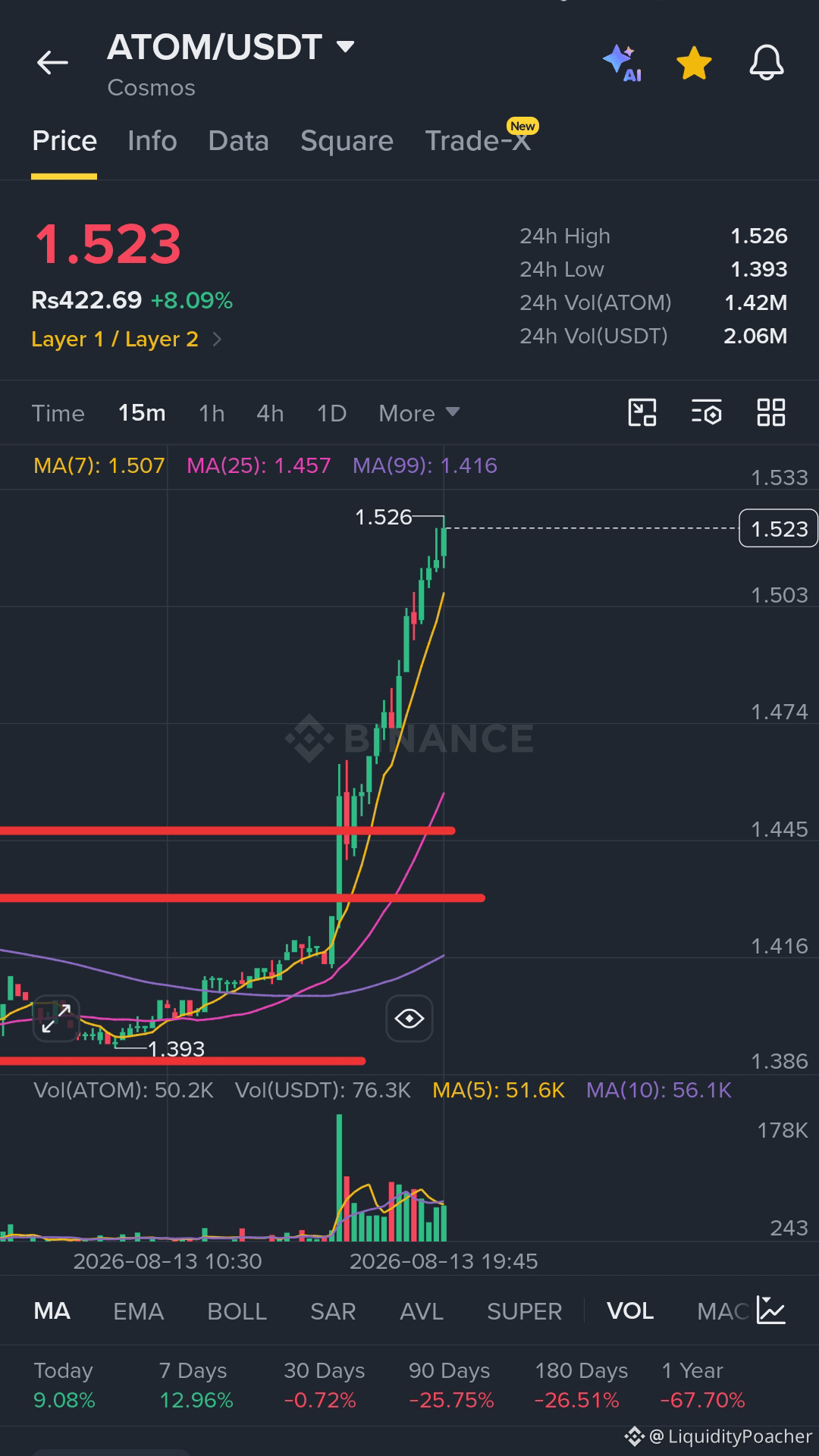
$ATOM hat die 1.445er Resistance mit starkem Momentum und Volumen gerade durchbrochen.
Ich beobachte, ob ATOM die vorherige Resistance halten kann oder ob dieser Ausbruch abgelehnt wird.
Nicht dem Hype hinterher — warte auf Bestätigung/Retest 👀
$ATOM
{spot}(ATOMUSDT)
Nur persönliche Analyse, keine Finanzberatung. DYOR.
$ATOM hat die 1.445er Resistance mit starkem Momentum und Volumen gerade durchbrochen.
Ich beobachte, ob ATOM die vorherige Resistance halten kann oder ob dieser Ausbruch abgelehnt wird.
Nicht dem Hype hinterher — warte auf Bestätigung/Retest 👀
$ATOM
Nur persönliche Analyse, keine Finanzberatung. DYOR.
Ich beobachte, ob ATOM die vorherige Resistance halten kann oder ob dieser Ausbruch abgelehnt wird.
Nicht dem Hype hinterher — warte auf Bestätigung/Retest 👀
$ATOM
Nur persönliche Analyse, keine Finanzberatung. DYOR.
1
121
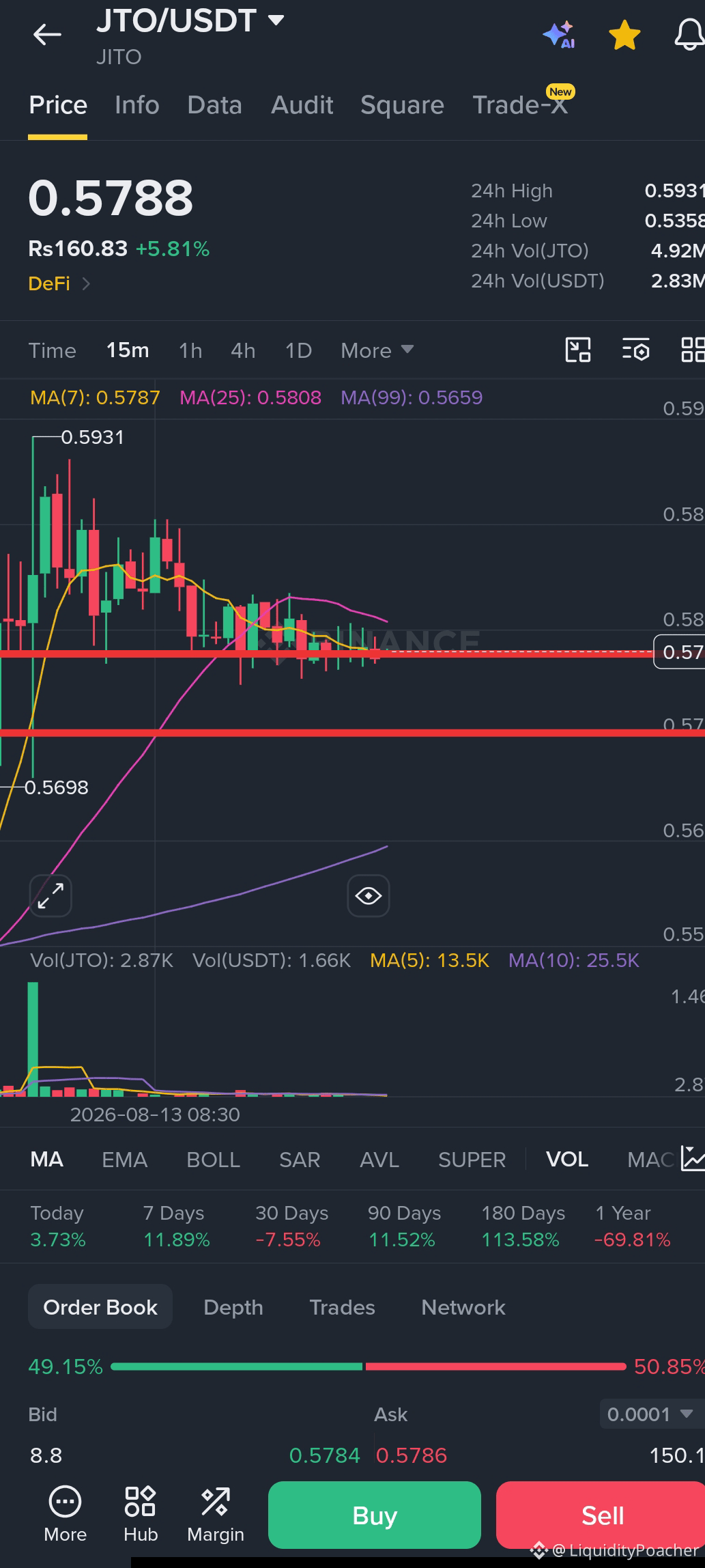
$JTO gerade hatte einen starken Ausbruch und stieß nach oben bis auf etwa 0,5931 US-Dollar.
Jetzt konsolidiert der Kurs im Bereich von etwa 0,57–0,58 US-Dollar, das ist die Zone, die ich genau im Blick habe.
WENN BULLISCH
Wenn dieser vorherige Widerstand als Unterstützung hält, gefolgt von einer bullischen Zurückweisung/Bestätigung und steigenden Handelsvolumina, dann könnte der Ausbruch noch Raum haben, um weiterzugehen.
WENN BÄRISCH
Wenn der Kurs in die Ausbruch-Zone zurückfällt und sie nicht zurückerobern kann, dann könnte sich der Ausbruch in einen Fakeout verwandeln.
Lasst uns weiter beobachten und sehen, was der beste Move ist
$JTO gerade hatte einen starken Ausbruch und stieß nach oben bis auf etwa 0,5931 US-Dollar.
Jetzt konsolidiert der Kurs im Bereich von etwa 0,57–0,58 US-Dollar, das ist die Zone, die ich genau im Blick habe.
WENN BULLISCH
Wenn dieser vorherige Widerstand als Unterstützung hält, gefolgt von einer bullischen Zurückweisung/Bestätigung und steigenden Handelsvolumina, dann könnte der Ausbruch noch Raum haben, um weiterzugehen.
WENN BÄRISCH
Wenn der Kurs in die Ausbruch-Zone zurückfällt und sie nicht zurückerobern kann, dann könnte sich der Ausbruch in einen Fakeout verwandeln.
Lasst uns weiter beobachten und sehen, was der beste Move ist
Jetzt konsolidiert der Kurs im Bereich von etwa 0,57–0,58 US-Dollar, das ist die Zone, die ich genau im Blick habe.
WENN BULLISCH
Wenn dieser vorherige Widerstand als Unterstützung hält, gefolgt von einer bullischen Zurückweisung/Bestätigung und steigenden Handelsvolumina, dann könnte der Ausbruch noch Raum haben, um weiterzugehen.
WENN BÄRISCH
Wenn der Kurs in die Ausbruch-Zone zurückfällt und sie nicht zurückerobern kann, dann könnte sich der Ausbruch in einen Fakeout verwandeln.
Lasst uns weiter beobachten und sehen, was der beste Move ist
1
112
·
--
Bullisch
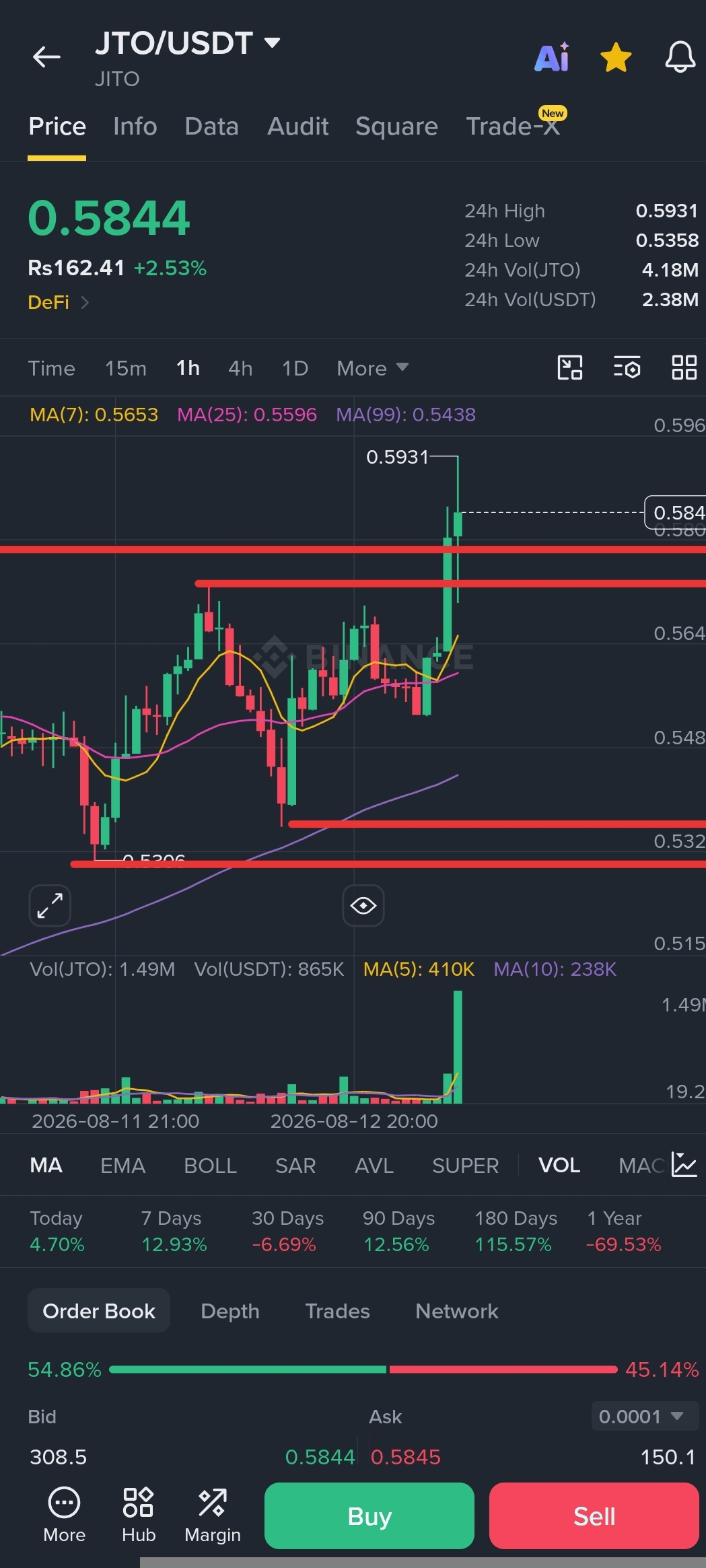
$JTO hat einen Durchbruch erzielt. Der Widerstand, auf den wir jetzt warten, ist ein Retest oder ein weiterer bullischer Ausbruch. Ich werde Sie auf dem Laufenden halten
$JTO
#breakthrough #bullish
$JTO hat einen Durchbruch erzielt. Der Widerstand, auf den wir jetzt warten, ist ein Retest oder ein weiterer bullischer Ausbruch. Ich werde Sie auf dem Laufenden halten
$JTO
#breakthrough #bullish
$JTO
#breakthrough #bullish
1
106
Anmelden und weiter Inhalte entdecken
Krypto-Nutzer weltweit auf Binance Square kennenlernen
⚡️ Bleib in Sachen Krypto stets am Puls.
💬 Die weltgrößte Kryptobörse vertraut darauf.
👍 Erhalte verlässliche Einblicke von verifizierten Creators.
E-Mail-Adresse/Telefonnummer