
Square Alpha
7.6k Beiträge

Square Alpha
Melden
Nutzer blockieren
Web3 trader & market analyst – uncovering early opportunities, charts, and airdrops – pure alpha, no hype
Regelmäßiger Trader
5.4 Jahre
304 Following
12.3K+ Follower
12.5K+ Like gegeben
Beiträge
Alle
Zitierungen
Live
·
--
Bullisch
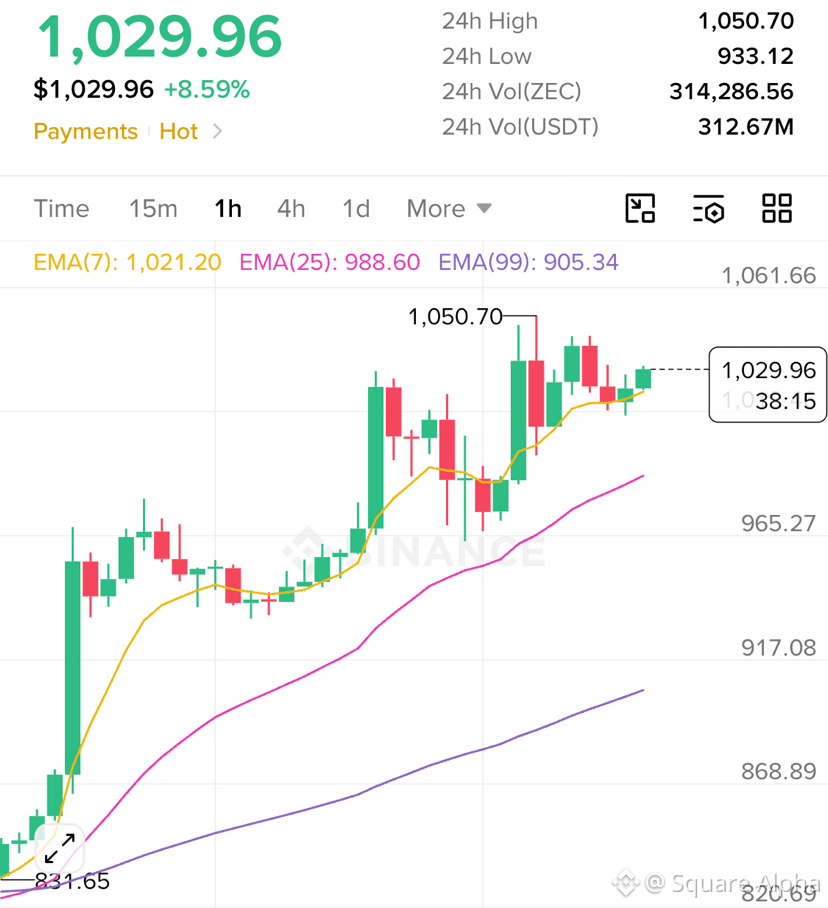
💥 $ZEC campiert über $1,000, als würde es ihm gehören — die große psychologische Marke hat gerade auf Unterstützung gedreht! 😤
LONG (1H):
→ Einstieg: 1,015 – 1,030
→ SL: 985
→ TP1: 1,050.70
→ TP2: 1,080, voller Lauf bis 1,100
warum: höhere Tiefs laufen durchgehend, RSI bei 62 mit noch echtem Spielraum, bevor es überhitzt ist, und ich habe die ganze Woche gesehen, wie jeder Anstich der EMA7 innerhalb derselben Kerze gekauft wurde. Der Kurs zieht sich direkt unter 1,050 zusammen, mit dem $1,000-Boden darunter = Breakout-Setup mit einer sauberen Risikolinie. Früherer Widerstand, der zu Unterstützung wird, ist der stärkste Flip im Trading.
1h-Schluss unter 985 und die Idee ist tot, das sage ich ganz offen. Wer reitet ZEC auf 1,100 mit? 👇
#zec #zcash $ZEC
{spot}(ZECUSDT)
💥 $ZEC campiert über $1,000, als würde es ihm gehören — die große psychologische Marke hat gerade auf Unterstützung gedreht! 😤
LONG (1H):
→ Einstieg: 1,015 – 1,030
→ SL: 985
→ TP1: 1,050.70
→ TP2: 1,080, voller Lauf bis 1,100
warum: höhere Tiefs laufen durchgehend, RSI bei 62 mit noch echtem Spielraum, bevor es überhitzt ist, und ich habe die ganze Woche gesehen, wie jeder Anstich der EMA7 innerhalb derselben Kerze gekauft wurde. Der Kurs zieht sich direkt unter 1,050 zusammen, mit dem $1,000-Boden darunter = Breakout-Setup mit einer sauberen Risikolinie. Früherer Widerstand, der zu Unterstützung wird, ist der stärkste Flip im Trading.
1h-Schluss unter 985 und die Idee ist tot, das sage ich ganz offen. Wer reitet ZEC auf 1,100 mit? 👇
#zec #zcash $ZEC
LONG (1H):
→ Einstieg: 1,015 – 1,030
→ SL: 985
→ TP1: 1,050.70
→ TP2: 1,080, voller Lauf bis 1,100
warum: höhere Tiefs laufen durchgehend, RSI bei 62 mit noch echtem Spielraum, bevor es überhitzt ist, und ich habe die ganze Woche gesehen, wie jeder Anstich der EMA7 innerhalb derselben Kerze gekauft wurde. Der Kurs zieht sich direkt unter 1,050 zusammen, mit dem $1,000-Boden darunter = Breakout-Setup mit einer sauberen Risikolinie. Früherer Widerstand, der zu Unterstützung wird, ist der stärkste Flip im Trading.
1h-Schluss unter 985 und die Idee ist tot, das sage ich ganz offen. Wer reitet ZEC auf 1,100 mit? 👇
#zec #zcash $ZEC
213
·
--
Bullisch
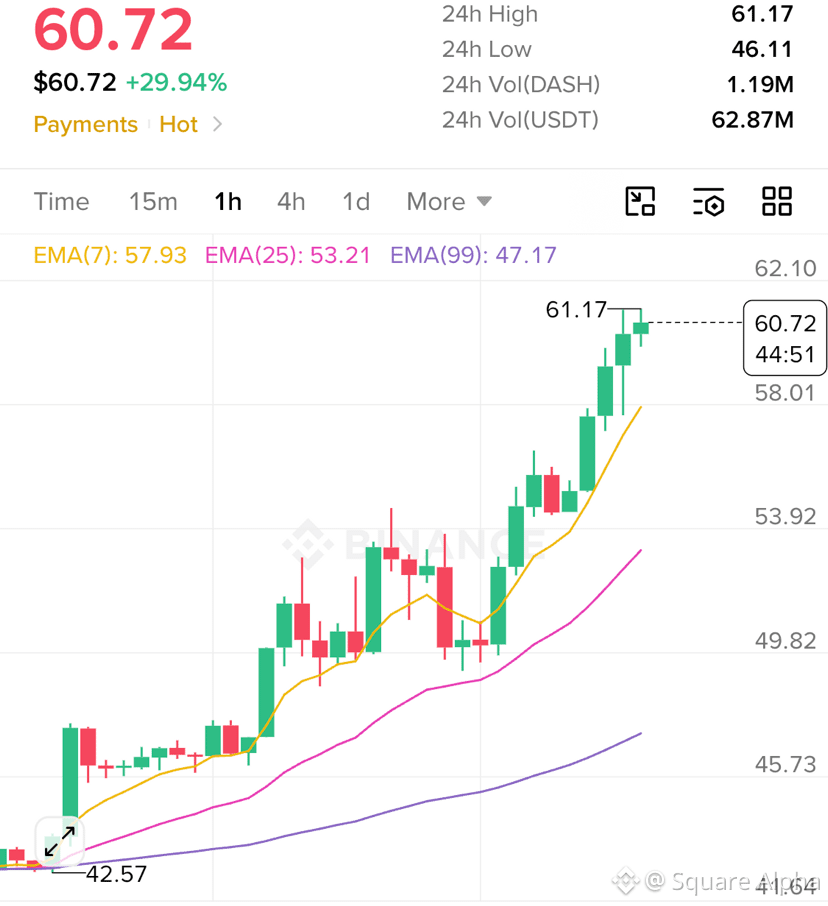
💥 $DASH ist +30% und weigert sich abzukühlen — jeder einzelne Dip wird innerhalb von Kerzen aufgekauft! 😤
📊 LONG (1H):
→ Entry: 59.0 – 60.0
→ SL: 57.0
→ TP1: 61.17
→ TP2: 63.5, voller Einsatz 65
warum: durchgehend höhere Tiefs seit 42, EMAs fächern sich grün auf, und der Kurs hält sich an den Hochs statt auszubrechen und abzukühlen. Ich habe in diesem Lauf fünf Dips beobachtet, die gekauft wurden, noch bevor sie überhaupt fertig ausgeprägt waren. RSI ist heiß, ja — aber in einem echten Momentum-Lauf ist heiß der Normalfall, nicht der Ausstieg.
1h-Schluss unter 57 und die Idee ist tot, ich sage es laut. Wer reitet die Treppe? 👇
#DASH #Payments
{spot}(DASHUSDT)
💥 $DASH ist +30% und weigert sich abzukühlen — jeder einzelne Dip wird innerhalb von Kerzen aufgekauft! 😤
📊 LONG (1H):
→ Entry: 59.0 – 60.0
→ SL: 57.0
→ TP1: 61.17
→ TP2: 63.5, voller Einsatz 65
warum: durchgehend höhere Tiefs seit 42, EMAs fächern sich grün auf, und der Kurs hält sich an den Hochs statt auszubrechen und abzukühlen. Ich habe in diesem Lauf fünf Dips beobachtet, die gekauft wurden, noch bevor sie überhaupt fertig ausgeprägt waren. RSI ist heiß, ja — aber in einem echten Momentum-Lauf ist heiß der Normalfall, nicht der Ausstieg.
1h-Schluss unter 57 und die Idee ist tot, ich sage es laut. Wer reitet die Treppe? 👇
#DASH #Payments
📊 LONG (1H):
→ Entry: 59.0 – 60.0
→ SL: 57.0
→ TP1: 61.17
→ TP2: 63.5, voller Einsatz 65
warum: durchgehend höhere Tiefs seit 42, EMAs fächern sich grün auf, und der Kurs hält sich an den Hochs statt auszubrechen und abzukühlen. Ich habe in diesem Lauf fünf Dips beobachtet, die gekauft wurden, noch bevor sie überhaupt fertig ausgeprägt waren. RSI ist heiß, ja — aber in einem echten Momentum-Lauf ist heiß der Normalfall, nicht der Ausstieg.
1h-Schluss unter 57 und die Idee ist tot, ich sage es laut. Wer reitet die Treppe? 👇
#DASH #Payments
197
·
--
Bullisch
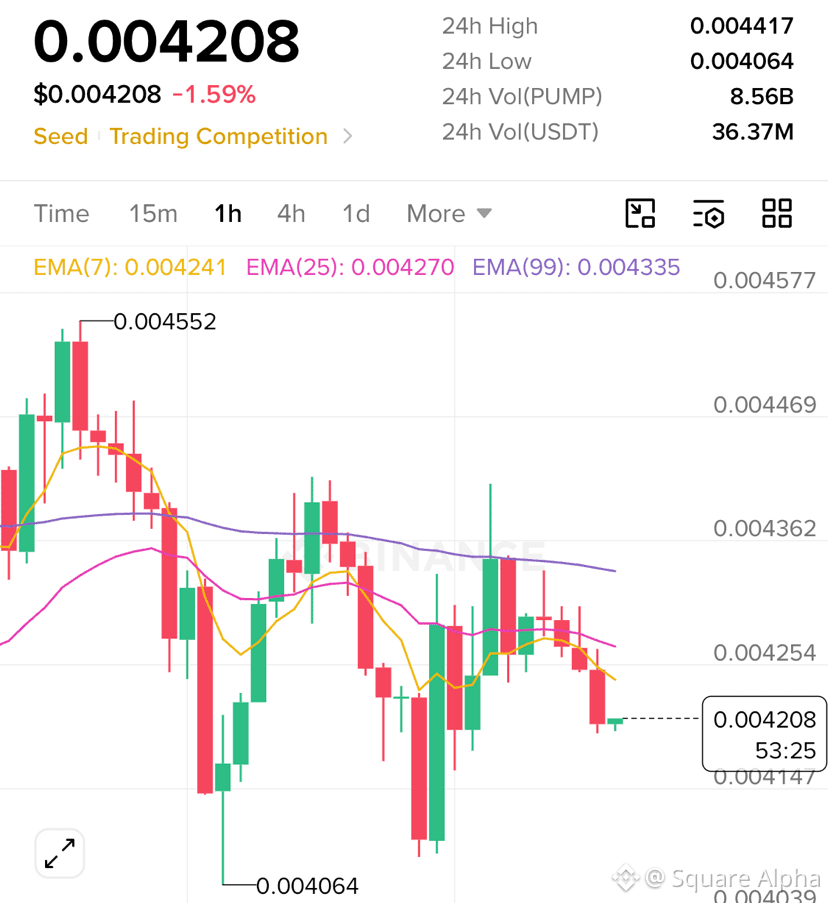
💥 $PUMP 's Unterstützung wurde zweimal gehalten und die Verkäufer haben einfach keine Munition mehr — Coil-Ladung unter der Wand! 😤
📊 LONG (1H):
→ Entry: 0.00415 – 0.00421
→ SL: 0.00403
→ TP1: 0.00433
→ TP2: 0.00455, Full Send 0.0047
Warum: 0.004064 wurde zweimal angeklopft und hat nicht gebrochen, und das rote Volumen schrumpft auf fast nichts = Verkäufer sind ausgelaugt. Ich habe genau diesen Coil-Snap bei diesem Coin schon einmal gesehen, und ein Schlusskurs über 0.00433 presst jeden Short im Orderbuch.
Wenn 0.00403 bricht, ist die Idee tot, das sage ich offen. Wer kauft den Boden? 👇
#pump #pumpfun $PUMP
{spot}(PUMPUSDT)
💥 $PUMP 's Unterstützung wurde zweimal gehalten und die Verkäufer haben einfach keine Munition mehr — Coil-Ladung unter der Wand! 😤
📊 LONG (1H):
→ Entry: 0.00415 – 0.00421
→ SL: 0.00403
→ TP1: 0.00433
→ TP2: 0.00455, Full Send 0.0047
Warum: 0.004064 wurde zweimal angeklopft und hat nicht gebrochen, und das rote Volumen schrumpft auf fast nichts = Verkäufer sind ausgelaugt. Ich habe genau diesen Coil-Snap bei diesem Coin schon einmal gesehen, und ein Schlusskurs über 0.00433 presst jeden Short im Orderbuch.
Wenn 0.00403 bricht, ist die Idee tot, das sage ich offen. Wer kauft den Boden? 👇
#pump #pumpfun $PUMP
📊 LONG (1H):
→ Entry: 0.00415 – 0.00421
→ SL: 0.00403
→ TP1: 0.00433
→ TP2: 0.00455, Full Send 0.0047
Warum: 0.004064 wurde zweimal angeklopft und hat nicht gebrochen, und das rote Volumen schrumpft auf fast nichts = Verkäufer sind ausgelaugt. Ich habe genau diesen Coil-Snap bei diesem Coin schon einmal gesehen, und ein Schlusskurs über 0.00433 presst jeden Short im Orderbuch.
Wenn 0.00403 bricht, ist die Idee tot, das sage ich offen. Wer kauft den Boden? 👇
#pump #pumpfun $PUMP
138
·
--
Bullisch
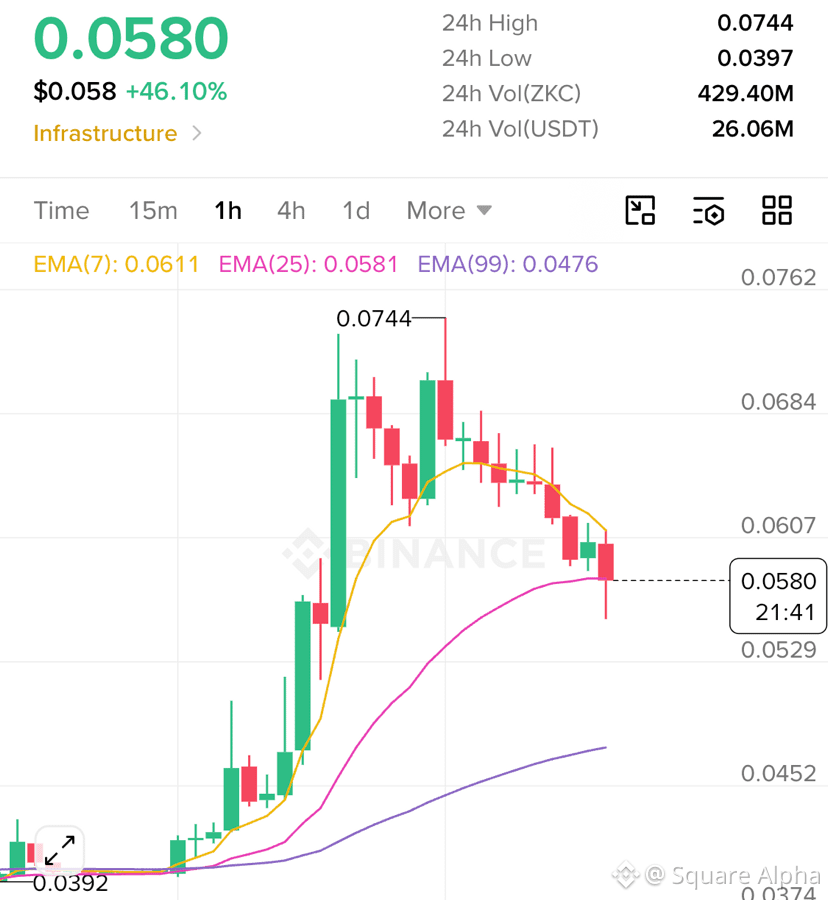
💥 $ZKC ist +46% am Tag und der erste echte Dip ist gerade auf der EMA25 gelandet — der Momentum läuft live oder stirbt an dieser exakten Linie! 😤
📊 LONG (1H):
→ Entry: 0.0565 – 0.0585
→ SL: 0.0542
→ TP1: 0.0611
→ TP2: 0.0660, und 0.0744 Full Send
hier ist der Grund:
1️⃣ immer noch +46% am Tag, sogar nach diesem Pullback — das ist ein Momentum-Tag, keine Dead-Cat
2️⃣ der Preis trifft die EMA25, die erste Linie, die das Momentum respektiert — ich habe gesehen, wie die letzten beiden Dochte in diese Zone hinein gekauft wurden, innerhalb der Kerze
3️⃣ RSI(6) von 90+ runtergewaschen bis auf 32 = Fuel-Reset, kein Trendbruch — solange diese Linie hält
wenn eine 1h-Kerze unter 0.0542 schließt, ist die These tot und ich sage das im nächsten Post laut aus. so ist das.
Ich komme mit dem Chart zurück und zeige dir, was passiert ist. wer kauft den Dip mit mir? 👇
#ZKC #boundless $ZKC
{spot}(ZKCUSDT)
💥 $ZKC ist +46% am Tag und der erste echte Dip ist gerade auf der EMA25 gelandet — der Momentum läuft live oder stirbt an dieser exakten Linie! 😤
📊 LONG (1H):
→ Entry: 0.0565 – 0.0585
→ SL: 0.0542
→ TP1: 0.0611
→ TP2: 0.0660, und 0.0744 Full Send
hier ist der Grund:
1️⃣ immer noch +46% am Tag, sogar nach diesem Pullback — das ist ein Momentum-Tag, keine Dead-Cat
2️⃣ der Preis trifft die EMA25, die erste Linie, die das Momentum respektiert — ich habe gesehen, wie die letzten beiden Dochte in diese Zone hinein gekauft wurden, innerhalb der Kerze
3️⃣ RSI(6) von 90+ runtergewaschen bis auf 32 = Fuel-Reset, kein Trendbruch — solange diese Linie hält
wenn eine 1h-Kerze unter 0.0542 schließt, ist die These tot und ich sage das im nächsten Post laut aus. so ist das.
Ich komme mit dem Chart zurück und zeige dir, was passiert ist. wer kauft den Dip mit mir? 👇
#ZKC #boundless $ZKC
📊 LONG (1H):
→ Entry: 0.0565 – 0.0585
→ SL: 0.0542
→ TP1: 0.0611
→ TP2: 0.0660, und 0.0744 Full Send
hier ist der Grund:
1️⃣ immer noch +46% am Tag, sogar nach diesem Pullback — das ist ein Momentum-Tag, keine Dead-Cat
2️⃣ der Preis trifft die EMA25, die erste Linie, die das Momentum respektiert — ich habe gesehen, wie die letzten beiden Dochte in diese Zone hinein gekauft wurden, innerhalb der Kerze
3️⃣ RSI(6) von 90+ runtergewaschen bis auf 32 = Fuel-Reset, kein Trendbruch — solange diese Linie hält
wenn eine 1h-Kerze unter 0.0542 schließt, ist die These tot und ich sage das im nächsten Post laut aus. so ist das.
Ich komme mit dem Chart zurück und zeige dir, was passiert ist. wer kauft den Dip mit mir? 👇
#ZKC #boundless $ZKC
112
·
--
Bullisch
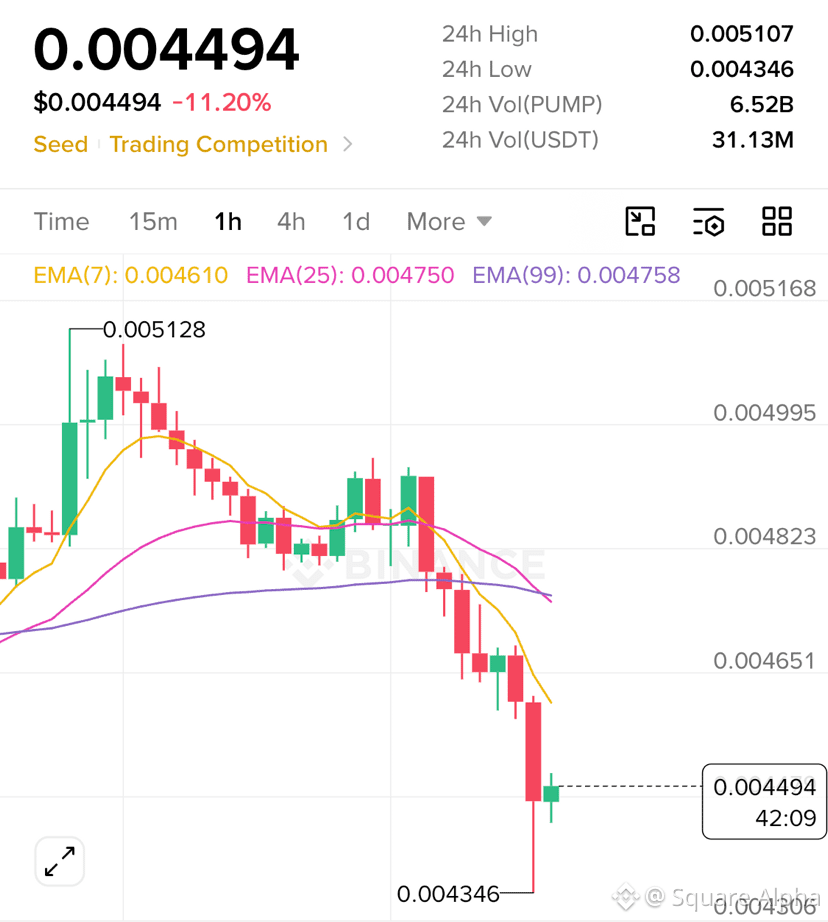
💥 $PUMP hat gerade einen Kapitulations-Docht gedruckt — und hier ist der Teil, den die meisten übersehen haben 👇
LANG (1H):
→ Entry: 0.00445 – 0.00450
→ SL: 0.00430
→ TP1: 0.00461
→ TP2: 0.00475, und 0.0049 full send
hier ist der Grund:
1️⃣ diese rote Volumen- Kerze = 3x das wöchentliche Durchschnittsvolumen → Panik-Verkäufe ausverkauft in EINEr Kerze, nicht ein langsames Ausbluten
2️⃣ RSI 20 = am stärksten überverkauft seit dem 0.0036-Boden, und genau dort gab es dann einen Bounce von +40%
3️⃣ der Kurs ist zurück in der exakten Zone, in der die letzten beiden Flushes gekauft wurden (0.0043–0.0045)
wenn 0.00430 bricht, ist die These tot und ich sage es im nächsten Post laut und deutlich. so ist die Abmachung.
Ich komme morgen mit dem Chart zurück und zeige euch, was passiert ist. wer ist dabei? 👇
#pump #pumpfun $PUMP
{spot}(PUMPUSDT)
💥 $PUMP hat gerade einen Kapitulations-Docht gedruckt — und hier ist der Teil, den die meisten übersehen haben 👇
LANG (1H):
→ Entry: 0.00445 – 0.00450
→ SL: 0.00430
→ TP1: 0.00461
→ TP2: 0.00475, und 0.0049 full send
hier ist der Grund:
1️⃣ diese rote Volumen- Kerze = 3x das wöchentliche Durchschnittsvolumen → Panik-Verkäufe ausverkauft in EINEr Kerze, nicht ein langsames Ausbluten
2️⃣ RSI 20 = am stärksten überverkauft seit dem 0.0036-Boden, und genau dort gab es dann einen Bounce von +40%
3️⃣ der Kurs ist zurück in der exakten Zone, in der die letzten beiden Flushes gekauft wurden (0.0043–0.0045)
wenn 0.00430 bricht, ist die These tot und ich sage es im nächsten Post laut und deutlich. so ist die Abmachung.
Ich komme morgen mit dem Chart zurück und zeige euch, was passiert ist. wer ist dabei? 👇
#pump #pumpfun $PUMP
LANG (1H):
→ Entry: 0.00445 – 0.00450
→ SL: 0.00430
→ TP1: 0.00461
→ TP2: 0.00475, und 0.0049 full send
hier ist der Grund:
1️⃣ diese rote Volumen- Kerze = 3x das wöchentliche Durchschnittsvolumen → Panik-Verkäufe ausverkauft in EINEr Kerze, nicht ein langsames Ausbluten
2️⃣ RSI 20 = am stärksten überverkauft seit dem 0.0036-Boden, und genau dort gab es dann einen Bounce von +40%
3️⃣ der Kurs ist zurück in der exakten Zone, in der die letzten beiden Flushes gekauft wurden (0.0043–0.0045)
wenn 0.00430 bricht, ist die These tot und ich sage es im nächsten Post laut und deutlich. so ist die Abmachung.
Ich komme morgen mit dem Chart zurück und zeige euch, was passiert ist. wer ist dabei? 👇
#pump #pumpfun $PUMP
483
·
--
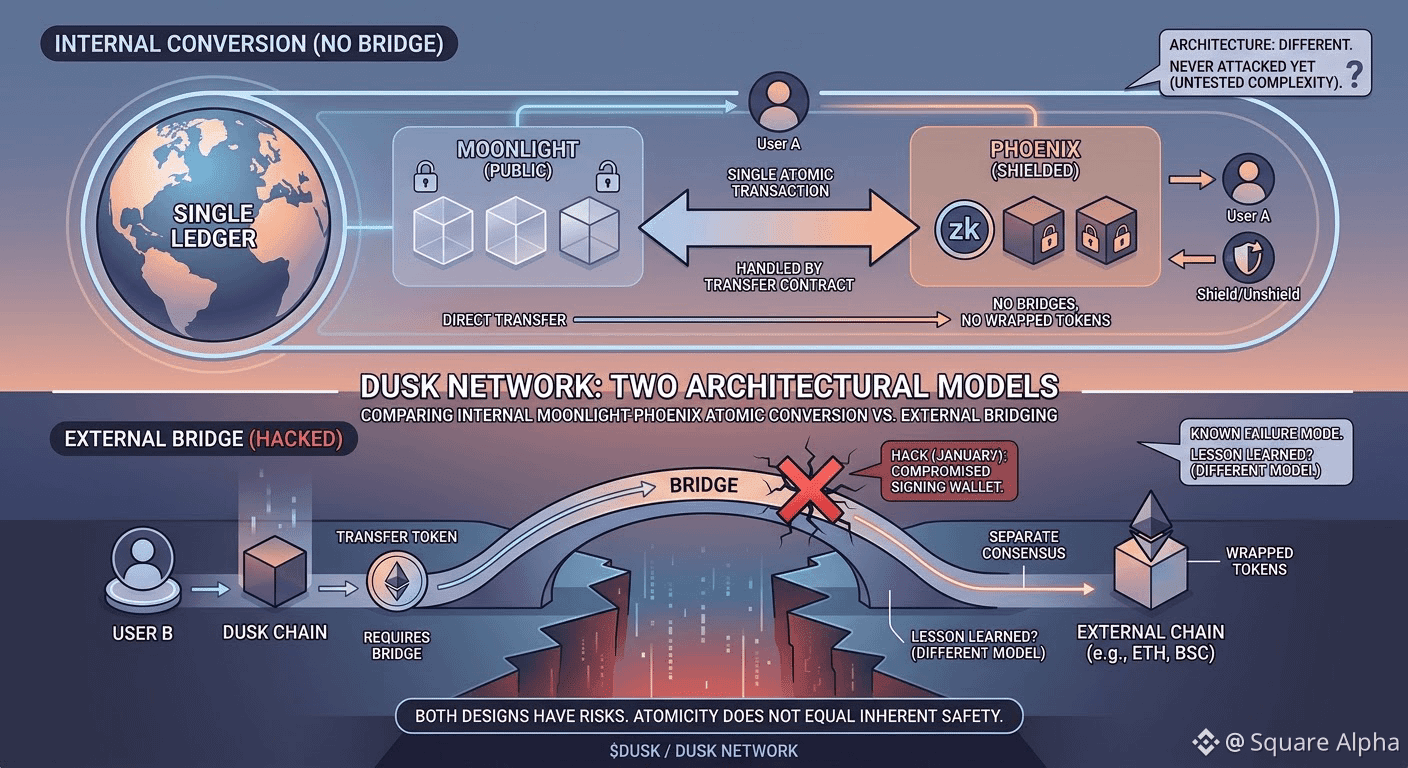
Ich bin heute speziell in die eigenen Dokumente von Dusk zurückgegangen, um etwas nachzuprüfen, nachdem ich letzte Woche über ihren Bridge-Hack geschrieben hatte, und habe eine Einzelheit gefunden, die direkt dazu passt.
dusk betreibt zwei Transaktionsmodelle auf demselben Ledger. moonlight ist öffentlich — normal, transparent, wie die meisten Chains. phoenix ist abgeschirmt — privat, zk-basiert. Das Umschalten zwischen ihnen, also von shielded zu unshielded oder zurück, ist eine einzelne atomare Transaktion, die vom eigenen Transfer-Contract von dusk gehandhabt wird.
keine Bridge. kein Wrapped Token. Laut ihren eigenen Dokus: „handled by the transfer contract in a single atomic transaction — no bridges, no wrapped tokens.“
Dieser Satz hat mich gestoppt, weil der Hack im Januar — der tatsächlich passiert ist — genau über das lief, was dieses Mechanismusprinzip vermeiden soll. Eine separate Bridge zu einer externen Chain, wobei ein kompromittiertes Signing-Wallet der Ausfallpunkt war.
Also: Der Teil von dusk, der bereits getroffen wurde, beruhte auf Bridging. Der Teil, der intern zwischen public- und private-Modus umwandelt, tut das bewusst nicht.
Ich möchte das so lesen wie: „Sie haben die Lektion gelernt, bevor sie sie brauchen mussten.“ Aber ich kann tatsächlich nicht bestätigen, dass der interne shield/unshield-Mechanismus sicherer ist — nur, dass er architektonisch anders ist. Dass keine externe Bridge vorhanden ist, bedeutet nicht automatisch, dass es keine Angriffsfläche gibt, sondern nur, dass es eine andere ist. Eine atomare Umwandlung auf demselben Ledger zwischen zwei völlig unterschiedlichen Transaktionsmodellen ist immer noch komplexer Code, der noch nie so von einem echten Angreifer getestet wurde, wie es bei der Bridge bereits der Fall war.
Ein Teil von dusk hat jetzt einen bekannten Fehler-/Ausfallmodus. Der andere Teil wurde einfach noch nicht angegriffen. Das sind nicht dieselben Dinge wie „sicher“, auch wenn das Design durchdachter wirkt.
#dusk @Dusk_Foundation $DUSK
{spot}(DUSKUSDT)
Ich bin heute speziell in die eigenen Dokumente von Dusk zurückgegangen, um etwas nachzuprüfen, nachdem ich letzte Woche über ihren Bridge-Hack geschrieben hatte, und habe eine Einzelheit gefunden, die direkt dazu passt.
dusk betreibt zwei Transaktionsmodelle auf demselben Ledger. moonlight ist öffentlich — normal, transparent, wie die meisten Chains. phoenix ist abgeschirmt — privat, zk-basiert. Das Umschalten zwischen ihnen, also von shielded zu unshielded oder zurück, ist eine einzelne atomare Transaktion, die vom eigenen Transfer-Contract von dusk gehandhabt wird.
keine Bridge. kein Wrapped Token. Laut ihren eigenen Dokus: „handled by the transfer contract in a single atomic transaction — no bridges, no wrapped tokens.“
Dieser Satz hat mich gestoppt, weil der Hack im Januar — der tatsächlich passiert ist — genau über das lief, was dieses Mechanismusprinzip vermeiden soll. Eine separate Bridge zu einer externen Chain, wobei ein kompromittiertes Signing-Wallet der Ausfallpunkt war.
Also: Der Teil von dusk, der bereits getroffen wurde, beruhte auf Bridging. Der Teil, der intern zwischen public- und private-Modus umwandelt, tut das bewusst nicht.
Ich möchte das so lesen wie: „Sie haben die Lektion gelernt, bevor sie sie brauchen mussten.“ Aber ich kann tatsächlich nicht bestätigen, dass der interne shield/unshield-Mechanismus sicherer ist — nur, dass er architektonisch anders ist. Dass keine externe Bridge vorhanden ist, bedeutet nicht automatisch, dass es keine Angriffsfläche gibt, sondern nur, dass es eine andere ist. Eine atomare Umwandlung auf demselben Ledger zwischen zwei völlig unterschiedlichen Transaktionsmodellen ist immer noch komplexer Code, der noch nie so von einem echten Angreifer getestet wurde, wie es bei der Bridge bereits der Fall war.
Ein Teil von dusk hat jetzt einen bekannten Fehler-/Ausfallmodus. Der andere Teil wurde einfach noch nicht angegriffen. Das sind nicht dieselben Dinge wie „sicher“, auch wenn das Design durchdachter wirkt.
#dusk @Dusk $DUSK
dusk betreibt zwei Transaktionsmodelle auf demselben Ledger. moonlight ist öffentlich — normal, transparent, wie die meisten Chains. phoenix ist abgeschirmt — privat, zk-basiert. Das Umschalten zwischen ihnen, also von shielded zu unshielded oder zurück, ist eine einzelne atomare Transaktion, die vom eigenen Transfer-Contract von dusk gehandhabt wird.
keine Bridge. kein Wrapped Token. Laut ihren eigenen Dokus: „handled by the transfer contract in a single atomic transaction — no bridges, no wrapped tokens.“
Dieser Satz hat mich gestoppt, weil der Hack im Januar — der tatsächlich passiert ist — genau über das lief, was dieses Mechanismusprinzip vermeiden soll. Eine separate Bridge zu einer externen Chain, wobei ein kompromittiertes Signing-Wallet der Ausfallpunkt war.
Also: Der Teil von dusk, der bereits getroffen wurde, beruhte auf Bridging. Der Teil, der intern zwischen public- und private-Modus umwandelt, tut das bewusst nicht.
Ich möchte das so lesen wie: „Sie haben die Lektion gelernt, bevor sie sie brauchen mussten.“ Aber ich kann tatsächlich nicht bestätigen, dass der interne shield/unshield-Mechanismus sicherer ist — nur, dass er architektonisch anders ist. Dass keine externe Bridge vorhanden ist, bedeutet nicht automatisch, dass es keine Angriffsfläche gibt, sondern nur, dass es eine andere ist. Eine atomare Umwandlung auf demselben Ledger zwischen zwei völlig unterschiedlichen Transaktionsmodellen ist immer noch komplexer Code, der noch nie so von einem echten Angreifer getestet wurde, wie es bei der Bridge bereits der Fall war.
Ein Teil von dusk hat jetzt einen bekannten Fehler-/Ausfallmodus. Der andere Teil wurde einfach noch nicht angegriffen. Das sind nicht dieselben Dinge wie „sicher“, auch wenn das Design durchdachter wirkt.
#dusk @Dusk $DUSK
1
2
157
·
--
Bullisch
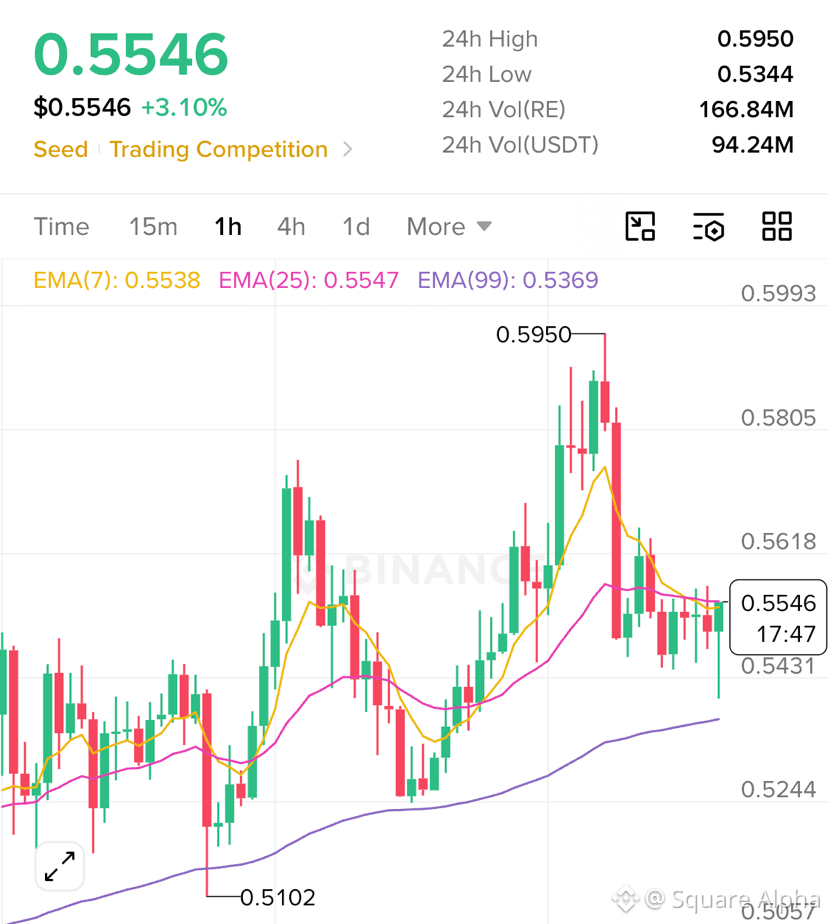
💥 $RE hat die schwachen Hände von 0.595 auf 0.543 gespült und coiled jetzt direkt am EMA-Cluster — die nächste Bewegung wird geladen! 😤
📊 LONG (1H):
→ Einstieg: 0.548 – 0.556
→ SL: 0.532
→ TP1: 0.580
→ TP2: 0.595, und 0.64 Vollgas
das Fazit: Ich habe gesehen, wie der 0.543-Boden diese Woche schon dreimal gehalten hat, während der RSI von „überhitzt“ wieder auf 50 abgekühlt ist — das ist ein Reload, keine Umkehr. Und die Fundamentals sind tatsächlich würzig: reUSD ist gerade auf Solana live gegangen, der Token regelt einen echten On-Chain-Reinsurance-Markt, und nur ~16% des Angebots sind im Umlauf. Dünnes Float + echtes RWA-Narrativ + eine aufgeladene Chart-Formation = mein Lieblings-Setup. Diese Coin hat die Angewohnheit, +30%-Kerzen völlig aus dem Nichts zu drucken.
Wer lädt die Coil mit mir? 👇
#RE #ReProtocol #RWA #setup #signal
{spot}(REUSDT)
💥 $RE hat die schwachen Hände von 0.595 auf 0.543 gespült und coiled jetzt direkt am EMA-Cluster — die nächste Bewegung wird geladen! 😤
📊 LONG (1H):
→ Einstieg: 0.548 – 0.556
→ SL: 0.532
→ TP1: 0.580
→ TP2: 0.595, und 0.64 Vollgas
das Fazit: Ich habe gesehen, wie der 0.543-Boden diese Woche schon dreimal gehalten hat, während der RSI von „überhitzt“ wieder auf 50 abgekühlt ist — das ist ein Reload, keine Umkehr. Und die Fundamentals sind tatsächlich würzig: reUSD ist gerade auf Solana live gegangen, der Token regelt einen echten On-Chain-Reinsurance-Markt, und nur ~16% des Angebots sind im Umlauf. Dünnes Float + echtes RWA-Narrativ + eine aufgeladene Chart-Formation = mein Lieblings-Setup. Diese Coin hat die Angewohnheit, +30%-Kerzen völlig aus dem Nichts zu drucken.
Wer lädt die Coil mit mir? 👇
#RE #ReProtocol #RWA #setup #signal
📊 LONG (1H):
→ Einstieg: 0.548 – 0.556
→ SL: 0.532
→ TP1: 0.580
→ TP2: 0.595, und 0.64 Vollgas
das Fazit: Ich habe gesehen, wie der 0.543-Boden diese Woche schon dreimal gehalten hat, während der RSI von „überhitzt“ wieder auf 50 abgekühlt ist — das ist ein Reload, keine Umkehr. Und die Fundamentals sind tatsächlich würzig: reUSD ist gerade auf Solana live gegangen, der Token regelt einen echten On-Chain-Reinsurance-Markt, und nur ~16% des Angebots sind im Umlauf. Dünnes Float + echtes RWA-Narrativ + eine aufgeladene Chart-Formation = mein Lieblings-Setup. Diese Coin hat die Angewohnheit, +30%-Kerzen völlig aus dem Nichts zu drucken.
Wer lädt die Coil mit mir? 👇
#RE #ReProtocol #RWA #setup #signal
100
·
--
Bullisch
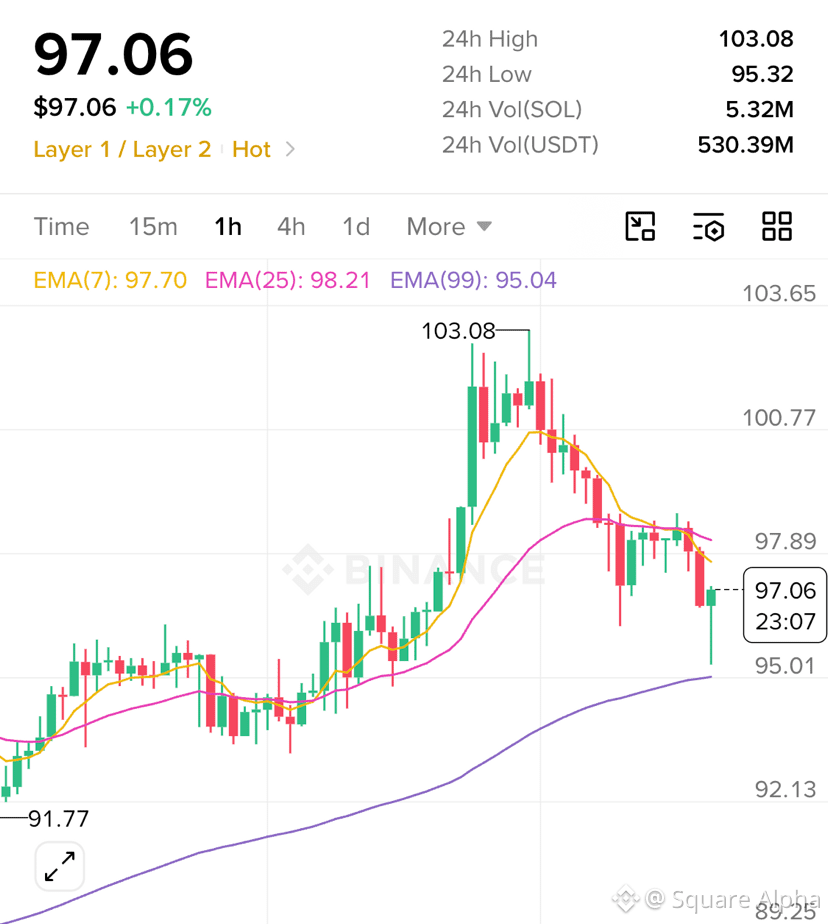
💥 $SOL hat gerade eine riesige untere Lunte direkt an der EMA99 ausgedruckt — Dip-Käufer sind exakt wie geplant aufgetaucht! 😤
📊 LONG (1H):
→ Einstieg: 96,5 – 97,2
→ SL: 94,6
→ TP1: 98,2
→ TP2: 100,7, und 103 Full Send
das Fazit: Der Run von 89 bis 103 war der Trend, dieser Rückgang ist nur der Cool-down. RSI ging von 80 auf 33 in ein paar Kerzen — das ist ein Reset, kein Begräbnis. Ich habe 95 die ganze Woche wie ein Habicht im Blick gehabt, und dass diese Lunte bei 95,3 sofort gekauft wurde, sagt mir: großes Geld verteidigt die Linie immer noch. Steigende EMA99 + Lunte-Verteidigung + ausgewaschener RSI = das exakte Rezept für die nächste Aufwärtsbewegung.
wer kauft die Lunte mit mir? 👇
#sol #Solana #setup #signal $SOL
{spot}(SOLUSDT)
💥 $SOL hat gerade eine riesige untere Lunte direkt an der EMA99 ausgedruckt — Dip-Käufer sind exakt wie geplant aufgetaucht! 😤
📊 LONG (1H):
→ Einstieg: 96,5 – 97,2
→ SL: 94,6
→ TP1: 98,2
→ TP2: 100,7, und 103 Full Send
das Fazit: Der Run von 89 bis 103 war der Trend, dieser Rückgang ist nur der Cool-down. RSI ging von 80 auf 33 in ein paar Kerzen — das ist ein Reset, kein Begräbnis. Ich habe 95 die ganze Woche wie ein Habicht im Blick gehabt, und dass diese Lunte bei 95,3 sofort gekauft wurde, sagt mir: großes Geld verteidigt die Linie immer noch. Steigende EMA99 + Lunte-Verteidigung + ausgewaschener RSI = das exakte Rezept für die nächste Aufwärtsbewegung.
wer kauft die Lunte mit mir? 👇
#sol #Solana #setup #signal $SOL
📊 LONG (1H):
→ Einstieg: 96,5 – 97,2
→ SL: 94,6
→ TP1: 98,2
→ TP2: 100,7, und 103 Full Send
das Fazit: Der Run von 89 bis 103 war der Trend, dieser Rückgang ist nur der Cool-down. RSI ging von 80 auf 33 in ein paar Kerzen — das ist ein Reset, kein Begräbnis. Ich habe 95 die ganze Woche wie ein Habicht im Blick gehabt, und dass diese Lunte bei 95,3 sofort gekauft wurde, sagt mir: großes Geld verteidigt die Linie immer noch. Steigende EMA99 + Lunte-Verteidigung + ausgewaschener RSI = das exakte Rezept für die nächste Aufwärtsbewegung.
wer kauft die Lunte mit mir? 👇
#sol #Solana #setup #signal $SOL
132
·
--
Bullisch
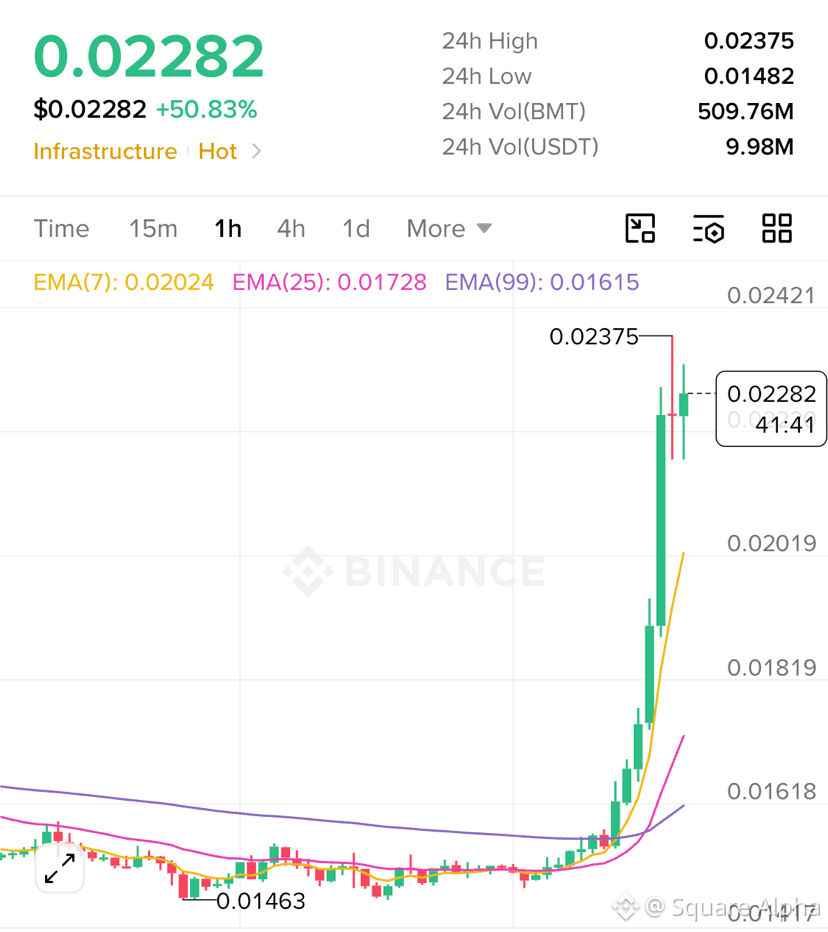
💥 $BMT hat gerade die koreanische Listing-Behandlung bekommen — Airdrop + neue Exchange in derselben Woche, kein Wunder, dass es steil geht! 😤
LANG (1H):
→ Entry: 0.0202 – 0.0210
→ SL: 0.0185
→ TP1: 0.02375
→ TP2: 0.0260, und 0.030 full send
das gelesen: Das ist kein zufälliger Meme-Pump. Binance hat BMT in den HODLer-Airdrop gegeben, Bithumb hat es ein paar Tage später gelistet, und das Open Interest ist auf 15 Mio. $ gestiegen — Spot und Leverage strömen beide rein. Ich habe ein paar Korean-Listing-Runs gehandelt, und sie enden selten in einer einzigen Kerze; der erste Rücksetzer ist meistens der Einstieg, den sich jeder gewünscht hätte, gemacht zu haben. RSI ist auf 98 geplusht, ja — also ich jag den grünen Kerzen nicht hinterher, ich lasse es zu EMA7 zurückkommen und kaufe dann. Listing Season + ein Tool, das wirklich jeder nutzt, um Insider-Wallets zu erwischen = meine Lieblingskombination.
wer fährt die Korean-Welle? 👇
#BMT #Bubblemaps
{spot}(BMTUSDT)
💥 $BMT hat gerade die koreanische Listing-Behandlung bekommen — Airdrop + neue Exchange in derselben Woche, kein Wunder, dass es steil geht! 😤
LANG (1H):
→ Entry: 0.0202 – 0.0210
→ SL: 0.0185
→ TP1: 0.02375
→ TP2: 0.0260, und 0.030 full send
das gelesen: Das ist kein zufälliger Meme-Pump. Binance hat BMT in den HODLer-Airdrop gegeben, Bithumb hat es ein paar Tage später gelistet, und das Open Interest ist auf 15 Mio. $ gestiegen — Spot und Leverage strömen beide rein. Ich habe ein paar Korean-Listing-Runs gehandelt, und sie enden selten in einer einzigen Kerze; der erste Rücksetzer ist meistens der Einstieg, den sich jeder gewünscht hätte, gemacht zu haben. RSI ist auf 98 geplusht, ja — also ich jag den grünen Kerzen nicht hinterher, ich lasse es zu EMA7 zurückkommen und kaufe dann. Listing Season + ein Tool, das wirklich jeder nutzt, um Insider-Wallets zu erwischen = meine Lieblingskombination.
wer fährt die Korean-Welle? 👇
#BMT #Bubblemaps
LANG (1H):
→ Entry: 0.0202 – 0.0210
→ SL: 0.0185
→ TP1: 0.02375
→ TP2: 0.0260, und 0.030 full send
das gelesen: Das ist kein zufälliger Meme-Pump. Binance hat BMT in den HODLer-Airdrop gegeben, Bithumb hat es ein paar Tage später gelistet, und das Open Interest ist auf 15 Mio. $ gestiegen — Spot und Leverage strömen beide rein. Ich habe ein paar Korean-Listing-Runs gehandelt, und sie enden selten in einer einzigen Kerze; der erste Rücksetzer ist meistens der Einstieg, den sich jeder gewünscht hätte, gemacht zu haben. RSI ist auf 98 geplusht, ja — also ich jag den grünen Kerzen nicht hinterher, ich lasse es zu EMA7 zurückkommen und kaufe dann. Listing Season + ein Tool, das wirklich jeder nutzt, um Insider-Wallets zu erwischen = meine Lieblingskombination.
wer fährt die Korean-Welle? 👇
#BMT #Bubblemaps
123
·
--
Bullisch
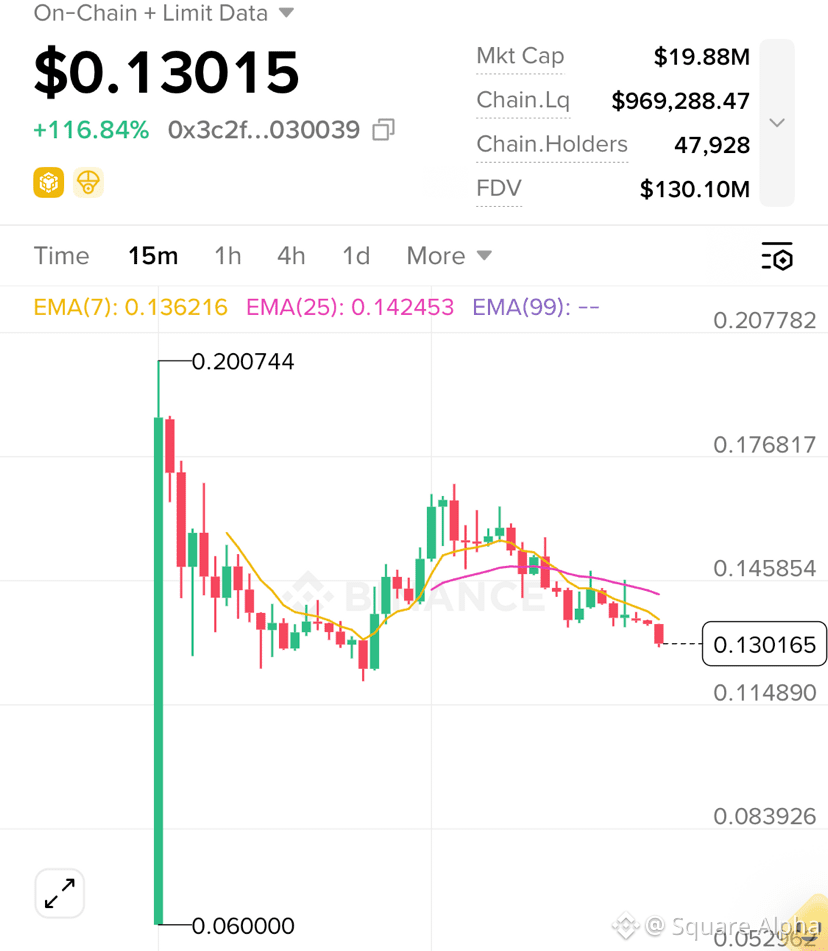
💥 $TMX ist +116% am Tag und der Rücksetzer sitzt genau auf seiner Launch-Floor – überverkaufter Bounce, lädt nach! 😤
📊 LONG (15M):
→ Einstieg: 0.128 – 0.132
→ SL: 0.118
→ TP1: 0.1425
→ TP2: 0.160, und 0.20 full send
Ich habe beobachtet, wie die 0.122-Floor dreimal getestet wurde und jedes Mal hält sie — das ist kein Zufall, das sind Käufer, die ihre Linie verteidigen. RSI bei 24 ist eine gespannte Feder, und hier ist der Teil, über den niemand spricht: $19.9M mcap gegen $130M FDV heißt, der Float ist winzig, und winzige Floats brauchen nicht viel Treibstoff, um zu durchzünden. Ich hab die erste Etappe von 0.06 verpasst und bin immer noch angefressen darüber, lol, ich verpasse die zweite nicht. 48K Holder und wachsend, Launch-Day-Energie ist immer noch im Raum.
Furcht rausgewaschen, Floor hält, Feder gespannt. Wer kauft die Floor mit mir? 👇
#TMX #TermMax
{alpha}(560x3c2f61f2e27c865981d2e7aaf6b2cdf823030039)
💥 $TMX ist +116% am Tag und der Rücksetzer sitzt genau auf seiner Launch-Floor – überverkaufter Bounce, lädt nach! 😤
📊 LONG (15M):
→ Einstieg: 0.128 – 0.132
→ SL: 0.118
→ TP1: 0.1425
→ TP2: 0.160, und 0.20 full send
Ich habe beobachtet, wie die 0.122-Floor dreimal getestet wurde und jedes Mal hält sie — das ist kein Zufall, das sind Käufer, die ihre Linie verteidigen. RSI bei 24 ist eine gespannte Feder, und hier ist der Teil, über den niemand spricht: $19.9M mcap gegen $130M FDV heißt, der Float ist winzig, und winzige Floats brauchen nicht viel Treibstoff, um zu durchzünden. Ich hab die erste Etappe von 0.06 verpasst und bin immer noch angefressen darüber, lol, ich verpasse die zweite nicht. 48K Holder und wachsend, Launch-Day-Energie ist immer noch im Raum.
Furcht rausgewaschen, Floor hält, Feder gespannt. Wer kauft die Floor mit mir? 👇
#TMX #TermMax
📊 LONG (15M):
→ Einstieg: 0.128 – 0.132
→ SL: 0.118
→ TP1: 0.1425
→ TP2: 0.160, und 0.20 full send
Ich habe beobachtet, wie die 0.122-Floor dreimal getestet wurde und jedes Mal hält sie — das ist kein Zufall, das sind Käufer, die ihre Linie verteidigen. RSI bei 24 ist eine gespannte Feder, und hier ist der Teil, über den niemand spricht: $19.9M mcap gegen $130M FDV heißt, der Float ist winzig, und winzige Floats brauchen nicht viel Treibstoff, um zu durchzünden. Ich hab die erste Etappe von 0.06 verpasst und bin immer noch angefressen darüber, lol, ich verpasse die zweite nicht. 48K Holder und wachsend, Launch-Day-Energie ist immer noch im Raum.
Furcht rausgewaschen, Floor hält, Feder gespannt. Wer kauft die Floor mit mir? 👇
#TMX #TermMax
238
·
--
Bullisch
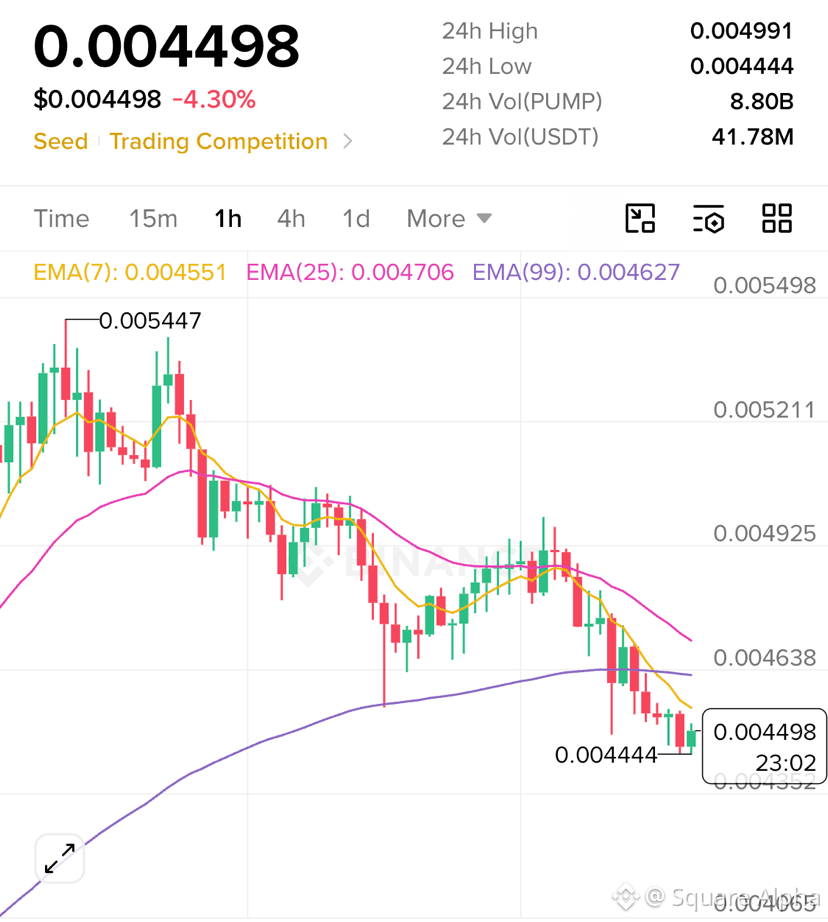
💥 $PUMP ist ganz vorne -17% im Rabatt, RSI ausgewaschen, und dieser lange Docht hat gerade bewiesen, dass Dip-Käufer noch leben — Bounce wird geladen! 😤
📊 LONG (1H):
→ Einstieg: 0.00445 – 0.00450
→ SL: 0.00432
→ TP1: 0.00463
→ TP2: 0.00472, und 0.00490 Vollgas
Ich starrte diese Kerze schon seit einer Stunde an und ehrlich? Ich habe gesehen, wie der 0.004444 Dip in Echtzeit regelrecht aufgefressen wurde. RSI bei 30 ist wie eine gespannte Feder, und das Protokoll druckt immer noch Rekordumsatz, während die Buyback-Maschine brummt. Ich wurde bei der letzten Abwärtswelle rausgeschüttelt (mein eigenes Verschulden, zu ungeduldig, haha), aber ich verpasse den Bounce nicht zweimal.
Fürchte, dass genau hier die Bounces geboren werden. Wer kauft mit mir? 👇
#PUMP
{spot}(PUMPUSDT)
💥 $PUMP ist ganz vorne -17% im Rabatt, RSI ausgewaschen, und dieser lange Docht hat gerade bewiesen, dass Dip-Käufer noch leben — Bounce wird geladen! 😤
📊 LONG (1H):
→ Einstieg: 0.00445 – 0.00450
→ SL: 0.00432
→ TP1: 0.00463
→ TP2: 0.00472, und 0.00490 Vollgas
Ich starrte diese Kerze schon seit einer Stunde an und ehrlich? Ich habe gesehen, wie der 0.004444 Dip in Echtzeit regelrecht aufgefressen wurde. RSI bei 30 ist wie eine gespannte Feder, und das Protokoll druckt immer noch Rekordumsatz, während die Buyback-Maschine brummt. Ich wurde bei der letzten Abwärtswelle rausgeschüttelt (mein eigenes Verschulden, zu ungeduldig, haha), aber ich verpasse den Bounce nicht zweimal.
Fürchte, dass genau hier die Bounces geboren werden. Wer kauft mit mir? 👇
#PUMP
📊 LONG (1H):
→ Einstieg: 0.00445 – 0.00450
→ SL: 0.00432
→ TP1: 0.00463
→ TP2: 0.00472, und 0.00490 Vollgas
Ich starrte diese Kerze schon seit einer Stunde an und ehrlich? Ich habe gesehen, wie der 0.004444 Dip in Echtzeit regelrecht aufgefressen wurde. RSI bei 30 ist wie eine gespannte Feder, und das Protokoll druckt immer noch Rekordumsatz, während die Buyback-Maschine brummt. Ich wurde bei der letzten Abwärtswelle rausgeschüttelt (mein eigenes Verschulden, zu ungeduldig, haha), aber ich verpasse den Bounce nicht zweimal.
Fürchte, dass genau hier die Bounces geboren werden. Wer kauft mit mir? 👇
#PUMP
241
·
--
Teilweise korrekt
Ich habe heute Dusk geöffnet und erwartet, dass es sich um einen weiteren, datenschutzorientierten L1 handelt, der das übliche „private blockchain“-Pitching macht.
Stattdessen habe ich damit begonnen, mich genauer anzusehen, wie Dusk Privatsphäre umsetzt, ohne die Regulierung vollständig zu ignorieren.
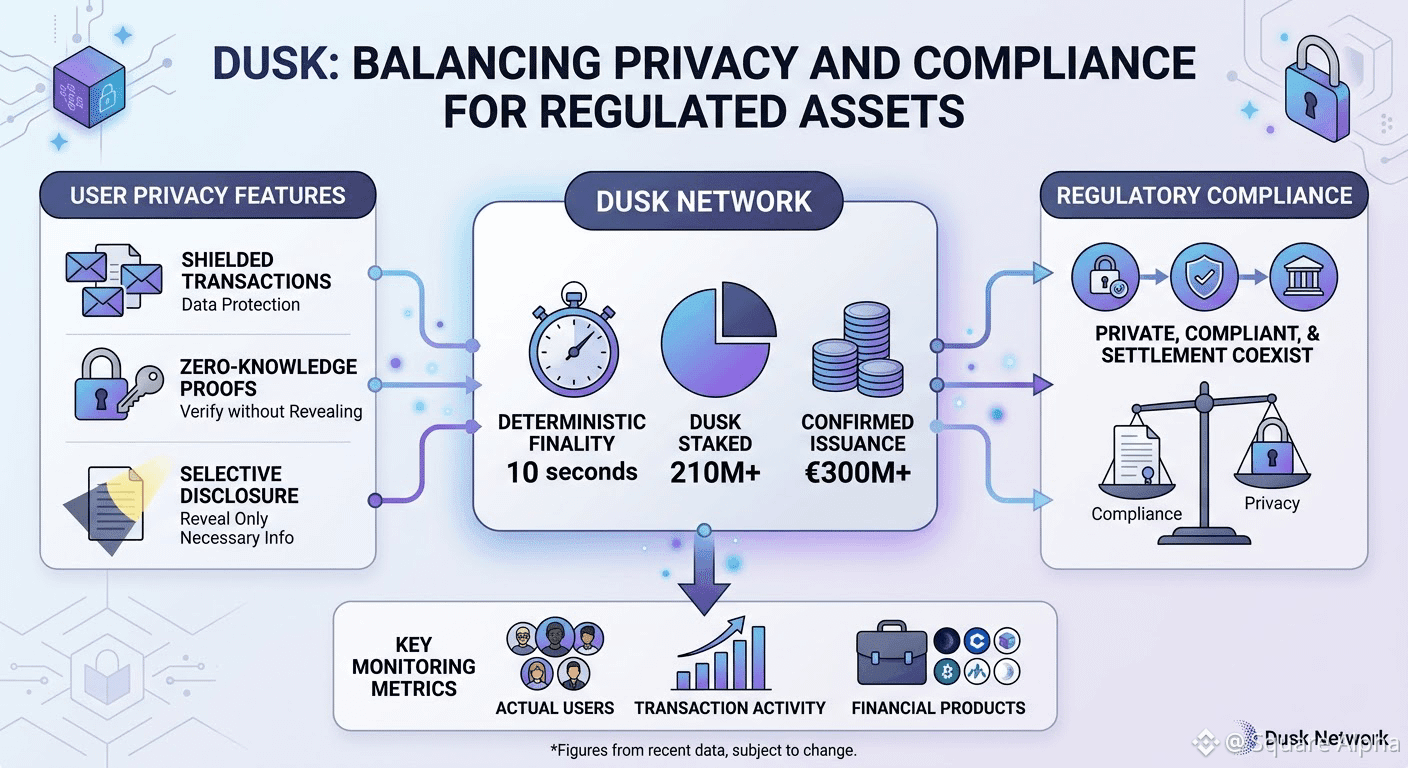
Die Dusk-Dokumentation war das Erste, was ich mir angesehen habe. Auffällig war die Kombination aus geschützten (geshieldeten) Transaktionen, Zero-Knowledge-Proofs und selektiver Offenlegung. Privatsphäre bedeutet nicht einfach, alles zu verbergen; das Design ermöglicht es, bestimmte Informationen bei Bedarf offenzulegen.
Das hat mich dazu gebracht, genauer hinzusehen.
Dusk sagt, dass derzeit mehr als 210 Mio. DUSK gestaked sind, während das Netzwerk auf ungefähr 10-Sekunden deterministische Finalität abzielt. Außerdem hebt es €300 Mio.+ an bestätigter Emission hervor.
Ich würde diese Zahlen allein nicht als Beleg dafür nehmen, dass Dusk bereits Product-Market-Fit gefunden hat. Emissionszahlen und die Beteiligung am Staking sagen etwas aus, aber eine nachhaltige Nutzung sagt viel mehr.
Den Teil, den ich spannender finde, ist die Richtung: Dusk baut rund um regulierte Assets, bei denen Privatsphäre, Compliance und Abwicklung nebeneinander existieren müssen.
Das ist ein anspruchsvolleres Problem, als „nur“ Transaktionen privat zu machen.
Darum beobachte ich, was passiert, nachdem die Story leiser wird: echte Nutzer, Transaktionsaktivität und ob Finanzprodukte weiterhin zurück auf das Netzwerk kommen.
#dusk @Dusk_Foundation $DUSK
{spot}(DUSKUSDT)
Ich habe heute Dusk geöffnet und erwartet, dass es sich um einen weiteren, datenschutzorientierten L1 handelt, der das übliche „private blockchain“-Pitching macht.
Stattdessen habe ich damit begonnen, mich genauer anzusehen, wie Dusk Privatsphäre umsetzt, ohne die Regulierung vollständig zu ignorieren.
Die Dusk-Dokumentation war das Erste, was ich mir angesehen habe. Auffällig war die Kombination aus geschützten (geshieldeten) Transaktionen, Zero-Knowledge-Proofs und selektiver Offenlegung. Privatsphäre bedeutet nicht einfach, alles zu verbergen; das Design ermöglicht es, bestimmte Informationen bei Bedarf offenzulegen.
Das hat mich dazu gebracht, genauer hinzusehen.
Dusk sagt, dass derzeit mehr als 210 Mio. DUSK gestaked sind, während das Netzwerk auf ungefähr 10-Sekunden deterministische Finalität abzielt. Außerdem hebt es €300 Mio.+ an bestätigter Emission hervor.
Ich würde diese Zahlen allein nicht als Beleg dafür nehmen, dass Dusk bereits Product-Market-Fit gefunden hat. Emissionszahlen und die Beteiligung am Staking sagen etwas aus, aber eine nachhaltige Nutzung sagt viel mehr.
Den Teil, den ich spannender finde, ist die Richtung: Dusk baut rund um regulierte Assets, bei denen Privatsphäre, Compliance und Abwicklung nebeneinander existieren müssen.
Das ist ein anspruchsvolleres Problem, als „nur“ Transaktionen privat zu machen.
Darum beobachte ich, was passiert, nachdem die Story leiser wird: echte Nutzer, Transaktionsaktivität und ob Finanzprodukte weiterhin zurück auf das Netzwerk kommen.
#dusk @Dusk $DUSK
Stattdessen habe ich damit begonnen, mich genauer anzusehen, wie Dusk Privatsphäre umsetzt, ohne die Regulierung vollständig zu ignorieren.
Die Dusk-Dokumentation war das Erste, was ich mir angesehen habe. Auffällig war die Kombination aus geschützten (geshieldeten) Transaktionen, Zero-Knowledge-Proofs und selektiver Offenlegung. Privatsphäre bedeutet nicht einfach, alles zu verbergen; das Design ermöglicht es, bestimmte Informationen bei Bedarf offenzulegen.
Das hat mich dazu gebracht, genauer hinzusehen.
Dusk sagt, dass derzeit mehr als 210 Mio. DUSK gestaked sind, während das Netzwerk auf ungefähr 10-Sekunden deterministische Finalität abzielt. Außerdem hebt es €300 Mio.+ an bestätigter Emission hervor.
Ich würde diese Zahlen allein nicht als Beleg dafür nehmen, dass Dusk bereits Product-Market-Fit gefunden hat. Emissionszahlen und die Beteiligung am Staking sagen etwas aus, aber eine nachhaltige Nutzung sagt viel mehr.
Den Teil, den ich spannender finde, ist die Richtung: Dusk baut rund um regulierte Assets, bei denen Privatsphäre, Compliance und Abwicklung nebeneinander existieren müssen.
Das ist ein anspruchsvolleres Problem, als „nur“ Transaktionen privat zu machen.
Darum beobachte ich, was passiert, nachdem die Story leiser wird: echte Nutzer, Transaktionsaktivität und ob Finanzprodukte weiterhin zurück auf das Netzwerk kommen.
#dusk @Dusk $DUSK
2
165
·
--
Bullisch
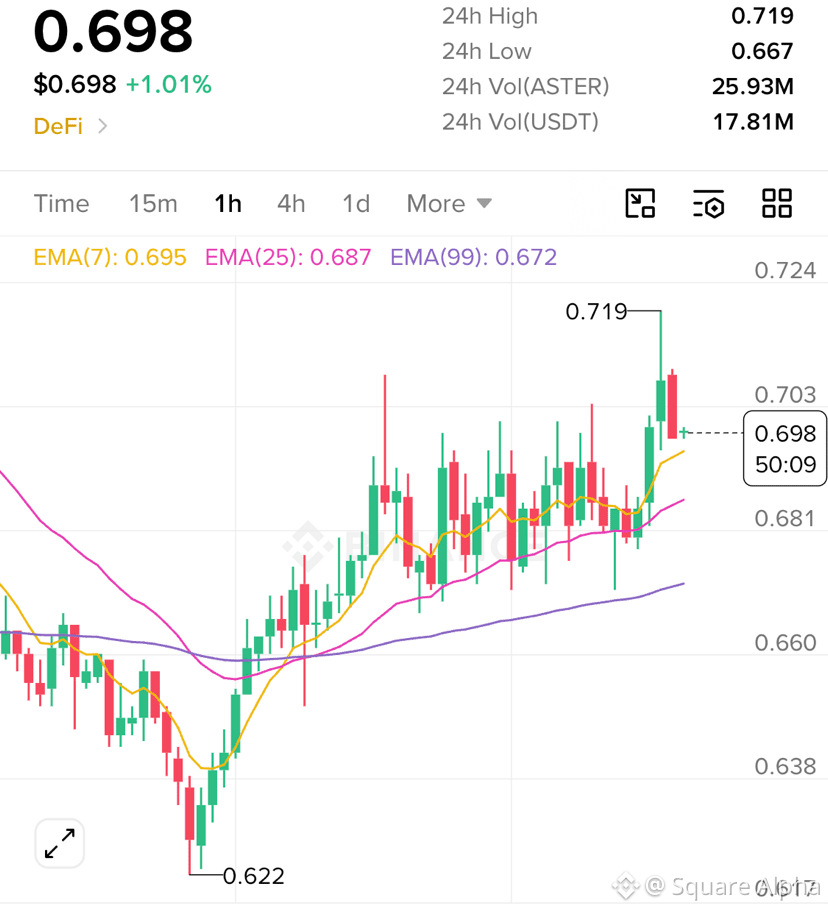
💥 $ASTER hat gerade 0,719 getaggt und holt kurz Luft — Ausbrüche laden nach, sie sterben nicht! 😤
📊 LONG (1H):
→ Entry: 0.690 – 0.698
→ SL: 0.678
→ TP1: 0.719
→ TP2: 0.74, und 0.777 full send
Das Fazit: Die Treppenstruktur bleibt intakt, die EMAs sind grün aufgefächert, und der Pullback hält genau am EMA7—als würde er auf einem Fundament stehen. RSI im mittleren 50er-Bereich = noch jede Menge Treibstoff. Ein sauberer Close über 0.719 öffnet die Lufttasche direkt bis 0.74 — und die 0.777-Erinnerung ist bei allen noch frisch.
Wer fährt den Ausbruch? 👇
#Aster
{spot}(ASTERUSDT)
💥 $ASTER hat gerade 0,719 getaggt und holt kurz Luft — Ausbrüche laden nach, sie sterben nicht! 😤
📊 LONG (1H):
→ Entry: 0.690 – 0.698
→ SL: 0.678
→ TP1: 0.719
→ TP2: 0.74, und 0.777 full send
Das Fazit: Die Treppenstruktur bleibt intakt, die EMAs sind grün aufgefächert, und der Pullback hält genau am EMA7—als würde er auf einem Fundament stehen. RSI im mittleren 50er-Bereich = noch jede Menge Treibstoff. Ein sauberer Close über 0.719 öffnet die Lufttasche direkt bis 0.74 — und die 0.777-Erinnerung ist bei allen noch frisch.
Wer fährt den Ausbruch? 👇
#Aster
📊 LONG (1H):
→ Entry: 0.690 – 0.698
→ SL: 0.678
→ TP1: 0.719
→ TP2: 0.74, und 0.777 full send
Das Fazit: Die Treppenstruktur bleibt intakt, die EMAs sind grün aufgefächert, und der Pullback hält genau am EMA7—als würde er auf einem Fundament stehen. RSI im mittleren 50er-Bereich = noch jede Menge Treibstoff. Ein sauberer Close über 0.719 öffnet die Lufttasche direkt bis 0.74 — und die 0.777-Erinnerung ist bei allen noch frisch.
Wer fährt den Ausbruch? 👇
#Aster
239
·
--
Bullisch
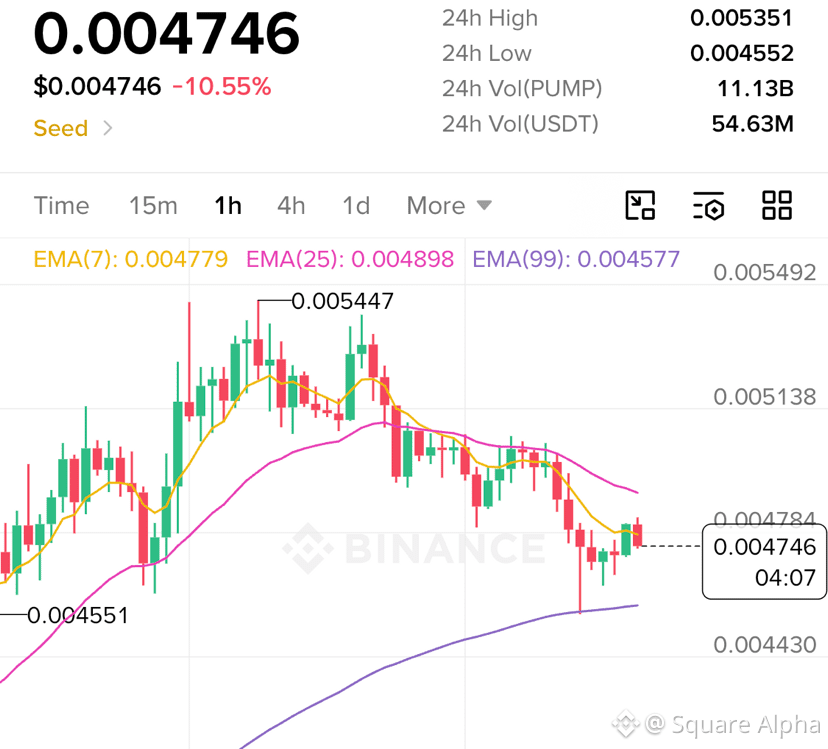
💥 $PUMP ist gerade ausgestiegen und -10% direkt in sein stärkstes Fundament gepresst — das ist ein Shakeout, keine Trendwende! 😤
📊 LONG (1H):
→ Einstieg: 0.00458 – 0.00475
→ SL: 0.00440
→ TP1: 0.00490
→ TP2: 0.00515, und 0.00545 Vollgas
Die Lage: Die EMA99 steigt immer noch und ist nie verloren gegangen, der gesamte Aufwärtstrend ab 0.0036 ist intakt, und RSI bei 37 ist ausgewaschen. Dieser Flush hat mit einer einzigen Kerze den Hebel und die schwachen Hände bereinigt. Letztes Fundament + überverkauft + steigender Trend = der exakte Bereich, an dem Rückläufe schnell und heftig kommen. Dips hier werden gerade gnadenlos gefressen.
Wer kauft diesen Flush? 👇
#pump #pumpfun
{spot}(PUMPUSDT)
💥 $PUMP ist gerade ausgestiegen und -10% direkt in sein stärkstes Fundament gepresst — das ist ein Shakeout, keine Trendwende! 😤
📊 LONG (1H):
→ Einstieg: 0.00458 – 0.00475
→ SL: 0.00440
→ TP1: 0.00490
→ TP2: 0.00515, und 0.00545 Vollgas
Die Lage: Die EMA99 steigt immer noch und ist nie verloren gegangen, der gesamte Aufwärtstrend ab 0.0036 ist intakt, und RSI bei 37 ist ausgewaschen. Dieser Flush hat mit einer einzigen Kerze den Hebel und die schwachen Hände bereinigt. Letztes Fundament + überverkauft + steigender Trend = der exakte Bereich, an dem Rückläufe schnell und heftig kommen. Dips hier werden gerade gnadenlos gefressen.
Wer kauft diesen Flush? 👇
#pump #pumpfun
📊 LONG (1H):
→ Einstieg: 0.00458 – 0.00475
→ SL: 0.00440
→ TP1: 0.00490
→ TP2: 0.00515, und 0.00545 Vollgas
Die Lage: Die EMA99 steigt immer noch und ist nie verloren gegangen, der gesamte Aufwärtstrend ab 0.0036 ist intakt, und RSI bei 37 ist ausgewaschen. Dieser Flush hat mit einer einzigen Kerze den Hebel und die schwachen Hände bereinigt. Letztes Fundament + überverkauft + steigender Trend = der exakte Bereich, an dem Rückläufe schnell und heftig kommen. Dips hier werden gerade gnadenlos gefressen.
Wer kauft diesen Flush? 👇
#pump #pumpfun
206
·
--
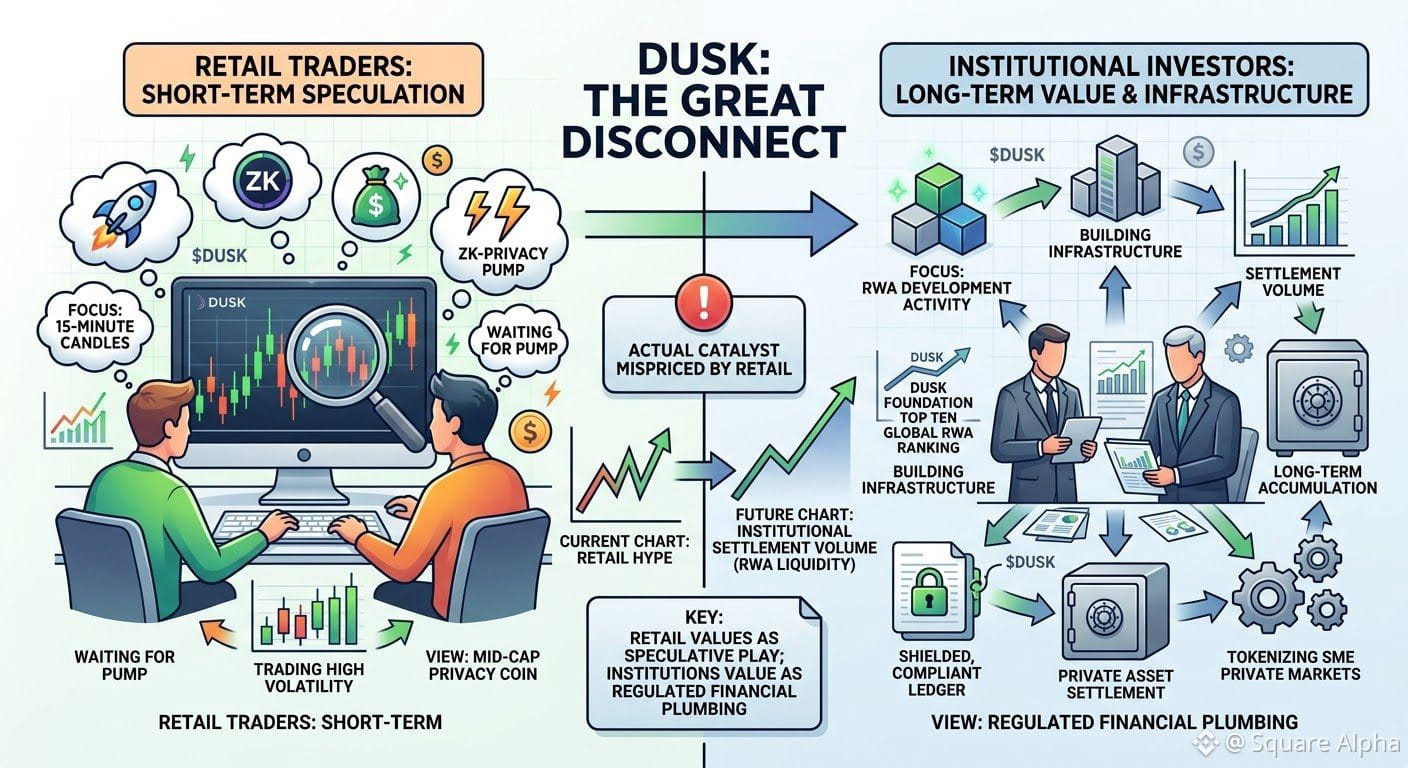
Heute überprüfe ich den $DUSK chart, er schwebt gerade ziemlich genau um die Marke von 0,074 $ herum. Der Zeitverlauf behandelt ihn wie einen typischen Mid-Cap-Privacy-Coin-Breakout: Privatanleger starren auf 15-Minuten-Kerzen und warten auf einen schnellen ZK-Privacy-Pump.
Aber als ich die Schlagzeilen der Institutionen der letzten 48 Stunden beobachtet habe, wurde mir klar, dass der Markt den eigentlichen Auslöser komplett falsch bewertet.
Während der Retail-Markt auf den kurzfristigen Chart fokussiert ist, haben Blockchain-Analytics-Firmen die @Dusk_Foundation still und leise in die globale Top-Ten-Liste für Aktivitäten zur Entwicklung von Real-World-Assets aufgenommen. Gleichzeitig treibt das Team aktiv die Infrastruktur voran, um KMU-Private-Märkte zu tokenisieren.
Die massive Diskrepanz zwischen dem Retail-Chart und der institutionellen Realität ergab für mich endlich Sinn, als ich mir ihre Compliance-Architektur angesehen habe. Traditionelles Finanzwesen will kein schnelles, öffentliches Mempool für Unternehmensanleihen. Sie brauchen ein stark abgeschirmtes, rechtlich konformes Ledger, um Private Assets abzuwickeln, ohne Daten an High-Frequency-Trading-Bots durchzusickern.
Mein letzter Eindruck zur heutigen Kursbewegung ist ganz simpel. Der Retail-Markt bewertet den Token weiterhin als spekulatives Tech-Play, während die tatsächlichen Käufer ihn als regulierte finanzielle Infrastruktur behandeln. Sobald später in diesem Jahr die RWA-Liquiditätsflutgates öffnen, wird der Chart aufhören, den Retail-Hype widerzuspiegeln, und stattdessen das institutionelle Abwicklungsvolumen abbilden.
#dusk @Dusk_Foundation $DUSK
{spot}(DUSKUSDT)
Heute überprüfe ich den $DUSK chart, er schwebt gerade ziemlich genau um die Marke von 0,074 $ herum. Der Zeitverlauf behandelt ihn wie einen typischen Mid-Cap-Privacy-Coin-Breakout: Privatanleger starren auf 15-Minuten-Kerzen und warten auf einen schnellen ZK-Privacy-Pump.
Aber als ich die Schlagzeilen der Institutionen der letzten 48 Stunden beobachtet habe, wurde mir klar, dass der Markt den eigentlichen Auslöser komplett falsch bewertet.
Während der Retail-Markt auf den kurzfristigen Chart fokussiert ist, haben Blockchain-Analytics-Firmen die @Dusk still und leise in die globale Top-Ten-Liste für Aktivitäten zur Entwicklung von Real-World-Assets aufgenommen. Gleichzeitig treibt das Team aktiv die Infrastruktur voran, um KMU-Private-Märkte zu tokenisieren.
Die massive Diskrepanz zwischen dem Retail-Chart und der institutionellen Realität ergab für mich endlich Sinn, als ich mir ihre Compliance-Architektur angesehen habe. Traditionelles Finanzwesen will kein schnelles, öffentliches Mempool für Unternehmensanleihen. Sie brauchen ein stark abgeschirmtes, rechtlich konformes Ledger, um Private Assets abzuwickeln, ohne Daten an High-Frequency-Trading-Bots durchzusickern.
Mein letzter Eindruck zur heutigen Kursbewegung ist ganz simpel. Der Retail-Markt bewertet den Token weiterhin als spekulatives Tech-Play, während die tatsächlichen Käufer ihn als regulierte finanzielle Infrastruktur behandeln. Sobald später in diesem Jahr die RWA-Liquiditätsflutgates öffnen, wird der Chart aufhören, den Retail-Hype widerzuspiegeln, und stattdessen das institutionelle Abwicklungsvolumen abbilden.
#dusk @Dusk $DUSK
Aber als ich die Schlagzeilen der Institutionen der letzten 48 Stunden beobachtet habe, wurde mir klar, dass der Markt den eigentlichen Auslöser komplett falsch bewertet.
Während der Retail-Markt auf den kurzfristigen Chart fokussiert ist, haben Blockchain-Analytics-Firmen die @Dusk still und leise in die globale Top-Ten-Liste für Aktivitäten zur Entwicklung von Real-World-Assets aufgenommen. Gleichzeitig treibt das Team aktiv die Infrastruktur voran, um KMU-Private-Märkte zu tokenisieren.
Die massive Diskrepanz zwischen dem Retail-Chart und der institutionellen Realität ergab für mich endlich Sinn, als ich mir ihre Compliance-Architektur angesehen habe. Traditionelles Finanzwesen will kein schnelles, öffentliches Mempool für Unternehmensanleihen. Sie brauchen ein stark abgeschirmtes, rechtlich konformes Ledger, um Private Assets abzuwickeln, ohne Daten an High-Frequency-Trading-Bots durchzusickern.
Mein letzter Eindruck zur heutigen Kursbewegung ist ganz simpel. Der Retail-Markt bewertet den Token weiterhin als spekulatives Tech-Play, während die tatsächlichen Käufer ihn als regulierte finanzielle Infrastruktur behandeln. Sobald später in diesem Jahr die RWA-Liquiditätsflutgates öffnen, wird der Chart aufhören, den Retail-Hype widerzuspiegeln, und stattdessen das institutionelle Abwicklungsvolumen abbilden.
#dusk @Dusk $DUSK
5
5
152
·
--
Bullisch
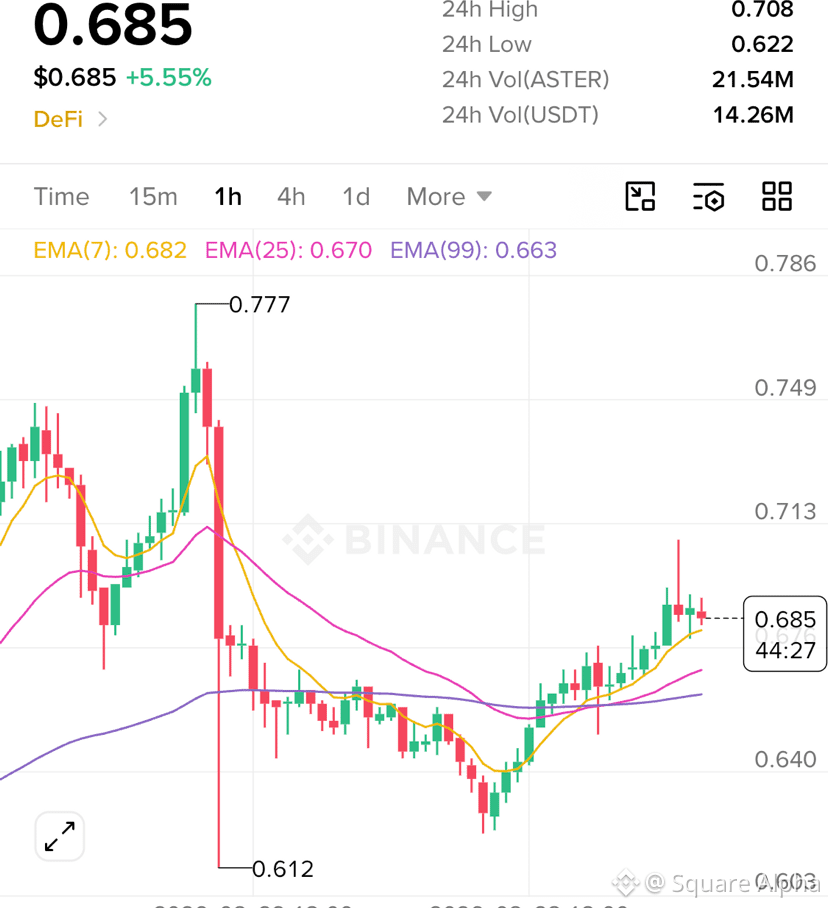
$ASTER still und ruhig wieder über jede EMA geklettert, während alle auf andere Coins geschaut haben 😌
LONG (1H):
→ Einstieg: 0.675 – 0.685
→ SL: 0.658 — EMA-Stack verloren = Idee verloren
→ TP1: 0.708
→ TP2: 0.74, und 0.777, falls es richtig durchstartet
Das liest sich so: Die Erholung von 0.612 ist eine saubere Treppe, der 0.777-Nuke wurde vollständig verdaut, und der RSI hat noch Spielraum, bevor er „durch“ ist. Ein Close über 0.708 öffnet die Lufttasche darüber.
Wenn 0.658 bricht, lag ich falsch — kleiner Kratzer, weiter. Bis dahin fahre ich die ruhige Erholung.
Setzt ASTER diese Woche nochmal auf 0.777? 👇
#Aster #defi
{spot}(ASTERUSDT)
$ASTER still und ruhig wieder über jede EMA geklettert, während alle auf andere Coins geschaut haben 😌
LONG (1H):
→ Einstieg: 0.675 – 0.685
→ SL: 0.658 — EMA-Stack verloren = Idee verloren
→ TP1: 0.708
→ TP2: 0.74, und 0.777, falls es richtig durchstartet
Das liest sich so: Die Erholung von 0.612 ist eine saubere Treppe, der 0.777-Nuke wurde vollständig verdaut, und der RSI hat noch Spielraum, bevor er „durch“ ist. Ein Close über 0.708 öffnet die Lufttasche darüber.
Wenn 0.658 bricht, lag ich falsch — kleiner Kratzer, weiter. Bis dahin fahre ich die ruhige Erholung.
Setzt ASTER diese Woche nochmal auf 0.777? 👇
#Aster #defi
LONG (1H):
→ Einstieg: 0.675 – 0.685
→ SL: 0.658 — EMA-Stack verloren = Idee verloren
→ TP1: 0.708
→ TP2: 0.74, und 0.777, falls es richtig durchstartet
Das liest sich so: Die Erholung von 0.612 ist eine saubere Treppe, der 0.777-Nuke wurde vollständig verdaut, und der RSI hat noch Spielraum, bevor er „durch“ ist. Ein Close über 0.708 öffnet die Lufttasche darüber.
Wenn 0.658 bricht, lag ich falsch — kleiner Kratzer, weiter. Bis dahin fahre ich die ruhige Erholung.
Setzt ASTER diese Woche nochmal auf 0.777? 👇
#Aster #defi
225
·
--
Bullisch
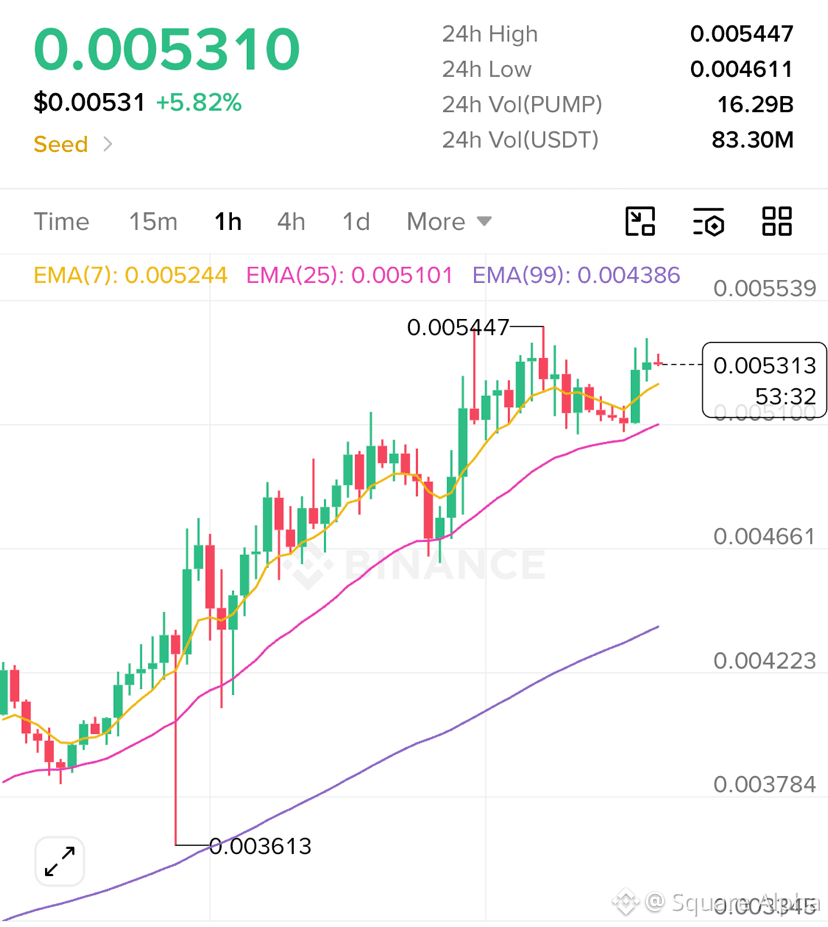
$PUMP macht die Treppe schon wieder — rechts herum aufrollen direkt unter dem High 😌
📊 LONG (1H):
→ Einstieg: 0.0052 – 0.0053
→ SL: 0.00495 — EMA25 weg = Idee weg
→ TP1: 0.00545
→ TP2: 0.0060 full send
Die Lage: höhere Tiefs, RSI 62 mit noch Luft nach oben, EMAs gestapelt grün, jeder Dip wurde innerhalb weniger Kerzen gekauft. Ein sauberer Break von 0.00545 öffnet die Round-Number-Zone darüber.
0.00495 bricht, und ich lag falsch, kleiner Scratch, weiter. Bis dahin reite ich die Treppe.
Wer hält PUMP auf 0.006? 👇
#pump #pumpfun $PUMP
{spot}(PUMPUSDT)
$PUMP macht die Treppe schon wieder — rechts herum aufrollen direkt unter dem High 😌
📊 LONG (1H):
→ Einstieg: 0.0052 – 0.0053
→ SL: 0.00495 — EMA25 weg = Idee weg
→ TP1: 0.00545
→ TP2: 0.0060 full send
Die Lage: höhere Tiefs, RSI 62 mit noch Luft nach oben, EMAs gestapelt grün, jeder Dip wurde innerhalb weniger Kerzen gekauft. Ein sauberer Break von 0.00545 öffnet die Round-Number-Zone darüber.
0.00495 bricht, und ich lag falsch, kleiner Scratch, weiter. Bis dahin reite ich die Treppe.
Wer hält PUMP auf 0.006? 👇
#pump #pumpfun $PUMP
📊 LONG (1H):
→ Einstieg: 0.0052 – 0.0053
→ SL: 0.00495 — EMA25 weg = Idee weg
→ TP1: 0.00545
→ TP2: 0.0060 full send
Die Lage: höhere Tiefs, RSI 62 mit noch Luft nach oben, EMAs gestapelt grün, jeder Dip wurde innerhalb weniger Kerzen gekauft. Ein sauberer Break von 0.00545 öffnet die Round-Number-Zone darüber.
0.00495 bricht, und ich lag falsch, kleiner Scratch, weiter. Bis dahin reite ich die Treppe.
Wer hält PUMP auf 0.006? 👇
#pump #pumpfun $PUMP
149
·
--
Bullisch
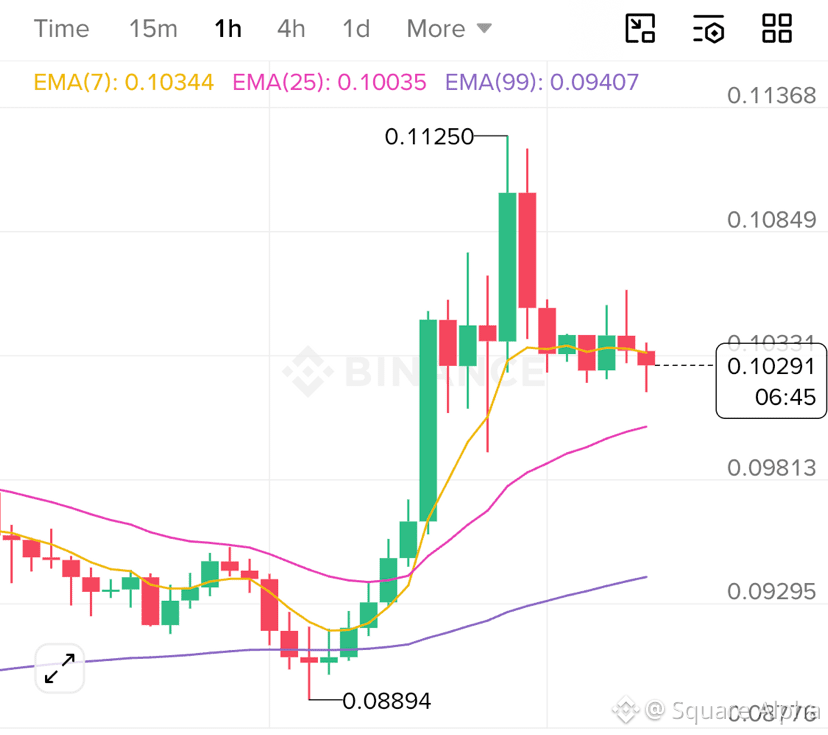
$XPL stieg auf 0.1125, schüttelte die schwachen Hände aus, jetzt kommt es wieder ins Spulen bei 0.103 😌
Kleiner Dip bei geringem Volumen + RSI-Reset = lehrbuchmäßige Bull-Flag.
📊 LONG (1H):
→ Einstieg: 0.100 – 0.103 (Flag-Zone, EMA25 sitzt genau hier)
→ SL: 0.0975 — Flag gebrochen = ich bin raus
→ TP1: 0.1125
→ TP2: 0.12 Full Send
Die Lage: Spike bei echtem Volumen, Dip auf nichts, und die EMA25 klettert direkt in meine Einstieg-Zone. Das ist Akkumulation, nicht Erschöpfung.
0.0975 bricht und ich lag falsch — kleiner Kratzer, weiter. Aber solche Flags lösen sich meistens nach oben auf, und ich bin vor der Auflösung positioniert, nicht danach.
Wer hält XPL durch das hier? 👇
#XPL #Plasma
{spot}(XPLUSDT)
$XPL stieg auf 0.1125, schüttelte die schwachen Hände aus, jetzt kommt es wieder ins Spulen bei 0.103 😌
Kleiner Dip bei geringem Volumen + RSI-Reset = lehrbuchmäßige Bull-Flag.
📊 LONG (1H):
→ Einstieg: 0.100 – 0.103 (Flag-Zone, EMA25 sitzt genau hier)
→ SL: 0.0975 — Flag gebrochen = ich bin raus
→ TP1: 0.1125
→ TP2: 0.12 Full Send
Die Lage: Spike bei echtem Volumen, Dip auf nichts, und die EMA25 klettert direkt in meine Einstieg-Zone. Das ist Akkumulation, nicht Erschöpfung.
0.0975 bricht und ich lag falsch — kleiner Kratzer, weiter. Aber solche Flags lösen sich meistens nach oben auf, und ich bin vor der Auflösung positioniert, nicht danach.
Wer hält XPL durch das hier? 👇
#XPL #Plasma
Kleiner Dip bei geringem Volumen + RSI-Reset = lehrbuchmäßige Bull-Flag.
📊 LONG (1H):
→ Einstieg: 0.100 – 0.103 (Flag-Zone, EMA25 sitzt genau hier)
→ SL: 0.0975 — Flag gebrochen = ich bin raus
→ TP1: 0.1125
→ TP2: 0.12 Full Send
Die Lage: Spike bei echtem Volumen, Dip auf nichts, und die EMA25 klettert direkt in meine Einstieg-Zone. Das ist Akkumulation, nicht Erschöpfung.
0.0975 bricht und ich lag falsch — kleiner Kratzer, weiter. Aber solche Flags lösen sich meistens nach oben auf, und ich bin vor der Auflösung positioniert, nicht danach.
Wer hält XPL durch das hier? 👇
#XPL #Plasma
203
·
--
Ich habe heute etwas Zeit damit verbracht, Dusk durchzusehen, und das, was bei mir hängen geblieben ist, war nicht eine weitere Datenschutz-Erzählung.
Es war der Tradeoff.
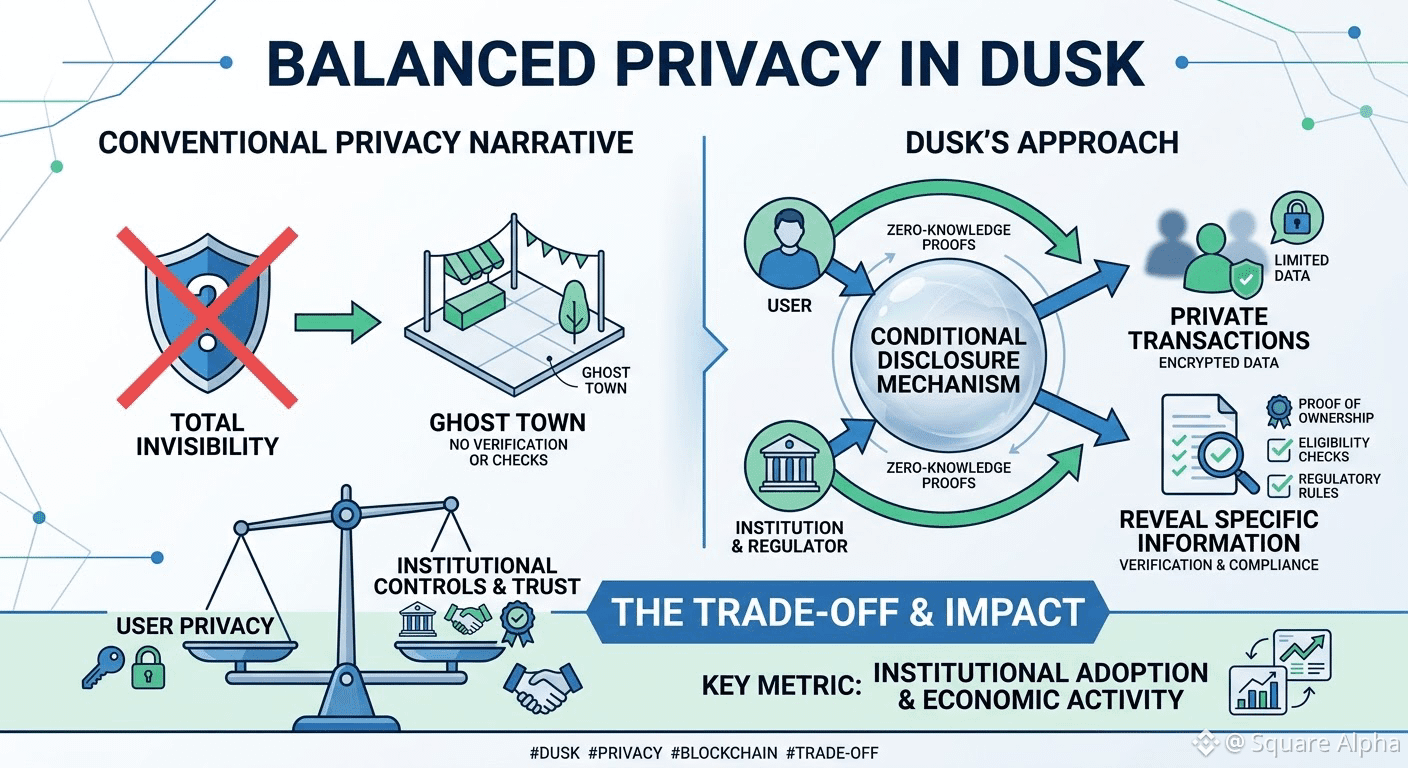
Die meisten Datenschutzgespräche scheinen mit der Idee zu beginnen, dass die finanzielle Aktivität vollständig verschwinden sollte. Aber echte Finanzmärkte funktionieren nicht auf diese Weise. Irgendjemand muss irgendwann etwas verifizieren, Eigentum nachweisen, die Berechtigung prüfen oder eine Regel erfüllen.
An genau dieser Stelle wird Dusk für mich interessant.
Die Idee ist nicht einfach „alles unsichtbar machen“. Es geht darum, Transaktionen privat zu machen, während dennoch bestimmte Informationen offengelegt werden dürfen, wenn dafür ein Grund besteht.
Ich finde, das ist ein viel schwierigere Problem.
Und ganz ehrlich: Ich weiß noch nicht, ob Dusk diese Architektur in eine sinnvolle Akzeptanz verwandeln kann. Eine technisch elegante Kette kann am Ende trotzdem nur sehr wenig wirtschaftliche Aktivität erzeugen.
Daher würde ich Dusk nicht danach beurteilen, wie überzeugend sich die Datenschutz-Erzählung anhört.
Ich würde beobachten, was passiert, wenn tatsächliche Finanzprodukte damit anfangen, sie zu verwenden.
Wenn Nutzer Privatsphäre erhalten können, ohne die Kontrollen aufzugeben, die Institutionen verlangen, dann wird Dusk mehr als nur eine weitere Geschichte über eine Datenschutz-Kette.
Das ist der Teil, der mich interessiert.
#dusk @Dusk_Foundation $DUSK
{spot}(DUSKUSDT)
Ich habe heute etwas Zeit damit verbracht, Dusk durchzusehen, und das, was bei mir hängen geblieben ist, war nicht eine weitere Datenschutz-Erzählung.
Es war der Tradeoff.
Die meisten Datenschutzgespräche scheinen mit der Idee zu beginnen, dass die finanzielle Aktivität vollständig verschwinden sollte. Aber echte Finanzmärkte funktionieren nicht auf diese Weise. Irgendjemand muss irgendwann etwas verifizieren, Eigentum nachweisen, die Berechtigung prüfen oder eine Regel erfüllen.
An genau dieser Stelle wird Dusk für mich interessant.
Die Idee ist nicht einfach „alles unsichtbar machen“. Es geht darum, Transaktionen privat zu machen, während dennoch bestimmte Informationen offengelegt werden dürfen, wenn dafür ein Grund besteht.
Ich finde, das ist ein viel schwierigere Problem.
Und ganz ehrlich: Ich weiß noch nicht, ob Dusk diese Architektur in eine sinnvolle Akzeptanz verwandeln kann. Eine technisch elegante Kette kann am Ende trotzdem nur sehr wenig wirtschaftliche Aktivität erzeugen.
Daher würde ich Dusk nicht danach beurteilen, wie überzeugend sich die Datenschutz-Erzählung anhört.
Ich würde beobachten, was passiert, wenn tatsächliche Finanzprodukte damit anfangen, sie zu verwenden.
Wenn Nutzer Privatsphäre erhalten können, ohne die Kontrollen aufzugeben, die Institutionen verlangen, dann wird Dusk mehr als nur eine weitere Geschichte über eine Datenschutz-Kette.
Das ist der Teil, der mich interessiert.
#dusk @Dusk $DUSK
Es war der Tradeoff.
Die meisten Datenschutzgespräche scheinen mit der Idee zu beginnen, dass die finanzielle Aktivität vollständig verschwinden sollte. Aber echte Finanzmärkte funktionieren nicht auf diese Weise. Irgendjemand muss irgendwann etwas verifizieren, Eigentum nachweisen, die Berechtigung prüfen oder eine Regel erfüllen.
An genau dieser Stelle wird Dusk für mich interessant.
Die Idee ist nicht einfach „alles unsichtbar machen“. Es geht darum, Transaktionen privat zu machen, während dennoch bestimmte Informationen offengelegt werden dürfen, wenn dafür ein Grund besteht.
Ich finde, das ist ein viel schwierigere Problem.
Und ganz ehrlich: Ich weiß noch nicht, ob Dusk diese Architektur in eine sinnvolle Akzeptanz verwandeln kann. Eine technisch elegante Kette kann am Ende trotzdem nur sehr wenig wirtschaftliche Aktivität erzeugen.
Daher würde ich Dusk nicht danach beurteilen, wie überzeugend sich die Datenschutz-Erzählung anhört.
Ich würde beobachten, was passiert, wenn tatsächliche Finanzprodukte damit anfangen, sie zu verwenden.
Wenn Nutzer Privatsphäre erhalten können, ohne die Kontrollen aufzugeben, die Institutionen verlangen, dann wird Dusk mehr als nur eine weitere Geschichte über eine Datenschutz-Kette.
Das ist der Teil, der mich interessiert.
#dusk @Dusk $DUSK
4
3
138
·
--
Vor ein paar Jahren wurde mein großes Austauschkonto vorübergehend gesperrt, nur um Geld von einem datenschutzorientierten Wallet abzuheben. Das Compliance-Team verlangte eine manuelle, wochenlange Prüfung der Herkunft der Mittel. Diese persönliche Belastung hat vollständig verändert, wie ich die „Privacy“-Erzählung im Krypto-Bereich betrachte. Ich habe erkannt, dass Institutionen Kryptografie nicht wirklich hassen; sie hassen ihre Nichterweisbarkeit.
Beim Beobachten der jüngsten Welle von Delistings älterer Privacy-Coins über große Plattformen hinweg sehe ich, dass der Markt $DUSK in denselben Risikobereich einordnet.
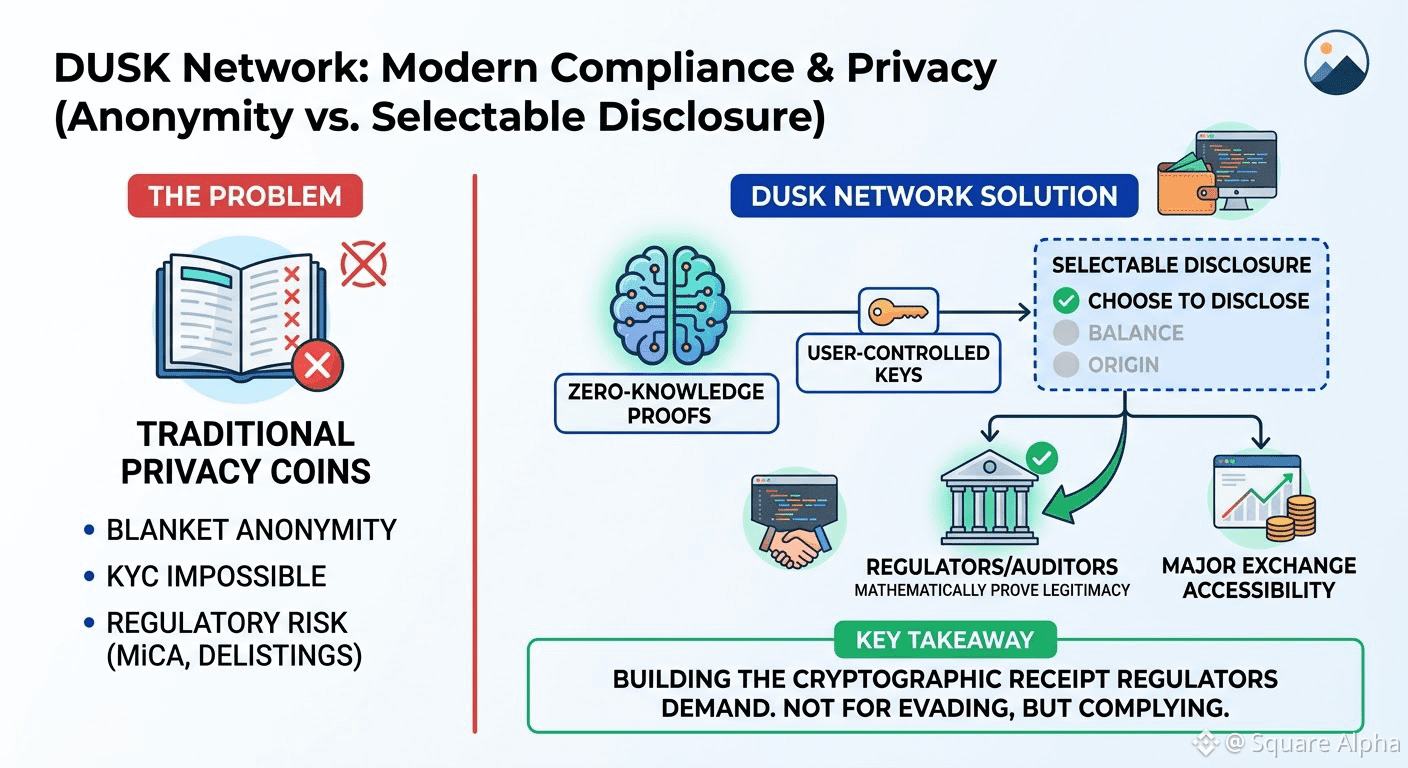
Wenn Börsen ältere Privacy-Netzwerke fallen lassen, ist das regulatorische Problem unter Rahmenwerken wie MiCA nicht die ZK-Technik selbst – sondern die pauschale Anonymität, die KYC unmöglich macht.
Der architektonische Unterschied wurde mir klar, als ich die @Dusk_Foundation -Dokumentation zum selektiven Offenlegen geprüft habe. Anstatt standardmäßig sämtliche Transaktionsdaten zu verbergen, ermöglicht ihre Einrichtung einem Nutzer, mathematisch die Legitimität eines Wallets gegenüber einem Prüfer zu beweisen, ohne die tatsächlichen Guthaben gegenüber dem öffentlichen Ledger offenzulegen.
Sie bauen kein Werkzeug, um Regulierungsbehörden zu umgehen. Sie bauen den genauartigen kryptografischen Beleg, den Regulierer nun einfordern.
Mein abschließender Eindruck ist, dass der Markt das Token derzeit als spekulatives Anonymitäts-Story-Spiel bepreist und es mit Chains gruppiert, die mit existenziellen Delisting-Bedrohungen konfrontiert sind. Sobald der Compliance-Hammer vollständig auf intransparenten Netzwerken fällt, werden die Ledger, die mathematisch belegen können, dass sie sauber sind, die einzigen sein, die auf den großen Orderbüchern übrig bleiben.
#dusk
Vor ein paar Jahren wurde mein großes Austauschkonto vorübergehend gesperrt, nur um Geld von einem datenschutzorientierten Wallet abzuheben. Das Compliance-Team verlangte eine manuelle, wochenlange Prüfung der Herkunft der Mittel. Diese persönliche Belastung hat vollständig verändert, wie ich die „Privacy“-Erzählung im Krypto-Bereich betrachte. Ich habe erkannt, dass Institutionen Kryptografie nicht wirklich hassen; sie hassen ihre Nichterweisbarkeit.
Beim Beobachten der jüngsten Welle von Delistings älterer Privacy-Coins über große Plattformen hinweg sehe ich, dass der Markt $DUSK in denselben Risikobereich einordnet.
Wenn Börsen ältere Privacy-Netzwerke fallen lassen, ist das regulatorische Problem unter Rahmenwerken wie MiCA nicht die ZK-Technik selbst – sondern die pauschale Anonymität, die KYC unmöglich macht.
Der architektonische Unterschied wurde mir klar, als ich die @Dusk -Dokumentation zum selektiven Offenlegen geprüft habe. Anstatt standardmäßig sämtliche Transaktionsdaten zu verbergen, ermöglicht ihre Einrichtung einem Nutzer, mathematisch die Legitimität eines Wallets gegenüber einem Prüfer zu beweisen, ohne die tatsächlichen Guthaben gegenüber dem öffentlichen Ledger offenzulegen.
Sie bauen kein Werkzeug, um Regulierungsbehörden zu umgehen. Sie bauen den genauartigen kryptografischen Beleg, den Regulierer nun einfordern.
Mein abschließender Eindruck ist, dass der Markt das Token derzeit als spekulatives Anonymitäts-Story-Spiel bepreist und es mit Chains gruppiert, die mit existenziellen Delisting-Bedrohungen konfrontiert sind. Sobald der Compliance-Hammer vollständig auf intransparenten Netzwerken fällt, werden die Ledger, die mathematisch belegen können, dass sie sauber sind, die einzigen sein, die auf den großen Orderbüchern übrig bleiben.
#dusk
Beim Beobachten der jüngsten Welle von Delistings älterer Privacy-Coins über große Plattformen hinweg sehe ich, dass der Markt $DUSK in denselben Risikobereich einordnet.
Wenn Börsen ältere Privacy-Netzwerke fallen lassen, ist das regulatorische Problem unter Rahmenwerken wie MiCA nicht die ZK-Technik selbst – sondern die pauschale Anonymität, die KYC unmöglich macht.
Der architektonische Unterschied wurde mir klar, als ich die @Dusk -Dokumentation zum selektiven Offenlegen geprüft habe. Anstatt standardmäßig sämtliche Transaktionsdaten zu verbergen, ermöglicht ihre Einrichtung einem Nutzer, mathematisch die Legitimität eines Wallets gegenüber einem Prüfer zu beweisen, ohne die tatsächlichen Guthaben gegenüber dem öffentlichen Ledger offenzulegen.
Sie bauen kein Werkzeug, um Regulierungsbehörden zu umgehen. Sie bauen den genauartigen kryptografischen Beleg, den Regulierer nun einfordern.
Mein abschließender Eindruck ist, dass der Markt das Token derzeit als spekulatives Anonymitäts-Story-Spiel bepreist und es mit Chains gruppiert, die mit existenziellen Delisting-Bedrohungen konfrontiert sind. Sobald der Compliance-Hammer vollständig auf intransparenten Netzwerken fällt, werden die Ledger, die mathematisch belegen können, dass sie sauber sind, die einzigen sein, die auf den großen Orderbüchern übrig bleiben.
#dusk
9
9
202
Anmelden und weiter Inhalte entdecken
Krypto-Nutzer weltweit auf Binance Square kennenlernen
⚡️ Bleib in Sachen Krypto stets am Puls.
💬 Die weltgrößte Kryptobörse vertraut darauf.
👍 Erhalte verlässliche Einblicke von verifizierten Creators.
E-Mail-Adresse/Telefonnummer