

NEXUS Strategy
942 Beiträge

NEXUS Strategy
Melden
Nutzer blockieren
Develop the right psychology in the trading, manage risk in Market, Components Of Price Action Trading System for successful trading, make consistent profit🍻
Regelmäßiger Trader
4.9 Jahre
0 Following
1.0K+ Follower
1.1K+ Like gegeben
Beiträge
Alle
Zitierungen
Videos
Live
·
--
Bärisch
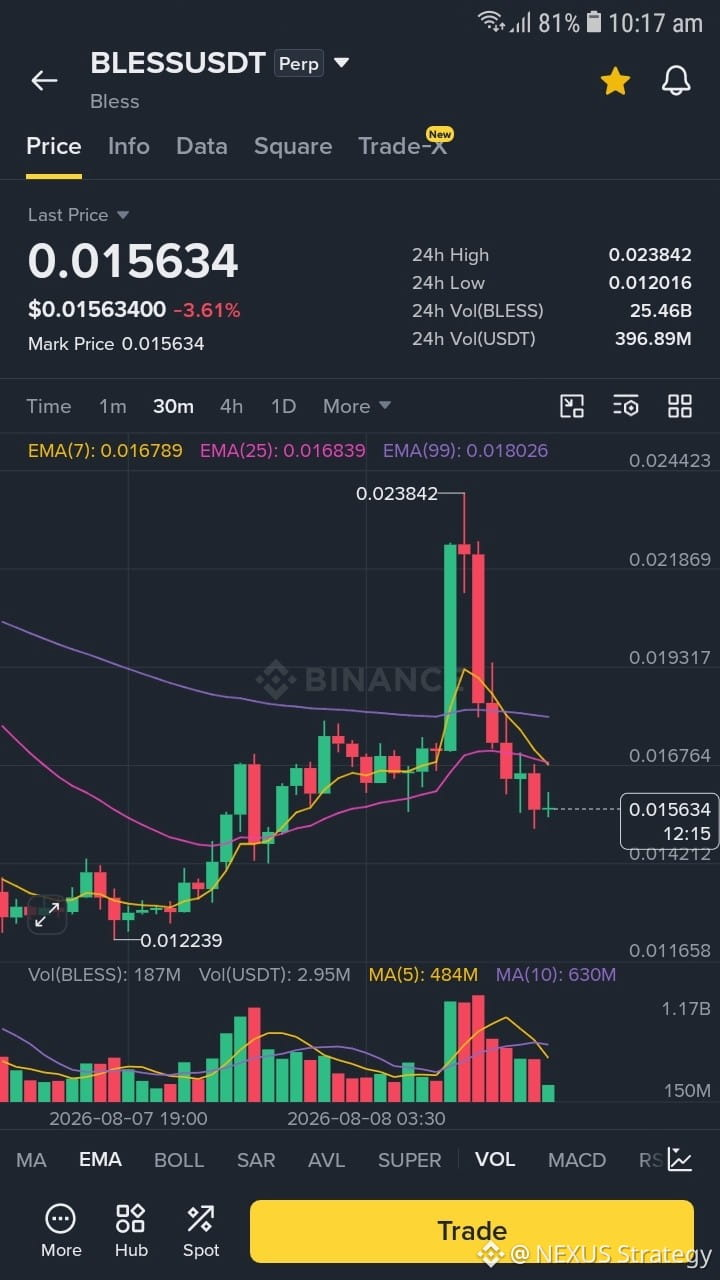
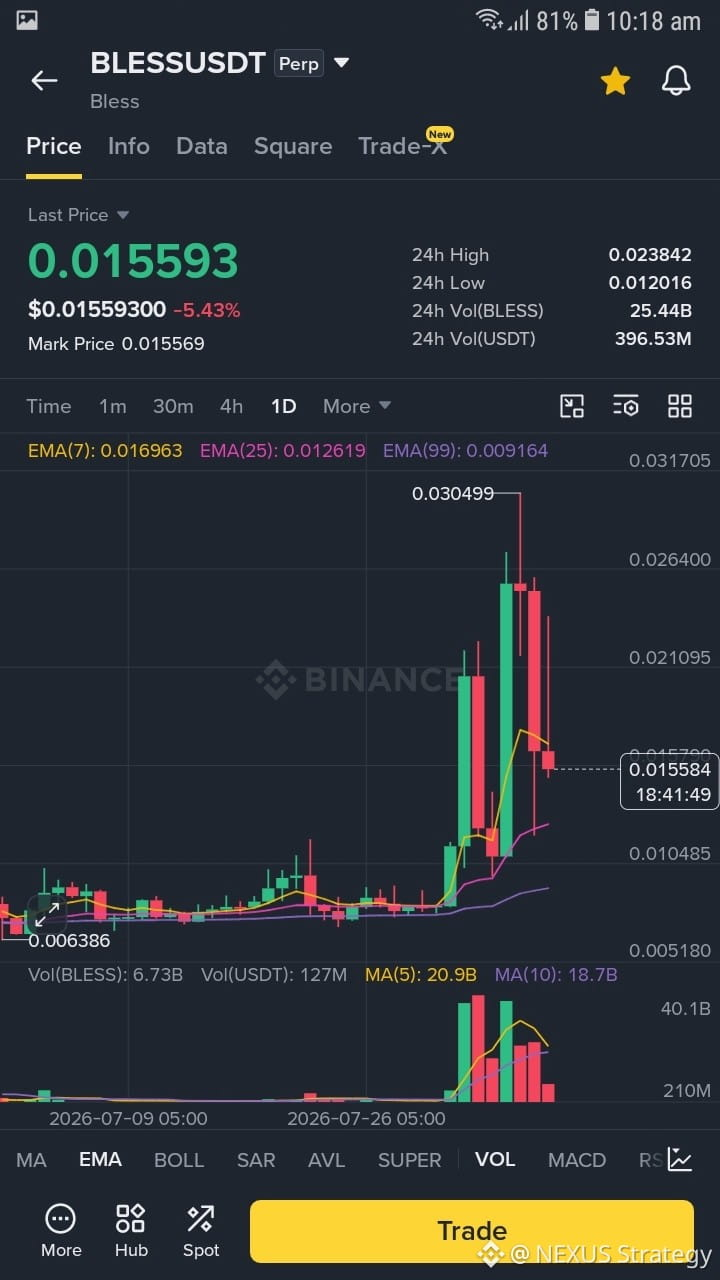
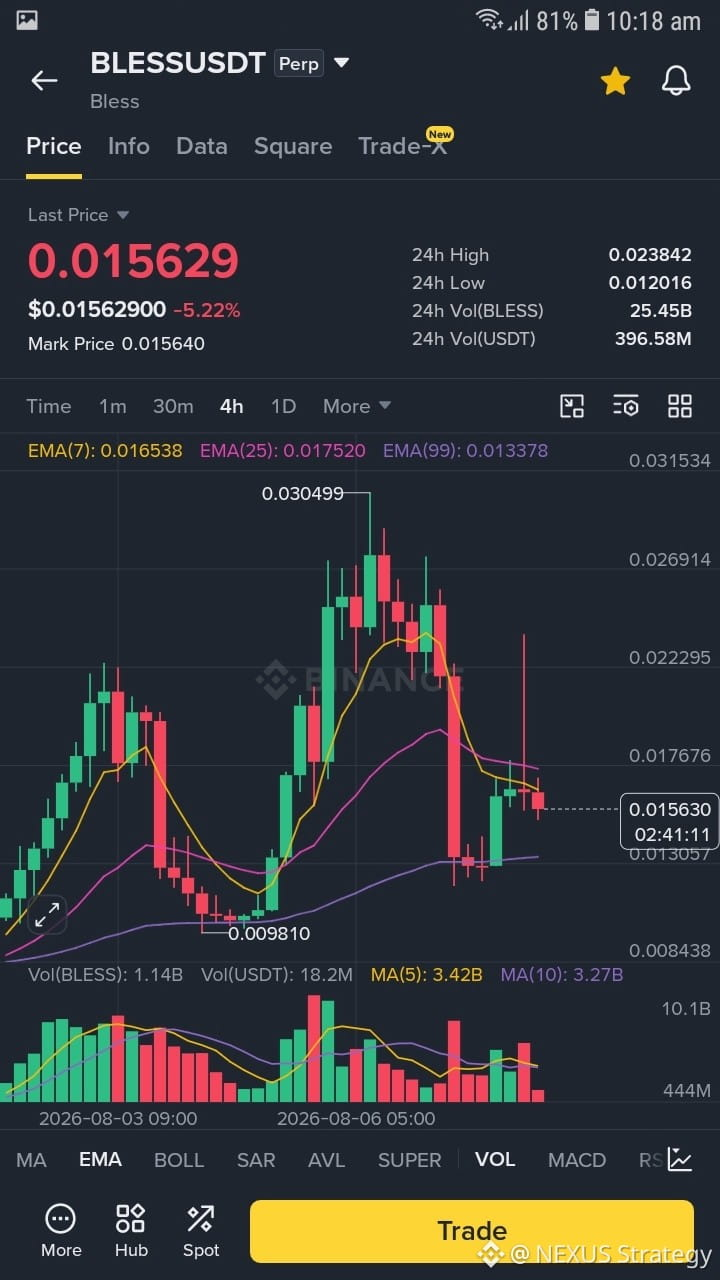
$BLESS Market Maker spielt das Glücksspiel mit Käufern.
„Wale“ dominieren die Handelsaktivität dieser Münze in einem solchen Ausmaß, dass Käufer beständig Geld verlieren, während Verkäufer die Gewinne einstreichen. Das Diagramm zeigt eindeutig, dass Käufer Verluste erleiden, während Verkäufer die Oberhand gewinnen. Daher rate ich Käufern dringend, diese Münze zu meiden und zu vermeiden, dass sie ihr Geld verlieren. „Wale“ suchen aktiv danach, anderen Verluste zu verursachen, und die kleinen Anleger sind hier die Leidtragenden.
$BLESS Market Maker spielt das Glücksspiel mit Käufern.
„Wale“ dominieren die Handelsaktivität dieser Münze in einem solchen Ausmaß, dass Käufer beständig Geld verlieren, während Verkäufer die Gewinne einstreichen. Das Diagramm zeigt eindeutig, dass Käufer Verluste erleiden, während Verkäufer die Oberhand gewinnen. Daher rate ich Käufern dringend, diese Münze zu meiden und zu vermeiden, dass sie ihr Geld verlieren. „Wale“ suchen aktiv danach, anderen Verluste zu verursachen, und die kleinen Anleger sind hier die Leidtragenden.
„Wale“ dominieren die Handelsaktivität dieser Münze in einem solchen Ausmaß, dass Käufer beständig Geld verlieren, während Verkäufer die Gewinne einstreichen. Das Diagramm zeigt eindeutig, dass Käufer Verluste erleiden, während Verkäufer die Oberhand gewinnen. Daher rate ich Käufern dringend, diese Münze zu meiden und zu vermeiden, dass sie ihr Geld verlieren. „Wale“ suchen aktiv danach, anderen Verluste zu verursachen, und die kleinen Anleger sind hier die Leidtragenden.
265
·
--
Bullisch
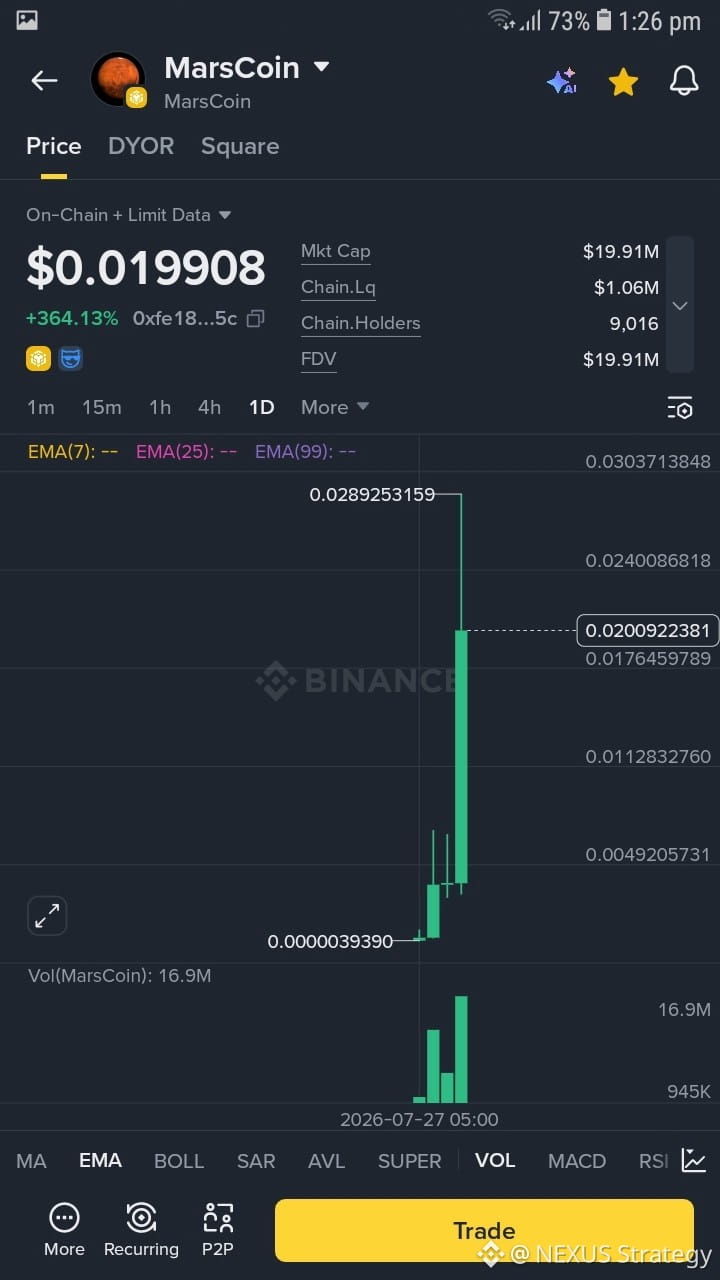
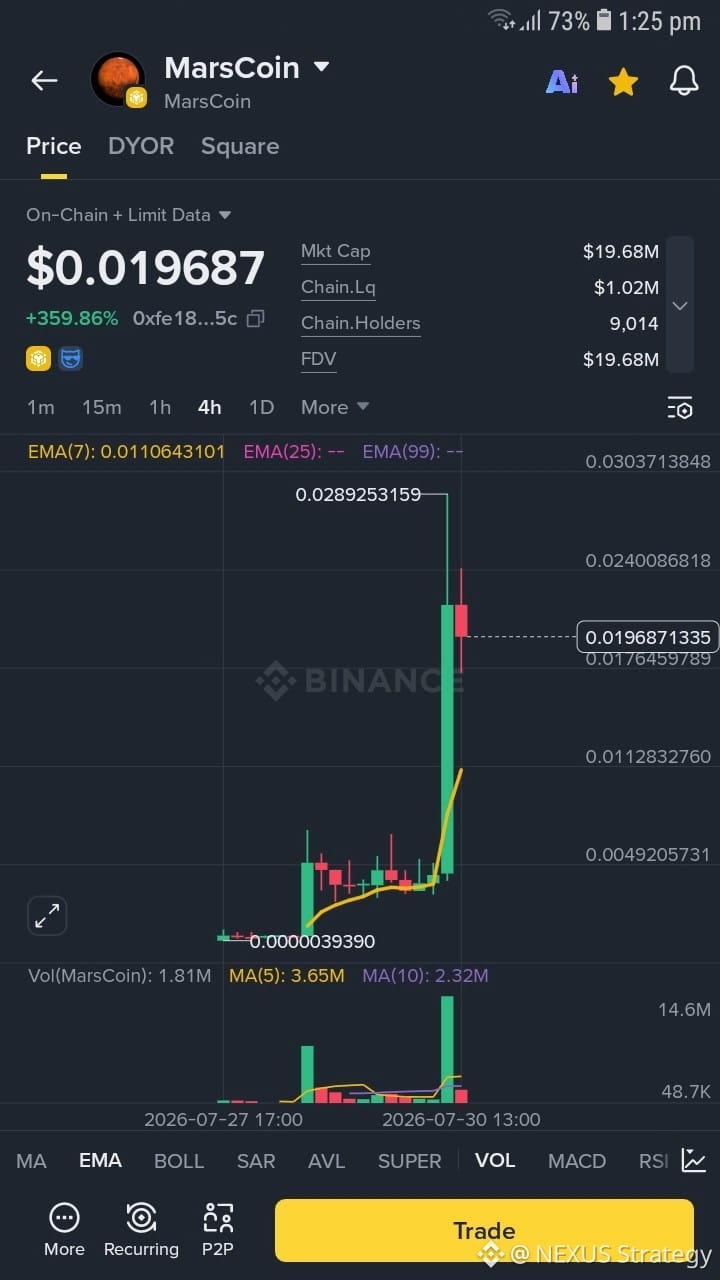
$MarsCoin SORRY Jungs
Es gibt einen weltweiten Kraftstoffmangel und eine anhaltende Krise. Infolgedessen ist die Marsmission auf dem Weg gestrandet und wird ihr Ziel nicht mehr erreichen können🚀
$MarsCoin SORRY Jungs
Es gibt einen weltweiten Kraftstoffmangel und eine anhaltende Krise. Infolgedessen ist die Marsmission auf dem Weg gestrandet und wird ihr Ziel nicht mehr erreichen können🚀
Es gibt einen weltweiten Kraftstoffmangel und eine anhaltende Krise. Infolgedessen ist die Marsmission auf dem Weg gestrandet und wird ihr Ziel nicht mehr erreichen können🚀
380
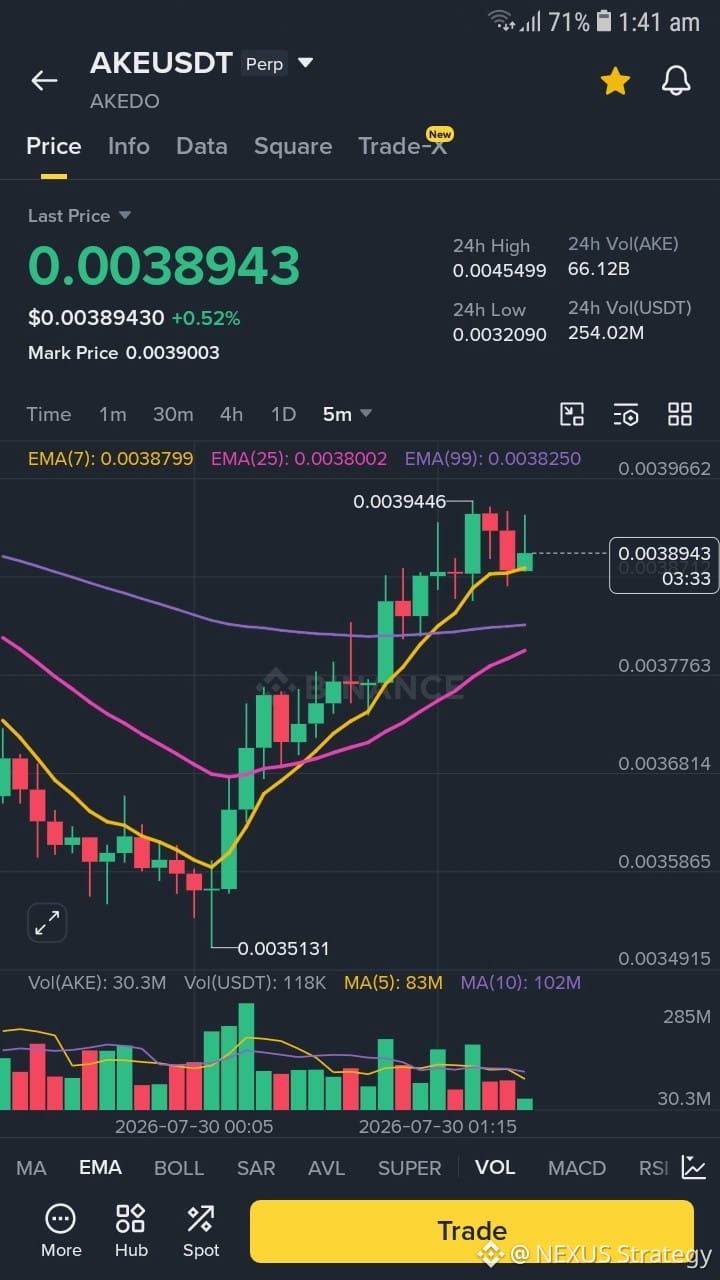
$AKE Akedo (AKE) wird derzeit bei etwa 0,0046 $ gehandelt und hat eine Marktkapitalisierung von rund 105 Millionen $. Kurzfristige Prognosen deuten auf eine Basisspanne von 0,0025 bis 0,0038 $ hin, falls die Unterstützung hält, während längerfristige Modelle Werte von etwa 0,0041 bis 0,0045 $ bis 2027 erwarten; allerdings bleibt die Volatilität der Micro-Cap-Aktie hoch.
$AKE Akedo (AKE) wird derzeit bei etwa 0,0046 $ gehandelt und hat eine Marktkapitalisierung von rund 105 Millionen $. Kurzfristige Prognosen deuten auf eine Basisspanne von 0,0025 bis 0,0038 $ hin, falls die Unterstützung hält, während längerfristige Modelle Werte von etwa 0,0041 bis 0,0045 $ bis 2027 erwarten; allerdings bleibt die Volatilität der Micro-Cap-Aktie hoch.
295
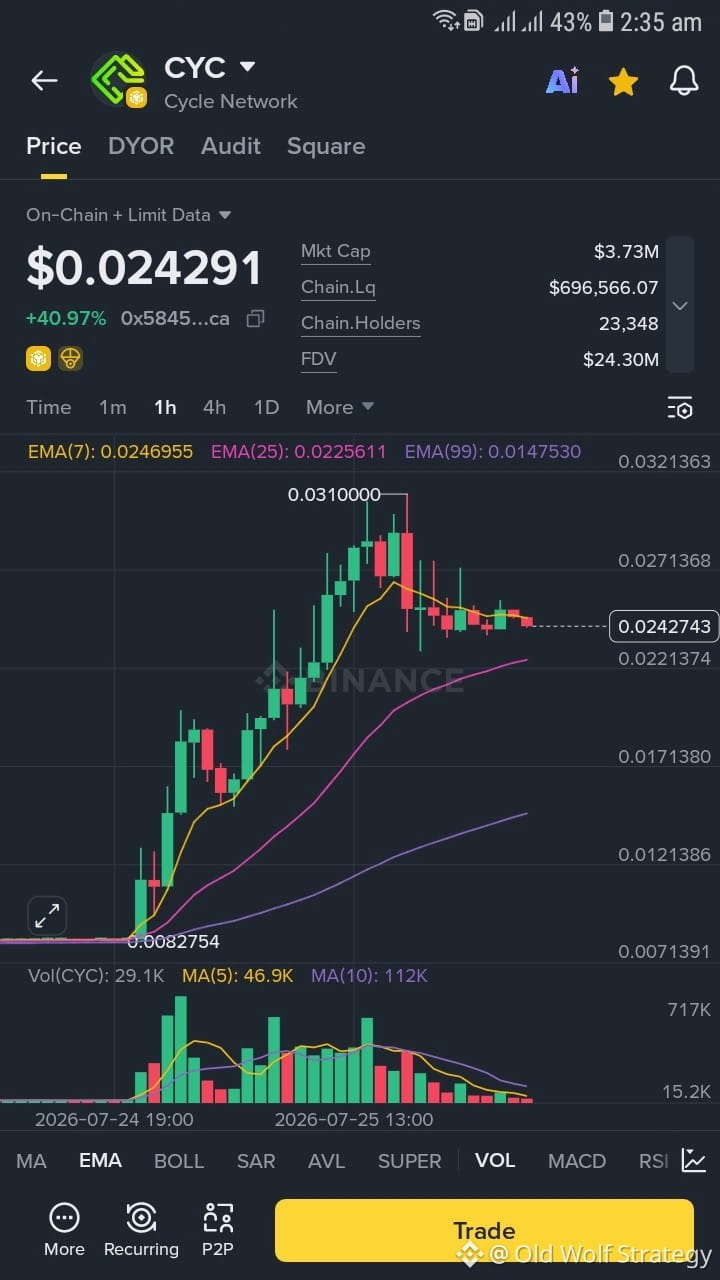
$CYC Freunde, ich möchte euch eine Frage stellen: Wenn ich für diese Münze eine Verkaufsorder aufgeben möchte, wird sie nicht ausgeführt, und ich werde gezwungen, sie in USDC umzuwandeln—was zu einem großen Verlust führt.😢 Was könnte das Problem mit dieser Münze sein? Warum akzeptiert sie meinen Verkaufsauftrag nicht?
$CYC Freunde, ich möchte euch eine Frage stellen: Wenn ich für diese Münze eine Verkaufsorder aufgeben möchte, wird sie nicht ausgeführt, und ich werde gezwungen, sie in USDC umzuwandeln—was zu einem großen Verlust führt.😢 Was könnte das Problem mit dieser Münze sein? Warum akzeptiert sie meinen Verkaufsauftrag nicht?
1
201
·
--
Bärisch
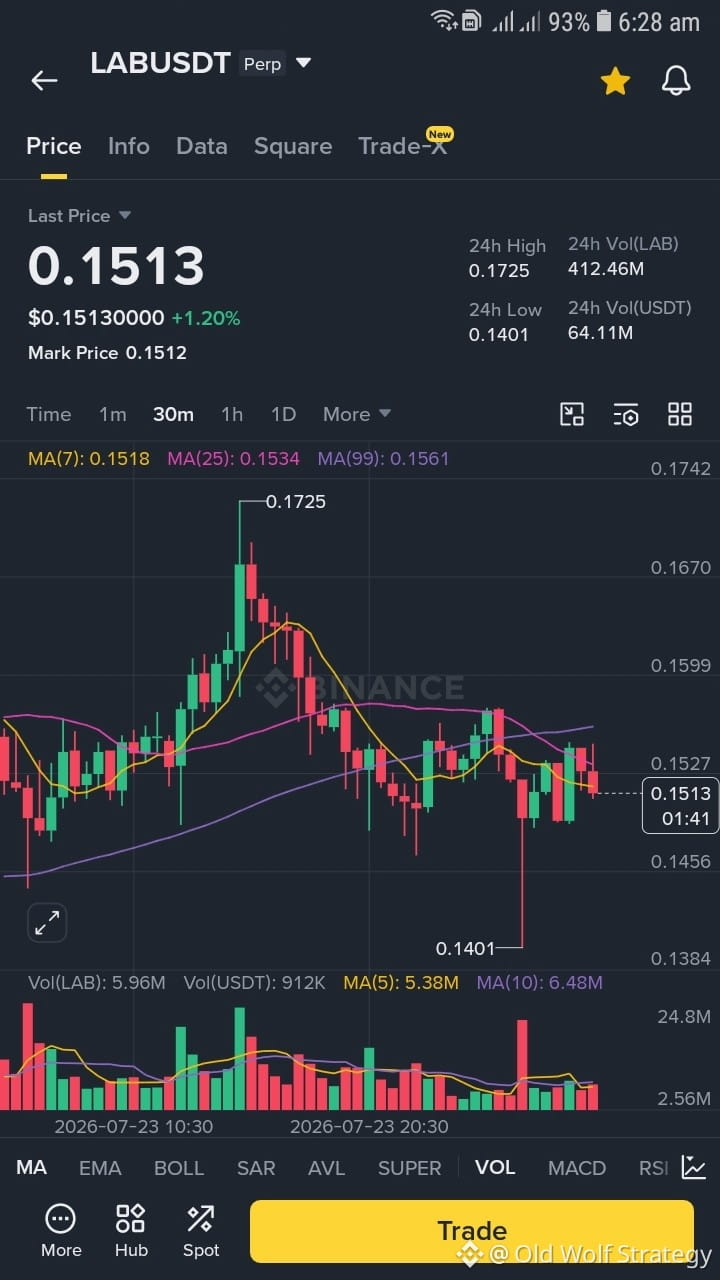
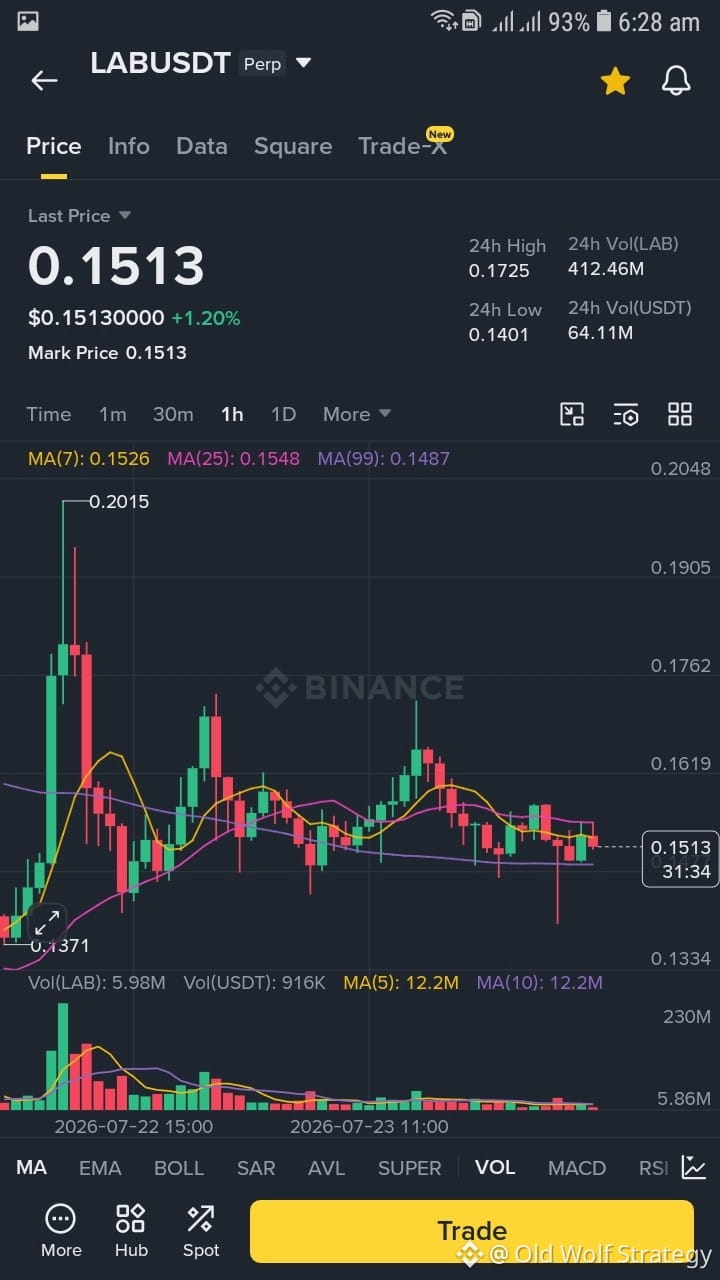
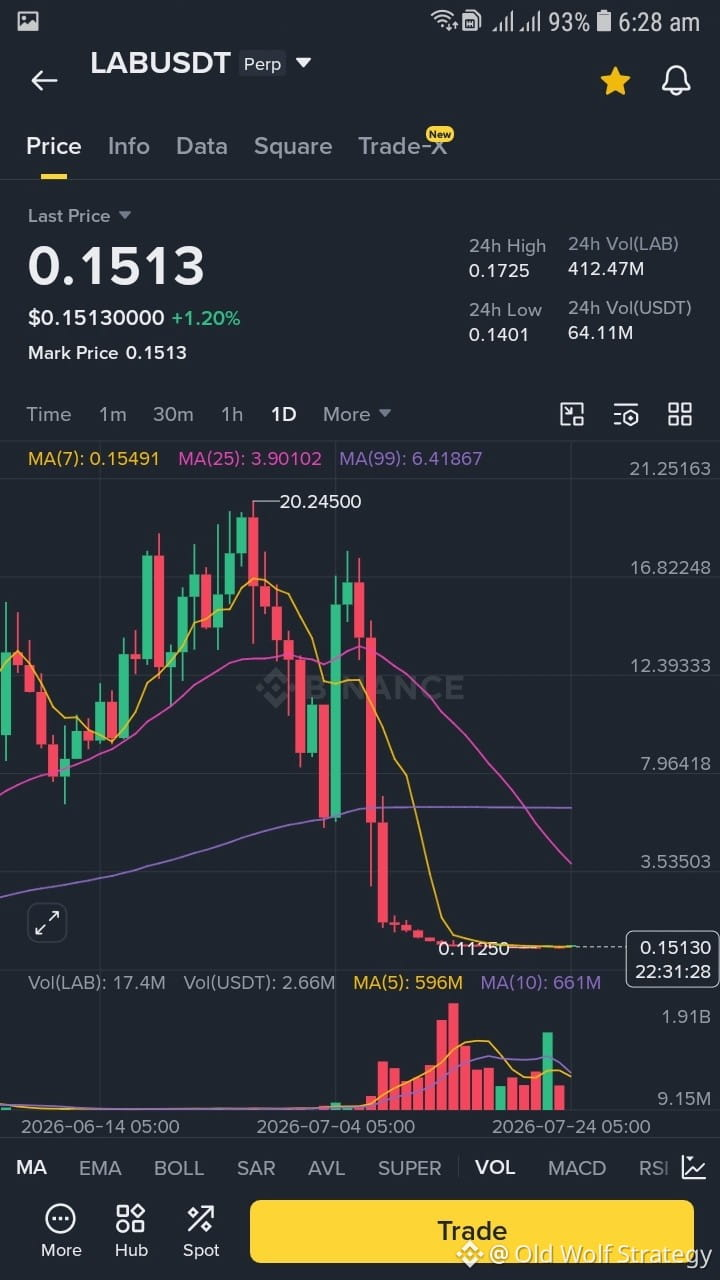
$LAB
Wall-Street-Analysten erwarten, dass die Aktie von Standard BioTools (NASDAQ' LAB) innerhalb der nächsten 12 Monate im Durchschnitt einen Kurs von 1,55 USD pro Aktie erreicht. Der niedrigste geschätzte Preis liegt bei 1,35 USD, der höchste bei 1,75 USD. Derzeit wird die Aktie mit 0,88 USD gehandelt, was einem möglichen Kursaufwärtspotenzial von 76 % entspricht.
Im Folgenden finden Sie die Details zu den Prognosen.
Analystenempfehlungen: Die Wall Street hat für die Aktie eine Hold/Reduce-Einstufung herausgegeben, während ein Unternehmen für die Aktien eine Strong-Buy-Bewertung abgab. Andere Analysten blieben vor dem Quartalsberichtsergebnis weiterhin vorsichtig.
Umsatzprognose: Standard BioTools hat darauf hingewiesen, dass der Umsatz im Geschäftsjahr 2026 zwischen 80 Millionen und 85 Millionen USD liegen wird.
Vergangenheit & Volatilität: Die Aktie von Standard BioTools bewegt sich nahe dem unteren Ende der 52-Wochen-Spanne, und die Aktien sind äußerst volatil geworden, während das Unternehmen darum kämpft, den Rückgang beim Umsatz zu stoppen und mit der abwärtsgerichteten Revision der Gewinnprognosen umzugehen.
$LAB
Wall-Street-Analysten erwarten, dass die Aktie von Standard BioTools (NASDAQ' LAB) innerhalb der nächsten 12 Monate im Durchschnitt einen Kurs von 1,55 USD pro Aktie erreicht. Der niedrigste geschätzte Preis liegt bei 1,35 USD, der höchste bei 1,75 USD. Derzeit wird die Aktie mit 0,88 USD gehandelt, was einem möglichen Kursaufwärtspotenzial von 76 % entspricht.
Im Folgenden finden Sie die Details zu den Prognosen.
Analystenempfehlungen: Die Wall Street hat für die Aktie eine Hold/Reduce-Einstufung herausgegeben, während ein Unternehmen für die Aktien eine Strong-Buy-Bewertung abgab. Andere Analysten blieben vor dem Quartalsberichtsergebnis weiterhin vorsichtig.
Umsatzprognose: Standard BioTools hat darauf hingewiesen, dass der Umsatz im Geschäftsjahr 2026 zwischen 80 Millionen und 85 Millionen USD liegen wird.
Vergangenheit & Volatilität: Die Aktie von Standard BioTools bewegt sich nahe dem unteren Ende der 52-Wochen-Spanne, und die Aktien sind äußerst volatil geworden, während das Unternehmen darum kämpft, den Rückgang beim Umsatz zu stoppen und mit der abwärtsgerichteten Revision der Gewinnprognosen umzugehen.
Wall-Street-Analysten erwarten, dass die Aktie von Standard BioTools (NASDAQ' LAB) innerhalb der nächsten 12 Monate im Durchschnitt einen Kurs von 1,55 USD pro Aktie erreicht. Der niedrigste geschätzte Preis liegt bei 1,35 USD, der höchste bei 1,75 USD. Derzeit wird die Aktie mit 0,88 USD gehandelt, was einem möglichen Kursaufwärtspotenzial von 76 % entspricht.
Im Folgenden finden Sie die Details zu den Prognosen.
Analystenempfehlungen: Die Wall Street hat für die Aktie eine Hold/Reduce-Einstufung herausgegeben, während ein Unternehmen für die Aktien eine Strong-Buy-Bewertung abgab. Andere Analysten blieben vor dem Quartalsberichtsergebnis weiterhin vorsichtig.
Umsatzprognose: Standard BioTools hat darauf hingewiesen, dass der Umsatz im Geschäftsjahr 2026 zwischen 80 Millionen und 85 Millionen USD liegen wird.
Vergangenheit & Volatilität: Die Aktie von Standard BioTools bewegt sich nahe dem unteren Ende der 52-Wochen-Spanne, und die Aktien sind äußerst volatil geworden, während das Unternehmen darum kämpft, den Rückgang beim Umsatz zu stoppen und mit der abwärtsgerichteten Revision der Gewinnprognosen umzugehen.
214
·
--
Bärisch
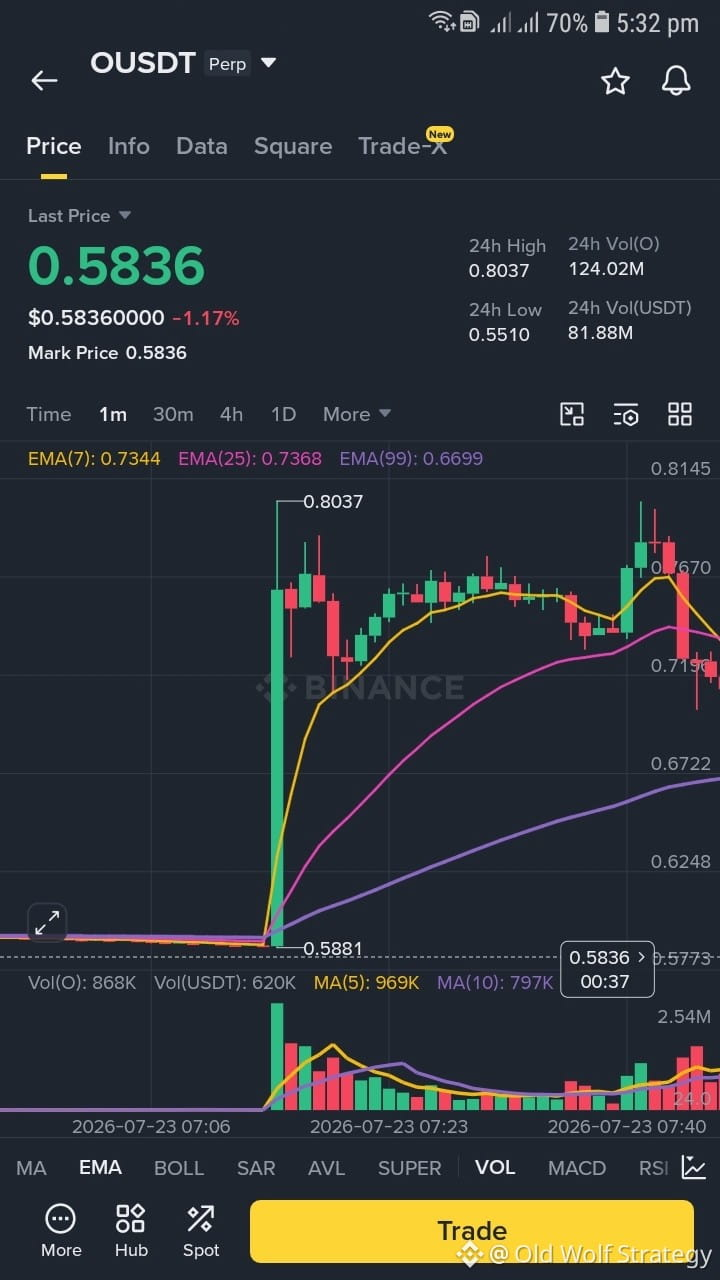
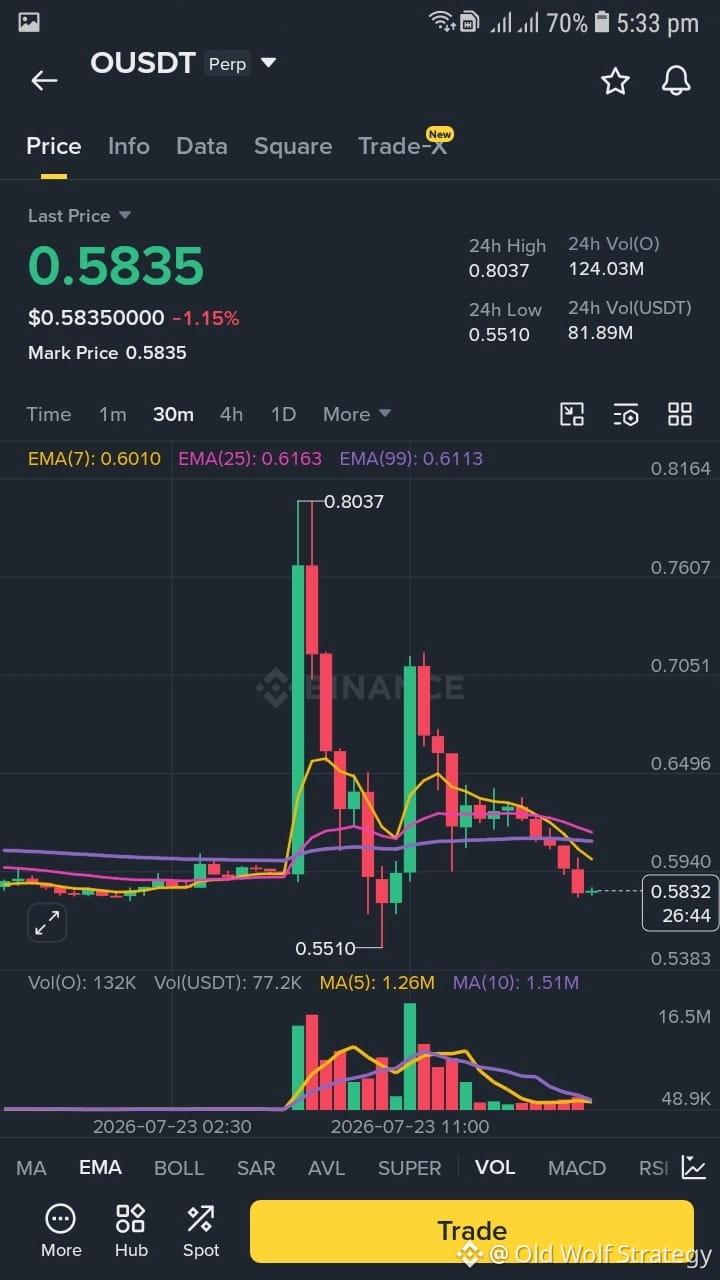
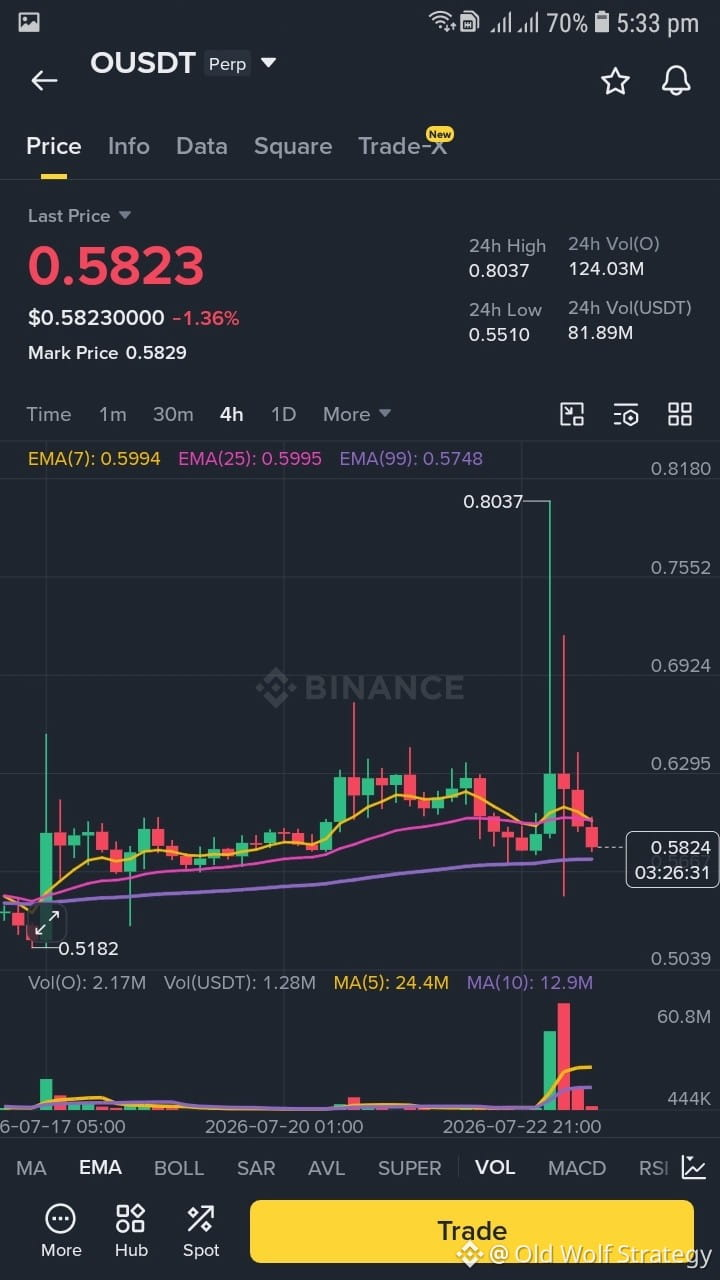
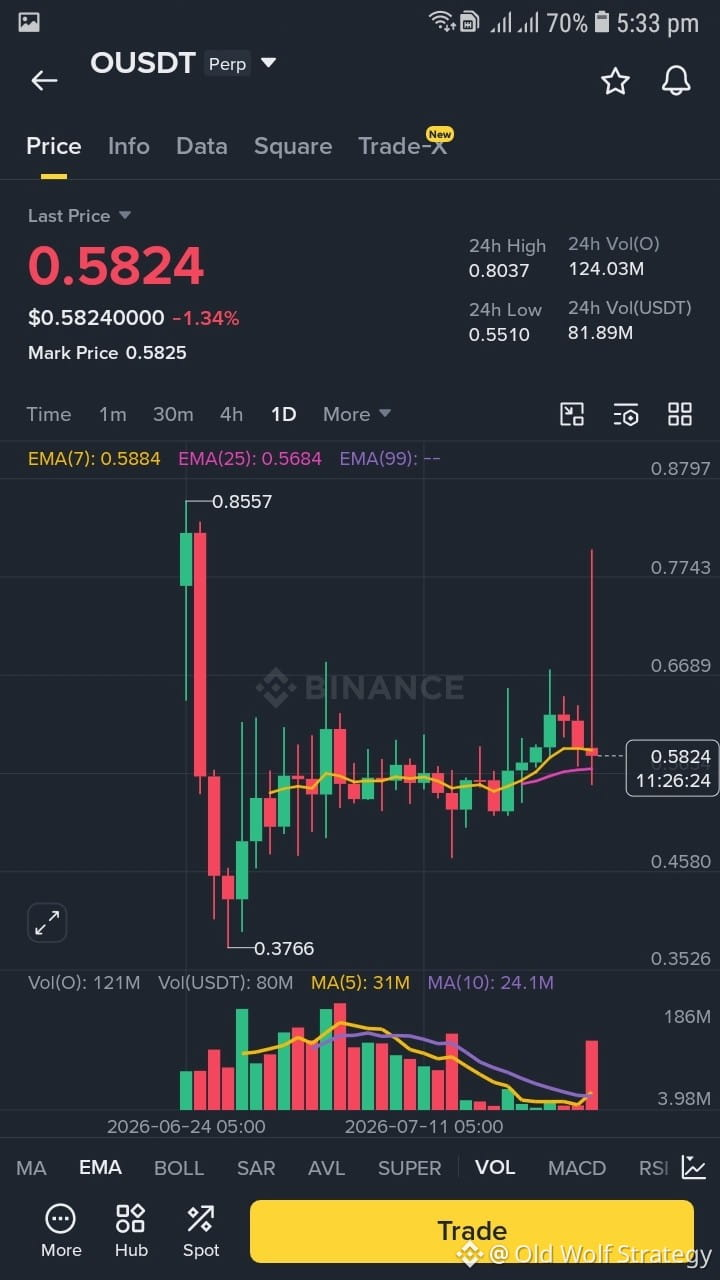
$O Meine Frage ist? Erlidet der Käufer einen größeren Verlust oder erzielt der Verkäufer einen größeren Gewinn?
In der volatilen Welt der Krypto-Währungen kann sich das gesamte Szenario in einer einzigen Minute verschieben – man sieht, wo der Markt gerade steht, und was als Nächstes passiert. Meine persönliche Ansicht ist, dass der Käufer eher größere Verluste erleidet, während der Verkäufer den größeren Gewinn einstreicht.
$O Meine Frage ist? Erlidet der Käufer einen größeren Verlust oder erzielt der Verkäufer einen größeren Gewinn?
In der volatilen Welt der Krypto-Währungen kann sich das gesamte Szenario in einer einzigen Minute verschieben – man sieht, wo der Markt gerade steht, und was als Nächstes passiert. Meine persönliche Ansicht ist, dass der Käufer eher größere Verluste erleidet, während der Verkäufer den größeren Gewinn einstreicht.
In der volatilen Welt der Krypto-Währungen kann sich das gesamte Szenario in einer einzigen Minute verschieben – man sieht, wo der Markt gerade steht, und was als Nächstes passiert. Meine persönliche Ansicht ist, dass der Käufer eher größere Verluste erleidet, während der Verkäufer den größeren Gewinn einstreicht.
276
·
--
Bullisch
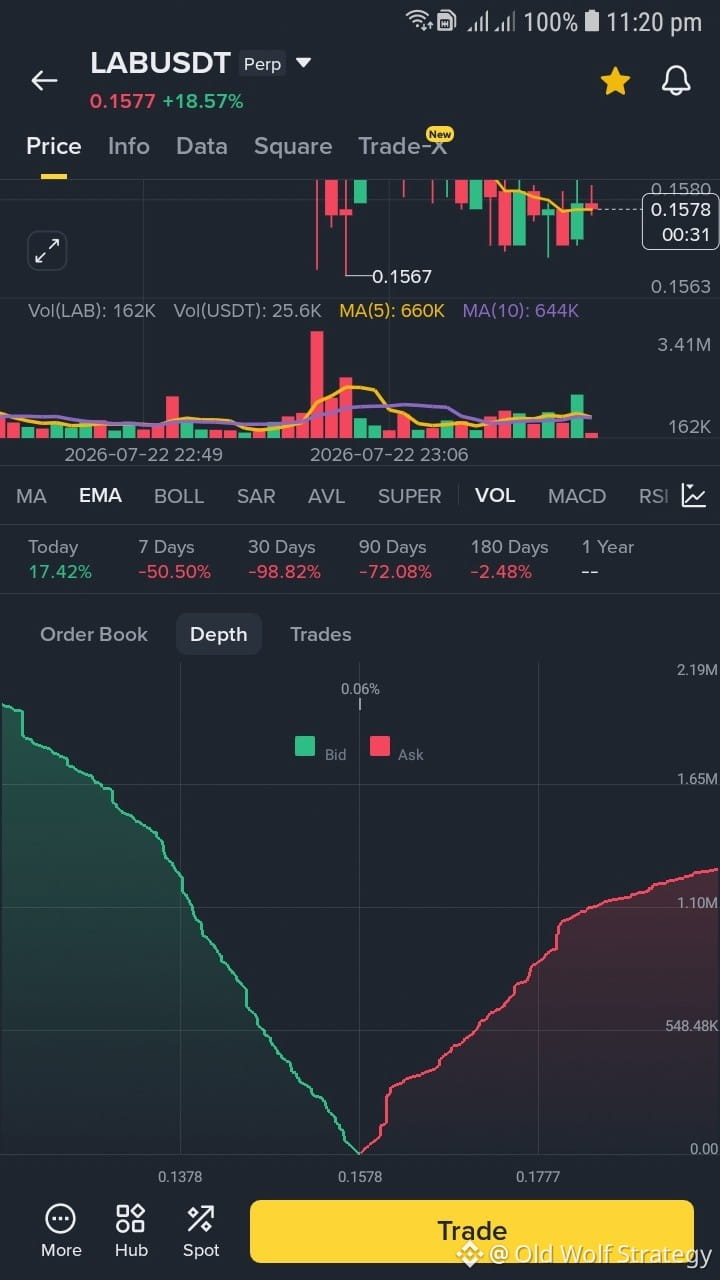
$LAB Wenn man sich die Situation hier ansieht, gibt es starken Kaufdruck, aber ich bin über die Denkweise und das Handeln des Market Makers verwundert.
$LAB Wenn man sich die Situation hier ansieht, gibt es starken Kaufdruck, aber ich bin über die Denkweise und das Handeln des Market Makers verwundert.
198
·
--
Bullisch
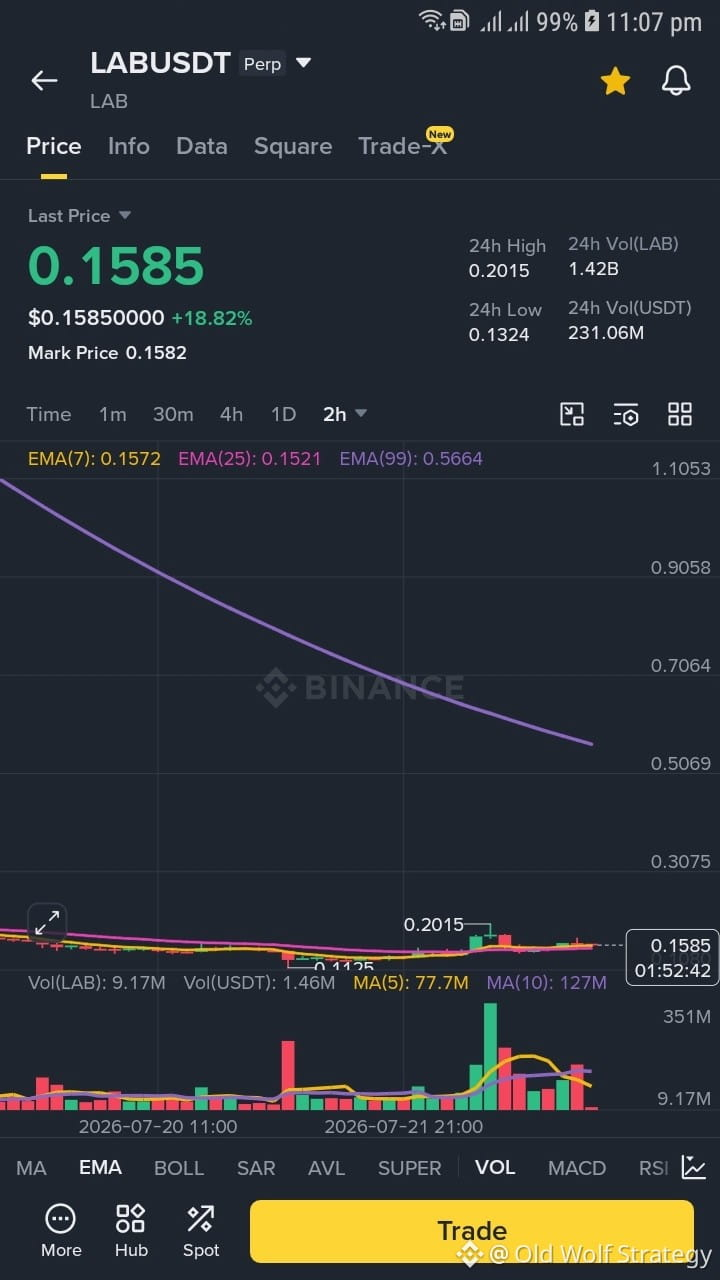
$LAB Ich habe heute eine bullische Prognose für diese $LAB -Münze abgegeben, weil sie nach langer Zeit eine positive Reaktion gezeigt hat' jedoch hat sie es bislang noch nicht geschafft, aus ihrer aktuellen Situation auszubrechen. Diese $LAB -Münze benötigt einen großen Investor' die Marktliquidität hat einen Punkt erreicht, an dem sie ohne einen solchen Investor bei diesem Preisniveau feststecken wird' das bedeutet, dass jeder leichte Preisanstieg auf massives Verkaufen trifft, gefolgt von einem weiteren kleinen Anstieg und einer sofortigen Wiederaufnahme des massiven Verkaufs.
$LAB Ich habe heute eine bullische Prognose für diese $LAB -Münze abgegeben, weil sie nach langer Zeit eine positive Reaktion gezeigt hat' jedoch hat sie es bislang noch nicht geschafft, aus ihrer aktuellen Situation auszubrechen. Diese $LAB -Münze benötigt einen großen Investor' die Marktliquidität hat einen Punkt erreicht, an dem sie ohne einen solchen Investor bei diesem Preisniveau feststecken wird' das bedeutet, dass jeder leichte Preisanstieg auf massives Verkaufen trifft, gefolgt von einem weiteren kleinen Anstieg und einer sofortigen Wiederaufnahme des massiven Verkaufs.
174
20
·
--
Bärisch
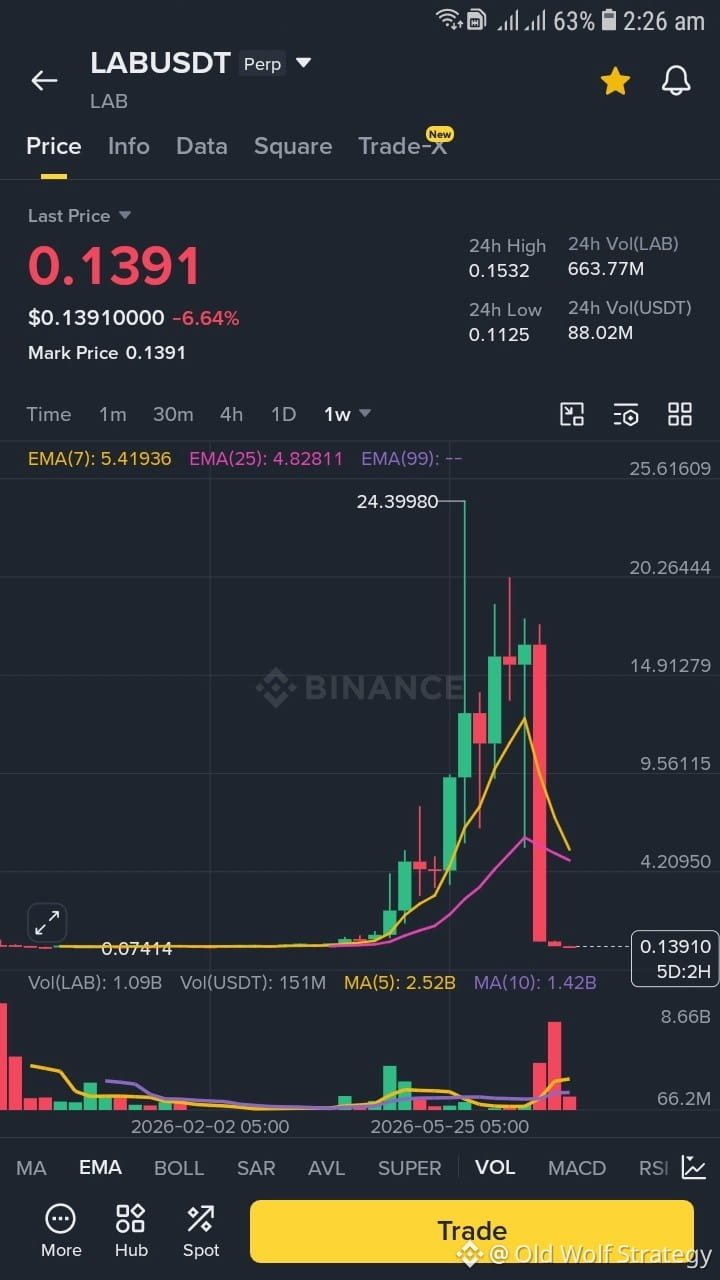
$LAB Ich bin vom Labcoin-Projekt völlig baff.🤮 Es schleppt sich gerade so dahin, aber sie verkünden trotzdem ständig, dass es sich immer noch in der „Frühphase“ befindet.🤮 Hat so ein Verhalten in der Frühphase eine positive oder negative Auswirkung auf den Markt?🤷🏻♂️
$LAB Ich bin vom Labcoin-Projekt völlig baff.🤮 Es schleppt sich gerade so dahin, aber sie verkünden trotzdem ständig, dass es sich immer noch in der „Frühphase“ befindet.🤮 Hat so ein Verhalten in der Frühphase eine positive oder negative Auswirkung auf den Markt?🤷🏻♂️
222
·
--
Bullisch
$AKE
$ESPORTS
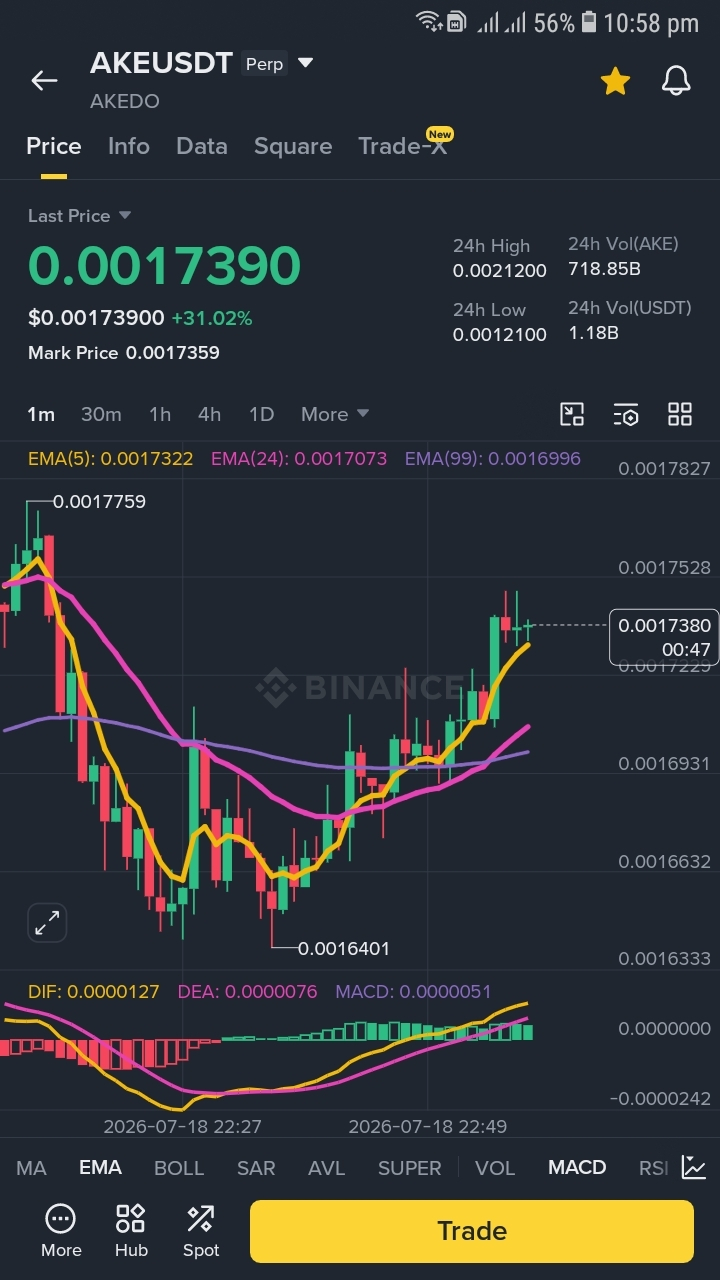
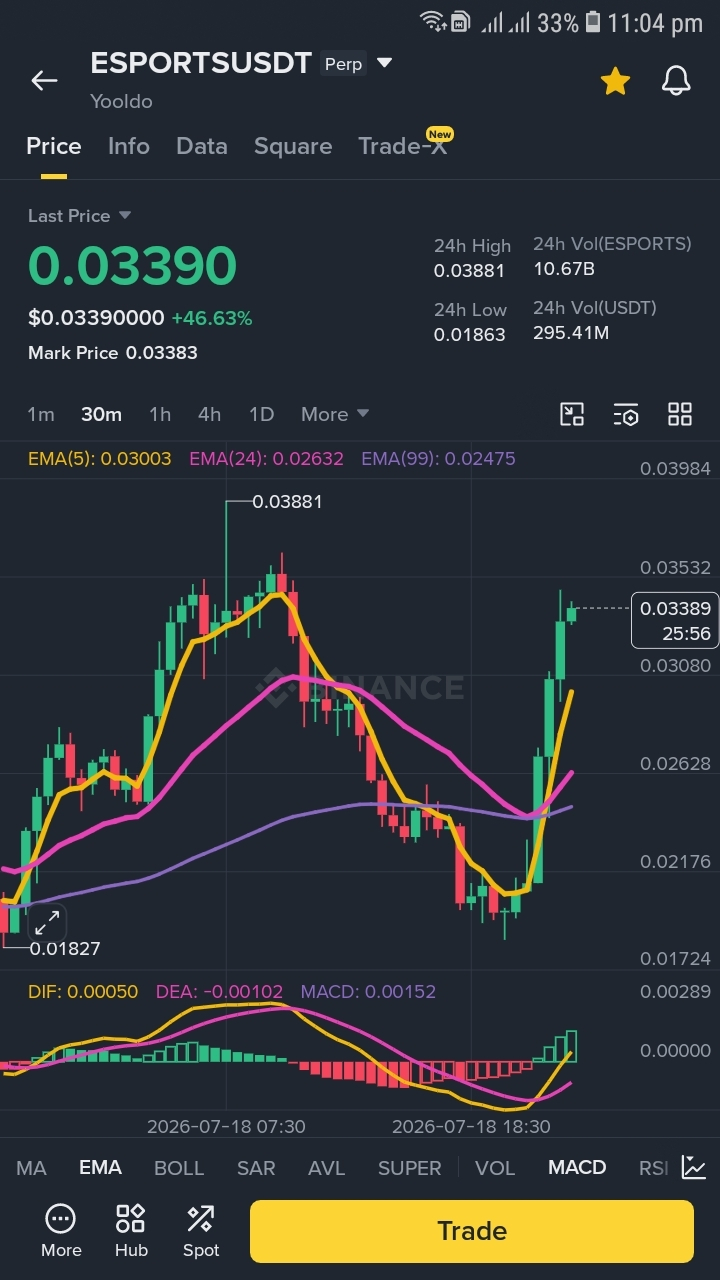
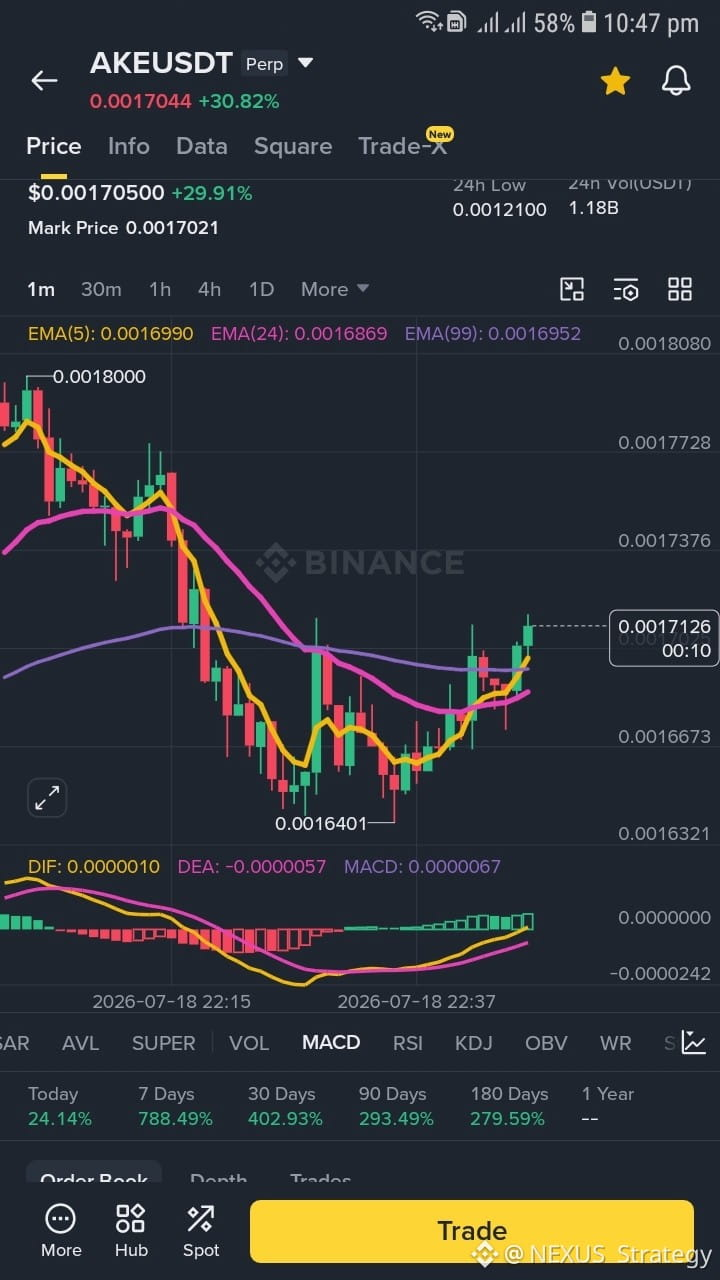
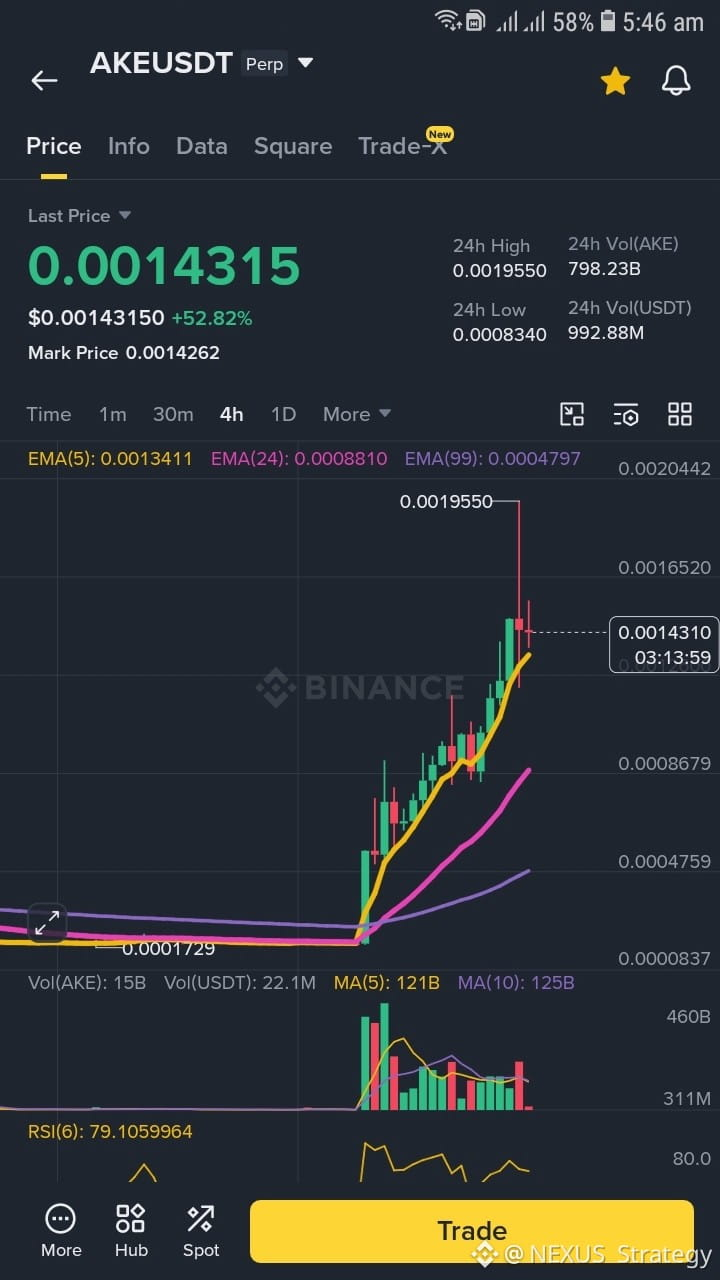
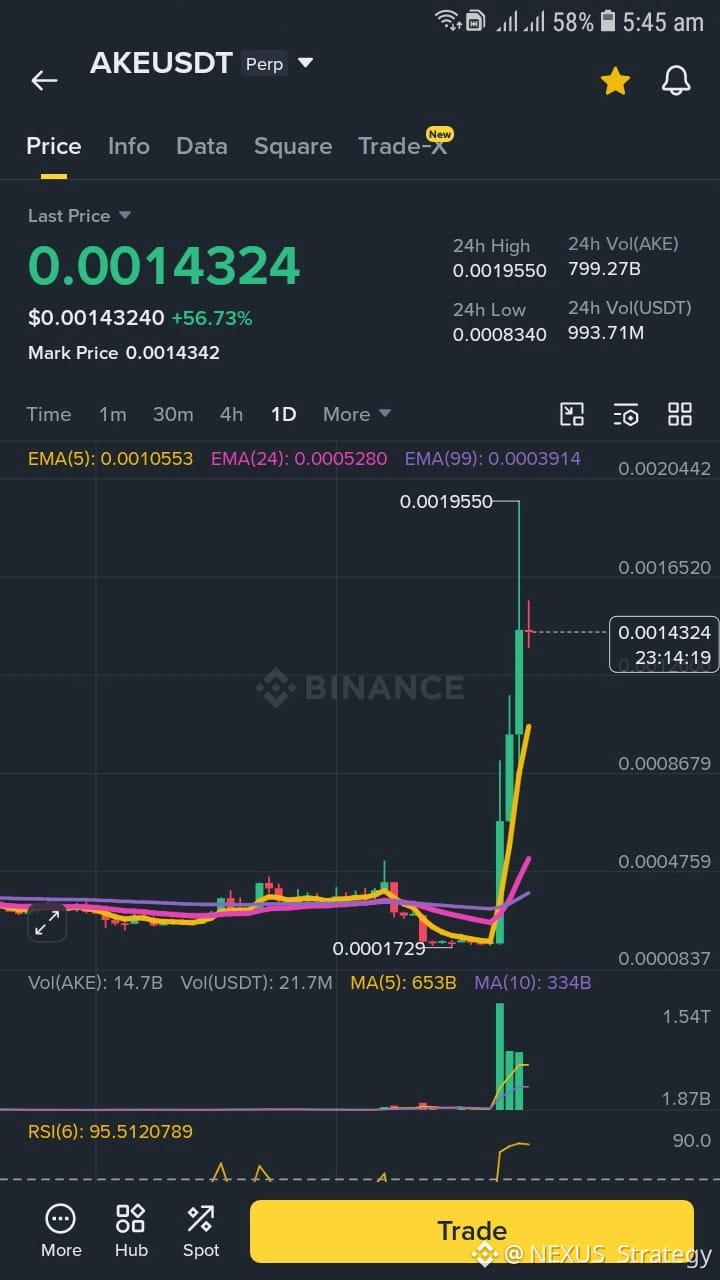
Der Grund dafür, diese beiden Screenshots zu teilen, ist, den Kontrast hervorzuheben: Schauen Sie sich „AKE“ an – sein Volumen liegt in den Milliarden, und dennoch beobachten Sie das Verhalten seiner Kerzen und ihre Bewegung; es gibt keine klare Richtung – weder nach oben noch nach unten. Andererseits: Schauen Sie sich „ESPORTS“ an. Dessen Volumen ist ziemlich niedrig, aber sein Handelsmuster ist solide, und die Kerzen bilden sich in einer strukturierten Weise. Im Gegensatz dazu wirkt „AKE“ völlig richtungslos – es ist, als wüssten sie nicht, was sie tun sollen. Ich glaube, die Marktteilnehmer wurden von diesem massiven Volumen in den Milliarden eingeschüchtert.
$AKE
$ESPORTS
Der Grund dafür, diese beiden Screenshots zu teilen, ist, den Kontrast hervorzuheben: Schauen Sie sich „AKE“ an – sein Volumen liegt in den Milliarden, und dennoch beobachten Sie das Verhalten seiner Kerzen und ihre Bewegung; es gibt keine klare Richtung – weder nach oben noch nach unten. Andererseits: Schauen Sie sich „ESPORTS“ an. Dessen Volumen ist ziemlich niedrig, aber sein Handelsmuster ist solide, und die Kerzen bilden sich in einer strukturierten Weise. Im Gegensatz dazu wirkt „AKE“ völlig richtungslos – es ist, als wüssten sie nicht, was sie tun sollen. Ich glaube, die Marktteilnehmer wurden von diesem massiven Volumen in den Milliarden eingeschüchtert.
$ESPORTS
Der Grund dafür, diese beiden Screenshots zu teilen, ist, den Kontrast hervorzuheben: Schauen Sie sich „AKE“ an – sein Volumen liegt in den Milliarden, und dennoch beobachten Sie das Verhalten seiner Kerzen und ihre Bewegung; es gibt keine klare Richtung – weder nach oben noch nach unten. Andererseits: Schauen Sie sich „ESPORTS“ an. Dessen Volumen ist ziemlich niedrig, aber sein Handelsmuster ist solide, und die Kerzen bilden sich in einer strukturierten Weise. Im Gegensatz dazu wirkt „AKE“ völlig richtungslos – es ist, als wüssten sie nicht, was sie tun sollen. Ich glaube, die Marktteilnehmer wurden von diesem massiven Volumen in den Milliarden eingeschüchtert.
263
·
--
Bullisch
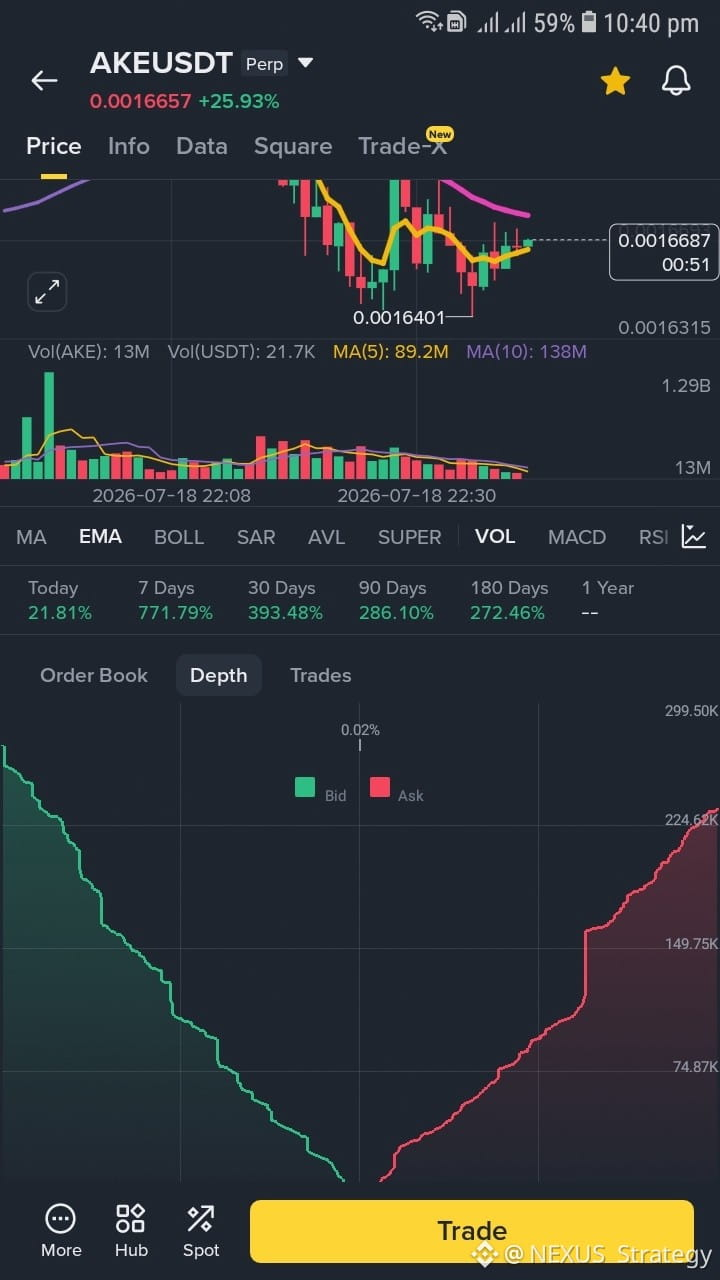
$AKE Hier gibt es Kaufdruck, aber der Market Maker scheint verwirrt zu sein—unklar, ob er nach oben oder nach unten gehen soll. Sie sitzen dort in einem Zustand der Unentschlossenheit.
$AKE Hier gibt es Kaufdruck, aber der Market Maker scheint verwirrt zu sein—unklar, ob er nach oben oder nach unten gehen soll. Sie sitzen dort in einem Zustand der Unentschlossenheit.
118
Der Trump-Beamte, der versucht, einen Krypto-Deal zu durchkreuzen, der Trump selbst in die Schranken weisen könnte.
Der Krypto-Chef im Weißen Haus steht im zweiten Trump-Termin vor einer möglicherweise riskanten Aufgabe: Er soll mit Demokraten über ein großes Gesetz zum Thema Kryptowährungen verhandeln – wobei diese ihn unter Druck setzen, Maßnahmen aufzunehmen, die Trump selbst Fesseln anlegen würden.
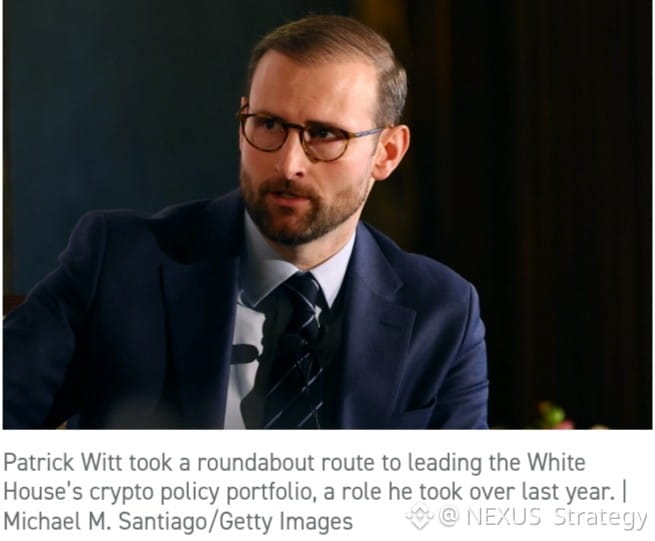
Da der Kongress kurz davor steht, ein pro-industrielles Krypto-Gesetz zu verabschieden, befindet sich der 37-jährige Patrick Witt in einer heiklen Lage: Er muss mit Senatoren über Formulierungen bei Fragen der Regierungs-Ethik feilschen, die neue Beschränkungen für die Geschäftsbeziehungen der Trump-Familie in dem Bereich der digitalen Währungen einführen würden.
Der Trump-Beamte, der versucht, einen Krypto-Deal zu durchkreuzen, der Trump selbst in die Schranken weisen könnte.
Der Krypto-Chef im Weißen Haus steht im zweiten Trump-Termin vor einer möglicherweise riskanten Aufgabe: Er soll mit Demokraten über ein großes Gesetz zum Thema Kryptowährungen verhandeln – wobei diese ihn unter Druck setzen, Maßnahmen aufzunehmen, die Trump selbst Fesseln anlegen würden.
Da der Kongress kurz davor steht, ein pro-industrielles Krypto-Gesetz zu verabschieden, befindet sich der 37-jährige Patrick Witt in einer heiklen Lage: Er muss mit Senatoren über Formulierungen bei Fragen der Regierungs-Ethik feilschen, die neue Beschränkungen für die Geschäftsbeziehungen der Trump-Familie in dem Bereich der digitalen Währungen einführen würden.
Der Krypto-Chef im Weißen Haus steht im zweiten Trump-Termin vor einer möglicherweise riskanten Aufgabe: Er soll mit Demokraten über ein großes Gesetz zum Thema Kryptowährungen verhandeln – wobei diese ihn unter Druck setzen, Maßnahmen aufzunehmen, die Trump selbst Fesseln anlegen würden.
Da der Kongress kurz davor steht, ein pro-industrielles Krypto-Gesetz zu verabschieden, befindet sich der 37-jährige Patrick Witt in einer heiklen Lage: Er muss mit Senatoren über Formulierungen bei Fragen der Regierungs-Ethik feilschen, die neue Beschränkungen für die Geschäftsbeziehungen der Trump-Familie in dem Bereich der digitalen Währungen einführen würden.
213
Gesetzgeber legen Gesetzentwurf vor, um Insiderhandel in Prognosemärkten zu bekämpfen
Der parteiübergreifende Gesetzentwurf ist das neueste Zeichen für wachsende Besorgnis in Washington über den Aufstieg von Prognosemärkten – einer eher abgelegenen Sparte des Finanzwesens, die im vergangenen Jahr einen enormen Popularitätsschub erlebt hat.
Eine parteiübergreifende Gruppe von Senatoren drängt auf neue Gesetzgebung, die Mitglieder des Kongresses, den Präsidenten, Mitarbeiter des Kongresses und weitere Personen in Washington daran hindern soll, in Prognosemärkten Insiderhandel zu betreiben.
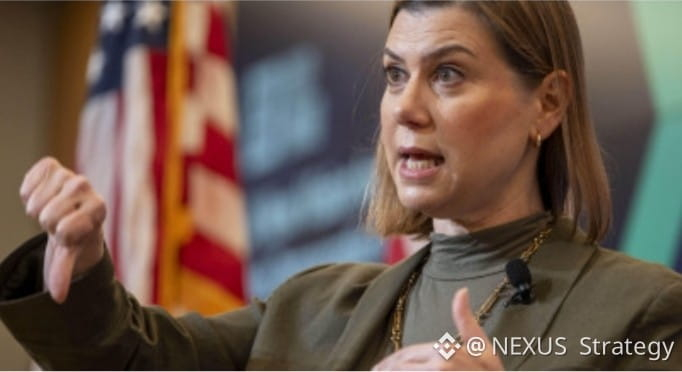
Senatorinnen und Senatoren Elissa Slotkin (D-MICH), Todd Young (R-IN), Adam Schiff (D-CA) und John Curtis (R-UT) haben am Donnerstag das „Public Integrity in Financial Markets Act of 2026“ eingebracht – ein Hinweis darauf, dass die Gesetzgeber darauf vorbereitet sind, neue Regeln für boomende Plattformen für Prognosemärkte wie Kalshi und Polymarket einzuführen.
Gesetzgeber legen Gesetzentwurf vor, um Insiderhandel in Prognosemärkten zu bekämpfen
Der parteiübergreifende Gesetzentwurf ist das neueste Zeichen für wachsende Besorgnis in Washington über den Aufstieg von Prognosemärkten – einer eher abgelegenen Sparte des Finanzwesens, die im vergangenen Jahr einen enormen Popularitätsschub erlebt hat.
Eine parteiübergreifende Gruppe von Senatoren drängt auf neue Gesetzgebung, die Mitglieder des Kongresses, den Präsidenten, Mitarbeiter des Kongresses und weitere Personen in Washington daran hindern soll, in Prognosemärkten Insiderhandel zu betreiben.
Senatorinnen und Senatoren Elissa Slotkin (D-MICH), Todd Young (R-IN), Adam Schiff (D-CA) und John Curtis (R-UT) haben am Donnerstag das „Public Integrity in Financial Markets Act of 2026“ eingebracht – ein Hinweis darauf, dass die Gesetzgeber darauf vorbereitet sind, neue Regeln für boomende Plattformen für Prognosemärkte wie Kalshi und Polymarket einzuführen.
Der parteiübergreifende Gesetzentwurf ist das neueste Zeichen für wachsende Besorgnis in Washington über den Aufstieg von Prognosemärkten – einer eher abgelegenen Sparte des Finanzwesens, die im vergangenen Jahr einen enormen Popularitätsschub erlebt hat.
Eine parteiübergreifende Gruppe von Senatoren drängt auf neue Gesetzgebung, die Mitglieder des Kongresses, den Präsidenten, Mitarbeiter des Kongresses und weitere Personen in Washington daran hindern soll, in Prognosemärkten Insiderhandel zu betreiben.
Senatorinnen und Senatoren Elissa Slotkin (D-MICH), Todd Young (R-IN), Adam Schiff (D-CA) und John Curtis (R-UT) haben am Donnerstag das „Public Integrity in Financial Markets Act of 2026“ eingebracht – ein Hinweis darauf, dass die Gesetzgeber darauf vorbereitet sind, neue Regeln für boomende Plattformen für Prognosemärkte wie Kalshi und Polymarket einzuführen.
13
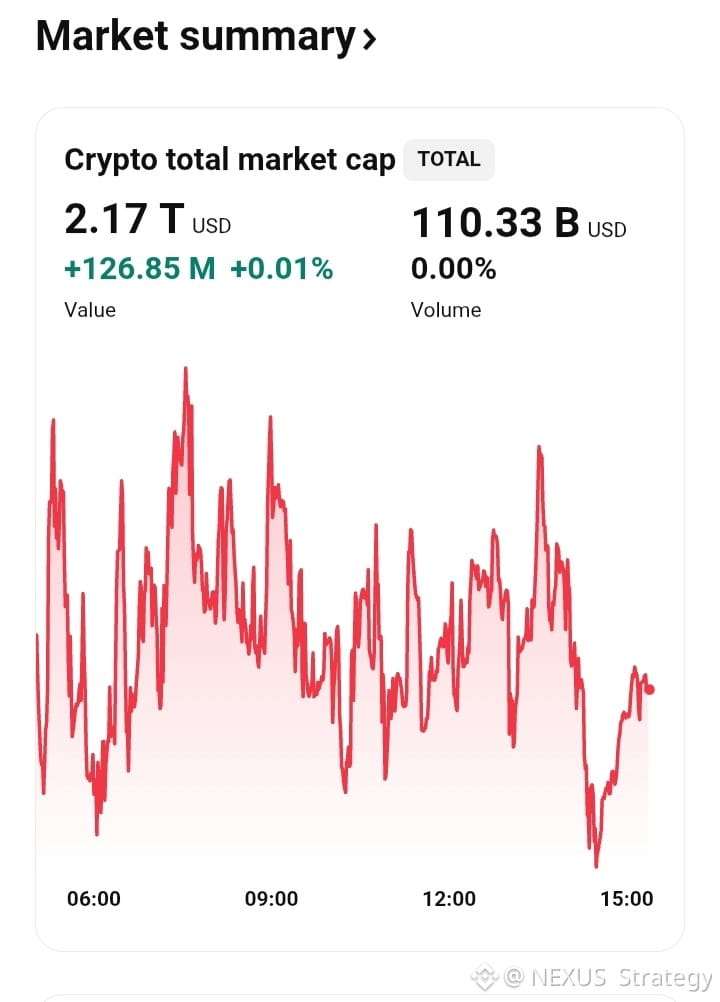
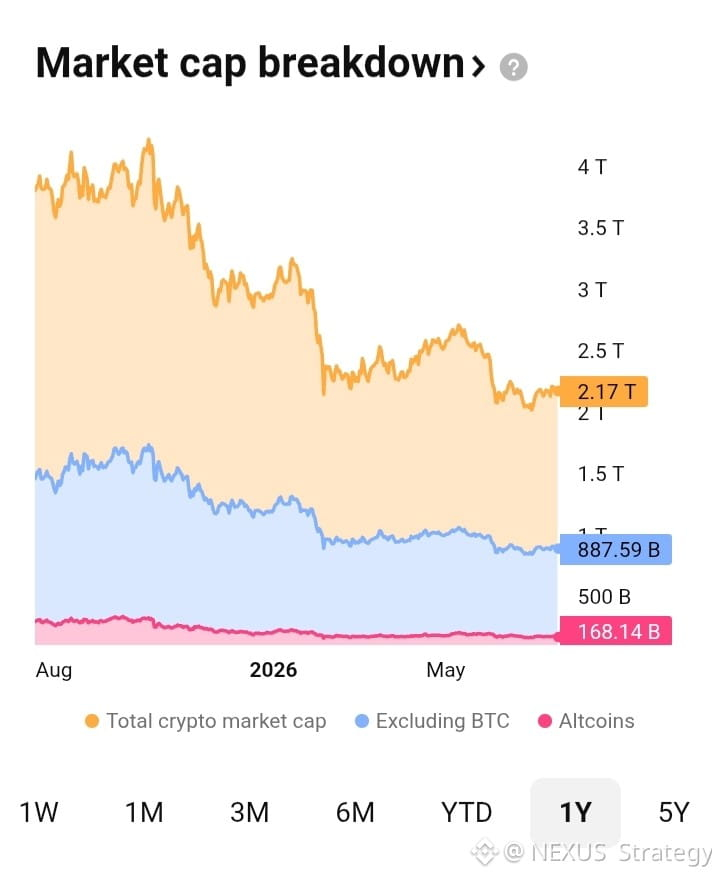
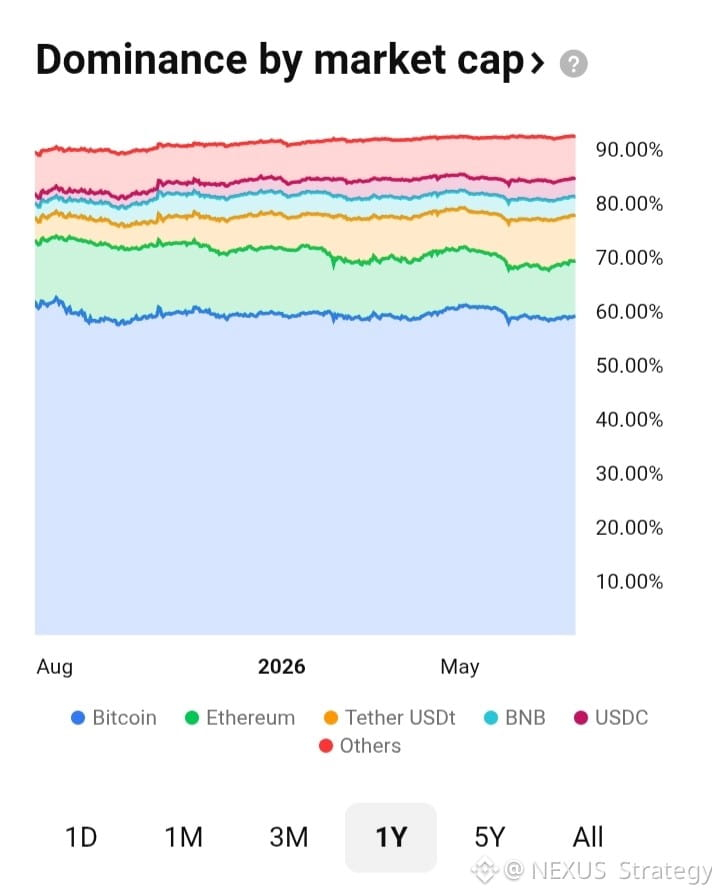
Die Risikobereitschaft erleidet einen Dämpfer
Bitcoin
verzeichnete im asiatischen Handel einen Rückgang von mehr als 3% und fiel auf rund 62.000 US-Dollar, nachdem zuvor die Marke von 64.000 US-Dollar überschritten worden war.
Grund für diesen Rückgang war ein weiterer geopolitischer Risikoschub, der Investoren in eine Verkaufswelle trieb.
Neue US-Angriffe auf den Iran ließen die Rohölpreise in die Höhe schnellen, was Sorgen über die Inflation auslöste – und Politiker dazu zwingen könnte, die Zinssätze weiter auf „Lebenshilfe“ zu halten.
Das ist besonders nachteilig für spekulative Anlagen, da Bitcoin keine Gewinne und kein regelmäßiges Einkommen erzeugt; wenn Investoren Anleihen mit attraktiven Renditen kaufen können, sind sie eher bereit, einige der Vermögenswerte mit geringeren Erträgen zu verkaufen.
Die Risikobereitschaft erleidet einen Dämpfer
Bitcoin
verzeichnete im asiatischen Handel einen Rückgang von mehr als 3% und fiel auf rund 62.000 US-Dollar, nachdem zuvor die Marke von 64.000 US-Dollar überschritten worden war.
Grund für diesen Rückgang war ein weiterer geopolitischer Risikoschub, der Investoren in eine Verkaufswelle trieb.
Neue US-Angriffe auf den Iran ließen die Rohölpreise in die Höhe schnellen, was Sorgen über die Inflation auslöste – und Politiker dazu zwingen könnte, die Zinssätze weiter auf „Lebenshilfe“ zu halten.
Das ist besonders nachteilig für spekulative Anlagen, da Bitcoin keine Gewinne und kein regelmäßiges Einkommen erzeugt; wenn Investoren Anleihen mit attraktiven Renditen kaufen können, sind sie eher bereit, einige der Vermögenswerte mit geringeren Erträgen zu verkaufen.
Bitcoin
verzeichnete im asiatischen Handel einen Rückgang von mehr als 3% und fiel auf rund 62.000 US-Dollar, nachdem zuvor die Marke von 64.000 US-Dollar überschritten worden war.
Grund für diesen Rückgang war ein weiterer geopolitischer Risikoschub, der Investoren in eine Verkaufswelle trieb.
Neue US-Angriffe auf den Iran ließen die Rohölpreise in die Höhe schnellen, was Sorgen über die Inflation auslöste – und Politiker dazu zwingen könnte, die Zinssätze weiter auf „Lebenshilfe“ zu halten.
Das ist besonders nachteilig für spekulative Anlagen, da Bitcoin keine Gewinne und kein regelmäßiges Einkommen erzeugt; wenn Investoren Anleihen mit attraktiven Renditen kaufen können, sind sie eher bereit, einige der Vermögenswerte mit geringeren Erträgen zu verkaufen.
189
·
--
Bullisch
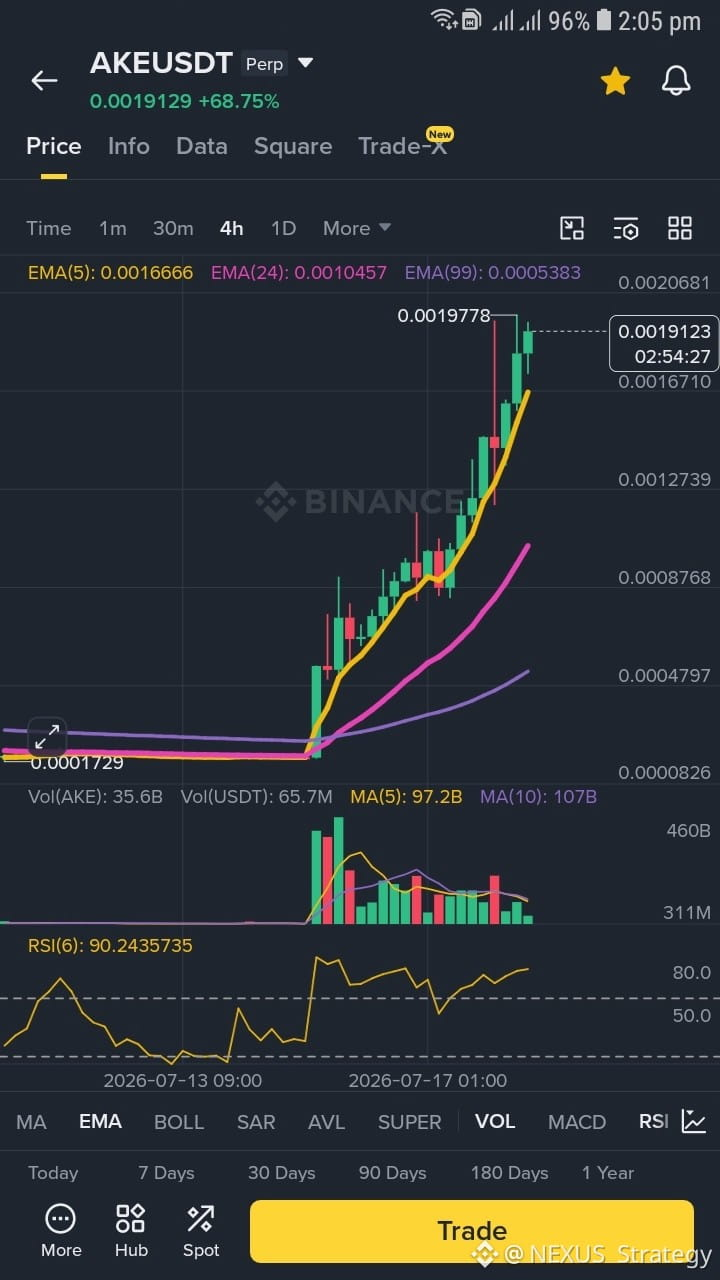
$AKE Der Relative Strength Index (RSI-14) von AKE liegt jetzt bei 77.1169530. Das bedeutet, dass AKEDO heute ein Kauf ist. RSI über 70 gilt als überkauft und RSI unter 30 gilt als überverkauft.
$AKE Der Relative Strength Index (RSI-14) von AKE liegt jetzt bei 77.1169530. Das bedeutet, dass AKEDO heute ein Kauf ist. RSI über 70 gilt als überkauft und RSI unter 30 gilt als überverkauft.
116
·
--
Bullisch
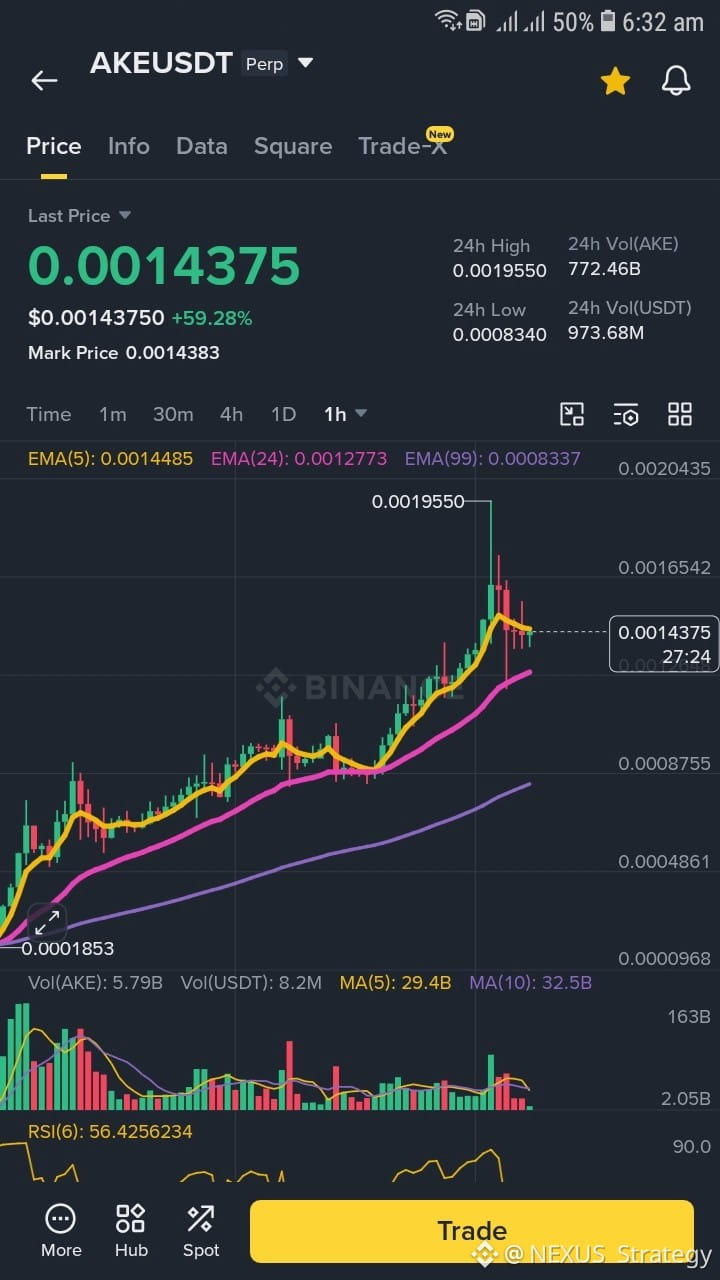
$AKE Die neuesten technischen Indikatoren zeigen, dass der AKE 1h aktuell ein Kaufsignal ausgibt. Die Analyse kombiniert gleitende Durchschnitte, Momentum-Oszillatoren und Trendindikatoren mit 17 Kaufsignalen, 5 Verkaufssignalen und 3 neutralen Signalen.
$AKE Die neuesten technischen Indikatoren zeigen, dass der AKE 1h aktuell ein Kaufsignal ausgibt. Die Analyse kombiniert gleitende Durchschnitte, Momentum-Oszillatoren und Trendindikatoren mit 17 Kaufsignalen, 5 Verkaufssignalen und 3 neutralen Signalen.
226
·
--
Bullisch
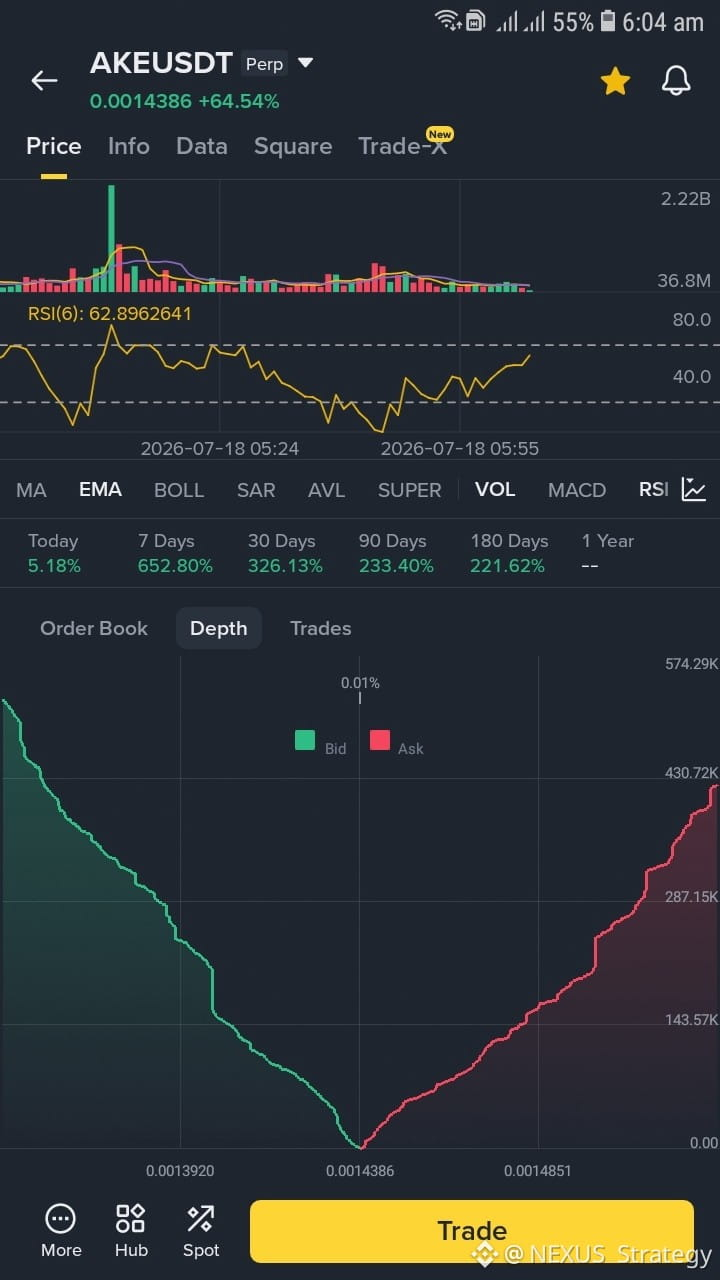
$AKE Es ist offensichtlich 👀, dass derzeit ein Kampf👊 zwischen „Walen“🐋 auf dem Markt im Gange ist. Händler, die diese Münze mit einer kleineren Investition handeln möchten, müssen Geduld haben: Warten Sie, bis sich der Markttrend verschiebt und dem Markt etwas Schwung verleiht. Führen Sie dann Ihren Trade nur aus, nachdem Sie Ihr Risiko sorgfältig verwaltet und Ihren Stop-Loss🔥 sowie Take-Profit💵 bedacht festgelegt haben
$AKE Es ist offensichtlich 👀, dass derzeit ein Kampf👊 zwischen „Walen“🐋 auf dem Markt im Gange ist. Händler, die diese Münze mit einer kleineren Investition handeln möchten, müssen Geduld haben: Warten Sie, bis sich der Markttrend verschiebt und dem Markt etwas Schwung verleiht. Führen Sie dann Ihren Trade nur aus, nachdem Sie Ihr Risiko sorgfältig verwaltet und Ihren Stop-Loss🔥 sowie Take-Profit💵 bedacht festgelegt haben
181
·
--
Bullisch
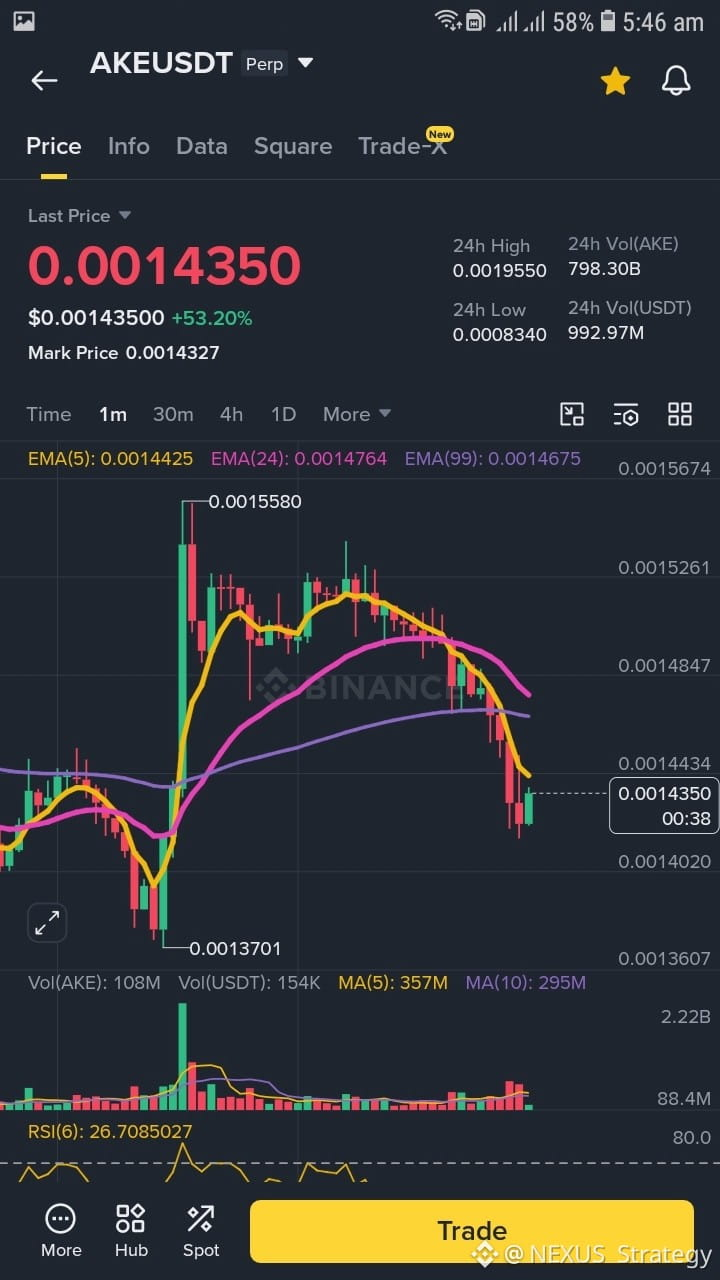
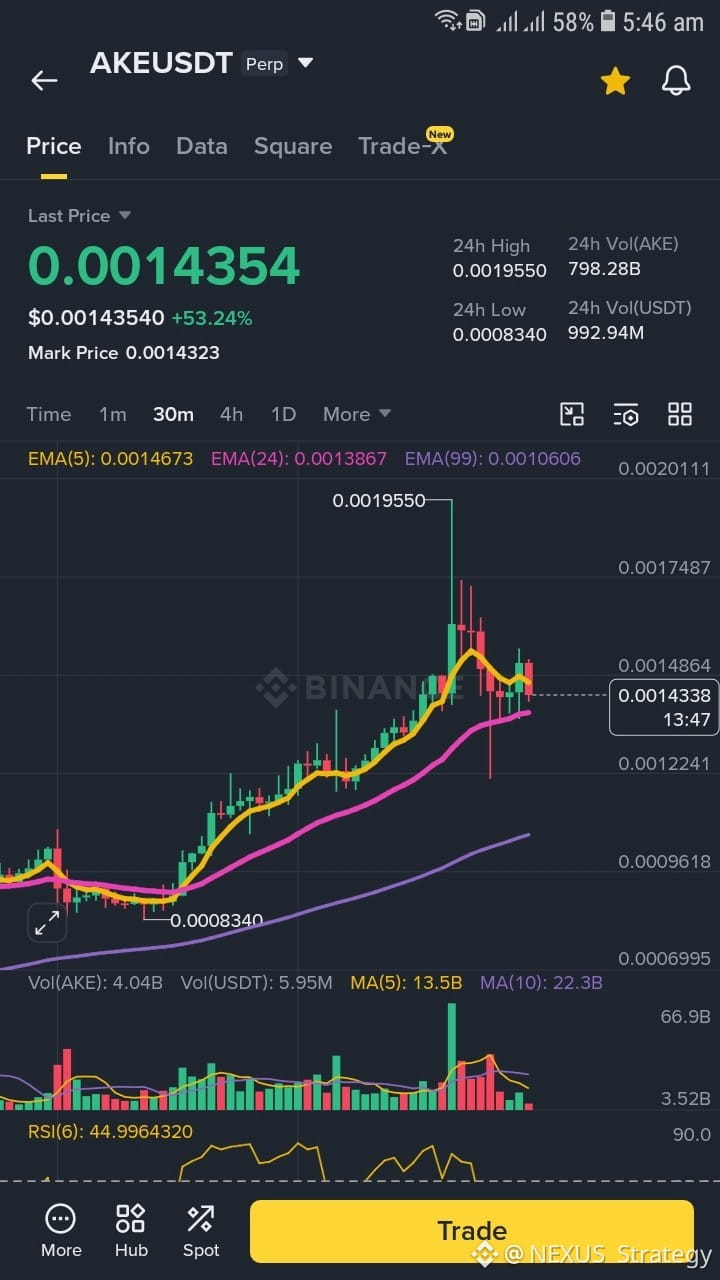
$AKE Das Handelsvolumen liegt derzeit in den Milliarden, und es ist ersichtlich, dass hier „Wale“ eine bedeutende Präsenz haben. Es ist keine gute Idee, den „Walen“ gleich zu Beginn des Tages direkt entgegenzutreten—lass den Markt sich erst ein wenig bewegen, bevor du tradest. Wenn du jedoch kurzfristig tradest, empfehle ich, deine Take-Profit- und Stop-Loss-Werte sehr sorgfältig festzulegen, da der Markt kurzzeitig fallen könnte, obwohl der Gesamttrend bullisch ist 🥳, und Geld mit den „Walen“ zu verdienen ist nicht so einfach 🤪🤪🤪
$AKE Das Handelsvolumen liegt derzeit in den Milliarden, und es ist ersichtlich, dass hier „Wale“ eine bedeutende Präsenz haben. Es ist keine gute Idee, den „Walen“ gleich zu Beginn des Tages direkt entgegenzutreten—lass den Markt sich erst ein wenig bewegen, bevor du tradest. Wenn du jedoch kurzfristig tradest, empfehle ich, deine Take-Profit- und Stop-Loss-Werte sehr sorgfältig festzulegen, da der Markt kurzzeitig fallen könnte, obwohl der Gesamttrend bullisch ist 🥳, und Geld mit den „Walen“ zu verdienen ist nicht so einfach 🤪🤪🤪
225
Anmelden und weiter Inhalte entdecken
Krypto-Nutzer weltweit auf Binance Square kennenlernen
⚡️ Bleib in Sachen Krypto stets am Puls.
💬 Die weltgrößte Kryptobörse vertraut darauf.
👍 Erhalte verlässliche Einblicke von verifizierten Creators.
E-Mail-Adresse/Telefonnummer
Trendthemen
BinanceLaunchesBinanceIntelligence
318,804 Aufrufe
2,681 Kommentare
Binance geht eine Wette ein, die die Art und Weise verändern könnte, wie Menschen mit Kryptowährungen handeln.
Ich habe Trader dabei beobachtet, wie sie stundenlang zwischen Charts, Nachrichten, Funding-Rates und On-Chain-Daten hin- und herwechseln, nur um eine Frage zu beantworten: „Was sollte ich als Nächstes tun?“ Jetzt versucht Binance, diesen ganzen Prozess mithilfe von KI zu verkürzen.
Binance AI kann Marktinformationen personalisieren, AI Pro entwickelt sich in Richtung Strategieentwicklung in natürlicher Sprache, und Agent OS geht noch einen Schritt weiter, indem es KI-Agenten mit der Binance-Infrastruktur verbindet.
Aber hier ist meine Einschätzung:
Der nächste Handelsvorteil hängt vielleicht nicht davon ab, wer die meisten Indikatoren kennt.
Vielleicht kommt es darauf an, wer weiß, wie man:
• bessere Fragen stellt
• der KI besseren Kontext liefert
• bessere Risikogrenzen festlegt
Das klingt vielversprechend, macht mir aber auch ein wenig Sorgen.
Wenn KI die Ausführung erleichtert, kann sie gute Entscheidungen reibungsloser machen. Sie kann aber auch schlechte Entscheidungen erleichtern.
Und genau das werde ich im Auge behalten.
Wird KI Menschen tatsächlich zu besseren Tradern machen?
Oder wird sie durchschnittliche Trader einfach nur schneller Fehler machen lassen?
Wie seht ihr das? 👇
$BNB $BTC $ETH #BİNANCE #AI
#BinanceLaunchesBinanceIntelligence
DevRajCrypto
·1 Likes
·228 Aufrufe
BitcoinTargets2026OpenAt$87570
1,014 Aufrufe
47 Kommentare
BitcoinRejectedAt$87KThirdTime
1,225 Aufrufe
45 Kommentare