

HARPER AMELIYA
852 Beiträge

HARPER AMELIYA
Melden
Nutzer blockieren
64 Following
31 Follower
381 Like gegeben
Beiträge
Alle
Live
·
--
Bullisch
Übersetzung ansehen
$NEAR recorded the largest liquidation at $10.567K around $4.649. HYPE followed with $3.1422K at $86.994, while GRASS recorded $11.196K at $0.67333. All three events involved short positions being liquidated, meaning leveraged bearish traders were forced to close as price moved higher against their positions.
The larger liquidation amounts on NEAR and $GRASS make their reported levels important areas to monitor for short-term price action. If price holds above these zones and trading activity remains elevated, additional short positions could come under pressure.
For $HYPE , the $86.994 level provides a reference point for tracking whether the upward move has follow-through or whether the liquidation was simply a temporary liquidity event.
Liquidation data should not be viewed in isolation. Volume, market structure, liquidity, and broader crypto-market conditions remain important for understanding whether these moves can develop further.
Key levels from this tape are $4.649 for NEAR, $86.994 for HYPE, and $0.67333 for GRASS.
Who is best ganner coin for today.
{future}(NEARUSDT)
{future}(HYPEUSDT)
{future}(GRASSUSDT)
$NEAR recorded the largest liquidation at $10.567K around $4.649. HYPE followed with $3.1422K at $86.994, while GRASS recorded $11.196K at $0.67333. All three events involved short positions being liquidated, meaning leveraged bearish traders were forced to close as price moved higher against their positions.
The larger liquidation amounts on NEAR and $GRASS make their reported levels important areas to monitor for short-term price action. If price holds above these zones and trading activity remains elevated, additional short positions could come under pressure.
For $HYPE , the $86.994 level provides a reference point for tracking whether the upward move has follow-through or whether the liquidation was simply a temporary liquidity event.
Liquidation data should not be viewed in isolation. Volume, market structure, liquidity, and broader crypto-market conditions remain important for understanding whether these moves can develop further.
Key levels from this tape are $4.649 for NEAR, $86.994 for HYPE, and $0.67333 for GRASS.
Who is best ganner coin for today.
The larger liquidation amounts on NEAR and $GRASS make their reported levels important areas to monitor for short-term price action. If price holds above these zones and trading activity remains elevated, additional short positions could come under pressure.
For $HYPE , the $86.994 level provides a reference point for tracking whether the upward move has follow-through or whether the liquidation was simply a temporary liquidity event.
Liquidation data should not be viewed in isolation. Volume, market structure, liquidity, and broader crypto-market conditions remain important for understanding whether these moves can develop further.
Key levels from this tape are $4.649 for NEAR, $86.994 for HYPE, and $0.67333 for GRASS.
Who is best ganner coin for today.
$NEAR bullish💚
0%
$HYPE bullish💚
0%
$GRASS bullish💚
0%
0 Stimmen • Abstimmung beendet
192
·
--
Bullisch
$HBAR und $NMR wurden kürzlich auf Binance gegensätzliche Liquidationen verzeichnet, was unterschiedliche kurzfristige Positionierung über die beiden Assets hinweg hervorhebt.
HBAR verzeichnete etwa 1,08 Mio. USD an Short-Liquidationen bei 0,11856 USD, während NMR rund 4,5031 Mio. USD an Long-Liquidationen bei 11,25771 USD meldete. Der Unterschied ist wichtig, weil Short-Liquidationen auftreten, wenn bärische Positionen während eines Aufwärtsmoves zwangsweise geschlossen werden, während Long-Liquidationen passieren, wenn bullische Positionen zwangsweise aus dem Markt gedrängt werden, während der Preis nach unten bewegt.
Für HBAR kann der Bereich um 0,11856 als kurzfristige Referenzebene beobachtet werden. Eine anhaltende Stärke über dieser Zone hinaus könnte den Druck auf die verbleibenden Short-Positionen aufrechterhalten, insbesondere wenn das Handelsvolumen zunimmt.
Für NMR ist die Marke bei 11,25771 nach der größeren Long-Liquidation einen Blick wert. Wenn der Preis weiterhin unter diesem Bereich handelt, könnte das darauf hindeuten, dass Käufer, die mit Leverage arbeiten, stärkerem Druck ausgesetzt sind. Eine Erholung über dem Niveau würde eine andere Marktstruktur liefern, die es zu beobachten gilt.
Keines der Liquidationsereignisse sollte als eigenständiges, richtungsweisendes Signal betrachtet werden. Volumen, Kursverhalten, Unterstützungs- und Widerstandsniveaus sowie die allgemeinen Marktbedingungen bleiben wichtig, um einzuschätzen, ob sich diese Bewegungen zu einem größeren Trend entwickeln.
{future}(HBARUSDT)
{future}(NMRUSDT)
$HBAR und $NMR wurden kürzlich auf Binance gegensätzliche Liquidationen verzeichnet, was unterschiedliche kurzfristige Positionierung über die beiden Assets hinweg hervorhebt.
HBAR verzeichnete etwa 1,08 Mio. USD an Short-Liquidationen bei 0,11856 USD, während NMR rund 4,5031 Mio. USD an Long-Liquidationen bei 11,25771 USD meldete. Der Unterschied ist wichtig, weil Short-Liquidationen auftreten, wenn bärische Positionen während eines Aufwärtsmoves zwangsweise geschlossen werden, während Long-Liquidationen passieren, wenn bullische Positionen zwangsweise aus dem Markt gedrängt werden, während der Preis nach unten bewegt.
Für HBAR kann der Bereich um 0,11856 als kurzfristige Referenzebene beobachtet werden. Eine anhaltende Stärke über dieser Zone hinaus könnte den Druck auf die verbleibenden Short-Positionen aufrechterhalten, insbesondere wenn das Handelsvolumen zunimmt.
Für NMR ist die Marke bei 11,25771 nach der größeren Long-Liquidation einen Blick wert. Wenn der Preis weiterhin unter diesem Bereich handelt, könnte das darauf hindeuten, dass Käufer, die mit Leverage arbeiten, stärkerem Druck ausgesetzt sind. Eine Erholung über dem Niveau würde eine andere Marktstruktur liefern, die es zu beobachten gilt.
Keines der Liquidationsereignisse sollte als eigenständiges, richtungsweisendes Signal betrachtet werden. Volumen, Kursverhalten, Unterstützungs- und Widerstandsniveaus sowie die allgemeinen Marktbedingungen bleiben wichtig, um einzuschätzen, ob sich diese Bewegungen zu einem größeren Trend entwickeln.
HBAR verzeichnete etwa 1,08 Mio. USD an Short-Liquidationen bei 0,11856 USD, während NMR rund 4,5031 Mio. USD an Long-Liquidationen bei 11,25771 USD meldete. Der Unterschied ist wichtig, weil Short-Liquidationen auftreten, wenn bärische Positionen während eines Aufwärtsmoves zwangsweise geschlossen werden, während Long-Liquidationen passieren, wenn bullische Positionen zwangsweise aus dem Markt gedrängt werden, während der Preis nach unten bewegt.
Für HBAR kann der Bereich um 0,11856 als kurzfristige Referenzebene beobachtet werden. Eine anhaltende Stärke über dieser Zone hinaus könnte den Druck auf die verbleibenden Short-Positionen aufrechterhalten, insbesondere wenn das Handelsvolumen zunimmt.
Für NMR ist die Marke bei 11,25771 nach der größeren Long-Liquidation einen Blick wert. Wenn der Preis weiterhin unter diesem Bereich handelt, könnte das darauf hindeuten, dass Käufer, die mit Leverage arbeiten, stärkerem Druck ausgesetzt sind. Eine Erholung über dem Niveau würde eine andere Marktstruktur liefern, die es zu beobachten gilt.
Keines der Liquidationsereignisse sollte als eigenständiges, richtungsweisendes Signal betrachtet werden. Volumen, Kursverhalten, Unterstützungs- und Widerstandsniveaus sowie die allgemeinen Marktbedingungen bleiben wichtig, um einzuschätzen, ob sich diese Bewegungen zu einem größeren Trend entwickeln.
$HBAR bullish💚
50%
$NMR bearish❤️
50%
2 Stimmen • Abstimmung beendet
108
·
--
Bullisch
Übersetzung ansehen
MARSCOIN and BTW both recorded notable short liquidations on Binance, giving traders two levels to watch for short-term market structure.
MARSCOIN saw approximately $2.0326K in short liquidations at $0.14522, while BTW recorded around $4.686K in short liquidations at $1.41486. These events indicate that leveraged short positions were forced to close as price moved higher against bearish traders around the reported levels.
The BTW liquidation was larger than the MARSCOIN event, suggesting comparatively more short-side leverage was affected at that price. However, liquidation size alone does not confirm a sustained trend or guarantee that prices will continue higher.
For MARSCOIN, $0.14522 remains an important reference level. For BTW, traders can monitor $1.41486 to see whether price can maintain strength above the liquidation area.
The next step is to watch volume, price structure, liquidity, and follow-through. If price holds above these levels with increasing participation, short sellers could remain under pressure. If momentum fades and price falls back below them, the liquidations may simply represent temporary market volatility.
These levels are best treated as areas for observation rather than standalone trading signals.
$BTW
{future}(BTWUSDT)
$MARSCOIN
{future}(MARSCOINUSDT)
MARSCOIN and BTW both recorded notable short liquidations on Binance, giving traders two levels to watch for short-term market structure.
MARSCOIN saw approximately $2.0326K in short liquidations at $0.14522, while BTW recorded around $4.686K in short liquidations at $1.41486. These events indicate that leveraged short positions were forced to close as price moved higher against bearish traders around the reported levels.
The BTW liquidation was larger than the MARSCOIN event, suggesting comparatively more short-side leverage was affected at that price. However, liquidation size alone does not confirm a sustained trend or guarantee that prices will continue higher.
For MARSCOIN, $0.14522 remains an important reference level. For BTW, traders can monitor $1.41486 to see whether price can maintain strength above the liquidation area.
The next step is to watch volume, price structure, liquidity, and follow-through. If price holds above these levels with increasing participation, short sellers could remain under pressure. If momentum fades and price falls back below them, the liquidations may simply represent temporary market volatility.
These levels are best treated as areas for observation rather than standalone trading signals.
$BTW
$MARSCOIN
MARSCOIN saw approximately $2.0326K in short liquidations at $0.14522, while BTW recorded around $4.686K in short liquidations at $1.41486. These events indicate that leveraged short positions were forced to close as price moved higher against bearish traders around the reported levels.
The BTW liquidation was larger than the MARSCOIN event, suggesting comparatively more short-side leverage was affected at that price. However, liquidation size alone does not confirm a sustained trend or guarantee that prices will continue higher.
For MARSCOIN, $0.14522 remains an important reference level. For BTW, traders can monitor $1.41486 to see whether price can maintain strength above the liquidation area.
The next step is to watch volume, price structure, liquidity, and follow-through. If price holds above these levels with increasing participation, short sellers could remain under pressure. If momentum fades and price falls back below them, the liquidations may simply represent temporary market volatility.
These levels are best treated as areas for observation rather than standalone trading signals.
$BTW
$MARSCOIN
$MARSCOIN bullish💚
33%
BTW bullish💚
67%
6 Stimmen • Abstimmung beendet
852
·
--
Bullisch
$QNT
Eine kurze Liquidation in Höhe von rund 1,039 Tsd. US-Dollar wurde für QNT bei 259,748 US-Dollar auf Binance verzeichnet. Obwohl die Liquidationsgröße im Vergleich zu großen, marktweiten Ereignissen relativ klein ist, liefert sie dennoch ein nützliches Signal zu kurzfristigen Positionierungen und zur Kursbewegung in der Nähe dieses Niveaus.
Kurze Liquidationen treten auf, wenn Händler mit bärischen Positionen gezwungen werden, ihre Short-Positionen zu schließen, sobald der Preis gegen sie nach oben steigt. Wenn mehrere solcher Ereignisse in der Nähe derselben Kurszone auftreten, kann das darauf hindeuten, dass stark gehebelte Shorts zunehmend verwundbar werden und dass die Kaufnachfrage vorübergehend die verfügbare Liquidität aufnimmt.
Für QNT lohnt es sich daher, den Bereich um 259,748 US-Dollar als kurzfristigen Referenzpunkt im Blick zu behalten. Wenn der Kurs oberhalb dieser Zone weiter gehalten wird, während zusätzliche Short-Liquidationen auftreten, könnte das darauf hindeuten, dass Verkäufer „zusammengedrückt“ werden. Wenn jedoch die Dynamik nachlässt und der Kurs wieder unter das Niveau zurückfällt, könnte die Liquidation lediglich eine kurze Bewegung innerhalb des Tages darstellen und nicht unbedingt eine größere Trendwende.
Entscheidend ist, nicht eine einzelne Liquidation als garantiertes Richtungs-Signal zu interpretieren. Trader sollten Liquidationsdaten mit Volumen, Marktstruktur, Unterstützungs- und Widerstandszonen sowie den breiteren Marktbedingungen kombinieren, bevor sie Entscheidungen treffen.
$QNT
{future}(QNTUSDT)
$QNT
Eine kurze Liquidation in Höhe von rund 1,039 Tsd. US-Dollar wurde für QNT bei 259,748 US-Dollar auf Binance verzeichnet. Obwohl die Liquidationsgröße im Vergleich zu großen, marktweiten Ereignissen relativ klein ist, liefert sie dennoch ein nützliches Signal zu kurzfristigen Positionierungen und zur Kursbewegung in der Nähe dieses Niveaus.
Kurze Liquidationen treten auf, wenn Händler mit bärischen Positionen gezwungen werden, ihre Short-Positionen zu schließen, sobald der Preis gegen sie nach oben steigt. Wenn mehrere solcher Ereignisse in der Nähe derselben Kurszone auftreten, kann das darauf hindeuten, dass stark gehebelte Shorts zunehmend verwundbar werden und dass die Kaufnachfrage vorübergehend die verfügbare Liquidität aufnimmt.
Für QNT lohnt es sich daher, den Bereich um 259,748 US-Dollar als kurzfristigen Referenzpunkt im Blick zu behalten. Wenn der Kurs oberhalb dieser Zone weiter gehalten wird, während zusätzliche Short-Liquidationen auftreten, könnte das darauf hindeuten, dass Verkäufer „zusammengedrückt“ werden. Wenn jedoch die Dynamik nachlässt und der Kurs wieder unter das Niveau zurückfällt, könnte die Liquidation lediglich eine kurze Bewegung innerhalb des Tages darstellen und nicht unbedingt eine größere Trendwende.
Entscheidend ist, nicht eine einzelne Liquidation als garantiertes Richtungs-Signal zu interpretieren. Trader sollten Liquidationsdaten mit Volumen, Marktstruktur, Unterstützungs- und Widerstandszonen sowie den breiteren Marktbedingungen kombinieren, bevor sie Entscheidungen treffen.
$QNT
Eine kurze Liquidation in Höhe von rund 1,039 Tsd. US-Dollar wurde für QNT bei 259,748 US-Dollar auf Binance verzeichnet. Obwohl die Liquidationsgröße im Vergleich zu großen, marktweiten Ereignissen relativ klein ist, liefert sie dennoch ein nützliches Signal zu kurzfristigen Positionierungen und zur Kursbewegung in der Nähe dieses Niveaus.
Kurze Liquidationen treten auf, wenn Händler mit bärischen Positionen gezwungen werden, ihre Short-Positionen zu schließen, sobald der Preis gegen sie nach oben steigt. Wenn mehrere solcher Ereignisse in der Nähe derselben Kurszone auftreten, kann das darauf hindeuten, dass stark gehebelte Shorts zunehmend verwundbar werden und dass die Kaufnachfrage vorübergehend die verfügbare Liquidität aufnimmt.
Für QNT lohnt es sich daher, den Bereich um 259,748 US-Dollar als kurzfristigen Referenzpunkt im Blick zu behalten. Wenn der Kurs oberhalb dieser Zone weiter gehalten wird, während zusätzliche Short-Liquidationen auftreten, könnte das darauf hindeuten, dass Verkäufer „zusammengedrückt“ werden. Wenn jedoch die Dynamik nachlässt und der Kurs wieder unter das Niveau zurückfällt, könnte die Liquidation lediglich eine kurze Bewegung innerhalb des Tages darstellen und nicht unbedingt eine größere Trendwende.
Entscheidend ist, nicht eine einzelne Liquidation als garantiertes Richtungs-Signal zu interpretieren. Trader sollten Liquidationsdaten mit Volumen, Marktstruktur, Unterstützungs- und Widerstandszonen sowie den breiteren Marktbedingungen kombinieren, bevor sie Entscheidungen treffen.
$QNT
$QNT bullish💚
44%
QNT bearish❤️
56%
9 Stimmen • Abstimmung beendet
1
372
·
--
Bullisch
Übersetzung ansehen
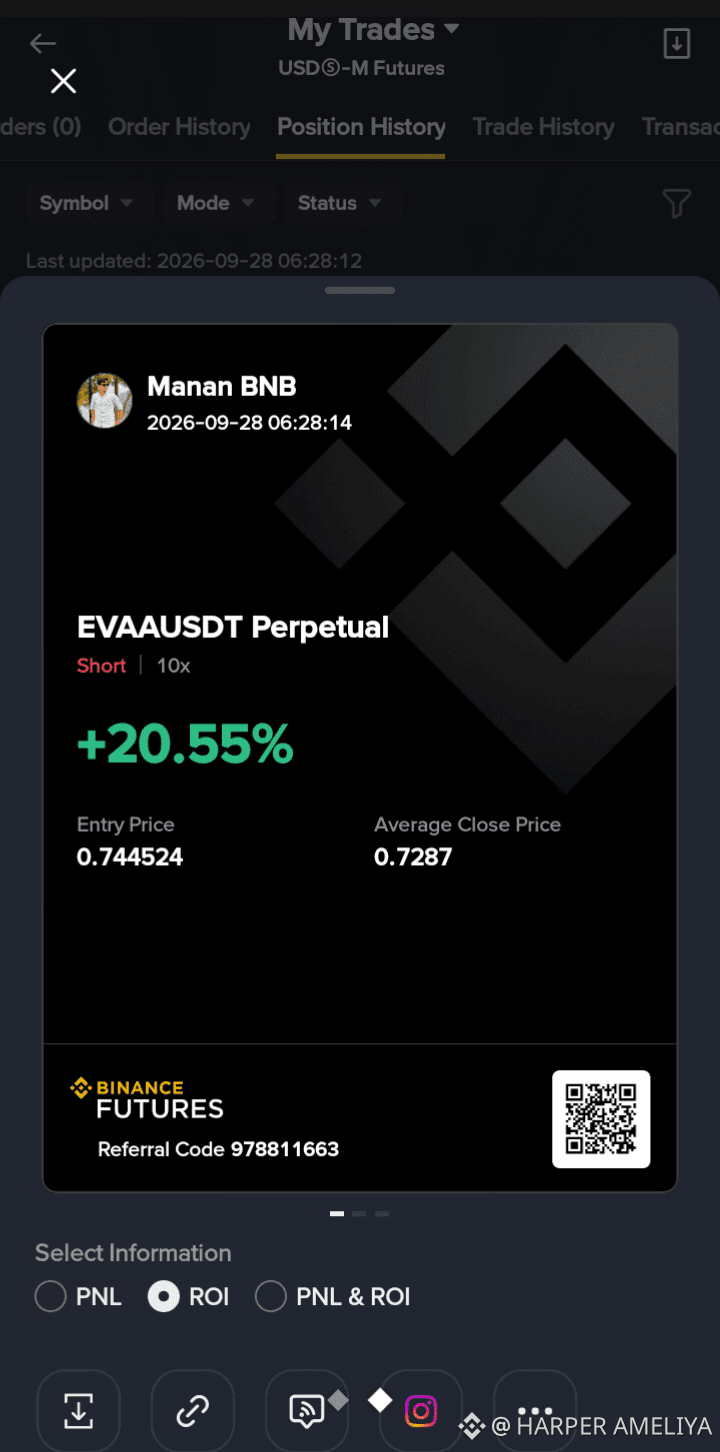
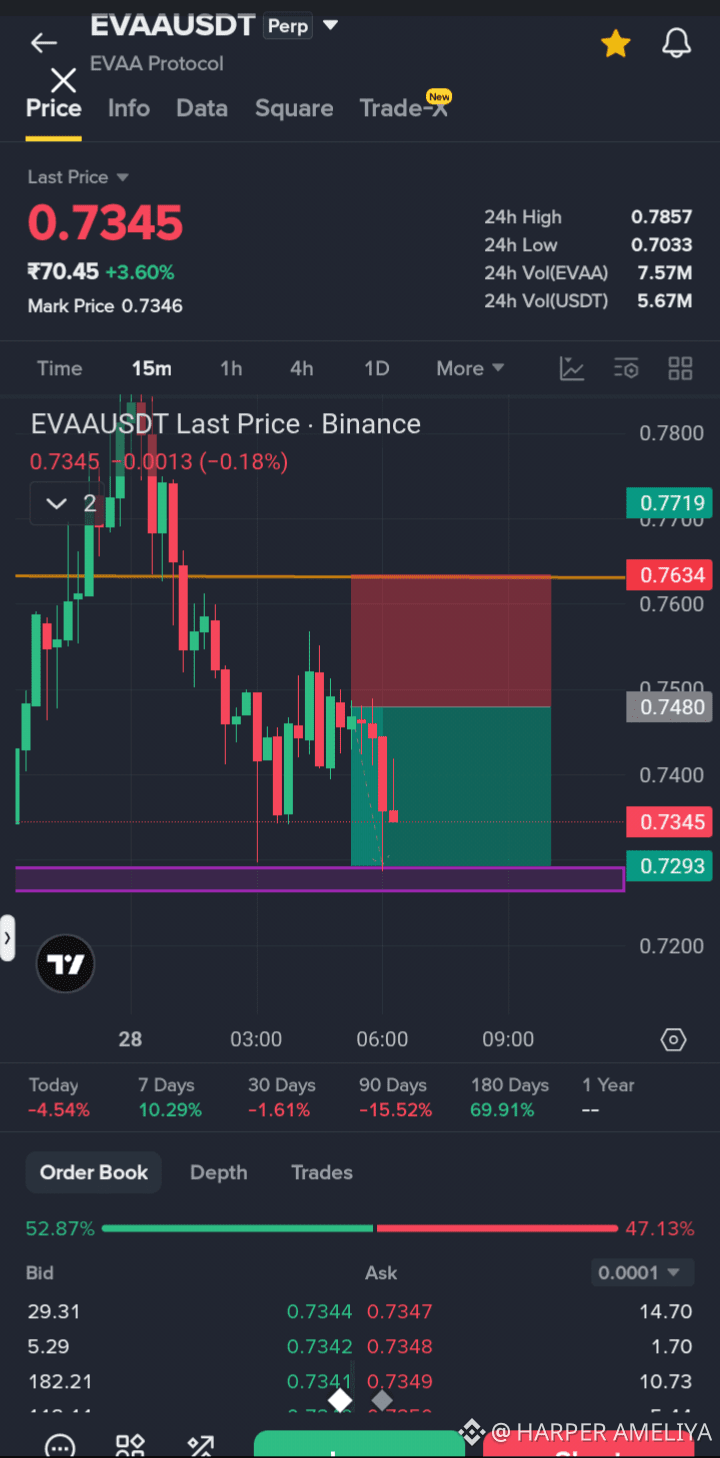
congratulations Everyone 💫🥳
our Short Trade on $EVAA hit Tp Successfully 💗🎯
$EVAA
{future}(EVAAUSDT)
congratulations Everyone 💫🥳
our Short Trade on $EVAA hit Tp Successfully 💗🎯
$EVAA
our Short Trade on $EVAA hit Tp Successfully 💗🎯
$EVAA
1
65
·
--
Bärisch
Übersetzung ansehen
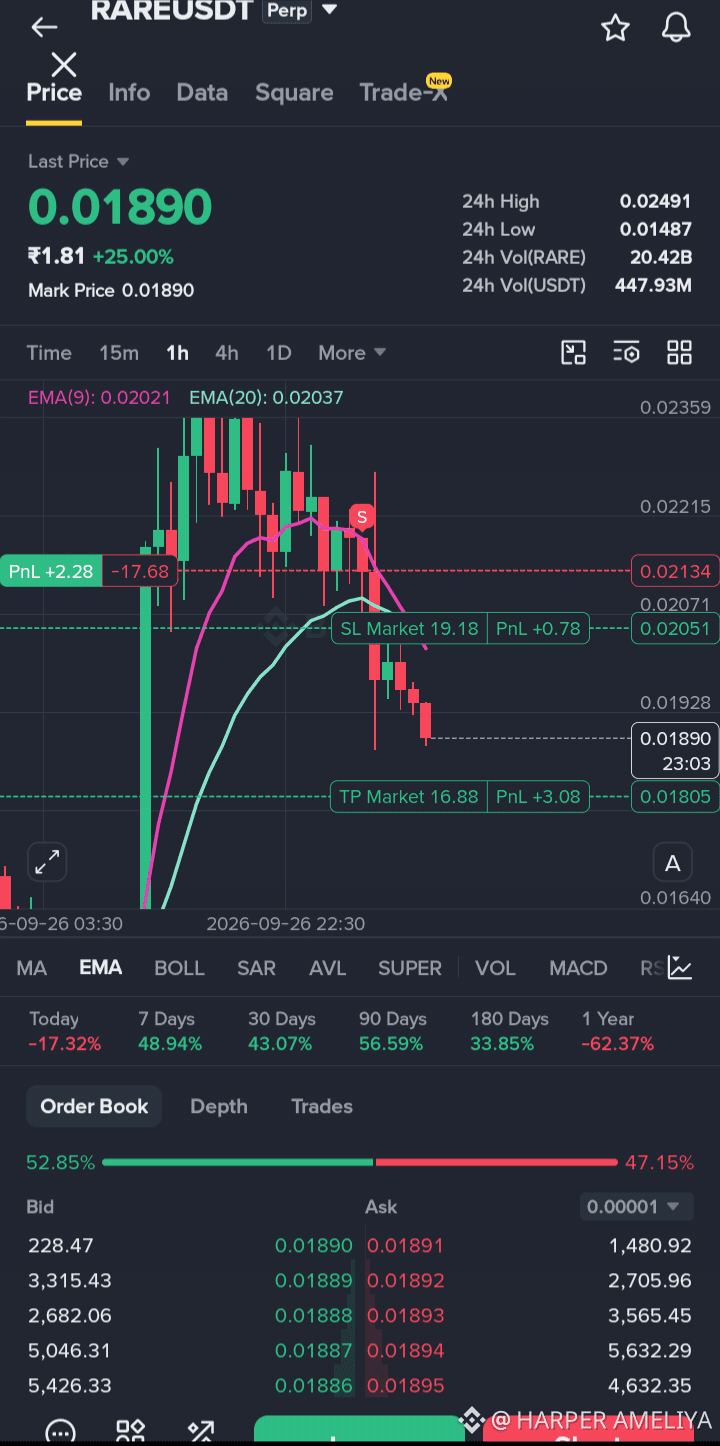
guy's our short trade on $RARE is almost at TP so now trailing SL in Profits 👍❤️🩹
$RARE
{future}(RAREUSDT)
guy's our short trade on $RARE is almost at TP so now trailing SL in Profits 👍❤️🩹
$RARE
$RARE
56
·
--
Bärisch
Übersetzung ansehen
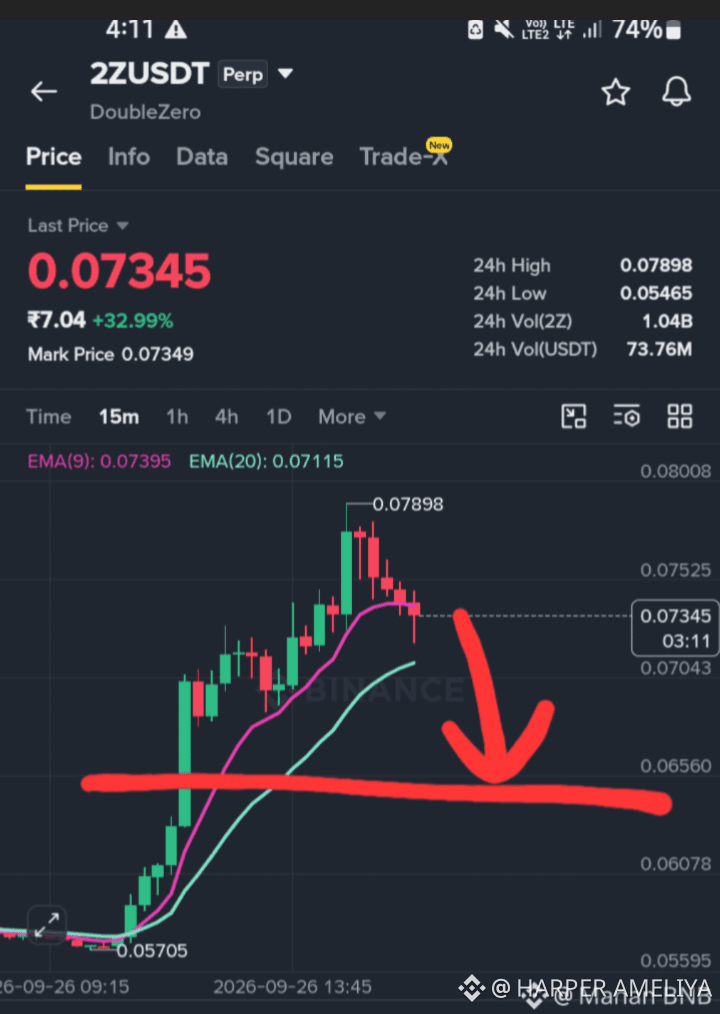
Short $2Z
‼️
Entry : 0.071 - current price
TP : 0.0640
SL : 0.0788
{future}(2ZUSDT)
Short $2Z
‼️
Entry : 0.071 - current price
TP : 0.0640
SL : 0.0788
‼️
Entry : 0.071 - current price
TP : 0.0640
SL : 0.0788
1
54
·
--
Bullisch
Übersetzung ansehen
Long $RARE ‼️
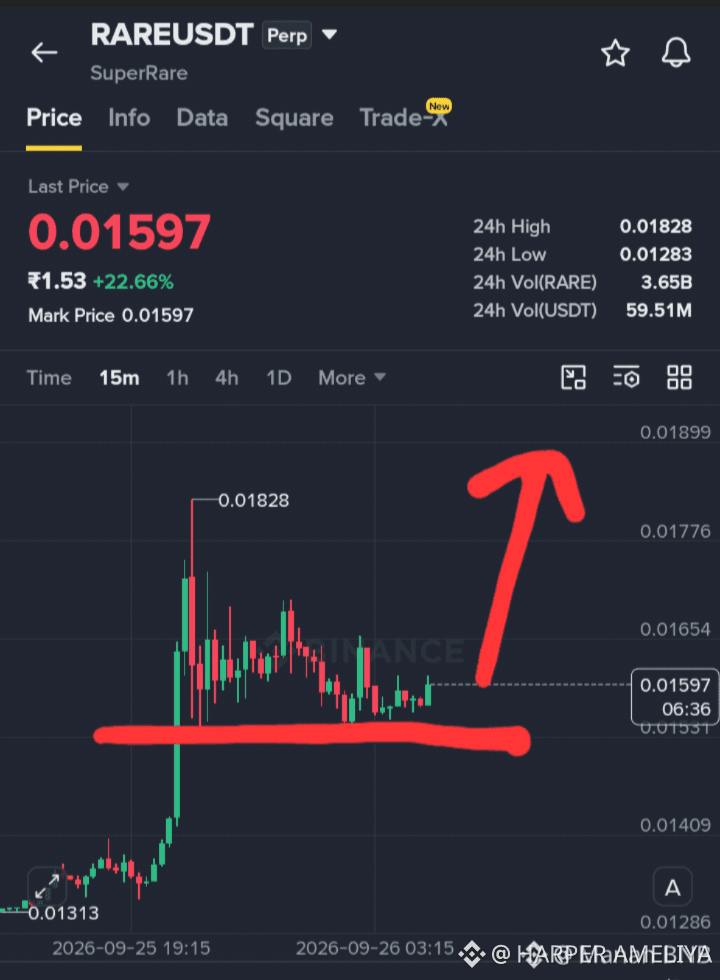
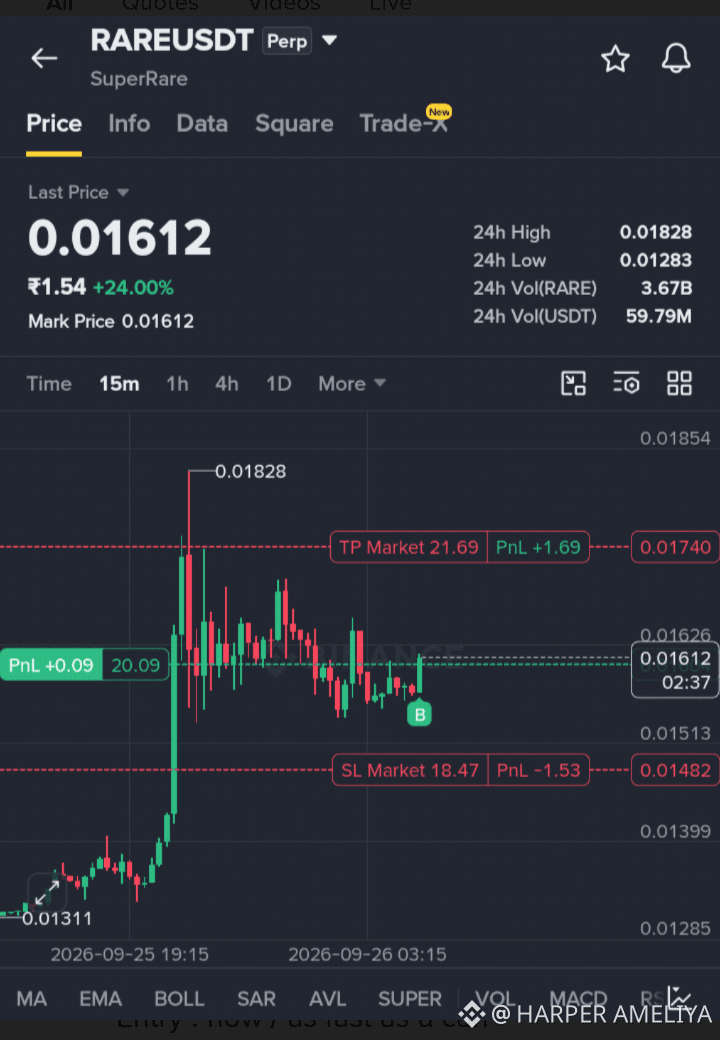
$RARE is getting strong bounce again from FVG - zone - a big move towards major liquidity zone are outdoors 0.0174$ - 0.0175$ is expected.
Entry : 0.0164 - current price
TP : 0.0174
SL : 0.0148
Trade $RARE here 👇
{future}(RAREUSDT)
Long $RARE ‼️
$RARE is getting strong bounce again from FVG - zone - a big move towards major liquidity zone are outdoors 0.0174$ - 0.0175$ is expected.
Entry : 0.0164 - current price
TP : 0.0174
SL : 0.0148
Trade $RARE here 👇
$RARE is getting strong bounce again from FVG - zone - a big move towards major liquidity zone are outdoors 0.0174$ - 0.0175$ is expected.
Entry : 0.0164 - current price
TP : 0.0174
SL : 0.0148
Trade $RARE here 👇
1
1
65
Übersetzung ansehen
Hello Everyone. I am Harper Emilya, a professional crypto trader with 4+ years of experience in the crypto & global markets.
🏆 I am a Major BTC holder
✅ Trusted Binance Square Content Creator
⚡Crypto enthusiast with deep knowledge of both crypto and traditional markets
Why you should follow me 👇👇
I am not a fomo poster 👍
📈 I only share real charts & the exact trades I’m actually in
🎯 Honest market takes — no hype, no paid signals
🔥 Clear technical analysis + proper risk management
If you’re looking for someone who trades for real and shows you everything… This is the place.
Follow me now and let's Make it together 🫂
$BTC
{future}(BTCUSDT)
Hello Everyone. I am Harper Emilya, a professional crypto trader with 4+ years of experience in the crypto & global markets.
🏆 I am a Major BTC holder
✅ Trusted Binance Square Content Creator
⚡Crypto enthusiast with deep knowledge of both crypto and traditional markets
Why you should follow me 👇👇
I am not a fomo poster 👍
📈 I only share real charts & the exact trades I’m actually in
🎯 Honest market takes — no hype, no paid signals
🔥 Clear technical analysis + proper risk management
If you’re looking for someone who trades for real and shows you everything… This is the place.
Follow me now and let's Make it together 🫂
$BTC
🏆 I am a Major BTC holder
✅ Trusted Binance Square Content Creator
⚡Crypto enthusiast with deep knowledge of both crypto and traditional markets
Why you should follow me 👇👇
I am not a fomo poster 👍
📈 I only share real charts & the exact trades I’m actually in
🎯 Honest market takes — no hype, no paid signals
🔥 Clear technical analysis + proper risk management
If you’re looking for someone who trades for real and shows you everything… This is the place.
Follow me now and let's Make it together 🫂
$BTC

1
1
12
·
--
Bullisch
Übersetzung ansehen
$ONDO
{future}(ONDOUSDT)
Just Pumped 29% - $0.60 Next After BlackRock News? 🚀
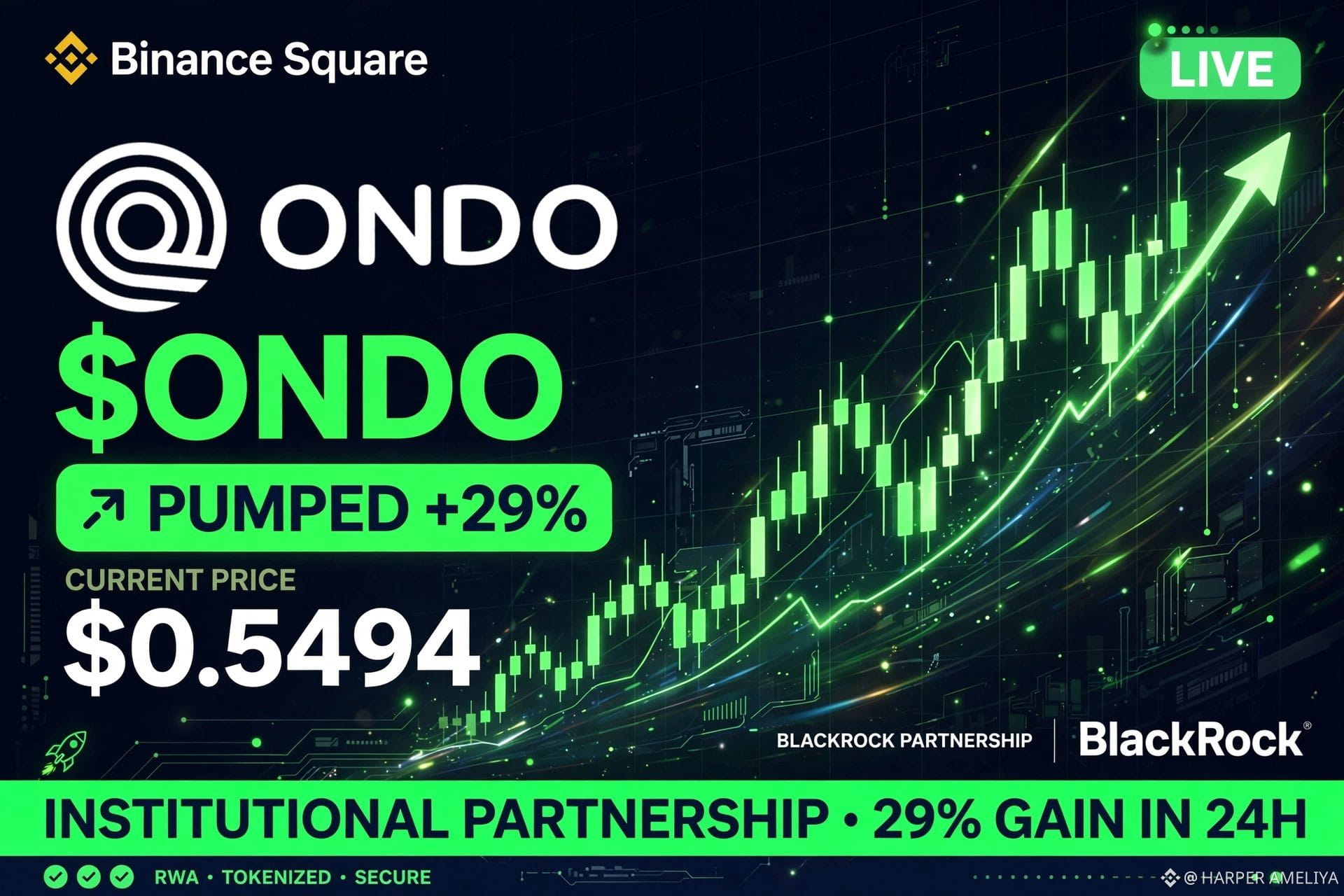
$ONDO is back in the spotlight after a massive 29.36% surge, currently trading around $0.5494. The rally came after Ondo announced three new tokenized portfolios built on strategies created by BlackRock, which has renewed interest in the entire RWA sector.
Looking at the 15m chart, the move is very clear. The price bounced from $0.5161 and went straight to a 24h high of $0.5793 with huge volume. 24h volume crossed 2.15B ONDO and 1.10B USDT, which shows real buyer interest, not just a fake pump.
Technically, ONDO is still holding above the SuperTrend (10,3) level of 0.5447, which is acting as immediate support. The chart shows a strong green cloud, meaning bulls are still in full control. After hitting $0.5793, we saw some profit-taking and price is now consolidating around $0.55 - this is healthy.
The key levels to watch now are $0.5447 as strong support and $0.5793 as breakout resistance. If ONDO holds above the SuperTrend and volume stays high, another leg towards $0.60 and $0.65 is highly possible. This could be the start of a bigger RWA rally.
This is a strong bullish structure. Smart traders are watching the support retest for entry.
Are you buying ONDO for $0.60 or already in profit?
#ONDO
$ONDO
Just Pumped 29% - $0.60 Next After BlackRock News? 🚀
$ONDO is back in the spotlight after a massive 29.36% surge, currently trading around $0.5494. The rally came after Ondo announced three new tokenized portfolios built on strategies created by BlackRock, which has renewed interest in the entire RWA sector.
Looking at the 15m chart, the move is very clear. The price bounced from $0.5161 and went straight to a 24h high of $0.5793 with huge volume. 24h volume crossed 2.15B ONDO and 1.10B USDT, which shows real buyer interest, not just a fake pump.
Technically, ONDO is still holding above the SuperTrend (10,3) level of 0.5447, which is acting as immediate support. The chart shows a strong green cloud, meaning bulls are still in full control. After hitting $0.5793, we saw some profit-taking and price is now consolidating around $0.55 - this is healthy.
The key levels to watch now are $0.5447 as strong support and $0.5793 as breakout resistance. If ONDO holds above the SuperTrend and volume stays high, another leg towards $0.60 and $0.65 is highly possible. This could be the start of a bigger RWA rally.
This is a strong bullish structure. Smart traders are watching the support retest for entry.
Are you buying ONDO for $0.60 or already in profit?
#ONDO
Just Pumped 29% - $0.60 Next After BlackRock News? 🚀
$ONDO is back in the spotlight after a massive 29.36% surge, currently trading around $0.5494. The rally came after Ondo announced three new tokenized portfolios built on strategies created by BlackRock, which has renewed interest in the entire RWA sector.
Looking at the 15m chart, the move is very clear. The price bounced from $0.5161 and went straight to a 24h high of $0.5793 with huge volume. 24h volume crossed 2.15B ONDO and 1.10B USDT, which shows real buyer interest, not just a fake pump.
Technically, ONDO is still holding above the SuperTrend (10,3) level of 0.5447, which is acting as immediate support. The chart shows a strong green cloud, meaning bulls are still in full control. After hitting $0.5793, we saw some profit-taking and price is now consolidating around $0.55 - this is healthy.
The key levels to watch now are $0.5447 as strong support and $0.5793 as breakout resistance. If ONDO holds above the SuperTrend and volume stays high, another leg towards $0.60 and $0.65 is highly possible. This could be the start of a bigger RWA rally.
This is a strong bullish structure. Smart traders are watching the support retest for entry.
Are you buying ONDO for $0.60 or already in profit?
#ONDO
1
1
99
·
--
Bullisch
Bullish liquidation recordiert gerade eine kurze Liquidation von rund 2,71K US-Dollar bei 0,1385 auf Binance. Die Liquidationsgröße ist relativ bescheiden, bietet aber einen nützlichen Einblick in die kurzfristige Positionierung und darüber, wo gehebelte Verkäufer unter Druck geraten.
Eine Short-Liquidation tritt auf, wenn Trader, die gehebelte Short-Positionen halten, gezwungen werden zu schließen, weil der Preis gegen sie nach oben steigt. Wenn solche Ereignisse auftreten, kann das zeitweise zusätzlichen Kaufdruck erzeugen und manchmal darauf hindeuten, dass Short-Seller in einem bestimmten Preisbereich verwundbarer werden.
Die Marke von 0,1385 sollte jetzt beobachtet werden, da sie als Referenz für eine kürzliche Liquidation dient. Wenn der Preis weiterhin oberhalb dieses Bereichs hält, könnten weitere Short-Liquidationen auftreten, sofern bärische Positionen weiterhin stark vertreten sind. Allerdings reicht ein einzelnes Liquidationsereignis allein nicht aus, um eine anhaltend bullische Bewegung zu bestätigen.
Trader sollten darauf achten, wie sich der Preis nach der Liquidation verhält, statt direkt auf das Ereignis selbst zu reagieren. Volumen, Follow-through und die übergeordnete Marktdynamik sind entscheidend dafür, ob dies nur ein kleiner Leverage-Reset war oder Teil einer stärkeren Bewegung.
Fürs Erste lohnt es sich, Bullish auf dem Radar zu behalten, während Trader beobachten, ob der Druck auf der Short-Seite rund um den Bereich von 0,1385 weiterhin anhält.
$牛来
{future}(牛来USDT)
$RAYSOL
{future}(RAYSOLUSDT)
$MET
{future}(METUSDT)
Bullish liquidation recordiert gerade eine kurze Liquidation von rund 2,71K US-Dollar bei 0,1385 auf Binance. Die Liquidationsgröße ist relativ bescheiden, bietet aber einen nützlichen Einblick in die kurzfristige Positionierung und darüber, wo gehebelte Verkäufer unter Druck geraten.
Eine Short-Liquidation tritt auf, wenn Trader, die gehebelte Short-Positionen halten, gezwungen werden zu schließen, weil der Preis gegen sie nach oben steigt. Wenn solche Ereignisse auftreten, kann das zeitweise zusätzlichen Kaufdruck erzeugen und manchmal darauf hindeuten, dass Short-Seller in einem bestimmten Preisbereich verwundbarer werden.
Die Marke von 0,1385 sollte jetzt beobachtet werden, da sie als Referenz für eine kürzliche Liquidation dient. Wenn der Preis weiterhin oberhalb dieses Bereichs hält, könnten weitere Short-Liquidationen auftreten, sofern bärische Positionen weiterhin stark vertreten sind. Allerdings reicht ein einzelnes Liquidationsereignis allein nicht aus, um eine anhaltend bullische Bewegung zu bestätigen.
Trader sollten darauf achten, wie sich der Preis nach der Liquidation verhält, statt direkt auf das Ereignis selbst zu reagieren. Volumen, Follow-through und die übergeordnete Marktdynamik sind entscheidend dafür, ob dies nur ein kleiner Leverage-Reset war oder Teil einer stärkeren Bewegung.
Fürs Erste lohnt es sich, Bullish auf dem Radar zu behalten, während Trader beobachten, ob der Druck auf der Short-Seite rund um den Bereich von 0,1385 weiterhin anhält.
$牛来
$RAYSOL
$MET
Eine Short-Liquidation tritt auf, wenn Trader, die gehebelte Short-Positionen halten, gezwungen werden zu schließen, weil der Preis gegen sie nach oben steigt. Wenn solche Ereignisse auftreten, kann das zeitweise zusätzlichen Kaufdruck erzeugen und manchmal darauf hindeuten, dass Short-Seller in einem bestimmten Preisbereich verwundbarer werden.
Die Marke von 0,1385 sollte jetzt beobachtet werden, da sie als Referenz für eine kürzliche Liquidation dient. Wenn der Preis weiterhin oberhalb dieses Bereichs hält, könnten weitere Short-Liquidationen auftreten, sofern bärische Positionen weiterhin stark vertreten sind. Allerdings reicht ein einzelnes Liquidationsereignis allein nicht aus, um eine anhaltend bullische Bewegung zu bestätigen.
Trader sollten darauf achten, wie sich der Preis nach der Liquidation verhält, statt direkt auf das Ereignis selbst zu reagieren. Volumen, Follow-through und die übergeordnete Marktdynamik sind entscheidend dafür, ob dies nur ein kleiner Leverage-Reset war oder Teil einer stärkeren Bewegung.
Fürs Erste lohnt es sich, Bullish auf dem Radar zu behalten, während Trader beobachten, ob der Druck auf der Short-Seite rund um den Bereich von 0,1385 weiterhin anhält.
$牛来
$RAYSOL
$MET
$牛来 bullish💚
0%
$牛来 bearish♥️
0%
0 Stimmen • Abstimmung beendet
1
22
🎙️ Krypto-Marktlage-Austausch; neue Fragen beantworten ✅ Gemeinsam den Binance-Platz aufbauen 🦅 Verbreitung einer freien Ideologie! Wahrung des ökologischen Gleichgewichts!
Beenden
03 h 15 m 48 s
11k
31
64
·
--
Bärisch
CKB-Longs werden tiefer durchgespült.
Der $1.6775K Sweep hält die Abwärtsliquidität im Fokus.
$CKB
{future}(CKBUSDT)
🔴 LIQUIDITY ZONE ERREICHT 🔴
Long-Liquidation gesichtet 🧨
$1.6775K bei $0.00104 geklärt
Abwärtsliquidität abgeräumt — Reaktion beobachten 👀
🎯 TP-Ziele:
TP1: ~$0.0010296
TP2: ~$0.0010192
TP3: ~$0.0010088
#CKB
CKB-Longs werden tiefer durchgespült.
Der $1.6775K Sweep hält die Abwärtsliquidität im Fokus.
$CKB
🔴 LIQUIDITY ZONE ERREICHT 🔴
Long-Liquidation gesichtet 🧨
$1.6775K bei $0.00104 geklärt
Abwärtsliquidität abgeräumt — Reaktion beobachten 👀
🎯 TP-Ziele:
TP1: ~$0.0010296
TP2: ~$0.0010192
TP3: ~$0.0010088
#CKB
Der $1.6775K Sweep hält die Abwärtsliquidität im Fokus.
$CKB
🔴 LIQUIDITY ZONE ERREICHT 🔴
Long-Liquidation gesichtet 🧨
$1.6775K bei $0.00104 geklärt
Abwärtsliquidität abgeräumt — Reaktion beobachten 👀
🎯 TP-Ziele:
TP1: ~$0.0010296
TP2: ~$0.0010192
TP3: ~$0.0010088
#CKB
11
·
--
Bullisch
Die „Shorts“ von 牛来 haben gerade einen kleinen Treffer kassiert.
Die Liquidation über 1,42K bringt etwas Aufwärtsdruck.
$牛来
{future}(牛来USDT)
🟢 LIQUIDITY-ZONE GETROFFEN 🟢
Short-Liquidation entdeckt 🧨
1,42K wurden bei 0,13529 ausgecasht
Aufwärtsliquidität gefegt — Reaktion beobachten 👀
🎯 TP-Ziele:
TP1: ~0,1366429
TP2: ~0,1379958
TP3: ~0,1393487
#牛来
Die „Shorts“ von 牛来 haben gerade einen kleinen Treffer kassiert.
Die Liquidation über 1,42K bringt etwas Aufwärtsdruck.
$牛来
🟢 LIQUIDITY-ZONE GETROFFEN 🟢
Short-Liquidation entdeckt 🧨
1,42K wurden bei 0,13529 ausgecasht
Aufwärtsliquidität gefegt — Reaktion beobachten 👀
🎯 TP-Ziele:
TP1: ~0,1366429
TP2: ~0,1379958
TP3: ~0,1393487
#牛来
Die Liquidation über 1,42K bringt etwas Aufwärtsdruck.
$牛来
🟢 LIQUIDITY-ZONE GETROFFEN 🟢
Short-Liquidation entdeckt 🧨
1,42K wurden bei 0,13529 ausgecasht
Aufwärtsliquidität gefegt — Reaktion beobachten 👀
🎯 TP-Ziele:
TP1: ~0,1366429
TP2: ~0,1379958
TP3: ~0,1393487
#牛来
29
·
--
Bullisch
PONS Shorts werden höher gedrückt.
Der $5.0772K-Stop sorgt dafür, dass dieser Aufwärtssweep es wert ist, beobachtet zu werden.
$PONS
{future}(PONSUSDT)
🟢 LIQUIDITY ZONE HIT 🟢
Short-Liquidation entdeckt 🧨
$5.0772K bereinigt bei $0.63873
Aufwärtsliquidität abgefischt – Reaktion abwarten 👀
🎯 TP-Ziele:
TP1: ~$0.6451173
TP2: ~$0.6515046
TP3: ~$0.6578919
#pons
PONS Shorts werden höher gedrückt.
Der $5.0772K-Stop sorgt dafür, dass dieser Aufwärtssweep es wert ist, beobachtet zu werden.
$PONS
🟢 LIQUIDITY ZONE HIT 🟢
Short-Liquidation entdeckt 🧨
$5.0772K bereinigt bei $0.63873
Aufwärtsliquidität abgefischt – Reaktion abwarten 👀
🎯 TP-Ziele:
TP1: ~$0.6451173
TP2: ~$0.6515046
TP3: ~$0.6578919
#pons
Der $5.0772K-Stop sorgt dafür, dass dieser Aufwärtssweep es wert ist, beobachtet zu werden.
$PONS
🟢 LIQUIDITY ZONE HIT 🟢
Short-Liquidation entdeckt 🧨
$5.0772K bereinigt bei $0.63873
Aufwärtsliquidität abgefischt – Reaktion abwarten 👀
🎯 TP-Ziele:
TP1: ~$0.6451173
TP2: ~$0.6515046
TP3: ~$0.6578919
#pons
12
·
--
Bärisch
BLUR-Longs wurden gerade tiefer gespült.
Die $3.7814K Liquidation übt neuen Abwärtsdruck aus.
$BLUR
{future}(BLURUSDT)
🔴 LIQUIDITÄTSZONE GETROFFEN 🔴
Long-Liquidation gesichtet 🧨
$3.7814K bei $0.01763 geklärt
Abwärts-Liquidität aufgesaugt — Reaktion beobachten 👀
🎯 TP-Ziele:
TP1: ~ $0.0174537
TP2: ~ $0.0172774
TP3: ~ $0.0171011
#BLUR.
BLUR-Longs wurden gerade tiefer gespült.
Die $3.7814K Liquidation übt neuen Abwärtsdruck aus.
$BLUR
🔴 LIQUIDITÄTSZONE GETROFFEN 🔴
Long-Liquidation gesichtet 🧨
$3.7814K bei $0.01763 geklärt
Abwärts-Liquidität aufgesaugt — Reaktion beobachten 👀
🎯 TP-Ziele:
TP1: ~ $0.0174537
TP2: ~ $0.0172774
TP3: ~ $0.0171011
#BLUR.
Die $3.7814K Liquidation übt neuen Abwärtsdruck aus.
$BLUR
🔴 LIQUIDITÄTSZONE GETROFFEN 🔴
Long-Liquidation gesichtet 🧨
$3.7814K bei $0.01763 geklärt
Abwärts-Liquidität aufgesaugt — Reaktion beobachten 👀
🎯 TP-Ziele:
TP1: ~ $0.0174537
TP2: ~ $0.0172774
TP3: ~ $0.0171011
#BLUR.
16
·
--
Bärisch
NEAR longs haben gerade einen Downside-Schlag abbekommen.
Der $1.7473K Sweep hält die untere Liquiditätszone weiterhin im Fokus.
$NEAR
{future}(NEARUSDT)
🔴 LIQUIDITÄTSZONE GETROFFEN 🔴
Long-Liquidation erkannt 🧨
$1.7473K bereinigt bei $2.387
Downside-Liquidität abgefegt – Reaktion beobachten 👀
🎯 TP-Ziele:
TP1: ~ $2.36313
TP2: ~ $2.33926
TP3: ~ $2.31539
#Near
NEAR longs haben gerade einen Downside-Schlag abbekommen.
Der $1.7473K Sweep hält die untere Liquiditätszone weiterhin im Fokus.
$NEAR
🔴 LIQUIDITÄTSZONE GETROFFEN 🔴
Long-Liquidation erkannt 🧨
$1.7473K bereinigt bei $2.387
Downside-Liquidität abgefegt – Reaktion beobachten 👀
🎯 TP-Ziele:
TP1: ~ $2.36313
TP2: ~ $2.33926
TP3: ~ $2.31539
#Near
Der $1.7473K Sweep hält die untere Liquiditätszone weiterhin im Fokus.
$NEAR
🔴 LIQUIDITÄTSZONE GETROFFEN 🔴
Long-Liquidation erkannt 🧨
$1.7473K bereinigt bei $2.387
Downside-Liquidität abgefegt – Reaktion beobachten 👀
🎯 TP-Ziele:
TP1: ~ $2.36313
TP2: ~ $2.33926
TP3: ~ $2.31539
#Near
19
·
--
Bärisch
HK0700-Longs wurden gerade zwangsweise ausgestoppt.
Die Liquidation in Höhe von $1.0569K ist zwar klein, aber dennoch eine Beobachtung wert.
$HK0700
{future}(HK0700USDT)
🔴 LIQUIDITÄTSZONE GETROFFEN 🔴
Long-Liquidation entdeckt 🧨
$1.0569K wurden bei $426.17129 liquidiert
Abwärts-Liquidität wurde leergefegt — Reaktion abwarten 👀
🎯 TP-Ziele:
TP1: ~ $421.9095771
TP2: ~ $417.6478642
TP3: ~ $413.3861513
#HK0700
HK0700-Longs wurden gerade zwangsweise ausgestoppt.
Die Liquidation in Höhe von $1.0569K ist zwar klein, aber dennoch eine Beobachtung wert.
$HK0700
🔴 LIQUIDITÄTSZONE GETROFFEN 🔴
Long-Liquidation entdeckt 🧨
$1.0569K wurden bei $426.17129 liquidiert
Abwärts-Liquidität wurde leergefegt — Reaktion abwarten 👀
🎯 TP-Ziele:
TP1: ~ $421.9095771
TP2: ~ $417.6478642
TP3: ~ $413.3861513
#HK0700
Die Liquidation in Höhe von $1.0569K ist zwar klein, aber dennoch eine Beobachtung wert.
$HK0700
🔴 LIQUIDITÄTSZONE GETROFFEN 🔴
Long-Liquidation entdeckt 🧨
$1.0569K wurden bei $426.17129 liquidiert
Abwärts-Liquidität wurde leergefegt — Reaktion abwarten 👀
🎯 TP-Ziele:
TP1: ~ $421.9095771
TP2: ~ $417.6478642
TP3: ~ $413.3861513
#HK0700
16
·
--
Bärisch
MINIMAX-Longs werden wieder herausgespült.
Der $1.1783K-Stop war zwar kleiner, hält aber die Abwärts-Liquidität aktiv.
$MINIMAX
{future}(MINIMAXUSDT)
🔴 LIQUIDITY ZONE HIT 🔴
Long-Liquidation entdeckt 🧨
$1.1783K bei $34.2316 geklärt
Abwärts-Liquidität abgeräumt — beobachte die Reaktion 👀
🎯 TP-Ziele:
TP1: ~$33.889284
TP2: ~$33.546968
TP3: ~$33.204652
#minimax
MINIMAX-Longs werden wieder herausgespült.
Der $1.1783K-Stop war zwar kleiner, hält aber die Abwärts-Liquidität aktiv.
$MINIMAX
🔴 LIQUIDITY ZONE HIT 🔴
Long-Liquidation entdeckt 🧨
$1.1783K bei $34.2316 geklärt
Abwärts-Liquidität abgeräumt — beobachte die Reaktion 👀
🎯 TP-Ziele:
TP1: ~$33.889284
TP2: ~$33.546968
TP3: ~$33.204652
#minimax
Der $1.1783K-Stop war zwar kleiner, hält aber die Abwärts-Liquidität aktiv.
$MINIMAX
🔴 LIQUIDITY ZONE HIT 🔴
Long-Liquidation entdeckt 🧨
$1.1783K bei $34.2316 geklärt
Abwärts-Liquidität abgeräumt — beobachte die Reaktion 👀
🎯 TP-Ziele:
TP1: ~$33.889284
TP2: ~$33.546968
TP3: ~$33.204652
#minimax
20
·
--
Bärisch
AAOI-Longs werden in der Größe herausgedrängt.
Der $40.979K Sweep übt ernsthaften Abwärtsdruck auf Watch aus.
$AAOI
{future}(AAOIUSDT)
🔴 LIQUIDITY ZONE HIT 🔴
Long-Liquidation gesichtet 🧨
$40.979K wurden bei $102.58508 ausgeräumt
Abwärts-Liquidität wurde abgefegt – Reaktion abwarten 👀
🎯 TP-Ziele:
TP1: ~$101.5592292
TP2: ~$100.5333784
TP3: ~$99.5075276
#AAOI
AAOI-Longs werden in der Größe herausgedrängt.
Der $40.979K Sweep übt ernsthaften Abwärtsdruck auf Watch aus.
$AAOI
🔴 LIQUIDITY ZONE HIT 🔴
Long-Liquidation gesichtet 🧨
$40.979K wurden bei $102.58508 ausgeräumt
Abwärts-Liquidität wurde abgefegt – Reaktion abwarten 👀
🎯 TP-Ziele:
TP1: ~$101.5592292
TP2: ~$100.5333784
TP3: ~$99.5075276
#AAOI
Der $40.979K Sweep übt ernsthaften Abwärtsdruck auf Watch aus.
$AAOI
🔴 LIQUIDITY ZONE HIT 🔴
Long-Liquidation gesichtet 🧨
$40.979K wurden bei $102.58508 ausgeräumt
Abwärts-Liquidität wurde abgefegt – Reaktion abwarten 👀
🎯 TP-Ziele:
TP1: ~$101.5592292
TP2: ~$100.5333784
TP3: ~$99.5075276
#AAOI
40
Anmelden und weiter Inhalte entdecken
Krypto-Nutzer weltweit auf Binance Square kennenlernen
⚡️ Bleib in Sachen Krypto stets am Puls.
💬 Die weltgrößte Kryptobörse vertraut darauf.
👍 Erhalte verlässliche Einblicke von verifizierten Creators.
E-Mail-Adresse/Telefonnummer
Trendthemen
ZcashETFPostsFirstWeeklyOutflow$93.6M
5,263 Aufrufe
34 Kommentare
ZCASH-ETF-UPDATE
Der Zcash-ETF verzeichnete seit dem Start im August erstmals einen wöchentlichen Nettoabfluss.
Anleger zogen 93,6 Mio. $ ab, da <a>$ZEC </a> in Richtung 1.300 $ fiel. Grayscale’s ZCSH hatte zwei Wochen zuvor 98,2 Mio. $ angezogen, doch laut SoSoValue wurden seit dem 22. September keine täglichen Nettozuflüsse mehr erfasst.
ZEC lag am 3. Oktober bei etwa 1.308 $, ein Rückgang von rund 17,5% für die Woche und etwa 23% im Vergleich zu seinem jüngsten Hoch bei 1.690 $.
$ZEC
Vicky-143
·0 Likes
·702 Aufrufe
GreekPoliceBustCryptoScamRingArrest17
7,008 Aufrufe
169 Kommentare
BitcoinRejectedAt$87K
66,403 Aufrufe
100 Kommentare