
crypto_kir
64 Beiträge

crypto_kir
Melden
Nutzer blockieren
20 Following
30 Follower
143 Like gegeben
Beiträge
Alle
Zitierungen
PINNED
·
--
Übersetzung ansehen
#openledger $OPEN
The future of AI should not be controlled only by centralized companies, and that is why @Openledger is becoming an interesting project in Web3. OpenLedger focuses on decentralized AI infrastructure where contributors, developers, and communities can participate in building AI ecosystems more transparently. As blockchain and AI continue to grow together, projects creating real utility and contributor-driven networks may become very important in the next phase of crypto innovation. Looking forward to seeing how the $OPEN ecosystem evolves over time. #OpenLedger
#openledger $OPEN
The future of AI should not be controlled only by centralized companies, and that is why @OpenLedger is becoming an interesting project in Web3. OpenLedger focuses on decentralized AI infrastructure where contributors, developers, and communities can participate in building AI ecosystems more transparently. As blockchain and AI continue to grow together, projects creating real utility and contributor-driven networks may become very important in the next phase of crypto innovation. Looking forward to seeing how the $OPEN ecosystem evolves over time. #OpenLedger
The future of AI should not be controlled only by centralized companies, and that is why @OpenLedger is becoming an interesting project in Web3. OpenLedger focuses on decentralized AI infrastructure where contributors, developers, and communities can participate in building AI ecosystems more transparently. As blockchain and AI continue to grow together, projects creating real utility and contributor-driven networks may become very important in the next phase of crypto innovation. Looking forward to seeing how the $OPEN ecosystem evolves over time. #OpenLedger
3
72
PINNED
·
--
Übersetzung ansehen
How @OpenLedger Is Connecting Blockchain Technology With the Future of AIArtificial Intelligence is rapidly becoming one of the most important technologies in the world, but the current AI ecosystem is still dominated by centralized companies that control data, infrastructure, and model development. This creates concerns around transparency, ownership, contributor rewards, and accessibility. @Openledger is trying to solve some of these challenges by building decentralized AI infrastructure powered by blockchain technology.
The main idea behind OpenLedger is to create a more open ecosystem where contributors can actively participate in AI development instead of relying completely on centralized systems. AI models require massive amounts of data and computational resources, but in traditional systems, contributors often receive little recognition or value for their participation. OpenLedger aims to create a network where participation and contributions can become more transparent and incentivized.
One of the strongest narratives in crypto today is the integration of blockchain and AI. Blockchain technology can provide transparency, verifiable records, and decentralized coordination, while AI continues to transform industries through automation and intelligent systems. OpenLedger appears to position itself at the intersection of these two growing sectors by focusing on decentralized infrastructure that could support future AI applications and ecosystems.
Another important aspect is the role of the $OPEN token within the ecosystem. In many decentralized platforms, tokens are used to support participation, governance, and network utility. As the OpenLedger ecosystem expands, the token could become an important part of platform activity and community engagement.
What makes OpenLedger interesting is not only the technology narrative but also the broader vision of making AI ecosystems more accessible and community-driven. Decentralization may help reduce dependence on a few major corporations while allowing developers and contributors from different regions to participate in innovation more openly.
The crypto industry is increasingly shifting toward projects with long-term utility instead of short-term hype. If decentralized AI becomes a major trend in Web3, infrastructure-focused projects like @Openledger could attract significant attention in the future. Of course, adoption and execution will determine long-term success, but the project’s focus on decentralized AI infrastructure makes it a promising ecosystem to watch closely.
$OPEN #OpenLedger
How @OpenLedger Is Connecting Blockchain Technology With the Future of AI
Artificial Intelligence is rapidly becoming one of the most important technologies in the world, but the current AI ecosystem is still dominated by centralized companies that control data, infrastructure, and model development. This creates concerns around transparency, ownership, contributor rewards, and accessibility. @OpenLedger is trying to solve some of these challenges by building decentralized AI infrastructure powered by blockchain technology.
The main idea behind OpenLedger is to create a more open ecosystem where contributors can actively participate in AI development instead of relying completely on centralized systems. AI models require massive amounts of data and computational resources, but in traditional systems, contributors often receive little recognition or value for their participation. OpenLedger aims to create a network where participation and contributions can become more transparent and incentivized.
One of the strongest narratives in crypto today is the integration of blockchain and AI. Blockchain technology can provide transparency, verifiable records, and decentralized coordination, while AI continues to transform industries through automation and intelligent systems. OpenLedger appears to position itself at the intersection of these two growing sectors by focusing on decentralized infrastructure that could support future AI applications and ecosystems.
Another important aspect is the role of the $OPEN token within the ecosystem. In many decentralized platforms, tokens are used to support participation, governance, and network utility. As the OpenLedger ecosystem expands, the token could become an important part of platform activity and community engagement.
What makes OpenLedger interesting is not only the technology narrative but also the broader vision of making AI ecosystems more accessible and community-driven. Decentralization may help reduce dependence on a few major corporations while allowing developers and contributors from different regions to participate in innovation more openly.
The crypto industry is increasingly shifting toward projects with long-term utility instead of short-term hype. If decentralized AI becomes a major trend in Web3, infrastructure-focused projects like @OpenLedger could attract significant attention in the future. Of course, adoption and execution will determine long-term success, but the project’s focus on decentralized AI infrastructure makes it a promising ecosystem to watch closely.
$OPEN #OpenLedger
The main idea behind OpenLedger is to create a more open ecosystem where contributors can actively participate in AI development instead of relying completely on centralized systems. AI models require massive amounts of data and computational resources, but in traditional systems, contributors often receive little recognition or value for their participation. OpenLedger aims to create a network where participation and contributions can become more transparent and incentivized.
One of the strongest narratives in crypto today is the integration of blockchain and AI. Blockchain technology can provide transparency, verifiable records, and decentralized coordination, while AI continues to transform industries through automation and intelligent systems. OpenLedger appears to position itself at the intersection of these two growing sectors by focusing on decentralized infrastructure that could support future AI applications and ecosystems.
Another important aspect is the role of the $OPEN token within the ecosystem. In many decentralized platforms, tokens are used to support participation, governance, and network utility. As the OpenLedger ecosystem expands, the token could become an important part of platform activity and community engagement.
What makes OpenLedger interesting is not only the technology narrative but also the broader vision of making AI ecosystems more accessible and community-driven. Decentralization may help reduce dependence on a few major corporations while allowing developers and contributors from different regions to participate in innovation more openly.
The crypto industry is increasingly shifting toward projects with long-term utility instead of short-term hype. If decentralized AI becomes a major trend in Web3, infrastructure-focused projects like @OpenLedger could attract significant attention in the future. Of course, adoption and execution will determine long-term success, but the project’s focus on decentralized AI infrastructure makes it a promising ecosystem to watch closely.
$OPEN #OpenLedger
3
64
·
--
Übersetzung ansehen
Why OpenLedger Could Become a Key Infrastructure Layer for Decentralized AIWhy @Openledger Could Become a Key Infrastructure Layer for Decentralized AI
Artificial Intelligence is growing at an incredible pace, but most AI systems today are still controlled by centralized companies. Data, computing power, and AI models are often owned by a few large organizations, which creates concerns around transparency, accessibility, and fair rewards for contributors. This is where @Openledger enters the conversation with a vision that combines blockchain technology and decentralized AI infrastructure.
OpenLedger aims to build an ecosystem where AI development becomes more open, transparent, and community-driven. Instead of depending entirely on centralized platforms, OpenLedger focuses on decentralized participation where developers, data providers, and contributors can all play an active role in the network. This concept is important because AI systems rely heavily on quality data and computing resources, yet contributors are rarely rewarded fairly in traditional systems.
One of the most interesting aspects of OpenLedger is the idea of creating value around AI contributions using blockchain technology. With decentralization, contributors can potentially receive transparent incentives while maintaining trust within the ecosystem. This approach could encourage more innovation and broader participation in AI development across the Web3 space.
The $OPEN token is expected to play a significant role within the ecosystem by supporting network activity, participation, and future utility inside the platform. As the AI narrative continues to grow in crypto, projects that focus on real infrastructure rather than hype may attract stronger long-term attention.
Another reason OpenLedger stands out is its positioning within two of the biggest technological trends today: AI and blockchain. AI requires scalable and trustworthy systems, while blockchain provides transparency and decentralized coordination. Combining these technologies could create a future where AI development is more accessible and less dependent on centralized control.
The crypto industry is moving beyond simple speculation and increasingly focusing on utility-driven ecosystems. OpenLedger appears to be building toward that direction by creating infrastructure that supports decentralized AI applications and contributor participation. If adoption of decentralized AI continues to increase, projects like OpenLedger could become highly relevant in the next phase of Web3 innovation.
As always, every crypto project carries risks, and long-term success depends on execution, adoption, and community growth. However, the vision behind @Openledger presents an interesting perspective on how blockchain technology can support the future of AI in a decentralized and transparent way.
$OPEN #OpenLedger
Why OpenLedger Could Become a Key Infrastructure Layer for Decentralized AI
Why @OpenLedger Could Become a Key Infrastructure Layer for Decentralized AI
Artificial Intelligence is growing at an incredible pace, but most AI systems today are still controlled by centralized companies. Data, computing power, and AI models are often owned by a few large organizations, which creates concerns around transparency, accessibility, and fair rewards for contributors. This is where @OpenLedger enters the conversation with a vision that combines blockchain technology and decentralized AI infrastructure.
OpenLedger aims to build an ecosystem where AI development becomes more open, transparent, and community-driven. Instead of depending entirely on centralized platforms, OpenLedger focuses on decentralized participation where developers, data providers, and contributors can all play an active role in the network. This concept is important because AI systems rely heavily on quality data and computing resources, yet contributors are rarely rewarded fairly in traditional systems.
One of the most interesting aspects of OpenLedger is the idea of creating value around AI contributions using blockchain technology. With decentralization, contributors can potentially receive transparent incentives while maintaining trust within the ecosystem. This approach could encourage more innovation and broader participation in AI development across the Web3 space.
The $OPEN token is expected to play a significant role within the ecosystem by supporting network activity, participation, and future utility inside the platform. As the AI narrative continues to grow in crypto, projects that focus on real infrastructure rather than hype may attract stronger long-term attention.
Another reason OpenLedger stands out is its positioning within two of the biggest technological trends today: AI and blockchain. AI requires scalable and trustworthy systems, while blockchain provides transparency and decentralized coordination. Combining these technologies could create a future where AI development is more accessible and less dependent on centralized control.
The crypto industry is moving beyond simple speculation and increasingly focusing on utility-driven ecosystems. OpenLedger appears to be building toward that direction by creating infrastructure that supports decentralized AI applications and contributor participation. If adoption of decentralized AI continues to increase, projects like OpenLedger could become highly relevant in the next phase of Web3 innovation.
As always, every crypto project carries risks, and long-term success depends on execution, adoption, and community growth. However, the vision behind @OpenLedger presents an interesting perspective on how blockchain technology can support the future of AI in a decentralized and transparent way.
$OPEN #OpenLedger
Artificial Intelligence is growing at an incredible pace, but most AI systems today are still controlled by centralized companies. Data, computing power, and AI models are often owned by a few large organizations, which creates concerns around transparency, accessibility, and fair rewards for contributors. This is where @OpenLedger enters the conversation with a vision that combines blockchain technology and decentralized AI infrastructure.
OpenLedger aims to build an ecosystem where AI development becomes more open, transparent, and community-driven. Instead of depending entirely on centralized platforms, OpenLedger focuses on decentralized participation where developers, data providers, and contributors can all play an active role in the network. This concept is important because AI systems rely heavily on quality data and computing resources, yet contributors are rarely rewarded fairly in traditional systems.
One of the most interesting aspects of OpenLedger is the idea of creating value around AI contributions using blockchain technology. With decentralization, contributors can potentially receive transparent incentives while maintaining trust within the ecosystem. This approach could encourage more innovation and broader participation in AI development across the Web3 space.
The $OPEN token is expected to play a significant role within the ecosystem by supporting network activity, participation, and future utility inside the platform. As the AI narrative continues to grow in crypto, projects that focus on real infrastructure rather than hype may attract stronger long-term attention.
Another reason OpenLedger stands out is its positioning within two of the biggest technological trends today: AI and blockchain. AI requires scalable and trustworthy systems, while blockchain provides transparency and decentralized coordination. Combining these technologies could create a future where AI development is more accessible and less dependent on centralized control.
The crypto industry is moving beyond simple speculation and increasingly focusing on utility-driven ecosystems. OpenLedger appears to be building toward that direction by creating infrastructure that supports decentralized AI applications and contributor participation. If adoption of decentralized AI continues to increase, projects like OpenLedger could become highly relevant in the next phase of Web3 innovation.
As always, every crypto project carries risks, and long-term success depends on execution, adoption, and community growth. However, the vision behind @OpenLedger presents an interesting perspective on how blockchain technology can support the future of AI in a decentralized and transparent way.
$OPEN #OpenLedger
3
59
·
--
Übersetzung ansehen
#openledger $OPEN
@Openledger is building an interesting foundation for decentralized AI by combining blockchain transparency with data contribution incentives. In the future, AI models will need trusted and permissionless data networks, and OpenLedger could play a major role in enabling that ecosystem. The idea of rewarding contributors while supporting AI innovation makes this project worth watching closely. $OPEN #OpenLedger
#openledger $OPEN
@OpenLedger is building an interesting foundation for decentralized AI by combining blockchain transparency with data contribution incentives. In the future, AI models will need trusted and permissionless data networks, and OpenLedger could play a major role in enabling that ecosystem. The idea of rewarding contributors while supporting AI innovation makes this project worth watching closely. $OPEN #OpenLedger
@OpenLedger is building an interesting foundation for decentralized AI by combining blockchain transparency with data contribution incentives. In the future, AI models will need trusted and permissionless data networks, and OpenLedger could play a major role in enabling that ecosystem. The idea of rewarding contributors while supporting AI innovation makes this project worth watching closely. $OPEN #OpenLedger
3
68
·
--
Übersetzung ansehen
#pixel $PIXEL @pixels
At first, I thought @pixels was just another farming game. Simple loop—play, earn, progress. That’s it. But after spending some time, it started to feel like something more… not just a game anymore.
I went in with basic expectations—earn rewards, move forward. But then I noticed something small: decisions started to matter. Claiming $PIXEL , choosing whether to pay fees or use vPIXEL in-game… these don’t feel like random actions. They feel like small mindset shifts.
And slowly, a pattern shows up. Earlier, it was all about earning. Now it’s about optimizing. People are thinking—where to stake, which pool performs better, what’s the smarter move.
The loop is changing. From grinding… to thinking.
Sometimes it doesn’t feel like a game. It feels like an ecosystem where player behavior decides what grows and what fades. Even something like auto-staking vs manual staking feels different. One is passive, the other feels like participation.
And with the upcoming Ronin Network migration, things might evolve further. Maybe smoother experience, maybe new opportunities—we’ll see.
I’m not fully convinced yet though. When everyone starts optimizing, systems can become predictable. But if competition stays healthy, it could push innovation forward.
Right now, @pixels feels like it’s in transition—from a game… to something bigger.
The real question is—are we just earning rewards, or slowly becoming part of a system we don’t fully see yet?
Maybe this is just the beginning 🚀
#pixel $PIXEL @Pixels
At first, I thought @Pixels was just another farming game. Simple loop—play, earn, progress. That’s it. But after spending some time, it started to feel like something more… not just a game anymore.
I went in with basic expectations—earn rewards, move forward. But then I noticed something small: decisions started to matter. Claiming $PIXEL , choosing whether to pay fees or use vPIXEL in-game… these don’t feel like random actions. They feel like small mindset shifts.
And slowly, a pattern shows up. Earlier, it was all about earning. Now it’s about optimizing. People are thinking—where to stake, which pool performs better, what’s the smarter move.
The loop is changing. From grinding… to thinking.
Sometimes it doesn’t feel like a game. It feels like an ecosystem where player behavior decides what grows and what fades. Even something like auto-staking vs manual staking feels different. One is passive, the other feels like participation.
And with the upcoming Ronin Network migration, things might evolve further. Maybe smoother experience, maybe new opportunities—we’ll see.
I’m not fully convinced yet though. When everyone starts optimizing, systems can become predictable. But if competition stays healthy, it could push innovation forward.
Right now, @Pixels feels like it’s in transition—from a game… to something bigger.
The real question is—are we just earning rewards, or slowly becoming part of a system we don’t fully see yet?
Maybe this is just the beginning 🚀
At first, I thought @Pixels was just another farming game. Simple loop—play, earn, progress. That’s it. But after spending some time, it started to feel like something more… not just a game anymore.
I went in with basic expectations—earn rewards, move forward. But then I noticed something small: decisions started to matter. Claiming $PIXEL , choosing whether to pay fees or use vPIXEL in-game… these don’t feel like random actions. They feel like small mindset shifts.
And slowly, a pattern shows up. Earlier, it was all about earning. Now it’s about optimizing. People are thinking—where to stake, which pool performs better, what’s the smarter move.
The loop is changing. From grinding… to thinking.
Sometimes it doesn’t feel like a game. It feels like an ecosystem where player behavior decides what grows and what fades. Even something like auto-staking vs manual staking feels different. One is passive, the other feels like participation.
And with the upcoming Ronin Network migration, things might evolve further. Maybe smoother experience, maybe new opportunities—we’ll see.
I’m not fully convinced yet though. When everyone starts optimizing, systems can become predictable. But if competition stays healthy, it could push innovation forward.
Right now, @Pixels feels like it’s in transition—from a game… to something bigger.
The real question is—are we just earning rewards, or slowly becoming part of a system we don’t fully see yet?
Maybe this is just the beginning 🚀
3
55
·
--
Übersetzung ansehen
PLAY-TO-EARN WAS SIMPLE… PIXELS IS QUIETLY TRAINING HOW PEOPLE DECIDE 🧠When I first came across @Pixels, I didn’t think too much about it. It looked familiar—farming loops, resource management, a token economy tied to activity. Classic GameFi structure. You play, you earn, you move forward.
But the more I watched how people actually interacted with it, the harder it became to explain it that simply.
Because what’s happening here doesn’t feel like just a game anymore. It feels like a system that slowly shapes how people decide.
At the surface level, everything looks clean. Stake-to-vote, daily rewards, structured incentives. You stake $PIXEL, support a game, and receive rewards based on participation. It sounds fair, almost like a decentralized voting system.
But if you sit with it a little longer, something else becomes visible.
This isn’t really “one person, one vote.”
It’s closer to “more stake, more influence.”
And that difference quietly changes the behavior of everyone inside the system.
Because now, decisions aren’t just about playing—they’re about positioning. Which game deserves support? Where should rewards flow? Where is attention most valuable today?
It starts to feel less like players choosing games… and more like games competing for players.
That shift is subtle, but powerful.
After the newer updates and ecosystem expansion, @pixels doesn’t feel like a single game anymore. It feels like a hub where multiple experiences exist, all trying to attract stake, attention, and time.
And the strange part?
Players feel like they’re in control… but the system is constantly guiding where that control goes.
The introduction of daily cadence made this even more interesting.
Before, engagement was occasional. You check in, you play, you leave.
Now, it’s routine.
And routine changes everything.
When something becomes part of your daily rhythm, you stop questioning it. You don’t analyze every action—you just continue. That’s where behavior shifts from conscious decisions to habits.
Even mechanics like upgraded tokens or boosted assets don’t feel like aggressive monetization. They feel like shortcuts. Softer, less painful ways to interact with the system.
And people accept them easily.
Because it doesn’t feel forced.
It feels like a choice.
That’s the interesting line Pixels is walking—the line between design and decision.
Take the economy itself. Rewards are no longer just something you earn and hold. They loop back into the system. What you gain becomes input for what you do next.
It’s not a straight path anymore—it’s circular.
A loop that feeds itself.
And somehow, it holds together.
When you zoom out, it raises a bigger question.
Are players here just earning…
Or are they slowly adapting to a system that’s shaping how they behave?
Because the system doesn’t demand anything aggressively.
It suggests.
It nudges.
It repeats.
And over time, repetition becomes habit.
Even the broader expansion—scaling beyond its original setup—feels less like a technical milestone and more like a signal. This isn’t experimental anymore. It’s stabilizing, growing, reaching for a larger audience.
But what’s fascinating is that, despite all this complexity, most people still experience it as “just a game.”
Maybe that’s the smartest part.
So where does that leave us?
It’s hard to say whether @pixels is purely decentralized, or if it’s something closer to a carefully designed engagement system that uses decentralization as its language.
But one thing is clear.
This system doesn’t just run on technology.
It runs on human behavior.
And slowly, almost invisibly, it’s shaping that behavior—turning actions into routines, routines into habits, and habits into something that keeps the whole ecosystem alive.
So maybe the real question isn’t whether it works or not.
The real question is—
how much of what we’re doing is a choice…
and how much of it is something we’ve simply gotten used to.
#pixel $PIXEL @pixels
PLAY-TO-EARN WAS SIMPLE… PIXELS IS QUIETLY TRAINING HOW PEOPLE DECIDE 🧠
When I first came across @Pixels, I didn’t think too much about it. It looked familiar—farming loops, resource management, a token economy tied to activity. Classic GameFi structure. You play, you earn, you move forward.
But the more I watched how people actually interacted with it, the harder it became to explain it that simply.
Because what’s happening here doesn’t feel like just a game anymore. It feels like a system that slowly shapes how people decide.
At the surface level, everything looks clean. Stake-to-vote, daily rewards, structured incentives. You stake $PIXEL , support a game, and receive rewards based on participation. It sounds fair, almost like a decentralized voting system.
But if you sit with it a little longer, something else becomes visible.
This isn’t really “one person, one vote.”
It’s closer to “more stake, more influence.”
And that difference quietly changes the behavior of everyone inside the system.
Because now, decisions aren’t just about playing—they’re about positioning. Which game deserves support? Where should rewards flow? Where is attention most valuable today?
It starts to feel less like players choosing games… and more like games competing for players.
That shift is subtle, but powerful.
After the newer updates and ecosystem expansion, @Pixels doesn’t feel like a single game anymore. It feels like a hub where multiple experiences exist, all trying to attract stake, attention, and time.
And the strange part?
Players feel like they’re in control… but the system is constantly guiding where that control goes.
The introduction of daily cadence made this even more interesting.
Before, engagement was occasional. You check in, you play, you leave.
Now, it’s routine.
And routine changes everything.
When something becomes part of your daily rhythm, you stop questioning it. You don’t analyze every action—you just continue. That’s where behavior shifts from conscious decisions to habits.
Even mechanics like upgraded tokens or boosted assets don’t feel like aggressive monetization. They feel like shortcuts. Softer, less painful ways to interact with the system.
And people accept them easily.
Because it doesn’t feel forced.
It feels like a choice.
That’s the interesting line Pixels is walking—the line between design and decision.
Take the economy itself. Rewards are no longer just something you earn and hold. They loop back into the system. What you gain becomes input for what you do next.
It’s not a straight path anymore—it’s circular.
A loop that feeds itself.
And somehow, it holds together.
When you zoom out, it raises a bigger question.
Are players here just earning…
Or are they slowly adapting to a system that’s shaping how they behave?
Because the system doesn’t demand anything aggressively.
It suggests.
It nudges.
It repeats.
And over time, repetition becomes habit.
Even the broader expansion—scaling beyond its original setup—feels less like a technical milestone and more like a signal. This isn’t experimental anymore. It’s stabilizing, growing, reaching for a larger audience.
But what’s fascinating is that, despite all this complexity, most people still experience it as “just a game.”
Maybe that’s the smartest part.
So where does that leave us?
It’s hard to say whether @Pixels is purely decentralized, or if it’s something closer to a carefully designed engagement system that uses decentralization as its language.
But one thing is clear.
This system doesn’t just run on technology.
It runs on human behavior.
And slowly, almost invisibly, it’s shaping that behavior—turning actions into routines, routines into habits, and habits into something that keeps the whole ecosystem alive.
So maybe the real question isn’t whether it works or not.
The real question is—
how much of what we’re doing is a choice…
and how much of it is something we’ve simply gotten used to.
#pixel $PIXEL @pixels
But the more I watched how people actually interacted with it, the harder it became to explain it that simply.
Because what’s happening here doesn’t feel like just a game anymore. It feels like a system that slowly shapes how people decide.
At the surface level, everything looks clean. Stake-to-vote, daily rewards, structured incentives. You stake $PIXEL , support a game, and receive rewards based on participation. It sounds fair, almost like a decentralized voting system.
But if you sit with it a little longer, something else becomes visible.
This isn’t really “one person, one vote.”
It’s closer to “more stake, more influence.”
And that difference quietly changes the behavior of everyone inside the system.
Because now, decisions aren’t just about playing—they’re about positioning. Which game deserves support? Where should rewards flow? Where is attention most valuable today?
It starts to feel less like players choosing games… and more like games competing for players.
That shift is subtle, but powerful.
After the newer updates and ecosystem expansion, @Pixels doesn’t feel like a single game anymore. It feels like a hub where multiple experiences exist, all trying to attract stake, attention, and time.
And the strange part?
Players feel like they’re in control… but the system is constantly guiding where that control goes.
The introduction of daily cadence made this even more interesting.
Before, engagement was occasional. You check in, you play, you leave.
Now, it’s routine.
And routine changes everything.
When something becomes part of your daily rhythm, you stop questioning it. You don’t analyze every action—you just continue. That’s where behavior shifts from conscious decisions to habits.
Even mechanics like upgraded tokens or boosted assets don’t feel like aggressive monetization. They feel like shortcuts. Softer, less painful ways to interact with the system.
And people accept them easily.
Because it doesn’t feel forced.
It feels like a choice.
That’s the interesting line Pixels is walking—the line between design and decision.
Take the economy itself. Rewards are no longer just something you earn and hold. They loop back into the system. What you gain becomes input for what you do next.
It’s not a straight path anymore—it’s circular.
A loop that feeds itself.
And somehow, it holds together.
When you zoom out, it raises a bigger question.
Are players here just earning…
Or are they slowly adapting to a system that’s shaping how they behave?
Because the system doesn’t demand anything aggressively.
It suggests.
It nudges.
It repeats.
And over time, repetition becomes habit.
Even the broader expansion—scaling beyond its original setup—feels less like a technical milestone and more like a signal. This isn’t experimental anymore. It’s stabilizing, growing, reaching for a larger audience.
But what’s fascinating is that, despite all this complexity, most people still experience it as “just a game.”
Maybe that’s the smartest part.
So where does that leave us?
It’s hard to say whether @Pixels is purely decentralized, or if it’s something closer to a carefully designed engagement system that uses decentralization as its language.
But one thing is clear.
This system doesn’t just run on technology.
It runs on human behavior.
And slowly, almost invisibly, it’s shaping that behavior—turning actions into routines, routines into habits, and habits into something that keeps the whole ecosystem alive.
So maybe the real question isn’t whether it works or not.
The real question is—
how much of what we’re doing is a choice…
and how much of it is something we’ve simply gotten used to.
#pixel $PIXEL @pixels
3
80
·
--
Übersetzung ansehen
#pixel $PIXEL
I used to think @Pixels was built around progression like most GameFi projects. Grind, upgrade, earn. That’s the usual loop. But the more I observe it, the less it feels like progress is the core driver.
What stands out is how often the game introduces small moments of friction. Not enough to frustrate, but enough to make you pause. Energy runs out. Timers slow things down. Tasks repeat just enough to feel slightly inefficient.
And that’s where $PIXEL shows up. Not as something you plan to use—but something you end up using.
It doesn’t feel like a goal. It feels like a response.
You don’t wake up thinking “I’ll spend Pixel today.” You hit a delay, a slowdown, a small inconvenience… and then you decide. Skip or wait. That’s the loop.
Which makes me think the real question isn’t how many players join—but how often players reach that decision point. Because if those moments keep happening naturally, demand repeats. If they fade or feel forced, players adapt or walk away.
So I’m not really watching hype or price here. I’m watching behavior.
Do players keep choosing speed over waiting… or do they start ignoring the friction altogether?
That answer probably matters more than anything else.
#pixel $PIXEL @pixels
#pixel $PIXEL
I used to think @Pixels was built around progression like most GameFi projects. Grind, upgrade, earn. That’s the usual loop. But the more I observe it, the less it feels like progress is the core driver.
What stands out is how often the game introduces small moments of friction. Not enough to frustrate, but enough to make you pause. Energy runs out. Timers slow things down. Tasks repeat just enough to feel slightly inefficient.
And that’s where $PIXEL shows up. Not as something you plan to use—but something you end up using.
It doesn’t feel like a goal. It feels like a response.
You don’t wake up thinking “I’ll spend Pixel today.” You hit a delay, a slowdown, a small inconvenience… and then you decide. Skip or wait. That’s the loop.
Which makes me think the real question isn’t how many players join—but how often players reach that decision point. Because if those moments keep happening naturally, demand repeats. If they fade or feel forced, players adapt or walk away.
So I’m not really watching hype or price here. I’m watching behavior.
Do players keep choosing speed over waiting… or do they start ignoring the friction altogether?
That answer probably matters more than anything else.
#pixel $PIXEL @Pixels
I used to think @Pixels was built around progression like most GameFi projects. Grind, upgrade, earn. That’s the usual loop. But the more I observe it, the less it feels like progress is the core driver.
What stands out is how often the game introduces small moments of friction. Not enough to frustrate, but enough to make you pause. Energy runs out. Timers slow things down. Tasks repeat just enough to feel slightly inefficient.
And that’s where $PIXEL shows up. Not as something you plan to use—but something you end up using.
It doesn’t feel like a goal. It feels like a response.
You don’t wake up thinking “I’ll spend Pixel today.” You hit a delay, a slowdown, a small inconvenience… and then you decide. Skip or wait. That’s the loop.
Which makes me think the real question isn’t how many players join—but how often players reach that decision point. Because if those moments keep happening naturally, demand repeats. If they fade or feel forced, players adapt or walk away.
So I’m not really watching hype or price here. I’m watching behavior.
Do players keep choosing speed over waiting… or do they start ignoring the friction altogether?
That answer probably matters more than anything else.
#pixel $PIXEL @Pixels
2
42
·
--
Artikel
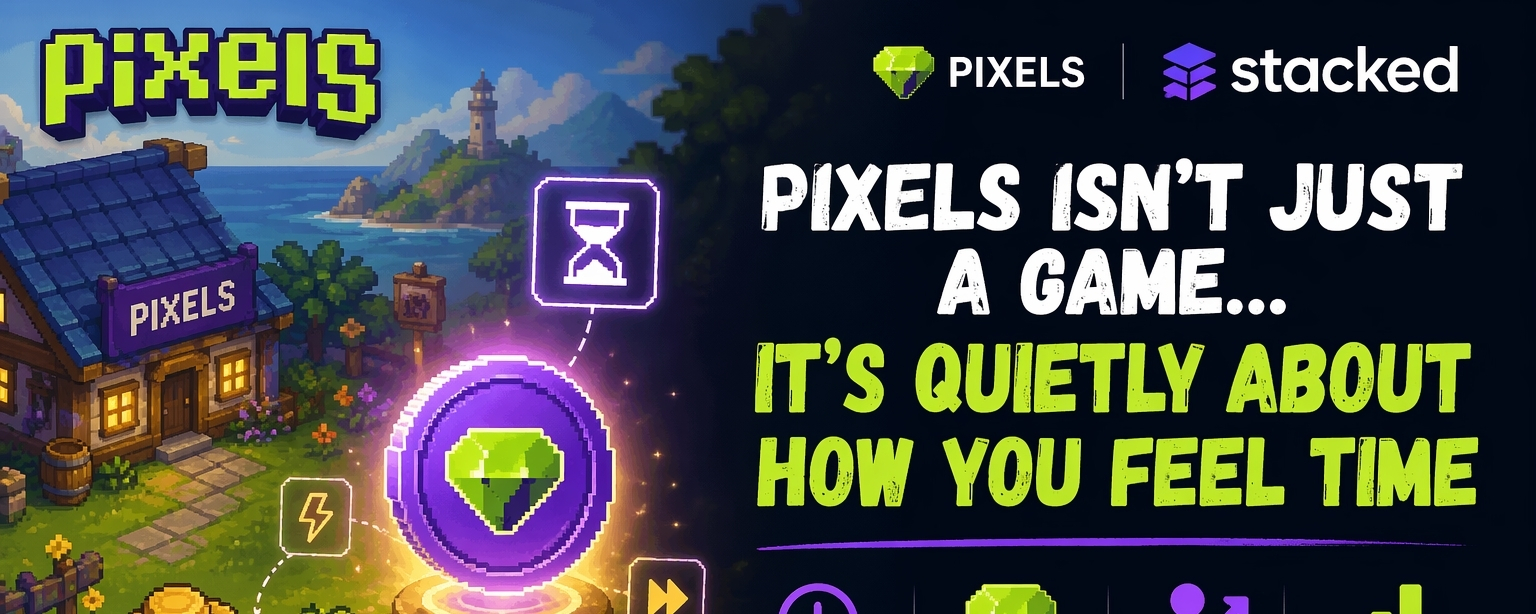
Pixels ist nicht nur ein Spiel… Es geht leise darum, wie du die Zeit fühlst ⏳Ich habe am Anfang nicht viel über @pixels nachgedacht. Es sah aus wie jede andere Farming-Style GameFi Schleife – Pflanzen, warten, ernten, wiederholen. Entspannt, vorhersehbar, nichts Überraschendes. Ich habe genug davon gesehen, um anzunehmen, dass ich weiß, wie sie funktionieren und wie sie normalerweise enden.
Aber nachdem ich tatsächlich beobachtet habe, wie die Leute spielen (einschließlich mir selbst), fühlte sich etwas ein wenig anders an. Nicht offensichtlich. Einfach… subtil.
Es geht nicht wirklich darum, was du verdienst. Es geht darum, wie lange alles dauert.
Und das klingt einfach, aber es ändert alles.
Pixels ist nicht nur ein Spiel… Es geht leise darum, wie du die Zeit fühlst ⏳
Ich habe am Anfang nicht viel über @Pixels nachgedacht. Es sah aus wie jede andere Farming-Style GameFi Schleife – Pflanzen, warten, ernten, wiederholen. Entspannt, vorhersehbar, nichts Überraschendes. Ich habe genug davon gesehen, um anzunehmen, dass ich weiß, wie sie funktionieren und wie sie normalerweise enden.
Aber nachdem ich tatsächlich beobachtet habe, wie die Leute spielen (einschließlich mir selbst), fühlte sich etwas ein wenig anders an. Nicht offensichtlich. Einfach… subtil.
Es geht nicht wirklich darum, was du verdienst. Es geht darum, wie lange alles dauert.
Und das klingt einfach, aber es ändert alles.
Aber nachdem ich tatsächlich beobachtet habe, wie die Leute spielen (einschließlich mir selbst), fühlte sich etwas ein wenig anders an. Nicht offensichtlich. Einfach… subtil.
Es geht nicht wirklich darum, was du verdienst. Es geht darum, wie lange alles dauert.
Und das klingt einfach, aber es ändert alles.
2
63
·
--
Übersetzung ansehen
#pixel $PIXEL
@pixels is changing the GameFi narrative by introducing Stacked, a smarter reward system that focuses on real player behavior instead of farming. By aligning incentives with engagement, the ecosystem becomes more sustainable over time. With $PIXEL expanding as a cross-game rewards token, this could be a strong step toward long-term Web3 gaming growth. #pixel
#pixel $PIXEL
@Pixels is changing the GameFi narrative by introducing Stacked, a smarter reward system that focuses on real player behavior instead of farming. By aligning incentives with engagement, the ecosystem becomes more sustainable over time. With $PIXEL expanding as a cross-game rewards token, this could be a strong step toward long-term Web3 gaming growth. #pixel
@Pixels is changing the GameFi narrative by introducing Stacked, a smarter reward system that focuses on real player behavior instead of farming. By aligning incentives with engagement, the ecosystem becomes more sustainable over time. With $PIXEL expanding as a cross-game rewards token, this could be a strong step toward long-term Web3 gaming growth. #pixel
2
21
·
--
Übersetzung ansehen
@Pixels & Stacked: Turning Player Activity into Real Value in GameFiThe biggest challenge in GameFi has always been sustainability. Many projects attracted users with rewards but failed to maintain long-term economies. @pixels is approaching this differently by building a system where rewards are tied to real engagement rather than passive activity.
At the center of this evolution is Stacked, a reward engine that changes how incentives are distributed. Instead of rewarding everyone equally, it focuses on identifying meaningful player behavior and allocating rewards strategically. This makes the system more efficient and reduces issues like bot farming and reward draining.
What makes this approach interesting is that it’s already tested in a live environment. The ecosystem has handled large-scale reward distribution while maintaining economic balance. This shows that the model is not theoretical—it’s already working in practice.
$PIXEL plays a key role in this ecosystem as it continues to expand beyond a single game into a broader reward layer. As more integrations happen, its utility grows along with the ecosystem itself.
Overall, @pixels is shifting GameFi from short-term incentives to long-term value creation. Instead of chasing hype, it focuses on building a system where both players and developers benefit sustainably.
#pixel $PIXEL
@Pixels & Stacked: Turning Player Activity into Real Value in GameFi
The biggest challenge in GameFi has always been sustainability. Many projects attracted users with rewards but failed to maintain long-term economies. @Pixels is approaching this differently by building a system where rewards are tied to real engagement rather than passive activity.
At the center of this evolution is Stacked, a reward engine that changes how incentives are distributed. Instead of rewarding everyone equally, it focuses on identifying meaningful player behavior and allocating rewards strategically. This makes the system more efficient and reduces issues like bot farming and reward draining.
What makes this approach interesting is that it’s already tested in a live environment. The ecosystem has handled large-scale reward distribution while maintaining economic balance. This shows that the model is not theoretical—it’s already working in practice.
$PIXEL plays a key role in this ecosystem as it continues to expand beyond a single game into a broader reward layer. As more integrations happen, its utility grows along with the ecosystem itself.
Overall, @Pixels is shifting GameFi from short-term incentives to long-term value creation. Instead of chasing hype, it focuses on building a system where both players and developers benefit sustainably.
#pixel $PIXEL
At the center of this evolution is Stacked, a reward engine that changes how incentives are distributed. Instead of rewarding everyone equally, it focuses on identifying meaningful player behavior and allocating rewards strategically. This makes the system more efficient and reduces issues like bot farming and reward draining.
What makes this approach interesting is that it’s already tested in a live environment. The ecosystem has handled large-scale reward distribution while maintaining economic balance. This shows that the model is not theoretical—it’s already working in practice.
$PIXEL plays a key role in this ecosystem as it continues to expand beyond a single game into a broader reward layer. As more integrations happen, its utility grows along with the ecosystem itself.
Overall, @Pixels is shifting GameFi from short-term incentives to long-term value creation. Instead of chasing hype, it focuses on building a system where both players and developers benefit sustainably.
#pixel $PIXEL
2
37
·
--
Wie @Pixels und Stacked GameFi mit echten Belohnungen und nachhaltigen Wirtschaften neu definieren 🚀Der GameFi-Bereich hatte lange mit einem großen Problem zu kämpfen – Nachhaltigkeit. Viele Play-to-Earn-Modelle ziehen anfangs Benutzer mit Belohnungen an, kollabieren jedoch im Laufe der Zeit aufgrund von Bot-Farming, schlechter Belohnungsverteilung und mangelndem wirtschaftlichem Gleichgewicht. Genau dieses Problem löst @pixels durch sein innovatives Stacked-Ökosystem.
Auf dem Ronin-Netzwerk aufgebaut, hat sich Pixels von einem einfachen Farming-Spiel zu einer voll funktionsfähigen digitalen Wirtschaft entwickelt. Aber der wahre Durchbruch kommt mit der Stacked App, die als belohnte LiveOps-Engine fungiert, die darauf abzielt, wie Anreize unter den Spielern verteilt werden. Anstatt blind Belohnungen zu vergeben, konzentriert sich Stacked darauf, die richtige Belohnung zur richtigen Zeit dem richtigen Spieler zu liefern.
Wie @Pixels und Stacked GameFi mit echten Belohnungen und nachhaltigen Wirtschaften neu definieren 🚀
Der GameFi-Bereich hatte lange mit einem großen Problem zu kämpfen – Nachhaltigkeit. Viele Play-to-Earn-Modelle ziehen anfangs Benutzer mit Belohnungen an, kollabieren jedoch im Laufe der Zeit aufgrund von Bot-Farming, schlechter Belohnungsverteilung und mangelndem wirtschaftlichem Gleichgewicht. Genau dieses Problem löst @Pixels durch sein innovatives Stacked-Ökosystem.
Auf dem Ronin-Netzwerk aufgebaut, hat sich Pixels von einem einfachen Farming-Spiel zu einer voll funktionsfähigen digitalen Wirtschaft entwickelt. Aber der wahre Durchbruch kommt mit der Stacked App, die als belohnte LiveOps-Engine fungiert, die darauf abzielt, wie Anreize unter den Spielern verteilt werden. Anstatt blind Belohnungen zu vergeben, konzentriert sich Stacked darauf, die richtige Belohnung zur richtigen Zeit dem richtigen Spieler zu liefern.
Auf dem Ronin-Netzwerk aufgebaut, hat sich Pixels von einem einfachen Farming-Spiel zu einer voll funktionsfähigen digitalen Wirtschaft entwickelt. Aber der wahre Durchbruch kommt mit der Stacked App, die als belohnte LiveOps-Engine fungiert, die darauf abzielt, wie Anreize unter den Spielern verteilt werden. Anstatt blind Belohnungen zu vergeben, konzentriert sich Stacked darauf, die richtige Belohnung zur richtigen Zeit dem richtigen Spieler zu liefern.
2
17
·
--
Übersetzung ansehen
#pixel $PIXEL
@pixels is redefining GameFi with its Stacked ecosystem, where rewards are smarter and more sustainable. Instead of rewarding spam activity, the system focuses on real player engagement and long-term value. With $PIXEL evolving into a cross-game rewards currency, the ecosystem is growing beyond just one game into a scalable Web3 economy. #pixel
#pixel $PIXEL
@Pixels is redefining GameFi with its Stacked ecosystem, where rewards are smarter and more sustainable. Instead of rewarding spam activity, the system focuses on real player engagement and long-term value. With $PIXEL evolving into a cross-game rewards currency, the ecosystem is growing beyond just one game into a scalable Web3 economy. #pixel
@Pixels is redefining GameFi with its Stacked ecosystem, where rewards are smarter and more sustainable. Instead of rewarding spam activity, the system focuses on real player engagement and long-term value. With $PIXEL evolving into a cross-game rewards currency, the ecosystem is growing beyond just one game into a scalable Web3 economy. #pixel
2
11
·
--
Übersetzung ansehen
Pixels & $PIXEL: Building a Sustainable Play-to-Earn Economy with Stacked 🚀The evolution of play-to-earn is finally taking a meaningful turn with @pixels , and it’s clear the project is aiming far beyond the typical GameFi model. Built on Ronin Network, Pixels is not just another farming simulator—it’s becoming a full-scale digital economy where player effort directly translates into value.
The recent updates, including Tier 5 expansion, introduce deeper crafting systems, new industries, and more complex resource management. This shows a clear shift toward long-term engagement rather than short-term rewards. What makes this even more interesting is the integration of Stacked App, which allows players to earn additional rewards based on gameplay, progression, and even content creation.
This combination creates a loop where players are incentivized not just to play, but to participate in the ecosystem actively. With $PIXEL acting as a core part of this economy, the project is gradually building a sustainable reward structure rather than relying on hype alone.
As GameFi continues to evolve, @pixels stands out by focusing on utility, scalability, and real player ownership. Definitely a project worth watching closely. #PİXEL 🚀
$PIXEL
Pixels & $PIXEL: Building a Sustainable Play-to-Earn Economy with Stacked 🚀
The evolution of play-to-earn is finally taking a meaningful turn with @Pixels , and it’s clear the project is aiming far beyond the typical GameFi model. Built on Ronin Network, Pixels is not just another farming simulator—it’s becoming a full-scale digital economy where player effort directly translates into value.
The recent updates, including Tier 5 expansion, introduce deeper crafting systems, new industries, and more complex resource management. This shows a clear shift toward long-term engagement rather than short-term rewards. What makes this even more interesting is the integration of Stacked App, which allows players to earn additional rewards based on gameplay, progression, and even content creation.
This combination creates a loop where players are incentivized not just to play, but to participate in the ecosystem actively. With $PIXEL acting as a core part of this economy, the project is gradually building a sustainable reward structure rather than relying on hype alone.
As GameFi continues to evolve, @Pixels stands out by focusing on utility, scalability, and real player ownership. Definitely a project worth watching closely. #PİXEL 🚀
$PIXEL
The recent updates, including Tier 5 expansion, introduce deeper crafting systems, new industries, and more complex resource management. This shows a clear shift toward long-term engagement rather than short-term rewards. What makes this even more interesting is the integration of Stacked App, which allows players to earn additional rewards based on gameplay, progression, and even content creation.
This combination creates a loop where players are incentivized not just to play, but to participate in the ecosystem actively. With $PIXEL acting as a core part of this economy, the project is gradually building a sustainable reward structure rather than relying on hype alone.
As GameFi continues to evolve, @Pixels stands out by focusing on utility, scalability, and real player ownership. Definitely a project worth watching closely. #PİXEL 🚀
$PIXEL
2
14
·
--
Übersetzung ansehen
Pixels & $PIXEL: Building a Sustainable Play-to-Earn Economy with Stacked 🚀The evolution of play-to-earn is finally taking a meaningful turn with @pixels , and it’s clear the project is aiming far beyond the typical GameFi model. Built on Ronin Network, Pixels is not just another farming simulator—it’s becoming a full-scale digital economy where player effort directly translates into value.
The recent updates, including Tier 5 expansion, introduce deeper crafting systems, new industries, and more complex resource management. This shows a clear shift toward long-term engagement rather than short-term rewards. What makes this even more interesting is the integration of Stacked App, which allows players to earn additional rewards based on gameplay, progression, and even content creation.
This combination creates a loop where players are incentivized not just to play, but to participate in the ecosystem actively. With $PIXEL acting as a core part of this economy, the project is gradually building a sustainable reward structure rather than relying on hype alone.
As GameFi continues to evolve, @pixels stands out by focusing on utility, scalability, and real player ownership. Definitely a project worth watching closely. #PİXEL 🚀
$PIXEL
Pixels & $PIXEL: Building a Sustainable Play-to-Earn Economy with Stacked 🚀
The evolution of play-to-earn is finally taking a meaningful turn with @Pixels , and it’s clear the project is aiming far beyond the typical GameFi model. Built on Ronin Network, Pixels is not just another farming simulator—it’s becoming a full-scale digital economy where player effort directly translates into value.
The recent updates, including Tier 5 expansion, introduce deeper crafting systems, new industries, and more complex resource management. This shows a clear shift toward long-term engagement rather than short-term rewards. What makes this even more interesting is the integration of Stacked App, which allows players to earn additional rewards based on gameplay, progression, and even content creation.
This combination creates a loop where players are incentivized not just to play, but to participate in the ecosystem actively. With $PIXEL acting as a core part of this economy, the project is gradually building a sustainable reward structure rather than relying on hype alone.
As GameFi continues to evolve, @Pixels stands out by focusing on utility, scalability, and real player ownership. Definitely a project worth watching closely. #PİXEL 🚀
$PIXEL
The recent updates, including Tier 5 expansion, introduce deeper crafting systems, new industries, and more complex resource management. This shows a clear shift toward long-term engagement rather than short-term rewards. What makes this even more interesting is the integration of Stacked App, which allows players to earn additional rewards based on gameplay, progression, and even content creation.
This combination creates a loop where players are incentivized not just to play, but to participate in the ecosystem actively. With $PIXEL acting as a core part of this economy, the project is gradually building a sustainable reward structure rather than relying on hype alone.
As GameFi continues to evolve, @Pixels stands out by focusing on utility, scalability, and real player ownership. Definitely a project worth watching closely. #PİXEL 🚀
$PIXEL
1
98
·
--
Übersetzung ansehen
#pixel $PIXEL
Pixels on Ronin Network continues to expand its play-to-earn ecosystem with exciting new updates. The recent Tier 5 expansion introduces new industries, resources, and over 100+ crafting recipes, pushing gameplay to a whole new level.
With Stacked App, players can now earn additional rewards from their in-game progress, content, and activity with instant payouts. This shift shows how Pixels is moving beyond just a farming game into a full Web3 economy.
As adoption grows, Pixels is proving that sustainable play-to-earn is possible—combining fun gameplay with real earning potential. Definitely a project to watch in the GameFi space. 🚀
#pixel $PIXEL
Pixels on Ronin Network continues to expand its play-to-earn ecosystem with exciting new updates. The recent Tier 5 expansion introduces new industries, resources, and over 100+ crafting recipes, pushing gameplay to a whole new level.
With Stacked App, players can now earn additional rewards from their in-game progress, content, and activity with instant payouts. This shift shows how Pixels is moving beyond just a farming game into a full Web3 economy.
As adoption grows, Pixels is proving that sustainable play-to-earn is possible—combining fun gameplay with real earning potential. Definitely a project to watch in the GameFi space. 🚀
Pixels on Ronin Network continues to expand its play-to-earn ecosystem with exciting new updates. The recent Tier 5 expansion introduces new industries, resources, and over 100+ crafting recipes, pushing gameplay to a whole new level.
With Stacked App, players can now earn additional rewards from their in-game progress, content, and activity with instant payouts. This shift shows how Pixels is moving beyond just a farming game into a full Web3 economy.
As adoption grows, Pixels is proving that sustainable play-to-earn is possible—combining fun gameplay with real earning potential. Definitely a project to watch in the GameFi space. 🚀
1
87
·
--
Bullisch
Übersetzung ansehen
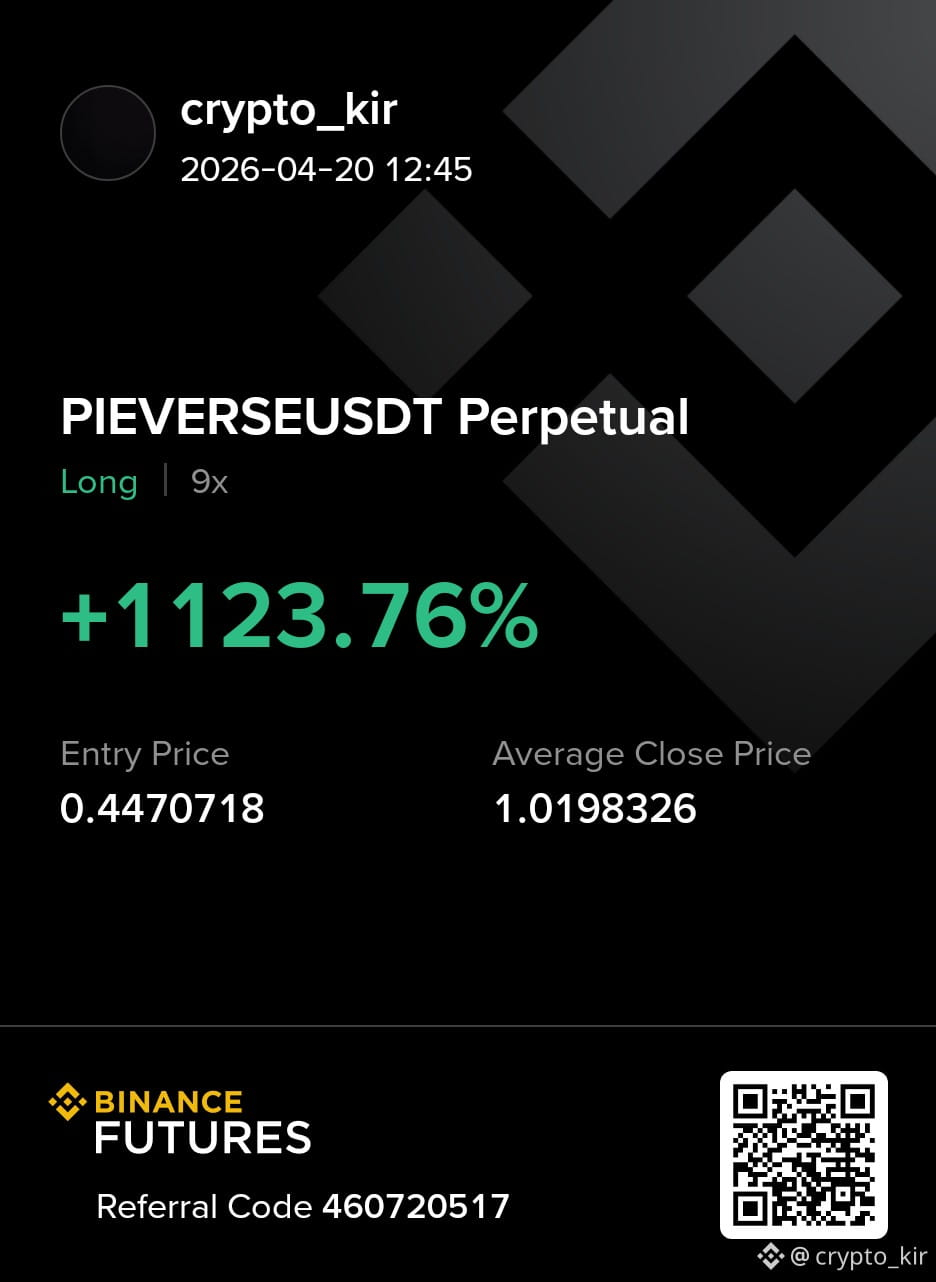
Caught the move. Secured the gains.
Trade closed in profit — onto the next one. 🚀
$PIEVERSE
Caught the move. Secured the gains.
Trade closed in profit — onto the next one. 🚀
$PIEVERSE
Trade closed in profit — onto the next one. 🚀
$PIEVERSE
1
282
·
--
[collect red packet](https://app.binance.com/uni-qr/6kA4cMRc?utm_medium=web_share_copy)
sammle $A2Z 100 mehr übrig
collect red packet
sammle $A2Z 100 mehr übrig
sammle $A2Z 100 mehr übrig
1
2
·
--
Bullisch
$RVV is gutes Projekt, es ist nur eine Frage der Zeit.
2026 geht es um Ausrichtung, nicht um Lärm.
Astra Nova bringt einige der stärksten Gemeinschaften und IPs in Web3 zusammen: Shiba Inu, Shifu, Imaginary Ones, Simons Katze und mehr unter einem sich entwickelnden Ökosystem.🔥
Verschiedene Stärken. Eine gemeinsame Vision.
Bauer, Kreative und Gemeinschaften arbeiten synchron, um die Zukunft der digitalen Unterhaltung zu gestalten.
Es geht darum, die richtigen Kräfte zu versammeln, um etwas Größeres zu schaffen als jede einzelne Marke. 💪
Das Astra Nova-Ökosystem wächst und 2026 gehen wir in den Überholmodus. ⚡️
$RVV is gutes Projekt, es ist nur eine Frage der Zeit.
2026 geht es um Ausrichtung, nicht um Lärm.
Astra Nova bringt einige der stärksten Gemeinschaften und IPs in Web3 zusammen: Shiba Inu, Shifu, Imaginary Ones, Simons Katze und mehr unter einem sich entwickelnden Ökosystem.🔥
Verschiedene Stärken. Eine gemeinsame Vision.
Bauer, Kreative und Gemeinschaften arbeiten synchron, um die Zukunft der digitalen Unterhaltung zu gestalten.
Es geht darum, die richtigen Kräfte zu versammeln, um etwas Größeres zu schaffen als jede einzelne Marke. 💪
Das Astra Nova-Ökosystem wächst und 2026 gehen wir in den Überholmodus. ⚡️
2026 geht es um Ausrichtung, nicht um Lärm.
Astra Nova bringt einige der stärksten Gemeinschaften und IPs in Web3 zusammen: Shiba Inu, Shifu, Imaginary Ones, Simons Katze und mehr unter einem sich entwickelnden Ökosystem.🔥
Verschiedene Stärken. Eine gemeinsame Vision.
Bauer, Kreative und Gemeinschaften arbeiten synchron, um die Zukunft der digitalen Unterhaltung zu gestalten.
Es geht darum, die richtigen Kräfte zu versammeln, um etwas Größeres zu schaffen als jede einzelne Marke. 💪
Das Astra Nova-Ökosystem wächst und 2026 gehen wir in den Überholmodus. ⚡️
2
259
·
--
Habe gerade einen Long-Trade auf Piverse eröffnet.
🎯 Ziel: 0.63
Habe gerade einen Long-Trade auf Piverse eröffnet.
🎯 Ziel: 0.63
🎯 Ziel: 0.63
2
6
·
--
Bullisch
{future}(RVVUSDT)
$RVV
Astra Nova x Nebulai 🤝
Spannende Neuigkeiten! 🔥 Wir freuen uns, unsere Partnerschaft mit Nebulai bekannt zu geben, einer Plattform, auf der Entwickler und Nutzer gemeinsam KI-Agentenlösungen entwickeln, teilen und innovieren.
Nebulai gestaltet die Zukunft der KI durch einen dezentralen Marktplatz, der es KI-Agenten ermöglicht, zusammenzuarbeiten und die menschliche Effizienz und Produktivität in großem Maßstab zu steigern. ⚡️🤖
Wir freuen uns darauf, zu erkunden, wie diese Zusammenarbeit neue Möglichkeiten für agentengesteuerte Erlebnisse und KI-nativ Ökosysteme eröffnet.
Bleiben Sie dran für weitere Updates von Astra Nova und Nebulai 👀
$RVV
Astra Nova x Nebulai 🤝
Spannende Neuigkeiten! 🔥 Wir freuen uns, unsere Partnerschaft mit Nebulai bekannt zu geben, einer Plattform, auf der Entwickler und Nutzer gemeinsam KI-Agentenlösungen entwickeln, teilen und innovieren.
Nebulai gestaltet die Zukunft der KI durch einen dezentralen Marktplatz, der es KI-Agenten ermöglicht, zusammenzuarbeiten und die menschliche Effizienz und Produktivität in großem Maßstab zu steigern. ⚡️🤖
Wir freuen uns darauf, zu erkunden, wie diese Zusammenarbeit neue Möglichkeiten für agentengesteuerte Erlebnisse und KI-nativ Ökosysteme eröffnet.
Bleiben Sie dran für weitere Updates von Astra Nova und Nebulai 👀
Astra Nova x Nebulai 🤝
Spannende Neuigkeiten! 🔥 Wir freuen uns, unsere Partnerschaft mit Nebulai bekannt zu geben, einer Plattform, auf der Entwickler und Nutzer gemeinsam KI-Agentenlösungen entwickeln, teilen und innovieren.
Nebulai gestaltet die Zukunft der KI durch einen dezentralen Marktplatz, der es KI-Agenten ermöglicht, zusammenzuarbeiten und die menschliche Effizienz und Produktivität in großem Maßstab zu steigern. ⚡️🤖
Wir freuen uns darauf, zu erkunden, wie diese Zusammenarbeit neue Möglichkeiten für agentengesteuerte Erlebnisse und KI-nativ Ökosysteme eröffnet.
Bleiben Sie dran für weitere Updates von Astra Nova und Nebulai 👀
2
335
Anmelden und weiter Inhalte entdecken
Krypto-Nutzer weltweit auf Binance Square kennenlernen
⚡️ Bleib in Sachen Krypto stets am Puls.
💬 Die weltgrößte Kryptobörse vertraut darauf.
👍 Erhalte verlässliche Einblicke von verifizierten Creators.
E-Mail-Adresse/Telefonnummer
Trendthemen
ClarityActFacesProceduralVoteSept15
26,112 Aufrufe
432 Kommentare
#clarityactfacesproceduralvotesept15
🚨 CLARITY-Gesetz steht vor einer Verfahrensabstimmung am 15. September 🚨
Der Senatssaal ist still, aber der Kryptomarkt beobachtet bereits die Uhr. Am 15. September könnte eine einzige Verfahrensabstimmung darüber entscheiden, ob ein wichtiges US-Gesetz zur Marktstruktur für Krypto überhaupt die Chance bekommt, weiter voranzukommen.
Das CLARITY-Gesetz steht an diesem Tag nicht vor der finalen Verabschiedung. Es wird erwartet, dass die Senatoren über einen Antrag auf „Proceed“ abstimmen – ein entscheidender Verfahrensschritt, für den 60 Stimmen erforderlich sind, um die Hürde im Senat zu überspringen.
Diese Unterscheidung ist wichtig. Eine erfolgreiche Abstimmung würde das Gesetz nicht unmittelbar zum Recht machen, aber sie würde den Weg für weitere Beratungen und Verhandlungen im Senat öffnen.
Die Einsätze sind hoch, weil die Gesetzgebung darauf abzielt, klarere Regeln rund um digitale Assets festzulegen und zu bestimmen, wie die Zuständigkeiten zwischen US-Regulierungsbehörden aufgeteilt werden.
Die aktuelle Überarbeitung mit 630 Seiten fügt zudem Bestimmungen hinzu, die sich mit bestimmten nicht dezentralen Handelsprotokollen befassen, während mehrere politische und regulatorische Streitpunkte weiterhin ungelöst sind.
Mein Fazit: Der 15. September sollte weniger als Tag eines Siegs oder einer Niederlage betrachtet werden, sondern als Glaubwürdigkeits-Check. Das Beseitigen der Verfahrenshürde könnte das Vertrauen stärken, dass die US-Krypto-Gesetzgebung auf einen klareren Rahmen zusteuert. Ein Scheitern könnte die Unsicherheit verlängern.
Für Kromomärkte kann regulatorische Klarheit die Beteiligung institutioneller Akteure, Geschäftsentscheidungen und die Art beeinflussen, wie Investoren die US-Exposure bewerten. Doch Erwartungen können sich schneller bewegen als die Gesetzgebung selbst.
Das eigentliche Signal ist nicht, ob Krypto über Nacht Klarheit erhält, sondern ob Gesetzgeber endlich genug Konsens aufbauen können, um den Prozess weiterzubringen.
Wird die Abstimmung am 15. September zum Wendepunkt für die Regulierung von US-Krypto, oder zu einer weiteren Verzögerung?
Haftungsausschluss: Dieser Artikel dient nur zu Bildungszwecken und stellt keine Finanzberatung dar. Führen Sie Ihre eigenen Recherchen durch und gehen Sie mit Risiken sorgfältig um.
#CryptoRegulation #Bitcoin #GrowWithSAC $SUI $NEAR $BNB
#ClarityActFacesProceduralVoteSept15
Sienna Leo-你真棒-带我走
·3 Likes
·2.9k Aufrufe
US2YearYieldRisesTo4.61%
23,884 Aufrufe
493 Kommentare
US10YearTreasuryYieldNears5%
12,216 Aufrufe
278 Kommentare