

Franklin_LFR
118 Beiträge

Franklin_LFR
Melden
Nutzer blockieren
Trade eröffnen
3.2 Monate
49 Following
8 Follower
54 Like gegeben
Beiträge
Portfolio
·
--
$Ethereum zeigt Stärkezeichen, während Bullen die Zone von $2.480 verteidigen
Ethereum wird derzeit um $2.484 gehandelt und zeigt eine relativ stabile Preisstruktur nach jüngsten Marktschwankungen. Das Chartbild deutet darauf hin, dass Käufer weiterhin aktiv sind: ETH hält sich oberhalb des Bereichs von $2.480 und bleibt komfortabel über seinem MA60-Niveau nahe $2.477.
Auch der kurzfristige Momentum-Eindruck ist interessant. Der MACD bleibt leicht positiv, was darauf hindeutet, dass der Kaufdruck noch nicht vollständig abgeflaut ist. Ethereum ist kürzlich in Richtung des Bereichs von $2.487 gelaufen, während das 24-Stunden-Hoch bei etwa $2.506 liegt.
Die entscheidende Frage ist nun, ob ETH seine Position oberhalb der Unterstützungszone von $2.480–$2.477 halten kann. Ein anhaltender Move über $2.500 könnte frisches Interesse bei Tradern wecken und möglicherweise den Weg zu höheren Kursniveaus öffnen.
Vorerst wirkt es so, als befinde sich Ethereum in einer Phase, in der Geduld gefragt ist. Der nächste Schritt könnte sich klarer abzeichnen, sobald sich Volumen und Momentum weiterentwickeln.
Ethereum hält seine Position — und der nächste Ausbruch könnte es wert sein, genau im Blick zu behalten.
#SaudiHaltsSouthernEnergySitesAfterAttacks
#YenBreaks155NearingYearHigh
#USIranTradeTankerStrikesEscalate
#CanadaTariffsOnUSTakeEffect
#ZcashRises45%WeeklyToHighestSince2016
$Ethereum zeigt Stärkezeichen, während Bullen die Zone von $2.480 verteidigen
Ethereum wird derzeit um $2.484 gehandelt und zeigt eine relativ stabile Preisstruktur nach jüngsten Marktschwankungen. Das Chartbild deutet darauf hin, dass Käufer weiterhin aktiv sind: ETH hält sich oberhalb des Bereichs von $2.480 und bleibt komfortabel über seinem MA60-Niveau nahe $2.477.
Auch der kurzfristige Momentum-Eindruck ist interessant. Der MACD bleibt leicht positiv, was darauf hindeutet, dass der Kaufdruck noch nicht vollständig abgeflaut ist. Ethereum ist kürzlich in Richtung des Bereichs von $2.487 gelaufen, während das 24-Stunden-Hoch bei etwa $2.506 liegt.
Die entscheidende Frage ist nun, ob ETH seine Position oberhalb der Unterstützungszone von $2.480–$2.477 halten kann. Ein anhaltender Move über $2.500 könnte frisches Interesse bei Tradern wecken und möglicherweise den Weg zu höheren Kursniveaus öffnen.
Vorerst wirkt es so, als befinde sich Ethereum in einer Phase, in der Geduld gefragt ist. Der nächste Schritt könnte sich klarer abzeichnen, sobald sich Volumen und Momentum weiterentwickeln.
Ethereum hält seine Position — und der nächste Ausbruch könnte es wert sein, genau im Blick zu behalten.
#SaudiHaltsSouthernEnergySitesAfterAttacks
#YenBreaks155NearingYearHigh
#USIranTradeTankerStrikesEscalate
#CanadaTariffsOnUSTakeEffect
#ZcashRises45%WeeklyToHighestSince2016
Ethereum wird derzeit um $2.484 gehandelt und zeigt eine relativ stabile Preisstruktur nach jüngsten Marktschwankungen. Das Chartbild deutet darauf hin, dass Käufer weiterhin aktiv sind: ETH hält sich oberhalb des Bereichs von $2.480 und bleibt komfortabel über seinem MA60-Niveau nahe $2.477.
Auch der kurzfristige Momentum-Eindruck ist interessant. Der MACD bleibt leicht positiv, was darauf hindeutet, dass der Kaufdruck noch nicht vollständig abgeflaut ist. Ethereum ist kürzlich in Richtung des Bereichs von $2.487 gelaufen, während das 24-Stunden-Hoch bei etwa $2.506 liegt.
Die entscheidende Frage ist nun, ob ETH seine Position oberhalb der Unterstützungszone von $2.480–$2.477 halten kann. Ein anhaltender Move über $2.500 könnte frisches Interesse bei Tradern wecken und möglicherweise den Weg zu höheren Kursniveaus öffnen.
Vorerst wirkt es so, als befinde sich Ethereum in einer Phase, in der Geduld gefragt ist. Der nächste Schritt könnte sich klarer abzeichnen, sobald sich Volumen und Momentum weiterentwickeln.
Ethereum hält seine Position — und der nächste Ausbruch könnte es wert sein, genau im Blick zu behalten.
#SaudiHaltsSouthernEnergySitesAfterAttacks
#YenBreaks155NearingYearHigh
#USIranTradeTankerStrikesEscalate
#CanadaTariffsOnUSTakeEffect
#ZcashRises45%WeeklyToHighestSince2016
1
61
·
--
$Dogecoin wird derzeit bei etwa $0.09026 gehandelt und verzeichnet einen Kursanstieg von 1,32% im Tagesverlauf. Der Chart zeigt, dass DOGE über dem MA60 bei $0.08994 hält – ein ermutigendes Zeichen für die kurzfristige Marktstärke.
Die 24-Stunden-Handelsspanne liegt ungefähr bei $0.08851–$0.09180, wobei das Handelsvolumen über 41,5 Millionen liegt. Der Kurs konsolidiert derzeit nahe der $0.090-Marke, nachdem zuvor höhere Kurse getestet wurden.
Der MACD ist weiterhin leicht negativ, daher ist eine Bestätigung für stärkeres bullisches Momentum wichtig. Ein anhaltender Ausbruch über dem Widerstandsbereich von $0.09180 könnte den Weg für weiteres Upside ebnen, während das Halten der Zone $0.08990–$0.09000 die kurzfristige Struktur relativ positiv halten würde.
Für Trader ist entscheidend, auf Volumen und Momentum zu achten, statt nur wegen eines kleinen Kursanstiegs einzusteigen. DOGE bleibt ein hochvolatiles Asset, daher sind ein angemessenes Risikomanagement und disziplinierte Einstiege unerlässlich.
DOGE zeigt Stärke, aber der nächste Ausbruch braucht eine Bestätigung.
#USIranTradeTankerStrikesEscalate
#CanadaToImpose15%To50%TariffsOnUSGoods
#ZcashRises45%WeeklyToHighestSince2016
#IMFSaysElSalvadorBTCNoPublicFunds
#SideSwapSuspendsLiquidServices
$Dogecoin wird derzeit bei etwa $0.09026 gehandelt und verzeichnet einen Kursanstieg von 1,32% im Tagesverlauf. Der Chart zeigt, dass DOGE über dem MA60 bei $0.08994 hält – ein ermutigendes Zeichen für die kurzfristige Marktstärke.
Die 24-Stunden-Handelsspanne liegt ungefähr bei $0.08851–$0.09180, wobei das Handelsvolumen über 41,5 Millionen liegt. Der Kurs konsolidiert derzeit nahe der $0.090-Marke, nachdem zuvor höhere Kurse getestet wurden.
Der MACD ist weiterhin leicht negativ, daher ist eine Bestätigung für stärkeres bullisches Momentum wichtig. Ein anhaltender Ausbruch über dem Widerstandsbereich von $0.09180 könnte den Weg für weiteres Upside ebnen, während das Halten der Zone $0.08990–$0.09000 die kurzfristige Struktur relativ positiv halten würde.
Für Trader ist entscheidend, auf Volumen und Momentum zu achten, statt nur wegen eines kleinen Kursanstiegs einzusteigen. DOGE bleibt ein hochvolatiles Asset, daher sind ein angemessenes Risikomanagement und disziplinierte Einstiege unerlässlich.
DOGE zeigt Stärke, aber der nächste Ausbruch braucht eine Bestätigung.
#USIranTradeTankerStrikesEscalate
#CanadaToImpose15%To50%TariffsOnUSGoods
#ZcashRises45%WeeklyToHighestSince2016
#IMFSaysElSalvadorBTCNoPublicFunds
#SideSwapSuspendsLiquidServices
Die 24-Stunden-Handelsspanne liegt ungefähr bei $0.08851–$0.09180, wobei das Handelsvolumen über 41,5 Millionen liegt. Der Kurs konsolidiert derzeit nahe der $0.090-Marke, nachdem zuvor höhere Kurse getestet wurden.
Der MACD ist weiterhin leicht negativ, daher ist eine Bestätigung für stärkeres bullisches Momentum wichtig. Ein anhaltender Ausbruch über dem Widerstandsbereich von $0.09180 könnte den Weg für weiteres Upside ebnen, während das Halten der Zone $0.08990–$0.09000 die kurzfristige Struktur relativ positiv halten würde.
Für Trader ist entscheidend, auf Volumen und Momentum zu achten, statt nur wegen eines kleinen Kursanstiegs einzusteigen. DOGE bleibt ein hochvolatiles Asset, daher sind ein angemessenes Risikomanagement und disziplinierte Einstiege unerlässlich.
DOGE zeigt Stärke, aber der nächste Ausbruch braucht eine Bestätigung.
#USIranTradeTankerStrikesEscalate
#CanadaToImpose15%To50%TariffsOnUSGoods
#ZcashRises45%WeeklyToHighestSince2016
#IMFSaysElSalvadorBTCNoPublicFunds
#SideSwapSuspendsLiquidServices
98
·
--
$UNIUSD CM Perp: Ein Überblick über die Dynamik
Der UNI-Perpetual-Kontrakt wird bei 6.293 gehandelt, was einem Anstieg von 1,57 % gegenüber dem Vortag entspricht, mit einem Markpreis von 6.288. Die 24-Stunden-Spanne zeigt solide Volatilität—Hoch 6.511, Tief 6.013—während das Volumen bei 740.059 Kontrakten (~$7.40M) liegt, was auf eine gesunde Beteiligung hinweist.
Auf dem 4-Stunden-Chart pendelt der Kurs knapp über dem MA60 (6.210), was auf eine kurzfristige Unterstützung hindeutet. Die MACD-Werte (DIF: 0.022, DEA: 0.013, Histogramm: 0.009) deuten auf einen bullischen Impuls hin, obwohl die jüngste Konsolidierung zwischen 6.242–6.292 auf einen möglichen Ausbruch oder Rücksetzer in naher Zukunft schließen lässt.
Händler beobachten das Niveau von 6.30 genau. Ein sauberer Ausbruch darüber könnte den Weg in Richtung des 24h-Hochs öffnen, während ein Rückgang unter 6.25 Verkaufsdruck anziehen könnte. Bei stabilem Volumen und positiv tendierenden Indikatoren bleibt UNI in den kommenden Sitzungen einer, den man im Blick behalten sollte.
Bleib diszipliniert, manage das Risiko und lass den Chart deinen nächsten Schritt bestimmen.
#LululemonTumbles20%OnWeakGuidance
#BitcoinETFsBiggestDailyInflowSinceJanuary
#USAugustAvgHourlyEarningsRise3.1%
#BitcoinEthereumHitMultiMonthHighs
#AdobeSharesFall3%OnCEOTransition
$UNIUSD CM Perp: Ein Überblick über die Dynamik
Der UNI-Perpetual-Kontrakt wird bei 6.293 gehandelt, was einem Anstieg von 1,57 % gegenüber dem Vortag entspricht, mit einem Markpreis von 6.288. Die 24-Stunden-Spanne zeigt solide Volatilität—Hoch 6.511, Tief 6.013—während das Volumen bei 740.059 Kontrakten (~$7.40M) liegt, was auf eine gesunde Beteiligung hinweist.
Auf dem 4-Stunden-Chart pendelt der Kurs knapp über dem MA60 (6.210), was auf eine kurzfristige Unterstützung hindeutet. Die MACD-Werte (DIF: 0.022, DEA: 0.013, Histogramm: 0.009) deuten auf einen bullischen Impuls hin, obwohl die jüngste Konsolidierung zwischen 6.242–6.292 auf einen möglichen Ausbruch oder Rücksetzer in naher Zukunft schließen lässt.
Händler beobachten das Niveau von 6.30 genau. Ein sauberer Ausbruch darüber könnte den Weg in Richtung des 24h-Hochs öffnen, während ein Rückgang unter 6.25 Verkaufsdruck anziehen könnte. Bei stabilem Volumen und positiv tendierenden Indikatoren bleibt UNI in den kommenden Sitzungen einer, den man im Blick behalten sollte.
Bleib diszipliniert, manage das Risiko und lass den Chart deinen nächsten Schritt bestimmen.
#LululemonTumbles20%OnWeakGuidance
#BitcoinETFsBiggestDailyInflowSinceJanuary
#USAugustAvgHourlyEarningsRise3.1%
#BitcoinEthereumHitMultiMonthHighs
#AdobeSharesFall3%OnCEOTransition
Der UNI-Perpetual-Kontrakt wird bei 6.293 gehandelt, was einem Anstieg von 1,57 % gegenüber dem Vortag entspricht, mit einem Markpreis von 6.288. Die 24-Stunden-Spanne zeigt solide Volatilität—Hoch 6.511, Tief 6.013—während das Volumen bei 740.059 Kontrakten (~$7.40M) liegt, was auf eine gesunde Beteiligung hinweist.
Auf dem 4-Stunden-Chart pendelt der Kurs knapp über dem MA60 (6.210), was auf eine kurzfristige Unterstützung hindeutet. Die MACD-Werte (DIF: 0.022, DEA: 0.013, Histogramm: 0.009) deuten auf einen bullischen Impuls hin, obwohl die jüngste Konsolidierung zwischen 6.242–6.292 auf einen möglichen Ausbruch oder Rücksetzer in naher Zukunft schließen lässt.
Händler beobachten das Niveau von 6.30 genau. Ein sauberer Ausbruch darüber könnte den Weg in Richtung des 24h-Hochs öffnen, während ein Rückgang unter 6.25 Verkaufsdruck anziehen könnte. Bei stabilem Volumen und positiv tendierenden Indikatoren bleibt UNI in den kommenden Sitzungen einer, den man im Blick behalten sollte.
Bleib diszipliniert, manage das Risiko und lass den Chart deinen nächsten Schritt bestimmen.
#LululemonTumbles20%OnWeakGuidance
#BitcoinETFsBiggestDailyInflowSinceJanuary
#USAugustAvgHourlyEarningsRise3.1%
#BitcoinEthereumHitMultiMonthHighs
#AdobeSharesFall3%OnCEOTransition
125
·
--
$Bitcoin Konsolidiert nahe $77.800, während Trader wichtige gleitende Durchschnitte im Blick haben
Der Bitcoin-Perpetual-Kontrakt (BTCUSD CM Perp) wird am 3. September 2026 um 12:32 UTC mit **$77.797,2** gehandelt und verzeichnet damit einen moderaten Anstieg von +0,34% gegenüber der letzten Session. Der aktuelle Markpreis liegt leicht höher bei $77.824,5, was auf eine enge Spanne und relativ stabile Funding-Bedingungen hindeutet.
Auf dem 15-Minuten-Chart bleibt die Kursbewegung zwischen dem MA60 (aktuell bei $77.820,3) und den jüngsten Session-Hochs nahe $77.949,1 eingeengt. Verkäufer haben die Zone um $77.900 wiederholt verteidigt, während Käufer rund um $77.785,8 einsteigen und so eine enge Intraday-Spanne erzeugen. Ein Ausbruch über $77.950 könnte den Weg in Richtung der $78.000-Marke öffnen, während ein Bruch unter $77.750 möglicherweise einen Test des Unterstützungsbereichs bei $77.500 nach sich zieht.
Momentum-Indikatoren senden gemischte Signale. Das MACD-Histogramm zeigt einen negativen Wert von -13,2, wobei die DIF-Linie (-3,9) unter der DEA (9,3) liegt, was auf bearishen Druck im Nahbereich hindeutet. Gleichzeitig deutet die Abflachung der gleitenden Durchschnitte jedoch auf eine mögliche Erschöpfung im Verkaufsimpuls hin. Trader beobachten besonders genau, ob der MA60 als dynamische Unterstützung halten kann – vor allem, da auf der Long-Seite in den vergangenen wenigen 15-Minuten-Kerzen das Volumen zunimmt.
Das Orderbuch zeigt eine ausgeglichene Schieflage zwischen Long- und Short-Positionen, was auf Unentschlossenheit im Markt hindeutet. Währenddessen bleiben die Zeiträume von 4 Stunden und 1 Tag in Richtung Aufwärts ausgerichtet: Höhere Hochs und höhere Tiefs sind in der breiteren Struktur weiterhin intakt.
Mit dem Herannahen der New-York-Session wird erwartet, dass die Liquidität abnimmt, was die Volatilität verstärken könnte. Wichtige zu beobachtende Niveaus: Widerstand bei $77.950 und $78.100, Unterstützung bei $77.750 und $77.500. Eine anhaltende Bewegung über den MA60 bei zunehmendem Volumen würde eine bullische Fortsetzung bestätigen, während ein Scheitern, die aktuellen Niveaus zu halten, einen kurzfristigen Rücksetzer auslösen könnte.
Bleiben Sie dran für weitere Kursbewegungen, während BTC diesen kritischen Wendepunkt weiter navigiert.
#US10YearTreasuryYieldHitsHighestSinceNov2023
#IranStrikesUSBaseInKuwait
#OilSteadiesAfterThreeDayRally
#SolanaFallsOver3%
#SolanaFallsOver3%
$Bitcoin Konsolidiert nahe $77.800, während Trader wichtige gleitende Durchschnitte im Blick haben
Der Bitcoin-Perpetual-Kontrakt (BTCUSD CM Perp) wird am 3. September 2026 um 12:32 UTC mit **$77.797,2** gehandelt und verzeichnet damit einen moderaten Anstieg von +0,34% gegenüber der letzten Session. Der aktuelle Markpreis liegt leicht höher bei $77.824,5, was auf eine enge Spanne und relativ stabile Funding-Bedingungen hindeutet.
Auf dem 15-Minuten-Chart bleibt die Kursbewegung zwischen dem MA60 (aktuell bei $77.820,3) und den jüngsten Session-Hochs nahe $77.949,1 eingeengt. Verkäufer haben die Zone um $77.900 wiederholt verteidigt, während Käufer rund um $77.785,8 einsteigen und so eine enge Intraday-Spanne erzeugen. Ein Ausbruch über $77.950 könnte den Weg in Richtung der $78.000-Marke öffnen, während ein Bruch unter $77.750 möglicherweise einen Test des Unterstützungsbereichs bei $77.500 nach sich zieht.
Momentum-Indikatoren senden gemischte Signale. Das MACD-Histogramm zeigt einen negativen Wert von -13,2, wobei die DIF-Linie (-3,9) unter der DEA (9,3) liegt, was auf bearishen Druck im Nahbereich hindeutet. Gleichzeitig deutet die Abflachung der gleitenden Durchschnitte jedoch auf eine mögliche Erschöpfung im Verkaufsimpuls hin. Trader beobachten besonders genau, ob der MA60 als dynamische Unterstützung halten kann – vor allem, da auf der Long-Seite in den vergangenen wenigen 15-Minuten-Kerzen das Volumen zunimmt.
Das Orderbuch zeigt eine ausgeglichene Schieflage zwischen Long- und Short-Positionen, was auf Unentschlossenheit im Markt hindeutet. Währenddessen bleiben die Zeiträume von 4 Stunden und 1 Tag in Richtung Aufwärts ausgerichtet: Höhere Hochs und höhere Tiefs sind in der breiteren Struktur weiterhin intakt.
Mit dem Herannahen der New-York-Session wird erwartet, dass die Liquidität abnimmt, was die Volatilität verstärken könnte. Wichtige zu beobachtende Niveaus: Widerstand bei $77.950 und $78.100, Unterstützung bei $77.750 und $77.500. Eine anhaltende Bewegung über den MA60 bei zunehmendem Volumen würde eine bullische Fortsetzung bestätigen, während ein Scheitern, die aktuellen Niveaus zu halten, einen kurzfristigen Rücksetzer auslösen könnte.
Bleiben Sie dran für weitere Kursbewegungen, während BTC diesen kritischen Wendepunkt weiter navigiert.
#US10YearTreasuryYieldHitsHighestSinceNov2023
#IranStrikesUSBaseInKuwait
#OilSteadiesAfterThreeDayRally
#SolanaFallsOver3%
#SolanaFallsOver3%
Der Bitcoin-Perpetual-Kontrakt (BTCUSD CM Perp) wird am 3. September 2026 um 12:32 UTC mit **$77.797,2** gehandelt und verzeichnet damit einen moderaten Anstieg von +0,34% gegenüber der letzten Session. Der aktuelle Markpreis liegt leicht höher bei $77.824,5, was auf eine enge Spanne und relativ stabile Funding-Bedingungen hindeutet.
Auf dem 15-Minuten-Chart bleibt die Kursbewegung zwischen dem MA60 (aktuell bei $77.820,3) und den jüngsten Session-Hochs nahe $77.949,1 eingeengt. Verkäufer haben die Zone um $77.900 wiederholt verteidigt, während Käufer rund um $77.785,8 einsteigen und so eine enge Intraday-Spanne erzeugen. Ein Ausbruch über $77.950 könnte den Weg in Richtung der $78.000-Marke öffnen, während ein Bruch unter $77.750 möglicherweise einen Test des Unterstützungsbereichs bei $77.500 nach sich zieht.
Momentum-Indikatoren senden gemischte Signale. Das MACD-Histogramm zeigt einen negativen Wert von -13,2, wobei die DIF-Linie (-3,9) unter der DEA (9,3) liegt, was auf bearishen Druck im Nahbereich hindeutet. Gleichzeitig deutet die Abflachung der gleitenden Durchschnitte jedoch auf eine mögliche Erschöpfung im Verkaufsimpuls hin. Trader beobachten besonders genau, ob der MA60 als dynamische Unterstützung halten kann – vor allem, da auf der Long-Seite in den vergangenen wenigen 15-Minuten-Kerzen das Volumen zunimmt.
Das Orderbuch zeigt eine ausgeglichene Schieflage zwischen Long- und Short-Positionen, was auf Unentschlossenheit im Markt hindeutet. Währenddessen bleiben die Zeiträume von 4 Stunden und 1 Tag in Richtung Aufwärts ausgerichtet: Höhere Hochs und höhere Tiefs sind in der breiteren Struktur weiterhin intakt.
Mit dem Herannahen der New-York-Session wird erwartet, dass die Liquidität abnimmt, was die Volatilität verstärken könnte. Wichtige zu beobachtende Niveaus: Widerstand bei $77.950 und $78.100, Unterstützung bei $77.750 und $77.500. Eine anhaltende Bewegung über den MA60 bei zunehmendem Volumen würde eine bullische Fortsetzung bestätigen, während ein Scheitern, die aktuellen Niveaus zu halten, einen kurzfristigen Rücksetzer auslösen könnte.
Bleiben Sie dran für weitere Kursbewegungen, während BTC diesen kritischen Wendepunkt weiter navigiert.
#US10YearTreasuryYieldHitsHighestSinceNov2023
#IranStrikesUSBaseInKuwait
#OilSteadiesAfterThreeDayRally
#SolanaFallsOver3%
#SolanaFallsOver3%
100
·
--
$Filecoin (FIL) zeigt starke Dynamik bei Binance
Filecoin (FIL) zeigt im Binance-Perpetual-Markt eine starke Bewegung. Der Preis liegt derzeit bei etwa $0.774 und ist in den letzten 24 Stunden um ungefähr 10.89% gestiegen.
Das Chartbild zeigt, dass Käufer die Kontrolle behalten, nachdem es zu einer scharfen Erholung vom Tagestief nahe $0.689 gekommen ist. FIL wird nun über seinem MA60 bei etwa $0.772 gehandelt, während das MACD-Histogramm wieder positiv geworden ist. Das deutet auf eine Verbesserung der kurzfristigen Dynamik hin.
Die entscheidende zu beobachtende Marke ist $0.775. Ein sauberer Ausbruch und ein Halten über diesem Bereich könnte weiteres Kaufinteresse anziehen, während eine Zurückweisung zu einem kurzfristigen Rücksetzer führen kann, bevor die nächste Bewegung folgt.
Für den Moment zählt FIL zu den Coins mit bemerkenswerter Dynamik, und die nächsten Kerzen könnten wichtig sein, um festzustellen, ob diese Stärke weiterhin anhält.
#SaudiSaysIranAttackedShipInHormuz
#OpenAISaysAstraFindsFlawsAutonomously
#HangSengCloses18PointsLower
#IRGCSaysTwoTankersHitByMinesInHormuz
#DellRisesNearly9%GitLabJumps20%AfterHours
$Filecoin (FIL) zeigt starke Dynamik bei Binance
Filecoin (FIL) zeigt im Binance-Perpetual-Markt eine starke Bewegung. Der Preis liegt derzeit bei etwa $0.774 und ist in den letzten 24 Stunden um ungefähr 10.89% gestiegen.
Das Chartbild zeigt, dass Käufer die Kontrolle behalten, nachdem es zu einer scharfen Erholung vom Tagestief nahe $0.689 gekommen ist. FIL wird nun über seinem MA60 bei etwa $0.772 gehandelt, während das MACD-Histogramm wieder positiv geworden ist. Das deutet auf eine Verbesserung der kurzfristigen Dynamik hin.
Die entscheidende zu beobachtende Marke ist $0.775. Ein sauberer Ausbruch und ein Halten über diesem Bereich könnte weiteres Kaufinteresse anziehen, während eine Zurückweisung zu einem kurzfristigen Rücksetzer führen kann, bevor die nächste Bewegung folgt.
Für den Moment zählt FIL zu den Coins mit bemerkenswerter Dynamik, und die nächsten Kerzen könnten wichtig sein, um festzustellen, ob diese Stärke weiterhin anhält.
#SaudiSaysIranAttackedShipInHormuz
#OpenAISaysAstraFindsFlawsAutonomously
#HangSengCloses18PointsLower
#IRGCSaysTwoTankersHitByMinesInHormuz
#DellRisesNearly9%GitLabJumps20%AfterHours
Filecoin (FIL) zeigt im Binance-Perpetual-Markt eine starke Bewegung. Der Preis liegt derzeit bei etwa $0.774 und ist in den letzten 24 Stunden um ungefähr 10.89% gestiegen.
Das Chartbild zeigt, dass Käufer die Kontrolle behalten, nachdem es zu einer scharfen Erholung vom Tagestief nahe $0.689 gekommen ist. FIL wird nun über seinem MA60 bei etwa $0.772 gehandelt, während das MACD-Histogramm wieder positiv geworden ist. Das deutet auf eine Verbesserung der kurzfristigen Dynamik hin.
Die entscheidende zu beobachtende Marke ist $0.775. Ein sauberer Ausbruch und ein Halten über diesem Bereich könnte weiteres Kaufinteresse anziehen, während eine Zurückweisung zu einem kurzfristigen Rücksetzer führen kann, bevor die nächste Bewegung folgt.
Für den Moment zählt FIL zu den Coins mit bemerkenswerter Dynamik, und die nächsten Kerzen könnten wichtig sein, um festzustellen, ob diese Stärke weiterhin anhält.
#SaudiSaysIranAttackedShipInHormuz
#OpenAISaysAstraFindsFlawsAutonomously
#HangSengCloses18PointsLower
#IRGCSaysTwoTankersHitByMinesInHormuz
#DellRisesNearly9%GitLabJumps20%AfterHours
1
126
·
--
$FIL/USDT Marktupdate
FIL/USDT zeigt auf dem 15-Minuten-Chart eine starke Dynamik. Der Preis liegt derzeit bei etwa 0.791 USDT, ist in den letzten 24 Stunden um knapp 14% gestiegen und weist eine Spanne von 0.689–0.810 USDT über 24 Stunden auf.
Der Chart zeigt, dass der Kurs oberhalb der MA60 bei 0.787 verläuft, während der MACD weiterhin positiv ist und die grünen Histogrammbalken ansteigen. Das deutet darauf hin, dass der kurzfristige Kaufdruck noch vorhanden ist.
Der wichtigste Bereich, den man im Auge behalten sollte, liegt bei etwa 0.800–0.810 USDT. Ein starker Ausbruch über diese Zone könnte weiteres Interesse wecken, während eine Abweisung zu einem kurzfristigen Rücksetzer in Richtung des Bereichs 0.787–0.780 führen kann.
Vorerst ist FIL einer der interessanten Bewegungspunkte im Chart, aber Trader sollten Volumen und Preisbestätigung beobachten, bevor sie eine Entscheidung treffen.
#HangSengCloses18PointsLower
#IRGCSaysTwoTankersHitByMinesInHormuz
#KuwaitAirDefensesRespondToIranianDroneAttacks
#FedHikeOddsRiseTo68%
#ExplosionsAtUSBasesInKuwait
$FIL/USDT Marktupdate
FIL/USDT zeigt auf dem 15-Minuten-Chart eine starke Dynamik. Der Preis liegt derzeit bei etwa 0.791 USDT, ist in den letzten 24 Stunden um knapp 14% gestiegen und weist eine Spanne von 0.689–0.810 USDT über 24 Stunden auf.
Der Chart zeigt, dass der Kurs oberhalb der MA60 bei 0.787 verläuft, während der MACD weiterhin positiv ist und die grünen Histogrammbalken ansteigen. Das deutet darauf hin, dass der kurzfristige Kaufdruck noch vorhanden ist.
Der wichtigste Bereich, den man im Auge behalten sollte, liegt bei etwa 0.800–0.810 USDT. Ein starker Ausbruch über diese Zone könnte weiteres Interesse wecken, während eine Abweisung zu einem kurzfristigen Rücksetzer in Richtung des Bereichs 0.787–0.780 führen kann.
Vorerst ist FIL einer der interessanten Bewegungspunkte im Chart, aber Trader sollten Volumen und Preisbestätigung beobachten, bevor sie eine Entscheidung treffen.
#HangSengCloses18PointsLower
#IRGCSaysTwoTankersHitByMinesInHormuz
#KuwaitAirDefensesRespondToIranianDroneAttacks
#FedHikeOddsRiseTo68%
#ExplosionsAtUSBasesInKuwait
FIL/USDT zeigt auf dem 15-Minuten-Chart eine starke Dynamik. Der Preis liegt derzeit bei etwa 0.791 USDT, ist in den letzten 24 Stunden um knapp 14% gestiegen und weist eine Spanne von 0.689–0.810 USDT über 24 Stunden auf.
Der Chart zeigt, dass der Kurs oberhalb der MA60 bei 0.787 verläuft, während der MACD weiterhin positiv ist und die grünen Histogrammbalken ansteigen. Das deutet darauf hin, dass der kurzfristige Kaufdruck noch vorhanden ist.
Der wichtigste Bereich, den man im Auge behalten sollte, liegt bei etwa 0.800–0.810 USDT. Ein starker Ausbruch über diese Zone könnte weiteres Interesse wecken, während eine Abweisung zu einem kurzfristigen Rücksetzer in Richtung des Bereichs 0.787–0.780 führen kann.
Vorerst ist FIL einer der interessanten Bewegungspunkte im Chart, aber Trader sollten Volumen und Preisbestätigung beobachten, bevor sie eine Entscheidung treffen.
#HangSengCloses18PointsLower
#IRGCSaysTwoTankersHitByMinesInHormuz
#KuwaitAirDefensesRespondToIranianDroneAttacks
#FedHikeOddsRiseTo68%
#ExplosionsAtUSBasesInKuwait
147
·
--
$Polkadot (DOT) zeigt Stärke
DOT wird derzeit bei etwa $0.880 gehandelt, ein Plus von mehr als 3,4% in den letzten 24 Stunden.
Der 15-Minuten-Chart zeigt eine allmähliche Erholung: Der Preis hält sich über dem MA60 bei rund $0.877. Auch der MACD-Impuls hat leicht ins Positive gedreht, was darauf hindeutet, dass Käufer wieder in den Markt zurückkehren.
Die wichtigste zu beobachtende Marke ist $0.883, das aktuelle 24-Stunden-Hoch. Ein klarer Ausbruch über diesen Widerstand könnte zu stärkerem bullischem Schwung führen, während $0.877–$0.875 ein weiterhin wichtiges Unterstützungsgebiet bleibt.
Aktuell zeigt DOT ein interessantes kurzfristiges Setup. Der nächste Schritt könnte entscheidend sein. 👀
Beobachte DOT genau. Der Move könnte gerade erst begonnen haben.
#FedHikeOddsRiseTo68%
#ExplosionsAtUSBasesInKuwait
#G20StatementCitesDigitalAssets
#USStrikesTwoIranianTankers
#SECProposesRuleForBlockchainAndTokenizedSecurities
$Polkadot (DOT) zeigt Stärke
DOT wird derzeit bei etwa $0.880 gehandelt, ein Plus von mehr als 3,4% in den letzten 24 Stunden.
Der 15-Minuten-Chart zeigt eine allmähliche Erholung: Der Preis hält sich über dem MA60 bei rund $0.877. Auch der MACD-Impuls hat leicht ins Positive gedreht, was darauf hindeutet, dass Käufer wieder in den Markt zurückkehren.
Die wichtigste zu beobachtende Marke ist $0.883, das aktuelle 24-Stunden-Hoch. Ein klarer Ausbruch über diesen Widerstand könnte zu stärkerem bullischem Schwung führen, während $0.877–$0.875 ein weiterhin wichtiges Unterstützungsgebiet bleibt.
Aktuell zeigt DOT ein interessantes kurzfristiges Setup. Der nächste Schritt könnte entscheidend sein. 👀
Beobachte DOT genau. Der Move könnte gerade erst begonnen haben.
#FedHikeOddsRiseTo68%
#ExplosionsAtUSBasesInKuwait
#G20StatementCitesDigitalAssets
#USStrikesTwoIranianTankers
#SECProposesRuleForBlockchainAndTokenizedSecurities
DOT wird derzeit bei etwa $0.880 gehandelt, ein Plus von mehr als 3,4% in den letzten 24 Stunden.
Der 15-Minuten-Chart zeigt eine allmähliche Erholung: Der Preis hält sich über dem MA60 bei rund $0.877. Auch der MACD-Impuls hat leicht ins Positive gedreht, was darauf hindeutet, dass Käufer wieder in den Markt zurückkehren.
Die wichtigste zu beobachtende Marke ist $0.883, das aktuelle 24-Stunden-Hoch. Ein klarer Ausbruch über diesen Widerstand könnte zu stärkerem bullischem Schwung führen, während $0.877–$0.875 ein weiterhin wichtiges Unterstützungsgebiet bleibt.
Aktuell zeigt DOT ein interessantes kurzfristiges Setup. Der nächste Schritt könnte entscheidend sein. 👀
Beobachte DOT genau. Der Move könnte gerade erst begonnen haben.
#FedHikeOddsRiseTo68%
#ExplosionsAtUSBasesInKuwait
#G20StatementCitesDigitalAssets
#USStrikesTwoIranianTankers
#SECProposesRuleForBlockchainAndTokenizedSecurities
1
2
300
·
--
$Bitcoin (BTC) könnte in eine sehr unterschiedliche Phase eintreten.
Ein Rückgang von ungefähr 53 % gegenüber dem 2025 ATH nahe $126K ist bedeutend, aber immer noch deutlich weniger aggressiv als die tiefen Korrekturen früherer Zyklen.
Verändern ETFs und die unternehmensseitige BTC-Ansammlung das Spiel?
Ich bin noch nicht bereit, den Boden als erreicht zu bezeichnen. Die nächsten Wochen könnten entscheidend sein.
BTCUSDT Perpetual — $77,1K
#ARBRises30%OnRobinhoodChainRevenue
#WTIOilRisesAsOpenInterestShrinks
#HangSengFalls1%
#GoldFalls5.5%From3MonthHigh
#Japan10YYieldHits3%FirstSince1996
$Bitcoin (BTC) könnte in eine sehr unterschiedliche Phase eintreten.
Ein Rückgang von ungefähr 53 % gegenüber dem 2025 ATH nahe $126K ist bedeutend, aber immer noch deutlich weniger aggressiv als die tiefen Korrekturen früherer Zyklen.
Verändern ETFs und die unternehmensseitige BTC-Ansammlung das Spiel?
Ich bin noch nicht bereit, den Boden als erreicht zu bezeichnen. Die nächsten Wochen könnten entscheidend sein.
BTCUSDT Perpetual — $77,1K
#ARBRises30%OnRobinhoodChainRevenue
#WTIOilRisesAsOpenInterestShrinks
#HangSengFalls1%
#GoldFalls5.5%From3MonthHigh
#Japan10YYieldHits3%FirstSince1996
Ein Rückgang von ungefähr 53 % gegenüber dem 2025 ATH nahe $126K ist bedeutend, aber immer noch deutlich weniger aggressiv als die tiefen Korrekturen früherer Zyklen.
Verändern ETFs und die unternehmensseitige BTC-Ansammlung das Spiel?
Ich bin noch nicht bereit, den Boden als erreicht zu bezeichnen. Die nächsten Wochen könnten entscheidend sein.
BTCUSDT Perpetual — $77,1K
#ARBRises30%OnRobinhoodChainRevenue
#WTIOilRisesAsOpenInterestShrinks
#HangSengFalls1%
#GoldFalls5.5%From3MonthHigh
#Japan10YYieldHits3%FirstSince1996
1
108
·
--
$BNBUSDT Marktupdate
BNB wird derzeit bei etwa $679.72 gehandelt, was einem Rückgang von ungefähr 2.11% innerhalb der letzten 24 Stunden entspricht. Trotz des jüngsten Rückgangs zeigt das kurzfristige Chart Anzeichen von Kaufaktivität: Der Preis drückte kurzzeitig über die Marke von $680, bevor er wieder zurückging.
Die 24-Stunden-Spanne liegt zwischen $674.60 und $694.83 und deutet auf eine relativ aktive Handelsphase hin. Der Chart zeigt außerdem, dass BNB sich um seinen MA60 bei $679.16 bewegt, wodurch die aktuelle Zone ein wichtiger Bereich zum Beobachten ist.
Auf der Momentum-Seite bleibt der MACD leicht positiv: DIF bei 0.45, DEA bei 0.43 und MACD bei 0.02. Das deutet darauf hin, dass bullisches Momentum weiterhin vorhanden ist, es jedoch schwächer zu werden scheint, während der Preis sich konsolidiert.
Für Trader ist die entscheidende Frage nun, ob BNB den Bereich $680–$685 zurückerobern und halten kann. Ein starker Move über diese Zone könnte frisches bullisches Interesse auslösen, während ein Scheitern, das aktuelle Niveau zu halten, zu einem erneuten Test des tieferen Unterstützungsbereichs führen könnte.
BNB befindet sich an einem spannenden Entscheidungspunkt — der nächste Schritt könnte die kurzfristige Ausrichtung bestimmen.
#ARBRises30%OnRobinhoodChainRevenue
#Japan10YYieldHits3%FirstSince1996
#WTIOilRisesAsOpenInterestShrinks
#EtherETFsExtendInflowStreakTo11Days
#XRPRises40%InTwoWeeksAsOpenInterestFalls
$BNBUSDT Marktupdate
BNB wird derzeit bei etwa $679.72 gehandelt, was einem Rückgang von ungefähr 2.11% innerhalb der letzten 24 Stunden entspricht. Trotz des jüngsten Rückgangs zeigt das kurzfristige Chart Anzeichen von Kaufaktivität: Der Preis drückte kurzzeitig über die Marke von $680, bevor er wieder zurückging.
Die 24-Stunden-Spanne liegt zwischen $674.60 und $694.83 und deutet auf eine relativ aktive Handelsphase hin. Der Chart zeigt außerdem, dass BNB sich um seinen MA60 bei $679.16 bewegt, wodurch die aktuelle Zone ein wichtiger Bereich zum Beobachten ist.
Auf der Momentum-Seite bleibt der MACD leicht positiv: DIF bei 0.45, DEA bei 0.43 und MACD bei 0.02. Das deutet darauf hin, dass bullisches Momentum weiterhin vorhanden ist, es jedoch schwächer zu werden scheint, während der Preis sich konsolidiert.
Für Trader ist die entscheidende Frage nun, ob BNB den Bereich $680–$685 zurückerobern und halten kann. Ein starker Move über diese Zone könnte frisches bullisches Interesse auslösen, während ein Scheitern, das aktuelle Niveau zu halten, zu einem erneuten Test des tieferen Unterstützungsbereichs führen könnte.
BNB befindet sich an einem spannenden Entscheidungspunkt — der nächste Schritt könnte die kurzfristige Ausrichtung bestimmen.
#ARBRises30%OnRobinhoodChainRevenue
#Japan10YYieldHits3%FirstSince1996
#WTIOilRisesAsOpenInterestShrinks
#EtherETFsExtendInflowStreakTo11Days
#XRPRises40%InTwoWeeksAsOpenInterestFalls
BNB wird derzeit bei etwa $679.72 gehandelt, was einem Rückgang von ungefähr 2.11% innerhalb der letzten 24 Stunden entspricht. Trotz des jüngsten Rückgangs zeigt das kurzfristige Chart Anzeichen von Kaufaktivität: Der Preis drückte kurzzeitig über die Marke von $680, bevor er wieder zurückging.
Die 24-Stunden-Spanne liegt zwischen $674.60 und $694.83 und deutet auf eine relativ aktive Handelsphase hin. Der Chart zeigt außerdem, dass BNB sich um seinen MA60 bei $679.16 bewegt, wodurch die aktuelle Zone ein wichtiger Bereich zum Beobachten ist.
Auf der Momentum-Seite bleibt der MACD leicht positiv: DIF bei 0.45, DEA bei 0.43 und MACD bei 0.02. Das deutet darauf hin, dass bullisches Momentum weiterhin vorhanden ist, es jedoch schwächer zu werden scheint, während der Preis sich konsolidiert.
Für Trader ist die entscheidende Frage nun, ob BNB den Bereich $680–$685 zurückerobern und halten kann. Ein starker Move über diese Zone könnte frisches bullisches Interesse auslösen, während ein Scheitern, das aktuelle Niveau zu halten, zu einem erneuten Test des tieferen Unterstützungsbereichs führen könnte.
BNB befindet sich an einem spannenden Entscheidungspunkt — der nächste Schritt könnte die kurzfristige Ausrichtung bestimmen.
#ARBRises30%OnRobinhoodChainRevenue
#Japan10YYieldHits3%FirstSince1996
#WTIOilRisesAsOpenInterestShrinks
#EtherETFsExtendInflowStreakTo11Days
#XRPRises40%InTwoWeeksAsOpenInterestFalls
1
96
·
--
$UNI/USDT Marktreport: Ein kritischer Moment für Uniswap
Uniswap (UNI) wird derzeit bei etwa $5.72 gehandelt und verzeichnet einen starken Zuwachs von 10.12% innerhalb der letzten 24 Stunden. Der Token erreichte einen 24-Stunden-Hochwert von $5.956 und ein Tief von $5.175, was auf eine hohe Volatilität und eine rege Marktaktivität hinweist.
Das Diagramm zeigt, dass UNI kürzlich nach dem Test des Bereichs $5.75–$5.76 scharf zurücksetzte. Der aktuelle Preis liegt zudem leicht unter dem MA60 bei $5.738, während der MACD weiterhin nur leicht negativ ist. Das deutet darauf hin, dass sich der kurzfristige Aufwärtsimpuls nach dem jüngsten Rallye bereits abgeschwächt hat.
Gleichzeitig ist die breitere Performance über 24 Stunden beeindruckend. Wenn Käufer zurückkehren und UNI $5.74 zurückerobern kann, gefolgt von der Widerstandszone $5.75–$5.76, könnte ein weiterer Versuch in Richtung des Bereichs $5.90–$5.95 interessant werden.
Auf der Abwärtsseite könnten Händler $5.72 im Blick behalten und anschließend den Bereich $5.70–$5.68 als wichtige Zonen. Eine anhaltende Bewegung unterhalb dieser Levels könnte darauf hindeuten, dass Verkäufer mehr Kontrolle gewinnen.
Für den Moment wirkt UNI an einem wichtigen kurzfristigen Entscheidungspunkt zu sein: Können Käufer das aktuelle Niveau verteidigen und den Kurs wieder über den MA60 drücken, oder wird dieser Rücksetzer zu einer tieferen Korrektur?
Die nächsten wenigen Kerzen könnten eine wichtige Orientierung für UNIs nächsten Schritt liefern.
Dies ist eine Marktanalyse basierend auf dem gezeigten Chart und keine Finanzberatung.
#ARBRises30%OnRobinhoodChainRevenue
#Japan10YYieldHits3%FirstSince1996
#EtherETFsExtendInflowStreakTo11Days
#GoldFalls5.5%From3MonthHigh
#HangSengFalls1%
$UNI/USDT Marktreport: Ein kritischer Moment für Uniswap
Uniswap (UNI) wird derzeit bei etwa $5.72 gehandelt und verzeichnet einen starken Zuwachs von 10.12% innerhalb der letzten 24 Stunden. Der Token erreichte einen 24-Stunden-Hochwert von $5.956 und ein Tief von $5.175, was auf eine hohe Volatilität und eine rege Marktaktivität hinweist.
Das Diagramm zeigt, dass UNI kürzlich nach dem Test des Bereichs $5.75–$5.76 scharf zurücksetzte. Der aktuelle Preis liegt zudem leicht unter dem MA60 bei $5.738, während der MACD weiterhin nur leicht negativ ist. Das deutet darauf hin, dass sich der kurzfristige Aufwärtsimpuls nach dem jüngsten Rallye bereits abgeschwächt hat.
Gleichzeitig ist die breitere Performance über 24 Stunden beeindruckend. Wenn Käufer zurückkehren und UNI $5.74 zurückerobern kann, gefolgt von der Widerstandszone $5.75–$5.76, könnte ein weiterer Versuch in Richtung des Bereichs $5.90–$5.95 interessant werden.
Auf der Abwärtsseite könnten Händler $5.72 im Blick behalten und anschließend den Bereich $5.70–$5.68 als wichtige Zonen. Eine anhaltende Bewegung unterhalb dieser Levels könnte darauf hindeuten, dass Verkäufer mehr Kontrolle gewinnen.
Für den Moment wirkt UNI an einem wichtigen kurzfristigen Entscheidungspunkt zu sein: Können Käufer das aktuelle Niveau verteidigen und den Kurs wieder über den MA60 drücken, oder wird dieser Rücksetzer zu einer tieferen Korrektur?
Die nächsten wenigen Kerzen könnten eine wichtige Orientierung für UNIs nächsten Schritt liefern.
Dies ist eine Marktanalyse basierend auf dem gezeigten Chart und keine Finanzberatung.
#ARBRises30%OnRobinhoodChainRevenue
#Japan10YYieldHits3%FirstSince1996
#EtherETFsExtendInflowStreakTo11Days
#GoldFalls5.5%From3MonthHigh
#HangSengFalls1%
Uniswap (UNI) wird derzeit bei etwa $5.72 gehandelt und verzeichnet einen starken Zuwachs von 10.12% innerhalb der letzten 24 Stunden. Der Token erreichte einen 24-Stunden-Hochwert von $5.956 und ein Tief von $5.175, was auf eine hohe Volatilität und eine rege Marktaktivität hinweist.
Das Diagramm zeigt, dass UNI kürzlich nach dem Test des Bereichs $5.75–$5.76 scharf zurücksetzte. Der aktuelle Preis liegt zudem leicht unter dem MA60 bei $5.738, während der MACD weiterhin nur leicht negativ ist. Das deutet darauf hin, dass sich der kurzfristige Aufwärtsimpuls nach dem jüngsten Rallye bereits abgeschwächt hat.
Gleichzeitig ist die breitere Performance über 24 Stunden beeindruckend. Wenn Käufer zurückkehren und UNI $5.74 zurückerobern kann, gefolgt von der Widerstandszone $5.75–$5.76, könnte ein weiterer Versuch in Richtung des Bereichs $5.90–$5.95 interessant werden.
Auf der Abwärtsseite könnten Händler $5.72 im Blick behalten und anschließend den Bereich $5.70–$5.68 als wichtige Zonen. Eine anhaltende Bewegung unterhalb dieser Levels könnte darauf hindeuten, dass Verkäufer mehr Kontrolle gewinnen.
Für den Moment wirkt UNI an einem wichtigen kurzfristigen Entscheidungspunkt zu sein: Können Käufer das aktuelle Niveau verteidigen und den Kurs wieder über den MA60 drücken, oder wird dieser Rücksetzer zu einer tieferen Korrektur?
Die nächsten wenigen Kerzen könnten eine wichtige Orientierung für UNIs nächsten Schritt liefern.
Dies ist eine Marktanalyse basierend auf dem gezeigten Chart und keine Finanzberatung.
#ARBRises30%OnRobinhoodChainRevenue
#Japan10YYieldHits3%FirstSince1996
#EtherETFsExtendInflowStreakTo11Days
#GoldFalls5.5%From3MonthHigh
#HangSengFalls1%
684
·
--
$Bitcoin zeigt starkes Erholungsmomentum
Bitcoin wird derzeit bei etwa $78.929 gehandelt und zeigt auf dem 15-Minuten-Chart nach einer Schwächephase eine deutliche Erholung.
Der Chart zeigt, dass BTC wieder über den MA60 bei $78.728,9 zurückgekehrt ist – ein ermutigendes kurzfristiges Signal. Gleichzeitig ist der MACD ins Positive gedreht: DIF bei 30,1, DEA bei 19,4 und MACD bei 10,7. Die grünen Histogrammbalken deuten zudem darauf hin, dass das bullische Momentum an Kraft gewinnt.
Der 24-Stunden-Bereich von Bitcoin liegt zwischen $76.930,8 und $79.134,9, wodurch der aktuelle Preis relativ nahe am Tageshoch liegt. Der nächste wichtige Bereich, den es zu beobachten gilt, liegt bei etwa $79.000–$79.135, wo Käufer möglicherweise auf Widerstand treffen.
Wenn BTC sein Momentum beibehalten und das 24-Stunden-Hoch mit Stärke durchbrechen kann, könnte dies weiteres Kaufinteresse anziehen. Händler sollten jedoch vorsichtig bleiben, denn das kurzfristige Momentum kann sich schnell ändern – besonders in der Nähe großer Widerstandsniveaus.
Für den Moment zeigt der Chart einen spannenden Kampf zwischen Käufern und Verkäufern, wobei die Bullen im kurzfristigen Verlauf die Oberhand zu haben scheinen.
#RussiaStartsLargeScaleDigitalRubleRolloutSep1
#SaylorHintsStrategyBitcoinBuy
#IranStrikesUSBasesInJordan
#TankerHitsMinesInStraitOfHormuz
#USCanadaTradeWarDeepens
$Bitcoin zeigt starkes Erholungsmomentum
Bitcoin wird derzeit bei etwa $78.929 gehandelt und zeigt auf dem 15-Minuten-Chart nach einer Schwächephase eine deutliche Erholung.
Der Chart zeigt, dass BTC wieder über den MA60 bei $78.728,9 zurückgekehrt ist – ein ermutigendes kurzfristiges Signal. Gleichzeitig ist der MACD ins Positive gedreht: DIF bei 30,1, DEA bei 19,4 und MACD bei 10,7. Die grünen Histogrammbalken deuten zudem darauf hin, dass das bullische Momentum an Kraft gewinnt.
Der 24-Stunden-Bereich von Bitcoin liegt zwischen $76.930,8 und $79.134,9, wodurch der aktuelle Preis relativ nahe am Tageshoch liegt. Der nächste wichtige Bereich, den es zu beobachten gilt, liegt bei etwa $79.000–$79.135, wo Käufer möglicherweise auf Widerstand treffen.
Wenn BTC sein Momentum beibehalten und das 24-Stunden-Hoch mit Stärke durchbrechen kann, könnte dies weiteres Kaufinteresse anziehen. Händler sollten jedoch vorsichtig bleiben, denn das kurzfristige Momentum kann sich schnell ändern – besonders in der Nähe großer Widerstandsniveaus.
Für den Moment zeigt der Chart einen spannenden Kampf zwischen Käufern und Verkäufern, wobei die Bullen im kurzfristigen Verlauf die Oberhand zu haben scheinen.
#RussiaStartsLargeScaleDigitalRubleRolloutSep1
#SaylorHintsStrategyBitcoinBuy
#IranStrikesUSBasesInJordan
#TankerHitsMinesInStraitOfHormuz
#USCanadaTradeWarDeepens
Bitcoin wird derzeit bei etwa $78.929 gehandelt und zeigt auf dem 15-Minuten-Chart nach einer Schwächephase eine deutliche Erholung.
Der Chart zeigt, dass BTC wieder über den MA60 bei $78.728,9 zurückgekehrt ist – ein ermutigendes kurzfristiges Signal. Gleichzeitig ist der MACD ins Positive gedreht: DIF bei 30,1, DEA bei 19,4 und MACD bei 10,7. Die grünen Histogrammbalken deuten zudem darauf hin, dass das bullische Momentum an Kraft gewinnt.
Der 24-Stunden-Bereich von Bitcoin liegt zwischen $76.930,8 und $79.134,9, wodurch der aktuelle Preis relativ nahe am Tageshoch liegt. Der nächste wichtige Bereich, den es zu beobachten gilt, liegt bei etwa $79.000–$79.135, wo Käufer möglicherweise auf Widerstand treffen.
Wenn BTC sein Momentum beibehalten und das 24-Stunden-Hoch mit Stärke durchbrechen kann, könnte dies weiteres Kaufinteresse anziehen. Händler sollten jedoch vorsichtig bleiben, denn das kurzfristige Momentum kann sich schnell ändern – besonders in der Nähe großer Widerstandsniveaus.
Für den Moment zeigt der Chart einen spannenden Kampf zwischen Käufern und Verkäufern, wobei die Bullen im kurzfristigen Verlauf die Oberhand zu haben scheinen.
#RussiaStartsLargeScaleDigitalRubleRolloutSep1
#SaylorHintsStrategyBitcoinBuy
#IranStrikesUSBasesInJordan
#TankerHitsMinesInStraitOfHormuz
#USCanadaTradeWarDeepens
1
103
·
--
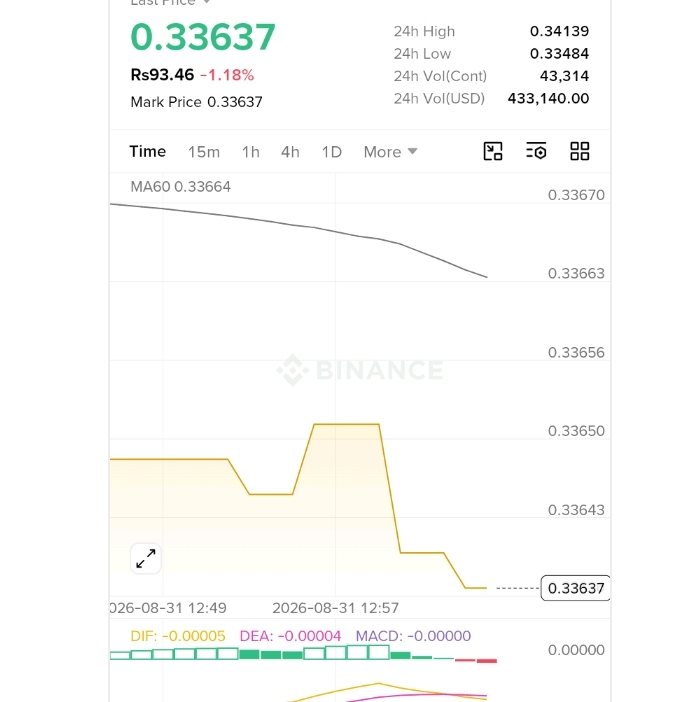
$TRX/USDC Perpetual-Update
TRX/USDC wird derzeit bei etwa 0.33637 gehandelt, wobei der Markt im kurzfristigen Bereich eine leicht rückläufige Tendenz zeigt. Der Preis ist im Zeitraum von 24 Stunden um ungefähr 1,18% gefallen.
Die Handelsspanne der letzten 24 Stunden liegt zwischen 0.33484 und 0.34139, was darauf hindeutet, dass weiterhin Volatilität vorhanden ist. Im Chart liegt der MA60 bei etwa 0.33664, während der aktuelle Preis leicht darunter liegt. Das deutet darauf hin, dass der kurzfristige Schwung unter gewissem Druck steht.
Auch der MACD zeigt einen schwachen negativen Wert: Das Histogramm dreht leicht ins Negative. Das bedeutet, dass die Verkäufer derzeit einen kleinen Vorteil haben, allerdings ist die Bewegung allein nicht stark genug, um eine größere Trendwende eindeutig zu bestätigen.
Die wichtigste zu beobachtende Zone liegt im Bereich 0.3360–0.3365. Wenn TRX sich über diesem Bereich hält, könnte ein Erholungsversuch Richtung 0.3370–0.3410 unterstützt werden. Umgekehrt könnte ein anhaltender Ausbruch unter dem jüngsten Tief bei etwa 0.33484 den Verkaufsdruck verstärken.
Insgesamt befindet sich TRX/USDC aktuell in einer vorsichtigen, leicht bärischen kurzfristigen Ausgangslage. Trader sollten Kursentwicklung, Volumen und den MACD gemeinsam beobachten, statt sich auf nur einen Indikator zu verlassen.
#SKHynixStudiesJapanMemoryChipVenture
#KospiDrops3.6%AsSamsungSKHynixWeaken
#UKReleasesFirstCryptoGainsTaxStats
#YenBreaks160AgainstDollar
#USStrikesIranianRocketLaunchers
$TRX/USDC Perpetual-Update
TRX/USDC wird derzeit bei etwa 0.33637 gehandelt, wobei der Markt im kurzfristigen Bereich eine leicht rückläufige Tendenz zeigt. Der Preis ist im Zeitraum von 24 Stunden um ungefähr 1,18% gefallen.
Die Handelsspanne der letzten 24 Stunden liegt zwischen 0.33484 und 0.34139, was darauf hindeutet, dass weiterhin Volatilität vorhanden ist. Im Chart liegt der MA60 bei etwa 0.33664, während der aktuelle Preis leicht darunter liegt. Das deutet darauf hin, dass der kurzfristige Schwung unter gewissem Druck steht.
Auch der MACD zeigt einen schwachen negativen Wert: Das Histogramm dreht leicht ins Negative. Das bedeutet, dass die Verkäufer derzeit einen kleinen Vorteil haben, allerdings ist die Bewegung allein nicht stark genug, um eine größere Trendwende eindeutig zu bestätigen.
Die wichtigste zu beobachtende Zone liegt im Bereich 0.3360–0.3365. Wenn TRX sich über diesem Bereich hält, könnte ein Erholungsversuch Richtung 0.3370–0.3410 unterstützt werden. Umgekehrt könnte ein anhaltender Ausbruch unter dem jüngsten Tief bei etwa 0.33484 den Verkaufsdruck verstärken.
Insgesamt befindet sich TRX/USDC aktuell in einer vorsichtigen, leicht bärischen kurzfristigen Ausgangslage. Trader sollten Kursentwicklung, Volumen und den MACD gemeinsam beobachten, statt sich auf nur einen Indikator zu verlassen.
#SKHynixStudiesJapanMemoryChipVenture
#KospiDrops3.6%AsSamsungSKHynixWeaken
#UKReleasesFirstCryptoGainsTaxStats
#YenBreaks160AgainstDollar
#USStrikesIranianRocketLaunchers
TRX/USDC wird derzeit bei etwa 0.33637 gehandelt, wobei der Markt im kurzfristigen Bereich eine leicht rückläufige Tendenz zeigt. Der Preis ist im Zeitraum von 24 Stunden um ungefähr 1,18% gefallen.
Die Handelsspanne der letzten 24 Stunden liegt zwischen 0.33484 und 0.34139, was darauf hindeutet, dass weiterhin Volatilität vorhanden ist. Im Chart liegt der MA60 bei etwa 0.33664, während der aktuelle Preis leicht darunter liegt. Das deutet darauf hin, dass der kurzfristige Schwung unter gewissem Druck steht.
Auch der MACD zeigt einen schwachen negativen Wert: Das Histogramm dreht leicht ins Negative. Das bedeutet, dass die Verkäufer derzeit einen kleinen Vorteil haben, allerdings ist die Bewegung allein nicht stark genug, um eine größere Trendwende eindeutig zu bestätigen.
Die wichtigste zu beobachtende Zone liegt im Bereich 0.3360–0.3365. Wenn TRX sich über diesem Bereich hält, könnte ein Erholungsversuch Richtung 0.3370–0.3410 unterstützt werden. Umgekehrt könnte ein anhaltender Ausbruch unter dem jüngsten Tief bei etwa 0.33484 den Verkaufsdruck verstärken.
Insgesamt befindet sich TRX/USDC aktuell in einer vorsichtigen, leicht bärischen kurzfristigen Ausgangslage. Trader sollten Kursentwicklung, Volumen und den MACD gemeinsam beobachten, statt sich auf nur einen Indikator zu verlassen.
#SKHynixStudiesJapanMemoryChipVenture
#KospiDrops3.6%AsSamsungSKHynixWeaken
#UKReleasesFirstCryptoGainsTaxStats
#YenBreaks160AgainstDollar
#USStrikesIranianRocketLaunchers
93
·
--
$Basierend auf den von Ihnen bereitgestellten Daten zum $SOLUSD CM-Perpetual-Kontrakt (Stand: 30. Aug. 2026, ca. 20:00 UTC):
· Preis: ~$107.70 (Handel nahe dem MA60 von $107.70)
· 24h-Spanne: $105.26 – $107.77
· Volumen: ~13,888 Kontrakte ($138,880 USD) – relativ niedrig
· MACD: DIF/DEA bei 0.00, MACD nahe -0.00 → kein klarer Momentum-Impuls, seitliche Konsolidierung.
Wichtige Signale:
· Preis am MA60 – eine kritische Unterstützungs-/Widerstandszone.
· MACD neutral → auf einen Kreuzungspunkt warten (bullisch, wenn DIF über DEA kreuzt).
· Niedriges Volumen deutet auf Vorsicht hin; ein Ausbruch über $107.77 oder unter $105.26 könnte die nächste Bewegung einleiten.
Kurzfristiges Bias: Neutral → auf einen Ausbruch achten. Wenn der Preis über dem MA60 hält und das Volumen zunimmt, sind Aufwärtsbewegungen zu $109–$110 möglich. Unter $105.26 liegt die nächste Unterstützung bei ~ $103.
Möchten Sie konkrete Einstieg-/Ausstiegskurse oder Vorschläge zum Risikomanagement?
#KoreaSingleStockLeveragedETFTradingFalls
#VietnamPilotsCryptoAssetMarket
#GoldFalls3.24%ThisWeek
#VenezuelaUSSign25YearOilDeal
#ICBAOpposesCLARITYActOverStablecoinLoophole
$Basierend auf den von Ihnen bereitgestellten Daten zum $SOLUSD CM-Perpetual-Kontrakt (Stand: 30. Aug. 2026, ca. 20:00 UTC):
· Preis: ~$107.70 (Handel nahe dem MA60 von $107.70)
· 24h-Spanne: $105.26 – $107.77
· Volumen: ~13,888 Kontrakte ($138,880 USD) – relativ niedrig
· MACD: DIF/DEA bei 0.00, MACD nahe -0.00 → kein klarer Momentum-Impuls, seitliche Konsolidierung.
Wichtige Signale:
· Preis am MA60 – eine kritische Unterstützungs-/Widerstandszone.
· MACD neutral → auf einen Kreuzungspunkt warten (bullisch, wenn DIF über DEA kreuzt).
· Niedriges Volumen deutet auf Vorsicht hin; ein Ausbruch über $107.77 oder unter $105.26 könnte die nächste Bewegung einleiten.
Kurzfristiges Bias: Neutral → auf einen Ausbruch achten. Wenn der Preis über dem MA60 hält und das Volumen zunimmt, sind Aufwärtsbewegungen zu $109–$110 möglich. Unter $105.26 liegt die nächste Unterstützung bei ~ $103.
Möchten Sie konkrete Einstieg-/Ausstiegskurse oder Vorschläge zum Risikomanagement?
#KoreaSingleStockLeveragedETFTradingFalls
#VietnamPilotsCryptoAssetMarket
#GoldFalls3.24%ThisWeek
#VenezuelaUSSign25YearOilDeal
#ICBAOpposesCLARITYActOverStablecoinLoophole
· Preis: ~$107.70 (Handel nahe dem MA60 von $107.70)
· 24h-Spanne: $105.26 – $107.77
· Volumen: ~13,888 Kontrakte ($138,880 USD) – relativ niedrig
· MACD: DIF/DEA bei 0.00, MACD nahe -0.00 → kein klarer Momentum-Impuls, seitliche Konsolidierung.
Wichtige Signale:
· Preis am MA60 – eine kritische Unterstützungs-/Widerstandszone.
· MACD neutral → auf einen Kreuzungspunkt warten (bullisch, wenn DIF über DEA kreuzt).
· Niedriges Volumen deutet auf Vorsicht hin; ein Ausbruch über $107.77 oder unter $105.26 könnte die nächste Bewegung einleiten.
Kurzfristiges Bias: Neutral → auf einen Ausbruch achten. Wenn der Preis über dem MA60 hält und das Volumen zunimmt, sind Aufwärtsbewegungen zu $109–$110 möglich. Unter $105.26 liegt die nächste Unterstützung bei ~ $103.
Möchten Sie konkrete Einstieg-/Ausstiegskurse oder Vorschläge zum Risikomanagement?
#KoreaSingleStockLeveragedETFTradingFalls
#VietnamPilotsCryptoAssetMarket
#GoldFalls3.24%ThisWeek
#VenezuelaUSSign25YearOilDeal
#ICBAOpposesCLARITYActOverStablecoinLoophole
66
·
--
$XRP-Bullen wirklich aus dem Bild? Nicht so schnell.
Während die Kursentwicklung den Trend nach unten zeigt, erzählen die Daten zum institutionellen Zufluss eine ganz andere Geschichte. Spot-XRP-ETFs haben inzwischen neun aufeinanderfolgende Tage mit Nettozuflüssen verzeichnet und in diesem Zeitraum mehr als 153 Millionen US-Dollar eingesammelt sowie insgesamt rund 157 Millionen US-Dollar im August.
Das ist eine starke Nachfrage, egal wie man es betrachtet. Aber das Chart spielt nicht mit.
Nachdem XRP den Bereich von 1,70 $ berührt hat, ist es zurück in Richtung 1,38 $ gelaufen; sowohl das Momentum als auch das Handelsvolumen sind deutlich ausgedünnt. Das ist eine Divergenz, die einen innehalten lässt.
Für den Moment beobachte ich $1,10 ganz genau. Wenn Käufer dort eingreifen und diese Marke verteidigen, könnte dieser Rücksetzer sehr leicht als ein gesunder Reset abgehakt werden – so etwas sieht man oft, bevor ein größerer Schub nach oben kommt.
Wenn diese Zone jedoch fällt, beginnt die gesamte Supercycle-These wacklig zu werden. Wirklich wacklig.
Also lautet die Frage: Legst du dir mit diesem Dip fest, oder wartest du auf ein klareres Signal, bevor du dich entscheidest?
---
Sag mir gern Bescheid, ob du es kürzer, technischer oder auf eine bestimmte Plattform wie Twitter/X oder LinkedIn zugeschnitten haben möchtest.
#KoreaSingleStockLeveragedETFTradingFalls
#ICBAOpposesCLARITYActOverStablecoinLoophole
#VenezuelaUSSign25YearOilDeal
#VietnamPilotsCryptoAssetMarket
#TrumpReachesVenezuelaOilDealOn17Fields
$XRP-Bullen wirklich aus dem Bild? Nicht so schnell.
Während die Kursentwicklung den Trend nach unten zeigt, erzählen die Daten zum institutionellen Zufluss eine ganz andere Geschichte. Spot-XRP-ETFs haben inzwischen neun aufeinanderfolgende Tage mit Nettozuflüssen verzeichnet und in diesem Zeitraum mehr als 153 Millionen US-Dollar eingesammelt sowie insgesamt rund 157 Millionen US-Dollar im August.
Das ist eine starke Nachfrage, egal wie man es betrachtet. Aber das Chart spielt nicht mit.
Nachdem XRP den Bereich von 1,70 $ berührt hat, ist es zurück in Richtung 1,38 $ gelaufen; sowohl das Momentum als auch das Handelsvolumen sind deutlich ausgedünnt. Das ist eine Divergenz, die einen innehalten lässt.
Für den Moment beobachte ich $1,10 ganz genau. Wenn Käufer dort eingreifen und diese Marke verteidigen, könnte dieser Rücksetzer sehr leicht als ein gesunder Reset abgehakt werden – so etwas sieht man oft, bevor ein größerer Schub nach oben kommt.
Wenn diese Zone jedoch fällt, beginnt die gesamte Supercycle-These wacklig zu werden. Wirklich wacklig.
Also lautet die Frage: Legst du dir mit diesem Dip fest, oder wartest du auf ein klareres Signal, bevor du dich entscheidest?
---
Sag mir gern Bescheid, ob du es kürzer, technischer oder auf eine bestimmte Plattform wie Twitter/X oder LinkedIn zugeschnitten haben möchtest.
#KoreaSingleStockLeveragedETFTradingFalls
#ICBAOpposesCLARITYActOverStablecoinLoophole
#VenezuelaUSSign25YearOilDeal
#VietnamPilotsCryptoAssetMarket
#TrumpReachesVenezuelaOilDealOn17Fields
Während die Kursentwicklung den Trend nach unten zeigt, erzählen die Daten zum institutionellen Zufluss eine ganz andere Geschichte. Spot-XRP-ETFs haben inzwischen neun aufeinanderfolgende Tage mit Nettozuflüssen verzeichnet und in diesem Zeitraum mehr als 153 Millionen US-Dollar eingesammelt sowie insgesamt rund 157 Millionen US-Dollar im August.
Das ist eine starke Nachfrage, egal wie man es betrachtet. Aber das Chart spielt nicht mit.
Nachdem XRP den Bereich von 1,70 $ berührt hat, ist es zurück in Richtung 1,38 $ gelaufen; sowohl das Momentum als auch das Handelsvolumen sind deutlich ausgedünnt. Das ist eine Divergenz, die einen innehalten lässt.
Für den Moment beobachte ich $1,10 ganz genau. Wenn Käufer dort eingreifen und diese Marke verteidigen, könnte dieser Rücksetzer sehr leicht als ein gesunder Reset abgehakt werden – so etwas sieht man oft, bevor ein größerer Schub nach oben kommt.
Wenn diese Zone jedoch fällt, beginnt die gesamte Supercycle-These wacklig zu werden. Wirklich wacklig.
Also lautet die Frage: Legst du dir mit diesem Dip fest, oder wartest du auf ein klareres Signal, bevor du dich entscheidest?
---
Sag mir gern Bescheid, ob du es kürzer, technischer oder auf eine bestimmte Plattform wie Twitter/X oder LinkedIn zugeschnitten haben möchtest.
#KoreaSingleStockLeveragedETFTradingFalls
#ICBAOpposesCLARITYActOverStablecoinLoophole
#VenezuelaUSSign25YearOilDeal
#VietnamPilotsCryptoAssetMarket
#TrumpReachesVenezuelaOilDealOn17Fields
74
·
--
$Auf Grundlage der aktuellen Kursbewegung erwarte ich sehr bald eine große rote Kerze im BTC-Tageschart. Der jüngste Rückprall vom $78,3K-Niveau hatte weder Überzeugung noch Dynamik, was ein klassisches Warnsignal ist. Anstatt eine echte Trendwende zu signalisieren, wirkt dieser Rebound eher wie ein Bull Trap, der späte Long-Positionen anlocken soll, bevor es im nächsten Schritt nach unten geht.
Der wichtigste Bereich, den man jetzt im Blick behalten sollte, ist $79K. Er hat sich als bedeutende Widerstandszone etabliert. Wenn Bitcoin diese Zone erneut anläuft und abgewiesen wird – was angesichts des schwachen Kaufvolumens sehr wahrscheinlich erscheint – werden wir wahrscheinlich einen scharfen und aggressiven Sell-off sehen. Die Marktstruktur deutet auf eine Fortsetzung des Abwärtstrends hin, nicht auf eine nachhaltige Erholung.
Ich weiß, das klingt extrem, aber die Charts lügen nicht. Ein Rückgang zurück Richtung $62K ist kurzfristig deutlich realistischer als irgendein Versuch, $90K zu erreichen. Der Weg des geringsten Widerstands führt klar nach unten, und die nächsten Tage sollten diese These bestätigen.
Was den breiteren Altcoin-Sektor angeht: Tokens wie ZKP und ZKC sind dieser Makro-Drucklage nicht entzogen. Wenn Bitcoin fällt, wie erwartet, dürften diese Assets noch stärkere Korrekturen erleben – aufgrund ihrer höheren Beta-Wertigkeit gegenüber dem Königston. Jede Erholungs-Rallye in ZKP oder ZKC sollte jedoch mit Vorsicht betrachtet werden, da sie wahrscheinlich nur von kurzer Dauer ist und frischen Tiefs Platz machen wird.
Du kannst dir diese Analyse gern merken und sie später in dieser Woche erneut ansehen – ich bin überzeugt, dass die Kursbewegung diese Einschätzung sowohl bei BTC als auch im breiteren Markt bestätigen wird.
#KoreaSingleStockLeveragedETFTradingFalls
#VietnamPilotsCryptoAssetMarket
#GoldFalls3.24%ThisWeek
#TrumpReachesVenezuelaOilDealOn17Fields
#AfghanistanTalibanReportedlyBansCryptoNationwide
$Auf Grundlage der aktuellen Kursbewegung erwarte ich sehr bald eine große rote Kerze im BTC-Tageschart. Der jüngste Rückprall vom $78,3K-Niveau hatte weder Überzeugung noch Dynamik, was ein klassisches Warnsignal ist. Anstatt eine echte Trendwende zu signalisieren, wirkt dieser Rebound eher wie ein Bull Trap, der späte Long-Positionen anlocken soll, bevor es im nächsten Schritt nach unten geht.
Der wichtigste Bereich, den man jetzt im Blick behalten sollte, ist $79K. Er hat sich als bedeutende Widerstandszone etabliert. Wenn Bitcoin diese Zone erneut anläuft und abgewiesen wird – was angesichts des schwachen Kaufvolumens sehr wahrscheinlich erscheint – werden wir wahrscheinlich einen scharfen und aggressiven Sell-off sehen. Die Marktstruktur deutet auf eine Fortsetzung des Abwärtstrends hin, nicht auf eine nachhaltige Erholung.
Ich weiß, das klingt extrem, aber die Charts lügen nicht. Ein Rückgang zurück Richtung $62K ist kurzfristig deutlich realistischer als irgendein Versuch, $90K zu erreichen. Der Weg des geringsten Widerstands führt klar nach unten, und die nächsten Tage sollten diese These bestätigen.
Was den breiteren Altcoin-Sektor angeht: Tokens wie ZKP und ZKC sind dieser Makro-Drucklage nicht entzogen. Wenn Bitcoin fällt, wie erwartet, dürften diese Assets noch stärkere Korrekturen erleben – aufgrund ihrer höheren Beta-Wertigkeit gegenüber dem Königston. Jede Erholungs-Rallye in ZKP oder ZKC sollte jedoch mit Vorsicht betrachtet werden, da sie wahrscheinlich nur von kurzer Dauer ist und frischen Tiefs Platz machen wird.
Du kannst dir diese Analyse gern merken und sie später in dieser Woche erneut ansehen – ich bin überzeugt, dass die Kursbewegung diese Einschätzung sowohl bei BTC als auch im breiteren Markt bestätigen wird.
#KoreaSingleStockLeveragedETFTradingFalls
#VietnamPilotsCryptoAssetMarket
#GoldFalls3.24%ThisWeek
#TrumpReachesVenezuelaOilDealOn17Fields
#AfghanistanTalibanReportedlyBansCryptoNationwide
Der wichtigste Bereich, den man jetzt im Blick behalten sollte, ist $79K. Er hat sich als bedeutende Widerstandszone etabliert. Wenn Bitcoin diese Zone erneut anläuft und abgewiesen wird – was angesichts des schwachen Kaufvolumens sehr wahrscheinlich erscheint – werden wir wahrscheinlich einen scharfen und aggressiven Sell-off sehen. Die Marktstruktur deutet auf eine Fortsetzung des Abwärtstrends hin, nicht auf eine nachhaltige Erholung.
Ich weiß, das klingt extrem, aber die Charts lügen nicht. Ein Rückgang zurück Richtung $62K ist kurzfristig deutlich realistischer als irgendein Versuch, $90K zu erreichen. Der Weg des geringsten Widerstands führt klar nach unten, und die nächsten Tage sollten diese These bestätigen.
Was den breiteren Altcoin-Sektor angeht: Tokens wie ZKP und ZKC sind dieser Makro-Drucklage nicht entzogen. Wenn Bitcoin fällt, wie erwartet, dürften diese Assets noch stärkere Korrekturen erleben – aufgrund ihrer höheren Beta-Wertigkeit gegenüber dem Königston. Jede Erholungs-Rallye in ZKP oder ZKC sollte jedoch mit Vorsicht betrachtet werden, da sie wahrscheinlich nur von kurzer Dauer ist und frischen Tiefs Platz machen wird.
Du kannst dir diese Analyse gern merken und sie später in dieser Woche erneut ansehen – ich bin überzeugt, dass die Kursbewegung diese Einschätzung sowohl bei BTC als auch im breiteren Markt bestätigen wird.
#KoreaSingleStockLeveragedETFTradingFalls
#VietnamPilotsCryptoAssetMarket
#GoldFalls3.24%ThisWeek
#TrumpReachesVenezuelaOilDealOn17Fields
#AfghanistanTalibanReportedlyBansCryptoNationwide
83
·
--
$Solana (SOLUSD) CM Analyse – 30. August 2026
Der 15-Minuten-Chart für Solana-Perp-Futures (SOLUSD CM) zeigt einen Markt, der sich ruhig zusammenzieht: Die Kursbewegung hält sich nach einem moderaten täglichen Plus von +1,56% eng um die Marke 106,83. Die Spanne der letzten 24 Stunden bleibt eng—104,12 bis 106,83—was eher auf Konsolidierung als auf Überzeugung hindeutet. Das Volumen ist mit 15.319 Kontrakten eher gering, was darauf schließen lässt, dass Trader auf einen Auslöser warten.
Der MA60 bei 106,15 wirkt als magnetische Mittellinie, während der Kurs knapp darüber oszilliert. Der MACD (DIF: 0,18, DEA: 0,21, Histogramm: -0,04) ist nahezu flach, was auf fehlenden Schwung hindeutet. Die letzten beiden Kerzen (17:19 und 17:27) zeigen kürzer werdende Dochte, was auf einen möglichen Ausbruch hindeutet.
Wichtige Bereiche, die man im Blick behalten sollte:
· Widerstand: 106,83 (aktuelles Hoch) – ein klarer Break könnte einen Move in Richtung 107,50 auslösen.
· Support: 104,12 (24h-Tief) – ein Scheitern hier könnte den Weg für 103,80 öffnen.
Da die Schaltflächen „Long“ und „Short“ sichtbar sind, ist der Markt auf eine Richtungsentscheidung vorbereitet. Allerdings deuten der flache MACD und das geringe Volumen darauf hin, dass man auf einen Aktivitätsschub warten sollte, bevor man sich festlegt. Wenn der Kurs 106,83 mit Volumen durchbricht, könnten Longs einen schnellen Scalps bieten. Umgekehrt könnte ein Rückgang unter 106,15 Shorts Richtung 105,50 anziehen.
Die Struktur ist neutral, aber die nächsten 2–4 Stunden werden wahrscheinlich über den Trend entscheiden. Achte auf Volumen-Ausweitung und einen MACD-Cross als Trigger.
#KoreaSingleStockLeveragedETFTradingFalls
#VietnamPilotsCryptoAssetMarket
#GoldFalls3.24%ThisWeek
#VenezuelaUSSign25YearOilDeal
#TrumpReachesVenezuelaOilDealOn17Fields
$Solana (SOLUSD) CM Analyse – 30. August 2026
Der 15-Minuten-Chart für Solana-Perp-Futures (SOLUSD CM) zeigt einen Markt, der sich ruhig zusammenzieht: Die Kursbewegung hält sich nach einem moderaten täglichen Plus von +1,56% eng um die Marke 106,83. Die Spanne der letzten 24 Stunden bleibt eng—104,12 bis 106,83—was eher auf Konsolidierung als auf Überzeugung hindeutet. Das Volumen ist mit 15.319 Kontrakten eher gering, was darauf schließen lässt, dass Trader auf einen Auslöser warten.
Der MA60 bei 106,15 wirkt als magnetische Mittellinie, während der Kurs knapp darüber oszilliert. Der MACD (DIF: 0,18, DEA: 0,21, Histogramm: -0,04) ist nahezu flach, was auf fehlenden Schwung hindeutet. Die letzten beiden Kerzen (17:19 und 17:27) zeigen kürzer werdende Dochte, was auf einen möglichen Ausbruch hindeutet.
Wichtige Bereiche, die man im Blick behalten sollte:
· Widerstand: 106,83 (aktuelles Hoch) – ein klarer Break könnte einen Move in Richtung 107,50 auslösen.
· Support: 104,12 (24h-Tief) – ein Scheitern hier könnte den Weg für 103,80 öffnen.
Da die Schaltflächen „Long“ und „Short“ sichtbar sind, ist der Markt auf eine Richtungsentscheidung vorbereitet. Allerdings deuten der flache MACD und das geringe Volumen darauf hin, dass man auf einen Aktivitätsschub warten sollte, bevor man sich festlegt. Wenn der Kurs 106,83 mit Volumen durchbricht, könnten Longs einen schnellen Scalps bieten. Umgekehrt könnte ein Rückgang unter 106,15 Shorts Richtung 105,50 anziehen.
Die Struktur ist neutral, aber die nächsten 2–4 Stunden werden wahrscheinlich über den Trend entscheiden. Achte auf Volumen-Ausweitung und einen MACD-Cross als Trigger.
#KoreaSingleStockLeveragedETFTradingFalls
#VietnamPilotsCryptoAssetMarket
#GoldFalls3.24%ThisWeek
#VenezuelaUSSign25YearOilDeal
#TrumpReachesVenezuelaOilDealOn17Fields
Der 15-Minuten-Chart für Solana-Perp-Futures (SOLUSD CM) zeigt einen Markt, der sich ruhig zusammenzieht: Die Kursbewegung hält sich nach einem moderaten täglichen Plus von +1,56% eng um die Marke 106,83. Die Spanne der letzten 24 Stunden bleibt eng—104,12 bis 106,83—was eher auf Konsolidierung als auf Überzeugung hindeutet. Das Volumen ist mit 15.319 Kontrakten eher gering, was darauf schließen lässt, dass Trader auf einen Auslöser warten.
Der MA60 bei 106,15 wirkt als magnetische Mittellinie, während der Kurs knapp darüber oszilliert. Der MACD (DIF: 0,18, DEA: 0,21, Histogramm: -0,04) ist nahezu flach, was auf fehlenden Schwung hindeutet. Die letzten beiden Kerzen (17:19 und 17:27) zeigen kürzer werdende Dochte, was auf einen möglichen Ausbruch hindeutet.
Wichtige Bereiche, die man im Blick behalten sollte:
· Widerstand: 106,83 (aktuelles Hoch) – ein klarer Break könnte einen Move in Richtung 107,50 auslösen.
· Support: 104,12 (24h-Tief) – ein Scheitern hier könnte den Weg für 103,80 öffnen.
Da die Schaltflächen „Long“ und „Short“ sichtbar sind, ist der Markt auf eine Richtungsentscheidung vorbereitet. Allerdings deuten der flache MACD und das geringe Volumen darauf hin, dass man auf einen Aktivitätsschub warten sollte, bevor man sich festlegt. Wenn der Kurs 106,83 mit Volumen durchbricht, könnten Longs einen schnellen Scalps bieten. Umgekehrt könnte ein Rückgang unter 106,15 Shorts Richtung 105,50 anziehen.
Die Struktur ist neutral, aber die nächsten 2–4 Stunden werden wahrscheinlich über den Trend entscheiden. Achte auf Volumen-Ausweitung und einen MACD-Cross als Trigger.
#KoreaSingleStockLeveragedETFTradingFalls
#VietnamPilotsCryptoAssetMarket
#GoldFalls3.24%ThisWeek
#VenezuelaUSSign25YearOilDeal
#TrumpReachesVenezuelaOilDealOn17Fields
114
·
--
🚨 $TRUMP HEIZT SICH AUF 👀📈
TRUMP hat einen starken Schritt gemacht und ist in 24H um fast 23% gestiegen, während das Handelsvolumen deutlich angezogen hat.
Jetzt richten sich alle Augen auf $2.90. 🔥
Ein sauberer Ausbruch und ein Halten über diesem Niveau könnten kurzfristig den Weg Richtung $3.60–$3.68 öffnen.
Behalte aber auch $2.16–$2.19 im Blick. Wenn diese Unterstützung verloren geht, könnte die bullische Struktur geschwächt werden und $2.00 wieder in den Fokus rücken.
Für jetzt ist $2.90 die entscheidende Marke. 👀
#AntiQuantumBitcoinTransactionMinedOnMainnet
#BitcoinSpotETFEnds9DayInflowStreak
#YenPasses160PerDollarToOneMonthLow
#SchwabPlansToAddSOLAVAXLINKTrading
#USShortTermTreasuryYieldsJump
🚨 $TRUMP HEIZT SICH AUF 👀📈
TRUMP hat einen starken Schritt gemacht und ist in 24H um fast 23% gestiegen, während das Handelsvolumen deutlich angezogen hat.
Jetzt richten sich alle Augen auf $2.90. 🔥
Ein sauberer Ausbruch und ein Halten über diesem Niveau könnten kurzfristig den Weg Richtung $3.60–$3.68 öffnen.
Behalte aber auch $2.16–$2.19 im Blick. Wenn diese Unterstützung verloren geht, könnte die bullische Struktur geschwächt werden und $2.00 wieder in den Fokus rücken.
Für jetzt ist $2.90 die entscheidende Marke. 👀
#AntiQuantumBitcoinTransactionMinedOnMainnet
#BitcoinSpotETFEnds9DayInflowStreak
#YenPasses160PerDollarToOneMonthLow
#SchwabPlansToAddSOLAVAXLINKTrading
#USShortTermTreasuryYieldsJump
TRUMP hat einen starken Schritt gemacht und ist in 24H um fast 23% gestiegen, während das Handelsvolumen deutlich angezogen hat.
Jetzt richten sich alle Augen auf $2.90. 🔥
Ein sauberer Ausbruch und ein Halten über diesem Niveau könnten kurzfristig den Weg Richtung $3.60–$3.68 öffnen.
Behalte aber auch $2.16–$2.19 im Blick. Wenn diese Unterstützung verloren geht, könnte die bullische Struktur geschwächt werden und $2.00 wieder in den Fokus rücken.
Für jetzt ist $2.90 die entscheidende Marke. 👀
#AntiQuantumBitcoinTransactionMinedOnMainnet
#BitcoinSpotETFEnds9DayInflowStreak
#YenPasses160PerDollarToOneMonthLow
#SchwabPlansToAddSOLAVAXLINKTrading
#USShortTermTreasuryYieldsJump
1
106
·
--
$DOGE ist still… aber etwas könnte sich aufbauen 👀
Nach einem starken Sell-off wird Dogecoin (DOGE) derzeit im Bereich um $0,086 gehandelt. Statt dem Move hinterherzulaufen, könnte diese Zone ein Bereich sein, den man im Blick behalten sollte: Achten wir auf Anzeichen für eine Akkumulation und eine mögliche Trendwende.
Für die Bullen wäre die Rückeroberung von $0,10 ein wichtiger erster Schritt. Wenn DOGE es schafft, den Bereich um $0,12 mit starker Dynamik zu durchbrechen, könnte das Setup deutlich interessanter werden – mit $0,17 als möglicher nächster Stufe.
Darüber hinaus könnte ein stärkerer Rallye-Impuls im gesamten Markt die Zone $0,30–$0,37 wieder in den Fokus rücken.
DOGE ist seit einer Weile ruhig… könnte die nächste große Bewegung alle überraschen? 🚀
DYOR. NFA.
#AntiQuantumBitcoinTransactionMinedOnMainnet
#BitcoinSpotETFEnds9DayInflowStreak
#YenPasses160PerDollarToOneMonthLow
#NYSilverFuturesDrop3%
#USShortTermTreasuryYieldsJump
$DOGE ist still… aber etwas könnte sich aufbauen 👀
Nach einem starken Sell-off wird Dogecoin (DOGE) derzeit im Bereich um $0,086 gehandelt. Statt dem Move hinterherzulaufen, könnte diese Zone ein Bereich sein, den man im Blick behalten sollte: Achten wir auf Anzeichen für eine Akkumulation und eine mögliche Trendwende.
Für die Bullen wäre die Rückeroberung von $0,10 ein wichtiger erster Schritt. Wenn DOGE es schafft, den Bereich um $0,12 mit starker Dynamik zu durchbrechen, könnte das Setup deutlich interessanter werden – mit $0,17 als möglicher nächster Stufe.
Darüber hinaus könnte ein stärkerer Rallye-Impuls im gesamten Markt die Zone $0,30–$0,37 wieder in den Fokus rücken.
DOGE ist seit einer Weile ruhig… könnte die nächste große Bewegung alle überraschen? 🚀
DYOR. NFA.
#AntiQuantumBitcoinTransactionMinedOnMainnet
#BitcoinSpotETFEnds9DayInflowStreak
#YenPasses160PerDollarToOneMonthLow
#NYSilverFuturesDrop3%
#USShortTermTreasuryYieldsJump
Nach einem starken Sell-off wird Dogecoin (DOGE) derzeit im Bereich um $0,086 gehandelt. Statt dem Move hinterherzulaufen, könnte diese Zone ein Bereich sein, den man im Blick behalten sollte: Achten wir auf Anzeichen für eine Akkumulation und eine mögliche Trendwende.
Für die Bullen wäre die Rückeroberung von $0,10 ein wichtiger erster Schritt. Wenn DOGE es schafft, den Bereich um $0,12 mit starker Dynamik zu durchbrechen, könnte das Setup deutlich interessanter werden – mit $0,17 als möglicher nächster Stufe.
Darüber hinaus könnte ein stärkerer Rallye-Impuls im gesamten Markt die Zone $0,30–$0,37 wieder in den Fokus rücken.
DOGE ist seit einer Weile ruhig… könnte die nächste große Bewegung alle überraschen? 🚀
DYOR. NFA.
#AntiQuantumBitcoinTransactionMinedOnMainnet
#BitcoinSpotETFEnds9DayInflowStreak
#YenPasses160PerDollarToOneMonthLow
#NYSilverFuturesDrop3%
#USShortTermTreasuryYieldsJump
44
·
--
🚨$ Bitcoin-Marktüberblick
Ein weiterer Bitcoin-Schritt der Regierung hat die Aufmerksamkeit des Marktes auf sich gezogen: Berichten zufolge wurden rund 1,9 Mio. USD in BTC verkauft.
Einige Händler sehen das möglicherweise als eine normale Transaktion an, während andere glauben, dass solche Aktionen kurzfristigen Druck erzeugen und die Markstimmung beeinflussen können. Wie auch immer: Verkaufsaktivitäten wie diese können den Markt volatiler machen.
Doch eines bleibt klar: Das langfristige Momentum von Bitcoin ist viel größer als ein einzelner Verkauf im Wert von 1,9 Mio. USD. Wenn die Nachfrage weiter wächst und die bullische Stimmung stark bleibt, könnte BTC in diesem Jahr dennoch einen Weg in Richtung der 100.000-$-Marke finden.
Kurzfristige Bewegungen können Angst auslösen, aber sie ändern nicht zwangsläufig die größere Bitcoin-Story.
Bleib wachsam, steuere dein Risiko und mach deine eigene Recherche (DYOR). Keine Finanzberatung (NFA).
#USShortTermTreasuryYieldsJump
#AntiQuantumBitcoinTransactionMinedOnMainnet
#BitcoinSpotETFEnds9DayInflowStreak
#YenPasses160PerDollarToOneMonthLow
#NYSilverFuturesDrop3%
🚨$ Bitcoin-Marktüberblick
Ein weiterer Bitcoin-Schritt der Regierung hat die Aufmerksamkeit des Marktes auf sich gezogen: Berichten zufolge wurden rund 1,9 Mio. USD in BTC verkauft.
Einige Händler sehen das möglicherweise als eine normale Transaktion an, während andere glauben, dass solche Aktionen kurzfristigen Druck erzeugen und die Markstimmung beeinflussen können. Wie auch immer: Verkaufsaktivitäten wie diese können den Markt volatiler machen.
Doch eines bleibt klar: Das langfristige Momentum von Bitcoin ist viel größer als ein einzelner Verkauf im Wert von 1,9 Mio. USD. Wenn die Nachfrage weiter wächst und die bullische Stimmung stark bleibt, könnte BTC in diesem Jahr dennoch einen Weg in Richtung der 100.000-$-Marke finden.
Kurzfristige Bewegungen können Angst auslösen, aber sie ändern nicht zwangsläufig die größere Bitcoin-Story.
Bleib wachsam, steuere dein Risiko und mach deine eigene Recherche (DYOR). Keine Finanzberatung (NFA).
#USShortTermTreasuryYieldsJump
#AntiQuantumBitcoinTransactionMinedOnMainnet
#BitcoinSpotETFEnds9DayInflowStreak
#YenPasses160PerDollarToOneMonthLow
#NYSilverFuturesDrop3%
Ein weiterer Bitcoin-Schritt der Regierung hat die Aufmerksamkeit des Marktes auf sich gezogen: Berichten zufolge wurden rund 1,9 Mio. USD in BTC verkauft.
Einige Händler sehen das möglicherweise als eine normale Transaktion an, während andere glauben, dass solche Aktionen kurzfristigen Druck erzeugen und die Markstimmung beeinflussen können. Wie auch immer: Verkaufsaktivitäten wie diese können den Markt volatiler machen.
Doch eines bleibt klar: Das langfristige Momentum von Bitcoin ist viel größer als ein einzelner Verkauf im Wert von 1,9 Mio. USD. Wenn die Nachfrage weiter wächst und die bullische Stimmung stark bleibt, könnte BTC in diesem Jahr dennoch einen Weg in Richtung der 100.000-$-Marke finden.
Kurzfristige Bewegungen können Angst auslösen, aber sie ändern nicht zwangsläufig die größere Bitcoin-Story.
Bleib wachsam, steuere dein Risiko und mach deine eigene Recherche (DYOR). Keine Finanzberatung (NFA).
#USShortTermTreasuryYieldsJump
#AntiQuantumBitcoinTransactionMinedOnMainnet
#BitcoinSpotETFEnds9DayInflowStreak
#YenPasses160PerDollarToOneMonthLow
#NYSilverFuturesDrop3%
1
74
·
--
🚨 $DOGE Signal-Update — Potenzielles Long-Setup
🐕 Paar: DOGE/USDT
📊 Bias: Bullisch / Long
💰 Einstiegszone: $0.0855 – $0.0881
🎯 Mögliche Ziele:
• TP1: $0.0900
• TP2: $0.0920
• TP3: $0.0950
🛡️ Risiko-Level:
Stop Loss: $0.0810
Key invalidation: Unter $0.0830
📈 Markt-Einblick:
DOGE zeigt Anzeichen einer möglichen Erholung aus dem aktuellen Support-Bereich. Die $0.0855–$0.0881 Zone könnte ein wichtiger Bereich für Käufer werden, wenn der Kurs weiterhin über dem Support gehalten wird.
Eine anhaltende Bewegung Richtung $0.0900 könnte den Weg zu $0.0920 öffnen, während stärkerer bullischer Momentum DOGE möglicherweise in Richtung $0.0950 treiben könnte.
⚡ Trading-Plan:
Achte auf eine Bestätigung in der Einstiegszone, statt einem plötzlichen Move hinterherzulaufen. Ziehe in Betracht, bei jedem Ziel teilweise Gewinne mitzunehmen, und verwalte das Risiko sorgfältig.
DOGE bleibt eine Coin, die man genau im Blick behalten sollte, falls der Kaufdruck zunimmt.
Mach immer deine eigene Recherche (DYOR) und manage dein Risiko.
NFA — Keine Finanzberatung.
#AntiQuantumBitcoinTransactionMinedOnMainnet
#BitcoinSpotETFEnds9DayInflowStreak
#YenPasses160PerDollarToOneMonthLow
#SchwabPlansToAddSOLAVAXLINKTrading
#TrumpSaysUSReachedVenezuelaOilDeal
🚨 $DOGE Signal-Update — Potenzielles Long-Setup
🐕 Paar: DOGE/USDT
📊 Bias: Bullisch / Long
💰 Einstiegszone: $0.0855 – $0.0881
🎯 Mögliche Ziele:
• TP1: $0.0900
• TP2: $0.0920
• TP3: $0.0950
🛡️ Risiko-Level:
Stop Loss: $0.0810
Key invalidation: Unter $0.0830
📈 Markt-Einblick:
DOGE zeigt Anzeichen einer möglichen Erholung aus dem aktuellen Support-Bereich. Die $0.0855–$0.0881 Zone könnte ein wichtiger Bereich für Käufer werden, wenn der Kurs weiterhin über dem Support gehalten wird.
Eine anhaltende Bewegung Richtung $0.0900 könnte den Weg zu $0.0920 öffnen, während stärkerer bullischer Momentum DOGE möglicherweise in Richtung $0.0950 treiben könnte.
⚡ Trading-Plan:
Achte auf eine Bestätigung in der Einstiegszone, statt einem plötzlichen Move hinterherzulaufen. Ziehe in Betracht, bei jedem Ziel teilweise Gewinne mitzunehmen, und verwalte das Risiko sorgfältig.
DOGE bleibt eine Coin, die man genau im Blick behalten sollte, falls der Kaufdruck zunimmt.
Mach immer deine eigene Recherche (DYOR) und manage dein Risiko.
NFA — Keine Finanzberatung.
#AntiQuantumBitcoinTransactionMinedOnMainnet
#BitcoinSpotETFEnds9DayInflowStreak
#YenPasses160PerDollarToOneMonthLow
#SchwabPlansToAddSOLAVAXLINKTrading
#TrumpSaysUSReachedVenezuelaOilDeal
🐕 Paar: DOGE/USDT
📊 Bias: Bullisch / Long
💰 Einstiegszone: $0.0855 – $0.0881
🎯 Mögliche Ziele:
• TP1: $0.0900
• TP2: $0.0920
• TP3: $0.0950
🛡️ Risiko-Level:
Stop Loss: $0.0810
Key invalidation: Unter $0.0830
📈 Markt-Einblick:
DOGE zeigt Anzeichen einer möglichen Erholung aus dem aktuellen Support-Bereich. Die $0.0855–$0.0881 Zone könnte ein wichtiger Bereich für Käufer werden, wenn der Kurs weiterhin über dem Support gehalten wird.
Eine anhaltende Bewegung Richtung $0.0900 könnte den Weg zu $0.0920 öffnen, während stärkerer bullischer Momentum DOGE möglicherweise in Richtung $0.0950 treiben könnte.
⚡ Trading-Plan:
Achte auf eine Bestätigung in der Einstiegszone, statt einem plötzlichen Move hinterherzulaufen. Ziehe in Betracht, bei jedem Ziel teilweise Gewinne mitzunehmen, und verwalte das Risiko sorgfältig.
DOGE bleibt eine Coin, die man genau im Blick behalten sollte, falls der Kaufdruck zunimmt.
Mach immer deine eigene Recherche (DYOR) und manage dein Risiko.
NFA — Keine Finanzberatung.
#AntiQuantumBitcoinTransactionMinedOnMainnet
#BitcoinSpotETFEnds9DayInflowStreak
#YenPasses160PerDollarToOneMonthLow
#SchwabPlansToAddSOLAVAXLINKTrading
#TrumpSaysUSReachedVenezuelaOilDeal
77
Anmelden und weiter Inhalte entdecken
Krypto-Nutzer weltweit auf Binance Square kennenlernen
⚡️ Bleib in Sachen Krypto stets am Puls.
💬 Die weltgrößte Kryptobörse vertraut darauf.
👍 Erhalte verlässliche Einblicke von verifizierten Creators.
E-Mail-Adresse/Telefonnummer
Trendthemen
BNBSurpasses$790
5,512 Aufrufe
64 Kommentare
$BNB strategischer Langzeitplan -> JETZT FOKUS
BNB hat 2 starke Tiefs geschaffen, nachdem internes Liquiditätsniveau aufgeräumt wurde
Ich erwarte eine Bewegung in Richtung Swing High bei $815-$830 und suche einen Long-Einstieg bei einem Retest der grünen Box
#BNBSurpasses$790 #bnb
Ghost Writer
·3 Likes
·2.3k Aufrufe
ZamaRises15.99%ToIntradayHigh$0.09
1,923 Aufrufe
60 Kommentare
BitcoinSpotETFsDraw$6.34BInflowsInQ3
2,621 Aufrufe
48 Kommentare