

Muhammad Roman Saleem
47 Beiträge

Muhammad Roman Saleem
Melden
Nutzer blockieren
29 Following
15 Follower
39 Like gegeben
Beiträge
Alle
Zitierungen
TermMax: Bringt Fixed-Rate DeFi auf die nächste Stufe 🚀 @termmax
DeFi ging schon immer darum, Kapital in Arbeit zu bringen, aber es gibt ein großes Problem, das noch immer viele Nutzer betrifft: Unsicherheit.
Variable Kredit- bzw. Borrowing-Zinsen können sich ändern. Renditen können schwanken. Leverage kann mit Liquidationsdruck einhergehen. Für Trader, Kreditgeber und Kapitalallokatoren kann das Managen dieser Unsicherheit DeFi komplizierter machen, als es sein müsste.
Hier wird TermMax interessant.
TermMax ist ein dezentrales Finanzprotokoll, das auf Festzins-Kreditvergabe, Festzins-Borrowing und kapitaleffizientes Leverage fokussiert ist. Anstatt Nutzer ständig den sich ändernden Zinsen auszusetzen, ermöglicht TermMax, den Zinssatz und die Laufzeit einer Position im Voraus festzulegen.
Und ganz ehrlich: Ich finde, der Fixed-Rate-Ansatz verdient mehr Aufmerksamkeit.
🔒 Warum Fixed-Rate DeFi wichtig ist
Stell dir vor, du borgst dir heute USDT, und du weißt genau, was dich deine Borrowing-Kosten bis zur Fälligkeit kosten werden.
Oder du hinterlegst Assets und weißt, welche feste Rendite du anstrebst – statt ständig zu beobachten, wie ein variabler APY nach oben und unten schwankt.
Diese Planbarkeit kann die Kapitalplanung deutlich einfacher machen.
TermMax nutzt ein zinstransaktionsbasiertes Modell für Lending und Borrowing: Kreditgeber stellen Liquidität bereit, während Kreditnehmer mit Sicherheiten Zugang zu Mitteln zu vorher festgelegten Sätzen für einen definierten Zeitraum erhalten. Das schafft eine stärker strukturierte Erfahrung im Vergleich zu traditionellen DeFi-Märkten mit variablen Zinsen.
Das Protokoll ist um ein Zero-Coupon-Bond-Modell herum konzipiert und gibt Nutzern die Möglichkeit, mit Produkten im Stil von Festzinsinstrumenten zu interagieren – während alles vollständig on-chain bleibt.
Was TermMax besonders macht, ist, dass es nicht nur ein weiteres Lending-Protokoll sein will.
Das Ökosystem umfasst Lending, Borrowing, Leverage, Vaults, Dual-Investment-Produkte und Alpha-Trading-Strategien.
TermMax Alpha bringt zum Beispiel einen anderen Ansatz für gehebelt Trading: Statt sich auf traditionelle Margin-Mechaniken zu verlassen, können Nutzer eine einmalige Prämie im Voraus für einen gehebelten Exposure bezahlen. Die Plattform ist dabei so ausgelegt, dass das Downside begrenzt ist und es keine traditionellen Margin-Calls gibt.
#TermMax #termmax #termax
TermMax: Bringt Fixed-Rate DeFi auf die nächste Stufe 🚀 @TermMax
DeFi ging schon immer darum, Kapital in Arbeit zu bringen, aber es gibt ein großes Problem, das noch immer viele Nutzer betrifft: Unsicherheit.
Variable Kredit- bzw. Borrowing-Zinsen können sich ändern. Renditen können schwanken. Leverage kann mit Liquidationsdruck einhergehen. Für Trader, Kreditgeber und Kapitalallokatoren kann das Managen dieser Unsicherheit DeFi komplizierter machen, als es sein müsste.
Hier wird TermMax interessant.
TermMax ist ein dezentrales Finanzprotokoll, das auf Festzins-Kreditvergabe, Festzins-Borrowing und kapitaleffizientes Leverage fokussiert ist. Anstatt Nutzer ständig den sich ändernden Zinsen auszusetzen, ermöglicht TermMax, den Zinssatz und die Laufzeit einer Position im Voraus festzulegen.
Und ganz ehrlich: Ich finde, der Fixed-Rate-Ansatz verdient mehr Aufmerksamkeit.
🔒 Warum Fixed-Rate DeFi wichtig ist
Stell dir vor, du borgst dir heute USDT, und du weißt genau, was dich deine Borrowing-Kosten bis zur Fälligkeit kosten werden.
Oder du hinterlegst Assets und weißt, welche feste Rendite du anstrebst – statt ständig zu beobachten, wie ein variabler APY nach oben und unten schwankt.
Diese Planbarkeit kann die Kapitalplanung deutlich einfacher machen.
TermMax nutzt ein zinstransaktionsbasiertes Modell für Lending und Borrowing: Kreditgeber stellen Liquidität bereit, während Kreditnehmer mit Sicherheiten Zugang zu Mitteln zu vorher festgelegten Sätzen für einen definierten Zeitraum erhalten. Das schafft eine stärker strukturierte Erfahrung im Vergleich zu traditionellen DeFi-Märkten mit variablen Zinsen.
Das Protokoll ist um ein Zero-Coupon-Bond-Modell herum konzipiert und gibt Nutzern die Möglichkeit, mit Produkten im Stil von Festzinsinstrumenten zu interagieren – während alles vollständig on-chain bleibt.
Was TermMax besonders macht, ist, dass es nicht nur ein weiteres Lending-Protokoll sein will.
Das Ökosystem umfasst Lending, Borrowing, Leverage, Vaults, Dual-Investment-Produkte und Alpha-Trading-Strategien.
TermMax Alpha bringt zum Beispiel einen anderen Ansatz für gehebelt Trading: Statt sich auf traditionelle Margin-Mechaniken zu verlassen, können Nutzer eine einmalige Prämie im Voraus für einen gehebelten Exposure bezahlen. Die Plattform ist dabei so ausgelegt, dass das Downside begrenzt ist und es keine traditionellen Margin-Calls gibt.
#TermMax #termmax #termax
DeFi ging schon immer darum, Kapital in Arbeit zu bringen, aber es gibt ein großes Problem, das noch immer viele Nutzer betrifft: Unsicherheit.
Variable Kredit- bzw. Borrowing-Zinsen können sich ändern. Renditen können schwanken. Leverage kann mit Liquidationsdruck einhergehen. Für Trader, Kreditgeber und Kapitalallokatoren kann das Managen dieser Unsicherheit DeFi komplizierter machen, als es sein müsste.
Hier wird TermMax interessant.
TermMax ist ein dezentrales Finanzprotokoll, das auf Festzins-Kreditvergabe, Festzins-Borrowing und kapitaleffizientes Leverage fokussiert ist. Anstatt Nutzer ständig den sich ändernden Zinsen auszusetzen, ermöglicht TermMax, den Zinssatz und die Laufzeit einer Position im Voraus festzulegen.
Und ganz ehrlich: Ich finde, der Fixed-Rate-Ansatz verdient mehr Aufmerksamkeit.
🔒 Warum Fixed-Rate DeFi wichtig ist
Stell dir vor, du borgst dir heute USDT, und du weißt genau, was dich deine Borrowing-Kosten bis zur Fälligkeit kosten werden.
Oder du hinterlegst Assets und weißt, welche feste Rendite du anstrebst – statt ständig zu beobachten, wie ein variabler APY nach oben und unten schwankt.
Diese Planbarkeit kann die Kapitalplanung deutlich einfacher machen.
TermMax nutzt ein zinstransaktionsbasiertes Modell für Lending und Borrowing: Kreditgeber stellen Liquidität bereit, während Kreditnehmer mit Sicherheiten Zugang zu Mitteln zu vorher festgelegten Sätzen für einen definierten Zeitraum erhalten. Das schafft eine stärker strukturierte Erfahrung im Vergleich zu traditionellen DeFi-Märkten mit variablen Zinsen.
Das Protokoll ist um ein Zero-Coupon-Bond-Modell herum konzipiert und gibt Nutzern die Möglichkeit, mit Produkten im Stil von Festzinsinstrumenten zu interagieren – während alles vollständig on-chain bleibt.
Was TermMax besonders macht, ist, dass es nicht nur ein weiteres Lending-Protokoll sein will.
Das Ökosystem umfasst Lending, Borrowing, Leverage, Vaults, Dual-Investment-Produkte und Alpha-Trading-Strategien.
TermMax Alpha bringt zum Beispiel einen anderen Ansatz für gehebelt Trading: Statt sich auf traditionelle Margin-Mechaniken zu verlassen, können Nutzer eine einmalige Prämie im Voraus für einen gehebelten Exposure bezahlen. Die Plattform ist dabei so ausgelegt, dass das Downside begrenzt ist und es keine traditionellen Margin-Calls gibt.
#TermMax #termmax #termax
58
Artikel
Übersetzung ansehen
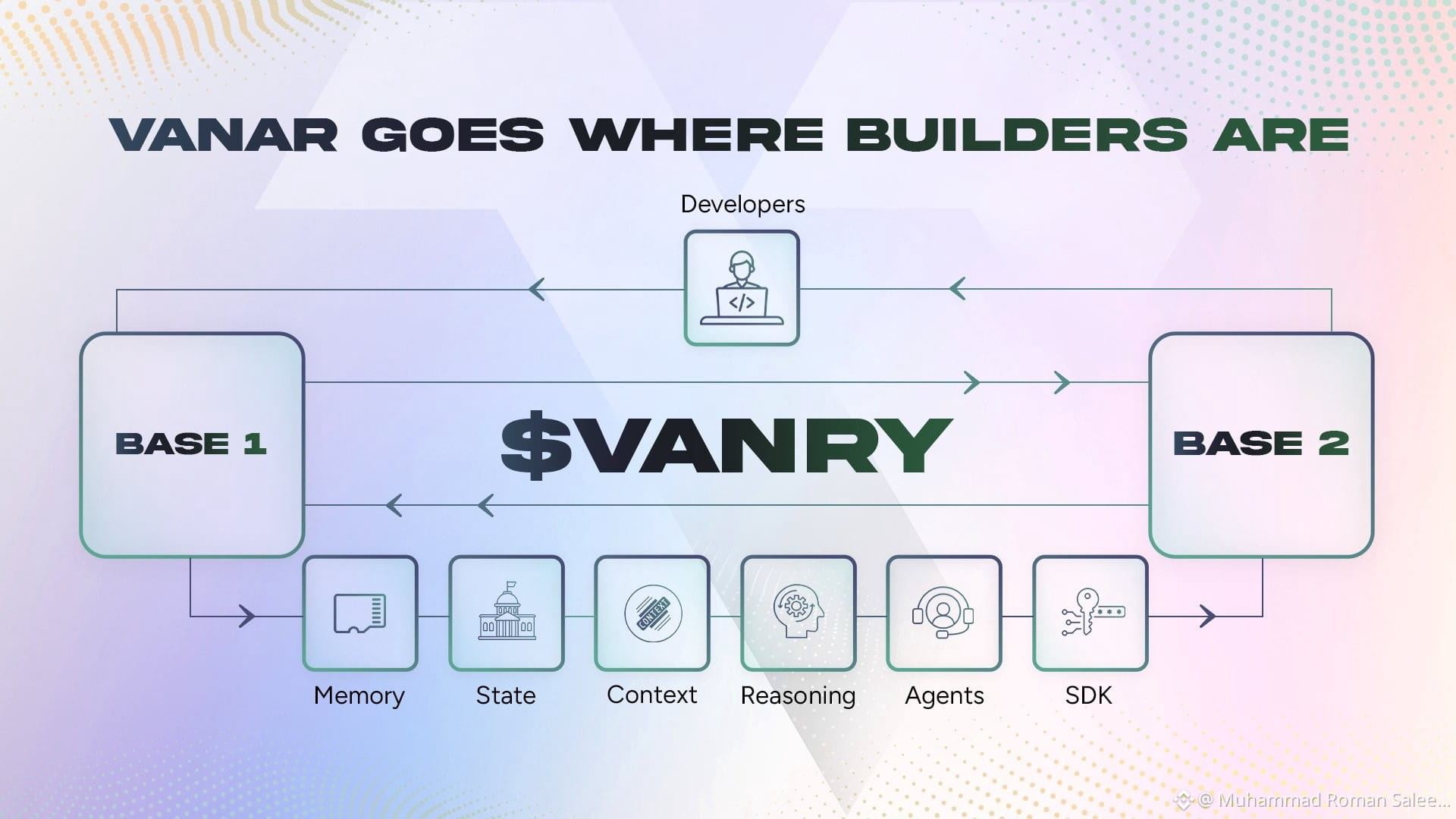
How Vanar Is Redefining Blockchain Performance with AI IntegrationAs blockchain adoption grows, the need for high-performance, scalable, and intelligent infrastructure has never been greater. @Vanar is building a next-generation Layer-1 blockchain that integrates AI-native features with EVM compatibility, enabling developers to create dApps, gaming platforms, and PayFi solutions that can handle real-world demands. By combining speed, efficiency, and intelligent on-chain data processing, Vanar Chain is not just another blockchain—it’s a platform designed for practical, scalable Web3 applications.
The $VANRY token fuels the ecosystem by covering transaction fees, enabling staking, and giving users governance rights to participate in shaping the network’s future. With its focus on AI-driven optimizations, Vanar allows applications to make smart decisions in real time, reducing gas costs, improving throughput, and enhancing user experience. For developers, this means fewer limitations and more room for innovation; for users, it means faster, cheaper, and more responsive dApps.
Vanar Chain is positioning itself at the intersection of AI and blockchain, addressing the limitations of legacy networks while empowering a new generation of applications. By making intelligent, scalable, and developer-friendly infrastructure the core of its design, @Vanar ensures that $VANRY is more than a token—it’s the lifeblood of a network built for the next wave of Web3 adoption. #Vanar
How Vanar Is Redefining Blockchain Performance with AI Integration
As blockchain adoption grows, the need for high-performance, scalable, and intelligent infrastructure has never been greater. @Vanar is building a next-generation Layer-1 blockchain that integrates AI-native features with EVM compatibility, enabling developers to create dApps, gaming platforms, and PayFi solutions that can handle real-world demands. By combining speed, efficiency, and intelligent on-chain data processing, Vanar Chain is not just another blockchain—it’s a platform designed for practical, scalable Web3 applications.
The $VANRY token fuels the ecosystem by covering transaction fees, enabling staking, and giving users governance rights to participate in shaping the network’s future. With its focus on AI-driven optimizations, Vanar allows applications to make smart decisions in real time, reducing gas costs, improving throughput, and enhancing user experience. For developers, this means fewer limitations and more room for innovation; for users, it means faster, cheaper, and more responsive dApps.
Vanar Chain is positioning itself at the intersection of AI and blockchain, addressing the limitations of legacy networks while empowering a new generation of applications. By making intelligent, scalable, and developer-friendly infrastructure the core of its design, @Vanar ensures that $VANRY is more than a token—it’s the lifeblood of a network built for the next wave of Web3 adoption. #Vanar
The $VANRY token fuels the ecosystem by covering transaction fees, enabling staking, and giving users governance rights to participate in shaping the network’s future. With its focus on AI-driven optimizations, Vanar allows applications to make smart decisions in real time, reducing gas costs, improving throughput, and enhancing user experience. For developers, this means fewer limitations and more room for innovation; for users, it means faster, cheaper, and more responsive dApps.
Vanar Chain is positioning itself at the intersection of AI and blockchain, addressing the limitations of legacy networks while empowering a new generation of applications. By making intelligent, scalable, and developer-friendly infrastructure the core of its design, @Vanar ensures that $VANRY is more than a token—it’s the lifeblood of a network built for the next wave of Web3 adoption. #Vanar
13
Übersetzung ansehen
#vanar $VANRY
Vanar Chain is quietly building the kind of Web3 infrastructure that actually scales for real apps. With a focus on performance, gaming, and user-friendly experiences, @Vanar is showing how blockchain can move beyond hype. $VANRY feels positioned for real utility, not just speculation. #Vanar
#vanar $VANRY
Vanar Chain is quietly building the kind of Web3 infrastructure that actually scales for real apps. With a focus on performance, gaming, and user-friendly experiences, @Vanar is showing how blockchain can move beyond hype. $VANRY feels positioned for real utility, not just speculation. #Vanar
Vanar Chain is quietly building the kind of Web3 infrastructure that actually scales for real apps. With a focus on performance, gaming, and user-friendly experiences, @Vanar is showing how blockchain can move beyond hype. $VANRY feels positioned for real utility, not just speculation. #Vanar
1

Artikel
Warum Plasma sich auf Leistung und nicht auf Hype konzentriertWährend Web3 von Experimenten zu realen Produkten übergeht, besteht die größte Herausforderung nicht mehr in Ideen – es ist die Infrastruktur. Hier konzentriert sich @Plasma seine Energie: ein Netzwerk aufzubauen, das für schnelle Ausführung, zuverlässige Datenverarbeitung und reibungslose Cross-Chain-Nutzbarkeit ausgelegt ist, damit Anwendungen tatsächlich auf reale Benutzer skalieren können. Zu viele Chains optimieren für eine Kennzahl und ignorieren den Rest, aber Plasma behandelt Leistung, Sicherheit und Nutzbarkeit als Teile desselben Systems.
Was Plasma interessant macht, ist die Betonung von Konsistenz und Vorhersehbarkeit. Hoher Durchsatz ist nur wichtig, wenn Entwickler sich unter realer Last darauf verlassen können, und niedrige Gebühren sind nur dann wichtig, wenn das Netzwerk sicher und stabil bleibt. Durch das Design um diese Grundlagen zielt Plasma darauf ab, dass dezentrale Apps in Bezug auf die Benutzererfahrung näher an Web2 fühlen, ohne die vertrauensminimierte Natur der Blockchain zu opfern. Das ist eine große Sache für Gaming, DeFi und datenintensive Anwendungen, die sowohl Geschwindigkeit als auch Zuverlässigkeit benötigen.
Warum Plasma sich auf Leistung und nicht auf Hype konzentriert
Während Web3 von Experimenten zu realen Produkten übergeht, besteht die größte Herausforderung nicht mehr in Ideen – es ist die Infrastruktur. Hier konzentriert sich @Plasma seine Energie: ein Netzwerk aufzubauen, das für schnelle Ausführung, zuverlässige Datenverarbeitung und reibungslose Cross-Chain-Nutzbarkeit ausgelegt ist, damit Anwendungen tatsächlich auf reale Benutzer skalieren können. Zu viele Chains optimieren für eine Kennzahl und ignorieren den Rest, aber Plasma behandelt Leistung, Sicherheit und Nutzbarkeit als Teile desselben Systems.
Was Plasma interessant macht, ist die Betonung von Konsistenz und Vorhersehbarkeit. Hoher Durchsatz ist nur wichtig, wenn Entwickler sich unter realer Last darauf verlassen können, und niedrige Gebühren sind nur dann wichtig, wenn das Netzwerk sicher und stabil bleibt. Durch das Design um diese Grundlagen zielt Plasma darauf ab, dass dezentrale Apps in Bezug auf die Benutzererfahrung näher an Web2 fühlen, ohne die vertrauensminimierte Natur der Blockchain zu opfern. Das ist eine große Sache für Gaming, DeFi und datenintensive Anwendungen, die sowohl Geschwindigkeit als auch Zuverlässigkeit benötigen.
Was Plasma interessant macht, ist die Betonung von Konsistenz und Vorhersehbarkeit. Hoher Durchsatz ist nur wichtig, wenn Entwickler sich unter realer Last darauf verlassen können, und niedrige Gebühren sind nur dann wichtig, wenn das Netzwerk sicher und stabil bleibt. Durch das Design um diese Grundlagen zielt Plasma darauf ab, dass dezentrale Apps in Bezug auf die Benutzererfahrung näher an Web2 fühlen, ohne die vertrauensminimierte Natur der Blockchain zu opfern. Das ist eine große Sache für Gaming, DeFi und datenintensive Anwendungen, die sowohl Geschwindigkeit als auch Zuverlässigkeit benötigen.
1
1
77
Artikel
Übersetzung ansehen
Why Dusk Is Building the Future of Regulated DeFiIn a blockchain world where everything is transparent by default, @Dusk_Foundation is taking a different and much-needed approach: building a privacy-first, compliance-ready Layer-1 designed for real financial use cases. Dusk focuses on enabling confidential transactions and smart contracts through advanced zero-knowledge cryptography, while still allowing selective auditability when regulations require it. This makes the network especially suited for tokenized real-world assets, securities, and institutional finance that cannot operate on fully transparent ledgers.
What makes Dusk stand out is its “private by default, auditable when needed” philosophy. Developers can build applications where sensitive data stays protected, yet regulators and authorized parties can still verify activity when necessary. This balance between privacy and compliance is one of the biggest missing pieces in today’s DeFi landscape, and Dusk is directly targeting that gap.
The native token $DUSK powers the ecosystem by covering transaction fees, supporting staking and network security, and enabling governance participation. As more institutions and builders look for blockchain infrastructure that respects both privacy and regulation, Dusk’s approach becomes increasingly relevant. If the future of crypto includes serious financial markets on-chain, then #Dusk is positioning itself to be a key part of that transition.
Why Dusk Is Building the Future of Regulated DeFi
In a blockchain world where everything is transparent by default, @Dusk is taking a different and much-needed approach: building a privacy-first, compliance-ready Layer-1 designed for real financial use cases. Dusk focuses on enabling confidential transactions and smart contracts through advanced zero-knowledge cryptography, while still allowing selective auditability when regulations require it. This makes the network especially suited for tokenized real-world assets, securities, and institutional finance that cannot operate on fully transparent ledgers.
What makes Dusk stand out is its “private by default, auditable when needed” philosophy. Developers can build applications where sensitive data stays protected, yet regulators and authorized parties can still verify activity when necessary. This balance between privacy and compliance is one of the biggest missing pieces in today’s DeFi landscape, and Dusk is directly targeting that gap.
The native token $DUSK powers the ecosystem by covering transaction fees, supporting staking and network security, and enabling governance participation. As more institutions and builders look for blockchain infrastructure that respects both privacy and regulation, Dusk’s approach becomes increasingly relevant. If the future of crypto includes serious financial markets on-chain, then #Dusk is positioning itself to be a key part of that transition.
What makes Dusk stand out is its “private by default, auditable when needed” philosophy. Developers can build applications where sensitive data stays protected, yet regulators and authorized parties can still verify activity when necessary. This balance between privacy and compliance is one of the biggest missing pieces in today’s DeFi landscape, and Dusk is directly targeting that gap.
The native token $DUSK powers the ecosystem by covering transaction fees, supporting staking and network security, and enabling governance participation. As more institutions and builders look for blockchain infrastructure that respects both privacy and regulation, Dusk’s approach becomes increasingly relevant. If the future of crypto includes serious financial markets on-chain, then #Dusk is positioning itself to be a key part of that transition.
1
18
Übersetzung ansehen
#dusk $DUSK
Privacy and compliance don’t have to be opposites. @Dusk_Foundation is building a Layer-1 blockchain where confidential transactions and regulated finance can coexist using zero-knowledge tech. With $DUSK powering fees, staking, and governance, Dusk is bringing real-world assets and institutions on-chain the right way. #Dusk
#dusk $DUSK
Privacy and compliance don’t have to be opposites. @Dusk is building a Layer-1 blockchain where confidential transactions and regulated finance can coexist using zero-knowledge tech. With $DUSK powering fees, staking, and governance, Dusk is bringing real-world assets and institutions on-chain the right way. #Dusk
Privacy and compliance don’t have to be opposites. @Dusk is building a Layer-1 blockchain where confidential transactions and regulated finance can coexist using zero-knowledge tech. With $DUSK powering fees, staking, and governance, Dusk is bringing real-world assets and institutions on-chain the right way. #Dusk
18

Artikel
Übersetzung ansehen
Why Walrus Matters for the Future of Decentralized DataAs Web3 grows beyond simple token transfers, one thing becomes clear: data is the real backbone of the next generation of applications. This is exactly where @WalrusProtocol comes in. Walrus is building a high-performance, decentralized storage and data availability layer designed for modern use cases like NFTs, media, gaming assets, and even AI datasets. Instead of relying on centralized servers or fragile storage systems, Walrus focuses on making data verifiable, resilient, and always accessible for on-chain and off-chain applications.
What makes Walrus especially interesting is its approach to efficiency. By encoding and distributing data across a network of storage providers, the protocol can maintain strong availability guarantees while keeping costs predictable for developers. This means builders can focus on creating great products instead of worrying about whether their data layer will scale with users. For everyday users, it means faster access, better reliability, and fewer points of failure.
The $WAL token plays a central role in this ecosystem. It’s used to pay for storage services, secure the network through staking, and participate in governance decisions that shape how the protocol evolves. As more applications require decentralized, censorship-resistant data infrastructure, Walrus positions itself as a core piece of Web3’s foundation. If the future of crypto is about real apps with real users and real data, then #Walrus is building exactly what that future needs.
Why Walrus Matters for the Future of Decentralized Data
As Web3 grows beyond simple token transfers, one thing becomes clear: data is the real backbone of the next generation of applications. This is exactly where @Walrus 🦭/acc comes in. Walrus is building a high-performance, decentralized storage and data availability layer designed for modern use cases like NFTs, media, gaming assets, and even AI datasets. Instead of relying on centralized servers or fragile storage systems, Walrus focuses on making data verifiable, resilient, and always accessible for on-chain and off-chain applications.
What makes Walrus especially interesting is its approach to efficiency. By encoding and distributing data across a network of storage providers, the protocol can maintain strong availability guarantees while keeping costs predictable for developers. This means builders can focus on creating great products instead of worrying about whether their data layer will scale with users. For everyday users, it means faster access, better reliability, and fewer points of failure.
The $WAL token plays a central role in this ecosystem. It’s used to pay for storage services, secure the network through staking, and participate in governance decisions that shape how the protocol evolves. As more applications require decentralized, censorship-resistant data infrastructure, Walrus positions itself as a core piece of Web3’s foundation. If the future of crypto is about real apps with real users and real data, then #Walrus is building exactly what that future needs.
What makes Walrus especially interesting is its approach to efficiency. By encoding and distributing data across a network of storage providers, the protocol can maintain strong availability guarantees while keeping costs predictable for developers. This means builders can focus on creating great products instead of worrying about whether their data layer will scale with users. For everyday users, it means faster access, better reliability, and fewer points of failure.
The $WAL token plays a central role in this ecosystem. It’s used to pay for storage services, secure the network through staking, and participate in governance decisions that shape how the protocol evolves. As more applications require decentralized, censorship-resistant data infrastructure, Walrus positions itself as a core piece of Web3’s foundation. If the future of crypto is about real apps with real users and real data, then #Walrus is building exactly what that future needs.
9
Übersetzung ansehen
#walrus $WAL
Decentralized apps need real data layers, not just hype. @WalrusProtocol is building scalable, resilient storage for media, NFTs, and AI datasets, turning data availability into first-class Web3 infrastructure. $WAL powers payments, staking, and governance in this growing ecosystem. #Walrus
#walrus $WAL
Decentralized apps need real data layers, not just hype. @Walrus 🦭/acc is building scalable, resilient storage for media, NFTs, and AI datasets, turning data availability into first-class Web3 infrastructure. $WAL powers payments, staking, and governance in this growing ecosystem. #Walrus
Decentralized apps need real data layers, not just hype. @Walrus 🦭/acc is building scalable, resilient storage for media, NFTs, and AI datasets, turning data availability into first-class Web3 infrastructure. $WAL powers payments, staking, and governance in this growing ecosystem. #Walrus
1
9
Übersetzung ansehen
How Vanar Is Redefining Blockchain with AI and ScalabilityIn the rapidly evolving blockchain ecosystem, @Vanar is positioning itself as a next-generation AI-native Layer-1 blockchain that combines high-speed, low-cost transactions with intelligent on-chain data processing. Unlike traditional blockchains, Vanar Chain is designed for AI-driven applications, PayFi, gaming, and DeFi projects that require both scalability and smart data handling. Its EVM compatibility ensures developers can deploy familiar Ethereum-based smart contracts while benefiting from Vanar’s optimized architecture.
The native token $VANRY serves multiple critical functions within the network. It powers transaction fees, supports staking for network security, and provides governance rights, allowing token holders to participate in shaping the ecosystem. By integrating AI capabilities at the protocol level, Vanar is enabling applications to make real-time decisions, optimize gas usage, and provide enhanced user experiences — all on a decentralized, trustless network.
Vanar Chain’s approach addresses a growing need for intelligent, efficient, and scalable blockchain infrastructure. As more developers build AI-driven and high-throughput dApps, Vanar offers the tools and architecture to handle complex data operations natively on-chain. This combination of performance, AI integration, and developer-friendly design positions Vanar as a critical piece of the next generation of blockchain ecosystems, making $VANRY and #Vanar essential to watch in the evolving landscape of Web3.
How Vanar Is Redefining Blockchain with AI and Scalability
In the rapidly evolving blockchain ecosystem, @Vanar is positioning itself as a next-generation AI-native Layer-1 blockchain that combines high-speed, low-cost transactions with intelligent on-chain data processing. Unlike traditional blockchains, Vanar Chain is designed for AI-driven applications, PayFi, gaming, and DeFi projects that require both scalability and smart data handling. Its EVM compatibility ensures developers can deploy familiar Ethereum-based smart contracts while benefiting from Vanar’s optimized architecture.
The native token $VANRY serves multiple critical functions within the network. It powers transaction fees, supports staking for network security, and provides governance rights, allowing token holders to participate in shaping the ecosystem. By integrating AI capabilities at the protocol level, Vanar is enabling applications to make real-time decisions, optimize gas usage, and provide enhanced user experiences — all on a decentralized, trustless network.
Vanar Chain’s approach addresses a growing need for intelligent, efficient, and scalable blockchain infrastructure. As more developers build AI-driven and high-throughput dApps, Vanar offers the tools and architecture to handle complex data operations natively on-chain. This combination of performance, AI integration, and developer-friendly design positions Vanar as a critical piece of the next generation of blockchain ecosystems, making $VANRY and #Vanar essential to watch in the evolving landscape of Web3.
The native token $VANRY serves multiple critical functions within the network. It powers transaction fees, supports staking for network security, and provides governance rights, allowing token holders to participate in shaping the ecosystem. By integrating AI capabilities at the protocol level, Vanar is enabling applications to make real-time decisions, optimize gas usage, and provide enhanced user experiences — all on a decentralized, trustless network.
Vanar Chain’s approach addresses a growing need for intelligent, efficient, and scalable blockchain infrastructure. As more developers build AI-driven and high-throughput dApps, Vanar offers the tools and architecture to handle complex data operations natively on-chain. This combination of performance, AI integration, and developer-friendly design positions Vanar as a critical piece of the next generation of blockchain ecosystems, making $VANRY and #Vanar essential to watch in the evolving landscape of Web3.
2
2
Übersetzung ansehen
#vanar $VANRY
@Vanar is building an AI-native, EVM-compatible Layer-1 blockchain that combines intelligent on-chain data handling with fast, low-cost transactions. $VANRY fuels everything from gas fees to staking rewards and future governance, making real-world DeFi, gaming, and PayFi apps more scalable and efficient. #Vanar
#vanar $VANRY
@Vanar is building an AI-native, EVM-compatible Layer-1 blockchain that combines intelligent on-chain data handling with fast, low-cost transactions. $VANRY fuels everything from gas fees to staking rewards and future governance, making real-world DeFi, gaming, and PayFi apps more scalable and efficient. #Vanar
@Vanar is building an AI-native, EVM-compatible Layer-1 blockchain that combines intelligent on-chain data handling with fast, low-cost transactions. $VANRY fuels everything from gas fees to staking rewards and future governance, making real-world DeFi, gaming, and PayFi apps more scalable and efficient. #Vanar
2
2
Übersetzung ansehen
Why Plasma Is Focusing on Fundamentals, Not HypeIn the race to scale blockchain for real-world use, @Plasma is taking a practical approach: performance, reliability, and interoperability first. Instead of chasing hype, Plasma is focused on building infrastructure that developers can actually depend on for high-throughput applications, complex on-chain logic, and smooth cross-chain experiences. This matters because the next wave of Web3 won’t be powered by experiments alone—it will be powered by networks that can handle real users, real data, and real volume without breaking.
What makes Plasma interesting is how it treats scalability as a system-level problem. Fast execution is only useful if it comes with secure data handling and predictable performance. By designing around these principles, Plasma aims to make decentralized apps feel closer to Web2 in terms of speed and UX, while keeping the trust-minimized benefits of blockchain. For builders, that means fewer compromises. For users, it means fewer failed transactions, lower friction, and a smoother experience.
The role of $XPL goes beyond simple speculation—it aligns incentives across the network, supports participation, and helps secure the ecosystem as it grows. As more applications look for dependable infrastructure instead of experimental chains, Plasma’s approach could become increasingly relevant. If Web3 is going to scale to millions of users, projects that focus on fundamentals will matter most, and that’s exactly where @undefined is placing its bets. #plasma
Why Plasma Is Focusing on Fundamentals, Not Hype
In the race to scale blockchain for real-world use, @Plasma is taking a practical approach: performance, reliability, and interoperability first. Instead of chasing hype, Plasma is focused on building infrastructure that developers can actually depend on for high-throughput applications, complex on-chain logic, and smooth cross-chain experiences. This matters because the next wave of Web3 won’t be powered by experiments alone—it will be powered by networks that can handle real users, real data, and real volume without breaking.
What makes Plasma interesting is how it treats scalability as a system-level problem. Fast execution is only useful if it comes with secure data handling and predictable performance. By designing around these principles, Plasma aims to make decentralized apps feel closer to Web2 in terms of speed and UX, while keeping the trust-minimized benefits of blockchain. For builders, that means fewer compromises. For users, it means fewer failed transactions, lower friction, and a smoother experience.
The role of $XPL goes beyond simple speculation—it aligns incentives across the network, supports participation, and helps secure the ecosystem as it grows. As more applications look for dependable infrastructure instead of experimental chains, Plasma’s approach could become increasingly relevant. If Web3 is going to scale to millions of users, projects that focus on fundamentals will matter most, and that’s exactly where @undefined is placing its bets. #plasma
What makes Plasma interesting is how it treats scalability as a system-level problem. Fast execution is only useful if it comes with secure data handling and predictable performance. By designing around these principles, Plasma aims to make decentralized apps feel closer to Web2 in terms of speed and UX, while keeping the trust-minimized benefits of blockchain. For builders, that means fewer compromises. For users, it means fewer failed transactions, lower friction, and a smoother experience.
The role of $XPL goes beyond simple speculation—it aligns incentives across the network, supports participation, and helps secure the ecosystem as it grows. As more applications look for dependable infrastructure instead of experimental chains, Plasma’s approach could become increasingly relevant. If Web3 is going to scale to millions of users, projects that focus on fundamentals will matter most, and that’s exactly where @undefined is placing its bets. #plasma
1
Artikel
Übersetzung ansehen
Why Dusk Could Power the Future of Compliant DeFiIn the evolving world of blockchain, @Dusk_Foundation is building a privacy-centric Layer-1 blockchain designed to bridge the worlds of decentralized finance and regulated markets — all while keeping data confidential yet compliant. #Dusk uses advanced zero-knowledge proofs and a modular architecture to enable confidential transactions, auditability when required, and real-world asset tokenization on-chain, without exposing sensitive details publicly.
Unlike many public blockchains where transaction data is visible to everyone, Dusk gives developers and institutions the tools to build confidential smart contracts and private financial instruments like tokenized securities, bonds, and structured products, with programmable compliance built into the protocol itself. This unique model opens the door for traditional financial assets and workflows to transition on-chain while still meeting regulatory requirements and privacy expectations.
The native token $DUSK plays a central role in the ecosystem: it is used to pay for transaction fees, participate in network consensus and staking, and engage in governance — aligning incentives across users, builders, and institutions. As developers deploy EVM-compatible applications on Dusk and regulators increasingly embrace on-chain transparency with privacy, this protocol aims to unlock institutional-grade DeFi and real-world assets for broader participation.
With privacy and compliance often seen as trade-offs, Dusk’s “private by default, auditable when necessary” philosophy could become a defining innovation for blockchain adoption in regulated markets, helping bring real-world finance into the decentralized ecosystem.
Why Dusk Could Power the Future of Compliant DeFi
In the evolving world of blockchain, @Dusk is building a privacy-centric Layer-1 blockchain designed to bridge the worlds of decentralized finance and regulated markets — all while keeping data confidential yet compliant. #Dusk uses advanced zero-knowledge proofs and a modular architecture to enable confidential transactions, auditability when required, and real-world asset tokenization on-chain, without exposing sensitive details publicly.
Unlike many public blockchains where transaction data is visible to everyone, Dusk gives developers and institutions the tools to build confidential smart contracts and private financial instruments like tokenized securities, bonds, and structured products, with programmable compliance built into the protocol itself. This unique model opens the door for traditional financial assets and workflows to transition on-chain while still meeting regulatory requirements and privacy expectations.
The native token $DUSK plays a central role in the ecosystem: it is used to pay for transaction fees, participate in network consensus and staking, and engage in governance — aligning incentives across users, builders, and institutions. As developers deploy EVM-compatible applications on Dusk and regulators increasingly embrace on-chain transparency with privacy, this protocol aims to unlock institutional-grade DeFi and real-world assets for broader participation.
With privacy and compliance often seen as trade-offs, Dusk’s “private by default, auditable when necessary” philosophy could become a defining innovation for blockchain adoption in regulated markets, helping bring real-world finance into the decentralized ecosystem.
Unlike many public blockchains where transaction data is visible to everyone, Dusk gives developers and institutions the tools to build confidential smart contracts and private financial instruments like tokenized securities, bonds, and structured products, with programmable compliance built into the protocol itself. This unique model opens the door for traditional financial assets and workflows to transition on-chain while still meeting regulatory requirements and privacy expectations.
The native token $DUSK plays a central role in the ecosystem: it is used to pay for transaction fees, participate in network consensus and staking, and engage in governance — aligning incentives across users, builders, and institutions. As developers deploy EVM-compatible applications on Dusk and regulators increasingly embrace on-chain transparency with privacy, this protocol aims to unlock institutional-grade DeFi and real-world assets for broader participation.
With privacy and compliance often seen as trade-offs, Dusk’s “private by default, auditable when necessary” philosophy could become a defining innovation for blockchain adoption in regulated markets, helping bring real-world finance into the decentralized ecosystem.
1
5
Übersetzung ansehen
#dusk $DUSK
Privacy and compliance are critical for bringing real-world finance on-chain, and @Dusk_Foundation is building a Layer-1 blockchain designed just for that. #Dusk uses advanced zero-knowledge proofs to let transactions and smart contracts stay private yet audit-ready for regulators, making it ideal for tokenizing securities, bonds, and other regulated assets on-chain. With $DUSK powering fees, staking, and governance, this protocol bridges DeFi innovation with real institutional standards — enabling confidential transfers and financial products that meet real-world compliance requirements while protecting user data. The era of confidential, compliant blockchain finance is here. 🚀 $DUSK
#dusk $DUSK
Privacy and compliance are critical for bringing real-world finance on-chain, and @Dusk is building a Layer-1 blockchain designed just for that. #Dusk uses advanced zero-knowledge proofs to let transactions and smart contracts stay private yet audit-ready for regulators, making it ideal for tokenizing securities, bonds, and other regulated assets on-chain. With $DUSK powering fees, staking, and governance, this protocol bridges DeFi innovation with real institutional standards — enabling confidential transfers and financial products that meet real-world compliance requirements while protecting user data. The era of confidential, compliant blockchain finance is here. 🚀 $DUSK
Privacy and compliance are critical for bringing real-world finance on-chain, and @Dusk is building a Layer-1 blockchain designed just for that. #Dusk uses advanced zero-knowledge proofs to let transactions and smart contracts stay private yet audit-ready for regulators, making it ideal for tokenizing securities, bonds, and other regulated assets on-chain. With $DUSK powering fees, staking, and governance, this protocol bridges DeFi innovation with real institutional standards — enabling confidential transfers and financial products that meet real-world compliance requirements while protecting user data. The era of confidential, compliant blockchain finance is here. 🚀 $DUSK
1
1

Artikel
Übersetzung ansehen
Why Walrus Could Become the Backbone of Decentralized StorageDecentralized storage is becoming one of the foundational layers of Web3, and @WalrusProtocol is leading that charge by building a scalable, efficient, and programmable data availability network on the Sui blockchain. Walrus is engineered to handle large binary files — from media, NFTs, and datasets to AI inputs — in a way that is secure, resilient, and cost-effective compared to traditional decentralized storage solutions.
At its core, Walrus breaks user data into small encoded fragments and distributes them across a global network of storage nodes. This allows the original file to be easily reconstructed even if many nodes go offline, ensuring high availability and fault tolerance without excessive redundancy. Developers can directly integrate these storage capabilities into their applications through smart contracts, enabling decentralized apps (dApps), decentralized websites, and AI systems to access and verify stored content with full blockchain transparency.
The $WAL token plays a central role in this ecosystem: it’s used to pay for storage services, stake to secure the network, and participate in governance decisions that help shape how the protocol evolves. As more projects and developers adopt Walrus for their data needs — from NFT galleries to AI model hosting — the protocol strengthens its position as a core data layer for modern Web3 applications.
CoinMarketCap
What’s especially exciting is how Walrus is moving beyond just storage: it’s enabling decentralized websites and programmable data logic, effectively bringing web hosting and backend services on-chain without relying on centralized infrastructure. That means censorship resistance, immutable storage references, and new economic models for data availability in one stack.
Binance Academy
Overall, Walrus is more than a storage protocol — it’s building the infrastructure for a data-rich Web3 era, where content, media, and AI datasets are fully verifiable, decentralized, and integrated into the blockchain ecosystem. For anyone interested in the future of decentralized data, #Walrus and $WAL are important pieces of the puzzle.
Why Walrus Could Become the Backbone of Decentralized Storage
Decentralized storage is becoming one of the foundational layers of Web3, and @Walrus 🦭/acc is leading that charge by building a scalable, efficient, and programmable data availability network on the Sui blockchain. Walrus is engineered to handle large binary files — from media, NFTs, and datasets to AI inputs — in a way that is secure, resilient, and cost-effective compared to traditional decentralized storage solutions.
At its core, Walrus breaks user data into small encoded fragments and distributes them across a global network of storage nodes. This allows the original file to be easily reconstructed even if many nodes go offline, ensuring high availability and fault tolerance without excessive redundancy. Developers can directly integrate these storage capabilities into their applications through smart contracts, enabling decentralized apps (dApps), decentralized websites, and AI systems to access and verify stored content with full blockchain transparency.
The $WAL token plays a central role in this ecosystem: it’s used to pay for storage services, stake to secure the network, and participate in governance decisions that help shape how the protocol evolves. As more projects and developers adopt Walrus for their data needs — from NFT galleries to AI model hosting — the protocol strengthens its position as a core data layer for modern Web3 applications.
CoinMarketCap
What’s especially exciting is how Walrus is moving beyond just storage: it’s enabling decentralized websites and programmable data logic, effectively bringing web hosting and backend services on-chain without relying on centralized infrastructure. That means censorship resistance, immutable storage references, and new economic models for data availability in one stack.
Binance Academy
Overall, Walrus is more than a storage protocol — it’s building the infrastructure for a data-rich Web3 era, where content, media, and AI datasets are fully verifiable, decentralized, and integrated into the blockchain ecosystem. For anyone interested in the future of decentralized data, #Walrus and $WAL are important pieces of the puzzle.
At its core, Walrus breaks user data into small encoded fragments and distributes them across a global network of storage nodes. This allows the original file to be easily reconstructed even if many nodes go offline, ensuring high availability and fault tolerance without excessive redundancy. Developers can directly integrate these storage capabilities into their applications through smart contracts, enabling decentralized apps (dApps), decentralized websites, and AI systems to access and verify stored content with full blockchain transparency.
The $WAL token plays a central role in this ecosystem: it’s used to pay for storage services, stake to secure the network, and participate in governance decisions that help shape how the protocol evolves. As more projects and developers adopt Walrus for their data needs — from NFT galleries to AI model hosting — the protocol strengthens its position as a core data layer for modern Web3 applications.
CoinMarketCap
What’s especially exciting is how Walrus is moving beyond just storage: it’s enabling decentralized websites and programmable data logic, effectively bringing web hosting and backend services on-chain without relying on centralized infrastructure. That means censorship resistance, immutable storage references, and new economic models for data availability in one stack.
Binance Academy
Overall, Walrus is more than a storage protocol — it’s building the infrastructure for a data-rich Web3 era, where content, media, and AI datasets are fully verifiable, decentralized, and integrated into the blockchain ecosystem. For anyone interested in the future of decentralized data, #Walrus and $WAL are important pieces of the puzzle.
5
Übersetzung ansehen
#walrus $WAL
Data storage is a critical piece of the Web3 stack, and @WalrusProtocol is building a decentralized storage layer optimized for today’s apps — from NFTs and media to AI datasets and on-chain archives. By splitting files into coded fragments and distributing them across a global network, Walrus delivers secure, cost-efficient, and scalable storage that developers can integrate directly into their dApps. $WAL isn’t just a token — it’s used to pay for storage, secure the network through staking, and participate in governance decisions that shape the protocol’s future. As data becomes increasingly valuable and existing systems struggle with cost and centralization, Walrus offers a blockchain-native alternative that keeps your content verifiable, resilient, and censorship-resistant. #walrus
#walrus $WAL
Data storage is a critical piece of the Web3 stack, and @Walrus 🦭/acc is building a decentralized storage layer optimized for today’s apps — from NFTs and media to AI datasets and on-chain archives. By splitting files into coded fragments and distributing them across a global network, Walrus delivers secure, cost-efficient, and scalable storage that developers can integrate directly into their dApps. $WAL isn’t just a token — it’s used to pay for storage, secure the network through staking, and participate in governance decisions that shape the protocol’s future. As data becomes increasingly valuable and existing systems struggle with cost and centralization, Walrus offers a blockchain-native alternative that keeps your content verifiable, resilient, and censorship-resistant. #walrus
Data storage is a critical piece of the Web3 stack, and @Walrus 🦭/acc is building a decentralized storage layer optimized for today’s apps — from NFTs and media to AI datasets and on-chain archives. By splitting files into coded fragments and distributing them across a global network, Walrus delivers secure, cost-efficient, and scalable storage that developers can integrate directly into their dApps. $WAL isn’t just a token — it’s used to pay for storage, secure the network through staking, and participate in governance decisions that shape the protocol’s future. As data becomes increasingly valuable and existing systems struggle with cost and centralization, Walrus offers a blockchain-native alternative that keeps your content verifiable, resilient, and censorship-resistant. #walrus
2
2

Artikel
Übersetzung ansehen
Why Dusk Could Become the Backbone of Regulated Web3 FinanceIn a world where public blockchains expose transaction details and many traditional systems remain closed and opaque, @Dusk_Foundation is building something uniquely powerful and practical: a privacy-centric, compliant Layer-1 blockchain designed to bridge the gap between traditional finance and Web3. #Dusk isn’t just another blockchain — it focuses on confidential transactions, real-world asset tokenization, and regulatory compliance all built into the protocol’s foundation.
At its core, Dusk delivers privacy by design using advanced zero-knowledge proof cryptography, ensuring that balances, transaction values, and identities can remain shielded while still allowing selective auditability when required by regulators. This opens the door for institutions to issue and trade tokenized securities, bonds, and other regulated financial products on-chain without exposing confidential details — a major step forward for institutional adoption of blockchain.
The network’s modular architecture includes a settlement layer and an EVM-compatible execution environment, letting developers deploy smart contracts with optional privacy features and familiar tooling. Meanwhile, the native token $DUSK plays a central role — powering fees, staking, network security, and governance, aligning incentives across participants and builders.
What truly sets Dusk apart is its “private by default, accountable when needed” approach, giving both individual users and regulated entities the privacy they require without sacrificing transparency or compliance. As industry demand grows for blockchain solutions that can support confidential finance, regulated token issuance, and real-world asset markets, the Dusk ecosystem stands out as a promising foundation for the next generation of secure, compliant Web3 infrastructure.
Why Dusk Could Become the Backbone of Regulated Web3 Finance
In a world where public blockchains expose transaction details and many traditional systems remain closed and opaque, @Dusk is building something uniquely powerful and practical: a privacy-centric, compliant Layer-1 blockchain designed to bridge the gap between traditional finance and Web3. #Dusk isn’t just another blockchain — it focuses on confidential transactions, real-world asset tokenization, and regulatory compliance all built into the protocol’s foundation.
At its core, Dusk delivers privacy by design using advanced zero-knowledge proof cryptography, ensuring that balances, transaction values, and identities can remain shielded while still allowing selective auditability when required by regulators. This opens the door for institutions to issue and trade tokenized securities, bonds, and other regulated financial products on-chain without exposing confidential details — a major step forward for institutional adoption of blockchain.
The network’s modular architecture includes a settlement layer and an EVM-compatible execution environment, letting developers deploy smart contracts with optional privacy features and familiar tooling. Meanwhile, the native token $DUSK plays a central role — powering fees, staking, network security, and governance, aligning incentives across participants and builders.
What truly sets Dusk apart is its “private by default, accountable when needed” approach, giving both individual users and regulated entities the privacy they require without sacrificing transparency or compliance. As industry demand grows for blockchain solutions that can support confidential finance, regulated token issuance, and real-world asset markets, the Dusk ecosystem stands out as a promising foundation for the next generation of secure, compliant Web3 infrastructure.
At its core, Dusk delivers privacy by design using advanced zero-knowledge proof cryptography, ensuring that balances, transaction values, and identities can remain shielded while still allowing selective auditability when required by regulators. This opens the door for institutions to issue and trade tokenized securities, bonds, and other regulated financial products on-chain without exposing confidential details — a major step forward for institutional adoption of blockchain.
The network’s modular architecture includes a settlement layer and an EVM-compatible execution environment, letting developers deploy smart contracts with optional privacy features and familiar tooling. Meanwhile, the native token $DUSK plays a central role — powering fees, staking, network security, and governance, aligning incentives across participants and builders.
What truly sets Dusk apart is its “private by default, accountable when needed” approach, giving both individual users and regulated entities the privacy they require without sacrificing transparency or compliance. As industry demand grows for blockchain solutions that can support confidential finance, regulated token issuance, and real-world asset markets, the Dusk ecosystem stands out as a promising foundation for the next generation of secure, compliant Web3 infrastructure.
2
19
Übersetzung ansehen
#dusk $DUSK
@Dusk_Foundation is building the privacy-centric Layer-1 blockchain that could finally bridge regulated finance and DeFi on-chain. With zero-knowledge tech enabling confidential transactions and smart contracts, Dusk lets institutions and developers issue, trade, and settle tokenized real-world assets with compliance and privacy in one stack. $DUSK powers fees, staking, and governance in a network where confidential transactions are auditable when needed — a huge step toward institutional adoption of blockchain finance. #Dusk
#dusk $DUSK
@Dusk is building the privacy-centric Layer-1 blockchain that could finally bridge regulated finance and DeFi on-chain. With zero-knowledge tech enabling confidential transactions and smart contracts, Dusk lets institutions and developers issue, trade, and settle tokenized real-world assets with compliance and privacy in one stack. $DUSK powers fees, staking, and governance in a network where confidential transactions are auditable when needed — a huge step toward institutional adoption of blockchain finance. #Dusk
@Dusk is building the privacy-centric Layer-1 blockchain that could finally bridge regulated finance and DeFi on-chain. With zero-knowledge tech enabling confidential transactions and smart contracts, Dusk lets institutions and developers issue, trade, and settle tokenized real-world assets with compliance and privacy in one stack. $DUSK powers fees, staking, and governance in a network where confidential transactions are auditable when needed — a huge step toward institutional adoption of blockchain finance. #Dusk
Übersetzung ansehen
nice
nice


Boundless
·
--
Vitalik legte ein großzügiges und umfassendes Engagement von Ethereum dar, um das verifizierbare Internet aufzubauen.
PS.: Ein Großteil davon ist grenzenlos ;)
Holen Sie sich das TL;DR hier ↓
https://x.com/sshankar/status/2017307087005749619?s=20
PS.: Ein Großteil davon ist grenzenlos ;)
Holen Sie sich das TL;DR hier ↓
https://x.com/sshankar/status/2017307087005749619?s=20
Anmelden und weiter Inhalte entdecken
Krypto-Nutzer weltweit auf Binance Square kennenlernen
⚡️ Bleib in Sachen Krypto stets am Puls.
💬 Die weltgrößte Kryptobörse vertraut darauf.
👍 Erhalte verlässliche Einblicke von verifizierten Creators.
E-Mail-Adresse/Telefonnummer
Trendthemen
NFPWatch
10.5M Aufrufe
17,279 Kommentare
Krypto-News | Bitcoin nähert sich der Marke von 85.000 US-Dollar, während die Renditen von US-Staatsanleihen vor dem Bericht zu den NFP zurückgehen
Binance News
·22 Likes
·25.4k Aufrufe
XRPPostsFirstThreeGreenMonthsInQ3
3,044 Aufrufe
105 Kommentare
BitcoinRisesToward$85K
32,980 Aufrufe
88 Kommentare