

Crypto460
3.9k Beiträge

Crypto460
Melden
Nutzer blockieren
Crypto Trader || Market Analyst || Content Creator || Binance Square Creator || Community Builder || X:- @Soikat0077
Regelmäßiger Trader
2.4 Jahre
1.2K+ Following
4.2K+ Follower
8.4K+ Like gegeben
Beiträge
Alle
Zitierungen
·
--
Kurz auf $STRK — immer noch offen🚨🚨🚨
Eingestiegen bei 0.0445 gegen 17:00 UTC. Dieser läuft immer noch … noch kein Ergebnis.
Es war ein Pullback-Setup. Der Kurs ist gegen den kurzfristigen Trend gefallen, hat etwas Unterstützung gefunden und ist dann wieder nach unten gedreht – mit den Verkäufern. Genau diese Idee habe ich übernommen.
Level auf meinem Chart:
Entry (Einstieg): 0.0445
Stop (Stopp): 0.0467
Erste Zielzone: etwa 0.0421
Ich behandle das als kurzfristigen Trade. Wenn der Kurs 0.0439 erreicht, setze ich meinen Stop auf Break-even (0.0445). Ab dort ziehe ich ihn nur nach. Das Ziel ist eher ein Referenzpunkt, an dem ich enger manage, nicht ein fester Ausstieg.
Das ist nur meine eigene Position und wie ich damit umgehe. Kein Signal für irgendjemanden. Märkte bewegen sich schnell und Gaps können passieren.
Nur zu Bildungszwecken. Keine finanzielle Beratung. Informier dich selbst (DYOR).
#STRK #crypto #trading
{future}(STRKUSDT)
Kurz auf $STRK — immer noch offen🚨🚨🚨
Eingestiegen bei 0.0445 gegen 17:00 UTC. Dieser läuft immer noch … noch kein Ergebnis.
Es war ein Pullback-Setup. Der Kurs ist gegen den kurzfristigen Trend gefallen, hat etwas Unterstützung gefunden und ist dann wieder nach unten gedreht – mit den Verkäufern. Genau diese Idee habe ich übernommen.
Level auf meinem Chart: Entry (Einstieg): 0.0445 Stop (Stopp): 0.0467 Erste Zielzone: etwa 0.0421
Ich behandle das als kurzfristigen Trade. Wenn der Kurs 0.0439 erreicht, setze ich meinen Stop auf Break-even (0.0445). Ab dort ziehe ich ihn nur nach. Das Ziel ist eher ein Referenzpunkt, an dem ich enger manage, nicht ein fester Ausstieg.
Das ist nur meine eigene Position und wie ich damit umgehe. Kein Signal für irgendjemanden. Märkte bewegen sich schnell und Gaps können passieren.
Nur zu Bildungszwecken. Keine finanzielle Beratung. Informier dich selbst (DYOR).
#STRK #crypto #trading
Eingestiegen bei 0.0445 gegen 17:00 UTC. Dieser läuft immer noch … noch kein Ergebnis.
Es war ein Pullback-Setup. Der Kurs ist gegen den kurzfristigen Trend gefallen, hat etwas Unterstützung gefunden und ist dann wieder nach unten gedreht – mit den Verkäufern. Genau diese Idee habe ich übernommen.
Level auf meinem Chart: Entry (Einstieg): 0.0445 Stop (Stopp): 0.0467 Erste Zielzone: etwa 0.0421
Ich behandle das als kurzfristigen Trade. Wenn der Kurs 0.0439 erreicht, setze ich meinen Stop auf Break-even (0.0445). Ab dort ziehe ich ihn nur nach. Das Ziel ist eher ein Referenzpunkt, an dem ich enger manage, nicht ein fester Ausstieg.
Das ist nur meine eigene Position und wie ich damit umgehe. Kein Signal für irgendjemanden. Märkte bewegen sich schnell und Gaps können passieren.
Nur zu Bildungszwecken. Keine finanzielle Beratung. Informier dich selbst (DYOR).
#STRK #crypto #trading
132
·
--
$BTC sieht hier ein bisschen schwer aus.🚨🚨🚨
Ich habe eine kurze Tendenz für die höheren Timeframes. Ich beobachte eine Zurückweisung im Bereich um 81.780–81.870. Wenn der Kurs in diese Erholungszone hineinläuft und dort ins Stocken gerät, könnte das ein Punkt sein, um nach Shorts zu suchen.
Der Stop würde oberhalb bei 82.200 sitzen.
Ziele, auf die ich schaue:
81.600
81.400
81.200
und 81.000, wenn es wirklich anfängt, sich wieder nach unten zu drehen.
Gerade nur Level auf meinem Chart… nichts weiter. Märkte können machen, was sie wollen.
Keine Finanzberatung. Mach immer dein eigenes Research (DYOR) und manage dein eigenes Risiko.
#BTC #bitcoin #trading #crypto
{future}(BTCUSDT)
$BTC sieht hier ein bisschen schwer aus.🚨🚨🚨
Ich habe eine kurze Tendenz für die höheren Timeframes. Ich beobachte eine Zurückweisung im Bereich um 81.780–81.870. Wenn der Kurs in diese Erholungszone hineinläuft und dort ins Stocken gerät, könnte das ein Punkt sein, um nach Shorts zu suchen.
Der Stop würde oberhalb bei 82.200 sitzen. Ziele, auf die ich schaue: 81.600 81.400 81.200 und 81.000, wenn es wirklich anfängt, sich wieder nach unten zu drehen.
Gerade nur Level auf meinem Chart… nichts weiter. Märkte können machen, was sie wollen.
Keine Finanzberatung. Mach immer dein eigenes Research (DYOR) und manage dein eigenes Risiko.
#BTC #bitcoin #trading #crypto
Ich habe eine kurze Tendenz für die höheren Timeframes. Ich beobachte eine Zurückweisung im Bereich um 81.780–81.870. Wenn der Kurs in diese Erholungszone hineinläuft und dort ins Stocken gerät, könnte das ein Punkt sein, um nach Shorts zu suchen.
Der Stop würde oberhalb bei 82.200 sitzen. Ziele, auf die ich schaue: 81.600 81.400 81.200 und 81.000, wenn es wirklich anfängt, sich wieder nach unten zu drehen.
Gerade nur Level auf meinem Chart… nichts weiter. Märkte können machen, was sie wollen.
Keine Finanzberatung. Mach immer dein eigenes Research (DYOR) und manage dein eigenes Risiko.
#BTC #bitcoin #trading #crypto
1
112
·
--
Kurzer Blick auf $G 🔥🔥🔥
Gerade richtig reingepumpt… um etwa 33% in der letzten Stunde gestiegen. Das Open Interest ist gleichzeitig mitgestiegen (+6,4%), also gab es hinter der Bewegung echtes Positionieren – nicht nur dünne Liquidität.
Die Finanzierung liegt ziemlich hoch bei +0,0859% und ist durchgehend positiv. Genau das macht mich vorsichtig. Wenn Kurs und OI zusammen steigen, aber die Finanzierung so überfüllt ist, steigt das Risiko für eine scharfe Umkehr normalerweise.
Hier rufe ich keine Trades. Ich schaue nur, ob der Preis diese Niveaus halten kann, während die Finanzierung anfängt abzukühlen. Das zeigt uns, ob die Bewegung Substanz hat oder ob sie überdehnt wird.
Informiere dich selbst (DYOR) und bleib wachsam.
Keine Finanzberatung.
#G #crypto #Trading #MarketUpdate
{future}(GUSDT)
Kurzer Blick auf $G 🔥🔥🔥
Gerade richtig reingepumpt… um etwa 33% in der letzten Stunde gestiegen. Das Open Interest ist gleichzeitig mitgestiegen (+6,4%), also gab es hinter der Bewegung echtes Positionieren – nicht nur dünne Liquidität.
Die Finanzierung liegt ziemlich hoch bei +0,0859% und ist durchgehend positiv. Genau das macht mich vorsichtig. Wenn Kurs und OI zusammen steigen, aber die Finanzierung so überfüllt ist, steigt das Risiko für eine scharfe Umkehr normalerweise.
Hier rufe ich keine Trades. Ich schaue nur, ob der Preis diese Niveaus halten kann, während die Finanzierung anfängt abzukühlen. Das zeigt uns, ob die Bewegung Substanz hat oder ob sie überdehnt wird.
Informiere dich selbst (DYOR) und bleib wachsam.
Keine Finanzberatung.
#G #crypto #Trading #MarketUpdate
Gerade richtig reingepumpt… um etwa 33% in der letzten Stunde gestiegen. Das Open Interest ist gleichzeitig mitgestiegen (+6,4%), also gab es hinter der Bewegung echtes Positionieren – nicht nur dünne Liquidität.
Die Finanzierung liegt ziemlich hoch bei +0,0859% und ist durchgehend positiv. Genau das macht mich vorsichtig. Wenn Kurs und OI zusammen steigen, aber die Finanzierung so überfüllt ist, steigt das Risiko für eine scharfe Umkehr normalerweise.
Hier rufe ich keine Trades. Ich schaue nur, ob der Preis diese Niveaus halten kann, während die Finanzierung anfängt abzukühlen. Das zeigt uns, ob die Bewegung Substanz hat oder ob sie überdehnt wird.
Informiere dich selbst (DYOR) und bleib wachsam.
Keine Finanzberatung.
#G #crypto #Trading #MarketUpdate
239
·
--
Samstagsmorgen-Vibes ☕
Ich habe gerade die Charts bei $AVAX und INJ nach ihren großen Läufen über Nacht gecheckt.
$AVAX sitzt nach dem +18%-Schub um 9,65 herum. Die Struktur wirkt in den höheren Timeframes solide, der Trend ist klar nach oben. Aber es ist bereits ziemlich weit gelaufen. Hier hinterherzulaufen fühlt sich zu spät an. Ich würde lieber auf eine ordentliche Korrektur in Richtung des Bereichs 8,40–8,90 warten, bevor ich überhaupt irgendetwas in Betracht ziehe. Wenn die Struktur hält, ist Fortsetzung weiterhin der Hauptfall, aber im Moment ist es für mich ein „No-FOMO“-Chart.
$INJ hat ebenfalls hart abgeräumt, etwa +13% bis in die 7,50-Zone. Die Trendstärke ist auf dem Papier da, aber das Gesamtbild wirkt gemischt. Nach so einem scharfen Move gibt es viele widersprüchliche Signale. Die Liquidität sieht so aus, als wolle sie erst einen Sweep nach unten. Meine Einstiegszonen liegen für mich etwas weiter oben bei etwa 7,55–7,70, falls es abkühlt. Bis dahin schaue ich nur.
Zwischen den beiden hat AVAX gerade das sauberere Setup. INJ ist zwar ähnlich stark gelaufen, aber mit weniger Überzeugung hinter der Struktur. Keines von beiden würde ich bei diesen Niveaus hinterherjagen.
Ich teile nur das, was ich in den Charts sehe. Mach deine eigene Recherche, manage dein Risiko und trade nie Geld, dessen Verlust du dir nicht leisten kannst.
Keine Finanzberatung.
#AVAX #İNJ #crypto #trading #MarketUpdate
{future}(INJUSDT)
{future}(AVAXUSDT)
Samstagsmorgen-Vibes ☕
Ich habe gerade die Charts bei $AVAX und INJ nach ihren großen Läufen über Nacht gecheckt.
$AVAX sitzt nach dem +18%-Schub um 9,65 herum. Die Struktur wirkt in den höheren Timeframes solide, der Trend ist klar nach oben. Aber es ist bereits ziemlich weit gelaufen. Hier hinterherzulaufen fühlt sich zu spät an. Ich würde lieber auf eine ordentliche Korrektur in Richtung des Bereichs 8,40–8,90 warten, bevor ich überhaupt irgendetwas in Betracht ziehe. Wenn die Struktur hält, ist Fortsetzung weiterhin der Hauptfall, aber im Moment ist es für mich ein „No-FOMO“-Chart.
$INJ hat ebenfalls hart abgeräumt, etwa +13% bis in die 7,50-Zone. Die Trendstärke ist auf dem Papier da, aber das Gesamtbild wirkt gemischt. Nach so einem scharfen Move gibt es viele widersprüchliche Signale. Die Liquidität sieht so aus, als wolle sie erst einen Sweep nach unten. Meine Einstiegszonen liegen für mich etwas weiter oben bei etwa 7,55–7,70, falls es abkühlt. Bis dahin schaue ich nur.
Zwischen den beiden hat AVAX gerade das sauberere Setup. INJ ist zwar ähnlich stark gelaufen, aber mit weniger Überzeugung hinter der Struktur. Keines von beiden würde ich bei diesen Niveaus hinterherjagen.
Ich teile nur das, was ich in den Charts sehe. Mach deine eigene Recherche, manage dein Risiko und trade nie Geld, dessen Verlust du dir nicht leisten kannst.
Keine Finanzberatung.
#AVAX #İNJ #crypto #trading #MarketUpdate
Ich habe gerade die Charts bei $AVAX und INJ nach ihren großen Läufen über Nacht gecheckt.
$AVAX sitzt nach dem +18%-Schub um 9,65 herum. Die Struktur wirkt in den höheren Timeframes solide, der Trend ist klar nach oben. Aber es ist bereits ziemlich weit gelaufen. Hier hinterherzulaufen fühlt sich zu spät an. Ich würde lieber auf eine ordentliche Korrektur in Richtung des Bereichs 8,40–8,90 warten, bevor ich überhaupt irgendetwas in Betracht ziehe. Wenn die Struktur hält, ist Fortsetzung weiterhin der Hauptfall, aber im Moment ist es für mich ein „No-FOMO“-Chart.
$INJ hat ebenfalls hart abgeräumt, etwa +13% bis in die 7,50-Zone. Die Trendstärke ist auf dem Papier da, aber das Gesamtbild wirkt gemischt. Nach so einem scharfen Move gibt es viele widersprüchliche Signale. Die Liquidität sieht so aus, als wolle sie erst einen Sweep nach unten. Meine Einstiegszonen liegen für mich etwas weiter oben bei etwa 7,55–7,70, falls es abkühlt. Bis dahin schaue ich nur.
Zwischen den beiden hat AVAX gerade das sauberere Setup. INJ ist zwar ähnlich stark gelaufen, aber mit weniger Überzeugung hinter der Struktur. Keines von beiden würde ich bei diesen Niveaus hinterherjagen.
Ich teile nur das, was ich in den Charts sehe. Mach deine eigene Recherche, manage dein Risiko und trade nie Geld, dessen Verlust du dir nicht leisten kannst.
Keine Finanzberatung.
#AVAX #İNJ #crypto #trading #MarketUpdate
650
·
--
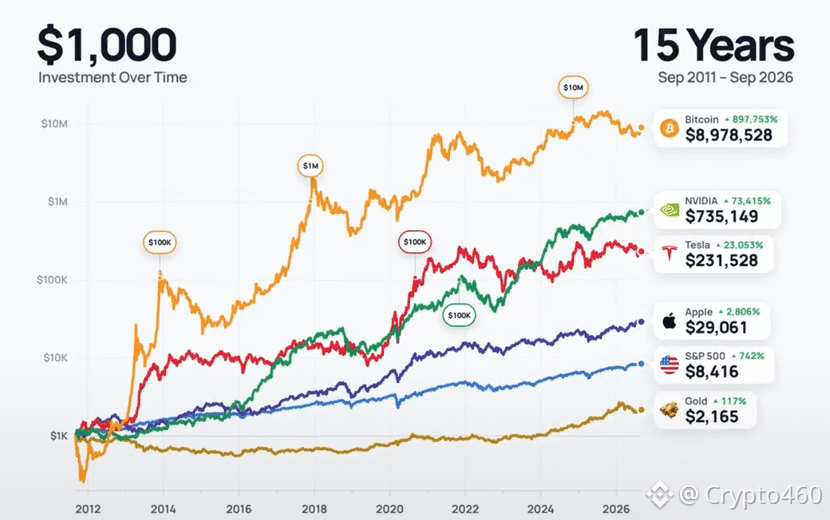
Ich habe das heute ausgerechnet und ehrlich gesagt, hat es ein bisschen wehgetan
$1.000 vor 15 Jahren investiert, heute:
🟠 $BTC → $8.970.000
🟢 Nvidia → $735.000
🔴 Tesla → $231.000
⚪ Apple → $29.000
📊 S&P 500 → $8.400
🟡 GOLD → $2.150
das ist kein Tippfehler. #bitcoin hat jeden einzelnen davon übertroffen, inklusive der sicheren Varianten.
der verrückteste Teil ist nicht mal die Zahl, sondern wie viele Leute die Chance hatten und es sich dann ausgeredet haben. zu riskant, es ist eine Blase, ich warte auf einen Dip… 15 Jahre später mit Dips, und da sind wir.
keine Finanzberatung, nur eine Erinnerung daran, dass das größte Risiko manchmal nicht ist, zu früh zu kaufen... sondern zu lange zu warten.
wo würdest du jetzt stehen, wenn du einfach gehalten hättest? 👀
{future}(BTCUSDT)
$ETH
{future}(ETHUSDT)
$SOL
{future}(SOLUSDT)
Ich habe das heute ausgerechnet und ehrlich gesagt, hat es ein bisschen wehgetan
$1.000 vor 15 Jahren investiert, heute:
🟠 $BTC → $8.970.000
🟢 Nvidia → $735.000
🔴 Tesla → $231.000
⚪ Apple → $29.000
📊 S&P 500 → $8.400
🟡 GOLD → $2.150
das ist kein Tippfehler. #bitcoin hat jeden einzelnen davon übertroffen, inklusive der sicheren Varianten.
der verrückteste Teil ist nicht mal die Zahl, sondern wie viele Leute die Chance hatten und es sich dann ausgeredet haben. zu riskant, es ist eine Blase, ich warte auf einen Dip… 15 Jahre später mit Dips, und da sind wir.
keine Finanzberatung, nur eine Erinnerung daran, dass das größte Risiko manchmal nicht ist, zu früh zu kaufen... sondern zu lange zu warten.
wo würdest du jetzt stehen, wenn du einfach gehalten hättest? 👀
$ETH
$SOL
$1.000 vor 15 Jahren investiert, heute:
🟠 $BTC → $8.970.000
🟢 Nvidia → $735.000
🔴 Tesla → $231.000
⚪ Apple → $29.000
📊 S&P 500 → $8.400
🟡 GOLD → $2.150
das ist kein Tippfehler. #bitcoin hat jeden einzelnen davon übertroffen, inklusive der sicheren Varianten.
der verrückteste Teil ist nicht mal die Zahl, sondern wie viele Leute die Chance hatten und es sich dann ausgeredet haben. zu riskant, es ist eine Blase, ich warte auf einen Dip… 15 Jahre später mit Dips, und da sind wir.
keine Finanzberatung, nur eine Erinnerung daran, dass das größte Risiko manchmal nicht ist, zu früh zu kaufen... sondern zu lange zu warten.
wo würdest du jetzt stehen, wenn du einfach gehalten hättest? 👀
$ETH
$SOL
1
141
·
--
Bullisch
#dusk $DUSK @Dusk_Foundation
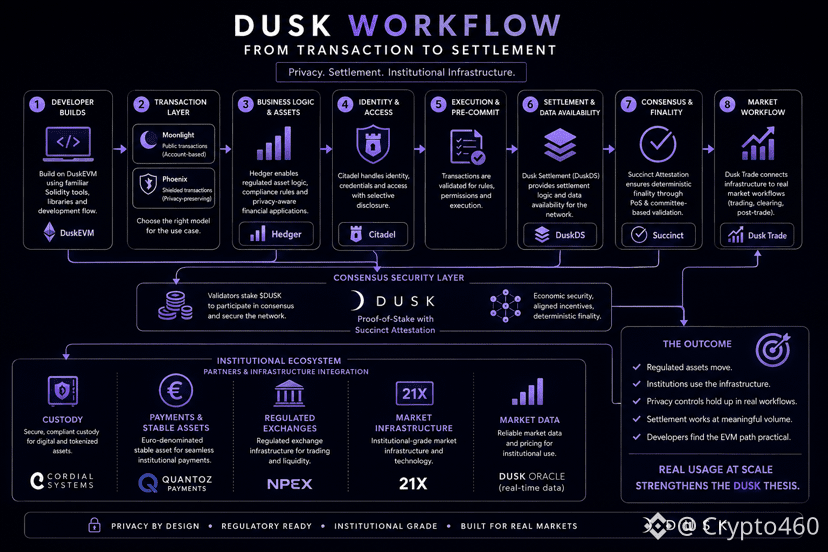
Vor fünfzehn Tagen habe ich angefangen, mir Dusk Funktion für Funktion anzusehen.
Ich erwartete, eine datenschutzorientierte Blockchain mit einer Sammlung von Finanzfunktionen zu finden.
Meine Sicht ist mittlerweile konkreter.
Das Interessante ist, wie die Bausteine zusammenpassen.
DuskEVM hält den EVM-Entwicklungsweg vertraut.
Moonlight und Phoenix übernehmen unterschiedliche Transaktionsmodelle.
Hedger konzentriert sich auf Logik für regulierte Assets und Datenschutz.
Citadel befasst sich mit Identität und Zugriff.
DuskDS liefert Abwicklung und Datenverfügbarkeit.
Succinct Attestation ermöglicht deterministische Finalität.
Dusk Trade bringt die Infrastruktur in Richtung eines echten Markt-Workflows.
Dann gibt es die institutionellen Beziehungen rund um Verwahrung, Zahlungen, Börsen und Marktdaten – alles abgesichert durch Validatoren, die $DUSK underneath @Dusk_Foundation ’s Konsens staken. #dusk
Nachdem ich mir all das angesehen habe, denke ich, dass die eigentliche Frage mittlerweile nicht mehr ist, ob Dusk interessante Technologie hat.
Die schwierigere Frage ist die Umsetzung.
Bewegen sich regulierte Assets tatsächlich?
Nutzen Institutionen die Infrastruktur?
Halten die Datenschutzkontrollen in echten Workflows stand?
Funktioniert die Abwicklung bei einem sinnvollen Volumen?
Empfinden Entwickler den EVM-Weg als praktikabel?
Diese Antworten sind mir mittlerweile wichtiger als eine weitere Funktionsankündigung.
Ich denke auch, dass hier Vorsicht hilft.
Eine gute Architektur gibt dir einen Ausgangspunkt.
Eine Partnerschaft verschafft dir Zugang.
Beides beweist keine Einführung.
Der nächste Nachweis, den ich sehen möchte, ist echte Nutzung im großen Maßstab.
Dort wird die Dusk-These entweder stärker oder herausgefordert.
Nach 15 Tagen ist das der Teil, den ich am genauesten im Blick behalten werde.
#dusk $DUSK @Dusk
Vor fünfzehn Tagen habe ich angefangen, mir Dusk Funktion für Funktion anzusehen.
Ich erwartete, eine datenschutzorientierte Blockchain mit einer Sammlung von Finanzfunktionen zu finden.
Meine Sicht ist mittlerweile konkreter.
Das Interessante ist, wie die Bausteine zusammenpassen.
DuskEVM hält den EVM-Entwicklungsweg vertraut.
Moonlight und Phoenix übernehmen unterschiedliche Transaktionsmodelle.
Hedger konzentriert sich auf Logik für regulierte Assets und Datenschutz.
Citadel befasst sich mit Identität und Zugriff.
DuskDS liefert Abwicklung und Datenverfügbarkeit.
Succinct Attestation ermöglicht deterministische Finalität.
Dusk Trade bringt die Infrastruktur in Richtung eines echten Markt-Workflows.
Dann gibt es die institutionellen Beziehungen rund um Verwahrung, Zahlungen, Börsen und Marktdaten – alles abgesichert durch Validatoren, die $DUSK underneath @Dusk ’s Konsens staken. #dusk
Nachdem ich mir all das angesehen habe, denke ich, dass die eigentliche Frage mittlerweile nicht mehr ist, ob Dusk interessante Technologie hat.
Die schwierigere Frage ist die Umsetzung.
Bewegen sich regulierte Assets tatsächlich?
Nutzen Institutionen die Infrastruktur?
Halten die Datenschutzkontrollen in echten Workflows stand?
Funktioniert die Abwicklung bei einem sinnvollen Volumen?
Empfinden Entwickler den EVM-Weg als praktikabel?
Diese Antworten sind mir mittlerweile wichtiger als eine weitere Funktionsankündigung.
Ich denke auch, dass hier Vorsicht hilft.
Eine gute Architektur gibt dir einen Ausgangspunkt.
Eine Partnerschaft verschafft dir Zugang.
Beides beweist keine Einführung.
Der nächste Nachweis, den ich sehen möchte, ist echte Nutzung im großen Maßstab.
Dort wird die Dusk-These entweder stärker oder herausgefordert.
Nach 15 Tagen ist das der Teil, den ich am genauesten im Blick behalten werde.
Vor fünfzehn Tagen habe ich angefangen, mir Dusk Funktion für Funktion anzusehen.
Ich erwartete, eine datenschutzorientierte Blockchain mit einer Sammlung von Finanzfunktionen zu finden.
Meine Sicht ist mittlerweile konkreter.
Das Interessante ist, wie die Bausteine zusammenpassen.
DuskEVM hält den EVM-Entwicklungsweg vertraut.
Moonlight und Phoenix übernehmen unterschiedliche Transaktionsmodelle.
Hedger konzentriert sich auf Logik für regulierte Assets und Datenschutz.
Citadel befasst sich mit Identität und Zugriff.
DuskDS liefert Abwicklung und Datenverfügbarkeit.
Succinct Attestation ermöglicht deterministische Finalität.
Dusk Trade bringt die Infrastruktur in Richtung eines echten Markt-Workflows.
Dann gibt es die institutionellen Beziehungen rund um Verwahrung, Zahlungen, Börsen und Marktdaten – alles abgesichert durch Validatoren, die $DUSK underneath @Dusk ’s Konsens staken. #dusk
Nachdem ich mir all das angesehen habe, denke ich, dass die eigentliche Frage mittlerweile nicht mehr ist, ob Dusk interessante Technologie hat.
Die schwierigere Frage ist die Umsetzung.
Bewegen sich regulierte Assets tatsächlich?
Nutzen Institutionen die Infrastruktur?
Halten die Datenschutzkontrollen in echten Workflows stand?
Funktioniert die Abwicklung bei einem sinnvollen Volumen?
Empfinden Entwickler den EVM-Weg als praktikabel?
Diese Antworten sind mir mittlerweile wichtiger als eine weitere Funktionsankündigung.
Ich denke auch, dass hier Vorsicht hilft.
Eine gute Architektur gibt dir einen Ausgangspunkt.
Eine Partnerschaft verschafft dir Zugang.
Beides beweist keine Einführung.
Der nächste Nachweis, den ich sehen möchte, ist echte Nutzung im großen Maßstab.
Dort wird die Dusk-These entweder stärker oder herausgefordert.
Nach 15 Tagen ist das der Teil, den ich am genauesten im Blick behalten werde.
2
3
132
·
--
Bullisch
#dusk $DUSK @Dusk_Foundation
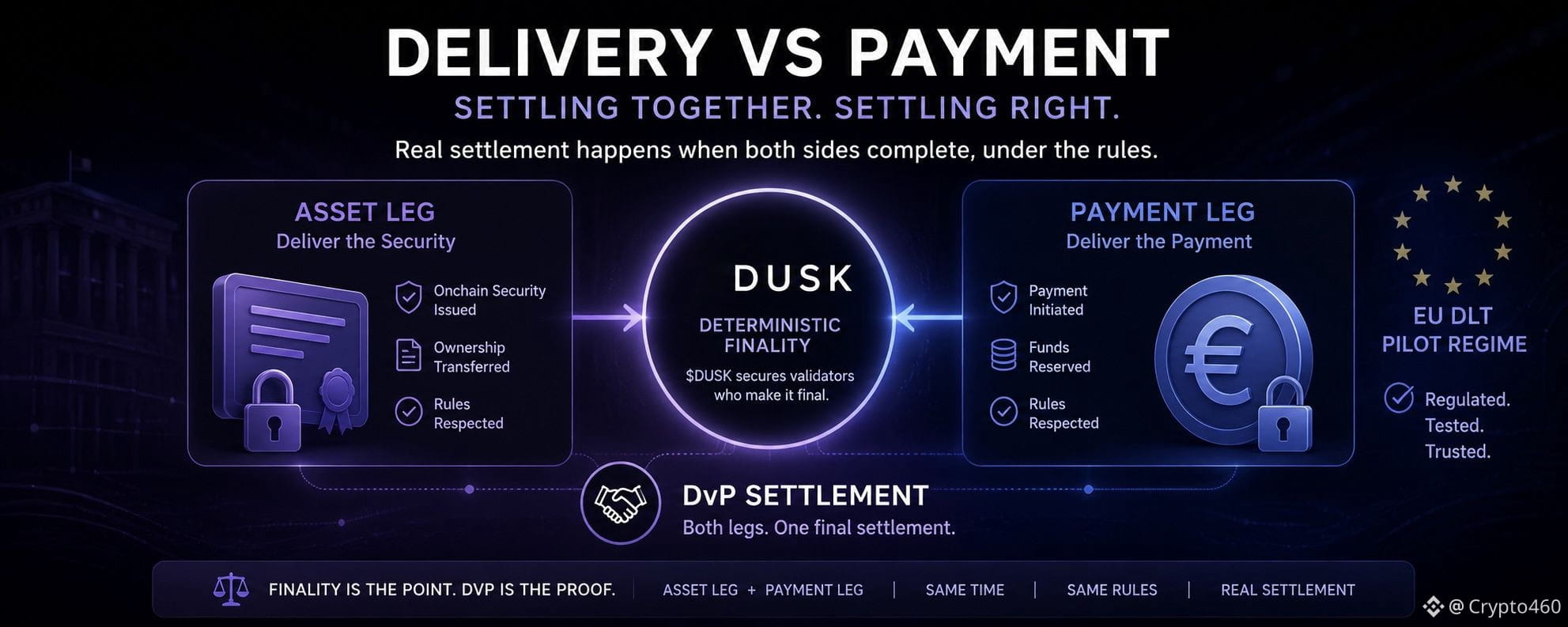
Ich habe mit dem Blick auf Settlement-Design begonnen und mich dann auf ein einziges Finanzkonzept konzentriert:
Lieferung versus Zahlung.
Die Idee ist einfach.
Eine Seite liefert das Asset.
Die andere Seite liefert die Zahlung.
Beide müssen gemeinsam abwickeln.
Wenn sich das Asset bewegt, während die Zahlung fehlschlägt, hat die Transaktion ein Problem.
Wenn sich die Zahlung bewegt, während das Asset fehlschlägt, verlagert sich das Problem lediglich auf die andere Seite.
Darum ist das Onboarding einer Sicherheit auf der Chain nur ein Teil des Settlement-Problems.
Sowohl das Asset-Leg als auch das Zahlungs-Leg sind entscheidend.
Der EU DLT Pilot Regime macht das besonders relevant, weil er einen Rahmen dafür bietet, DLT-basierte Finanzmarktinfrastrukturen unter regulatorischen Bedingungen zu testen.
Die deterministische Finalität von @Dusk_Foundation gibt dem Netzwerk einen klaren Abwicklungspunkt, wobei $DUSK die Validatoren absichert, die ihn dorthin bringen. #dusk
Aber allein die Finalität schafft kein DvP.
Beide Seiten müssen sich weiterhin korrekt abstimmen.
Genau das würde ich in einer realen regulierten Transaktion demonstriert sehen wollen.
Nicht ein Diagramm.
Nicht ein Konzept.
Ein tatsächliches Asset-Leg und Zahlungs-Leg, die gemeinsam die erforderlichen Regeln erfüllen und abschließen.
Das würde mir viel mehr über das Settlement-Design von Dusk verraten als ein weiterer Performance-Vergleich.
#dusk $DUSK @Dusk
Ich habe mit dem Blick auf Settlement-Design begonnen und mich dann auf ein einziges Finanzkonzept konzentriert:
Lieferung versus Zahlung.
Die Idee ist einfach.
Eine Seite liefert das Asset.
Die andere Seite liefert die Zahlung.
Beide müssen gemeinsam abwickeln.
Wenn sich das Asset bewegt, während die Zahlung fehlschlägt, hat die Transaktion ein Problem.
Wenn sich die Zahlung bewegt, während das Asset fehlschlägt, verlagert sich das Problem lediglich auf die andere Seite.
Darum ist das Onboarding einer Sicherheit auf der Chain nur ein Teil des Settlement-Problems.
Sowohl das Asset-Leg als auch das Zahlungs-Leg sind entscheidend.
Der EU DLT Pilot Regime macht das besonders relevant, weil er einen Rahmen dafür bietet, DLT-basierte Finanzmarktinfrastrukturen unter regulatorischen Bedingungen zu testen.
Die deterministische Finalität von @Dusk gibt dem Netzwerk einen klaren Abwicklungspunkt, wobei $DUSK die Validatoren absichert, die ihn dorthin bringen. #dusk
Aber allein die Finalität schafft kein DvP.
Beide Seiten müssen sich weiterhin korrekt abstimmen.
Genau das würde ich in einer realen regulierten Transaktion demonstriert sehen wollen.
Nicht ein Diagramm.
Nicht ein Konzept.
Ein tatsächliches Asset-Leg und Zahlungs-Leg, die gemeinsam die erforderlichen Regeln erfüllen und abschließen.
Das würde mir viel mehr über das Settlement-Design von Dusk verraten als ein weiterer Performance-Vergleich.
Ich habe mit dem Blick auf Settlement-Design begonnen und mich dann auf ein einziges Finanzkonzept konzentriert:
Lieferung versus Zahlung.
Die Idee ist einfach.
Eine Seite liefert das Asset.
Die andere Seite liefert die Zahlung.
Beide müssen gemeinsam abwickeln.
Wenn sich das Asset bewegt, während die Zahlung fehlschlägt, hat die Transaktion ein Problem.
Wenn sich die Zahlung bewegt, während das Asset fehlschlägt, verlagert sich das Problem lediglich auf die andere Seite.
Darum ist das Onboarding einer Sicherheit auf der Chain nur ein Teil des Settlement-Problems.
Sowohl das Asset-Leg als auch das Zahlungs-Leg sind entscheidend.
Der EU DLT Pilot Regime macht das besonders relevant, weil er einen Rahmen dafür bietet, DLT-basierte Finanzmarktinfrastrukturen unter regulatorischen Bedingungen zu testen.
Die deterministische Finalität von @Dusk gibt dem Netzwerk einen klaren Abwicklungspunkt, wobei $DUSK die Validatoren absichert, die ihn dorthin bringen. #dusk
Aber allein die Finalität schafft kein DvP.
Beide Seiten müssen sich weiterhin korrekt abstimmen.
Genau das würde ich in einer realen regulierten Transaktion demonstriert sehen wollen.
Nicht ein Diagramm.
Nicht ein Konzept.
Ein tatsächliches Asset-Leg und Zahlungs-Leg, die gemeinsam die erforderlichen Regeln erfüllen und abschließen.
Das würde mir viel mehr über das Settlement-Design von Dusk verraten als ein weiterer Performance-Vergleich.
97
·
--
Bullisch
Selektive Offenlegung klingt einfach, bis man fragt:
Wer darf die Informationen sehen?
Diese Frage führte mich zu Citadel.
@Dusk_Foundation beschreibt Citadel als seine Identitäts- und Zugriffsebene mit Unterstützung für selektive Offenlegung. #dusk
Die Idee ist unkompliziert.
Ein Teilnehmer weist etwas über sich nach, ohne jedes einzelne Stück persönlicher Information hinter dem Nachweis offenzulegen.
Für ein reguliertes Finanzsystem ist dieser Unterschied entscheidend.
Ein Investor muss möglicherweise seine Berechtigung nachweisen.
Ein Dienstanbieter muss das relevante Zertifikat verifizieren.
Ein Regulierer benötigt möglicherweise kontrollierten Zugriff auf bestimmte Informationen.
Das gesamte Netzwerk muss nicht alles sehen.
An dieser Stelle wird Identität mehr als nur eine Kontoadresse.
Das System braucht einen Weg, um festzustellen, wer ein Teilnehmer ist und was er autorisiert tun darf—wobei die Verifizierung selbst weiterhin als $DUSK -Transaktion darunter erfolgt.
Citadel nutzt Zero-Knowledge-Proofs als Teil dieses Identitätsmodells.
Was ich noch verstehen möchte, ist der praktische Ablauf.
Wie erhält jemand ein Zertifikat?
Wie verifiziert eine andere Partei es?
Wie werden Berechtigungen geändert, wenn sich der zugrunde liegende Status ändert?
Diese Details bestimmen, wie nützlich selektive Offenlegung in der Praxis wird.
Für mich ist Citadel interessant, weil Privatsphäre nur dann gut funktioniert, wenn im regulierten Finanzwesen der Zugriff selbst programmierbar ist.
Selektive Offenlegung klingt einfach, bis man fragt:
Wer darf die Informationen sehen?
Diese Frage führte mich zu Citadel.
@Dusk beschreibt Citadel als seine Identitäts- und Zugriffsebene mit Unterstützung für selektive Offenlegung. #dusk
Die Idee ist unkompliziert.
Ein Teilnehmer weist etwas über sich nach, ohne jedes einzelne Stück persönlicher Information hinter dem Nachweis offenzulegen.
Für ein reguliertes Finanzsystem ist dieser Unterschied entscheidend.
Ein Investor muss möglicherweise seine Berechtigung nachweisen.
Ein Dienstanbieter muss das relevante Zertifikat verifizieren.
Ein Regulierer benötigt möglicherweise kontrollierten Zugriff auf bestimmte Informationen.
Das gesamte Netzwerk muss nicht alles sehen.
An dieser Stelle wird Identität mehr als nur eine Kontoadresse.
Das System braucht einen Weg, um festzustellen, wer ein Teilnehmer ist und was er autorisiert tun darf—wobei die Verifizierung selbst weiterhin als $DUSK -Transaktion darunter erfolgt.
Citadel nutzt Zero-Knowledge-Proofs als Teil dieses Identitätsmodells.
Was ich noch verstehen möchte, ist der praktische Ablauf.
Wie erhält jemand ein Zertifikat?
Wie verifiziert eine andere Partei es?
Wie werden Berechtigungen geändert, wenn sich der zugrunde liegende Status ändert?
Diese Details bestimmen, wie nützlich selektive Offenlegung in der Praxis wird.
Für mich ist Citadel interessant, weil Privatsphäre nur dann gut funktioniert, wenn im regulierten Finanzwesen der Zugriff selbst programmierbar ist.
Wer darf die Informationen sehen?
Diese Frage führte mich zu Citadel.
@Dusk beschreibt Citadel als seine Identitäts- und Zugriffsebene mit Unterstützung für selektive Offenlegung. #dusk
Die Idee ist unkompliziert.
Ein Teilnehmer weist etwas über sich nach, ohne jedes einzelne Stück persönlicher Information hinter dem Nachweis offenzulegen.
Für ein reguliertes Finanzsystem ist dieser Unterschied entscheidend.
Ein Investor muss möglicherweise seine Berechtigung nachweisen.
Ein Dienstanbieter muss das relevante Zertifikat verifizieren.
Ein Regulierer benötigt möglicherweise kontrollierten Zugriff auf bestimmte Informationen.
Das gesamte Netzwerk muss nicht alles sehen.
An dieser Stelle wird Identität mehr als nur eine Kontoadresse.
Das System braucht einen Weg, um festzustellen, wer ein Teilnehmer ist und was er autorisiert tun darf—wobei die Verifizierung selbst weiterhin als $DUSK -Transaktion darunter erfolgt.
Citadel nutzt Zero-Knowledge-Proofs als Teil dieses Identitätsmodells.
Was ich noch verstehen möchte, ist der praktische Ablauf.
Wie erhält jemand ein Zertifikat?
Wie verifiziert eine andere Partei es?
Wie werden Berechtigungen geändert, wenn sich der zugrunde liegende Status ändert?
Diese Details bestimmen, wie nützlich selektive Offenlegung in der Praxis wird.
Für mich ist Citadel interessant, weil Privatsphäre nur dann gut funktioniert, wenn im regulierten Finanzwesen der Zugriff selbst programmierbar ist.
100
·
--
Bullisch
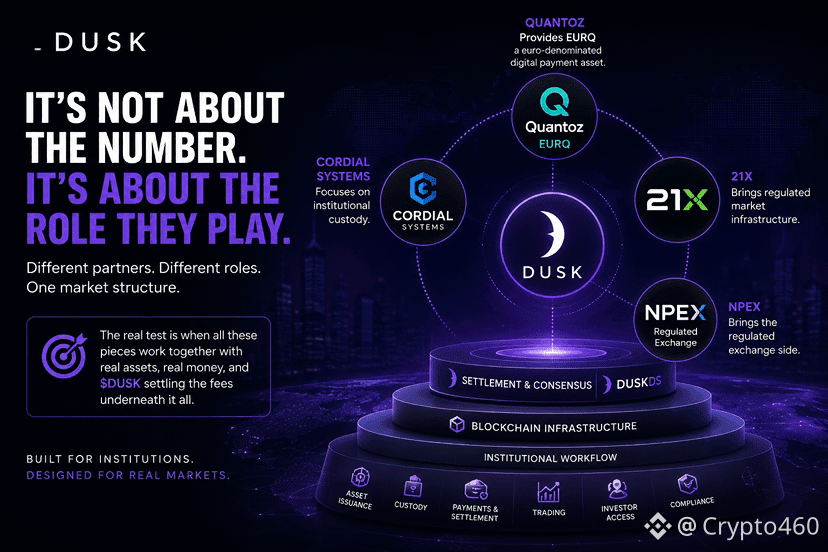
Ich begann, institutionelle Partner als einzelne Ankündigungen zu betrachten.
Dann bemerkte ich etwas.
Sie lösen verschiedene Teile derselben Marktstruktur.
Quantoz stellt EURQ bereit, einen digitalen Zahlungswert, der in Euro denominiert ist.
Cordial Systems konzentriert sich auf die institutionelle Verwahrung.
21X bringt regulierte Marktinfrastruktur.
NPEX bringt die regulierte Börsen-Seite.
Diese Rollen sind unterschiedlich.
Ein regulierter Vermögenswert braucht einen Ort zum Handel.
Investoren brauchen eine konforme Möglichkeit, darauf zuzugreifen.
Vermögenswerte brauchen Verwahrung.
Zahlungen brauchen einen Abwicklungswert.
Die Blockchain liegt darunter.
Das hat meine Sicht auf die Partnerschaftsstrategie von @Dusk_Foundation verändert. #dusk
Eine lange Liste von Partnern bedeutet für sich allein noch nicht viel.
Die hilfreiche Frage ist, ob jeder Partner eine spezifische Anforderung im Finanz-Workflow abdeckt.
Es gibt weiterhin eine Lücke zwischen Infrastruktur und Nutzung.
Ich möchte sehen, wie tatsächlich Transaktionen durch diese Beziehungen laufen – mit $DUSK , die alle darunterliegenden Gebühren begleichen.
Ich möchte sehen, wie sich die verschiedenen Komponenten verbinden, wenn echte Vermögenswerte und echtes Geld im Spiel sind.
Für mich ist der interessante Teil die Struktur des Netzwerks rund um Dusk.
Der nächste Test ist, ob diese einzelnen Bausteine als ein funktionierender Markt zusammenarbeiten.
@Dusk_Foundation $DUSK #dusk
Ich begann, institutionelle Partner als einzelne Ankündigungen zu betrachten.
Dann bemerkte ich etwas.
Sie lösen verschiedene Teile derselben Marktstruktur.
Quantoz stellt EURQ bereit, einen digitalen Zahlungswert, der in Euro denominiert ist.
Cordial Systems konzentriert sich auf die institutionelle Verwahrung.
21X bringt regulierte Marktinfrastruktur.
NPEX bringt die regulierte Börsen-Seite.
Diese Rollen sind unterschiedlich.
Ein regulierter Vermögenswert braucht einen Ort zum Handel.
Investoren brauchen eine konforme Möglichkeit, darauf zuzugreifen.
Vermögenswerte brauchen Verwahrung.
Zahlungen brauchen einen Abwicklungswert.
Die Blockchain liegt darunter.
Das hat meine Sicht auf die Partnerschaftsstrategie von @Dusk verändert. #dusk
Eine lange Liste von Partnern bedeutet für sich allein noch nicht viel.
Die hilfreiche Frage ist, ob jeder Partner eine spezifische Anforderung im Finanz-Workflow abdeckt.
Es gibt weiterhin eine Lücke zwischen Infrastruktur und Nutzung.
Ich möchte sehen, wie tatsächlich Transaktionen durch diese Beziehungen laufen – mit $DUSK , die alle darunterliegenden Gebühren begleichen.
Ich möchte sehen, wie sich die verschiedenen Komponenten verbinden, wenn echte Vermögenswerte und echtes Geld im Spiel sind.
Für mich ist der interessante Teil die Struktur des Netzwerks rund um Dusk.
Der nächste Test ist, ob diese einzelnen Bausteine als ein funktionierender Markt zusammenarbeiten.
@Dusk $DUSK #dusk
Dann bemerkte ich etwas.
Sie lösen verschiedene Teile derselben Marktstruktur.
Quantoz stellt EURQ bereit, einen digitalen Zahlungswert, der in Euro denominiert ist.
Cordial Systems konzentriert sich auf die institutionelle Verwahrung.
21X bringt regulierte Marktinfrastruktur.
NPEX bringt die regulierte Börsen-Seite.
Diese Rollen sind unterschiedlich.
Ein regulierter Vermögenswert braucht einen Ort zum Handel.
Investoren brauchen eine konforme Möglichkeit, darauf zuzugreifen.
Vermögenswerte brauchen Verwahrung.
Zahlungen brauchen einen Abwicklungswert.
Die Blockchain liegt darunter.
Das hat meine Sicht auf die Partnerschaftsstrategie von @Dusk verändert. #dusk
Eine lange Liste von Partnern bedeutet für sich allein noch nicht viel.
Die hilfreiche Frage ist, ob jeder Partner eine spezifische Anforderung im Finanz-Workflow abdeckt.
Es gibt weiterhin eine Lücke zwischen Infrastruktur und Nutzung.
Ich möchte sehen, wie tatsächlich Transaktionen durch diese Beziehungen laufen – mit $DUSK , die alle darunterliegenden Gebühren begleichen.
Ich möchte sehen, wie sich die verschiedenen Komponenten verbinden, wenn echte Vermögenswerte und echtes Geld im Spiel sind.
Für mich ist der interessante Teil die Struktur des Netzwerks rund um Dusk.
Der nächste Test ist, ob diese einzelnen Bausteine als ein funktionierender Markt zusammenarbeiten.
@Dusk $DUSK #dusk
107
·
--
Ich wollte das Token vom Trading-Dialog trennen.
Was macht es tatsächlich im @Dusk_Foundation -Netzwerk? #dusk
Zwei Funktionen fielen mir besonders auf.
Gas.
Staking.
$DUSK zahlt Transaktionsgebühren und Ausführungskosten für Verträge auf Dusk.
Es dient außerdem als Staking-Asset für die Netzwerksicherheit.
Die Zahl, die meine Aufmerksamkeit erregte, waren 210M+ DUSK, die gestaked sind.
Das gibt dem Netzwerk eine beachtliche Menge an zugesichertem wirtschaftlichem Wert für das Staking.
Aber ich würde die Sicherheit nicht allein anhand dieser Zahl beurteilen.
Auch die Verteilung ist entscheidend.
210M DUSK, auf viele unabhängige Teilnehmer verteilt, vermittelt ein anderes Sicherheitsbild als dieselbe Menge, die bei einer kleinen Anzahl von Teilnehmern konzentriert ist.
Ich denke also, es gibt zwei getrennte Gespräche rund um DUSK.
Das eine ist der Markt.
Das andere ist die Netzwerknützlichkeit.
Gas bezahlt für die Ausführung.
Staking verbindet das Token mit der Teilnahme am Konsens.
Diese Funktionen hängen nicht davon ab, ob der Marktpreis steigt oder fällt.
Die nächste Zahl, die ich verstehen möchte, ist nicht nur das gesamte gestakete DUSK.
Wichtig ist, wie dieses Staking im Netzwerk verteilt ist.
Was ist wichtiger, wenn man $DUSK Netzwerksicherheit beurteilt?
Ich wollte das Token vom Trading-Dialog trennen.
Was macht es tatsächlich im @Dusk -Netzwerk? #dusk
Zwei Funktionen fielen mir besonders auf.
Gas.
Staking.
$DUSK zahlt Transaktionsgebühren und Ausführungskosten für Verträge auf Dusk.
Es dient außerdem als Staking-Asset für die Netzwerksicherheit.
Die Zahl, die meine Aufmerksamkeit erregte, waren 210M+ DUSK, die gestaked sind.
Das gibt dem Netzwerk eine beachtliche Menge an zugesichertem wirtschaftlichem Wert für das Staking.
Aber ich würde die Sicherheit nicht allein anhand dieser Zahl beurteilen.
Auch die Verteilung ist entscheidend.
210M DUSK, auf viele unabhängige Teilnehmer verteilt, vermittelt ein anderes Sicherheitsbild als dieselbe Menge, die bei einer kleinen Anzahl von Teilnehmern konzentriert ist.
Ich denke also, es gibt zwei getrennte Gespräche rund um DUSK.
Das eine ist der Markt.
Das andere ist die Netzwerknützlichkeit.
Gas bezahlt für die Ausführung.
Staking verbindet das Token mit der Teilnahme am Konsens.
Diese Funktionen hängen nicht davon ab, ob der Marktpreis steigt oder fällt.
Die nächste Zahl, die ich verstehen möchte, ist nicht nur das gesamte gestakete DUSK.
Wichtig ist, wie dieses Staking im Netzwerk verteilt ist.
Was ist wichtiger, wenn man $DUSK Netzwerksicherheit beurteilt?
Was macht es tatsächlich im @Dusk -Netzwerk? #dusk
Zwei Funktionen fielen mir besonders auf.
Gas.
Staking.
$DUSK zahlt Transaktionsgebühren und Ausführungskosten für Verträge auf Dusk.
Es dient außerdem als Staking-Asset für die Netzwerksicherheit.
Die Zahl, die meine Aufmerksamkeit erregte, waren 210M+ DUSK, die gestaked sind.
Das gibt dem Netzwerk eine beachtliche Menge an zugesichertem wirtschaftlichem Wert für das Staking.
Aber ich würde die Sicherheit nicht allein anhand dieser Zahl beurteilen.
Auch die Verteilung ist entscheidend.
210M DUSK, auf viele unabhängige Teilnehmer verteilt, vermittelt ein anderes Sicherheitsbild als dieselbe Menge, die bei einer kleinen Anzahl von Teilnehmern konzentriert ist.
Ich denke also, es gibt zwei getrennte Gespräche rund um DUSK.
Das eine ist der Markt.
Das andere ist die Netzwerknützlichkeit.
Gas bezahlt für die Ausführung.
Staking verbindet das Token mit der Teilnahme am Konsens.
Diese Funktionen hängen nicht davon ab, ob der Marktpreis steigt oder fällt.
Die nächste Zahl, die ich verstehen möchte, ist nicht nur das gesamte gestakete DUSK.
Wichtig ist, wie dieses Staking im Netzwerk verteilt ist.
Was ist wichtiger, wenn man $DUSK Netzwerksicherheit beurteilt?
Total DUSK staked
0%
Stake distribution
0%
DUSK market price
0%
Trading volume
0%
0 Stimmen • Abstimmung beendet
1
1
95
·
--
Bullisch
Ich dachte früher, Konsens sei der Moment, in dem Validatoren sich auf einen Block einigen.
Wenn ich tiefer in Dusk eingestiegen bin, habe ich zwei Dinge getrennt:
Blockproduktion.
Finalität.
Dusk verwendet Succinct Attestation, ein Proof-of-Stake- und komiteebasiertes Konsensdesign, bei dem Validatoren $DUSK einsetzen, um teilzunehmen.
Der entscheidende Punkt für mich ist deterministische Finalität.
Sobald ein Block die erforderliche Ratifizierung erreicht, hat das Netzwerk einen fest definierten Endzustand, statt darauf zu vertrauen, dass eine wachsende Zahl von Bestätigungen Rückgängigwerden unwahrscheinlicher macht.
Dieser Unterschied ist besonders wichtig, wenn die Blockchain für Abwicklung (Settlement) genutzt wird.
Eine Finanzinstitution muss wissen, wann eine Transaktion endgültig ist.
„Wahrscheinlich final“ ist eine andere Zusicherung als deterministische Finalität.
Die Komitee-Struktur ist es, die den Prozess interessant macht.
Doch ich würde nicht bei der Protokollbeschreibung stehen bleiben.
Die Komiteewahl ist entscheidend.
Die Teilnahme ist entscheidend.
Die Netzwerkauslastung bzw. -bedingungen sind entscheidend.
Das sind die Details, die ich verstehen möchte, bevor ich beurteile, wie sich das System unter ernsthaftem Stress verhält.
Mein Fazit ist also nicht, dass @Dusk_Foundation den Konsens gelöst hat. #dusk
Es ist vielmehr so, dass Dusk Finalität als konkretes Protokollergebnis behandelt – statt anzunehmen, dass allein die Blockproduktion die Settlement-Frage beantwortet.
Für finanzielle Infrastruktur denke ich, dass dieser Unterschied mehr Beachtung verdient.
@Dusk_Foundation $DUSK #dusk
Was ist für dich am wichtigsten?
Ich dachte früher, Konsens sei der Moment, in dem Validatoren sich auf einen Block einigen.
Wenn ich tiefer in Dusk eingestiegen bin, habe ich zwei Dinge getrennt:
Blockproduktion.
Finalität.
Dusk verwendet Succinct Attestation, ein Proof-of-Stake- und komiteebasiertes Konsensdesign, bei dem Validatoren $DUSK einsetzen, um teilzunehmen.
Der entscheidende Punkt für mich ist deterministische Finalität.
Sobald ein Block die erforderliche Ratifizierung erreicht, hat das Netzwerk einen fest definierten Endzustand, statt darauf zu vertrauen, dass eine wachsende Zahl von Bestätigungen Rückgängigwerden unwahrscheinlicher macht.
Dieser Unterschied ist besonders wichtig, wenn die Blockchain für Abwicklung (Settlement) genutzt wird.
Eine Finanzinstitution muss wissen, wann eine Transaktion endgültig ist.
„Wahrscheinlich final“ ist eine andere Zusicherung als deterministische Finalität.
Die Komitee-Struktur ist es, die den Prozess interessant macht.
Doch ich würde nicht bei der Protokollbeschreibung stehen bleiben.
Die Komiteewahl ist entscheidend.
Die Teilnahme ist entscheidend.
Die Netzwerkauslastung bzw. -bedingungen sind entscheidend.
Das sind die Details, die ich verstehen möchte, bevor ich beurteile, wie sich das System unter ernsthaftem Stress verhält.
Mein Fazit ist also nicht, dass @Dusk den Konsens gelöst hat. #dusk
Es ist vielmehr so, dass Dusk Finalität als konkretes Protokollergebnis behandelt – statt anzunehmen, dass allein die Blockproduktion die Settlement-Frage beantwortet.
Für finanzielle Infrastruktur denke ich, dass dieser Unterschied mehr Beachtung verdient.
@Dusk $DUSK #dusk
Was ist für dich am wichtigsten?
Wenn ich tiefer in Dusk eingestiegen bin, habe ich zwei Dinge getrennt:
Blockproduktion.
Finalität.
Dusk verwendet Succinct Attestation, ein Proof-of-Stake- und komiteebasiertes Konsensdesign, bei dem Validatoren $DUSK einsetzen, um teilzunehmen.
Der entscheidende Punkt für mich ist deterministische Finalität.
Sobald ein Block die erforderliche Ratifizierung erreicht, hat das Netzwerk einen fest definierten Endzustand, statt darauf zu vertrauen, dass eine wachsende Zahl von Bestätigungen Rückgängigwerden unwahrscheinlicher macht.
Dieser Unterschied ist besonders wichtig, wenn die Blockchain für Abwicklung (Settlement) genutzt wird.
Eine Finanzinstitution muss wissen, wann eine Transaktion endgültig ist.
„Wahrscheinlich final“ ist eine andere Zusicherung als deterministische Finalität.
Die Komitee-Struktur ist es, die den Prozess interessant macht.
Doch ich würde nicht bei der Protokollbeschreibung stehen bleiben.
Die Komiteewahl ist entscheidend.
Die Teilnahme ist entscheidend.
Die Netzwerkauslastung bzw. -bedingungen sind entscheidend.
Das sind die Details, die ich verstehen möchte, bevor ich beurteile, wie sich das System unter ernsthaftem Stress verhält.
Mein Fazit ist also nicht, dass @Dusk den Konsens gelöst hat. #dusk
Es ist vielmehr so, dass Dusk Finalität als konkretes Protokollergebnis behandelt – statt anzunehmen, dass allein die Blockproduktion die Settlement-Frage beantwortet.
Für finanzielle Infrastruktur denke ich, dass dieser Unterschied mehr Beachtung verdient.
@Dusk $DUSK #dusk
Was ist für dich am wichtigsten?
Fast blocks
100%
Finality
0%
Validator security
0%
Network stability
0%
1 Stimmen • Abstimmung beendet
3
2
94
·
--
Ich habe T+2-Abwicklung früher vor allem als Geschwindigkeitsproblem betrachtet.
Dann habe ich darüber nachgedacht, warum es überhaupt diese zwei Tage gibt.
Ein Handel findet statt.
Verschiedene Parteien bestätigen ihre Verpflichtungen.
Verwahrer aktualisieren die Aufzeichnungen.
Das Vermögen und die Zahlung müssen trotzdem noch auf die richtigen Seiten gelangen.
Die Wartezeit gibt dem traditionellen System Zeit, das Abwicklungsrisiko zu handhaben.
Wenn ich also auf DuskDS schaue, ist die spannende Frage nicht einfach:
„Kann die Abwicklung schneller erfolgen?“
Die bessere Frage lautet:
„Was schafft Sicherheit, wenn die Wartezeit kürzer wird?“
DuskDS ist als Abwicklungs- und Datenverfügbarkeitslayer des Netzwerks @Dusk_Foundation entworfen, mit $DUSK , das die jeweils durch ihn fließenden Gebühren abwickelt. #dusk
Seine deterministische Endgültigkeit gibt Anwendungen einen klar definierten Zeitpunkt, an dem der Zustand als abgewickelt gilt.
Das ist für finanzielle Workflows wichtig.
Aber schnellere Abwicklung reproduziert nicht automatisch jeden Schutz in traditionellen Abwicklungssystemen.
Das Risiko muss immer noch irgendwo behandelt werden.
Genau diesen Teil möchte ich demonstriert sehen.
Eine echte institutionelle Transaktion würde mir viel mehr sagen als ein bloßer Vergleich „Sekunden versus Tage“.
Für mich ist der spannende Teil von DuskDS nicht allein die Geschwindigkeit.
Es ist, was das System mit Gewissheit tut, sobald die Transaktion die Endgültigkeit erreicht.
@Dusk_Foundation $DUSK #dusk
{future}(DUSKUSDT)
Was ist am wichtigsten, wenn die Abwicklung schneller wird?
Ich habe T+2-Abwicklung früher vor allem als Geschwindigkeitsproblem betrachtet.
Dann habe ich darüber nachgedacht, warum es überhaupt diese zwei Tage gibt.
Ein Handel findet statt.
Verschiedene Parteien bestätigen ihre Verpflichtungen.
Verwahrer aktualisieren die Aufzeichnungen.
Das Vermögen und die Zahlung müssen trotzdem noch auf die richtigen Seiten gelangen.
Die Wartezeit gibt dem traditionellen System Zeit, das Abwicklungsrisiko zu handhaben.
Wenn ich also auf DuskDS schaue, ist die spannende Frage nicht einfach:
„Kann die Abwicklung schneller erfolgen?“
Die bessere Frage lautet:
„Was schafft Sicherheit, wenn die Wartezeit kürzer wird?“
DuskDS ist als Abwicklungs- und Datenverfügbarkeitslayer des Netzwerks @Dusk entworfen, mit $DUSK , das die jeweils durch ihn fließenden Gebühren abwickelt. #dusk
Seine deterministische Endgültigkeit gibt Anwendungen einen klar definierten Zeitpunkt, an dem der Zustand als abgewickelt gilt.
Das ist für finanzielle Workflows wichtig.
Aber schnellere Abwicklung reproduziert nicht automatisch jeden Schutz in traditionellen Abwicklungssystemen.
Das Risiko muss immer noch irgendwo behandelt werden.
Genau diesen Teil möchte ich demonstriert sehen.
Eine echte institutionelle Transaktion würde mir viel mehr sagen als ein bloßer Vergleich „Sekunden versus Tage“.
Für mich ist der spannende Teil von DuskDS nicht allein die Geschwindigkeit.
Es ist, was das System mit Gewissheit tut, sobald die Transaktion die Endgültigkeit erreicht.
@Dusk $DUSK #dusk
Was ist am wichtigsten, wenn die Abwicklung schneller wird?
Dann habe ich darüber nachgedacht, warum es überhaupt diese zwei Tage gibt.
Ein Handel findet statt.
Verschiedene Parteien bestätigen ihre Verpflichtungen.
Verwahrer aktualisieren die Aufzeichnungen.
Das Vermögen und die Zahlung müssen trotzdem noch auf die richtigen Seiten gelangen.
Die Wartezeit gibt dem traditionellen System Zeit, das Abwicklungsrisiko zu handhaben.
Wenn ich also auf DuskDS schaue, ist die spannende Frage nicht einfach:
„Kann die Abwicklung schneller erfolgen?“
Die bessere Frage lautet:
„Was schafft Sicherheit, wenn die Wartezeit kürzer wird?“
DuskDS ist als Abwicklungs- und Datenverfügbarkeitslayer des Netzwerks @Dusk entworfen, mit $DUSK , das die jeweils durch ihn fließenden Gebühren abwickelt. #dusk
Seine deterministische Endgültigkeit gibt Anwendungen einen klar definierten Zeitpunkt, an dem der Zustand als abgewickelt gilt.
Das ist für finanzielle Workflows wichtig.
Aber schnellere Abwicklung reproduziert nicht automatisch jeden Schutz in traditionellen Abwicklungssystemen.
Das Risiko muss immer noch irgendwo behandelt werden.
Genau diesen Teil möchte ich demonstriert sehen.
Eine echte institutionelle Transaktion würde mir viel mehr sagen als ein bloßer Vergleich „Sekunden versus Tage“.
Für mich ist der spannende Teil von DuskDS nicht allein die Geschwindigkeit.
Es ist, was das System mit Gewissheit tut, sobald die Transaktion die Endgültigkeit erreicht.
@Dusk $DUSK #dusk
Was ist am wichtigsten, wenn die Abwicklung schneller wird?
Speed of settlement
0%
Certainty after finality
0%
Lower settlement risk
0%
Institutional adoption
0%
0 Stimmen • Abstimmung beendet
124
·
--
Bullisch
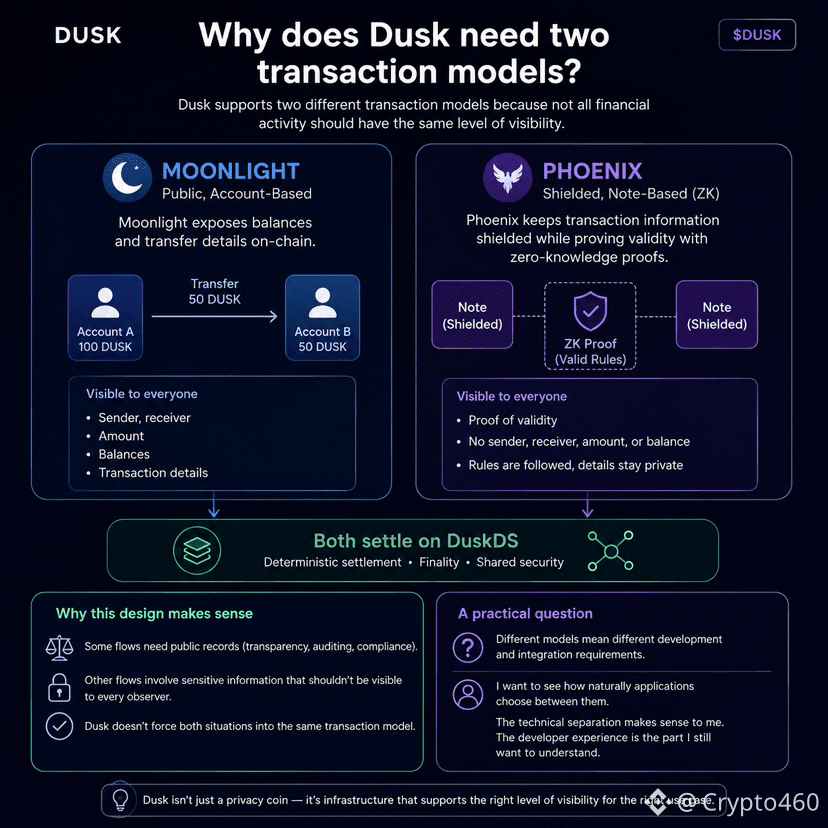
Ich habe immer wieder gesehen, dass „Moonlight“ und „Phoenix“ getrennt erwähnt werden.
Also habe ich mit einer Frage angefangen:
Warum braucht @Dusk_Foundation zwei Transaktionsmodelle?
Moonlight verwendet öffentliche, kontobasierte Überweisungen.
Phoenix verwendet verschleierte, notenbasierte Überweisungen mit Zero-Knowledge-Beweisen.
Beide kommen bei „DuskDS“ an.
Der Unterschied besteht darin, welche Informationen sichtbar werden.
Moonlight macht Salden und Überweisungsdetails offen.
Phoenix hält Transaktionsinformationen verborgen, weist aber dennoch nach, dass die Transaktion die erforderlichen Regeln einhält.
Dieser Unterschied ergibt mehr Sinn, wenn man an finanzielle Aktivitäten denkt.
Einige Abläufe brauchen öffentliche Aufzeichnungen.
Andere betreffen Informationen, die nicht für jeden Netzbeobachter sichtbar sein sollten.
Dusk zwingt nicht beide Situationen in dasselbe Transaktionsmodell.
Ich finde dieses Design interessanter, als es einfach nur „$DUSK “ als Privacy-Coin zu nennen. #dusk
Es gibt außerdem eine praktische Frage.
Verschiedene Transaktionsmodelle bedeuten unterschiedliche Entwicklungs- und Integrationsanforderungen.
Also möchte ich sehen, wie natürlich Anwendungen zwischen ihnen wählen.
Die technische Trennung erscheint mir sinnvoll.
Das Entwicklererlebnis ist der Teil, den ich noch verstehen möchte.
@Dusk_Foundation $DUSK #dusk
Ich habe immer wieder gesehen, dass „Moonlight“ und „Phoenix“ getrennt erwähnt werden.
Also habe ich mit einer Frage angefangen:
Warum braucht @Dusk zwei Transaktionsmodelle?
Moonlight verwendet öffentliche, kontobasierte Überweisungen.
Phoenix verwendet verschleierte, notenbasierte Überweisungen mit Zero-Knowledge-Beweisen.
Beide kommen bei „DuskDS“ an.
Der Unterschied besteht darin, welche Informationen sichtbar werden.
Moonlight macht Salden und Überweisungsdetails offen.
Phoenix hält Transaktionsinformationen verborgen, weist aber dennoch nach, dass die Transaktion die erforderlichen Regeln einhält.
Dieser Unterschied ergibt mehr Sinn, wenn man an finanzielle Aktivitäten denkt.
Einige Abläufe brauchen öffentliche Aufzeichnungen.
Andere betreffen Informationen, die nicht für jeden Netzbeobachter sichtbar sein sollten.
Dusk zwingt nicht beide Situationen in dasselbe Transaktionsmodell.
Ich finde dieses Design interessanter, als es einfach nur „$DUSK “ als Privacy-Coin zu nennen. #dusk
Es gibt außerdem eine praktische Frage.
Verschiedene Transaktionsmodelle bedeuten unterschiedliche Entwicklungs- und Integrationsanforderungen.
Also möchte ich sehen, wie natürlich Anwendungen zwischen ihnen wählen.
Die technische Trennung erscheint mir sinnvoll.
Das Entwicklererlebnis ist der Teil, den ich noch verstehen möchte.
@Dusk $DUSK #dusk
Also habe ich mit einer Frage angefangen:
Warum braucht @Dusk zwei Transaktionsmodelle?
Moonlight verwendet öffentliche, kontobasierte Überweisungen.
Phoenix verwendet verschleierte, notenbasierte Überweisungen mit Zero-Knowledge-Beweisen.
Beide kommen bei „DuskDS“ an.
Der Unterschied besteht darin, welche Informationen sichtbar werden.
Moonlight macht Salden und Überweisungsdetails offen.
Phoenix hält Transaktionsinformationen verborgen, weist aber dennoch nach, dass die Transaktion die erforderlichen Regeln einhält.
Dieser Unterschied ergibt mehr Sinn, wenn man an finanzielle Aktivitäten denkt.
Einige Abläufe brauchen öffentliche Aufzeichnungen.
Andere betreffen Informationen, die nicht für jeden Netzbeobachter sichtbar sein sollten.
Dusk zwingt nicht beide Situationen in dasselbe Transaktionsmodell.
Ich finde dieses Design interessanter, als es einfach nur „$DUSK “ als Privacy-Coin zu nennen. #dusk
Es gibt außerdem eine praktische Frage.
Verschiedene Transaktionsmodelle bedeuten unterschiedliche Entwicklungs- und Integrationsanforderungen.
Also möchte ich sehen, wie natürlich Anwendungen zwischen ihnen wählen.
Die technische Trennung erscheint mir sinnvoll.
Das Entwicklererlebnis ist der Teil, den ich noch verstehen möchte.
@Dusk $DUSK #dusk
100
·
--
Bullisch
Ich habe mit der Betrachtung von Dusk Trade aus einer einzigen, einfachen Perspektive begonnen:
Was macht ein Investor tatsächlich?
Du findest ein Asset.
Du prüfst, ob du dafür berechtigt bist.
Du entscheidest, es zu kaufen.
Der Handel muss stattfinden.
Dann muss die Transaktion abgewickelt werden.
Ein Token allein liefert nicht den gesamten Ablauf.
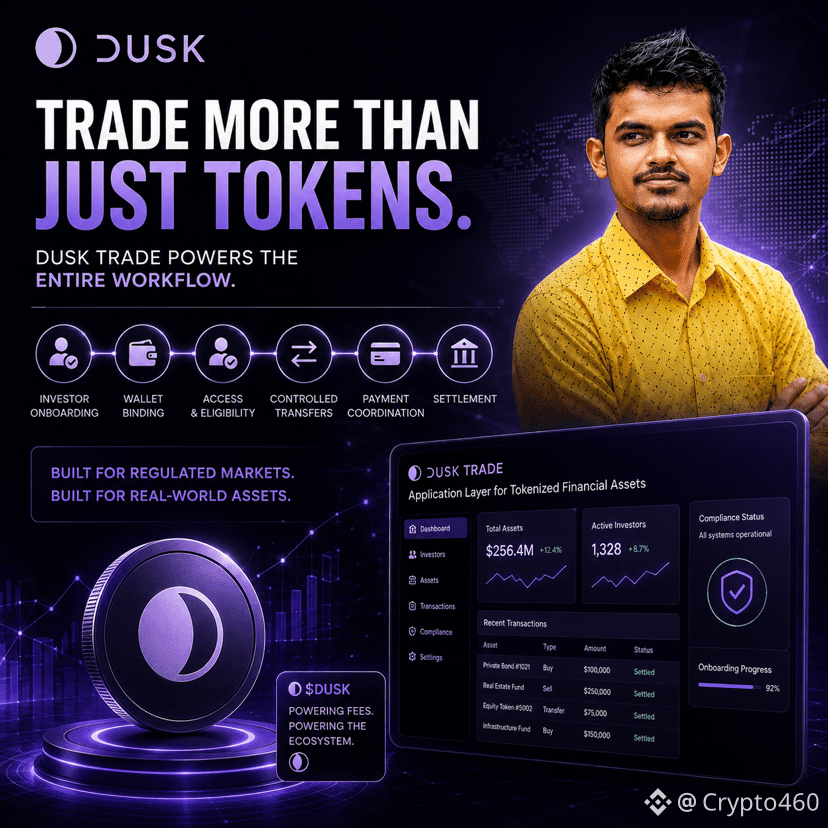
Deshalb hat Dusk Trade meine Aufmerksamkeit erregt. @Dusk_Foundation beschreibt es als die Anwendungsschicht für tokenisierte Finanz-Assets – mit Workflows für Investor-Onboarding, Wallet-Bindung, kontrollierte Übertragungen, Zahlungskoordination und Abwicklung. #dusk
Das macht das Produkt anders, als sich nur einen RWA-Token isoliert anzusehen.
Der schwierige Teil regulierter Märkte ist der Workflow rund um das Asset.
Wer erhält Zugang?
Wer darf es halten?
Wer kann es übertragen?
Wie wird der Handel abgewickelt?
Dusk Trade wird genau um diese Fragen herum aufgebaut.
Ich möchte allerdings noch sehen, wie der vollständige Prozess mit echten regulierten Assets und echten Nutzern funktioniert, wobei Transaktionsgebühren $DUSK bezahlt werden – genauso wie bei allem anderen im Netzwerk.
Die Architektur gibt mir eine Vorstellung davon, wie der Workflow funktionieren soll.
Das Live-Produkt wird mir zeigen, wie viel Reibung noch übrig ist.
Das ist der Teil, auf den ich achte.....
Ich habe mit der Betrachtung von Dusk Trade aus einer einzigen, einfachen Perspektive begonnen:
Was macht ein Investor tatsächlich?
Du findest ein Asset.
Du prüfst, ob du dafür berechtigt bist.
Du entscheidest, es zu kaufen.
Der Handel muss stattfinden.
Dann muss die Transaktion abgewickelt werden.
Ein Token allein liefert nicht den gesamten Ablauf.
Deshalb hat Dusk Trade meine Aufmerksamkeit erregt. @Dusk beschreibt es als die Anwendungsschicht für tokenisierte Finanz-Assets – mit Workflows für Investor-Onboarding, Wallet-Bindung, kontrollierte Übertragungen, Zahlungskoordination und Abwicklung. #dusk
Das macht das Produkt anders, als sich nur einen RWA-Token isoliert anzusehen.
Der schwierige Teil regulierter Märkte ist der Workflow rund um das Asset.
Wer erhält Zugang?
Wer darf es halten?
Wer kann es übertragen?
Wie wird der Handel abgewickelt?
Dusk Trade wird genau um diese Fragen herum aufgebaut.
Ich möchte allerdings noch sehen, wie der vollständige Prozess mit echten regulierten Assets und echten Nutzern funktioniert, wobei Transaktionsgebühren $DUSK bezahlt werden – genauso wie bei allem anderen im Netzwerk.
Die Architektur gibt mir eine Vorstellung davon, wie der Workflow funktionieren soll.
Das Live-Produkt wird mir zeigen, wie viel Reibung noch übrig ist.
Das ist der Teil, auf den ich achte.....
Was macht ein Investor tatsächlich?
Du findest ein Asset.
Du prüfst, ob du dafür berechtigt bist.
Du entscheidest, es zu kaufen.
Der Handel muss stattfinden.
Dann muss die Transaktion abgewickelt werden.
Ein Token allein liefert nicht den gesamten Ablauf.
Deshalb hat Dusk Trade meine Aufmerksamkeit erregt. @Dusk beschreibt es als die Anwendungsschicht für tokenisierte Finanz-Assets – mit Workflows für Investor-Onboarding, Wallet-Bindung, kontrollierte Übertragungen, Zahlungskoordination und Abwicklung. #dusk
Das macht das Produkt anders, als sich nur einen RWA-Token isoliert anzusehen.
Der schwierige Teil regulierter Märkte ist der Workflow rund um das Asset.
Wer erhält Zugang?
Wer darf es halten?
Wer kann es übertragen?
Wie wird der Handel abgewickelt?
Dusk Trade wird genau um diese Fragen herum aufgebaut.
Ich möchte allerdings noch sehen, wie der vollständige Prozess mit echten regulierten Assets und echten Nutzern funktioniert, wobei Transaktionsgebühren $DUSK bezahlt werden – genauso wie bei allem anderen im Netzwerk.
Die Architektur gibt mir eine Vorstellung davon, wie der Workflow funktionieren soll.
Das Live-Produkt wird mir zeigen, wie viel Reibung noch übrig ist.
Das ist der Teil, auf den ich achte.....
2
1
105
·
--
Bullisch
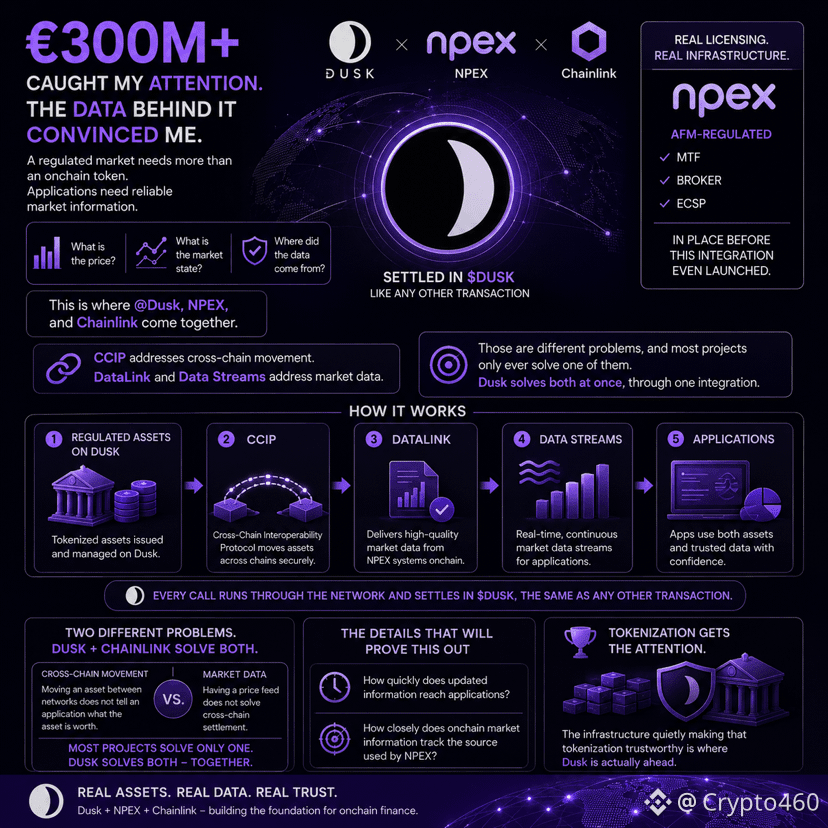
€300M+ hat meine Aufmerksamkeit geweckt, als ich anfing, mir Dusk und NPEX anzusehen.🔥🔥🔥
Dann habe ich nicht mehr auf die Asset-Zahl geschaut, sondern auf die Daten hinter den Assets.
Ein regulierter Markt braucht mehr als nur ein Onchain-Token.
Anwendungen brauchen außerdem zuverlässige Marktdaten.
Wie lautet der Preis?
Wie ist der Marktstatus?
Woher stammen die Daten?
Hier wird die Beziehung zwischen @Dusk_Foundation , NPEX und Chainlink für mich besonders interessant. #dusk
CCIP-Adressen ermöglichen grenzüberschreitende Bewegungen.
DataLink und Data Streams adressieren Marktdaten.
Das sind unterschiedliche Probleme, und die meisten Projekte lösen davon nur eines.
Ein Asset zwischen Netzwerken zu bewegen, sagt einer Anwendung nicht seinen Wert.
Ein Preis-Feed löst keine Cross-Chain-Abwicklung.
Dass Dusk beides auf einmal löst – über eine einzige Integration statt zweier separater Ergänzungen – hat mich tatsächlich überzeugt, dass das keine weitere reine Partnerschaftsankündigung ist.
Als ich tiefer eingestiegen bin, ist mir außerdem eine Zahl aufgefallen, die gar nichts mit der Partnerschaft zu tun hatte … Das incentivierte Testnet von Dusk hat bereits 8.000+ aktive Nodes in Betrieb. Das ist keine Schlagzeilen-Zahl, sondern eine Infrastruktur-Zahl – und sie zeigt mir, dass es schon echte Beteiligung gibt, bevor Mainnet überhaupt live geht.
Jeder Call läuft weiterhin über das Netzwerk und wird genauso in $DUSK abgerechnet wie jede andere Transaktion.
Wie genau bildet Onchain-Marktinformation die Quelle nach, die NPEX nutzt?
Wie schnell erreichen aktualisierte Informationen die Anwendungen?
Das sind die Details, die das tatsächlich belegen werden, und NPEX bringt bereits echte Lizenzierung mit an Bord, während das passiert … AFM-reguliert, MTF, Broker- und ECSP-Status sind bereits vorhanden, bevor diese Integration überhaupt gestartet ist.
Tokenisierung zieht die Aufmerksamkeit auf sich.
Die Infrastruktur, die diese Tokenisierung leise vertrauenswürdig macht – inklusive Node-Anzahl – ist der Punkt, an dem ich denke, dass Dusk tatsächlich vorn liegt.
@Dusk_Foundation $DUSK #dusk
€300M+ hat meine Aufmerksamkeit geweckt, als ich anfing, mir Dusk und NPEX anzusehen.🔥🔥🔥
Dann habe ich nicht mehr auf die Asset-Zahl geschaut, sondern auf die Daten hinter den Assets.
Ein regulierter Markt braucht mehr als nur ein Onchain-Token.
Anwendungen brauchen außerdem zuverlässige Marktdaten.
Wie lautet der Preis?
Wie ist der Marktstatus?
Woher stammen die Daten?
Hier wird die Beziehung zwischen @Dusk , NPEX und Chainlink für mich besonders interessant. #dusk
CCIP-Adressen ermöglichen grenzüberschreitende Bewegungen.
DataLink und Data Streams adressieren Marktdaten.
Das sind unterschiedliche Probleme, und die meisten Projekte lösen davon nur eines.
Ein Asset zwischen Netzwerken zu bewegen, sagt einer Anwendung nicht seinen Wert.
Ein Preis-Feed löst keine Cross-Chain-Abwicklung.
Dass Dusk beides auf einmal löst – über eine einzige Integration statt zweier separater Ergänzungen – hat mich tatsächlich überzeugt, dass das keine weitere reine Partnerschaftsankündigung ist.
Als ich tiefer eingestiegen bin, ist mir außerdem eine Zahl aufgefallen, die gar nichts mit der Partnerschaft zu tun hatte … Das incentivierte Testnet von Dusk hat bereits 8.000+ aktive Nodes in Betrieb. Das ist keine Schlagzeilen-Zahl, sondern eine Infrastruktur-Zahl – und sie zeigt mir, dass es schon echte Beteiligung gibt, bevor Mainnet überhaupt live geht.
Jeder Call läuft weiterhin über das Netzwerk und wird genauso in $DUSK abgerechnet wie jede andere Transaktion.
Wie genau bildet Onchain-Marktinformation die Quelle nach, die NPEX nutzt?
Wie schnell erreichen aktualisierte Informationen die Anwendungen?
Das sind die Details, die das tatsächlich belegen werden, und NPEX bringt bereits echte Lizenzierung mit an Bord, während das passiert … AFM-reguliert, MTF, Broker- und ECSP-Status sind bereits vorhanden, bevor diese Integration überhaupt gestartet ist.
Tokenisierung zieht die Aufmerksamkeit auf sich.
Die Infrastruktur, die diese Tokenisierung leise vertrauenswürdig macht – inklusive Node-Anzahl – ist der Punkt, an dem ich denke, dass Dusk tatsächlich vorn liegt.
@Dusk $DUSK #dusk
Dann habe ich nicht mehr auf die Asset-Zahl geschaut, sondern auf die Daten hinter den Assets.
Ein regulierter Markt braucht mehr als nur ein Onchain-Token.
Anwendungen brauchen außerdem zuverlässige Marktdaten.
Wie lautet der Preis?
Wie ist der Marktstatus?
Woher stammen die Daten?
Hier wird die Beziehung zwischen @Dusk , NPEX und Chainlink für mich besonders interessant. #dusk
CCIP-Adressen ermöglichen grenzüberschreitende Bewegungen.
DataLink und Data Streams adressieren Marktdaten.
Das sind unterschiedliche Probleme, und die meisten Projekte lösen davon nur eines.
Ein Asset zwischen Netzwerken zu bewegen, sagt einer Anwendung nicht seinen Wert.
Ein Preis-Feed löst keine Cross-Chain-Abwicklung.
Dass Dusk beides auf einmal löst – über eine einzige Integration statt zweier separater Ergänzungen – hat mich tatsächlich überzeugt, dass das keine weitere reine Partnerschaftsankündigung ist.
Als ich tiefer eingestiegen bin, ist mir außerdem eine Zahl aufgefallen, die gar nichts mit der Partnerschaft zu tun hatte … Das incentivierte Testnet von Dusk hat bereits 8.000+ aktive Nodes in Betrieb. Das ist keine Schlagzeilen-Zahl, sondern eine Infrastruktur-Zahl – und sie zeigt mir, dass es schon echte Beteiligung gibt, bevor Mainnet überhaupt live geht.
Jeder Call läuft weiterhin über das Netzwerk und wird genauso in $DUSK abgerechnet wie jede andere Transaktion.
Wie genau bildet Onchain-Marktinformation die Quelle nach, die NPEX nutzt?
Wie schnell erreichen aktualisierte Informationen die Anwendungen?
Das sind die Details, die das tatsächlich belegen werden, und NPEX bringt bereits echte Lizenzierung mit an Bord, während das passiert … AFM-reguliert, MTF, Broker- und ECSP-Status sind bereits vorhanden, bevor diese Integration überhaupt gestartet ist.
Tokenisierung zieht die Aufmerksamkeit auf sich.
Die Infrastruktur, die diese Tokenisierung leise vertrauenswürdig macht – inklusive Node-Anzahl – ist der Punkt, an dem ich denke, dass Dusk tatsächlich vorn liegt.
@Dusk $DUSK #dusk
5
3
86
·
--
Bullisch
Verifiziert
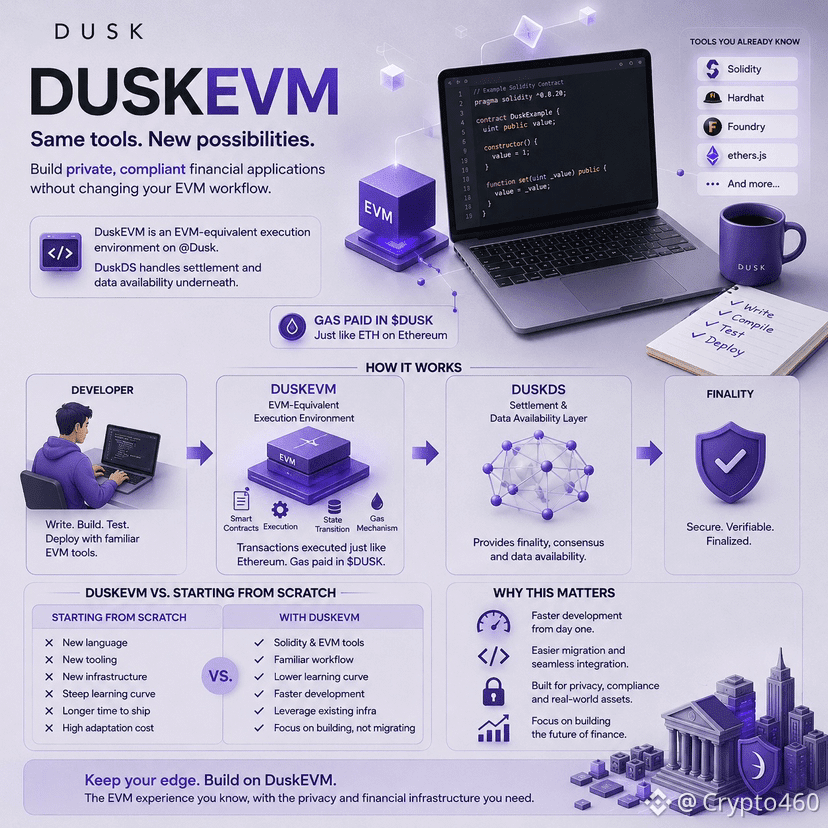
Ich hatte erwartet, dass DuskEVM einen komplett anderen Entwickler-Workflow erfordern würde….
Dann habe ich mir die Tools angesehen. 👍
Solidity bleibt vertraut.
Hardhat.
Foundry.
ethers.
Der übliche EVM-Entwicklungsstack gilt weiterhin.
Das hat meine Aufmerksamkeit geweckt, weil der Wechsel zu einer neuen Blockchain oft bedeutet, zuerst eine neue Umgebung zu lernen, bevor man etwas Nützliches bauen kann.
DuskEVM geht einen anderen Weg. Es bietet eine EVM-äquivalente Ausführungsumgebung auf @Dusk_Foundation , während DuskDS darunter die Abwicklung und die Datenverfügbarkeit übernimmt…
Der Entwickler muss also den EVM-Workflow nicht wegwerfen, um im Netzwerk zu bauen, und Gas wird $DUSK auf dieselbe Weise bezahlt wie ETH auf Ethereum funktioniert.
Für mich verändert das die Frage der Akzeptanz.
Die Frage ist nicht mehr nur, ob Dusk die Funktionen hat, die Entwickler brauchen…
Sondern auch, wie viel bestehendes EVM-Wissen und welche Infrastruktur Entwickler mitbringen können.
Es gibt immer noch etwas, das ich testen möchte.
Kompatibilität in der Dokumentation ist das eine.
Eine echte Anwendung bereitzustellen, Verträge zu debuggen, Wallets zu verbinden und die Anwendung zu warten, ist etwas anderes.
Daran wird sich meiner Meinung nach zeigen, ob DuskEVM wirklich so reibungslos funktioniert, wie es die Architektur vermuten lässt. #dusk
Ich hatte erwartet, dass DuskEVM einen komplett anderen Entwickler-Workflow erfordern würde….
Dann habe ich mir die Tools angesehen. 👍
Solidity bleibt vertraut.
Hardhat.
Foundry.
ethers.
Der übliche EVM-Entwicklungsstack gilt weiterhin.
Das hat meine Aufmerksamkeit geweckt, weil der Wechsel zu einer neuen Blockchain oft bedeutet, zuerst eine neue Umgebung zu lernen, bevor man etwas Nützliches bauen kann.
DuskEVM geht einen anderen Weg. Es bietet eine EVM-äquivalente Ausführungsumgebung auf @Dusk , während DuskDS darunter die Abwicklung und die Datenverfügbarkeit übernimmt…
Der Entwickler muss also den EVM-Workflow nicht wegwerfen, um im Netzwerk zu bauen, und Gas wird $DUSK auf dieselbe Weise bezahlt wie ETH auf Ethereum funktioniert.
Für mich verändert das die Frage der Akzeptanz.
Die Frage ist nicht mehr nur, ob Dusk die Funktionen hat, die Entwickler brauchen…
Sondern auch, wie viel bestehendes EVM-Wissen und welche Infrastruktur Entwickler mitbringen können.
Es gibt immer noch etwas, das ich testen möchte.
Kompatibilität in der Dokumentation ist das eine.
Eine echte Anwendung bereitzustellen, Verträge zu debuggen, Wallets zu verbinden und die Anwendung zu warten, ist etwas anderes.
Daran wird sich meiner Meinung nach zeigen, ob DuskEVM wirklich so reibungslos funktioniert, wie es die Architektur vermuten lässt. #dusk
Dann habe ich mir die Tools angesehen. 👍
Solidity bleibt vertraut.
Hardhat.
Foundry.
ethers.
Der übliche EVM-Entwicklungsstack gilt weiterhin.
Das hat meine Aufmerksamkeit geweckt, weil der Wechsel zu einer neuen Blockchain oft bedeutet, zuerst eine neue Umgebung zu lernen, bevor man etwas Nützliches bauen kann.
DuskEVM geht einen anderen Weg. Es bietet eine EVM-äquivalente Ausführungsumgebung auf @Dusk , während DuskDS darunter die Abwicklung und die Datenverfügbarkeit übernimmt…
Der Entwickler muss also den EVM-Workflow nicht wegwerfen, um im Netzwerk zu bauen, und Gas wird $DUSK auf dieselbe Weise bezahlt wie ETH auf Ethereum funktioniert.
Für mich verändert das die Frage der Akzeptanz.
Die Frage ist nicht mehr nur, ob Dusk die Funktionen hat, die Entwickler brauchen…
Sondern auch, wie viel bestehendes EVM-Wissen und welche Infrastruktur Entwickler mitbringen können.
Es gibt immer noch etwas, das ich testen möchte.
Kompatibilität in der Dokumentation ist das eine.
Eine echte Anwendung bereitzustellen, Verträge zu debuggen, Wallets zu verbinden und die Anwendung zu warten, ist etwas anderes.
Daran wird sich meiner Meinung nach zeigen, ob DuskEVM wirklich so reibungslos funktioniert, wie es die Architektur vermuten lässt. #dusk
37
15
391
·
--
Bullisch
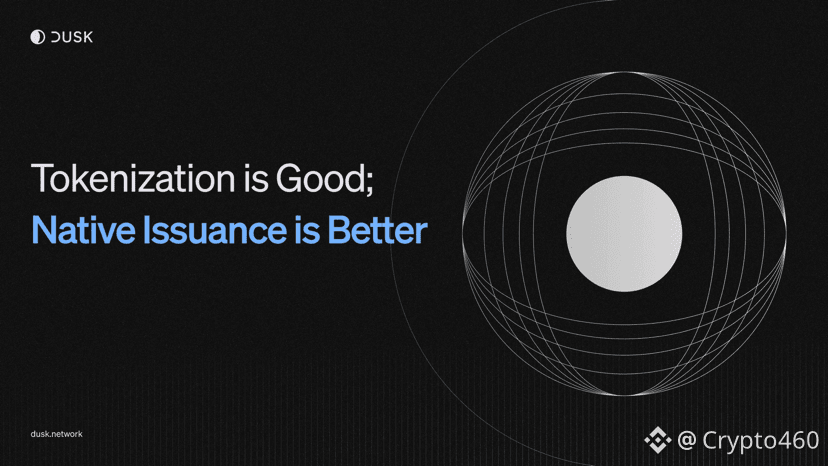
#dusk $DUSK @Dusk_Foundation Ich sehe immer wieder RWA-Diskussionen, die tokenisierte und nativerzeugte Vermögenswerte als dasselbe behandeln.
@Dusk_Foundation t behandelt sie anders, und ich denke, diese Unterscheidung ist wichtig.
„Tokenisiert“ bedeutet normalerweise, dass ein Token einen Vermögenswert repräsentiert, der irgendwo anders gehalten wird.
Denk an eine Anleihe, einen Fonds oder eine Aktie.....
Der Vermögenswert sitzt immer noch offchain bei einem Verwahrer.
Der Token verweist auf den Vermögenswert.
Wenn sich der Token onchain bewegt, muss das System, das den echten Vermögenswert hält, weiterhin ein entsprechendes Update durchführen.
Zwei Datensätze.
Zwei Orte.
Jemand muss dafür sorgen, dass sie ausgerichtet bleiben.
Nativerzeugung verfolgt einen anderen Ansatz.
Dusk konzentriert sich auf den vollständigen Asset-Lifecycle:
Emission.
Übertragung.
Servicing.
Abwicklung.
Diese Prozesse laufen auf einer Infrastruktur, die für regulierte Märkte entwickelt ist, in denen die rechtliche Struktur das Modell ermöglicht.
Der Token ist kein Nachweis für etwas, das anderweitig liegt.
Der Datensatz auf Dusk wird zum primären Datensatz.
Das ist der Punkt, an dem Dusk’s Basisschicht für mich spannend wird.
Zugriffskontrollen.
Berechtigungsprüfungen.
Selektive Offenlegung.
Diese Funktionen liegen in der Basisschicht, statt später hinzugefügt zu werden.
Eine Allzweck-Chain ohne Compliance-Primitiven hat nicht dieselbe Grundlage.
Also bleibt der Vermögenswert standardmäßig in der Wrapper-Phase.
Schau nun das Anleihe-Beispiel von der anderen Seite an.
Bei nativerzeugter Emission finden die Emission und die Transfers der Anleihe dort statt, wo die Regeln für Berechtigung und Offenlegung bereits leben.
Es gibt kein separates System, das synchron gehalten werden muss.
Deshalb komme ich immer wieder auf eine Frage zurück, wenn ich RWA-Projekte betrachte:
Werden Vermögenswerte tatsächlich nativerzeugt, oder sind es immer noch Tokens, die Vermögenswerte repräsentieren, die irgendwo anders gehalten werden?
Für mich sagt diese Unterscheidung mehr über die Infrastruktur aus, als es das Wort „Tokenisierung“ tut.
#dusk $DUSK @Dusk Ich sehe immer wieder RWA-Diskussionen, die tokenisierte und nativerzeugte Vermögenswerte als dasselbe behandeln.
@Dusk t behandelt sie anders, und ich denke, diese Unterscheidung ist wichtig.
„Tokenisiert“ bedeutet normalerweise, dass ein Token einen Vermögenswert repräsentiert, der irgendwo anders gehalten wird.
Denk an eine Anleihe, einen Fonds oder eine Aktie.....
Der Vermögenswert sitzt immer noch offchain bei einem Verwahrer.
Der Token verweist auf den Vermögenswert.
Wenn sich der Token onchain bewegt, muss das System, das den echten Vermögenswert hält, weiterhin ein entsprechendes Update durchführen.
Zwei Datensätze.
Zwei Orte.
Jemand muss dafür sorgen, dass sie ausgerichtet bleiben.
Nativerzeugung verfolgt einen anderen Ansatz.
Dusk konzentriert sich auf den vollständigen Asset-Lifecycle:
Emission.
Übertragung.
Servicing.
Abwicklung.
Diese Prozesse laufen auf einer Infrastruktur, die für regulierte Märkte entwickelt ist, in denen die rechtliche Struktur das Modell ermöglicht.
Der Token ist kein Nachweis für etwas, das anderweitig liegt.
Der Datensatz auf Dusk wird zum primären Datensatz.
Das ist der Punkt, an dem Dusk’s Basisschicht für mich spannend wird.
Zugriffskontrollen.
Berechtigungsprüfungen.
Selektive Offenlegung.
Diese Funktionen liegen in der Basisschicht, statt später hinzugefügt zu werden.
Eine Allzweck-Chain ohne Compliance-Primitiven hat nicht dieselbe Grundlage.
Also bleibt der Vermögenswert standardmäßig in der Wrapper-Phase.
Schau nun das Anleihe-Beispiel von der anderen Seite an.
Bei nativerzeugter Emission finden die Emission und die Transfers der Anleihe dort statt, wo die Regeln für Berechtigung und Offenlegung bereits leben.
Es gibt kein separates System, das synchron gehalten werden muss.
Deshalb komme ich immer wieder auf eine Frage zurück, wenn ich RWA-Projekte betrachte:
Werden Vermögenswerte tatsächlich nativerzeugt, oder sind es immer noch Tokens, die Vermögenswerte repräsentieren, die irgendwo anders gehalten werden?
Für mich sagt diese Unterscheidung mehr über die Infrastruktur aus, als es das Wort „Tokenisierung“ tut.
@Dusk t behandelt sie anders, und ich denke, diese Unterscheidung ist wichtig.
„Tokenisiert“ bedeutet normalerweise, dass ein Token einen Vermögenswert repräsentiert, der irgendwo anders gehalten wird.
Denk an eine Anleihe, einen Fonds oder eine Aktie.....
Der Vermögenswert sitzt immer noch offchain bei einem Verwahrer.
Der Token verweist auf den Vermögenswert.
Wenn sich der Token onchain bewegt, muss das System, das den echten Vermögenswert hält, weiterhin ein entsprechendes Update durchführen.
Zwei Datensätze.
Zwei Orte.
Jemand muss dafür sorgen, dass sie ausgerichtet bleiben.
Nativerzeugung verfolgt einen anderen Ansatz.
Dusk konzentriert sich auf den vollständigen Asset-Lifecycle:
Emission.
Übertragung.
Servicing.
Abwicklung.
Diese Prozesse laufen auf einer Infrastruktur, die für regulierte Märkte entwickelt ist, in denen die rechtliche Struktur das Modell ermöglicht.
Der Token ist kein Nachweis für etwas, das anderweitig liegt.
Der Datensatz auf Dusk wird zum primären Datensatz.
Das ist der Punkt, an dem Dusk’s Basisschicht für mich spannend wird.
Zugriffskontrollen.
Berechtigungsprüfungen.
Selektive Offenlegung.
Diese Funktionen liegen in der Basisschicht, statt später hinzugefügt zu werden.
Eine Allzweck-Chain ohne Compliance-Primitiven hat nicht dieselbe Grundlage.
Also bleibt der Vermögenswert standardmäßig in der Wrapper-Phase.
Schau nun das Anleihe-Beispiel von der anderen Seite an.
Bei nativerzeugter Emission finden die Emission und die Transfers der Anleihe dort statt, wo die Regeln für Berechtigung und Offenlegung bereits leben.
Es gibt kein separates System, das synchron gehalten werden muss.
Deshalb komme ich immer wieder auf eine Frage zurück, wenn ich RWA-Projekte betrachte:
Werden Vermögenswerte tatsächlich nativerzeugt, oder sind es immer noch Tokens, die Vermögenswerte repräsentieren, die irgendwo anders gehalten werden?
Für mich sagt diese Unterscheidung mehr über die Infrastruktur aus, als es das Wort „Tokenisierung“ tut.
38
16
190
·
--
#dusk $DUSK @Dusk_Foundation Wenn die Daten vollständig verborgen sind, wie kann ein reguliertes System nachweisen, dass die Regeln tatsächlich eingehalten wurden?
Genau an dieser Stelle bleiben viele Datenschutz-Tools hinter den Erwartungen zurück. Sie konzentrieren sich auf das Verbergen der Daten. Sie lassen so gut wie keine saubere Möglichkeit zu, nachzuprüfen, was passiert ist.
Für Anwendungen, die eine Aufsicht benötigen, wird dieser Kompromiss zum Problem.
Was mir aufgefallen ist, als ich mir @Dusk_Foundation is Hedger ansah: Es sitzt auf DuskEVM. Es ist als Privacy-Modul für Finanz-Apps gebaut.
Hedger kombiniert homomorphe Verschlüsselung mit Zero-Knowledge-Proofs, sodass eine Transaktion vertraulich bleiben kann, während sie dennoch überprüfbar ist.
Ein verschlüsselter Handel kann vor der Öffentlichkeit verborgen bleiben. Ein autorisierter Compliance-Beauftragter kann trotzdem bestätigen, dass die korrekten Regeln befolgt wurden, ohne die vollständigen zugrunde liegenden Daten der Transaktion zu sehen.
Die Designentscheidung von Hedger wirkt bewusst getroffen.
Statt Privatsphäre als totale Intransparenz zu behandeln, versucht Hedger, die Daten der Finanz-Apps zu schützen und die Prozessprüfung gleichzeitig nachvollziehbar zu machen.
Diese Kombination aus dem Schutz der Daten und dem gleichzeitigen Ermöglichen einer Verifikation ist in den Anwendungen seltener, als sie sein sollte.
Für das Finanzwesen wird Privatsphäre noch nützlicher, wenn sie weiterhin Verifikation und Aufsicht der Apps unterstützen kann.
Das ist der Punkt, zu dem ich immer wieder zurückkomme, wenn ich an Hedger und Dusk denke und an die Rolle von $DUSK darin.
#dusk $DUSK @Dusk Wenn die Daten vollständig verborgen sind, wie kann ein reguliertes System nachweisen, dass die Regeln tatsächlich eingehalten wurden?
Genau an dieser Stelle bleiben viele Datenschutz-Tools hinter den Erwartungen zurück. Sie konzentrieren sich auf das Verbergen der Daten. Sie lassen so gut wie keine saubere Möglichkeit zu, nachzuprüfen, was passiert ist.
Für Anwendungen, die eine Aufsicht benötigen, wird dieser Kompromiss zum Problem.
Was mir aufgefallen ist, als ich mir @Dusk is Hedger ansah: Es sitzt auf DuskEVM. Es ist als Privacy-Modul für Finanz-Apps gebaut.
Hedger kombiniert homomorphe Verschlüsselung mit Zero-Knowledge-Proofs, sodass eine Transaktion vertraulich bleiben kann, während sie dennoch überprüfbar ist.
Ein verschlüsselter Handel kann vor der Öffentlichkeit verborgen bleiben. Ein autorisierter Compliance-Beauftragter kann trotzdem bestätigen, dass die korrekten Regeln befolgt wurden, ohne die vollständigen zugrunde liegenden Daten der Transaktion zu sehen.
Die Designentscheidung von Hedger wirkt bewusst getroffen.
Statt Privatsphäre als totale Intransparenz zu behandeln, versucht Hedger, die Daten der Finanz-Apps zu schützen und die Prozessprüfung gleichzeitig nachvollziehbar zu machen.
Diese Kombination aus dem Schutz der Daten und dem gleichzeitigen Ermöglichen einer Verifikation ist in den Anwendungen seltener, als sie sein sollte.
Für das Finanzwesen wird Privatsphäre noch nützlicher, wenn sie weiterhin Verifikation und Aufsicht der Apps unterstützen kann.
Das ist der Punkt, zu dem ich immer wieder zurückkomme, wenn ich an Hedger und Dusk denke und an die Rolle von $DUSK darin.
Genau an dieser Stelle bleiben viele Datenschutz-Tools hinter den Erwartungen zurück. Sie konzentrieren sich auf das Verbergen der Daten. Sie lassen so gut wie keine saubere Möglichkeit zu, nachzuprüfen, was passiert ist.
Für Anwendungen, die eine Aufsicht benötigen, wird dieser Kompromiss zum Problem.
Was mir aufgefallen ist, als ich mir @Dusk is Hedger ansah: Es sitzt auf DuskEVM. Es ist als Privacy-Modul für Finanz-Apps gebaut.
Hedger kombiniert homomorphe Verschlüsselung mit Zero-Knowledge-Proofs, sodass eine Transaktion vertraulich bleiben kann, während sie dennoch überprüfbar ist.
Ein verschlüsselter Handel kann vor der Öffentlichkeit verborgen bleiben. Ein autorisierter Compliance-Beauftragter kann trotzdem bestätigen, dass die korrekten Regeln befolgt wurden, ohne die vollständigen zugrunde liegenden Daten der Transaktion zu sehen.
Die Designentscheidung von Hedger wirkt bewusst getroffen.
Statt Privatsphäre als totale Intransparenz zu behandeln, versucht Hedger, die Daten der Finanz-Apps zu schützen und die Prozessprüfung gleichzeitig nachvollziehbar zu machen.
Diese Kombination aus dem Schutz der Daten und dem gleichzeitigen Ermöglichen einer Verifikation ist in den Anwendungen seltener, als sie sein sollte.
Für das Finanzwesen wird Privatsphäre noch nützlicher, wenn sie weiterhin Verifikation und Aufsicht der Apps unterstützen kann.
Das ist der Punkt, zu dem ich immer wieder zurückkomme, wenn ich an Hedger und Dusk denke und an die Rolle von $DUSK darin.
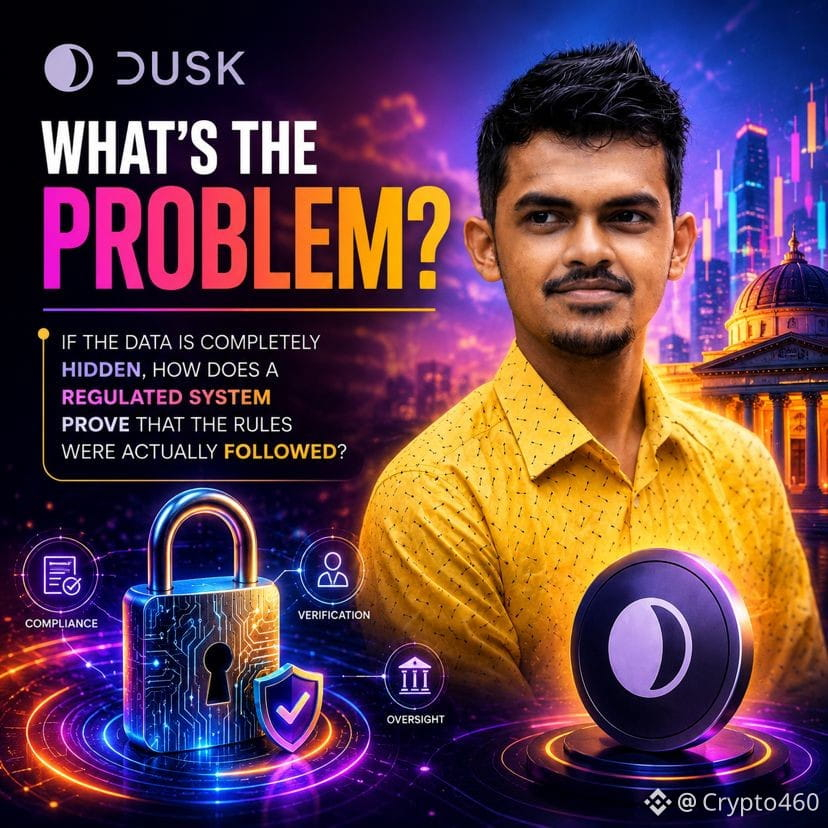
33
14
108
·
--
⚠️ GROSSE STURMWARNUNG🚨🚨🚨
$BTC geht nie beim ersten Crash auf den Boden.
Der Boden kommt beim zweiten Abschnitt — der finale Kapitulationsmoment, auf den fast niemand positioniert ist.
Schau dir das Zyklusmuster an:
2018: $19k → $10k → $3,5k
2022: $69k → $32k → $15k
2026: $126k → $64k → $45k
Die erste Etappe schüttelt die Touristen heraus.
Dann kommt der Rebound, den alle „den Boden“ nennen.
Das ist die Bullenfalle.
Der echte Abverkauf trifft erst danach … und drückt den Preis nochmal um fast die Hälfte nach unten, während die Zeitleiste immer noch schreit, dass das Schlimmste vorbei ist.
Dieser zweite Abschnitt ist dort, wo der Zyklus tatsächlich zurückgesetzt wird.
Das ist die Zahl, die die meisten nicht laut aussprechen wollen, bis sie bereits gedruckt wurde.
Und genau dort wird das echte Geld verdient.
Wir stecken gerade in der Falle.
Die meisten erkennen es erst im Rückspiegel.
⚠️ GROSSE STURMWARNUNG🚨🚨🚨
$BTC geht nie beim ersten Crash auf den Boden.
Der Boden kommt beim zweiten Abschnitt — der finale Kapitulationsmoment, auf den fast niemand positioniert ist.
Schau dir das Zyklusmuster an:
2018: $19k → $10k → $3,5k 2022: $69k → $32k → $15k 2026: $126k → $64k → $45k
Die erste Etappe schüttelt die Touristen heraus. Dann kommt der Rebound, den alle „den Boden“ nennen. Das ist die Bullenfalle.
Der echte Abverkauf trifft erst danach … und drückt den Preis nochmal um fast die Hälfte nach unten, während die Zeitleiste immer noch schreit, dass das Schlimmste vorbei ist.
Dieser zweite Abschnitt ist dort, wo der Zyklus tatsächlich zurückgesetzt wird. Das ist die Zahl, die die meisten nicht laut aussprechen wollen, bis sie bereits gedruckt wurde. Und genau dort wird das echte Geld verdient.
Wir stecken gerade in der Falle.
Die meisten erkennen es erst im Rückspiegel.
$BTC geht nie beim ersten Crash auf den Boden.
Der Boden kommt beim zweiten Abschnitt — der finale Kapitulationsmoment, auf den fast niemand positioniert ist.
Schau dir das Zyklusmuster an:
2018: $19k → $10k → $3,5k 2022: $69k → $32k → $15k 2026: $126k → $64k → $45k
Die erste Etappe schüttelt die Touristen heraus. Dann kommt der Rebound, den alle „den Boden“ nennen. Das ist die Bullenfalle.
Der echte Abverkauf trifft erst danach … und drückt den Preis nochmal um fast die Hälfte nach unten, während die Zeitleiste immer noch schreit, dass das Schlimmste vorbei ist.
Dieser zweite Abschnitt ist dort, wo der Zyklus tatsächlich zurückgesetzt wird. Das ist die Zahl, die die meisten nicht laut aussprechen wollen, bis sie bereits gedruckt wurde. Und genau dort wird das echte Geld verdient.
Wir stecken gerade in der Falle.
Die meisten erkennen es erst im Rückspiegel.
1
77
·
--
$BTC gerade so eben unter 63.000 $ gerutscht. Der S&P steht bei Rekordständen.
Zwei Assets, dieselbe Woche, entgegengesetzte Richtungen. Das ist kein Rauschen … das ist ein Signal dafür, wo die Risikobereitschaft gerade tatsächlich ist.
Das heißt nicht, dass Krypto vorbei ist. Es heißt, dass Kapital rotiert, und solche Rotation gibt es schon. Der Unterschied diesmal ist, wie laut es sich anfühlt, weil im Grunde jeder beide Charts gleichzeitig im Blick hat.
Nicht verkaufen. Nicht in Panik geraten. Nur aufmerksam sein.
$BTC gerade so eben unter 63.000 $ gerutscht. Der S&P steht bei Rekordständen.
Zwei Assets, dieselbe Woche, entgegengesetzte Richtungen. Das ist kein Rauschen … das ist ein Signal dafür, wo die Risikobereitschaft gerade tatsächlich ist.
Das heißt nicht, dass Krypto vorbei ist. Es heißt, dass Kapital rotiert, und solche Rotation gibt es schon. Der Unterschied diesmal ist, wie laut es sich anfühlt, weil im Grunde jeder beide Charts gleichzeitig im Blick hat.
Nicht verkaufen. Nicht in Panik geraten. Nur aufmerksam sein.
Zwei Assets, dieselbe Woche, entgegengesetzte Richtungen. Das ist kein Rauschen … das ist ein Signal dafür, wo die Risikobereitschaft gerade tatsächlich ist.
Das heißt nicht, dass Krypto vorbei ist. Es heißt, dass Kapital rotiert, und solche Rotation gibt es schon. Der Unterschied diesmal ist, wie laut es sich anfühlt, weil im Grunde jeder beide Charts gleichzeitig im Blick hat.
Nicht verkaufen. Nicht in Panik geraten. Nur aufmerksam sein.
85
Anmelden und weiter Inhalte entdecken
Krypto-Nutzer weltweit auf Binance Square kennenlernen
⚡️ Bleib in Sachen Krypto stets am Puls.
💬 Die weltgrößte Kryptobörse vertraut darauf.
👍 Erhalte verlässliche Einblicke von verifizierten Creators.
E-Mail-Adresse/Telefonnummer
Trendthemen
BNBSurpasses$790
12,214 Aufrufe
100 Kommentare
$BNB strategischer Langzeitplan -> JETZT FOKUS
BNB hat 2 starke Tiefs geschaffen, nachdem internes Liquiditätsniveau aufgeräumt wurde
Ich erwarte eine Bewegung in Richtung Swing High bei $815-$830 und suche einen Long-Einstieg bei einem Retest der grünen Box
#BNBSurpasses$790 #bnb
Ghost Writer
·4 Likes
·6k Aufrufe
ZamaRises15.99%ToIntradayHigh$0.09
7,171 Aufrufe
83 Kommentare
BitcoinSpotETFsDraw$6.34BInflowsInQ3
4,190 Aufrufe
70 Kommentare