

Nightfury13
5.5k Beiträge

Nightfury13
Melden
Nutzer blockieren
The independent girl
Trade eröffnen
Regelmäßiger Trader
1.2 Jahre
692 Following
22.7K+ Follower
23.0K+ Like gegeben
Beiträge
Portfolio
Alle
Zitierungen
Live
·
--
stärkste 💪🏻
stärkste 💪🏻


will win 张
·
--
Krypto-圈《游山恋》
Wer kann mich aus dem Bärenberg rausbringen? 😂$ETH ,$DOGE ,$牛来
Wer kann mich aus dem Bärenberg rausbringen? 😂$ETH ,$DOGE ,$牛来
28
·
--
beitreten
beitreten
will win 张
·
--
[Wiederholung] 🎙️ Die Lage erholt sich, und die MEME sind wieder da
02 h 26 m 11 s · 426 Zuhörer
23
·
--
💥
💥
will win 张
·
--
Wenn es gerade keinen Kurs gibt, dann genieße doch einfach die Musik aus der Krypto-Szene 😄$ETH ,$DOGE ,$ZEC
12
·
--
@MrStar Ich hoffe, mit Marvin aufzusteigen,,,wir sind wirklich gespannt auf die Reise...
@MrStar Ich hoffe, mit Marvin aufzusteigen,,,wir sind wirklich gespannt auf die Reise...

MrStar
·
--
Ich werde jetzt aufhören zu reden und die #power dieser Community für sich sprechen lassen.
$MAGMA
Ich hoffe wirklich, dass du die harte Arbeit, das Engagement und die Leidenschaft in diesem Video spüren kannst. Viel Spaß!
$FF
WILLKOMMEN BEI #StarLineTeam ! Lass uns gemeinsam wachsen 🚀
$MAGMA
Ich hoffe wirklich, dass du die harte Arbeit, das Engagement und die Leidenschaft in diesem Video spüren kannst. Viel Spaß!
$FF
WILLKOMMEN BEI #StarLineTeam ! Lass uns gemeinsam wachsen 🚀
52
·
--
#dusk $DUSK Für die institutionelle Einführung ist Vertrautheit entscheidend.
@dusk’s DuskEVM bietet Entwicklern eine vertraute EVM- und Solidity-Umgebung und verbindet sie gleichzeitig mit Infrastruktur, die für reguliertes Finanzwesen entwickelt wurde.
Der entscheidende Unterschied liegt jedoch darin, was rund um die EVM passiert. Hedger ermöglicht vertrauliche EVM-Workflows mit homomorpher Verschlüsselung und Zero-Knowledge-Proofs und hilft dabei, sensible Finanzdaten zu schützen, während Transaktionen weiterhin nachprüfbar bleiben.
Dusk bietet außerdem DuskVM für Entwickler, die mehr Kontrolle auf Protokollebene benötigen – über Rust/WASM.
Diese Kombination ist besonders interessant für tokenisierte Wertpapiere: vertraute Tools für Entwickler, Datenschutz für sensible Informationen, Compliance-fokussierte Infrastruktur und deterministische Abwicklung für Finanzmärkte.
$DUSK geht nicht nur um eine weitere EVM-Kette. Die größere Idee besteht darin, vertrauliche Blockchain-Entwicklung mit den Anforderungen des regulierten Finanzwesens zu verbinden.
#dusk @Dusk_Foundation $DUSK
{spot}(DUSKUSDT)
#dusk $DUSK Für die institutionelle Einführung ist Vertrautheit entscheidend.
@dusk’s DuskEVM bietet Entwicklern eine vertraute EVM- und Solidity-Umgebung und verbindet sie gleichzeitig mit Infrastruktur, die für reguliertes Finanzwesen entwickelt wurde.
Der entscheidende Unterschied liegt jedoch darin, was rund um die EVM passiert. Hedger ermöglicht vertrauliche EVM-Workflows mit homomorpher Verschlüsselung und Zero-Knowledge-Proofs und hilft dabei, sensible Finanzdaten zu schützen, während Transaktionen weiterhin nachprüfbar bleiben.
Dusk bietet außerdem DuskVM für Entwickler, die mehr Kontrolle auf Protokollebene benötigen – über Rust/WASM.
Diese Kombination ist besonders interessant für tokenisierte Wertpapiere: vertraute Tools für Entwickler, Datenschutz für sensible Informationen, Compliance-fokussierte Infrastruktur und deterministische Abwicklung für Finanzmärkte.
$DUSK geht nicht nur um eine weitere EVM-Kette. Die größere Idee besteht darin, vertrauliche Blockchain-Entwicklung mit den Anforderungen des regulierten Finanzwesens zu verbinden.
#dusk @Dusk $DUSK
@dusk’s DuskEVM bietet Entwicklern eine vertraute EVM- und Solidity-Umgebung und verbindet sie gleichzeitig mit Infrastruktur, die für reguliertes Finanzwesen entwickelt wurde.
Der entscheidende Unterschied liegt jedoch darin, was rund um die EVM passiert. Hedger ermöglicht vertrauliche EVM-Workflows mit homomorpher Verschlüsselung und Zero-Knowledge-Proofs und hilft dabei, sensible Finanzdaten zu schützen, während Transaktionen weiterhin nachprüfbar bleiben.
Dusk bietet außerdem DuskVM für Entwickler, die mehr Kontrolle auf Protokollebene benötigen – über Rust/WASM.
Diese Kombination ist besonders interessant für tokenisierte Wertpapiere: vertraute Tools für Entwickler, Datenschutz für sensible Informationen, Compliance-fokussierte Infrastruktur und deterministische Abwicklung für Finanzmärkte.
$DUSK geht nicht nur um eine weitere EVM-Kette. Die größere Idee besteht darin, vertrauliche Blockchain-Entwicklung mit den Anforderungen des regulierten Finanzwesens zu verbinden.
#dusk @Dusk $DUSK
123
·
--
#dusk $DUSK lässt mich RWAs anders betrachten.
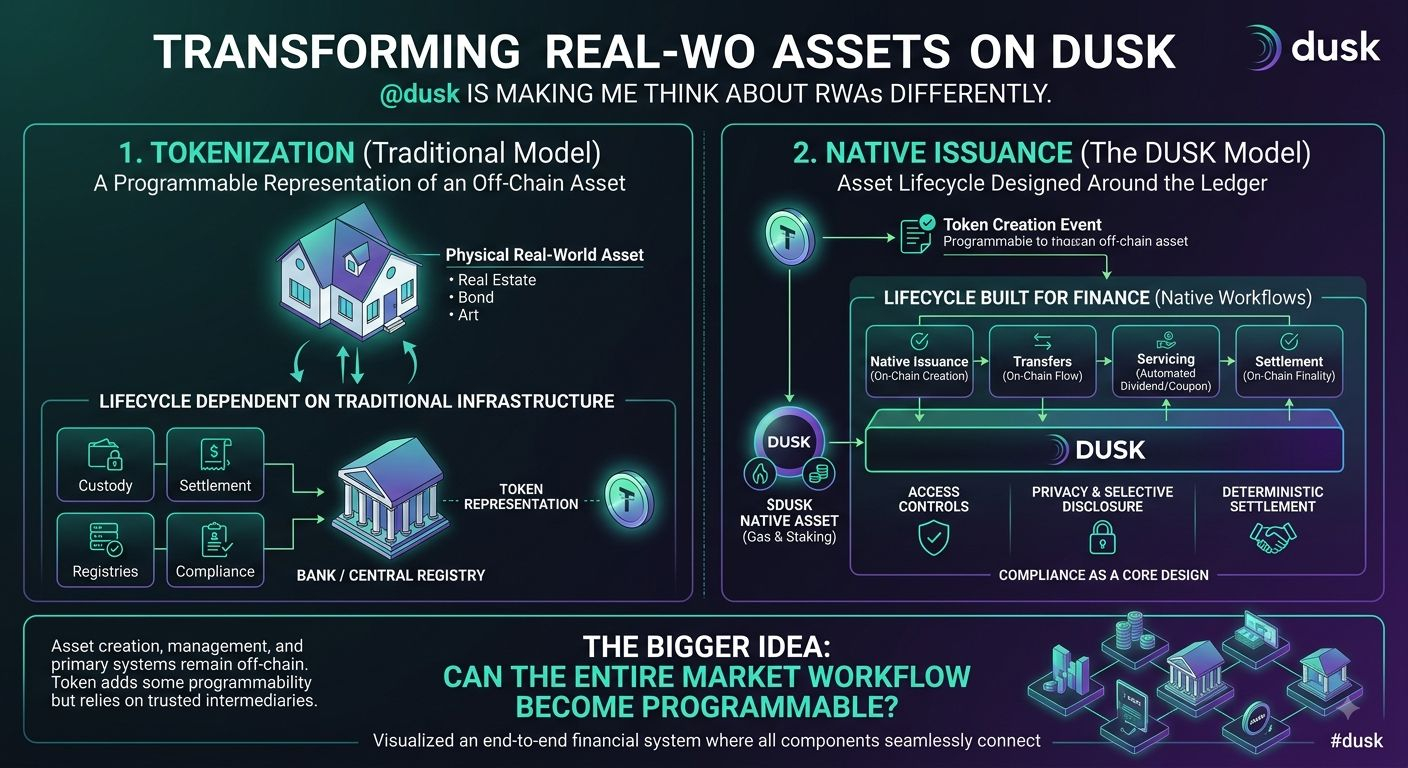
Seit Jahren ist der einfachste Weg, die Tokenisierung realer Vermögenswerte zu erklären, folgender: Man nimmt einen bestehenden Vermögenswert und stellt ihn als Token dar. Das klingt kraftvoll, aber darunter verbirgt sich eine wichtige Frage: Verändert das Setzen eines Tokens auf der Onchain-Ebene tatsächlich den Lebenszyklus des finanziellen Vermögenswerts auch dort?
Dusk zieht eine hilfreiche Unterscheidung zwischen Tokenisierung und nativer Emission. Tokenisierung kann eine programmierbare Repräsentation eines Vermögenswerts erzeugen, während Verwahrung, Abwicklung, Register und andere Teile des Lebenszyklus weiterhin von traditioneller Infrastruktur abhängig bleiben. Native Emission geht weiter: Der Vermögenswert kann rund um das Ledger selbst erstellt und verwaltet werden – mit Emission, Übertragungen, Betreuung und Abwicklung, die auf Onchain-Workflows ausgelegt sind.
Diese Unterscheidung ist entscheidend für regulierte Märkte.
Eine Blockchain, die für Finanzen gebaut wurde, kann nicht nur beantworten: „Wie erstellen wir einen Token?“ Sie muss auch klären, wer darauf zugreifen darf, wer ihn übertragen kann, welche Informationen privat bleiben sollten, welche Prüfungen Regulierer durchführen können und wie sowohl der Vermögenswert als auch die Zahlungsseite abgewickelt werden.
Hier wird @dusk interessant. Seine Architektur ist auf Zugriffskontrollen, Privatsphäre mit selektiver Offenlegung und deterministische Abwicklung ausgelegt – statt Compliance als nachträglichen Gedanken zu behandeln.
Und $DUSK ist der native Vermögenswert für Network Gas und Staking, der die Wirtschaftsschicht mit der darunterliegenden Infrastruktur dieser Workflows verbindet.
Die größere Idee ist nicht einfach, mehr Vermögenswerte onchain zu setzen.
Es ist die Frage, ob der gesamte Markt-Workflow irgendwann vollständig programmierbar werden kann.
#dusk $DUSK @Dusk_Foundation
{spot}(DUSKUSDT)
#dusk $DUSK lässt mich RWAs anders betrachten.
Seit Jahren ist der einfachste Weg, die Tokenisierung realer Vermögenswerte zu erklären, folgender: Man nimmt einen bestehenden Vermögenswert und stellt ihn als Token dar. Das klingt kraftvoll, aber darunter verbirgt sich eine wichtige Frage: Verändert das Setzen eines Tokens auf der Onchain-Ebene tatsächlich den Lebenszyklus des finanziellen Vermögenswerts auch dort?
Dusk zieht eine hilfreiche Unterscheidung zwischen Tokenisierung und nativer Emission. Tokenisierung kann eine programmierbare Repräsentation eines Vermögenswerts erzeugen, während Verwahrung, Abwicklung, Register und andere Teile des Lebenszyklus weiterhin von traditioneller Infrastruktur abhängig bleiben. Native Emission geht weiter: Der Vermögenswert kann rund um das Ledger selbst erstellt und verwaltet werden – mit Emission, Übertragungen, Betreuung und Abwicklung, die auf Onchain-Workflows ausgelegt sind.
Diese Unterscheidung ist entscheidend für regulierte Märkte.
Eine Blockchain, die für Finanzen gebaut wurde, kann nicht nur beantworten: „Wie erstellen wir einen Token?“ Sie muss auch klären, wer darauf zugreifen darf, wer ihn übertragen kann, welche Informationen privat bleiben sollten, welche Prüfungen Regulierer durchführen können und wie sowohl der Vermögenswert als auch die Zahlungsseite abgewickelt werden.
Hier wird @dusk interessant. Seine Architektur ist auf Zugriffskontrollen, Privatsphäre mit selektiver Offenlegung und deterministische Abwicklung ausgelegt – statt Compliance als nachträglichen Gedanken zu behandeln.
Und $DUSK ist der native Vermögenswert für Network Gas und Staking, der die Wirtschaftsschicht mit der darunterliegenden Infrastruktur dieser Workflows verbindet.
Die größere Idee ist nicht einfach, mehr Vermögenswerte onchain zu setzen.
Es ist die Frage, ob der gesamte Markt-Workflow irgendwann vollständig programmierbar werden kann.
#dusk $DUSK @Dusk
Seit Jahren ist der einfachste Weg, die Tokenisierung realer Vermögenswerte zu erklären, folgender: Man nimmt einen bestehenden Vermögenswert und stellt ihn als Token dar. Das klingt kraftvoll, aber darunter verbirgt sich eine wichtige Frage: Verändert das Setzen eines Tokens auf der Onchain-Ebene tatsächlich den Lebenszyklus des finanziellen Vermögenswerts auch dort?
Dusk zieht eine hilfreiche Unterscheidung zwischen Tokenisierung und nativer Emission. Tokenisierung kann eine programmierbare Repräsentation eines Vermögenswerts erzeugen, während Verwahrung, Abwicklung, Register und andere Teile des Lebenszyklus weiterhin von traditioneller Infrastruktur abhängig bleiben. Native Emission geht weiter: Der Vermögenswert kann rund um das Ledger selbst erstellt und verwaltet werden – mit Emission, Übertragungen, Betreuung und Abwicklung, die auf Onchain-Workflows ausgelegt sind.
Diese Unterscheidung ist entscheidend für regulierte Märkte.
Eine Blockchain, die für Finanzen gebaut wurde, kann nicht nur beantworten: „Wie erstellen wir einen Token?“ Sie muss auch klären, wer darauf zugreifen darf, wer ihn übertragen kann, welche Informationen privat bleiben sollten, welche Prüfungen Regulierer durchführen können und wie sowohl der Vermögenswert als auch die Zahlungsseite abgewickelt werden.
Hier wird @dusk interessant. Seine Architektur ist auf Zugriffskontrollen, Privatsphäre mit selektiver Offenlegung und deterministische Abwicklung ausgelegt – statt Compliance als nachträglichen Gedanken zu behandeln.
Und $DUSK ist der native Vermögenswert für Network Gas und Staking, der die Wirtschaftsschicht mit der darunterliegenden Infrastruktur dieser Workflows verbindet.
Die größere Idee ist nicht einfach, mehr Vermögenswerte onchain zu setzen.
Es ist die Frage, ob der gesamte Markt-Workflow irgendwann vollständig programmierbar werden kann.
#dusk $DUSK @Dusk
5
2
150
·
--
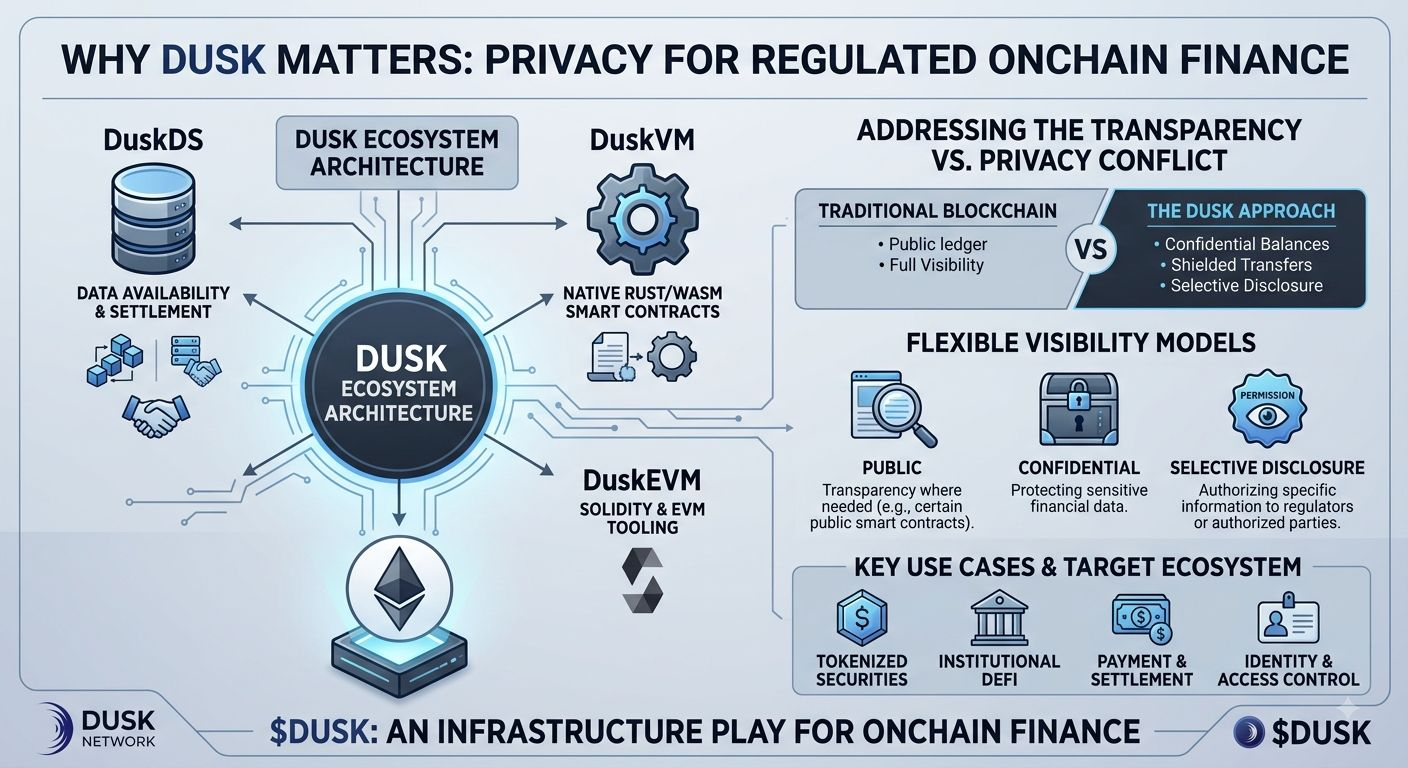
#dusk $DUSK Warum „Why Dusk Matters“ so wichtig ist: Eine der größten Herausforderungen für die Einführung institutioneller Blockchain-Systeme ist der Konflikt zwischen Transparenz und Privatsphäre. Dusk geht das auf Infrastrukturebene an, indem eine Layer-1 aufgebaut wird, die für regulierte Onchain-Finanzen ausgelegt ist, bei der vertrauliche Kontostände und geschützte Übertragungen mit selektiver Offenlegung und Compliance-Anforderungen koexistieren können. Die Architektur umfasst DuskDS für Abrechnung und Datenverfügbarkeit, DuskVM für native Rust/WASM-Smart-Contracts und DuskEVM für Solidity-basierte Anwendungen sowie vertraute EVM-Tools.
Was das Design besonders interessant macht, ist, dass Privatsphäre nicht einfach als „alles verbergen“ verstanden wird. Dusk unterstützt verschiedene Sichtbarkeitsmodelle: öffentliche Konten, wenn Transparenz sinnvoll ist, vertrauliche Transaktionen, wenn Finanzdaten geschützt werden müssen, und selektive Offenlegung, wenn autorisierte Parteien für Verifikation oder Regulierung bestimmte Informationen benötigen.
Das Ökosystem zielt außerdem auf tokenisierte Wertpapiere, institutionelles DeFi, Zahlungs- und Abrechnungsinfrastruktur, Identitäts- und Zugriffssteuerungen sowie weitere regulierte Finanz-Workflows. Das macht $DUSK mehr für mich interessant als ein Infrastruktur-Ansatz – weniger als „nur“ ein weiterer Blockchain-Token. @Dusk #dusk
@Dusk_Foundation $DUSK
{spot}(DUSKUSDT)
#dusk $DUSK Warum „Why Dusk Matters“ so wichtig ist: Eine der größten Herausforderungen für die Einführung institutioneller Blockchain-Systeme ist der Konflikt zwischen Transparenz und Privatsphäre. Dusk geht das auf Infrastrukturebene an, indem eine Layer-1 aufgebaut wird, die für regulierte Onchain-Finanzen ausgelegt ist, bei der vertrauliche Kontostände und geschützte Übertragungen mit selektiver Offenlegung und Compliance-Anforderungen koexistieren können. Die Architektur umfasst DuskDS für Abrechnung und Datenverfügbarkeit, DuskVM für native Rust/WASM-Smart-Contracts und DuskEVM für Solidity-basierte Anwendungen sowie vertraute EVM-Tools.
Was das Design besonders interessant macht, ist, dass Privatsphäre nicht einfach als „alles verbergen“ verstanden wird. Dusk unterstützt verschiedene Sichtbarkeitsmodelle: öffentliche Konten, wenn Transparenz sinnvoll ist, vertrauliche Transaktionen, wenn Finanzdaten geschützt werden müssen, und selektive Offenlegung, wenn autorisierte Parteien für Verifikation oder Regulierung bestimmte Informationen benötigen.
Das Ökosystem zielt außerdem auf tokenisierte Wertpapiere, institutionelles DeFi, Zahlungs- und Abrechnungsinfrastruktur, Identitäts- und Zugriffssteuerungen sowie weitere regulierte Finanz-Workflows. Das macht $DUSK mehr für mich interessant als ein Infrastruktur-Ansatz – weniger als „nur“ ein weiterer Blockchain-Token. @Dusk #dusk
@Dusk $DUSK
Was das Design besonders interessant macht, ist, dass Privatsphäre nicht einfach als „alles verbergen“ verstanden wird. Dusk unterstützt verschiedene Sichtbarkeitsmodelle: öffentliche Konten, wenn Transparenz sinnvoll ist, vertrauliche Transaktionen, wenn Finanzdaten geschützt werden müssen, und selektive Offenlegung, wenn autorisierte Parteien für Verifikation oder Regulierung bestimmte Informationen benötigen.
Das Ökosystem zielt außerdem auf tokenisierte Wertpapiere, institutionelles DeFi, Zahlungs- und Abrechnungsinfrastruktur, Identitäts- und Zugriffssteuerungen sowie weitere regulierte Finanz-Workflows. Das macht $DUSK mehr für mich interessant als ein Infrastruktur-Ansatz – weniger als „nur“ ein weiterer Blockchain-Token. @Dusk #dusk
@Dusk $DUSK
11
6
156
·
--
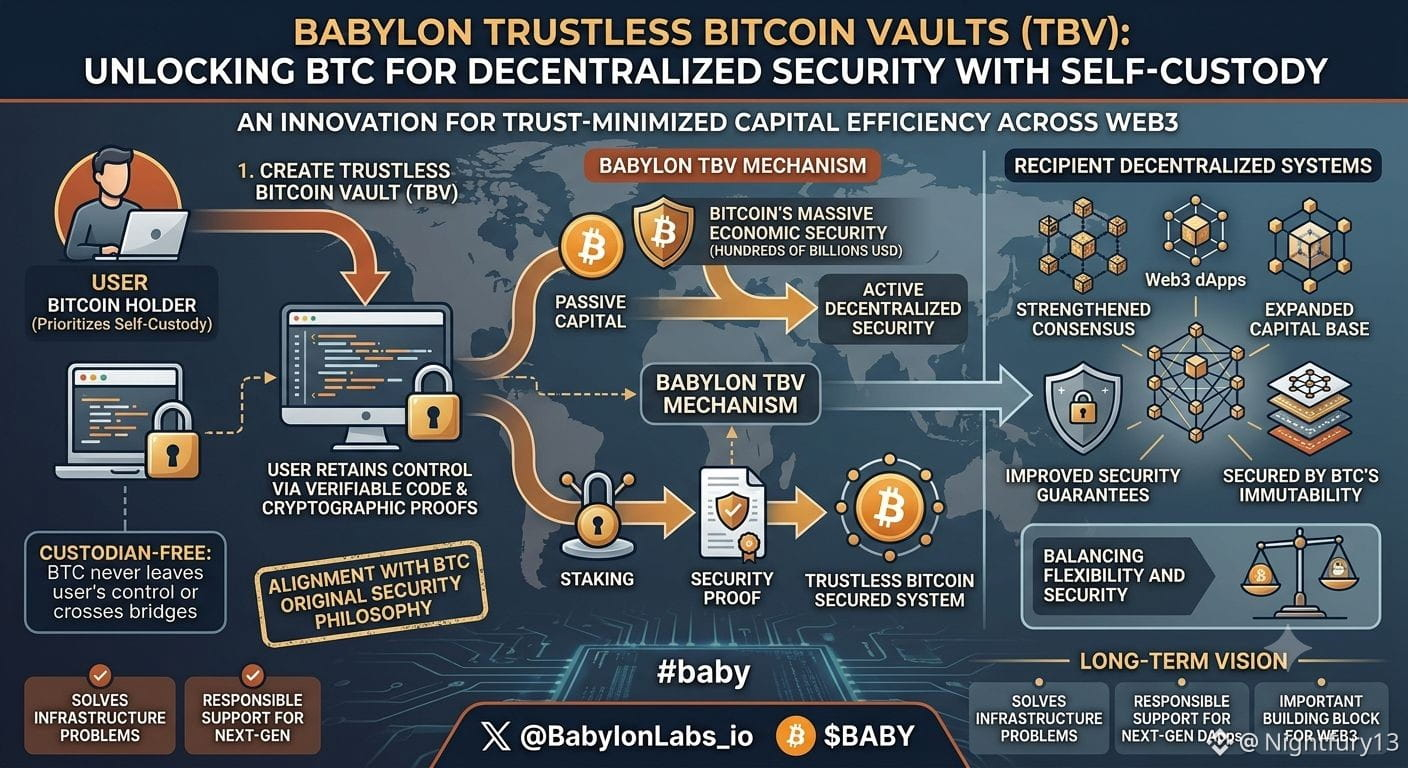
#baby $BABY Bitcoin hat sich seinen Ruf als das sicherste und dezentralisierteste Blockchain erarbeitet, weil ihr Design stets darauf ausgerichtet war, Selbstverwahrung, Zensurresistenz und die Minimierung von Vertrauen in den Vordergrund zu stellen. Eine Herausforderung ist jedoch weitgehend ungelöst geblieben: Wie kann das massive Kapital von Bitcoin dazu beitragen, andere dezentrale Systeme zu sichern, ohne dass Nutzer die Kontrolle über ihre BTC abgeben müssen? Die meisten bestehenden Ansätze führen zusätzliche Vertrauensannahmen ein, etwa durch Verwahrer, „Wrapped Assets“, Bridges oder zentralisierte Betreiber. Obwohl diese Lösungen die Nutzbarkeit erhöhen können, schaffen sie auch neue Angriffsflächen, die sich von der ursprünglichen Sicherheitsphilosophie von Bitcoin entfernen.
Babylon Trustless Bitcoin Vaults (TBV) bieten einen alternativen Ansatz, indem sie eine vertrauensminimierte Tresor-Architektur untersuchen, bei der Bitcoin-Inhaber an dezentraler Sicherheit teilnehmen können, ohne auf traditionelle Verwahrer angewiesen zu sein. Anstatt die Nutzer dazu aufzufordern, ihre BTC bei zentralisierten Einheiten einzuzahlen, ist TBV so konzipiert, dass transparente kryptografische Mechanismen eingesetzt werden, die das Eigentum der Nutzer wahren und gleichzeitig Bitcoin eine aktivere Rolle dabei ermöglichen, dezentrale Infrastruktur abzusichern. Diese Unterscheidung ist entscheidend, weil es nicht nur darum geht, Bitcoin „nützlicher“ zu machen, sondern seine Nutzbarkeit auszuweiten, ohne die Prinzipien zu kompromittieren, die es zu dem weltweit am meisten vertrauten digitalen Vermögenswert gemacht haben.
Besonders spannend an diesem Konzept ist das Potenzial, die wirtschaftliche Sicherheit von Bitcoin für ein größeres Ökosystem nutzbar zu machen. Bitcoin repräsentiert derzeit Hunderte von Milliarden US-Dollar an Wert, doch ein großer Teil dieses Kapitals bleibt passiv. Wenn BTC dabei helfen kann, Netzwerke abzusichern, während es unter vertrauensminimierter Kontrolle bleibt, könnte das dezentrale Systeme stärken, ohne Nutzer dazu zu zwingen, unnötige Verwahrungsrisiken zu akzeptieren. Das könnte die Kapitaleffizienz verbessern, während es gleichzeitig mit dem langjährigen Fokus von Bitcoin auf Transparenz und Sicherheit im Einklang bleibt.
@babylonlabs_io
#Baby $BABY
{spot}(BABYUSDT)
#baby $BABY Bitcoin hat sich seinen Ruf als das sicherste und dezentralisierteste Blockchain erarbeitet, weil ihr Design stets darauf ausgerichtet war, Selbstverwahrung, Zensurresistenz und die Minimierung von Vertrauen in den Vordergrund zu stellen. Eine Herausforderung ist jedoch weitgehend ungelöst geblieben: Wie kann das massive Kapital von Bitcoin dazu beitragen, andere dezentrale Systeme zu sichern, ohne dass Nutzer die Kontrolle über ihre BTC abgeben müssen? Die meisten bestehenden Ansätze führen zusätzliche Vertrauensannahmen ein, etwa durch Verwahrer, „Wrapped Assets“, Bridges oder zentralisierte Betreiber. Obwohl diese Lösungen die Nutzbarkeit erhöhen können, schaffen sie auch neue Angriffsflächen, die sich von der ursprünglichen Sicherheitsphilosophie von Bitcoin entfernen.
Babylon Trustless Bitcoin Vaults (TBV) bieten einen alternativen Ansatz, indem sie eine vertrauensminimierte Tresor-Architektur untersuchen, bei der Bitcoin-Inhaber an dezentraler Sicherheit teilnehmen können, ohne auf traditionelle Verwahrer angewiesen zu sein. Anstatt die Nutzer dazu aufzufordern, ihre BTC bei zentralisierten Einheiten einzuzahlen, ist TBV so konzipiert, dass transparente kryptografische Mechanismen eingesetzt werden, die das Eigentum der Nutzer wahren und gleichzeitig Bitcoin eine aktivere Rolle dabei ermöglichen, dezentrale Infrastruktur abzusichern. Diese Unterscheidung ist entscheidend, weil es nicht nur darum geht, Bitcoin „nützlicher“ zu machen, sondern seine Nutzbarkeit auszuweiten, ohne die Prinzipien zu kompromittieren, die es zu dem weltweit am meisten vertrauten digitalen Vermögenswert gemacht haben.
Besonders spannend an diesem Konzept ist das Potenzial, die wirtschaftliche Sicherheit von Bitcoin für ein größeres Ökosystem nutzbar zu machen. Bitcoin repräsentiert derzeit Hunderte von Milliarden US-Dollar an Wert, doch ein großer Teil dieses Kapitals bleibt passiv. Wenn BTC dabei helfen kann, Netzwerke abzusichern, während es unter vertrauensminimierter Kontrolle bleibt, könnte das dezentrale Systeme stärken, ohne Nutzer dazu zu zwingen, unnötige Verwahrungsrisiken zu akzeptieren. Das könnte die Kapitaleffizienz verbessern, während es gleichzeitig mit dem langjährigen Fokus von Bitcoin auf Transparenz und Sicherheit im Einklang bleibt.
@BabylonLabs_io
#Baby $BABY
Babylon Trustless Bitcoin Vaults (TBV) bieten einen alternativen Ansatz, indem sie eine vertrauensminimierte Tresor-Architektur untersuchen, bei der Bitcoin-Inhaber an dezentraler Sicherheit teilnehmen können, ohne auf traditionelle Verwahrer angewiesen zu sein. Anstatt die Nutzer dazu aufzufordern, ihre BTC bei zentralisierten Einheiten einzuzahlen, ist TBV so konzipiert, dass transparente kryptografische Mechanismen eingesetzt werden, die das Eigentum der Nutzer wahren und gleichzeitig Bitcoin eine aktivere Rolle dabei ermöglichen, dezentrale Infrastruktur abzusichern. Diese Unterscheidung ist entscheidend, weil es nicht nur darum geht, Bitcoin „nützlicher“ zu machen, sondern seine Nutzbarkeit auszuweiten, ohne die Prinzipien zu kompromittieren, die es zu dem weltweit am meisten vertrauten digitalen Vermögenswert gemacht haben.
Besonders spannend an diesem Konzept ist das Potenzial, die wirtschaftliche Sicherheit von Bitcoin für ein größeres Ökosystem nutzbar zu machen. Bitcoin repräsentiert derzeit Hunderte von Milliarden US-Dollar an Wert, doch ein großer Teil dieses Kapitals bleibt passiv. Wenn BTC dabei helfen kann, Netzwerke abzusichern, während es unter vertrauensminimierter Kontrolle bleibt, könnte das dezentrale Systeme stärken, ohne Nutzer dazu zu zwingen, unnötige Verwahrungsrisiken zu akzeptieren. Das könnte die Kapitaleffizienz verbessern, während es gleichzeitig mit dem langjährigen Fokus von Bitcoin auf Transparenz und Sicherheit im Einklang bleibt.
@BabylonLabs_io
#Baby $BABY
1
1
113
·
--
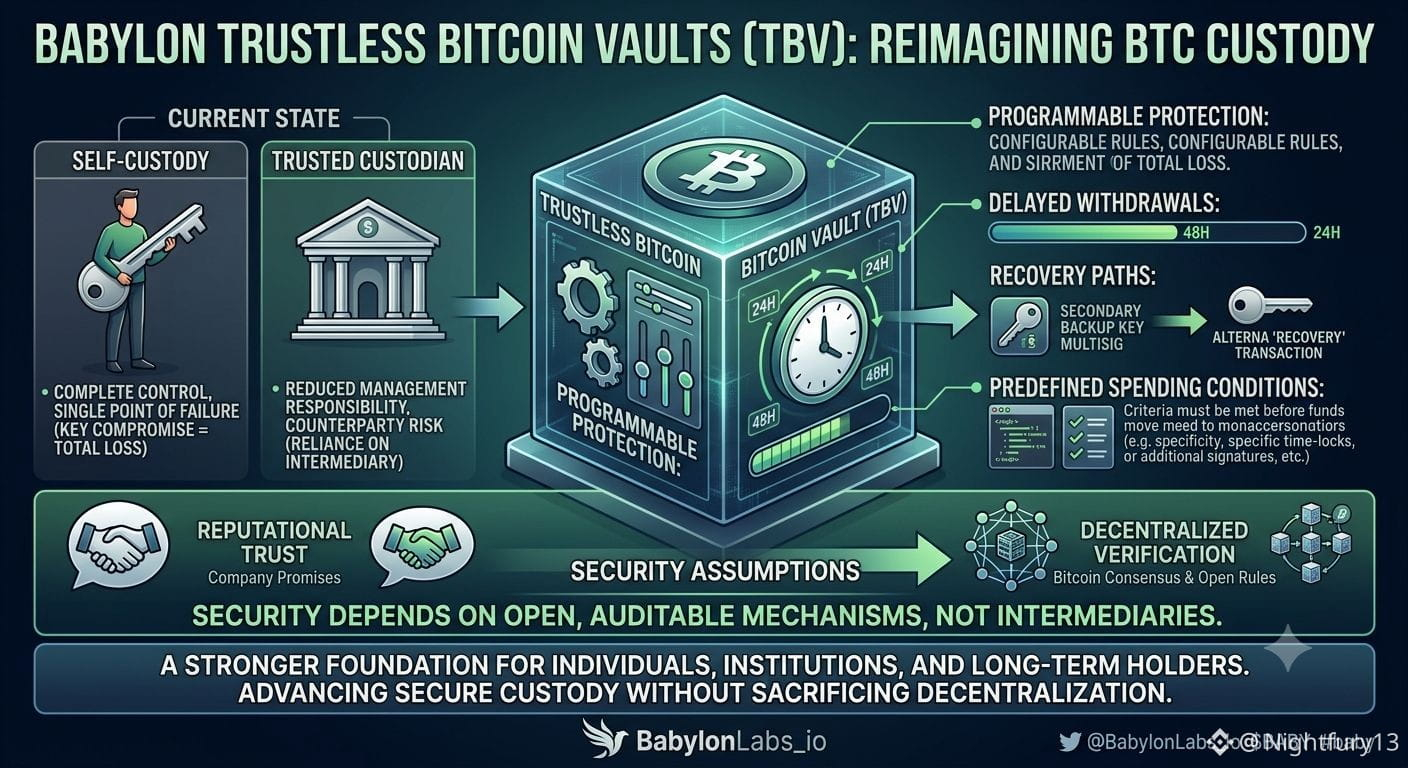
#baby $BABY Ich habe tiefer in die „Babylon Trustless Bitcoin Vaults (TBV)“ gegraben, und was meine Aufmerksamkeit nicht nur auf die Technologie gelenkt hat, sondern auch auf die Philosophie dahinter. Seit Jahren müssen Bitcoin-Inhaber zwischen zwei unvollkommenen Optionen wählen. Entweder behalten sie die volle Kontrolle durch Self-Custody und nehmen in Kauf, dass ein einzelner Fehler oder ein kompromittierter Schlüssel die Gelder dauerhaft verlieren kann, oder sie übergeben die Vermögenswerte einem vertrauenswürdigen Custodian und führen ein Kontrahentenrisiko ein. TBV versucht, diese Lücke zu verkleinern, indem Sicherheit stärker von transparenten, verifizierbaren Regeln abhängt als von vertrauenswürdigen Vermittlern.
Die Idee eines Tresors besteht nicht einfach darin, Bitcoin „einzusperren“. Ein Trustless Bitcoin Vault soll BTC-Inhabern programmierbaren Schutz dafür geben, wie sich Gelder bewegen können. Anstatt dass jede Transaktion sofort endgültig ist, ohne Schutzvorkehrungen, können Vault-Richtlinien Schutzmechanismen einführen – etwa verzögerte Auszahlungen, Wiederherstellungswege und vordefinierte Ausgabebedingungen. Diese Funktionen sollen Nutzern Zeit geben, zu reagieren, falls Schlüssel kompromittiert werden, und dabei dennoch das trust-minimierte Sicherheitsmodell von Bitcoin bewahren.
Besonders spannend ist, dass die Sicherheitsannahmen weiterhin bei Bitcoin selbst zentriert bleiben und nicht bei einem Unternehmen, das Versprechen macht. Je kritischer die Vermögenswerte werden, desto wichtiger ist es, dass Sicherheit aus offenen, nachprüfbaren Mechanismen kommt – statt aus dem Ruf. Wenn TBV weiter reift, könnte es eine stärkere Grundlage für Einzelpersonen, Institutionen und langfristige BTC-Inhaber bieten, die besseren Schutz suchen, ohne die Dezentralisierung zu opfern.
Ich freue mich darauf zu sehen, wie Babylon diesen Ansatz weiterentwickelt und wie Trustless Bitcoin Vaults die Möglichkeiten für sichere Bitcoin-Verwahrung erweitern können. @babylonlabs_io #baby $BABY
{spot}(BABYUSDT)
#baby $BABY Ich habe tiefer in die „Babylon Trustless Bitcoin Vaults (TBV)“ gegraben, und was meine Aufmerksamkeit nicht nur auf die Technologie gelenkt hat, sondern auch auf die Philosophie dahinter. Seit Jahren müssen Bitcoin-Inhaber zwischen zwei unvollkommenen Optionen wählen. Entweder behalten sie die volle Kontrolle durch Self-Custody und nehmen in Kauf, dass ein einzelner Fehler oder ein kompromittierter Schlüssel die Gelder dauerhaft verlieren kann, oder sie übergeben die Vermögenswerte einem vertrauenswürdigen Custodian und führen ein Kontrahentenrisiko ein. TBV versucht, diese Lücke zu verkleinern, indem Sicherheit stärker von transparenten, verifizierbaren Regeln abhängt als von vertrauenswürdigen Vermittlern.
Die Idee eines Tresors besteht nicht einfach darin, Bitcoin „einzusperren“. Ein Trustless Bitcoin Vault soll BTC-Inhabern programmierbaren Schutz dafür geben, wie sich Gelder bewegen können. Anstatt dass jede Transaktion sofort endgültig ist, ohne Schutzvorkehrungen, können Vault-Richtlinien Schutzmechanismen einführen – etwa verzögerte Auszahlungen, Wiederherstellungswege und vordefinierte Ausgabebedingungen. Diese Funktionen sollen Nutzern Zeit geben, zu reagieren, falls Schlüssel kompromittiert werden, und dabei dennoch das trust-minimierte Sicherheitsmodell von Bitcoin bewahren.
Besonders spannend ist, dass die Sicherheitsannahmen weiterhin bei Bitcoin selbst zentriert bleiben und nicht bei einem Unternehmen, das Versprechen macht. Je kritischer die Vermögenswerte werden, desto wichtiger ist es, dass Sicherheit aus offenen, nachprüfbaren Mechanismen kommt – statt aus dem Ruf. Wenn TBV weiter reift, könnte es eine stärkere Grundlage für Einzelpersonen, Institutionen und langfristige BTC-Inhaber bieten, die besseren Schutz suchen, ohne die Dezentralisierung zu opfern.
Ich freue mich darauf zu sehen, wie Babylon diesen Ansatz weiterentwickelt und wie Trustless Bitcoin Vaults die Möglichkeiten für sichere Bitcoin-Verwahrung erweitern können. @BabylonLabs_io #baby $BABY
Die Idee eines Tresors besteht nicht einfach darin, Bitcoin „einzusperren“. Ein Trustless Bitcoin Vault soll BTC-Inhabern programmierbaren Schutz dafür geben, wie sich Gelder bewegen können. Anstatt dass jede Transaktion sofort endgültig ist, ohne Schutzvorkehrungen, können Vault-Richtlinien Schutzmechanismen einführen – etwa verzögerte Auszahlungen, Wiederherstellungswege und vordefinierte Ausgabebedingungen. Diese Funktionen sollen Nutzern Zeit geben, zu reagieren, falls Schlüssel kompromittiert werden, und dabei dennoch das trust-minimierte Sicherheitsmodell von Bitcoin bewahren.
Besonders spannend ist, dass die Sicherheitsannahmen weiterhin bei Bitcoin selbst zentriert bleiben und nicht bei einem Unternehmen, das Versprechen macht. Je kritischer die Vermögenswerte werden, desto wichtiger ist es, dass Sicherheit aus offenen, nachprüfbaren Mechanismen kommt – statt aus dem Ruf. Wenn TBV weiter reift, könnte es eine stärkere Grundlage für Einzelpersonen, Institutionen und langfristige BTC-Inhaber bieten, die besseren Schutz suchen, ohne die Dezentralisierung zu opfern.
Ich freue mich darauf zu sehen, wie Babylon diesen Ansatz weiterentwickelt und wie Trustless Bitcoin Vaults die Möglichkeiten für sichere Bitcoin-Verwahrung erweitern können. @BabylonLabs_io #baby $BABY
2
123
·
--
#grvt Ich bin tief in das Tokenisieren realer Vermögenswerte auf GRVT eingetaucht, und das verändert die Art und Weise, wie wir traditionell verwertbaren Wert in einer dezentralen Welt erschließen. Stell dir vor, wie man aus einer massiven Goldbarren digitale Scherben macht, die man sofort handeln kann – jedes Token steht für nachweisbares Eigentum oder Erträge aus Dingen wie Treasuries, Aktien oder Credit-Strategien, alles abgesichert durch das unveränderliche Ledger der Blockchain.
Auf GRVT bedeutet das: Perpetuals, die auf tokenisiertem NVDA, SPY oder Rohstoffen handeln, laufen neben Yield-Vaults in einem einzigen selbstverwalteten Kontostand zusammen. Dein Kapital liegt nicht untätig; es erwirtschaftet Erträge aus RWA-Fonds und untermauert zugleich Positionen – eine kompositorische Schleife, die die Effizienz steigert, ohne Mittelsmänner. Partnerschaften wie Centrifuge bringen Produkte in institutioneller Qualität und öffnen Türen für alle, um diversifizierte Fixed-Income-Strategien ohne Hürden durch fehlende Akkreditierung zu nutzen.
Die Chancen sind eindeutig: Bruchteilseigentum senkt die Eintrittsbarrieren, 24/7-Liquidität erschließt gebundenen Wert, und Komponierbarkeit schafft eine neue Kapital-Umlaufgeschwindigkeit. Doch es gibt weiterhin Herausforderungen: Die rechtliche Brücke zwischen Rechten außerhalb der Kette und On-Chain-Token erfordert robuste Oracles und Compliance, während die Volatilität der zugrunde liegenden Vermögenswerte die Risikomodelle auf die Probe stellt. Smart-Contract-Audits und regulatorische Klarheit bleiben entscheidend.
Insgesamt signalisiert der Ansatz von GRVT eine heranwachsende Verbindung, in der RWAs kein Hype sind, sondern produktive Infrastruktur. Es ist noch früh, aber die Umsetzung belohnt diejenigen, die die Mechanik verstehen.
@grvt_io
#grvt Ich bin tief in das Tokenisieren realer Vermögenswerte auf GRVT eingetaucht, und das verändert die Art und Weise, wie wir traditionell verwertbaren Wert in einer dezentralen Welt erschließen. Stell dir vor, wie man aus einer massiven Goldbarren digitale Scherben macht, die man sofort handeln kann – jedes Token steht für nachweisbares Eigentum oder Erträge aus Dingen wie Treasuries, Aktien oder Credit-Strategien, alles abgesichert durch das unveränderliche Ledger der Blockchain.
Auf GRVT bedeutet das: Perpetuals, die auf tokenisiertem NVDA, SPY oder Rohstoffen handeln, laufen neben Yield-Vaults in einem einzigen selbstverwalteten Kontostand zusammen. Dein Kapital liegt nicht untätig; es erwirtschaftet Erträge aus RWA-Fonds und untermauert zugleich Positionen – eine kompositorische Schleife, die die Effizienz steigert, ohne Mittelsmänner. Partnerschaften wie Centrifuge bringen Produkte in institutioneller Qualität und öffnen Türen für alle, um diversifizierte Fixed-Income-Strategien ohne Hürden durch fehlende Akkreditierung zu nutzen.
Die Chancen sind eindeutig: Bruchteilseigentum senkt die Eintrittsbarrieren, 24/7-Liquidität erschließt gebundenen Wert, und Komponierbarkeit schafft eine neue Kapital-Umlaufgeschwindigkeit. Doch es gibt weiterhin Herausforderungen: Die rechtliche Brücke zwischen Rechten außerhalb der Kette und On-Chain-Token erfordert robuste Oracles und Compliance, während die Volatilität der zugrunde liegenden Vermögenswerte die Risikomodelle auf die Probe stellt. Smart-Contract-Audits und regulatorische Klarheit bleiben entscheidend.
Insgesamt signalisiert der Ansatz von GRVT eine heranwachsende Verbindung, in der RWAs kein Hype sind, sondern produktive Infrastruktur. Es ist noch früh, aber die Umsetzung belohnt diejenigen, die die Mechanik verstehen.
@grvt_io
Auf GRVT bedeutet das: Perpetuals, die auf tokenisiertem NVDA, SPY oder Rohstoffen handeln, laufen neben Yield-Vaults in einem einzigen selbstverwalteten Kontostand zusammen. Dein Kapital liegt nicht untätig; es erwirtschaftet Erträge aus RWA-Fonds und untermauert zugleich Positionen – eine kompositorische Schleife, die die Effizienz steigert, ohne Mittelsmänner. Partnerschaften wie Centrifuge bringen Produkte in institutioneller Qualität und öffnen Türen für alle, um diversifizierte Fixed-Income-Strategien ohne Hürden durch fehlende Akkreditierung zu nutzen.
Die Chancen sind eindeutig: Bruchteilseigentum senkt die Eintrittsbarrieren, 24/7-Liquidität erschließt gebundenen Wert, und Komponierbarkeit schafft eine neue Kapital-Umlaufgeschwindigkeit. Doch es gibt weiterhin Herausforderungen: Die rechtliche Brücke zwischen Rechten außerhalb der Kette und On-Chain-Token erfordert robuste Oracles und Compliance, während die Volatilität der zugrunde liegenden Vermögenswerte die Risikomodelle auf die Probe stellt. Smart-Contract-Audits und regulatorische Klarheit bleiben entscheidend.
Insgesamt signalisiert der Ansatz von GRVT eine heranwachsende Verbindung, in der RWAs kein Hype sind, sondern produktive Infrastruktur. Es ist noch früh, aber die Umsetzung belohnt diejenigen, die die Mechanik verstehen.
@grvt_io
1
155
·
--
Artikel
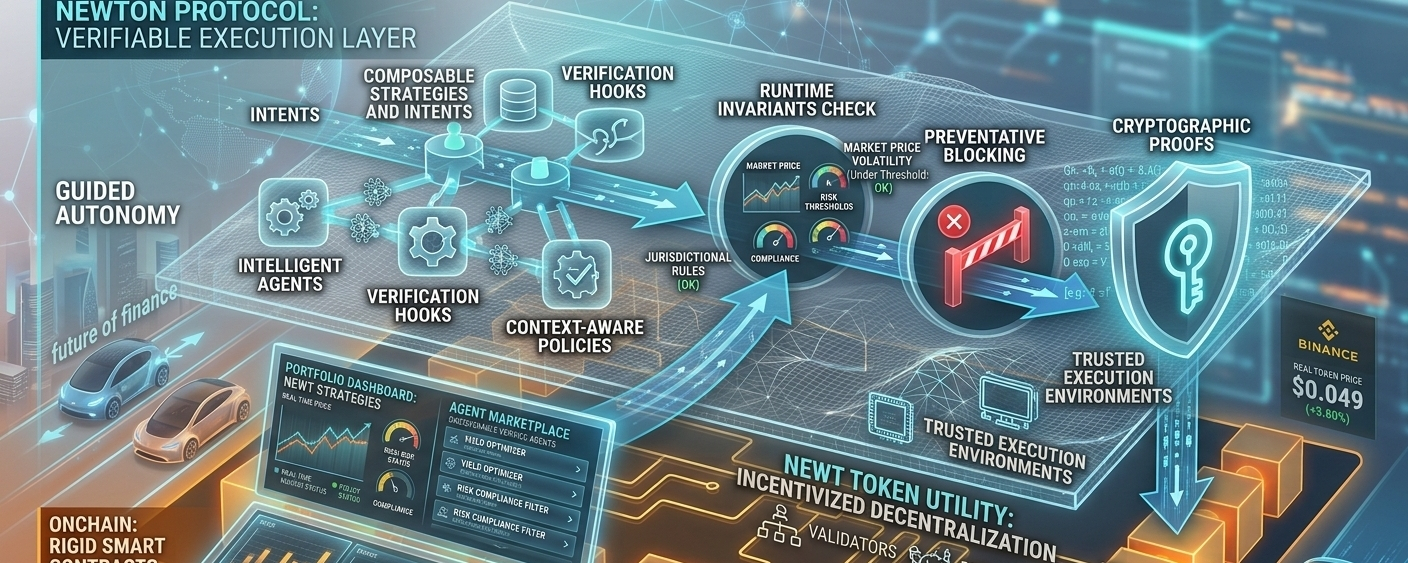
Vertrauen und Autonomie verbinden: Newton Protocols Vision für die Zukunft von selbstfahrendem FinanzwesenKennst du diese Momente, in denen du auf dein Portfolio bei Binance starrst, die Charts tickern siehst und dich fragst, ob es einen schlaueren Weg gibt, mit all dem umzugehen, ohne jede einzelne Bewegung babysitten zu müssen? Genau dahin ist mein Kopf vor ein paar Wochen abgedriftet, als ich zum ersten Mal in das Newton-Protokoll eingetaucht bin. Ich bin schon lange genug in Krypto, um zu sehen, wie Hype-Zyklen kommen und gehen, aber etwas an ihrem Ansatz für autonomes Finanzwesen fühlt sich anders an—bodenständiger, notwendiger. Es ist nicht nur eine weitere Schicht, die den Mond verspricht; es baut die Infrastruktur für Finanzen auf, die sich selbst steuern—sicher und nachvollziehbar. Lass mich dich durch meine Überlegungen führen, so wie ich sie in einer Nachtschwärmerei sortieren würde.
Vertrauen und Autonomie verbinden: Newton Protocols Vision für die Zukunft von selbstfahrendem Finanzwesen
Kennst du diese Momente, in denen du auf dein Portfolio bei Binance starrst, die Charts tickern siehst und dich fragst, ob es einen schlaueren Weg gibt, mit all dem umzugehen, ohne jede einzelne Bewegung babysitten zu müssen? Genau dahin ist mein Kopf vor ein paar Wochen abgedriftet, als ich zum ersten Mal in das Newton-Protokoll eingetaucht bin. Ich bin schon lange genug in Krypto, um zu sehen, wie Hype-Zyklen kommen und gehen, aber etwas an ihrem Ansatz für autonomes Finanzwesen fühlt sich anders an—bodenständiger, notwendiger. Es ist nicht nur eine weitere Schicht, die den Mond verspricht; es baut die Infrastruktur für Finanzen auf, die sich selbst steuern—sicher und nachvollziehbar. Lass mich dich durch meine Überlegungen führen, so wie ich sie in einer Nachtschwärmerei sortieren würde.
8
1
87
·
--
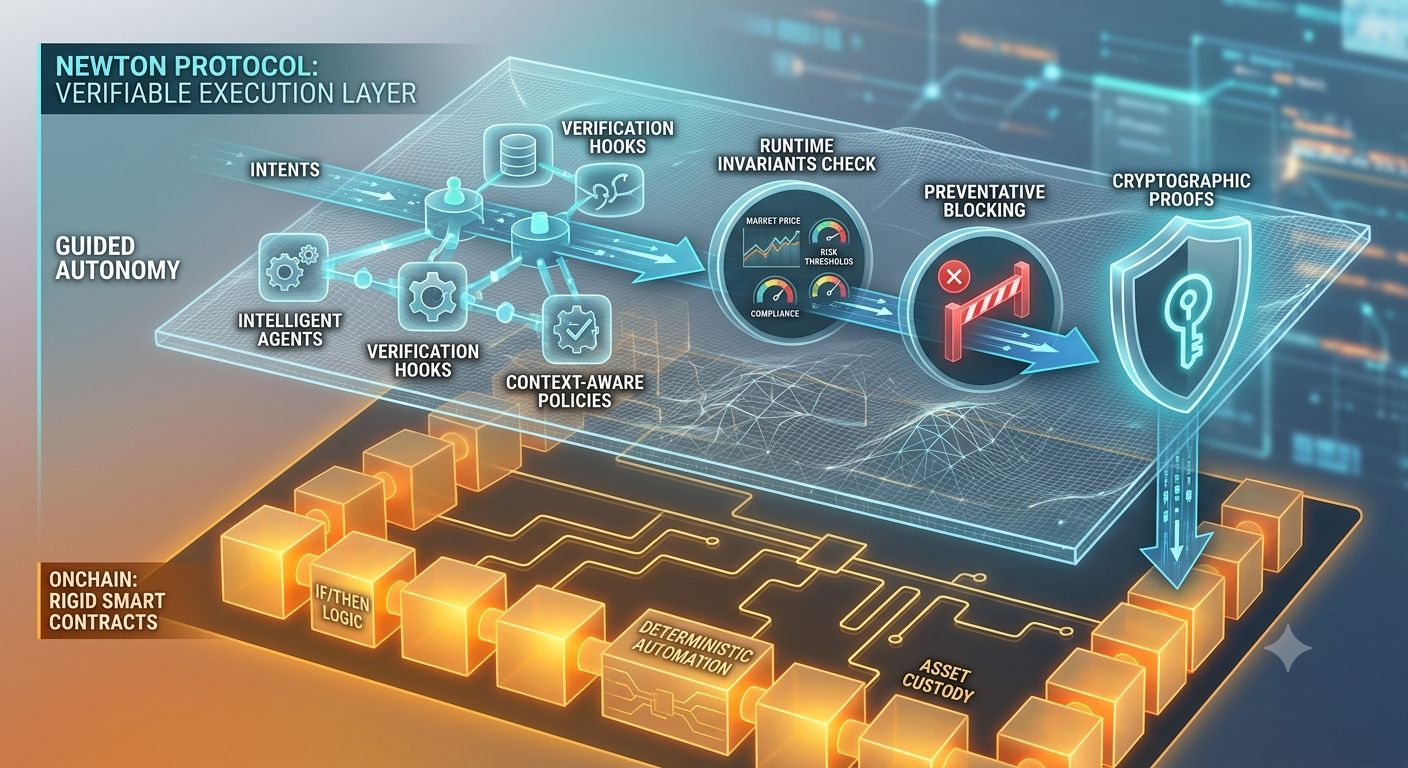
#newt $NEWT Smart Contracts brachten deterministische Automatisierung in die Blockchain: einfache If-Then-Logik, die exakt so ausführt, wie sie codiert wurde. Doch bei zunehmender Komplexität geraten sie ins Wanken: volatile Märkte, Off-Chain-Signale oder Entscheidungen, die echtes Urteilsvermögen erfordern. Genau diese Lücke adressiert das Newton Protocol.
Ich sehe Newton als den Aufbau einer verifizierbaren Ausführungsschicht darüber. Nutzer setzen klare Absichten und Richtlinien, denen intelligente Agenten folgen, ohne dabei die Verwahrung von Vermögenswerten zu übernehmen. Jede Aktion wird in Trusted Execution Environments gegen Laufzeit-Invarianten geprüft—Preise, Risikoschwellen, Compliance-Regeln—bevor überhaupt etwas die Kette berührt. Ungültige Schritte werden im Voraus blockiert, mit kryptografischen Beweisen für Transparenz.
Es ist wie der Übergang von starren Skripten zu geführter Autonomie: präventiv, kontextsensitiv und komponierbar. Entwickler fügen genau einen Verifikations-Hook hinzu; das Ökosystem erhält eine gemeinsame, erweiterbare Durchsetzung von Policies statt isolierter Checks.
Newton verwirft Smart Contracts nicht—es stattet sie mit Intelligenz aus, die Onchain-Aktionen sicherer und leistungsfähiger macht. Für alle, die über einfaches DeFi hinaus bauen, fühlt sich das wie der nächste praktische Schritt an.
@NewtonProtocol
#newt $NEWT
{spot}(NEWTUSDT)
#SKHynixToExpandADRIssuance
#SheinHKListingFilingRegisteredWithCSRC
#LABTokenDrops94%
#newt $NEWT Smart Contracts brachten deterministische Automatisierung in die Blockchain: einfache If-Then-Logik, die exakt so ausführt, wie sie codiert wurde. Doch bei zunehmender Komplexität geraten sie ins Wanken: volatile Märkte, Off-Chain-Signale oder Entscheidungen, die echtes Urteilsvermögen erfordern. Genau diese Lücke adressiert das Newton Protocol.
Ich sehe Newton als den Aufbau einer verifizierbaren Ausführungsschicht darüber. Nutzer setzen klare Absichten und Richtlinien, denen intelligente Agenten folgen, ohne dabei die Verwahrung von Vermögenswerten zu übernehmen. Jede Aktion wird in Trusted Execution Environments gegen Laufzeit-Invarianten geprüft—Preise, Risikoschwellen, Compliance-Regeln—bevor überhaupt etwas die Kette berührt. Ungültige Schritte werden im Voraus blockiert, mit kryptografischen Beweisen für Transparenz.
Es ist wie der Übergang von starren Skripten zu geführter Autonomie: präventiv, kontextsensitiv und komponierbar. Entwickler fügen genau einen Verifikations-Hook hinzu; das Ökosystem erhält eine gemeinsame, erweiterbare Durchsetzung von Policies statt isolierter Checks.
Newton verwirft Smart Contracts nicht—es stattet sie mit Intelligenz aus, die Onchain-Aktionen sicherer und leistungsfähiger macht. Für alle, die über einfaches DeFi hinaus bauen, fühlt sich das wie der nächste praktische Schritt an.
@NewtonProtocol
#newt $NEWT
#SKHynixToExpandADRIssuance
#SheinHKListingFilingRegisteredWithCSRC
#LABTokenDrops94%
Ich sehe Newton als den Aufbau einer verifizierbaren Ausführungsschicht darüber. Nutzer setzen klare Absichten und Richtlinien, denen intelligente Agenten folgen, ohne dabei die Verwahrung von Vermögenswerten zu übernehmen. Jede Aktion wird in Trusted Execution Environments gegen Laufzeit-Invarianten geprüft—Preise, Risikoschwellen, Compliance-Regeln—bevor überhaupt etwas die Kette berührt. Ungültige Schritte werden im Voraus blockiert, mit kryptografischen Beweisen für Transparenz.
Es ist wie der Übergang von starren Skripten zu geführter Autonomie: präventiv, kontextsensitiv und komponierbar. Entwickler fügen genau einen Verifikations-Hook hinzu; das Ökosystem erhält eine gemeinsame, erweiterbare Durchsetzung von Policies statt isolierter Checks.
Newton verwirft Smart Contracts nicht—es stattet sie mit Intelligenz aus, die Onchain-Aktionen sicherer und leistungsfähiger macht. Für alle, die über einfaches DeFi hinaus bauen, fühlt sich das wie der nächste praktische Schritt an.
@NewtonProtocol
#newt $NEWT
#SKHynixToExpandADRIssuance
#SheinHKListingFilingRegisteredWithCSRC
#LABTokenDrops94%
6
160
·
--
#grvt Ich habe die Spannung im Kryptohandel schon immer gesehen: Zentrale Plattformen liefern blitzschnelle Ausführung und tiefe Liquidität, verlangen dafür aber, dass du die Kontrolle über deine Assets abgibst. Dezentrale Alternativen stellen das Eigentum durch Self-Custody wieder her, gehen jedoch oft zu Lasten von Geschwindigkeit und Benutzerfreundlichkeit. Das hybride Modell von GRVT schließt diese Lücke auf elegante Weise.
Es betreibt ein leistungsstarkes Orderbuch mit zentraler Limit-Order off-chain für das Matching mit Sub-Millisekunden-Latenz und liefert bis zu 600.000 Transaktionen pro Sekunde, während gleichzeitig alles on-chain abgewickelt wird – über ein von ZK gepowertes Validium auf zkSync. Deine Gelder verlassen niemals deine Wallet; Smart Contracts übernehmen die Verwahrung, und du behältst die privaten Schlüssel für Abhebungen – selbst dann, wenn es beim Matching-Engine zu Problemen kommt.
Stell es dir vor wie einen Hochgeschwindigkeitszug auf einer Blockchain-Schiene: Die Motoren laufen effizient auf erprobter Infrastruktur, aber die Gleise sind unveränderlich und transparent. ZK-Proofs halten deine Positionen privat, ohne auf Nachvollziehbarkeit zu verzichten. Das ist kein Kompromiss, sondern eine Synthese. Nutzer erhalten Performance auf institutionellem Niveau mit echter Souveränität, senken das Kontrahentenrisiko und ermöglichen gleichzeitig nahtloses Trading von Perpetuals.
Meiner Ansicht nach zeigt GRVT in die Zukunft: skalierbare, regelkonforme On-Chain-Finanzierung, bei der Effizienz dem Eigentum dient – und nicht umgekehrt.
@grvt_io
Sehr interessante Kampagne, oder?
#grvt Ich habe die Spannung im Kryptohandel schon immer gesehen: Zentrale Plattformen liefern blitzschnelle Ausführung und tiefe Liquidität, verlangen dafür aber, dass du die Kontrolle über deine Assets abgibst. Dezentrale Alternativen stellen das Eigentum durch Self-Custody wieder her, gehen jedoch oft zu Lasten von Geschwindigkeit und Benutzerfreundlichkeit. Das hybride Modell von GRVT schließt diese Lücke auf elegante Weise.
Es betreibt ein leistungsstarkes Orderbuch mit zentraler Limit-Order off-chain für das Matching mit Sub-Millisekunden-Latenz und liefert bis zu 600.000 Transaktionen pro Sekunde, während gleichzeitig alles on-chain abgewickelt wird – über ein von ZK gepowertes Validium auf zkSync. Deine Gelder verlassen niemals deine Wallet; Smart Contracts übernehmen die Verwahrung, und du behältst die privaten Schlüssel für Abhebungen – selbst dann, wenn es beim Matching-Engine zu Problemen kommt.
Stell es dir vor wie einen Hochgeschwindigkeitszug auf einer Blockchain-Schiene: Die Motoren laufen effizient auf erprobter Infrastruktur, aber die Gleise sind unveränderlich und transparent. ZK-Proofs halten deine Positionen privat, ohne auf Nachvollziehbarkeit zu verzichten. Das ist kein Kompromiss, sondern eine Synthese. Nutzer erhalten Performance auf institutionellem Niveau mit echter Souveränität, senken das Kontrahentenrisiko und ermöglichen gleichzeitig nahtloses Trading von Perpetuals.
Meiner Ansicht nach zeigt GRVT in die Zukunft: skalierbare, regelkonforme On-Chain-Finanzierung, bei der Effizienz dem Eigentum dient – und nicht umgekehrt.
@grvt_io
Sehr interessante Kampagne, oder?
Es betreibt ein leistungsstarkes Orderbuch mit zentraler Limit-Order off-chain für das Matching mit Sub-Millisekunden-Latenz und liefert bis zu 600.000 Transaktionen pro Sekunde, während gleichzeitig alles on-chain abgewickelt wird – über ein von ZK gepowertes Validium auf zkSync. Deine Gelder verlassen niemals deine Wallet; Smart Contracts übernehmen die Verwahrung, und du behältst die privaten Schlüssel für Abhebungen – selbst dann, wenn es beim Matching-Engine zu Problemen kommt.
Stell es dir vor wie einen Hochgeschwindigkeitszug auf einer Blockchain-Schiene: Die Motoren laufen effizient auf erprobter Infrastruktur, aber die Gleise sind unveränderlich und transparent. ZK-Proofs halten deine Positionen privat, ohne auf Nachvollziehbarkeit zu verzichten. Das ist kein Kompromiss, sondern eine Synthese. Nutzer erhalten Performance auf institutionellem Niveau mit echter Souveränität, senken das Kontrahentenrisiko und ermöglichen gleichzeitig nahtloses Trading von Perpetuals.
Meiner Ansicht nach zeigt GRVT in die Zukunft: skalierbare, regelkonforme On-Chain-Finanzierung, bei der Effizienz dem Eigentum dient – und nicht umgekehrt.
@grvt_io
Sehr interessante Kampagne, oder?
Yes 🖐🏻
0%
Maybe 🤔
0%
0 Stimmen • Abstimmung beendet
122
·
--
Bullisch
#newt $NEWT Je mehr ich das Newton Protocol studiere, desto weniger sehe ich es als ein weiteres DeFi-Projekt und desto mehr erkenne ich darin den Versuch, ein Koordinationsproblem zwischen KI und Blockchain zu lösen. KI kann Informationen analysieren, Tausende von Variablen vergleichen und Entscheidungen in Sekunden treffen. Was sie allein jedoch nicht kann, ist zu beweisen, dass jede Handlung, die sie ausführt, vertrauenswürdig ist. Genau hier wird das Newton Protocol für mich interessant.
Anstatt Nutzer zu bitten, die Entscheidung einer KI blind zu akzeptieren, führt Newton eine Autorisierungsebene ein, in der jede Aktion vor der Ausführung verifiziert werden kann. Das erinnert mich daran, einen erfahrenen Piloten zu haben, mit einem ebenso fähigen Co-Piloten, der jede Kontrolle vor dem Start überprüft. Allein Intelligenz reicht nicht aus, wenn es um echten Wert geht.
Das ist wichtig, weil dezentrale Finanzen sich über einfache Token-Swaps hinausbewegen. KI-Agents werden bald möglicherweise Portfolios verwalten, Sicherheiten neu ausbalancieren, Cross-Chain-Transaktionen ausführen oder Zahlungen automatisieren. Jede Aufgabe braucht klare Berechtigungen, kryptografische Verifikation und Verantwortlichkeit – statt blindem Automatisieren.
Aus meiner Sicht versucht das Newton Protocol nicht, DeFi durch KI zu ersetzen. Es baut den fehlenden Vertrauensrahmen, der es KI ermöglicht, teilzunehmen, ohne die Dezentralisierung zu schwächen. Wenn diese Architektur weiter reift, wird die Brücke zwischen KI und DeFi nicht auf schnelleren Algorithmen basieren, sondern auf verifizierbarer Autorisierung: Jede Entscheidung kann überprüft werden, statt nur geglaubt zu werden.
@NewtonProtocol
#newt $NEWT
{spot}(NEWTUSDT)
Gibt es Chancen für dieses Protokoll?
#newt $NEWT Je mehr ich das Newton Protocol studiere, desto weniger sehe ich es als ein weiteres DeFi-Projekt und desto mehr erkenne ich darin den Versuch, ein Koordinationsproblem zwischen KI und Blockchain zu lösen. KI kann Informationen analysieren, Tausende von Variablen vergleichen und Entscheidungen in Sekunden treffen. Was sie allein jedoch nicht kann, ist zu beweisen, dass jede Handlung, die sie ausführt, vertrauenswürdig ist. Genau hier wird das Newton Protocol für mich interessant.
Anstatt Nutzer zu bitten, die Entscheidung einer KI blind zu akzeptieren, führt Newton eine Autorisierungsebene ein, in der jede Aktion vor der Ausführung verifiziert werden kann. Das erinnert mich daran, einen erfahrenen Piloten zu haben, mit einem ebenso fähigen Co-Piloten, der jede Kontrolle vor dem Start überprüft. Allein Intelligenz reicht nicht aus, wenn es um echten Wert geht.
Das ist wichtig, weil dezentrale Finanzen sich über einfache Token-Swaps hinausbewegen. KI-Agents werden bald möglicherweise Portfolios verwalten, Sicherheiten neu ausbalancieren, Cross-Chain-Transaktionen ausführen oder Zahlungen automatisieren. Jede Aufgabe braucht klare Berechtigungen, kryptografische Verifikation und Verantwortlichkeit – statt blindem Automatisieren.
Aus meiner Sicht versucht das Newton Protocol nicht, DeFi durch KI zu ersetzen. Es baut den fehlenden Vertrauensrahmen, der es KI ermöglicht, teilzunehmen, ohne die Dezentralisierung zu schwächen. Wenn diese Architektur weiter reift, wird die Brücke zwischen KI und DeFi nicht auf schnelleren Algorithmen basieren, sondern auf verifizierbarer Autorisierung: Jede Entscheidung kann überprüft werden, statt nur geglaubt zu werden.
@NewtonProtocol
#newt $NEWT
Gibt es Chancen für dieses Protokoll?
Anstatt Nutzer zu bitten, die Entscheidung einer KI blind zu akzeptieren, führt Newton eine Autorisierungsebene ein, in der jede Aktion vor der Ausführung verifiziert werden kann. Das erinnert mich daran, einen erfahrenen Piloten zu haben, mit einem ebenso fähigen Co-Piloten, der jede Kontrolle vor dem Start überprüft. Allein Intelligenz reicht nicht aus, wenn es um echten Wert geht.
Das ist wichtig, weil dezentrale Finanzen sich über einfache Token-Swaps hinausbewegen. KI-Agents werden bald möglicherweise Portfolios verwalten, Sicherheiten neu ausbalancieren, Cross-Chain-Transaktionen ausführen oder Zahlungen automatisieren. Jede Aufgabe braucht klare Berechtigungen, kryptografische Verifikation und Verantwortlichkeit – statt blindem Automatisieren.
Aus meiner Sicht versucht das Newton Protocol nicht, DeFi durch KI zu ersetzen. Es baut den fehlenden Vertrauensrahmen, der es KI ermöglicht, teilzunehmen, ohne die Dezentralisierung zu schwächen. Wenn diese Architektur weiter reift, wird die Brücke zwischen KI und DeFi nicht auf schnelleren Algorithmen basieren, sondern auf verifizierbarer Autorisierung: Jede Entscheidung kann überprüft werden, statt nur geglaubt zu werden.
@NewtonProtocol
#newt $NEWT
Gibt es Chancen für dieses Protokoll?
Yes, absolutely 💯
100%
Maybe
0%
1 Stimmen • Abstimmung beendet
3
1
192
·
--
Artikel
Warum Newts wirtschaftliches Design wichtiger ist als kurzfristige KursbewegungenJe mehr Zeit ich damit verbringe, Blockchain-Netzwerke zu studieren, desto mehr erkenne ich, dass der Token-Preis normalerweise das Letzte ist, wonach ich schaue. Der Preis erregt Aufmerksamkeit, aber das wirtschaftliche Design entscheidet darüber, ob ein Netzwerk überlebt, wenn die Begeisterung nachlässt. Dieser Gedanke kam mir immer wieder, während ich in das Newton Protocol und die Rolle des NEWT-Tokens eintauchte.
Ich habe festgestellt, dass sich viele Diskussionen auf Diagramme konzentrieren, doch die viel spannendere Frage ist viel einfacher: Warum sollten die Teilnehmer das Netzwerk auch noch in fünf Jahren weiterhin sichern und nutzen? Genau dort sind Anreize entscheidend.
Warum Newts wirtschaftliches Design wichtiger ist als kurzfristige Kursbewegungen
Je mehr Zeit ich damit verbringe, Blockchain-Netzwerke zu studieren, desto mehr erkenne ich, dass der Token-Preis normalerweise das Letzte ist, wonach ich schaue. Der Preis erregt Aufmerksamkeit, aber das wirtschaftliche Design entscheidet darüber, ob ein Netzwerk überlebt, wenn die Begeisterung nachlässt. Dieser Gedanke kam mir immer wieder, während ich in das Newton Protocol und die Rolle des NEWT-Tokens eintauchte.
Ich habe festgestellt, dass sich viele Diskussionen auf Diagramme konzentrieren, doch die viel spannendere Frage ist viel einfacher: Warum sollten die Teilnehmer das Netzwerk auch noch in fünf Jahren weiterhin sichern und nutzen? Genau dort sind Anreize entscheidend.
Ich habe festgestellt, dass sich viele Diskussionen auf Diagramme konzentrieren, doch die viel spannendere Frage ist viel einfacher: Warum sollten die Teilnehmer das Netzwerk auch noch in fünf Jahren weiterhin sichern und nutzen? Genau dort sind Anreize entscheidend.
2
1
146
·
--
Artikel
Newton Protocol stellt die Art und Weise infrage, wie wir über finanzielle Automatisierung denkenJe mehr Zeit ich damit verbringe, dabei zuzusehen, wie sich Krypto weiterentwickelt, desto mehr erkenne ich, dass die meisten Menschen immer noch glauben, dass Automatisierung bedeutet, ein paar Skripte zu schreiben und sie Trades ausführen oder Gelder verschieben zu lassen. Früher dachte ich genauso. Ich habe bemerkt, dass jeder neue Zyklus noch eine weitere Ebene der Automatisierung einführte, doch die Verantwortung kam immer wieder beim Nutzer an. Irgendjemand musste Transaktionen genehmigen, Bedingungen prüfen, Wallets überwachen und ständig kontrollieren, ob sich eine automatisierte Strategie so verhielt, wie erwartet.
Das ließ mich darüber nachdenken, ob wir tatsächlich Finanzprozesse automatisieren oder nur sich wiederholende Klicks automatisieren.
Newton Protocol stellt die Art und Weise infrage, wie wir über finanzielle Automatisierung denken
Je mehr Zeit ich damit verbringe, dabei zuzusehen, wie sich Krypto weiterentwickelt, desto mehr erkenne ich, dass die meisten Menschen immer noch glauben, dass Automatisierung bedeutet, ein paar Skripte zu schreiben und sie Trades ausführen oder Gelder verschieben zu lassen. Früher dachte ich genauso. Ich habe bemerkt, dass jeder neue Zyklus noch eine weitere Ebene der Automatisierung einführte, doch die Verantwortung kam immer wieder beim Nutzer an. Irgendjemand musste Transaktionen genehmigen, Bedingungen prüfen, Wallets überwachen und ständig kontrollieren, ob sich eine automatisierte Strategie so verhielt, wie erwartet.
Das ließ mich darüber nachdenken, ob wir tatsächlich Finanzprozesse automatisieren oder nur sich wiederholende Klicks automatisieren.
Das ließ mich darüber nachdenken, ob wir tatsächlich Finanzprozesse automatisieren oder nur sich wiederholende Klicks automatisieren.
4
137
·
--
#newt $NEWT Die besten Trades, die ich gemacht habe, waren nicht die, bei denen ich schneller geklickt habe. Es waren die, bei denen ich einen Prozess aufgebaut habe, der unnötige Entscheidungen aus dem Weg geräumt hat. Genau daran musste ich denken, als ich tiefer in das Newton Protocol eingestiegen bin.
Ich habe die Zahl der Male verloren, die ich zwischen Wallets, Bridges, Freigaben und DeFi-Apps hin- und herwechseln musste, nur um auszuführen, was eigentlich eine einfache Strategie sein sollte. Der Markt hat meine These nie bestraft — er hat die Reibung bestraft. Newton Protocol geht dieses Problem anders an. Anstatt Automatisierung als Sammlung von Skripten zu betrachten, baut es eine Ausführungsschicht, in der intelligente Web3-Agenten Berechtigungen verstehen, die Absicht prüfen und mehrstufige Aktionen abschließen, ohne die Kontrolle der Nutzer zu beeinträchtigen.
Stell es dir vor wie das Einstellen eines erfahrenen Trading-Assistenten. Du definierst die Regeln, die Risikolimits und das Ziel. Der Assistent folgt dem Spielplan, erlangt aber niemals Eigentum an deinem Kapital. Diese Trennung zwischen Ausführung und Verwahrung ist der Punkt, an dem die Infrastruktur wertvoll wird.
Während Web3 modularer wird, reicht Intelligenz allein nicht mehr aus. Agenten brauchen eine verlässliche Umgebung, in der jede Aktion überprüfbar, kombinierbar (komponierbar) und nachvollziehbar ist. Newton Protocol fügt nicht einfach KI zu Krypto hinzu. Es baut den operativen Rahmen, der es autonomen Agenten ermöglicht, mit dezentralen Systemen so zu interagieren, wie professionelle Trader es bereits tun — mit strukturierter Ausführung statt ständiger manueller Eingriffe.
@NewtonProtocol #newt $NEWT
{spot}(NEWTUSDT)
Was denkst du?
#newt $NEWT Die besten Trades, die ich gemacht habe, waren nicht die, bei denen ich schneller geklickt habe. Es waren die, bei denen ich einen Prozess aufgebaut habe, der unnötige Entscheidungen aus dem Weg geräumt hat. Genau daran musste ich denken, als ich tiefer in das Newton Protocol eingestiegen bin.
Ich habe die Zahl der Male verloren, die ich zwischen Wallets, Bridges, Freigaben und DeFi-Apps hin- und herwechseln musste, nur um auszuführen, was eigentlich eine einfache Strategie sein sollte. Der Markt hat meine These nie bestraft — er hat die Reibung bestraft. Newton Protocol geht dieses Problem anders an. Anstatt Automatisierung als Sammlung von Skripten zu betrachten, baut es eine Ausführungsschicht, in der intelligente Web3-Agenten Berechtigungen verstehen, die Absicht prüfen und mehrstufige Aktionen abschließen, ohne die Kontrolle der Nutzer zu beeinträchtigen.
Stell es dir vor wie das Einstellen eines erfahrenen Trading-Assistenten. Du definierst die Regeln, die Risikolimits und das Ziel. Der Assistent folgt dem Spielplan, erlangt aber niemals Eigentum an deinem Kapital. Diese Trennung zwischen Ausführung und Verwahrung ist der Punkt, an dem die Infrastruktur wertvoll wird.
Während Web3 modularer wird, reicht Intelligenz allein nicht mehr aus. Agenten brauchen eine verlässliche Umgebung, in der jede Aktion überprüfbar, kombinierbar (komponierbar) und nachvollziehbar ist. Newton Protocol fügt nicht einfach KI zu Krypto hinzu. Es baut den operativen Rahmen, der es autonomen Agenten ermöglicht, mit dezentralen Systemen so zu interagieren, wie professionelle Trader es bereits tun — mit strukturierter Ausführung statt ständiger manueller Eingriffe.
@NewtonProtocol #newt $NEWT
Was denkst du?
Ich habe die Zahl der Male verloren, die ich zwischen Wallets, Bridges, Freigaben und DeFi-Apps hin- und herwechseln musste, nur um auszuführen, was eigentlich eine einfache Strategie sein sollte. Der Markt hat meine These nie bestraft — er hat die Reibung bestraft. Newton Protocol geht dieses Problem anders an. Anstatt Automatisierung als Sammlung von Skripten zu betrachten, baut es eine Ausführungsschicht, in der intelligente Web3-Agenten Berechtigungen verstehen, die Absicht prüfen und mehrstufige Aktionen abschließen, ohne die Kontrolle der Nutzer zu beeinträchtigen.
Stell es dir vor wie das Einstellen eines erfahrenen Trading-Assistenten. Du definierst die Regeln, die Risikolimits und das Ziel. Der Assistent folgt dem Spielplan, erlangt aber niemals Eigentum an deinem Kapital. Diese Trennung zwischen Ausführung und Verwahrung ist der Punkt, an dem die Infrastruktur wertvoll wird.
Während Web3 modularer wird, reicht Intelligenz allein nicht mehr aus. Agenten brauchen eine verlässliche Umgebung, in der jede Aktion überprüfbar, kombinierbar (komponierbar) und nachvollziehbar ist. Newton Protocol fügt nicht einfach KI zu Krypto hinzu. Es baut den operativen Rahmen, der es autonomen Agenten ermöglicht, mit dezentralen Systemen so zu interagieren, wie professionelle Trader es bereits tun — mit strukturierter Ausführung statt ständiger manueller Eingriffe.
@NewtonProtocol #newt $NEWT
Was denkst du?
Bullish 🟢
100%
Bearish 🔴
0%
1 Stimmen • Abstimmung beendet
3
1
149
·
--
Bärisch
#newt $NEWT Ein Trade hat meine Sicht auf DeFi verändert. Ich jagte keinen Moonshot—ich wollte lediglich Kapital zwischen Kreditmärkten verlagern, nachdem sich die Renditen über Nacht verschoben hatten. Als ich aufwachte, war das Gas stark gestiegen, die Kreditkosten hatten sich verändert, und die Gelegenheit war verschwunden. Mit den Protokollen war nichts falsch. Das Langsame war ich.
Diese Erfahrung hat mir klar gemacht, dass DeFi von heute immer noch um manuelle Entscheidungsprozesse herum gebaut ist. Märkte bewegen sich jede Sekunde, doch die Ausführung hängt immer noch davon ab, dass jemand eine Wallet öffnet, Dashboards überprüft und Transaktionen einzeln signiert.
Genau hier sticht Newton Protocol heraus. Statt die Nutzer dazu zu bringen, jeden Markt zu überwachen, schafft es eine Ausführungsschicht, in der KI-Agenten vordefinierte Regeln befolgen können, während jede Aktion weiterhin on-chain nachprüfbar bleibt. Stell es dir vor wie der Ersatz einer Fabrik voller Arbeiter, die Teile von Hand transportieren, durch eine automatisierte Produktionslinie, die nie aus den Augen verliert, wo jede Komponente herkommt.
Das verändert mehr als nur den Komfort. Kapital kann kontinuierlich auf Liquiditätsverschiebungen, Risikoschwellen und Renditeänderungen reagieren—statt auf menschliche Aufmerksamkeit zu warten. Entscheidend ist nicht schnellere Automatisierung, sondern nachvollziehbare Automatisierung. Jede Entscheidung kann verifiziert werden, statt blind vertraut zu werden.
Wenn DeFi mit globaler Finanzinfrastruktur konkurrieren will, wird intelligente Ausführung kein optionales Feature sein. Newton Protocol baut die Koordinationsschicht, die dezentraler Finanzierung ermöglicht, mit Maschinengeschwindigkeit zu operieren—ohne Transparenz oder Nutzerkontrolle aufzugeben.
@NewtonProtocol #newt $NEWT
{spot}(NEWTUSDT)
Glaubst du, dass dieses Protokoll das Potenzial hat?
#newt $NEWT Ein Trade hat meine Sicht auf DeFi verändert. Ich jagte keinen Moonshot—ich wollte lediglich Kapital zwischen Kreditmärkten verlagern, nachdem sich die Renditen über Nacht verschoben hatten. Als ich aufwachte, war das Gas stark gestiegen, die Kreditkosten hatten sich verändert, und die Gelegenheit war verschwunden. Mit den Protokollen war nichts falsch. Das Langsame war ich.
Diese Erfahrung hat mir klar gemacht, dass DeFi von heute immer noch um manuelle Entscheidungsprozesse herum gebaut ist. Märkte bewegen sich jede Sekunde, doch die Ausführung hängt immer noch davon ab, dass jemand eine Wallet öffnet, Dashboards überprüft und Transaktionen einzeln signiert.
Genau hier sticht Newton Protocol heraus. Statt die Nutzer dazu zu bringen, jeden Markt zu überwachen, schafft es eine Ausführungsschicht, in der KI-Agenten vordefinierte Regeln befolgen können, während jede Aktion weiterhin on-chain nachprüfbar bleibt. Stell es dir vor wie der Ersatz einer Fabrik voller Arbeiter, die Teile von Hand transportieren, durch eine automatisierte Produktionslinie, die nie aus den Augen verliert, wo jede Komponente herkommt.
Das verändert mehr als nur den Komfort. Kapital kann kontinuierlich auf Liquiditätsverschiebungen, Risikoschwellen und Renditeänderungen reagieren—statt auf menschliche Aufmerksamkeit zu warten. Entscheidend ist nicht schnellere Automatisierung, sondern nachvollziehbare Automatisierung. Jede Entscheidung kann verifiziert werden, statt blind vertraut zu werden.
Wenn DeFi mit globaler Finanzinfrastruktur konkurrieren will, wird intelligente Ausführung kein optionales Feature sein. Newton Protocol baut die Koordinationsschicht, die dezentraler Finanzierung ermöglicht, mit Maschinengeschwindigkeit zu operieren—ohne Transparenz oder Nutzerkontrolle aufzugeben.
@NewtonProtocol #newt $NEWT
Glaubst du, dass dieses Protokoll das Potenzial hat?
Diese Erfahrung hat mir klar gemacht, dass DeFi von heute immer noch um manuelle Entscheidungsprozesse herum gebaut ist. Märkte bewegen sich jede Sekunde, doch die Ausführung hängt immer noch davon ab, dass jemand eine Wallet öffnet, Dashboards überprüft und Transaktionen einzeln signiert.
Genau hier sticht Newton Protocol heraus. Statt die Nutzer dazu zu bringen, jeden Markt zu überwachen, schafft es eine Ausführungsschicht, in der KI-Agenten vordefinierte Regeln befolgen können, während jede Aktion weiterhin on-chain nachprüfbar bleibt. Stell es dir vor wie der Ersatz einer Fabrik voller Arbeiter, die Teile von Hand transportieren, durch eine automatisierte Produktionslinie, die nie aus den Augen verliert, wo jede Komponente herkommt.
Das verändert mehr als nur den Komfort. Kapital kann kontinuierlich auf Liquiditätsverschiebungen, Risikoschwellen und Renditeänderungen reagieren—statt auf menschliche Aufmerksamkeit zu warten. Entscheidend ist nicht schnellere Automatisierung, sondern nachvollziehbare Automatisierung. Jede Entscheidung kann verifiziert werden, statt blind vertraut zu werden.
Wenn DeFi mit globaler Finanzinfrastruktur konkurrieren will, wird intelligente Ausführung kein optionales Feature sein. Newton Protocol baut die Koordinationsschicht, die dezentraler Finanzierung ermöglicht, mit Maschinengeschwindigkeit zu operieren—ohne Transparenz oder Nutzerkontrolle aufzugeben.
@NewtonProtocol #newt $NEWT
Glaubst du, dass dieses Protokoll das Potenzial hat?
Yes 🙂↕️
0%
Maybe 🤔
0%
0 Stimmen • Abstimmung beendet
2
139
·
--
Artikel
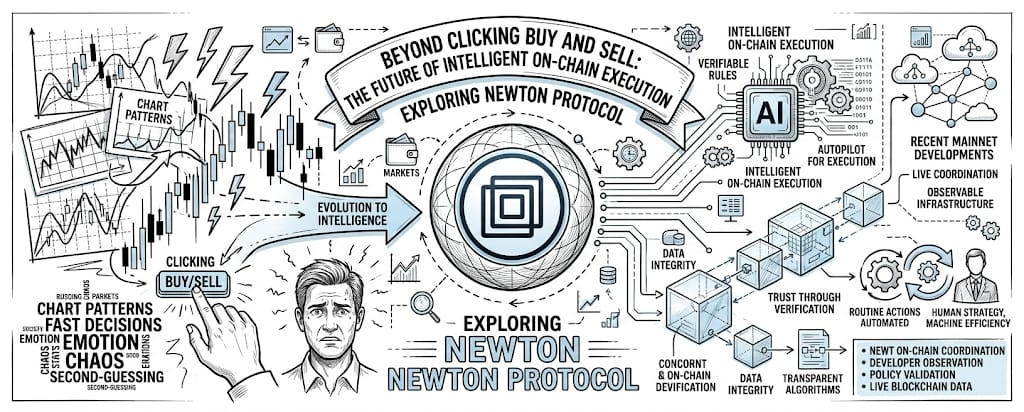
Über Klicks auf „Kaufen“ und „Verkaufen“ hinaus: Warum Newton die Zukunft intelligenter On-Chain-Ausführung erforschtFrüher glaubte ich, dass es beim besser werden als Trader einfach darum geht, mehr Chartmuster zu lernen. Ich verbrachte stundenlang damit, Candlesticks zu beobachten, auf perfekte Einstiege zu warten und mir einzureden, dass schnellere Entscheidungen irgendwann zu besseren Ergebnissen führen würden. Dann ist mir etwas Interessantes aufgefallen: Die größten Verbesserungen in meinem Trading kamen nicht daher, schneller zu reagieren. Sie ergaben sich daraus, unnötige Entscheidungen zu reduzieren.
Diese Erkenntnis hat meine Sicht auf Projekte wie Newton Protocol verändert.
Newton Protocol stellt nicht die Frage, wie Menschen schneller handeln können, sondern eine andere: Was, wenn routinierte Ausführungen intelligent, verifizierbar und programmierbar werden könnten, während Menschen sich auf die Strategie konzentrieren statt auf repetitive Handlungen?
Über Klicks auf „Kaufen“ und „Verkaufen“ hinaus: Warum Newton die Zukunft intelligenter On-Chain-Ausführung erforscht
Früher glaubte ich, dass es beim besser werden als Trader einfach darum geht, mehr Chartmuster zu lernen. Ich verbrachte stundenlang damit, Candlesticks zu beobachten, auf perfekte Einstiege zu warten und mir einzureden, dass schnellere Entscheidungen irgendwann zu besseren Ergebnissen führen würden. Dann ist mir etwas Interessantes aufgefallen: Die größten Verbesserungen in meinem Trading kamen nicht daher, schneller zu reagieren. Sie ergaben sich daraus, unnötige Entscheidungen zu reduzieren.
Diese Erkenntnis hat meine Sicht auf Projekte wie Newton Protocol verändert.
Newton Protocol stellt nicht die Frage, wie Menschen schneller handeln können, sondern eine andere: Was, wenn routinierte Ausführungen intelligent, verifizierbar und programmierbar werden könnten, während Menschen sich auf die Strategie konzentrieren statt auf repetitive Handlungen?
Diese Erkenntnis hat meine Sicht auf Projekte wie Newton Protocol verändert.
Newton Protocol stellt nicht die Frage, wie Menschen schneller handeln können, sondern eine andere: Was, wenn routinierte Ausführungen intelligent, verifizierbar und programmierbar werden könnten, während Menschen sich auf die Strategie konzentrieren statt auf repetitive Handlungen?
2
106
·
--
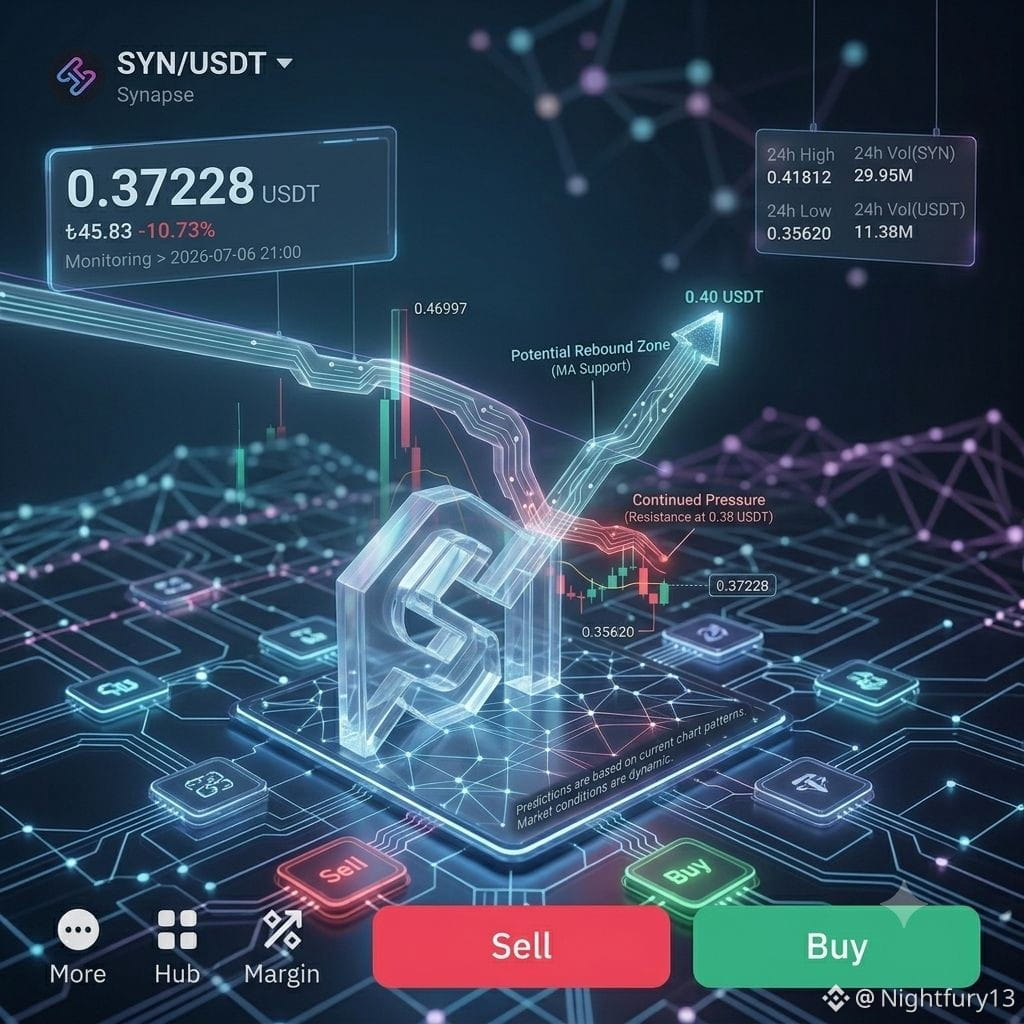
$SYN 💥💥
Markttrend: Neutral bis leicht bärisch im kurzfristigen Bereich.
Aktueller Preis: 0.37228 USDT, handelt unterhalb der MA7 (0.37297) und MA25 (0.37664), die als Widerstand wirken.
Bullishes Setup: Ein anhaltender Anstieg über 0.377 USDT könnte 0.400–0.425 USDT ansteuern.
Bärisches Setup: Eine Abweisung nahe 0.377 USDT könnte zu einem Rückgang in Richtung 0.35620 USDT führen. Ein Bruch unter dieses Niveau schwächt die bullische Ausgangslage.
Risikomanagement:
Long Stop-Loss: Unter 0.355 USDT
Short Stop-Loss: Ober 0.380 USDT
#BinanceTurns9 #SYN #Write2Earn
#DowTops53000FirstTime #SKHynixToIssue177.9MillionADSs
{spot}(SYNUSDT)
$GOOGL
{future}(GOOGLUSDT)
$BLUR
{spot}(BLURUSDT)
$SYN 💥💥
Markttrend: Neutral bis leicht bärisch im kurzfristigen Bereich.
Aktueller Preis: 0.37228 USDT, handelt unterhalb der MA7 (0.37297) und MA25 (0.37664), die als Widerstand wirken.
Bullishes Setup: Ein anhaltender Anstieg über 0.377 USDT könnte 0.400–0.425 USDT ansteuern.
Bärisches Setup: Eine Abweisung nahe 0.377 USDT könnte zu einem Rückgang in Richtung 0.35620 USDT führen. Ein Bruch unter dieses Niveau schwächt die bullische Ausgangslage.
Risikomanagement:
Long Stop-Loss: Unter 0.355 USDT
Short Stop-Loss: Ober 0.380 USDT
#BinanceTurns9 #SYN #Write2Earn
#DowTops53000FirstTime #SKHynixToIssue177.9MillionADSs
$GOOGL
$BLUR
Markttrend: Neutral bis leicht bärisch im kurzfristigen Bereich.
Aktueller Preis: 0.37228 USDT, handelt unterhalb der MA7 (0.37297) und MA25 (0.37664), die als Widerstand wirken.
Bullishes Setup: Ein anhaltender Anstieg über 0.377 USDT könnte 0.400–0.425 USDT ansteuern.
Bärisches Setup: Eine Abweisung nahe 0.377 USDT könnte zu einem Rückgang in Richtung 0.35620 USDT führen. Ein Bruch unter dieses Niveau schwächt die bullische Ausgangslage.
Risikomanagement:
Long Stop-Loss: Unter 0.355 USDT
Short Stop-Loss: Ober 0.380 USDT
#BinanceTurns9 #SYN #Write2Earn
#DowTops53000FirstTime #SKHynixToIssue177.9MillionADSs
$GOOGL
$BLUR
1
1
203
Anmelden und weiter Inhalte entdecken
Krypto-Nutzer weltweit auf Binance Square kennenlernen
⚡️ Bleib in Sachen Krypto stets am Puls.
💬 Die weltgrößte Kryptobörse vertraut darauf.
👍 Erhalte verlässliche Einblicke von verifizierten Creators.
E-Mail-Adresse/Telefonnummer
Trendthemen
StrategyStriveAdd2305BitcoinThisWeek
6,193 Aufrufe
279 Kommentare
🔥 2.305 BTC in einer Woche — Beobachte $BTC
Die Bitcoin-Reserven von Unternehmen wachsen weiter.
Strategie + Streben haben weitere 2.305 $BTC hinzugefügt und ihre gemeldeten Gesamtbestände auf etwa 872K BTC erhöht.
Das garantiert nicht, wohin der Preis als Nächstes geht — aber es zeigt, warum das feste Angebot von Bitcoin ein zentraler Bestandteil der Anlagediskussion bleibt.
Spot $BTC. Echtes Eigentum. Kein Leverage nötig. 📊🟠
#strategystriveadd2305bitcointhisweek
CryptoMahibaloch
·1 Likes
·1.4k Aufrufe
TrumpRejectsIranHormuzReopening
11,492 Aufrufe
348 Kommentare
CircleTetherFreezeBitgetHackerWallet
33,547 Aufrufe
502 Kommentare