
Wahidur Rahman Ifroin
931 Beiträge

Wahidur Rahman Ifroin
Melden
Nutzer blockieren
Trade eröffnen
Regelmäßiger Trader
1.2 Jahre
1.2K+ Following
203 Follower
97 Like gegeben
Beiträge
Portfolio
Alle
Zitierungen
PINNED
Kryptowährung: Die digitale Grenze der Finanzen navigierenIn einer Welt, die zunehmend von digitaler Innovation geprägt ist, haben nur wenige Konzepte die öffentliche Vorstellungskraft so gefesselt und so viel Debatte ausgelöst wie Kryptowährung. Vom rätselhaften Bitcoin bis hin zu einem riesigen Universum digitaler Vermögenswerte hat sich Krypto über Nischen-Tech-Kreise hinaus zu einer bedeutenden, wenn auch volatilen, Kraft in der globalen Finanzwelt entwickelt. Aber was genau ist es, und warum sorgt es für so viel Aufsehen?
Was ist Kryptowährung?
Im Kern ist Kryptowährung eine digitale oder virtuelle Währung, die durch Kryptografie gesichert ist, was es nahezu unmöglich macht, sie zu fälschen oder doppelt auszugeben. Im Gegensatz zu traditionellen Währungen, die von Zentralbanken (wie dem US-Dollar oder Euro) ausgegeben werden, operieren Kryptowährungen typischerweise in einem dezentralen Netzwerk – das bedeutet, dass es keine zentrale Autorität gibt, wie eine Regierung oder Finanzinstitution, die ihre Ausgabe oder Transaktionen kontrolliert.
Kryptowährung: Die digitale Grenze der Finanzen navigieren
In einer Welt, die zunehmend von digitaler Innovation geprägt ist, haben nur wenige Konzepte die öffentliche Vorstellungskraft so gefesselt und so viel Debatte ausgelöst wie Kryptowährung. Vom rätselhaften Bitcoin bis hin zu einem riesigen Universum digitaler Vermögenswerte hat sich Krypto über Nischen-Tech-Kreise hinaus zu einer bedeutenden, wenn auch volatilen, Kraft in der globalen Finanzwelt entwickelt. Aber was genau ist es, und warum sorgt es für so viel Aufsehen?
Was ist Kryptowährung?
Im Kern ist Kryptowährung eine digitale oder virtuelle Währung, die durch Kryptografie gesichert ist, was es nahezu unmöglich macht, sie zu fälschen oder doppelt auszugeben. Im Gegensatz zu traditionellen Währungen, die von Zentralbanken (wie dem US-Dollar oder Euro) ausgegeben werden, operieren Kryptowährungen typischerweise in einem dezentralen Netzwerk – das bedeutet, dass es keine zentrale Autorität gibt, wie eine Regierung oder Finanzinstitution, die ihre Ausgabe oder Transaktionen kontrolliert.
Was ist Kryptowährung?
Im Kern ist Kryptowährung eine digitale oder virtuelle Währung, die durch Kryptografie gesichert ist, was es nahezu unmöglich macht, sie zu fälschen oder doppelt auszugeben. Im Gegensatz zu traditionellen Währungen, die von Zentralbanken (wie dem US-Dollar oder Euro) ausgegeben werden, operieren Kryptowährungen typischerweise in einem dezentralen Netzwerk – das bedeutet, dass es keine zentrale Autorität gibt, wie eine Regierung oder Finanzinstitution, die ihre Ausgabe oder Transaktionen kontrolliert.
1
59
115
Übersetzung ansehen
1
4
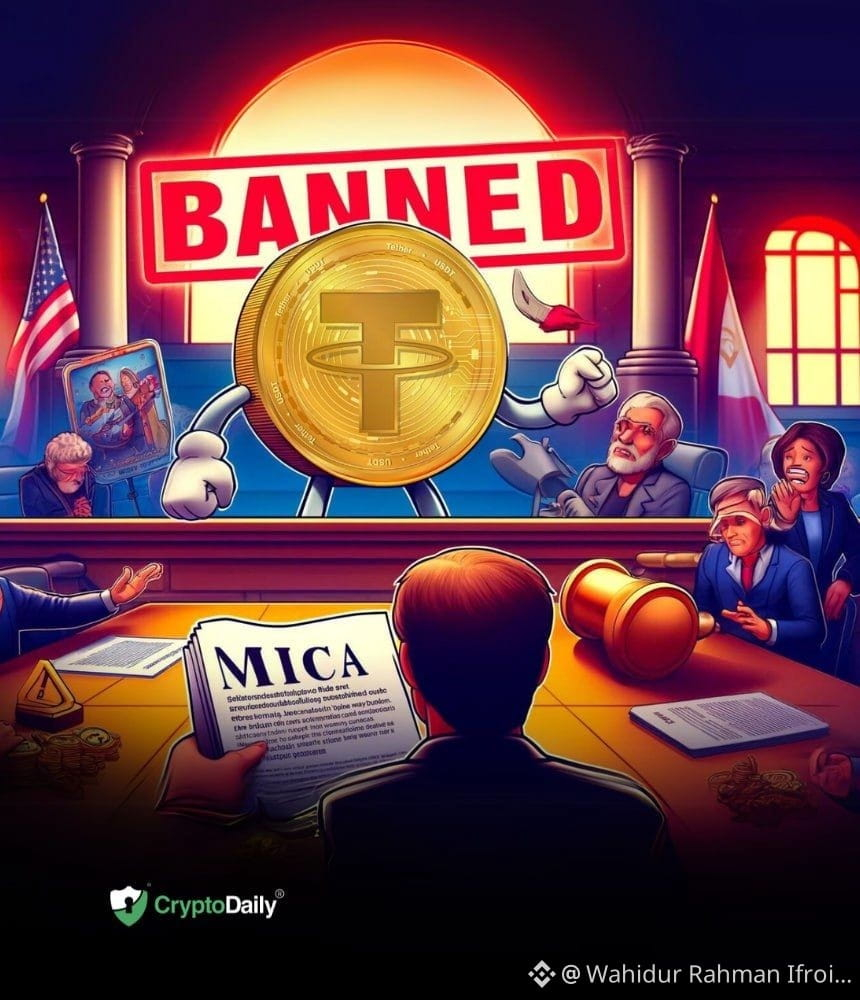
USDT (Tether) sieht sich ab 2025 strengen Beschränkungen in der Europäischen Union gegenüber, bedingt durch die Verordnung über Märkte für Krypto-Assets (MiCA), die strenge Lizenzierung für Stablecoin-Emittenten verlangt. Viele europäische Börsen delisten oder schränken den USDT-Handel ein, wobei die wichtigsten Einschränkungen rund um den 1. Juli 2025 in Kraft treten, was einen Wechsel zu konformen Alternativen wie USDC erforderlich macht.
Wichtige Details zur USDT-Situation 2025 in Europa:
Die Ursache (MiCA-Verordnung): Die neue, umfassende und strenge Regelung der EU für digitale Vermögenswerte verlangt von Stablecoin-Emittenten, dass sie über die richtige Lizenzierung, vollständige Reserve-Transparenz verfügen und die EU-Vorgaben zur Bekämpfung von Geldwäsche einhalten.
Limitlex +1
Die Auswirkungen: Ab Mitte 2025 werden nicht konforme Stablecoins wie USDT aus Handels-Paaren entfernt und in europäischen Börsen eingeschränkt oder vollständig entfernt.
Binance·Crypto Emergency +1
Benutzeraktion: Während die Nutzer ihre bestehenden USDT weiterhin halten und abheben können, empfehlen viele Plattformen, wie Binance, die Umwandlung in MiCA-konforme Stablecoins (wie USDC oder EURC), um Handelsbeschränkungen zu vermeiden.
Binance +1
Warum Tether? Tether hat Kritik für das Versäumnis erhalten, die Transparenz- und Kapitalanforderungen zu erfüllen, die durch die neuen EU-Vorschriften gefordert werden, im Gegensatz zu den Wettbewerbern.
Binance +1
Während USDT nicht völlig "verboten" ist, seine Nützlichkeit für den Handel und Geschäftstransaktionen in der EU wird stark eingeschränkt, was die Nutzung auf regulierten europäischen Plattformen erschwert.
$BTC
{spot}(BTCUSDT)
$BNB
{spot}(BNBUSDT)
$XRP
{spot}(XRPUSDT)
USDT (Tether) sieht sich ab 2025 strengen Beschränkungen in der Europäischen Union gegenüber, bedingt durch die Verordnung über Märkte für Krypto-Assets (MiCA), die strenge Lizenzierung für Stablecoin-Emittenten verlangt. Viele europäische Börsen delisten oder schränken den USDT-Handel ein, wobei die wichtigsten Einschränkungen rund um den 1. Juli 2025 in Kraft treten, was einen Wechsel zu konformen Alternativen wie USDC erforderlich macht.
Wichtige Details zur USDT-Situation 2025 in Europa:
Die Ursache (MiCA-Verordnung): Die neue, umfassende und strenge Regelung der EU für digitale Vermögenswerte verlangt von Stablecoin-Emittenten, dass sie über die richtige Lizenzierung, vollständige Reserve-Transparenz verfügen und die EU-Vorgaben zur Bekämpfung von Geldwäsche einhalten.
Limitlex +1
Die Auswirkungen: Ab Mitte 2025 werden nicht konforme Stablecoins wie USDT aus Handels-Paaren entfernt und in europäischen Börsen eingeschränkt oder vollständig entfernt.
Binance·Crypto Emergency +1
Benutzeraktion: Während die Nutzer ihre bestehenden USDT weiterhin halten und abheben können, empfehlen viele Plattformen, wie Binance, die Umwandlung in MiCA-konforme Stablecoins (wie USDC oder EURC), um Handelsbeschränkungen zu vermeiden.
Binance +1
Warum Tether? Tether hat Kritik für das Versäumnis erhalten, die Transparenz- und Kapitalanforderungen zu erfüllen, die durch die neuen EU-Vorschriften gefordert werden, im Gegensatz zu den Wettbewerbern.
Binance +1
Während USDT nicht völlig "verboten" ist, seine Nützlichkeit für den Handel und Geschäftstransaktionen in der EU wird stark eingeschränkt, was die Nutzung auf regulierten europäischen Plattformen erschwert.
$BTC
$BNB
$XRP
Wichtige Details zur USDT-Situation 2025 in Europa:
Die Ursache (MiCA-Verordnung): Die neue, umfassende und strenge Regelung der EU für digitale Vermögenswerte verlangt von Stablecoin-Emittenten, dass sie über die richtige Lizenzierung, vollständige Reserve-Transparenz verfügen und die EU-Vorgaben zur Bekämpfung von Geldwäsche einhalten.
Limitlex +1
Die Auswirkungen: Ab Mitte 2025 werden nicht konforme Stablecoins wie USDT aus Handels-Paaren entfernt und in europäischen Börsen eingeschränkt oder vollständig entfernt.
Binance·Crypto Emergency +1
Benutzeraktion: Während die Nutzer ihre bestehenden USDT weiterhin halten und abheben können, empfehlen viele Plattformen, wie Binance, die Umwandlung in MiCA-konforme Stablecoins (wie USDC oder EURC), um Handelsbeschränkungen zu vermeiden.
Binance +1
Warum Tether? Tether hat Kritik für das Versäumnis erhalten, die Transparenz- und Kapitalanforderungen zu erfüllen, die durch die neuen EU-Vorschriften gefordert werden, im Gegensatz zu den Wettbewerbern.
Binance +1
Während USDT nicht völlig "verboten" ist, seine Nützlichkeit für den Handel und Geschäftstransaktionen in der EU wird stark eingeschränkt, was die Nutzung auf regulierten europäischen Plattformen erschwert.
$BTC
$BNB
$XRP
1
109
Übersetzung ansehen
$BTC
{spot}(BTCUSDT)
The crypto market today feels like a high-stakes chess match played in the middle of a thunderstorm. After weeks of nerve-wracking consolidation, volatility has roared back, driven by shifting macroeconomic tides and a flurry of institutional interest. Bitcoin is currently testing its resolve near key resistance levels, acting as both an anchor and a lightning rod for the broader altcoin ecosystem.
Market sentiment is a fragile pendulum, swinging between the hope of a "bull run" breakout and the caution of potential liquidity traps. While retail traders are hunting for the next breakout narrative, smart money is quietly accumulating, betting on long-term infrastructure over short-term hype. Whether you view today’s price action as a daunting correction or a golden entry point, one thing is certain: the market remains unyielding in its demand for patience. In this arena, fortune favors those who can distinguish between the noise and the signal.
$BNB
{spot}(BNBUSDT)
$XRP
{spot}(XRPUSDT)
$BTC
The crypto market today feels like a high-stakes chess match played in the middle of a thunderstorm. After weeks of nerve-wracking consolidation, volatility has roared back, driven by shifting macroeconomic tides and a flurry of institutional interest. Bitcoin is currently testing its resolve near key resistance levels, acting as both an anchor and a lightning rod for the broader altcoin ecosystem.
Market sentiment is a fragile pendulum, swinging between the hope of a "bull run" breakout and the caution of potential liquidity traps. While retail traders are hunting for the next breakout narrative, smart money is quietly accumulating, betting on long-term infrastructure over short-term hype. Whether you view today’s price action as a daunting correction or a golden entry point, one thing is certain: the market remains unyielding in its demand for patience. In this arena, fortune favors those who can distinguish between the noise and the signal.
$BNB
$XRP
The crypto market today feels like a high-stakes chess match played in the middle of a thunderstorm. After weeks of nerve-wracking consolidation, volatility has roared back, driven by shifting macroeconomic tides and a flurry of institutional interest. Bitcoin is currently testing its resolve near key resistance levels, acting as both an anchor and a lightning rod for the broader altcoin ecosystem.
Market sentiment is a fragile pendulum, swinging between the hope of a "bull run" breakout and the caution of potential liquidity traps. While retail traders are hunting for the next breakout narrative, smart money is quietly accumulating, betting on long-term infrastructure over short-term hype. Whether you view today’s price action as a daunting correction or a golden entry point, one thing is certain: the market remains unyielding in its demand for patience. In this arena, fortune favors those who can distinguish between the noise and the signal.
$BNB
$XRP
2
1
45
Übersetzung ansehen
1
Übersetzung ansehen
claim btc
big rewards $BTC
{spot}(BTCUSDT)
$BNB
{spot}(BNBUSDT)
$ETH
{spot}(ETHUSDT)
claim btc
big rewards $BTC
$BNB
$ETH
big rewards $BTC
$BNB
$ETH

2
2
Übersetzung ansehen
crypto coin futurePredicting the future of crypto is a bit like forecasting the weather in a hurricane—exciting, slightly chaotic, and subject to change at any moment. However, as of early 2026, the "Wild West" era of crypto is largely being replaced by a more structured, institutional phase.
Here is a breakdown of what the future of crypto looks like:
1. The "Institutional" Era (2026 and Beyond)
The biggest shift is that crypto is no longer just for tech enthusiasts. It has become a standard part of the global financial system.
Mainstream Treasury: More than 170 public companies now hold Bitcoin on their balance sheets. It is increasingly viewed as "digital gold" or a hedge against inflation.
Spot ETFs: The success of Bitcoin and Ethereum ETFs has opened the floodgates for pension funds and retirement accounts to invest safely.
Regulatory Clarity: In the US and Europe, new laws (like the MiCA in Europe and bipartisan acts in the US) are providing clear rules, which makes big banks more comfortable offering crypto services.
2. Tokenization of "Real-World Assets" (RWAs)
This is arguably the most significant trend for 2026. Instead of just trading "coins," we are seeing the tokenization of physical assets:
Real Estate: You can own 5% of a skyscraper via a digital token.
Bonds & Stocks: Major banks are moving traditional stocks and bonds onto the blockchain to make trading faster and cheaper.
Result: This gives "crypto" actual utility beyond just speculation.
3. The Rise of Stablecoins & CBDCs
The "future of money" might not be Bitcoin, but rather Stablecoins (tokens pegged to the dollar).
Stablecoins: They are becoming the "internet’s dollar," used for international business payments and remittances because they are 24/7 and nearly instant.
CBDCs: Central banks (like the Digital Yuan or potential Digital Euro) are launching their own digital currencies. This creates a "clash" between private crypto (Bitcoin) and government-controlled digital money.
4. Market Cycle Predictions
While the old "4-year cycle" (linked to Bitcoin halvings) is being challenged by constant institutional buying, analysts have specific outlooks for 2026:
Bitcoin (BTC): After reaching highs near $126,000 in late 2025 and seeing a sharp correction, many analysts predict a steady climb toward $150,000–$200,000 by the end of 2026.
Altcoins: Projects with high utility (like Solana for speed or Ethereum for smart contracts) are expected to decouple from Bitcoin’s price movements and grow based on their own ecosystem strength.
$BTC
{spot}(BTCUSDT)
$ETH
{spot}(ETHUSDT)
$BNB
{spot}(BNBUSDT)
crypto coin future
Predicting the future of crypto is a bit like forecasting the weather in a hurricane—exciting, slightly chaotic, and subject to change at any moment. However, as of early 2026, the "Wild West" era of crypto is largely being replaced by a more structured, institutional phase.
Here is a breakdown of what the future of crypto looks like:
1. The "Institutional" Era (2026 and Beyond)
The biggest shift is that crypto is no longer just for tech enthusiasts. It has become a standard part of the global financial system.
Mainstream Treasury: More than 170 public companies now hold Bitcoin on their balance sheets. It is increasingly viewed as "digital gold" or a hedge against inflation.
Spot ETFs: The success of Bitcoin and Ethereum ETFs has opened the floodgates for pension funds and retirement accounts to invest safely.
Regulatory Clarity: In the US and Europe, new laws (like the MiCA in Europe and bipartisan acts in the US) are providing clear rules, which makes big banks more comfortable offering crypto services.
2. Tokenization of "Real-World Assets" (RWAs)
This is arguably the most significant trend for 2026. Instead of just trading "coins," we are seeing the tokenization of physical assets:
Real Estate: You can own 5% of a skyscraper via a digital token.
Bonds & Stocks: Major banks are moving traditional stocks and bonds onto the blockchain to make trading faster and cheaper.
Result: This gives "crypto" actual utility beyond just speculation.
3. The Rise of Stablecoins & CBDCs
The "future of money" might not be Bitcoin, but rather Stablecoins (tokens pegged to the dollar).
Stablecoins: They are becoming the "internet’s dollar," used for international business payments and remittances because they are 24/7 and nearly instant.
CBDCs: Central banks (like the Digital Yuan or potential Digital Euro) are launching their own digital currencies. This creates a "clash" between private crypto (Bitcoin) and government-controlled digital money.
4. Market Cycle Predictions
While the old "4-year cycle" (linked to Bitcoin halvings) is being challenged by constant institutional buying, analysts have specific outlooks for 2026:
Bitcoin (BTC): After reaching highs near $126,000 in late 2025 and seeing a sharp correction, many analysts predict a steady climb toward $150,000–$200,000 by the end of 2026.
Altcoins: Projects with high utility (like Solana for speed or Ethereum for smart contracts) are expected to decouple from Bitcoin’s price movements and grow based on their own ecosystem strength.
$BTC
$ETH
$BNB
Here is a breakdown of what the future of crypto looks like:
1. The "Institutional" Era (2026 and Beyond)
The biggest shift is that crypto is no longer just for tech enthusiasts. It has become a standard part of the global financial system.
Mainstream Treasury: More than 170 public companies now hold Bitcoin on their balance sheets. It is increasingly viewed as "digital gold" or a hedge against inflation.
Spot ETFs: The success of Bitcoin and Ethereum ETFs has opened the floodgates for pension funds and retirement accounts to invest safely.
Regulatory Clarity: In the US and Europe, new laws (like the MiCA in Europe and bipartisan acts in the US) are providing clear rules, which makes big banks more comfortable offering crypto services.
2. Tokenization of "Real-World Assets" (RWAs)
This is arguably the most significant trend for 2026. Instead of just trading "coins," we are seeing the tokenization of physical assets:
Real Estate: You can own 5% of a skyscraper via a digital token.
Bonds & Stocks: Major banks are moving traditional stocks and bonds onto the blockchain to make trading faster and cheaper.
Result: This gives "crypto" actual utility beyond just speculation.
3. The Rise of Stablecoins & CBDCs
The "future of money" might not be Bitcoin, but rather Stablecoins (tokens pegged to the dollar).
Stablecoins: They are becoming the "internet’s dollar," used for international business payments and remittances because they are 24/7 and nearly instant.
CBDCs: Central banks (like the Digital Yuan or potential Digital Euro) are launching their own digital currencies. This creates a "clash" between private crypto (Bitcoin) and government-controlled digital money.
4. Market Cycle Predictions
While the old "4-year cycle" (linked to Bitcoin halvings) is being challenged by constant institutional buying, analysts have specific outlooks for 2026:
Bitcoin (BTC): After reaching highs near $126,000 in late 2025 and seeing a sharp correction, many analysts predict a steady climb toward $150,000–$200,000 by the end of 2026.
Altcoins: Projects with high utility (like Solana for speed or Ethereum for smart contracts) are expected to decouple from Bitcoin’s price movements and grow based on their own ecosystem strength.
$BTC
$ETH
$BNB
2
1
1
24
Übersetzung ansehen
[RAMADAN MUBARAK](https://www.binance.com/activity/calendar/ramadan-2026?ref=1126050492)
This Ramadan, Binance illuminates a new path for reflection and community. Beyond the traditional lanterns, digital ones glow—trading with disciplined patience mirrors the month’s resolve. The platform’s staking and savings features offer a modern take on nurturing wealth for Eid and beyond. Most meaningfully, crypto donations transform zakat and sadaqah into instant, borderless aid, turning fasting’s empathy into tangible global support. It’s a fusion of centuries-old spirituality with tomorrow’s finance, where technology doesn’t replace tradition but empowers its core values of generosity and self-betterment. A month of light, now with a new digital frontier.
$BNB
{spot}(BNBUSDT)
$XRP
{spot}(XRPUSDT)
$ETH
{spot}(ETHUSDT)
RAMADAN MUBARAK
This Ramadan, Binance illuminates a new path for reflection and community. Beyond the traditional lanterns, digital ones glow—trading with disciplined patience mirrors the month’s resolve. The platform’s staking and savings features offer a modern take on nurturing wealth for Eid and beyond. Most meaningfully, crypto donations transform zakat and sadaqah into instant, borderless aid, turning fasting’s empathy into tangible global support. It’s a fusion of centuries-old spirituality with tomorrow’s finance, where technology doesn’t replace tradition but empowers its core values of generosity and self-betterment. A month of light, now with a new digital frontier.
$BNB
$XRP
$ETH
This Ramadan, Binance illuminates a new path for reflection and community. Beyond the traditional lanterns, digital ones glow—trading with disciplined patience mirrors the month’s resolve. The platform’s staking and savings features offer a modern take on nurturing wealth for Eid and beyond. Most meaningfully, crypto donations transform zakat and sadaqah into instant, borderless aid, turning fasting’s empathy into tangible global support. It’s a fusion of centuries-old spirituality with tomorrow’s finance, where technology doesn’t replace tradition but empowers its core values of generosity and self-betterment. A month of light, now with a new digital frontier.
$BNB
$XRP
$ETH

1
1
20
Übersetzung ansehen
[Let's go and earn together](https://www.binance.com/referral/earn-together/refer2earn-usdc/claim?hl=en&ref=GRO_28502_7DT7A&utm_source=default) $
The Power of Collaboration: How "Refer to Earn" Can Revolutionize the Way We Work Together
In a world where individualism and competition often take center stage, it's refreshing to come across a concept that celebrates the art of collaboration and mutual support. "Refer to earn" is a innovative approach that encourages people to work together, share knowledge, and reap rewards as a team. This simple yet powerful idea has the potential to transform the way we approach our personal and professional lives, fostering a culture of cooperation and collective success.
Imagine a platform where individuals from diverse backgrounds and industries can come together, share their expertise, and earn rewards by referring others to join the community. This is the core principle of "refer to earn," a system that incentivizes people to collaborate, mentor, and support one another. By doing so, participants not only benefit from the knowledge and experience of others but also receive tangible rewards for their contributions.
One of the most significant advantages of "refer to earn" is its ability to break down silos and facilitate connections between people who might not have otherwise met. In a traditional networking setting, individuals often focus on promoting their own interests and services, rather than genuinely engaging with others. In contrast, "refer to earn" encourages participants to think about how they can help others, rather than just themselves. This shift in mindset can lead to meaningful relationships, new business opportunities, and a deeper sense of community.
[Let's go and earn together](https://www.binance.com/referral/earn-together/refer2earn-usdc/claim?hl=en&ref=GRO_28502_7DT7A&utm_source=default)
$BTC
{spot}(BTCUSDT)
$BNB
{spot}(BNBUSDT)
$DUSK
{spot}(DUSKUSDT)
Let's go and earn together $
The Power of Collaboration: How "Refer to Earn" Can Revolutionize the Way We Work Together
In a world where individualism and competition often take center stage, it's refreshing to come across a concept that celebrates the art of collaboration and mutual support. "Refer to earn" is a innovative approach that encourages people to work together, share knowledge, and reap rewards as a team. This simple yet powerful idea has the potential to transform the way we approach our personal and professional lives, fostering a culture of cooperation and collective success.
Imagine a platform where individuals from diverse backgrounds and industries can come together, share their expertise, and earn rewards by referring others to join the community. This is the core principle of "refer to earn," a system that incentivizes people to collaborate, mentor, and support one another. By doing so, participants not only benefit from the knowledge and experience of others but also receive tangible rewards for their contributions.
One of the most significant advantages of "refer to earn" is its ability to break down silos and facilitate connections between people who might not have otherwise met. In a traditional networking setting, individuals often focus on promoting their own interests and services, rather than genuinely engaging with others. In contrast, "refer to earn" encourages participants to think about how they can help others, rather than just themselves. This shift in mindset can lead to meaningful relationships, new business opportunities, and a deeper sense of community.
Let's go and earn together
$BTC
$BNB
$DUSK
The Power of Collaboration: How "Refer to Earn" Can Revolutionize the Way We Work Together
In a world where individualism and competition often take center stage, it's refreshing to come across a concept that celebrates the art of collaboration and mutual support. "Refer to earn" is a innovative approach that encourages people to work together, share knowledge, and reap rewards as a team. This simple yet powerful idea has the potential to transform the way we approach our personal and professional lives, fostering a culture of cooperation and collective success.
Imagine a platform where individuals from diverse backgrounds and industries can come together, share their expertise, and earn rewards by referring others to join the community. This is the core principle of "refer to earn," a system that incentivizes people to collaborate, mentor, and support one another. By doing so, participants not only benefit from the knowledge and experience of others but also receive tangible rewards for their contributions.
One of the most significant advantages of "refer to earn" is its ability to break down silos and facilitate connections between people who might not have otherwise met. In a traditional networking setting, individuals often focus on promoting their own interests and services, rather than genuinely engaging with others. In contrast, "refer to earn" encourages participants to think about how they can help others, rather than just themselves. This shift in mindset can lead to meaningful relationships, new business opportunities, and a deeper sense of community.
Let's go and earn together
$BTC
$BNB
$DUSK

1
11

Übersetzung ansehen
[Join Me](https://www.binance.com/referral/earn-together/refer2earn-usdc/claim?hl=en&ref=GRO_28502_7DT7A&utm_source=default)
Dream big, start small. Join me on a journey where passion meets profit—no experience needed, just drive. Together, we’ll build a community that turns effort into income, ideas into impact. I’ll guide you step-by-step, sharing proven strategies, real tools, and daily motivation. This isn’t a get-rich-quick scheme—it’s a get-rich-smart move. Every action counts. Every win is shared. Let’s grow, learn, and earn—together. Your future self will thank you. Ready? Click now. Let’s make your first $100 happen—then keep going. The only thing missing?$BTC
{spot}(BTCUSDT)
$ETH
{spot}(ETHUSDT)
$BNB
{spot}(BNBUSDT)
Join Me
Dream big, start small. Join me on a journey where passion meets profit—no experience needed, just drive. Together, we’ll build a community that turns effort into income, ideas into impact. I’ll guide you step-by-step, sharing proven strategies, real tools, and daily motivation. This isn’t a get-rich-quick scheme—it’s a get-rich-smart move. Every action counts. Every win is shared. Let’s grow, learn, and earn—together. Your future self will thank you. Ready? Click now. Let’s make your first $100 happen—then keep going. The only thing missing?$BTC
$ETH
$BNB
Dream big, start small. Join me on a journey where passion meets profit—no experience needed, just drive. Together, we’ll build a community that turns effort into income, ideas into impact. I’ll guide you step-by-step, sharing proven strategies, real tools, and daily motivation. This isn’t a get-rich-quick scheme—it’s a get-rich-smart move. Every action counts. Every win is shared. Let’s grow, learn, and earn—together. Your future self will thank you. Ready? Click now. Let’s make your first $100 happen—then keep going. The only thing missing?$BTC
$ETH
$BNB

1
12
Übersetzung ansehen


1
7
Übersetzung ansehen
[btc](https://app.binance.com/uni-qr/PxJA5mKb?utm_medium=web_share_copy)
Red packets, vibrant and brimming with promise, flutter through Lunar New Year like lucky charms. Slipped into eager hands, they carry more than crisp bills—they hold blessings, love, and ancestral wishes for prosperity. Grandparents beam as they gift the young, passing warmth from wrinkled fingers to tiny palms. Each envelope is a silent promise: May your year overflow. Beyond money, it's tradition wrapped in silk-red paper, tying generations in crimson threads of hope. In that simple gesture, culture dances—joy folded carefully, passed hand to hand, heart to heart. Luck, it seems, fits perfectly in a red packet.$BTC
{spot}(BTCUSDT)
$DUSK
{spot}(DUSKUSDT)
btc
Red packets, vibrant and brimming with promise, flutter through Lunar New Year like lucky charms. Slipped into eager hands, they carry more than crisp bills—they hold blessings, love, and ancestral wishes for prosperity. Grandparents beam as they gift the young, passing warmth from wrinkled fingers to tiny palms. Each envelope is a silent promise: May your year overflow. Beyond money, it's tradition wrapped in silk-red paper, tying generations in crimson threads of hope. In that simple gesture, culture dances—joy folded carefully, passed hand to hand, heart to heart. Luck, it seems, fits perfectly in a red packet.$BTC
$DUSK
Red packets, vibrant and brimming with promise, flutter through Lunar New Year like lucky charms. Slipped into eager hands, they carry more than crisp bills—they hold blessings, love, and ancestral wishes for prosperity. Grandparents beam as they gift the young, passing warmth from wrinkled fingers to tiny palms. Each envelope is a silent promise: May your year overflow. Beyond money, it's tradition wrapped in silk-red paper, tying generations in crimson threads of hope. In that simple gesture, culture dances—joy folded carefully, passed hand to hand, heart to heart. Luck, it seems, fits perfectly in a red packet.$BTC
$DUSK


1
9

Übersetzung ansehen
Every spring, Binance users hunt for digital red packets, tiny treasure chests that burst with crypto rewards. To claim, you log in, tap the glowing envelope, and watch a cascade of BNB or USDT tumble into your wallet. The process is swift: verify your KYC, solve a quick captcha, and the packet opens—if luck favors you, the prize lands instantly. Community chats buzz with screenshots of lucky draws, while newcomers scramble to meet the modest trading threshold. It’s a modern twist on tradition, turning festive generosity into a crypto‑driven game of chance that fuels excitement across the platform for all.
claim red packet
$BTC $BNB
Every spring, Binance users hunt for digital red packets, tiny treasure chests that burst with crypto rewards. To claim, you log in, tap the glowing envelope, and watch a cascade of BNB or USDT tumble into your wallet. The process is swift: verify your KYC, solve a quick captcha, and the packet opens—if luck favors you, the prize lands instantly. Community chats buzz with screenshots of lucky draws, while newcomers scramble to meet the modest trading threshold. It’s a modern twist on tradition, turning festive generosity into a crypto‑driven game of chance that fuels excitement across the platform for all.
claim red packet
$BTC $BNB
claim red packet
$BTC $BNB

1
1


1
Anmelden und weiter Inhalte entdecken
Krypto-Nutzer weltweit auf Binance Square kennenlernen
⚡️ Bleib in Sachen Krypto stets am Puls.
💬 Die weltgrößte Kryptobörse vertraut darauf.
👍 Erhalte verlässliche Einblicke von verifizierten Creators.
E-Mail-Adresse/Telefonnummer
Trendthemen
BOJRaisesRatesTo31YearHigh
93,672 Aufrufe
1,472 Kommentare
#bojraisesratesto31yearhigh
🇯🇵 BOJ erhöhte Zinsen. Warum fiel der Yen trotzdem?
Stell dir vor, du würdest eine Währung leihen, deren Zentralbank gerade die Zinsen erhöht hat …
… und diese Währung wird trotzdem schwächer. 😂
Am 18. September erhöhte die BOJ die Zinsen um 25 Basispunkte auf 1,25 % – das höchste Niveau seit 31 Jahren.
Die Abstimmung? 7–2.
Aber USD/JPY sprang bis auf 158,05, da Händler fragten, wie aggressiv die nächsten Zinsschritte ausfallen könnten.
ABER HIER IST WAS VIELE NICHT BEACHTEN 👀
Der Markt hat nicht nur den Zinsschritt gehandelt.
Er hat die „Guidance“-Lücke gehandelt.
Der 25bp-Schritt war weitgehend erwartet.
Entscheidend war, ob BOJ-Gouverneur Ueda einen klaren Weg für weiteres Straffen signalisieren würde.
Er hat sich nicht auf ein vorgegebenes Tempo festgelegt.
Währenddessen bleibt die Zinsdifferenz zwischen den USA und Japan groß genug, um die Carry-Trade-Story am Leben zu halten: Günstige-Yen-Finanzierung kann sich weiterhin gegen höher verzinsliche Assets anderswo durchsetzen.
Und dann kam die Krypto-Wendung:
BTC erholte sich nach der BOJ-Entscheidung um etwa 5,9 % Richtung 81.000 US-Dollar.
Also:
BOJ-Straffung ≠ automatischer Krypto-Verkauf.
Aber es gibt noch ein Risiko.
Wenn USD/JPY weiter steigt, können die Sorgen um Interventionen stärker werden. Wenn der Yen plötzlich stärker wird, könnten sich überfüllte Carry-Positionen schnell auflösen.
🧠 Square-Einblick:
Märkte handeln nicht die Zinsanhebung. Sie handeln die Lücke zwischen dem, was erwartet wurde, und dem, was geliefert wurde.
Glaubst du, dass der nächste BOJ-Schritt den Carry Trade endlich brechen wird?
Nur Marktkommentar. Keine Finanzberatung.
#BOJ #JapaneseYen #CarryTrade
$BTC
TuilaNamKy
·5 Likes
·6.3k Aufrufe
BuffettStepsDownAsBerkshireChairman
42,913 Aufrufe
685 Kommentare
XRPExchangeReservesHitSevenYearLow
48,066 Aufrufe
659 Kommentare