
Eliud Elivis
16 Beiträge

Eliud Elivis
Melden
Nutzer blockieren
Trade eröffnen
Regelmäßiger Trader
4.1 Monate
73 Following
8 Follower
20 Like gegeben
Beiträge
Portfolio
Alle
Zitierungen
Videos
·
--
Übersetzung ansehen
word of the day ☺️
https://www.binance.com/activity/word-of-the-day/Stock-Options-Got-Better?ref=CPA_00UJEFT8ZT
word of the day ☺️
https://www.binance.com/activity/word-of-the-day/Stock-Options-Got-Better?ref=CPA_00UJEFT8ZT
https://www.binance.com/activity/word-of-the-day/Stock-Options-Got-Better?ref=CPA_00UJEFT8ZT
1
2
·
--
Übersetzung ansehen
2
2
·
--
Bullisch
Übersetzung ansehen
W
W


Binance News
·
--
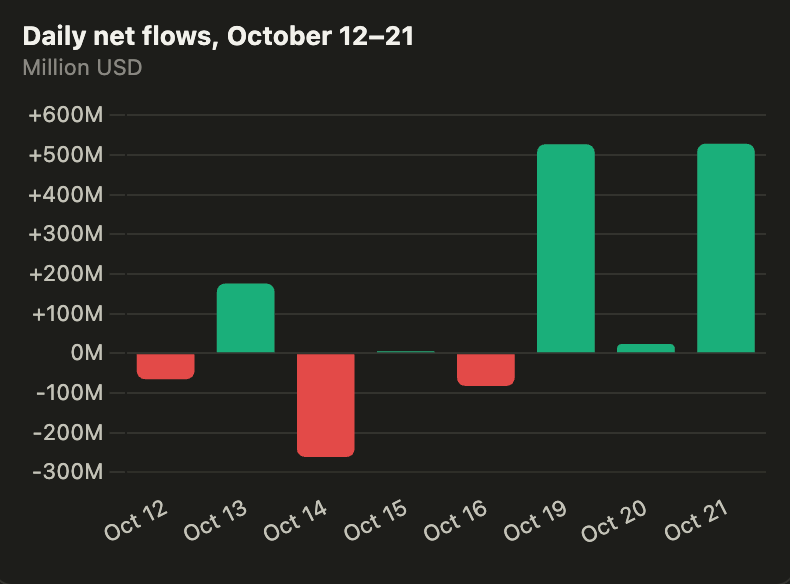
ETF-Nachrichten | Bitcoin-ETFs verzeichnen binnen drei Tagen Zuflüsse von 1,08 Milliarden US-Dollar – doch das tägliche Tempo von 86 Millionen US-Dollar seit Juli beträgt nur ein Drittel früherer Rallys
US-Spot-Bitcoin-ETFs verzeichneten am Mittwoch, dem 21. Oktober, Nettozuflüsse in Höhe von 528 Millionen US-Dollar, wie SoSoValue mitteilte. Am Dienstag waren es 23 Millionen US-Dollar und am Montag 526,6 Millionen US-Dollar – insgesamt 1,08 Milliarden US-Dollar innerhalb von drei Tagen. Dadurch stiegen die Nettozuflüsse im Oktober auf rund 461 Millionen US-Dollar, nachdem am 16. Oktober noch Abflüsse von etwa 615 Millionen US-Dollar zu Buche standen. Die Zuflüsse seit Jahresbeginn erhöhten sich damit auf 1,34 Milliarden US-Dollar.Drei Tage machen zwei Wochen mit Abflüssen wettDen Zuflüssen waren zwei Wochen in Folge mit Abhebungen vorausgegangen: 681 Millionen US-Dollar in der Woche bis zum 9. Oktober und 228 Millionen US-Dollar in der Woche bis zum 16. Oktober. Daten von Farside Investors zufolge führte BlackRocks iShares Bitcoin Trust (IBIT) am Mittwoch mit Zuflüssen von 235 Millionen US-Dollar. Es folgte der Fidelity Wise Origin Bitcoin Fund (FBTC) mit rund 213 Millionen US-Dollar.
1
1
·
--
Übersetzung ansehen
👇
👇


TF_bnb
·
--
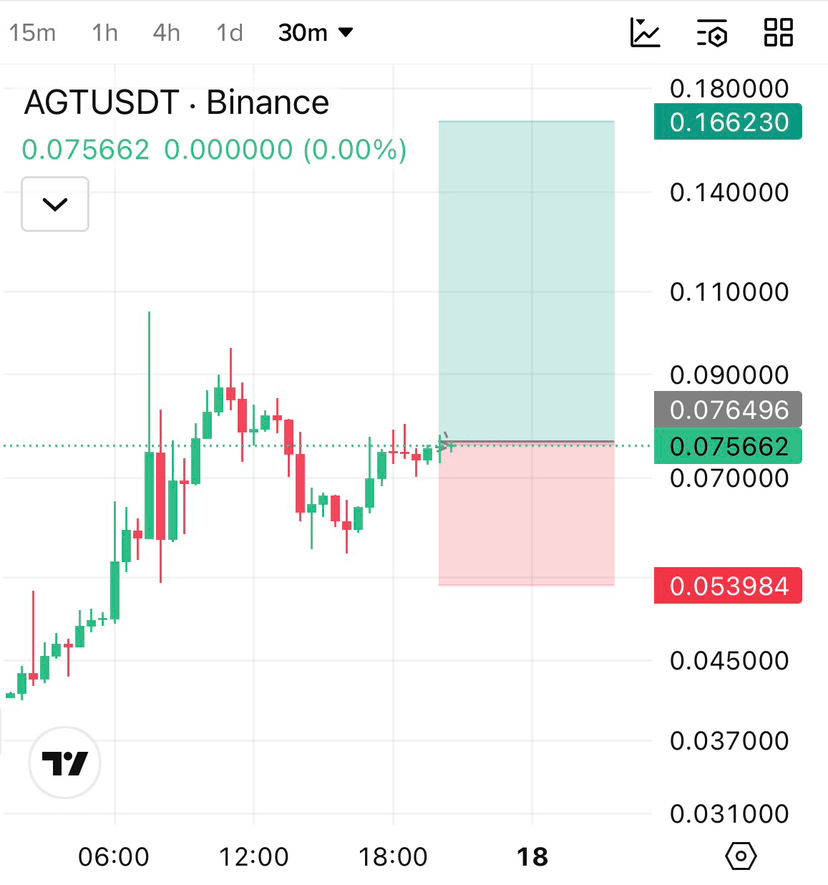
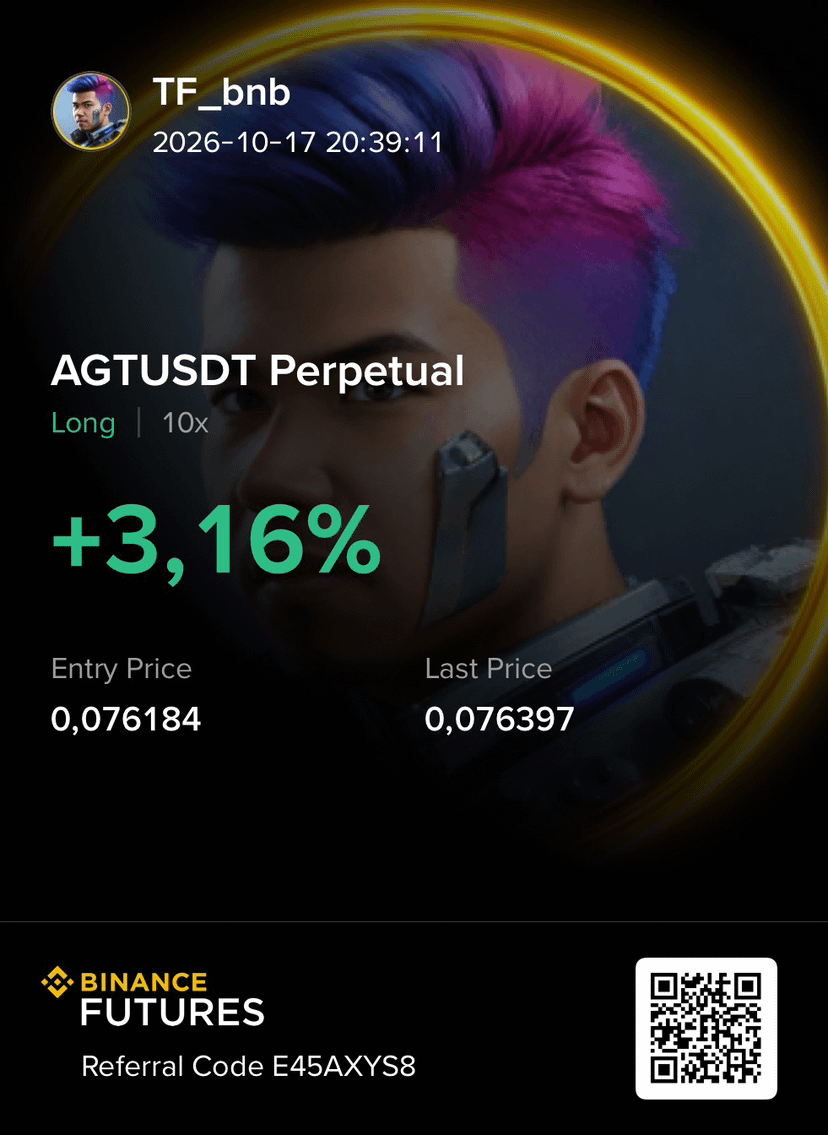
Bullisch$AGT Eröffne wieder eine große Long-Position, dank mir später
Stop-Loss: 0.057
Take-Profit: 0.16
Long $AGT jetzt 👇
Stop-Loss: 0.057
Take-Profit: 0.16
Long $AGT jetzt 👇
1
1
·
--
Übersetzung ansehen
Emotions Can Cloud Your Mind in Trading: Master Your Mind Before You Master the MarketEmotions Can Cloud Your Mind in Trading: Master Your Mind Before You Master the Market
The biggest enemy in trading is not always the market. Sometimes, it is the person looking at the chart.
Many traders spend hours learning technical analysis, studying candlestick patterns, identifying support and resistance, and searching for the perfect entry. They learn about liquidity grabs, break of structure (BOS), fair value gaps (FVG), and risk-to-reward ratios.
Yet, despite all this knowledge, they still lose money.
Why?
Because knowing how to trade and having the discipline to follow your strategy are two different things.
One of the biggest challenges every trader faces is emotional control.
1. Fear Can Make You Miss Good Opportunities
Imagine you have analyzed BTC and identified a potential bullish setup. Your entry is clear, your stop-loss is in place, and your risk is calculated.
But when the price starts moving, fear takes over.
You hesitate. You doubt your analysis. You wait for more confirmation until the price finally moves in your predicted direction without you.
Then comes frustration.
You enter late, chasing the market because you do not want to miss out. Unfortunately, the market reverses, and you end up buying at the top.
This is how fear of missing out (FOMO) can turn a good trading plan into a bad decision.
Remember: You do not need to catch every move. You only need to take the opportunities that meet your trading rules.
2. Greed Can Turn Profits Into Losses
Greed is another dangerous emotion.
You enter a trade, and the market moves in your favor. Your take-profit target is approaching, but you start thinking:
"What if the price goes even higher?"
You move your target. The price reverses, and the profit you could have secured disappears. In some cases, a winning trade even becomes a losing trade.
There is nothing wrong with letting profits run when your strategy supports it. The problem is changing your plan simply because you want more money.
A disciplined trader manages a trade according to a predefined strategy, not an emotional wish.
The market owes you nothing, and no profit is guaranteed until the trade is closed.
3. Revenge Trading: The Trap That Destroys Discipline
Losing a trade hurts, especially when you were confident in your analysis.
But the real danger begins when you try to recover the loss immediately.
You increase your position size, ignore your entry conditions, and take another trade without proper confirmation. When that trade loses too, frustration grows.
One loss becomes two. Two become three.
Before you realize it, you have damaged your account—not necessarily because your strategy was bad, but because you abandoned it.
A loss is part of trading. It is not a personal attack from the market.
After a loss, take a break. Review what happened. If you have reached your daily loss limit, stop trading for the day.
Your job is not to win back every loss immediately. Your job is to protect your capital and wait for the next valid setup.
4. Overconfidence Can Be Just as Dangerous as Fear
After several successful trades, a trader may begin to believe that the market is easy to predict.
They increase their leverage, risk more money, and stop respecting their stop-loss.
Then an unexpected move wipes out a significant portion of their profits.
The market does not care how many trades you won yesterday. Every new trade carries uncertainty.
Confidence is useful when it comes from preparation and discipline. Overconfidence is dangerous when it makes you believe you cannot be wrong.
Even experienced traders make mistakes. What separates disciplined traders is how they manage those mistakes.
5. Your Trading Plan Must Be Stronger Than Your Emotions
You cannot completely eliminate emotions. Trading involves uncertainty, and money naturally creates psychological pressure.
However, you can build a system that prevents emotions from controlling your decisions.
Here are five practical rules:
Rule 1: Plan before entering. Identify your entry, stop-loss, take-profit, and invalidation level before opening a position.
Rule 2: Risk only what you can afford to lose. Keep position sizes appropriate for your account. Never use excessive leverage to compensate for a small balance or previous losses.
Rule 3: Never move your stop-loss farther away just to avoid accepting a loss. Only adjust risk according to predefined rules.
Rule 4: Keep a trading journal. Record why you entered, what you felt, whether you followed your plan, and what you learned.
Rule 5: Learn when not to trade. If you are angry, desperate, exhausted, or trying to recover a loss, stepping away can be your best decision.
6. A Good Trader Thinks in Probabilities, Not Certainties
No indicator, candlestick pattern, liquidity sweep, or chart formation guarantees what the market will do next.
A setup can be technically correct and still fail.
That is why professional-minded traders focus on probabilities and risk management rather than trying to predict every candle perfectly.
If your strategy has an edge over a sufficiently large sample of trades, disciplined execution gives that edge a chance to work. One trade does not define your ability as a trader.
The goal is not to be right every time. The goal is to manage risk intelligently and remain consistent over time.
Final Thoughts: Control Yourself Before Trying to Control the Market
The market will always move unpredictably. Candles will rise and fall. Breakouts will succeed or fail. Opportunities will appear and disappear.
You cannot control the market, but you can control your preparation, your position size, your risk, and your response to uncertainty.
Sometimes, the smartest trade is the one you do not take.
Sometimes, accepting a small loss is a bigger victory than holding a losing position out of hope.
And sometimes, closing your chart and protecting your peace is better than forcing another opportunity.
Before asking, "Where will Bitcoin go next?" ask yourself, "Am I making this decision based on my strategy or my emotions?"
Because in trading, mastering your emotions does not guarantee profits—but failing to manage them can turn even a good strategy into a dangerous game.
Trade with a plan. Respect your risk. Stay patient. Protect your capital.
The market tests your strategy, but your emotions test your discipline.
Emotions Can Cloud Your Mind in Trading: Master Your Mind Before You Master the Market
Emotions Can Cloud Your Mind in Trading: Master Your Mind Before You Master the Market
The biggest enemy in trading is not always the market. Sometimes, it is the person looking at the chart.
Many traders spend hours learning technical analysis, studying candlestick patterns, identifying support and resistance, and searching for the perfect entry. They learn about liquidity grabs, break of structure (BOS), fair value gaps (FVG), and risk-to-reward ratios.
Yet, despite all this knowledge, they still lose money.
Why?
Because knowing how to trade and having the discipline to follow your strategy are two different things.
One of the biggest challenges every trader faces is emotional control.
1. Fear Can Make You Miss Good Opportunities
Imagine you have analyzed BTC and identified a potential bullish setup. Your entry is clear, your stop-loss is in place, and your risk is calculated.
But when the price starts moving, fear takes over.
You hesitate. You doubt your analysis. You wait for more confirmation until the price finally moves in your predicted direction without you.
Then comes frustration.
You enter late, chasing the market because you do not want to miss out. Unfortunately, the market reverses, and you end up buying at the top.
This is how fear of missing out (FOMO) can turn a good trading plan into a bad decision.
Remember: You do not need to catch every move. You only need to take the opportunities that meet your trading rules.
2. Greed Can Turn Profits Into Losses
Greed is another dangerous emotion.
You enter a trade, and the market moves in your favor. Your take-profit target is approaching, but you start thinking:
"What if the price goes even higher?"
You move your target. The price reverses, and the profit you could have secured disappears. In some cases, a winning trade even becomes a losing trade.
There is nothing wrong with letting profits run when your strategy supports it. The problem is changing your plan simply because you want more money.
A disciplined trader manages a trade according to a predefined strategy, not an emotional wish.
The market owes you nothing, and no profit is guaranteed until the trade is closed.
3. Revenge Trading: The Trap That Destroys Discipline
Losing a trade hurts, especially when you were confident in your analysis.
But the real danger begins when you try to recover the loss immediately.
You increase your position size, ignore your entry conditions, and take another trade without proper confirmation. When that trade loses too, frustration grows.
One loss becomes two. Two become three.
Before you realize it, you have damaged your account—not necessarily because your strategy was bad, but because you abandoned it.
A loss is part of trading. It is not a personal attack from the market.
After a loss, take a break. Review what happened. If you have reached your daily loss limit, stop trading for the day.
Your job is not to win back every loss immediately. Your job is to protect your capital and wait for the next valid setup.
4. Overconfidence Can Be Just as Dangerous as Fear
After several successful trades, a trader may begin to believe that the market is easy to predict.
They increase their leverage, risk more money, and stop respecting their stop-loss.
Then an unexpected move wipes out a significant portion of their profits.
The market does not care how many trades you won yesterday. Every new trade carries uncertainty.
Confidence is useful when it comes from preparation and discipline. Overconfidence is dangerous when it makes you believe you cannot be wrong.
Even experienced traders make mistakes. What separates disciplined traders is how they manage those mistakes.
5. Your Trading Plan Must Be Stronger Than Your Emotions
You cannot completely eliminate emotions. Trading involves uncertainty, and money naturally creates psychological pressure.
However, you can build a system that prevents emotions from controlling your decisions.
Here are five practical rules:
Rule 1: Plan before entering. Identify your entry, stop-loss, take-profit, and invalidation level before opening a position.
Rule 2: Risk only what you can afford to lose. Keep position sizes appropriate for your account. Never use excessive leverage to compensate for a small balance or previous losses.
Rule 3: Never move your stop-loss farther away just to avoid accepting a loss. Only adjust risk according to predefined rules.
Rule 4: Keep a trading journal. Record why you entered, what you felt, whether you followed your plan, and what you learned.
Rule 5: Learn when not to trade. If you are angry, desperate, exhausted, or trying to recover a loss, stepping away can be your best decision.
6. A Good Trader Thinks in Probabilities, Not Certainties
No indicator, candlestick pattern, liquidity sweep, or chart formation guarantees what the market will do next.
A setup can be technically correct and still fail.
That is why professional-minded traders focus on probabilities and risk management rather than trying to predict every candle perfectly.
If your strategy has an edge over a sufficiently large sample of trades, disciplined execution gives that edge a chance to work. One trade does not define your ability as a trader.
The goal is not to be right every time. The goal is to manage risk intelligently and remain consistent over time.
Final Thoughts: Control Yourself Before Trying to Control the Market
The market will always move unpredictably. Candles will rise and fall. Breakouts will succeed or fail. Opportunities will appear and disappear.
You cannot control the market, but you can control your preparation, your position size, your risk, and your response to uncertainty.
Sometimes, the smartest trade is the one you do not take.
Sometimes, accepting a small loss is a bigger victory than holding a losing position out of hope.
And sometimes, closing your chart and protecting your peace is better than forcing another opportunity.
Before asking, "Where will Bitcoin go next?" ask yourself, "Am I making this decision based on my strategy or my emotions?"
Because in trading, mastering your emotions does not guarantee profits—but failing to manage them can turn even a good strategy into a dangerous game.
Trade with a plan. Respect your risk. Stay patient. Protect your capital.
The market tests your strategy, but your emotions test your discipline.
1
113
·
--
Übersetzung ansehen
👇
👇

Hatokai
·
--
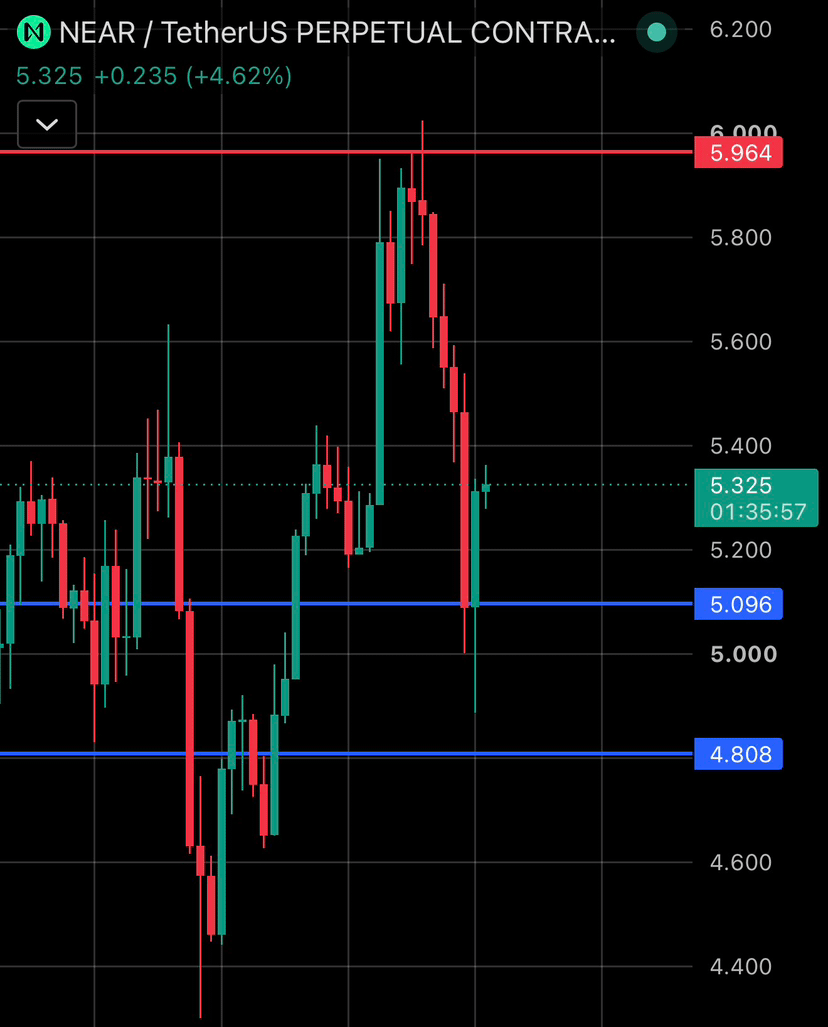
Bullisch$NEAR wird dieses Mal wahrscheinlich 7$ erreichen, LONG $NEAR Leute🚀🚀
1
1
·
--
Übersetzung ansehen
Exploring crypto has taught me that patience, learning, and risk management matter more than hype. Every market move is a reminder to stay disciplined, keep emotions in check, and focus on long-term growth. I’m using this journey to understand trading tools, market trends, and how blockchain keeps evolving across payments, investing, and Web3. Small steps every day build stronger knowledge over time. Whether the market is up or down, the goal is to keep learning and improving. Grateful to be part of a global crypto community where ideas, opportunities, and innovation continue to grow every single day.
Exploring crypto has taught me that patience, learning, and risk management matter more than hype. Every market move is a reminder to stay disciplined, keep emotions in check, and focus on long-term growth. I’m using this journey to understand trading tools, market trends, and how blockchain keeps evolving across payments, investing, and Web3. Small steps every day build stronger knowledge over time. Whether the market is up or down, the goal is to keep learning and improving. Grateful to be part of a global crypto community where ideas, opportunities, and innovation continue to grow every single day.
1
62
·
--
Übersetzung ansehen
$#baby $BABY Trustless Bitcoin Vaults are a powerful step toward giving Bitcoin holders stronger self-custody without relying on centralized intermediaries. I'm excited to see how @BabylonLabs_io is pushing Bitcoin security and innovation forward with TBV. The future of BTC protection looks brighter with $BABY. #baby
$#baby $BABY Trustless Bitcoin Vaults are a powerful step toward giving Bitcoin holders stronger self-custody without relying on centralized intermediaries. I'm excited to see how @BabylonLabs_io is pushing Bitcoin security and innovation forward with TBV. The future of BTC protection looks brighter with $BABY . #baby
1
66
·
--
Übersetzung ansehen
#baby $BABY 👌Trustless Bitcoin Vaults are a powerful step toward giving Bitcoin holders stronger self-custody without relying on centralized intermediaries. I'm excited to see how @BabylonLabs_io is pushing Bitcoin security and innovation forward with TBV. The future of BTC protection looks brighter with $BABY. #baby
#baby $BABY 👌Trustless Bitcoin Vaults are a powerful step toward giving Bitcoin holders stronger self-custody without relying on centralized intermediaries. I'm excited to see how @BabylonLabs_io is pushing Bitcoin security and innovation forward with TBV. The future of BTC protection looks brighter with $BABY . #baby
1
36
Anmelden und weiter Inhalte entdecken
Krypto-Nutzer weltweit auf Binance Square kennenlernen
⚡️ Bleib in Sachen Krypto stets am Puls.
💬 Die weltgrößte Kryptobörse vertraut darauf.
👍 Erhalte verlässliche Einblicke von verifizierten Creators.
E-Mail-Adresse/Telefonnummer
Trendthemen
NVIDIAReinstatesJensenHuangasCEO
23 Aufrufe
56 Kommentare
TradFi-Nachrichten | Nvidias Verwaltungsrat setzt Jensen Huang einstimmig wieder als CEO ein; Aktien steigen vorbörslich um 30 %
Binance News
·6 Likes
·4.3k Aufrufe
WillMarketsStageAThanksgivingReliefRally?
88,409 Aufrufe
1,328 Kommentare
WillOctCorePCEShiftFedHikeExpectations?
27,899 Aufrufe
483 Kommentare