

CRYPTO_NOVAA
16 Beiträge

CRYPTO_NOVAA
Melden
Nutzer blockieren
106 Following
51 Follower
0 Like gegeben
Beiträge
·
--
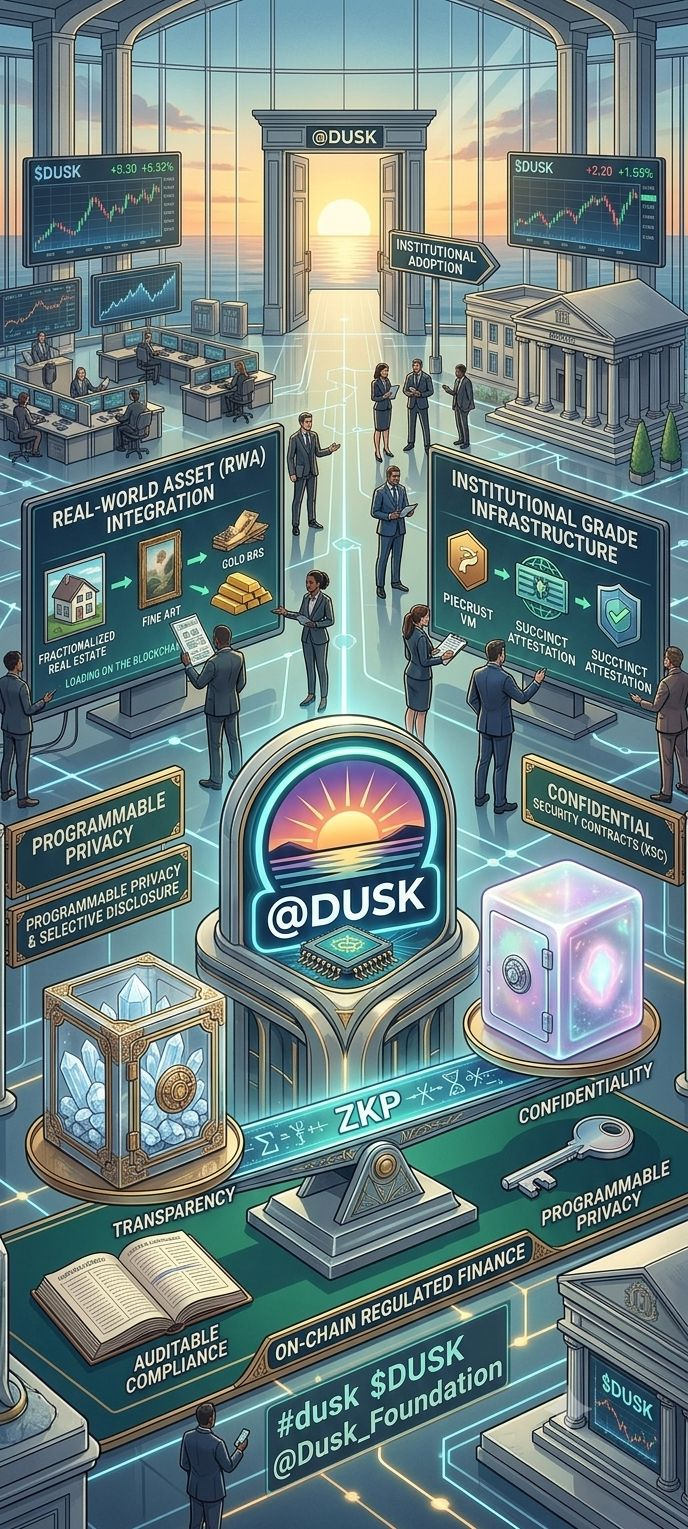
Die institutionelle Einführung der Blockchain-Technologie steht vor einer grundlegenden Herausforderung: das Gleichgewicht zwischen Transparenz und Vertraulichkeit. Traditionelle Finanzinstitute können ihr Kapital nicht auf vollständig transparenten öffentlichen Ledgern einsetzen, auf denen jeder Kontostand, jeder Handel und jeder strategische Schritt für Wettbewerber sichtbar ist. Gleichzeitig fehlen reinen Privacy-Netzwerken die erforderliche Prüfbarkeit (Auditierbarkeit), um strenge regulatorische Compliance-Anforderungen zu erfüllen.
Hier definiert @Dusk das Paradigma für on-chain regulierte Finanzen neu.
Als dediziertes Layer-1-Protokoll integriert @Dusk native Zero-Knowledge-Proofs (ZKPs) direkt in seine Architektur. So werden reale Vermögenswerte (RWAs), tokenisierte Wertpapiere und vertrauliche Finanzinstrumente mit institutioneller Präzision on-chain abgebildet.
Wichtige Highlights des @Dusk-Ökosystems:
Programmierbare Privatsphäre & Selektive Offenlegung: Ermöglicht durch kryptografische Zero-Knowledge-Mechanismen, macht @Dusk vollständige Transaktionsvertraulichkeit möglich und bewahrt zugleich die regulatorische Compliance. Marktteilnehmer können die Berechtigung prüfen und das Settlement ausführen, ohne sensible operative Daten offenzulegen.
Infrastruktur auf institutionellem Niveau: Mit der Piecrust-VM und dem Konsens „Succinct Attestation“ bietet @Dusk kostengünstige Ausführung, deterministisches Settlement und Hochdurchsatz-Ausführung, ausgelegt für moderne Finanzanwendungen.
Integration realer Vermögenswerte: Durch die Unterstützung von Standards wie Confidential Security Contracts (XSC) ermöglicht @Dusk Institutionen, konforme digitale Wertpapiere direkt on-chain auszugeben und zu verwalten.
Der $DUSK -Token treibt diese privacy-first-Ökonomie—stärkt die Netzwerksicherheit durch Staking, führt vertrauliche Smart Contracts aus und ermöglicht dezentrale Governance. Während sich institutionelle Finanzen hin zu öffentlicher Infrastruktur bewegen, schafft @Dusk die notwendige Brücke zwischen Compliance und Privatsphäre.
Erfahre mehr über das Projekt unter
#dusk
$DUSK
@Dusk_Foundation
@BinanceBurmese @BinanceTurkish
Die institutionelle Einführung der Blockchain-Technologie steht vor einer grundlegenden Herausforderung: das Gleichgewicht zwischen Transparenz und Vertraulichkeit. Traditionelle Finanzinstitute können ihr Kapital nicht auf vollständig transparenten öffentlichen Ledgern einsetzen, auf denen jeder Kontostand, jeder Handel und jeder strategische Schritt für Wettbewerber sichtbar ist. Gleichzeitig fehlen reinen Privacy-Netzwerken die erforderliche Prüfbarkeit (Auditierbarkeit), um strenge regulatorische Compliance-Anforderungen zu erfüllen.
Hier definiert @Dusk das Paradigma für on-chain regulierte Finanzen neu.
Als dediziertes Layer-1-Protokoll integriert @Dusk native Zero-Knowledge-Proofs (ZKPs) direkt in seine Architektur. So werden reale Vermögenswerte (RWAs), tokenisierte Wertpapiere und vertrauliche Finanzinstrumente mit institutioneller Präzision on-chain abgebildet.
Wichtige Highlights des @Dusk-Ökosystems:
Programmierbare Privatsphäre & Selektive Offenlegung: Ermöglicht durch kryptografische Zero-Knowledge-Mechanismen, macht @Dusk vollständige Transaktionsvertraulichkeit möglich und bewahrt zugleich die regulatorische Compliance. Marktteilnehmer können die Berechtigung prüfen und das Settlement ausführen, ohne sensible operative Daten offenzulegen.
Infrastruktur auf institutionellem Niveau: Mit der Piecrust-VM und dem Konsens „Succinct Attestation“ bietet @Dusk kostengünstige Ausführung, deterministisches Settlement und Hochdurchsatz-Ausführung, ausgelegt für moderne Finanzanwendungen.
Integration realer Vermögenswerte: Durch die Unterstützung von Standards wie Confidential Security Contracts (XSC) ermöglicht @Dusk Institutionen, konforme digitale Wertpapiere direkt on-chain auszugeben und zu verwalten.
Der $DUSK -Token treibt diese privacy-first-Ökonomie—stärkt die Netzwerksicherheit durch Staking, führt vertrauliche Smart Contracts aus und ermöglicht dezentrale Governance. Während sich institutionelle Finanzen hin zu öffentlicher Infrastruktur bewegen, schafft @Dusk die notwendige Brücke zwischen Compliance und Privatsphäre.
Erfahre mehr über das Projekt unter
#dusk
$DUSK
@Dusk
@Binance Burmese @Binance Global Türkçe
Hier definiert @Dusk das Paradigma für on-chain regulierte Finanzen neu.
Als dediziertes Layer-1-Protokoll integriert @Dusk native Zero-Knowledge-Proofs (ZKPs) direkt in seine Architektur. So werden reale Vermögenswerte (RWAs), tokenisierte Wertpapiere und vertrauliche Finanzinstrumente mit institutioneller Präzision on-chain abgebildet.
Wichtige Highlights des @Dusk-Ökosystems:
Programmierbare Privatsphäre & Selektive Offenlegung: Ermöglicht durch kryptografische Zero-Knowledge-Mechanismen, macht @Dusk vollständige Transaktionsvertraulichkeit möglich und bewahrt zugleich die regulatorische Compliance. Marktteilnehmer können die Berechtigung prüfen und das Settlement ausführen, ohne sensible operative Daten offenzulegen.
Infrastruktur auf institutionellem Niveau: Mit der Piecrust-VM und dem Konsens „Succinct Attestation“ bietet @Dusk kostengünstige Ausführung, deterministisches Settlement und Hochdurchsatz-Ausführung, ausgelegt für moderne Finanzanwendungen.
Integration realer Vermögenswerte: Durch die Unterstützung von Standards wie Confidential Security Contracts (XSC) ermöglicht @Dusk Institutionen, konforme digitale Wertpapiere direkt on-chain auszugeben und zu verwalten.
Der $DUSK -Token treibt diese privacy-first-Ökonomie—stärkt die Netzwerksicherheit durch Staking, führt vertrauliche Smart Contracts aus und ermöglicht dezentrale Governance. Während sich institutionelle Finanzen hin zu öffentlicher Infrastruktur bewegen, schafft @Dusk die notwendige Brücke zwischen Compliance und Privatsphäre.
Erfahre mehr über das Projekt unter
#dusk
$DUSK
@Dusk
@Binance Burmese @Binance Global Türkçe
75
·
--
$TMX Tokenomics: Der Governance-Blickwinkel für Jahr 1 hinter dem 12-Monats- Cliff
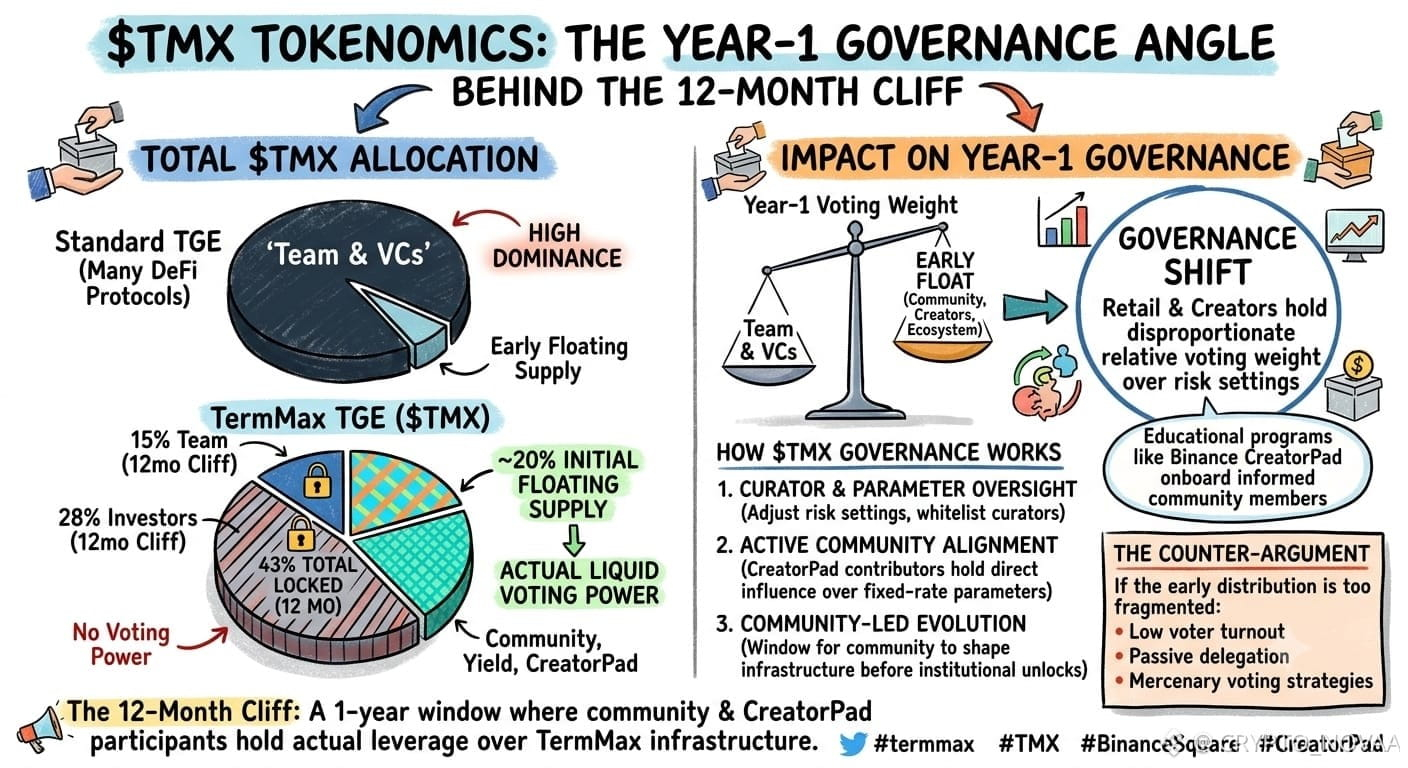
Wenn man Token-Generierungsereignisse analysiert, drehen sich Diskussionen meist um frühen Verkaufsdruck versus langfristige Entsperrpläne. Für @TermMax ($TMX) ist das Setup gut dokumentiert: eine anfängliche frei schwebende Supply von ca. 20% beim TGE, kombiniert mit einer strikten 12-monatigen Sperrfrist für das Team (15%) und für Investoren (28%).
Allerdings gibt es in dieser Struktur eine bislang weniger analysierte Dynamik: Die Verteilung der frühen Protokoll-Governance.
In vielen DeFi-Protokollen wird die frühe Governance stark von Team- und Venture-Capital-Tokens dominiert. Aber da 43% der gesamten $TMX-Supply für das erste volle Jahr vollständig in Smart Contracts gesperrt sind, konzentriert sich die liquidierte Voting-Power während Jahr 1 fast vollständig auf die früh entsperrte zirkulierende Supply.
Diese frühe Umlaufmenge besteht aus Community-Zuteilungen, Yield-Teilnehmern und Creators, die über Programme belohnt werden – etwa die 300.000 $TMX Binance CreatorPad-Kampagne auf Binance Square.
Was das für TermMax’ frühe Umsetzung bedeutet:
Temporäre Governance-Verschiebung: Während der 12-monatigen Insider-Sperrfrist halten aktive Retail-Teilnehmer, Creators und Ecosystem-Voter ein unverhältnismäßig hohes Gewicht in Bezug auf das Voting im Verhältnis zum Protokollrisiko-Setup.
Community-gesteuerte Ausrichtung: Bildungsprogramme wie Binance CreatorPad verteilen Tokens nicht nur – sie binden informierte Community-Mitglieder ein, die direkten Einfluss auf feste Marktparameter haben, bevor institutionelle Entsperrungen wirksam werden.
Die Gegenargumentation
Wenn die frühe Token-Verteilung zu fragmentiert ist oder bei kurzfristigen Tradern landet, könnte die Governance-Teilnahme unter niedriger Wahlbeteiligung leiden und Parameteranpassungen potenziell anfällig machen für passive Delegation oder für “Söldner”-Voting-Strategien.
Fazit
Die 12-monatige Sperrfrist schützt den Markt nicht nur vor Insider-Verkäufen; sie schafft ein 1-jähriges Zeitfenster, in dem Community-Teilnehmer und CreatorPad-Beiträger echte Governance-Leverage über die Weiterentwicklung der TermMax-Fixed-Rate-Infrastruktur besitzen.
#termmax #TMX #BinanceSquare #CreatorPad
@termmax
$TMX Tokenomics: Der Governance-Blickwinkel für Jahr 1 hinter dem 12-Monats- Cliff
Wenn man Token-Generierungsereignisse analysiert, drehen sich Diskussionen meist um frühen Verkaufsdruck versus langfristige Entsperrpläne. Für @TermMax ($TMX) ist das Setup gut dokumentiert: eine anfängliche frei schwebende Supply von ca. 20% beim TGE, kombiniert mit einer strikten 12-monatigen Sperrfrist für das Team (15%) und für Investoren (28%).
Allerdings gibt es in dieser Struktur eine bislang weniger analysierte Dynamik: Die Verteilung der frühen Protokoll-Governance.
In vielen DeFi-Protokollen wird die frühe Governance stark von Team- und Venture-Capital-Tokens dominiert. Aber da 43% der gesamten $TMX-Supply für das erste volle Jahr vollständig in Smart Contracts gesperrt sind, konzentriert sich die liquidierte Voting-Power während Jahr 1 fast vollständig auf die früh entsperrte zirkulierende Supply.
Diese frühe Umlaufmenge besteht aus Community-Zuteilungen, Yield-Teilnehmern und Creators, die über Programme belohnt werden – etwa die 300.000 $TMX Binance CreatorPad-Kampagne auf Binance Square.
Was das für TermMax’ frühe Umsetzung bedeutet:
Temporäre Governance-Verschiebung: Während der 12-monatigen Insider-Sperrfrist halten aktive Retail-Teilnehmer, Creators und Ecosystem-Voter ein unverhältnismäßig hohes Gewicht in Bezug auf das Voting im Verhältnis zum Protokollrisiko-Setup.
Community-gesteuerte Ausrichtung: Bildungsprogramme wie Binance CreatorPad verteilen Tokens nicht nur – sie binden informierte Community-Mitglieder ein, die direkten Einfluss auf feste Marktparameter haben, bevor institutionelle Entsperrungen wirksam werden.
Die Gegenargumentation
Wenn die frühe Token-Verteilung zu fragmentiert ist oder bei kurzfristigen Tradern landet, könnte die Governance-Teilnahme unter niedriger Wahlbeteiligung leiden und Parameteranpassungen potenziell anfällig machen für passive Delegation oder für “Söldner”-Voting-Strategien.
Fazit
Die 12-monatige Sperrfrist schützt den Markt nicht nur vor Insider-Verkäufen; sie schafft ein 1-jähriges Zeitfenster, in dem Community-Teilnehmer und CreatorPad-Beiträger echte Governance-Leverage über die Weiterentwicklung der TermMax-Fixed-Rate-Infrastruktur besitzen.
#termmax #TMX #BinanceSquare #CreatorPad
@TermMax
Wenn man Token-Generierungsereignisse analysiert, drehen sich Diskussionen meist um frühen Verkaufsdruck versus langfristige Entsperrpläne. Für @TermMax ($TMX) ist das Setup gut dokumentiert: eine anfängliche frei schwebende Supply von ca. 20% beim TGE, kombiniert mit einer strikten 12-monatigen Sperrfrist für das Team (15%) und für Investoren (28%).
Allerdings gibt es in dieser Struktur eine bislang weniger analysierte Dynamik: Die Verteilung der frühen Protokoll-Governance.
In vielen DeFi-Protokollen wird die frühe Governance stark von Team- und Venture-Capital-Tokens dominiert. Aber da 43% der gesamten $TMX-Supply für das erste volle Jahr vollständig in Smart Contracts gesperrt sind, konzentriert sich die liquidierte Voting-Power während Jahr 1 fast vollständig auf die früh entsperrte zirkulierende Supply.
Diese frühe Umlaufmenge besteht aus Community-Zuteilungen, Yield-Teilnehmern und Creators, die über Programme belohnt werden – etwa die 300.000 $TMX Binance CreatorPad-Kampagne auf Binance Square.
Was das für TermMax’ frühe Umsetzung bedeutet:
Temporäre Governance-Verschiebung: Während der 12-monatigen Insider-Sperrfrist halten aktive Retail-Teilnehmer, Creators und Ecosystem-Voter ein unverhältnismäßig hohes Gewicht in Bezug auf das Voting im Verhältnis zum Protokollrisiko-Setup.
Community-gesteuerte Ausrichtung: Bildungsprogramme wie Binance CreatorPad verteilen Tokens nicht nur – sie binden informierte Community-Mitglieder ein, die direkten Einfluss auf feste Marktparameter haben, bevor institutionelle Entsperrungen wirksam werden.
Die Gegenargumentation
Wenn die frühe Token-Verteilung zu fragmentiert ist oder bei kurzfristigen Tradern landet, könnte die Governance-Teilnahme unter niedriger Wahlbeteiligung leiden und Parameteranpassungen potenziell anfällig machen für passive Delegation oder für “Söldner”-Voting-Strategien.
Fazit
Die 12-monatige Sperrfrist schützt den Markt nicht nur vor Insider-Verkäufen; sie schafft ein 1-jähriges Zeitfenster, in dem Community-Teilnehmer und CreatorPad-Beiträger echte Governance-Leverage über die Weiterentwicklung der TermMax-Fixed-Rate-Infrastruktur besitzen.
#termmax #TMX #BinanceSquare #CreatorPad
@TermMax
63
·
--
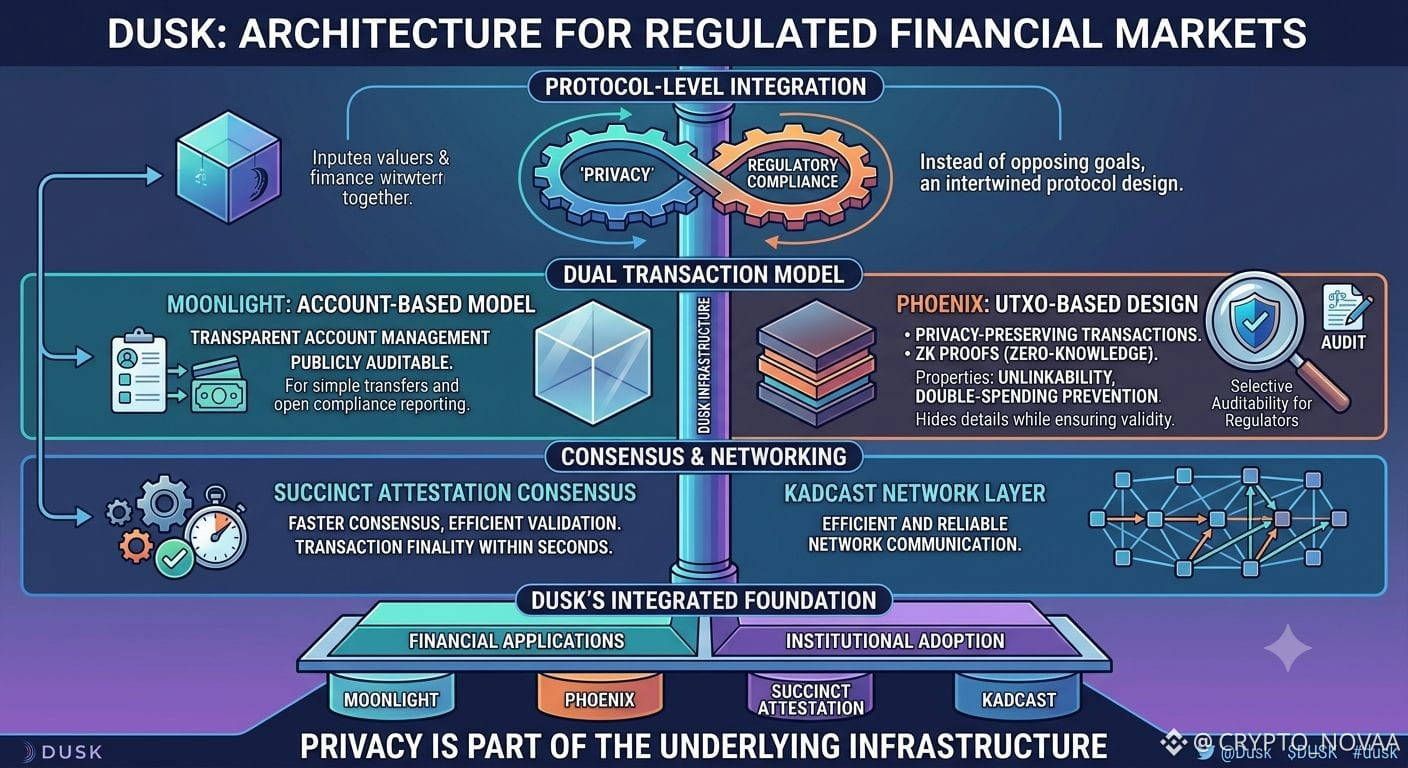
Dusk verfolgt bei der Blockchain-Infrastruktur einen anderen Ansatz: Statt Datenschutz und regulatorische Compliance als gegensätzliche Ziele zu behandeln, ist seine Architektur so konzipiert, dass beides zusammenwirkt.
Beim Lesen des Dusk-Whitepapers ist mir vor allem aufgefallen, wie tief diese Idee im Protokoll verankert ist. Dusk zielt auf regulierte Finanzmärkte ab, in denen sensible Transaktionsdaten vertraulich sein müssen, während Institutionen dennoch Compliance und Prüf- bzw. Auditierbarkeit benötigen.
Sein prägnanter Attestations-Konsens ist darauf ausgelegt, die Transaktionsfinalität innerhalb von Sekunden bereitzustellen, während Kadcast für effiziente und zuverlässige Netzwerkkommunikation sorgt.
Dann gibt es die Transaktionsmodelle Moonlight und Phoenix. Moonlight bietet ein transparentes, kontobasiertes Modell, während Phoenix ein UTXO-basiertes Design mit ZK-Beweisen für datenschutzfreundliche Transaktionen verwendet.
Das Whitepaper erklärt, dass Phoenix Eigenschaften wie Unlinkability (Unverknüpfbarkeit) und Schutz vor Double-Spending liefern kann, ohne die zugrunde liegenden Transaktionsdetails öffentlich offenzulegen.
Diese Kombination macht Dusk für mich interessant: Datenschutz wird nicht als nachträglicher Zusatz behandelt. Er ist Teil der zugrunde liegenden Infrastruktur, die für Finanzanwendungen aufgebaut wird.
#dusk $DUSK @Dusk_Foundation
Dusk verfolgt bei der Blockchain-Infrastruktur einen anderen Ansatz: Statt Datenschutz und regulatorische Compliance als gegensätzliche Ziele zu behandeln, ist seine Architektur so konzipiert, dass beides zusammenwirkt.
Beim Lesen des Dusk-Whitepapers ist mir vor allem aufgefallen, wie tief diese Idee im Protokoll verankert ist. Dusk zielt auf regulierte Finanzmärkte ab, in denen sensible Transaktionsdaten vertraulich sein müssen, während Institutionen dennoch Compliance und Prüf- bzw. Auditierbarkeit benötigen.
Sein prägnanter Attestations-Konsens ist darauf ausgelegt, die Transaktionsfinalität innerhalb von Sekunden bereitzustellen, während Kadcast für effiziente und zuverlässige Netzwerkkommunikation sorgt.
Dann gibt es die Transaktionsmodelle Moonlight und Phoenix. Moonlight bietet ein transparentes, kontobasiertes Modell, während Phoenix ein UTXO-basiertes Design mit ZK-Beweisen für datenschutzfreundliche Transaktionen verwendet.
Das Whitepaper erklärt, dass Phoenix Eigenschaften wie Unlinkability (Unverknüpfbarkeit) und Schutz vor Double-Spending liefern kann, ohne die zugrunde liegenden Transaktionsdetails öffentlich offenzulegen.
Diese Kombination macht Dusk für mich interessant: Datenschutz wird nicht als nachträglicher Zusatz behandelt. Er ist Teil der zugrunde liegenden Infrastruktur, die für Finanzanwendungen aufgebaut wird.
#dusk $DUSK @Dusk
Beim Lesen des Dusk-Whitepapers ist mir vor allem aufgefallen, wie tief diese Idee im Protokoll verankert ist. Dusk zielt auf regulierte Finanzmärkte ab, in denen sensible Transaktionsdaten vertraulich sein müssen, während Institutionen dennoch Compliance und Prüf- bzw. Auditierbarkeit benötigen.
Sein prägnanter Attestations-Konsens ist darauf ausgelegt, die Transaktionsfinalität innerhalb von Sekunden bereitzustellen, während Kadcast für effiziente und zuverlässige Netzwerkkommunikation sorgt.
Dann gibt es die Transaktionsmodelle Moonlight und Phoenix. Moonlight bietet ein transparentes, kontobasiertes Modell, während Phoenix ein UTXO-basiertes Design mit ZK-Beweisen für datenschutzfreundliche Transaktionen verwendet.
Das Whitepaper erklärt, dass Phoenix Eigenschaften wie Unlinkability (Unverknüpfbarkeit) und Schutz vor Double-Spending liefern kann, ohne die zugrunde liegenden Transaktionsdetails öffentlich offenzulegen.
Diese Kombination macht Dusk für mich interessant: Datenschutz wird nicht als nachträglicher Zusatz behandelt. Er ist Teil der zugrunde liegenden Infrastruktur, die für Finanzanwendungen aufgebaut wird.
#dusk $DUSK @Dusk
73
·
--
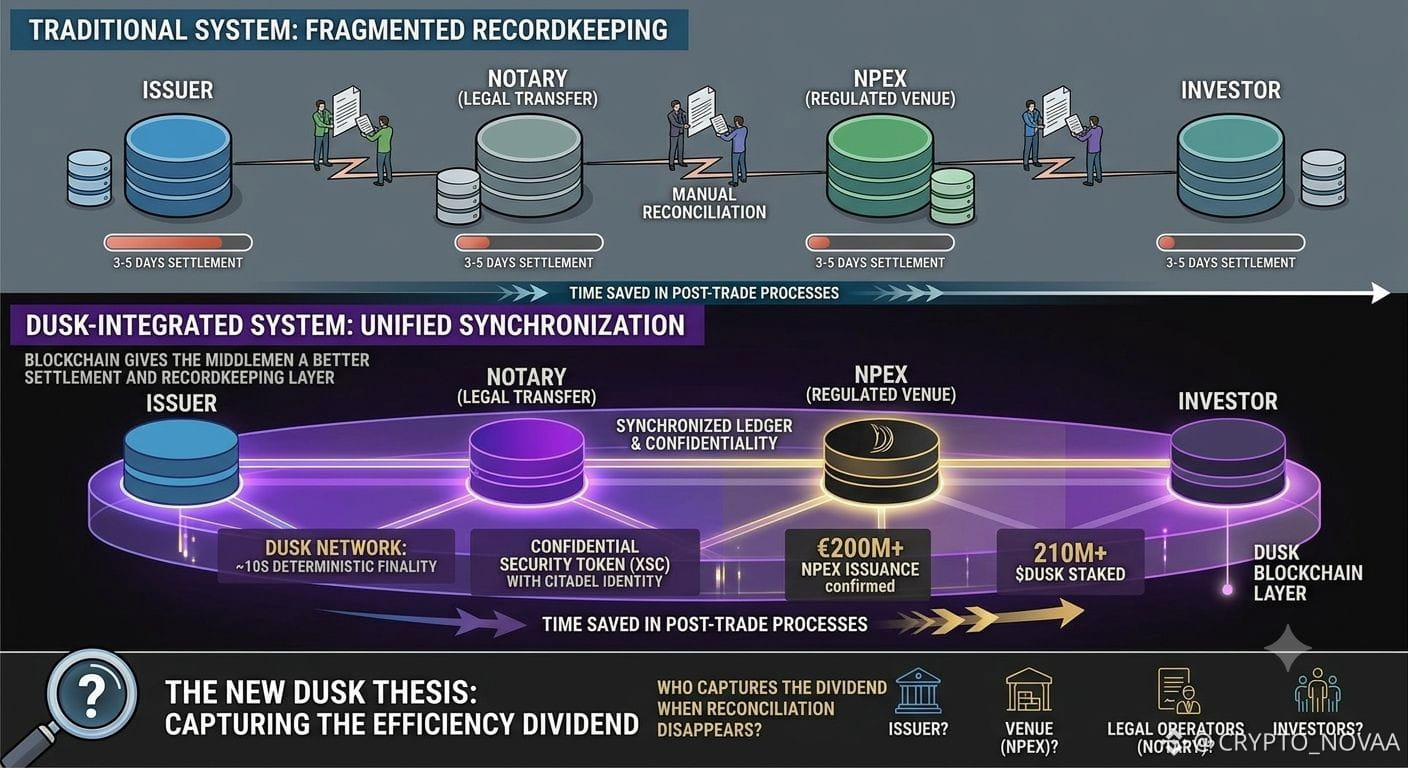
Ich habe heute mehr Zeit in Dusk-eigene Dokumentation investiert, und ich glaube, ich habe die interessantere RWA-Geschichte gefunden, die unter der Schlagzeile verborgen ist.
Der Tokenisierungsbeitrag vom 15. Aug. ist ungewöhnlich explizit in Bezug darauf, was Tokenisierung nicht ersetzt.
Der Notar bleibt.
Die regulierte Handelsplattform bleibt.
Der verantwortliche Betreiber bleibt.
Die Preisfindung bleibt.
Das ist wichtig.
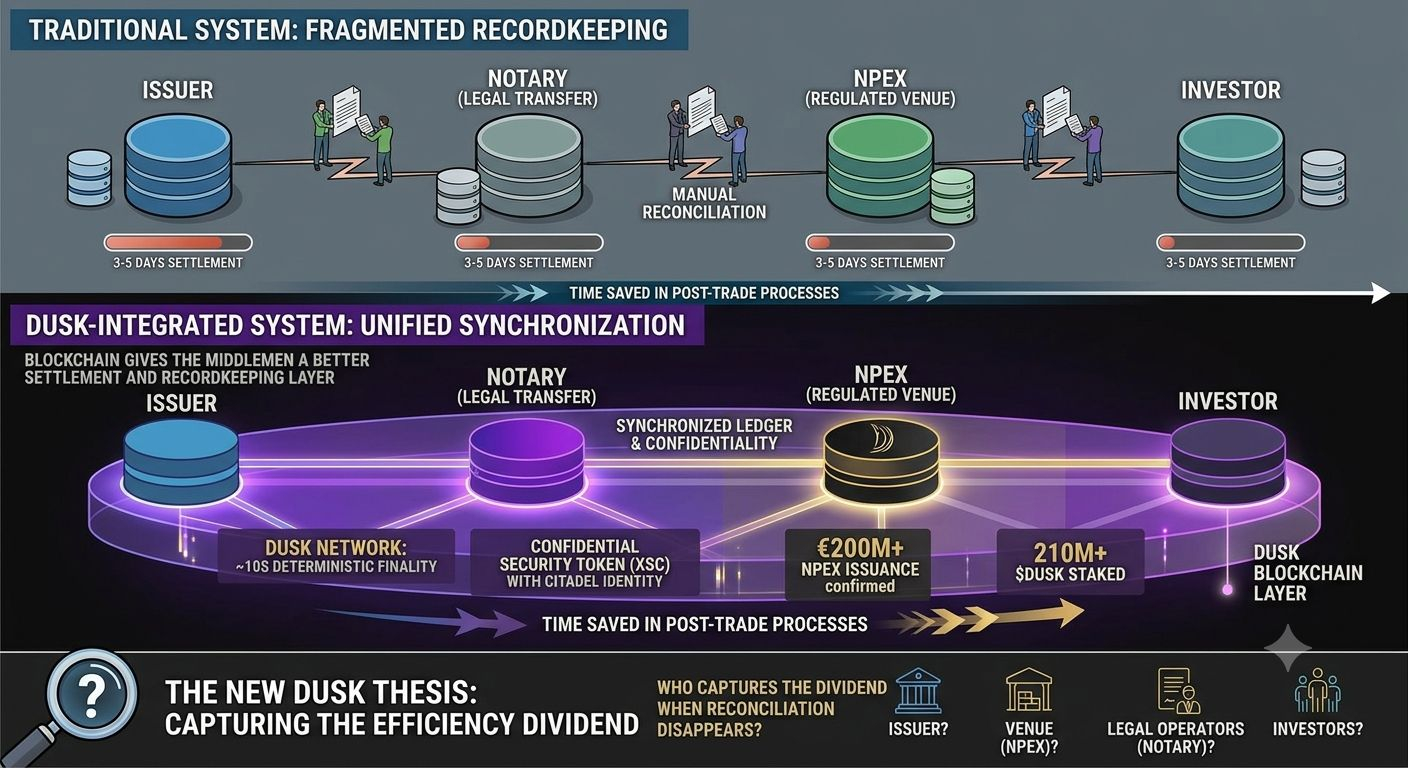
Denn Dusk kann beeindruckende technische Kennzahlen haben — 210M+ $DUSK staked, ~10s deterministische Finalität, €200M+ an bestätigter NPEX-Emission — während der tatsächliche rechtliche Eigentumsübertragungs-Workflow immer noch über die etablierten niederländischen Strukturen läuft.
Also vielleicht ist die Geschichte nicht:
„Blockchain entfernt die Zwischenhändler.“
Vielleicht ist es:
„Blockchain gibt den Zwischenhändlern eine bessere Abwicklungs- und Dokumentationsschicht.“
Und ehrlich gesagt könnte das ein viel realistischeres institutionelles Anwendungsziel sein.
Wenn NPEX die regulierte Handelsplattform bleibt und der Notar weiterhin für die rechtliche Übertragung verantwortlich ist, dann wird Dusk’ Wertversprechen weniger zu einer Ersetzung des bestehenden Systems und mehr dazu, das darunterliegende System schneller, besser synchronisiert und leichter abgleichbar zu machen.
Das verändert die Frage, die ich über Dusk stelle.
Nicht „Kann Tokenisierung Intermediäre eliminieren?“
Sondern:
Wer erfasst den Effizienzgewinn, wenn Intermediäre nicht mehr so viel abstimmen müssen?
Der Emittent?
Die Handelsplattform?
Die rechtlichen Betreiber?
Oder irgendwann die Investoren?
Das fühlt sich wie die spannendere Dusk-These an, die es zu untersuchen gilt.
#dusk $DUSK @Dusk_Foundation
Ich habe heute mehr Zeit in Dusk-eigene Dokumentation investiert, und ich glaube, ich habe die interessantere RWA-Geschichte gefunden, die unter der Schlagzeile verborgen ist.
Der Tokenisierungsbeitrag vom 15. Aug. ist ungewöhnlich explizit in Bezug darauf, was Tokenisierung nicht ersetzt.
Der Notar bleibt.
Die regulierte Handelsplattform bleibt.
Der verantwortliche Betreiber bleibt.
Die Preisfindung bleibt.
Das ist wichtig.
Denn Dusk kann beeindruckende technische Kennzahlen haben — 210M+ $DUSK staked, ~10s deterministische Finalität, €200M+ an bestätigter NPEX-Emission — während der tatsächliche rechtliche Eigentumsübertragungs-Workflow immer noch über die etablierten niederländischen Strukturen läuft.
Also vielleicht ist die Geschichte nicht:
„Blockchain entfernt die Zwischenhändler.“
Vielleicht ist es:
„Blockchain gibt den Zwischenhändlern eine bessere Abwicklungs- und Dokumentationsschicht.“
Und ehrlich gesagt könnte das ein viel realistischeres institutionelles Anwendungsziel sein.
Wenn NPEX die regulierte Handelsplattform bleibt und der Notar weiterhin für die rechtliche Übertragung verantwortlich ist, dann wird Dusk’ Wertversprechen weniger zu einer Ersetzung des bestehenden Systems und mehr dazu, das darunterliegende System schneller, besser synchronisiert und leichter abgleichbar zu machen.
Das verändert die Frage, die ich über Dusk stelle.
Nicht „Kann Tokenisierung Intermediäre eliminieren?“
Sondern:
Wer erfasst den Effizienzgewinn, wenn Intermediäre nicht mehr so viel abstimmen müssen?
Der Emittent?
Die Handelsplattform?
Die rechtlichen Betreiber?
Oder irgendwann die Investoren?
Das fühlt sich wie die spannendere Dusk-These an, die es zu untersuchen gilt.
#dusk $DUSK @Dusk
Der Tokenisierungsbeitrag vom 15. Aug. ist ungewöhnlich explizit in Bezug darauf, was Tokenisierung nicht ersetzt.
Der Notar bleibt.
Die regulierte Handelsplattform bleibt.
Der verantwortliche Betreiber bleibt.
Die Preisfindung bleibt.
Das ist wichtig.
Denn Dusk kann beeindruckende technische Kennzahlen haben — 210M+ $DUSK staked, ~10s deterministische Finalität, €200M+ an bestätigter NPEX-Emission — während der tatsächliche rechtliche Eigentumsübertragungs-Workflow immer noch über die etablierten niederländischen Strukturen läuft.
Also vielleicht ist die Geschichte nicht:
„Blockchain entfernt die Zwischenhändler.“
Vielleicht ist es:
„Blockchain gibt den Zwischenhändlern eine bessere Abwicklungs- und Dokumentationsschicht.“
Und ehrlich gesagt könnte das ein viel realistischeres institutionelles Anwendungsziel sein.
Wenn NPEX die regulierte Handelsplattform bleibt und der Notar weiterhin für die rechtliche Übertragung verantwortlich ist, dann wird Dusk’ Wertversprechen weniger zu einer Ersetzung des bestehenden Systems und mehr dazu, das darunterliegende System schneller, besser synchronisiert und leichter abgleichbar zu machen.
Das verändert die Frage, die ich über Dusk stelle.
Nicht „Kann Tokenisierung Intermediäre eliminieren?“
Sondern:
Wer erfasst den Effizienzgewinn, wenn Intermediäre nicht mehr so viel abstimmen müssen?
Der Emittent?
Die Handelsplattform?
Die rechtlichen Betreiber?
Oder irgendwann die Investoren?
Das fühlt sich wie die spannendere Dusk-These an, die es zu untersuchen gilt.
#dusk $DUSK @Dusk
41
·
--
Ich habe heute mehr Zeit mit Dusk’ eigener Dokumentation verbracht, und ich glaube, ich habe die interessantere RWA-Story gefunden, die unter der Überschrift verborgen ist.
Der Tokenisierungsbeitrag vom 15. Aug. ist ungewöhnlich explizit darüber, was Tokenisierung nicht ersetzt.
Der Notar bleibt.
Der regulierte Handelsplatz bleibt.
Der verantwortliche Betreiber bleibt.
Die Preisfindung bleibt.
Das ist entscheidend.
Denn Dusk kann beeindruckende technische Kennzahlen haben – 210M+ $DUSK staked, ~10s deterministische Finalität, €200M+ an bestätigter NPEX-Emission – während der tatsächliche rechtliche Eigentums-Workflow weiterhin über etablierte niederländische Infrastruktur läuft.
Also vielleicht ist die Story nicht:
„Blockchain entfernt die Vermittler.“
Vielleicht ist es:
„Blockchain gibt den Vermittlern eine bessere Abwicklungs- und Dokumentationsschicht.“
Und ehrlich gesagt, das könnte ein viel realistischeres institutionelles Einsatzszenario sein.
Wenn NPEX der regulierte Handelsplatz bleibt und der Notar weiterhin für die rechtliche Übertragung verantwortlich ist, wird Dusk’ Wertversprechen weniger zu dem, das bestehende System ersetzt, und mehr dazu, das System darunter schneller, stärker synchronisiert und leichter nachvollziehbar zu machen.
Das verändert die Frage, die ich mir über Dusk stelle.
Nicht „Kann Tokenisierung Vermittler eliminieren?“
Sondern:
Wer erfasst die Effizienzdividende, wenn Vermittler nicht mehr so viel abstimmen müssen?
Der Emittent?
Der Handelsplatz?
Die rechtlichen Betreiber?
Oder irgendwann die Anleger?
Das fühlt sich wie die spannendere Dusk-These an, die es zu untersuchen gilt.
@Dusk_Foundation #Dusk.
Ich habe heute mehr Zeit mit Dusk’ eigener Dokumentation verbracht, und ich glaube, ich habe die interessantere RWA-Story gefunden, die unter der Überschrift verborgen ist.
Der Tokenisierungsbeitrag vom 15. Aug. ist ungewöhnlich explizit darüber, was Tokenisierung nicht ersetzt.
Der Notar bleibt.
Der regulierte Handelsplatz bleibt.
Der verantwortliche Betreiber bleibt.
Die Preisfindung bleibt.
Das ist entscheidend.
Denn Dusk kann beeindruckende technische Kennzahlen haben – 210M+ $DUSK staked, ~10s deterministische Finalität, €200M+ an bestätigter NPEX-Emission – während der tatsächliche rechtliche Eigentums-Workflow weiterhin über etablierte niederländische Infrastruktur läuft.
Also vielleicht ist die Story nicht:
„Blockchain entfernt die Vermittler.“
Vielleicht ist es:
„Blockchain gibt den Vermittlern eine bessere Abwicklungs- und Dokumentationsschicht.“
Und ehrlich gesagt, das könnte ein viel realistischeres institutionelles Einsatzszenario sein.
Wenn NPEX der regulierte Handelsplatz bleibt und der Notar weiterhin für die rechtliche Übertragung verantwortlich ist, wird Dusk’ Wertversprechen weniger zu dem, das bestehende System ersetzt, und mehr dazu, das System darunter schneller, stärker synchronisiert und leichter nachvollziehbar zu machen.
Das verändert die Frage, die ich mir über Dusk stelle.
Nicht „Kann Tokenisierung Vermittler eliminieren?“
Sondern:
Wer erfasst die Effizienzdividende, wenn Vermittler nicht mehr so viel abstimmen müssen?
Der Emittent?
Der Handelsplatz?
Die rechtlichen Betreiber?
Oder irgendwann die Anleger?
Das fühlt sich wie die spannendere Dusk-These an, die es zu untersuchen gilt.
@Dusk #Dusk.
Der Tokenisierungsbeitrag vom 15. Aug. ist ungewöhnlich explizit darüber, was Tokenisierung nicht ersetzt.
Der Notar bleibt.
Der regulierte Handelsplatz bleibt.
Der verantwortliche Betreiber bleibt.
Die Preisfindung bleibt.
Das ist entscheidend.
Denn Dusk kann beeindruckende technische Kennzahlen haben – 210M+ $DUSK staked, ~10s deterministische Finalität, €200M+ an bestätigter NPEX-Emission – während der tatsächliche rechtliche Eigentums-Workflow weiterhin über etablierte niederländische Infrastruktur läuft.
Also vielleicht ist die Story nicht:
„Blockchain entfernt die Vermittler.“
Vielleicht ist es:
„Blockchain gibt den Vermittlern eine bessere Abwicklungs- und Dokumentationsschicht.“
Und ehrlich gesagt, das könnte ein viel realistischeres institutionelles Einsatzszenario sein.
Wenn NPEX der regulierte Handelsplatz bleibt und der Notar weiterhin für die rechtliche Übertragung verantwortlich ist, wird Dusk’ Wertversprechen weniger zu dem, das bestehende System ersetzt, und mehr dazu, das System darunter schneller, stärker synchronisiert und leichter nachvollziehbar zu machen.
Das verändert die Frage, die ich mir über Dusk stelle.
Nicht „Kann Tokenisierung Vermittler eliminieren?“
Sondern:
Wer erfasst die Effizienzdividende, wenn Vermittler nicht mehr so viel abstimmen müssen?
Der Emittent?
Der Handelsplatz?
Die rechtlichen Betreiber?
Oder irgendwann die Anleger?
Das fühlt sich wie die spannendere Dusk-These an, die es zu untersuchen gilt.
@Dusk #Dusk.
66
·
--
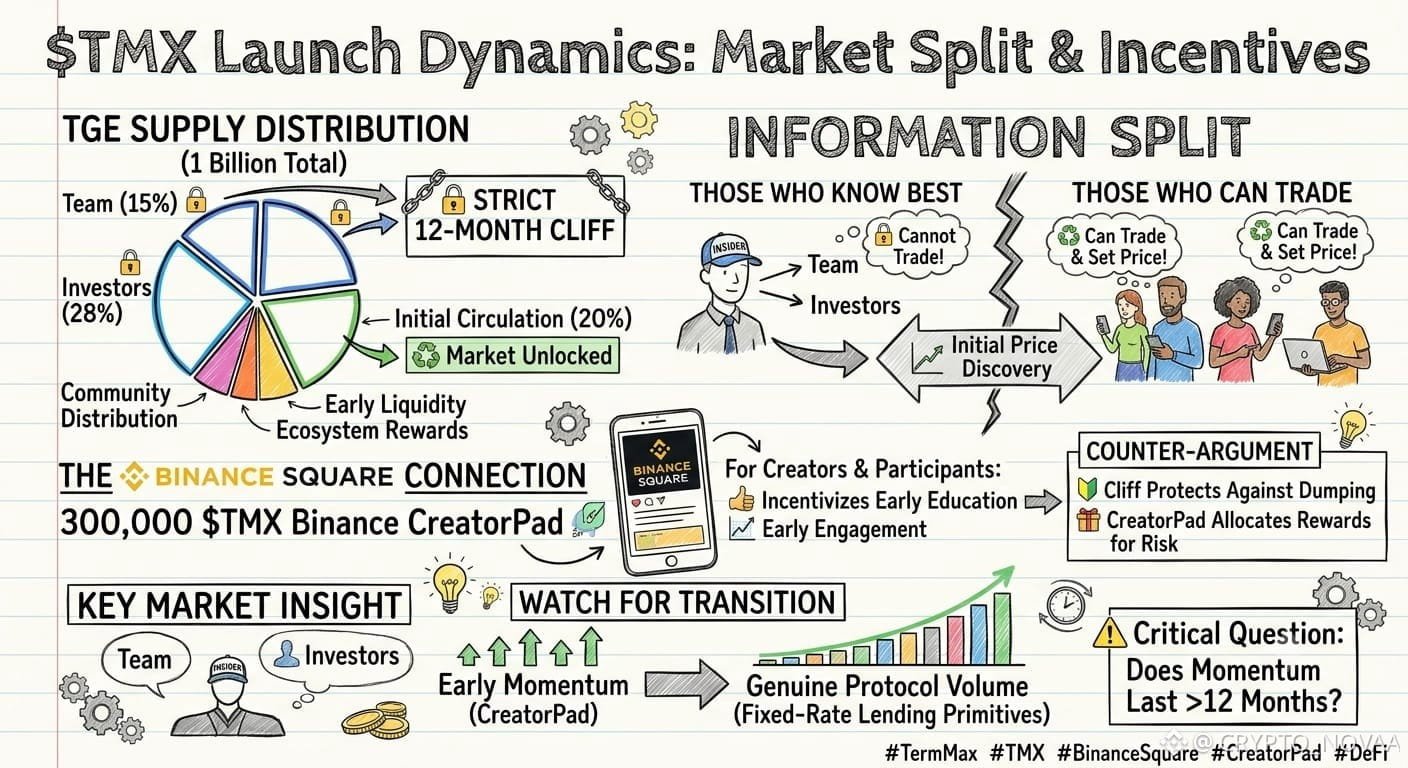
Wenn man sich die Startstruktur von $TMX auf TermMax ansieht, zeigt sich eine klare Marktdynamik rund um sein TGE: 20% des 1 Milliarde umfassenden Angebots gelangen sofort in den Umlauf, während das Team (15%) und die Investoren (28%) unter einer strengen 12-Monats-Sperrfrist (Cliff) gebunden sind.
Das führt zu einer spannenden Informationsaufteilung zwischen jenen, die interne Abläufe am besten kennen, und jenen, die tatsächlich handeln können. Das anfängliche Umlaufvolumen dient in erster Linie der frühen Liquidität, Ökosystem-Belohnungen und der Community-Verteilung – veranschaulicht durch Initiativen wie die Kampagne „300.000 $TMX Binance CreatorPad“ auf Binance Square.
Für Creator und frühe Teilnehmer motiviert CreatorPad zu früher Bildung und Engagement. Aus Marktsicht spiegelt die anfängliche Preisbildung jedoch eher die Stimmung der früh freigeschalteten Gruppe wider als eine nachgewiesene langfristige Nachfrage nach Fixed-Rate-Lending-Primitiven.
Gegenargument: Zwingende Cliffs schützen vor frühem Dumping, während die CreatorPad-Zuteilungen Early Adopters dafür entschädigen, dass sie ein frühes Protokollrisiko eingehen.
Es wird sich lohnen zu beobachten, ob die anfängliche CreatorPad-Dynamik in echtes Fixed-Rate-Protokoll-Volumen übergeht, bevor die 12-Monats-Sperrfrist abläuft.
#TermMax #TMX #BinanceSquare #CreatorPad #DeFi
#termmax @termmax
Wenn man sich die Startstruktur von $TMX auf TermMax ansieht, zeigt sich eine klare Marktdynamik rund um sein TGE: 20% des 1 Milliarde umfassenden Angebots gelangen sofort in den Umlauf, während das Team (15%) und die Investoren (28%) unter einer strengen 12-Monats-Sperrfrist (Cliff) gebunden sind.
Das führt zu einer spannenden Informationsaufteilung zwischen jenen, die interne Abläufe am besten kennen, und jenen, die tatsächlich handeln können. Das anfängliche Umlaufvolumen dient in erster Linie der frühen Liquidität, Ökosystem-Belohnungen und der Community-Verteilung – veranschaulicht durch Initiativen wie die Kampagne „300.000 $TMX Binance CreatorPad“ auf Binance Square.
Für Creator und frühe Teilnehmer motiviert CreatorPad zu früher Bildung und Engagement. Aus Marktsicht spiegelt die anfängliche Preisbildung jedoch eher die Stimmung der früh freigeschalteten Gruppe wider als eine nachgewiesene langfristige Nachfrage nach Fixed-Rate-Lending-Primitiven.
Gegenargument: Zwingende Cliffs schützen vor frühem Dumping, während die CreatorPad-Zuteilungen Early Adopters dafür entschädigen, dass sie ein frühes Protokollrisiko eingehen.
Es wird sich lohnen zu beobachten, ob die anfängliche CreatorPad-Dynamik in echtes Fixed-Rate-Protokoll-Volumen übergeht, bevor die 12-Monats-Sperrfrist abläuft.
#TermMax #TMX #BinanceSquare #CreatorPad #DeFi
#termmax @TermMax
Das führt zu einer spannenden Informationsaufteilung zwischen jenen, die interne Abläufe am besten kennen, und jenen, die tatsächlich handeln können. Das anfängliche Umlaufvolumen dient in erster Linie der frühen Liquidität, Ökosystem-Belohnungen und der Community-Verteilung – veranschaulicht durch Initiativen wie die Kampagne „300.000 $TMX Binance CreatorPad“ auf Binance Square.
Für Creator und frühe Teilnehmer motiviert CreatorPad zu früher Bildung und Engagement. Aus Marktsicht spiegelt die anfängliche Preisbildung jedoch eher die Stimmung der früh freigeschalteten Gruppe wider als eine nachgewiesene langfristige Nachfrage nach Fixed-Rate-Lending-Primitiven.
Gegenargument: Zwingende Cliffs schützen vor frühem Dumping, während die CreatorPad-Zuteilungen Early Adopters dafür entschädigen, dass sie ein frühes Protokollrisiko eingehen.
Es wird sich lohnen zu beobachten, ob die anfängliche CreatorPad-Dynamik in echtes Fixed-Rate-Protokoll-Volumen übergeht, bevor die 12-Monats-Sperrfrist abläuft.
#TermMax #TMX #BinanceSquare #CreatorPad #DeFi
#termmax @TermMax
69
·
--
#dusk
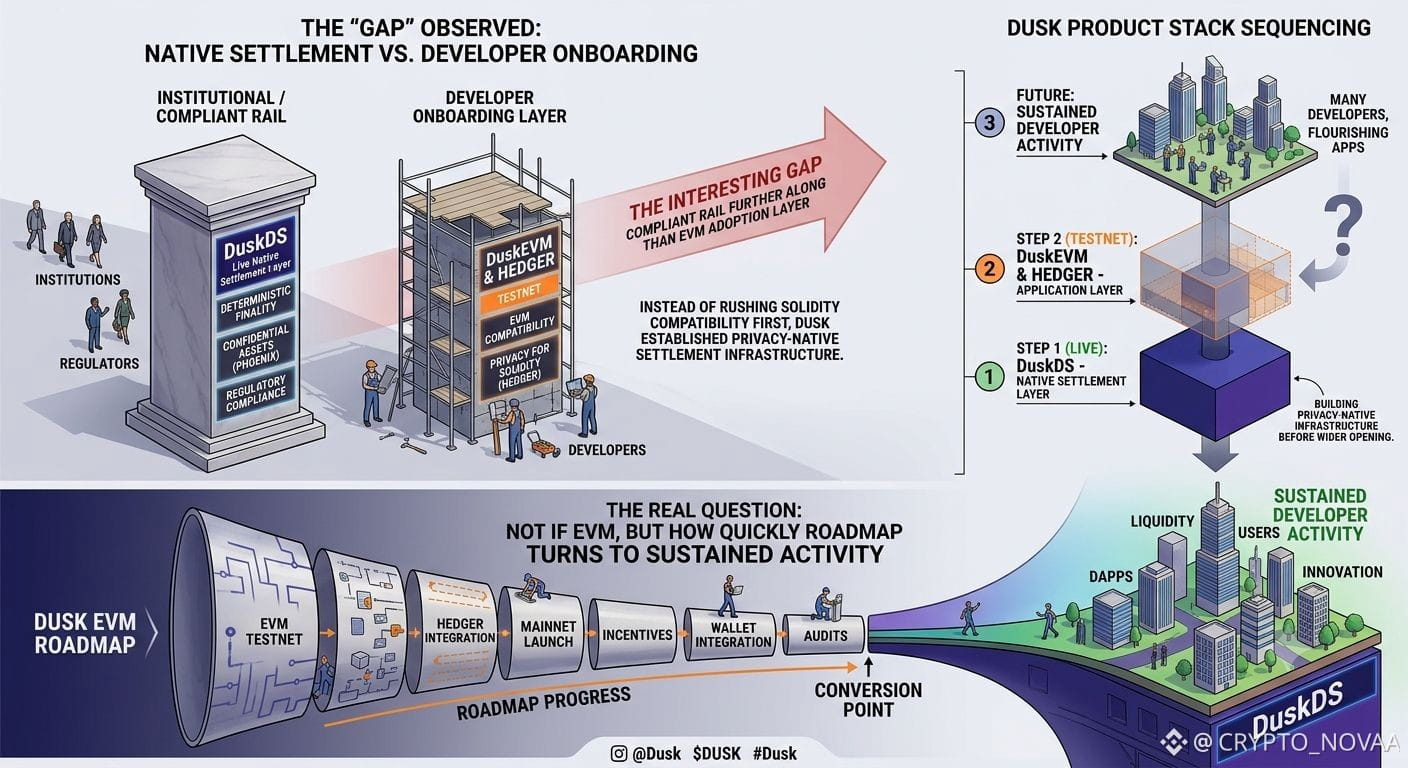
Etwas Kleines in Dusk’s Architektur brachte mich zum Innehalten.
Der Produkt-Stack erzählt derzeit eine differenziertere Geschichte als das übliche „Dusk baut eine EVM-kompatible Privacy-Chain“-Narrativ.
DuskDS ist bereits live als nativer Abrechnungslayer, während DuskEVM und Hedger noch als Testnet gekennzeichnet sind.
Diese Reihenfolge ergibt tatsächlich Sinn.
Statt zuerst die Solidity-Kompatibilität zu überstürzen, scheint Dusk die datenschutz-native Abrechnungsinfrastruktur aufzubauen, bevor sie die Tür für EVM-Entwickler weiter öffnet.
Aber das schafft auch eine interessante Lücke: die institutionelle/konforme Schiene ist weiter fortgeschritten als die Entwickler-Onboarding-Ebene, mit der die meisten Menschen EVM-Einführung in Verbindung bringen.
Für mich stellt sich also nicht die Frage, ob Dusk eine EVM-Roadmap hat.
Sondern wie schnell diese Roadmap in nachhaltige Entwickleraktivität mündet.
$DUSK @Dusk_Foundation
#dusk
Etwas Kleines in Dusk’s Architektur brachte mich zum Innehalten.
Der Produkt-Stack erzählt derzeit eine differenziertere Geschichte als das übliche „Dusk baut eine EVM-kompatible Privacy-Chain“-Narrativ.
DuskDS ist bereits live als nativer Abrechnungslayer, während DuskEVM und Hedger noch als Testnet gekennzeichnet sind.
Diese Reihenfolge ergibt tatsächlich Sinn.
Statt zuerst die Solidity-Kompatibilität zu überstürzen, scheint Dusk die datenschutz-native Abrechnungsinfrastruktur aufzubauen, bevor sie die Tür für EVM-Entwickler weiter öffnet.
Aber das schafft auch eine interessante Lücke: die institutionelle/konforme Schiene ist weiter fortgeschritten als die Entwickler-Onboarding-Ebene, mit der die meisten Menschen EVM-Einführung in Verbindung bringen.
Für mich stellt sich also nicht die Frage, ob Dusk eine EVM-Roadmap hat.
Sondern wie schnell diese Roadmap in nachhaltige Entwickleraktivität mündet.
$DUSK @Dusk
Etwas Kleines in Dusk’s Architektur brachte mich zum Innehalten.
Der Produkt-Stack erzählt derzeit eine differenziertere Geschichte als das übliche „Dusk baut eine EVM-kompatible Privacy-Chain“-Narrativ.
DuskDS ist bereits live als nativer Abrechnungslayer, während DuskEVM und Hedger noch als Testnet gekennzeichnet sind.
Diese Reihenfolge ergibt tatsächlich Sinn.
Statt zuerst die Solidity-Kompatibilität zu überstürzen, scheint Dusk die datenschutz-native Abrechnungsinfrastruktur aufzubauen, bevor sie die Tür für EVM-Entwickler weiter öffnet.
Aber das schafft auch eine interessante Lücke: die institutionelle/konforme Schiene ist weiter fortgeschritten als die Entwickler-Onboarding-Ebene, mit der die meisten Menschen EVM-Einführung in Verbindung bringen.
Für mich stellt sich also nicht die Frage, ob Dusk eine EVM-Roadmap hat.
Sondern wie schnell diese Roadmap in nachhaltige Entwickleraktivität mündet.
$DUSK @Dusk
61
·
--
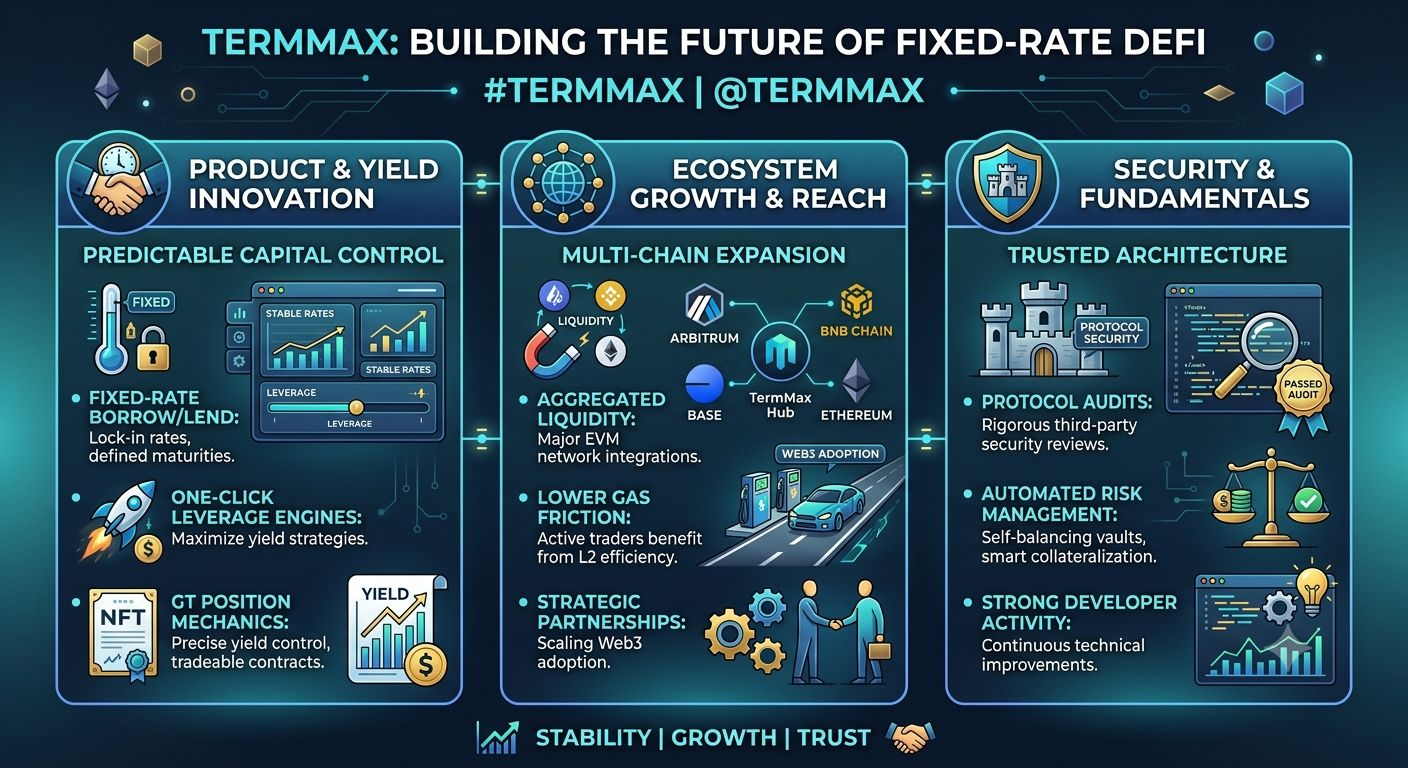
• Produkt & Sicherheit: Kontinuierliche Upgrades für Festzins-Kredit-Engines, Vault-Smart-Contracts und Liquidations-Architektur stärken die Projektsstabilität. Strenge Sicherheitspraktiken und planbare Renditen geben Tradern eine verlässliche DeFi-Grundlage.
• Ökosystem & Liquidität: Rollout über mehrere Chains hinweg auf EVM-Netzwerken erweitert den Nutzerzugang und reduziert Gas-Hürden. Strategische Partnerschaften mit Yield-Aggregatoren und DEXs helfen dabei, die reale Nutzbarkeit zu skalieren und ein nachhaltiges Web3-Wachstum voranzutreiben.
• Token-Grundlagen: Während die Akzeptanz über mehrere Chains hinweg wächst, schafft die nativen Token-Integration in die Protokoll-Governance und Fee-Mechaniken eine langfristige Ausrichtung für die Community.
#termmax @termmax
• Produkt & Sicherheit: Kontinuierliche Upgrades für Festzins-Kredit-Engines, Vault-Smart-Contracts und Liquidations-Architektur stärken die Projektsstabilität. Strenge Sicherheitspraktiken und planbare Renditen geben Tradern eine verlässliche DeFi-Grundlage.
• Ökosystem & Liquidität: Rollout über mehrere Chains hinweg auf EVM-Netzwerken erweitert den Nutzerzugang und reduziert Gas-Hürden. Strategische Partnerschaften mit Yield-Aggregatoren und DEXs helfen dabei, die reale Nutzbarkeit zu skalieren und ein nachhaltiges Web3-Wachstum voranzutreiben.
• Token-Grundlagen: Während die Akzeptanz über mehrere Chains hinweg wächst, schafft die nativen Token-Integration in die Protokoll-Governance und Fee-Mechaniken eine langfristige Ausrichtung für die Community.
#termmax @TermMax
• Ökosystem & Liquidität: Rollout über mehrere Chains hinweg auf EVM-Netzwerken erweitert den Nutzerzugang und reduziert Gas-Hürden. Strategische Partnerschaften mit Yield-Aggregatoren und DEXs helfen dabei, die reale Nutzbarkeit zu skalieren und ein nachhaltiges Web3-Wachstum voranzutreiben.
• Token-Grundlagen: Während die Akzeptanz über mehrere Chains hinweg wächst, schafft die nativen Token-Integration in die Protokoll-Governance und Fee-Mechaniken eine langfristige Ausrichtung für die Community.
#termmax @TermMax
73
·
--
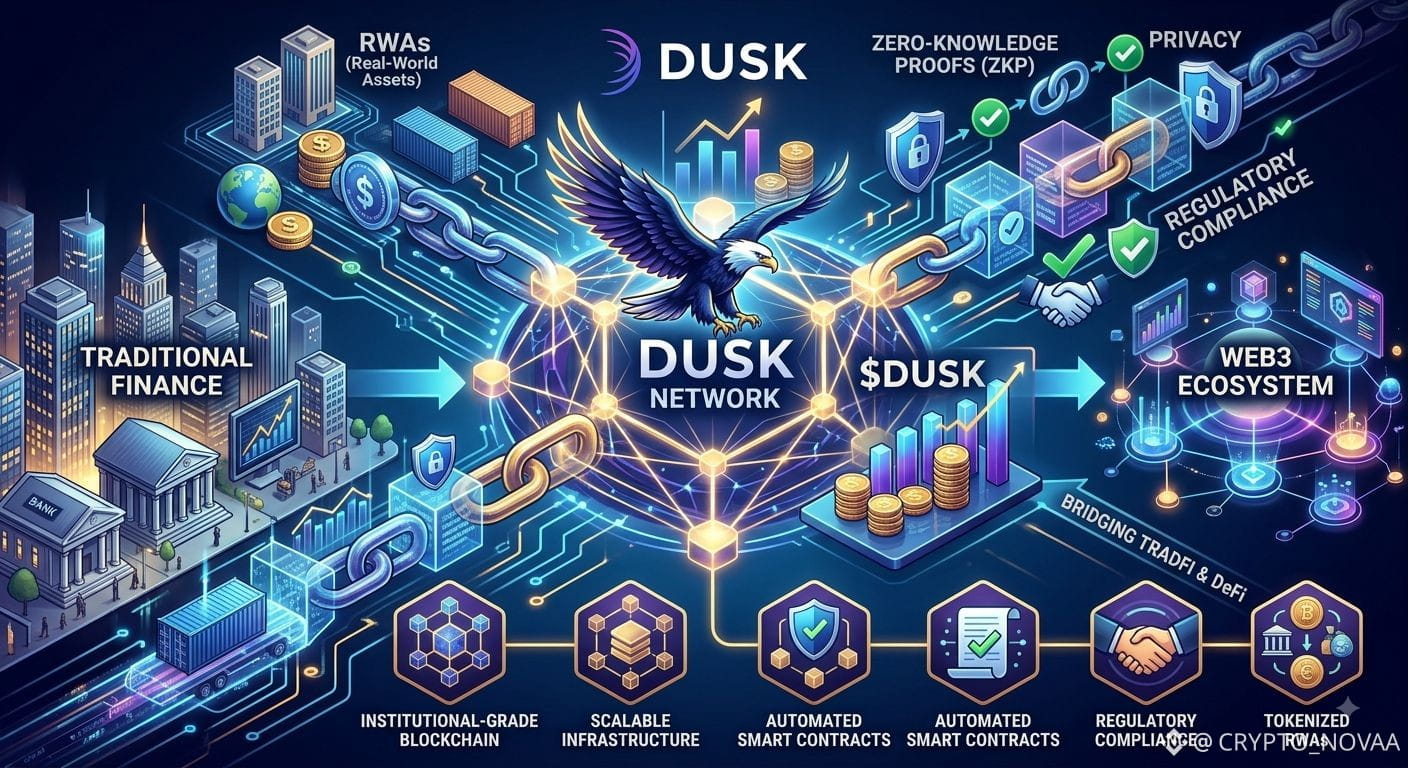
Die Zukunft des dezentralen Finanzwesens erfordert sowohl einen robusten Datenschutz als auch eine vollständige regulatorische Einhaltung, und @Dusk führt mit seiner bahnbrechenden Layer-1-Blockchain-Infrastruktur die Initiative an. Speziell für institutionelles Finanzwesen mit Qualitätsanspruch entwickelt, $DUSK integriert fortschrittliche Zero-Knowledge-Proof-(ZKP-)Technologie, um es Nutzern und Institutionen zu ermöglichen, sicher zu transaktieren und dabei strikte Vertraulichkeit der Daten zu wahren, ohne dabei auf die Compliance zu verzichten.
Indem Dusk die Lücke zwischen traditionellem Finanzwesen (TradFi) und dezentralen Ökosystem-Protokollen überbrückt, ermöglicht es, reale Vermögenswerte (RWAs) sicher on-chain zu tokenisieren. Das bringt massive Liquidität und Vertrauen in den Web3-Bereich, während gleichzeitig sensible Finanzdaten vollständig privat bleiben – vor unbefugten Blicken.
Ganz gleich, ob Sie nach automatisierten, datenschutzfreundlichen Smart Contracts oder nach skalierbarer institutioneller Infrastruktur suchen: Die Innovation, die hinter diesem Projekt steckt, setzt einen neuen Standard für modernes digitales Finanzwesen. Ich freue mich darauf zu sehen, wie sich das Ökosystem weiterentwickelt und die nächste Welle der konformen Web3-Übernahme antreibt! #dusk
#dusk $DUSK @Dusk_Foundation
Die Zukunft des dezentralen Finanzwesens erfordert sowohl einen robusten Datenschutz als auch eine vollständige regulatorische Einhaltung, und @Dusk führt mit seiner bahnbrechenden Layer-1-Blockchain-Infrastruktur die Initiative an. Speziell für institutionelles Finanzwesen mit Qualitätsanspruch entwickelt, $DUSK integriert fortschrittliche Zero-Knowledge-Proof-(ZKP-)Technologie, um es Nutzern und Institutionen zu ermöglichen, sicher zu transaktieren und dabei strikte Vertraulichkeit der Daten zu wahren, ohne dabei auf die Compliance zu verzichten.
Indem Dusk die Lücke zwischen traditionellem Finanzwesen (TradFi) und dezentralen Ökosystem-Protokollen überbrückt, ermöglicht es, reale Vermögenswerte (RWAs) sicher on-chain zu tokenisieren. Das bringt massive Liquidität und Vertrauen in den Web3-Bereich, während gleichzeitig sensible Finanzdaten vollständig privat bleiben – vor unbefugten Blicken.
Ganz gleich, ob Sie nach automatisierten, datenschutzfreundlichen Smart Contracts oder nach skalierbarer institutioneller Infrastruktur suchen: Die Innovation, die hinter diesem Projekt steckt, setzt einen neuen Standard für modernes digitales Finanzwesen. Ich freue mich darauf zu sehen, wie sich das Ökosystem weiterentwickelt und die nächste Welle der konformen Web3-Übernahme antreibt! #dusk
#dusk $DUSK @Dusk
Indem Dusk die Lücke zwischen traditionellem Finanzwesen (TradFi) und dezentralen Ökosystem-Protokollen überbrückt, ermöglicht es, reale Vermögenswerte (RWAs) sicher on-chain zu tokenisieren. Das bringt massive Liquidität und Vertrauen in den Web3-Bereich, während gleichzeitig sensible Finanzdaten vollständig privat bleiben – vor unbefugten Blicken.
Ganz gleich, ob Sie nach automatisierten, datenschutzfreundlichen Smart Contracts oder nach skalierbarer institutioneller Infrastruktur suchen: Die Innovation, die hinter diesem Projekt steckt, setzt einen neuen Standard für modernes digitales Finanzwesen. Ich freue mich darauf zu sehen, wie sich das Ökosystem weiterentwickelt und die nächste Welle der konformen Web3-Übernahme antreibt! #dusk
#dusk $DUSK @Dusk
70
·
--
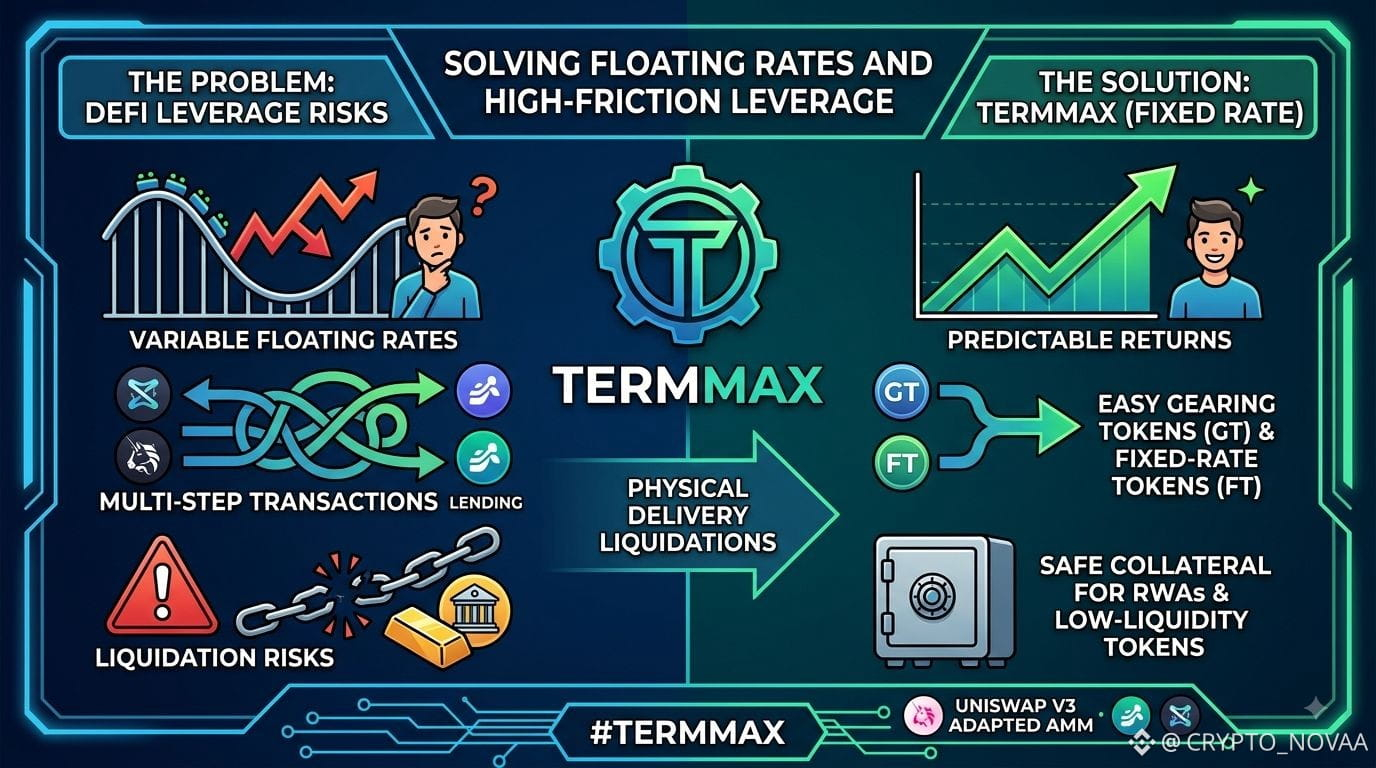
Wenn Sie es leid sind, dass Floating-Rate-Risiken und hoch-friktionsbehafteter DeFi-Hebel Sie belasten, bringt @termmax eine dringend benötigte Lösung in den Raum.
Das Problem: Herkömmliches Yield-Looping erfordert komplexe Multi-Step-Transaktionen über mehrere Protokolle hinweg und macht Nutzer anfällig für unvorhersehbare Zinssätze mit variabler Rate sowie für starre AMM-Preis-Kurven. Kreditgeber sehen sich außerdem Liquidationsrisiken ausgesetzt, wenn Sicherheiten-Assets nicht über ausreichend Liquidität verfügen.
Die TermMax-Lösung: TermMax wird durch ein adaptiertes Uniswap-V3-AMM-Modell angetrieben und liefert feste Kredit- und Anlagekonditionen über anpassbare Range-Orders. Nutzer genießen planbare Erträge mit einfachen Trades von Simple Gearing Token (GT) und Fixed-Rate Token (FT). Zusätzlich öffnen physische Liefer-Liquidationen eine sichere Besicherung für RWAs und reduzieren Risiken für Tokens mit geringerer Liquidität. #TermMax
#termmax @termmax
Wenn Sie es leid sind, dass Floating-Rate-Risiken und hoch-friktionsbehafteter DeFi-Hebel Sie belasten, bringt @TermMax eine dringend benötigte Lösung in den Raum.
Das Problem: Herkömmliches Yield-Looping erfordert komplexe Multi-Step-Transaktionen über mehrere Protokolle hinweg und macht Nutzer anfällig für unvorhersehbare Zinssätze mit variabler Rate sowie für starre AMM-Preis-Kurven. Kreditgeber sehen sich außerdem Liquidationsrisiken ausgesetzt, wenn Sicherheiten-Assets nicht über ausreichend Liquidität verfügen.
Die TermMax-Lösung: TermMax wird durch ein adaptiertes Uniswap-V3-AMM-Modell angetrieben und liefert feste Kredit- und Anlagekonditionen über anpassbare Range-Orders. Nutzer genießen planbare Erträge mit einfachen Trades von Simple Gearing Token (GT) und Fixed-Rate Token (FT). Zusätzlich öffnen physische Liefer-Liquidationen eine sichere Besicherung für RWAs und reduzieren Risiken für Tokens mit geringerer Liquidität. #TermMax
#termmax @TermMax
Das Problem: Herkömmliches Yield-Looping erfordert komplexe Multi-Step-Transaktionen über mehrere Protokolle hinweg und macht Nutzer anfällig für unvorhersehbare Zinssätze mit variabler Rate sowie für starre AMM-Preis-Kurven. Kreditgeber sehen sich außerdem Liquidationsrisiken ausgesetzt, wenn Sicherheiten-Assets nicht über ausreichend Liquidität verfügen.
Die TermMax-Lösung: TermMax wird durch ein adaptiertes Uniswap-V3-AMM-Modell angetrieben und liefert feste Kredit- und Anlagekonditionen über anpassbare Range-Orders. Nutzer genießen planbare Erträge mit einfachen Trades von Simple Gearing Token (GT) und Fixed-Rate Token (FT). Zusätzlich öffnen physische Liefer-Liquidationen eine sichere Besicherung für RWAs und reduzieren Risiken für Tokens mit geringerer Liquidität. #TermMax
#termmax @TermMax
53
·
--
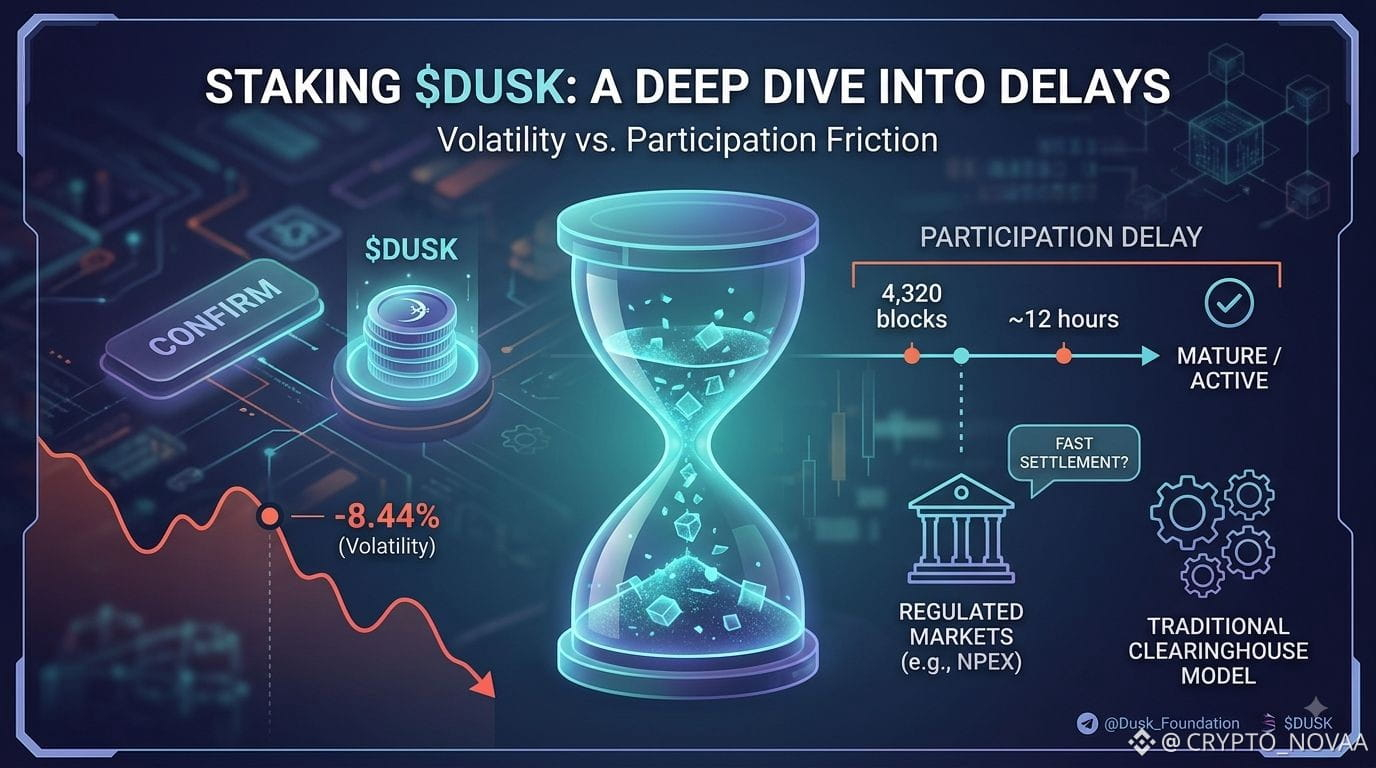
Ich habe bei einer kürzlichen #dusk -Aufgabe eine kleine Menge $DUSK gestaked, um zu sehen, was passiert, nachdem man auf „Bestätigen“ klickt. In der vergangenen Woche etwa ~8,44% im Minus – normale Krypto-Volatilität, kein Panikmodus. Was wirklich auffiel, war die Beteiligungs-Verzögerung.
Ein neues Stake braucht 4.320 Blöcke (~12 Stunden), um heranzureifen, bevor es aktiv wird. Das gilt auch für Hyperstaking-Pools. Bestehendes Stake aufstocken? Dann werden nur 90% sofort aktiviert; die restlichen 10% bleiben inaktiv, bis die vollständige Unstaking-Phase abgeschlossen ist.
Das ist ein seltsamer Kontrast zu einem Netzwerk, das bei schneller Abwicklung für regulierte Märkte wie NPEX geradezu „perfekt“ sein soll. Schnelle Abwicklung heißt nicht, dass die Teilnahme augenblicklich ist – wirkt wie traditionelle Clearinghouse-gebündelte Verarbeitung. Die Doku erklärt das zwar klar, aber es ist nicht Teil der Hype-Runde. Einzelhandelsreibung oder institutionelle Hürde? Ich warte immer noch darauf, dass mein Stake live geht, während ich das hier schreibe.
@Dusk_Foundation $DUSK
Ich habe bei einer kürzlichen #dusk -Aufgabe eine kleine Menge $DUSK gestaked, um zu sehen, was passiert, nachdem man auf „Bestätigen“ klickt. In der vergangenen Woche etwa ~8,44% im Minus – normale Krypto-Volatilität, kein Panikmodus. Was wirklich auffiel, war die Beteiligungs-Verzögerung.
Ein neues Stake braucht 4.320 Blöcke (~12 Stunden), um heranzureifen, bevor es aktiv wird. Das gilt auch für Hyperstaking-Pools. Bestehendes Stake aufstocken? Dann werden nur 90% sofort aktiviert; die restlichen 10% bleiben inaktiv, bis die vollständige Unstaking-Phase abgeschlossen ist.
Das ist ein seltsamer Kontrast zu einem Netzwerk, das bei schneller Abwicklung für regulierte Märkte wie NPEX geradezu „perfekt“ sein soll. Schnelle Abwicklung heißt nicht, dass die Teilnahme augenblicklich ist – wirkt wie traditionelle Clearinghouse-gebündelte Verarbeitung. Die Doku erklärt das zwar klar, aber es ist nicht Teil der Hype-Runde. Einzelhandelsreibung oder institutionelle Hürde? Ich warte immer noch darauf, dass mein Stake live geht, während ich das hier schreibe.
@Dusk $DUSK
Ein neues Stake braucht 4.320 Blöcke (~12 Stunden), um heranzureifen, bevor es aktiv wird. Das gilt auch für Hyperstaking-Pools. Bestehendes Stake aufstocken? Dann werden nur 90% sofort aktiviert; die restlichen 10% bleiben inaktiv, bis die vollständige Unstaking-Phase abgeschlossen ist.
Das ist ein seltsamer Kontrast zu einem Netzwerk, das bei schneller Abwicklung für regulierte Märkte wie NPEX geradezu „perfekt“ sein soll. Schnelle Abwicklung heißt nicht, dass die Teilnahme augenblicklich ist – wirkt wie traditionelle Clearinghouse-gebündelte Verarbeitung. Die Doku erklärt das zwar klar, aber es ist nicht Teil der Hype-Runde. Einzelhandelsreibung oder institutionelle Hürde? Ich warte immer noch darauf, dass mein Stake live geht, während ich das hier schreibe.
@Dusk $DUSK
65
Anmelden und weiter Inhalte entdecken
Krypto-Nutzer weltweit auf Binance Square kennenlernen
⚡️ Bleib in Sachen Krypto stets am Puls.
💬 Die weltgrößte Kryptobörse vertraut darauf.
👍 Erhalte verlässliche Einblicke von verifizierten Creators.
E-Mail-Adresse/Telefonnummer
Trendthemen
BinanceLaunchesBinanceIntelligence
272,766 Aufrufe
2,401 Kommentare
#BinanceLaunchesBinanceIntelligence :
Die Veränderung geht über „noch ein KI-Feature“ hinaus.
Was Binance tut:
KI zwischen Nutzer und der Informations-, Tool- und Ausführungsebene platzieren.
Drei Bausteine:
Binance AI: für normale Nutzer. Market Brief, Smart Alerts, personalisierte Einblicke.
AI Pro: für fortgeschrittene Workflows. Natürliche Sprache wird zu einer visuellen, testbaren und ausführbaren Strategie.
Agent OS: für Entwickler. Agenten, die mit der Binance-Infrastruktur interagieren.
Der bisherige Ablauf:
Idee, Recherche, Chart, Entscheidung, Ausführung
Der Ablauf jetzt:
Idee, KI-Interpretation, Strategie, Simulation, Ausführung, Feedback
Was mir Sorgen bereitet:
Ein leichterer Zugang zu Informationen bedeutet nicht automatisch bessere Entscheidungen.
Der Engpass im Kryptobereich ist nicht länger der Zugang zu Informationen. Es ist die Geschwindigkeit, mit der daraus Entscheidungen werden.
Wenn KI diesen Weg verkürzt, könnte Krypto von unterstützter Recherche zu unterstützter Teilnahme übergehen.
Wenn die KI-gestützte Ausführung jedoch schneller wächst als die Fähigkeit des Marktes, sie aufzunehmen, führt Effizienz zu Fragilität: Agenten reagieren gleichzeitig.
Der echte Test:
Es geht nicht darum, ob KI Strategien generiert. Sondern darum, ob Nutzer ein nützliches Signal von einer überzeugend klingenden Antwort unterscheiden können.
$BR $ORCA
Macht KI Krypto intelligenter oder einfach nur schneller?
Keine Finanzberatung. DYOR.
Green Rock Sinal
·1 Likes
·53 Aufrufe
BitcoinTargets2026OpenAt$87570
333 Aufrufe
32 Kommentare
BitcoinRejectedAt$87KThirdTime
470 Aufrufe
38 Kommentare