

Naacs Creative
15 Beiträge

Naacs Creative
Melden
Nutzer blockieren
6 Following
11 Follower
10 Like gegeben
Beiträge
Alle
Zitierungen
Artikel
Übersetzung ansehen
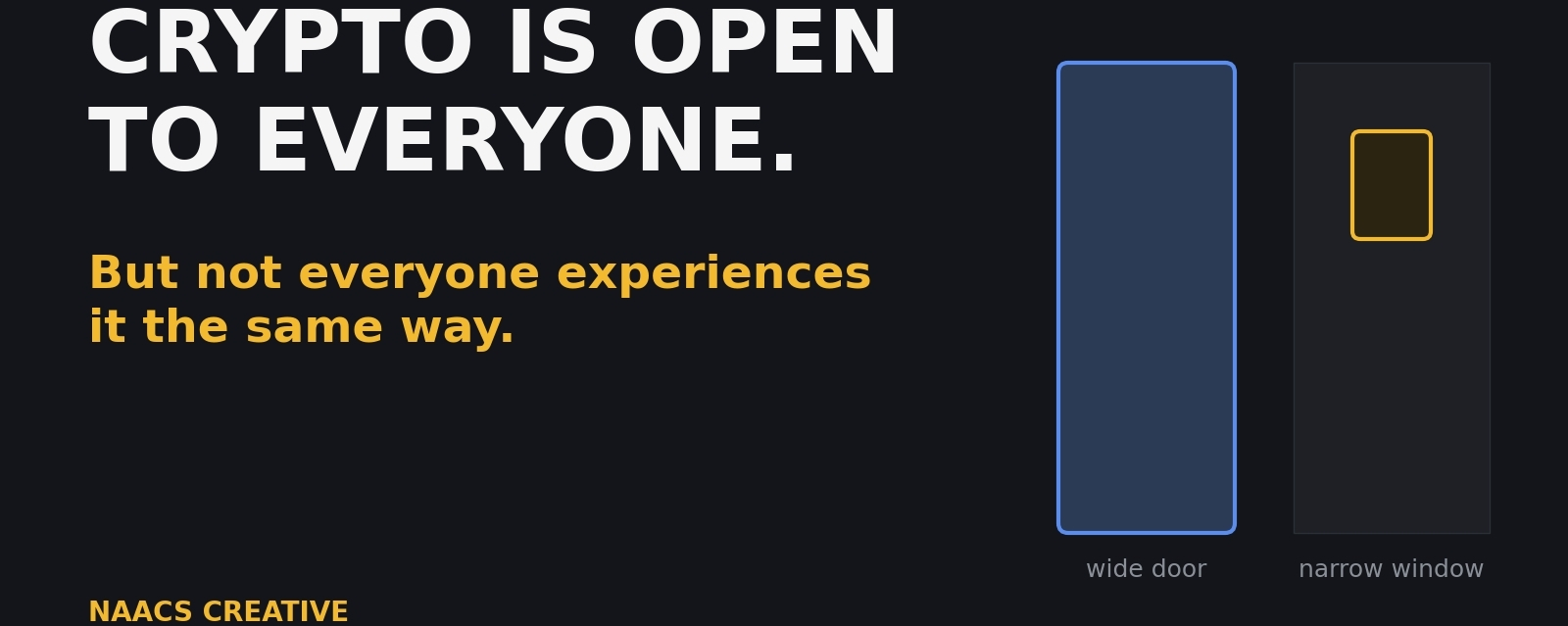
Crypto Is Open to Everyone. But Not Everyone Experiences It the Same Way.Crypto's biggest promise is simple: no bank, no permission, no borders. Anyone with a phone and internet can join.
That's true. But "open to everyone" doesn't mean "the same for everyone." Where you live shapes your crypto life more than most people admit.
1. Why you use it 💵
In New York or London, crypto is mostly an investment. People buy $BTC hoping it goes up.
In Lagos, Nairobi, or Bujumbura, crypto is often about survival: protecting savings from inflation, getting access to dollars, or sending money to family abroad. That's why stablecoins dominate person-to-person transfers in Africa. It's not speculation. It's a tool.
2. How you get in 🚪
In some countries, you link your bank card and buy in seconds.
In many African countries, banks are cautious and card payments get blocked, so people rely on P2P trading. It works, but it takes more time, more trust, and more care to avoid scams.
3. What tools you can use 🛠️
Shopify crypto checkout? Available in 34 countries. PayPal crypto? Mainly for US merchants. Bank-run crypto custody? South Africa just got Africa's first.
Same technology, very different access. Many of the best tools still stop at certain borders.
4. What rules protect you ⚖️
Some countries have clear licensing, protection rules, and regulators you can turn to.
Many others have no clear crypto law at all. That means freedom, but also less protection when something goes wrong.
5. What a mistake costs you 📉
Losing $100 to a scam or a bad trade means something very different depending on what $100 is worth where you live. The same risk can be a small lesson for one person and a serious setback for another.
So, is crypto really open to everyone?
Yes, the door is open. But some people walk through a wide, well-lit entrance, and others climb through a narrow window.
That's not a reason to give up on crypto. It's a reason to build. The biggest opportunities are in closing those gaps: better local on-ramps, education in local languages, merchant tools that work in every country, and clear rules that protect people without shutting them out.
The next big wave of crypto users is already here. The question is whether the tools will come to meet them.
Where are you reading this from, and how do you mainly use crypto? 👇$BTC
{spot}(BTCUSDT)
#BitcoinSpotETFsDraw$6.34BInflowsInQ3
Crypto Is Open to Everyone. But Not Everyone Experiences It the Same Way.
Crypto's biggest promise is simple: no bank, no permission, no borders. Anyone with a phone and internet can join.
That's true. But "open to everyone" doesn't mean "the same for everyone." Where you live shapes your crypto life more than most people admit.
1. Why you use it 💵
In New York or London, crypto is mostly an investment. People buy $BTC hoping it goes up.
In Lagos, Nairobi, or Bujumbura, crypto is often about survival: protecting savings from inflation, getting access to dollars, or sending money to family abroad. That's why stablecoins dominate person-to-person transfers in Africa. It's not speculation. It's a tool.
2. How you get in 🚪
In some countries, you link your bank card and buy in seconds.
In many African countries, banks are cautious and card payments get blocked, so people rely on P2P trading. It works, but it takes more time, more trust, and more care to avoid scams.
3. What tools you can use 🛠️
Shopify crypto checkout? Available in 34 countries. PayPal crypto? Mainly for US merchants. Bank-run crypto custody? South Africa just got Africa's first.
Same technology, very different access. Many of the best tools still stop at certain borders.
4. What rules protect you ⚖️
Some countries have clear licensing, protection rules, and regulators you can turn to.
Many others have no clear crypto law at all. That means freedom, but also less protection when something goes wrong.
5. What a mistake costs you 📉
Losing $100 to a scam or a bad trade means something very different depending on what $100 is worth where you live. The same risk can be a small lesson for one person and a serious setback for another.
So, is crypto really open to everyone?
Yes, the door is open. But some people walk through a wide, well-lit entrance, and others climb through a narrow window.
That's not a reason to give up on crypto. It's a reason to build. The biggest opportunities are in closing those gaps: better local on-ramps, education in local languages, merchant tools that work in every country, and clear rules that protect people without shutting them out.
The next big wave of crypto users is already here. The question is whether the tools will come to meet them.
Where are you reading this from, and how do you mainly use crypto? 👇$BTC
#BitcoinSpotETFsDraw$6.34BInflowsInQ3
That's true. But "open to everyone" doesn't mean "the same for everyone." Where you live shapes your crypto life more than most people admit.
1. Why you use it 💵
In New York or London, crypto is mostly an investment. People buy $BTC hoping it goes up.
In Lagos, Nairobi, or Bujumbura, crypto is often about survival: protecting savings from inflation, getting access to dollars, or sending money to family abroad. That's why stablecoins dominate person-to-person transfers in Africa. It's not speculation. It's a tool.
2. How you get in 🚪
In some countries, you link your bank card and buy in seconds.
In many African countries, banks are cautious and card payments get blocked, so people rely on P2P trading. It works, but it takes more time, more trust, and more care to avoid scams.
3. What tools you can use 🛠️
Shopify crypto checkout? Available in 34 countries. PayPal crypto? Mainly for US merchants. Bank-run crypto custody? South Africa just got Africa's first.
Same technology, very different access. Many of the best tools still stop at certain borders.
4. What rules protect you ⚖️
Some countries have clear licensing, protection rules, and regulators you can turn to.
Many others have no clear crypto law at all. That means freedom, but also less protection when something goes wrong.
5. What a mistake costs you 📉
Losing $100 to a scam or a bad trade means something very different depending on what $100 is worth where you live. The same risk can be a small lesson for one person and a serious setback for another.
So, is crypto really open to everyone?
Yes, the door is open. But some people walk through a wide, well-lit entrance, and others climb through a narrow window.
That's not a reason to give up on crypto. It's a reason to build. The biggest opportunities are in closing those gaps: better local on-ramps, education in local languages, merchant tools that work in every country, and clear rules that protect people without shutting them out.
The next big wave of crypto users is already here. The question is whether the tools will come to meet them.
Where are you reading this from, and how do you mainly use crypto? 👇$BTC
#BitcoinSpotETFsDraw$6.34BInflowsInQ3
24
Artikel
Übersetzung ansehen
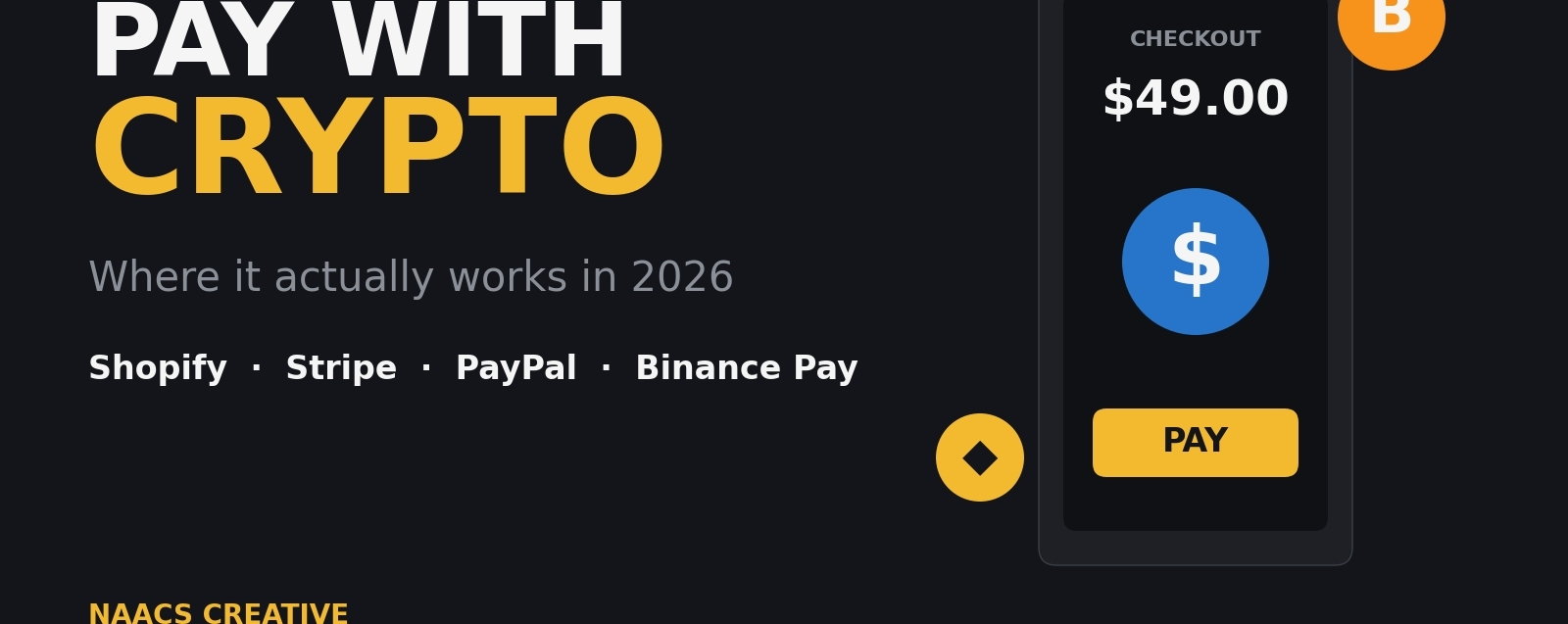
🛒 Can you really pay with crypto in 2026? Yes, and here's whereCrypto payments are no longer a gimmick. Big platforms are building them into checkout 👇
🛍️ Shopify
Stores in 34 countries can accept $USDC directly at checkout. The merchant still gets paid in local currency, or keeps the USDC.
💳 Stripe
Stablecoin payments are turned on by default, from customers in 70+ countries, at a flat 1.5% fee.
🅿️ PayPal "Pay with Crypto"
US merchants can accept crypto, and PayPal converts it to dollars automatically.
🟡 Binance Pay
In Switzerland, 100+ SPAR supermarkets let you pay with Binance Pay by scanning a QR code. The store receives Swiss francs.
📊 The big number: 39% of US merchants now accept some form of crypto, according to a PayPal survey from January 2026.
Why merchants like it:
✅ No chargebacks: payments can't be reversed
✅ Cheaper cross-border payments than many card fees
✅ Stablecoins mean no price swings
The African question 🌍
Many of these tools are only available in certain countries. Yet Africa uses stablecoins more than almost anywhere. That gap is a huge opportunity for African businesses and builders.
Would you pay for something online with crypto? Or would you accept it in your business? 👇 $BNB
{spot}(BNBUSDT)
🛒 Can you really pay with crypto in 2026? Yes, and here's where
Crypto payments are no longer a gimmick. Big platforms are building them into checkout 👇
🛍️ Shopify
Stores in 34 countries can accept $USDC directly at checkout. The merchant still gets paid in local currency, or keeps the USDC.
💳 Stripe
Stablecoin payments are turned on by default, from customers in 70+ countries, at a flat 1.5% fee.
🅿️ PayPal "Pay with Crypto"
US merchants can accept crypto, and PayPal converts it to dollars automatically.
🟡 Binance Pay
In Switzerland, 100+ SPAR supermarkets let you pay with Binance Pay by scanning a QR code. The store receives Swiss francs.
📊 The big number: 39% of US merchants now accept some form of crypto, according to a PayPal survey from January 2026.
Why merchants like it:
✅ No chargebacks: payments can't be reversed
✅ Cheaper cross-border payments than many card fees
✅ Stablecoins mean no price swings
The African question 🌍
Many of these tools are only available in certain countries. Yet Africa uses stablecoins more than almost anywhere. That gap is a huge opportunity for African businesses and builders.
Would you pay for something online with crypto? Or would you accept it in your business? 👇 $BNB
🛍️ Shopify
Stores in 34 countries can accept $USDC directly at checkout. The merchant still gets paid in local currency, or keeps the USDC.
💳 Stripe
Stablecoin payments are turned on by default, from customers in 70+ countries, at a flat 1.5% fee.
🅿️ PayPal "Pay with Crypto"
US merchants can accept crypto, and PayPal converts it to dollars automatically.
🟡 Binance Pay
In Switzerland, 100+ SPAR supermarkets let you pay with Binance Pay by scanning a QR code. The store receives Swiss francs.
📊 The big number: 39% of US merchants now accept some form of crypto, according to a PayPal survey from January 2026.
Why merchants like it:
✅ No chargebacks: payments can't be reversed
✅ Cheaper cross-border payments than many card fees
✅ Stablecoins mean no price swings
The African question 🌍
Many of these tools are only available in certain countries. Yet Africa uses stablecoins more than almost anywhere. That gap is a huge opportunity for African businesses and builders.
Would you pay for something online with crypto? Or would you accept it in your business? 👇 $BNB
7
Übersetzung ansehen
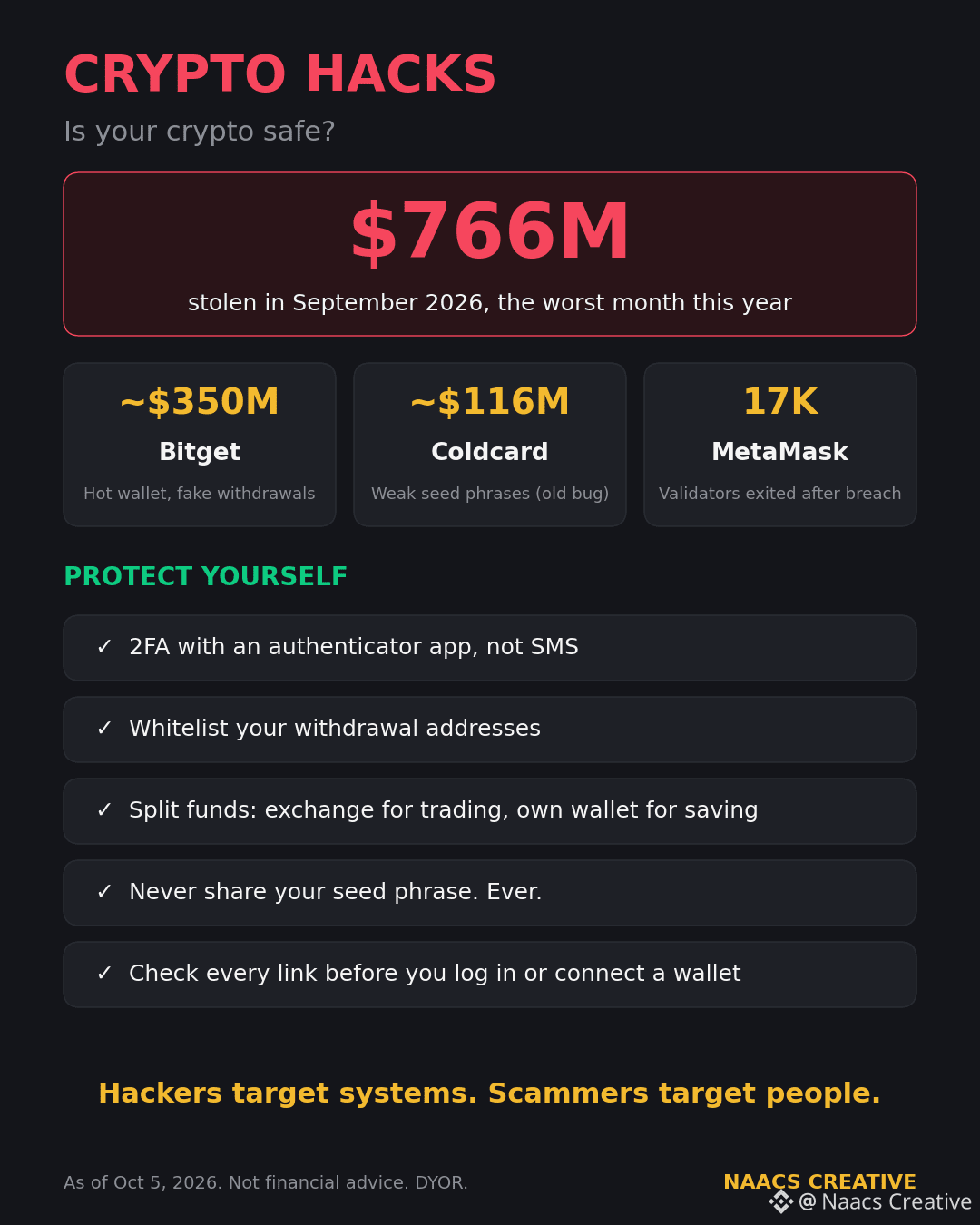
🚨 $766 million stolen in one month. Is your crypto safe?
September 2026 was the worst month for crypto hacks this year. Here's what happened, and what it teaches us 👇
🏦 Bitget: ~$350M stolen from a hot wallet
Hackers broke into a back-end system and faked withdrawal approvals. Cold wallets were safe, and Bitget says users will be fully covered by its protection fund.
Lesson: even big exchanges get hit. Don't keep everything in one place.
🔐 Coldcard: ~$116M in Bitcoin drained
A 2021 software bug made some "ultra-safe" hardware wallets generate weak seed phrases. Over 5,200 wallets were emptied.
Lesson: "cold storage" isn't magic. Keep your device's firmware updated and follow security alerts.
🦊 MetaMask Staking: security breach
It pulled ~17,000 validators out of Ethereum as a precaution, causing the exit queue spike.
How to protect yourself today:
✅ Turn on 2FA with an authenticator app, not SMS
✅ Use a withdrawal address whitelist on your exchange
✅ Split your funds: trading money on the exchange, savings in your own wallet
✅ Never share your seed phrase. No real support team will ever ask for it
✅ Double-check links. Most people lose money to fake sites, not big hacks
Hackers target systems. Scammers target people. Protect both.
What's your #1 security habit? 👇
#EthereumValidatorExitQueueJumps392% #BTC走势分析 #BTC☀ #Coldwallet #BitgetWallet
🚨 $766 million stolen in one month. Is your crypto safe?
September 2026 was the worst month for crypto hacks this year. Here's what happened, and what it teaches us 👇
🏦 Bitget: ~$350M stolen from a hot wallet
Hackers broke into a back-end system and faked withdrawal approvals. Cold wallets were safe, and Bitget says users will be fully covered by its protection fund.
Lesson: even big exchanges get hit. Don't keep everything in one place.
🔐 Coldcard: ~$116M in Bitcoin drained
A 2021 software bug made some "ultra-safe" hardware wallets generate weak seed phrases. Over 5,200 wallets were emptied.
Lesson: "cold storage" isn't magic. Keep your device's firmware updated and follow security alerts.
🦊 MetaMask Staking: security breach
It pulled ~17,000 validators out of Ethereum as a precaution, causing the exit queue spike.
How to protect yourself today:
✅ Turn on 2FA with an authenticator app, not SMS
✅ Use a withdrawal address whitelist on your exchange
✅ Split your funds: trading money on the exchange, savings in your own wallet
✅ Never share your seed phrase. No real support team will ever ask for it
✅ Double-check links. Most people lose money to fake sites, not big hacks
Hackers target systems. Scammers target people. Protect both.
What's your #1 security habit? 👇
#EthereumValidatorExitQueueJumps392% #BTC走势分析 #BTC☀ #Coldwallet #BitgetWallet
September 2026 was the worst month for crypto hacks this year. Here's what happened, and what it teaches us 👇
🏦 Bitget: ~$350M stolen from a hot wallet
Hackers broke into a back-end system and faked withdrawal approvals. Cold wallets were safe, and Bitget says users will be fully covered by its protection fund.
Lesson: even big exchanges get hit. Don't keep everything in one place.
🔐 Coldcard: ~$116M in Bitcoin drained
A 2021 software bug made some "ultra-safe" hardware wallets generate weak seed phrases. Over 5,200 wallets were emptied.
Lesson: "cold storage" isn't magic. Keep your device's firmware updated and follow security alerts.
🦊 MetaMask Staking: security breach
It pulled ~17,000 validators out of Ethereum as a precaution, causing the exit queue spike.
How to protect yourself today:
✅ Turn on 2FA with an authenticator app, not SMS
✅ Use a withdrawal address whitelist on your exchange
✅ Split your funds: trading money on the exchange, savings in your own wallet
✅ Never share your seed phrase. No real support team will ever ask for it
✅ Double-check links. Most people lose money to fake sites, not big hacks
Hackers target systems. Scammers target people. Protect both.
What's your #1 security habit? 👇
#EthereumValidatorExitQueueJumps392% #BTC走势分析 #BTC☀ #Coldwallet #BitgetWallet
8
Übersetzung ansehen
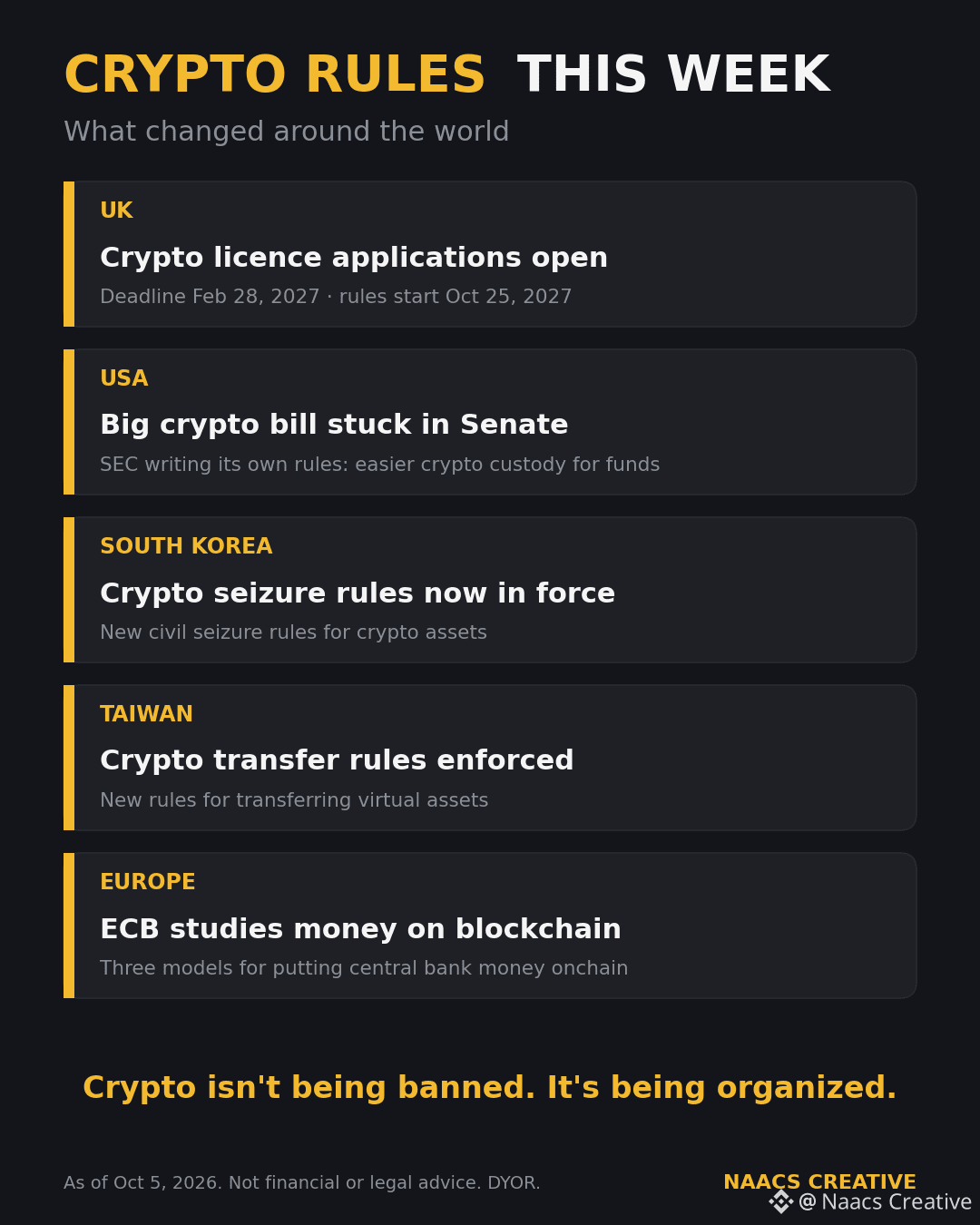
🌍 Crypto rules this week: what changed around the world
Governments aren't banning crypto anymore. They're writing the rulebook. Here's what moved this week 👇
🇬🇧 UK: licence applications are open
Crypto companies can now apply for a UK licence until February 28, 2027. The new rules start October 25, 2027. No licence = no UK business.
🇺🇸 USA: Congress is stuck, regulators aren't
The big crypto law (the Clarity Act) stalled in the Senate. So the SEC is moving on its own, including a new proposal to make it easier for investment funds to hold crypto.
🇰🇷 South Korea: seizure rules now in force
New civil rules for seizing crypto assets took effect this month.
🇹🇼 Taiwan: transfer rules enforced
Taiwan is starting to enforce new rules on how virtual assets are transferred.
🇪🇺 Europe: money on blockchain?
The European Central Bank outlined three models for putting central bank money onchain. Even central banks are studying the technology now.
Why this matters for you:
Clear rules bring big money. Banks, funds, and institutions only enter markets where they know the rules. That's why South Africa, with its clear licensing system, just got Africa's first bank offering Bitcoin custody.
My question for Africa: we have some of the world's highest crypto adoption, but most of our countries still don't have clear crypto laws. Which African country should write its rules next? 👇
Not financial or legal advice. DYOR.#BTC☀ #TrenddingTopic #newscrypto $BTC $ETH $SECZ
🌍 Crypto rules this week: what changed around the world
Governments aren't banning crypto anymore. They're writing the rulebook. Here's what moved this week 👇
🇬🇧 UK: licence applications are open
Crypto companies can now apply for a UK licence until February 28, 2027. The new rules start October 25, 2027. No licence = no UK business.
🇺🇸 USA: Congress is stuck, regulators aren't
The big crypto law (the Clarity Act) stalled in the Senate. So the SEC is moving on its own, including a new proposal to make it easier for investment funds to hold crypto.
🇰🇷 South Korea: seizure rules now in force
New civil rules for seizing crypto assets took effect this month.
🇹🇼 Taiwan: transfer rules enforced
Taiwan is starting to enforce new rules on how virtual assets are transferred.
🇪🇺 Europe: money on blockchain?
The European Central Bank outlined three models for putting central bank money onchain. Even central banks are studying the technology now.
Why this matters for you:
Clear rules bring big money. Banks, funds, and institutions only enter markets where they know the rules. That's why South Africa, with its clear licensing system, just got Africa's first bank offering Bitcoin custody.
My question for Africa: we have some of the world's highest crypto adoption, but most of our countries still don't have clear crypto laws. Which African country should write its rules next? 👇
Not financial or legal advice. DYOR.#BTC☀ #TrenddingTopic #newscrypto $BTC $ETH $SECZ
Governments aren't banning crypto anymore. They're writing the rulebook. Here's what moved this week 👇
🇬🇧 UK: licence applications are open
Crypto companies can now apply for a UK licence until February 28, 2027. The new rules start October 25, 2027. No licence = no UK business.
🇺🇸 USA: Congress is stuck, regulators aren't
The big crypto law (the Clarity Act) stalled in the Senate. So the SEC is moving on its own, including a new proposal to make it easier for investment funds to hold crypto.
🇰🇷 South Korea: seizure rules now in force
New civil rules for seizing crypto assets took effect this month.
🇹🇼 Taiwan: transfer rules enforced
Taiwan is starting to enforce new rules on how virtual assets are transferred.
🇪🇺 Europe: money on blockchain?
The European Central Bank outlined three models for putting central bank money onchain. Even central banks are studying the technology now.
Why this matters for you:
Clear rules bring big money. Banks, funds, and institutions only enter markets where they know the rules. That's why South Africa, with its clear licensing system, just got Africa's first bank offering Bitcoin custody.
My question for Africa: we have some of the world's highest crypto adoption, but most of our countries still don't have clear crypto laws. Which African country should write its rules next? 👇
Not financial or legal advice. DYOR.#BTC☀ #TrenddingTopic #newscrypto $BTC $ETH $SECZ
40
Artikel
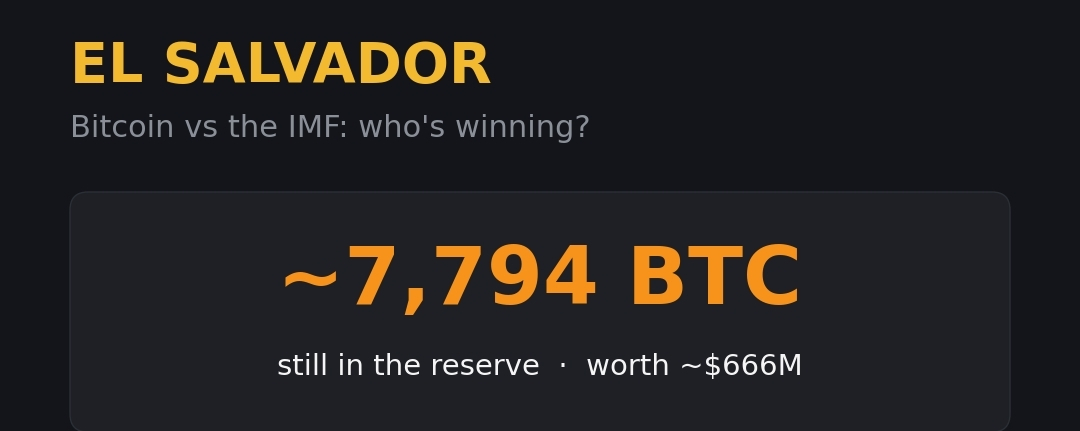
🇸🇻 El Salvador vs. der IWF: Wer gewinnt den Bitcoin-Kampf?El Salvador hat gerade 138 Millionen US-Dollar vom IWF erhalten – und hat immer noch seinen Bitcoin. Aber es gibt einen Haken.
Die Zahlen:
🟠 ~7.794 $BTC in der nationalen Reserve
💰 Wert etwa 666 Millionen US-Dollar
🏦 138 Mio. US-Dollar freigegeben aus einem 1,4 Mrd. US-Dollar IWF-Kredit
Die Vereinbarung:
Der IWF hat El Salvador die Hinzufügung von Bitcoin erlassen, obwohl das Land versprochen hatte, es nicht zu tun. Im Gegenzug verpflichtete sich das Land, keine neuen Bitcoin-Käufe mit öffentlichen Mitteln zu tätigen. Spenden sind weiterhin erlaubt.
Was der IWF immer noch will:
→ Bessere Berichterstattung darüber, wie viel Krypto der Staat besitzt
→ Strengere Regeln für Krypto-Unternehmen
🇸🇻 El Salvador vs. der IWF: Wer gewinnt den Bitcoin-Kampf?
El Salvador hat gerade 138 Millionen US-Dollar vom IWF erhalten – und hat immer noch seinen Bitcoin. Aber es gibt einen Haken.
Die Zahlen:
🟠 ~7.794 $BTC in der nationalen Reserve
💰 Wert etwa 666 Millionen US-Dollar
🏦 138 Mio. US-Dollar freigegeben aus einem 1,4 Mrd. US-Dollar IWF-Kredit
Die Vereinbarung:
Der IWF hat El Salvador die Hinzufügung von Bitcoin erlassen, obwohl das Land versprochen hatte, es nicht zu tun. Im Gegenzug verpflichtete sich das Land, keine neuen Bitcoin-Käufe mit öffentlichen Mitteln zu tätigen. Spenden sind weiterhin erlaubt.
Was der IWF immer noch will:
→ Bessere Berichterstattung darüber, wie viel Krypto der Staat besitzt
→ Strengere Regeln für Krypto-Unternehmen
Die Zahlen:
🟠 ~7.794 $BTC in der nationalen Reserve
💰 Wert etwa 666 Millionen US-Dollar
🏦 138 Mio. US-Dollar freigegeben aus einem 1,4 Mrd. US-Dollar IWF-Kredit
Die Vereinbarung:
Der IWF hat El Salvador die Hinzufügung von Bitcoin erlassen, obwohl das Land versprochen hatte, es nicht zu tun. Im Gegenzug verpflichtete sich das Land, keine neuen Bitcoin-Käufe mit öffentlichen Mitteln zu tätigen. Spenden sind weiterhin erlaubt.
Was der IWF immer noch will:
→ Bessere Berichterstattung darüber, wie viel Krypto der Staat besitzt
→ Strengere Regeln für Krypto-Unternehmen
58
Übersetzung ansehen
🇿🇦 An African bank now holds Bitcoin. This is big.Absa, one of South Africa's biggest banks, just became the first bank in Africa to offer crypto custody, meaning it safely stores digital assets for clients.
What it supports:
✅ $BTC
✅ $ETH
✅ $XRP
✅ USDC
Who can use it: for now, institutions like asset managers and companies in South Africa. Absa plans to open it to more clients and more African countries once regulators approve.
The detail that matters: Absa says Bitcoin is by far the biggest asset clients are storing with them. 👀
Why this is a turning point:
For years, African banks kept their distance from crypto while ordinary people adopted it anyway, through P2P, stablecoins, and mobile money. Now a major bank is building the infrastructure itself.
When banks move from "crypto is risky" to "we'll hold your Bitcoin," the conversation has changed.
My question: which African country's banks will follow next: Nigeria, Kenya, or somewhere else? 👇
Not financial advice. DYOR.
#BitcoinSpotETFsDraw$6.34BInflowsInQ3 #IMFApprovesElSalvador$138MWithBitcoinWaiver
🇿🇦 An African bank now holds Bitcoin. This is big.
Absa, one of South Africa's biggest banks, just became the first bank in Africa to offer crypto custody, meaning it safely stores digital assets for clients.
What it supports:
✅ $BTC
✅ $ETH
✅ $XRP
✅ USDC
Who can use it: for now, institutions like asset managers and companies in South Africa. Absa plans to open it to more clients and more African countries once regulators approve.
The detail that matters: Absa says Bitcoin is by far the biggest asset clients are storing with them. 👀
Why this is a turning point:
For years, African banks kept their distance from crypto while ordinary people adopted it anyway, through P2P, stablecoins, and mobile money. Now a major bank is building the infrastructure itself.
When banks move from "crypto is risky" to "we'll hold your Bitcoin," the conversation has changed.
My question: which African country's banks will follow next: Nigeria, Kenya, or somewhere else? 👇
Not financial advice. DYOR.
#BitcoinSpotETFsDraw$6.34BInflowsInQ3 #IMFApprovesElSalvador$138MWithBitcoinWaiver
What it supports:
✅ $BTC
✅ $ETH
✅ $XRP
✅ USDC
Who can use it: for now, institutions like asset managers and companies in South Africa. Absa plans to open it to more clients and more African countries once regulators approve.
The detail that matters: Absa says Bitcoin is by far the biggest asset clients are storing with them. 👀
Why this is a turning point:
For years, African banks kept their distance from crypto while ordinary people adopted it anyway, through P2P, stablecoins, and mobile money. Now a major bank is building the infrastructure itself.
When banks move from "crypto is risky" to "we'll hold your Bitcoin," the conversation has changed.
My question: which African country's banks will follow next: Nigeria, Kenya, or somewhere else? 👇
Not financial advice. DYOR.
#BitcoinSpotETFsDraw$6.34BInflowsInQ3 #IMFApprovesElSalvador$138MWithBitcoinWaiver
29
Artikel
Übersetzung ansehen
Africa is quietly winning the crypto race 🌍While much of the market struggled this year, Africa kept growing. Writing from Bujumbura 🇧🇮, here's what the data shows:
📈 Fastest growth in the world. Chainalysis's 2026 report found Sub-Saharan Africa had the fastest crypto adoption growth of any region, during one of the toughest markets since 2022.
🇳🇬 Nigeria is #1 globally for both P2P activity and cross-border crypto flows. South Africa ranks in the global top 10.
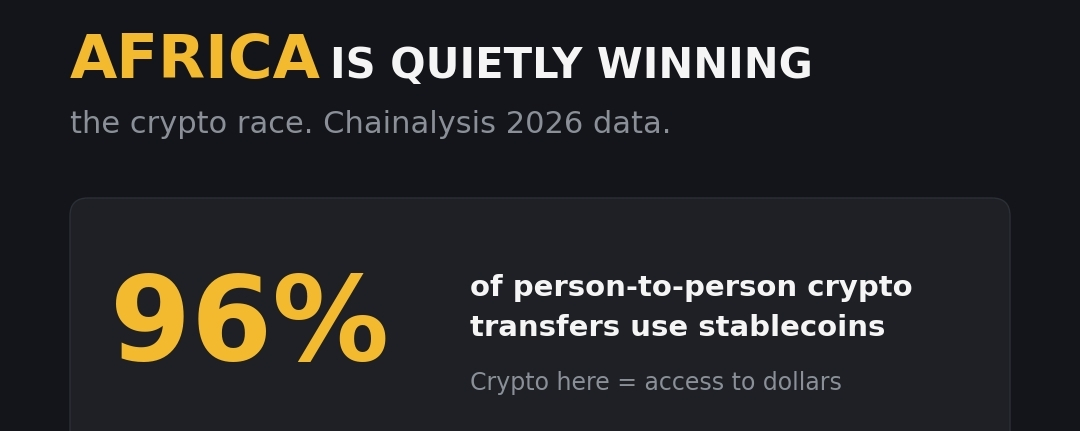
💵 It's not about speculation. Stablecoins like $USDC and USDT make up 96% of person-to-person crypto transfers. People use crypto to protect savings from inflation, send money across borders, and access dollars.
🤝 Binance is betting on Africa: exploring P2P integration and crypto education with telecom operator Africell, and working with governments across the continent.
What this means:
Western markets trade crypto. Africa uses it. When $BTC drops, people here don't stop sending money home or protecting their savings.
My view: the next wave of crypto users won't come from Wall Street. It will come from Lagos, Nairobi, Kinshasa, and Bujumbura.
Fellow Africans: what do you mainly use crypto for? Savings, sending money, or trading? 👇
#Africa #CryptoAdoption
Africa is quietly winning the crypto race 🌍
While much of the market struggled this year, Africa kept growing. Writing from Bujumbura 🇧🇮, here's what the data shows:
📈 Fastest growth in the world. Chainalysis's 2026 report found Sub-Saharan Africa had the fastest crypto adoption growth of any region, during one of the toughest markets since 2022.
🇳🇬 Nigeria is #1 globally for both P2P activity and cross-border crypto flows. South Africa ranks in the global top 10.
💵 It's not about speculation. Stablecoins like $USDC and USDT make up 96% of person-to-person crypto transfers. People use crypto to protect savings from inflation, send money across borders, and access dollars.
🤝 Binance is betting on Africa: exploring P2P integration and crypto education with telecom operator Africell, and working with governments across the continent.
What this means:
Western markets trade crypto. Africa uses it. When $BTC drops, people here don't stop sending money home or protecting their savings.
My view: the next wave of crypto users won't come from Wall Street. It will come from Lagos, Nairobi, Kinshasa, and Bujumbura.
Fellow Africans: what do you mainly use crypto for? Savings, sending money, or trading? 👇
#Africa #CryptoAdoption
📈 Fastest growth in the world. Chainalysis's 2026 report found Sub-Saharan Africa had the fastest crypto adoption growth of any region, during one of the toughest markets since 2022.
🇳🇬 Nigeria is #1 globally for both P2P activity and cross-border crypto flows. South Africa ranks in the global top 10.
💵 It's not about speculation. Stablecoins like $USDC and USDT make up 96% of person-to-person crypto transfers. People use crypto to protect savings from inflation, send money across borders, and access dollars.
🤝 Binance is betting on Africa: exploring P2P integration and crypto education with telecom operator Africell, and working with governments across the continent.
What this means:
Western markets trade crypto. Africa uses it. When $BTC drops, people here don't stop sending money home or protecting their savings.
My view: the next wave of crypto users won't come from Wall Street. It will come from Lagos, Nairobi, Kinshasa, and Bujumbura.
Fellow Africans: what do you mainly use crypto for? Savings, sending money, or trading? 👇
#Africa #CryptoAdoption
10
Übersetzung ansehen
SEC freezes crypto ETF reviews. Bad news, or just a pause? ⏸️
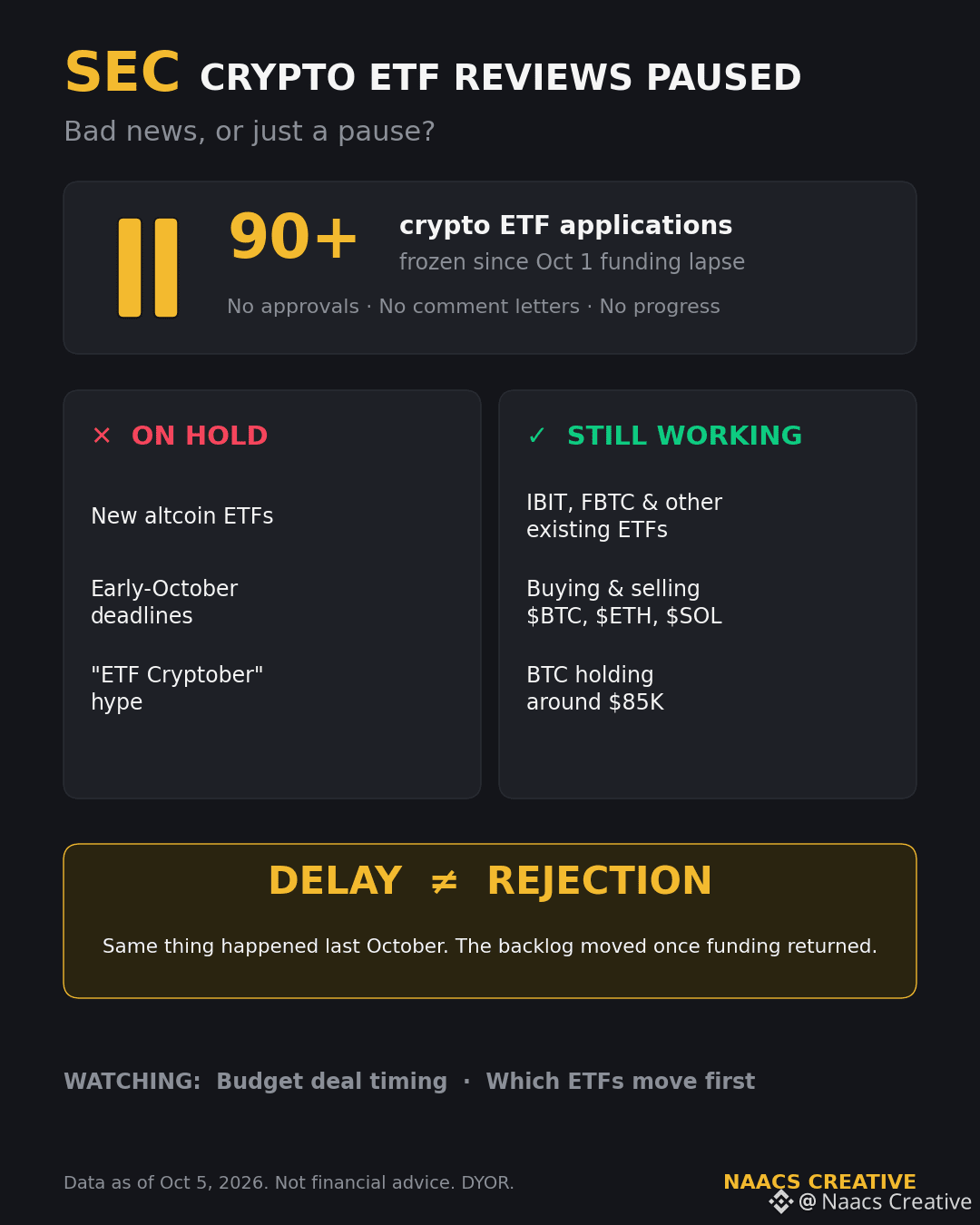
The US government started its new fiscal year on October 1 without a budget. Result: the SEC is in a funding lapse, and new crypto ETF reviews are frozen.
What's on hold:
⏳ 90+ crypto ETF applications
⏳ No approvals, no comment letters, no progress until funding returns
⏳ Some deadlines that were due in early October
What's NOT affected:
✅ Existing Bitcoin ETFs like BlackRock's IBIT and Fidelity's FBTC keep trading normally
✅ You can still buy and sell $BTC, $ETH , $SOL as usual
✅ Nothing has been rejected. It's a delay, not a "no."
Why it matters:
Many traders were hoping for an "ETF Cryptober," with new altcoin ETFs bringing fresh money in. That's now on pause. Meanwhile, $BTC is holding around $85K, so the market isn't panicking.
Déjà vu?
A government shutdown froze crypto ETF reviews last October too. Once funding returns, the backlog starts moving again, sometimes several approvals at once.
What I'm watching:
👀 How long Congress takes to agree on a budget
👀 Which ETFs move first once the SEC reopens
Short-term delay, long-term story unchanged. Patience pays in this market.
Are you waiting on a specific altcoin ETF? 👇
#SECHaltsCryptoETFReviewsAmidFundingLapse
SEC freezes crypto ETF reviews. Bad news, or just a pause? ⏸️
The US government started its new fiscal year on October 1 without a budget. Result: the SEC is in a funding lapse, and new crypto ETF reviews are frozen.
What's on hold:
⏳ 90+ crypto ETF applications
⏳ No approvals, no comment letters, no progress until funding returns
⏳ Some deadlines that were due in early October
What's NOT affected:
✅ Existing Bitcoin ETFs like BlackRock's IBIT and Fidelity's FBTC keep trading normally
✅ You can still buy and sell $BTC , $ETH , $SOL as usual
✅ Nothing has been rejected. It's a delay, not a "no."
Why it matters:
Many traders were hoping for an "ETF Cryptober," with new altcoin ETFs bringing fresh money in. That's now on pause. Meanwhile, $BTC is holding around $85K, so the market isn't panicking.
Déjà vu?
A government shutdown froze crypto ETF reviews last October too. Once funding returns, the backlog starts moving again, sometimes several approvals at once.
What I'm watching:
👀 How long Congress takes to agree on a budget
👀 Which ETFs move first once the SEC reopens
Short-term delay, long-term story unchanged. Patience pays in this market.
Are you waiting on a specific altcoin ETF? 👇
#SECHaltsCryptoETFReviewsAmidFundingLapse
The US government started its new fiscal year on October 1 without a budget. Result: the SEC is in a funding lapse, and new crypto ETF reviews are frozen.
What's on hold:
⏳ 90+ crypto ETF applications
⏳ No approvals, no comment letters, no progress until funding returns
⏳ Some deadlines that were due in early October
What's NOT affected:
✅ Existing Bitcoin ETFs like BlackRock's IBIT and Fidelity's FBTC keep trading normally
✅ You can still buy and sell $BTC , $ETH , $SOL as usual
✅ Nothing has been rejected. It's a delay, not a "no."
Why it matters:
Many traders were hoping for an "ETF Cryptober," with new altcoin ETFs bringing fresh money in. That's now on pause. Meanwhile, $BTC is holding around $85K, so the market isn't panicking.
Déjà vu?
A government shutdown froze crypto ETF reviews last October too. Once funding returns, the backlog starts moving again, sometimes several approvals at once.
What I'm watching:
👀 How long Congress takes to agree on a budget
👀 Which ETFs move first once the SEC reopens
Short-term delay, long-term story unchanged. Patience pays in this market.
Are you waiting on a specific altcoin ETF? 👇
#SECHaltsCryptoETFReviewsAmidFundingLapse
101
Übersetzung ansehen
#EthereumValidatorExitQueueJumps392%
$ETH exit queue jumps 392%. Should you panic? 🤔
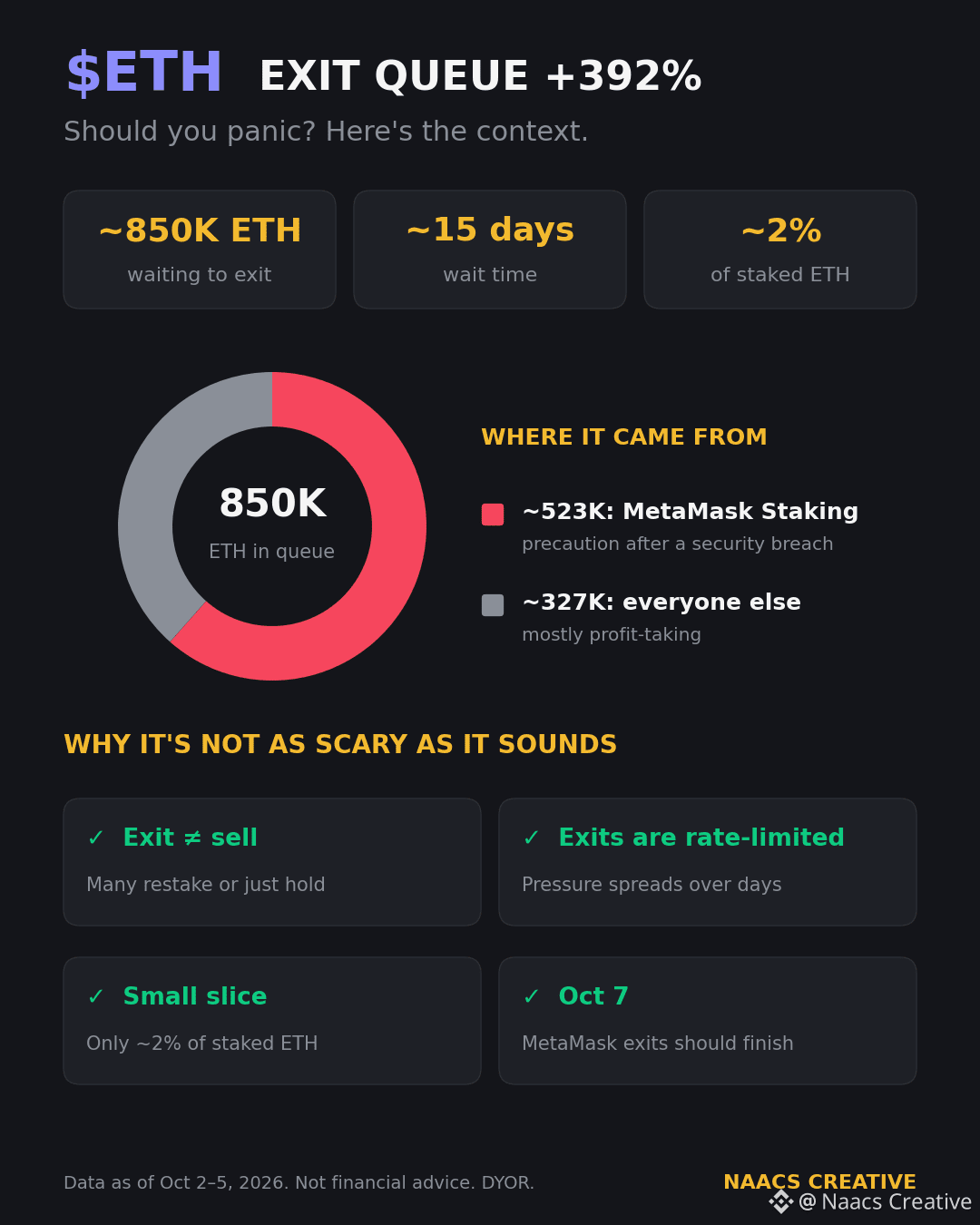
Ethereum's validator exit queue has exploded since October started, with about 850,000 ETH now waiting to leave staking. It's the longest line of the year, with a wait of almost 15 days.
What happened?
MetaMask Staking had a security breach. As a precaution, it pulled out about 17,000 validators holding ~523,000 ETH. That one event is over 60% of the whole queue. The rest looks like normal profit-taking.
Why it's not as scary as it sounds:
✅ Leaving staking ≠ selling. Many will restake elsewhere or simply hold.
✅ Ethereum limits how fast validators can exit, so any selling pressure is spread over days, not dumped at once.
✅ The queue is only about 2% of all staked ETH.
✅ MetaMask's exits should be done by October 7. After that, the queue should shrink unless new exits appear.
What I'm watching:
👀 Does the queue actually shrink after Oct 7?
👀 Does unstaked ETH flow to exchanges (selling) or get restaked (holding)?
Big percentages make big headlines. Context makes better decisions.
Are you staking your $ETH right now? 👇
#EthereumValidatorExitQueueJumps392%
$ETH exit queue jumps 392%. Should you panic? 🤔
Ethereum's validator exit queue has exploded since October started, with about 850,000 ETH now waiting to leave staking. It's the longest line of the year, with a wait of almost 15 days.
What happened?
MetaMask Staking had a security breach. As a precaution, it pulled out about 17,000 validators holding ~523,000 ETH. That one event is over 60% of the whole queue. The rest looks like normal profit-taking.
Why it's not as scary as it sounds:
✅ Leaving staking ≠ selling. Many will restake elsewhere or simply hold.
✅ Ethereum limits how fast validators can exit, so any selling pressure is spread over days, not dumped at once.
✅ The queue is only about 2% of all staked ETH.
✅ MetaMask's exits should be done by October 7. After that, the queue should shrink unless new exits appear.
What I'm watching:
👀 Does the queue actually shrink after Oct 7?
👀 Does unstaked ETH flow to exchanges (selling) or get restaked (holding)?
Big percentages make big headlines. Context makes better decisions.
Are you staking your $ETH right now? 👇
$ETH exit queue jumps 392%. Should you panic? 🤔
Ethereum's validator exit queue has exploded since October started, with about 850,000 ETH now waiting to leave staking. It's the longest line of the year, with a wait of almost 15 days.
What happened?
MetaMask Staking had a security breach. As a precaution, it pulled out about 17,000 validators holding ~523,000 ETH. That one event is over 60% of the whole queue. The rest looks like normal profit-taking.
Why it's not as scary as it sounds:
✅ Leaving staking ≠ selling. Many will restake elsewhere or simply hold.
✅ Ethereum limits how fast validators can exit, so any selling pressure is spread over days, not dumped at once.
✅ The queue is only about 2% of all staked ETH.
✅ MetaMask's exits should be done by October 7. After that, the queue should shrink unless new exits appear.
What I'm watching:
👀 Does the queue actually shrink after Oct 7?
👀 Does unstaked ETH flow to exchanges (selling) or get restaked (holding)?
Big percentages make big headlines. Context makes better decisions.
Are you staking your $ETH right now? 👇
40
Übersetzung ansehen
$BTC is back above $86K. Is it real strength or a trap?Bitcoin is holding above $86,000 this morning, up about 3% since October started. Here's what I'm watching this week 👇
📉 Weak US jobs: only 29,000 jobs added in September and unemployment up to 4.2%. Bad news for the economy, but it raises hopes the Fed slows down, and that's been helpi$ng $BTC.
📊 ETF demand cooling: spot Bitcoin ETFs pulled in nearly $1 billion on Sept 21, then inflows shrank five sessions in a row to about $31 million. Buyers are still there, but less urgent.
⚠️ Mt. Gox: its wallets still hold about 34,000 BTC ahead of an October 31 deadline. Any movement could shake the market.
🌍 War headlines: news around Iran and the Strait of Hormuz has been moving Bitcoin both ways, often on weekends before traditional markets open.
Key levels:
🔼 Resistance: ~$87,400, then $90,000
t: ~$82,300–$82,800
My read: the trend since July is still up, but momentum is slowing. A clean break above $87,400 opens the door to $90K. Losing $82K could bring a deeper pullback. And remember, BTC is still about 33% below its all-time high of ~$126K.
In this kind of market, leverage gets punished. Keep positions small and protect your capital.
Bullish or bearish for the rest of October? 👇
Not financial advice. DYOR.
$BTC
$BTC is back above $86K. Is it real strength or a trap?
Bitcoin is holding above $86,000 this morning, up about 3% since October started. Here's what I'm watching this week 👇
📉 Weak US jobs: only 29,000 jobs added in September and unemployment up to 4.2%. Bad news for the economy, but it raises hopes the Fed slows down, and that's been helpi$ng $BTC .
📊 ETF demand cooling: spot Bitcoin ETFs pulled in nearly $1 billion on Sept 21, then inflows shrank five sessions in a row to about $31 million. Buyers are still there, but less urgent.
⚠️ Mt. Gox: its wallets still hold about 34,000 BTC ahead of an October 31 deadline. Any movement could shake the market.
🌍 War headlines: news around Iran and the Strait of Hormuz has been moving Bitcoin both ways, often on weekends before traditional markets open.
Key levels:
🔼 Resistance: ~$87,400, then $90,000
t: ~$82,300–$82,800
My read: the trend since July is still up, but momentum is slowing. A clean break above $87,400 opens the door to $90K. Losing $82K could bring a deeper pullback. And remember, BTC is still about 33% below its all-time high of ~$126K.
In this kind of market, leverage gets punished. Keep positions small and protect your capital.
Bullish or bearish for the rest of October? 👇
Not financial advice. DYOR.
$BTC
📉 Weak US jobs: only 29,000 jobs added in September and unemployment up to 4.2%. Bad news for the economy, but it raises hopes the Fed slows down, and that's been helpi$ng $BTC .
📊 ETF demand cooling: spot Bitcoin ETFs pulled in nearly $1 billion on Sept 21, then inflows shrank five sessions in a row to about $31 million. Buyers are still there, but less urgent.
⚠️ Mt. Gox: its wallets still hold about 34,000 BTC ahead of an October 31 deadline. Any movement could shake the market.
🌍 War headlines: news around Iran and the Strait of Hormuz has been moving Bitcoin both ways, often on weekends before traditional markets open.
Key levels:
🔼 Resistance: ~$87,400, then $90,000
t: ~$82,300–$82,800
My read: the trend since July is still up, but momentum is slowing. A clean break above $87,400 opens the door to $90K. Losing $82K could bring a deeper pullback. And remember, BTC is still about 33% below its all-time high of ~$126K.
In this kind of market, leverage gets punished. Keep positions small and protect your capital.
Bullish or bearish for the rest of October? 👇
Not financial advice. DYOR.
$BTC
237
Übersetzung ansehen
Dual Investment Explained: Earn Yield, But Know What You're Giving UpI recently went through Binance's Dual Investment quiz before using the product. The concept confuses many people, so here is everything I learned in plain language, with examples.
What Dual Investment actually is
Dual Investment is not a savings account. You choose a target price and a settlement date, and you earn interest no matter what happens. In exchange, you agree that if the market crosses your target, the trade happens automatically at your target price, not the market price.
There are two directions:
Sell High: you deposit a coin like $BTC and set a price you'd be happy to sell at.
Buy Low: you deposit a stablecoin like USDT and set a price you'd be happy to buy a coin like $BNB at.
Once you subscribe, your target price is locked. It will not change.
The one rule to remember
If the price crosses your target on the settlement date, the trade happens at the target. If it doesn't, you keep what you started with. Either way, you get the interest.
Example 1: Sell High on $BTC
You deposit 1 BTC with a target of $52,000.
BTC settles at $52,500, above your target, so your BTC is sold at $52,000. You receive 52,000 in stablecoins plus interest. The extra $500 is not yours.
BTC settles at $50,000, below your target, so nothing is sold. You keep 1 BTC plus interest paid in BTC.
Example 2: Buy Low on $BNB
You deposit 330 USDT with a target of $330 per BNB.
BNB settles at $345, above your target, so nothing is bought. You get 330 USDT back plus interest.
BNB settles at $310, below your target, so you buy 1 BNB at $330. You receive BNB plus interest in BNB.
The real risks
This is where most people get hurt. Dual Investment does not guarantee your principal.
On Buy Low, if the price crashes far below your target, you still buy at your higher target price. You could be holding a coin worth much less than you paid.
On Sell High, if the price rockets far above your target, you still sell at your lower target. You miss the rally.
Your funds are also locked until settlement, so you can't react to big market moves.
Who it suits
Dual Investment works best for people who already have a price in mind. If you'd genuinely be happy buying $BNB at $330 or selling $BTC at $52,000, this product pays you to wait for that price. If you're using it only to chase the yield, you're taking risk you may not have priced in.
My takeaway
Only set a target price you would genuinely be happy to trade at. Treat the interest as a bonus, not the reason to subscribe.
Have you used Dual Investment? Did your trade execute, or did you just collect the yield? Share your experience below 👇
Not financial advice. Do your own research.
{spot}(BTCUSDT)
{spot}(BNBUSDT)
Dual Investment Explained: Earn Yield, But Know What You're Giving Up
I recently went through Binance's Dual Investment quiz before using the product. The concept confuses many people, so here is everything I learned in plain language, with examples.
What Dual Investment actually is
Dual Investment is not a savings account. You choose a target price and a settlement date, and you earn interest no matter what happens. In exchange, you agree that if the market crosses your target, the trade happens automatically at your target price, not the market price.
There are two directions:
Sell High: you deposit a coin like $BTC and set a price you'd be happy to sell at.
Buy Low: you deposit a stablecoin like USDT and set a price you'd be happy to buy a coin like $BNB at.
Once you subscribe, your target price is locked. It will not change.
The one rule to remember
If the price crosses your target on the settlement date, the trade happens at the target. If it doesn't, you keep what you started with. Either way, you get the interest.
Example 1: Sell High on $BTC
You deposit 1 BTC with a target of $52,000.
BTC settles at $52,500, above your target, so your BTC is sold at $52,000. You receive 52,000 in stablecoins plus interest. The extra $500 is not yours.
BTC settles at $50,000, below your target, so nothing is sold. You keep 1 BTC plus interest paid in BTC.
Example 2: Buy Low on $BNB
You deposit 330 USDT with a target of $330 per BNB.
BNB settles at $345, above your target, so nothing is bought. You get 330 USDT back plus interest.
BNB settles at $310, below your target, so you buy 1 BNB at $330. You receive BNB plus interest in BNB.
The real risks
This is where most people get hurt. Dual Investment does not guarantee your principal.
On Buy Low, if the price crashes far below your target, you still buy at your higher target price. You could be holding a coin worth much less than you paid.
On Sell High, if the price rockets far above your target, you still sell at your lower target. You miss the rally.
Your funds are also locked until settlement, so you can't react to big market moves.
Who it suits
Dual Investment works best for people who already have a price in mind. If you'd genuinely be happy buying $BNB at $330 or selling $BTC at $52,000, this product pays you to wait for that price. If you're using it only to chase the yield, you're taking risk you may not have priced in.
My takeaway
Only set a target price you would genuinely be happy to trade at. Treat the interest as a bonus, not the reason to subscribe.
Have you used Dual Investment? Did your trade execute, or did you just collect the yield? Share your experience below 👇
Not financial advice. Do your own research.
What Dual Investment actually is
Dual Investment is not a savings account. You choose a target price and a settlement date, and you earn interest no matter what happens. In exchange, you agree that if the market crosses your target, the trade happens automatically at your target price, not the market price.
There are two directions:
Sell High: you deposit a coin like $BTC and set a price you'd be happy to sell at.
Buy Low: you deposit a stablecoin like USDT and set a price you'd be happy to buy a coin like $BNB at.
Once you subscribe, your target price is locked. It will not change.
The one rule to remember
If the price crosses your target on the settlement date, the trade happens at the target. If it doesn't, you keep what you started with. Either way, you get the interest.
Example 1: Sell High on $BTC
You deposit 1 BTC with a target of $52,000.
BTC settles at $52,500, above your target, so your BTC is sold at $52,000. You receive 52,000 in stablecoins plus interest. The extra $500 is not yours.
BTC settles at $50,000, below your target, so nothing is sold. You keep 1 BTC plus interest paid in BTC.
Example 2: Buy Low on $BNB
You deposit 330 USDT with a target of $330 per BNB.
BNB settles at $345, above your target, so nothing is bought. You get 330 USDT back plus interest.
BNB settles at $310, below your target, so you buy 1 BNB at $330. You receive BNB plus interest in BNB.
The real risks
This is where most people get hurt. Dual Investment does not guarantee your principal.
On Buy Low, if the price crashes far below your target, you still buy at your higher target price. You could be holding a coin worth much less than you paid.
On Sell High, if the price rockets far above your target, you still sell at your lower target. You miss the rally.
Your funds are also locked until settlement, so you can't react to big market moves.
Who it suits
Dual Investment works best for people who already have a price in mind. If you'd genuinely be happy buying $BNB at $330 or selling $BTC at $52,000, this product pays you to wait for that price. If you're using it only to chase the yield, you're taking risk you may not have priced in.
My takeaway
Only set a target price you would genuinely be happy to trade at. Treat the interest as a bonus, not the reason to subscribe.
Have you used Dual Investment? Did your trade execute, or did you just collect the yield? Share your experience below 👇
Not financial advice. Do your own research.
72
Übersetzung ansehen
Just passed the Binance Dual Investment quiz. Here's the whole product in one rule: if the price crosses your target, the trade happens at the target. If it doesn't, you keep what you started with. You earn interest either way.
Sell High on $BTC : you lock in a sell price and earn yield, but you give up upside above your target.
Buy Low on $BNB : you get paid to wait for a dip, but if the price crashes far below your target, you still buy at the target.
It's not principal-protected. Know that before you subscribe.
Just passed the Binance Dual Investment quiz. Here's the whole product in one rule: if the price crosses your target, the trade happens at the target. If it doesn't, you keep what you started with. You earn interest either way.
Sell High on $BTC : you lock in a sell price and earn yield, but you give up upside above your target.
Buy Low on $BNB : you get paid to wait for a dip, but if the price crashes far below your target, you still buy at the target.
It's not principal-protected. Know that before you subscribe.
Sell High on $BTC : you lock in a sell price and earn yield, but you give up upside above your target.
Buy Low on $BNB : you get paid to wait for a dip, but if the price crashes far below your target, you still buy at the target.
It's not principal-protected. Know that before you subscribe.
277
Übersetzung ansehen
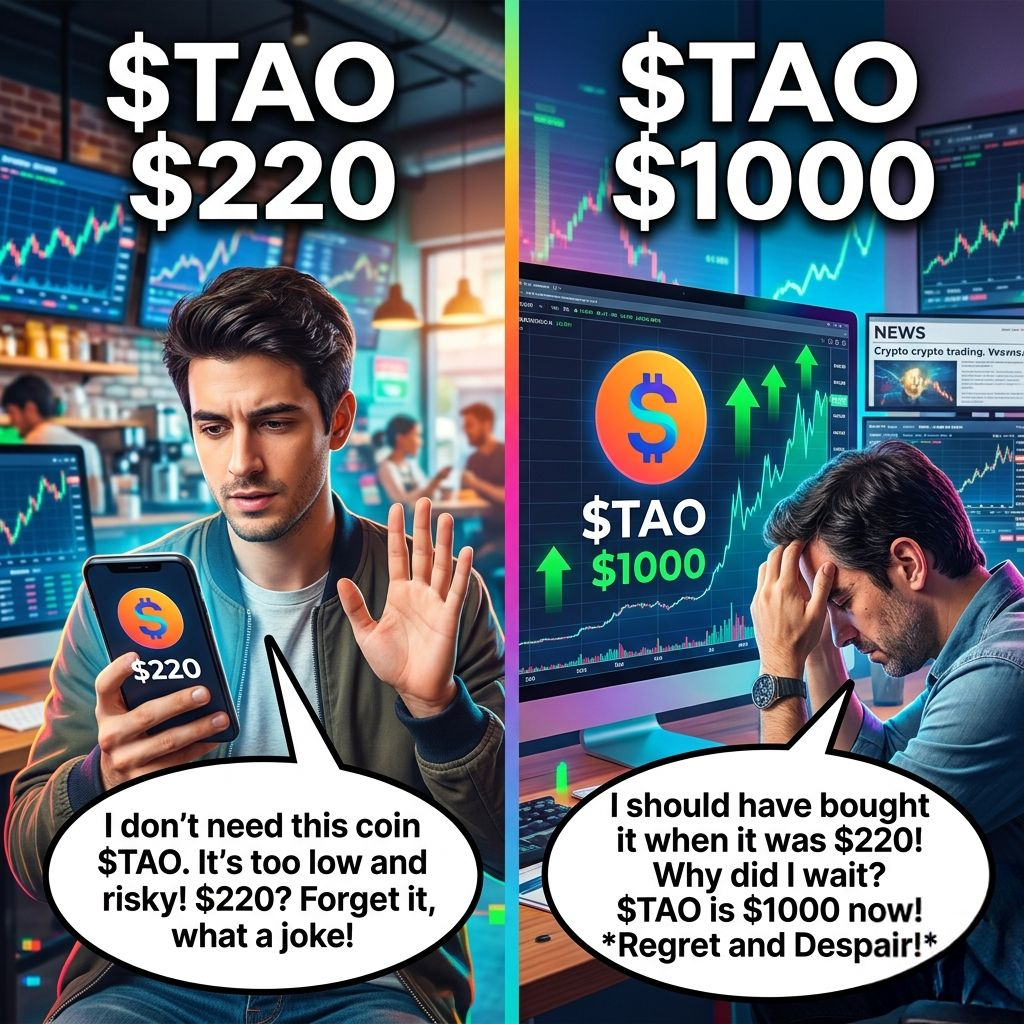
It's not difficult to reach 500, if we look at what this currency did in the middle of last year, going from 143 to 540 Dollars in 2 months, we see that it's possible. My 3rd coin in cash.
It's not difficult to reach 500, if we look at what this currency did in the middle of last year, going from 143 to 540 Dollars in 2 months, we see that it's possible. My 3rd coin in cash.


Professor Mikel
·
--
Bullischalle Menschen, die nicht $TAO Jetzt gekauft haben
die werden hier später weinen..😅💥Claim USDT
TAO wird sehr bald $500 erreichen...⛓️💥💫🌟
mein Freund Henry hält 100 TAO-Münzen..🚀😍
die werden hier später weinen..😅💥Claim USDT
TAO wird sehr bald $500 erreichen...⛓️💥💫🌟
mein Freund Henry hält 100 TAO-Münzen..🚀😍
10
10
Anmelden und weiter Inhalte entdecken
Krypto-Nutzer weltweit auf Binance Square kennenlernen
⚡️ Bleib in Sachen Krypto stets am Puls.
💬 Die weltgrößte Kryptobörse vertraut darauf.
👍 Erhalte verlässliche Einblicke von verifizierten Creators.
E-Mail-Adresse/Telefonnummer
Trendthemen
DriftHackVictimsBeginClaims
8,950 Aufrufe
159 Kommentare
#DriftHackVictimsBeginClaims
El Drift Protocol, der führende dezentrale Börsenplatz für unbefristete Futures auf Solana, hat offiziell sein Portal für Rückerstattungen und Rücknahmen für das Recovery-Token DFX eröffnet. Diese Maßnahme soll Nutzer entschädigen, die von dem verheerenden Massenhacking am 1. April betroffen waren, bei dem etwa 295,4 Millionen US-Dollar von der Plattform in einem Angriff abgezogen wurden, der von Akteuren verübt wurde, die mit Nordkorea in Verbindung stehen. Betroffene erhalten für jeden USDT Verlust, der im Snapshot dieses Tages verifiziert wurde, ein DFX-Token. Allerdings setzt die anfängliche Zuweisung des Wiederherstellungsfonds, der über rund 3,11 Millionen USDT verfügt, die anfängliche Rücknahmerate auf lediglich 0,0104 USDT pro DFX; das bedeutet, dass Nutzer in dieser ersten Phase ungefähr einen Cent für jeden verlorenen Dollar erhalten. Betroffene haben bis zum 1. Januar 2028 Zeit, ihre Tokens über das offizielle Portal einzufordern; danach wird die gesamte verbleibende, nicht eingeforderte Menge an DFX dauerhaft verbrannt.
Im Folgenden sind reale Bilder im Zusammenhang mit Portalen und digitalen Finanz-Alarmmeldungen:
WorldWideWeb The World ARPANET Archie EFF
·2 Likes
·265 Aufrufe
SolanaTokenizedStockVolumeTops$4.4BInSeptember
1,609 Aufrufe
24 Kommentare
BitcoinSpotETFsDraw$6.34BInflowsInQ3
9,536 Aufrufe
135 Kommentare