
Mr Crypto Mayor
165 Beiträge

Mr Crypto Mayor
Melden
Nutzer blockieren
To the Moon 💫
Trade eröffnen
Regelmäßiger Trader
3.9 Jahre
56 Following
62 Follower
145 Like gegeben
Beiträge
Portfolio
Alle
Zitierungen
Videos
PINNED
Fokussierte Überprüfung von Verstößen
Vom Binance Square Team
Es ist wichtig ✊
Fokussierte Überprüfung von Verstößen
Vom Binance Square Team
Es ist wichtig ✊
Vom Binance Square Team
Es ist wichtig ✊

2
137
👇👇👇
👇👇👇
Mr Crypto Mayor
·
--
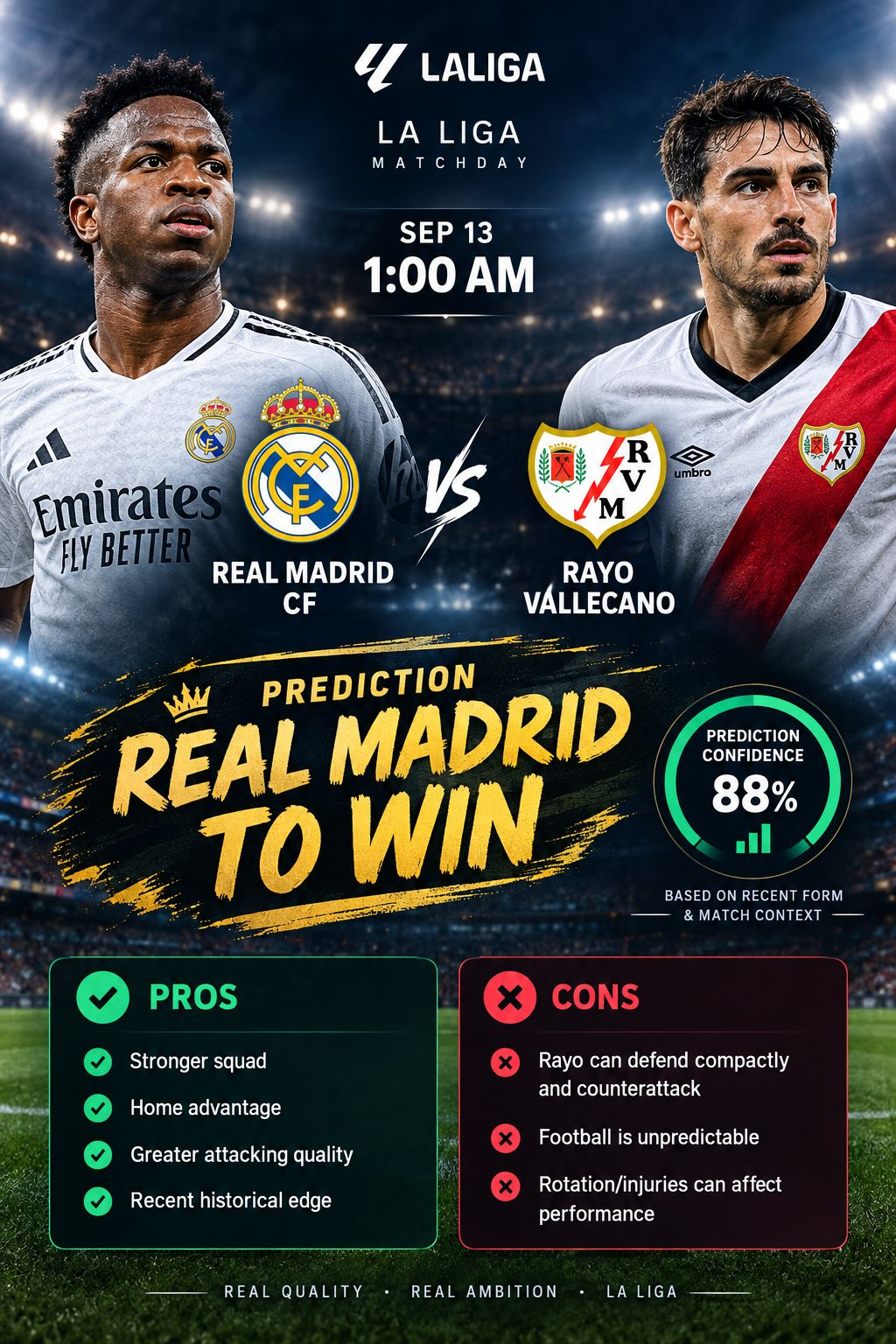
Real Madrid ist die stärkere Mannschaft und meine Wahl für den Sieg. Real Madrid sind die klaren Favoriten für dieses Spiel: Das Prediction Market zeigt eine Sieg-Wahrscheinlichkeit von 88% im Vergleich zu 8% für ein Unentschieden und 3% für Rayo Vallecano.
Ihre Stärken sind eine überlegene Kader-Tiefe, starke Offensivspieler, Erfahrung und eine starke Ballbesitz-/Kontrollleistung.
Der größte Nachteil ist, dass sie manchmal anfällig für Konter sein können – vor allem, wenn sie viele Spieler nach vorne schieben.
Der Vorteil von Rayo Vallecano liegt in ihrer defensiven Organisation und der Fähigkeit, schnell zu kontern, aber ihr schwächerer Kader und die geringere Offensivqualität machen einen Sieg weniger wahrscheinlich. Prognose: Real Madrid gewinnt – etwa 2–0 oder 3–1. Real Madrid zum Sieg, aber Rayo könnte weiterhin Probleme bereiten, wenn Madrid nicht effizient ist.
Was denkst du? Gib deine Prognose ab
#Predictions
Ihre Stärken sind eine überlegene Kader-Tiefe, starke Offensivspieler, Erfahrung und eine starke Ballbesitz-/Kontrollleistung.
Der größte Nachteil ist, dass sie manchmal anfällig für Konter sein können – vor allem, wenn sie viele Spieler nach vorne schieben.
Der Vorteil von Rayo Vallecano liegt in ihrer defensiven Organisation und der Fähigkeit, schnell zu kontern, aber ihr schwächerer Kader und die geringere Offensivqualität machen einen Sieg weniger wahrscheinlich. Prognose: Real Madrid gewinnt – etwa 2–0 oder 3–1. Real Madrid zum Sieg, aber Rayo könnte weiterhin Probleme bereiten, wenn Madrid nicht effizient ist.
Was denkst du? Gib deine Prognose ab
#Predictions
4
TermMax und TMX-Token
TermMax ist ein DeFi-Protokoll, das sich auf Festzins-Kredite, -Aufnahmen und -Leverage konzentriert. Im Gegensatz zu traditionellen DeFi-Plattformen, bei denen sich die Zinssätze häufig ändern können, ermöglicht TermMax Nutzern, ihre Kreditkosten oder Lending-Renditen für einen definierten Zeitraum fest einzuziehen. Seine Infrastruktur ist darauf ausgelegt, DeFi vorhersehbarer zu machen und sowohl für Retail-Nutzer als auch für professionelle Investoren geeignet zu sein.
TMX-Token
TMX ist der Utility- und Governance-Token von TermMax. Laut dem offiziellen TMX-Whitepaper liegt die maximale Gesamtmenge bei 1 Milliarde TMX, ohne Inflation. Die geplante anfängliche Umlaufmenge beträgt ungefähr 20% zum TGE, während der verbleibende Bestand im Laufe der Zeit über eine gesteuerte Vesting-Struktur verteilt wird.
TMX erfüllt mehrere wichtige Rollen innerhalb des Ökosystems:
Governance: TMX-Inhaber können an der Protokoll-Governance teilnehmen und Parameter sowie Entscheidungen für das Ökosystem mitbeeinflussen.
Staking: Nutzer können TMX staken und sTMX erhalten; die Staking-Rewards sind an das TermMax-Ökosystem gekoppelt.
Incentives für das Ökosystem: Ein Teil von TMX wird für Community- und Ökosystemwachstum bereitgestellt.
Liquidität: TMX kann genutzt werden, um Liquidität auf unterstützten dezentralen Börsen bereitzustellen.
Langfristige Ausrichtung: Staking und Governance sind so konzipiert, dass Token-Inhaber mit dem Wachstum und der Nachhaltigkeit von TermMax in Einklang gebracht werden.
TMX-Tokenomics
Die Allokation „Community + Ökosystem“ beläuft sich auf 44% und stellt damit einen bedeutenden Teil der Token für die Entwicklung des Ökosystems sowie Anreize für Nutzer bereit. Die Allokationen für Team, Berater und Investoren unterliegen Vesting-Zeitplänen und werden nicht sofort freigegeben.
TermMax hat außerdem ein TMX-Pre-Mine-Programm genutzt, um frühe Nutzer zu belohnen. In der offiziellen Dokumentation heißt es, dass 4% der gesamten 1 Milliarde TMX – also 40 Millionen Token – für das Pre-Mining durch frühe Nutzer bereitgestellt wurden, wobei die Rewards an Aktivitäten wie das Halten von Fixed-Rate Tokens und die Teilnahme als Order Maker gekoppelt waren.
#termmax @termmax
TermMax und TMX-Token
TermMax ist ein DeFi-Protokoll, das sich auf Festzins-Kredite, -Aufnahmen und -Leverage konzentriert. Im Gegensatz zu traditionellen DeFi-Plattformen, bei denen sich die Zinssätze häufig ändern können, ermöglicht TermMax Nutzern, ihre Kreditkosten oder Lending-Renditen für einen definierten Zeitraum fest einzuziehen. Seine Infrastruktur ist darauf ausgelegt, DeFi vorhersehbarer zu machen und sowohl für Retail-Nutzer als auch für professionelle Investoren geeignet zu sein.
TMX-Token
TMX ist der Utility- und Governance-Token von TermMax. Laut dem offiziellen TMX-Whitepaper liegt die maximale Gesamtmenge bei 1 Milliarde TMX, ohne Inflation. Die geplante anfängliche Umlaufmenge beträgt ungefähr 20% zum TGE, während der verbleibende Bestand im Laufe der Zeit über eine gesteuerte Vesting-Struktur verteilt wird.
TMX erfüllt mehrere wichtige Rollen innerhalb des Ökosystems:
Governance: TMX-Inhaber können an der Protokoll-Governance teilnehmen und Parameter sowie Entscheidungen für das Ökosystem mitbeeinflussen.
Staking: Nutzer können TMX staken und sTMX erhalten; die Staking-Rewards sind an das TermMax-Ökosystem gekoppelt.
Incentives für das Ökosystem: Ein Teil von TMX wird für Community- und Ökosystemwachstum bereitgestellt.
Liquidität: TMX kann genutzt werden, um Liquidität auf unterstützten dezentralen Börsen bereitzustellen.
Langfristige Ausrichtung: Staking und Governance sind so konzipiert, dass Token-Inhaber mit dem Wachstum und der Nachhaltigkeit von TermMax in Einklang gebracht werden.
TMX-Tokenomics
Die Allokation „Community + Ökosystem“ beläuft sich auf 44% und stellt damit einen bedeutenden Teil der Token für die Entwicklung des Ökosystems sowie Anreize für Nutzer bereit. Die Allokationen für Team, Berater und Investoren unterliegen Vesting-Zeitplänen und werden nicht sofort freigegeben.
TermMax hat außerdem ein TMX-Pre-Mine-Programm genutzt, um frühe Nutzer zu belohnen. In der offiziellen Dokumentation heißt es, dass 4% der gesamten 1 Milliarde TMX – also 40 Millionen Token – für das Pre-Mining durch frühe Nutzer bereitgestellt wurden, wobei die Rewards an Aktivitäten wie das Halten von Fixed-Rate Tokens und die Teilnahme als Order Maker gekoppelt waren.
#termmax @TermMax
TermMax ist ein DeFi-Protokoll, das sich auf Festzins-Kredite, -Aufnahmen und -Leverage konzentriert. Im Gegensatz zu traditionellen DeFi-Plattformen, bei denen sich die Zinssätze häufig ändern können, ermöglicht TermMax Nutzern, ihre Kreditkosten oder Lending-Renditen für einen definierten Zeitraum fest einzuziehen. Seine Infrastruktur ist darauf ausgelegt, DeFi vorhersehbarer zu machen und sowohl für Retail-Nutzer als auch für professionelle Investoren geeignet zu sein.
TMX-Token
TMX ist der Utility- und Governance-Token von TermMax. Laut dem offiziellen TMX-Whitepaper liegt die maximale Gesamtmenge bei 1 Milliarde TMX, ohne Inflation. Die geplante anfängliche Umlaufmenge beträgt ungefähr 20% zum TGE, während der verbleibende Bestand im Laufe der Zeit über eine gesteuerte Vesting-Struktur verteilt wird.
TMX erfüllt mehrere wichtige Rollen innerhalb des Ökosystems:
Governance: TMX-Inhaber können an der Protokoll-Governance teilnehmen und Parameter sowie Entscheidungen für das Ökosystem mitbeeinflussen.
Staking: Nutzer können TMX staken und sTMX erhalten; die Staking-Rewards sind an das TermMax-Ökosystem gekoppelt.
Incentives für das Ökosystem: Ein Teil von TMX wird für Community- und Ökosystemwachstum bereitgestellt.
Liquidität: TMX kann genutzt werden, um Liquidität auf unterstützten dezentralen Börsen bereitzustellen.
Langfristige Ausrichtung: Staking und Governance sind so konzipiert, dass Token-Inhaber mit dem Wachstum und der Nachhaltigkeit von TermMax in Einklang gebracht werden.
TMX-Tokenomics
Die Allokation „Community + Ökosystem“ beläuft sich auf 44% und stellt damit einen bedeutenden Teil der Token für die Entwicklung des Ökosystems sowie Anreize für Nutzer bereit. Die Allokationen für Team, Berater und Investoren unterliegen Vesting-Zeitplänen und werden nicht sofort freigegeben.
TermMax hat außerdem ein TMX-Pre-Mine-Programm genutzt, um frühe Nutzer zu belohnen. In der offiziellen Dokumentation heißt es, dass 4% der gesamten 1 Milliarde TMX – also 40 Millionen Token – für das Pre-Mining durch frühe Nutzer bereitgestellt wurden, wobei die Rewards an Aktivitäten wie das Halten von Fixed-Rate Tokens und die Teilnahme als Order Maker gekoppelt waren.
#termmax @TermMax
66
#BinancePickAndWin
# Binance Football-Programm: Vollständige tägliche Tipps-Anleitung
Das Binance Football-Programm ist zu einer der aufregendsten Kampagnen für Fußballfans und Krypto-Enthusiasten geworden. Es verbindet die Leidenschaft für Fußball mit der Innovation der Blockchain-Technologie und bietet Nutzern die Möglichkeit, an täglichen Fußballvorhersage-Herausforderungen teilzunehmen. Jeden Tag können Teilnehmende ihre Spielvorhersagen einreichen, die als „Daily Picks“ bekannt sind, bevor die Spiele beginnen. Richtige Vorhersagen können Nutzer mit Belohnungen wie Binance-Punkten, Fan-Tokens oder anderen Aktionspreisen belohnen – je nach den Regeln der Kampagne.
Die Funktion „Daily Picks“ ermutigt Nutzer, mit Spielplänen, der Form der Teams und der Leistung der Spieler stets auf dem Laufenden zu bleiben. Durch die Analyse aktueller Ergebnisse und Spielstatistiken können Teilnehmende fundierte Vorhersagen treffen, statt auf Glück zu setzen. Dadurch ist das Programm sowohl unterhaltsam als auch lehrreich für Fußballliebhaber.
Zusätzlich zu den Belohnungen trägt das Binance Football-Programm dazu bei, die globale Fußball-Community auf der Binance-Plattform zu stärken. Fans können an fußballbezogenen Kampagnen teilnehmen, ihre Lieblingsvereine unterstützen und in interaktiven Erlebnissen mehr über digitale Assets erfahren. Da sich die verfügbaren Spiele und Belohnungsstrukturen während verschiedener Turniere und Werbeaktionen ändern können, sollten Nutzer stets die offiziellen Kampagnenregeln lesen, bevor sie teilnehmen.
Insgesamt bietet das „Daily Picks“-Angebot im Binance Football-Programm eine einzigartige Kombination aus Fußballaufregung, strategischem Denken und blockchain-basierten Belohnungen – und macht es zu einem unterhaltsamen Erlebnis für Sportfans auf der ganzen Welt.
#BinancePickAndWin
# Binance Football-Programm: Vollständige tägliche Tipps-Anleitung
Das Binance Football-Programm ist zu einer der aufregendsten Kampagnen für Fußballfans und Krypto-Enthusiasten geworden. Es verbindet die Leidenschaft für Fußball mit der Innovation der Blockchain-Technologie und bietet Nutzern die Möglichkeit, an täglichen Fußballvorhersage-Herausforderungen teilzunehmen. Jeden Tag können Teilnehmende ihre Spielvorhersagen einreichen, die als „Daily Picks“ bekannt sind, bevor die Spiele beginnen. Richtige Vorhersagen können Nutzer mit Belohnungen wie Binance-Punkten, Fan-Tokens oder anderen Aktionspreisen belohnen – je nach den Regeln der Kampagne.
Die Funktion „Daily Picks“ ermutigt Nutzer, mit Spielplänen, der Form der Teams und der Leistung der Spieler stets auf dem Laufenden zu bleiben. Durch die Analyse aktueller Ergebnisse und Spielstatistiken können Teilnehmende fundierte Vorhersagen treffen, statt auf Glück zu setzen. Dadurch ist das Programm sowohl unterhaltsam als auch lehrreich für Fußballliebhaber.
Zusätzlich zu den Belohnungen trägt das Binance Football-Programm dazu bei, die globale Fußball-Community auf der Binance-Plattform zu stärken. Fans können an fußballbezogenen Kampagnen teilnehmen, ihre Lieblingsvereine unterstützen und in interaktiven Erlebnissen mehr über digitale Assets erfahren. Da sich die verfügbaren Spiele und Belohnungsstrukturen während verschiedener Turniere und Werbeaktionen ändern können, sollten Nutzer stets die offiziellen Kampagnenregeln lesen, bevor sie teilnehmen.
Insgesamt bietet das „Daily Picks“-Angebot im Binance Football-Programm eine einzigartige Kombination aus Fußballaufregung, strategischem Denken und blockchain-basierten Belohnungen – und macht es zu einem unterhaltsamen Erlebnis für Sportfans auf der ganzen Welt.
# Binance Football-Programm: Vollständige tägliche Tipps-Anleitung
Das Binance Football-Programm ist zu einer der aufregendsten Kampagnen für Fußballfans und Krypto-Enthusiasten geworden. Es verbindet die Leidenschaft für Fußball mit der Innovation der Blockchain-Technologie und bietet Nutzern die Möglichkeit, an täglichen Fußballvorhersage-Herausforderungen teilzunehmen. Jeden Tag können Teilnehmende ihre Spielvorhersagen einreichen, die als „Daily Picks“ bekannt sind, bevor die Spiele beginnen. Richtige Vorhersagen können Nutzer mit Belohnungen wie Binance-Punkten, Fan-Tokens oder anderen Aktionspreisen belohnen – je nach den Regeln der Kampagne.
Die Funktion „Daily Picks“ ermutigt Nutzer, mit Spielplänen, der Form der Teams und der Leistung der Spieler stets auf dem Laufenden zu bleiben. Durch die Analyse aktueller Ergebnisse und Spielstatistiken können Teilnehmende fundierte Vorhersagen treffen, statt auf Glück zu setzen. Dadurch ist das Programm sowohl unterhaltsam als auch lehrreich für Fußballliebhaber.
Zusätzlich zu den Belohnungen trägt das Binance Football-Programm dazu bei, die globale Fußball-Community auf der Binance-Plattform zu stärken. Fans können an fußballbezogenen Kampagnen teilnehmen, ihre Lieblingsvereine unterstützen und in interaktiven Erlebnissen mehr über digitale Assets erfahren. Da sich die verfügbaren Spiele und Belohnungsstrukturen während verschiedener Turniere und Werbeaktionen ändern können, sollten Nutzer stets die offiziellen Kampagnenregeln lesen, bevor sie teilnehmen.
Insgesamt bietet das „Daily Picks“-Angebot im Binance Football-Programm eine einzigartige Kombination aus Fußballaufregung, strategischem Denken und blockchain-basierten Belohnungen – und macht es zu einem unterhaltsamen Erlebnis für Sportfans auf der ganzen Welt.
71
Das Binance Football Program ist zu einer der aufregendsten Kampagnen für Fußballfans und Krypto-Enthusiasten geworden. Es verbindet die Leidenschaft für Fußball mit der Innovation der Blockchain-Technologie und gibt den Nutzern die Möglichkeit, an täglichen Fußballtipps teilzunehmen. Jeden Tag können die Teilnehmer ihre Spielvorhersagen einreichen, die als „Daily Picks“ bekannt sind, bevor die Spiele beginnen. Korrekte Vorhersagen können den Nutzern Belohnungen einbringen, wie zum Beispiel Binance Points, Fan Tokens oder andere Werbeprämien – je nach den Kampagnenregeln.
Die Funktion „Daily Picks“ ermutigt die Nutzer, über Fußballspiele, die Form der Teams und die Leistung der Spieler auf dem Laufenden zu bleiben. Durch die Analyse aktueller Ergebnisse und Spielstatistiken können die Teilnehmer fundierte Vorhersagen treffen, statt sich auf Glück zu verlassen. Dadurch ist das Programm sowohl unterhaltsam als auch lehrreich für Fußballliebhaber.
Neben den Belohnungen trägt das Binance Football Program dazu bei, die globale Fußball-Community auf der Binance-Plattform zu stärken. Fans können sich an fußballbezogenen Kampagnen beteiligen, ihre Lieblingsvereine unterstützen und durch interaktive Erlebnisse mehr über digitale Assets erfahren. Da sich die verfügbaren Spiele und Belohnungsstrukturen während verschiedener Turniere und Werbeaktionen ändern können, sollten Nutzer vor der Teilnahme stets die offiziellen Kampagnenregeln lesen.
Insgesamt bietet der tägliche Bereich „Daily Picks“ im Binance Football Program eine einzigartige Mischung aus Fußballaufregung, strategischem Denken und blockchainbasierten Belohnungen – und macht es zu einem unterhaltsamen Erlebnis für Sportfans auf der ganzen Welt.
#BinancePickAndWin
Das Binance Football Program ist zu einer der aufregendsten Kampagnen für Fußballfans und Krypto-Enthusiasten geworden. Es verbindet die Leidenschaft für Fußball mit der Innovation der Blockchain-Technologie und gibt den Nutzern die Möglichkeit, an täglichen Fußballtipps teilzunehmen. Jeden Tag können die Teilnehmer ihre Spielvorhersagen einreichen, die als „Daily Picks“ bekannt sind, bevor die Spiele beginnen. Korrekte Vorhersagen können den Nutzern Belohnungen einbringen, wie zum Beispiel Binance Points, Fan Tokens oder andere Werbeprämien – je nach den Kampagnenregeln.
Die Funktion „Daily Picks“ ermutigt die Nutzer, über Fußballspiele, die Form der Teams und die Leistung der Spieler auf dem Laufenden zu bleiben. Durch die Analyse aktueller Ergebnisse und Spielstatistiken können die Teilnehmer fundierte Vorhersagen treffen, statt sich auf Glück zu verlassen. Dadurch ist das Programm sowohl unterhaltsam als auch lehrreich für Fußballliebhaber.
Neben den Belohnungen trägt das Binance Football Program dazu bei, die globale Fußball-Community auf der Binance-Plattform zu stärken. Fans können sich an fußballbezogenen Kampagnen beteiligen, ihre Lieblingsvereine unterstützen und durch interaktive Erlebnisse mehr über digitale Assets erfahren. Da sich die verfügbaren Spiele und Belohnungsstrukturen während verschiedener Turniere und Werbeaktionen ändern können, sollten Nutzer vor der Teilnahme stets die offiziellen Kampagnenregeln lesen.
Insgesamt bietet der tägliche Bereich „Daily Picks“ im Binance Football Program eine einzigartige Mischung aus Fußballaufregung, strategischem Denken und blockchainbasierten Belohnungen – und macht es zu einem unterhaltsamen Erlebnis für Sportfans auf der ganzen Welt.
#BinancePickAndWin
Die Funktion „Daily Picks“ ermutigt die Nutzer, über Fußballspiele, die Form der Teams und die Leistung der Spieler auf dem Laufenden zu bleiben. Durch die Analyse aktueller Ergebnisse und Spielstatistiken können die Teilnehmer fundierte Vorhersagen treffen, statt sich auf Glück zu verlassen. Dadurch ist das Programm sowohl unterhaltsam als auch lehrreich für Fußballliebhaber.
Neben den Belohnungen trägt das Binance Football Program dazu bei, die globale Fußball-Community auf der Binance-Plattform zu stärken. Fans können sich an fußballbezogenen Kampagnen beteiligen, ihre Lieblingsvereine unterstützen und durch interaktive Erlebnisse mehr über digitale Assets erfahren. Da sich die verfügbaren Spiele und Belohnungsstrukturen während verschiedener Turniere und Werbeaktionen ändern können, sollten Nutzer vor der Teilnahme stets die offiziellen Kampagnenregeln lesen.
Insgesamt bietet der tägliche Bereich „Daily Picks“ im Binance Football Program eine einzigartige Mischung aus Fußballaufregung, strategischem Denken und blockchainbasierten Belohnungen – und macht es zu einem unterhaltsamen Erlebnis für Sportfans auf der ganzen Welt.
#BinancePickAndWin
53
Das Binance Football Program ist zu einer der aufregendsten Kampagnen für Fußballfans und Krypto-Enthusiasten geworden. Es vereint die Leidenschaft für Fußball mit der Innovation der Blockchain-Technologie und bietet Nutzern die Möglichkeit, an täglichen Fußball-Vorhersage- Herausforderungen teilzunehmen. Jeden Tag können Teilnehmende ihre Spielprognosen einreichen, die als „Daily Picks“ bekannt sind, bevor die Spiele beginnen. Richtige Vorhersagen können je nach Kampagnenregeln Belohnungen wie Binance Points, Fan Tokens oder andere Werbeprämien einbringen.
Die Funktion „Daily Picks“ motiviert Nutzer, über Spielpläne, die Form der Teams und die Leistung der Spieler stets auf dem Laufenden zu bleiben. Durch die Analyse aktueller Ergebnisse und Spielstatistiken können Teilnehmende fundierte Prognosen treffen, statt auf Glück angewiesen zu sein. Dadurch ist das Programm sowohl unterhaltsam als auch lehrreich für Fußballfans.
Neben den Belohnungen trägt das Binance Football Program dazu bei, die globale Fußball-Community auf der Binance-Plattform zu stärken. Fans können sich an fußballbezogenen Kampagnen beteiligen, ihre Lieblingsvereine unterstützen und durch interaktive Erlebnisse mehr über digitale Assets erfahren. Da sich die verfügbaren Spiele und Belohnungsstrukturen während verschiedener Turniere und Werbeaktionen ändern können, sollten Nutzer vor der Teilnahme stets die offiziellen Kampagnenregeln lesen.
Insgesamt bietet „Daily Picks“ im Binance Football Program eine einzigartige Kombination aus Fußball-Action, strategischem Denken und blockchainbasierten Belohnungen – und macht so das Erlebnis für Sportfans auf der ganzen Welt besonders attraktiv.
#BinancePickAndWin
Das Binance Football Program ist zu einer der aufregendsten Kampagnen für Fußballfans und Krypto-Enthusiasten geworden. Es vereint die Leidenschaft für Fußball mit der Innovation der Blockchain-Technologie und bietet Nutzern die Möglichkeit, an täglichen Fußball-Vorhersage- Herausforderungen teilzunehmen. Jeden Tag können Teilnehmende ihre Spielprognosen einreichen, die als „Daily Picks“ bekannt sind, bevor die Spiele beginnen. Richtige Vorhersagen können je nach Kampagnenregeln Belohnungen wie Binance Points, Fan Tokens oder andere Werbeprämien einbringen.
Die Funktion „Daily Picks“ motiviert Nutzer, über Spielpläne, die Form der Teams und die Leistung der Spieler stets auf dem Laufenden zu bleiben. Durch die Analyse aktueller Ergebnisse und Spielstatistiken können Teilnehmende fundierte Prognosen treffen, statt auf Glück angewiesen zu sein. Dadurch ist das Programm sowohl unterhaltsam als auch lehrreich für Fußballfans.
Neben den Belohnungen trägt das Binance Football Program dazu bei, die globale Fußball-Community auf der Binance-Plattform zu stärken. Fans können sich an fußballbezogenen Kampagnen beteiligen, ihre Lieblingsvereine unterstützen und durch interaktive Erlebnisse mehr über digitale Assets erfahren. Da sich die verfügbaren Spiele und Belohnungsstrukturen während verschiedener Turniere und Werbeaktionen ändern können, sollten Nutzer vor der Teilnahme stets die offiziellen Kampagnenregeln lesen.
Insgesamt bietet „Daily Picks“ im Binance Football Program eine einzigartige Kombination aus Fußball-Action, strategischem Denken und blockchainbasierten Belohnungen – und macht so das Erlebnis für Sportfans auf der ganzen Welt besonders attraktiv.
#BinancePickAndWin
Die Funktion „Daily Picks“ motiviert Nutzer, über Spielpläne, die Form der Teams und die Leistung der Spieler stets auf dem Laufenden zu bleiben. Durch die Analyse aktueller Ergebnisse und Spielstatistiken können Teilnehmende fundierte Prognosen treffen, statt auf Glück angewiesen zu sein. Dadurch ist das Programm sowohl unterhaltsam als auch lehrreich für Fußballfans.
Neben den Belohnungen trägt das Binance Football Program dazu bei, die globale Fußball-Community auf der Binance-Plattform zu stärken. Fans können sich an fußballbezogenen Kampagnen beteiligen, ihre Lieblingsvereine unterstützen und durch interaktive Erlebnisse mehr über digitale Assets erfahren. Da sich die verfügbaren Spiele und Belohnungsstrukturen während verschiedener Turniere und Werbeaktionen ändern können, sollten Nutzer vor der Teilnahme stets die offiziellen Kampagnenregeln lesen.
Insgesamt bietet „Daily Picks“ im Binance Football Program eine einzigartige Kombination aus Fußball-Action, strategischem Denken und blockchainbasierten Belohnungen – und macht so das Erlebnis für Sportfans auf der ganzen Welt besonders attraktiv.
#BinancePickAndWin
63
#BinancePickAndWin
Das Binance Football Program ist zu einer der spannendsten Kampagnen für Fußballfans und Krypto-Enthusiasten geworden. Es verbindet die Leidenschaft für Fußball mit der Innovation der Blockchain-Technologie und bietet Nutzern die Möglichkeit, an täglichen Fußballtipps-Wettbewerben teilzunehmen. Jeden Tag können die Teilnehmer ihre Spielvorhersagen, bekannt als „Daily Picks“, abgeben, bevor die Spiele beginnen. Richtige Vorhersagen können Nutzer – je nach den Regeln der Kampagne – mit Belohnungen wie Binance Points, Fan Tokens oder anderen Werbeprämien belohnen.
Die Funktion „Daily Picks“ ermutigt Nutzer, über Spielpläne, die aktuelle Form der Teams und die Leistungen der Spieler auf dem Laufenden zu bleiben. Durch die Analyse aktueller Ergebnisse und Spielstatistiken können die Teilnehmer fundierte Vorhersagen treffen, statt sich auf Glück zu verlassen. So ist das Programm sowohl unterhaltsam als auch lehrreich für Fußballfans.
Zusätzlich zu Belohnungen trägt das Binance Football Program dazu bei, die globale Fußball-Community auf der Binance-Plattform zu stärken. Fans können sich an fußballbezogenen Kampagnen beteiligen, ihre Lieblingsvereine unterstützen und durch interaktive Erlebnisse mehr über digitale Assets erfahren. Da sich die verfügbaren Spiele und Belohnungsstrukturen während verschiedener Turniere und Werbeaktionen ändern können, sollten Nutzer vor der Teilnahme stets die offiziellen Kampagnenregeln lesen.
Insgesamt bietet „Daily Picks“ im Rahmen des Binance Football Program eine einzigartige Kombination aus Fußballaufregung, strategischem Denken und blockchainbasierten Belohnungen – und macht das Erlebnis für Sportfans auf der ganzen Welt zu etwas Besonderem.
#BinancePickAndWin
Das Binance Football Program ist zu einer der spannendsten Kampagnen für Fußballfans und Krypto-Enthusiasten geworden. Es verbindet die Leidenschaft für Fußball mit der Innovation der Blockchain-Technologie und bietet Nutzern die Möglichkeit, an täglichen Fußballtipps-Wettbewerben teilzunehmen. Jeden Tag können die Teilnehmer ihre Spielvorhersagen, bekannt als „Daily Picks“, abgeben, bevor die Spiele beginnen. Richtige Vorhersagen können Nutzer – je nach den Regeln der Kampagne – mit Belohnungen wie Binance Points, Fan Tokens oder anderen Werbeprämien belohnen.
Die Funktion „Daily Picks“ ermutigt Nutzer, über Spielpläne, die aktuelle Form der Teams und die Leistungen der Spieler auf dem Laufenden zu bleiben. Durch die Analyse aktueller Ergebnisse und Spielstatistiken können die Teilnehmer fundierte Vorhersagen treffen, statt sich auf Glück zu verlassen. So ist das Programm sowohl unterhaltsam als auch lehrreich für Fußballfans.
Zusätzlich zu Belohnungen trägt das Binance Football Program dazu bei, die globale Fußball-Community auf der Binance-Plattform zu stärken. Fans können sich an fußballbezogenen Kampagnen beteiligen, ihre Lieblingsvereine unterstützen und durch interaktive Erlebnisse mehr über digitale Assets erfahren. Da sich die verfügbaren Spiele und Belohnungsstrukturen während verschiedener Turniere und Werbeaktionen ändern können, sollten Nutzer vor der Teilnahme stets die offiziellen Kampagnenregeln lesen.
Insgesamt bietet „Daily Picks“ im Rahmen des Binance Football Program eine einzigartige Kombination aus Fußballaufregung, strategischem Denken und blockchainbasierten Belohnungen – und macht das Erlebnis für Sportfans auf der ganzen Welt zu etwas Besonderem.
Das Binance Football Program ist zu einer der spannendsten Kampagnen für Fußballfans und Krypto-Enthusiasten geworden. Es verbindet die Leidenschaft für Fußball mit der Innovation der Blockchain-Technologie und bietet Nutzern die Möglichkeit, an täglichen Fußballtipps-Wettbewerben teilzunehmen. Jeden Tag können die Teilnehmer ihre Spielvorhersagen, bekannt als „Daily Picks“, abgeben, bevor die Spiele beginnen. Richtige Vorhersagen können Nutzer – je nach den Regeln der Kampagne – mit Belohnungen wie Binance Points, Fan Tokens oder anderen Werbeprämien belohnen.
Die Funktion „Daily Picks“ ermutigt Nutzer, über Spielpläne, die aktuelle Form der Teams und die Leistungen der Spieler auf dem Laufenden zu bleiben. Durch die Analyse aktueller Ergebnisse und Spielstatistiken können die Teilnehmer fundierte Vorhersagen treffen, statt sich auf Glück zu verlassen. So ist das Programm sowohl unterhaltsam als auch lehrreich für Fußballfans.
Zusätzlich zu Belohnungen trägt das Binance Football Program dazu bei, die globale Fußball-Community auf der Binance-Plattform zu stärken. Fans können sich an fußballbezogenen Kampagnen beteiligen, ihre Lieblingsvereine unterstützen und durch interaktive Erlebnisse mehr über digitale Assets erfahren. Da sich die verfügbaren Spiele und Belohnungsstrukturen während verschiedener Turniere und Werbeaktionen ändern können, sollten Nutzer vor der Teilnahme stets die offiziellen Kampagnenregeln lesen.
Insgesamt bietet „Daily Picks“ im Rahmen des Binance Football Program eine einzigartige Kombination aus Fußballaufregung, strategischem Denken und blockchainbasierten Belohnungen – und macht das Erlebnis für Sportfans auf der ganzen Welt zu etwas Besonderem.
67
Das Binance Football Program ist zu einer der aufregendsten Kampagnen für Fußballfans und Krypto-Enthusiasten geworden. Es verbindet die Leidenschaft für Fußball mit der Innovation der Blockchain-Technologie und bietet den Nutzern die Möglichkeit, an täglichen Fußballvorhersage-Herausforderungen teilzunehmen. Jeden Tag können die Teilnehmer ihre Spielvorhersagen einreichen, die als „Daily Picks“ bekannt sind, bevor die Spiele beginnen. Richtige Vorhersagen können den Nutzern Belohnungen einbringen, wie z. B. Binance Points, Fan Tokens oder andere Werbeprämien, je nach den Regeln der Kampagne.
Die Funktion „Daily Picks“ ermutigt Nutzer, auf dem Laufenden zu bleiben, was Spielpläne, die aktuelle Form der Teams und die Leistung der Spieler betrifft. Durch die Analyse aktueller Ergebnisse und Spielstatistiken können die Teilnehmer fundierte Vorhersagen treffen, statt auf Glück zu setzen. So wird das Programm sowohl unterhaltsam als auch lehrreich für Fußballliebhaber.
Zusätzlich zu den Belohnungen trägt das Binance Football Program dazu bei, die globale Fußball-Community auf der Binance-Plattform zu stärken. Fans können sich mit fußballbezogenen Kampagnen beschäftigen, ihre Lieblingsvereine unterstützen und in interaktiven Erlebnissen mehr über digitale Assets erfahren. Da sich die verfügbaren Spiele und die Belohnungsstrukturen während verschiedener Turniere und Werbeaktionen ändern können, sollten Nutzer vor der Teilnahme stets die offiziellen Kampagnenregeln lesen.
Insgesamt bietet das Daily Picks des Binance Football Program eine einzigartige Kombination aus Fußballaufregung, strategischem Denken und blockchainbasierten Belohnungen – und macht es zu einem unterhaltsamen Erlebnis für Sportfans auf der ganzen Welt.
#BinancePickAndWin
Das Binance Football Program ist zu einer der aufregendsten Kampagnen für Fußballfans und Krypto-Enthusiasten geworden. Es verbindet die Leidenschaft für Fußball mit der Innovation der Blockchain-Technologie und bietet den Nutzern die Möglichkeit, an täglichen Fußballvorhersage-Herausforderungen teilzunehmen. Jeden Tag können die Teilnehmer ihre Spielvorhersagen einreichen, die als „Daily Picks“ bekannt sind, bevor die Spiele beginnen. Richtige Vorhersagen können den Nutzern Belohnungen einbringen, wie z. B. Binance Points, Fan Tokens oder andere Werbeprämien, je nach den Regeln der Kampagne.
Die Funktion „Daily Picks“ ermutigt Nutzer, auf dem Laufenden zu bleiben, was Spielpläne, die aktuelle Form der Teams und die Leistung der Spieler betrifft. Durch die Analyse aktueller Ergebnisse und Spielstatistiken können die Teilnehmer fundierte Vorhersagen treffen, statt auf Glück zu setzen. So wird das Programm sowohl unterhaltsam als auch lehrreich für Fußballliebhaber.
Zusätzlich zu den Belohnungen trägt das Binance Football Program dazu bei, die globale Fußball-Community auf der Binance-Plattform zu stärken. Fans können sich mit fußballbezogenen Kampagnen beschäftigen, ihre Lieblingsvereine unterstützen und in interaktiven Erlebnissen mehr über digitale Assets erfahren. Da sich die verfügbaren Spiele und die Belohnungsstrukturen während verschiedener Turniere und Werbeaktionen ändern können, sollten Nutzer vor der Teilnahme stets die offiziellen Kampagnenregeln lesen.
Insgesamt bietet das Daily Picks des Binance Football Program eine einzigartige Kombination aus Fußballaufregung, strategischem Denken und blockchainbasierten Belohnungen – und macht es zu einem unterhaltsamen Erlebnis für Sportfans auf der ganzen Welt.
#BinancePickAndWin
Die Funktion „Daily Picks“ ermutigt Nutzer, auf dem Laufenden zu bleiben, was Spielpläne, die aktuelle Form der Teams und die Leistung der Spieler betrifft. Durch die Analyse aktueller Ergebnisse und Spielstatistiken können die Teilnehmer fundierte Vorhersagen treffen, statt auf Glück zu setzen. So wird das Programm sowohl unterhaltsam als auch lehrreich für Fußballliebhaber.
Zusätzlich zu den Belohnungen trägt das Binance Football Program dazu bei, die globale Fußball-Community auf der Binance-Plattform zu stärken. Fans können sich mit fußballbezogenen Kampagnen beschäftigen, ihre Lieblingsvereine unterstützen und in interaktiven Erlebnissen mehr über digitale Assets erfahren. Da sich die verfügbaren Spiele und die Belohnungsstrukturen während verschiedener Turniere und Werbeaktionen ändern können, sollten Nutzer vor der Teilnahme stets die offiziellen Kampagnenregeln lesen.
Insgesamt bietet das Daily Picks des Binance Football Program eine einzigartige Kombination aus Fußballaufregung, strategischem Denken und blockchainbasierten Belohnungen – und macht es zu einem unterhaltsamen Erlebnis für Sportfans auf der ganzen Welt.
#BinancePickAndWin
68
# Binance-Fußballprogramm: Vollständige tägliche Tipps-Übersicht
Das Binance-Fußballprogramm ist zu einer der aufregendsten Kampagnen für Fußballfans und Krypto-Enthusiasten geworden. Es verbindet die Leidenschaft für Fußball mit der Innovation der Blockchain-Technologie und gibt Nutzern die Möglichkeit, an täglichen Fußball-Vorhersageherausforderungen teilzunehmen. Jeden Tag können die Teilnehmer ihre Spielvorhersagen einreichen, die als „Daily Picks“ (tägliche Tipps) bekannt sind, bevor die Spiele beginnen. Richtige Vorhersagen können Nutzer mit Belohnungen wie Binance Points, Fan Tokens oder anderen Werbeprämien belohnen – je nach den Regeln der Kampagne.
Die Funktion „Daily Picks“ ermutigt Nutzer, mit den Spielplänen, der Teamform und der Leistungsentwicklung der Spieler stets auf dem Laufenden zu bleiben. Durch die Analyse aktueller Ergebnisse und Spielstatistiken können die Teilnehmer fundierte Vorhersagen treffen, statt dem Zufall zu vertrauen. So ist das Programm sowohl unterhaltsam als auch lehrreich für Fußballliebhaber.
Zusätzlich zu Belohnungen hilft das Binance-Fußballprogramm dabei, die globale Fußball-Community auf der Binance-Plattform zu stärken. Fans können sich an fußballbezogenen Kampagnen beteiligen, ihre Lieblingsvereine unterstützen und durch interaktive Erlebnisse mehr über digitale Assets erfahren. Da sich die verfügbaren Spiele und die Belohnungsstrukturen während verschiedener Turniere und Werbeaktionen ändern können, sollten Nutzer vor der Teilnahme immer die offiziellen Kampagnenregeln lesen.
Insgesamt bietet die Funktion „Daily Picks“ im Binance-Fußballprogramm eine einzigartige Kombination aus Fußballaufregung, strategischem Denken und blockchainbasierten Belohnungen – und macht das Erlebnis für Sportfans auf der ganzen Welt zu etwas Besonderem.
#BinancePickAndWin
# Binance-Fußballprogramm: Vollständige tägliche Tipps-Übersicht
Das Binance-Fußballprogramm ist zu einer der aufregendsten Kampagnen für Fußballfans und Krypto-Enthusiasten geworden. Es verbindet die Leidenschaft für Fußball mit der Innovation der Blockchain-Technologie und gibt Nutzern die Möglichkeit, an täglichen Fußball-Vorhersageherausforderungen teilzunehmen. Jeden Tag können die Teilnehmer ihre Spielvorhersagen einreichen, die als „Daily Picks“ (tägliche Tipps) bekannt sind, bevor die Spiele beginnen. Richtige Vorhersagen können Nutzer mit Belohnungen wie Binance Points, Fan Tokens oder anderen Werbeprämien belohnen – je nach den Regeln der Kampagne.
Die Funktion „Daily Picks“ ermutigt Nutzer, mit den Spielplänen, der Teamform und der Leistungsentwicklung der Spieler stets auf dem Laufenden zu bleiben. Durch die Analyse aktueller Ergebnisse und Spielstatistiken können die Teilnehmer fundierte Vorhersagen treffen, statt dem Zufall zu vertrauen. So ist das Programm sowohl unterhaltsam als auch lehrreich für Fußballliebhaber.
Zusätzlich zu Belohnungen hilft das Binance-Fußballprogramm dabei, die globale Fußball-Community auf der Binance-Plattform zu stärken. Fans können sich an fußballbezogenen Kampagnen beteiligen, ihre Lieblingsvereine unterstützen und durch interaktive Erlebnisse mehr über digitale Assets erfahren. Da sich die verfügbaren Spiele und die Belohnungsstrukturen während verschiedener Turniere und Werbeaktionen ändern können, sollten Nutzer vor der Teilnahme immer die offiziellen Kampagnenregeln lesen.
Insgesamt bietet die Funktion „Daily Picks“ im Binance-Fußballprogramm eine einzigartige Kombination aus Fußballaufregung, strategischem Denken und blockchainbasierten Belohnungen – und macht das Erlebnis für Sportfans auf der ganzen Welt zu etwas Besonderem.
#BinancePickAndWin
Das Binance-Fußballprogramm ist zu einer der aufregendsten Kampagnen für Fußballfans und Krypto-Enthusiasten geworden. Es verbindet die Leidenschaft für Fußball mit der Innovation der Blockchain-Technologie und gibt Nutzern die Möglichkeit, an täglichen Fußball-Vorhersageherausforderungen teilzunehmen. Jeden Tag können die Teilnehmer ihre Spielvorhersagen einreichen, die als „Daily Picks“ (tägliche Tipps) bekannt sind, bevor die Spiele beginnen. Richtige Vorhersagen können Nutzer mit Belohnungen wie Binance Points, Fan Tokens oder anderen Werbeprämien belohnen – je nach den Regeln der Kampagne.
Die Funktion „Daily Picks“ ermutigt Nutzer, mit den Spielplänen, der Teamform und der Leistungsentwicklung der Spieler stets auf dem Laufenden zu bleiben. Durch die Analyse aktueller Ergebnisse und Spielstatistiken können die Teilnehmer fundierte Vorhersagen treffen, statt dem Zufall zu vertrauen. So ist das Programm sowohl unterhaltsam als auch lehrreich für Fußballliebhaber.
Zusätzlich zu Belohnungen hilft das Binance-Fußballprogramm dabei, die globale Fußball-Community auf der Binance-Plattform zu stärken. Fans können sich an fußballbezogenen Kampagnen beteiligen, ihre Lieblingsvereine unterstützen und durch interaktive Erlebnisse mehr über digitale Assets erfahren. Da sich die verfügbaren Spiele und die Belohnungsstrukturen während verschiedener Turniere und Werbeaktionen ändern können, sollten Nutzer vor der Teilnahme immer die offiziellen Kampagnenregeln lesen.
Insgesamt bietet die Funktion „Daily Picks“ im Binance-Fußballprogramm eine einzigartige Kombination aus Fußballaufregung, strategischem Denken und blockchainbasierten Belohnungen – und macht das Erlebnis für Sportfans auf der ganzen Welt zu etwas Besonderem.
#BinancePickAndWin
62
#BinanceTurns9 Binance wird 9 – von dir gebaut
💥💥💥💥💥💥💥💥💥💥💥💥💥💥💥💥💥💥
https://www.binance.com/activity/binance-turns-9?ref=518778460
#BinanceTurns9 Binance wird 9 – von dir gebaut
💥💥💥💥💥💥💥💥💥💥💥💥💥💥💥💥💥💥
https://www.binance.com/activity/binance-turns-9?ref=518778460
💥💥💥💥💥💥💥💥💥💥💥💥💥💥💥💥💥💥
https://www.binance.com/activity/binance-turns-9?ref=518778460

#BinanceTurns9 Binance wird 9 Jahre - von euch gebaut
#BinanceTurns9 Binance wird 9 Jahre - von euch gebaut

#BinancePickAndWin
Binance Football Program: Umfassender Leitfaden für tägliche Tipps
Das Binance Football Program ist zu einer der spannendsten Kampagnen für Fußballfans und Krypto-Enthusiasten geworden. Es verbindet die Leidenschaft für Fußball mit der Innovation der Blockchain-Technologie und bietet Nutzern die Möglichkeit, an täglichen Fußball-Vorhersage-Challenges teilzunehmen. Jeden Tag können Teilnehmer ihre Spielprognosen einreichen, bekannt als „Daily Picks“, bevor die Spiele beginnen. Korrekte Vorhersagen können den Nutzern Belohnungen einbringen, etwa Binance Points, Fan Tokens oder andere Werbeprämien – je nach den Regeln der Kampagne.
Die Funktion „Daily Picks“ ermutigt Nutzer, stets auf dem Laufenden zu bleiben, was Spielpläne, die Form von Teams und die Leistung von Spielern betrifft. Durch die Analyse aktueller Ergebnisse und Spielstatistiken können Teilnehmer fundierte Prognosen treffen, statt auf Glück zu setzen. Das macht das Programm sowohl unterhaltsam als auch lehrreich für Fußballliebhaber.
Zusätzlich zu Belohnungen trägt das Binance Football Program dazu bei, die globale Fußball-Community auf der Binance-Plattform zu stärken. Fans können an fußballbezogenen Kampagnen teilnehmen, ihre Lieblingsvereine unterstützen und in interaktiven Erlebnissen mehr über digitale Assets erfahren. Da sich die verfügbaren Spiele und Belohnungsstrukturen während verschiedener Turniere und Werbeaktionen ändern können, sollten Nutzer vor der Teilnahme stets die offiziellen Regeln der Kampagne lesen.
Insgesamt bietet „Daily Picks“ im Binance Football Program eine einzigartige Kombination aus Fußballaufregung, strategischem Denken und blockchainbasierten Belohnungen – und macht es zu einem unterhaltsamen Erlebnis für Sportfans auf der ganzen Welt.
#BinancePickAndWin
Binance Football Program: Umfassender Leitfaden für tägliche Tipps
Das Binance Football Program ist zu einer der spannendsten Kampagnen für Fußballfans und Krypto-Enthusiasten geworden. Es verbindet die Leidenschaft für Fußball mit der Innovation der Blockchain-Technologie und bietet Nutzern die Möglichkeit, an täglichen Fußball-Vorhersage-Challenges teilzunehmen. Jeden Tag können Teilnehmer ihre Spielprognosen einreichen, bekannt als „Daily Picks“, bevor die Spiele beginnen. Korrekte Vorhersagen können den Nutzern Belohnungen einbringen, etwa Binance Points, Fan Tokens oder andere Werbeprämien – je nach den Regeln der Kampagne.
Die Funktion „Daily Picks“ ermutigt Nutzer, stets auf dem Laufenden zu bleiben, was Spielpläne, die Form von Teams und die Leistung von Spielern betrifft. Durch die Analyse aktueller Ergebnisse und Spielstatistiken können Teilnehmer fundierte Prognosen treffen, statt auf Glück zu setzen. Das macht das Programm sowohl unterhaltsam als auch lehrreich für Fußballliebhaber.
Zusätzlich zu Belohnungen trägt das Binance Football Program dazu bei, die globale Fußball-Community auf der Binance-Plattform zu stärken. Fans können an fußballbezogenen Kampagnen teilnehmen, ihre Lieblingsvereine unterstützen und in interaktiven Erlebnissen mehr über digitale Assets erfahren. Da sich die verfügbaren Spiele und Belohnungsstrukturen während verschiedener Turniere und Werbeaktionen ändern können, sollten Nutzer vor der Teilnahme stets die offiziellen Regeln der Kampagne lesen.
Insgesamt bietet „Daily Picks“ im Binance Football Program eine einzigartige Kombination aus Fußballaufregung, strategischem Denken und blockchainbasierten Belohnungen – und macht es zu einem unterhaltsamen Erlebnis für Sportfans auf der ganzen Welt.
Binance Football Program: Umfassender Leitfaden für tägliche Tipps
Das Binance Football Program ist zu einer der spannendsten Kampagnen für Fußballfans und Krypto-Enthusiasten geworden. Es verbindet die Leidenschaft für Fußball mit der Innovation der Blockchain-Technologie und bietet Nutzern die Möglichkeit, an täglichen Fußball-Vorhersage-Challenges teilzunehmen. Jeden Tag können Teilnehmer ihre Spielprognosen einreichen, bekannt als „Daily Picks“, bevor die Spiele beginnen. Korrekte Vorhersagen können den Nutzern Belohnungen einbringen, etwa Binance Points, Fan Tokens oder andere Werbeprämien – je nach den Regeln der Kampagne.
Die Funktion „Daily Picks“ ermutigt Nutzer, stets auf dem Laufenden zu bleiben, was Spielpläne, die Form von Teams und die Leistung von Spielern betrifft. Durch die Analyse aktueller Ergebnisse und Spielstatistiken können Teilnehmer fundierte Prognosen treffen, statt auf Glück zu setzen. Das macht das Programm sowohl unterhaltsam als auch lehrreich für Fußballliebhaber.
Zusätzlich zu Belohnungen trägt das Binance Football Program dazu bei, die globale Fußball-Community auf der Binance-Plattform zu stärken. Fans können an fußballbezogenen Kampagnen teilnehmen, ihre Lieblingsvereine unterstützen und in interaktiven Erlebnissen mehr über digitale Assets erfahren. Da sich die verfügbaren Spiele und Belohnungsstrukturen während verschiedener Turniere und Werbeaktionen ändern können, sollten Nutzer vor der Teilnahme stets die offiziellen Regeln der Kampagne lesen.
Insgesamt bietet „Daily Picks“ im Binance Football Program eine einzigartige Kombination aus Fußballaufregung, strategischem Denken und blockchainbasierten Belohnungen – und macht es zu einem unterhaltsamen Erlebnis für Sportfans auf der ganzen Welt.
79
✅ Hol dir 50% RABATT auf die Handelsgebühr und 50% Provision
✅ Für alle Nutzer
✅ Gehe zur Binance Web3 Wallet, verwende diesen Code
✅ Kopiere und verwende diesen Code: YU4MW0R3 (Kopieren)
✅ Füge diesen Code in die Web3-Reffer-Box ein
Viel Spaß mit 50% Rabatt auf Handelsgebühren und 50% Bonus-Provision für immer. ⬇️ Folge diesen Schritten.⬇️ #AirdropAlert
✅ Hol dir 50% RABATT auf die Handelsgebühr und 50% Provision
✅ Für alle Nutzer
✅ Gehe zur Binance Web3 Wallet, verwende diesen Code
✅ Kopiere und verwende diesen Code: YU4MW0R3 (Kopieren)
✅ Füge diesen Code in die Web3-Reffer-Box ein
Viel Spaß mit 50% Rabatt auf Handelsgebühren und 50% Bonus-Provision für immer. ⬇️ Folge diesen Schritten.⬇️ #AirdropAlert
✅ Für alle Nutzer
✅ Gehe zur Binance Web3 Wallet, verwende diesen Code
✅ Kopiere und verwende diesen Code: YU4MW0R3 (Kopieren)
✅ Füge diesen Code in die Web3-Reffer-Box ein
Viel Spaß mit 50% Rabatt auf Handelsgebühren und 50% Bonus-Provision für immer. ⬇️ Folge diesen Schritten.⬇️ #AirdropAlert


1
#BinancePickAndWin
# Binance-Fußballprogramm: Vollständige tägliche Tipps-Übersicht
Das Binance-Fußballprogramm ist zu einer der spannendsten Kampagnen für Fußballfans und Krypto-Enthusiasten geworden. Es verbindet die Leidenschaft für Fußball mit der Innovation der Blockchain-Technologie und bietet den Nutzern die Möglichkeit, an täglichen Fußballvorhersage-Herausforderungen teilzunehmen. Jeden Tag können die Teilnehmer ihre Spielvorhersagen einreichen, bekannt als „Daily Picks“, bevor die Spiele beginnen. Korrekte Vorhersagen können den Nutzern Belohnungen wie Binance Points, Fan Tokens oder andere Werbeprämien einbringen – je nach den Regeln der Kampagne.
Die Funktion „Daily Picks“ motiviert die Nutzer, über Spielpläne, die Form der Teams und die Leistung der Spieler auf dem Laufenden zu bleiben. Durch die Analyse aktueller Ergebnisse und Spielstatistiken können die Teilnehmer fundierte Vorhersagen treffen, anstatt auf Glück zu setzen. Dadurch ist das Programm sowohl unterhaltsam als auch lehrreich für Fußballliebhaber.
Neben den Belohnungen trägt das Binance-Fußballprogramm dazu bei, die globale Fußball-Community auf der Binance-Plattform zu stärken. Fans können sich an fußballbezogenen Kampagnen beteiligen, ihre Lieblingsvereine unterstützen und durch interaktive Erlebnisse mehr über digitale Assets erfahren. Da sich die verfügbaren Spiele und Belohnungsstrukturen während verschiedener Turniere und Werbeaktionen ändern können, sollten Nutzer vor der Teilnahme stets die offiziellen Kampagnenregeln lesen.
Insgesamt bietet „Daily Picks“ im Rahmen des Binance-Fußballprogramms eine einzigartige Kombination aus Fußballaufregung, strategischem Denken und blockchainbasierten Belohnungen – und macht es zu einem unterhaltsamen Erlebnis für Sportfans auf der ganzen Welt.
#BinancePickAndWin
# Binance-Fußballprogramm: Vollständige tägliche Tipps-Übersicht
Das Binance-Fußballprogramm ist zu einer der spannendsten Kampagnen für Fußballfans und Krypto-Enthusiasten geworden. Es verbindet die Leidenschaft für Fußball mit der Innovation der Blockchain-Technologie und bietet den Nutzern die Möglichkeit, an täglichen Fußballvorhersage-Herausforderungen teilzunehmen. Jeden Tag können die Teilnehmer ihre Spielvorhersagen einreichen, bekannt als „Daily Picks“, bevor die Spiele beginnen. Korrekte Vorhersagen können den Nutzern Belohnungen wie Binance Points, Fan Tokens oder andere Werbeprämien einbringen – je nach den Regeln der Kampagne.
Die Funktion „Daily Picks“ motiviert die Nutzer, über Spielpläne, die Form der Teams und die Leistung der Spieler auf dem Laufenden zu bleiben. Durch die Analyse aktueller Ergebnisse und Spielstatistiken können die Teilnehmer fundierte Vorhersagen treffen, anstatt auf Glück zu setzen. Dadurch ist das Programm sowohl unterhaltsam als auch lehrreich für Fußballliebhaber.
Neben den Belohnungen trägt das Binance-Fußballprogramm dazu bei, die globale Fußball-Community auf der Binance-Plattform zu stärken. Fans können sich an fußballbezogenen Kampagnen beteiligen, ihre Lieblingsvereine unterstützen und durch interaktive Erlebnisse mehr über digitale Assets erfahren. Da sich die verfügbaren Spiele und Belohnungsstrukturen während verschiedener Turniere und Werbeaktionen ändern können, sollten Nutzer vor der Teilnahme stets die offiziellen Kampagnenregeln lesen.
Insgesamt bietet „Daily Picks“ im Rahmen des Binance-Fußballprogramms eine einzigartige Kombination aus Fußballaufregung, strategischem Denken und blockchainbasierten Belohnungen – und macht es zu einem unterhaltsamen Erlebnis für Sportfans auf der ganzen Welt.
# Binance-Fußballprogramm: Vollständige tägliche Tipps-Übersicht
Das Binance-Fußballprogramm ist zu einer der spannendsten Kampagnen für Fußballfans und Krypto-Enthusiasten geworden. Es verbindet die Leidenschaft für Fußball mit der Innovation der Blockchain-Technologie und bietet den Nutzern die Möglichkeit, an täglichen Fußballvorhersage-Herausforderungen teilzunehmen. Jeden Tag können die Teilnehmer ihre Spielvorhersagen einreichen, bekannt als „Daily Picks“, bevor die Spiele beginnen. Korrekte Vorhersagen können den Nutzern Belohnungen wie Binance Points, Fan Tokens oder andere Werbeprämien einbringen – je nach den Regeln der Kampagne.
Die Funktion „Daily Picks“ motiviert die Nutzer, über Spielpläne, die Form der Teams und die Leistung der Spieler auf dem Laufenden zu bleiben. Durch die Analyse aktueller Ergebnisse und Spielstatistiken können die Teilnehmer fundierte Vorhersagen treffen, anstatt auf Glück zu setzen. Dadurch ist das Programm sowohl unterhaltsam als auch lehrreich für Fußballliebhaber.
Neben den Belohnungen trägt das Binance-Fußballprogramm dazu bei, die globale Fußball-Community auf der Binance-Plattform zu stärken. Fans können sich an fußballbezogenen Kampagnen beteiligen, ihre Lieblingsvereine unterstützen und durch interaktive Erlebnisse mehr über digitale Assets erfahren. Da sich die verfügbaren Spiele und Belohnungsstrukturen während verschiedener Turniere und Werbeaktionen ändern können, sollten Nutzer vor der Teilnahme stets die offiziellen Kampagnenregeln lesen.
Insgesamt bietet „Daily Picks“ im Rahmen des Binance-Fußballprogramms eine einzigartige Kombination aus Fußballaufregung, strategischem Denken und blockchainbasierten Belohnungen – und macht es zu einem unterhaltsamen Erlebnis für Sportfans auf der ganzen Welt.
58
💥 Große Aktion 💥 Bis zu 50% Fee Back 💥
✅ Erhalte 50% RABATT auf die Handelsgebühr und 50% Provision
✅ Für alle Nutzer
✅ Gehe in die Binance Web3 Wallet, nutze diesen Code
✅ Kopiere und verwende diesen Code: YU4MW0R3 (Kopiere dies)
✅ Füge diesen Code in die Web3 Reffer Box ein
Genieße dauerhaft 50% Rabatt auf die Handelsgebühren und 50% Bonus-Provision. ⬇️ Folge diesen Schritten.⬇️
#NewUser
💥 Große Aktion 💥 Bis zu 50% Fee Back 💥
✅ Erhalte 50% RABATT auf die Handelsgebühr und 50% Provision
✅ Für alle Nutzer
✅ Gehe in die Binance Web3 Wallet, nutze diesen Code
✅ Kopiere und verwende diesen Code: YU4MW0R3 (Kopiere dies)
✅ Füge diesen Code in die Web3 Reffer Box ein
Genieße dauerhaft 50% Rabatt auf die Handelsgebühren und 50% Bonus-Provision. ⬇️ Folge diesen Schritten.⬇️
#NewUser
✅ Erhalte 50% RABATT auf die Handelsgebühr und 50% Provision
✅ Für alle Nutzer
✅ Gehe in die Binance Web3 Wallet, nutze diesen Code
✅ Kopiere und verwende diesen Code: YU4MW0R3 (Kopiere dies)
✅ Füge diesen Code in die Web3 Reffer Box ein
Genieße dauerhaft 50% Rabatt auf die Handelsgebühren und 50% Bonus-Provision. ⬇️ Folge diesen Schritten.⬇️
#NewUser


3
✅✅✅
Binance Football Program: Vollständiger täglicher Tipps-Guide
Das Binance Football Program ist zu einer der aufregendsten Kampagnen für Fußballfans und Krypto-Enthusiasten geworden. Es verbindet die Leidenschaft für Fußball mit der Innovation der Blockchain-Technologie und gibt Nutzern die Möglichkeit, an täglichen Fußball-Vorhersage-Challenges teilzunehmen. Jeden Tag können Teilnehmende ihre Spielvorhersagen einreichen, die als „Daily Picks“ bekannt sind, bevor die Spiele beginnen. Korrekte Vorhersagen können den Nutzern Belohnungen wie Binance Points, Fan Tokens oder andere Werbeprämien einbringen – je nach den Regeln der Kampagne.
Die Funktion „Daily Picks“ ermutigt Nutzer, bei Fußball-Spielplänen, der Form der Teams und der Leistung der Spieler auf dem Laufenden zu bleiben. Durch die Analyse aktueller Ergebnisse und Spielstatistiken können Teilnehmende fundierte Prognosen treffen, statt auf Glück zu setzen. Dadurch ist das Programm sowohl unterhaltsam als auch lehrreich für Fußballfans.
Neben den Belohnungen trägt das Binance Football Program dazu bei, die globale Fußball-Community auf der Binance-Plattform zu stärken. Fans können sich mit fußballbezogenen Kampagnen beschäftigen, ihre Lieblingsvereine unterstützen und durch interaktive Erlebnisse mehr über digitale Assets erfahren. Da sich die verfügbaren Spiele und die Belohnungsstrukturen während verschiedener Turniere und Werbeaktionen ändern können, sollten Nutzer stets die offiziellen Kampagnenregeln lesen, bevor sie teilnehmen.
Insgesamt bietet das „Daily Picks“-Angebot im Binance Football Program eine einzigartige Kombination aus Fußballaufregung, strategischem Denken und blockchainbasierten Belohnungen – und macht es zu einem unterhaltsamen Erlebnis für Sportfans auf der ganzen Welt.
#BinancePickAndWin
✅✅✅
Binance Football Program: Vollständiger täglicher Tipps-Guide
Das Binance Football Program ist zu einer der aufregendsten Kampagnen für Fußballfans und Krypto-Enthusiasten geworden. Es verbindet die Leidenschaft für Fußball mit der Innovation der Blockchain-Technologie und gibt Nutzern die Möglichkeit, an täglichen Fußball-Vorhersage-Challenges teilzunehmen. Jeden Tag können Teilnehmende ihre Spielvorhersagen einreichen, die als „Daily Picks“ bekannt sind, bevor die Spiele beginnen. Korrekte Vorhersagen können den Nutzern Belohnungen wie Binance Points, Fan Tokens oder andere Werbeprämien einbringen – je nach den Regeln der Kampagne.
Die Funktion „Daily Picks“ ermutigt Nutzer, bei Fußball-Spielplänen, der Form der Teams und der Leistung der Spieler auf dem Laufenden zu bleiben. Durch die Analyse aktueller Ergebnisse und Spielstatistiken können Teilnehmende fundierte Prognosen treffen, statt auf Glück zu setzen. Dadurch ist das Programm sowohl unterhaltsam als auch lehrreich für Fußballfans.
Neben den Belohnungen trägt das Binance Football Program dazu bei, die globale Fußball-Community auf der Binance-Plattform zu stärken. Fans können sich mit fußballbezogenen Kampagnen beschäftigen, ihre Lieblingsvereine unterstützen und durch interaktive Erlebnisse mehr über digitale Assets erfahren. Da sich die verfügbaren Spiele und die Belohnungsstrukturen während verschiedener Turniere und Werbeaktionen ändern können, sollten Nutzer stets die offiziellen Kampagnenregeln lesen, bevor sie teilnehmen.
Insgesamt bietet das „Daily Picks“-Angebot im Binance Football Program eine einzigartige Kombination aus Fußballaufregung, strategischem Denken und blockchainbasierten Belohnungen – und macht es zu einem unterhaltsamen Erlebnis für Sportfans auf der ganzen Welt.
#BinancePickAndWin
Binance Football Program: Vollständiger täglicher Tipps-Guide
Das Binance Football Program ist zu einer der aufregendsten Kampagnen für Fußballfans und Krypto-Enthusiasten geworden. Es verbindet die Leidenschaft für Fußball mit der Innovation der Blockchain-Technologie und gibt Nutzern die Möglichkeit, an täglichen Fußball-Vorhersage-Challenges teilzunehmen. Jeden Tag können Teilnehmende ihre Spielvorhersagen einreichen, die als „Daily Picks“ bekannt sind, bevor die Spiele beginnen. Korrekte Vorhersagen können den Nutzern Belohnungen wie Binance Points, Fan Tokens oder andere Werbeprämien einbringen – je nach den Regeln der Kampagne.
Die Funktion „Daily Picks“ ermutigt Nutzer, bei Fußball-Spielplänen, der Form der Teams und der Leistung der Spieler auf dem Laufenden zu bleiben. Durch die Analyse aktueller Ergebnisse und Spielstatistiken können Teilnehmende fundierte Prognosen treffen, statt auf Glück zu setzen. Dadurch ist das Programm sowohl unterhaltsam als auch lehrreich für Fußballfans.
Neben den Belohnungen trägt das Binance Football Program dazu bei, die globale Fußball-Community auf der Binance-Plattform zu stärken. Fans können sich mit fußballbezogenen Kampagnen beschäftigen, ihre Lieblingsvereine unterstützen und durch interaktive Erlebnisse mehr über digitale Assets erfahren. Da sich die verfügbaren Spiele und die Belohnungsstrukturen während verschiedener Turniere und Werbeaktionen ändern können, sollten Nutzer stets die offiziellen Kampagnenregeln lesen, bevor sie teilnehmen.
Insgesamt bietet das „Daily Picks“-Angebot im Binance Football Program eine einzigartige Kombination aus Fußballaufregung, strategischem Denken und blockchainbasierten Belohnungen – und macht es zu einem unterhaltsamen Erlebnis für Sportfans auf der ganzen Welt.
#BinancePickAndWin
69
Binance Football Program: Vollständiger täglicher Tipps-Guide
Das Binance Football Program ist zu einer der spannendsten Kampagnen für Fußballfans und Krypto-Enthusiasten geworden. Es verbindet die Leidenschaft für Fußball mit der Innovation der Blockchain-Technologie und bietet Nutzern die Möglichkeit, an täglichen Fußball-Tipp-Challenges teilzunehmen. Jeden Tag können die Teilnehmer ihre Spielvorhersagen einreichen, bekannt als „Daily Picks“, bevor die Spiele beginnen. Richtige Vorhersagen können Nutzern Belohnungen wie Binance Points, Fan Tokens oder andere Promotion-Preise einbringen – je nach den Regeln der Kampagne.
Die Funktion „Daily Picks“ ermutigt Nutzer, über Spielpläne, die Form der Teams und die Leistung der Spieler auf dem Laufenden zu bleiben. Durch die Analyse aktueller Ergebnisse und Spielstatistiken können die Teilnehmer fundierte Vorhersagen treffen, statt auf Glück zu setzen. Das macht das Programm sowohl unterhaltsam als auch lehrreich für Fußballliebhaber.
Zusätzlich zu Belohnungen trägt das Binance Football Program dazu bei, die globale Fußball-Community auf der Binance-Plattform zu stärken. Fans können an fußballbezogenen Kampagnen teilnehmen, ihre Lieblingsvereine unterstützen und mehr über digitale Assets durch interaktive Erlebnisse erfahren. Da sich die verfügbaren Spiele und Belohnungsstrukturen während verschiedener Turniere und Promotion-Events ändern können, sollten Nutzer vor der Teilnahme stets die offiziellen Kampagnenregeln lesen.
Insgesamt bietet das „Daily Picks“-Programm des Binance Football Program eine einzigartige Kombination aus Fußballaufregung, strategischem Denken und blockchain-basierten Belohnungen – und macht es zu einem angenehmen Erlebnis für Sportfans auf der ganzen Welt.
#BinancePickAndWin
Binance Football Program: Vollständiger täglicher Tipps-Guide
Das Binance Football Program ist zu einer der spannendsten Kampagnen für Fußballfans und Krypto-Enthusiasten geworden. Es verbindet die Leidenschaft für Fußball mit der Innovation der Blockchain-Technologie und bietet Nutzern die Möglichkeit, an täglichen Fußball-Tipp-Challenges teilzunehmen. Jeden Tag können die Teilnehmer ihre Spielvorhersagen einreichen, bekannt als „Daily Picks“, bevor die Spiele beginnen. Richtige Vorhersagen können Nutzern Belohnungen wie Binance Points, Fan Tokens oder andere Promotion-Preise einbringen – je nach den Regeln der Kampagne.
Die Funktion „Daily Picks“ ermutigt Nutzer, über Spielpläne, die Form der Teams und die Leistung der Spieler auf dem Laufenden zu bleiben. Durch die Analyse aktueller Ergebnisse und Spielstatistiken können die Teilnehmer fundierte Vorhersagen treffen, statt auf Glück zu setzen. Das macht das Programm sowohl unterhaltsam als auch lehrreich für Fußballliebhaber.
Zusätzlich zu Belohnungen trägt das Binance Football Program dazu bei, die globale Fußball-Community auf der Binance-Plattform zu stärken. Fans können an fußballbezogenen Kampagnen teilnehmen, ihre Lieblingsvereine unterstützen und mehr über digitale Assets durch interaktive Erlebnisse erfahren. Da sich die verfügbaren Spiele und Belohnungsstrukturen während verschiedener Turniere und Promotion-Events ändern können, sollten Nutzer vor der Teilnahme stets die offiziellen Kampagnenregeln lesen.
Insgesamt bietet das „Daily Picks“-Programm des Binance Football Program eine einzigartige Kombination aus Fußballaufregung, strategischem Denken und blockchain-basierten Belohnungen – und macht es zu einem angenehmen Erlebnis für Sportfans auf der ganzen Welt.
#BinancePickAndWin
Das Binance Football Program ist zu einer der spannendsten Kampagnen für Fußballfans und Krypto-Enthusiasten geworden. Es verbindet die Leidenschaft für Fußball mit der Innovation der Blockchain-Technologie und bietet Nutzern die Möglichkeit, an täglichen Fußball-Tipp-Challenges teilzunehmen. Jeden Tag können die Teilnehmer ihre Spielvorhersagen einreichen, bekannt als „Daily Picks“, bevor die Spiele beginnen. Richtige Vorhersagen können Nutzern Belohnungen wie Binance Points, Fan Tokens oder andere Promotion-Preise einbringen – je nach den Regeln der Kampagne.
Die Funktion „Daily Picks“ ermutigt Nutzer, über Spielpläne, die Form der Teams und die Leistung der Spieler auf dem Laufenden zu bleiben. Durch die Analyse aktueller Ergebnisse und Spielstatistiken können die Teilnehmer fundierte Vorhersagen treffen, statt auf Glück zu setzen. Das macht das Programm sowohl unterhaltsam als auch lehrreich für Fußballliebhaber.
Zusätzlich zu Belohnungen trägt das Binance Football Program dazu bei, die globale Fußball-Community auf der Binance-Plattform zu stärken. Fans können an fußballbezogenen Kampagnen teilnehmen, ihre Lieblingsvereine unterstützen und mehr über digitale Assets durch interaktive Erlebnisse erfahren. Da sich die verfügbaren Spiele und Belohnungsstrukturen während verschiedener Turniere und Promotion-Events ändern können, sollten Nutzer vor der Teilnahme stets die offiziellen Kampagnenregeln lesen.
Insgesamt bietet das „Daily Picks“-Programm des Binance Football Program eine einzigartige Kombination aus Fußballaufregung, strategischem Denken und blockchain-basierten Belohnungen – und macht es zu einem angenehmen Erlebnis für Sportfans auf der ganzen Welt.
#BinancePickAndWin
69
💥💥💥
Binance Football Program: Vollständiger täglicher Picks-Guide
Das Binance Football Program ist zu einer der spannendsten Kampagnen für Fußballfans und Krypto-Enthusiasten geworden. Es verbindet die Leidenschaft für Fußball mit der Innovation der Blockchain-Technologie und bietet Nutzern die Möglichkeit, an täglichen Fußballtippspielen teilzunehmen. Jeden Tag können die Teilnehmenden ihre Spielvorhersagen einreichen, die als „Daily Picks“ bekannt sind, bevor die Spiele beginnen. Korrekte Vorhersagen können Nutzer mit Belohnungen wie Binance Points, Fan Tokens oder anderen Werbeprämien belohnen – je nach den Regeln der Kampagne.
Die Funktion „Daily Picks“ ermutigt die Nutzer, auf dem Laufenden zu bleiben, was Spielpläne, die Form der Teams und die Leistung der Spieler betrifft. Durch die Analyse aktueller Ergebnisse und Spielstatistiken können die Teilnehmenden fundierte Vorhersagen treffen, statt sich auf Glück zu verlassen. So wird das Programm sowohl unterhaltsam als auch lehrreich für Fußballliebhaber.
Zusätzlich zu den Belohnungen trägt das Binance Football Program dazu bei, die globale Fußball-Community auf der Binance-Plattform zu stärken. Fans können sich an fußballbezogenen Kampagnen beteiligen, ihre Lieblingsvereine unterstützen und mehr über digitale Assets durch interaktive Erlebnisse erfahren. Da sich die verfügbaren Spiele und die Belohnungsstrukturen während verschiedener Turniere und Werbeaktionen ändern können, sollten Nutzer vor der Teilnahme stets die offiziellen Kampagnenregeln lesen.
Insgesamt bietet der Daily Picks-Teil des Binance Football Program eine einzigartige Kombination aus Fußball-Action, strategischem Denken und blockchainbasierten Belohnungen – und macht das Erlebnis zu etwas Besonderem für Sportfans auf der ganzen Welt.
#BinancePickAndWin
💥💥💥
Binance Football Program: Vollständiger täglicher Picks-Guide
Das Binance Football Program ist zu einer der spannendsten Kampagnen für Fußballfans und Krypto-Enthusiasten geworden. Es verbindet die Leidenschaft für Fußball mit der Innovation der Blockchain-Technologie und bietet Nutzern die Möglichkeit, an täglichen Fußballtippspielen teilzunehmen. Jeden Tag können die Teilnehmenden ihre Spielvorhersagen einreichen, die als „Daily Picks“ bekannt sind, bevor die Spiele beginnen. Korrekte Vorhersagen können Nutzer mit Belohnungen wie Binance Points, Fan Tokens oder anderen Werbeprämien belohnen – je nach den Regeln der Kampagne.
Die Funktion „Daily Picks“ ermutigt die Nutzer, auf dem Laufenden zu bleiben, was Spielpläne, die Form der Teams und die Leistung der Spieler betrifft. Durch die Analyse aktueller Ergebnisse und Spielstatistiken können die Teilnehmenden fundierte Vorhersagen treffen, statt sich auf Glück zu verlassen. So wird das Programm sowohl unterhaltsam als auch lehrreich für Fußballliebhaber.
Zusätzlich zu den Belohnungen trägt das Binance Football Program dazu bei, die globale Fußball-Community auf der Binance-Plattform zu stärken. Fans können sich an fußballbezogenen Kampagnen beteiligen, ihre Lieblingsvereine unterstützen und mehr über digitale Assets durch interaktive Erlebnisse erfahren. Da sich die verfügbaren Spiele und die Belohnungsstrukturen während verschiedener Turniere und Werbeaktionen ändern können, sollten Nutzer vor der Teilnahme stets die offiziellen Kampagnenregeln lesen.
Insgesamt bietet der Daily Picks-Teil des Binance Football Program eine einzigartige Kombination aus Fußball-Action, strategischem Denken und blockchainbasierten Belohnungen – und macht das Erlebnis zu etwas Besonderem für Sportfans auf der ganzen Welt.
#BinancePickAndWin
Binance Football Program: Vollständiger täglicher Picks-Guide
Das Binance Football Program ist zu einer der spannendsten Kampagnen für Fußballfans und Krypto-Enthusiasten geworden. Es verbindet die Leidenschaft für Fußball mit der Innovation der Blockchain-Technologie und bietet Nutzern die Möglichkeit, an täglichen Fußballtippspielen teilzunehmen. Jeden Tag können die Teilnehmenden ihre Spielvorhersagen einreichen, die als „Daily Picks“ bekannt sind, bevor die Spiele beginnen. Korrekte Vorhersagen können Nutzer mit Belohnungen wie Binance Points, Fan Tokens oder anderen Werbeprämien belohnen – je nach den Regeln der Kampagne.
Die Funktion „Daily Picks“ ermutigt die Nutzer, auf dem Laufenden zu bleiben, was Spielpläne, die Form der Teams und die Leistung der Spieler betrifft. Durch die Analyse aktueller Ergebnisse und Spielstatistiken können die Teilnehmenden fundierte Vorhersagen treffen, statt sich auf Glück zu verlassen. So wird das Programm sowohl unterhaltsam als auch lehrreich für Fußballliebhaber.
Zusätzlich zu den Belohnungen trägt das Binance Football Program dazu bei, die globale Fußball-Community auf der Binance-Plattform zu stärken. Fans können sich an fußballbezogenen Kampagnen beteiligen, ihre Lieblingsvereine unterstützen und mehr über digitale Assets durch interaktive Erlebnisse erfahren. Da sich die verfügbaren Spiele und die Belohnungsstrukturen während verschiedener Turniere und Werbeaktionen ändern können, sollten Nutzer vor der Teilnahme stets die offiziellen Kampagnenregeln lesen.
Insgesamt bietet der Daily Picks-Teil des Binance Football Program eine einzigartige Kombination aus Fußball-Action, strategischem Denken und blockchainbasierten Belohnungen – und macht das Erlebnis zu etwas Besonderem für Sportfans auf der ganzen Welt.
#BinancePickAndWin
75
Binance Football Program: Vollständige tägliche Picks-Anleitung
Das Binance Football Program ist zu einer der aufregendsten Aktionen für Fußballfans und Krypto-Enthusiasten geworden. Es verbindet die Leidenschaft für Fußball mit der Innovation der Blockchain-Technologie und gibt Nutzern die Möglichkeit, an täglichen Fußball-Vorhersage-Challenges teilzunehmen. Jeden Tag können Teilnehmer ihre Spielvorhersagen, bekannt als „Daily Picks“, einreichen, bevor die Spiele beginnen. Richtig getroffene Vorhersagen können Nutzern Belohnungen wie Binance Points, Fan Tokens oder andere Werbeprämien einbringen – je nach den Regeln der Aktion.
Die Funktion „Daily Picks“ ermutigt Nutzer, mit Spielplänen, der Form der Teams und der Leistung der Spieler auf dem Laufenden zu bleiben. Durch die Analyse aktueller Ergebnisse und Spielstatistiken können die Teilnehmer fundierte Vorhersagen treffen, statt auf Glück zu setzen. So ist das Programm sowohl unterhaltsam als auch lehrreich für Fußballliebhaber.
Zusätzlich zu den Belohnungen trägt das Binance Football Program dazu bei, die globale Fußball-Community auf der Binance-Plattform zu stärken. Fans können sich an fußballbezogenen Aktionen beteiligen, ihre Lieblingsvereine unterstützen und durch interaktive Erlebnisse mehr über digitale Assets erfahren. Da sich die verfügbaren Spiele und Belohnungsstrukturen während verschiedener Turniere und Werbeaktionen ändern können, sollten Nutzer vor der Teilnahme stets die offiziellen Aktionsregeln lesen.
Insgesamt bietet „Daily Picks“ im Binance Football Program eine einzigartige Kombination aus Fußballaufregung, strategischem Denken und Blockchain-gestützten Belohnungen – und macht es zu einem unterhaltsamen Erlebnis für Sportfans auf der ganzen Welt.
#BinancePickAndWin
Binance Football Program: Vollständige tägliche Picks-Anleitung
Das Binance Football Program ist zu einer der aufregendsten Aktionen für Fußballfans und Krypto-Enthusiasten geworden. Es verbindet die Leidenschaft für Fußball mit der Innovation der Blockchain-Technologie und gibt Nutzern die Möglichkeit, an täglichen Fußball-Vorhersage-Challenges teilzunehmen. Jeden Tag können Teilnehmer ihre Spielvorhersagen, bekannt als „Daily Picks“, einreichen, bevor die Spiele beginnen. Richtig getroffene Vorhersagen können Nutzern Belohnungen wie Binance Points, Fan Tokens oder andere Werbeprämien einbringen – je nach den Regeln der Aktion.
Die Funktion „Daily Picks“ ermutigt Nutzer, mit Spielplänen, der Form der Teams und der Leistung der Spieler auf dem Laufenden zu bleiben. Durch die Analyse aktueller Ergebnisse und Spielstatistiken können die Teilnehmer fundierte Vorhersagen treffen, statt auf Glück zu setzen. So ist das Programm sowohl unterhaltsam als auch lehrreich für Fußballliebhaber.
Zusätzlich zu den Belohnungen trägt das Binance Football Program dazu bei, die globale Fußball-Community auf der Binance-Plattform zu stärken. Fans können sich an fußballbezogenen Aktionen beteiligen, ihre Lieblingsvereine unterstützen und durch interaktive Erlebnisse mehr über digitale Assets erfahren. Da sich die verfügbaren Spiele und Belohnungsstrukturen während verschiedener Turniere und Werbeaktionen ändern können, sollten Nutzer vor der Teilnahme stets die offiziellen Aktionsregeln lesen.
Insgesamt bietet „Daily Picks“ im Binance Football Program eine einzigartige Kombination aus Fußballaufregung, strategischem Denken und Blockchain-gestützten Belohnungen – und macht es zu einem unterhaltsamen Erlebnis für Sportfans auf der ganzen Welt.
#BinancePickAndWin
Das Binance Football Program ist zu einer der aufregendsten Aktionen für Fußballfans und Krypto-Enthusiasten geworden. Es verbindet die Leidenschaft für Fußball mit der Innovation der Blockchain-Technologie und gibt Nutzern die Möglichkeit, an täglichen Fußball-Vorhersage-Challenges teilzunehmen. Jeden Tag können Teilnehmer ihre Spielvorhersagen, bekannt als „Daily Picks“, einreichen, bevor die Spiele beginnen. Richtig getroffene Vorhersagen können Nutzern Belohnungen wie Binance Points, Fan Tokens oder andere Werbeprämien einbringen – je nach den Regeln der Aktion.
Die Funktion „Daily Picks“ ermutigt Nutzer, mit Spielplänen, der Form der Teams und der Leistung der Spieler auf dem Laufenden zu bleiben. Durch die Analyse aktueller Ergebnisse und Spielstatistiken können die Teilnehmer fundierte Vorhersagen treffen, statt auf Glück zu setzen. So ist das Programm sowohl unterhaltsam als auch lehrreich für Fußballliebhaber.
Zusätzlich zu den Belohnungen trägt das Binance Football Program dazu bei, die globale Fußball-Community auf der Binance-Plattform zu stärken. Fans können sich an fußballbezogenen Aktionen beteiligen, ihre Lieblingsvereine unterstützen und durch interaktive Erlebnisse mehr über digitale Assets erfahren. Da sich die verfügbaren Spiele und Belohnungsstrukturen während verschiedener Turniere und Werbeaktionen ändern können, sollten Nutzer vor der Teilnahme stets die offiziellen Aktionsregeln lesen.
Insgesamt bietet „Daily Picks“ im Binance Football Program eine einzigartige Kombination aus Fußballaufregung, strategischem Denken und Blockchain-gestützten Belohnungen – und macht es zu einem unterhaltsamen Erlebnis für Sportfans auf der ganzen Welt.
#BinancePickAndWin

69
Das Binance Football Program ist zu einer der aufregendsten Kampagnen für Fußballfans und Krypto-Enthusiasten geworden. Es verbindet die Leidenschaft für Fußball mit der Innovation der Blockchain-Technologie und bietet den Nutzern die Möglichkeit, an täglichen Fußball-Tippspielen teilzunehmen. Jeden Tag können die Teilnehmenden ihre Spielvorhersagen einreichen, die als „Daily Picks“ bekannt sind, bevor die Spiele beginnen. Richtig getippte Ergebnisse können Nutzern Belohnungen einbringen, wie z. B. Binance Points, Fan Tokens oder andere Werbeprämien – je nach den Regeln der Kampagne.
Die Funktion „Daily Picks“ ermutigt die Nutzer, auf dem Laufenden zu bleiben, was Spielpläne, die Form der Teams und die Leistung der Spieler betrifft. Durch die Analyse aktueller Ergebnisse und Spielstatistiken können die Teilnehmenden fundierte Vorhersagen treffen, statt sich auf Glück zu verlassen. So ist das Programm sowohl unterhaltsam als auch lehrreich für Fußballfans.
Neben Belohnungen trägt das Binance Football Program dazu bei, die globale Fußball-Community auf der Binance-Plattform zu stärken. Fans können sich an fußballbezogenen Kampagnen beteiligen, ihre Lieblingsvereine unterstützen und in interaktiven Erlebnissen mehr über digitale Assets erfahren. Da sich die verfügbaren Spiele und die Belohnungsstrukturen während verschiedener Turniere und Werbeaktionen ändern können, sollten Nutzer stets die offiziellen Regeln der Kampagne lesen, bevor sie teilnehmen.
Insgesamt bietet das „Daily Picks“-Angebot des Binance Football Program eine einzigartige Kombination aus Fußballaufregung, strategischem Denken und blockchainbasierten Belohnungen – und macht es zu einem unterhaltsamen Erlebnis für Sportfans auf der ganzen Welt.
#BinancePickAndWin
Das Binance Football Program ist zu einer der aufregendsten Kampagnen für Fußballfans und Krypto-Enthusiasten geworden. Es verbindet die Leidenschaft für Fußball mit der Innovation der Blockchain-Technologie und bietet den Nutzern die Möglichkeit, an täglichen Fußball-Tippspielen teilzunehmen. Jeden Tag können die Teilnehmenden ihre Spielvorhersagen einreichen, die als „Daily Picks“ bekannt sind, bevor die Spiele beginnen. Richtig getippte Ergebnisse können Nutzern Belohnungen einbringen, wie z. B. Binance Points, Fan Tokens oder andere Werbeprämien – je nach den Regeln der Kampagne.
Die Funktion „Daily Picks“ ermutigt die Nutzer, auf dem Laufenden zu bleiben, was Spielpläne, die Form der Teams und die Leistung der Spieler betrifft. Durch die Analyse aktueller Ergebnisse und Spielstatistiken können die Teilnehmenden fundierte Vorhersagen treffen, statt sich auf Glück zu verlassen. So ist das Programm sowohl unterhaltsam als auch lehrreich für Fußballfans.
Neben Belohnungen trägt das Binance Football Program dazu bei, die globale Fußball-Community auf der Binance-Plattform zu stärken. Fans können sich an fußballbezogenen Kampagnen beteiligen, ihre Lieblingsvereine unterstützen und in interaktiven Erlebnissen mehr über digitale Assets erfahren. Da sich die verfügbaren Spiele und die Belohnungsstrukturen während verschiedener Turniere und Werbeaktionen ändern können, sollten Nutzer stets die offiziellen Regeln der Kampagne lesen, bevor sie teilnehmen.
Insgesamt bietet das „Daily Picks“-Angebot des Binance Football Program eine einzigartige Kombination aus Fußballaufregung, strategischem Denken und blockchainbasierten Belohnungen – und macht es zu einem unterhaltsamen Erlebnis für Sportfans auf der ganzen Welt.
#BinancePickAndWin
Die Funktion „Daily Picks“ ermutigt die Nutzer, auf dem Laufenden zu bleiben, was Spielpläne, die Form der Teams und die Leistung der Spieler betrifft. Durch die Analyse aktueller Ergebnisse und Spielstatistiken können die Teilnehmenden fundierte Vorhersagen treffen, statt sich auf Glück zu verlassen. So ist das Programm sowohl unterhaltsam als auch lehrreich für Fußballfans.
Neben Belohnungen trägt das Binance Football Program dazu bei, die globale Fußball-Community auf der Binance-Plattform zu stärken. Fans können sich an fußballbezogenen Kampagnen beteiligen, ihre Lieblingsvereine unterstützen und in interaktiven Erlebnissen mehr über digitale Assets erfahren. Da sich die verfügbaren Spiele und die Belohnungsstrukturen während verschiedener Turniere und Werbeaktionen ändern können, sollten Nutzer stets die offiziellen Regeln der Kampagne lesen, bevor sie teilnehmen.
Insgesamt bietet das „Daily Picks“-Angebot des Binance Football Program eine einzigartige Kombination aus Fußballaufregung, strategischem Denken und blockchainbasierten Belohnungen – und macht es zu einem unterhaltsamen Erlebnis für Sportfans auf der ganzen Welt.
#BinancePickAndWin
69
Anmelden und weiter Inhalte entdecken
Krypto-Nutzer weltweit auf Binance Square kennenlernen
⚡️ Bleib in Sachen Krypto stets am Puls.
💬 Die weltgrößte Kryptobörse vertraut darauf.
👍 Erhalte verlässliche Einblicke von verifizierten Creators.
E-Mail-Adresse/Telefonnummer
Trendthemen
BitcoinSurpasses$77000
0 Aufrufe
20 Kommentare
🚨$BTC Update ‼️ Fed Rate Decision ‼️Dump comic 🚨
BTC Haupttrend ist bärisch 📉 Lass es zurückprallen Richtung 76.500–77.000
Wir shorten es in diesem Bereich
Einstiegszone: 76.500 – 77.150
Stop-Loss: 78.800
Ziele 🎯
TP1: 75.500
TP2: 74.950
TP3: 74.200
$SOL ,$ETH und $XRP werden fallen und Bitcoin retracen
Die Fed-Entscheidung kann Volatilität auf dem Markt erzeugen, also sei vorsichtig bei der Wahl des Leverage
Mach immer DYOR und investiere nie alles in nur einen Trade
Trade hier 👇👇👇👇👇👇
#FedRateWatch
Panda Traders
·9 Likes
·5.3k Aufrufe
ArkhamSaysBlackRockBuys$1.5BInETH
34 Aufrufe
12 Kommentare
ElSalvadorBTCHoldingsRiseTo7777
8,688 Aufrufe
259 Kommentare