
ELESSARHQ
78 Beiträge

ELESSARHQ
Melden
Nutzer blockieren
Independent market research | Crypto, Bitcoin, macroeconomics & global markets. Data-driven analysis, market trends and strategic insights. See Beyond.
4 Following
10 Follower
9 Like gegeben
Beiträge
Alle
Zitierungen
·
--
$PORTAL : Nächstes Ziel?
$PORTAL : Nächstes Ziel?
$0.05
$0.02
$0.10
Collapse
21 Stunde(n) übrig
1.8k
·
--
$PORTAL könnte auf 0,05 $ steigen, bevor eine brutale Korrektur den Kurs auf 0,02 $ abstürzen lässt.
Ein letzter Squeeze vor dem Zusammenbruch
Genau beobachten. 👀
$PORTAL könnte auf 0,05 $ steigen, bevor eine brutale Korrektur den Kurs auf 0,02 $ abstürzen lässt.
Ein letzter Squeeze vor dem Zusammenbruch
Genau beobachten. 👀
Ein letzter Squeeze vor dem Zusammenbruch
Genau beobachten. 👀
621
·
--
🔥 $PORTAL : Was kommt als Nächstes?
🔥 $PORTAL : Was kommt als Nächstes?
🚀 Another 100% up
💀 Massive crash
🐻 It’s a scam!
🌕 To the moon!
17 Stunde(n) übrig
1
890
·
--
Übersetzung ansehen
🚀 $PORTAL IS ON FIRE!
PORTAL is making some serious moves today, catching the attention of the crypto market.
One of the hottest altcoin movements right now. Definitely one to keep an eye on. 🔥
SEE BEYOND.
#Portal #altcoins #cryptotrading #CryptoMarket
🚀 $PORTAL IS ON FIRE!
PORTAL is making some serious moves today, catching the attention of the crypto market.
One of the hottest altcoin movements right now. Definitely one to keep an eye on. 🔥
SEE BEYOND.
#Portal #altcoins #cryptotrading #CryptoMarket
PORTAL is making some serious moves today, catching the attention of the crypto market.
One of the hottest altcoin movements right now. Definitely one to keep an eye on. 🔥
SEE BEYOND.
#Portal #altcoins #cryptotrading #CryptoMarket
1
723
·
--
🖤 BLACK FRIDAY: HANDELST DU HEUTE?
Die Wall Street hat heute verkürzte Handelszeiten, aber Krypto schläft nie.
Bitcoin, Ethereum und XRP stehen im Fokus. Die Frage ist ganz einfach:
Was ist deine Strategie an diesem Black Friday?
Stimme unten ab 👇
#bitcoin #Ethereum #xrp #cryptotrading #blackfriday
$BTC $ETH $XRP
Die Wall Street hat heute verkürzte Handelszeiten, aber Krypto schläft nie.
Bitcoin, Ethereum und XRP stehen im Fokus. Die Frage ist ganz einfach:
Was ist deine Strategie an diesem Black Friday?
Stimme unten ab 👇
#bitcoin #Ethereum #xrp #cryptotrading #blackfriday
$BTC $ETH $XRP
🟢 Yes — actively trading
👀Watching the market,no trades
🔴 Taking the day off
15 Stunde(n) übrig
2
485
·
--
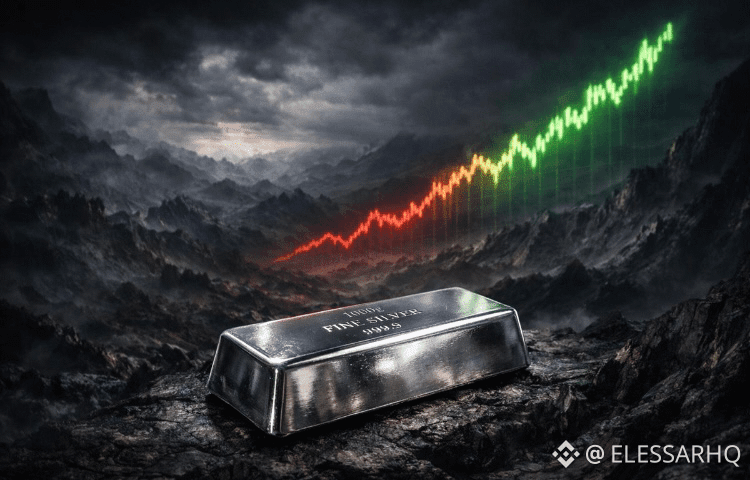
🥈 WARUM JETZT SILBER KAUFEN?
Der Silberpreis ist eingebrochen – doch das Versorgungsproblem ist nicht verschwunden.
⚡ Für 2026 wird das sechste Jahr in Folge mit einem Angebotsdefizit erwartet.
⚡ Ein erwarteter Fehlbetrag von 35 Millionen Unzen.
⚡ Das Angebot aus Minen bleibt begrenzt.
Du hast die Chance, nach einem deutlichen Rückgang zu kaufen, während die langfristige Angebotslage unverändert bleibt.
Wenn sich die Stimmung dreht – wirst du dir dann wünschen, du hättest zu diesen Preisen gekauft?
$XAG
316
·
--
🌍 DIE NÄCHSTEN 5 JAHRE: WO WIRD DAS MEISTE VERMÖGEN GESCHAFFEN?
Die globale Verschuldung steigt, die Geldpolitik verändert sich, KI wandelt ganze Branchen und die Finanzmärkte werden immer unberechenbarer.
Wenn du für die nächsten 5 Jahre nur in EINE Anlageklasse investieren könntest, welche würdest du wählen?
Mich interessiert, wohin das kluge Kapital fließt. 👇
$BTC $ETH $BNB
🥇 Precious Metals
11%
₿ Cryptocurrency
63%
🏠 Real Estate
21%
📈 Stocks & Equities
5%
19 Stimmen • Abstimmung beendet
553
·
--
Übersetzung ansehen
👀 Let’s talk about altcoins.
If you had to choose ONE altcoin to hold for the next 6 months, which would it be?
$EVAA
$HYPE
$BIGTIME
Or do you have another hidden gem on your radar? 💎
I’m curious to hear your picks. Drop them in the comments!
Follow ELESSAR for more crypto discussions and market insights.
SEE BEYOND.
If you had to choose ONE altcoin to hold for the next 6 months, which would it be?
$EVAA
$HYPE
$BIGTIME
Or do you have another hidden gem on your radar? 💎
I’m curious to hear your picks. Drop them in the comments!
Follow ELESSAR for more crypto discussions and market insights.
SEE BEYOND.
418
·
--
Übersetzung ansehen
🚀 Want to stay ahead of the crypto market?
Daily insights, trending coins, market opportunities and important financial news.
Follow ELESSAR and discover what moves the market.
SEE BEYOND.
$EVAA $BIGTIME $HYPE
🚀 Want to stay ahead of the crypto market?
Daily insights, trending coins, market opportunities and important financial news.
Follow ELESSAR and discover what moves the market.
SEE BEYOND.
$EVAA $BIGTIME $HYPE
Daily insights, trending coins, market opportunities and important financial news.
Follow ELESSAR and discover what moves the market.
SEE BEYOND.
$EVAA $BIGTIME $HYPE
1
306
·
--
Übersetzung ansehen
🇺🇸 US DATA: INFLATION AND GDP SURPRISE
November 25 delivered a hawkish signal to financial markets.
Key figures:
🔴 Core PCE YoY: 3.3% vs. 3.2% expected.
GDP Q3: 4.3% vs. 3.5% expected.
Jobless Claims: 189K vs. 200K expected.
Durable Goods: 0.2% vs. 0.4% expected.
Inflation remains persistent, economic growth is stronger than anticipated, and the labor market remains resilient.
What about precious metals?
Higher-for-longer interest rate expectations could strengthen the US dollar and increase pressure on gold and silver.
Silver remains particularly vulnerable due to its higher volatility and sensitivity to industrial demand.
The next key signal: US Treasury yields and the Federal Reserve’s December policy decision.
ELESSAR -SEE BEYOND.
#Silver #Gold #PCE #GDP #FederalReserve #Macro

501
·
--
Verifiziert
Artikel
SCHOCK DURCH US-KONJUNKTURDATEN: Starkes BIP-Wachstum und steigende Kerninflation setzen Gold und Silber unter DruckSCHOCK DURCH US-KONJUNKTURDATEN: Starkes BIP-Wachstum und steigende Kerninflation setzen Gold und Silber unter Druck
25. November 2026 | ELESSAR – SEE BEYOND
Die jüngsten US-Konjunkturdaten sendeten eine gemischte, aber überwiegend restriktive Botschaft an die Finanzmärkte.
Die Kern-PCE-Inflation beschleunigte sich im Oktober auf 3,3 % im Jahresvergleich und übertraf damit die Erwartungen, während das BIP-Wachstum im dritten Quartal deutlich auf 4,3 % nach oben korrigiert wurde.
Gleichzeitig sank die Zahl der Erstanträge auf Arbeitslosenhilfe auf 189.000, was auf eine anhaltende Widerstandsfähigkeit des US-Arbeitsmarktes hindeutet.
SCHOCK DURCH US-KONJUNKTURDATEN: Starkes BIP-Wachstum und steigende Kerninflation setzen Gold und Silber unter Druck
SCHOCK DURCH US-KONJUNKTURDATEN: Starkes BIP-Wachstum und steigende Kerninflation setzen Gold und Silber unter Druck
25. November 2026 | ELESSAR – SEE BEYOND
Die jüngsten US-Konjunkturdaten sendeten eine gemischte, aber überwiegend restriktive Botschaft an die Finanzmärkte.
Die Kern-PCE-Inflation beschleunigte sich im Oktober auf 3,3 % im Jahresvergleich und übertraf damit die Erwartungen, während das BIP-Wachstum im dritten Quartal deutlich auf 4,3 % nach oben korrigiert wurde.
Gleichzeitig sank die Zahl der Erstanträge auf Arbeitslosenhilfe auf 189.000, was auf eine anhaltende Widerstandsfähigkeit des US-Arbeitsmarktes hindeutet.
2
1.1k
·
--
Bullisch
Übersetzung ansehen
Der zitierte Inhalt wurde entfernt.
157
·
--
Bullisch
185
·
--
Übersetzung ansehen
ARIA: +31% IN 24 HOURS -WHAT COMES NEXT?
ARIA (Aria.AI) is gaining momentum, with traders showing increased interest in its Binance perpetual market.
📊 MARKET SNAPSHOT -NOV 23
* Price: ~$0.322
* 24h change: +31%
* Futures volume: ~$55M
* Funding: +0.0221% / 4h
* All-time high: ~$1.025
⚠️ WHAT STANDS OUT?
Large traders are heavily positioned long, while positive funding means longs are paying shorts.
This creates potential for a long squeeze if buying momentum weakens.
📍 KEY LEVELS
* Support: $0.30-0.31
* Resistance: $0.339-0.35
* Next resistance: $0.36-0.37
🔍 MY OUTLOOK
ARIA has strong short-term momentum, but chasing a 30% rally carries significant risk.
A breakout above $0.35-0.36 with sustained buying could extend the rally. Failure to hold $0.30 may trigger a deeper correction.
My view: Momentum is bullish, but positioning is increasingly crowded. I would watch price action and funding before considering a new entry.
Not financial advice. Manage risk carefully.
ELESSAR | SEE BEYOND.
191
·
--
Übersetzung ansehen
GLOBAL MARKETS: RELIEF RALLY OR ANOTHER SELL-OFF?
Markets are attempting to recover after a major AI-driven sell-off, but uncertainty remains high.
📊 KEY DEVELOPMENTS-NOV 23
• S&P 500 futures: +2.6%
• Nasdaq 100 futures: +3.3%
• Bitcoin: ~$61,300
• BTC ETF outflows: $582M
• Crypto Fear & Greed: 11-Extreme Fear
⚠️ WHAT MATTERS NEXT?
Investors are questioning AI valuations, institutional crypto demand remains weak, and markets are watching Wednesday’s US PCE inflation report for clues about the Fed’s next move.
My view: This recovery is not yet confirmation of a new bullish trend. Liquidity, ETF flows and inflation data will be critical.
The next major move could affect both traditional markets and crypto.
Read the full analysis in our latest article.
ELESSAR | SEE BEYOND.

58
·
--

Artikel
Übersetzung ansehen
GLOBAL MARKETS AT A CROSSROADS: AI SELLOFF, BITCOIN AND THE NEXT BIG MOVEGLOBAL MARKETS AT A CROSSROADS: AI SELLOFF, BITCOIN AND THE NEXT BIG MOVE
November 23, 2026 | ELESSAR - SEE BEYOND
Global markets are entering a critical week. After a major sell-off in technology stocks, investors are reassessing valuations, inflation risks and the future of the AI investment boom.
Although US futures have started to recover, the broader market remains fragile. And the consequences are spreading beyond traditional equities - into cryptocurrency, institutional investments and global capital flows.
Here are the developments that matter most.
1. THE AI TRADE IS UNDER PRESSURE
The biggest story today is the continued sell-off in AI-related stocks.
Last Friday, the Nasdaq fell 5.3%, while the S&P 500 moved into correction territory, dropping more than 10% from its October record.
Investors are increasingly questioning whether the enormous spending on AI infrastructure, data centres and advanced chips will generate enough profits to justify current valuations.
Nvidia has been among the major companies under pressure, losing more than 30% since concerns surrounding its former CEO emerged.
However, Monday brought some relief:
S&P 500 futures: approximately +2.6%.Nasdaq 100 futures: approximately +3.3%.European STOXX 600: approximately +0.7%.The rebound is encouraging, but one recovery session does not necessarily signal the end of the correction.
2. BITCOIN RECOVERS, BUT INVESTOR FEAR REMAINS EXTREME
Bitcoin has recovered some ground following the weekend volatility.
At the latest available snapshot:
Bitcoin: approximately $61,300.
Ethereum: approximately $1,720.
Total crypto market capitalization: approximately $2.1 trillion.
Fear & Greed Index: 11- Extreme Fear.
The most important signal is not the short-term price recovery, but the lack of confidence behind it.
Spot Bitcoin ETFs recorded approximately $582 million in net outflows on November 19. Weekly outflows reached roughly $1.89 billion in the latest reported period.
Ethereum ETFs also experienced substantial withdrawals, with approximately $407 million in weekly outflows.
This suggests that institutional demand remains under pressure.
A rising Bitcoin price accompanied by significant ETF outflows deserves attention: the market needs stronger evidence of sustained buying before a bullish reversal can be considered reliable.
3. THE FED REMAINS A MAJOR RISK FACTOR
Another important development is the changing outlook for US monetary policy.
Markets are increasingly concerned that persistent inflation could force the Federal Reserve to maintain a restrictive policy or raise interest rates again.
The US dollar has remained near a 19-month high, supported by safe-haven demand and expectations of tighter monetary policy.
Wednesday’s US PCE inflation report will be particularly important.
Why does this matter?
Higher interest rates generally make riskier assets less attractive. They can put pressure on technology stocks, cryptocurrencies and other speculative investments.
A softer inflation reading could support a recovery in risk assets. A stronger-than-expected reading could increase selling pressure.
4. ASIA IS TRYING TO STABILIZE THE MARKETS
The sell-off has also affected Asian markets.
South Korea’s KOSPI fell approximately 3.3% on Monday, while Taiwan’s Taiex gained 2.2%.
Authorities in South Korea and Taiwan have signalled measures to stabilize financial markets. Chinese exchanges have also announced support measures, including easier margin-financing requirements.
This shows that the recent volatility is no longer limited to a handful of American technology companies.
The AI investment cycle has become a global market driver.
5. WHAT SHOULD INVESTORS WATCH NEXT?
In my view, three factors will determine the next major market move:
1. US PCE inflation data
This could influence expectations for the Federal Reserve and determine whether risk appetite improves or deteriorates.
2. Bitcoin ETF flows
A sustained return of institutional inflows would provide stronger evidence that demand is recovering.
3. AI and semiconductor stocks
If major technology companies continue to decline, pressure could spread further across global equities and cryptocurrencies.
ELESSAR MARKET OUTLOOK
I believe the current environment requires caution.
The recovery in US futures and Bitcoin is worth watching, but the underlying signals remain mixed. Institutional crypto outflows, extreme market fear and uncertainty surrounding AI valuations suggest that investors are still defensive.
My view is that we should not confuse a short-term rebound with a confirmed market reversal.
If inflation data comes in softer and institutional flows stabilize, risk assets could recover.
If inflation remains persistent and technology stocks resume their decline, another wave of selling across speculative markets cannot be ruled out.
The key is to watch capital flows, liquidity and macroeconomic conditions - not just price movements.
The biggest opportunities often appear when the market is uncertain. But identifying them requires discipline, patience and a clear understanding of what is driving the price.
This article is for informational purposes only and does not constitute financial advice.
ELESSAR
SEE BEYOND.
GLOBAL MARKETS AT A CROSSROADS: AI SELLOFF, BITCOIN AND THE NEXT BIG MOVE
GLOBAL MARKETS AT A CROSSROADS: AI SELLOFF, BITCOIN AND THE NEXT BIG MOVE
November 23, 2026 | ELESSAR - SEE BEYOND
Global markets are entering a critical week. After a major sell-off in technology stocks, investors are reassessing valuations, inflation risks and the future of the AI investment boom.
Although US futures have started to recover, the broader market remains fragile. And the consequences are spreading beyond traditional equities - into cryptocurrency, institutional investments and global capital flows.
Here are the developments that matter most.
1. THE AI TRADE IS UNDER PRESSURE
The biggest story today is the continued sell-off in AI-related stocks.
Last Friday, the Nasdaq fell 5.3%, while the S&P 500 moved into correction territory, dropping more than 10% from its October record.
Investors are increasingly questioning whether the enormous spending on AI infrastructure, data centres and advanced chips will generate enough profits to justify current valuations.
Nvidia has been among the major companies under pressure, losing more than 30% since concerns surrounding its former CEO emerged.
However, Monday brought some relief:
S&P 500 futures: approximately +2.6%.Nasdaq 100 futures: approximately +3.3%.European STOXX 600: approximately +0.7%.The rebound is encouraging, but one recovery session does not necessarily signal the end of the correction.
2. BITCOIN RECOVERS, BUT INVESTOR FEAR REMAINS EXTREME
Bitcoin has recovered some ground following the weekend volatility.
At the latest available snapshot:
Bitcoin: approximately $61,300.
Ethereum: approximately $1,720.
Total crypto market capitalization: approximately $2.1 trillion.
Fear & Greed Index: 11- Extreme Fear.
The most important signal is not the short-term price recovery, but the lack of confidence behind it.
Spot Bitcoin ETFs recorded approximately $582 million in net outflows on November 19. Weekly outflows reached roughly $1.89 billion in the latest reported period.
Ethereum ETFs also experienced substantial withdrawals, with approximately $407 million in weekly outflows.
This suggests that institutional demand remains under pressure.
A rising Bitcoin price accompanied by significant ETF outflows deserves attention: the market needs stronger evidence of sustained buying before a bullish reversal can be considered reliable.
3. THE FED REMAINS A MAJOR RISK FACTOR
Another important development is the changing outlook for US monetary policy.
Markets are increasingly concerned that persistent inflation could force the Federal Reserve to maintain a restrictive policy or raise interest rates again.
The US dollar has remained near a 19-month high, supported by safe-haven demand and expectations of tighter monetary policy.
Wednesday’s US PCE inflation report will be particularly important.
Why does this matter?
Higher interest rates generally make riskier assets less attractive. They can put pressure on technology stocks, cryptocurrencies and other speculative investments.
A softer inflation reading could support a recovery in risk assets. A stronger-than-expected reading could increase selling pressure.
4. ASIA IS TRYING TO STABILIZE THE MARKETS
The sell-off has also affected Asian markets.
South Korea’s KOSPI fell approximately 3.3% on Monday, while Taiwan’s Taiex gained 2.2%.
Authorities in South Korea and Taiwan have signalled measures to stabilize financial markets. Chinese exchanges have also announced support measures, including easier margin-financing requirements.
This shows that the recent volatility is no longer limited to a handful of American technology companies.
The AI investment cycle has become a global market driver.
5. WHAT SHOULD INVESTORS WATCH NEXT?
In my view, three factors will determine the next major market move:
1. US PCE inflation data
This could influence expectations for the Federal Reserve and determine whether risk appetite improves or deteriorates.
2. Bitcoin ETF flows
A sustained return of institutional inflows would provide stronger evidence that demand is recovering.
3. AI and semiconductor stocks
If major technology companies continue to decline, pressure could spread further across global equities and cryptocurrencies.
ELESSAR MARKET OUTLOOK
I believe the current environment requires caution.
The recovery in US futures and Bitcoin is worth watching, but the underlying signals remain mixed. Institutional crypto outflows, extreme market fear and uncertainty surrounding AI valuations suggest that investors are still defensive.
My view is that we should not confuse a short-term rebound with a confirmed market reversal.
If inflation data comes in softer and institutional flows stabilize, risk assets could recover.
If inflation remains persistent and technology stocks resume their decline, another wave of selling across speculative markets cannot be ruled out.
The key is to watch capital flows, liquidity and macroeconomic conditions - not just price movements.
The biggest opportunities often appear when the market is uncertain. But identifying them requires discipline, patience and a clear understanding of what is driving the price.
This article is for informational purposes only and does not constitute financial advice.
ELESSAR
SEE BEYOND.
157
·
--
Übersetzung ansehen
EVAA: Recovery or Another Drop?
EVAA has suffered a massive sell-off, losing approximately 64% on November 22, falling from $6.40 to $2.20. Now the market is attempting to recover.
📊 MARKET DATA
* Price: ~$3.05
* Open Interest: ~$120M
* 24h Futures Volume: ~$1.1B
* Funding Rate: Positive (~0.04% / 8h)
* TVL: ~$6.5–6.7M
⚠️ KEY LEVELS
* Support: $2.20–2.35
* Intermediate support: $2.70–2.80
* Resistance: $3.30–3.50
* Major resistance: $4.30–4.40
MY OUTLOOK
Despite the recovery, I don’t see a confirmed bullish reversal yet.
Futures activity is extremely high compared to spot trading, while positive funding suggests crowded and expensive long positioning.
A sustained break above $3.50 could strengthen the bullish scenario. Losing $2.70 could bring another test of $2.20.
My view: EVAA remains highly speculative. Watch Funding, Open Interest and TVL rather than price alone. The next move could be sharp in either direction.
Not financial advice. Manage your risk.
ELESSAR | SEE BEYOND.
368
·
--
Übersetzung ansehen
Bitcoin Rebounds — But the Weekly Trend Is Still Under Pressure
Bitcoin is attempting to recover after a sharp weekend sell-off. But is this a genuine recovery or just a relief bounce?
The numbers — November 16, 2026:
* BTC: ~$64.8K, +0.7% over 24h, −13.1% over 7 days.
* ETH: ~$1.82K, +1.3% over 24h, −14.6% over 7 days.
* Bitcoin ETFs: −$185.4M in net outflows on November 13 — the seventh consecutive outflow session.
* Ethereum ETFs: +$2.3M on Friday, but still nearly $399M in weekly outflows.
* The weekend sell-off triggered approximately $2B in crypto liquidations, mostly affecting leveraged longs.
What matters next:
1. Can BTC reclaim the $66.9K–$68.6K resistance zone?
2. Will ETF flows turn positive again?
3. Can ETH hold above the $1.75K–$1.80K area?
4. Will US retail sales and the upcoming FOMC minutes reinforce expectations of tighter monetary policy?
A sharp rebound after forced liquidations does not automatically mean the bottom is in. Confirmation matters more than the first green candles.
Do you see this recovery as the beginning of stabilization — or just a temporary bounce before another test of the lows?
SEE BEYOND
$BTC $ETH
#Bitcoin #Ethereum #CryptoMarkets #MarketAnalysis #ELESSAR
110
·
--
🚨 ARIA: ÜBER 400 % MONATLICHE GEWINNE — ABER ES GIBT EINEN HAKEN.
AriaAI (ARIA) zählt inzwischen zu den interessanteren Altcoins, die man im Auge behalten sollte.
Laut einigen Marktdaten ist der Token im vergangenen Monat um über 400 % gestiegen.
Doch ist diese Rallye nachhaltig?
📊 WAS DU WISSEN MUSST:
• ARIA hat eine außergewöhnliche monatliche Rallye erlebt.
• Die Marktkapitalisierung nähert sich inzwischen 100 Mio. $.
• Derzeit sind rund 440 Mio. Token im Umlauf.
• Das maximale Angebot beträgt 1 Milliarde ARIA.
• Die Futures-Aktivität bleibt erheblich.
⚠️ DAS GRÖSSTE BEVORSTEHENDE RISIKO:
Am 21. November sollen rund 36,6 Millionen ARIA-Token freigeschaltet werden — etwa 3,66 % des maximalen Angebots.
Das bedeutet nicht zwangsläufig einen sofortigen Ausverkauf.
Allerdings kommt zusätzliches Angebot auf den Markt, nachdem der Token bereits eine massive Rallye erlebt hat.
🔍 DREI SZENARIEN, DIE DU IM AUGE BEHALTEN SOLLTEST:
🟢 Bullisch: Ein bestätigter Ausbruch über 0,25 $ könnte den Weg in Richtung 0,28–0,30 $ ebnen.
🟡 Neutral: Eine Konsolidierung im Bereich von 0,20–0,24 $.
🔴 Bärisch: Ein Rückgang unter 0,185 $ könnte tiefere Unterstützungszonen in den Fokus rücken.
MEINE EINSCHÄTZUNG:
Die wichtigste Frage ist nicht, wie hoch ARIA steigen kann.
Sondern ob die Nachfrage das bevorstehende Token-Angebot aufnehmen kann.
Würdest du bei dieser Rallye kaufen oder auf eine mögliche Korrektur warten?
BLICK ÜBER DEN TELLERRAND.
#ARIA #AriaAI #Krypto #Altcoins #BinanceSquare
115
Anmelden und weiter Inhalte entdecken
Krypto-Nutzer weltweit auf Binance Square kennenlernen
⚡️ Bleib in Sachen Krypto stets am Puls.
💬 Die weltgrößte Kryptobörse vertraut darauf.
👍 Erhalte verlässliche Einblicke von verifizierten Creators.
E-Mail-Adresse/Telefonnummer
Trendthemen
EvolveAtBinanceBlockchainWeek
1.3M Aufrufe
14,986 Kommentare
Die Binance Blockchain Week startet morgen! 🌍
Am 28. und 29. November: Egal, ob du in Bangkok bist oder aus der Ferne teilnimmst – schalte die Livestreams ein und beteilige dich an der Unterhaltung auf Binance Square!
Das erwartet dich 👇
📺 Schau dir die main stage live an
Schalte an beiden Tagen ein, wenn Branchenexperten ihre Perspektiven zum diesjährigen Thema „Evolve“ teilen. Entdecke, was die Zukunft der Kryptobranche bereithält – von technologischen Innovationen bis hin zu Anwendungen in der realen Welt.
⚔️ Verfolge zwei Trading-Wettbewerbe
Der Aster Open Qualifier und der Binance Trading Master Tournament werden live übertragen. Schalte ein und verfolge die Trader in Aktion.
🏆 Sieh dir The Blockchain 100 Awards Ceremony an
Die Liste „Blockchain 100“ wurde von der Community ausgewählt. Feiere mit uns die Kreativen und ihre Ideen!
💬 Beteilige dich an der Unterhaltung in der Community
Verwende #EvolveAtBinanceBlockchainWeek in einem Beitrag mit einem Foto, um zu teilen, worauf du dich freust, was du über die Branche denkst oder welche Momente der Veranstaltung dir am besten gefallen.
Der event page ist jetzt live! Abonniere alle Livestreams mit nur einem Klick, damit du keinen Moment verpasst 👏
Binance Blockchain Week
·268 Likes
·231.6k Aufrufe
MoneroFalls13%OnDelistings
66,537 Aufrufe
569 Kommentare
EthereumGlamsterdamKeepsStorageFeeChange
27,867 Aufrufe
295 Kommentare