
Square-Creator-5ee963e28
210.6k Beiträge

Square-Creator-5ee963e28
Melden
Nutzer blockieren
0 Following
2.1K+ Follower
5.1K+ Like gegeben
Beiträge
Alle
Videos
Übersetzung ansehen
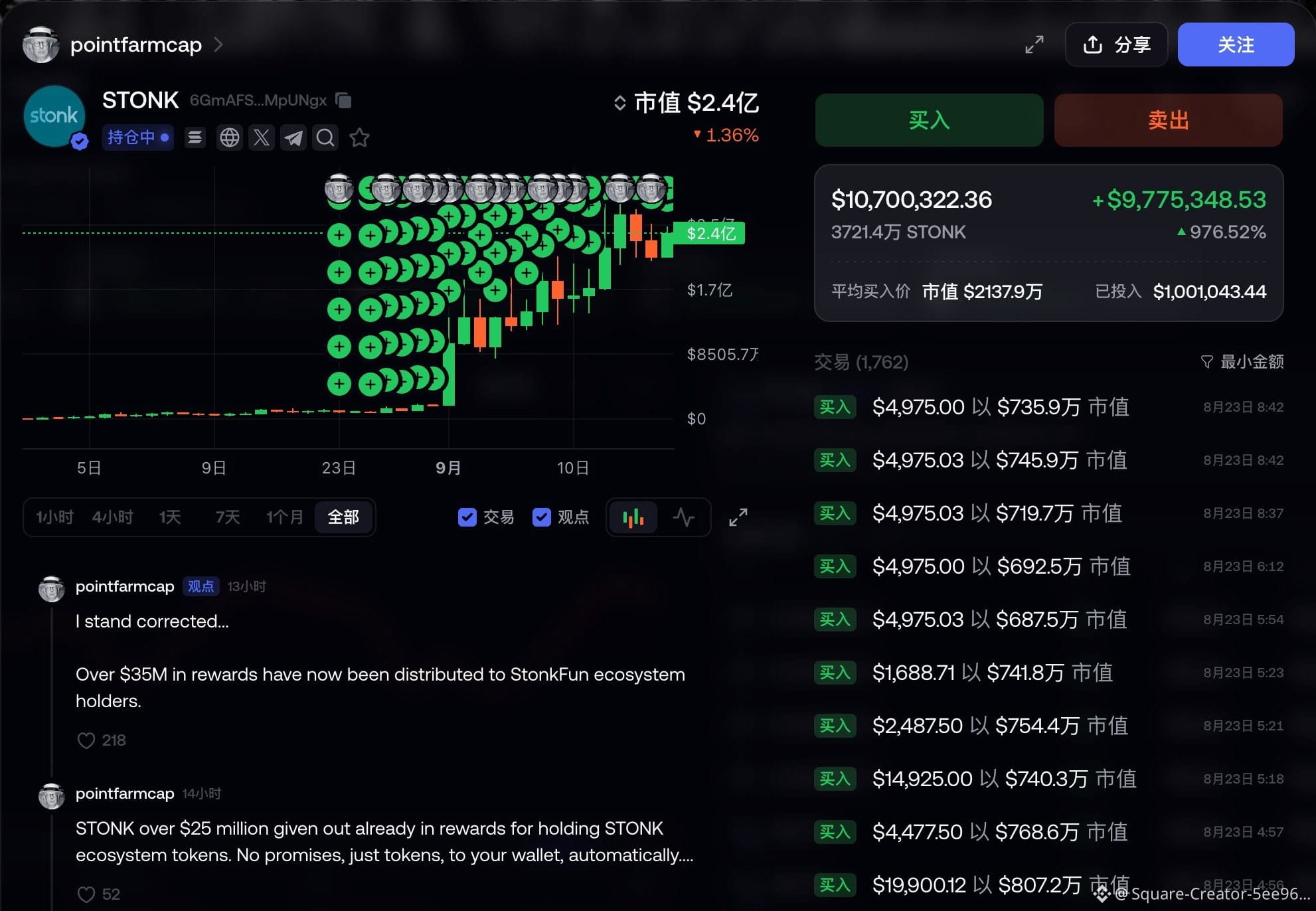
Point Farm Capital (@pointfarmcap) 通过 $STONK 斩获 $10M 浮盈。
他累计投入 $1M USDC 以 $21M 平均市值买入 3721 万枚 STONK,目前 STONK 市值已经来到 $240M,浮盈 10x ($10M)。
地址:https://arkm.com/explorer/address/Beqv6dzTcjV2eodo8RRXCiCcnSYrS1vkQKhfqwHXqeit
--------------------------------------------------------------------------
#Bitget 来了就是VIP!Crypto、美股、CFD,全球先机一站布局
Point Farm Capital (@pointfarmcap) 通过 $STONK 斩获 $10M 浮盈。
他累计投入 $1M USDC 以 $21M 平均市值买入 3721 万枚 STONK,目前 STONK 市值已经来到 $240M,浮盈 10x ($10M)。
地址:https://arkm.com/explorer/address/Beqv6dzTcjV2eodo8RRXCiCcnSYrS1vkQKhfqwHXqeit
--------------------------------------------------------------------------
#Bitget 来了就是VIP!Crypto、美股、CFD,全球先机一站布局
他累计投入 $1M USDC 以 $21M 平均市值买入 3721 万枚 STONK,目前 STONK 市值已经来到 $240M,浮盈 10x ($10M)。
地址:https://arkm.com/explorer/address/Beqv6dzTcjV2eodo8RRXCiCcnSYrS1vkQKhfqwHXqeit
--------------------------------------------------------------------------
#Bitget 来了就是VIP!Crypto、美股、CFD,全球先机一站布局
Übersetzung ansehen
OpenAI IPO will not happen in 2026 amid AI safety fears, Altman says https://reut.rs/4xTMdyU https://reut.rs/4xTMdyU
OpenAI IPO will not happen in 2026 amid AI safety fears, Altman says https://reut.rs/4xTMdyU https://reut.rs/4xTMdyU
Übersetzung ansehen
Revolut said a “limited number” of customers had sensitive information disclosed in a scam involving an unauthorized third party that used a legitimate government email domain https://www.bloomberg.com/news/articles/2026-09-12/revolut-says-some-customer-data-were-exposed-in-email-based-scam?taid=6aa5f212d5b7470001e02291&utm_campaign=trueanthem&utm_content=business&utm_medium=social&utm_source=twitter
Revolut said a “limited number” of customers had sensitive information disclosed in a scam involving an unauthorized third party that used a legitimate government email domain https://www.bloomberg.com/news/articles/2026-09-12/revolut-says-some-customer-data-were-exposed-in-email-based-scam?taid=6aa5f212d5b7470001e02291&utm_campaign=trueanthem&utm_content=business&utm_medium=social&utm_source=twitter
Übersetzung ansehen
Larry Ellison cancels plan to sell Oracle stock https://reut.rs/4cBXco4 https://reut.rs/4cBXco4
Larry Ellison cancels plan to sell Oracle stock https://reut.rs/4cBXco4 https://reut.rs/4cBXco4
Übersetzung ansehen
Myanmar’s opium boom is partly due to changes elsewhere. The Taliban have cracked down on Afghanistan’s poppy production, meaning farmers in South-East Asia can make an even bigger profit https://www.economist.com/asia/2026/09/10/black-gold-is-pouring-out-of-myanmar?taid=6aa5f0e46c2d4d0001f188a1&utm_campaign=trueanthem&utm_medium=social&utm_source=twitter
Myanmar’s opium boom is partly due to changes elsewhere. The Taliban have cracked down on Afghanistan’s poppy production, meaning farmers in South-East Asia can make an even bigger profit https://www.economist.com/asia/2026/09/10/black-gold-is-pouring-out-of-myanmar?taid=6aa5f0e46c2d4d0001f188a1&utm_campaign=trueanthem&utm_medium=social&utm_source=twitter
Übersetzung ansehen
🔊 What does the future of the West Bank look like? On this episode of On Assignment, Reuters reporter @PMagid travels to the village of Qusra to find the answer https://reut.rs/4d0QZST
🔊 What does the future of the West Bank look like? On this episode of On Assignment, Reuters reporter @PMagid travels to the village of Qusra to find the answer https://reut.rs/4d0QZST

Übersetzung ansehen
TIFF 2026: Courteney Cox thriller tells 'dysfunctional love story' behind pizza bomber case https://reut.rs/4j0CguK https://reut.rs/4j0CguK
TIFF 2026: Courteney Cox thriller tells 'dysfunctional love story' behind pizza bomber case https://reut.rs/4j0CguK https://reut.rs/4j0CguK
Übersetzung ansehen
Hong Kong’s first chief executive got caught between a Chinese government intent on stamping out freedom, and a populace fearing the erosion of liberties it had taken for granted. Register for free to learn how he lost the trust of both sides https://www.economist.com/china/2026/09/10/tung-chee-hwa-hong-kongs-first-chief-executive-has-died?taid=6aa5ec34d5b7470001e02272&utm_campaign=trueanthem&utm_medium=social&utm_source=twitter
Hong Kong’s first chief executive got caught between a Chinese government intent on stamping out freedom, and a populace fearing the erosion of liberties it had taken for granted. Register for free to learn how he lost the trust of both sides https://www.economist.com/china/2026/09/10/tung-chee-hwa-hong-kongs-first-chief-executive-has-died?taid=6aa5ec34d5b7470001e02272&utm_campaign=trueanthem&utm_medium=social&utm_source=twitter
2
Übersetzung ansehen
Rangers activate RHP Nathan Eovaldi, 3B Josh Jung from IL https://reut.rs/4dgcD5r https://reut.rs/4dgcD5r
Rangers activate RHP Nathan Eovaldi, 3B Josh Jung from IL https://reut.rs/4dgcD5r https://reut.rs/4dgcD5r
Übersetzung ansehen
🚀 'Once quantum goes supersonic, it gets an awful lot better an awful lot quicker.' @JonRuane of @MIT explores the quantum revolution on this week's Reuters Econ World podcast https://reut.rs/3SUuCaM
🚀 'Once quantum goes supersonic, it gets an awful lot better an awful lot quicker.' @JonRuane of @MIT explores the quantum revolution on this week's Reuters Econ World podcast https://reut.rs/3SUuCaM

Übersetzung ansehen
Tennis-List of US Open women's singles champions https://reut.rs/4xRX7oC https://reut.rs/4xRX7oC
Tennis-List of US Open women's singles champions https://reut.rs/4xRX7oC https://reut.rs/4xRX7oC
1
Übersetzung ansehen
Seven retirees who relocated to low-tax states open up about their finances, the tax breaks they gained, the costs that surprised them and how their new ZIP Codes changed their lives https://on.wsj.com/4gOzpDP
Seven retirees who relocated to low-tax states open up about their finances, the tax breaks they gained, the costs that surprised them and how their new ZIP Codes changed their lives https://on.wsj.com/4gOzpDP
13
Übersetzung ansehen
The management consultant’s guide to love and sex https://www.economist.com/1843/2020/02/20/between-the-spreadsheets?taid=6aa5e7946c2d4d0001f18886&utm_campaign=editorial-social&utm_content=discovery.content&utm_medium=social-media.content.np&utm_source=twitter
The management consultant’s guide to love and sex https://www.economist.com/1843/2020/02/20/between-the-spreadsheets?taid=6aa5e7946c2d4d0001f18886&utm_campaign=editorial-social&utm_content=discovery.content&utm_medium=social-media.content.np&utm_source=twitter
10
Übersetzung ansehen
Ruthless Rybakina dethrones Sabalenka to claim first US Open crown https://reut.rs/4A4Z4zz https://reut.rs/4A4Z4zz
Ruthless Rybakina dethrones Sabalenka to claim first US Open crown https://reut.rs/4A4Z4zz https://reut.rs/4A4Z4zz
22
Übersetzung ansehen
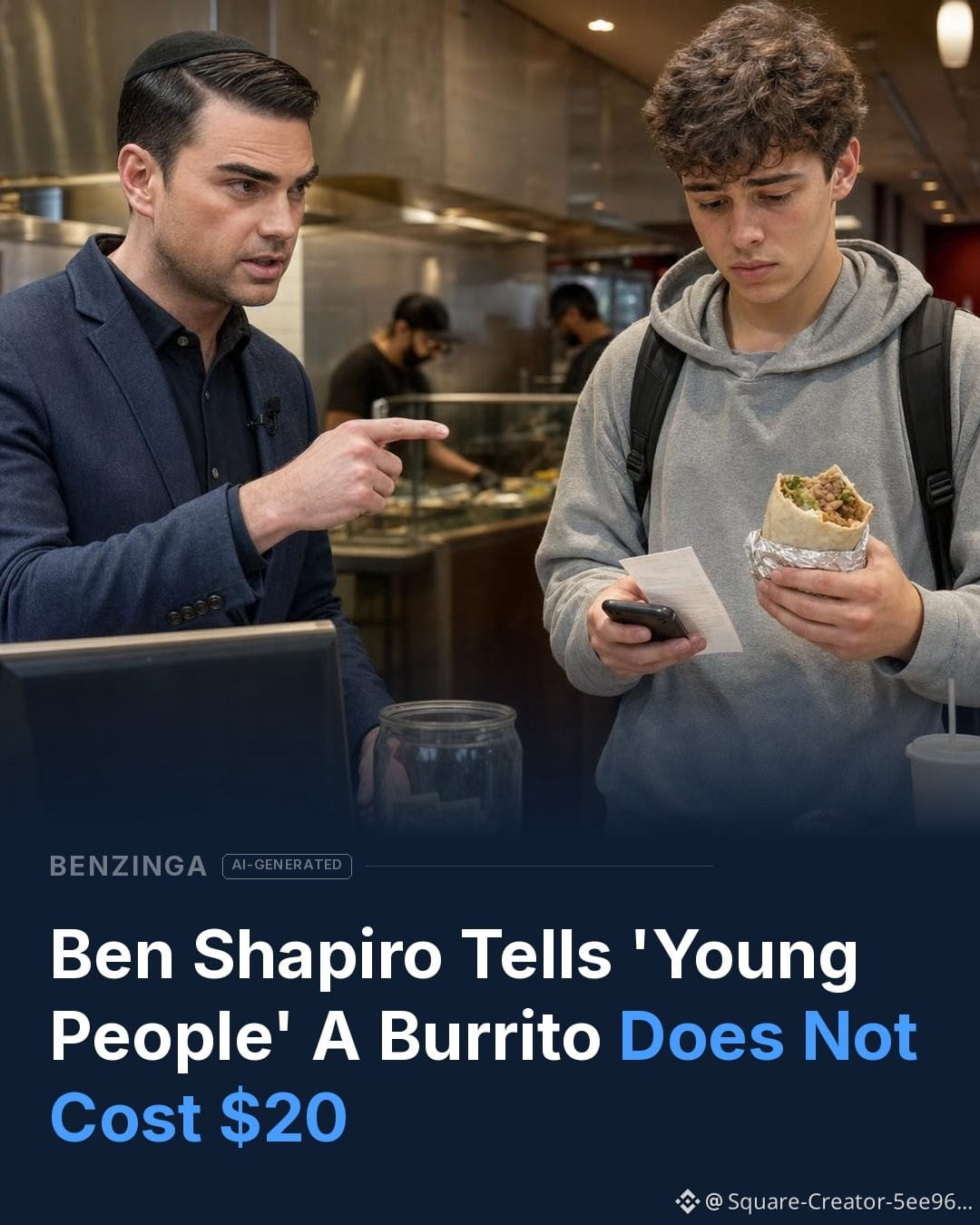
Ben Shapiro told young people that a burrito does not cost $20 and that anyone who is not independently wealthy paying that much is "doing life wrong."
The complaint originated with a college student whose comment was shared on X in August by Turning Point USA spokesman Andrew Kolvet. "A burrito shouldn't cost $20," the student said, and Kolvet added that the lived experience was simpler. "It just feels like basic things cost too much."
Shapiro's post went further. "We have enough problems as a country without insane expectations that the government is going to provide us gourmet-quality burritos," he wrote.
In a follow-up he acknowledged prices are too high, tying the inflation surge to the pandemic and policies under President Joe Biden while noting the rate of increases has slowed since 2023. He argued consumers should not expect a return to 2019 prices without a severe downturn, and pointed to deregulation as a better lever.
Federal data explains why the frustration lands. Food away from home was 3.4% more expensive in June than a year earlier, according to the Bureau of Labor Statistics, with limited-service meals up 3.1% and full-service meals up 3.7%.
The issue is less that every burrito costs $20 and more that eating out has grown expensive once extras, delivery, taxes and tips are added. That leaves familiar options, cook at home, compare restaurants, skip the add-ons, or decide the meal is not worth it.
https://vist.ly/5i9dh
Ben Shapiro told young people that a burrito does not cost $20 and that anyone who is not independently wealthy paying that much is "doing life wrong."
The complaint originated with a college student whose comment was shared on X in August by Turning Point USA spokesman Andrew Kolvet. "A burrito shouldn't cost $20," the student said, and Kolvet added that the lived experience was simpler. "It just feels like basic things cost too much."
Shapiro's post went further. "We have enough problems as a country without insane expectations that the government is going to provide us gourmet-quality burritos," he wrote.
In a follow-up he acknowledged prices are too high, tying the inflation surge to the pandemic and policies under President Joe Biden while noting the rate of increases has slowed since 2023. He argued consumers should not expect a return to 2019 prices without a severe downturn, and pointed to deregulation as a better lever.
Federal data explains why the frustration lands. Food away from home was 3.4% more expensive in June than a year earlier, according to the Bureau of Labor Statistics, with limited-service meals up 3.1% and full-service meals up 3.7%.
The issue is less that every burrito costs $20 and more that eating out has grown expensive once extras, delivery, taxes and tips are added. That leaves familiar options, cook at home, compare restaurants, skip the add-ons, or decide the meal is not worth it.
https://vist.ly/5i9dh
The complaint originated with a college student whose comment was shared on X in August by Turning Point USA spokesman Andrew Kolvet. "A burrito shouldn't cost $20," the student said, and Kolvet added that the lived experience was simpler. "It just feels like basic things cost too much."
Shapiro's post went further. "We have enough problems as a country without insane expectations that the government is going to provide us gourmet-quality burritos," he wrote.
In a follow-up he acknowledged prices are too high, tying the inflation surge to the pandemic and policies under President Joe Biden while noting the rate of increases has slowed since 2023. He argued consumers should not expect a return to 2019 prices without a severe downturn, and pointed to deregulation as a better lever.
Federal data explains why the frustration lands. Food away from home was 3.4% more expensive in June than a year earlier, according to the Bureau of Labor Statistics, with limited-service meals up 3.1% and full-service meals up 3.7%.
The issue is less that every burrito costs $20 and more that eating out has grown expensive once extras, delivery, taxes and tips are added. That leaves familiar options, cook at home, compare restaurants, skip the add-ons, or decide the meal is not worth it.
https://vist.ly/5i9dh
28
Übersetzung ansehen
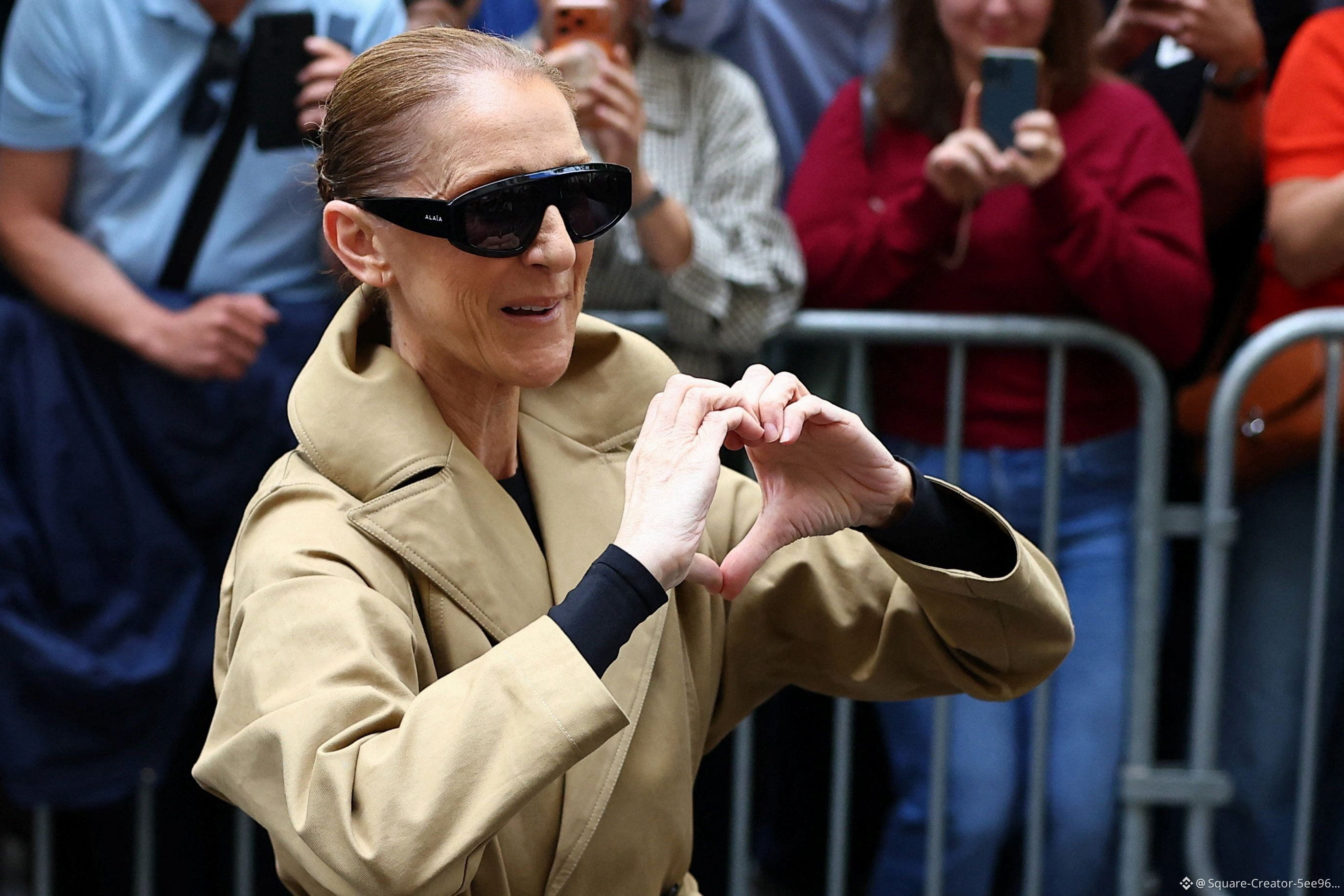
🔊 Celine Dion returns to the stage for her first full concert in six years, opening a sellout Paris residency, after a battle with stiff person’s syndrome. Hear more on the Reuters World News podcast https://reut.rs/3T1JT9B
🔊 Celine Dion returns to the stage for her first full concert in six years, opening a sellout Paris residency, after a battle with stiff person’s syndrome. Hear more on the Reuters World News podcast https://reut.rs/3T1JT9B
47
Übersetzung ansehen
TIFF 2026: K-pop superstar Lisa sparks fan frenzy at documentary premiere https://reut.rs/4dacMr6 https://reut.rs/4dacMr6
TIFF 2026: K-pop superstar Lisa sparks fan frenzy at documentary premiere https://reut.rs/4dacMr6 https://reut.rs/4dacMr6
2
Übersetzung ansehen
Werro beats Hodgkinson in 800m thriller, Jefferson-Wooden lights up Budapest https://reut.rs/4xoW12N https://reut.rs/4xoW12N
Werro beats Hodgkinson in 800m thriller, Jefferson-Wooden lights up Budapest https://reut.rs/4xoW12N https://reut.rs/4xoW12N
1
Übersetzung ansehen
On “Money Talks” this week: the merry-go-round of money that’s propping up the AI boom. Listen now https://www.economist.com/podcasts/2026/09/10/why-the-ai-giants-are-acting-like-banks?taid=6aa5e2d46df06e00010d4139&utm_campaign=trueanthem&utm_medium=social&utm_source=twitter
On “Money Talks” this week: the merry-go-round of money that’s propping up the AI boom. Listen now https://www.economist.com/podcasts/2026/09/10/why-the-ai-giants-are-acting-like-banks?taid=6aa5e2d46df06e00010d4139&utm_campaign=trueanthem&utm_medium=social&utm_source=twitter
5
Übersetzung ansehen
TIFF 2026: Rebel Wilson’s new film celebrates girl power after ‘setback’ in directorial debut https://reut.rs/4xpVOfJ https://reut.rs/4xpVOfJ
TIFF 2026: Rebel Wilson’s new film celebrates girl power after ‘setback’ in directorial debut https://reut.rs/4xpVOfJ https://reut.rs/4xpVOfJ
1
Anmelden und weiter Inhalte entdecken
Krypto-Nutzer weltweit auf Binance Square kennenlernen
⚡️ Bleib in Sachen Krypto stets am Puls.
💬 Die weltgrößte Kryptobörse vertraut darauf.
👍 Erhalte verlässliche Einblicke von verifizierten Creators.
E-Mail-Adresse/Telefonnummer
Trendthemen
ClarityActFacesProceduralVoteSept15
70,240 Aufrufe
909 Kommentare
Leute, hier ist das Update für die nächste Woche für $BTC und die großen Coins, die Trading-Zonen und die Daten, die die Bewegung auslösen!
Ich werde jedes Level erklären: warum wir dort hinkommen könnten, warum ich weiterhin für ein mögliches Tief unter 50.000 US-Dollar für BTC plädiere, und warum ich nach so einem explosiven Move immer noch nicht bullisch auf BTC bin!
Für BTC nutze ich, wie ihr auf meinem Chart sehen könnt, Fibonacci, um die Retracement-Levels zu finden. Und keine Sorge: Ich nutze Fib schon seit ziemlich langer Zeit, habe es getestet, und ich glaube an diese Levels.
Das bullische Szenario ist, dass der Markt die 0.5- oder 0.618-Fib-Levels erreicht. Diese beiden Levels liegen bei etwa 72.500 USD und 70.100 USD für BTC. Diese Zone muss retraced werden, wenn BTC eine explosive Bewegung hinlegen und diesen bullischen Schub bestätigen will.
Während wir die Technicals durchgehen, kommen die Fundamentals ins Spiel!
Da ist der CLARITY Act. Die Chancen für den 15. September liegen derzeit hoch, über 80%. Aber nehmen wir an, er wird genehmigt. Das maximale Level, auf das ich schaue, falls der Act durchgeht, liegt bei 84.000–86.000 USD in einer schnellen Kerze.
Aber am nächsten Tag gibt es den FOMC am 16. September, von dem ich persönlich glaube, dass er einen Zinsanstieg bringen könnte. Diesmal gibt es keinen Weg, dass sie eine Lockerung machen. Sie müssen sich für eine monetäre Straffung entscheiden. 25 bps müssen angehoben werden. Merkt euch das!
Fragst du dich, was die Auswirkungen sein werden?
Ein kompletter 7–10% Crash an genau diesem Tag, dem 16. September!
Und es hört nicht dort auf. Am 18. September haben wir die BOJ-Zinsentscheidung, die ebenfalls einen 25-bps-Hike bringen könnte.
Diese beiden Ereignisse könnten uns mühelos unter 60.000 USD bringen.
Grund? Yen Carry Trade.
Sie könnten Liquidität aus den Aktien abschöpfen, was einen direkten Einfluss auf riskante Assets hat.
Beides wird einen freien Fall auslösen…
Fazit: Ich will das nicht noch lang auswalzen.
CLARITY ACT ABGELEHNT → 70K–72.5K RANGE
CLARITY ACT BESTANDEN → 84K–86K MAXIMUM
Das sind die konkreten Gründe, warum ich weiterhin bearish auf die Majors bin, und zusätzlich: Die Struktur ist in den höheren Timeframes immer noch nicht bullisch gedreht.
Hinterlasse ein LIKE!
#ClarityActFacesProceduralVoteSept15
$ETH etfs inflow! Notiert das: vermeidet Shorts in eth!
Crypto_LUX
·10 Likes
·3.6k Aufrufe
US2YearYieldRisesTo4.61%
43,273 Aufrufe
758 Kommentare
US10YearTreasuryYieldNears5%
26,616 Aufrufe
460 Kommentare