
Munia khanom
25 Beiträge

Munia khanom
Melden
Nutzer blockieren
13 Following
0 Follower
0 Like gegeben
Beiträge
·
--
Übersetzung ansehen
📊 BUY or SELL? — Don’t Trade on Emotion!
A single candle doesn’t tell the whole story. 🔥
Before entering a trade, check the Trend, Support & Resistance, Liquidity, FVG and Risk Management.
🎯 Plan → Analyse → Execute
💡 Smart traders wait for confirmation—not guesses.
Trade smart. Protect your capital. Stay disciplined. 📈
#Binance #CryptoTrading #Trading #Bitcoin #BTC #BuyOrSell #TechnicalAnalysis #SmartMoneyConcept #FVG #Liquidity #RiskManagement #TradingTips #Crypto
📊 BUY or SELL? — Don’t Trade on Emotion!
A single candle doesn’t tell the whole story. 🔥
Before entering a trade, check the Trend, Support & Resistance, Liquidity, FVG and Risk Management.
🎯 Plan → Analyse → Execute
💡 Smart traders wait for confirmation—not guesses.
Trade smart. Protect your capital. Stay disciplined. 📈
#Binance #CryptoTrading #Trading #Bitcoin #BTC #BuyOrSell #TechnicalAnalysis #SmartMoneyConcept #FVG #Liquidity #RiskManagement #TradingTips #Crypto
A single candle doesn’t tell the whole story. 🔥
Before entering a trade, check the Trend, Support & Resistance, Liquidity, FVG and Risk Management.
🎯 Plan → Analyse → Execute
💡 Smart traders wait for confirmation—not guesses.
Trade smart. Protect your capital. Stay disciplined. 📈
#Binance #CryptoTrading #Trading #Bitcoin #BTC #BuyOrSell #TechnicalAnalysis #SmartMoneyConcept #FVG #Liquidity #RiskManagement #TradingTips #Crypto

68
·
--
Übersetzung ansehen
🚨 TRADERS, READ THIS BEFORE YOUR NEXT TRADE! 🚨
Most traders don’t lose because they can’t predict the market.
They lose because they can’t manage risk. 📉
✅ Protect your capital
✅ Never risk too much on one trade
✅ Always use a Stop Loss
✅ Don’t revenge trade
✅ Follow your strategy, not your emotions
💡 The goal is NOT to win every trade.
The goal is to survive long enough to win consistently.
🔥 One good trade can make money.
Good risk management can keep you in the game.
👇 What is your biggest trading mistake?
A — Overtrading
B — No Stop Loss
C — Emotional Trading
D — Revenge Trading
#Binance #BinanceSquare #Crypto #Trading #Trader #CryptoTrading #RiskManagement #Bitcoin #BTC #Altcoins #TechnicalAnalysis #TradingPsychology #FuturesTrading #CryptoTips
🚨 TRADERS, READ THIS BEFORE YOUR NEXT TRADE! 🚨
Most traders don’t lose because they can’t predict the market.
They lose because they can’t manage risk. 📉
✅ Protect your capital
✅ Never risk too much on one trade
✅ Always use a Stop Loss
✅ Don’t revenge trade
✅ Follow your strategy, not your emotions
💡 The goal is NOT to win every trade.
The goal is to survive long enough to win consistently.
🔥 One good trade can make money.
Good risk management can keep you in the game.
👇 What is your biggest trading mistake?
A — Overtrading
B — No Stop Loss
C — Emotional Trading
D — Revenge Trading
#Binance #BinanceSquare #Crypto #Trading #Trader #CryptoTrading #RiskManagement #Bitcoin #BTC #Altcoins #TechnicalAnalysis #TradingPsychology #FuturesTrading #CryptoTips
Most traders don’t lose because they can’t predict the market.
They lose because they can’t manage risk. 📉
✅ Protect your capital
✅ Never risk too much on one trade
✅ Always use a Stop Loss
✅ Don’t revenge trade
✅ Follow your strategy, not your emotions
💡 The goal is NOT to win every trade.
The goal is to survive long enough to win consistently.
🔥 One good trade can make money.
Good risk management can keep you in the game.
👇 What is your biggest trading mistake?
A — Overtrading
B — No Stop Loss
C — Emotional Trading
D — Revenge Trading
#Binance #BinanceSquare #Crypto #Trading #Trader #CryptoTrading #RiskManagement #Bitcoin #BTC #Altcoins #TechnicalAnalysis #TradingPsychology #FuturesTrading #CryptoTips
60
·
--
Übersetzung ansehen
🚨 DON’T ENTER A TRADE BEFORE READING THIS!
Most traders lose money not because they can’t find a setup…
They lose because they enter without a plan. 📉
Before every trade, ask yourself:
✅ Where is my Entry?
🛑 Where is my Stop Loss?
🎯 Where is my Take Profit?
💰 How much am I willing to Risk?
No plan = No trade.
Protect your capital first, profit comes second. 🔥
What matters more to you?
WIN RATE or RISK MANAGEMENT? 👇
#Binance #BinanceSquare #Crypto #Trading #Bitcoin #BTC #CryptoTrading #TradingTips #RiskManagement #TechnicalAnalysis #FuturesTrading #Trader
🚨 DON’T ENTER A TRADE BEFORE READING THIS!
Most traders lose money not because they can’t find a setup…
They lose because they enter without a plan. 📉
Before every trade, ask yourself:
✅ Where is my Entry?
🛑 Where is my Stop Loss?
🎯 Where is my Take Profit?
💰 How much am I willing to Risk?
No plan = No trade.
Protect your capital first, profit comes second. 🔥
What matters more to you?
WIN RATE or RISK MANAGEMENT? 👇
#Binance #BinanceSquare #Crypto #Trading #Bitcoin #BTC #CryptoTrading #TradingTips #RiskManagement #TechnicalAnalysis #FuturesTrading #Trader
Most traders lose money not because they can’t find a setup…
They lose because they enter without a plan. 📉
Before every trade, ask yourself:
✅ Where is my Entry?
🛑 Where is my Stop Loss?
🎯 Where is my Take Profit?
💰 How much am I willing to Risk?
No plan = No trade.
Protect your capital first, profit comes second. 🔥
What matters more to you?
WIN RATE or RISK MANAGEMENT? 👇
#Binance #BinanceSquare #Crypto #Trading #Bitcoin #BTC #CryptoTrading #TradingTips #RiskManagement #TechnicalAnalysis #FuturesTrading #Trader
72
·
--
Übersetzung ansehen
“Trade smart, manage your risk, and let consistency build your success. 📈💰”
#Trading #Binance #Forex #Crypto #RiskManagement #Trader #TradingTips #FinancialMarket
“Trade smart, manage your risk, and let consistency build your success. 📈💰”
#Trading #Binance #Forex #Crypto #RiskManagement #Trader #TradingTips #FinancialMarket
#Trading #Binance #Forex #Crypto #RiskManagement #Trader #TradingTips #FinancialMarket
25
·
--
Übersetzung ansehen
Important Trading Topic: Risk Management
Risk Management is one of the most important skills in trading.
A good trader doesn’t focus only on making profits—they focus on protecting their capital.
Key points:
Set a proper Stop Loss (SL)
Maintain a good Risk-to-Reward Ratio
Avoid Overtrading
Never risk too much on a single trade
Protect your Trading Capital
Stay disciplined and follow your trading plan
Remember: Protect your capital first, profits come second.
#Trading #RiskManagement #ForexTrading #CryptoTrading #Binance #TradingTips #SmartTrading #TradeSafe #FinancialMarketsAct
Important Trading Topic: Risk Management
Risk Management is one of the most important skills in trading.
A good trader doesn’t focus only on making profits—they focus on protecting their capital.
Key points:
Set a proper Stop Loss (SL)
Maintain a good Risk-to-Reward Ratio
Avoid Overtrading
Never risk too much on a single trade
Protect your Trading Capital
Stay disciplined and follow your trading plan
Remember: Protect your capital first, profits come second.
#Trading #RiskManagement #ForexTrading #CryptoTrading #Binance #TradingTips #SmartTrading #TradeSafe #FinancialMarketsAct
Risk Management is one of the most important skills in trading.
A good trader doesn’t focus only on making profits—they focus on protecting their capital.
Key points:
Set a proper Stop Loss (SL)
Maintain a good Risk-to-Reward Ratio
Avoid Overtrading
Never risk too much on a single trade
Protect your Trading Capital
Stay disciplined and follow your trading plan
Remember: Protect your capital first, profits come second.
#Trading #RiskManagement #ForexTrading #CryptoTrading #Binance #TradingTips #SmartTrading #TradeSafe #FinancialMarketsAct
51
·
--
🔥 Handel klug. Bleib wach.
📈 Kaufen oder Verkaufen?
💡 Folge dem Trend.
🎯 Vertraue deiner Strategie.
🛡️ Steuere dein Risiko.
Keine Emotionen. Nur Disziplin. 🚀
#Binance #Trading #CryptoTrading #Forex #Trader #BuyOrSell #TradingStrategy #RiskManagement #Crypto #TradingCommunity
🔥 Handel klug. Bleib wach.
📈 Kaufen oder Verkaufen?
💡 Folge dem Trend.
🎯 Vertraue deiner Strategie.
🛡️ Steuere dein Risiko.
Keine Emotionen. Nur Disziplin. 🚀
#Binance #Trading #CryptoTrading #Forex #Trader #BuyOrSell #TradingStrategy #RiskManagement #Crypto #TradingCommunity
📈 Kaufen oder Verkaufen?
💡 Folge dem Trend.
🎯 Vertraue deiner Strategie.
🛡️ Steuere dein Risiko.
Keine Emotionen. Nur Disziplin. 🚀
#Binance #Trading #CryptoTrading #Forex #Trader #BuyOrSell #TradingStrategy #RiskManagement #Crypto #TradingCommunity
52
·
--
Übersetzung ansehen
#USInflation #CPI #CoreCPI #Fed #FederalReserve #InterestRates #RateHike #FOMC #USMarkets #StockMarket #TreasuryYields #BondMarket #BrentCrude #OilPrices #Inflation #Forex #Trading #Gold #MarketUpdate #FinancialNews
#USInflation #CPI #CoreCPI #Fed #FederalReserve #InterestRates #RateHike #FOMC #USMarkets #StockMarket #TreasuryYields #BondMarket #BrentCrude #OilPrices #Inflation #Forex #Trading #Gold #MarketUpdate #FinancialNews
39
·
--
📊 Handel klug. Bleib diszipliniert.
Jage nicht dem Markt hinterher—warte auf das richtige Setup.
Steuere dein Risiko, vertraue auf deine Strategie und lass den Trade zu dir kommen. 💰🔥
Kaufen oder Verkaufen? Handle mit Plan, nicht mit Emotionen.
#Trading #ForexTrading #CryptoTrading #Binance #Exness #BuyOrSell #TradeSmart #RiskManagement
📊 Handel klug. Bleib diszipliniert.
Jage nicht dem Markt hinterher—warte auf das richtige Setup.
Steuere dein Risiko, vertraue auf deine Strategie und lass den Trade zu dir kommen. 💰🔥
Kaufen oder Verkaufen? Handle mit Plan, nicht mit Emotionen.
#Trading #ForexTrading #CryptoTrading #Binance #Exness #BuyOrSell #TradeSmart #RiskManagement
Jage nicht dem Markt hinterher—warte auf das richtige Setup.
Steuere dein Risiko, vertraue auf deine Strategie und lass den Trade zu dir kommen. 💰🔥
Kaufen oder Verkaufen? Handle mit Plan, nicht mit Emotionen.
#Trading #ForexTrading #CryptoTrading #Binance #Exness #BuyOrSell #TradeSmart #RiskManagement
52
·
--
Übersetzung ansehen
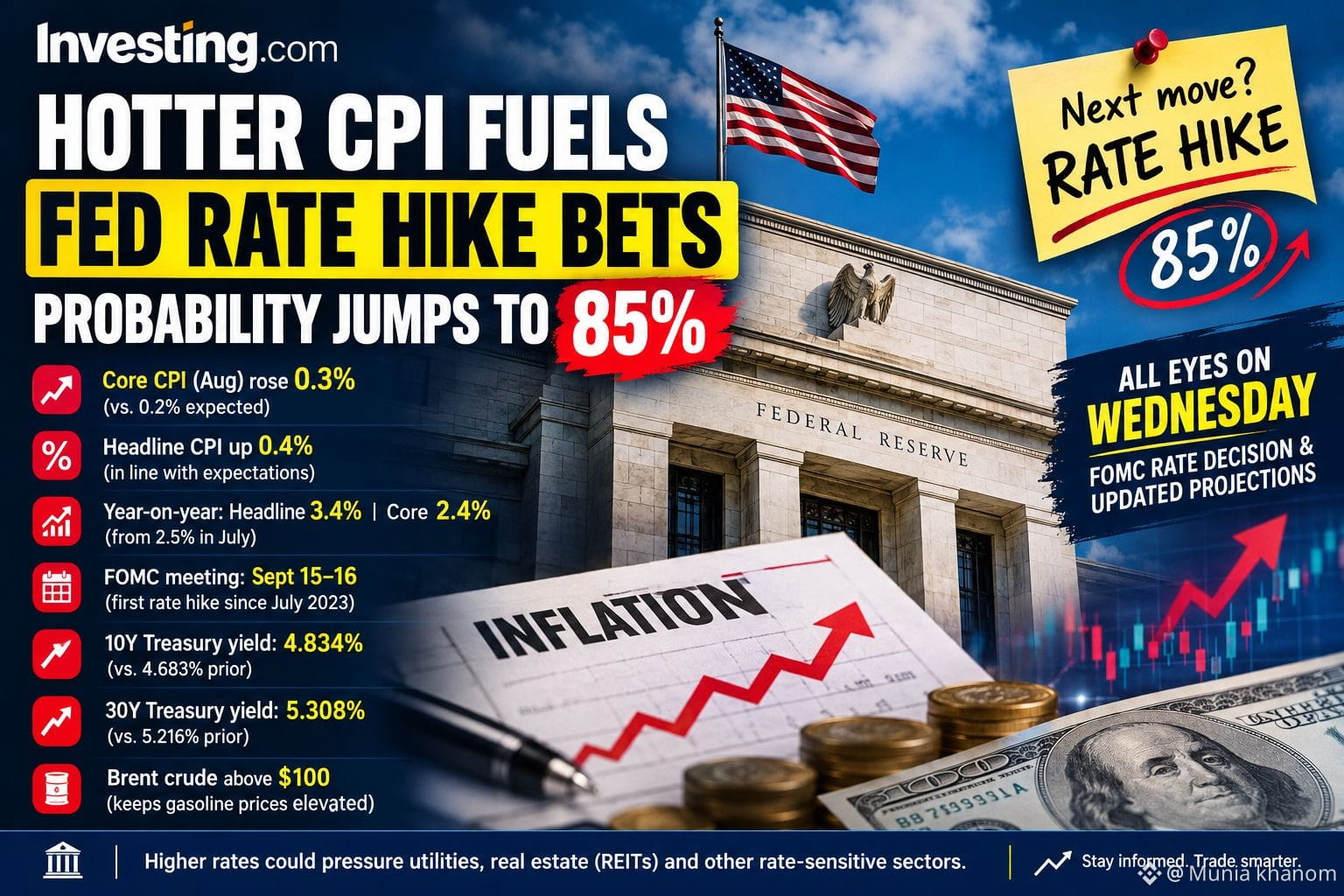
U.S. Inflation Runs Hotter, Boosting Bets on Fed Rate Hike
U.S. consumer price growth accelerated in August as expected, while core inflation came in slightly hotter than forecasts, increasing expectations that the Federal Reserve could raise interest rates at its upcoming meeting.
Overall CPI rose 0.4% month-over-month in August, up from 0.1% in July and matching economists’ expectations. On a yearly basis, inflation remained at 3.4%, unchanged from July and in line with forecasts.
Gasoline prices were a major contributor, jumping 3.9% from the previous month and accounting for more than one-third of the overall increase in consumer prices. Energy prices also rose 2.1%.
Excluding volatile food and energy costs, core CPI increased 0.3% month-over-month, above the 0.2% forecast. However, annual core inflation eased slightly to 2.4%, from 2.5% previously.
The stronger inflation data has increased market expectations for a Fed rate hike. Markets were pricing in roughly an 86% probability of a 25-basis-point rate increase, up from around 70% before the CPI report.
Rising energy costs, geopolitical tensions, tariffs and strong demand for AI-related infrastructure are adding to inflationary pressures. At the same time, policymakers remain concerned about whether inflation is moving sustainably toward the Fed’s 2% target.
Financial markets showed a relatively muted initial reaction. U.S. stock futures remained higher, while the 2-year Treasury yield edged up and the 10-year yield moved slightly lower.
Bottom line:
🔥 Hotter core inflation → 📈 Higher Fed hike expectations → 💵 Potential pressure on stocks and risk assets → 🛢️ Rising oil prices add further inflation risks.
#USInflation #CPI #CoreCPI #Fed #FederalReserve #InterestRates #FedRateHike #USEconomy #Inflation #StockMarket #WallStreet #Forex #Gold #Oil #BrentCrude #TreasuryYields #MarketNews #EconomicNews #Trading #Investing #FinancialMarkets #MarketUpdate #CPIData #USD #BreakingNews
U.S. Inflation Runs Hotter, Boosting Bets on Fed Rate Hike
U.S. consumer price growth accelerated in August as expected, while core inflation came in slightly hotter than forecasts, increasing expectations that the Federal Reserve could raise interest rates at its upcoming meeting.
Overall CPI rose 0.4% month-over-month in August, up from 0.1% in July and matching economists’ expectations. On a yearly basis, inflation remained at 3.4%, unchanged from July and in line with forecasts.
Gasoline prices were a major contributor, jumping 3.9% from the previous month and accounting for more than one-third of the overall increase in consumer prices. Energy prices also rose 2.1%.
Excluding volatile food and energy costs, core CPI increased 0.3% month-over-month, above the 0.2% forecast. However, annual core inflation eased slightly to 2.4%, from 2.5% previously.
The stronger inflation data has increased market expectations for a Fed rate hike. Markets were pricing in roughly an 86% probability of a 25-basis-point rate increase, up from around 70% before the CPI report.
Rising energy costs, geopolitical tensions, tariffs and strong demand for AI-related infrastructure are adding to inflationary pressures. At the same time, policymakers remain concerned about whether inflation is moving sustainably toward the Fed’s 2% target.
Financial markets showed a relatively muted initial reaction. U.S. stock futures remained higher, while the 2-year Treasury yield edged up and the 10-year yield moved slightly lower.
Bottom line:
🔥 Hotter core inflation → 📈 Higher Fed hike expectations → 💵 Potential pressure on stocks and risk assets → 🛢️ Rising oil prices add further inflation risks.
#USInflation #CPI #CoreCPI #Fed #FederalReserve #InterestRates #FedRateHike #USEconomy #Inflation #StockMarket #WallStreet #Forex #Gold #Oil #BrentCrude #TreasuryYields #MarketNews #EconomicNews #Trading #Investing #FinancialMarkets #MarketUpdate #CPIData #USD #BreakingNews
U.S. consumer price growth accelerated in August as expected, while core inflation came in slightly hotter than forecasts, increasing expectations that the Federal Reserve could raise interest rates at its upcoming meeting.
Overall CPI rose 0.4% month-over-month in August, up from 0.1% in July and matching economists’ expectations. On a yearly basis, inflation remained at 3.4%, unchanged from July and in line with forecasts.
Gasoline prices were a major contributor, jumping 3.9% from the previous month and accounting for more than one-third of the overall increase in consumer prices. Energy prices also rose 2.1%.
Excluding volatile food and energy costs, core CPI increased 0.3% month-over-month, above the 0.2% forecast. However, annual core inflation eased slightly to 2.4%, from 2.5% previously.
The stronger inflation data has increased market expectations for a Fed rate hike. Markets were pricing in roughly an 86% probability of a 25-basis-point rate increase, up from around 70% before the CPI report.
Rising energy costs, geopolitical tensions, tariffs and strong demand for AI-related infrastructure are adding to inflationary pressures. At the same time, policymakers remain concerned about whether inflation is moving sustainably toward the Fed’s 2% target.
Financial markets showed a relatively muted initial reaction. U.S. stock futures remained higher, while the 2-year Treasury yield edged up and the 10-year yield moved slightly lower.
Bottom line:
🔥 Hotter core inflation → 📈 Higher Fed hike expectations → 💵 Potential pressure on stocks and risk assets → 🛢️ Rising oil prices add further inflation risks.
#USInflation #CPI #CoreCPI #Fed #FederalReserve #InterestRates #FedRateHike #USEconomy #Inflation #StockMarket #WallStreet #Forex #Gold #Oil #BrentCrude #TreasuryYields #MarketNews #EconomicNews #Trading #Investing #FinancialMarkets #MarketUpdate #CPIData #USD #BreakingNews
66
·
--
Übersetzung ansehen
China AI Chip Stock Surges Nearly 200% in Shanghai Debut
Shanghai Enflame Technology shares surged nearly 200% in their Shanghai debut on Friday, as investors rushed to buy one of China’s leading domestic AI-chip makers amid Beijing’s efforts to reduce reliance on Nvidia and other U.S. semiconductor suppliers.
The Tencent-backed company opened at 410 yuan, far above its IPO price of 142.18 yuan, and climbed as high as 475 yuan before settling around 430 yuan. The rally valued Enflame at roughly 185 billion yuan ($27.6 billion)—about three times its IPO valuation.
Enflame raised 6.12 billion yuan ($912 million) through its IPO. Strong investor demand was evident, with online orders exceeding 6,000 times the shares available and more than 7 million investor accounts participating.
Enflame is considered one of China’s major domestic GPU makers and is benefiting from Beijing’s push for greater self-reliance in AI hardware. Tencent remains its largest shareholder with a 17.95% stake and was also its biggest customer in 2025, contributing nearly 84% of revenue.
Despite rapid growth, the company remains unprofitable. Enflame reported a 1.16 billion yuan net loss in 2025, while revenue increased 37% to 990.2 million yuan.
China AI Chip Stock Surges Nearly 200% in Shanghai Debut
Shanghai Enflame Technology shares surged nearly 200% in their Shanghai debut on Friday, as investors rushed to buy one of China’s leading domestic AI-chip makers amid Beijing’s efforts to reduce reliance on Nvidia and other U.S. semiconductor suppliers.
The Tencent-backed company opened at 410 yuan, far above its IPO price of 142.18 yuan, and climbed as high as 475 yuan before settling around 430 yuan. The rally valued Enflame at roughly 185 billion yuan ($27.6 billion)—about three times its IPO valuation.
Enflame raised 6.12 billion yuan ($912 million) through its IPO. Strong investor demand was evident, with online orders exceeding 6,000 times the shares available and more than 7 million investor accounts participating.
Enflame is considered one of China’s major domestic GPU makers and is benefiting from Beijing’s push for greater self-reliance in AI hardware. Tencent remains its largest shareholder with a 17.95% stake and was also its biggest customer in 2025, contributing nearly 84% of revenue.
Despite rapid growth, the company remains unprofitable. Enflame reported a 1.16 billion yuan net loss in 2025, while revenue increased 37% to 990.2 million yuan.
Shanghai Enflame Technology shares surged nearly 200% in their Shanghai debut on Friday, as investors rushed to buy one of China’s leading domestic AI-chip makers amid Beijing’s efforts to reduce reliance on Nvidia and other U.S. semiconductor suppliers.
The Tencent-backed company opened at 410 yuan, far above its IPO price of 142.18 yuan, and climbed as high as 475 yuan before settling around 430 yuan. The rally valued Enflame at roughly 185 billion yuan ($27.6 billion)—about three times its IPO valuation.
Enflame raised 6.12 billion yuan ($912 million) through its IPO. Strong investor demand was evident, with online orders exceeding 6,000 times the shares available and more than 7 million investor accounts participating.
Enflame is considered one of China’s major domestic GPU makers and is benefiting from Beijing’s push for greater self-reliance in AI hardware. Tencent remains its largest shareholder with a 17.95% stake and was also its biggest customer in 2025, contributing nearly 84% of revenue.
Despite rapid growth, the company remains unprofitable. Enflame reported a 1.16 billion yuan net loss in 2025, while revenue increased 37% to 990.2 million yuan.
61
·
--
Übersetzung ansehen
📊 Oracle Earnings: AI Boom vs. Cash Burn
Oracle is set to report its Fiscal Q1 2027 earnings after the market close, with investors watching closely to see whether its AI-driven cloud growth can keep up with soaring capital costs.
🔹 Expected EPS: $1.74
🔹 Expected Revenue: $19.14B
🔹 Cloud Revenue Growth Guidance: 58%–64%
🔹 OCI Growth: Up to 115%
🔹 Cloud Backlog: $638B
🔹 FY2026 Free Cash Flow: -$23.7B
🔹 FY2027 Capex Guidance: $70B–$95B
📌 Key question: Can Oracle turn its massive AI backlog into revenue fast enough to offset its rising spending?
⚠️ Options markets are pricing in an 11% potential move following earnings.
AI growth or cash-burn risk—which one will dominate Oracle’s earnings? 📈📉
#Oracle #ORCL #AI #CloudComputing #StockMarket #Earnings #WallStreet #Investing #Trading #TechStocks #AIInfrastructure
📊 Oracle Earnings: AI Boom vs. Cash Burn
Oracle is set to report its Fiscal Q1 2027 earnings after the market close, with investors watching closely to see whether its AI-driven cloud growth can keep up with soaring capital costs.
🔹 Expected EPS: $1.74
🔹 Expected Revenue: $19.14B
🔹 Cloud Revenue Growth Guidance: 58%–64%
🔹 OCI Growth: Up to 115%
🔹 Cloud Backlog: $638B
🔹 FY2026 Free Cash Flow: -$23.7B
🔹 FY2027 Capex Guidance: $70B–$95B
📌 Key question: Can Oracle turn its massive AI backlog into revenue fast enough to offset its rising spending?
⚠️ Options markets are pricing in an 11% potential move following earnings.
AI growth or cash-burn risk—which one will dominate Oracle’s earnings? 📈📉
#Oracle #ORCL #AI #CloudComputing #StockMarket #Earnings #WallStreet #Investing #Trading #TechStocks #AIInfrastructure
Oracle is set to report its Fiscal Q1 2027 earnings after the market close, with investors watching closely to see whether its AI-driven cloud growth can keep up with soaring capital costs.
🔹 Expected EPS: $1.74
🔹 Expected Revenue: $19.14B
🔹 Cloud Revenue Growth Guidance: 58%–64%
🔹 OCI Growth: Up to 115%
🔹 Cloud Backlog: $638B
🔹 FY2026 Free Cash Flow: -$23.7B
🔹 FY2027 Capex Guidance: $70B–$95B
📌 Key question: Can Oracle turn its massive AI backlog into revenue fast enough to offset its rising spending?
⚠️ Options markets are pricing in an 11% potential move following earnings.
AI growth or cash-burn risk—which one will dominate Oracle’s earnings? 📈📉
#Oracle #ORCL #AI #CloudComputing #StockMarket #Earnings #WallStreet #Investing #Trading #TechStocks #AIInfrastructure
55

·
--
Übersetzung ansehen
🚀 Trade Smarter with Binance!
📊 Analyze the market, manage your risk, and trade with discipline.
💡 Learn • Practice • Improve • Grow
#Binance #BinanceTrading #CryptoTrading #Trading #Crypto #Bitcoin #BTC #TechnicalAnalysis #RiskManagement #TradingEducation #CryptoTrader #ForexTrader #LearnTrading #TradeSmart
🚀 Trade Smarter with Binance!
📊 Analyze the market, manage your risk, and trade with discipline.
💡 Learn • Practice • Improve • Grow
#Binance #BinanceTrading #CryptoTrading #Trading #Crypto #Bitcoin #BTC #TechnicalAnalysis #RiskManagement #TradingEducation #CryptoTrader #ForexTrader #LearnTrading #TradeSmart
📊 Analyze the market, manage your risk, and trade with discipline.
💡 Learn • Practice • Improve • Grow
#Binance #BinanceTrading #CryptoTrading #Trading #Crypto #Bitcoin #BTC #TechnicalAnalysis #RiskManagement #TradingEducation #CryptoTrader #ForexTrader #LearnTrading #TradeSmart

71
·
--
Übersetzung ansehen
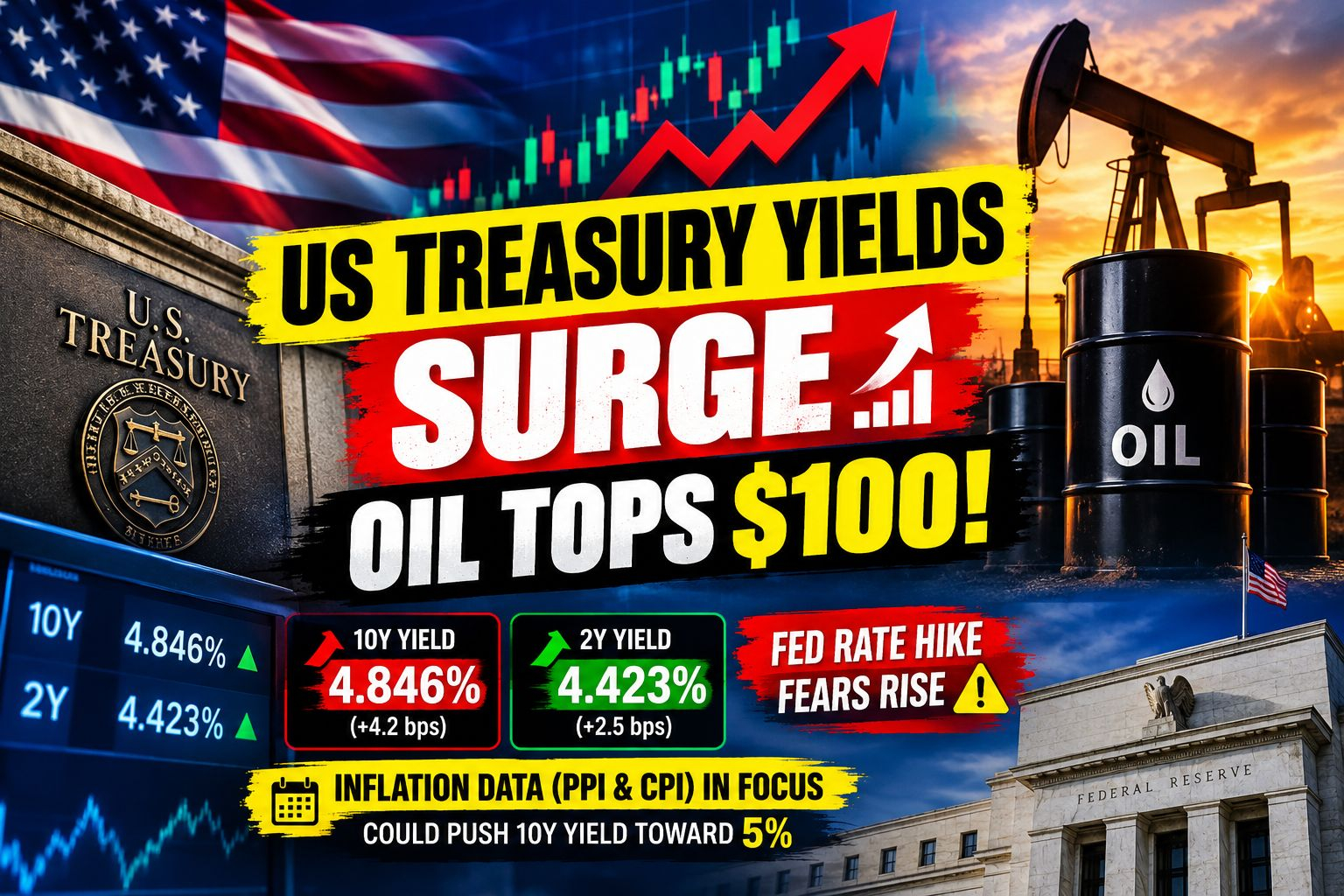
📈 U.S. Treasury Yields Surge as Oil Tops $100
U.S. Treasury yields jumped sharply on Wednesday as traders sold bonds following the U.S. Treasury Department’s announcement of larger bond buyback operations.
The Treasury plans to buy back up to $6 billion of 10- to 20-year maturities on Thursday, up from $2 billion previously.
The 10-year U.S. Treasury yield rose 4.2 basis points to 4.846%, while the 2-year yield climbed 2.5 basis points to 4.423%.
Meanwhile, Brent crude surpassed $100 a barrel, its highest level since May, as escalating Middle East tensions raised concerns over global energy supplies.
Higher oil prices are increasing inflation risks and could pressure the Federal Reserve to maintain a more hawkish policy stance. Markets are now closely watching upcoming U.S. PPI and CPI inflation data, which could influence expectations for a potential Fed rate hike at the September 15–16 meeting.
⚠️ A hotter-than-expected CPI report could push the 10-year yield closer to the 5% level.
#USTreasury #TreasuryYields #US10YearYield #BondMarket #FederalReserve #FedRate #Inflation #CPI #PPI #BrentCrude #OilPrices #GlobalMarkets #Forex #Trading #Investing
📈 U.S. Treasury Yields Surge as Oil Tops $100
U.S. Treasury yields jumped sharply on Wednesday as traders sold bonds following the U.S. Treasury Department’s announcement of larger bond buyback operations.
The Treasury plans to buy back up to $6 billion of 10- to 20-year maturities on Thursday, up from $2 billion previously.
The 10-year U.S. Treasury yield rose 4.2 basis points to 4.846%, while the 2-year yield climbed 2.5 basis points to 4.423%.
Meanwhile, Brent crude surpassed $100 a barrel, its highest level since May, as escalating Middle East tensions raised concerns over global energy supplies.
Higher oil prices are increasing inflation risks and could pressure the Federal Reserve to maintain a more hawkish policy stance. Markets are now closely watching upcoming U.S. PPI and CPI inflation data, which could influence expectations for a potential Fed rate hike at the September 15–16 meeting.
⚠️ A hotter-than-expected CPI report could push the 10-year yield closer to the 5% level.
#USTreasury #TreasuryYields #US10YearYield #BondMarket #FederalReserve #FedRate #Inflation #CPI #PPI #BrentCrude #OilPrices #GlobalMarkets #Forex #Trading #Investing
U.S. Treasury yields jumped sharply on Wednesday as traders sold bonds following the U.S. Treasury Department’s announcement of larger bond buyback operations.
The Treasury plans to buy back up to $6 billion of 10- to 20-year maturities on Thursday, up from $2 billion previously.
The 10-year U.S. Treasury yield rose 4.2 basis points to 4.846%, while the 2-year yield climbed 2.5 basis points to 4.423%.
Meanwhile, Brent crude surpassed $100 a barrel, its highest level since May, as escalating Middle East tensions raised concerns over global energy supplies.
Higher oil prices are increasing inflation risks and could pressure the Federal Reserve to maintain a more hawkish policy stance. Markets are now closely watching upcoming U.S. PPI and CPI inflation data, which could influence expectations for a potential Fed rate hike at the September 15–16 meeting.
⚠️ A hotter-than-expected CPI report could push the 10-year yield closer to the 5% level.
#USTreasury #TreasuryYields #US10YearYield #BondMarket #FederalReserve #FedRate #Inflation #CPI #PPI #BrentCrude #OilPrices #GlobalMarkets #Forex #Trading #Investing
172
·
--
Verifiziert
Konflikt zwischen Iran und USA eskaliert, während die Ölpreise sich der Marke von 100 US-Dollar nähern
Der Iran hat die Konfrontation mit den USA scharf verschärft. Dabei startete er ballistische Raketen auf einen US-Militärstützpunkt in Jordanien und griff Schiffe an, in und rund um die Straße von Hormus.
Die Islamische Revolutionsgarde (IRGC) erklärte, sie habe einen „harten“ Raketenangriff auf einen US-Stützpunkt nahe Al Azraq im Osten Jordaniens durchgeführt. Die jordanischen Streitkräfte gaben an, dass 18 der 20 ballistischen Raketen, die in Richtung des Landes gestartet wurden, abgefangen wurden, während die zwei verbleibenden in unbewohnten Gebieten einschlugen. Es wurden keine Opfer gemeldet.
Die IRGC behauptete außerdem, sie habe 10 Schiffe angegriffen, darunter zwei US-Schiffe und acht Öltanker, wodurch der Konflikt weiter in der Region um den Persischen Golf ausgeweitet werde.
Die Angriffe erfolgten, nachdem das US-Militär mitgeteilt hatte, es habe fünf iranische Öltanker zerstört, nachdem zwei versuchte iranische Raketenangriffe auf ein US-Navy-Kriegsschiff stattgefunden hatten. Das US Central Command erklärte, die Besatzungen seien angewiesen worden, die Schiffe zu verlassen, bevor sie getroffen wurden und dadurch funktionsunfähig gemacht wurden.
Der US-Außenminister Marco Rubio warnte Teheran, dass Washington weiterhin iranische Öltanker ins Visier nehmen werde – als Reaktion auf Angriffe auf US-Kriegsschiffe.
Unterdessen griffen vom Iran unterstützte Huthi-Kräfte auch Energie- und wirtschaftliche Einrichtungen im südlichen Saudi-Arabien an und hätten Berichten zufolge mehr als 70 Menschen verletzt.
Die jüngste Eskalation hat die Befürchtungen verstärkt, dass es zu Störungen des Schiffsverkehrs durch die Straße von Hormus kommt – einer kritischen Route für die globale Versorgung mit Öl.
Während Anleger das Risiko weiterer Lieferunterbrechungen einschätzen, stiegen die Ölpreise am Mittwoch in Richtung 100 US-Dollar pro Barrel.#Iran #USA #IranWar #MiddleEastConflict #MiddleEastCrisis #OilPrices #CrudeOil #BrentCrude #OilMarket #StraitOfHormuz #GlobalOil #EnergyCrisis #Geopolitics #USMilitary #IranUSConflict #SaudiArabia #Houthi #GlobalMarkets #StockMarket #Forex #Trading #Investing #MarketNews #BreakingNews #WorldNews #OilNews #EconomicNews #FinancialNews #InvestingNews
Konflikt zwischen Iran und USA eskaliert, während die Ölpreise sich der Marke von 100 US-Dollar nähern
Der Iran hat die Konfrontation mit den USA scharf verschärft. Dabei startete er ballistische Raketen auf einen US-Militärstützpunkt in Jordanien und griff Schiffe an, in und rund um die Straße von Hormus.
Die Islamische Revolutionsgarde (IRGC) erklärte, sie habe einen „harten“ Raketenangriff auf einen US-Stützpunkt nahe Al Azraq im Osten Jordaniens durchgeführt. Die jordanischen Streitkräfte gaben an, dass 18 der 20 ballistischen Raketen, die in Richtung des Landes gestartet wurden, abgefangen wurden, während die zwei verbleibenden in unbewohnten Gebieten einschlugen. Es wurden keine Opfer gemeldet.
Die IRGC behauptete außerdem, sie habe 10 Schiffe angegriffen, darunter zwei US-Schiffe und acht Öltanker, wodurch der Konflikt weiter in der Region um den Persischen Golf ausgeweitet werde.
Die Angriffe erfolgten, nachdem das US-Militär mitgeteilt hatte, es habe fünf iranische Öltanker zerstört, nachdem zwei versuchte iranische Raketenangriffe auf ein US-Navy-Kriegsschiff stattgefunden hatten. Das US Central Command erklärte, die Besatzungen seien angewiesen worden, die Schiffe zu verlassen, bevor sie getroffen wurden und dadurch funktionsunfähig gemacht wurden.
Der US-Außenminister Marco Rubio warnte Teheran, dass Washington weiterhin iranische Öltanker ins Visier nehmen werde – als Reaktion auf Angriffe auf US-Kriegsschiffe.
Unterdessen griffen vom Iran unterstützte Huthi-Kräfte auch Energie- und wirtschaftliche Einrichtungen im südlichen Saudi-Arabien an und hätten Berichten zufolge mehr als 70 Menschen verletzt.
Die jüngste Eskalation hat die Befürchtungen verstärkt, dass es zu Störungen des Schiffsverkehrs durch die Straße von Hormus kommt – einer kritischen Route für die globale Versorgung mit Öl.
Während Anleger das Risiko weiterer Lieferunterbrechungen einschätzen, stiegen die Ölpreise am Mittwoch in Richtung 100 US-Dollar pro Barrel.#Iran #USA #IranWar #MiddleEastConflict #MiddleEastCrisis #OilPrices #CrudeOil #BrentCrude #OilMarket #StraitOfHormuz #GlobalOil #EnergyCrisis #Geopolitics #USMilitary #IranUSConflict #SaudiArabia #Houthi #GlobalMarkets #StockMarket #Forex #Trading #Investing #MarketNews #BreakingNews #WorldNews #OilNews #EconomicNews #FinancialNews #InvestingNews
Der Iran hat die Konfrontation mit den USA scharf verschärft. Dabei startete er ballistische Raketen auf einen US-Militärstützpunkt in Jordanien und griff Schiffe an, in und rund um die Straße von Hormus.
Die Islamische Revolutionsgarde (IRGC) erklärte, sie habe einen „harten“ Raketenangriff auf einen US-Stützpunkt nahe Al Azraq im Osten Jordaniens durchgeführt. Die jordanischen Streitkräfte gaben an, dass 18 der 20 ballistischen Raketen, die in Richtung des Landes gestartet wurden, abgefangen wurden, während die zwei verbleibenden in unbewohnten Gebieten einschlugen. Es wurden keine Opfer gemeldet.
Die IRGC behauptete außerdem, sie habe 10 Schiffe angegriffen, darunter zwei US-Schiffe und acht Öltanker, wodurch der Konflikt weiter in der Region um den Persischen Golf ausgeweitet werde.
Die Angriffe erfolgten, nachdem das US-Militär mitgeteilt hatte, es habe fünf iranische Öltanker zerstört, nachdem zwei versuchte iranische Raketenangriffe auf ein US-Navy-Kriegsschiff stattgefunden hatten. Das US Central Command erklärte, die Besatzungen seien angewiesen worden, die Schiffe zu verlassen, bevor sie getroffen wurden und dadurch funktionsunfähig gemacht wurden.
Der US-Außenminister Marco Rubio warnte Teheran, dass Washington weiterhin iranische Öltanker ins Visier nehmen werde – als Reaktion auf Angriffe auf US-Kriegsschiffe.
Unterdessen griffen vom Iran unterstützte Huthi-Kräfte auch Energie- und wirtschaftliche Einrichtungen im südlichen Saudi-Arabien an und hätten Berichten zufolge mehr als 70 Menschen verletzt.
Die jüngste Eskalation hat die Befürchtungen verstärkt, dass es zu Störungen des Schiffsverkehrs durch die Straße von Hormus kommt – einer kritischen Route für die globale Versorgung mit Öl.
Während Anleger das Risiko weiterer Lieferunterbrechungen einschätzen, stiegen die Ölpreise am Mittwoch in Richtung 100 US-Dollar pro Barrel.#Iran #USA #IranWar #MiddleEastConflict #MiddleEastCrisis #OilPrices #CrudeOil #BrentCrude #OilMarket #StraitOfHormuz #GlobalOil #EnergyCrisis #Geopolitics #USMilitary #IranUSConflict #SaudiArabia #Houthi #GlobalMarkets #StockMarket #Forex #Trading #Investing #MarketNews #BreakingNews #WorldNews #OilNews #EconomicNews #FinancialNews #InvestingNews
261
·
--
Übersetzung ansehen
📉 Wall Street Falls as Oil Prices Surge and Fed Rate Hike Bets Rise
U.S. stocks started the holiday-shortened week lower as investors reacted to rising tensions in the Middle East, higher oil prices and growing expectations of a Federal Reserve rate hike.
🔻 S&P 500: -0.6%
🔻 Dow Jones: -1.2%
🔻 Nasdaq: -0.3%
📊 Strong U.S. jobs data showed 162,000 new jobs were added in August, far above expectations of 55,000. The strong labor market, combined with persistent inflation, has increased expectations that the Fed could tighten monetary policy.
👀 Investors are now closely watching this week’s PPI and CPI inflation reports, which could play a major role in determining the Fed’s September decision.
🛢️ Brent crude climbed above $99 per barrel, as escalating U.S.-Iran tensions raised concerns about oil supply disruptions through the Strait of Hormuz.
Meanwhile, Qualcomm gained 3.2% following its AI data-center partnership with Amazon, while the healthcare sector dropped sharply, led by major declines in Novartis and Amgen.
📌 Market focus: Inflation data, Fed policy, Middle East tensions and oil prices.
#WallStreet #StockMarket #SP500 #DowJones #Nasdaq #FederalReserve #Fed #Inflation #CPI #PPI #OilPrice #BrentCrude #Forex #Trading #Investing #MarketNews
📉 Wall Street Falls as Oil Prices Surge and Fed Rate Hike Bets Rise
U.S. stocks started the holiday-shortened week lower as investors reacted to rising tensions in the Middle East, higher oil prices and growing expectations of a Federal Reserve rate hike.
🔻 S&P 500: -0.6%
🔻 Dow Jones: -1.2%
🔻 Nasdaq: -0.3%
📊 Strong U.S. jobs data showed 162,000 new jobs were added in August, far above expectations of 55,000. The strong labor market, combined with persistent inflation, has increased expectations that the Fed could tighten monetary policy.
👀 Investors are now closely watching this week’s PPI and CPI inflation reports, which could play a major role in determining the Fed’s September decision.
🛢️ Brent crude climbed above $99 per barrel, as escalating U.S.-Iran tensions raised concerns about oil supply disruptions through the Strait of Hormuz.
Meanwhile, Qualcomm gained 3.2% following its AI data-center partnership with Amazon, while the healthcare sector dropped sharply, led by major declines in Novartis and Amgen.
📌 Market focus: Inflation data, Fed policy, Middle East tensions and oil prices.
#WallStreet #StockMarket #SP500 #DowJones #Nasdaq #FederalReserve #Fed #Inflation #CPI #PPI #OilPrice #BrentCrude #Forex #Trading #Investing #MarketNews
U.S. stocks started the holiday-shortened week lower as investors reacted to rising tensions in the Middle East, higher oil prices and growing expectations of a Federal Reserve rate hike.
🔻 S&P 500: -0.6%
🔻 Dow Jones: -1.2%
🔻 Nasdaq: -0.3%
📊 Strong U.S. jobs data showed 162,000 new jobs were added in August, far above expectations of 55,000. The strong labor market, combined with persistent inflation, has increased expectations that the Fed could tighten monetary policy.
👀 Investors are now closely watching this week’s PPI and CPI inflation reports, which could play a major role in determining the Fed’s September decision.
🛢️ Brent crude climbed above $99 per barrel, as escalating U.S.-Iran tensions raised concerns about oil supply disruptions through the Strait of Hormuz.
Meanwhile, Qualcomm gained 3.2% following its AI data-center partnership with Amazon, while the healthcare sector dropped sharply, led by major declines in Novartis and Amgen.
📌 Market focus: Inflation data, Fed policy, Middle East tensions and oil prices.
#WallStreet #StockMarket #SP500 #DowJones #Nasdaq #FederalReserve #Fed #Inflation #CPI #PPI #OilPrice #BrentCrude #Forex #Trading #Investing #MarketNews
58
·
--
Übersetzung ansehen
📊 US MARKETS & OIL UPDATE
🇺🇸 US Stock Futures Mixed
US stock futures were mixed on Tuesday as investors returned from the Labor Day holiday amid rising oil prices, higher bond yields, renewed inflation concerns and growing fears of a possible Fed rate hike.
📉 Market Futures • Dow Jones Futures: -0.8%
• S&P 500 Futures: -0.3%
• Nasdaq 100 Futures: Flat
💼 Jobs Data & Treasury Auction in Focus
A stronger-than-expected August jobs report has increased expectations that interest rates could remain higher for longer. Investors are also watching the ADP jobs data and the latest Treasury auction.
🌍 Middle East Tensions Escalate
Iran’s threat of a maritime exclusion zone in the Persian Gulf has increased concerns over global energy supplies and shipping routes.
🛢️ Brent Crude Nears $100
Oil prices rose for a third consecutive session, with Brent crude up 1.4%, approaching the key $100/barrel level.
⚠️ Market Impact
A sustained rise in oil prices could increase inflation and put pressure on the Federal Reserve to keep rates higher for longer. This could weigh on technology and growth stocks, while energy companies may benefit from higher crude prices.
📌 Key Drivers:
🔥 Oil prices ↑
📈 Bond yields ↑
⚠️ Inflation risk ↑
🏦 Fed rate-hike fears ↑
📉 Stock-market pressure ↑
#USStockMarket #StockMarket #SP500 #Nasdaq #DowJones #OilPrice #BrentCrude #Forex #Trading #FederalReserve #Inflation #InterestRates #MarketUpdate #Investing
📊 US MARKETS & OIL UPDATE
🇺🇸 US Stock Futures Mixed
US stock futures were mixed on Tuesday as investors returned from the Labor Day holiday amid rising oil prices, higher bond yields, renewed inflation concerns and growing fears of a possible Fed rate hike.
📉 Market Futures • Dow Jones Futures: -0.8%
• S&P 500 Futures: -0.3%
• Nasdaq 100 Futures: Flat
💼 Jobs Data & Treasury Auction in Focus
A stronger-than-expected August jobs report has increased expectations that interest rates could remain higher for longer. Investors are also watching the ADP jobs data and the latest Treasury auction.
🌍 Middle East Tensions Escalate
Iran’s threat of a maritime exclusion zone in the Persian Gulf has increased concerns over global energy supplies and shipping routes.
🛢️ Brent Crude Nears $100
Oil prices rose for a third consecutive session, with Brent crude up 1.4%, approaching the key $100/barrel level.
⚠️ Market Impact
A sustained rise in oil prices could increase inflation and put pressure on the Federal Reserve to keep rates higher for longer. This could weigh on technology and growth stocks, while energy companies may benefit from higher crude prices.
📌 Key Drivers:
🔥 Oil prices ↑
📈 Bond yields ↑
⚠️ Inflation risk ↑
🏦 Fed rate-hike fears ↑
📉 Stock-market pressure ↑
#USStockMarket #StockMarket #SP500 #Nasdaq #DowJones #OilPrice #BrentCrude #Forex #Trading #FederalReserve #Inflation #InterestRates #MarketUpdate #Investing
🇺🇸 US Stock Futures Mixed
US stock futures were mixed on Tuesday as investors returned from the Labor Day holiday amid rising oil prices, higher bond yields, renewed inflation concerns and growing fears of a possible Fed rate hike.
📉 Market Futures • Dow Jones Futures: -0.8%
• S&P 500 Futures: -0.3%
• Nasdaq 100 Futures: Flat
💼 Jobs Data & Treasury Auction in Focus
A stronger-than-expected August jobs report has increased expectations that interest rates could remain higher for longer. Investors are also watching the ADP jobs data and the latest Treasury auction.
🌍 Middle East Tensions Escalate
Iran’s threat of a maritime exclusion zone in the Persian Gulf has increased concerns over global energy supplies and shipping routes.
🛢️ Brent Crude Nears $100
Oil prices rose for a third consecutive session, with Brent crude up 1.4%, approaching the key $100/barrel level.
⚠️ Market Impact
A sustained rise in oil prices could increase inflation and put pressure on the Federal Reserve to keep rates higher for longer. This could weigh on technology and growth stocks, while energy companies may benefit from higher crude prices.
📌 Key Drivers:
🔥 Oil prices ↑
📈 Bond yields ↑
⚠️ Inflation risk ↑
🏦 Fed rate-hike fears ↑
📉 Stock-market pressure ↑
#USStockMarket #StockMarket #SP500 #Nasdaq #DowJones #OilPrice #BrentCrude #Forex #Trading #FederalReserve #Inflation #InterestRates #MarketUpdate #Investing
242
·
--
Übersetzung ansehen
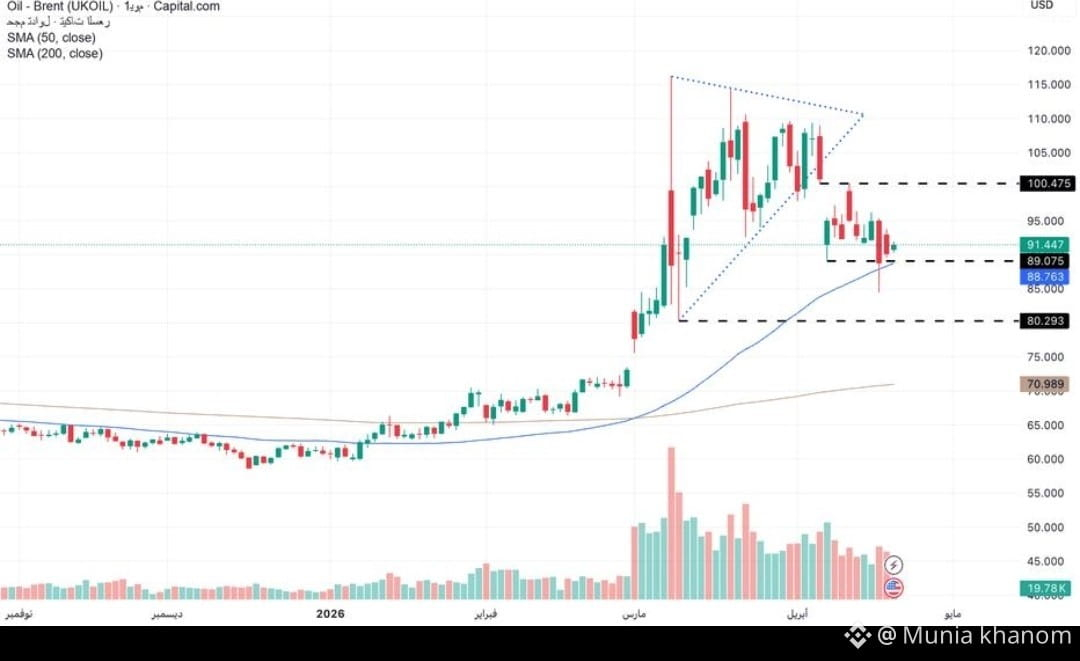
🛢️ Oil Prices Surge Amid Rising Middle East Tensions
Oil prices continued to rise on Tuesday as concerns grew over potential disruptions to Middle East energy supplies.
🔹 Brent Crude: $98.73/barrel (+1.6%)
🔹 WTI Crude: $94.14/barrel (+2.9%)
The latest gains came after Iran warned that oil and gas infrastructure across the Gulf could become targets in retaliation for attacks on its assets.
The Strait of Hormuz remains the biggest concern for global oil markets, as any disruption to tanker traffic through the key shipping route could put further upward pressure on crude prices.
📈 Brent gained around 8% last week, while WTI climbed nearly 10%.
⚠️ Key Market Risk: Further escalation between the U.S. and Iran could push oil prices significantly higher.
#Oil #CrudeOil #Brent #WTI #OilPrice #Forex #Trading #CommodityMarket #MiddleEast #StraitOfHormuz #MarketUpdate #Investing
🛢️ Oil Prices Surge Amid Rising Middle East Tensions
Oil prices continued to rise on Tuesday as concerns grew over potential disruptions to Middle East energy supplies.
🔹 Brent Crude: $98.73/barrel (+1.6%)
🔹 WTI Crude: $94.14/barrel (+2.9%)
The latest gains came after Iran warned that oil and gas infrastructure across the Gulf could become targets in retaliation for attacks on its assets.
The Strait of Hormuz remains the biggest concern for global oil markets, as any disruption to tanker traffic through the key shipping route could put further upward pressure on crude prices.
📈 Brent gained around 8% last week, while WTI climbed nearly 10%.
⚠️ Key Market Risk: Further escalation between the U.S. and Iran could push oil prices significantly higher.
#Oil #CrudeOil #Brent #WTI #OilPrice #Forex #Trading #CommodityMarket #MiddleEast #StraitOfHormuz #MarketUpdate #Investing
Oil prices continued to rise on Tuesday as concerns grew over potential disruptions to Middle East energy supplies.
🔹 Brent Crude: $98.73/barrel (+1.6%)
🔹 WTI Crude: $94.14/barrel (+2.9%)
The latest gains came after Iran warned that oil and gas infrastructure across the Gulf could become targets in retaliation for attacks on its assets.
The Strait of Hormuz remains the biggest concern for global oil markets, as any disruption to tanker traffic through the key shipping route could put further upward pressure on crude prices.
📈 Brent gained around 8% last week, while WTI climbed nearly 10%.
⚠️ Key Market Risk: Further escalation between the U.S. and Iran could push oil prices significantly higher.
#Oil #CrudeOil #Brent #WTI #OilPrice #Forex #Trading #CommodityMarket #MiddleEast #StraitOfHormuz #MarketUpdate #Investing
352
·
--
Übersetzung ansehen
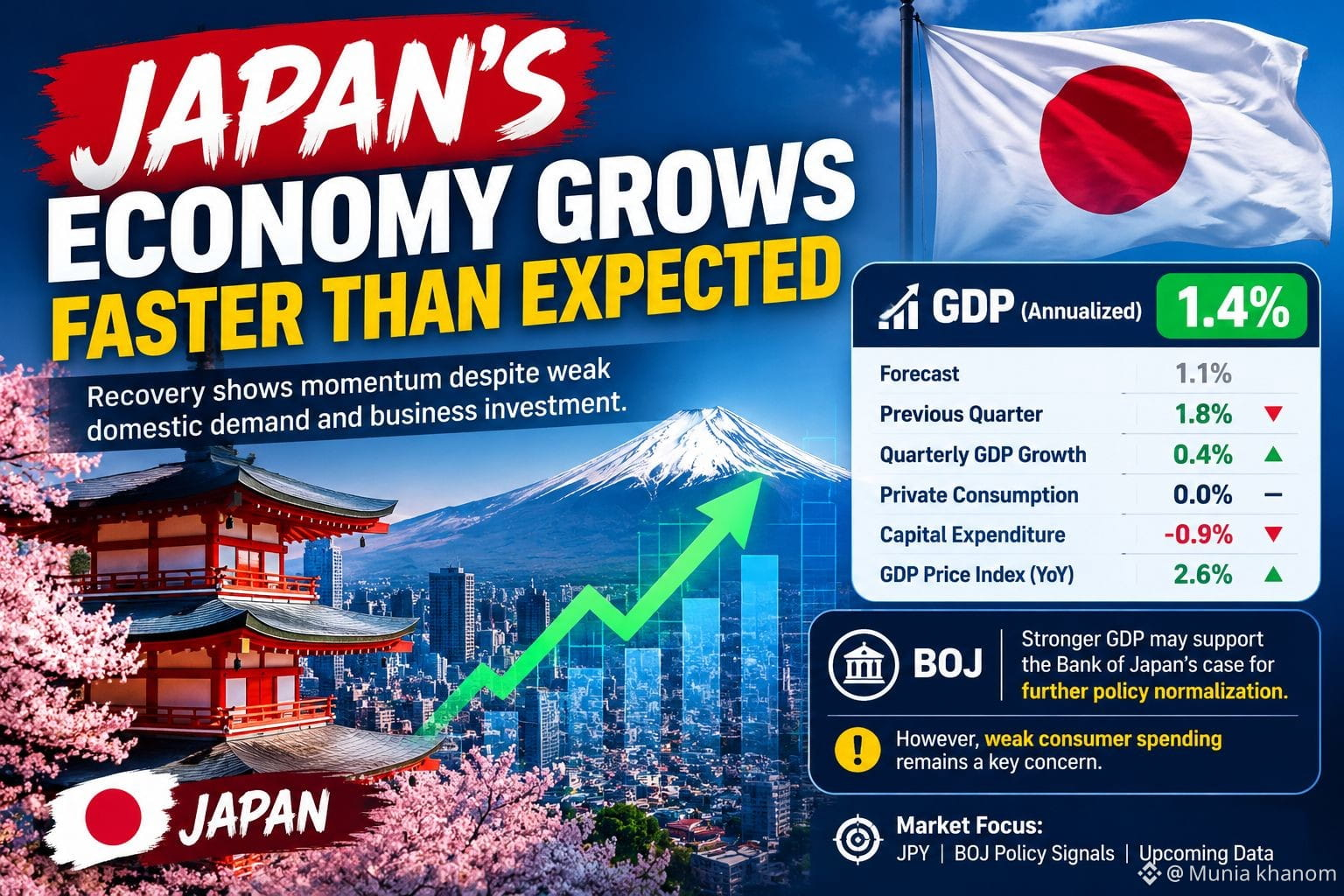
🇯🇵 Japan’s Economy Grows Faster Than Expected
Japan’s economy expanded faster than initially estimated in the second quarter, showing that the recovery maintained some momentum despite weak domestic demand and business investment.
📊 Key Economic Data: • 🇯🇵 Annualized GDP Growth: 1.4%
• 📈 Forecast: 1.1%
• 📉 Previous Quarter: 1.8%
• Quarterly GDP Growth: 0.4%
• Private Consumption: 0.0%
• Capital Expenditure: -0.9%
• GDP Price Index: 2.6% YoY
The stronger-than-expected GDP figures could strengthen the Bank of Japan’s (BOJ) case for further policy normalization. However, weak consumer spending remains a key concern.
💡 Market Focus:
Traders will be watching the Japanese Yen (JPY), BOJ policy signals, and upcoming economic data for further direction.
#JapanGDP #JapanEconomy #BOJ #JPY #Forex #ForexNews #EconomicData #TradingNews #FundamentalAnalysis #ForexTrading #USDJPY #TradingUpdate
🇯🇵 Japan’s Economy Grows Faster Than Expected
Japan’s economy expanded faster than initially estimated in the second quarter, showing that the recovery maintained some momentum despite weak domestic demand and business investment.
📊 Key Economic Data: • 🇯🇵 Annualized GDP Growth: 1.4%
• 📈 Forecast: 1.1%
• 📉 Previous Quarter: 1.8%
• Quarterly GDP Growth: 0.4%
• Private Consumption: 0.0%
• Capital Expenditure: -0.9%
• GDP Price Index: 2.6% YoY
The stronger-than-expected GDP figures could strengthen the Bank of Japan’s (BOJ) case for further policy normalization. However, weak consumer spending remains a key concern.
💡 Market Focus:
Traders will be watching the Japanese Yen (JPY), BOJ policy signals, and upcoming economic data for further direction.
#JapanGDP #JapanEconomy #BOJ #JPY #Forex #ForexNews #EconomicData #TradingNews #FundamentalAnalysis #ForexTrading #USDJPY #TradingUpdate
Japan’s economy expanded faster than initially estimated in the second quarter, showing that the recovery maintained some momentum despite weak domestic demand and business investment.
📊 Key Economic Data: • 🇯🇵 Annualized GDP Growth: 1.4%
• 📈 Forecast: 1.1%
• 📉 Previous Quarter: 1.8%
• Quarterly GDP Growth: 0.4%
• Private Consumption: 0.0%
• Capital Expenditure: -0.9%
• GDP Price Index: 2.6% YoY
The stronger-than-expected GDP figures could strengthen the Bank of Japan’s (BOJ) case for further policy normalization. However, weak consumer spending remains a key concern.
💡 Market Focus:
Traders will be watching the Japanese Yen (JPY), BOJ policy signals, and upcoming economic data for further direction.
#JapanGDP #JapanEconomy #BOJ #JPY #Forex #ForexNews #EconomicData #TradingNews #FundamentalAnalysis #ForexTrading #USDJPY #TradingUpdate
55
Anmelden und weiter Inhalte entdecken
Krypto-Nutzer weltweit auf Binance Square kennenlernen
⚡️ Bleib in Sachen Krypto stets am Puls.
💬 Die weltgrößte Kryptobörse vertraut darauf.
👍 Erhalte verlässliche Einblicke von verifizierten Creators.
E-Mail-Adresse/Telefonnummer
Trendthemen
FedRateWatch
584,439 Aufrufe
2,759 Kommentare
Teile & gewinne Traffic-Belohnungen in unserer Kampagne mit angesagtem Hashtag
✨Thema: FOMC September, Was ist der nächste Schritt der Fed?
👉So nimmst du teil:
Veröffentliche einen kurzen Beitrag oder Artikel mit dem Hashtag #FedRateWatch
Erstelle Inhalte basierend auf den folgenden Blickwinkeln:
- Der August-Core-CPI stieg um 0,3% im Monatsvergleich, und die Wahrscheinlichkeit für eine 25bp-Erhöhung diese Woche liegt nun bei fast 90%. Erwartest du diese Woche eine Zinserhöhung? Handelt es sich um einen einmaligen Schritt oder den Beginn eines längeren Zinserhöhungszyklus?
- Wenn die Erhöhung erfolgt: Wie entwickelt sich das für BTC, Tech-Aktien und Gold? Aufwärts- oder abwärtsgerichtet?
- Wie planst du als Nächstes zu handeln? Teile deinen BTC-, Aktien- oder Gold-Trade/Bestände mit unserem Trade-Sharing-Widget.
⏰Kampagnenzeitraum:
- 2026-09-15 11:00 - 2026-09-17 3:00 UTC
🎁Belohnung:
- Qualifizierte Beiträge, die die oben genannten Richtlinien erfüllen und mehr als 100 Wörter enthalten, werden überprüft und erhalten möglicherweise einen zufälligen Traffic-Boost von 500 bis 3.000 Aufrufen. Du erhältst eine Benachrichtigung von deiner Feed-Secretary, wenn dein Beitrag ausgewählt wird.
- Erhalte die Chance, dass dein Artikel auf Binance Square Official vorgestellt wird
Du brauchst Ideen für deinen Beitrag? Besuche die Themenseite #FedRateWatch oder die Square Guide on How to Post for Better Reach.
Binance Square Official
·388 Likes
·860.8k Aufrufe
BitcoinSlidesTo$76000
22,608 Aufrufe
119 Kommentare
BitcoinReboundsTo$79K
62,328 Aufrufe
401 Kommentare