

Mohsin-Kazmi
73 Beiträge

Mohsin-Kazmi
Melden
Nutzer blockieren
26 Following
6 Follower
7 Like gegeben
Beiträge
Alle
Zitierungen
·
--
#baby $BABY
Mit Babylons Trustless Bitcoin Vaults (TBV) definiert @BabylonLabs_io neu, wie BTC die dezentrale Finanzwelt antreibt. BTC-Inhaber müssen sich nicht länger auf riskante Wrapped Tokens oder Drittverwahrer verlassen, um Renditen zu erzielen. Durch den Einsatz kryptografischer Grundbausteine wie vorab signierter Transaktionen und BitVM bewahren TBV deine BTC nativ auf der Bitcoin-Blockchain und geben dir die vollständige Selbstverwahrung, während sie dir zugleich die aktive Teilnahme an DeFi ermöglichen.
Sichere PoS-Netzwerke, erziele Renditen und gestalte mit $BABY die Zukunft von BTCFi! 🔒⚡️
#baby
#baby $BABY
Mit Babylons Trustless Bitcoin Vaults (TBV) definiert @BabylonLabs_io neu, wie BTC die dezentrale Finanzwelt antreibt. BTC-Inhaber müssen sich nicht länger auf riskante Wrapped Tokens oder Drittverwahrer verlassen, um Renditen zu erzielen. Durch den Einsatz kryptografischer Grundbausteine wie vorab signierter Transaktionen und BitVM bewahren TBV deine BTC nativ auf der Bitcoin-Blockchain und geben dir die vollständige Selbstverwahrung, während sie dir zugleich die aktive Teilnahme an DeFi ermöglichen.
Sichere PoS-Netzwerke, erziele Renditen und gestalte mit $BABY die Zukunft von BTCFi! 🔒⚡️
#baby
Mit Babylons Trustless Bitcoin Vaults (TBV) definiert @BabylonLabs_io neu, wie BTC die dezentrale Finanzwelt antreibt. BTC-Inhaber müssen sich nicht länger auf riskante Wrapped Tokens oder Drittverwahrer verlassen, um Renditen zu erzielen. Durch den Einsatz kryptografischer Grundbausteine wie vorab signierter Transaktionen und BitVM bewahren TBV deine BTC nativ auf der Bitcoin-Blockchain und geben dir die vollständige Selbstverwahrung, während sie dir zugleich die aktive Teilnahme an DeFi ermöglichen.
Sichere PoS-Netzwerke, erziele Renditen und gestalte mit $BABY die Zukunft von BTCFi! 🔒⚡️
#baby
57
·
--
Übersetzung ansehen
#baby $BABY
The evolution of Bitcoin DeFi is finally here, unlocking native BTC utility without compromises. Through @BabylonLabs_io Trustless Bitcoin Vaults (TBV), holders can use their native Bitcoin as collateral in decentralized finance applications like Aave v4 without wrapping, bridging, or ever giving up self-custody. By moving trust from risky intermediaries to cryptography and transparent smart contracts, TBV bridges the gap between Bitcoin's massive liquidity and cross-chain opportunities. This is a massive leap forward for the ecosystem powered by $BABY. #baby
#baby $BABY
The evolution of Bitcoin DeFi is finally here, unlocking native BTC utility without compromises. Through @BabylonLabs_io Trustless Bitcoin Vaults (TBV), holders can use their native Bitcoin as collateral in decentralized finance applications like Aave v4 without wrapping, bridging, or ever giving up self-custody. By moving trust from risky intermediaries to cryptography and transparent smart contracts, TBV bridges the gap between Bitcoin's massive liquidity and cross-chain opportunities. This is a massive leap forward for the ecosystem powered by $BABY . #baby
The evolution of Bitcoin DeFi is finally here, unlocking native BTC utility without compromises. Through @BabylonLabs_io Trustless Bitcoin Vaults (TBV), holders can use their native Bitcoin as collateral in decentralized finance applications like Aave v4 without wrapping, bridging, or ever giving up self-custody. By moving trust from risky intermediaries to cryptography and transparent smart contracts, TBV bridges the gap between Bitcoin's massive liquidity and cross-chain opportunities. This is a massive leap forward for the ecosystem powered by $BABY . #baby
72
·
--
#baby $BABY
Dank der Trustless Bitcoin Vaults (TBV) von @BabylonLabs_io kannst du deinen Bitcoin jetzt direkt als Sicherheit in Cross-Chain-DeFi-Ökosystemen wie Aave v4 verwenden – ganz ohne Wrapped Tokens, Bridge-Risiken oder zentralisierte Verwahrer.
Dein BTC bleibt mithilfe von Taproot-Skripten sicher im Bitcoin-L1-Netzwerk gesperrt. So behältst du die volle souveräne Kontrolle und kannst gleichzeitig von effizienter Kapitalnutzung und Krediterträgen im Web3 profitieren. Das ist ein echter Gamechanger für das Wachstum des $BABY -Ökosystems und BTCFi 2.0! 🔒⚡️
#baby
#baby $BABY
Dank der Trustless Bitcoin Vaults (TBV) von @BabylonLabs_io kannst du deinen Bitcoin jetzt direkt als Sicherheit in Cross-Chain-DeFi-Ökosystemen wie Aave v4 verwenden – ganz ohne Wrapped Tokens, Bridge-Risiken oder zentralisierte Verwahrer.
Dein BTC bleibt mithilfe von Taproot-Skripten sicher im Bitcoin-L1-Netzwerk gesperrt. So behältst du die volle souveräne Kontrolle und kannst gleichzeitig von effizienter Kapitalnutzung und Krediterträgen im Web3 profitieren. Das ist ein echter Gamechanger für das Wachstum des $BABY -Ökosystems und BTCFi 2.0! 🔒⚡️
#baby
Dank der Trustless Bitcoin Vaults (TBV) von @BabylonLabs_io kannst du deinen Bitcoin jetzt direkt als Sicherheit in Cross-Chain-DeFi-Ökosystemen wie Aave v4 verwenden – ganz ohne Wrapped Tokens, Bridge-Risiken oder zentralisierte Verwahrer.
Dein BTC bleibt mithilfe von Taproot-Skripten sicher im Bitcoin-L1-Netzwerk gesperrt. So behältst du die volle souveräne Kontrolle und kannst gleichzeitig von effizienter Kapitalnutzung und Krediterträgen im Web3 profitieren. Das ist ein echter Gamechanger für das Wachstum des $BABY -Ökosystems und BTCFi 2.0! 🔒⚡️
#baby
59
·
--
Übersetzung ansehen
#baby $BABY
The Future of BTCFi: Native Bitcoin Meets DeFi Without Compromise
For years, unlocked liquidity in Bitcoin sat idle because bringing $BTC into DeFi meant accepting massive security trade-offs—wrapping tokens, cross-chain bridges, or centralized custodians.
@BabylonLabs_io is completely rewriting this narrative with Trustless Bitcoin Vaults (TBV)! 🔐💡
Why Trustless Bitcoin Vaults (TBV) are a Game-Changer:
Pure Self-Custody: Your native BTC stays directly on the Bitcoin blockchain. No wrapped tokens (like wBTC), no bridges, and zero centralized custodians.
Cryptographic Enforcement: Powered by advanced cryptographic proofs (SNARKs & BitVM primitives), cross-chain state transitions and smart contract rules are verified trustlessly.
Segregated & Rehypothecation-Free: Each vault is a individual, depositor-owned UTXO. Your assets are never pooled or rehypothecated without your permission.
Unlocking Real BTC Yield: Bitcoin holders can now seamlessly use native $BTC as collateral for lending, borrowing, and stablecoin minting across EVM and other external chains.
The paradigm has shifted: Trust cryptography, not third parties. $BABY is driving the evolution of a truly trustless, Bitcoin-charged DeFi ecosystem!
What are your thoughts on native BTC collateral? Are you ready for the expansion of BTCFi? ⚡
#baby $BABY
The Future of BTCFi: Native Bitcoin Meets DeFi Without Compromise
For years, unlocked liquidity in Bitcoin sat idle because bringing $BTC into DeFi meant accepting massive security trade-offs—wrapping tokens, cross-chain bridges, or centralized custodians.
@BabylonLabs_io is completely rewriting this narrative with Trustless Bitcoin Vaults (TBV)! 🔐💡
Why Trustless Bitcoin Vaults (TBV) are a Game-Changer:
Pure Self-Custody: Your native BTC stays directly on the Bitcoin blockchain. No wrapped tokens (like wBTC), no bridges, and zero centralized custodians.
Cryptographic Enforcement: Powered by advanced cryptographic proofs (SNARKs & BitVM primitives), cross-chain state transitions and smart contract rules are verified trustlessly.
Segregated & Rehypothecation-Free: Each vault is a individual, depositor-owned UTXO. Your assets are never pooled or rehypothecated without your permission.
Unlocking Real BTC Yield: Bitcoin holders can now seamlessly use native $BTC as collateral for lending, borrowing, and stablecoin minting across EVM and other external chains.
The paradigm has shifted: Trust cryptography, not third parties. $BABY is driving the evolution of a truly trustless, Bitcoin-charged DeFi ecosystem!
What are your thoughts on native BTC collateral? Are you ready for the expansion of BTCFi? ⚡
The Future of BTCFi: Native Bitcoin Meets DeFi Without Compromise
For years, unlocked liquidity in Bitcoin sat idle because bringing $BTC into DeFi meant accepting massive security trade-offs—wrapping tokens, cross-chain bridges, or centralized custodians.
@BabylonLabs_io is completely rewriting this narrative with Trustless Bitcoin Vaults (TBV)! 🔐💡
Why Trustless Bitcoin Vaults (TBV) are a Game-Changer:
Pure Self-Custody: Your native BTC stays directly on the Bitcoin blockchain. No wrapped tokens (like wBTC), no bridges, and zero centralized custodians.
Cryptographic Enforcement: Powered by advanced cryptographic proofs (SNARKs & BitVM primitives), cross-chain state transitions and smart contract rules are verified trustlessly.
Segregated & Rehypothecation-Free: Each vault is a individual, depositor-owned UTXO. Your assets are never pooled or rehypothecated without your permission.
Unlocking Real BTC Yield: Bitcoin holders can now seamlessly use native $BTC as collateral for lending, borrowing, and stablecoin minting across EVM and other external chains.
The paradigm has shifted: Trust cryptography, not third parties. $BABY is driving the evolution of a truly trustless, Bitcoin-charged DeFi ecosystem!
What are your thoughts on native BTC collateral? Are you ready for the expansion of BTCFi? ⚡
80
·
--
#baby $BABY
Das volle Potenzial von Bitcoin zu entfalten, ohne auf die Selbstverwahrung verzichten zu müssen, ist endlich möglich! 🚀
Mit Trustless Bitcoin Vaults (TBV) von @BabylonLabs_io können BTC-Inhaber native Bitcoin jetzt als Sicherheiten in verschiedenen DeFi-Ökosystemen einsetzen – ganz ohne Wrapped-Token oder Drittverwahrer. Native BTC bleiben mithilfe von Taproot-Skripten direkt auf der Bitcoin-Blockchain gesperrt und generieren dabei vertrauenslose Liquidität. Das ist ein echter Gamechanger für die Kapitaleffizienz in $BABY und im gesamten BTCFi-Bereich! 💎
#baby
#baby $BABY
Das volle Potenzial von Bitcoin zu entfalten, ohne auf die Selbstverwahrung verzichten zu müssen, ist endlich möglich! 🚀
Mit Trustless Bitcoin Vaults (TBV) von @BabylonLabs_io können BTC-Inhaber native Bitcoin jetzt als Sicherheiten in verschiedenen DeFi-Ökosystemen einsetzen – ganz ohne Wrapped-Token oder Drittverwahrer. Native BTC bleiben mithilfe von Taproot-Skripten direkt auf der Bitcoin-Blockchain gesperrt und generieren dabei vertrauenslose Liquidität. Das ist ein echter Gamechanger für die Kapitaleffizienz in $BABY und im gesamten BTCFi-Bereich! 💎
#baby
Das volle Potenzial von Bitcoin zu entfalten, ohne auf die Selbstverwahrung verzichten zu müssen, ist endlich möglich! 🚀
Mit Trustless Bitcoin Vaults (TBV) von @BabylonLabs_io können BTC-Inhaber native Bitcoin jetzt als Sicherheiten in verschiedenen DeFi-Ökosystemen einsetzen – ganz ohne Wrapped-Token oder Drittverwahrer. Native BTC bleiben mithilfe von Taproot-Skripten direkt auf der Bitcoin-Blockchain gesperrt und generieren dabei vertrauenslose Liquidität. Das ist ein echter Gamechanger für die Kapitaleffizienz in $BABY und im gesamten BTCFi-Bereich! 💎
#baby
74
·
--
#baby $BABY
Die Einführung der Babylon Trustless Bitcoin Vaults (TBV) markiert einen bedeutenden Wendepunkt für die dezentrale Finanzwirtschaft: Native Bitcoin können damit als Sicherheit auf anderen Netzwerken eingesetzt werden, ohne auf riskante Bridges, Wrapped-Mechanismen oder Drittverwahrer angewiesen zu sein. Durch den Einsatz separater, den Einzahlern gehörender Bitcoin-Skripte und kryptografischer Verifizierungen von Nachweisen statt gemeinsamer Kapitalpools stellt TBV sicher, dass das Eigentum an den Vermögenswerten sicher in den Händen der Nutzer bleibt. Dieses beeindruckende Grundelement erschließt ungenutztem BTC einen echten Nutzen und verbindet die Sicherheit von Bitcoin direkt mit umfassenderen DeFi-Ökosystemen.
$BABY #baby
#baby $BABY
Die Einführung der Babylon Trustless Bitcoin Vaults (TBV) markiert einen bedeutenden Wendepunkt für die dezentrale Finanzwirtschaft: Native Bitcoin können damit als Sicherheit auf anderen Netzwerken eingesetzt werden, ohne auf riskante Bridges, Wrapped-Mechanismen oder Drittverwahrer angewiesen zu sein. Durch den Einsatz separater, den Einzahlern gehörender Bitcoin-Skripte und kryptografischer Verifizierungen von Nachweisen statt gemeinsamer Kapitalpools stellt TBV sicher, dass das Eigentum an den Vermögenswerten sicher in den Händen der Nutzer bleibt. Dieses beeindruckende Grundelement erschließt ungenutztem BTC einen echten Nutzen und verbindet die Sicherheit von Bitcoin direkt mit umfassenderen DeFi-Ökosystemen.
$BABY #baby
Die Einführung der Babylon Trustless Bitcoin Vaults (TBV) markiert einen bedeutenden Wendepunkt für die dezentrale Finanzwirtschaft: Native Bitcoin können damit als Sicherheit auf anderen Netzwerken eingesetzt werden, ohne auf riskante Bridges, Wrapped-Mechanismen oder Drittverwahrer angewiesen zu sein. Durch den Einsatz separater, den Einzahlern gehörender Bitcoin-Skripte und kryptografischer Verifizierungen von Nachweisen statt gemeinsamer Kapitalpools stellt TBV sicher, dass das Eigentum an den Vermögenswerten sicher in den Händen der Nutzer bleibt. Dieses beeindruckende Grundelement erschließt ungenutztem BTC einen echten Nutzen und verbindet die Sicherheit von Bitcoin direkt mit umfassenderen DeFi-Ökosystemen.
$BABY #baby
60
·
--
Newton CoinDer Start der Newton Mainnet-Beta markiert einen strukturellen Wandel in unserem Umgang mit On-Chain-Finanzwesen. Jahrelang funktionierte das DeFi-Ökosystem nach dem Motto „erst abwickeln, später Fragen stellen“. Das ließ institutionelle Teilnehmer aufgrund der Risiken transparenter, erlaubnisfreier Umgebungen zögern. Mit einer dedizierten Autorisierungsebene, die Transaktionen vor ihrer Abwicklung prüft, schlägt @NewtonProtocol effektiv eine Brücke zwischen der Strenge des traditionellen Finanzwesens und dezentraler Innovation.
Newton Coin
Der Start der Newton Mainnet-Beta markiert einen strukturellen Wandel in unserem Umgang mit On-Chain-Finanzwesen. Jahrelang funktionierte das DeFi-Ökosystem nach dem Motto „erst abwickeln, später Fragen stellen“. Das ließ institutionelle Teilnehmer aufgrund der Risiken transparenter, erlaubnisfreier Umgebungen zögern. Mit einer dedizierten Autorisierungsebene, die Transaktionen vor ihrer Abwicklung prüft, schlägt @NewtonProtocol effektiv eine Brücke zwischen der Strenge des traditionellen Finanzwesens und dezentraler Innovation.
37
·
--
#newt $NEWT
Der Start der Newton Mainnet Beta markiert eine bedeutende Weiterentwicklung der dezentralen Infrastruktur: weg von einfachen Ausführungsebenen und hin zu einem ausgefeilten, richtliniengesteuerten Autorisierungsframework. Mit der Einführung einer eigenen Ebene, die Transaktionen prüft und Aktionen anhand vordefinierter Richtlinien automatisiert – noch bevor die Abwicklung erfolgt –, schließt @NewtonProtocol effektiv die „Vertrauenslücke“ im On-Chain-Finanzwesen.
Besonders überzeugend an diesem Meilenstein ist der Einsatz von Trusted Execution Environments (TEEs) und Zero-Knowledge-Beweisen. Sie sorgen dafür, dass komplexe automatisierte Aufgaben – etwa KI-gesteuerte Handelsstrategien oder die Verwaltung von Vermögenswerten über mehrere Blockchains hinweg – sowohl überprüfbar als auch privat bleiben. Statt auf zentralisierte Vermittler angewiesen zu sein, können Entwickler nun detaillierte Risikokontrollen, Compliance-Prüfungen und Ausgabenlimits direkt in die Logik des Protokolls integrieren. Dieser Ansatz auf Infrastrukturebene ist entscheidend für die Skalierung von DeFi, denn er ermöglicht sichere, „selbstständig agierende“ Finanzanwendungen, ohne dabei Transparenz oder die Entscheidungsfreiheit der Nutzer zu beeinträchtigen. Während das Ökosystem wächst, wird deutlich, dass $NEWT sich als grundlegende Ebene für die nächste Generation überprüfbarer, agentenbasierter Finanzanwendungen positioniert. #Newt
#newt $NEWT
Der Start der Newton Mainnet Beta markiert eine bedeutende Weiterentwicklung der dezentralen Infrastruktur: weg von einfachen Ausführungsebenen und hin zu einem ausgefeilten, richtliniengesteuerten Autorisierungsframework. Mit der Einführung einer eigenen Ebene, die Transaktionen prüft und Aktionen anhand vordefinierter Richtlinien automatisiert – noch bevor die Abwicklung erfolgt –, schließt @NewtonProtocol effektiv die „Vertrauenslücke“ im On-Chain-Finanzwesen.
Besonders überzeugend an diesem Meilenstein ist der Einsatz von Trusted Execution Environments (TEEs) und Zero-Knowledge-Beweisen. Sie sorgen dafür, dass komplexe automatisierte Aufgaben – etwa KI-gesteuerte Handelsstrategien oder die Verwaltung von Vermögenswerten über mehrere Blockchains hinweg – sowohl überprüfbar als auch privat bleiben. Statt auf zentralisierte Vermittler angewiesen zu sein, können Entwickler nun detaillierte Risikokontrollen, Compliance-Prüfungen und Ausgabenlimits direkt in die Logik des Protokolls integrieren. Dieser Ansatz auf Infrastrukturebene ist entscheidend für die Skalierung von DeFi, denn er ermöglicht sichere, „selbstständig agierende“ Finanzanwendungen, ohne dabei Transparenz oder die Entscheidungsfreiheit der Nutzer zu beeinträchtigen. Während das Ökosystem wächst, wird deutlich, dass $NEWT sich als grundlegende Ebene für die nächste Generation überprüfbarer, agentenbasierter Finanzanwendungen positioniert. #Newt
Der Start der Newton Mainnet Beta markiert eine bedeutende Weiterentwicklung der dezentralen Infrastruktur: weg von einfachen Ausführungsebenen und hin zu einem ausgefeilten, richtliniengesteuerten Autorisierungsframework. Mit der Einführung einer eigenen Ebene, die Transaktionen prüft und Aktionen anhand vordefinierter Richtlinien automatisiert – noch bevor die Abwicklung erfolgt –, schließt @NewtonProtocol effektiv die „Vertrauenslücke“ im On-Chain-Finanzwesen.
Besonders überzeugend an diesem Meilenstein ist der Einsatz von Trusted Execution Environments (TEEs) und Zero-Knowledge-Beweisen. Sie sorgen dafür, dass komplexe automatisierte Aufgaben – etwa KI-gesteuerte Handelsstrategien oder die Verwaltung von Vermögenswerten über mehrere Blockchains hinweg – sowohl überprüfbar als auch privat bleiben. Statt auf zentralisierte Vermittler angewiesen zu sein, können Entwickler nun detaillierte Risikokontrollen, Compliance-Prüfungen und Ausgabenlimits direkt in die Logik des Protokolls integrieren. Dieser Ansatz auf Infrastrukturebene ist entscheidend für die Skalierung von DeFi, denn er ermöglicht sichere, „selbstständig agierende“ Finanzanwendungen, ohne dabei Transparenz oder die Entscheidungsfreiheit der Nutzer zu beeinträchtigen. Während das Ökosystem wächst, wird deutlich, dass $NEWT sich als grundlegende Ebene für die nächste Generation überprüfbarer, agentenbasierter Finanzanwendungen positioniert. #Newt
62
·
--
Newton ProtocolDie Entwicklung der dezentralen Finanzwirtschaft (DeFi) steht derzeit vor einer grundlegenden Herausforderung: Der Übergang von „erst abwickeln, später Fragen stellen“-Modellen hin zu einer proaktiveren, sichereren und regelkonformen Architektur. Mit dem kürzlich erfolgten Start der Newton Mainnet Beta am 23. Juni 2026 positioniert sich @NewtonProtocol als entscheidende Infrastrukturebene, die dieses Problem durch die Einführung eines Autorisierungs-Frameworks lösen soll, das die Absicht einer Transaktion vor ihrer Abwicklung bewertet.
Warum die Newton Mainnet Beta wichtig ist
Newton Protocol
Die Entwicklung der dezentralen Finanzwirtschaft (DeFi) steht derzeit vor einer grundlegenden Herausforderung: Der Übergang von „erst abwickeln, später Fragen stellen“-Modellen hin zu einer proaktiveren, sichereren und regelkonformen Architektur. Mit dem kürzlich erfolgten Start der Newton Mainnet Beta am 23. Juni 2026 positioniert sich @NewtonProtocol als entscheidende Infrastrukturebene, die dieses Problem durch die Einführung eines Autorisierungs-Frameworks lösen soll, das die Absicht einer Transaktion vor ihrer Abwicklung bewertet.
Warum die Newton Mainnet Beta wichtig ist
Warum die Newton Mainnet Beta wichtig ist
59
·
--
Übersetzung ansehen
#newt
The Newton Mainnet Beta represents a significant evolution in decentralized infrastructure, specifically by introducing a robust authorization layer that evaluates intent before transaction settlement. By decoupling policy decisions from smart contract execution, @NewtonProtocol is effectively setting a new standard for secure, auditable, and automated on-chain interactions.
This shift from reactive monitoring to proactive, policy-driven enforcement is a game-changer for complex sectors like institutional DeFi, RWA (Real World Assets), and AI-driven agents. It allows for a more controlled yet transparent environment where security checks are baked into the network architecture itself. For developers and users, this means smarter transactions and the ability to define clear execution policies, reducing the risks typically associated with opaque or highly permissive systems.
As we look toward the future of verifiable AI and compliant finance, the progress of the $NEWT ecosystem and the ongoing development of its Mainnet Beta are developments worth keeping a close eye on. It’s exciting to see how this infrastructure will continue to empower developers to build more secure, production-ready Web3 applications. #Newt
#newt
The Newton Mainnet Beta represents a significant evolution in decentralized infrastructure, specifically by introducing a robust authorization layer that evaluates intent before transaction settlement. By decoupling policy decisions from smart contract execution, @NewtonProtocol is effectively setting a new standard for secure, auditable, and automated on-chain interactions.
This shift from reactive monitoring to proactive, policy-driven enforcement is a game-changer for complex sectors like institutional DeFi, RWA (Real World Assets), and AI-driven agents. It allows for a more controlled yet transparent environment where security checks are baked into the network architecture itself. For developers and users, this means smarter transactions and the ability to define clear execution policies, reducing the risks typically associated with opaque or highly permissive systems.
As we look toward the future of verifiable AI and compliant finance, the progress of the $NEWT ecosystem and the ongoing development of its Mainnet Beta are developments worth keeping a close eye on. It’s exciting to see how this infrastructure will continue to empower developers to build more secure, production-ready Web3 applications. #Newt
The Newton Mainnet Beta represents a significant evolution in decentralized infrastructure, specifically by introducing a robust authorization layer that evaluates intent before transaction settlement. By decoupling policy decisions from smart contract execution, @NewtonProtocol is effectively setting a new standard for secure, auditable, and automated on-chain interactions.
This shift from reactive monitoring to proactive, policy-driven enforcement is a game-changer for complex sectors like institutional DeFi, RWA (Real World Assets), and AI-driven agents. It allows for a more controlled yet transparent environment where security checks are baked into the network architecture itself. For developers and users, this means smarter transactions and the ability to define clear execution policies, reducing the risks typically associated with opaque or highly permissive systems.
As we look toward the future of verifiable AI and compliant finance, the progress of the $NEWT ecosystem and the ongoing development of its Mainnet Beta are developments worth keeping a close eye on. It’s exciting to see how this infrastructure will continue to empower developers to build more secure, production-ready Web3 applications. #Newt
69
·
--
#newt $NEWT
Das Newton Mainnet Beta markiert einen bedeutenden Wandel in der Blockchain-Infrastruktur, indem die Durchsetzung von Richtlinien nach oben verlagert wird. Anstatt die Blockchain als reine passive Ausführungsebene zu behandeln, führt @NewtonProtocol eine Autorisierungsschicht ein, die die beabsichtigte Ausführung (Intent) vor der Abrechnung bewertet.
Das ist ein echter Game-Changer für die institutionelle Adaption. Indem komplexe Regeln – wie Compliance, Risikomanagement und Identitätsprüfung – direkt in die pro tokollbasierte Ausführung integriert werden, ermöglicht das Netzwerk „policy-gesteuerte Ausführung“ (policy-driven execution). Das bedeutet, dass DeFi-Entwickler endlich die Lücke zwischen vertraulichen Strategien und transparenten regulatorischen Anforderungen überbrücken können. Besonders beeindruckt hat mich, wie das Projekt Datenschutz und Compliance in Einklang bringt – und zeigt, dass sie sich nicht zwangsläufig widersprechen müssen, wenn die richtige Infrastruktur vorhanden ist. Während das $NEWT -Ökosystem weiter wächst, werde ich beobachten, wie diese verifizierbaren, On-Chain-Richtliniensysteme die Sicherheit und Skalierbarkeit von DeFi neu definieren. #Newt
#newt $NEWT
Das Newton Mainnet Beta markiert einen bedeutenden Wandel in der Blockchain-Infrastruktur, indem die Durchsetzung von Richtlinien nach oben verlagert wird. Anstatt die Blockchain als reine passive Ausführungsebene zu behandeln, führt @NewtonProtocol eine Autorisierungsschicht ein, die die beabsichtigte Ausführung (Intent) vor der Abrechnung bewertet.
Das ist ein echter Game-Changer für die institutionelle Adaption. Indem komplexe Regeln – wie Compliance, Risikomanagement und Identitätsprüfung – direkt in die pro tokollbasierte Ausführung integriert werden, ermöglicht das Netzwerk „policy-gesteuerte Ausführung“ (policy-driven execution). Das bedeutet, dass DeFi-Entwickler endlich die Lücke zwischen vertraulichen Strategien und transparenten regulatorischen Anforderungen überbrücken können. Besonders beeindruckt hat mich, wie das Projekt Datenschutz und Compliance in Einklang bringt – und zeigt, dass sie sich nicht zwangsläufig widersprechen müssen, wenn die richtige Infrastruktur vorhanden ist. Während das $NEWT -Ökosystem weiter wächst, werde ich beobachten, wie diese verifizierbaren, On-Chain-Richtliniensysteme die Sicherheit und Skalierbarkeit von DeFi neu definieren. #Newt
Das Newton Mainnet Beta markiert einen bedeutenden Wandel in der Blockchain-Infrastruktur, indem die Durchsetzung von Richtlinien nach oben verlagert wird. Anstatt die Blockchain als reine passive Ausführungsebene zu behandeln, führt @NewtonProtocol eine Autorisierungsschicht ein, die die beabsichtigte Ausführung (Intent) vor der Abrechnung bewertet.
Das ist ein echter Game-Changer für die institutionelle Adaption. Indem komplexe Regeln – wie Compliance, Risikomanagement und Identitätsprüfung – direkt in die pro tokollbasierte Ausführung integriert werden, ermöglicht das Netzwerk „policy-gesteuerte Ausführung“ (policy-driven execution). Das bedeutet, dass DeFi-Entwickler endlich die Lücke zwischen vertraulichen Strategien und transparenten regulatorischen Anforderungen überbrücken können. Besonders beeindruckt hat mich, wie das Projekt Datenschutz und Compliance in Einklang bringt – und zeigt, dass sie sich nicht zwangsläufig widersprechen müssen, wenn die richtige Infrastruktur vorhanden ist. Während das $NEWT -Ökosystem weiter wächst, werde ich beobachten, wie diese verifizierbaren, On-Chain-Richtliniensysteme die Sicherheit und Skalierbarkeit von DeFi neu definieren. #Newt
68
·
--
#newt $NEWT
Die Einführung der Newton Mainnet Beta markiert einen bedeutenden Wandel in der Art und Weise, wie wir On-Chain-Finanzierungen angehen. Durch die Bereitstellung einer robusten Autorisierungsebene löst @NewtonProtocol das "Vertrauens"-Problem in dezentraler Automatisierung – und bringt uns von passiver Ausführung zur proaktiven Durchsetzung von Richtlinien.
Was $NEWT a zu einem Game-Changer macht, ist seine Fähigkeit, Compliance, Identität, Sicherheit und Risikologik direkt in Transaktionen zu integrieren, bevor diese sich ausgleichen – im Grunde entsteht damit ein "Pre-Settlement"-Gate, das in DeFi zuvor fehlte. Mit der Power von VaultKit und verifizierbarer KI können Kuratoren und Entwickler nun Vorgaben direkt On-Chain durchsetzen – ob sie Vaults, RWAs oder KI-Agenten verwalten.
Das ist nicht nur ein weiteres Protokoll-Update; es ist die Grundlage für eine transparentere und sicherere Zukunft, in der automatisierte Aktionen vollständig nachverfolgbar und nutzergesteuert sind. Wenn du in DeFi baust oder dich für die nächste Generation verifizierbarer Automatisierung interessierst, behalte das Wachstum des Ökosystems hier im Blick. #Newt
#newt $NEWT
Die Einführung der Newton Mainnet Beta markiert einen bedeutenden Wandel in der Art und Weise, wie wir On-Chain-Finanzierungen angehen. Durch die Bereitstellung einer robusten Autorisierungsebene löst @NewtonProtocol das "Vertrauens"-Problem in dezentraler Automatisierung – und bringt uns von passiver Ausführung zur proaktiven Durchsetzung von Richtlinien.
Was $NEWT a zu einem Game-Changer macht, ist seine Fähigkeit, Compliance, Identität, Sicherheit und Risikologik direkt in Transaktionen zu integrieren, bevor diese sich ausgleichen – im Grunde entsteht damit ein "Pre-Settlement"-Gate, das in DeFi zuvor fehlte. Mit der Power von VaultKit und verifizierbarer KI können Kuratoren und Entwickler nun Vorgaben direkt On-Chain durchsetzen – ob sie Vaults, RWAs oder KI-Agenten verwalten.
Das ist nicht nur ein weiteres Protokoll-Update; es ist die Grundlage für eine transparentere und sicherere Zukunft, in der automatisierte Aktionen vollständig nachverfolgbar und nutzergesteuert sind. Wenn du in DeFi baust oder dich für die nächste Generation verifizierbarer Automatisierung interessierst, behalte das Wachstum des Ökosystems hier im Blick. #Newt
Die Einführung der Newton Mainnet Beta markiert einen bedeutenden Wandel in der Art und Weise, wie wir On-Chain-Finanzierungen angehen. Durch die Bereitstellung einer robusten Autorisierungsebene löst @NewtonProtocol das "Vertrauens"-Problem in dezentraler Automatisierung – und bringt uns von passiver Ausführung zur proaktiven Durchsetzung von Richtlinien.
Was $NEWT a zu einem Game-Changer macht, ist seine Fähigkeit, Compliance, Identität, Sicherheit und Risikologik direkt in Transaktionen zu integrieren, bevor diese sich ausgleichen – im Grunde entsteht damit ein "Pre-Settlement"-Gate, das in DeFi zuvor fehlte. Mit der Power von VaultKit und verifizierbarer KI können Kuratoren und Entwickler nun Vorgaben direkt On-Chain durchsetzen – ob sie Vaults, RWAs oder KI-Agenten verwalten.
Das ist nicht nur ein weiteres Protokoll-Update; es ist die Grundlage für eine transparentere und sicherere Zukunft, in der automatisierte Aktionen vollständig nachverfolgbar und nutzergesteuert sind. Wenn du in DeFi baust oder dich für die nächste Generation verifizierbarer Automatisierung interessierst, behalte das Wachstum des Ökosystems hier im Blick. #Newt
69
·
--
Übersetzung ansehen
Newton ProtocolThe Future of On-Chain Governance: Why Newton Protocol’s Mainnet Beta Is a Game-Changer
As the decentralized finance (DeFi) ecosystem matures, we are witnessing a transition from simple, manual asset management to a future defined by autonomous agents and institutional-grade strategies. Yet, one fundamental problem has persisted: how do we bridge the gap between "permissionless" blockchain execution and the necessary guardrails required for high-stakes capital?
The launch of the Newton Mainnet Beta marks a pivotal shift in how we approach this challenge. By positioning itself as a programmable authorization layer, @NewtonProtocol is introducing a level of security and control that was previously missing from the on-chain stack.
Proactive Enforcement vs. Reactive Monitoring
In current DeFi architectures, security is often reactive. Users and protocols rely on monitoring tools to flag malicious activity after a transaction has occurred. @NewtonProtocol flips this model on its head by functioning as a decentralized authorization layer that operates before settlement.
Through its unique architecture, the protocol evaluates transactions against programmable policies—verifying compliance, risk parameters, and identity requirements—before they are ever executed on-chain. If an action does not meet the predefined criteria, it is simply blocked. This creates a "decision layer" for blockchain, mirroring the pre-settlement checks used in traditional finance, but with the added benefits of decentralization and cryptographic transparency.
Enabling the Next Wave of AI and Institutional Adoption
The implications for verifiable AI are particularly profound. As we move toward a world where AI agents manage portfolios, execute trades, and interact with complex protocols, we cannot rely on manual oversight for every action. These agents need clearly defined, enforceable boundaries. Newton provides the infrastructure for "compliance-as-code," where these boundaries are baked into the protocol, ensuring that agents operate within strict, user-defined limits.
Key benefits of this approach include:
Verifiable Execution: Every authorized action is accompanied by a cryptographic attestation, providing an auditable receipt of the decision process.
Composability: Developers can integrate these policy checks through the SDK without needing to rebuild their entire application infrastructure.
Institutional Trust: By providing proactive guardrails, the protocol makes it significantly safer for institutional capital and sophisticated vault strategies to operate on-chain with confidence.
Why $NEWT Matters for the Ecosystem
The Newton Mainnet Beta is more than just a technical release; it is a testbed for the future of on-chain coordination. By building an authorization layer that supports both human and AI-driven agents, the project is establishing itself as a foundational piece of infrastructure.
As we look at the evolution of $NEWT, the focus on solving infrastructure-level problems—rather than chasing short-term trends—is what makes this project a standout. With its modular architecture and focus on verifiable automation, Newton Protocol is not just building for the DeFi of today, but for the autonomous, high-integrity financial systems of tomorrow.
I am closely following how the developer community utilizes these new tools to shape the next generation of decentralized apps. If you are a builder or a DeFi enthusiast, the transition to verifiable, policy-based execution is a trend you cannot afford to ignore.
#Newt
Newton Protocol
The Future of On-Chain Governance: Why Newton Protocol’s Mainnet Beta Is a Game-Changer
As the decentralized finance (DeFi) ecosystem matures, we are witnessing a transition from simple, manual asset management to a future defined by autonomous agents and institutional-grade strategies. Yet, one fundamental problem has persisted: how do we bridge the gap between "permissionless" blockchain execution and the necessary guardrails required for high-stakes capital?
The launch of the Newton Mainnet Beta marks a pivotal shift in how we approach this challenge. By positioning itself as a programmable authorization layer, @NewtonProtocol is introducing a level of security and control that was previously missing from the on-chain stack.
Proactive Enforcement vs. Reactive Monitoring
In current DeFi architectures, security is often reactive. Users and protocols rely on monitoring tools to flag malicious activity after a transaction has occurred. @NewtonProtocol flips this model on its head by functioning as a decentralized authorization layer that operates before settlement.
Through its unique architecture, the protocol evaluates transactions against programmable policies—verifying compliance, risk parameters, and identity requirements—before they are ever executed on-chain. If an action does not meet the predefined criteria, it is simply blocked. This creates a "decision layer" for blockchain, mirroring the pre-settlement checks used in traditional finance, but with the added benefits of decentralization and cryptographic transparency.
Enabling the Next Wave of AI and Institutional Adoption
The implications for verifiable AI are particularly profound. As we move toward a world where AI agents manage portfolios, execute trades, and interact with complex protocols, we cannot rely on manual oversight for every action. These agents need clearly defined, enforceable boundaries. Newton provides the infrastructure for "compliance-as-code," where these boundaries are baked into the protocol, ensuring that agents operate within strict, user-defined limits.
Key benefits of this approach include:
Verifiable Execution: Every authorized action is accompanied by a cryptographic attestation, providing an auditable receipt of the decision process.
Composability: Developers can integrate these policy checks through the SDK without needing to rebuild their entire application infrastructure.
Institutional Trust: By providing proactive guardrails, the protocol makes it significantly safer for institutional capital and sophisticated vault strategies to operate on-chain with confidence.
Why $NEWT Matters for the Ecosystem
The Newton Mainnet Beta is more than just a technical release; it is a testbed for the future of on-chain coordination. By building an authorization layer that supports both human and AI-driven agents, the project is establishing itself as a foundational piece of infrastructure.
As we look at the evolution of $NEWT, the focus on solving infrastructure-level problems—rather than chasing short-term trends—is what makes this project a standout. With its modular architecture and focus on verifiable automation, Newton Protocol is not just building for the DeFi of today, but for the autonomous, high-integrity financial systems of tomorrow.
I am closely following how the developer community utilizes these new tools to shape the next generation of decentralized apps. If you are a builder or a DeFi enthusiast, the transition to verifiable, policy-based execution is a trend you cannot afford to ignore.
#Newt
As the decentralized finance (DeFi) ecosystem matures, we are witnessing a transition from simple, manual asset management to a future defined by autonomous agents and institutional-grade strategies. Yet, one fundamental problem has persisted: how do we bridge the gap between "permissionless" blockchain execution and the necessary guardrails required for high-stakes capital?
The launch of the Newton Mainnet Beta marks a pivotal shift in how we approach this challenge. By positioning itself as a programmable authorization layer, @NewtonProtocol is introducing a level of security and control that was previously missing from the on-chain stack.
Proactive Enforcement vs. Reactive Monitoring
In current DeFi architectures, security is often reactive. Users and protocols rely on monitoring tools to flag malicious activity after a transaction has occurred. @NewtonProtocol flips this model on its head by functioning as a decentralized authorization layer that operates before settlement.
Through its unique architecture, the protocol evaluates transactions against programmable policies—verifying compliance, risk parameters, and identity requirements—before they are ever executed on-chain. If an action does not meet the predefined criteria, it is simply blocked. This creates a "decision layer" for blockchain, mirroring the pre-settlement checks used in traditional finance, but with the added benefits of decentralization and cryptographic transparency.
Enabling the Next Wave of AI and Institutional Adoption
The implications for verifiable AI are particularly profound. As we move toward a world where AI agents manage portfolios, execute trades, and interact with complex protocols, we cannot rely on manual oversight for every action. These agents need clearly defined, enforceable boundaries. Newton provides the infrastructure for "compliance-as-code," where these boundaries are baked into the protocol, ensuring that agents operate within strict, user-defined limits.
Key benefits of this approach include:
Verifiable Execution: Every authorized action is accompanied by a cryptographic attestation, providing an auditable receipt of the decision process.
Composability: Developers can integrate these policy checks through the SDK without needing to rebuild their entire application infrastructure.
Institutional Trust: By providing proactive guardrails, the protocol makes it significantly safer for institutional capital and sophisticated vault strategies to operate on-chain with confidence.
Why $NEWT Matters for the Ecosystem
The Newton Mainnet Beta is more than just a technical release; it is a testbed for the future of on-chain coordination. By building an authorization layer that supports both human and AI-driven agents, the project is establishing itself as a foundational piece of infrastructure.
As we look at the evolution of $NEWT, the focus on solving infrastructure-level problems—rather than chasing short-term trends—is what makes this project a standout. With its modular architecture and focus on verifiable automation, Newton Protocol is not just building for the DeFi of today, but for the autonomous, high-integrity financial systems of tomorrow.
I am closely following how the developer community utilizes these new tools to shape the next generation of decentralized apps. If you are a builder or a DeFi enthusiast, the transition to verifiable, policy-based execution is a trend you cannot afford to ignore.
#Newt
55
·
--
Übersetzung ansehen
#newt $NEWT
The launch of the Newton Mainnet Beta is a significant milestone for the future of decentralized infrastructure. By introducing a programmable authorization layer, @NewtonProtocol is solving one of the most critical challenges in Web3: how to enable secure, automated on-chain actions without relying on opaque, centralized intermediaries.
What makes this release particularly compelling is the focus on verifiable execution. Through a combination of Trusted Execution Environments (TEEs) and cryptographic proofs, the protocol allows developers to build "if-this-then-that" logic directly into the blockchain, ensuring that compliance and policy enforcement are automated, transparent, and auditable. This move toward "compliance-as-code" is essential for the next wave of institutional DeFi and AI-driven agents, providing the trust layer necessary for complex, self-operating financial systems.
As we see more builders integrate these tools to enhance security and user control, $NEWT is positioning itself as a foundational piece of the decentralized ecosystem. It is an exciting time to watch how the developer community leverages these new capabilities to shape the next generation of on-chain coordination.
#Newt
#newt $NEWT
The launch of the Newton Mainnet Beta is a significant milestone for the future of decentralized infrastructure. By introducing a programmable authorization layer, @NewtonProtocol is solving one of the most critical challenges in Web3: how to enable secure, automated on-chain actions without relying on opaque, centralized intermediaries.
What makes this release particularly compelling is the focus on verifiable execution. Through a combination of Trusted Execution Environments (TEEs) and cryptographic proofs, the protocol allows developers to build "if-this-then-that" logic directly into the blockchain, ensuring that compliance and policy enforcement are automated, transparent, and auditable. This move toward "compliance-as-code" is essential for the next wave of institutional DeFi and AI-driven agents, providing the trust layer necessary for complex, self-operating financial systems.
As we see more builders integrate these tools to enhance security and user control, $NEWT is positioning itself as a foundational piece of the decentralized ecosystem. It is an exciting time to watch how the developer community leverages these new capabilities to shape the next generation of on-chain coordination.
#Newt
The launch of the Newton Mainnet Beta is a significant milestone for the future of decentralized infrastructure. By introducing a programmable authorization layer, @NewtonProtocol is solving one of the most critical challenges in Web3: how to enable secure, automated on-chain actions without relying on opaque, centralized intermediaries.
What makes this release particularly compelling is the focus on verifiable execution. Through a combination of Trusted Execution Environments (TEEs) and cryptographic proofs, the protocol allows developers to build "if-this-then-that" logic directly into the blockchain, ensuring that compliance and policy enforcement are automated, transparent, and auditable. This move toward "compliance-as-code" is essential for the next wave of institutional DeFi and AI-driven agents, providing the trust layer necessary for complex, self-operating financial systems.
As we see more builders integrate these tools to enhance security and user control, $NEWT is positioning itself as a foundational piece of the decentralized ecosystem. It is an exciting time to watch how the developer community leverages these new capabilities to shape the next generation of on-chain coordination.
#Newt
57
·
--
Übersetzung ansehen
Newton ProtocolThe Future of Onchain Compliance: Why Newton Mainnet Beta Is a Game-Changer
The blockchain landscape is evolving, but one massive hurdle has remained: how to bridge the gap between institutional-grade security and decentralized flexibility. With the recent launch of the Newton Mainnet Beta, we are finally seeing a solution that moves beyond mere "compliance reporting" to actual, verifiable onchain enforcement.
What Makes Newton Protocol Unique?
At its core, @NewtonProtocol acts as an essential authorization layer for onchain finance. Unlike traditional setups that rely on off-chain, centralized gatekeepers, Newton integrates directly into the settlement logic. By leveraging the VaultKit SDK, developers can now embed complex compliance, security, and risk-logic directly into their transactions—ensuring rules are enforced before any funds move.
Key Innovations in the Mainnet Beta:
Pre-Transaction Enforcement: Policies are evaluated before execution, preventing unauthorized or non-compliant actions in real-time.
VaultKit SDK: A powerful toolkit for curators to define rules—such as jurisdictional constraints, spending limits, or identity requirements—that remain transparent and immutable.
Verifiable Attestations: Every decision is recorded onchain, providing a cryptographically signed receipt that regulators and allocators can trust without needing to peek behind the curtain.
EigenLayer Integration: By operating as an Actively Validated Service (AVS), Newton borrows Ethereum’s robust security, ensuring the policy engine itself is as secure as the assets it protects.
The Role of $NEWT
The $NEWT token is the lifeblood of this ecosystem. It powers the network, serves as the utility asset for service fees on policy evaluations, and is staked by operators to secure the system. As more DeFi protocols, RWA (Real-World Asset) platforms, and AI agents integrate Newton’s infrastructure, the demand for verifiable, trustless authorization will only grow, cementing $NEWT as a cornerstone of the automated economy.
The transition to a world where compliance is "code-native" is officially underway. By focusing on trustless, transparent policy enforcement, #Newt is setting the standard for how the next generation of onchain finance will operate.
Newton Protocol
The Future of Onchain Compliance: Why Newton Mainnet Beta Is a Game-Changer
The blockchain landscape is evolving, but one massive hurdle has remained: how to bridge the gap between institutional-grade security and decentralized flexibility. With the recent launch of the Newton Mainnet Beta, we are finally seeing a solution that moves beyond mere "compliance reporting" to actual, verifiable onchain enforcement.
What Makes Newton Protocol Unique?
At its core, @NewtonProtocol acts as an essential authorization layer for onchain finance. Unlike traditional setups that rely on off-chain, centralized gatekeepers, Newton integrates directly into the settlement logic. By leveraging the VaultKit SDK, developers can now embed complex compliance, security, and risk-logic directly into their transactions—ensuring rules are enforced before any funds move.
Key Innovations in the Mainnet Beta:
Pre-Transaction Enforcement: Policies are evaluated before execution, preventing unauthorized or non-compliant actions in real-time.
VaultKit SDK: A powerful toolkit for curators to define rules—such as jurisdictional constraints, spending limits, or identity requirements—that remain transparent and immutable.
Verifiable Attestations: Every decision is recorded onchain, providing a cryptographically signed receipt that regulators and allocators can trust without needing to peek behind the curtain.
EigenLayer Integration: By operating as an Actively Validated Service (AVS), Newton borrows Ethereum’s robust security, ensuring the policy engine itself is as secure as the assets it protects.
The Role of $NEWT
The $NEWT token is the lifeblood of this ecosystem. It powers the network, serves as the utility asset for service fees on policy evaluations, and is staked by operators to secure the system. As more DeFi protocols, RWA (Real-World Asset) platforms, and AI agents integrate Newton’s infrastructure, the demand for verifiable, trustless authorization will only grow, cementing $NEWT as a cornerstone of the automated economy.
The transition to a world where compliance is "code-native" is officially underway. By focusing on trustless, transparent policy enforcement, #Newt is setting the standard for how the next generation of onchain finance will operate.
The blockchain landscape is evolving, but one massive hurdle has remained: how to bridge the gap between institutional-grade security and decentralized flexibility. With the recent launch of the Newton Mainnet Beta, we are finally seeing a solution that moves beyond mere "compliance reporting" to actual, verifiable onchain enforcement.
What Makes Newton Protocol Unique?
At its core, @NewtonProtocol acts as an essential authorization layer for onchain finance. Unlike traditional setups that rely on off-chain, centralized gatekeepers, Newton integrates directly into the settlement logic. By leveraging the VaultKit SDK, developers can now embed complex compliance, security, and risk-logic directly into their transactions—ensuring rules are enforced before any funds move.
Key Innovations in the Mainnet Beta:
Pre-Transaction Enforcement: Policies are evaluated before execution, preventing unauthorized or non-compliant actions in real-time.
VaultKit SDK: A powerful toolkit for curators to define rules—such as jurisdictional constraints, spending limits, or identity requirements—that remain transparent and immutable.
Verifiable Attestations: Every decision is recorded onchain, providing a cryptographically signed receipt that regulators and allocators can trust without needing to peek behind the curtain.
EigenLayer Integration: By operating as an Actively Validated Service (AVS), Newton borrows Ethereum’s robust security, ensuring the policy engine itself is as secure as the assets it protects.
The Role of $NEWT
The $NEWT token is the lifeblood of this ecosystem. It powers the network, serves as the utility asset for service fees on policy evaluations, and is staked by operators to secure the system. As more DeFi protocols, RWA (Real-World Asset) platforms, and AI agents integrate Newton’s infrastructure, the demand for verifiable, trustless authorization will only grow, cementing $NEWT as a cornerstone of the automated economy.
The transition to a world where compliance is "code-native" is officially underway. By focusing on trustless, transparent policy enforcement, #Newt is setting the standard for how the next generation of onchain finance will operate.
54
·
--
#newt $NEWT
Die Ankunft des Newton Protocol Mainnet Beta markiert einen bedeutenden Meilenstein für DeFi und AI-gestützte Automatisierung. Durch die Einführung einer Onchain-Policy-Engine und des innovativen VaultKit verbindet @NewtonProtocol effektiv die Lücke zwischen Intention und sicherer Ausführung.
Anstatt Entwickler dazu zu zwingen, Chains zu migrieren oder komplette Stacks neu zu schreiben, fungiert das Protokoll als modulares Autorisierungs-Layer. So ermöglicht es die programmierbare Durchsetzung von Regeln – etwa Ausgabenlimits, Jurisdiktionsprüfungen und AI-Agent-Guardrails – direkt auf der Blockchain, bevor eine Transaktion finalisiert wird. Mit jeder Aktion, die durch kryptografische Beweise verifiziert wird, verwandelt dieses Framework AI-Agenten von "Black Boxes" in rechenschaftspflichtige Teilnehmer im DeFi-Ökosystem. Für Builder und Trader gleichermaßen ist dieser Wandel hin zu verifizierbarer, vertrauensminimierter Infrastruktur entscheidend, um sichere, autonome finanzielle Strategien im großen Maßstab umzusetzen.
Bleiben Sie auf dem Laufenden, wie $NEWT die Zukunft der policy-getriebenen Automatisierung gestaltet. #Newt
#newt $NEWT
Die Ankunft des Newton Protocol Mainnet Beta markiert einen bedeutenden Meilenstein für DeFi und AI-gestützte Automatisierung. Durch die Einführung einer Onchain-Policy-Engine und des innovativen VaultKit verbindet @NewtonProtocol effektiv die Lücke zwischen Intention und sicherer Ausführung.
Anstatt Entwickler dazu zu zwingen, Chains zu migrieren oder komplette Stacks neu zu schreiben, fungiert das Protokoll als modulares Autorisierungs-Layer. So ermöglicht es die programmierbare Durchsetzung von Regeln – etwa Ausgabenlimits, Jurisdiktionsprüfungen und AI-Agent-Guardrails – direkt auf der Blockchain, bevor eine Transaktion finalisiert wird. Mit jeder Aktion, die durch kryptografische Beweise verifiziert wird, verwandelt dieses Framework AI-Agenten von "Black Boxes" in rechenschaftspflichtige Teilnehmer im DeFi-Ökosystem. Für Builder und Trader gleichermaßen ist dieser Wandel hin zu verifizierbarer, vertrauensminimierter Infrastruktur entscheidend, um sichere, autonome finanzielle Strategien im großen Maßstab umzusetzen.
Bleiben Sie auf dem Laufenden, wie $NEWT die Zukunft der policy-getriebenen Automatisierung gestaltet. #Newt
Die Ankunft des Newton Protocol Mainnet Beta markiert einen bedeutenden Meilenstein für DeFi und AI-gestützte Automatisierung. Durch die Einführung einer Onchain-Policy-Engine und des innovativen VaultKit verbindet @NewtonProtocol effektiv die Lücke zwischen Intention und sicherer Ausführung.
Anstatt Entwickler dazu zu zwingen, Chains zu migrieren oder komplette Stacks neu zu schreiben, fungiert das Protokoll als modulares Autorisierungs-Layer. So ermöglicht es die programmierbare Durchsetzung von Regeln – etwa Ausgabenlimits, Jurisdiktionsprüfungen und AI-Agent-Guardrails – direkt auf der Blockchain, bevor eine Transaktion finalisiert wird. Mit jeder Aktion, die durch kryptografische Beweise verifiziert wird, verwandelt dieses Framework AI-Agenten von "Black Boxes" in rechenschaftspflichtige Teilnehmer im DeFi-Ökosystem. Für Builder und Trader gleichermaßen ist dieser Wandel hin zu verifizierbarer, vertrauensminimierter Infrastruktur entscheidend, um sichere, autonome finanzielle Strategien im großen Maßstab umzusetzen.
Bleiben Sie auf dem Laufenden, wie $NEWT die Zukunft der policy-getriebenen Automatisierung gestaltet. #Newt
69
·
--
Artikel
Übersetzung ansehen
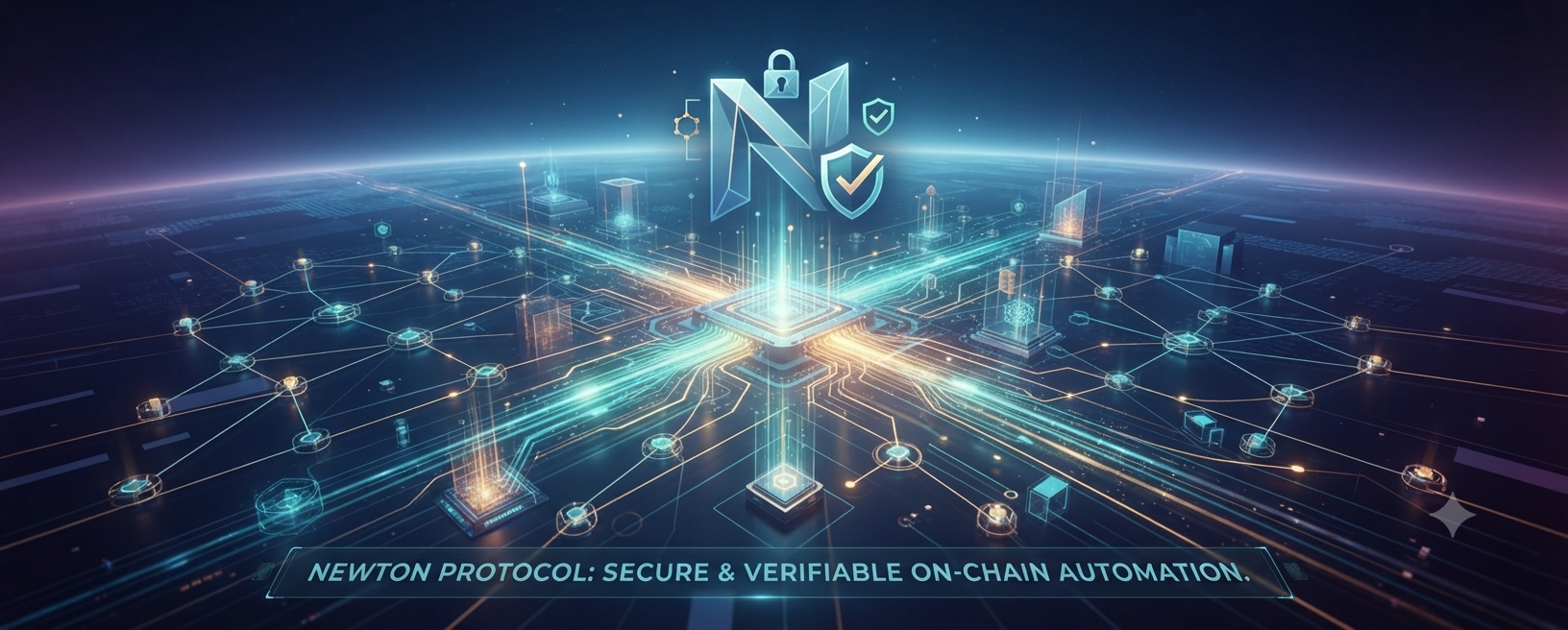
Deep Dive into Newton ProtocolThe Future of Verifiable On-chain Automation: A Deep Dive into Newton Protocol
The evolution of Decentralized Finance (DeFi) is shifting rapidly from manual, reactive operations to automated, proactive intelligence. As autonomous AI agents and complex vault strategies manage an increasing share of on-chain capital, traditional security models—which often rely on retroactive monitoring or simple identity checks—are proving insufficient. Enter the Newton Protocol and the recent launch of its Mainnet Beta, a pivotal advancement in infrastructure that promises to redefine how on-chain transactions are authorized, secured, and executed.
What is Newton Protocol?
At its core, @NewtonProtocol is an authorization layer designed specifically for on-chain transactions. Unlike standard protocols that react after a vulnerability or exploit has occurred, Newton functions as a pre-transaction policy engine. By utilizing Trusted Execution Environments (TEEs) and Zero-Knowledge Proofs (ZKPs), it creates a transparent, verifiably neutral layer where complex, programmable rules are evaluated before any capital moves.
This means that whether you are an individual user, a DAO, or an AI agent, your transaction must first pass through a series of "policy guardrails." These guardrails can include jurisdictional restrictions, daily spending limits, or custom compliance parameters, ensuring that only valid and safe transactions are finalized on the destination chain.
The Power of the Mainnet Beta
The transition to Mainnet Beta is more than just a technical milestone; it is the activation of a robust ecosystem. A critical feature of this release is the integration of VaultKit, which empowers developers to build vaults where risk management and compliance rules are enforced directly on-chain.
Furthermore, the protocol’s partnership with data powerhouses like RedStone Oracles and Credora provides the "fuel" for these policy engines. By sourcing manipulation-resistant price feeds and real-time risk ratings, Newton enables curators to automate complex decisions—such as liquidating positions or rebalancing assets—with unprecedented confidence.
Why $NEWT Matters
The $NEWT token sits at the heart of this infrastructure, serving as the essential utility token for the network. It plays several critical roles:
Security & Staking: Validators and operators stake $NEWT to secure the network and provide verifiable execution proofs.
Governance: Token holders participate in the protocol’s evolution, ensuring the ecosystem remains decentralized.
Marketplace Utility: As the Developer Marketplace grows, $NEWT will be the primary medium for registering agent models and accessing computational services.
The Road Ahead
With the Mainnet Beta live, the focus now turns to ecosystem growth. By positioning itself as a foundational authorization primitive, Newton is not trying to compete with existing DeFi apps; it is trying to provide the secure plumbing that all of them need. As we see more integration of AI agents into finance, the need for a protocol that can prove "this agent is acting within safe limits" will become mandatory.
Newton is effectively turning "If-This-Then-That" logic into a cryptographically verifiable public utility. For builders, developers, and institutions looking to mitigate risk while embracing the efficiency of automation, Newton Protocol represents one of the most promising frontiers in Web3 infrastructure.
#Newt $NEWT
Deep Dive into Newton Protocol
The Future of Verifiable On-chain Automation: A Deep Dive into Newton Protocol
The evolution of Decentralized Finance (DeFi) is shifting rapidly from manual, reactive operations to automated, proactive intelligence. As autonomous AI agents and complex vault strategies manage an increasing share of on-chain capital, traditional security models—which often rely on retroactive monitoring or simple identity checks—are proving insufficient. Enter the Newton Protocol and the recent launch of its Mainnet Beta, a pivotal advancement in infrastructure that promises to redefine how on-chain transactions are authorized, secured, and executed.
What is Newton Protocol?
At its core, @NewtonProtocol is an authorization layer designed specifically for on-chain transactions. Unlike standard protocols that react after a vulnerability or exploit has occurred, Newton functions as a pre-transaction policy engine. By utilizing Trusted Execution Environments (TEEs) and Zero-Knowledge Proofs (ZKPs), it creates a transparent, verifiably neutral layer where complex, programmable rules are evaluated before any capital moves.
This means that whether you are an individual user, a DAO, or an AI agent, your transaction must first pass through a series of "policy guardrails." These guardrails can include jurisdictional restrictions, daily spending limits, or custom compliance parameters, ensuring that only valid and safe transactions are finalized on the destination chain.
The Power of the Mainnet Beta
The transition to Mainnet Beta is more than just a technical milestone; it is the activation of a robust ecosystem. A critical feature of this release is the integration of VaultKit, which empowers developers to build vaults where risk management and compliance rules are enforced directly on-chain.
Furthermore, the protocol’s partnership with data powerhouses like RedStone Oracles and Credora provides the "fuel" for these policy engines. By sourcing manipulation-resistant price feeds and real-time risk ratings, Newton enables curators to automate complex decisions—such as liquidating positions or rebalancing assets—with unprecedented confidence.
Why $NEWT Matters
The $NEWT token sits at the heart of this infrastructure, serving as the essential utility token for the network. It plays several critical roles:
Security & Staking: Validators and operators stake $NEWT to secure the network and provide verifiable execution proofs.
Governance: Token holders participate in the protocol’s evolution, ensuring the ecosystem remains decentralized.
Marketplace Utility: As the Developer Marketplace grows, $NEWT will be the primary medium for registering agent models and accessing computational services.
The Road Ahead
With the Mainnet Beta live, the focus now turns to ecosystem growth. By positioning itself as a foundational authorization primitive, Newton is not trying to compete with existing DeFi apps; it is trying to provide the secure plumbing that all of them need. As we see more integration of AI agents into finance, the need for a protocol that can prove "this agent is acting within safe limits" will become mandatory.
Newton is effectively turning "If-This-Then-That" logic into a cryptographically verifiable public utility. For builders, developers, and institutions looking to mitigate risk while embracing the efficiency of automation, Newton Protocol represents one of the most promising frontiers in Web3 infrastructure.
#Newt $NEWT
The evolution of Decentralized Finance (DeFi) is shifting rapidly from manual, reactive operations to automated, proactive intelligence. As autonomous AI agents and complex vault strategies manage an increasing share of on-chain capital, traditional security models—which often rely on retroactive monitoring or simple identity checks—are proving insufficient. Enter the Newton Protocol and the recent launch of its Mainnet Beta, a pivotal advancement in infrastructure that promises to redefine how on-chain transactions are authorized, secured, and executed.
What is Newton Protocol?
At its core, @NewtonProtocol is an authorization layer designed specifically for on-chain transactions. Unlike standard protocols that react after a vulnerability or exploit has occurred, Newton functions as a pre-transaction policy engine. By utilizing Trusted Execution Environments (TEEs) and Zero-Knowledge Proofs (ZKPs), it creates a transparent, verifiably neutral layer where complex, programmable rules are evaluated before any capital moves.
This means that whether you are an individual user, a DAO, or an AI agent, your transaction must first pass through a series of "policy guardrails." These guardrails can include jurisdictional restrictions, daily spending limits, or custom compliance parameters, ensuring that only valid and safe transactions are finalized on the destination chain.
The Power of the Mainnet Beta
The transition to Mainnet Beta is more than just a technical milestone; it is the activation of a robust ecosystem. A critical feature of this release is the integration of VaultKit, which empowers developers to build vaults where risk management and compliance rules are enforced directly on-chain.
Furthermore, the protocol’s partnership with data powerhouses like RedStone Oracles and Credora provides the "fuel" for these policy engines. By sourcing manipulation-resistant price feeds and real-time risk ratings, Newton enables curators to automate complex decisions—such as liquidating positions or rebalancing assets—with unprecedented confidence.
Why $NEWT Matters
The $NEWT token sits at the heart of this infrastructure, serving as the essential utility token for the network. It plays several critical roles:
Security & Staking: Validators and operators stake $NEWT to secure the network and provide verifiable execution proofs.
Governance: Token holders participate in the protocol’s evolution, ensuring the ecosystem remains decentralized.
Marketplace Utility: As the Developer Marketplace grows, $NEWT will be the primary medium for registering agent models and accessing computational services.
The Road Ahead
With the Mainnet Beta live, the focus now turns to ecosystem growth. By positioning itself as a foundational authorization primitive, Newton is not trying to compete with existing DeFi apps; it is trying to provide the secure plumbing that all of them need. As we see more integration of AI agents into finance, the need for a protocol that can prove "this agent is acting within safe limits" will become mandatory.
Newton is effectively turning "If-This-Then-That" logic into a cryptographically verifiable public utility. For builders, developers, and institutions looking to mitigate risk while embracing the efficiency of automation, Newton Protocol represents one of the most promising frontiers in Web3 infrastructure.
#Newt $NEWT
67
·
--
Übersetzung ansehen
#newt $NEWT
The launch of the Newton Mainnet Beta by @NewtonProtocol is a major milestone for decentralized infrastructure. By combining Trusted Execution Environments (TEEs) and Zero-Knowledge Proofs (ZKPs), the protocol creates a secure, verifiable automation layer that allows for programmable on-chain permissions.
This infrastructure is a game-changer for Web3, as it enables users and institutions to delegate complex tasks—like portfolio rebalancing, risk management, and cross-chain execution—to autonomous agents without sacrificing security or sovereignty. With the $NEWT token powering network security, governance, and the agent marketplace, the ecosystem is well-positioned to drive the next wave of institutional-grade DeFi adoption. It is exciting to see how these advancements simplify the user experience while maintaining the transparency and trustless nature of the blockchain.
#Newt $NEWT
#newt $NEWT
The launch of the Newton Mainnet Beta by @NewtonProtocol is a major milestone for decentralized infrastructure. By combining Trusted Execution Environments (TEEs) and Zero-Knowledge Proofs (ZKPs), the protocol creates a secure, verifiable automation layer that allows for programmable on-chain permissions.
This infrastructure is a game-changer for Web3, as it enables users and institutions to delegate complex tasks—like portfolio rebalancing, risk management, and cross-chain execution—to autonomous agents without sacrificing security or sovereignty. With the $NEWT token powering network security, governance, and the agent marketplace, the ecosystem is well-positioned to drive the next wave of institutional-grade DeFi adoption. It is exciting to see how these advancements simplify the user experience while maintaining the transparency and trustless nature of the blockchain.
#Newt $NEWT
The launch of the Newton Mainnet Beta by @NewtonProtocol is a major milestone for decentralized infrastructure. By combining Trusted Execution Environments (TEEs) and Zero-Knowledge Proofs (ZKPs), the protocol creates a secure, verifiable automation layer that allows for programmable on-chain permissions.
This infrastructure is a game-changer for Web3, as it enables users and institutions to delegate complex tasks—like portfolio rebalancing, risk management, and cross-chain execution—to autonomous agents without sacrificing security or sovereignty. With the $NEWT token powering network security, governance, and the agent marketplace, the ecosystem is well-positioned to drive the next wave of institutional-grade DeFi adoption. It is exciting to see how these advancements simplify the user experience while maintaining the transparency and trustless nature of the blockchain.
#Newt $NEWT
83
·
--
Artikel
Newton Mainnet Beta ist entscheidendDer Start der Mainnet Beta von @NewtonProtocol stellt einen entscheidenden Meilenstein für dezentrale Infrastruktur dar. Im Kern überbrückt Newton die Lücke zwischen transparenten Smart Contracts und den Anforderungen an reale Compliance. Herkömmliche Smart Contracts haben oft Schwierigkeiten, Transaktionen anhand von Off-Chain-Kontext zu autorisieren, wie z. B. Identitätsverifizierung, gerichtlich-regionale Beschränkungen oder ein Sanctions-Screening.
Newton löst das, indem es als dezentrale Policy-Engine fungiert. Entwickler können nun anspruchsvolle Regeln – wie Ausgabenlimits oder AML-Prüfungen – direkt in „Policies“ kodieren, die Transaktionen automatisch auswerten und genehmigen oder blockieren, bevor sie on-chain abgerechnet werden.
Newton Mainnet Beta ist entscheidend
Der Start der Mainnet Beta von @NewtonProtocol stellt einen entscheidenden Meilenstein für dezentrale Infrastruktur dar. Im Kern überbrückt Newton die Lücke zwischen transparenten Smart Contracts und den Anforderungen an reale Compliance. Herkömmliche Smart Contracts haben oft Schwierigkeiten, Transaktionen anhand von Off-Chain-Kontext zu autorisieren, wie z. B. Identitätsverifizierung, gerichtlich-regionale Beschränkungen oder ein Sanctions-Screening.
Newton löst das, indem es als dezentrale Policy-Engine fungiert. Entwickler können nun anspruchsvolle Regeln – wie Ausgabenlimits oder AML-Prüfungen – direkt in „Policies“ kodieren, die Transaktionen automatisch auswerten und genehmigen oder blockieren, bevor sie on-chain abgerechnet werden.
Newton löst das, indem es als dezentrale Policy-Engine fungiert. Entwickler können nun anspruchsvolle Regeln – wie Ausgabenlimits oder AML-Prüfungen – direkt in „Policies“ kodieren, die Transaktionen automatisch auswerten und genehmigen oder blockieren, bevor sie on-chain abgerechnet werden.
32
·
--
Artikel
Übersetzung ansehen
Newton Mainnet BetaThe era of "blind" on-chain transactions is coming to an end. With the official launch of the Newton Mainnet Beta, we are finally seeing the arrival of a sophisticated authorization layer that brings genuine programmable compliance to the decentralized web.
@NewtonProtocol is pioneering a paradigm shift in how we handle risk, identity, and business logic at the point of transaction. Instead of relying on siloed, manual risk controls that vary from one application to another, Newton provides a unified, decentralized policy engine. This allows developers to embed complex rules—such as jurisdictional restrictions, spending limits, and KYC/AML checks—directly into the transaction execution flow.
Why this matters for the future of DeFi and Agentic Finance:
Programmable Guardrails: Through the newly introduced VaultKit, curators can now define granular conditions that must be met before a transaction settles. Whether it’s automatically liquidating a position based on real-time data from partners like RedStone or restricting asset movement based on Credora’s risk ratings, the enforcement is seamless, cryptographically verifiable, and happens entirely on-chain.
Trust-Minimized Compliance: By utilizing Trusted Execution Environments (TEEs) and Zero-Knowledge Proofs (ZKPs), Newton ensures that sensitive data remains private while compliance checks are proven correct. This is the "missing link" for institutional adoption, enabling stablecoin issuers and RWA platforms to operate with confidence in a regulatory-friendly environment without sacrificing the core ethos of decentralization.
The Utility of $NEWT: The $NEWT token is the heartbeat of this ecosystem. As the network scales, the demand for $NEWT will grow, driven by its utility in paying for compliance compute services, rewarding network operators, and participating in the governance that shapes the protocol's evolution. As we move toward a future of autonomous "agent swarms" managing assets, Newton’s role as the essential middleware becomes increasingly critical.
The launch of the Mainnet Beta is just the beginning. By solving the authorization puzzle, Newton is not just creating a tool; it is building the fundamental utility layer for the next generation of trustless financial agents. As the industry continues to mature, protocols that prioritize verifiable security and cross-chain composability will lead the way, and Newton is perfectly positioned at the forefront of this transformation.
#Newt
Newton Mainnet Beta
The era of "blind" on-chain transactions is coming to an end. With the official launch of the Newton Mainnet Beta, we are finally seeing the arrival of a sophisticated authorization layer that brings genuine programmable compliance to the decentralized web.
@NewtonProtocol is pioneering a paradigm shift in how we handle risk, identity, and business logic at the point of transaction. Instead of relying on siloed, manual risk controls that vary from one application to another, Newton provides a unified, decentralized policy engine. This allows developers to embed complex rules—such as jurisdictional restrictions, spending limits, and KYC/AML checks—directly into the transaction execution flow.
Why this matters for the future of DeFi and Agentic Finance:
Programmable Guardrails: Through the newly introduced VaultKit, curators can now define granular conditions that must be met before a transaction settles. Whether it’s automatically liquidating a position based on real-time data from partners like RedStone or restricting asset movement based on Credora’s risk ratings, the enforcement is seamless, cryptographically verifiable, and happens entirely on-chain.
Trust-Minimized Compliance: By utilizing Trusted Execution Environments (TEEs) and Zero-Knowledge Proofs (ZKPs), Newton ensures that sensitive data remains private while compliance checks are proven correct. This is the "missing link" for institutional adoption, enabling stablecoin issuers and RWA platforms to operate with confidence in a regulatory-friendly environment without sacrificing the core ethos of decentralization.
The Utility of $NEWT: The $NEWT token is the heartbeat of this ecosystem. As the network scales, the demand for $NEWT will grow, driven by its utility in paying for compliance compute services, rewarding network operators, and participating in the governance that shapes the protocol's evolution. As we move toward a future of autonomous "agent swarms" managing assets, Newton’s role as the essential middleware becomes increasingly critical.
The launch of the Mainnet Beta is just the beginning. By solving the authorization puzzle, Newton is not just creating a tool; it is building the fundamental utility layer for the next generation of trustless financial agents. As the industry continues to mature, protocols that prioritize verifiable security and cross-chain composability will lead the way, and Newton is perfectly positioned at the forefront of this transformation.
#Newt
@NewtonProtocol is pioneering a paradigm shift in how we handle risk, identity, and business logic at the point of transaction. Instead of relying on siloed, manual risk controls that vary from one application to another, Newton provides a unified, decentralized policy engine. This allows developers to embed complex rules—such as jurisdictional restrictions, spending limits, and KYC/AML checks—directly into the transaction execution flow.
Why this matters for the future of DeFi and Agentic Finance:
Programmable Guardrails: Through the newly introduced VaultKit, curators can now define granular conditions that must be met before a transaction settles. Whether it’s automatically liquidating a position based on real-time data from partners like RedStone or restricting asset movement based on Credora’s risk ratings, the enforcement is seamless, cryptographically verifiable, and happens entirely on-chain.
Trust-Minimized Compliance: By utilizing Trusted Execution Environments (TEEs) and Zero-Knowledge Proofs (ZKPs), Newton ensures that sensitive data remains private while compliance checks are proven correct. This is the "missing link" for institutional adoption, enabling stablecoin issuers and RWA platforms to operate with confidence in a regulatory-friendly environment without sacrificing the core ethos of decentralization.
The Utility of $NEWT: The $NEWT token is the heartbeat of this ecosystem. As the network scales, the demand for $NEWT will grow, driven by its utility in paying for compliance compute services, rewarding network operators, and participating in the governance that shapes the protocol's evolution. As we move toward a future of autonomous "agent swarms" managing assets, Newton’s role as the essential middleware becomes increasingly critical.
The launch of the Mainnet Beta is just the beginning. By solving the authorization puzzle, Newton is not just creating a tool; it is building the fundamental utility layer for the next generation of trustless financial agents. As the industry continues to mature, protocols that prioritize verifiable security and cross-chain composability will lead the way, and Newton is perfectly positioned at the forefront of this transformation.
#Newt
41
Anmelden und weiter Inhalte entdecken
Krypto-Nutzer weltweit auf Binance Square kennenlernen
⚡️ Bleib in Sachen Krypto stets am Puls.
💬 Die weltgrößte Kryptobörse vertraut darauf.
👍 Erhalte verlässliche Einblicke von verifizierten Creators.
E-Mail-Adresse/Telefonnummer
Trendthemen
BinanceLaunchesBinanceIntelligence
774,115 Aufrufe
4,875 Kommentare
🚨 BINANCE BRINGT KI NOCH TIEFER IN DIE KRYPTO-WELT.
Binance hat Binance Intelligence gestartet – eine neue KI-gestützte Ebene, die auf Marktforschung, Trading-Prozesse und Krypto-Daten ausgerichtet ist.
Was besonders spannend ist?
Es ist nicht nur ein einziges Tool.
🧠 Binance AI → personalisierte Marktanalysen, Alerts und Portfolio-Einblicke
⚡ Binance AI Pro → verwandelt natürlichsprachliche Ideen in Trading-Prozesse
🤖 Agent OS → verbindet KI-Agenten mit den Möglichkeiten von Märkten, Portfolios und der Blockchain
Das ist eine große Veränderung.
Krypto-Plattformen versorgen Trader nicht mehr nur mit Charts und Daten.
Sie beginnen, ihnen KI-Systeme anzubieten, die diese Daten interpretieren können.
Die entscheidende Frage lautet:
Wird KI unter Tradern so alltäglich werden wie heute Indikatoren und Charts? 👀
$BTC
$GRIFFAIN
$NMR
#BinanceLaunchesBinanceIntelligence
Jacob trade
·0 Likes
·92 Aufrufe
BTCFallsBelow$84K
39,492 Aufrufe
133 Kommentare
DubaiVARAIssuesReserveAssetAuditCircular
13,309 Aufrufe
480 Kommentare