
Cryptosafespace52
22 Beiträge

Cryptosafespace52
Melden
Nutzer blockieren
Trade eröffnen
Regelmäßiger Trader
4.7 Jahre
104 Following
22 Follower
32 Like gegeben
Beiträge
Portfolio
Anthropics Börsengang wird heute Abend bepreist: Lässt sich der „KI-Glaube“ von Privatanlegern zu Geld machen?Wenn du noch an der Seitenlinie stehst, bist du womöglich bereits einen halben Schritt im Rückstand. Die Nachfrage nach Aktien beim Börsengang von Anthropic, dem Mutterunternehmen von Claude, soll Berichten zufolge fast siebenmal so hoch sein wie das Angebot. Die institutionelle Nachfrage beläuft sich auf zweistellige Milliardenbeträge, und der endgültige Ausgabepreis dürfte die obere Preisspanne von 78 US-Dollar übersteigen. Die Bewertung könnte dabei bis auf 1,75 Billionen US-Dollar steigen.
Doch das ist nicht nur ein Spiel für die Großen. Für Privatanleger, die sich ein Stück vom Kuchen sichern wollen, sind hier drei wichtige Einschätzungen:
Erstens: Dies ist der ultimative Stresstest für die KI-Blase.
Anthropics Börsengang wird heute Abend bepreist: Lässt sich der „KI-Glaube“ von Privatanlegern zu Geld machen?
Wenn du noch an der Seitenlinie stehst, bist du womöglich bereits einen halben Schritt im Rückstand. Die Nachfrage nach Aktien beim Börsengang von Anthropic, dem Mutterunternehmen von Claude, soll Berichten zufolge fast siebenmal so hoch sein wie das Angebot. Die institutionelle Nachfrage beläuft sich auf zweistellige Milliardenbeträge, und der endgültige Ausgabepreis dürfte die obere Preisspanne von 78 US-Dollar übersteigen. Die Bewertung könnte dabei bis auf 1,75 Billionen US-Dollar steigen.
Doch das ist nicht nur ein Spiel für die Großen. Für Privatanleger, die sich ein Stück vom Kuchen sichern wollen, sind hier drei wichtige Einschätzungen:
Erstens: Dies ist der ultimative Stresstest für die KI-Blase.
Doch das ist nicht nur ein Spiel für die Großen. Für Privatanleger, die sich ein Stück vom Kuchen sichern wollen, sind hier drei wichtige Einschätzungen:
Erstens: Dies ist der ultimative Stresstest für die KI-Blase.
1
187
Übersetzung ansehen
An Nvidia without Jensen HuangNvidia just dropped the most explosive earnings report in tech, but most people only saw "beat expectations" and missed the real signal: data center revenue now accounts for 93% of the total, meaning Nvidia has completely transformed into an AI infrastructure company, no longer the "graphics card seller" it once was.
Here are the numbers worth watching:
· Revenue $115.8 billion, up 103% year-over-year and 20% quarter-over-quarter
· Data center single-quarter revenue $107.6 billion, up 110% year-over-year
· Q4 guidance $130 billion (plus or minus 3%), above analysts' average estimate of $125.3 billion
· Next fiscal year revenue growth forecast raised to 75%, up from the previous 70%
The key point: this is the first earnings report since Jensen Huang's departure, and interim CEO Colette Kress delivered an answer that directly dispelled the market's doubts about "whether Nvidia can still perform without Huang." Board Chairman Harvey Jones made it clear on the call that he does not intend to reinstate Huang as CEO. Analysts put it well: "The first question the market had about a founderless Nvidia has been answered—demand didn't leave with him."
An Nvidia without Jensen Huang
Nvidia just dropped the most explosive earnings report in tech, but most people only saw "beat expectations" and missed the real signal: data center revenue now accounts for 93% of the total, meaning Nvidia has completely transformed into an AI infrastructure company, no longer the "graphics card seller" it once was.
Here are the numbers worth watching:
· Revenue $115.8 billion, up 103% year-over-year and 20% quarter-over-quarter
· Data center single-quarter revenue $107.6 billion, up 110% year-over-year
· Q4 guidance $130 billion (plus or minus 3%), above analysts' average estimate of $125.3 billion
· Next fiscal year revenue growth forecast raised to 75%, up from the previous 70%
The key point: this is the first earnings report since Jensen Huang's departure, and interim CEO Colette Kress delivered an answer that directly dispelled the market's doubts about "whether Nvidia can still perform without Huang." Board Chairman Harvey Jones made it clear on the call that he does not intend to reinstate Huang as CEO. Analysts put it well: "The first question the market had about a founderless Nvidia has been answered—demand didn't leave with him."
1
120
Übersetzung ansehen
Don't Let $BTC at $65K Fool You — the Real Risk Is in Stablecoins.Everyone's watching Bitcoin break below its 200-week moving average, but nobody's talking about the actual signal:
Stablecoin supply has dropped $14 billion in 30 days.
The "ammo" inside the market is being drained. ETFs have seen $1.9B in net outflows this year. MSCI's removal of Strategy just collapsed the "Bitcoin treasury stock" premium, and leveraged longs just got liquidated to the tune of $1.7B. This bounce is short-covering, not fresh capital entering.
Until stablecoin supply starts expanding again, every rally is an exit opportunity — not a bull run. The altseason index is stuck at 48, but the liquidation volumes on $ETH and $SOL show retail leverage hasn't fully flushed out yet.
Don't rush to bottom-fish. Watch the $62K support on $BTC — a break below is a cliff.
Remember: The three most expensive words in a bear market are "this time is different."
Don't Let $BTC at $65K Fool You — the Real Risk Is in Stablecoins.
Everyone's watching Bitcoin break below its 200-week moving average, but nobody's talking about the actual signal:
Stablecoin supply has dropped $14 billion in 30 days.
The "ammo" inside the market is being drained. ETFs have seen $1.9B in net outflows this year. MSCI's removal of Strategy just collapsed the "Bitcoin treasury stock" premium, and leveraged longs just got liquidated to the tune of $1.7B. This bounce is short-covering, not fresh capital entering.
Until stablecoin supply starts expanding again, every rally is an exit opportunity — not a bull run. The altseason index is stuck at 48, but the liquidation volumes on $ETH and $SOL show retail leverage hasn't fully flushed out yet.
Don't rush to bottom-fish. Watch the $62K support on $BTC — a break below is a cliff.
Remember: The three most expensive words in a bear market are "this time is different."
1
157
·
--
Bullisch
Übersetzung ansehen
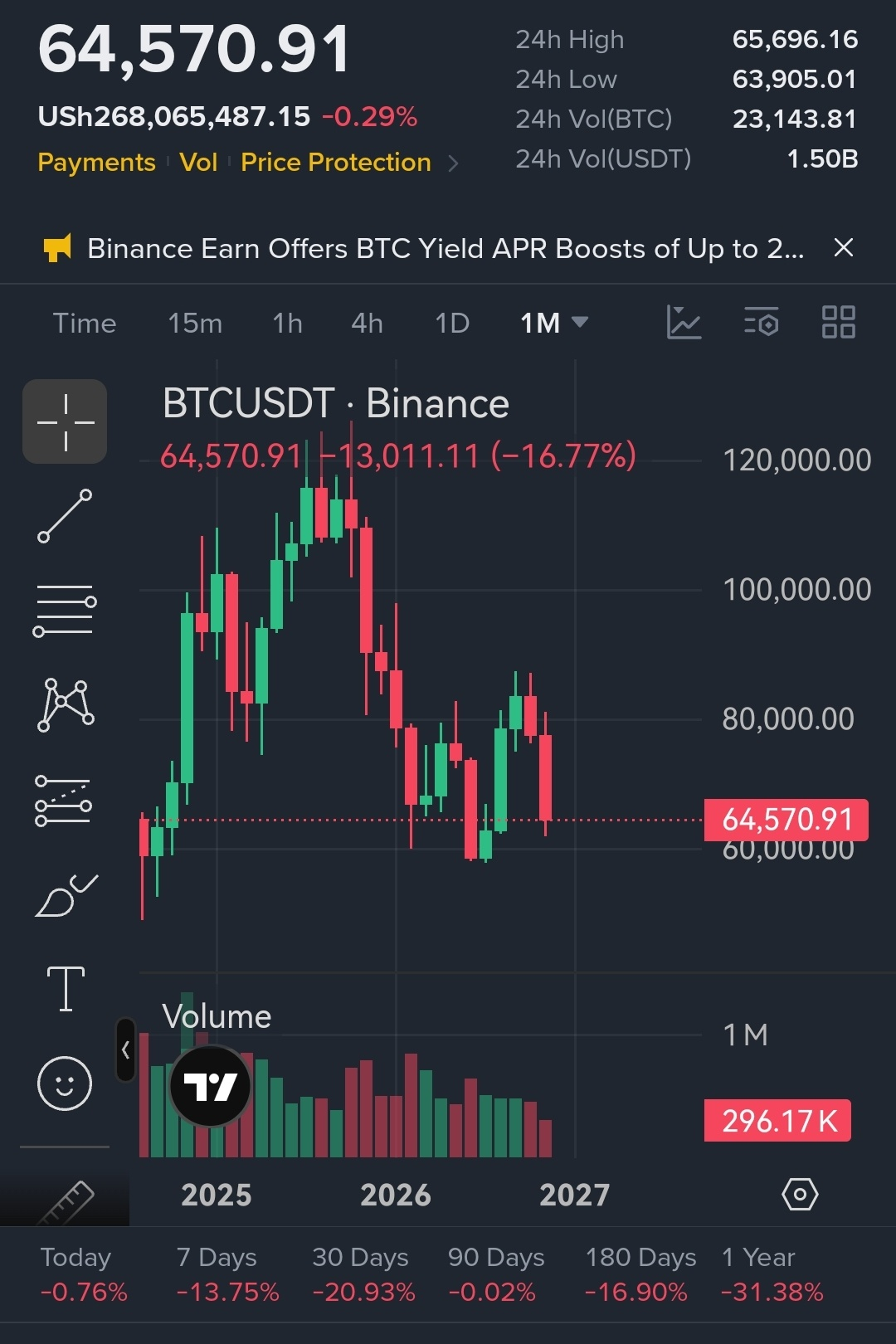
BTC has dropped below the 200-week moving average, altcoin market cap has evaporated by nearly 800 billion, and the Fear & Greed Index is only 29 . Everyone is shouting "bear market is here," but I'm seeing another set of data: while retail investors are panic selling, the logic of making money has never changed—don't compete with the market on luck, compete on costs and discipline.
BTC has dropped below the 200-week moving average, altcoin market cap has evaporated by nearly 800 billion, and the Fear & Greed Index is only 29 . Everyone is shouting "bear market is here," but I'm seeing another set of data: while retail investors are panic selling, the logic of making money has never changed—don't compete with the market on luck, compete on costs and discipline.
1
67
Übersetzung ansehen
Bitcoin is down 8.5% YTD. But 13 altcoins are absolutely destroying it. Here is the data nobody is reading.”
Everyone is panicking about the Binance hack and the US midterms. And yes, BTC took a hit . But while the crowd was watching the headlines, DWF Labs just dropped a quiet bombshell: tokens with real revenue buybacks are outperforming.
$HYPE. Up 200%+ because it funnels 95% of revenue into buying back its own token. Meanwhile, $LDO announced a buyback and has done… nothing. Its price reflects that .
Stop buying “narratives.” Start buying cash flow.
I’ve been tracking the buyback wallets on-chain. The inflows into these specific assets have been accelerating since the election dip. I’m breaking down the exact three tickers I’m watching (and the one I’m avoiding) inside my private feed.
1
357
Die Mitgründer von Zcash schlagen vor, 50.000 $ZEC aus der Fördermittelkasse zu entfernen – das entspricht 55 % ihrer Bestände – und den Wert über künftige Mining-Belohnungen zurückzuführen. Die Abstimmung der Community beginnt am 16. November.
Die Mitgründer von Zcash schlagen vor, 50.000 $ZEC aus der Fördermittelkasse zu entfernen – das entspricht 55 % ihrer Bestände – und den Wert über künftige Mining-Belohnungen zurückzuführen. Die Abstimmung der Community beginnt am 16. November.
1
250
Übersetzung ansehen
The money isn’t leaving crypto—it’s just rotating. 🔄
While BTC chops around $74K and AI/meme coins cool off, capital is quietly shifting into **Layer 2, DePIN, and RWA infrastructure**. Whales have moved over $30.5B in stablecoins to exchanges in the past month, and institutions are "returning to the mainstream" with BTC ETF inflows while ETH ETFs bleed.
The playbook has changed: it’s less about chasing hype and more about positioning in real utility. Where are you rotating?
1
100
Übersetzung ansehen
HAPPENING SOON: Will Nvidia oust Jensen Huang as CEO? And what’s next for AI markets?
Bloomberg reporters answer your questions in a Live Q&A: https://bloom.bg/4kLDbA7
HAPPENING SOON: Will Nvidia oust Jensen Huang as CEO? And what’s next for AI markets?
Bloomberg reporters answer your questions in a Live Q&A: https://bloom.bg/4kLDbA7
Bloomberg reporters answer your questions in a Live Q&A: https://bloom.bg/4kLDbA7

1
139
Stimmung Die Stimmung im Kryptobereich wird derzeit von Angst und Vorsicht beherrscht. Die Marktstimmung hat sich im vergangenen Monat deutlich ins Bärische gewandelt, hauptsächlich aufgrund des makroökonomischen Drucks und der nachlassenden Nachfrage.
📉 Stimmungsindikatoren deuten auf Angst hin
Der Krypto-Angst-und-Gier-Index zeigt mit einem Wert von 26–30 „Angst“ an – ein starker Rückgang gegenüber 57 („Neutral“) noch vor einem Monat. Diese Verschlechterung wird durch Daten aus sozialen Medien und von Analysten bestätigt: Bei Bitcoin, Ethereum und XRP überwiegen inzwischen die pessimistischen Kommentare die optimistischen, und der Analystenkonsens ist deutlich ins Bärische abgerutscht.
Stimmung
Die Stimmung im Kryptobereich wird derzeit von Angst und Vorsicht beherrscht. Die Marktstimmung hat sich im vergangenen Monat deutlich ins Bärische gewandelt, hauptsächlich aufgrund des makroökonomischen Drucks und der nachlassenden Nachfrage.
📉 Stimmungsindikatoren deuten auf Angst hin
Der Krypto-Angst-und-Gier-Index zeigt mit einem Wert von 26–30 „Angst“ an – ein starker Rückgang gegenüber 57 („Neutral“) noch vor einem Monat. Diese Verschlechterung wird durch Daten aus sozialen Medien und von Analysten bestätigt: Bei Bitcoin, Ethereum und XRP überwiegen inzwischen die pessimistischen Kommentare die optimistischen, und der Analystenkonsens ist deutlich ins Bärische abgerutscht.
1
204
Übersetzung ansehen
Saying there’s no reason to buy Bitcoin because anyone can create a cryptocurrency is like saying there’s no reason to learn English because anyone can invent a language.
Saying there’s no reason to buy Bitcoin because anyone can create a cryptocurrency is like saying there’s no reason to learn English because anyone can invent a language.
1
69
Übersetzung ansehen
#EarningsSeason Succeeding in crypto in 2026 requires a shift away from chasing "fast money" and toward building a durable skill set rooted in discipline, research, and risk management. The market has matured; relying on hype or luck is a recipe for losing your capital .
Here is a practical framework to build lasting success.
🧠 Master Your Psychology and Behavior
The biggest threat to your portfolio is often your own reaction to volatility. Before entering any trade, you need a plan for your future self .
· Pre-Commit to a Plan: Decide in advance what you will do if the price drops by a certain percentage. Will you hold, buy more, or exit? Having this written down prevents panic decisions when your account is bleeding red .
· Avoid "Revenge Trading": After a loss, the urge to immediately open another trade to "win it back" is powerful but destructive. Recognize this impulse and step away .
· Test Your Conviction: If you cannot explain why you are holding an asset without using the word "popularity" or "hype," you likely don't have a real thesis. This clarity helps you distinguish between genuine belief and the sunk cost fallacy .
🛡️ Prioritize Risk Management Above All
Surviving is the first step to thriving. Never risk money you cannot afford to lose, and structure your trades to protect your downside.
· Position Sizing: A common rule is to risk no more than 5-10% of your total portfolio on a single trade. This ensures that a string of bad calls doesn't wipe you out .
· Use Stop-Losses: Always set a stop-loss to cap your losses on any given position. Hoping a losing trade will turn around is a fast way to deplete your account .
· Check Liquidity: Before buying a smaller coin, check if there is enough daily trading volume for you to exit your position. A high price means nothing if you can't find a buyer when you want to sell .
1
61
Übersetzung ansehen
#EarningsSeason The crypto market on October 25, 2026, showed a weak and volatile pattern: Bitcoin barely held the $80,000 mark, Ethereum led major altcoins lower, and market sentiment was suppressed by geopolitical tensions and ETF outflows.
📉 Price Performance: BTC Struggles, Altcoins Under Pressure
· Bitcoin (BTC): Data across sources varies slightly due to different timestamps. It briefly broke below $80,000 during the session, hitting an intraday low of $79,700, then rebounded above $81,000; by late Asian trading, it was around **$80,688**, with a 24-hour change of approximately +0.08% .
· Ethereum (ETH): Weakened notably, falling below $2,300 at one point, closing around **$2,354**, down nearly 0.84% .
· Altcoins: Major altcoins generally declined. SOL and DOGE fell by approximately 0.03% and 0.88% respectively, while XRP rose against the trend by 1.27% . Among the top 100 by market capitalization, XMR was the strongest gainer (+7.77%), while MORPHO dropped the most (-4.89%) .
📰 Market Drivers and Sentiment
· Geopolitical Tensions: Reports indicated the United States was evacuating personnel from Middle East embassies and military bases due to intelligence on potential Iranian attacks, triggering risk-off sentiment; BTC briefly dipped below $80,000 during the session .
· ETF Outflows: U.S. spot Bitcoin ETFs saw net outflows of approximately $635 million and $138 million on October 22 and 23 respectively, weighing on market confidence .
· Liquidation Data: During the decline, long positions suffered heavy losses across the network, with over 80% of 24-hour liquidations coming from long positions .
· Sentiment Index: The Fear & Greed Index rose to 54, indicating the market remains in a "neutral" state .
1
167
STIMMUNG ZU XAU#EarningsSeason I Die aktuelle Marktstimmung zu XAU (Gold) ist deutlich gespalten: Kurzfristig orientierte spekulative Fonds ziehen sich angesichts der hawkischen Erwartungen an die Federal Reserve und steigender Anleiherenditen unter Druck zurück, während mittel- bis langfristig orientierte Anlagefonds (Zentralbanken, ETFs) „bei Kursrückgängen kaufen“ und so Unterstützung bieten. Dadurch entsteht ein Spiel mit einer „Obergrenze oben und einer Untergrenze unten“.
Kurzfristige bearishe Faktoren / Preisdruck: Flucht spekulativer Fonds, starker Dollar und hohe Renditen
· Eine hawkische Erwartungshaltung drückt die Preise: Der Markt erwartet, dass die Federal Reserve die Zinsen auf hohem Niveau hält oder sie sogar weiter anhebt (die Wahrscheinlichkeit einer Zinserhöhung im Dezember wurde zeitweise mit 78 % eingepreist). Dadurch steigen die Renditen von US-Staatsanleihen und der Dollar, was die Opportunitätskosten einer Goldanlage erhöht und die Preise direkt unter Druck setzt.
STIMMUNG ZU XAU
#EarningsSeason I Die aktuelle Marktstimmung zu XAU (Gold) ist deutlich gespalten: Kurzfristig orientierte spekulative Fonds ziehen sich angesichts der hawkischen Erwartungen an die Federal Reserve und steigender Anleiherenditen unter Druck zurück, während mittel- bis langfristig orientierte Anlagefonds (Zentralbanken, ETFs) „bei Kursrückgängen kaufen“ und so Unterstützung bieten. Dadurch entsteht ein Spiel mit einer „Obergrenze oben und einer Untergrenze unten“.
Kurzfristige bearishe Faktoren / Preisdruck: Flucht spekulativer Fonds, starker Dollar und hohe Renditen
· Eine hawkische Erwartungshaltung drückt die Preise: Der Markt erwartet, dass die Federal Reserve die Zinsen auf hohem Niveau hält oder sie sogar weiter anhebt (die Wahrscheinlichkeit einer Zinserhöhung im Dezember wurde zeitweise mit 78 % eingepreist). Dadurch steigen die Renditen von US-Staatsanleihen und der Dollar, was die Opportunitätskosten einer Goldanlage erhöht und die Preise direkt unter Druck setzt.
1
417
Übersetzung ansehen
Today's crypto market is in a clear risk-off mode, with major assets falling sharply as geopolitical tensions and a tech stock sell-off weigh on sentiment.
Bitcoin (BTC) dropped over 3% to around $81,400**, briefly testing the $81,000 level after failing to break resistance near $85,000. The key support zone to watch is **$80,000, a level that has historically attracted buyers . Ethereum (ETH) fell even harder, down roughly 3.4% to about $2,389, with short-term structure looking weak .
The sell-off was driven by two main factors. First, geopolitical tensions in the Middle East pushed oil to five-month highs, sparking inflation fears and a flight to safe havens like bonds . Second, AI-related jitters triggered a sharp Nasdaq decline (down 2.6%), its worst day since June, which spilled over into crypto as investors rotated out of risk assets . The Fear & Greed Index slid to 50 (Neutral) from 68, reflecting the shift in mood .
Altcoins were hit harder than BTC, with the broader altcoin sector down nearly 6% over the week as capital concentrated into Bitcoin and Ethereum . Markets now look ahead to the FOMC meeting on October 27–28 for directional clues.
1
56
Übersetzung ansehen
YOUR DAILY CRYPTO UPDATEToday's crypto market is in a clear risk-off mode, with major assets falling sharply as geopolitical tensions and a tech stock sell-off weigh on sentiment.
Bitcoin (BTC) dropped over 3% to around $81,400**, briefly testing the $81,000 level after failing to break resistance near $85,000. The key support zone to watch is **$80,000, a level that has historically attracted buyers . Ethereum (ETH) fell even harder, down roughly 3.4% to about $2,389, with short-term structure looking weak .
The sell-off was driven by two main factors. First, geopolitical tensions in the Middle East pushed oil to five-month highs, sparking inflation fears and a flight to safe havens like bonds . Second, AI-related jitters triggered a sharp Nasdaq decline (down 2.6%), its worst day since June, which spilled over into crypto as investors rotated out of risk assets . The Fear & Greed Index slid to 50 (Neutral) from 68, reflecting the shift in mood .
Altcoins were hit harder than BTC, with the broader altcoin sector down nearly 6% over the week as capital concentrated into Bitcoin and Ethereum . Markets now look ahead to the FOMC meeting on October 27–28 for directional clues.
YOUR DAILY CRYPTO UPDATE
Today's crypto market is in a clear risk-off mode, with major assets falling sharply as geopolitical tensions and a tech stock sell-off weigh on sentiment.
Bitcoin (BTC) dropped over 3% to around $81,400**, briefly testing the $81,000 level after failing to break resistance near $85,000. The key support zone to watch is **$80,000, a level that has historically attracted buyers . Ethereum (ETH) fell even harder, down roughly 3.4% to about $2,389, with short-term structure looking weak .
The sell-off was driven by two main factors. First, geopolitical tensions in the Middle East pushed oil to five-month highs, sparking inflation fears and a flight to safe havens like bonds . Second, AI-related jitters triggered a sharp Nasdaq decline (down 2.6%), its worst day since June, which spilled over into crypto as investors rotated out of risk assets . The Fear & Greed Index slid to 50 (Neutral) from 68, reflecting the shift in mood .
Altcoins were hit harder than BTC, with the broader altcoin sector down nearly 6% over the week as capital concentrated into Bitcoin and Ethereum . Markets now look ahead to the FOMC meeting on October 27–28 for directional clues.
Bitcoin (BTC) dropped over 3% to around $81,400**, briefly testing the $81,000 level after failing to break resistance near $85,000. The key support zone to watch is **$80,000, a level that has historically attracted buyers . Ethereum (ETH) fell even harder, down roughly 3.4% to about $2,389, with short-term structure looking weak .
The sell-off was driven by two main factors. First, geopolitical tensions in the Middle East pushed oil to five-month highs, sparking inflation fears and a flight to safe havens like bonds . Second, AI-related jitters triggered a sharp Nasdaq decline (down 2.6%), its worst day since June, which spilled over into crypto as investors rotated out of risk assets . The Fear & Greed Index slid to 50 (Neutral) from 68, reflecting the shift in mood .
Altcoins were hit harder than BTC, with the broader altcoin sector down nearly 6% over the week as capital concentrated into Bitcoin and Ethereum . Markets now look ahead to the FOMC meeting on October 27–28 for directional clues.
2
282
Übersetzung ansehen
CRYPTO MARKET UPDATEThe crypto market is generally up, but Bitcoin is encountering resistance near $83,000 and is in a consolidation phase.
📊 Major Asset Prices (as of October 21 UTC)
· Bitcoin (BTC): Approximately $83,035, up 1.34% in 24 hours. It found support near $81,000 and rebounded to $83,200 but failed to break through, then pulled back to around $82,600.
· Ethereum (ETH): Approximately $2,449, up 1.71% in 24 hours, moving in sync with BTC.
· Other performers: Privacy coin Zcash (ZEC) led the gains, rising over 9% in 24 hours, reaching approximately $1,262.
📈 Market Sentiment and Drivers
· Sentiment recovery: The Fear & Greed Index rose from 55 to 63, entering "greed" territory.
· Capital inflows: Cryptocurrency ETFs saw a single-day net inflow of $526.7 million, the largest in nearly a month, providing support for the rebound.
· Macro backdrop: Expectations of a US-Iran agreement suppressed oil prices, but US Treasury yields remain elevated, and markets are cautious ahead of the upcoming FOMC meeting, limiting risk appetite.
⚠️ Key Observations
· Technical resistance: Bitcoin faces strong resistance in the $83,000–$83,400 range in the short term, with key support below at $82,400–$82,600. If it breaks below, it may test lower levels.
· Leverage contraction: Bitcoin perpetual futures open interest has decreased by approximately $8 billion**, Ethereum by about **$5 billion, and smaller tokens by $10 billion, indicating that leveraged funds are exiting and the market is in a stalemate.
CRYPTO MARKET UPDATE
The crypto market is generally up, but Bitcoin is encountering resistance near $83,000 and is in a consolidation phase.
📊 Major Asset Prices (as of October 21 UTC)
· Bitcoin (BTC): Approximately $83,035, up 1.34% in 24 hours. It found support near $81,000 and rebounded to $83,200 but failed to break through, then pulled back to around $82,600.
· Ethereum (ETH): Approximately $2,449, up 1.71% in 24 hours, moving in sync with BTC.
· Other performers: Privacy coin Zcash (ZEC) led the gains, rising over 9% in 24 hours, reaching approximately $1,262.
📈 Market Sentiment and Drivers
· Sentiment recovery: The Fear & Greed Index rose from 55 to 63, entering "greed" territory.
· Capital inflows: Cryptocurrency ETFs saw a single-day net inflow of $526.7 million, the largest in nearly a month, providing support for the rebound.
· Macro backdrop: Expectations of a US-Iran agreement suppressed oil prices, but US Treasury yields remain elevated, and markets are cautious ahead of the upcoming FOMC meeting, limiting risk appetite.
⚠️ Key Observations
· Technical resistance: Bitcoin faces strong resistance in the $83,000–$83,400 range in the short term, with key support below at $82,400–$82,600. If it breaks below, it may test lower levels.
· Leverage contraction: Bitcoin perpetual futures open interest has decreased by approximately $8 billion**, Ethereum by about **$5 billion, and smaller tokens by $10 billion, indicating that leveraged funds are exiting and the market is in a stalemate.
1
83
Übersetzung ansehen
The crypto market is currently caught between a rock and a hard place: stubbornly high inflation is reviving fears of further interest-rate hikes, while a massive pile of leveraged long positions is amplifying every downward move.
📉 The Macro Trigger: Inflation Isn't Cooling Fast Enough
The immediate catalyst for the recent sell-off was the September U.S. inflation report. The Consumer Price Index (CPI) rose 3.7% year-over-year, coming in hotter than the expected 3.6% . This data poured cold water on hopes that the Federal Reserve might pause its tightening cycle.
The Fed had already raised rates in September to a range of 3.75%–4.00% . With inflation proving sticky, traders began pricing in a higher probability of another hike before year-end, which strengthened the dollar and pushed Treasury yields higher—both typically negative for risk assets like crypto . Fed Chair Kevin Warsh later declined to signal an October hike, which slightly cooled rate-hike bets, but the damage to market sentiment was already done .
💥 The Amplifier: A Brutal Long Squeeze
What turned a macro-driven dip into a sharp drop was the sheer volume of leveraged long positions. When Bitcoin slipped below key levels, it triggered a cascade of forced liquidations.
According to CoinGlass data, the market saw nearly $977 million** in liquidations within a 24-hour window, with a staggering **91.6%** of those losses coming from long positions . Ethereum took a disproportionately heavy hit, with roughly **$293 million in liquidations (92% long), partly because the long-to-short account ratio on ETH was even more lopsided than on Bitcoin . This forced selling created a feedback loop that pushed prices lower across the board.
📊 Where Prices Stand and What's Next
Bitcoin has slid to the $81,000–$82,000 range, down from its early-October highs above $87,000 . The Crypto Fear and Greed Index has dropped into neutral or fear territory (around 47–56, depending on the day), reflecting the shift in mood .
1
137

1
129
US-Börsenaufsicht SEC verlangt geänderte 19b-4-Anmeldungen: Sind ETH-ETFs im Kommen?
21. Mai 2024|Tägliche Handelsinspiration
Marktansicht
Die Aufforderung der SEC, Änderungen bei der Befüllung von Spot-Ethereum-ETFs vorzunehmen, hat Altcoins wie MATIC Auftrieb gegeben. Ich gehe davon aus, dass Polygons Aufwärtsdynamik dazu führen könnte, dass es 0,95 USD erreicht, was eine Bull Call Spread-Strategie potenziell profitabel macht.
Bull-Call-Spread
Die vorgeschlagene Strategie ist ein Bull Call Spread. Ein Bull Call Spread besteht aus einem Long Call mit einem niedrigeren Ausübungspreis und einem Short Call mit einem höheren Ausübungspreis. Beide Calls haben die gleiche zugrunde liegende Aktie und das gleiche Ablaufdatum. Er wird für eine Nettobelastung (oder Nettokosten) und Gewinne eingerichtet, wenn der Preis der zugrunde liegenden Aktie steigt.
10
1.5k
Anmelden und weiter Inhalte entdecken
Krypto-Nutzer weltweit auf Binance Square kennenlernen
⚡️ Bleib in Sachen Krypto stets am Puls.
💬 Die weltgrößte Kryptobörse vertraut darauf.
👍 Erhalte verlässliche Einblicke von verifizierten Creators.
E-Mail-Adresse/Telefonnummer
Trendthemen
NvidiaBeatsEstimatesWith$130BQ4Outlook
6,085 Aufrufe
101 Kommentare
Nvidia übertrifft Erwartungen mit 115,8 Milliarden US-Dollar Umsatz, prognostiziert 130 Milliarden und stockt Aktienrückkäufe um 150 Milliarden auf
Binance News
·30 Likes
·35.8k Aufrufe
AnthropicIPOPriceCouldExceed$80
11,510 Aufrufe
98 Kommentare
CanNvidia’sDataCenterGrowthContinue?
30,790 Aufrufe
459 Kommentare