


GeoffreyUN
Trade eröffnen

BNB Halter
Regelmäßiger Trader
4.9 Jahre
18 Following
19 Follower
41 Like gegeben
Beiträge
Portfolio
Alle
Zitierungen

Rida Malik7
·
--
Bullisch#dusk $DUSK @Dusk
Mein Chef begann, mich zu verführen.
Zuerst dachte ich, er sei einfach ungewöhnlich freundlich.
Aber bald wurden seine Absichten unmöglich zu übersehen. Ich begann zu arbeiten an Dusk Wir behandeln finanzielle Privatsphäre oft als einfache Entscheidung: alles offenlegen oder alles verbergen. Reale Finanzen sind jedoch komplexer. Unterschiedliche Beteiligte brauchen zu unterschiedlichen Zeitpunkten unterschiedliche Informationen.
Das lässt mich fragen, ob Blockchain-Transparenz immer eine Tugend ist.
Die eigentliche Herausforderung besteht darin zu entscheiden, wer was sehen soll – und wann. Ein Investor muss möglicherweise seine Berechtigung nachweisen, ohne die gesamte Finanzhistorie offenzulegen. Ein Regulierer benötigt vielleicht Belege, ohne jedes sensible Detail sehen zu müssen.
Hier wird Dusk interessant. Sein Ansatz nutzt Datenschutz-Tools wie Zero-Knowledge-Proofs, abgeschirmte Transaktionen und selektive Offenlegung.
Privatsphäre ist mehr als das Verbergen von Informationen. Sie wird zu programmierbarem Zugriff.
Wenn Finanzwesen auf die Kette geht, liegt vielleicht der Durchbruch nicht in vollständiger Transparenz, sondern in präziser Transparenz.
Wer sollte kontrollieren, was sichtbar wird?
$METAB
$BOME
Mein Chef begann, mich zu verführen.
Zuerst dachte ich, er sei einfach ungewöhnlich freundlich.
Aber bald wurden seine Absichten unmöglich zu übersehen. Ich begann zu arbeiten an Dusk Wir behandeln finanzielle Privatsphäre oft als einfache Entscheidung: alles offenlegen oder alles verbergen. Reale Finanzen sind jedoch komplexer. Unterschiedliche Beteiligte brauchen zu unterschiedlichen Zeitpunkten unterschiedliche Informationen.
Das lässt mich fragen, ob Blockchain-Transparenz immer eine Tugend ist.
Die eigentliche Herausforderung besteht darin zu entscheiden, wer was sehen soll – und wann. Ein Investor muss möglicherweise seine Berechtigung nachweisen, ohne die gesamte Finanzhistorie offenzulegen. Ein Regulierer benötigt vielleicht Belege, ohne jedes sensible Detail sehen zu müssen.
Hier wird Dusk interessant. Sein Ansatz nutzt Datenschutz-Tools wie Zero-Knowledge-Proofs, abgeschirmte Transaktionen und selektive Offenlegung.
Privatsphäre ist mehr als das Verbergen von Informationen. Sie wird zu programmierbarem Zugriff.
Wenn Finanzwesen auf die Kette geht, liegt vielleicht der Durchbruch nicht in vollständiger Transparenz, sondern in präziser Transparenz.
Wer sollte kontrollieren, was sichtbar wird?
$METAB
$BOME

Rida Malik7
·
--
Bullisch#dusk $DUSK @Dusk
Mein Chef begann, mich zu verführen.
Zuerst dachte ich, er sei einfach ungewöhnlich freundlich.
Aber bald wurden seine Absichten unmöglich zu übersehen. Ich begann zu arbeiten an Dusk Wir behandeln finanzielle Privatsphäre oft als einfache Entscheidung: alles offenlegen oder alles verbergen. Reale Finanzen sind jedoch komplexer. Unterschiedliche Beteiligte brauchen zu unterschiedlichen Zeitpunkten unterschiedliche Informationen.
Das lässt mich fragen, ob Blockchain-Transparenz immer eine Tugend ist.
Die eigentliche Herausforderung besteht darin zu entscheiden, wer was sehen soll – und wann. Ein Investor muss möglicherweise seine Berechtigung nachweisen, ohne die gesamte Finanzhistorie offenzulegen. Ein Regulierer benötigt vielleicht Belege, ohne jedes sensible Detail sehen zu müssen.
Hier wird Dusk interessant. Sein Ansatz nutzt Datenschutz-Tools wie Zero-Knowledge-Proofs, abgeschirmte Transaktionen und selektive Offenlegung.
Privatsphäre ist mehr als das Verbergen von Informationen. Sie wird zu programmierbarem Zugriff.
Wenn Finanzwesen auf die Kette geht, liegt vielleicht der Durchbruch nicht in vollständiger Transparenz, sondern in präziser Transparenz.
Wer sollte kontrollieren, was sichtbar wird?
$METAB
$BOME
Mein Chef begann, mich zu verführen.
Zuerst dachte ich, er sei einfach ungewöhnlich freundlich.
Aber bald wurden seine Absichten unmöglich zu übersehen. Ich begann zu arbeiten an Dusk Wir behandeln finanzielle Privatsphäre oft als einfache Entscheidung: alles offenlegen oder alles verbergen. Reale Finanzen sind jedoch komplexer. Unterschiedliche Beteiligte brauchen zu unterschiedlichen Zeitpunkten unterschiedliche Informationen.
Das lässt mich fragen, ob Blockchain-Transparenz immer eine Tugend ist.
Die eigentliche Herausforderung besteht darin zu entscheiden, wer was sehen soll – und wann. Ein Investor muss möglicherweise seine Berechtigung nachweisen, ohne die gesamte Finanzhistorie offenzulegen. Ein Regulierer benötigt vielleicht Belege, ohne jedes sensible Detail sehen zu müssen.
Hier wird Dusk interessant. Sein Ansatz nutzt Datenschutz-Tools wie Zero-Knowledge-Proofs, abgeschirmte Transaktionen und selektive Offenlegung.
Privatsphäre ist mehr als das Verbergen von Informationen. Sie wird zu programmierbarem Zugriff.
Wenn Finanzwesen auf die Kette geht, liegt vielleicht der Durchbruch nicht in vollständiger Transparenz, sondern in präziser Transparenz.
Wer sollte kontrollieren, was sichtbar wird?
$METAB
$BOME
WasiInsights
·
--
Bullisch#dusk $DUSK @Dusk
Dämmerung
wird gerade aufgebaut, und das ist ziemlich erfrischend.
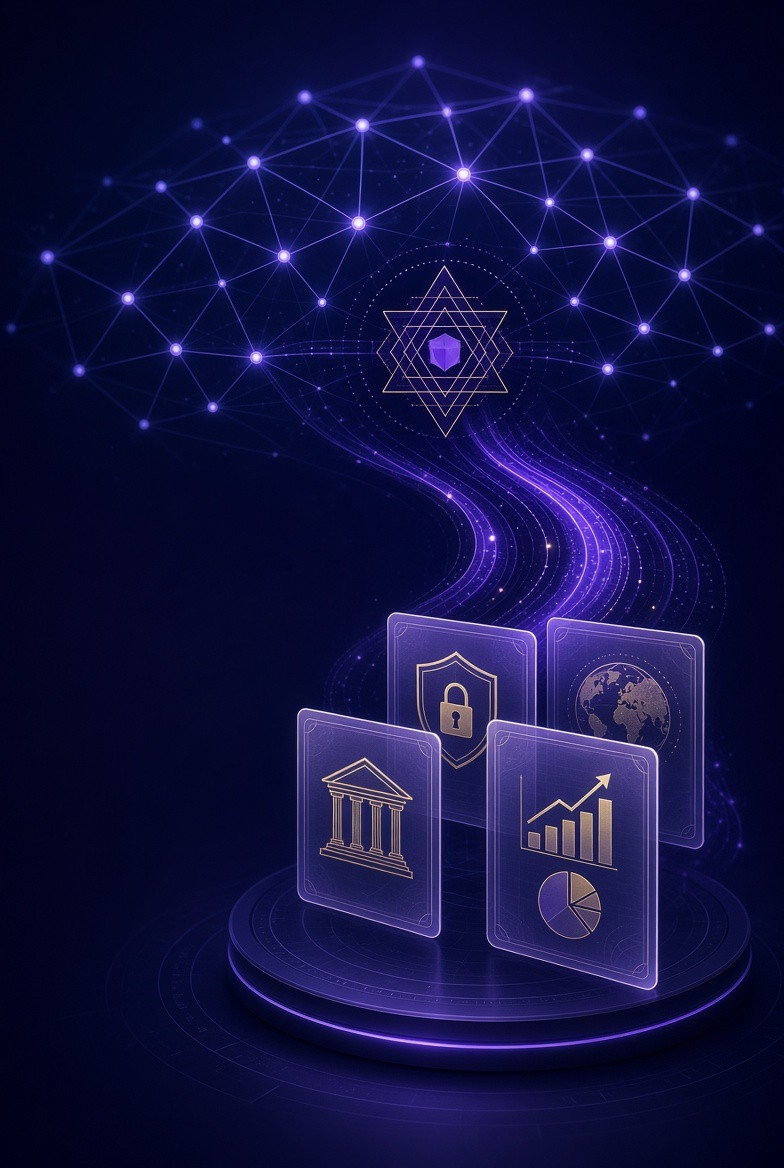
Die meisten Blockchains sprechen über Privatsphäre oder Compliance, aber Dusk kombiniert beides auf eine Weise, die tatsächlich für regulierte Märkte funktioniert. Es ist eine Layer-1, die für echte finanzielle Anwendungsfälle entwickelt wurde – Privatsphäre dort, wo man sie braucht, Transparenz dort, wo sie sinnvoll ist, und selektive Offenlegung, sodass autorisierte Parteien weiterhin prüfen können, wenn es erforderlich ist.
Das bevorstehende DuskEVM-Mainnet ist besonders spannend. Es eröffnet Entwicklern einen vertrauten Solidity-Pfad und unterstützt gleichzeitig vertrauliche Workflows über Hedger. Darüber hinaus will Dusk Trade tokenisierte Vermögenswerte wie Anleihen, ETFs und RWAs onchain bringen – mit sofortiger Abwicklung und einer korrekten regulatorischen Struktur.
Partnerschaften mit lizenzierten EU-Institutionen zeigen außerdem, dass sie es ernst meinen, echte Finanzmärkte onchain zu bringen – nicht nur, um aus Tokens heraus „irgendwie“ zu tokenisieren.
$DUSK
Bin gespannt, wie sich das entwickelt, sobald noch mehr der Plattform live geht.
Dämmerung
wird gerade aufgebaut, und das ist ziemlich erfrischend.
Die meisten Blockchains sprechen über Privatsphäre oder Compliance, aber Dusk kombiniert beides auf eine Weise, die tatsächlich für regulierte Märkte funktioniert. Es ist eine Layer-1, die für echte finanzielle Anwendungsfälle entwickelt wurde – Privatsphäre dort, wo man sie braucht, Transparenz dort, wo sie sinnvoll ist, und selektive Offenlegung, sodass autorisierte Parteien weiterhin prüfen können, wenn es erforderlich ist.
Das bevorstehende DuskEVM-Mainnet ist besonders spannend. Es eröffnet Entwicklern einen vertrauten Solidity-Pfad und unterstützt gleichzeitig vertrauliche Workflows über Hedger. Darüber hinaus will Dusk Trade tokenisierte Vermögenswerte wie Anleihen, ETFs und RWAs onchain bringen – mit sofortiger Abwicklung und einer korrekten regulatorischen Struktur.
Partnerschaften mit lizenzierten EU-Institutionen zeigen außerdem, dass sie es ernst meinen, echte Finanzmärkte onchain zu bringen – nicht nur, um aus Tokens heraus „irgendwie“ zu tokenisieren.
$DUSK
Bin gespannt, wie sich das entwickelt, sobald noch mehr der Plattform live geht.
WasiInsights
·
--
Bullisch#dusk $DUSK @Dusk
Dämmerung
wird gerade aufgebaut, und das ist ziemlich erfrischend.
Die meisten Blockchains sprechen über Privatsphäre oder Compliance, aber Dusk kombiniert beides auf eine Weise, die tatsächlich für regulierte Märkte funktioniert. Es ist eine Layer-1, die für echte finanzielle Anwendungsfälle entwickelt wurde – Privatsphäre dort, wo man sie braucht, Transparenz dort, wo sie sinnvoll ist, und selektive Offenlegung, sodass autorisierte Parteien weiterhin prüfen können, wenn es erforderlich ist.
Das bevorstehende DuskEVM-Mainnet ist besonders spannend. Es eröffnet Entwicklern einen vertrauten Solidity-Pfad und unterstützt gleichzeitig vertrauliche Workflows über Hedger. Darüber hinaus will Dusk Trade tokenisierte Vermögenswerte wie Anleihen, ETFs und RWAs onchain bringen – mit sofortiger Abwicklung und einer korrekten regulatorischen Struktur.
Partnerschaften mit lizenzierten EU-Institutionen zeigen außerdem, dass sie es ernst meinen, echte Finanzmärkte onchain zu bringen – nicht nur, um aus Tokens heraus „irgendwie“ zu tokenisieren.
$DUSK
Bin gespannt, wie sich das entwickelt, sobald noch mehr der Plattform live geht.
Dämmerung
wird gerade aufgebaut, und das ist ziemlich erfrischend.
Die meisten Blockchains sprechen über Privatsphäre oder Compliance, aber Dusk kombiniert beides auf eine Weise, die tatsächlich für regulierte Märkte funktioniert. Es ist eine Layer-1, die für echte finanzielle Anwendungsfälle entwickelt wurde – Privatsphäre dort, wo man sie braucht, Transparenz dort, wo sie sinnvoll ist, und selektive Offenlegung, sodass autorisierte Parteien weiterhin prüfen können, wenn es erforderlich ist.
Das bevorstehende DuskEVM-Mainnet ist besonders spannend. Es eröffnet Entwicklern einen vertrauten Solidity-Pfad und unterstützt gleichzeitig vertrauliche Workflows über Hedger. Darüber hinaus will Dusk Trade tokenisierte Vermögenswerte wie Anleihen, ETFs und RWAs onchain bringen – mit sofortiger Abwicklung und einer korrekten regulatorischen Struktur.
Partnerschaften mit lizenzierten EU-Institutionen zeigen außerdem, dass sie es ernst meinen, echte Finanzmärkte onchain zu bringen – nicht nur, um aus Tokens heraus „irgendwie“ zu tokenisieren.
$DUSK
Bin gespannt, wie sich das entwickelt, sobald noch mehr der Plattform live geht.
WasiInsights
·
--
#dusk $DUSK @Dusk
Ich habe mir Zeit genommen, in @Dusk einzutauchen, und bin beeindruckt von dem Fokus auf Privatsphäre + Compliance.
$DUSK baut vertrauliche Smart Contracts, die für Institutionen wirklich Sinn ergeben. In einem Markt voller Lärm löst Dusk ein echtes Problem: Wie machen wir DeFi, ohne alles on-chain offenzulegen?
Die Technik ist solide, aber was besonders heraussticht, ist die Vision des Teams. Sie jagen nicht dem kurzfristigen Hype hinterher. Sie bauen Infrastruktur für die nächsten 10 Jahre.
Für mich ist das Highlight, wie DUSK Privatsphäre mit Regulierung in Einklang bringt. Das ist das fehlende Puzzleteil für die Massenadoption.
Ich bin gespannt, was die Community denkt — ist Privatsphäre die nächste große Story in Krypto?
@Dusk
#dusk #DuskNetwork #Privacy #Web3 #Crypto #RWA #BinanceSquare
Ich habe mir Zeit genommen, in @Dusk einzutauchen, und bin beeindruckt von dem Fokus auf Privatsphäre + Compliance.
$DUSK baut vertrauliche Smart Contracts, die für Institutionen wirklich Sinn ergeben. In einem Markt voller Lärm löst Dusk ein echtes Problem: Wie machen wir DeFi, ohne alles on-chain offenzulegen?
Die Technik ist solide, aber was besonders heraussticht, ist die Vision des Teams. Sie jagen nicht dem kurzfristigen Hype hinterher. Sie bauen Infrastruktur für die nächsten 10 Jahre.
Für mich ist das Highlight, wie DUSK Privatsphäre mit Regulierung in Einklang bringt. Das ist das fehlende Puzzleteil für die Massenadoption.
Ich bin gespannt, was die Community denkt — ist Privatsphäre die nächste große Story in Krypto?
@Dusk
#dusk #DuskNetwork #Privacy #Web3 #Crypto #RWA #BinanceSquare
WasiInsights
·
--
Bullisch#dusk $DUSK @Dusk
Die nächste große Welle im Kryptobereich wird nicht von Memes angetrieben. Sie wird von Real World Assets (Realwerten) angetrieben.
Institutionen halten derzeit Billionen in Aktien, Anleihen, Schatzwechseln und Fonds. Allerdings können sie diese Assets nicht auf die Chain bringen, weil öffentliche Blockchains alles offenlegen. Wallet-Salden, Handelsdetails und Kundendaten sind allesamt sichtbar. Das schafft erhebliche Compliance- und Datenschutzprobleme.
Genau dieses Problem löst @Dusk mit $DUSK.
Dusk baut vertrauliche Smart Contracts, die per Design compliant sind. So können Institutionen reale Vermögenswerte tokenisieren und onchain abwickeln, während sensible Daten privat bleiben. Regulierungsbehörden behalten die Aufsicht. Nutzer behalten ihre Privatsphäre.
Während sich die meisten Projekte auf kurzfristigen Hype konzentrieren, baut @Dusk die zentrale Infrastruktur für das nächste Jahrzehnt des Finanzwesens.
Wenn RWAs auf der Chain skaliert werden, brauchen sie sowohl Privatsphäre als auch Compliance. $DUSK ist genau dafür entwickelt worden.
Das ist echte Utility. Deshalb bin ich langfristig optimistisch in Bezug auf Dusk. #dusk
Die nächste große Welle im Kryptobereich wird nicht von Memes angetrieben. Sie wird von Real World Assets (Realwerten) angetrieben.
Institutionen halten derzeit Billionen in Aktien, Anleihen, Schatzwechseln und Fonds. Allerdings können sie diese Assets nicht auf die Chain bringen, weil öffentliche Blockchains alles offenlegen. Wallet-Salden, Handelsdetails und Kundendaten sind allesamt sichtbar. Das schafft erhebliche Compliance- und Datenschutzprobleme.
Genau dieses Problem löst @Dusk mit $DUSK.
Dusk baut vertrauliche Smart Contracts, die per Design compliant sind. So können Institutionen reale Vermögenswerte tokenisieren und onchain abwickeln, während sensible Daten privat bleiben. Regulierungsbehörden behalten die Aufsicht. Nutzer behalten ihre Privatsphäre.
Während sich die meisten Projekte auf kurzfristigen Hype konzentrieren, baut @Dusk die zentrale Infrastruktur für das nächste Jahrzehnt des Finanzwesens.
Wenn RWAs auf der Chain skaliert werden, brauchen sie sowohl Privatsphäre als auch Compliance. $DUSK ist genau dafür entwickelt worden.
Das ist echte Utility. Deshalb bin ich langfristig optimistisch in Bezug auf Dusk. #dusk
Rida Malik7
·
--
Bullisch#dusk $DUSK @Dusk “A client invited me to his farmhouse to discuss closing a $4.5 million deal. How should I handle this professionally while protecting my boundaries?”
Märkte verändern sich, wenn Technologie schneller wird. Sie verändern sich, wenn es zu teuer wird, die Kosten für die Koordination von Vertrauen zwischen Menschen zu ignorieren.
Was in Europa passiert, ist wirklich interessant. Die große Chance liegt möglicherweise nicht darin, Wertpapiere auf eine Blockchain zu setzen. Sondern darin, den gesamten Arbeitsablauf rund um Wertpapiere neu aufzubauen.
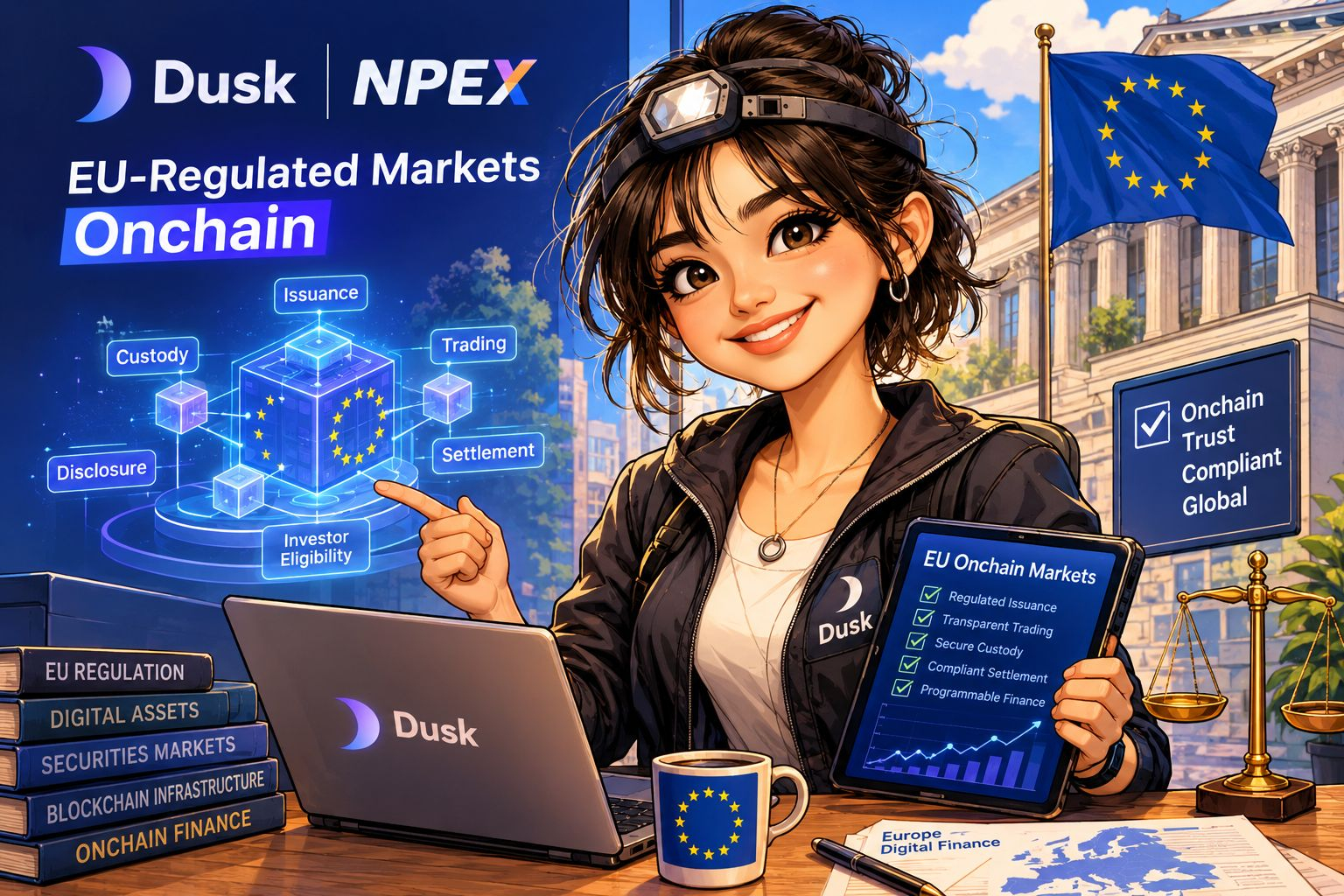
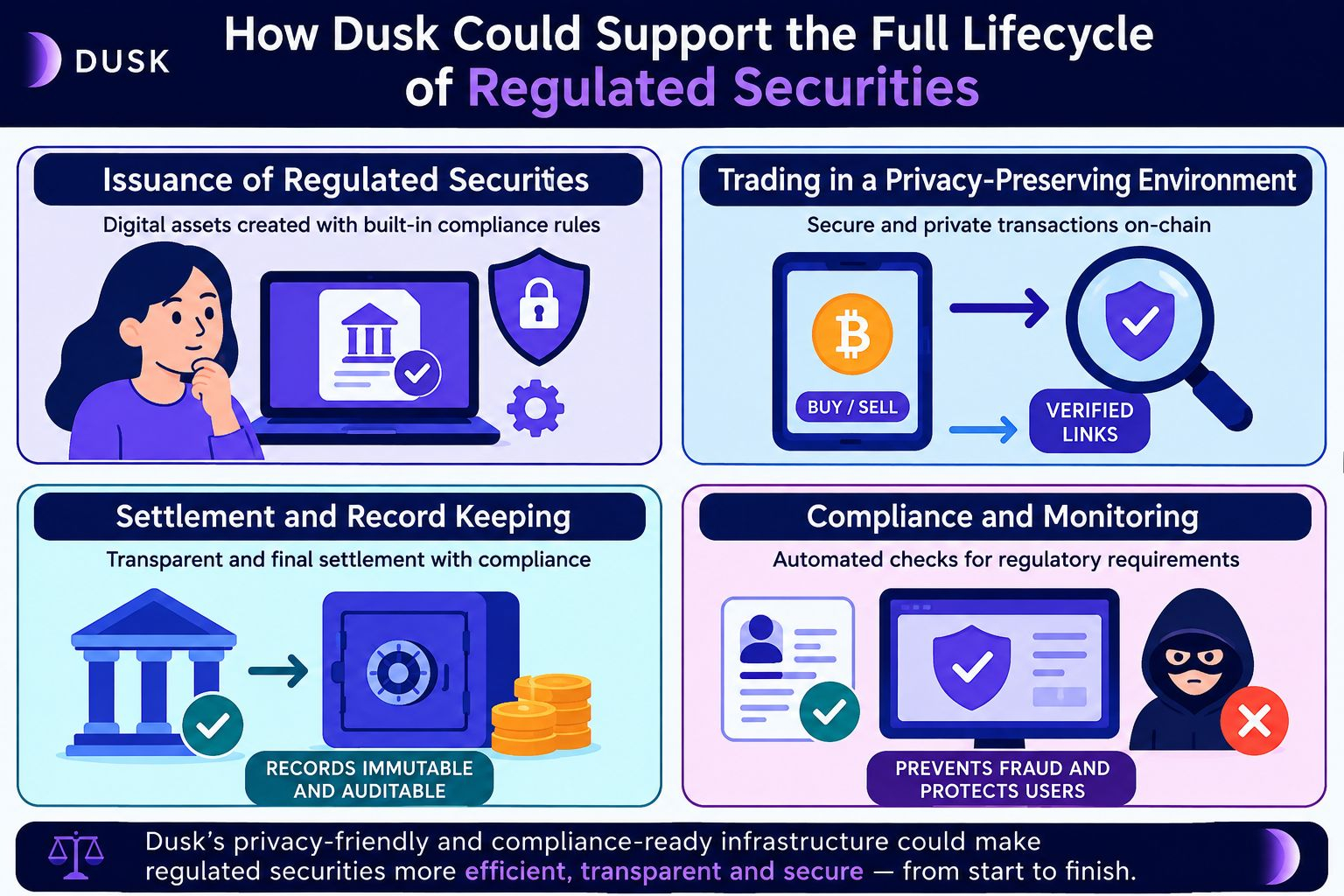
Was wäre, wenn Emission, Anlegerberechtigung, Handel, Verwahrung, Offenlegung und Abwicklung alles im System stattfinden?
Hier werden Dusk und NPEX wirklich spannend. NPEX ist ein Ort, an dem Menschen Wertpapiere kaufen und verkaufen können. Er ist reguliert. Dusk und NPEX arbeiten zusammen, um zu prüfen, ob sie Blockchain-Technologie nutzen können, um regulierte Märkte besser zu machen.
Die große Veränderung liegt in der Architektur. Nicht einfach Blockchain-Technologie an die Art und Weise anzufügen, wie finanzielle Dinge erledigt werden – Märkte könnten tatsächlich zu Workflows werden, die auf einer Blockchain stattfinden, mit Datenschutz und der Möglichkeit, Informationen nur bestimmten Personen offenzulegen, direkt integriert.
Regulierung ist eine große Frage. Wer entscheidet darüber, wer auf das System zugreifen darf und wie viele Informationen mit allen geteilt werden sollen?
Wenn diese Art, Dinge zu tun, tatsächlich funktioniert, könnte reguliertes Finanzwesen zu etwas werden, das man programmieren und automatisieren kann, ohne die Regeln aufzugeben, die Menschen darauf vertrauen lassen. Reguliertes Finanzwesen könnte vertrauenswürdig sein. Und außerdem programmierbar – was für Dusk und NPEX und für Märkte im Allgemeinen eine große Sache wäre.@Dusk $ACE
$METAB
Märkte verändern sich, wenn Technologie schneller wird. Sie verändern sich, wenn es zu teuer wird, die Kosten für die Koordination von Vertrauen zwischen Menschen zu ignorieren.
Was in Europa passiert, ist wirklich interessant. Die große Chance liegt möglicherweise nicht darin, Wertpapiere auf eine Blockchain zu setzen. Sondern darin, den gesamten Arbeitsablauf rund um Wertpapiere neu aufzubauen.
Was wäre, wenn Emission, Anlegerberechtigung, Handel, Verwahrung, Offenlegung und Abwicklung alles im System stattfinden?
Hier werden Dusk und NPEX wirklich spannend. NPEX ist ein Ort, an dem Menschen Wertpapiere kaufen und verkaufen können. Er ist reguliert. Dusk und NPEX arbeiten zusammen, um zu prüfen, ob sie Blockchain-Technologie nutzen können, um regulierte Märkte besser zu machen.
Die große Veränderung liegt in der Architektur. Nicht einfach Blockchain-Technologie an die Art und Weise anzufügen, wie finanzielle Dinge erledigt werden – Märkte könnten tatsächlich zu Workflows werden, die auf einer Blockchain stattfinden, mit Datenschutz und der Möglichkeit, Informationen nur bestimmten Personen offenzulegen, direkt integriert.
Regulierung ist eine große Frage. Wer entscheidet darüber, wer auf das System zugreifen darf und wie viele Informationen mit allen geteilt werden sollen?
Wenn diese Art, Dinge zu tun, tatsächlich funktioniert, könnte reguliertes Finanzwesen zu etwas werden, das man programmieren und automatisieren kann, ohne die Regeln aufzugeben, die Menschen darauf vertrauen lassen. Reguliertes Finanzwesen könnte vertrauenswürdig sein. Und außerdem programmierbar – was für Dusk und NPEX und für Märkte im Allgemeinen eine große Sache wäre.@Dusk $ACE
$METAB
Rida Malik7
·
--
Bullisch#dusk $DUSK @Dusk Heute Morgen kam ein Pärchen zu mir nach Hause, um ein Zimmer zu mieten. Als sie reinkamen, bemerkte ich, dass sie über Dusk sprachen. Da ich auch Dusk erforsche, habe ich mich ins Gespräch eingemischt und ihnen ein paar Fragen gestellt. Es war eine interessante und unerwartete Unterhaltung.
Das Merkwürdige an finanzieller Transparenz ist, dass zu viel davon einen Markt weniger vertrauenswürdig machen kann. Ein System, das alles offenlegt, mag zwar Aufrichtigkeit beweisen, gleichzeitig aber die Personen entlarven, die es nutzen.
Diese Spannung begleitet Blockchain seit Anfang an. Öffentliche Register machen die Verifikation leicht, aber Finanzinstitute können realistisch betrachtet nicht für jeden, der sie prüfen möchte, jedes Kontostand-, Transaktions- oder Identitätsdetail veröffentlichen.
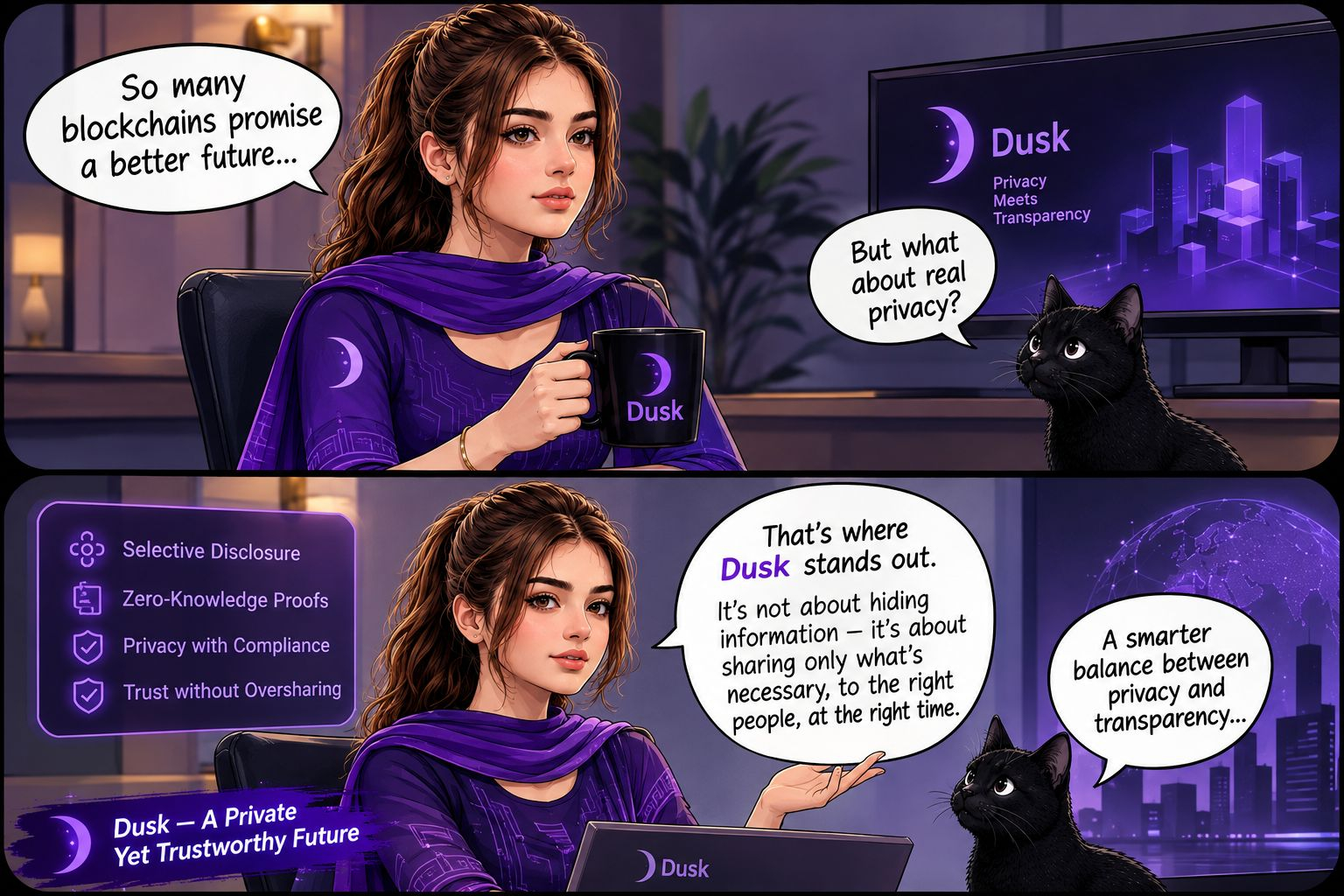
Hier finde ich Dusk interessant – nicht, weil es Privatsphäre Transparenz vorzieht, sondern weil es die Frage aufwirft, ob diese überhaupt Gegensätze sein müssen.
Dusk kombiniert öffentliche und verschleierte Transaktionsmodelle mit Zero-Knowledge-Beweisen und selektiver Offenlegung. Seine Citadel-Identitätsschicht ist so gestaltet, dass relevante Eigenschaften nachgewiesen werden können, ohne die zugrunde liegenden Informationen unnötig offenzulegen.
Die tiefere Idee ist einfach: Transparenz sollte zu einer freigegebenen Information werden, nicht zu einer dauerhaften Preisgabe.
Aber das wirft eine weitere Frage auf: Wer entscheidet, was offengelegt werden muss, und können diese Regeln weiterhin vertrauenswürdig bleiben, während Finanzmärkte zunehmend programmierbar werden?@Dusk $HEMI
$METAB
Das Merkwürdige an finanzieller Transparenz ist, dass zu viel davon einen Markt weniger vertrauenswürdig machen kann. Ein System, das alles offenlegt, mag zwar Aufrichtigkeit beweisen, gleichzeitig aber die Personen entlarven, die es nutzen.
Diese Spannung begleitet Blockchain seit Anfang an. Öffentliche Register machen die Verifikation leicht, aber Finanzinstitute können realistisch betrachtet nicht für jeden, der sie prüfen möchte, jedes Kontostand-, Transaktions- oder Identitätsdetail veröffentlichen.
Hier finde ich Dusk interessant – nicht, weil es Privatsphäre Transparenz vorzieht, sondern weil es die Frage aufwirft, ob diese überhaupt Gegensätze sein müssen.
Dusk kombiniert öffentliche und verschleierte Transaktionsmodelle mit Zero-Knowledge-Beweisen und selektiver Offenlegung. Seine Citadel-Identitätsschicht ist so gestaltet, dass relevante Eigenschaften nachgewiesen werden können, ohne die zugrunde liegenden Informationen unnötig offenzulegen.
Die tiefere Idee ist einfach: Transparenz sollte zu einer freigegebenen Information werden, nicht zu einer dauerhaften Preisgabe.
Aber das wirft eine weitere Frage auf: Wer entscheidet, was offengelegt werden muss, und können diese Regeln weiterhin vertrauenswürdig bleiben, während Finanzmärkte zunehmend programmierbar werden?@Dusk $HEMI
$METAB
WasiInsights
·
--
#dusk $DUSK @Dusk
Ich habe mir Zeit genommen, in @Dusk einzutauchen, und bin beeindruckt von dem Fokus auf Privatsphäre + Compliance.
$DUSK baut vertrauliche Smart Contracts, die für Institutionen wirklich Sinn ergeben. In einem Markt voller Lärm löst Dusk ein echtes Problem: Wie machen wir DeFi, ohne alles on-chain offenzulegen?
Die Technik ist solide, aber was besonders heraussticht, ist die Vision des Teams. Sie jagen nicht dem kurzfristigen Hype hinterher. Sie bauen Infrastruktur für die nächsten 10 Jahre.
Für mich ist das Highlight, wie DUSK Privatsphäre mit Regulierung in Einklang bringt. Das ist das fehlende Puzzleteil für die Massenadoption.
Ich bin gespannt, was die Community denkt — ist Privatsphäre die nächste große Story in Krypto?
@Dusk
#dusk #DuskNetwork #Privacy #Web3 #Crypto #RWA #BinanceSquare
Ich habe mir Zeit genommen, in @Dusk einzutauchen, und bin beeindruckt von dem Fokus auf Privatsphäre + Compliance.
$DUSK baut vertrauliche Smart Contracts, die für Institutionen wirklich Sinn ergeben. In einem Markt voller Lärm löst Dusk ein echtes Problem: Wie machen wir DeFi, ohne alles on-chain offenzulegen?
Die Technik ist solide, aber was besonders heraussticht, ist die Vision des Teams. Sie jagen nicht dem kurzfristigen Hype hinterher. Sie bauen Infrastruktur für die nächsten 10 Jahre.
Für mich ist das Highlight, wie DUSK Privatsphäre mit Regulierung in Einklang bringt. Das ist das fehlende Puzzleteil für die Massenadoption.
Ich bin gespannt, was die Community denkt — ist Privatsphäre die nächste große Story in Krypto?
@Dusk
#dusk #DuskNetwork #Privacy #Web3 #Crypto #RWA #BinanceSquare
WasiInsights
·
--
Bullisch#dusk $DUSK @Dusk
Die nächste große Welle im Kryptobereich wird nicht von Memes angetrieben. Sie wird von Real World Assets (Realwerten) angetrieben.
Institutionen halten derzeit Billionen in Aktien, Anleihen, Schatzwechseln und Fonds. Allerdings können sie diese Assets nicht auf die Chain bringen, weil öffentliche Blockchains alles offenlegen. Wallet-Salden, Handelsdetails und Kundendaten sind allesamt sichtbar. Das schafft erhebliche Compliance- und Datenschutzprobleme.
Genau dieses Problem löst @Dusk mit $DUSK.
Dusk baut vertrauliche Smart Contracts, die per Design compliant sind. So können Institutionen reale Vermögenswerte tokenisieren und onchain abwickeln, während sensible Daten privat bleiben. Regulierungsbehörden behalten die Aufsicht. Nutzer behalten ihre Privatsphäre.
Während sich die meisten Projekte auf kurzfristigen Hype konzentrieren, baut @Dusk die zentrale Infrastruktur für das nächste Jahrzehnt des Finanzwesens.
Wenn RWAs auf der Chain skaliert werden, brauchen sie sowohl Privatsphäre als auch Compliance. $DUSK ist genau dafür entwickelt worden.
Das ist echte Utility. Deshalb bin ich langfristig optimistisch in Bezug auf Dusk. #dusk
Die nächste große Welle im Kryptobereich wird nicht von Memes angetrieben. Sie wird von Real World Assets (Realwerten) angetrieben.
Institutionen halten derzeit Billionen in Aktien, Anleihen, Schatzwechseln und Fonds. Allerdings können sie diese Assets nicht auf die Chain bringen, weil öffentliche Blockchains alles offenlegen. Wallet-Salden, Handelsdetails und Kundendaten sind allesamt sichtbar. Das schafft erhebliche Compliance- und Datenschutzprobleme.
Genau dieses Problem löst @Dusk mit $DUSK.
Dusk baut vertrauliche Smart Contracts, die per Design compliant sind. So können Institutionen reale Vermögenswerte tokenisieren und onchain abwickeln, während sensible Daten privat bleiben. Regulierungsbehörden behalten die Aufsicht. Nutzer behalten ihre Privatsphäre.
Während sich die meisten Projekte auf kurzfristigen Hype konzentrieren, baut @Dusk die zentrale Infrastruktur für das nächste Jahrzehnt des Finanzwesens.
Wenn RWAs auf der Chain skaliert werden, brauchen sie sowohl Privatsphäre als auch Compliance. $DUSK ist genau dafür entwickelt worden.
Das ist echte Utility. Deshalb bin ich langfristig optimistisch in Bezug auf Dusk. #dusk
Rida Malik7
·
--
Bullisch#dusk $DUSK
Gestern hat mein Chef etwas getan, das mich im Büro unangenehm berührt hat. Ich beschloss, früher nach Hause zu gehen. Ich fing an, auf mein Handy zu schauen, und sah einen Artikel über Dusk, also begann ich, ihn zu lesen.
Was wirklich meine Aufmerksamkeit auf sich zog, war nicht noch eine weitere Geschichte darüber, wie Blockchain die Art und Weise verändern wird, wie wir Finanzen machen. Es war eine einfache Frage: Was passiert, wenn Geld und Investitionen in jedem Schritt der Strecke Regeln befolgen müssen?
Wenn man etwas kauft oder verkauft, das reguliert ist, geht es nicht nur ums Kaufen und Verkaufen. Es gibt viele Dinge, die passieren müssen: zum Beispiel prüfen, wer man ist, sicherstellen, dass man dazu berechtigt ist, es zu besitzen, alles nachvollziehen und schließlich sein Geld wiederbekommen. Üblicherweise übernehmen verschiedene Gruppen von Menschen diese Aufgaben. Das kann es schwieriger und teurer machen.
Je mehr ich über Dusk gelernt habe, desto interessanter fand ich das. Dusk konzentriert sich darauf, Dinge privat zu halten, sicherzustellen, dass sich alle an die Regeln halten, und ein System zu schaffen, das programmiert werden kann. Das bringt mich zu der Idee, dass wir vielleicht keine Regeln nachträglich hinzufügen müssen, nachdem etwas bereits gehandelt wurde. Vielleicht können wir das Befolgen der Regeln von Anfang an zum Prozess machen.
Das ist ein Geschäft. Manche Leute wollen wissen, was gerade alles passiert, während andere Dinge geheim halten müssen. Die Menschen, die die Regeln festlegen, müssen sehen können, was passiert, aber Unternehmen können nicht einfach all ihre Geheimnisse mit allen teilen.
Dusk Art, die Dinge zu tun, bringt mich zu einer Frage: Können wir Blockchain nutzen, um sicherzustellen, dass alle die Regeln einhalten, ohne dabei unser Recht auf Privatsphäre zu verlieren, wenn es um Geld geht?
Wenn wir anfangen, Blockchain zu nutzen, um Dinge zu handeln, dann ist das beste System vielleicht nicht das lauteste oder das schnellste. Es könnte das sein, das Dinge privat hält, die Regeln befolgt und zugleich es leicht macht, Geschäfte zu machen.@Dusk $METAB
$HEMI
Gestern hat mein Chef etwas getan, das mich im Büro unangenehm berührt hat. Ich beschloss, früher nach Hause zu gehen. Ich fing an, auf mein Handy zu schauen, und sah einen Artikel über Dusk, also begann ich, ihn zu lesen.
Was wirklich meine Aufmerksamkeit auf sich zog, war nicht noch eine weitere Geschichte darüber, wie Blockchain die Art und Weise verändern wird, wie wir Finanzen machen. Es war eine einfache Frage: Was passiert, wenn Geld und Investitionen in jedem Schritt der Strecke Regeln befolgen müssen?
Wenn man etwas kauft oder verkauft, das reguliert ist, geht es nicht nur ums Kaufen und Verkaufen. Es gibt viele Dinge, die passieren müssen: zum Beispiel prüfen, wer man ist, sicherstellen, dass man dazu berechtigt ist, es zu besitzen, alles nachvollziehen und schließlich sein Geld wiederbekommen. Üblicherweise übernehmen verschiedene Gruppen von Menschen diese Aufgaben. Das kann es schwieriger und teurer machen.
Je mehr ich über Dusk gelernt habe, desto interessanter fand ich das. Dusk konzentriert sich darauf, Dinge privat zu halten, sicherzustellen, dass sich alle an die Regeln halten, und ein System zu schaffen, das programmiert werden kann. Das bringt mich zu der Idee, dass wir vielleicht keine Regeln nachträglich hinzufügen müssen, nachdem etwas bereits gehandelt wurde. Vielleicht können wir das Befolgen der Regeln von Anfang an zum Prozess machen.
Das ist ein Geschäft. Manche Leute wollen wissen, was gerade alles passiert, während andere Dinge geheim halten müssen. Die Menschen, die die Regeln festlegen, müssen sehen können, was passiert, aber Unternehmen können nicht einfach all ihre Geheimnisse mit allen teilen.
Dusk Art, die Dinge zu tun, bringt mich zu einer Frage: Können wir Blockchain nutzen, um sicherzustellen, dass alle die Regeln einhalten, ohne dabei unser Recht auf Privatsphäre zu verlieren, wenn es um Geld geht?
Wenn wir anfangen, Blockchain zu nutzen, um Dinge zu handeln, dann ist das beste System vielleicht nicht das lauteste oder das schnellste. Es könnte das sein, das Dinge privat hält, die Regeln befolgt und zugleich es leicht macht, Geschäfte zu machen.@Dusk $METAB
$HEMI
WasiInsights
·
--
Bärisch*BREAKING: Lokaler Mann kauft $10 Krypto*
Jetzt checkt er die Charts alle 12 Sekunden wie ein NASA-Ingenieur 📊🤡
Bist du dieser Typ? $PEPE
#Bitcoin #Crypto #Web3 🚀
Jetzt checkt er die Charts alle 12 Sekunden wie ein NASA-Ingenieur 📊🤡
Bist du dieser Typ? $PEPE
#Bitcoin #Crypto #Web3 🚀
Anmelden und weiter Inhalte entdecken