
babulivo
145 Beiträge

babulivo
45 Following
48 Follower
189 Like gegeben
Beiträge
Alle
Zitierungen
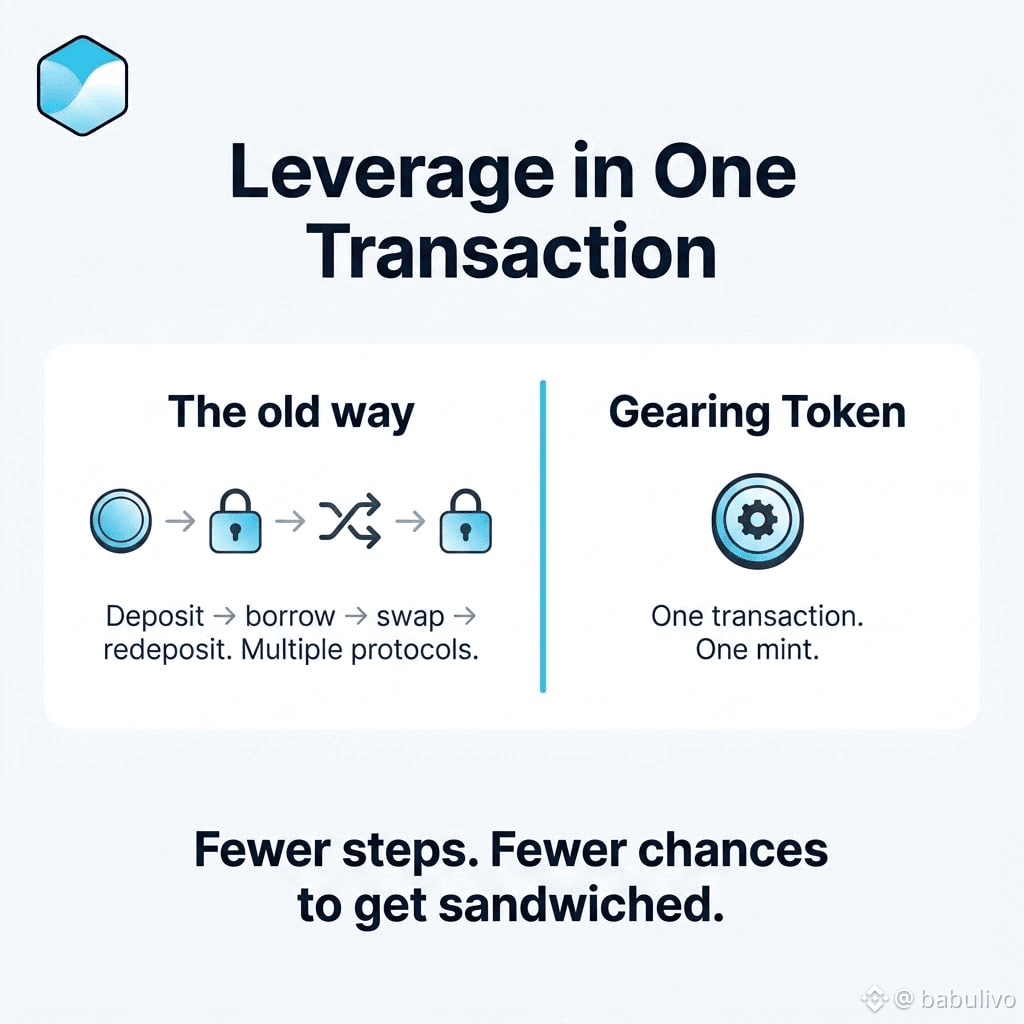
Normalerweise bedeutet der Erhalt von gehebeltet Exponierung in DeFi eine ganze Abfolge manueller Schritte: Sicherheiten hinterlegen, dagegen Kredite aufnehmen, das geliehene Asset umtauschen, erneut einzahlen – manchmal sogar über zwei oder drei verschiedene Protokolle, nur um eine einzige gehebelte Position zu eröffnen.
TermMax bündelt diese gesamte Abfolge in etwas, das als Gearing Token bezeichnet wird. Eine einzige Transaktion, und der Leverage‑Prozess, der mehrere Schritte (und mehrere Gelegenheiten, dabei etwas falschzumachen oder Opfer von Sandwich-Angriffen zu werden) erfordert hätte, geschieht als ein einziges Token‑Mint.
Das fühlt sich an, als würde es die Art von Risiko leise aus dem Weg räumen, über die Menschen sonst kaum sprechen. Jeder zusätzliche manuelle Schritt in einer Leverage‑Schleife ist eine weitere Stelle, an der Slippage oder eine fehlgeschlagene Transaktion die Position ruinieren kann, bevor sie überhaupt geöffnet ist.
Hat hier jemand tatsächlich schon eine Leverage‑Position auf die alte, manuelle Weise über mehrere Protokolle hinweg aufgebaut? Mich würde interessieren, wie viel Aufwand das im Vergleich dazu wirklich war.
#termmax @TermMax
TermMax bündelt diese gesamte Abfolge in etwas, das als Gearing Token bezeichnet wird. Eine einzige Transaktion, und der Leverage‑Prozess, der mehrere Schritte (und mehrere Gelegenheiten, dabei etwas falschzumachen oder Opfer von Sandwich-Angriffen zu werden) erfordert hätte, geschieht als ein einziges Token‑Mint.
Das fühlt sich an, als würde es die Art von Risiko leise aus dem Weg räumen, über die Menschen sonst kaum sprechen. Jeder zusätzliche manuelle Schritt in einer Leverage‑Schleife ist eine weitere Stelle, an der Slippage oder eine fehlgeschlagene Transaktion die Position ruinieren kann, bevor sie überhaupt geöffnet ist.
Hat hier jemand tatsächlich schon eine Leverage‑Position auf die alte, manuelle Weise über mehrere Protokolle hinweg aufgebaut? Mich würde interessieren, wie viel Aufwand das im Vergleich dazu wirklich war.
#termmax @TermMax
Verifiziert
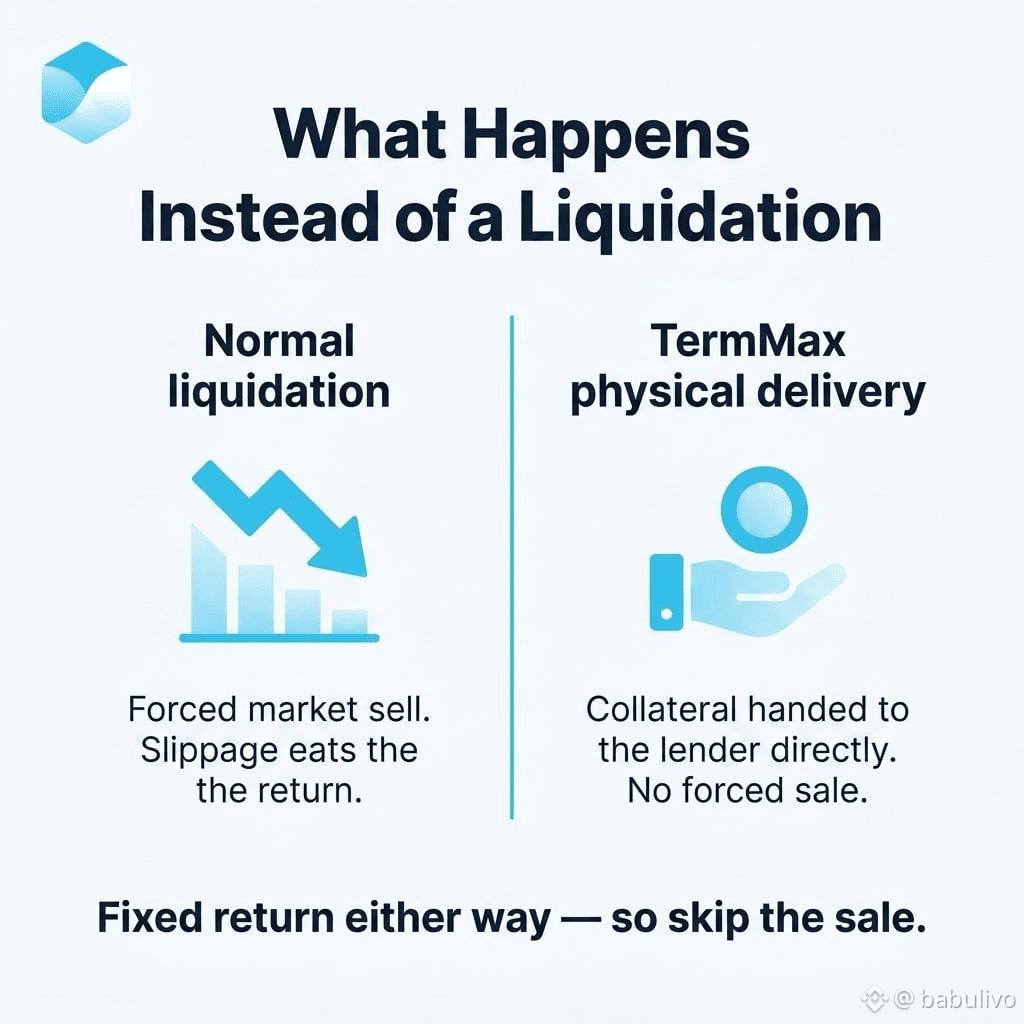
normalerweise passiert Folgendes, wenn ein Kreditprotokoll in extreme Volatilität oder geringe Liquidität gerät: erzwungene Liquidation, Sicherheiten werden auf dem offenen Markt abgestoßen, und der Kreditgeber frisst die gesamte dadurch entstehende Slippage
TermMax hat diesen Mechanismus der physischen Lieferung, den ich nicht kannte, bis ich in die Doku eingetaucht bin. statt während schlechten Bedingungen einen Liquidationsverkauf zu erzwingen, liefert das Protokoll die Sicherheiten einfach selbst direkt an den Kreditgeber als Ausgleich. kein erzwungenes Marktsell, keine zusätzliche Slippage, weil man in ein dünnes Orderbuch dumpen müsste
ergibt Sinn, wenn man darüber nachdenkt -> dem Kreditgeber wurde unabhängig vom Ausgang eine feste Rendite versprochen, also warum überhaupt über einen Liquidationsverkauf laufen, wenn man das Asset einfach direkt übergeben kann?
fühlt sich an wie ein Detail, an das die meisten nie denken, bis genau der Moment kommt, in dem sie es tatsächlich brauchen
hat das jemandem wirklich diesen Trigger ausgelöst, oder ist das eher so eine Funktion im Sinne von „gut zu wissen, dass es sie gibt“?
#termmax @TermMax
TermMax hat diesen Mechanismus der physischen Lieferung, den ich nicht kannte, bis ich in die Doku eingetaucht bin. statt während schlechten Bedingungen einen Liquidationsverkauf zu erzwingen, liefert das Protokoll die Sicherheiten einfach selbst direkt an den Kreditgeber als Ausgleich. kein erzwungenes Marktsell, keine zusätzliche Slippage, weil man in ein dünnes Orderbuch dumpen müsste
ergibt Sinn, wenn man darüber nachdenkt -> dem Kreditgeber wurde unabhängig vom Ausgang eine feste Rendite versprochen, also warum überhaupt über einen Liquidationsverkauf laufen, wenn man das Asset einfach direkt übergeben kann?
fühlt sich an wie ein Detail, an das die meisten nie denken, bis genau der Moment kommt, in dem sie es tatsächlich brauchen
hat das jemandem wirklich diesen Trigger ausgelöst, oder ist das eher so eine Funktion im Sinne von „gut zu wissen, dass es sie gibt“?
#termmax @TermMax
Verifiziert
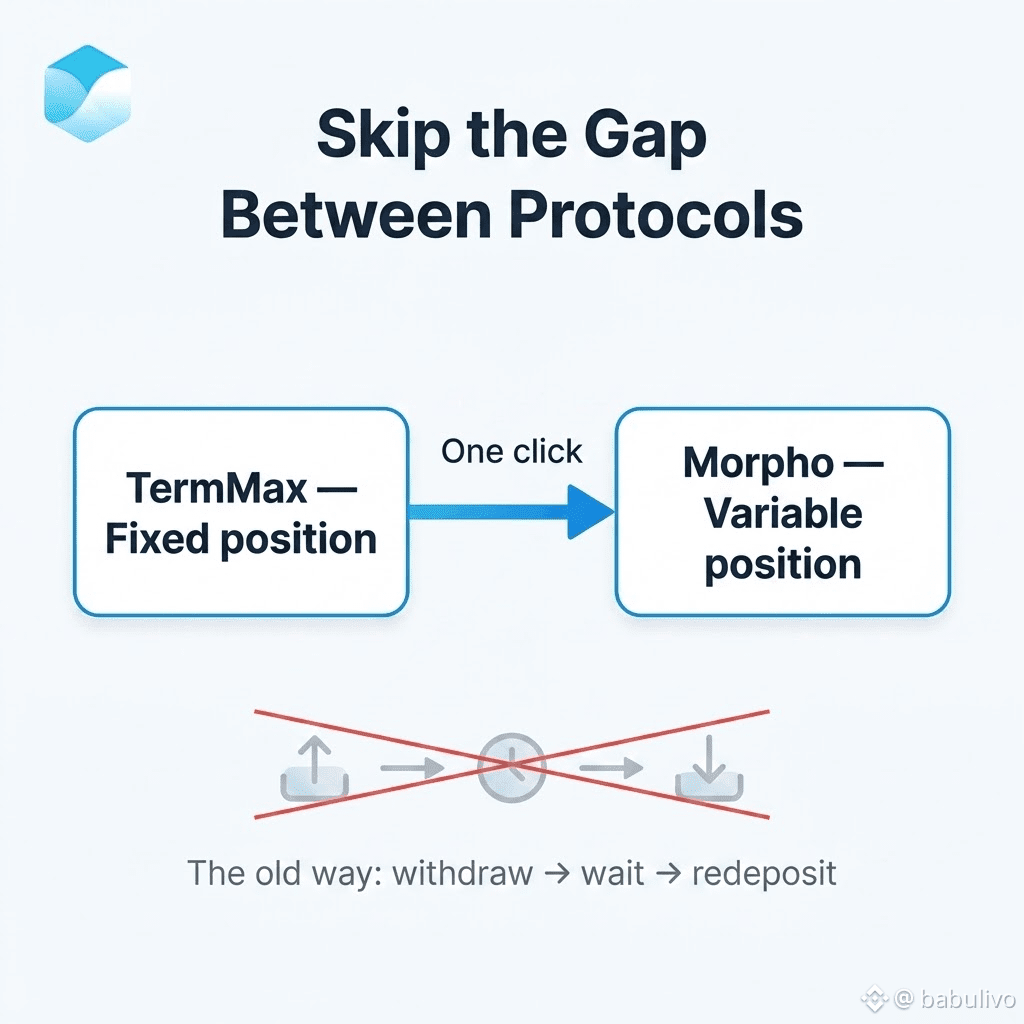
Normalerweise bedeutet das Zurückrollen einer Position von einem Protokoll zum anderen: auszahlen, warten, ggf. brücken, erneut einzahlen und hoffen, dass zwischenzeitlich nichts kaputtgeht. So lief DeFi jahrelang.
TermMax überspringt für diesen konkreten Schritt alles davon. Du kannst eine feste Position auf TermMax in einer einzigen Aktion direkt in eine variable Position auf Morpho übertragen – kein manuelles Withdraw-/Redeploy-Zyklus dazwischen. Oder du steigst aus, bevor sie fällig wird, falls du früher raus willst.
Erst wirkt es wie ein kleines UX-Detail, bis du dir vor Augen führst, wie viel Slippage/Gas/Ausfallzeit normalerweise in dieser Lücke zwischen Protokollen entsteht. Das hier entfernt genau diese Lücke.
Hat das schon jemand wirklich für ein Rollover genutzt oder macht ihr es immer noch auf die alte manuelle Art?
#termmax @TermMax
TermMax überspringt für diesen konkreten Schritt alles davon. Du kannst eine feste Position auf TermMax in einer einzigen Aktion direkt in eine variable Position auf Morpho übertragen – kein manuelles Withdraw-/Redeploy-Zyklus dazwischen. Oder du steigst aus, bevor sie fällig wird, falls du früher raus willst.
Erst wirkt es wie ein kleines UX-Detail, bis du dir vor Augen führst, wie viel Slippage/Gas/Ausfallzeit normalerweise in dieser Lücke zwischen Protokollen entsteht. Das hier entfernt genau diese Lücke.
Hat das schon jemand wirklich für ein Rollover genutzt oder macht ihr es immer noch auf die alte manuelle Art?
#termmax @TermMax
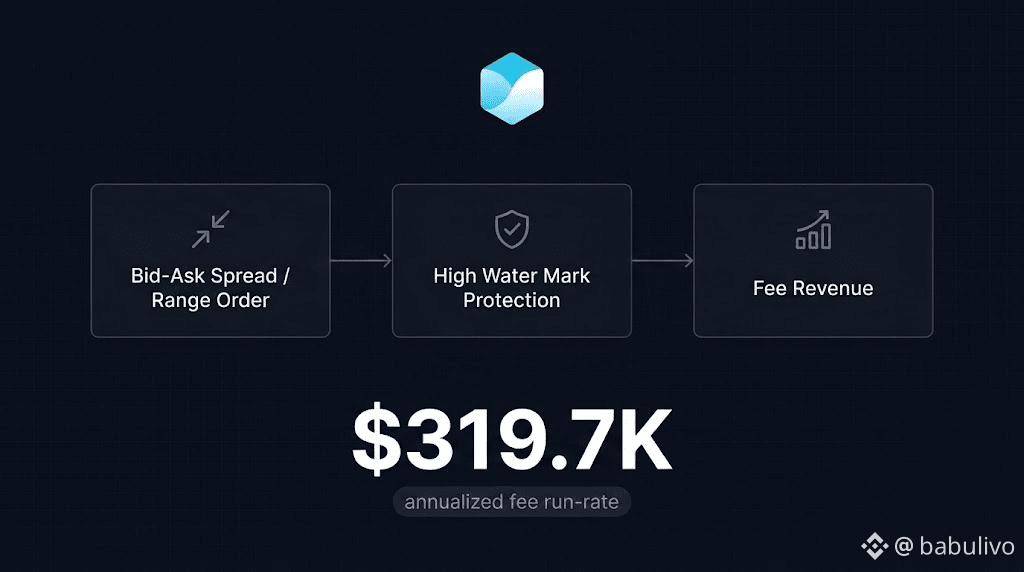
Das Kuratorenmodell von TermMax ist nicht einfach nur „jemand verwaltet einen Tresor“: Kuratoren setzen aktiv Geld-Brief-Spreads auf befristete Kredite über Range Orders fest und agieren im Grunde wie Anleihehändler, die unterschiedliche Laufzeiten bepreisen.
Das ist eine Market-Making-Rolle, die an ein Risikomanagement gekoppelt ist – etwas, das ich so direkt nirgendwo sonst gesehen habe.
Der Teil, den ich wirklich mag: Performance Fees greifen erst oberhalb eines High Water Mark; Kuratoren können Gewinne nicht einsammeln, bevor sie zuvor entstandene Verluste erst ausgeglichen haben. Keine Gratisfahrten auf Volatilität.
Bei einer annualisierten Gebühr von 319,7 Tsd. USD auf nur 34 Mio. USD TVL leistet die Take-Rate hier pro Dollar mehr Arbeit als die meisten Protokolle, die 10x so groß sind. Ich bin gespannt, ob dieses Verhältnis auch dann noch gilt, wenn das TVL über die aktuelle Konzentration auf Ethereum hinaus skaliert.
#termmax @TermMax
Das ist eine Market-Making-Rolle, die an ein Risikomanagement gekoppelt ist – etwas, das ich so direkt nirgendwo sonst gesehen habe.
Der Teil, den ich wirklich mag: Performance Fees greifen erst oberhalb eines High Water Mark; Kuratoren können Gewinne nicht einsammeln, bevor sie zuvor entstandene Verluste erst ausgeglichen haben. Keine Gratisfahrten auf Volatilität.
Bei einer annualisierten Gebühr von 319,7 Tsd. USD auf nur 34 Mio. USD TVL leistet die Take-Rate hier pro Dollar mehr Arbeit als die meisten Protokolle, die 10x so groß sind. Ich bin gespannt, ob dieses Verhältnis auch dann noch gilt, wenn das TVL über die aktuelle Konzentration auf Ethereum hinaus skaliert.
#termmax @TermMax
Verifiziert
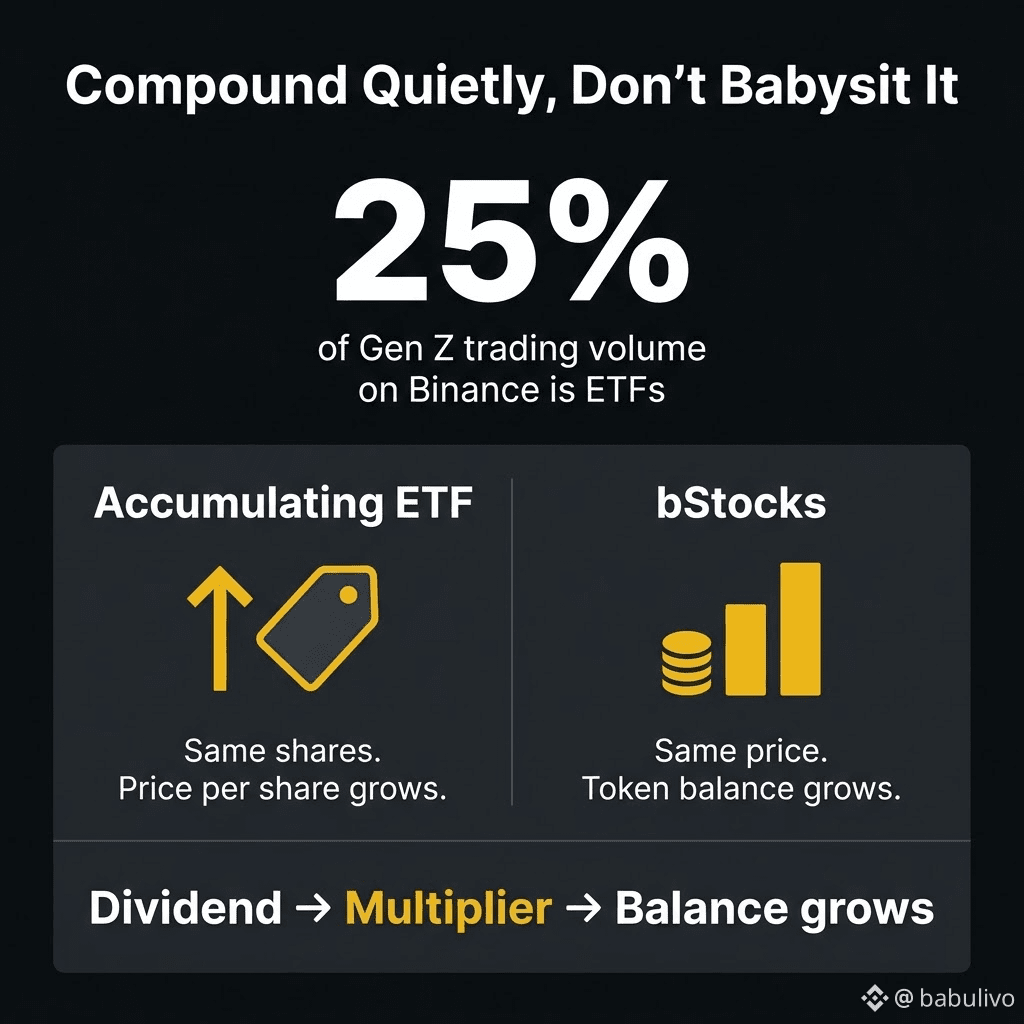
25% des Handelsvolumens von Gen Z auf Binance gerade sind ETFs. keine einzelnen Aktien, ETFs
und wenn man sich anschaut, wie bStocks Dividenden bei so etwas wie SPY [ $SPYB ] handhabt, ergibt das irgendwie Sinn. angesammelte ETFs im traditionellen Finanzsystem zahlen nie Cash aus; der Fonds reinvestiert intern und der Kurs pro Anteil steigt stattdessen
bStocks macht das ähnlich, aber auf eine andere Art: statt dass sich der Kurs bewegt, wächst dein Token-Guthaben über den Multiplikator. keine Dividende, die man beanspruchen muss, kein aktives Management – es vermehrt sich einfach von selbst
das lässt mich fragen, ob dieser Wandel bei Gen Z hin zu ETFs nicht eigentlich eher ums Jagen von 10x geht, sondern eher darum, etwas aufzubauen, das einfach still für sich vor sich hin verzinst, ohne aktives Management. kann nicht sicher sagen, dass das der Grund ist, aber es passt dazu, wie viele Leute meines Alters darüber sprechen, nicht darauf zu vertrauen, dass es anderswo langfristig viel Unterstützung gibt
ist das tatsächlich diese Denkweise, oder macht mich eine einzige Statistik nur zu sehr zum Grübeln?
#bstockscis @BinanceCIS
und wenn man sich anschaut, wie bStocks Dividenden bei so etwas wie SPY [ $SPYB ] handhabt, ergibt das irgendwie Sinn. angesammelte ETFs im traditionellen Finanzsystem zahlen nie Cash aus; der Fonds reinvestiert intern und der Kurs pro Anteil steigt stattdessen
bStocks macht das ähnlich, aber auf eine andere Art: statt dass sich der Kurs bewegt, wächst dein Token-Guthaben über den Multiplikator. keine Dividende, die man beanspruchen muss, kein aktives Management – es vermehrt sich einfach von selbst
das lässt mich fragen, ob dieser Wandel bei Gen Z hin zu ETFs nicht eigentlich eher ums Jagen von 10x geht, sondern eher darum, etwas aufzubauen, das einfach still für sich vor sich hin verzinst, ohne aktives Management. kann nicht sicher sagen, dass das der Grund ist, aber es passt dazu, wie viele Leute meines Alters darüber sprechen, nicht darauf zu vertrauen, dass es anderswo langfristig viel Unterstützung gibt
ist das tatsächlich diese Denkweise, oder macht mich eine einzige Statistik nur zu sehr zum Grübeln?
#bstockscis @BinanceCIS
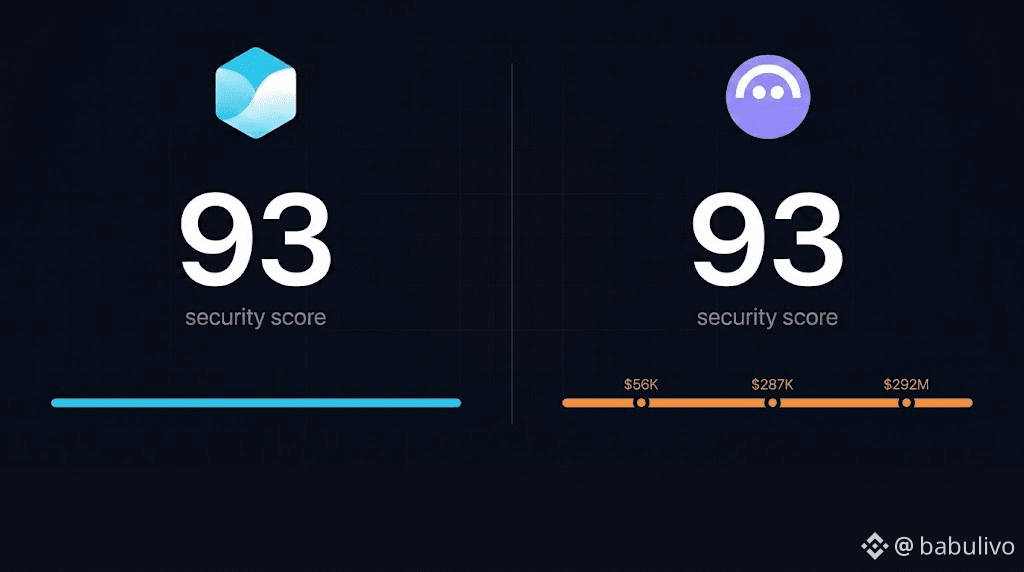
93% Sicherheits-Score, in derselben Kategorie wie Aave, aber die Erfolgsgeschichten sind nicht identisch.
TermMax: null Vorfälle seit dem Start im April 2025.
Aave: Kern-Contracts wurden nie direkt ausgenutzt, aber Peripherie und Integrationen haben Hunderte Millionen eingebüßt: $56K über einen nicht geprüften ParaSwap-Adapter, $292M Exposure durch den Zusammenbruch der rsETH/Kelp-Bridge im April.
Gleicher Score heißt nicht gleiche Historie. Neuere ist nicht automatisch weniger vertrauenswürdig.
#termmax @TermMax
TermMax: null Vorfälle seit dem Start im April 2025.
Aave: Kern-Contracts wurden nie direkt ausgenutzt, aber Peripherie und Integrationen haben Hunderte Millionen eingebüßt: $56K über einen nicht geprüften ParaSwap-Adapter, $292M Exposure durch den Zusammenbruch der rsETH/Kelp-Bridge im April.
Gleicher Score heißt nicht gleiche Historie. Neuere ist nicht automatisch weniger vertrauenswürdig.
#termmax @TermMax
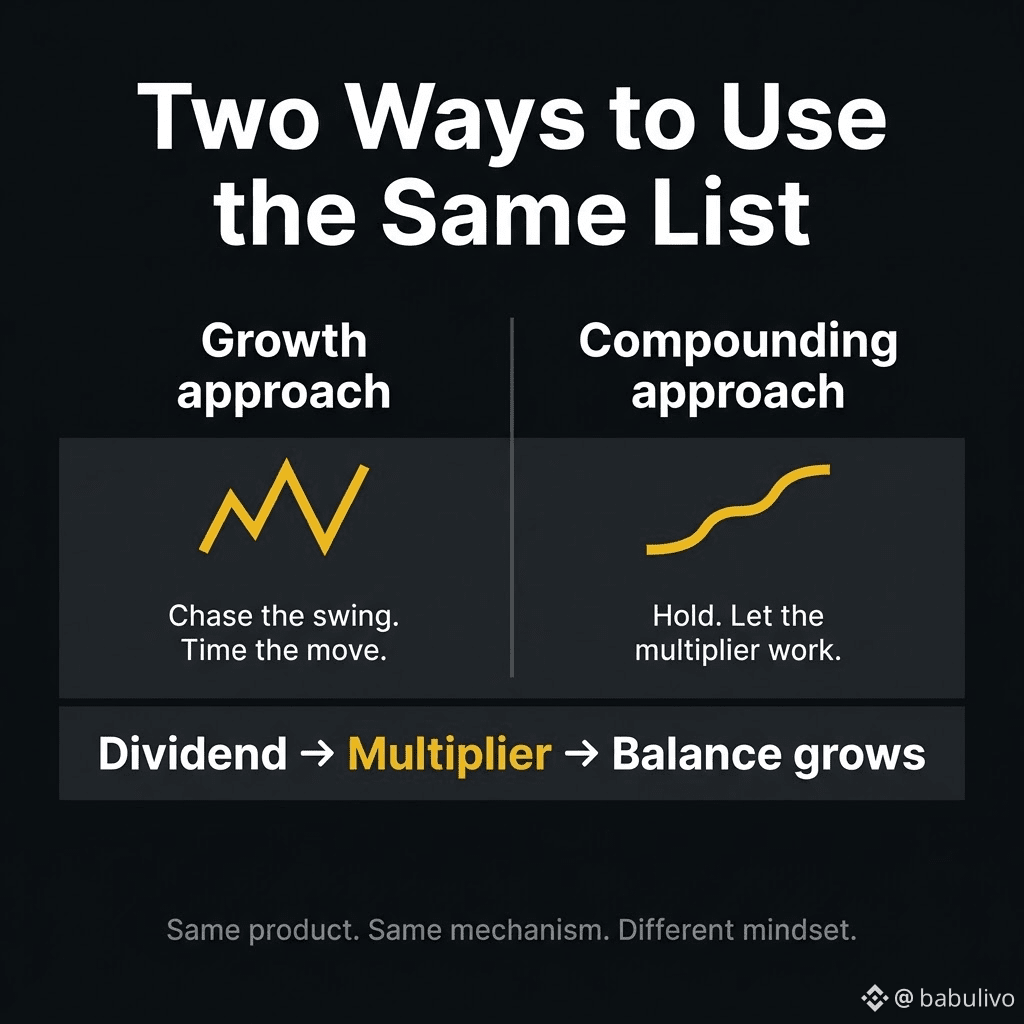
Menschen denken bei bStocks normalerweise an das „Kauf Tesla, Kauf Nvidia, jag dem nächsten 10x hinterher“-Produkt – und klar, dafür gibt es den Großteil des Volumens. aber es gibt eine zweite Art, dieselbe Liste zu nutzen, die kaum jemand anspricht
einige der Ticker dort wie IBM [ $IBMB ] zum Beispiel sind keine Growth-Play. sie sind konstante Dividendenzahler. und weil der Multiplier-Mechanismus so funktioniert, wartet diese Dividende nicht darauf, dass du sie erst abholst – sie wächst automatisch direkt in dein bStock-Guthaben ein. kein Transfer, keine manuelle Wiederanlage, es vermehrt sich im Hintergrund, ob du hinschaust oder nicht
so landest du am Ende bei zwei völlig unterschiedlichen Strategien, die auf exakt derselben Liste leben: die eine ist „kauf den volatilen Namen und versuche, den Swing zu timen.“ die andere ist „kauf den langweiligen Namen, mach nichts und lass den Multiplier ganz leise für dich zusätzliche Anteile auftürmen.“
dasselbe Produkt, derselbe Mechanismus, aber ein gegensätzlicher Mindset
in welchem Lager bist du wirklich: jagst du die Schwankungen, oder lässt du etwas Langweiliges einfach liegen und sich veranlagen?
ich jag btw die Schwankungen :)
#bstockscis @BinanceCIS
einige der Ticker dort wie IBM [ $IBMB ] zum Beispiel sind keine Growth-Play. sie sind konstante Dividendenzahler. und weil der Multiplier-Mechanismus so funktioniert, wartet diese Dividende nicht darauf, dass du sie erst abholst – sie wächst automatisch direkt in dein bStock-Guthaben ein. kein Transfer, keine manuelle Wiederanlage, es vermehrt sich im Hintergrund, ob du hinschaust oder nicht
so landest du am Ende bei zwei völlig unterschiedlichen Strategien, die auf exakt derselben Liste leben: die eine ist „kauf den volatilen Namen und versuche, den Swing zu timen.“ die andere ist „kauf den langweiligen Namen, mach nichts und lass den Multiplier ganz leise für dich zusätzliche Anteile auftürmen.“
dasselbe Produkt, derselbe Mechanismus, aber ein gegensätzlicher Mindset
in welchem Lager bist du wirklich: jagst du die Schwankungen, oder lässt du etwas Langweiliges einfach liegen und sich veranlagen?
ich jag btw die Schwankungen :)
#bstockscis @BinanceCIS
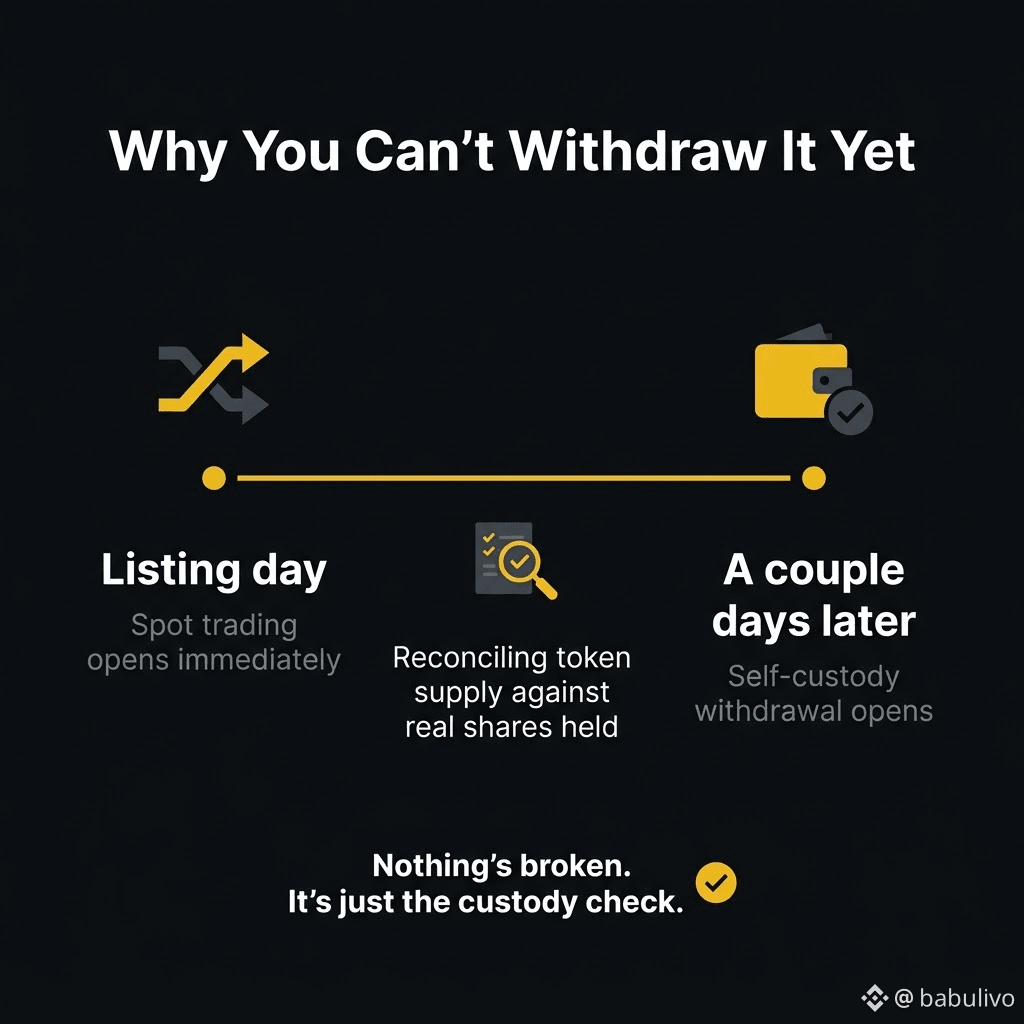
sah jemanden in einer Gruppen-Chat-Sache herumflippern, weil sie/er einen frischen bStock-Listing gekauft hat und es noch nicht auf sein/ihr Wallet auszahlen konnte, dachte, da wäre etwas kaputt
nichts ist kaputt, es ist nur so, wie der Rollout abläuft. wenn ein neuer bStock gelistet wird, öffnet sofort der Spot-Handel, aber die Auszahlung in die eigene Selbstverwahrung (auf dein eigenes Wallet) geht erst ein paar Tage später auf. zum beispiel: der handel startete am 27., aber Auszahlungen öffneten erst am 29.
ergibt Sinn, wenn man sich überlegt warum. jeder Token muss zuerst 1:1 durch eine echte Aktie abgesichert sein, die beim Custodian tatsächlich gehalten wird, und diese Abstimmung zwischen „wie viele Token existieren“ und „wie viele echte Aktien werden tatsächlich gehalten“ muss wirklich erst stattfinden, bevor irgendjemandem erlaubt ist, Token von der Plattform zu bewegen. gegen bereits vorhandene Liquidität zu handeln ist in der Zwischenzeit okay, aber Selbstverwahrung nicht, bis das bestätigt ist.
Gut zu wissen, bevor man nach einem Kauf am ersten Tag panisch das Wallet neu lädt
hat dich diese Verzögerung jemals aus der Spur geworfen, oder ist das inzwischen allgemein bekannt und ich bin einfach nur spät dran?
#bstockscis @BinanceCIS
nichts ist kaputt, es ist nur so, wie der Rollout abläuft. wenn ein neuer bStock gelistet wird, öffnet sofort der Spot-Handel, aber die Auszahlung in die eigene Selbstverwahrung (auf dein eigenes Wallet) geht erst ein paar Tage später auf. zum beispiel: der handel startete am 27., aber Auszahlungen öffneten erst am 29.
ergibt Sinn, wenn man sich überlegt warum. jeder Token muss zuerst 1:1 durch eine echte Aktie abgesichert sein, die beim Custodian tatsächlich gehalten wird, und diese Abstimmung zwischen „wie viele Token existieren“ und „wie viele echte Aktien werden tatsächlich gehalten“ muss wirklich erst stattfinden, bevor irgendjemandem erlaubt ist, Token von der Plattform zu bewegen. gegen bereits vorhandene Liquidität zu handeln ist in der Zwischenzeit okay, aber Selbstverwahrung nicht, bis das bestätigt ist.
Gut zu wissen, bevor man nach einem Kauf am ersten Tag panisch das Wallet neu lädt
hat dich diese Verzögerung jemals aus der Spur geworfen, oder ist das inzwischen allgemein bekannt und ich bin einfach nur spät dran?
#bstockscis @BinanceCIS
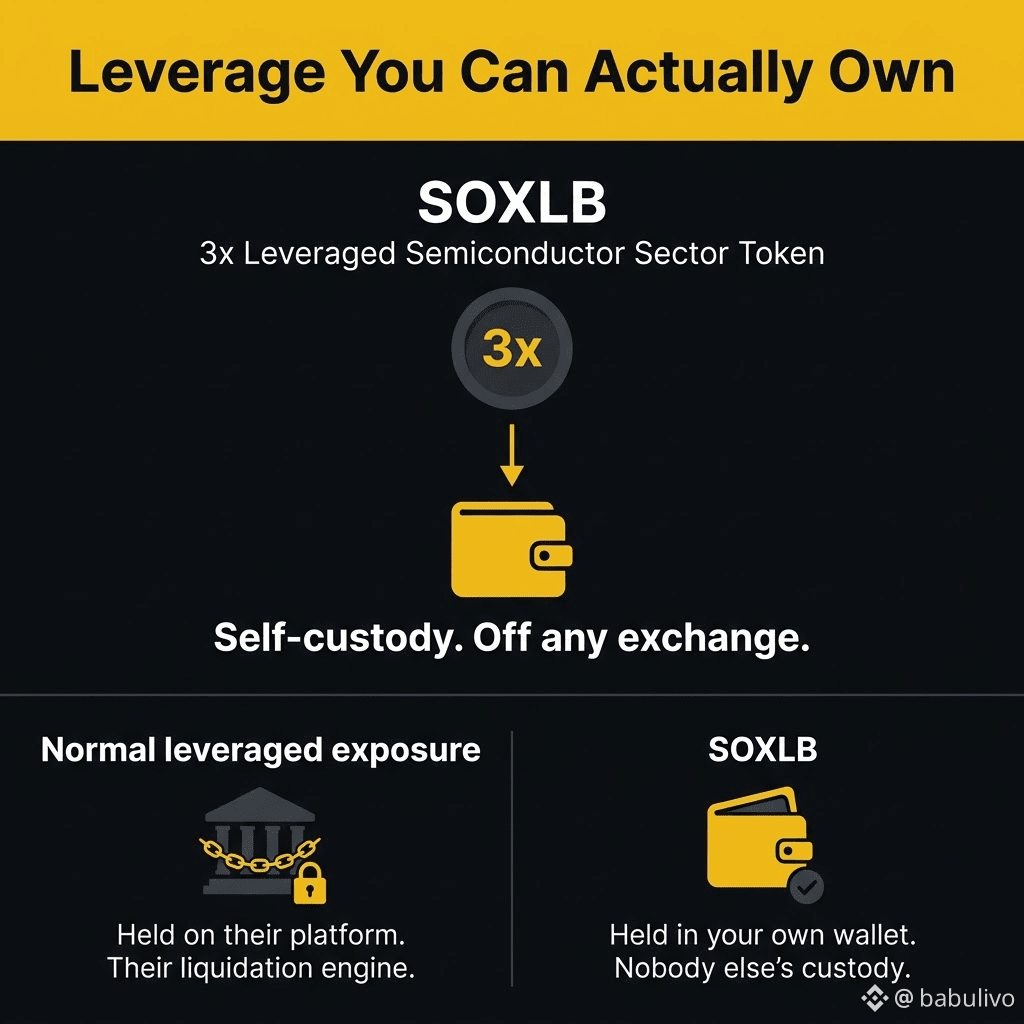
Die meisten, die durch die bStocks-Liste scrollen, suchen nach Apple oder Tesla und springen direkt an $SOXLB vorbei – was ehrlich gesagt die interessantere Notierung ist, wenn man überhaupt liest, was es ist.
Es ist nicht nur ein Halbleiter-Aktientitel. Es ist ein 3x gehebeltes Token, das den gesamten Chip-Sektor abbildet: Nvidia, AMD, Micron – diese gesamte „Warenkorb“-Zusammenstellung – verstärkt. In einem normalen Broker-Account bedeutet so ein Hebel üblicherweise Optionen, Futures oder ein Margin-Konto mit echten Genehmigungsanforderungen.
Hier ist es einfach ein BEP-20-Token. Du kannst also eine wörtlich 3x gehebelt Position auf dein eigenes Cold Wallet auszahlen. Keine CEX, die deine Position hält. Kein Perp-DEX, der deine Margin beobachtet. Keine Liquidationsmaschine, die 24/7 in den Händen von jemand anderem auf dich wartet. Der Hebel steckt direkt im Token selbst, sitzt in deiner eigenen Verwahrung.
Das ist so ziemlich nirgendwo anders wirklich der Fall. Gehebelte Exponierung heißt normalerweise, dass jemand anderes deine Position als Geisel auf dessen Plattform hält. Das hier ist ein Hebel, den du einfach… besitzen kannst.
Würdest du tatsächlich so etwas halten, oder klingt 3x Hebel auf einen kompletten Sektor nach einem schnellen Weg, um auf null gesetzt zu werden?
#bstockscis @BinanceCIS
Es ist nicht nur ein Halbleiter-Aktientitel. Es ist ein 3x gehebeltes Token, das den gesamten Chip-Sektor abbildet: Nvidia, AMD, Micron – diese gesamte „Warenkorb“-Zusammenstellung – verstärkt. In einem normalen Broker-Account bedeutet so ein Hebel üblicherweise Optionen, Futures oder ein Margin-Konto mit echten Genehmigungsanforderungen.
Hier ist es einfach ein BEP-20-Token. Du kannst also eine wörtlich 3x gehebelt Position auf dein eigenes Cold Wallet auszahlen. Keine CEX, die deine Position hält. Kein Perp-DEX, der deine Margin beobachtet. Keine Liquidationsmaschine, die 24/7 in den Händen von jemand anderem auf dich wartet. Der Hebel steckt direkt im Token selbst, sitzt in deiner eigenen Verwahrung.
Das ist so ziemlich nirgendwo anders wirklich der Fall. Gehebelte Exponierung heißt normalerweise, dass jemand anderes deine Position als Geisel auf dessen Plattform hält. Das hier ist ein Hebel, den du einfach… besitzen kannst.
Würdest du tatsächlich so etwas halten, oder klingt 3x Hebel auf einen kompletten Sektor nach einem schnellen Weg, um auf null gesetzt zu werden?
#bstockscis @BinanceCIS
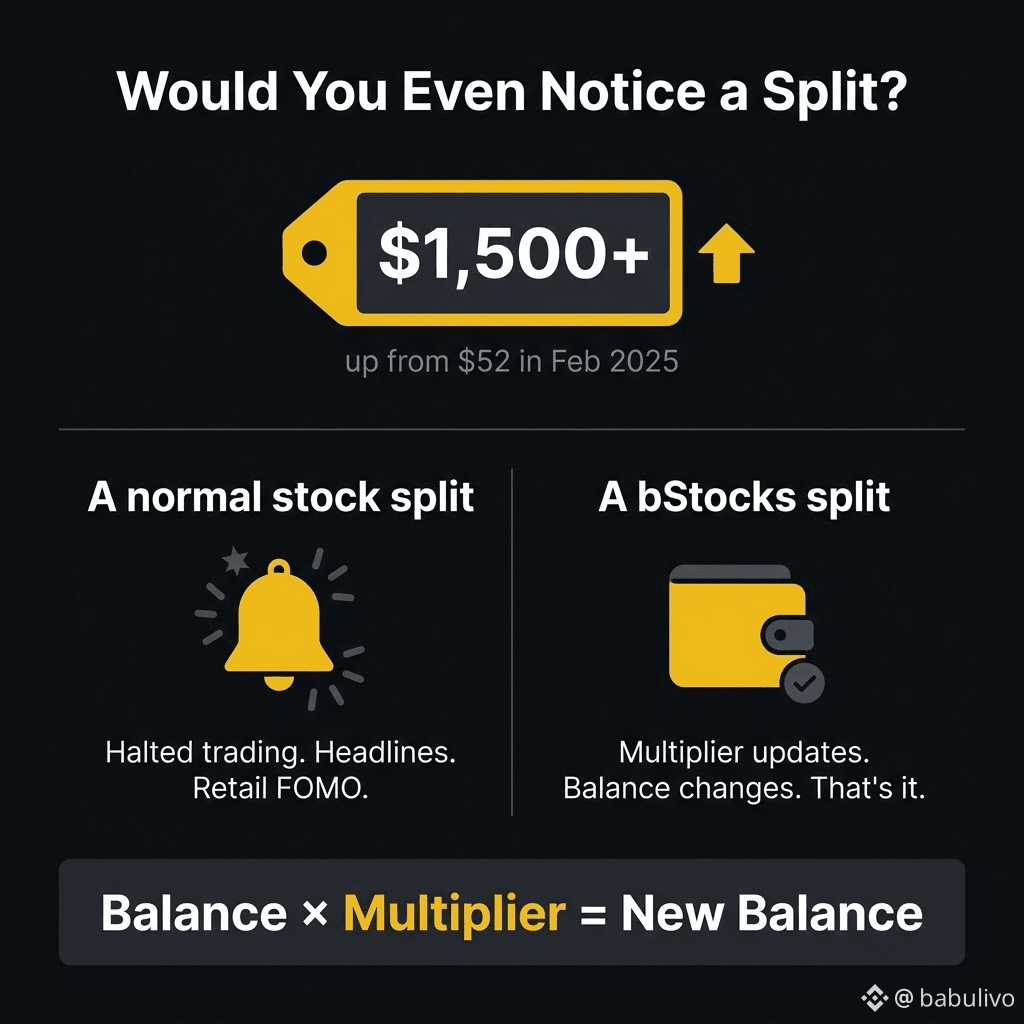
Wow. SanDisk wird gerade bei über 1.500 $ pro Aktie gehandelt. Seit der Abspaltung von Western Digital im Februar 2025 ist der Kurs um mehr als 3.000 % gestiegen. Und es gab noch nie einen Aktiensplit
Motley Fool hat diese Woche einen Beitrag veröffentlicht, in dem im Grunde gesagt wird, dass SanDisk alle Kriterien für einen Split-Kandidaten erfüllt – vierstelliger Aktienkurs, großes Interesse von Privatanlegern, keine Splits in der Geschichte als eigenständiges Unternehmen. Nichts bestätigt, nur die offensichtlichen Spekulationen, die alle haben
hier ist der Teil, der mich wirklich interessiert: Wenn SanDisk splitten sollte, was passiert dann für einen $SNDKB holder überhaupt? Wie der Multiplikator-Mechanismus funktioniert, wahrscheinlich nichts. Keine neuen Token, die in deiner Wallet landen, keine Transaktion, auf die man zeigen könnte. Der Split wird einfach absorbiert, und dein bestehender Kontostand spiegelt das still und leise wider
was irgendwie verrückt ist, wenn man bedenkt, wie viel Aufmerksamkeit Split-Ankündigungen bei einer normalen Aktie normalerweise bekommen: Handelsaussetzungen, Schlagzeilen, Retail-FOMO-Käufe in Erwartung des Ereignisses. Bei bStocks könnte es einfach ein Nicht-Ereignis sein, das man nur bemerkt, wenn man seinen Kontostand überprüft
ich frage mich, ob die Leute überhaupt einen Hinweis davor wollen würden, oder ob gerade das Nicht-Bedeutsamsein der Punkt ist...
#bstockscis @BinanceCIS
Motley Fool hat diese Woche einen Beitrag veröffentlicht, in dem im Grunde gesagt wird, dass SanDisk alle Kriterien für einen Split-Kandidaten erfüllt – vierstelliger Aktienkurs, großes Interesse von Privatanlegern, keine Splits in der Geschichte als eigenständiges Unternehmen. Nichts bestätigt, nur die offensichtlichen Spekulationen, die alle haben
hier ist der Teil, der mich wirklich interessiert: Wenn SanDisk splitten sollte, was passiert dann für einen $SNDKB holder überhaupt? Wie der Multiplikator-Mechanismus funktioniert, wahrscheinlich nichts. Keine neuen Token, die in deiner Wallet landen, keine Transaktion, auf die man zeigen könnte. Der Split wird einfach absorbiert, und dein bestehender Kontostand spiegelt das still und leise wider
was irgendwie verrückt ist, wenn man bedenkt, wie viel Aufmerksamkeit Split-Ankündigungen bei einer normalen Aktie normalerweise bekommen: Handelsaussetzungen, Schlagzeilen, Retail-FOMO-Käufe in Erwartung des Ereignisses. Bei bStocks könnte es einfach ein Nicht-Ereignis sein, das man nur bemerkt, wenn man seinen Kontostand überprüft
ich frage mich, ob die Leute überhaupt einen Hinweis davor wollen würden, oder ob gerade das Nicht-Bedeutsamsein der Punkt ist...
#bstockscis @BinanceCIS
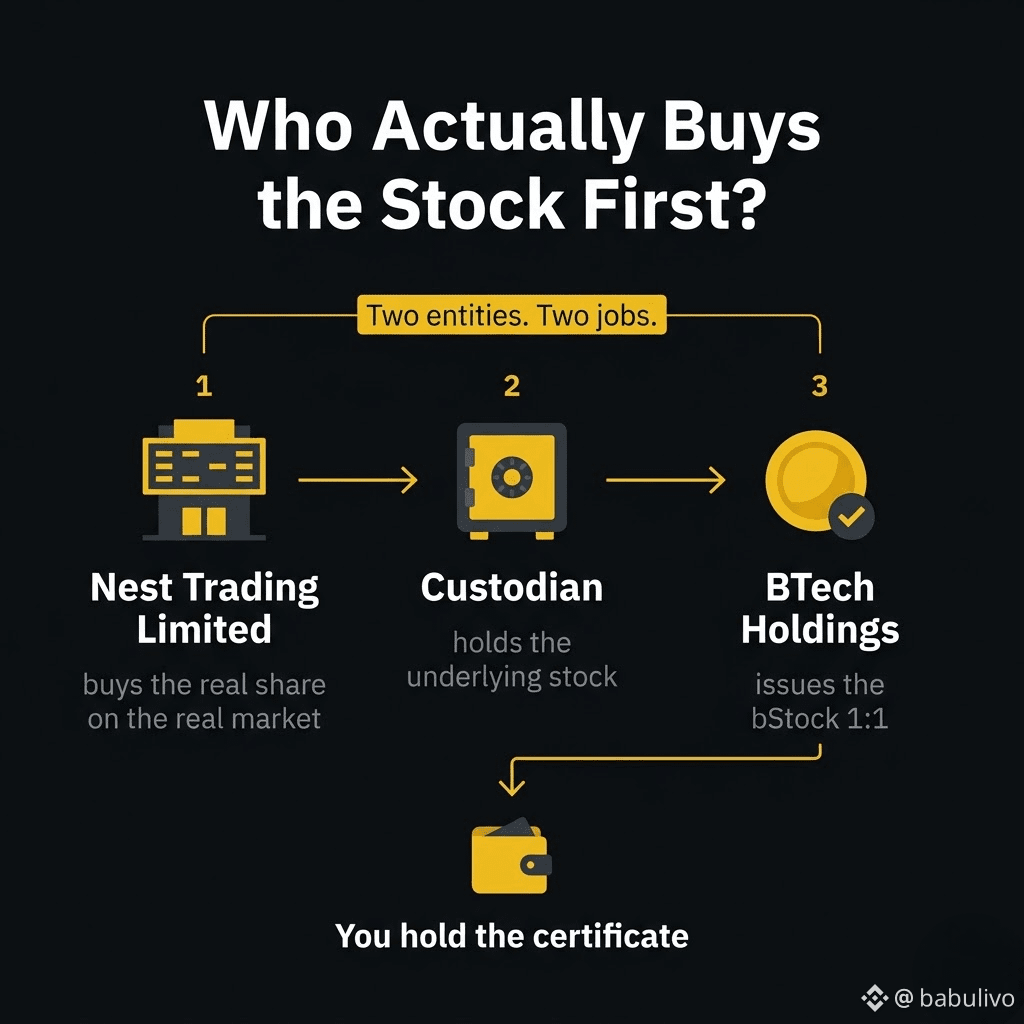
das ist ein Name, den in dieser ganzen Kampagne nicht ein einziges Mal irgendjemand erwähnt hat—und ich verstehe warum. Ich habe ihn nur zufällig gefunden, lol
bevor ein bStock existiert, muss erst jemand die echte Aktie tatsächlich kaufen. Diese Person ist ein Broker-Dealer namens Nest Trading Limited. Sie kauft Nvidia [ $NVDAB ], Tesla [ $TSLAB ], was auch immer der zugrunde liegende Vermögenswert ist, auf dem echten Markt, hält es bei einem Verwahrer und erst danach stellt BTech Holdings das Token dagegen aus
zwei völlig getrennte Unternehmen, die zwei völlig getrennte Aufgaben erfüllen. das eine ist da draußen und führt einen echten Handel an einer echten Börse aus, das andere ist der Name, der auftaucht, wenn du nachsiehst, was „ausgibt“, welchen bStock du hast
hat hier irgendjemand diesen Namen vorher schon gekannt?
#bstockscis @BinanceCIS
bevor ein bStock existiert, muss erst jemand die echte Aktie tatsächlich kaufen. Diese Person ist ein Broker-Dealer namens Nest Trading Limited. Sie kauft Nvidia [ $NVDAB ], Tesla [ $TSLAB ], was auch immer der zugrunde liegende Vermögenswert ist, auf dem echten Markt, hält es bei einem Verwahrer und erst danach stellt BTech Holdings das Token dagegen aus
zwei völlig getrennte Unternehmen, die zwei völlig getrennte Aufgaben erfüllen. das eine ist da draußen und führt einen echten Handel an einer echten Börse aus, das andere ist der Name, der auftaucht, wenn du nachsiehst, was „ausgibt“, welchen bStock du hast
hat hier irgendjemand diesen Namen vorher schon gekannt?
#bstockscis @BinanceCIS
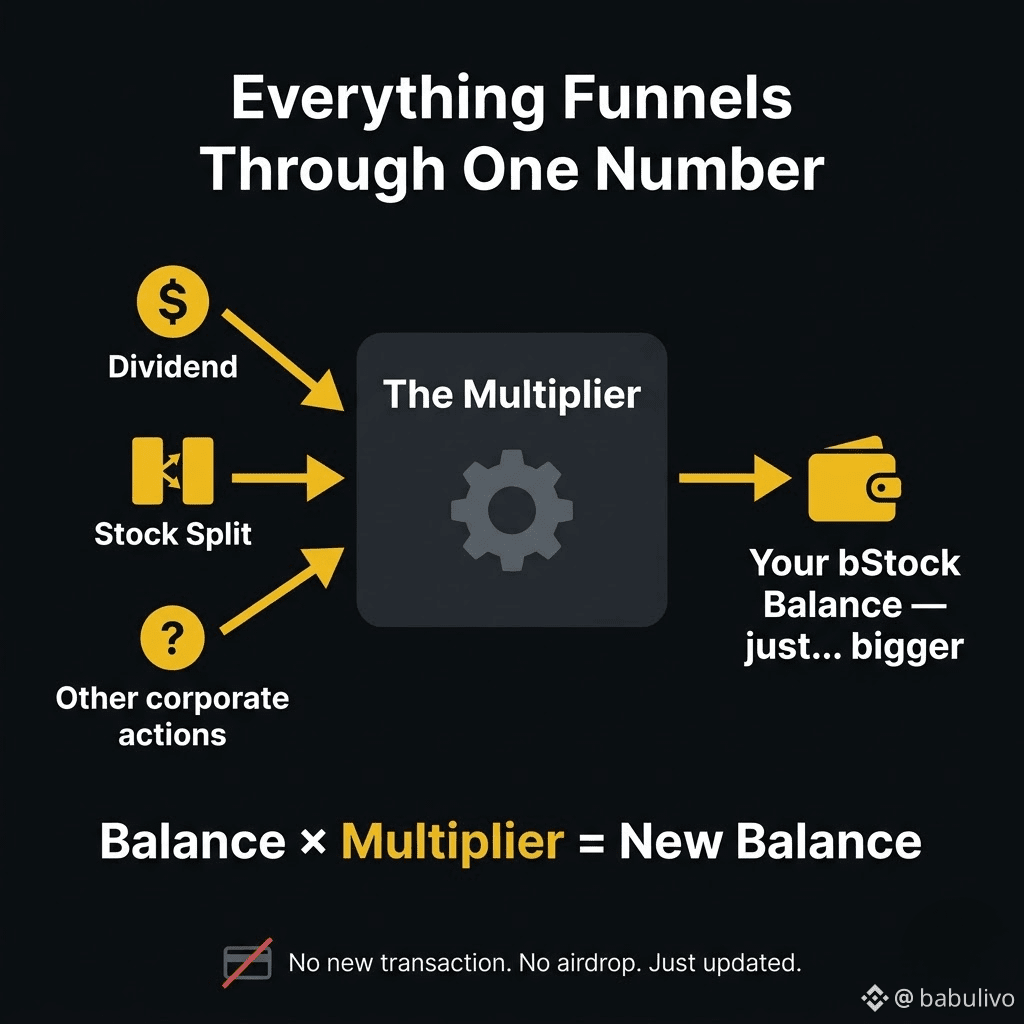
okay, ich komme nochmal auf das Dividenden-Thema von vorher zurück, weil sich herausstellt, dass es nicht nur Dividenden sind
auch Aktiensplits funktionieren über exakt denselben Mechanismus. wenn Tesla [ $TSLAB ] jemals einen 2-für-1-Split macht, bekommst du keine zusätzlichen Tokens „airdropped“ und du siehst auch keine neue Transaktion. der Multiplikator passt sich nur an und dein bestehendes Guthaben spiegelt den Split automatisch wider
also vereinfacht gesagt läuft jede Corporate Action: Dividenden, Splits, egal was, durch diese eine unsichtbare Zahl, statt separate Events onchain auszulösen. irgendwie elegant, sobald man es verstanden hat, aber auch heißt das, dass du nie „sehen“ wirst, dass ein Split passiert ist – er ist einfach schon passiert, bevor du nachschlägst
das lässt mich fragen, welche anderen Corporate Actions still und heimlich in dieses System eingeklappt werden, bevor überhaupt jemand etwas merkt?
#bstockscis @BinanceCIS
auch Aktiensplits funktionieren über exakt denselben Mechanismus. wenn Tesla [ $TSLAB ] jemals einen 2-für-1-Split macht, bekommst du keine zusätzlichen Tokens „airdropped“ und du siehst auch keine neue Transaktion. der Multiplikator passt sich nur an und dein bestehendes Guthaben spiegelt den Split automatisch wider
also vereinfacht gesagt läuft jede Corporate Action: Dividenden, Splits, egal was, durch diese eine unsichtbare Zahl, statt separate Events onchain auszulösen. irgendwie elegant, sobald man es verstanden hat, aber auch heißt das, dass du nie „sehen“ wirst, dass ein Split passiert ist – er ist einfach schon passiert, bevor du nachschlägst
das lässt mich fragen, welche anderen Corporate Actions still und heimlich in dieses System eingeklappt werden, bevor überhaupt jemand etwas merkt?
#bstockscis @BinanceCIS
Ehrlich gefragt, ich will niemandem irgendwas verkaufen … hast du wirklich echte oder tokenisierte Aktien gekauft, also mit eigenem Geld, nicht für Promo oder so?
weil Aktien gerade wirklich volatiler sind und mehr Spaß machen zuzuschauen als die meisten Krypto-Sachen, lol. Tesla [ $TSLAB ] oder Nvidia [ $NVDAB ], die sich an einem Tag um 10% bewegen, ist einfach was anderes als zuzuschauen, wie $BTC eine Woche lang nichts macht
aber seien wir ehrlich: Viele wurden im Bärenmarkt ordentlich zerlegt und … es ist einfach kein Kapital mehr übrig für eine zweite Anlageklasse, lol. Krypto hat alle Einlagen gefressen
der Umstand, dass ungefähr 4 von 10 bStocks-Nutzern noch nie zuvor TradFi angefasst haben, lässt mich fragen, wie viel davon echte Neugier auf Aktien ist und wie viel nur ein weiterer Versuch ist, nach dem Bärenmarkt den Moonshot abzugreifen…
#bstockscis @BinanceCIS
weil Aktien gerade wirklich volatiler sind und mehr Spaß machen zuzuschauen als die meisten Krypto-Sachen, lol. Tesla [ $TSLAB ] oder Nvidia [ $NVDAB ], die sich an einem Tag um 10% bewegen, ist einfach was anderes als zuzuschauen, wie $BTC eine Woche lang nichts macht
aber seien wir ehrlich: Viele wurden im Bärenmarkt ordentlich zerlegt und … es ist einfach kein Kapital mehr übrig für eine zweite Anlageklasse, lol. Krypto hat alle Einlagen gefressen
der Umstand, dass ungefähr 4 von 10 bStocks-Nutzern noch nie zuvor TradFi angefasst haben, lässt mich fragen, wie viel davon echte Neugier auf Aktien ist und wie viel nur ein weiterer Versuch ist, nach dem Bärenmarkt den Moonshot abzugreifen…
#bstockscis @BinanceCIS
buy mostly spot
100%
trade mostly futures
0%
promo only or not interested
0%
2 Stimmen • Abstimmung beendet
Warte, wie funktionieren Dividenden eigentlich, wenn man stattdessen einen Token hält und nicht die echte Aktie?
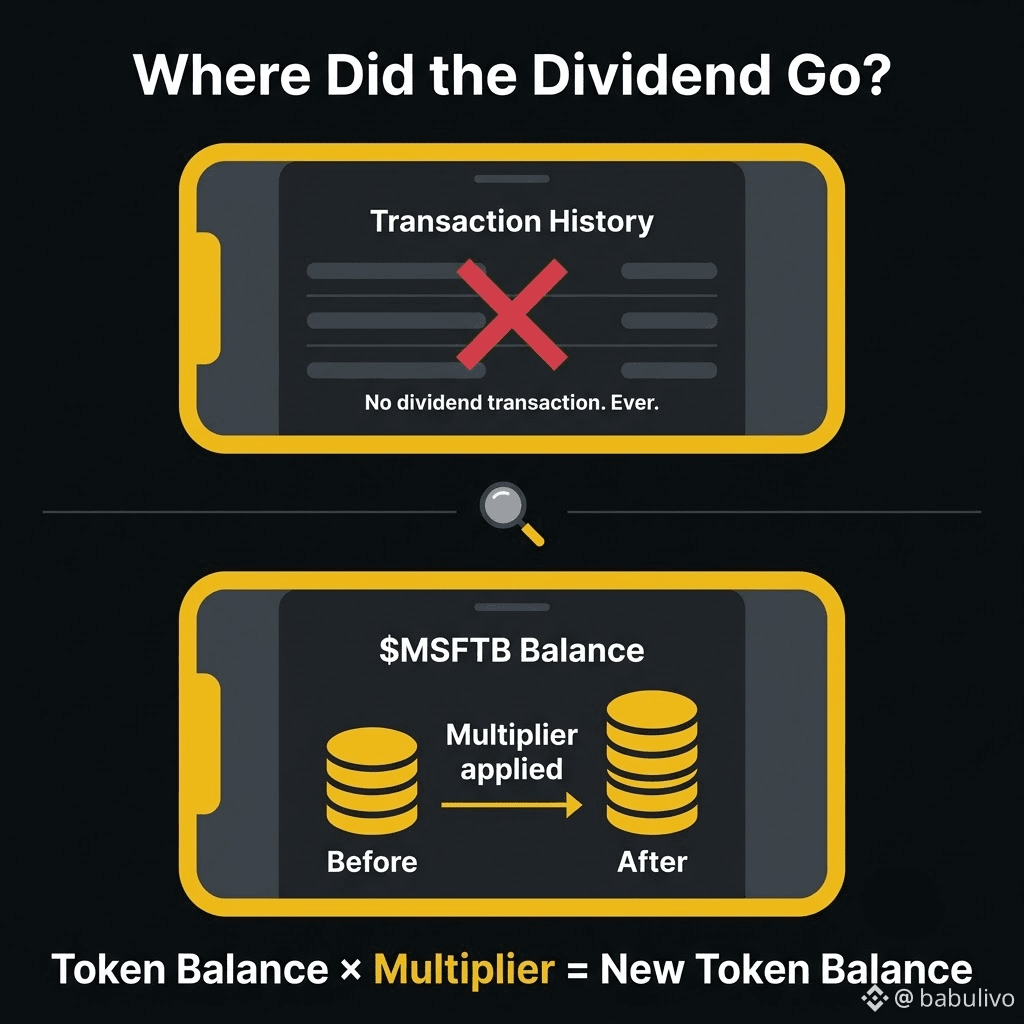
Ich habe die meiste Zeit nachts viel zu lange in dieses Kaninchenloch gestiegen … heraus kam: bStocks schicken dir gar keine Dividende als Transaktion. Microsoft zahlt z.B. 0,91 $ pro Aktie vierteljährlich. Das Netzwerk schiebt dir dieses Geld nicht einfach als USDC-Überweisung zu. Stattdessen steigt dein gesamter bStock-Token-Guthaben automatisch an – durch einen „Multiplier“, der auf deine Bestände angewendet wird. Und genau das ist dann die Dividende.
Wenn du also $MSFTB hältst und eine Dividende kommt, taucht in deiner Transaktionshistorie nichts auf. Kein eingehender Transfer, keine Benachrichtigung, die du als „eine Dividende“ erkennen würdest. Du schaust später einfach in deine Wallet und dein bStock-Guthaben ist schlicht größer als vorher – das ist die Auszahlung, direkt dort als mehr Tokens.
Ergibt Sinn, wenn man es einmal verstanden hat, aber ich verstehe auch, warum Leute ihre Historie durchscrollen, auf der Suche nach einer Zahlung, die es in der Form gar nicht geben wird.
Hat das sonst noch jemand angenommen, dass es wie ein normaler USDC-Transfer funktioniert oder so – bevor man es nachgeprüft hat?
#bstockscis @BinanceCIS
Ich habe die meiste Zeit nachts viel zu lange in dieses Kaninchenloch gestiegen … heraus kam: bStocks schicken dir gar keine Dividende als Transaktion. Microsoft zahlt z.B. 0,91 $ pro Aktie vierteljährlich. Das Netzwerk schiebt dir dieses Geld nicht einfach als USDC-Überweisung zu. Stattdessen steigt dein gesamter bStock-Token-Guthaben automatisch an – durch einen „Multiplier“, der auf deine Bestände angewendet wird. Und genau das ist dann die Dividende.
Wenn du also $MSFTB hältst und eine Dividende kommt, taucht in deiner Transaktionshistorie nichts auf. Kein eingehender Transfer, keine Benachrichtigung, die du als „eine Dividende“ erkennen würdest. Du schaust später einfach in deine Wallet und dein bStock-Guthaben ist schlicht größer als vorher – das ist die Auszahlung, direkt dort als mehr Tokens.
Ergibt Sinn, wenn man es einmal verstanden hat, aber ich verstehe auch, warum Leute ihre Historie durchscrollen, auf der Suche nach einer Zahlung, die es in der Form gar nicht geben wird.
Hat das sonst noch jemand angenommen, dass es wie ein normaler USDC-Transfer funktioniert oder so – bevor man es nachgeprüft hat?
#bstockscis @BinanceCIS
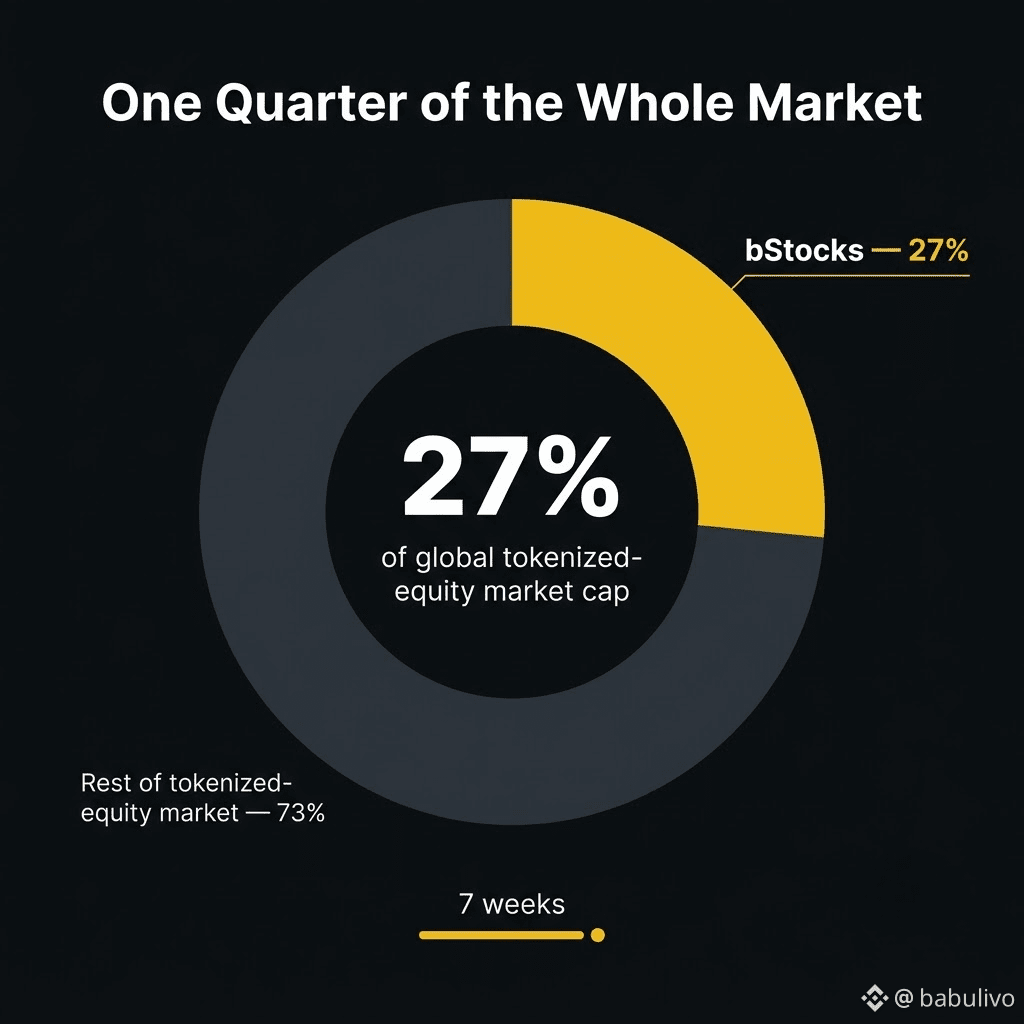
Eine Zahl aus den Binace-Daten dieser Woche hat mich dazu gebracht, die Rechnung zweimal zu überprüfen.
Allein bStocks machen inzwischen 27% des gesamten globalen Marktes für tokenisierte Aktien aus. Nicht 27% der RWA-Aufstellung von Binance. 27% jeder tokenisierten Aktie, die es gibt – über jede Chain und jeden Emittenten hinweg, zusammen!
Sieben Wochen alt und gehört schon jetzt zu mehr als einem Viertel eines Marktes, der Projekte umfasst, die seit Jahren live sind. Eine einzelne $TSLAB alone bewegt wahrscheinlich mehr tägliches Handelsvolumen als die meisten konkurrierenden Plattformen für tokenisierte Aktien zusammen.
Das übliche Argument gegen von Börsen herausgegebene tokenisierte Assets lautet: „Kein echter Burggraben, jeder kann das kopieren.“ Vielleicht. Aber das Kopieren der Token-Struktur ist nicht das Schwierige. Das Schwierige ist, sie am ersten Tag an Millionen bereits finanzierter Konten zu verteilen. Genau das hat sonst niemand.
Wohin gehen die 27% von hier aus?
#bstockscis @BinanceCIS
Allein bStocks machen inzwischen 27% des gesamten globalen Marktes für tokenisierte Aktien aus. Nicht 27% der RWA-Aufstellung von Binance. 27% jeder tokenisierten Aktie, die es gibt – über jede Chain und jeden Emittenten hinweg, zusammen!
Sieben Wochen alt und gehört schon jetzt zu mehr als einem Viertel eines Marktes, der Projekte umfasst, die seit Jahren live sind. Eine einzelne $TSLAB alone bewegt wahrscheinlich mehr tägliches Handelsvolumen als die meisten konkurrierenden Plattformen für tokenisierte Aktien zusammen.
Das übliche Argument gegen von Börsen herausgegebene tokenisierte Assets lautet: „Kein echter Burggraben, jeder kann das kopieren.“ Vielleicht. Aber das Kopieren der Token-Struktur ist nicht das Schwierige. Das Schwierige ist, sie am ersten Tag an Millionen bereits finanzierter Konten zu verteilen. Genau das hat sonst niemand.
Wohin gehen die 27% von hier aus?
#bstockscis @BinanceCIS
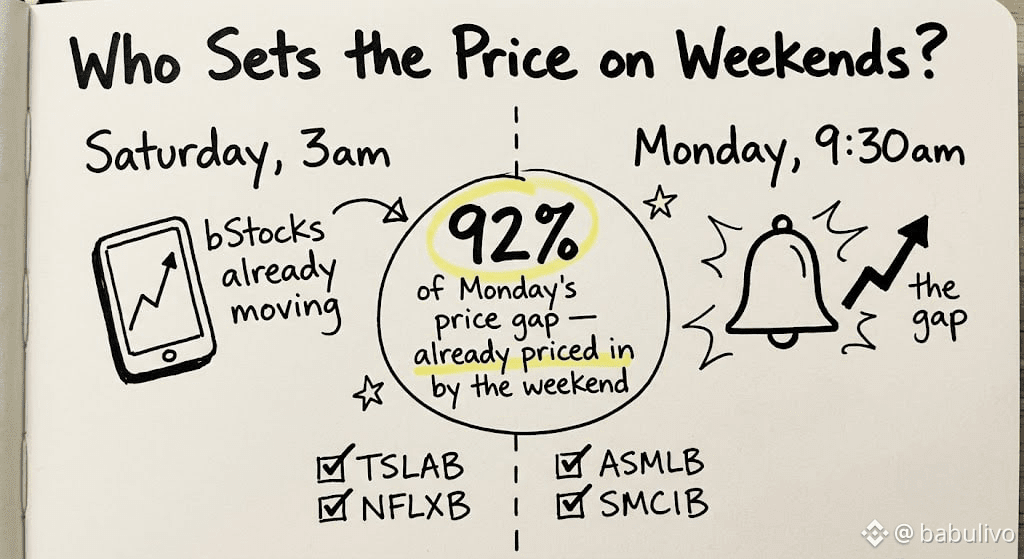
Habe etwas überprüft, woran die meisten Menschen, die unter der Woche mit Aktien handeln, nie denken: Was passiert mit dem Kurs einer Aktie, wenn der Markt zwei Tage lang geschlossen ist?
Wie sich herausstellte, hat bStocks das bereits beantwortet. Binance sagte diese Woche, dass die Wochenend-bStocks-Preisgestaltung bereits einen Median von 92% der Kurslücke bis zum folgenden Montag abdeckte, bevor NASDAQ überhaupt geöffnet hat.
Übersetzung: Der Token bildet nicht nur die Aktie ab. Er läuft dem Markt-„Open“ selbst voraus und preist News, Earnings, Wochenend-Schlagzeilen ein – all das, was normalerweise einfach dort sitzt, bis am Montag die Eröffnungsglocke eine Lücke erzeugt, auf die dann alle reagieren müssen.
Wenn ein Token bis Sonntagabend bereits 92% von Montags Kursbewegung einpreist, wer setzt dann eigentlich noch den Preis: NASDAQ – oder die Leute, die am Samstag um 3 Uhr morgens handeln <keep_numbers>$TSLAB </keep_numbers> und <keep_numbers>$NFLXB </keep_numbers>?
#bstockscis @BinanceCIS
Wie sich herausstellte, hat bStocks das bereits beantwortet. Binance sagte diese Woche, dass die Wochenend-bStocks-Preisgestaltung bereits einen Median von 92% der Kurslücke bis zum folgenden Montag abdeckte, bevor NASDAQ überhaupt geöffnet hat.
Übersetzung: Der Token bildet nicht nur die Aktie ab. Er läuft dem Markt-„Open“ selbst voraus und preist News, Earnings, Wochenend-Schlagzeilen ein – all das, was normalerweise einfach dort sitzt, bis am Montag die Eröffnungsglocke eine Lücke erzeugt, auf die dann alle reagieren müssen.
Wenn ein Token bis Sonntagabend bereits 92% von Montags Kursbewegung einpreist, wer setzt dann eigentlich noch den Preis: NASDAQ – oder die Leute, die am Samstag um 3 Uhr morgens handeln <keep_numbers>$TSLAB </keep_numbers> und <keep_numbers>$NFLXB </keep_numbers>?
#bstockscis @BinanceCIS
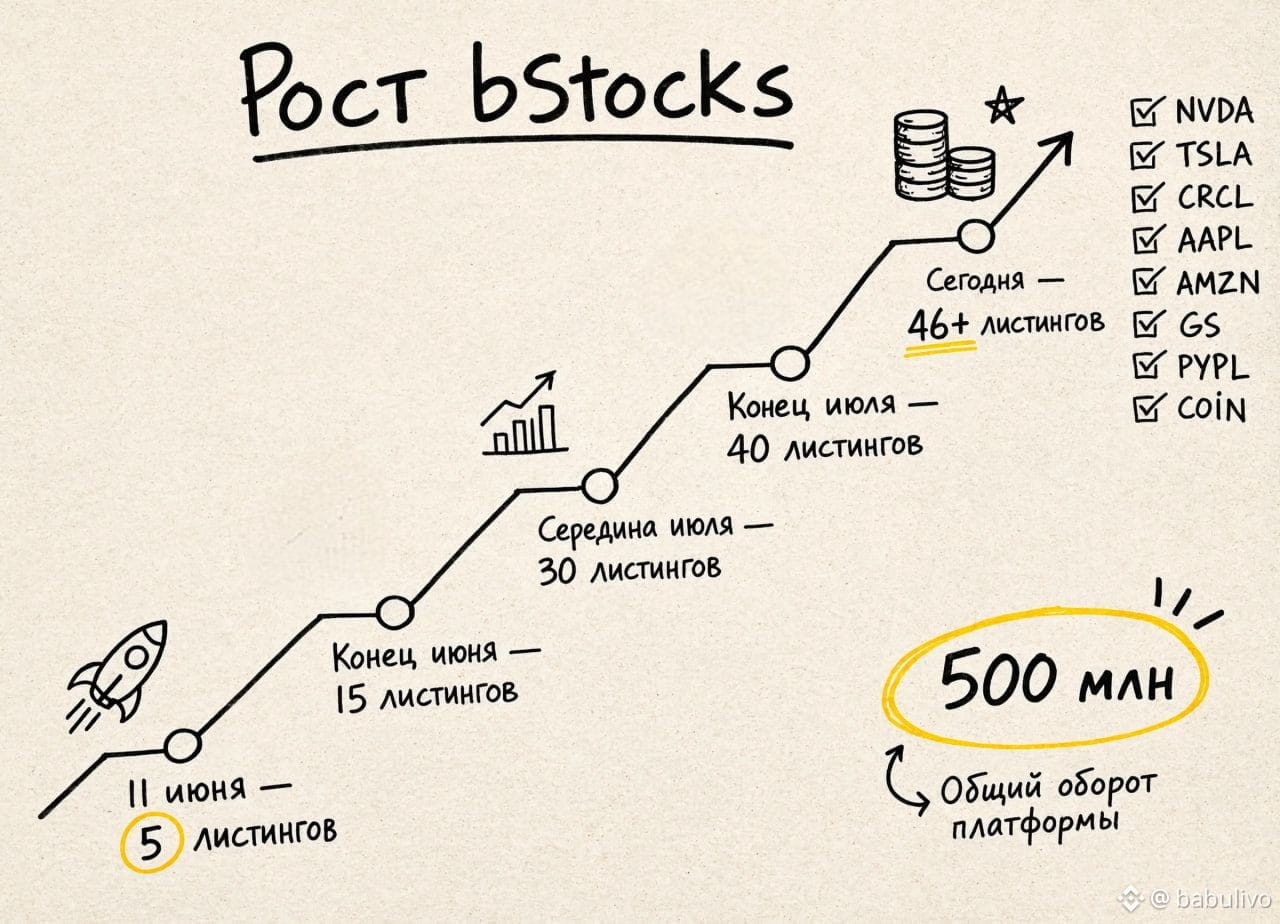
Ich habe neu ausgerechnet, wie viele bStocks Binance seit dem Start hinzugefügt hat, und die Zahl hat mich überrascht.
11. Juni: Start mit 5 Tickern: Nvidia, Tesla, Circle, Micron, Sandisk.
Heute: 46+, einschließlich Apple, Amazon, Goldman Sachs, Coinbase, Alphabet, Robinhood.
Die meisten Binance-Produkte haben in einem vergleichbaren Zeitraum diesen Expansions-Tempo nicht gezeigt.
Wenn der Trend anhält, wird die Zahl bald in die Hunderte gehen. Welche Aktie würdet ihr als Nächstes hinzufügen?
@BinanceCIS #bStocksCIS
11. Juni: Start mit 5 Tickern: Nvidia, Tesla, Circle, Micron, Sandisk.
Heute: 46+, einschließlich Apple, Amazon, Goldman Sachs, Coinbase, Alphabet, Robinhood.
Die meisten Binance-Produkte haben in einem vergleichbaren Zeitraum diesen Expansions-Tempo nicht gezeigt.
Wenn der Trend anhält, wird die Zahl bald in die Hunderte gehen. Welche Aktie würdet ihr als Nächstes hinzufügen?
@BinanceCIS #bStocksCIS
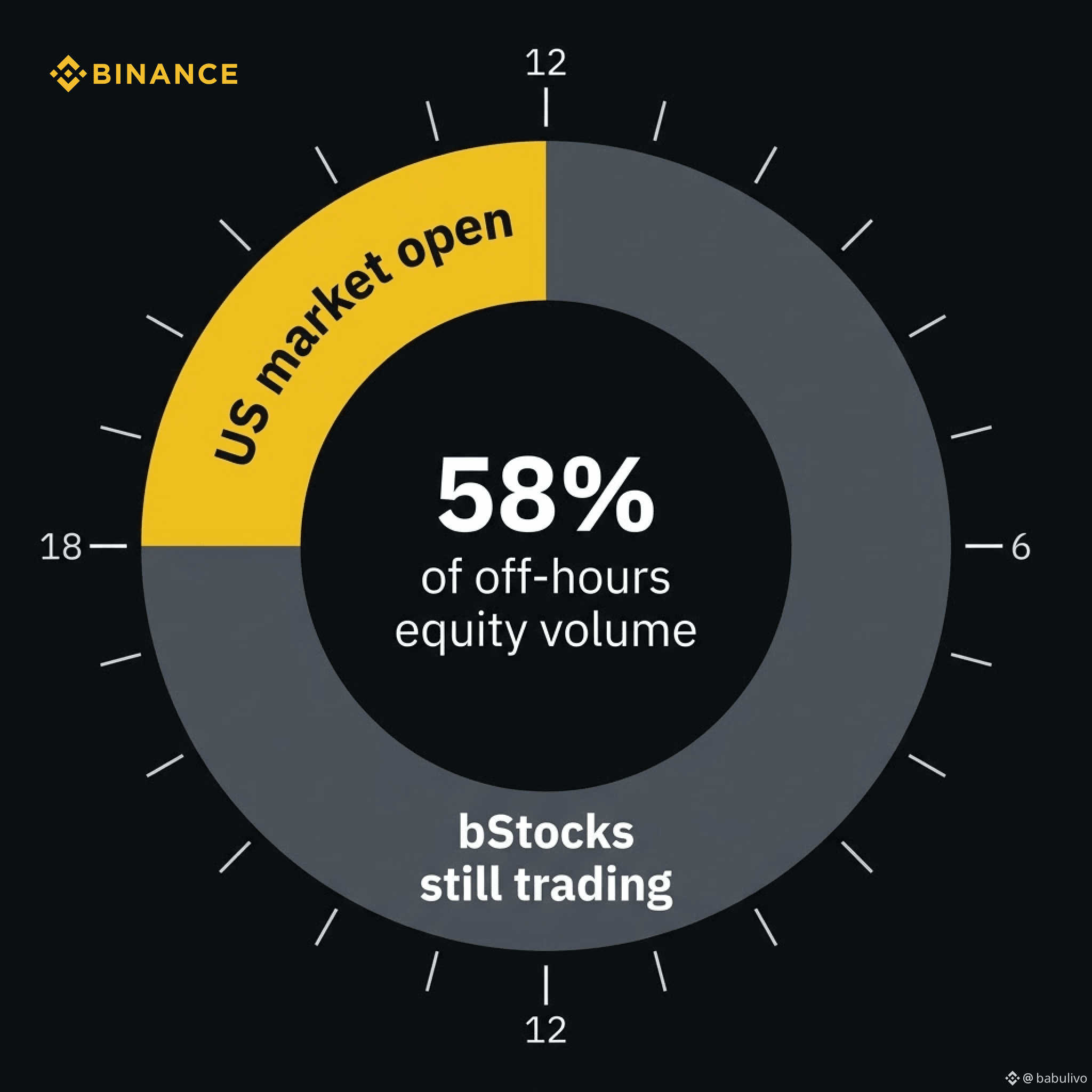
Der Markt, der nie schließt?
58% des aktienbezogenen Volumens von Binance außerhalb der US-Marktzeiten sind bStocks.
Die NASDAQ öffnet um 9:30 Uhr ET und schließt um 16:00 Uhr ET. Für die meisten Teile der Welt ist das mitten in der Nacht oder mitten im Arbeitstag.
Eine tokenisierte Tesla [ $TSLAB ] oder Goldman Sachs [ $GSB ] interessiert das nicht. Sie handelt weiter, während die eigentliche Börse dunkel ist.
Das ist keine Nebenfunktion. Es ist der gesamte Grund, warum das Produkt existiert: Die Zeitzonen von CIS passen fast nie zum Zeitplan der Wall Street, und jetzt müssen sie das nicht mehr.
@BinanceCIS #bStocksCIS
58% des aktienbezogenen Volumens von Binance außerhalb der US-Marktzeiten sind bStocks.
Die NASDAQ öffnet um 9:30 Uhr ET und schließt um 16:00 Uhr ET. Für die meisten Teile der Welt ist das mitten in der Nacht oder mitten im Arbeitstag.
Eine tokenisierte Tesla [ $TSLAB ] oder Goldman Sachs [ $GSB ] interessiert das nicht. Sie handelt weiter, während die eigentliche Börse dunkel ist.
Das ist keine Nebenfunktion. Es ist der gesamte Grund, warum das Produkt existiert: Die Zeitzonen von CIS passen fast nie zum Zeitplan der Wall Street, und jetzt müssen sie das nicht mehr.
@BinanceCIS #bStocksCIS
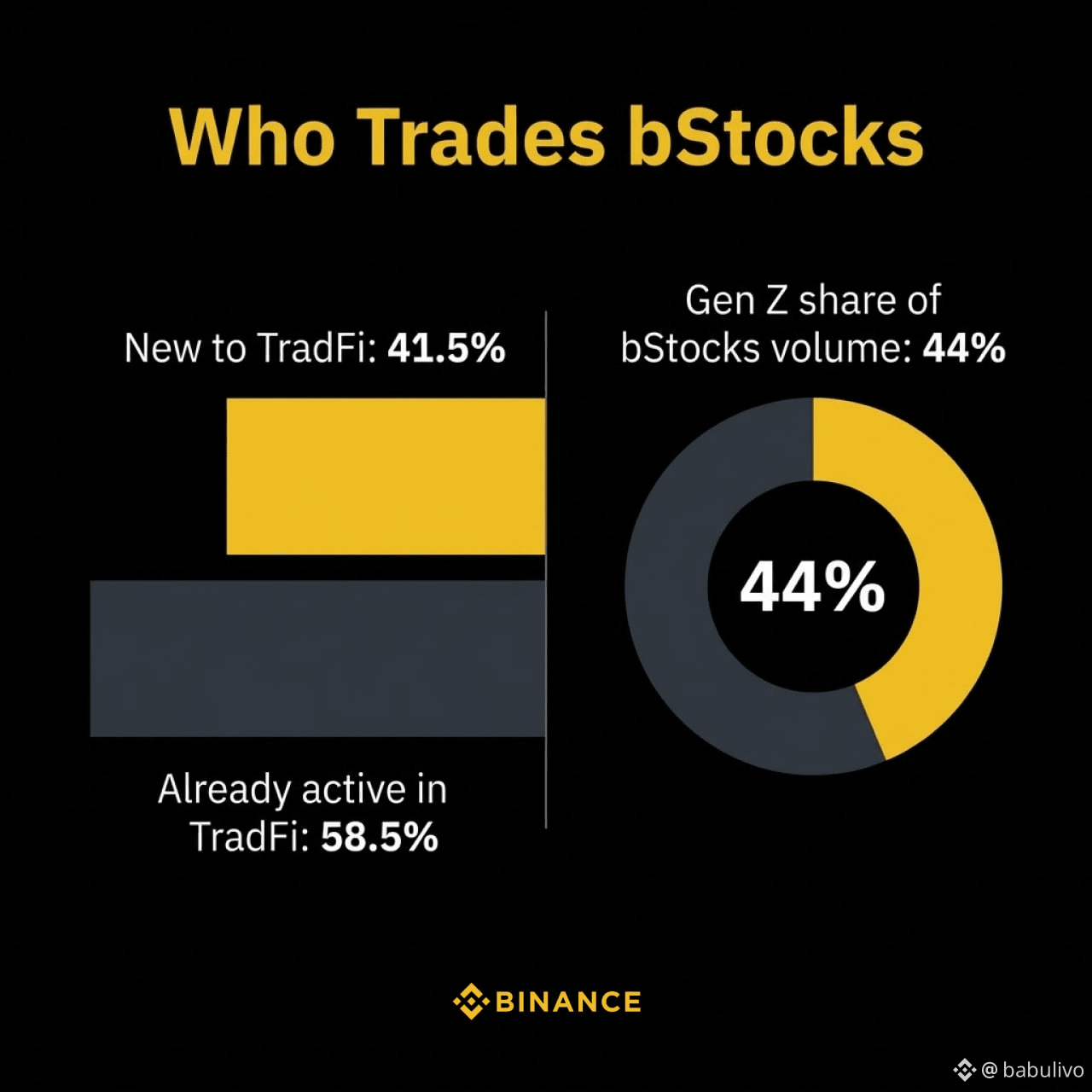
Wer kauft wirklich tokenisierte Aktien?
41,5% der bStocks-Nutzer hatten zuvor nie mit traditionellem Finanzwesen zu tun. Nicht TradFi-Trader, die rüberwechseln, sondern kryptogene Nutzer, deren erste Erfahrung mit Apple [ $AAPLB ] oder Nvidia [ $NVDAB ] als Vermögenswert ein Token auf Binance war. Allein Gen Z macht 44% des gesamten bStocks-Volumens aus.
In GUS funktioniert bStocks als Trichter in Richtung TradFi – nicht umgekehrt.
@BinanceCIS #bStocksCIS
41,5% der bStocks-Nutzer hatten zuvor nie mit traditionellem Finanzwesen zu tun. Nicht TradFi-Trader, die rüberwechseln, sondern kryptogene Nutzer, deren erste Erfahrung mit Apple [ $AAPLB ] oder Nvidia [ $NVDAB ] als Vermögenswert ein Token auf Binance war. Allein Gen Z macht 44% des gesamten bStocks-Volumens aus.
In GUS funktioniert bStocks als Trichter in Richtung TradFi – nicht umgekehrt.
@BinanceCIS #bStocksCIS
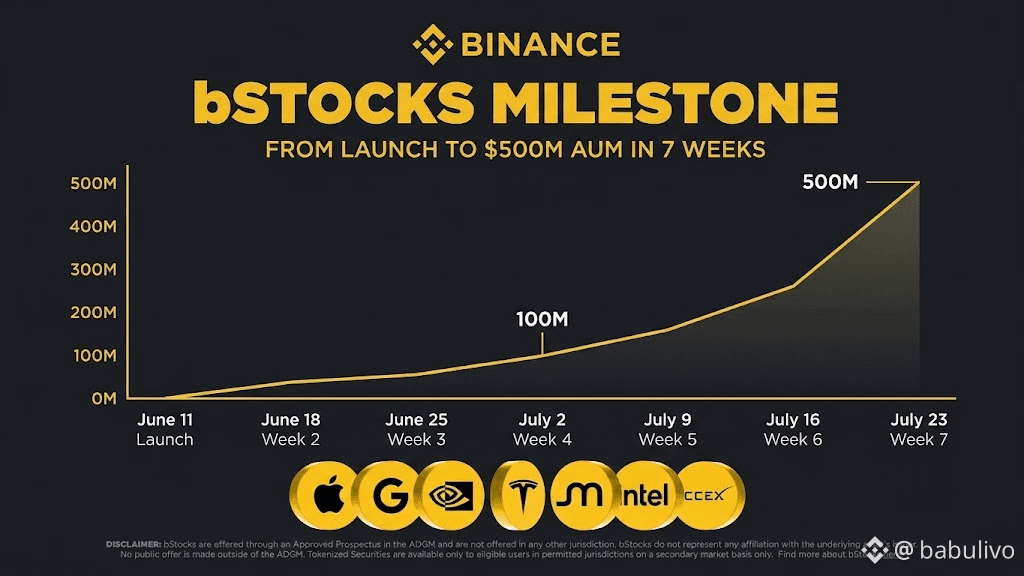
Die breite Akzeptanz ist bereits da.
bStocks erreichten in 15 Tagen 100 Mio. $ AUM und in 7 Wochen 500 Mio. $.
Währenddessen benötigen die meisten tokenisierten Aktien auf anderen Plattformen Monate, um überhaupt auf 50 Mio. $ Liquidität zu kommen. Es geht nicht um das Marketing – der echte Vorteil ist die kostenfreie Umwandlung in beide Richtungen zwischen bStock und der zugrunde liegenden Aktie.
@BinanceCIS #bStocksCIS
bStocks erreichten in 15 Tagen 100 Mio. $ AUM und in 7 Wochen 500 Mio. $.
Währenddessen benötigen die meisten tokenisierten Aktien auf anderen Plattformen Monate, um überhaupt auf 50 Mio. $ Liquidität zu kommen. Es geht nicht um das Marketing – der echte Vorteil ist die kostenfreie Umwandlung in beide Richtungen zwischen bStock und der zugrunde liegenden Aktie.
@BinanceCIS #bStocksCIS
Anmelden und weiter Inhalte entdecken