

ryptonix
14 Beiträge

ryptonix
Melden
Nutzer blockieren
Exploring Crypto. Sharing Knowledge. 📊
2 Following
3 Follower
3 Like gegeben
Beiträge
Alle
Zitierungen
·
--
Übersetzung ansehen
🔎 What Is On-Chain Analysis? A Beginner’s Guide
$BTC
Ever wondered how people analyze what is happening inside a blockchain, beyond the price chart?
That’s where on-chain analysis comes in. 👇
🔹 1. Active Addresses
Shows how many unique addresses are interacting with a network during a period. Rising activity can provide clues about network usage.
🔹 2. Transaction Volume
Helps show how much value is being transferred across the blockchain.
🔹 3. Exchange Flows
Analysts can monitor crypto moving into or out of exchanges to understand market activity.
🔹 4. Whale Activity 🐋
Large wallet movements can provide additional context about how major holders are moving their assets.
🔹 5. Network Fees
Fees can offer clues about demand for blockchain block space and network activity.
💡 The key idea:
Price tells you what the market is doing.
On-chain data can help you understand what is happening on the network behind that market.
But remember: no single metric can predict price movements with certainty. On-chain data works best when combined with other forms of research.
⚠️ Educational content only. Not financial advice. Always do your own research.
Hashtags:
#OnChainAnalysis #CryptoEducation #Bitcoin #Blockchain #CryptoBasics #CryptoAnalytics #BinanceSquare
🔎 What Is On-Chain Analysis? A Beginner’s Guide
$BTC
Ever wondered how people analyze what is happening inside a blockchain, beyond the price chart?
That’s where on-chain analysis comes in. 👇
🔹 1. Active Addresses
Shows how many unique addresses are interacting with a network during a period. Rising activity can provide clues about network usage.
🔹 2. Transaction Volume
Helps show how much value is being transferred across the blockchain.
🔹 3. Exchange Flows
Analysts can monitor crypto moving into or out of exchanges to understand market activity.
🔹 4. Whale Activity 🐋
Large wallet movements can provide additional context about how major holders are moving their assets.
🔹 5. Network Fees
Fees can offer clues about demand for blockchain block space and network activity.
💡 The key idea:
Price tells you what the market is doing.
On-chain data can help you understand what is happening on the network behind that market.
But remember: no single metric can predict price movements with certainty. On-chain data works best when combined with other forms of research.
⚠️ Educational content only. Not financial advice. Always do your own research.
Hashtags:
#OnChainAnalysis #CryptoEducation #Bitcoin #Blockchain #CryptoBasics #CryptoAnalytics #BinanceSquare
$BTC
Ever wondered how people analyze what is happening inside a blockchain, beyond the price chart?
That’s where on-chain analysis comes in. 👇
🔹 1. Active Addresses
Shows how many unique addresses are interacting with a network during a period. Rising activity can provide clues about network usage.
🔹 2. Transaction Volume
Helps show how much value is being transferred across the blockchain.
🔹 3. Exchange Flows
Analysts can monitor crypto moving into or out of exchanges to understand market activity.
🔹 4. Whale Activity 🐋
Large wallet movements can provide additional context about how major holders are moving their assets.
🔹 5. Network Fees
Fees can offer clues about demand for blockchain block space and network activity.
💡 The key idea:
Price tells you what the market is doing.
On-chain data can help you understand what is happening on the network behind that market.
But remember: no single metric can predict price movements with certainty. On-chain data works best when combined with other forms of research.
⚠️ Educational content only. Not financial advice. Always do your own research.
Hashtags:
#OnChainAnalysis #CryptoEducation #Bitcoin #Blockchain #CryptoBasics #CryptoAnalytics #BinanceSquare
1
41
·
--
Übersetzung ansehen
💡 Market Cap vs. FDV: Why a “Cheap” Coin May Not Be Cheap
$BTC
A crypto token can have a very low price and still have a very high valuation. One reason is token supply.
Here’s the simple difference 👇
🔹 Market Cap
Current Price × Circulating Supply
It represents the approximate current value based on tokens already circulating.
🔹 FDV (Fully Diluted Valuation)
Current Price × Maximum Supply
It estimates the value if the maximum token supply were in circulation.
📌 Why does the gap matter?
If a project has a relatively small Market Cap but a much larger FDV, a significant amount of supply may still be locked or unreleased.
When more tokens enter circulation, the increased supply can create additional selling pressure if demand doesn't grow at the same pace.
⚠️ Important: FDV is only one metric. It should be considered alongside tokenomics, trading volume, liquidity, project fundamentals, and unlock schedules.
💭 Key lesson:
A low token price does NOT automatically mean a token is cheap.
Always look beyond the price tag.
Educational content only. Not financial advice. Do your own research.
Hashtags:
#CryptoEducation #FDV #MarketCap #Tokenomics #CryptoBasics #BinanceSquare #Crypto
💡 Market Cap vs. FDV: Why a “Cheap” Coin May Not Be Cheap
$BTC
A crypto token can have a very low price and still have a very high valuation. One reason is token supply.
Here’s the simple difference 👇
🔹 Market Cap
Current Price × Circulating Supply
It represents the approximate current value based on tokens already circulating.
🔹 FDV (Fully Diluted Valuation)
Current Price × Maximum Supply
It estimates the value if the maximum token supply were in circulation.
📌 Why does the gap matter?
If a project has a relatively small Market Cap but a much larger FDV, a significant amount of supply may still be locked or unreleased.
When more tokens enter circulation, the increased supply can create additional selling pressure if demand doesn't grow at the same pace.
⚠️ Important: FDV is only one metric. It should be considered alongside tokenomics, trading volume, liquidity, project fundamentals, and unlock schedules.
💭 Key lesson:
A low token price does NOT automatically mean a token is cheap.
Always look beyond the price tag.
Educational content only. Not financial advice. Do your own research.
Hashtags:
#CryptoEducation #FDV #MarketCap #Tokenomics #CryptoBasics #BinanceSquare #Crypto
$BTC
A crypto token can have a very low price and still have a very high valuation. One reason is token supply.
Here’s the simple difference 👇
🔹 Market Cap
Current Price × Circulating Supply
It represents the approximate current value based on tokens already circulating.
🔹 FDV (Fully Diluted Valuation)
Current Price × Maximum Supply
It estimates the value if the maximum token supply were in circulation.
📌 Why does the gap matter?
If a project has a relatively small Market Cap but a much larger FDV, a significant amount of supply may still be locked or unreleased.
When more tokens enter circulation, the increased supply can create additional selling pressure if demand doesn't grow at the same pace.
⚠️ Important: FDV is only one metric. It should be considered alongside tokenomics, trading volume, liquidity, project fundamentals, and unlock schedules.
💭 Key lesson:
A low token price does NOT automatically mean a token is cheap.
Always look beyond the price tag.
Educational content only. Not financial advice. Do your own research.
Hashtags:
#CryptoEducation #FDV #MarketCap #Tokenomics #CryptoBasics #BinanceSquare #Crypto
13
·
--
Übersetzung ansehen
🔐 5 Crypto Security Habits Every Beginner Should Know
$BTC
Crypto security isn't only about choosing the right asset. Your own security habits matter too.
Here are 5 simple habits every crypto user should build:
🔑 1. Use a strong, unique password
Don't reuse the same password across multiple accounts.
🛡️ 2. Enable 2FA
Two-factor authentication adds another layer of protection to your account.
🎣 3. Watch out for phishing
Never trust unexpected links, fake support messages, or websites asking for sensitive information.
📋 4. Double-check wallet addresses
Crypto transactions can be irreversible, so take a few seconds to verify the destination before sending.
🔒 5. Protect your recovery information
Never share your private keys or recovery phrase with anyone. Store sensitive recovery information securely offline.
💡 The biggest security lesson:
In crypto, protecting your account and wallet is just as important as understanding the market.
⚠️ Educational content only. Always do your own research and use security practices appropriate for your situation.
Which security habit do you think beginners overlook the most? 👇
$BTC #CryptoSecurity #CryptoEducation #Bitcoin #CryptoBasics #BinanceSquare
🔐 5 Crypto Security Habits Every Beginner Should Know
$BTC
Crypto security isn't only about choosing the right asset. Your own security habits matter too.
Here are 5 simple habits every crypto user should build:
🔑 1. Use a strong, unique password
Don't reuse the same password across multiple accounts.
🛡️ 2. Enable 2FA
Two-factor authentication adds another layer of protection to your account.
🎣 3. Watch out for phishing
Never trust unexpected links, fake support messages, or websites asking for sensitive information.
📋 4. Double-check wallet addresses
Crypto transactions can be irreversible, so take a few seconds to verify the destination before sending.
🔒 5. Protect your recovery information
Never share your private keys or recovery phrase with anyone. Store sensitive recovery information securely offline.
💡 The biggest security lesson:
In crypto, protecting your account and wallet is just as important as understanding the market.
⚠️ Educational content only. Always do your own research and use security practices appropriate for your situation.
Which security habit do you think beginners overlook the most? 👇
$BTC #CryptoSecurity #CryptoEducation #Bitcoin #CryptoBasics #BinanceSquare
$BTC
Crypto security isn't only about choosing the right asset. Your own security habits matter too.
Here are 5 simple habits every crypto user should build:
🔑 1. Use a strong, unique password
Don't reuse the same password across multiple accounts.
🛡️ 2. Enable 2FA
Two-factor authentication adds another layer of protection to your account.
🎣 3. Watch out for phishing
Never trust unexpected links, fake support messages, or websites asking for sensitive information.
📋 4. Double-check wallet addresses
Crypto transactions can be irreversible, so take a few seconds to verify the destination before sending.
🔒 5. Protect your recovery information
Never share your private keys or recovery phrase with anyone. Store sensitive recovery information securely offline.
💡 The biggest security lesson:
In crypto, protecting your account and wallet is just as important as understanding the market.
⚠️ Educational content only. Always do your own research and use security practices appropriate for your situation.
Which security habit do you think beginners overlook the most? 👇
$BTC #CryptoSecurity #CryptoEducation #Bitcoin #CryptoBasics #BinanceSquare
10
·
--
Übersetzung ansehen
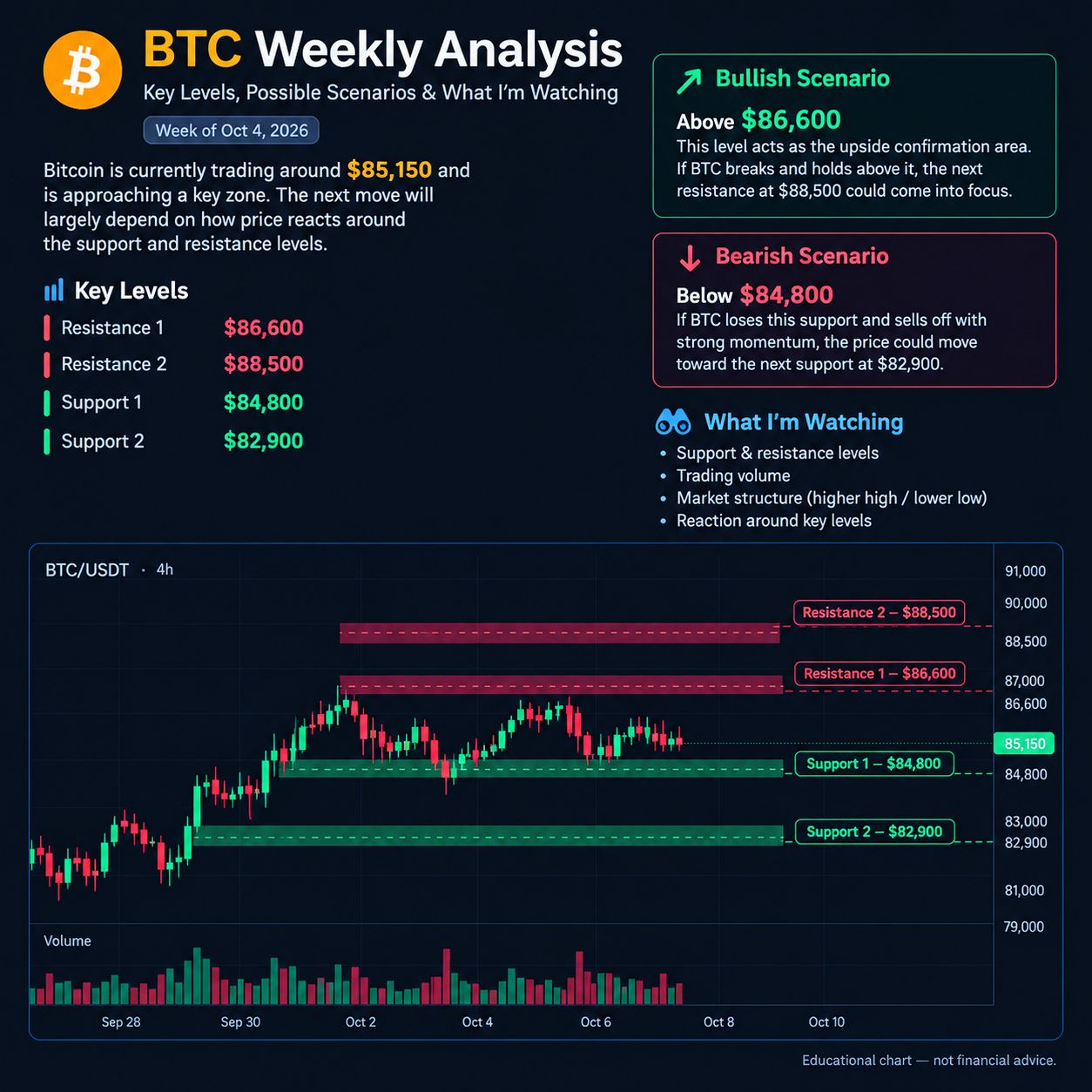
BTC Weekly Analysis: Key Levels to Watch This Week
$BTC
Bitcoin is currently trading around the $85K area, and this week could be important as price approaches several key technical levels.
🔴 Resistance to watch:
• $86,600
• $88,500
A clean breakout and hold above the $86.6K area could strengthen the bullish setup, with $88.5K becoming the next important resistance zone.
🟢 Support to watch:
• $84,800
• $82,900
If BTC loses the $84.8K area with strong selling pressure, the next support zone I’ll be watching is around $82.9K.
👀 What I’m watching this week:
• Price reaction at support/resistance
• Trading volume
• 4H market structure
• Whether breakouts are confirmed or rejected
My approach: I’m not trying to predict every candle. I’d rather wait for price confirmation around these key levels.
⚠️ This is technical analysis for educational purposes only, not financial advice. Crypto markets are highly volatile. Always do your own research.
What’s your view for BTC this week — bullish, bearish, or waiting for confirmation? 👇
$BTC #Bitcoin #BTCAnalysis #CryptoTrading #CryptoEducation #BinanceSquare
BTC Weekly Analysis: Key Levels to Watch This Week
$BTC
Bitcoin is currently trading around the $85K area, and this week could be important as price approaches several key technical levels.
🔴 Resistance to watch:
• $86,600
• $88,500
A clean breakout and hold above the $86.6K area could strengthen the bullish setup, with $88.5K becoming the next important resistance zone.
🟢 Support to watch:
• $84,800
• $82,900
If BTC loses the $84.8K area with strong selling pressure, the next support zone I’ll be watching is around $82.9K.
👀 What I’m watching this week:
• Price reaction at support/resistance
• Trading volume
• 4H market structure
• Whether breakouts are confirmed or rejected
My approach: I’m not trying to predict every candle. I’d rather wait for price confirmation around these key levels.
⚠️ This is technical analysis for educational purposes only, not financial advice. Crypto markets are highly volatile. Always do your own research.
What’s your view for BTC this week — bullish, bearish, or waiting for confirmation? 👇
$BTC #Bitcoin #BTCAnalysis #CryptoTrading #CryptoEducation #BinanceSquare
$BTC
Bitcoin is currently trading around the $85K area, and this week could be important as price approaches several key technical levels.
🔴 Resistance to watch:
• $86,600
• $88,500
A clean breakout and hold above the $86.6K area could strengthen the bullish setup, with $88.5K becoming the next important resistance zone.
🟢 Support to watch:
• $84,800
• $82,900
If BTC loses the $84.8K area with strong selling pressure, the next support zone I’ll be watching is around $82.9K.
👀 What I’m watching this week:
• Price reaction at support/resistance
• Trading volume
• 4H market structure
• Whether breakouts are confirmed or rejected
My approach: I’m not trying to predict every candle. I’d rather wait for price confirmation around these key levels.
⚠️ This is technical analysis for educational purposes only, not financial advice. Crypto markets are highly volatile. Always do your own research.
What’s your view for BTC this week — bullish, bearish, or waiting for confirmation? 👇
$BTC #Bitcoin #BTCAnalysis #CryptoTrading #CryptoEducation #BinanceSquare
26
·
--
XRP’s Oktober-Falle: Warum Smart Money auf einen tieferen Flush wartet
XRP hat sein bestes Q3 in vier Jahren abgeschlossen – plus 48%. Aber die Geschichte sendet eine Warnung, die die meisten Trader ignorieren.
Schau dir das an:
XRP ist in den letzten 13 Jahren in 8 von 13 Jahren im Oktober tiefer geschlossen. Der durchschnittliche Oktober-Verlust? -5,14%. Und wenn September grün schließt – wie in diesem Jahr – dann war Oktober 6 von 7 Mal rot.
Das ist kein Zufall. Das ist ein Muster.
Darum ist dieses Setup so tückisch: Die Fundamentaldaten sehen bullisch aus. US-Spot-XRP-ETFs halten jetzt ungefähr 1,16 Milliarden XRP – etwa 1,76 Milliarden US-Dollar – mit kumulierten Nettozuflüssen nahe 1,68 Milliarden US-Dollar. Die Börsenbestände werden hart abgebaut: von 12,9 Milliarden auf 11 Milliarden Tokens seit April.
Aber hier liegt die Falle: ETF-Zuflüsse folgen dem Preis, nicht umgekehrt. Sie häufen sich während Rallyes und werden bei Rückgängen leise. Wenn XRP hier ins Stocken gerät, versiegt der Kaufdruck schnell.
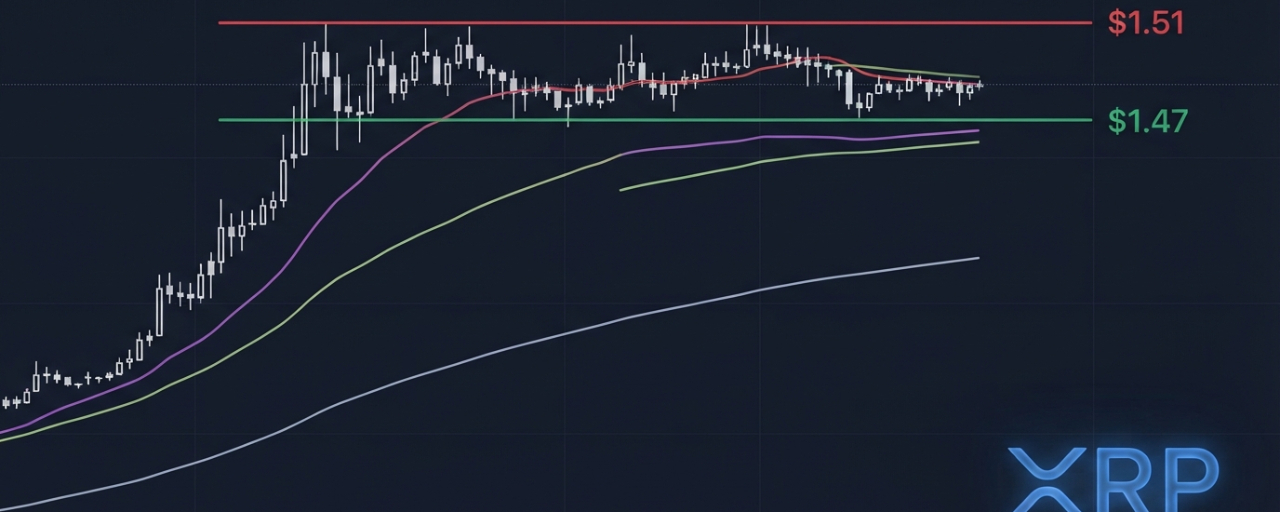
Auf dem Chart steckt XRP in einer Spanne von 1,47–1,70 US-Dollar fest. Der wöchentliche RSI liegt nahe 55 – neutral, nicht überverkauft. Ein ausgereiftes symmetrisches Dreieck zieht sich zusammen, wobei die Trendlinien sich um den 3. Oktober herum annähern.
Wichtige Levels, die ich beobachte:
1,70 US-Dollar – das 0,618-Fib. Hier wurde es bereits zweimal abgelehnt.
1,47–1,50 US-Dollar – aktueller Support. Wenn dieser fällt, öffnet sich die Tür zu 1,17.
1,52 US-Dollar – die 50-Wochen-EMA. Ein wöchentlicher Schlusskurs darunter hält die bärische These am Leben.
Mein Fazit: Ich kaufe diese Spanne nicht. Ich warte entweder auf einen sauberen wöchentlichen Schlusskurs über 1,70 US-Dollar (der den Weg zu 1,83 öffnet) oder auf einen Flush in Richtung 1,17, der die späten Longs aus dem Markt spült. Die Fed-Entscheidung am 27.–28. Oktober und die Ripple-Swell-Konferenz in derselben Woche sind die Auslöser.
Bis dahin ist es ein Abwarten. Und Oktober hat historisch eher Geduld als FOMO belohnt.
Wie lautet dein Plan auf $XRP – kaufst du die Spanne oder wartest du auf den Ausbruch?
#XRP #Crypto
XRP’s Oktober-Falle: Warum Smart Money auf einen tieferen Flush wartet
XRP hat sein bestes Q3 in vier Jahren abgeschlossen – plus 48%. Aber die Geschichte sendet eine Warnung, die die meisten Trader ignorieren.
Schau dir das an:
XRP ist in den letzten 13 Jahren in 8 von 13 Jahren im Oktober tiefer geschlossen. Der durchschnittliche Oktober-Verlust? -5,14%. Und wenn September grün schließt – wie in diesem Jahr – dann war Oktober 6 von 7 Mal rot.
Das ist kein Zufall. Das ist ein Muster.
Darum ist dieses Setup so tückisch: Die Fundamentaldaten sehen bullisch aus. US-Spot-XRP-ETFs halten jetzt ungefähr 1,16 Milliarden XRP – etwa 1,76 Milliarden US-Dollar – mit kumulierten Nettozuflüssen nahe 1,68 Milliarden US-Dollar. Die Börsenbestände werden hart abgebaut: von 12,9 Milliarden auf 11 Milliarden Tokens seit April.
Aber hier liegt die Falle: ETF-Zuflüsse folgen dem Preis, nicht umgekehrt. Sie häufen sich während Rallyes und werden bei Rückgängen leise. Wenn XRP hier ins Stocken gerät, versiegt der Kaufdruck schnell.
Auf dem Chart steckt XRP in einer Spanne von 1,47–1,70 US-Dollar fest. Der wöchentliche RSI liegt nahe 55 – neutral, nicht überverkauft. Ein ausgereiftes symmetrisches Dreieck zieht sich zusammen, wobei die Trendlinien sich um den 3. Oktober herum annähern.
Wichtige Levels, die ich beobachte:
1,70 US-Dollar – das 0,618-Fib. Hier wurde es bereits zweimal abgelehnt.
1,47–1,50 US-Dollar – aktueller Support. Wenn dieser fällt, öffnet sich die Tür zu 1,17.
1,52 US-Dollar – die 50-Wochen-EMA. Ein wöchentlicher Schlusskurs darunter hält die bärische These am Leben.
Mein Fazit: Ich kaufe diese Spanne nicht. Ich warte entweder auf einen sauberen wöchentlichen Schlusskurs über 1,70 US-Dollar (der den Weg zu 1,83 öffnet) oder auf einen Flush in Richtung 1,17, der die späten Longs aus dem Markt spült. Die Fed-Entscheidung am 27.–28. Oktober und die Ripple-Swell-Konferenz in derselben Woche sind die Auslöser.
Bis dahin ist es ein Abwarten. Und Oktober hat historisch eher Geduld als FOMO belohnt.
Wie lautet dein Plan auf $XRP – kaufst du die Spanne oder wartest du auf den Ausbruch?
#XRP #Crypto
XRP hat sein bestes Q3 in vier Jahren abgeschlossen – plus 48%. Aber die Geschichte sendet eine Warnung, die die meisten Trader ignorieren.
Schau dir das an:
XRP ist in den letzten 13 Jahren in 8 von 13 Jahren im Oktober tiefer geschlossen. Der durchschnittliche Oktober-Verlust? -5,14%. Und wenn September grün schließt – wie in diesem Jahr – dann war Oktober 6 von 7 Mal rot.
Das ist kein Zufall. Das ist ein Muster.
Darum ist dieses Setup so tückisch: Die Fundamentaldaten sehen bullisch aus. US-Spot-XRP-ETFs halten jetzt ungefähr 1,16 Milliarden XRP – etwa 1,76 Milliarden US-Dollar – mit kumulierten Nettozuflüssen nahe 1,68 Milliarden US-Dollar. Die Börsenbestände werden hart abgebaut: von 12,9 Milliarden auf 11 Milliarden Tokens seit April.
Aber hier liegt die Falle: ETF-Zuflüsse folgen dem Preis, nicht umgekehrt. Sie häufen sich während Rallyes und werden bei Rückgängen leise. Wenn XRP hier ins Stocken gerät, versiegt der Kaufdruck schnell.
Auf dem Chart steckt XRP in einer Spanne von 1,47–1,70 US-Dollar fest. Der wöchentliche RSI liegt nahe 55 – neutral, nicht überverkauft. Ein ausgereiftes symmetrisches Dreieck zieht sich zusammen, wobei die Trendlinien sich um den 3. Oktober herum annähern.
Wichtige Levels, die ich beobachte:
1,70 US-Dollar – das 0,618-Fib. Hier wurde es bereits zweimal abgelehnt.
1,47–1,50 US-Dollar – aktueller Support. Wenn dieser fällt, öffnet sich die Tür zu 1,17.
1,52 US-Dollar – die 50-Wochen-EMA. Ein wöchentlicher Schlusskurs darunter hält die bärische These am Leben.
Mein Fazit: Ich kaufe diese Spanne nicht. Ich warte entweder auf einen sauberen wöchentlichen Schlusskurs über 1,70 US-Dollar (der den Weg zu 1,83 öffnet) oder auf einen Flush in Richtung 1,17, der die späten Longs aus dem Markt spült. Die Fed-Entscheidung am 27.–28. Oktober und die Ripple-Swell-Konferenz in derselben Woche sind die Auslöser.
Bis dahin ist es ein Abwarten. Und Oktober hat historisch eher Geduld als FOMO belohnt.
Wie lautet dein Plan auf $XRP – kaufst du die Spanne oder wartest du auf den Ausbruch?
#XRP #Crypto
1
102
·
--
Artikel
XRP zieht sich unter 1,51 $ zusammen — der echte Auslöser, den alle im Blick habenXRP ist heute totenstill. Eine 24-Stunden-Spanne von nur 0,02 $ — das ist nicht zufällig. Das ist eine Kompression vor einer Bewegung.
Das ist gerade jetzt entscheidend:
Das Chartbild ist bullisch gestapelt. Der Kurs liegt oberhalb der gleitenden Durchschnitte der 7, 20, 50 und 200 Tage. Das ist eine Lehrbuch-Trendstruktur. Der 200-Tage-Durchschnitt liegt bei 1,28 $, der 50-Tage bei 1,40 — beide deutlich unter dem aktuellen Kurs.
Doch das MACD-Histogramm hat gerade eine harte Null gedruckt. Der Schwung ist komplett neutralisiert. Diese Bewegung braucht frischen Treibstoff, bevor sie irgendwohin geht.
Das Derivate-Bild ist der entscheidende Hinweis: Die führenden Binance-Trader fahren ein Long/Short-Verhältnis von 2,59 — 72,2 % sind long positioniert. Der Retail-Sektor liegt direkt dahinter bei 70,1 % long.
XRP zieht sich unter 1,51 $ zusammen — der echte Auslöser, den alle im Blick haben
XRP ist heute totenstill. Eine 24-Stunden-Spanne von nur 0,02 $ — das ist nicht zufällig. Das ist eine Kompression vor einer Bewegung.
Das ist gerade jetzt entscheidend:
Das Chartbild ist bullisch gestapelt. Der Kurs liegt oberhalb der gleitenden Durchschnitte der 7, 20, 50 und 200 Tage. Das ist eine Lehrbuch-Trendstruktur. Der 200-Tage-Durchschnitt liegt bei 1,28 $, der 50-Tage bei 1,40 — beide deutlich unter dem aktuellen Kurs.
Doch das MACD-Histogramm hat gerade eine harte Null gedruckt. Der Schwung ist komplett neutralisiert. Diese Bewegung braucht frischen Treibstoff, bevor sie irgendwohin geht.
Das Derivate-Bild ist der entscheidende Hinweis: Die führenden Binance-Trader fahren ein Long/Short-Verhältnis von 2,59 — 72,2 % sind long positioniert. Der Retail-Sektor liegt direkt dahinter bei 70,1 % long.
Das ist gerade jetzt entscheidend:
Das Chartbild ist bullisch gestapelt. Der Kurs liegt oberhalb der gleitenden Durchschnitte der 7, 20, 50 und 200 Tage. Das ist eine Lehrbuch-Trendstruktur. Der 200-Tage-Durchschnitt liegt bei 1,28 $, der 50-Tage bei 1,40 — beide deutlich unter dem aktuellen Kurs.
Doch das MACD-Histogramm hat gerade eine harte Null gedruckt. Der Schwung ist komplett neutralisiert. Diese Bewegung braucht frischen Treibstoff, bevor sie irgendwohin geht.
Das Derivate-Bild ist der entscheidende Hinweis: Die führenden Binance-Trader fahren ein Long/Short-Verhältnis von 2,59 — 72,2 % sind long positioniert. Der Retail-Sektor liegt direkt dahinter bei 70,1 % long.
104
·
--
🔥 Die Capital-Rotation-Strategie: Gewinnen Altcoins an Stärke?
Wenn große Vermögenswerte sich stabilisieren, rotiert das Kapital oft in High-Beta Layer-1-Ökosysteme wie Ethereum und Solana. Die relative Stärke zu verfolgen ist entscheidend, um zu erkennen, wohin sich das Smart Money als Nächstes bewegt.
Achte besonders auf Volumen-Spikes – nicht nur auf prozentuale Kursgewinne.
Beobachte die Orderbook-Tiefe bei Perpetuals, um die Positionierung von Walen einzuschätzen.
Auf welchen Altcoin setzt du für die nächste Markt-Welle? Poste deine Bag-Liste unten!
#Ethereum #solana #Altcoin $SOL $ETH $ALT
🔥 Die Capital-Rotation-Strategie: Gewinnen Altcoins an Stärke?
Wenn große Vermögenswerte sich stabilisieren, rotiert das Kapital oft in High-Beta Layer-1-Ökosysteme wie Ethereum und Solana. Die relative Stärke zu verfolgen ist entscheidend, um zu erkennen, wohin sich das Smart Money als Nächstes bewegt.
Achte besonders auf Volumen-Spikes – nicht nur auf prozentuale Kursgewinne.
Beobachte die Orderbook-Tiefe bei Perpetuals, um die Positionierung von Walen einzuschätzen.
Auf welchen Altcoin setzt du für die nächste Markt-Welle? Poste deine Bag-Liste unten!
#Ethereum #solana #Altcoin $SOL $ETH $ALT
Wenn große Vermögenswerte sich stabilisieren, rotiert das Kapital oft in High-Beta Layer-1-Ökosysteme wie Ethereum und Solana. Die relative Stärke zu verfolgen ist entscheidend, um zu erkennen, wohin sich das Smart Money als Nächstes bewegt.
Achte besonders auf Volumen-Spikes – nicht nur auf prozentuale Kursgewinne.
Beobachte die Orderbook-Tiefe bei Perpetuals, um die Positionierung von Walen einzuschätzen.
Auf welchen Altcoin setzt du für die nächste Markt-Welle? Poste deine Bag-Liste unten!
#Ethereum #solana #Altcoin $SOL $ETH $ALT
76
·
--
Übersetzung ansehen
🪙 What Are Stablecoins — And Why Are They Important in Crypto?
Not every crypto asset is designed to move up and down dramatically.
Stablecoins are digital assets designed to maintain a relatively stable value, often by referencing a fiat currency such as the US dollar.
Here are 3 common ways they’re used:
💵 1. Moving value
Stablecoins can make it easier to move value within the crypto ecosystem without immediately converting back to traditional money.
🔄 2. Trading
Traders often use stablecoins as a quote asset when buying or selling other cryptocurrencies.
🌐 3. DeFi & Web3
Stablecoins are widely used across decentralized finance applications and other blockchain-based services.
💡 Simple takeaway:
Stablecoins don't eliminate crypto risk, but they play an important role as a bridge between volatile crypto assets and a more stable unit of value.
⚠️ Always research the specific stablecoin, its reserves, issuer, and risks before using it. This post is for educational purposes only, not financial advice.
Which topic should I explain next: Bitcoin, Ethereum, DeFi, or Crypto Wallets? 👇
$BTC #CryptoEducation #Stablecoins #CryptoBasics #BinanceSquare
🪙 What Are Stablecoins — And Why Are They Important in Crypto?
Not every crypto asset is designed to move up and down dramatically.
Stablecoins are digital assets designed to maintain a relatively stable value, often by referencing a fiat currency such as the US dollar.
Here are 3 common ways they’re used:
💵 1. Moving value
Stablecoins can make it easier to move value within the crypto ecosystem without immediately converting back to traditional money.
🔄 2. Trading
Traders often use stablecoins as a quote asset when buying or selling other cryptocurrencies.
🌐 3. DeFi & Web3
Stablecoins are widely used across decentralized finance applications and other blockchain-based services.
💡 Simple takeaway:
Stablecoins don't eliminate crypto risk, but they play an important role as a bridge between volatile crypto assets and a more stable unit of value.
⚠️ Always research the specific stablecoin, its reserves, issuer, and risks before using it. This post is for educational purposes only, not financial advice.
Which topic should I explain next: Bitcoin, Ethereum, DeFi, or Crypto Wallets? 👇
$BTC #CryptoEducation #Stablecoins #CryptoBasics #BinanceSquare
Not every crypto asset is designed to move up and down dramatically.
Stablecoins are digital assets designed to maintain a relatively stable value, often by referencing a fiat currency such as the US dollar.
Here are 3 common ways they’re used:
💵 1. Moving value
Stablecoins can make it easier to move value within the crypto ecosystem without immediately converting back to traditional money.
🔄 2. Trading
Traders often use stablecoins as a quote asset when buying or selling other cryptocurrencies.
🌐 3. DeFi & Web3
Stablecoins are widely used across decentralized finance applications and other blockchain-based services.
💡 Simple takeaway:
Stablecoins don't eliminate crypto risk, but they play an important role as a bridge between volatile crypto assets and a more stable unit of value.
⚠️ Always research the specific stablecoin, its reserves, issuer, and risks before using it. This post is for educational purposes only, not financial advice.
Which topic should I explain next: Bitcoin, Ethereum, DeFi, or Crypto Wallets? 👇
$BTC #CryptoEducation #Stablecoins #CryptoBasics #BinanceSquare
81
·
--
Übersetzung ansehen
🧠 What Is Crypto Market Liquidity — And Why Does It Matter?
You may hear the word “liquidity” a lot in crypto, but what does it actually mean?
💧 Liquidity = how easily an asset can be bought or sold without causing a large price change.
Here are 3 simple things to understand:
📊 1. Higher liquidity
More buyers and sellers are available, so trades can generally happen more smoothly.
⚡ 2. Lower liquidity
A relatively small order can sometimes have a larger effect on the market price.
📖 3. Order books matter
The buy and sell orders available at different prices give traders an idea of the market's available liquidity.
💡 Simple takeaway:
Price alone doesn't tell the whole story. Understanding volume, order books, and liquidity can help you better understand how crypto markets work.
⚠️ Crypto markets are volatile. This post is for educational purposes only, not financial advice.
What crypto market concept should I explain next? 👇
$BTC #bitcoin #CryptoEducation #CryptoBasics #BinanceSquare
🧠 What Is Crypto Market Liquidity — And Why Does It Matter?
You may hear the word “liquidity” a lot in crypto, but what does it actually mean?
💧 Liquidity = how easily an asset can be bought or sold without causing a large price change.
Here are 3 simple things to understand:
📊 1. Higher liquidity
More buyers and sellers are available, so trades can generally happen more smoothly.
⚡ 2. Lower liquidity
A relatively small order can sometimes have a larger effect on the market price.
📖 3. Order books matter
The buy and sell orders available at different prices give traders an idea of the market's available liquidity.
💡 Simple takeaway:
Price alone doesn't tell the whole story. Understanding volume, order books, and liquidity can help you better understand how crypto markets work.
⚠️ Crypto markets are volatile. This post is for educational purposes only, not financial advice.
What crypto market concept should I explain next? 👇
$BTC #bitcoin #CryptoEducation #CryptoBasics #BinanceSquare
You may hear the word “liquidity” a lot in crypto, but what does it actually mean?
💧 Liquidity = how easily an asset can be bought or sold without causing a large price change.
Here are 3 simple things to understand:
📊 1. Higher liquidity
More buyers and sellers are available, so trades can generally happen more smoothly.
⚡ 2. Lower liquidity
A relatively small order can sometimes have a larger effect on the market price.
📖 3. Order books matter
The buy and sell orders available at different prices give traders an idea of the market's available liquidity.
💡 Simple takeaway:
Price alone doesn't tell the whole story. Understanding volume, order books, and liquidity can help you better understand how crypto markets work.
⚠️ Crypto markets are volatile. This post is for educational purposes only, not financial advice.
What crypto market concept should I explain next? 👇
$BTC #bitcoin #CryptoEducation #CryptoBasics #BinanceSquare
43
·
--
Übersetzung ansehen
🧠 Bitcoin: Why Does Market Sentiment Matter?
Bitcoin doesn’t move because of one single factor.
Here are 3 things I always think are important when looking at the crypto market:
📊 1. Price Action
Look at how price behaves around important support and resistance areas.
📈 2. Trading Volume
A strong price move with meaningful volume can provide more context than price movement alone.
📰 3. Market Sentiment
News, macroeconomic events, ETF activity and overall investor sentiment can influence how traders react.
💡 The key lesson:
Instead of reacting to every green or red candle, try to understand why the market is moving.
⚠️ Crypto is highly volatile. This post is for educational purposes, not financial advice.
What do you usually look at first: Price Action, Volume, or News? 👇
$BTC #Bitcoin #CryptoEducation #CryptoMarket #BinanceSquare
🧠 Bitcoin: Why Does Market Sentiment Matter?
Bitcoin doesn’t move because of one single factor.
Here are 3 things I always think are important when looking at the crypto market:
📊 1. Price Action
Look at how price behaves around important support and resistance areas.
📈 2. Trading Volume
A strong price move with meaningful volume can provide more context than price movement alone.
📰 3. Market Sentiment
News, macroeconomic events, ETF activity and overall investor sentiment can influence how traders react.
💡 The key lesson:
Instead of reacting to every green or red candle, try to understand why the market is moving.
⚠️ Crypto is highly volatile. This post is for educational purposes, not financial advice.
What do you usually look at first: Price Action, Volume, or News? 👇
$BTC #Bitcoin #CryptoEducation #CryptoMarket #BinanceSquare
Bitcoin doesn’t move because of one single factor.
Here are 3 things I always think are important when looking at the crypto market:
📊 1. Price Action
Look at how price behaves around important support and resistance areas.
📈 2. Trading Volume
A strong price move with meaningful volume can provide more context than price movement alone.
📰 3. Market Sentiment
News, macroeconomic events, ETF activity and overall investor sentiment can influence how traders react.
💡 The key lesson:
Instead of reacting to every green or red candle, try to understand why the market is moving.
⚠️ Crypto is highly volatile. This post is for educational purposes, not financial advice.
What do you usually look at first: Price Action, Volume, or News? 👇
$BTC #Bitcoin #CryptoEducation #CryptoMarket #BinanceSquare
60
·
--
Übersetzung ansehen
🔮 Short-Term Crypto Outlook: Which Coins Could Move Fast?
The crypto market is heating up again, and traders are watching closely for short-term opportunities. While no prediction is ever certain, here are some areas where momentum could build quickly:
⚡ 1. Bitcoin (BTC) – Market Leader
BTC often sets the tone for the entire market.
If it breaks key resistance levels, altcoins usually follow with strong rallies.
🌐 2. Ethereum (ETH) – Smart Contract Giant
ETH upgrades continue to attract attention.
Increased DeFi and NFT activity could spark short-term demand.
💎 3. Altcoins with Hype Potential
Layer 2 tokens (like Arbitrum, Optimism) are gaining traction as scaling solutions.
AI-related tokens are trending due to tech sector buzz.
Gaming/metaverse coins often see sharp moves when new partnerships or launches are announced.
📊 Trading Strategy
Watch for breakout levels on the 4H chart.
Use indicators like Bollinger Bands or RSI to confirm momentum.
Manage risk carefully—short-term gains can vanish just as quickly.
🔮 Short-Term Crypto Outlook: Which Coins Could Move Fast?
The crypto market is heating up again, and traders are watching closely for short-term opportunities. While no prediction is ever certain, here are some areas where momentum could build quickly:
⚡ 1. Bitcoin (BTC) – Market Leader
BTC often sets the tone for the entire market.
If it breaks key resistance levels, altcoins usually follow with strong rallies.
🌐 2. Ethereum (ETH) – Smart Contract Giant
ETH upgrades continue to attract attention.
Increased DeFi and NFT activity could spark short-term demand.
💎 3. Altcoins with Hype Potential
Layer 2 tokens (like Arbitrum, Optimism) are gaining traction as scaling solutions.
AI-related tokens are trending due to tech sector buzz.
Gaming/metaverse coins often see sharp moves when new partnerships or launches are announced.
📊 Trading Strategy
Watch for breakout levels on the 4H chart.
Use indicators like Bollinger Bands or RSI to confirm momentum.
Manage risk carefully—short-term gains can vanish just as quickly.
The crypto market is heating up again, and traders are watching closely for short-term opportunities. While no prediction is ever certain, here are some areas where momentum could build quickly:
⚡ 1. Bitcoin (BTC) – Market Leader
BTC often sets the tone for the entire market.
If it breaks key resistance levels, altcoins usually follow with strong rallies.
🌐 2. Ethereum (ETH) – Smart Contract Giant
ETH upgrades continue to attract attention.
Increased DeFi and NFT activity could spark short-term demand.
💎 3. Altcoins with Hype Potential
Layer 2 tokens (like Arbitrum, Optimism) are gaining traction as scaling solutions.
AI-related tokens are trending due to tech sector buzz.
Gaming/metaverse coins often see sharp moves when new partnerships or launches are announced.
📊 Trading Strategy
Watch for breakout levels on the 4H chart.
Use indicators like Bollinger Bands or RSI to confirm momentum.
Manage risk carefully—short-term gains can vanish just as quickly.
92
·
--
Übersetzung ansehen
🚀 Mastering Market Psychology in Crypto Trading
When most traders think about success, they focus on charts, indicators, and strategies. But the hidden key to consistent profitability lies in market psychology—both yours and the crowd’s.
🧠 Why Psychology Matters
Fear & Greed: These two emotions drive most market moves. Fear causes panic selling, while greed fuels FOMO buying.
Discipline: A trader with a solid plan but no discipline will still fail. Sticking to stop-losses and targets is what separates pros from amateurs.
Patience: The market rewards those who wait for high-probability setups instead of chasing every candle.
📊 Crowd Behavior in Crypto
Unlike traditional markets, crypto is heavily influenced by retail sentiment. News, tweets, and sudden hype can move prices dramatically. Recognizing these patterns early gives you an edge.
🔑 Practical Tips
Always trade with a plan (entry, exit, risk).
Use indicators like RSI or Bollinger Bands to confirm—not replace—your judgment.
Keep emotions in check by limiting position sizes.
Remember: protecting capital is more important than chasing every pump.
💡 Final Thought
Crypto trading isn’t just about technicals—it’s about mastering yourself. The moment you control your emotions, you gain control over your trades.
🚀 Mastering Market Psychology in Crypto Trading
When most traders think about success, they focus on charts, indicators, and strategies. But the hidden key to consistent profitability lies in market psychology—both yours and the crowd’s.
🧠 Why Psychology Matters
Fear & Greed: These two emotions drive most market moves. Fear causes panic selling, while greed fuels FOMO buying.
Discipline: A trader with a solid plan but no discipline will still fail. Sticking to stop-losses and targets is what separates pros from amateurs.
Patience: The market rewards those who wait for high-probability setups instead of chasing every candle.
📊 Crowd Behavior in Crypto
Unlike traditional markets, crypto is heavily influenced by retail sentiment. News, tweets, and sudden hype can move prices dramatically. Recognizing these patterns early gives you an edge.
🔑 Practical Tips
Always trade with a plan (entry, exit, risk).
Use indicators like RSI or Bollinger Bands to confirm—not replace—your judgment.
Keep emotions in check by limiting position sizes.
Remember: protecting capital is more important than chasing every pump.
💡 Final Thought
Crypto trading isn’t just about technicals—it’s about mastering yourself. The moment you control your emotions, you gain control over your trades.
When most traders think about success, they focus on charts, indicators, and strategies. But the hidden key to consistent profitability lies in market psychology—both yours and the crowd’s.
🧠 Why Psychology Matters
Fear & Greed: These two emotions drive most market moves. Fear causes panic selling, while greed fuels FOMO buying.
Discipline: A trader with a solid plan but no discipline will still fail. Sticking to stop-losses and targets is what separates pros from amateurs.
Patience: The market rewards those who wait for high-probability setups instead of chasing every candle.
📊 Crowd Behavior in Crypto
Unlike traditional markets, crypto is heavily influenced by retail sentiment. News, tweets, and sudden hype can move prices dramatically. Recognizing these patterns early gives you an edge.
🔑 Practical Tips
Always trade with a plan (entry, exit, risk).
Use indicators like RSI or Bollinger Bands to confirm—not replace—your judgment.
Keep emotions in check by limiting position sizes.
Remember: protecting capital is more important than chasing every pump.
💡 Final Thought
Crypto trading isn’t just about technicals—it’s about mastering yourself. The moment you control your emotions, you gain control over your trades.
1
136
·
--
Ich denke, nicht möglich
Ich denke, nicht möglich

Blockchain DON
·
--
Gibt es eine Chance für "$NOT " Crypto, in den nächsten 30 Tagen $1 USDT zu erreichen?
Derzeit gibt es keine etablierte Kryptowährung mit dem Namen "NOT", die an großen Börsen wie Binance oder Coinbase gelistet ist. Wenn "NOT" sich auf einen aufstrebenden oder obskuren Token bezieht, hängt sein Weg zur Erreichung einer Bewertung von $1 USDT von mehreren entscheidenden Faktoren ab:
1. Marktnachfrage: Der Preis eines Tokens steigt, wenn die Nachfrage wächst und eine breite Akzeptanz erfolgt. Wenn "NOT" einzigartige Anwendungsfälle hat, könnte es an Bedeutung gewinnen.
2. Nutzen und Innovation: Tokens, die von innovativen Projekten im DeFi-, NFT- oder blockchainbasierten Anwendungen unterstützt werden, zeigen oft ein schnelles Wachstum. "NOT" bräuchte starke Unterstützung in diesen Bereichen, um $1 zu erreichen.
3. Marktsentiment: Die allgemeine Gesundheit des Kryptowährungsmarktes spielt eine entscheidende Rolle. Ein bullischer Markt erhöht die Möglichkeit von Preisanstiegen bei aufstrebenden Münzen.
4. Gemeinschaftsunterstützung: Starke Beteiligung der Gemeinschaft und Promotion in sozialen Medien können den Wert eines Tokens erheblich beeinflussen.
Ohne konkrete Details über "NOT" Crypto bleibt die Vorhersage seines zukünftigen Potenzials spekulativ. Wenn Sie sich auf eine bestimmte Münze beziehen, recherchieren Sie immer gründlich und überprüfen Sie ihre Legitimität auf Plattformen wie CoinMarketCap oder CoinGecko, bevor Sie investieren.
Lassen Sie mich wissen, ob Sie detaillierte Informationen zu einem bestimmten Token oder einer Anlagestrategie wünschen.
Derzeit gibt es keine etablierte Kryptowährung mit dem Namen "NOT", die an großen Börsen wie Binance oder Coinbase gelistet ist. Wenn "NOT" sich auf einen aufstrebenden oder obskuren Token bezieht, hängt sein Weg zur Erreichung einer Bewertung von $1 USDT von mehreren entscheidenden Faktoren ab:
1. Marktnachfrage: Der Preis eines Tokens steigt, wenn die Nachfrage wächst und eine breite Akzeptanz erfolgt. Wenn "NOT" einzigartige Anwendungsfälle hat, könnte es an Bedeutung gewinnen.
2. Nutzen und Innovation: Tokens, die von innovativen Projekten im DeFi-, NFT- oder blockchainbasierten Anwendungen unterstützt werden, zeigen oft ein schnelles Wachstum. "NOT" bräuchte starke Unterstützung in diesen Bereichen, um $1 zu erreichen.
3. Marktsentiment: Die allgemeine Gesundheit des Kryptowährungsmarktes spielt eine entscheidende Rolle. Ein bullischer Markt erhöht die Möglichkeit von Preisanstiegen bei aufstrebenden Münzen.
4. Gemeinschaftsunterstützung: Starke Beteiligung der Gemeinschaft und Promotion in sozialen Medien können den Wert eines Tokens erheblich beeinflussen.
Ohne konkrete Details über "NOT" Crypto bleibt die Vorhersage seines zukünftigen Potenzials spekulativ. Wenn Sie sich auf eine bestimmte Münze beziehen, recherchieren Sie immer gründlich und überprüfen Sie ihre Legitimität auf Plattformen wie CoinMarketCap oder CoinGecko, bevor Sie investieren.
Lassen Sie mich wissen, ob Sie detaillierte Informationen zu einem bestimmten Token oder einer Anlagestrategie wünschen.
127
Anmelden und weiter Inhalte entdecken
Krypto-Nutzer weltweit auf Binance Square kennenlernen
⚡️ Bleib in Sachen Krypto stets am Puls.
💬 Die weltgrößte Kryptobörse vertraut darauf.
👍 Erhalte verlässliche Einblicke von verifizierten Creators.
E-Mail-Adresse/Telefonnummer
Trendthemen
FedMinutesFocusOnOctoberPause
1,590 Aufrufe
105 Kommentare
#fedminutesfocusonoctoberpause
🚨 FED-PROTOKOLL RÜCKT PAUSE IM OKTOBER IN DEN FOKUS! 🇺🇸
Das neueste Protokoll der Federal Reserve lenkt die Aufmerksamkeit erneut auf die Möglichkeit einer Zinspause im Oktober. 👀
Die Märkte achten jetzt genau auf Hinweise darauf, was die Fed als Nächstes tun könnte.
Warum das für Krypto-Trader wichtig ist:
🔹 Eine Zinspause könnte Risikoanlagen stützen
🔹 Niedrigere Zinserwartungen können die Liquiditätsstimmung verbessern
🔹 Bitcoin und Altcoins könnten stark auf Signale der Fed reagieren
🔹 Der Dollar und die Renditen von US-Staatsanleihen bleiben wichtige Faktoren
🔥 Wenn die Fed eine Pause signalisiert, während die Inflation weiter abkühlt, könnte das ein weiterer Katalysator für Krypto sein?
WAS DENKT IHR, WAS ALS NÄCHSTES PASSIERT? 👇
🟢 Fed pausiert → BTC steigt 🚀
🟡 Fed bleibt vorsichtig
🔴 Eine restriktive Fed → Krypto stürzt ab
#Fed #bitcoin #crypto
Faizan Crypto Learner
·1 Likes
·651 Aufrufe
BinanceLaunchesBinanceIntelligence
876,435 Aufrufe
5,373 Kommentare
RobinhoodAdds$25MInBitcoinToBalanceSheet
197 Aufrufe
11 Kommentare