

Smart Crypto Media
1.3k Beiträge

Smart Crypto Media
Melden
Nutzer blockieren
Smart Crypto Media:Your go-to source for the latest in crypto news, market analysis, trends, blockchain insights, and Web3 education.Stay informed, trade smart
Trade eröffnen
Regelmäßiger Trader
2.4 Jahre
346 Following
3.5K+ Follower
6.8K+ Like gegeben
Beiträge
Portfolio
Alle
Zitierungen
Videos
Live
Apple ist nur noch einen Rundungsfehler von Nvidias Thron entfernt
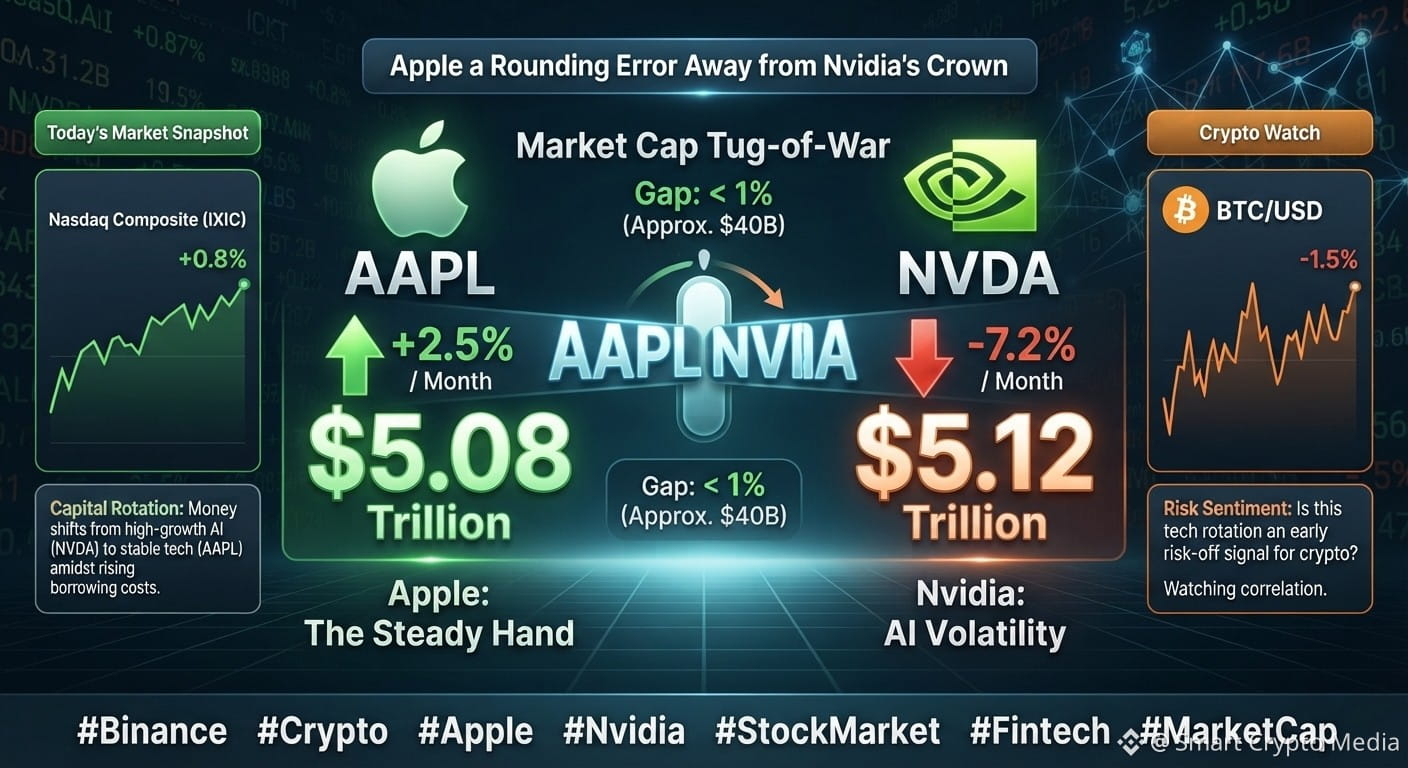
Apple und Nvidia liegen derzeit beide bei rund 5,1 Billionen US-Dollar, und Nvidias Vorsprung beträgt nur noch etwa 40 Milliarden. Das sind weniger als 1 %. Ein ganz normaler grüner Tag für Apple könnte die Rangfolge komplett umdrehen.
Im vergangenen Monat ist Apple um etwa 2,5 % gestiegen, während Nvidia mehr als 7 % verloren hat. Die Leute werden nervös angesichts der Summen, die in KI fließen, und Apple, das sich aus diesem Ausgabenrennen weitgehend herausgehalten hat, wirkt plötzlich wie der Erwachsene im Raum.
Bloomberg bezeichnete Apple diese Woche als relativ sicheren Hafen, während die Kreditkosten steigen und Unternehmen, die ihre KI-Infrastruktur finanzieren, unter Druck geraten. Das deckt sich mit meinen Erwartungen. Wenn der angesagteste Trade ins Wanken gerät, verlässt das Geld nur selten den Markt. Es wandert einfach zu den Unternehmen, die solider wirken.
Ehrlich gesagt würde ich nicht zu viel in die Schlagzeile „wertvollstes Unternehmen der Welt“ hineininterpretieren. So ein kleiner Abstand kann sich an einem Dienstag in Luft auflösen. Ich würde eher darauf achten, ob die Umschichtung aus dem KI-Bereich weitergeht – und was BTC macht, falls das passiert. Hält BTC sich, oder folgt es wie schon früher dem Abwärtstrend der Tech-Werte?
Wozu tendiert ihr: Tech-Musical-Chairs oder ein frühes Risk-off-Signal für Krypto?
#Crypto #Apple
Apple ist nur noch einen Rundungsfehler von Nvidias Thron entfernt
Apple und Nvidia liegen derzeit beide bei rund 5,1 Billionen US-Dollar, und Nvidias Vorsprung beträgt nur noch etwa 40 Milliarden. Das sind weniger als 1 %. Ein ganz normaler grüner Tag für Apple könnte die Rangfolge komplett umdrehen.
Im vergangenen Monat ist Apple um etwa 2,5 % gestiegen, während Nvidia mehr als 7 % verloren hat. Die Leute werden nervös angesichts der Summen, die in KI fließen, und Apple, das sich aus diesem Ausgabenrennen weitgehend herausgehalten hat, wirkt plötzlich wie der Erwachsene im Raum.
Bloomberg bezeichnete Apple diese Woche als relativ sicheren Hafen, während die Kreditkosten steigen und Unternehmen, die ihre KI-Infrastruktur finanzieren, unter Druck geraten. Das deckt sich mit meinen Erwartungen. Wenn der angesagteste Trade ins Wanken gerät, verlässt das Geld nur selten den Markt. Es wandert einfach zu den Unternehmen, die solider wirken.
Ehrlich gesagt würde ich nicht zu viel in die Schlagzeile „wertvollstes Unternehmen der Welt“ hineininterpretieren. So ein kleiner Abstand kann sich an einem Dienstag in Luft auflösen. Ich würde eher darauf achten, ob die Umschichtung aus dem KI-Bereich weitergeht – und was BTC macht, falls das passiert. Hält BTC sich, oder folgt es wie schon früher dem Abwärtstrend der Tech-Werte?
Wozu tendiert ihr: Tech-Musical-Chairs oder ein frühes Risk-off-Signal für Krypto?
#Crypto #Apple
Apple und Nvidia liegen derzeit beide bei rund 5,1 Billionen US-Dollar, und Nvidias Vorsprung beträgt nur noch etwa 40 Milliarden. Das sind weniger als 1 %. Ein ganz normaler grüner Tag für Apple könnte die Rangfolge komplett umdrehen.
Im vergangenen Monat ist Apple um etwa 2,5 % gestiegen, während Nvidia mehr als 7 % verloren hat. Die Leute werden nervös angesichts der Summen, die in KI fließen, und Apple, das sich aus diesem Ausgabenrennen weitgehend herausgehalten hat, wirkt plötzlich wie der Erwachsene im Raum.
Bloomberg bezeichnete Apple diese Woche als relativ sicheren Hafen, während die Kreditkosten steigen und Unternehmen, die ihre KI-Infrastruktur finanzieren, unter Druck geraten. Das deckt sich mit meinen Erwartungen. Wenn der angesagteste Trade ins Wanken gerät, verlässt das Geld nur selten den Markt. Es wandert einfach zu den Unternehmen, die solider wirken.
Ehrlich gesagt würde ich nicht zu viel in die Schlagzeile „wertvollstes Unternehmen der Welt“ hineininterpretieren. So ein kleiner Abstand kann sich an einem Dienstag in Luft auflösen. Ich würde eher darauf achten, ob die Umschichtung aus dem KI-Bereich weitergeht – und was BTC macht, falls das passiert. Hält BTC sich, oder folgt es wie schon früher dem Abwärtstrend der Tech-Werte?
Wozu tendiert ihr: Tech-Musical-Chairs oder ein frühes Risk-off-Signal für Krypto?
#Crypto #Apple
109
🚨 Bitcoin & XRP: Eine Fed-Entscheidung könnte die Marktstimmung verändern
Der Kryptomarkt nähert sich einem wichtigen makroökonomischen Ereignis. 👀
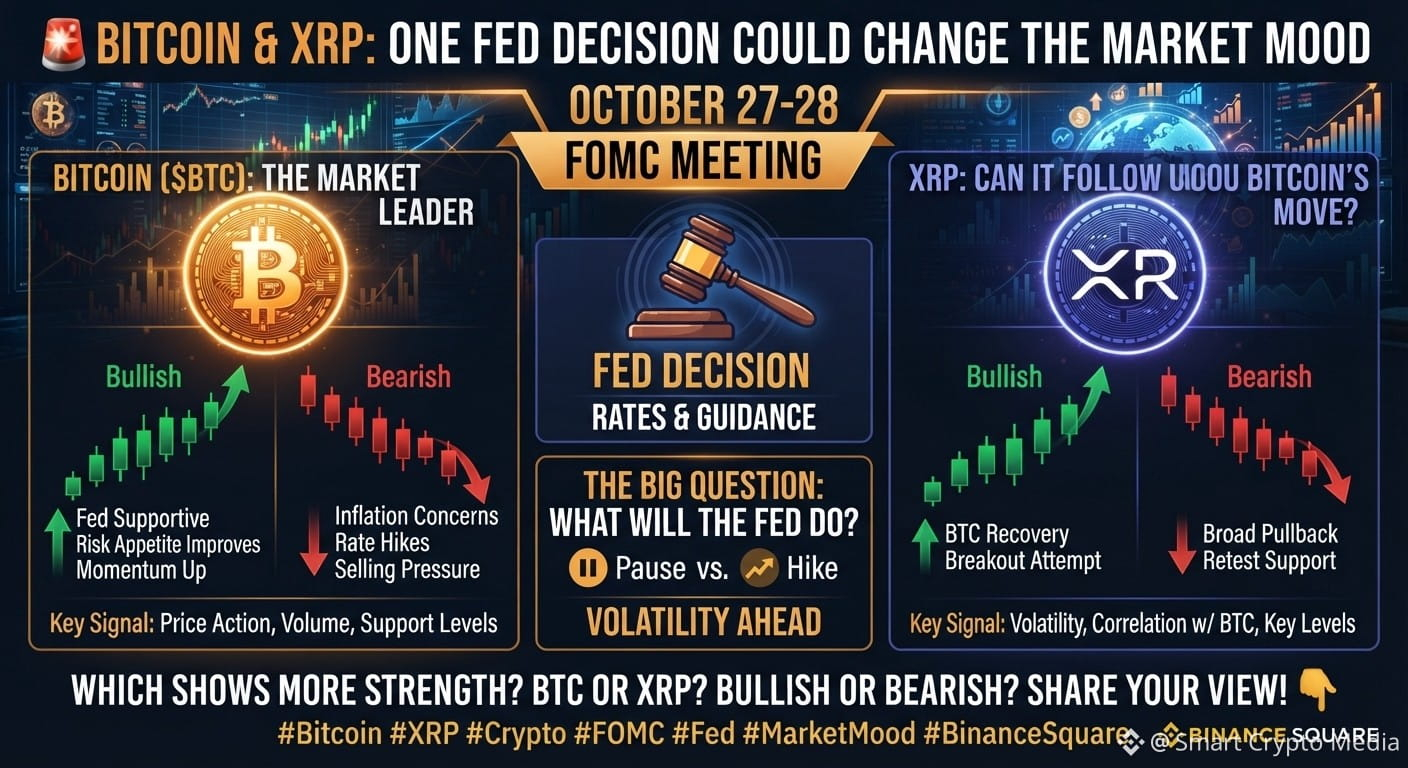
Am 27. und 28. Oktober könnte die FOMC-Sitzung der Federal Reserve den nächsten Schritt von Bitcoin ($BTC) und XRP beeinflussen. Händler beobachten die Zinserwartungen, die Inflation und die Aussagen der Fed zur künftigen Geldpolitik.
📊 ₿ BITCOIN ($BTC): Der Marktführer
Bitcoin bleibt der Vermögenswert, den man im Hinblick auf die allgemeine Stimmung am Kryptomarkt im Auge behalten sollte.
• Bullisches Szenario: Wenn die Fed eine unterstützendere geldpolitische Perspektive signalisiert, könnte die Risikobereitschaft steigen und BTC Aufwärtsdynamik gewinnen.
• Bärisches Szenario: Wenn die Entscheidungsträger sich besorgter über anhaltende Inflation oder künftige Zinserhöhungen äußern, könnte der Verkaufsdruck zurückkehren.
• Wichtiges Signal: Achte auf die Kursreaktion, das Handelsvolumen und darauf, ob BTC seine wichtigen Unterstützungsniveaus halten kann.
💧 XRP: Kann XRP der Bewegung von Bitcoin folgen?
XRP könnte auf dieselben makroökonomischen Kräfte reagieren, doch die Kursentwicklung könnte sich von der Bitcoins unterscheiden.
• Bullisches Szenario: Starker Kaufdruck und eine anhaltende Erholung von BTC könnten XRP dabei helfen, einen Ausbruch zu versuchen.
• Bärisches Szenario: Ein breiter Rückgang am Kryptomarkt könnte XRP unter Druck setzen, besonders wenn der Kurs nahegelegene Unterstützungen nicht halten kann.
• Wichtiges Signal: Achte auf die Unterstützungs- und Widerstandsniveaus von XRP, das Handelsvolumen und die relative Stärke gegenüber BTC.
🧠 DIE GROSSE FRAGE: WAS WIRD DIE FED TUN?
Der Markt wägt eine mögliche Pause gegen das Risiko einer weiteren Straffung ab. Die jüngsten Inflationssorgen bedeuten, dass die Leitlinien der Fed selbst bei unveränderten Zinsen weiterhin für Volatilität sorgen könnten.
📌 Meine Herangehensweise: Betrachte die Sitzung nicht als garantiert bullischen oder bärischen Auslöser. Beobachte die Ankündigung, die Marktreaktion und die Bestätigung durch die Kursentwicklung, bevor du Schlüsse ziehst.
🔥 Lass uns darüber sprechen:
Welcher Vermögenswert wird deiner Meinung nach nach der FOMC-Sitzung größere Stärke zeigen – Bitcoin ($BTC) oder XRP? Und erwartest du einen bullischen Ausbruch oder eine bärische Korrektur?
Teile deine Meinung in den Kommentaren! 👇
#BTC #XRP #SmartCryptoMedia
🚨 Bitcoin & XRP: Eine Fed-Entscheidung könnte die Marktstimmung verändern
Der Kryptomarkt nähert sich einem wichtigen makroökonomischen Ereignis. 👀
Am 27. und 28. Oktober könnte die FOMC-Sitzung der Federal Reserve den nächsten Schritt von Bitcoin ($BTC) und XRP beeinflussen. Händler beobachten die Zinserwartungen, die Inflation und die Aussagen der Fed zur künftigen Geldpolitik.
📊 ₿ BITCOIN ($BTC): Der Marktführer
Bitcoin bleibt der Vermögenswert, den man im Hinblick auf die allgemeine Stimmung am Kryptomarkt im Auge behalten sollte.
• Bullisches Szenario: Wenn die Fed eine unterstützendere geldpolitische Perspektive signalisiert, könnte die Risikobereitschaft steigen und BTC Aufwärtsdynamik gewinnen.
• Bärisches Szenario: Wenn die Entscheidungsträger sich besorgter über anhaltende Inflation oder künftige Zinserhöhungen äußern, könnte der Verkaufsdruck zurückkehren.
• Wichtiges Signal: Achte auf die Kursreaktion, das Handelsvolumen und darauf, ob BTC seine wichtigen Unterstützungsniveaus halten kann.
💧 XRP: Kann XRP der Bewegung von Bitcoin folgen?
XRP könnte auf dieselben makroökonomischen Kräfte reagieren, doch die Kursentwicklung könnte sich von der Bitcoins unterscheiden.
• Bullisches Szenario: Starker Kaufdruck und eine anhaltende Erholung von BTC könnten XRP dabei helfen, einen Ausbruch zu versuchen.
• Bärisches Szenario: Ein breiter Rückgang am Kryptomarkt könnte XRP unter Druck setzen, besonders wenn der Kurs nahegelegene Unterstützungen nicht halten kann.
• Wichtiges Signal: Achte auf die Unterstützungs- und Widerstandsniveaus von XRP, das Handelsvolumen und die relative Stärke gegenüber BTC.
🧠 DIE GROSSE FRAGE: WAS WIRD DIE FED TUN?
Der Markt wägt eine mögliche Pause gegen das Risiko einer weiteren Straffung ab. Die jüngsten Inflationssorgen bedeuten, dass die Leitlinien der Fed selbst bei unveränderten Zinsen weiterhin für Volatilität sorgen könnten.
📌 Meine Herangehensweise: Betrachte die Sitzung nicht als garantiert bullischen oder bärischen Auslöser. Beobachte die Ankündigung, die Marktreaktion und die Bestätigung durch die Kursentwicklung, bevor du Schlüsse ziehst.
🔥 Lass uns darüber sprechen:
Welcher Vermögenswert wird deiner Meinung nach nach der FOMC-Sitzung größere Stärke zeigen – Bitcoin ($BTC) oder XRP? Und erwartest du einen bullischen Ausbruch oder eine bärische Korrektur?
Teile deine Meinung in den Kommentaren! 👇
#BTC #XRP #SmartCryptoMedia
Der Kryptomarkt nähert sich einem wichtigen makroökonomischen Ereignis. 👀
Am 27. und 28. Oktober könnte die FOMC-Sitzung der Federal Reserve den nächsten Schritt von Bitcoin ($BTC) und XRP beeinflussen. Händler beobachten die Zinserwartungen, die Inflation und die Aussagen der Fed zur künftigen Geldpolitik.
📊 ₿ BITCOIN ($BTC): Der Marktführer
Bitcoin bleibt der Vermögenswert, den man im Hinblick auf die allgemeine Stimmung am Kryptomarkt im Auge behalten sollte.
• Bullisches Szenario: Wenn die Fed eine unterstützendere geldpolitische Perspektive signalisiert, könnte die Risikobereitschaft steigen und BTC Aufwärtsdynamik gewinnen.
• Bärisches Szenario: Wenn die Entscheidungsträger sich besorgter über anhaltende Inflation oder künftige Zinserhöhungen äußern, könnte der Verkaufsdruck zurückkehren.
• Wichtiges Signal: Achte auf die Kursreaktion, das Handelsvolumen und darauf, ob BTC seine wichtigen Unterstützungsniveaus halten kann.
💧 XRP: Kann XRP der Bewegung von Bitcoin folgen?
XRP könnte auf dieselben makroökonomischen Kräfte reagieren, doch die Kursentwicklung könnte sich von der Bitcoins unterscheiden.
• Bullisches Szenario: Starker Kaufdruck und eine anhaltende Erholung von BTC könnten XRP dabei helfen, einen Ausbruch zu versuchen.
• Bärisches Szenario: Ein breiter Rückgang am Kryptomarkt könnte XRP unter Druck setzen, besonders wenn der Kurs nahegelegene Unterstützungen nicht halten kann.
• Wichtiges Signal: Achte auf die Unterstützungs- und Widerstandsniveaus von XRP, das Handelsvolumen und die relative Stärke gegenüber BTC.
🧠 DIE GROSSE FRAGE: WAS WIRD DIE FED TUN?
Der Markt wägt eine mögliche Pause gegen das Risiko einer weiteren Straffung ab. Die jüngsten Inflationssorgen bedeuten, dass die Leitlinien der Fed selbst bei unveränderten Zinsen weiterhin für Volatilität sorgen könnten.
📌 Meine Herangehensweise: Betrachte die Sitzung nicht als garantiert bullischen oder bärischen Auslöser. Beobachte die Ankündigung, die Marktreaktion und die Bestätigung durch die Kursentwicklung, bevor du Schlüsse ziehst.
🔥 Lass uns darüber sprechen:
Welcher Vermögenswert wird deiner Meinung nach nach der FOMC-Sitzung größere Stärke zeigen – Bitcoin ($BTC) oder XRP? Und erwartest du einen bullischen Ausbruch oder eine bärische Korrektur?
Teile deine Meinung in den Kommentaren! 👇
#BTC #XRP #SmartCryptoMedia
391
Manchmal bringt einen der Kryptomarkt dazu, die eigene Analyse infrage zu stellen.
Du öffnest die App. $ETH liegt heute im Plus. Das sieht vielversprechend aus.
Dann schaust du genauer hin.
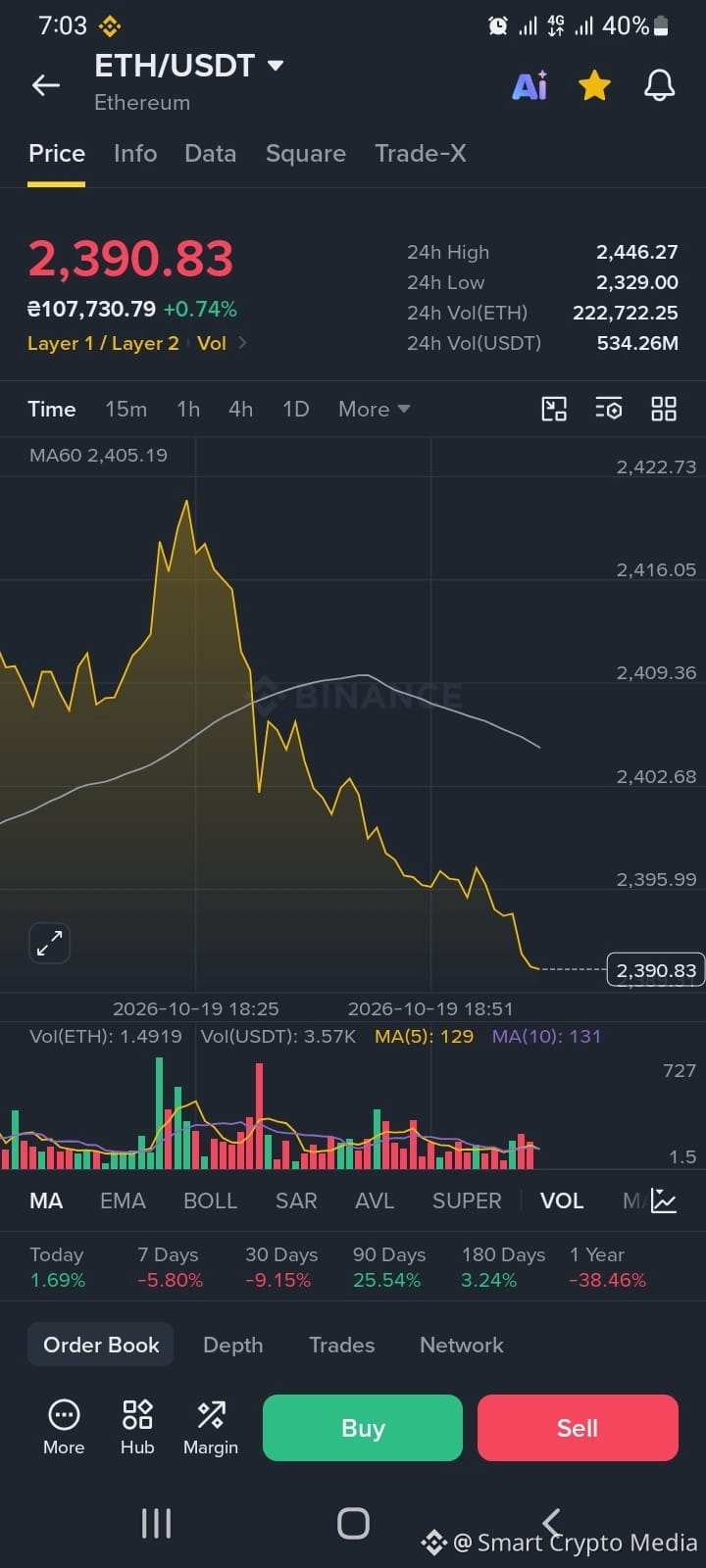
Der Kurs stieg, drehte um und fiel weiter. Der gleitende Durchschnitt liegt über dem aktuellen Kurs. Jeder kleine Erholungsversuch scheint ins Stocken zu geraten.
Plötzlich wirkt derselbe Markt gar nicht mehr so bullisch.
Genau das fällt mir in diesem ETH-Chart auf.
Bei etwa 2.390 $ befindet sich Ethereum in einer interessanten Zone. Der Kurs liegt unter dem angezeigten MA60, aber das bedeutet nicht automatisch, dass ein größerer Abwärtstrend bestätigt ist. Es heißt lediglich, dass die kurzfristige Entwicklung Aufmerksamkeit verdient.
Ich würde darauf achten, ob ETH die Zone zwischen 2.400 und 2.405 $ zurückerobern kann. Falls nicht, würde ich eher die tiefer liegenden Unterstützungsbereiche im Blick behalten, statt von einer Erholung auszugehen.
Aber ehrlich gesagt erzählt ein einzelner Chart nie die ganze Geschichte.
Der Zeithorizont ist wichtig. Das Volumen ist wichtig. Und manchmal ist es die beste Entscheidung, abzuwarten, bis der Markt ein klareres Signal liefert, statt sich eine Meinung aufzuzwingen, nur weil sich der Kurs bewegt.
Krypto belohnt manchmal Geduld. In anderen Fällen bestraft es Selbstüberschätzung.
Das Schwierige ist, zu erkennen, in welcher Situation man sich befindet, bevor die Bewegung offensichtlich wird.
Was siehst du hier: einen vorübergehenden ETH-Rücksetzer vor einer Erholung oder den Beginn eines weiteren Abwärtsschubs?
#Ethereum #ETHUSDT
Manchmal bringt einen der Kryptomarkt dazu, die eigene Analyse infrage zu stellen.
Du öffnest die App. $ETH liegt heute im Plus. Das sieht vielversprechend aus.
Dann schaust du genauer hin.
Der Kurs stieg, drehte um und fiel weiter. Der gleitende Durchschnitt liegt über dem aktuellen Kurs. Jeder kleine Erholungsversuch scheint ins Stocken zu geraten.
Plötzlich wirkt derselbe Markt gar nicht mehr so bullisch.
Genau das fällt mir in diesem ETH-Chart auf.
Bei etwa 2.390 $ befindet sich Ethereum in einer interessanten Zone. Der Kurs liegt unter dem angezeigten MA60, aber das bedeutet nicht automatisch, dass ein größerer Abwärtstrend bestätigt ist. Es heißt lediglich, dass die kurzfristige Entwicklung Aufmerksamkeit verdient.
Ich würde darauf achten, ob ETH die Zone zwischen 2.400 und 2.405 $ zurückerobern kann. Falls nicht, würde ich eher die tiefer liegenden Unterstützungsbereiche im Blick behalten, statt von einer Erholung auszugehen.
Aber ehrlich gesagt erzählt ein einzelner Chart nie die ganze Geschichte.
Der Zeithorizont ist wichtig. Das Volumen ist wichtig. Und manchmal ist es die beste Entscheidung, abzuwarten, bis der Markt ein klareres Signal liefert, statt sich eine Meinung aufzuzwingen, nur weil sich der Kurs bewegt.
Krypto belohnt manchmal Geduld. In anderen Fällen bestraft es Selbstüberschätzung.
Das Schwierige ist, zu erkennen, in welcher Situation man sich befindet, bevor die Bewegung offensichtlich wird.
Was siehst du hier: einen vorübergehenden ETH-Rücksetzer vor einer Erholung oder den Beginn eines weiteren Abwärtsschubs?
#Ethereum #ETHUSDT
Du öffnest die App. $ETH liegt heute im Plus. Das sieht vielversprechend aus.
Dann schaust du genauer hin.
Der Kurs stieg, drehte um und fiel weiter. Der gleitende Durchschnitt liegt über dem aktuellen Kurs. Jeder kleine Erholungsversuch scheint ins Stocken zu geraten.
Plötzlich wirkt derselbe Markt gar nicht mehr so bullisch.
Genau das fällt mir in diesem ETH-Chart auf.
Bei etwa 2.390 $ befindet sich Ethereum in einer interessanten Zone. Der Kurs liegt unter dem angezeigten MA60, aber das bedeutet nicht automatisch, dass ein größerer Abwärtstrend bestätigt ist. Es heißt lediglich, dass die kurzfristige Entwicklung Aufmerksamkeit verdient.
Ich würde darauf achten, ob ETH die Zone zwischen 2.400 und 2.405 $ zurückerobern kann. Falls nicht, würde ich eher die tiefer liegenden Unterstützungsbereiche im Blick behalten, statt von einer Erholung auszugehen.
Aber ehrlich gesagt erzählt ein einzelner Chart nie die ganze Geschichte.
Der Zeithorizont ist wichtig. Das Volumen ist wichtig. Und manchmal ist es die beste Entscheidung, abzuwarten, bis der Markt ein klareres Signal liefert, statt sich eine Meinung aufzuzwingen, nur weil sich der Kurs bewegt.
Krypto belohnt manchmal Geduld. In anderen Fällen bestraft es Selbstüberschätzung.
Das Schwierige ist, zu erkennen, in welcher Situation man sich befindet, bevor die Bewegung offensichtlich wird.
Was siehst du hier: einen vorübergehenden ETH-Rücksetzer vor einer Erholung oder den Beginn eines weiteren Abwärtsschubs?
#Ethereum #ETHUSDT
128
Los
Los

OroCryptoTrends
·
--
👇 CAST YOUR VOTE NOW!
🏆 Hilf mir, es zu den Blockchain 100 Awards 2026 zu schaffen! 💛💛
Hallo, Binance-Square-Community! 👋🚀
Ich freue mich, euch mitteilen zu können, dass @OroCryptoTrends für die Blockchain 100 Awards 2026 in der Kategorie „Longform Creator“ nominiert ist!
Seit 3,3 Jahren teile ich Einblicke in die Kryptowelt, Echtzeit-Marktupdates, Entwicklungen im Web3-Bereich, DeFi-Trends und Blockchain-Analysen, damit unsere Community in dieser schnelllebigen Branche auf dem Laufenden bleibt.
Jeder Beitrag, jede Diskussion und jede Begegnung war Teil dieser Reise. Jetzt bitte ich euch um eure Unterstützung, damit wir den nächsten Schritt machen können! 🙌
💛 Eure Stimme kann wirklich etwas bewirken.
Wenn meine Inhalte euch geholfen haben, den Markt besser zu verstehen, neue Trends zu entdecken oder in der Kryptowelt einen Schritt voraus zu sein, wäre ich euch sehr dankbar, wenn ihr euch einen Moment Zeit nehmt, um für OroCryptoTrends zu stimmen.
✅ Stimmt für OroCryptoTrends
✅ Unterstützt unabhängige Krypto-Content-Creator
✅ Teilt diesen Beitrag mit eurer Binance-Square-Community
Lasst uns zeigen, wie stark unsere Community ist, und dafür sorgen, dass diese Nominierung zählt! 🔥
Jede Stimme zählt. Jedes Teilen hilft. Lasst uns 2026 unvergesslich machen! 🚀
👇 CAST YOUR VOTE NOW!
#Blockchain100 #Binance #BinanceSquare #CryptoCommunity #OroCryptoTrends
🏆 Hilf mir, es zu den Blockchain 100 Awards 2026 zu schaffen! 💛💛
Hallo, Binance-Square-Community! 👋🚀
Ich freue mich, euch mitteilen zu können, dass @OroCryptoTrends für die Blockchain 100 Awards 2026 in der Kategorie „Longform Creator“ nominiert ist!
Seit 3,3 Jahren teile ich Einblicke in die Kryptowelt, Echtzeit-Marktupdates, Entwicklungen im Web3-Bereich, DeFi-Trends und Blockchain-Analysen, damit unsere Community in dieser schnelllebigen Branche auf dem Laufenden bleibt.
Jeder Beitrag, jede Diskussion und jede Begegnung war Teil dieser Reise. Jetzt bitte ich euch um eure Unterstützung, damit wir den nächsten Schritt machen können! 🙌
💛 Eure Stimme kann wirklich etwas bewirken.
Wenn meine Inhalte euch geholfen haben, den Markt besser zu verstehen, neue Trends zu entdecken oder in der Kryptowelt einen Schritt voraus zu sein, wäre ich euch sehr dankbar, wenn ihr euch einen Moment Zeit nehmt, um für OroCryptoTrends zu stimmen.
✅ Stimmt für OroCryptoTrends
✅ Unterstützt unabhängige Krypto-Content-Creator
✅ Teilt diesen Beitrag mit eurer Binance-Square-Community
Lasst uns zeigen, wie stark unsere Community ist, und dafür sorgen, dass diese Nominierung zählt! 🔥
Jede Stimme zählt. Jedes Teilen hilft. Lasst uns 2026 unvergesslich machen! 🚀
👇 CAST YOUR VOTE NOW!
#Blockchain100 #Binance #BinanceSquare #CryptoCommunity #OroCryptoTrends

4
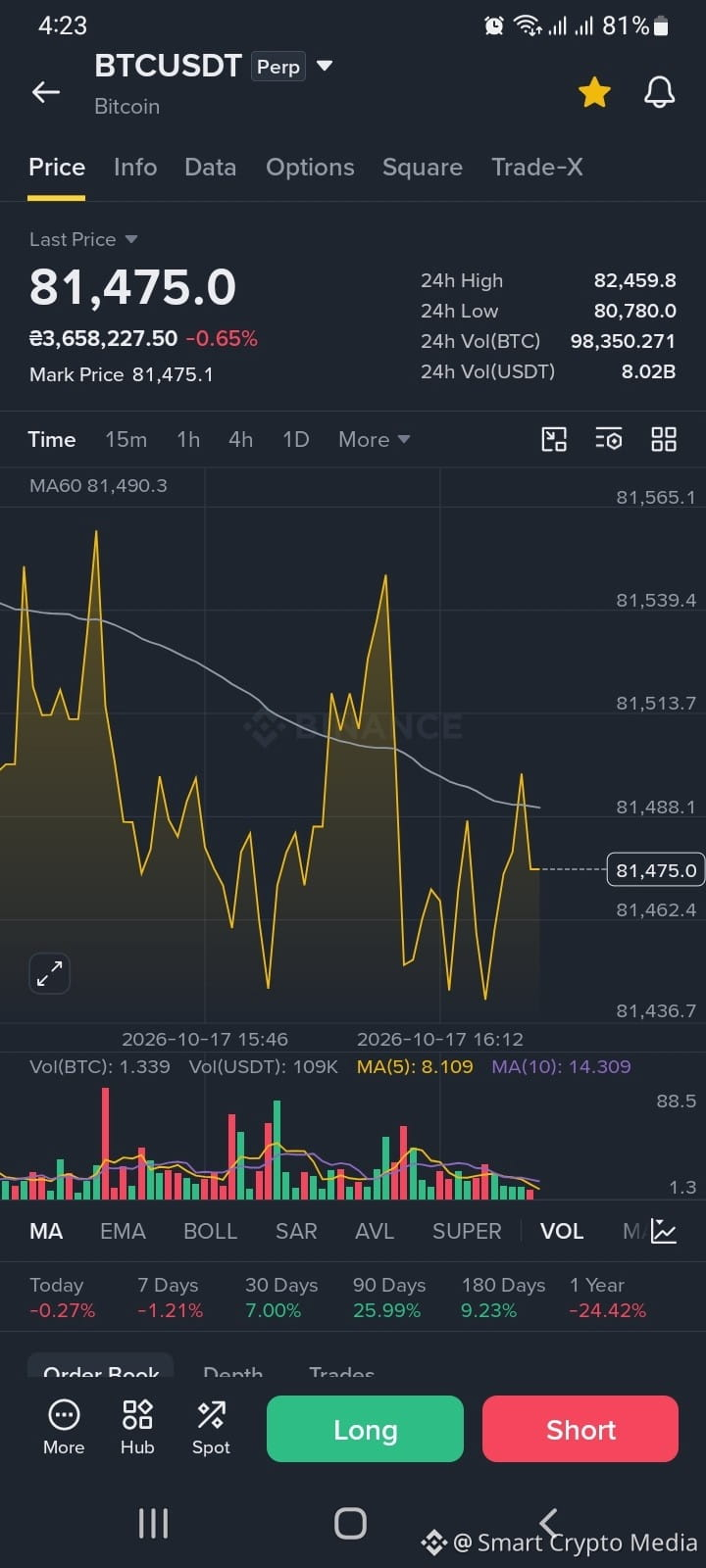
Ich habe länger auf den Chart von $BTC geschaut, als ich wollte. 81.475. Heute ein winziges Stück runter.
Das Ding ist: Ich wechsle ständig den Zeitraum, und meine Stimmung wechselt mit. Neunzig Tage, mir geht’s gut. Fast schon selbstgefällig. Dann ein Jahr, und uff, minus 24. Derselbe Coin. Dieselbe Minute.
Ich glaube, das ist der Teil, den niemand laut ausspricht. Nicht die Zahl auf dem Bildschirm beeinflusst mich, sondern welches Zeitfenster ich gerade geöffnet hatte.
Der kleine Chart ist fast schon lustig. Spitzen, Abstürze, Spitzen – alles in einem Bereich, der kleiner ist als ein Rundungsfehler im größeren Bild. Und trotzdem habe ich ihn eine Weile angestarrt, als würde gleich etwas passieren. Ist aber nichts passiert. Der Kurs landete ungefähr dort, wo er angefangen hatte.
Vielleicht sieht ein ruhiger Samstag auf diesem Markt eben so aus. Acht Milliarden Dollar wechseln den Besitzer, und dem Kurs ist es kaum anzumerken. Oder vielleicht lese ich da Ruhe hinein, weil ich mir Ruhe wünsche.
Ich weiß es nicht. Wirklich nicht. Ein Teil von mir will sagen, das Schlimmste liegt hinter uns, und ein anderer erinnert sich daran, wie oft ich das schon gesagt habe.
Also schließe ich wohl die App. Und öffne sie in zehn Minuten ganz bestimmt wieder.
Macht das sonst noch jemand, oder bin nur ich das?
#BTC
Ich habe länger auf den Chart von $BTC geschaut, als ich wollte. 81.475. Heute ein winziges Stück runter.
Das Ding ist: Ich wechsle ständig den Zeitraum, und meine Stimmung wechselt mit. Neunzig Tage, mir geht’s gut. Fast schon selbstgefällig. Dann ein Jahr, und uff, minus 24. Derselbe Coin. Dieselbe Minute.
Ich glaube, das ist der Teil, den niemand laut ausspricht. Nicht die Zahl auf dem Bildschirm beeinflusst mich, sondern welches Zeitfenster ich gerade geöffnet hatte.
Der kleine Chart ist fast schon lustig. Spitzen, Abstürze, Spitzen – alles in einem Bereich, der kleiner ist als ein Rundungsfehler im größeren Bild. Und trotzdem habe ich ihn eine Weile angestarrt, als würde gleich etwas passieren. Ist aber nichts passiert. Der Kurs landete ungefähr dort, wo er angefangen hatte.
Vielleicht sieht ein ruhiger Samstag auf diesem Markt eben so aus. Acht Milliarden Dollar wechseln den Besitzer, und dem Kurs ist es kaum anzumerken. Oder vielleicht lese ich da Ruhe hinein, weil ich mir Ruhe wünsche.
Ich weiß es nicht. Wirklich nicht. Ein Teil von mir will sagen, das Schlimmste liegt hinter uns, und ein anderer erinnert sich daran, wie oft ich das schon gesagt habe.
Also schließe ich wohl die App. Und öffne sie in zehn Minuten ganz bestimmt wieder.
Macht das sonst noch jemand, oder bin nur ich das?
#BTC
Das Ding ist: Ich wechsle ständig den Zeitraum, und meine Stimmung wechselt mit. Neunzig Tage, mir geht’s gut. Fast schon selbstgefällig. Dann ein Jahr, und uff, minus 24. Derselbe Coin. Dieselbe Minute.
Ich glaube, das ist der Teil, den niemand laut ausspricht. Nicht die Zahl auf dem Bildschirm beeinflusst mich, sondern welches Zeitfenster ich gerade geöffnet hatte.
Der kleine Chart ist fast schon lustig. Spitzen, Abstürze, Spitzen – alles in einem Bereich, der kleiner ist als ein Rundungsfehler im größeren Bild. Und trotzdem habe ich ihn eine Weile angestarrt, als würde gleich etwas passieren. Ist aber nichts passiert. Der Kurs landete ungefähr dort, wo er angefangen hatte.
Vielleicht sieht ein ruhiger Samstag auf diesem Markt eben so aus. Acht Milliarden Dollar wechseln den Besitzer, und dem Kurs ist es kaum anzumerken. Oder vielleicht lese ich da Ruhe hinein, weil ich mir Ruhe wünsche.
Ich weiß es nicht. Wirklich nicht. Ein Teil von mir will sagen, das Schlimmste liegt hinter uns, und ein anderer erinnert sich daran, wie oft ich das schon gesagt habe.
Also schließe ich wohl die App. Und öffne sie in zehn Minuten ganz bestimmt wieder.
Macht das sonst noch jemand, oder bin nur ich das?
#BTC
1
453
$BTC Ich öffne ständig das Chart und bin mir nicht sicher, wonach ich überhaupt suche.
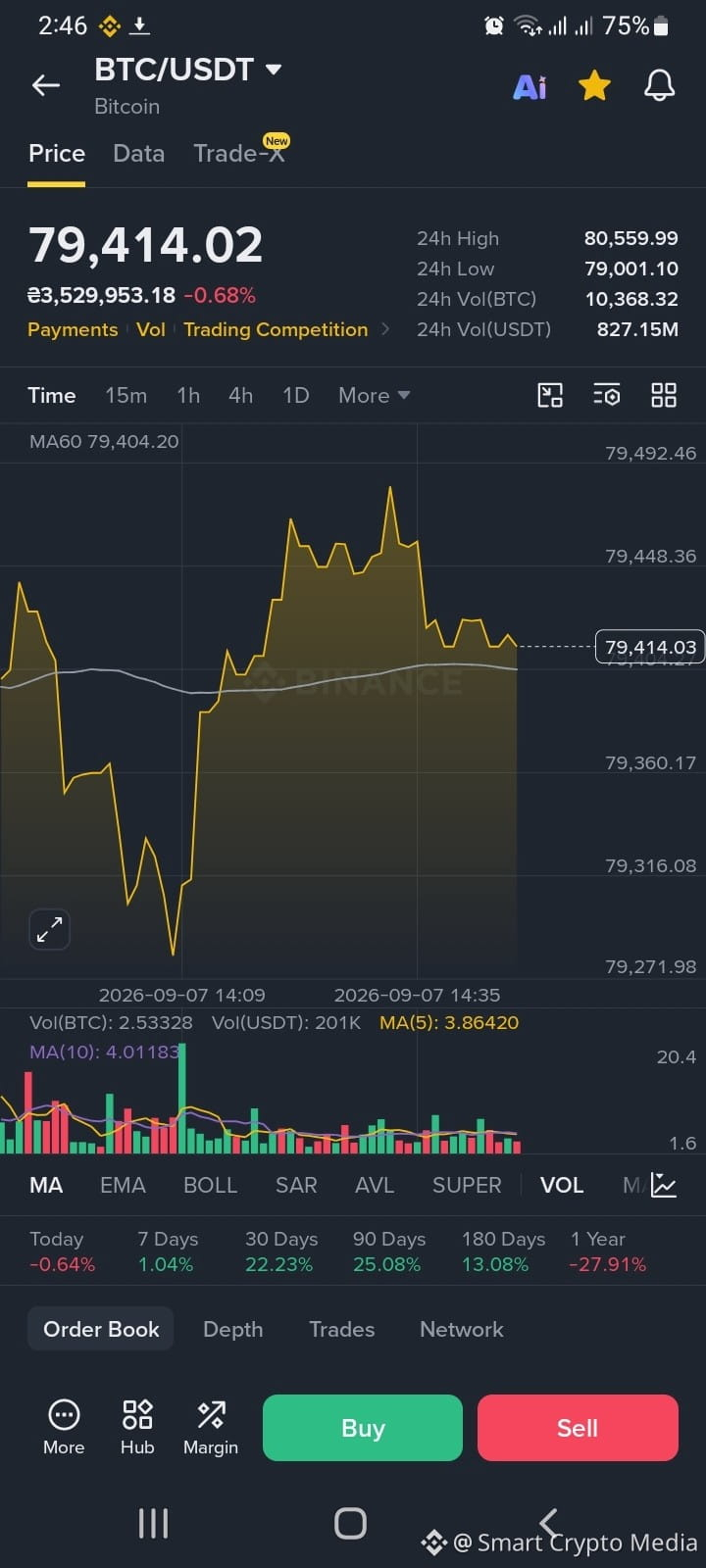
79.414. Okay. Ein bisschen runter. Viel hoch im Vergleich zum letzten Monat. Trotzdem noch weit unter dem, was es vor einem Jahr war. Ich weiß nicht... Ich weiß ehrlich gesagt nicht, was ich mit dieser Kombination anfangen soll.
Der 30-Tage-Zuwachs liegt bei 22%. Das müsste sich gut anfühlen. Tut es irgendwie auch. Aber dann zoomt man raus und sieht minus 27% im Jahr und es ist so — feiern wir gerade, dass wir weniger weh tun? Ist das das, worum es hier geht?
Ich habe heute viel zu lange die 15-Minuten-Kerzen beobachtet. Der Preis schwebte ständig um diese MA60-Linie herum. 79.404 vs. 79.414. Zehn Dollar Abstand. Es wirkte, als würde der Markt den Atem anhalten. Oder vielleicht ich.
Das Volumen lag bei ungefähr 10K BTC. Ich habe keinen guten Kontext dafür, ob das gerade viel oder wenig ist. Es fühlt sich nicht dringend an. Nichts von heute wirkt dringend, was vielleicht der beunruhigendste Teil ist. So wie — die Ruhe vor etwas, oder einfach... ruhig.
Die 7-Tage-Linie ist kaum grün. Ein Prozent. Die 90-Tage-Linie sieht gesund aus, aber ich erinnere mich daran, wie sich diese 90 Tage wirklich angefühlt haben, und „gesund“ ist nicht das Wort, das ich dafür verwenden würde.
Ich glaube, ich will eher Überzeugung als eine Richtung. Einfach — etwas, worauf man sich stützen kann. Im Moment ist alles nur ein Vielleicht. Und ich bin müde von „vielleicht“.
#writetoearn
$BTC Ich öffne ständig das Chart und bin mir nicht sicher, wonach ich überhaupt suche.
79.414. Okay. Ein bisschen runter. Viel hoch im Vergleich zum letzten Monat. Trotzdem noch weit unter dem, was es vor einem Jahr war. Ich weiß nicht... Ich weiß ehrlich gesagt nicht, was ich mit dieser Kombination anfangen soll.
Der 30-Tage-Zuwachs liegt bei 22%. Das müsste sich gut anfühlen. Tut es irgendwie auch. Aber dann zoomt man raus und sieht minus 27% im Jahr und es ist so — feiern wir gerade, dass wir weniger weh tun? Ist das das, worum es hier geht?
Ich habe heute viel zu lange die 15-Minuten-Kerzen beobachtet. Der Preis schwebte ständig um diese MA60-Linie herum. 79.404 vs. 79.414. Zehn Dollar Abstand. Es wirkte, als würde der Markt den Atem anhalten. Oder vielleicht ich.
Das Volumen lag bei ungefähr 10K BTC. Ich habe keinen guten Kontext dafür, ob das gerade viel oder wenig ist. Es fühlt sich nicht dringend an. Nichts von heute wirkt dringend, was vielleicht der beunruhigendste Teil ist. So wie — die Ruhe vor etwas, oder einfach... ruhig.
Die 7-Tage-Linie ist kaum grün. Ein Prozent. Die 90-Tage-Linie sieht gesund aus, aber ich erinnere mich daran, wie sich diese 90 Tage wirklich angefühlt haben, und „gesund“ ist nicht das Wort, das ich dafür verwenden würde.
Ich glaube, ich will eher Überzeugung als eine Richtung. Einfach — etwas, worauf man sich stützen kann. Im Moment ist alles nur ein Vielleicht. Und ich bin müde von „vielleicht“.
#writetoearn
79.414. Okay. Ein bisschen runter. Viel hoch im Vergleich zum letzten Monat. Trotzdem noch weit unter dem, was es vor einem Jahr war. Ich weiß nicht... Ich weiß ehrlich gesagt nicht, was ich mit dieser Kombination anfangen soll.
Der 30-Tage-Zuwachs liegt bei 22%. Das müsste sich gut anfühlen. Tut es irgendwie auch. Aber dann zoomt man raus und sieht minus 27% im Jahr und es ist so — feiern wir gerade, dass wir weniger weh tun? Ist das das, worum es hier geht?
Ich habe heute viel zu lange die 15-Minuten-Kerzen beobachtet. Der Preis schwebte ständig um diese MA60-Linie herum. 79.404 vs. 79.414. Zehn Dollar Abstand. Es wirkte, als würde der Markt den Atem anhalten. Oder vielleicht ich.
Das Volumen lag bei ungefähr 10K BTC. Ich habe keinen guten Kontext dafür, ob das gerade viel oder wenig ist. Es fühlt sich nicht dringend an. Nichts von heute wirkt dringend, was vielleicht der beunruhigendste Teil ist. So wie — die Ruhe vor etwas, oder einfach... ruhig.
Die 7-Tage-Linie ist kaum grün. Ein Prozent. Die 90-Tage-Linie sieht gesund aus, aber ich erinnere mich daran, wie sich diese 90 Tage wirklich angefühlt haben, und „gesund“ ist nicht das Wort, das ich dafür verwenden würde.
Ich glaube, ich will eher Überzeugung als eine Richtung. Einfach — etwas, worauf man sich stützen kann. Im Moment ist alles nur ein Vielleicht. Und ich bin müde von „vielleicht“.
#writetoearn
231
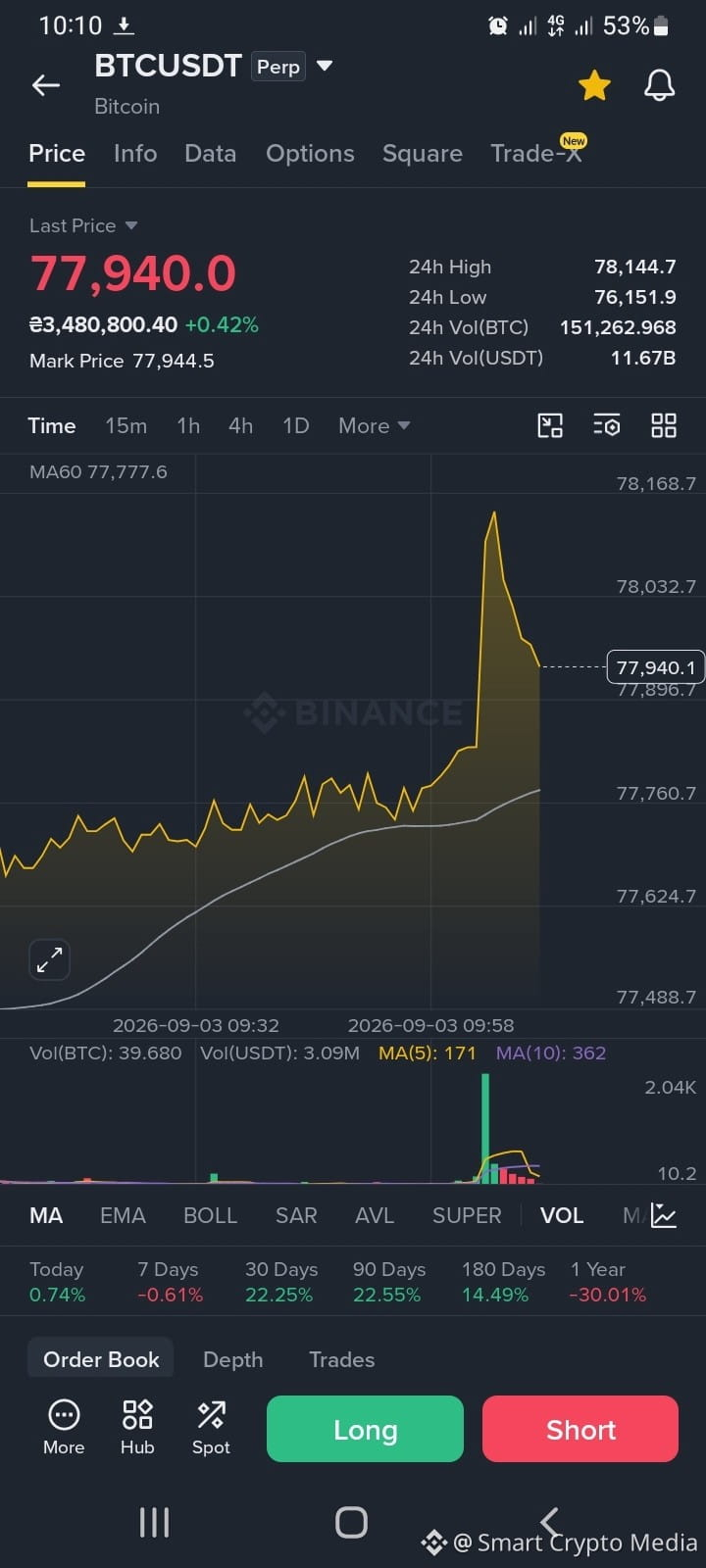
$BTC Ich habe die letzten zwanzig Minuten auf dieses Chart gestarrt und weiß immer noch nicht, was ich davon halten soll. Der Kurs schoss auf 78.168 hoch, meine Alarme gingen los, und bis ich überhaupt auf den Bildschirm geschaut hatte, war er schon wieder auf 77.940 zurückgekommen. Also — ist nichts passiert? Ist etwas passiert? Schwer zu sagen.
Die Zahl, die tatsächlich meine Aufmerksamkeit erregt hat, war nicht der Spike, sondern die Einjahresspalte. Minus dreißig Prozent. Ich vergesse immer wieder, dass das da unter all dem täglichen Lärm steht. Wir reden über monatliche Gewinne von 22 % wie über eine Comeback-Geschichte, und technisch gesehen ist es das auch, aber der längere Zeitraum ist immer noch rot. Beides ist gleichzeitig wahr, und ich glaube nicht, dass Crypto-Twitter darauf ausgelegt ist, zwei widersprüchliche Fakten gleichzeitig im Kopf zu behalten.
Ich habe hier keine klare Einschätzung. Der MA60 liegt direkt unter dem Kurs, was ich normalerweise als leicht konstruktiv lesen würde, aber nachdem ich gesehen habe, wie dieser Spike in Echtzeit verpufft ist, bin ich weniger zuversichtlich als noch vor einer Stunde. Vielleicht ist das heute der ehrliche Post — keine Ansage, nur das Eingeständnis, dass das Chart aus der Distanz entschlossener wirkte, als es aus der Nähe tatsächlich ist. Würde mich interessieren, ob noch jemand dieselbe Kerze beobachtet und denselben "Moment hat sich das erledigt?"-Gedanken gehabt hat.
#BTC #SmartCryptoMedia #writetoearn
$BTC Ich habe die letzten zwanzig Minuten auf dieses Chart gestarrt und weiß immer noch nicht, was ich davon halten soll. Der Kurs schoss auf 78.168 hoch, meine Alarme gingen los, und bis ich überhaupt auf den Bildschirm geschaut hatte, war er schon wieder auf 77.940 zurückgekommen. Also — ist nichts passiert? Ist etwas passiert? Schwer zu sagen.
Die Zahl, die tatsächlich meine Aufmerksamkeit erregt hat, war nicht der Spike, sondern die Einjahresspalte. Minus dreißig Prozent. Ich vergesse immer wieder, dass das da unter all dem täglichen Lärm steht. Wir reden über monatliche Gewinne von 22 % wie über eine Comeback-Geschichte, und technisch gesehen ist es das auch, aber der längere Zeitraum ist immer noch rot. Beides ist gleichzeitig wahr, und ich glaube nicht, dass Crypto-Twitter darauf ausgelegt ist, zwei widersprüchliche Fakten gleichzeitig im Kopf zu behalten.
Ich habe hier keine klare Einschätzung. Der MA60 liegt direkt unter dem Kurs, was ich normalerweise als leicht konstruktiv lesen würde, aber nachdem ich gesehen habe, wie dieser Spike in Echtzeit verpufft ist, bin ich weniger zuversichtlich als noch vor einer Stunde. Vielleicht ist das heute der ehrliche Post — keine Ansage, nur das Eingeständnis, dass das Chart aus der Distanz entschlossener wirkte, als es aus der Nähe tatsächlich ist. Würde mich interessieren, ob noch jemand dieselbe Kerze beobachtet und denselben "Moment hat sich das erledigt?"-Gedanken gehabt hat.
#BTC #SmartCryptoMedia #writetoearn
Die Zahl, die tatsächlich meine Aufmerksamkeit erregt hat, war nicht der Spike, sondern die Einjahresspalte. Minus dreißig Prozent. Ich vergesse immer wieder, dass das da unter all dem täglichen Lärm steht. Wir reden über monatliche Gewinne von 22 % wie über eine Comeback-Geschichte, und technisch gesehen ist es das auch, aber der längere Zeitraum ist immer noch rot. Beides ist gleichzeitig wahr, und ich glaube nicht, dass Crypto-Twitter darauf ausgelegt ist, zwei widersprüchliche Fakten gleichzeitig im Kopf zu behalten.
Ich habe hier keine klare Einschätzung. Der MA60 liegt direkt unter dem Kurs, was ich normalerweise als leicht konstruktiv lesen würde, aber nachdem ich gesehen habe, wie dieser Spike in Echtzeit verpufft ist, bin ich weniger zuversichtlich als noch vor einer Stunde. Vielleicht ist das heute der ehrliche Post — keine Ansage, nur das Eingeständnis, dass das Chart aus der Distanz entschlossener wirkte, als es aus der Nähe tatsächlich ist. Würde mich interessieren, ob noch jemand dieselbe Kerze beobachtet und denselben "Moment hat sich das erledigt?"-Gedanken gehabt hat.
#BTC #SmartCryptoMedia #writetoearn
170
$HEMI Den Chart geöffnet und einfach eine Weile nur zugesehen.
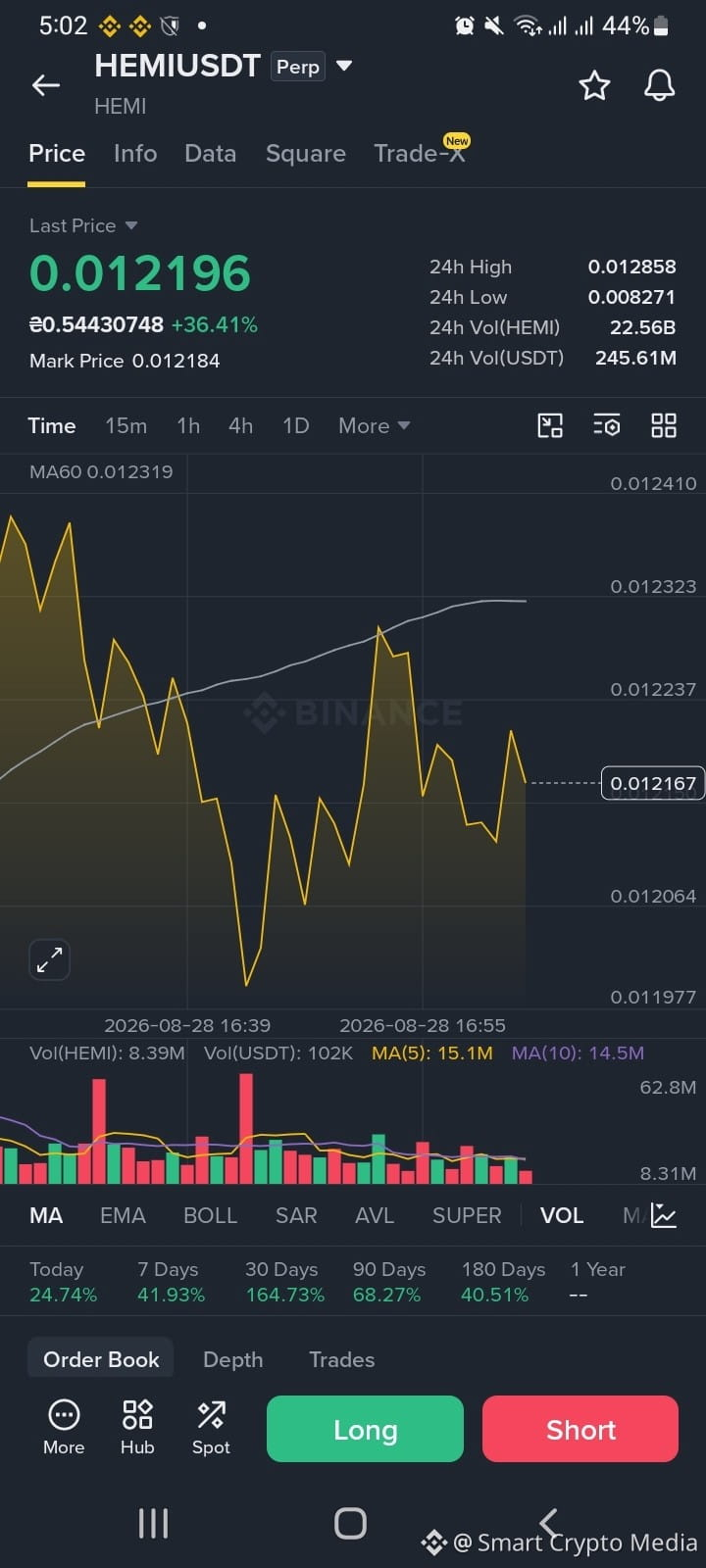
HEMI sitzt bei 0.012 irgendwas, nachdem es vorher ein Low bei ungefähr 0.008 gedruckt hat. Grüne Kerzen, dann rote, dann wieder grüne. Volumenbalken überall. Es fühlt sich vertraut an und ist gleichzeitig irgendwie leicht daneben.
Ich denke immer wieder darüber nach, was das Projekt eigentlich vorhat. Bitcoinsicherheit plus Ethereum-Tools. Klingt sauber, wenn man es schnell sagt. Dann siehst du dir aber die Anzahl der Male an, wie ähnliche Ideen gekommen und wieder gegangen sind, und das Vertrauen wird dünner.
Vielleicht bleibt diese hier. Vielleicht verändert das hVM tatsächlich, wie Menschen aufbauen. Oder vielleicht schauen wir einfach nur zu, wie ein weiterer Ticker weitergereicht wird, während die eigentliche Infrastrukturarbeit irgendwo anders leise passiert. Aus einem 15-Minuten-Chart lässt sich das schwer sagen.
Der prozentuale Gewinn sieht beeindruckend aus, bis du dir in Erinnerung rufst, wie schnell sich diese Zahlen wieder umdrehen. Ich weiß nicht, ob ich mehr neugierig oder eher müde wegen des Musters bin. Vermutlich beides.
#HEMI #SmartCryptoMedia #writetoearn
$HEMI Den Chart geöffnet und einfach eine Weile nur zugesehen.
HEMI sitzt bei 0.012 irgendwas, nachdem es vorher ein Low bei ungefähr 0.008 gedruckt hat. Grüne Kerzen, dann rote, dann wieder grüne. Volumenbalken überall. Es fühlt sich vertraut an und ist gleichzeitig irgendwie leicht daneben.
Ich denke immer wieder darüber nach, was das Projekt eigentlich vorhat. Bitcoinsicherheit plus Ethereum-Tools. Klingt sauber, wenn man es schnell sagt. Dann siehst du dir aber die Anzahl der Male an, wie ähnliche Ideen gekommen und wieder gegangen sind, und das Vertrauen wird dünner.
Vielleicht bleibt diese hier. Vielleicht verändert das hVM tatsächlich, wie Menschen aufbauen. Oder vielleicht schauen wir einfach nur zu, wie ein weiterer Ticker weitergereicht wird, während die eigentliche Infrastrukturarbeit irgendwo anders leise passiert. Aus einem 15-Minuten-Chart lässt sich das schwer sagen.
Der prozentuale Gewinn sieht beeindruckend aus, bis du dir in Erinnerung rufst, wie schnell sich diese Zahlen wieder umdrehen. Ich weiß nicht, ob ich mehr neugierig oder eher müde wegen des Musters bin. Vermutlich beides.
#HEMI #SmartCryptoMedia #writetoearn
HEMI sitzt bei 0.012 irgendwas, nachdem es vorher ein Low bei ungefähr 0.008 gedruckt hat. Grüne Kerzen, dann rote, dann wieder grüne. Volumenbalken überall. Es fühlt sich vertraut an und ist gleichzeitig irgendwie leicht daneben.
Ich denke immer wieder darüber nach, was das Projekt eigentlich vorhat. Bitcoinsicherheit plus Ethereum-Tools. Klingt sauber, wenn man es schnell sagt. Dann siehst du dir aber die Anzahl der Male an, wie ähnliche Ideen gekommen und wieder gegangen sind, und das Vertrauen wird dünner.
Vielleicht bleibt diese hier. Vielleicht verändert das hVM tatsächlich, wie Menschen aufbauen. Oder vielleicht schauen wir einfach nur zu, wie ein weiterer Ticker weitergereicht wird, während die eigentliche Infrastrukturarbeit irgendwo anders leise passiert. Aus einem 15-Minuten-Chart lässt sich das schwer sagen.
Der prozentuale Gewinn sieht beeindruckend aus, bis du dir in Erinnerung rufst, wie schnell sich diese Zahlen wieder umdrehen. Ich weiß nicht, ob ich mehr neugierig oder eher müde wegen des Musters bin. Vermutlich beides.
#HEMI #SmartCryptoMedia #writetoearn
139
$BTC Ich habe heute den ganzen Tag auf die Charts gestarrt und ehrlich gesagt fühlt es sich einfach erschöpfend an. Ich erinnere mich, als das Halten von BTC sich angefühlt hat, als wäre man Teil eines seltsamen, unterirdischen Internet-Experiments. Da war Energie drin. Jetzt öffne ich meine App und es fühlt sich an wie das Betrachten eines langweiligen Indexfonds.Vielleicht ist genau das einfach Wachstum. Erfolg bedeutet wohl, gewöhnlich zu werden. Aber manchmal vermisse ich das Chaos. Jetzt dreht sich alles um CPI-Daten, ETF-Zuflüsse und darum, was irgendein Zentralbanker von einem Podium aus sagt. Es fühlt sich an, als hätten wir die Seele des Projekts gegen eine höhere Fiat-Bewertung eingetauscht. Und ich bin nicht mal sicher, ob das ein guter Deal war.Manchmal frage ich mich, ob ich eigentlich noch an den dezentralen Zukunftsaspekt glaube, oder ob ich nur gefangen bin in der Gewohnheit, alle zwanzig Minuten auf mein Handy zu schauen. Die Knappheit ist noch immer im Code, klar. Aber die Magie? Die wirkt, als wäre sie „corporatisiert“ worden, als wir nicht aufgepasst haben. Noch ein Posten auf einer institutionellen Bilanz — und wir alle schauen nur zu, wie alles seitwärts driftet.
#Write2Earn!
$BTC Ich habe heute den ganzen Tag auf die Charts gestarrt und ehrlich gesagt fühlt es sich einfach erschöpfend an. Ich erinnere mich, als das Halten von BTC sich angefühlt hat, als wäre man Teil eines seltsamen, unterirdischen Internet-Experiments. Da war Energie drin. Jetzt öffne ich meine App und es fühlt sich an wie das Betrachten eines langweiligen Indexfonds.Vielleicht ist genau das einfach Wachstum. Erfolg bedeutet wohl, gewöhnlich zu werden. Aber manchmal vermisse ich das Chaos. Jetzt dreht sich alles um CPI-Daten, ETF-Zuflüsse und darum, was irgendein Zentralbanker von einem Podium aus sagt. Es fühlt sich an, als hätten wir die Seele des Projekts gegen eine höhere Fiat-Bewertung eingetauscht. Und ich bin nicht mal sicher, ob das ein guter Deal war.Manchmal frage ich mich, ob ich eigentlich noch an den dezentralen Zukunftsaspekt glaube, oder ob ich nur gefangen bin in der Gewohnheit, alle zwanzig Minuten auf mein Handy zu schauen. Die Knappheit ist noch immer im Code, klar. Aber die Magie? Die wirkt, als wäre sie „corporatisiert“ worden, als wir nicht aufgepasst haben. Noch ein Posten auf einer institutionellen Bilanz — und wir alle schauen nur zu, wie alles seitwärts driftet.
#Write2Earn!
#Write2Earn!
116
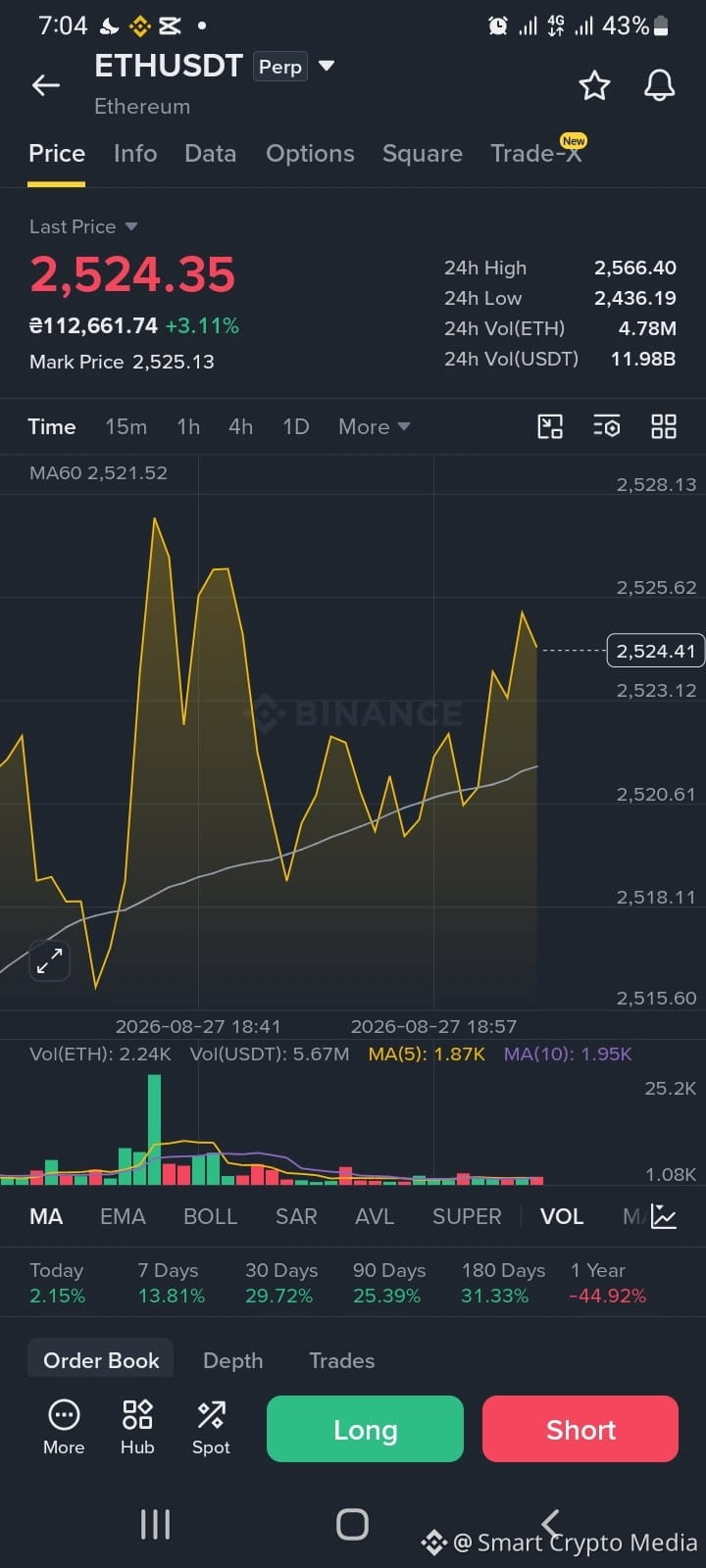
$ETH ist wieder über seinem kurzfristigen Trend – aber die nächste Bewegung ist entscheidend
Ethereum wird im Screenshot um $2,524 gehandelt, auf Tagesbasis etwa 3,1% im Plus.
Was dabei meine Aufmerksamkeit auf sich zieht, ist nicht nur die grüne Kerze.
Im 15-Minuten-Chart hat ETH die MA60 wieder zurückgeholt – bei rund $2,521,5 – und notiert damit leicht über seinem kurzfristigen Durchschnitt. Das gibt dem Chart eine bessere Struktur, als sie während des früheren Rücksetzers in Richtung des $2,515-Bereichs vorhanden war.
Doch es gibt noch ein weiteres Detail, das es zu beobachten gilt.
ETH ist heute bereits bis auf $2,566.40 gestiegen, bevor es wieder zurückkam. Der Markt hat also gezeigt, dass Verkäufer oberhalb des aktuellen Preises weiterhin aktiv sind.
Das Volumenprofil erzählt ebenfalls eine interessante Geschichte. Zuvor gab es eine deutliche Volumen-Ausweitung, während die jüngsten Kerzen mit deutlich geringerer Aktivität gehandelt werden.
Das wirft eine einfache Frage auf:
Ist diese Konsolidierung die Vorbereitung auf einen weiteren Versuch nach oben, oder kühlt der Schwung nach dem Rebound gerade ab?
Auch die größeren Zahlen sind spannend. ETH ist laut Screenshot in 7 Tagen um etwa 13,8% gestiegen und über 30 Tage hinweg nahezu 29,7%.
Damit verbessert sich zwar der kurzfristige Chart, aber der Preis nähert sich einem Bereich, in dem Reaktionen stärker zählen als Schlagzeilen.
Würdest du lieber sehen, dass ETH zuerst $2,566 bricht, oder dass es $2,520 verliert?
#ETH #SmartCryptoMedia #writetoearn
$ETH ist wieder über seinem kurzfristigen Trend – aber die nächste Bewegung ist entscheidend
Ethereum wird im Screenshot um $2,524 gehandelt, auf Tagesbasis etwa 3,1% im Plus.
Was dabei meine Aufmerksamkeit auf sich zieht, ist nicht nur die grüne Kerze.
Im 15-Minuten-Chart hat ETH die MA60 wieder zurückgeholt – bei rund $2,521,5 – und notiert damit leicht über seinem kurzfristigen Durchschnitt. Das gibt dem Chart eine bessere Struktur, als sie während des früheren Rücksetzers in Richtung des $2,515-Bereichs vorhanden war.
Doch es gibt noch ein weiteres Detail, das es zu beobachten gilt.
ETH ist heute bereits bis auf $2,566.40 gestiegen, bevor es wieder zurückkam. Der Markt hat also gezeigt, dass Verkäufer oberhalb des aktuellen Preises weiterhin aktiv sind.
Das Volumenprofil erzählt ebenfalls eine interessante Geschichte. Zuvor gab es eine deutliche Volumen-Ausweitung, während die jüngsten Kerzen mit deutlich geringerer Aktivität gehandelt werden.
Das wirft eine einfache Frage auf:
Ist diese Konsolidierung die Vorbereitung auf einen weiteren Versuch nach oben, oder kühlt der Schwung nach dem Rebound gerade ab?
Auch die größeren Zahlen sind spannend. ETH ist laut Screenshot in 7 Tagen um etwa 13,8% gestiegen und über 30 Tage hinweg nahezu 29,7%.
Damit verbessert sich zwar der kurzfristige Chart, aber der Preis nähert sich einem Bereich, in dem Reaktionen stärker zählen als Schlagzeilen.
Würdest du lieber sehen, dass ETH zuerst $2,566 bricht, oder dass es $2,520 verliert?
#ETH #SmartCryptoMedia #writetoearn
Ethereum wird im Screenshot um $2,524 gehandelt, auf Tagesbasis etwa 3,1% im Plus.
Was dabei meine Aufmerksamkeit auf sich zieht, ist nicht nur die grüne Kerze.
Im 15-Minuten-Chart hat ETH die MA60 wieder zurückgeholt – bei rund $2,521,5 – und notiert damit leicht über seinem kurzfristigen Durchschnitt. Das gibt dem Chart eine bessere Struktur, als sie während des früheren Rücksetzers in Richtung des $2,515-Bereichs vorhanden war.
Doch es gibt noch ein weiteres Detail, das es zu beobachten gilt.
ETH ist heute bereits bis auf $2,566.40 gestiegen, bevor es wieder zurückkam. Der Markt hat also gezeigt, dass Verkäufer oberhalb des aktuellen Preises weiterhin aktiv sind.
Das Volumenprofil erzählt ebenfalls eine interessante Geschichte. Zuvor gab es eine deutliche Volumen-Ausweitung, während die jüngsten Kerzen mit deutlich geringerer Aktivität gehandelt werden.
Das wirft eine einfache Frage auf:
Ist diese Konsolidierung die Vorbereitung auf einen weiteren Versuch nach oben, oder kühlt der Schwung nach dem Rebound gerade ab?
Auch die größeren Zahlen sind spannend. ETH ist laut Screenshot in 7 Tagen um etwa 13,8% gestiegen und über 30 Tage hinweg nahezu 29,7%.
Damit verbessert sich zwar der kurzfristige Chart, aber der Preis nähert sich einem Bereich, in dem Reaktionen stärker zählen als Schlagzeilen.
Würdest du lieber sehen, dass ETH zuerst $2,566 bricht, oder dass es $2,520 verliert?
#ETH #SmartCryptoMedia #writetoearn
475
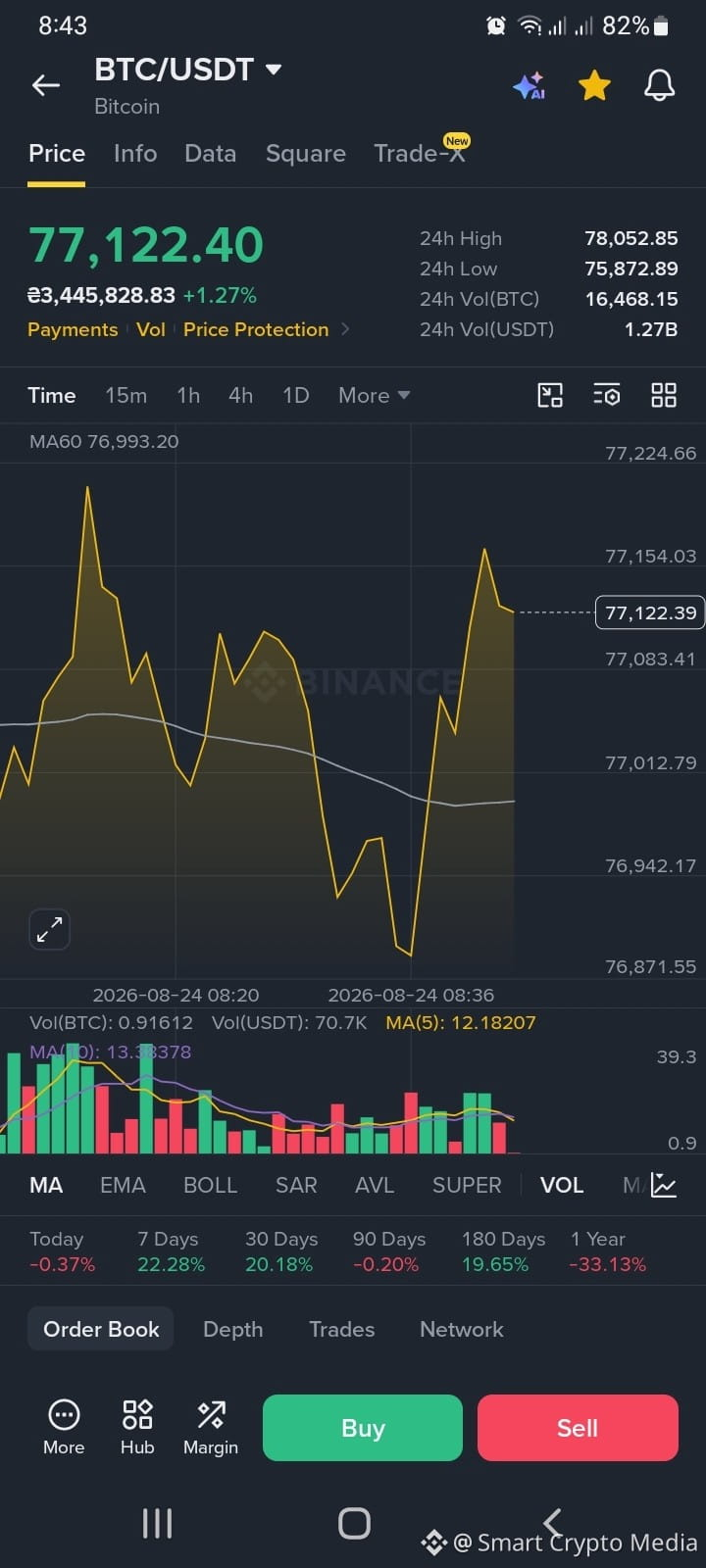
$BTC handelt bei rund 77.122 US-Dollar, ist laut dem Chart etwa 1,27% im Tagesverlauf gestiegen.
Was meine Aufmerksamkeit nicht anzieht, ist die grüne Zahl an sich.
Es ist das Verhältnis zwischen dem Kurs und dem MA60, der bei etwa 76.993 US-Dollar liegt.
BTC liegt derzeit nur knapp über diesem gleitenden Durchschnitt, was den Markt in eine interessante kurzfristige Position bringt. Die Käufer haben es geschafft, den Kurs nach einem Rücksetzer in Richtung des Bereichs von 76.870 US-Dollar wieder nach oben zu drücken, aber die Erholung braucht noch eine Bestätigung.
Das größere Intraday-Bild ist ebenfalls ziemlich klar:
24h Hoch: 78.052,85 US-Dollar
24h Tief: 75.872,89 US-Dollar
Aktueller Preis: ~77.122 US-Dollar
Damit befindet sich BTC ungefähr im oberen mittleren Bereich der heutigen Spanne.
Das bedeutet, dass der nächste Schritt möglicherweise wichtiger ist als der aktuelle.
Ein nachhaltiger Vorstoß in Richtung 78K würde zeigen, dass Käufer bereit sind, das Tageshoch anzugreifen. Andererseits könnte der Verlust des Bereichs 77K/MA60 die jüngste Schwäche im Intraday-Bereich wieder in den Fokus rücken.
Keine Prognose hier. Nur das Beobachten der Kursmarken.
Würdest du lieber sehen, dass BTC zuerst 78K zurückerobert, oder dass es vor dem nächsten großen Move noch einmal 76K testet?
#BTC #SmartCryptoMedia #writetoearn
$BTC handelt bei rund 77.122 US-Dollar, ist laut dem Chart etwa 1,27% im Tagesverlauf gestiegen.
Was meine Aufmerksamkeit nicht anzieht, ist die grüne Zahl an sich.
Es ist das Verhältnis zwischen dem Kurs und dem MA60, der bei etwa 76.993 US-Dollar liegt.
BTC liegt derzeit nur knapp über diesem gleitenden Durchschnitt, was den Markt in eine interessante kurzfristige Position bringt. Die Käufer haben es geschafft, den Kurs nach einem Rücksetzer in Richtung des Bereichs von 76.870 US-Dollar wieder nach oben zu drücken, aber die Erholung braucht noch eine Bestätigung.
Das größere Intraday-Bild ist ebenfalls ziemlich klar:
24h Hoch: 78.052,85 US-Dollar
24h Tief: 75.872,89 US-Dollar
Aktueller Preis: ~77.122 US-Dollar
Damit befindet sich BTC ungefähr im oberen mittleren Bereich der heutigen Spanne.
Das bedeutet, dass der nächste Schritt möglicherweise wichtiger ist als der aktuelle.
Ein nachhaltiger Vorstoß in Richtung 78K würde zeigen, dass Käufer bereit sind, das Tageshoch anzugreifen. Andererseits könnte der Verlust des Bereichs 77K/MA60 die jüngste Schwäche im Intraday-Bereich wieder in den Fokus rücken.
Keine Prognose hier. Nur das Beobachten der Kursmarken.
Würdest du lieber sehen, dass BTC zuerst 78K zurückerobert, oder dass es vor dem nächsten großen Move noch einmal 76K testet?
#BTC #SmartCryptoMedia #writetoearn
Was meine Aufmerksamkeit nicht anzieht, ist die grüne Zahl an sich.
Es ist das Verhältnis zwischen dem Kurs und dem MA60, der bei etwa 76.993 US-Dollar liegt.
BTC liegt derzeit nur knapp über diesem gleitenden Durchschnitt, was den Markt in eine interessante kurzfristige Position bringt. Die Käufer haben es geschafft, den Kurs nach einem Rücksetzer in Richtung des Bereichs von 76.870 US-Dollar wieder nach oben zu drücken, aber die Erholung braucht noch eine Bestätigung.
Das größere Intraday-Bild ist ebenfalls ziemlich klar:
24h Hoch: 78.052,85 US-Dollar
24h Tief: 75.872,89 US-Dollar
Aktueller Preis: ~77.122 US-Dollar
Damit befindet sich BTC ungefähr im oberen mittleren Bereich der heutigen Spanne.
Das bedeutet, dass der nächste Schritt möglicherweise wichtiger ist als der aktuelle.
Ein nachhaltiger Vorstoß in Richtung 78K würde zeigen, dass Käufer bereit sind, das Tageshoch anzugreifen. Andererseits könnte der Verlust des Bereichs 77K/MA60 die jüngste Schwäche im Intraday-Bereich wieder in den Fokus rücken.
Keine Prognose hier. Nur das Beobachten der Kursmarken.
Würdest du lieber sehen, dass BTC zuerst 78K zurückerobert, oder dass es vor dem nächsten großen Move noch einmal 76K testet?
#BTC #SmartCryptoMedia #writetoearn
110
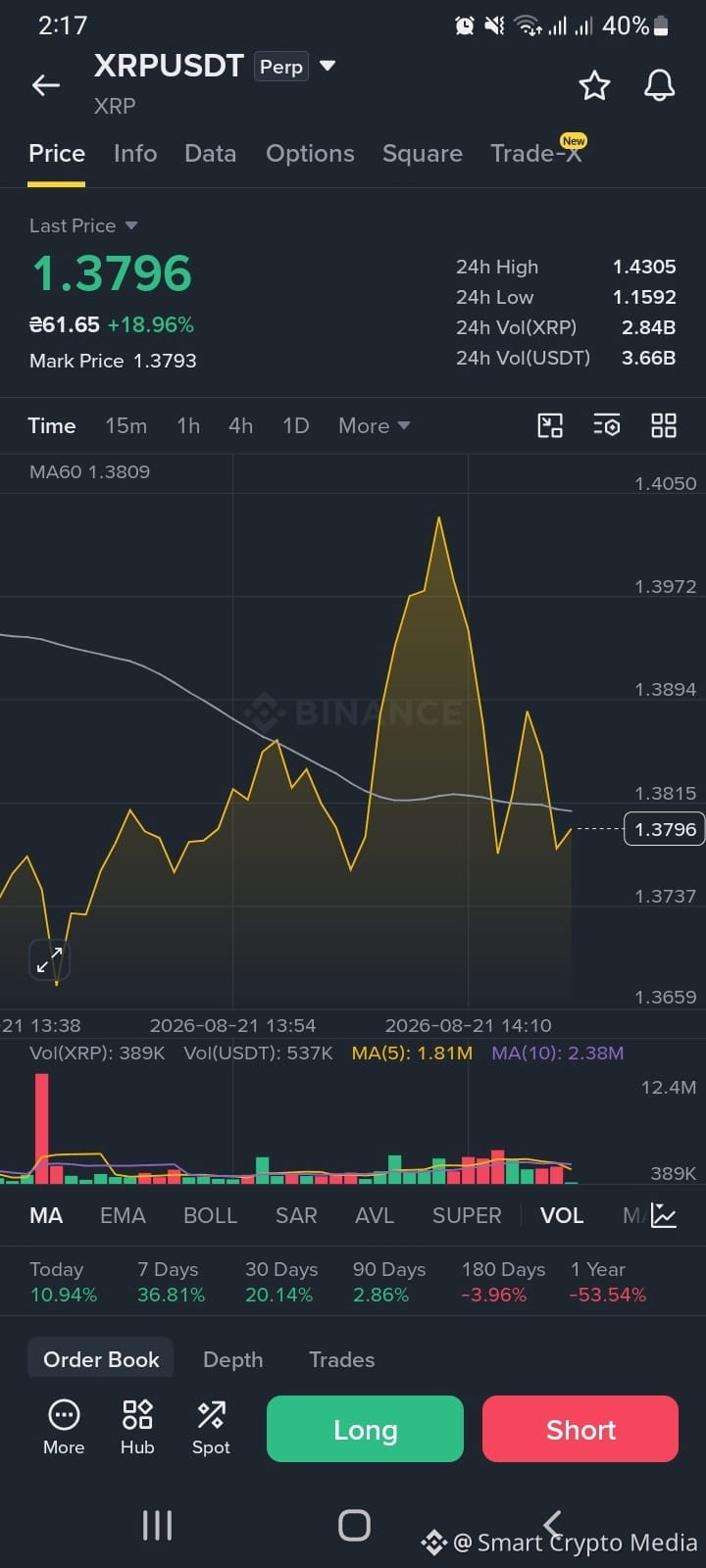
$XRP Gerade haben Händler eine dieser „Warte… Was?“-Bewegungen bekommen
XRP bei rund 1,38 $.
Fast 19 % im Tagesverlauf im Plus.
Und plötzlich fängt jeder an, sich den Chart anders anzuschauen.
Das ist das Lustige an Krypto.
Vor ein paar Stunden hätte sich der gleiche Preis vielleicht langweilig angefühlt. Jetzt gibt es dafür eine völlig andere Psychologie.
Der Screenshot zeigt, wie XRP hart in Richtung 1,40 $ drückt, zurückzieht, erneut abprallt und dann wieder nahe 1,38 $ abrutscht.
Und ehrlich gesagt… der Teil ist für mich spannender als die grüne Zahl.
Denn nach so einer Bewegung ist die schwierige Entscheidung nicht die, zu erkennen, dass XRP stark ist.
Das kann jeder sehen.
Das Schwierige ist herauszufinden, ob der Markt den nächsten Schritt aufbaut oder ob er einfach nur einen riesigen Kaufimpuls verdaut.
Der Bereich um 1,38 $ fühlt sich jetzt wichtig an.
Der Bereich um 1,40 $ fühlt sich sogar noch wichtiger an.
Und das vorherige Hoch bei 1,4305 liegt dort als Erinnerung daran, wie schnell sich Dinge ändern können.
Ich würde nicht so tun wollen, als gäbe uns der Chart Gewissheit. Tut er nicht.
Märkte können nach oben ausbrechen, wenn alle einen Rücksetzer erwarten.
Sie können sich auch umkehren, wenn alle davon überzeugt sind, dass der Pump weitergeht.
Deshalb beobachte ich die Kursreaktion – nicht nur die Kursrichtung.
Vielleicht läuft XRP weiter.
Vielleicht braucht es aber erst einmal Luft.
Was würde dich davon überzeugen, dass diese Bewegung echte Fortsetzung ist – und nicht nur ein Spike?
#XRP #SmartCryptoMedia #writetoearn
$XRP Gerade haben Händler eine dieser „Warte… Was?“-Bewegungen bekommen
XRP bei rund 1,38 $.
Fast 19 % im Tagesverlauf im Plus.
Und plötzlich fängt jeder an, sich den Chart anders anzuschauen.
Das ist das Lustige an Krypto.
Vor ein paar Stunden hätte sich der gleiche Preis vielleicht langweilig angefühlt. Jetzt gibt es dafür eine völlig andere Psychologie.
Der Screenshot zeigt, wie XRP hart in Richtung 1,40 $ drückt, zurückzieht, erneut abprallt und dann wieder nahe 1,38 $ abrutscht.
Und ehrlich gesagt… der Teil ist für mich spannender als die grüne Zahl.
Denn nach so einer Bewegung ist die schwierige Entscheidung nicht die, zu erkennen, dass XRP stark ist.
Das kann jeder sehen.
Das Schwierige ist herauszufinden, ob der Markt den nächsten Schritt aufbaut oder ob er einfach nur einen riesigen Kaufimpuls verdaut.
Der Bereich um 1,38 $ fühlt sich jetzt wichtig an.
Der Bereich um 1,40 $ fühlt sich sogar noch wichtiger an.
Und das vorherige Hoch bei 1,4305 liegt dort als Erinnerung daran, wie schnell sich Dinge ändern können.
Ich würde nicht so tun wollen, als gäbe uns der Chart Gewissheit. Tut er nicht.
Märkte können nach oben ausbrechen, wenn alle einen Rücksetzer erwarten.
Sie können sich auch umkehren, wenn alle davon überzeugt sind, dass der Pump weitergeht.
Deshalb beobachte ich die Kursreaktion – nicht nur die Kursrichtung.
Vielleicht läuft XRP weiter.
Vielleicht braucht es aber erst einmal Luft.
Was würde dich davon überzeugen, dass diese Bewegung echte Fortsetzung ist – und nicht nur ein Spike?
#XRP #SmartCryptoMedia #writetoearn
XRP bei rund 1,38 $.
Fast 19 % im Tagesverlauf im Plus.
Und plötzlich fängt jeder an, sich den Chart anders anzuschauen.
Das ist das Lustige an Krypto.
Vor ein paar Stunden hätte sich der gleiche Preis vielleicht langweilig angefühlt. Jetzt gibt es dafür eine völlig andere Psychologie.
Der Screenshot zeigt, wie XRP hart in Richtung 1,40 $ drückt, zurückzieht, erneut abprallt und dann wieder nahe 1,38 $ abrutscht.
Und ehrlich gesagt… der Teil ist für mich spannender als die grüne Zahl.
Denn nach so einer Bewegung ist die schwierige Entscheidung nicht die, zu erkennen, dass XRP stark ist.
Das kann jeder sehen.
Das Schwierige ist herauszufinden, ob der Markt den nächsten Schritt aufbaut oder ob er einfach nur einen riesigen Kaufimpuls verdaut.
Der Bereich um 1,38 $ fühlt sich jetzt wichtig an.
Der Bereich um 1,40 $ fühlt sich sogar noch wichtiger an.
Und das vorherige Hoch bei 1,4305 liegt dort als Erinnerung daran, wie schnell sich Dinge ändern können.
Ich würde nicht so tun wollen, als gäbe uns der Chart Gewissheit. Tut er nicht.
Märkte können nach oben ausbrechen, wenn alle einen Rücksetzer erwarten.
Sie können sich auch umkehren, wenn alle davon überzeugt sind, dass der Pump weitergeht.
Deshalb beobachte ich die Kursreaktion – nicht nur die Kursrichtung.
Vielleicht läuft XRP weiter.
Vielleicht braucht es aber erst einmal Luft.
Was würde dich davon überzeugen, dass diese Bewegung echte Fortsetzung ist – und nicht nur ein Spike?
#XRP #SmartCryptoMedia #writetoearn
172
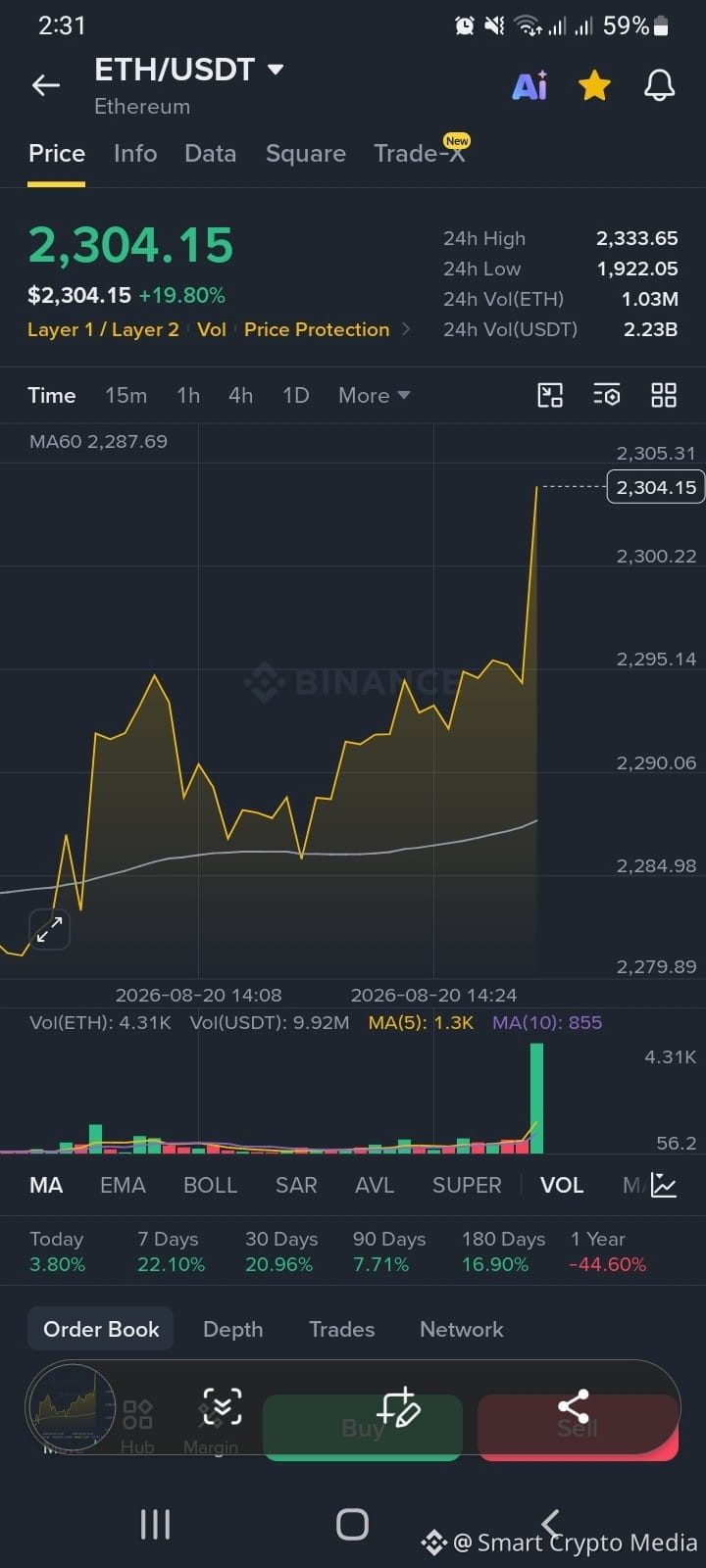
$ETH Ich habe die App geöffnet und die Zahl war einfach da… 2304. Grün. Großes Grün. Hat sich für einen Moment komisch angefühlt, weil ich so lange auf dieselbe Spanne gestarrt habe, dass ein klarer Bruch fast schon nicht mehr als wirklich wahrgenommen wird.
Ich habe zugesehen, wie die letzten ein paar Kerzen sich gebildet haben. Der Volumenbalken sah aus, als wäre er wütend geworden. Dann sind die Antworten reingeschossen, mit der üblichen Mischung aus Siegesrunden und plötzlich auftauchenden Experten. Ich weiß nicht, ob das so bleibt. Ein Teil von mir berechnet schon, wie weit es zurücklaufen könnte, bis die Leute es als Fakeout abtun. Ein anderer Teil ist einfach still und beobachtet die Linie.
Es ist so einer dieser Tage, an denen der Chart die Sprache übernimmt und dein Gehirn versucht, eine Geschichte darum herum zu schreiben. Ich bin mir noch nicht sicher, welche Version ich gerade schreibe.
#ETH #SmartCryptoMedia #writetoearn
$ETH Ich habe die App geöffnet und die Zahl war einfach da… 2304. Grün. Großes Grün. Hat sich für einen Moment komisch angefühlt, weil ich so lange auf dieselbe Spanne gestarrt habe, dass ein klarer Bruch fast schon nicht mehr als wirklich wahrgenommen wird.
Ich habe zugesehen, wie die letzten ein paar Kerzen sich gebildet haben. Der Volumenbalken sah aus, als wäre er wütend geworden. Dann sind die Antworten reingeschossen, mit der üblichen Mischung aus Siegesrunden und plötzlich auftauchenden Experten. Ich weiß nicht, ob das so bleibt. Ein Teil von mir berechnet schon, wie weit es zurücklaufen könnte, bis die Leute es als Fakeout abtun. Ein anderer Teil ist einfach still und beobachtet die Linie.
Es ist so einer dieser Tage, an denen der Chart die Sprache übernimmt und dein Gehirn versucht, eine Geschichte darum herum zu schreiben. Ich bin mir noch nicht sicher, welche Version ich gerade schreibe.
#ETH #SmartCryptoMedia #writetoearn
Ich habe zugesehen, wie die letzten ein paar Kerzen sich gebildet haben. Der Volumenbalken sah aus, als wäre er wütend geworden. Dann sind die Antworten reingeschossen, mit der üblichen Mischung aus Siegesrunden und plötzlich auftauchenden Experten. Ich weiß nicht, ob das so bleibt. Ein Teil von mir berechnet schon, wie weit es zurücklaufen könnte, bis die Leute es als Fakeout abtun. Ein anderer Teil ist einfach still und beobachtet die Linie.
Es ist so einer dieser Tage, an denen der Chart die Sprache übernimmt und dein Gehirn versucht, eine Geschichte darum herum zu schreiben. Ich bin mir noch nicht sicher, welche Version ich gerade schreibe.
#ETH #SmartCryptoMedia #writetoearn
120
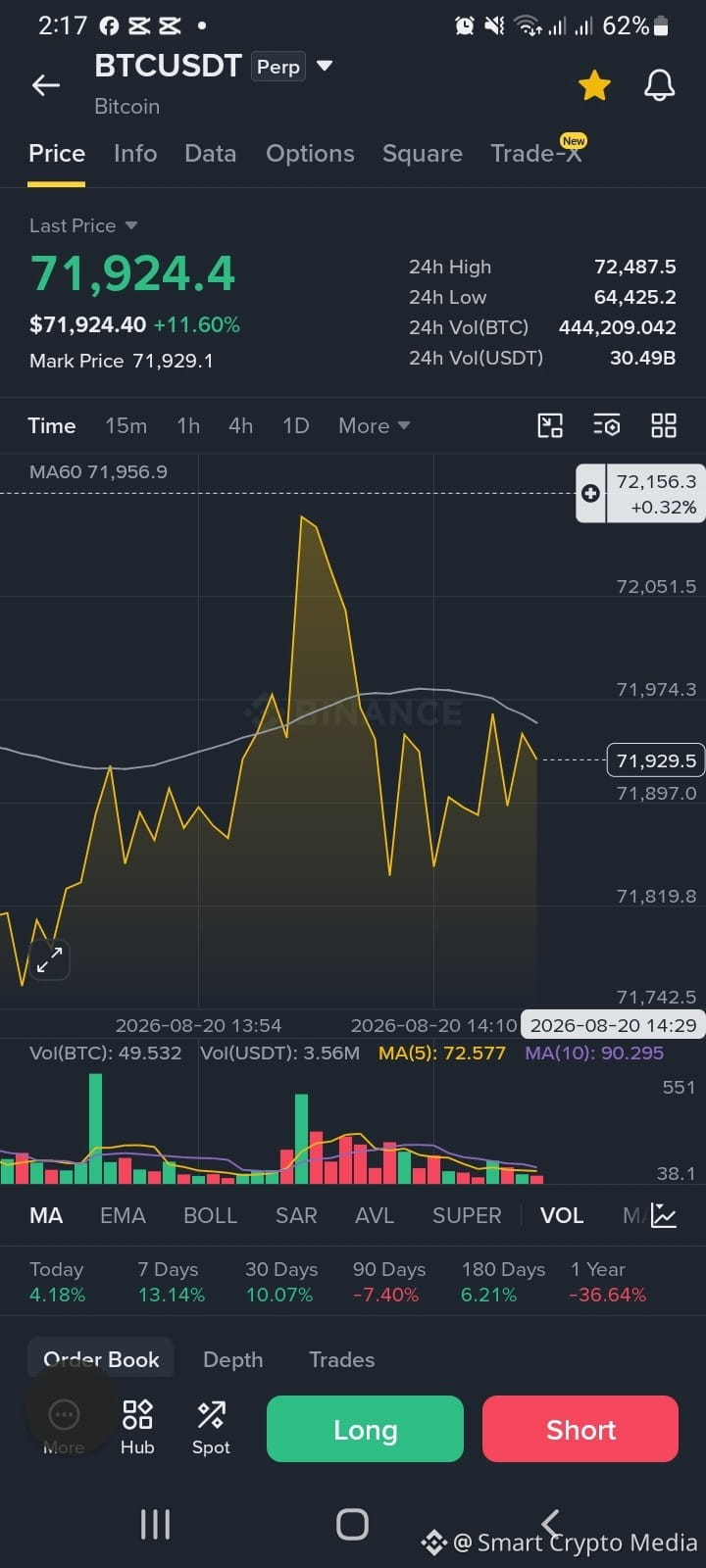
$BTC Okay so I opened the app and just — stared at it for a second. 71,924. Up 11.6%. I don't think I fully processed that number the first time I read it.
I'd basically stopped checking price alerts the last few weeks. Range was boring, everyone was tired, half my feed was arguing about whether we'd even bottomed yet. And then a Treasury bond announcement of all things flips the whole mood in a day. Fear and greed index going from fear to greed overnight — I felt that shift in myself too, not gonna lie.
Watching the chart replay from this afternoon is kind of unsettling honestly. That vertical wall around 2pm, then it just — saws back and forth, up, down, up, down, like the market itself couldn't decide if it believed the move. I don't know if I believe it either yet.
Not selling, not adding either right now. Just sitting with it for a minute before I say anything definitive. Feels like one of those days you'll want to remember exactly how it felt, whichever way it goes from here.
#BTC #SmartCryptoMedia #Write2Earn!
$BTC Okay so I opened the app and just — stared at it for a second. 71,924. Up 11.6%. I don't think I fully processed that number the first time I read it.
I'd basically stopped checking price alerts the last few weeks. Range was boring, everyone was tired, half my feed was arguing about whether we'd even bottomed yet. And then a Treasury bond announcement of all things flips the whole mood in a day. Fear and greed index going from fear to greed overnight — I felt that shift in myself too, not gonna lie.
Watching the chart replay from this afternoon is kind of unsettling honestly. That vertical wall around 2pm, then it just — saws back and forth, up, down, up, down, like the market itself couldn't decide if it believed the move. I don't know if I believe it either yet.
Not selling, not adding either right now. Just sitting with it for a minute before I say anything definitive. Feels like one of those days you'll want to remember exactly how it felt, whichever way it goes from here.
#BTC #SmartCryptoMedia #Write2Earn!
I'd basically stopped checking price alerts the last few weeks. Range was boring, everyone was tired, half my feed was arguing about whether we'd even bottomed yet. And then a Treasury bond announcement of all things flips the whole mood in a day. Fear and greed index going from fear to greed overnight — I felt that shift in myself too, not gonna lie.
Watching the chart replay from this afternoon is kind of unsettling honestly. That vertical wall around 2pm, then it just — saws back and forth, up, down, up, down, like the market itself couldn't decide if it believed the move. I don't know if I believe it either yet.
Not selling, not adding either right now. Just sitting with it for a minute before I say anything definitive. Feels like one of those days you'll want to remember exactly how it felt, whichever way it goes from here.
#BTC #SmartCryptoMedia #Write2Earn!
130
$ETH wirkt gerade ruhig… vielleicht sogar ein bisschen zu ruhig.
Ich schaue mir dieses 15-Minuten-Chart an und bekomme immer wieder dasselbe Gefühl:
Da fehlt etwas.
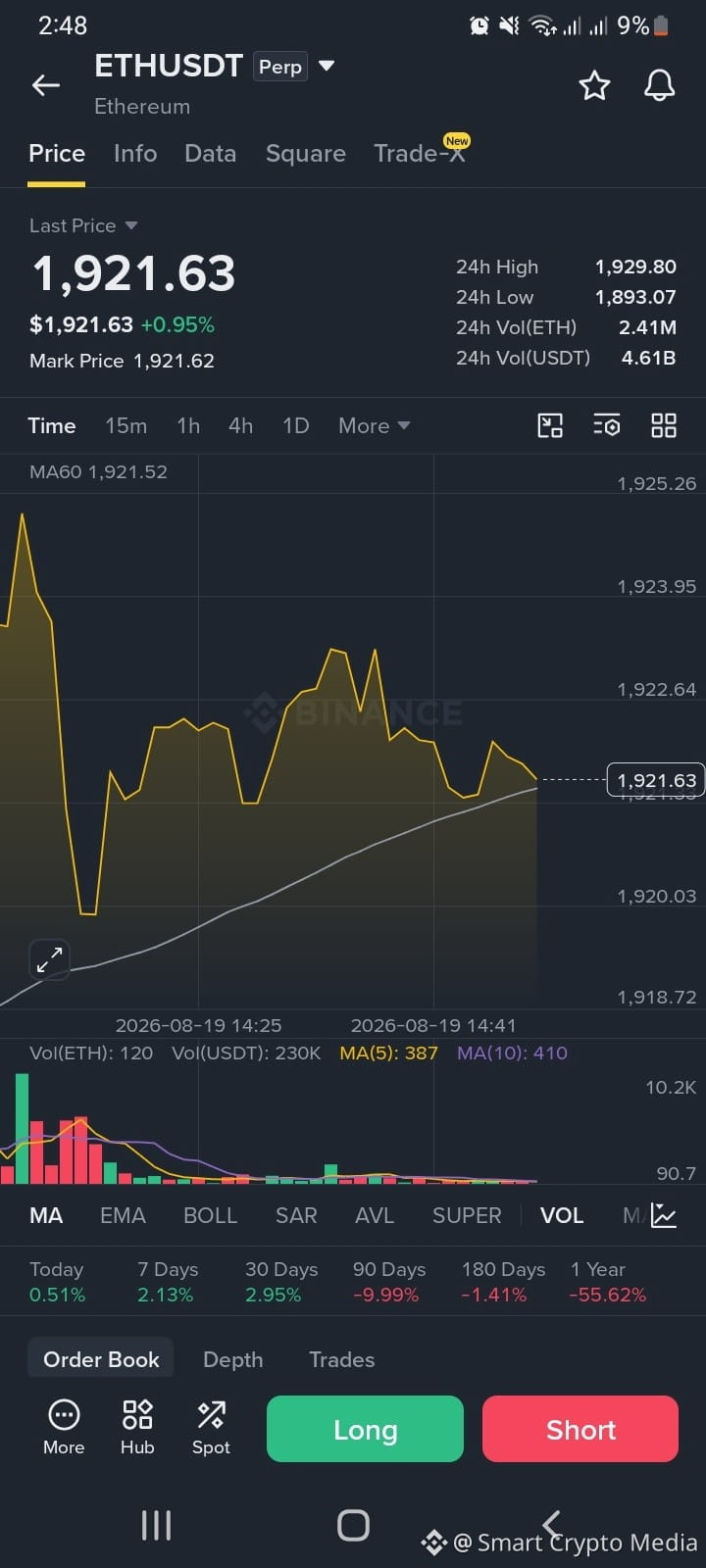
ETH ist vom unteren Bereich der sichtbaren Spanne abgeprallt, hat sich Richtung 1.923+ erholt, ist zurückgekommen, ist wieder abgeprallt… und jetzt liegt es bei etwa 1.921,63.
Nichts Dramatisches.
Auch kein klares Breakdown.
Eher nur Zögern.
Der MA60 liegt fast perfekt unterhalb des Preises bei 1.921,52 – das macht das aktuelle Niveau noch interessanter. Käufer haben die Kontrolle noch nicht vollständig verloren, aber Verkäufer sind auch nicht einfach verschwunden.
Und das Volumen erzählt eine andere Geschichte.
Frühere Kerzen hatten deutlich mehr Aktivität. Die aktuellen Kerzen sind spürbar ruhiger.
Vielleicht ist das Akkumulation.
Vielleicht wartet der Markt einfach nur.
Vielleicht wartet jeder darauf, dass jemand anderes den ersten Schritt macht.
Genau das macht diese kleinen Spannen schwierig. Der Chart kann bullisch aussehen, weil der Kurs sich erholt hat, während das fehlende Volumen den Ausbruch aber nicht bestätigt.
Für mich ist der interessante Teil nicht das Vorhersagen der nächsten Kerze.
Sondern zu beobachten, was passiert, wenn ETH diesen kleinen Kampfplatz endlich verlässt.
Über 1.930. Unter 1.918–1.920.
Auf der einen Seite muss irgendwann etwas nachgeben.
Bis dahin interessiere ich mich mehr für Bestätigung als fürs Raten.
Siehst du hier Akkumulation, oder nur eine Pause vor dem nächsten Move?
#ETH #SmartCryptoMedia #writetoearn
$ETH wirkt gerade ruhig… vielleicht sogar ein bisschen zu ruhig.
Ich schaue mir dieses 15-Minuten-Chart an und bekomme immer wieder dasselbe Gefühl:
Da fehlt etwas.
ETH ist vom unteren Bereich der sichtbaren Spanne abgeprallt, hat sich Richtung 1.923+ erholt, ist zurückgekommen, ist wieder abgeprallt… und jetzt liegt es bei etwa 1.921,63.
Nichts Dramatisches.
Auch kein klares Breakdown.
Eher nur Zögern.
Der MA60 liegt fast perfekt unterhalb des Preises bei 1.921,52 – das macht das aktuelle Niveau noch interessanter. Käufer haben die Kontrolle noch nicht vollständig verloren, aber Verkäufer sind auch nicht einfach verschwunden.
Und das Volumen erzählt eine andere Geschichte.
Frühere Kerzen hatten deutlich mehr Aktivität. Die aktuellen Kerzen sind spürbar ruhiger.
Vielleicht ist das Akkumulation.
Vielleicht wartet der Markt einfach nur.
Vielleicht wartet jeder darauf, dass jemand anderes den ersten Schritt macht.
Genau das macht diese kleinen Spannen schwierig. Der Chart kann bullisch aussehen, weil der Kurs sich erholt hat, während das fehlende Volumen den Ausbruch aber nicht bestätigt.
Für mich ist der interessante Teil nicht das Vorhersagen der nächsten Kerze.
Sondern zu beobachten, was passiert, wenn ETH diesen kleinen Kampfplatz endlich verlässt.
Über 1.930. Unter 1.918–1.920.
Auf der einen Seite muss irgendwann etwas nachgeben.
Bis dahin interessiere ich mich mehr für Bestätigung als fürs Raten.
Siehst du hier Akkumulation, oder nur eine Pause vor dem nächsten Move?
#ETH #SmartCryptoMedia #writetoearn
Ich schaue mir dieses 15-Minuten-Chart an und bekomme immer wieder dasselbe Gefühl:
Da fehlt etwas.
ETH ist vom unteren Bereich der sichtbaren Spanne abgeprallt, hat sich Richtung 1.923+ erholt, ist zurückgekommen, ist wieder abgeprallt… und jetzt liegt es bei etwa 1.921,63.
Nichts Dramatisches.
Auch kein klares Breakdown.
Eher nur Zögern.
Der MA60 liegt fast perfekt unterhalb des Preises bei 1.921,52 – das macht das aktuelle Niveau noch interessanter. Käufer haben die Kontrolle noch nicht vollständig verloren, aber Verkäufer sind auch nicht einfach verschwunden.
Und das Volumen erzählt eine andere Geschichte.
Frühere Kerzen hatten deutlich mehr Aktivität. Die aktuellen Kerzen sind spürbar ruhiger.
Vielleicht ist das Akkumulation.
Vielleicht wartet der Markt einfach nur.
Vielleicht wartet jeder darauf, dass jemand anderes den ersten Schritt macht.
Genau das macht diese kleinen Spannen schwierig. Der Chart kann bullisch aussehen, weil der Kurs sich erholt hat, während das fehlende Volumen den Ausbruch aber nicht bestätigt.
Für mich ist der interessante Teil nicht das Vorhersagen der nächsten Kerze.
Sondern zu beobachten, was passiert, wenn ETH diesen kleinen Kampfplatz endlich verlässt.
Über 1.930. Unter 1.918–1.920.
Auf der einen Seite muss irgendwann etwas nachgeben.
Bis dahin interessiere ich mich mehr für Bestätigung als fürs Raten.
Siehst du hier Akkumulation, oder nur eine Pause vor dem nächsten Move?
#ETH #SmartCryptoMedia #writetoearn
491
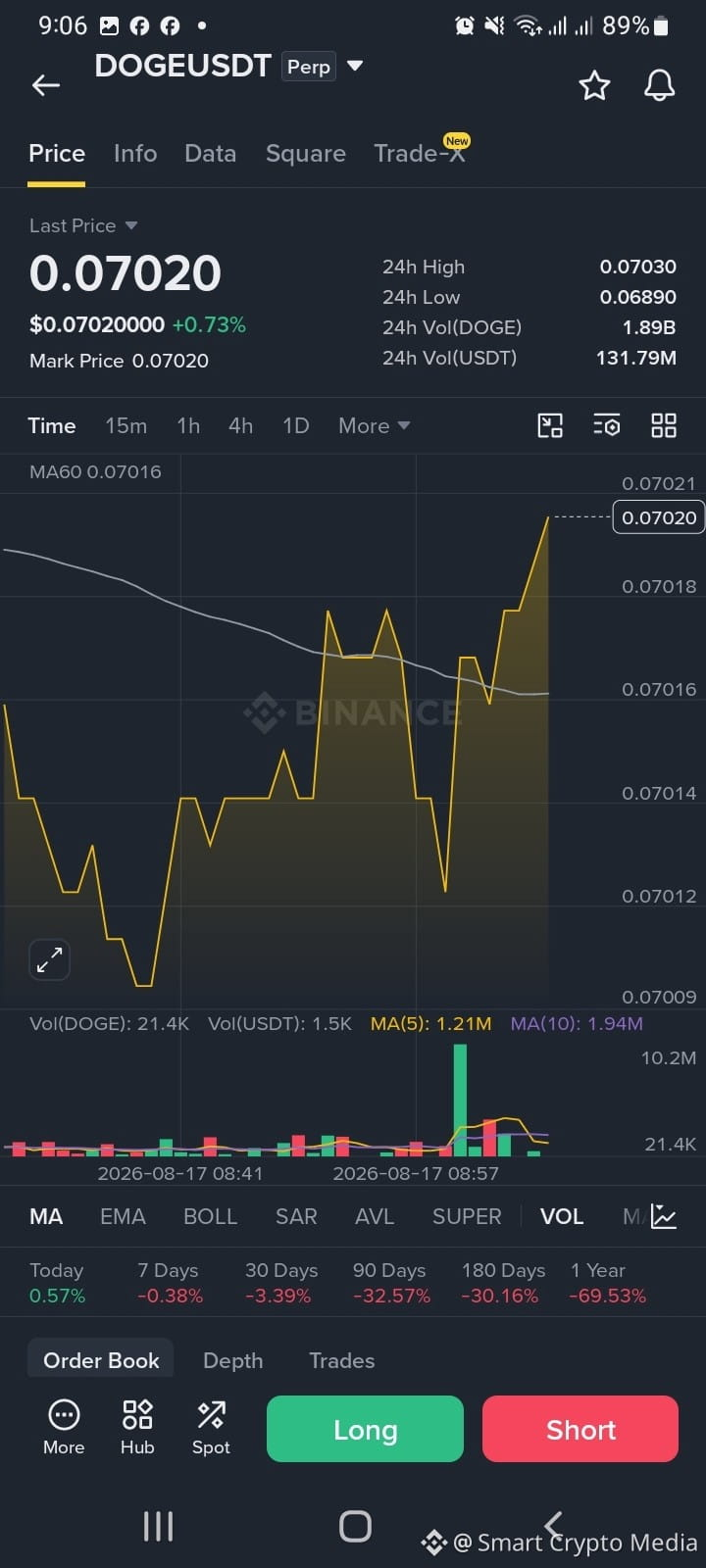
Halte heute $DOGE im Blick und es ist einfach da… sitzt da. 0,0702 $. Grün, nur ganz leicht. Fühlt sich fast schon enttäuschend an, nach all dem Lärm, den es in den letzten Monaten um diese 0,069-Dollar-Zone gegeben hat.
Ich weiß ehrlich gesagt nicht, was ich davon halten soll. Ein Teil von mir schaut sich den Chart an und denkt – okay, der dritte Rückprall von derselben Ebene, das ist nicht nichts, Verkäufer könnten tatsächlich erschöpft sein. Ein anderer Teil von mir erinnert sich daran, dass diese Münze vor einem Jahr dreimal so viel wert war, und denkt: Warum zerbreche ich mir überhaupt den Kopf über einen Rückprall an einer Ebene, die immer noch um 70 % im Minus ist.
Die DogeOS-Sache ist real, glaube ich. Tatsächliche Entwicklung passiert, tatsächliche DeFi-Integration gibt es jetzt auch über Flare. Aber dann ertappe ich mich dabei – wie oft habe ich gelesen „DOGE bekommt endlich Nutzen“, nur um dann zu sehen, dass es sich genau wie jede andere Meme-Münze verhält, sobald BTC nur einmal niest.
Ich versuche mich hier nicht in etwas hineinzureden oder mich davon abzubringen. Ich schaue einfach dabei zu, wie dieselbe 0,069–0,0703-Spanne erneut getestet wird, und frage mich, ob Geduld endlich auszahlt oder nur… mehr Warten. Vermutlich wissen wir es, wenn es tatsächlich in die eine oder andere Richtung ausbricht.
#DOGE #SmartCryptoMedia #writetoearn
Halte heute $DOGE im Blick und es ist einfach da… sitzt da. 0,0702 $. Grün, nur ganz leicht. Fühlt sich fast schon enttäuschend an, nach all dem Lärm, den es in den letzten Monaten um diese 0,069-Dollar-Zone gegeben hat.
Ich weiß ehrlich gesagt nicht, was ich davon halten soll. Ein Teil von mir schaut sich den Chart an und denkt – okay, der dritte Rückprall von derselben Ebene, das ist nicht nichts, Verkäufer könnten tatsächlich erschöpft sein. Ein anderer Teil von mir erinnert sich daran, dass diese Münze vor einem Jahr dreimal so viel wert war, und denkt: Warum zerbreche ich mir überhaupt den Kopf über einen Rückprall an einer Ebene, die immer noch um 70 % im Minus ist.
Die DogeOS-Sache ist real, glaube ich. Tatsächliche Entwicklung passiert, tatsächliche DeFi-Integration gibt es jetzt auch über Flare. Aber dann ertappe ich mich dabei – wie oft habe ich gelesen „DOGE bekommt endlich Nutzen“, nur um dann zu sehen, dass es sich genau wie jede andere Meme-Münze verhält, sobald BTC nur einmal niest.
Ich versuche mich hier nicht in etwas hineinzureden oder mich davon abzubringen. Ich schaue einfach dabei zu, wie dieselbe 0,069–0,0703-Spanne erneut getestet wird, und frage mich, ob Geduld endlich auszahlt oder nur… mehr Warten. Vermutlich wissen wir es, wenn es tatsächlich in die eine oder andere Richtung ausbricht.
#DOGE #SmartCryptoMedia #writetoearn
Ich weiß ehrlich gesagt nicht, was ich davon halten soll. Ein Teil von mir schaut sich den Chart an und denkt – okay, der dritte Rückprall von derselben Ebene, das ist nicht nichts, Verkäufer könnten tatsächlich erschöpft sein. Ein anderer Teil von mir erinnert sich daran, dass diese Münze vor einem Jahr dreimal so viel wert war, und denkt: Warum zerbreche ich mir überhaupt den Kopf über einen Rückprall an einer Ebene, die immer noch um 70 % im Minus ist.
Die DogeOS-Sache ist real, glaube ich. Tatsächliche Entwicklung passiert, tatsächliche DeFi-Integration gibt es jetzt auch über Flare. Aber dann ertappe ich mich dabei – wie oft habe ich gelesen „DOGE bekommt endlich Nutzen“, nur um dann zu sehen, dass es sich genau wie jede andere Meme-Münze verhält, sobald BTC nur einmal niest.
Ich versuche mich hier nicht in etwas hineinzureden oder mich davon abzubringen. Ich schaue einfach dabei zu, wie dieselbe 0,069–0,0703-Spanne erneut getestet wird, und frage mich, ob Geduld endlich auszahlt oder nur… mehr Warten. Vermutlich wissen wir es, wenn es tatsächlich in die eine oder andere Richtung ausbricht.
#DOGE #SmartCryptoMedia #writetoearn
552
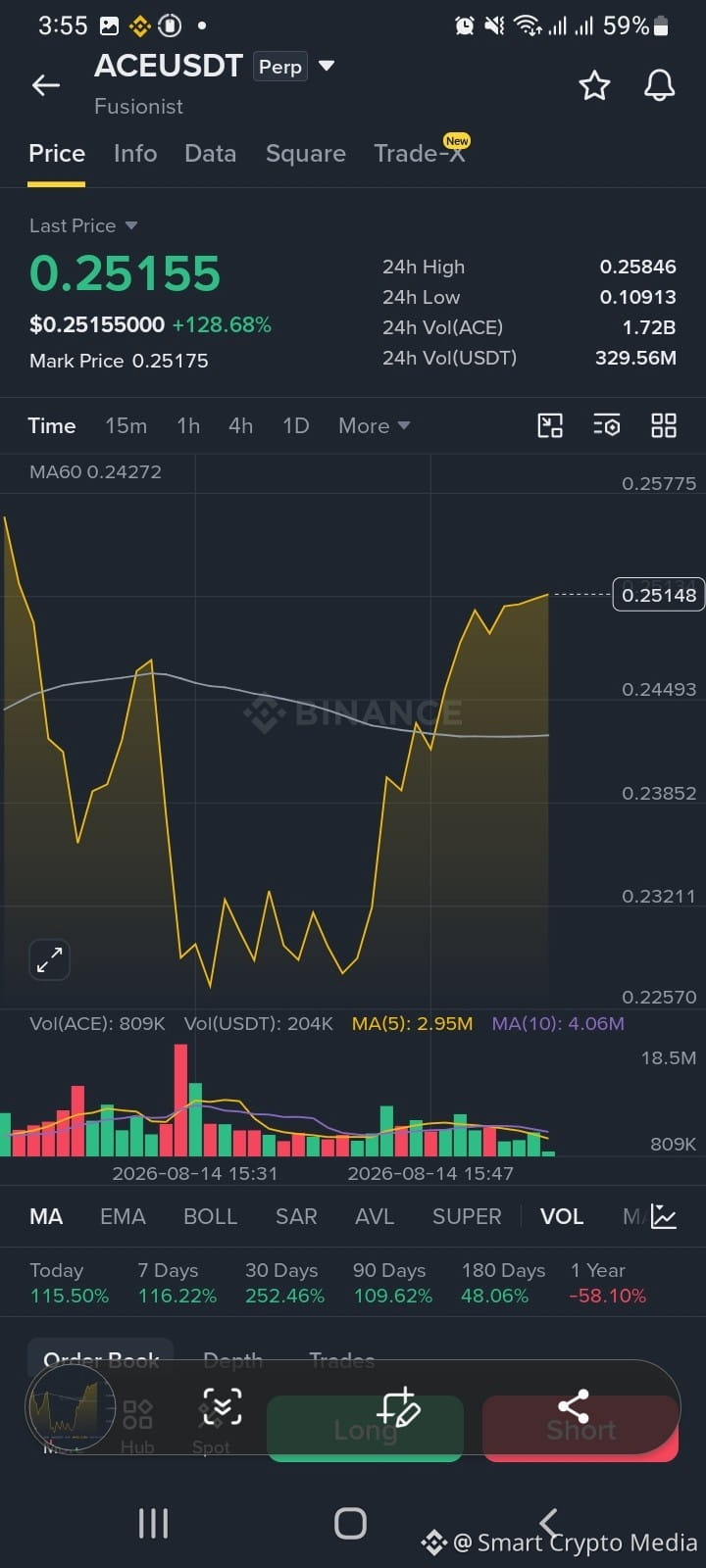
Ich habe $ACE go von einem stillen Gaming-Token gesehen, über das niemand gesprochen hat, hin zu +128% an einem Tag — und ehrlich gesagt weiß ich nicht, was ich damit anfangen soll. Ein Teil von mir will es als offensichtlich abtun – dünner Float, niedrige Basis, klar, dass es sich so bewegt, sobald Momentum auftaucht. Aber ein anderer Teil von mir sitzt einfach da und schaut so eine Kerze an und spürt trotzdem diese Anziehung. Das ist das Nervige an diesem Markt. Wenn man die Mechanik kennt, schützt das einen nicht vollständig vor dem Gefühl. Ich habe heute nach einem Grund gesucht — ein Update, eine Partnerschaft, irgendwas — und bin im Grunde bei nichts gelandet, außer dem: „Gaming-Token haben gerade gemeinsam einen Moment.“ Das ist eine echte Sache, Rotation passiert, aber es ist nicht dasselbe wie ein Projekt, das wirklich etwas Neues tut. In ein paar Wochen kommt auch ein Unlock, und ich gehe ständig hin und her, ob das überhaupt für Leute wichtig ist, die in so einer Bewegung wie dieser stecken. Wahrscheinlich nicht, bis es dann doch relevant wird. Ich trade das nicht. Ich sitze hauptsächlich damit da, wie schnell aus sechs Cent fünfundzwanzig wurden — und wie wenig von dieser Lücke durch irgendetwas erklärt wird, worauf ich zeigen könnte. Es fühlt sich weniger wie eine Story an und mehr wie eine Stimmung, in der der Markt gerade steckt.
#writetoearn
Ich habe $ACE go von einem stillen Gaming-Token gesehen, über das niemand gesprochen hat, hin zu +128% an einem Tag — und ehrlich gesagt weiß ich nicht, was ich damit anfangen soll. Ein Teil von mir will es als offensichtlich abtun – dünner Float, niedrige Basis, klar, dass es sich so bewegt, sobald Momentum auftaucht. Aber ein anderer Teil von mir sitzt einfach da und schaut so eine Kerze an und spürt trotzdem diese Anziehung. Das ist das Nervige an diesem Markt. Wenn man die Mechanik kennt, schützt das einen nicht vollständig vor dem Gefühl. Ich habe heute nach einem Grund gesucht — ein Update, eine Partnerschaft, irgendwas — und bin im Grunde bei nichts gelandet, außer dem: „Gaming-Token haben gerade gemeinsam einen Moment.“ Das ist eine echte Sache, Rotation passiert, aber es ist nicht dasselbe wie ein Projekt, das wirklich etwas Neues tut. In ein paar Wochen kommt auch ein Unlock, und ich gehe ständig hin und her, ob das überhaupt für Leute wichtig ist, die in so einer Bewegung wie dieser stecken. Wahrscheinlich nicht, bis es dann doch relevant wird. Ich trade das nicht. Ich sitze hauptsächlich damit da, wie schnell aus sechs Cent fünfundzwanzig wurden — und wie wenig von dieser Lücke durch irgendetwas erklärt wird, worauf ich zeigen könnte. Es fühlt sich weniger wie eine Story an und mehr wie eine Stimmung, in der der Markt gerade steckt.
#writetoearn
#writetoearn
221
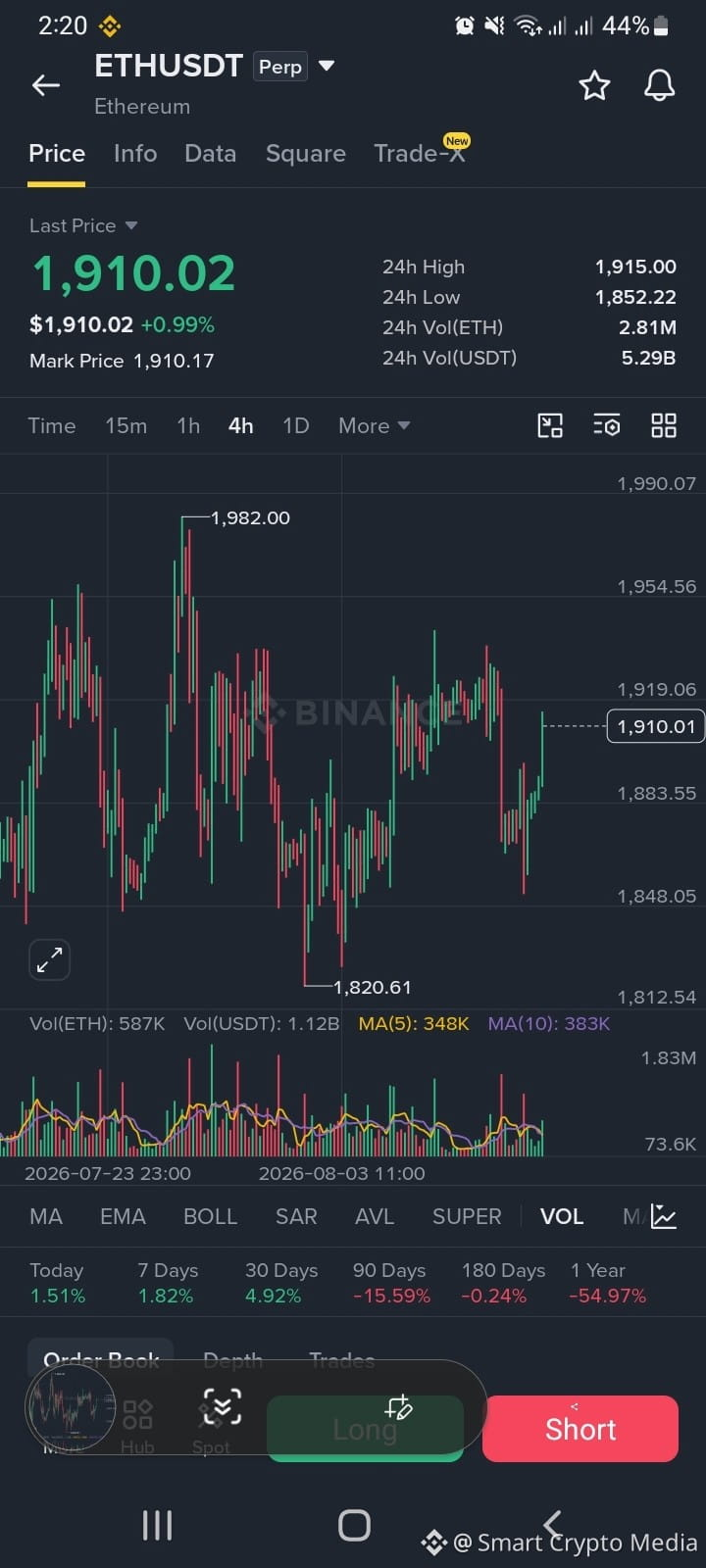
Ich habe mir diese ganzen $ETH do von 1.982 bis 1.820 im Round-Trip angeschaut und ehrlich gesagt — ich weiß nicht, was ich davon noch halten soll. Jedes Mal, wenn es aussieht, als würde es sich auflösen, schnappt es wieder zurück. Jedes Mal, wenn es so wirkt, als würde es auf $2k zusteuern, wird es abgelehnt. Im Moment ist es wieder bei $1.910 — ziemlich genau dort, wo es nach all dem Lärm immer wieder landet.
Ich habe die Schlagzeilen zur Bitmine-Akkumulation gesehen. Ich habe auch den Thread zum Exchange-Withdrawal gelesen. Ein Teil von mir will das als Signal deuten — so etwas wie: Okay, jemand mit echter Größe hält dieses Level für etwas, das man kaufen sollte. Aber dann schaue ich mir den Jahreschart an. Über 50% im Minus. Diese Zahl steht da einfach, ganz leise und untergräbt dieses Gefühl von „das ist der Boden“ im Kurzfristigen.
Vielleicht ist das einfach das, wie dieser Zyklus aussieht — langsames Schleifen, gelegentlich ein Docht, wieder und wieder. Ich will hier keinen Top oder Bottom ausrufen, sondern nur bemerken, wie ermüdend es ist, zuzusehen, wie immer wieder dieselbe Spanne abläuft. $1,850 hält, $1,900 deckelt, durchspülen.
Keine finanzielle Beratung, natürlich. Nur wo mein Kopf gerade ist, während ich mir die 4h-Kerzen von heute anschaue.
#ETH #SmartCryptoMedia #Write2Earrn
Ich habe mir diese ganzen $ETH do von 1.982 bis 1.820 im Round-Trip angeschaut und ehrlich gesagt — ich weiß nicht, was ich davon noch halten soll. Jedes Mal, wenn es aussieht, als würde es sich auflösen, schnappt es wieder zurück. Jedes Mal, wenn es so wirkt, als würde es auf $2k zusteuern, wird es abgelehnt. Im Moment ist es wieder bei $1.910 — ziemlich genau dort, wo es nach all dem Lärm immer wieder landet.
Ich habe die Schlagzeilen zur Bitmine-Akkumulation gesehen. Ich habe auch den Thread zum Exchange-Withdrawal gelesen. Ein Teil von mir will das als Signal deuten — so etwas wie: Okay, jemand mit echter Größe hält dieses Level für etwas, das man kaufen sollte. Aber dann schaue ich mir den Jahreschart an. Über 50% im Minus. Diese Zahl steht da einfach, ganz leise und untergräbt dieses Gefühl von „das ist der Boden“ im Kurzfristigen.
Vielleicht ist das einfach das, wie dieser Zyklus aussieht — langsames Schleifen, gelegentlich ein Docht, wieder und wieder. Ich will hier keinen Top oder Bottom ausrufen, sondern nur bemerken, wie ermüdend es ist, zuzusehen, wie immer wieder dieselbe Spanne abläuft. $1,850 hält, $1,900 deckelt, durchspülen.
Keine finanzielle Beratung, natürlich. Nur wo mein Kopf gerade ist, während ich mir die 4h-Kerzen von heute anschaue.
#ETH #SmartCryptoMedia #Write2Earrn
Ich habe die Schlagzeilen zur Bitmine-Akkumulation gesehen. Ich habe auch den Thread zum Exchange-Withdrawal gelesen. Ein Teil von mir will das als Signal deuten — so etwas wie: Okay, jemand mit echter Größe hält dieses Level für etwas, das man kaufen sollte. Aber dann schaue ich mir den Jahreschart an. Über 50% im Minus. Diese Zahl steht da einfach, ganz leise und untergräbt dieses Gefühl von „das ist der Boden“ im Kurzfristigen.
Vielleicht ist das einfach das, wie dieser Zyklus aussieht — langsames Schleifen, gelegentlich ein Docht, wieder und wieder. Ich will hier keinen Top oder Bottom ausrufen, sondern nur bemerken, wie ermüdend es ist, zuzusehen, wie immer wieder dieselbe Spanne abläuft. $1,850 hält, $1,900 deckelt, durchspülen.
Keine finanzielle Beratung, natürlich. Nur wo mein Kopf gerade ist, während ich mir die 4h-Kerzen von heute anschaue.
#ETH #SmartCryptoMedia #Write2Earrn
140
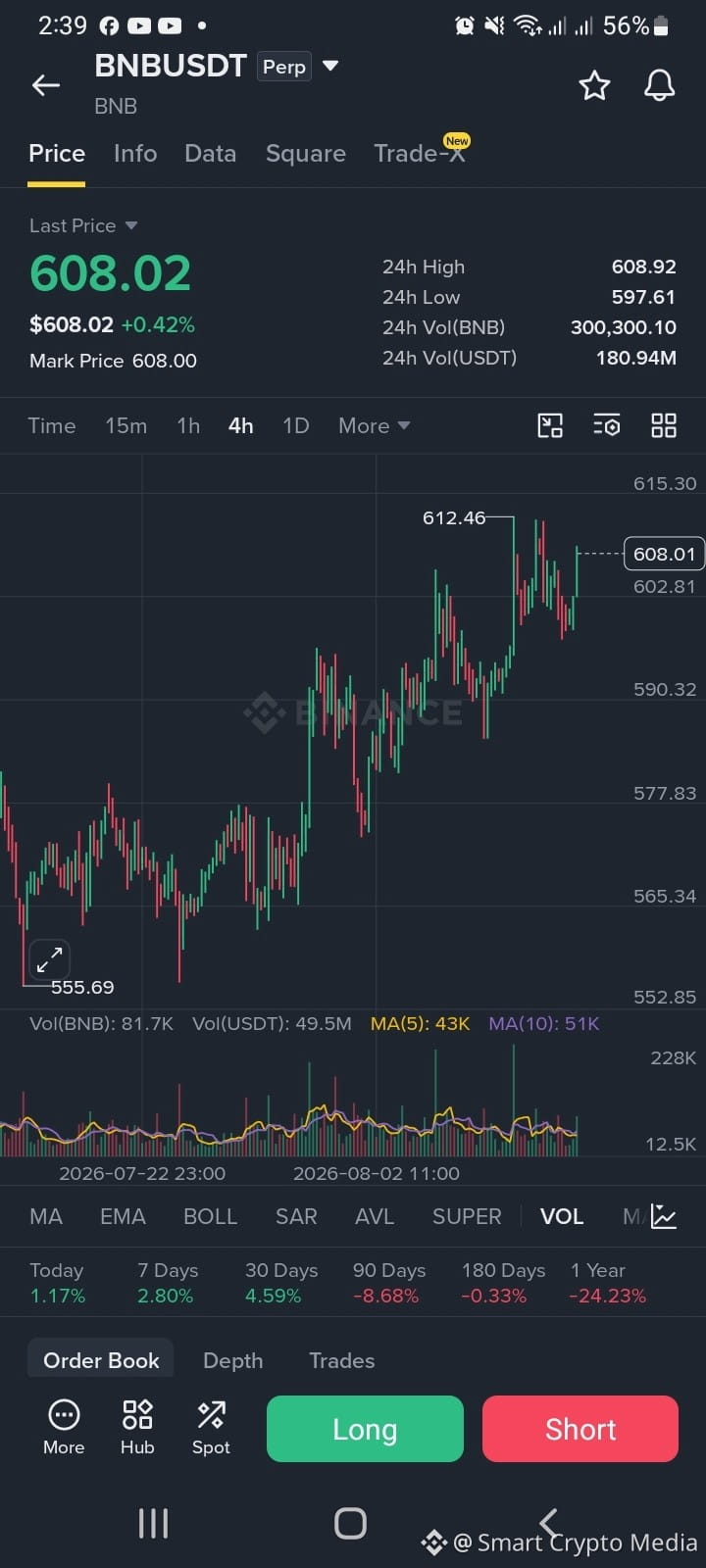
$BNB Ich starre diesen BNB-Chart länger an, als ich wahrscheinlich sollte. 608,02 $. Heute fast ein halbes Prozent im Plus. Klingt nicht nach viel, wenn man es laut sagt.
Aber dann scrollt man im Chart nach links und da ist dieser ganze Lauf – vor nicht allzu langer Zeit ging es runter Richtung 555 $, dann dieser Anstieg bis auf 612 $, und dann… stockt es. Bleibt dort. Schwankt zwischen 602 $ und 608 $, als könnte es sich nicht entscheiden.
Und ich hin und her, wie ich das eigentlich fühlen soll. Die Woche sieht gut aus, +2,80 %. Der Monat sieht gut aus, +4,59 %. Dann sehe ich aber -24,23 % für das Jahr, und in mir lässt ein bisschen die Luft ab. So: Okay, wir sind immer noch deutlich im Minus gegenüber dem Startpunkt – nur hatten wir ein paar ganz anständige Wochen.
Ich will hier weder ein Hoch noch ein Tief ausrufen. Ich bleibe einfach bei der Tatsache, dass ein grüner Tag ein rotes Jahr nicht wegwischt – und dass ein rotes Jahr nicht heißt, dass die grünen Tage nicht echt sind. Ich beobachte 597 $ als die nächste wichtige Schwelle.
#BNB #SmartCryptoMedia #writetoearn
$BNB Ich starre diesen BNB-Chart länger an, als ich wahrscheinlich sollte. 608,02 $. Heute fast ein halbes Prozent im Plus. Klingt nicht nach viel, wenn man es laut sagt.
Aber dann scrollt man im Chart nach links und da ist dieser ganze Lauf – vor nicht allzu langer Zeit ging es runter Richtung 555 $, dann dieser Anstieg bis auf 612 $, und dann… stockt es. Bleibt dort. Schwankt zwischen 602 $ und 608 $, als könnte es sich nicht entscheiden.
Und ich hin und her, wie ich das eigentlich fühlen soll. Die Woche sieht gut aus, +2,80 %. Der Monat sieht gut aus, +4,59 %. Dann sehe ich aber -24,23 % für das Jahr, und in mir lässt ein bisschen die Luft ab. So: Okay, wir sind immer noch deutlich im Minus gegenüber dem Startpunkt – nur hatten wir ein paar ganz anständige Wochen.
Ich will hier weder ein Hoch noch ein Tief ausrufen. Ich bleibe einfach bei der Tatsache, dass ein grüner Tag ein rotes Jahr nicht wegwischt – und dass ein rotes Jahr nicht heißt, dass die grünen Tage nicht echt sind. Ich beobachte 597 $ als die nächste wichtige Schwelle.
#BNB #SmartCryptoMedia #writetoearn
Aber dann scrollt man im Chart nach links und da ist dieser ganze Lauf – vor nicht allzu langer Zeit ging es runter Richtung 555 $, dann dieser Anstieg bis auf 612 $, und dann… stockt es. Bleibt dort. Schwankt zwischen 602 $ und 608 $, als könnte es sich nicht entscheiden.
Und ich hin und her, wie ich das eigentlich fühlen soll. Die Woche sieht gut aus, +2,80 %. Der Monat sieht gut aus, +4,59 %. Dann sehe ich aber -24,23 % für das Jahr, und in mir lässt ein bisschen die Luft ab. So: Okay, wir sind immer noch deutlich im Minus gegenüber dem Startpunkt – nur hatten wir ein paar ganz anständige Wochen.
Ich will hier weder ein Hoch noch ein Tief ausrufen. Ich bleibe einfach bei der Tatsache, dass ein grüner Tag ein rotes Jahr nicht wegwischt – und dass ein rotes Jahr nicht heißt, dass die grünen Tage nicht echt sind. Ich beobachte 597 $ als die nächste wichtige Schwelle.
#BNB #SmartCryptoMedia #writetoearn
1
112
$TUT Starrte länger auf dieses Diagramm, als ich sollte. TUT – eine Münze, die, wenn man weit genug zurückgeht, buchstäblich das Tutorial von jemandem war. Ein Lehrbeispiel. Und jetzt gibt es eine grüne Kerze auf dem Bildschirm, die fast gerade nach oben schießt, +97% an einem Tag, und die Leute schauen sie an, so wie man etwas beobachtet, das man nicht ganz glauben kann.
Ich weiß nicht, was ich damit anfangen soll. Ein Teil von mir findet es irgendwie lustig – die Demo wurde zum Hauptprogramm. Ein anderer Teil ist einfach müde, mir Charts dabei zuzusehen, wie sie so etwas machen, ehrlich gesagt, weil ich diese exakte Form schon genau auf diesem Token gesehen habe, mehr als einmal. Schnell hoch, oben eine Weile halten, dann das lange langsame Abbluten, das niemand screenshotet.
Ich sage nicht, dass man es nicht beobachten soll. Ich schaue es mir auch an. Nur – ich bemerke, wie leicht es ist, sich einzureden, dass es diesmal anders ist, wenn die Kerze grün ist und steigt, und wie dieses Gefühl nichts damit zu tun hat, ob es tatsächlich anders ist. Ich bin neugierig, ob irgendjemand einen echten Grund für den heutigen Move gefunden hat, denn ich habe nachgesehen und nichts dazu gefunden. Vielleicht macht der Markt einfach das, was dünne, gehebelte Märkte eben tun.#Write2Earrn
$TUT Starrte länger auf dieses Diagramm, als ich sollte. TUT – eine Münze, die, wenn man weit genug zurückgeht, buchstäblich das Tutorial von jemandem war. Ein Lehrbeispiel. Und jetzt gibt es eine grüne Kerze auf dem Bildschirm, die fast gerade nach oben schießt, +97% an einem Tag, und die Leute schauen sie an, so wie man etwas beobachtet, das man nicht ganz glauben kann.
Ich weiß nicht, was ich damit anfangen soll. Ein Teil von mir findet es irgendwie lustig – die Demo wurde zum Hauptprogramm. Ein anderer Teil ist einfach müde, mir Charts dabei zuzusehen, wie sie so etwas machen, ehrlich gesagt, weil ich diese exakte Form schon genau auf diesem Token gesehen habe, mehr als einmal. Schnell hoch, oben eine Weile halten, dann das lange langsame Abbluten, das niemand screenshotet.
Ich sage nicht, dass man es nicht beobachten soll. Ich schaue es mir auch an. Nur – ich bemerke, wie leicht es ist, sich einzureden, dass es diesmal anders ist, wenn die Kerze grün ist und steigt, und wie dieses Gefühl nichts damit zu tun hat, ob es tatsächlich anders ist. Ich bin neugierig, ob irgendjemand einen echten Grund für den heutigen Move gefunden hat, denn ich habe nachgesehen und nichts dazu gefunden. Vielleicht macht der Markt einfach das, was dünne, gehebelte Märkte eben tun.#Write2Earrn
Ich weiß nicht, was ich damit anfangen soll. Ein Teil von mir findet es irgendwie lustig – die Demo wurde zum Hauptprogramm. Ein anderer Teil ist einfach müde, mir Charts dabei zuzusehen, wie sie so etwas machen, ehrlich gesagt, weil ich diese exakte Form schon genau auf diesem Token gesehen habe, mehr als einmal. Schnell hoch, oben eine Weile halten, dann das lange langsame Abbluten, das niemand screenshotet.
Ich sage nicht, dass man es nicht beobachten soll. Ich schaue es mir auch an. Nur – ich bemerke, wie leicht es ist, sich einzureden, dass es diesmal anders ist, wenn die Kerze grün ist und steigt, und wie dieses Gefühl nichts damit zu tun hat, ob es tatsächlich anders ist. Ich bin neugierig, ob irgendjemand einen echten Grund für den heutigen Move gefunden hat, denn ich habe nachgesehen und nichts dazu gefunden. Vielleicht macht der Markt einfach das, was dünne, gehebelte Märkte eben tun.#Write2Earrn
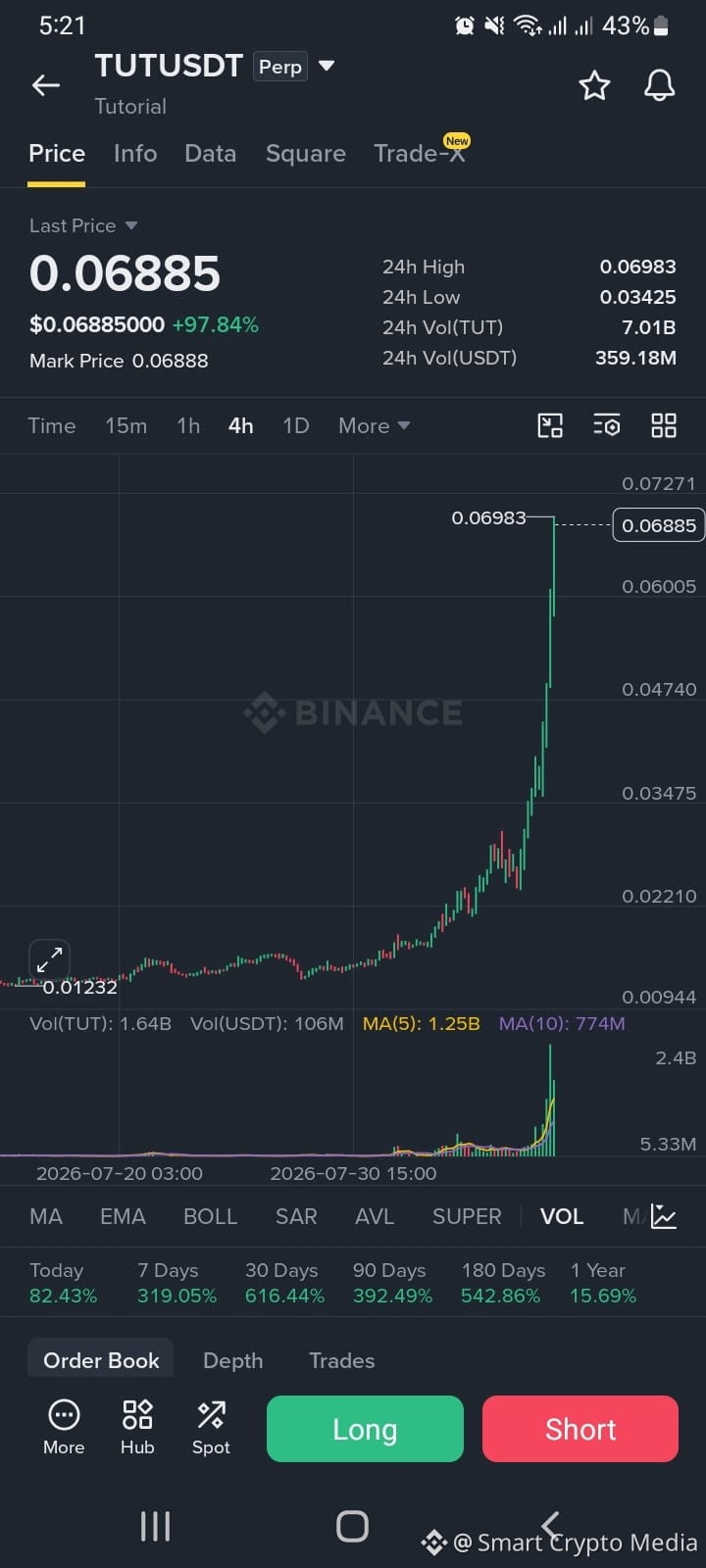
270
Anmelden und weiter Inhalte entdecken
Krypto-Nutzer weltweit auf Binance Square kennenlernen
⚡️ Bleib in Sachen Krypto stets am Puls.
💬 Die weltgrößte Kryptobörse vertraut darauf.
👍 Erhalte verlässliche Einblicke von verifizierten Creators.
E-Mail-Adresse/Telefonnummer
Trendthemen
BitcoinSlipsBelow$80KAgain
493 Aufrufe
21 Kommentare
BTC blutet, während die Wale abziehen — im Schatten eines Unternehmensgebots
Sieben Tage im Minus, und nicht Kleinanleger haben den Rückgang verursacht.
Der BTC schloss am 27. Okt. bei etwa 79.796, rund 2,6 % weniger als vor 7 Tagen und rund 5,2 % weniger als vor 30 Tagen. Der tägliche RSI(12) liegt bei 39,8. Die Spanne der Woche: Hoch bei etwa 84.377 (22. Okt.), Tief bei etwa 79.220 (24. Okt.). Keine Kapitulationskerze. Keine Rückeroberung der 84.000. Nur ein stetiges Abrutschen.
Die Angebotsseite spricht für sich. Inaktive Wallets bewegten 2.571 BTC (etwa 206,5 Mio. $) in Richtung institutioneller Börsen. Das ist Angebot, das an der Handelsplattform ankommt, nicht sie verlässt. Auch der Appetit der Treasury-Seite ließ nach — Strategy leitete 204,9 Mio. $ in Aktienrückkäufe um, statt in BTC.
Die Nachfrage im Hintergrund kommt von Unternehmen, nicht von Spekulanten. Strive erwarb 6.182 BTC (etwa 511,4 Mio. $); börsennotierte Unternehmen kauften zusammen mehr als 6.200 BTC. Das ist ein stichhaltiges Argument für einen echten Boden nahe 79.700 $ — aber ein Boden ist kein Auslöser für einen Ausbruch.
Das Momentum ist nicht auf der Seite der Bullen. Das MACD-Histogramm liegt bei −23,99, der Kurs unter dem 99-EMA. Das Aufwärtspotenzial bleibt unter etwa 80.500 $ begrenzt, bis sich diese Struktur dreht.
Die Positionierung ist leicht bullish, aber nicht euphorisch. Umfrage in der Square-Community: 2.116 bullish gegenüber 1.714 bearish bei insgesamt 3.830 Stimmen. Eine begrenzte Stichprobe — wissenswert, aber kein Grund, allein darauf zu handeln.
Meine Einschätzung: Hier wird in eine von Unternehmen getragene Nachfrage hinein verteilt. Der Boden ist real; das Momentum fehlt. Entscheidend ist diese Woche, ob die Zone zwischen 79.200 und 79.700 den Zufluss an die Börsen aufnehmen kann.
#BitcoinSlipsBelow$80KAgain
_Mr_Singh_
·0 Likes
·428 Aufrufe
ThailandLaunchesWORPTStablecoinToQRPaymentApp
304 Aufrufe
53 Kommentare
StrategySkipsBitcoinPurchasesSpends$205MOnSTRCBuybacks
2,900 Aufrufe
66 Kommentare