
Shakeel Nawaz Baig
2.5k Beiträge

Shakeel Nawaz Baig
Melden
Nutzer blockieren
Crypto enthusiast 🌟 | Believer in the power of decentralized finance. Future Trading X @mshakeelnawaz
Trade eröffnen
Hochfrequenz-Trader
4.5 Jahre
1.5K+ Following
11.0K+ Follower
2.2K+ Like gegeben
Beiträge
Portfolio
Alle
Zitierungen
Live
PINNED
$BTC
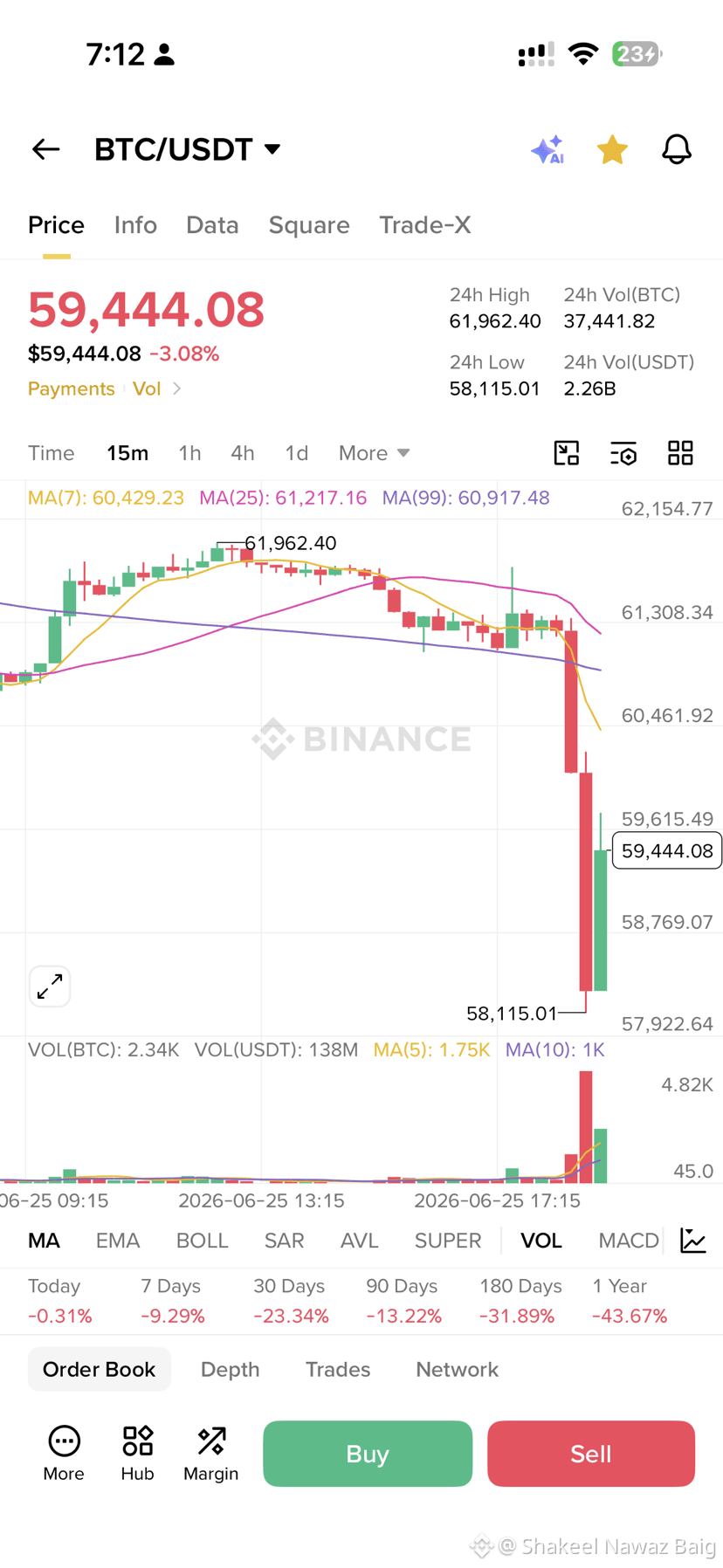
Eintrag beim Scheitern, $60k–$61k zurückzuerlangen.
• Ziele: zunächst $55k–$58k, dann ggf. niedriger bis in Richtung $50k, falls Makro-/Liquiditätssituation sich verschlechtert.
• Hohes Risiko — überverkaufte RSI-/Bollinger-Bänder deuten darauf hin, dass zunächst ein Short Squeeze auftreten könnte.
$BTC
Eintrag beim Scheitern, $60k–$61k zurückzuerlangen.
• Ziele: zunächst $55k–$58k, dann ggf. niedriger bis in Richtung $50k, falls Makro-/Liquiditätssituation sich verschlechtert.
• Hohes Risiko — überverkaufte RSI-/Bollinger-Bänder deuten darauf hin, dass zunächst ein Short Squeeze auftreten könnte.
Eintrag beim Scheitern, $60k–$61k zurückzuerlangen.
• Ziele: zunächst $55k–$58k, dann ggf. niedriger bis in Richtung $50k, falls Makro-/Liquiditätssituation sich verschlechtert.
• Hohes Risiko — überverkaufte RSI-/Bollinger-Bänder deuten darauf hin, dass zunächst ein Short Squeeze auftreten könnte.
17
3
56
152k
Übersetzung ansehen
$PIEVERSE
Short / fade looks more attractive right now for a scalp or mean-reversion play toward the MA(25) area (~1.260–1.258) or lower, especially if it rejects the MA(7) or the order-book wall around 1.2645–1.265.
• Long only becomes cleaner on a reclaim and hold above ~1.266–1.268 with volume, or on a deeper dip that holds the MA(25)/prior structure.
$PIEVERSE
Short / fade looks more attractive right now for a scalp or mean-reversion play toward the MA(25) area (~1.260–1.258) or lower, especially if it rejects the MA(7) or the order-book wall around 1.2645–1.265.
• Long only becomes cleaner on a reclaim and hold above ~1.266–1.268 with volume, or on a deeper dip that holds the MA(25)/prior structure.
Short / fade looks more attractive right now for a scalp or mean-reversion play toward the MA(25) area (~1.260–1.258) or lower, especially if it rejects the MA(7) or the order-book wall around 1.2645–1.265.
• Long only becomes cleaner on a reclaim and hold above ~1.266–1.268 with volume, or on a deeper dip that holds the MA(25)/prior structure.
99
Übersetzung ansehen
$DOT
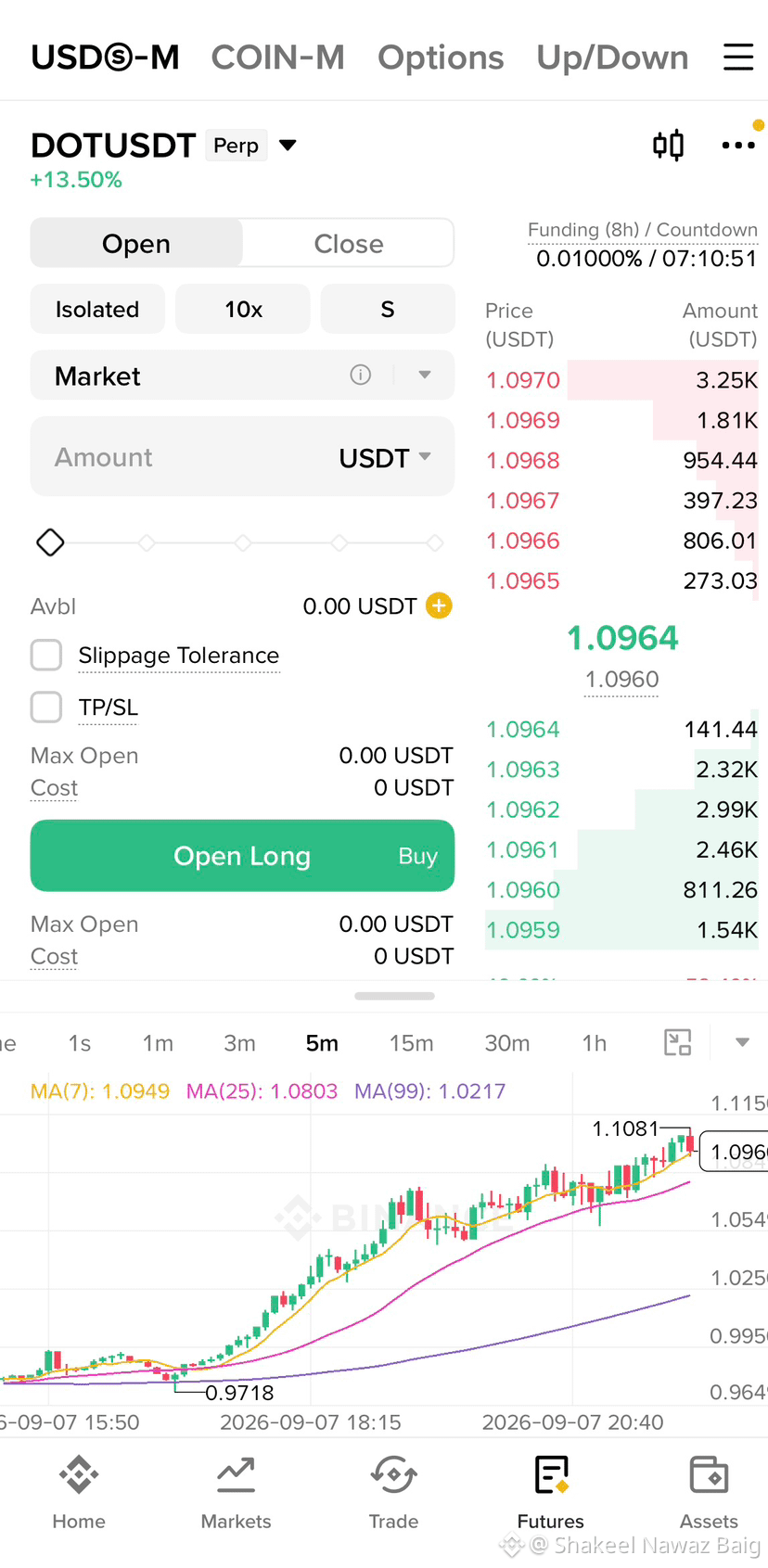
Entry: Market or limit around 1.0940–1.0965 (current area or slight pullback to MA7).
• Stop Loss: Below 1.0800–1.0820 (under MA25 / recent structure).
• Take Profit targets:
• TP1: 1.1080–1.1100 (previous local high)
• TP2: 1.1200–1.1300 (extension)
$DOT
Entry: Market or limit around 1.0940–1.0965 (current area or slight pullback to MA7).
• Stop Loss: Below 1.0800–1.0820 (under MA25 / recent structure).
• Take Profit targets:
• TP1: 1.1080–1.1100 (previous local high)
• TP2: 1.1200–1.1300 (extension)
Entry: Market or limit around 1.0940–1.0965 (current area or slight pullback to MA7).
• Stop Loss: Below 1.0800–1.0820 (under MA25 / recent structure).
• Take Profit targets:
• TP1: 1.1080–1.1100 (previous local high)
• TP2: 1.1200–1.1300 (extension)
111
Übersetzung ansehen
$RAYSOL
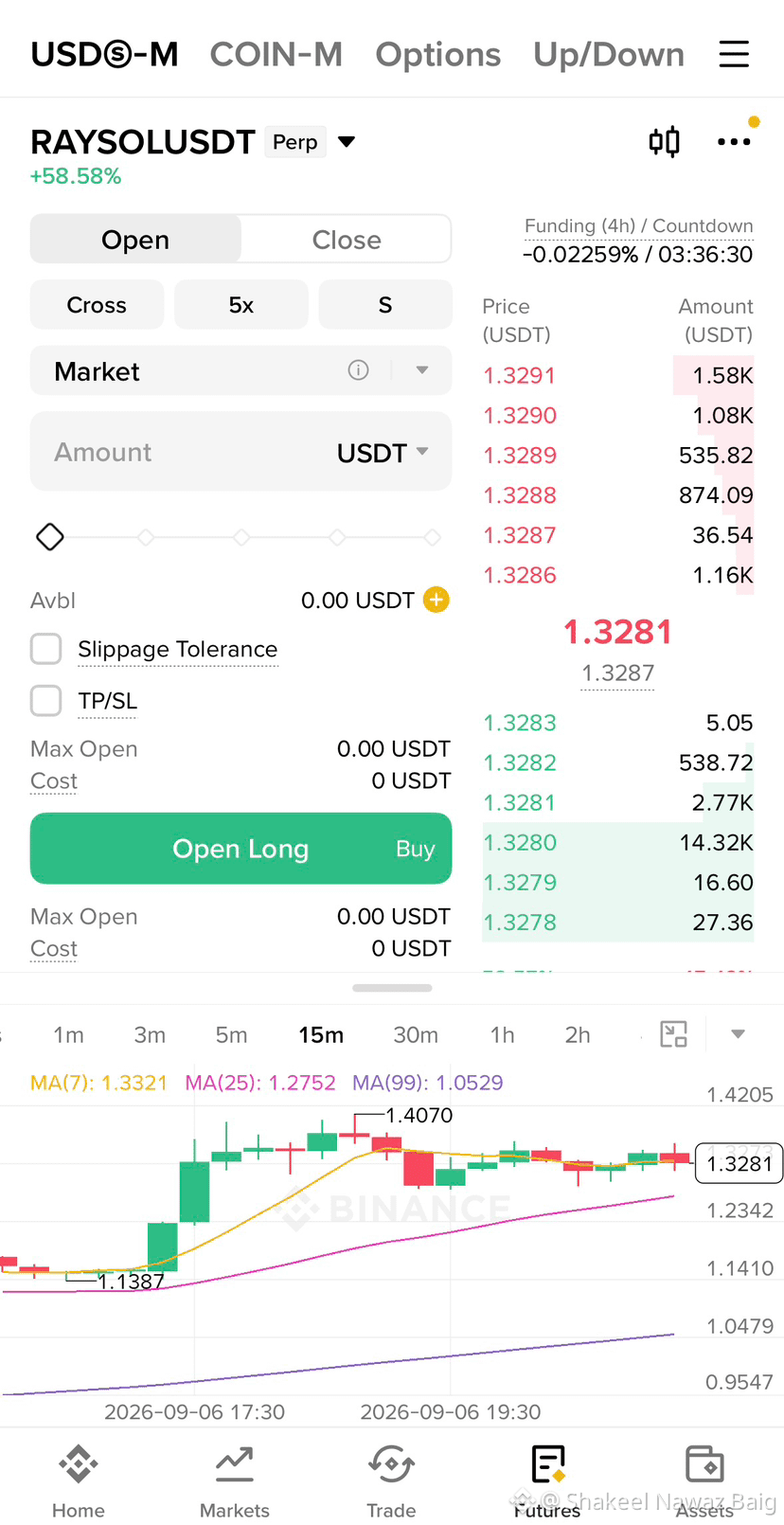
Long setup (preferred while above 1.30)
• Entry: 1.3250 – 1.3285 (current area or slight dip)
• Stop-loss: 1.3050 (below recent structure / MA25 support)
• Take-profit 1: 1.3550
• Take-profit 2: 1.3850 – 1.4000 (previous high zone)
• RR: ~1:2 to 1:3
$RAYSOL
Long setup (preferred while above 1.30)
• Entry: 1.3250 – 1.3285 (current area or slight dip)
• Stop-loss: 1.3050 (below recent structure / MA25 support)
• Take-profit 1: 1.3550
• Take-profit 2: 1.3850 – 1.4000 (previous high zone)
• RR: ~1:2 to 1:3
Long setup (preferred while above 1.30)
• Entry: 1.3250 – 1.3285 (current area or slight dip)
• Stop-loss: 1.3050 (below recent structure / MA25 support)
• Take-profit 1: 1.3550
• Take-profit 2: 1.3850 – 1.4000 (previous high zone)
• RR: ~1:2 to 1:3
199
$BULLA
Long-Setup
• Einstiegszone: 0.0603 – 0.0620 (nahe MA25) oder bei sauberer Rückeroberung & Halt über MA7 (0.0637–0.0645)
• Stop-Loss: Unter 0.0585–0.0590 (unter dem jüngsten Swing-Low / MA25)
• Ziele:
• TP1: 0.0680–0.0690 (MA99)
• TP2: 0.0750–0.0780
• TP3: Retest von 0.081–0.085 (Bereich des vorherigen Hochs)
$BULLA
Long-Setup
• Einstiegszone: 0.0603 – 0.0620 (nahe MA25) oder bei sauberer Rückeroberung & Halt über MA7 (0.0637–0.0645)
• Stop-Loss: Unter 0.0585–0.0590 (unter dem jüngsten Swing-Low / MA25)
• Ziele:
• TP1: 0.0680–0.0690 (MA99)
• TP2: 0.0750–0.0780
• TP3: Retest von 0.081–0.085 (Bereich des vorherigen Hochs)
Long-Setup
• Einstiegszone: 0.0603 – 0.0620 (nahe MA25) oder bei sauberer Rückeroberung & Halt über MA7 (0.0637–0.0645)
• Stop-Loss: Unter 0.0585–0.0590 (unter dem jüngsten Swing-Low / MA25)
• Ziele:
• TP1: 0.0680–0.0690 (MA99)
• TP2: 0.0750–0.0780
• TP3: Retest von 0.081–0.085 (Bereich des vorherigen Hochs)
1
155
Übersetzung ansehen
$4
Entry zone: 0.02588 – 0.02595 (market or limit slightly above current)
• Stop-loss: 0.02635–0.02645 (above MA99 + recent micro-high)
• Targets:
• TP1: 0.02540–0.02545 (MA25)
• TP2: 0.02480–0.02490
• TP3: 0.02400–0.02410 (prior low)
$4
Entry zone: 0.02588 – 0.02595 (market or limit slightly above current)
• Stop-loss: 0.02635–0.02645 (above MA99 + recent micro-high)
• Targets:
• TP1: 0.02540–0.02545 (MA25)
• TP2: 0.02480–0.02490
• TP3: 0.02400–0.02410 (prior low)
Entry zone: 0.02588 – 0.02595 (market or limit slightly above current)
• Stop-loss: 0.02635–0.02645 (above MA99 + recent micro-high)
• Targets:
• TP1: 0.02540–0.02545 (MA25)
• TP2: 0.02480–0.02490
• TP3: 0.02400–0.02410 (prior low)
180
Übersetzung ansehen
$ZKC
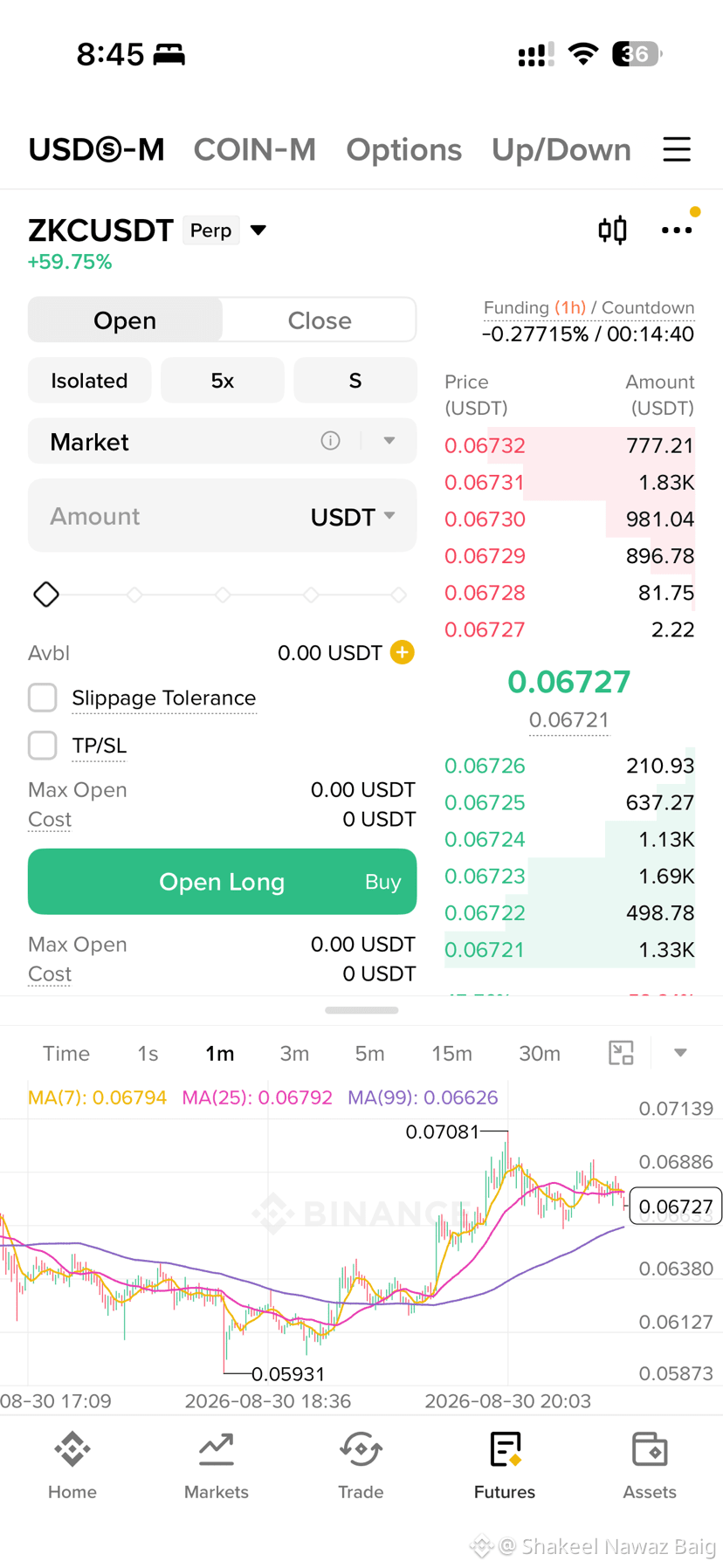
1. Wait for a small bounce into 0.06730–0.06745.
2. Enter short (Isolated, 3–5x max).
3. Place SL immediately at 0.06795.
4. Take 50–60% profit at TP1 (0.06670), then move SL to breakeven.
5. Let the rest run to TP2 or trail on the 1m.
Invalidation
• Clean 1m candle close above 0.06800 → cancel the short.
• Strong volume breakout above the recent high (0.0708) → flip bias to long.
Extra Notes
• Funding is currently negative → you get paid as a short.
• Keep size small (risk only 0.5–1% of account).
• This is a pure 1–5 minute scalp. Exit fast if momentum dies.
$ZKC
1. Wait for a small bounce into 0.06730–0.06745.
2. Enter short (Isolated, 3–5x max).
3. Place SL immediately at 0.06795.
4. Take 50–60% profit at TP1 (0.06670), then move SL to breakeven.
5. Let the rest run to TP2 or trail on the 1m.
Invalidation
• Clean 1m candle close above 0.06800 → cancel the short.
• Strong volume breakout above the recent high (0.0708) → flip bias to long.
Extra Notes
• Funding is currently negative → you get paid as a short.
• Keep size small (risk only 0.5–1% of account).
• This is a pure 1–5 minute scalp. Exit fast if momentum dies.
1. Wait for a small bounce into 0.06730–0.06745.
2. Enter short (Isolated, 3–5x max).
3. Place SL immediately at 0.06795.
4. Take 50–60% profit at TP1 (0.06670), then move SL to breakeven.
5. Let the rest run to TP2 or trail on the 1m.
Invalidation
• Clean 1m candle close above 0.06800 → cancel the short.
• Strong volume breakout above the recent high (0.0708) → flip bias to long.
Extra Notes
• Funding is currently negative → you get paid as a short.
• Keep size small (risk only 0.5–1% of account).
• This is a pure 1–5 minute scalp. Exit fast if momentum dies.
142
Ich liebe, wie @Dusk_Foundation das größte Problem in Web3 löst: private + konforme Transaktionen.
Vertrauliche dApps und tokenisierte Wertpapiere auf der $DUSK -Blockchain fühlen sich wie das fehlende Puzzleteil für RWA an.
Echte Nützlichkeit, echte Privatsphäre, echte Compliance. Deshalb bin ich optimistisch. #dusk
Ich liebe, wie @Dusk das größte Problem in Web3 löst: private + konforme Transaktionen.
Vertrauliche dApps und tokenisierte Wertpapiere auf der $DUSK -Blockchain fühlen sich wie das fehlende Puzzleteil für RWA an.
Echte Nützlichkeit, echte Privatsphäre, echte Compliance. Deshalb bin ich optimistisch. #dusk
Vertrauliche dApps und tokenisierte Wertpapiere auf der $DUSK -Blockchain fühlen sich wie das fehlende Puzzleteil für RWA an.
Echte Nützlichkeit, echte Privatsphäre, echte Compliance. Deshalb bin ich optimistisch. #dusk
68
Was ist das hier für eine Münze?? Soll ich sie schließen oder halten?
Was ist das hier für eine Münze?? Soll ich sie schließen oder halten?
1
309
🏔️ Einzelheiten zum tragischen Vorfall
· Der Gipfel: Dr. Asma Mushtaq erreichte gesund und in bester Stimmung gemeinsam mit ihrem Bergführer Akbar Ali erfolgreich den 7.027 Meter hohen Gipfel des Spantik Peak.
· Der Notfall: Beim Abstieg vom Gipfel entwickelte sie plötzlich eine lebensbedrohliche medizinische Hochgebirgserkrankung in einer Höhe von etwa 6.400 Metern.
· Der Rettungsversuch: Ihr Hauptführer Akbar Ali sowie ein weiterer Expeditionsführer, Muhammad Amin, leiteten unmittelbar einen Notabstieg ein, um sie zu retten. Sie leisteten dringend Hilfe unter schwierigen Bedingungen in großer Höhe und bei schwerem Wetter, doch leider konnte sie nicht überleben.
· Ihr Profil: Dr. Asma Mushtaq war eine in Großbritannien ansässige Ärztin, die sich auf Gynäkologie und Geburtshilfe spezialisiert hatte. Neben ihrer medizinischen Laufbahn war sie eine leidenschaftliche Kletterin in großen Höhen, Reisende und Vloggerin, die zuvor eine erfolgreiche Winterbesteigung des 4.076 Meter hohen Gipfels Musa ka Musallah absolviert hatte.
· Offizielle Würdigungen: Der Alpine Club of Pakistan (ACP) gab eine Erklärung heraus, in der er tiefes Mitgefühl ausdrückte und ihre außerordentliche Tapferkeit im Rahmen eines Frauenteams aus ganz Pakistan würdigte. Auch Elite-Bergsteiger wie Shehroze Kashif zollten ihr öffentlich Tribut für ihren mutigen Geist und lobten die lokalen Hochgebirgs-Träger, die ihr bis zum ganz am Ende beiwohnen wollten und dabei ihr Leben riskierten
🏔️ Einzelheiten zum tragischen Vorfall
· Der Gipfel: Dr. Asma Mushtaq erreichte gesund und in bester Stimmung gemeinsam mit ihrem Bergführer Akbar Ali erfolgreich den 7.027 Meter hohen Gipfel des Spantik Peak.
· Der Notfall: Beim Abstieg vom Gipfel entwickelte sie plötzlich eine lebensbedrohliche medizinische Hochgebirgserkrankung in einer Höhe von etwa 6.400 Metern.
· Der Rettungsversuch: Ihr Hauptführer Akbar Ali sowie ein weiterer Expeditionsführer, Muhammad Amin, leiteten unmittelbar einen Notabstieg ein, um sie zu retten. Sie leisteten dringend Hilfe unter schwierigen Bedingungen in großer Höhe und bei schwerem Wetter, doch leider konnte sie nicht überleben.
· Ihr Profil: Dr. Asma Mushtaq war eine in Großbritannien ansässige Ärztin, die sich auf Gynäkologie und Geburtshilfe spezialisiert hatte. Neben ihrer medizinischen Laufbahn war sie eine leidenschaftliche Kletterin in großen Höhen, Reisende und Vloggerin, die zuvor eine erfolgreiche Winterbesteigung des 4.076 Meter hohen Gipfels Musa ka Musallah absolviert hatte.
· Offizielle Würdigungen: Der Alpine Club of Pakistan (ACP) gab eine Erklärung heraus, in der er tiefes Mitgefühl ausdrückte und ihre außerordentliche Tapferkeit im Rahmen eines Frauenteams aus ganz Pakistan würdigte. Auch Elite-Bergsteiger wie Shehroze Kashif zollten ihr öffentlich Tribut für ihren mutigen Geist und lobten die lokalen Hochgebirgs-Träger, die ihr bis zum ganz am Ende beiwohnen wollten und dabei ihr Leben riskierten
· Der Gipfel: Dr. Asma Mushtaq erreichte gesund und in bester Stimmung gemeinsam mit ihrem Bergführer Akbar Ali erfolgreich den 7.027 Meter hohen Gipfel des Spantik Peak.
· Der Notfall: Beim Abstieg vom Gipfel entwickelte sie plötzlich eine lebensbedrohliche medizinische Hochgebirgserkrankung in einer Höhe von etwa 6.400 Metern.
· Der Rettungsversuch: Ihr Hauptführer Akbar Ali sowie ein weiterer Expeditionsführer, Muhammad Amin, leiteten unmittelbar einen Notabstieg ein, um sie zu retten. Sie leisteten dringend Hilfe unter schwierigen Bedingungen in großer Höhe und bei schwerem Wetter, doch leider konnte sie nicht überleben.
· Ihr Profil: Dr. Asma Mushtaq war eine in Großbritannien ansässige Ärztin, die sich auf Gynäkologie und Geburtshilfe spezialisiert hatte. Neben ihrer medizinischen Laufbahn war sie eine leidenschaftliche Kletterin in großen Höhen, Reisende und Vloggerin, die zuvor eine erfolgreiche Winterbesteigung des 4.076 Meter hohen Gipfels Musa ka Musallah absolviert hatte.
· Offizielle Würdigungen: Der Alpine Club of Pakistan (ACP) gab eine Erklärung heraus, in der er tiefes Mitgefühl ausdrückte und ihre außerordentliche Tapferkeit im Rahmen eines Frauenteams aus ganz Pakistan würdigte. Auch Elite-Bergsteiger wie Shehroze Kashif zollten ihr öffentlich Tribut für ihren mutigen Geist und lobten die lokalen Hochgebirgs-Träger, die ihr bis zum ganz am Ende beiwohnen wollten und dabei ihr Leben riskierten

36
Coin-für-Coin-Kursprognosen (2026 – 2027)
Asset
Aktueller Status (~Aug 2026)
Ziel für Ende 2026
Prognose für 2027
Primärer Katalysator
Bitcoin ($BTC)
$71.755
$127.000 - $150.000
$225.000 - $250.000
Kontinuierliche Zuflüsse von Spot-ETFs & US-Staatsanleihe-Rückkäufe.
Ethereum ($ETH)
$2.250
$4.500 - $5.000
$6.500+
Institutionelle ETF-Ansammlung & Skalierung von „ETFs 2.0“ in On-Chain-Vaults.
Solana ($SOL)
Erneut getestet bei $180+
$350 - $400
$500+
Breitere Massenakzeptanz als primäre Retail-Zahlungsplattform und Stablecoin-Rail.
XRP ($XRP)
Stabilisiert nahe $1,00
$2,50 - $3,50
$5,00 - $7,50
Verabschiedung des U.S. Clarity Acts, der die Unsicherheit durch SEC-Klagen beseitigt.
Coin-für-Coin-Kursprognosen (2026 – 2027)
Asset
Aktueller Status (~Aug 2026)
Ziel für Ende 2026
Prognose für 2027
Primärer Katalysator
Bitcoin ($BTC)
$71.755
$127.000 - $150.000
$225.000 - $250.000
Kontinuierliche Zuflüsse von Spot-ETFs & US-Staatsanleihe-Rückkäufe.
Ethereum ($ETH)
$2.250
$4.500 - $5.000
$6.500+
Institutionelle ETF-Ansammlung & Skalierung von „ETFs 2.0“ in On-Chain-Vaults.
Solana ($SOL)
Erneut getestet bei $180+
$350 - $400
$500+
Breitere Massenakzeptanz als primäre Retail-Zahlungsplattform und Stablecoin-Rail.
XRP ($XRP)
Stabilisiert nahe $1,00
$2,50 - $3,50
$5,00 - $7,50
Verabschiedung des U.S. Clarity Acts, der die Unsicherheit durch SEC-Klagen beseitigt.
Asset
Aktueller Status (~Aug 2026)
Ziel für Ende 2026
Prognose für 2027
Primärer Katalysator
Bitcoin ($BTC)
$71.755
$127.000 - $150.000
$225.000 - $250.000
Kontinuierliche Zuflüsse von Spot-ETFs & US-Staatsanleihe-Rückkäufe.
Ethereum ($ETH)
$2.250
$4.500 - $5.000
$6.500+
Institutionelle ETF-Ansammlung & Skalierung von „ETFs 2.0“ in On-Chain-Vaults.
Solana ($SOL)
Erneut getestet bei $180+
$350 - $400
$500+
Breitere Massenakzeptanz als primäre Retail-Zahlungsplattform und Stablecoin-Rail.
XRP ($XRP)
Stabilisiert nahe $1,00
$2,50 - $3,50
$5,00 - $7,50
Verabschiedung des U.S. Clarity Acts, der die Unsicherheit durch SEC-Klagen beseitigt.
77
💡 Kernthemen, die die Zukunft der Krypto-Landschaft prägen
· Das Ende traditioneller „Vier-Jahres-Zyklen“: Bedeutende institutionelle Research-Desks, wie Standard Chartered und Bitwise, stellen fest, dass die traditionellen Block-Reward-Halving-Zyklen nicht mehr der primäre Markttreiber sind. Stattdessen haben konstante institutionelle ETF-Zuflüsse Krypto in ein makroökonomisches Liquiditätsspiel verwandelt und so die Intensität historischer „Krypto-Winter“ deutlich abgemildert.
· „Clarity Act“ mit Turbo: Die bevorstehende Abstimmung im US-Senat im Plenum am 15. September 2026 dient als ultimative strukturelle Zäsur. Wenn er verabschiedet wird, können reife Krypto-Netzwerke formell aus den „Wertpapier“-Klassifizierungen aussteigen. Branchenmodelle gehen davon aus, dass dieses Ereignis einen Kapitalzufluss aus Stiftungsvermögen der Ivy League und konservativen Pensionsfonds auslösen wird.
· Hyper-Wachstum bei Stablecoins: Die Gesamtmarktkapitalisierung von Stablecoins wird voraussichtlich bis 2028 auf rund 2 Billionen US-Dollar anwachsen. Prognosen zeigen, dass Stablecoins vom schlichten „Exchange Plumbing“ in die dominierende Infrastruktur für grenzüberschreitende Lohnzahlungen, B2B-Commerce und globale Remittances übergehen.
· Dominanz der Makro-Inflation: Bedeutende Markttheoretiker, darunter BitMEX-Gründer Arthur Hayes, betonen, dass aggressive Staatsverschuldungs-Ausweitung und Regierungsausgaben-Zyklen strukturell garantiert sind. Diese „fiskalische Dominanz“ wird knappe digitale Hard Assets zwangsläufig nach oben treiben, während Währungen in den nächsten 24 Monaten an Schwäche verlieren.
💡 Kernthemen, die die Zukunft der Krypto-Landschaft prägen
· Das Ende traditioneller „Vier-Jahres-Zyklen“: Bedeutende institutionelle Research-Desks, wie Standard Chartered und Bitwise, stellen fest, dass die traditionellen Block-Reward-Halving-Zyklen nicht mehr der primäre Markttreiber sind. Stattdessen haben konstante institutionelle ETF-Zuflüsse Krypto in ein makroökonomisches Liquiditätsspiel verwandelt und so die Intensität historischer „Krypto-Winter“ deutlich abgemildert.
· „Clarity Act“ mit Turbo: Die bevorstehende Abstimmung im US-Senat im Plenum am 15. September 2026 dient als ultimative strukturelle Zäsur. Wenn er verabschiedet wird, können reife Krypto-Netzwerke formell aus den „Wertpapier“-Klassifizierungen aussteigen. Branchenmodelle gehen davon aus, dass dieses Ereignis einen Kapitalzufluss aus Stiftungsvermögen der Ivy League und konservativen Pensionsfonds auslösen wird.
· Hyper-Wachstum bei Stablecoins: Die Gesamtmarktkapitalisierung von Stablecoins wird voraussichtlich bis 2028 auf rund 2 Billionen US-Dollar anwachsen. Prognosen zeigen, dass Stablecoins vom schlichten „Exchange Plumbing“ in die dominierende Infrastruktur für grenzüberschreitende Lohnzahlungen, B2B-Commerce und globale Remittances übergehen.
· Dominanz der Makro-Inflation: Bedeutende Markttheoretiker, darunter BitMEX-Gründer Arthur Hayes, betonen, dass aggressive Staatsverschuldungs-Ausweitung und Regierungsausgaben-Zyklen strukturell garantiert sind. Diese „fiskalische Dominanz“ wird knappe digitale Hard Assets zwangsläufig nach oben treiben, während Währungen in den nächsten 24 Monaten an Schwäche verlieren.
· Das Ende traditioneller „Vier-Jahres-Zyklen“: Bedeutende institutionelle Research-Desks, wie Standard Chartered und Bitwise, stellen fest, dass die traditionellen Block-Reward-Halving-Zyklen nicht mehr der primäre Markttreiber sind. Stattdessen haben konstante institutionelle ETF-Zuflüsse Krypto in ein makroökonomisches Liquiditätsspiel verwandelt und so die Intensität historischer „Krypto-Winter“ deutlich abgemildert.
· „Clarity Act“ mit Turbo: Die bevorstehende Abstimmung im US-Senat im Plenum am 15. September 2026 dient als ultimative strukturelle Zäsur. Wenn er verabschiedet wird, können reife Krypto-Netzwerke formell aus den „Wertpapier“-Klassifizierungen aussteigen. Branchenmodelle gehen davon aus, dass dieses Ereignis einen Kapitalzufluss aus Stiftungsvermögen der Ivy League und konservativen Pensionsfonds auslösen wird.
· Hyper-Wachstum bei Stablecoins: Die Gesamtmarktkapitalisierung von Stablecoins wird voraussichtlich bis 2028 auf rund 2 Billionen US-Dollar anwachsen. Prognosen zeigen, dass Stablecoins vom schlichten „Exchange Plumbing“ in die dominierende Infrastruktur für grenzüberschreitende Lohnzahlungen, B2B-Commerce und globale Remittances übergehen.
· Dominanz der Makro-Inflation: Bedeutende Markttheoretiker, darunter BitMEX-Gründer Arthur Hayes, betonen, dass aggressive Staatsverschuldungs-Ausweitung und Regierungsausgaben-Zyklen strukturell garantiert sind. Diese „fiskalische Dominanz“ wird knappe digitale Hard Assets zwangsläufig nach oben treiben, während Währungen in den nächsten 24 Monaten an Schwäche verlieren.
70
🚀 KRYPT0 EXPLODIERT: Warum BTC gerade durch $71.000 geschossen ist!
Der Krypto-Markt ist offiziell auf Höchstgeschwindigkeit! Nach Monaten der Seitwärtsphase hat Bitcoin ($BTC) die Marke von **\(71.000 überschritten und damit eine gewaltige Rally mit zweistelligen Prozentgewinnen über Ethereum (\)ETH, SOL und XRP ausgelöst.
Wenn du dich fragst, was diesen plötzlichen Mega-Pump ausgelöst hat, hier sind die 4 massiven Auslöser, die die Charts gerade antreiben:
1️⃣ US-Staatsanleihen-Liquiditäts-Boost ("QE Lite")
Der US-Finanzminister hat seine Rückkäufe von langfristigen Staatsschulden unerwartet pro Operation von $2 Milliarden auf $4 Milliarden verdoppelt. Das hat dem Finanzsystem massive Liquidität zugeführt, die Renditen von Anleihen nach unten gedrückt und den DXY (Dollar-Index) geschwächt. Das Kapital rotiert aggressiv direkt in risikohohe Assets wie Krypto!
2️⃣ Das Weiße Haus treibt den "Clarity Act" vor
Präsident Donald Trump hat im Weißen Haus ein großes Krypto-Roundtable mit Top-Executives von Coinbase und Blockchain.com veranstaltet. Trump drängte den Kongress, den Clarity Act schnell voranzutreiben – ein mit Spannung erwartetes Gesetz, das einen eindeutigen regulatorischen Rahmen schafft und große Krypto-Assets offiziell als Commodities statt als Wertpapiere einstuft!
3️⃣ SEC-Vorschlag mit spielveränderndem Potenzial
Die SEC hat eine massive Änderung der Regeln veröffentlicht, die einen Ausnahmerahmen für die Kapitalbeschaffung von Krypto schafft. Entscheidend: Sie ermöglicht reifen Krypto-Projekten, aus ihrer Wertpapier-Klassifizierung auszusteigen, sobald zentrale Meilensteine erreicht sind. Riesen-Erfolg für die langfristige Compliance!
4️⃣ Ein historischer $3-Milliarden-Short-Squeeze
Bearishe Future-Trader wurden eiskalt erwischt. Als BTC durch seinen 200-Tage-Durchschnitt schnitt, löste das eine Lawine erzwungener Liquidationen aus – und befeuerte innerhalb von nur 24 Stunden über $3 Milliarden an Short-Liquidationen. Die Shorts wurden buchstäblich zum Treibstoff für diese Rakete.
🚀 KRYPT0 EXPLODIERT: Warum BTC gerade durch $71.000 geschossen ist!
Der Krypto-Markt ist offiziell auf Höchstgeschwindigkeit! Nach Monaten der Seitwärtsphase hat Bitcoin ($BTC) die Marke von **\(71.000 überschritten und damit eine gewaltige Rally mit zweistelligen Prozentgewinnen über Ethereum (\)ETH, SOL und XRP ausgelöst.
Wenn du dich fragst, was diesen plötzlichen Mega-Pump ausgelöst hat, hier sind die 4 massiven Auslöser, die die Charts gerade antreiben:
1️⃣ US-Staatsanleihen-Liquiditäts-Boost ("QE Lite")
Der US-Finanzminister hat seine Rückkäufe von langfristigen Staatsschulden unerwartet pro Operation von $2 Milliarden auf $4 Milliarden verdoppelt. Das hat dem Finanzsystem massive Liquidität zugeführt, die Renditen von Anleihen nach unten gedrückt und den DXY (Dollar-Index) geschwächt. Das Kapital rotiert aggressiv direkt in risikohohe Assets wie Krypto!
2️⃣ Das Weiße Haus treibt den "Clarity Act" vor
Präsident Donald Trump hat im Weißen Haus ein großes Krypto-Roundtable mit Top-Executives von Coinbase und Blockchain.com veranstaltet. Trump drängte den Kongress, den Clarity Act schnell voranzutreiben – ein mit Spannung erwartetes Gesetz, das einen eindeutigen regulatorischen Rahmen schafft und große Krypto-Assets offiziell als Commodities statt als Wertpapiere einstuft!
3️⃣ SEC-Vorschlag mit spielveränderndem Potenzial
Die SEC hat eine massive Änderung der Regeln veröffentlicht, die einen Ausnahmerahmen für die Kapitalbeschaffung von Krypto schafft. Entscheidend: Sie ermöglicht reifen Krypto-Projekten, aus ihrer Wertpapier-Klassifizierung auszusteigen, sobald zentrale Meilensteine erreicht sind. Riesen-Erfolg für die langfristige Compliance!
4️⃣ Ein historischer $3-Milliarden-Short-Squeeze
Bearishe Future-Trader wurden eiskalt erwischt. Als BTC durch seinen 200-Tage-Durchschnitt schnitt, löste das eine Lawine erzwungener Liquidationen aus – und befeuerte innerhalb von nur 24 Stunden über $3 Milliarden an Short-Liquidationen. Die Shorts wurden buchstäblich zum Treibstoff für diese Rakete.
Der Krypto-Markt ist offiziell auf Höchstgeschwindigkeit! Nach Monaten der Seitwärtsphase hat Bitcoin ($BTC) die Marke von **\(71.000 überschritten und damit eine gewaltige Rally mit zweistelligen Prozentgewinnen über Ethereum (\)ETH, SOL und XRP ausgelöst.
Wenn du dich fragst, was diesen plötzlichen Mega-Pump ausgelöst hat, hier sind die 4 massiven Auslöser, die die Charts gerade antreiben:
1️⃣ US-Staatsanleihen-Liquiditäts-Boost ("QE Lite")
Der US-Finanzminister hat seine Rückkäufe von langfristigen Staatsschulden unerwartet pro Operation von $2 Milliarden auf $4 Milliarden verdoppelt. Das hat dem Finanzsystem massive Liquidität zugeführt, die Renditen von Anleihen nach unten gedrückt und den DXY (Dollar-Index) geschwächt. Das Kapital rotiert aggressiv direkt in risikohohe Assets wie Krypto!
2️⃣ Das Weiße Haus treibt den "Clarity Act" vor
Präsident Donald Trump hat im Weißen Haus ein großes Krypto-Roundtable mit Top-Executives von Coinbase und Blockchain.com veranstaltet. Trump drängte den Kongress, den Clarity Act schnell voranzutreiben – ein mit Spannung erwartetes Gesetz, das einen eindeutigen regulatorischen Rahmen schafft und große Krypto-Assets offiziell als Commodities statt als Wertpapiere einstuft!
3️⃣ SEC-Vorschlag mit spielveränderndem Potenzial
Die SEC hat eine massive Änderung der Regeln veröffentlicht, die einen Ausnahmerahmen für die Kapitalbeschaffung von Krypto schafft. Entscheidend: Sie ermöglicht reifen Krypto-Projekten, aus ihrer Wertpapier-Klassifizierung auszusteigen, sobald zentrale Meilensteine erreicht sind. Riesen-Erfolg für die langfristige Compliance!
4️⃣ Ein historischer $3-Milliarden-Short-Squeeze
Bearishe Future-Trader wurden eiskalt erwischt. Als BTC durch seinen 200-Tage-Durchschnitt schnitt, löste das eine Lawine erzwungener Liquidationen aus – und befeuerte innerhalb von nur 24 Stunden über $3 Milliarden an Short-Liquidationen. Die Shorts wurden buchstäblich zum Treibstoff für diese Rakete.
107
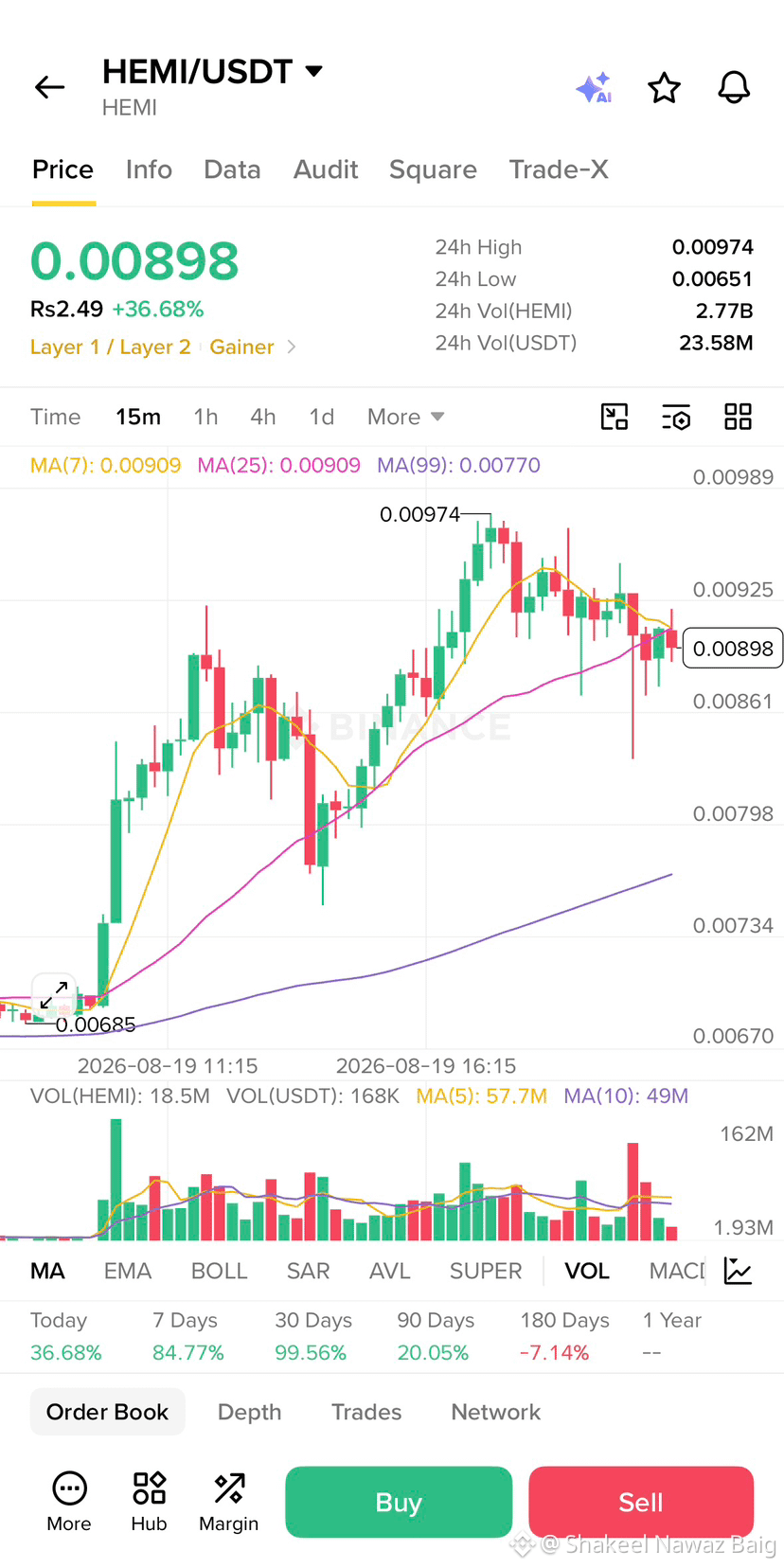
$HEMI
Einstiegszone: 0.00860 – 0.00885 (nahe den aktuellen Kursen oder ein tieferer Re-Test der steigenden Struktur / der vorherigen Kerzen-Tiefs).
Bessere Einstiege, wenn es über ~0.00850–0.00860 hält.
• Stop Loss: Unter 0.00820–0.00830 (oder unter dem jüngsten Swing-Low / klarer Bruch der Struktur). Risiko ~5–8%.
• Take Profit-Ziele:
• TP1: 0.00925–0.00940 (nahe dem kurzfristigen MA-Cluster / vorherigem Widerstand)
• TP2: 0.00970–0.00980 (Re-Test des 24h-Hochs)
• TP3 (Runner): 0.0105–0.0110+
$HEMI
Einstiegszone: 0.00860 – 0.00885 (nahe den aktuellen Kursen oder ein tieferer Re-Test der steigenden Struktur / der vorherigen Kerzen-Tiefs). Bessere Einstiege, wenn es über ~0.00850–0.00860 hält.
• Stop Loss: Unter 0.00820–0.00830 (oder unter dem jüngsten Swing-Low / klarer Bruch der Struktur). Risiko ~5–8%.
• Take Profit-Ziele:
• TP1: 0.00925–0.00940 (nahe dem kurzfristigen MA-Cluster / vorherigem Widerstand)
• TP2: 0.00970–0.00980 (Re-Test des 24h-Hochs)
• TP3 (Runner): 0.0105–0.0110+
Einstiegszone: 0.00860 – 0.00885 (nahe den aktuellen Kursen oder ein tieferer Re-Test der steigenden Struktur / der vorherigen Kerzen-Tiefs). Bessere Einstiege, wenn es über ~0.00850–0.00860 hält.
• Stop Loss: Unter 0.00820–0.00830 (oder unter dem jüngsten Swing-Low / klarer Bruch der Struktur). Risiko ~5–8%.
• Take Profit-Ziele:
• TP1: 0.00925–0.00940 (nahe dem kurzfristigen MA-Cluster / vorherigem Widerstand)
• TP2: 0.00970–0.00980 (Re-Test des 24h-Hochs)
• TP3 (Runner): 0.0105–0.0110+
65
$MUBARAK
Einstieg: Markt / Limit auf leichten Rücksetzer in die Zone 0.0228–0.0232 oder bei Ausbruch & Halten über 0.02375.
• Stop Loss: Unter 0.0218 (unter MA7 / jüngste Swing-Struktur) → Risiko ≈ 6–8%.
• Ziele:
• TP1: 0.0250–0.0255
• TP2: 0.0270–0.0280
• TP3 (Runner): 0.030+
$MUBARAK
Einstieg: Markt / Limit auf leichten Rücksetzer in die Zone 0.0228–0.0232 oder bei Ausbruch & Halten über 0.02375.
• Stop Loss: Unter 0.0218 (unter MA7 / jüngste Swing-Struktur) → Risiko ≈ 6–8%.
• Ziele:
• TP1: 0.0250–0.0255
• TP2: 0.0270–0.0280
• TP3 (Runner): 0.030+
Einstieg: Markt / Limit auf leichten Rücksetzer in die Zone 0.0228–0.0232 oder bei Ausbruch & Halten über 0.02375.
• Stop Loss: Unter 0.0218 (unter MA7 / jüngste Swing-Struktur) → Risiko ≈ 6–8%.
• Ziele:
• TP1: 0.0250–0.0255
• TP2: 0.0270–0.0280
• TP3 (Runner): 0.030+
104
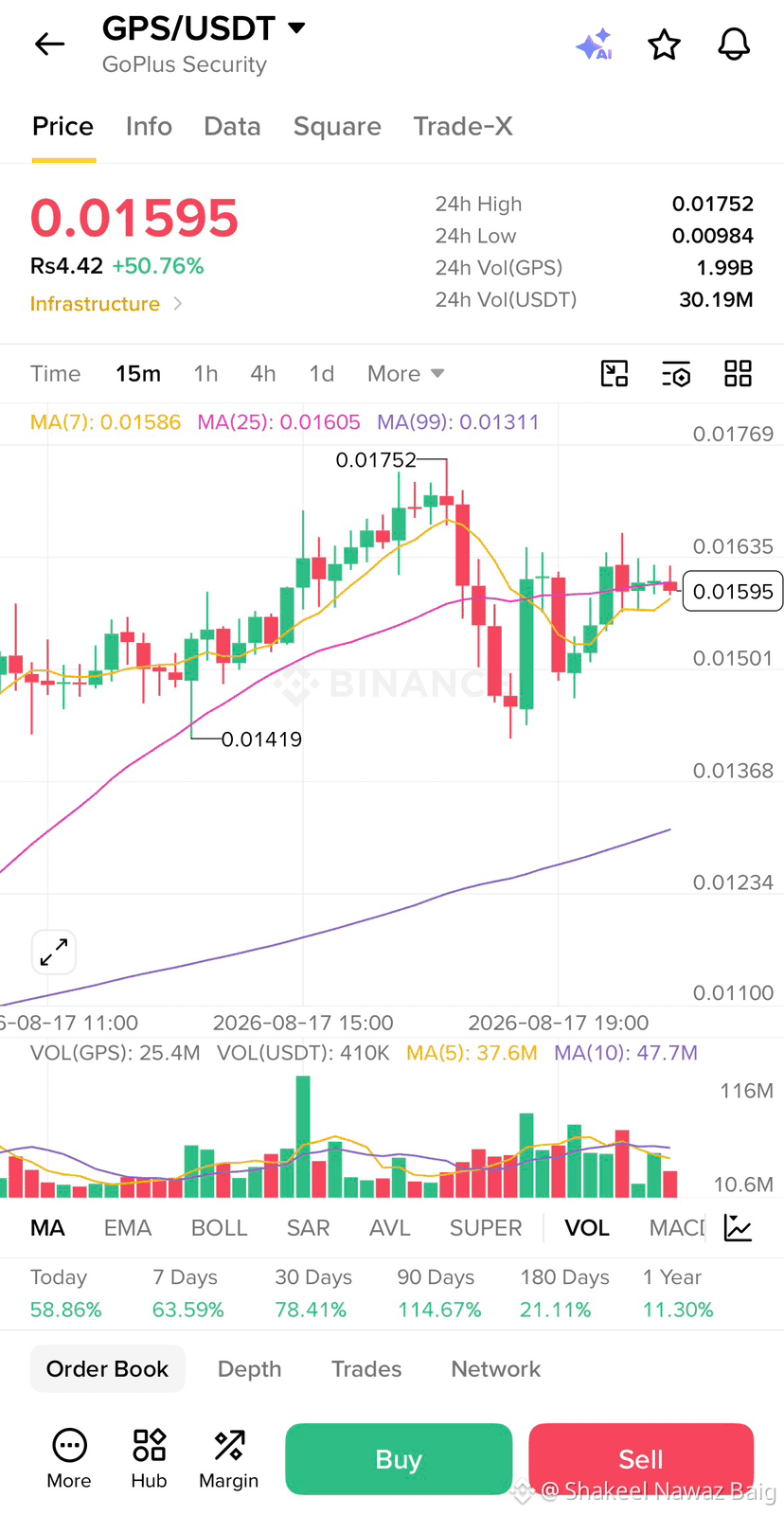
$GPS
Handels-Setup - 2 Optionen
LONG-Setup - „Kauf des Dips“
Wenn du denkst, dass der Aufwärtstrend weitergeht:
- *Einstiegszone*: $0.01550 - $0.01570
Grund: Der Preis konsolidiert zwischen MA7 $0.01586 und MA25 $0.01605. $0.01550 fungiert als Unterstützung
- *Ziel 1*: $0.01635
- *Ziel 2*: $0.01752 = Ausbruch des 24h-Hochs
- *Stop Loss*: Unter $0.01510 bei Schlusskurs
Risiko/Ertrag ~ 1:1,8
$GPS
Handels-Setup - 2 Optionen
LONG-Setup - „Kauf des Dips“
Wenn du denkst, dass der Aufwärtstrend weitergeht:
- *Einstiegszone*: $0.01550 - $0.01570
Grund: Der Preis konsolidiert zwischen MA7 $0.01586 und MA25 $0.01605. $0.01550 fungiert als Unterstützung
- *Ziel 1*: $0.01635
- *Ziel 2*: $0.01752 = Ausbruch des 24h-Hochs
- *Stop Loss*: Unter $0.01510 bei Schlusskurs
Risiko/Ertrag ~ 1:1,8
Handels-Setup - 2 Optionen
LONG-Setup - „Kauf des Dips“
Wenn du denkst, dass der Aufwärtstrend weitergeht:
- *Einstiegszone*: $0.01550 - $0.01570
Grund: Der Preis konsolidiert zwischen MA7 $0.01586 und MA25 $0.01605. $0.01550 fungiert als Unterstützung
- *Ziel 1*: $0.01635
- *Ziel 2*: $0.01752 = Ausbruch des 24h-Hochs
- *Stop Loss*: Unter $0.01510 bei Schlusskurs
Risiko/Ertrag ~ 1:1,8
146
$BLESS
Long auf Dip / Fortsetzung (höhere Wahrscheinlichkeit in der aktuellen Struktur)
• Einstieg: 0.01600–0.01615 (nahe MA7 / vorheriger Struktur-Support) oder eine saubere Rückeroberung von 0.01640–0.01650 mit Volumen.
• Stop-Loss: Unter 0.01570–0.01580 (unter MA25 / jüngste Swing-Tiefs) — Risiko ≈ 2–3%.
• Ziele:
• TP1: 0.01670–0.01685 (Retest des Hochs)
• TP2: 0.01720–0.01750 (gemessene Extension / runde Marke)
$BLESS
Long auf Dip / Fortsetzung (höhere Wahrscheinlichkeit in der aktuellen Struktur)
• Einstieg: 0.01600–0.01615 (nahe MA7 / vorheriger Struktur-Support) oder eine saubere Rückeroberung von 0.01640–0.01650 mit Volumen.
• Stop-Loss: Unter 0.01570–0.01580 (unter MA25 / jüngste Swing-Tiefs) — Risiko ≈ 2–3%.
• Ziele:
• TP1: 0.01670–0.01685 (Retest des Hochs)
• TP2: 0.01720–0.01750 (gemessene Extension / runde Marke)
Long auf Dip / Fortsetzung (höhere Wahrscheinlichkeit in der aktuellen Struktur)
• Einstieg: 0.01600–0.01615 (nahe MA7 / vorheriger Struktur-Support) oder eine saubere Rückeroberung von 0.01640–0.01650 mit Volumen.
• Stop-Loss: Unter 0.01570–0.01580 (unter MA25 / jüngste Swing-Tiefs) — Risiko ≈ 2–3%.
• Ziele:
• TP1: 0.01670–0.01685 (Retest des Hochs)
• TP2: 0.01720–0.01750 (gemessene Extension / runde Marke)
302
$KORU
Long Bias (höhere Wahrscheinlichkeit in der aktuellen Struktur)
• Einstiegzone: 15.00 – 15.05 (oder bei sauberem Reclaim von 15.05 mit Volumen)
• Stop-Loss: Unter 14.87 (unter MA99) → ~1.1–1.2% Risiko
• Ziele:
• TP1: 15.12–15.15
• TP2: 15.24
• TP3 (Stretch): 15.35–15.40
• R:R ≈ 1:1.5 bis 1:2.5 je nach Einstiegsgenauigkeit
$KORU
Long Bias (höhere Wahrscheinlichkeit in der aktuellen Struktur)
• Einstiegzone: 15.00 – 15.05 (oder bei sauberem Reclaim von 15.05 mit Volumen)
• Stop-Loss: Unter 14.87 (unter MA99) → ~1.1–1.2% Risiko
• Ziele:
• TP1: 15.12–15.15
• TP2: 15.24
• TP3 (Stretch): 15.35–15.40
• R:R ≈ 1:1.5 bis 1:2.5 je nach Einstiegsgenauigkeit
Long Bias (höhere Wahrscheinlichkeit in der aktuellen Struktur)
• Einstiegzone: 15.00 – 15.05 (oder bei sauberem Reclaim von 15.05 mit Volumen)
• Stop-Loss: Unter 14.87 (unter MA99) → ~1.1–1.2% Risiko
• Ziele:
• TP1: 15.12–15.15
• TP2: 15.24
• TP3 (Stretch): 15.35–15.40
• R:R ≈ 1:1.5 bis 1:2.5 je nach Einstiegsgenauigkeit
111
SNXXUSDT (Best #2 Play – Starker Zweitplatzierter)
• +45% heute — deutliche Bewegung.
• Wahrscheinlich ein gehebelter oder hype-getriebener Token (möglicherweise im Zusammenhang mit dem Synthetix-Ökosystem oder einem neuen Launch).
• Trading-Setup (Long):
• Einstieg: Aktuell ~9,8–10,0.
• Ziele: 11,5 → 13+ (wenn der Momentum weiter anhält).
• Stop: 8,8–9,0 (~10% Risiko).
• Guter Volume-„Chaser“, wenn KOMA anfängt abzukühlen.
SNXXUSDT (Best #2 Play – Starker Zweitplatzierter)
• +45% heute — deutliche Bewegung.
• Wahrscheinlich ein gehebelter oder hype-getriebener Token (möglicherweise im Zusammenhang mit dem Synthetix-Ökosystem oder einem neuen Launch).
• Trading-Setup (Long):
• Einstieg: Aktuell ~9,8–10,0.
• Ziele: 11,5 → 13+ (wenn der Momentum weiter anhält).
• Stop: 8,8–9,0 (~10% Risiko).
• Guter Volume-„Chaser“, wenn KOMA anfängt abzukühlen.
• +45% heute — deutliche Bewegung.
• Wahrscheinlich ein gehebelter oder hype-getriebener Token (möglicherweise im Zusammenhang mit dem Synthetix-Ökosystem oder einem neuen Launch).
• Trading-Setup (Long):
• Einstieg: Aktuell ~9,8–10,0.
• Ziele: 11,5 → 13+ (wenn der Momentum weiter anhält).
• Stop: 8,8–9,0 (~10% Risiko).
• Guter Volume-„Chaser“, wenn KOMA anfängt abzukühlen.
95
Anmelden und weiter Inhalte entdecken
Krypto-Nutzer weltweit auf Binance Square kennenlernen
⚡️ Bleib in Sachen Krypto stets am Puls.
💬 Die weltgrößte Kryptobörse vertraut darauf.
👍 Erhalte verlässliche Einblicke von verifizierten Creators.
E-Mail-Adresse/Telefonnummer
Trendthemen
AnthropicCEOCallsForAISlowdown
4,741 Aufrufe
117 Kommentare
#AnthropicCEOCallsForAISlowdown
🚨 #AnthropicCEOCallsForAISlowdown 🤖⚠️
Der CEO von Anthropic, Dario Amodei, fordert, dass die KI-Industrie das Tempo der KI-Entwicklung verlangsamt. Er argumentiert, dass Sicherheitsmaßnahmen mehr Zeit brauchen, um mit den rasanten Fortschritten bei den KI-Fähigkeiten Schritt zu halten.
🔥 Warum Trader das beachten sollten:
🤖 KI-Regulierung & Sicherheit könnten den Technologiesektor beeinflussen
📊 KI-bezogene Aktien und das Risiko-Sentiment könnten darauf reagieren
⚡ Beobachtet Nasdaq + KI-/Tech-Aktien auf Volatilität
🧠 Auch Krypto-Trader sollten im Blick haben, wie sich das breitere Risiko-Sentiment entwickelt
🎯 TRADER-WATCH:
Nicht der ersten Bewegung hinterherlaufen. Beachtet zuerst Volumen + Preisbestätigung und die Reaktion des breiteren Nasdaq-/Risk-Asset-Umfelds, bevor ihr eine Position einnehmt.
Bestätigung zuerst, FOMO nie. 📈📉
$LSK $CVC $STEEM
Cheri Texiera O7ec
·0 Likes
·222 Aufrufe
SECReceivesGrayscaleLitecoinTrustETFFiling
115,348 Aufrufe
1,672 Kommentare
ClarityActFacesProceduralVoteSept15
241,655 Aufrufe
2,558 Kommentare