

ScalpingX
14.5k Beiträge

ScalpingX
Melden
Nutzer blockieren
A short-term trader who embraces high-risk, high-reward strategies with an unconventional mindset.
44 Following
1.7K+ Follower
10.3K+ Like gegeben
Beiträge
Alle
Zitierungen
·
--
Bullisch
Übersetzung ansehen
China’s FX reserves fall to a six-month low as PBOC keeps adding gold
📉 China’s foreign exchange reserves fell by about $38.1 billion, or 1.11%, in September to $3.4003 trillion. That marked the lowest level in six months, although reserves remained above $3.4 trillion for a sixth consecutive month.
🏦 SAFE said the decline was mainly driven by a stronger US dollar and changes in global asset prices, suggesting much of the move reflected valuation and currency translation effects rather than outright capital outflows.
🥇 Meanwhile, the PBOC added about 740,000 ounces of gold, equivalent to roughly 23 tonnes, lifting total holdings to around 2,410 tonnes. This marked the 23rd straight month of gold purchases, reinforcing the broader reserve-diversification trend even as gold prices weakened in September.
#China $DOGE $XAUT
China’s FX reserves fall to a six-month low as PBOC keeps adding gold
📉 China’s foreign exchange reserves fell by about $38.1 billion, or 1.11%, in September to $3.4003 trillion. That marked the lowest level in six months, although reserves remained above $3.4 trillion for a sixth consecutive month.
🏦 SAFE said the decline was mainly driven by a stronger US dollar and changes in global asset prices, suggesting much of the move reflected valuation and currency translation effects rather than outright capital outflows.
🥇 Meanwhile, the PBOC added about 740,000 ounces of gold, equivalent to roughly 23 tonnes, lifting total holdings to around 2,410 tonnes. This marked the 23rd straight month of gold purchases, reinforcing the broader reserve-diversification trend even as gold prices weakened in September.
#China $DOGE $XAUT
📉 China’s foreign exchange reserves fell by about $38.1 billion, or 1.11%, in September to $3.4003 trillion. That marked the lowest level in six months, although reserves remained above $3.4 trillion for a sixth consecutive month.
🏦 SAFE said the decline was mainly driven by a stronger US dollar and changes in global asset prices, suggesting much of the move reflected valuation and currency translation effects rather than outright capital outflows.
🥇 Meanwhile, the PBOC added about 740,000 ounces of gold, equivalent to roughly 23 tonnes, lifting total holdings to around 2,410 tonnes. This marked the 23rd straight month of gold purchases, reinforcing the broader reserve-diversification trend even as gold prices weakened in September.
#China $DOGE $XAUT

31
·
--
Bullisch
Übersetzung ansehen
Middle East tensions keep oil above $100 as October Fed hike expectations cool
🛢️ Brent crude remains above $101 a barrel as Saudi-Houthi tensions continue to support the geopolitical risk premium. The Saudi-led coalition said it intercepted a missile north of Riyadh, while the Houthis claimed attacks on several targets across Saudi Arabia.
🌍 On the diplomatic front, U.S. Vice President JD Vance said Iran would need to meaningfully reduce its uranium enrichment capacity to move toward ending the war. Washington remains in contact with Tehran, but uncertainty persists over where effective decision-making power lies within Iran.
📉 Despite elevated oil prices, markets have sharply reduced the probability of a Fed rate hike in October to about 20.5%, from nearly 51% a week earlier. Expectations for a December hike remain high, however, suggesting energy-driven inflation risks have not been fully priced out.
#MarketInsight $NATGAS $DASH
Middle East tensions keep oil above $100 as October Fed hike expectations cool
🛢️ Brent crude remains above $101 a barrel as Saudi-Houthi tensions continue to support the geopolitical risk premium. The Saudi-led coalition said it intercepted a missile north of Riyadh, while the Houthis claimed attacks on several targets across Saudi Arabia.
🌍 On the diplomatic front, U.S. Vice President JD Vance said Iran would need to meaningfully reduce its uranium enrichment capacity to move toward ending the war. Washington remains in contact with Tehran, but uncertainty persists over where effective decision-making power lies within Iran.
📉 Despite elevated oil prices, markets have sharply reduced the probability of a Fed rate hike in October to about 20.5%, from nearly 51% a week earlier. Expectations for a December hike remain high, however, suggesting energy-driven inflation risks have not been fully priced out.
#MarketInsight $NATGAS $DASH
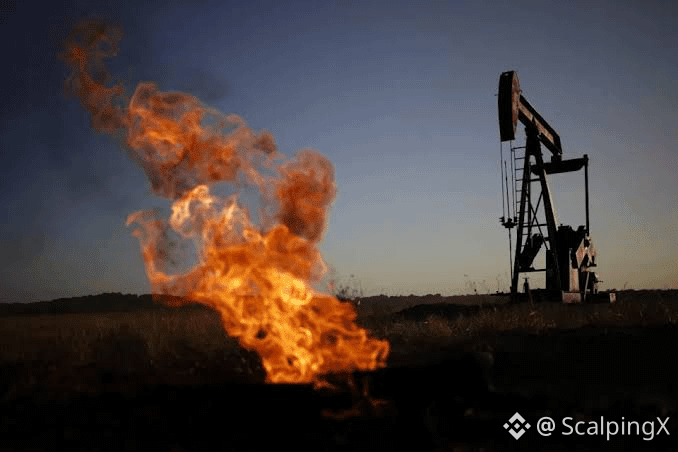
🛢️ Brent crude remains above $101 a barrel as Saudi-Houthi tensions continue to support the geopolitical risk premium. The Saudi-led coalition said it intercepted a missile north of Riyadh, while the Houthis claimed attacks on several targets across Saudi Arabia.
🌍 On the diplomatic front, U.S. Vice President JD Vance said Iran would need to meaningfully reduce its uranium enrichment capacity to move toward ending the war. Washington remains in contact with Tehran, but uncertainty persists over where effective decision-making power lies within Iran.
📉 Despite elevated oil prices, markets have sharply reduced the probability of a Fed rate hike in October to about 20.5%, from nearly 51% a week earlier. Expectations for a December hike remain high, however, suggesting energy-driven inflation risks have not been fully priced out.
#MarketInsight $NATGAS $DASH
124
·
--
Bärisch
Übersetzung ansehen
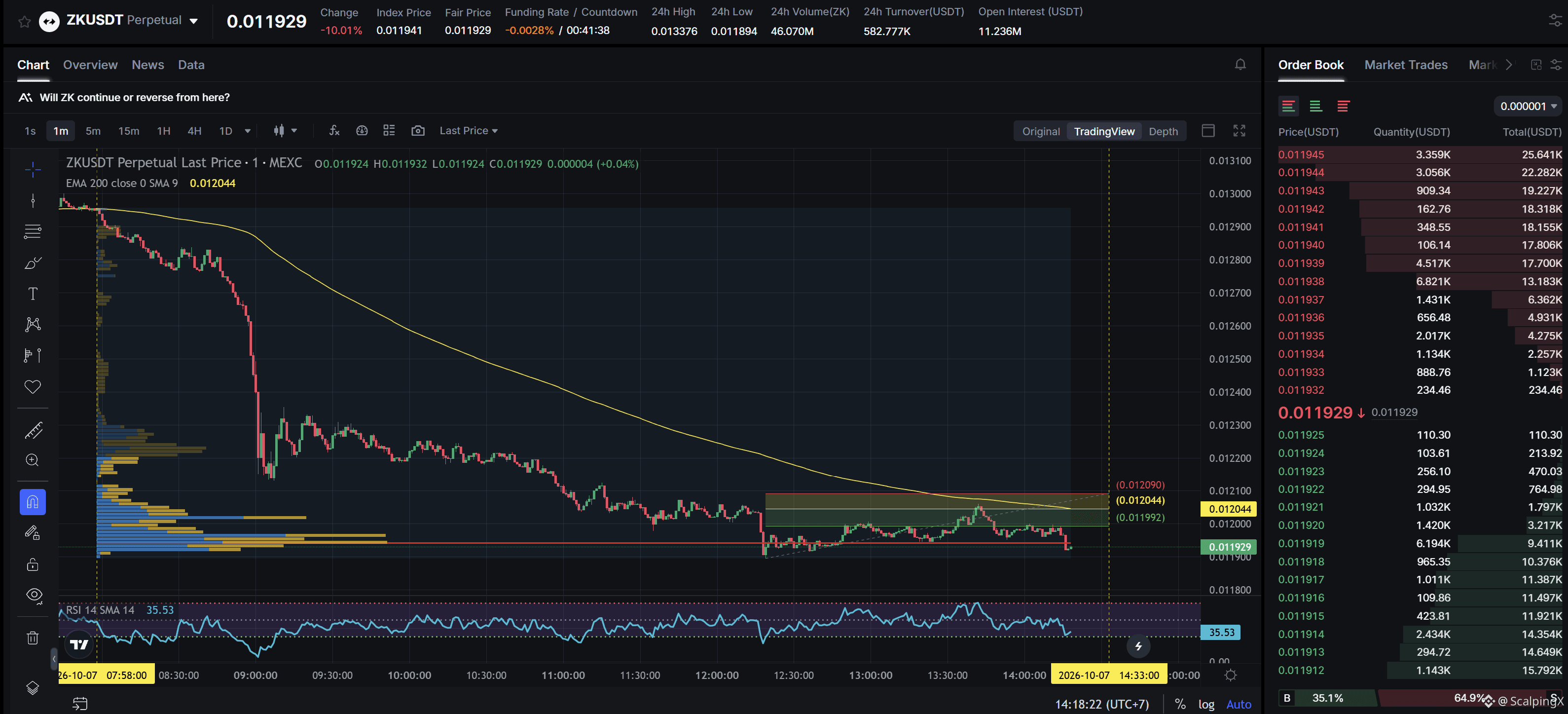
$ZK - Mcap 130.72M$ - 24h Sentiment Neutral
SC02 M1 - pending Short order. Entry lies within HVN + not affected by any weak zone, the current resistance zone is approximately 0.39% wide. The downtrend has lasted 6 hours 21 minutes, with a maximum recorded price decline of 8.18%. If price breaks above this resistance zone, the trend is highly likely to reverse upward.
$ZK - Mcap 130.72M$ - 24h Sentiment Neutral
SC02 M1 - pending Short order. Entry lies within HVN + not affected by any weak zone, the current resistance zone is approximately 0.39% wide. The downtrend has lasted 6 hours 21 minutes, with a maximum recorded price decline of 8.18%. If price breaks above this resistance zone, the trend is highly likely to reverse upward.
SC02 M1 - pending Short order. Entry lies within HVN + not affected by any weak zone, the current resistance zone is approximately 0.39% wide. The downtrend has lasted 6 hours 21 minutes, with a maximum recorded price decline of 8.18%. If price breaks above this resistance zone, the trend is highly likely to reverse upward.
23
·
--
Bärisch
Übersetzung ansehen
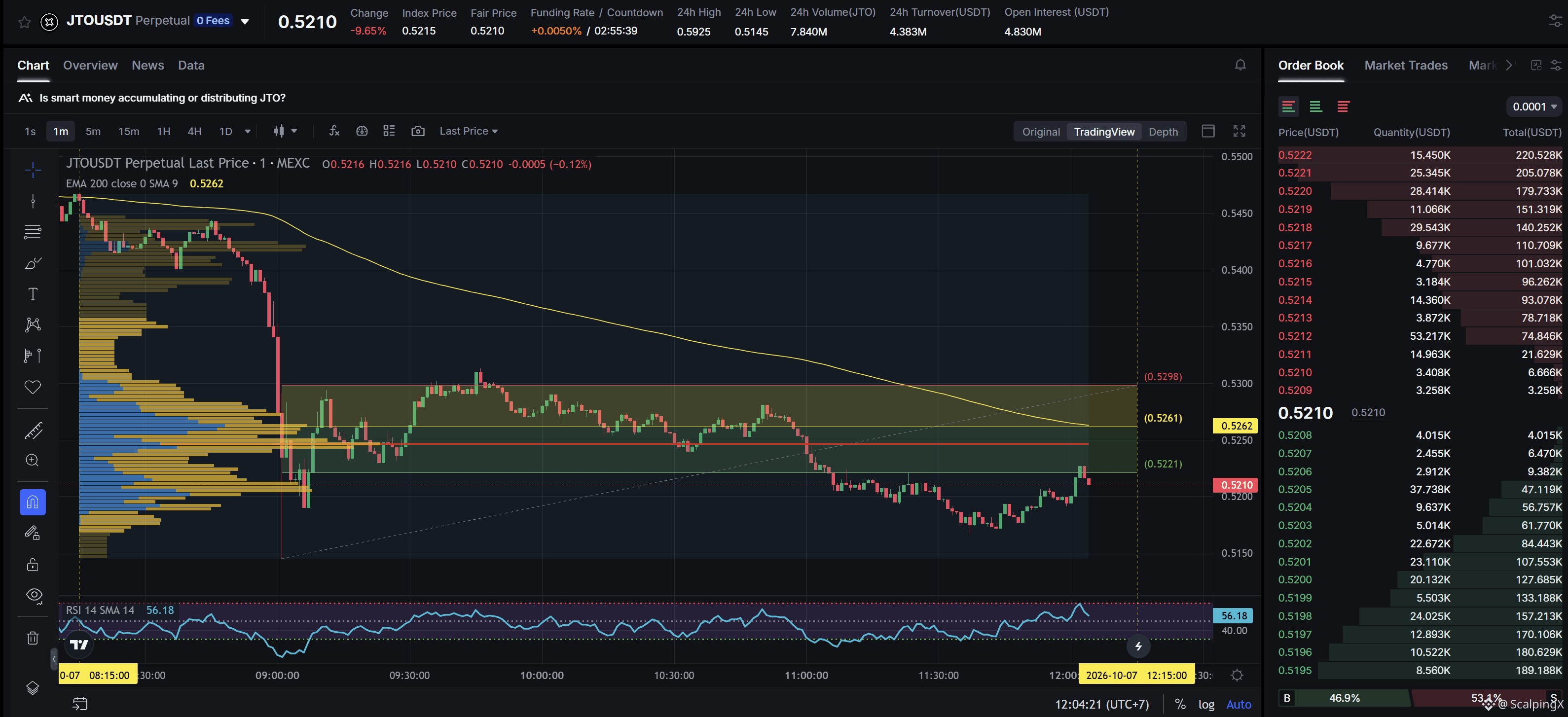
$JTO - Mcap 275.58M$ - 24h Sentiment Neutral
SC02 M1 - pending Short order. Entry lies within HVN + not affected by any weak zone, the current resistance zone is approximately 0.69% wide. The downtrend has lasted 3 hours 50 minutes, with a maximum recorded price decline of 5.84%. If price breaks above this resistance zone, the trend is highly likely to reverse upward.
$JTO - Mcap 275.58M$ - 24h Sentiment Neutral
SC02 M1 - pending Short order. Entry lies within HVN + not affected by any weak zone, the current resistance zone is approximately 0.69% wide. The downtrend has lasted 3 hours 50 minutes, with a maximum recorded price decline of 5.84%. If price breaks above this resistance zone, the trend is highly likely to reverse upward.
SC02 M1 - pending Short order. Entry lies within HVN + not affected by any weak zone, the current resistance zone is approximately 0.69% wide. The downtrend has lasted 3 hours 50 minutes, with a maximum recorded price decline of 5.84%. If price breaks above this resistance zone, the trend is highly likely to reverse upward.
52
·
--
Bärisch
Übersetzung ansehen
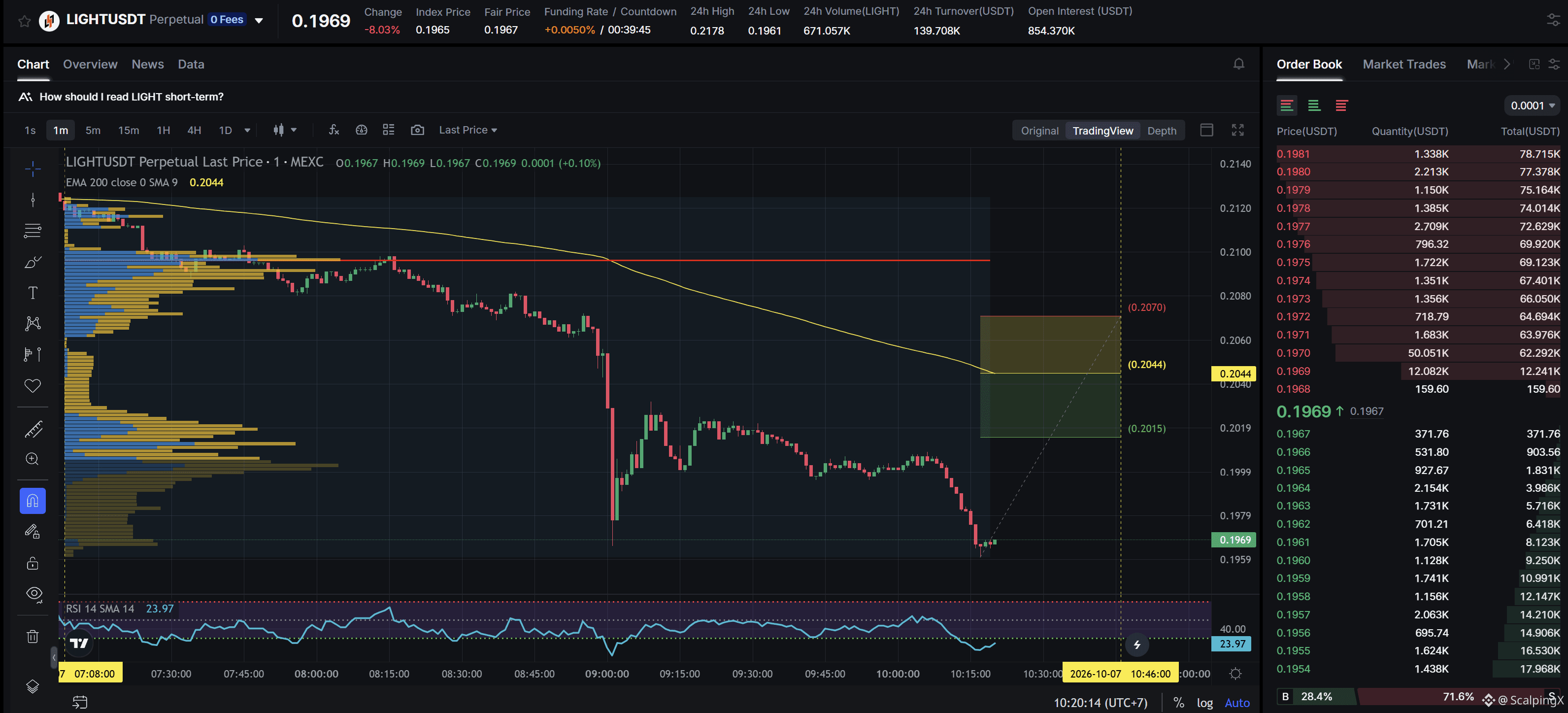
$LIGHT - Mcap 23.83M$ - 24h Sentiment +4.00 Bullish
SC02 M1 - pending Short order. Entry lies within HVN + not affected by any weak zone, the current resistance zone is approximately 1.24% wide. The downtrend has lasted 3 hours 14 minutes, with a maximum recorded price decline of 8.49%. If price breaks above this resistance zone, the trend is highly likely to reverse upward.
$LIGHT - Mcap 23.83M$ - 24h Sentiment +4.00 Bullish
SC02 M1 - pending Short order. Entry lies within HVN + not affected by any weak zone, the current resistance zone is approximately 1.24% wide. The downtrend has lasted 3 hours 14 minutes, with a maximum recorded price decline of 8.49%. If price breaks above this resistance zone, the trend is highly likely to reverse upward.
SC02 M1 - pending Short order. Entry lies within HVN + not affected by any weak zone, the current resistance zone is approximately 1.24% wide. The downtrend has lasted 3 hours 14 minutes, with a maximum recorded price decline of 8.49%. If price breaks above this resistance zone, the trend is highly likely to reverse upward.
55
·
--
Bullisch
Übersetzung ansehen
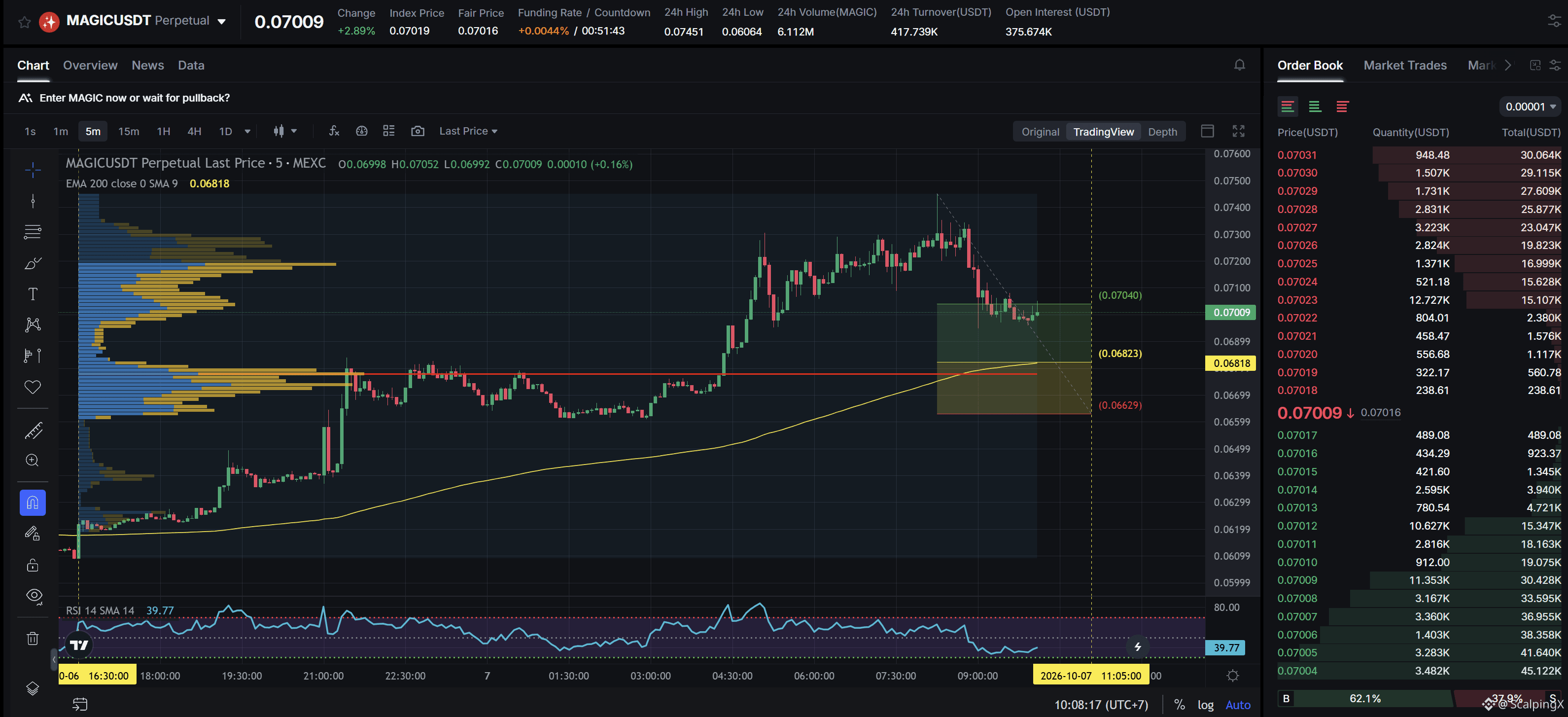
$MAGIC - Mcap 23.65M$ - 24h Sentiment +4.50 Bullish
SC02 M5 - pending Long order. Entry contains POC + not affected by any weak zone, the current support zone is approximately 2.78% wide. The uptrend has lasted 17 hours 35 minutes, with a maximum recorded price increase of 20.52%. If price loses this support zone, the trend is highly likely to reverse downward.
$MAGIC - Mcap 23.65M$ - 24h Sentiment +4.50 Bullish
SC02 M5 - pending Long order. Entry contains POC + not affected by any weak zone, the current support zone is approximately 2.78% wide. The uptrend has lasted 17 hours 35 minutes, with a maximum recorded price increase of 20.52%. If price loses this support zone, the trend is highly likely to reverse downward.
SC02 M5 - pending Long order. Entry contains POC + not affected by any weak zone, the current support zone is approximately 2.78% wide. The uptrend has lasted 17 hours 35 minutes, with a maximum recorded price increase of 20.52%. If price loses this support zone, the trend is highly likely to reverse downward.
71
·
--
Bullisch
Übersetzung ansehen
Over $400M in Long Positions Liquidated in One Hour, ETH Takes the Heaviest Hit
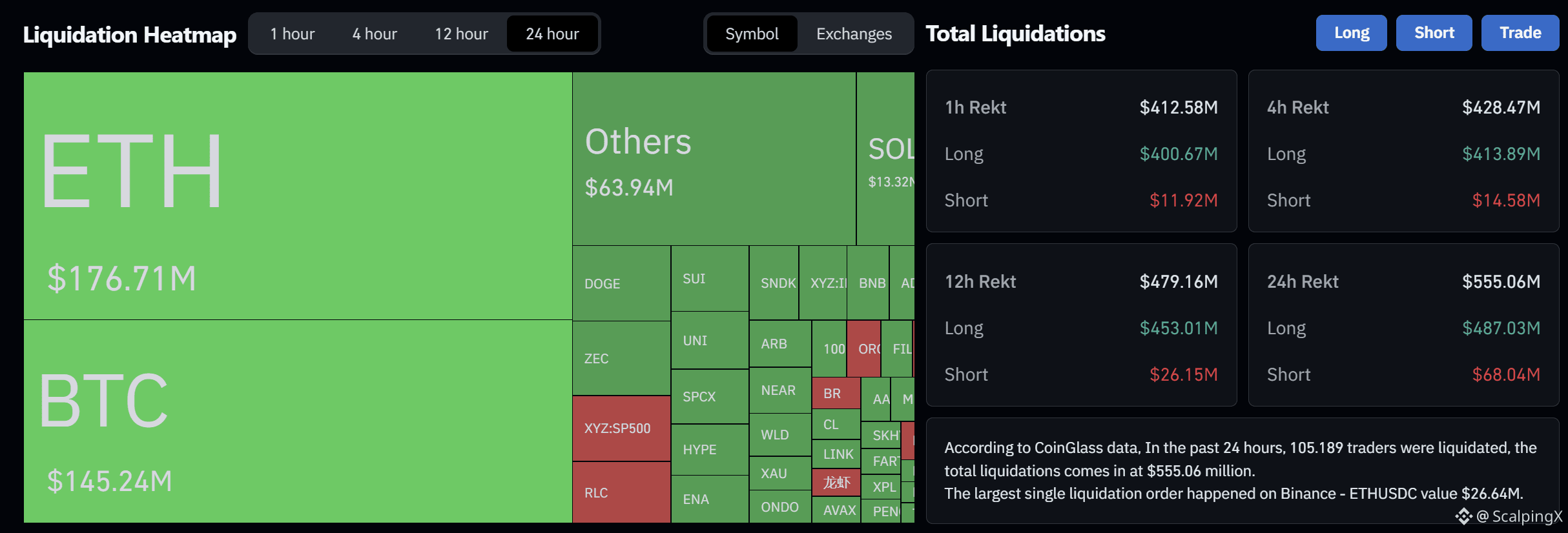
📉 The crypto market saw a concentrated liquidation event on October 7, with $412.58M in positions wiped out within just one hour. Long liquidations accounted for $400.67M, or roughly 97%, pointing to a rapid deleveraging event rather than sustained selling throughout the day.
⚡ ETH led with $176.71M in liquidations, ahead of BTC at $145.24M. After the flush, BTC funding shifted to neutral or slightly negative, while ETH funding remained positive and around 74.5% of accounts were still positioned Long, suggesting its imbalance has not been fully cleared.
📊 If BTC holds the $83,300–84,000 area, the move may prove to be more of a leverage reset than the start of a new downtrend. For ETH, reclaiming $2,650 would be an important signal that remaining pressure is easing.
#CryptoMarket $BTC $ETH
Over $400M in Long Positions Liquidated in One Hour, ETH Takes the Heaviest Hit
📉 The crypto market saw a concentrated liquidation event on October 7, with $412.58M in positions wiped out within just one hour. Long liquidations accounted for $400.67M, or roughly 97%, pointing to a rapid deleveraging event rather than sustained selling throughout the day.
⚡ ETH led with $176.71M in liquidations, ahead of BTC at $145.24M. After the flush, BTC funding shifted to neutral or slightly negative, while ETH funding remained positive and around 74.5% of accounts were still positioned Long, suggesting its imbalance has not been fully cleared.
📊 If BTC holds the $83,300–84,000 area, the move may prove to be more of a leverage reset than the start of a new downtrend. For ETH, reclaiming $2,650 would be an important signal that remaining pressure is easing.
#CryptoMarket $BTC $ETH
📉 The crypto market saw a concentrated liquidation event on October 7, with $412.58M in positions wiped out within just one hour. Long liquidations accounted for $400.67M, or roughly 97%, pointing to a rapid deleveraging event rather than sustained selling throughout the day.
⚡ ETH led with $176.71M in liquidations, ahead of BTC at $145.24M. After the flush, BTC funding shifted to neutral or slightly negative, while ETH funding remained positive and around 74.5% of accounts were still positioned Long, suggesting its imbalance has not been fully cleared.
📊 If BTC holds the $83,300–84,000 area, the move may prove to be more of a leverage reset than the start of a new downtrend. For ETH, reclaiming $2,650 would be an important signal that remaining pressure is easing.
#CryptoMarket $BTC $ETH
105
·
--
Bullisch
Verifiziert
Saudi-Arabien stellt Petroline-Durchfluss von 5,8 Millionen Barrel pro Tag wieder her und entlastet damit die Straße von Hormus
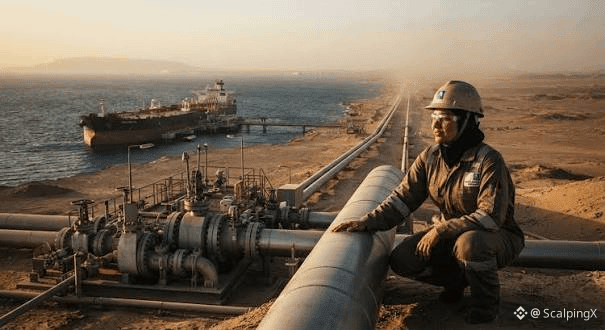
🛢 Saudi-Arabiens Energieminister erklärte, dass die Ost-West-Pipeline, auch Petroline genannt, inzwischen rund 5,8 Millionen Barrel Öl pro Tag transportiert. Das entspricht fast 83 % ihrer Auslegungskapazität von etwa 7 Millionen Barrel pro Tag.
🚢 Die rund 1.200 Kilometer lange Pipeline transportiert Öl aus dem Osten Saudi-Arabiens nach Yanbu am Roten Meer und hilft dem Königreich, seine Abhängigkeit von der Straße von Hormus zu verringern. Die aktuellen Durchflussmengen liegen zudem deutlich über den rund 4 Millionen Barrel pro Tag, die über diese Route umgeleitet wurden, nachdem der Iran-Konflikt den regionalen Schiffsverkehr gestört hatte.
📉 Die Erholung der Petroline trägt dazu bei, einen Teil des geopolitischen Risikoaufschlags an den Ölmärkten abzubauen, doch die Risiken sind nicht verschwunden. Damit diese Durchflussmengen aufrechterhalten werden können, dürfen die Pipeline, die Pumpstationen und die Anlagen in Yanbu nicht erneut gestört werden.
#OilMarket $CL
Saudi-Arabien stellt Petroline-Durchfluss von 5,8 Millionen Barrel pro Tag wieder her und entlastet damit die Straße von Hormus
🛢 Saudi-Arabiens Energieminister erklärte, dass die Ost-West-Pipeline, auch Petroline genannt, inzwischen rund 5,8 Millionen Barrel Öl pro Tag transportiert. Das entspricht fast 83 % ihrer Auslegungskapazität von etwa 7 Millionen Barrel pro Tag.
🚢 Die rund 1.200 Kilometer lange Pipeline transportiert Öl aus dem Osten Saudi-Arabiens nach Yanbu am Roten Meer und hilft dem Königreich, seine Abhängigkeit von der Straße von Hormus zu verringern. Die aktuellen Durchflussmengen liegen zudem deutlich über den rund 4 Millionen Barrel pro Tag, die über diese Route umgeleitet wurden, nachdem der Iran-Konflikt den regionalen Schiffsverkehr gestört hatte.
📉 Die Erholung der Petroline trägt dazu bei, einen Teil des geopolitischen Risikoaufschlags an den Ölmärkten abzubauen, doch die Risiken sind nicht verschwunden. Damit diese Durchflussmengen aufrechterhalten werden können, dürfen die Pipeline, die Pumpstationen und die Anlagen in Yanbu nicht erneut gestört werden.
#OilMarket $CL
🛢 Saudi-Arabiens Energieminister erklärte, dass die Ost-West-Pipeline, auch Petroline genannt, inzwischen rund 5,8 Millionen Barrel Öl pro Tag transportiert. Das entspricht fast 83 % ihrer Auslegungskapazität von etwa 7 Millionen Barrel pro Tag.
🚢 Die rund 1.200 Kilometer lange Pipeline transportiert Öl aus dem Osten Saudi-Arabiens nach Yanbu am Roten Meer und hilft dem Königreich, seine Abhängigkeit von der Straße von Hormus zu verringern. Die aktuellen Durchflussmengen liegen zudem deutlich über den rund 4 Millionen Barrel pro Tag, die über diese Route umgeleitet wurden, nachdem der Iran-Konflikt den regionalen Schiffsverkehr gestört hatte.
📉 Die Erholung der Petroline trägt dazu bei, einen Teil des geopolitischen Risikoaufschlags an den Ölmärkten abzubauen, doch die Risiken sind nicht verschwunden. Damit diese Durchflussmengen aufrechterhalten werden können, dürfen die Pipeline, die Pumpstationen und die Anlagen in Yanbu nicht erneut gestört werden.
#OilMarket $CL
270
·
--
Bärisch
Übersetzung ansehen
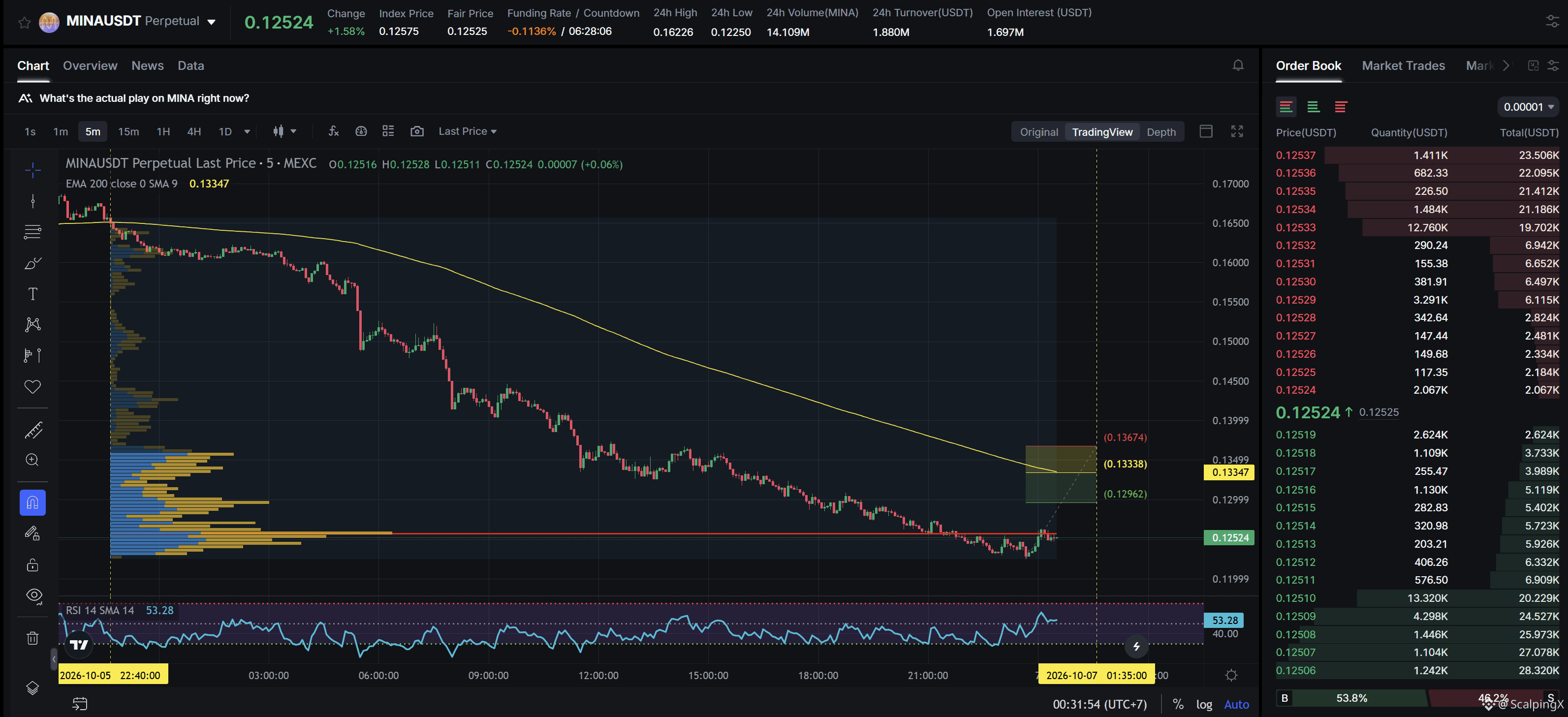
$MINA - Mcap 161.64M$ - 24h Sentiment -3.88 Bearish
SC02 M5 - pending Short order. Entry lies within HVN + not affected by any weak zone, the current resistance zone is approximately 2.62% wide. The downtrend has lasted 1 day 1 hour 50 minutes, with a maximum recorded price decline of 25.85%. If price breaks above this resistance zone, the trend is highly likely to reverse upward.
$MINA - Mcap 161.64M$ - 24h Sentiment -3.88 Bearish
SC02 M5 - pending Short order. Entry lies within HVN + not affected by any weak zone, the current resistance zone is approximately 2.62% wide. The downtrend has lasted 1 day 1 hour 50 minutes, with a maximum recorded price decline of 25.85%. If price breaks above this resistance zone, the trend is highly likely to reverse upward.
SC02 M5 - pending Short order. Entry lies within HVN + not affected by any weak zone, the current resistance zone is approximately 2.62% wide. The downtrend has lasted 1 day 1 hour 50 minutes, with a maximum recorded price decline of 25.85%. If price breaks above this resistance zone, the trend is highly likely to reverse upward.
16
·
--
Bullisch
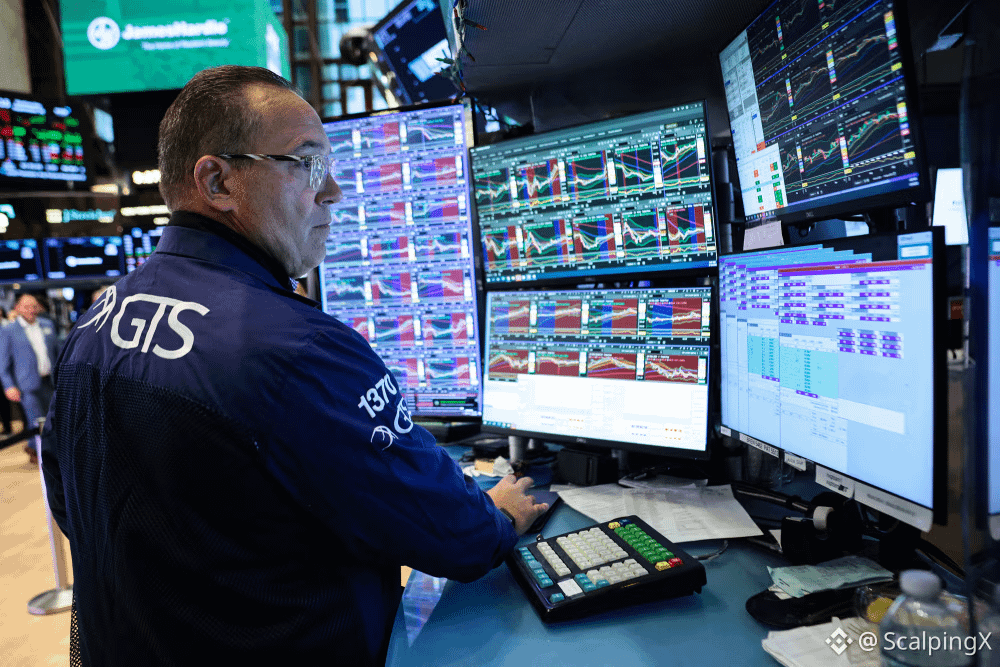
S&P 500 erreicht Intraday-Rekord, während Renditen und Ölpreise nachgeben
📈 Der S&P 500 übertraf sein Intraday-Hoch vom 13. August und baute seine Gewinne anschließend auf rund 7.840 Punkte aus. Auch der Nasdaq erreichte ein neues Intraday-Rekordhoch, während der Dow unter seinem bisherigen Höchststand blieb.
📉 Auftrieb erhielt der Markt durch sinkende langfristige Renditen von US-Staatsanleihen und einen Rückgang der Ölpreise um rund 2 %, wodurch der Bewertungsdruck auf Wachstums- und Technologieaktien etwas nachließ.
🤖 Die Rally konzentriert sich weiterhin deutlich auf KI- und Mega-Cap-Aktien; Nvidia macht mehr als 8 % des S&P 500 aus. Die Marktbreite verbesserte sich, da die meisten Sektoren zulegten, auch wenn der Aufschwung noch nicht vollständig breit getragen ist.
⏳ Bislang handelt es sich lediglich um einen Intraday-Rekord, während die Wall Street noch geöffnet ist. Das Protokoll der FOMC-Sitzung im September wird der nächste wichtige Impulsgeber dafür sein, ob der Ausbruch Bestand hat.
#StockMarket $FIL
S&P 500 erreicht Intraday-Rekord, während Renditen und Ölpreise nachgeben
📈 Der S&P 500 übertraf sein Intraday-Hoch vom 13. August und baute seine Gewinne anschließend auf rund 7.840 Punkte aus. Auch der Nasdaq erreichte ein neues Intraday-Rekordhoch, während der Dow unter seinem bisherigen Höchststand blieb.
📉 Auftrieb erhielt der Markt durch sinkende langfristige Renditen von US-Staatsanleihen und einen Rückgang der Ölpreise um rund 2 %, wodurch der Bewertungsdruck auf Wachstums- und Technologieaktien etwas nachließ.
🤖 Die Rally konzentriert sich weiterhin deutlich auf KI- und Mega-Cap-Aktien; Nvidia macht mehr als 8 % des S&P 500 aus. Die Marktbreite verbesserte sich, da die meisten Sektoren zulegten, auch wenn der Aufschwung noch nicht vollständig breit getragen ist.
⏳ Bislang handelt es sich lediglich um einen Intraday-Rekord, während die Wall Street noch geöffnet ist. Das Protokoll der FOMC-Sitzung im September wird der nächste wichtige Impulsgeber dafür sein, ob der Ausbruch Bestand hat.
#StockMarket $FIL
📈 Der S&P 500 übertraf sein Intraday-Hoch vom 13. August und baute seine Gewinne anschließend auf rund 7.840 Punkte aus. Auch der Nasdaq erreichte ein neues Intraday-Rekordhoch, während der Dow unter seinem bisherigen Höchststand blieb.
📉 Auftrieb erhielt der Markt durch sinkende langfristige Renditen von US-Staatsanleihen und einen Rückgang der Ölpreise um rund 2 %, wodurch der Bewertungsdruck auf Wachstums- und Technologieaktien etwas nachließ.
🤖 Die Rally konzentriert sich weiterhin deutlich auf KI- und Mega-Cap-Aktien; Nvidia macht mehr als 8 % des S&P 500 aus. Die Marktbreite verbesserte sich, da die meisten Sektoren zulegten, auch wenn der Aufschwung noch nicht vollständig breit getragen ist.
⏳ Bislang handelt es sich lediglich um einen Intraday-Rekord, während die Wall Street noch geöffnet ist. Das Protokoll der FOMC-Sitzung im September wird der nächste wichtige Impulsgeber dafür sein, ob der Ausbruch Bestand hat.
#StockMarket $FIL
227
·
--
Bullisch
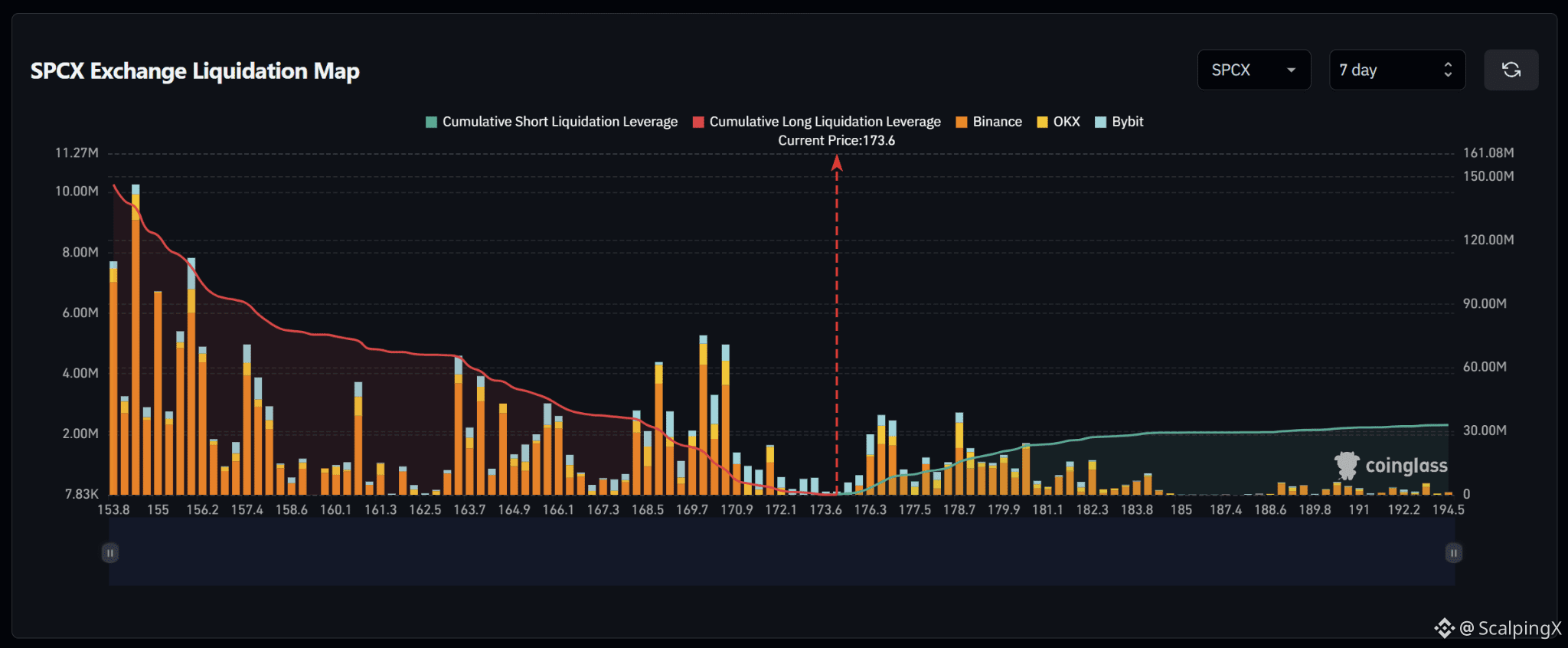
$SPCX – Liquidationskarte (7 Tage) – Aktueller Preis 173,6
🔎 Die 7-Tage-Liquidationskarte zeigt unterhalb des aktuellen Preises Long-Liquidationen im Wert von ungefähr 145–150 Millionen USD, fast fünfmal so viel wie die etwa 30–31 Millionen USD an Short-Liquidationen oberhalb. Die Liquiditätsstruktur weist daher eine sehr starke Abwärtsneigung auf.
📉 Unterhalb des Marktes konzentriert sich die Liquiditätsverteilung für Long-Liquidationen stark auf den Bereich von 153,8–170,9. Der stärkste Cluster liegt bei etwa 153,8–156,2, mit mehreren Balken im Bereich von 5–10 Millionen USD. Auch bei 168,5–170,3 gibt es markante Balken von etwa 4–5,2 Millionen USD. Näher am aktuellen Preis ist der Bereich von 169,7–170,9 der relevanteste Liquiditätspool.
📈 Oberhalb des Marktes ist die Liquidität für Short-Liquidationen deutlich dünner. Die nächsten Cluster liegen bei etwa 176,3–179,9, mit mehreren Balken im Bereich von 1–2,6 Millionen USD. Bei 180,5–183,8 befinden sich weitere, kleinere Liquiditätsschichten. Oberhalb von 185 nimmt die Liquidität stark ab.
🧭 Das übergeordnete Bild spricht deutlich für eine Abwärtsbewegung, da das Long-Liquidationsrisiko unterhalb des Preises überwiegt. Ein Unterschreiten von 170,9–169,7 würde die Wahrscheinlichkeit eines Durchlaufs in Richtung 168,5–166,1 erhöhen, gefolgt von 163,7–160,1. Ein Ausbruch über 176,3–178,7 würde hingegen den Weg zu 179,9–183,8 freimachen, bevor die Liquidität deutlich dünner wird.
#LiquidationMap
$SPCX – Liquidationskarte (7 Tage) – Aktueller Preis 173,6
🔎 Die 7-Tage-Liquidationskarte zeigt unterhalb des aktuellen Preises Long-Liquidationen im Wert von ungefähr 145–150 Millionen USD, fast fünfmal so viel wie die etwa 30–31 Millionen USD an Short-Liquidationen oberhalb. Die Liquiditätsstruktur weist daher eine sehr starke Abwärtsneigung auf.
📉 Unterhalb des Marktes konzentriert sich die Liquiditätsverteilung für Long-Liquidationen stark auf den Bereich von 153,8–170,9. Der stärkste Cluster liegt bei etwa 153,8–156,2, mit mehreren Balken im Bereich von 5–10 Millionen USD. Auch bei 168,5–170,3 gibt es markante Balken von etwa 4–5,2 Millionen USD. Näher am aktuellen Preis ist der Bereich von 169,7–170,9 der relevanteste Liquiditätspool.
📈 Oberhalb des Marktes ist die Liquidität für Short-Liquidationen deutlich dünner. Die nächsten Cluster liegen bei etwa 176,3–179,9, mit mehreren Balken im Bereich von 1–2,6 Millionen USD. Bei 180,5–183,8 befinden sich weitere, kleinere Liquiditätsschichten. Oberhalb von 185 nimmt die Liquidität stark ab.
🧭 Das übergeordnete Bild spricht deutlich für eine Abwärtsbewegung, da das Long-Liquidationsrisiko unterhalb des Preises überwiegt. Ein Unterschreiten von 170,9–169,7 würde die Wahrscheinlichkeit eines Durchlaufs in Richtung 168,5–166,1 erhöhen, gefolgt von 163,7–160,1. Ein Ausbruch über 176,3–178,7 würde hingegen den Weg zu 179,9–183,8 freimachen, bevor die Liquidität deutlich dünner wird.
#LiquidationMap
🔎 Die 7-Tage-Liquidationskarte zeigt unterhalb des aktuellen Preises Long-Liquidationen im Wert von ungefähr 145–150 Millionen USD, fast fünfmal so viel wie die etwa 30–31 Millionen USD an Short-Liquidationen oberhalb. Die Liquiditätsstruktur weist daher eine sehr starke Abwärtsneigung auf.
📉 Unterhalb des Marktes konzentriert sich die Liquiditätsverteilung für Long-Liquidationen stark auf den Bereich von 153,8–170,9. Der stärkste Cluster liegt bei etwa 153,8–156,2, mit mehreren Balken im Bereich von 5–10 Millionen USD. Auch bei 168,5–170,3 gibt es markante Balken von etwa 4–5,2 Millionen USD. Näher am aktuellen Preis ist der Bereich von 169,7–170,9 der relevanteste Liquiditätspool.
📈 Oberhalb des Marktes ist die Liquidität für Short-Liquidationen deutlich dünner. Die nächsten Cluster liegen bei etwa 176,3–179,9, mit mehreren Balken im Bereich von 1–2,6 Millionen USD. Bei 180,5–183,8 befinden sich weitere, kleinere Liquiditätsschichten. Oberhalb von 185 nimmt die Liquidität stark ab.
🧭 Das übergeordnete Bild spricht deutlich für eine Abwärtsbewegung, da das Long-Liquidationsrisiko unterhalb des Preises überwiegt. Ein Unterschreiten von 170,9–169,7 würde die Wahrscheinlichkeit eines Durchlaufs in Richtung 168,5–166,1 erhöhen, gefolgt von 163,7–160,1. Ein Ausbruch über 176,3–178,7 würde hingegen den Weg zu 179,9–183,8 freimachen, bevor die Liquidität deutlich dünner wird.
#LiquidationMap
6
·
--
Bullisch
Übersetzung ansehen
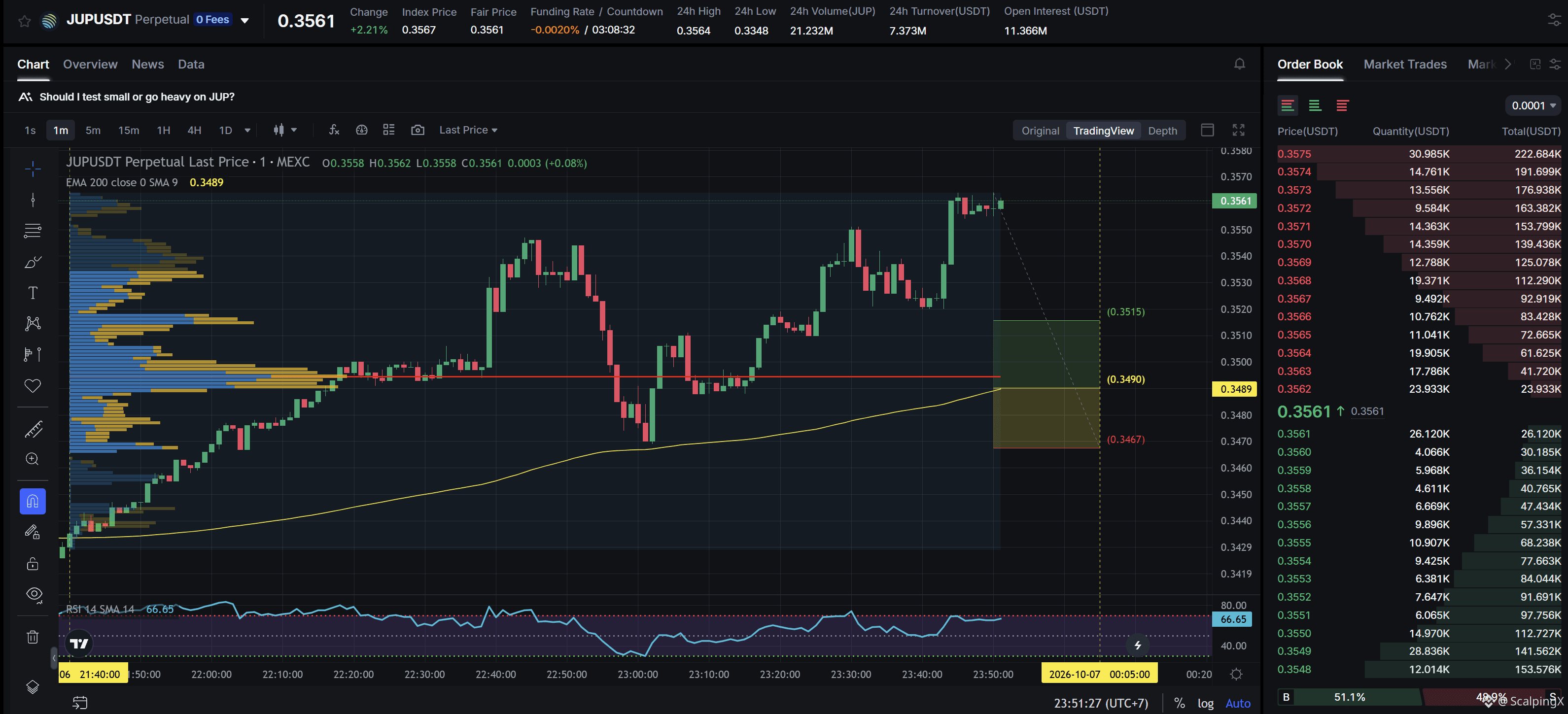
$JUP - Mcap 1.18B$ - 24h Sentiment Neutral
SC02 M1 - pending Long order. Entry lies within HVN + not affected by any weak zone, the current support zone is approximately 0.66% wide. The uptrend has lasted 2 hours 12 minutes, with a maximum recorded price increase of 3.85%. If price loses this support zone, the trend is highly likely to reverse downward.
$JUP - Mcap 1.18B$ - 24h Sentiment Neutral
SC02 M1 - pending Long order. Entry lies within HVN + not affected by any weak zone, the current support zone is approximately 0.66% wide. The uptrend has lasted 2 hours 12 minutes, with a maximum recorded price increase of 3.85%. If price loses this support zone, the trend is highly likely to reverse downward.
SC02 M1 - pending Long order. Entry lies within HVN + not affected by any weak zone, the current support zone is approximately 0.66% wide. The uptrend has lasted 2 hours 12 minutes, with a maximum recorded price increase of 3.85%. If price loses this support zone, the trend is highly likely to reverse downward.
9
·
--
Bärisch
Übersetzung ansehen
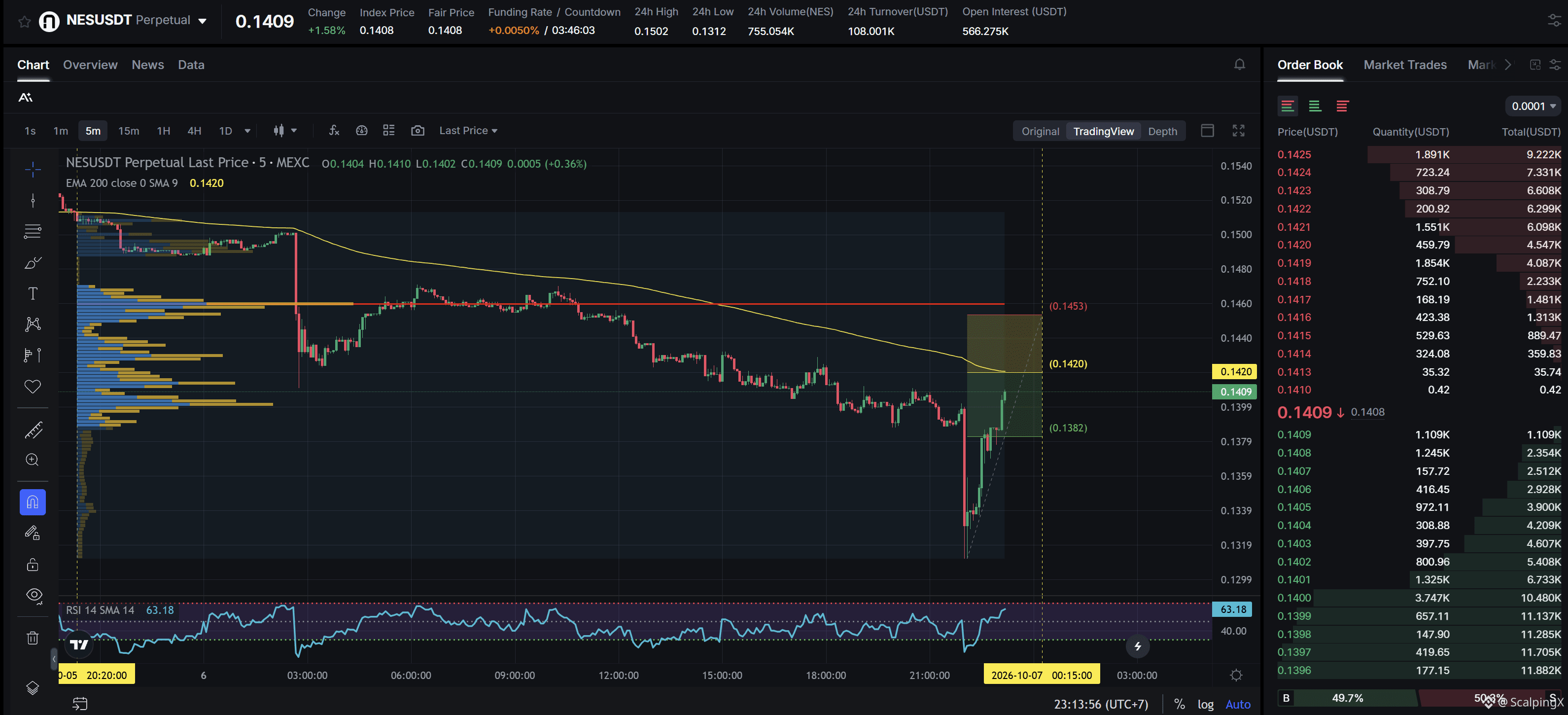
$NES - Mcap 40.74M$ - 24h Sentiment -2.00 Bearish
SC02 M5 - pending Short order. Entry lies within HVN + not affected by any weak zone, the current resistance zone is approximately 2.39% wide. The downtrend has lasted 1 day 2 hours 55 minutes, with a maximum recorded price decline of 13.30%. If price breaks above this resistance zone, the trend is highly likely to reverse upward.
$NES - Mcap 40.74M$ - 24h Sentiment -2.00 Bearish
SC02 M5 - pending Short order. Entry lies within HVN + not affected by any weak zone, the current resistance zone is approximately 2.39% wide. The downtrend has lasted 1 day 2 hours 55 minutes, with a maximum recorded price decline of 13.30%. If price breaks above this resistance zone, the trend is highly likely to reverse upward.
SC02 M5 - pending Short order. Entry lies within HVN + not affected by any weak zone, the current resistance zone is approximately 2.39% wide. The downtrend has lasted 1 day 2 hours 55 minutes, with a maximum recorded price decline of 13.30%. If price breaks above this resistance zone, the trend is highly likely to reverse upward.
10
·
--
Bullisch
Übersetzung ansehen
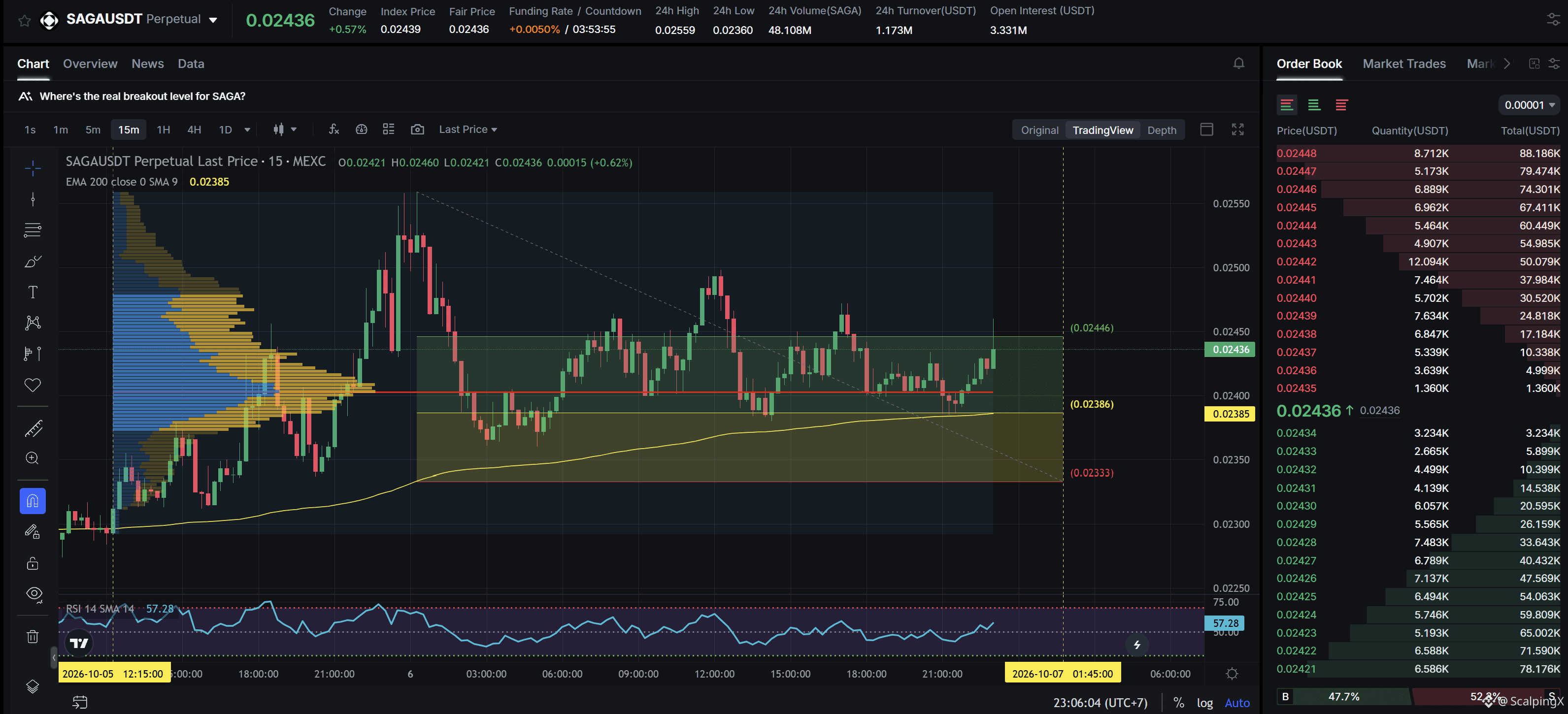
$SAGA - Mcap 10.93M$ - 24h Sentiment +5.21 Bullish
SC02 M15 - pending Long order. Entry lies within LVN + not affected by any weak zone, the current support zone is approximately 2.20% wide. The uptrend has lasted 1 day 10 hours 45 minutes, with a maximum recorded price increase of 11.40%. If price loses this support zone, the trend is highly likely to reverse downward.
$SAGA - Mcap 10.93M$ - 24h Sentiment +5.21 Bullish
SC02 M15 - pending Long order. Entry lies within LVN + not affected by any weak zone, the current support zone is approximately 2.20% wide. The uptrend has lasted 1 day 10 hours 45 minutes, with a maximum recorded price increase of 11.40%. If price loses this support zone, the trend is highly likely to reverse downward.
SC02 M15 - pending Long order. Entry lies within LVN + not affected by any weak zone, the current support zone is approximately 2.20% wide. The uptrend has lasted 1 day 10 hours 45 minutes, with a maximum recorded price increase of 11.40%. If price loses this support zone, the trend is highly likely to reverse downward.
13
·
--
Bullisch
Übersetzung ansehen
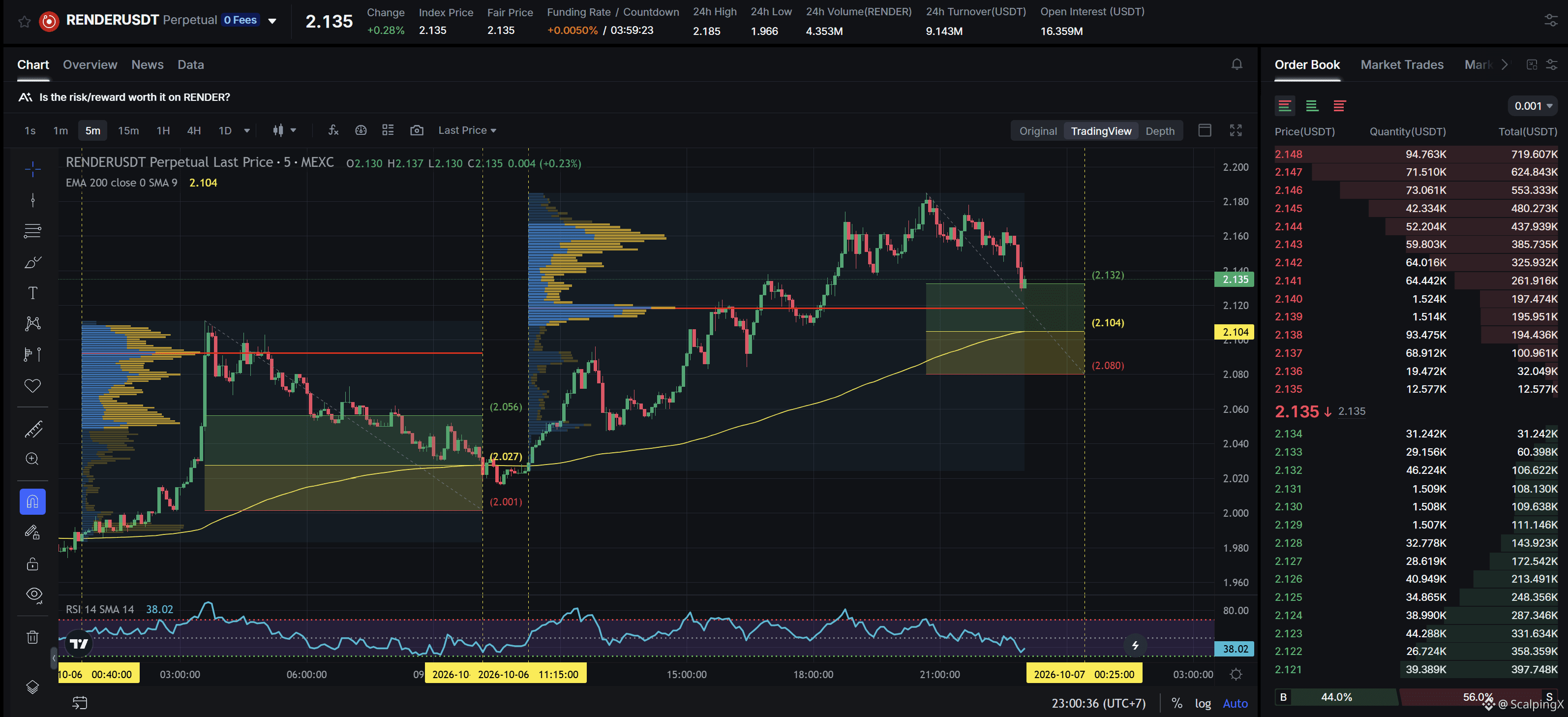
$RENDER - Mcap 1.11B$ - 24h Sentiment +5.43 Bullish
SC02 M5 - pending Long order. Entry lies within LVN + meets positive simplification with a previously profitable Long order, the current support zone is approximately 1.14% wide. The uptrend has lasted 11 hours 45 minutes, with a maximum recorded price increase of 7.76%. If price loses this support zone, the trend is highly likely to reverse downward.
$RENDER - Mcap 1.11B$ - 24h Sentiment +5.43 Bullish
SC02 M5 - pending Long order. Entry lies within LVN + meets positive simplification with a previously profitable Long order, the current support zone is approximately 1.14% wide. The uptrend has lasted 11 hours 45 minutes, with a maximum recorded price increase of 7.76%. If price loses this support zone, the trend is highly likely to reverse downward.
SC02 M5 - pending Long order. Entry lies within LVN + meets positive simplification with a previously profitable Long order, the current support zone is approximately 1.14% wide. The uptrend has lasted 11 hours 45 minutes, with a maximum recorded price increase of 7.76%. If price loses this support zone, the trend is highly likely to reverse downward.
3
·
--
Bullisch
Übersetzung ansehen
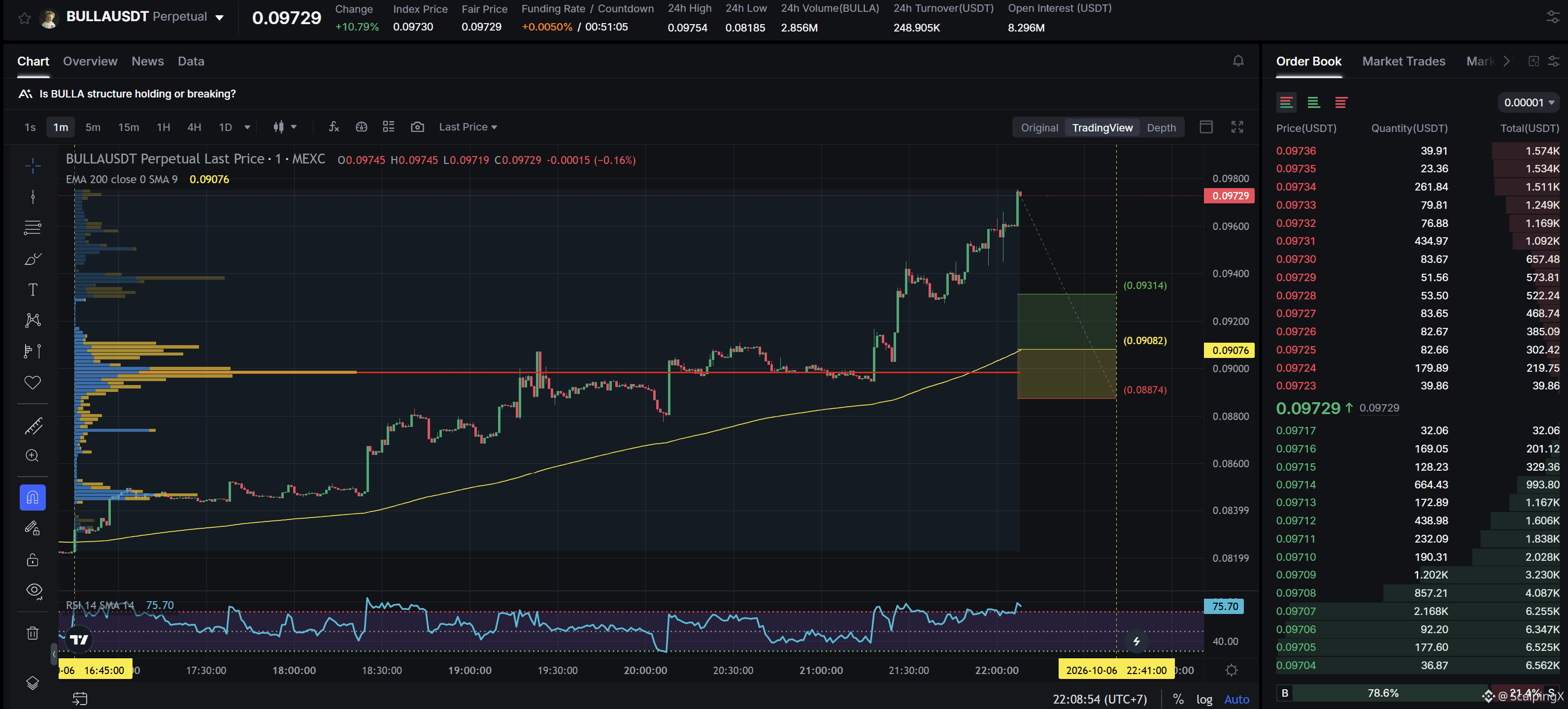
$BULLA - Mcap 93.23M$ - 24h Sentiment Neutral
SC02 M1 - pending Long order. Entry contains POC + not affected by any weak zone, the current support zone is approximately 2.24% wide. The uptrend has lasted 5 hours 24 minutes, with a maximum recorded price increase of 17.91%. If price loses this support zone, the trend is highly likely to reverse downward.
$BULLA - Mcap 93.23M$ - 24h Sentiment Neutral
SC02 M1 - pending Long order. Entry contains POC + not affected by any weak zone, the current support zone is approximately 2.24% wide. The uptrend has lasted 5 hours 24 minutes, with a maximum recorded price increase of 17.91%. If price loses this support zone, the trend is highly likely to reverse downward.
SC02 M1 - pending Long order. Entry contains POC + not affected by any weak zone, the current support zone is approximately 2.24% wide. The uptrend has lasted 5 hours 24 minutes, with a maximum recorded price increase of 17.91%. If price loses this support zone, the trend is highly likely to reverse downward.
14
·
--
Bullisch
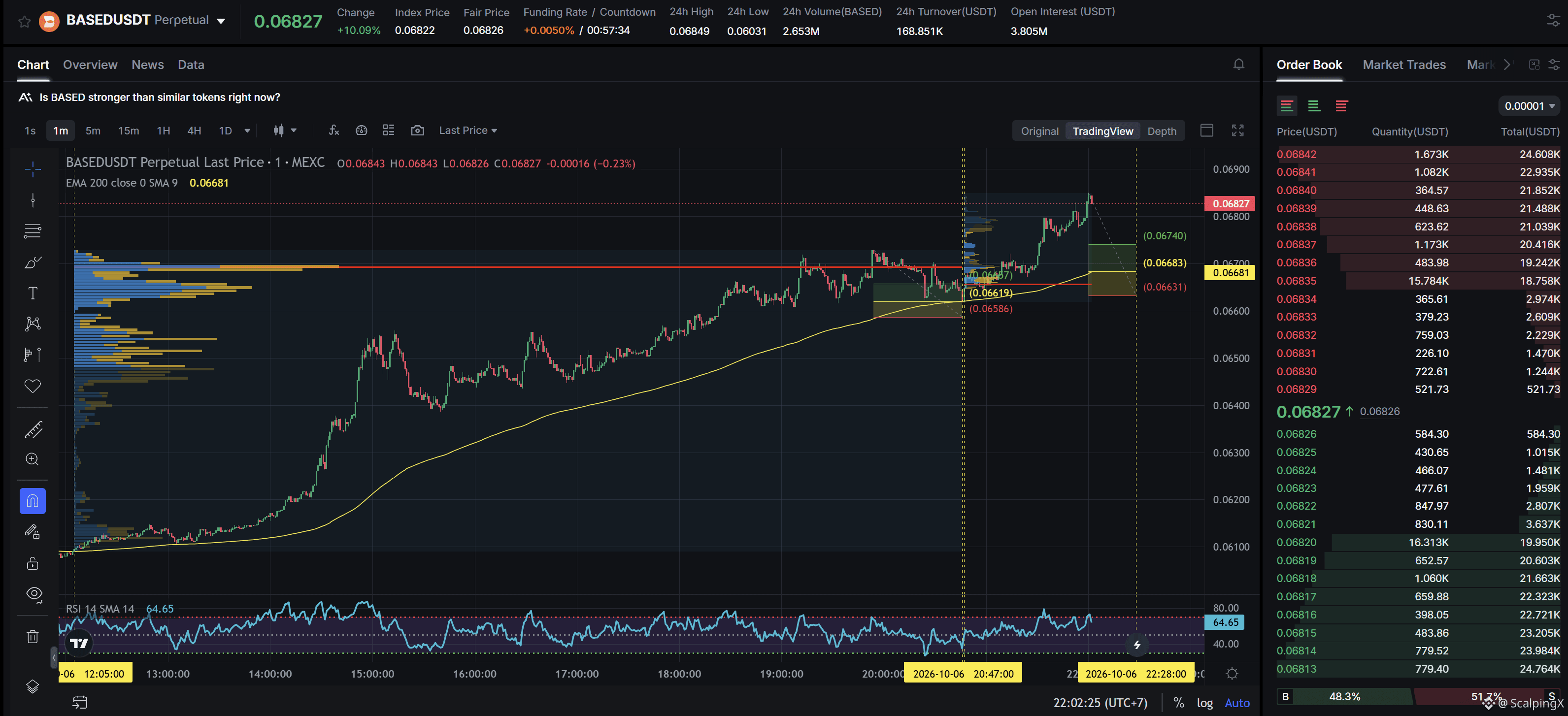
$BASED – Marktkapitalisierung 15,9 Mio. $ – 24-h-Stimmung: neutral
SC02 M1 – ausstehende Long-Order. Der Einstieg enthält den POC und erfüllt die positive Vereinfachung in Verbindung mit einer zuvor profitablen Long-Order. Die aktuelle Unterstützungszone ist ungefähr 0,78 % breit. Der Aufwärtstrend dauert seit 1 Stunde und 16 Minuten an; der maximale verzeichnete Kursanstieg beträgt 3,44 %. Wenn der Kurs diese Unterstützungszone unterschreitet, ist eine Abwärtsumkehr des Trends sehr wahrscheinlich.
$BASED – Marktkapitalisierung 15,9 Mio. $ – 24-h-Stimmung: neutral
SC02 M1 – ausstehende Long-Order. Der Einstieg enthält den POC und erfüllt die positive Vereinfachung in Verbindung mit einer zuvor profitablen Long-Order. Die aktuelle Unterstützungszone ist ungefähr 0,78 % breit. Der Aufwärtstrend dauert seit 1 Stunde und 16 Minuten an; der maximale verzeichnete Kursanstieg beträgt 3,44 %. Wenn der Kurs diese Unterstützungszone unterschreitet, ist eine Abwärtsumkehr des Trends sehr wahrscheinlich.
SC02 M1 – ausstehende Long-Order. Der Einstieg enthält den POC und erfüllt die positive Vereinfachung in Verbindung mit einer zuvor profitablen Long-Order. Die aktuelle Unterstützungszone ist ungefähr 0,78 % breit. Der Aufwärtstrend dauert seit 1 Stunde und 16 Minuten an; der maximale verzeichnete Kursanstieg beträgt 3,44 %. Wenn der Kurs diese Unterstützungszone unterschreitet, ist eine Abwärtsumkehr des Trends sehr wahrscheinlich.
17
·
--
Bullisch
Übersetzung ansehen
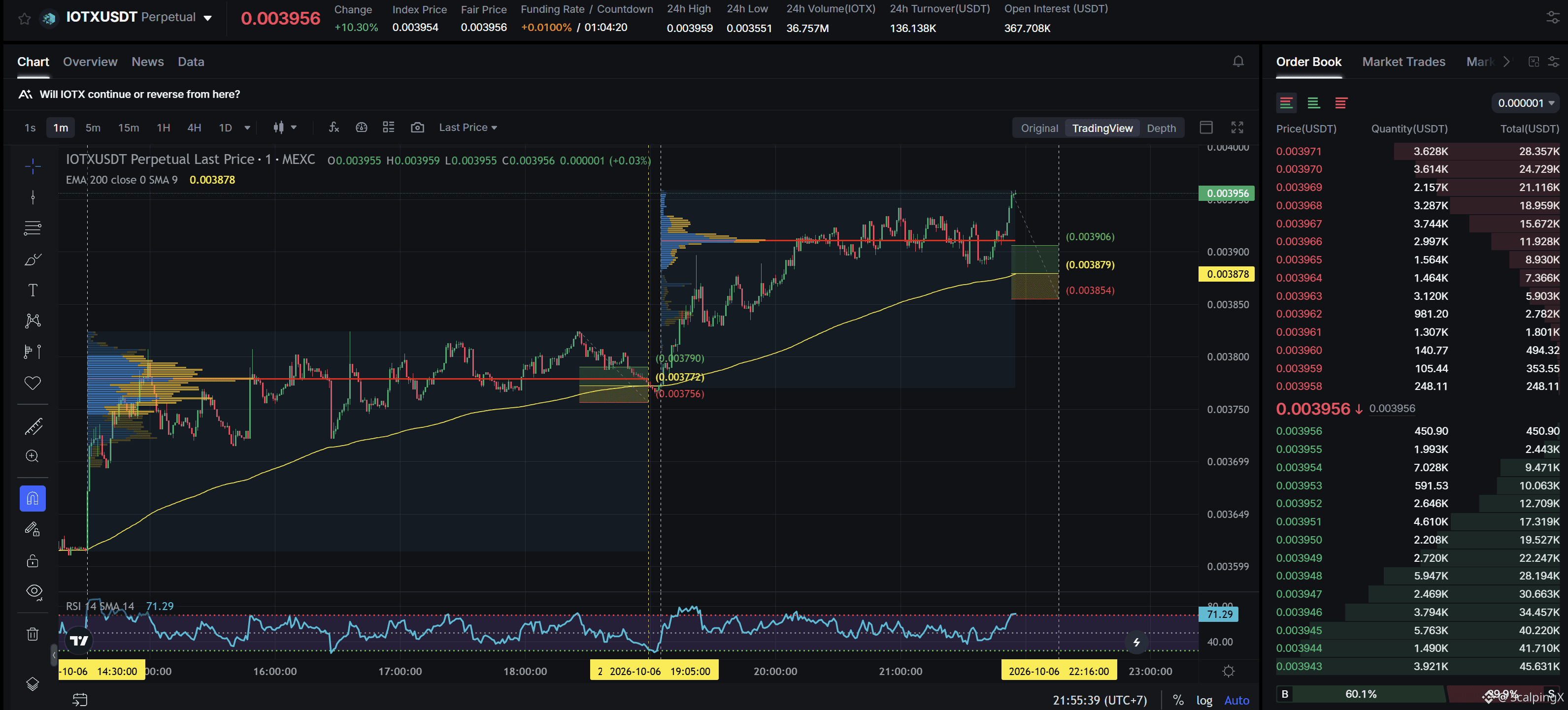
$IOTX - Mcap 36.97M$ - 24h Sentiment Neutral
SC02 M1 - pending Long order. Entry lies within LVN + meets positive simplification with a previously highly profitable Long order, the current support zone is approximately 0.65% wide. The uptrend has lasted 2 hours 51 minutes, with a maximum recorded price increase of 5.43%. If price loses this support zone, the trend is highly likely to reverse downward.
$IOTX - Mcap 36.97M$ - 24h Sentiment Neutral
SC02 M1 - pending Long order. Entry lies within LVN + meets positive simplification with a previously highly profitable Long order, the current support zone is approximately 0.65% wide. The uptrend has lasted 2 hours 51 minutes, with a maximum recorded price increase of 5.43%. If price loses this support zone, the trend is highly likely to reverse downward.
SC02 M1 - pending Long order. Entry lies within LVN + meets positive simplification with a previously highly profitable Long order, the current support zone is approximately 0.65% wide. The uptrend has lasted 2 hours 51 minutes, with a maximum recorded price increase of 5.43%. If price loses this support zone, the trend is highly likely to reverse downward.
8
·
--
Bullisch
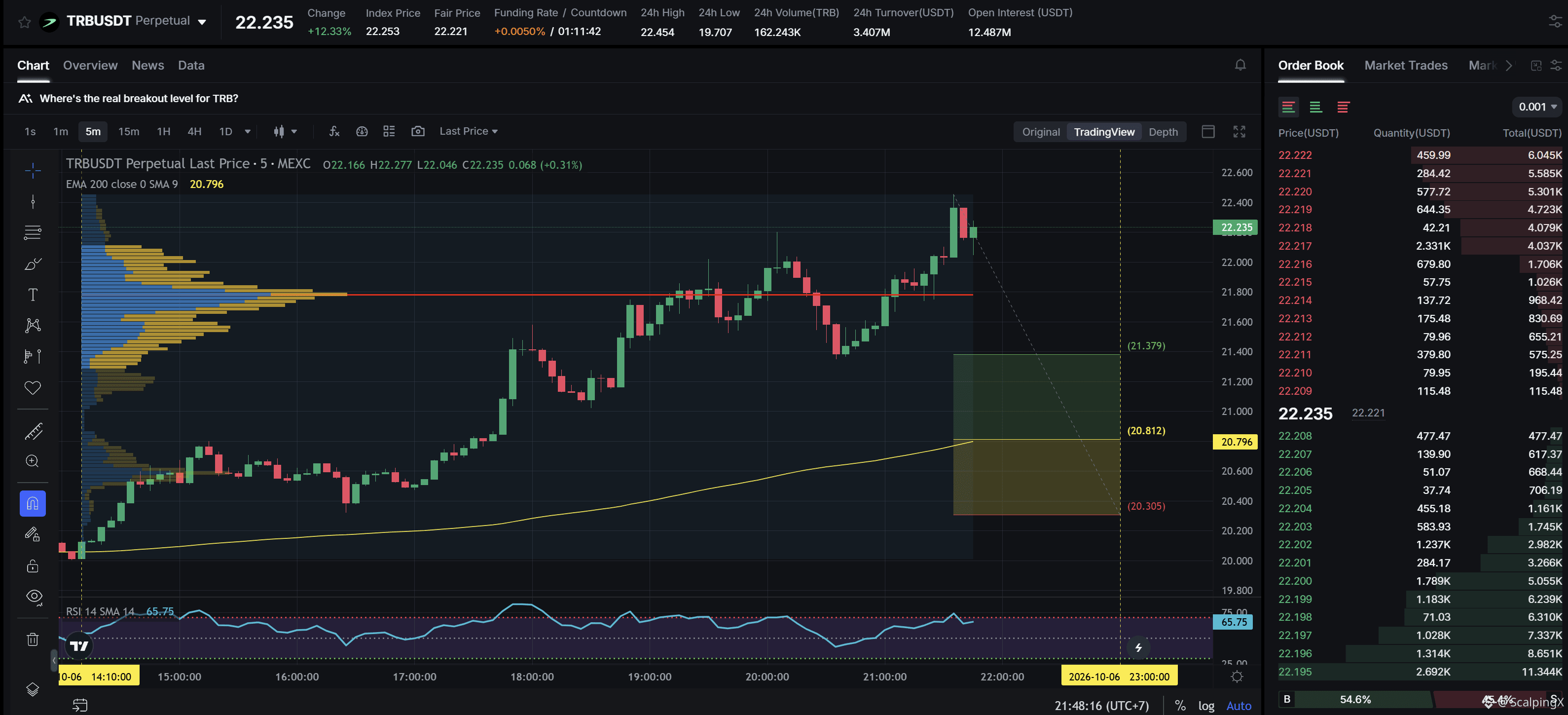
$TRB – Marktkapitalisierung 63.06M$ – 24-h-Stimmung +4.05 bullish
SC02 M5 – ausstehende Long-Order. Der Einstieg liegt innerhalb des LVN und wird von keiner schwachen Zone beeinträchtigt. Die aktuelle Unterstützungszone ist ungefähr 2.42% breit. Der Aufwärtstrend dauert seit 7 Stunden und 35 Minuten an; der maximale verzeichnete Kursanstieg beträgt 11.97%. Verliert der Kurs diese Unterstützungszone, ist eine Abwärtsumkehr des Trends sehr wahrscheinlich.
$TRB – Marktkapitalisierung 63.06M$ – 24-h-Stimmung +4.05 bullish
SC02 M5 – ausstehende Long-Order. Der Einstieg liegt innerhalb des LVN und wird von keiner schwachen Zone beeinträchtigt. Die aktuelle Unterstützungszone ist ungefähr 2.42% breit. Der Aufwärtstrend dauert seit 7 Stunden und 35 Minuten an; der maximale verzeichnete Kursanstieg beträgt 11.97%. Verliert der Kurs diese Unterstützungszone, ist eine Abwärtsumkehr des Trends sehr wahrscheinlich.
SC02 M5 – ausstehende Long-Order. Der Einstieg liegt innerhalb des LVN und wird von keiner schwachen Zone beeinträchtigt. Die aktuelle Unterstützungszone ist ungefähr 2.42% breit. Der Aufwärtstrend dauert seit 7 Stunden und 35 Minuten an; der maximale verzeichnete Kursanstieg beträgt 11.97%. Verliert der Kurs diese Unterstützungszone, ist eine Abwärtsumkehr des Trends sehr wahrscheinlich.
9
·
--
Bullisch
Übersetzung ansehen
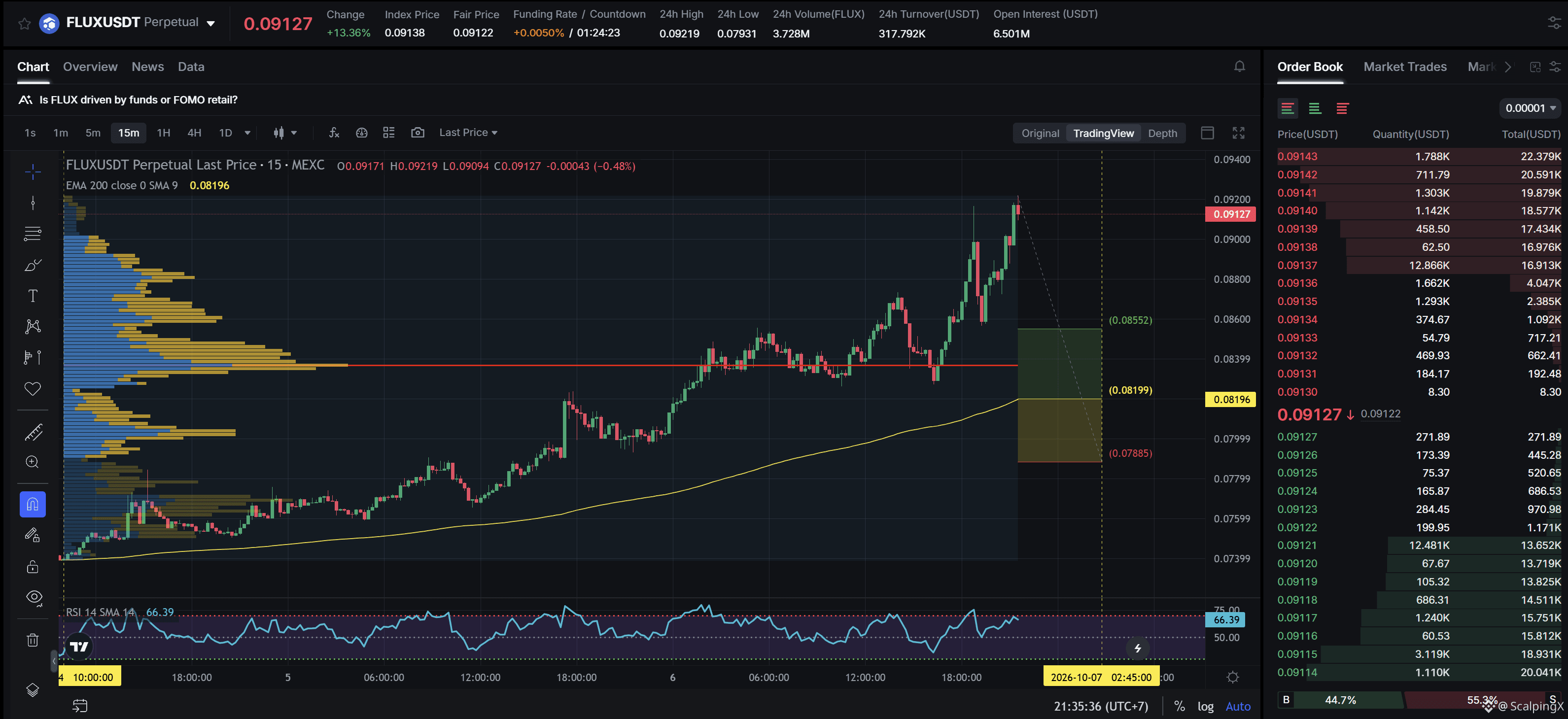
$FLUX - Mcap 38.4M$ - 24h Sentiment +2.73 Bullish
SC02 M15 - pending Long order. Entry lies within HVN + not affected by any weak zone, the current support zone is approximately 3.91% wide. The uptrend has lasted 2 days 11 hours 30 minutes, with a maximum recorded price increase of 24.76%. If price loses this support zone, the trend is highly likely to reverse downward.
$FLUX - Mcap 38.4M$ - 24h Sentiment +2.73 Bullish
SC02 M15 - pending Long order. Entry lies within HVN + not affected by any weak zone, the current support zone is approximately 3.91% wide. The uptrend has lasted 2 days 11 hours 30 minutes, with a maximum recorded price increase of 24.76%. If price loses this support zone, the trend is highly likely to reverse downward.
SC02 M15 - pending Long order. Entry lies within HVN + not affected by any weak zone, the current support zone is approximately 3.91% wide. The uptrend has lasted 2 days 11 hours 30 minutes, with a maximum recorded price increase of 24.76%. If price loses this support zone, the trend is highly likely to reverse downward.
12
Anmelden und weiter Inhalte entdecken
Krypto-Nutzer weltweit auf Binance Square kennenlernen
⚡️ Bleib in Sachen Krypto stets am Puls.
💬 Die weltgrößte Kryptobörse vertraut darauf.
👍 Erhalte verlässliche Einblicke von verifizierten Creators.
E-Mail-Adresse/Telefonnummer
Trendthemen
BinanceLaunchesBinanceIntelligence
721,010 Aufrufe
4,539 Kommentare
🧠 Traden wie ein erfahrener Investmentfonds? Jetzt übernimmt die KI das kostenlos für dich! 🤖📈
Wilsontrader97
·10 Likes
·12.4k Aufrufe
BTCFallsBelow$84K
27,458 Aufrufe
99 Kommentare
DubaiVARAIssuesReserveAssetAuditCircular
5,969 Aufrufe
333 Kommentare