

S A M R A
5.4k Beiträge

S A M R A
Melden
Nutzer blockieren
Follow for Pro Tips 💡 | Content Creator | Learn & Earn with Crypto 🚀

Traders League Badge Beginner
Trade eröffnen
Regelmäßiger Trader
4.8 Jahre
10 Following
5.3K+ Follower
23.5K+ Like gegeben
1 Abzeichen
Beiträge
Portfolio
Alle
Zitierungen
Videos
Live
·
--
#Binance März Super Airdrop: $50,000 USDT Zuteilung, Aufgaben abschließen & Farm-Punkte https://www.binance.com/activity/trading-competition/march-super-airdrop-V1?ref=353006301
#Binance März Super Airdrop: $50,000 USDT Zuteilung, Aufgaben abschließen & Farm-Punkte https://www.binance.com/activity/trading-competition/march-super-airdrop-V1?ref=353006301
1
126
·
--
Alleinige Schöpfung reicht nicht aus: Echter Wert kommt von dem, was in Bewegung bleibtIch sah elektronische Unterschriften früher als gelöstes Problem an. Klicken, unterschreiben, erledigt – eine saubere Bestätigung, dass alles sicher und legitim ist. Wie die meisten Menschen vertraute ich dem Prozess, ohne viel darüber nachzudenken, was darunter liegt. Wenn große Plattformen es gebaut haben, muss es überall zuverlässig sein… oder?
Im Laufe der Zeit begann diese Annahme, ein wenig oberflächlich zu wirken. Nicht völlig falsch – aber unvollständig. Denn sobald man eine einzelne Plattform oder Region verlässt, wird es kompliziert. Die Rechtssysteme unterscheiden sich, die Zuständigkeiten stimmen nicht immer überein, und was an einem Ort gültig ist, könnte woanders nicht das gleiche Gewicht haben. Ein Werkzeug, das in Isolation perfekt funktioniert, kann Schwierigkeiten haben, wenn es mit einem anderen System interagieren muss, das es nicht erkennt.
Alleinige Schöpfung reicht nicht aus: Echter Wert kommt von dem, was in Bewegung bleibt
Ich sah elektronische Unterschriften früher als gelöstes Problem an. Klicken, unterschreiben, erledigt – eine saubere Bestätigung, dass alles sicher und legitim ist. Wie die meisten Menschen vertraute ich dem Prozess, ohne viel darüber nachzudenken, was darunter liegt. Wenn große Plattformen es gebaut haben, muss es überall zuverlässig sein… oder?
Im Laufe der Zeit begann diese Annahme, ein wenig oberflächlich zu wirken. Nicht völlig falsch – aber unvollständig. Denn sobald man eine einzelne Plattform oder Region verlässt, wird es kompliziert. Die Rechtssysteme unterscheiden sich, die Zuständigkeiten stimmen nicht immer überein, und was an einem Ort gültig ist, könnte woanders nicht das gleiche Gewicht haben. Ein Werkzeug, das in Isolation perfekt funktioniert, kann Schwierigkeiten haben, wenn es mit einem anderen System interagieren muss, das es nicht erkennt.
Im Laufe der Zeit begann diese Annahme, ein wenig oberflächlich zu wirken. Nicht völlig falsch – aber unvollständig. Denn sobald man eine einzelne Plattform oder Region verlässt, wird es kompliziert. Die Rechtssysteme unterscheiden sich, die Zuständigkeiten stimmen nicht immer überein, und was an einem Ort gültig ist, könnte woanders nicht das gleiche Gewicht haben. Ein Werkzeug, das in Isolation perfekt funktioniert, kann Schwierigkeiten haben, wenn es mit einem anderen System interagieren muss, das es nicht erkennt.
3
99
·
--
Hatten Sie jemals das Gefühl, dass sich Web3 schnell entwickelt, aber etwas Essentielles noch nicht ganz vorhanden ist? Systeme werden immer ausgeklügelter, aber Vertrauen kann sich immer noch wackelig anfühlen. Es gibt Anmeldeinformationen, aber sie sind fragmentiert. Die Teilnahme erfolgt, aber sie wird nicht immer richtig anerkannt. Und während der Wert verteilt wird, erreicht er nicht immer die richtigen Mitwirkenden. Im Laufe der Zeit beginnen diese kleinen Lücken, größere Probleme zu schaffen.
Hier hebt sich @SignOfficial hervor. Anstatt dem Hype nachzujagen, konzentriert es sich auf das Fundament—verifiable credentials und strukturierte Verteilung. Es verschiebt das Vertrauen von Annahmen zu Beweisen. Informationen werden nicht nur gespeichert; sie werden verifizierbar. Anmeldeinformationen sind nicht auf eine Plattform beschränkt; sie können über Ökosysteme hinweg bewegt werden. Und die Verteilung wird absichtsvoller, geleitet von validierten Daten statt von Schätzungen.
Wir haben bereits Fälle gesehen, in denen echte Benutzer übersehen wurden, während automatisierte Konten von schwacher Überprüfung profitierten. Diese Art von Ungleichgewicht untergräbt das Vertrauen. Durch die effektivere Verknüpfung von Identität, Teilnahme und Wert hilft Sign, Fairness und Genauigkeit wieder in die Gleichung zu bringen.
Was diesen Ansatz überzeugend macht, ist, dass er nicht darauf abzielt, bestehende Systeme zu ersetzen—er stärkt sie, indem er eine Schicht hinzufügt, die gefehlt hat: zuverlässiges, tragbares Vertrauen.
#signdigitalsovereigninfra $SIGN
Hatten Sie jemals das Gefühl, dass sich Web3 schnell entwickelt, aber etwas Essentielles noch nicht ganz vorhanden ist? Systeme werden immer ausgeklügelter, aber Vertrauen kann sich immer noch wackelig anfühlen. Es gibt Anmeldeinformationen, aber sie sind fragmentiert. Die Teilnahme erfolgt, aber sie wird nicht immer richtig anerkannt. Und während der Wert verteilt wird, erreicht er nicht immer die richtigen Mitwirkenden. Im Laufe der Zeit beginnen diese kleinen Lücken, größere Probleme zu schaffen.
Hier hebt sich @SignOfficial hervor. Anstatt dem Hype nachzujagen, konzentriert es sich auf das Fundament—verifiable credentials und strukturierte Verteilung. Es verschiebt das Vertrauen von Annahmen zu Beweisen. Informationen werden nicht nur gespeichert; sie werden verifizierbar. Anmeldeinformationen sind nicht auf eine Plattform beschränkt; sie können über Ökosysteme hinweg bewegt werden. Und die Verteilung wird absichtsvoller, geleitet von validierten Daten statt von Schätzungen.
Wir haben bereits Fälle gesehen, in denen echte Benutzer übersehen wurden, während automatisierte Konten von schwacher Überprüfung profitierten. Diese Art von Ungleichgewicht untergräbt das Vertrauen. Durch die effektivere Verknüpfung von Identität, Teilnahme und Wert hilft Sign, Fairness und Genauigkeit wieder in die Gleichung zu bringen.
Was diesen Ansatz überzeugend macht, ist, dass er nicht darauf abzielt, bestehende Systeme zu ersetzen—er stärkt sie, indem er eine Schicht hinzufügt, die gefehlt hat: zuverlässiges, tragbares Vertrauen.
#signdigitalsovereigninfra $SIGN
Hier hebt sich @SignOfficial hervor. Anstatt dem Hype nachzujagen, konzentriert es sich auf das Fundament—verifiable credentials und strukturierte Verteilung. Es verschiebt das Vertrauen von Annahmen zu Beweisen. Informationen werden nicht nur gespeichert; sie werden verifizierbar. Anmeldeinformationen sind nicht auf eine Plattform beschränkt; sie können über Ökosysteme hinweg bewegt werden. Und die Verteilung wird absichtsvoller, geleitet von validierten Daten statt von Schätzungen.
Wir haben bereits Fälle gesehen, in denen echte Benutzer übersehen wurden, während automatisierte Konten von schwacher Überprüfung profitierten. Diese Art von Ungleichgewicht untergräbt das Vertrauen. Durch die effektivere Verknüpfung von Identität, Teilnahme und Wert hilft Sign, Fairness und Genauigkeit wieder in die Gleichung zu bringen.
Was diesen Ansatz überzeugend macht, ist, dass er nicht darauf abzielt, bestehende Systeme zu ersetzen—er stärkt sie, indem er eine Schicht hinzufügt, die gefehlt hat: zuverlässiges, tragbares Vertrauen.
#signdigitalsovereigninfra $SIGN
1
163
·
--
MIDNIGHT: RATIONALE PRIVATSPHÄRE UND AUSWÄHLBARE OFFENLEGUNGDie meisten Menschen hören „Privacy Chain“ und denken sofort an versteckte Transaktionen und Black-Box-Ledger.
Das ist normalerweise auch mein erster Gedanke.
Aber nachdem ich das Team von Midnight sprechen hörte – irgendwo zwischen dem Lärm eines Messestands und den Debatten in den Fluren bei Consensus Toronto – wurde mir klar, dass sie es anders angehen.
Sie positionieren es nicht als Privacy Coin.
Sie nennen es eine programmierbare Privatschicht.
Es ist eine subtile Unterscheidung – aber sie verändert alles.
Die zentrale Spannung ist offensichtlich, wenn Sie in Krypto gebaut haben.
MIDNIGHT: RATIONALE PRIVATSPHÄRE UND AUSWÄHLBARE OFFENLEGUNG
Die meisten Menschen hören „Privacy Chain“ und denken sofort an versteckte Transaktionen und Black-Box-Ledger.
Das ist normalerweise auch mein erster Gedanke.
Aber nachdem ich das Team von Midnight sprechen hörte – irgendwo zwischen dem Lärm eines Messestands und den Debatten in den Fluren bei Consensus Toronto – wurde mir klar, dass sie es anders angehen.
Sie positionieren es nicht als Privacy Coin.
Sie nennen es eine programmierbare Privatschicht.
Es ist eine subtile Unterscheidung – aber sie verändert alles.
Die zentrale Spannung ist offensichtlich, wenn Sie in Krypto gebaut haben.
Das ist normalerweise auch mein erster Gedanke.
Aber nachdem ich das Team von Midnight sprechen hörte – irgendwo zwischen dem Lärm eines Messestands und den Debatten in den Fluren bei Consensus Toronto – wurde mir klar, dass sie es anders angehen.
Sie positionieren es nicht als Privacy Coin.
Sie nennen es eine programmierbare Privatschicht.
Es ist eine subtile Unterscheidung – aber sie verändert alles.
Die zentrale Spannung ist offensichtlich, wenn Sie in Krypto gebaut haben.
2
53
·
--
Midnight reduziert die Arbeitslast auf eine ziemlich grundlegende Weise.
Anstatt dass jeder Knoten jede Berechnung erneut ausführt, verlässt es sich auf Beweise – sodass das Netzwerk nur Ergebnisse überprüfen muss, nicht sie reproduzieren. Das bedeutet weniger Rechenaufwand, niedrigere Kosten und eine viel leichtere Belastung für Validatoren, die Knoten betreiben.
Ich habe auch bemerkt, wie die Midnight Foundation und Shielded Technologies dies nach dem Konsens 2025 vorantreiben, mit einem klaren Fokus auf Anwendungen in der realen Welt und nicht nur auf theoretisches Design.
Für mich ist das hier der eigentliche Ansatz:
nicht durch mehr zu skalieren – sondern durch weniger.
@MidnightNetwork #night $NIGHT
Midnight reduziert die Arbeitslast auf eine ziemlich grundlegende Weise.
Anstatt dass jeder Knoten jede Berechnung erneut ausführt, verlässt es sich auf Beweise – sodass das Netzwerk nur Ergebnisse überprüfen muss, nicht sie reproduzieren. Das bedeutet weniger Rechenaufwand, niedrigere Kosten und eine viel leichtere Belastung für Validatoren, die Knoten betreiben.
Ich habe auch bemerkt, wie die Midnight Foundation und Shielded Technologies dies nach dem Konsens 2025 vorantreiben, mit einem klaren Fokus auf Anwendungen in der realen Welt und nicht nur auf theoretisches Design.
Für mich ist das hier der eigentliche Ansatz:
nicht durch mehr zu skalieren – sondern durch weniger.
@MidnightNetwork #night $NIGHT
Anstatt dass jeder Knoten jede Berechnung erneut ausführt, verlässt es sich auf Beweise – sodass das Netzwerk nur Ergebnisse überprüfen muss, nicht sie reproduzieren. Das bedeutet weniger Rechenaufwand, niedrigere Kosten und eine viel leichtere Belastung für Validatoren, die Knoten betreiben.
Ich habe auch bemerkt, wie die Midnight Foundation und Shielded Technologies dies nach dem Konsens 2025 vorantreiben, mit einem klaren Fokus auf Anwendungen in der realen Welt und nicht nur auf theoretisches Design.
Für mich ist das hier der eigentliche Ansatz:
nicht durch mehr zu skalieren – sondern durch weniger.
@MidnightNetwork #night $NIGHT
1
108
·
--
Bärisch
🚨 BRECHEND:
Berichte behaupten, dass die Demokraten im US-Repräsentantenhaus nur zwei Stimmen von einer Amtsenthebung Trumps vor dem 31. März entfernt sind.
Dies wurde jedoch nicht offiziell bestätigt, und die Situation bleibt unklar.
$TRUMP
{spot}(TRUMPUSDT)
#iOSSecurityUpdate
🚨 BRECHEND:
Berichte behaupten, dass die Demokraten im US-Repräsentantenhaus nur zwei Stimmen von einer Amtsenthebung Trumps vor dem 31. März entfernt sind.
Dies wurde jedoch nicht offiziell bestätigt, und die Situation bleibt unklar.
$TRUMP
#iOSSecurityUpdate
Berichte behaupten, dass die Demokraten im US-Repräsentantenhaus nur zwei Stimmen von einer Amtsenthebung Trumps vor dem 31. März entfernt sind.
Dies wurde jedoch nicht offiziell bestätigt, und die Situation bleibt unklar.
$TRUMP
#iOSSecurityUpdate
2
62
·
--
Bärisch
🚨 BREAKING:
Berichte deuten darauf hin, dass Trumps Entscheidung, einen Krieg mit dem Iran zu verfolgen, teilweise durch Druck von externen Verbündeten beeinflusst worden sein könnte.
Zur gleichen Zeit deuten Quellen darauf hin, dass es interne Spaltungen innerhalb seiner Verwaltung gab, wobei einige Beamte nicht vollständig mit dem Handlungsverlauf übereinstimmten.
Insgesamt hebt die Situation die Komplexität hinter der Entscheidung hervor, wobei sowohl externe Einflüsse als auch interne Meinungsverschiedenheiten zum Ergebnis beigetragen haben.
$BTC $ETH $XRP
{spot}(XRPUSDT)
{spot}(ETHUSDT)
{spot}(BTCUSDT)
#TrumpConsidersEndingIranConflict
🚨 BREAKING:
Berichte deuten darauf hin, dass Trumps Entscheidung, einen Krieg mit dem Iran zu verfolgen, teilweise durch Druck von externen Verbündeten beeinflusst worden sein könnte.
Zur gleichen Zeit deuten Quellen darauf hin, dass es interne Spaltungen innerhalb seiner Verwaltung gab, wobei einige Beamte nicht vollständig mit dem Handlungsverlauf übereinstimmten.
Insgesamt hebt die Situation die Komplexität hinter der Entscheidung hervor, wobei sowohl externe Einflüsse als auch interne Meinungsverschiedenheiten zum Ergebnis beigetragen haben.
$BTC $ETH $XRP
#TrumpConsidersEndingIranConflict
Berichte deuten darauf hin, dass Trumps Entscheidung, einen Krieg mit dem Iran zu verfolgen, teilweise durch Druck von externen Verbündeten beeinflusst worden sein könnte.
Zur gleichen Zeit deuten Quellen darauf hin, dass es interne Spaltungen innerhalb seiner Verwaltung gab, wobei einige Beamte nicht vollständig mit dem Handlungsverlauf übereinstimmten.
Insgesamt hebt die Situation die Komplexität hinter der Entscheidung hervor, wobei sowohl externe Einflüsse als auch interne Meinungsverschiedenheiten zum Ergebnis beigetragen haben.
$BTC $ETH $XRP
#TrumpConsidersEndingIranConflict
2
46
·
--
Bullisch
$XRP — LANG
Jeder erwartete mehr Rückgang… aber es $XRP beginnt, Momentum zurückzugewinnen....
Einstieg: 1.355 – 1.365
SL: 1.335
Ziele:
TP1: 1.390
TP2: 1.420
TP3: 1.470
{spot}(XRPUSDT)
{future}(XRPUSDT)
Nach dem scharfen Rückgang in die 1.34-Zone fand XRP starke Unterstützung, und die Käufer traten schnell ein.
#Trump'sCyberStrategy
$XRP — LANG
Jeder erwartete mehr Rückgang… aber es $XRP beginnt, Momentum zurückzugewinnen....
Einstieg: 1.355 – 1.365
SL: 1.335
Ziele:
TP1: 1.390
TP2: 1.420
TP3: 1.470
Nach dem scharfen Rückgang in die 1.34-Zone fand XRP starke Unterstützung, und die Käufer traten schnell ein.
#Trump'sCyberStrategy
Jeder erwartete mehr Rückgang… aber es $XRP beginnt, Momentum zurückzugewinnen....
Einstieg: 1.355 – 1.365
SL: 1.335
Ziele:
TP1: 1.390
TP2: 1.420
TP3: 1.470
Nach dem scharfen Rückgang in die 1.34-Zone fand XRP starke Unterstützung, und die Käufer traten schnell ein.
#Trump'sCyberStrategy
4
211
·
--
Eine gefährliche Behauptung kursiert - aber sie ist noch nicht verifiziertBerichte verbreiten sich online, dass die Vereinigten Staaten eine Frischwasserentsalzungsanlage auf der Insel Qeshm im Iran angegriffen haben.
Der iranische Außenminister hat gewarnt, dass es „Folgen“ geben wird.
Es gibt jedoch derzeit keine unabhängige Verifizierung, dass dieser Angriff tatsächlich stattgefunden hat.
Bisher:
❌ Keine Satellitenbilder, die Schäden bestätigen
❌ Keine Bestätigung vom US-Verteidigungsministerium oder dem US-Zentralkommando
❌ Keine Verifizierung von großen internationalen Nachrichtenquellen
Im Moment scheint die Behauptung aus iranischen staatlich-affiliierten Medien zu stammen.
Eine gefährliche Behauptung kursiert - aber sie ist noch nicht verifiziert
Berichte verbreiten sich online, dass die Vereinigten Staaten eine Frischwasserentsalzungsanlage auf der Insel Qeshm im Iran angegriffen haben.
Der iranische Außenminister hat gewarnt, dass es „Folgen“ geben wird.
Es gibt jedoch derzeit keine unabhängige Verifizierung, dass dieser Angriff tatsächlich stattgefunden hat.
Bisher:
❌ Keine Satellitenbilder, die Schäden bestätigen
❌ Keine Bestätigung vom US-Verteidigungsministerium oder dem US-Zentralkommando
❌ Keine Verifizierung von großen internationalen Nachrichtenquellen
Im Moment scheint die Behauptung aus iranischen staatlich-affiliierten Medien zu stammen.
Der iranische Außenminister hat gewarnt, dass es „Folgen“ geben wird.
Es gibt jedoch derzeit keine unabhängige Verifizierung, dass dieser Angriff tatsächlich stattgefunden hat.
Bisher:
❌ Keine Satellitenbilder, die Schäden bestätigen
❌ Keine Bestätigung vom US-Verteidigungsministerium oder dem US-Zentralkommando
❌ Keine Verifizierung von großen internationalen Nachrichtenquellen
Im Moment scheint die Behauptung aus iranischen staatlich-affiliierten Medien zu stammen.
3
123
·
--
🚨Globale Unsicherheit ist jetzt auf einem Rekordhoch.
In diesem Jahr ist die Unsicherheit auf der ganzen Welt über die während COVID, der globalen Finanzkrise und sogar der Dot-Com-Blase beobachteten Niveaus gestiegen.
#RFKJr.RunningforUSPresidentin2028 #Trump'sCyberStrategy
🚨Globale Unsicherheit ist jetzt auf einem Rekordhoch.
In diesem Jahr ist die Unsicherheit auf der ganzen Welt über die während COVID, der globalen Finanzkrise und sogar der Dot-Com-Blase beobachteten Niveaus gestiegen.
#RFKJr.RunningforUSPresidentin2028 #Trump'sCyberStrategy
In diesem Jahr ist die Unsicherheit auf der ganzen Welt über die während COVID, der globalen Finanzkrise und sogar der Dot-Com-Blase beobachteten Niveaus gestiegen.
#RFKJr.RunningforUSPresidentin2028 #Trump'sCyberStrategy
3
70
·
--
Bärisch
💥 BREAKING:
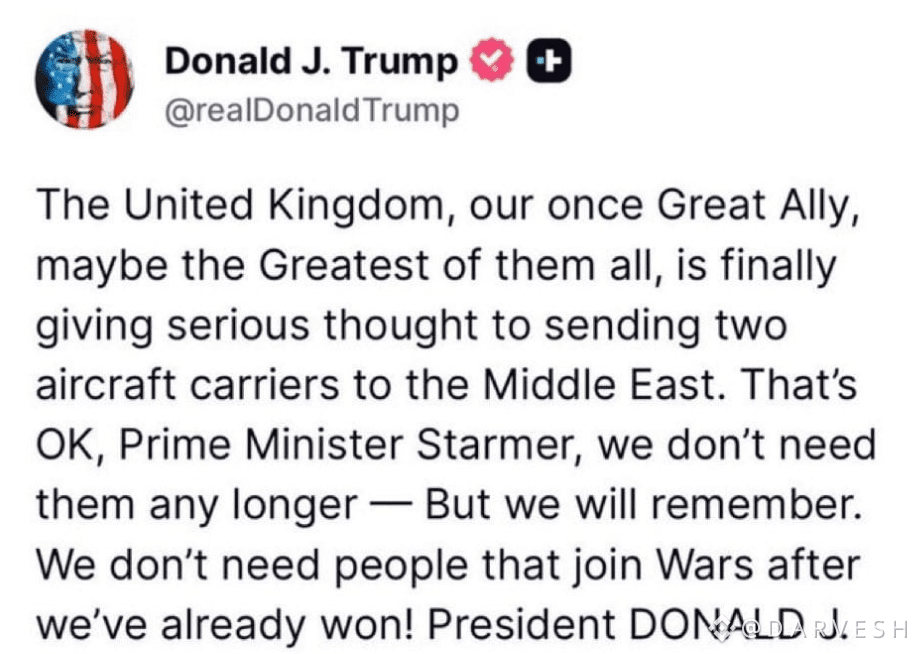
Präsident Donald Trump hat Berichten zufolge Keir Starmer ins Visier genommen und gesagt:
„Wir brauchen keine Leute, die Kriege führen, nachdem wir bereits gewonnen haben.“
Die Bemerkung scheint ein Seitenhieb gegen die Rolle des Vereinigten Königreichs in Konflikten an der Seite der Vereinigten Staaten zu sein und deutet auf Frustration mit Verbündeten hin, die später in den Prozess militärische Operationen betreten.
Warum das wichtig ist
Allianzspannungen: Kommentare wie diese können die Beziehungen zwischen langjährigen Verbündeten wie den USA und dem Vereinigten Königreich belasten.
Politische Botschaften: Aussagen, die so formuliert sind, kommen häufig im Inland gut an, da sie nationale Stärke und Führung betonen.
Globales Signal: Selbst rhetorische Streitigkeiten zwischen westlichen Führern können die diplomatischen Dynamiken beeinflussen, insbesondere während anhaltender geopolitischer Spannungen.
💬 Die große Frage jetzt:
Ist das nur politische Rhetorik, oder signalisiert es einen tieferen Wandel in der Erwartung, wie die USA von den Verbündeten erwarten, an zukünftigen Konflikten teilzunehmen?
#Trump'sCyberStrategy
$DOT $ADA $XRP
{spot}(XRPUSDT)
{spot}(ADAUSDT)
{spot}(DOTUSDT)
💥 BREAKING:
Präsident Donald Trump hat Berichten zufolge Keir Starmer ins Visier genommen und gesagt:
„Wir brauchen keine Leute, die Kriege führen, nachdem wir bereits gewonnen haben.“
Die Bemerkung scheint ein Seitenhieb gegen die Rolle des Vereinigten Königreichs in Konflikten an der Seite der Vereinigten Staaten zu sein und deutet auf Frustration mit Verbündeten hin, die später in den Prozess militärische Operationen betreten.
Warum das wichtig ist
Allianzspannungen: Kommentare wie diese können die Beziehungen zwischen langjährigen Verbündeten wie den USA und dem Vereinigten Königreich belasten.
Politische Botschaften: Aussagen, die so formuliert sind, kommen häufig im Inland gut an, da sie nationale Stärke und Führung betonen.
Globales Signal: Selbst rhetorische Streitigkeiten zwischen westlichen Führern können die diplomatischen Dynamiken beeinflussen, insbesondere während anhaltender geopolitischer Spannungen.
💬 Die große Frage jetzt:
Ist das nur politische Rhetorik, oder signalisiert es einen tieferen Wandel in der Erwartung, wie die USA von den Verbündeten erwarten, an zukünftigen Konflikten teilzunehmen?
#Trump'sCyberStrategy
$DOT $ADA $XRP
Präsident Donald Trump hat Berichten zufolge Keir Starmer ins Visier genommen und gesagt:
„Wir brauchen keine Leute, die Kriege führen, nachdem wir bereits gewonnen haben.“
Die Bemerkung scheint ein Seitenhieb gegen die Rolle des Vereinigten Königreichs in Konflikten an der Seite der Vereinigten Staaten zu sein und deutet auf Frustration mit Verbündeten hin, die später in den Prozess militärische Operationen betreten.
Warum das wichtig ist
Allianzspannungen: Kommentare wie diese können die Beziehungen zwischen langjährigen Verbündeten wie den USA und dem Vereinigten Königreich belasten.
Politische Botschaften: Aussagen, die so formuliert sind, kommen häufig im Inland gut an, da sie nationale Stärke und Führung betonen.
Globales Signal: Selbst rhetorische Streitigkeiten zwischen westlichen Führern können die diplomatischen Dynamiken beeinflussen, insbesondere während anhaltender geopolitischer Spannungen.
💬 Die große Frage jetzt:
Ist das nur politische Rhetorik, oder signalisiert es einen tieferen Wandel in der Erwartung, wie die USA von den Verbündeten erwarten, an zukünftigen Konflikten teilzunehmen?
#Trump'sCyberStrategy
$DOT $ADA $XRP
5
1.3k
·
--
Märkte Beginnen, Die Kosten des Konflikts einzupreisenIm Moment liegt der Fokus hauptsächlich auf den militärischen Entwicklungen, aber die größere Geschichte, die sich auf den Märkten entfaltet, ist die wirtschaftliche Kosten der Eskalation.
Öl bewegt sich bereits in Richtung $100 pro Barrel, während die Spotpreise am Wochenende bei etwa $96 liegen. Gleichzeitig ist der europäische Erdgaspreis in nur wenigen Tagen von etwa €30 auf €50 pro Megawattstunde gestiegen.
Die Finanzmärkte spüren ebenfalls den Druck. Schätzungsweise wurden in dieser Woche rund $3.5 Billionen an globalem Marktwert berichtetermaßen ausgelöscht, da die Investoren beginnen, geopolitische Risiken einzupreisen.
Märkte Beginnen, Die Kosten des Konflikts einzupreisen
Im Moment liegt der Fokus hauptsächlich auf den militärischen Entwicklungen, aber die größere Geschichte, die sich auf den Märkten entfaltet, ist die wirtschaftliche Kosten der Eskalation.
Öl bewegt sich bereits in Richtung $100 pro Barrel, während die Spotpreise am Wochenende bei etwa $96 liegen. Gleichzeitig ist der europäische Erdgaspreis in nur wenigen Tagen von etwa €30 auf €50 pro Megawattstunde gestiegen.
Die Finanzmärkte spüren ebenfalls den Druck. Schätzungsweise wurden in dieser Woche rund $3.5 Billionen an globalem Marktwert berichtetermaßen ausgelöscht, da die Investoren beginnen, geopolitische Risiken einzupreisen.
Öl bewegt sich bereits in Richtung $100 pro Barrel, während die Spotpreise am Wochenende bei etwa $96 liegen. Gleichzeitig ist der europäische Erdgaspreis in nur wenigen Tagen von etwa €30 auf €50 pro Megawattstunde gestiegen.
Die Finanzmärkte spüren ebenfalls den Druck. Schätzungsweise wurden in dieser Woche rund $3.5 Billionen an globalem Marktwert berichtetermaßen ausgelöscht, da die Investoren beginnen, geopolitische Risiken einzupreisen.
2
206
·
--
Trumps Cyber-Strategie nennt offiziell KryptoGROSSE VERÄNDERUNG: 🚨
Zum ersten Mal in der Geschichte der USA erwähnt eine nationale Cybersicherheitsstrategie ausdrücklich Kryptowährung und Blockchain als Technologien, die „geschützt und gesichert“ werden müssen. (AInvest)
Das ist ein bedeutendes politische Signal.
In der neu veröffentlichten Strategie werden digitale Vermögenswerte zusammen mit künstlicher Intelligenz und Quantencomputing als aufkommende Technologien eingeordnet, die die Vereinigten Staaten intendieren, zu schützen und zu entwickeln, als Teil ihrer umfassenderen Agenda für Cybersicherheit und technologische Führerschaft. (AInvest)
Trumps Cyber-Strategie nennt offiziell Krypto
GROSSE VERÄNDERUNG: 🚨
Zum ersten Mal in der Geschichte der USA erwähnt eine nationale Cybersicherheitsstrategie ausdrücklich Kryptowährung und Blockchain als Technologien, die „geschützt und gesichert“ werden müssen. (AInvest)
Das ist ein bedeutendes politische Signal.
In der neu veröffentlichten Strategie werden digitale Vermögenswerte zusammen mit künstlicher Intelligenz und Quantencomputing als aufkommende Technologien eingeordnet, die die Vereinigten Staaten intendieren, zu schützen und zu entwickeln, als Teil ihrer umfassenderen Agenda für Cybersicherheit und technologische Führerschaft. (AInvest)
Zum ersten Mal in der Geschichte der USA erwähnt eine nationale Cybersicherheitsstrategie ausdrücklich Kryptowährung und Blockchain als Technologien, die „geschützt und gesichert“ werden müssen. (AInvest)
Das ist ein bedeutendes politische Signal.
In der neu veröffentlichten Strategie werden digitale Vermögenswerte zusammen mit künstlicher Intelligenz und Quantencomputing als aufkommende Technologien eingeordnet, die die Vereinigten Staaten intendieren, zu schützen und zu entwickeln, als Teil ihrer umfassenderen Agenda für Cybersicherheit und technologische Führerschaft. (AInvest)
1
24
·
--
Überprüfung von KI-Ausgaben: Warum Mira Network sich auf Vertrauen und Verantwortlichkeit konzentriertDa künstliche Intelligenz tiefer in Entscheidungsprozesse eingebettet wird, verschiebt sich das Gespräch über Geschwindigkeit und Fähigkeit hinaus zu Genauigkeit und Verantwortlichkeit.
KI-Systeme können riesige Mengen an Informationen mit unglaublichen Geschwindigkeiten verarbeiten – von Finanzanalysen bis hin zu automatisierter Forschung. Aber Geschwindigkeit allein garantiert keine Zuverlässigkeit. Viele moderne KI-Modelle haben immer noch Schwierigkeiten mit Halluzinationen, voreingenommenen Ausgaben und nicht verifizierbaren Behauptungen, was Bedenken aufwirft, wie viel Vertrauen in ihre Ergebnisse gesetzt werden sollte.
Überprüfung von KI-Ausgaben: Warum Mira Network sich auf Vertrauen und Verantwortlichkeit konzentriert
Da künstliche Intelligenz tiefer in Entscheidungsprozesse eingebettet wird, verschiebt sich das Gespräch über Geschwindigkeit und Fähigkeit hinaus zu Genauigkeit und Verantwortlichkeit.
KI-Systeme können riesige Mengen an Informationen mit unglaublichen Geschwindigkeiten verarbeiten – von Finanzanalysen bis hin zu automatisierter Forschung. Aber Geschwindigkeit allein garantiert keine Zuverlässigkeit. Viele moderne KI-Modelle haben immer noch Schwierigkeiten mit Halluzinationen, voreingenommenen Ausgaben und nicht verifizierbaren Behauptungen, was Bedenken aufwirft, wie viel Vertrauen in ihre Ergebnisse gesetzt werden sollte.
KI-Systeme können riesige Mengen an Informationen mit unglaublichen Geschwindigkeiten verarbeiten – von Finanzanalysen bis hin zu automatisierter Forschung. Aber Geschwindigkeit allein garantiert keine Zuverlässigkeit. Viele moderne KI-Modelle haben immer noch Schwierigkeiten mit Halluzinationen, voreingenommenen Ausgaben und nicht verifizierbaren Behauptungen, was Bedenken aufwirft, wie viel Vertrauen in ihre Ergebnisse gesetzt werden sollte.
2
57
·
--
Vertrauen in KI aufbauen: Wie das Mira-Netzwerk Intelligenz durch dezentralen Konsens überprüft
Wenn KI zunehmend in Entscheidungssysteme integriert wird, verschiebt sich das Gespräch von reiner Leistungsfähigkeit hin zu Verantwortlichkeit. Es geht nicht mehr nur darum, wie leistungsfähig KI-Modelle sind – es geht darum, ob ihre Ausgaben vertrauenswürdig sind.
Hier bringt das Mira-Netzwerk eine interessante Idee ein: Anstatt KI-Systemen blind zu vertrauen, sollten ihre Ansprüche überprüft werden.
Das Netzwerk geht dies durch dezentralen Konsens an. Mehrere unabhängige Modelle und Validierer überprüfen und verifizieren Informationen, bevor sie als zuverlässig akzeptiert werden. Theoretisch könnte dieser gestaffelte Verifizierungsprozess die Auswirkungen häufiger KI-Probleme wie Halluzinationen, Vorurteile und unkontrollierte Fehler verringern.
Durch die Kombination von KI-Bewertung mit kryptografischer Verifizierung zielt Mira darauf ab, ein System zu schaffen, in dem Intelligenz nicht nur erzeugt, sondern geprüft wird.
Doch selbst mit diesen Schutzmaßnahmen bleiben mehrere Fragen.
Wie widerstandsfähig ist das System gegenüber der Kollusion von Validierern?
Werden die wirtschaftlichen Anreize stark genug sein, um echte Dezentralisierung aufrechtzuerhalten?
Können verifiziertes KI-Ausgaben zu wiederverwendbaren Ansprüchen werden, auf die andere Systeme vertrauen können?
Wenn Mira diese Herausforderungen angehen kann, könnte dies einen bedeutenden Schritt in Richtung überprüfbarer Intelligenz darstellen – ein Modell, bei dem KI-Ausgaben nicht einfach vertraut, sondern kontinuierlich getestet und durch offenen Konsens bestätigt werden.
Die übergeordnete Frage bleibt jedoch die gleiche:
Wird die dezentrale Verifizierung das Rückgrat vertrauenswürdiger KI werden, oder wird sie eine experimentelle Schicht über einer sich schnell entwickelnden Maschinenintelligenz bleiben? 🤖⛓️
#mira $MIRA @mira_network
Vertrauen in KI aufbauen: Wie das Mira-Netzwerk Intelligenz durch dezentralen Konsens überprüft
Wenn KI zunehmend in Entscheidungssysteme integriert wird, verschiebt sich das Gespräch von reiner Leistungsfähigkeit hin zu Verantwortlichkeit. Es geht nicht mehr nur darum, wie leistungsfähig KI-Modelle sind – es geht darum, ob ihre Ausgaben vertrauenswürdig sind.
Hier bringt das Mira-Netzwerk eine interessante Idee ein: Anstatt KI-Systemen blind zu vertrauen, sollten ihre Ansprüche überprüft werden.
Das Netzwerk geht dies durch dezentralen Konsens an. Mehrere unabhängige Modelle und Validierer überprüfen und verifizieren Informationen, bevor sie als zuverlässig akzeptiert werden. Theoretisch könnte dieser gestaffelte Verifizierungsprozess die Auswirkungen häufiger KI-Probleme wie Halluzinationen, Vorurteile und unkontrollierte Fehler verringern.
Durch die Kombination von KI-Bewertung mit kryptografischer Verifizierung zielt Mira darauf ab, ein System zu schaffen, in dem Intelligenz nicht nur erzeugt, sondern geprüft wird.
Doch selbst mit diesen Schutzmaßnahmen bleiben mehrere Fragen.
Wie widerstandsfähig ist das System gegenüber der Kollusion von Validierern?
Werden die wirtschaftlichen Anreize stark genug sein, um echte Dezentralisierung aufrechtzuerhalten?
Können verifiziertes KI-Ausgaben zu wiederverwendbaren Ansprüchen werden, auf die andere Systeme vertrauen können?
Wenn Mira diese Herausforderungen angehen kann, könnte dies einen bedeutenden Schritt in Richtung überprüfbarer Intelligenz darstellen – ein Modell, bei dem KI-Ausgaben nicht einfach vertraut, sondern kontinuierlich getestet und durch offenen Konsens bestätigt werden.
Die übergeordnete Frage bleibt jedoch die gleiche:
Wird die dezentrale Verifizierung das Rückgrat vertrauenswürdiger KI werden, oder wird sie eine experimentelle Schicht über einer sich schnell entwickelnden Maschinenintelligenz bleiben? 🤖⛓️
#mira $MIRA @Mira - Trust Layer of AI
Wenn KI zunehmend in Entscheidungssysteme integriert wird, verschiebt sich das Gespräch von reiner Leistungsfähigkeit hin zu Verantwortlichkeit. Es geht nicht mehr nur darum, wie leistungsfähig KI-Modelle sind – es geht darum, ob ihre Ausgaben vertrauenswürdig sind.
Hier bringt das Mira-Netzwerk eine interessante Idee ein: Anstatt KI-Systemen blind zu vertrauen, sollten ihre Ansprüche überprüft werden.
Das Netzwerk geht dies durch dezentralen Konsens an. Mehrere unabhängige Modelle und Validierer überprüfen und verifizieren Informationen, bevor sie als zuverlässig akzeptiert werden. Theoretisch könnte dieser gestaffelte Verifizierungsprozess die Auswirkungen häufiger KI-Probleme wie Halluzinationen, Vorurteile und unkontrollierte Fehler verringern.
Durch die Kombination von KI-Bewertung mit kryptografischer Verifizierung zielt Mira darauf ab, ein System zu schaffen, in dem Intelligenz nicht nur erzeugt, sondern geprüft wird.
Doch selbst mit diesen Schutzmaßnahmen bleiben mehrere Fragen.
Wie widerstandsfähig ist das System gegenüber der Kollusion von Validierern?
Werden die wirtschaftlichen Anreize stark genug sein, um echte Dezentralisierung aufrechtzuerhalten?
Können verifiziertes KI-Ausgaben zu wiederverwendbaren Ansprüchen werden, auf die andere Systeme vertrauen können?
Wenn Mira diese Herausforderungen angehen kann, könnte dies einen bedeutenden Schritt in Richtung überprüfbarer Intelligenz darstellen – ein Modell, bei dem KI-Ausgaben nicht einfach vertraut, sondern kontinuierlich getestet und durch offenen Konsens bestätigt werden.
Die übergeordnete Frage bleibt jedoch die gleiche:
Wird die dezentrale Verifizierung das Rückgrat vertrauenswürdiger KI werden, oder wird sie eine experimentelle Schicht über einer sich schnell entwickelnden Maschinenintelligenz bleiben? 🤖⛓️
#mira $MIRA @Mira - Trust Layer of AI
2
26
·
--
Fabric Protocol & ROBO: Die Suche nach verifizierbarem AGI 🤖⛓️
Ist es möglich, eine Grundlage für AGI zu schaffen, die nicht nur leistungsstark, sondern auch verifizierbar und vertrauenswürdig ist? 🤖
Fabric Protocol, unterstützt durch den ROBO-Token, behauptet, die KI-Wirtschaft in diese Richtung zu drängen, indem es das Modell von blindem Vertrauen zu dezentraler Verifizierung verschiebt.
Die Grundidee ist einfach, aber ehrgeizig: KI- und Roboteraktivitäten auf einem Blockchain-Ledger aufzeichnen, damit Ergebnisse, Aktionen und Entscheidungen nachverfolgt und überprüft werden können. Anstatt sich auf intransparente Unternehmenssysteme zu verlassen, schlägt Fabric ein offenes Protokoll vor, bei dem Maschinenaktivitäten transparent und kryptographisch nachweisbar sind.
In der Theorie schafft das eine neue Ebene der Verantwortung für intelligente Systeme.
Aber die Verifizierung allein löst nicht alles.
Selbst wenn kryptographische Beweise bestätigen, dass eine Handlung stattgefunden hat, beantworten sie nicht automatisch tiefere Fragen zu Ethik, Sicherheit oder Absicht. ⚖️ Eine Maschine könnte immer noch schädlicher Logik perfekt folgen – und das Ledger würde einfach bestätigen, dass sie es getan hat.
Es gibt auch bekannte Blockchain-Risiken zu berücksichtigen: Validatorenkollusion, Governance-Erfassung und die langfristige Nachhaltigkeit von Token-Anreizen.
Damit Fabric erfolgreich ist, wird die Herausforderung darin bestehen, wirtschaftliche Anreize mit partizipativer Governance in Einklang zu bringen – ein System zu schaffen, das stark genug ist, um über die Hype-Zyklen hinaus zu überleben, die oft die Krypto-Märkte dominieren.
Das wirft eine größere Frage auf:
Ist Blockchain wirklich die fehlende Schicht für vertrauenswürdige KI, oder wird sie einfach zu einem ausgeklügelten Ledger, das Systeme dokumentiert, die wir immer noch zu kontrollieren kämpfen?
Die Antwort könnte bestimmen, ob Protokolle wie Fabric zu grundlegender Infrastruktur werden – oder nur ein weiteres ehrgeiziges Experiment am Rand zweier sich schnell entwickelnder Technologien. 🤖⛓️
#robo $ROBO @FabricFND
Fabric Protocol & ROBO: Die Suche nach verifizierbarem AGI 🤖⛓️
Ist es möglich, eine Grundlage für AGI zu schaffen, die nicht nur leistungsstark, sondern auch verifizierbar und vertrauenswürdig ist? 🤖
Fabric Protocol, unterstützt durch den ROBO-Token, behauptet, die KI-Wirtschaft in diese Richtung zu drängen, indem es das Modell von blindem Vertrauen zu dezentraler Verifizierung verschiebt.
Die Grundidee ist einfach, aber ehrgeizig: KI- und Roboteraktivitäten auf einem Blockchain-Ledger aufzeichnen, damit Ergebnisse, Aktionen und Entscheidungen nachverfolgt und überprüft werden können. Anstatt sich auf intransparente Unternehmenssysteme zu verlassen, schlägt Fabric ein offenes Protokoll vor, bei dem Maschinenaktivitäten transparent und kryptographisch nachweisbar sind.
In der Theorie schafft das eine neue Ebene der Verantwortung für intelligente Systeme.
Aber die Verifizierung allein löst nicht alles.
Selbst wenn kryptographische Beweise bestätigen, dass eine Handlung stattgefunden hat, beantworten sie nicht automatisch tiefere Fragen zu Ethik, Sicherheit oder Absicht. ⚖️ Eine Maschine könnte immer noch schädlicher Logik perfekt folgen – und das Ledger würde einfach bestätigen, dass sie es getan hat.
Es gibt auch bekannte Blockchain-Risiken zu berücksichtigen: Validatorenkollusion, Governance-Erfassung und die langfristige Nachhaltigkeit von Token-Anreizen.
Damit Fabric erfolgreich ist, wird die Herausforderung darin bestehen, wirtschaftliche Anreize mit partizipativer Governance in Einklang zu bringen – ein System zu schaffen, das stark genug ist, um über die Hype-Zyklen hinaus zu überleben, die oft die Krypto-Märkte dominieren.
Das wirft eine größere Frage auf:
Ist Blockchain wirklich die fehlende Schicht für vertrauenswürdige KI, oder wird sie einfach zu einem ausgeklügelten Ledger, das Systeme dokumentiert, die wir immer noch zu kontrollieren kämpfen?
Die Antwort könnte bestimmen, ob Protokolle wie Fabric zu grundlegender Infrastruktur werden – oder nur ein weiteres ehrgeiziges Experiment am Rand zweier sich schnell entwickelnder Technologien. 🤖⛓️
#robo $ROBO @Fabric Foundation
Ist es möglich, eine Grundlage für AGI zu schaffen, die nicht nur leistungsstark, sondern auch verifizierbar und vertrauenswürdig ist? 🤖
Fabric Protocol, unterstützt durch den ROBO-Token, behauptet, die KI-Wirtschaft in diese Richtung zu drängen, indem es das Modell von blindem Vertrauen zu dezentraler Verifizierung verschiebt.
Die Grundidee ist einfach, aber ehrgeizig: KI- und Roboteraktivitäten auf einem Blockchain-Ledger aufzeichnen, damit Ergebnisse, Aktionen und Entscheidungen nachverfolgt und überprüft werden können. Anstatt sich auf intransparente Unternehmenssysteme zu verlassen, schlägt Fabric ein offenes Protokoll vor, bei dem Maschinenaktivitäten transparent und kryptographisch nachweisbar sind.
In der Theorie schafft das eine neue Ebene der Verantwortung für intelligente Systeme.
Aber die Verifizierung allein löst nicht alles.
Selbst wenn kryptographische Beweise bestätigen, dass eine Handlung stattgefunden hat, beantworten sie nicht automatisch tiefere Fragen zu Ethik, Sicherheit oder Absicht. ⚖️ Eine Maschine könnte immer noch schädlicher Logik perfekt folgen – und das Ledger würde einfach bestätigen, dass sie es getan hat.
Es gibt auch bekannte Blockchain-Risiken zu berücksichtigen: Validatorenkollusion, Governance-Erfassung und die langfristige Nachhaltigkeit von Token-Anreizen.
Damit Fabric erfolgreich ist, wird die Herausforderung darin bestehen, wirtschaftliche Anreize mit partizipativer Governance in Einklang zu bringen – ein System zu schaffen, das stark genug ist, um über die Hype-Zyklen hinaus zu überleben, die oft die Krypto-Märkte dominieren.
Das wirft eine größere Frage auf:
Ist Blockchain wirklich die fehlende Schicht für vertrauenswürdige KI, oder wird sie einfach zu einem ausgeklügelten Ledger, das Systeme dokumentiert, die wir immer noch zu kontrollieren kämpfen?
Die Antwort könnte bestimmen, ob Protokolle wie Fabric zu grundlegender Infrastruktur werden – oder nur ein weiteres ehrgeiziges Experiment am Rand zweier sich schnell entwickelnder Technologien. 🤖⛓️
#robo $ROBO @Fabric Foundation
1
52
·
--
Durch eine Stadt von Maschinen gehen: Meine Meinung zum Fabric Protocol und ROBOIch habe auf die harte Tour gelernt, dass Krypto-Metriken lange lebendig aussehen können, nachdem die Überzeugung verschwunden ist. Ich habe gesehen, wie Token riesige Volumina drucken, durch Zeitlinien tendieren und meinen Feed mit selbstbewussten Meinungen füllen – nur um später zu erkennen, dass die meiste Aufmerksamkeit von Touristen kam, die vorbeigekommen sind.
Dieses Gefühl kam immer wieder zurück, während ich über das Fabric Protocol und ROBO nachdachte.
Die Idee hinter Fabric ist nicht nur ein weiterer Token, der um eine trendige Erzählung gewickelt ist. Das Projekt versucht, Koordinationsschienen für das aufzubauen, was es eine Robotik-Wirtschaft nennt – eine Umgebung, in der Maschinen, Builder, Validatoren und Benutzer über ein offenes Protokoll anstatt über einen geschlossenen Unternehmensstapel interagieren.
Durch eine Stadt von Maschinen gehen: Meine Meinung zum Fabric Protocol und ROBO
Ich habe auf die harte Tour gelernt, dass Krypto-Metriken lange lebendig aussehen können, nachdem die Überzeugung verschwunden ist. Ich habe gesehen, wie Token riesige Volumina drucken, durch Zeitlinien tendieren und meinen Feed mit selbstbewussten Meinungen füllen – nur um später zu erkennen, dass die meiste Aufmerksamkeit von Touristen kam, die vorbeigekommen sind.
Dieses Gefühl kam immer wieder zurück, während ich über das Fabric Protocol und ROBO nachdachte.
Die Idee hinter Fabric ist nicht nur ein weiterer Token, der um eine trendige Erzählung gewickelt ist. Das Projekt versucht, Koordinationsschienen für das aufzubauen, was es eine Robotik-Wirtschaft nennt – eine Umgebung, in der Maschinen, Builder, Validatoren und Benutzer über ein offenes Protokoll anstatt über einen geschlossenen Unternehmensstapel interagieren.
Dieses Gefühl kam immer wieder zurück, während ich über das Fabric Protocol und ROBO nachdachte.
Die Idee hinter Fabric ist nicht nur ein weiterer Token, der um eine trendige Erzählung gewickelt ist. Das Projekt versucht, Koordinationsschienen für das aufzubauen, was es eine Robotik-Wirtschaft nennt – eine Umgebung, in der Maschinen, Builder, Validatoren und Benutzer über ein offenes Protokoll anstatt über einen geschlossenen Unternehmensstapel interagieren.
1
19
·
--
Bärisch
👀 BINANCE SEARCH TREND IST GERADE GEFALLEN FÜR DIE NÄCHSTE WATCHLIST
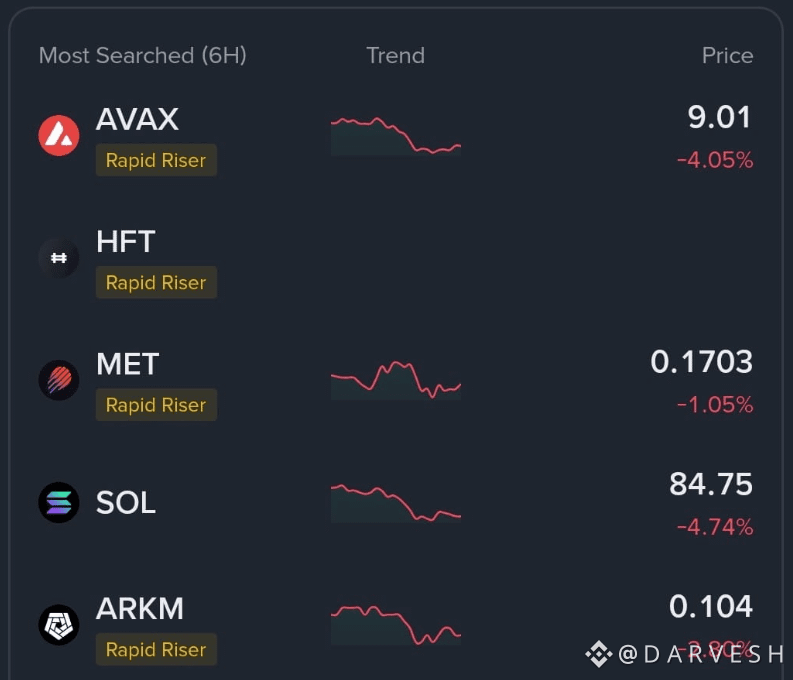
Gerade jetzt sind die meistgesuchten Coins auf Binance:
AVAX, HFT, MET, SOL, ARKM
Und in der Krypto-Welt, wo die Aufmerksamkeit fließt, folgt oft die Volatilität.
Hier ist, was die Augen der Händler auf sich zieht:
🟢 #AVAX – Institutionelles Interesse und die Annahme von realen Vermögenswerten rund um Avalanche werden stärker.
⚡ $HFT – Ein klassischer, schnelllebiger Coin mit niedriger Marktkapitalisierung für Scalper, die auf plötzlichen Schwung aus sind.
🔄 $MET – Trendet, während Kapital in das Solana-Ökosystem rotiert, spielt über SOL selbst hinaus.
🔹 #SOL – Der Hauptindikator für Altcoins; Risikobereitschaft zeigt sich hier normalerweise zuerst.
🧠 $ARKM – Gewinnt Aufmerksamkeit, während Händler nach On-Chain-Intelligenz und Tracking-Tools für Smart Money suchen.
Das ist nicht zufällig. Es ist der Ort, an dem die Marktaufmerksamkeit zuerst gebündelt wird, und in der Krypto-Welt bewegt sich die Aufmerksamkeit oft vor dem Preis.
📌 Nächste Schritte
In meinen kommenden Beiträgen werde ich Vorhersagen und vollständige Analysen für diese Coins aufschlüsseln.
Wenn Sie die vollständige Analyse wünschen, drücken Sie Gefällt mir und hinterlassen Sie einen Kommentar unten.
#JobsDataShock
👀 BINANCE SEARCH TREND IST GERADE GEFALLEN FÜR DIE NÄCHSTE WATCHLIST
Gerade jetzt sind die meistgesuchten Coins auf Binance:
AVAX, HFT, MET, SOL, ARKM
Und in der Krypto-Welt, wo die Aufmerksamkeit fließt, folgt oft die Volatilität.
Hier ist, was die Augen der Händler auf sich zieht:
🟢 #AVAX – Institutionelles Interesse und die Annahme von realen Vermögenswerten rund um Avalanche werden stärker.
⚡ $HFT – Ein klassischer, schnelllebiger Coin mit niedriger Marktkapitalisierung für Scalper, die auf plötzlichen Schwung aus sind.
🔄 $MET – Trendet, während Kapital in das Solana-Ökosystem rotiert, spielt über SOL selbst hinaus.
🔹 #SOL – Der Hauptindikator für Altcoins; Risikobereitschaft zeigt sich hier normalerweise zuerst.
🧠 $ARKM – Gewinnt Aufmerksamkeit, während Händler nach On-Chain-Intelligenz und Tracking-Tools für Smart Money suchen.
Das ist nicht zufällig. Es ist der Ort, an dem die Marktaufmerksamkeit zuerst gebündelt wird, und in der Krypto-Welt bewegt sich die Aufmerksamkeit oft vor dem Preis.
📌 Nächste Schritte
In meinen kommenden Beiträgen werde ich Vorhersagen und vollständige Analysen für diese Coins aufschlüsseln.
Wenn Sie die vollständige Analyse wünschen, drücken Sie Gefällt mir und hinterlassen Sie einen Kommentar unten.
#JobsDataShock
Gerade jetzt sind die meistgesuchten Coins auf Binance:
AVAX, HFT, MET, SOL, ARKM
Und in der Krypto-Welt, wo die Aufmerksamkeit fließt, folgt oft die Volatilität.
Hier ist, was die Augen der Händler auf sich zieht:
🟢 #AVAX – Institutionelles Interesse und die Annahme von realen Vermögenswerten rund um Avalanche werden stärker.
⚡ $HFT – Ein klassischer, schnelllebiger Coin mit niedriger Marktkapitalisierung für Scalper, die auf plötzlichen Schwung aus sind.
🔄 $MET – Trendet, während Kapital in das Solana-Ökosystem rotiert, spielt über SOL selbst hinaus.
🔹 #SOL – Der Hauptindikator für Altcoins; Risikobereitschaft zeigt sich hier normalerweise zuerst.
🧠 $ARKM – Gewinnt Aufmerksamkeit, während Händler nach On-Chain-Intelligenz und Tracking-Tools für Smart Money suchen.
Das ist nicht zufällig. Es ist der Ort, an dem die Marktaufmerksamkeit zuerst gebündelt wird, und in der Krypto-Welt bewegt sich die Aufmerksamkeit oft vor dem Preis.
📌 Nächste Schritte
In meinen kommenden Beiträgen werde ich Vorhersagen und vollständige Analysen für diese Coins aufschlüsseln.
Wenn Sie die vollständige Analyse wünschen, drücken Sie Gefällt mir und hinterlassen Sie einen Kommentar unten.
#JobsDataShock
1
1
50
·
--
Bullisch
🚨 ETWAS GROSSARTIGES IST GERADE PASSIERT
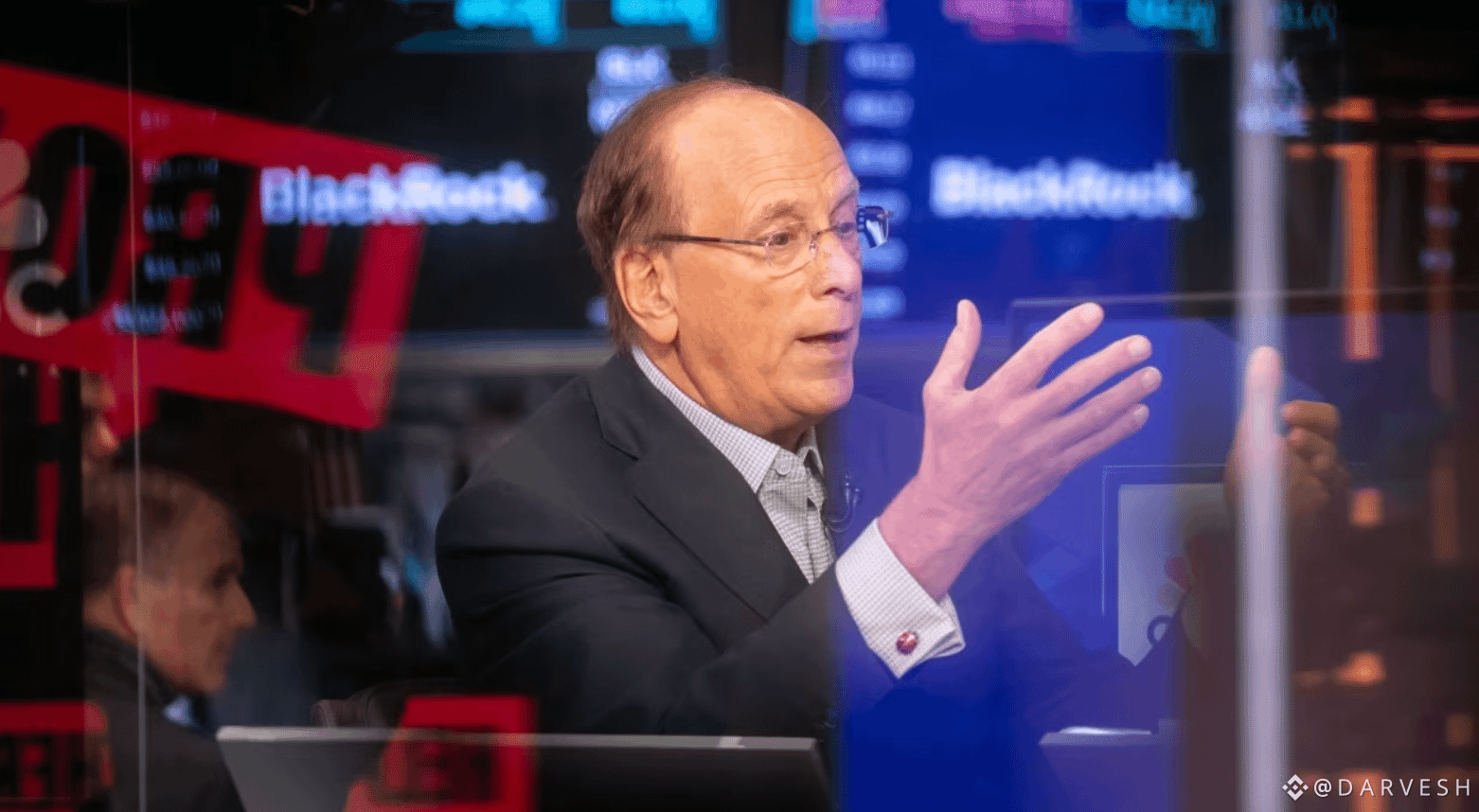
Der größte Vermögensverwalter der Welt, BlackRock, hat die Abhebungen von Investoren aus einem seiner großen privaten Kreditfonds eingeschränkt.
Berichten zufolge versuchten Investoren, rund 1,2 Milliarden Dollar aus einem Fonds abzuziehen, der etwa 26 Milliarden Dollar an Vermögenswerten verwaltet. Statt vollständiger Abhebungen capte die Firma die Rücknahmen auf 5 %, was bedeutet, dass viele Investoren nicht auf das gesamte Geld zugreifen konnten, das sie angefordert hatten.
Infolgedessen konnten fast die Hälfte der Investoren, die Gelder abheben wollten, dies nicht tun.
Und es passiert nicht isoliert.
Zur gleichen Zeit sieht sich Blackstone – einem weiteren Riesen im Bereich alternative Investments – einem rekordverdächtigen Abhebungsdruck von einem seiner Fonds gegenüber. Berichten zufolge musste die Firma etwa 400 Millionen Dollar ihres eigenen Kapitals injizieren, um die Abhebungen zu stabilisieren.
Warum das wichtig ist
Beide Firmen betreiben massive Fonds im privaten Kreditmarkt von 1,8 Billionen Dollar, einem schnell wachsenden Sektor, in dem Investoren Unternehmen direkt außerhalb des traditionellen Bankens Geld leihen.
Wenn Fonds in diesem Bereich anfangen, Abhebungen einzuschränken, wirft das Fragen zur Liquidität auf:
Eilen Investoren zum Ausgang?
Wird der Markt schwieriger schnell zu entwirren?
Könnte Stress in den privaten Kreditmärkten aufgebaut werden?
Um klarzustellen, diese Fonds beschränken oft gesetzlich die Abhebungen während starker Rücknahmeperioden, daher signalisiert das nicht unbedingt eine Krise.
Aber wenn die größten Akteure der Branche beginnen, diese Grenzen zu aktivieren, neigen die Märkte dazu, aufmerksam zu werden.
Die große Frage
Der private Kredit hat im letzten Jahrzehnt explodiert, da Investoren nach höheren Renditen suchten.
Jetzt ist die Schlüsselfrage:
Wenn der Abhebungsdruck weiter steigt, was passiert als nächstes mit diesem 1,8 Billionen Dollar Markt?
Ist dies nur eine normale Liquiditätskontrolle – oder das erste Warnsignal für tiefere Spannungen im privaten Kredit?
👇 Was denkst du, was als nächstes passiert?
#blackRock
$ETH $BTC $BNB
{spot}(BNBUSDT)
{spot}(BTCUSDT)
{spot}(ETHUSDT)
🚨 ETWAS GROSSARTIGES IST GERADE PASSIERT
Der größte Vermögensverwalter der Welt, BlackRock, hat die Abhebungen von Investoren aus einem seiner großen privaten Kreditfonds eingeschränkt.
Berichten zufolge versuchten Investoren, rund 1,2 Milliarden Dollar aus einem Fonds abzuziehen, der etwa 26 Milliarden Dollar an Vermögenswerten verwaltet. Statt vollständiger Abhebungen capte die Firma die Rücknahmen auf 5 %, was bedeutet, dass viele Investoren nicht auf das gesamte Geld zugreifen konnten, das sie angefordert hatten.
Infolgedessen konnten fast die Hälfte der Investoren, die Gelder abheben wollten, dies nicht tun.
Und es passiert nicht isoliert.
Zur gleichen Zeit sieht sich Blackstone – einem weiteren Riesen im Bereich alternative Investments – einem rekordverdächtigen Abhebungsdruck von einem seiner Fonds gegenüber. Berichten zufolge musste die Firma etwa 400 Millionen Dollar ihres eigenen Kapitals injizieren, um die Abhebungen zu stabilisieren.
Warum das wichtig ist
Beide Firmen betreiben massive Fonds im privaten Kreditmarkt von 1,8 Billionen Dollar, einem schnell wachsenden Sektor, in dem Investoren Unternehmen direkt außerhalb des traditionellen Bankens Geld leihen.
Wenn Fonds in diesem Bereich anfangen, Abhebungen einzuschränken, wirft das Fragen zur Liquidität auf:
Eilen Investoren zum Ausgang?
Wird der Markt schwieriger schnell zu entwirren?
Könnte Stress in den privaten Kreditmärkten aufgebaut werden?
Um klarzustellen, diese Fonds beschränken oft gesetzlich die Abhebungen während starker Rücknahmeperioden, daher signalisiert das nicht unbedingt eine Krise.
Aber wenn die größten Akteure der Branche beginnen, diese Grenzen zu aktivieren, neigen die Märkte dazu, aufmerksam zu werden.
Die große Frage
Der private Kredit hat im letzten Jahrzehnt explodiert, da Investoren nach höheren Renditen suchten.
Jetzt ist die Schlüsselfrage:
Wenn der Abhebungsdruck weiter steigt, was passiert als nächstes mit diesem 1,8 Billionen Dollar Markt?
Ist dies nur eine normale Liquiditätskontrolle – oder das erste Warnsignal für tiefere Spannungen im privaten Kredit?
👇 Was denkst du, was als nächstes passiert?
#blackRock
$ETH $BTC $BNB
Der größte Vermögensverwalter der Welt, BlackRock, hat die Abhebungen von Investoren aus einem seiner großen privaten Kreditfonds eingeschränkt.
Berichten zufolge versuchten Investoren, rund 1,2 Milliarden Dollar aus einem Fonds abzuziehen, der etwa 26 Milliarden Dollar an Vermögenswerten verwaltet. Statt vollständiger Abhebungen capte die Firma die Rücknahmen auf 5 %, was bedeutet, dass viele Investoren nicht auf das gesamte Geld zugreifen konnten, das sie angefordert hatten.
Infolgedessen konnten fast die Hälfte der Investoren, die Gelder abheben wollten, dies nicht tun.
Und es passiert nicht isoliert.
Zur gleichen Zeit sieht sich Blackstone – einem weiteren Riesen im Bereich alternative Investments – einem rekordverdächtigen Abhebungsdruck von einem seiner Fonds gegenüber. Berichten zufolge musste die Firma etwa 400 Millionen Dollar ihres eigenen Kapitals injizieren, um die Abhebungen zu stabilisieren.
Warum das wichtig ist
Beide Firmen betreiben massive Fonds im privaten Kreditmarkt von 1,8 Billionen Dollar, einem schnell wachsenden Sektor, in dem Investoren Unternehmen direkt außerhalb des traditionellen Bankens Geld leihen.
Wenn Fonds in diesem Bereich anfangen, Abhebungen einzuschränken, wirft das Fragen zur Liquidität auf:
Eilen Investoren zum Ausgang?
Wird der Markt schwieriger schnell zu entwirren?
Könnte Stress in den privaten Kreditmärkten aufgebaut werden?
Um klarzustellen, diese Fonds beschränken oft gesetzlich die Abhebungen während starker Rücknahmeperioden, daher signalisiert das nicht unbedingt eine Krise.
Aber wenn die größten Akteure der Branche beginnen, diese Grenzen zu aktivieren, neigen die Märkte dazu, aufmerksam zu werden.
Die große Frage
Der private Kredit hat im letzten Jahrzehnt explodiert, da Investoren nach höheren Renditen suchten.
Jetzt ist die Schlüsselfrage:
Wenn der Abhebungsdruck weiter steigt, was passiert als nächstes mit diesem 1,8 Billionen Dollar Markt?
Ist dies nur eine normale Liquiditätskontrolle – oder das erste Warnsignal für tiefere Spannungen im privaten Kredit?
👇 Was denkst du, was als nächstes passiert?
#blackRock
$ETH $BTC $BNB
2
271
Anmelden und weiter Inhalte entdecken
Krypto-Nutzer weltweit auf Binance Square kennenlernen
⚡️ Bleib in Sachen Krypto stets am Puls.
💬 Die weltgrößte Kryptobörse vertraut darauf.
👍 Erhalte verlässliche Einblicke von verifizierten Creators.
E-Mail-Adresse/Telefonnummer
Trendthemen
CircleMints500MUSDCOnSolana
5,463 Aufrufe
297 Kommentare
💰 MASSIV: Circle prägt $500M USDC auf Solana!
Circle hat gerade 500 Millionen $USDC auf Solana in 2 Transaktionen geprägt ($250M + $250M) am 25. September – in nur 5,5 Stunden! 🚀
Solana hält jetzt $7,48B+ $USDC – über 50% seines $14,7B Stablecoin-Angebots.
Warum Solana?
⚡️ Geschwindigkeit: 65k TPS
💸 Niedrige Gebühren: $0.00025
🔥 DeFi-Hub: Jupiter, Raydium mit Pump
Das ist eine der größten Prägeserien an einem einzigen Tag & ein Signal für eine enorme, institutionelle Nachfrage nach der Solana-Ökonomie.
Bullish für $SOL? 👇
#Circle #USDC #Solana #Stablecoin #DeFi#circlemints500musdconsolana
True News
·8 Likes
·4.2k Aufrufe
PolymarketBankFailureBetsDrawFDICConcern
18,165 Aufrufe
525 Kommentare
BlackRockBuildsTokenizedPortfoliosForOndo
13,908 Aufrufe
363 Kommentare