
ALISHBA SOZAR
9k Beiträge

ALISHBA SOZAR
Melden
Nutzer blockieren
Crypto enthusiast since 2020 | Real trades, failures & comebacks Helping beginners avoid common mistakes | DM for collab | NFA 💼
5 Following
25.4K+ Follower
32.3K+ Like gegeben
Beiträge
Alle
Zitierungen
Live
PINNED
·
--
Bullisch
Ich unterstütze die Leute, die bei allen Posts aktiv sind, nicht nur wenn ich Geld verteile.
#Alishba_Sozar
Ich unterstütze die Leute, die bei allen Posts aktiv sind, nicht nur wenn ich Geld verteile.
#Alishba_Sozar
#Alishba_Sozar

126
7
227
17.9k
Glückwunsch.
Du hast es geschafft, die ersten 6 Monate des Jahres 2026 damit zu verbringen, 24/7 auf Charts zu starren und grünen Kerzen hinterherzulaufen.
#Alishba_Sozar
$LAB $SPCXB $TSLAB
Glückwunsch.
Du hast es geschafft, die ersten 6 Monate des Jahres 2026 damit zu verbringen, 24/7 auf Charts zu starren und grünen Kerzen hinterherzulaufen.
#Alishba_Sozar
$LAB $SPCXB $TSLAB
Du hast es geschafft, die ersten 6 Monate des Jahres 2026 damit zu verbringen, 24/7 auf Charts zu starren und grünen Kerzen hinterherzulaufen.
#Alishba_Sozar
$LAB $SPCXB $TSLAB

8
15
596
Lieber Trader ⚠️
Gib niemals auf. Dein Durchbruch könnte näher sein, als du denkst.
Mit 21 brach sein Geschäft zusammen.
Mit 22 kandidierte er für das Parlament und verlor.
Mit 24 gründete er ein weiteres Unternehmen, aber es scheiterte erneut.
Mit 26 verlor er seine Frau.
Mit 34 kandidierte er erneut für das Parlament und verlor.
Mit 45 kandidierte er für den Senat und wurde besiegt.
Später bemühte er sich um die Nominierung zum Vizepräsidenten, wurde jedoch nicht ausgewählt.
Mit 49 kandidierte er ein weiteres Mal für den Senat und verlor erneut.
Die meisten Menschen hätten sich spätestens dann aufgegeben.
Doch mit 52 kandidierte er als Präsident der Vereinigten Staaten und gewann.
Dieser Mann war Abraham Lincoln.
Seine Reise erinnert uns daran: Scheitern ist nicht das Gegenteil von Erfolg – es ist oft Teil des Weges zum Erfolg.
Egal, wie oft das Leben dich auch zu Boden wirft: Geh weiter. Bleib geduldig. Bleib konsequent. Hör niemals auf, an deinen Glauben zu festigen.
Dein nächster Versuch könnte dein Leben verändern.
#Alishba_Sozar
$TSLAB
Lieber Trader ⚠️
Gib niemals auf. Dein Durchbruch könnte näher sein, als du denkst.
Mit 21 brach sein Geschäft zusammen.
Mit 22 kandidierte er für das Parlament und verlor.
Mit 24 gründete er ein weiteres Unternehmen, aber es scheiterte erneut.
Mit 26 verlor er seine Frau.
Mit 34 kandidierte er erneut für das Parlament und verlor.
Mit 45 kandidierte er für den Senat und wurde besiegt.
Später bemühte er sich um die Nominierung zum Vizepräsidenten, wurde jedoch nicht ausgewählt.
Mit 49 kandidierte er ein weiteres Mal für den Senat und verlor erneut.
Die meisten Menschen hätten sich spätestens dann aufgegeben.
Doch mit 52 kandidierte er als Präsident der Vereinigten Staaten und gewann.
Dieser Mann war Abraham Lincoln.
Seine Reise erinnert uns daran: Scheitern ist nicht das Gegenteil von Erfolg – es ist oft Teil des Weges zum Erfolg.
Egal, wie oft das Leben dich auch zu Boden wirft: Geh weiter. Bleib geduldig. Bleib konsequent. Hör niemals auf, an deinen Glauben zu festigen.
Dein nächster Versuch könnte dein Leben verändern.
#Alishba_Sozar
$TSLAB
Gib niemals auf. Dein Durchbruch könnte näher sein, als du denkst.
Mit 21 brach sein Geschäft zusammen.
Mit 22 kandidierte er für das Parlament und verlor.
Mit 24 gründete er ein weiteres Unternehmen, aber es scheiterte erneut.
Mit 26 verlor er seine Frau.
Mit 34 kandidierte er erneut für das Parlament und verlor.
Mit 45 kandidierte er für den Senat und wurde besiegt.
Später bemühte er sich um die Nominierung zum Vizepräsidenten, wurde jedoch nicht ausgewählt.
Mit 49 kandidierte er ein weiteres Mal für den Senat und verlor erneut.
Die meisten Menschen hätten sich spätestens dann aufgegeben.
Doch mit 52 kandidierte er als Präsident der Vereinigten Staaten und gewann.
Dieser Mann war Abraham Lincoln.
Seine Reise erinnert uns daran: Scheitern ist nicht das Gegenteil von Erfolg – es ist oft Teil des Weges zum Erfolg.
Egal, wie oft das Leben dich auch zu Boden wirft: Geh weiter. Bleib geduldig. Bleib konsequent. Hör niemals auf, an deinen Glauben zu festigen.
Dein nächster Versuch könnte dein Leben verändern.
#Alishba_Sozar
$TSLAB
6
1.8k
Hör auf, ein Versager zu sein. Steh früh auf. Mach dein Bett. Geh trainieren. Iss gesund. Mach deine Wäsche. Bezahle jede Rechnung pünktlich. Spar so lange, bis es wehtut, und dann noch mehr. Such dir eine Fertigkeit aus und beschäftige dich so sehr damit, bis du besessen bist. Such dir eine Person aus, die du werden willst, und fange heute an, dich so zu verhalten. Kümmere dich mehr als alle um dich herum. Drück weiter, bis du brichst, und steh dann wieder auf. Zu wissen, wann man aufhören sollte, ist keine Schwäche, sondern Strategie. Steh gerade. Sag deine Meinung. Geh voll rein. Lächle trotzdem. Das Leben ist kurz und dann ist es vorbei. Unglück ist eine Entscheidung. Du bist nicht der Erste, der leidet, und du wirst nicht der Letzte sein. Jemand mit weniger als du hat es geschafft. Also wirst auch du es schaffen. Niemand ist besonders. Jeder ist es. Weitergehen.
#Alishba_Sozar
$TSLAB $METAB $BTC
Hör auf, ein Versager zu sein. Steh früh auf. Mach dein Bett. Geh trainieren. Iss gesund. Mach deine Wäsche. Bezahle jede Rechnung pünktlich. Spar so lange, bis es wehtut, und dann noch mehr. Such dir eine Fertigkeit aus und beschäftige dich so sehr damit, bis du besessen bist. Such dir eine Person aus, die du werden willst, und fange heute an, dich so zu verhalten. Kümmere dich mehr als alle um dich herum. Drück weiter, bis du brichst, und steh dann wieder auf. Zu wissen, wann man aufhören sollte, ist keine Schwäche, sondern Strategie. Steh gerade. Sag deine Meinung. Geh voll rein. Lächle trotzdem. Das Leben ist kurz und dann ist es vorbei. Unglück ist eine Entscheidung. Du bist nicht der Erste, der leidet, und du wirst nicht der Letzte sein. Jemand mit weniger als du hat es geschafft. Also wirst auch du es schaffen. Niemand ist besonders. Jeder ist es. Weitergehen.
#Alishba_Sozar
$TSLAB $METAB $BTC
#Alishba_Sozar
$TSLAB $METAB $BTC

17
71
5.4k
Gib mir einen guten Grund, heute Bitcoin zu kaufen und ihn für die nächsten 10+ Jahre zu halten.
Ich habe noch kein überzeugendes Argument gehört, außer "Preis steigt."
Ich warte.
Gib mir einen guten Grund, heute Bitcoin zu kaufen und ihn für die nächsten 10+ Jahre zu halten.
Ich habe noch kein überzeugendes Argument gehört, außer "Preis steigt."
Ich warte.
Ich habe noch kein überzeugendes Argument gehört, außer "Preis steigt."
Ich warte.
7
13
526
Der Boden ist erreicht.
$59k
$1500
$60
Ich setze meinen Ruf darauf.
Der Boden ist erreicht.
$59k
$1500
$60
Ich setze meinen Ruf darauf.
$59k
$1500
$60
Ich setze meinen Ruf darauf.
2
13
193
„Willkommen zurück. Du warst 7 Jahre im Koma.“
„Was kostet Ethereum jetzt? 15.000 $? Ich habe 2020 für 1.600 $ eingekauft.“
„Willkommen zurück. Du warst 7 Jahre im Koma.“
„Was kostet Ethereum jetzt? 15.000 $? Ich habe 2020 für 1.600 $ eingekauft.“
„Was kostet Ethereum jetzt? 15.000 $? Ich habe 2020 für 1.600 $ eingekauft.“

1
9
559
Die Leute sind nicht bereit für Folgendes:
Btc $39k
Eth $540
Sol $14
Hype $32
Die Leute sind nicht bereit für Folgendes:
Btc $39k
Eth $540
Sol $14
Hype $32
Btc $39k
Eth $540
Sol $14
Hype $32

8
16
540
Die Leute denken (oder fühlen immer noch), dass, weil Bitcoin down ist, auch der gesamte Crypto-Markt down ist.
Derivate/Perps, Stablecoins, Prognosemärkte usw. sind alle im Crypto-Bereich am Steigen.
Crypto berührt jeden Bereich der Finanzen und ist mittlerweile viel breiter gefächert als nur Bitcoin. Es wird eine Weile dauern, bis das bei allen ankommt.
(Und ja - Bitcoin wird großartig abschneiden und ist wichtiger denn je - einer von vielen Zyklen, die wir alle durchlebt haben.
Die Leute denken (oder fühlen immer noch), dass, weil Bitcoin down ist, auch der gesamte Crypto-Markt down ist.
Derivate/Perps, Stablecoins, Prognosemärkte usw. sind alle im Crypto-Bereich am Steigen.
Crypto berührt jeden Bereich der Finanzen und ist mittlerweile viel breiter gefächert als nur Bitcoin. Es wird eine Weile dauern, bis das bei allen ankommt.
(Und ja - Bitcoin wird großartig abschneiden und ist wichtiger denn je - einer von vielen Zyklen, die wir alle durchlebt haben.
Derivate/Perps, Stablecoins, Prognosemärkte usw. sind alle im Crypto-Bereich am Steigen.
Crypto berührt jeden Bereich der Finanzen und ist mittlerweile viel breiter gefächert als nur Bitcoin. Es wird eine Weile dauern, bis das bei allen ankommt.
(Und ja - Bitcoin wird großartig abschneiden und ist wichtiger denn je - einer von vielen Zyklen, die wir alle durchlebt haben.
1
7
189
Der verrückteste Teil eines jeden Bullenmarktes ist, wie schnell es von ‚Krypto ist tot‘ zu neuen Allzeithochs geht.
Es gibt fast kein Dazwischen. Es dreht sich einfach um.
Wir sind nah am Umschwung.
Der verrückteste Teil eines jeden Bullenmarktes ist, wie schnell es von ‚Krypto ist tot‘ zu neuen Allzeithochs geht.
Es gibt fast kein Dazwischen. Es dreht sich einfach um.
Wir sind nah am Umschwung.
Es gibt fast kein Dazwischen. Es dreht sich einfach um.
Wir sind nah am Umschwung.
1
8
526
Verifiziert
Niemand versteht das echte Endspiel, das Michael Saylor spielt.
1. 🪙 Akkumuliere 1 Million $BTC in $MSTR (bereits zu 84% abgeschlossen)
2. 🇺🇸 Vom US-Regierung für 100 Milliarden Dollar aufgekauft/absorbiert werden, um 5% des Bitcoin-Angebots ohne Slippage zu erwerben
3. 💰 Den Bitcoin-Preis verdreifachen und der US-Regierung über Nacht weitere 150 Milliarden Dollar einbringen
Michael Saylor baut kein Unternehmen auf, er serviert der US-Strategischen Bitcoin-Reserve ein Silbertablett.
#Alishba_Sozar
Niemand versteht das echte Endspiel, das Michael Saylor spielt.
1. 🪙 Akkumuliere 1 Million $BTC in $MSTR (bereits zu 84% abgeschlossen)
2. 🇺🇸 Vom US-Regierung für 100 Milliarden Dollar aufgekauft/absorbiert werden, um 5% des Bitcoin-Angebots ohne Slippage zu erwerben
3. 💰 Den Bitcoin-Preis verdreifachen und der US-Regierung über Nacht weitere 150 Milliarden Dollar einbringen
Michael Saylor baut kein Unternehmen auf, er serviert der US-Strategischen Bitcoin-Reserve ein Silbertablett.
#Alishba_Sozar
1. 🪙 Akkumuliere 1 Million $BTC in $MSTR (bereits zu 84% abgeschlossen)
2. 🇺🇸 Vom US-Regierung für 100 Milliarden Dollar aufgekauft/absorbiert werden, um 5% des Bitcoin-Angebots ohne Slippage zu erwerben
3. 💰 Den Bitcoin-Preis verdreifachen und der US-Regierung über Nacht weitere 150 Milliarden Dollar einbringen
Michael Saylor baut kein Unternehmen auf, er serviert der US-Strategischen Bitcoin-Reserve ein Silbertablett.
#Alishba_Sozar
3
26
4.1k
·
--
Bullisch
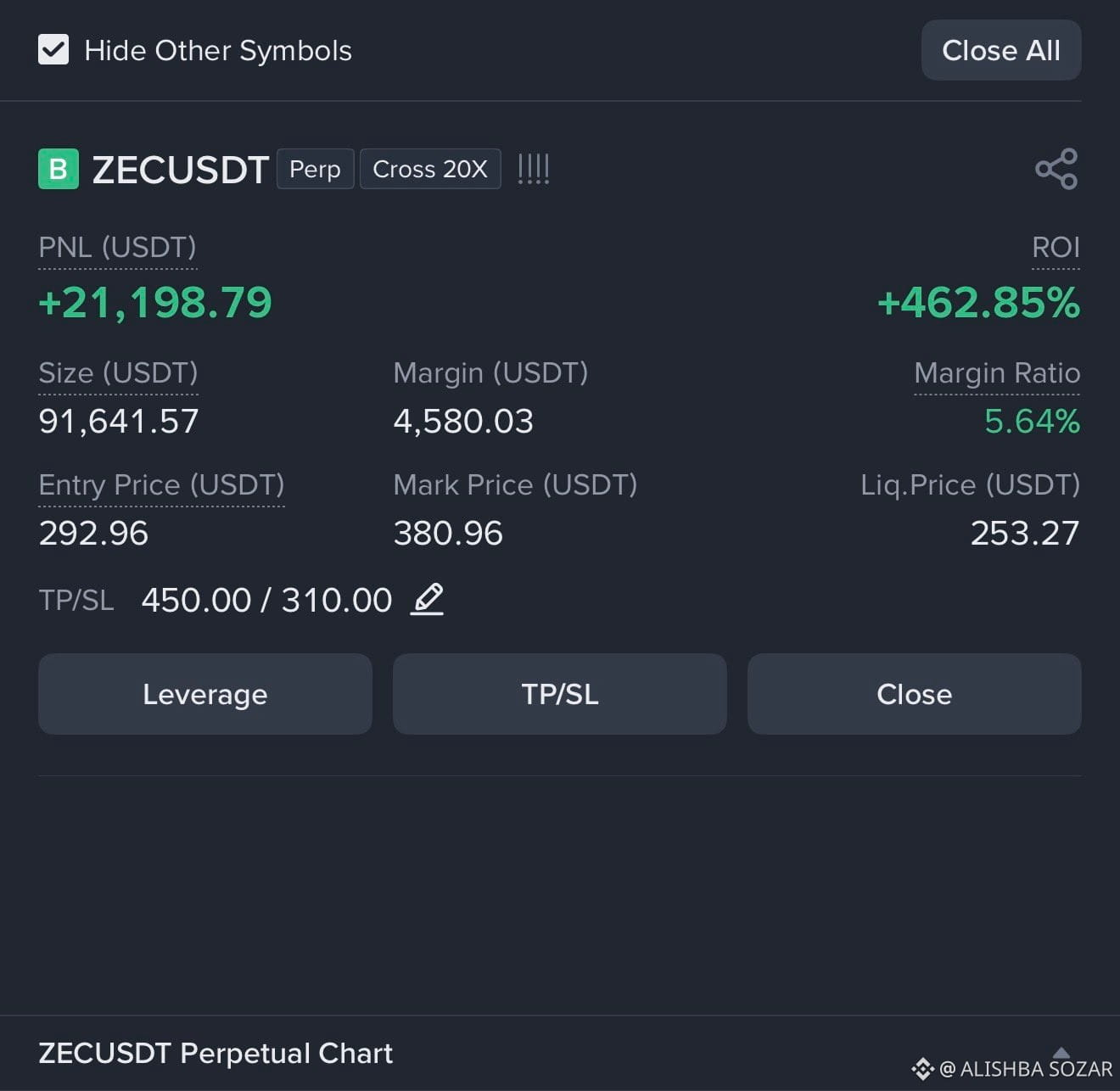
Mein $ZEC Long-Trade liegt jetzt bei über 20k $ Gewinn 🔥
Das ist deine tägliche Erinnerung: "Dips sind Geschenke."
Ich halte weiterhin und warte darauf, dass $ZEC $450 erreicht. Wenn es so weit kommt, wird mein Gewinn etwa 40k $ betragen.
Glaubst du, ich sollte jetzt schließen oder auf mehr Gewinn warten?
#Alishba_Sozar
Mein $ZEC Long-Trade liegt jetzt bei über 20k $ Gewinn 🔥
Das ist deine tägliche Erinnerung: "Dips sind Geschenke."
Ich halte weiterhin und warte darauf, dass $ZEC $450 erreicht. Wenn es so weit kommt, wird mein Gewinn etwa 40k $ betragen.
Glaubst du, ich sollte jetzt schließen oder auf mehr Gewinn warten?
#Alishba_Sozar
Das ist deine tägliche Erinnerung: "Dips sind Geschenke."
Ich halte weiterhin und warte darauf, dass $ZEC $450 erreicht. Wenn es so weit kommt, wird mein Gewinn etwa 40k $ betragen.
Glaubst du, ich sollte jetzt schließen oder auf mehr Gewinn warten?
#Alishba_Sozar
2
10
1.1k
Echte Geschichte meines engen Freundes
Er hat 130.000 $ in #altcoins im Jahr 2023 investiert.
Seine 130.000 $ sind auf 840.000 $ gestiegen.
Er hat nicht verkauft, weil er 1 Million $ wollte.
Jetzt sind es nach dem jüngsten Crash nur noch 2.300 $.
Er hat keinen einzigen Dollar ausgecasht und bereut es.
#Alishba_Sozar
Echte Geschichte meines engen Freundes
Er hat 130.000 $ in #altcoins im Jahr 2023 investiert.
Seine 130.000 $ sind auf 840.000 $ gestiegen.
Er hat nicht verkauft, weil er 1 Million $ wollte.
Jetzt sind es nach dem jüngsten Crash nur noch 2.300 $.
Er hat keinen einzigen Dollar ausgecasht und bereut es.
#Alishba_Sozar
Er hat 130.000 $ in #altcoins im Jahr 2023 investiert.
Seine 130.000 $ sind auf 840.000 $ gestiegen.
Er hat nicht verkauft, weil er 1 Million $ wollte.
Jetzt sind es nach dem jüngsten Crash nur noch 2.300 $.
Er hat keinen einzigen Dollar ausgecasht und bereut es.
#Alishba_Sozar

3
11
420
·
--
Bärisch
Ich bin seit über 7 Jahren im Crypto-Bereich und ich habe noch nie so glückliche und optimistische Leute gesehen, selbst nach #BITCOIN Dumps von mehr als 20% in weniger als zwei Wochen und über 50% Rückgang von den Allzeithochs.
Kein einziger Hauch von Angst oder Gejammer auf der Timeline.
Jeder scheint mit diesen Preislevels einverstanden zu sein.
Kein einziger Kaufdruck oder Infusion.
Wir gehen viel tiefer, das ist nicht der maximale Schmerz.
Nicht einmal annähernd.
$BTC
#Alishba_Sozar
Ich bin seit über 7 Jahren im Crypto-Bereich und ich habe noch nie so glückliche und optimistische Leute gesehen, selbst nach #BITCOIN Dumps von mehr als 20% in weniger als zwei Wochen und über 50% Rückgang von den Allzeithochs.
Kein einziger Hauch von Angst oder Gejammer auf der Timeline.
Jeder scheint mit diesen Preislevels einverstanden zu sein.
Kein einziger Kaufdruck oder Infusion.
Wir gehen viel tiefer, das ist nicht der maximale Schmerz.
Nicht einmal annähernd.
$BTC
#Alishba_Sozar
Kein einziger Hauch von Angst oder Gejammer auf der Timeline.
Jeder scheint mit diesen Preislevels einverstanden zu sein.
Kein einziger Kaufdruck oder Infusion.
Wir gehen viel tiefer, das ist nicht der maximale Schmerz.
Nicht einmal annähernd.
$BTC
#Alishba_Sozar

2
12
713
·
--
Bärisch
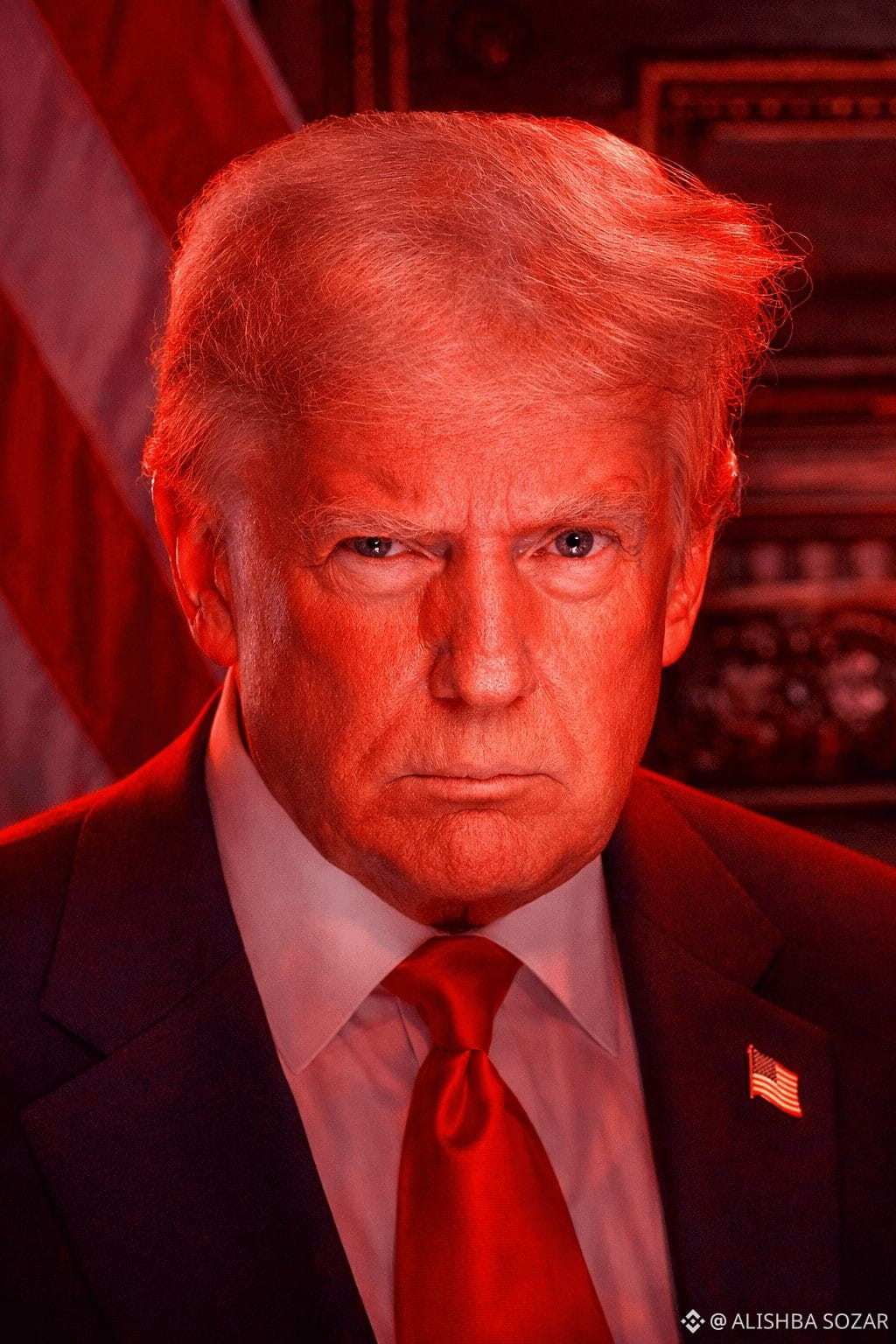
Der Krypto-Präsident:
- Hat Verbrechen und Rug Pulls legalisiert
- Versprach, Bitcoin "zum Mond" zu bringen
- Hat Betrüger und Geldwäscher begnadigt
- Hat deregulierend gehandelt, damit Banken und Versicherungen die Anleger ausnehmen können.
Jetzt ist er während einer der unsichersten Zeiten der Geschichte still. Was ist passiert?
$BTC $ETH $BNB
#Alishba_Sozar
Der Krypto-Präsident:
- Hat Verbrechen und Rug Pulls legalisiert
- Versprach, Bitcoin "zum Mond" zu bringen
- Hat Betrüger und Geldwäscher begnadigt
- Hat deregulierend gehandelt, damit Banken und Versicherungen die Anleger ausnehmen können.
Jetzt ist er während einer der unsichersten Zeiten der Geschichte still. Was ist passiert?
$BTC $ETH $BNB
#Alishba_Sozar
- Hat Verbrechen und Rug Pulls legalisiert
- Versprach, Bitcoin "zum Mond" zu bringen
- Hat Betrüger und Geldwäscher begnadigt
- Hat deregulierend gehandelt, damit Banken und Versicherungen die Anleger ausnehmen können.
Jetzt ist er während einer der unsichersten Zeiten der Geschichte still. Was ist passiert?
$BTC $ETH $BNB
#Alishba_Sozar
1
4
344
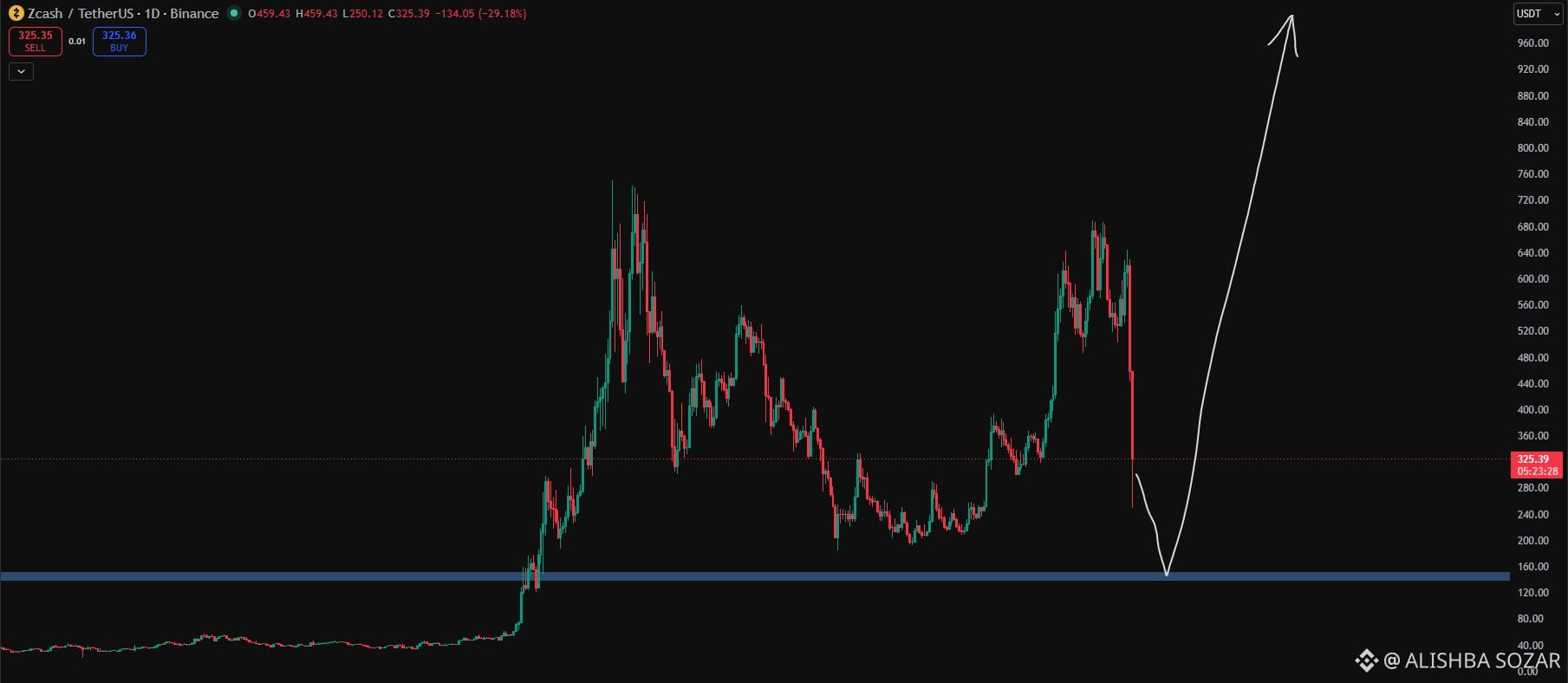
Wenn der Markt mir eine Gelegenheit gibt
Werde ich $ZEC um 140-150 kaufen
Das ist der Preisbereich, auf den ich wirklich lange gewartet habe
#ZEC ist immer noch ein sehr gutes Langzeit-Hold-Projekt, solange wir einen wirklich guten Einstieg haben
#Alishba_Sozar
Wenn der Markt mir eine Gelegenheit gibt
Werde ich $ZEC um 140-150 kaufen
Das ist der Preisbereich, auf den ich wirklich lange gewartet habe
#ZEC ist immer noch ein sehr gutes Langzeit-Hold-Projekt, solange wir einen wirklich guten Einstieg haben
#Alishba_Sozar
Werde ich $ZEC um 140-150 kaufen
Das ist der Preisbereich, auf den ich wirklich lange gewartet habe
#ZEC ist immer noch ein sehr gutes Langzeit-Hold-Projekt, solange wir einen wirklich guten Einstieg haben
#Alishba_Sozar
3
206
·
--
Bullisch
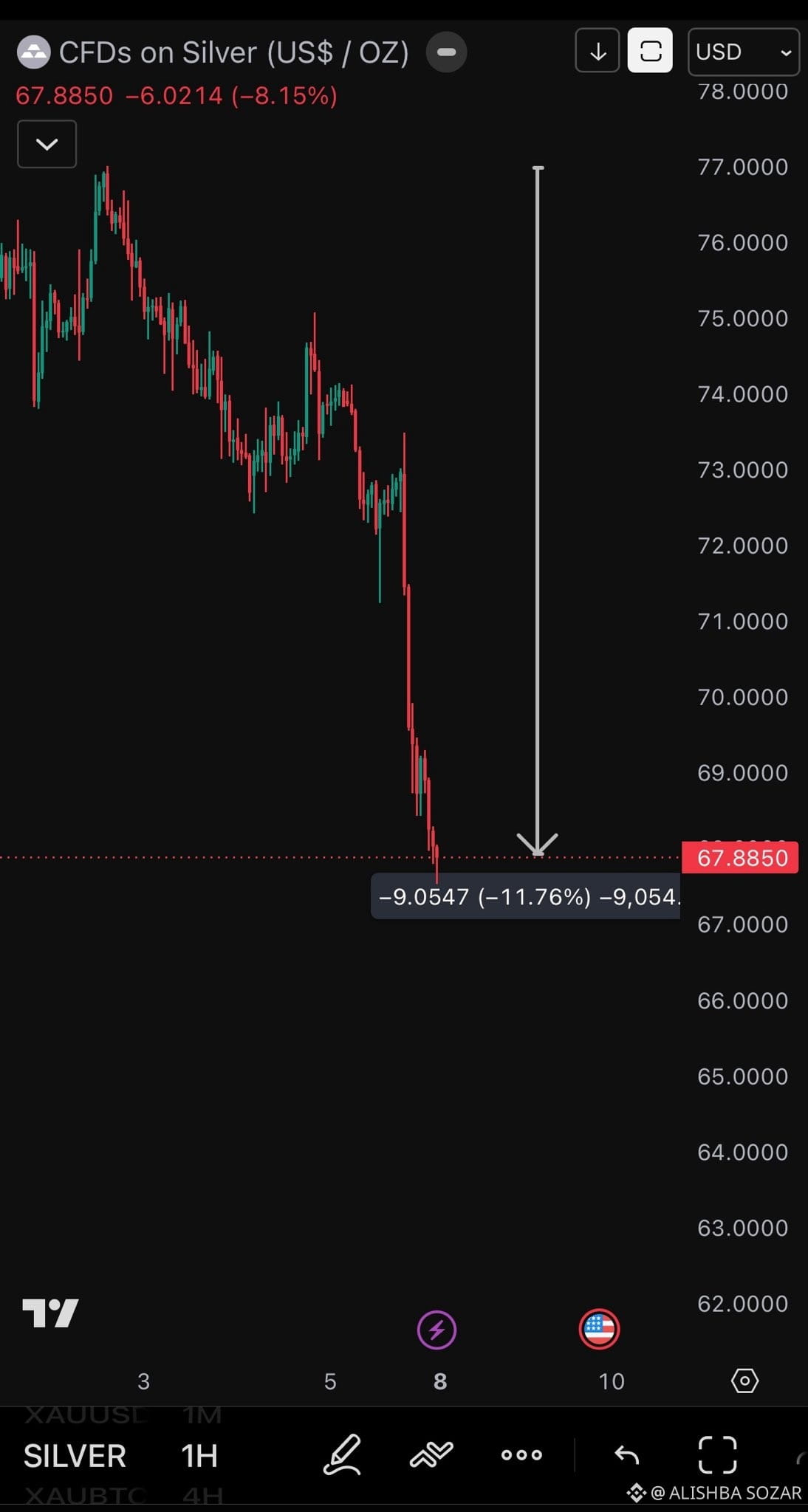
Ich habe nur #GOLD geshortet und vergessen, auf #SILVER zu achten.
GOLD und SILBER sind wie $ETH und $BTC .
Ich habe nur beim Shorten von Gold profitiert und fühle mich ein wenig bereuigend, dass ich Silber verpasst habe.
#Alishba_Sozar
Ich habe nur #GOLD geshortet und vergessen, auf #SILVER zu achten.
GOLD und SILBER sind wie $ETH und $BTC .
Ich habe nur beim Shorten von Gold profitiert und fühle mich ein wenig bereuigend, dass ich Silber verpasst habe.
#Alishba_Sozar
GOLD und SILBER sind wie $ETH und $BTC .
Ich habe nur beim Shorten von Gold profitiert und fühle mich ein wenig bereuigend, dass ich Silber verpasst habe.
#Alishba_Sozar
1
2
592
·
--
Bullisch
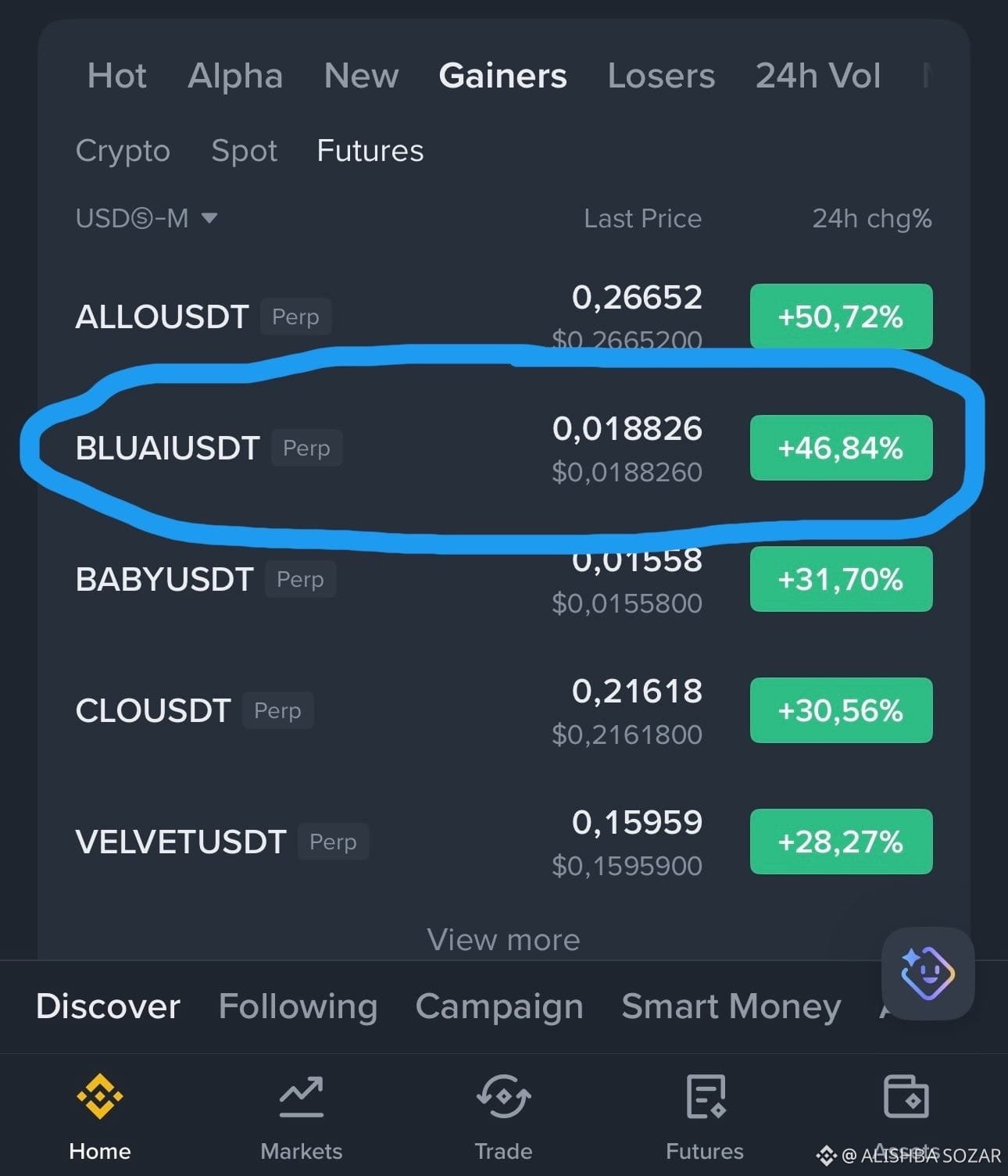
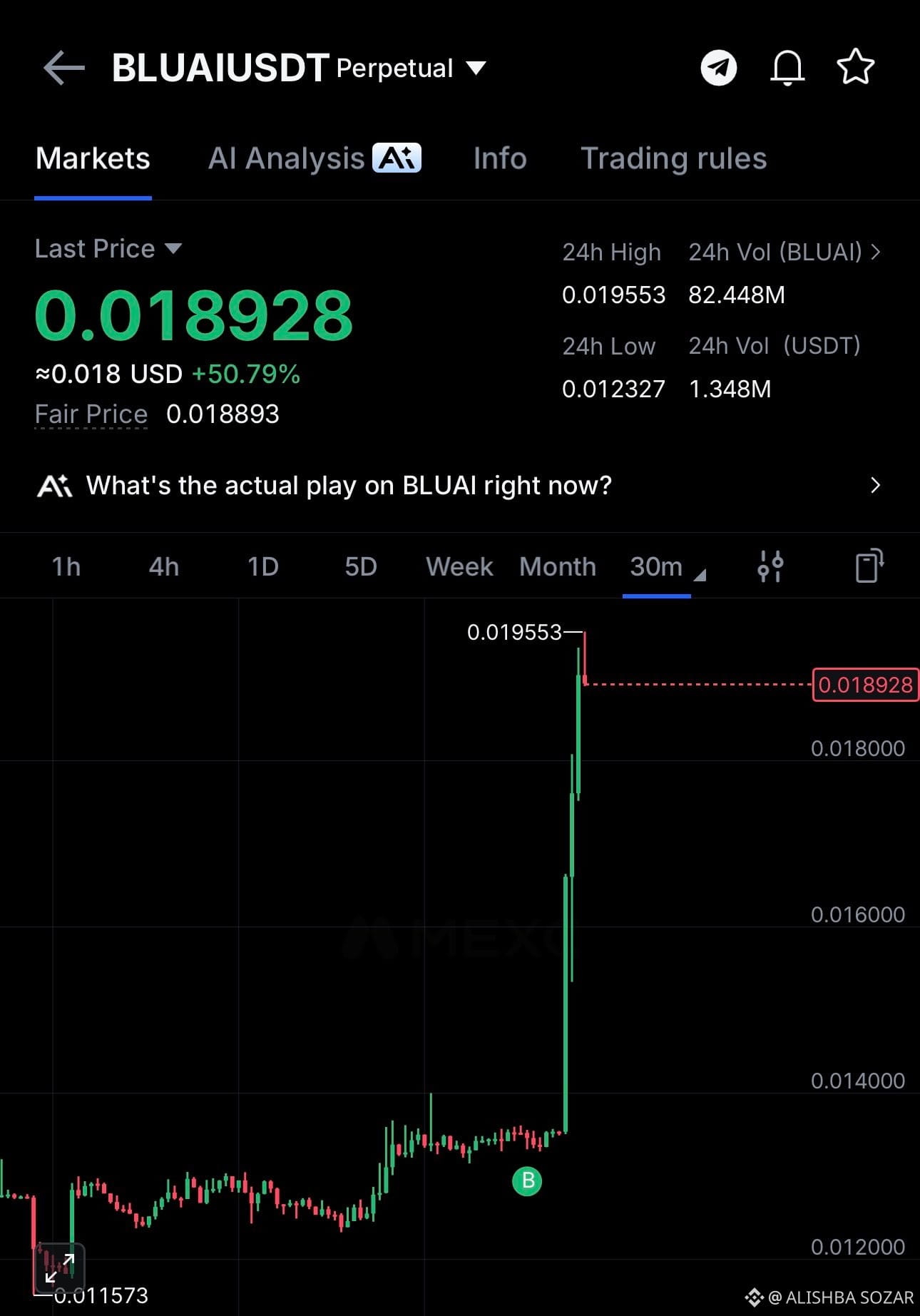
Alishba bei den Top-Gewinnern 🔥
$BLUAI +50% in 4 Stunden
Ich habe dieses Signal vor 4 Stunden geteilt und jetzt bin ich bei +50% Gewinn.
Ich kann öffentliche Signale für Small-Cap #Altcoins nicht teilen, da zu viele Käufer den Preis in der Zukunft beeinflussen würden.
Und ich habe eine Verantwortung gegenüber denen, die dafür bezahlt haben, zu abonnieren. Was die Large-Cap-Coins angeht, werde ich weiterhin öffentliche Signale mit euch teilen.
#Alishba_Sozar
Alishba bei den Top-Gewinnern 🔥
$BLUAI +50% in 4 Stunden
Ich habe dieses Signal vor 4 Stunden geteilt und jetzt bin ich bei +50% Gewinn.
Ich kann öffentliche Signale für Small-Cap #Altcoins nicht teilen, da zu viele Käufer den Preis in der Zukunft beeinflussen würden.
Und ich habe eine Verantwortung gegenüber denen, die dafür bezahlt haben, zu abonnieren. Was die Large-Cap-Coins angeht, werde ich weiterhin öffentliche Signale mit euch teilen.
#Alishba_Sozar
$BLUAI +50% in 4 Stunden
Ich habe dieses Signal vor 4 Stunden geteilt und jetzt bin ich bei +50% Gewinn.
Ich kann öffentliche Signale für Small-Cap #Altcoins nicht teilen, da zu viele Käufer den Preis in der Zukunft beeinflussen würden.
Und ich habe eine Verantwortung gegenüber denen, die dafür bezahlt haben, zu abonnieren. Was die Large-Cap-Coins angeht, werde ich weiterhin öffentliche Signale mit euch teilen.
#Alishba_Sozar
5
3
305
Stopp... Gib mir 2 Minuten, bevor du deine Krypto panikverkaufst.
Wenn du überall nur rote Velas siehst, denkst, dass Krypto am Ende ist und überlegst, alles zu verkaufen, dann lies bitte Folgendes:
Erstens, Tiefpunkte sind immer beängstigend. Die Nachrichten werden bärisch, soziale Medien werden negativ, und plötzlich wird jeder zum Experten, der dir sagt, dass du verkaufen sollst. Das passiert in jedem Zyklus.
Zweitens, mach nicht den Fehler, von Coin zu Coin zu springen, nur weil du es leid bist zu warten. Ich habe Leute gesehen, die monatelang gehalten haben, zur schlechtesten Zeit gewechselt sind und dann die eigentliche Rally verpasst haben.
Drittens, ich glaube immer noch nicht, dass die größte Bewegung dieses Zyklus vorbei ist. Die meisten Leute geben in der Nähe des Tiefpunkts auf, nicht in der Nähe des Hochpunkts.
In dieser Phase ist Geduld wichtiger als Emotionen.
Die Leute, die während der Angst ruhig bleiben, sind normalerweise die, die am meisten profitieren werden, wenn sich der Markt dreht.
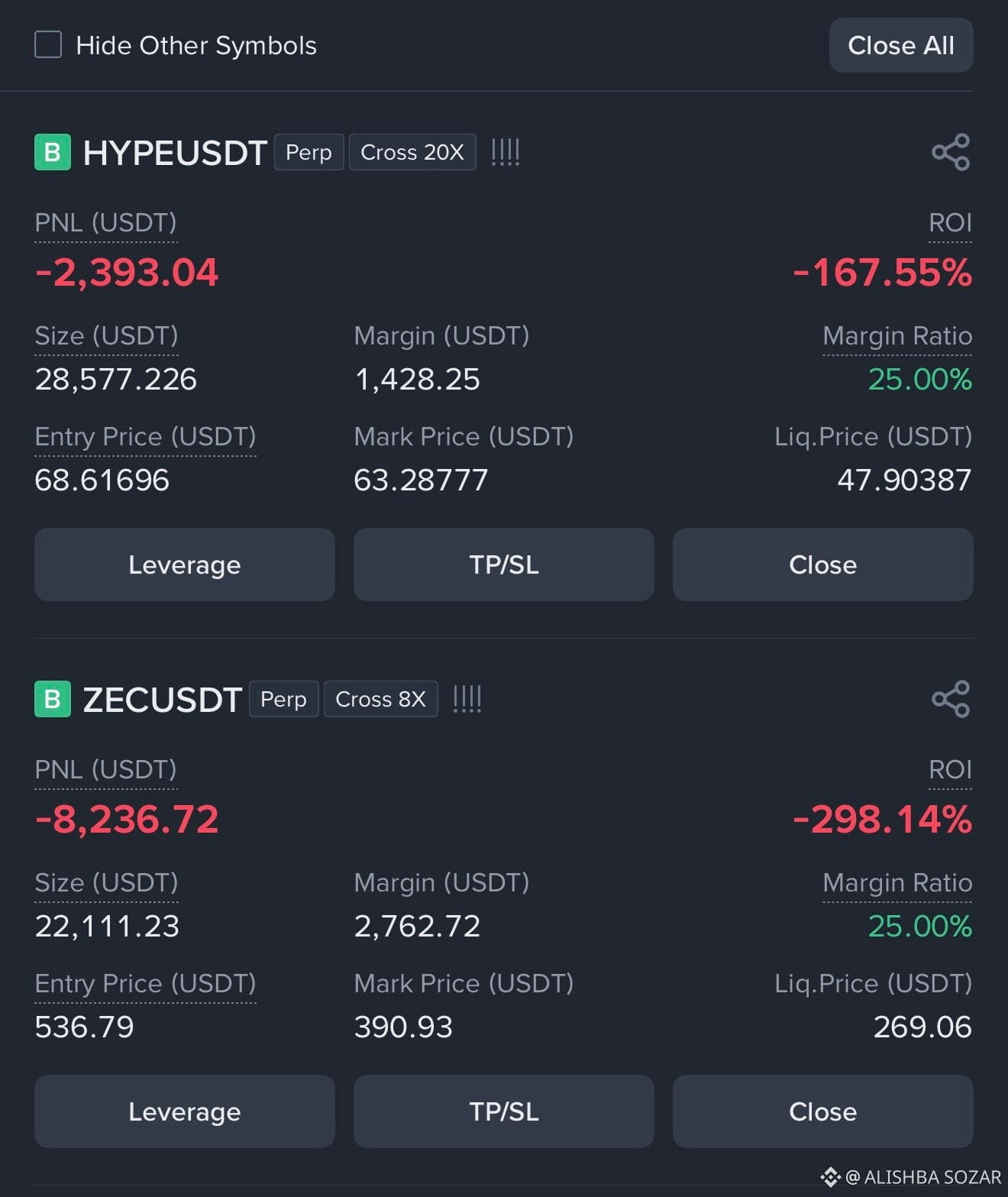
Und ja, sowohl meine $HYPE als auch $ZEC Positionen sind momentan im Verlust. Aber ich habe allen von Anfang an gesagt, dass dieser Trade riskant ist und dass ich auf mehr Rücksetzer vorbereitet bin. Wenn sie zusammen mit $BTC weiter dumpen, werde ich mehr kaufen und meinen durchschnittlichen Einstieg verbessern. Mein Plan hat sich nicht geändert.
#Alishba_Sozar
Stopp... Gib mir 2 Minuten, bevor du deine Krypto panikverkaufst.
Wenn du überall nur rote Velas siehst, denkst, dass Krypto am Ende ist und überlegst, alles zu verkaufen, dann lies bitte Folgendes:
Erstens, Tiefpunkte sind immer beängstigend. Die Nachrichten werden bärisch, soziale Medien werden negativ, und plötzlich wird jeder zum Experten, der dir sagt, dass du verkaufen sollst. Das passiert in jedem Zyklus.
Zweitens, mach nicht den Fehler, von Coin zu Coin zu springen, nur weil du es leid bist zu warten. Ich habe Leute gesehen, die monatelang gehalten haben, zur schlechtesten Zeit gewechselt sind und dann die eigentliche Rally verpasst haben.
Drittens, ich glaube immer noch nicht, dass die größte Bewegung dieses Zyklus vorbei ist. Die meisten Leute geben in der Nähe des Tiefpunkts auf, nicht in der Nähe des Hochpunkts.
In dieser Phase ist Geduld wichtiger als Emotionen.
Die Leute, die während der Angst ruhig bleiben, sind normalerweise die, die am meisten profitieren werden, wenn sich der Markt dreht.
Und ja, sowohl meine $HYPE als auch $ZEC Positionen sind momentan im Verlust. Aber ich habe allen von Anfang an gesagt, dass dieser Trade riskant ist und dass ich auf mehr Rücksetzer vorbereitet bin. Wenn sie zusammen mit $BTC weiter dumpen, werde ich mehr kaufen und meinen durchschnittlichen Einstieg verbessern. Mein Plan hat sich nicht geändert.
#Alishba_Sozar
Wenn du überall nur rote Velas siehst, denkst, dass Krypto am Ende ist und überlegst, alles zu verkaufen, dann lies bitte Folgendes:
Erstens, Tiefpunkte sind immer beängstigend. Die Nachrichten werden bärisch, soziale Medien werden negativ, und plötzlich wird jeder zum Experten, der dir sagt, dass du verkaufen sollst. Das passiert in jedem Zyklus.
Zweitens, mach nicht den Fehler, von Coin zu Coin zu springen, nur weil du es leid bist zu warten. Ich habe Leute gesehen, die monatelang gehalten haben, zur schlechtesten Zeit gewechselt sind und dann die eigentliche Rally verpasst haben.
Drittens, ich glaube immer noch nicht, dass die größte Bewegung dieses Zyklus vorbei ist. Die meisten Leute geben in der Nähe des Tiefpunkts auf, nicht in der Nähe des Hochpunkts.
In dieser Phase ist Geduld wichtiger als Emotionen.
Die Leute, die während der Angst ruhig bleiben, sind normalerweise die, die am meisten profitieren werden, wenn sich der Markt dreht.
Und ja, sowohl meine $HYPE als auch $ZEC Positionen sind momentan im Verlust. Aber ich habe allen von Anfang an gesagt, dass dieser Trade riskant ist und dass ich auf mehr Rücksetzer vorbereitet bin. Wenn sie zusammen mit $BTC weiter dumpen, werde ich mehr kaufen und meinen durchschnittlichen Einstieg verbessern. Mein Plan hat sich nicht geändert.
#Alishba_Sozar
3
223
·
--
Bärisch
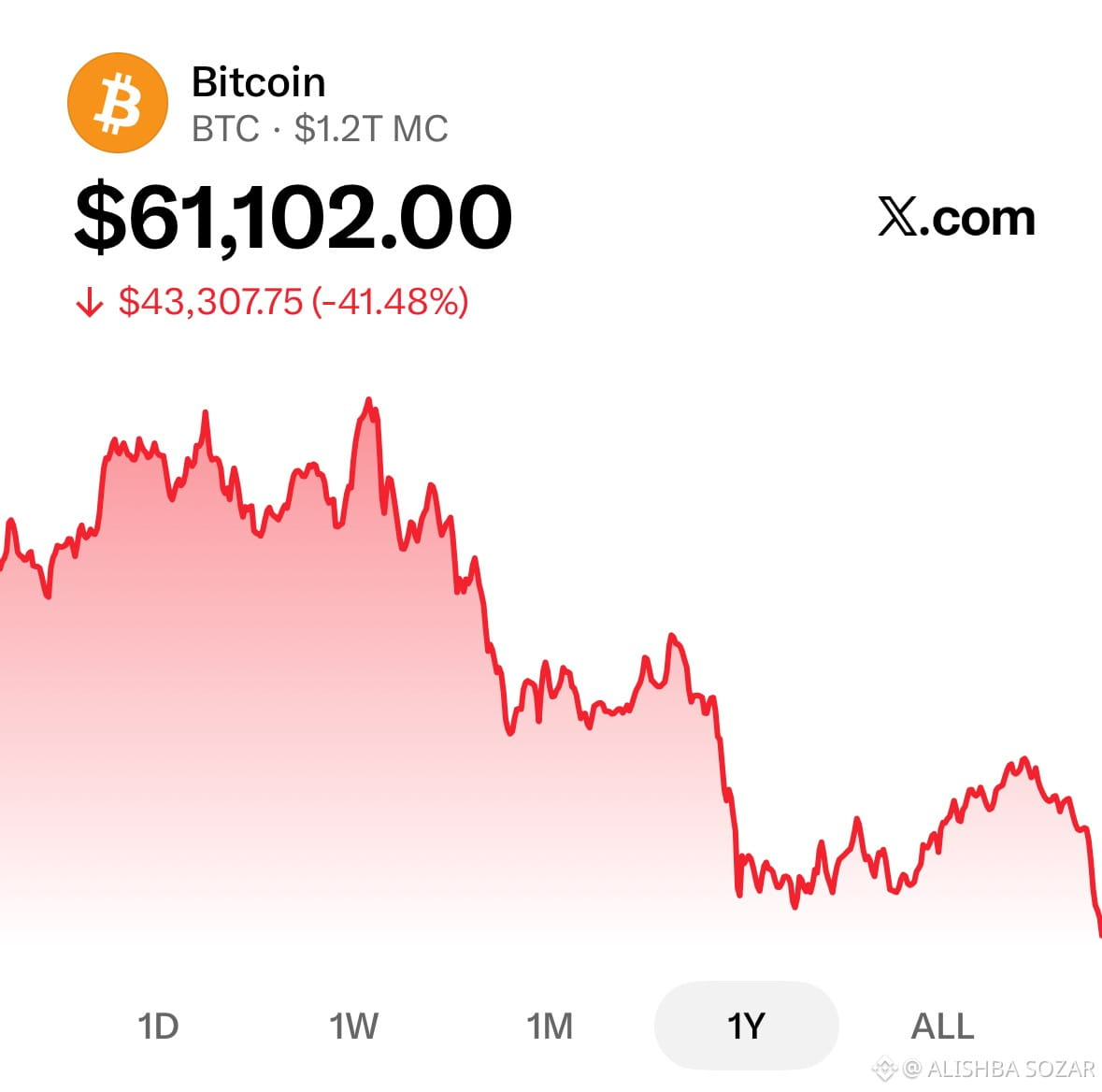
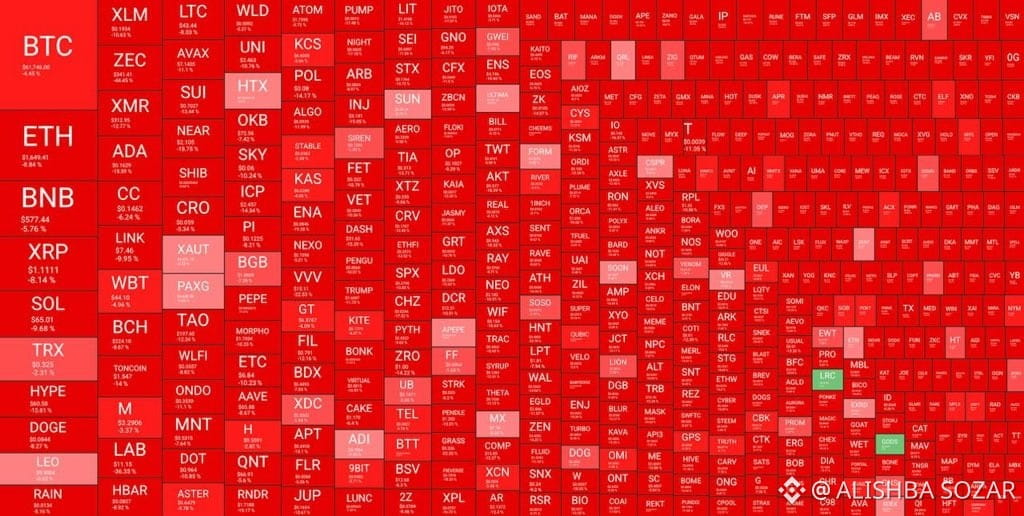
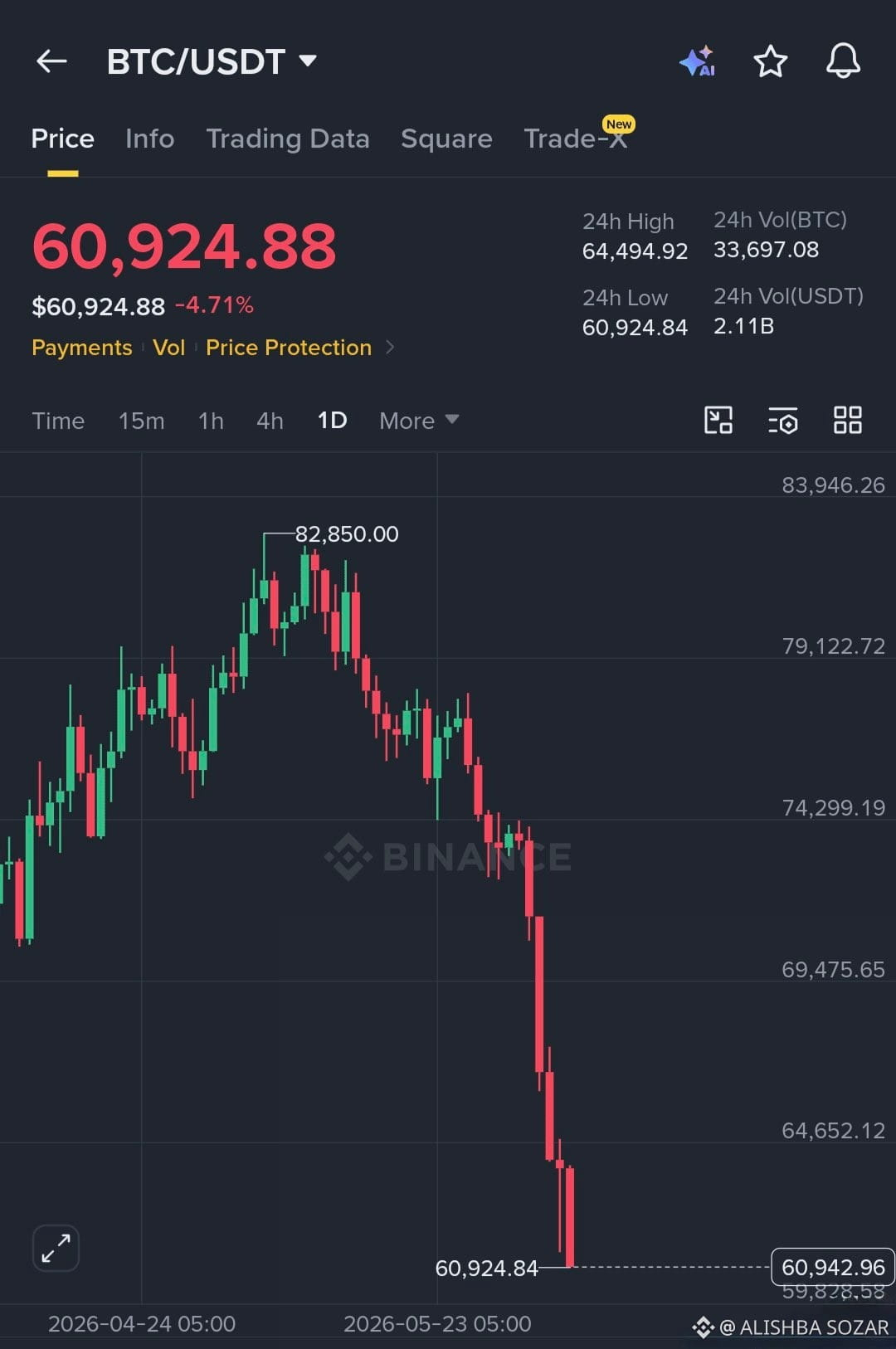
🚨 #Bitcoin ist von $78.000 auf $61.000 in nur wenigen Tagen gefallen.
Das ist kein normaler Rücksetzer. Die Marktstruktur hat sich geschwächt, die Verkäufer haben die Kontrolle und Angst breitet sich über den Markt aus.
$BTC ist gefallen:
• 18% in 7 Tagen
• 26% in 30 Tagen
Der wichtige Level, den ich beobachte, liegt bei $60.300.
Wenn dieser hält, könnten wir eine starke Akkumulation und eine rasante Erholung sehen. Wenn er bricht, liegt die nächste wichtige Unterstützung bei etwa $57.000, mit $52.000 darunter.
Niemand weiß, was der nächste Zug ist.
Was zählt, ist diszipliniert zu bleiben. Die größten Fehler im Krypto-Bereich werden normalerweise während der Panik gemacht.
#Alishba_Sozar
🚨 #Bitcoin ist von $78.000 auf $61.000 in nur wenigen Tagen gefallen.
Das ist kein normaler Rücksetzer. Die Marktstruktur hat sich geschwächt, die Verkäufer haben die Kontrolle und Angst breitet sich über den Markt aus.
$BTC ist gefallen:
• 18% in 7 Tagen
• 26% in 30 Tagen
Der wichtige Level, den ich beobachte, liegt bei $60.300.
Wenn dieser hält, könnten wir eine starke Akkumulation und eine rasante Erholung sehen. Wenn er bricht, liegt die nächste wichtige Unterstützung bei etwa $57.000, mit $52.000 darunter.
Niemand weiß, was der nächste Zug ist.
Was zählt, ist diszipliniert zu bleiben. Die größten Fehler im Krypto-Bereich werden normalerweise während der Panik gemacht.
#Alishba_Sozar
Das ist kein normaler Rücksetzer. Die Marktstruktur hat sich geschwächt, die Verkäufer haben die Kontrolle und Angst breitet sich über den Markt aus.
$BTC ist gefallen:
• 18% in 7 Tagen
• 26% in 30 Tagen
Der wichtige Level, den ich beobachte, liegt bei $60.300.
Wenn dieser hält, könnten wir eine starke Akkumulation und eine rasante Erholung sehen. Wenn er bricht, liegt die nächste wichtige Unterstützung bei etwa $57.000, mit $52.000 darunter.
Niemand weiß, was der nächste Zug ist.
Was zählt, ist diszipliniert zu bleiben. Die größten Fehler im Krypto-Bereich werden normalerweise während der Panik gemacht.
#Alishba_Sozar
217
Anmelden und weiter Inhalte entdecken
Krypto-Nutzer weltweit auf Binance Square kennenlernen
⚡️ Bleib in Sachen Krypto stets am Puls.
💬 Die weltgrößte Kryptobörse vertraut darauf.
👍 Erhalte verlässliche Einblicke von verifizierten Creators.
E-Mail-Adresse/Telefonnummer
Trendthemen
BitcoinReboundsTo$79K
1,877 Aufrufe
55 Kommentare
🚨 $BTC steigt weiter.
Bitcoin handelt bei etwa 78.804 $ und liegt damit ungefähr 1,9 % im Plus, nachdem die Marke von 78K zurückerobert wurde. Die nächste zu beobachtende Zone ist das Tageshoch im Intraday-Bereich nahe 78.905 $.
Ein klarer Ausbruch über diese Marke könnte den Weg in Richtung 79K–80K ebnen. Wenn BTC abgewiesen wird, liegt der Support bei etwa 78.300 $ und danach bei 77.975 $.
Die Bullen haben Momentum, aber BTC muss über 78K bleiben.
#Bitcoin #BTC #CryptoTrading #CryptoMarket #CryptoAnalysis
PulseON
·4 Likes
·1.9k Aufrufe
FedHikeOddsRiseTo89%
52,485 Aufrufe
873 Kommentare
RLUSDSupplyHitsRecord$2.442B
2,500 Aufrufe
51 Kommentare