
Sahil_crypto1
297 Beiträge

Sahil_crypto1
Melden
Nutzer blockieren
Trade eröffnen
Regelmäßiger Trader
1.9 Jahre
24 Following
121 Follower
455 Like gegeben
Beiträge
Portfolio
Alle
Live
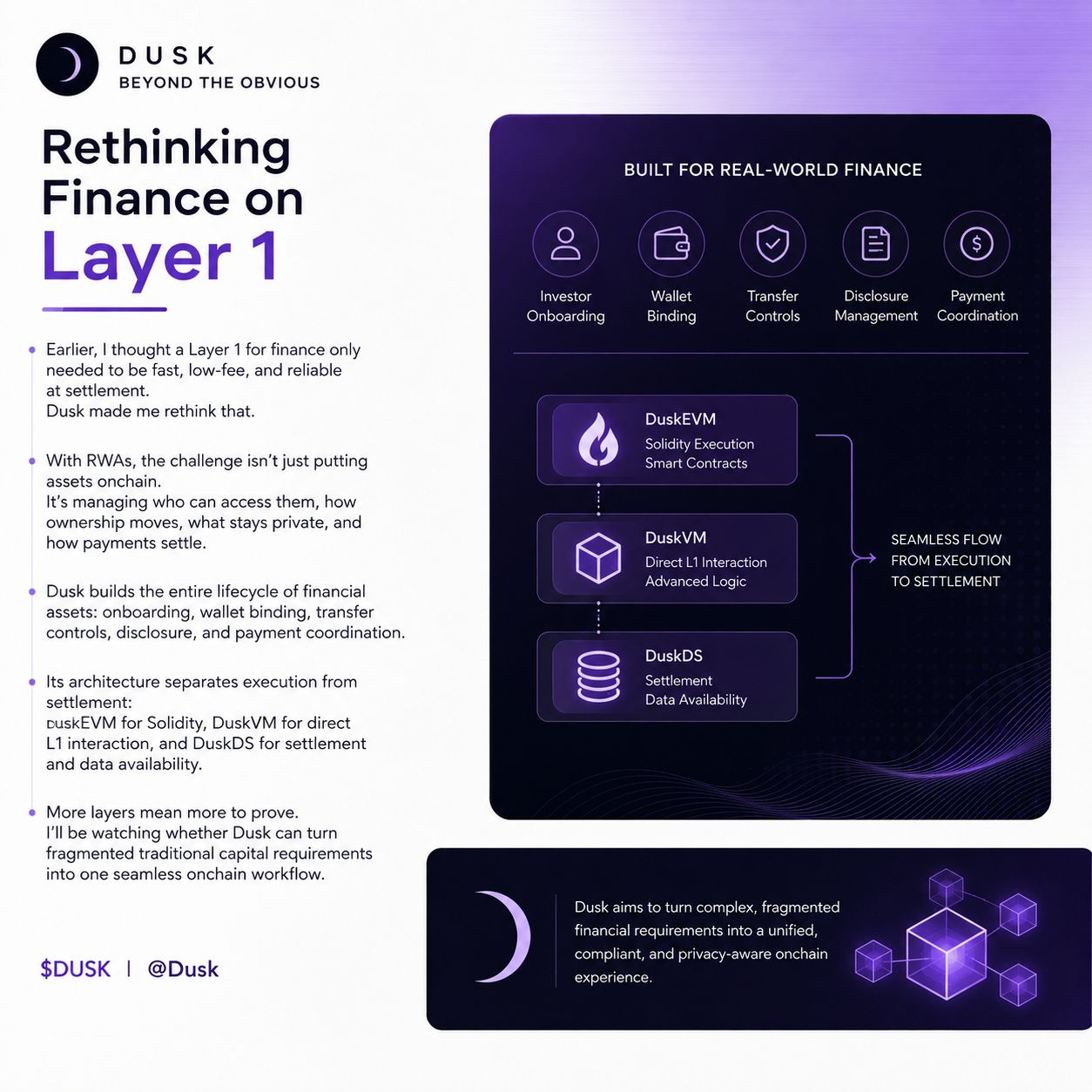
#dusk $DUSK @Dusk_Foundation Zuvor dachte ich, dass eine finanzielle Layer 1 vor allem Geschwindigkeit, niedrige Gebühren und eine zuverlässige Abwicklung braucht. Dusk hat mich darüber neu nachdenken lassen.
Bei RWAs besteht die Schwierigkeit nicht darin, einfach nur Assets onchain zu bringen. Es geht darum, zu verwalten, wer darauf zugreifen kann, wie sich Eigentum bewegt, was privat bleibt und wie Zahlungen abgewickelt werden.
Darum finde ich Dusk interessant. Seine Architektur verbindet DuskEVM, DuskVM und DuskDS rund um Ausführung, Anwendungen, Abwicklung und Datenverfügbarkeit.
Ich beobachte weiterhin, ob diese Komplexität sich in echter Akzeptanz niederschlägt, aber die größere Frage ist überzeugend:
Kann Dusk die fragmentierten traditionellen Finanzanforderungen in einen nahtlosen Onchain-Workflow verwandeln?
$DUSK @Dusk_Foundation
{spot}(DUSKUSDT)
#dusk $DUSK @Dusk Zuvor dachte ich, dass eine finanzielle Layer 1 vor allem Geschwindigkeit, niedrige Gebühren und eine zuverlässige Abwicklung braucht. Dusk hat mich darüber neu nachdenken lassen.
Bei RWAs besteht die Schwierigkeit nicht darin, einfach nur Assets onchain zu bringen. Es geht darum, zu verwalten, wer darauf zugreifen kann, wie sich Eigentum bewegt, was privat bleibt und wie Zahlungen abgewickelt werden.
Darum finde ich Dusk interessant. Seine Architektur verbindet DuskEVM, DuskVM und DuskDS rund um Ausführung, Anwendungen, Abwicklung und Datenverfügbarkeit.
Ich beobachte weiterhin, ob diese Komplexität sich in echter Akzeptanz niederschlägt, aber die größere Frage ist überzeugend:
Kann Dusk die fragmentierten traditionellen Finanzanforderungen in einen nahtlosen Onchain-Workflow verwandeln?
$DUSK @Dusk
Bei RWAs besteht die Schwierigkeit nicht darin, einfach nur Assets onchain zu bringen. Es geht darum, zu verwalten, wer darauf zugreifen kann, wie sich Eigentum bewegt, was privat bleibt und wie Zahlungen abgewickelt werden.
Darum finde ich Dusk interessant. Seine Architektur verbindet DuskEVM, DuskVM und DuskDS rund um Ausführung, Anwendungen, Abwicklung und Datenverfügbarkeit.
Ich beobachte weiterhin, ob diese Komplexität sich in echter Akzeptanz niederschlägt, aber die größere Frage ist überzeugend:
Kann Dusk die fragmentierten traditionellen Finanzanforderungen in einen nahtlosen Onchain-Workflow verwandeln?
$DUSK @Dusk
69
$ETH ETH Momentum 🚀
ETH hat gerade mit starkem Momentum die Marke von 2.300 US-Dollar überschritten. Wenn Käufer die Kontrolle behalten und ein sauberer Ausbruch über 2.330–2.350 gelingt, könnte das nächste große Kursziel bei 2.600 liegen. Das Volumen steigt, aber die Bestätigung ist entscheidend. Beobachte den Ausbruch! 📈
$ETH #Ethereum #ETH
$ETH ETH Momentum 🚀
ETH hat gerade mit starkem Momentum die Marke von 2.300 US-Dollar überschritten. Wenn Käufer die Kontrolle behalten und ein sauberer Ausbruch über 2.330–2.350 gelingt, könnte das nächste große Kursziel bei 2.600 liegen. Das Volumen steigt, aber die Bestätigung ist entscheidend. Beobachte den Ausbruch! 📈
$ETH #Ethereum #ETH
ETH hat gerade mit starkem Momentum die Marke von 2.300 US-Dollar überschritten. Wenn Käufer die Kontrolle behalten und ein sauberer Ausbruch über 2.330–2.350 gelingt, könnte das nächste große Kursziel bei 2.600 liegen. Das Volumen steigt, aber die Bestätigung ist entscheidend. Beobachte den Ausbruch! 📈
$ETH #Ethereum #ETH
111
Übersetzung ansehen
$BTC Bitcoin is starting to look interesting again as bullish momentum builds across the market. If buyers continue defending the current levels and resistance gets cleared, I’m watching the $73,000 zone as a potential next target.
A move toward $73K could bring fresh attention to BTC and potentially strengthen overall market sentiment. Of course, Bitcoin can move quickly in both directions, so confirmation and risk management still matter.
For now, I’m watching volume, momentum, and how BTC reacts around key resistance before getting too aggressive.
Bitcoin remains one of the charts I’m watching closely. 🚀
#Bitcoin #BTC #Crypto $BTC
{spot}(BTCUSDT)
$BTC Bitcoin is starting to look interesting again as bullish momentum builds across the market. If buyers continue defending the current levels and resistance gets cleared, I’m watching the $73,000 zone as a potential next target.
A move toward $73K could bring fresh attention to BTC and potentially strengthen overall market sentiment. Of course, Bitcoin can move quickly in both directions, so confirmation and risk management still matter.
For now, I’m watching volume, momentum, and how BTC reacts around key resistance before getting too aggressive.
Bitcoin remains one of the charts I’m watching closely. 🚀
#Bitcoin #BTC #Crypto $BTC
A move toward $73K could bring fresh attention to BTC and potentially strengthen overall market sentiment. Of course, Bitcoin can move quickly in both directions, so confirmation and risk management still matter.
For now, I’m watching volume, momentum, and how BTC reacts around key resistance before getting too aggressive.
Bitcoin remains one of the charts I’m watching closely. 🚀
#Bitcoin #BTC #Crypto $BTC
1
65
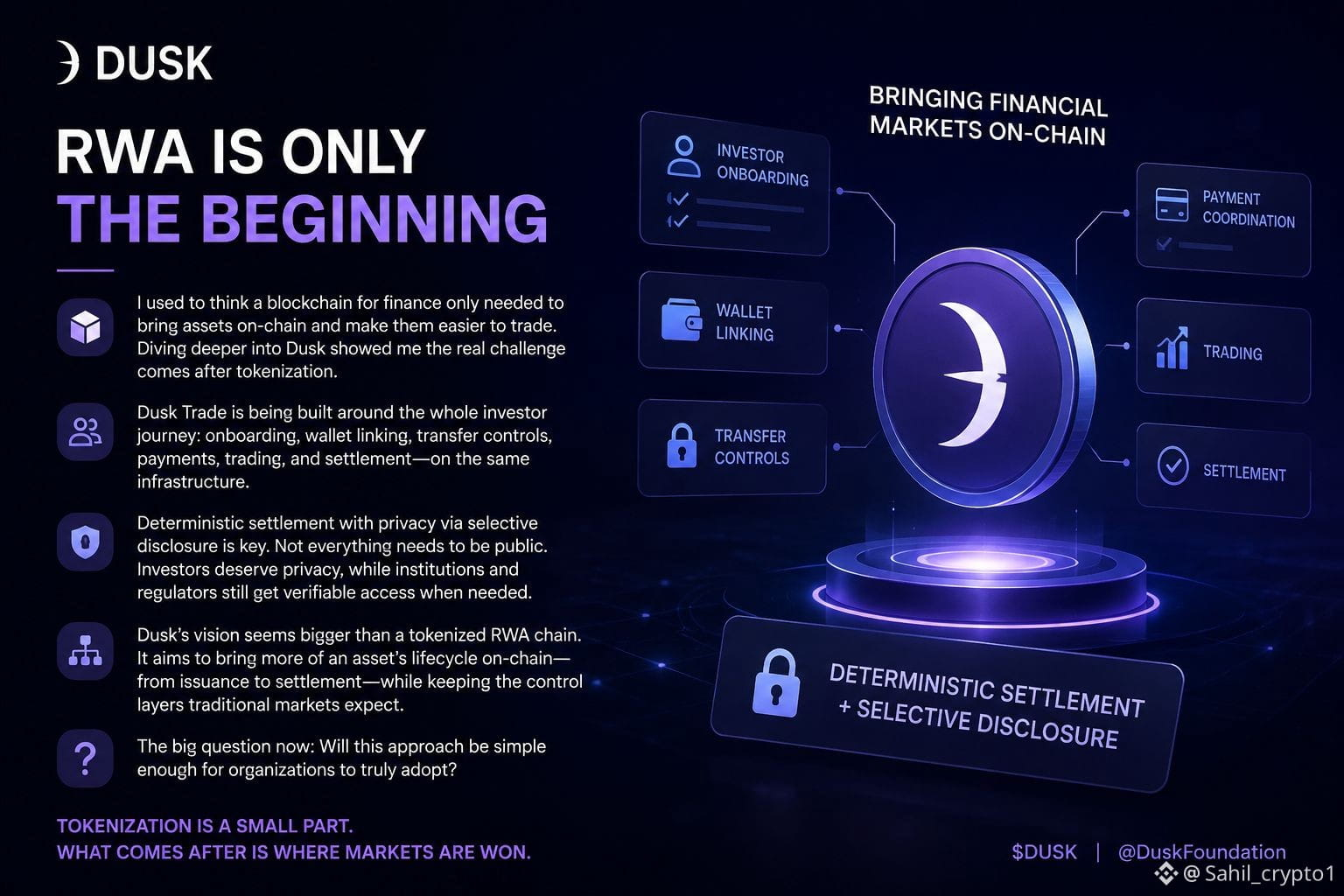
#dusk $DUSK @Dusk_Foundation Ich dachte früher, dass eine Blockchain für Finanzen nur zwei Dinge richtig machen muss: reale Vermögenswerte auf die Kette zu bringen und sie einfacher handelbar zu machen.
Doch als ich tiefer in Dusk eingetaucht bin, hat sich mein Blick auf die RWA-Story verändert.
Tokenisierung ist erst der Anfang. Die größere Herausforderung kommt danach, wenn der Vermögenswert bereits on-chain existiert: Investor Onboarding, Wallet-Verknüpfung, Transferkontrollen, Zahlungskoordination, Handel und Abwicklung müssen nahtlos zusammenarbeiten.
Das macht Dusk Trade für mich interessant. Die Ambition wirkt breiter gefasst als nur die Erstellung eines weiteren Marktplatzes für tokenisierte Assets. Dusk versucht, Infrastruktur für mehr Aspekte des Asset-Lifecycle aufzubauen und dabei deterministische Abwicklung mit selektiver Offenlegung zu kombinieren.
Ich ging früher davon aus, dass mehr Transparenz durch die Blockchain immer besser ist. Aber die Finanzmärkte haben mir gezeigt, warum das nicht unbedingt stimmt. Anleger benötigen möglicherweise Privatsphäre, während Institutionen und Regulierer weiterhin einen verlässlichen Weg brauchen, um Informationen bei Bedarf verifizieren zu können.
So sehe ich Dusk inzwischen weniger als „weitere tokenisierte RWA-Chain“ und mehr als den Versuch, traditionelle Finanz-Workflows on-chain abzubilden, ohne die Kontrollen zu entfernen, von denen diese Märkte abhängen.
Die eigentliche Frage für mich ist heute nicht, ob die Technologie gut klingt.
Sondern ob Organisationen das gesamte System so einfach finden, dass sie es auch wirklich nutzen können.
{spot}(DUSKUSDT)
#dusk $DUSK @Dusk Ich dachte früher, dass eine Blockchain für Finanzen nur zwei Dinge richtig machen muss: reale Vermögenswerte auf die Kette zu bringen und sie einfacher handelbar zu machen.
Doch als ich tiefer in Dusk eingetaucht bin, hat sich mein Blick auf die RWA-Story verändert.
Tokenisierung ist erst der Anfang. Die größere Herausforderung kommt danach, wenn der Vermögenswert bereits on-chain existiert: Investor Onboarding, Wallet-Verknüpfung, Transferkontrollen, Zahlungskoordination, Handel und Abwicklung müssen nahtlos zusammenarbeiten.
Das macht Dusk Trade für mich interessant. Die Ambition wirkt breiter gefasst als nur die Erstellung eines weiteren Marktplatzes für tokenisierte Assets. Dusk versucht, Infrastruktur für mehr Aspekte des Asset-Lifecycle aufzubauen und dabei deterministische Abwicklung mit selektiver Offenlegung zu kombinieren.
Ich ging früher davon aus, dass mehr Transparenz durch die Blockchain immer besser ist. Aber die Finanzmärkte haben mir gezeigt, warum das nicht unbedingt stimmt. Anleger benötigen möglicherweise Privatsphäre, während Institutionen und Regulierer weiterhin einen verlässlichen Weg brauchen, um Informationen bei Bedarf verifizieren zu können.
So sehe ich Dusk inzwischen weniger als „weitere tokenisierte RWA-Chain“ und mehr als den Versuch, traditionelle Finanz-Workflows on-chain abzubilden, ohne die Kontrollen zu entfernen, von denen diese Märkte abhängen.
Die eigentliche Frage für mich ist heute nicht, ob die Technologie gut klingt.
Sondern ob Organisationen das gesamte System so einfach finden, dass sie es auch wirklich nutzen können.
Doch als ich tiefer in Dusk eingetaucht bin, hat sich mein Blick auf die RWA-Story verändert.
Tokenisierung ist erst der Anfang. Die größere Herausforderung kommt danach, wenn der Vermögenswert bereits on-chain existiert: Investor Onboarding, Wallet-Verknüpfung, Transferkontrollen, Zahlungskoordination, Handel und Abwicklung müssen nahtlos zusammenarbeiten.
Das macht Dusk Trade für mich interessant. Die Ambition wirkt breiter gefasst als nur die Erstellung eines weiteren Marktplatzes für tokenisierte Assets. Dusk versucht, Infrastruktur für mehr Aspekte des Asset-Lifecycle aufzubauen und dabei deterministische Abwicklung mit selektiver Offenlegung zu kombinieren.
Ich ging früher davon aus, dass mehr Transparenz durch die Blockchain immer besser ist. Aber die Finanzmärkte haben mir gezeigt, warum das nicht unbedingt stimmt. Anleger benötigen möglicherweise Privatsphäre, während Institutionen und Regulierer weiterhin einen verlässlichen Weg brauchen, um Informationen bei Bedarf verifizieren zu können.
So sehe ich Dusk inzwischen weniger als „weitere tokenisierte RWA-Chain“ und mehr als den Versuch, traditionelle Finanz-Workflows on-chain abzubilden, ohne die Kontrollen zu entfernen, von denen diese Märkte abhängen.
Die eigentliche Frage für mich ist heute nicht, ob die Technologie gut klingt.
Sondern ob Organisationen das gesamte System so einfach finden, dass sie es auch wirklich nutzen können.
1
63
Übersetzung ansehen
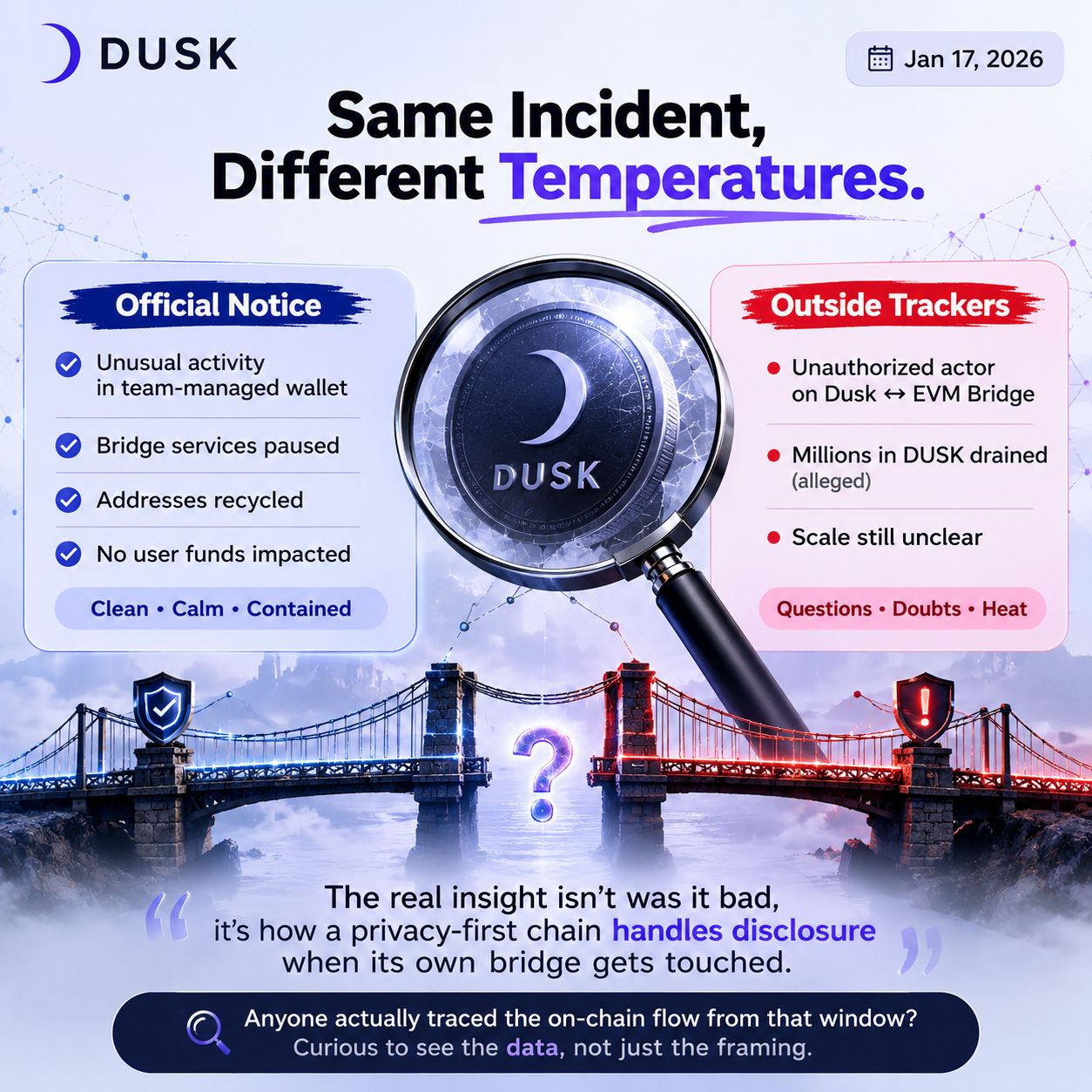
#dusk $DUSK @Dusk_Foundation I kept circling back to Dusk’s January incident notice, and the wording stood out more than the exploit.
Officially: unusual activity, a team-managed wallet, bridge services paused, addresses recycled, no user funds impacted.
But outside trackers described millions in DUSK drained through the Dusk-to-EVM bridge.
Same incident, very different temperatures.
That gap matters. Not because I know the final number—I don’t—but because disclosure is part of security too.
If anyone actually traced the on-chain flow from that window, I’d genuinely like to see what you found.
{spot}(DUSKUSDT)
#dusk $DUSK @Dusk I kept circling back to Dusk’s January incident notice, and the wording stood out more than the exploit.
Officially: unusual activity, a team-managed wallet, bridge services paused, addresses recycled, no user funds impacted.
But outside trackers described millions in DUSK drained through the Dusk-to-EVM bridge.
Same incident, very different temperatures.
That gap matters. Not because I know the final number—I don’t—but because disclosure is part of security too.
If anyone actually traced the on-chain flow from that window, I’d genuinely like to see what you found.
Officially: unusual activity, a team-managed wallet, bridge services paused, addresses recycled, no user funds impacted.
But outside trackers described millions in DUSK drained through the Dusk-to-EVM bridge.
Same incident, very different temperatures.
That gap matters. Not because I know the final number—I don’t—but because disclosure is part of security too.
If anyone actually traced the on-chain flow from that window, I’d genuinely like to see what you found.
1
76
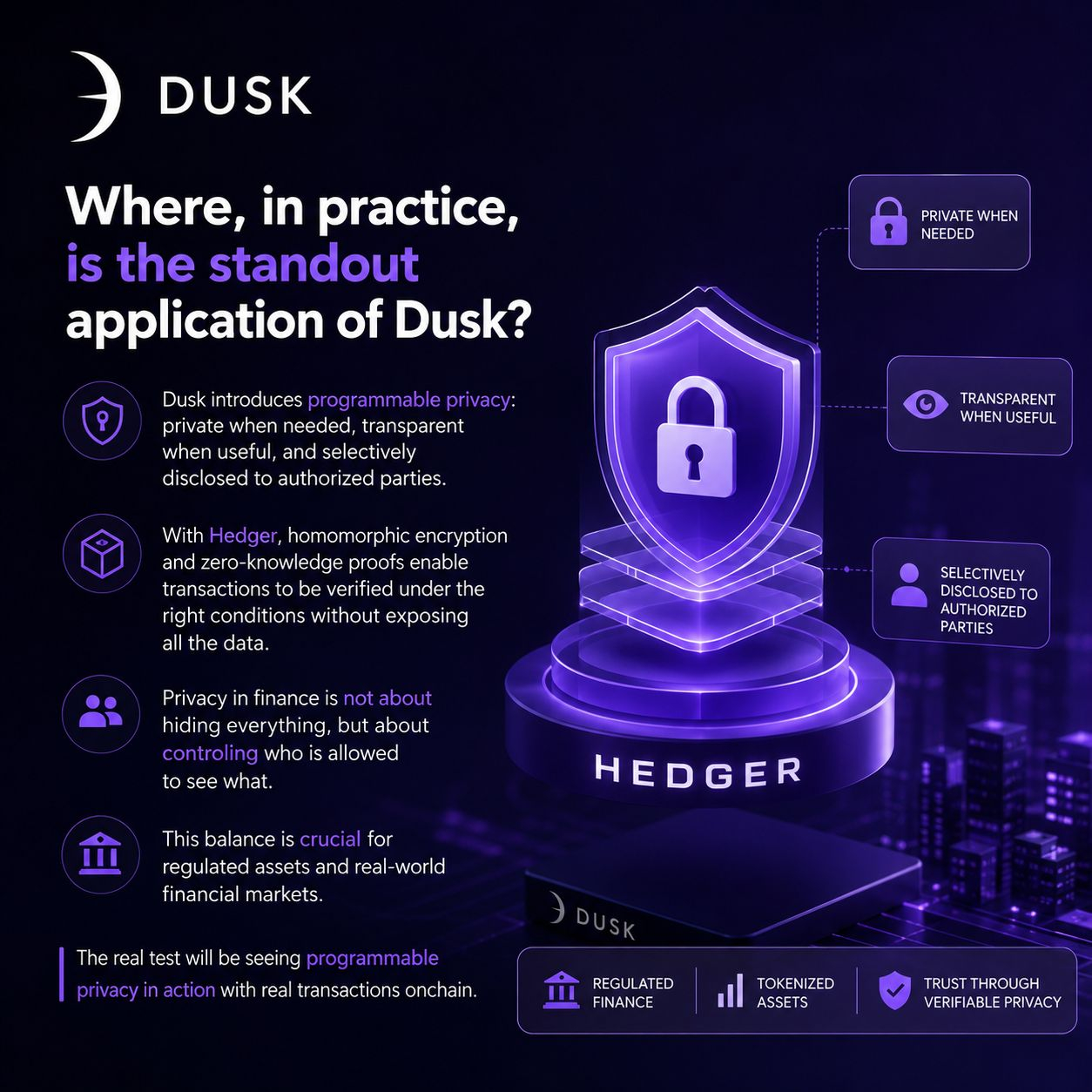
Ich habe mehr Zeit mit Dusk verbracht – und eine Frage kam immer wieder zurück: Wo wird sein Datenschutzmodell eigentlich wirklich nützlich?
Früher habe ich finanzielle Transparenz mit Vertrauen verbunden. Wenn alle die Daten sehen können, dachte ich, wird die Verifikation einfacher. Aber regulierte Finanzmärkte verändern diese Gleichung.
Dusk’ Idee von programmierbarem Datenschutz wirkt dafür deutlich praktischer: sensibler Inhalt bleibt privat, während autorisierte Parteien prüfen können, was relevant ist.
Genau das hat Hedger in den Fokus gerückt. Homomorphe Verschlüsselung und Zero-Knowledge-Proofs geht es nicht nur darum, Transaktionen zu verbergen. Die größere Idee ist, ein System zu schaffen, in dem finanzielle Aktivitäten vertraulich bleiben können – und dennoch unter den richtigen Bedingungen verifizierbar sind.
So wirkt Privatsphäre weniger wie „alles verstecken“ und eher wie „steuern, wer was sehen darf“.
Bei tokenisierten Vermögenswerten und regulierten Märkten könnte dieser Unterschied sehr bedeutsam sein.
Ich schaue weiterhin genau hin. Der eigentliche Test wird sein zu sehen, wie Dusk echte finanzielle Aktivitäten onchain umsetzt – nicht nur, wie überzeugend die Architektur auf dem Papier klingt.
#dusk @Dusk_Foundation $DUSK
{spot}(DUSKUSDT)
Ich habe mehr Zeit mit Dusk verbracht – und eine Frage kam immer wieder zurück: Wo wird sein Datenschutzmodell eigentlich wirklich nützlich?
Früher habe ich finanzielle Transparenz mit Vertrauen verbunden. Wenn alle die Daten sehen können, dachte ich, wird die Verifikation einfacher. Aber regulierte Finanzmärkte verändern diese Gleichung.
Dusk’ Idee von programmierbarem Datenschutz wirkt dafür deutlich praktischer: sensibler Inhalt bleibt privat, während autorisierte Parteien prüfen können, was relevant ist.
Genau das hat Hedger in den Fokus gerückt. Homomorphe Verschlüsselung und Zero-Knowledge-Proofs geht es nicht nur darum, Transaktionen zu verbergen. Die größere Idee ist, ein System zu schaffen, in dem finanzielle Aktivitäten vertraulich bleiben können – und dennoch unter den richtigen Bedingungen verifizierbar sind.
So wirkt Privatsphäre weniger wie „alles verstecken“ und eher wie „steuern, wer was sehen darf“.
Bei tokenisierten Vermögenswerten und regulierten Märkten könnte dieser Unterschied sehr bedeutsam sein.
Ich schaue weiterhin genau hin. Der eigentliche Test wird sein zu sehen, wie Dusk echte finanzielle Aktivitäten onchain umsetzt – nicht nur, wie überzeugend die Architektur auf dem Papier klingt.
#dusk @Dusk $DUSK
Früher habe ich finanzielle Transparenz mit Vertrauen verbunden. Wenn alle die Daten sehen können, dachte ich, wird die Verifikation einfacher. Aber regulierte Finanzmärkte verändern diese Gleichung.
Dusk’ Idee von programmierbarem Datenschutz wirkt dafür deutlich praktischer: sensibler Inhalt bleibt privat, während autorisierte Parteien prüfen können, was relevant ist.
Genau das hat Hedger in den Fokus gerückt. Homomorphe Verschlüsselung und Zero-Knowledge-Proofs geht es nicht nur darum, Transaktionen zu verbergen. Die größere Idee ist, ein System zu schaffen, in dem finanzielle Aktivitäten vertraulich bleiben können – und dennoch unter den richtigen Bedingungen verifizierbar sind.
So wirkt Privatsphäre weniger wie „alles verstecken“ und eher wie „steuern, wer was sehen darf“.
Bei tokenisierten Vermögenswerten und regulierten Märkten könnte dieser Unterschied sehr bedeutsam sein.
Ich schaue weiterhin genau hin. Der eigentliche Test wird sein zu sehen, wie Dusk echte finanzielle Aktivitäten onchain umsetzt – nicht nur, wie überzeugend die Architektur auf dem Papier klingt.
#dusk @Dusk $DUSK
1
72
Übersetzung ansehen
#dusk $DUSK The more I dig into DUSK, the more its privacy model makes sense to me.
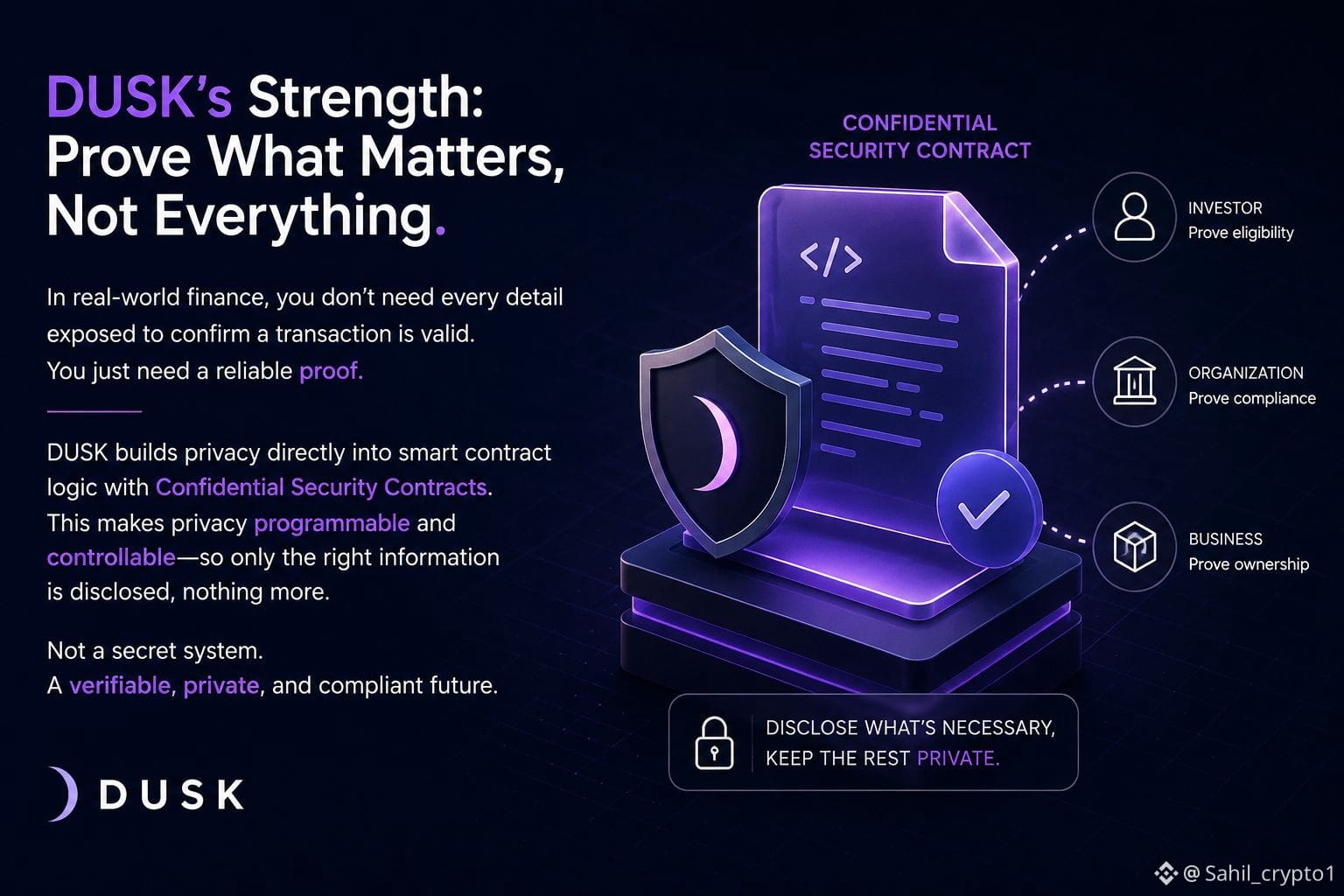
Real-world finance doesn’t need every detail exposed just to prove that a transaction is valid. An investor may need to prove eligibility, a company may need to verify ownership, and institutions may need to demonstrate regulatory compliance.
That’s where DUSK caught my attention. Its approach treats privacy as part of the smart contract logic rather than something added afterward.
Maybe the future of blockchain privacy isn’t making everything invisible. It’s making disclosure programmable — proving exactly what needs to be proven while keeping unnecessary information private.
That could be a much more practical path toward bringing regulated financial activity onchain.@Dusk_Foundation $DUSK
{spot}(DUSKUSDT)
#dusk $DUSK The more I dig into DUSK, the more its privacy model makes sense to me.
Real-world finance doesn’t need every detail exposed just to prove that a transaction is valid. An investor may need to prove eligibility, a company may need to verify ownership, and institutions may need to demonstrate regulatory compliance.
That’s where DUSK caught my attention. Its approach treats privacy as part of the smart contract logic rather than something added afterward.
Maybe the future of blockchain privacy isn’t making everything invisible. It’s making disclosure programmable — proving exactly what needs to be proven while keeping unnecessary information private.
That could be a much more practical path toward bringing regulated financial activity onchain.@Dusk $DUSK
Real-world finance doesn’t need every detail exposed just to prove that a transaction is valid. An investor may need to prove eligibility, a company may need to verify ownership, and institutions may need to demonstrate regulatory compliance.
That’s where DUSK caught my attention. Its approach treats privacy as part of the smart contract logic rather than something added afterward.
Maybe the future of blockchain privacy isn’t making everything invisible. It’s making disclosure programmable — proving exactly what needs to be proven while keeping unnecessary information private.
That could be a much more practical path toward bringing regulated financial activity onchain.@Dusk $DUSK
2
73
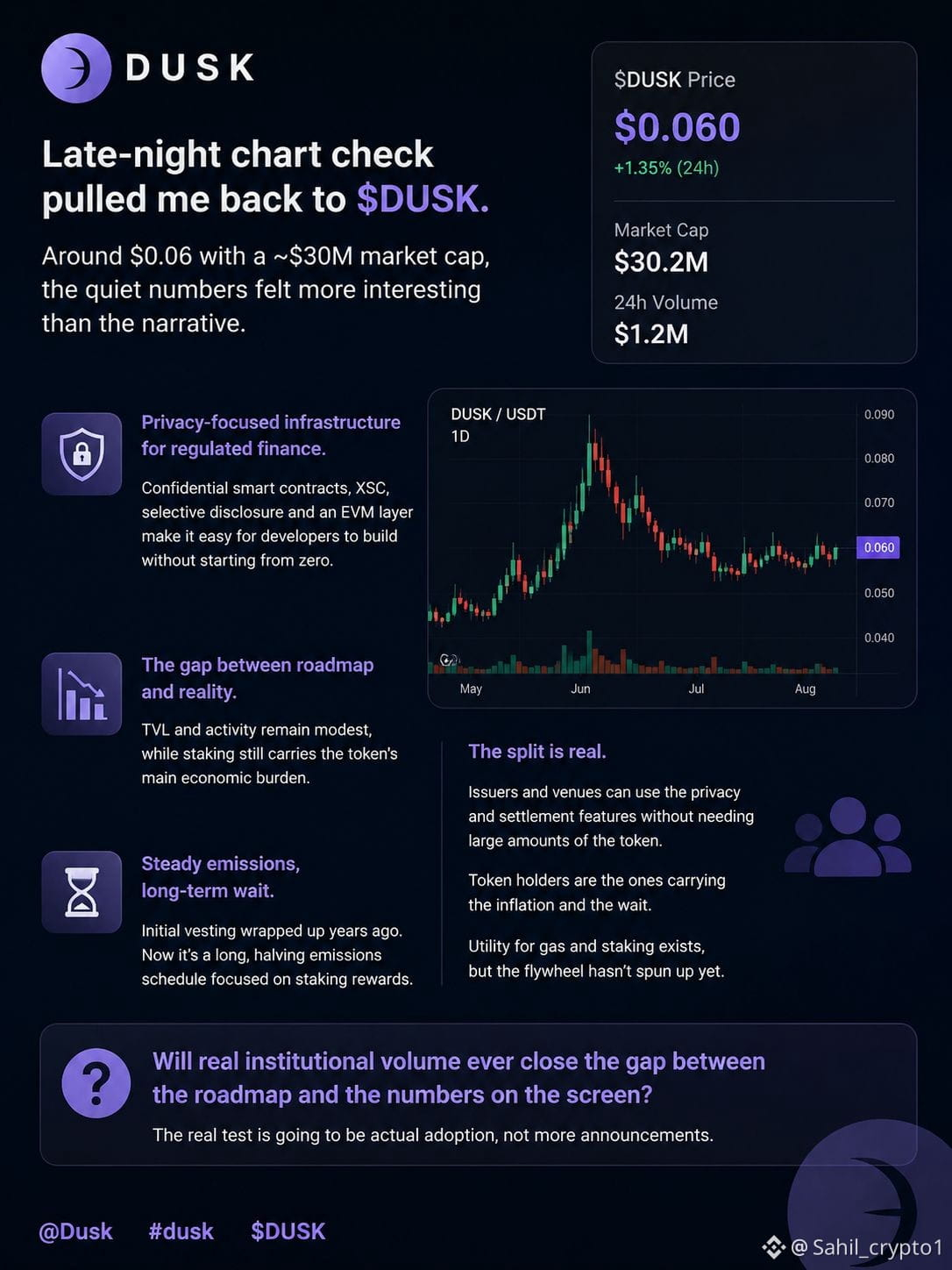
Spät-Nacht-Chart-Check hat mich zurück zu $DUSK geholt. Um etwa $0,06 mit einer Marktkapitalisierung von ~30 Mio. wirkten die stillen Zahlen interessanter als die Story.
@Dusk_Foundation baut datenschutzorientierte Infrastruktur für regulierte Finanzen auf, mit vertraulichen Smart Contracts, XSC, selektiver Offenlegung und einer EVM-Schicht.
Die Tech-Story ergibt Sinn. Worauf ich jetzt achte, ist die Lücke zwischen Roadmap und tatsächlicher Nutzung. TVL und Aktivität bleiben überschaubar, während Staking weiterhin die wichtigste wirtschaftliche Last des Tokens trägt.
Echtes institutionelles Volumen ist der Teil, der zählt. Solange das nicht auftaucht, fühlt sich $DUSK immer noch wie eine Story an, die darauf wartet, dass ihre Zahlen aufholen.
#dusk $ACE
{spot}(ACEUSDT)
$CYS
{future}(CYSUSDT)
{spot}(DUSKUSDT)
Spät-Nacht-Chart-Check hat mich zurück zu $DUSK geholt. Um etwa $0,06 mit einer Marktkapitalisierung von ~30 Mio. wirkten die stillen Zahlen interessanter als die Story.
@Dusk baut datenschutzorientierte Infrastruktur für regulierte Finanzen auf, mit vertraulichen Smart Contracts, XSC, selektiver Offenlegung und einer EVM-Schicht.
Die Tech-Story ergibt Sinn. Worauf ich jetzt achte, ist die Lücke zwischen Roadmap und tatsächlicher Nutzung. TVL und Aktivität bleiben überschaubar, während Staking weiterhin die wichtigste wirtschaftliche Last des Tokens trägt.
Echtes institutionelles Volumen ist der Teil, der zählt. Solange das nicht auftaucht, fühlt sich $DUSK immer noch wie eine Story an, die darauf wartet, dass ihre Zahlen aufholen.
#dusk $ACE
$CYS
@Dusk baut datenschutzorientierte Infrastruktur für regulierte Finanzen auf, mit vertraulichen Smart Contracts, XSC, selektiver Offenlegung und einer EVM-Schicht.
Die Tech-Story ergibt Sinn. Worauf ich jetzt achte, ist die Lücke zwischen Roadmap und tatsächlicher Nutzung. TVL und Aktivität bleiben überschaubar, während Staking weiterhin die wichtigste wirtschaftliche Last des Tokens trägt.
Echtes institutionelles Volumen ist der Teil, der zählt. Solange das nicht auftaucht, fühlt sich $DUSK immer noch wie eine Story an, die darauf wartet, dass ihre Zahlen aufholen.
#dusk $ACE
$CYS
1
1
81
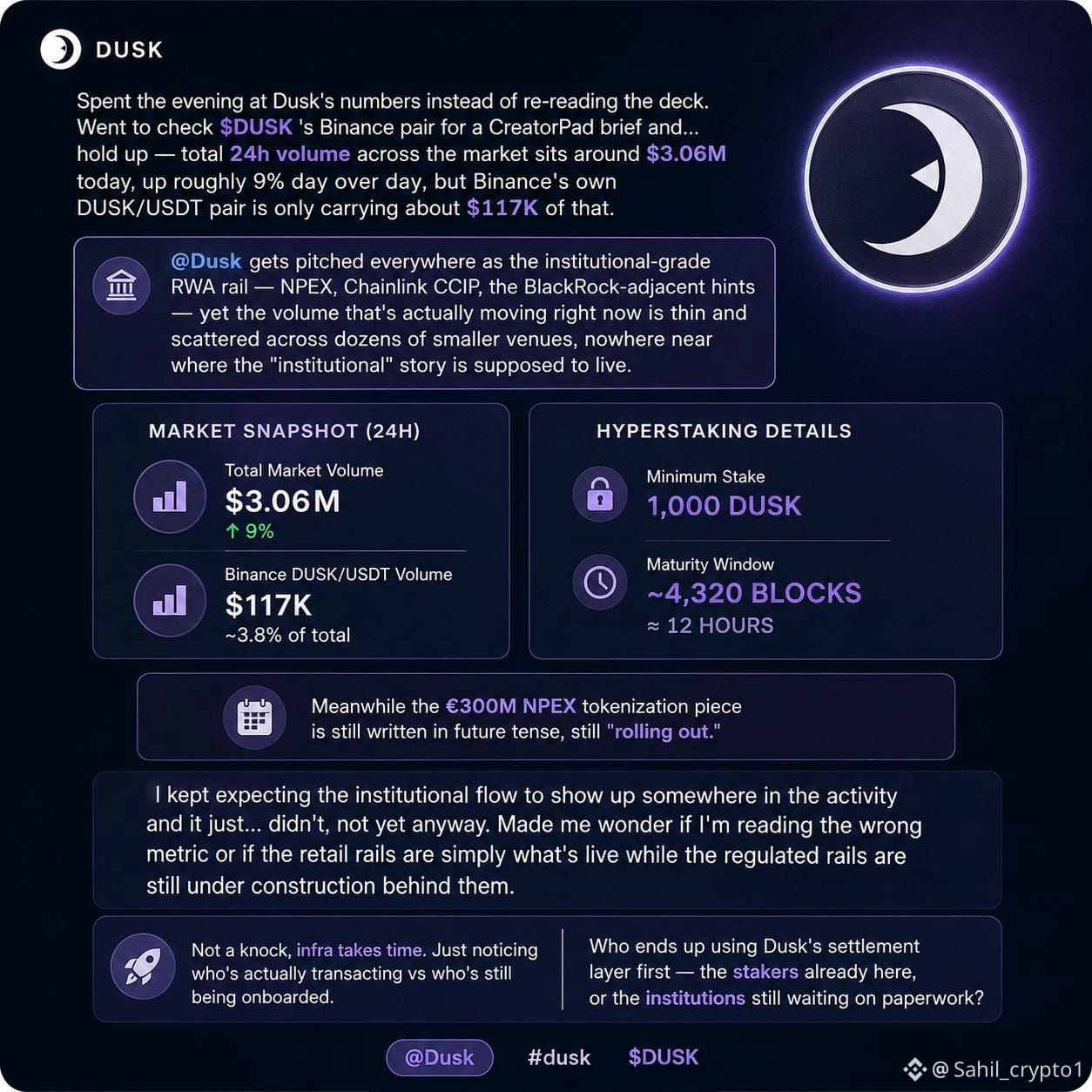
Ich habe mir etwas Zeit genommen und nach $DUSK Zahlen gegraben, statt wie üblich durch die Schlagzeilen der Roadmap zu gehen.
Das 24h-Marktvolumen liegt bei etwa 3 Mio. $, doch das DUSK/USDT-Paar von Binance ist nur ein kleiner Teil dieses Flusses. Für ein Projekt, das sich um institutionelle RWA-Infrastruktur positioniert, hat mich diese Lücke stutzig gemacht.
Sogar Hyperstaking wirkt sehr zugänglich: mindestens 1.000 DUSK und ungefähr ein 12-Stunden-Reifezeitfenster.
Also bleibt mir eine Frage: Ist die Retail-Aktivität von Dusk einfach nur der Teil, der heute schon live ist, während die größeren institutionellen Schienen noch aufgebaut werden?
Nicht bearish — nur dabei zuzuschauen, wo die tatsächliche Aktivität sichtbar wird.
Wer kommt zuerst an: bestehende Staker oder Institutionen?
@Dusk_Foundation #dusk $DUSK
{spot}(DUSKUSDT)
Ich habe mir etwas Zeit genommen und nach $DUSK Zahlen gegraben, statt wie üblich durch die Schlagzeilen der Roadmap zu gehen.
Das 24h-Marktvolumen liegt bei etwa 3 Mio. $, doch das DUSK/USDT-Paar von Binance ist nur ein kleiner Teil dieses Flusses. Für ein Projekt, das sich um institutionelle RWA-Infrastruktur positioniert, hat mich diese Lücke stutzig gemacht.
Sogar Hyperstaking wirkt sehr zugänglich: mindestens 1.000 DUSK und ungefähr ein 12-Stunden-Reifezeitfenster.
Also bleibt mir eine Frage: Ist die Retail-Aktivität von Dusk einfach nur der Teil, der heute schon live ist, während die größeren institutionellen Schienen noch aufgebaut werden?
Nicht bearish — nur dabei zuzuschauen, wo die tatsächliche Aktivität sichtbar wird.
Wer kommt zuerst an: bestehende Staker oder Institutionen?
@Dusk #dusk $DUSK
Das 24h-Marktvolumen liegt bei etwa 3 Mio. $, doch das DUSK/USDT-Paar von Binance ist nur ein kleiner Teil dieses Flusses. Für ein Projekt, das sich um institutionelle RWA-Infrastruktur positioniert, hat mich diese Lücke stutzig gemacht.
Sogar Hyperstaking wirkt sehr zugänglich: mindestens 1.000 DUSK und ungefähr ein 12-Stunden-Reifezeitfenster.
Also bleibt mir eine Frage: Ist die Retail-Aktivität von Dusk einfach nur der Teil, der heute schon live ist, während die größeren institutionellen Schienen noch aufgebaut werden?
Nicht bearish — nur dabei zuzuschauen, wo die tatsächliche Aktivität sichtbar wird.
Wer kommt zuerst an: bestehende Staker oder Institutionen?
@Dusk #dusk $DUSK
1
69
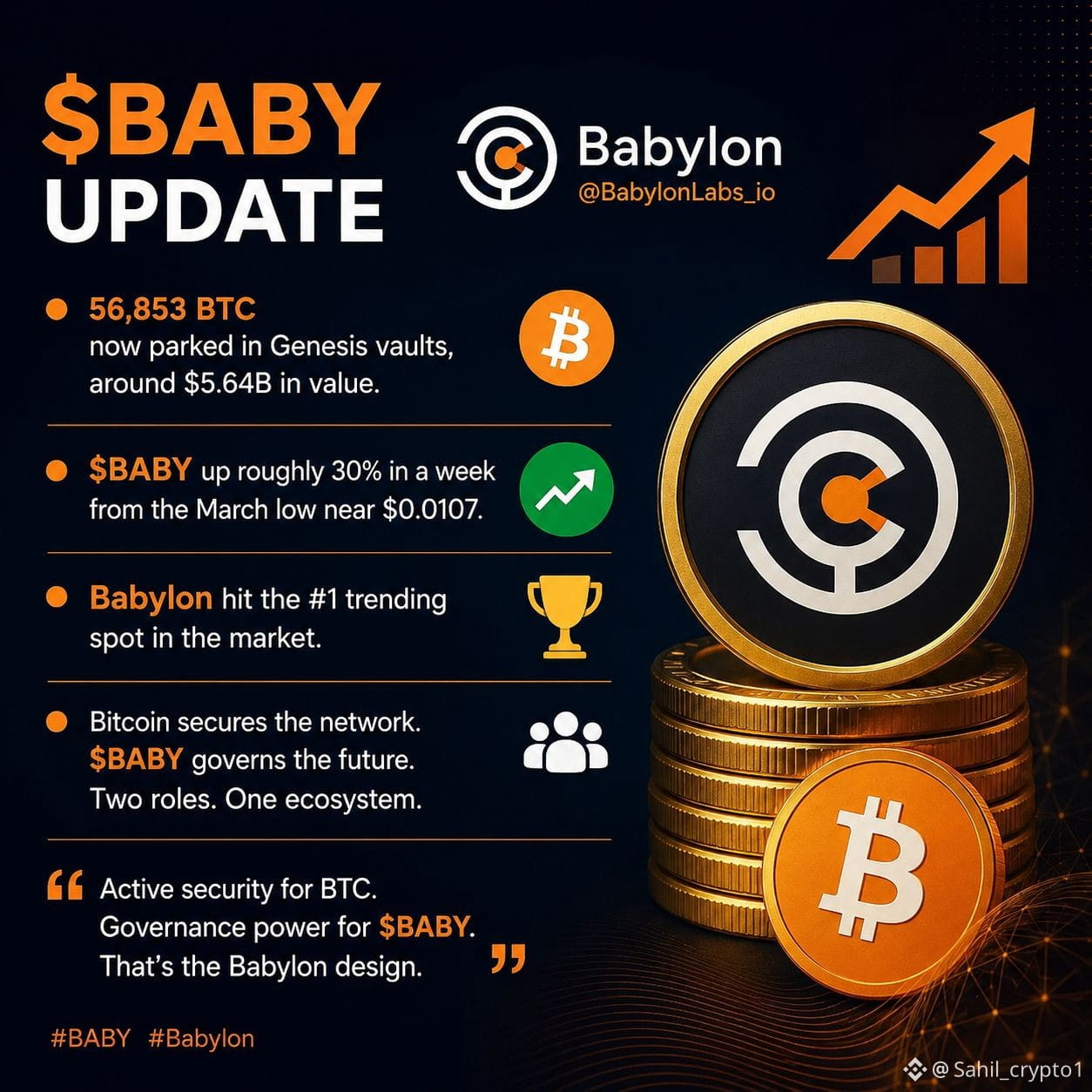
Bin @babylonlabs_io today gefolgt und ein Detail stach neben den Kursdiagrammen besonders hervor. Rund 56,853 BTC sind jetzt in Genesis-Tresoren gestaked, während $BABY stark von den jüngsten Tiefs zurückgekommen ist.
Je mehr ich las, desto mehr wurde mir klar, dass Bitcoins Rolle Sicherheit ist – nicht Governance. BTC-Inhaber helfen dabei, das Netzwerk abzusichern und erhalten dafür Belohnungen, aber Protokoll-Updates, Parameteränderungen und Governance-Entscheidungen liegen bei den $BABY -Inhabern über Delegation.
Das ist eine interessante Trennung der Verantwortlichkeiten. Bitcoin liefert die wirtschaftliche Sicherheit, während BABY die Entscheidungsbefugnis bereitstellt. Dieses Design kann Governance effizient halten, bedeutet aber auch, dass das Asset, das die Sicherheit bereitstellt, die zukünftige Entwicklung des Protokolls nicht direkt mitgestaltet.
Bin gespannt zu sehen, ob BTC-Staker jemals eine stärkere Governance-Rolle bekommen – oder ob dieses Zwei-Schichten-Modell dauerhaft so bleiben soll.
#Baby $BTC
{spot}(BTCUSDT)
{spot}(BABYUSDT)
Bin @BabylonLabs_io today gefolgt und ein Detail stach neben den Kursdiagrammen besonders hervor. Rund 56,853 BTC sind jetzt in Genesis-Tresoren gestaked, während $BABY stark von den jüngsten Tiefs zurückgekommen ist.
Je mehr ich las, desto mehr wurde mir klar, dass Bitcoins Rolle Sicherheit ist – nicht Governance. BTC-Inhaber helfen dabei, das Netzwerk abzusichern und erhalten dafür Belohnungen, aber Protokoll-Updates, Parameteränderungen und Governance-Entscheidungen liegen bei den $BABY -Inhabern über Delegation.
Das ist eine interessante Trennung der Verantwortlichkeiten. Bitcoin liefert die wirtschaftliche Sicherheit, während BABY die Entscheidungsbefugnis bereitstellt. Dieses Design kann Governance effizient halten, bedeutet aber auch, dass das Asset, das die Sicherheit bereitstellt, die zukünftige Entwicklung des Protokolls nicht direkt mitgestaltet.
Bin gespannt zu sehen, ob BTC-Staker jemals eine stärkere Governance-Rolle bekommen – oder ob dieses Zwei-Schichten-Modell dauerhaft so bleiben soll.
#Baby $BTC
Je mehr ich las, desto mehr wurde mir klar, dass Bitcoins Rolle Sicherheit ist – nicht Governance. BTC-Inhaber helfen dabei, das Netzwerk abzusichern und erhalten dafür Belohnungen, aber Protokoll-Updates, Parameteränderungen und Governance-Entscheidungen liegen bei den $BABY -Inhabern über Delegation.
Das ist eine interessante Trennung der Verantwortlichkeiten. Bitcoin liefert die wirtschaftliche Sicherheit, während BABY die Entscheidungsbefugnis bereitstellt. Dieses Design kann Governance effizient halten, bedeutet aber auch, dass das Asset, das die Sicherheit bereitstellt, die zukünftige Entwicklung des Protokolls nicht direkt mitgestaltet.
Bin gespannt zu sehen, ob BTC-Staker jemals eine stärkere Governance-Rolle bekommen – oder ob dieses Zwei-Schichten-Modell dauerhaft so bleiben soll.
#Baby $BTC
2
97
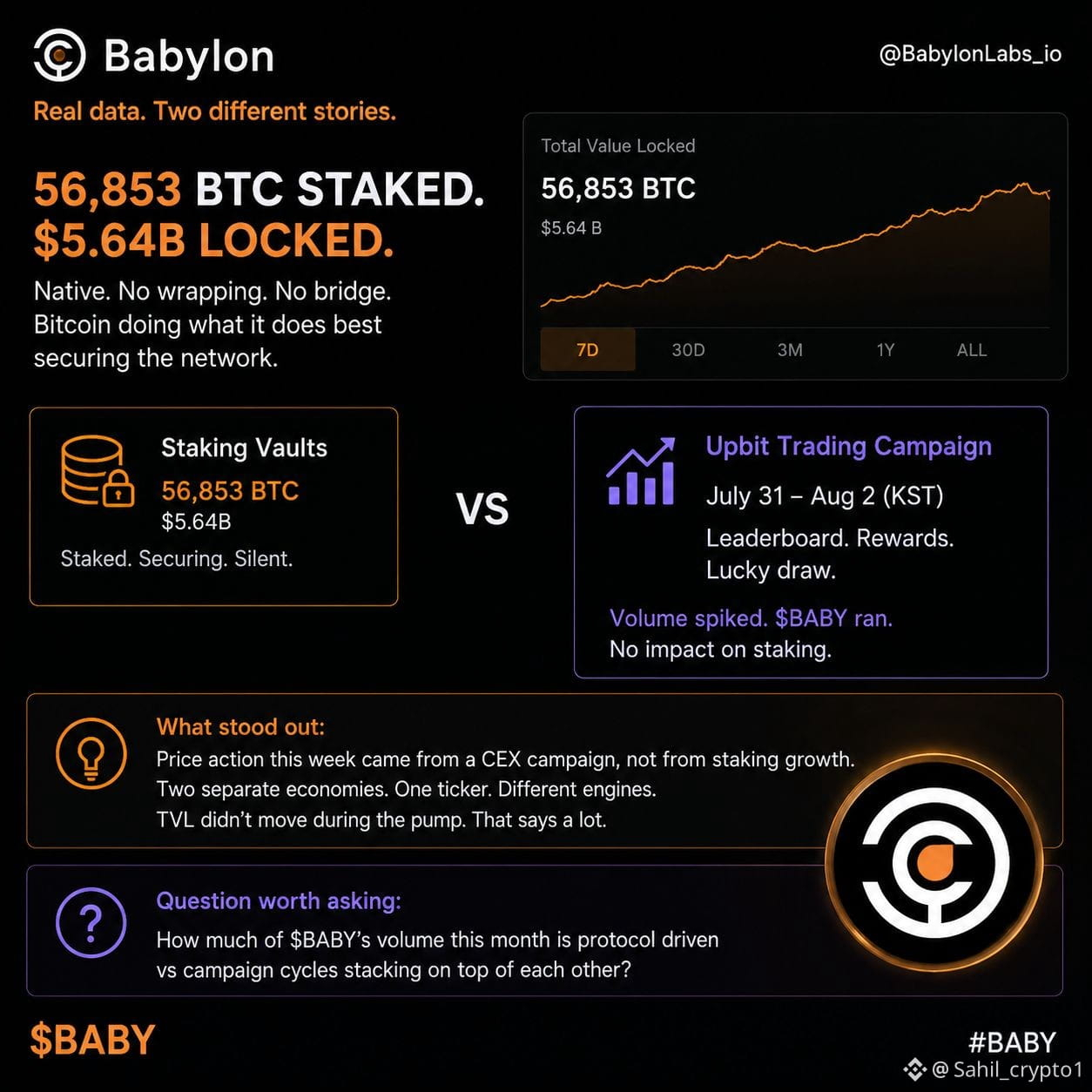
Ich habe eine Weile damit verbracht, was um @babylonlabs_io herum passierte, mit dem abzugleichen, was tatsächlich innerhalb des Protokolls geschah – und der Kontrast war interessant.
Auf der einen Seite blieb das Bitcoin-Staking bemerkenswert stabil. Mehr als 56K BTC blieben im nativen Staking-System von Babylon gesperrt, was zeigt, dass langfristige Teilnehmer nicht dabei waren, ihr Kapital hastig umzuschichten.
Auf der anderen Seite schien der Großteil der dieswöchigen Aufregung aus der Upbit-Trading-Kampagne zu kommen. Mehr Handelsaktivität, der Wettbewerb um die Rangliste und Belohnungsanreize lenkten die Aufmerksamkeit auf $BABY , ohne die On-Chain-Staking-Aktivität jedoch wesentlich zu verändern.
Das hat mich daran erinnert, dass sich Kursdynamik und Protokoll-Übernahme nicht immer gemeinsam entwickeln. Manchmal reagiert der Markt auf Anreize der Börsen, während das zugrunde liegende Netzwerk im Hintergrund leise seine Arbeit fortsetzt.
Beide Kennzahlen nebeneinander zu beobachten, erzählt wahrscheinlich eine vollständigere Geschichte, als nur dem Preis allein zu folgen.
#BABY $BTC $BABY
{future}(BABYUSDT)
{spot}(BTCUSDT)
Ich habe eine Weile damit verbracht, was um @BabylonLabs_io herum passierte, mit dem abzugleichen, was tatsächlich innerhalb des Protokolls geschah – und der Kontrast war interessant.
Auf der einen Seite blieb das Bitcoin-Staking bemerkenswert stabil. Mehr als 56K BTC blieben im nativen Staking-System von Babylon gesperrt, was zeigt, dass langfristige Teilnehmer nicht dabei waren, ihr Kapital hastig umzuschichten.
Auf der anderen Seite schien der Großteil der dieswöchigen Aufregung aus der Upbit-Trading-Kampagne zu kommen. Mehr Handelsaktivität, der Wettbewerb um die Rangliste und Belohnungsanreize lenkten die Aufmerksamkeit auf $BABY , ohne die On-Chain-Staking-Aktivität jedoch wesentlich zu verändern.
Das hat mich daran erinnert, dass sich Kursdynamik und Protokoll-Übernahme nicht immer gemeinsam entwickeln. Manchmal reagiert der Markt auf Anreize der Börsen, während das zugrunde liegende Netzwerk im Hintergrund leise seine Arbeit fortsetzt.
Beide Kennzahlen nebeneinander zu beobachten, erzählt wahrscheinlich eine vollständigere Geschichte, als nur dem Preis allein zu folgen.
#BABY $BTC $BABY
Auf der einen Seite blieb das Bitcoin-Staking bemerkenswert stabil. Mehr als 56K BTC blieben im nativen Staking-System von Babylon gesperrt, was zeigt, dass langfristige Teilnehmer nicht dabei waren, ihr Kapital hastig umzuschichten.
Auf der anderen Seite schien der Großteil der dieswöchigen Aufregung aus der Upbit-Trading-Kampagne zu kommen. Mehr Handelsaktivität, der Wettbewerb um die Rangliste und Belohnungsanreize lenkten die Aufmerksamkeit auf $BABY , ohne die On-Chain-Staking-Aktivität jedoch wesentlich zu verändern.
Das hat mich daran erinnert, dass sich Kursdynamik und Protokoll-Übernahme nicht immer gemeinsam entwickeln. Manchmal reagiert der Markt auf Anreize der Börsen, während das zugrunde liegende Netzwerk im Hintergrund leise seine Arbeit fortsetzt.
Beide Kennzahlen nebeneinander zu beobachten, erzählt wahrscheinlich eine vollständigere Geschichte, als nur dem Preis allein zu folgen.
#BABY $BTC $BABY
5
2
95
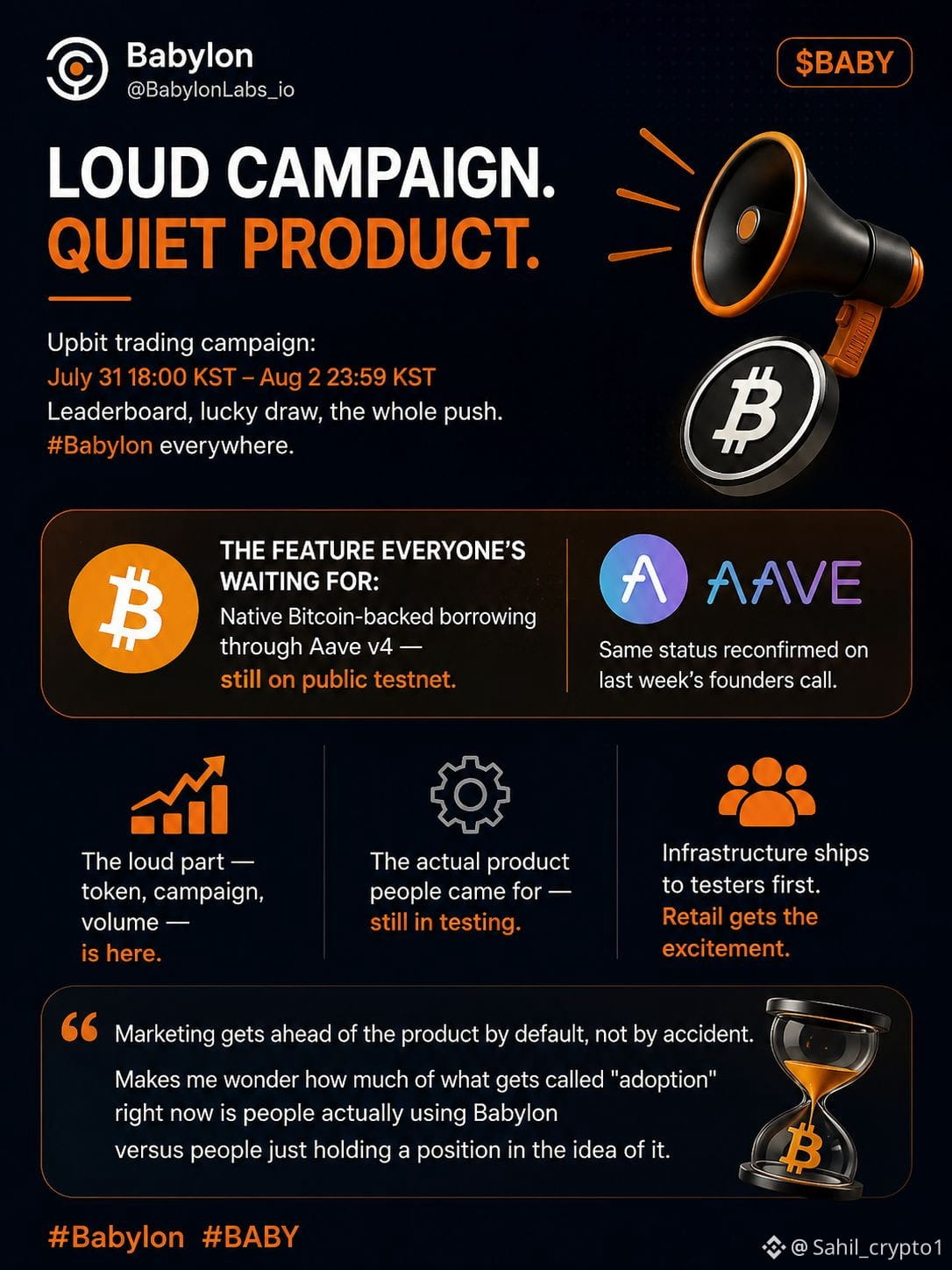
🚨Ich habe die Charts für $BABY geöffnet, nachdem ich den jüngsten Hype rund um @babylonlabs_io gesehen hatte, und beschlossen, tiefer zu graben, statt beim Kursverhalten stehenzubleiben.
Die Trading-Kampagne hat jede Menge Aufmerksamkeit gebracht, aber mich interessierte mehr das Feature, das Babylon immer wieder hervorhebt: natives Bitcoin als Sicherheit zu nutzen, ohne die Verwahrung aufzugeben. Nach dem Checken der neuesten Updates ist dieser Kredit-Flow über die Aave-v4-Integration weiterhin auf dem öffentlichen Testnet verfügbar, statt im Mainnet.
Das war nicht enttäuschend – eher eine Erinnerung daran, wie sich Krypto-Projekte normalerweise weiterentwickeln. Community-Kampagnen, Börsenaktivitäten und Token-Trading kommen oft, bevor das Flaggschiff-Produkt bei den Alltag-Nutzern ankommt. Entwickler sammeln Feedback, beheben Edge Cases und härten die Infrastruktur aus, während der Markt das zukünftige Potenzial handelt.
Das schafft eine spannende Lücke. Der Kurs spiegelt Erwartungen wider, während die Adoption davon abhängt, ob Menschen das Produkt nutzen, sobald es live ist. Diese beiden bewegen sich nicht immer gemeinsam.
Ich werde weniger auf Kampagnen-Zahlen achten und mehr auf den Moment, in dem die über natives Bitcoin besicherte Kreditaufnahme produktiv verfügbar wird. Dann bekommen wir ein klareres Bild davon, wie viel Nachfrage es tatsächlich gibt – jenseits der Aufregung.
#Babylon #BABY $BTC
{spot}(BABYUSDT)
{spot}(BTCUSDT)
🚨Ich habe die Charts für $BABY geöffnet, nachdem ich den jüngsten Hype rund um @BabylonLabs_io gesehen hatte, und beschlossen, tiefer zu graben, statt beim Kursverhalten stehenzubleiben.
Die Trading-Kampagne hat jede Menge Aufmerksamkeit gebracht, aber mich interessierte mehr das Feature, das Babylon immer wieder hervorhebt: natives Bitcoin als Sicherheit zu nutzen, ohne die Verwahrung aufzugeben. Nach dem Checken der neuesten Updates ist dieser Kredit-Flow über die Aave-v4-Integration weiterhin auf dem öffentlichen Testnet verfügbar, statt im Mainnet.
Das war nicht enttäuschend – eher eine Erinnerung daran, wie sich Krypto-Projekte normalerweise weiterentwickeln. Community-Kampagnen, Börsenaktivitäten und Token-Trading kommen oft, bevor das Flaggschiff-Produkt bei den Alltag-Nutzern ankommt. Entwickler sammeln Feedback, beheben Edge Cases und härten die Infrastruktur aus, während der Markt das zukünftige Potenzial handelt.
Das schafft eine spannende Lücke. Der Kurs spiegelt Erwartungen wider, während die Adoption davon abhängt, ob Menschen das Produkt nutzen, sobald es live ist. Diese beiden bewegen sich nicht immer gemeinsam.
Ich werde weniger auf Kampagnen-Zahlen achten und mehr auf den Moment, in dem die über natives Bitcoin besicherte Kreditaufnahme produktiv verfügbar wird. Dann bekommen wir ein klareres Bild davon, wie viel Nachfrage es tatsächlich gibt – jenseits der Aufregung.
#Babylon #BABY $BTC
Die Trading-Kampagne hat jede Menge Aufmerksamkeit gebracht, aber mich interessierte mehr das Feature, das Babylon immer wieder hervorhebt: natives Bitcoin als Sicherheit zu nutzen, ohne die Verwahrung aufzugeben. Nach dem Checken der neuesten Updates ist dieser Kredit-Flow über die Aave-v4-Integration weiterhin auf dem öffentlichen Testnet verfügbar, statt im Mainnet.
Das war nicht enttäuschend – eher eine Erinnerung daran, wie sich Krypto-Projekte normalerweise weiterentwickeln. Community-Kampagnen, Börsenaktivitäten und Token-Trading kommen oft, bevor das Flaggschiff-Produkt bei den Alltag-Nutzern ankommt. Entwickler sammeln Feedback, beheben Edge Cases und härten die Infrastruktur aus, während der Markt das zukünftige Potenzial handelt.
Das schafft eine spannende Lücke. Der Kurs spiegelt Erwartungen wider, während die Adoption davon abhängt, ob Menschen das Produkt nutzen, sobald es live ist. Diese beiden bewegen sich nicht immer gemeinsam.
Ich werde weniger auf Kampagnen-Zahlen achten und mehr auf den Moment, in dem die über natives Bitcoin besicherte Kreditaufnahme produktiv verfügbar wird. Dann bekommen wir ein klareres Bild davon, wie viel Nachfrage es tatsächlich gibt – jenseits der Aufregung.
#Babylon #BABY $BTC
2
1
113
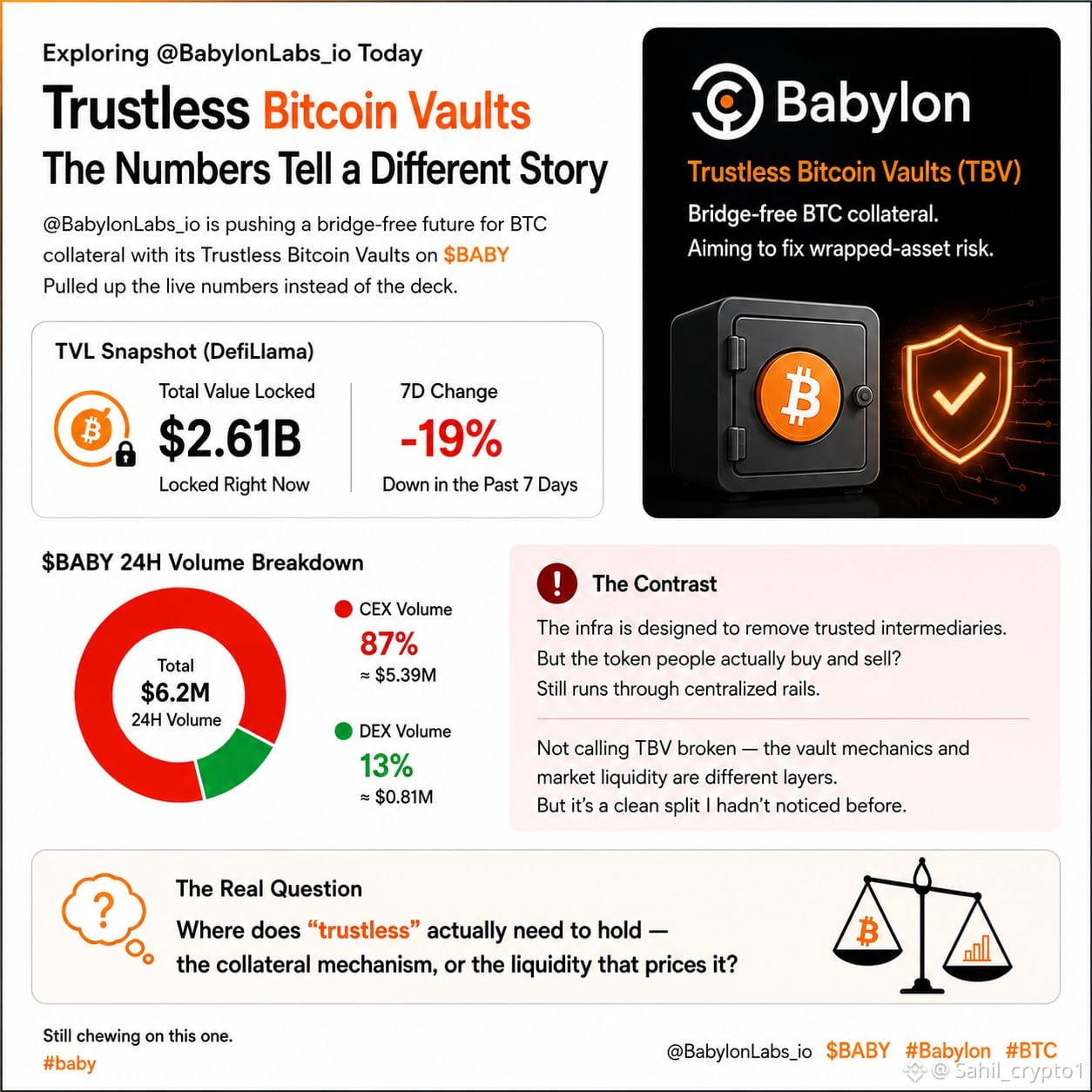
Ich habe etwas Zeit damit verbracht, @babylonlabs_io today zu erkunden, und eine Sache hat mich immer wieder zurückgezogen. Alle sprechen über „Trustless Bitcoin Vaults“, weil sie BTC nativer halten, statt auf verpackte Assets zu setzen, aber der Markt erzählt eine andere Geschichte.
Das Protokoll drängt Bitcoin in eine brückenfreie Zukunft, während der Großteil des $BABY tradings weiterhin über zentralisierte Plattformen läuft. Dieser Kontrast ist interessant. Dezentralisierte Infrastruktur schafft nicht automatisch auch dezentralisierte Liquidität.
Das hat mich erkennen lassen, dass „trustless“ kein einzelnes Häkchen ist. Das Sicherheiten-Setup kann vertrauensminimiert sein, aber die Preisfindung des Tokens kann dennoch von traditionellen Börsenströmen abhängen. Vielleicht ist das einfach der Stand des Ökosystems – oder vielleicht ist das die nächste Herausforderung, die Babylon lösen muss.
Bin gespannt zu sehen, wie sich dieses Gleichgewicht verändert, wenn das Ökosystem wächst.
#Baby #Babylon $BTC
{future}(BABYUSDT)
{spot}(BTCUSDT)
Ich habe etwas Zeit damit verbracht, @BabylonLabs_io today zu erkunden, und eine Sache hat mich immer wieder zurückgezogen. Alle sprechen über „Trustless Bitcoin Vaults“, weil sie BTC nativer halten, statt auf verpackte Assets zu setzen, aber der Markt erzählt eine andere Geschichte.
Das Protokoll drängt Bitcoin in eine brückenfreie Zukunft, während der Großteil des $BABY tradings weiterhin über zentralisierte Plattformen läuft. Dieser Kontrast ist interessant. Dezentralisierte Infrastruktur schafft nicht automatisch auch dezentralisierte Liquidität.
Das hat mich erkennen lassen, dass „trustless“ kein einzelnes Häkchen ist. Das Sicherheiten-Setup kann vertrauensminimiert sein, aber die Preisfindung des Tokens kann dennoch von traditionellen Börsenströmen abhängen. Vielleicht ist das einfach der Stand des Ökosystems – oder vielleicht ist das die nächste Herausforderung, die Babylon lösen muss.
Bin gespannt zu sehen, wie sich dieses Gleichgewicht verändert, wenn das Ökosystem wächst.
#Baby #Babylon $BTC
Das Protokoll drängt Bitcoin in eine brückenfreie Zukunft, während der Großteil des $BABY tradings weiterhin über zentralisierte Plattformen läuft. Dieser Kontrast ist interessant. Dezentralisierte Infrastruktur schafft nicht automatisch auch dezentralisierte Liquidität.
Das hat mich erkennen lassen, dass „trustless“ kein einzelnes Häkchen ist. Das Sicherheiten-Setup kann vertrauensminimiert sein, aber die Preisfindung des Tokens kann dennoch von traditionellen Börsenströmen abhängen. Vielleicht ist das einfach der Stand des Ökosystems – oder vielleicht ist das die nächste Herausforderung, die Babylon lösen muss.
Bin gespannt zu sehen, wie sich dieses Gleichgewicht verändert, wenn das Ökosystem wächst.
#Baby #Babylon $BTC
2
1
80
Ich habe heute etwas Zeit damit verbracht, die @babylonlabs_io documentation zu durchforsten, und ein Detail hat mich immer wieder zurückgezogen. Bitcoin, das durch das Trustless Vault gesperrt ist, bleibt weiterhin nativer Bestandteil des Bitcoin-Netzwerks, während es andernorts als produktives Sicherheitenmittel verwendet wird. Das ist technisch gesehen ziemlich elegant.
Dann habe ich mir den Markt angesehen. $BABY wird immer noch zu einer relativ kleinen Bewertung gehandelt, verglichen mit den Milliarden an Dollar in BTC, die das Ökosystem dabei hilft abzusichern. Dieser Gegensatz ist schwer zu übersehen.
Infrastruktur kann exakt wie vorgesehen funktionieren, während der Markt viel länger braucht, um ihren Wert zu erkennen. Ob diese Lücke kleiner wird, wird wahrscheinlich von der Akzeptanz, der Nachfrage nach Krediten und echter Protokollaktivität abhängen – nicht nur von Narrativen.
Vorerst beobachte ich eher die Fundamentaldaten als den Preis.
#BABY #Bitcoin $BTC
{spot}(BTCUSDT)
{spot}(BABYUSDT)
Ich habe heute etwas Zeit damit verbracht, die @BabylonLabs_io documentation zu durchforsten, und ein Detail hat mich immer wieder zurückgezogen. Bitcoin, das durch das Trustless Vault gesperrt ist, bleibt weiterhin nativer Bestandteil des Bitcoin-Netzwerks, während es andernorts als produktives Sicherheitenmittel verwendet wird. Das ist technisch gesehen ziemlich elegant.
Dann habe ich mir den Markt angesehen. $BABY wird immer noch zu einer relativ kleinen Bewertung gehandelt, verglichen mit den Milliarden an Dollar in BTC, die das Ökosystem dabei hilft abzusichern. Dieser Gegensatz ist schwer zu übersehen.
Infrastruktur kann exakt wie vorgesehen funktionieren, während der Markt viel länger braucht, um ihren Wert zu erkennen. Ob diese Lücke kleiner wird, wird wahrscheinlich von der Akzeptanz, der Nachfrage nach Krediten und echter Protokollaktivität abhängen – nicht nur von Narrativen.
Vorerst beobachte ich eher die Fundamentaldaten als den Preis.
#BABY #Bitcoin $BTC
Dann habe ich mir den Markt angesehen. $BABY wird immer noch zu einer relativ kleinen Bewertung gehandelt, verglichen mit den Milliarden an Dollar in BTC, die das Ökosystem dabei hilft abzusichern. Dieser Gegensatz ist schwer zu übersehen.
Infrastruktur kann exakt wie vorgesehen funktionieren, während der Markt viel länger braucht, um ihren Wert zu erkennen. Ob diese Lücke kleiner wird, wird wahrscheinlich von der Akzeptanz, der Nachfrage nach Krediten und echter Protokollaktivität abhängen – nicht nur von Narrativen.
Vorerst beobachte ich eher die Fundamentaldaten als den Preis.
#BABY #Bitcoin $BTC

3
1
112
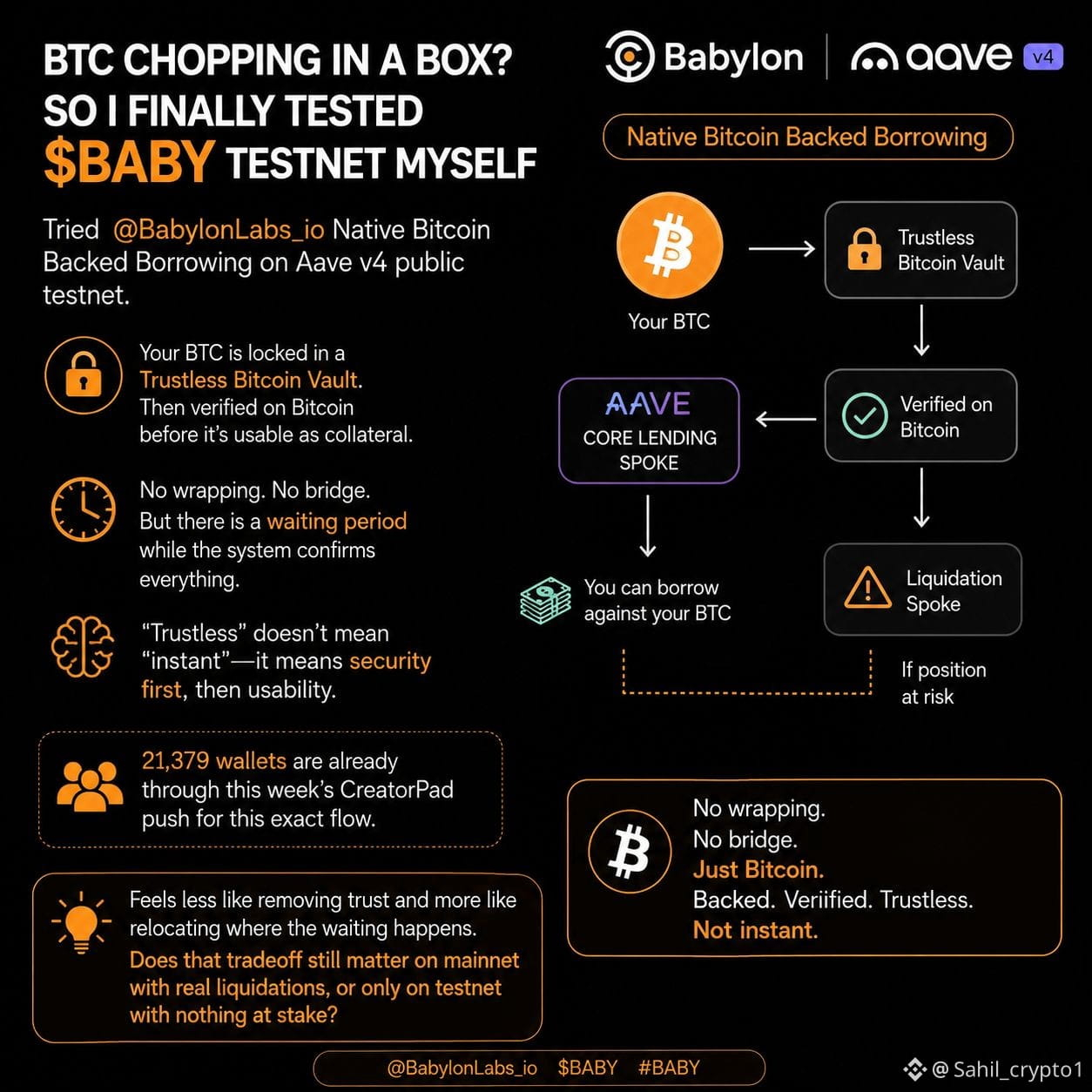
BTC hat sich seit Tagen kaum bewegt, also habe ich endlich aufgehört, Charts zu beobachten, und den Flow „Native Bitcoin Backed Borrowing“ von Babylon selbst getestet.
Dabei ist mir etwas aufgefallen: „Trustless“ bedeutet nicht „sofort“.
Dein BTC ist in einem „Trustless Bitcoin Vault“ gesperrt und wird dann auf Bitcoin verifiziert, bevor es als Sicherheit nutzbar wird. Kein Wrapping, keine Bridge – aber es gibt trotzdem eine Wartezeit, während das Protokoll alles bestätigt.
Diese Verzögerung hat mich tatsächlich zum Nachdenken gebracht. Vielleicht ist nicht das Ziel, Reibung vollständig zu eliminieren, sondern sie hin zu einer stärkeren Sicherheit zu verschieben.
Bin gespannt, wie sich das anfühlt, sobald das Mainnet-Liquidität, die Borrowing-Limits und echte Liquidationen live sind.
@babylonlabs_io o #BABY $BABY
{spot}(BABYUSDT)
$BTC
{spot}(BTCUSDT)
BTC hat sich seit Tagen kaum bewegt, also habe ich endlich aufgehört, Charts zu beobachten, und den Flow „Native Bitcoin Backed Borrowing“ von Babylon selbst getestet.
Dabei ist mir etwas aufgefallen: „Trustless“ bedeutet nicht „sofort“.
Dein BTC ist in einem „Trustless Bitcoin Vault“ gesperrt und wird dann auf Bitcoin verifiziert, bevor es als Sicherheit nutzbar wird. Kein Wrapping, keine Bridge – aber es gibt trotzdem eine Wartezeit, während das Protokoll alles bestätigt.
Diese Verzögerung hat mich tatsächlich zum Nachdenken gebracht. Vielleicht ist nicht das Ziel, Reibung vollständig zu eliminieren, sondern sie hin zu einer stärkeren Sicherheit zu verschieben.
Bin gespannt, wie sich das anfühlt, sobald das Mainnet-Liquidität, die Borrowing-Limits und echte Liquidationen live sind.
@BabylonLabs_io o #BABY $BABY
$BTC
Dabei ist mir etwas aufgefallen: „Trustless“ bedeutet nicht „sofort“.
Dein BTC ist in einem „Trustless Bitcoin Vault“ gesperrt und wird dann auf Bitcoin verifiziert, bevor es als Sicherheit nutzbar wird. Kein Wrapping, keine Bridge – aber es gibt trotzdem eine Wartezeit, während das Protokoll alles bestätigt.
Diese Verzögerung hat mich tatsächlich zum Nachdenken gebracht. Vielleicht ist nicht das Ziel, Reibung vollständig zu eliminieren, sondern sie hin zu einer stärkeren Sicherheit zu verschieben.
Bin gespannt, wie sich das anfühlt, sobald das Mainnet-Liquidität, die Borrowing-Limits und echte Liquidationen live sind.
@BabylonLabs_io o #BABY $BABY
$BTC
5
1
76
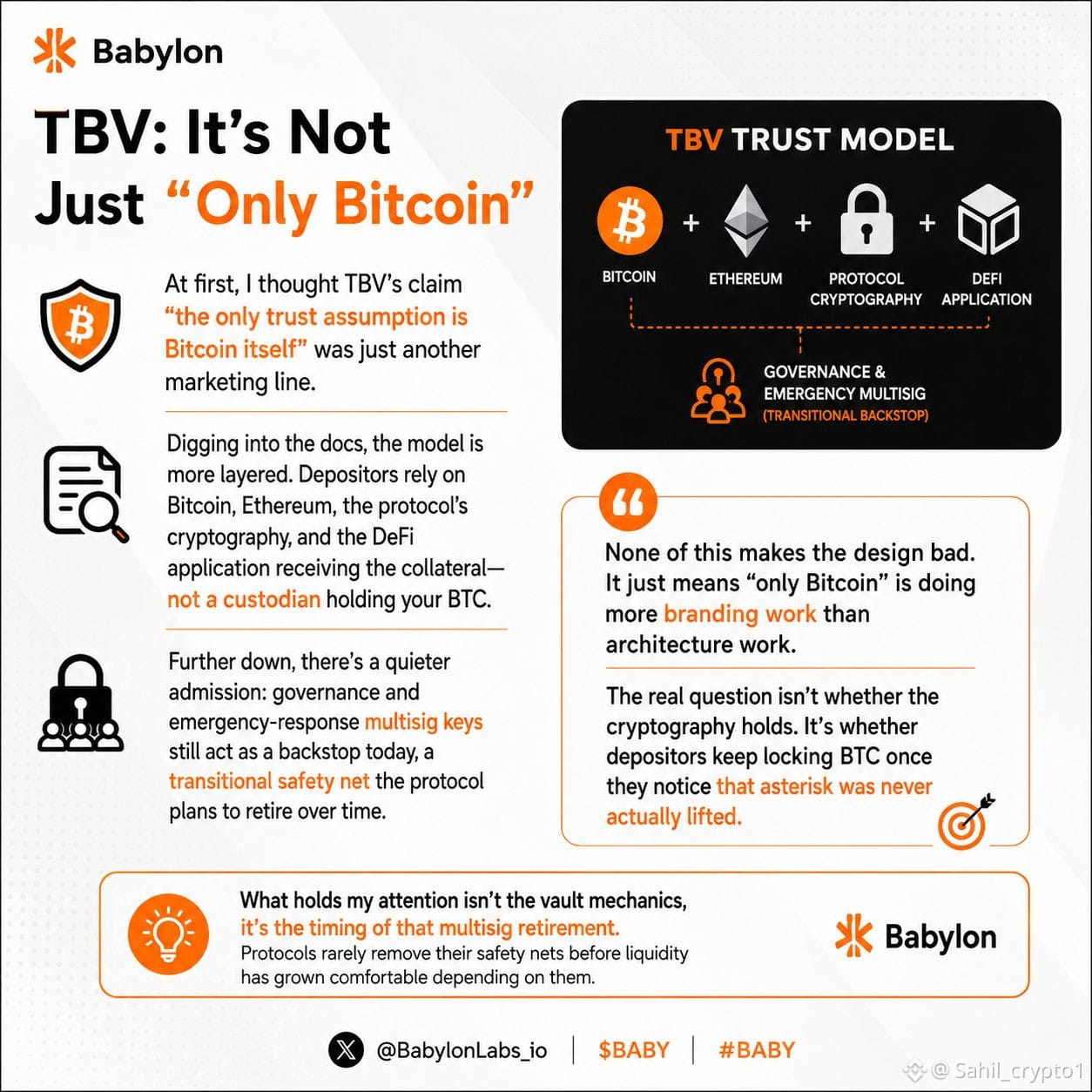
Ich bin bei TBV reingegangen in der Annahme, die Headline sei simpel: Vertrauen Sie Bitcoin und sonst nichts. Nach dem tieferen Lesen zeigt sich jedoch, dass das Modell differenzierter ist. Einleger verlassen sich auf Bitcoin, Ethereum, kryptografische Protokolle und die Ziel- DeFi-Anwendung – nicht auf einen Custodian. Das ist eine bedeutende Veränderung, aber nicht die ganze Geschichte.
Das Detail, das meine Aufmerksamkeit geweckt hat, waren die Governance- und die Emergency-Multisig. In den Dokumenten wird sie als vorübergehende Absicherung dargestellt, die irgendwann entfernt wird, wenn das System reifer wird. Das wirkt weniger wie ein Mangel, sondern eher wie ein wichtiger Meilenstein, den man im Blick behalten sollte.
Für mich wird das größte Signal nicht allein der TVL sein. Es wird der Moment sein, in dem diese Fallback-Kontrollen verschwinden und das Protokoll exakt so funktioniert, wie es für sein langfristiges Design vorgesehen ist. Dann wird das Vertrauensmodell wirklich auf die Probe gestellt.
@babylonlabs_io $BABY #BABY $BTC $ETH
Ich bin bei TBV reingegangen in der Annahme, die Headline sei simpel: Vertrauen Sie Bitcoin und sonst nichts. Nach dem tieferen Lesen zeigt sich jedoch, dass das Modell differenzierter ist. Einleger verlassen sich auf Bitcoin, Ethereum, kryptografische Protokolle und die Ziel- DeFi-Anwendung – nicht auf einen Custodian. Das ist eine bedeutende Veränderung, aber nicht die ganze Geschichte.
Das Detail, das meine Aufmerksamkeit geweckt hat, waren die Governance- und die Emergency-Multisig. In den Dokumenten wird sie als vorübergehende Absicherung dargestellt, die irgendwann entfernt wird, wenn das System reifer wird. Das wirkt weniger wie ein Mangel, sondern eher wie ein wichtiger Meilenstein, den man im Blick behalten sollte.
Für mich wird das größte Signal nicht allein der TVL sein. Es wird der Moment sein, in dem diese Fallback-Kontrollen verschwinden und das Protokoll exakt so funktioniert, wie es für sein langfristiges Design vorgesehen ist. Dann wird das Vertrauensmodell wirklich auf die Probe gestellt.
@BabylonLabs_io $BABY #BABY $BTC $ETH
Das Detail, das meine Aufmerksamkeit geweckt hat, waren die Governance- und die Emergency-Multisig. In den Dokumenten wird sie als vorübergehende Absicherung dargestellt, die irgendwann entfernt wird, wenn das System reifer wird. Das wirkt weniger wie ein Mangel, sondern eher wie ein wichtiger Meilenstein, den man im Blick behalten sollte.
Für mich wird das größte Signal nicht allein der TVL sein. Es wird der Moment sein, in dem diese Fallback-Kontrollen verschwinden und das Protokoll exakt so funktioniert, wie es für sein langfristiges Design vorgesehen ist. Dann wird das Vertrauensmodell wirklich auf die Probe gestellt.
@BabylonLabs_io $BABY #BABY $BTC $ETH
4
1
111
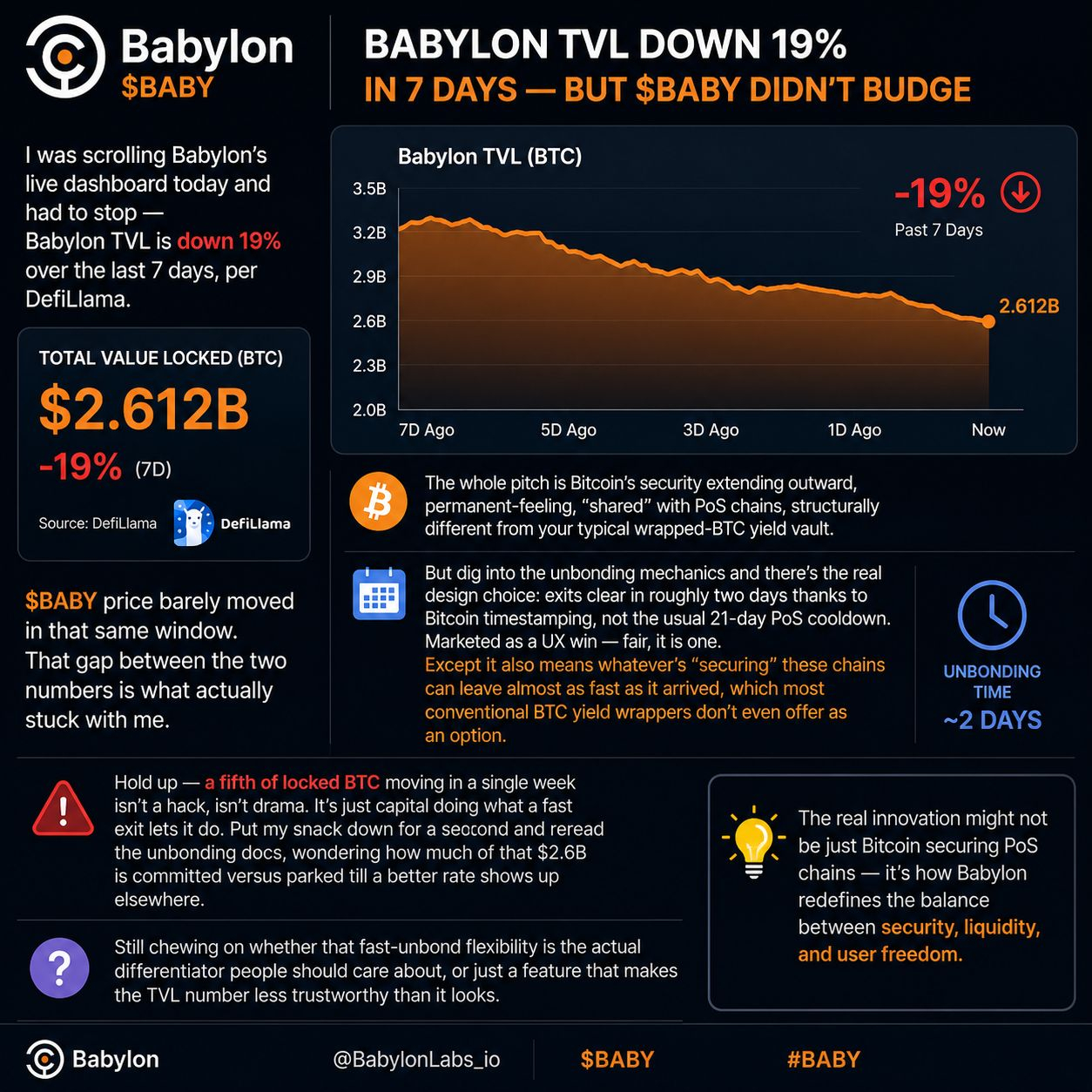
Ich habe das Babylon-Dashboard geöffnet und mit den üblichen, stabilen Zahlen gerechnet, aber eine Kennzahl hat mich innehalten lassen. In der vergangenen Woche ist Babylons BTC TVL deutlich gefallen, während $BABY kaum reagiert hat. Diese Diskrepanz wirkt interessanter als der Preis selbst.
Je mehr ich gelesen habe, desto klarer wurde mir, dass Babylons schnelle Entbündelungs-Änderungen verändert, wie TVL zu interpretieren ist. Da Ausstiege etwa zwei Tage dauern statt der langen Wartezeiten, die bei vielen PoS-Netzwerken üblich sind, kann Kapital viel schneller rotieren. Das ist zwar großartig für die Flexibilität, bedeutet aber auch, dass TVL eher kurzfristige Chancen widerspiegeln kann als langfristige Überzeugung.
Ein sinkendes TVL ist nicht automatisch ein Zeichen für Schwäche. Manchmal verlagert sich einfach die Liquidität dorthin, wo Renditen oder Anreize attraktiver wirken. Die eigentliche Frage ist, ob die Sicherheit von Bitcoin widerstandsfähig bleibt, wenn Teilnehmende einen so reibungslosen Ausstieg haben.
Ich beginne zu glauben, dass die eigentliche Innovation nicht nur darin besteht, dass Bitcoin PoS-Chains absichert—sondern darin, wie Babylon das Gleichgewicht zwischen Sicherheit, Liquidität und der Freiheit der Nutzer neu definiert.
@babylonlabs_io #Baby $BABY
{spot}(BABYUSDT)
Ich habe das Babylon-Dashboard geöffnet und mit den üblichen, stabilen Zahlen gerechnet, aber eine Kennzahl hat mich innehalten lassen. In der vergangenen Woche ist Babylons BTC TVL deutlich gefallen, während $BABY kaum reagiert hat. Diese Diskrepanz wirkt interessanter als der Preis selbst.
Je mehr ich gelesen habe, desto klarer wurde mir, dass Babylons schnelle Entbündelungs-Änderungen verändert, wie TVL zu interpretieren ist. Da Ausstiege etwa zwei Tage dauern statt der langen Wartezeiten, die bei vielen PoS-Netzwerken üblich sind, kann Kapital viel schneller rotieren. Das ist zwar großartig für die Flexibilität, bedeutet aber auch, dass TVL eher kurzfristige Chancen widerspiegeln kann als langfristige Überzeugung.
Ein sinkendes TVL ist nicht automatisch ein Zeichen für Schwäche. Manchmal verlagert sich einfach die Liquidität dorthin, wo Renditen oder Anreize attraktiver wirken. Die eigentliche Frage ist, ob die Sicherheit von Bitcoin widerstandsfähig bleibt, wenn Teilnehmende einen so reibungslosen Ausstieg haben.
Ich beginne zu glauben, dass die eigentliche Innovation nicht nur darin besteht, dass Bitcoin PoS-Chains absichert—sondern darin, wie Babylon das Gleichgewicht zwischen Sicherheit, Liquidität und der Freiheit der Nutzer neu definiert.
@BabylonLabs_io #Baby $BABY
Je mehr ich gelesen habe, desto klarer wurde mir, dass Babylons schnelle Entbündelungs-Änderungen verändert, wie TVL zu interpretieren ist. Da Ausstiege etwa zwei Tage dauern statt der langen Wartezeiten, die bei vielen PoS-Netzwerken üblich sind, kann Kapital viel schneller rotieren. Das ist zwar großartig für die Flexibilität, bedeutet aber auch, dass TVL eher kurzfristige Chancen widerspiegeln kann als langfristige Überzeugung.
Ein sinkendes TVL ist nicht automatisch ein Zeichen für Schwäche. Manchmal verlagert sich einfach die Liquidität dorthin, wo Renditen oder Anreize attraktiver wirken. Die eigentliche Frage ist, ob die Sicherheit von Bitcoin widerstandsfähig bleibt, wenn Teilnehmende einen so reibungslosen Ausstieg haben.
Ich beginne zu glauben, dass die eigentliche Innovation nicht nur darin besteht, dass Bitcoin PoS-Chains absichert—sondern darin, wie Babylon das Gleichgewicht zwischen Sicherheit, Liquidität und der Freiheit der Nutzer neu definiert.
@BabylonLabs_io #Baby $BABY
1
2
80
🚀Ich habe mich immer wieder gefragt, wofür @BabylonLabs_io eigentlich steht.
Zuerst dachte ich, es sei einfach nur ein weiteres Staking-Ökosystem. Mehr TVL, mehr Rewards, mehr Zahlen, die man vergleichen kann.
Dann habe ich Zeit in der Community verbracht.
Was auffiel, waren nicht die Charts oder die Markt-Diskussionen. Es war, wie die Menschen füreinander da waren. Die Gespräche drifteten von Bitcoin in den Alltag, von technischen Fragen zu zufälligen Momenten, die irgendwie alle zum Lächeln brachten.
Krypto kann sich laut anfühlen. Kurse bewegen sich, die Stimmung kippt, Zeitpläne jagen dem nächsten Trend hinterher. Aber eine starke Community gibt dir einen Grund zu bleiben, wenn die Aufregung verfliegt.
Genau das sehe ich in Babylon. Ein Ort, an dem Menschen gemeinsam lernen, kleine Erfolge feiern und einander daran erinnern, dass in diesem Raum mehr steckt als nur grüne Kerzen.
Manchmal ist der größte Wert nicht der Token in deiner Wallet.
Sondern die Menschen, die an deiner Seite stehen – durch jeden Zyklus.
💚 @babylonlabs_io #BABY $BABY $VANRY $DEXE
{future}(DEXEUSDT)
{spot}(VANRYUSDT)
{spot}(BABYUSDT)
🚀Ich habe mich immer wieder gefragt, wofür @BabylonLabs_io eigentlich steht.
Zuerst dachte ich, es sei einfach nur ein weiteres Staking-Ökosystem. Mehr TVL, mehr Rewards, mehr Zahlen, die man vergleichen kann.
Dann habe ich Zeit in der Community verbracht.
Was auffiel, waren nicht die Charts oder die Markt-Diskussionen. Es war, wie die Menschen füreinander da waren. Die Gespräche drifteten von Bitcoin in den Alltag, von technischen Fragen zu zufälligen Momenten, die irgendwie alle zum Lächeln brachten.
Krypto kann sich laut anfühlen. Kurse bewegen sich, die Stimmung kippt, Zeitpläne jagen dem nächsten Trend hinterher. Aber eine starke Community gibt dir einen Grund zu bleiben, wenn die Aufregung verfliegt.
Genau das sehe ich in Babylon. Ein Ort, an dem Menschen gemeinsam lernen, kleine Erfolge feiern und einander daran erinnern, dass in diesem Raum mehr steckt als nur grüne Kerzen.
Manchmal ist der größte Wert nicht der Token in deiner Wallet.
Sondern die Menschen, die an deiner Seite stehen – durch jeden Zyklus.
💚 @BabylonLabs_io #BABY $BABY $VANRY $DEXE
Zuerst dachte ich, es sei einfach nur ein weiteres Staking-Ökosystem. Mehr TVL, mehr Rewards, mehr Zahlen, die man vergleichen kann.
Dann habe ich Zeit in der Community verbracht.
Was auffiel, waren nicht die Charts oder die Markt-Diskussionen. Es war, wie die Menschen füreinander da waren. Die Gespräche drifteten von Bitcoin in den Alltag, von technischen Fragen zu zufälligen Momenten, die irgendwie alle zum Lächeln brachten.
Krypto kann sich laut anfühlen. Kurse bewegen sich, die Stimmung kippt, Zeitpläne jagen dem nächsten Trend hinterher. Aber eine starke Community gibt dir einen Grund zu bleiben, wenn die Aufregung verfliegt.
Genau das sehe ich in Babylon. Ein Ort, an dem Menschen gemeinsam lernen, kleine Erfolge feiern und einander daran erinnern, dass in diesem Raum mehr steckt als nur grüne Kerzen.
Manchmal ist der größte Wert nicht der Token in deiner Wallet.
Sondern die Menschen, die an deiner Seite stehen – durch jeden Zyklus.
💚 @BabylonLabs_io #BABY $BABY $VANRY $DEXE
1
2
297
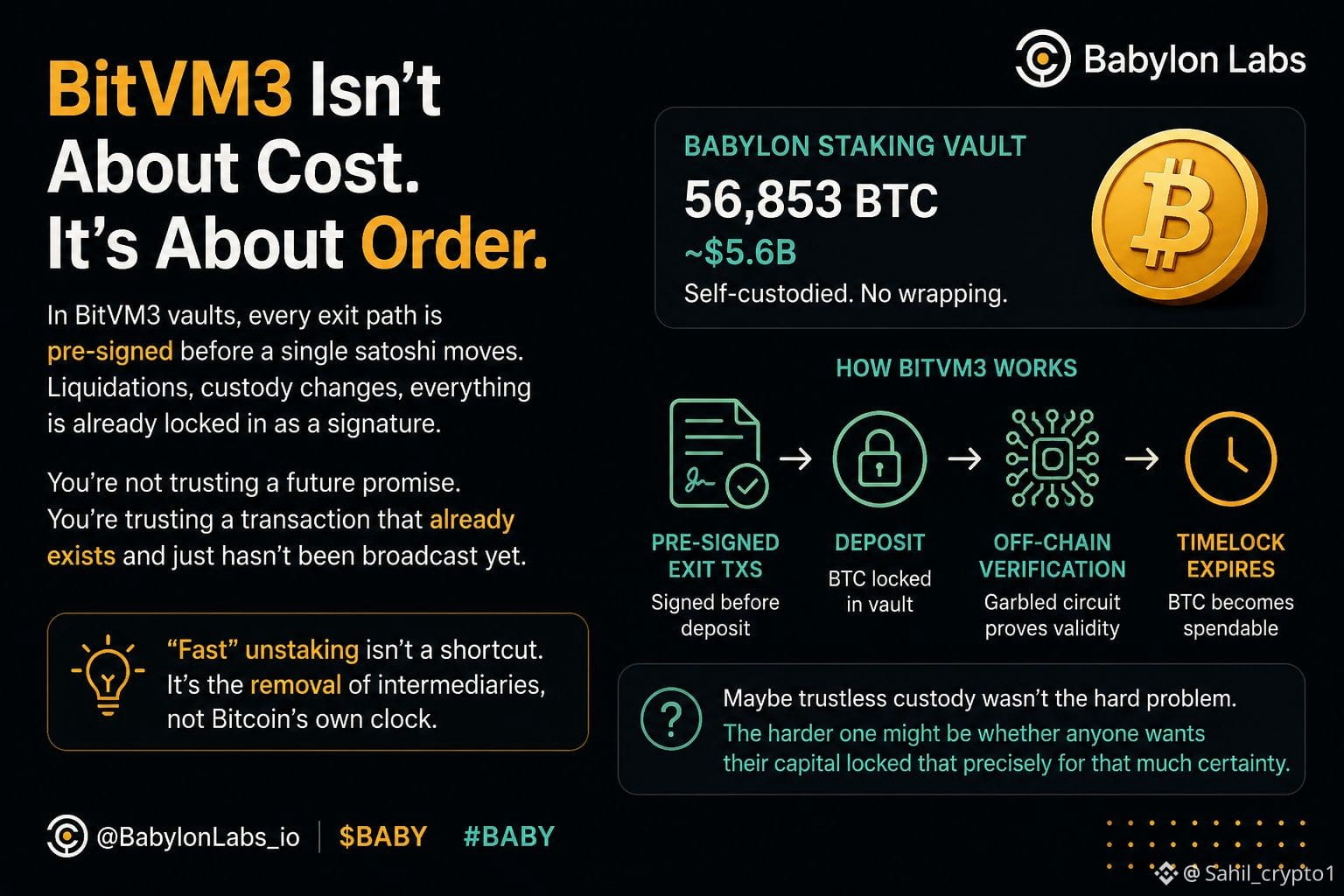
@babylonlabs_io Ich dachte ursprünglich, dass Babylons „schnelles Unstaking“ bedeutet, dass BTC viel früher verfügbar wird. Bei genauerem Hinsehen ist der interessante Teil nicht eine kürzere Wartezeit – sondern die Beseitigung unnötigten Vertrauens.
Babylon folgt weiterhin dem nativen Bitcoin-Unbonding-Zeitplan. Was sich ändert, ist, was danach passiert. Es gibt keine zusätzliche Claim-Transaktion, keine Zustimmung des Custodians und keinen Intermediär, der erforderlich ist, bevor du wieder die Kontrolle erhältst. Sobald die Unbonding-Phase endet, ist dein BTC einfach wieder spendierbar.
Diese Unterscheidung ist wichtig. „Schnell“ bedeutet nicht, dass man Bitcoins Sicherheitsmodell umgeht. Es bedeutet, zusätzliche Ebenen zu entfernen, die viele BTC-Wrapper nach dem Unbonding einführen. Mit über 56.853 BTC, die im Staking-System von Babylon gesichert sind, wirkt diese Designentscheidung wichtiger als die Schlagzeile selbst.
#baby $BTC $BABY
{future}(BABYUSDT)
{spot}(BTCUSDT)
@BabylonLabs_io Ich dachte ursprünglich, dass Babylons „schnelles Unstaking“ bedeutet, dass BTC viel früher verfügbar wird. Bei genauerem Hinsehen ist der interessante Teil nicht eine kürzere Wartezeit – sondern die Beseitigung unnötigten Vertrauens.
Babylon folgt weiterhin dem nativen Bitcoin-Unbonding-Zeitplan. Was sich ändert, ist, was danach passiert. Es gibt keine zusätzliche Claim-Transaktion, keine Zustimmung des Custodians und keinen Intermediär, der erforderlich ist, bevor du wieder die Kontrolle erhältst. Sobald die Unbonding-Phase endet, ist dein BTC einfach wieder spendierbar.
Diese Unterscheidung ist wichtig. „Schnell“ bedeutet nicht, dass man Bitcoins Sicherheitsmodell umgeht. Es bedeutet, zusätzliche Ebenen zu entfernen, die viele BTC-Wrapper nach dem Unbonding einführen. Mit über 56.853 BTC, die im Staking-System von Babylon gesichert sind, wirkt diese Designentscheidung wichtiger als die Schlagzeile selbst.
#baby $BTC $BABY
Babylon folgt weiterhin dem nativen Bitcoin-Unbonding-Zeitplan. Was sich ändert, ist, was danach passiert. Es gibt keine zusätzliche Claim-Transaktion, keine Zustimmung des Custodians und keinen Intermediär, der erforderlich ist, bevor du wieder die Kontrolle erhältst. Sobald die Unbonding-Phase endet, ist dein BTC einfach wieder spendierbar.
Diese Unterscheidung ist wichtig. „Schnell“ bedeutet nicht, dass man Bitcoins Sicherheitsmodell umgeht. Es bedeutet, zusätzliche Ebenen zu entfernen, die viele BTC-Wrapper nach dem Unbonding einführen. Mit über 56.853 BTC, die im Staking-System von Babylon gesichert sind, wirkt diese Designentscheidung wichtiger als die Schlagzeile selbst.
#baby $BTC $BABY
4
2
101
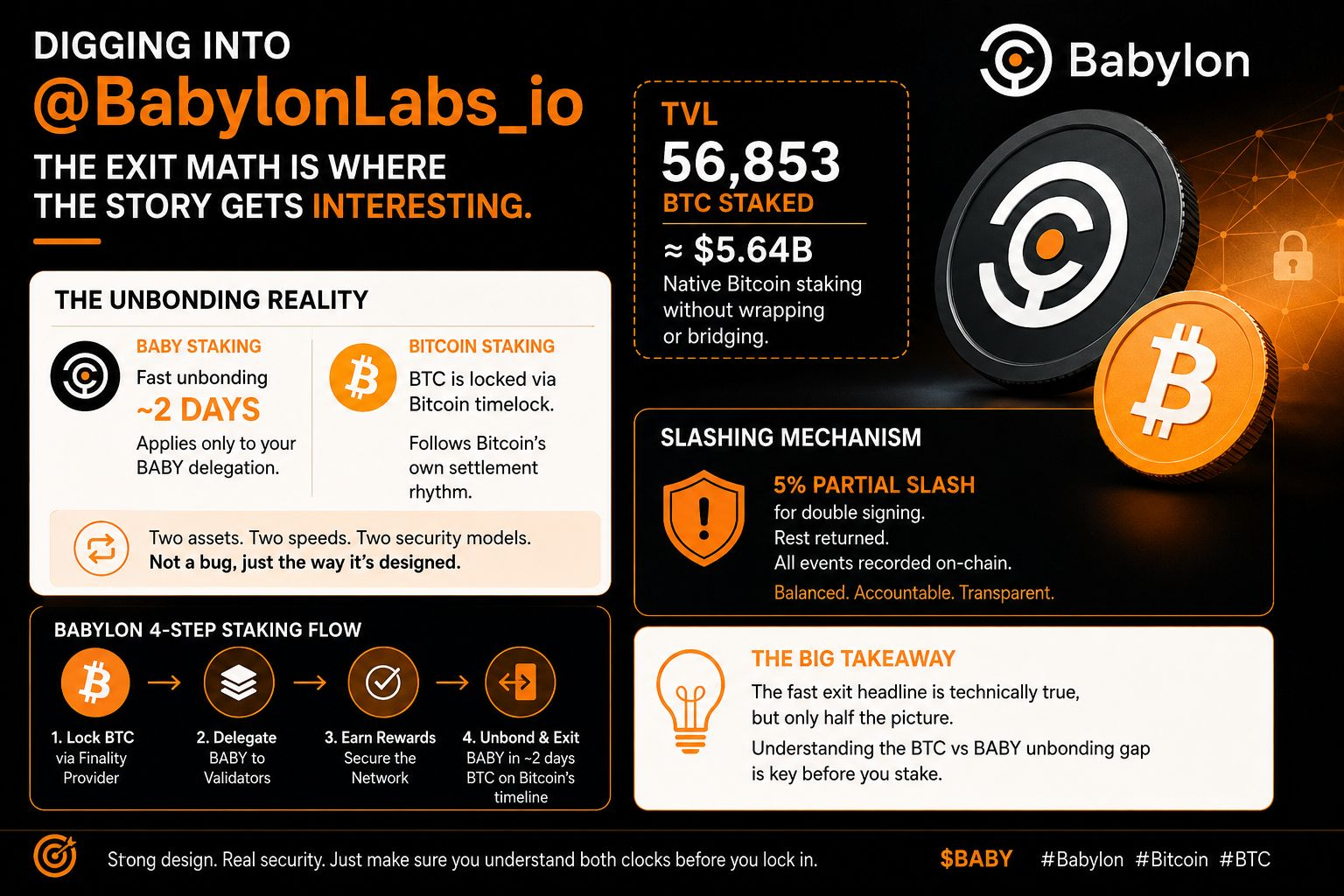
🚀Ich habe etwas Zeit damit verbracht, bei @BabylonLabs_io genauer hinzuschauen, und ein Detail stach mehr hervor als die Schlagzeilen-Zahlen.
Mit über 56.853 BTC im Staking hat Babylon bewiesen, dass es eine starke Nachfrage nach nativen Bitcoin-Staking-Optionen gibt – ohne Wrapping oder Bridging von Assets. Aber der spannendere Teil ist, wie das Protokoll Exits handhabt.
BABY-Staking bietet schnelles Unbonding, ungefähr 2 Tage – das klingt auf den ersten Blick beeindruckend. Der Haken: Das gilt nur für deine BABY-Delegation. Die BTC, die über Bitcoin-Timelocks gesichert werden, folgt ihrem eigenen Settlement-Prozess und arbeitet unabhängig von den Validator-Epochen von Babylon.
Dieser Unterschied ist wichtig, weil sich zwei Assets unter zwei unterschiedlichen Sicherheitsmodellen bewegen. Es ist nicht irreführend, aber eine wichtige Nuance, die viele bei einem Vergleich der Staking-Erfahrungen leicht übersehen können.
Außerdem habe ich mir Zeit genommen, das Slashing-Design durchzulesen. Doppelte Signaturen führen zu einem teilweisen Slash von 5 %, wobei der verbleibende Anteil zurückgegeben wird und jedes Ereignis on-chain aufgezeichnet wird. Das Mechanismusgefühl wirkt ausgewogen: Es priorisiert Verantwortlichkeit, ohne übermäßig strafend zu sein.
Die wichtigste Erkenntnis war nicht das TVL oder die Behauptung vom schnellen Unbonding. Es war die Einsicht, dass Babylon zu verstehen bedeutet, die Trennung zwischen den Sicherheitsgarantien von Bitcoin und den Staking-Mechaniken von BABY zu verstehen.
Dort werden die echten Design-Abwägungen klar.
$BABY #Baby #Bitcoin $BTC @babylonlabs_io
{spot}(BTCUSDT)
{spot}(BABYUSDT)
🚀Ich habe etwas Zeit damit verbracht, bei @BabylonLabs_io genauer hinzuschauen, und ein Detail stach mehr hervor als die Schlagzeilen-Zahlen.
Mit über 56.853 BTC im Staking hat Babylon bewiesen, dass es eine starke Nachfrage nach nativen Bitcoin-Staking-Optionen gibt – ohne Wrapping oder Bridging von Assets. Aber der spannendere Teil ist, wie das Protokoll Exits handhabt.
BABY-Staking bietet schnelles Unbonding, ungefähr 2 Tage – das klingt auf den ersten Blick beeindruckend. Der Haken: Das gilt nur für deine BABY-Delegation. Die BTC, die über Bitcoin-Timelocks gesichert werden, folgt ihrem eigenen Settlement-Prozess und arbeitet unabhängig von den Validator-Epochen von Babylon.
Dieser Unterschied ist wichtig, weil sich zwei Assets unter zwei unterschiedlichen Sicherheitsmodellen bewegen. Es ist nicht irreführend, aber eine wichtige Nuance, die viele bei einem Vergleich der Staking-Erfahrungen leicht übersehen können.
Außerdem habe ich mir Zeit genommen, das Slashing-Design durchzulesen. Doppelte Signaturen führen zu einem teilweisen Slash von 5 %, wobei der verbleibende Anteil zurückgegeben wird und jedes Ereignis on-chain aufgezeichnet wird. Das Mechanismusgefühl wirkt ausgewogen: Es priorisiert Verantwortlichkeit, ohne übermäßig strafend zu sein.
Die wichtigste Erkenntnis war nicht das TVL oder die Behauptung vom schnellen Unbonding. Es war die Einsicht, dass Babylon zu verstehen bedeutet, die Trennung zwischen den Sicherheitsgarantien von Bitcoin und den Staking-Mechaniken von BABY zu verstehen.
Dort werden die echten Design-Abwägungen klar.
$BABY #Baby #Bitcoin $BTC @BabylonLabs_io
Mit über 56.853 BTC im Staking hat Babylon bewiesen, dass es eine starke Nachfrage nach nativen Bitcoin-Staking-Optionen gibt – ohne Wrapping oder Bridging von Assets. Aber der spannendere Teil ist, wie das Protokoll Exits handhabt.
BABY-Staking bietet schnelles Unbonding, ungefähr 2 Tage – das klingt auf den ersten Blick beeindruckend. Der Haken: Das gilt nur für deine BABY-Delegation. Die BTC, die über Bitcoin-Timelocks gesichert werden, folgt ihrem eigenen Settlement-Prozess und arbeitet unabhängig von den Validator-Epochen von Babylon.
Dieser Unterschied ist wichtig, weil sich zwei Assets unter zwei unterschiedlichen Sicherheitsmodellen bewegen. Es ist nicht irreführend, aber eine wichtige Nuance, die viele bei einem Vergleich der Staking-Erfahrungen leicht übersehen können.
Außerdem habe ich mir Zeit genommen, das Slashing-Design durchzulesen. Doppelte Signaturen führen zu einem teilweisen Slash von 5 %, wobei der verbleibende Anteil zurückgegeben wird und jedes Ereignis on-chain aufgezeichnet wird. Das Mechanismusgefühl wirkt ausgewogen: Es priorisiert Verantwortlichkeit, ohne übermäßig strafend zu sein.
Die wichtigste Erkenntnis war nicht das TVL oder die Behauptung vom schnellen Unbonding. Es war die Einsicht, dass Babylon zu verstehen bedeutet, die Trennung zwischen den Sicherheitsgarantien von Bitcoin und den Staking-Mechaniken von BABY zu verstehen.
Dort werden die echten Design-Abwägungen klar.
$BABY #Baby #Bitcoin $BTC @BabylonLabs_io
2
1
87
Anmelden und weiter Inhalte entdecken
Krypto-Nutzer weltweit auf Binance Square kennenlernen
⚡️ Bleib in Sachen Krypto stets am Puls.
💬 Die weltgrößte Kryptobörse vertraut darauf.
👍 Erhalte verlässliche Einblicke von verifizierten Creators.
E-Mail-Adresse/Telefonnummer
Trendthemen
SECReceivesGrayscaleLitecoinTrustETFFiling
40,271 Aufrufe
823 Kommentare
💎 Institutionelle Aufmerksamkeit erreicht Litecoin
Die ETF-Anmeldung von Grayscale hat $LTC in eine größere Diskussion gebracht. Für Spot-Trader sind Entwicklungen wie diese eine Erinnerung daran, starke Assets zu prüfen, bevor man einen Einstieg tätigt.
#secreceivesgrayscalelitecointrustetffiling
CryptoMahibaloch
·1 Likes
·1.1k Aufrufe
ClarityActFacesProceduralVoteSept15
156,397 Aufrufe
1,779 Kommentare
US10YearTreasuryYieldNears5%
53,009 Aufrufe
958 Kommentare