
XRP-THE FUTURE OF MONEY
256 Beiträge
XRP-THE FUTURE OF MONEY
Melden
Nutzer blockieren
Crypto new and existing events
Trade eröffnen
Regelmäßiger Trader
3.9 Jahre
2 Following
74 Follower
126 Like gegeben
Beiträge
Portfolio
Alle
Zitierungen
Videos
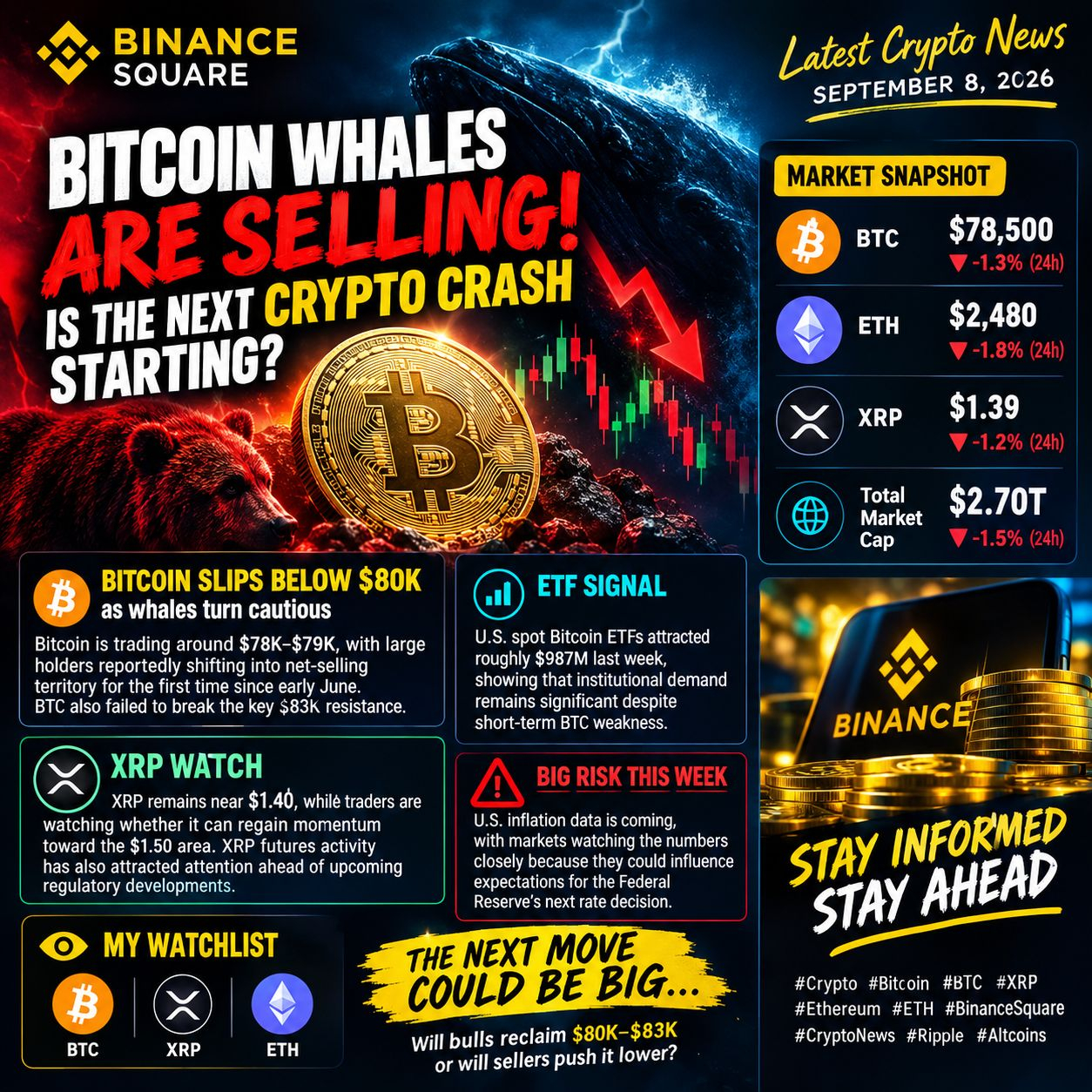
🔥 BITCOIN-WHALES VERKAUFEN — BEGINNT JETZT DER NÄCHSTE KRYPT0-CRASH?
🚨 **KRYPT0-MARKTUPDATE — 8. SEPTEMBER 2026** 🚨
📉 **Bitcoin rutscht unter $80K, während Wale vorsichtiger werden**
Bitcoin handelt derzeit bei etwa **$78K–$79K**. Große Inhaber sollen erstmals seit Anfang Juni in den Bereich des Netto-Verkaufs gewechselt sein. Außerdem ist BTC nicht gelungen, die entscheidende **$83K-Resistance** zu durchbrechen.
🔴 **Marktüberblick:**
• BTC: ~ $78,5K
• ETH: ~ $2,48K
• XRP: ~ $1,39
• Gesamtwert der Krypto-Marktkapitalisierung: ~ $2,70B
• BTC: - ~1,3% in 24h
🔥 **XRP IM BLICK:**
XRP bleibt nahe **$1,40**, während Trader beobachten, ob es wieder Schwung Richtung der Zone um $1,50 aufnehmen kann. Auch die Aktivität bei XRP-Futures hat Aufmerksamkeit auf sich gezogen — vor den bevorstehenden regulatorischen Entwicklungen.
🏦 **ETF-Signal:**
US-Spot-Bitcoin-ETFs verzeichneten letzte Woche rund **$987M**, was zeigt, dass die institutionelle Nachfrage trotz der kurzfristigen BTC-Schwäche weiterhin stark ist.
⚠️ **GROSSES RISIKO DIESER WOCHE:**
Die US-Inflationsdaten stehen an. Die Märkte beobachten die Zahlen genau, weil sie die Erwartungen an die nächste Zinsscheidung der Federal Reserve beeinflussen könnten.
👀 **Meine Watchlist:** BTC • XRP • ETH
Die nächste große BTC-Bewegung könnte davon abhängen, ob die Bullen **$80K–$83K** zurückerobern oder ob Verkäufer den Markt weiter nach unten drücken.
#Crypto #Bitcoin #BTC #XRP #Ethereum #ETH #BinanceSquare #CryptoNews #Ripple #Altcoins
🔥 BITCOIN-WHALES VERKAUFEN — BEGINNT JETZT DER NÄCHSTE KRYPT0-CRASH?
🚨 **KRYPT0-MARKTUPDATE — 8. SEPTEMBER 2026** 🚨
📉 **Bitcoin rutscht unter $80K, während Wale vorsichtiger werden**
Bitcoin handelt derzeit bei etwa **$78K–$79K**. Große Inhaber sollen erstmals seit Anfang Juni in den Bereich des Netto-Verkaufs gewechselt sein. Außerdem ist BTC nicht gelungen, die entscheidende **$83K-Resistance** zu durchbrechen.
🔴 **Marktüberblick:**
• BTC: ~ $78,5K
• ETH: ~ $2,48K
• XRP: ~ $1,39
• Gesamtwert der Krypto-Marktkapitalisierung: ~ $2,70B
• BTC: - ~1,3% in 24h
🔥 **XRP IM BLICK:**
XRP bleibt nahe **$1,40**, während Trader beobachten, ob es wieder Schwung Richtung der Zone um $1,50 aufnehmen kann. Auch die Aktivität bei XRP-Futures hat Aufmerksamkeit auf sich gezogen — vor den bevorstehenden regulatorischen Entwicklungen.
🏦 **ETF-Signal:**
US-Spot-Bitcoin-ETFs verzeichneten letzte Woche rund **$987M**, was zeigt, dass die institutionelle Nachfrage trotz der kurzfristigen BTC-Schwäche weiterhin stark ist.
⚠️ **GROSSES RISIKO DIESER WOCHE:**
Die US-Inflationsdaten stehen an. Die Märkte beobachten die Zahlen genau, weil sie die Erwartungen an die nächste Zinsscheidung der Federal Reserve beeinflussen könnten.
👀 **Meine Watchlist:** BTC • XRP • ETH
Die nächste große BTC-Bewegung könnte davon abhängen, ob die Bullen **$80K–$83K** zurückerobern oder ob Verkäufer den Markt weiter nach unten drücken.
#Crypto #Bitcoin #BTC #XRP #Ethereum #ETH #BinanceSquare #CryptoNews #Ripple #Altcoins
🚨 **KRYPT0-MARKTUPDATE — 8. SEPTEMBER 2026** 🚨
📉 **Bitcoin rutscht unter $80K, während Wale vorsichtiger werden**
Bitcoin handelt derzeit bei etwa **$78K–$79K**. Große Inhaber sollen erstmals seit Anfang Juni in den Bereich des Netto-Verkaufs gewechselt sein. Außerdem ist BTC nicht gelungen, die entscheidende **$83K-Resistance** zu durchbrechen.
🔴 **Marktüberblick:**
• BTC: ~ $78,5K
• ETH: ~ $2,48K
• XRP: ~ $1,39
• Gesamtwert der Krypto-Marktkapitalisierung: ~ $2,70B
• BTC: - ~1,3% in 24h
🔥 **XRP IM BLICK:**
XRP bleibt nahe **$1,40**, während Trader beobachten, ob es wieder Schwung Richtung der Zone um $1,50 aufnehmen kann. Auch die Aktivität bei XRP-Futures hat Aufmerksamkeit auf sich gezogen — vor den bevorstehenden regulatorischen Entwicklungen.
🏦 **ETF-Signal:**
US-Spot-Bitcoin-ETFs verzeichneten letzte Woche rund **$987M**, was zeigt, dass die institutionelle Nachfrage trotz der kurzfristigen BTC-Schwäche weiterhin stark ist.
⚠️ **GROSSES RISIKO DIESER WOCHE:**
Die US-Inflationsdaten stehen an. Die Märkte beobachten die Zahlen genau, weil sie die Erwartungen an die nächste Zinsscheidung der Federal Reserve beeinflussen könnten.
👀 **Meine Watchlist:** BTC • XRP • ETH
Die nächste große BTC-Bewegung könnte davon abhängen, ob die Bullen **$80K–$83K** zurückerobern oder ob Verkäufer den Markt weiter nach unten drücken.
#Crypto #Bitcoin #BTC #XRP #Ethereum #ETH #BinanceSquare #CryptoNews #Ripple #Altcoins
73
## 🚨 XRP NEUSTE NEWS — 8. SEPTEMBER 2026
**XRP hält sich trotz der neuesten 1B-XRP-escrow-Freigabe von Ripple stabil — und die nächsten großen Katalysatoren sind die institutionelle Adoption, XRPL-Upgrades und die US-Krypto-Gesetzgebung.**
🔹 **1B XRP freigeschaltet:** Ripple hat am 1. September 1 Milliarde XRP aus dem Escrow freigegeben. Anschließend wurden etwa **700 Mio. XRP** wieder re-lockt, was bedeutet, dass die Schlagzeile „1B-Freigabe“ nicht zwangsläufig heißt, dass auch 1 Milliarde XRP in den Markt gelangt.
🔹 **XRPL erreicht Meilenstein:** Aktuelle Berichte besagen, dass die XRP Ledger insgesamt **3 Milliarden Transaktionen** überschritten hat — ein Hinweis auf die fortgesetzte Aktivität im Netzwerk.
🔹 **Institutionelle Adoption:** Ripple treibt weiterhin XRP und das XRPL in Richtung institutionelles Finanzwesen. Riple's eigene neuesten Updates betonen seine EU MiCA/CASP-Autorisierung sowie eine stärker institutionell ausgerichtete XRPL-Entwicklung.
🔹 **September könnte wichtig sein:** In den USA bleibt der **CLARITY Act** ein bedeutender potenzieller Katalysator für XRP und den breiteren Krypto-Markt, wobei eine entscheidende Abstimmung im Senat später in diesem Monat erwartet wird.
🔹 **Marktrisiko:** XRP ist zuletzt nach dem Rallye im August zurückgekommen, daher beobachten Trader, ob es wichtige Widerstandsniveaus wieder zurückerobern kann — statt davon auszugehen, dass ein weiterer Ausbruch garantiert ist.
### 📈 XRP KURZFAZIT
**Bullische Katalysatoren:** Institutionelle Adoption + XRPL-Wachstum + ETF-Nachfrage + mögliche regulatorische Klarheit in den USA.
**Bärische Risiken:** Escrow-Freigaben + breitere Krypto-Volatilität + Scheitern, den Widerstand zurückzuerobern.
**🔥 Fazit:** Die Fundamentaldaten von XRP bleiben spannend, aber September könnte ein **Monat mit hoher Volatilität** werden. Das Wichtigste zu beobachten ist, ob die institutionelle Nachfrage den Verkaufsdruck aus XRP-escrow-Freigaben überwiegen kann.
*Keine Finanzberatung. Informiere dich selbst (DYOR).*
#XRP #Ripple #XRPL #Crypto #BinanceSquare #XRPNews #CryptoNews #Altcoins #Bitcoin #Trading
## 🚨 XRP NEUSTE NEWS — 8. SEPTEMBER 2026
**XRP hält sich trotz der neuesten 1B-XRP-escrow-Freigabe von Ripple stabil — und die nächsten großen Katalysatoren sind die institutionelle Adoption, XRPL-Upgrades und die US-Krypto-Gesetzgebung.**
🔹 **1B XRP freigeschaltet:** Ripple hat am 1. September 1 Milliarde XRP aus dem Escrow freigegeben. Anschließend wurden etwa **700 Mio. XRP** wieder re-lockt, was bedeutet, dass die Schlagzeile „1B-Freigabe“ nicht zwangsläufig heißt, dass auch 1 Milliarde XRP in den Markt gelangt.
🔹 **XRPL erreicht Meilenstein:** Aktuelle Berichte besagen, dass die XRP Ledger insgesamt **3 Milliarden Transaktionen** überschritten hat — ein Hinweis auf die fortgesetzte Aktivität im Netzwerk.
🔹 **Institutionelle Adoption:** Ripple treibt weiterhin XRP und das XRPL in Richtung institutionelles Finanzwesen. Riple's eigene neuesten Updates betonen seine EU MiCA/CASP-Autorisierung sowie eine stärker institutionell ausgerichtete XRPL-Entwicklung.
🔹 **September könnte wichtig sein:** In den USA bleibt der **CLARITY Act** ein bedeutender potenzieller Katalysator für XRP und den breiteren Krypto-Markt, wobei eine entscheidende Abstimmung im Senat später in diesem Monat erwartet wird.
🔹 **Marktrisiko:** XRP ist zuletzt nach dem Rallye im August zurückgekommen, daher beobachten Trader, ob es wichtige Widerstandsniveaus wieder zurückerobern kann — statt davon auszugehen, dass ein weiterer Ausbruch garantiert ist.
### 📈 XRP KURZFAZIT
**Bullische Katalysatoren:** Institutionelle Adoption + XRPL-Wachstum + ETF-Nachfrage + mögliche regulatorische Klarheit in den USA.
**Bärische Risiken:** Escrow-Freigaben + breitere Krypto-Volatilität + Scheitern, den Widerstand zurückzuerobern.
**🔥 Fazit:** Die Fundamentaldaten von XRP bleiben spannend, aber September könnte ein **Monat mit hoher Volatilität** werden. Das Wichtigste zu beobachten ist, ob die institutionelle Nachfrage den Verkaufsdruck aus XRP-escrow-Freigaben überwiegen kann.
*Keine Finanzberatung. Informiere dich selbst (DYOR).*
#XRP #Ripple #XRPL #Crypto #BinanceSquare #XRPNews #CryptoNews #Altcoins #Bitcoin #Trading
**XRP hält sich trotz der neuesten 1B-XRP-escrow-Freigabe von Ripple stabil — und die nächsten großen Katalysatoren sind die institutionelle Adoption, XRPL-Upgrades und die US-Krypto-Gesetzgebung.**
🔹 **1B XRP freigeschaltet:** Ripple hat am 1. September 1 Milliarde XRP aus dem Escrow freigegeben. Anschließend wurden etwa **700 Mio. XRP** wieder re-lockt, was bedeutet, dass die Schlagzeile „1B-Freigabe“ nicht zwangsläufig heißt, dass auch 1 Milliarde XRP in den Markt gelangt.
🔹 **XRPL erreicht Meilenstein:** Aktuelle Berichte besagen, dass die XRP Ledger insgesamt **3 Milliarden Transaktionen** überschritten hat — ein Hinweis auf die fortgesetzte Aktivität im Netzwerk.
🔹 **Institutionelle Adoption:** Ripple treibt weiterhin XRP und das XRPL in Richtung institutionelles Finanzwesen. Riple's eigene neuesten Updates betonen seine EU MiCA/CASP-Autorisierung sowie eine stärker institutionell ausgerichtete XRPL-Entwicklung.
🔹 **September könnte wichtig sein:** In den USA bleibt der **CLARITY Act** ein bedeutender potenzieller Katalysator für XRP und den breiteren Krypto-Markt, wobei eine entscheidende Abstimmung im Senat später in diesem Monat erwartet wird.
🔹 **Marktrisiko:** XRP ist zuletzt nach dem Rallye im August zurückgekommen, daher beobachten Trader, ob es wichtige Widerstandsniveaus wieder zurückerobern kann — statt davon auszugehen, dass ein weiterer Ausbruch garantiert ist.
### 📈 XRP KURZFAZIT
**Bullische Katalysatoren:** Institutionelle Adoption + XRPL-Wachstum + ETF-Nachfrage + mögliche regulatorische Klarheit in den USA.
**Bärische Risiken:** Escrow-Freigaben + breitere Krypto-Volatilität + Scheitern, den Widerstand zurückzuerobern.
**🔥 Fazit:** Die Fundamentaldaten von XRP bleiben spannend, aber September könnte ein **Monat mit hoher Volatilität** werden. Das Wichtigste zu beobachten ist, ob die institutionelle Nachfrage den Verkaufsdruck aus XRP-escrow-Freigaben überwiegen kann.
*Keine Finanzberatung. Informiere dich selbst (DYOR).*
#XRP #Ripple #XRPL #Crypto #BinanceSquare #XRPNews #CryptoNews #Altcoins #Bitcoin #Trading
71
🚨 **XRP LETZTE NEWS — 29. AUGUST 2026**
🔥 **XRP-ETF-Zuflüsse erreichen neuen 2026-Rekord!**
US-amerikanische Spot-XRP-ETFs haben Berichten zufolge **$110,49 Mio. Nettozuflüsse** für die Woche bis zum 28. August angezogen und die kumulierten Zuflüsse auf **über $1,66 Mrd.** gebracht. Das signalisiert starkes institutionelles Interesse an XRP.
💰 **RLUSD überschreitet die 2-Milliarden-Dollar-Market-Cap**
Ripleys RLUSD-Stablecoin wächst weiter und sorgt für eine weitere bedeutende Entwicklung im XRP-Ledger-Ökosystem. Aktuelle Berichte zeigen außerdem, dass das RLUSD-Angebot im XRP Ledger **$1 Mrd.** überschritten hat
⚡ **XRP-Preis bleibt volatil**
XRP handelt derzeit im Bereich von **$1,39–$1,40**, nachdem es zuletzt etwa $1,70 erreicht hatte. Analysten beobachten die **$1,43-Marke** als wichtigen technischen Bereich.
🛡️ **XRPL bereitet sich auf das Quantenzeitalter vor**
Ripple arbeitet Berichten zufolge an einem **Vier-Stufen-Plan, um das XRP Ledger quantenresistent zu machen** – die breitere Migration soll auf 2028 ausgerichtet sein.
📈 **MEIN FAZIT:**
Die Fundamentaldaten wirken zunehmend bullisch — **rekordhohe ETF-Zuflüsse + wachsender RLUSD-Einsatz + XRPL-Entwicklung** — aber XRP muss wichtige Widerstandsniveaus erst zurückerobern, bevor ein stärkerer Ausbruch bestätigt werden kann.
**🔥 XRP-WATCHLIST: ETF-ZUFÜSSE + $1,43-WIDERSTAND + RLUSD-WACHSTUM**
#XRP #Ripple #Crypto #XRPNews #BinanceSquare #XRPL #RLUSD #CryptoNews
🚨 **XRP LETZTE NEWS — 29. AUGUST 2026**
🔥 **XRP-ETF-Zuflüsse erreichen neuen 2026-Rekord!**
US-amerikanische Spot-XRP-ETFs haben Berichten zufolge **$110,49 Mio. Nettozuflüsse** für die Woche bis zum 28. August angezogen und die kumulierten Zuflüsse auf **über $1,66 Mrd.** gebracht. Das signalisiert starkes institutionelles Interesse an XRP.
💰 **RLUSD überschreitet die 2-Milliarden-Dollar-Market-Cap**
Ripleys RLUSD-Stablecoin wächst weiter und sorgt für eine weitere bedeutende Entwicklung im XRP-Ledger-Ökosystem. Aktuelle Berichte zeigen außerdem, dass das RLUSD-Angebot im XRP Ledger **$1 Mrd.** überschritten hat
⚡ **XRP-Preis bleibt volatil**
XRP handelt derzeit im Bereich von **$1,39–$1,40**, nachdem es zuletzt etwa $1,70 erreicht hatte. Analysten beobachten die **$1,43-Marke** als wichtigen technischen Bereich.
🛡️ **XRPL bereitet sich auf das Quantenzeitalter vor**
Ripple arbeitet Berichten zufolge an einem **Vier-Stufen-Plan, um das XRP Ledger quantenresistent zu machen** – die breitere Migration soll auf 2028 ausgerichtet sein.
📈 **MEIN FAZIT:**
Die Fundamentaldaten wirken zunehmend bullisch — **rekordhohe ETF-Zuflüsse + wachsender RLUSD-Einsatz + XRPL-Entwicklung** — aber XRP muss wichtige Widerstandsniveaus erst zurückerobern, bevor ein stärkerer Ausbruch bestätigt werden kann.
**🔥 XRP-WATCHLIST: ETF-ZUFÜSSE + $1,43-WIDERSTAND + RLUSD-WACHSTUM**
#XRP #Ripple #Crypto #XRPNews #BinanceSquare #XRPL #RLUSD #CryptoNews
🔥 **XRP-ETF-Zuflüsse erreichen neuen 2026-Rekord!**
US-amerikanische Spot-XRP-ETFs haben Berichten zufolge **$110,49 Mio. Nettozuflüsse** für die Woche bis zum 28. August angezogen und die kumulierten Zuflüsse auf **über $1,66 Mrd.** gebracht. Das signalisiert starkes institutionelles Interesse an XRP.
💰 **RLUSD überschreitet die 2-Milliarden-Dollar-Market-Cap**
Ripleys RLUSD-Stablecoin wächst weiter und sorgt für eine weitere bedeutende Entwicklung im XRP-Ledger-Ökosystem. Aktuelle Berichte zeigen außerdem, dass das RLUSD-Angebot im XRP Ledger **$1 Mrd.** überschritten hat
⚡ **XRP-Preis bleibt volatil**
XRP handelt derzeit im Bereich von **$1,39–$1,40**, nachdem es zuletzt etwa $1,70 erreicht hatte. Analysten beobachten die **$1,43-Marke** als wichtigen technischen Bereich.
🛡️ **XRPL bereitet sich auf das Quantenzeitalter vor**
Ripple arbeitet Berichten zufolge an einem **Vier-Stufen-Plan, um das XRP Ledger quantenresistent zu machen** – die breitere Migration soll auf 2028 ausgerichtet sein.
📈 **MEIN FAZIT:**
Die Fundamentaldaten wirken zunehmend bullisch — **rekordhohe ETF-Zuflüsse + wachsender RLUSD-Einsatz + XRPL-Entwicklung** — aber XRP muss wichtige Widerstandsniveaus erst zurückerobern, bevor ein stärkerer Ausbruch bestätigt werden kann.
**🔥 XRP-WATCHLIST: ETF-ZUFÜSSE + $1,43-WIDERSTAND + RLUSD-WACHSTUM**
#XRP #Ripple #Crypto #XRPNews #BinanceSquare #XRPL #RLUSD #CryptoNews
103
🚨 XRP-UPDATE (25. AUG 2026) 🚨
$XRP hält die entscheidende Unterstützung bei $1,50 nach einem explosiven Anstieg auf $1,70. Die Bullen verteidigen diese Zone, während Institutionen weiterhin XRP-ETFs und Ripleys sich ausweitendes Zahlungs-Ökosystem beobachten.
📊 Wichtige Levels:
🟢 Unterstützung: $1,48–$1,50
🚀 Widerstand: $1,63–$1,70
🎯 Nächstes Ziel: $1,85–$2,00, wenn die Bullen wieder an Schwung gewinnen.
Ein Ausbruch über $1,70 könnte einen weiteren starken Move auslösen, während ein Verlust von $1,48 zu einem tieferen Rücksetzer führen kann.
#XRP #Ripple #BinanceSquare #Crypto #Altcoins #BullRun
🚨 XRP-UPDATE (25. AUG 2026) 🚨
$XRP hält die entscheidende Unterstützung bei $1,50 nach einem explosiven Anstieg auf $1,70. Die Bullen verteidigen diese Zone, während Institutionen weiterhin XRP-ETFs und Ripleys sich ausweitendes Zahlungs-Ökosystem beobachten.
📊 Wichtige Levels:
🟢 Unterstützung: $1,48–$1,50
🚀 Widerstand: $1,63–$1,70
🎯 Nächstes Ziel: $1,85–$2,00, wenn die Bullen wieder an Schwung gewinnen.
Ein Ausbruch über $1,70 könnte einen weiteren starken Move auslösen, während ein Verlust von $1,48 zu einem tieferen Rücksetzer führen kann.
#XRP #Ripple #BinanceSquare #Crypto #Altcoins #BullRun
$XRP hält die entscheidende Unterstützung bei $1,50 nach einem explosiven Anstieg auf $1,70. Die Bullen verteidigen diese Zone, während Institutionen weiterhin XRP-ETFs und Ripleys sich ausweitendes Zahlungs-Ökosystem beobachten.
📊 Wichtige Levels:
🟢 Unterstützung: $1,48–$1,50
🚀 Widerstand: $1,63–$1,70
🎯 Nächstes Ziel: $1,85–$2,00, wenn die Bullen wieder an Schwung gewinnen.
Ein Ausbruch über $1,70 könnte einen weiteren starken Move auslösen, während ein Verlust von $1,48 zu einem tieferen Rücksetzer führen kann.
#XRP #Ripple #BinanceSquare #Crypto #Altcoins #BullRun
97
🚨 XRP NEUESTE AKTUALISIERUNG — 24. AUGUST 2026 🚀**
XRP ist nach einem starken Comeback von rund 1,00 $ auf über 1,50 $ in den letzten Handelstagen wieder ins Rampenlicht gerückt. Der Aufschwung wurde durch stärkeren Schwung, erhöhte Handelsaktivität und erneute bullische Stimmung befeuert.
🔥 **Was treibt XRP?**
• 📈 XRP ist in den letzten Tagen deutlich gestiegen
• 🏦 XRP-Spot-ETFs ziehen weiterhin institutionelles Interesse an
• 🇺🇸 Die US-Krypto-Regulierung bleibt ein wichtiger Katalysator – mit erneutem Fokus auf den CLARITY Act
• ⚡ Die XRPL-Übernahme und Tokenisierungsaktivitäten nehmen weiter zu
• 🎯 Trader beobachten jetzt die **Widerstandszone bei 1,65–1,70 $**, wobei **2 $** bei fortgesetztem Momentum ein großes psychologisches Ziel werden.
⚠️ **Aber auf die Volatilität achten:** XRP hat sich extrem schnell bewegt, daher sind Rücksetzer möglich, auch wenn das übergeordnete Momentum bullisch bleibt.
**XRP bewegt sich wieder. Ist 2 $ als Nächstes dran? 👀🔥**
#XRP #Ripple #Crypto #XRPArmy #BinanceSquare #CryptoNews #Altcoins
🚨 XRP NEUESTE AKTUALISIERUNG — 24. AUGUST 2026 🚀**
XRP ist nach einem starken Comeback von rund 1,00 $ auf über 1,50 $ in den letzten Handelstagen wieder ins Rampenlicht gerückt. Der Aufschwung wurde durch stärkeren Schwung, erhöhte Handelsaktivität und erneute bullische Stimmung befeuert.
🔥 **Was treibt XRP?**
• 📈 XRP ist in den letzten Tagen deutlich gestiegen
• 🏦 XRP-Spot-ETFs ziehen weiterhin institutionelles Interesse an
• 🇺🇸 Die US-Krypto-Regulierung bleibt ein wichtiger Katalysator – mit erneutem Fokus auf den CLARITY Act
• ⚡ Die XRPL-Übernahme und Tokenisierungsaktivitäten nehmen weiter zu
• 🎯 Trader beobachten jetzt die **Widerstandszone bei 1,65–1,70 $**, wobei **2 $** bei fortgesetztem Momentum ein großes psychologisches Ziel werden.
⚠️ **Aber auf die Volatilität achten:** XRP hat sich extrem schnell bewegt, daher sind Rücksetzer möglich, auch wenn das übergeordnete Momentum bullisch bleibt.
**XRP bewegt sich wieder. Ist 2 $ als Nächstes dran? 👀🔥**
#XRP #Ripple #Crypto #XRPArmy #BinanceSquare #CryptoNews #Altcoins
XRP ist nach einem starken Comeback von rund 1,00 $ auf über 1,50 $ in den letzten Handelstagen wieder ins Rampenlicht gerückt. Der Aufschwung wurde durch stärkeren Schwung, erhöhte Handelsaktivität und erneute bullische Stimmung befeuert.
🔥 **Was treibt XRP?**
• 📈 XRP ist in den letzten Tagen deutlich gestiegen
• 🏦 XRP-Spot-ETFs ziehen weiterhin institutionelles Interesse an
• 🇺🇸 Die US-Krypto-Regulierung bleibt ein wichtiger Katalysator – mit erneutem Fokus auf den CLARITY Act
• ⚡ Die XRPL-Übernahme und Tokenisierungsaktivitäten nehmen weiter zu
• 🎯 Trader beobachten jetzt die **Widerstandszone bei 1,65–1,70 $**, wobei **2 $** bei fortgesetztem Momentum ein großes psychologisches Ziel werden.
⚠️ **Aber auf die Volatilität achten:** XRP hat sich extrem schnell bewegt, daher sind Rücksetzer möglich, auch wenn das übergeordnete Momentum bullisch bleibt.
**XRP bewegt sich wieder. Ist 2 $ als Nächstes dran? 👀🔥**
#XRP #Ripple #Crypto #XRPArmy #BinanceSquare #CryptoNews #Altcoins
64
🚨 **XRP-UPDATE: $1-UNTERSTÜTZUNG UNTER DRUCK — ABER RIPPLE BAUT WEITER**
XRP kämpft darum, sich in der Nähe der **$1-Marke** zu halten, wobei die jüngste Kursentwicklung eine Schwäche zeigt. Die entscheidende Frage lautet nun: Können Käufer diese psychologische Unterstützung verteidigen?
🔥 **In der Zwischenzeit macht Ripple große Schritte:**
• 🇰🇷 Ripple hat eine Vereinbarung mit **Jeonbuk Bank** unterzeichnet — das erste Einsatzgebiet mit einer regionalen Bank in Korea.
• 🏦 Ripple Prime hat **275 Mio. $** aufgebracht, um sein US-Brokerage-Geschäft auszubauen.
• 🇺🇸 Die SEC hat einen neuen Rahmen für die Krypto-Regulierung vorgeschlagen, der für Token-Emittenten klarere Regeln schaffen könnte — potenziell wichtig für die regulatorische Einschätzung von XRP.
• 💰 Bybit und Ripple haben Phase 2 eines RLUSD-Programms gestartet, das Belohnungen in **XRP und RLUSD** bietet.
📊 **Das große Ganze:**
Der XRP-Kurs hat es schwer, doch Ripples Ausbau im institutionellen Bereich und bei Zahlungen geht weiter.
⚠️ **Wichtige Marke, die man im Blick behalten sollte: $1,00**
Wenn die Bullen $1 verteidigen → potenzielle Erholungs-Setups.
Wenn $1 entschlossen durchbricht → das Abwärtsrisiko steigt.
🔥 **Würdet ihr XRP um $1 kaufen oder auf einen stärkeren Rücksetzer warten?**
#XRP #Ripple #Crypto #XRPNews #BinanceSquare #CryptoNews #XRPArmy
🚨 **XRP-UPDATE: $1-UNTERSTÜTZUNG UNTER DRUCK — ABER RIPPLE BAUT WEITER**
XRP kämpft darum, sich in der Nähe der **$1-Marke** zu halten, wobei die jüngste Kursentwicklung eine Schwäche zeigt. Die entscheidende Frage lautet nun: Können Käufer diese psychologische Unterstützung verteidigen?
🔥 **In der Zwischenzeit macht Ripple große Schritte:**
• 🇰🇷 Ripple hat eine Vereinbarung mit **Jeonbuk Bank** unterzeichnet — das erste Einsatzgebiet mit einer regionalen Bank in Korea.
• 🏦 Ripple Prime hat **275 Mio. $** aufgebracht, um sein US-Brokerage-Geschäft auszubauen.
• 🇺🇸 Die SEC hat einen neuen Rahmen für die Krypto-Regulierung vorgeschlagen, der für Token-Emittenten klarere Regeln schaffen könnte — potenziell wichtig für die regulatorische Einschätzung von XRP.
• 💰 Bybit und Ripple haben Phase 2 eines RLUSD-Programms gestartet, das Belohnungen in **XRP und RLUSD** bietet.
📊 **Das große Ganze:**
Der XRP-Kurs hat es schwer, doch Ripples Ausbau im institutionellen Bereich und bei Zahlungen geht weiter.
⚠️ **Wichtige Marke, die man im Blick behalten sollte: $1,00**
Wenn die Bullen $1 verteidigen → potenzielle Erholungs-Setups.
Wenn $1 entschlossen durchbricht → das Abwärtsrisiko steigt.
🔥 **Würdet ihr XRP um $1 kaufen oder auf einen stärkeren Rücksetzer warten?**
#XRP #Ripple #Crypto #XRPNews #BinanceSquare #CryptoNews #XRPArmy
XRP kämpft darum, sich in der Nähe der **$1-Marke** zu halten, wobei die jüngste Kursentwicklung eine Schwäche zeigt. Die entscheidende Frage lautet nun: Können Käufer diese psychologische Unterstützung verteidigen?
🔥 **In der Zwischenzeit macht Ripple große Schritte:**
• 🇰🇷 Ripple hat eine Vereinbarung mit **Jeonbuk Bank** unterzeichnet — das erste Einsatzgebiet mit einer regionalen Bank in Korea.
• 🏦 Ripple Prime hat **275 Mio. $** aufgebracht, um sein US-Brokerage-Geschäft auszubauen.
• 🇺🇸 Die SEC hat einen neuen Rahmen für die Krypto-Regulierung vorgeschlagen, der für Token-Emittenten klarere Regeln schaffen könnte — potenziell wichtig für die regulatorische Einschätzung von XRP.
• 💰 Bybit und Ripple haben Phase 2 eines RLUSD-Programms gestartet, das Belohnungen in **XRP und RLUSD** bietet.
📊 **Das große Ganze:**
Der XRP-Kurs hat es schwer, doch Ripples Ausbau im institutionellen Bereich und bei Zahlungen geht weiter.
⚠️ **Wichtige Marke, die man im Blick behalten sollte: $1,00**
Wenn die Bullen $1 verteidigen → potenzielle Erholungs-Setups.
Wenn $1 entschlossen durchbricht → das Abwärtsrisiko steigt.
🔥 **Würdet ihr XRP um $1 kaufen oder auf einen stärkeren Rücksetzer warten?**
#XRP #Ripple #Crypto #XRPNews #BinanceSquare #CryptoNews #XRPArmy
92
🔥 XRP-UPDATE: Ripple expandiert in Südkorea, während XRP $1** testet
Ripple hat eine Partnerschaft mit **Jeonbuk Bank in Südkorea** angekündigt, die Ripple Payments für internationale Business-Überweisungen nutzen wird. Das ist Ripples **dritte koreanische Partnerschaft in diesem Jahr** und stärkt seine Präsenz in der Region.
⚠️ **Aber da ist ein Haken:** Noch ist nicht bestätigt, ob die Zahlungsströme der Bank **XRP oder Ripples RLUSD-Stablecoin** verwenden werden.
📉 In der Zwischenzeit ist XRP **unter die $1-Marke gefallen**. Marktdaten zeigen, dass XRP heute ungefähr **$0,99–$1,00** notiert. Das technische Sentiment bleibt unter Druck, obwohl einige Derivatehändler auf eine Erholung setzen.
🐋 **Auch die Aktivitäten von Walen nehmen zu:** Große XRP-Transaktionen sollen in den letzten 24 Stunden sprunghaft angestiegen sein, während der Token sich rund um $1 schwer tut.
### 🎯 Wichtige Levels, die man im Blick behalten sollte
**Support:** ~ $1,00
**Risiko:** Ein anhaltender Bruch unter $1 könnte den Verkaufsdruck erhöhen
**Bullisches Signal:** $1 zurückerobern und Momentum darüber aufbauen
**Fazit:** Die Geschichte der geschäftlichen Adoption von Ripple wird weiter gestärkt, aber **der XRP-Preis erzählt aktuell eine vorsichtigere Geschichte**. Die $1-Marke ist für Trader jetzt extrem wichtig
#XRP #Ripple #Crypto #XRPNews #BinanceSquare #CryptoNews #XRPArmy #Binance
🔥 XRP-UPDATE: Ripple expandiert in Südkorea, während XRP $1** testet
Ripple hat eine Partnerschaft mit **Jeonbuk Bank in Südkorea** angekündigt, die Ripple Payments für internationale Business-Überweisungen nutzen wird. Das ist Ripples **dritte koreanische Partnerschaft in diesem Jahr** und stärkt seine Präsenz in der Region.
⚠️ **Aber da ist ein Haken:** Noch ist nicht bestätigt, ob die Zahlungsströme der Bank **XRP oder Ripples RLUSD-Stablecoin** verwenden werden.
📉 In der Zwischenzeit ist XRP **unter die $1-Marke gefallen**. Marktdaten zeigen, dass XRP heute ungefähr **$0,99–$1,00** notiert. Das technische Sentiment bleibt unter Druck, obwohl einige Derivatehändler auf eine Erholung setzen.
🐋 **Auch die Aktivitäten von Walen nehmen zu:** Große XRP-Transaktionen sollen in den letzten 24 Stunden sprunghaft angestiegen sein, während der Token sich rund um $1 schwer tut.
### 🎯 Wichtige Levels, die man im Blick behalten sollte
**Support:** ~ $1,00
**Risiko:** Ein anhaltender Bruch unter $1 könnte den Verkaufsdruck erhöhen
**Bullisches Signal:** $1 zurückerobern und Momentum darüber aufbauen
**Fazit:** Die Geschichte der geschäftlichen Adoption von Ripple wird weiter gestärkt, aber **der XRP-Preis erzählt aktuell eine vorsichtigere Geschichte**. Die $1-Marke ist für Trader jetzt extrem wichtig
#XRP #Ripple #Crypto #XRPNews #BinanceSquare #CryptoNews #XRPArmy #Binance
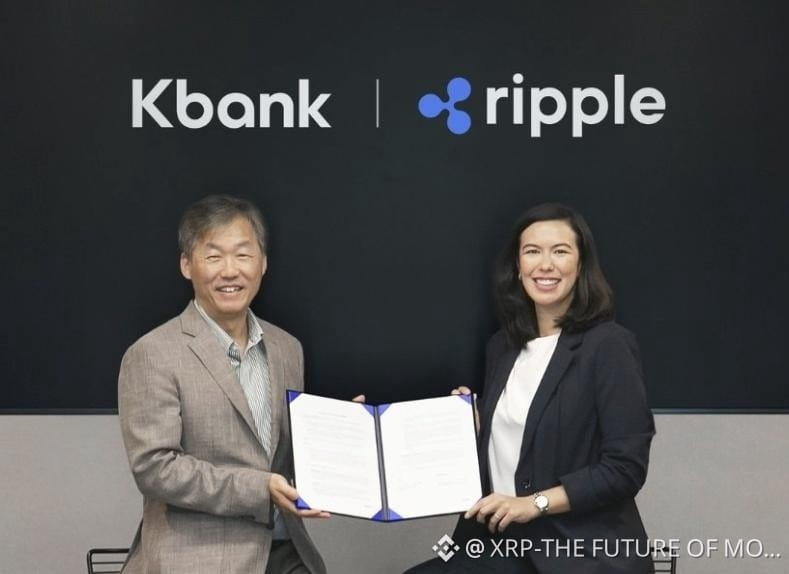
Ripple hat eine Partnerschaft mit **Jeonbuk Bank in Südkorea** angekündigt, die Ripple Payments für internationale Business-Überweisungen nutzen wird. Das ist Ripples **dritte koreanische Partnerschaft in diesem Jahr** und stärkt seine Präsenz in der Region.
⚠️ **Aber da ist ein Haken:** Noch ist nicht bestätigt, ob die Zahlungsströme der Bank **XRP oder Ripples RLUSD-Stablecoin** verwenden werden.
📉 In der Zwischenzeit ist XRP **unter die $1-Marke gefallen**. Marktdaten zeigen, dass XRP heute ungefähr **$0,99–$1,00** notiert. Das technische Sentiment bleibt unter Druck, obwohl einige Derivatehändler auf eine Erholung setzen.
🐋 **Auch die Aktivitäten von Walen nehmen zu:** Große XRP-Transaktionen sollen in den letzten 24 Stunden sprunghaft angestiegen sein, während der Token sich rund um $1 schwer tut.
### 🎯 Wichtige Levels, die man im Blick behalten sollte
**Support:** ~ $1,00
**Risiko:** Ein anhaltender Bruch unter $1 könnte den Verkaufsdruck erhöhen
**Bullisches Signal:** $1 zurückerobern und Momentum darüber aufbauen
**Fazit:** Die Geschichte der geschäftlichen Adoption von Ripple wird weiter gestärkt, aber **der XRP-Preis erzählt aktuell eine vorsichtigere Geschichte**. Die $1-Marke ist für Trader jetzt extrem wichtig
#XRP #Ripple #Crypto #XRPNews #BinanceSquare #CryptoNews #XRPArmy #Binance
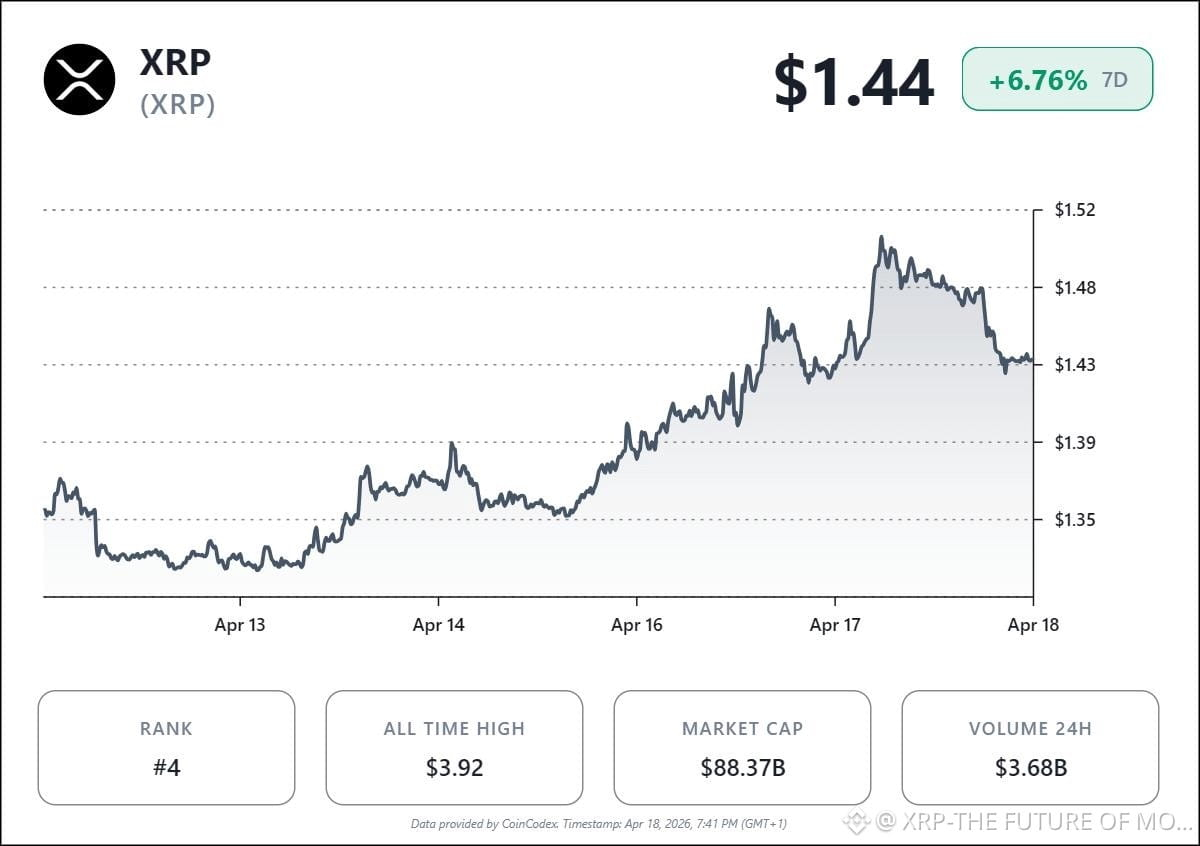
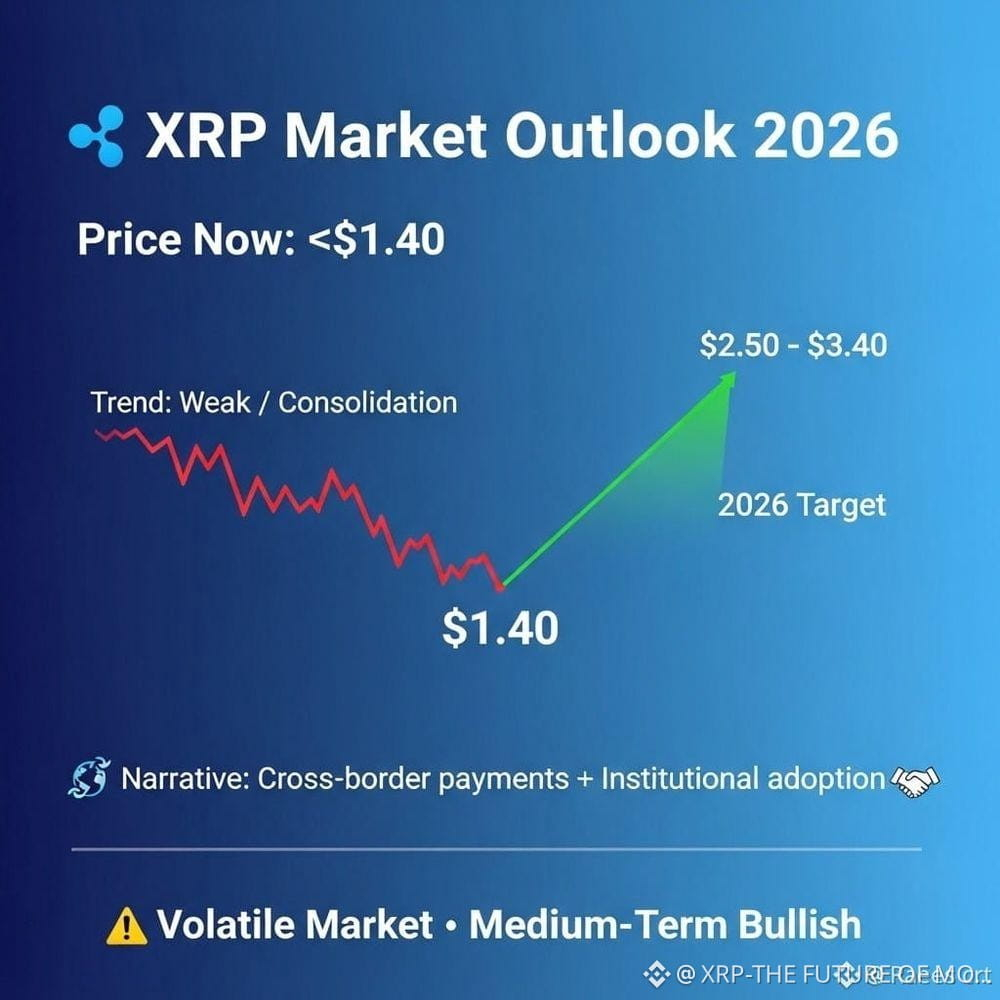
146
🚨 **XRP-UPDATE: DIE $1-MARKE STEHT UNTER DRUCK**
XRP kämpft darum, die **psychologische Marke bei 1 US-Dollar** zu halten, da der Handel in letzter Zeit in diesem Bereich stattfindet. Der Markt wird zunehmend empfindlich dafür, ob die Bullen diese Marke verteidigen können.
📊 **Binance Futures:** Das Open Interest von XRP ist deutlich gestiegen und liegt bei etwa **232,7 Mio. $**, was einem Plus von ungefähr **28,6 % in zwei Wochen** entspricht. Das zeigt, dass sich Trader aggressiv um den aktuellen Preis positionieren.
🐋 **Wal-Aktivität:** Eine kürzlich beobachtete, mit Ripple verknüpfte Wallet hat **50 Mio. XRP** bewegt, was zum damaligen Zeitpunkt etwa **50 Mio. $** wert war, während außerdem ein **Transfer von 1 Mio. XRP an Binance** gemeldet wurde. Das könnte die kurzfristige Volatilität erhöhen.
🏦 **Ripple & Regulierung:** Ripple-CEO Brad Garlinghouse spricht heute beim **Wyoming Blockchain Symposium**, gemeinsam mit großen US-Politikern und Regulierungsbehörden. Krypto-Regulierung dürfte ein großes Thema sein.
🔥 **Bullischer Katalysator:** Binance hat seine RLUSD-Kampagne verlängert – mit **1 Mio. XRP als Belohnungen** für berechtigte Nutzer. So bleibt XRP sowie das Stablecoin-Ökosystem von Ripple im Fokus.
🎯 **Wichtige Kursmarke im Blick:**
**1,00 $ = wichtige psychologische Unterstützung**
Eine starke Erholung über 1 $ könnte das Sentiment verbessern, während ein entschiedener Bruch darunter weiteren Verkaufsdruck auslösen könnte.
⚠️ **Fazit:** XRP befindet sich an einer kritischen Stelle. Steigende Futures-Aktivität + starke 1-$-Unterstützung + bevorstehende regulatorische Entwicklungen könnten bedeuten, dass **eine große Bewegung bevorsteht**.
#XRP #Ripple #Binance #Crypto #XRPArmy #CryptoNews #XRPUSDT #Trading
🚨 **XRP-UPDATE: DIE $1-MARKE STEHT UNTER DRUCK**
XRP kämpft darum, die **psychologische Marke bei 1 US-Dollar** zu halten, da der Handel in letzter Zeit in diesem Bereich stattfindet. Der Markt wird zunehmend empfindlich dafür, ob die Bullen diese Marke verteidigen können.
📊 **Binance Futures:** Das Open Interest von XRP ist deutlich gestiegen und liegt bei etwa **232,7 Mio. $**, was einem Plus von ungefähr **28,6 % in zwei Wochen** entspricht. Das zeigt, dass sich Trader aggressiv um den aktuellen Preis positionieren.
🐋 **Wal-Aktivität:** Eine kürzlich beobachtete, mit Ripple verknüpfte Wallet hat **50 Mio. XRP** bewegt, was zum damaligen Zeitpunkt etwa **50 Mio. $** wert war, während außerdem ein **Transfer von 1 Mio. XRP an Binance** gemeldet wurde. Das könnte die kurzfristige Volatilität erhöhen.
🏦 **Ripple & Regulierung:** Ripple-CEO Brad Garlinghouse spricht heute beim **Wyoming Blockchain Symposium**, gemeinsam mit großen US-Politikern und Regulierungsbehörden. Krypto-Regulierung dürfte ein großes Thema sein.
🔥 **Bullischer Katalysator:** Binance hat seine RLUSD-Kampagne verlängert – mit **1 Mio. XRP als Belohnungen** für berechtigte Nutzer. So bleibt XRP sowie das Stablecoin-Ökosystem von Ripple im Fokus.
🎯 **Wichtige Kursmarke im Blick:**
**1,00 $ = wichtige psychologische Unterstützung**
Eine starke Erholung über 1 $ könnte das Sentiment verbessern, während ein entschiedener Bruch darunter weiteren Verkaufsdruck auslösen könnte.
⚠️ **Fazit:** XRP befindet sich an einer kritischen Stelle. Steigende Futures-Aktivität + starke 1-$-Unterstützung + bevorstehende regulatorische Entwicklungen könnten bedeuten, dass **eine große Bewegung bevorsteht**.
#XRP #Ripple #Binance #Crypto #XRPArmy #CryptoNews #XRPUSDT #Trading
XRP kämpft darum, die **psychologische Marke bei 1 US-Dollar** zu halten, da der Handel in letzter Zeit in diesem Bereich stattfindet. Der Markt wird zunehmend empfindlich dafür, ob die Bullen diese Marke verteidigen können.
📊 **Binance Futures:** Das Open Interest von XRP ist deutlich gestiegen und liegt bei etwa **232,7 Mio. $**, was einem Plus von ungefähr **28,6 % in zwei Wochen** entspricht. Das zeigt, dass sich Trader aggressiv um den aktuellen Preis positionieren.
🐋 **Wal-Aktivität:** Eine kürzlich beobachtete, mit Ripple verknüpfte Wallet hat **50 Mio. XRP** bewegt, was zum damaligen Zeitpunkt etwa **50 Mio. $** wert war, während außerdem ein **Transfer von 1 Mio. XRP an Binance** gemeldet wurde. Das könnte die kurzfristige Volatilität erhöhen.
🏦 **Ripple & Regulierung:** Ripple-CEO Brad Garlinghouse spricht heute beim **Wyoming Blockchain Symposium**, gemeinsam mit großen US-Politikern und Regulierungsbehörden. Krypto-Regulierung dürfte ein großes Thema sein.
🔥 **Bullischer Katalysator:** Binance hat seine RLUSD-Kampagne verlängert – mit **1 Mio. XRP als Belohnungen** für berechtigte Nutzer. So bleibt XRP sowie das Stablecoin-Ökosystem von Ripple im Fokus.
🎯 **Wichtige Kursmarke im Blick:**
**1,00 $ = wichtige psychologische Unterstützung**
Eine starke Erholung über 1 $ könnte das Sentiment verbessern, während ein entschiedener Bruch darunter weiteren Verkaufsdruck auslösen könnte.
⚠️ **Fazit:** XRP befindet sich an einer kritischen Stelle. Steigende Futures-Aktivität + starke 1-$-Unterstützung + bevorstehende regulatorische Entwicklungen könnten bedeuten, dass **eine große Bewegung bevorsteht**.
#XRP #Ripple #Binance #Crypto #XRPArmy #CryptoNews #XRPUSDT #Trading
128
🚨 **XRP-UPDATE: $1 IST DAS SCHLACHTFELD!** ⚡️
XRP kämpft darum, die **$1-Marke** zu halten, und Trader schauen ganz genau hin.
📊 **Was passiert:**
• XRP ist kürzlich unter $1 gerutscht und hat sich dann wieder erholt
• Das Open Interest bei Futures bleibt erhöht
• Das institutionelle Interesse an XRP-ETFs hält an
• Das RLUSD-Ökosystem von Ripple wächst weiter
• Aber die bärische Stimmung nimmt zu ⚠️
🔥 **Wichtige Levels, die du im Blick behalten solltest:**
🟢 $1.03–$1.08 → Ausbruchszone
🚀 $1.10 → stärkere bullische Bestätigung
🎯 $1.20 → nächstes großes Ziel
🔴 $0.98–$0.99 → kritischer Support
Wenn XRP **$1.05+ mit starkem Volumen zurückerobern** kann, könnte sich der Momentum schnell drehen.
Aber wenn **$0.98** entscheidend bricht, erwarte erhöhte Volatilität und möglichen Abwärtsdruck.
👀 **XRP-Bulls oder XRP-Bears – wer gewinnt als Nächstes?**
#XRP #Ripple #Crypto #BinanceSquare #XRPNews #CryptoTrading #Altcoins
🚨 **XRP-UPDATE: $1 IST DAS SCHLACHTFELD!** ⚡️
XRP kämpft darum, die **$1-Marke** zu halten, und Trader schauen ganz genau hin.
📊 **Was passiert:**
• XRP ist kürzlich unter $1 gerutscht und hat sich dann wieder erholt
• Das Open Interest bei Futures bleibt erhöht
• Das institutionelle Interesse an XRP-ETFs hält an
• Das RLUSD-Ökosystem von Ripple wächst weiter
• Aber die bärische Stimmung nimmt zu ⚠️
🔥 **Wichtige Levels, die du im Blick behalten solltest:**
🟢 $1.03–$1.08 → Ausbruchszone
🚀 $1.10 → stärkere bullische Bestätigung
🎯 $1.20 → nächstes großes Ziel
🔴 $0.98–$0.99 → kritischer Support
Wenn XRP **$1.05+ mit starkem Volumen zurückerobern** kann, könnte sich der Momentum schnell drehen.
Aber wenn **$0.98** entscheidend bricht, erwarte erhöhte Volatilität und möglichen Abwärtsdruck.
👀 **XRP-Bulls oder XRP-Bears – wer gewinnt als Nächstes?**
#XRP #Ripple #Crypto #BinanceSquare #XRPNews #CryptoTrading #Altcoins
XRP kämpft darum, die **$1-Marke** zu halten, und Trader schauen ganz genau hin.
📊 **Was passiert:**
• XRP ist kürzlich unter $1 gerutscht und hat sich dann wieder erholt
• Das Open Interest bei Futures bleibt erhöht
• Das institutionelle Interesse an XRP-ETFs hält an
• Das RLUSD-Ökosystem von Ripple wächst weiter
• Aber die bärische Stimmung nimmt zu ⚠️
🔥 **Wichtige Levels, die du im Blick behalten solltest:**
🟢 $1.03–$1.08 → Ausbruchszone
🚀 $1.10 → stärkere bullische Bestätigung
🎯 $1.20 → nächstes großes Ziel
🔴 $0.98–$0.99 → kritischer Support
Wenn XRP **$1.05+ mit starkem Volumen zurückerobern** kann, könnte sich der Momentum schnell drehen.
Aber wenn **$0.98** entscheidend bricht, erwarte erhöhte Volatilität und möglichen Abwärtsdruck.
👀 **XRP-Bulls oder XRP-Bears – wer gewinnt als Nächstes?**
#XRP #Ripple #Crypto #BinanceSquare #XRPNews #CryptoTrading #Altcoins
112
## 🏅 Commonwealth Games 2026 – Aktuelles Update (27. Juli)
Die Commonwealth Games 2026 in Glasgow laufen auf Hochtouren. Der heutige Zeitplan umfasst Leichtathletik, Turnfinals, Schwimmen, Gewichtheben, Boxen, Lawn Bowls und Para-Sport-Events.
### 🔥 Wichtigste Highlights
* 🏊 **Südafrikas Pieter Coetze** gewann Gold über 200 m Rücken (Männer) mit einem neuen Games-Rekord und erhöhte damit die Medaillenzahl für Südafrika.
* 🥇 **Australien** dominierte die Schwimmwettbewerbe weiter mit mehreren Goldmedaillen und erneut einem Games-Rekord.
* 🤸 **Schottland** erfreute das heimische Publikum mit Goldmedaillen im Kunstturnen und Schwimmen.
* 🏋️ **Indiens Mirabai Chanu** holte Gold im Gewichtheben – mit einer rekordverdächtigen Leistung.
### 👀 Diese Events solltest du heute im Blick haben
* Leichtathletik startet mit mehreren Medaillenwettbewerben.
* Gerätefinals im Turnen.
* Schwimmfinals mit Top-Stars aus dem Commonwealth.
* Medaillensitzungen im Boxen und Gewichtheben.
🌟 Viraler Moment
Ein Performer, der den Spitznamen **"Mop Man"** trägt, wurde zum Internetstar, nachdem er die Zuschauer mit Tanzschritten unterhalten hatte – während er zwischen den Turn-Events scheinbar dabei war, den Turnboden zu reinigen.
## 🏅 Commonwealth Games 2026 – Aktuelles Update (27. Juli)
Die Commonwealth Games 2026 in Glasgow laufen auf Hochtouren. Der heutige Zeitplan umfasst Leichtathletik, Turnfinals, Schwimmen, Gewichtheben, Boxen, Lawn Bowls und Para-Sport-Events.
### 🔥 Wichtigste Highlights
* 🏊 **Südafrikas Pieter Coetze** gewann Gold über 200 m Rücken (Männer) mit einem neuen Games-Rekord und erhöhte damit die Medaillenzahl für Südafrika.
* 🥇 **Australien** dominierte die Schwimmwettbewerbe weiter mit mehreren Goldmedaillen und erneut einem Games-Rekord.
* 🤸 **Schottland** erfreute das heimische Publikum mit Goldmedaillen im Kunstturnen und Schwimmen.
* 🏋️ **Indiens Mirabai Chanu** holte Gold im Gewichtheben – mit einer rekordverdächtigen Leistung.
### 👀 Diese Events solltest du heute im Blick haben
* Leichtathletik startet mit mehreren Medaillenwettbewerben.
* Gerätefinals im Turnen.
* Schwimmfinals mit Top-Stars aus dem Commonwealth.
* Medaillensitzungen im Boxen und Gewichtheben.
🌟 Viraler Moment
Ein Performer, der den Spitznamen **"Mop Man"** trägt, wurde zum Internetstar, nachdem er die Zuschauer mit Tanzschritten unterhalten hatte – während er zwischen den Turn-Events scheinbar dabei war, den Turnboden zu reinigen.
Die Commonwealth Games 2026 in Glasgow laufen auf Hochtouren. Der heutige Zeitplan umfasst Leichtathletik, Turnfinals, Schwimmen, Gewichtheben, Boxen, Lawn Bowls und Para-Sport-Events.
### 🔥 Wichtigste Highlights
* 🏊 **Südafrikas Pieter Coetze** gewann Gold über 200 m Rücken (Männer) mit einem neuen Games-Rekord und erhöhte damit die Medaillenzahl für Südafrika.
* 🥇 **Australien** dominierte die Schwimmwettbewerbe weiter mit mehreren Goldmedaillen und erneut einem Games-Rekord.
* 🤸 **Schottland** erfreute das heimische Publikum mit Goldmedaillen im Kunstturnen und Schwimmen.
* 🏋️ **Indiens Mirabai Chanu** holte Gold im Gewichtheben – mit einer rekordverdächtigen Leistung.
### 👀 Diese Events solltest du heute im Blick haben
* Leichtathletik startet mit mehreren Medaillenwettbewerben.
* Gerätefinals im Turnen.
* Schwimmfinals mit Top-Stars aus dem Commonwealth.
* Medaillensitzungen im Boxen und Gewichtheben.
🌟 Viraler Moment
Ein Performer, der den Spitznamen **"Mop Man"** trägt, wurde zum Internetstar, nachdem er die Zuschauer mit Tanzschritten unterhalten hatte – während er zwischen den Turn-Events scheinbar dabei war, den Turnboden zu reinigen.

86
# 🐋 XRP-Whales kaufen, während Retail-Investoren verkaufen – was bedeutet das?
Große XRP-Inhaber („Whales“) haben ihre Bestände in den vergangenen fünf Wochen um etwa **2,8%** erhöht, während viele kleinere Anleger ihre Coins verkaufen. Diese Verschiebung ist zeitgleich damit passiert, dass XRP wieder über **1,16 $** gestiegen ist, was auf wachsenden Optimismus bei großen Investoren hindeutet.
### Wichtigste Highlights
* 🐳 Whale-Wallets sammeln weiterhin XRP, trotz jüngster Marktvolatilität.
* 📉 Viele Retail-Investoren verkaufen oder reduzieren ihre Positionen.
* 📈 XRP hat sich wieder über **1,16 $** erholt, gestützt durch stärkere On-Chain-Akkumulationssignale.
* 💼 Das institutionelle Interesse bleibt gesund – auch die ETF-nahen Nachfrage-Impulse und die Aktivität im Netzwerk verbessern sich.
### Warum das wichtig ist
Historisch gesehen gingen Phasen, in denen Whales akkumulieren, während Retail-Investoren verkaufen, manchmal stärkeren Marktbewegungen voraus. Allerdings garantiert Whale-Kauf allein **keinen** Kursanstieg – auch die breitere Marktsentiment-Lage, makroökonomische Bedingungen und die zukünftige Nachfrage werden die Richtung von XRP beeinflussen.
**Fazit:** XRP zeigt Anzeichen erneuten Vertrauens großer Inhaber. Wenn dieser Akkumulationstrend anhält und die allgemeinen Rahmenbedingungen auf dem gesamten Kryptomarkt günstig bleiben, werden Trader genau beobachten, ob XRP weiteres Aufwärtspotenzial aufbauen kann.
[
# 🐋 XRP-Whales kaufen, während Retail-Investoren verkaufen – was bedeutet das?
Große XRP-Inhaber („Whales“) haben ihre Bestände in den vergangenen fünf Wochen um etwa **2,8%** erhöht, während viele kleinere Anleger ihre Coins verkaufen. Diese Verschiebung ist zeitgleich damit passiert, dass XRP wieder über **1,16 $** gestiegen ist, was auf wachsenden Optimismus bei großen Investoren hindeutet.
### Wichtigste Highlights
* 🐳 Whale-Wallets sammeln weiterhin XRP, trotz jüngster Marktvolatilität.
* 📉 Viele Retail-Investoren verkaufen oder reduzieren ihre Positionen.
* 📈 XRP hat sich wieder über **1,16 $** erholt, gestützt durch stärkere On-Chain-Akkumulationssignale.
* 💼 Das institutionelle Interesse bleibt gesund – auch die ETF-nahen Nachfrage-Impulse und die Aktivität im Netzwerk verbessern sich.
### Warum das wichtig ist
Historisch gesehen gingen Phasen, in denen Whales akkumulieren, während Retail-Investoren verkaufen, manchmal stärkeren Marktbewegungen voraus. Allerdings garantiert Whale-Kauf allein **keinen** Kursanstieg – auch die breitere Marktsentiment-Lage, makroökonomische Bedingungen und die zukünftige Nachfrage werden die Richtung von XRP beeinflussen.
**Fazit:** XRP zeigt Anzeichen erneuten Vertrauens großer Inhaber. Wenn dieser Akkumulationstrend anhält und die allgemeinen Rahmenbedingungen auf dem gesamten Kryptomarkt günstig bleiben, werden Trader genau beobachten, ob XRP weiteres Aufwärtspotenzial aufbauen kann.
[
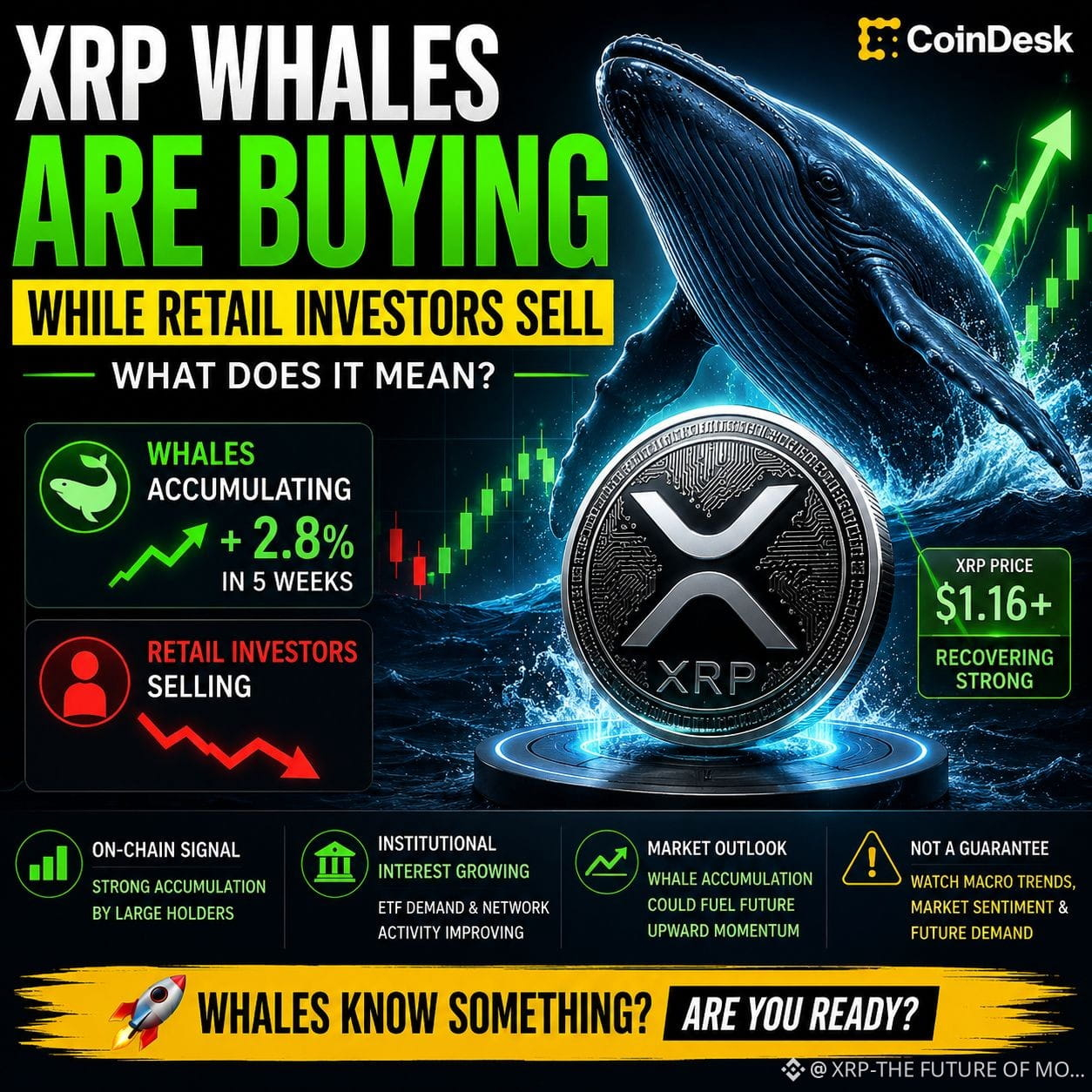
Große XRP-Inhaber („Whales“) haben ihre Bestände in den vergangenen fünf Wochen um etwa **2,8%** erhöht, während viele kleinere Anleger ihre Coins verkaufen. Diese Verschiebung ist zeitgleich damit passiert, dass XRP wieder über **1,16 $** gestiegen ist, was auf wachsenden Optimismus bei großen Investoren hindeutet.
### Wichtigste Highlights
* 🐳 Whale-Wallets sammeln weiterhin XRP, trotz jüngster Marktvolatilität.
* 📉 Viele Retail-Investoren verkaufen oder reduzieren ihre Positionen.
* 📈 XRP hat sich wieder über **1,16 $** erholt, gestützt durch stärkere On-Chain-Akkumulationssignale.
* 💼 Das institutionelle Interesse bleibt gesund – auch die ETF-nahen Nachfrage-Impulse und die Aktivität im Netzwerk verbessern sich.
### Warum das wichtig ist
Historisch gesehen gingen Phasen, in denen Whales akkumulieren, während Retail-Investoren verkaufen, manchmal stärkeren Marktbewegungen voraus. Allerdings garantiert Whale-Kauf allein **keinen** Kursanstieg – auch die breitere Marktsentiment-Lage, makroökonomische Bedingungen und die zukünftige Nachfrage werden die Richtung von XRP beeinflussen.
**Fazit:** XRP zeigt Anzeichen erneuten Vertrauens großer Inhaber. Wenn dieser Akkumulationstrend anhält und die allgemeinen Rahmenbedingungen auf dem gesamten Kryptomarkt günstig bleiben, werden Trader genau beobachten, ob XRP weiteres Aufwärtspotenzial aufbauen kann.
[
113
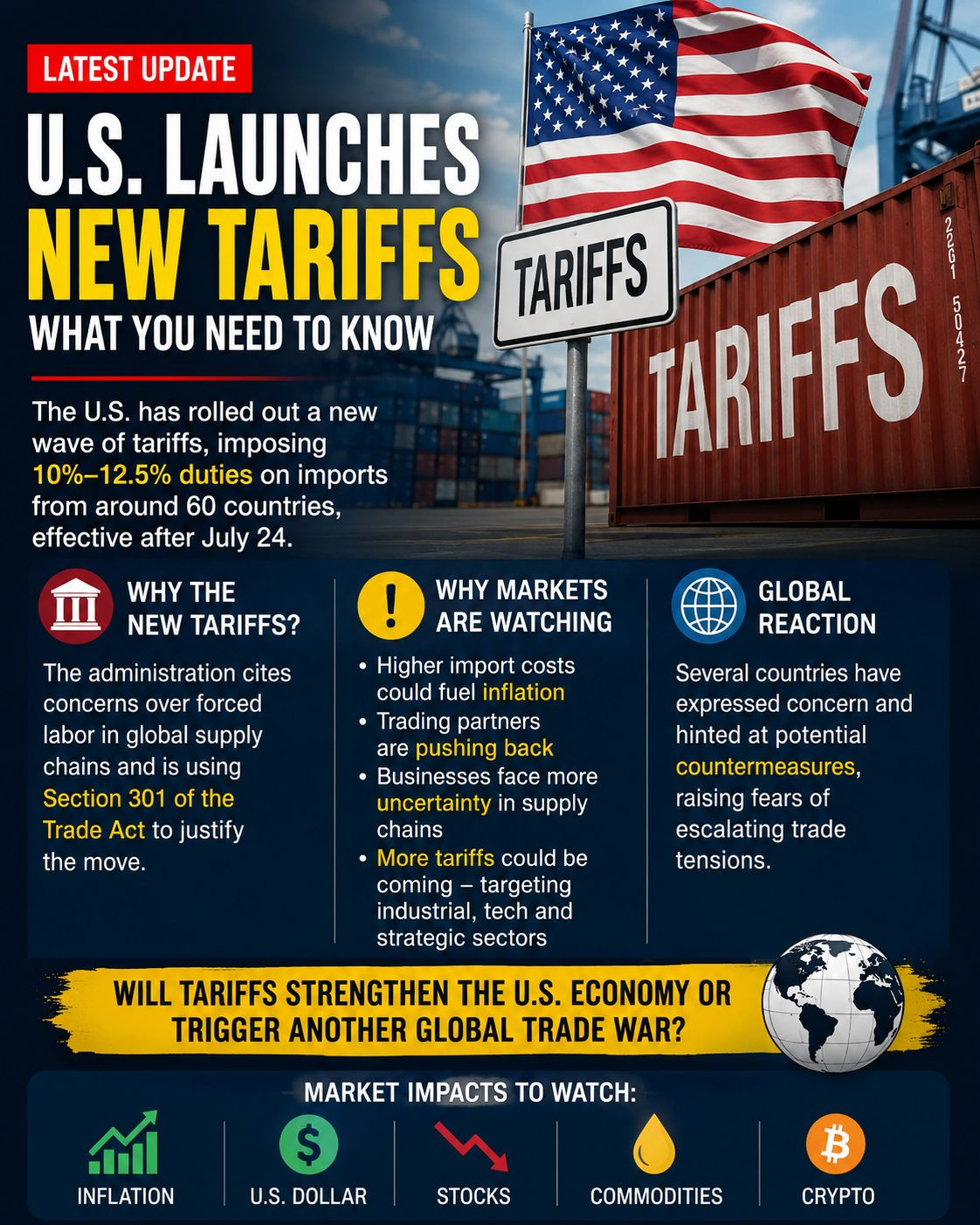
🇺🇸 **US-ZÖLLE: EIN NEUER HANDELSSCHOCK? 🌎📈**
Die Trump-Regierung hat eine frische Welle von US-Zöllen eingeführt, mit **Zollsätzen von 10%–12,5%, die Importe aus etwa 60 Ländern betreffen**. Die Maßnahme erfolgt, nachdem der vorherige breite 10%-Zoll am 24. Juli ausgelaufen ist.
Die neuen Regelungen werden unter **Section 301 des Trade Act** verhängt; die Regierung verweist dabei auf Bedenken hinsichtlich **Zwangsarbeit in globalen Lieferketten**.
⚠️ **Warum die Märkte hinschauen:**
• Höhere Importkosten könnten Druck auf die Verbraucherpreise ausüben
• Handelspartner wehren sich
• Unternehmen stehen erneut unter Unsicherheit bezüglich der Lieferketten
• Weitere Zölle könnten folgen, darunter Maßnahmen, die auf industrielle Überkapazitäten, Technologie und strategische Bereiche abzielen
💡 **Die große Frage:** Werden Zölle die US-Produktion und Staatseinnahmen stärken – oder höhere Preise und eine weitere Runde globaler Handelsspannungen befeuern?
📊 Investoren werden im Zuge der Entwicklung des neuen Zollregimes besonders genau **Inflation, den US-Dollar, Aktien, Rohstoffe und Krypto** beobachten.
**Ist das der Beginn eines weiteren globalen Handelskriegs?** 🌎🔥
#USATariffs #TrumpTariffs #TradeWar #GlobalMarkets #Economy #Inflation #StockMarket #Bitcoin #Crypto #Investing
🇺🇸 **US-ZÖLLE: EIN NEUER HANDELSSCHOCK? 🌎📈**
Die Trump-Regierung hat eine frische Welle von US-Zöllen eingeführt, mit **Zollsätzen von 10%–12,5%, die Importe aus etwa 60 Ländern betreffen**. Die Maßnahme erfolgt, nachdem der vorherige breite 10%-Zoll am 24. Juli ausgelaufen ist.
Die neuen Regelungen werden unter **Section 301 des Trade Act** verhängt; die Regierung verweist dabei auf Bedenken hinsichtlich **Zwangsarbeit in globalen Lieferketten**.
⚠️ **Warum die Märkte hinschauen:**
• Höhere Importkosten könnten Druck auf die Verbraucherpreise ausüben
• Handelspartner wehren sich
• Unternehmen stehen erneut unter Unsicherheit bezüglich der Lieferketten
• Weitere Zölle könnten folgen, darunter Maßnahmen, die auf industrielle Überkapazitäten, Technologie und strategische Bereiche abzielen
💡 **Die große Frage:** Werden Zölle die US-Produktion und Staatseinnahmen stärken – oder höhere Preise und eine weitere Runde globaler Handelsspannungen befeuern?
📊 Investoren werden im Zuge der Entwicklung des neuen Zollregimes besonders genau **Inflation, den US-Dollar, Aktien, Rohstoffe und Krypto** beobachten.
**Ist das der Beginn eines weiteren globalen Handelskriegs?** 🌎🔥
#USATariffs #TrumpTariffs #TradeWar #GlobalMarkets #Economy #Inflation #StockMarket #Bitcoin #Crypto #Investing
Die Trump-Regierung hat eine frische Welle von US-Zöllen eingeführt, mit **Zollsätzen von 10%–12,5%, die Importe aus etwa 60 Ländern betreffen**. Die Maßnahme erfolgt, nachdem der vorherige breite 10%-Zoll am 24. Juli ausgelaufen ist.
Die neuen Regelungen werden unter **Section 301 des Trade Act** verhängt; die Regierung verweist dabei auf Bedenken hinsichtlich **Zwangsarbeit in globalen Lieferketten**.
⚠️ **Warum die Märkte hinschauen:**
• Höhere Importkosten könnten Druck auf die Verbraucherpreise ausüben
• Handelspartner wehren sich
• Unternehmen stehen erneut unter Unsicherheit bezüglich der Lieferketten
• Weitere Zölle könnten folgen, darunter Maßnahmen, die auf industrielle Überkapazitäten, Technologie und strategische Bereiche abzielen
💡 **Die große Frage:** Werden Zölle die US-Produktion und Staatseinnahmen stärken – oder höhere Preise und eine weitere Runde globaler Handelsspannungen befeuern?
📊 Investoren werden im Zuge der Entwicklung des neuen Zollregimes besonders genau **Inflation, den US-Dollar, Aktien, Rohstoffe und Krypto** beobachten.
**Ist das der Beginn eines weiteren globalen Handelskriegs?** 🌎🔥
#USATariffs #TrumpTariffs #TradeWar #GlobalMarkets #Economy #Inflation #StockMarket #Bitcoin #Crypto #Investing
41
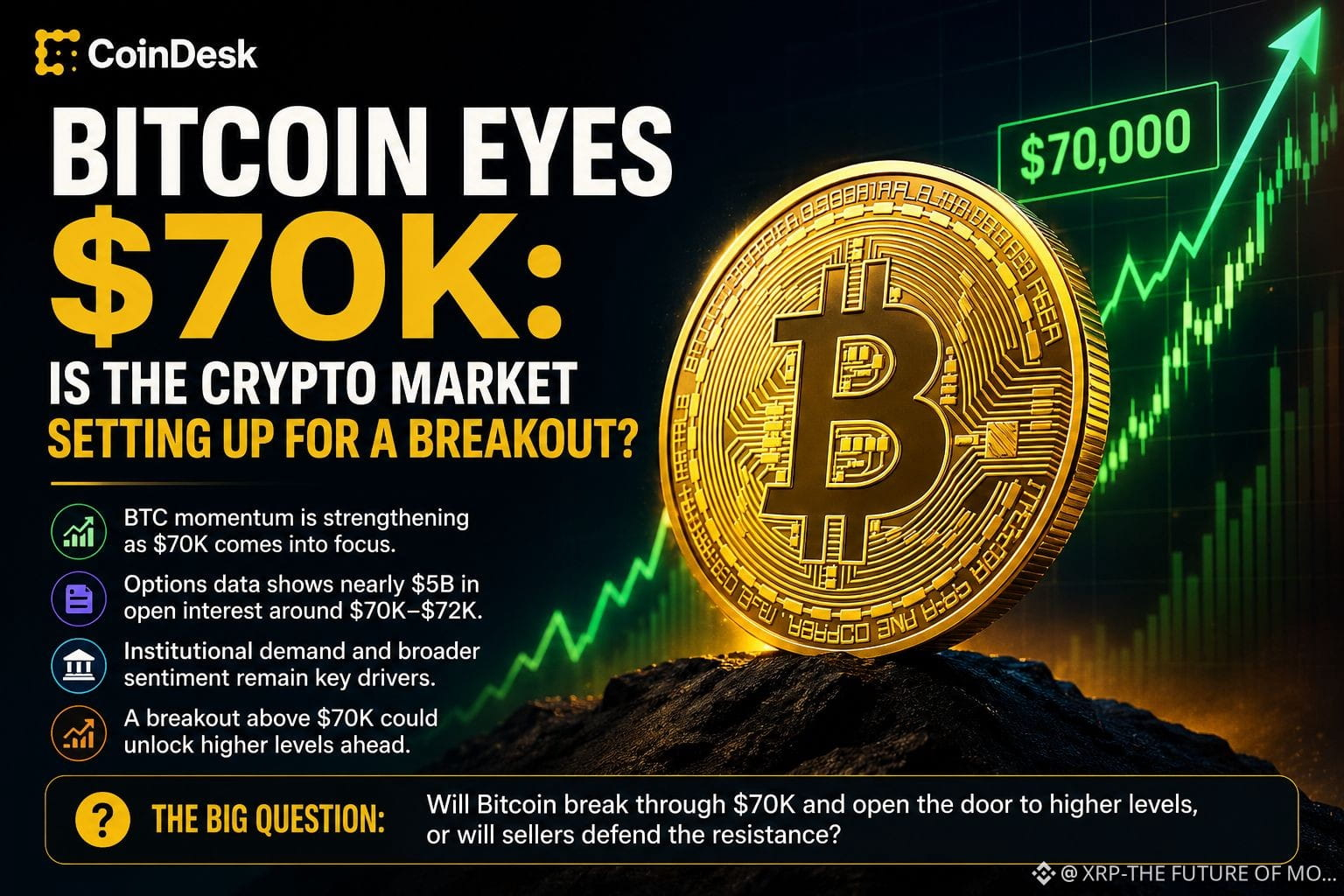
🔥 **Bitcoin-Augen auf $70K: Rüstet sich der Kryptomarkt für einen Ausbruch?**
Bitcoin nähert sich erneut der **$70.000**-Marke und versetzt Trader sowie Investoren in Alarmbereitschaft.
📈 **Warum das wichtig ist:**
• BTC-Momentum gewinnt an Stärke, während der Markt die Widerstandszone bei $70K beobachtet.
• Große Optionspositionen rund um $70K–$72K deuten darauf hin, dass sich Trader für einen möglichen Aufwärtsimpuls positionieren.
• Die Nachfrage aus dem institutionellen Bereich und die breitere Krypto-Stimmung bleiben entscheidende Treiber.
• Ein klarer Ausbruch über $70K könnte die bullische Erzählung verstärken — während eine Abweisung einen weiteren Rücksetzer auslösen könnte.
👀 **Die große Frage:**
Wird Bitcoin durch $70K brechen und den Weg zu höheren Niveaus öffnen, oder werden Verkäufer den Widerstand verteidigen?
#Bitcoin #BTC #Krypto #KryptoMarkt #Ethereum #Blockchain #Trading #Web3 #CoinDesk
🔥 **Bitcoin-Augen auf $70K: Rüstet sich der Kryptomarkt für einen Ausbruch?**
Bitcoin nähert sich erneut der **$70.000**-Marke und versetzt Trader sowie Investoren in Alarmbereitschaft.
📈 **Warum das wichtig ist:**
• BTC-Momentum gewinnt an Stärke, während der Markt die Widerstandszone bei $70K beobachtet.
• Große Optionspositionen rund um $70K–$72K deuten darauf hin, dass sich Trader für einen möglichen Aufwärtsimpuls positionieren.
• Die Nachfrage aus dem institutionellen Bereich und die breitere Krypto-Stimmung bleiben entscheidende Treiber.
• Ein klarer Ausbruch über $70K könnte die bullische Erzählung verstärken — während eine Abweisung einen weiteren Rücksetzer auslösen könnte.
👀 **Die große Frage:**
Wird Bitcoin durch $70K brechen und den Weg zu höheren Niveaus öffnen, oder werden Verkäufer den Widerstand verteidigen?
#Bitcoin #BTC #Krypto #KryptoMarkt #Ethereum #Blockchain #Trading #Web3 #CoinDesk
Bitcoin nähert sich erneut der **$70.000**-Marke und versetzt Trader sowie Investoren in Alarmbereitschaft.
📈 **Warum das wichtig ist:**
• BTC-Momentum gewinnt an Stärke, während der Markt die Widerstandszone bei $70K beobachtet.
• Große Optionspositionen rund um $70K–$72K deuten darauf hin, dass sich Trader für einen möglichen Aufwärtsimpuls positionieren.
• Die Nachfrage aus dem institutionellen Bereich und die breitere Krypto-Stimmung bleiben entscheidende Treiber.
• Ein klarer Ausbruch über $70K könnte die bullische Erzählung verstärken — während eine Abweisung einen weiteren Rücksetzer auslösen könnte.
👀 **Die große Frage:**
Wird Bitcoin durch $70K brechen und den Weg zu höheren Niveaus öffnen, oder werden Verkäufer den Widerstand verteidigen?
#Bitcoin #BTC #Krypto #KryptoMarkt #Ethereum #Blockchain #Trading #Web3 #CoinDesk
66
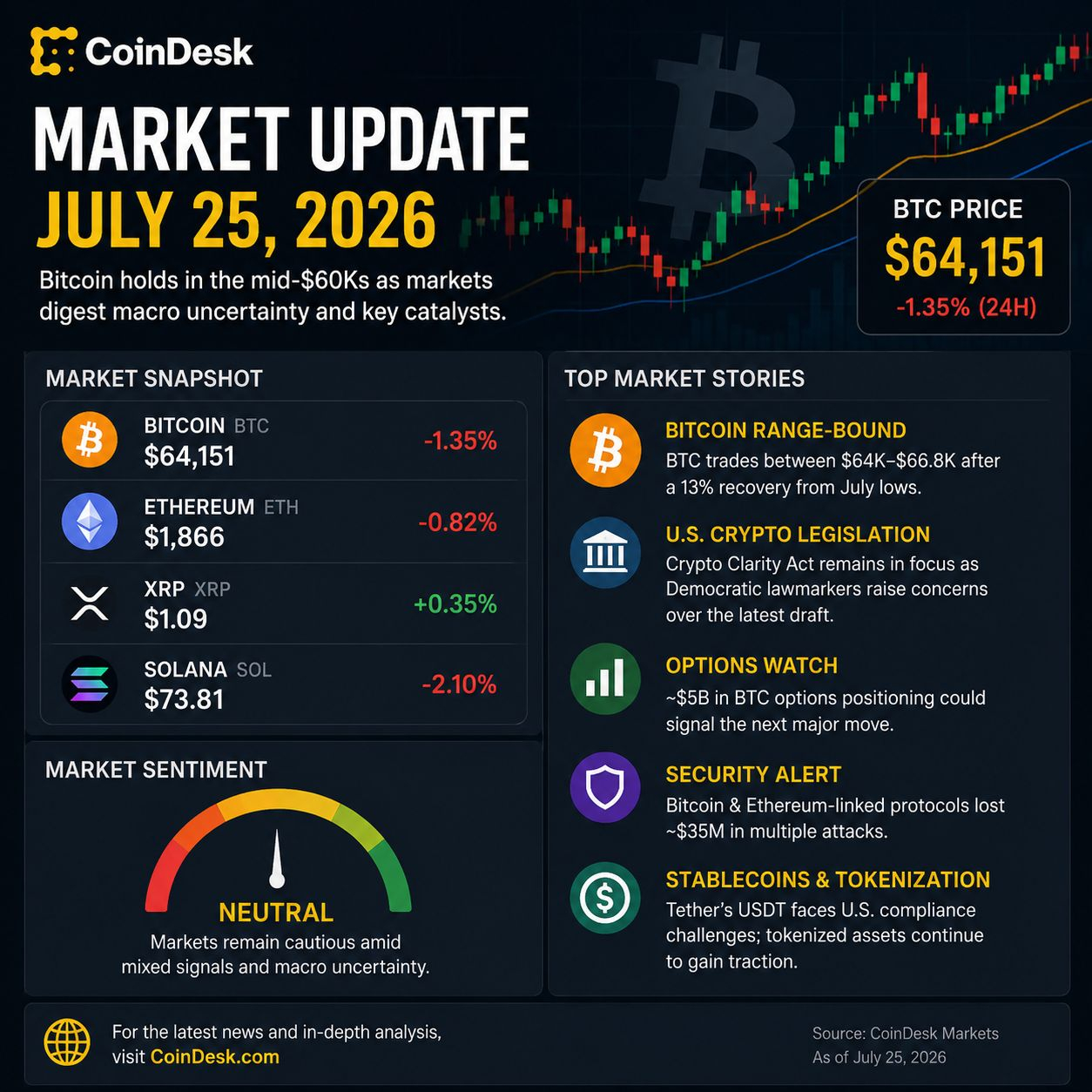
📊 **Krypto-Marktdaten | 25. Juli 2026**
Bitcoin steht weiterhin unter Druck, da das breitere Risikosentiment die Kryptomärkte belastet, während Ethereum und große Altcoins weiterhin gemischt notieren.
🔹 **BTC:** Seitwärtsbewegung im Bereich der mittleren 60.000 US-Dollar
🔹 **ETH:** Auf erneuten Schwung achten
🔹 **XRP & SOL:** Gemischte Performance
🔹 **Regulierung:** Die US-Gesetzgebung zur Krypto-Marktstruktur bleibt ein entscheidender Katalysator
🔹 **Optionen:** Große BTC-Optionspositionierungen könnten die nächste große Bewegung beeinflussen
🔹 **Sicherheit:** Jüngste Protokollangriffe verdeutlichen die anhaltenden Risiken für DeFi und Cross-Chain
🔹 **Stablecoins & Tokenisierung:** Regulierung und tokenisierte Assets bleiben zentrale Themen
Die große Frage: **Bereitet sich Bitcoin auf einen weiteren Ausbruch vor, oder kommt erst noch mehr Konsolidierung?**
#Bitcoin #BTC #Ethereum #ETH #Crypto #CryptoMarket #CoinDesk #Altcoins #DeFi #Blockchain
📊 **Krypto-Marktdaten | 25. Juli 2026**
Bitcoin steht weiterhin unter Druck, da das breitere Risikosentiment die Kryptomärkte belastet, während Ethereum und große Altcoins weiterhin gemischt notieren.
🔹 **BTC:** Seitwärtsbewegung im Bereich der mittleren 60.000 US-Dollar
🔹 **ETH:** Auf erneuten Schwung achten
🔹 **XRP & SOL:** Gemischte Performance
🔹 **Regulierung:** Die US-Gesetzgebung zur Krypto-Marktstruktur bleibt ein entscheidender Katalysator
🔹 **Optionen:** Große BTC-Optionspositionierungen könnten die nächste große Bewegung beeinflussen
🔹 **Sicherheit:** Jüngste Protokollangriffe verdeutlichen die anhaltenden Risiken für DeFi und Cross-Chain
🔹 **Stablecoins & Tokenisierung:** Regulierung und tokenisierte Assets bleiben zentrale Themen
Die große Frage: **Bereitet sich Bitcoin auf einen weiteren Ausbruch vor, oder kommt erst noch mehr Konsolidierung?**
#Bitcoin #BTC #Ethereum #ETH #Crypto #CryptoMarket #CoinDesk #Altcoins #DeFi #Blockchain
Bitcoin steht weiterhin unter Druck, da das breitere Risikosentiment die Kryptomärkte belastet, während Ethereum und große Altcoins weiterhin gemischt notieren.
🔹 **BTC:** Seitwärtsbewegung im Bereich der mittleren 60.000 US-Dollar
🔹 **ETH:** Auf erneuten Schwung achten
🔹 **XRP & SOL:** Gemischte Performance
🔹 **Regulierung:** Die US-Gesetzgebung zur Krypto-Marktstruktur bleibt ein entscheidender Katalysator
🔹 **Optionen:** Große BTC-Optionspositionierungen könnten die nächste große Bewegung beeinflussen
🔹 **Sicherheit:** Jüngste Protokollangriffe verdeutlichen die anhaltenden Risiken für DeFi und Cross-Chain
🔹 **Stablecoins & Tokenisierung:** Regulierung und tokenisierte Assets bleiben zentrale Themen
Die große Frage: **Bereitet sich Bitcoin auf einen weiteren Ausbruch vor, oder kommt erst noch mehr Konsolidierung?**
#Bitcoin #BTC #Ethereum #ETH #Crypto #CryptoMarket #CoinDesk #Altcoins #DeFi #Blockchain
86
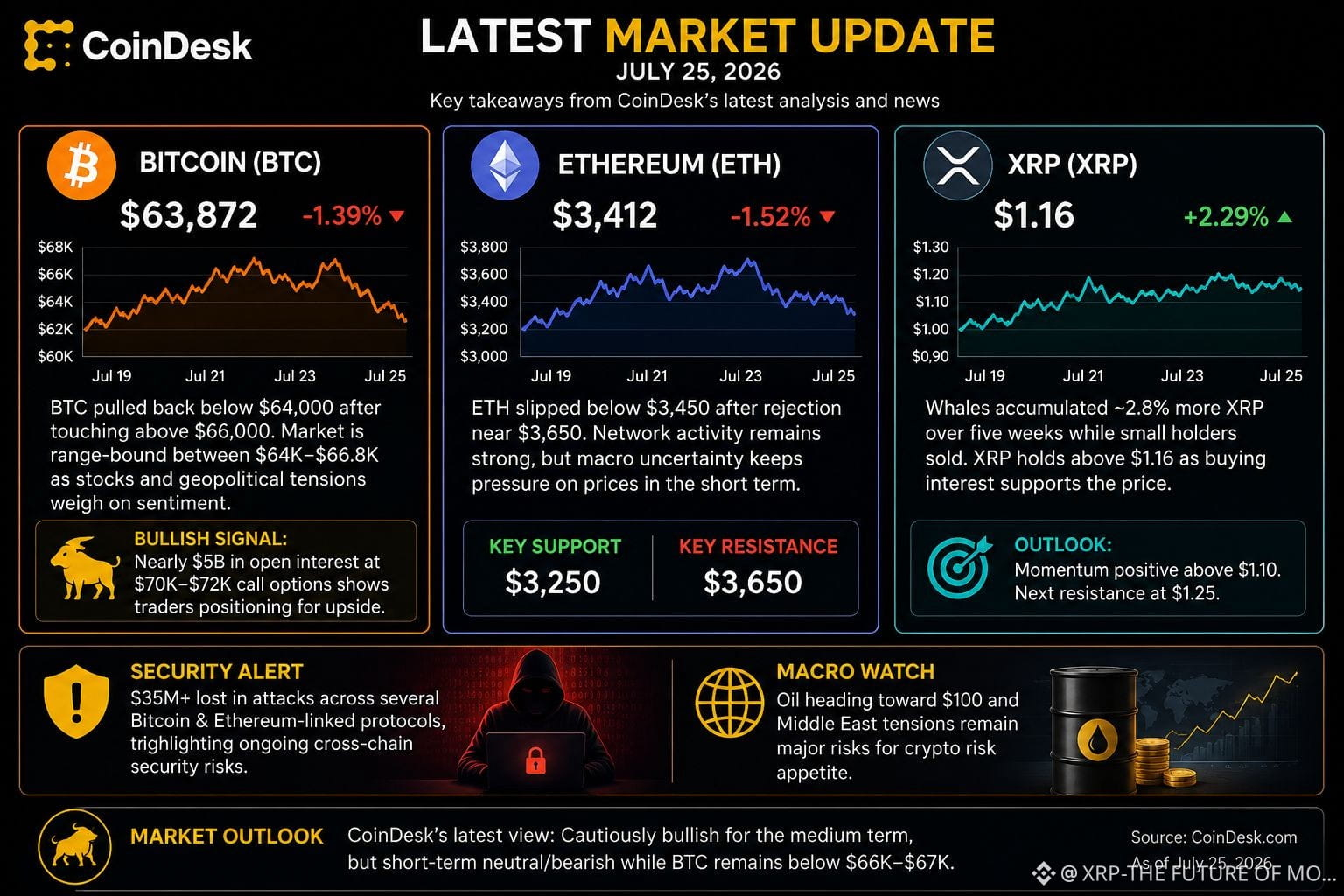
* **Bitcoin:** BTC ist nach einem kürzlichen Anstieg über **$66.000** unter **$64.000** zurückgefallen. CoinDesk zufolge bewegt sich der Markt derzeit seitwärts in einer Spanne um **$64K–$66,8K**, während Aktien sowie geopolitische Spannungen die Stimmung belasten.
* **Bullen-Signal:** Bitcoin-Optionen weisen nahezu **$5 Mrd.** an Open Interest bei **Call-Optionen um $70K–$72K** auf, was darauf hindeutet, dass Händler weiterhin auf einen Aufwärtsschub setzen.
* **XRP:** Wale haben über fünf Wochen etwa **2,8% mehr XRP** eingesammelt, während kleinere Inhaber verkauft haben; XRP wird derzeit über **$1,16** gehandelt.
* **Sicherheit:** CoinDesk berichtet, dass **$35 Mio.+** in mehreren Bitcoin-/Ethereum-gekoppelten Protokollen bei Angriffen verloren gingen, was auf weiterhin bestehende Sicherheitsrisiken über mehrere Chains hinweg hinweist.
* **Makro:** Öl bewegt sich in Richtung **$100**, und anhaltende Spannungen im Nahen Osten bleiben wesentliche Risiken für die Risikobereitschaft im Krypto-Bereich.
**Insgesamt:** Das aktuelle Bild von CoinDesk ist **für das mittlere Zeithorizont vorsichtig bullisch**, aber **kurzfristig neutral/bärisch**, solange BTC unter **$66K–$67K** bleibt.
* **Bitcoin:** BTC ist nach einem kürzlichen Anstieg über **$66.000** unter **$64.000** zurückgefallen. CoinDesk zufolge bewegt sich der Markt derzeit seitwärts in einer Spanne um **$64K–$66,8K**, während Aktien sowie geopolitische Spannungen die Stimmung belasten.
* **Bullen-Signal:** Bitcoin-Optionen weisen nahezu **$5 Mrd.** an Open Interest bei **Call-Optionen um $70K–$72K** auf, was darauf hindeutet, dass Händler weiterhin auf einen Aufwärtsschub setzen.
* **XRP:** Wale haben über fünf Wochen etwa **2,8% mehr XRP** eingesammelt, während kleinere Inhaber verkauft haben; XRP wird derzeit über **$1,16** gehandelt.
* **Sicherheit:** CoinDesk berichtet, dass **$35 Mio.+** in mehreren Bitcoin-/Ethereum-gekoppelten Protokollen bei Angriffen verloren gingen, was auf weiterhin bestehende Sicherheitsrisiken über mehrere Chains hinweg hinweist.
* **Makro:** Öl bewegt sich in Richtung **$100**, und anhaltende Spannungen im Nahen Osten bleiben wesentliche Risiken für die Risikobereitschaft im Krypto-Bereich.
**Insgesamt:** Das aktuelle Bild von CoinDesk ist **für das mittlere Zeithorizont vorsichtig bullisch**, aber **kurzfristig neutral/bärisch**, solange BTC unter **$66K–$67K** bleibt.
* **Bullen-Signal:** Bitcoin-Optionen weisen nahezu **$5 Mrd.** an Open Interest bei **Call-Optionen um $70K–$72K** auf, was darauf hindeutet, dass Händler weiterhin auf einen Aufwärtsschub setzen.
* **XRP:** Wale haben über fünf Wochen etwa **2,8% mehr XRP** eingesammelt, während kleinere Inhaber verkauft haben; XRP wird derzeit über **$1,16** gehandelt.
* **Sicherheit:** CoinDesk berichtet, dass **$35 Mio.+** in mehreren Bitcoin-/Ethereum-gekoppelten Protokollen bei Angriffen verloren gingen, was auf weiterhin bestehende Sicherheitsrisiken über mehrere Chains hinweg hinweist.
* **Makro:** Öl bewegt sich in Richtung **$100**, und anhaltende Spannungen im Nahen Osten bleiben wesentliche Risiken für die Risikobereitschaft im Krypto-Bereich.
**Insgesamt:** Das aktuelle Bild von CoinDesk ist **für das mittlere Zeithorizont vorsichtig bullisch**, aber **kurzfristig neutral/bärisch**, solange BTC unter **$66K–$67K** bleibt.
136
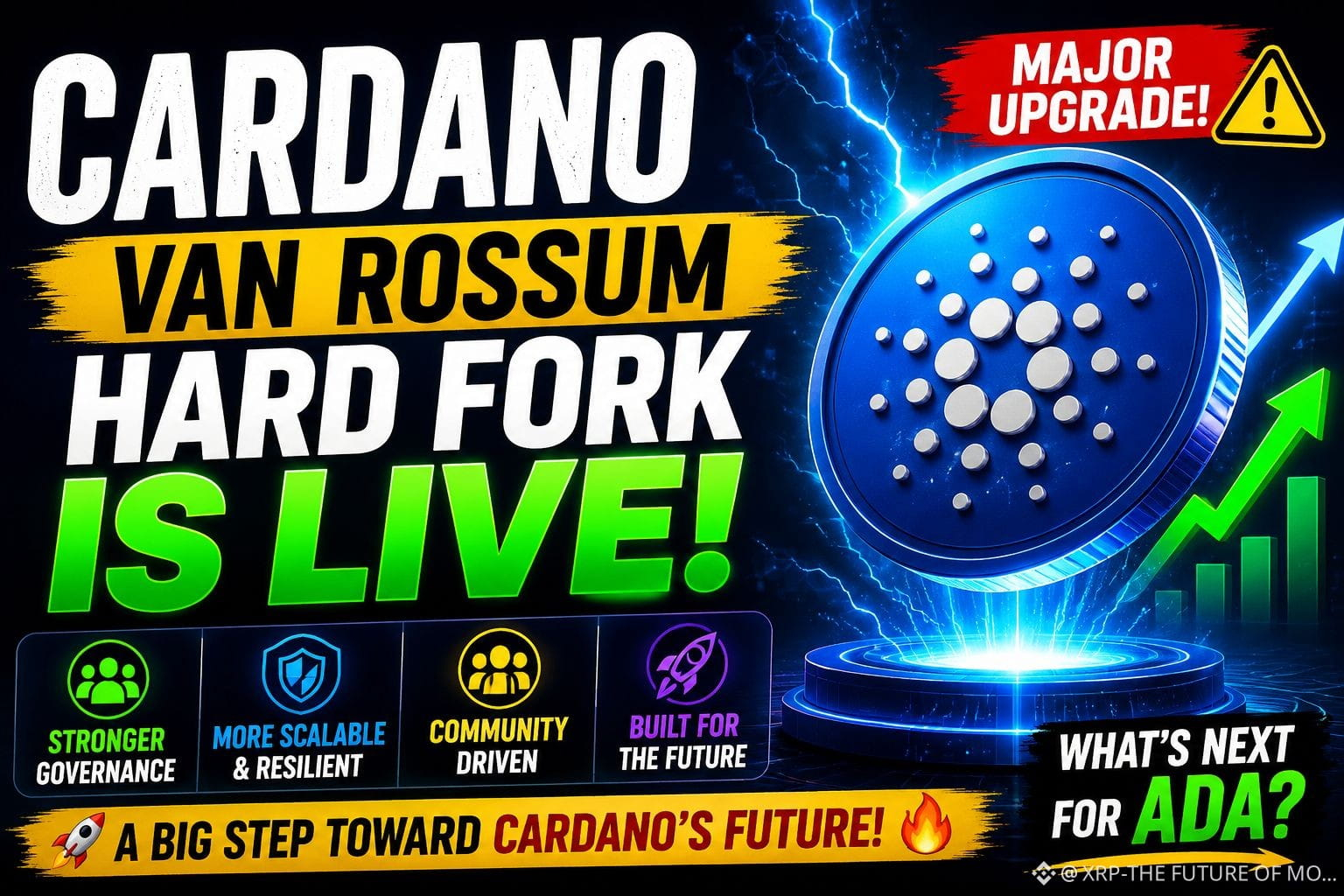
🚨 **CARDANO'S VAN ROSSUM HARD FORK IST LIVE — EIN GROSSER SCHRITT FÜR ADA! 🔥**
Cardano hat mit dem **Van Rossum Hard Fork** einen weiteren wichtigen Meilenstein erreicht und führt ein bedeutendes Upgrade des Netzwerks ein sowie die dezentrale Governance weiter voran.
🌟 **Warum das wichtig ist:**
✅ Stärkt das Governance-System von Cardano.
✅ Verbessert die langfristige Skalierbarkeit und Widerstandsfähigkeit des Netzwerks.
✅ Zeigt, dass Cardano weiterhin auf community-getriebene Entwicklung setzt.
✅ Könnte das Vertrauen bei Entwicklern, Validatoren und langfristigen Investoren stärken.
Auch wenn Hard Forks nicht immer sofortige Kursrallyes auslösen, erhöhen große Netzwerk-Updates oft die Aufmerksamkeit in der Krypto-Community und können die langfristige Akzeptanz beeinflussen.
👀 **Worauf Trader als Nächstes achten sollten:**
📊 ADA-Preisreaktion in den kommenden Tagen.
💹 Handelsvolumen und On-Chain-Aktivität.
🚀 Ob neue Projekte und Entwickler die Akzeptanz des aktualisierten Netzwerks beschleunigen.
Cardano baut weiter — durch Innovation statt Hype. Wenn die Akzeptanz weiter wächst, könnte dieses Upgrade zu einem der wichtigsten Meilensteine des Netzwerks werden.
**Wie ist deine Einschätzung für ADA nach dem Van Rossum Hard Fork?**
🟢 Bullish
🔴 Bearish
🟡 Abwarten und mehr Bestätigung
#Cardano #ADA #Crypto #Blockchain #BinanceSquare #Altcoins #DeFi #CryptoNews
🚨 **CARDANO'S VAN ROSSUM HARD FORK IST LIVE — EIN GROSSER SCHRITT FÜR ADA! 🔥**
Cardano hat mit dem **Van Rossum Hard Fork** einen weiteren wichtigen Meilenstein erreicht und führt ein bedeutendes Upgrade des Netzwerks ein sowie die dezentrale Governance weiter voran.
🌟 **Warum das wichtig ist:**
✅ Stärkt das Governance-System von Cardano.
✅ Verbessert die langfristige Skalierbarkeit und Widerstandsfähigkeit des Netzwerks.
✅ Zeigt, dass Cardano weiterhin auf community-getriebene Entwicklung setzt.
✅ Könnte das Vertrauen bei Entwicklern, Validatoren und langfristigen Investoren stärken.
Auch wenn Hard Forks nicht immer sofortige Kursrallyes auslösen, erhöhen große Netzwerk-Updates oft die Aufmerksamkeit in der Krypto-Community und können die langfristige Akzeptanz beeinflussen.
👀 **Worauf Trader als Nächstes achten sollten:**
📊 ADA-Preisreaktion in den kommenden Tagen.
💹 Handelsvolumen und On-Chain-Aktivität.
🚀 Ob neue Projekte und Entwickler die Akzeptanz des aktualisierten Netzwerks beschleunigen.
Cardano baut weiter — durch Innovation statt Hype. Wenn die Akzeptanz weiter wächst, könnte dieses Upgrade zu einem der wichtigsten Meilensteine des Netzwerks werden.
**Wie ist deine Einschätzung für ADA nach dem Van Rossum Hard Fork?**
🟢 Bullish
🔴 Bearish
🟡 Abwarten und mehr Bestätigung
#Cardano #ADA #Crypto #Blockchain #BinanceSquare #Altcoins #DeFi #CryptoNews
Cardano hat mit dem **Van Rossum Hard Fork** einen weiteren wichtigen Meilenstein erreicht und führt ein bedeutendes Upgrade des Netzwerks ein sowie die dezentrale Governance weiter voran.
🌟 **Warum das wichtig ist:**
✅ Stärkt das Governance-System von Cardano.
✅ Verbessert die langfristige Skalierbarkeit und Widerstandsfähigkeit des Netzwerks.
✅ Zeigt, dass Cardano weiterhin auf community-getriebene Entwicklung setzt.
✅ Könnte das Vertrauen bei Entwicklern, Validatoren und langfristigen Investoren stärken.
Auch wenn Hard Forks nicht immer sofortige Kursrallyes auslösen, erhöhen große Netzwerk-Updates oft die Aufmerksamkeit in der Krypto-Community und können die langfristige Akzeptanz beeinflussen.
👀 **Worauf Trader als Nächstes achten sollten:**
📊 ADA-Preisreaktion in den kommenden Tagen.
💹 Handelsvolumen und On-Chain-Aktivität.
🚀 Ob neue Projekte und Entwickler die Akzeptanz des aktualisierten Netzwerks beschleunigen.
Cardano baut weiter — durch Innovation statt Hype. Wenn die Akzeptanz weiter wächst, könnte dieses Upgrade zu einem der wichtigsten Meilensteine des Netzwerks werden.
**Wie ist deine Einschätzung für ADA nach dem Van Rossum Hard Fork?**
🟢 Bullish
🔴 Bearish
🟡 Abwarten und mehr Bestätigung
#Cardano #ADA #Crypto #Blockchain #BinanceSquare #Altcoins #DeFi #CryptoNews
1
71
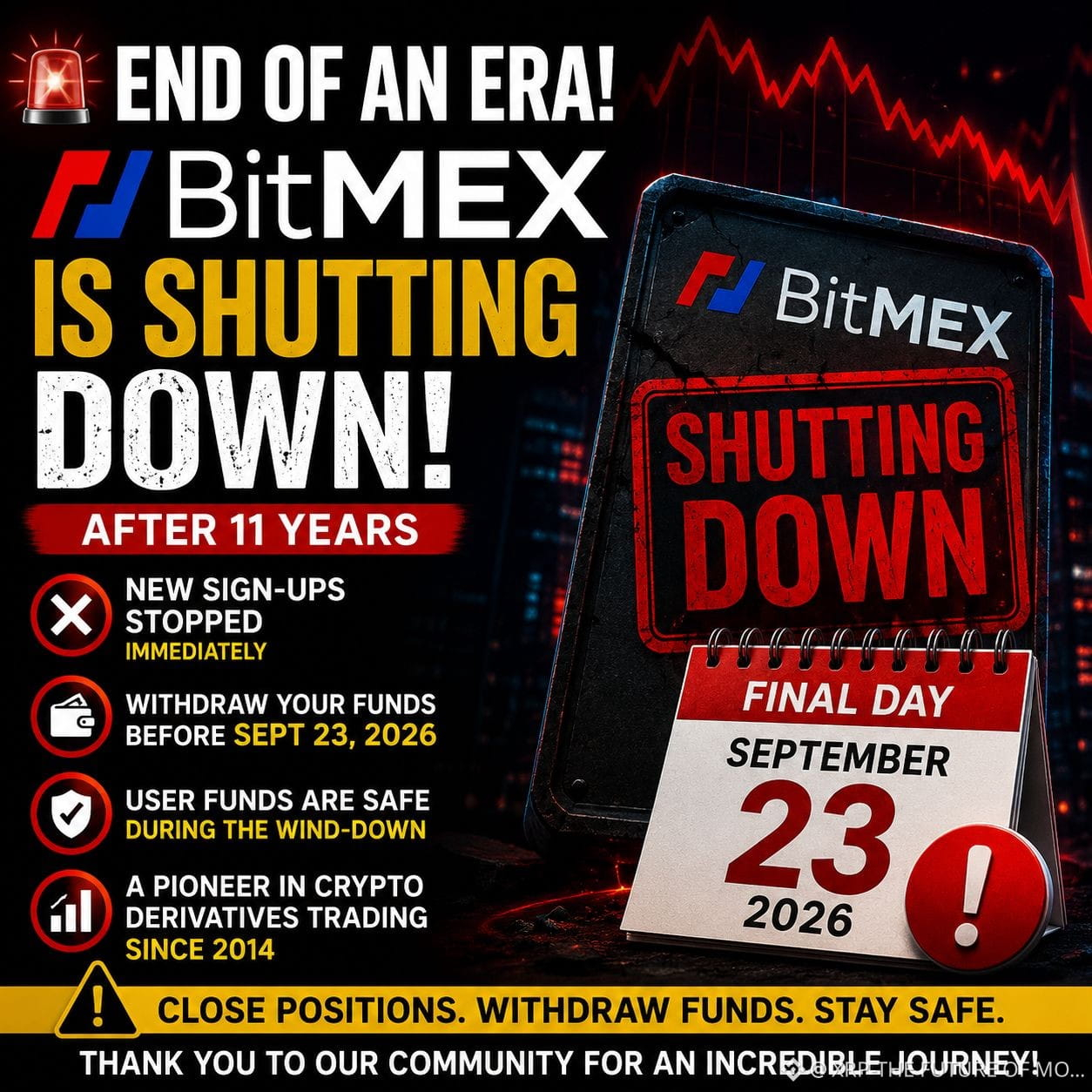
🚨 **DAS ENDE EINER ÄRA: BitMEX stellt den Betrieb nach 11 Jahren ein! 😲**
Eine der ikonischsten Krypto-Börsen, **BitMEX**, hat offiziell angekündigt, den **Betrieb am 23. September 2026** einzustellen – nach einer strategischen Geschäftsprüfung.
⚡ Highlights:
• ❌ Neue Kontoerstellungen wurden umgehend gestoppt.
• 📉 Nutzer werden aufgefordert, **alle offenen Positionen zu schließen** und **Gelder vor der Abschaltung abzuheben**.
• 🔒 BitMEX sagt, dass die Vermögenswerte der Nutzer während des Abwicklungsprozesses sicher bleiben.
• 🏛️ 2014 gegründet, brachte BitMEX den **100x-Perpetual-Futures-Kontrakt** hervor und half dabei, den heutigen Markt für Krypto-Derivate mitzugestalten.
💭 **Was bedeutet das für den Markt?**
Obwohl der Marktanteil von BitMEX inzwischen klein ist, markiert die Schließung das Ende einer Plattform, die eine große Rolle in der Geschichte des Krypto-Handels spielte. Viele Trader dürften zu größeren Börsen wechseln und damit möglicherweise andernorts die Liquidität erhöhen.
👇 **Jetzt du:**
Warst du jemals Trader bei BitMEX, oder war Binance schon immer deine erste Wahl?
#Bitcoin #BitMEX #CryptoNews #Binance #Trading #BTC #Crypto #Blockchain
🚨 **DAS ENDE EINER ÄRA: BitMEX stellt den Betrieb nach 11 Jahren ein! 😲**
Eine der ikonischsten Krypto-Börsen, **BitMEX**, hat offiziell angekündigt, den **Betrieb am 23. September 2026** einzustellen – nach einer strategischen Geschäftsprüfung.
⚡ Highlights:
• ❌ Neue Kontoerstellungen wurden umgehend gestoppt.
• 📉 Nutzer werden aufgefordert, **alle offenen Positionen zu schließen** und **Gelder vor der Abschaltung abzuheben**.
• 🔒 BitMEX sagt, dass die Vermögenswerte der Nutzer während des Abwicklungsprozesses sicher bleiben.
• 🏛️ 2014 gegründet, brachte BitMEX den **100x-Perpetual-Futures-Kontrakt** hervor und half dabei, den heutigen Markt für Krypto-Derivate mitzugestalten.
💭 **Was bedeutet das für den Markt?**
Obwohl der Marktanteil von BitMEX inzwischen klein ist, markiert die Schließung das Ende einer Plattform, die eine große Rolle in der Geschichte des Krypto-Handels spielte. Viele Trader dürften zu größeren Börsen wechseln und damit möglicherweise andernorts die Liquidität erhöhen.
👇 **Jetzt du:**
Warst du jemals Trader bei BitMEX, oder war Binance schon immer deine erste Wahl?
#Bitcoin #BitMEX #CryptoNews #Binance #Trading #BTC #Crypto #Blockchain
Eine der ikonischsten Krypto-Börsen, **BitMEX**, hat offiziell angekündigt, den **Betrieb am 23. September 2026** einzustellen – nach einer strategischen Geschäftsprüfung.
⚡ Highlights:
• ❌ Neue Kontoerstellungen wurden umgehend gestoppt.
• 📉 Nutzer werden aufgefordert, **alle offenen Positionen zu schließen** und **Gelder vor der Abschaltung abzuheben**.
• 🔒 BitMEX sagt, dass die Vermögenswerte der Nutzer während des Abwicklungsprozesses sicher bleiben.
• 🏛️ 2014 gegründet, brachte BitMEX den **100x-Perpetual-Futures-Kontrakt** hervor und half dabei, den heutigen Markt für Krypto-Derivate mitzugestalten.
💭 **Was bedeutet das für den Markt?**
Obwohl der Marktanteil von BitMEX inzwischen klein ist, markiert die Schließung das Ende einer Plattform, die eine große Rolle in der Geschichte des Krypto-Handels spielte. Viele Trader dürften zu größeren Börsen wechseln und damit möglicherweise andernorts die Liquidität erhöhen.
👇 **Jetzt du:**
Warst du jemals Trader bei BitMEX, oder war Binance schon immer deine erste Wahl?
#Bitcoin #BitMEX #CryptoNews #Binance #Trading #BTC #Crypto #Blockchain
39
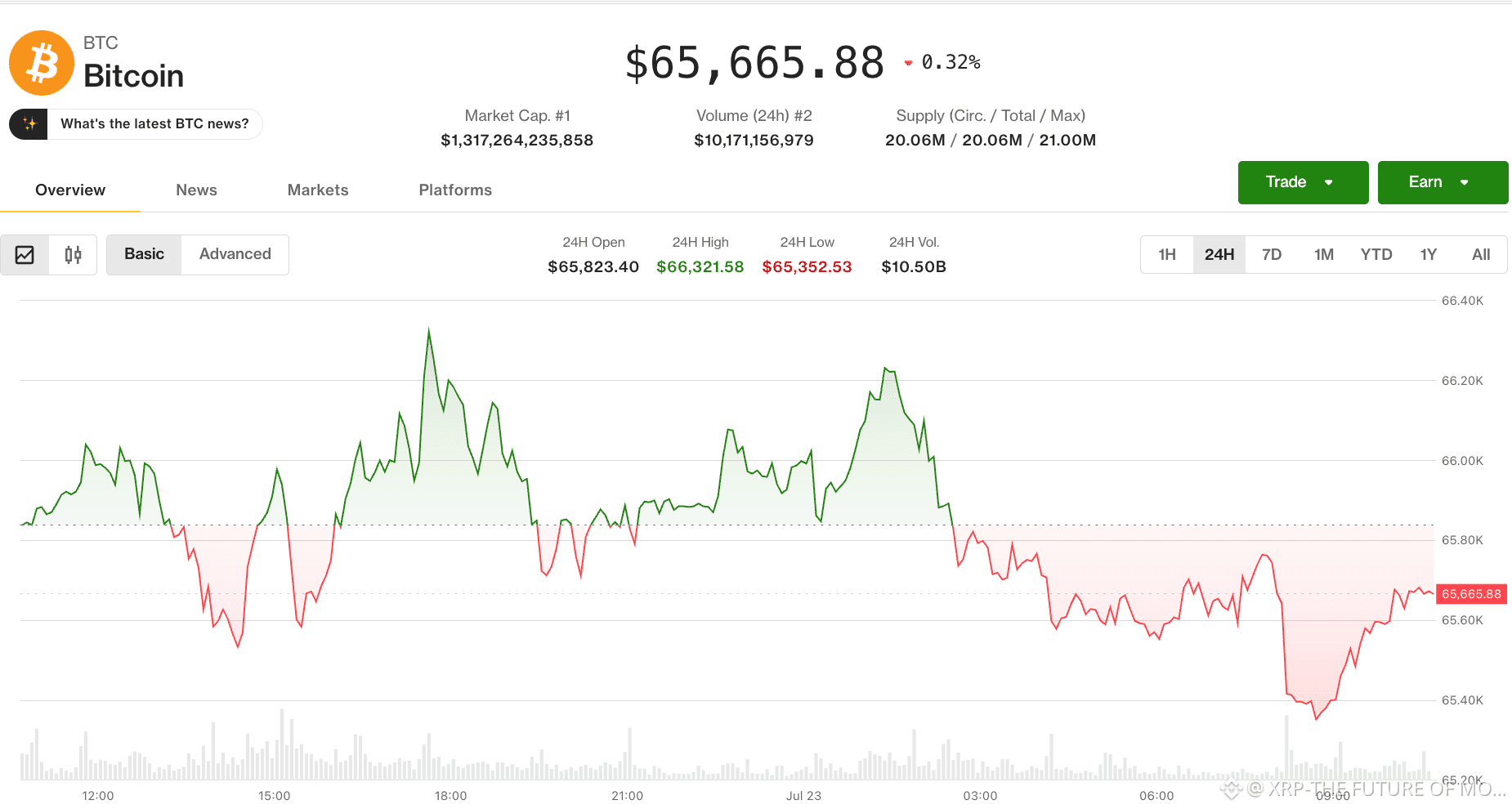
🚨 **Krypto-Markt-Update: BITCOIN PAUSIERT, WÄHREND DIE NÄCHSTE GROẞE BEWEGUNG SICH ANBAUT!** 👀📈
Nach einer beeindruckenden **13%-Erholung vom Tief im Juli** ist **Bitcoin (BTC)** in eine Konsolidierungsphase übergegangen und handelt zwischen **64.000 $ und 66.800 $**. Statt eines scharfen Ausbruchs nimmt der Markt eine gesunde Pause ein, während Händler auf den nächsten großen Auslöser warten.
📊 **So sieht die Lage aus:**
✅ BTC hält weiterhin oberhalb des wichtigen **64K-$-Supports** und zeigt damit, dass Käufer den Trend weiterhin verteidigen.
✅ Der Widerstand um **66,8K** bleibt die entscheidende Marke, die durchbrochen werden muss, bevor eine weitere bullische Phase beginnen kann.
✅ Laut Futures-Daten reduzieren Händler die Hebelwirkung eher, statt aggressiv neue Short-Positionen zu eröffnen – das könnte ein positives Zeichen sein, falls der Kaufdruck zurückkehrt.
✅ Auch Optionshändler positionieren sich weiterhin für steigende Kurse: Das wachsende Interesse an **70K-BTC-Call-Optionen** zeigt Zuversicht, dass Bitcoin seinen Aufwärtstrend in den kommenden Wochen fortsetzen könnte.
🔥 **Altcoin-Highlights**
• **WLFI** stahl allen die Show und schoss um über **12%** nach oben – damit ist es einer der stärksten Performer des Tages.
• **MORPHO** setzte seine beeindruckende Dynamik fort und verbuchte einen weiteren soliden Gewinn.
• **ENA** verlängerte seine Erholung und übertrifft trotz der weiterhin großen Distanz zu seinen früheren Hochs viele DeFi-Tokens.
⚠️ **Achten Sie auf Folgendes:** Die implizite Volatilität von Bitcoin steigt seit mehreren Tagen. Historisch gesehen geht eine zunehmende Volatilität manchmal größeren Preisschwankungen voraus – Händler sollten also auf mehr Bewegung im Markt vorbereitet sein.
💡 **Fazit:** Der Krypto-Markt zeigt keine Panikzeichen – er zeigt Geduld. Solange Bitcoin oberhalb des wichtigen Supports bleibt, bleibt die breitere bullische Struktur intakt. Der nächste Ausbruch über **66,8K** könnte die Dynamik wieder zugunsten der Bullen drehen, während ein Verlust von **64K** eine kurzfristige Korrektur auslösen könnte.
🚀 **Wie lautet Ihre Prognose?**
Wird **Bitcoin über 66,8K ausbrechen und als Nächstes 70K ansteuern**, oder kommt erst ein weiterer Rücksetzer?** Teilen Sie Ihre Gedanken unten!** 👇
#Bitcoin #BTC #Crypto #BinanceSquare #Altcoins
🚨 **Krypto-Markt-Update: BITCOIN PAUSIERT, WÄHREND DIE NÄCHSTE GROẞE BEWEGUNG SICH ANBAUT!** 👀📈
Nach einer beeindruckenden **13%-Erholung vom Tief im Juli** ist **Bitcoin (BTC)** in eine Konsolidierungsphase übergegangen und handelt zwischen **64.000 $ und 66.800 $**. Statt eines scharfen Ausbruchs nimmt der Markt eine gesunde Pause ein, während Händler auf den nächsten großen Auslöser warten.
📊 **So sieht die Lage aus:**
✅ BTC hält weiterhin oberhalb des wichtigen **64K-$-Supports** und zeigt damit, dass Käufer den Trend weiterhin verteidigen.
✅ Der Widerstand um **66,8K** bleibt die entscheidende Marke, die durchbrochen werden muss, bevor eine weitere bullische Phase beginnen kann.
✅ Laut Futures-Daten reduzieren Händler die Hebelwirkung eher, statt aggressiv neue Short-Positionen zu eröffnen – das könnte ein positives Zeichen sein, falls der Kaufdruck zurückkehrt.
✅ Auch Optionshändler positionieren sich weiterhin für steigende Kurse: Das wachsende Interesse an **70K-BTC-Call-Optionen** zeigt Zuversicht, dass Bitcoin seinen Aufwärtstrend in den kommenden Wochen fortsetzen könnte.
🔥 **Altcoin-Highlights**
• **WLFI** stahl allen die Show und schoss um über **12%** nach oben – damit ist es einer der stärksten Performer des Tages.
• **MORPHO** setzte seine beeindruckende Dynamik fort und verbuchte einen weiteren soliden Gewinn.
• **ENA** verlängerte seine Erholung und übertrifft trotz der weiterhin großen Distanz zu seinen früheren Hochs viele DeFi-Tokens.
⚠️ **Achten Sie auf Folgendes:** Die implizite Volatilität von Bitcoin steigt seit mehreren Tagen. Historisch gesehen geht eine zunehmende Volatilität manchmal größeren Preisschwankungen voraus – Händler sollten also auf mehr Bewegung im Markt vorbereitet sein.
💡 **Fazit:** Der Krypto-Markt zeigt keine Panikzeichen – er zeigt Geduld. Solange Bitcoin oberhalb des wichtigen Supports bleibt, bleibt die breitere bullische Struktur intakt. Der nächste Ausbruch über **66,8K** könnte die Dynamik wieder zugunsten der Bullen drehen, während ein Verlust von **64K** eine kurzfristige Korrektur auslösen könnte.
🚀 **Wie lautet Ihre Prognose?**
Wird **Bitcoin über 66,8K ausbrechen und als Nächstes 70K ansteuern**, oder kommt erst ein weiterer Rücksetzer?** Teilen Sie Ihre Gedanken unten!** 👇
#Bitcoin #BTC #Crypto #BinanceSquare #Altcoins
Nach einer beeindruckenden **13%-Erholung vom Tief im Juli** ist **Bitcoin (BTC)** in eine Konsolidierungsphase übergegangen und handelt zwischen **64.000 $ und 66.800 $**. Statt eines scharfen Ausbruchs nimmt der Markt eine gesunde Pause ein, während Händler auf den nächsten großen Auslöser warten.
📊 **So sieht die Lage aus:**
✅ BTC hält weiterhin oberhalb des wichtigen **64K-$-Supports** und zeigt damit, dass Käufer den Trend weiterhin verteidigen.
✅ Der Widerstand um **66,8K** bleibt die entscheidende Marke, die durchbrochen werden muss, bevor eine weitere bullische Phase beginnen kann.
✅ Laut Futures-Daten reduzieren Händler die Hebelwirkung eher, statt aggressiv neue Short-Positionen zu eröffnen – das könnte ein positives Zeichen sein, falls der Kaufdruck zurückkehrt.
✅ Auch Optionshändler positionieren sich weiterhin für steigende Kurse: Das wachsende Interesse an **70K-BTC-Call-Optionen** zeigt Zuversicht, dass Bitcoin seinen Aufwärtstrend in den kommenden Wochen fortsetzen könnte.
🔥 **Altcoin-Highlights**
• **WLFI** stahl allen die Show und schoss um über **12%** nach oben – damit ist es einer der stärksten Performer des Tages.
• **MORPHO** setzte seine beeindruckende Dynamik fort und verbuchte einen weiteren soliden Gewinn.
• **ENA** verlängerte seine Erholung und übertrifft trotz der weiterhin großen Distanz zu seinen früheren Hochs viele DeFi-Tokens.
⚠️ **Achten Sie auf Folgendes:** Die implizite Volatilität von Bitcoin steigt seit mehreren Tagen. Historisch gesehen geht eine zunehmende Volatilität manchmal größeren Preisschwankungen voraus – Händler sollten also auf mehr Bewegung im Markt vorbereitet sein.
💡 **Fazit:** Der Krypto-Markt zeigt keine Panikzeichen – er zeigt Geduld. Solange Bitcoin oberhalb des wichtigen Supports bleibt, bleibt die breitere bullische Struktur intakt. Der nächste Ausbruch über **66,8K** könnte die Dynamik wieder zugunsten der Bullen drehen, während ein Verlust von **64K** eine kurzfristige Korrektur auslösen könnte.
🚀 **Wie lautet Ihre Prognose?**
Wird **Bitcoin über 66,8K ausbrechen und als Nächstes 70K ansteuern**, oder kommt erst ein weiterer Rücksetzer?** Teilen Sie Ihre Gedanken unten!** 👇
#Bitcoin #BTC #Crypto #BinanceSquare #Altcoins
117
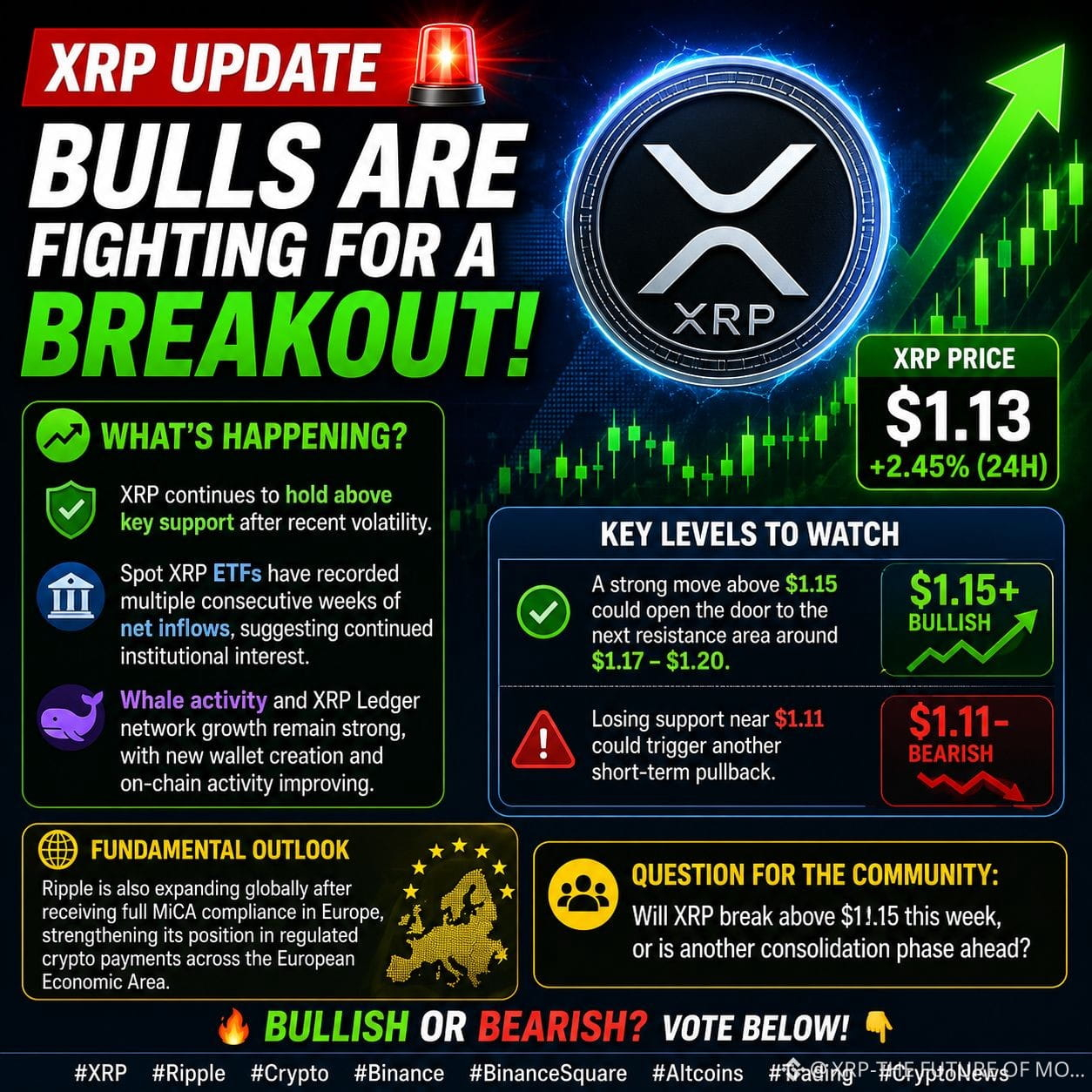
🚨 **XRP-UPDATE: Die Bullen kämpfen um einen Ausbruch!** 🚀
XRP rückt wieder in den Fokus, da Trader eines der wichtigsten Kurszonen des Monats genau beobachten.
📈 **Was passiert?**
• XRP hält sich nach der jüngsten Volatilität weiterhin über einer wichtigen Unterstützung.
• Spot-XRP-ETFs verzeichnen **mehrere aufeinanderfolgende Wochen mit Nettozuflüssen** – ein Hinweis auf anhaltendes institutionelles Interesse.
• Die Aktivitäten von Walen und das Wachstum des XRP-Ledger-Netzwerks bleiben gesund: Neue Wallet-Erstellungen und On-Chain-Aktivität verbessern sich.
👀 **Wichtige Kursmarken**
✅ Ein starker Ausbruch über **$1,15** könnte den Weg zur nächsten Widerstandszone bei **$1,17–$1,20** öffnen.
⚠️ Wenn die Unterstützung nahe **$1,11** fällt, könnte dies einen weiteren kurzfristigen Rücksetzer auslösen.
🌍 **Fundamentaler Ausblick**
Ripple weitet sich zudem global aus, nachdem es in Europa die vollständige MiCA-Compliance erhalten hat. Das stärkt die Position in regulierten Krypto-Zahlungen im gesamten Europäischen Wirtschaftsraum.
💬 **Frage an die Community:**
Wird XRP diese Woche **$1,15** nach oben durchbrechen – oder steht eine weitere Konsolidierungsphase bevor?
🔥 Bullisch oder bärisch? Stimmt unten ab! 👇
#XRP #Ripple #Crypto #Binance #BinanceSquare #Altcoins #Trading #CryptoNews
🚨 **XRP-UPDATE: Die Bullen kämpfen um einen Ausbruch!** 🚀
XRP rückt wieder in den Fokus, da Trader eines der wichtigsten Kurszonen des Monats genau beobachten.
📈 **Was passiert?**
• XRP hält sich nach der jüngsten Volatilität weiterhin über einer wichtigen Unterstützung.
• Spot-XRP-ETFs verzeichnen **mehrere aufeinanderfolgende Wochen mit Nettozuflüssen** – ein Hinweis auf anhaltendes institutionelles Interesse.
• Die Aktivitäten von Walen und das Wachstum des XRP-Ledger-Netzwerks bleiben gesund: Neue Wallet-Erstellungen und On-Chain-Aktivität verbessern sich.
👀 **Wichtige Kursmarken**
✅ Ein starker Ausbruch über **$1,15** könnte den Weg zur nächsten Widerstandszone bei **$1,17–$1,20** öffnen.
⚠️ Wenn die Unterstützung nahe **$1,11** fällt, könnte dies einen weiteren kurzfristigen Rücksetzer auslösen.
🌍 **Fundamentaler Ausblick**
Ripple weitet sich zudem global aus, nachdem es in Europa die vollständige MiCA-Compliance erhalten hat. Das stärkt die Position in regulierten Krypto-Zahlungen im gesamten Europäischen Wirtschaftsraum.
💬 **Frage an die Community:**
Wird XRP diese Woche **$1,15** nach oben durchbrechen – oder steht eine weitere Konsolidierungsphase bevor?
🔥 Bullisch oder bärisch? Stimmt unten ab! 👇
#XRP #Ripple #Crypto #Binance #BinanceSquare #Altcoins #Trading #CryptoNews
XRP rückt wieder in den Fokus, da Trader eines der wichtigsten Kurszonen des Monats genau beobachten.
📈 **Was passiert?**
• XRP hält sich nach der jüngsten Volatilität weiterhin über einer wichtigen Unterstützung.
• Spot-XRP-ETFs verzeichnen **mehrere aufeinanderfolgende Wochen mit Nettozuflüssen** – ein Hinweis auf anhaltendes institutionelles Interesse.
• Die Aktivitäten von Walen und das Wachstum des XRP-Ledger-Netzwerks bleiben gesund: Neue Wallet-Erstellungen und On-Chain-Aktivität verbessern sich.
👀 **Wichtige Kursmarken**
✅ Ein starker Ausbruch über **$1,15** könnte den Weg zur nächsten Widerstandszone bei **$1,17–$1,20** öffnen.
⚠️ Wenn die Unterstützung nahe **$1,11** fällt, könnte dies einen weiteren kurzfristigen Rücksetzer auslösen.
🌍 **Fundamentaler Ausblick**
Ripple weitet sich zudem global aus, nachdem es in Europa die vollständige MiCA-Compliance erhalten hat. Das stärkt die Position in regulierten Krypto-Zahlungen im gesamten Europäischen Wirtschaftsraum.
💬 **Frage an die Community:**
Wird XRP diese Woche **$1,15** nach oben durchbrechen – oder steht eine weitere Konsolidierungsphase bevor?
🔥 Bullisch oder bärisch? Stimmt unten ab! 👇
#XRP #Ripple #Crypto #Binance #BinanceSquare #Altcoins #Trading #CryptoNews
100
🚀 **BINANCE TOP GEWINNER STECKEN IN FLAMMEN! 🔥**
Der Krypto-Markt zeigt frischen Schwung, und mehrere Tokens liefern in den letzten 24 Stunden beachtliche Gewinne.
📈 **Zu den heutigen Top-Performern gehören:**
🟢 **BANKUSDT** – führt das Rallye mit einem explosiven Anstieg von über **64%** an.
🟢 **SYNUSDT** – klettert um mehr als **30%**, während der Kaufdruck zunimmt.
🟢 **UTKUSDT** – verzeichnet erneut einen starken Move mit Gewinnen von über **16%**.
💡 **Was das bedeuten könnte:**
✅ Kapital rotiert in Altcoins mit hoher Dynamik.
✅ Trader jagen aktiv Breakout-Chancen.
✅ Mehr Handelsvolumen zieht oft noch mehr Aufmerksamkeit an – aber die Volatilität bleibt extrem hoch.
Denkt daran: Die größten Gewinner des heutigen Tages können sich sehr schnell ändern. Starke Rallyes können weitergehen, aber genauso schnell auch scharfe Rücksetzer erleben. Behandle dein Risiko immer umsichtig und jage keine grünen Kerzen ohne Plan.
🔥 **Welcher Coin wird deiner Meinung nach der NÄCHSTE explosive Binance-Gewinner?**
👇 Schreib deine Prognose in die Kommentare!
#Binance #Crypto #Altcoins #TopGainers #CryptoTrading #Bullish #BNB #Bitcoin .
🚀 **BINANCE TOP GEWINNER STECKEN IN FLAMMEN! 🔥**
Der Krypto-Markt zeigt frischen Schwung, und mehrere Tokens liefern in den letzten 24 Stunden beachtliche Gewinne.
📈 **Zu den heutigen Top-Performern gehören:**
🟢 **BANKUSDT** – führt das Rallye mit einem explosiven Anstieg von über **64%** an.
🟢 **SYNUSDT** – klettert um mehr als **30%**, während der Kaufdruck zunimmt.
🟢 **UTKUSDT** – verzeichnet erneut einen starken Move mit Gewinnen von über **16%**.
💡 **Was das bedeuten könnte:**
✅ Kapital rotiert in Altcoins mit hoher Dynamik.
✅ Trader jagen aktiv Breakout-Chancen.
✅ Mehr Handelsvolumen zieht oft noch mehr Aufmerksamkeit an – aber die Volatilität bleibt extrem hoch.
Denkt daran: Die größten Gewinner des heutigen Tages können sich sehr schnell ändern. Starke Rallyes können weitergehen, aber genauso schnell auch scharfe Rücksetzer erleben. Behandle dein Risiko immer umsichtig und jage keine grünen Kerzen ohne Plan.
🔥 **Welcher Coin wird deiner Meinung nach der NÄCHSTE explosive Binance-Gewinner?**
👇 Schreib deine Prognose in die Kommentare!
#Binance #Crypto #Altcoins #TopGainers #CryptoTrading #Bullish #BNB #Bitcoin .
Der Krypto-Markt zeigt frischen Schwung, und mehrere Tokens liefern in den letzten 24 Stunden beachtliche Gewinne.
📈 **Zu den heutigen Top-Performern gehören:**
🟢 **BANKUSDT** – führt das Rallye mit einem explosiven Anstieg von über **64%** an.
🟢 **SYNUSDT** – klettert um mehr als **30%**, während der Kaufdruck zunimmt.
🟢 **UTKUSDT** – verzeichnet erneut einen starken Move mit Gewinnen von über **16%**.
💡 **Was das bedeuten könnte:**
✅ Kapital rotiert in Altcoins mit hoher Dynamik.
✅ Trader jagen aktiv Breakout-Chancen.
✅ Mehr Handelsvolumen zieht oft noch mehr Aufmerksamkeit an – aber die Volatilität bleibt extrem hoch.
Denkt daran: Die größten Gewinner des heutigen Tages können sich sehr schnell ändern. Starke Rallyes können weitergehen, aber genauso schnell auch scharfe Rücksetzer erleben. Behandle dein Risiko immer umsichtig und jage keine grünen Kerzen ohne Plan.
🔥 **Welcher Coin wird deiner Meinung nach der NÄCHSTE explosive Binance-Gewinner?**
👇 Schreib deine Prognose in die Kommentare!
#Binance #Crypto #Altcoins #TopGainers #CryptoTrading #Bullish #BNB #Bitcoin .
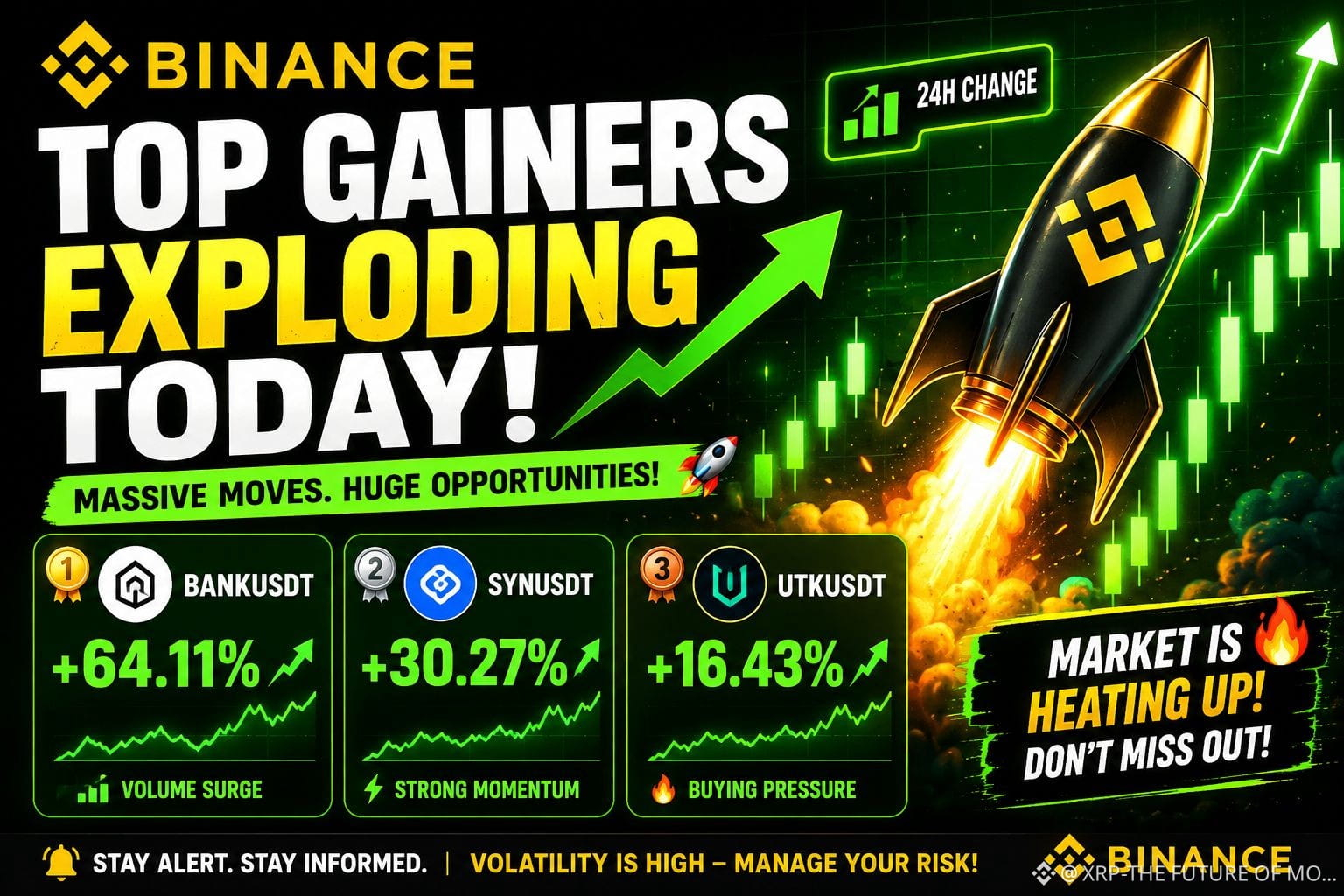
319
Anmelden und weiter Inhalte entdecken
Krypto-Nutzer weltweit auf Binance Square kennenlernen
⚡️ Bleib in Sachen Krypto stets am Puls.
💬 Die weltgrößte Kryptobörse vertraut darauf.
👍 Erhalte verlässliche Einblicke von verifizierten Creators.
E-Mail-Adresse/Telefonnummer
Trendthemen
SECReceivesGrayscaleLitecoinTrustETFFiling
24,879 Aufrufe
494 Kommentare
💎 Institutionelle Aufmerksamkeit erreicht Litecoin
Die ETF-Anmeldung von Grayscale hat $LTC in eine größere Diskussion gebracht. Für Spot-Trader sind Entwicklungen wie diese eine Erinnerung daran, starke Assets zu prüfen, bevor man einen Einstieg tätigt.
#secreceivesgrayscalelitecointrustetffiling
CryptoMahibaloch
·1 Likes
·994 Aufrufe
ClarityActFacesProceduralVoteSept15
128,441 Aufrufe
1,484 Kommentare
US10YearTreasuryYieldNears5%
43,697 Aufrufe
760 Kommentare