

Ragnar_bnb
5.9k Beiträge

Ragnar_bnb
 Square Verified
Melden
Nutzer blockieren
Latest crypto news & trading signals | X : @ragnar_bnb
Trade eröffnen
Regelmäßiger Trader
3.2 Jahre
368 Following
35.8K+ Follower
36.6K+ Like gegeben
Beiträge
Portfolio
Alle
Zitierungen
Live
·
--
Bärisch
236
·
--
Bullisch
Übersetzung ansehen
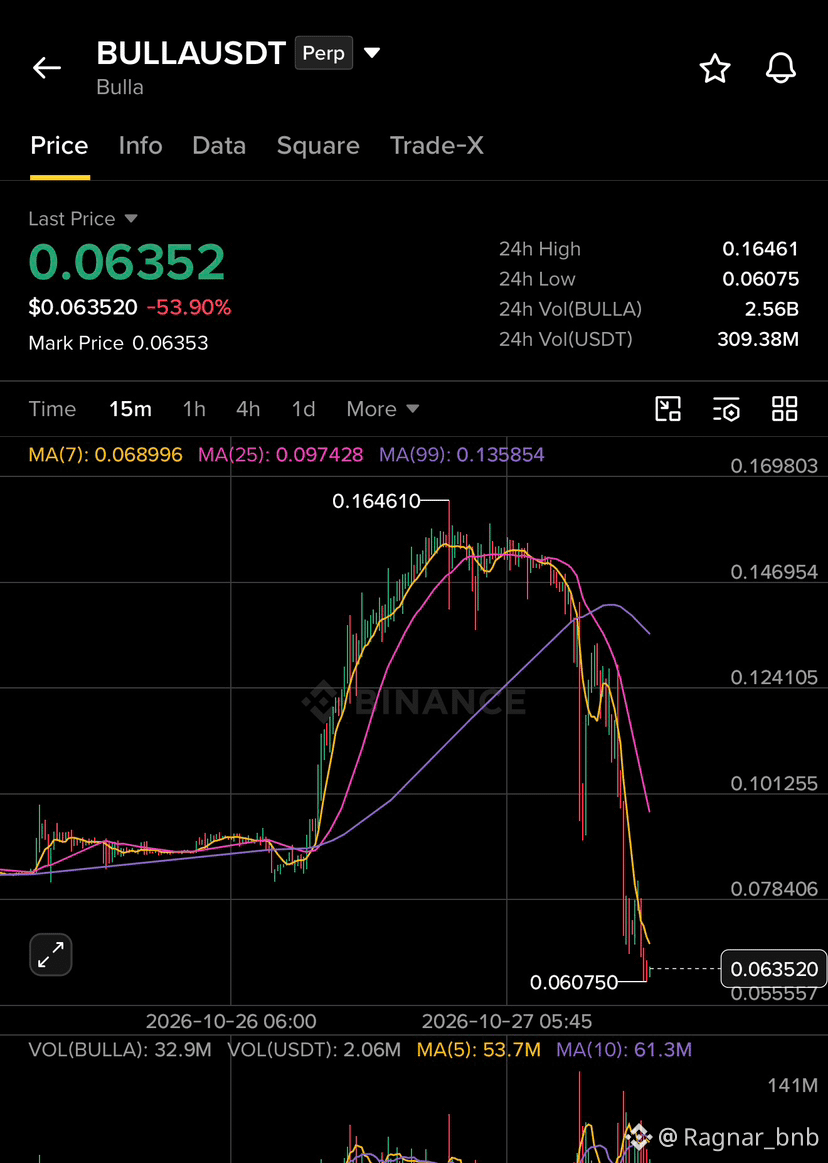
$BULLA gainer yesterday and loser today😅
And it will be gainer again tomorrow lol.
$BULLA gainer yesterday and loser today😅
And it will be gainer again tomorrow lol.
And it will be gainer again tomorrow lol.
224
·
--
Bullisch
Übersetzung ansehen
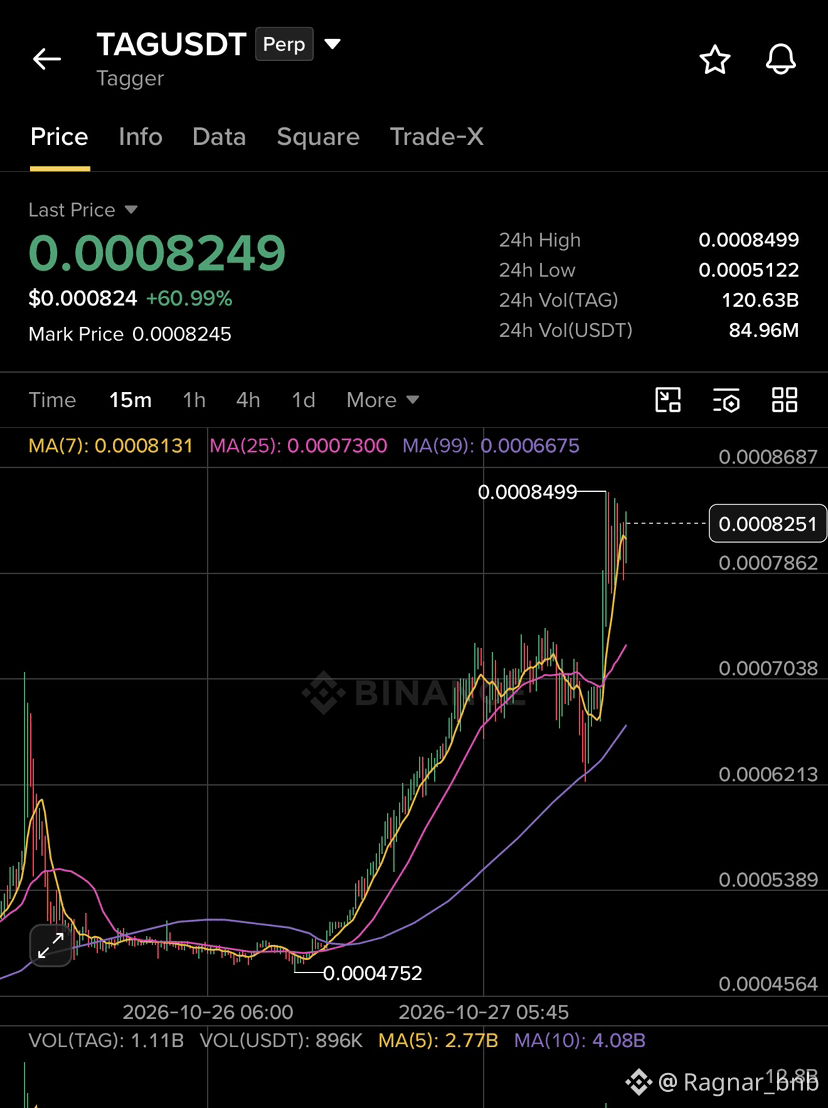
🚀 $TAG EXPLODES +60.99%!
$TAG is showing massive bullish momentum on the 15M chart, with all three moving averages aligned upward.
📈 Potential LONG Setup
🟢 Entry: 0.000780–0.000800
🎯 TP1: 0.000850
🎯 TP2: 0.000870
🎯 TP3: 0.000900
🛑 SL: 0.000755
🔥 Resistance: 0.0008499
Will $TAG break higher or face a correction? Don’t FOMO after a massive pump wait for confirmation and manage risk!
🚀 $TAG EXPLODES +60.99%!
$TAG is showing massive bullish momentum on the 15M chart, with all three moving averages aligned upward.
📈 Potential LONG Setup
🟢 Entry: 0.000780–0.000800
🎯 TP1: 0.000850
🎯 TP2: 0.000870
🎯 TP3: 0.000900
🛑 SL: 0.000755
🔥 Resistance: 0.0008499
Will $TAG break higher or face a correction? Don’t FOMO after a massive pump wait for confirmation and manage risk!
$TAG is showing massive bullish momentum on the 15M chart, with all three moving averages aligned upward.
📈 Potential LONG Setup
🟢 Entry: 0.000780–0.000800
🎯 TP1: 0.000850
🎯 TP2: 0.000870
🎯 TP3: 0.000900
🛑 SL: 0.000755
🔥 Resistance: 0.0008499
Will $TAG break higher or face a correction? Don’t FOMO after a massive pump wait for confirmation and manage risk!
45
·
--
Bärisch
Übersetzung ansehen
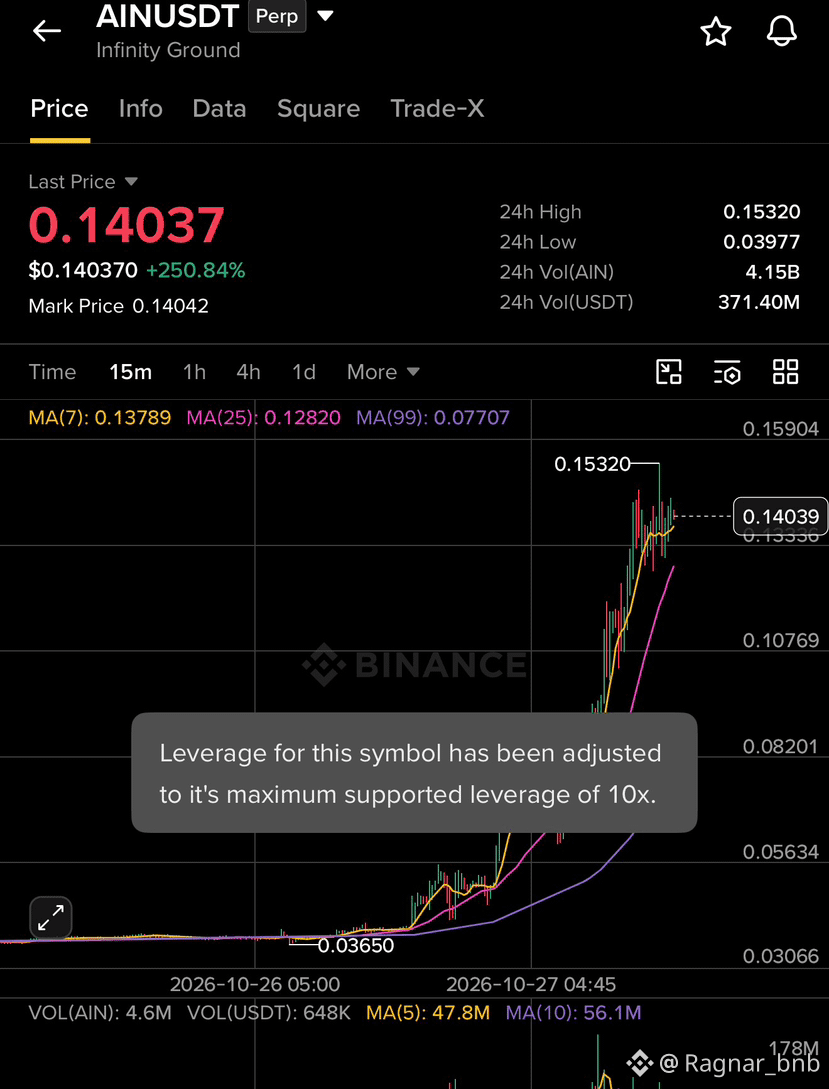
$AIN is soon going below $0.1
So short here with very low leverage to avoid liquidation.
Best of luck
$AIN is soon going below $0.1
So short here with very low leverage to avoid liquidation.
Best of luck
So short here with very low leverage to avoid liquidation.
Best of luck
404
·
--
Übersetzung ansehen
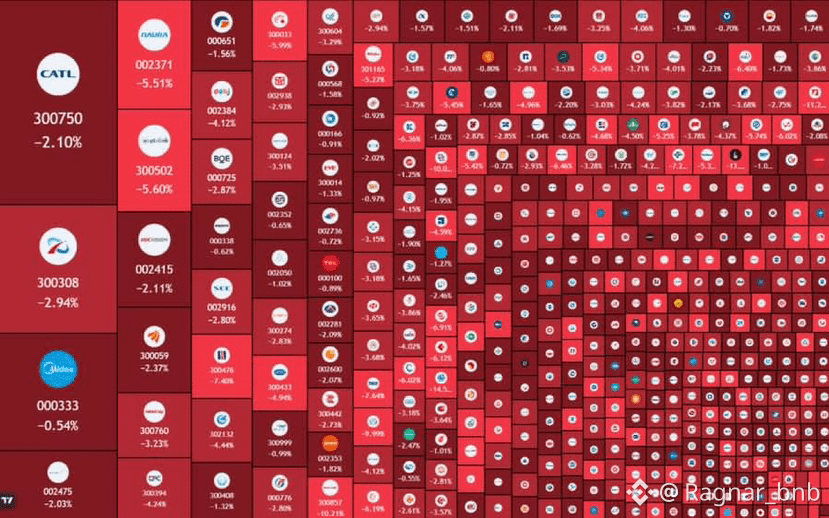
🚨 CHINA’S STOCK MARKET IN SHOCK! 🇨🇳
💥 A staggering ¥1.43 trillion reportedly wiped out from Chinese stocks as fears of an AI bubble intensify.
📉 Is China’s AI boom losing momentum, or is this just a market correction?
⚠️ Stay alert. Volatility can create opportunities and serious risks.
#AI #stockmarket #Crypto $NVDAB $AAPLB $MSFTB
🚨 CHINA’S STOCK MARKET IN SHOCK! 🇨🇳
💥 A staggering ¥1.43 trillion reportedly wiped out from Chinese stocks as fears of an AI bubble intensify.
📉 Is China’s AI boom losing momentum, or is this just a market correction?
⚠️ Stay alert. Volatility can create opportunities and serious risks.
#AI #stockmarket #Crypto $NVDAB $AAPLB $MSFTB
💥 A staggering ¥1.43 trillion reportedly wiped out from Chinese stocks as fears of an AI bubble intensify.
📉 Is China’s AI boom losing momentum, or is this just a market correction?
⚠️ Stay alert. Volatility can create opportunities and serious risks.
#AI #stockmarket #Crypto $NVDAB $AAPLB $MSFTB
1
133
·
--
Bärisch
Übersetzung ansehen
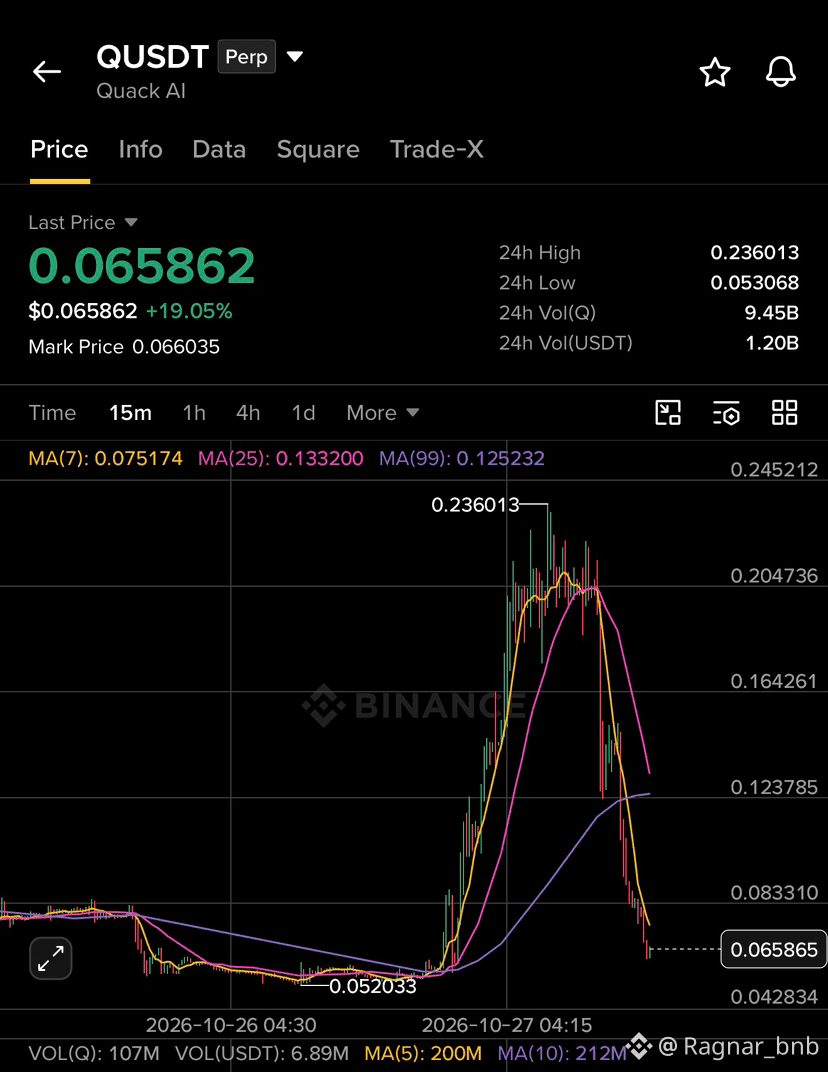
Did you take my call here?
If yes congrats, $Q below $0.05
Did you take my call here?
If yes congrats, $Q below $0.05
If yes congrats, $Q below $0.05
Ragnar_bnb
·
--
BärischTold you $Q would dump..
Congrats if u made profit.
Its going to $.1
Congrats if u made profit.
Its going to $.1
339
·
--
Bärisch
Übersetzung ansehen
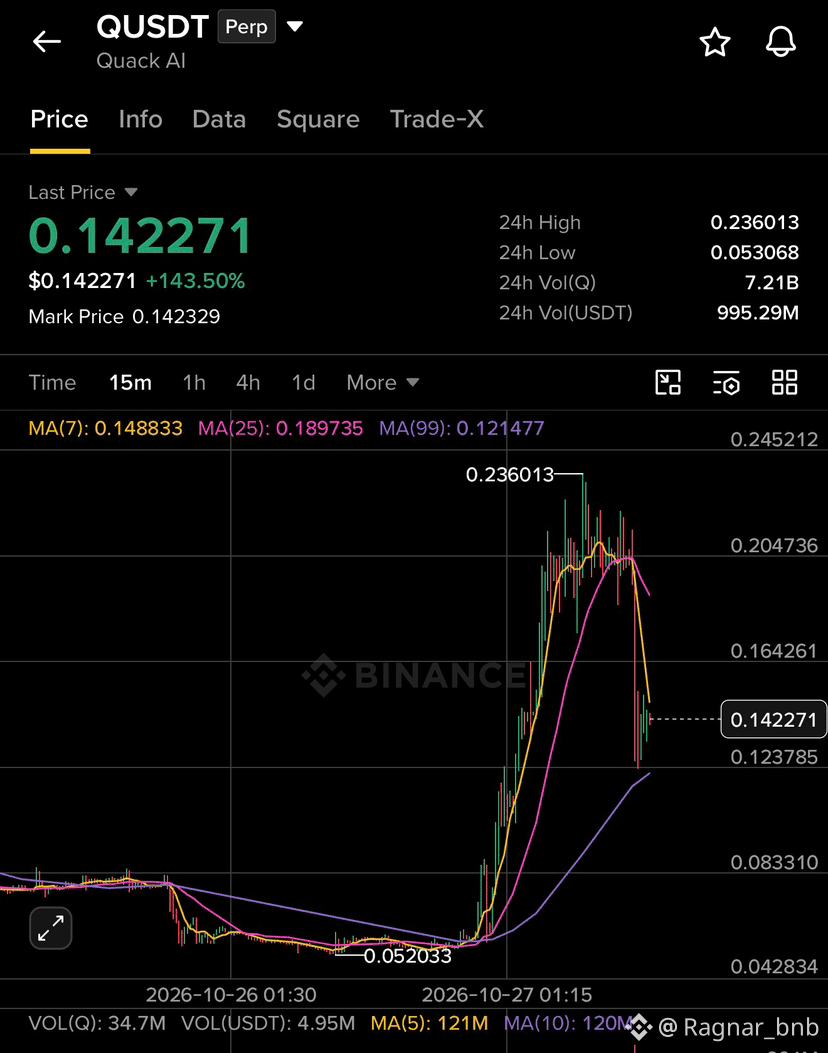
Told you $Q would dump..
Congrats if u made profit.
Its going to $.1
Told you $Q would dump..
Congrats if u made profit.
Its going to $.1
Congrats if u made profit.
Its going to $.1
Ragnar_bnb
·
--
Bärisch$Q Will come down for sure…
🚨 $Q PUMPING +277%!
Price is near 0.207, with resistance at 0.236.
Short it below 0.2.
📈 Bullish momentum, but a sharp correction is possible after this massive pump.
🎯 My move: Wait for confirmation before LONG or SHORT. Manage risk!
#signaladvisor
🚨 $Q PUMPING +277%!
Price is near 0.207, with resistance at 0.236.
Short it below 0.2.
📈 Bullish momentum, but a sharp correction is possible after this massive pump.
🎯 My move: Wait for confirmation before LONG or SHORT. Manage risk!
#signaladvisor
1
1
441
·
--
Bullisch
Übersetzung ansehen
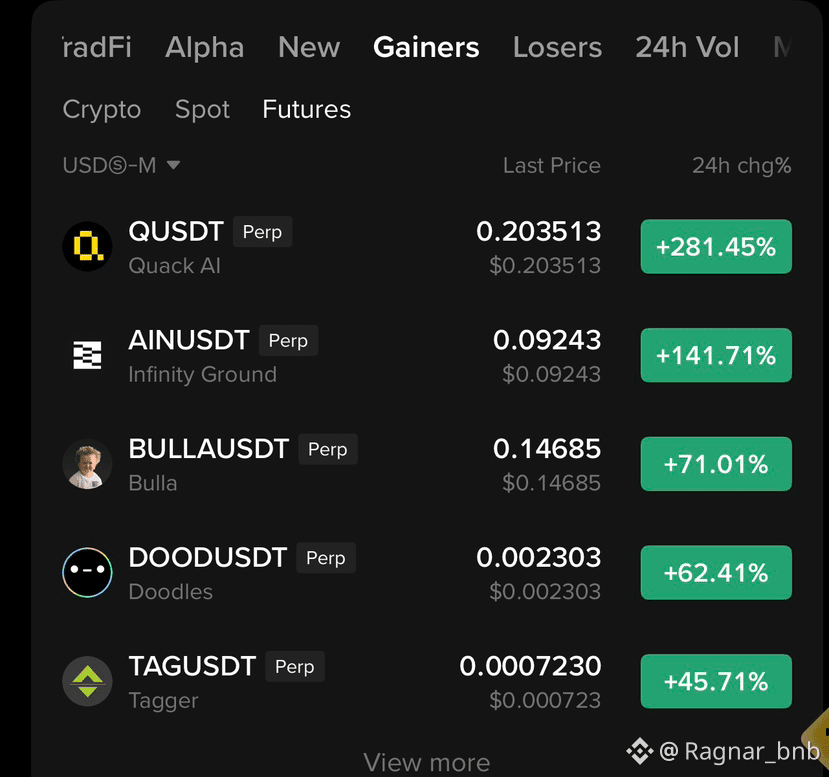
Gainers of today $Q $AIN $BULLA are doing good now and pumping.
But be aware they will all fall down soon so just SCALP now..
SHORT LATER
#BinancePick
Gainers of today $Q $AIN $BULLA are doing good now and pumping.
But be aware they will all fall down soon so just SCALP now..
SHORT LATER
#BinancePick
But be aware they will all fall down soon so just SCALP now..
SHORT LATER
#BinancePick
688
·
--
Bärisch
Übersetzung ansehen
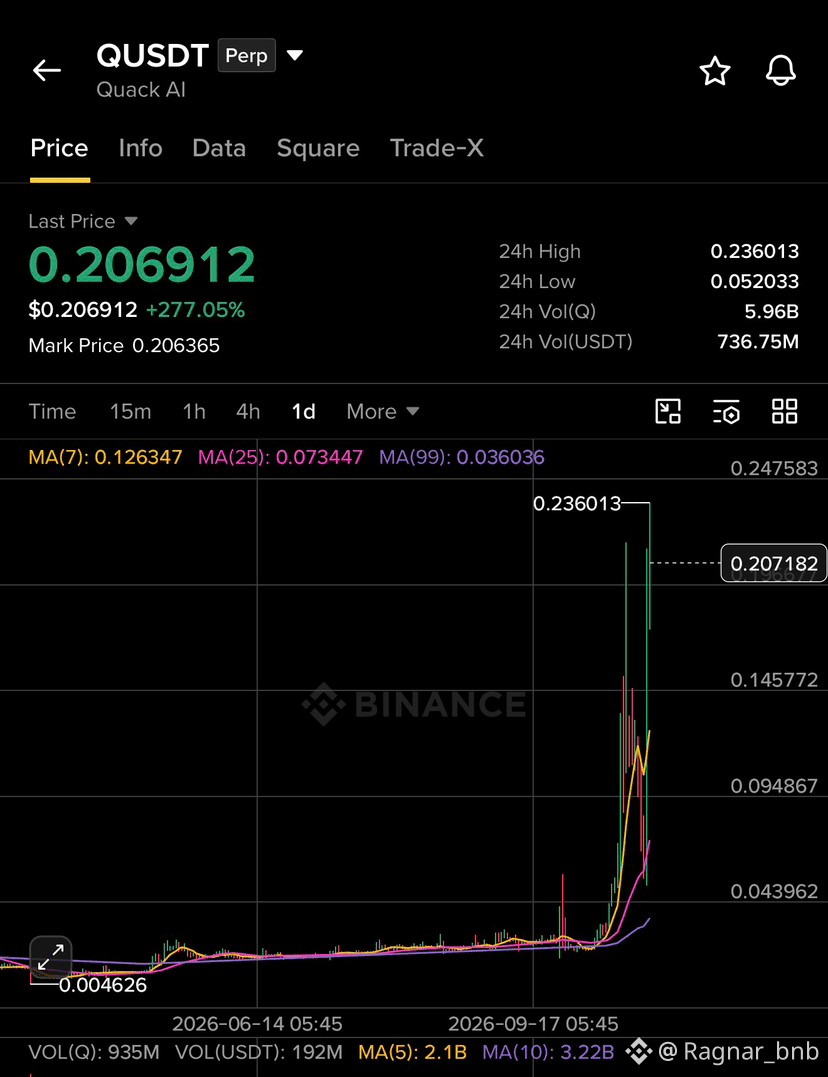
$Q Will come down for sure…
🚨 $Q PUMPING +277%!
Price is near 0.207, with resistance at 0.236.
Short it below 0.2.
📈 Bullish momentum, but a sharp correction is possible after this massive pump.
🎯 My move: Wait for confirmation before LONG or SHORT. Manage risk!
#signaladvisor
$Q Will come down for sure…
🚨 $Q PUMPING +277%!
Price is near 0.207, with resistance at 0.236.
Short it below 0.2.
📈 Bullish momentum, but a sharp correction is possible after this massive pump.
🎯 My move: Wait for confirmation before LONG or SHORT. Manage risk!
#signaladvisor
🚨 $Q PUMPING +277%!
Price is near 0.207, with resistance at 0.236.
Short it below 0.2.
📈 Bullish momentum, but a sharp correction is possible after this massive pump.
🎯 My move: Wait for confirmation before LONG or SHORT. Manage risk!
#signaladvisor
1
1
429
·
--
🚨 EINE SPANNENDE WOCHE AN DEN MÄRKTEN STEHT BEVOR!
Mach dich bereit für eine datenreiche Woche, die sowohl die Krypto- als auch die traditionellen Märkte aufmischen könnte. 👀
📅 Wichtige Ereignisse im Überblick:
🔹 Dienstag: 🇺🇸 US-Neubauverkäufe
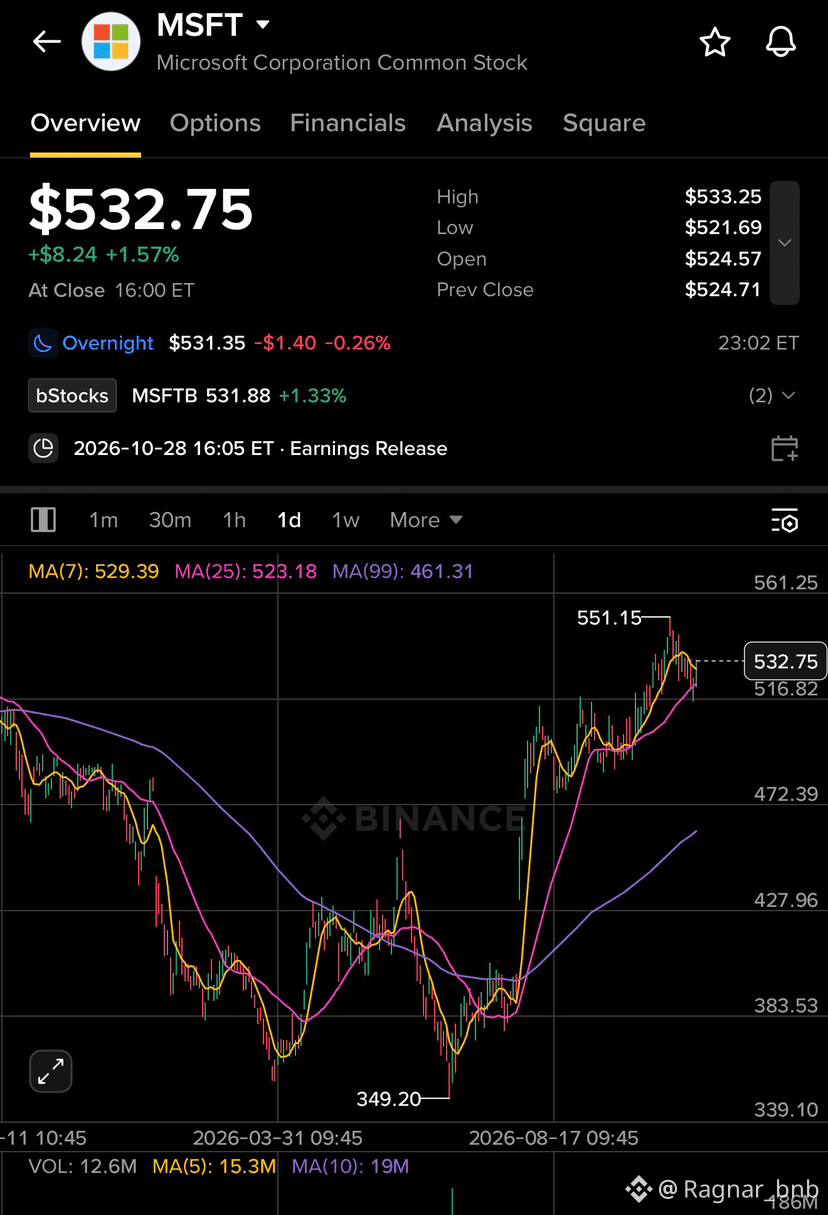
🔹 Mittwoch: 🏦 Zinsentscheid der Fed + Quartalszahlen von Microsoft ($MSFT ) & Alphabet ($GOOGL)
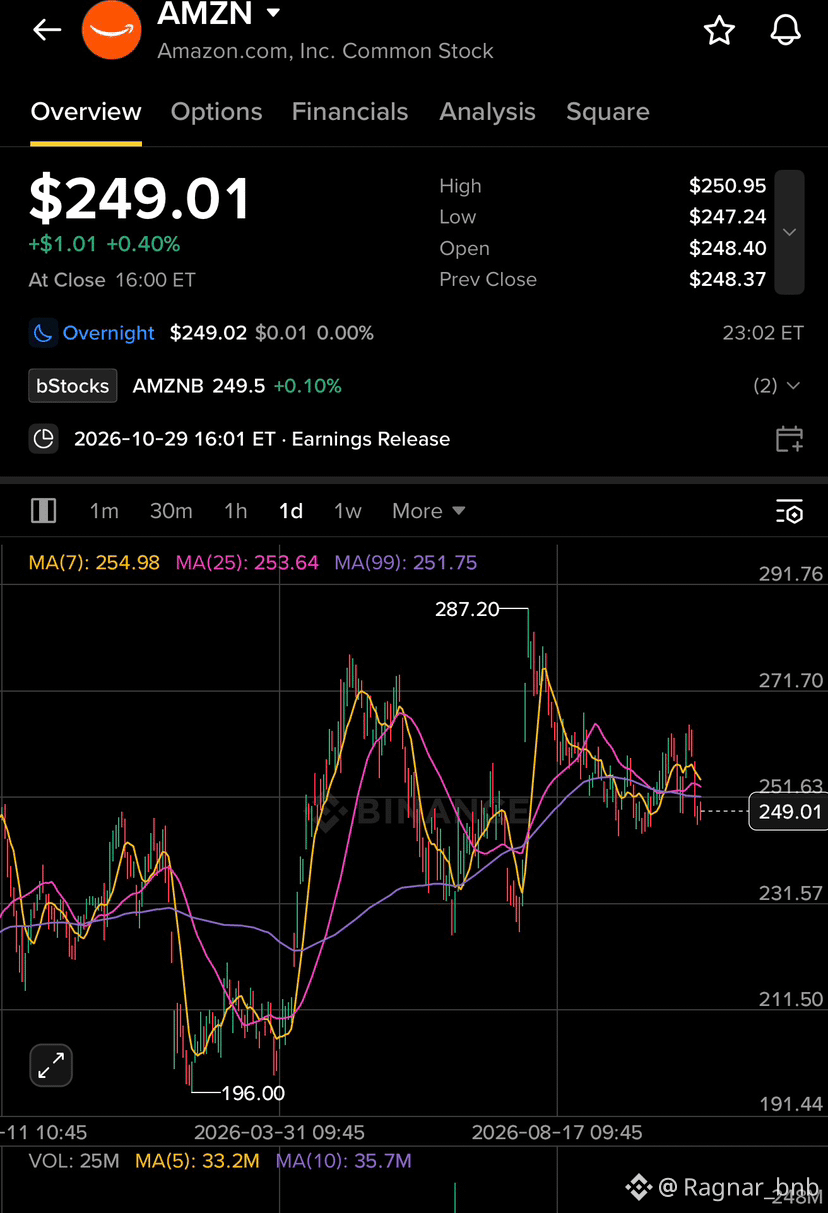
🔹 Donnerstag: 📊 US-PCE-Inflation + BIP-Daten für Q3 + Quartalszahlen von Amazon ($AMZN ) & Intel ($INTC)
🔹 Die ganze Woche: 📈 Rund 20 % der S&P-500-Unternehmen dürften ihre Quartalszahlen vorlegen.
💡 Warum das wichtig ist: Die Geldpolitik der Fed, die Inflation, das Wirtschaftswachstum und die Quartalszahlen der großen Tech-Unternehmen könnten starke Bewegungen bei Aktien, Bitcoin und Altcoins auslösen.
👀 Welches Ereignis verfolgst du am gespanntesten?
$BTC $ETH $BNB $SOL $GOOGL $INTC
#BinancePick #EarningsSeason
🚨 EINE SPANNENDE WOCHE AN DEN MÄRKTEN STEHT BEVOR!
Mach dich bereit für eine datenreiche Woche, die sowohl die Krypto- als auch die traditionellen Märkte aufmischen könnte. 👀
📅 Wichtige Ereignisse im Überblick:
🔹 Dienstag: 🇺🇸 US-Neubauverkäufe
🔹 Mittwoch: 🏦 Zinsentscheid der Fed + Quartalszahlen von Microsoft ($MSFT ) & Alphabet ($GOOGL )
🔹 Donnerstag: 📊 US-PCE-Inflation + BIP-Daten für Q3 + Quartalszahlen von Amazon ($AMZN ) & Intel ($INTC)
🔹 Die ganze Woche: 📈 Rund 20 % der S&P-500-Unternehmen dürften ihre Quartalszahlen vorlegen.
💡 Warum das wichtig ist: Die Geldpolitik der Fed, die Inflation, das Wirtschaftswachstum und die Quartalszahlen der großen Tech-Unternehmen könnten starke Bewegungen bei Aktien, Bitcoin und Altcoins auslösen.
👀 Welches Ereignis verfolgst du am gespanntesten?
$BTC $ETH $BNB $SOL $GOOGL $INTC
#BinancePick #EarningsSeason
Mach dich bereit für eine datenreiche Woche, die sowohl die Krypto- als auch die traditionellen Märkte aufmischen könnte. 👀
📅 Wichtige Ereignisse im Überblick:
🔹 Dienstag: 🇺🇸 US-Neubauverkäufe
🔹 Mittwoch: 🏦 Zinsentscheid der Fed + Quartalszahlen von Microsoft ($MSFT ) & Alphabet ($GOOGL )
🔹 Donnerstag: 📊 US-PCE-Inflation + BIP-Daten für Q3 + Quartalszahlen von Amazon ($AMZN ) & Intel ($INTC)
🔹 Die ganze Woche: 📈 Rund 20 % der S&P-500-Unternehmen dürften ihre Quartalszahlen vorlegen.
💡 Warum das wichtig ist: Die Geldpolitik der Fed, die Inflation, das Wirtschaftswachstum und die Quartalszahlen der großen Tech-Unternehmen könnten starke Bewegungen bei Aktien, Bitcoin und Altcoins auslösen.
👀 Welches Ereignis verfolgst du am gespanntesten?
$BTC $ETH $BNB $SOL $GOOGL $INTC
#BinancePick #EarningsSeason
295
·
--
Bullisch
Übersetzung ansehen
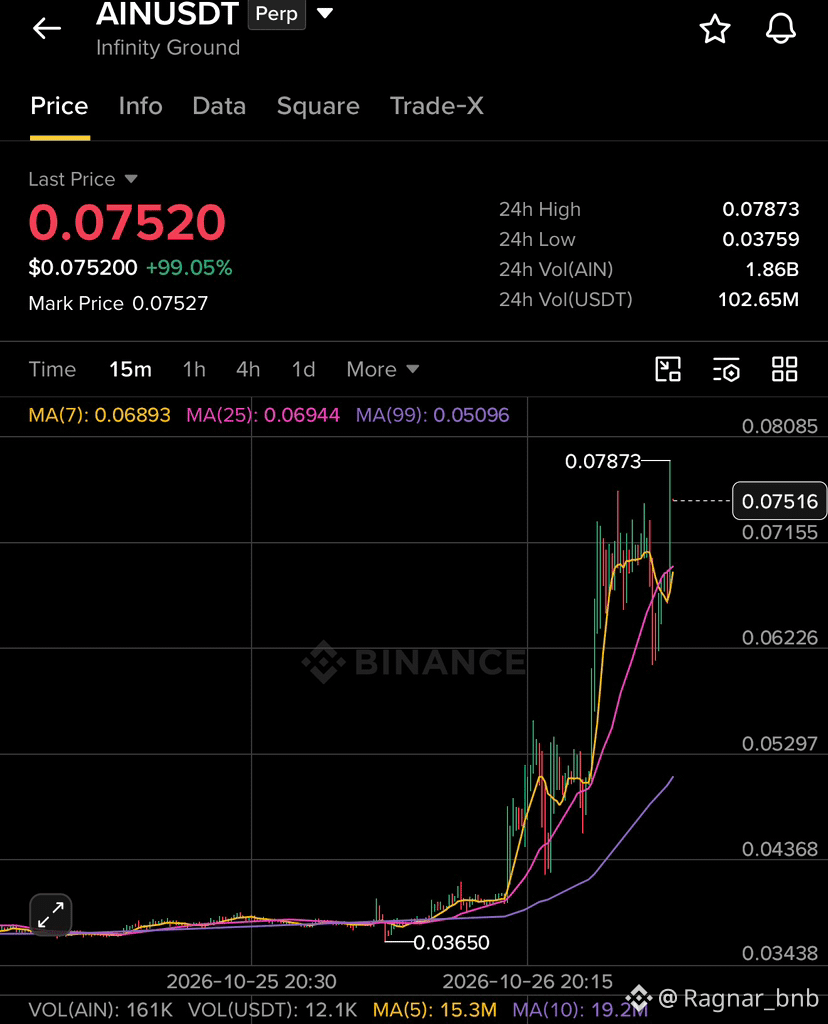
New gainer in the house $AIN ..
Its pumping good now and best for short term scalp
but be aware it will come down like it went up asap.
So be carefull and short it later.
Best of luck.
#BinancePick
New gainer in the house $AIN ..
Its pumping good now and best for short term scalp
but be aware it will come down like it went up asap.
So be carefull and short it later.
Best of luck.
#BinancePick
Its pumping good now and best for short term scalp
but be aware it will come down like it went up asap.
So be carefull and short it later.
Best of luck.
#BinancePick
178
·
--
Bullisch
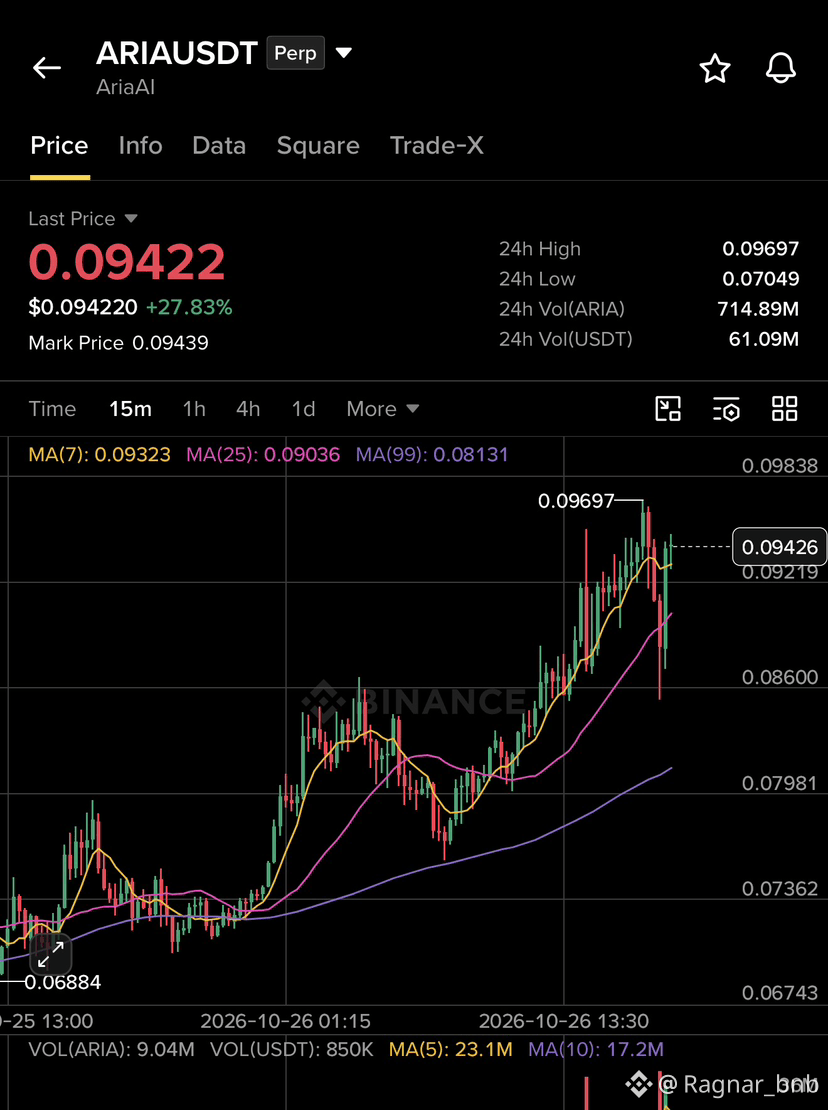
🚀 $ARIA : Sind die Bullen bereit für einen weiteren Anlauf?
Der 15-Minuten-Chart bleibt bullisch, doch eine deutliche Zurückweisung nahe 0.0970 deutet auf hohe Volatilität hin.
📈 Mögliches LONG-Setup:
🟢 Einstieg: 0.0915–0.0930
🎯 TP1: 0.0950
🎯 TP2: 0.0969
🎯 TP3: 0.1000
🛑 SL: 0.0895
⚠️ Warte auf eine Bestätigung und vermeide FOMO. Wenn die Unterstützung durchbrochen wird, ist das Setup hinfällig.
Wird $ARIA die Marke von 0.0970 zurückerobern?
{alpha}(560x5d3a12c42e5372b2cc3264ab3cdcf660a1555238)
🚀 $ARIA : Sind die Bullen bereit für einen weiteren Anlauf?
Der 15-Minuten-Chart bleibt bullisch, doch eine deutliche Zurückweisung nahe 0.0970 deutet auf hohe Volatilität hin.
📈 Mögliches LONG-Setup:
🟢 Einstieg: 0.0915–0.0930
🎯 TP1: 0.0950
🎯 TP2: 0.0969
🎯 TP3: 0.1000
🛑 SL: 0.0895
⚠️ Warte auf eine Bestätigung und vermeide FOMO. Wenn die Unterstützung durchbrochen wird, ist das Setup hinfällig.
Wird $ARIA die Marke von 0.0970 zurückerobern?
Der 15-Minuten-Chart bleibt bullisch, doch eine deutliche Zurückweisung nahe 0.0970 deutet auf hohe Volatilität hin.
📈 Mögliches LONG-Setup:
🟢 Einstieg: 0.0915–0.0930
🎯 TP1: 0.0950
🎯 TP2: 0.0969
🎯 TP3: 0.1000
🛑 SL: 0.0895
⚠️ Warte auf eine Bestätigung und vermeide FOMO. Wenn die Unterstützung durchbrochen wird, ist das Setup hinfällig.
Wird $ARIA die Marke von 0.0970 zurückerobern?
1
353
·
--
Bullisch
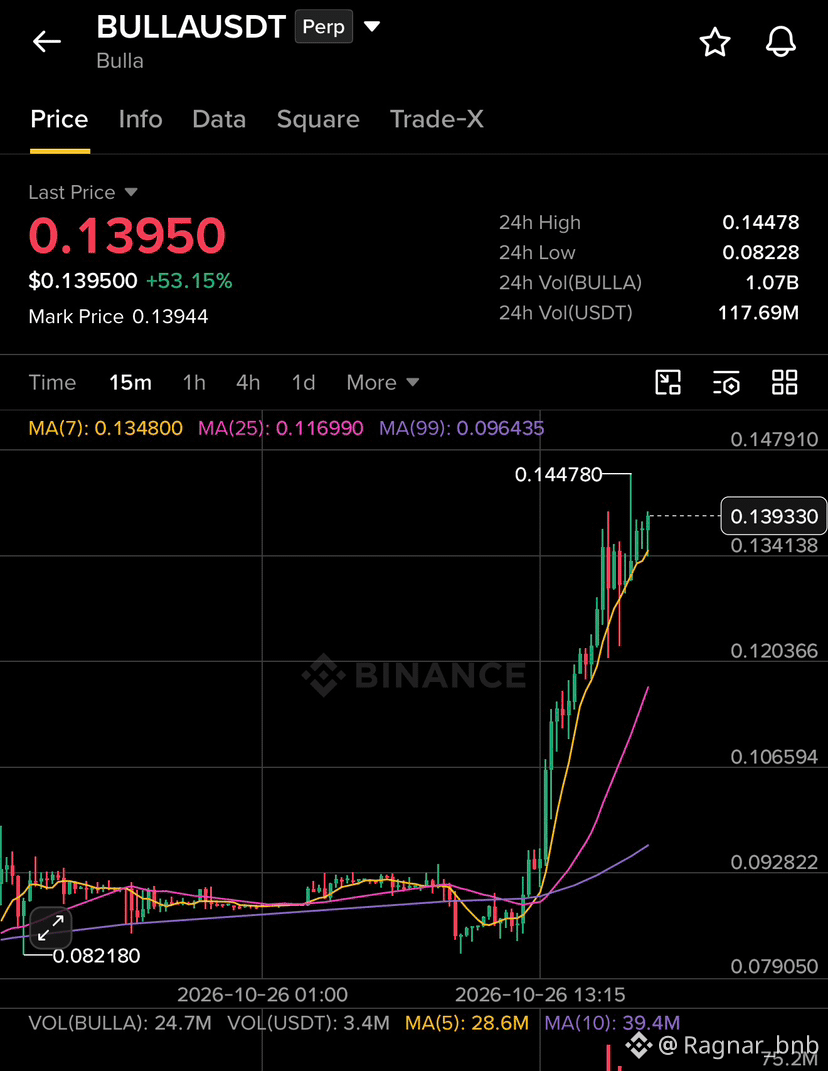
🚀 $BULLA STEIGT UM +53 %!
$BULLA zeigt im 15-Minuten-Chart eine starke Aufwärtsdynamik, wobei alle drei gleitenden Durchschnitte nach oben ausgerichtet sind.
📈 Mögliches LONG-Setup
🟢 Einstieg: 0.1330–0.1360
🎯 TP1: 0.1448
🎯 TP2: 0.1500
🎯 TP3: 0.1550
🛑 SL: 0.1290
🔥 Wichtiger Widerstand: 0.14478
Wird BULLA neue Höchststände erreichen oder steht eine Korrektur bevor? Vermeide FOMO nach einem massiven Pump – warte auf eine Bestätigung und manage dein Risiko.
#BinancePick #EarningsSeason #TradingSignals
🚀 $BULLA STEIGT UM +53 %!
$BULLA zeigt im 15-Minuten-Chart eine starke Aufwärtsdynamik, wobei alle drei gleitenden Durchschnitte nach oben ausgerichtet sind.
📈 Mögliches LONG-Setup
🟢 Einstieg: 0.1330–0.1360
🎯 TP1: 0.1448
🎯 TP2: 0.1500
🎯 TP3: 0.1550
🛑 SL: 0.1290
🔥 Wichtiger Widerstand: 0.14478
Wird BULLA neue Höchststände erreichen oder steht eine Korrektur bevor? Vermeide FOMO nach einem massiven Pump – warte auf eine Bestätigung und manage dein Risiko.
#BinancePick #EarningsSeason #TradingSignals
$BULLA zeigt im 15-Minuten-Chart eine starke Aufwärtsdynamik, wobei alle drei gleitenden Durchschnitte nach oben ausgerichtet sind.
📈 Mögliches LONG-Setup
🟢 Einstieg: 0.1330–0.1360
🎯 TP1: 0.1448
🎯 TP2: 0.1500
🎯 TP3: 0.1550
🛑 SL: 0.1290
🔥 Wichtiger Widerstand: 0.14478
Wird BULLA neue Höchststände erreichen oder steht eine Korrektur bevor? Vermeide FOMO nach einem massiven Pump – warte auf eine Bestätigung und manage dein Risiko.
#BinancePick #EarningsSeason #TradingSignals
1
448
·
--
Bullisch
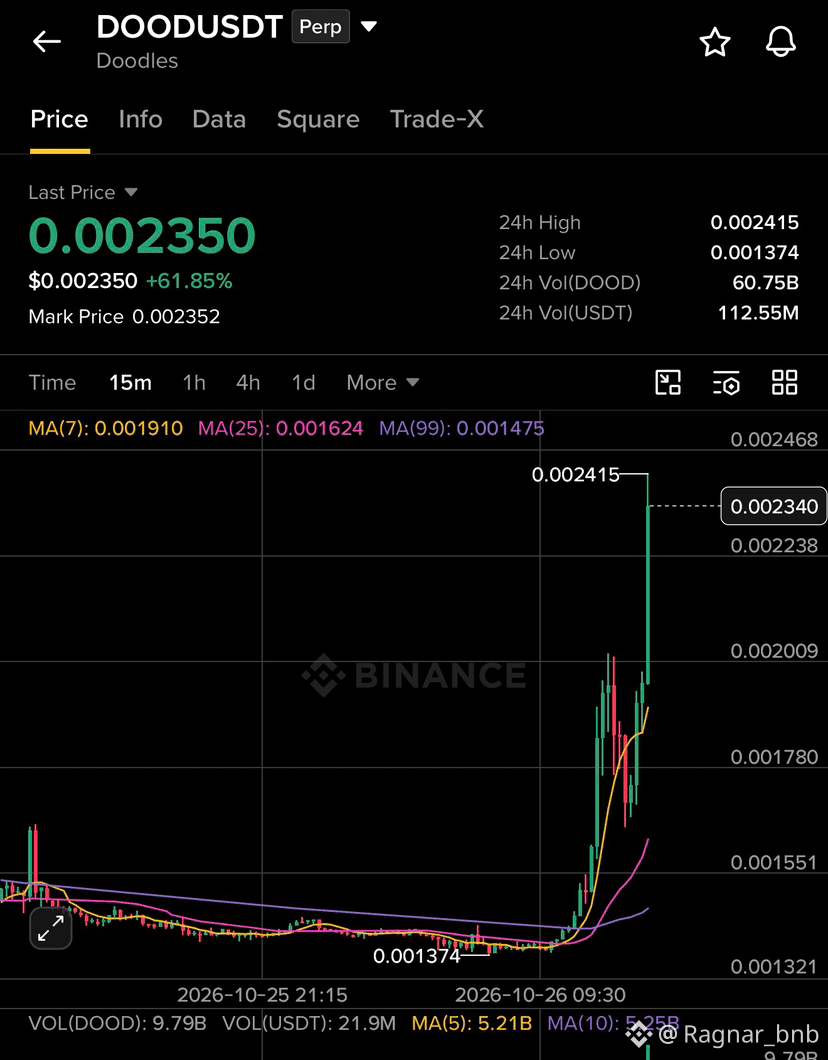
🚀 $DOOD EXPLODIERT +61.85%!
$DOOD zeigt im 15-Minuten-Chart eine massive bullische Dynamik – mit einem starken Ausbruch und steigendem Volumen.
📈 Mögliches LONG-Setup
🟢 Einstieg: 0.00220–0.00226
🎯 TP1: 0.002415
🎯 TP2: 0.00250
🎯 TP3: 0.00260
🛑 SL: 0.00208
⚠️ Der Kurs ist stark gepumpt! Nicht aus FOMO einsteigen – auf einen Rücksetzer und eine Bestätigung warten. Die Volatilität kann schnell zu einer Umkehr führen.
Kann $DOOD auf neue Höchststände ausbrechen? 👀
#cryptotrading #TradingSignale
🚀 $DOOD EXPLODIERT +61.85%!
$DOOD zeigt im 15-Minuten-Chart eine massive bullische Dynamik – mit einem starken Ausbruch und steigendem Volumen.
📈 Mögliches LONG-Setup
🟢 Einstieg: 0.00220–0.00226
🎯 TP1: 0.002415
🎯 TP2: 0.00250
🎯 TP3: 0.00260
🛑 SL: 0.00208
⚠️ Der Kurs ist stark gepumpt! Nicht aus FOMO einsteigen – auf einen Rücksetzer und eine Bestätigung warten. Die Volatilität kann schnell zu einer Umkehr führen.
Kann $DOOD auf neue Höchststände ausbrechen? 👀
#cryptotrading #TradingSignale
$DOOD zeigt im 15-Minuten-Chart eine massive bullische Dynamik – mit einem starken Ausbruch und steigendem Volumen.
📈 Mögliches LONG-Setup
🟢 Einstieg: 0.00220–0.00226
🎯 TP1: 0.002415
🎯 TP2: 0.00250
🎯 TP3: 0.00260
🛑 SL: 0.00208
⚠️ Der Kurs ist stark gepumpt! Nicht aus FOMO einsteigen – auf einen Rücksetzer und eine Bestätigung warten. Die Volatilität kann schnell zu einer Umkehr führen.
Kann $DOOD auf neue Höchststände ausbrechen? 👀
#cryptotrading #TradingSignale
1
300
·
--
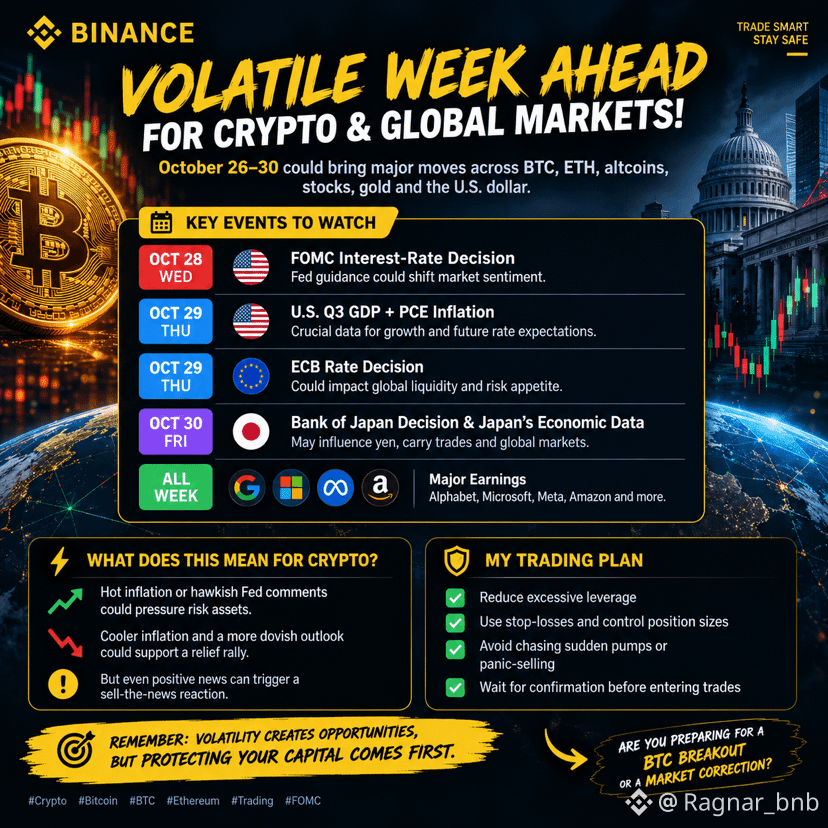
🚨 EINE VOLATILE WOCHE STEHT KRYPTOS UND DEN GLOBALEN MÄRKTEN BEVOR!
Vom 26. bis 30. Oktober könnte es bei BTC, ETH, Altcoins, Aktien, Gold und dem US-Dollar zu großen Bewegungen kommen.
📅 Wichtige Termine im Blick:
* 🇺🇸 28. Okt.: Zinsentscheidung des FOMC – Hinweise der Fed könnten die Marktstimmung verändern.
* 📊 29. Okt.: US-BIP für das 3. Quartal und PCE-Inflation – wichtige Daten für das Wachstum und die Erwartungen an künftige Zinsentscheidungen.
* 🇪🇺 29. Okt.: Zinsentscheidung der EZB.
* 🇯🇵 30. Okt.: Entscheidung der Bank of Japan und Wirtschaftsdaten aus Japan.
* 📈 Die ganze Woche: Wichtige Geschäftszahlen von Alphabet, Microsoft, Meta, Amazon und anderen Unternehmen.
🔥 Was bedeutet das für Krypto?
Eine hohe Inflation oder restriktive Kommentare der Fed könnten Risikoanlagen unter Druck setzen, während eine niedrigere Inflation und ein eher lockerer Ausblick eine Erholungsrally unterstützen könnten. Doch selbst positive Nachrichten können eine „Sell-the-News“-Reaktion auslösen.
⚠️ Mein Handelsplan:
✅ Übermäßigen Hebeleinsatz reduzieren
✅ Stop-Loss-Orders verwenden und Positionsgrößen kontrollieren
✅ Plötzlichen Kurssprüngen nicht hinterherjagen und nicht in Panik verkaufen
✅ Vor dem Einstieg in Trades auf eine Bestätigung warten
Denk daran: Volatilität schafft Chancen, aber der Schutz deines Kapitals hat Vorrang.
Bereitest du dich auf einen BTC-Ausbruch oder eine Marktkorrektur vor? 👇
#EarningsSeason #BinancePick #FOMC
$BTC $DOS $AMZNB
🚨 EINE VOLATILE WOCHE STEHT KRYPTOS UND DEN GLOBALEN MÄRKTEN BEVOR!
Vom 26. bis 30. Oktober könnte es bei BTC, ETH, Altcoins, Aktien, Gold und dem US-Dollar zu großen Bewegungen kommen.
📅 Wichtige Termine im Blick:
* 🇺🇸 28. Okt.: Zinsentscheidung des FOMC – Hinweise der Fed könnten die Marktstimmung verändern.
* 📊 29. Okt.: US-BIP für das 3. Quartal und PCE-Inflation – wichtige Daten für das Wachstum und die Erwartungen an künftige Zinsentscheidungen.
* 🇪🇺 29. Okt.: Zinsentscheidung der EZB.
* 🇯🇵 30. Okt.: Entscheidung der Bank of Japan und Wirtschaftsdaten aus Japan.
* 📈 Die ganze Woche: Wichtige Geschäftszahlen von Alphabet, Microsoft, Meta, Amazon und anderen Unternehmen.
🔥 Was bedeutet das für Krypto?
Eine hohe Inflation oder restriktive Kommentare der Fed könnten Risikoanlagen unter Druck setzen, während eine niedrigere Inflation und ein eher lockerer Ausblick eine Erholungsrally unterstützen könnten. Doch selbst positive Nachrichten können eine „Sell-the-News“-Reaktion auslösen.
⚠️ Mein Handelsplan:
✅ Übermäßigen Hebeleinsatz reduzieren
✅ Stop-Loss-Orders verwenden und Positionsgrößen kontrollieren
✅ Plötzlichen Kurssprüngen nicht hinterherjagen und nicht in Panik verkaufen
✅ Vor dem Einstieg in Trades auf eine Bestätigung warten
Denk daran: Volatilität schafft Chancen, aber der Schutz deines Kapitals hat Vorrang.
Bereitest du dich auf einen BTC-Ausbruch oder eine Marktkorrektur vor? 👇
#EarningsSeason #BinancePick #FOMC
$BTC $DOS $AMZNB
Vom 26. bis 30. Oktober könnte es bei BTC, ETH, Altcoins, Aktien, Gold und dem US-Dollar zu großen Bewegungen kommen.
📅 Wichtige Termine im Blick:
* 🇺🇸 28. Okt.: Zinsentscheidung des FOMC – Hinweise der Fed könnten die Marktstimmung verändern.
* 📊 29. Okt.: US-BIP für das 3. Quartal und PCE-Inflation – wichtige Daten für das Wachstum und die Erwartungen an künftige Zinsentscheidungen.
* 🇪🇺 29. Okt.: Zinsentscheidung der EZB.
* 🇯🇵 30. Okt.: Entscheidung der Bank of Japan und Wirtschaftsdaten aus Japan.
* 📈 Die ganze Woche: Wichtige Geschäftszahlen von Alphabet, Microsoft, Meta, Amazon und anderen Unternehmen.
🔥 Was bedeutet das für Krypto?
Eine hohe Inflation oder restriktive Kommentare der Fed könnten Risikoanlagen unter Druck setzen, während eine niedrigere Inflation und ein eher lockerer Ausblick eine Erholungsrally unterstützen könnten. Doch selbst positive Nachrichten können eine „Sell-the-News“-Reaktion auslösen.
⚠️ Mein Handelsplan:
✅ Übermäßigen Hebeleinsatz reduzieren
✅ Stop-Loss-Orders verwenden und Positionsgrößen kontrollieren
✅ Plötzlichen Kurssprüngen nicht hinterherjagen und nicht in Panik verkaufen
✅ Vor dem Einstieg in Trades auf eine Bestätigung warten
Denk daran: Volatilität schafft Chancen, aber der Schutz deines Kapitals hat Vorrang.
Bereitest du dich auf einen BTC-Ausbruch oder eine Marktkorrektur vor? 👇
#EarningsSeason #BinancePick #FOMC
$BTC $DOS $AMZNB
284
·
--
Bullisch
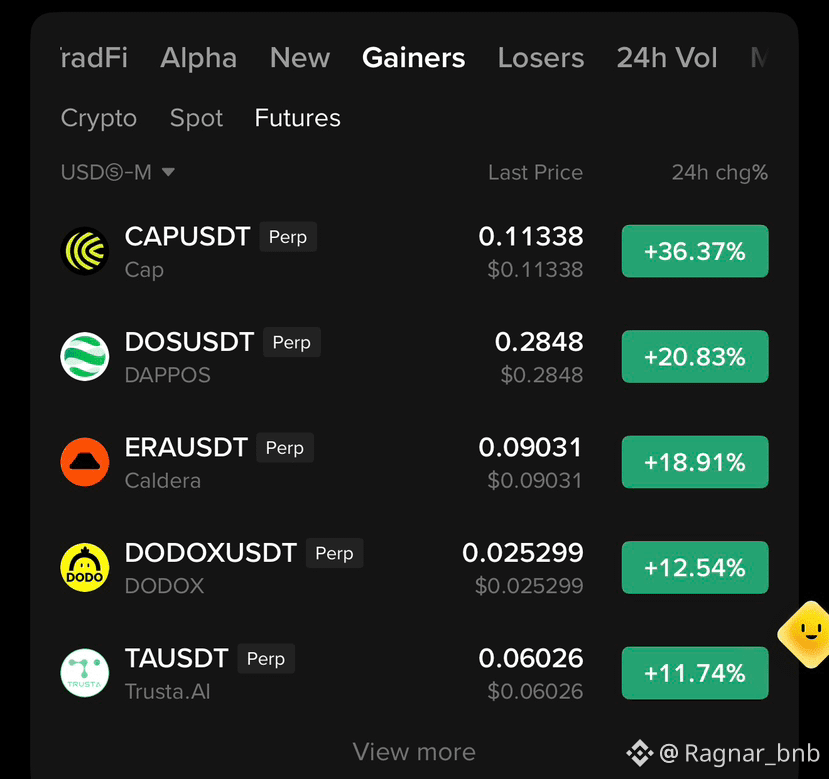
$CAP alle TPs erledigt.
Und zusammen mit cap $DOS und $ERA läuft es im Moment auch gut.
Long scalp sie jetzt schon seit einiger Zeit.
Viel Glück
$CAP alle TPs erledigt.
Und zusammen mit cap $DOS und $ERA läuft es im Moment auch gut.
Long scalp sie jetzt schon seit einiger Zeit.
Viel Glück
Und zusammen mit cap $DOS und $ERA läuft es im Moment auch gut.
Long scalp sie jetzt schon seit einiger Zeit.
Viel Glück
Ragnar_bnb
·
--
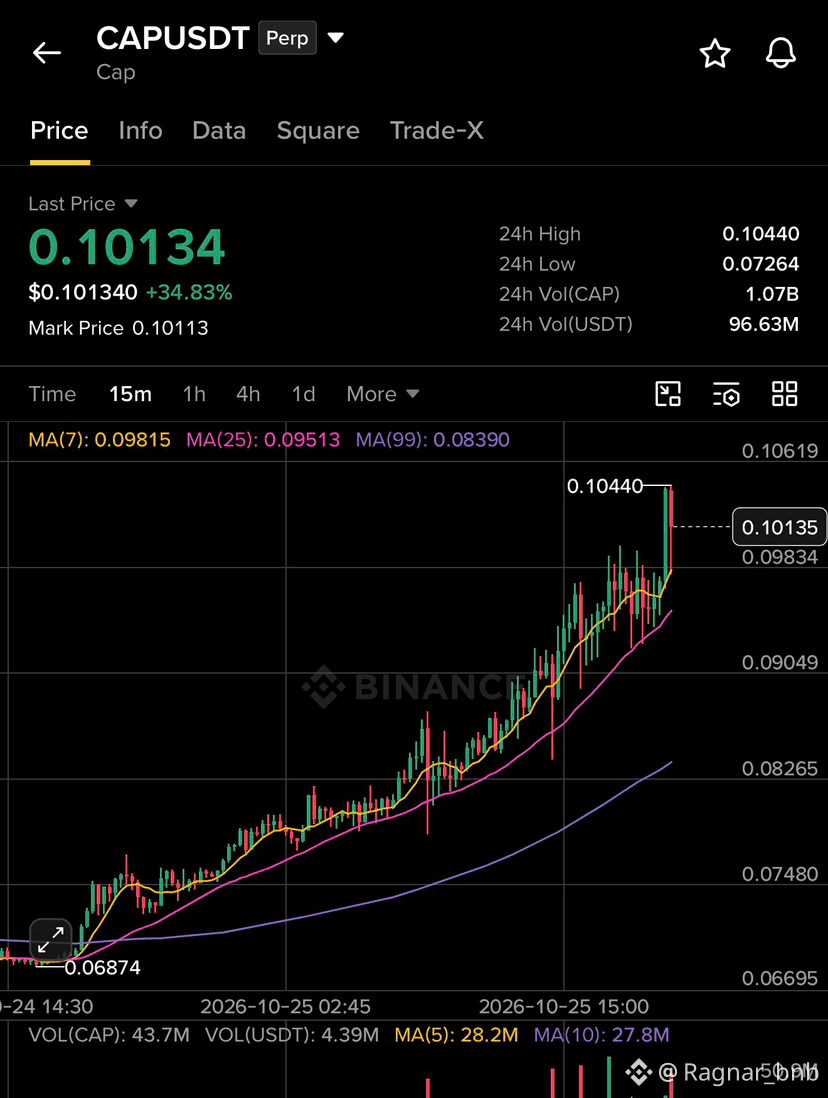
Bullisch🚀 CAPUSDT: Die Bullen peilen 0.1000 an!
$CAP liegt innerhalb von 24 Stunden 31.48 % im Plus, und der 15-Minuten-Chart bleibt bullish: MA(7) liegt über MA(25) und MA(99).
📈 Mögliches LONG-Setup
🟢 Einstieg: 0.0945–0.0960
🎯 TP1: 0.0990
🎯 TP2: 0.1020
🎯 TP3: 0.1050
🛑 SL: 0.0925
⚠️ Der Widerstand liegt bei etwa 0.1000. Nicht aus FOMO nach dem Pump einsteigen – auf eine Bestätigung warten und das Risiko im Griff behalten.
Wird $CAP weiter steigen oder folgt eine Korrektur?
#Binance #cryptotrading #TradingSignals
$CAP liegt innerhalb von 24 Stunden 31.48 % im Plus, und der 15-Minuten-Chart bleibt bullish: MA(7) liegt über MA(25) und MA(99).
📈 Mögliches LONG-Setup
🟢 Einstieg: 0.0945–0.0960
🎯 TP1: 0.0990
🎯 TP2: 0.1020
🎯 TP3: 0.1050
🛑 SL: 0.0925
⚠️ Der Widerstand liegt bei etwa 0.1000. Nicht aus FOMO nach dem Pump einsteigen – auf eine Bestätigung warten und das Risiko im Griff behalten.
Wird $CAP weiter steigen oder folgt eine Korrektur?
#Binance #cryptotrading #TradingSignals
610
·
--
Bullisch
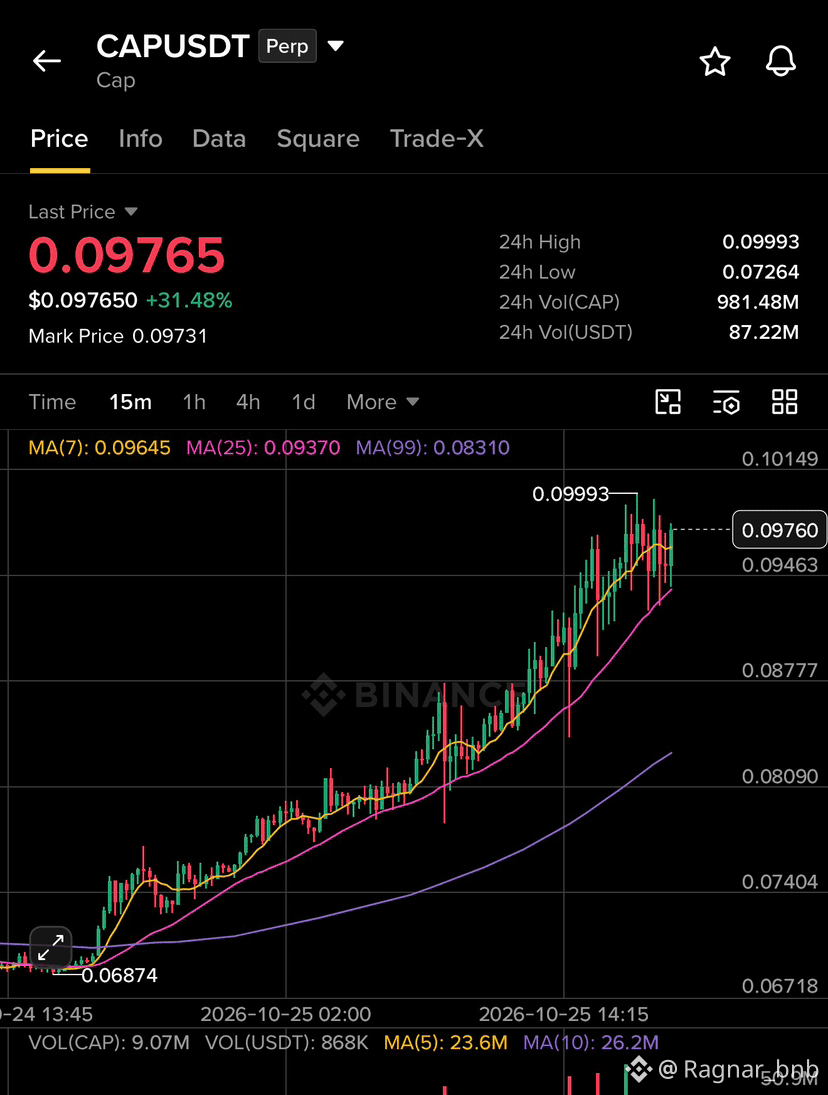
0,1 geschafft🚀
$CAP Als Nächstes 0,15?👀
Weiter Gewinne drucken, Jungs
0,1 geschafft🚀
$CAP Als Nächstes 0,15?👀
Weiter Gewinne drucken, Jungs
$CAP Als Nächstes 0,15?👀
Weiter Gewinne drucken, Jungs
Ragnar_bnb
·
--
Bullisch🚀 CAPUSDT: Die Bullen peilen 0.1000 an!
$CAP liegt innerhalb von 24 Stunden 31.48 % im Plus, und der 15-Minuten-Chart bleibt bullish: MA(7) liegt über MA(25) und MA(99).
📈 Mögliches LONG-Setup
🟢 Einstieg: 0.0945–0.0960
🎯 TP1: 0.0990
🎯 TP2: 0.1020
🎯 TP3: 0.1050
🛑 SL: 0.0925
⚠️ Der Widerstand liegt bei etwa 0.1000. Nicht aus FOMO nach dem Pump einsteigen – auf eine Bestätigung warten und das Risiko im Griff behalten.
Wird $CAP weiter steigen oder folgt eine Korrektur?
#Binance #cryptotrading #TradingSignals
$CAP liegt innerhalb von 24 Stunden 31.48 % im Plus, und der 15-Minuten-Chart bleibt bullish: MA(7) liegt über MA(25) und MA(99).
📈 Mögliches LONG-Setup
🟢 Einstieg: 0.0945–0.0960
🎯 TP1: 0.0990
🎯 TP2: 0.1020
🎯 TP3: 0.1050
🛑 SL: 0.0925
⚠️ Der Widerstand liegt bei etwa 0.1000. Nicht aus FOMO nach dem Pump einsteigen – auf eine Bestätigung warten und das Risiko im Griff behalten.
Wird $CAP weiter steigen oder folgt eine Korrektur?
#Binance #cryptotrading #TradingSignals
436
·
--
Bullisch
🚀 CAPUSDT: Die Bullen peilen 0.1000 an!
$CAP liegt innerhalb von 24 Stunden 31.48 % im Plus, und der 15-Minuten-Chart bleibt bullish: MA(7) liegt über MA(25) und MA(99).
📈 Mögliches LONG-Setup
🟢 Einstieg: 0.0945–0.0960
🎯 TP1: 0.0990
🎯 TP2: 0.1020
🎯 TP3: 0.1050
🛑 SL: 0.0925
⚠️ Der Widerstand liegt bei etwa 0.1000. Nicht aus FOMO nach dem Pump einsteigen – auf eine Bestätigung warten und das Risiko im Griff behalten.
Wird $CAP weiter steigen oder folgt eine Korrektur?
#Binance #cryptotrading #TradingSignals
🚀 CAPUSDT: Die Bullen peilen 0.1000 an!
$CAP liegt innerhalb von 24 Stunden 31.48 % im Plus, und der 15-Minuten-Chart bleibt bullish: MA(7) liegt über MA(25) und MA(99).
📈 Mögliches LONG-Setup
🟢 Einstieg: 0.0945–0.0960
🎯 TP1: 0.0990
🎯 TP2: 0.1020
🎯 TP3: 0.1050
🛑 SL: 0.0925
⚠️ Der Widerstand liegt bei etwa 0.1000. Nicht aus FOMO nach dem Pump einsteigen – auf eine Bestätigung warten und das Risiko im Griff behalten.
Wird $CAP weiter steigen oder folgt eine Korrektur?
#Binance #cryptotrading #TradingSignals
$CAP liegt innerhalb von 24 Stunden 31.48 % im Plus, und der 15-Minuten-Chart bleibt bullish: MA(7) liegt über MA(25) und MA(99).
📈 Mögliches LONG-Setup
🟢 Einstieg: 0.0945–0.0960
🎯 TP1: 0.0990
🎯 TP2: 0.1020
🎯 TP3: 0.1050
🛑 SL: 0.0925
⚠️ Der Widerstand liegt bei etwa 0.1000. Nicht aus FOMO nach dem Pump einsteigen – auf eine Bestätigung warten und das Risiko im Griff behalten.
Wird $CAP weiter steigen oder folgt eine Korrektur?
#Binance #cryptotrading #TradingSignals
2
408
·
--
Bullisch
1
691
·
--
Bullisch
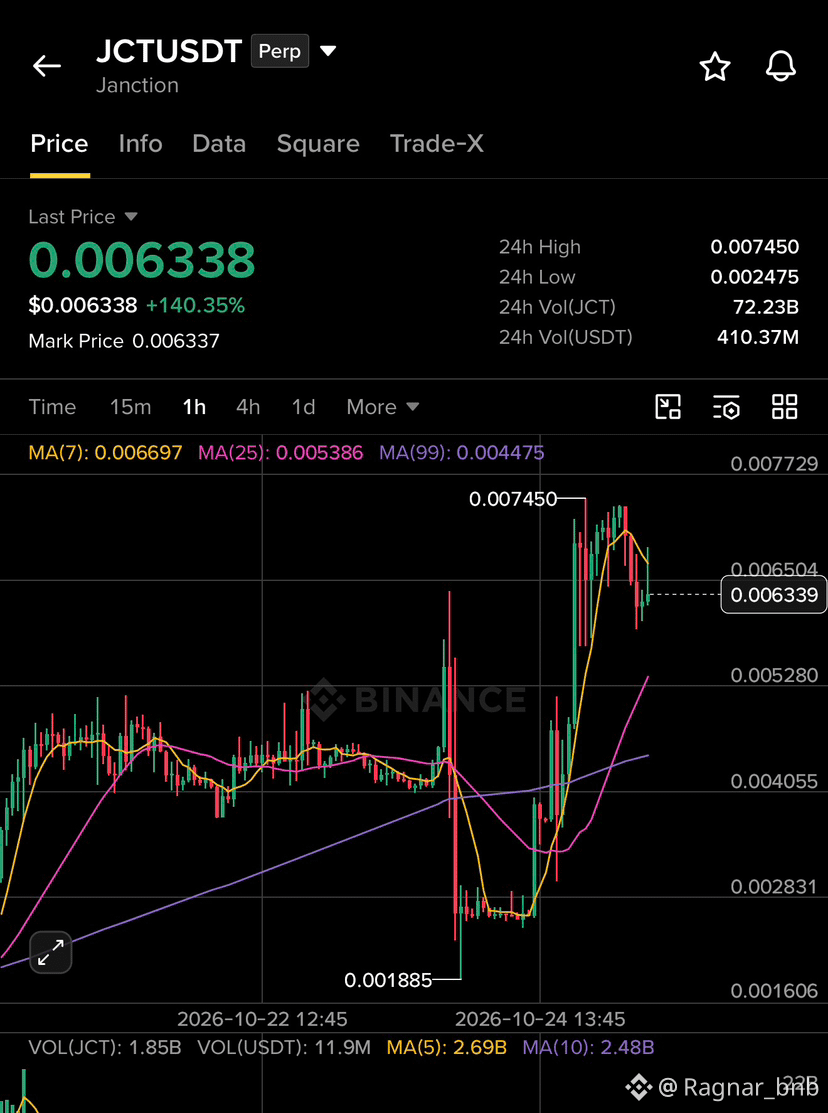
Zuerst $IRYS , dann $ORDER und heute $JCT
Gefälschtes Pump-Schema … seid vorsichtig 😅
Nur scalpen … später nach der Zurückweisung short gehen.
Zuerst $IRYS , dann $ORDER und heute $JCT
Gefälschtes Pump-Schema … seid vorsichtig 😅
Nur scalpen … später nach der Zurückweisung short gehen.
Gefälschtes Pump-Schema … seid vorsichtig 😅
Nur scalpen … später nach der Zurückweisung short gehen.
1.2k
Anmelden und weiter Inhalte entdecken
Krypto-Nutzer weltweit auf Binance Square kennenlernen
⚡️ Bleib in Sachen Krypto stets am Puls.
💬 Die weltgrößte Kryptobörse vertraut darauf.
👍 Erhalte verlässliche Einblicke von verifizierten Creators.
E-Mail-Adresse/Telefonnummer