Vanar Chain Is Not Just Building a Blockchain It’s Building the Future of Intelligent Web3
Hey fam 👋 I’ve been wanting to share a deep dive with you all about what’s going on with $VANRY and Vanar Chain because honestly there has been a lot unfolding behind the scenes that deserves more attention than just quick sound bites. If you’re part of this community you know I always try to give you the real picture of where things are and where they could be headed. Let’s start with the big picture. Vanar is not trying to be just another Layer 1 blockchain competing for gas fees and token listings. What the team is building is something fundamentally different. At its core Vanar Chain is an AI-native blockchain infrastructure that aims to go beyond simple smart contract execution and into a world where decentralized applications can store context understand data and actually reason about it on chain. This is a shift from the way most blockchains operate right now which is basically execution engines with storage references but no real data intelligence built in. A big part of this new paradigm is Neutron which you’ve heard me talk about before but it deserves repeating because it is a foundational piece of the network. Whereas most blockchains only store references to data that lives off chain Vanar’s approach allows actual files and their semantic meaning to be stored inside the ledger itself in compressed form. That means we can have verifiable on chain memory for documents images even legal contracts without relying on external storage services that can go down or disappear. It’s not just data it’s intelligence that can be queried and reasoned over. That sets Vanar apart hard. But Vanar doesn’t stop with storage. On top of that is Kayon which acts as the chain’s reasoning engine. This layer lets applications and AI agents query what’s stored and make decisions based on it. Imagine an NFT marketplace where every asset comes with contract history and provenance that can actually be interpreted on chain or a financial product that reads full legal documents to automate compliance and settlements without humans in the middle. That is the kind of future this tech opens up. And then there’s a very real transition happening from building tools to actually activating them in the real world. Core pieces like myNeutron have moved into live usage and are shifting toward subscription models that incentivize actual usage of the network rather than just speculation. This is a subtle but important change. When developers and end users are spending tokens because they need the service and not just because of hype that creates actual utility and demand. You can feel that becoming a theme in the ecosystem. I also want to call out something that doesn’t always get enough attention which is interoperability and ecosystem connectivity. Vanar is 100 percent EVM compatible meaning that developers who know Ethereum tooling can port over apps with minimal friction. That instantly widens the pool of builders who can experiment with this AI-native stack without having to learn a brand new language or paradigm. It’s a smart way to grow the network because you’re not asking developers to start from zero you’re offering them new capabilities inside a familiar environment. On the governance and community side there are upgrades planned that would give token holders real control over parameters like AI model settings incentive rules and even broader ecosystem decisions. It’s honestly refreshing to see governance evolution that thinks beyond the typical proposals about fee structures and instead dives into how the underlying intelligence of the network should evolve. That level of decentralization and shared responsibility can become a defining characteristic as the chain scales. Another point I want to touch on is the industry recognition and expansion into real events. Vanar has already had visibility on some big stages and is lined up to participate in major conferences around the world. That’s not just good optics it’s an opportunity to bring in traditional players and real builders who might not otherwise pay attention to crypto until they see practical infrastructure with actual differentiators. These moments help get partners developers and institutional interest outside just retail speculation. Of course it’s not all perfect. The market for altcoins has been rough especially when macro sentiment is in a risk off phase. Volatility and low price momentum can make it hard for people to stay focused on fundamentals. But if you are in this community for the long haul deeper adoption and actual product usage are far more important than price swings in the short term. The tech being built here isn’t dependent on hype it’s dependent on real usage and that’s a much sturdier foundation as a narrative. Speaking of usage one exciting development I’ve seen bubbling up is how AI agents are being integrated for everyday tasks that go beyond geek toy demos. There are platforms experimenting with natural language interactions where you can check balances or query transaction history through simple conversational commands. These are early but real examples of intelligent interfaces that make blockchain more accessible to people who might otherwise be intimidated by wallets and command lines. And because the architecture was designed from the ground up for scale and intelligent workloads you start to see possibilities in sectors we rarely mention in crypto circles like real world assets PayFi applications on chain gaming and enterprise compliance workflows. The idea that businesses might one day store verifiable contracts and trigger automated payments based on on chain AI logic isn’t sci-fi anymore it’s being architected as part of this stack right now. On community growth and building ecosystem infrastructure there’s also a push to provide extensive SDKs for developers in common languages like JavaScript Python and Rust plus documentation and support resources that help people get started without feeling lost. This speaks to a deeper understanding that onboarding developers and making their lives easier is one of the most important barriers to ecosystem growth. So if I were to summarize where Vanar stands today it’s this: we are watching a project that has moved well beyond the stage of conceptual promises. There is a living breathing infrastructure that combines data storage reasoning AI integration and real world logic layers—all coexisting on a chain that prioritizes meaningful engagement over superficial numbers. It’s a bold vision and while there is still a long road ahead the foundation has been laid and the tools are being used by developers already experimenting with what’s possible. For anyone who is here because they believe blockchain should evolve beyond simple money rails into something that actually thinks acts and adapts Vanar Chain is something to watch closely. We are not just tracking price charts here we are watching a potential shift in how decentralized applications operate in a world where AI and blockchain finally come together in a meaningful way. That’s not hype that’s evolution. 🚀 @Vanarchain #Vanar #vanar $VANRY
Fogo is Live and It’s Changing the Game for High Speed On-Chain Finance
Hey community 👋 I’ve been wanting to sit down and share a real talk update on $FOGO and the Fogo blockchain because so much has gone down lately that deserves context and perspective beyond the usual hype. If you’ve been watching this project closely like I have, you already know we’re not talking about just another Layer 1 chain. What’s happening here is genuinely different and worth understanding at a deeper level as we move into 2026. Let’s start with the fact that Fogo has officially launched its mainnet and gone live for everybody. The network went public around January 15 2026, and that moment marked a big shift from speculation and testnets to real world infrastructure that people can use today. This isn’t some distant roadmap promise anymore. Mainnet is active and live with transactions happening and applications running right now. One of the things that really stands out about Fogo is its focus on performance at a foundational level. The team rewrote key parts of the architecture so that Fogo runs on the Solana Virtual Machine but with serious performance and latency enhancements baked in. The result is block times around 40 milliseconds and finality near one second, metrics that are orders of magnitude faster than most blockchains out there today. That speed is not just marketing speak. It matters for real time trading for decentralized finance, for market makers, for automated strategies, and for any application where every millisecond counts. In practical terms this means that when you’re placing orders on Fogo-based decentralized exchanges or interacting with protocols, execution feels snappy and efficient in a way that honestly feels closer to professional trading infrastructure than what most on-chain systems deliver. It’s the kind of performance that could make decentralized order books and derivatives far more viable on chain without the lag and friction most networks struggle with. Another huge development that really deserves attention is interoperability. With its Wormhole bridge integration live from day one, Fogo didn’t just launch in isolation. Users can move assets like USDC SOL and other tokens from over 40 connected blockchains straight into the Fogo ecosystem. That means liquidity isn’t trapped outside the network waiting for builders to catch up first. Traders can bring capital in immediately and start putting it to work. Connectivity like that from the start says a lot about how serious this project is about being usable from day one. With mainnet live there are already more than ten decentralized applications running in the ecosystem. That includes things like the native order book DEX Valiant, lending and borrowing protocols like Fogolend and Pyron, liquid staking with Brasa Finance and utility tools that support real usage cases for traders and developers alike. Having a cluster of functional apps on day one gives Fogo real substance and practical utility beyond just raw speed. On the tokenomics front the team took a community first approach which I really respect. Instead of a huge presale Fogo leaned heavily into airdrop programs, points systems and rewards for early testers participants in the Flames program and people contributing in meaningful ways to the network’s growth. That means a significant amount of the initial supply has been shared with people who are actually engaged with the ecosystem rather than locked up in venture or whale pockets. Not everything has been smooth sailing of course. We’ve seen price volatility which is totally expected with a big launch like this and markets still finding their footing. Some exchanges have even delisted certain FOGO futures positions which has had a short term impact on trading volumes. That kind of reaction is par for the course with new layer ones but it’s also a reminder that price action and network traction aren’t the same thing. Real adoption and ecosystem activity ultimately matter most. But if I’m talking about adoption I’ve got to highlight how developers are being drawn in because of Fogo’s compatibility and tooling. Because the chain runs the Solana Virtual Machine developers familiar with Solana environments can migrate or build with minimal friction. That’s a huge advantage because it means existing tools workflows and even liquidity sources can extend into Fogo without reinventing the wheel. Combined with performance gains that makes the developer experience compelling in a way most new chains can only dream about. And let’s be honest with each other here. When builders see that they can deploy high frequency trading bots or tools that rely on rapid confirmation times without worrying about network congestion that opens up new classes of applications. Things like liquidation engines derivatives protocols real time auctions and more become plausible on chain in a way that was hard to justify before. That alone could reshape parts of DeFi over time. There’s also something to be said about the culture and community around Fogo. The project clearly targeted traders builders and people who are actually in the trenches pushing tech forward instead of just hype machines. It feels like a place where serious experimentation is encouraged and where outcomes matter more than just buzzwords. That’s refreshing and it’s one reason the chatter around Fogo in developer circles has been more than just price talk. As the network matures I’m personally most curious about how liquidity providers behave on chain whether larger DeFi protocols start anchoring pools here how derivative platforms evolve and whether institutional players dip their toes into trading infrastructure that’s purpose built for speed. Because those are the kinds of real world signals that go beyond headlines and show adoption in action. So what’s next for Fogo? I think the obvious milestones to watch will be things like broad developer adoption real application usage metrics sustained liquidity growth and tangible on chain volume. Speed is great but it needs to be paired with users actively building and trading on the network for long term durability. I’m looking forward to seeing Fogo’s ecosystem chart out this path because the foundation is now live and the tools are in place for people to build seriously cool stuff. At the end of the day Fogo is not just another Layer 1 it’s a performance oriented blockchain that arrived at a time when people are tired of network bottlenecks and looking for real execution infrastructure that can keep up with financial use cases. That’s a big deal and something worth watching closely as the ecosystem continues to evolve. If you’re reading this and you’re part of this community thanks for sticking around. This project is still early, the road ahead is long, but the work being done right now is building something that could shift how on chain trading and finance get done in the future. Stay engaged dig into the tools explore the dApps and let’s see where this journey takes us. 🚀 @Fogo Official #fogo #Fogo $FOGO
Hey fam 👋 I’ve been seeing lots of questions and excitement around $VANRY lately so I wanted to drop a real update that’s grounded in what’s actually happening out there. First off Vanar Chain is not your average blockchain it’s positioning itself as an AI-native Layer 1 network that’s built to power intelligent apps and real Web3 utility, not just simple transfers. The tech stack includes things like Neutron for smart on-chain data compression and Kayon as a reasoning engine so apps can actually interact with data in a meaningful way directly on the chain. That opens doors for real use cases in PayFi tokenized assets gaming and more because the network isn’t just fast it’s smart. One of the coolest parts of what’s going on right now is how core tools like myNeutron have moved toward a subscription model meant to tie real usage into token demand. Instead of just hoping for price pumps through speculation the team is actively building ways for the chain to generate economic activity through real product usage and developer engagement. The ecosystem also continues to add resources for builders with SDKs in common languages like JavaScript Python and Rust plus things like staking tools explorer dashboards and education hubs so people can actually learn and build without hitting big walls. Price action has been volatile recently, with $VANRY trading in the lower price ranges, but what matters most for long term value is adoption and real on-chain growth. Community engagement continues to grow as more folks experiment with intelligent dApps and on-chain workflows that actually do useful stuff. For anyone here who’s in it for the tech and future utility, Vanar feels like a project that is purposefully building toward real world use instead of just hype. Stick around because as the intelligent stack evolves and more apps go live this could be an exciting ride 🚀 @Vanarchain #Vanar #vanar $VANRY
Hey everyone 👋 I want to share something exciting about what’s happening with $FOGO recently because there has been a lot going on and I’ve been seeing tons of questions in the group. First off this project isn’t just another token it has officially launched its public mainnet and that’s a huge milestone for the team and all of us watching it closely. The network is now live with ultra-fast block times and real on-chain activity, especially focused on giving traders and builders a super low-latency environment that feels closer to traditional finance execution than typical blockchains. The tech is built on an SVM Layer-1 base with optimizations that aim for block times around 40 milliseconds which is something many people in the space are talking about right now. There are already multiple apps in the ecosystem that went live alongside mainnet like decentralized exchanges and lending protocols that are designed to use that low-latency performance. That means real use cases not just theoretical concepts which is always great to see at launch. On top of that the airdrop mechanism instead of a big pre-sale shows the team is really trying to reward the community and get more people involved from day one. That’s something I know a lot of people here care about. Now yes price action has been choppy with volatility and some exchange futures getting delisted which has shifted a bit of sentiment lately but that is also common with major network launches at this stage. What matters more for the long term is adoption and real activity on chain and that’s exactly what I’m watching closely. If you’re in this community you know this space moves fast so stay tuned for ecosystem growth and performance updates because from a tech and use-case perspective $FOGO is building something worth watching. @Fogo Official #Fogo #fogo $FOGO
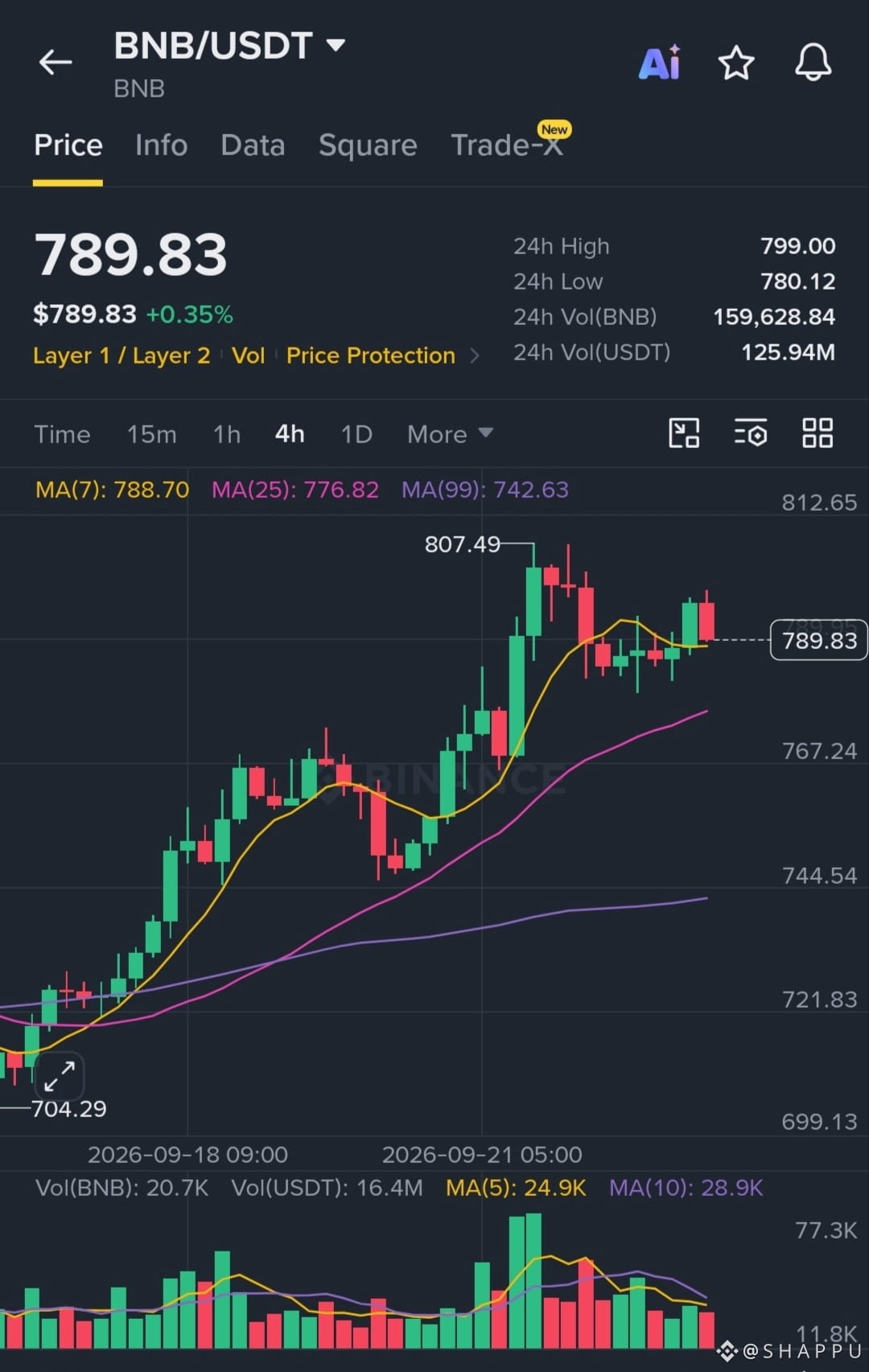
$BNB The BNB/USDT pair is showing resilience, currently trading at 620.12 with a slight 0.84% daily gain. While the price is hovering around its MA(7) of 620.00, it remains below the MA(99) at 660.53. Market participants are closely watching for a major ecosystem announcement scheduled for today, February 17, which could provide the necessary catalyst for a trend reversal.
$OGN /USDT has demonstrated strong bullish momentum, currently trading at 0.02669 with a significant 20.06% daily gain. The price recently spiked to a high of 0.03100 and is now holding above its MA(7) of 0.02570 and MA(25) of 0.02347. This rally is likely supported by aggressive protocol buybacks, which recently surpassed 10% of the circulating supply.
$RPL /USDT has seen explosive movement, currently trading at 2.53 with a massive 47.09% gain. After a vertical rally to a 24-hour high of 3.25, the price is undergoing a healthy retracement. It remains well above key moving averages like the MA(25) at 1.92. This surge is likely fueled by anticipation for the Saturn One upgrade on February 18, which introduces significant protocol enhancements.
$LUNA The LUNA/USDT pair is currently cooling off after hitting a local peak of 0.0764, now trading at 0.0661 with a 7.55% daily decline. The price is hovering just below the MA(7) but remains supported by the MA(25) at 0.0653 and MA(99) at 0.0638. Consolidation at these levels is crucial for bulls to stabilize the trend before attempting another leg higher.
$SHELL The SHELL/USDT pair is currently showing signs of consolidation after a massive recent spike to 0.0391. It is trading at 0.0336, holding steady above its key moving averages, including the MA(7) at 0.0334 and MA(99) at 0.0327. While the 8.20% daily dip reflects cooling momentum, the price action remains relatively stable. Bulls need to defend the 0.0325 support level to eye another potential breakout.
$BANK Based on the current 4-hour chart, BANK/USDT is experiencing a notable pullback, currently trading at 0.0383 with a 6.59% decline. The price has recently slipped below the 7 and 25-day moving averages, signaling short-term bearish pressure. However, it remains above the 99-day MA support near 0.0362. Traders should watch for a potential bounce at this level or a recovery back above 0.0400 to regain bullish momentum.
Why Binance Square Is the Best Platform for Crypto Enthusiasts
In the fast-moving world of cryptocurrency, staying informed is just as important as making smart investments. Binance Square has quickly become one of the best platforms for crypto users who want real-time updates, expert insights, and an engaging community—all in one place. Here’s why Binance Square stands out from the rest. 1. Real-Time Crypto News and Updates The crypto market operates 24/7, and prices can change within seconds. Binance Square provides real-time news, market trends, and updates from trusted creators and analysts. This helps users make informed decisions quickly and stay ahead of market movements. 2. Strong Global Community One of the biggest strengths of Binance Square is its active global community. Millions of users, traders, and crypto experts share insights, strategies, and opinions daily. This creates a dynamic environment where beginners and professionals can learn from each other. 3. Educational Content for All Levels Whether you are new to crypto or an experienced trader, Binance Square offers valuable educational content. From beginner guides to advanced trading strategies, users can continuously improve their knowledge and skills. 4. Direct Connection with Creators Binance Square allows users to follow top crypto influencers, analysts, and content creators. This direct connection helps users gain diverse perspectives and better understand different market viewpoints. 5. Integrated with Binance Ecosystem Since Binance Square is part of the Binance ecosystem, users can easily explore trending tokens, projects, and market data directly within the platform. This integration makes research and trading more convenient. 6. Opportunity to Earn and Grow Content creators on Binance Square can build their audience and even earn rewards. This encourages high-quality content and motivates experts to share valuable insights with the community. Conclusion Binance Square is more than just a social platform—it’s a complete crypto information hub. With real-time updates, a strong community, educational resources, and seamless integration with Binance, it provides everything a crypto enthusiast needs in one place. For anyone serious about cryptocurrency, Binance Square is truly one of the best platforms available today. #Binance
Vanar Chain $VANRY: The Intelligent Blockchain Journey You Need to Know
Hey fam today I want to dive deep into something I’ve been watching closely and that’s Vanar Chain ($VANRY ). This isn’t your typical blockchain update this is about a project that’s quietly building a genuinely new kind of infrastructure at the intersection of artificial intelligence and Web3 and I think our community needs a clear, grounded look at what’s actually happening behind the scenes and where this could be headed. Let’s start with the core idea because it’s what makes Vanar different from most chains out there. Vanar isn’t just trying to be fast cheap or efficient it’s trying to make blockchain intelligent by default by integrating AI directly into the protocol itself. This means applications built on Vanar can do more than just execute code they can reason understand patterns and act on data in ways that traditional smart contracts simply can’t. It’s a subtle but huge shift in the philosophy of Web3 infrastructure. At the heart of this is the AI-native stack that Vanar has built which includes several foundational layers designed to work together seamlessly. The base Vanar Chain blockchain handles transactions and secures the network. On top of that there’s Neutron, which acts as a semantic memory layer that compresses and organizes data in ways that make it meaningful for AI reasoning. Then there’s Kayon, an on-chain engine that actually interprets and reasons over this data. Future modules like Axon and Flows will automate processes and enable entire industry-level use cases. That means apps built here aren’t just executing code they’re learning adapting and interacting with information in a more humanlike way. What’s really cool is that the team has already begun rolling out pieces of this vision in real contexts. The AI integration wasn’t a tweet or a paper it was a real launch of infrastructure meant to support intelligent Web3 applications in payments tokenized assets and more. That’s a big deal because most blockchain projects announce intentions and roadmaps forever. Vanar actually shipped parts of this stack for developers to experiment with. Another practical sign of traction is that early integrations are happening where users can interact with the chain using natural language through AI agents. For example tools that let you check your onchain balance or transactions by speaking the way you would to Siri or Google Assist are being tested. That’s a glimpse into how everyday users might someday use blockchain without feeling like they need a manual to get started. From a broader perspective the Vanar team has been showing up at industry events and outlining a vision that goes beyond traditional crypto constructs. They’ve spoken publicly about building the reasoning and memory infrastructure needed for AI agents to operate permanently and transparently onchain. That’s the kind of narrative that could appeal to serious builders and tech partners well beyond just crypto traders. Strategically the project isn’t trying to chase every trend in the market it’s quietly positioning itself as the intelligence layer for onchain applications. Future plans include subscription-based services for powered features and governance improvements that will give the community more voice in how the ecosystem evolves. That tells me this is less about hype and more about thoughtful growth. It’s also worth noting that Vanar’s ecosystem touches a lot of different domains. Beyond AI reasoning it supports gaming metaverse use cases and tokenized digital assets which opens up a range of potential demand drivers. Some parts of the Vanar architecture are built to make real-world-like applications such as micropayments gaming item ownership or experiential VR/AR apps more seamless. That means it’s not a one-trick pony it’s trying to be versatile while still focusing on intelligent data management. When you zoom out and look at how this fits in the larger industry context I think what’s happening here is pretty interesting. A lot of chains talk about education signatures or oracle integrations but Vanar is really wrestling with how to make data meaningful and actionable in a decentralized environment without relying on external storage or centralized compute. That’s a significant ambition because if you can do that securely and at scale you create opportunities for entirely new classes of apps that were impossible before. Another thing I want to highlight is that the broader ecosystem seems alive with activity. There are regular events upcoming community engagements and announcements on AMAs that help keep the conversation flowing. There have also been programs focused on early access to Neutron and tooling for developers which suggests real effort to build a developer community and not just a token trader audience. Let’s talk a bit about the token itself. $VANRY is more than just a currency on this chain it’s a utility token that fuels transactions staking participation and governance. It’s tradable on multiple exchanges and has a pretty broad circulation which gives everyday users easier access than projects that stay too locked into small markets. Its price fluctuates like most crypto assets but that’s expected in this stage of growth. I’m sharing this not to focus on price but to emphasize accessibility and ecosystem participation as real foundations for long term community growth. Now none of this is without challenges. Integrating AI and blockchain at this level isn’t trivial and real world adoption takes time and real use cases that go beyond clever demos. The market itself is still volatile and experimental and it will take steady execution to prove that intelligent onchain data can actually serve meaningful products beyond laboratory conditions. But from where I’m sitting the fact that the team is shipping measurable infrastructure and fostering active developer engagement is a strong sign. It’s also worth thinking about how this could influence the broader Web3 landscape. We’ve seen a lot of focus on scaling rollups DeFi yield farms and NFTs but not as much on embedding reasoning and memory into the chain itself. If Vanar can show that AI-native features materially improve user experience or developer capability then we might be on the cusp of a real shift in how decentralized applications are built and used. For our community what matters is staying grounded and watching how these pieces evolve in parallel. This isn’t about chasing every shiny launch or viral hype train it’s about identifying real infrastructure that has the potential to unlock new application paradigms. The fact that Vanar is tackling this head on with a suite of integrated tools and real developer engagement tells me this project is one to watch carefully in 2026 and beyond. So keep your eyes open for the next waves of tooling releases early AI agent integrations real world finance usage cases and deeper developer adoption. That’s where the rubber will meet the road. At the end of the day true innovation doesn’t come from flashy announcements alone it comes from live networks people actually building onchain and real communities rallying behind a shared vision. That’s what makes following Vanar so exciting right now and I’m glad we’re exploring it together. Let’s stay connected and keep learning as this space evolves. 🚀 @Vanarchain #Vanar #vanar $VANRY
Fogo’s New Era: From Testnet Dreams to Real-World Trading Engine
Hey everyone it feels like the right time to sit down and share a huge update about Fogo $FOGO because what we’ve seen unfold over the last few months isn’t just another “project update” it feels like a real shift in how a Layer 1 blockchain can go from idea to actual live infrastructure that people and builders can interact with in real time When we talk about Fogo what’s really striking is how focused this team has been on building something that isn’t just another smart contract platform but something engineered from the ground up for high-speed onchain trading and financial primitives. The vision was always clear from the testnet phases: this isn’t about art tokens this is about performance and execution. And as of January 15 2026 Fogo’s public mainnet is officially live which is huge for anyone who has been following this space closely. This mainnet launch wasn’t just a soft rollout it came with a fully operational bridge to the wider crypto ecosystem via Wormhole meaning you can move liquidity from chains like Ethereum Solana and more directly into Fogo without jumping through centralized exchange hoops. That integration from day one gives the chain immediate access to liquidity pools that many other new layer ones take months to bootstrap which is pretty impressive to see. But let’s talk about what’s under the hood because that’s where the real magic lies. The Fogo network runs a custom client based on Firedancer technology, which is effectively built to achieve block times around forty milliseconds and confirmation times near one point three seconds. Those speeds aren’t theoretical fluff they are real metrics engineered to support what traders call latency-sensitive environments. Traders know every millisecond matters and blockchain infrastructure needs to match that if it’s going to be taken seriously for things like onchain perps limit order books and complex DeFi strategies. Here’s what makes this launch special for our community: it didn’t come with empty promises. Right out of the gate there were more than ten decentralized applications live supporting everything from spot trading to lending to staking. That’s a big deal because most chains go live with nothing more than a basic explorer and maybe a test app while builders slowly trickle in. Fogo launched with a real financial ecosystem ready for activity including native DEXs lending markets liquid staking functions and even launchpad tools. Now on the token side FOGO launched with a total supply of ten billion tokens and a heavy emphasis on community distribution via programs like Fogo Flames which reward early adopters testers and participants rather than just allocating massive chunks to private investors. This sort of approach aligns with a long-term community first mindset which many of us appreciate because it actually puts real users rather than just big wallets in the narrative early. Of course a launch like this doesn’t come without its own market gymnastics. There’s been volatility in the token price and some exchange actions like the delisting of futures contracts on one platform that remind us mainstream crypto still tests new blockchains before committing heavily. But in my eyes that’s just part of the journey when you’re breaking new ground. These moves don’t reflect the tech as much as they reflect short-term liquidity and sentiment swings that will stabilize as the ecosystem grows and usage increases. What gets me really excited is watching how builders and protocols are already treating Fogo as a workable destination not just a cool experiment. The compatibility with the Solana Virtual Machine makes it easier for developers familiar with that environment to bring over projects and even innovate on features that require blazing fast execution. That means we could soon see things on Fogo that struggle to exist elsewhere because other chains weren’t built with this degree of performance in mind. And speaking of performance the design decisions here are telling. The team chose to colocate validators in strategic locations which reduces network latency much in the same way traditional financial systems colocate servers near exchange infrastructure. That’s a design philosophy I don’t see most rollouts attempt because it requires tradeoffs and real engineering muscle. But with the Firedancer client and this validator setup it’s clear Fogo is trying to narrow the gap between blockchain and traditional matching engines used by centralized markets. Let’s talk ecosystem buzz for a second because this isn’t just tech talk. What’s been popping up in community chat rooms and social threads is genuine curiosity from DeFi builders about how Fogo’s strength in speed could unlock new products that simply don’t function well on existing chains. People are asking for onchain auctions real-time decision engines and liquidation protocols that require predictable ultra-low latency and Fogo’s layout is one of the few chains that can support those kinds of ambitions right now. What I love about all this is how grounded it feels. We’re not just hyping a launch date here we’re watching an infrastructure platform that had testnets months ago step into a live environment with real assets real applications and real bridges to hundreds of networks. That’s the kind of progression that builds confidence not just noise. That said we know 2026 is still early and adoption doesn’t happen overnight. What’s going to matter in the weeks and months ahead is whether developers keep shipping innovative tools on Fogo whether liquidity continues to flow in from cross-chain bridges whether new listing opportunities expand access and most importantly whether traders and everyday users find genuine utility in using this platform instead of just watching it from the sidelines. I’m personally optimistic because the foundation is solid the focus is clear and the community involvement has been sincere. Seeing Fogo go live with purpose-built tools for markets that demand high speed tells me this isn’t just another general blockchain launch this is a targeted infrastructure play that could rise in relevance if it finds product market fit in high velocity DeFi and beyond. We’re definitely living in an interesting time for blockchain tech and watching Fogo in action feels like being part of something that’s constantly evolving right before our eyes. Stay tuned because the real test isn’t the launch it’s what builders and users build once they realize what this technology can actually do. 🚀 @Fogo Official #fogo #Fogo $FOGO
First off the team has been doubling down on their AI-native vision by rolling out infrastructure designed to blend blockchain with smart intelligent features. They recently launched an AI-integrated base layer that lets developers build Web3 apps that can actually reason adapt and interact more naturally with data which opens up some cool possibilities for predictive dApps and smarter asset management onchain Vanar isn’t just talking the talk either there are tools like the Neutron AI memory layer that are live and being demoed that help unify interaction across different AI systems and provide onchain memory persistence for smart logic On the ecosystem side we’ve seen Vanar take center stage at global events and partner with major players like worldpay which hints at their vision for agentic payments and real world finance solutions that go beyond pure crypto talk and could bring actual utility to VANRY holders The network keeps ticking along with EVM-compatible features powerful SDKs for builders and a clear focus on making blockchain dev tools easier to use so we can actually see real stuff get built on the chain Price has been trending in its own rhythm but what matters most is the tech stack evolving and community activity growing which feels like we’re still early in this story Overall I’m excited to see Vanar pushing the boundary on what Web3 can do when you mix real intelligence with blockchain infrastructure and how that might translate into real products and usage down the line. 👀🚀 @Vanarchain #Vanar #vanar $VANRY
First off the public mainnet is live as of January 15 2026 and that’s a huge milestone for us It’s officially running as a Solana Virtual Machine Layer 1 blockchain built for speed and real-time trading and has been designed to deliver ultra-low latency with around 40 millisecond block times which is wild if you think about it for on-chain activity and DeFi that needs real speed at scale Right now FOGO is trading on some big exchanges including Binance OKX Bybit Bitget and more and people can spot trade stake use Earn functions or just hold while the ecosystem keeps evolving The team made a conscious choice to focus on community and builders by leaning hard into airdrops and engagement instead of the old-school big token sales so more folks can feel part of the journey rather than just being spectators Onchain we’ve already seen over ten dApps go live with things like decentralized exchanges lending protocols and liquid staking tools so the network isn’t just running it’s actually usable and growing in real ways Of course there’s noise in the market and volatility is real but I see us moving toward real adoption if developer interest keeps climbing and people start using Fogo for fast responsive DeFi trading regularly The foundations are here and it’s exciting to watch this ecosystem take shape with real tech real features and real community energy. 🚀 @Fogo Official #Fogo #fogo $FOGO
$QKC /USDT is showing bullish momentum, currently trading at 0.00343 with a +4.71% gain. After a period of high volatility, the price is stabilizing with support near 0.0033 and resistance at 0.0038. This positive shift follows a broader market recovery, as QuarkChain maintains its upward trend toward a potential month-end target of 0.0061.
$OG /USDT hat einen starken Rückgang erlebt und wird derzeit bei 3,371 gehandelt, mit einem signifikanten Rückgang von -30,71 %. Das 4-Stunden-Diagramm zeigt einen steilen Rückgang unter alle wichtigen gleitenden Durchschnitte, einschließlich des MA(7) von 3,582 und MA(25) von 4,622. Nachdem er ein Tief von 3,172 erreicht hat, versucht der Preis, sich zu stabilisieren, aber der Verkaufsdruck bleibt dominant. Eine nachhaltige Erholung über 3,58 ist erforderlich, um eine mögliche Trendwende zu signalisieren.
$SAGA /USDT zeigt eine bullische Resilienz, handelt derzeit bei 0,0353 mit einem Gewinn von +6,33%. Nach einer scharfen Ablehnung beim Hoch von 0,0432 stabilisiert sich der Preis in der Nähe seines MA(7) von 0,0356 und bleibt über dem MA(25) von 0,0339. Diese Konsolidierung deutet auf eine Phase der Abkühlung hin, aber solange die Unterstützung hält, bleibt der Aufwärtstrend für einen weiteren potenziellen Ausbruchsversuch intakt.
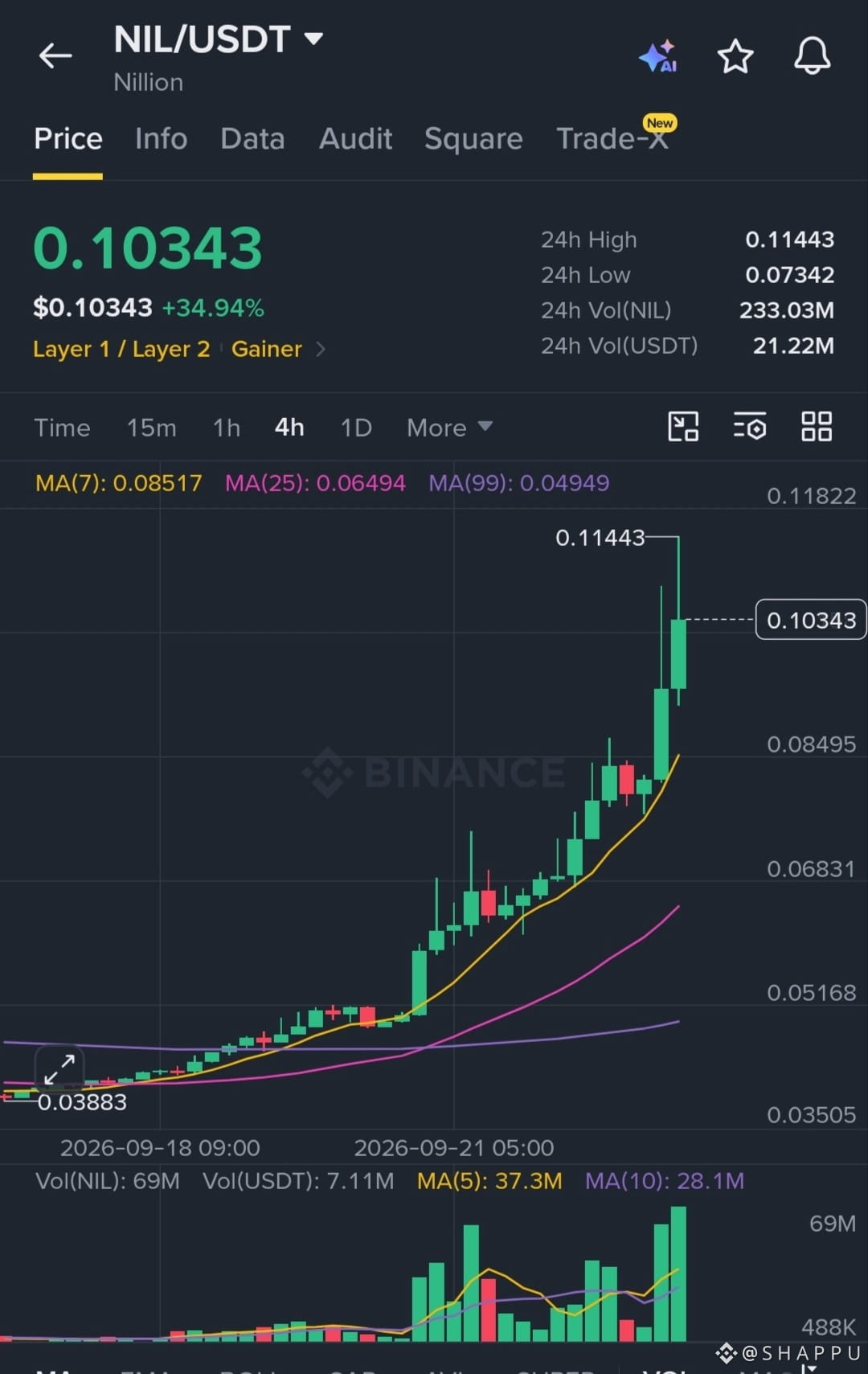
$NIL NIL/USDT is showing a positive trend, currently trading at 0.0590 with a +7.86% gain. The price is holding steady above the MA(7) of 0.0582 and MA(25) of 0.0561 after a sharp spike to 0.0746. This consolidation suggests potential for another upward move if it maintains support above the moving averages. Trading volume remains active, indicating continued market interest.
$ATM ATM/USDT has experienced a significant surge, currently trading at 1.415 with a notable +13.20% gain. The 4-hour chart shows the price sitting comfortably above the MA(7) of 1.380 and MA(25) of 1.256, signaling strong bullish momentum despite a slight pullback from the 1.660 high. If the current support levels hold, we could see another attempt to test recent peaks.