

OroCryptoTrends
8.9k Beiträge

OroCryptoTrends
 Square Verified+
Melden
Nutzer blockieren
OroCryptoTrends | Crypto Insights: Real-time crypto news, market analysis, Web3, DeFi & emerging trends. Research-driven, actionable insights. No hype.
Trade eröffnen
Regelmäßiger Trader
3.2 Jahre
3.2K+ Following
51.2K+ Follower
49.2K+ Like gegeben
Beiträge
Portfolio
Alle
Zitierungen
Videos
Live
Verifiziert
PayPay akzeptiert kein Krypto. Und das ist tatsächlich das Interessante.
Binance-Pay-Nutzer, die Japan besuchen, können jetzt bei Händlern bezahlen, die PayPay unterstützen – die Verbindung läuft über das HIVEX-Netzwerk von TBCASoft. Der Händler erhält weiterhin japanische Yen, während der Besucher über Binance Pay bezahlt.
Zunächst dachte ich, das wäre nur eine weitere Schlagzeile „Krypto-Zahlungen expandieren“.
Warte — vielleicht ist das nicht der richtige Rahmen.
Das spannendere Detail ist, was sich nicht ändert.
Der Händler muss nicht plötzlich verstehen, wie Wallets, Tokens oder Blockchain-Settlement funktionieren. Für den Store gibt es kein neues Krypto-Checkout-System, das man lernen müsste. Die Zahlungsinfrastruktur auf Händlerseite bleibt vertraut, während Binance Pay effektiv zu einer weiteren Finanzierungsroute hinter der Transaktion wird.
Diese Unterscheidung ist wichtig.
Sie deutet auf einen möglichen Weg für Krypto-Zahlungen hin: Man sollte Händler nicht bitten, ihre Zahlungs-Stacks neu aufzubauen. Stattdessen verbindet man Krypto-Nutzer mit Systemen, die Menschen ohnehin schon verwenden.
Aber es gibt eine Einschränkung, die nicht untergehen sollte. Dieses Launch richtet sich an berechtigte internationale Besucher in Japan. Es steht nicht japanischen Einwohnern zur Verfügung. Aktuell geht es also viel stärker um Zahlungszahlungen im Rahmen von Reisen über Grenzen hinweg als um eine Inlands-Einführung von Krypto.
Der eigentliche Test ist für mich, ob diese Architektur weiterhin mit etablierten Zahlungsnetzwerken in anderen Märkten verbunden wird.
Dort könnte es tatsächlich noch interessanter werden.
Ich versuche immer noch herauszufinden, was sich dadurch konkret ändert.
PayPay akzeptiert kein Krypto. Und das ist tatsächlich das Interessante.
Binance-Pay-Nutzer, die Japan besuchen, können jetzt bei Händlern bezahlen, die PayPay unterstützen – die Verbindung läuft über das HIVEX-Netzwerk von TBCASoft. Der Händler erhält weiterhin japanische Yen, während der Besucher über Binance Pay bezahlt.
Zunächst dachte ich, das wäre nur eine weitere Schlagzeile „Krypto-Zahlungen expandieren“.
Warte — vielleicht ist das nicht der richtige Rahmen.
Das spannendere Detail ist, was sich nicht ändert.
Der Händler muss nicht plötzlich verstehen, wie Wallets, Tokens oder Blockchain-Settlement funktionieren. Für den Store gibt es kein neues Krypto-Checkout-System, das man lernen müsste. Die Zahlungsinfrastruktur auf Händlerseite bleibt vertraut, während Binance Pay effektiv zu einer weiteren Finanzierungsroute hinter der Transaktion wird.
Diese Unterscheidung ist wichtig.
Sie deutet auf einen möglichen Weg für Krypto-Zahlungen hin: Man sollte Händler nicht bitten, ihre Zahlungs-Stacks neu aufzubauen. Stattdessen verbindet man Krypto-Nutzer mit Systemen, die Menschen ohnehin schon verwenden.
Aber es gibt eine Einschränkung, die nicht untergehen sollte. Dieses Launch richtet sich an berechtigte internationale Besucher in Japan. Es steht nicht japanischen Einwohnern zur Verfügung. Aktuell geht es also viel stärker um Zahlungszahlungen im Rahmen von Reisen über Grenzen hinweg als um eine Inlands-Einführung von Krypto.
Der eigentliche Test ist für mich, ob diese Architektur weiterhin mit etablierten Zahlungsnetzwerken in anderen Märkten verbunden wird.
Dort könnte es tatsächlich noch interessanter werden.
Ich versuche immer noch herauszufinden, was sich dadurch konkret ändert.
Binance-Pay-Nutzer, die Japan besuchen, können jetzt bei Händlern bezahlen, die PayPay unterstützen – die Verbindung läuft über das HIVEX-Netzwerk von TBCASoft. Der Händler erhält weiterhin japanische Yen, während der Besucher über Binance Pay bezahlt.
Zunächst dachte ich, das wäre nur eine weitere Schlagzeile „Krypto-Zahlungen expandieren“.
Warte — vielleicht ist das nicht der richtige Rahmen.
Das spannendere Detail ist, was sich nicht ändert.
Der Händler muss nicht plötzlich verstehen, wie Wallets, Tokens oder Blockchain-Settlement funktionieren. Für den Store gibt es kein neues Krypto-Checkout-System, das man lernen müsste. Die Zahlungsinfrastruktur auf Händlerseite bleibt vertraut, während Binance Pay effektiv zu einer weiteren Finanzierungsroute hinter der Transaktion wird.
Diese Unterscheidung ist wichtig.
Sie deutet auf einen möglichen Weg für Krypto-Zahlungen hin: Man sollte Händler nicht bitten, ihre Zahlungs-Stacks neu aufzubauen. Stattdessen verbindet man Krypto-Nutzer mit Systemen, die Menschen ohnehin schon verwenden.
Aber es gibt eine Einschränkung, die nicht untergehen sollte. Dieses Launch richtet sich an berechtigte internationale Besucher in Japan. Es steht nicht japanischen Einwohnern zur Verfügung. Aktuell geht es also viel stärker um Zahlungszahlungen im Rahmen von Reisen über Grenzen hinweg als um eine Inlands-Einführung von Krypto.
Der eigentliche Test ist für mich, ob diese Architektur weiterhin mit etablierten Zahlungsnetzwerken in anderen Märkten verbunden wird.
Dort könnte es tatsächlich noch interessanter werden.
Ich versuche immer noch herauszufinden, was sich dadurch konkret ändert.

1
936
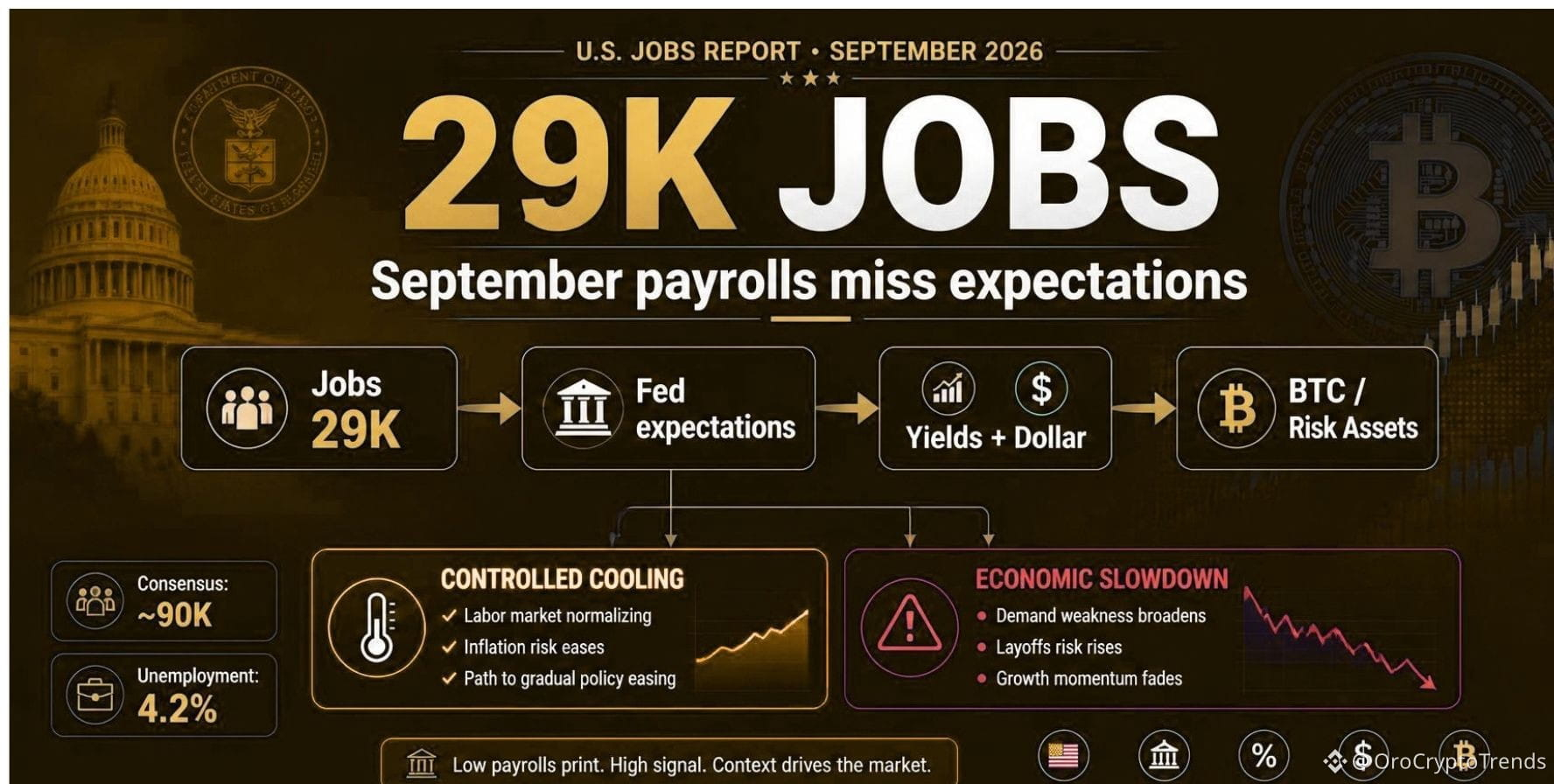
#NFPWatch 29K Jobs. Das ist die Zahl, die das Gespräch verändert.
Der US-Arbeitsmarktbericht für September fiel deutlich unter die erwarteten rund 90K, während die Arbeitslosigkeit auf 4,2% von 4,1% stieg.
Für Krypto halte ich den wichtigen Punkt nicht einfach für „schwache Jobs = bullischer Bitcoin“. Das ist zu einfach.
Der größere Übertragungsmechanismus sind die Zinsen.
Ein schwächerer Arbeitsmarkt kann den Druck auf die US-Notenbank verringern, die weitere Straffung beizubehalten, was die Renditen von Staatsanleihen und den Dollar senken und die relative Ausgangslage für Risikoassets verbessern kann. Reuters berichtete, dass die Märkte nach den Daten die Wahrscheinlichkeit einer Zinserhöhung im Oktober deutlich nach unten korrigierten, während Aktien zulegten und die Renditen von Staatsanleihen fielen.
Aber hier gibt es einen Widerspruch.
Schwache Beschäftigung stützt zinssensitive Assets nur dann, wenn Investoren sie als kontrollierte Abkühlung interpretieren. Wenn sich der Arbeitsmarkt schnell verschlechtert, kann sich die Erzählung von „weniger restriktive Fed“ zu „wirtschaftliche Abschwächung“ verschieben.
Diese Unterscheidung ist wichtig für Bitcoin.
Deshalb beobachte ich die Reaktion bei den Renditen, beim Dollar und bei BTC, statt die Schlagzeile zu den Payrolls für sich allein als Handelssignal zu behandeln.
Ich versuche immer noch herauszufinden, was das tatsächlich verändert.
#NFPWatch 29K Jobs. Das ist die Zahl, die das Gespräch verändert.
Der US-Arbeitsmarktbericht für September fiel deutlich unter die erwarteten rund 90K, während die Arbeitslosigkeit auf 4,2% von 4,1% stieg.
Für Krypto halte ich den wichtigen Punkt nicht einfach für „schwache Jobs = bullischer Bitcoin“. Das ist zu einfach.
Der größere Übertragungsmechanismus sind die Zinsen.
Ein schwächerer Arbeitsmarkt kann den Druck auf die US-Notenbank verringern, die weitere Straffung beizubehalten, was die Renditen von Staatsanleihen und den Dollar senken und die relative Ausgangslage für Risikoassets verbessern kann. Reuters berichtete, dass die Märkte nach den Daten die Wahrscheinlichkeit einer Zinserhöhung im Oktober deutlich nach unten korrigierten, während Aktien zulegten und die Renditen von Staatsanleihen fielen.
Aber hier gibt es einen Widerspruch.
Schwache Beschäftigung stützt zinssensitive Assets nur dann, wenn Investoren sie als kontrollierte Abkühlung interpretieren. Wenn sich der Arbeitsmarkt schnell verschlechtert, kann sich die Erzählung von „weniger restriktive Fed“ zu „wirtschaftliche Abschwächung“ verschieben.
Diese Unterscheidung ist wichtig für Bitcoin.
Deshalb beobachte ich die Reaktion bei den Renditen, beim Dollar und bei BTC, statt die Schlagzeile zu den Payrolls für sich allein als Handelssignal zu behandeln.
Ich versuche immer noch herauszufinden, was das tatsächlich verändert.
Der US-Arbeitsmarktbericht für September fiel deutlich unter die erwarteten rund 90K, während die Arbeitslosigkeit auf 4,2% von 4,1% stieg.
Für Krypto halte ich den wichtigen Punkt nicht einfach für „schwache Jobs = bullischer Bitcoin“. Das ist zu einfach.
Der größere Übertragungsmechanismus sind die Zinsen.
Ein schwächerer Arbeitsmarkt kann den Druck auf die US-Notenbank verringern, die weitere Straffung beizubehalten, was die Renditen von Staatsanleihen und den Dollar senken und die relative Ausgangslage für Risikoassets verbessern kann. Reuters berichtete, dass die Märkte nach den Daten die Wahrscheinlichkeit einer Zinserhöhung im Oktober deutlich nach unten korrigierten, während Aktien zulegten und die Renditen von Staatsanleihen fielen.
Aber hier gibt es einen Widerspruch.
Schwache Beschäftigung stützt zinssensitive Assets nur dann, wenn Investoren sie als kontrollierte Abkühlung interpretieren. Wenn sich der Arbeitsmarkt schnell verschlechtert, kann sich die Erzählung von „weniger restriktive Fed“ zu „wirtschaftliche Abschwächung“ verschieben.
Diese Unterscheidung ist wichtig für Bitcoin.
Deshalb beobachte ich die Reaktion bei den Renditen, beim Dollar und bei BTC, statt die Schlagzeile zu den Payrolls für sich allein als Handelssignal zu behandeln.
Ich versuche immer noch herauszufinden, was das tatsächlich verändert.
3
1.9k
$NEAR $3,8 Mio. verschwunden bei NEAR Intents – und der interessante Teil ist, wo der Fehler passiert ist.
NEAR Intents sagte heute, dass ein Bug in seiner Omni-Einzahlungs- und Auszahlungsinfrastruktur sowie in Smart Contracts zu rund 3,8 Millionen US-Dollar Verlusten geführt habe. Das Team sagt, dass die Schwachstelle behoben wurde und betroffene Nutzer vollständig entschädigt werden. Einzahlungen und Auszahlungen über mehrere Netzwerke wurden ebenfalls pausiert, während die Korrektur abgeschlossen wird.
Was meine Aufmerksamkeit fesselt, ist, dass das nicht wie eine einfache „Die Blockchain wurde gehackt“-Geschichte aussieht. Die gemeldete Schwäche liegt im Bereich der Infrastruktur, die Assets über verschiedene Chains hinweg miteinander verbindet.
Dieser Unterschied ist wichtig.
Cross-Chain-Systeme sind im Grunde Vertrauens-„Pipelines“. Jede zusätzliche Bridge, jede Custody-Ebene, jeder Abwicklungsmechanismus oder jede Vertragsinteraktion schafft eine weitere Stelle, an der Annahmen stimmen müssen. Man kann auf der einen Seite ein gutes Monitoring haben und trotzdem Schaden nehmen, wenn zwei Komponenten auf eine Weise zusammenspielen, die niemand erwartet hat.
Und ehrlich gesagt, das ist wahrscheinlich die größere Erkenntnis.
NEAR Intents hatte gerade erst vor einigen Tagen bewiesen, dass es große, separate illegale Geldflüsse weitgehend blockieren kann. Nun hat es selbst einen Schlag abbekommen.
Das Team sagt, dass die Nutzer wieder vollständig gestellt werden, aber die Entschädigung ist immer noch ein Versprechen – keine abgeschlossene Erstattung.
Also beobachte ich den Wiederherstellungsprozess so genau wie den eigentlichen Exploit.
Ich versuche immer noch herauszufinden, was das tatsächlich verändert.
$NEAR $3,8 Mio. verschwunden bei NEAR Intents – und der interessante Teil ist, wo der Fehler passiert ist.
NEAR Intents sagte heute, dass ein Bug in seiner Omni-Einzahlungs- und Auszahlungsinfrastruktur sowie in Smart Contracts zu rund 3,8 Millionen US-Dollar Verlusten geführt habe. Das Team sagt, dass die Schwachstelle behoben wurde und betroffene Nutzer vollständig entschädigt werden. Einzahlungen und Auszahlungen über mehrere Netzwerke wurden ebenfalls pausiert, während die Korrektur abgeschlossen wird.
Was meine Aufmerksamkeit fesselt, ist, dass das nicht wie eine einfache „Die Blockchain wurde gehackt“-Geschichte aussieht. Die gemeldete Schwäche liegt im Bereich der Infrastruktur, die Assets über verschiedene Chains hinweg miteinander verbindet.
Dieser Unterschied ist wichtig.
Cross-Chain-Systeme sind im Grunde Vertrauens-„Pipelines“. Jede zusätzliche Bridge, jede Custody-Ebene, jeder Abwicklungsmechanismus oder jede Vertragsinteraktion schafft eine weitere Stelle, an der Annahmen stimmen müssen. Man kann auf der einen Seite ein gutes Monitoring haben und trotzdem Schaden nehmen, wenn zwei Komponenten auf eine Weise zusammenspielen, die niemand erwartet hat.
Und ehrlich gesagt, das ist wahrscheinlich die größere Erkenntnis.
NEAR Intents hatte gerade erst vor einigen Tagen bewiesen, dass es große, separate illegale Geldflüsse weitgehend blockieren kann. Nun hat es selbst einen Schlag abbekommen.
Das Team sagt, dass die Nutzer wieder vollständig gestellt werden, aber die Entschädigung ist immer noch ein Versprechen – keine abgeschlossene Erstattung.
Also beobachte ich den Wiederherstellungsprozess so genau wie den eigentlichen Exploit.
Ich versuche immer noch herauszufinden, was das tatsächlich verändert.
NEAR Intents sagte heute, dass ein Bug in seiner Omni-Einzahlungs- und Auszahlungsinfrastruktur sowie in Smart Contracts zu rund 3,8 Millionen US-Dollar Verlusten geführt habe. Das Team sagt, dass die Schwachstelle behoben wurde und betroffene Nutzer vollständig entschädigt werden. Einzahlungen und Auszahlungen über mehrere Netzwerke wurden ebenfalls pausiert, während die Korrektur abgeschlossen wird.
Was meine Aufmerksamkeit fesselt, ist, dass das nicht wie eine einfache „Die Blockchain wurde gehackt“-Geschichte aussieht. Die gemeldete Schwäche liegt im Bereich der Infrastruktur, die Assets über verschiedene Chains hinweg miteinander verbindet.
Dieser Unterschied ist wichtig.
Cross-Chain-Systeme sind im Grunde Vertrauens-„Pipelines“. Jede zusätzliche Bridge, jede Custody-Ebene, jeder Abwicklungsmechanismus oder jede Vertragsinteraktion schafft eine weitere Stelle, an der Annahmen stimmen müssen. Man kann auf der einen Seite ein gutes Monitoring haben und trotzdem Schaden nehmen, wenn zwei Komponenten auf eine Weise zusammenspielen, die niemand erwartet hat.
Und ehrlich gesagt, das ist wahrscheinlich die größere Erkenntnis.
NEAR Intents hatte gerade erst vor einigen Tagen bewiesen, dass es große, separate illegale Geldflüsse weitgehend blockieren kann. Nun hat es selbst einen Schlag abbekommen.
Das Team sagt, dass die Nutzer wieder vollständig gestellt werden, aber die Entschädigung ist immer noch ein Versprechen – keine abgeschlossene Erstattung.
Also beobachte ich den Wiederherstellungsprozess so genau wie den eigentlichen Exploit.
Ich versuche immer noch herauszufinden, was das tatsächlich verändert.
2
993
$XLK.ETF
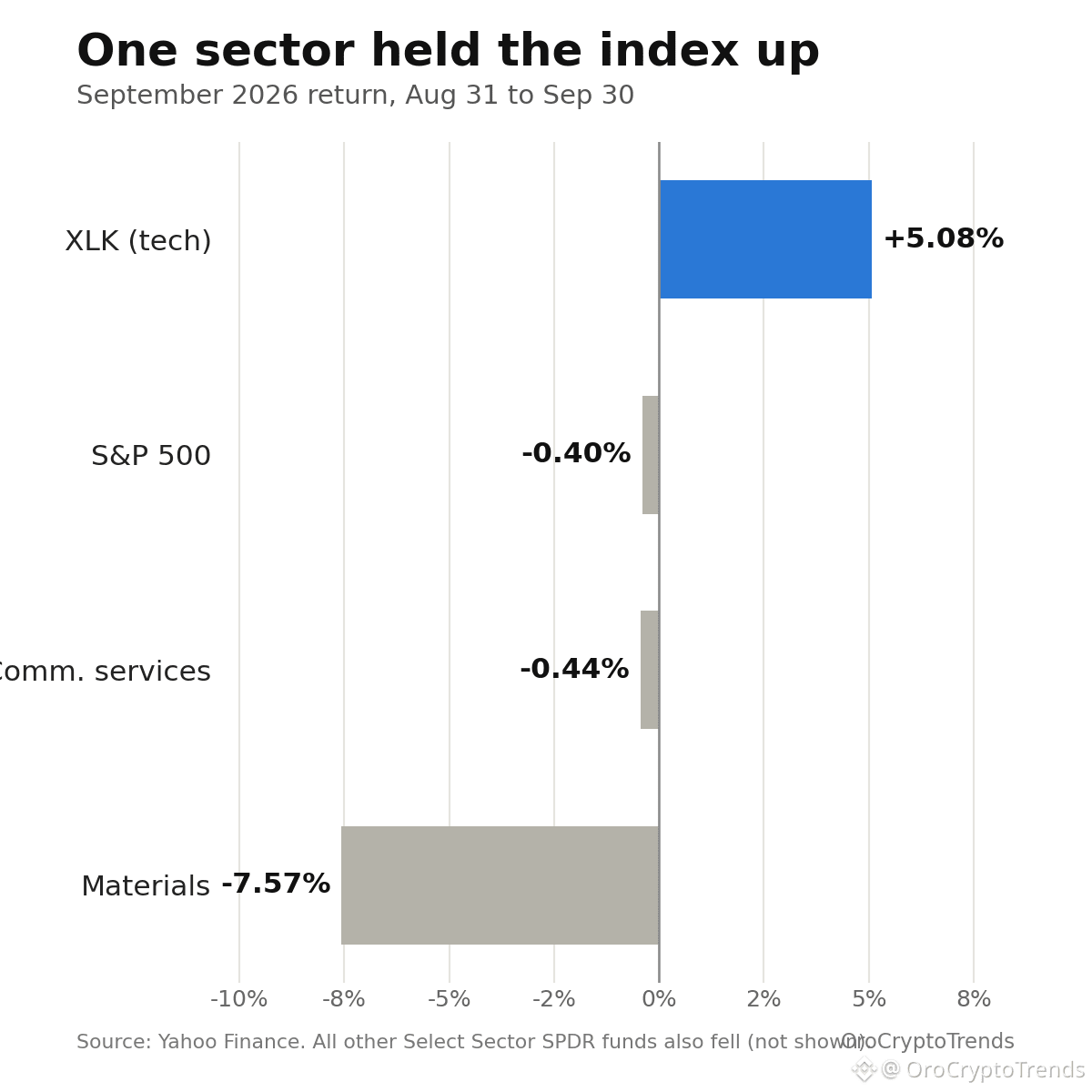
XLK erzielte im September 5,08% zurück, während alle anderen S&P-Sektorfonds den Monat im Minus beendeten.
Lies das nochmal. Materialien verloren 7,57%, Kommunikationdienstleistungen verloren 0,44% und der S&P 500 rutschte dennoch nur um 0,4% ab. Ein Sektor hielt den gesamten Index über Wasser.
Ich sehe das ständig als Stärke im Technologiesektor gerahmt. Ich lese es als einen Markt mit nur einem Pfeiler. Die Nachfrage nach KI, die Ausgaben in der Cloud und der Schwung bei Halbleitern sind real – aber Öl und die Renditen im US-Staatsanleihenmarkt trafen gleichzeitig zyklische Werte und rate-sensitive Titel.
Das Geld rotierte nicht in den Rest des Marktes. Es drängte sich in genau den einen Trade, der funktionierte. Das sieht nach Stärke im Index-Chart aus, ist aber tatsächlich Zerbrechlichkeit, weil die Schlagzeilenzahl verdeckt, wie wenig daran tatsächlich teilnimmt.
Das Risiko ist einfach. Wenn Mega-Cap-Gewinne oder die Prognose bei Halbleitern ins Wanken geraten, gibt es darunter nichts, das den Index auffangen könnte. Und wenn die Renditen erhöht bleiben, steht wachstumsorientiertes Investment auf lange Sicht unter Bewertungsdruck – selbst wenn die Fundamentaldaten stark sind.
Für Krypto-Trader ist das wichtig. Eine Risikobereitschaft, die von einem einzigen Equity-Thema abhängt, sickert tendenziell in alles andere durch – daher beobachte ich die Breite des Marktes genauer als das Index-Niveau.
Lese ich das falsch, oder feiern alle gerade einen Anstieg, der eigentlich ein Konzentrationsproblem ist?
$XLK.ETF
XLK erzielte im September 5,08% zurück, während alle anderen S&P-Sektorfonds den Monat im Minus beendeten.
Lies das nochmal. Materialien verloren 7,57%, Kommunikationdienstleistungen verloren 0,44% und der S&P 500 rutschte dennoch nur um 0,4% ab. Ein Sektor hielt den gesamten Index über Wasser.
Ich sehe das ständig als Stärke im Technologiesektor gerahmt. Ich lese es als einen Markt mit nur einem Pfeiler. Die Nachfrage nach KI, die Ausgaben in der Cloud und der Schwung bei Halbleitern sind real – aber Öl und die Renditen im US-Staatsanleihenmarkt trafen gleichzeitig zyklische Werte und rate-sensitive Titel.
Das Geld rotierte nicht in den Rest des Marktes. Es drängte sich in genau den einen Trade, der funktionierte. Das sieht nach Stärke im Index-Chart aus, ist aber tatsächlich Zerbrechlichkeit, weil die Schlagzeilenzahl verdeckt, wie wenig daran tatsächlich teilnimmt.
Das Risiko ist einfach. Wenn Mega-Cap-Gewinne oder die Prognose bei Halbleitern ins Wanken geraten, gibt es darunter nichts, das den Index auffangen könnte. Und wenn die Renditen erhöht bleiben, steht wachstumsorientiertes Investment auf lange Sicht unter Bewertungsdruck – selbst wenn die Fundamentaldaten stark sind.
Für Krypto-Trader ist das wichtig. Eine Risikobereitschaft, die von einem einzigen Equity-Thema abhängt, sickert tendenziell in alles andere durch – daher beobachte ich die Breite des Marktes genauer als das Index-Niveau.
Lese ich das falsch, oder feiern alle gerade einen Anstieg, der eigentlich ein Konzentrationsproblem ist?
XLK erzielte im September 5,08% zurück, während alle anderen S&P-Sektorfonds den Monat im Minus beendeten.
Lies das nochmal. Materialien verloren 7,57%, Kommunikationdienstleistungen verloren 0,44% und der S&P 500 rutschte dennoch nur um 0,4% ab. Ein Sektor hielt den gesamten Index über Wasser.
Ich sehe das ständig als Stärke im Technologiesektor gerahmt. Ich lese es als einen Markt mit nur einem Pfeiler. Die Nachfrage nach KI, die Ausgaben in der Cloud und der Schwung bei Halbleitern sind real – aber Öl und die Renditen im US-Staatsanleihenmarkt trafen gleichzeitig zyklische Werte und rate-sensitive Titel.
Das Geld rotierte nicht in den Rest des Marktes. Es drängte sich in genau den einen Trade, der funktionierte. Das sieht nach Stärke im Index-Chart aus, ist aber tatsächlich Zerbrechlichkeit, weil die Schlagzeilenzahl verdeckt, wie wenig daran tatsächlich teilnimmt.
Das Risiko ist einfach. Wenn Mega-Cap-Gewinne oder die Prognose bei Halbleitern ins Wanken geraten, gibt es darunter nichts, das den Index auffangen könnte. Und wenn die Renditen erhöht bleiben, steht wachstumsorientiertes Investment auf lange Sicht unter Bewertungsdruck – selbst wenn die Fundamentaldaten stark sind.
Für Krypto-Trader ist das wichtig. Eine Risikobereitschaft, die von einem einzigen Equity-Thema abhängt, sickert tendenziell in alles andere durch – daher beobachte ich die Breite des Marktes genauer als das Index-Niveau.
Lese ich das falsch, oder feiern alle gerade einen Anstieg, der eigentlich ein Konzentrationsproblem ist?
XLKETF+0,94%
SPYB+0,00%
2
332
8,065 ZEC long, fast 380.000 US-Dollar im Minus – falls die gemeldete Position stimmt, ist der interessante Teil nicht der Verlust. Es ist die Risikostruktur dahinter.
Ein Händler soll einen massiven ZEC-Long auf Hyperliquid halten, während er auf einem großen, nicht realisierten Verlust sitzt, nachdem eine weitere ZEC-Position im Wert von mehreren Millionen US-Dollar aus demselben Konto liquidiert wurde.
Das ist der Punkt, zu dem ich immer wieder zurückkomme.
Eine gehebelte Position kann sich zunächst gut handhabbar anfühlen, bis die Liquidationsschwelle zur einzigen echten Deadline des Marktes wird. Die Finanzierungskosten laufen weiter auf, die Margin wird dünner, und jede Bewegung gegen die Position hat einen größeren Effekt auf das Konto.
Und ZEC bewegt sich in letzter Zeit stark genug, dass Leverage aus einer überzeugenden These sehr schnell ein extrem teures Timing-Problem machen kann.
Moment – vielleicht ist „bullish oder bearish bei ZEC“ hier gar nicht mal der richtige Rahmen.
Die nützlichere Frage lautet vielmehr, wie viel Leverage der Markt überhaupt aufnehmen kann, bevor erzwungene Liquidationen selbst zur eigentlichen Story werden.
Aktuelles Onchain-Lens-Tracking zeigt, wie groß die ZEC-Positionen auf Hyperliquid mittlerweile geworden sind – einschließlich Tradern, die in beide Richtungen Aussetzen im mehrstelligen Millionenbereich tragen.
Ich beobachte die Liquidationsniveaus und Positionsänderungen genauer als die Schlagzeilen zum PnL.
Ich versuche nur herauszufinden, was das in der Praxis eigentlich verändert.
8,065 ZEC long, fast 380.000 US-Dollar im Minus – falls die gemeldete Position stimmt, ist der interessante Teil nicht der Verlust. Es ist die Risikostruktur dahinter.
Ein Händler soll einen massiven ZEC-Long auf Hyperliquid halten, während er auf einem großen, nicht realisierten Verlust sitzt, nachdem eine weitere ZEC-Position im Wert von mehreren Millionen US-Dollar aus demselben Konto liquidiert wurde.
Das ist der Punkt, zu dem ich immer wieder zurückkomme.
Eine gehebelte Position kann sich zunächst gut handhabbar anfühlen, bis die Liquidationsschwelle zur einzigen echten Deadline des Marktes wird. Die Finanzierungskosten laufen weiter auf, die Margin wird dünner, und jede Bewegung gegen die Position hat einen größeren Effekt auf das Konto.
Und ZEC bewegt sich in letzter Zeit stark genug, dass Leverage aus einer überzeugenden These sehr schnell ein extrem teures Timing-Problem machen kann.
Moment – vielleicht ist „bullish oder bearish bei ZEC“ hier gar nicht mal der richtige Rahmen.
Die nützlichere Frage lautet vielmehr, wie viel Leverage der Markt überhaupt aufnehmen kann, bevor erzwungene Liquidationen selbst zur eigentlichen Story werden.
Aktuelles Onchain-Lens-Tracking zeigt, wie groß die ZEC-Positionen auf Hyperliquid mittlerweile geworden sind – einschließlich Tradern, die in beide Richtungen Aussetzen im mehrstelligen Millionenbereich tragen.
Ich beobachte die Liquidationsniveaus und Positionsänderungen genauer als die Schlagzeilen zum PnL.
Ich versuche nur herauszufinden, was das in der Praxis eigentlich verändert.
Ein Händler soll einen massiven ZEC-Long auf Hyperliquid halten, während er auf einem großen, nicht realisierten Verlust sitzt, nachdem eine weitere ZEC-Position im Wert von mehreren Millionen US-Dollar aus demselben Konto liquidiert wurde.
Das ist der Punkt, zu dem ich immer wieder zurückkomme.
Eine gehebelte Position kann sich zunächst gut handhabbar anfühlen, bis die Liquidationsschwelle zur einzigen echten Deadline des Marktes wird. Die Finanzierungskosten laufen weiter auf, die Margin wird dünner, und jede Bewegung gegen die Position hat einen größeren Effekt auf das Konto.
Und ZEC bewegt sich in letzter Zeit stark genug, dass Leverage aus einer überzeugenden These sehr schnell ein extrem teures Timing-Problem machen kann.
Moment – vielleicht ist „bullish oder bearish bei ZEC“ hier gar nicht mal der richtige Rahmen.
Die nützlichere Frage lautet vielmehr, wie viel Leverage der Markt überhaupt aufnehmen kann, bevor erzwungene Liquidationen selbst zur eigentlichen Story werden.
Aktuelles Onchain-Lens-Tracking zeigt, wie groß die ZEC-Positionen auf Hyperliquid mittlerweile geworden sind – einschließlich Tradern, die in beide Richtungen Aussetzen im mehrstelligen Millionenbereich tragen.
Ich beobachte die Liquidationsniveaus und Positionsänderungen genauer als die Schlagzeilen zum PnL.
Ich versuche nur herauszufinden, was das in der Praxis eigentlich verändert.
1.3k
$BTC US Core-PCE ist auf 3,0% gefallen – und Krypto hat sofort reagiert.
Die Prognose lag bei 3,3%, also hat die schwächere Inflationszahl das Zinsnarrativ umgehend verändert. Berichten zufolge hat Goldman Sachs den erwarteten Zeitpunkt für die nächste Fed-Zinserhöhung von Oktober auf Dezember vorgezogen, während der CME FedWatch eine Wahrscheinlichkeit von 52,9% für einen „Hold“ im Oktober zeigte.
Und BTC hat nicht gewartet. Es stieß über 85.000 US-Dollar hinaus, während ETH die Marke von 2.700 US-Dollar zurückeroberte. Rund 255 Mio. US-Dollar an Krypto-Shorts wurden liquidiert.
Aber hier kommt der Teil, den ich beobachte.
Ein schwächerer PCE-Wert bedeutet nicht automatisch, dass die Fed in Kürze aggressiv nachgiebig wird. Die Inflation liegt immer noch über dem 2%-Ziel der Fed, und eine einzelne monatliche Veröffentlichung verändert nicht das gesamte makroökonomische Bild.
Dennoch: Märkte handeln Erwartungen – nicht nur absolute Zahlen. Wenn Trader beginnen, weniger Zinserhöhungen in der nahen Zukunft einzupreisen, können liquditäts-sensible Assets wie Krypto schnell reagieren.
Warte – vielleicht ist der bessere Rahmen nicht „die Inflation ist gelöst“.
Sondern: Das unmittelbare Narrativ zum Zinsdruck ist gerade geschwächt worden.
Dieser Unterschied ist wichtig. Wenn die nächsten Daten zu Inflation und Arbeitsmarkt den Trend bestätigen, könnte diese Bewegung mehr Spielraum haben. Wenn nicht, kann die heutige Reaktion genauso schnell wieder verpuffen.
$BTC US Core-PCE ist auf 3,0% gefallen – und Krypto hat sofort reagiert.
Die Prognose lag bei 3,3%, also hat die schwächere Inflationszahl das Zinsnarrativ umgehend verändert. Berichten zufolge hat Goldman Sachs den erwarteten Zeitpunkt für die nächste Fed-Zinserhöhung von Oktober auf Dezember vorgezogen, während der CME FedWatch eine Wahrscheinlichkeit von 52,9% für einen „Hold“ im Oktober zeigte.
Und BTC hat nicht gewartet. Es stieß über 85.000 US-Dollar hinaus, während ETH die Marke von 2.700 US-Dollar zurückeroberte. Rund 255 Mio. US-Dollar an Krypto-Shorts wurden liquidiert.
Aber hier kommt der Teil, den ich beobachte.
Ein schwächerer PCE-Wert bedeutet nicht automatisch, dass die Fed in Kürze aggressiv nachgiebig wird. Die Inflation liegt immer noch über dem 2%-Ziel der Fed, und eine einzelne monatliche Veröffentlichung verändert nicht das gesamte makroökonomische Bild.
Dennoch: Märkte handeln Erwartungen – nicht nur absolute Zahlen. Wenn Trader beginnen, weniger Zinserhöhungen in der nahen Zukunft einzupreisen, können liquditäts-sensible Assets wie Krypto schnell reagieren.
Warte – vielleicht ist der bessere Rahmen nicht „die Inflation ist gelöst“.
Sondern: Das unmittelbare Narrativ zum Zinsdruck ist gerade geschwächt worden.
Dieser Unterschied ist wichtig. Wenn die nächsten Daten zu Inflation und Arbeitsmarkt den Trend bestätigen, könnte diese Bewegung mehr Spielraum haben. Wenn nicht, kann die heutige Reaktion genauso schnell wieder verpuffen.
Die Prognose lag bei 3,3%, also hat die schwächere Inflationszahl das Zinsnarrativ umgehend verändert. Berichten zufolge hat Goldman Sachs den erwarteten Zeitpunkt für die nächste Fed-Zinserhöhung von Oktober auf Dezember vorgezogen, während der CME FedWatch eine Wahrscheinlichkeit von 52,9% für einen „Hold“ im Oktober zeigte.
Und BTC hat nicht gewartet. Es stieß über 85.000 US-Dollar hinaus, während ETH die Marke von 2.700 US-Dollar zurückeroberte. Rund 255 Mio. US-Dollar an Krypto-Shorts wurden liquidiert.
Aber hier kommt der Teil, den ich beobachte.
Ein schwächerer PCE-Wert bedeutet nicht automatisch, dass die Fed in Kürze aggressiv nachgiebig wird. Die Inflation liegt immer noch über dem 2%-Ziel der Fed, und eine einzelne monatliche Veröffentlichung verändert nicht das gesamte makroökonomische Bild.
Dennoch: Märkte handeln Erwartungen – nicht nur absolute Zahlen. Wenn Trader beginnen, weniger Zinserhöhungen in der nahen Zukunft einzupreisen, können liquditäts-sensible Assets wie Krypto schnell reagieren.
Warte – vielleicht ist der bessere Rahmen nicht „die Inflation ist gelöst“.
Sondern: Das unmittelbare Narrativ zum Zinsdruck ist gerade geschwächt worden.
Dieser Unterschied ist wichtig. Wenn die nächsten Daten zu Inflation und Arbeitsmarkt den Trend bestätigen, könnte diese Bewegung mehr Spielraum haben. Wenn nicht, kann die heutige Reaktion genauso schnell wieder verpuffen.

1.3k
$BTC $3,55 Mrd. sind in der vergangenen Woche in Anlageprodukte für digitale Vermögenswerte geflossen. Das ist der größte wöchentliche Zufluss von 2026 — und Bitcoin hat davon 2,52 Mrd. US-Dollar abbekommen.
Ehrlich gesagt ist das interessanter, als die Schlagzeile klingt.
Worauf ich nicht nur schaue, ist die Größe der Zahl. Sondern wohin das Geld fließt. Bitcoin hat rund 71 % des wöchentlichen Gesamtvolumens abgefangen, während auch Ethereum weitere 702 Mio. US-Dollar anzog. Das gesamte AUM über Anlageprodukte für digitale Vermögenswerte stieg auf rund 173 Mrd. US-Dollar.
Das sagt mir, dass die institutionelle Nachfrage nicht verschwindet, wenn Krypto langweilig wird. Sie ist noch da — nur zeigt sie sich über regulierte Anlageprodukte und nicht über den Retail-Rummel, den wir normalerweise mit starken Zuflüssen verbinden.
Aber Moment — ich glaube nicht, dass 3,55 Mrd. US-Dollar automatisch bedeuten, dass der nächste Aufwärtsschub garantiert ist.
Wöchentliche Zuflüsse können zwar starke Bestätigung sein, aber sie sind dennoch nur ein Schnappschuss. Die größere Frage ist, ob dieses Niveau der Allokation auch dann Bestand hat, wenn der anfängliche Nachfrage-Burst nachlässt.
Genau das werde ich jetzt beobachten: nicht, ob die Institutionen zurückgekommen sind, sondern ob sie weiterkommen — und zurückkommen.
Ich versuche immer noch herauszufinden, ob das der Beginn eines breiteren Allokations-Trends ist oder einfach nur eine sehr starke Woche.
$BTC $3,55 Mrd. sind in der vergangenen Woche in Anlageprodukte für digitale Vermögenswerte geflossen. Das ist der größte wöchentliche Zufluss von 2026 — und Bitcoin hat davon 2,52 Mrd. US-Dollar abbekommen.
Ehrlich gesagt ist das interessanter, als die Schlagzeile klingt.
Worauf ich nicht nur schaue, ist die Größe der Zahl. Sondern wohin das Geld fließt. Bitcoin hat rund 71 % des wöchentlichen Gesamtvolumens abgefangen, während auch Ethereum weitere 702 Mio. US-Dollar anzog. Das gesamte AUM über Anlageprodukte für digitale Vermögenswerte stieg auf rund 173 Mrd. US-Dollar.
Das sagt mir, dass die institutionelle Nachfrage nicht verschwindet, wenn Krypto langweilig wird. Sie ist noch da — nur zeigt sie sich über regulierte Anlageprodukte und nicht über den Retail-Rummel, den wir normalerweise mit starken Zuflüssen verbinden.
Aber Moment — ich glaube nicht, dass 3,55 Mrd. US-Dollar automatisch bedeuten, dass der nächste Aufwärtsschub garantiert ist.
Wöchentliche Zuflüsse können zwar starke Bestätigung sein, aber sie sind dennoch nur ein Schnappschuss. Die größere Frage ist, ob dieses Niveau der Allokation auch dann Bestand hat, wenn der anfängliche Nachfrage-Burst nachlässt.
Genau das werde ich jetzt beobachten: nicht, ob die Institutionen zurückgekommen sind, sondern ob sie weiterkommen — und zurückkommen.
Ich versuche immer noch herauszufinden, ob das der Beginn eines breiteren Allokations-Trends ist oder einfach nur eine sehr starke Woche.
Ehrlich gesagt ist das interessanter, als die Schlagzeile klingt.
Worauf ich nicht nur schaue, ist die Größe der Zahl. Sondern wohin das Geld fließt. Bitcoin hat rund 71 % des wöchentlichen Gesamtvolumens abgefangen, während auch Ethereum weitere 702 Mio. US-Dollar anzog. Das gesamte AUM über Anlageprodukte für digitale Vermögenswerte stieg auf rund 173 Mrd. US-Dollar.
Das sagt mir, dass die institutionelle Nachfrage nicht verschwindet, wenn Krypto langweilig wird. Sie ist noch da — nur zeigt sie sich über regulierte Anlageprodukte und nicht über den Retail-Rummel, den wir normalerweise mit starken Zuflüssen verbinden.
Aber Moment — ich glaube nicht, dass 3,55 Mrd. US-Dollar automatisch bedeuten, dass der nächste Aufwärtsschub garantiert ist.
Wöchentliche Zuflüsse können zwar starke Bestätigung sein, aber sie sind dennoch nur ein Schnappschuss. Die größere Frage ist, ob dieses Niveau der Allokation auch dann Bestand hat, wenn der anfängliche Nachfrage-Burst nachlässt.
Genau das werde ich jetzt beobachten: nicht, ob die Institutionen zurückgekommen sind, sondern ob sie weiterkommen — und zurückkommen.
Ich versuche immer noch herauszufinden, ob das der Beginn eines breiteren Allokations-Trends ist oder einfach nur eine sehr starke Woche.
369
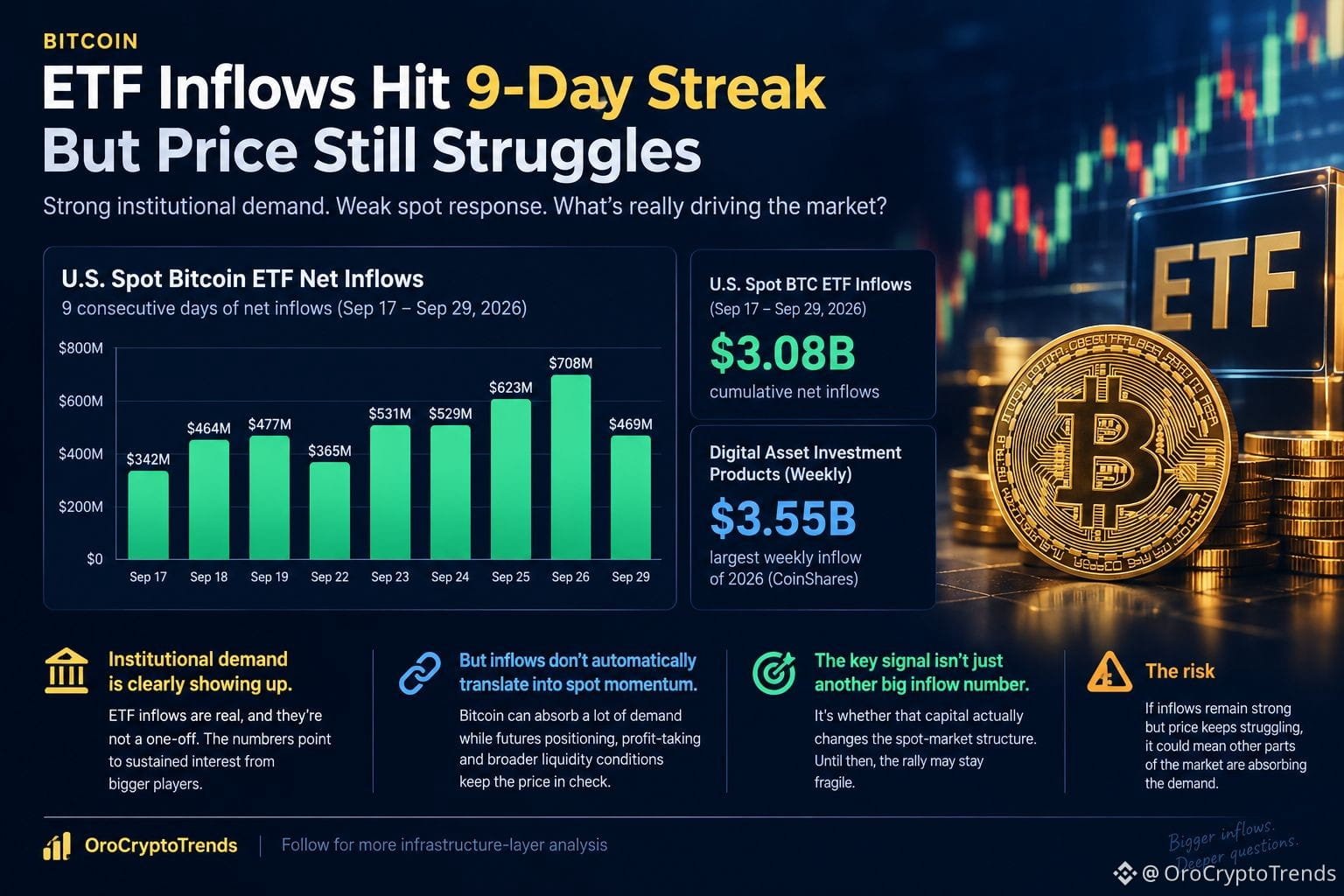
$BTC 9 gerade Handelstage mit BTC-ETF-Zuflüssen – und Bitcoin schafft es trotzdem nicht, den Eindruck zu erwecken, dass es ganz leicht ist.
Genau darauf komme ich immer wieder zurück.
Vom 17. September bis zum 29. September verzeichneten US-Spot-Bitcoin-ETFs laut Farside-Daten etwa 3,08 Mrd. US-Dollar an kumulierten Nettozuflüssen. CoinShares meldete außerdem 3,55 Mrd. US-Dollar, die in der letzten Woche in Anlageprodukte für digitale Vermögenswerte geflossen sind – der größte wöchentliche Zufluss im Jahr 2026 bislang.
Ja, also: Die institutionelle Nachfrage ist eindeutig sichtbar.
Aber hier bin ich mit der bullischen Interpretation weniger überzeugt.
Geld, das in ETFs fließt, bedeutet nicht automatisch, dass es sofort zu einer positiven Dynamik am Spot-Markt kommt. Bitcoin kann beträchtliche Nachfrage aufnehmen, während Futures-Positionierung, Gewinnmitnahmen und die breiteren Liquiditätsbedingungen verhindern, dass der Kurs beschleunigt.
Dieser Unterschied ist entscheidend.
Wenn die ETF-Zuflüsse weiter wachsen und die Spot-Nachfrage in eine stärkere Preisfindung übergeht, wird die Struktur deutlich überzeugender. Wenn die Zuflüsse stark bleiben, der Preis aber weiter Schwierigkeiten hat, würde ich das als Hinweis lesen, dass andere Teile des Marktes die Nachfrage absorbieren.
Ehrlich gesagt glaube ich, dass das nächste Signal nicht einfach nur eine weitere große Zuflusszahl ist. Entscheidend ist, ob dieses Kapital tatsächlich die Struktur des Spot-Markts verändert.
Ich versuche immer noch herauszufinden, was genau das verändert.
Folge für weitere Analysen auf der Infrastruktur-Ebene
$BTC 9 gerade Handelstage mit BTC-ETF-Zuflüssen – und Bitcoin schafft es trotzdem nicht, den Eindruck zu erwecken, dass es ganz leicht ist.
Genau darauf komme ich immer wieder zurück.
Vom 17. September bis zum 29. September verzeichneten US-Spot-Bitcoin-ETFs laut Farside-Daten etwa 3,08 Mrd. US-Dollar an kumulierten Nettozuflüssen. CoinShares meldete außerdem 3,55 Mrd. US-Dollar, die in der letzten Woche in Anlageprodukte für digitale Vermögenswerte geflossen sind – der größte wöchentliche Zufluss im Jahr 2026 bislang.
Ja, also: Die institutionelle Nachfrage ist eindeutig sichtbar.
Aber hier bin ich mit der bullischen Interpretation weniger überzeugt.
Geld, das in ETFs fließt, bedeutet nicht automatisch, dass es sofort zu einer positiven Dynamik am Spot-Markt kommt. Bitcoin kann beträchtliche Nachfrage aufnehmen, während Futures-Positionierung, Gewinnmitnahmen und die breiteren Liquiditätsbedingungen verhindern, dass der Kurs beschleunigt.
Dieser Unterschied ist entscheidend.
Wenn die ETF-Zuflüsse weiter wachsen und die Spot-Nachfrage in eine stärkere Preisfindung übergeht, wird die Struktur deutlich überzeugender. Wenn die Zuflüsse stark bleiben, der Preis aber weiter Schwierigkeiten hat, würde ich das als Hinweis lesen, dass andere Teile des Marktes die Nachfrage absorbieren.
Ehrlich gesagt glaube ich, dass das nächste Signal nicht einfach nur eine weitere große Zuflusszahl ist. Entscheidend ist, ob dieses Kapital tatsächlich die Struktur des Spot-Markts verändert.
Ich versuche immer noch herauszufinden, was genau das verändert.
Folge für weitere Analysen auf der Infrastruktur-Ebene
Genau darauf komme ich immer wieder zurück.
Vom 17. September bis zum 29. September verzeichneten US-Spot-Bitcoin-ETFs laut Farside-Daten etwa 3,08 Mrd. US-Dollar an kumulierten Nettozuflüssen. CoinShares meldete außerdem 3,55 Mrd. US-Dollar, die in der letzten Woche in Anlageprodukte für digitale Vermögenswerte geflossen sind – der größte wöchentliche Zufluss im Jahr 2026 bislang.
Ja, also: Die institutionelle Nachfrage ist eindeutig sichtbar.
Aber hier bin ich mit der bullischen Interpretation weniger überzeugt.
Geld, das in ETFs fließt, bedeutet nicht automatisch, dass es sofort zu einer positiven Dynamik am Spot-Markt kommt. Bitcoin kann beträchtliche Nachfrage aufnehmen, während Futures-Positionierung, Gewinnmitnahmen und die breiteren Liquiditätsbedingungen verhindern, dass der Kurs beschleunigt.
Dieser Unterschied ist entscheidend.
Wenn die ETF-Zuflüsse weiter wachsen und die Spot-Nachfrage in eine stärkere Preisfindung übergeht, wird die Struktur deutlich überzeugender. Wenn die Zuflüsse stark bleiben, der Preis aber weiter Schwierigkeiten hat, würde ich das als Hinweis lesen, dass andere Teile des Marktes die Nachfrage absorbieren.
Ehrlich gesagt glaube ich, dass das nächste Signal nicht einfach nur eine weitere große Zuflusszahl ist. Entscheidend ist, ob dieses Kapital tatsächlich die Struktur des Spot-Markts verändert.
Ich versuche immer noch herauszufinden, was genau das verändert.
Folge für weitere Analysen auf der Infrastruktur-Ebene
4
2.1k
Verifiziert
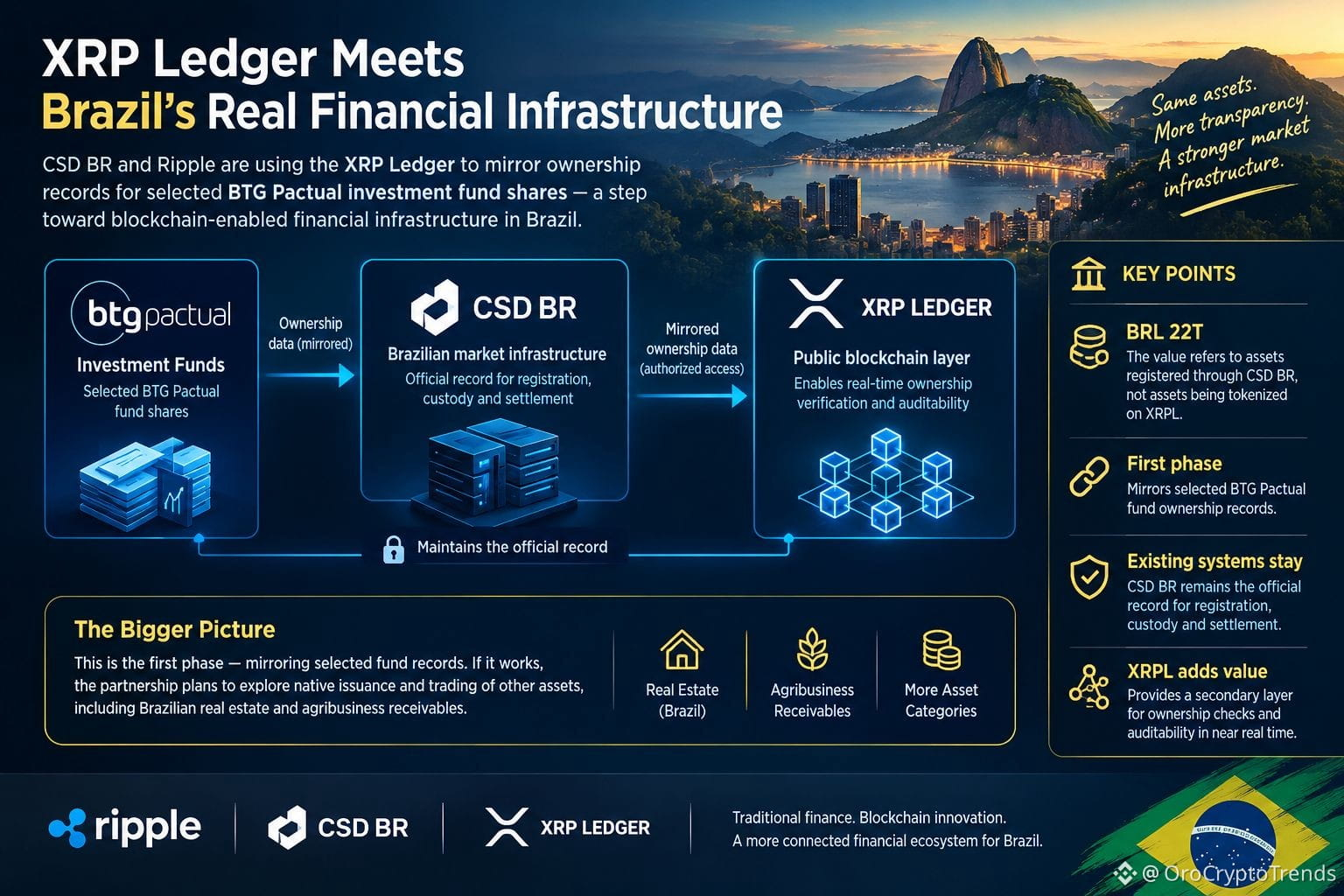
$XRP Brasilien hat dem XRP Ledger gerade einen deutlich interessanteren Anwendungsfall gegeben als noch ein Tokenisierungs-Demo.
CSD BR, ein regulierter brasilianischer Marktinfrastrukturbetreiber mit mehr als 22 Billionen BRL an registrierten Vermögenswerten, nutzt nun XRPL, um Eigentumsaufzeichnungen für ausgewählte Investmentfondsanteile von BTG Pactual zu spiegeln.
Aber Moment — die Zahl 22 Bio. BRL braucht Kontext. Die gesamte Summe wird NICHT auf XRPL übertragen.
Das bestehende System von CSD BR bleibt die offizielle Quelle für Registrierung, Verwahrung und Abwicklung. XRPL wird als zusätzliche Sekundärschicht ergänzt, in der autorisierte Institutionen Eigentumsdaten prüfen und Änderungen in nahezu Echtzeit nachvollziehen können.
Ehrlich gesagt, finde ich, dass diese Unterscheidung das Ganze noch interessanter macht, nicht weniger.
Das eigentliche Experiment besteht darin, ob eine öffentliche Blockchain neben kritischer Finanzinfrastruktur existieren kann, ohne dass Institutionen die Systeme aufgeben müssen, denen sie bereits vertrauen.
Das ist ein völlig anderer Weg zur Einführung als „alles onchain stellen“.
Und wenn die Spiegelungsphase funktioniert, will die Partnerschaft laut Aussage native Emission und den Handel weiterer Vermögenswerte erkunden — darunter brasilianische Immobilien und Forderungen aus dem Agribusiness.
Ich schaue mir also vor allem die Infrastruktur-Ebene an, nicht die Schlagzeile.
Die große Frage ist nicht, ob XRPL einen Vermögenswert tokenisieren kann. Sondern ob regulierte Institutionen genug operativen Mehrwert sehen, um die Rolle des Ledgers weiter auszubauen.
Ich versuche immer noch herauszufinden, was das in der Praxis eigentlich verändert.
$XRP Brasilien hat dem XRP Ledger gerade einen deutlich interessanteren Anwendungsfall gegeben als noch ein Tokenisierungs-Demo.
CSD BR, ein regulierter brasilianischer Marktinfrastrukturbetreiber mit mehr als 22 Billionen BRL an registrierten Vermögenswerten, nutzt nun XRPL, um Eigentumsaufzeichnungen für ausgewählte Investmentfondsanteile von BTG Pactual zu spiegeln.
Aber Moment — die Zahl 22 Bio. BRL braucht Kontext. Die gesamte Summe wird NICHT auf XRPL übertragen.
Das bestehende System von CSD BR bleibt die offizielle Quelle für Registrierung, Verwahrung und Abwicklung. XRPL wird als zusätzliche Sekundärschicht ergänzt, in der autorisierte Institutionen Eigentumsdaten prüfen und Änderungen in nahezu Echtzeit nachvollziehen können.
Ehrlich gesagt, finde ich, dass diese Unterscheidung das Ganze noch interessanter macht, nicht weniger.
Das eigentliche Experiment besteht darin, ob eine öffentliche Blockchain neben kritischer Finanzinfrastruktur existieren kann, ohne dass Institutionen die Systeme aufgeben müssen, denen sie bereits vertrauen.
Das ist ein völlig anderer Weg zur Einführung als „alles onchain stellen“.
Und wenn die Spiegelungsphase funktioniert, will die Partnerschaft laut Aussage native Emission und den Handel weiterer Vermögenswerte erkunden — darunter brasilianische Immobilien und Forderungen aus dem Agribusiness.
Ich schaue mir also vor allem die Infrastruktur-Ebene an, nicht die Schlagzeile.
Die große Frage ist nicht, ob XRPL einen Vermögenswert tokenisieren kann. Sondern ob regulierte Institutionen genug operativen Mehrwert sehen, um die Rolle des Ledgers weiter auszubauen.
Ich versuche immer noch herauszufinden, was das in der Praxis eigentlich verändert.
CSD BR, ein regulierter brasilianischer Marktinfrastrukturbetreiber mit mehr als 22 Billionen BRL an registrierten Vermögenswerten, nutzt nun XRPL, um Eigentumsaufzeichnungen für ausgewählte Investmentfondsanteile von BTG Pactual zu spiegeln.
Aber Moment — die Zahl 22 Bio. BRL braucht Kontext. Die gesamte Summe wird NICHT auf XRPL übertragen.
Das bestehende System von CSD BR bleibt die offizielle Quelle für Registrierung, Verwahrung und Abwicklung. XRPL wird als zusätzliche Sekundärschicht ergänzt, in der autorisierte Institutionen Eigentumsdaten prüfen und Änderungen in nahezu Echtzeit nachvollziehen können.
Ehrlich gesagt, finde ich, dass diese Unterscheidung das Ganze noch interessanter macht, nicht weniger.
Das eigentliche Experiment besteht darin, ob eine öffentliche Blockchain neben kritischer Finanzinfrastruktur existieren kann, ohne dass Institutionen die Systeme aufgeben müssen, denen sie bereits vertrauen.
Das ist ein völlig anderer Weg zur Einführung als „alles onchain stellen“.
Und wenn die Spiegelungsphase funktioniert, will die Partnerschaft laut Aussage native Emission und den Handel weiterer Vermögenswerte erkunden — darunter brasilianische Immobilien und Forderungen aus dem Agribusiness.
Ich schaue mir also vor allem die Infrastruktur-Ebene an, nicht die Schlagzeile.
Die große Frage ist nicht, ob XRPL einen Vermögenswert tokenisieren kann. Sondern ob regulierte Institutionen genug operativen Mehrwert sehen, um die Rolle des Ledgers weiter auszubauen.
Ich versuche immer noch herauszufinden, was das in der Praxis eigentlich verändert.
1
5
2k
Verifiziert
$BNB CZ postete „Bald....“ und plötzlich rufen Leute es als den Start von „BNB szn.“ aus.
Vielleicht. Aber ich finde, der spannendere Teil ist, was um dieses Meme herum passiert.
CZ teilte außerdem bullisches BNB-Chain-Content und verwies darauf, dass tokenisierte US-Aktien auf der Kette bewegt werden. BNB Chain sagt, sein Ökosystem habe bis Juni mehr als 709 tokenisierte Aktien und ETFs gehabt, mit einem kumulierten Volumen tokenisierter Aktien von über 5 Mrd. US-Dollar. Das ist ein echter Infrastrukturtrend – nicht nur ein Meme.
Dann gibt es auch noch die Unternehmensseite.
CEA Industries wurde am 29. September offiziell zur BNB Standard Corporation, behielt dabei aber das Nasdaq-Ticker „BNC“. Das Unternehmen sagte, es seien fast 5.800 Community-Votings für den neuen Namen abgegeben worden, wobei BNB Standard etwa 47% erhielt.
Diese Kombination ist es, die meine Aufmerksamkeit fesselt: eine Expansion des Ökosystems, tokenisierte Assets und ein öffentliches Unternehmen, das sich ausdrücklich um eine BNB-Treasury herum aufbaut.
Aber Moment – vielleicht gebe ich dem Meme zu viel Gewicht.
„Bald....“ ist kein bestätigtes Signal von CZ dafür, dass BNB kurz davor ist, zu rallyen. Bonk Guy interpretierte es so; der Markt muss die Story trotzdem noch validieren.
Für mich ist die eigentliche Frage, ob diese Katalysatoren sich in dauerhaftes Nutzungsverhalten und Kapitalflüsse übersetzen – statt nur in eine weitere kurzlebige Narrativ.
Ich versuche immer noch herauszufinden, was das tatsächlich verändert.
$BNB CZ postete „Bald....“ und plötzlich rufen Leute es als den Start von „BNB szn.“ aus.
Vielleicht. Aber ich finde, der spannendere Teil ist, was um dieses Meme herum passiert.
CZ teilte außerdem bullisches BNB-Chain-Content und verwies darauf, dass tokenisierte US-Aktien auf der Kette bewegt werden. BNB Chain sagt, sein Ökosystem habe bis Juni mehr als 709 tokenisierte Aktien und ETFs gehabt, mit einem kumulierten Volumen tokenisierter Aktien von über 5 Mrd. US-Dollar. Das ist ein echter Infrastrukturtrend – nicht nur ein Meme.
Dann gibt es auch noch die Unternehmensseite.
CEA Industries wurde am 29. September offiziell zur BNB Standard Corporation, behielt dabei aber das Nasdaq-Ticker „BNC“. Das Unternehmen sagte, es seien fast 5.800 Community-Votings für den neuen Namen abgegeben worden, wobei BNB Standard etwa 47% erhielt.
Diese Kombination ist es, die meine Aufmerksamkeit fesselt: eine Expansion des Ökosystems, tokenisierte Assets und ein öffentliches Unternehmen, das sich ausdrücklich um eine BNB-Treasury herum aufbaut.
Aber Moment – vielleicht gebe ich dem Meme zu viel Gewicht.
„Bald....“ ist kein bestätigtes Signal von CZ dafür, dass BNB kurz davor ist, zu rallyen. Bonk Guy interpretierte es so; der Markt muss die Story trotzdem noch validieren.
Für mich ist die eigentliche Frage, ob diese Katalysatoren sich in dauerhaftes Nutzungsverhalten und Kapitalflüsse übersetzen – statt nur in eine weitere kurzlebige Narrativ.
Ich versuche immer noch herauszufinden, was das tatsächlich verändert.
Vielleicht. Aber ich finde, der spannendere Teil ist, was um dieses Meme herum passiert.
CZ teilte außerdem bullisches BNB-Chain-Content und verwies darauf, dass tokenisierte US-Aktien auf der Kette bewegt werden. BNB Chain sagt, sein Ökosystem habe bis Juni mehr als 709 tokenisierte Aktien und ETFs gehabt, mit einem kumulierten Volumen tokenisierter Aktien von über 5 Mrd. US-Dollar. Das ist ein echter Infrastrukturtrend – nicht nur ein Meme.
Dann gibt es auch noch die Unternehmensseite.
CEA Industries wurde am 29. September offiziell zur BNB Standard Corporation, behielt dabei aber das Nasdaq-Ticker „BNC“. Das Unternehmen sagte, es seien fast 5.800 Community-Votings für den neuen Namen abgegeben worden, wobei BNB Standard etwa 47% erhielt.
Diese Kombination ist es, die meine Aufmerksamkeit fesselt: eine Expansion des Ökosystems, tokenisierte Assets und ein öffentliches Unternehmen, das sich ausdrücklich um eine BNB-Treasury herum aufbaut.
Aber Moment – vielleicht gebe ich dem Meme zu viel Gewicht.
„Bald....“ ist kein bestätigtes Signal von CZ dafür, dass BNB kurz davor ist, zu rallyen. Bonk Guy interpretierte es so; der Markt muss die Story trotzdem noch validieren.
Für mich ist die eigentliche Frage, ob diese Katalysatoren sich in dauerhaftes Nutzungsverhalten und Kapitalflüsse übersetzen – statt nur in eine weitere kurzlebige Narrativ.
Ich versuche immer noch herauszufinden, was das tatsächlich verändert.
3
3
4k
Der 30. September ist ein größeres Datum für die UK-Krypto-Branche, als die Schlagzeile vermuten lässt.
Das neue Autorisierungsfenster der FCA startet heute, und Unternehmen haben bis zum 28. Februar 2027 Zeit, sich zu bewerben, wenn sie die entsprechenden Spar-Vorschriften nutzen möchten. Das breitere Regelwerk soll am 25. Oktober 2027 in Kraft treten.
Was meine Aufmerksamkeit weniger auf sich zieht, ist nicht einfach „mehr Krypto-Regulierung“.
Es ist, dass die Autorisierung zu einem Bestandteil der tatsächlichen operativen Infrastruktur wird.
Handelsplattformen, das Handeln und Vermitteln, die Sicherung, das Staking und die qualifizierende Ausgabe von Stablecoins gehören zu den Aktivitäten, die in den neuen Rahmen hinein kommen. Und bestehende Registrierungen werden nicht automatisch zu den neuen Befugnissen.
Das verändert die Wirtschaftlichkeit.
Ein Krypto-Unternehmen, das im Vereinigten Königreich tätig ist, muss Compliance, Kontrollen, Verwahrung und Berichterstattung zunehmend als Teil des Produkts selbst betrachten — nicht als etwas, das am Rand des Geschäfts existiert.
Und hier gibt es einen echten Interessenkonflikt.
Höhere Standards können den Verbraucherschutz und die Marktintegrität stärken. Aber die Kosten, um diese Standards zu erfüllen, könnten auch beeinflussen, welche Unternehmen wirtschaftlich in der Lage sind, UK-Nutzer zu bedienen.
Daher interessiere ich mich weniger dafür, ob das für Krypto „bullisch“ oder „bärisch“ ist.
Die spannendere Frage ist, welche Geschäftsmodelle noch funktionieren, wenn Regulierung Teil des Infrastruktur-Stacks wird.
Ich versuche immer noch herauszufinden, was sich dadurch tatsächlich ändert.
Der 30. September ist ein größeres Datum für die UK-Krypto-Branche, als die Schlagzeile vermuten lässt.
Das neue Autorisierungsfenster der FCA startet heute, und Unternehmen haben bis zum 28. Februar 2027 Zeit, sich zu bewerben, wenn sie die entsprechenden Spar-Vorschriften nutzen möchten. Das breitere Regelwerk soll am 25. Oktober 2027 in Kraft treten.
Was meine Aufmerksamkeit weniger auf sich zieht, ist nicht einfach „mehr Krypto-Regulierung“.
Es ist, dass die Autorisierung zu einem Bestandteil der tatsächlichen operativen Infrastruktur wird.
Handelsplattformen, das Handeln und Vermitteln, die Sicherung, das Staking und die qualifizierende Ausgabe von Stablecoins gehören zu den Aktivitäten, die in den neuen Rahmen hinein kommen. Und bestehende Registrierungen werden nicht automatisch zu den neuen Befugnissen.
Das verändert die Wirtschaftlichkeit.
Ein Krypto-Unternehmen, das im Vereinigten Königreich tätig ist, muss Compliance, Kontrollen, Verwahrung und Berichterstattung zunehmend als Teil des Produkts selbst betrachten — nicht als etwas, das am Rand des Geschäfts existiert.
Und hier gibt es einen echten Interessenkonflikt.
Höhere Standards können den Verbraucherschutz und die Marktintegrität stärken. Aber die Kosten, um diese Standards zu erfüllen, könnten auch beeinflussen, welche Unternehmen wirtschaftlich in der Lage sind, UK-Nutzer zu bedienen.
Daher interessiere ich mich weniger dafür, ob das für Krypto „bullisch“ oder „bärisch“ ist.
Die spannendere Frage ist, welche Geschäftsmodelle noch funktionieren, wenn Regulierung Teil des Infrastruktur-Stacks wird.
Ich versuche immer noch herauszufinden, was sich dadurch tatsächlich ändert.
Das neue Autorisierungsfenster der FCA startet heute, und Unternehmen haben bis zum 28. Februar 2027 Zeit, sich zu bewerben, wenn sie die entsprechenden Spar-Vorschriften nutzen möchten. Das breitere Regelwerk soll am 25. Oktober 2027 in Kraft treten.
Was meine Aufmerksamkeit weniger auf sich zieht, ist nicht einfach „mehr Krypto-Regulierung“.
Es ist, dass die Autorisierung zu einem Bestandteil der tatsächlichen operativen Infrastruktur wird.
Handelsplattformen, das Handeln und Vermitteln, die Sicherung, das Staking und die qualifizierende Ausgabe von Stablecoins gehören zu den Aktivitäten, die in den neuen Rahmen hinein kommen. Und bestehende Registrierungen werden nicht automatisch zu den neuen Befugnissen.
Das verändert die Wirtschaftlichkeit.
Ein Krypto-Unternehmen, das im Vereinigten Königreich tätig ist, muss Compliance, Kontrollen, Verwahrung und Berichterstattung zunehmend als Teil des Produkts selbst betrachten — nicht als etwas, das am Rand des Geschäfts existiert.
Und hier gibt es einen echten Interessenkonflikt.
Höhere Standards können den Verbraucherschutz und die Marktintegrität stärken. Aber die Kosten, um diese Standards zu erfüllen, könnten auch beeinflussen, welche Unternehmen wirtschaftlich in der Lage sind, UK-Nutzer zu bedienen.
Daher interessiere ich mich weniger dafür, ob das für Krypto „bullisch“ oder „bärisch“ ist.
Die spannendere Frage ist, welche Geschäftsmodelle noch funktionieren, wenn Regulierung Teil des Infrastruktur-Stacks wird.
Ich versuche immer noch herauszufinden, was sich dadurch tatsächlich ändert.

1
2.4k
Das Vereinigte Königreich hat gerade die Tür zu seinem neuen Krypto-Autorisierungsregime geöffnet.
Ab dem 30. September können Unternehmen damit beginnen, sich bei der FCA für eine Genehmigung unter dem neuen Kryptoasset-Rahmenwerk des Vereinigten Königreichs zu bewerben. Das Antragsfenster läuft bis zum 28. Februar 2027, während das vollständige Regime für den 25. Oktober 2027 vorgesehen ist.
Was an der Sache für mich nicht nur die Schlagzeile „Krypto-Regulierung“ ist.
Es ist die Verschiebung dessen, was es tatsächlich erfordert, in Großbritannien ein Krypto-Geschäft zu betreiben.
Die FCA sagt, dass das neue Regime Tätigkeiten umfasst, darunter Kryptowerte-Handelsplattformen, „Dealing“ und Arrangieren, Verwahrung, Staking-Vereinbarungen sowie die Ausgabe von qualifizierten Stablecoins. Bestehende Registrierungen werden sich außerdem nicht einfach automatisch in die neuen Berechtigungen umwandeln.
Das ist wichtig, weil sich die Regulierung von etwas entfernt, das Unternehmen nur vorbereiten, hin zu etwas, das zunehmend in die Infrastruktur des Marktes eingebaut ist.
Doch hier gibt es einen Haken.
Höhere Standards können den Verbraucherschutz und die Marktintegrität verbessern, aber die Kosten und die Komplexität der Genehmigung könnten auch verändern, welche Unternehmen UK-Nutzer realistisch bedienen können.
Daher interessiere ich mich weniger dafür, ob das „bullish“ oder „bearish“ für Krypto ist.
Die größere Frage ist, welche Geschäftsmodelle wirtschaftlich noch sinnvoll sind, wenn Compliance Teil des Betriebssystems wird.
Ich versuche immer noch herauszufinden, was sich daran tatsächlich ändert.
Das Vereinigte Königreich hat gerade die Tür zu seinem neuen Krypto-Autorisierungsregime geöffnet.
Ab dem 30. September können Unternehmen damit beginnen, sich bei der FCA für eine Genehmigung unter dem neuen Kryptoasset-Rahmenwerk des Vereinigten Königreichs zu bewerben. Das Antragsfenster läuft bis zum 28. Februar 2027, während das vollständige Regime für den 25. Oktober 2027 vorgesehen ist.
Was an der Sache für mich nicht nur die Schlagzeile „Krypto-Regulierung“ ist.
Es ist die Verschiebung dessen, was es tatsächlich erfordert, in Großbritannien ein Krypto-Geschäft zu betreiben.
Die FCA sagt, dass das neue Regime Tätigkeiten umfasst, darunter Kryptowerte-Handelsplattformen, „Dealing“ und Arrangieren, Verwahrung, Staking-Vereinbarungen sowie die Ausgabe von qualifizierten Stablecoins. Bestehende Registrierungen werden sich außerdem nicht einfach automatisch in die neuen Berechtigungen umwandeln.
Das ist wichtig, weil sich die Regulierung von etwas entfernt, das Unternehmen nur vorbereiten, hin zu etwas, das zunehmend in die Infrastruktur des Marktes eingebaut ist.
Doch hier gibt es einen Haken.
Höhere Standards können den Verbraucherschutz und die Marktintegrität verbessern, aber die Kosten und die Komplexität der Genehmigung könnten auch verändern, welche Unternehmen UK-Nutzer realistisch bedienen können.
Daher interessiere ich mich weniger dafür, ob das „bullish“ oder „bearish“ für Krypto ist.
Die größere Frage ist, welche Geschäftsmodelle wirtschaftlich noch sinnvoll sind, wenn Compliance Teil des Betriebssystems wird.
Ich versuche immer noch herauszufinden, was sich daran tatsächlich ändert.
Ab dem 30. September können Unternehmen damit beginnen, sich bei der FCA für eine Genehmigung unter dem neuen Kryptoasset-Rahmenwerk des Vereinigten Königreichs zu bewerben. Das Antragsfenster läuft bis zum 28. Februar 2027, während das vollständige Regime für den 25. Oktober 2027 vorgesehen ist.
Was an der Sache für mich nicht nur die Schlagzeile „Krypto-Regulierung“ ist.
Es ist die Verschiebung dessen, was es tatsächlich erfordert, in Großbritannien ein Krypto-Geschäft zu betreiben.
Die FCA sagt, dass das neue Regime Tätigkeiten umfasst, darunter Kryptowerte-Handelsplattformen, „Dealing“ und Arrangieren, Verwahrung, Staking-Vereinbarungen sowie die Ausgabe von qualifizierten Stablecoins. Bestehende Registrierungen werden sich außerdem nicht einfach automatisch in die neuen Berechtigungen umwandeln.
Das ist wichtig, weil sich die Regulierung von etwas entfernt, das Unternehmen nur vorbereiten, hin zu etwas, das zunehmend in die Infrastruktur des Marktes eingebaut ist.
Doch hier gibt es einen Haken.
Höhere Standards können den Verbraucherschutz und die Marktintegrität verbessern, aber die Kosten und die Komplexität der Genehmigung könnten auch verändern, welche Unternehmen UK-Nutzer realistisch bedienen können.
Daher interessiere ich mich weniger dafür, ob das „bullish“ oder „bearish“ für Krypto ist.
Die größere Frage ist, welche Geschäftsmodelle wirtschaftlich noch sinnvoll sind, wenn Compliance Teil des Betriebssystems wird.
Ich versuche immer noch herauszufinden, was sich daran tatsächlich ändert.
1
2.3k
$AMD.US
AMD hat die Marke von 1 Billion US-Dollar überschritten. Ich denke, dass die Bewertungs-Marke an sich der weniger interessante Teil ist.
Wichtig ist, was Investoren nun bereit sind, für AMD zu zahlen.
Der Markt behandelt AMD zunehmend als mehr als nur ein Unternehmen, das CPUs und GPUs verkauft. Die KI-Exponierung reicht inzwischen bis zu Beschleunigern, Rechenzentrums-Systemen, dem Bedarf an Inference, großen Kundenbeziehungen und zunehmend auch bis zur Software- und Intelligenzschicht rund um diese Systeme.
Und genau dort wird die These spannender.
AMD versucht, mehr vom KI-Infrastruktur-Stack zu erfassen, nicht einfach nur mehr Chips zu verkaufen. Seine Expansion in Bereiche wie räumliche Intelligenz und Physical AI deutet auf eine breitere Strategie hin, in welche Richtung sich die Entwicklung des Compute-Bedarfs als Nächstes bewegen könnte.
Doch da gibt es einen Haken.
Eine Bewertung von 1 Billion US-Dollar erhöht die Messlatte für die Umsetzung. Starke KI-Nachfrage allein reicht nicht. AMD braucht weiterhin nachhaltiges Umsatzwachstum, bessere Margen, die Einführung von Beschleunigern und belastbare Beziehungen zu Hyperscalern, um die Erwartungen zu rechtfertigen, die in der Bewertung eingepreist sind.
Deshalb beobachte ich die Fundamentaldaten hinter der Schlagzeile – nicht die Schlagzeile selbst.
Die nächste Phase dreht sich im Grunde darum, ob AMD aus der KI-Nachfrage dauerhaft wirtschaftlichen Mehrwert schaffen kann.
Das ist der Teil dieser Story, der meiner Meinung nach am wichtigsten ist.
$AMD.US
AMD hat die Marke von 1 Billion US-Dollar überschritten. Ich denke, dass die Bewertungs-Marke an sich der weniger interessante Teil ist.
Wichtig ist, was Investoren nun bereit sind, für AMD zu zahlen.
Der Markt behandelt AMD zunehmend als mehr als nur ein Unternehmen, das CPUs und GPUs verkauft. Die KI-Exponierung reicht inzwischen bis zu Beschleunigern, Rechenzentrums-Systemen, dem Bedarf an Inference, großen Kundenbeziehungen und zunehmend auch bis zur Software- und Intelligenzschicht rund um diese Systeme.
Und genau dort wird die These spannender.
AMD versucht, mehr vom KI-Infrastruktur-Stack zu erfassen, nicht einfach nur mehr Chips zu verkaufen. Seine Expansion in Bereiche wie räumliche Intelligenz und Physical AI deutet auf eine breitere Strategie hin, in welche Richtung sich die Entwicklung des Compute-Bedarfs als Nächstes bewegen könnte.
Doch da gibt es einen Haken.
Eine Bewertung von 1 Billion US-Dollar erhöht die Messlatte für die Umsetzung. Starke KI-Nachfrage allein reicht nicht. AMD braucht weiterhin nachhaltiges Umsatzwachstum, bessere Margen, die Einführung von Beschleunigern und belastbare Beziehungen zu Hyperscalern, um die Erwartungen zu rechtfertigen, die in der Bewertung eingepreist sind.
Deshalb beobachte ich die Fundamentaldaten hinter der Schlagzeile – nicht die Schlagzeile selbst.
Die nächste Phase dreht sich im Grunde darum, ob AMD aus der KI-Nachfrage dauerhaft wirtschaftlichen Mehrwert schaffen kann.
Das ist der Teil dieser Story, der meiner Meinung nach am wichtigsten ist.
AMD hat die Marke von 1 Billion US-Dollar überschritten. Ich denke, dass die Bewertungs-Marke an sich der weniger interessante Teil ist.
Wichtig ist, was Investoren nun bereit sind, für AMD zu zahlen.
Der Markt behandelt AMD zunehmend als mehr als nur ein Unternehmen, das CPUs und GPUs verkauft. Die KI-Exponierung reicht inzwischen bis zu Beschleunigern, Rechenzentrums-Systemen, dem Bedarf an Inference, großen Kundenbeziehungen und zunehmend auch bis zur Software- und Intelligenzschicht rund um diese Systeme.
Und genau dort wird die These spannender.
AMD versucht, mehr vom KI-Infrastruktur-Stack zu erfassen, nicht einfach nur mehr Chips zu verkaufen. Seine Expansion in Bereiche wie räumliche Intelligenz und Physical AI deutet auf eine breitere Strategie hin, in welche Richtung sich die Entwicklung des Compute-Bedarfs als Nächstes bewegen könnte.
Doch da gibt es einen Haken.
Eine Bewertung von 1 Billion US-Dollar erhöht die Messlatte für die Umsetzung. Starke KI-Nachfrage allein reicht nicht. AMD braucht weiterhin nachhaltiges Umsatzwachstum, bessere Margen, die Einführung von Beschleunigern und belastbare Beziehungen zu Hyperscalern, um die Erwartungen zu rechtfertigen, die in der Bewertung eingepreist sind.
Deshalb beobachte ich die Fundamentaldaten hinter der Schlagzeile – nicht die Schlagzeile selbst.
Die nächste Phase dreht sich im Grunde darum, ob AMD aus der KI-Nachfrage dauerhaft wirtschaftlichen Mehrwert schaffen kann.
Das ist der Teil dieser Story, der meiner Meinung nach am wichtigsten ist.
AMD-0,08%
AMDUS+2,80%
445
Verifiziert
$ACN Binance hat gerade sieben weitere TradFi-Perpetuals hinzugefügt. Die größere Geschichte sind nicht die Ticker — sondern die Marktstruktur.
Der heutige Rollout umfasst CRML, BWET, ACN, MP, SECZ, UNH und NKE, jeweils als USDT-gepreisste Perpetual-Contracts mit 24/7-Handel und bis zu 20x Hebel.
Das ist relevant, weil Binance traditionelle Aktien und andere Real-World-Assets zunehmend als Instrumente behandelt, die sich direkt in eine krypt-native Derivate-Infrastruktur einbinden lassen.
Aber ich würde bei der Formulierung „Tokenisierung“ vorsichtig sein.
SECZ beispielsweise bildet die Kursentwicklung von Securitize Corp. Stammaktien ab. Die Binance-Ankündigung sagt nicht, dass diese Kontrakte eine tokenisierte Eigentumsbeteiligung an den zugrunde liegenden Aktien darstellen. Es handelt sich um Perpetual-Derivate, die auf diese zugrunde liegenden Assets referenzieren.
Diese Unterscheidung ist wichtig. Die eigentliche Entwicklung besteht nicht zwingend darin, dass Aktienbesitz on-chain kommt. Sondern darin, dass mehr Exposure aus dem traditionellen Markt in ein 24/7-, USDT-basiertes Derivate-Umfeld gebracht wird.
Und Binance hat diese Kategorie rasch ausgebaut, nachdem gestern bereits fünf weitere TradFi-Perpetuals hinzugekommen sind.
Die spannende Frage ist nun, ob daraus eine echte Brücke zwischen Krypto-Liquidität und traditionellen Märkten wird — oder ob lediglich eine weitere Derivate-Schicht um vertraute Assets entsteht.
Langfristige Auswirkungen hängen davon ab, ob Liquidität, Preisqualität und die Nachfrage der Nutzer mit dem wachsenden Produktangebot Schritt halten.
$ACN Binance hat gerade sieben weitere TradFi-Perpetuals hinzugefügt. Die größere Geschichte sind nicht die Ticker — sondern die Marktstruktur.
Der heutige Rollout umfasst CRML, BWET, ACN, MP, SECZ, UNH und NKE, jeweils als USDT-gepreisste Perpetual-Contracts mit 24/7-Handel und bis zu 20x Hebel.
Das ist relevant, weil Binance traditionelle Aktien und andere Real-World-Assets zunehmend als Instrumente behandelt, die sich direkt in eine krypt-native Derivate-Infrastruktur einbinden lassen.
Aber ich würde bei der Formulierung „Tokenisierung“ vorsichtig sein.
SECZ beispielsweise bildet die Kursentwicklung von Securitize Corp. Stammaktien ab. Die Binance-Ankündigung sagt nicht, dass diese Kontrakte eine tokenisierte Eigentumsbeteiligung an den zugrunde liegenden Aktien darstellen. Es handelt sich um Perpetual-Derivate, die auf diese zugrunde liegenden Assets referenzieren.
Diese Unterscheidung ist wichtig. Die eigentliche Entwicklung besteht nicht zwingend darin, dass Aktienbesitz on-chain kommt. Sondern darin, dass mehr Exposure aus dem traditionellen Markt in ein 24/7-, USDT-basiertes Derivate-Umfeld gebracht wird.
Und Binance hat diese Kategorie rasch ausgebaut, nachdem gestern bereits fünf weitere TradFi-Perpetuals hinzugekommen sind.
Die spannende Frage ist nun, ob daraus eine echte Brücke zwischen Krypto-Liquidität und traditionellen Märkten wird — oder ob lediglich eine weitere Derivate-Schicht um vertraute Assets entsteht.
Langfristige Auswirkungen hängen davon ab, ob Liquidität, Preisqualität und die Nachfrage der Nutzer mit dem wachsenden Produktangebot Schritt halten.
Der heutige Rollout umfasst CRML, BWET, ACN, MP, SECZ, UNH und NKE, jeweils als USDT-gepreisste Perpetual-Contracts mit 24/7-Handel und bis zu 20x Hebel.
Das ist relevant, weil Binance traditionelle Aktien und andere Real-World-Assets zunehmend als Instrumente behandelt, die sich direkt in eine krypt-native Derivate-Infrastruktur einbinden lassen.
Aber ich würde bei der Formulierung „Tokenisierung“ vorsichtig sein.
SECZ beispielsweise bildet die Kursentwicklung von Securitize Corp. Stammaktien ab. Die Binance-Ankündigung sagt nicht, dass diese Kontrakte eine tokenisierte Eigentumsbeteiligung an den zugrunde liegenden Aktien darstellen. Es handelt sich um Perpetual-Derivate, die auf diese zugrunde liegenden Assets referenzieren.
Diese Unterscheidung ist wichtig. Die eigentliche Entwicklung besteht nicht zwingend darin, dass Aktienbesitz on-chain kommt. Sondern darin, dass mehr Exposure aus dem traditionellen Markt in ein 24/7-, USDT-basiertes Derivate-Umfeld gebracht wird.
Und Binance hat diese Kategorie rasch ausgebaut, nachdem gestern bereits fünf weitere TradFi-Perpetuals hinzugekommen sind.
Die spannende Frage ist nun, ob daraus eine echte Brücke zwischen Krypto-Liquidität und traditionellen Märkten wird — oder ob lediglich eine weitere Derivate-Schicht um vertraute Assets entsteht.
Langfristige Auswirkungen hängen davon ab, ob Liquidität, Preisqualität und die Nachfrage der Nutzer mit dem wachsenden Produktangebot Schritt halten.
682
#EarningsSeason
Kann Micron eine Bruttomarge von 86 % erreichen – und reicht das überhaupt für MU?
Das ist der Teil, den ich am genauesten im Blick habe, wenn Microns FY2026-Q4-Bericht am 30. September ansteht.
Microns eigene Prognose ist bereits beeindruckend: 50 Mrd. $ ± 1 Mrd. $ Umsatz, etwa 86 % Bruttomarge und 31 ± 1 $ Non-GAAP-EPS.
Und ehrlich gesagt halte ich 86 % für erreichbar.
Aber vielleicht ist das gar nicht die eigentliche Frage.
Q3 hat bereits eine Non-GAAP-Bruttomarge von 84,9 % geliefert, sodass der Schritt zu 86 % keine völlig abwegige Sprungbewegung ist. Die größere Herausforderung ist, was danach passiert. Micron sagt, dass die Margen-Einschätzung für Q4 bereits eine spürbare Abschwächung der Preissteigerungsrate einkalkuliert.
Damit wird die FY2027-Prognose besonders wichtig.
Wenn Micron Q4 übertrifft, aber bei künftigen Preisen, Margen oder Kapazitäten vorsichtig klingt, könnte sich der Markt eher auf den zweiten Teil des Satzes konzentrieren – statt auf den Schlagzeilen-Vorsprung.
Und es gibt noch einen weiteren interessanten Punkt: Micron liefert HBM4 bereits in hohen Stückzahlen an seinen wichtigsten Kunden aus, während für 2027 eine Serienfertigung von HBM4E in erwartet wird. Das Unternehmen rechnet außerdem damit, dass die vierteljährlichen Capex im FY2027 über dem Niveau von Q4 liegen werden, während es die Reinraumkapazitäten ausbaut, um die Nachfrage auf längere Sicht zu bedienen.
Ich bin also grundsätzlich zuversichtlich, was die Fundamentaldaten angeht, aber deutlich weniger bereit anzunehmen, dass die Aktie automatisch folgt.
Der eigentliche Test ist, ob diese Margen zu einer belastbaren Ertragsstruktur werden – oder lediglich ein außergewöhnlicher Punkt im Gedächtniszyklus.
Darauf werde ich nach den Zahlen besonders achten.
Ich versuche immer noch herauszufinden, was das tatsächlich ändert.
#EarningsSeason
Kann Micron eine Bruttomarge von 86 % erreichen – und reicht das überhaupt für MU?
Das ist der Teil, den ich am genauesten im Blick habe, wenn Microns FY2026-Q4-Bericht am 30. September ansteht.
Microns eigene Prognose ist bereits beeindruckend: 50 Mrd. $ ± 1 Mrd. $ Umsatz, etwa 86 % Bruttomarge und 31 ± 1 $ Non-GAAP-EPS.
Und ehrlich gesagt halte ich 86 % für erreichbar.
Aber vielleicht ist das gar nicht die eigentliche Frage.
Q3 hat bereits eine Non-GAAP-Bruttomarge von 84,9 % geliefert, sodass der Schritt zu 86 % keine völlig abwegige Sprungbewegung ist. Die größere Herausforderung ist, was danach passiert. Micron sagt, dass die Margen-Einschätzung für Q4 bereits eine spürbare Abschwächung der Preissteigerungsrate einkalkuliert.
Damit wird die FY2027-Prognose besonders wichtig.
Wenn Micron Q4 übertrifft, aber bei künftigen Preisen, Margen oder Kapazitäten vorsichtig klingt, könnte sich der Markt eher auf den zweiten Teil des Satzes konzentrieren – statt auf den Schlagzeilen-Vorsprung.
Und es gibt noch einen weiteren interessanten Punkt: Micron liefert HBM4 bereits in hohen Stückzahlen an seinen wichtigsten Kunden aus, während für 2027 eine Serienfertigung von HBM4E in erwartet wird. Das Unternehmen rechnet außerdem damit, dass die vierteljährlichen Capex im FY2027 über dem Niveau von Q4 liegen werden, während es die Reinraumkapazitäten ausbaut, um die Nachfrage auf längere Sicht zu bedienen.
Ich bin also grundsätzlich zuversichtlich, was die Fundamentaldaten angeht, aber deutlich weniger bereit anzunehmen, dass die Aktie automatisch folgt.
Der eigentliche Test ist, ob diese Margen zu einer belastbaren Ertragsstruktur werden – oder lediglich ein außergewöhnlicher Punkt im Gedächtniszyklus.
Darauf werde ich nach den Zahlen besonders achten.
Ich versuche immer noch herauszufinden, was das tatsächlich ändert.
Kann Micron eine Bruttomarge von 86 % erreichen – und reicht das überhaupt für MU?
Das ist der Teil, den ich am genauesten im Blick habe, wenn Microns FY2026-Q4-Bericht am 30. September ansteht.
Microns eigene Prognose ist bereits beeindruckend: 50 Mrd. $ ± 1 Mrd. $ Umsatz, etwa 86 % Bruttomarge und 31 ± 1 $ Non-GAAP-EPS.
Und ehrlich gesagt halte ich 86 % für erreichbar.
Aber vielleicht ist das gar nicht die eigentliche Frage.
Q3 hat bereits eine Non-GAAP-Bruttomarge von 84,9 % geliefert, sodass der Schritt zu 86 % keine völlig abwegige Sprungbewegung ist. Die größere Herausforderung ist, was danach passiert. Micron sagt, dass die Margen-Einschätzung für Q4 bereits eine spürbare Abschwächung der Preissteigerungsrate einkalkuliert.
Damit wird die FY2027-Prognose besonders wichtig.
Wenn Micron Q4 übertrifft, aber bei künftigen Preisen, Margen oder Kapazitäten vorsichtig klingt, könnte sich der Markt eher auf den zweiten Teil des Satzes konzentrieren – statt auf den Schlagzeilen-Vorsprung.
Und es gibt noch einen weiteren interessanten Punkt: Micron liefert HBM4 bereits in hohen Stückzahlen an seinen wichtigsten Kunden aus, während für 2027 eine Serienfertigung von HBM4E in erwartet wird. Das Unternehmen rechnet außerdem damit, dass die vierteljährlichen Capex im FY2027 über dem Niveau von Q4 liegen werden, während es die Reinraumkapazitäten ausbaut, um die Nachfrage auf längere Sicht zu bedienen.
Ich bin also grundsätzlich zuversichtlich, was die Fundamentaldaten angeht, aber deutlich weniger bereit anzunehmen, dass die Aktie automatisch folgt.
Der eigentliche Test ist, ob diese Margen zu einer belastbaren Ertragsstruktur werden – oder lediglich ein außergewöhnlicher Punkt im Gedächtniszyklus.
Darauf werde ich nach den Zahlen besonders achten.
Ich versuche immer noch herauszufinden, was das tatsächlich ändert.
373
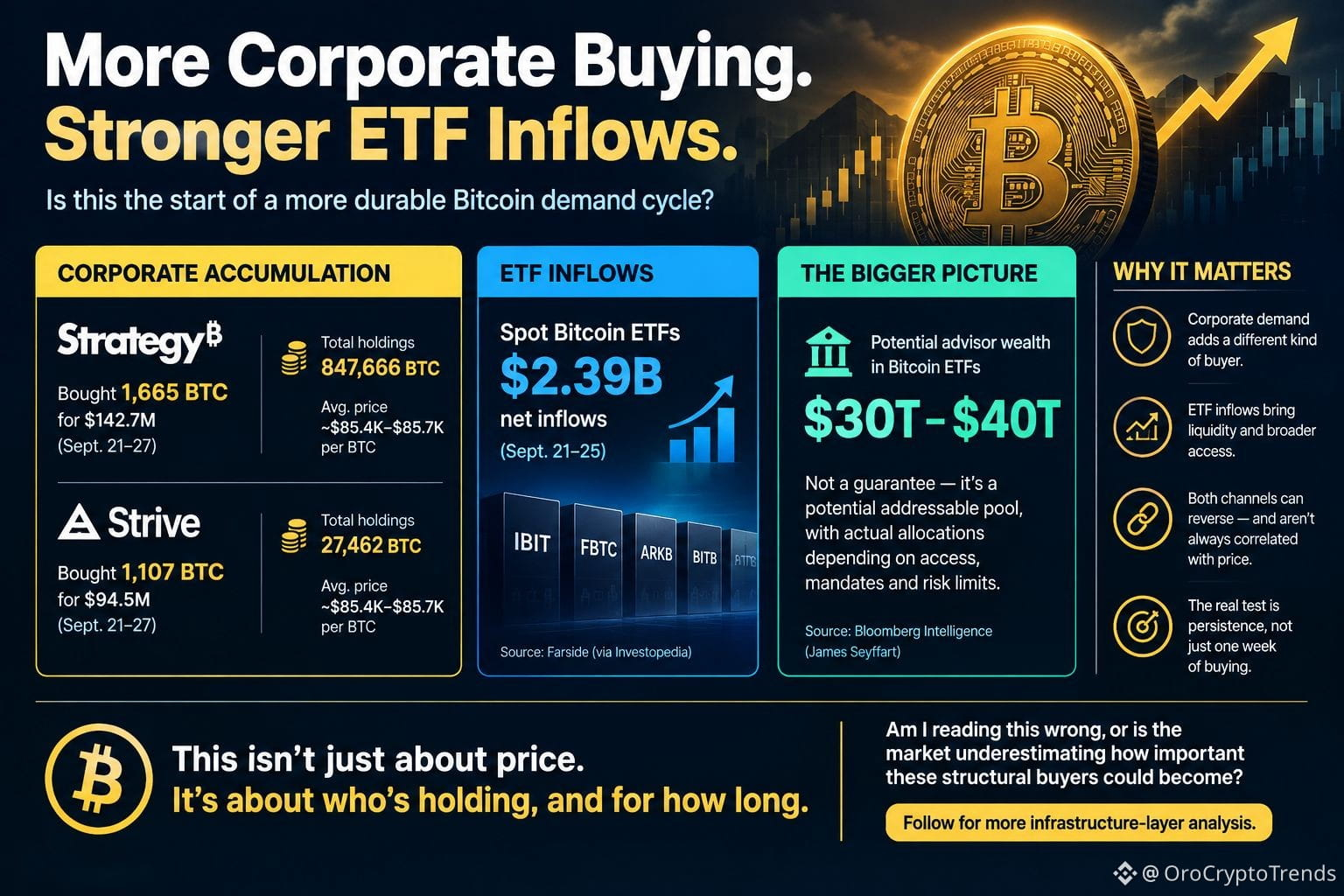
$BTC Strategy hat gerade weitere 1.665 BTC gekauft.
Das ist der Teil dieser Geschichte, auf den ich achte.
Strategy hat zwischen dem 21. und 27. September 142,7 Mio. US-Dollar ausgegeben und seine Bitcoin-Bestände auf 847.666 BTC gebracht. Strive hat weitere 1.107 BTC für 94,5 Mio. US-Dollar hinzugekauft und damit seinen Bestand auf 27.462 BTC erhöht. Beide Käufe wurden etwa zu 85,4k–85,7k US-Dollar pro BTC getätigt.
Aber ich denke, das wichtigere Signal ist die Kombination aus Unternehmensakkumulation und ETF-Nachfrage.
Spot-Bitcoin-ETFs verzeichneten laut Farside-Daten, die von Investopedia zitiert werden, in der Zeit vom 21. bis 25. September rund 2,4 Mrd. US-Dollar an Nettozuflüssen.
Gleichzeitig hat Bloomberg Intelligence’s James Seyffart auf ungefähr 30 Bio. bis 40 Bio. US-Dollar an vermögensverwaltetem Kapital hingewiesen, das sich größtenteils noch außerhalb von Bitcoin-ETFs befindet. Das sind nicht 40 Bio. US-Dollar, die nur darauf warten, morgen Bitcoin zu kaufen – es ist ein potenzieller adressierbarer Pool, und die tatsächlichen Allokationen hängen von Zugang, Mandaten und Risikolimits ab.
Dieser Unterschied ist entscheidend.
Das ist nicht einfach „Institutionen kaufen, also steigt BTC“. Der Bedarf von Unternehmens-Backoffices kann über die Ausgabe von Aktien finanziert werden, während ETF-Zuflüsse sich genauso schnell wieder umkehren können, wie sie eintreffen. Das Spannende ist, ob diese Kanäle den Angebotsdruck auch unter unterschiedlichen Marktbedingungen weiter absorbieren.
Genau dieses Signal beobachte ich – Durchhaltevermögen, nicht nur eine Kaufwoche.
Lese ich das falsch, oder unterschätzt der Markt, wie wichtig diese strukturellen Käufer werden könnten?
$BTC
$BTC Strategy hat gerade weitere 1.665 BTC gekauft.
Das ist der Teil dieser Geschichte, auf den ich achte.
Strategy hat zwischen dem 21. und 27. September 142,7 Mio. US-Dollar ausgegeben und seine Bitcoin-Bestände auf 847.666 BTC gebracht. Strive hat weitere 1.107 BTC für 94,5 Mio. US-Dollar hinzugekauft und damit seinen Bestand auf 27.462 BTC erhöht. Beide Käufe wurden etwa zu 85,4k–85,7k US-Dollar pro BTC getätigt.
Aber ich denke, das wichtigere Signal ist die Kombination aus Unternehmensakkumulation und ETF-Nachfrage.
Spot-Bitcoin-ETFs verzeichneten laut Farside-Daten, die von Investopedia zitiert werden, in der Zeit vom 21. bis 25. September rund 2,4 Mrd. US-Dollar an Nettozuflüssen.
Gleichzeitig hat Bloomberg Intelligence’s James Seyffart auf ungefähr 30 Bio. bis 40 Bio. US-Dollar an vermögensverwaltetem Kapital hingewiesen, das sich größtenteils noch außerhalb von Bitcoin-ETFs befindet. Das sind nicht 40 Bio. US-Dollar, die nur darauf warten, morgen Bitcoin zu kaufen – es ist ein potenzieller adressierbarer Pool, und die tatsächlichen Allokationen hängen von Zugang, Mandaten und Risikolimits ab.
Dieser Unterschied ist entscheidend.
Das ist nicht einfach „Institutionen kaufen, also steigt BTC“. Der Bedarf von Unternehmens-Backoffices kann über die Ausgabe von Aktien finanziert werden, während ETF-Zuflüsse sich genauso schnell wieder umkehren können, wie sie eintreffen. Das Spannende ist, ob diese Kanäle den Angebotsdruck auch unter unterschiedlichen Marktbedingungen weiter absorbieren.
Genau dieses Signal beobachte ich – Durchhaltevermögen, nicht nur eine Kaufwoche.
Lese ich das falsch, oder unterschätzt der Markt, wie wichtig diese strukturellen Käufer werden könnten?
$BTC
Das ist der Teil dieser Geschichte, auf den ich achte.
Strategy hat zwischen dem 21. und 27. September 142,7 Mio. US-Dollar ausgegeben und seine Bitcoin-Bestände auf 847.666 BTC gebracht. Strive hat weitere 1.107 BTC für 94,5 Mio. US-Dollar hinzugekauft und damit seinen Bestand auf 27.462 BTC erhöht. Beide Käufe wurden etwa zu 85,4k–85,7k US-Dollar pro BTC getätigt.
Aber ich denke, das wichtigere Signal ist die Kombination aus Unternehmensakkumulation und ETF-Nachfrage.
Spot-Bitcoin-ETFs verzeichneten laut Farside-Daten, die von Investopedia zitiert werden, in der Zeit vom 21. bis 25. September rund 2,4 Mrd. US-Dollar an Nettozuflüssen.
Gleichzeitig hat Bloomberg Intelligence’s James Seyffart auf ungefähr 30 Bio. bis 40 Bio. US-Dollar an vermögensverwaltetem Kapital hingewiesen, das sich größtenteils noch außerhalb von Bitcoin-ETFs befindet. Das sind nicht 40 Bio. US-Dollar, die nur darauf warten, morgen Bitcoin zu kaufen – es ist ein potenzieller adressierbarer Pool, und die tatsächlichen Allokationen hängen von Zugang, Mandaten und Risikolimits ab.
Dieser Unterschied ist entscheidend.
Das ist nicht einfach „Institutionen kaufen, also steigt BTC“. Der Bedarf von Unternehmens-Backoffices kann über die Ausgabe von Aktien finanziert werden, während ETF-Zuflüsse sich genauso schnell wieder umkehren können, wie sie eintreffen. Das Spannende ist, ob diese Kanäle den Angebotsdruck auch unter unterschiedlichen Marktbedingungen weiter absorbieren.
Genau dieses Signal beobachte ich – Durchhaltevermögen, nicht nur eine Kaufwoche.
Lese ich das falsch, oder unterschätzt der Markt, wie wichtig diese strukturellen Käufer werden könnten?
$BTC
4
2.3k
Verifiziert
$QNT QNT ist nicht mehr in einem normalen Krypto-Storyline unterwegs. Genau das beobachte ich.
Das Interessante ist nicht einfach, dass Quant Aufmerksamkeit bekommt. Sondern wo die Infrastruktur auftaucht.
Am 24. September hat The Clearing House Quant ausgewählt, um die Interoperabilitäts-, Orchestrierungs- und Transaktionsmanagement-Schicht für seine US On-Chain Money Initiative bereitzustellen — ein Netzwerk, das Token-Deposits von Banken abwickelt und besichert.
Es wird erwartet, dass das Netzwerk in der ersten Hälfte des Jahres 2027 für teilnehmende Institutionen geöffnet wird.
The Clearing House
Dann gibt es noch das Vereinigte Königreich.
Sieben große Banken — darunter Barclays, HSBC, Lloyds, NatWest, Nationwide, Santander und Monzo — haben Live-Kundentransaktionen mit tokenisierten Pfund-Einlagen auf einer gemeinsamen Plattform abgeschlossen, die von Quant aufgebaut wurde.
Das verändert die Art, wie ich auf die QNT-Story schaue.
Das ist kein Beweis dafür, dass der Tokenwert von QNT zwangsläufig weiter steigen muss. Und es bedeutet auch nicht, dass jedes Tokenisierungsprojekt automatisch Nachfrage nach QNT erzeugen wird.
Aber es zeigt etwas Greifbareres: Quant wird zu einem Teil der Infrastruktur, die dafür getestet wird, dass reguliertes Geld On-Chain bewegt wird.
Warte — vielleicht ist das die bessere Geschichte.
Die Frage ist nicht: „Wie hoch kann QNT steigen?“
Sondern: Ob diese Infrastruktur in einem sinnvollen Maßstab genutzt wird.
Ich versuche immer noch herauszufinden, was das in der Praxis eigentlich verändert.
$QNT QNT ist nicht mehr in einem normalen Krypto-Storyline unterwegs. Genau das beobachte ich.
Das Interessante ist nicht einfach, dass Quant Aufmerksamkeit bekommt. Sondern wo die Infrastruktur auftaucht.
Am 24. September hat The Clearing House Quant ausgewählt, um die Interoperabilitäts-, Orchestrierungs- und Transaktionsmanagement-Schicht für seine US On-Chain Money Initiative bereitzustellen — ein Netzwerk, das Token-Deposits von Banken abwickelt und besichert.
Es wird erwartet, dass das Netzwerk in der ersten Hälfte des Jahres 2027 für teilnehmende Institutionen geöffnet wird.
The Clearing House
Dann gibt es noch das Vereinigte Königreich.
Sieben große Banken — darunter Barclays, HSBC, Lloyds, NatWest, Nationwide, Santander und Monzo — haben Live-Kundentransaktionen mit tokenisierten Pfund-Einlagen auf einer gemeinsamen Plattform abgeschlossen, die von Quant aufgebaut wurde.
Das verändert die Art, wie ich auf die QNT-Story schaue.
Das ist kein Beweis dafür, dass der Tokenwert von QNT zwangsläufig weiter steigen muss. Und es bedeutet auch nicht, dass jedes Tokenisierungsprojekt automatisch Nachfrage nach QNT erzeugen wird.
Aber es zeigt etwas Greifbareres: Quant wird zu einem Teil der Infrastruktur, die dafür getestet wird, dass reguliertes Geld On-Chain bewegt wird.
Warte — vielleicht ist das die bessere Geschichte.
Die Frage ist nicht: „Wie hoch kann QNT steigen?“
Sondern: Ob diese Infrastruktur in einem sinnvollen Maßstab genutzt wird.
Ich versuche immer noch herauszufinden, was das in der Praxis eigentlich verändert.
Das Interessante ist nicht einfach, dass Quant Aufmerksamkeit bekommt. Sondern wo die Infrastruktur auftaucht.
Am 24. September hat The Clearing House Quant ausgewählt, um die Interoperabilitäts-, Orchestrierungs- und Transaktionsmanagement-Schicht für seine US On-Chain Money Initiative bereitzustellen — ein Netzwerk, das Token-Deposits von Banken abwickelt und besichert.
Es wird erwartet, dass das Netzwerk in der ersten Hälfte des Jahres 2027 für teilnehmende Institutionen geöffnet wird.
The Clearing House
Dann gibt es noch das Vereinigte Königreich.
Sieben große Banken — darunter Barclays, HSBC, Lloyds, NatWest, Nationwide, Santander und Monzo — haben Live-Kundentransaktionen mit tokenisierten Pfund-Einlagen auf einer gemeinsamen Plattform abgeschlossen, die von Quant aufgebaut wurde.
Das verändert die Art, wie ich auf die QNT-Story schaue.
Das ist kein Beweis dafür, dass der Tokenwert von QNT zwangsläufig weiter steigen muss. Und es bedeutet auch nicht, dass jedes Tokenisierungsprojekt automatisch Nachfrage nach QNT erzeugen wird.
Aber es zeigt etwas Greifbareres: Quant wird zu einem Teil der Infrastruktur, die dafür getestet wird, dass reguliertes Geld On-Chain bewegt wird.
Warte — vielleicht ist das die bessere Geschichte.
Die Frage ist nicht: „Wie hoch kann QNT steigen?“
Sondern: Ob diese Infrastruktur in einem sinnvollen Maßstab genutzt wird.
Ich versuche immer noch herauszufinden, was das in der Praxis eigentlich verändert.
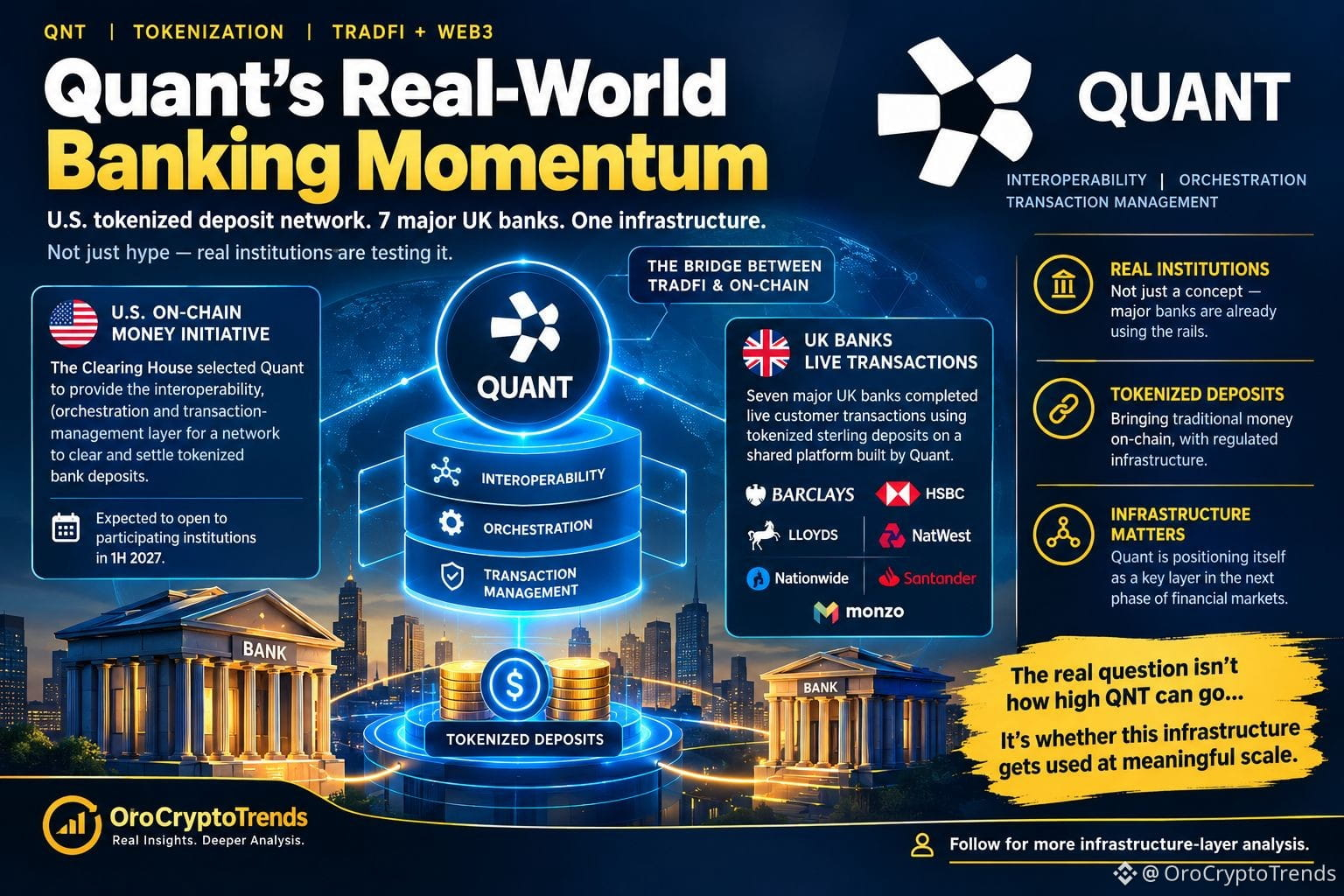
7
2.5k
$BTC Die Fed hat die Zinsen erhöht. Die Renditen von Staatsanleihen sind gestiegen. Bitcoin absorbiert den Schock.
Am 16. September hat die Fed die Zinsen auf 3,75 %–4,00 % angehoben, während ihre Projektionen weiterhin mindestens eine weitere Zinserhöhung im Jahr 2026 auswiesen.
Dann stieg die Rendite der 10-jährigen US-Staatsanleihe auf 5,17 %.
Genau dort wird die Bitcoin-Verbindung interessant.
Eine restriktivere Fed verteuert das Geld. Höhere Renditen bei US-Treasuries bieten Anlegern anschließend eine attraktivere Alternative zu volatilen Risiko-Assets. Die Finanzierungsbedingungen ziehen sich zusammen, Verschuldung wird teurer und Liquidität wird schwieriger zu jagen.
Bitcoin sitzt direkt in diesem Risiko-Liquiditäts-Kanal.
Wenn die Renditen also höher neu eingepreist werden, braucht BTC keinen kryptospezifischen negativen Auslöser, um unter Druck zu geraten. Die makroökonomische Diskontierungsrate selbst kann zum Auslöser werden.
Darum schenke ich der Schlagzeilen-Zinserhöhung der Fed weniger Aufmerksamkeit und mehr dem, was danach mit den Renditen, der Liquidität und der Positionierung passiert.
Wenn die Treasury-Renditen hoch bleiben, muss Bitcoin möglicherweise erst gegen das makroökonomische Umfeld ankämpfen, bevor es einen weiteren klaren „Risk-on“-Impuls bekommt.
Lese ich den Übertragungsmechanismus richtig, oder preist der Markt bereits den Großteil davon ein?
$BTC Die Fed hat die Zinsen erhöht. Die Renditen von Staatsanleihen sind gestiegen. Bitcoin absorbiert den Schock.
Am 16. September hat die Fed die Zinsen auf 3,75 %–4,00 % angehoben, während ihre Projektionen weiterhin mindestens eine weitere Zinserhöhung im Jahr 2026 auswiesen.
Dann stieg die Rendite der 10-jährigen US-Staatsanleihe auf 5,17 %.
Genau dort wird die Bitcoin-Verbindung interessant.
Eine restriktivere Fed verteuert das Geld. Höhere Renditen bei US-Treasuries bieten Anlegern anschließend eine attraktivere Alternative zu volatilen Risiko-Assets. Die Finanzierungsbedingungen ziehen sich zusammen, Verschuldung wird teurer und Liquidität wird schwieriger zu jagen.
Bitcoin sitzt direkt in diesem Risiko-Liquiditäts-Kanal.
Wenn die Renditen also höher neu eingepreist werden, braucht BTC keinen kryptospezifischen negativen Auslöser, um unter Druck zu geraten. Die makroökonomische Diskontierungsrate selbst kann zum Auslöser werden.
Darum schenke ich der Schlagzeilen-Zinserhöhung der Fed weniger Aufmerksamkeit und mehr dem, was danach mit den Renditen, der Liquidität und der Positionierung passiert.
Wenn die Treasury-Renditen hoch bleiben, muss Bitcoin möglicherweise erst gegen das makroökonomische Umfeld ankämpfen, bevor es einen weiteren klaren „Risk-on“-Impuls bekommt.
Lese ich den Übertragungsmechanismus richtig, oder preist der Markt bereits den Großteil davon ein?
Am 16. September hat die Fed die Zinsen auf 3,75 %–4,00 % angehoben, während ihre Projektionen weiterhin mindestens eine weitere Zinserhöhung im Jahr 2026 auswiesen.
Dann stieg die Rendite der 10-jährigen US-Staatsanleihe auf 5,17 %.
Genau dort wird die Bitcoin-Verbindung interessant.
Eine restriktivere Fed verteuert das Geld. Höhere Renditen bei US-Treasuries bieten Anlegern anschließend eine attraktivere Alternative zu volatilen Risiko-Assets. Die Finanzierungsbedingungen ziehen sich zusammen, Verschuldung wird teurer und Liquidität wird schwieriger zu jagen.
Bitcoin sitzt direkt in diesem Risiko-Liquiditäts-Kanal.
Wenn die Renditen also höher neu eingepreist werden, braucht BTC keinen kryptospezifischen negativen Auslöser, um unter Druck zu geraten. Die makroökonomische Diskontierungsrate selbst kann zum Auslöser werden.
Darum schenke ich der Schlagzeilen-Zinserhöhung der Fed weniger Aufmerksamkeit und mehr dem, was danach mit den Renditen, der Liquidität und der Positionierung passiert.
Wenn die Treasury-Renditen hoch bleiben, muss Bitcoin möglicherweise erst gegen das makroökonomische Umfeld ankämpfen, bevor es einen weiteren klaren „Risk-on“-Impuls bekommt.
Lese ich den Übertragungsmechanismus richtig, oder preist der Markt bereits den Großteil davon ein?
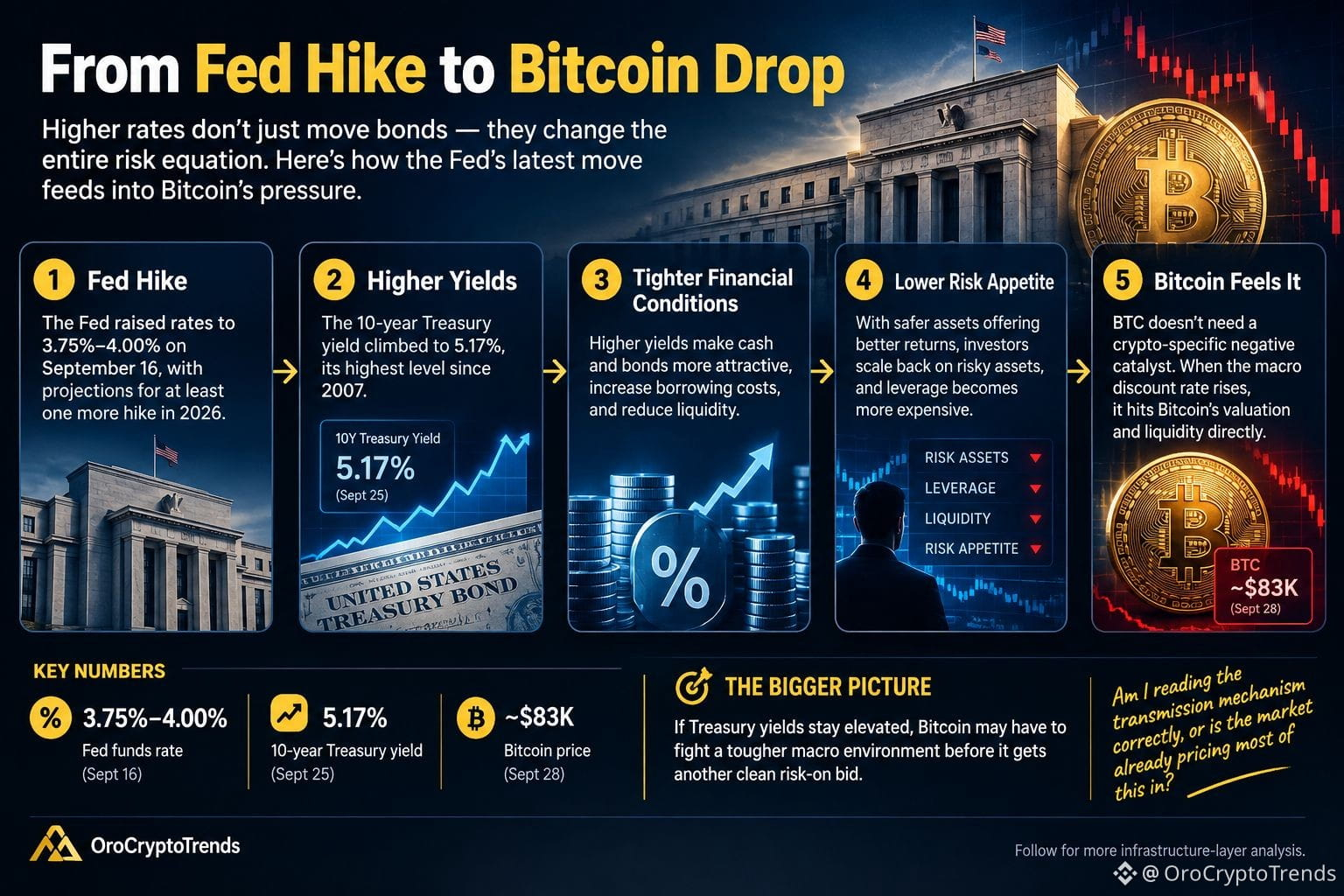
4
3
12
16.9k
Verifiziert
Binance Wallet hat einen nervigen Teil von Krypto deutlich weniger lästig gemacht.
Du kannst jetzt USDT nutzen, um Gas-Gebühren direkt auf BNB Smart Chain, Ethereum, Solana und TRON zu bezahlen. So musst du nicht erst merken: Du hast zwar USDT, aber irgendwie kein BNB, ETH, SOL oder TRX für die Transaktion … sondern kannst für die Gaszahlung einfach selbst USDT verwenden.
Ehrlich gesagt sieht das nach einer kleinen Wallet-Funktion aus. Ich glaube nicht, dass es nur das ist.
Reibung durch Gas-Token ist eines dieser langweiligen UX-Probleme, das Menschen still und heimlich daran hindert, On-Chain-Apps zu verwenden. Du kannst zwar den Vermögenswert haben, den du eigentlich bewegen willst, aber trotzdem feststecken, weil dir ein winziger Betrag des nativen Tokens des Netzwerks fehlt.
Das führt zu unnötigen Schritten: Gas-Token kaufen, transferieren, das richtige Netzwerk auswählen, warten und dann erneut versuchen, die ursprüngliche Transaktion auszuführen.
Wenn dieser Schritt entfällt, fühlt sich die Wallet eher wie ein einziges System an – statt wie eine Sammlung separater Regeln für verschiedene Blockchains.
Spannend wird, was passiert, wenn sich dieser Ansatz auf mehr Netzwerke ausweitet. Binances aktuelles Announcement bestätigt zwar die vier unterstützten Netzwerke, nennt aber keinen Zeitplan für weitere.
Genau das werde ich im Blick behalten.
Ist das nur ein besseres Wallet-UX-Design, oder ein größerer Wandel hin dazu, Blockchain-Komplexität vor dem Durchschnittsnutzer zu verbergen?
Binance Wallet hat einen nervigen Teil von Krypto deutlich weniger lästig gemacht.
Du kannst jetzt USDT nutzen, um Gas-Gebühren direkt auf BNB Smart Chain, Ethereum, Solana und TRON zu bezahlen. So musst du nicht erst merken: Du hast zwar USDT, aber irgendwie kein BNB, ETH, SOL oder TRX für die Transaktion … sondern kannst für die Gaszahlung einfach selbst USDT verwenden.
Ehrlich gesagt sieht das nach einer kleinen Wallet-Funktion aus. Ich glaube nicht, dass es nur das ist.
Reibung durch Gas-Token ist eines dieser langweiligen UX-Probleme, das Menschen still und heimlich daran hindert, On-Chain-Apps zu verwenden. Du kannst zwar den Vermögenswert haben, den du eigentlich bewegen willst, aber trotzdem feststecken, weil dir ein winziger Betrag des nativen Tokens des Netzwerks fehlt.
Das führt zu unnötigen Schritten: Gas-Token kaufen, transferieren, das richtige Netzwerk auswählen, warten und dann erneut versuchen, die ursprüngliche Transaktion auszuführen.
Wenn dieser Schritt entfällt, fühlt sich die Wallet eher wie ein einziges System an – statt wie eine Sammlung separater Regeln für verschiedene Blockchains.
Spannend wird, was passiert, wenn sich dieser Ansatz auf mehr Netzwerke ausweitet. Binances aktuelles Announcement bestätigt zwar die vier unterstützten Netzwerke, nennt aber keinen Zeitplan für weitere.
Genau das werde ich im Blick behalten.
Ist das nur ein besseres Wallet-UX-Design, oder ein größerer Wandel hin dazu, Blockchain-Komplexität vor dem Durchschnittsnutzer zu verbergen?
Du kannst jetzt USDT nutzen, um Gas-Gebühren direkt auf BNB Smart Chain, Ethereum, Solana und TRON zu bezahlen. So musst du nicht erst merken: Du hast zwar USDT, aber irgendwie kein BNB, ETH, SOL oder TRX für die Transaktion … sondern kannst für die Gaszahlung einfach selbst USDT verwenden.
Ehrlich gesagt sieht das nach einer kleinen Wallet-Funktion aus. Ich glaube nicht, dass es nur das ist.
Reibung durch Gas-Token ist eines dieser langweiligen UX-Probleme, das Menschen still und heimlich daran hindert, On-Chain-Apps zu verwenden. Du kannst zwar den Vermögenswert haben, den du eigentlich bewegen willst, aber trotzdem feststecken, weil dir ein winziger Betrag des nativen Tokens des Netzwerks fehlt.
Das führt zu unnötigen Schritten: Gas-Token kaufen, transferieren, das richtige Netzwerk auswählen, warten und dann erneut versuchen, die ursprüngliche Transaktion auszuführen.
Wenn dieser Schritt entfällt, fühlt sich die Wallet eher wie ein einziges System an – statt wie eine Sammlung separater Regeln für verschiedene Blockchains.
Spannend wird, was passiert, wenn sich dieser Ansatz auf mehr Netzwerke ausweitet. Binances aktuelles Announcement bestätigt zwar die vier unterstützten Netzwerke, nennt aber keinen Zeitplan für weitere.
Genau das werde ich im Blick behalten.
Ist das nur ein besseres Wallet-UX-Design, oder ein größerer Wandel hin dazu, Blockchain-Komplexität vor dem Durchschnittsnutzer zu verbergen?
2
629
$BTC $2,39B flossen letzte Woche in US-Spot-Bitcoin-ETFs. Aber das Interessante ist nicht die Schlagzeile.
Es ist, was passiert ist, nachdem das Geld angekommen war.
Die Woche vom 21. bis 25. September brachte ungefähr 2,39B$ an Nettozuflüssen – das stärkste wöchentliche Ergebnis seit Oktober 2025. BlackRocks IBIT und Fidelitys FBTC gehörten zu den größten Empfängern. Das ist echte Nachfrage über regulierte Produkte hinweg – nicht nur, dass auf Crypto Twitter die Aufregung groß ist.
Aber ich bin noch nicht bereit, das schon als einen sauberen Trend institutioneller Akkumulation zu bezeichnen.
Schauen wir uns die Abfolge der Zuflüsse an. Am Montag kamen fast 999M$. Bis Freitag war der tägliche Zufluss auf ungefähr 134M$ gefallen. Das Geld kam zwar noch rein, ja, aber die Intensität kühlte sich während der Woche deutlich ab.
Und hier wird die Angebotsstory spannend.
Separate On-Chain-Reports deuten darauf hin, dass in jüngster Zeit während der Preis-Schwäche mehr als 30.000 BTC in die Hände großer Inhaber (Large Holders) gelangten, während BTC im Bereich von rund 84K$ in der Mitte blieb, nachdem es gescheitert war, den Move über 87K$ zu halten.
Das Setup, das ich beobachte, ist also nicht einfach „ETF-Zuflüsse = bullisch“.
Es geht darum, ob die ETF-Nachfrage weiterhin Angebot absorbiert, während BTC unter dem Widerstandsbereich von 86K$–87K$ verharrt.
Wenn die Zuflüsse stark bleiben und dieses Angebot weiter aufgesogen wird, verändert sich die Struktur.
Wenn die Zuflüsse nachlassen, während Verkäufer weiterhin die Hochs verteidigen, könnte das am Ende eine einzige sehr große Woche der Positionierung gewesen sein – statt der Start von etwas Größerem.
Ich versuche immer noch herauszufinden, was genau sich dadurch tatsächlich ändert.
$BTC $2,39B flossen letzte Woche in US-Spot-Bitcoin-ETFs. Aber das Interessante ist nicht die Schlagzeile.
Es ist, was passiert ist, nachdem das Geld angekommen war.
Die Woche vom 21. bis 25. September brachte ungefähr 2,39B$ an Nettozuflüssen – das stärkste wöchentliche Ergebnis seit Oktober 2025. BlackRocks IBIT und Fidelitys FBTC gehörten zu den größten Empfängern. Das ist echte Nachfrage über regulierte Produkte hinweg – nicht nur, dass auf Crypto Twitter die Aufregung groß ist.
Aber ich bin noch nicht bereit, das schon als einen sauberen Trend institutioneller Akkumulation zu bezeichnen.
Schauen wir uns die Abfolge der Zuflüsse an. Am Montag kamen fast 999M$. Bis Freitag war der tägliche Zufluss auf ungefähr 134M$ gefallen. Das Geld kam zwar noch rein, ja, aber die Intensität kühlte sich während der Woche deutlich ab.
Und hier wird die Angebotsstory spannend.
Separate On-Chain-Reports deuten darauf hin, dass in jüngster Zeit während der Preis-Schwäche mehr als 30.000 BTC in die Hände großer Inhaber (Large Holders) gelangten, während BTC im Bereich von rund 84K$ in der Mitte blieb, nachdem es gescheitert war, den Move über 87K$ zu halten.
Das Setup, das ich beobachte, ist also nicht einfach „ETF-Zuflüsse = bullisch“.
Es geht darum, ob die ETF-Nachfrage weiterhin Angebot absorbiert, während BTC unter dem Widerstandsbereich von 86K$–87K$ verharrt.
Wenn die Zuflüsse stark bleiben und dieses Angebot weiter aufgesogen wird, verändert sich die Struktur.
Wenn die Zuflüsse nachlassen, während Verkäufer weiterhin die Hochs verteidigen, könnte das am Ende eine einzige sehr große Woche der Positionierung gewesen sein – statt der Start von etwas Größerem.
Ich versuche immer noch herauszufinden, was genau sich dadurch tatsächlich ändert.
Es ist, was passiert ist, nachdem das Geld angekommen war.
Die Woche vom 21. bis 25. September brachte ungefähr 2,39B$ an Nettozuflüssen – das stärkste wöchentliche Ergebnis seit Oktober 2025. BlackRocks IBIT und Fidelitys FBTC gehörten zu den größten Empfängern. Das ist echte Nachfrage über regulierte Produkte hinweg – nicht nur, dass auf Crypto Twitter die Aufregung groß ist.
Aber ich bin noch nicht bereit, das schon als einen sauberen Trend institutioneller Akkumulation zu bezeichnen.
Schauen wir uns die Abfolge der Zuflüsse an. Am Montag kamen fast 999M$. Bis Freitag war der tägliche Zufluss auf ungefähr 134M$ gefallen. Das Geld kam zwar noch rein, ja, aber die Intensität kühlte sich während der Woche deutlich ab.
Und hier wird die Angebotsstory spannend.
Separate On-Chain-Reports deuten darauf hin, dass in jüngster Zeit während der Preis-Schwäche mehr als 30.000 BTC in die Hände großer Inhaber (Large Holders) gelangten, während BTC im Bereich von rund 84K$ in der Mitte blieb, nachdem es gescheitert war, den Move über 87K$ zu halten.
Das Setup, das ich beobachte, ist also nicht einfach „ETF-Zuflüsse = bullisch“.
Es geht darum, ob die ETF-Nachfrage weiterhin Angebot absorbiert, während BTC unter dem Widerstandsbereich von 86K$–87K$ verharrt.
Wenn die Zuflüsse stark bleiben und dieses Angebot weiter aufgesogen wird, verändert sich die Struktur.
Wenn die Zuflüsse nachlassen, während Verkäufer weiterhin die Hochs verteidigen, könnte das am Ende eine einzige sehr große Woche der Positionierung gewesen sein – statt der Start von etwas Größerem.
Ich versuche immer noch herauszufinden, was genau sich dadurch tatsächlich ändert.
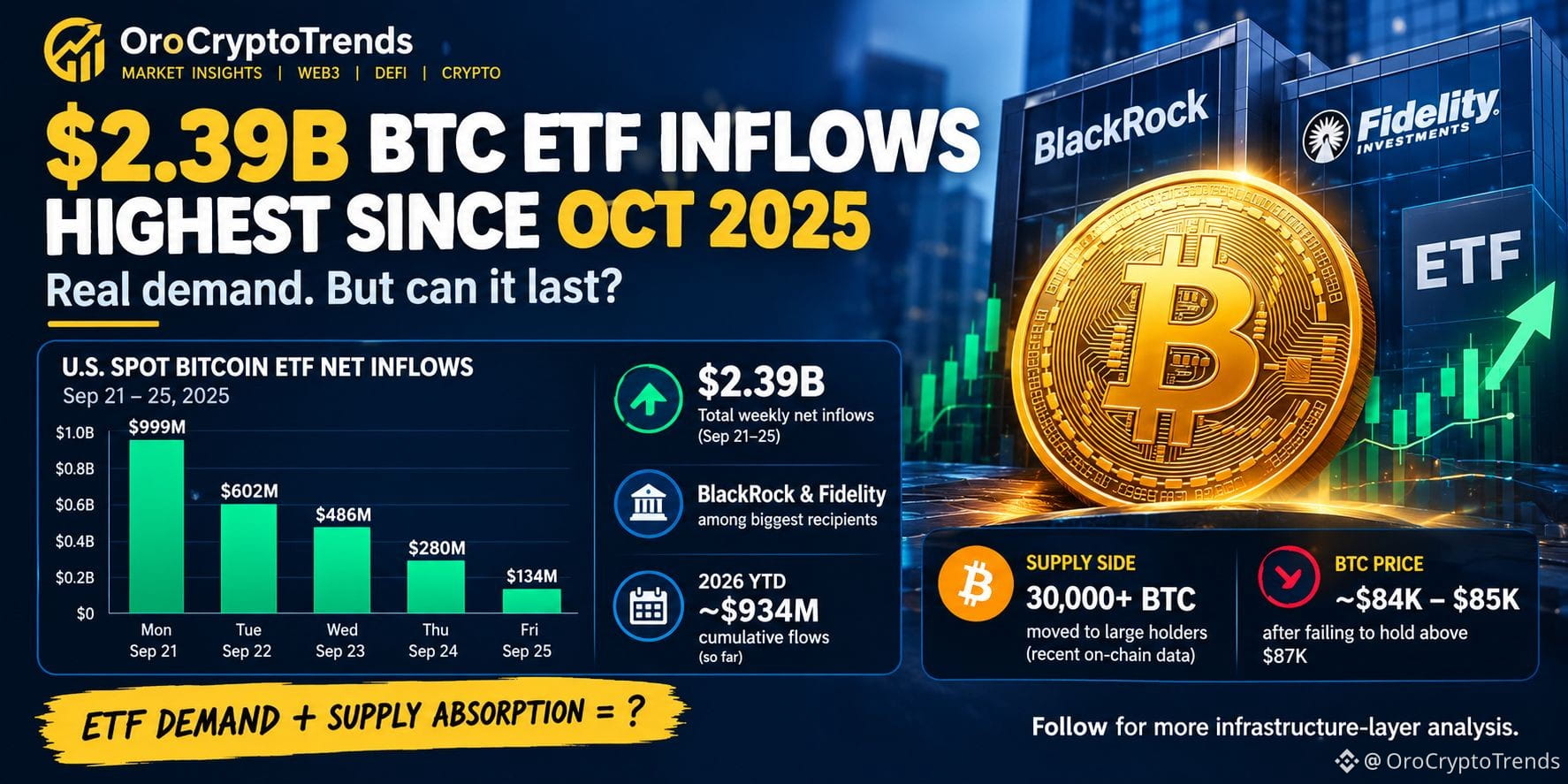
2
3k
Anmelden und weiter Inhalte entdecken
Krypto-Nutzer weltweit auf Binance Square kennenlernen
⚡️ Bleib in Sachen Krypto stets am Puls.
💬 Die weltgrößte Kryptobörse vertraut darauf.
👍 Erhalte verlässliche Einblicke von verifizierten Creators.
E-Mail-Adresse/Telefonnummer
Trendthemen
BNBSurpasses$790
10,375 Aufrufe
83 Kommentare
$BNB strategischer Langzeitplan -> JETZT FOKUS
BNB hat 2 starke Tiefs geschaffen, nachdem internes Liquiditätsniveau aufgeräumt wurde
Ich erwarte eine Bewegung in Richtung Swing High bei $815-$830 und suche einen Long-Einstieg bei einem Retest der grünen Box
#BNBSurpasses$790 #bnb
Ghost Writer
·4 Likes
·5k Aufrufe
ZamaRises15.99%ToIntradayHigh$0.09
4,858 Aufrufe
72 Kommentare
BitcoinSpotETFsDraw$6.34BInflowsInQ3
3,609 Aufrufe
58 Kommentare