

sajjad Ahmed 804
5k Beiträge

sajjad Ahmed 804
Melden
Nutzer blockieren
he crypto sajjad Ahmed 804 market price trading value and all coin
11 Following
28.0K+ Follower
9.2K+ Like gegeben
Beiträge
Alle
Zitierungen
Live
·
--
Bullisch
Übersetzung ansehen
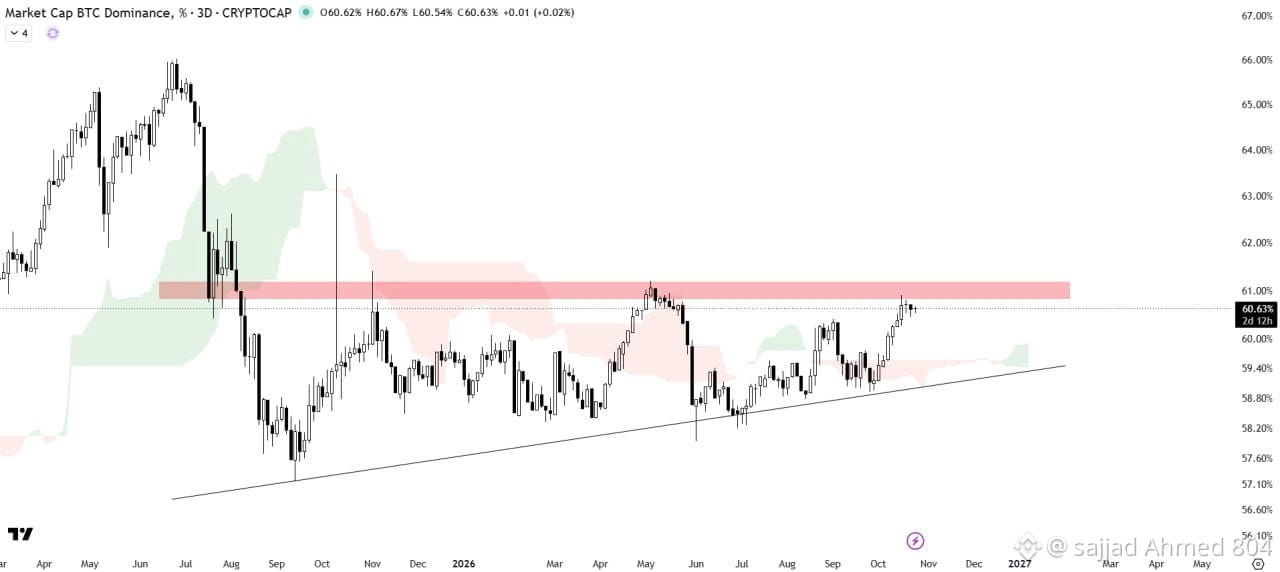
$BTC DOMINANCE ANALYSIS
BTC Dominance is facing resistance at the horizontal supply zone of the ascending triangle pattern, while the Ichimoku cloud continues to act as an important support area.
A confirmed breakout above the supply zone could push BTC.D higher, potentially putting additional pressure on altcoins. However, if the price breaks below the Ichimoku cloud, it could signal weakening momentum and open the door for further downside.
For now, the market is at a crucial decision point, and we need confirmation before anticipating the next major move. Keep watching the key resistance and support levels closely.
Remember, BTC Dominance often moves inversely to the altcoin market cap, so any significant move in BTC.D could influence the overall altcoin market direction.
$BTC DOMINANCE ANALYSIS
BTC Dominance is facing resistance at the horizontal supply zone of the ascending triangle pattern, while the Ichimoku cloud continues to act as an important support area.
A confirmed breakout above the supply zone could push BTC.D higher, potentially putting additional pressure on altcoins. However, if the price breaks below the Ichimoku cloud, it could signal weakening momentum and open the door for further downside.
For now, the market is at a crucial decision point, and we need confirmation before anticipating the next major move. Keep watching the key resistance and support levels closely.
Remember, BTC Dominance often moves inversely to the altcoin market cap, so any significant move in BTC.D could influence the overall altcoin market direction.
BTC Dominance is facing resistance at the horizontal supply zone of the ascending triangle pattern, while the Ichimoku cloud continues to act as an important support area.
A confirmed breakout above the supply zone could push BTC.D higher, potentially putting additional pressure on altcoins. However, if the price breaks below the Ichimoku cloud, it could signal weakening momentum and open the door for further downside.
For now, the market is at a crucial decision point, and we need confirmation before anticipating the next major move. Keep watching the key resistance and support levels closely.
Remember, BTC Dominance often moves inversely to the altcoin market cap, so any significant move in BTC.D could influence the overall altcoin market direction.
60
·
--
Bullisch
Übersetzung ansehen
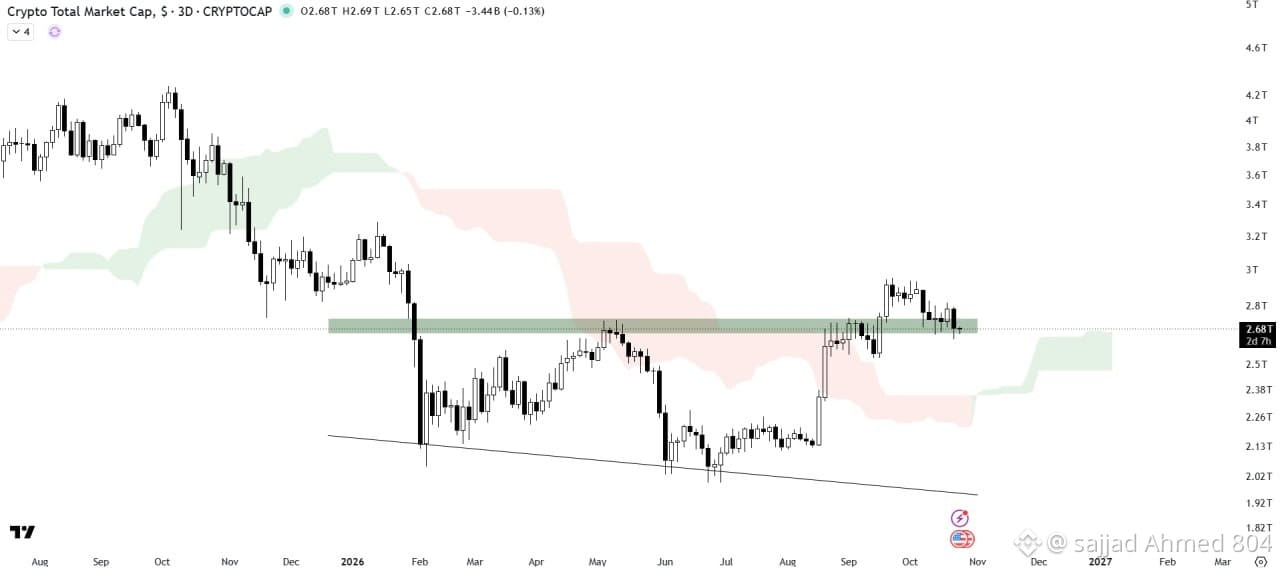
$TOTL.ETF MARKET CAP ANALYSIS
The Total Market Cap is retesting a key horizontal S/R level, while the Ichimoku cloud continues to act as an important support zone. This structure keeps the possibility of a bullish recovery in focus.
If buyers successfully defend this level and maintain upward momentum, the market could see a strong rally, potentially boosting confidence across the entire crypto market.
However, a failed retest and breakdown below this support could shift momentum toward the bears and open the door to further downside. The next price movement will be crucial in determining market direction.
Traders should closely monitor the support level, Ichimoku cloud, and breakout confirmation before making any decisions.
$TOTL.ETF MARKET CAP ANALYSIS
The Total Market Cap is retesting a key horizontal S/R level, while the Ichimoku cloud continues to act as an important support zone. This structure keeps the possibility of a bullish recovery in focus.
If buyers successfully defend this level and maintain upward momentum, the market could see a strong rally, potentially boosting confidence across the entire crypto market.
However, a failed retest and breakdown below this support could shift momentum toward the bears and open the door to further downside. The next price movement will be crucial in determining market direction.
Traders should closely monitor the support level, Ichimoku cloud, and breakout confirmation before making any decisions.
The Total Market Cap is retesting a key horizontal S/R level, while the Ichimoku cloud continues to act as an important support zone. This structure keeps the possibility of a bullish recovery in focus.
If buyers successfully defend this level and maintain upward momentum, the market could see a strong rally, potentially boosting confidence across the entire crypto market.
However, a failed retest and breakdown below this support could shift momentum toward the bears and open the door to further downside. The next price movement will be crucial in determining market direction.
Traders should closely monitor the support level, Ichimoku cloud, and breakout confirmation before making any decisions.
TOTLETF+0,05%
75
·
--
Bärisch
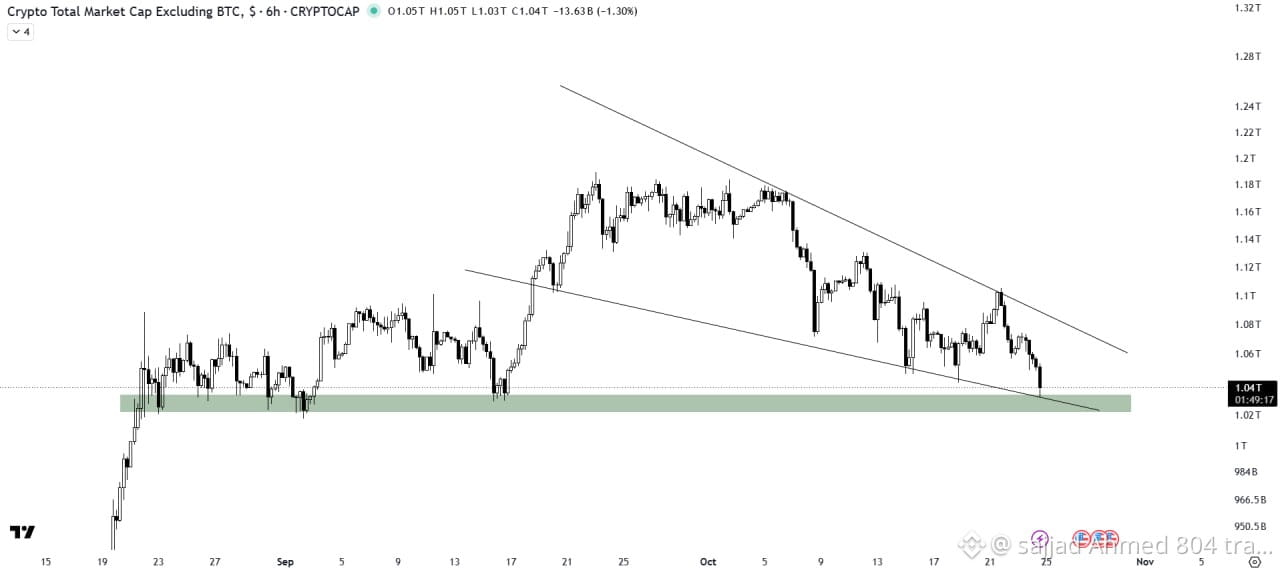
$ALT MARKTKAPITALISIERUNGSANALYSE
Der Altcoin-Markt hält sich oberhalb einer wichtigen horizontalen Nachfragezone und respektiert dabei die Unterstützungstrendlinie des fallenden Keilmusters.
Wenn die Käufer diese kritischen Unterstützungsniveaus weiterhin verteidigen, könnte sich der Markt erholen und neue Aufwärtsdynamik entwickeln.
Ein bestätigter Ausbruch über den Widerstand des Keils würde den positiven Ausblick stärken und den Weg für eine breitere Rallye bei Altcoins ebnen.
Die nächste Bewegung wird entscheidend dafür sein, ob Altcoins bereit für eine stärkere Erholung sind oder noch mehr Zeit zur Konsolidierung benötigen.
Altcoins | CryptoMarket | Altseason
$ALT MARKTKAPITALISIERUNGSANALYSE
Der Altcoin-Markt hält sich oberhalb einer wichtigen horizontalen Nachfragezone und respektiert dabei die Unterstützungstrendlinie des fallenden Keilmusters.
Wenn die Käufer diese kritischen Unterstützungsniveaus weiterhin verteidigen, könnte sich der Markt erholen und neue Aufwärtsdynamik entwickeln.
Ein bestätigter Ausbruch über den Widerstand des Keils würde den positiven Ausblick stärken und den Weg für eine breitere Rallye bei Altcoins ebnen.
Die nächste Bewegung wird entscheidend dafür sein, ob Altcoins bereit für eine stärkere Erholung sind oder noch mehr Zeit zur Konsolidierung benötigen.
Altcoins | CryptoMarket | Altseason
Der Altcoin-Markt hält sich oberhalb einer wichtigen horizontalen Nachfragezone und respektiert dabei die Unterstützungstrendlinie des fallenden Keilmusters.
Wenn die Käufer diese kritischen Unterstützungsniveaus weiterhin verteidigen, könnte sich der Markt erholen und neue Aufwärtsdynamik entwickeln.
Ein bestätigter Ausbruch über den Widerstand des Keils würde den positiven Ausblick stärken und den Weg für eine breitere Rallye bei Altcoins ebnen.
Die nächste Bewegung wird entscheidend dafür sein, ob Altcoins bereit für eine stärkere Erholung sind oder noch mehr Zeit zur Konsolidierung benötigen.
Altcoins | CryptoMarket | Altseason
949
·
--
Bullisch
Übersetzung ansehen
I’ve been around long enough to remember when the internet felt a bit more random. You could start looking for one thing, click a few links, and suddenly find yourself somewhere completely unexpected. There was something exciting about not knowing what you might discover next.
That’s honestly how I ended up reading about Dusk Network while jumping between blockchain and AI projects.
At first, I saw it described as a privacy blockchain for financial applications. Then I learned it’s a layer-1 blockchain behind the Confidential Security Contract, or $BMT , standard, with support for confidential smart contracts. I found that interesting, but I probably would have moved on if something else hadn’t caught my eye.
I kept reading and came across the idea of Dusk as decentralized infrastructure for hosting, running inference on, and verifying AI models at scale. I’m still trying to wrap my head around all of it, so I won’t pretend I have it figured out.
But the thought of open intelligence took me back to the early internet. Openness and accessibility felt important back then. Maybe that’s why this idea stuck with me. I’m not convinced of anything yet, but I’m genuinely curious enough to keep digging.
I’ve been around long enough to remember when the internet felt a bit more random. You could start looking for one thing, click a few links, and suddenly find yourself somewhere completely unexpected. There was something exciting about not knowing what you might discover next.
That’s honestly how I ended up reading about Dusk Network while jumping between blockchain and AI projects.
At first, I saw it described as a privacy blockchain for financial applications. Then I learned it’s a layer-1 blockchain behind the Confidential Security Contract, or $BMT , standard, with support for confidential smart contracts. I found that interesting, but I probably would have moved on if something else hadn’t caught my eye.
I kept reading and came across the idea of Dusk as decentralized infrastructure for hosting, running inference on, and verifying AI models at scale. I’m still trying to wrap my head around all of it, so I won’t pretend I have it figured out.
But the thought of open intelligence took me back to the early internet. Openness and accessibility felt important back then. Maybe that’s why this idea stuck with me. I’m not convinced of anything yet, but I’m genuinely curious enough to keep digging.
That’s honestly how I ended up reading about Dusk Network while jumping between blockchain and AI projects.
At first, I saw it described as a privacy blockchain for financial applications. Then I learned it’s a layer-1 blockchain behind the Confidential Security Contract, or $BMT , standard, with support for confidential smart contracts. I found that interesting, but I probably would have moved on if something else hadn’t caught my eye.
I kept reading and came across the idea of Dusk as decentralized infrastructure for hosting, running inference on, and verifying AI models at scale. I’m still trying to wrap my head around all of it, so I won’t pretend I have it figured out.
But the thought of open intelligence took me back to the early internet. Openness and accessibility felt important back then. Maybe that’s why this idea stuck with me. I’m not convinced of anything yet, but I’m genuinely curious enough to keep digging.

65
·
--
Bärisch
Übersetzung ansehen
I’ve been around long enough to remember when the internet felt a bit more random. You could start looking for one thing, click a few links, and suddenly find yourself somewhere completely unexpected. There was something exciting about not knowing what you might discover next.
That’s honestly how I ended up reading about Dusk Network while jumping between blockchain and AI projects.
At first, I saw it described as a privacy blockchain for financial applications. Then I learned it’s a layer-1 blockchain behind the Confidential Security Contract, or $ETH , standard, with support for confidential smart contracts. I found that interesting, but I probably would have moved on if something else hadn’t caught my eye.
I kept reading and came across the idea of Dusk as decentralized infrastructure for hosting, running inference on, and verifying AI models at scale. I’m still trying to wrap my head around all of it, so I won’t pretend I have it figured out.
But the thought of open intelligence took me back to the early internet. Openness and accessibility felt important back then. Maybe that’s why this idea stuck with me. I’m not convinced of anything yet, but I’m genuinely curious enough to keep digging.
I’ve been around long enough to remember when the internet felt a bit more random. You could start looking for one thing, click a few links, and suddenly find yourself somewhere completely unexpected. There was something exciting about not knowing what you might discover next.
That’s honestly how I ended up reading about Dusk Network while jumping between blockchain and AI projects.
At first, I saw it described as a privacy blockchain for financial applications. Then I learned it’s a layer-1 blockchain behind the Confidential Security Contract, or $ETH , standard, with support for confidential smart contracts. I found that interesting, but I probably would have moved on if something else hadn’t caught my eye.
I kept reading and came across the idea of Dusk as decentralized infrastructure for hosting, running inference on, and verifying AI models at scale. I’m still trying to wrap my head around all of it, so I won’t pretend I have it figured out.
But the thought of open intelligence took me back to the early internet. Openness and accessibility felt important back then. Maybe that’s why this idea stuck with me. I’m not convinced of anything yet, but I’m genuinely curious enough to keep digging.
That’s honestly how I ended up reading about Dusk Network while jumping between blockchain and AI projects.
At first, I saw it described as a privacy blockchain for financial applications. Then I learned it’s a layer-1 blockchain behind the Confidential Security Contract, or $ETH , standard, with support for confidential smart contracts. I found that interesting, but I probably would have moved on if something else hadn’t caught my eye.
I kept reading and came across the idea of Dusk as decentralized infrastructure for hosting, running inference on, and verifying AI models at scale. I’m still trying to wrap my head around all of it, so I won’t pretend I have it figured out.
But the thought of open intelligence took me back to the early internet. Openness and accessibility felt important back then. Maybe that’s why this idea stuck with me. I’m not convinced of anything yet, but I’m genuinely curious enough to keep digging.

173
·
--
Bärisch
Übersetzung ansehen
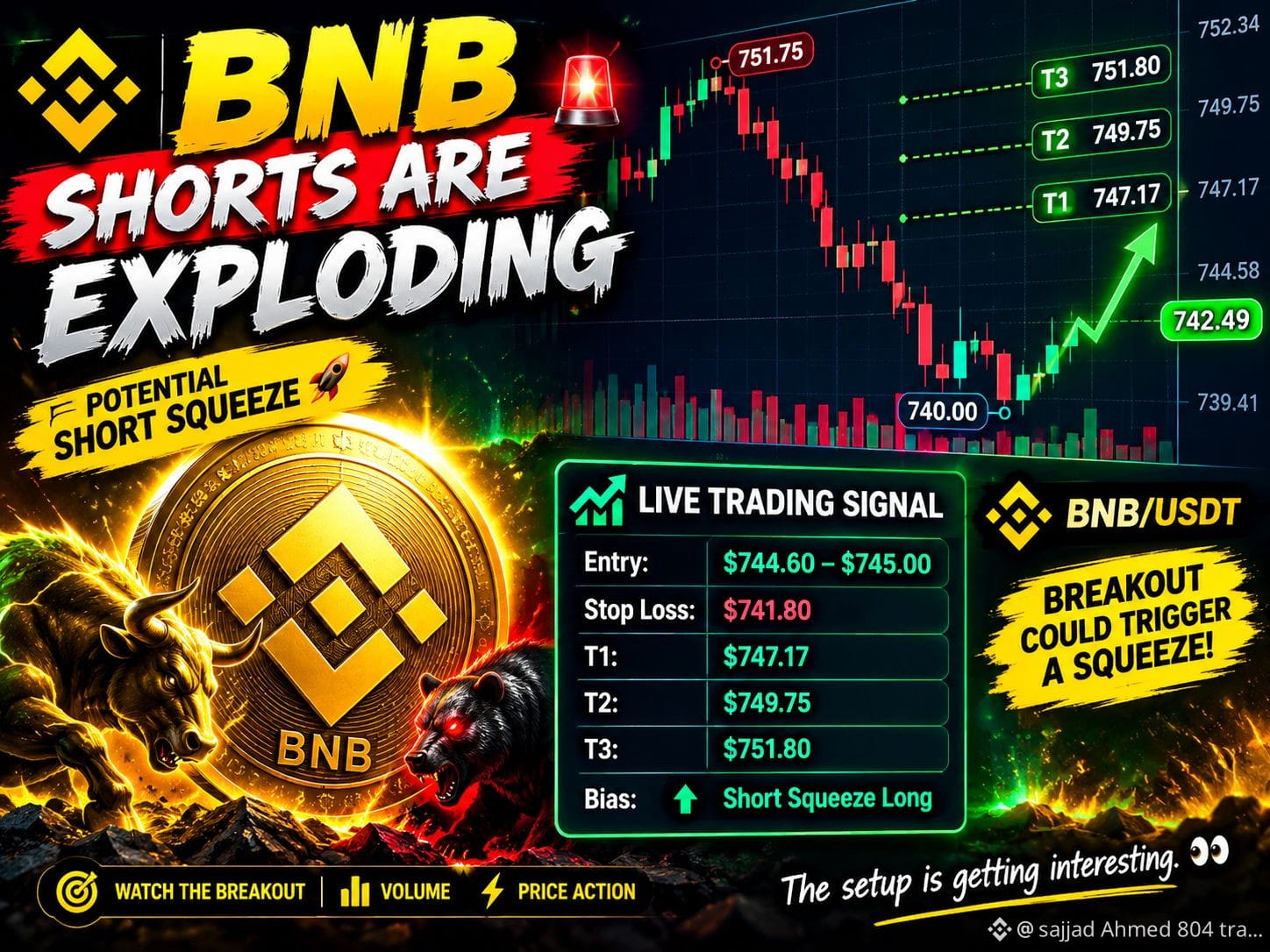
$BNB is trading around $742.49 after a sharp decline from $751.75 to $740.00. The recent selloff came with increased trading volume, while the price is now attempting a recovery.
That's a critical moment for bearish positioning.
If $BNB starts moving higher and breaks above nearby resistance, short covering could provide fuel for a potential rebound. However, the chart does not confirm a massive surge in Bitfinex short positions.
Live Trading Signal:
Entry: $744.60–$745.00
Stop Loss: $741.80
T1: $747.17
T2: $749.75
T3: $751.80
Bias: Short Squeeze Long
Key Support: $740.00
Key Resistance: $744.60
Watch the breakout and volume for confirmation.
$BNB is trading around $742.49 after a sharp decline from $751.75 to $740.00. The recent selloff came with increased trading volume, while the price is now attempting a recovery.
That's a critical moment for bearish positioning.
If $BNB starts moving higher and breaks above nearby resistance, short covering could provide fuel for a potential rebound. However, the chart does not confirm a massive surge in Bitfinex short positions.
Live Trading Signal:
Entry: $744.60–$745.00
Stop Loss: $741.80
T1: $747.17
T2: $749.75
T3: $751.80
Bias: Short Squeeze Long
Key Support: $740.00
Key Resistance: $744.60
Watch the breakout and volume for confirmation.
That's a critical moment for bearish positioning.
If $BNB starts moving higher and breaks above nearby resistance, short covering could provide fuel for a potential rebound. However, the chart does not confirm a massive surge in Bitfinex short positions.
Live Trading Signal:
Entry: $744.60–$745.00
Stop Loss: $741.80
T1: $747.17
T2: $749.75
T3: $751.80
Bias: Short Squeeze Long
Key Support: $740.00
Key Resistance: $744.60
Watch the breakout and volume for confirmation.
235
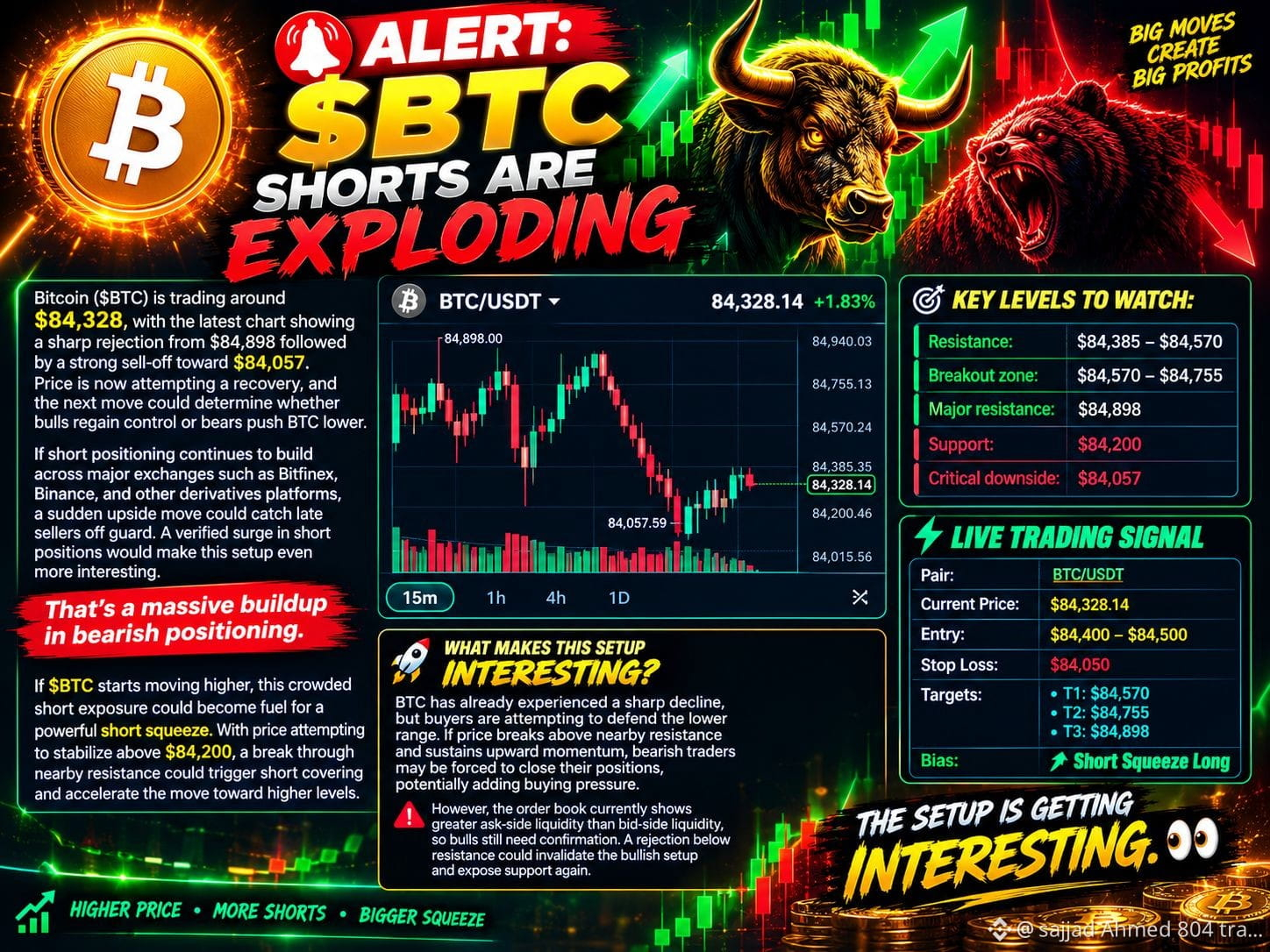
Bitcoin ($BTC ) wird bei etwa 84.328 $ gehandelt. Der aktuelle Chart zeigt eine scharfe Zurückweisung bei 84.898 $, gefolgt von einem starken Abverkauf in Richtung 84.057 $. Der Kurs versucht sich nun zu erholen, und die nächste Bewegung könnte darüber entscheiden, ob die Bullen wieder die Kontrolle übernehmen oder die Bären den BTC-Kurs weiter nach unten drücken.
Sollten die Short-Positionen an großen Börsen wie Bitfinex und Binance sowie auf anderen Derivateplattformen weiter zunehmen, könnte eine plötzliche Aufwärtsbewegung späte Verkäufer auf dem falschen Fuß erwischen. Ein bestätigter Anstieg der Short-Positionen würde dieses Szenario noch interessanter machen.
Das ist ein massiver Aufbau bärischer Positionen.
Wenn $BTC sich nach oben bewegt, könnte dieses überfüllte Short-Engagement als Treibstoff für einen kräftigen Short Squeeze dienen. Da der Kurs versucht, sich oberhalb von 84.200 $ zu stabilisieren, könnte ein Durchbruch des nahen Widerstands Short-Eindeckungen auslösen und die Bewegung in Richtung höherer Kursniveaus beschleunigen.
Bitcoin ($BTC ) wird bei etwa 84.328 $ gehandelt. Der aktuelle Chart zeigt eine scharfe Zurückweisung bei 84.898 $, gefolgt von einem starken Abverkauf in Richtung 84.057 $. Der Kurs versucht sich nun zu erholen, und die nächste Bewegung könnte darüber entscheiden, ob die Bullen wieder die Kontrolle übernehmen oder die Bären den BTC-Kurs weiter nach unten drücken.
Sollten die Short-Positionen an großen Börsen wie Bitfinex und Binance sowie auf anderen Derivateplattformen weiter zunehmen, könnte eine plötzliche Aufwärtsbewegung späte Verkäufer auf dem falschen Fuß erwischen. Ein bestätigter Anstieg der Short-Positionen würde dieses Szenario noch interessanter machen.
Das ist ein massiver Aufbau bärischer Positionen.
Wenn $BTC sich nach oben bewegt, könnte dieses überfüllte Short-Engagement als Treibstoff für einen kräftigen Short Squeeze dienen. Da der Kurs versucht, sich oberhalb von 84.200 $ zu stabilisieren, könnte ein Durchbruch des nahen Widerstands Short-Eindeckungen auslösen und die Bewegung in Richtung höherer Kursniveaus beschleunigen.
Sollten die Short-Positionen an großen Börsen wie Bitfinex und Binance sowie auf anderen Derivateplattformen weiter zunehmen, könnte eine plötzliche Aufwärtsbewegung späte Verkäufer auf dem falschen Fuß erwischen. Ein bestätigter Anstieg der Short-Positionen würde dieses Szenario noch interessanter machen.
Das ist ein massiver Aufbau bärischer Positionen.
Wenn $BTC sich nach oben bewegt, könnte dieses überfüllte Short-Engagement als Treibstoff für einen kräftigen Short Squeeze dienen. Da der Kurs versucht, sich oberhalb von 84.200 $ zu stabilisieren, könnte ein Durchbruch des nahen Widerstands Short-Eindeckungen auslösen und die Bewegung in Richtung höherer Kursniveaus beschleunigen.
110
·
--
Bullisch
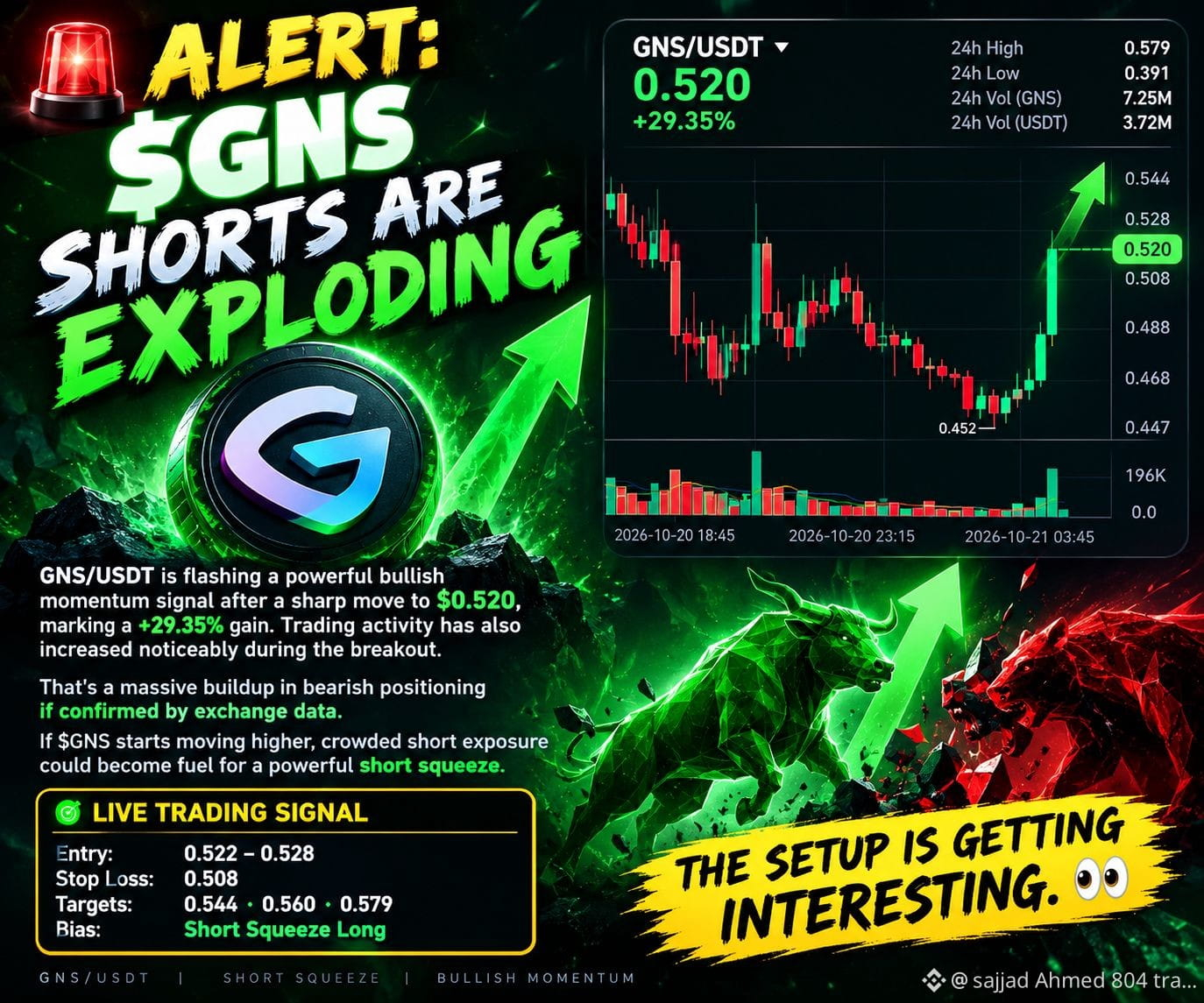
$GNS /USDT sendet nach einem starken Anstieg auf 0,520 $ ein deutliches bullisches Momentum-Signal und verzeichnet damit ein Plus von 29,35 %. Der aktuelle Chart zeigt eine kräftige grüne Kerze, die den Kurs von den jüngsten Tiefständen nahe 0,452 $ nach oben treibt. Auch die Handelsaktivität hat während des Ausbruchs merklich zugenommen, was darauf hindeutet, dass die Käufer mit erheblicher Stärke zurückgekehrt sind. Der Screenshot enthält jedoch keine verifizierten Zahlen zu Bitfinex-Short-Positionen. Ein Anstieg der Short-Positionen um 5.000 % bis 20.000 % lässt sich daher nicht bestätigen.
Sollte dies durch Börsendaten bestätigt werden, wäre das ein massiver Aufbau bärischer Positionen.
Wenn $GNS an Fahrt gewinnt, könnte das hohe Short-Engagement zum Treibstoff für einen starken Short Squeeze werden. Der plötzliche Kursanstieg könnte Händler mit bärischen Positionen unter Druck setzen und möglicherweise Zwangsrückkäufe auslösen, die die Rally beschleunigen. Das Momentum ist eindeutig stärker als während des jüngsten Rückgangs. Die nächste Bewegung hängt jedoch davon ab, ob die Käufer oberhalb der Ausbruchszone die Kontrolle behalten können.
Wichtige Kursmarken: GNS notiert derzeit bei etwa 0,520 $. Das gemeldete 24-Stunden-Hoch liegt bei 0,579 $, das Tief bei 0,391 $. Die jüngste Kursentwicklung zeigt eine Erholung von etwa 0,452 $, gefolgt von einem starken Anstieg über die Marke von 0,488 $. Hält sich der Kurs oberhalb der Ausbruchszone, könnte dies einen weiteren Versuch in Richtung des nahe gelegenen Widerstands begünstigen. Eine Zurückweisung könnte den Kurs jedoch schnell wieder in Richtung Unterstützung drücken.
Das nächste wichtige Signal ist, ob GNS sein Momentum halten kann, statt die jüngsten Gewinne wieder abzugeben. Eine starke Fortsetzung der Aufwärtsbewegung und anhaltende Kaufaktivität würden das bullische Szenario stärken. Ein rascher Rückgang unter die Ausbruchszone würde es hingegen schwächen.
$GNS /USDT sendet nach einem starken Anstieg auf 0,520 $ ein deutliches bullisches Momentum-Signal und verzeichnet damit ein Plus von 29,35 %. Der aktuelle Chart zeigt eine kräftige grüne Kerze, die den Kurs von den jüngsten Tiefständen nahe 0,452 $ nach oben treibt. Auch die Handelsaktivität hat während des Ausbruchs merklich zugenommen, was darauf hindeutet, dass die Käufer mit erheblicher Stärke zurückgekehrt sind. Der Screenshot enthält jedoch keine verifizierten Zahlen zu Bitfinex-Short-Positionen. Ein Anstieg der Short-Positionen um 5.000 % bis 20.000 % lässt sich daher nicht bestätigen.
Sollte dies durch Börsendaten bestätigt werden, wäre das ein massiver Aufbau bärischer Positionen.
Wenn $GNS an Fahrt gewinnt, könnte das hohe Short-Engagement zum Treibstoff für einen starken Short Squeeze werden. Der plötzliche Kursanstieg könnte Händler mit bärischen Positionen unter Druck setzen und möglicherweise Zwangsrückkäufe auslösen, die die Rally beschleunigen. Das Momentum ist eindeutig stärker als während des jüngsten Rückgangs. Die nächste Bewegung hängt jedoch davon ab, ob die Käufer oberhalb der Ausbruchszone die Kontrolle behalten können.
Wichtige Kursmarken: GNS notiert derzeit bei etwa 0,520 $. Das gemeldete 24-Stunden-Hoch liegt bei 0,579 $, das Tief bei 0,391 $. Die jüngste Kursentwicklung zeigt eine Erholung von etwa 0,452 $, gefolgt von einem starken Anstieg über die Marke von 0,488 $. Hält sich der Kurs oberhalb der Ausbruchszone, könnte dies einen weiteren Versuch in Richtung des nahe gelegenen Widerstands begünstigen. Eine Zurückweisung könnte den Kurs jedoch schnell wieder in Richtung Unterstützung drücken.
Das nächste wichtige Signal ist, ob GNS sein Momentum halten kann, statt die jüngsten Gewinne wieder abzugeben. Eine starke Fortsetzung der Aufwärtsbewegung und anhaltende Kaufaktivität würden das bullische Szenario stärken. Ein rascher Rückgang unter die Ausbruchszone würde es hingegen schwächen.
Sollte dies durch Börsendaten bestätigt werden, wäre das ein massiver Aufbau bärischer Positionen.
Wenn $GNS an Fahrt gewinnt, könnte das hohe Short-Engagement zum Treibstoff für einen starken Short Squeeze werden. Der plötzliche Kursanstieg könnte Händler mit bärischen Positionen unter Druck setzen und möglicherweise Zwangsrückkäufe auslösen, die die Rally beschleunigen. Das Momentum ist eindeutig stärker als während des jüngsten Rückgangs. Die nächste Bewegung hängt jedoch davon ab, ob die Käufer oberhalb der Ausbruchszone die Kontrolle behalten können.
Wichtige Kursmarken: GNS notiert derzeit bei etwa 0,520 $. Das gemeldete 24-Stunden-Hoch liegt bei 0,579 $, das Tief bei 0,391 $. Die jüngste Kursentwicklung zeigt eine Erholung von etwa 0,452 $, gefolgt von einem starken Anstieg über die Marke von 0,488 $. Hält sich der Kurs oberhalb der Ausbruchszone, könnte dies einen weiteren Versuch in Richtung des nahe gelegenen Widerstands begünstigen. Eine Zurückweisung könnte den Kurs jedoch schnell wieder in Richtung Unterstützung drücken.
Das nächste wichtige Signal ist, ob GNS sein Momentum halten kann, statt die jüngsten Gewinne wieder abzugeben. Eine starke Fortsetzung der Aufwärtsbewegung und anhaltende Kaufaktivität würden das bullische Szenario stärken. Ein rascher Rückgang unter die Ausbruchszone würde es hingegen schwächen.
219
·
--
Bullisch
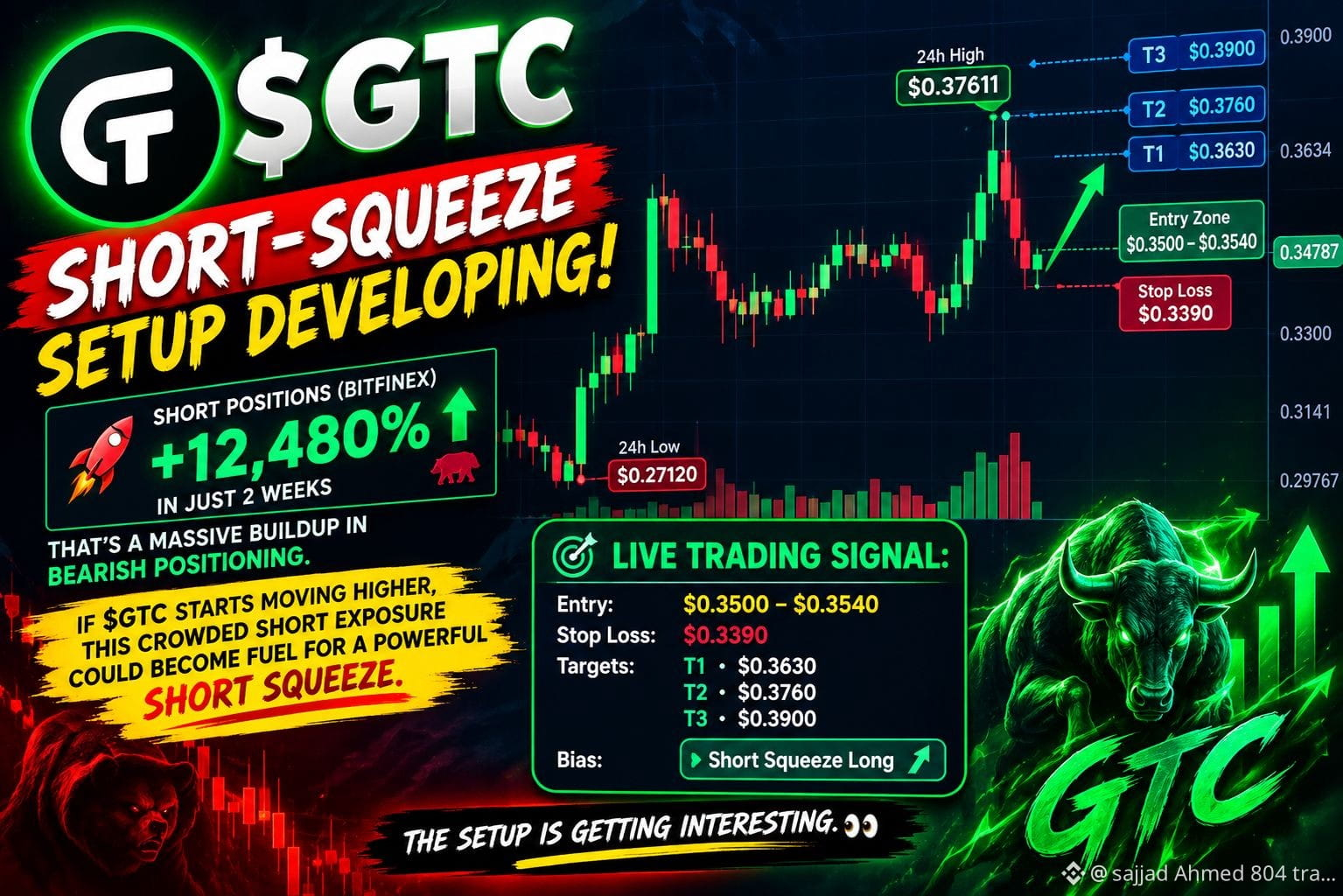
$GTC zeigt eine explosive Dynamik, und der jüngste Chart deutet darauf hin, dass die Bullen sich auf einen weiteren ernsthaften Test des darüberliegenden Widerstands vorbereiten. GTC/USDT wird bei etwa 0,34787 $ gehandelt, ein Plus von 25,22 %, nachdem der Kurs vom Tagestief bei 0,27120 $ auf ein Hoch von 0,37611 $ gestiegen ist. Die Käufer haben bereits gezeigt, dass sie den Kurs aggressiv nach oben treiben können, doch die jüngste Zurückweisung macht deutlich, dass der nächste Schritt bestätigt werden muss.
Der Derivatemarkt bietet einen weiteren interessanten Blickwinkel. Das Funding für den Binance-GTCUSDT-Perpetual-Kontrakt lag am 20. Oktober um 00:00 UTC bei -0,0234 %, nachdem es in den vorangegangenen Sitzungen deutlich negativer ausgefallen war. Negatives Funding kann darauf hindeuten, dass bärische Positionierungen einen Aufschlag zahlen müssen. Dadurch können Bedingungen entstehen, unter denen eine anhaltende Aufwärtsbewegung Leerverkäufer unter Druck setzt. Diese Werte belegen jedoch keinen bestätigten Anstieg der Short-Positionen auf Bitfinex um 5.000 %–20.000 %.
Pandabull
Das ist eine potenziell starke Konstellation mit bärischer Positionierung, die man im Auge behalten sollte.
Wenn $GTC beginnt zu steigen und der Widerstand durchbrochen wird, könnte ein überfülltes Engagement auf der Short-Seite zum Treibstoff für einen kräftigen Short Squeeze werden. Erzwungene Eindeckungen können eine laufende Bewegung beschleunigen, insbesondere wenn der Kurs schnell steigt und Verkäufer hektisch versuchen, ihre Positionen zu verwalten.
Die unmittelbar wichtige Marke liegt bei 0,3500 $. Eine überzeugende Bewegung über diesen Bereich könnte dem Markt neuen Schwung verleihen. Darüber hinaus wird 0,3634 $ zur nächsten wichtigen Widerstandszone, gefolgt vom jüngsten Hoch nahe 0,37611 $.
Ein klarer Ausbruch über das Tageshoch würde das Szenario einer bullischen Fortsetzung stärken. Eine erneute Zurückweisung könnte den Kurs jedoch zurück in Richtung der nahegelegenen Unterstützung schicken – deshalb ist eine Bestätigung wichtig.
$GTC zeigt eine explosive Dynamik, und der jüngste Chart deutet darauf hin, dass die Bullen sich auf einen weiteren ernsthaften Test des darüberliegenden Widerstands vorbereiten. GTC/USDT wird bei etwa 0,34787 $ gehandelt, ein Plus von 25,22 %, nachdem der Kurs vom Tagestief bei 0,27120 $ auf ein Hoch von 0,37611 $ gestiegen ist. Die Käufer haben bereits gezeigt, dass sie den Kurs aggressiv nach oben treiben können, doch die jüngste Zurückweisung macht deutlich, dass der nächste Schritt bestätigt werden muss.
Der Derivatemarkt bietet einen weiteren interessanten Blickwinkel. Das Funding für den Binance-GTCUSDT-Perpetual-Kontrakt lag am 20. Oktober um 00:00 UTC bei -0,0234 %, nachdem es in den vorangegangenen Sitzungen deutlich negativer ausgefallen war. Negatives Funding kann darauf hindeuten, dass bärische Positionierungen einen Aufschlag zahlen müssen. Dadurch können Bedingungen entstehen, unter denen eine anhaltende Aufwärtsbewegung Leerverkäufer unter Druck setzt. Diese Werte belegen jedoch keinen bestätigten Anstieg der Short-Positionen auf Bitfinex um 5.000 %–20.000 %.
Pandabull
Das ist eine potenziell starke Konstellation mit bärischer Positionierung, die man im Auge behalten sollte.
Wenn $GTC beginnt zu steigen und der Widerstand durchbrochen wird, könnte ein überfülltes Engagement auf der Short-Seite zum Treibstoff für einen kräftigen Short Squeeze werden. Erzwungene Eindeckungen können eine laufende Bewegung beschleunigen, insbesondere wenn der Kurs schnell steigt und Verkäufer hektisch versuchen, ihre Positionen zu verwalten.
Die unmittelbar wichtige Marke liegt bei 0,3500 $. Eine überzeugende Bewegung über diesen Bereich könnte dem Markt neuen Schwung verleihen. Darüber hinaus wird 0,3634 $ zur nächsten wichtigen Widerstandszone, gefolgt vom jüngsten Hoch nahe 0,37611 $.
Ein klarer Ausbruch über das Tageshoch würde das Szenario einer bullischen Fortsetzung stärken. Eine erneute Zurückweisung könnte den Kurs jedoch zurück in Richtung der nahegelegenen Unterstützung schicken – deshalb ist eine Bestätigung wichtig.
Der Derivatemarkt bietet einen weiteren interessanten Blickwinkel. Das Funding für den Binance-GTCUSDT-Perpetual-Kontrakt lag am 20. Oktober um 00:00 UTC bei -0,0234 %, nachdem es in den vorangegangenen Sitzungen deutlich negativer ausgefallen war. Negatives Funding kann darauf hindeuten, dass bärische Positionierungen einen Aufschlag zahlen müssen. Dadurch können Bedingungen entstehen, unter denen eine anhaltende Aufwärtsbewegung Leerverkäufer unter Druck setzt. Diese Werte belegen jedoch keinen bestätigten Anstieg der Short-Positionen auf Bitfinex um 5.000 %–20.000 %.
Pandabull
Das ist eine potenziell starke Konstellation mit bärischer Positionierung, die man im Auge behalten sollte.
Wenn $GTC beginnt zu steigen und der Widerstand durchbrochen wird, könnte ein überfülltes Engagement auf der Short-Seite zum Treibstoff für einen kräftigen Short Squeeze werden. Erzwungene Eindeckungen können eine laufende Bewegung beschleunigen, insbesondere wenn der Kurs schnell steigt und Verkäufer hektisch versuchen, ihre Positionen zu verwalten.
Die unmittelbar wichtige Marke liegt bei 0,3500 $. Eine überzeugende Bewegung über diesen Bereich könnte dem Markt neuen Schwung verleihen. Darüber hinaus wird 0,3634 $ zur nächsten wichtigen Widerstandszone, gefolgt vom jüngsten Hoch nahe 0,37611 $.
Ein klarer Ausbruch über das Tageshoch würde das Szenario einer bullischen Fortsetzung stärken. Eine erneute Zurückweisung könnte den Kurs jedoch zurück in Richtung der nahegelegenen Unterstützung schicken – deshalb ist eine Bestätigung wichtig.
1
115
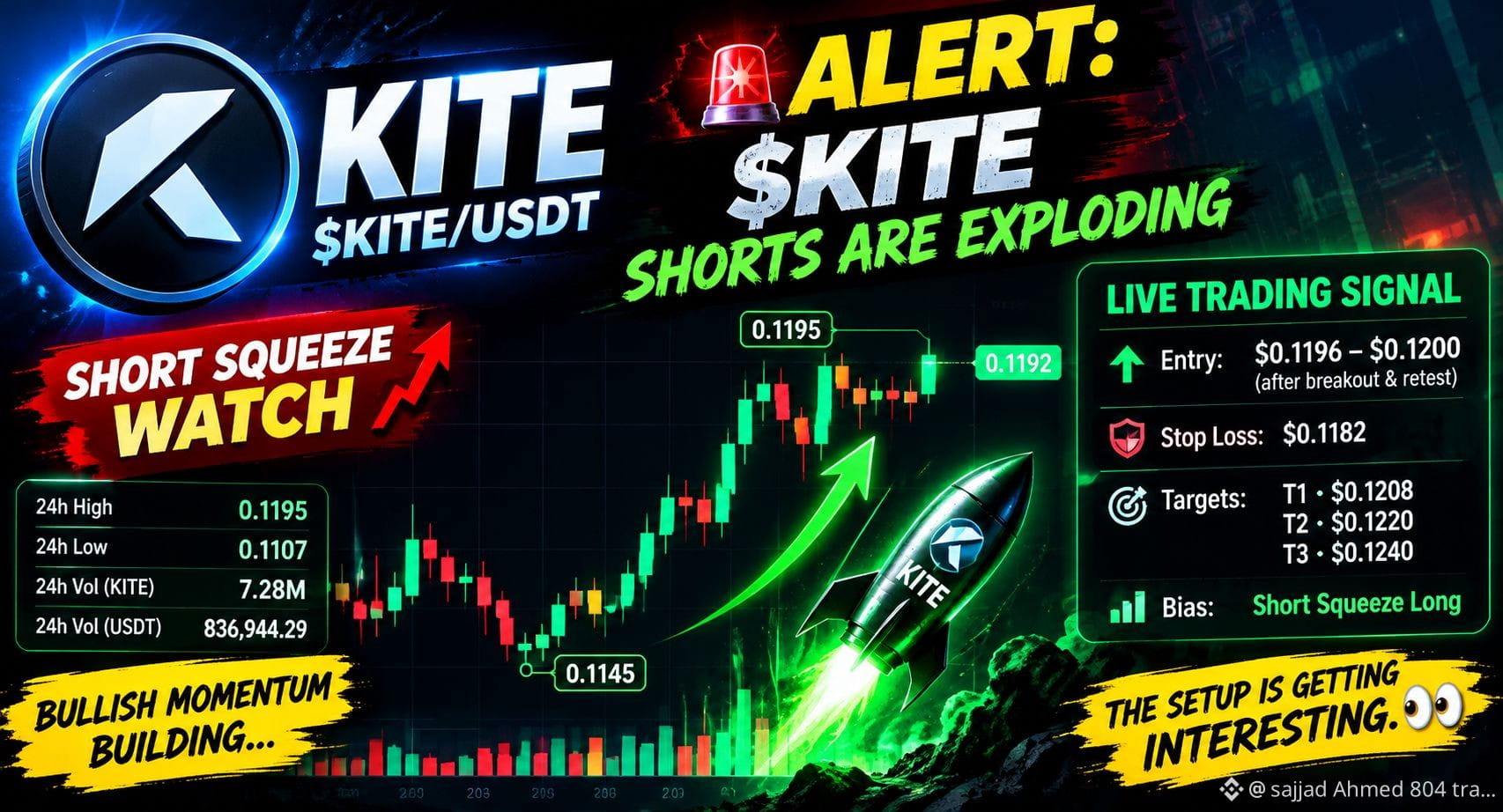
$KITE /USDT nähert sich nach einer starken Erholung aus dem Bereich um 0,1145 $ einer wichtigen Widerstandszone. Der Screenshot zeigt, dass KITE bei etwa 0,1192 $ gehandelt wird, innerhalb von 24 Stunden um 3,65 % gestiegen ist und ein Hoch von 0,1195 $ erreicht hat. Ein Anstieg der Short-Positionen um 5.000 %–20.000 % lässt sich anhand des Charts jedoch nicht bestätigen. Daher sollten diese Zahlen nicht als tatsächliche Börsendaten dargestellt werden.
Das könnte ein Wendepunkt für die kurzfristige Marktdynamik sein.
Sollte $KITE die Marke von 0,1195 $ überwinden und den Ausbruch halten, könnten Short-Trader, die nahe am Widerstand eingestiegen sind, zunehmend unter Druck geraten. Eine bestätigte Aufwärtsbewegung könnte zusätzliche Käufer anziehen und die Voraussetzungen für einen Short Squeeze schaffen. Ein gescheiterter Ausbruch könnte den Kurs jedoch zurück in Richtung der nahegelegenen Unterstützung schicken.
Die entscheidende Marke, die es zu beobachten gilt, liegt bei 0,1195 $.
Die jüngsten Kerzen zeigen, dass Käufer den Kurs nach einem Rücksetzer wieder in Richtung des lokalen Hochs treiben. Diese Erholung ist beobachtenswert, doch eine Bestätigung ist wichtiger als die erste Ausbruchskerze. Der Screenshot zeigt außerdem ein 24-Stunden-USDT-Volumen von etwa 836.944 $, während das Orderbuch zum dargestellten Zeitpunkt mehr Verkaufs- als Kaufliquidität aufweist.
Live-Handelssignal:
Einstieg: 0,1196–0,1200 $, nur nach einem bestätigten Ausbruch und einem erfolgreichen Retest.
Stop-Loss: 0,1182 $.
Kursziele: T1 • 0,1208 $
T2 • 0,1220 $
T3 • 0,1240 $
Tendenz: Long-Position bei Short Squeeze – abhängig von der Bestätigung des Ausbruchs.
$KITE /USDT nähert sich nach einer starken Erholung aus dem Bereich um 0,1145 $ einer wichtigen Widerstandszone. Der Screenshot zeigt, dass KITE bei etwa 0,1192 $ gehandelt wird, innerhalb von 24 Stunden um 3,65 % gestiegen ist und ein Hoch von 0,1195 $ erreicht hat. Ein Anstieg der Short-Positionen um 5.000 %–20.000 % lässt sich anhand des Charts jedoch nicht bestätigen. Daher sollten diese Zahlen nicht als tatsächliche Börsendaten dargestellt werden.
Das könnte ein Wendepunkt für die kurzfristige Marktdynamik sein.
Sollte $KITE die Marke von 0,1195 $ überwinden und den Ausbruch halten, könnten Short-Trader, die nahe am Widerstand eingestiegen sind, zunehmend unter Druck geraten. Eine bestätigte Aufwärtsbewegung könnte zusätzliche Käufer anziehen und die Voraussetzungen für einen Short Squeeze schaffen. Ein gescheiterter Ausbruch könnte den Kurs jedoch zurück in Richtung der nahegelegenen Unterstützung schicken.
Die entscheidende Marke, die es zu beobachten gilt, liegt bei 0,1195 $.
Die jüngsten Kerzen zeigen, dass Käufer den Kurs nach einem Rücksetzer wieder in Richtung des lokalen Hochs treiben. Diese Erholung ist beobachtenswert, doch eine Bestätigung ist wichtiger als die erste Ausbruchskerze. Der Screenshot zeigt außerdem ein 24-Stunden-USDT-Volumen von etwa 836.944 $, während das Orderbuch zum dargestellten Zeitpunkt mehr Verkaufs- als Kaufliquidität aufweist.
Live-Handelssignal:
Einstieg: 0,1196–0,1200 $, nur nach einem bestätigten Ausbruch und einem erfolgreichen Retest.
Stop-Loss: 0,1182 $.
Kursziele: T1 • 0,1208 $
T2 • 0,1220 $
T3 • 0,1240 $
Tendenz: Long-Position bei Short Squeeze – abhängig von der Bestätigung des Ausbruchs.
Das könnte ein Wendepunkt für die kurzfristige Marktdynamik sein.
Sollte $KITE die Marke von 0,1195 $ überwinden und den Ausbruch halten, könnten Short-Trader, die nahe am Widerstand eingestiegen sind, zunehmend unter Druck geraten. Eine bestätigte Aufwärtsbewegung könnte zusätzliche Käufer anziehen und die Voraussetzungen für einen Short Squeeze schaffen. Ein gescheiterter Ausbruch könnte den Kurs jedoch zurück in Richtung der nahegelegenen Unterstützung schicken.
Die entscheidende Marke, die es zu beobachten gilt, liegt bei 0,1195 $.
Die jüngsten Kerzen zeigen, dass Käufer den Kurs nach einem Rücksetzer wieder in Richtung des lokalen Hochs treiben. Diese Erholung ist beobachtenswert, doch eine Bestätigung ist wichtiger als die erste Ausbruchskerze. Der Screenshot zeigt außerdem ein 24-Stunden-USDT-Volumen von etwa 836.944 $, während das Orderbuch zum dargestellten Zeitpunkt mehr Verkaufs- als Kaufliquidität aufweist.
Live-Handelssignal:
Einstieg: 0,1196–0,1200 $, nur nach einem bestätigten Ausbruch und einem erfolgreichen Retest.
Stop-Loss: 0,1182 $.
Kursziele: T1 • 0,1208 $
T2 • 0,1220 $
T3 • 0,1240 $
Tendenz: Long-Position bei Short Squeeze – abhängig von der Bestätigung des Ausbruchs.
123
·
--
Bullisch
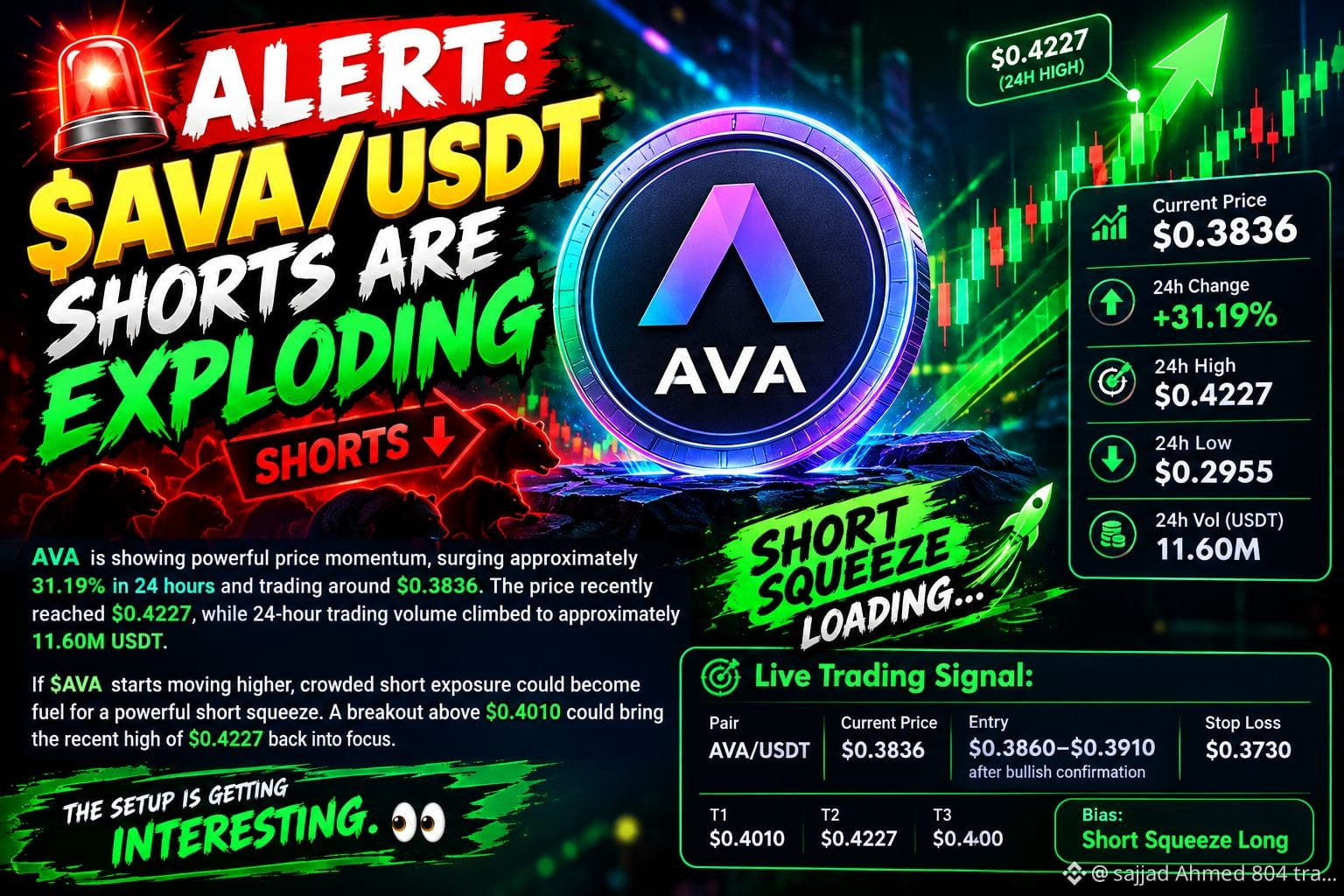
🚨 $AVA zeigt eine starke Kursdynamik und ist innerhalb von 24 Stunden um etwa 31,19 % gestiegen. Der Kurs liegt bei rund 0,3836 $. Zuletzt erreichte er 0,4227 $, während das Handelsvolumen innerhalb von 24 Stunden auf etwa 11,60 Mio. USDT kletterte. Damit befindet sich AVA an einem entscheidenden Punkt, an dem die nächste Bewegung darüber entscheiden könnte, ob die bullische Dynamik zurückkehrt.
Short-Positionen auf Bitfinex wurden nicht unabhängig verifiziert, daher ist das Ausmaß eines möglichen Aufbaus von Short-Positionen weiterhin unklar. Wenn jedoch die bärische Positionierung zunimmt, während AVA sich über einer wichtigen Unterstützung hält, könnte eine plötzliche Aufwärtsbewegung Shortseller stark unter Druck setzen.
Das wäre ein enormer möglicher Aufbau bärischer Positionen, falls das Short-Engagement weiter steigt.
Sollte $AVA sich nach oben bewegen, könnten die vielen offenen Short-Positionen zum Treibstoff für einen starken Short Squeeze werden. Ein Ausbruch über 0,4010 $ könnte das jüngste Hoch von 0,4227 $ wieder in den Fokus rücken. Beschleunigt sich der Kaufdruck, könnte der Markt einen weiteren Anstieg versuchen, während Shortseller ihre Positionen hastig schließen.
Live-Handelssignal:
Handelspaar: AVA/USDT
Aktueller Kurs: 0,3836 $
Einstieg: 0,3860–0,3910 $ nach bullischer Bestätigung
Stop-Loss: 0,3730 $
T1: 0,4010 $
T2: 0,4227 $
T3: 0,4400 $
Tendenz: Long auf einen Short Squeeze
Das Setup wird interessant.
🚨 $AVA zeigt eine starke Kursdynamik und ist innerhalb von 24 Stunden um etwa 31,19 % gestiegen. Der Kurs liegt bei rund 0,3836 $. Zuletzt erreichte er 0,4227 $, während das Handelsvolumen innerhalb von 24 Stunden auf etwa 11,60 Mio. USDT kletterte. Damit befindet sich AVA an einem entscheidenden Punkt, an dem die nächste Bewegung darüber entscheiden könnte, ob die bullische Dynamik zurückkehrt.
Short-Positionen auf Bitfinex wurden nicht unabhängig verifiziert, daher ist das Ausmaß eines möglichen Aufbaus von Short-Positionen weiterhin unklar. Wenn jedoch die bärische Positionierung zunimmt, während AVA sich über einer wichtigen Unterstützung hält, könnte eine plötzliche Aufwärtsbewegung Shortseller stark unter Druck setzen.
Das wäre ein enormer möglicher Aufbau bärischer Positionen, falls das Short-Engagement weiter steigt.
Sollte $AVA sich nach oben bewegen, könnten die vielen offenen Short-Positionen zum Treibstoff für einen starken Short Squeeze werden. Ein Ausbruch über 0,4010 $ könnte das jüngste Hoch von 0,4227 $ wieder in den Fokus rücken. Beschleunigt sich der Kaufdruck, könnte der Markt einen weiteren Anstieg versuchen, während Shortseller ihre Positionen hastig schließen.
Live-Handelssignal:
Handelspaar: AVA/USDT
Aktueller Kurs: 0,3836 $
Einstieg: 0,3860–0,3910 $ nach bullischer Bestätigung
Stop-Loss: 0,3730 $
T1: 0,4010 $
T2: 0,4227 $
T3: 0,4400 $
Tendenz: Long auf einen Short Squeeze
Das Setup wird interessant.
Short-Positionen auf Bitfinex wurden nicht unabhängig verifiziert, daher ist das Ausmaß eines möglichen Aufbaus von Short-Positionen weiterhin unklar. Wenn jedoch die bärische Positionierung zunimmt, während AVA sich über einer wichtigen Unterstützung hält, könnte eine plötzliche Aufwärtsbewegung Shortseller stark unter Druck setzen.
Das wäre ein enormer möglicher Aufbau bärischer Positionen, falls das Short-Engagement weiter steigt.
Sollte $AVA sich nach oben bewegen, könnten die vielen offenen Short-Positionen zum Treibstoff für einen starken Short Squeeze werden. Ein Ausbruch über 0,4010 $ könnte das jüngste Hoch von 0,4227 $ wieder in den Fokus rücken. Beschleunigt sich der Kaufdruck, könnte der Markt einen weiteren Anstieg versuchen, während Shortseller ihre Positionen hastig schließen.
Live-Handelssignal:
Handelspaar: AVA/USDT
Aktueller Kurs: 0,3836 $
Einstieg: 0,3860–0,3910 $ nach bullischer Bestätigung
Stop-Loss: 0,3730 $
T1: 0,4010 $
T2: 0,4227 $
T3: 0,4400 $
Tendenz: Long auf einen Short Squeeze
Das Setup wird interessant.
151
Verifiziert
Nillion arbeitet an einem Problem, mit dem die meisten Blockchains noch immer zu kämpfen haben: sensible Daten privat zu halten und sie trotzdem zu nutzen.
Die Covenants-Technologie von Nillion, die mit Dusk startet, konzentriert sich darauf, Handelsanweisungen zu schützen, bis sie benötigt werden.
Ein Stop-Loss sollte deine Strategie nicht dem gesamten Markt offenlegen müssen.
Genau das macht Nillion für mich interessant. Bei Privatsphäre geht es nicht nur darum, Informationen zu verbergen. Es geht darum, selbst zu entscheiden, wann man sie preisgibt.
#nil $NIL @nillionnetwork
Nillion arbeitet an einem Problem, mit dem die meisten Blockchains noch immer zu kämpfen haben: sensible Daten privat zu halten und sie trotzdem zu nutzen.
Die Covenants-Technologie von Nillion, die mit Dusk startet, konzentriert sich darauf, Handelsanweisungen zu schützen, bis sie benötigt werden.
Ein Stop-Loss sollte deine Strategie nicht dem gesamten Markt offenlegen müssen.
Genau das macht Nillion für mich interessant. Bei Privatsphäre geht es nicht nur darum, Informationen zu verbergen. Es geht darum, selbst zu entscheiden, wann man sie preisgibt.
#nil $NIL @Nillion
Die Covenants-Technologie von Nillion, die mit Dusk startet, konzentriert sich darauf, Handelsanweisungen zu schützen, bis sie benötigt werden.
Ein Stop-Loss sollte deine Strategie nicht dem gesamten Markt offenlegen müssen.
Genau das macht Nillion für mich interessant. Bei Privatsphäre geht es nicht nur darum, Informationen zu verbergen. Es geht darum, selbst zu entscheiden, wann man sie preisgibt.
#nil $NIL @Nillion

1
194
Das dauerhafte Entfernen von Token aus dem Umlauf trägt dazu bei, eine natürliche Knappheit zu schaffen.
Das dauerhafte Entfernen von Token aus dem Umlauf trägt dazu bei, eine natürliche Knappheit zu schaffen.


Ledger Bull
·
--
BullischAevo verändert mit seiner Tokenomics das Spiel!
$AEVO entwickelt sich über einen einfachen Governance-Token hinaus.
Echte Handelsaktivität ist jetzt mit einer Verringerung des Token-Angebots verknüpft.
74 Millionen AEVO-Token wurden bereits verbrannt.
Bei monatlichen Rückkäufen werden Handelsgebühren genutzt, um Token zu kaufen und dauerhaft aus dem Umlauf zu nehmen.
Selbst die wöchentlich ausgeschütteten 1 Million AEVO stammen aus dem bestehenden festen Angebot.
Keine neuen Token durch wöchentliche Rewards.
Keine geplanten Freischaltungen mehr.
Einfach ein klarer Mechanismus, der Handelsaktivität mit dem Token-Angebot verknüpft.
Während $ARB , $OP und $DYDX ihren eigenen Token-Modellen folgen, geht Aevo einen anderen Weg.
Für mich sind die gebührenfinanzierten Rückkäufe und der Mechanismus zur Verringerung des Angebots interessant – nicht der Hype.
Keine Finanzberatung, nur ein Informationsbeitrag
#AEVO #Tokenomics #DeFi #CryptoTrading #Blockchain .
$AEVO entwickelt sich über einen einfachen Governance-Token hinaus.
Echte Handelsaktivität ist jetzt mit einer Verringerung des Token-Angebots verknüpft.
74 Millionen AEVO-Token wurden bereits verbrannt.
Bei monatlichen Rückkäufen werden Handelsgebühren genutzt, um Token zu kaufen und dauerhaft aus dem Umlauf zu nehmen.
Selbst die wöchentlich ausgeschütteten 1 Million AEVO stammen aus dem bestehenden festen Angebot.
Keine neuen Token durch wöchentliche Rewards.
Keine geplanten Freischaltungen mehr.
Einfach ein klarer Mechanismus, der Handelsaktivität mit dem Token-Angebot verknüpft.
Während $ARB , $OP und $DYDX ihren eigenen Token-Modellen folgen, geht Aevo einen anderen Weg.
Für mich sind die gebührenfinanzierten Rückkäufe und der Mechanismus zur Verringerung des Angebots interessant – nicht der Hype.
Keine Finanzberatung, nur ein Informationsbeitrag
#AEVO #Tokenomics #DeFi #CryptoTrading #Blockchain .

116
$SYN /USDC bewegt sich nach oben mit einem Plus von +4,94%. Der Preis liegt derzeit bei etwa 0,18478 $, was während der Sitzung auf einen stabilen Aufwärtstrend hindeutet. Obwohl SYN nicht die Tabelle anführt, zählt die Bewegung dennoch zu den stärker performenden Assets, die im Screenshot zu sehen sind. Der nächste Test ist, ob Käufer die aktuelle Struktur beibehalten und den Preis schrittweise in Richtung höherer Widerstandsbereiche drücken können. Eine gesunde Konsolidierung würde die Ausgangslage stärken, während eine schnelle Abweisung kurzfristige Gewinnmitnahmen auslösen könnte. Für den Moment zeigt SYN eine konstruktive Dynamik und bleibt ein interessantes Asset, das man im Auge behalten sollte, falls die Stärke im breiteren Altcoin-Markt anhält.
#FedMinutesFocusOnOctoberPause #BinanceLaunchesBinanceIntelligence
$SYN /USDC bewegt sich nach oben mit einem Plus von +4,94%. Der Preis liegt derzeit bei etwa 0,18478 $, was während der Sitzung auf einen stabilen Aufwärtstrend hindeutet. Obwohl SYN nicht die Tabelle anführt, zählt die Bewegung dennoch zu den stärker performenden Assets, die im Screenshot zu sehen sind. Der nächste Test ist, ob Käufer die aktuelle Struktur beibehalten und den Preis schrittweise in Richtung höherer Widerstandsbereiche drücken können. Eine gesunde Konsolidierung würde die Ausgangslage stärken, während eine schnelle Abweisung kurzfristige Gewinnmitnahmen auslösen könnte. Für den Moment zeigt SYN eine konstruktive Dynamik und bleibt ein interessantes Asset, das man im Auge behalten sollte, falls die Stärke im breiteren Altcoin-Markt anhält.
#FedMinutesFocusOnOctoberPause #BinanceLaunchesBinanceIntelligence
#FedMinutesFocusOnOctoberPause #BinanceLaunchesBinanceIntelligence
127
$SAND /USDC ist ebenfalls um +4,94% im Aufwind und folgt damit ziemlich genau der Stärke bei SAND/USDT. Bei einem Kurs rund um 0,06991 $ zeigt das Paar in beiden Märkten eine gleichmäßige Dynamik. Diese Übereinstimmung ist bemerkenswert, weil sie darauf hindeutet, dass die Bewegung nicht nur auf ein einzelnes Trading-Paar beschränkt ist. Die nächste Herausforderung ist, ob SAND seine Position über der jüngsten Handelszone halten kann. Wenn Käufer den Preis weiterhin stützen, könnte sich die aktuelle Bewegung zu einem stärkeren Trend entwickeln. Allerdings kann nach einer positiven Session die Gewinnmitnahme schnell einsetzen. SAND bleibt eines der Assets, die es zu beobachten gilt, während der Markt entscheidet, ob diese Dynamik anhalten kann.
#FedMinutesFocusOnOctoberPause #BinanceLaunchesBinanceIntelligence
$SAND /USDC ist ebenfalls um +4,94% im Aufwind und folgt damit ziemlich genau der Stärke bei SAND/USDT. Bei einem Kurs rund um 0,06991 $ zeigt das Paar in beiden Märkten eine gleichmäßige Dynamik. Diese Übereinstimmung ist bemerkenswert, weil sie darauf hindeutet, dass die Bewegung nicht nur auf ein einzelnes Trading-Paar beschränkt ist. Die nächste Herausforderung ist, ob SAND seine Position über der jüngsten Handelszone halten kann. Wenn Käufer den Preis weiterhin stützen, könnte sich die aktuelle Bewegung zu einem stärkeren Trend entwickeln. Allerdings kann nach einer positiven Session die Gewinnmitnahme schnell einsetzen. SAND bleibt eines der Assets, die es zu beobachten gilt, während der Markt entscheidet, ob diese Dynamik anhalten kann.
#FedMinutesFocusOnOctoberPause #BinanceLaunchesBinanceIntelligence
#FedMinutesFocusOnOctoberPause #BinanceLaunchesBinanceIntelligence
226
$TRX /XRP legt um +4,60 % zu und zeigt gegenüber XRP eine positive Dynamik. Der aktuelle Preis liegt bei etwa 0,2321, wobei Käufer das Paar im Laufe der Sitzung nach oben treiben. Im Vergleich zu einigen der zweistelligen Gewinner auf der Liste fällt der Anstieg moderater aus, doch die Bewegung signalisiert weiterhin eine zunehmende relative Stärke. Entscheidend ist nun, ob TRX den Anstieg halten und im aktuellen Bereich eine Unterstützung aufbauen kann. Anhaltende Käufe könnten den Trend stärken, während ein rascher Rücksetzer darauf hindeuten würde, dass Trader Gewinne mitnehmen. Vorerst bleibt TRX/XRP in dieser Marktübersicht ein bemerkenswerter Wert.
#FedMinutesFocusOnOctoberPause #BinanceLaunchesBinanceIntelligence
$TRX /XRP legt um +4,60 % zu und zeigt gegenüber XRP eine positive Dynamik. Der aktuelle Preis liegt bei etwa 0,2321, wobei Käufer das Paar im Laufe der Sitzung nach oben treiben. Im Vergleich zu einigen der zweistelligen Gewinner auf der Liste fällt der Anstieg moderater aus, doch die Bewegung signalisiert weiterhin eine zunehmende relative Stärke. Entscheidend ist nun, ob TRX den Anstieg halten und im aktuellen Bereich eine Unterstützung aufbauen kann. Anhaltende Käufe könnten den Trend stärken, während ein rascher Rücksetzer darauf hindeuten würde, dass Trader Gewinne mitnehmen. Vorerst bleibt TRX/XRP in dieser Marktübersicht ein bemerkenswerter Wert.
#FedMinutesFocusOnOctoberPause #BinanceLaunchesBinanceIntelligence
#FedMinutesFocusOnOctoberPause #BinanceLaunchesBinanceIntelligence
101
$ORCA /USDC verzeichnet einen +6,45%-Gewinn und hält damit eine starke Dynamik am Leben. Der Preis liegt bei etwa 2,723 $, während Käufer den Token in der aktuellen Sitzung nach oben treiben. Interessanterweise zeigt auch ORCA/USDT nahezu die gleiche Performance, was auf eine gleichmäßige Stärke über beide Paare hinweg hindeutet. Der nächste Schritt ist, ob ORCA seine aktuelle Zone nach dem ersten Rallye-Nachschub halten kann. Eine kontrollierte Konsolidierung wäre ein stärkeres Signal als ein erneuter plötzlicher Sprung. Wenn Käufer weiterhin höhere Preise verteidigen, könnte die Dynamik aktiv bleiben. Vorerst profitiert ORCA eindeutig von der breiteren Stärke, die im gesamten Markt sichtbar ist.
#FedMinutesFocusOnOctoberPause #BinanceLaunchesBinanceIntelligence
$ORCA /USDC verzeichnet einen +6,45%-Gewinn und hält damit eine starke Dynamik am Leben. Der Preis liegt bei etwa 2,723 $, während Käufer den Token in der aktuellen Sitzung nach oben treiben. Interessanterweise zeigt auch ORCA/USDT nahezu die gleiche Performance, was auf eine gleichmäßige Stärke über beide Paare hinweg hindeutet. Der nächste Schritt ist, ob ORCA seine aktuelle Zone nach dem ersten Rallye-Nachschub halten kann. Eine kontrollierte Konsolidierung wäre ein stärkeres Signal als ein erneuter plötzlicher Sprung. Wenn Käufer weiterhin höhere Preise verteidigen, könnte die Dynamik aktiv bleiben. Vorerst profitiert ORCA eindeutig von der breiteren Stärke, die im gesamten Markt sichtbar ist.
#FedMinutesFocusOnOctoberPause #BinanceLaunchesBinanceIntelligence
#FedMinutesFocusOnOctoberPause #BinanceLaunchesBinanceIntelligence
31
$ORCA /USDT steigt um +6,41% und zeigt weiterhin ein gesundes Kaufinteresse. Der Handel um $2.723 bewegt sich nahezu identisch zu ORCA/USDC. Das macht die aktuelle Stärke besonders interessant, da beide Märkte ein ähnliches Momentum widerspiegeln. Die entscheidende Zone hier ist nicht nur der tägliche prozentuale Anstieg, sondern ob der Kurs nach der ersten Welle der Käufer, wenn sie nachlässt, auf dem erhöhten Niveau bleiben kann. Wenn ORCA Unterstützung im aktuellen Bereich aufbaut, könnten Trader auf eine Fortsetzung setzen. Wenn der Preis jedoch schnell wieder zurückfällt, könnte die Bewegung eher zu einem kurzfristigen Momentum-„Spike“ werden.
#FedMinutesFocusOnOctoberPause #BinanceLaunchesBinanceIntelligence
$ORCA /USDT steigt um +6,41% und zeigt weiterhin ein gesundes Kaufinteresse. Der Handel um $2.723 bewegt sich nahezu identisch zu ORCA/USDC. Das macht die aktuelle Stärke besonders interessant, da beide Märkte ein ähnliches Momentum widerspiegeln. Die entscheidende Zone hier ist nicht nur der tägliche prozentuale Anstieg, sondern ob der Kurs nach der ersten Welle der Käufer, wenn sie nachlässt, auf dem erhöhten Niveau bleiben kann. Wenn ORCA Unterstützung im aktuellen Bereich aufbaut, könnten Trader auf eine Fortsetzung setzen. Wenn der Preis jedoch schnell wieder zurückfällt, könnte die Bewegung eher zu einem kurzfristigen Momentum-„Spike“ werden.
#FedMinutesFocusOnOctoberPause #BinanceLaunchesBinanceIntelligence
#FedMinutesFocusOnOctoberPause #BinanceLaunchesBinanceIntelligence
115
$ATM /USDT ist dabei, einen soliden Zuwachs von +5,39% zu erzielen. Der Kurs liegt derzeit bei etwa 1,095 $, was zeigt, dass Käufer den Vermögenswert kontinuierlich nach oben drücken. Auch wenn die prozentuale Bewegung kleiner ist als bei einigen der Top-Performer, ist ATM dennoch an der allgemeinen Marktkraft beteiligt. Der entscheidende Punkt ist nun, ob Käufer weiterhin höhere Tiefs aufbauen können, anstatt zuzulassen, dass die Bewegung abflacht. Eine anhaltende Nachfrage in der Nähe des aktuellen Preises könnte den Schwung am Leben halten. Nach einer starken Session sollten Trader jedoch wachsam bleiben, um Gewinnmitnahmen im Blick zu behalten. ATM hat sich definitiv in die Gruppe der Coins eingeordnet, die man für eine Fortsetzung im Auge behalten sollte.
#FedMinutesFocusOnOctoberPause #BinanceLaunchesBinanceIntelligence
$ATM /USDT ist dabei, einen soliden Zuwachs von +5,39% zu erzielen. Der Kurs liegt derzeit bei etwa 1,095 $, was zeigt, dass Käufer den Vermögenswert kontinuierlich nach oben drücken. Auch wenn die prozentuale Bewegung kleiner ist als bei einigen der Top-Performer, ist ATM dennoch an der allgemeinen Marktkraft beteiligt. Der entscheidende Punkt ist nun, ob Käufer weiterhin höhere Tiefs aufbauen können, anstatt zuzulassen, dass die Bewegung abflacht. Eine anhaltende Nachfrage in der Nähe des aktuellen Preises könnte den Schwung am Leben halten. Nach einer starken Session sollten Trader jedoch wachsam bleiben, um Gewinnmitnahmen im Blick zu behalten. ATM hat sich definitiv in die Gruppe der Coins eingeordnet, die man für eine Fortsetzung im Auge behalten sollte.
#FedMinutesFocusOnOctoberPause #BinanceLaunchesBinanceIntelligence
#FedMinutesFocusOnOctoberPause #BinanceLaunchesBinanceIntelligence
214
$TRX /ETH ist um +5,31% gestiegen und zeigt eine erneute Stärke gegenüber ETH. Der aktuelle Preis liegt bei etwa 0.00013011, wobei Käufer das Paar während der Sitzung nach oben drücken. Ein Anstieg von mehr als 5% deutet darauf hin, dass sich die relative Stärke aufbaut, aber die nächste Phase wird zeigen müssen, ob der Schwung anhalten kann. Das Halten der jüngsten Gewinne würde darauf hindeuten, dass sich Käufer auch auf höheren Kursniveaus wohlfühlen. Ein scharfer Rücksetzer könnte hingegen darauf hindeuten, dass Trader Gewinne sichern. TRX zeigt in diesem Snapshot positive Dynamik, und seine Performance im Vergleich zu ETH macht die Bewegung besonders interessant zu beobachten.
#FedMinutesFocusOnOctoberPause #BinanceLaunchesBinanceIntelligence
$TRX /ETH ist um +5,31% gestiegen und zeigt eine erneute Stärke gegenüber ETH. Der aktuelle Preis liegt bei etwa 0.00013011, wobei Käufer das Paar während der Sitzung nach oben drücken. Ein Anstieg von mehr als 5% deutet darauf hin, dass sich die relative Stärke aufbaut, aber die nächste Phase wird zeigen müssen, ob der Schwung anhalten kann. Das Halten der jüngsten Gewinne würde darauf hindeuten, dass sich Käufer auch auf höheren Kursniveaus wohlfühlen. Ein scharfer Rücksetzer könnte hingegen darauf hindeuten, dass Trader Gewinne sichern. TRX zeigt in diesem Snapshot positive Dynamik, und seine Performance im Vergleich zu ETH macht die Bewegung besonders interessant zu beobachten.
#FedMinutesFocusOnOctoberPause #BinanceLaunchesBinanceIntelligence
#FedMinutesFocusOnOctoberPause #BinanceLaunchesBinanceIntelligence
35
Anmelden und weiter Inhalte entdecken
Krypto-Nutzer weltweit auf Binance Square kennenlernen
⚡️ Bleib in Sachen Krypto stets am Puls.
💬 Die weltgrößte Kryptobörse vertraut darauf.
👍 Erhalte verlässliche Einblicke von verifizierten Creators.
E-Mail-Adresse/Telefonnummer
Trendthemen
BinancePick
2.8M Aufrufe
147,724 Kommentare
Mach bei #Gewinnsaison mit: Prognostiziere Unternehmensergebnisse auf Binance Pick und teile deine Meinung auf Binance Square!
Binance Square Official
·403 Likes
·340.8k Aufrufe
EarningsSeason
5.1M Aufrufe
25,223 Kommentare
AnthropicTTMRevenueGrewAbout1200%
2,360 Aufrufe
128 Kommentare