Binance Square
HuyenPTN
1.2k Beiträge

HuyenPTN

Trade eröffnen
BNB Halter
BNB Halter
Regelmäßiger Trader
8.7 Jahre
97 Following
1.1K+ Follower
380 Like gegeben
Beiträge
Portfolio
·
--
Übersetzung ansehen
After seeing Babylon frame Trustless Bitcoin Vaults around lending, I tried to map what the same collateral rail would look like across stablecoins, credit cards, derivatives, and onchain insurance. It sounded straightforward until I treated each category as an actual product. Lending gives users a familiar loop: lock BTC, borrow stablecoins, repay, unlock. A Bitcoin-backed stablecoin adds another question: what keeps the unit stable when collateral moves quickly? A credit card turns one loan into a constantly changing credit line. Derivatives require margin rules that can react before volatility outruns the system. Insurance reverses the direction entirely: BTC is not backing a borrower, it is backing a promise to pay when something breaks. The common asset is Bitcoin. The risk surface is completely different. Technical point: TBV should be understood less as a lending app and more as collateral infrastructure. Babylon’s current public testnet starts with an Aave lending integration, but the broader design is meant to let native BTC support applications without being wrapped, bridged, or handed to a custodian. That makes lending the first visible use case, not the boundary of the model. The difficult part is not listing more products. It is making liquidation, settlement, pricing, and claims logic understandable enough that users know what their Bitcoin is securing. Self-critique: most of these categories are still directions, integrations, or design space, not mature products with years of stress data. Drawing a clean line from lending to cards or insurance makes the expansion look more inevitable than it is. Still, the direction matters. If TBV works, Babylon is not merely giving idle BTC one new job. It is trying to make Bitcoin the balance sheet beneath an entire onchain financial stack. I would want every product built on that stack to show the obligation clearly before the yield. ⚠️ Not financial advice. DYOR. @babylonlabs_io io #baby $BABY {future}(BABYUSDT)
After seeing Babylon frame Trustless Bitcoin Vaults around lending, I tried to map what the same collateral rail would look like across stablecoins, credit cards, derivatives, and onchain insurance.

It sounded straightforward until I treated each category as an actual product.

Lending gives users a familiar loop: lock BTC, borrow stablecoins, repay, unlock. A Bitcoin-backed stablecoin adds another question: what keeps the unit stable when collateral moves quickly? A credit card turns one loan into a constantly changing credit line. Derivatives require margin rules that can react before volatility outruns the system. Insurance reverses the direction entirely: BTC is not backing a borrower, it is backing a promise to pay when something breaks.

The common asset is Bitcoin. The risk surface is completely different.

Technical point: TBV should be understood less as a lending app and more as collateral infrastructure. Babylon’s current public testnet starts with an Aave lending integration, but the broader design is meant to let native BTC support applications without being wrapped, bridged, or handed to a custodian. That makes lending the first visible use case, not the boundary of the model.

The difficult part is not listing more products. It is making liquidation, settlement, pricing, and claims logic understandable enough that users know what their Bitcoin is securing.

Self-critique: most of these categories are still directions, integrations, or design space, not mature products with years of stress data. Drawing a clean line from lending to cards or insurance makes the expansion look more inevitable than it is.

Still, the direction matters. If TBV works, Babylon is not merely giving idle BTC one new job. It is trying to make Bitcoin the balance sheet beneath an entire onchain financial stack.

I would want every product built on that stack to show the obligation clearly before the yield.

⚠️ Not financial advice. DYOR. @BabylonLabs_io io #baby $BABY
Die Marke von 7,2 Milliarden US-Dollar TVL klingt wie eine Schlagzeile über Wachstum. Sie sagt jedoch etwas Konkreteres: Bitcoin-Inhaber sind zunehmend bereit, brachliegendes Kapital produktiv zu machen, solange sie es nicht aufhören müssen, es wie Bitcoin zu behandeln. Was <a>@babylonlabs_io built</a> hier wichtig macht. Die Attraktivität besteht nicht einfach darin, „Rendite auf BTC zu erzielen“. Das Modell erlaubt es, dass Bitcoin zu wirtschaftlicher Sicherheit für Netzwerke wird, während es auf Bitcoin bleibt – statt eingewickelt, überbrückt oder an einen Drittverwahrer übergeben zu werden. Das klingt technisch, bis Kapital anfängt, es auszuwählen. Bei 7,2 Milliarden US-Dollar hört das Experiment auf, nur ein Nischenversuch zu sein, und sieht zunehmend wie ein Signal aus. Das Signal lautet: BTC-Kapital will Nutzen, ist aber ungewöhnlich streng, was den Weg dorthin betrifft. Ein Inhaber kann Lockups akzeptieren, Protokollrisiken und ein neues Belohnungssystem. Weniger wohl fühlen sie sich mit einer Struktur, die Annahmen zur Verwahrung abschwächt oder BTC in eine synthetische Version seiner selbst verwandelt. Babethonsr Traction zeigt: Kapital-Effizienz wird attraktiver, wenn das Produkt die Sicherheits-eigenschaften von Bitcoin bewahrt, statt die Nutzer dazu zu zwingen, sie gegen etwas anderes zu tauschen. Technischer Punkt: TVL beweist nicht, dass das System dezentralisiert, nachhaltig oder korrekt bepreist ist. Es misst den eingezahlten Wert, nicht die Qualität der Nachfrage, die Verteilung der Finality Provider oder ob die Belohnungen überzeugend bleiben, wenn Anreize sich normalisieren. Eine große Zahl kann Interesse bestätigen, ohne jede Ebene zu validieren. Selbstkritik: Ich lese die Meilensteinzahl als Beleg für Product-Market-Fit, aber ein Teil des Dollar-Wachstums kommt von Bitcoins Preis. TVL kann steigen, auch wenn sich das hinterlegte BTC nicht im gleichen Tempo bewegt. Der sauberere Test ist Kapital, das über Marktzyklen hinweg beibehalten wird – nicht ein einzelner Peak-Screenshot. Trotzdem ist es schwer, 7,2 Milliarden US-Dollar wegzuwischen. Es macht klar, dass Bitcoin inzwischen nicht mehr nur als Sicherheitenwert betrachtet wird, der in einem Tresor wartet. Babylon macht daraus funktionierende Sicherheit. Der nächste Meilenstein sollte nicht nur mehr BTC sein, das gesperrt ist. Er sollte breitere Beteiligung, eine stärkere Verteilung der Anbieter und eine Nachfrage umfassen, die über Anreize hinaus Bestand hat. $BABY @babylonlabs_io io #baby
Die Marke von 7,2 Milliarden US-Dollar TVL klingt wie eine Schlagzeile über Wachstum. Sie sagt jedoch etwas Konkreteres: Bitcoin-Inhaber sind zunehmend bereit, brachliegendes Kapital produktiv zu machen, solange sie es nicht aufhören müssen, es wie Bitcoin zu behandeln.

Was <a>@BabylonLabs_io built</a> hier wichtig macht. Die Attraktivität besteht nicht einfach darin, „Rendite auf BTC zu erzielen“. Das Modell erlaubt es, dass Bitcoin zu wirtschaftlicher Sicherheit für Netzwerke wird, während es auf Bitcoin bleibt – statt eingewickelt, überbrückt oder an einen Drittverwahrer übergeben zu werden. Das klingt technisch, bis Kapital anfängt, es auszuwählen. Bei 7,2 Milliarden US-Dollar hört das Experiment auf, nur ein Nischenversuch zu sein, und sieht zunehmend wie ein Signal aus.

Das Signal lautet: BTC-Kapital will Nutzen, ist aber ungewöhnlich streng, was den Weg dorthin betrifft.

Ein Inhaber kann Lockups akzeptieren, Protokollrisiken und ein neues Belohnungssystem. Weniger wohl fühlen sie sich mit einer Struktur, die Annahmen zur Verwahrung abschwächt oder BTC in eine synthetische Version seiner selbst verwandelt. Babethonsr Traction zeigt: Kapital-Effizienz wird attraktiver, wenn das Produkt die Sicherheits-eigenschaften von Bitcoin bewahrt, statt die Nutzer dazu zu zwingen, sie gegen etwas anderes zu tauschen.

Technischer Punkt: TVL beweist nicht, dass das System dezentralisiert, nachhaltig oder korrekt bepreist ist. Es misst den eingezahlten Wert, nicht die Qualität der Nachfrage, die Verteilung der Finality Provider oder ob die Belohnungen überzeugend bleiben, wenn Anreize sich normalisieren. Eine große Zahl kann Interesse bestätigen, ohne jede Ebene zu validieren.

Selbstkritik: Ich lese die Meilensteinzahl als Beleg für Product-Market-Fit, aber ein Teil des Dollar-Wachstums kommt von Bitcoins Preis. TVL kann steigen, auch wenn sich das hinterlegte BTC nicht im gleichen Tempo bewegt. Der sauberere Test ist Kapital, das über Marktzyklen hinweg beibehalten wird – nicht ein einzelner Peak-Screenshot.

Trotzdem ist es schwer, 7,2 Milliarden US-Dollar wegzuwischen. Es macht klar, dass Bitcoin inzwischen nicht mehr nur als Sicherheitenwert betrachtet wird, der in einem Tresor wartet. Babylon macht daraus funktionierende Sicherheit.

Der nächste Meilenstein sollte nicht nur mehr BTC sein, das gesperrt ist. Er sollte breitere Beteiligung, eine stärkere Verteilung der Anbieter und eine Nachfrage umfassen, die über Anreize hinaus Bestand hat.

$BABY

@BabylonLabs_io io #baby
Übersetzung ansehen
After writing about native BTC finally getting a seat inside DeFi without being wrapped, I decided to look at Babylon’s Aave v4 plan from the user’s side instead of the headline’s side. The headline is clean: BTC-backed borrowing on Aave without bridges, without wrapped assets, without asking Bitcoin holders to pretend their coins became something else. That sounds almost too neat, because most “BTC in DeFi” stories quietly smuggle in the same compromise: leave Bitcoin, trust a custodian, mint a representation, then hope the path back stays open. Babylon pitch is different. The BTC stays on Bitcoin, while the lending logic happens through Aave v4 using vault-based collateral accounting. That is the interesting part, but also the part that gets flattened in public conversation. People will hear “Bitcoin on Aave” and assume another wrapped BTC market. The actual design separates collateral usefulness from asset migration, which is bigger than adding a new ticker to a lending app. Technical point: bridges are not evil by definition. The point is that wrapped BTC made DeFi usable by accepting a custody and transfer abstraction that Bitcoin users never fully loved. Babylon is trying to make the harder architecture feel normal: keep BTC native, prove what needs proving, and let Aave v4 handle borrowing around that collateral. If it works, the UX win is not more buttons. It is fewer moments where a user has to ask, “What did I just trust?” Self-critique: this is still an architecture story before it is a mass-user story. Native collateral can sound safer in a tweet than it feels inside a liquidation flow. Risk does not disappear because the bridge does. It moves into proof systems, vault logic, oracle design, governance parameters, and user understanding. That is why the important test is not whether Babylon can make BTC useful on Aave v4. The important test is whether it can make “native BTC collateral” feel boring enough to trust. Not financial advice. DYOR. @babylonlabs_io io #baby $BABY
After writing about native BTC finally getting a seat inside DeFi without being wrapped, I decided to look at Babylon’s Aave v4 plan from the user’s side instead of the headline’s side.

The headline is clean: BTC-backed borrowing on Aave without bridges, without wrapped assets, without asking Bitcoin holders to pretend their coins became something else. That sounds almost too neat, because most “BTC in DeFi” stories quietly smuggle in the same compromise: leave Bitcoin, trust a custodian, mint a representation, then hope the path back stays open.

Babylon pitch is different. The BTC stays on Bitcoin, while the lending logic happens through Aave v4 using vault-based collateral accounting. That is the interesting part, but also the part that gets flattened in public conversation. People will hear “Bitcoin on Aave” and assume another wrapped BTC market. The actual design separates collateral usefulness from asset migration, which is bigger than adding a new ticker to a lending app.

Technical point: bridges are not evil by definition. The point is that wrapped BTC made DeFi usable by accepting a custody and transfer abstraction that Bitcoin users never fully loved. Babylon is trying to make the harder architecture feel normal: keep BTC native, prove what needs proving, and let Aave v4 handle borrowing around that collateral. If it works, the UX win is not more buttons. It is fewer moments where a user has to ask, “What did I just trust?”

Self-critique: this is still an architecture story before it is a mass-user story. Native collateral can sound safer in a tweet than it feels inside a liquidation flow. Risk does not disappear because the bridge does. It moves into proof systems, vault logic, oracle design, governance parameters, and user understanding.

That is why the important test is not whether Babylon can make BTC useful on Aave v4. The important test is whether it can make “native BTC collateral” feel boring enough to trust.

Not financial advice. DYOR. @BabylonLabs_io io #baby $BABY
Übersetzung ansehen
During one user support round, the shortest ticket I received simply said the funds had not arrived. The unbonding request had been submitted, Bitcoin had confirmed it, yet the interface had not changed because the backend was slow to read the delegation state. That brief message led to hours of comparison across the chains, the indexer, and the database. Babylon Staking API Service compresses that route into a data interface for dApps. Staking Indexer collects events from Bitcoin and the Babylon chain, validates transactions, stores staking states, then the API serves organized data. Applications spend less effort interpreting raw records, while retaining control over their screens and staking journeys. A finality provider response contains active delegations, active TVL, commission, a Bitcoin key, and an active or inactive state. Babylon receives unbonding requests for Phase 1 delegations in maintenance mode, while Expiry Checker manages their duration and moves them into expired states. These data directly support provider selection, stake tracking, and asset withdrawal flows. The infrastructure consists of three services started in order, Indexer, Expiry Checker, and API Service. The API requires at least 4 CPU cores and 1 GB of RAM, while Indexer requires 4 GB, with 8 GB recommended. The Babylon design resembles a railway control board, users see one display, while operators must keep signals from two tracks aligned. This resembles an asset management application combining orders from several exchanges, a clean screen does not guarantee synchronized sources. Product teams still need to monitor cache, healthcheck, logs, and indexing latency before applying active or expired labels. A good data gateway does not conceal delay, it must show exactly where the data currently stands. @babylonlabs_io io #baby $BABY {future}(BABYUSDT)
During one user support round, the shortest ticket I received simply said the funds had not arrived. The unbonding request had been submitted, Bitcoin had confirmed it, yet the interface had not changed because the backend was slow to read the delegation state. That brief message led to hours of comparison across the chains, the indexer, and the database.

Babylon Staking API Service compresses that route into a data interface for dApps. Staking Indexer collects events from Bitcoin and the Babylon chain, validates transactions, stores staking states, then the API serves organized data. Applications spend less effort interpreting raw records, while retaining control over their screens and staking journeys.

A finality provider response contains active delegations, active TVL, commission, a Bitcoin key, and an active or inactive state. Babylon receives unbonding requests for Phase 1 delegations in maintenance mode, while Expiry Checker manages their duration and moves them into expired states. These data directly support provider selection, stake tracking, and asset withdrawal flows.

The infrastructure consists of three services started in order, Indexer, Expiry Checker, and API Service. The API requires at least 4 CPU cores and 1 GB of RAM, while Indexer requires 4 GB, with 8 GB recommended. The Babylon design resembles a railway control board, users see one display, while operators must keep signals from two tracks aligned.

This resembles an asset management application combining orders from several exchanges, a clean screen does not guarantee synchronized sources. Product teams still need to monitor cache, healthcheck, logs, and indexing latency before applying active or expired labels. A good data gateway does not conceal delay, it must show exactly where the data currently stands. @BabylonLabs_io io #baby $BABY
·
--
Bullisch
Übersetzung ansehen
Previously, whenever a Bitcoin staking transaction was reported as delayed, I would receive a wallet screenshot and then have to ask which block, address, and validator were involved. Once, it took me 18 minutes to realize that I was mistakenly looking at two transactions of the same type. Babylon Chain Explorer connects the block height, transaction hash, and confirmation status in a single flow. The value lies in the relationship between the transaction and the block, not in a hash viewed on its own. From one block, I can trace the transaction list, check the time and address, and then move to validator activity without opening 4 separate pages. Those four data points show whether the transaction has been recorded or is merely appearing in the interface. Babylon is most notable when it lets me read validator activity over time. I compare 3 points, the proposed block, participation status, and how rewards change over 24 hours, to tell whether activity is consistent or there was only one standout occurrence. A single snapshot is not enough for that conclusion. During one reconciliation check, the transaction was already in the block, but the application was still showing it as pending. I checked the block height, timestamp, and related validator, then determined that the issue was in the display layer, not necessarily in the network. Babylon Chain Explorer turns that checking step into data I can revisit. Babylon does not turn on chain activity into something more believable, it makes the data harder to misrepresent. When the block transaction and validator are placed in the same flow, I can ask 3 questions, which block contains the transaction, what did the validator do, and what confirmations are still missing. A useful explorer brings the viewer back to the evidence. @babylonlabs_io io #baby $BABY {future}(BABYUSDT)
Previously, whenever a Bitcoin staking transaction was reported as delayed, I would receive a wallet screenshot and then have to ask which block, address, and validator were involved. Once, it took me 18 minutes to realize that I was mistakenly looking at two transactions of the same type. Babylon Chain Explorer connects the block height, transaction hash, and confirmation status in a single flow.

The value lies in the relationship between the transaction and the block, not in a hash viewed on its own. From one block, I can trace the transaction list, check the time and address, and then move to validator activity without opening 4 separate pages. Those four data points show whether the transaction has been recorded or is merely appearing in the interface.

Babylon is most notable when it lets me read validator activity over time. I compare 3 points, the proposed block, participation status, and how rewards change over 24 hours, to tell whether activity is consistent or there was only one standout occurrence. A single snapshot is not enough for that conclusion.

During one reconciliation check, the transaction was already in the block, but the application was still showing it as pending. I checked the block height, timestamp, and related validator, then determined that the issue was in the display layer, not necessarily in the network. Babylon Chain Explorer turns that checking step into data I can revisit.

Babylon does not turn on chain activity into something more believable, it makes the data harder to misrepresent. When the block transaction and validator are placed in the same flow, I can ask 3 questions, which block contains the transaction, what did the validator do, and what confirmations are still missing. A useful explorer brings the viewer back to the evidence.

@BabylonLabs_io io #baby $BABY
In einer Geldbörse können Nutzer eine Transaktion auf Babylon abgelehnt sehen, nachdem sie signiert wurde, ohne zu wissen, warum. Der Circuit Breaker blockiert gefährliche Nachrichten, statt das Netzwerk zu stoppen, aber Kapitalinhaber müssen wissen, welcher Teil gesperrt wurde. Mein zentraler Standpunkt ist, dass dieser Mechanismus Nutzer nur dann schützt, wenn sowohl der Isolationsumfang als auch die Aktivierungsbefugnis verifiziert werden können. In der Babylon-Dokumentation werden 3 Operationen aufgeführt: autorisieren, deaktivieren und zurücksetzen. Das zeigt, dass die Isolation eine Entscheidung ist, die von einer identifizierbaren Autorität getroffen wird. Während der Verarbeitung kann der Circuit Breaker eine Transaktion an 2 Prüfpunkten ablehnen: vor der Ausführung und beim Message-Router. Wie eine letzte Tür fängt der Router Nachrichten ein, die in einer Transaktion verschachtelt sind, falls der erste Prüfpunkten sie verfehlt. So kann Babylon den Ausbreitungsweg eingrenzen, ohne jede Funktion deaktivieren zu müssen. Das Berechtigungs-Framework hat 3 Ebenen: die Befugnis, ausgewählte Nachrichtentypen zu blockieren, die Befugnis, jeden Typ zu blockieren, und die höchste administrative Autorität. Wenn die Zielliste leer gelassen wird, können alle Nachrichten deaktiviert werden. So kann ein für eine enge Isolation entwickeltes Tool trotzdem eine weitreichende Störung verursachen. Menschen, die Vermögenswerte übertragen, Belohnungen auszahlen oder Positionen anpassen, sind am stärksten betroffen, weil die fortgesetzte Blockproduktion nicht bedeutet, dass ihre erforderlichen Transaktionen verarbeitet werden. Dennoch ist das Stoppen eines einzelnen Verarbeitungswegs, um zu verhindern, dass sich ein Fehler ausbreitet, ein technischer Kompromiss, der möglicherweise akzeptabel ist. Babylon sollte die Adressen offenlegen, die die Autorität innehaben, welche Nachrichten blockiert sind, die effektive Zeit, die Kriterien zum Zurücksetzen und die abfragbaren Daten. Einzelheiten zu einer Schwachstelle können vertraulich bleiben, aber der Umfang der Auswirkungen und der Post-Incident-Report müssen klar sein. Sicherheit ist nur glaubwürdig, wenn Nutzer wissen, wer ihr Kapital kontrolliert. @babylonlabs_io io #baby $BABY {future}(BABYUSDT)
In einer Geldbörse können Nutzer eine Transaktion auf Babylon abgelehnt sehen, nachdem sie signiert wurde, ohne zu wissen, warum. Der Circuit Breaker blockiert gefährliche Nachrichten, statt das Netzwerk zu stoppen, aber Kapitalinhaber müssen wissen, welcher Teil gesperrt wurde.

Mein zentraler Standpunkt ist, dass dieser Mechanismus Nutzer nur dann schützt, wenn sowohl der Isolationsumfang als auch die Aktivierungsbefugnis verifiziert werden können. In der Babylon-Dokumentation werden 3 Operationen aufgeführt: autorisieren, deaktivieren und zurücksetzen. Das zeigt, dass die Isolation eine Entscheidung ist, die von einer identifizierbaren Autorität getroffen wird.

Während der Verarbeitung kann der Circuit Breaker eine Transaktion an 2 Prüfpunkten ablehnen: vor der Ausführung und beim Message-Router. Wie eine letzte Tür fängt der Router Nachrichten ein, die in einer Transaktion verschachtelt sind, falls der erste Prüfpunkten sie verfehlt. So kann Babylon den Ausbreitungsweg eingrenzen, ohne jede Funktion deaktivieren zu müssen.

Das Berechtigungs-Framework hat 3 Ebenen: die Befugnis, ausgewählte Nachrichtentypen zu blockieren, die Befugnis, jeden Typ zu blockieren, und die höchste administrative Autorität. Wenn die Zielliste leer gelassen wird, können alle Nachrichten deaktiviert werden. So kann ein für eine enge Isolation entwickeltes Tool trotzdem eine weitreichende Störung verursachen.

Menschen, die Vermögenswerte übertragen, Belohnungen auszahlen oder Positionen anpassen, sind am stärksten betroffen, weil die fortgesetzte Blockproduktion nicht bedeutet, dass ihre erforderlichen Transaktionen verarbeitet werden. Dennoch ist das Stoppen eines einzelnen Verarbeitungswegs, um zu verhindern, dass sich ein Fehler ausbreitet, ein technischer Kompromiss, der möglicherweise akzeptabel ist.

Babylon sollte die Adressen offenlegen, die die Autorität innehaben, welche Nachrichten blockiert sind, die effektive Zeit, die Kriterien zum Zurücksetzen und die abfragbaren Daten. Einzelheiten zu einer Schwachstelle können vertraulich bleiben, aber der Umfang der Auswirkungen und der Post-Incident-Report müssen klar sein. Sicherheit ist nur glaubwürdig, wenn Nutzer wissen, wer ihr Kapital kontrolliert. @BabylonLabs_io io #baby $BABY
Übersetzung ansehen
I once opened a Bitcoin staking transaction when network fees were rising, and the block explorer only showed a few UTXOs and a small data output. Seeing where the money moved was not enough, I had to know what obligation that transaction belonged to. At that moment, Babylon appeared as an identification problem, not a staking slogan. OP RETURN is the technical connector for Babylon. It does not hold BTC, but carries 5 data fields, including the parameter tag, version, staker key, finality provider key, and staking time. Indexers read them to determine whether a transaction belongs to the direct staking structure on Bitcoin. Looking only at the timelock, many transactions may appear similar. Metadata from OP RETURN connects the staking output with the staker, finality provider, and term, then tracks staking, unbonding, or evidence of violation. I often compare this mechanism to a bank transfer reference code. Two transfers of 10 million can look the same on the surface, but the right code helps the system match them to a contract, a term, and a specific recipient. Babylon also needs that identification layer to avoid misreading UTXOs. Bitcoin does not have an account state that can be queried conveniently. That is why script, covenant signatures, timelock, and OP RETURN have to work together like labels on each warehouse box, some boxes are locked for around 21 days, some are preparing to unlock, and some need to be checked for irregularities. Babylon does not turn OP RETURN into magic. It uses a small data space to reduce blindness in staking tracking, while network fees, indexer errors, and user misunderstanding remain real risks. In a sea of UTXOs, the right label does not make the goods better, but the wrong label can send the whole warehouse off course. @babylonlabs_io io #baby $BABY
I once opened a Bitcoin staking transaction when network fees were rising, and the block explorer only showed a few UTXOs and a small data output. Seeing where the money moved was not enough, I had to know what obligation that transaction belonged to. At that moment, Babylon appeared as an identification problem, not a staking slogan.

OP RETURN is the technical connector for Babylon. It does not hold BTC, but carries 5 data fields, including the parameter tag, version, staker key, finality provider key, and staking time. Indexers read them to determine whether a transaction belongs to the direct staking structure on Bitcoin.

Looking only at the timelock, many transactions may appear similar. Metadata from OP RETURN connects the staking output with the staker, finality provider, and term, then tracks staking, unbonding, or evidence of violation.

I often compare this mechanism to a bank transfer reference code. Two transfers of 10 million can look the same on the surface, but the right code helps the system match them to a contract, a term, and a specific recipient. Babylon also needs that identification layer to avoid misreading UTXOs.

Bitcoin does not have an account state that can be queried conveniently. That is why script, covenant signatures, timelock, and OP RETURN have to work together like labels on each warehouse box, some boxes are locked for around 21 days, some are preparing to unlock, and some need to be checked for irregularities.

Babylon does not turn OP RETURN into magic. It uses a small data space to reduce blindness in staking tracking, while network fees, indexer errors, and user misunderstanding remain real risks. In a sea of UTXOs, the right label does not make the goods better, but the wrong label can send the whole warehouse off course. @BabylonLabs_io io #baby $BABY
Übersetzung ansehen
I have a habit of reconciling balances between my hot wallet and a few pending orders at the end of the day. There were days when a BTC transaction had only 3 confirmations, the money had almost arrived, yet I still did not dare close the books. From that kind of ordinary routine, I look at Babylon’s Finality Providers differently from the usual security slogans. Babylon separates block production from the part that gets to say the final word. Validators still produce blocks, while Finality Providers publish public randomness, use EOTS to sign finality, and then tie the risk of that signature to the amount of delegated BTC. That is what makes finality less vague, because the commitment is not just a promise between nodes. When a Finality Provider signs two branches, the EOTS key extraction mechanism opens the way for slashing. BTC delegation therefore does not sit there as a symbol, it becomes collateral that forces the confirmer to choose a single history. At the design level, this is where the project ties responsibility most tightly to behavior. In personal finance, I always separate the place where I record spending from the reserve money itself, because the place that keeps the ledger and the place that bears the consequences should not be merged into one. Babylon applies that logic to PoS networks, blocks can run fast, but the final statement is anchored to a slower, harder security layer, roughly Bitcoin’s 10 minute block rhythm. I still keep my skepticism. Delegation can concentrate in a few large names, key management still needs scrutiny, and any added layer opens extra surfaces for risk. But with Finality Providers, few designs bind signatures and consequences this tightly, and that is the part with real weight. @babylonlabs_io #baby $BABY
I have a habit of reconciling balances between my hot wallet and a few pending orders at the end of the day. There were days when a BTC transaction had only 3 confirmations, the money had almost arrived, yet I still did not dare close the books. From that kind of ordinary routine, I look at Babylon’s Finality Providers differently from the usual security slogans.

Babylon separates block production from the part that gets to say the final word. Validators still produce blocks, while Finality Providers publish public randomness, use EOTS to sign finality, and then tie the risk of that signature to the amount of delegated BTC. That is what makes finality less vague, because the commitment is not just a promise between nodes.

When a Finality Provider signs two branches, the EOTS key extraction mechanism opens the way for slashing. BTC delegation therefore does not sit there as a symbol, it becomes collateral that forces the confirmer to choose a single history. At the design level, this is where the project ties responsibility most tightly to behavior.

In personal finance, I always separate the place where I record spending from the reserve money itself, because the place that keeps the ledger and the place that bears the consequences should not be merged into one. Babylon applies that logic to PoS networks, blocks can run fast, but the final statement is anchored to a slower, harder security layer, roughly Bitcoin’s 10 minute block rhythm.

I still keep my skepticism. Delegation can concentrate in a few large names, key management still needs scrutiny, and any added layer opens extra surfaces for risk. But with Finality Providers, few designs bind signatures and consequences this tightly, and that is the part with real weight. @BabylonLabs_io #baby $BABY
Übersetzung ansehen
One night I was fixing a hedging bot at the dining table, and after a sharp shake in the order book the logs started firing nonstop. Latency jumped from 29 milliseconds to 121 milliseconds in under 3 seconds, but I could not tell whether the bottleneck was in edge calculation, the order gateway, or the market data stream. That experience made me look closely at how GRVT splits edge, trades, and market data into three separate gateways. This is a change at the backbone of the API, because those three flows differ in load and priority. Keeping them together feels convenient, but isolating faults becomes very hard. It is like keeping grocery money, emergency savings, and investment money in the same account. On a normal day that seems fine, but once an unexpected expense appears, reconciliation gets messy right away. APIs work the same way, and market data is usually the noisiest part, sometimes with message volume running 6 times higher than actual executed orders. GRVT is addressing that exact pain point. The market data gateway can scale to absorb bursts, the trades gateway can keep execution steadier, and the edge gateway stays cleaner because it is not dragged by the feed queue. When a spike lasts 2 to 5 seconds, the operations team can immediately see whether the bottleneck sits in data or execution. This is not a cure all, because rate limits, failover, and monitoring still decide how the system behaves at peak hours. But GRVT is fixing a design flaw that many crypto infrastructures keep living with, which is mixing observation, decision making, and execution inside the same pipe. At that point, GRVT shows that clean structure is a real way to reduce error when the market moves fast. @grvt_io io #grvt
One night I was fixing a hedging bot at the dining table, and after a sharp shake in the order book the logs started firing nonstop. Latency jumped from 29 milliseconds to 121 milliseconds in under 3 seconds, but I could not tell whether the bottleneck was in edge calculation, the order gateway, or the market data stream.

That experience made me look closely at how GRVT splits edge, trades, and market data into three separate gateways. This is a change at the backbone of the API, because those three flows differ in load and priority. Keeping them together feels convenient, but isolating faults becomes very hard.

It is like keeping grocery money, emergency savings, and investment money in the same account. On a normal day that seems fine, but once an unexpected expense appears, reconciliation gets messy right away. APIs work the same way, and market data is usually the noisiest part, sometimes with message volume running 6 times higher than actual executed orders.

GRVT is addressing that exact pain point. The market data gateway can scale to absorb bursts, the trades gateway can keep execution steadier, and the edge gateway stays cleaner because it is not dragged by the feed queue. When a spike lasts 2 to 5 seconds, the operations team can immediately see whether the bottleneck sits in data or execution.

This is not a cure all, because rate limits, failover, and monitoring still decide how the system behaves at peak hours. But GRVT is fixing a design flaw that many crypto infrastructures keep living with, which is mixing observation, decision making, and execution inside the same pipe. At that point, GRVT shows that clean structure is a real way to reduce error when the market moves fast. @grvt_io io #grvt
Übersetzung ansehen
Có lần tôi đứng ở hầm gửi xe để sửa một lệnh hedge vừa lệch khỏi vùng tính toán. Ví tự lưu ký bật thêm xác nhận, sóng tụt đúng lúc, và giá trượt gần 1 phần trăm chỉ trong vài giây. Trong crypto, chuyện này giống người tự giữ tiền mặt nhưng phải thanh toán nhanh ở quầy. Giữ tiền trong túi thì yên tâm hơn, nhưng cứ phải mở quá nhiều ngăn là tốc độ dùng vốn gãy ngay. SecureKey của GRVT làm tôi chú ý vì nó nhắm đúng mâu thuẫn đó. Phần đáng bàn nằm ở cách tách quyền đăng nhập khỏi quyền ký hành động liên quan tới tài sản. Email dùng để vào tài khoản và quản lý phiên, còn SecureKey mới là lớp ký cho lệnh, rút tiền, và các thao tác làm đổi trạng thái sở hữu. Theo mô tả của GRVT, chỉ chữ ký hợp lệ từ SecureKey đã đăng ký mới được hệ thống nhận và đưa vào engine. Điểm này khiến câu chuyện tự lưu ký bớt khẩu hiệu. GRVT mở hai đường dùng, nối ví ngoài làm SecureKey, hoặc dùng SecureKey native qua email OTP, rồi thêm Secondary SecureKey để xoay khóa khi có rủi ro. Họ không chỉ nói về giữ khóa, mà còn chạm vào bài toán thay khóa, mất thiết bị, và phản ứng trong 3 giây đến 5 giây căng nhất của một lệnh. Tôi vẫn giữ nghi ngờ lành mạnh, vì mọi kiến trúc bảo mật cuối cùng đều va vào thói quen con người. Nhưng nếu GRVT giúp trader tự giữ quyền ký mà không bị chậm tay ở thời điểm quyết định, thì đó là cải thiện thật. Trong thị trường này, khác biệt đôi khi chỉ nằm ở vài giây. @grvt_io  #grvt
Có lần tôi đứng ở hầm gửi xe để sửa một lệnh hedge vừa lệch khỏi vùng tính toán. Ví tự lưu ký bật thêm xác nhận, sóng tụt đúng lúc, và giá trượt gần 1 phần trăm chỉ trong vài giây.

Trong crypto, chuyện này giống người tự giữ tiền mặt nhưng phải thanh toán nhanh ở quầy. Giữ tiền trong túi thì yên tâm hơn, nhưng cứ phải mở quá nhiều ngăn là tốc độ dùng vốn gãy ngay. SecureKey của GRVT làm tôi chú ý vì nó nhắm đúng mâu thuẫn đó.

Phần đáng bàn nằm ở cách tách quyền đăng nhập khỏi quyền ký hành động liên quan tới tài sản. Email dùng để vào tài khoản và quản lý phiên, còn SecureKey mới là lớp ký cho lệnh, rút tiền, và các thao tác làm đổi trạng thái sở hữu. Theo mô tả của GRVT, chỉ chữ ký hợp lệ từ SecureKey đã đăng ký mới được hệ thống nhận và đưa vào engine.

Điểm này khiến câu chuyện tự lưu ký bớt khẩu hiệu. GRVT mở hai đường dùng, nối ví ngoài làm SecureKey, hoặc dùng SecureKey native qua email OTP, rồi thêm Secondary SecureKey để xoay khóa khi có rủi ro. Họ không chỉ nói về giữ khóa, mà còn chạm vào bài toán thay khóa, mất thiết bị, và phản ứng trong 3 giây đến 5 giây căng nhất của một lệnh.

Tôi vẫn giữ nghi ngờ lành mạnh, vì mọi kiến trúc bảo mật cuối cùng đều va vào thói quen con người. Nhưng nếu GRVT giúp trader tự giữ quyền ký mà không bị chậm tay ở thời điểm quyết định, thì đó là cải thiện thật. Trong thị trường này, khác biệt đôi khi chỉ nằm ở vài giây. @grvt_io #grvt
Übersetzung ansehen
Có lần tôi đóng lệnh gần nửa đêm, chụp màn hình rồi đi ngủ. Sáng dậy, số dư vẫn đúng nhưng mức ký quỹ và thời điểm ghi nhận đã lệch khỏi ảnh tôi lưu, đủ để thấy phần cần tin nhất lại là phần tôi không tự kiểm được. Từ sự cố đó tôi rút ra một điều lạnh. Một sàn không cần đưa toàn bộ hệ thống lên blockchain, nhưng điểm dễ gây tranh cãi thì phải để lại dấu vết cứng. Nó giống chuyện xem sao kê cuối tháng. Tôi chỉ cần số tiền, thời điểm và trạng thái giao dịch không thể bị sửa lại. GRVT đi đúng vào chỗ đó, thay vì bê cả sổ lệnh lên chain rồi tự làm chậm mình. GRVT đặt tài sản, ký quỹ, quyết toán và rút tiền vào phần có thể kiểm chứng, còn khớp lệnh và xử lý cần tốc độ thì để ngoài chain. Hình dung đơn giản, quầy thu ngân đặt sau lớp kính còn kho hàng ở phía sau cửa. Người mua không cần bước vào kho, nhưng phải nhìn rõ tiền vào đâu, hóa đơn chốt lúc nào, và ai không thể sửa nó sau khi giao dịch xong. Mỏ neo của tôi nằm ở 4 điểm kiểm. GRVT cho người dùng tự đối chiếu số dư, tự đọc trạng thái vị thế, tự lần được dòng quyết toán, và quyền rút tài sản luôn nằm trong chữ ký cá nhân, còn GRVT chỉ đứng ở vai trò vận hành lớp tốc độ chứ không giữ quyền sửa lại phần sổ cái đã được chốt. Tôi nhìn GRVT như bài kiểm tra kỷ luật thiết kế. Không mang cả sàn lên blockchain cho trọn bộ, chỉ lôi phần cần được kiểm chứng nhất ra ánh sáng, thế mới là cách cắt đúng. @grvt_io  #grvt
Có lần tôi đóng lệnh gần nửa đêm, chụp màn hình rồi đi ngủ. Sáng dậy, số dư vẫn đúng nhưng mức ký quỹ và thời điểm ghi nhận đã lệch khỏi ảnh tôi lưu, đủ để thấy phần cần tin nhất lại là phần tôi không tự kiểm được.

Từ sự cố đó tôi rút ra một điều lạnh. Một sàn không cần đưa toàn bộ hệ thống lên blockchain, nhưng điểm dễ gây tranh cãi thì phải để lại dấu vết cứng.

Nó giống chuyện xem sao kê cuối tháng. Tôi chỉ cần số tiền, thời điểm và trạng thái giao dịch không thể bị sửa lại.

GRVT đi đúng vào chỗ đó, thay vì bê cả sổ lệnh lên chain rồi tự làm chậm mình. GRVT đặt tài sản, ký quỹ, quyết toán và rút tiền vào phần có thể kiểm chứng, còn khớp lệnh và xử lý cần tốc độ thì để ngoài chain.

Hình dung đơn giản, quầy thu ngân đặt sau lớp kính còn kho hàng ở phía sau cửa. Người mua không cần bước vào kho, nhưng phải nhìn rõ tiền vào đâu, hóa đơn chốt lúc nào, và ai không thể sửa nó sau khi giao dịch xong.

Mỏ neo của tôi nằm ở 4 điểm kiểm. GRVT cho người dùng tự đối chiếu số dư, tự đọc trạng thái vị thế, tự lần được dòng quyết toán, và quyền rút tài sản luôn nằm trong chữ ký cá nhân, còn GRVT chỉ đứng ở vai trò vận hành lớp tốc độ chứ không giữ quyền sửa lại phần sổ cái đã được chốt.

Tôi nhìn GRVT như bài kiểm tra kỷ luật thiết kế. Không mang cả sàn lên blockchain cho trọn bộ, chỉ lôi phần cần được kiểm chứng nhất ra ánh sáng, thế mới là cách cắt đúng. @grvt_io #grvt
Übersetzung ansehen
$SOL của những ngày sắp tới $SOL {future}(SOLUSDT)
$SOL của những ngày sắp tới $SOL
Übersetzung ansehen
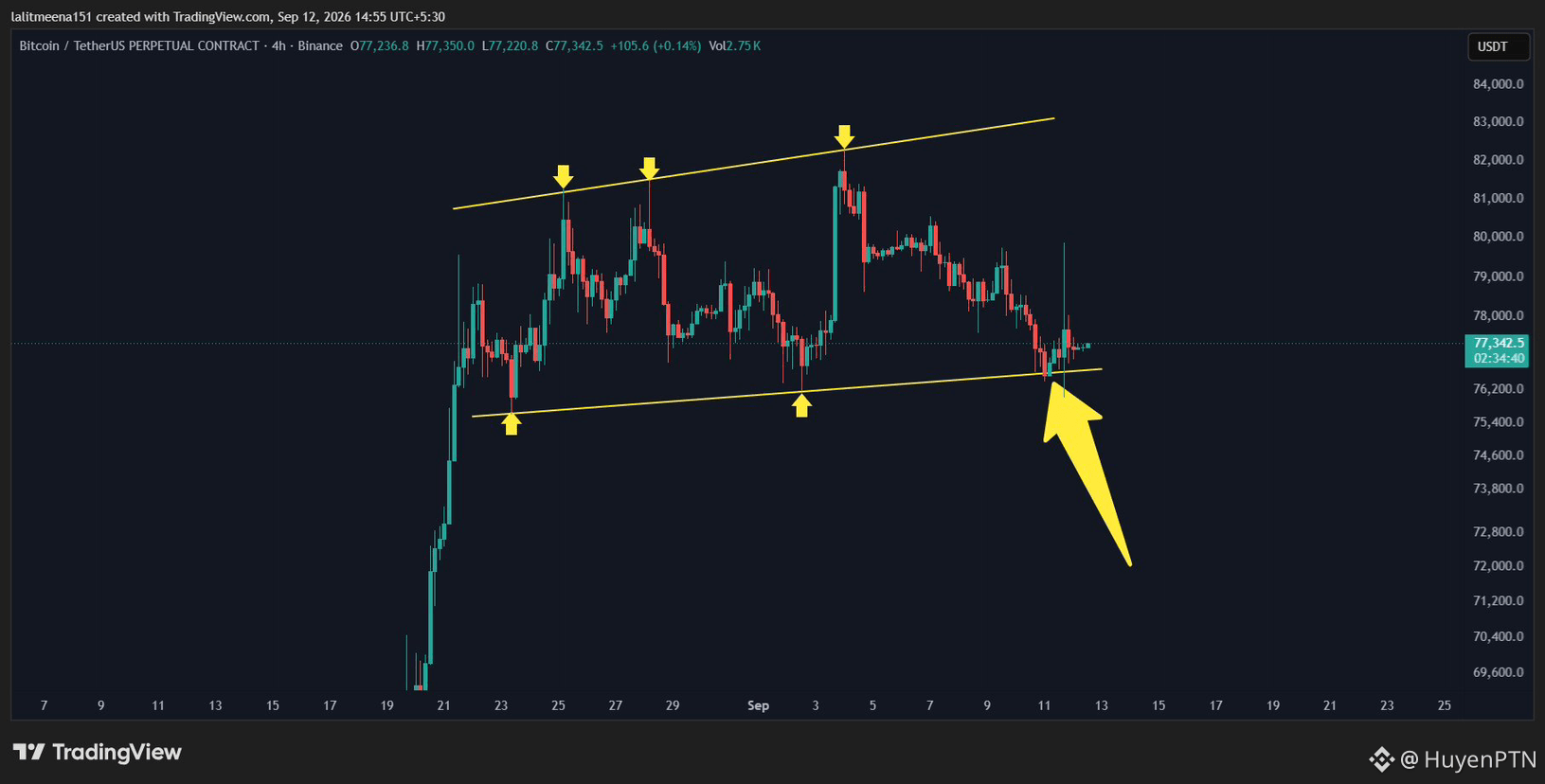
$BTC.D has broken out of its downtrend. More pain for Altcoin holders. $BTC {future}(BTCUSDT) $BNB {future}(BNBUSDT)
$BTC .D has broken out of its downtrend.

More pain for Altcoin holders.
$BTC
$BNB
Übersetzung ansehen
BNB: Bearish Structure Continues – Patiently Waiting for the Optimal Short Trigger BNB is maintaining its downward momentum highly systematically and accurately in line with last month's technical projection. The market structure is entirely dominated by the bears, as the chart consistently locks in a clear sequence of lower highs and lower lows. Currently, the price action has returned to test the lower boundary of the previous sideways consolidation range. This represents a highly sensitive technical inflection zone that demands cautious observation before executing any tactical moves. Based on the visual data from chart , buying interest at this structural floor is visibly weakening. However, if you missed the initial Short setups from the higher ranges, rushing into a sell order right at the current support level introduces unnecessary risk of a short-term bounce. The wisest and safest approach at this juncture is to patiently wait for a definitive confirmation from the market. Wait until a daily candle closes decisively below the lower boundary of this sideways range to confirm a structural breakdown. Once this technical floor is completely shattered, selling pressure will accelerate, triggering a safe Short entry with the tightest possible stop-loss placement just above the breached level. The next projected take-profit target for this downward leg looks straight toward the $500 psychological round number region. Disclaimer: This is not financial advice, DYOR. $BNB {future}(BNBUSDT) $ADA {future}(ADAUSDT) $BTC {future}(BTCUSDT)
BNB: Bearish Structure Continues – Patiently Waiting for the Optimal Short Trigger

BNB is maintaining its downward momentum highly systematically and accurately in line with last month's technical projection. The market structure is entirely dominated by the bears, as the chart consistently locks in a clear sequence of lower highs and lower lows. Currently, the price action has returned to test the lower boundary of the previous sideways consolidation range. This represents a highly sensitive technical inflection zone that demands cautious observation before executing any tactical moves.

Based on the visual data from chart , buying interest at this structural floor is visibly weakening. However, if you missed the initial Short setups from the higher ranges, rushing into a sell order right at the current support level introduces unnecessary risk of a short-term bounce. The wisest and safest approach at this juncture is to patiently wait for a definitive confirmation from the market.

Wait until a daily candle closes decisively below the lower boundary of this sideways range to confirm a structural breakdown. Once this technical floor is completely shattered, selling pressure will accelerate, triggering a safe Short entry with the tightest possible stop-loss placement just above the breached level. The next projected take-profit target for this downward leg looks straight toward the $500 psychological round number region.

Disclaimer: This is not financial advice, DYOR.
$BNB
$ADA
$BTC
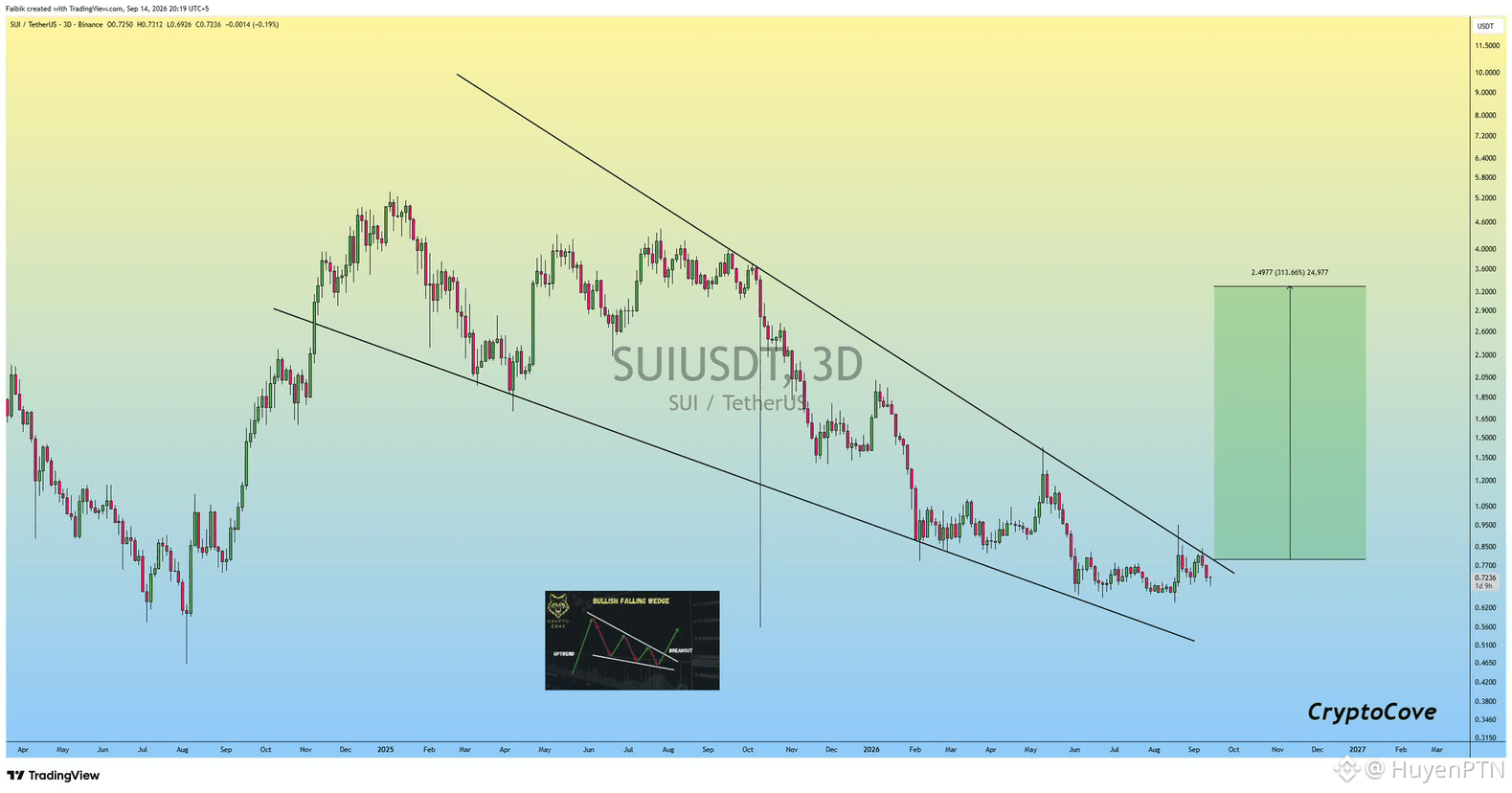
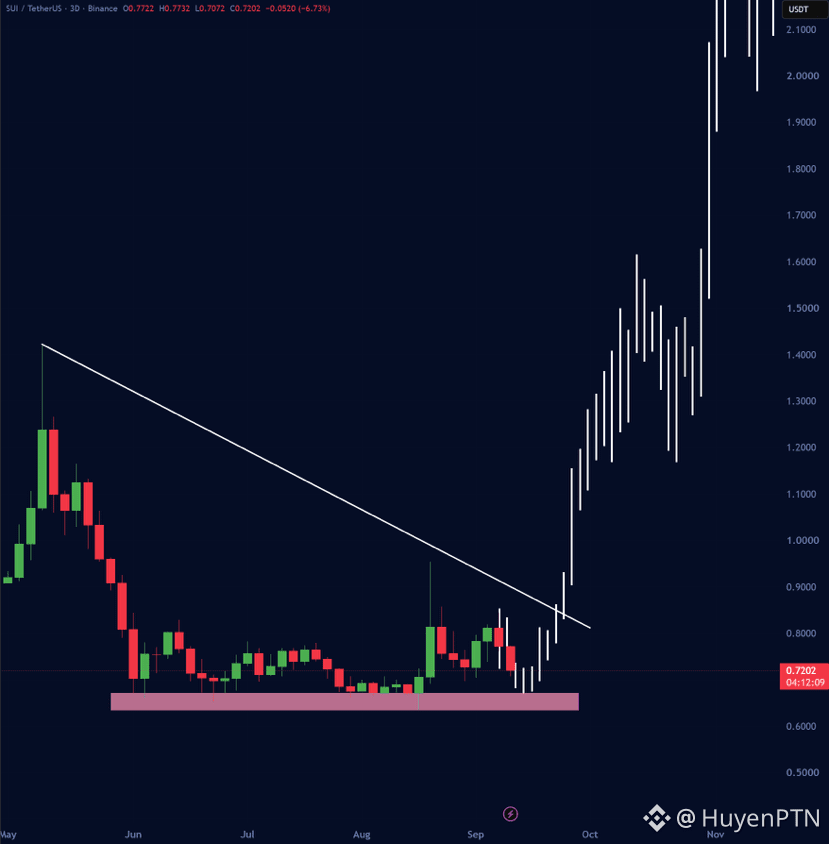
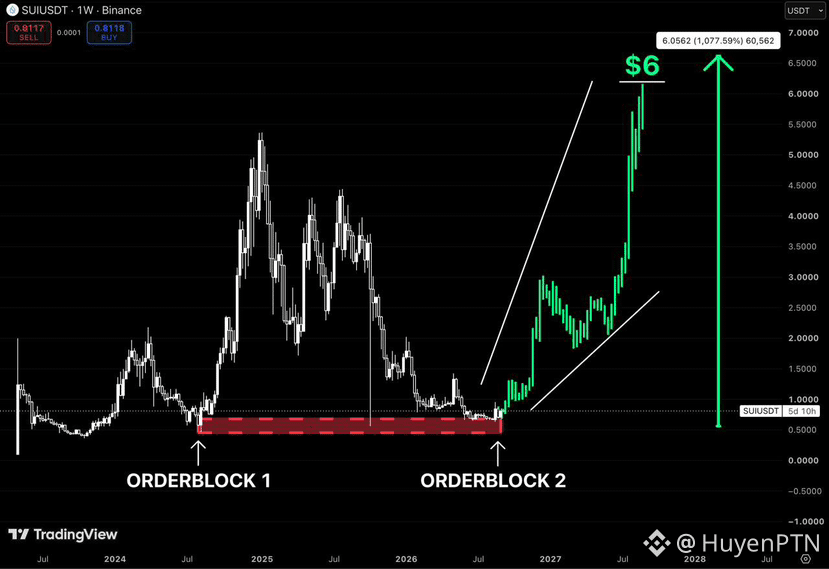
SUI: Konsolidierung am historischen Support – Makro-Pattern-Breakout-Chance signalisiert neuen Wachstumzyklus SUI zeigt eine beeindruckende strukturelle Widerstandsfähigkeit und eröffnet ein äußerst vielversprechendes technisches Setup auf dem Makro-Zeitrahmen. Wenn man die visuelle Wochenchart-Daten betrachtet, hat die Preisstruktur von SUI ein klar definiertes, sich verbreiterndes Dreiecks-Pattern gebildet, gekennzeichnet durch aufeinanderfolgende höhere Hochs und höhere Tiefs. Aktuell hat sich die Kursbewegung wieder bis in den soliden Support-Bereich um die Marke von 0,74 $ korrigiert – genau der Auslöser, der zwei explosive historische Rallyes startete. Die ermutigende Nachricht ist, dass SUI trotz der in diesem Zeitraum relativ stagnierenden Bedingungen im breiteren Markt eine immense Eigenstärke zeigt – ohne jegliche Anzeichen für einen tiefen Verkaufsdruck. Dieses anhaltende seitwärts gerichtete Konsolidierungsverhalten hat sich seit über einem Monat genau an dieser strategischen Basis gehalten und beweist damit, dass der Verkaufsdruck der Bären vollständig erschöpft ist. Sobald die Synchronisierung mit dem breiteren Markt wieder positiv wird, dient diese komprimierte Zone als perfekter Startpunkt, damit SUI einen großen Breakout auslöst und seine dritte makroaufwärts gerichtete Welle vervollständigt. Wenn man auf die historischen Daten zurückblickt, benötigten die beiden vorherigen explosiven Zyklen jeweils konsequent eine Dauer von 22 bis 23 Wochen, um ihre jeweiligen Hochpunkte zu erreichen. Wenn sich die Geschichte in Übereinstimmung mit dieser technischen Zyklizität wiederholt, hat SUI eine starke Wahrscheinlichkeit, bis Anfang November 2026 ein neues Allzeithoch zu etablieren. Das macht dies zu einem idealen Zeitfenster, um dieses Asset auf eine hochpriorisierte Watchlist zu setzen. Haftungsausschluss: Das ist keine Finanzberatung, DYOR. $SUI {future}(SUIUSDT) $BTC {future}(BTCUSDT) $TAO {future}(TAOUSDT)
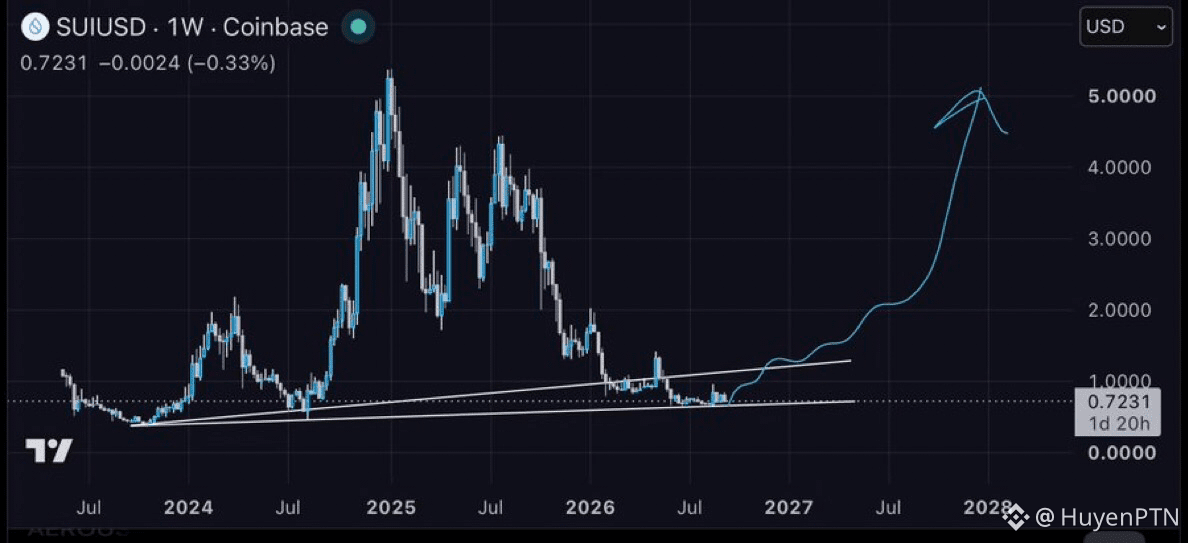
SUI: Konsolidierung am historischen Support – Makro-Pattern-Breakout-Chance signalisiert neuen Wachstumzyklus

SUI zeigt eine beeindruckende strukturelle Widerstandsfähigkeit und eröffnet ein äußerst vielversprechendes technisches Setup auf dem Makro-Zeitrahmen. Wenn man die visuelle Wochenchart-Daten betrachtet, hat die Preisstruktur von SUI ein klar definiertes, sich verbreiterndes Dreiecks-Pattern gebildet, gekennzeichnet durch aufeinanderfolgende höhere Hochs und höhere Tiefs. Aktuell hat sich die Kursbewegung wieder bis in den soliden Support-Bereich um die Marke von 0,74 $ korrigiert – genau der Auslöser, der zwei explosive historische Rallyes startete.

Die ermutigende Nachricht ist, dass SUI trotz der in diesem Zeitraum relativ stagnierenden Bedingungen im breiteren Markt eine immense Eigenstärke zeigt – ohne jegliche Anzeichen für einen tiefen Verkaufsdruck. Dieses anhaltende seitwärts gerichtete Konsolidierungsverhalten hat sich seit über einem Monat genau an dieser strategischen Basis gehalten und beweist damit, dass der Verkaufsdruck der Bären vollständig erschöpft ist. Sobald die Synchronisierung mit dem breiteren Markt wieder positiv wird, dient diese komprimierte Zone als perfekter Startpunkt, damit SUI einen großen Breakout auslöst und seine dritte makroaufwärts gerichtete Welle vervollständigt.

Wenn man auf die historischen Daten zurückblickt, benötigten die beiden vorherigen explosiven Zyklen jeweils konsequent eine Dauer von 22 bis 23 Wochen, um ihre jeweiligen Hochpunkte zu erreichen. Wenn sich die Geschichte in Übereinstimmung mit dieser technischen Zyklizität wiederholt, hat SUI eine starke Wahrscheinlichkeit, bis Anfang November 2026 ein neues Allzeithoch zu etablieren. Das macht dies zu einem idealen Zeitfenster, um dieses Asset auf eine hochpriorisierte Watchlist zu setzen.

Haftungsausschluss: Das ist keine Finanzberatung, DYOR. $SUI
$BTC
$TAO
Übersetzung ansehen
Tôi từng sửa lệnh perp lúc ngồi chờ bát phở mang ra, tiền vừa chuyển từ ví phụ sang ví giao dịch thì bảng giá đã đổi nhịp. Cái khó chịu không chỉ là vài tick chênh lệch, mà là việc dòng tiền và thời điểm vào lệnh có thể bị lần ra nhanh. Trong crypto, chuyện đó giống mở sao kê cho người lạ xem trước cả khi họ biết số dư. Chỉ cần nhìn nhịp ra vào, người ta đã đoán được thói quen, mức chịu rủi ro và lúc mình sốt ruột. Vì vậy tôi nhìn GRVT như một bài toán hạ tầng. GRVT tách việc chứng minh và việc giữ dữ liệu nặng ra khỏi cùng một chỗ. Zero knowledge xác nhận trạng thái hợp lệ mà không phơi toàn bộ dữ liệu lệnh, còn Validium giữ dữ liệu giao dịch ở lớp ngoài thay vì ép mọi thứ nằm hết trên Ethereum. Cách ghép này giảm tải cho lớp cơ sở mà vẫn giữ khả năng kiểm chứng. Hiệu suất ở đây không phải chi tiết phụ. Tài liệu của GRVT từng nêu settlement onchain nhanh hơn khoảng 60 lần so với các DEX lớn, còn matching engine offchain chịu tải lớn hơn khoảng 3000 lần so với engine onchain. Với người giao dịch thật, chậm vài giây là giá vốn lệch, còn lộ nhịp lệnh thì chiến lược gần như mất mép. Tôi vẫn giữ một bước lùi vì Validium luôn kéo theo câu hỏi về data availability và biên tin cậy. GRVT vì thế không thể chỉ nói về proof mà bỏ qua cách dữ liệu được quản trị khi tải tăng mạnh. Nhưng ở bài toán bảo vệ dữ liệu giao dịch mà vẫn giữ hiệu suất cao, hướng đi này trúng. @grvt_io o #grvt
Tôi từng sửa lệnh perp lúc ngồi chờ bát phở mang ra, tiền vừa chuyển từ ví phụ sang ví giao dịch thì bảng giá đã đổi nhịp. Cái khó chịu không chỉ là vài tick chênh lệch, mà là việc dòng tiền và thời điểm vào lệnh có thể bị lần ra nhanh.

Trong crypto, chuyện đó giống mở sao kê cho người lạ xem trước cả khi họ biết số dư. Chỉ cần nhìn nhịp ra vào, người ta đã đoán được thói quen, mức chịu rủi ro và lúc mình sốt ruột. Vì vậy tôi nhìn GRVT như một bài toán hạ tầng.

GRVT tách việc chứng minh và việc giữ dữ liệu nặng ra khỏi cùng một chỗ. Zero knowledge xác nhận trạng thái hợp lệ mà không phơi toàn bộ dữ liệu lệnh, còn Validium giữ dữ liệu giao dịch ở lớp ngoài thay vì ép mọi thứ nằm hết trên Ethereum. Cách ghép này giảm tải cho lớp cơ sở mà vẫn giữ khả năng kiểm chứng.

Hiệu suất ở đây không phải chi tiết phụ. Tài liệu của GRVT từng nêu settlement onchain nhanh hơn khoảng 60 lần so với các DEX lớn, còn matching engine offchain chịu tải lớn hơn khoảng 3000 lần so với engine onchain. Với người giao dịch thật, chậm vài giây là giá vốn lệch, còn lộ nhịp lệnh thì chiến lược gần như mất mép.

Tôi vẫn giữ một bước lùi vì Validium luôn kéo theo câu hỏi về data availability và biên tin cậy. GRVT vì thế không thể chỉ nói về proof mà bỏ qua cách dữ liệu được quản trị khi tải tăng mạnh. Nhưng ở bài toán bảo vệ dữ liệu giao dịch mà vẫn giữ hiệu suất cao, hướng đi này trúng. @grvt_io o #grvt
GRVT und die Frage, wie man die Kontrolle über den Kapitalfluss behält Einmal habe ich Stablecoins von meiner privaten Wallet an eine Börse transferiert, um mich abzusichern. Das Netzwerk war überlastet, das Geld hing 17 Minuten fest, der Preis wich um mehr als 2 Prozent ab—die Vermögenswerte waren zwar noch da, aber der Bearbeitungsrhythmus war praktisch gebrochen. Seitdem verstehe ich: Die Engpässe in der Krypto-Welt liegen nicht im Eigentum an sich. Sie liegen darin, dass Kapital in Stücke gerissen wird—Transaktionen an einem Ort, die Kontrolle an einem anderen, und das reale Vermögen wieder durch eine zusätzliche Tür. Es ist wie Haushalts-, Notfall- und Investitionsgeld, das in drei getrennten Fächern liegt. Im Alltag wirkt das stabil, doch wenn man plötzlich schnell umschichten muss, frisst jede kleine Einzelaktion Zeit und Gebühren. GRVT trifft genau diesen Reibungsverlust mit einer integrierten Architektur. GRVT verbindet die Order-Match-Geschwindigkeit einer zentralisierten Börse, die Onchain-Eigenkontrolle der Vermögenswerte und den Zugang zu Krypto zusammen mit realen Vermögenswerten—auf derselben Betriebsebene. Ich stelle es mir vor wie einen Handelsschalter direkt neben dem Lager. Der Ankerpunkt liegt in der reibungslosen Durchgängigkeit: Je weniger Zwischenebenen, desto klarer lassen sich der Auftragsstatus, das Risiko und der Standort der Vermögenswerte erkennen. Ich würde GRVT an drei recht nüchternen Punkten messen. GRVT muss zeigen, dass Kapital innerhalb von 24 Stunden von der Hinterlegung über den Handel bis zum Kontakt mit realen Vermögenswerten gelangen kann: weniger Signierschritte, kürzere Durchlaufzeiten und eine Gebührenstruktur, die so transparent ist, dass man Liquidität klar von Intermediären trennen kann. Ich suche keinen großen Ort für große Versprechen—ich suche einen Ort, an dem Kapital schnell läuft und die Kontrolle über das Vermögen trotzdem bei mir bleibt. GRVT deutet eine ernsthafte Richtung an: Geschwindigkeit und Kontrolle stehen nicht mehr am Kopf- und am Fußende desselben Tisches. @grvt_io io #grvt
GRVT und die Frage, wie man die Kontrolle über den Kapitalfluss behält

Einmal habe ich Stablecoins von meiner privaten Wallet an eine Börse transferiert, um mich abzusichern. Das Netzwerk war überlastet, das Geld hing 17 Minuten fest, der Preis wich um mehr als 2 Prozent ab—die Vermögenswerte waren zwar noch da, aber der Bearbeitungsrhythmus war praktisch gebrochen.

Seitdem verstehe ich: Die Engpässe in der Krypto-Welt liegen nicht im Eigentum an sich. Sie liegen darin, dass Kapital in Stücke gerissen wird—Transaktionen an einem Ort, die Kontrolle an einem anderen, und das reale Vermögen wieder durch eine zusätzliche Tür.

Es ist wie Haushalts-, Notfall- und Investitionsgeld, das in drei getrennten Fächern liegt. Im Alltag wirkt das stabil, doch wenn man plötzlich schnell umschichten muss, frisst jede kleine Einzelaktion Zeit und Gebühren.

GRVT trifft genau diesen Reibungsverlust mit einer integrierten Architektur. GRVT verbindet die Order-Match-Geschwindigkeit einer zentralisierten Börse, die Onchain-Eigenkontrolle der Vermögenswerte und den Zugang zu Krypto zusammen mit realen Vermögenswerten—auf derselben Betriebsebene.

Ich stelle es mir vor wie einen Handelsschalter direkt neben dem Lager. Der Ankerpunkt liegt in der reibungslosen Durchgängigkeit: Je weniger Zwischenebenen, desto klarer lassen sich der Auftragsstatus, das Risiko und der Standort der Vermögenswerte erkennen.

Ich würde GRVT an drei recht nüchternen Punkten messen. GRVT muss zeigen, dass Kapital innerhalb von 24 Stunden von der Hinterlegung über den Handel bis zum Kontakt mit realen Vermögenswerten gelangen kann: weniger Signierschritte, kürzere Durchlaufzeiten und eine Gebührenstruktur, die so transparent ist, dass man Liquidität klar von Intermediären trennen kann.

Ich suche keinen großen Ort für große Versprechen—ich suche einen Ort, an dem Kapital schnell läuft und die Kontrolle über das Vermögen trotzdem bei mir bleibt. GRVT deutet eine ernsthafte Richtung an: Geschwindigkeit und Kontrolle stehen nicht mehr am Kopf- und am Fußende desselben Tisches. @grvt_io io #grvt
Übersetzung ansehen
A while back, I triggered an inference run to lock an entry, and my wallet inserted an extra approval step right before payment. I was delayed by 12 seconds, the 0.34 anchor level got taken out, and I lost 39 USDC. After a few moments like that, I grew wary of payment flows that describe themselves as smooth. The issue did not sit in the model, but in the way spending permission was dragged into the exact instant compute began. It felt like keeping the electricity budget and the emergency reserve in two separate wallets. When the moment came to pay a small amount, the first thing to slip was not the balance, but the rhythm of execution. Permit2 held my attention longer, because it lets OpenGradient detach OPG spending permission from the moment inference actually runs. Rather than forcing the wallet open again when the request is sent, OpenGradient locks in a narrow allowance beforehand so the model call layer and the payment layer no longer move on the same beat. I picture that structure as leaving the key at an outer counter before stepping into the main processing zone. My anchor rests on 2 points, spending permission is capped in advance, and one extra interruption disappears even though it serves only to confirm the same intent again. The real test lies in how OpenGradient keeps the allowance tight to the usage scope, brief in duration, and clearly logged for each request. I want to see OpenGradient produce the log of a 24 call session, how much OPG was deducted, which request failed, and how the remaining permission narrowed after each use. From where I stand, the real value lies in a payment flow that moves more smoothly while system discipline stays intact. OpenGradient becomes persuasive at the point where spending permission is detached from the moment of inference, while the payment trail remains clear enough for users to verify each step on their own. @OpenGradient t $OPG #OPG $RE $HEI {future}(HEIUSDT) {future}(REUSDT) {future}(OPGUSDT)
A while back, I triggered an inference run to lock an entry, and my wallet inserted an extra approval step right before payment. I was delayed by 12 seconds, the 0.34 anchor level got taken out, and I lost 39 USDC.

After a few moments like that, I grew wary of payment flows that describe themselves as smooth. The issue did not sit in the model, but in the way spending permission was dragged into the exact instant compute began.

It felt like keeping the electricity budget and the emergency reserve in two separate wallets. When the moment came to pay a small amount, the first thing to slip was not the balance, but the rhythm of execution.

Permit2 held my attention longer, because it lets OpenGradient detach OPG spending permission from the moment inference actually runs. Rather than forcing the wallet open again when the request is sent, OpenGradient locks in a narrow allowance beforehand so the model call layer and the payment layer no longer move on the same beat.

I picture that structure as leaving the key at an outer counter before stepping into the main processing zone. My anchor rests on 2 points, spending permission is capped in advance, and one extra interruption disappears even though it serves only to confirm the same intent again.

The real test lies in how OpenGradient keeps the allowance tight to the usage scope, brief in duration, and clearly logged for each request. I want to see OpenGradient produce the log of a 24 call session, how much OPG was deducted, which request failed, and how the remaining permission narrowed after each use.

From where I stand, the real value lies in a payment flow that moves more smoothly while system discipline stays intact. OpenGradient becomes persuasive at the point where spending permission is detached from the moment of inference, while the payment trail remains clear enough for users to verify each step on their own. @OpenGradient t $OPG #OPG $RE $HEI
Kahsc, ich habe eine Gebühr gezahlt, damit ein Agent Einstiegssignale abholt. Die Antwort kam 19 Sekunden zu spät, das Orderbuch verschob sich in der Dicke, und der Einstieg verschwand. Nach ein paar Treffern wie diesem wurde mein Vertrauen in Systeme dünner, die jede Art von Inferenz durch denselben Zahlungsrhythmus pressen. Kurze Anfragen brauchen schnelle Antworten, während umfangreiche Sessions eine klare Abwicklung brauchen. Es fühlt sich an, als müsste man Lebenshaltungskosten zusammen mit Notfallreserven verwalten. Wenn die Zeit zum Prüfen kommt, entgleitet als Erstes die Fähigkeit zu erkennen, welche Zahlung bereits erfolgt ist und welche noch aussteht. OpenGradient sendet x402 über OPG auf Base, statt darauf zu warten, gemeinsam mit der Abwicklungsschicht von schweren Inferenz-Sessions. OpenGradient lässt außerdem PIPE sofort auf seinem eigenen Netzwerk abwickeln, sodass leichte Calls im Takt des Zugriffs abgerechnet werden, während die lange Inferenz ihren Zustand dort schließt, wo die finale Verantwortung sitzt. Ich stelle mir diese Struktur wie zwei Zähler in einem einzigen Lager vor. Der eine Zähler scannt Tickets so, dass kleine Pakete gleichzeitig durchkommen, der andere versiegelt schwere Pakete, und mein Anker ruht auf 2 Punkten: Der kurze Flow darf nicht stecken bleiben, und der schwere Flow darf keinen halb fertigen Zustand hinterlassen. Der echte Test kommt, wenn OpenGradient 64 aufeinanderfolgende Calls durchläuft, Base voll ist und gerade eine lange Session zu Ende gegangen ist, die PIPE zwingt, die Bücher sofort zu schließen. OpenGradient muss eine scharfe Grenze zwischen Zahlungsabwicklung für den Zugriff und der finalen Abwicklung wahren: Die leichte Bahn soll schnell fahren, während die schwere Bahn die Verantwortung genau dort übernimmt, wo die Ausführung endet. Von meiner Seite aus macht OpenGradient Überzeugungskraft dort möglich, wo sich die Zahlung für den Zugriff und das Schließen der Bücher für die schwere Inferenz nicht gegenseitig ins Gehege kommen. Ein Design wie dieses ist das, das die Verzögerung am Eingang reduzieren, das Ledger am Ausgang stabil halten und den echten Schmerzpunkt bezahlter KI-Infrastruktur treffen kann. @OpenGradient $OPG #OPG $TAC {future}(TACUSDT) $GWEI {future}(GWEIUSDT)
Kahsc, ich habe eine Gebühr gezahlt, damit ein Agent Einstiegssignale abholt. Die Antwort kam 19 Sekunden zu spät, das Orderbuch verschob sich in der Dicke, und der Einstieg verschwand.

Nach ein paar Treffern wie diesem wurde mein Vertrauen in Systeme dünner, die jede Art von Inferenz durch denselben Zahlungsrhythmus pressen. Kurze Anfragen brauchen schnelle Antworten, während umfangreiche Sessions eine klare Abwicklung brauchen.

Es fühlt sich an, als müsste man Lebenshaltungskosten zusammen mit Notfallreserven verwalten. Wenn die Zeit zum Prüfen kommt, entgleitet als Erstes die Fähigkeit zu erkennen, welche Zahlung bereits erfolgt ist und welche noch aussteht.

OpenGradient sendet x402 über OPG auf Base, statt darauf zu warten, gemeinsam mit der Abwicklungsschicht von schweren Inferenz-Sessions. OpenGradient lässt außerdem PIPE sofort auf seinem eigenen Netzwerk abwickeln, sodass leichte Calls im Takt des Zugriffs abgerechnet werden, während die lange Inferenz ihren Zustand dort schließt, wo die finale Verantwortung sitzt.

Ich stelle mir diese Struktur wie zwei Zähler in einem einzigen Lager vor. Der eine Zähler scannt Tickets so, dass kleine Pakete gleichzeitig durchkommen, der andere versiegelt schwere Pakete, und mein Anker ruht auf 2 Punkten: Der kurze Flow darf nicht stecken bleiben, und der schwere Flow darf keinen halb fertigen Zustand hinterlassen.

Der echte Test kommt, wenn OpenGradient 64 aufeinanderfolgende Calls durchläuft, Base voll ist und gerade eine lange Session zu Ende gegangen ist, die PIPE zwingt, die Bücher sofort zu schließen. OpenGradient muss eine scharfe Grenze zwischen Zahlungsabwicklung für den Zugriff und der finalen Abwicklung wahren: Die leichte Bahn soll schnell fahren, während die schwere Bahn die Verantwortung genau dort übernimmt, wo die Ausführung endet.

Von meiner Seite aus macht OpenGradient Überzeugungskraft dort möglich, wo sich die Zahlung für den Zugriff und das Schließen der Bücher für die schwere Inferenz nicht gegenseitig ins Gehege kommen. Ein Design wie dieses ist das, das die Verzögerung am Eingang reduzieren, das Ledger am Ausgang stabil halten und den echten Schmerzpunkt bezahlter KI-Infrastruktur treffen kann. @OpenGradient $OPG #OPG $TAC
$GWEI
Anmelden und weiter Inhalte entdecken
Krypto-Nutzer weltweit auf Binance Square kennenlernen
⚡️ Bleib in Sachen Krypto stets am Puls.
💬 Die weltgrößte Kryptobörse vertraut darauf.
👍 Erhalte verlässliche Einblicke von verifizierten Creators.
E-Mail-Adresse/Telefonnummer
Sitemap
Cookie-Präferenzen
Nutzungsbedingungen der Plattform