
N17z Frontier
29 Beiträge

N17z Frontier
Melden
Nutzer blockieren
1 Following
12 Follower
16 Like gegeben
Beiträge
·
--
Bullisch
Die Wall Street bewertete Anthropic mit 83 $. Der Kryptomarkt hatte es bereits mit 100 $ bewertet.
Der größte Börsengang aller Zeiten – 81,3 Mrd. $ eingesammelt, Bewertung von rund 1,5 Bio. $ – wird erst heute Abend an der Nasdaq gehandelt. Aber der Kryptomarkt hat nicht gewartet. ANT-Perpetuals erzielten in 24 Stunden ein Volumen von rund 697 Mio. $ bei einem Open Interest von rund 377 Mio. $, und der Markt liegt bei fast 100 $ – rund 20 % über dem IPO-Preis. Bloombergs Berechnung: Der Kryptopreis impliziert eine Bewertung von rund 1,7 Bio. $.
Lass das mal sacken. Bitcoin blutet bei 63.433 $, der Fear-&-Greed-Index hängt bei 10 fest, die ETF-Abflüsse liegen diesen Monat bereits bei über 2,6 Mrd. $ – und derselbe Markt ist gerade zum Ort der Preisfindung für Wall Streets Kronjuwel geworden. Das „Casino“ hat den IPO-Preis festgelegt, bevor es die eigene Börse der Wall Street tat.
Meine Einschätzung: Das ist das bullischste Signal für Krypto, über das niemand spricht. Das Geld, das bei ANT zu 100 $ vorweg eingestiegen ist, verschwindet nicht – es rotiert weiter. Und wenn es das tut, fließt es in den einzigen Markt, der niemals schließt.
Der ehrliche Einwand: Das sind synthetische Kontrakte. Es wechseln keine Aktien den Besitzer, es gibt keine IPO-Zuteilung – und wenn ANT heute Abend unverändert eröffnet, verpufft der Aufschlag innerhalb weniger Minuten. Ein Perpetual zu 100 $ ist eine Wette, keine Bewertung.
Aber heute Abend, wenn die Nasdaq öffnet, schau genau hin, wer recht hatte – die Unterlagen mit 83 $ oder der Kryptomarkt mit 100 $. Mein Geld liegt auf Krypto.
Wer hatte recht – die Wall Street oder die Perpetuals? 👇
#Bitcoin #BTC #Anthropic #IPO #CryptoMarket #AnthropicIPO

903
·
--
Bärisch
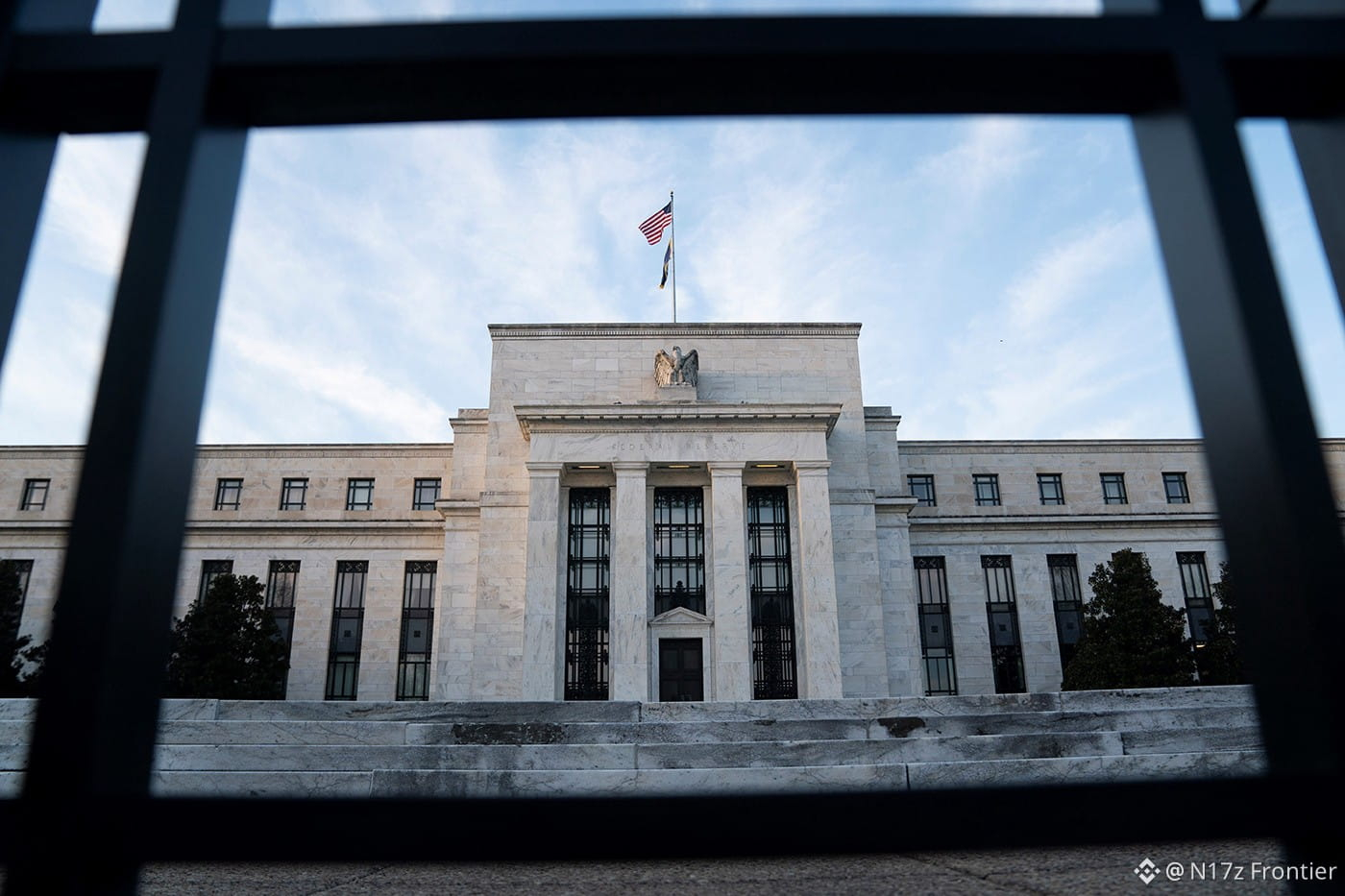
Die Fed-Protokolle sind da. Und Bitcoin hat gerade darauf reagiert.
Die Protokolle der Fed-Sitzung im Oktober wurden um 02:00 WIB veröffentlicht – und sie sind brutal. „Fast alle“ Verantwortlichen hielten weitere Zinserhöhungen wahrscheinlich für angemessen. Einige meinten, im Dezember könnte sogar eine Erhöhung um MEHR als 25 Basispunkte auf dem Tisch liegen. Gouverneur Waller spricht sich offen für 50 Basispunkte aus. Die PCE-Inflation liegt bei 3,6 % gegenüber einem Ziel von 2 %. Die Märkte rechnen nun nahezu sicher mit einer Zinserhöhung im Dezember.
Und hier kommt die Wendung, die niemand hören will: „Viele Teilnehmer“ bezeichneten den Ausbau der KI als „eine wesentliche Quelle von Inflationsrisiken“.
Derselbe KI-Boom, der gestern die Aktienkurse gerettet hat – Nvidias perfekte Geschäftszahlen –, dient der Fed jetzt als Begründung für Zinserhöhungen. Aktien können sich hinter ihren Gewinnen verstecken. Bitcoin hat nichts. Keine Cashflows. Keine Aktienrückkäufe. Keine angehobene Prognose. Nur einen Preis.
Also tat der Preis, was ungeschützte Vermögenswerte eben tun. BTC steht heute Morgen bei 62.764 $, ein Minus von 3,2 % innerhalb von 24 Stunden, nachdem der Kurs über Nacht auf 62.063 $ gefallen war – genau an den unteren Rand der Unterstützungszone von 62.000–66.000 $ von Glassnode, die nur wenige Stunden nach der Feier gestern Abend getestet wurde. ETH: 1.770,90 $, SOL: 73,44 $, BNB: 580,78 $ – alle im Minus. Fear & Greed: 10. Extreme Angst, den siebten Tag in Folge.
Und die „Erholung“ bei den ETFs? Schon bei der Ankunft gescheitert. Der Zufluss von 7,9 Mio. $ am Montag hielt genau einen Tag. Am Dienstag: -239,9 Mio. $, wobei allein BlackRocks IBIT 209,5 Mio. $ verlor. Die Abflüsse im November liegen inzwischen bei über 2,5 Mrd. $. CryptoQuant bringt es gerade auf den Punkt: Bitcoin befindet sich wieder in einer Bärenphase, die Stimmung unter Analysten ist so pessimistisch wie seit November 2025 nicht mehr.
Das ist kein Rücksetzer. Das ist eine Neubewertung. Der Markt rechnete dauerhaft mit Zinssenkungen; stattdessen treibt die Fed Zinserhöhungen bis ins Jahr 2027 voran. Jeder „Boden“-Aufruf in diesem Monat wurde innerhalb von 24 Stunden überrollt.
Ein Gegenargument: Sollte die November-Inflation vor der Sitzung am 8.–9. Dezember niedriger ausfallen, ist die Diskussion über 50 Basispunkte über Nacht vom Tisch. Die Glassnode-Zone hat bisher gehalten, und On-Chain-Daten deuten darauf hin, dass die Verkäufer erschöpft sind. Doch bis zu einem Tagesschluss über 68.000 $ UND einem Tag mit echten ETF-Zuflüssen ist jede Rallye ein Ausstieg, kein Einstieg.
Was ist eure Einschätzung – hält die Marke von 62.000 $ bis zur Dezembersitzung, oder geht es jetzt wirklich um 50.000 $?
#Bitcoin #BTC #FederalReserve #CryptoMarket #BitcoinETF
130
·
--
Bullisch
Übersetzung ansehen
You missed the bottom. It happened while you were screaming for $50K.
Glassnode's Week On-chain (Nov 17) just printed the signal that only shows up at cycle lows: realized losses are now at levels last seen near the bottoms of 2018, 2020, 2022 and early 2023.
And look at WHO bought the blood. In the two heaviest selling days, buyers absorbed ~66,000 BTC inside the $62K–$66K band. That block now holds ~20% of all short-term-holder coins. Nov 13–14 flushed the biggest long liquidations relative to open interest since 2023. The leverage overhang is largely gone. The weak hands already sold — to buyers who are now the floor.
Binance and Coinbase order books back it up: ~2.3x more bids than asks within 5% of price. BTC sits at $63,737 tonight, still inside the block.
So here's the uncomfortable truth: the $50K crowd isn't early. They're late to a funeral that already happened. The capitulation already printed. The floor isn't a prediction — it's 66,000 BTC of fresh cost basis sitting underneath this price.
The honest counterpoint: Glassnode itself refuses to call a bottom — and it's right to. Short-term holders' break-even is $74,100, ~16% above tonight's price, so every recent buyer is underwater and becomes supply on any bounce. ETFs are still bleeding (-$239.9M Tuesday, $2.58B in November). And the Fed minutes land at 02:00 WIB with a December hike priced above 90%.
One line kills this thesis: a daily close below $62,000. Then it's $58,500, then $53,700.
Until then — are you buying the capitulation, or still waiting for $50K?
#Bitcoin #BTC #CryptoMarket #OnChain #Glassnode
63
·
--
Bärisch
Übersetzung ansehen
Monday's $7.9M ETF inflow lasted exactly ONE day.
Tuesday: -$239.9M. BlackRock's IBIT flipped from +$76.5M to -$209.5M in 24 hours. November total: -$2.58 BILLION. The "bottom buyers are back" crowd got humiliated in a single session.
But the inflow was never the story. The story is WHY the bid is gone — and it's structural.
The basis trade — buy spot BTC, short perps, pocket the spread — was the machine that brought institutions in. It now pays 3–5% a year. At or BELOW Treasury yields. (Talos, via CoinDesk)
Read that again. Wall Street can earn the same or more holding a T-bill, with zero volatility and zero drawdown. Why would they hold Bitcoin for LESS yield and -26% from the October high?
They wouldn't. And they aren't. The money is already moving to stock perpetuals instead.
BTC sits at $64,201. Fear & Greed: 11 — Extreme Fear. The options tape agrees: five of the six most-traded BTC contracts right now are puts, led by the $60K put (Dec 4) and the $63K put (Nov 27). The crowd is insuring the floor, not the upside — because there is no floor.
This is not a dip. This is a repricing of WHY institutions were ever here. The "institutional bid" was a yield trade, not a belief trade. And the yield is gone.
The honest counterpoint: K33 notes ETF outflows are now approaching levels seen near previous local bottoms. And the FOMC minutes drop at 02:00 WIB tonight — one dovish surprise and the tape flips. My invalidation: a daily close above $68K plus a REAL inflow day.
Until then, every bounce is exit liquidity.
If the basis trade pays less than a T-bill, why would Wall Street buy this dip?
#Bitcoin #BTC #CryptoMarket #BitcoinETF #FederalReserve
56
·
--
Bullisch
Übersetzung ansehen
THEY BOUGHT BEFORE THE CRASH. YOU'RE SELLING AFTER IT.
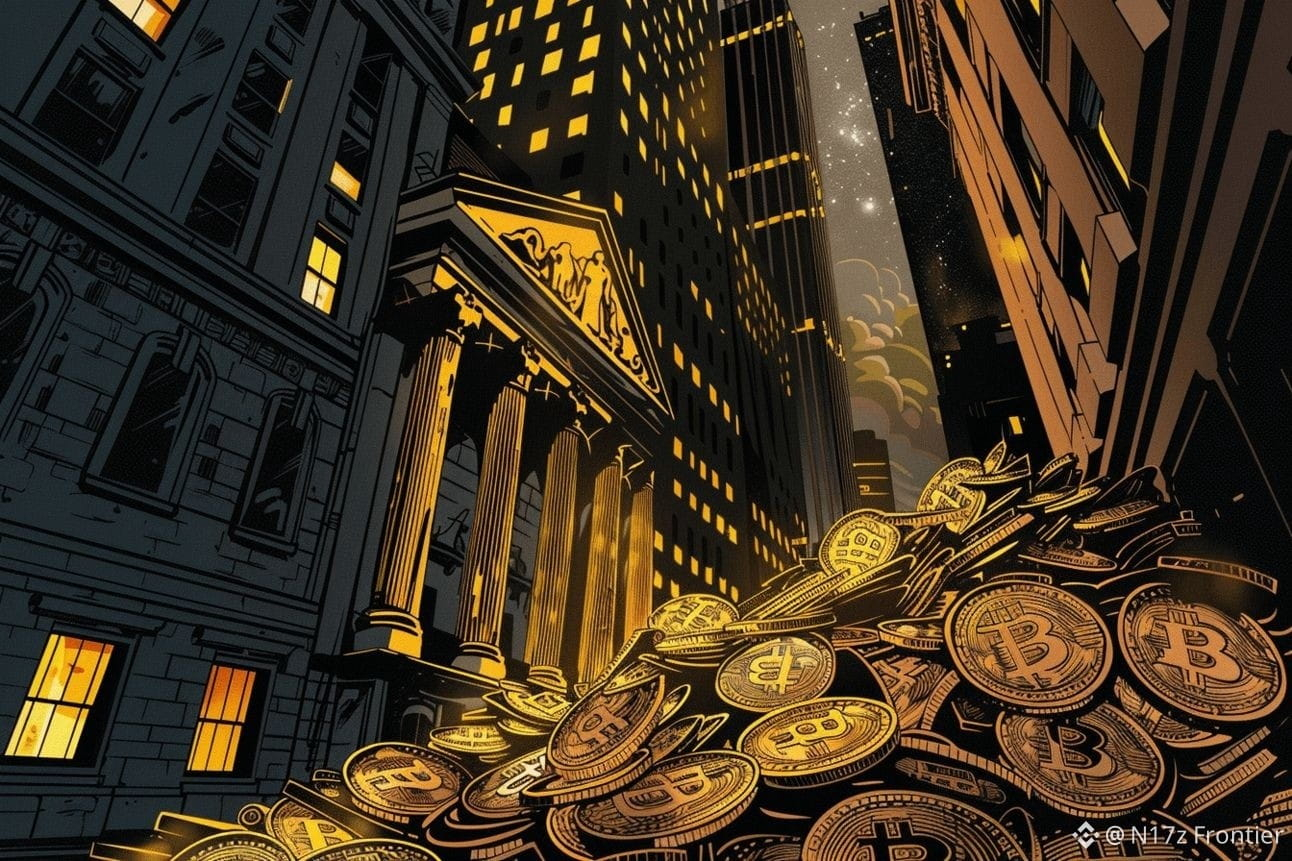
Fresh 13F filings just exposed what Wall Street did in Q3 — while your feed screamed "Bitcoin is dead":
🏦 Wells Fargo DOUBLED its IBIT stack to 49.58M shares — $2.35 BILLION. The largest institutional BTC ETF holder on the planet.
🏦 Goldman Sachs more than DOUBLED its spot BTC ETFs to $1.28B (+121%) — and 6x'd its ETH ETFs to $1.22B.
🏦 Brevan Howard TRIPLED its IBIT to $1.1B (+211%).
🏦 Millennium: ~$1.21B in BTC ETFs.
These aren't crypto bros. These are the banks that run the system. Those positions were marked on Sept 30, when BTC was ~$83,700. Today BTC is $64,600 — 23% LOWER. They positioned before the crash. Retail is panic-selling after it, 49% below the October ATH, while the Fear & Greed Index sits at 11. Extreme Fear.
And the ETF bleed everyone cites? Monday finally printed +$7.9M — the first inflow after 7 straight days of red.
My call: selling the bottom to the banks that bought before the top is the dumbest trade in crypto right now. The next 13F filings (Feb 16) will show whether they bought the dip too. I bet they did.
⚠️ The honest counterpoint — because I won't lie to you: these are Sept 30 snapshots. The filings CANNOT prove they still hold — Q4 selling is invisible until February. 85% of Wells Fargo's position is CLIENT money, not the bank's own bet. Goldman even holds IBIT puts. If BTC loses $62K, Glassnode's realized price at $53,700 is next. FOMC minutes land tonight, 02:00 WIB.
But ask yourself: who do you want to be — the seller at $64.6K, or the buyer the banks were?
Bullish. Unapologetically. 🐂
Prices at 13:18 WIB: BTC $64,600 • ETH $1,810 • SOL $74.94
#Bitcoin #BTC #BitcoinETF #GoldmanSachs #WellsFargo #CryptoMarket
126
·
--
Bärisch
Übersetzung ansehen
NVIDIA JUST SAVED THE STOCK MARKET. BITCOIN DIDN'T EVEN LOOK UP. 🤷
The verdict landed at 04:20 WIB — and it was a monster. Revenue $115.8B, up 103% year-on-year. EPS $2.68 vs $2.48 expected. Q4 guidance $130B vs ~$125B expected. Full-year growth raised to 75%. Shares rose ~2% after hours. Nasdaq futures jumped 360+ points.
And Bitcoin? $64,835. Up 0.4%. Basically asleep.
This is the divorce nobody wanted to admit. For a month the excuse was "wait for Nvidia." Well, Nvidia delivered the perfect report — and crypto still can't get off the floor. Because Bitcoin's problem was never Jensen Huang. It's the Fed: a December hike is now 95% priced, the 10-year sits near 5.1%, and the St. Louis Fed's Musalem just said SEVERAL hikes may be needed before spring.
The ETF "rescue" is a joke too. Monday's +$7.9M inflow ended seven days of bleeding — but it recovered only ~3% of what BlackRock's IBIT lost in its 11-session outflow streak. Seven-day flows are still -$1.06B.
Fear & Greed: 11. Extreme Fear. MVRV near 1.1 says we're washed out — but washed out is not the same as bottomed. On-chain demand is still negative.
My take: the AI trade saved itself last night. Crypto is on its own — and on its own, with a 95% hike coming, $60K is still the magnet, not the floor.
Yes, the guide flatters itself — a 14th week in the quarter, margins sliding to 71–72%. But the market bought it anyway, futures still ripped — and BTC still didn't move. That's the whole point.
SOL (+5%) and XRP (+3%) bounced harder — alt rotation, not Bitcoin strength. BTC is the tape, and the tape didn't move.
Invalidation is simple: a daily close above $68K (the 200-week) plus a REAL ETF inflow day. Until then, every Nvidia headline is noise for BTC.
Do you still believe the AI rally drags crypto up — or is the divorce final? 👇
#Bitcoin #BTC #Nvidia #CryptoMarket #FederalReserve #BitcoinETF
202
·
--
Bärisch
Saylor hat den Dip gekauft. Der Dip hat es nicht einmal bemerkt.
Strategy hat letzte Woche 485 BTC gekauft — für 33,4 Mio. $, also 68.887 $ pro Coin. Strive hat 251 hinzugefügt. Twenty One Capital hat BTC im Wert von 10 Mio. $ hinzugefügt. Drei Treasury-Unternehmen, eine Schlagzeile: 890 BTC, etwa 58 Mio. $.
ETF-Anleger haben im selben Zeitraum über fünf Handelstage 932,9 Mio. $ abgezogen. Sechzehnmal so viel. Das ist kein Kampf. Das ist ein Rundungsfehler mit Pressemitteilung.
Und hier kommt der Teil, den die Bullen nicht retweeten werden: Strategy hat 228 Mio. $ dafür ausgegeben, eigene Vorzugsaktien zurückzukaufen — fast SIEBENMAL so viel wie für Bitcoin. Der größte „Käufer“ in der Kryptowelt hat gerade verraten, worauf es ihm momentan wirklich ankommt. Auf die eigenen Papiere.
Die Rechnung wird noch hässlicher. Strategys 850.849 BTC haben 64,2 Mrd. $ gekostet — 75.452 $ pro Coin. Bei 64.806 $ heute Abend liegt das Unternehmen damit ungefähr 9 Mrd. $ im Minus. Letzte Woche kaufte es 1.036 BTC. Diese Woche: 485. Der Dip-Käufer kauft WENIGER, zu höheren Preisen, und rutscht dabei immer tiefer ins Minus.
Währenddessen liegt BTC unter allen neun wichtigen gleitenden Durchschnitten und klebt am unteren Bollinger-Band bei 64.530 $. Der wöchentliche RSI liegt bei 37,8, der Fear-&-Greed-Index bei 12. Das ist keine gespannte Feder. Das ist ein Markt ohne Nachfrage.
Das Argument der Bullen? MVRV nahe 1,1 — das „Bodensignal“. In diesem Bärenmarkt ist es schon dreimal aufgetaucht. Die ersten beiden Male haben den Absturz nicht aufgehalten.
Widerlegung: ein Tagesschluss über 65.700 $ zusammen mit einem Tag mit echten ETF-Zuflüssen. Bis dahin ist jeder Aufschwung Exit-Liquidität und jede Schlagzeile à la „Treasury kauft den Dip“ bloß Selbstberuhigung.
62.006 $ ist die Grenze. Fällt sie, kommt als Nächstes 60.000 $, dann die mittleren 50.000er.
Wer kauft hier tatsächlich? Nennt sie mir. Ich warte.
#Bitcoin #BTC #Strategy #BitcoinETF #KryptoMarkt
127
·
--
Bärisch
Übersetzung ansehen
Nvidia reports at 04:20 WIB tomorrow — and yesterday the Fed Chair sketched a world where the AI boom doesn't pay off.
Fed Chair Kevin Warsh laid out three AI scenarios in San Francisco on Monday. The bad one: after a historic capex binge and stock run, "expected returns could turn down and equity valuations could fall, leading to an economic slowdown and a more notable rise in unemployment." His words. Yes — he called them illustrative scenarios, not forecasts. But the Fed Chair is now officially modelling a world where the AI trade disappoints.
Tomorrow morning is the test. Nvidia reports Q3 after the close — consensus ~$109B revenue, $2.47 EPS. But the quarter ended Oct 25, BEFORE Jensen Huang resigned. Those numbers are ancient history. The only number that matters is interim CEO Colette Kress's Q4 guidance — analysts expect ~$125B.
The tape already voted. Monday: Nasdaq -2.49%, semis -5.3%, NVDA closed $156.14, down 13%+ since Huang left. 87% of the Fed's own contacts call AI a salient financial risk. Governor Barr flagged $3T+ in off-balance-sheet AI financing.
Meanwhile Bitcoin sits at $64,634, Fear & Greed at 12, ETF outflows now 8 straight days. Wintermute's desk is watching $62K, then $60K — and talking $50Ks.
My call: a great quarter changes NOTHING. Guidance is the verdict. If Kress blinks tomorrow, the AI unwind accelerates and BTC tests $60K before the week is out. The AI trade was crypto's oxygen mask — and Nvidia is about to rip it off.
Counterpoint, honestly: Warsh was broadly upbeat on AI's potential, and a monster guidance print flips this whole tape violently. Invalidation: NVDA guides above ~$125B AND BTC reclaims $68K with an ETF inflow day.
If Nvidia guides soft — does BTC see $60K before Friday, or do dip-buyers save it one more time?
#Bitcoin #BTC #Nvidia #CryptoMarket #FederalReserve
1
126
·
--
Bärisch
Übersetzung ansehen
Russia just 'opened' crypto to its retail investors. Before you celebrate, do the math.
Today, Nov 17, Bank of Russia Directive 7441-U takes effect. Ordinary Russians may now buy exactly three assets through licensed brokers: BTC, ETH and USDT. The catch? A 300,000-ruble annual cap per broker — about $3,650. At Nov 6 prices, that's 0.048 BTC. Per year.
Even the loophole is tiny: max out all 25 licensed intermediaries and you get ~1.2 BTC a year. Meanwhile US spot BTC ETFs bled $2.35B in two weeks. This headline is a rounding error next to the actual flows.
And real trading hasn't even started — exchanges may admit the assets from Nov 22, Moscow Exchange spot trading begins Dec 1. Today is paperwork, not demand.
Don't get me wrong: a G20 central bank putting BTC on a regulated list is a legitimacy milestone. In a bull market, it matters. But BTC sits at $64,691, still under the 200-week ~$67,800, Fear & Greed at 12, dollar at 103.47. Headlines don't move markets. Flows do.
Counterpoint, honestly: qualified investors are uncapped, the framework now exists, and if the cap rises later this becomes a real channel. And if Nvidia's earnings surprise and the FOMC minutes soften this week, this whole tape can flip. But today, on the numbers in front of us, this changes nothing.
What's the most overhyped 'bullish headline' you've seen during this crash — and did it move price even one day?
#Bitcoin #BTC #Russia #CryptoMarket #BitcoinETF
111
·
--
Bärisch
Übersetzung ansehen
The rotation trade just died in public. 💀
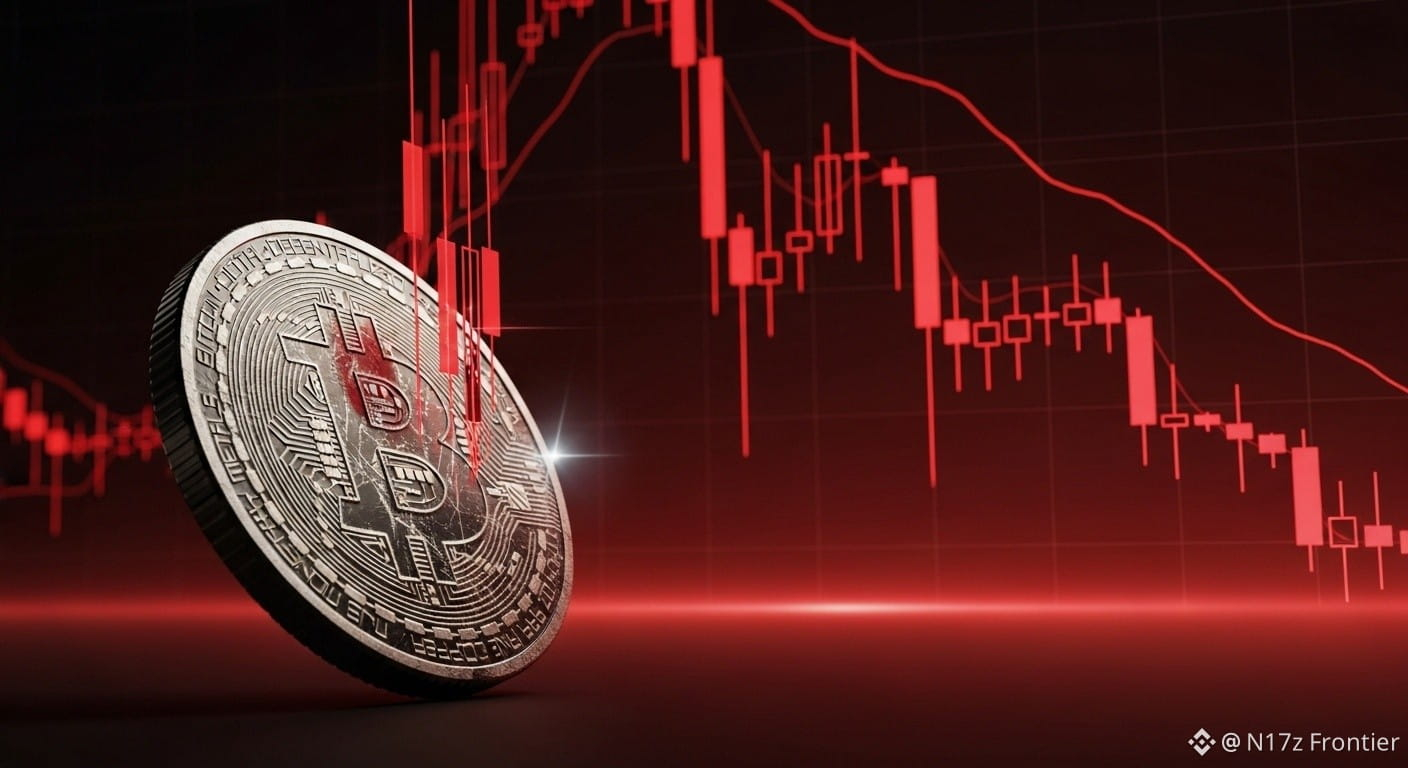
Bitcoin was supposed to feast when AI stumbled. Instead it crashed WITH it — down 16% in November, to $62K over the weekend, while AI ETFs $BAI and $SMH are down ~30% from their highs. Same selloff. Same portfolios. Same exit door.
Tonight BTC sits at $65,216 — a bounce from $62K, still 48% below its $126,080 peak.
Here's the lie everyone told themselves: "When AI cools, the money rotates into crypto."
Wrong. As Bitget Wallet's Lacie Zhang told CoinDesk today: "The idea that an AI unwind would automatically send capital into crypto was always too simplistic." Both are long-duration, liquidity-sensitive risk assets, often sitting in the SAME leveraged portfolios. When volatility spikes, funds don't rotate — they sell both and raise cash.
The tape proves it: $2.35B fled Bitcoin ETFs in two weeks, $2B of longs got liquidated in a single weekend, funding turned negative, and Fear & Greed sits at 10. Extreme fear.
And the part nobody wants to say: the ONLY thing that held up this weekend was tokenized real-world assets — $39.5B of them, barely down 1.7% in a month, holders UP 6% to 5.75M. Yield held. Hype didn't. The market just voted: it wants cash flow, not narratives.
My take: Bitcoin stays fragile until it reclaims $69K–$70K AND ETF flows turn positive. Until then, every bounce is a gift to sellers. Lose $62K and the $60K put — the market's biggest bet — becomes a magnet.
Counterpoint, honestly: RSI is under 30, deeply oversold. The last two times it looked like this, the selloff stalled and BTC bounced. A squeeze is possible. But a squeeze is not a recovery.
So tell me: is the rotation thesis dead forever — or just waiting for Nvidia's earnings on Tuesday?
#Bitcoin #BTC #CryptoMarket #Nvidia #BitcoinETF
226
·
--
Bärisch
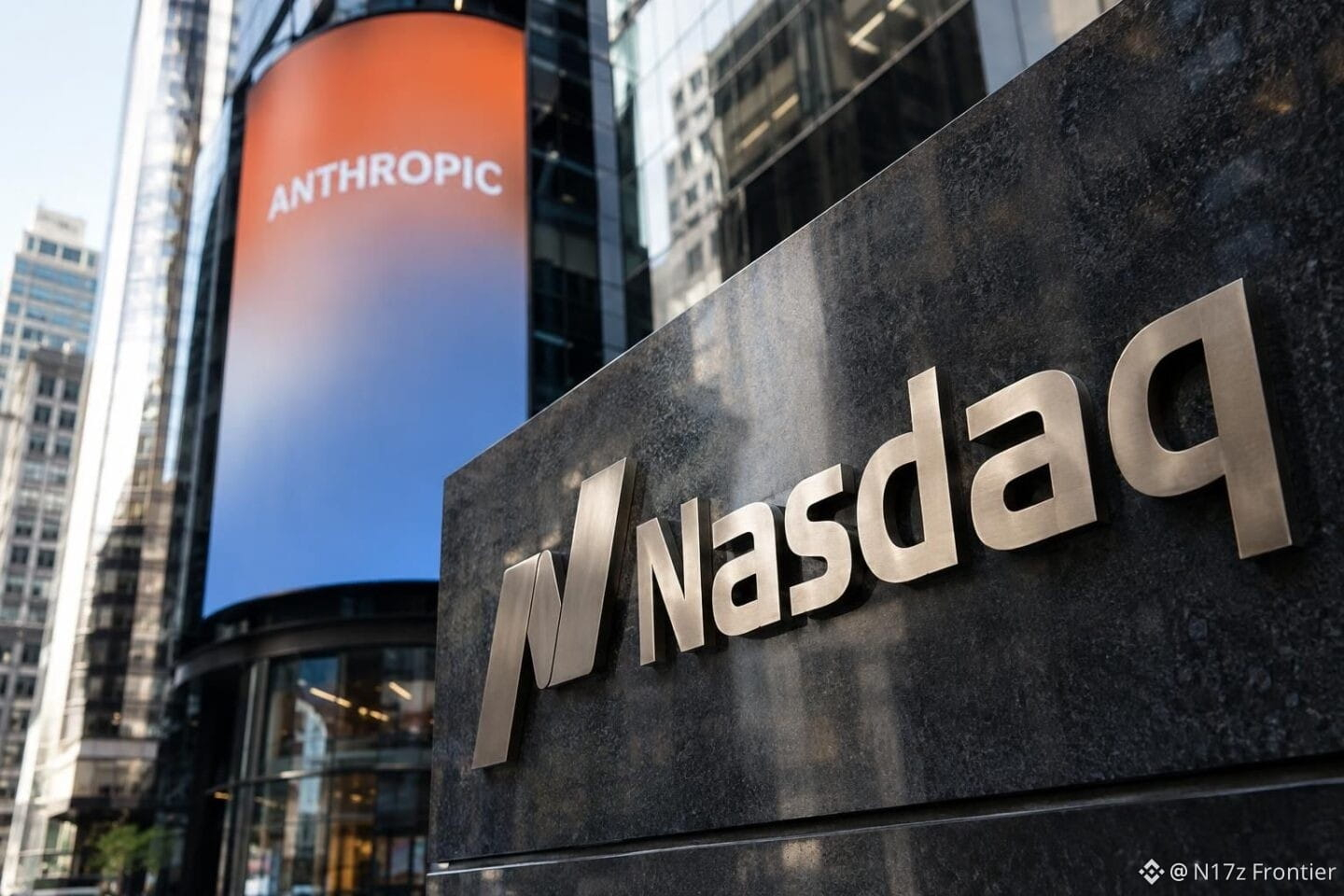
Während du Bitcoin beim Absturz zugesehen hast, hat die Wall Street einen Staubsauger für 1,4 Billionen Dollar gebaut – und der ist direkt auf die Krypto-Wallet gerichtet.
Anthropic legt am Mittwoch den Preis für seinen Börsengang fest und feiert am Donnerstag unter dem Kürzel $ANT sein Nasdaq-Debüt: 70–78 $ pro Aktie, 825 Mio. Aktien, bis zu 64,4 Mrd. $ Kapitalaufnahme – plus eine Privatplatzierung über 26 Mrd. $. Insgesamt könnte der Staubsauger bis zu 90,4 Mrd. $ einsammeln. Bloomberg zufolge ist die Emission bereits sechsmal überzeichnet.
Sogar CZ fragte am Sonntag auf X, warum der Kryptomarkt fällt – und nannte als einen der Gründe, dass Geld in den Anthropic-Börsengang umgeschichtet wird.
Ein Blick auf die Kurse: BTC bei 64.010 $, heute 2 % im Minus und diese Woche rund 13 % niedriger. ETH bei etwa 1.805 $. SOL bei etwa 71 $. RSI bei 22 – überverkauft, und trotzdem bleibt die Nachfrage aus. ETF-Mittelabflüsse seit sieben Sitzungen in Folge, insgesamt 1,91 Mrd. $. Der Fear-&-Greed-Index steht bei 10.
Das ist kein Versagen von Krypto. Das ist eine Entführung der Liquidität. Jede Institution, die bei ANT Schlange steht, ist ein Kaufinteresse, das den Dip NIE kaufen wird. Und es ist nicht der erste Fall: Der Börsengang von SpaceX hat Anfang des Jahres bei einer Bewertung von 1,75 Billionen Dollar 75 Mrd. $ eingesaugt.
Krypto hat kein Nachfrageproblem. Es hat ein Konkurrenzproblem. Solange ANT nicht bepreist ist, ist jeder Aufschwung Liquidität, mit der sich die nächste IPO-Warteschlange verabschieden kann.
Das ehrliche Gegenargument: Das Geld aus Börsengängen stammt größtenteils von institutionellen Anlegern am Primärmarkt, nicht von Käufern am Spot-Kryptomarkt – Korrelation ist nicht gleich Kausalität. Und auch der KI-Trade gerät ins Wanken: Anthropics angestrebte Bewertung wurde von 2 Billionen auf 1,4 Billionen Dollar gesenkt, das Umsatzwachstum verlangsamte sich im Quartalsvergleich von 144 % auf 47 %. Sollte ANT beim Debüt ins Straucheln geraten, bleibt diesem Geld nur der Rückfluss.
Ungültigkeitssignal: Tagesschluss über 68.000 $ plus ein Tag mit ETF-Zuflüssen.
Also sag mir: Ist der Anthropic-Börsengang der Grund, warum Bitcoin nicht steigen kann – oder nur die Ausrede, auf die die Bären gewartet haben?
#Bitcoin #BTC #Anthropic #IPO #CryptoMarket
324
·
--
Bärisch
Übersetzung ansehen
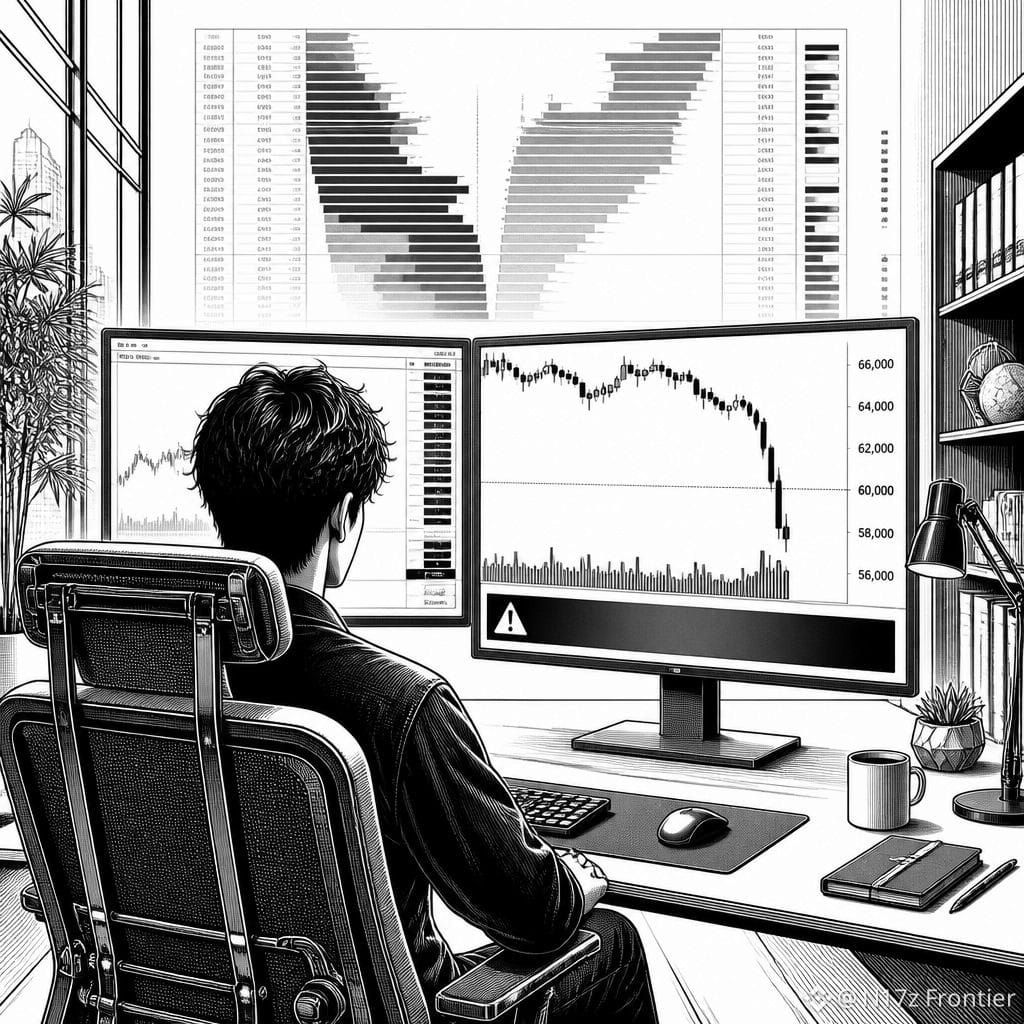
The biggest bet in Bitcoin is no longer $100K. It's a $60K PUT. 🐻
Read that again. The largest single options position on Deribit — $900M of open interest — is a bet that BTC falls BELOW $60,000. The $100K call that led the board until the selloff? Demoted to second place at $867M.
This isn't retail panic. One large player has been rolling puts down as price falls: $74K → $72K → $68K → $65K → $63K. Over $1B of put blocks in two days. On Friday, someone bought 750 BTC of $68K puts and sold 500 BTC of $72K puts expiring Nov 27 — a trade that only pays if BTC keeps sliding toward $62.4K.
Volatility agrees. Bitcoin's VIX (BVIV) spiked to 57 on Sunday — highest since June — before easing to 44.
And BTC sits at $64,347, barely above the line everyone is insuring against. ETH $1,808, SOL $71, XRP $0.95. Fear & Greed: 10. Extreme fear. Seven straight ETF outflow sessions (~$1.91B).
Here's my take, and I won't soften it: the market has stopped dreaming about $100K and started pricing the $60K test. When the biggest bet on the board is a crash helmet, calling the bottom is delusion. The bounce from $62K was noise — until BTC reclaims $68K AND an ETF inflow day shows up, every rally is a selling opportunity for the big money.
The honest counterpoint: OI is a stock, not a flow — much of that $60K put was built months ago, and the $100K call lost the crown mostly because traders SOLD it back, not because everyone rushed into puts. Panic is easing (57 → 44). So $60K is a line in the sand, not a prophecy.
But lines in the sand get tested. And this one has $900M standing on it.
Invalidation: daily close above $68K + ETF inflow. Until then, bearish. Extremely.
What's your call — does $60K hold, or does the biggest bet on Deribit collect? 👇
#Bitcoin #BTC #CryptoMarket #BitcoinETF #Deribit #Options
65
·
--
Bärisch
Übersetzung ansehen
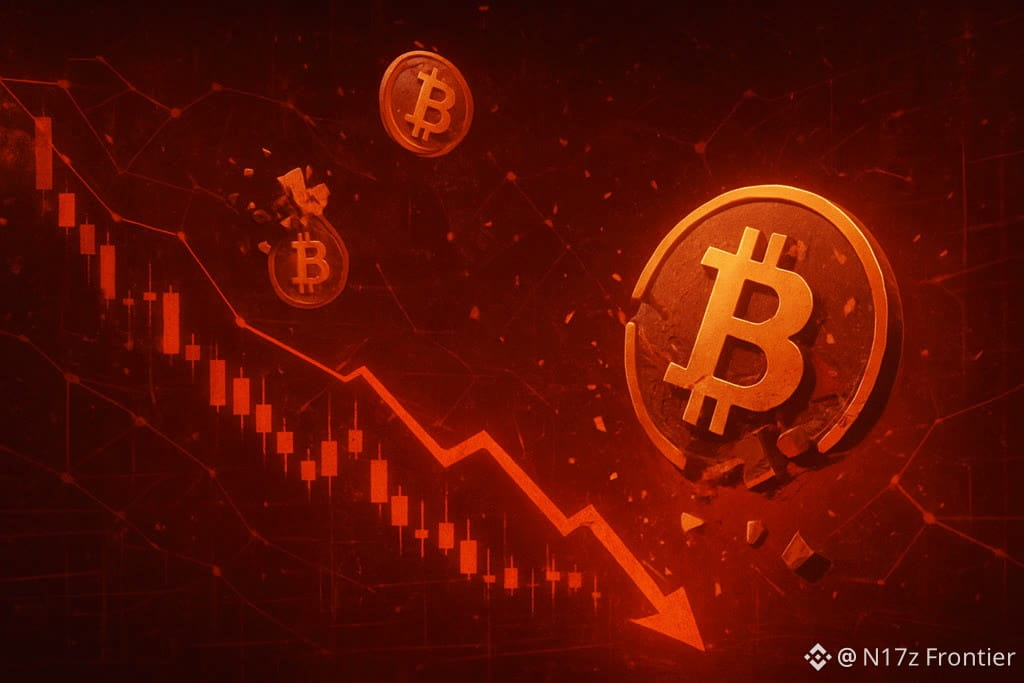
Bitcoin bounced ~5% off the $62K low overnight. Cute.
Now comes the week that actually decides whether that's a bottom — or a trap.
BTC $65,007 this morning (CoinGecko, 07:25 WIB). ETH $1,825, SOL $72, XRP $0.97. The weekly close printed ~$65.3K — a sixth straight red week, closed below the 200-week MA (~$67,800). Fear & Greed still pinned at 10. Extreme Fear.
This week is a gauntlet:
Fed Chair Warsh speaks at midnight tonight. Nvidia reports Tuesday night (04:20 WIB Wed) — crypto trades 24/7, so it eats the verdict while Wall Street sleeps. FOMC minutes drop Thursday 02:00 WIB — the big one. Two members already voted for a hike in October; the minutes show how many more lean that way. Friday: 28,300 BTC of Deribit options expire, max pain $73,000 — miles above price.
And ETF flows resume tonight. After -$1.07B last week and -$2.35B in two weeks, the first inflow day is the single most important print of the week.
My take: until BTC reclaims the 200-week AND an ETF inflow day prints, every green candle is exit liquidity. The capitulation case from last night is still alive — but it gets its verdict this week. Hawkish minutes + a Nvidia miss, and the 12-month low $58,570 comes into focus, with a fat put block sitting at $58K for the Nov 27 expiry.
Counterpoint, honestly: Fear at 10 has preceded rebounds before. Stablecoin supply ticked up $125M in a day. Exchange withdrawals beat deposits. A dovish minutes + strong Nvidia flips this fast — the trap works both ways.
Which verdict decides this week — Nvidia, the FOMC minutes, or the ETF flows?
#Bitcoin #BTC #CryptoMarket #FederalReserve #Nvidia
224
·
--
Bullisch
Übersetzung ansehen
Everyone is underwater. Everyone is screaming $50K.
Good. That is EXACTLY what bottoms are made of.
Less than 45% of Bitcoin's active supply is still in profit (CryptoQuant). Short-term holders paid ~$75,000 on average — BTC sits at $64,753. They are ~14% underwater. Daily realized losses just doubled to over $850M, 85% of it from the same people who FOMO'd in above $80K and are now selling at the prices they BEGGED to buy three months ago.
This is the fourth capitulation since the all-time high. MVRV Z-Score: 0.33. RSI: ~22.5. Fear & Greed: 10.
Bottoms are not built when it feels safe. They are built in THIS — when the crowd is certain it goes lower, when sellers exhaust themselves dumping into the same level they once prayed for.
The honest caveat: CryptoQuant's own analyst says full-scale capitulation hasn't arrived yet — STH-SOPR is 0.993, not yet at past-bottom depths. And $62,006 can still break. A daily close below it opens $60K, then $57,742. No ETF inflows, no mercy from the Fed.
But hear me: the bottom will NOT announce itself. It will look exactly like this — maximum pain, maximum disbelief, whales quietly stacking 47,000 BTC while the timeline panic-sells.
A sixth straight red week is about to print. Everyone bearish. That is when bottoms are born — not when everyone's bullish again.
Are you selling into the capitulation, or watching who is buying it?
#Bitcoin #BTC #CryptoMarket #BitcoinETF #OnChain
91
·
--
Bärisch
Übersetzung ansehen
Six red weeks. Stocks green. Bitcoin is crashing ALONE — and tonight's weekly close decides if $60K is next.
BTC $65,323. Last Sunday it closed at $74,740. Do the math: this week is on course to be the SIXTH straight weekly loss — six red closes in a row since the $86,490 print on Oct 5. The weekend low: $62,006, the weakest since July 13.
And here's the part the "Bitcoin follows stocks" crowd can't explain: the S&P 500 finished the week UP 2.5%. Nasdaq +2.3%. Dow +2.1%. Wall Street had a GOOD week. Bitcoin is down 12.6% from last Sunday's close in the same seven days. This isn't a market crash. It's a crypto crash — ETF redemptions ($1.91B in seven straight sessions), a ~$2B leverage flush, and nobody left to catch the knife.
The line that matters tonight: the 200-week moving average, ~$68K. BTC needs a ~$2,670 sprint before the weekly close (~07:00 WIB Monday) to reclaim it. Close this far below it and the line didn't hold — the next stops analysts are naming are $60K, then $57,700.
Fear & Greed: 10. Extreme Fear. The market isn't debating anymore — it's capitulating in slow motion, one red week at a time.
My take: stop calling this a dip. Six red weeks, stocks green, ETFs bleeding $1.9B, and a weekly close below the 200-week MA is a bear market wearing a crash costume. The bounce from $62K to $65K was dead-cat theater in thin Sunday liquidity. Until BTC closes a week above $68K AND the ETFs print a green day, every rally is exit liquidity.
The counterpoint: weekly RSI is deeply oversold, and six red weeks is exactly the kind of streak that ends in a violent snap-back. If Monday brings an ETF inflow and a close above $68K, this whole thesis dies in one session. That's the deal — I'm wrong the moment the buyers show up. They just haven't. In six weeks.
Six red weeks. Do you buy the close tonight — or is $60K inevitable?
#Bitcoin #BTC #CryptoMarket #BitcoinETF #FederalReserve
97
·
--
Bärisch
Übersetzung ansehen
The Fed warned you. On Friday.
Its Financial Stability Report — published Nov 13 — put a "risk-asset correction" on the list of top threats to the financial system. It flagged "elevated" asset valuations and hedge-fund leverage at the highest level since records began in 2013. Two days later, Bitcoin printed $62,006.
BTC $64,385. ETH $1,792. SOL $70.41. Fear & Greed: 10. The week is on course for a sixth straight loss. $2.02B liquidated in 24 hours, 87% of it longs. US spot ETFs: seven straight sessions of redemptions, -$1.91B. The 10-year Treasury sits at 5.15%.
The Fed never said the word "bitcoin." It didn't have to. When the most leveraged asset in the room meets the highest rates in years, the correction doesn't need a crypto reason — it just needs a trigger.
Yes, BTC bounced 3.8% off the $62K low. A 4% bounce in a market that has lost nearly half its value since October is noise until proven otherwise. What changes this: a daily close above the 200-day at $72,922, two straight ETF inflow days, or the 10-year back below 5%. Until one of those prints, every bounce is exit liquidity.
So — did the Fed call this crash, or is that just hindsight dressed as prophecy?
#Bitcoin #BTC #FederalReserve #CryptoMarket #BitcoinETF
99
·
--
Bärisch
Übersetzung ansehen
The $63K floor is gone.
Bitcoin just printed $62,006 — and the July–August base everyone counted on is now broken. BTC $62,801 (-8.0% today). ETH $1,735 (-10.0%). SOL $68.10 (-11.7%). Fear & Greed: 10.
The demand is gone — and this morning the market proved it. $1.9B liquidated in 24 hours, 93% of it longs. Stablecoin supply is down $17B in 30 days, the steepest drain since 2022. US spot ETFs just closed a second straight $1B+ outflow week. CryptoQuant demand: -284K BTC, worst since April 2025. Even the Ethereum Foundation sold 7,500 ETH into the flush.
If tonight's weekly close holds under ~$63,660, this is officially Bitcoin's worst week since July 2024. Below $63K there is no tested floor left — just air, and Monday's ETF flows.
Yes, everything is oversold. Fear & Greed at 10 is the capitulation cocktail, and the contrarian bounce is real. But every bounce this week died within hours, and the weekly close hasn't printed yet. Until BTC reclaims ~$68K with an inflow day, the trend owns this market — not the dip-buyers.
Where's your line in the sand — $60K, or do you buy before it?
#Bitcoin #BTC #CryptoMarket #Ethereum #BitcoinETF
163
·
--
Bärisch
Bitcoin ist an einem Samstagabend gerade unter 66.000 $ gefallen. Und bis Montag kommt niemand, um ihn zu retten.
65.919 $. Heute 4,4 % im Minus. ETH: 1.854 $ (-5 %). SOL: 74 $ (-8,3 %). Jede Unterstützung, die Analysten heute Morgen markiert hatten — BTC bei 66.397 $, ETH bei 1.875 $, SOL bei 74,74 $ — wurde in einer einzigen Sitzung durchbrochen. (Binance, 21:58 WIB)
Hier ist der Teil, den die Dip-Käufer nicht laut aussprechen wollen: 66.000 $ waren DIE Marke. Händler platzierten dort ihre Kauforders, Analysten bezeichneten 66.397 $ als Wendepunkt. Der Markt verschlang sie und fiel weiter. Bei der geringen Liquidität am Wochenende, während die US-Märkte geschlossen sind und es bis Montag keine Daten gibt, ist kein Käufer mit ausreichend Kapital mehr da. Das nächste echte Kaufinteresse — die ETF-Zuflüsse — kommt erst am Montagmorgen.
Und nun der Blick aufs große Ganze: Genau an diesem Datum im Jahr 2021 lag BTC bei 65.466 $. Heute Abend: 65.919 $. Fünf Jahre. Kein Fortschritt. ETH liegt 60 % unter seinem Kurs von 2021. SOL liegt 69 % darunter. Der Trade, der „generationenübergreifenden Wohlstand“ versprechen sollte, bescherte dir fünf Jahre Stillstand, während die Fed mit einer Wahrscheinlichkeit von rund 90 % bis Dezember die Zinsen erhöht und die Rendite der zehnjährigen US-Staatsanleihe bei 5,15 % liegt.
Der Fear-&-Greed-Index steht bei 13 — so niedrig wie seit Juli nicht mehr. Der RSI liegt bei etwa 22. Überverkauft? Klar. Überverkauft heißt nicht, dass der Boden erreicht ist. Es beschreibt nur, wie tief du fällst.
Das Einzige, was daran etwas ändert: ein Tagesschlusskurs wieder über dem 200-Wochen-Durchschnitt (bei etwa 67.900 $) UND echte ETF-Zuflüsse am Montag. Bis dahin ist jeder Aufschwung Liquidität zum Ausstieg. Die Basis liegt bei 63.000–66.000 $. Fällt sie, sind 60.000 $ das nächste Ziel.
Also sagt mir — wer kauft diesen Dip noch, und mit welchem Geld? Das Angebot an Stablecoins ist in den letzten 30 Tagen gerade um 17 Mrd. $ geschrumpft. Das Pulver ist verschossen.
#Bitcoin #BTC #CryptoMarket #BitcoinETF #Ethereum
265
·
--
Bärisch
Übersetzung ansehen
Bitcoin will NEVER make a new all-time high.
Say it out loud. $67,207. Down 46% from the $126,080 top. Down 24% this year. And yesterday the debate finally broke into the open: after BTC lost $68K, analysts on X started asking the question everyone was too scared to ask — what if October 2025 was it?
Here's why the "never again" camp is winning the argument:
ETF buyers are gone. Seven straight days of outflows, -$185M on Friday alone. The funds have now bled $1.56 BILLION net this year. The Fed is about to HIKE in December — 88.5% priced in — with the 10-year at 5.15%. And BlackRock's own filing admits BTC already fell below $60K back in June. This isn't a dip. It's a regime change. Capital moved on — to AI, to SpaceX, to anything with a yield.
The bulls' best evidence? "It always came back before." That's nostalgia, not a catalyst. Bernstein's $150K-by-2027 call is a forecast, not a floor.
My line in the sand: reclaim $75K with a real ETF inflow day, and I'll admit I'm wrong. Until then, every "buy the dip" since October has bled — and the ATH is a museum piece.
Are you still buying every dip on the way to $126K — or is the top in? 👇
#Bitcoin #BTC #CryptoMarket #BitcoinETF #FederalReserve
361
·
--
Bärisch
Übersetzung ansehen
Last night I called the bottom. Overnight, Bitcoin called my bluff.
Less than a day after my bullish flip, BTC lost $67.5K, sliced through its 200-week moving average (~$67,900) and printed $66,456 — the lowest since August. It's trading around $67,300 now, down 11.7% in a week and 46.6% below the $126,080 all-time high from October.
The damage is everywhere you look: Fear & Greed crashed to 13. Daily RSI is 22.9 — deeply oversold. $1.26B in liquidations in 24 hours, 86% of them longs. And US spot Bitcoin ETFs just logged their 7th straight outflow day — $185.4M on Friday, led by IBIT.
I warned yesterday the 200-week is a zone, not a floor. In 2022 BTC sliced straight through it on the way to ~$15.5K. It just did it again.
Oversold is not a bottom — it's a condition. A squeeze can rip through thin weekend liquidity at any moment. But with ETF money still walking out the door and a December Fed hike now ~89% priced, every bounce is guilty until proven innocent.
My call: wrong is wrong. Until BTC reclaims the 200-week AND prints a positive ETF flow day, the path of least resistance points to the $63K–$66K base where BTC spent July and August.
Invalidation: a daily close back above $70K with ETF inflows. Until then, I'm not catching this knife.
Where's your line in the sand — a 200-week reclaim, or is this market uninvestable until the Fed blinks?
#Bitcoin #BTC #CryptoMarket #BitcoinETF #FederalReserve
149
Anmelden und weiter Inhalte entdecken
Krypto-Nutzer weltweit auf Binance Square kennenlernen
⚡️ Bleib in Sachen Krypto stets am Puls.
💬 Die weltgrößte Kryptobörse vertraut darauf.
👍 Erhalte verlässliche Einblicke von verifizierten Creators.
E-Mail-Adresse/Telefonnummer
Trendthemen
BTCRemainsUnderPressureAfterHawkishFOMCMinutes
57,463 Aufrufe
814 Kommentare
FOMC-Protokoll | Fed-Protokoll zeigt: Fast alle Vertreter rechnen mit weiteren Zinserhöhungen, einige halten im Dezember einen größeren Schritt für möglich
Binance News
·48 Likes
·58.3k Aufrufe
AnthropicToDebutAfter$83IPOPricing
15,333 Aufrufe
84 Kommentare
NvidiaBoardReportedlySplitOverHuang’sReturn
19,065 Aufrufe
368 Kommentare