

mineshine
4 Beiträge

mineshine
Melden
Nutzer blockieren
1 Following
7 Follower
13 Like gegeben
Beiträge
·
--
Artikel
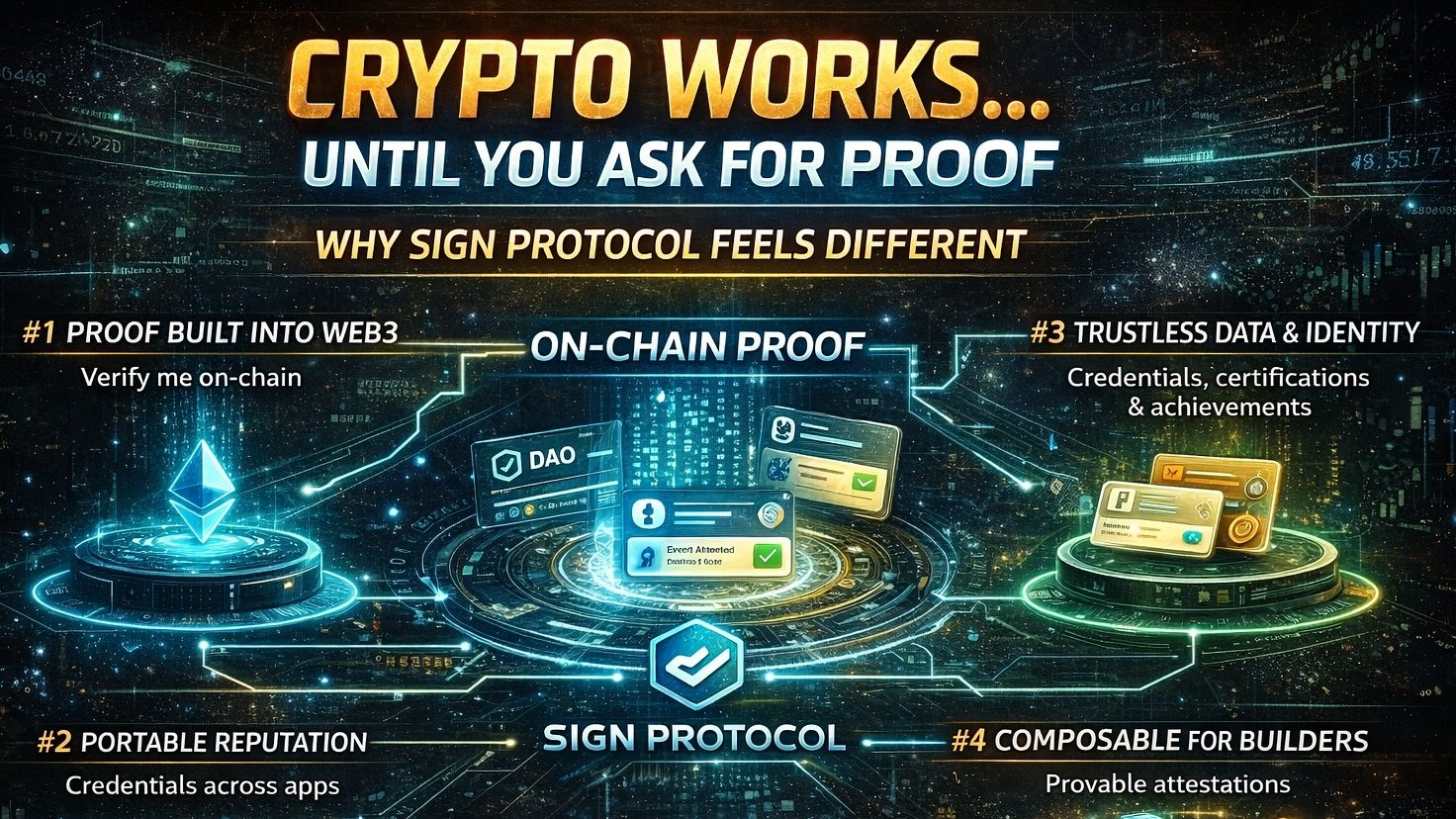
Krypto hat immer auf Glauben bestandenGlaube an Dezentralisierung.
Glaube an vertrauenslose Systeme.
Glaube, dass “Code Gesetz ist.”
Aber hier ist die unbequeme Wahrheit:
Krypto funktioniert… bis du nach Beweis fragst.
Nicht Preisdiagramme. Nicht Hype-Threads.
Echter, verifizierbarer Beweis.
Das ist der Punkt, an dem die Dinge oft auseinanderfallen.
🚨 Das Problem: Vertrauen ohne Beweis
Im Web3 hören wir ständig Behauptungen wie:
“Diese Wallet besitzt dieses Asset.”
“Dieser Benutzer hat diese Aktion abgeschlossen.”
“Dieses Projekt ist legitim.”
Aber wie beweist man das—ohne sich auf zentralisierte Plattformen zu verlassen?
Krypto hat immer auf Glauben bestanden
Glaube an Dezentralisierung.
Glaube an vertrauenslose Systeme.
Glaube, dass “Code Gesetz ist.”
Aber hier ist die unbequeme Wahrheit:
Krypto funktioniert… bis du nach Beweis fragst.
Nicht Preisdiagramme. Nicht Hype-Threads.
Echter, verifizierbarer Beweis.
Das ist der Punkt, an dem die Dinge oft auseinanderfallen.
🚨 Das Problem: Vertrauen ohne Beweis
Im Web3 hören wir ständig Behauptungen wie:
“Diese Wallet besitzt dieses Asset.”
“Dieser Benutzer hat diese Aktion abgeschlossen.”
“Dieses Projekt ist legitim.”
Aber wie beweist man das—ohne sich auf zentralisierte Plattformen zu verlassen?
Glaube an vertrauenslose Systeme.
Glaube, dass “Code Gesetz ist.”
Aber hier ist die unbequeme Wahrheit:
Krypto funktioniert… bis du nach Beweis fragst.
Nicht Preisdiagramme. Nicht Hype-Threads.
Echter, verifizierbarer Beweis.
Das ist der Punkt, an dem die Dinge oft auseinanderfallen.
🚨 Das Problem: Vertrauen ohne Beweis
Im Web3 hören wir ständig Behauptungen wie:
“Diese Wallet besitzt dieses Asset.”
“Dieser Benutzer hat diese Aktion abgeschlossen.”
“Dieses Projekt ist legitim.”
Aber wie beweist man das—ohne sich auf zentralisierte Plattformen zu verlassen?
1
37
·
--
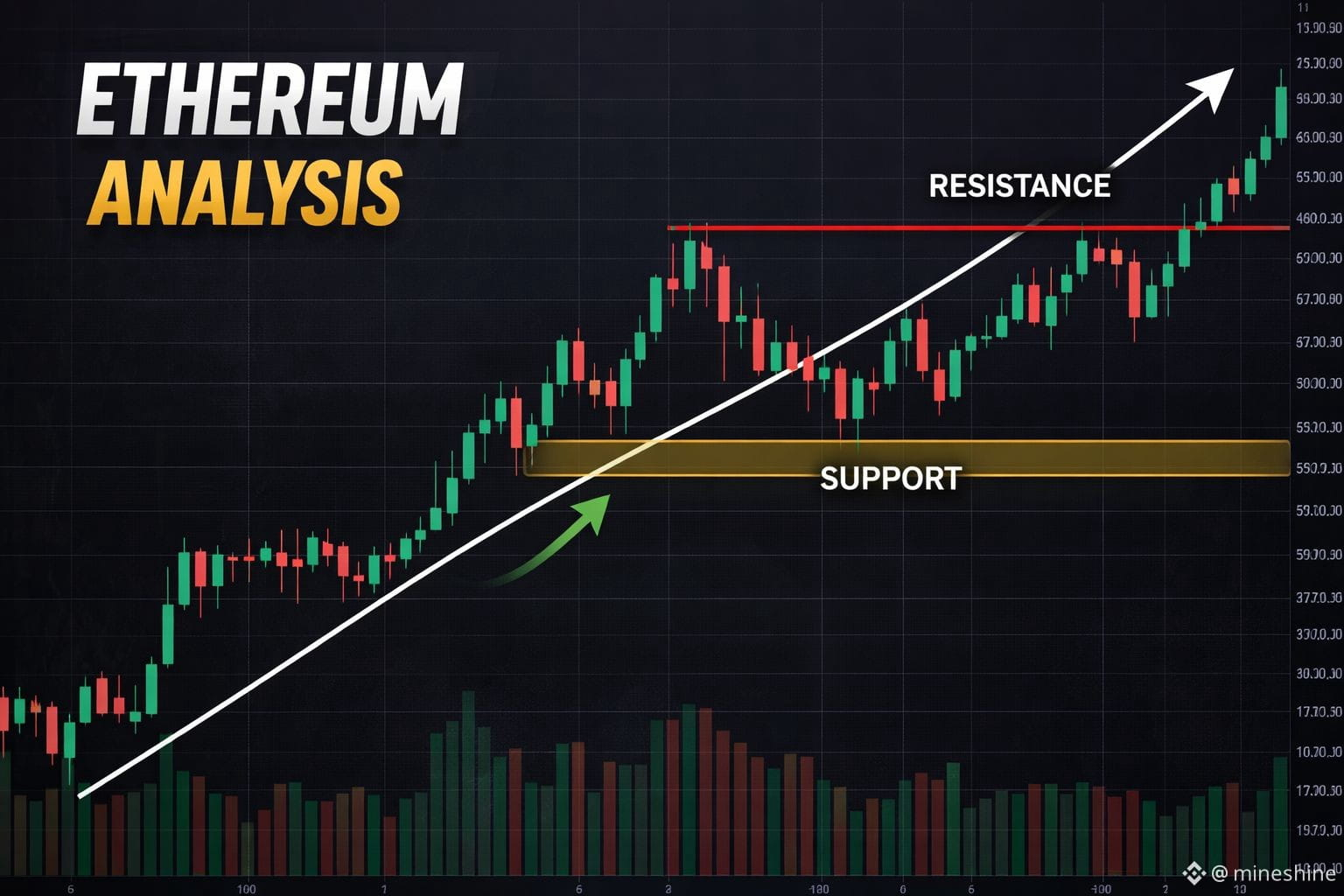
$ETH zeigt derzeit eine bullische Struktur auf höheren Zeitrahmen:
Höhere Hochs + höhere Tiefs = intakter Aufwärtstrend 📈
Preis respektiert wichtige Unterstützungszonen nach Rücksetzern
🕯️ Kerzenmuster
Bullische Umkehrkerzen → starke Käuferkontrolle
Lange Schatten unten → Käufer verteidigen Unterstützung
Konsolidierungskerzen → Akkumulationsphase vor dem nächsten Schritt
⚡ Momentum
Das Volumen steigt bei grünen Kerzen = echter Kaufdruck
Schwache rote Kerzen = Verkäufer verlieren an Stärke
🧠 Einfaches Urteil
Ethereum sieht so aus, als wäre es in einer „Buy-the-Dip“-Phase, noch kein Hoch.
Ausbruch über Widerstand → nächster Schritt nach oben 🚀
Fehler beim Halten der Unterstützung → kurzfristige Korrektur 📉
#ETH #ethreum
{future}(ETHUSDT)
$ETH zeigt derzeit eine bullische Struktur auf höheren Zeitrahmen:
Höhere Hochs + höhere Tiefs = intakter Aufwärtstrend 📈
Preis respektiert wichtige Unterstützungszonen nach Rücksetzern
🕯️ Kerzenmuster
Bullische Umkehrkerzen → starke Käuferkontrolle
Lange Schatten unten → Käufer verteidigen Unterstützung
Konsolidierungskerzen → Akkumulationsphase vor dem nächsten Schritt
⚡ Momentum
Das Volumen steigt bei grünen Kerzen = echter Kaufdruck
Schwache rote Kerzen = Verkäufer verlieren an Stärke
🧠 Einfaches Urteil
Ethereum sieht so aus, als wäre es in einer „Buy-the-Dip“-Phase, noch kein Hoch.
Ausbruch über Widerstand → nächster Schritt nach oben 🚀
Fehler beim Halten der Unterstützung → kurzfristige Korrektur 📉
#ETH #ethreum
Höhere Hochs + höhere Tiefs = intakter Aufwärtstrend 📈
Preis respektiert wichtige Unterstützungszonen nach Rücksetzern
🕯️ Kerzenmuster
Bullische Umkehrkerzen → starke Käuferkontrolle
Lange Schatten unten → Käufer verteidigen Unterstützung
Konsolidierungskerzen → Akkumulationsphase vor dem nächsten Schritt
⚡ Momentum
Das Volumen steigt bei grünen Kerzen = echter Kaufdruck
Schwache rote Kerzen = Verkäufer verlieren an Stärke
🧠 Einfaches Urteil
Ethereum sieht so aus, als wäre es in einer „Buy-the-Dip“-Phase, noch kein Hoch.
Ausbruch über Widerstand → nächster Schritt nach oben 🚀
Fehler beim Halten der Unterstützung → kurzfristige Korrektur 📉
#ETH #ethreum
51
·
--
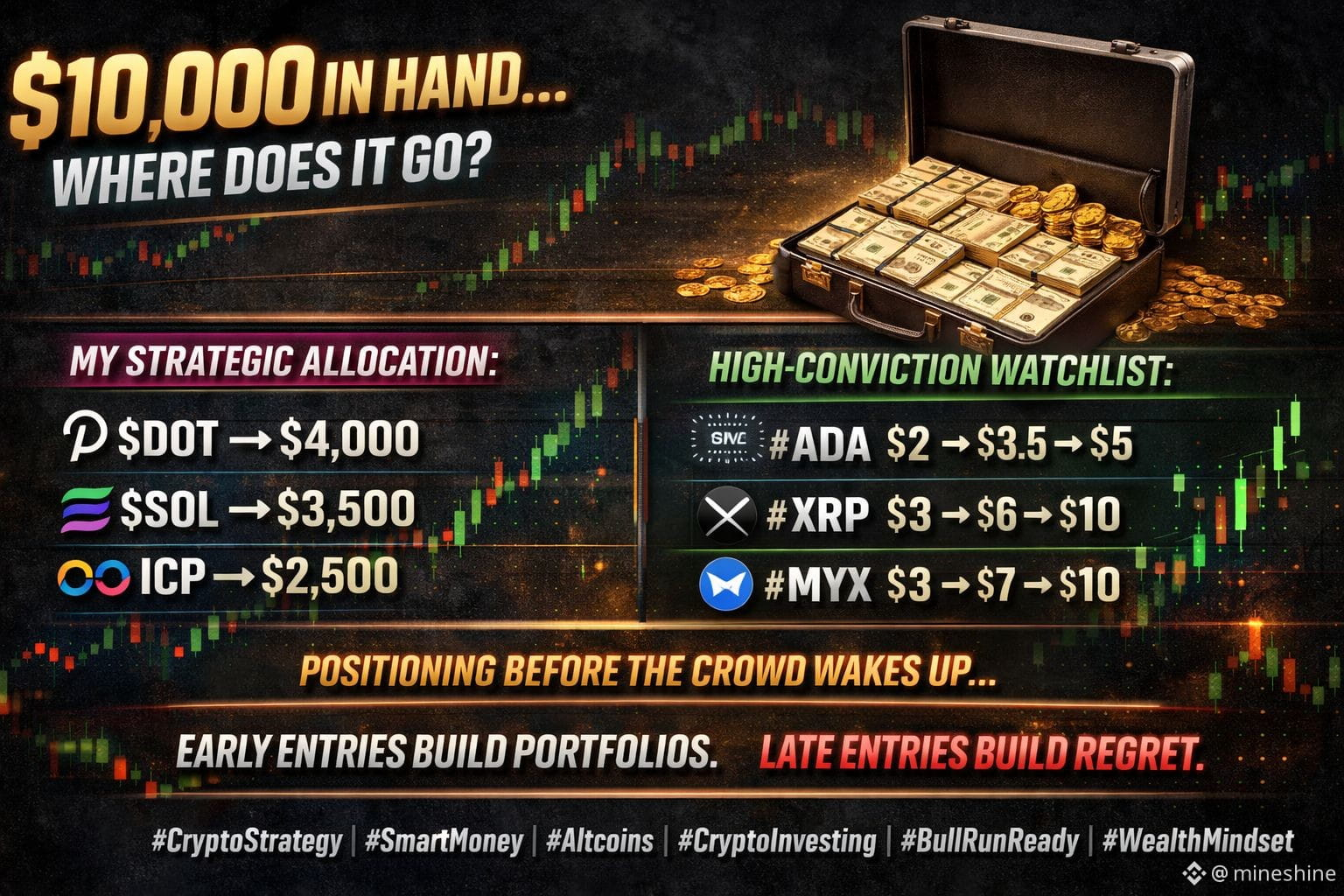
💰 $10,000 in der Hand… wohin geht es?
Kein Hype. Kein Lärm. Nur Überzeugung. 👇
🚀 Meine strategische Allokation:
$DOT → $4,000
$SOL → $3,500
$ICP → $2,500
📈 Hochüberzeugende Beobachtungsliste:
#ADA/BNB → $2 → $3.5 → $5
#xrp → $3 → $6 → $10
#MYX → $3 → $7 → $10
Es geht nicht darum, Pumps zu verfolgen.
Es geht darum, sich zu positionieren, BEVOR die Menge aufwacht. ⚡
Frühe Einstiege bauen Portfolios.
Späte Einstiege bauen Bedauern.
Also ist die eigentliche Frage…
Accumulierst du still… oder wartest du auf Bestätigung an der Spitze? 👀🔥
#CryptoInvestment #smartmoney
💰 $10,000 in der Hand… wohin geht es?
Kein Hype. Kein Lärm. Nur Überzeugung. 👇
🚀 Meine strategische Allokation:
$DOT → $4,000
$SOL → $3,500
$ICP → $2,500
📈 Hochüberzeugende Beobachtungsliste:
#ADA/BNB → $2 → $3.5 → $5
#xrp → $3 → $6 → $10
#MYX → $3 → $7 → $10
Es geht nicht darum, Pumps zu verfolgen.
Es geht darum, sich zu positionieren, BEVOR die Menge aufwacht. ⚡
Frühe Einstiege bauen Portfolios.
Späte Einstiege bauen Bedauern.
Also ist die eigentliche Frage…
Accumulierst du still… oder wartest du auf Bestätigung an der Spitze? 👀🔥
#CryptoInvestment #smartmoney
Kein Hype. Kein Lärm. Nur Überzeugung. 👇
🚀 Meine strategische Allokation:
$DOT → $4,000
$SOL → $3,500
$ICP → $2,500
📈 Hochüberzeugende Beobachtungsliste:
#ADA/BNB → $2 → $3.5 → $5
#xrp → $3 → $6 → $10
#MYX → $3 → $7 → $10
Es geht nicht darum, Pumps zu verfolgen.
Es geht darum, sich zu positionieren, BEVOR die Menge aufwacht. ⚡
Frühe Einstiege bauen Portfolios.
Späte Einstiege bauen Bedauern.
Also ist die eigentliche Frage…
Accumulierst du still… oder wartest du auf Bestätigung an der Spitze? 👀🔥
#CryptoInvestment #smartmoney
2
435
·
--
Artikel
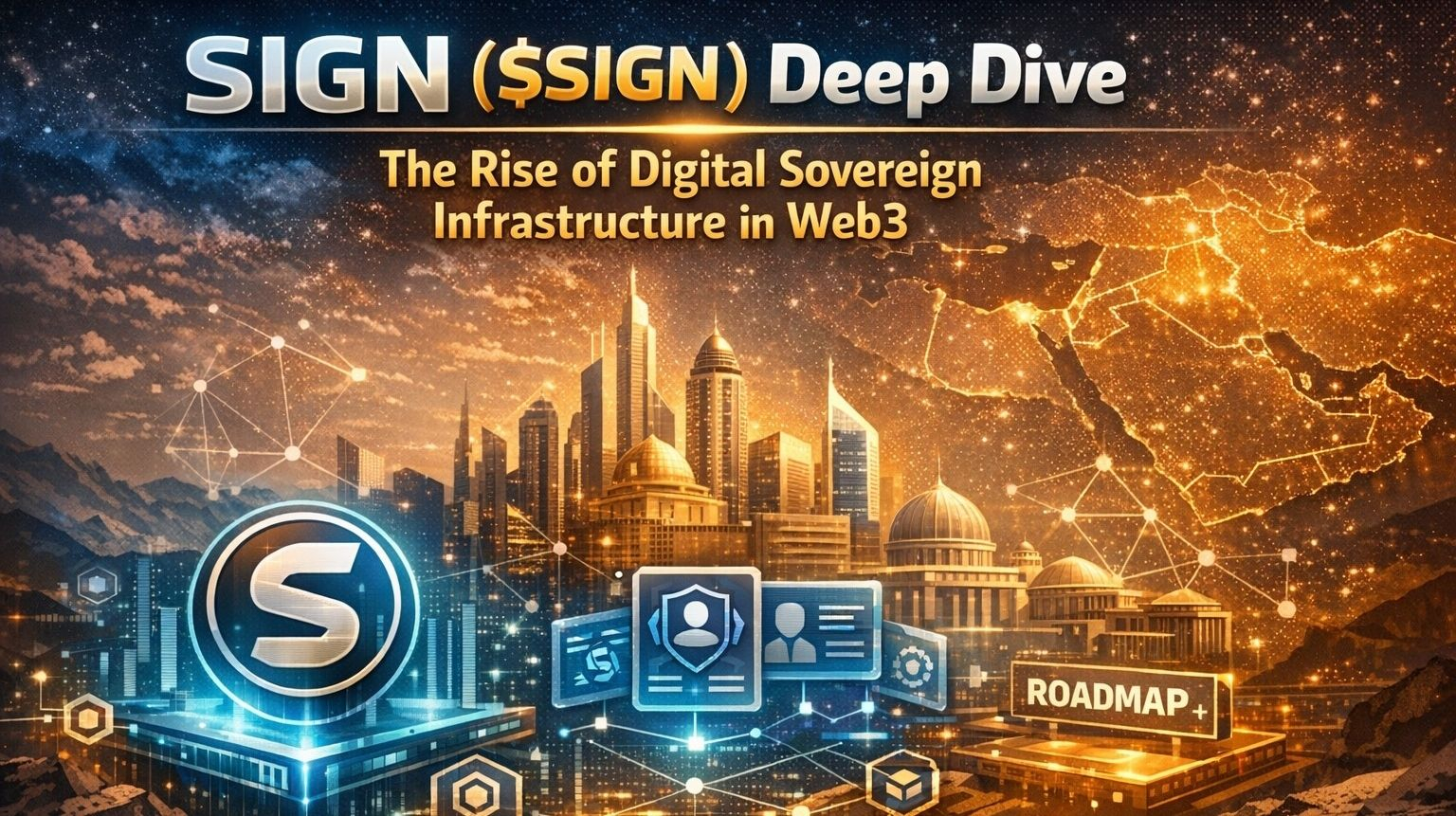
SIGN Fundamentalanalyse$SIGN @SignOfficial ist ein relativ neues Web3-Infrastrukturprojekt, das sich auf Verifizierung, Identität und Vertrauensschichten in Blockchain-Systemen konzentriert. Statt nur ein weiteres DeFi- oder Meme-Coin zu sein, positioniert sich SIGN als „digitale souveräne Infrastruktur“ – was bedeutet, dass es darauf abzielt, ein Backend-System für Identität, Datenverifizierung und Tokenverteilung über Chains und sogar Regierungen hinweg zu werden.
Technisch gesehen funktioniert SIGN als ein Multi-Chain-Protokoll (Ethereum, BNB Chain, Base) und konzentriert sich auf On-Chain-Bestätigungen (Nachweis von Daten, Identität oder Aktionen).
SIGN Fundamentalanalyse
$SIGN @SignOfficial ist ein relativ neues Web3-Infrastrukturprojekt, das sich auf Verifizierung, Identität und Vertrauensschichten in Blockchain-Systemen konzentriert. Statt nur ein weiteres DeFi- oder Meme-Coin zu sein, positioniert sich SIGN als „digitale souveräne Infrastruktur“ – was bedeutet, dass es darauf abzielt, ein Backend-System für Identität, Datenverifizierung und Tokenverteilung über Chains und sogar Regierungen hinweg zu werden.
Technisch gesehen funktioniert SIGN als ein Multi-Chain-Protokoll (Ethereum, BNB Chain, Base) und konzentriert sich auf On-Chain-Bestätigungen (Nachweis von Daten, Identität oder Aktionen).
Technisch gesehen funktioniert SIGN als ein Multi-Chain-Protokoll (Ethereum, BNB Chain, Base) und konzentriert sich auf On-Chain-Bestätigungen (Nachweis von Daten, Identität oder Aktionen).
1
11
27
Anmelden und weiter Inhalte entdecken
Krypto-Nutzer weltweit auf Binance Square kennenlernen
⚡️ Bleib in Sachen Krypto stets am Puls.
💬 Die weltgrößte Kryptobörse vertraut darauf.
👍 Erhalte verlässliche Einblicke von verifizierten Creators.
E-Mail-Adresse/Telefonnummer
Trendthemen
FedMinutesFocusOnOctoberPause
172,198 Aufrufe
1,318 Kommentare
🚨 HOHE ALARMSTUFE ‼️ BITTE HANDELT IN DER NÄCHSTEN STUNDE NICHT BLIND 🚨
Leute, in weniger als einer Stunde werden die FOMC-Protokolle veröffentlicht.
Nach der Volatilität, die wir heute bereits erlebt haben, möchte ich wirklich nicht, dass jemand kurz vor der Veröffentlichung irgendwelche zufälligen Positionen mit hohem Hebel eröffnet.
Die stärkste Reaktion erwarte ich bei Gold (XAU), Silber (XAG), BTC und ETH. Coins wie SOL und andere stark gehebelte Altcoins mit mittlerer oder niedriger Marktkapitalisierung können jede Bewegung von BTC noch verstärken.
Gold und Silber reagieren heute Abend besonders empfindlich, weil der Markt bereits auf den US-Dollar und die Renditen von US-Staatsanleihen reagiert und beide Metalle vor der Veröffentlichung der Fed-Protokolle stark unter Druck standen.
Kurz gesagt:
📉 FOMC-Protokolle mit falkenhaftem Ton → Dollar und Renditen können steigen → Druck auf BTC, Krypto, Gold und Silber
📈 FOMC-Protokolle mit taubenhaftem Ton → Dollar und Renditen können nachgeben → BTC, Gold, Silber und andere Risikoanlagen können kräftig steigen.
Und bitte denkt daran: Die erste Kerze kann eine Falle sein. Es kann zunächst zu einem Pump kommen, dann zu einem sofortigen Dump, Liquidationen auf beiden Seiten und erst danach zur tatsächlichen Richtungsbewegung.
Schützt also vorerst eure Positionen, reduziert unnötigen Hebel und springt nicht aus FOMO auf die erste Bewegung auf.
Heute Abend beobachte ich zuerst $XAU , $XAG und $BTC . An ihnen werden wir sehr schnell erkennen, wie der Markt die Fed einschätzt.
Ich halte euch rechtzeitig auf dem Laufenden.
Folgt @Panda Traders und aktiviert jetzt eure Benachrichtigungen.
#FedMinutesFocusOnOctoberPause
Panda Traders
·19 Likes
·4k Aufrufe
BinanceLaunchesBinanceIntelligence
1.1M Aufrufe
6,524 Kommentare
EvernorthDelaysNasdaqDebutToOct12
14,699 Aufrufe
304 Kommentare