Binance Square

B R O W N

Hold dreams, take risks. X : @_mikebrownn_
Trade eröffnen
Regelmäßiger Trader
1.7 Jahre
91 Following
19.4K+ Follower
78.5K+ Like gegeben
5.8K+ Geteilt
Beiträge
Portfolio
·
--
KEVIN WARSH WURDE ALS FED-VORSITZENDER BESTÄTIGT 🚨 Trump hat offiziell den Fed-Vorsitzenden ersetzt und dies ist ein großer Regimewechsel. Was das wahrscheinlich bedeutet: Zinssenkungen stehen wieder zur Debatte Die finanziellen Bedingungen verbessern sich schneller, da die Politik wachstumsfreundlicher wird Dies ist eine klare Abkehr von Powells strenger Haltung Die Märkte werden nicht auf Reden warten, sie werden den Wechsel vorwegnehmen.
KEVIN WARSH WURDE ALS FED-VORSITZENDER BESTÄTIGT 🚨

Trump hat offiziell den Fed-Vorsitzenden ersetzt und dies ist ein großer Regimewechsel.

Was das wahrscheinlich bedeutet:

Zinssenkungen stehen wieder zur Debatte

Die finanziellen Bedingungen verbessern sich schneller, da die Politik wachstumsfreundlicher wird

Dies ist eine klare Abkehr von Powells strenger Haltung

Die Märkte werden nicht auf Reden warten, sie werden den Wechsel vorwegnehmen.
Lots of FUD on $ASTER and @CZ I keep buying the dips on $ASTER Let’s see who wins in this game: FUDders or CZ? What do you think: who will win? {spot}(ASTERUSDT)
Lots of FUD on $ASTER and @CZ

I keep buying the dips on $ASTER

Let’s see who wins in this game: FUDders or CZ?

What do you think: who will win?
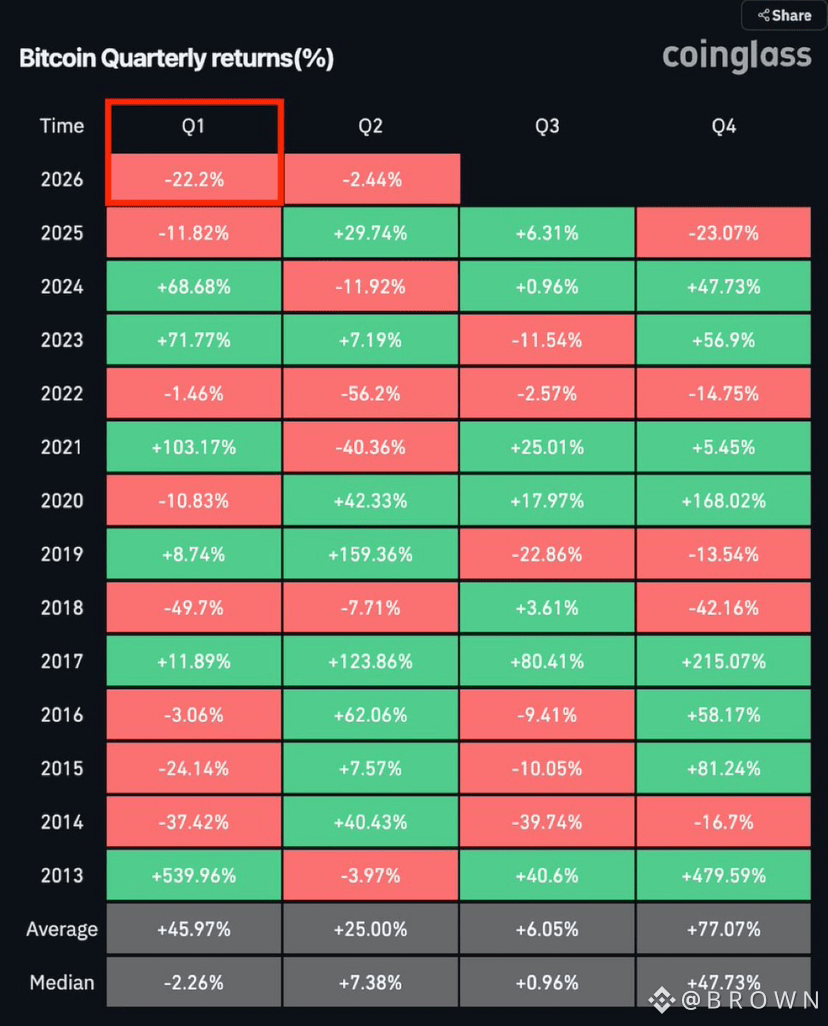
2016 vs 2026 👊🏻
2016 vs 2026 👊🏻
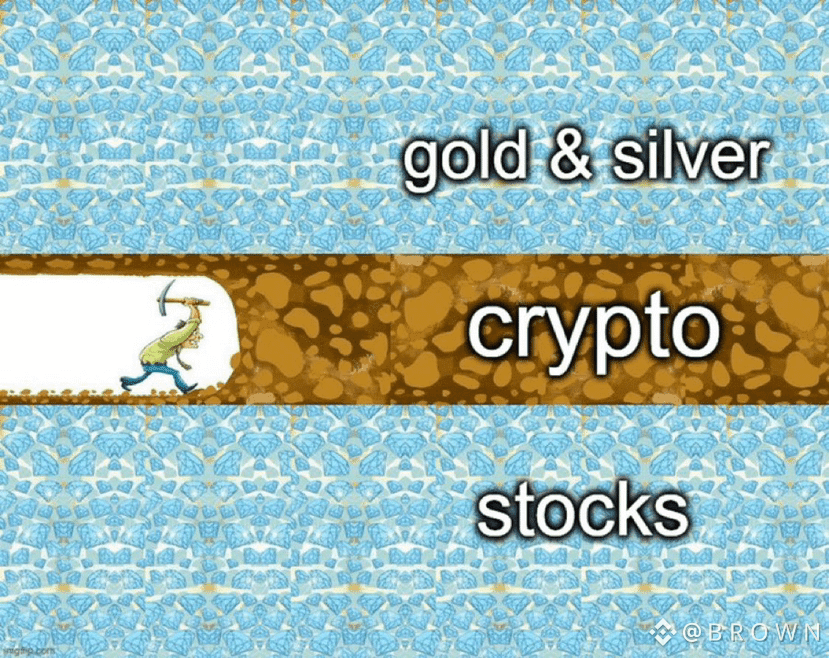
HODLing Crypto In 2026.
DAS WAR EIN SELTENES, SYSTEMWEITES SCHOCKEREIGNIS 🚨 Die Märkte waren während der meisten Sitzung stabil — dann eröffnete die US-Börse. Bitcoin fiel zuerst. Alles folgte. Innerhalb von etwa einer Stunde: Gold fiel um 8%, was etwa 3,1 Billionen Dollar auslöschte. Silber fiel um 12%, was etwa 700 Milliarden Dollar ausradiert hat. S&P 500 fiel um 1,3%, was ungefähr 800 Milliarden Dollar kostete. Die gesamte Marktkapitalisierung der Kryptowährungen verlor etwa 110 Milliarden Dollar. Mehr als 5 Billionen Dollar an Wert verschwanden in wichtigen Anlageklassen in sechzig Minuten. Das entspricht ungefähr dem kombinierten BIP von Russland und Kanada. Was hat das verursacht? Edelmetalle wurden durch übermäßige Hebelwirkung getrieben. Einzelhändler stürzten sich in Long-Positionen nahe den lokalen Höchstständen, und kaskadierende Liquidationen taten den Rest. Aktien und Kryptowährungen wurden von Geopolitik getroffen. Berichte über eskalierende Spannungen zwischen den USA und dem Iran, kombiniert mit dem Ausfall des USS Abraham Lincoln, schürten Ängste vor einer bevorstehenden militärischen Aktion. Wenn Hebelwirkung auf geopolitisches Risiko trifft, verschwindet die Liquidität schnell. Heute war nicht nur Volatilität. Es war ein Stressereignis auf Makroebene — die Art von Ereignis, an die sich Händler jahrelang erinnern.
DAS WAR EIN SELTENES, SYSTEMWEITES SCHOCKEREIGNIS 🚨

Die Märkte waren während der meisten Sitzung stabil — dann eröffnete die US-Börse.

Bitcoin fiel zuerst.
Alles folgte.

Innerhalb von etwa einer Stunde:

Gold fiel um 8%, was etwa 3,1 Billionen Dollar auslöschte.
Silber fiel um 12%, was etwa 700 Milliarden Dollar ausradiert hat.
S&P 500 fiel um 1,3%, was ungefähr 800 Milliarden Dollar kostete.
Die gesamte Marktkapitalisierung der Kryptowährungen verlor etwa 110 Milliarden Dollar.

Mehr als 5 Billionen Dollar an Wert verschwanden in wichtigen Anlageklassen in sechzig Minuten.

Das entspricht ungefähr dem kombinierten BIP von Russland und Kanada.

Was hat das verursacht?

Edelmetalle wurden durch übermäßige Hebelwirkung getrieben.
Einzelhändler stürzten sich in Long-Positionen nahe den lokalen Höchstständen, und kaskadierende Liquidationen taten den Rest.

Aktien und Kryptowährungen wurden von Geopolitik getroffen.
Berichte über eskalierende Spannungen zwischen den USA und dem Iran, kombiniert mit dem Ausfall des USS Abraham Lincoln, schürten Ängste vor einer bevorstehenden militärischen Aktion.

Wenn Hebelwirkung auf geopolitisches Risiko trifft, verschwindet die Liquidität schnell.

Heute war nicht nur Volatilität.

Es war ein Stressereignis auf Makroebene — die Art von Ereignis, an die sich Händler jahrelang erinnern.
Michael Saylor’s “Strategy” is down 11% today. The company holds 712,647 $BTC at an average purchase price of $76,037. Bitcoin is now just $8,000 away from that average cost. {spot}(BTCUSDT)
Michael Saylor’s “Strategy” is down 11% today.

The company holds 712,647 $BTC at an average purchase price of $76,037.

Bitcoin is now just $8,000 away from that average cost.
🚨 THIS IS MASSIVE Binance is about to become one of the largest buyers of Bitcoin and the market is still underestimating its impact. Binance has announced it will convert its SAFU fund into $1 billion worth of Bitcoin over the next 30 days. It also said that if the value of its Bitcoin holdings falls below $800 million, it will buy more BTC to bring the value back to $1 billion. That means SAFU is no longer held in stablecoins. It is now a permanent BTC allocation with automatic rebalancing. In simple terms: • Spot Bitcoin demand is being created • And that demand is ongoing, not temporary This matters because Binance is the largest crypto exchange and a systemically important entity in this market. When an entity like this commits to holding and maintaining $1B in BTC, it changes short-term supply and demand dynamics. We have seen something similar before. In March 2023, Binance deployed about $1B from SAFU into BTC, ETH, and BNB during a weak market phase. Over the next year: • BTC moved from $22k to $74k • ETH rallied from $1.4k to above $4k • BNB almost made a new all-time high This time, the full allocation is only into Bitcoin, not split across assets. Because this buying is public and scheduled, other large players can front-run it. That often adds additional demand before the full allocation is even completed. At the same time, several short-term headwinds have eased: • Clarity ACT is moving forward • New Fed chair is pro-crypto and pro-rate cuts. Gold and silver have also corrected recently. When metals go down, liquidity often looks for another market. This too could bring additional liquidity into crypto. That doesn’t mean we will see a parabolic rally, but a relief rally is definitely possible here.
🚨 THIS IS MASSIVE

Binance is about to become one of the largest buyers of Bitcoin and the market is still underestimating its impact.

Binance has announced it will convert its SAFU fund into $1 billion worth of Bitcoin over the next 30 days.

It also said that if the value of its Bitcoin holdings falls below $800 million, it will buy more BTC to bring the value back to $1 billion.

That means SAFU is no longer held in stablecoins. It is now a permanent BTC allocation with automatic rebalancing.

In simple terms:
• Spot Bitcoin demand is being created
• And that demand is ongoing, not temporary

This matters because Binance is the largest crypto exchange and a systemically important entity in this market.

When an entity like this commits to holding and maintaining $1B in BTC, it changes short-term supply and demand dynamics.

We have seen something similar before.

In March 2023, Binance deployed about $1B from SAFU into BTC, ETH, and BNB during a weak market phase.

Over the next year:
• BTC moved from $22k to $74k
• ETH rallied from $1.4k to above $4k
• BNB almost made a new all-time high

This time, the full allocation is only into Bitcoin, not split across assets.

Because this buying is public and scheduled, other large players can front-run it. That often adds additional demand before the full allocation is even completed.

At the same time, several short-term headwinds have eased:
• Clarity ACT is moving forward
• New Fed chair is pro-crypto and pro-rate cuts.

Gold and silver have also corrected recently. When metals go down, liquidity often looks for another market.

This too could bring additional liquidity into crypto.

That doesn’t mean we will see a parabolic rally, but a relief rally is definitely possible here.
He who survives this DUMP, will get another dump
He who survives this DUMP,

will get another dump
März 2023 - Binance kündigte die Umwandlung von $1 MILLIARDE SAFU-FONDS in BTC, ETH und #BNB an. - BTC stieg um 250 % in einem Jahr, ETH stieg um 200 % und die Krypto-Marktkapitalisierung fügte $1,8 Billionen hinzu. Januar 2026 - Binance hat angekündigt, $1 MILLIARDE SAFU-FONDS in Bitcoin umzuwandeln. Wir alle wissen, was als Nächstes kommt.
März 2023

- Binance kündigte die Umwandlung von $1 MILLIARDE SAFU-FONDS in BTC, ETH und #BNB an.

- BTC stieg um 250 % in einem Jahr, ETH stieg um 200 % und die Krypto-Marktkapitalisierung fügte $1,8 Billionen hinzu.

Januar 2026

- Binance hat angekündigt, $1 MILLIARDE SAFU-FONDS in Bitcoin umzuwandeln.

Wir alle wissen, was als Nächstes kommt.
BREAKING: 🇺🇸 President Trump just announced Kevin Warsh as the new FED CHAIR.
BREAKING:

🇺🇸 President Trump just announced Kevin Warsh as the new FED CHAIR.
$WAL is starting to prove its value beyond narratives. Walrus is already handling real workloads, like storing 250TB of Team Liquid’s content and powering live on-chain web apps. That’s real infrastructure in action. With tools like Quilt and deep integration across the Sui ecosystem, Walrus is shaping up to be a core data layer for Web3 and AI, not just another storage token. #Walrus @WalrusProtocol {spot}(WALUSDT)
$WAL is starting to prove its value beyond narratives.

Walrus is already handling real workloads, like storing 250TB of Team Liquid’s content and powering live on-chain web apps. That’s real infrastructure in action.

With tools like Quilt and deep integration across the Sui ecosystem, Walrus is shaping up to be a core data layer for Web3 and AI, not just another storage token.

#Walrus @Walrus 🦭/acc
Vanar keeps it simple and that’s the power. While many chains chase noise, Vanar focuses on working infrastructure: low fees, fast transactions, and systems that stay stable when demand grows. Its AI-native design is built for real use cases like payments and tokenized real-world assets, not just experiments. Green validators with Google Cloud and compliance tooling with Nexera show they’re thinking about long-term adoption. Less talk. More building. #Vanar @Vanar $VANRY {spot}(VANRYUSDT)
Vanar keeps it simple and that’s the power.

While many chains chase noise, Vanar focuses on working infrastructure: low fees, fast transactions, and systems that stay stable when demand grows.

Its AI-native design is built for real use cases like payments and tokenized real-world assets, not just experiments.

Green validators with Google Cloud and compliance tooling with Nexera show they’re thinking about long-term adoption.

Less talk. More building.

#Vanar @Vanarchain
$VANRY
I keep circling back to @Dusk_Foundation for one simple reason: it feels engineered for how finance actually operates, not how crypto likes to imagine it operates. Instead of picking a side between “everything public” or “everything hidden,” #Dusk designs for controlled visibility. Transactions can stay confidential, but proofs still exist. Data can be protected, but compliance is still possible. That middle ground is exactly where banks, funds, and real issuers live. What stands out is the stack approach. A settlement-focused base layer, an EVM environment developers already understand, and privacy tech woven underneath instead of bolted on later. It doesn’t feel experimental. It feels structured. Even operationally, the team behaves more like infrastructure builders than marketers. Clear incident communication. Fast containment. No drama. That matters more than most people realize. $DUSK itself isn’t positioned as a meme or a short-term catalyst token. It’s meant to secure the network, pay for execution, and keep the whole system running over long time horizons. My view: if regulated assets, tokenized securities, and compliant DeFi are going to scale, chains that blend privacy with verifiability will win. Dusk is quietly aiming straight at that future. #Dusk $DUSK {spot}(DUSKUSDT)
I keep circling back to @Dusk for one simple reason: it feels engineered for how finance actually operates, not how crypto likes to imagine it operates.

Instead of picking a side between “everything public” or “everything hidden,” #Dusk designs for controlled visibility. Transactions can stay confidential, but proofs still exist. Data can be protected, but compliance is still possible. That middle ground is exactly where banks, funds, and real issuers live.

What stands out is the stack approach. A settlement-focused base layer, an EVM environment developers already understand, and privacy tech woven underneath instead of bolted on later. It doesn’t feel experimental. It feels structured.

Even operationally, the team behaves more like infrastructure builders than marketers. Clear incident communication. Fast containment. No drama. That matters more than most people realize.

$DUSK itself isn’t positioned as a meme or a short-term catalyst token. It’s meant to secure the network, pay for execution, and keep the whole system running over long time horizons.

My view: if regulated assets, tokenized securities, and compliant DeFi are going to scale, chains that blend privacy with verifiability will win. Dusk is quietly aiming straight at that future.

#Dusk $DUSK
$XPL keeps popping up on my radar for one main reason: Plasma isn’t trying to be everything. It’s trying to be really good at one thing, moving digital dollars at scale. Instead of chasing flashy narratives, Plasma is building a chain where stablecoin settlement is cheap, fast, and predictable. That alone already separates it from most L1s. Add EVM compatibility on top, and suddenly developers can ship familiar contracts without reinventing their stack. Under the hood, PlasmaBFT is optimized for quick finality, while gas mechanics stay simple and consistent. The interesting twist is at the UX layer: stablecoin transfers can be subsidized at protocol level, and apps can choose which token users pay fees with. That’s the kind of detail that makes payments feel normal, not “crypto complicated.” This isn’t just a whitepaper story either. Plasma has publicly pointed to a mainnet beta in late 2025, with significant stablecoin liquidity expected from the start. On top of that, they’re already wiring in cross-chain liquidity routing through NEAR Intents, which tells me they’re thinking about real volume, not demos. Token-wise, XPL is structured with long-term network security in mind: emissions taper over time, validators eventually come online, and base fees are designed to be burned as usage grows. It reads more like infrastructure planning than a quick-launch token model. My takeaway: Plasma looks less like a “next hot L1” and more like a specialized settlement layer for stablecoins. If on-chain payments become a serious category, chains built specifically for that job tend to matter. #plasma @Plasma $XPL {spot}(XPLUSDT)
$XPL keeps popping up on my radar for one main reason: Plasma isn’t trying to be everything. It’s trying to be really good at one thing, moving digital dollars at scale.

Instead of chasing flashy narratives, Plasma is building a chain where stablecoin settlement is cheap, fast, and predictable. That alone already separates it from most L1s. Add EVM compatibility on top, and suddenly developers can ship familiar contracts without reinventing their stack.

Under the hood, PlasmaBFT is optimized for quick finality, while gas mechanics stay simple and consistent. The interesting twist is at the UX layer: stablecoin transfers can be subsidized at protocol level, and apps can choose which token users pay fees with. That’s the kind of detail that makes payments feel normal, not “crypto complicated.”

This isn’t just a whitepaper story either. Plasma has publicly pointed to a mainnet beta in late 2025, with significant stablecoin liquidity expected from the start. On top of that, they’re already wiring in cross-chain liquidity routing through NEAR Intents, which tells me they’re thinking about real volume, not demos.

Token-wise, XPL is structured with long-term network security in mind: emissions taper over time, validators eventually come online, and base fees are designed to be burned as usage grows. It reads more like infrastructure planning than a quick-launch token model.

My takeaway: Plasma looks less like a “next hot L1” and more like a specialized settlement layer for stablecoins. If on-chain payments become a serious category, chains built specifically for that job tend to matter.

#plasma @Plasma $XPL
Walrus and the Future of Web3 Data Markets, A Community Deep Dive!!The conversation around Web3 often revolves around blockchains, tokens, and financial primitives, but beneath all of these systems lies something even more fundamental: data. Every decentralized application, every smart contract interaction, every AI model, and every digital service ultimately depends on data being available, reliable, and trustworthy. Yet for most of the internet’s history, data has lived inside centralized silos controlled by a small number of corporations. Walrus is attempting to change this structure by building a decentralized data infrastructure where information can be stored, verified, and economically utilized without surrendering ownership to centralized entities. Walrus is not positioning itself as just another storage protocol. Its broader ambition is to become a foundational layer for how data is handled across Web3. That means moving beyond simple file hosting into a system where data is programmable, composable, and directly usable by smart contracts and decentralized applications. The mainnet launch in 2025 represented a shift from theory into live infrastructure, demonstrating that decentralized storage can evolve into something far more dynamic than static archives. At its core, Walrus focuses on making data both resilient and functional. Traditional decentralized storage networks primarily emphasize persistence, ensuring files remain accessible over long periods. Walrus expands this model by enabling data to be interacted with in real time. Developers can store large datasets, media files, gaming assets, and application state, then reference that information directly within onchain logic. This transforms storage from a passive service into an active computational resource, allowing applications to treat data as a live component of their behavior rather than an external dependency. The technical design of Walrus centers on distributing data across many independent storage providers using advanced encoding techniques. Files are broken into fragments and encoded with redundancy so that they can be reconstructed even if a portion of the network becomes unavailable. This approach improves availability and fault tolerance while preventing any single provider from controlling complete datasets. From the user’s perspective, this complexity remains hidden. What they experience is a storage layer that feels reliable, responsive, and censorship resistant. One of the most important implications of Walrus emerges in the context of artificial intelligence. Modern AI systems depend on enormous volumes of data, but they also require assurances about the integrity of that data. Training a model on corrupted or manipulated inputs undermines its usefulness. Walrus enables datasets to be stored in a way that is verifiable and tamper resistant, giving developers confidence that the information feeding their models has not been altered. This opens the door to decentralized AI systems that can reference onchain data with cryptographic guarantees, creating a bridge between blockchain infrastructure and machine learning workflows. The integration of Walrus into the Sui ecosystem further strengthens this vision. Sui provides high-performance execution for smart contracts, while Walrus supplies a scalable and verifiable data layer. Together, they form a stack that supports applications requiring both fast computation and heavy data usage. This combination attracts developers who want to build experiences that go beyond simple token transfers, such as games with large asset libraries, social platforms with user-generated content, and AI-driven services that rely on constant access to shared datasets. As Walrus has matured, it has begun to appear in a wide variety of projects. Developers are using it to store gaming assets that need to be verified and tradable without centralized servers. Media platforms are exploring it as a way to prove content authenticity and origin. Prediction markets and analytics platforms are leveraging it for reliable data feeds. Machine learning pipelines are experimenting with storing datasets and model artifacts in a decentralized environment. These integrations demonstrate that Walrus is becoming more than a niche tool; it is evolving into general-purpose infrastructure for data-heavy applications. The WAL token plays a central role in sustaining this ecosystem. It functions as the medium of payment for storage, the staking asset for providers who supply capacity, and the governance token for shaping the future of the protocol. This creates a direct relationship between network usage and token demand. When more data is stored, more WAL is required. When more providers participate, more WAL is staked. This alignment ties the economic value of the token to the actual utility of the network rather than to speculation alone. Walrus has also gained broader exposure through listings on major exchanges and community distribution campaigns. While this visibility introduces the project to new audiences, long-term success depends far more on developer adoption and real usage. Infrastructure projects tend to grow quietly. Their progress is reflected less in headlines and more in steady increases in stored data, active providers, and applications integrating the protocol. A particularly encouraging sign is the emphasis Walrus places on developer support. Hackathons, grants, documentation improvements, and tooling upgrades are all aimed at lowering barriers for new teams. Strong ecosystems are built when experimentation is easy. Every new project built on Walrus increases the surface area of the network and contributes to a positive feedback loop of adoption. Governance is gradually shifting toward a more community-driven model as well. WAL holders are gaining influence over protocol parameters, incentive structures, and long-term direction. This transition is important for decentralization and ensures that the network’s evolution reflects the interests of its users rather than a single organization. Looking further ahead, one of the most compelling aspects of Walrus is its potential role in enabling decentralized data markets. In such markets, data is not merely stored but treated as an asset that can be licensed, traded, or monetized. Creators could earn from datasets they produce. Developers could pay for access to specialized information. AI systems could consume verified inputs whose provenance is provable. Walrus provides the foundational infrastructure needed for these possibilities by ensuring data is verifiable, persistent, and programmable. Today, Walrus stands at an early but meaningful stage. The network is live. Builders are experimenting. Integrations are expanding. The pieces are beginning to align around a clear narrative: decentralized applications require more than computation. They require trustworthy data. Walrus is attempting to become the place where that data lives. If Web3 is to support complex applications, intelligent systems, and user-owned digital experiences, a decentralized data layer is not optional. It is essential. Walrus is quietly positioning itself to fill that role, and that is what makes it worth serious attention from builders, users, and long-term participants alike. The future where data is not just stored, but trusted and economically meaningful, is starting to take shape. Walrus is helping build it. $WAL #Walrus @WalrusProtocol

Walrus and the Future of Web3 Data Markets, A Community Deep Dive!!

The conversation around Web3 often revolves around blockchains, tokens, and financial primitives, but beneath all of these systems lies something even more fundamental: data. Every decentralized application, every smart contract interaction, every AI model, and every digital service ultimately depends on data being available, reliable, and trustworthy. Yet for most of the internet’s history, data has lived inside centralized silos controlled by a small number of corporations. Walrus is attempting to change this structure by building a decentralized data infrastructure where information can be stored, verified, and economically utilized without surrendering ownership to centralized entities.

Walrus is not positioning itself as just another storage protocol. Its broader ambition is to become a foundational layer for how data is handled across Web3. That means moving beyond simple file hosting into a system where data is programmable, composable, and directly usable by smart contracts and decentralized applications. The mainnet launch in 2025 represented a shift from theory into live infrastructure, demonstrating that decentralized storage can evolve into something far more dynamic than static archives.

At its core, Walrus focuses on making data both resilient and functional. Traditional decentralized storage networks primarily emphasize persistence, ensuring files remain accessible over long periods. Walrus expands this model by enabling data to be interacted with in real time. Developers can store large datasets, media files, gaming assets, and application state, then reference that information directly within onchain logic. This transforms storage from a passive service into an active computational resource, allowing applications to treat data as a live component of their behavior rather than an external dependency.

The technical design of Walrus centers on distributing data across many independent storage providers using advanced encoding techniques. Files are broken into fragments and encoded with redundancy so that they can be reconstructed even if a portion of the network becomes unavailable. This approach improves availability and fault tolerance while preventing any single provider from controlling complete datasets. From the user’s perspective, this complexity remains hidden. What they experience is a storage layer that feels reliable, responsive, and censorship resistant.

One of the most important implications of Walrus emerges in the context of artificial intelligence. Modern AI systems depend on enormous volumes of data, but they also require assurances about the integrity of that data. Training a model on corrupted or manipulated inputs undermines its usefulness. Walrus enables datasets to be stored in a way that is verifiable and tamper resistant, giving developers confidence that the information feeding their models has not been altered. This opens the door to decentralized AI systems that can reference onchain data with cryptographic guarantees, creating a bridge between blockchain infrastructure and machine learning workflows.

The integration of Walrus into the Sui ecosystem further strengthens this vision. Sui provides high-performance execution for smart contracts, while Walrus supplies a scalable and verifiable data layer. Together, they form a stack that supports applications requiring both fast computation and heavy data usage. This combination attracts developers who want to build experiences that go beyond simple token transfers, such as games with large asset libraries, social platforms with user-generated content, and AI-driven services that rely on constant access to shared datasets.

As Walrus has matured, it has begun to appear in a wide variety of projects. Developers are using it to store gaming assets that need to be verified and tradable without centralized servers. Media platforms are exploring it as a way to prove content authenticity and origin. Prediction markets and analytics platforms are leveraging it for reliable data feeds. Machine learning pipelines are experimenting with storing datasets and model artifacts in a decentralized environment. These integrations demonstrate that Walrus is becoming more than a niche tool; it is evolving into general-purpose infrastructure for data-heavy applications.

The WAL token plays a central role in sustaining this ecosystem. It functions as the medium of payment for storage, the staking asset for providers who supply capacity, and the governance token for shaping the future of the protocol. This creates a direct relationship between network usage and token demand. When more data is stored, more WAL is required. When more providers participate, more WAL is staked. This alignment ties the economic value of the token to the actual utility of the network rather than to speculation alone.

Walrus has also gained broader exposure through listings on major exchanges and community distribution campaigns. While this visibility introduces the project to new audiences, long-term success depends far more on developer adoption and real usage. Infrastructure projects tend to grow quietly. Their progress is reflected less in headlines and more in steady increases in stored data, active providers, and applications integrating the protocol.

A particularly encouraging sign is the emphasis Walrus places on developer support. Hackathons, grants, documentation improvements, and tooling upgrades are all aimed at lowering barriers for new teams. Strong ecosystems are built when experimentation is easy. Every new project built on Walrus increases the surface area of the network and contributes to a positive feedback loop of adoption.

Governance is gradually shifting toward a more community-driven model as well. WAL holders are gaining influence over protocol parameters, incentive structures, and long-term direction. This transition is important for decentralization and ensures that the network’s evolution reflects the interests of its users rather than a single organization.

Looking further ahead, one of the most compelling aspects of Walrus is its potential role in enabling decentralized data markets. In such markets, data is not merely stored but treated as an asset that can be licensed, traded, or monetized. Creators could earn from datasets they produce. Developers could pay for access to specialized information. AI systems could consume verified inputs whose provenance is provable. Walrus provides the foundational infrastructure needed for these possibilities by ensuring data is verifiable, persistent, and programmable.

Today, Walrus stands at an early but meaningful stage. The network is live. Builders are experimenting. Integrations are expanding. The pieces are beginning to align around a clear narrative: decentralized applications require more than computation. They require trustworthy data.

Walrus is attempting to become the place where that data lives.

If Web3 is to support complex applications, intelligent systems, and user-owned digital experiences, a decentralized data layer is not optional. It is essential. Walrus is quietly positioning itself to fill that role, and that is what makes it worth serious attention from builders, users, and long-term participants alike.

The future where data is not just stored, but trusted and economically meaningful, is starting to take shape.

Walrus is helping build it.
$WAL #Walrus
@WalrusProtocol
VANAR CHAIN, QUIETLY BUILDING THE MISSING LAYER BETWEEN DATA, LOGIC, AND VALUE!!Most blockchains compete on familiar dimensions: faster execution, cheaper transactions, higher throughput. Vanar is approaching the problem from a very different angle. Instead of racing to become the fastest execution engine, Vanar is positioning itself as infrastructure for something blockchains largely lack today: persistent memory, structured context, and native reasoning. From Vanar’s perspective, execution has become commoditized. Smart contracts can already run on many chains. What is missing is an integrated way for applications to remember, understand, and act on historical context in a meaningful way. Vanar’s long-term thesis is that the next generation of decentralized applications will not be defined only by logic, but by their ability to store knowledge, interpret data, and automate workflows. A STACK DESIGNED AROUND INTELLIGENCE, NOT JUST TRANSACTIONS. Vanar presents itself as a multi-layer AI-native stack rather than a standalone blockchain. At the foundation sits Vanar Chain, which serves as the settlement and execution layer. Above it sits Neutron, a semantic memory layer responsible for transforming raw data into compact, verifiable objects known as Seeds. Kayon forms the reasoning layer, enabling applications and agents to query that stored memory and derive contextual conclusions. On top of this, Axon and Flows are positioned as higher-level layers for intelligent automation and full-scale industry workflows. This layered structure is important because it shows intent. Vanar is not building isolated features. It is assembling an integrated system where memory, reasoning, and execution are designed to work together. NEUTRON: FROM DATA TO PROGRAMMABLE MEMORY Neutron is where Vanar attempts its most ambitious shift. Traditional blockchains treat data as static blobs or hashes. Neutron treats data as something that can be compressed, structured, and reused. Instead of simply storing references to files, Neutron aims to transform large or complex inputs into lightweight Seeds that remain verifiable on-chain. These Seeds are designed to be readable by applications and AI agents, allowing them to reference historical context without loading massive datasets. The underlying idea is that memory should be portable, persistent, and computationally useful. Whether the compression ratios described in documentation are fully realized at scale or represent an aspirational target, the design goal is clear: make memory practical for decentralized systems. KAYON: TURNING CONTEXT INTO DECISIONS If Neutron stores memory, Kayon interprets it. Kayon is described as a reasoning layer that supports natural-language style querying and contextual analysis. Its focus is on enabling systems to ask meaningful questions of stored data and receive structured, explainable responses. This is especially relevant for enterprise-style use cases where decisions must be traceable and auditable. Compliance checks, validation workflows, and policy enforcement can be expressed as reasoning processes rather than hard-coded rule sets. In effect, Kayon sits between raw data and actionable outcomes. VANAR CHAIN: A BASE LAYER FOR AI-ORIENTED APPLICATIONS At the base level, Vanar Chain is designed to support workloads that involve data compression, verification, and financial logic. The chain is framed as suitable for AI-driven applications, PayFi-style payment flows, and tokenized real-world assets. Rather than optimizing only for token transfers, Vanar Chain emphasizes the ability to verify complex outcomes and store meaningful context. This reinforces the broader vision that blockchains should evolve beyond simple ledgers into platforms capable of supporting intelligent behavior. A DIFFERENT VIEW OF CONSENSUS AND PARTICIPATION Vanar’s whitepaper outlines a hybrid direction that begins with Proof of Authority and evolves toward Proof of Reputation. In this model, validator participation is influenced by credibility, historical behavior, and reputation metrics rather than purely by computational power or raw stake. The motivation behind this approach is to align network security with long-term reliability rather than short-term capital concentration. For a system aiming to support intelligent workflows and enterprise usage, predictability and trustworthiness are treated as first-order concerns. VANRY AND THE ECONOMIC LAYER VANRY functions as the economic backbone of the ecosystem. The project describes a one-to-one transition from the earlier TVK token to VANRY, with an initial supply mirroring the predecessor and a maximum supply cap of 2.4 billion tokens. VANRY is associated with network fees, staking, and incentive distribution. The whitepaper emphasizes a long-duration reward schedule intended to sustain validator participation and ecosystem growth over time. A notable design detail is the idea of fee stabilization through periodic price checks, aiming to keep transaction costs relatively consistent even as market prices fluctuate. This reflects a focus on usability rather than speculative optimization. BUILDING TOWARD PAYMENTS AND REAL-WORLD WORKFLOWS Vanar’s public communications increasingly highlight PayFi and real-world asset directions. This aligns with the broader stack narrative: intelligent systems require both memory and value transfer. Hiring announcements related to payments infrastructure and programs aimed at building AI-focused talent suggest that the team is investing not only in code, but in organizational capacity. These signals matter because large-scale platforms are built as much through people and processes as through technology. THE ROAD AHEAD Axon and Flows are consistently referenced as upcoming layers focused on intelligent automation and application-level workflows. Their eventual release will be an important test of whether Vanar can translate architectural vision into concrete developer tooling. At the same time, Neutron and Kayon must demonstrate real adoption. If developers actively build on these layers, Vanar’s identity as an intelligence-oriented chain becomes tangible. If not, the project risks being perceived as another L1 with ambitious branding. CLOSING THOUGHTS Vanar is not positioning itself as the fastest chain or the cheapest chain. It is positioning itself as a chain where applications can remember, reason, and act. That is a fundamentally different ambition. If decentralized systems are to support autonomous agents, complex workflows, and long-lived digital identities, they will require infrastructure that treats memory and context as core primitives. Vanar is attempting to build that missing layer. #Vanar @Vanar $VANRY

VANAR CHAIN, QUIETLY BUILDING THE MISSING LAYER BETWEEN DATA, LOGIC, AND VALUE!!

Most blockchains compete on familiar dimensions: faster execution, cheaper transactions, higher throughput. Vanar is approaching the problem from a very different angle. Instead of racing to become the fastest execution engine, Vanar is positioning itself as infrastructure for something blockchains largely lack today: persistent memory, structured context, and native reasoning.

From Vanar’s perspective, execution has become commoditized. Smart contracts can already run on many chains. What is missing is an integrated way for applications to remember, understand, and act on historical context in a meaningful way. Vanar’s long-term thesis is that the next generation of decentralized applications will not be defined only by logic, but by their ability to store knowledge, interpret data, and automate workflows.

A STACK DESIGNED AROUND INTELLIGENCE, NOT JUST TRANSACTIONS.

Vanar presents itself as a multi-layer AI-native stack rather than a standalone blockchain. At the foundation sits Vanar Chain, which serves as the settlement and execution layer. Above it sits Neutron, a semantic memory layer responsible for transforming raw data into compact, verifiable objects known as Seeds. Kayon forms the reasoning layer, enabling applications and agents to query that stored memory and derive contextual conclusions. On top of this, Axon and Flows are positioned as higher-level layers for intelligent automation and full-scale industry workflows.

This layered structure is important because it shows intent. Vanar is not building isolated features. It is assembling an integrated system where memory, reasoning, and execution are designed to work together.

NEUTRON: FROM DATA TO PROGRAMMABLE MEMORY

Neutron is where Vanar attempts its most ambitious shift. Traditional blockchains treat data as static blobs or hashes. Neutron treats data as something that can be compressed, structured, and reused.

Instead of simply storing references to files, Neutron aims to transform large or complex inputs into lightweight Seeds that remain verifiable on-chain. These Seeds are designed to be readable by applications and AI agents, allowing them to reference historical context without loading massive datasets.

The underlying idea is that memory should be portable, persistent, and computationally useful. Whether the compression ratios described in documentation are fully realized at scale or represent an aspirational target, the design goal is clear: make memory practical for decentralized systems.

KAYON: TURNING CONTEXT INTO DECISIONS

If Neutron stores memory, Kayon interprets it.

Kayon is described as a reasoning layer that supports natural-language style querying and contextual analysis. Its focus is on enabling systems to ask meaningful questions of stored data and receive structured, explainable responses.

This is especially relevant for enterprise-style use cases where decisions must be traceable and auditable. Compliance checks, validation workflows, and policy enforcement can be expressed as reasoning processes rather than hard-coded rule sets.

In effect, Kayon sits between raw data and actionable outcomes.

VANAR CHAIN: A BASE LAYER FOR AI-ORIENTED APPLICATIONS

At the base level, Vanar Chain is designed to support workloads that involve data compression, verification, and financial logic. The chain is framed as suitable for AI-driven applications, PayFi-style payment flows, and tokenized real-world assets.

Rather than optimizing only for token transfers, Vanar Chain emphasizes the ability to verify complex outcomes and store meaningful context. This reinforces the broader vision that blockchains should evolve beyond simple ledgers into platforms capable of supporting intelligent behavior.

A DIFFERENT VIEW OF CONSENSUS AND PARTICIPATION

Vanar’s whitepaper outlines a hybrid direction that begins with Proof of Authority and evolves toward Proof of Reputation. In this model, validator participation is influenced by credibility, historical behavior, and reputation metrics rather than purely by computational power or raw stake.

The motivation behind this approach is to align network security with long-term reliability rather than short-term capital concentration. For a system aiming to support intelligent workflows and enterprise usage, predictability and trustworthiness are treated as first-order concerns.

VANRY AND THE ECONOMIC LAYER

VANRY functions as the economic backbone of the ecosystem. The project describes a one-to-one transition from the earlier TVK token to VANRY, with an initial supply mirroring the predecessor and a maximum supply cap of 2.4 billion tokens.

VANRY is associated with network fees, staking, and incentive distribution. The whitepaper emphasizes a long-duration reward schedule intended to sustain validator participation and ecosystem growth over time.

A notable design detail is the idea of fee stabilization through periodic price checks, aiming to keep transaction costs relatively consistent even as market prices fluctuate. This reflects a focus on usability rather than speculative optimization.

BUILDING TOWARD PAYMENTS AND REAL-WORLD WORKFLOWS

Vanar’s public communications increasingly highlight PayFi and real-world asset directions. This aligns with the broader stack narrative: intelligent systems require both memory and value transfer.

Hiring announcements related to payments infrastructure and programs aimed at building AI-focused talent suggest that the team is investing not only in code, but in organizational capacity.

These signals matter because large-scale platforms are built as much through people and processes as through technology.

THE ROAD AHEAD

Axon and Flows are consistently referenced as upcoming layers focused on intelligent automation and application-level workflows. Their eventual release will be an important test of whether Vanar can translate architectural vision into concrete developer tooling.

At the same time, Neutron and Kayon must demonstrate real adoption. If developers actively build on these layers, Vanar’s identity as an intelligence-oriented chain becomes tangible. If not, the project risks being perceived as another L1 with ambitious branding.

CLOSING THOUGHTS

Vanar is not positioning itself as the fastest chain or the cheapest chain.

It is positioning itself as a chain where applications can remember, reason, and act.

That is a fundamentally different ambition.

If decentralized systems are to support autonomous agents, complex workflows, and long-lived digital identities, they will require infrastructure that treats memory and context as core primitives.

Vanar is attempting to build that missing layer.

#Vanar @Vanarchain

$VANRY
PLASMA, REBUILDING BLOCKCHAIN AROUND STABLECOINS AS MONEY!!Stablecoins have become one of the most widely used products in crypto. They are used for savings, remittances, trading, payroll, and everyday transfers across borders. Yet the networks carrying most of this activity were never designed specifically for payments. They were built for smart contracts, experimentation, and speculative activity first, with stablecoins added later as just another asset type. Plasma approaches the problem from the opposite direction. Instead of adding stablecoins to a general-purpose blockchain, Plasma builds a blockchain whose primary mission is to move stablecoins efficiently and reliably. This change in starting point has deep consequences. Plasma treats stablecoins not as accessories to an ecosystem, but as the core economic payload. Everything else, including smart contract execution and developer tooling, is layered on top of this foundation. At the heart of Plasma is the idea that sending digital dollars should feel as natural as sending a message. On most blockchains today, users must hold a volatile native token simply to pay transaction fees, even when all they want to do is transfer USDT or USDC. Plasma removes this friction by supporting protocol-level gas sponsorship for stablecoin transfers. In practice, this means users can send certain stablecoins without needing to own XPL or any other gas asset. The network itself handles the cost for these basic transfers. This design dramatically simplifies the user experience. There is no need to acquire a secondary token, no need to estimate gas, and no risk of a transfer failing because of insufficient balance in a gas currency. Stablecoins become self-sufficient instruments, capable of moving on their own rails. Plasma’s technical architecture is built to support this payments-first vision. The network uses a high-performance Byzantine Fault Tolerant consensus system designed for fast confirmation and consistent finality. Payments require predictability. If transactions sometimes confirm instantly and sometimes take many seconds, the experience feels unreliable. Plasma’s consensus layer is optimized to minimize latency while preserving strong safety guarantees, allowing transfers to settle quickly and with confidence. On top of this settlement layer sits an Ethereum-compatible execution environment. Plasma deliberately chose compatibility with existing EVM standards so developers do not need to learn new languages or frameworks. Smart contracts behave as they would on Ethereum, but they run inside an environment where the underlying chain is optimized for payments rather than general-purpose experimentation. One of Plasma’s most distinctive features is its approach to transaction fees. Beyond gasless stablecoin transfers, Plasma also supports paying fees using selected ERC-20 tokens such as USDT or Bitcoin-backed tokens. Internally, the network still accounts for gas usage, but the user never needs to see or manage that complexity. Fees are abstracted away and denominated in assets people already understand. This creates a consistent mental model for users. They think in dollars or bitcoin. They pay in dollars or bitcoin. The network handles the rest. Plasma also recognizes that many real financial activities require privacy. Public blockchains expose transaction amounts and participants to everyone. This transparency can be acceptable for speculative markets, but it becomes problematic for payroll, treasury management, business-to-business settlements, and other sensitive flows. Plasma is developing a confidential payments system for stablecoins that hides transaction details while remaining compatible with existing wallets and smart contracts. The goal is not anonymity for its own sake. The goal is practical confidentiality that mirrors how traditional finance operates, where transaction details are visible only to the parties involved and to authorized auditors. Bitcoin plays an important role in Plasma’s design as well. Plasma supports a trust-minimized bridge that brings BTC onto the network as a one-to-one backed asset. This allows Bitcoin to participate in smart contracts, decentralized finance, and payment flows without relying on a single centralized custodian. Verification networks and threshold signing mechanisms reduce reliance on any single entity holding full control of funds. By supporting both stablecoins and Bitcoin as first-class assets, Plasma positions itself as a settlement layer for the two most important forms of digital money. The role of $XPL within this system is deliberately limited. XPL is used to secure the network through validator staking and to participate in governance. It may also be required for advanced smart contract operations. However, everyday stablecoin transfers do not depend on XPL. Users are not forced into speculative exposure just to move money. This separation between infrastructure token and payment asset reflects Plasma’s philosophy. The network token exists to maintain and govern the system. Stablecoins exist to serve as money. Plasma’s broader strategy is to standardize the invisible plumbing that payment applications usually have to build themselves. Features such as relayers, paymasters, fee abstraction, and sponsored transactions are often implemented at the application layer in inconsistent ways. Plasma moves these mechanisms into the protocol, where they are shared, audited, and predictable. For developers, this means fewer custom integrations and fewer edge cases. For users, it means consistent behavior across wallets and applications. Interoperability is another critical piece of Plasma’s design. Integration with cross-chain intent systems allows assets to move into and out of Plasma from many other blockchains without complex multi-step bridging. Liquidity can flow where it is needed, which is essential for large payments and commercial settlement. A payments network without liquidity is not a payments network. Plasma treats liquidity access as foundational infrastructure. @Plasma is not trying to be everything. It is not positioning itself as the ultimate smart contract platform or the most feature-rich ecosystem. It is making a narrow, focused bet: that stablecoins will continue to dominate digital payments, and that the winning blockchain will be the one that makes stablecoins feel effortless to use. If Plasma succeeds, the evidence will not come from marketing hype. It will come from steadily increasing transaction counts, rising stablecoin volumes, and growing adoption by wallets and applications that choose the path of least friction. #plasma is building that PATH!!

PLASMA, REBUILDING BLOCKCHAIN AROUND STABLECOINS AS MONEY!!

Stablecoins have become one of the most widely used products in crypto. They are used for savings, remittances, trading, payroll, and everyday transfers across borders. Yet the networks carrying most of this activity were never designed specifically for payments. They were built for smart contracts, experimentation, and speculative activity first, with stablecoins added later as just another asset type. Plasma approaches the problem from the opposite direction. Instead of adding stablecoins to a general-purpose blockchain, Plasma builds a blockchain whose primary mission is to move stablecoins efficiently and reliably.
This change in starting point has deep consequences. Plasma treats stablecoins not as accessories to an ecosystem, but as the core economic payload. Everything else, including smart contract execution and developer tooling, is layered on top of this foundation.

At the heart of Plasma is the idea that sending digital dollars should feel as natural as sending a message. On most blockchains today, users must hold a volatile native token simply to pay transaction fees, even when all they want to do is transfer USDT or USDC. Plasma removes this friction by supporting protocol-level gas sponsorship for stablecoin transfers. In practice, this means users can send certain stablecoins without needing to own XPL or any other gas asset. The network itself handles the cost for these basic transfers.

This design dramatically simplifies the user experience. There is no need to acquire a secondary token, no need to estimate gas, and no risk of a transfer failing because of insufficient balance in a gas currency. Stablecoins become self-sufficient instruments, capable of moving on their own rails.

Plasma’s technical architecture is built to support this payments-first vision. The network uses a high-performance Byzantine Fault Tolerant consensus system designed for fast confirmation and consistent finality. Payments require predictability. If transactions sometimes confirm instantly and sometimes take many seconds, the experience feels unreliable. Plasma’s consensus layer is optimized to minimize latency while preserving strong safety guarantees, allowing transfers to settle quickly and with confidence.
On top of this settlement layer sits an Ethereum-compatible execution environment. Plasma deliberately chose compatibility with existing EVM standards so developers do not need to learn new languages or frameworks. Smart contracts behave as they would on Ethereum, but they run inside an environment where the underlying chain is optimized for payments rather than general-purpose experimentation.

One of Plasma’s most distinctive features is its approach to transaction fees. Beyond gasless stablecoin transfers, Plasma also supports paying fees using selected ERC-20 tokens such as USDT or Bitcoin-backed tokens. Internally, the network still accounts for gas usage, but the user never needs to see or manage that complexity. Fees are abstracted away and denominated in assets people already understand.
This creates a consistent mental model for users. They think in dollars or bitcoin. They pay in dollars or bitcoin. The network handles the rest.

Plasma also recognizes that many real financial activities require privacy. Public blockchains expose transaction amounts and participants to everyone. This transparency can be acceptable for speculative markets, but it becomes problematic for payroll, treasury management, business-to-business settlements, and other sensitive flows. Plasma is developing a confidential payments system for stablecoins that hides transaction details while remaining compatible with existing wallets and smart contracts.
The goal is not anonymity for its own sake. The goal is practical confidentiality that mirrors how traditional finance operates, where transaction details are visible only to the parties involved and to authorized auditors.

Bitcoin plays an important role in Plasma’s design as well. Plasma supports a trust-minimized bridge that brings BTC onto the network as a one-to-one backed asset. This allows Bitcoin to participate in smart contracts, decentralized finance, and payment flows without relying on a single centralized custodian. Verification networks and threshold signing mechanisms reduce reliance on any single entity holding full control of funds.
By supporting both stablecoins and Bitcoin as first-class assets, Plasma positions itself as a settlement layer for the two most important forms of digital money.

The role of $XPL within this system is deliberately limited. XPL is used to secure the network through validator staking and to participate in governance. It may also be required for advanced smart contract operations. However, everyday stablecoin transfers do not depend on XPL. Users are not forced into speculative exposure just to move money.
This separation between infrastructure token and payment asset reflects Plasma’s philosophy. The network token exists to maintain and govern the system. Stablecoins exist to serve as money.

Plasma’s broader strategy is to standardize the invisible plumbing that payment applications usually have to build themselves. Features such as relayers, paymasters, fee abstraction, and sponsored transactions are often implemented at the application layer in inconsistent ways. Plasma moves these mechanisms into the protocol, where they are shared, audited, and predictable.
For developers, this means fewer custom integrations and fewer edge cases. For users, it means consistent behavior across wallets and applications.
Interoperability is another critical piece of Plasma’s design. Integration with cross-chain intent systems allows assets to move into and out of Plasma from many other blockchains without complex multi-step bridging. Liquidity can flow where it is needed, which is essential for large payments and commercial settlement.
A payments network without liquidity is not a payments network. Plasma treats liquidity access as foundational infrastructure.

@Plasma is not trying to be everything. It is not positioning itself as the ultimate smart contract platform or the most feature-rich ecosystem. It is making a narrow, focused bet: that stablecoins will continue to dominate digital payments, and that the winning blockchain will be the one that makes stablecoins feel effortless to use.
If Plasma succeeds, the evidence will not come from marketing hype. It will come from steadily increasing transaction counts, rising stablecoin volumes, and growing adoption by wallets and applications that choose the path of least friction.
#plasma is building that PATH!!
DUSK, ENGINEERING FINANCIAL BLOCKCHAINS FOR THE REAL WORLD!!For more than a decade, blockchain innovation has been measured by surface-level performance metrics. Faster blocks. Higher throughput. Cheaper fees. Louder narratives. These benchmarks matter in experimental environments, but they are not what determine whether a technology becomes embedded into global financial infrastructure. Traditional finance does not operate on slogans. It operates on enforceable rules, controlled disclosure, legal accountability, and operational reliability. Markets do not want radical transparency. They want controlled visibility. They do not want anonymity. They want confidentiality paired with auditability. Dusk Network is one of the few blockchains designed with this reality as its starting point. Rather than adapting existing public blockchain models for institutional use, Dusk builds an entirely different foundation. Its architecture assumes that regulated markets will require privacy by default, verifiability on demand, and compliance encoded directly into the system. A Different Interpretation of Privacy Most privacy-focused blockchains frame privacy as invisibility. The goal is to hide participants, amounts, and activity from everyone. While this appeals to cypherpunk ideology, it does not map to regulated finance. Banks, brokers, exchanges, and asset issuers cannot operate in systems where no one can verify anything. Dusk approaches privacy as controlled confidentiality. Transactions are shielded at the protocol level so that sensitive details are not publicly exposed. At the same time, cryptographic proofs allow authorized parties to verify compliance without revealing entire transaction histories. This distinction is fundamental. On Dusk, privacy is not about escaping oversight. It is about preventing unnecessary disclosure while preserving the ability to demonstrate lawful behavior. Market participants retain confidentiality. Regulators retain visibility where required. Neither side is forced to compromise. Why Total Transparency Fails Institutional Markets Public blockchains assume that openness equals trust. Every transaction, balance, and interaction is visible to anyone. In institutional finance, this model collapses. If trading strategies are public, competitors can front-run. If portfolio sizes are visible, market positions can be attacked. If treasury flows are transparent, corporate behavior becomes predictable. Transparency becomes a vulnerability. Regulated finance has always relied on compartmentalization. Counterparties see what they are allowed to see. Auditors see what they are mandated to see. The public sees almost nothing. Dusk mirrors this structure digitally. Instead of exposing raw data, Dusk exposes verifiable truth. A transaction can be proven valid without showing its contents. A balance can be proven sufficient without revealing its size. Compliance can be demonstrated without publishing internal operations. This model aligns with how real financial systems already function. Compliance as Native Infrastructure Many blockchains attempt to “add compliance later” through off-chain services, analytics tools, or permissioned overlays. Dusk embeds compliance into its core design. Its architecture reflects European regulatory frameworks such as MiCA, MiFID II, and GDPR, which impose strict requirements around data handling, identity, reporting, and user rights. These regulations were written for real institutions, not anonymous networks. Dusk treats these frameworks as engineering constraints, not obstacles. Instead of broadcasting personal data and hoping regulators accept it, Dusk minimizes on-chain exposure. Instead of forcing compliance through external monitoring, Dusk enables compliance through cryptographic proofs and programmable rules. This shifts compliance from policy documents into executable logic. Tokenization Built for Regulated Assets Most blockchains support token creation. Very few support regulated issuance. Dusk’s Confidential Security Contract standard is designed specifically for assets that must obey legal restrictions. Identity checks, jurisdictional rules, transfer permissions, recovery procedures, and reporting hooks can be encoded directly into token contracts. This changes what tokenization means. Rather than creating “wrapped representations” of real assets, issuers can create digital securities whose behavior matches regulatory obligations from inception. Compliance is not layered on top. It is inseparable from the asset itself. This architecture makes it feasible to represent shares, bonds, funds, and structured products on-chain without breaking existing legal frameworks. From Research Network to Production Infrastructure Dusk’s development path has prioritized correctness and stability over rapid experimentation. The transition to a full production mainnet environment with confidential smart contracts and an EVM-compatible execution layer marks a shift from theoretical design into operational reality. Applications can now be built that combine familiar Ethereum tooling with optional privacy modules. This matters because institutions rarely adopt experimental stacks. They adopt systems that demonstrate long-term reliability and predictable behavior. Early deployments involving regulated partners and tokenized securities platforms signal that Dusk is moving beyond prototypes and into live use cases. The significance is not volume today. It is viability. Consensus Designed for Institutional Neutrality Network security in institutional systems cannot depend on a small set of dominant actors. Dusk employs a privacy-aware proof-of-stake mechanism that masks validator identities and introduces blind-bid selection processes. This prevents large stakeholders from deterministically controlling block production and reduces the risk of cartel formation. From an institutional perspective, this matters. If infrastructure can be captured, it becomes a regulatory and operational risk. Dusk’s consensus design prioritizes fairness, unpredictability, and decentralization without sacrificing performance. It is security architecture informed by economic reality. Selective Visibility as the Future Standard Two trends are becoming unavoidable. First, regulators are no longer hostile to privacy. They are hostile to opacity. Systems must be auditable, not transparent. There is a difference. Second, institutions will not adopt infrastructures that expose sensitive business data by default. They will choose platforms that resemble existing confidentiality models while improving efficiency. Dusk sits directly in this convergence. It does not promise total anonymity. It does not enforce total transparency. It provides selective visibility. This mirrors how modern financial systems actually operate. Adoption Will Be Slow and Structural Dusk is not a speculative trend play. Integrating blockchain into regulated finance requires coordination between legal teams, compliance departments, auditors, custodians, exchanges, and regulators. These are multi-year processes. Success will not be measured by sudden spikes in activity. It will be measured by gradual institutional embedding. Dusk’s design acknowledges this reality. It is not chasing retail hype. It is building infrastructure for environments where mistakes are unacceptable. A New Category of Blockchain Dusk does not fit neatly into existing labels. It is not a privacy coin. It is not a DeFi chain. It is not a payments network. It is regulated financial infrastructure. Its defining characteristic is not speed, cost, or composability. It is alignment with legal and operational realities. This positions Dusk in a different competitive landscape than most blockchains. Closing Perspective Blockchains were originally conceived as transparent ledgers for trustless environments. Regulated finance is not trustless. It is rule-bound. Dusk represents a maturation of blockchain design: an acknowledgment that global finance will not rebuild itself around radical transparency, but around cryptographically enforced confidentiality and accountability. If capital markets move on-chain, they will not move onto platforms where everything is visible. They will move onto platforms where correctness can be proven and privacy preserved. Dusk is built for that future. #Dusk @Dusk_Foundation $DUSK {spot}(DUSKUSDT)

DUSK, ENGINEERING FINANCIAL BLOCKCHAINS FOR THE REAL WORLD!!

For more than a decade, blockchain innovation has been measured by surface-level performance metrics. Faster blocks. Higher throughput. Cheaper fees. Louder narratives. These benchmarks matter in experimental environments, but they are not what determine whether a technology becomes embedded into global financial infrastructure.
Traditional finance does not operate on slogans. It operates on enforceable rules, controlled disclosure, legal accountability, and operational reliability. Markets do not want radical transparency. They want controlled visibility. They do not want anonymity. They want confidentiality paired with auditability.
Dusk Network is one of the few blockchains designed with this reality as its starting point.
Rather than adapting existing public blockchain models for institutional use, Dusk builds an entirely different foundation. Its architecture assumes that regulated markets will require privacy by default, verifiability on demand, and compliance encoded directly into the system.
A Different Interpretation of Privacy
Most privacy-focused blockchains frame privacy as invisibility. The goal is to hide participants, amounts, and activity from everyone. While this appeals to cypherpunk ideology, it does not map to regulated finance.
Banks, brokers, exchanges, and asset issuers cannot operate in systems where no one can verify anything.
Dusk approaches privacy as controlled confidentiality. Transactions are shielded at the protocol level so that sensitive details are not publicly exposed. At the same time, cryptographic proofs allow authorized parties to verify compliance without revealing entire transaction histories.
This distinction is fundamental.
On Dusk, privacy is not about escaping oversight. It is about preventing unnecessary disclosure while preserving the ability to demonstrate lawful behavior. Market participants retain confidentiality. Regulators retain visibility where required. Neither side is forced to compromise.

Why Total Transparency Fails Institutional Markets
Public blockchains assume that openness equals trust. Every transaction, balance, and interaction is visible to anyone.
In institutional finance, this model collapses.
If trading strategies are public, competitors can front-run.
If portfolio sizes are visible, market positions can be attacked.
If treasury flows are transparent, corporate behavior becomes predictable.
Transparency becomes a vulnerability.
Regulated finance has always relied on compartmentalization. Counterparties see what they are allowed to see. Auditors see what they are mandated to see. The public sees almost nothing.

Dusk mirrors this structure digitally.
Instead of exposing raw data, Dusk exposes verifiable truth. A transaction can be proven valid without showing its contents. A balance can be proven sufficient without revealing its size. Compliance can be demonstrated without publishing internal operations.
This model aligns with how real financial systems already function.
Compliance as Native Infrastructure
Many blockchains attempt to “add compliance later” through off-chain services, analytics tools, or permissioned overlays.
Dusk embeds compliance into its core design.
Its architecture reflects European regulatory frameworks such as MiCA, MiFID II, and GDPR, which impose strict requirements around data handling, identity, reporting, and user rights. These regulations were written for real institutions, not anonymous networks.
Dusk treats these frameworks as engineering constraints, not obstacles.
Instead of broadcasting personal data and hoping regulators accept it, Dusk minimizes on-chain exposure. Instead of forcing compliance through external monitoring, Dusk enables compliance through cryptographic proofs and programmable rules.
This shifts compliance from policy documents into executable logic.
Tokenization Built for Regulated Assets
Most blockchains support token creation. Very few support regulated issuance.
Dusk’s Confidential Security Contract standard is designed specifically for assets that must obey legal restrictions. Identity checks, jurisdictional rules, transfer permissions, recovery procedures, and reporting hooks can be encoded directly into token contracts.
This changes what tokenization means.
Rather than creating “wrapped representations” of real assets, issuers can create digital securities whose behavior matches regulatory obligations from inception. Compliance is not layered on top. It is inseparable from the asset itself.
This architecture makes it feasible to represent shares, bonds, funds, and structured products on-chain without breaking existing legal frameworks.

From Research Network to Production Infrastructure
Dusk’s development path has prioritized correctness and stability over rapid experimentation.
The transition to a full production mainnet environment with confidential smart contracts and an EVM-compatible execution layer marks a shift from theoretical design into operational reality. Applications can now be built that combine familiar Ethereum tooling with optional privacy modules.
This matters because institutions rarely adopt experimental stacks. They adopt systems that demonstrate long-term reliability and predictable behavior.
Early deployments involving regulated partners and tokenized securities platforms signal that Dusk is moving beyond prototypes and into live use cases.
The significance is not volume today. It is viability.

Consensus Designed for Institutional Neutrality
Network security in institutional systems cannot depend on a small set of dominant actors.
Dusk employs a privacy-aware proof-of-stake mechanism that masks validator identities and introduces blind-bid selection processes. This prevents large stakeholders from deterministically controlling block production and reduces the risk of cartel formation.
From an institutional perspective, this matters.
If infrastructure can be captured, it becomes a regulatory and operational risk. Dusk’s consensus design prioritizes fairness, unpredictability, and decentralization without sacrificing performance.
It is security architecture informed by economic reality.
Selective Visibility as the Future Standard
Two trends are becoming unavoidable.
First, regulators are no longer hostile to privacy. They are hostile to opacity. Systems must be auditable, not transparent. There is a difference.
Second, institutions will not adopt infrastructures that expose sensitive business data by default. They will choose platforms that resemble existing confidentiality models while improving efficiency.
Dusk sits directly in this convergence.
It does not promise total anonymity.
It does not enforce total transparency.
It provides selective visibility.
This mirrors how modern financial systems actually operate.
Adoption Will Be Slow and Structural
Dusk is not a speculative trend play.
Integrating blockchain into regulated finance requires coordination between legal teams, compliance departments, auditors, custodians, exchanges, and regulators. These are multi-year processes.
Success will not be measured by sudden spikes in activity. It will be measured by gradual institutional embedding.
Dusk’s design acknowledges this reality.
It is not chasing retail hype. It is building infrastructure for environments where mistakes are unacceptable.

A New Category of Blockchain
Dusk does not fit neatly into existing labels.
It is not a privacy coin.
It is not a DeFi chain.
It is not a payments network.
It is regulated financial infrastructure.
Its defining characteristic is not speed, cost, or composability. It is alignment with legal and operational realities.
This positions Dusk in a different competitive landscape than most blockchains.

Closing Perspective
Blockchains were originally conceived as transparent ledgers for trustless environments.
Regulated finance is not trustless. It is rule-bound.
Dusk represents a maturation of blockchain design: an acknowledgment that global finance will not rebuild itself around radical transparency, but around cryptographically enforced confidentiality and accountability.
If capital markets move on-chain, they will not move onto platforms where everything is visible.
They will move onto platforms where correctness can be proven and privacy preserved.
Dusk is built for that future.
#Dusk @Dusk
$DUSK
$COOKIE — Ich beobachte dieses hier genau, da der Preis direkt in einer Schlüsselentscheidungszone nach einem starken Verkaufsdruck sitzt. Wir haben einen starken impulsiven Rückgang gesehen, der die Liquidität nahe 0.0250 gefegt hat, und jetzt schwebt der Preis gerade über diesem Tief. Der Verkaufsdruck beginnt sich zu verlangsamen, und die Dochte in diesem Bereich zeigen mir, dass Käufer zumindest das Niveau verteidigen. Das bedeutet nicht sofortige Umkehr, aber es öffnet die Tür für eine Erholungsbewegung, wenn sich die Struktur stabilisiert. Mein Plan → Eintrittszone: 0.0248 – 0.0254 → TP1: 0.0266 → TP2: 0.0278 → TP3: 0.0290 → SL: unter 0.0242 Ich zwinge hier nichts. Ich möchte sehen, dass der Preis über dem Sweep-Tief bleibt und anfängt, höhere Tiefs zu bilden. Wenn das passiert, werde ich die Erholung nutzen. Wenn die Unterstützung versagt, halte ich mich zurück und bewerte neu. Klare Risiken, einfache Ausführung. {spot}(COOKIEUSDT)
$COOKIE — Ich beobachte dieses hier genau, da der Preis direkt in einer Schlüsselentscheidungszone nach einem starken Verkaufsdruck sitzt.

Wir haben einen starken impulsiven Rückgang gesehen, der die Liquidität nahe 0.0250 gefegt hat, und jetzt schwebt der Preis gerade über diesem Tief. Der Verkaufsdruck beginnt sich zu verlangsamen, und die Dochte in diesem Bereich zeigen mir, dass Käufer zumindest das Niveau verteidigen. Das bedeutet nicht sofortige Umkehr, aber es öffnet die Tür für eine Erholungsbewegung, wenn sich die Struktur stabilisiert.

Mein Plan
→ Eintrittszone: 0.0248 – 0.0254
→ TP1: 0.0266
→ TP2: 0.0278
→ TP3: 0.0290
→ SL: unter 0.0242

Ich zwinge hier nichts. Ich möchte sehen, dass der Preis über dem Sweep-Tief bleibt und anfängt, höhere Tiefs zu bilden. Wenn das passiert, werde ich die Erholung nutzen. Wenn die Unterstützung versagt, halte ich mich zurück und bewerte neu. Klare Risiken, einfache Ausführung.
$BANK hat meine Aufmerksamkeit erregt, weil Käufer genau dort eingestiegen sind, wo ich sie sehen wollte. Nach dem Rückgang hat der Preis die kurzfristigen Durchschnitte zurückerobert und hält sich jetzt über der jüngsten Ausbruchzone, anstatt wieder darunter zu fallen. Das sagt mir, dass die Nachfrage aktiv ist und die Absorption bereits stattgefunden hat. Ich erwarte keine gerade Linie nach oben, aber die Struktur begünstigt eine Fortsetzung, solange diese Basis hält. Mein Plan → Einstiegspunkt: 0.0515 – 0.0522 → TP1: 0.0540 (erste Reaktionszone) → TP2: 0.0565 (Bereichshoch) → TP3: 0.0590 (Erweiterungszone) → SL: unter 0.0498 Ich bleibe geduldig und lasse den Preis bestätigen. Wenn dieses Niveau weiterhin hält, werde ich den Move mitfahren. Wenn es scheitert, halte ich mich zurück. Einfach und diszipliniert. {spot}(BANKUSDT)
$BANK hat meine Aufmerksamkeit erregt, weil Käufer genau dort eingestiegen sind, wo ich sie sehen wollte.

Nach dem Rückgang hat der Preis die kurzfristigen Durchschnitte zurückerobert und hält sich jetzt über der jüngsten Ausbruchzone, anstatt wieder darunter zu fallen. Das sagt mir, dass die Nachfrage aktiv ist und die Absorption bereits stattgefunden hat. Ich erwarte keine gerade Linie nach oben, aber die Struktur begünstigt eine Fortsetzung, solange diese Basis hält.

Mein Plan
→ Einstiegspunkt: 0.0515 – 0.0522
→ TP1: 0.0540 (erste Reaktionszone)
→ TP2: 0.0565 (Bereichshoch)
→ TP3: 0.0590 (Erweiterungszone)
→ SL: unter 0.0498

Ich bleibe geduldig und lasse den Preis bestätigen. Wenn dieses Niveau weiterhin hält, werde ich den Move mitfahren. Wenn es scheitert, halte ich mich zurück. Einfach und diszipliniert.
Melde dich an, um weitere Inhalte zu entdecken
Bleib immer am Ball mit den neuesten Nachrichten aus der Kryptowelt
⚡️ Beteilige dich an aktuellen Diskussionen rund um Kryptothemen
💬 Interagiere mit deinen bevorzugten Content-Erstellern
👍 Entdecke für dich interessante Inhalte
E-Mail-Adresse/Telefonnummer
Sitemap
Cookie-Präferenzen
Nutzungsbedingungen der Plattform