

Mason Lee
7.3k Beiträge

Mason Lee
 Square Verified+
Melden
Nutzer blockieren
Influencer | Content Creator |Ambassador | Degen | #Binance KOL | DM for Collab
Trade eröffnen
Hochfrequenz-Trader
1.9 Jahre
126 Following
33.4K+ Follower
20.8K+ Like gegeben
Beiträge
Portfolio
Alle
Zitierungen
Live
PINNED
·
--
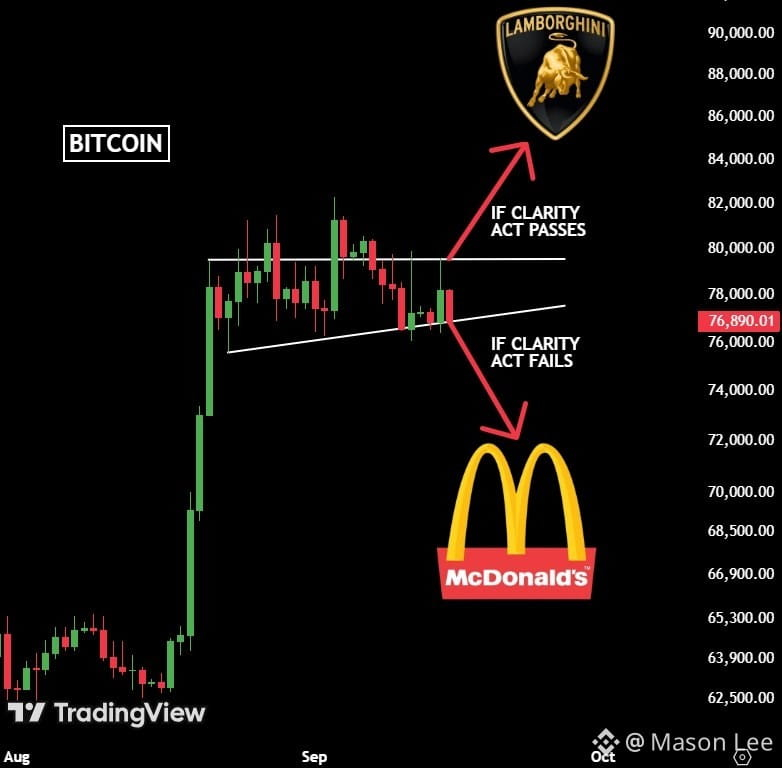
Bitcoin befindet sich an einem kritischen Wendepunkt.
$BTC komprimiert sich in einer sich verengenden Struktur, wobei $80K die entscheidende Ausbruchsschwelle und ~76K als unmittelbarer Support gilt.
➜ $80K zurückerobern → potenzieller Move in Richtung $85K+
➜ Aufsteigenden Support verlieren → $72K–$70K wird zur Downside-Zone
Der CLARITY Act könnte der Auslöser sein, der entscheidet, welche Seite zuerst bricht.
DYOR.
#BTC #Bitcoin
Bitcoin befindet sich an einem kritischen Wendepunkt.
$BTC komprimiert sich in einer sich verengenden Struktur, wobei $80K die entscheidende Ausbruchsschwelle und ~76K als unmittelbarer Support gilt.
➜ $80K zurückerobern → potenzieller Move in Richtung $85K+
➜ Aufsteigenden Support verlieren → $72K–$70K wird zur Downside-Zone
Der CLARITY Act könnte der Auslöser sein, der entscheidet, welche Seite zuerst bricht.
DYOR.
#BTC #Bitcoin
$BTC komprimiert sich in einer sich verengenden Struktur, wobei $80K die entscheidende Ausbruchsschwelle und ~76K als unmittelbarer Support gilt.
➜ $80K zurückerobern → potenzieller Move in Richtung $85K+
➜ Aufsteigenden Support verlieren → $72K–$70K wird zur Downside-Zone
Der CLARITY Act könnte der Auslöser sein, der entscheidet, welche Seite zuerst bricht.
DYOR.
#BTC #Bitcoin
15
1
62
84.3k
·
--
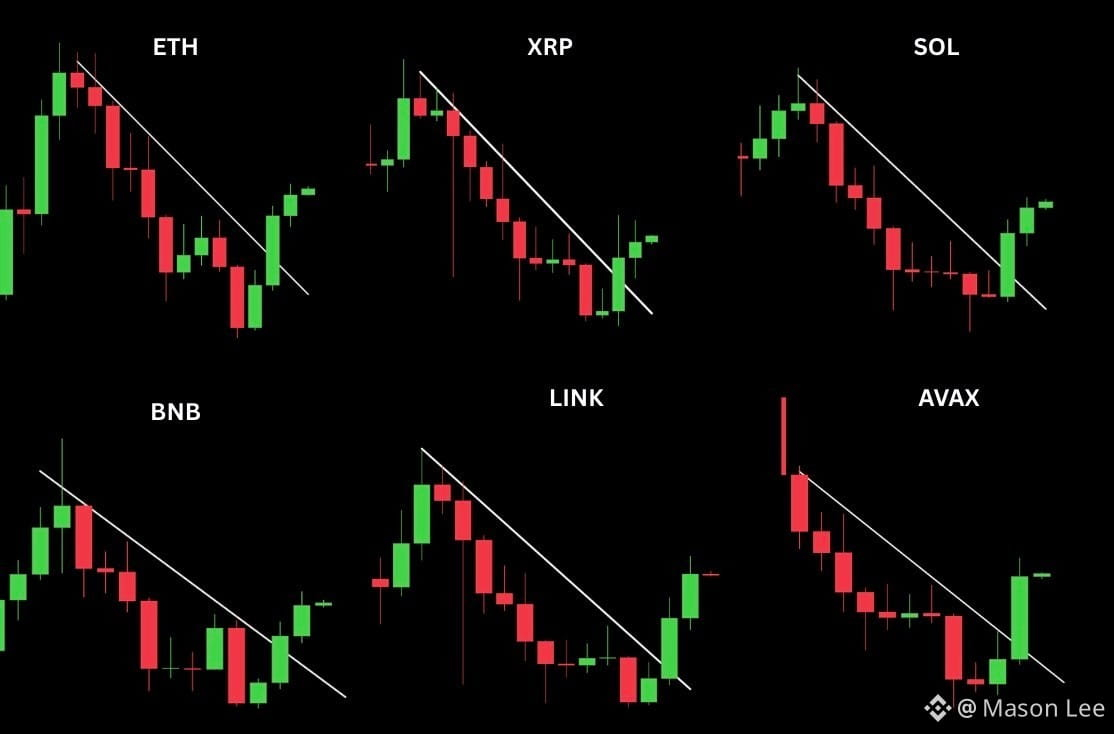
September schloss mit einer starken Botschaft vom Altcoin-Markt.
$ETH , $XRP SOL, BNB, LINK & AVAX zeigen ähnliche Ausbrüche aus fallenden Trends.
Wenn Oktober auf diesen Schwung aufbaut, könnte der Altcoin-Markt sehr interessant werden.
September hat die Bühne bereitet.
Jetzt schauen wir, was Uptober bringt. 🚀
#Altcoins #Uptober #Crypto #ETH #SOL
September schloss mit einer starken Botschaft vom Altcoin-Markt.
$ETH , $XRP SOL, BNB, LINK & AVAX zeigen ähnliche Ausbrüche aus fallenden Trends.
Wenn Oktober auf diesen Schwung aufbaut, könnte der Altcoin-Markt sehr interessant werden.
September hat die Bühne bereitet.
Jetzt schauen wir, was Uptober bringt. 🚀
#Altcoins #Uptober #Crypto #ETH #SOL
$ETH , $XRP SOL, BNB, LINK & AVAX zeigen ähnliche Ausbrüche aus fallenden Trends.
Wenn Oktober auf diesen Schwung aufbaut, könnte der Altcoin-Markt sehr interessant werden.
September hat die Bühne bereitet.
Jetzt schauen wir, was Uptober bringt. 🚀
#Altcoins #Uptober #Crypto #ETH #SOL
1
254

·
--
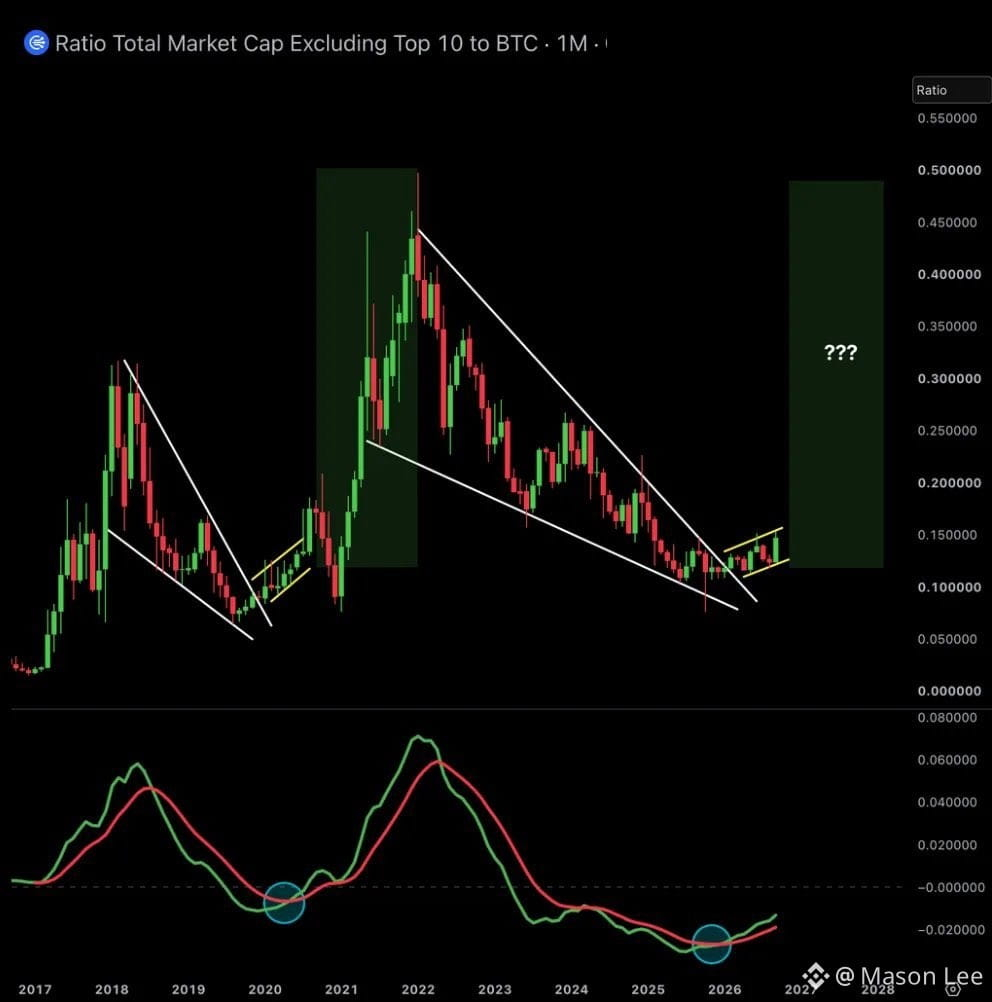
Altcoins könnten leise dabei sein, eine Struktur aufzubauen, die Aufmerksamkeit verdient.
Der OTHERS/BTC-Monatschart zeigt eine bemerkenswerte Veränderung:
→ Der langfristige Abwärtstrend scheint gebrochen
→ Eine höhere Struktur beginnt sich zu bilden
→ Der Momentum-Impuls hat sich nach oben gedreht
→ Das Setup ähnelt der frühen Phase der vorherigen großen Altcoin-Expansion
Nichts ist garantiert, aber wenn diese Struktur weiterhin Bestand hat, könnte die nächste Phase für Altcoins sehr interessant werden.
#Altcoins #Crypto #Bitcoin #Altseason #CryptoMarket
{spot}(BTCUSDT)
Altcoins könnten leise dabei sein, eine Struktur aufzubauen, die Aufmerksamkeit verdient.
Der OTHERS/BTC-Monatschart zeigt eine bemerkenswerte Veränderung:
→ Der langfristige Abwärtstrend scheint gebrochen
→ Eine höhere Struktur beginnt sich zu bilden
→ Der Momentum-Impuls hat sich nach oben gedreht
→ Das Setup ähnelt der frühen Phase der vorherigen großen Altcoin-Expansion
Nichts ist garantiert, aber wenn diese Struktur weiterhin Bestand hat, könnte die nächste Phase für Altcoins sehr interessant werden.
#Altcoins #Crypto #Bitcoin #Altseason #CryptoMarket
Der OTHERS/BTC-Monatschart zeigt eine bemerkenswerte Veränderung:
→ Der langfristige Abwärtstrend scheint gebrochen
→ Eine höhere Struktur beginnt sich zu bilden
→ Der Momentum-Impuls hat sich nach oben gedreht
→ Das Setup ähnelt der frühen Phase der vorherigen großen Altcoin-Expansion
Nichts ist garantiert, aber wenn diese Struktur weiterhin Bestand hat, könnte die nächste Phase für Altcoins sehr interessant werden.
#Altcoins #Crypto #Bitcoin #Altseason #CryptoMarket
195
·
--
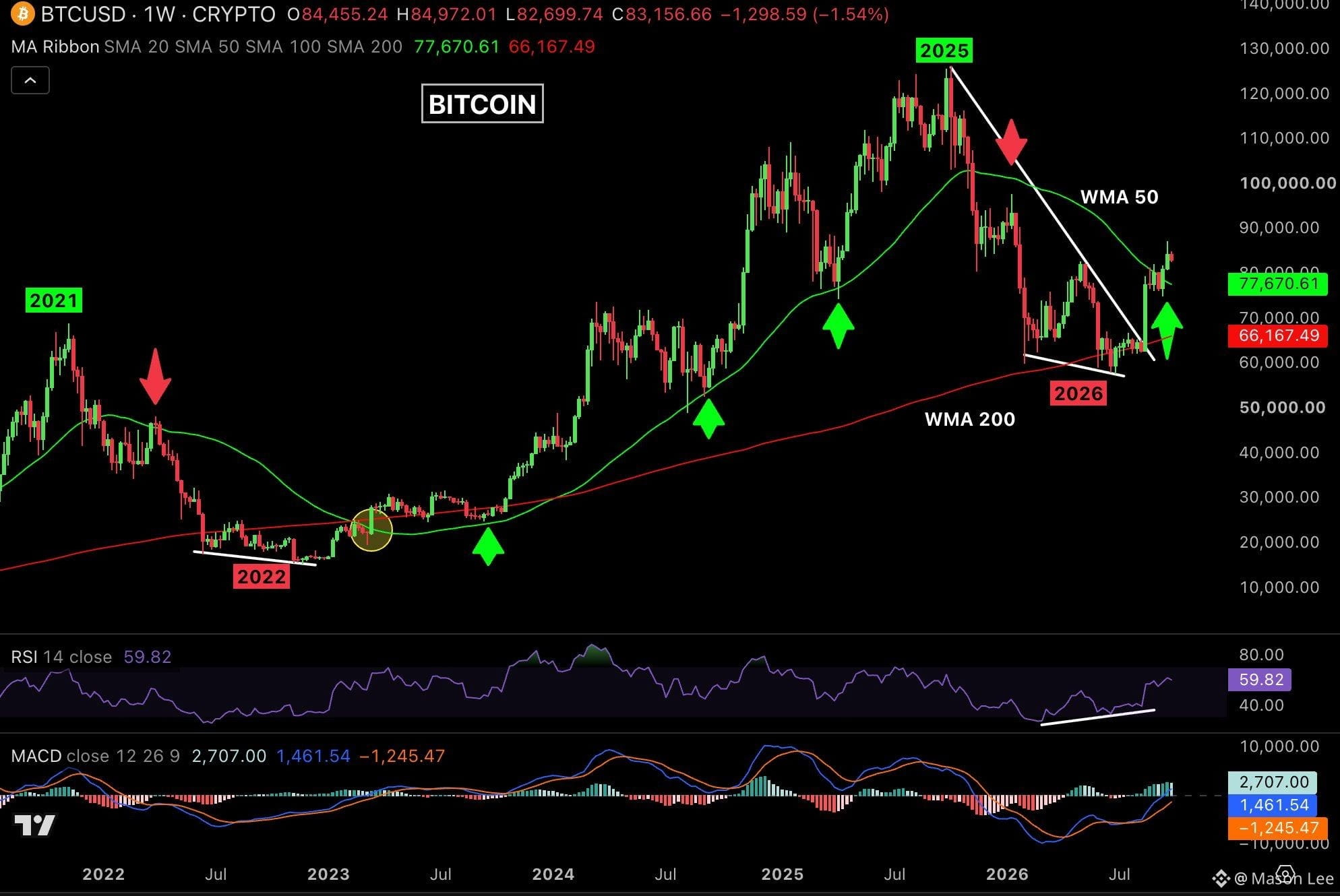
$BTC Die wöchentliche Struktur wird interessant
Bitcoin ist wieder über dem WMA 50 (~77,7 Tsd. $) und hält sich deutlich über dem WMA 200 (~66,2 Tsd. $).
Das Diagramm zeigt außerdem: • RSI nahe 60
• MACD-Momentum dreht ins Positive
• Der Kurs holt den wichtigen wöchentlichen gleitenden Durchschnitt zurück
• Eine klare Erholung von den Tiefs im Jahr 2026
Die größere Frage ist jetzt nicht, ob BTC sich erholt hat.
Sondern ob sich diese Erholung zu einem nachhaltigen wöchentlichen Trend entwickeln kann.
Für mich bleibt der Bereich 77 Tsd.–78 Tsd. $ eine entscheidende Zone, die man im Blick behalten sollte. Ein klarer Rückschlag könnte die Struktur schwächen, während die fortgesetzte Akzeptanz darüber das bullische Setup technisch intakt hält.
Beobachte den wöchentlichen Schlusskurs. Struktur zuerst, Prognosen danach.
#Bitcoin #btcupdates #BitcoinAnalysis
$BTC Die wöchentliche Struktur wird interessant
Bitcoin ist wieder über dem WMA 50 (~77,7 Tsd. $) und hält sich deutlich über dem WMA 200 (~66,2 Tsd. $).
Das Diagramm zeigt außerdem: • RSI nahe 60
• MACD-Momentum dreht ins Positive
• Der Kurs holt den wichtigen wöchentlichen gleitenden Durchschnitt zurück
• Eine klare Erholung von den Tiefs im Jahr 2026
Die größere Frage ist jetzt nicht, ob BTC sich erholt hat.
Sondern ob sich diese Erholung zu einem nachhaltigen wöchentlichen Trend entwickeln kann.
Für mich bleibt der Bereich 77 Tsd.–78 Tsd. $ eine entscheidende Zone, die man im Blick behalten sollte. Ein klarer Rückschlag könnte die Struktur schwächen, während die fortgesetzte Akzeptanz darüber das bullische Setup technisch intakt hält.
Beobachte den wöchentlichen Schlusskurs. Struktur zuerst, Prognosen danach.
#Bitcoin #btcupdates #BitcoinAnalysis
Bitcoin ist wieder über dem WMA 50 (~77,7 Tsd. $) und hält sich deutlich über dem WMA 200 (~66,2 Tsd. $).
Das Diagramm zeigt außerdem: • RSI nahe 60
• MACD-Momentum dreht ins Positive
• Der Kurs holt den wichtigen wöchentlichen gleitenden Durchschnitt zurück
• Eine klare Erholung von den Tiefs im Jahr 2026
Die größere Frage ist jetzt nicht, ob BTC sich erholt hat.
Sondern ob sich diese Erholung zu einem nachhaltigen wöchentlichen Trend entwickeln kann.
Für mich bleibt der Bereich 77 Tsd.–78 Tsd. $ eine entscheidende Zone, die man im Blick behalten sollte. Ein klarer Rückschlag könnte die Struktur schwächen, während die fortgesetzte Akzeptanz darüber das bullische Setup technisch intakt hält.
Beobachte den wöchentlichen Schlusskurs. Struktur zuerst, Prognosen danach.
#Bitcoin #btcupdates #BitcoinAnalysis
166
·
--
$BCH
Das größere Bild wird allmählich verständlicher.
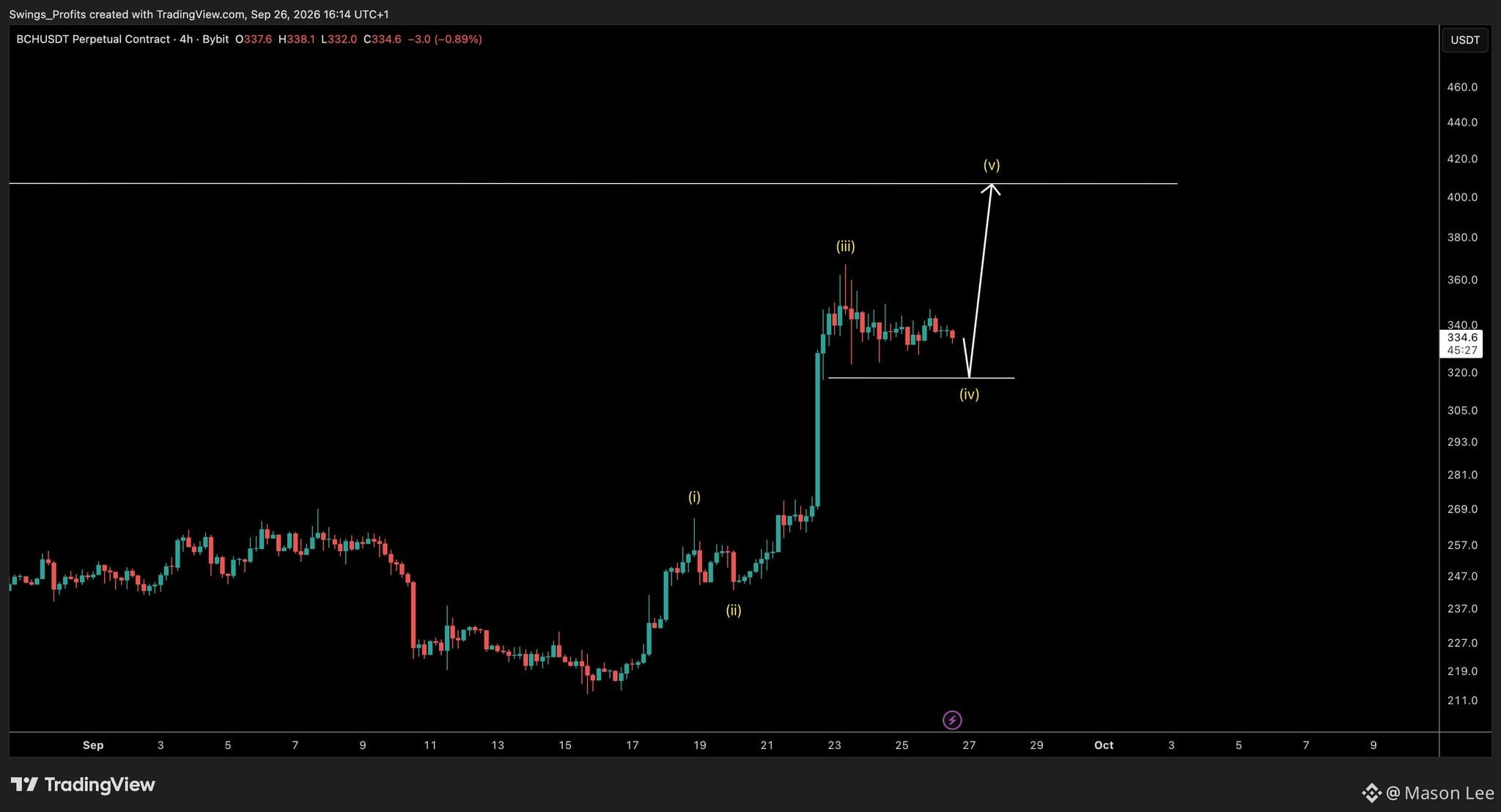
Ziehe den Blick heraus, dann wird die Struktur viel klarer. BCH scheint dabei zu sein, den größeren Wellen-Zählstand durchzuarbeiten, wobei sich Welle (iv) um den Bereich von etwa $320 konsolidiert.
Wenn dieses Niveau hält, könnte der nächste Schritt die Zone von $400–$410 anpeilen.
Wichtiges Niveau: ~ $320
Ein sauberes Halten bewahrt die Struktur. Ein entscheidender Bruch würde das Setup schwächen.
Chart-basierte Analyse. DYOR.
#BCH #BitcoinCash #Crypto #CryptoTrading #Altcoins
$BCH
Das größere Bild wird allmählich verständlicher.
Ziehe den Blick heraus, dann wird die Struktur viel klarer. BCH scheint dabei zu sein, den größeren Wellen-Zählstand durchzuarbeiten, wobei sich Welle (iv) um den Bereich von etwa $320 konsolidiert.
Wenn dieses Niveau hält, könnte der nächste Schritt die Zone von $400–$410 anpeilen.
Wichtiges Niveau: ~ $320
Ein sauberes Halten bewahrt die Struktur. Ein entscheidender Bruch würde das Setup schwächen.
Chart-basierte Analyse. DYOR.
#BCH #BitcoinCash #Crypto #CryptoTrading #Altcoins
Das größere Bild wird allmählich verständlicher.
Ziehe den Blick heraus, dann wird die Struktur viel klarer. BCH scheint dabei zu sein, den größeren Wellen-Zählstand durchzuarbeiten, wobei sich Welle (iv) um den Bereich von etwa $320 konsolidiert.
Wenn dieses Niveau hält, könnte der nächste Schritt die Zone von $400–$410 anpeilen.
Wichtiges Niveau: ~ $320
Ein sauberes Halten bewahrt die Struktur. Ein entscheidender Bruch würde das Setup schwächen.
Chart-basierte Analyse. DYOR.
#BCH #BitcoinCash #Crypto #CryptoTrading #Altcoins
277
·
--
🚨 WARNUNG: DAS LETZTE BITCOIN- BULLENFALLE KÖNNTE SICH BILDEN
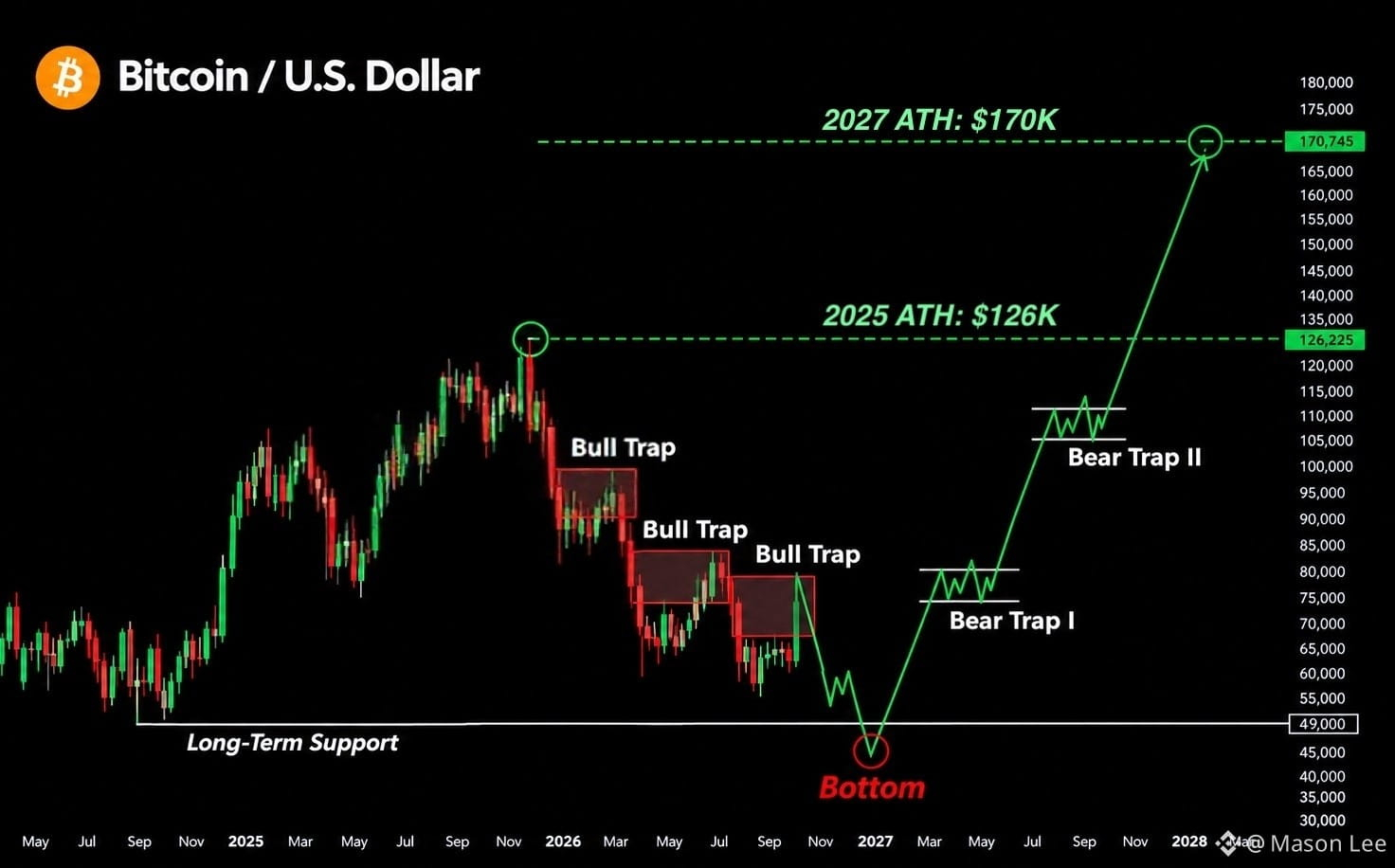
Das Diagramm legt nahe, dass $BTC möglicherweise noch einen weiteren Shakeout erleben könnte, bevor die nächste große Bewegung einsetzt.
$45K–$49K → mögliche Boden-Zone
$75K–$80K → Bear Trap I
$105K–$115K → Bear Trap II
$126K → vorheriges ATH
$170K → projiziertes 2027-Ziel
Die eigentliche Frage ist, ob die Fallen so konstruiert sind, um schwache Hände vor der Expansion aus dem Markt zu spülen.
Mach immer DYOR.
#BTC #Bitcoin #Crypto #BTCBreaks80K #SOLJumpsAbout10%
{spot}(BTCUSDT)
🚨 WARNUNG: DAS LETZTE BITCOIN- BULLENFALLE KÖNNTE SICH BILDEN
Das Diagramm legt nahe, dass $BTC möglicherweise noch einen weiteren Shakeout erleben könnte, bevor die nächste große Bewegung einsetzt.
$45K–$49K → mögliche Boden-Zone
$75K–$80K → Bear Trap I
$105K–$115K → Bear Trap II
$126K → vorheriges ATH
$170K → projiziertes 2027-Ziel
Die eigentliche Frage ist, ob die Fallen so konstruiert sind, um schwache Hände vor der Expansion aus dem Markt zu spülen.
Mach immer DYOR.
#BTC #Bitcoin #Crypto #BTCBreaks80K #SOLJumpsAbout10%
Das Diagramm legt nahe, dass $BTC möglicherweise noch einen weiteren Shakeout erleben könnte, bevor die nächste große Bewegung einsetzt.
$45K–$49K → mögliche Boden-Zone
$75K–$80K → Bear Trap I
$105K–$115K → Bear Trap II
$126K → vorheriges ATH
$170K → projiziertes 2027-Ziel
Die eigentliche Frage ist, ob die Fallen so konstruiert sind, um schwache Hände vor der Expansion aus dem Markt zu spülen.
Mach immer DYOR.
#BTC #Bitcoin #Crypto #BTCBreaks80K #SOLJumpsAbout10%
1
2
1.4k
·
--
$BTC Das Diagramm wird interessant.
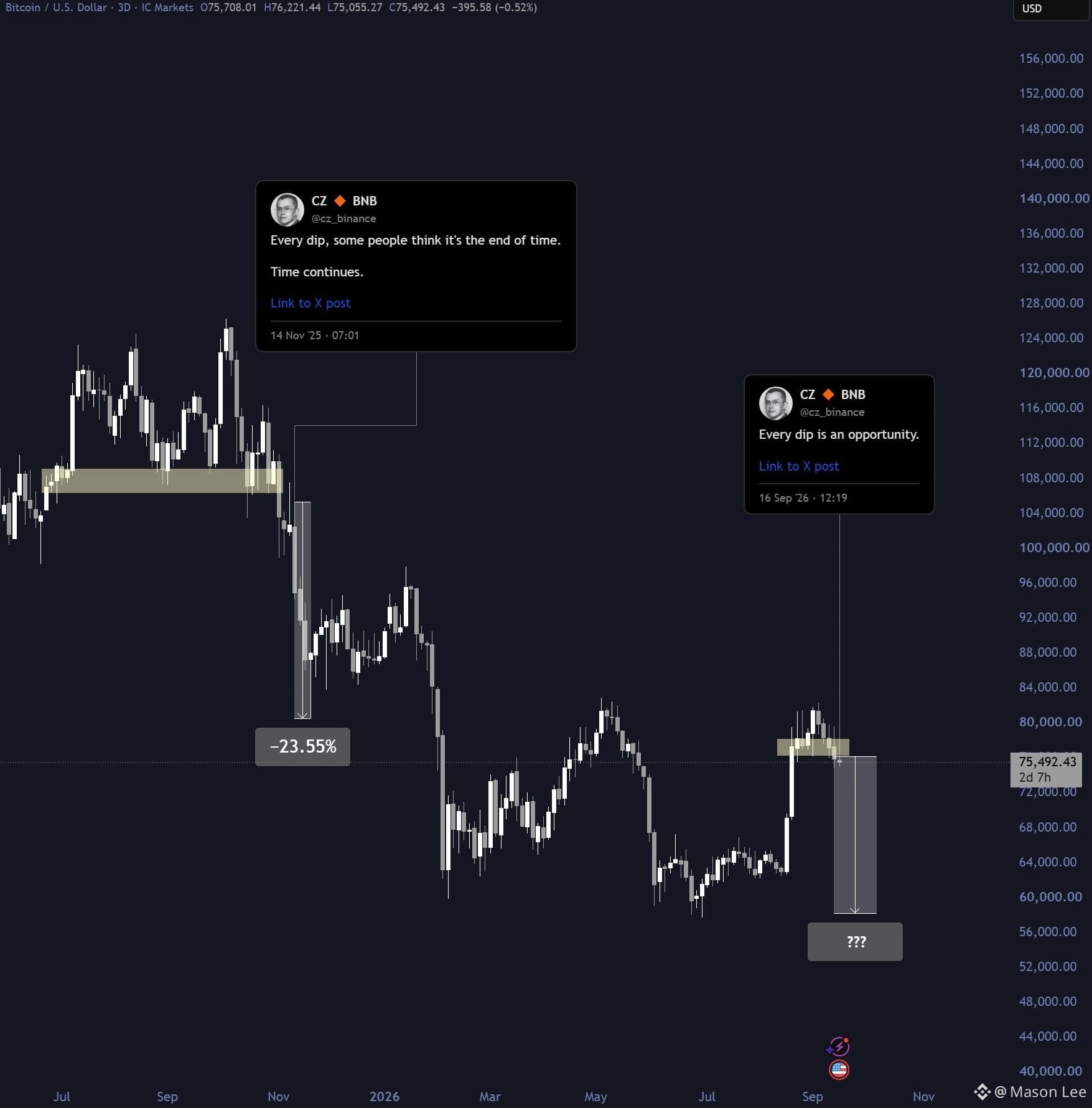
CZ sagt: „Jeder Rücksetzer ist eine Gelegenheit.“
Aber diese Zone ist entscheidend. BTC ist wieder in denselben Angebotsbereich zurückgekehrt, der dem vorherigen großen Zusammenbruch vorausging. Wenn er nicht hält, könnte ein tieferer Abwärtsimpuls Richtung 58K–60K ins Spiel kommen.
Beobachte die Reaktion genau. Mach immer DYOR.
#CZ #BTC #Bitcoin
{spot}(BTCUSDT)
$BTC Das Diagramm wird interessant.
CZ sagt: „Jeder Rücksetzer ist eine Gelegenheit.“
Aber diese Zone ist entscheidend. BTC ist wieder in denselben Angebotsbereich zurückgekehrt, der dem vorherigen großen Zusammenbruch vorausging. Wenn er nicht hält, könnte ein tieferer Abwärtsimpuls Richtung 58K–60K ins Spiel kommen.
Beobachte die Reaktion genau. Mach immer DYOR.
#CZ #BTC #Bitcoin
CZ sagt: „Jeder Rücksetzer ist eine Gelegenheit.“
Aber diese Zone ist entscheidend. BTC ist wieder in denselben Angebotsbereich zurückgekehrt, der dem vorherigen großen Zusammenbruch vorausging. Wenn er nicht hält, könnte ein tieferer Abwärtsimpuls Richtung 58K–60K ins Spiel kommen.
Beobachte die Reaktion genau. Mach immer DYOR.
#CZ #BTC #Bitcoin
189
·
--
$HYPE
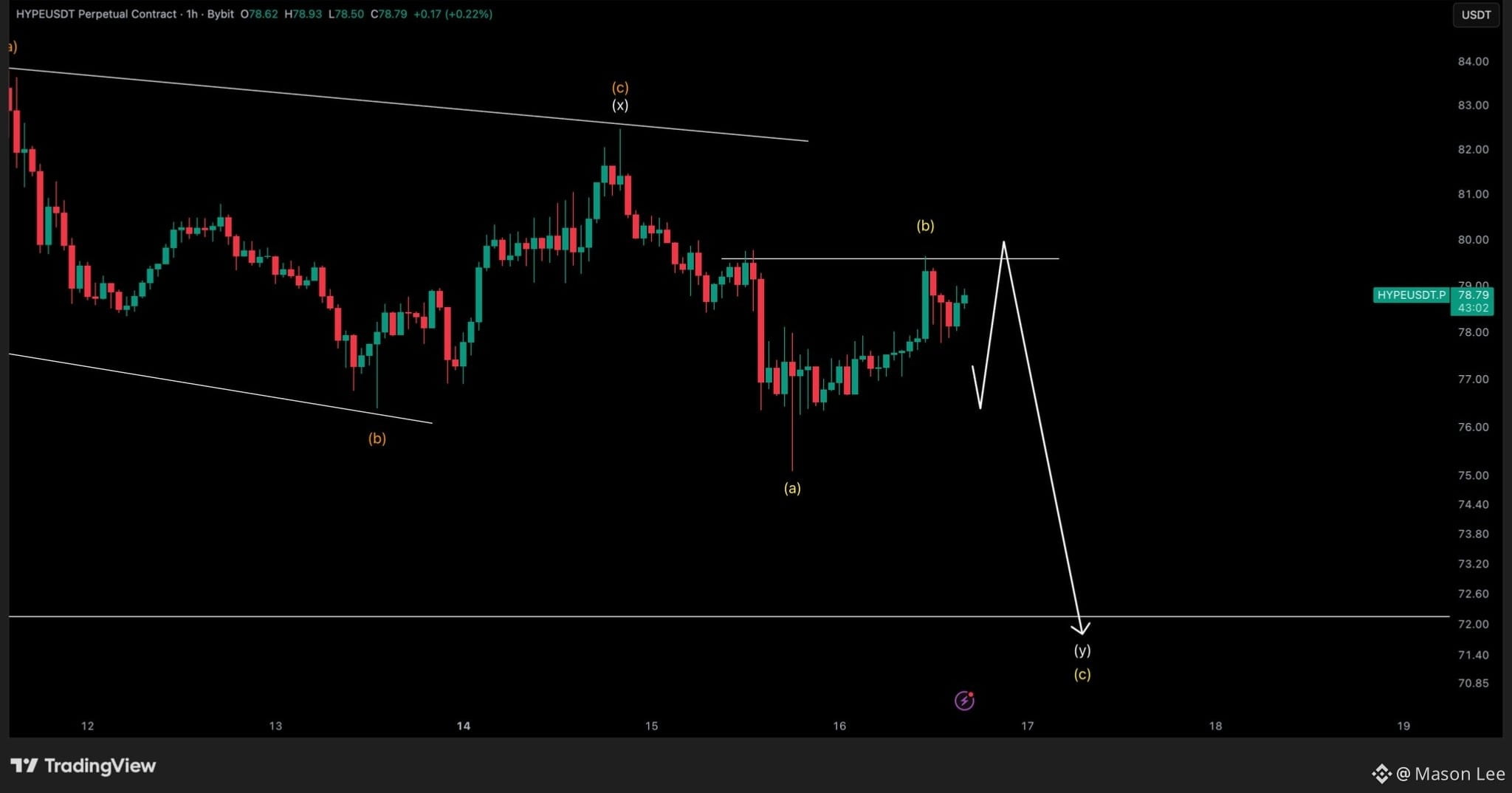
Eine weitere Ausbuchung könnte auf dem Plan stehen, bevor die echte Expansion beginnt.
Ich beobachte den Bereich um ca. 76–77 $ für den nächsten Rücksetzer. Wenn dieses Niveau hält und die Struktur sich wieder nach oben dreht, könnte die größere Bewegung nach oben folgen.
Geduld statt Hinterherjagen.
#HYPE #FedRateWatch #ZcashRises6% #XRPSinks10% #CircleOpensArcMainnet
$HYPE
Eine weitere Ausbuchung könnte auf dem Plan stehen, bevor die echte Expansion beginnt.
Ich beobachte den Bereich um ca. 76–77 $ für den nächsten Rücksetzer. Wenn dieses Niveau hält und die Struktur sich wieder nach oben dreht, könnte die größere Bewegung nach oben folgen.
Geduld statt Hinterherjagen.
#HYPE #FedRateWatch #ZcashRises6% #XRPSinks10% #CircleOpensArcMainnet
Eine weitere Ausbuchung könnte auf dem Plan stehen, bevor die echte Expansion beginnt.
Ich beobachte den Bereich um ca. 76–77 $ für den nächsten Rücksetzer. Wenn dieses Niveau hält und die Struktur sich wieder nach oben dreht, könnte die größere Bewegung nach oben folgen.
Geduld statt Hinterherjagen.
#HYPE #FedRateWatch #ZcashRises6% #XRPSinks10% #CircleOpensArcMainnet
311
·
--
$BTC
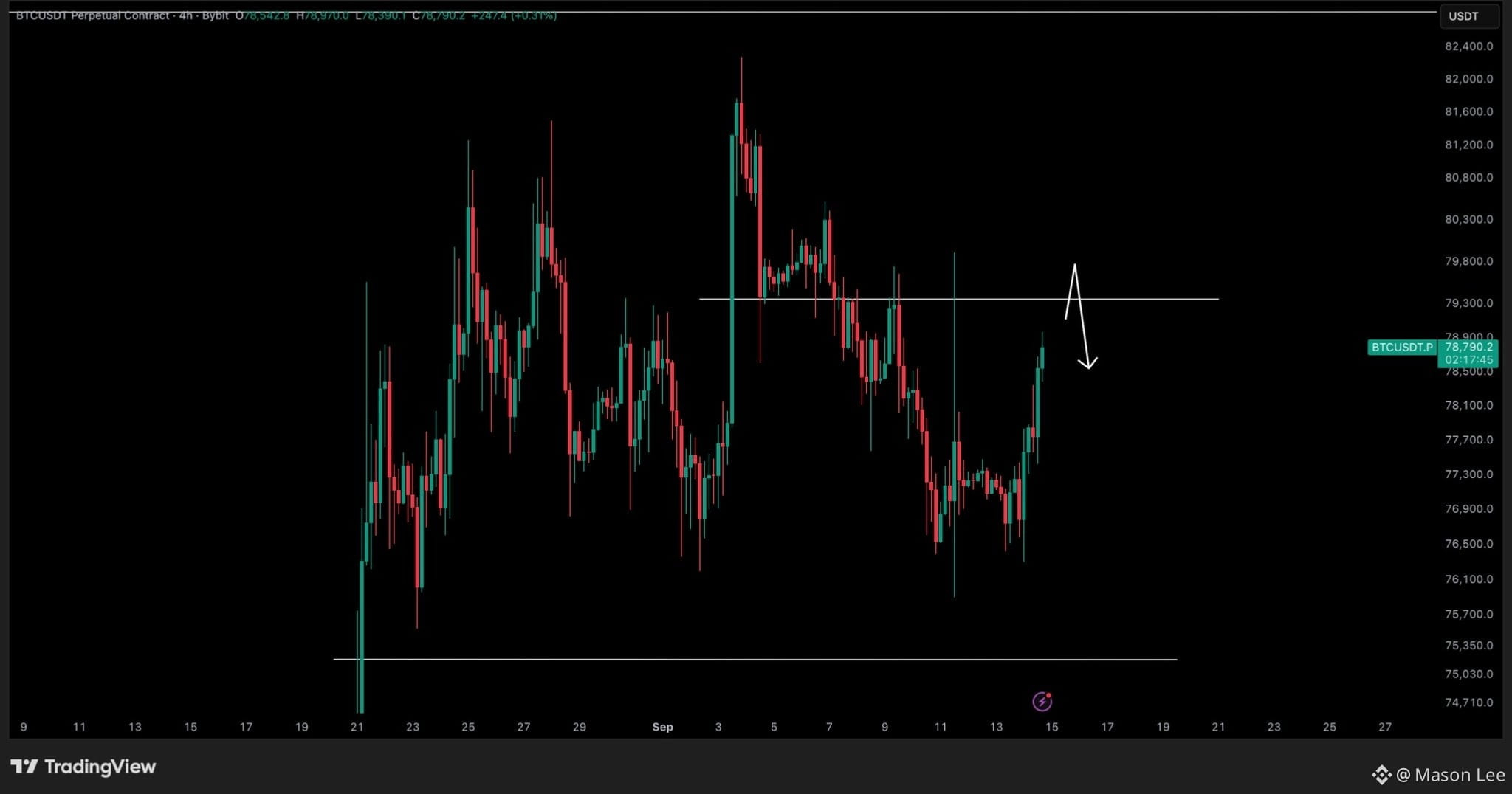
Bitcoin drängt zurück in die wichtige Angebotszone bei etwa 79,3K$.
Ich verfolge diese Bewegung hier nicht.
Der Plan ist einfach: Lass den Kurs die Zone testen, beobachte die Reaktion und nimm dann das nächste Setup daraus.
Eine Akzeptanz darüber könnte die Struktur verändern. Eine Ablehnung gibt uns eine sauberere Short-Opportunity.
Zuerst Geduld. Zweitens Ausführung.
Mach immer DYOR.
#BTC #FedHikeOddsRiseTo89% #AvalancheIntegratesIntoUAEPassDigitalVault #UKSeeksViewsOnTokenizingGold #AnthropicCEOCallsForAISlowdown
$BTC
Bitcoin drängt zurück in die wichtige Angebotszone bei etwa 79,3K$.
Ich verfolge diese Bewegung hier nicht.
Der Plan ist einfach: Lass den Kurs die Zone testen, beobachte die Reaktion und nimm dann das nächste Setup daraus.
Eine Akzeptanz darüber könnte die Struktur verändern. Eine Ablehnung gibt uns eine sauberere Short-Opportunity.
Zuerst Geduld. Zweitens Ausführung.
Mach immer DYOR.
#BTC #FedHikeOddsRiseTo89% #AvalancheIntegratesIntoUAEPassDigitalVault #UKSeeksViewsOnTokenizingGold #AnthropicCEOCallsForAISlowdown
Bitcoin drängt zurück in die wichtige Angebotszone bei etwa 79,3K$.
Ich verfolge diese Bewegung hier nicht.
Der Plan ist einfach: Lass den Kurs die Zone testen, beobachte die Reaktion und nimm dann das nächste Setup daraus.
Eine Akzeptanz darüber könnte die Struktur verändern. Eine Ablehnung gibt uns eine sauberere Short-Opportunity.
Zuerst Geduld. Zweitens Ausführung.
Mach immer DYOR.
#BTC #FedHikeOddsRiseTo89% #AvalancheIntegratesIntoUAEPassDigitalVault #UKSeeksViewsOnTokenizingGold #AnthropicCEOCallsForAISlowdown
1
135
·
--
$ZEC
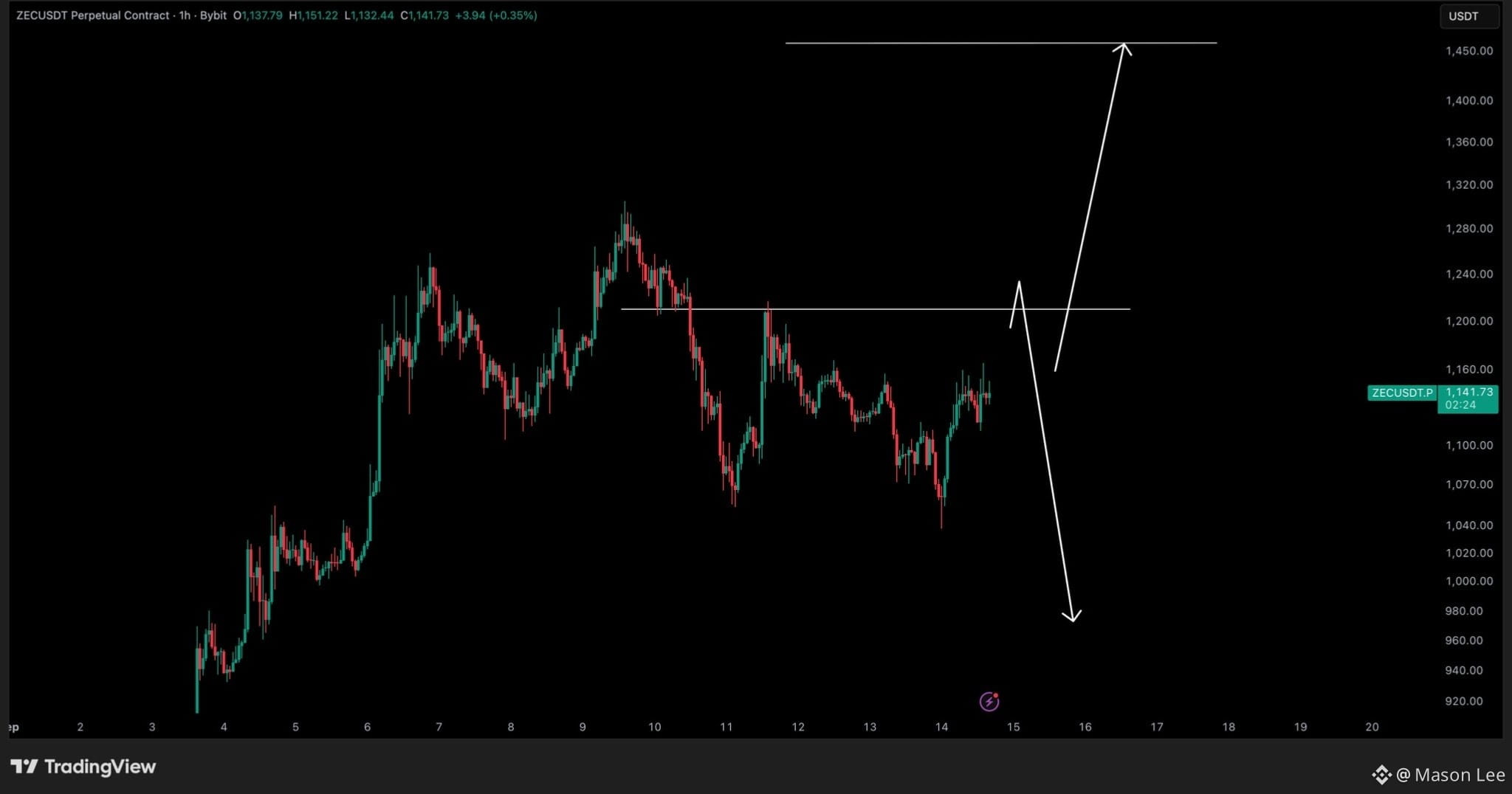
Die Struktur wird hier langsam interessant.
$1.200 bleibt das minimale Kursziel für diese Aufwärtsbewegung.
Wenn ZEC die Marke überwindet und dort hält, beobachte ich $1.350–$1.450 als die nächste große Ausdehnungszone und mögliches neues Allzeithoch-Ziel.
Wichtige Kursmarken. Klare Ungültigkeitsbedingungen. Lass den Preis die Bewegung bestätigen.
Mach immer dein eigenes Research (DYOR).
#ZEC #FedHikeOddsRiseTo89% #AvalancheIntegratesIntoUAEPassDigitalVault #UKSeeksViewsOnTokenizingGold #AnthropicCEOCallsForAISlowdown
$ZEC
Die Struktur wird hier langsam interessant.
$1.200 bleibt das minimale Kursziel für diese Aufwärtsbewegung.
Wenn ZEC die Marke überwindet und dort hält, beobachte ich $1.350–$1.450 als die nächste große Ausdehnungszone und mögliches neues Allzeithoch-Ziel.
Wichtige Kursmarken. Klare Ungültigkeitsbedingungen. Lass den Preis die Bewegung bestätigen.
Mach immer dein eigenes Research (DYOR).
#ZEC #FedHikeOddsRiseTo89% #AvalancheIntegratesIntoUAEPassDigitalVault #UKSeeksViewsOnTokenizingGold #AnthropicCEOCallsForAISlowdown
Die Struktur wird hier langsam interessant.
$1.200 bleibt das minimale Kursziel für diese Aufwärtsbewegung.
Wenn ZEC die Marke überwindet und dort hält, beobachte ich $1.350–$1.450 als die nächste große Ausdehnungszone und mögliches neues Allzeithoch-Ziel.
Wichtige Kursmarken. Klare Ungültigkeitsbedingungen. Lass den Preis die Bewegung bestätigen.
Mach immer dein eigenes Research (DYOR).
#ZEC #FedHikeOddsRiseTo89% #AvalancheIntegratesIntoUAEPassDigitalVault #UKSeeksViewsOnTokenizingGold #AnthropicCEOCallsForAISlowdown
2
262
·
--
$ZEC
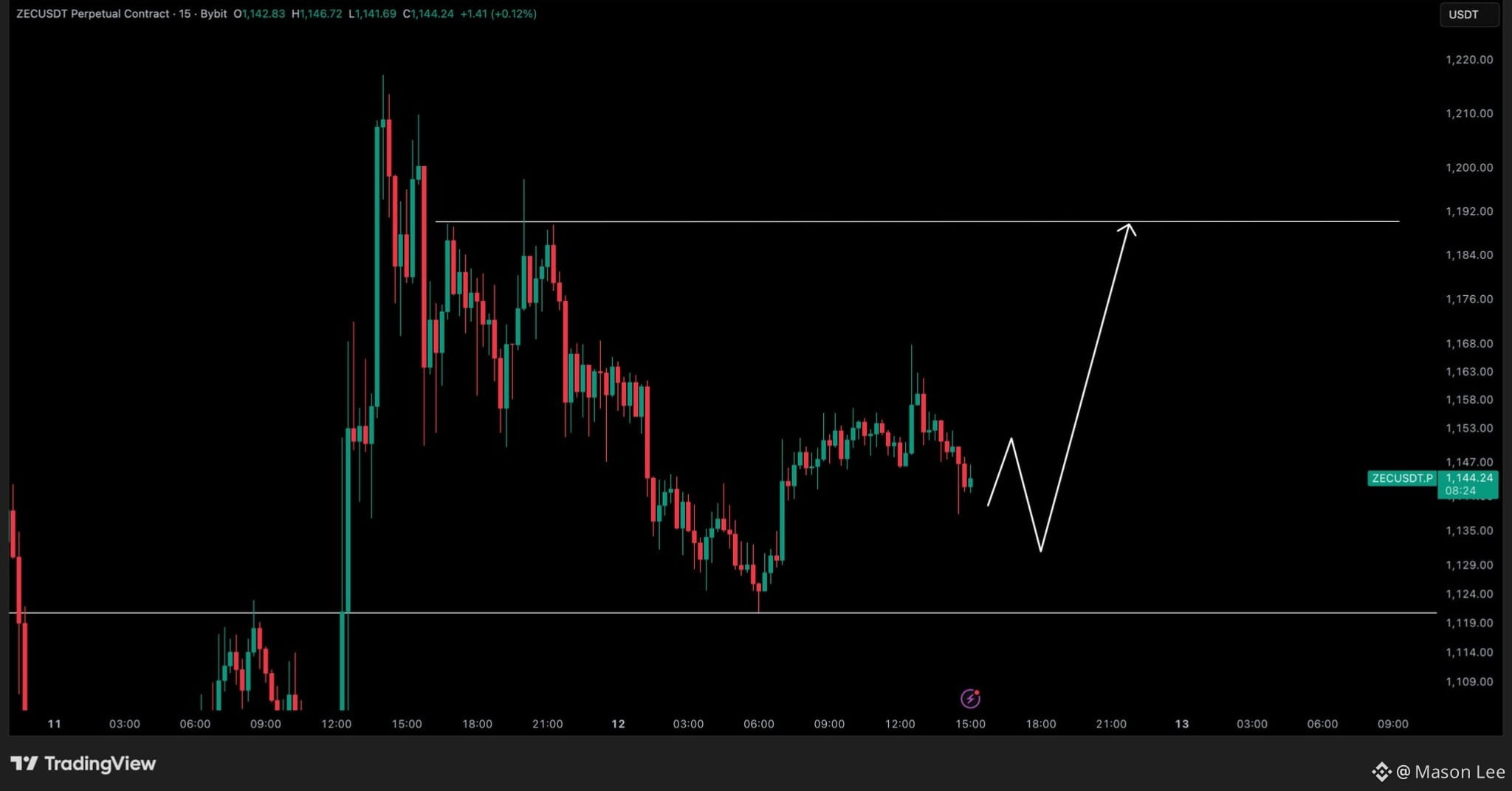
Der Kurs zieht sich zurück, nachdem er es nicht geschafft hat, weiter nach oben zu drücken. Deshalb bleibe ich hier geduldig.
Entscheidend ist, ob ZEC die aktuelle Struktur halten und genug Stärke für den nächsten Move aufbauen kann.
Wenn der Support hält, bleibt $1.192 die Aufwärtsmarke, auf die ich achte.
Noch kein Einstieg. Ich warte auf eine Bestätigung, statt den Trade zu erzwingen.
DYOR.
#ZEC #Write2Earn #Market_Update
$ZEC
Der Kurs zieht sich zurück, nachdem er es nicht geschafft hat, weiter nach oben zu drücken. Deshalb bleibe ich hier geduldig.
Entscheidend ist, ob ZEC die aktuelle Struktur halten und genug Stärke für den nächsten Move aufbauen kann.
Wenn der Support hält, bleibt $1.192 die Aufwärtsmarke, auf die ich achte.
Noch kein Einstieg. Ich warte auf eine Bestätigung, statt den Trade zu erzwingen.
DYOR.
#ZEC #Write2Earn #Market_Update
Der Kurs zieht sich zurück, nachdem er es nicht geschafft hat, weiter nach oben zu drücken. Deshalb bleibe ich hier geduldig.
Entscheidend ist, ob ZEC die aktuelle Struktur halten und genug Stärke für den nächsten Move aufbauen kann.
Wenn der Support hält, bleibt $1.192 die Aufwärtsmarke, auf die ich achte.
Noch kein Einstieg. Ich warte auf eine Bestätigung, statt den Trade zu erzwingen.
DYOR.
#ZEC #Write2Earn #Market_Update
166
·
--
$BTC
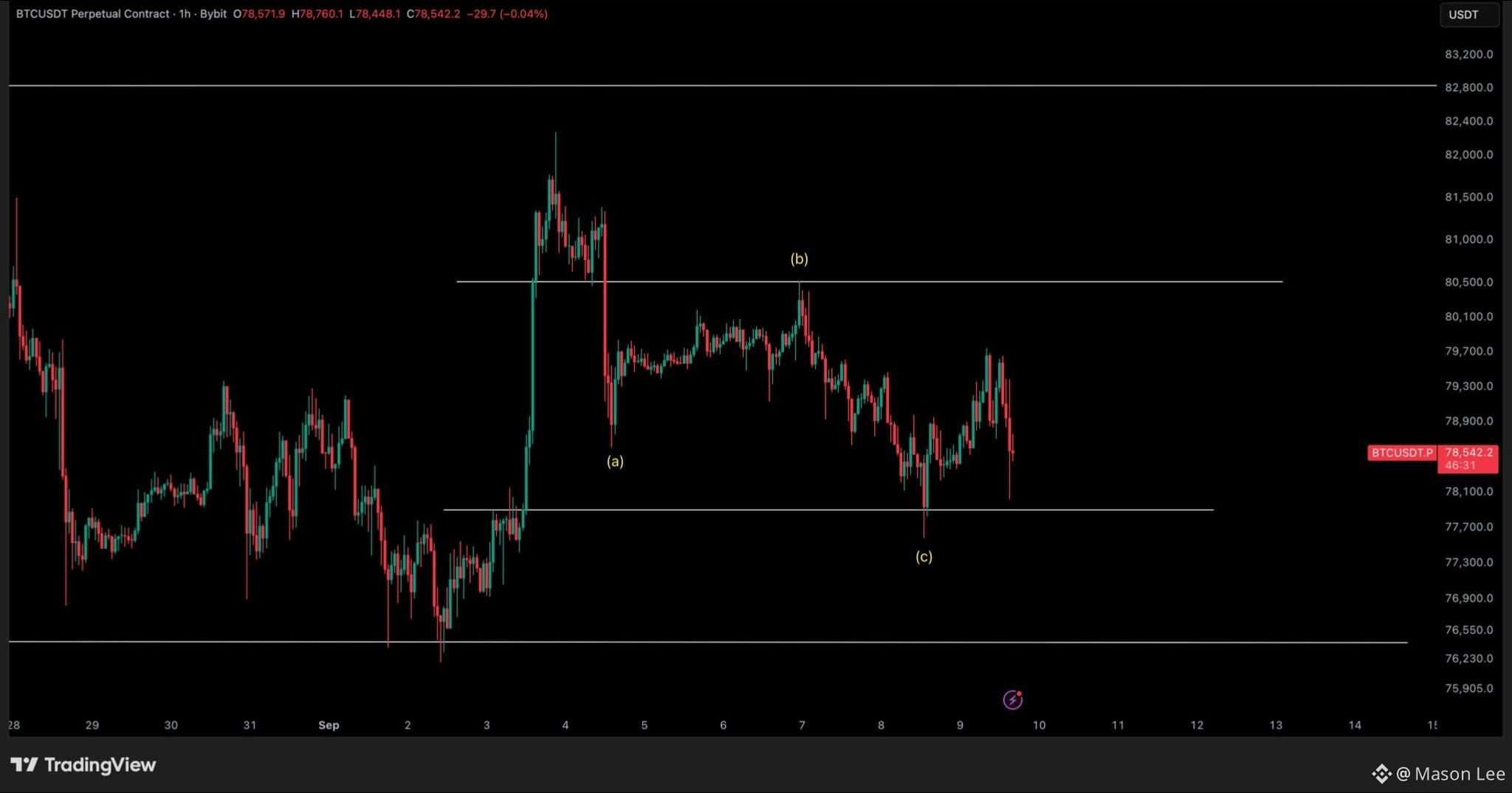
Die bullische Struktur ist nach wie vor intakt.
Derzeit hält der Kurs oberhalb der wichtigen $77,8K-Supportzone, während $80,5K weiterhin der zentrale Widerstand bleibt.
Ich bin hier nicht hinterher. Ich beobachte eine saubere Reaktion rund um den Support oder einen bestätigten Ausbruch über $80,5K, bevor ich einen Einstieg mache.
Geduld > FOMO.
#BTC #crypto #USADPWeeklyEmploymentRises12000 #RippleLobbiesToAdvanceCLARITYActVote #OilRisesToHighestSinceJuly
$BTC
Die bullische Struktur ist nach wie vor intakt.
Derzeit hält der Kurs oberhalb der wichtigen $77,8K-Supportzone, während $80,5K weiterhin der zentrale Widerstand bleibt.
Ich bin hier nicht hinterher. Ich beobachte eine saubere Reaktion rund um den Support oder einen bestätigten Ausbruch über $80,5K, bevor ich einen Einstieg mache.
Geduld > FOMO.
#BTC #crypto #USADPWeeklyEmploymentRises12000 #RippleLobbiesToAdvanceCLARITYActVote #OilRisesToHighestSinceJuly
Die bullische Struktur ist nach wie vor intakt.
Derzeit hält der Kurs oberhalb der wichtigen $77,8K-Supportzone, während $80,5K weiterhin der zentrale Widerstand bleibt.
Ich bin hier nicht hinterher. Ich beobachte eine saubere Reaktion rund um den Support oder einen bestätigten Ausbruch über $80,5K, bevor ich einen Einstieg mache.
Geduld > FOMO.
#BTC #crypto #USADPWeeklyEmploymentRises12000 #RippleLobbiesToAdvanceCLARITYActVote #OilRisesToHighestSinceJuly
113
·
--
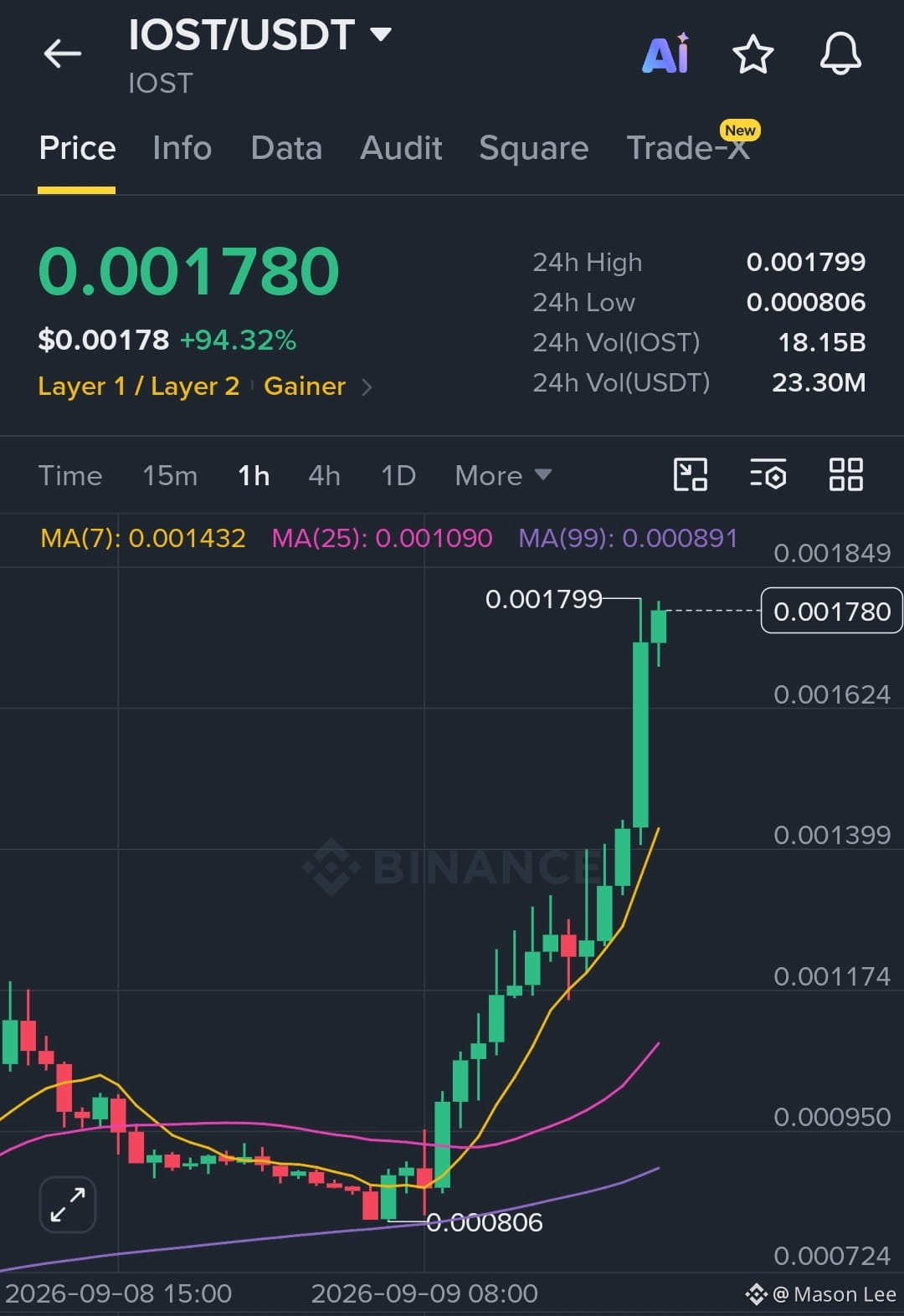
$IOST
Parabolischer Run-up ab 0.000726, jetzt bei 0.001799 im Druck. MAs gestapelt—Kurs über allen drei. Ausbruch überlöst Fortsetzung; Zurückweisung testet 0.001624 erneut. Momentum extrem—enger Stop ist entscheidend.
Einstiegszone: 0.001780 – 0.001781
TP1: 0.001799
TP2: 0.001900
TP3: 0.002050
Stop-Loss: 0.001600
#IOST #CryptoUpdate
$IOST
Parabolischer Run-up ab 0.000726, jetzt bei 0.001799 im Druck. MAs gestapelt—Kurs über allen drei. Ausbruch überlöst Fortsetzung; Zurückweisung testet 0.001624 erneut. Momentum extrem—enger Stop ist entscheidend.
Einstiegszone: 0.001780 – 0.001781
TP1: 0.001799
TP2: 0.001900
TP3: 0.002050
Stop-Loss: 0.001600
#IOST #CryptoUpdate
Parabolischer Run-up ab 0.000726, jetzt bei 0.001799 im Druck. MAs gestapelt—Kurs über allen drei. Ausbruch überlöst Fortsetzung; Zurückweisung testet 0.001624 erneut. Momentum extrem—enger Stop ist entscheidend.
Einstiegszone: 0.001780 – 0.001781
TP1: 0.001799
TP2: 0.001900
TP3: 0.002050
Stop-Loss: 0.001600
#IOST #CryptoUpdate
1
262
·
--
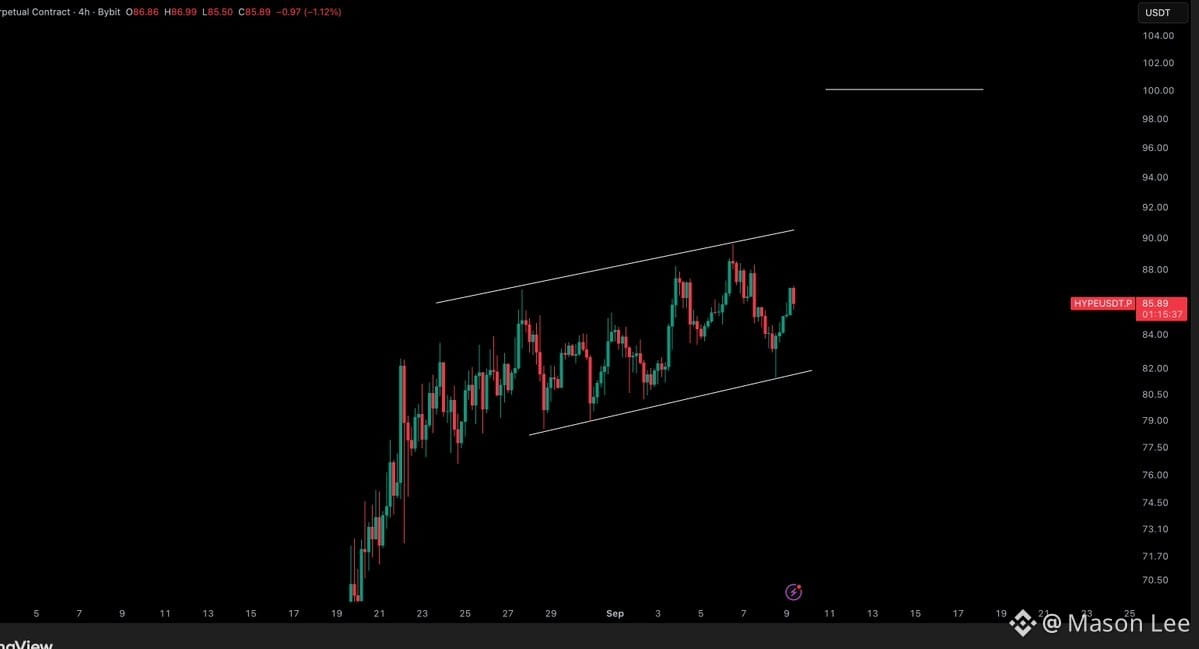
$HYPE hält eine interessante 4H-Struktur, nachdem der $82–83-Bereich verteidigt wurde.
Der Kurs liegt bei etwa $85,9, wobei der steigende Kanal weiterhin intakt ist. Der entscheidende Test ist der Widerstand bei $89–90.
Was ich mag • Höhere Tiefs bleiben intakt
• $82–83-Unterstützung hält
• Starke Erholung vom jüngsten Rücksetzer
Was ich nicht mag • Das Volumen kühlt ab
• $89–90 bleibt ein Widerstandsbereich von oben
• Wenn $82 verloren geht, könnte das die Struktur beschädigen
BEDINGTER LONG
Einstieg: $84,5–86
SL: $81,5
TP1: $89,5
TP2: $92
TP3: $100
Ab einem Einstieg von $85,25 beträgt das Risiko ca. 4,4%, wobei TP2 etwa 1,6R bietet und TP3 ca. 3,9R.
Ich würde lieber den Re-Test kaufen, statt dem Widerstand hinterherzulaufen.
Kann $HYPE endlich über $90 ausbrechen und den Kanal fortsetzen?
#CryptoTrading #HYPE #RippleLobbiesToAdvanceCLARITYActVote #ChinaAugustCPIRises0.8%YoY #USStrikesTargetsNearHormuzAndJask
$HYPE hält eine interessante 4H-Struktur, nachdem der $82–83-Bereich verteidigt wurde.
Der Kurs liegt bei etwa $85,9, wobei der steigende Kanal weiterhin intakt ist. Der entscheidende Test ist der Widerstand bei $89–90.
Was ich mag • Höhere Tiefs bleiben intakt
• $82–83-Unterstützung hält
• Starke Erholung vom jüngsten Rücksetzer
Was ich nicht mag • Das Volumen kühlt ab
• $89–90 bleibt ein Widerstandsbereich von oben
• Wenn $82 verloren geht, könnte das die Struktur beschädigen
BEDINGTER LONG
Einstieg: $84,5–86
SL: $81,5
TP1: $89,5
TP2: $92
TP3: $100
Ab einem Einstieg von $85,25 beträgt das Risiko ca. 4,4%, wobei TP2 etwa 1,6R bietet und TP3 ca. 3,9R.
Ich würde lieber den Re-Test kaufen, statt dem Widerstand hinterherzulaufen.
Kann $HYPE endlich über $90 ausbrechen und den Kanal fortsetzen?
#CryptoTrading #HYPE #RippleLobbiesToAdvanceCLARITYActVote #ChinaAugustCPIRises0.8%YoY #USStrikesTargetsNearHormuzAndJask
Der Kurs liegt bei etwa $85,9, wobei der steigende Kanal weiterhin intakt ist. Der entscheidende Test ist der Widerstand bei $89–90.
Was ich mag • Höhere Tiefs bleiben intakt
• $82–83-Unterstützung hält
• Starke Erholung vom jüngsten Rücksetzer
Was ich nicht mag • Das Volumen kühlt ab
• $89–90 bleibt ein Widerstandsbereich von oben
• Wenn $82 verloren geht, könnte das die Struktur beschädigen
BEDINGTER LONG
Einstieg: $84,5–86
SL: $81,5
TP1: $89,5
TP2: $92
TP3: $100
Ab einem Einstieg von $85,25 beträgt das Risiko ca. 4,4%, wobei TP2 etwa 1,6R bietet und TP3 ca. 3,9R.
Ich würde lieber den Re-Test kaufen, statt dem Widerstand hinterherzulaufen.
Kann $HYPE endlich über $90 ausbrechen und den Kanal fortsetzen?
#CryptoTrading #HYPE #RippleLobbiesToAdvanceCLARITYActVote #ChinaAugustCPIRises0.8%YoY #USStrikesTargetsNearHormuzAndJask
106
·
--
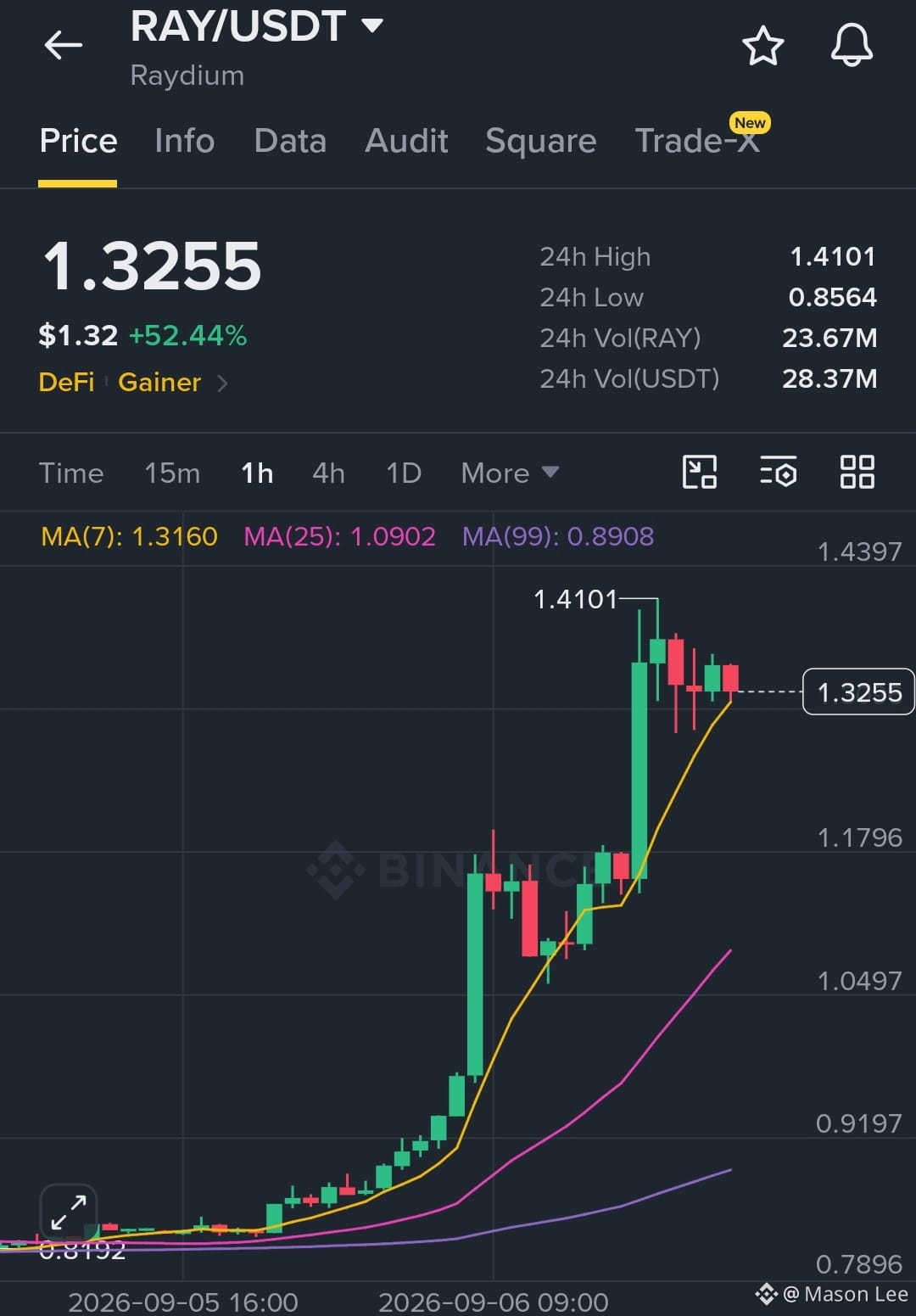
$RAY is zeigt eine starke Ausbruchstruktur nach einer scharfen Preisexpansion.
Der Trend bleibt fest bullisch, wobei der Kurs über den kurzfristigen, mittelfristigen und langfristigen gleitenden Durchschnitten hält. Der Momentum ist stark, aber die Bewegung wird allmählich überdehnt, weshalb eine Konsolidierung wichtig für eine gesündere Fortsetzung ist.
$1,30–$1,32 ist der entscheidende Bereich, den man für die Struktur beobachten sollte.
#RAY #Crypto #Web3 #MarketUpdate #CryptoUpdate
$RAY is zeigt eine starke Ausbruchstruktur nach einer scharfen Preisexpansion.
Der Trend bleibt fest bullisch, wobei der Kurs über den kurzfristigen, mittelfristigen und langfristigen gleitenden Durchschnitten hält. Der Momentum ist stark, aber die Bewegung wird allmählich überdehnt, weshalb eine Konsolidierung wichtig für eine gesündere Fortsetzung ist.
$1,30–$1,32 ist der entscheidende Bereich, den man für die Struktur beobachten sollte.
#RAY #Crypto #Web3 #MarketUpdate #CryptoUpdate
Der Trend bleibt fest bullisch, wobei der Kurs über den kurzfristigen, mittelfristigen und langfristigen gleitenden Durchschnitten hält. Der Momentum ist stark, aber die Bewegung wird allmählich überdehnt, weshalb eine Konsolidierung wichtig für eine gesündere Fortsetzung ist.
$1,30–$1,32 ist der entscheidende Bereich, den man für die Struktur beobachten sollte.
#RAY #Crypto #Web3 #MarketUpdate #CryptoUpdate
257


·
--
🎙️ Das ökologische Gleichgewicht bewahren und den Bian-Platz errichten

Beenden
04 h 20 m 51 s
8.3k
30
86
·
--
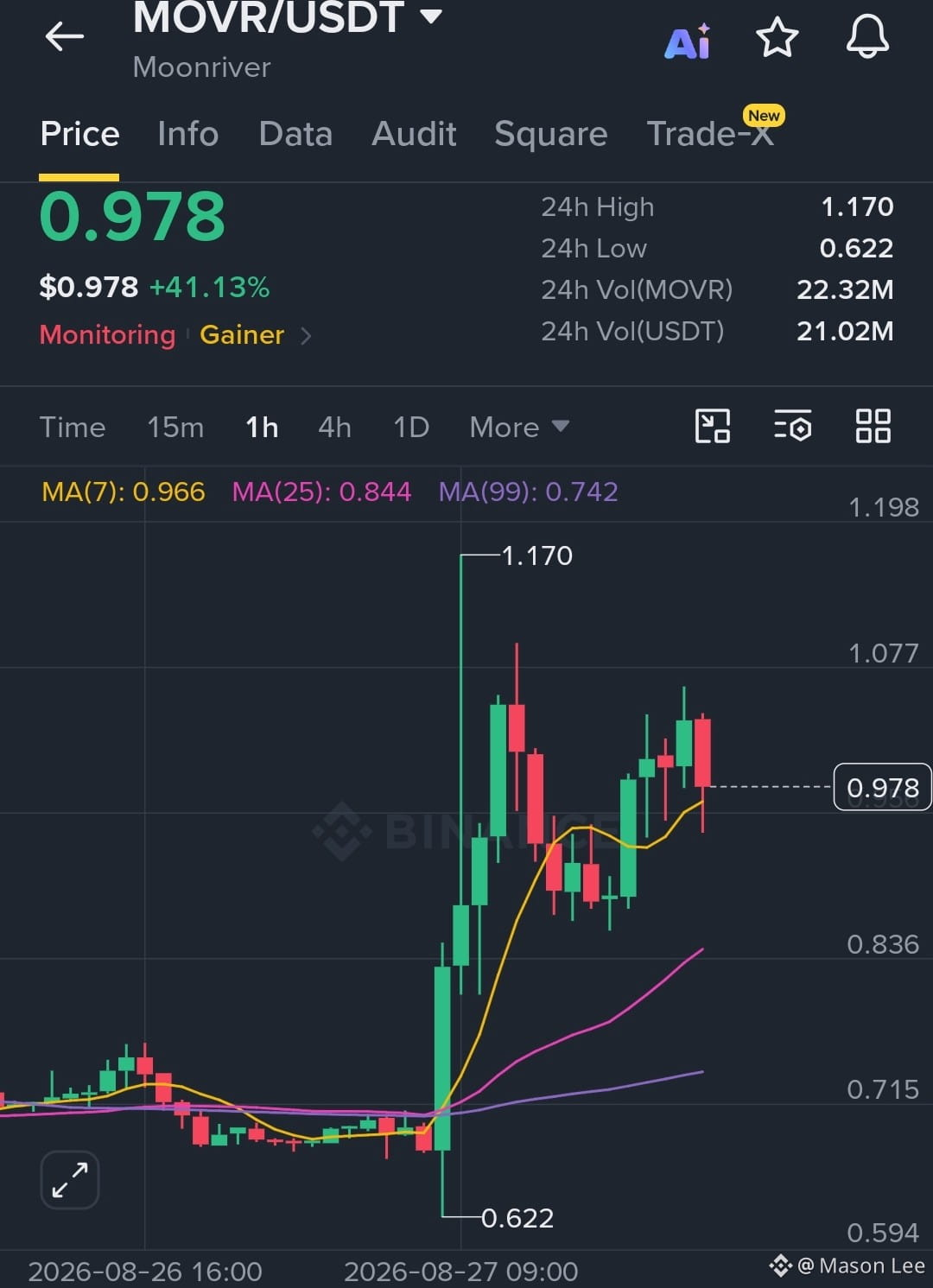
$MOVR just zeigte, warum du die Stärke nicht zu früh aufgibst.
Von 0,62 $ → 1,17 $ in einem Zug, dann begann der Kurs, sich über der Ausbruchszone aufzubauen, statt alles wieder zurückzugeben.
Jetzt die entscheidenden Levels:
→ 0,98 $ Unterstützung
→ 1,07 $ Widerstand
→ 1,17 $ Ausbruch-Ziel
Der Momentum ist stark. Lass den Kurs die nächste Bewegung bestätigen.
Mach immer DYOR.
#MOVR #Crypto #Altcoins #CryptoTrading #Binance
$MOVR just zeigte, warum du die Stärke nicht zu früh aufgibst.
Von 0,62 $ → 1,17 $ in einem Zug, dann begann der Kurs, sich über der Ausbruchszone aufzubauen, statt alles wieder zurückzugeben.
Jetzt die entscheidenden Levels:
→ 0,98 $ Unterstützung
→ 1,07 $ Widerstand
→ 1,17 $ Ausbruch-Ziel
Der Momentum ist stark. Lass den Kurs die nächste Bewegung bestätigen.
Mach immer DYOR.
#MOVR #Crypto #Altcoins #CryptoTrading #Binance
Von 0,62 $ → 1,17 $ in einem Zug, dann begann der Kurs, sich über der Ausbruchszone aufzubauen, statt alles wieder zurückzugeben.
Jetzt die entscheidenden Levels:
→ 0,98 $ Unterstützung
→ 1,07 $ Widerstand
→ 1,17 $ Ausbruch-Ziel
Der Momentum ist stark. Lass den Kurs die nächste Bewegung bestätigen.
Mach immer DYOR.
#MOVR #Crypto #Altcoins #CryptoTrading #Binance
220
Anmelden und weiter Inhalte entdecken
Krypto-Nutzer weltweit auf Binance Square kennenlernen
⚡️ Bleib in Sachen Krypto stets am Puls.
💬 Die weltgrößte Kryptobörse vertraut darauf.
👍 Erhalte verlässliche Einblicke von verifizierten Creators.
E-Mail-Adresse/Telefonnummer
Trendthemen
BinanceLaunchesBinanceIntelligence
790,748 Aufrufe
4,967 Kommentare
🚨 BINANCE BRINGT KI NOCH TIEFER IN DIE KRYPTO-WELT.
Binance hat Binance Intelligence gestartet – eine neue KI-gestützte Ebene, die auf Marktforschung, Trading-Prozesse und Krypto-Daten ausgerichtet ist.
Was besonders spannend ist?
Es ist nicht nur ein einziges Tool.
🧠 Binance AI → personalisierte Marktanalysen, Alerts und Portfolio-Einblicke
⚡ Binance AI Pro → verwandelt natürlichsprachliche Ideen in Trading-Prozesse
🤖 Agent OS → verbindet KI-Agenten mit den Möglichkeiten von Märkten, Portfolios und der Blockchain
Das ist eine große Veränderung.
Krypto-Plattformen versorgen Trader nicht mehr nur mit Charts und Daten.
Sie beginnen, ihnen KI-Systeme anzubieten, die diese Daten interpretieren können.
Die entscheidende Frage lautet:
Wird KI unter Tradern so alltäglich werden wie heute Indikatoren und Charts? 👀
$BTC
$GRIFFAIN
$NMR
#BinanceLaunchesBinanceIntelligence
Jacob trade
·0 Likes
·113 Aufrufe
BTCFallsBelow$84K
43,200 Aufrufe
139 Kommentare
DubaiVARAIssuesReserveAssetAuditCircular
16,086 Aufrufe
537 Kommentare