
Block Blaster
14.3k Beiträge

Block Blaster
 Square Verified+
Melden
Nutzer blockieren
Crypto trader | Altcoin hunter | Risk managed, gains maximized
Trade eröffnen
Regelmäßiger Trader
1.2 Jahre
426 Following
38.3K+ Follower
20.6K+ Like gegeben
Beiträge
Portfolio
Alle
Zitierungen
Live
·
--
Bullisch
Übersetzung ansehen
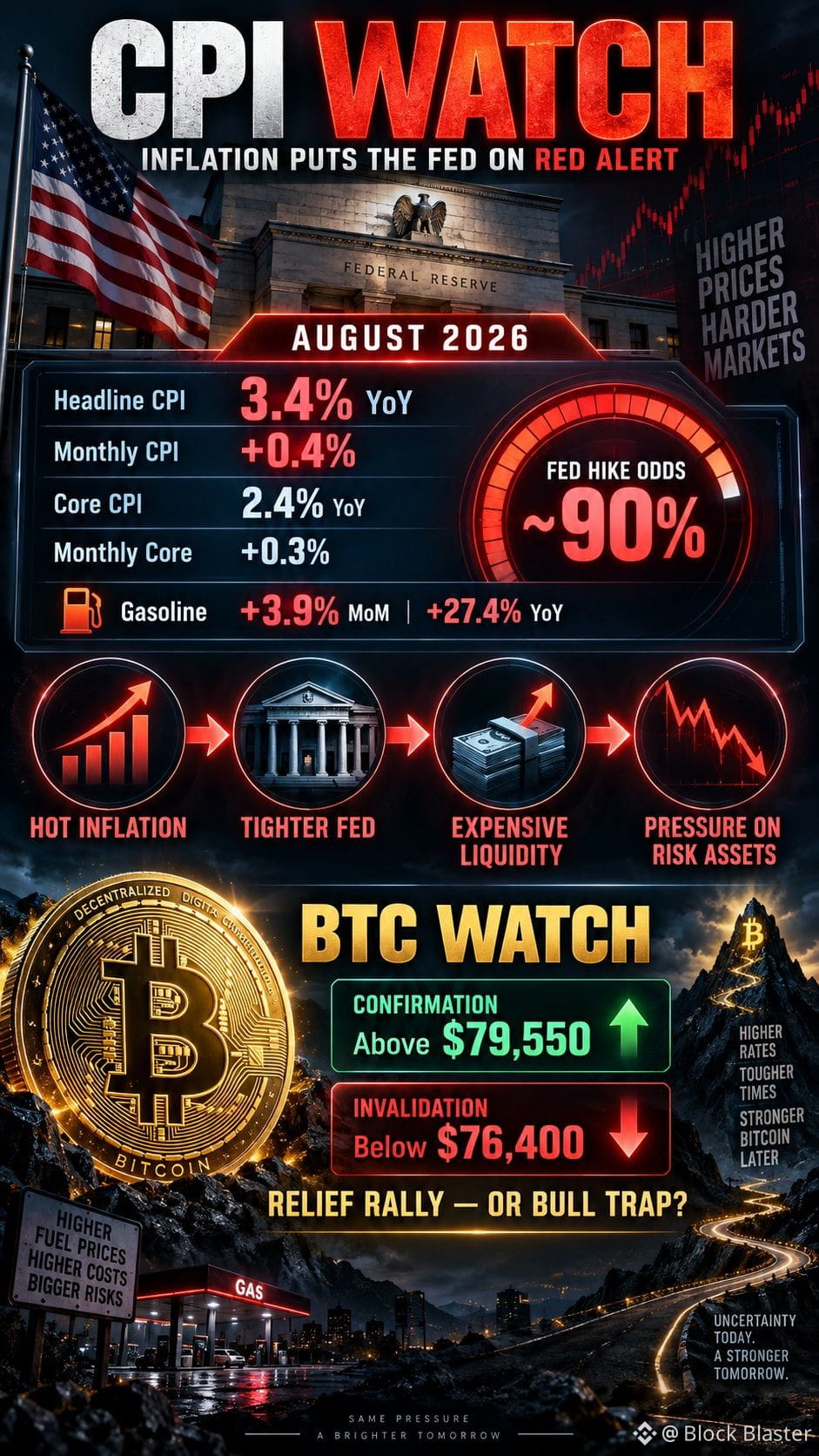
#CPIWatch — INFLATION JUST PUT THE FED ON RED ALERT 🚨
I checked the numbers—and the headline looks calm, but underneath it, pressure is building.
🇺🇸 August CPI:
• Headline: +3.4% YoY
• Monthly CPI: +0.4%
• Core CPI: +2.4% YoY
• Monthly Core: +0.3%, above the 0.2% forecast
• Gasoline: +3.9% MoM / +27.4% YoY
Gasoline alone produced over one-third of the monthly CPI increase, while shelter rose 0.3%. The annual core rate cooled, but its hotter monthly reading shows inflation has not been defeated. ("BLS" (https://www.bls.gov/news.release/cpi.nr0.htm))
The market’s reaction was sharp: probability of a 25-bps Fed hike on September 16 surged to around 90%, up from roughly 70%. ("Reuters" (https://www.reuters.com/business/view-august-core-inflation-reading-boosts-rate-hike-expectations-2026-09-11/))
Bitcoin initially rebounded near $79,000, but is now around $77,300—a warning that higher-rate expectations may overpower the first relief move.
The equation is simple:
Hot inflation → tighter Fed → expensive liquidity → pressure on risk assets.
A BTC recovery above $79,550 would strengthen the bullish response. Losing the $76,400 intraday low could expose a deeper risk-off move.
Is CPI relief real—or was the bounce only a trap before the Fed decision?
#Bitcoin #BTC #Crypto
#CPIWatch — INFLATION JUST PUT THE FED ON RED ALERT 🚨
I checked the numbers—and the headline looks calm, but underneath it, pressure is building.
🇺🇸 August CPI:
• Headline: +3.4% YoY
• Monthly CPI: +0.4%
• Core CPI: +2.4% YoY
• Monthly Core: +0.3%, above the 0.2% forecast
• Gasoline: +3.9% MoM / +27.4% YoY
Gasoline alone produced over one-third of the monthly CPI increase, while shelter rose 0.3%. The annual core rate cooled, but its hotter monthly reading shows inflation has not been defeated. ("BLS" (https://www.bls.gov/news.release/cpi.nr0.htm))
The market’s reaction was sharp: probability of a 25-bps Fed hike on September 16 surged to around 90%, up from roughly 70%. ("Reuters" (https://www.reuters.com/business/view-august-core-inflation-reading-boosts-rate-hike-expectations-2026-09-11/))
Bitcoin initially rebounded near $79,000, but is now around $77,300—a warning that higher-rate expectations may overpower the first relief move.
The equation is simple:
Hot inflation → tighter Fed → expensive liquidity → pressure on risk assets.
A BTC recovery above $79,550 would strengthen the bullish response. Losing the $76,400 intraday low could expose a deeper risk-off move.
Is CPI relief real—or was the bounce only a trap before the Fed decision?
#Bitcoin #BTC #Crypto
I checked the numbers—and the headline looks calm, but underneath it, pressure is building.
🇺🇸 August CPI:
• Headline: +3.4% YoY
• Monthly CPI: +0.4%
• Core CPI: +2.4% YoY
• Monthly Core: +0.3%, above the 0.2% forecast
• Gasoline: +3.9% MoM / +27.4% YoY
Gasoline alone produced over one-third of the monthly CPI increase, while shelter rose 0.3%. The annual core rate cooled, but its hotter monthly reading shows inflation has not been defeated. ("BLS" (https://www.bls.gov/news.release/cpi.nr0.htm))
The market’s reaction was sharp: probability of a 25-bps Fed hike on September 16 surged to around 90%, up from roughly 70%. ("Reuters" (https://www.reuters.com/business/view-august-core-inflation-reading-boosts-rate-hike-expectations-2026-09-11/))
Bitcoin initially rebounded near $79,000, but is now around $77,300—a warning that higher-rate expectations may overpower the first relief move.
The equation is simple:
Hot inflation → tighter Fed → expensive liquidity → pressure on risk assets.
A BTC recovery above $79,550 would strengthen the bullish response. Losing the $76,400 intraday low could expose a deeper risk-off move.
Is CPI relief real—or was the bounce only a trap before the Fed decision?
#Bitcoin #BTC #Crypto
148
·
--
Bullisch
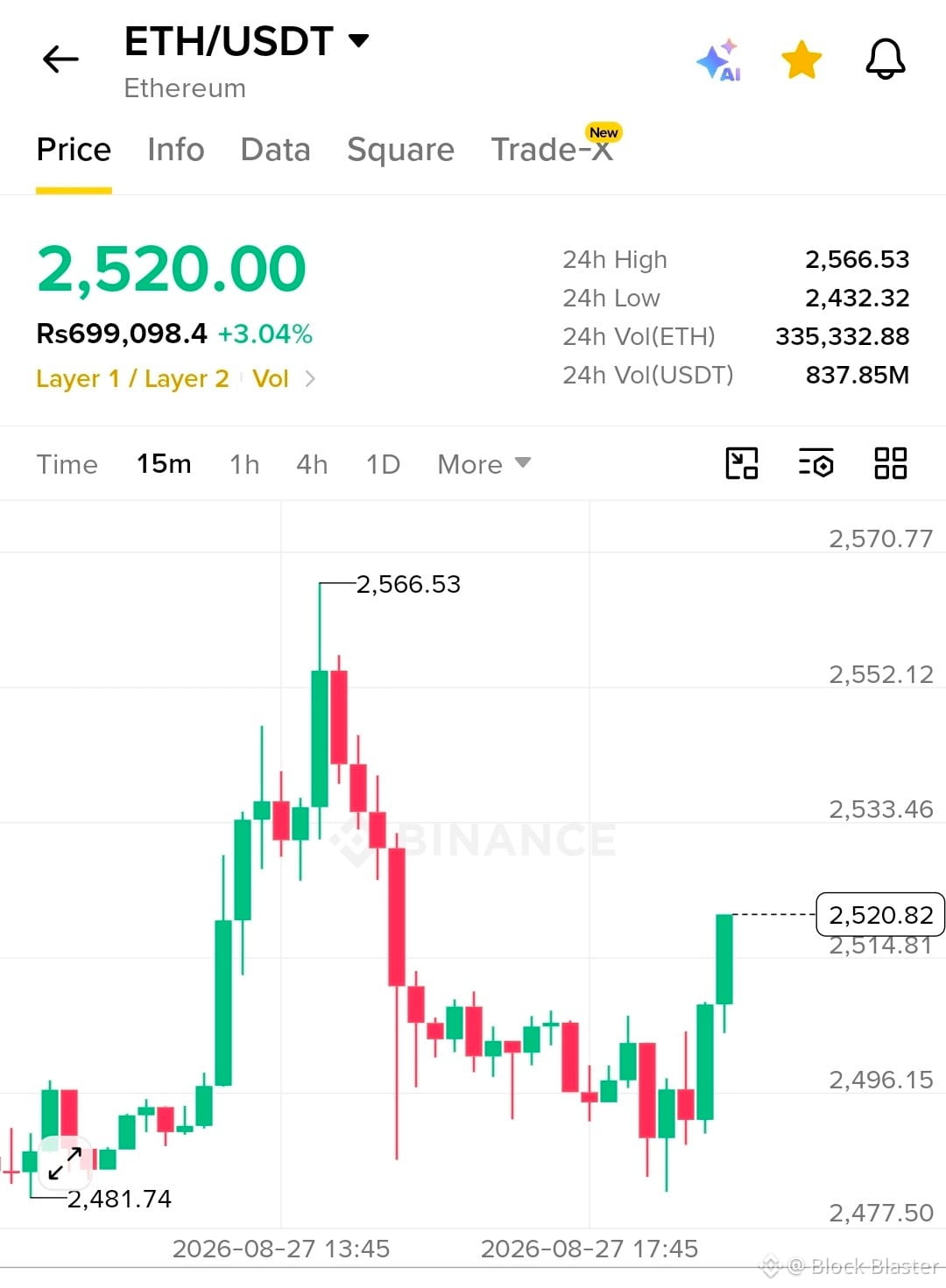
$ETH wehrt sich hart. 🔥
Ethereum hat $2.520 zurückerobert – etwa 3% in 24 Stunden laut dem Binance-Snapshot. Das geschah, nachdem Käufer den Bereich $2.480–$2.490 verteidigten. Die unmittelbare Frontlinie liegt bei $2.566 – dem heutigen lokalen Hoch. Ein klarer Ausbruch könnte den Weg zu weiterem Aufwärtspotenzial öffnen, während der Verlust von $2.480 diese Erholung schwächen würde.
Und es gibt echten Treibstoff hinter der Bewegung: Berichten zufolge verzeichneten die US-Spot-ETH-ETFs am 26. Aug. rund $184 Mio. Nettozuflüsse und verlängten damit eine sieben Tage anhaltende Zuflussserie. Gleichzeitig bleibt das bevorstehende Glamsterdam-Upgrade von Ethereum ein weiteres wichtiges Narrativ.
Die ETH-Bullen haben Schwung. Jetzt müssen sie den Ausbruch schaffen. 👀🚀
$ETH wehrt sich hart. 🔥
Ethereum hat $2.520 zurückerobert – etwa 3% in 24 Stunden laut dem Binance-Snapshot. Das geschah, nachdem Käufer den Bereich $2.480–$2.490 verteidigten. Die unmittelbare Frontlinie liegt bei $2.566 – dem heutigen lokalen Hoch. Ein klarer Ausbruch könnte den Weg zu weiterem Aufwärtspotenzial öffnen, während der Verlust von $2.480 diese Erholung schwächen würde.
Und es gibt echten Treibstoff hinter der Bewegung: Berichten zufolge verzeichneten die US-Spot-ETH-ETFs am 26. Aug. rund $184 Mio. Nettozuflüsse und verlängten damit eine sieben Tage anhaltende Zuflussserie. Gleichzeitig bleibt das bevorstehende Glamsterdam-Upgrade von Ethereum ein weiteres wichtiges Narrativ.
Die ETH-Bullen haben Schwung. Jetzt müssen sie den Ausbruch schaffen. 👀🚀
Ethereum hat $2.520 zurückerobert – etwa 3% in 24 Stunden laut dem Binance-Snapshot. Das geschah, nachdem Käufer den Bereich $2.480–$2.490 verteidigten. Die unmittelbare Frontlinie liegt bei $2.566 – dem heutigen lokalen Hoch. Ein klarer Ausbruch könnte den Weg zu weiterem Aufwärtspotenzial öffnen, während der Verlust von $2.480 diese Erholung schwächen würde.
Und es gibt echten Treibstoff hinter der Bewegung: Berichten zufolge verzeichneten die US-Spot-ETH-ETFs am 26. Aug. rund $184 Mio. Nettozuflüsse und verlängten damit eine sieben Tage anhaltende Zuflussserie. Gleichzeitig bleibt das bevorstehende Glamsterdam-Upgrade von Ethereum ein weiteres wichtiges Narrativ.
Die ETH-Bullen haben Schwung. Jetzt müssen sie den Ausbruch schaffen. 👀🚀
1
175
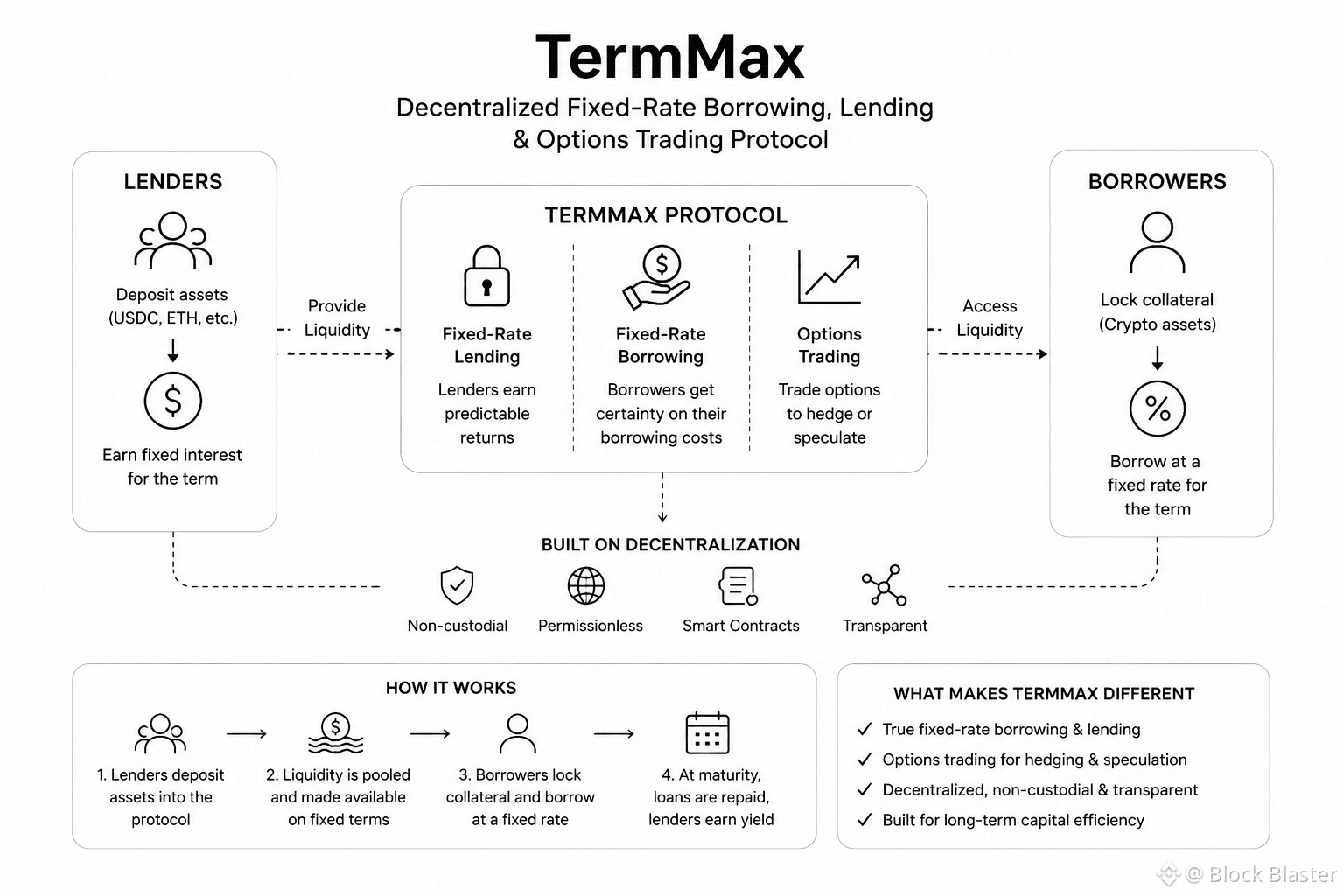
Ich habe mir TermMax angesehen in der Annahme, dass die Hauptstory bereits geklärt sei: Festzins-Kredite. Kredite zu einem Zinssatz aufnehmen, den man kennt, und zu einer planbaren Rendite wieder verleihen. Klingt ziemlich unkompliziert.
Aber nachdem ich tiefer gegraben habe, glaube ich, dass die spannendere Frage viel einfacher ist:
Kommen die Leute wirklich hierher, weil sie Festzins-Kredite brauchen?
Allein TVL wird das nicht beantworten.
DeFi hat reichlich Kapital, das dorthin zieht, wo die nächste attraktive Rendite oder ein entsprechender Anreiz auftaucht. Einlagen können schnell ankommen und genauso schnell wieder verschwinden. Kreditnehmer sind dagegen schwerer zu simulieren.
Deshalb schaue ich bei TermMax mehr darauf, was Kreditnehmer tun, als darauf, wie viel Liquidität eingezahlt wird.
Außerdem gibt es hier einen interessanten Timing-Aspekt. Wenn variable Zinssätze günstig sind, wirkt es nicht so wichtig, einen Zinssatz festzuschreiben. Aber wenn die Märkte unübersichtlich werden und die Kreditkosten plötzlich stark schwanken, wird es auf einmal wertvoll, genau zu wissen, was man am Ende schuldet.
Das ist im Grunde eine Art Versicherung gegen Zinssatz-Unsicherheit. Niemand denkt viel über den Regenschirm nach, bis die Wolken auftauchen.
Vielleicht schafft TermMax es, eine gleichbleibende Nachfrage genau darum herum aufzubauen. Vielleicht bevorzugen Nutzer aber weiterhin die Flexibilität von Märkten mit variablen Zinssätzen.
Wie auch immer: Ich glaube nicht, dass TVL die ganze Geschichte erzählt.
Für mich ist das entscheidende Signal, ob Kreditnehmer wiederkommen, auch wenn es keinen zusätzlichen „Zucker“ gibt, der Kapital anzieht.
Genau das beobachte ich.
@termmax #TermMax
Ich habe mir TermMax angesehen in der Annahme, dass die Hauptstory bereits geklärt sei: Festzins-Kredite. Kredite zu einem Zinssatz aufnehmen, den man kennt, und zu einer planbaren Rendite wieder verleihen. Klingt ziemlich unkompliziert.
Aber nachdem ich tiefer gegraben habe, glaube ich, dass die spannendere Frage viel einfacher ist:
Kommen die Leute wirklich hierher, weil sie Festzins-Kredite brauchen?
Allein TVL wird das nicht beantworten.
DeFi hat reichlich Kapital, das dorthin zieht, wo die nächste attraktive Rendite oder ein entsprechender Anreiz auftaucht. Einlagen können schnell ankommen und genauso schnell wieder verschwinden. Kreditnehmer sind dagegen schwerer zu simulieren.
Deshalb schaue ich bei TermMax mehr darauf, was Kreditnehmer tun, als darauf, wie viel Liquidität eingezahlt wird.
Außerdem gibt es hier einen interessanten Timing-Aspekt. Wenn variable Zinssätze günstig sind, wirkt es nicht so wichtig, einen Zinssatz festzuschreiben. Aber wenn die Märkte unübersichtlich werden und die Kreditkosten plötzlich stark schwanken, wird es auf einmal wertvoll, genau zu wissen, was man am Ende schuldet.
Das ist im Grunde eine Art Versicherung gegen Zinssatz-Unsicherheit. Niemand denkt viel über den Regenschirm nach, bis die Wolken auftauchen.
Vielleicht schafft TermMax es, eine gleichbleibende Nachfrage genau darum herum aufzubauen. Vielleicht bevorzugen Nutzer aber weiterhin die Flexibilität von Märkten mit variablen Zinssätzen.
Wie auch immer: Ich glaube nicht, dass TVL die ganze Geschichte erzählt.
Für mich ist das entscheidende Signal, ob Kreditnehmer wiederkommen, auch wenn es keinen zusätzlichen „Zucker“ gibt, der Kapital anzieht.
Genau das beobachte ich.
@TermMax #TermMax
Aber nachdem ich tiefer gegraben habe, glaube ich, dass die spannendere Frage viel einfacher ist:
Kommen die Leute wirklich hierher, weil sie Festzins-Kredite brauchen?
Allein TVL wird das nicht beantworten.
DeFi hat reichlich Kapital, das dorthin zieht, wo die nächste attraktive Rendite oder ein entsprechender Anreiz auftaucht. Einlagen können schnell ankommen und genauso schnell wieder verschwinden. Kreditnehmer sind dagegen schwerer zu simulieren.
Deshalb schaue ich bei TermMax mehr darauf, was Kreditnehmer tun, als darauf, wie viel Liquidität eingezahlt wird.
Außerdem gibt es hier einen interessanten Timing-Aspekt. Wenn variable Zinssätze günstig sind, wirkt es nicht so wichtig, einen Zinssatz festzuschreiben. Aber wenn die Märkte unübersichtlich werden und die Kreditkosten plötzlich stark schwanken, wird es auf einmal wertvoll, genau zu wissen, was man am Ende schuldet.
Das ist im Grunde eine Art Versicherung gegen Zinssatz-Unsicherheit. Niemand denkt viel über den Regenschirm nach, bis die Wolken auftauchen.
Vielleicht schafft TermMax es, eine gleichbleibende Nachfrage genau darum herum aufzubauen. Vielleicht bevorzugen Nutzer aber weiterhin die Flexibilität von Märkten mit variablen Zinssätzen.
Wie auch immer: Ich glaube nicht, dass TVL die ganze Geschichte erzählt.
Für mich ist das entscheidende Signal, ob Kreditnehmer wiederkommen, auch wenn es keinen zusätzlichen „Zucker“ gibt, der Kapital anzieht.
Genau das beobachte ich.
@TermMax #TermMax
2
473
·
--
Bullisch
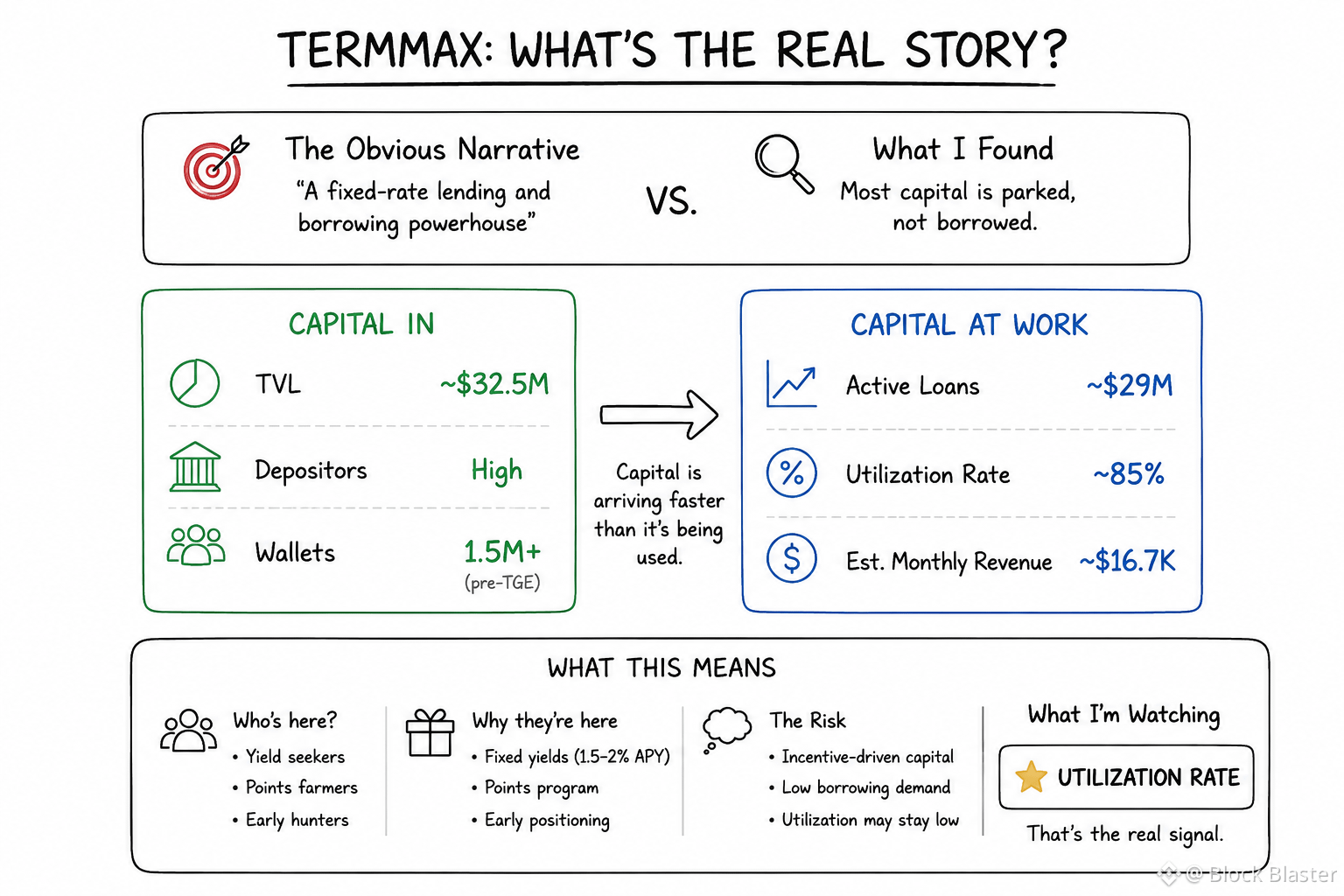
Ich habe mit TermMax angefangen zu recherchieren, weil die Festzins-Kreditaufnahme interessant klang.
Aber je mehr ich mir das angesehen habe, desto mehr fragte ich mich, ob die Kreditaufnahme tatsächlich die Hauptgeschichte ist.
Sehr viel Kapital kann in einem Kreditprotokoll geparkt sein, ohne dass viel passiert. TVL sieht in einem Dashboard zwar gut aus, aber eingezahltes Kapital und die tatsächliche Nachfrage nach echten Krediten sind zwei völlig unterschiedliche Dinge.
Es ist im Grunde wie ein viel befahrener Parkplatz, von dem die Hälfte der Autos nie wegfährt.
Daher interessiert mich weniger, wie viel Geld TermMax anzieht, sondern mehr, was die Leute damit tatsächlich machen.
Wenn die Kreditaufnahme anfängt, mit den Einzahlungen Schritt zu halten, ändert sich das Bild.
Wenn nicht, spielt die Schlagzeile TVL deutlich weniger eine Rolle.
Diese Lücke beobachte ich.
@termmax #TermMax
Ich habe mit TermMax angefangen zu recherchieren, weil die Festzins-Kreditaufnahme interessant klang.
Aber je mehr ich mir das angesehen habe, desto mehr fragte ich mich, ob die Kreditaufnahme tatsächlich die Hauptgeschichte ist.
Sehr viel Kapital kann in einem Kreditprotokoll geparkt sein, ohne dass viel passiert. TVL sieht in einem Dashboard zwar gut aus, aber eingezahltes Kapital und die tatsächliche Nachfrage nach echten Krediten sind zwei völlig unterschiedliche Dinge.
Es ist im Grunde wie ein viel befahrener Parkplatz, von dem die Hälfte der Autos nie wegfährt.
Daher interessiert mich weniger, wie viel Geld TermMax anzieht, sondern mehr, was die Leute damit tatsächlich machen.
Wenn die Kreditaufnahme anfängt, mit den Einzahlungen Schritt zu halten, ändert sich das Bild.
Wenn nicht, spielt die Schlagzeile TVL deutlich weniger eine Rolle.
Diese Lücke beobachte ich.
@TermMax #TermMax
Aber je mehr ich mir das angesehen habe, desto mehr fragte ich mich, ob die Kreditaufnahme tatsächlich die Hauptgeschichte ist.
Sehr viel Kapital kann in einem Kreditprotokoll geparkt sein, ohne dass viel passiert. TVL sieht in einem Dashboard zwar gut aus, aber eingezahltes Kapital und die tatsächliche Nachfrage nach echten Krediten sind zwei völlig unterschiedliche Dinge.
Es ist im Grunde wie ein viel befahrener Parkplatz, von dem die Hälfte der Autos nie wegfährt.
Daher interessiert mich weniger, wie viel Geld TermMax anzieht, sondern mehr, was die Leute damit tatsächlich machen.
Wenn die Kreditaufnahme anfängt, mit den Einzahlungen Schritt zu halten, ändert sich das Bild.
Wenn nicht, spielt die Schlagzeile TVL deutlich weniger eine Rolle.
Diese Lücke beobachte ich.
@TermMax #TermMax
1
1
178
@termmax #TermMax
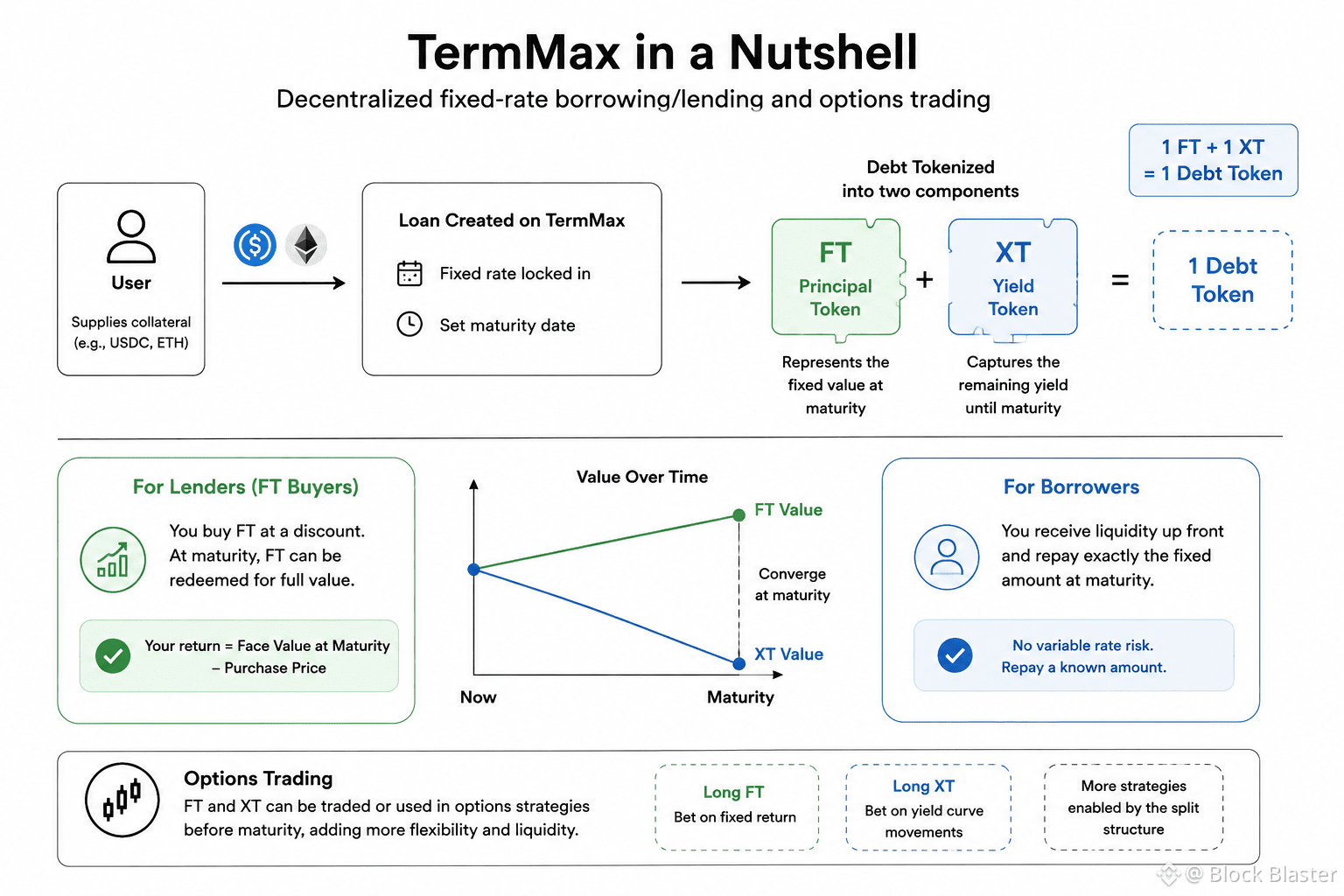
Ich wäre fast darüber hinweggegangen, dass TermMax’ „fester Zinssatz“ nicht wirklich ein Zinssatz ist, der so über die Zeit ausgezahlt wird, wie ich es zuerst vorgestellt hatte.
Das Interessante ist, wie sich die Position aufteilt.
TermMax verwendet FT und XT, und die Struktur hängt über eine einfache Beziehung zusammen: 1 FT + 1 XT entspricht 1 Debt-Token. FT ist der Teil, der den Rückzahlungswert bis zur Fälligkeit trägt, während XT die verbleibende Exposure rund um diese Position hält.
Das bedeutet, dass die Rendite eines Kreditgebers daraus entstehen kann, FT unter dem Betrag zu kaufen, den er später zurücklösen kann, statt zu beobachten, wie der Zins langsam Block für Block anwächst.
Das klingt nach einem kleinen Unterschied, aber es verändert das gesamte mentale Modell. Du verleihst nicht einfach zu einem festen APR. Du kaufst im Grunde eine diskontierte Forderung auf eine zukünftige Rückzahlung.
Die zusätzliche Token-Schicht kann das System auf den ersten Blick sicherlich weniger intuitiv machen, aber sie gibt dem Markt auch einzelne Bausteine, die separat bepreist und gehandelt werden können, statt alles in einer einzigen Lending-Position zu verbergen.
Mich interessiert, ob diese Trennung im Laufe der Zeit TermMax’ größter Vorteil wird, oder ob die meisten Nutzer lieber auf Fixed-Rate Lending setzen, das sich an der Oberfläche einfacher anfühlt.
@TermMax #TermMax
Ich wäre fast darüber hinweggegangen, dass TermMax’ „fester Zinssatz“ nicht wirklich ein Zinssatz ist, der so über die Zeit ausgezahlt wird, wie ich es zuerst vorgestellt hatte.
Das Interessante ist, wie sich die Position aufteilt.
TermMax verwendet FT und XT, und die Struktur hängt über eine einfache Beziehung zusammen: 1 FT + 1 XT entspricht 1 Debt-Token. FT ist der Teil, der den Rückzahlungswert bis zur Fälligkeit trägt, während XT die verbleibende Exposure rund um diese Position hält.
Das bedeutet, dass die Rendite eines Kreditgebers daraus entstehen kann, FT unter dem Betrag zu kaufen, den er später zurücklösen kann, statt zu beobachten, wie der Zins langsam Block für Block anwächst.
Das klingt nach einem kleinen Unterschied, aber es verändert das gesamte mentale Modell. Du verleihst nicht einfach zu einem festen APR. Du kaufst im Grunde eine diskontierte Forderung auf eine zukünftige Rückzahlung.
Die zusätzliche Token-Schicht kann das System auf den ersten Blick sicherlich weniger intuitiv machen, aber sie gibt dem Markt auch einzelne Bausteine, die separat bepreist und gehandelt werden können, statt alles in einer einzigen Lending-Position zu verbergen.
Mich interessiert, ob diese Trennung im Laufe der Zeit TermMax’ größter Vorteil wird, oder ob die meisten Nutzer lieber auf Fixed-Rate Lending setzen, das sich an der Oberfläche einfacher anfühlt.
Ich wäre fast darüber hinweggegangen, dass TermMax’ „fester Zinssatz“ nicht wirklich ein Zinssatz ist, der so über die Zeit ausgezahlt wird, wie ich es zuerst vorgestellt hatte.
Das Interessante ist, wie sich die Position aufteilt.
TermMax verwendet FT und XT, und die Struktur hängt über eine einfache Beziehung zusammen: 1 FT + 1 XT entspricht 1 Debt-Token. FT ist der Teil, der den Rückzahlungswert bis zur Fälligkeit trägt, während XT die verbleibende Exposure rund um diese Position hält.
Das bedeutet, dass die Rendite eines Kreditgebers daraus entstehen kann, FT unter dem Betrag zu kaufen, den er später zurücklösen kann, statt zu beobachten, wie der Zins langsam Block für Block anwächst.
Das klingt nach einem kleinen Unterschied, aber es verändert das gesamte mentale Modell. Du verleihst nicht einfach zu einem festen APR. Du kaufst im Grunde eine diskontierte Forderung auf eine zukünftige Rückzahlung.
Die zusätzliche Token-Schicht kann das System auf den ersten Blick sicherlich weniger intuitiv machen, aber sie gibt dem Markt auch einzelne Bausteine, die separat bepreist und gehandelt werden können, statt alles in einer einzigen Lending-Position zu verbergen.
Mich interessiert, ob diese Trennung im Laufe der Zeit TermMax’ größter Vorteil wird, oder ob die meisten Nutzer lieber auf Fixed-Rate Lending setzen, das sich an der Oberfläche einfacher anfühlt.
2
2
167
@termmax #TermMax
Ich ging davon aus, dass TermMax’ „Festzinssatz“ genauso funktioniert wie ein normales Kreditmarktmodell – der Zinssatz wird einfach festgeschrieben, wenn man sich Geld leiht.
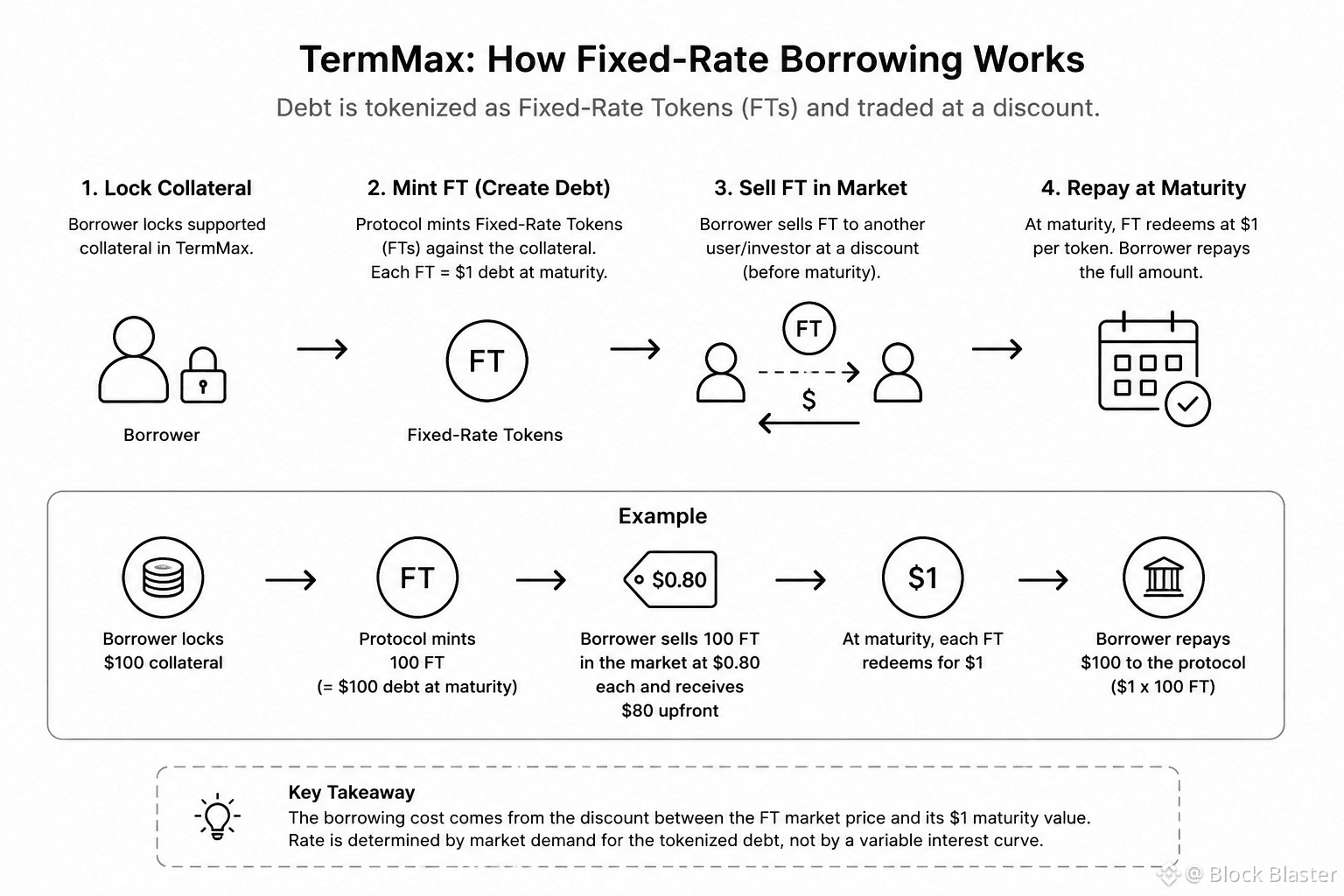
Der Teil, den ich übersehen hatte, ist: Die festen Kosten entstehen tatsächlich daraus, wie diese Schuldtokens gehandelt werden.
Ein Kreditnehmer erstellt „Fixed-Rate Tokens“ auf Basis einer besicherten Position. Diese Tokens haben einen bekannten Wert bei Fälligkeit, können aber heute für weniger als diesen Wert verkauft werden. Wenn ein FT später bei 1 $ ausgezahlt wird, der Markt aber heute nur 0,80 $ dafür zahlt, erhält der Kreditnehmer 0,80 $ sofort und übernimmt eine Rückzahlungsverpflichtung in Höhe von 1 $.
Diese Differenz von 0,20 $ ist im Grunde die Kreditkosten.
Was meine Sicht verändert hat, ist: Der Zinssatz ist nicht einfach nur eine Zahl, die vom Protokoll zugewiesen wird. Er ergibt sich aus dem Preis, den jemand für diese künftige Rückzahlung zu zahlen bereit ist.
Das macht die Struktur für Kreditnehmer zwar berechenbarer, bedeutet aber auch, dass Liquidität selbst Teil des Zinssatzes wird. Geringe Nachfrage kann die Finanzierung teuer machen – selbst wenn der endgültige Schuldbetrag bereits bekannt ist.
Ich kann nachvollziehen, warum das Design sinnvoll ist: Der Markt übernimmt die Preisgestaltung, statt sich auf eine ständig schwankende Utilization-Kurve zu verlassen.
Aber macht das Fixed-Rate-DeFi tatsächlich „sauberer“, oder wird das Zinsrisiko lediglich in die Token-Liquidität verlagert?
@TermMax #TermMax
Ich ging davon aus, dass TermMax’ „Festzinssatz“ genauso funktioniert wie ein normales Kreditmarktmodell – der Zinssatz wird einfach festgeschrieben, wenn man sich Geld leiht.
Der Teil, den ich übersehen hatte, ist: Die festen Kosten entstehen tatsächlich daraus, wie diese Schuldtokens gehandelt werden.
Ein Kreditnehmer erstellt „Fixed-Rate Tokens“ auf Basis einer besicherten Position. Diese Tokens haben einen bekannten Wert bei Fälligkeit, können aber heute für weniger als diesen Wert verkauft werden. Wenn ein FT später bei 1 $ ausgezahlt wird, der Markt aber heute nur 0,80 $ dafür zahlt, erhält der Kreditnehmer 0,80 $ sofort und übernimmt eine Rückzahlungsverpflichtung in Höhe von 1 $.
Diese Differenz von 0,20 $ ist im Grunde die Kreditkosten.
Was meine Sicht verändert hat, ist: Der Zinssatz ist nicht einfach nur eine Zahl, die vom Protokoll zugewiesen wird. Er ergibt sich aus dem Preis, den jemand für diese künftige Rückzahlung zu zahlen bereit ist.
Das macht die Struktur für Kreditnehmer zwar berechenbarer, bedeutet aber auch, dass Liquidität selbst Teil des Zinssatzes wird. Geringe Nachfrage kann die Finanzierung teuer machen – selbst wenn der endgültige Schuldbetrag bereits bekannt ist.
Ich kann nachvollziehen, warum das Design sinnvoll ist: Der Markt übernimmt die Preisgestaltung, statt sich auf eine ständig schwankende Utilization-Kurve zu verlassen.
Aber macht das Fixed-Rate-DeFi tatsächlich „sauberer“, oder wird das Zinsrisiko lediglich in die Token-Liquidität verlagert?
Ich ging davon aus, dass TermMax’ „Festzinssatz“ genauso funktioniert wie ein normales Kreditmarktmodell – der Zinssatz wird einfach festgeschrieben, wenn man sich Geld leiht.
Der Teil, den ich übersehen hatte, ist: Die festen Kosten entstehen tatsächlich daraus, wie diese Schuldtokens gehandelt werden.
Ein Kreditnehmer erstellt „Fixed-Rate Tokens“ auf Basis einer besicherten Position. Diese Tokens haben einen bekannten Wert bei Fälligkeit, können aber heute für weniger als diesen Wert verkauft werden. Wenn ein FT später bei 1 $ ausgezahlt wird, der Markt aber heute nur 0,80 $ dafür zahlt, erhält der Kreditnehmer 0,80 $ sofort und übernimmt eine Rückzahlungsverpflichtung in Höhe von 1 $.
Diese Differenz von 0,20 $ ist im Grunde die Kreditkosten.
Was meine Sicht verändert hat, ist: Der Zinssatz ist nicht einfach nur eine Zahl, die vom Protokoll zugewiesen wird. Er ergibt sich aus dem Preis, den jemand für diese künftige Rückzahlung zu zahlen bereit ist.
Das macht die Struktur für Kreditnehmer zwar berechenbarer, bedeutet aber auch, dass Liquidität selbst Teil des Zinssatzes wird. Geringe Nachfrage kann die Finanzierung teuer machen – selbst wenn der endgültige Schuldbetrag bereits bekannt ist.
Ich kann nachvollziehen, warum das Design sinnvoll ist: Der Markt übernimmt die Preisgestaltung, statt sich auf eine ständig schwankende Utilization-Kurve zu verlassen.
Aber macht das Fixed-Rate-DeFi tatsächlich „sauberer“, oder wird das Zinsrisiko lediglich in die Token-Liquidität verlagert?
2
1
220
@termmax #TermMax
Ich hätte fast übersehen, wie unnachgiebig TermMax mit der Fälligkeit umgeht.
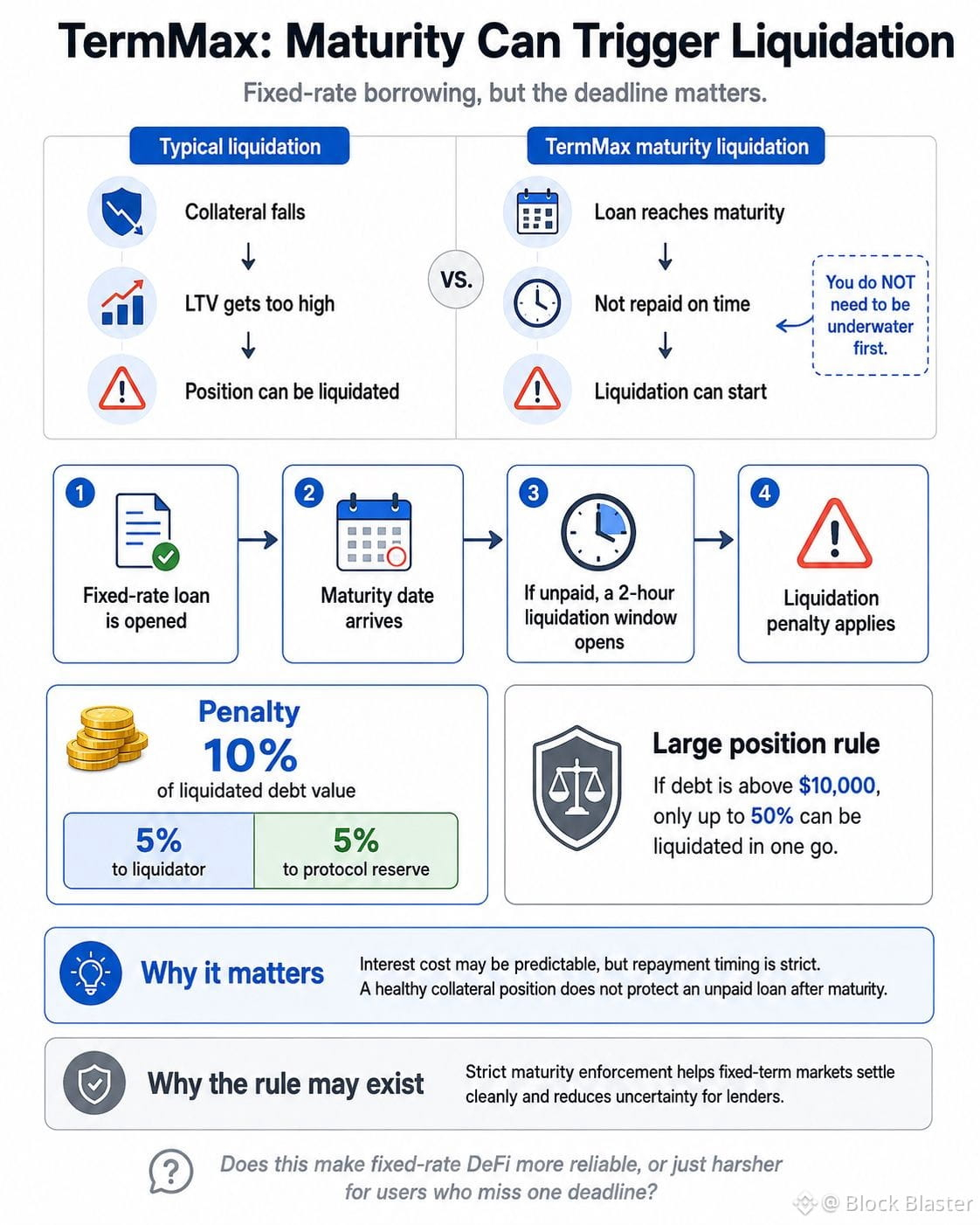
Zunächst habe ich auf das übliche Liquidationsrisiko geschaut: dass Sicherheiten fallen, der LTV zu hoch wird und die Position geschlossen wird. Aber auf TermMax kann allein das Erreichen der Fälligkeit ohne Rückzahlung eine Liquidation auslösen. Du musst also nicht erst „unter Wasser“ sein.
Sobald das passiert, gibt es ein zweistündiges Liquidationsfenster. Die Strafe beträgt 10% des liquidierten Schuldenwerts, aufgeteilt zwischen dem Liquidator und der Protokoll-Reserve. Und bei Schulden über 10.000 US-Dollar können bei einem Durchgang nur bis zu 50% liquidiert werden.
Dieser Aspekt hat meine Sicht auf das Kreditaufnehmen mit festem Zinssatz hier verändert.
Deine Zinskosten mögen zwar vorhersehbar sein, aber die Rückzahlungsfrist ist nichts, was man einfach mal lässig überziehen kann. Eine angemessen besicherte Position schützt dich nicht, wenn der Kredit schlicht abläuft und unbezahlt bleibt.
Ich kann auch nachvollziehen, warum TermMax das so gestaltet hat. Märkte mit fester Laufzeit funktionieren nur, wenn die Fälligkeit wirklich etwas bedeutet. Ohne strikte Abwicklung würden Kreditgeber Unsicherheit tragen, für die sie nie einen Preis kalkuliert haben.
Das Spannende ist der Trade-off: Macht die konsequente Durchsetzung der Fälligkeit DeFi mit festen Zinssätzen dadurch sauberer und zuverlässiger – oder erzeugt sie für Nutzer, die eine einzige Frist verpassen, eine überraschend scharfe Strafe?
@TermMax #TermMax
Ich hätte fast übersehen, wie unnachgiebig TermMax mit der Fälligkeit umgeht.
Zunächst habe ich auf das übliche Liquidationsrisiko geschaut: dass Sicherheiten fallen, der LTV zu hoch wird und die Position geschlossen wird. Aber auf TermMax kann allein das Erreichen der Fälligkeit ohne Rückzahlung eine Liquidation auslösen. Du musst also nicht erst „unter Wasser“ sein.
Sobald das passiert, gibt es ein zweistündiges Liquidationsfenster. Die Strafe beträgt 10% des liquidierten Schuldenwerts, aufgeteilt zwischen dem Liquidator und der Protokoll-Reserve. Und bei Schulden über 10.000 US-Dollar können bei einem Durchgang nur bis zu 50% liquidiert werden.
Dieser Aspekt hat meine Sicht auf das Kreditaufnehmen mit festem Zinssatz hier verändert.
Deine Zinskosten mögen zwar vorhersehbar sein, aber die Rückzahlungsfrist ist nichts, was man einfach mal lässig überziehen kann. Eine angemessen besicherte Position schützt dich nicht, wenn der Kredit schlicht abläuft und unbezahlt bleibt.
Ich kann auch nachvollziehen, warum TermMax das so gestaltet hat. Märkte mit fester Laufzeit funktionieren nur, wenn die Fälligkeit wirklich etwas bedeutet. Ohne strikte Abwicklung würden Kreditgeber Unsicherheit tragen, für die sie nie einen Preis kalkuliert haben.
Das Spannende ist der Trade-off: Macht die konsequente Durchsetzung der Fälligkeit DeFi mit festen Zinssätzen dadurch sauberer und zuverlässiger – oder erzeugt sie für Nutzer, die eine einzige Frist verpassen, eine überraschend scharfe Strafe?
Ich hätte fast übersehen, wie unnachgiebig TermMax mit der Fälligkeit umgeht.
Zunächst habe ich auf das übliche Liquidationsrisiko geschaut: dass Sicherheiten fallen, der LTV zu hoch wird und die Position geschlossen wird. Aber auf TermMax kann allein das Erreichen der Fälligkeit ohne Rückzahlung eine Liquidation auslösen. Du musst also nicht erst „unter Wasser“ sein.
Sobald das passiert, gibt es ein zweistündiges Liquidationsfenster. Die Strafe beträgt 10% des liquidierten Schuldenwerts, aufgeteilt zwischen dem Liquidator und der Protokoll-Reserve. Und bei Schulden über 10.000 US-Dollar können bei einem Durchgang nur bis zu 50% liquidiert werden.
Dieser Aspekt hat meine Sicht auf das Kreditaufnehmen mit festem Zinssatz hier verändert.
Deine Zinskosten mögen zwar vorhersehbar sein, aber die Rückzahlungsfrist ist nichts, was man einfach mal lässig überziehen kann. Eine angemessen besicherte Position schützt dich nicht, wenn der Kredit schlicht abläuft und unbezahlt bleibt.
Ich kann auch nachvollziehen, warum TermMax das so gestaltet hat. Märkte mit fester Laufzeit funktionieren nur, wenn die Fälligkeit wirklich etwas bedeutet. Ohne strikte Abwicklung würden Kreditgeber Unsicherheit tragen, für die sie nie einen Preis kalkuliert haben.
Das Spannende ist der Trade-off: Macht die konsequente Durchsetzung der Fälligkeit DeFi mit festen Zinssätzen dadurch sauberer und zuverlässiger – oder erzeugt sie für Nutzer, die eine einzige Frist verpassen, eine überraschend scharfe Strafe?
6
6
174
·
--
Bullisch
@Dusk_Foundation #dusk $DUSK #Dusk
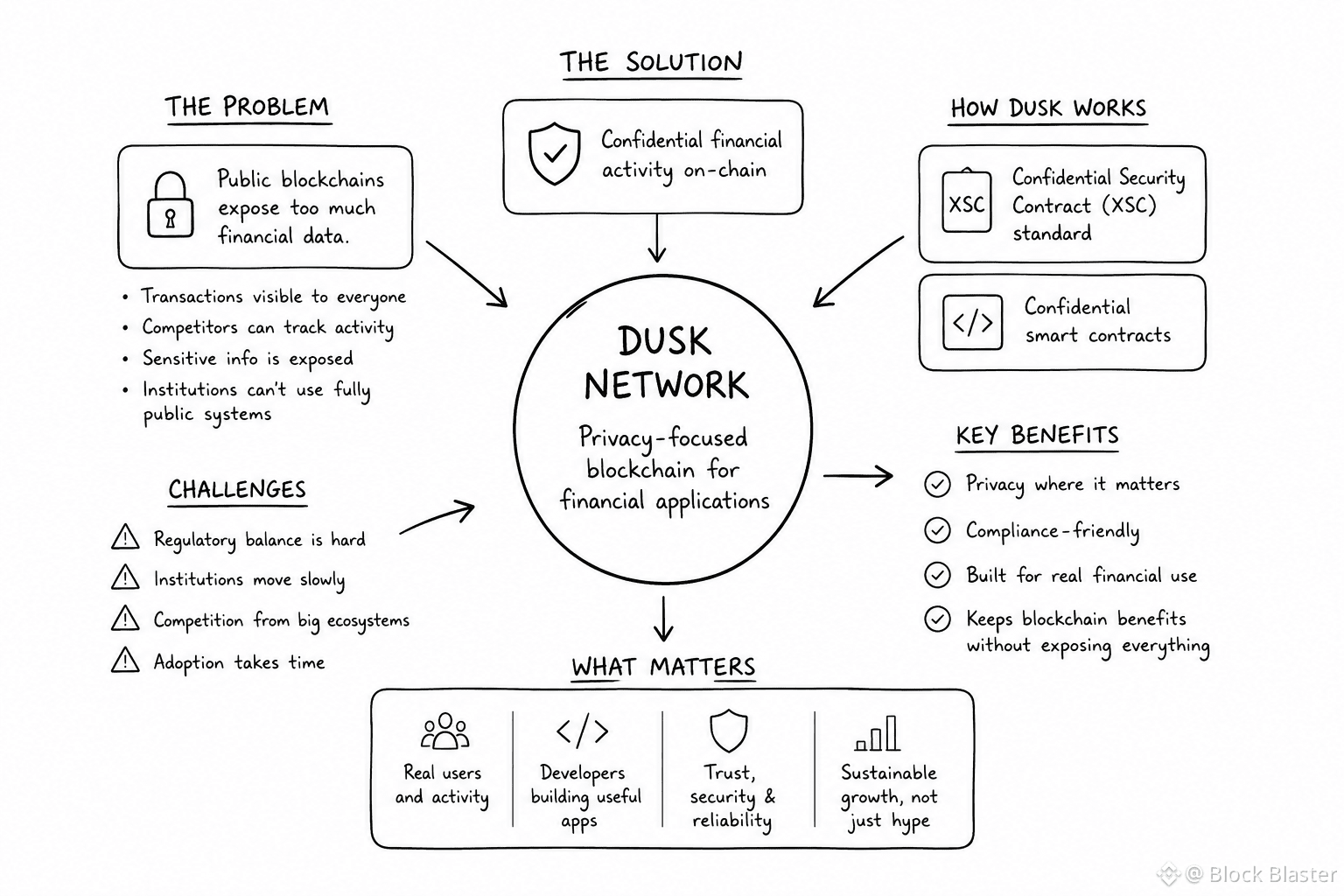
Dusk Network macht mich neugierig, aber nicht genug, um die schwierigen Fragen zu ignorieren. Die Krypto-Welt hat mir gezeigt, dass eine interessante Idee nicht immer zu einem erfolgreichen Produkt wird.
Dusk ist eine Layer-1-Blockchain, die sich auf Privatsphäre für Finanzanwendungen konzentriert. Mit vertraulichen Smart Contracts und dem XSC-Standard will sie sensible Informationen schützen, während dennoch die notwendige Verifikation ermöglicht wird.
Ehrlich gesagt, das Problem ist real. Öffentliche Blockchains legen Bilanzen, Transaktionen und die Aktivität von Wallets offen, was für viele Finanzinstitute ungeeignet ist.
Dusk versucht, einen Mittelweg zwischen vollständiger Transparenz und völliger Geheimhaltung zu finden. Aber irgendjemand muss trotzdem Investoren prüfen, Credentials verwalten, Einschränkungen durchsetzen und entscheiden, wann Informationen offengelegt werden dürfen.
Gute Privatsphäre-Technologie allein schafft noch keine Akzeptanz. Dusk braucht außerdem Entwickler, Institutionen, Börsen, Investoren und Regulierungsbehörden, denen das Netzwerk vertrauen und es nutzen.
Das DUSK-Token wird für Gebühren und Staking verwendet, aber sein Zweck wird erst dann überzeugend wirken, wenn echte finanzielle Aktivitäten folgen.
Dusk geht eine reale Schwäche im Blockchain-Finanzwesen an, aber ein echtes Problem garantiert keine erfolgreiche Lösung.
Vielleicht funktioniert es, vielleicht nicht. Vorerst verdient Dusk eine vorsichtige Aufmerksamkeit – keine blinde Begeisterung.
@Dusk #dusk $DUSK #Dusk
Dusk Network macht mich neugierig, aber nicht genug, um die schwierigen Fragen zu ignorieren. Die Krypto-Welt hat mir gezeigt, dass eine interessante Idee nicht immer zu einem erfolgreichen Produkt wird.
Dusk ist eine Layer-1-Blockchain, die sich auf Privatsphäre für Finanzanwendungen konzentriert. Mit vertraulichen Smart Contracts und dem XSC-Standard will sie sensible Informationen schützen, während dennoch die notwendige Verifikation ermöglicht wird.
Ehrlich gesagt, das Problem ist real. Öffentliche Blockchains legen Bilanzen, Transaktionen und die Aktivität von Wallets offen, was für viele Finanzinstitute ungeeignet ist.
Dusk versucht, einen Mittelweg zwischen vollständiger Transparenz und völliger Geheimhaltung zu finden. Aber irgendjemand muss trotzdem Investoren prüfen, Credentials verwalten, Einschränkungen durchsetzen und entscheiden, wann Informationen offengelegt werden dürfen.
Gute Privatsphäre-Technologie allein schafft noch keine Akzeptanz. Dusk braucht außerdem Entwickler, Institutionen, Börsen, Investoren und Regulierungsbehörden, denen das Netzwerk vertrauen und es nutzen.
Das DUSK-Token wird für Gebühren und Staking verwendet, aber sein Zweck wird erst dann überzeugend wirken, wenn echte finanzielle Aktivitäten folgen.
Dusk geht eine reale Schwäche im Blockchain-Finanzwesen an, aber ein echtes Problem garantiert keine erfolgreiche Lösung.
Vielleicht funktioniert es, vielleicht nicht. Vorerst verdient Dusk eine vorsichtige Aufmerksamkeit – keine blinde Begeisterung.
Dusk Network macht mich neugierig, aber nicht genug, um die schwierigen Fragen zu ignorieren. Die Krypto-Welt hat mir gezeigt, dass eine interessante Idee nicht immer zu einem erfolgreichen Produkt wird.
Dusk ist eine Layer-1-Blockchain, die sich auf Privatsphäre für Finanzanwendungen konzentriert. Mit vertraulichen Smart Contracts und dem XSC-Standard will sie sensible Informationen schützen, während dennoch die notwendige Verifikation ermöglicht wird.
Ehrlich gesagt, das Problem ist real. Öffentliche Blockchains legen Bilanzen, Transaktionen und die Aktivität von Wallets offen, was für viele Finanzinstitute ungeeignet ist.
Dusk versucht, einen Mittelweg zwischen vollständiger Transparenz und völliger Geheimhaltung zu finden. Aber irgendjemand muss trotzdem Investoren prüfen, Credentials verwalten, Einschränkungen durchsetzen und entscheiden, wann Informationen offengelegt werden dürfen.
Gute Privatsphäre-Technologie allein schafft noch keine Akzeptanz. Dusk braucht außerdem Entwickler, Institutionen, Börsen, Investoren und Regulierungsbehörden, denen das Netzwerk vertrauen und es nutzen.
Das DUSK-Token wird für Gebühren und Staking verwendet, aber sein Zweck wird erst dann überzeugend wirken, wenn echte finanzielle Aktivitäten folgen.
Dusk geht eine reale Schwäche im Blockchain-Finanzwesen an, aber ein echtes Problem garantiert keine erfolgreiche Lösung.
Vielleicht funktioniert es, vielleicht nicht. Vorerst verdient Dusk eine vorsichtige Aufmerksamkeit – keine blinde Begeisterung.
3
3
272
·
--
Bullisch
$BNB BREAKOUT-LADEN?
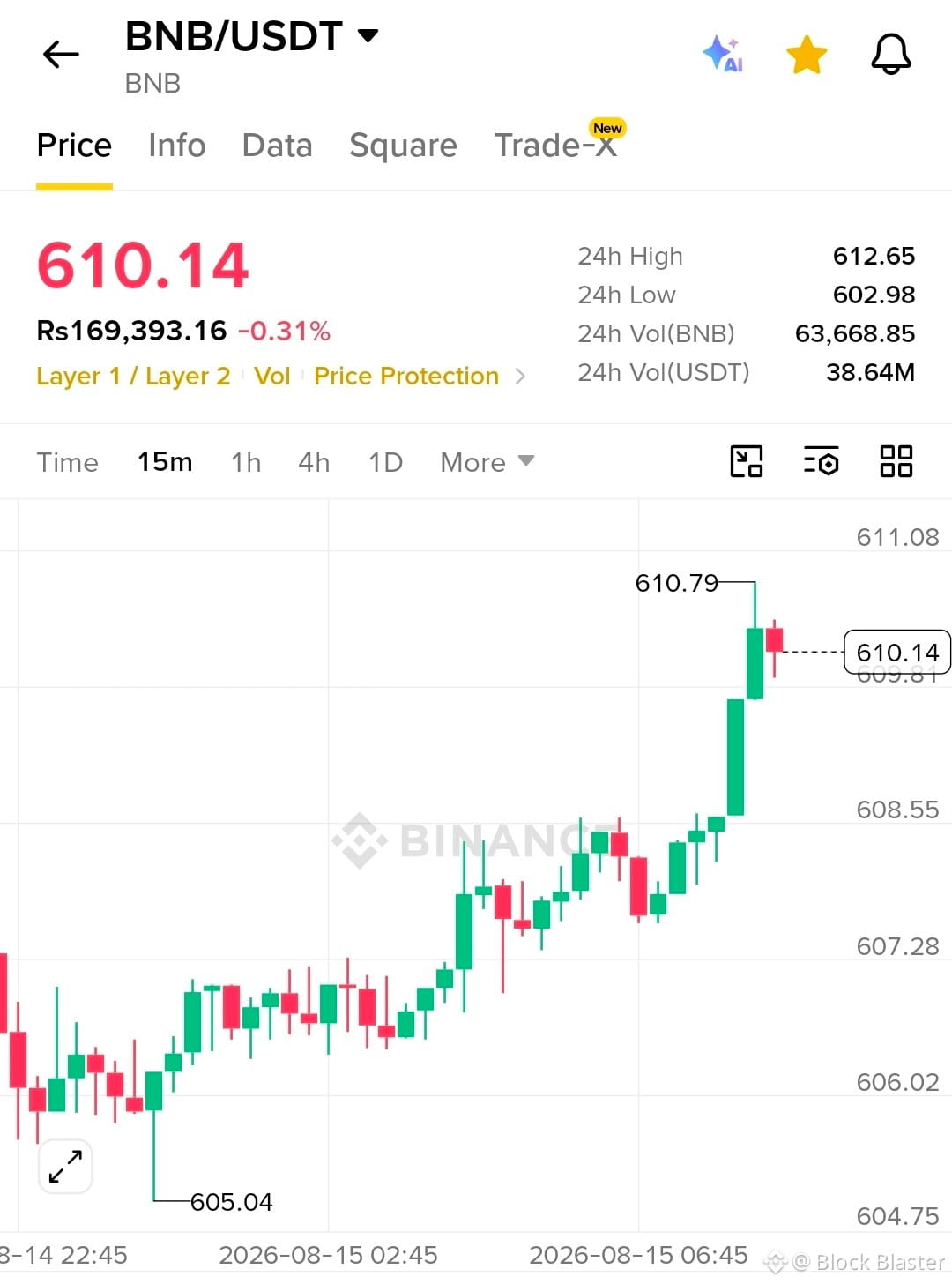
BNB zeigt auf dem 15M-Chart starke Dynamik und bewegt sich von 605,04 $ bis zu einem lokalen Hoch von 610,79 $. Derzeit liegt der Kurs bei etwa 610,14 $, wobei das 24H-Hoch bei 612,65 $ liegt.
LONG-Setup
EP: 609,80 $–610,20 $
TP1: 610,80 $
TP2: 612,00 $
TP3: 612,60 $
SL: 608,40 $
Die Bullen haben Momentum, aber 610,79 $–612,65 $ ist die entscheidende Widerstandszone. Ein sauberer Breakout könnte den Weg für einen weiteren Push öffnen.
Auf geht’s, BNB!
Keine finanzielle Beratung. Verwalte dein Risiko.
$BNB BREAKOUT-LADEN?
BNB zeigt auf dem 15M-Chart starke Dynamik und bewegt sich von 605,04 $ bis zu einem lokalen Hoch von 610,79 $. Derzeit liegt der Kurs bei etwa 610,14 $, wobei das 24H-Hoch bei 612,65 $ liegt.
LONG-Setup
EP: 609,80 $–610,20 $
TP1: 610,80 $
TP2: 612,00 $
TP3: 612,60 $
SL: 608,40 $
Die Bullen haben Momentum, aber 610,79 $–612,65 $ ist die entscheidende Widerstandszone. Ein sauberer Breakout könnte den Weg für einen weiteren Push öffnen.
Auf geht’s, BNB!
Keine finanzielle Beratung. Verwalte dein Risiko.
BNB zeigt auf dem 15M-Chart starke Dynamik und bewegt sich von 605,04 $ bis zu einem lokalen Hoch von 610,79 $. Derzeit liegt der Kurs bei etwa 610,14 $, wobei das 24H-Hoch bei 612,65 $ liegt.
LONG-Setup
EP: 609,80 $–610,20 $
TP1: 610,80 $
TP2: 612,00 $
TP3: 612,60 $
SL: 608,40 $
Die Bullen haben Momentum, aber 610,79 $–612,65 $ ist die entscheidende Widerstandszone. Ein sauberer Breakout könnte den Weg für einen weiteren Push öffnen.
Auf geht’s, BNB!
Keine finanzielle Beratung. Verwalte dein Risiko.
148
·
--
Bullisch
@Dusk_Foundation #dusk $DUSK #Dusk
Dusk Network gehört zu den Projekten, die keine auffällige Story brauchen, um Sinn zu ergeben.
Der Fokus auf vertrauliche Finanzaktivitäten greift ein echtes Problem an: Öffentliche Blockchains geben zu viele Informationen preis, um für ernsthafte Finanzgeschäfte geeignet zu sein.
Ehrlich gesagt fühlt sich Privatsphäre in diesem Bereich weniger wie ein Feature an und mehr wie grundlegende Infrastruktur.
Das bedeutet jedoch nicht, dass die Einführung einfach wird. Institutionen bewegen sich langsam, Regulierung ist kompliziert, und gute Technologie allein ist niemals genug.
Aber das Problem ist real.
Vielleicht trifft Dusk das richtige Gleichgewicht, vielleicht auch nicht.
Vorerst schaue ich lieber zu, wie etwas versucht, echte finanzielle „Rohrleitungen“ zu reparieren, statt wieder ein Projekt zu bauen, das auf Hype ausgelegt ist.
@Dusk #dusk $DUSK #Dusk
Dusk Network gehört zu den Projekten, die keine auffällige Story brauchen, um Sinn zu ergeben.
Der Fokus auf vertrauliche Finanzaktivitäten greift ein echtes Problem an: Öffentliche Blockchains geben zu viele Informationen preis, um für ernsthafte Finanzgeschäfte geeignet zu sein.
Ehrlich gesagt fühlt sich Privatsphäre in diesem Bereich weniger wie ein Feature an und mehr wie grundlegende Infrastruktur.
Das bedeutet jedoch nicht, dass die Einführung einfach wird. Institutionen bewegen sich langsam, Regulierung ist kompliziert, und gute Technologie allein ist niemals genug.
Aber das Problem ist real.
Vielleicht trifft Dusk das richtige Gleichgewicht, vielleicht auch nicht.
Vorerst schaue ich lieber zu, wie etwas versucht, echte finanzielle „Rohrleitungen“ zu reparieren, statt wieder ein Projekt zu bauen, das auf Hype ausgelegt ist.
Dusk Network gehört zu den Projekten, die keine auffällige Story brauchen, um Sinn zu ergeben.
Der Fokus auf vertrauliche Finanzaktivitäten greift ein echtes Problem an: Öffentliche Blockchains geben zu viele Informationen preis, um für ernsthafte Finanzgeschäfte geeignet zu sein.
Ehrlich gesagt fühlt sich Privatsphäre in diesem Bereich weniger wie ein Feature an und mehr wie grundlegende Infrastruktur.
Das bedeutet jedoch nicht, dass die Einführung einfach wird. Institutionen bewegen sich langsam, Regulierung ist kompliziert, und gute Technologie allein ist niemals genug.
Aber das Problem ist real.
Vielleicht trifft Dusk das richtige Gleichgewicht, vielleicht auch nicht.
Vorerst schaue ich lieber zu, wie etwas versucht, echte finanzielle „Rohrleitungen“ zu reparieren, statt wieder ein Projekt zu bauen, das auf Hype ausgelegt ist.
5
2
183
·
--
Bullisch
@Dusk_Foundation #dusk #Dusk $DUSK
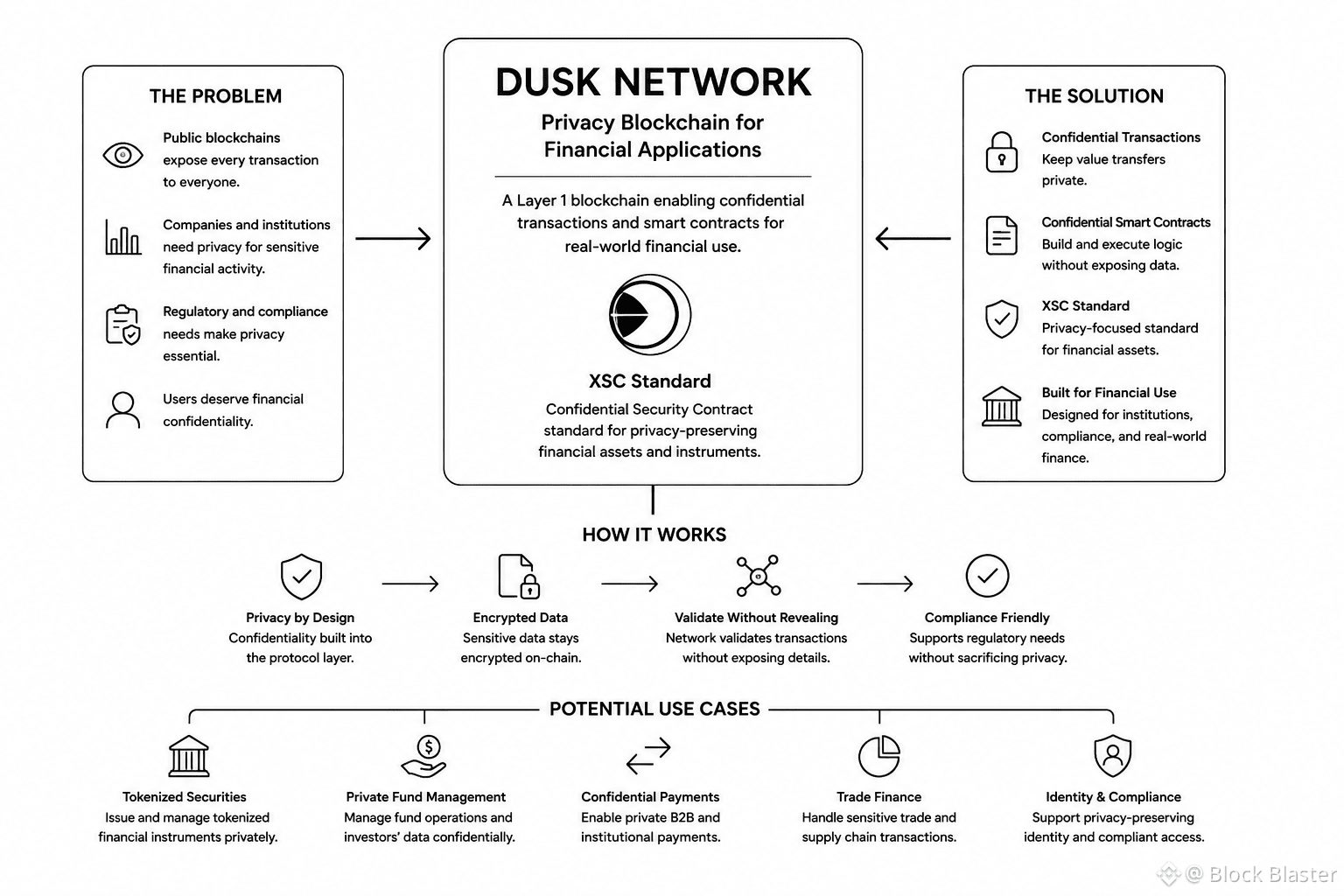
Dusk Network ist interessant, weil es sich auf ein Problem konzentriert, das tatsächlich wichtig ist: finanzielle Privatsphäre.
Öffentliche Blockchains machen fast alles sichtbar, aber echte finanzielle Aktivitäten brauchen oft Vertraulichkeit. Dusk versucht, das durch datenschutzorientierte Infrastruktur und vertrauliche Smart Contracts anzugehen.
Die Idee ergibt Sinn, aber Technologie allein reicht nicht. Der eigentliche Test ist die Akzeptanz. Können Entwickler, Institutionen und regulierte Finanzanwendungen tatsächlich einen Grund finden, Dusk zu nutzen?
Vielleicht werden sie es, vielleicht auch nicht. Im Moment ist das Problem real – die Umsetzung muss sich jedoch erst noch beweisen.
@Dusk #dusk #Dusk $DUSK
Dusk Network ist interessant, weil es sich auf ein Problem konzentriert, das tatsächlich wichtig ist: finanzielle Privatsphäre.
Öffentliche Blockchains machen fast alles sichtbar, aber echte finanzielle Aktivitäten brauchen oft Vertraulichkeit. Dusk versucht, das durch datenschutzorientierte Infrastruktur und vertrauliche Smart Contracts anzugehen.
Die Idee ergibt Sinn, aber Technologie allein reicht nicht. Der eigentliche Test ist die Akzeptanz. Können Entwickler, Institutionen und regulierte Finanzanwendungen tatsächlich einen Grund finden, Dusk zu nutzen?
Vielleicht werden sie es, vielleicht auch nicht. Im Moment ist das Problem real – die Umsetzung muss sich jedoch erst noch beweisen.
Dusk Network ist interessant, weil es sich auf ein Problem konzentriert, das tatsächlich wichtig ist: finanzielle Privatsphäre.
Öffentliche Blockchains machen fast alles sichtbar, aber echte finanzielle Aktivitäten brauchen oft Vertraulichkeit. Dusk versucht, das durch datenschutzorientierte Infrastruktur und vertrauliche Smart Contracts anzugehen.
Die Idee ergibt Sinn, aber Technologie allein reicht nicht. Der eigentliche Test ist die Akzeptanz. Können Entwickler, Institutionen und regulierte Finanzanwendungen tatsächlich einen Grund finden, Dusk zu nutzen?
Vielleicht werden sie es, vielleicht auch nicht. Im Moment ist das Problem real – die Umsetzung muss sich jedoch erst noch beweisen.
1
232
·
--
Bullisch
@babylonlabs_io #baby $BABY
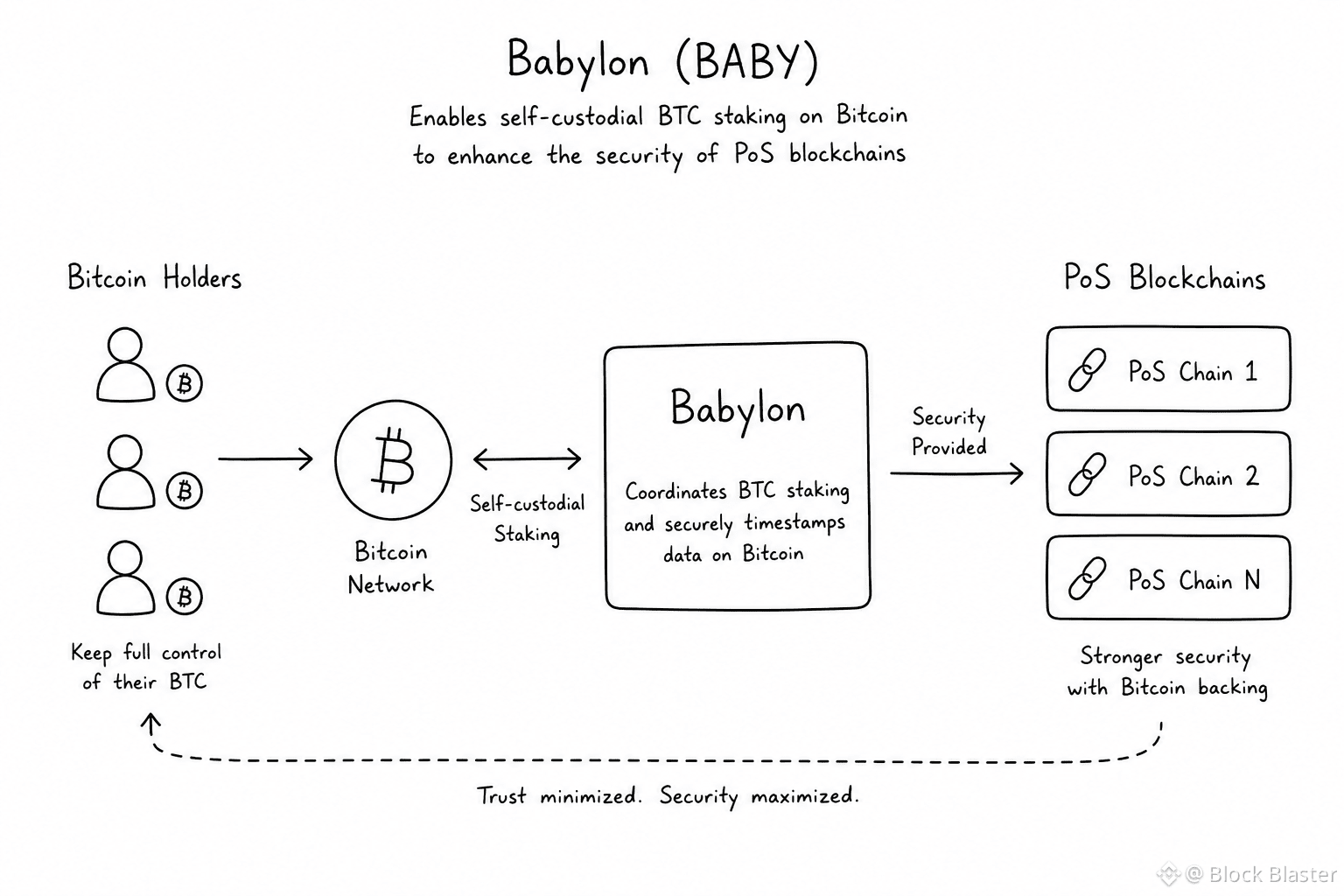
Ich denke in letzter Zeit an Babylon.
Nicht, weil ich glaube, dass es garantiert ein riesiger Erfolg wird. Krypto hat mich in dieser Hinsicht skeptisch gemacht.
Was mich aber angesprochen hat, ist das Problem, das es lösen will.
Bitcoin ist zwar das größte Asset im Krypto-Bereich, aber der Großteil davon liegt einfach herum, während neue Netzwerke immer wieder versuchen, Sicherheit von Grund auf neu aufzubauen. Das ergab für mich nie wirklich Sinn.
Außerdem gefällt mir, dass das Gespräch mit Selbstverwahrung beginnt. Nach allem, was wir gesehen haben – zusammengebrochene Börsen, gehackte Brücken, eingefrorene Auszahlungen – Menschen zu bitten, einem weiteren Vermittler zu vertrauen, ist nicht gerade ein überzeugender Pitch.
Trotzdem bin ich noch vorsichtig.
Infrastruktur aufzubauen ist schwierig. Menschen dazu zu bringen, sie auch tatsächlich zu nutzen, ist noch viel schwieriger.
Und ja, ich frage mich immer noch, ob wirklich jedes Infrastrukturprojekt seinen eigenen Token braucht. Genau da haben mich die Jahre in Krypto hingebracht.
Vielleicht funktioniert Babylon.
Vielleicht aber auch nicht.
Wie auch immer: Ich würde lieber dabei zusehen, wie Projekte versuchen, echte Probleme zu beheben, statt einen weiteren Hype-Zyklus aufzubauen, der auf leeren Versprechen basiert.
Inzwischen klingt langweilige Infrastruktur deutlich interessanter als schillerndes Marketing.
@BabylonLabs_io #baby $BABY
Ich denke in letzter Zeit an Babylon.
Nicht, weil ich glaube, dass es garantiert ein riesiger Erfolg wird. Krypto hat mich in dieser Hinsicht skeptisch gemacht.
Was mich aber angesprochen hat, ist das Problem, das es lösen will.
Bitcoin ist zwar das größte Asset im Krypto-Bereich, aber der Großteil davon liegt einfach herum, während neue Netzwerke immer wieder versuchen, Sicherheit von Grund auf neu aufzubauen. Das ergab für mich nie wirklich Sinn.
Außerdem gefällt mir, dass das Gespräch mit Selbstverwahrung beginnt. Nach allem, was wir gesehen haben – zusammengebrochene Börsen, gehackte Brücken, eingefrorene Auszahlungen – Menschen zu bitten, einem weiteren Vermittler zu vertrauen, ist nicht gerade ein überzeugender Pitch.
Trotzdem bin ich noch vorsichtig.
Infrastruktur aufzubauen ist schwierig. Menschen dazu zu bringen, sie auch tatsächlich zu nutzen, ist noch viel schwieriger.
Und ja, ich frage mich immer noch, ob wirklich jedes Infrastrukturprojekt seinen eigenen Token braucht. Genau da haben mich die Jahre in Krypto hingebracht.
Vielleicht funktioniert Babylon.
Vielleicht aber auch nicht.
Wie auch immer: Ich würde lieber dabei zusehen, wie Projekte versuchen, echte Probleme zu beheben, statt einen weiteren Hype-Zyklus aufzubauen, der auf leeren Versprechen basiert.
Inzwischen klingt langweilige Infrastruktur deutlich interessanter als schillerndes Marketing.
Ich denke in letzter Zeit an Babylon.
Nicht, weil ich glaube, dass es garantiert ein riesiger Erfolg wird. Krypto hat mich in dieser Hinsicht skeptisch gemacht.
Was mich aber angesprochen hat, ist das Problem, das es lösen will.
Bitcoin ist zwar das größte Asset im Krypto-Bereich, aber der Großteil davon liegt einfach herum, während neue Netzwerke immer wieder versuchen, Sicherheit von Grund auf neu aufzubauen. Das ergab für mich nie wirklich Sinn.
Außerdem gefällt mir, dass das Gespräch mit Selbstverwahrung beginnt. Nach allem, was wir gesehen haben – zusammengebrochene Börsen, gehackte Brücken, eingefrorene Auszahlungen – Menschen zu bitten, einem weiteren Vermittler zu vertrauen, ist nicht gerade ein überzeugender Pitch.
Trotzdem bin ich noch vorsichtig.
Infrastruktur aufzubauen ist schwierig. Menschen dazu zu bringen, sie auch tatsächlich zu nutzen, ist noch viel schwieriger.
Und ja, ich frage mich immer noch, ob wirklich jedes Infrastrukturprojekt seinen eigenen Token braucht. Genau da haben mich die Jahre in Krypto hingebracht.
Vielleicht funktioniert Babylon.
Vielleicht aber auch nicht.
Wie auch immer: Ich würde lieber dabei zusehen, wie Projekte versuchen, echte Probleme zu beheben, statt einen weiteren Hype-Zyklus aufzubauen, der auf leeren Versprechen basiert.
Inzwischen klingt langweilige Infrastruktur deutlich interessanter als schillerndes Marketing.
3
3
206
·
--
Bullisch
@babylonlabs_io #baby $BABY
Man verbringt genug Zeit in Krypto, und irgendwann fällt einem das gleiche Muster immer wieder auf.
Alle reden von der nächsten großen Sache.
Neue Narrative. Neue Tokens. Neue Versprechen.
Aber wenn etwas kaputtgeht, landen wir immer wieder beim selben langweiligen Thema:
Sicherheit.
Darum ist Babylon (BABY) bei mir ins Blickfeld geraten.
Nicht wegen Hype. Nicht wegen irgendeiner lauten Behauptung, die alles verändern soll.
Sondern weil es versucht, ein Problem zu lösen, in das Krypto immer wieder hineingerät.
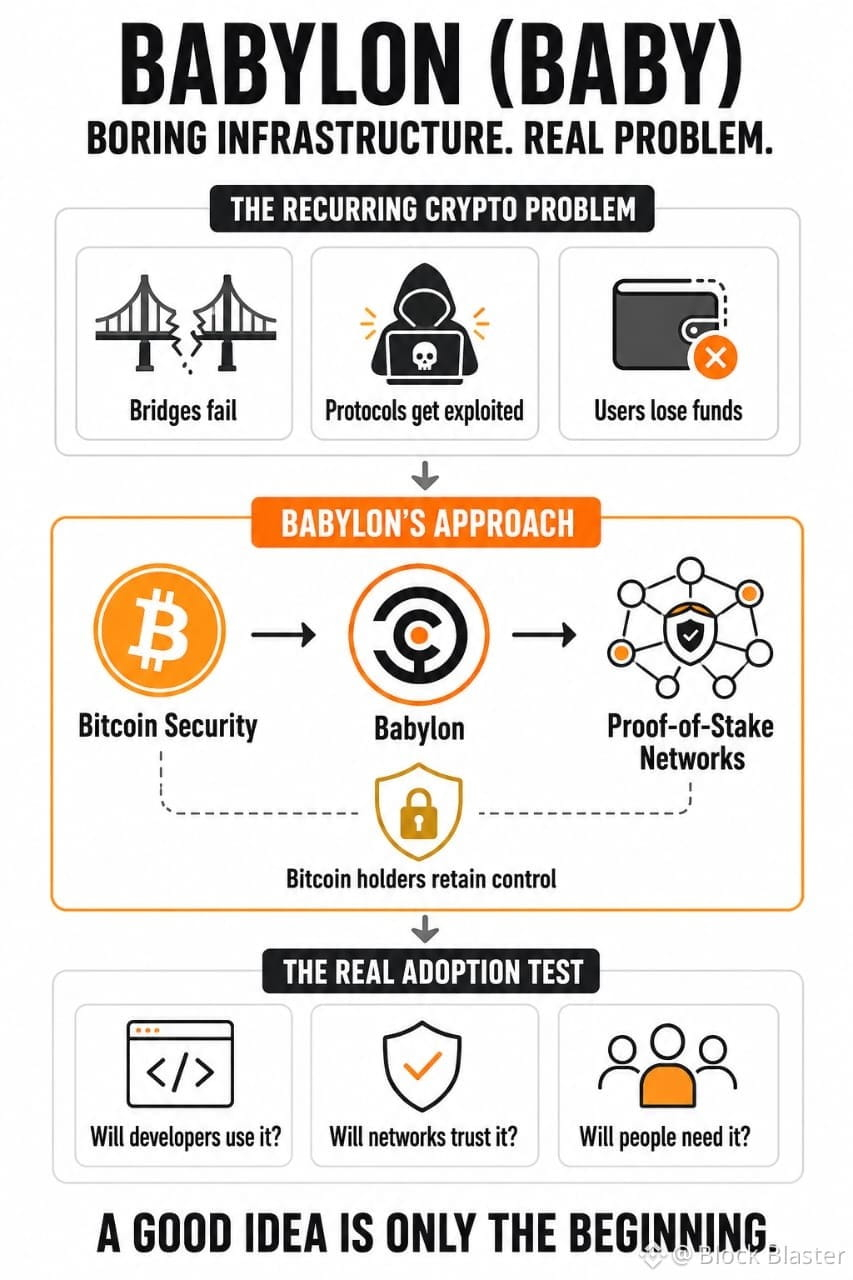
Wir haben gesehen, wie Brücken scheitern. Protokolle werden ausgenutzt. Nutzer verlieren Geld, weil die Infrastruktur darunter nicht stark genug war.
Das Lustige ist: Niemand kümmert sich um Infrastruktur, solange alles funktioniert.
Sie interessieren sich nur, wenn es bricht.
Babylon verfolgt einen anderen Ansatz, indem untersucht wird, wie die Sicherheit von Bitcoin dabei helfen kann, Proof-of-Stake-Netzwerke zu unterstützen – und dabei sicherstellt, dass Bitcoin-Inhaber die Kontrolle über ihre Assets behalten.
Die Idee ergibt Sinn.
Aber seien wir ehrlich: Eine gute Idee ist nur der Anfang.
Krypto ist voller Projekte mit großartigen Konzepten, die nie wirklich durchstarteten, weil die Akzeptanz schwerer war als erwartet.
Der echte Test ist ganz einfach:
Werden Entwickler es nutzen?
Werden die Netzwerke ihm vertrauen?
Werden die Menschen es tatsächlich brauchen?
Dort wird es spannend.
Ich bin nicht hier, um Babylon zur nächsten großen Sache zu erklären. Krypto hat mir genug Lektionen beigebracht, um diese Art von Aufregung zu vermeiden.
Vielleicht funktioniert es.
Vielleicht dauert es Jahre.
Vielleicht erreicht es nicht das Niveau, das sich die Leute erhoffen.
Aber zumindest fokussiert es sich auf ein Problem, das tatsächlich existiert.
In einem Markt voller Lärm sind es manchmal gerade die langweiligen Infrastrukturprojekte, die man im Blick behalten sollte.
@BabylonLabs_io #baby $BABY
Man verbringt genug Zeit in Krypto, und irgendwann fällt einem das gleiche Muster immer wieder auf.
Alle reden von der nächsten großen Sache.
Neue Narrative. Neue Tokens. Neue Versprechen.
Aber wenn etwas kaputtgeht, landen wir immer wieder beim selben langweiligen Thema:
Sicherheit.
Darum ist Babylon (BABY) bei mir ins Blickfeld geraten.
Nicht wegen Hype. Nicht wegen irgendeiner lauten Behauptung, die alles verändern soll.
Sondern weil es versucht, ein Problem zu lösen, in das Krypto immer wieder hineingerät.
Wir haben gesehen, wie Brücken scheitern. Protokolle werden ausgenutzt. Nutzer verlieren Geld, weil die Infrastruktur darunter nicht stark genug war.
Das Lustige ist: Niemand kümmert sich um Infrastruktur, solange alles funktioniert.
Sie interessieren sich nur, wenn es bricht.
Babylon verfolgt einen anderen Ansatz, indem untersucht wird, wie die Sicherheit von Bitcoin dabei helfen kann, Proof-of-Stake-Netzwerke zu unterstützen – und dabei sicherstellt, dass Bitcoin-Inhaber die Kontrolle über ihre Assets behalten.
Die Idee ergibt Sinn.
Aber seien wir ehrlich: Eine gute Idee ist nur der Anfang.
Krypto ist voller Projekte mit großartigen Konzepten, die nie wirklich durchstarteten, weil die Akzeptanz schwerer war als erwartet.
Der echte Test ist ganz einfach:
Werden Entwickler es nutzen?
Werden die Netzwerke ihm vertrauen?
Werden die Menschen es tatsächlich brauchen?
Dort wird es spannend.
Ich bin nicht hier, um Babylon zur nächsten großen Sache zu erklären. Krypto hat mir genug Lektionen beigebracht, um diese Art von Aufregung zu vermeiden.
Vielleicht funktioniert es.
Vielleicht dauert es Jahre.
Vielleicht erreicht es nicht das Niveau, das sich die Leute erhoffen.
Aber zumindest fokussiert es sich auf ein Problem, das tatsächlich existiert.
In einem Markt voller Lärm sind es manchmal gerade die langweiligen Infrastrukturprojekte, die man im Blick behalten sollte.
Man verbringt genug Zeit in Krypto, und irgendwann fällt einem das gleiche Muster immer wieder auf.
Alle reden von der nächsten großen Sache.
Neue Narrative. Neue Tokens. Neue Versprechen.
Aber wenn etwas kaputtgeht, landen wir immer wieder beim selben langweiligen Thema:
Sicherheit.
Darum ist Babylon (BABY) bei mir ins Blickfeld geraten.
Nicht wegen Hype. Nicht wegen irgendeiner lauten Behauptung, die alles verändern soll.
Sondern weil es versucht, ein Problem zu lösen, in das Krypto immer wieder hineingerät.
Wir haben gesehen, wie Brücken scheitern. Protokolle werden ausgenutzt. Nutzer verlieren Geld, weil die Infrastruktur darunter nicht stark genug war.
Das Lustige ist: Niemand kümmert sich um Infrastruktur, solange alles funktioniert.
Sie interessieren sich nur, wenn es bricht.
Babylon verfolgt einen anderen Ansatz, indem untersucht wird, wie die Sicherheit von Bitcoin dabei helfen kann, Proof-of-Stake-Netzwerke zu unterstützen – und dabei sicherstellt, dass Bitcoin-Inhaber die Kontrolle über ihre Assets behalten.
Die Idee ergibt Sinn.
Aber seien wir ehrlich: Eine gute Idee ist nur der Anfang.
Krypto ist voller Projekte mit großartigen Konzepten, die nie wirklich durchstarteten, weil die Akzeptanz schwerer war als erwartet.
Der echte Test ist ganz einfach:
Werden Entwickler es nutzen?
Werden die Netzwerke ihm vertrauen?
Werden die Menschen es tatsächlich brauchen?
Dort wird es spannend.
Ich bin nicht hier, um Babylon zur nächsten großen Sache zu erklären. Krypto hat mir genug Lektionen beigebracht, um diese Art von Aufregung zu vermeiden.
Vielleicht funktioniert es.
Vielleicht dauert es Jahre.
Vielleicht erreicht es nicht das Niveau, das sich die Leute erhoffen.
Aber zumindest fokussiert es sich auf ein Problem, das tatsächlich existiert.
In einem Markt voller Lärm sind es manchmal gerade die langweiligen Infrastrukturprojekte, die man im Blick behalten sollte.
9
7
245
·
--
Bullisch
@babylonlabs_io $BABY #baby
Babylon (BABY) interessiert mich aus einem einzigen einfachen Grund: Krypto hat uns bereits gezeigt, wie schlecht Brücken und Verwahrstellen scheitern können.
Wir haben BTC verpackt, über Ketten hinweg bewegt, Dritte als vertrauenswürdige Instanzen eingesetzt und so getan, als wären wir überrascht, als die Technik nicht mehr funktionierte. Gelder verschwanden. Auszahlungen wurden gestoppt. Und danach hat dann jeder die Risikohinweise gelesen.
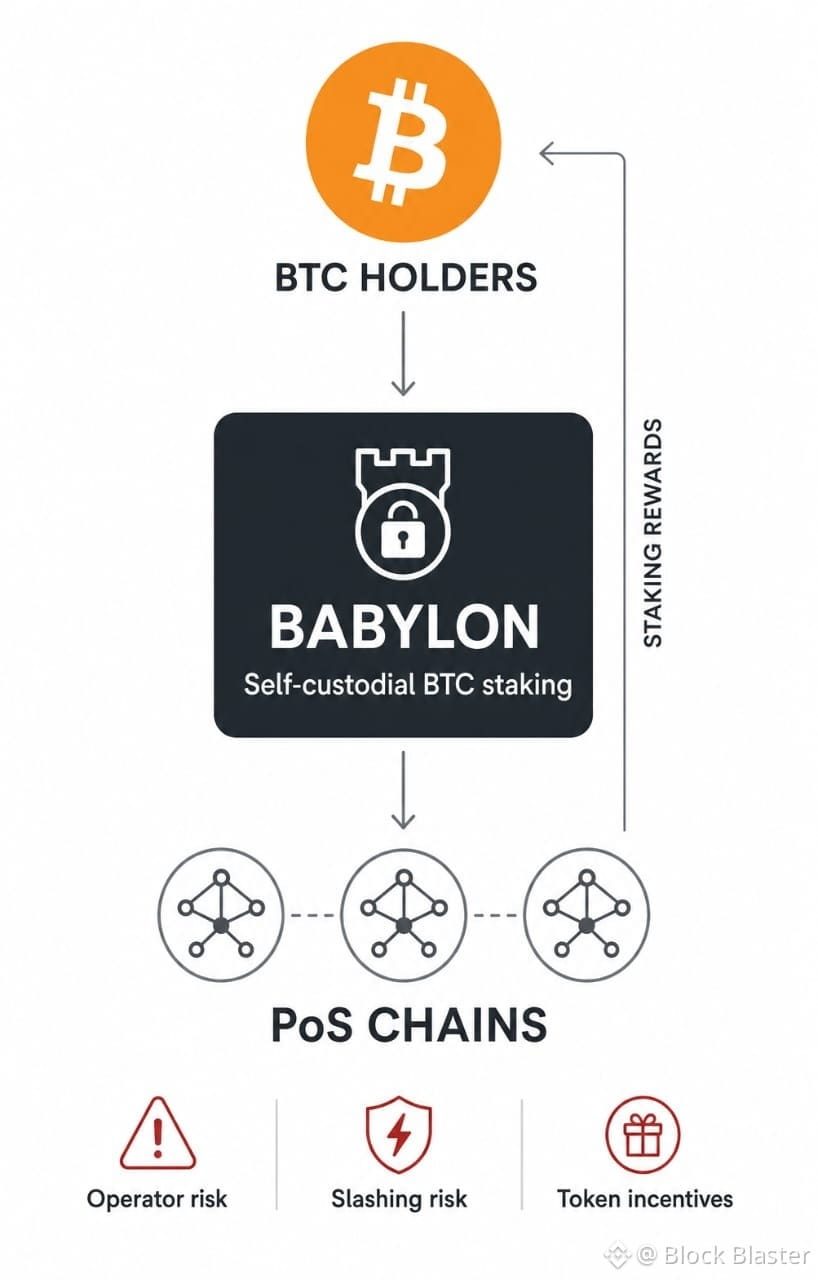
Babylon geht einen anderen Weg. Es will, dass Inhaber von Bitcoin ihre BTC nutzen, um Proof-of-Stake-Ketten abzusichern, ohne die Verwahrung aufzugeben oder daraus ein weiteres verpacktes Asset zu machen.
Ehrlich gesagt, das ergibt Sinn.
Aber Selbstverwahrung bedeutet nicht Null Risiko. Unter der Haube gibt es immer noch Code. Es gibt Betreiber, Strafregeln und Integrationen, die funktionieren müssen, wenn es chaotisch wird—nicht nur dann, wenn die Märkte ruhig sind.
Und dann ist da noch BABY, das Token.
Was passiert, wenn die frühen Belohnungen austrocknen? Werden PoS-Ketten tatsächlich für diese Sicherheit bezahlen? Werden Bitcoin-Inhaber das zusätzliche Risiko für eine angemessene Rendite akzeptieren? Oder verschwindet die meiste Aktivität, sobald die Anreize weniger attraktiv werden?
Das weiß ich nicht.
Darum bin ich neugierig, nicht begeistert.
Das Problem ist real. PoS-Ketten brauchen stärkere Sicherheit, und BTC-Inhaber brauchen bessere Optionen, als einer weiteren Brücke oder Verwahrstelle zu vertrauen. Babylon versucht, die langweilige Infrastruktur zwischen diesen beiden Seiten zu bauen.
Das könnte Zeit brauchen. Es könnte auch scheitern. Es könnte aber auch zu einer nützlichen Rohrleitung werden.
Für den Moment beobachte ich, was nach dem Hype passiert—nicht währenddessen.
@BabylonLabs_io $BABY #baby
Babylon (BABY) interessiert mich aus einem einzigen einfachen Grund: Krypto hat uns bereits gezeigt, wie schlecht Brücken und Verwahrstellen scheitern können.
Wir haben BTC verpackt, über Ketten hinweg bewegt, Dritte als vertrauenswürdige Instanzen eingesetzt und so getan, als wären wir überrascht, als die Technik nicht mehr funktionierte. Gelder verschwanden. Auszahlungen wurden gestoppt. Und danach hat dann jeder die Risikohinweise gelesen.
Babylon geht einen anderen Weg. Es will, dass Inhaber von Bitcoin ihre BTC nutzen, um Proof-of-Stake-Ketten abzusichern, ohne die Verwahrung aufzugeben oder daraus ein weiteres verpacktes Asset zu machen.
Ehrlich gesagt, das ergibt Sinn.
Aber Selbstverwahrung bedeutet nicht Null Risiko. Unter der Haube gibt es immer noch Code. Es gibt Betreiber, Strafregeln und Integrationen, die funktionieren müssen, wenn es chaotisch wird—nicht nur dann, wenn die Märkte ruhig sind.
Und dann ist da noch BABY, das Token.
Was passiert, wenn die frühen Belohnungen austrocknen? Werden PoS-Ketten tatsächlich für diese Sicherheit bezahlen? Werden Bitcoin-Inhaber das zusätzliche Risiko für eine angemessene Rendite akzeptieren? Oder verschwindet die meiste Aktivität, sobald die Anreize weniger attraktiv werden?
Das weiß ich nicht.
Darum bin ich neugierig, nicht begeistert.
Das Problem ist real. PoS-Ketten brauchen stärkere Sicherheit, und BTC-Inhaber brauchen bessere Optionen, als einer weiteren Brücke oder Verwahrstelle zu vertrauen. Babylon versucht, die langweilige Infrastruktur zwischen diesen beiden Seiten zu bauen.
Das könnte Zeit brauchen. Es könnte auch scheitern. Es könnte aber auch zu einer nützlichen Rohrleitung werden.
Für den Moment beobachte ich, was nach dem Hype passiert—nicht währenddessen.
Babylon (BABY) interessiert mich aus einem einzigen einfachen Grund: Krypto hat uns bereits gezeigt, wie schlecht Brücken und Verwahrstellen scheitern können.
Wir haben BTC verpackt, über Ketten hinweg bewegt, Dritte als vertrauenswürdige Instanzen eingesetzt und so getan, als wären wir überrascht, als die Technik nicht mehr funktionierte. Gelder verschwanden. Auszahlungen wurden gestoppt. Und danach hat dann jeder die Risikohinweise gelesen.
Babylon geht einen anderen Weg. Es will, dass Inhaber von Bitcoin ihre BTC nutzen, um Proof-of-Stake-Ketten abzusichern, ohne die Verwahrung aufzugeben oder daraus ein weiteres verpacktes Asset zu machen.
Ehrlich gesagt, das ergibt Sinn.
Aber Selbstverwahrung bedeutet nicht Null Risiko. Unter der Haube gibt es immer noch Code. Es gibt Betreiber, Strafregeln und Integrationen, die funktionieren müssen, wenn es chaotisch wird—nicht nur dann, wenn die Märkte ruhig sind.
Und dann ist da noch BABY, das Token.
Was passiert, wenn die frühen Belohnungen austrocknen? Werden PoS-Ketten tatsächlich für diese Sicherheit bezahlen? Werden Bitcoin-Inhaber das zusätzliche Risiko für eine angemessene Rendite akzeptieren? Oder verschwindet die meiste Aktivität, sobald die Anreize weniger attraktiv werden?
Das weiß ich nicht.
Darum bin ich neugierig, nicht begeistert.
Das Problem ist real. PoS-Ketten brauchen stärkere Sicherheit, und BTC-Inhaber brauchen bessere Optionen, als einer weiteren Brücke oder Verwahrstelle zu vertrauen. Babylon versucht, die langweilige Infrastruktur zwischen diesen beiden Seiten zu bauen.
Das könnte Zeit brauchen. Es könnte auch scheitern. Es könnte aber auch zu einer nützlichen Rohrleitung werden.
Für den Moment beobachte ich, was nach dem Hype passiert—nicht währenddessen.
7
6
275
·
--
Bärisch
$币安人生 bleibt eines der stärksten Projekte und könnte sich von der Unterstützung aus scharf nach oben bewegen.
Handelsidee:
Einstieg: $0.620 - $0.640
Ziel: $0.690 / $0.740 / $0.800
Stop Loss: $0.590
Los, jetzt handeln $币安人生
{spot}(币安人生USDT)
$币安人生 bleibt eines der stärksten Projekte und könnte sich von der Unterstützung aus scharf nach oben bewegen.
Handelsidee:
Einstieg: $0.620 - $0.640
Ziel: $0.690 / $0.740 / $0.800
Stop Loss: $0.590
Los, jetzt handeln $币安人生
Handelsidee:
Einstieg: $0.620 - $0.640
Ziel: $0.690 / $0.740 / $0.800
Stop Loss: $0.590
Los, jetzt handeln $币安人生
36
$ERA bleibt eines der stärksten Projekte und könnte sich von der Unterstützung aus stark nach oben bewegen.
Handelsidee:
Einstieg: $0.0600 - $0.0620
Ziel: $0.0670 / $0.0730 / $0.0800
Stop Loss: $0.0570
Lasst uns jetzt handeln $ERA
{spot}(ERAUSDT)
$ERA bleibt eines der stärksten Projekte und könnte sich von der Unterstützung aus stark nach oben bewegen.
Handelsidee:
Einstieg: $0.0600 - $0.0620
Ziel: $0.0670 / $0.0730 / $0.0800
Stop Loss: $0.0570
Lasst uns jetzt handeln $ERA
Handelsidee:
Einstieg: $0.0600 - $0.0620
Ziel: $0.0670 / $0.0730 / $0.0800
Stop Loss: $0.0570
Lasst uns jetzt handeln $ERA
176
$AWE bleibt eines der stärksten Projekte und könnte sich von der Unterstützung aus scharf nach oben erholen.
Handelsidee:
Einstieg: $0.0565 - $0.0580
Ziel: $0.0620 / $0.0670 / $0.0730
Stop Loss: $0.0540
Lasst uns jetzt handeln $AWE
{spot}(AWEUSDT)
$AWE bleibt eines der stärksten Projekte und könnte sich von der Unterstützung aus scharf nach oben erholen.
Handelsidee:
Einstieg: $0.0565 - $0.0580
Ziel: $0.0620 / $0.0670 / $0.0730
Stop Loss: $0.0540
Lasst uns jetzt handeln $AWE
Handelsidee:
Einstieg: $0.0565 - $0.0580
Ziel: $0.0620 / $0.0670 / $0.0730
Stop Loss: $0.0540
Lasst uns jetzt handeln $AWE
48
$NXPC bleibt eines der stärksten Projekte und könnte bei Unterstützung scharf zurückprallen.
Handelsidee:
Einstieg: 0.230 $ - 0.236 $
Ziel: 0.250 $ / 0.270 $ / 0.295 $
Stopp-Loss: 0.220 $
Auf geht’s, jetzt handeln $NXPC
{spot}(NXPCUSDT)
$NXPC bleibt eines der stärksten Projekte und könnte bei Unterstützung scharf zurückprallen.
Handelsidee:
Einstieg: 0.230 $ - 0.236 $
Ziel: 0.250 $ / 0.270 $ / 0.295 $
Stopp-Loss: 0.220 $
Auf geht’s, jetzt handeln $NXPC
Handelsidee:
Einstieg: 0.230 $ - 0.236 $
Ziel: 0.250 $ / 0.270 $ / 0.295 $
Stopp-Loss: 0.220 $
Auf geht’s, jetzt handeln $NXPC
347
·
--
Bärisch
$QTUM bleibt eines der stärksten Projekte und könnte scharf vom Support abprallen.
Handelsidee:
Einstieg: $0.690 - $0.710
Ziel: $0.760 / $0.820 / $0.900
Stop-Loss: $0.660
Los geht's, jetzt handeln $QTUM
{spot}(QTUMUSDT)
$QTUM bleibt eines der stärksten Projekte und könnte scharf vom Support abprallen.
Handelsidee:
Einstieg: $0.690 - $0.710
Ziel: $0.760 / $0.820 / $0.900
Stop-Loss: $0.660
Los geht's, jetzt handeln $QTUM
Handelsidee:
Einstieg: $0.690 - $0.710
Ziel: $0.760 / $0.820 / $0.900
Stop-Loss: $0.660
Los geht's, jetzt handeln $QTUM
66
$EGLD bleibt eines der stärksten Projekte und könnte scharf von der Unterstützung aus nach oben aufspringen.
Handelsidee:
Einstieg: 3,08 - 3,18
Ziel: 3,40 / 3,70 / 4,10
Stop Loss: 2,95
Lass uns jetzt traden $EGLD
{spot}(EGLDUSDT)
$EGLD bleibt eines der stärksten Projekte und könnte scharf von der Unterstützung aus nach oben aufspringen.
Handelsidee:
Einstieg: 3,08 - 3,18
Ziel: 3,40 / 3,70 / 4,10
Stop Loss: 2,95
Lass uns jetzt traden $EGLD
Handelsidee:
Einstieg: 3,08 - 3,18
Ziel: 3,40 / 3,70 / 4,10
Stop Loss: 2,95
Lass uns jetzt traden $EGLD
1
127
Anmelden und weiter Inhalte entdecken
Krypto-Nutzer weltweit auf Binance Square kennenlernen
⚡️ Bleib in Sachen Krypto stets am Puls.
💬 Die weltgrößte Kryptobörse vertraut darauf.
👍 Erhalte verlässliche Einblicke von verifizierten Creators.
E-Mail-Adresse/Telefonnummer
Trendthemen
BitcoinReboundsTo$79K
30,427 Aufrufe
246 Kommentare
🚨 $BTC steigt weiter.
Bitcoin handelt bei etwa 78.804 $ und liegt damit ungefähr 1,9 % im Plus, nachdem die Marke von 78K zurückerobert wurde. Die nächste zu beobachtende Zone ist das Tageshoch im Intraday-Bereich nahe 78.905 $.
Ein klarer Ausbruch über diese Marke könnte den Weg in Richtung 79K–80K ebnen. Wenn BTC abgewiesen wird, liegt der Support bei etwa 78.300 $ und danach bei 77.975 $.
Die Bullen haben Momentum, aber BTC muss über 78K bleiben.
#Bitcoin #BTC #CryptoTrading #CryptoMarket #CryptoAnalysis
PulseON
·22 Likes
·23.8k Aufrufe
BessentEndorsesFinalClarityActDraft
0 Aufrufe
7 Kommentare
ZamaOpens16ConfidentialMorphoVaults
0 Aufrufe
6 Kommentare